A Hotel in Greece That Hides Inside the Cliff Instead of Sitting on It

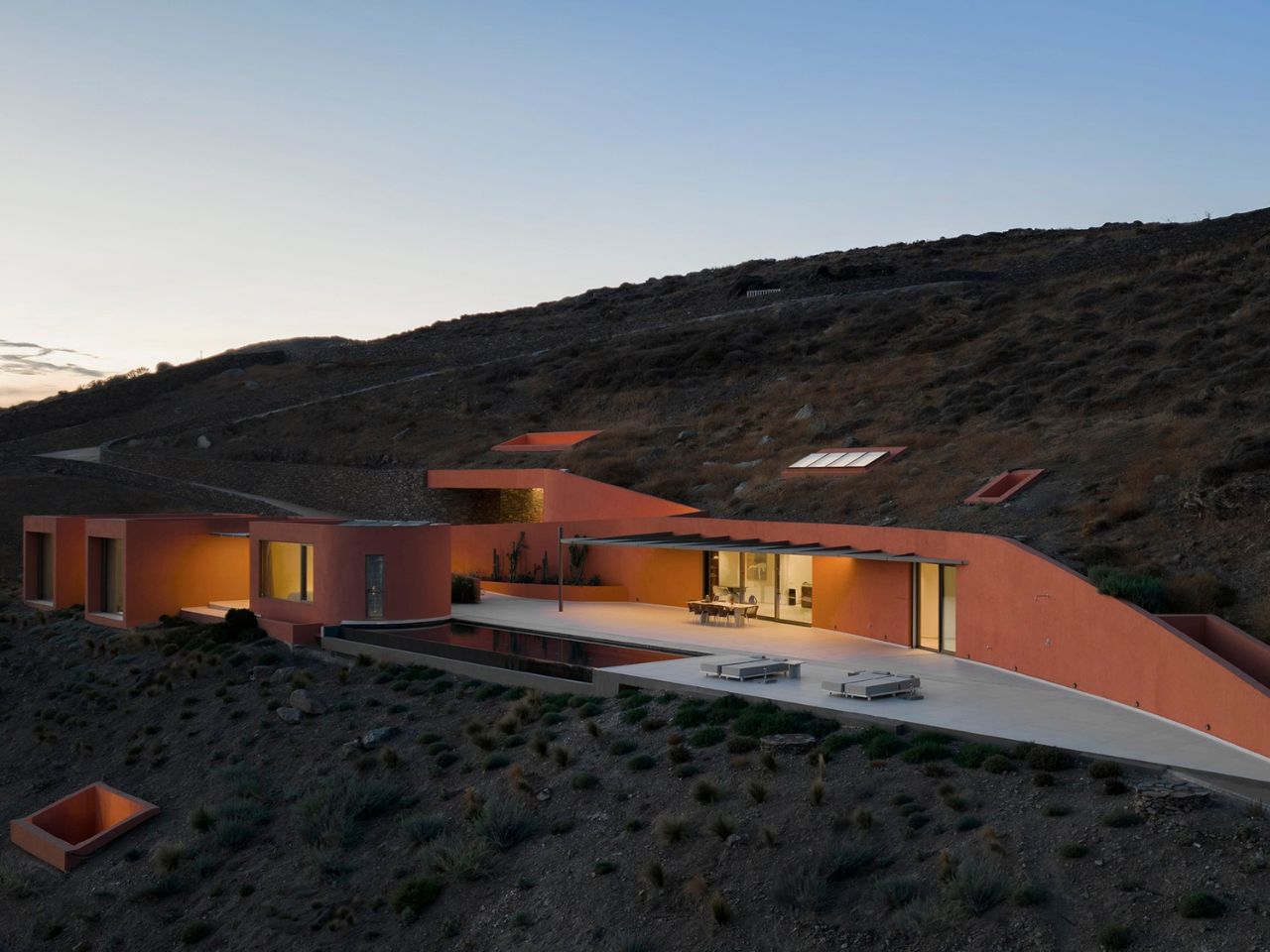
On a quiet stretch of coastline on the Greek island of Syros, a new resort seems to almost disappear into the landscape. Designed by the Athens-based firm Ateno Architecture Studio, Olen is a small seven-suite hotel that has been carefully carved into the rocky cliffs overlooking the Aegean Sea. Instead of standing out as a bold architectural object, the project quietly blends into its surroundings, allowing the landscape to remain the star of the show.

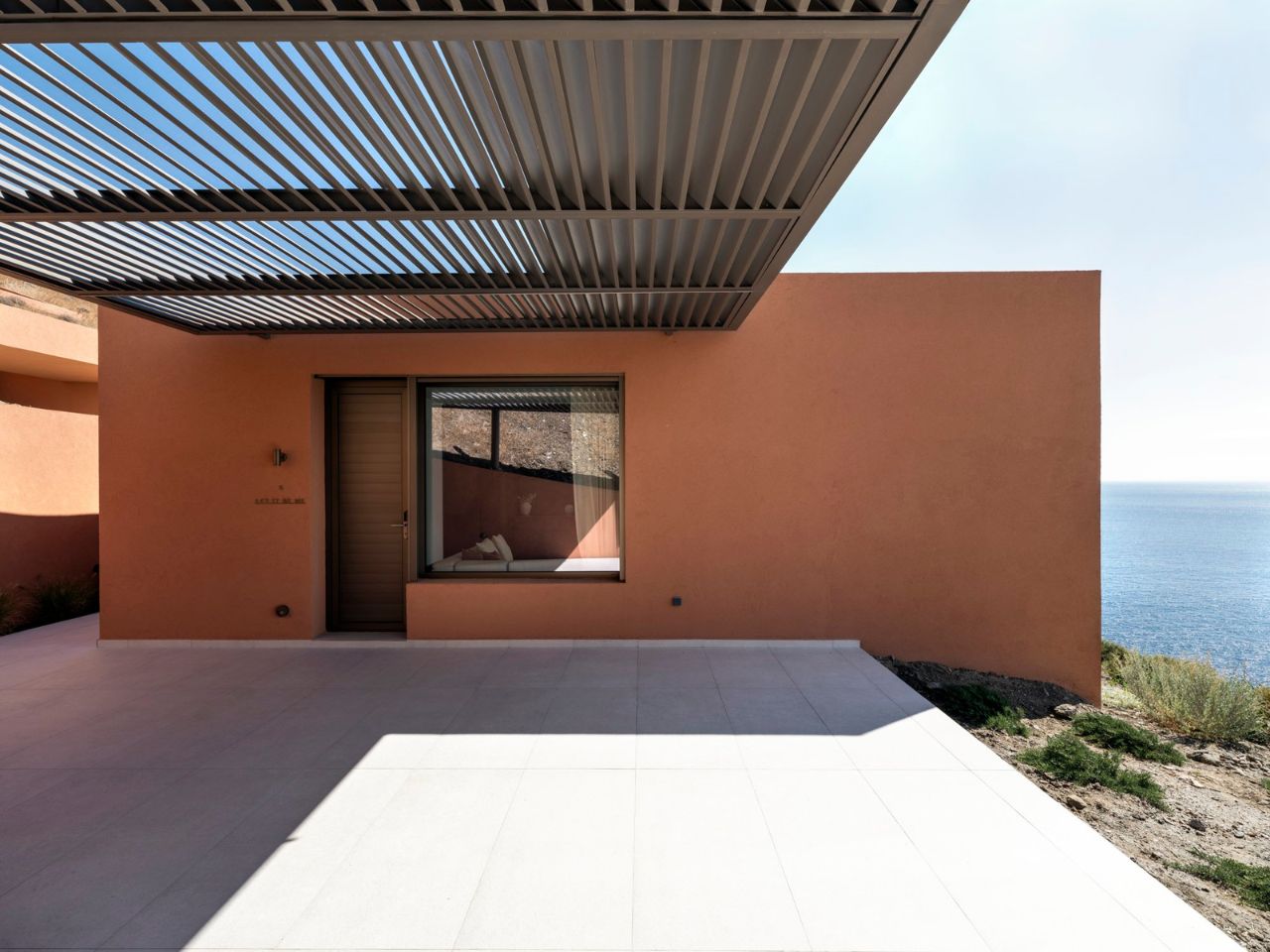
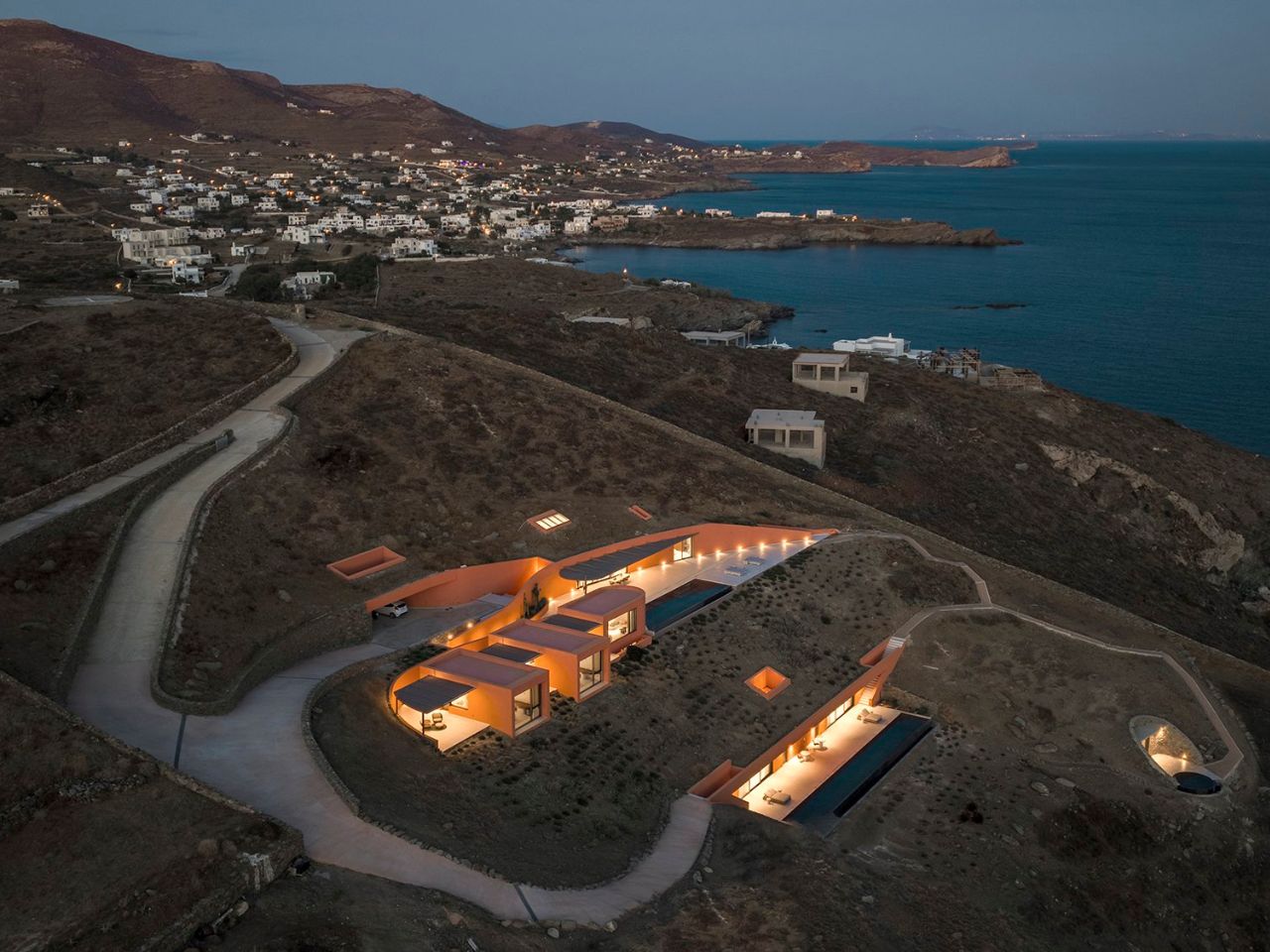
The site itself is relatively untouched, with rugged terrain and uninterrupted views across the sea. For the architects, this meant approaching the project with sensitivity. The aim was not simply to build a luxury retreat, but to do so in a way that respected the existing character of the place. Rather than placing a large structure on top of the land, the design tucks much of the building into the hillside so that the architecture feels like part of the terrain.

Designer: Ateno Architecture Studio

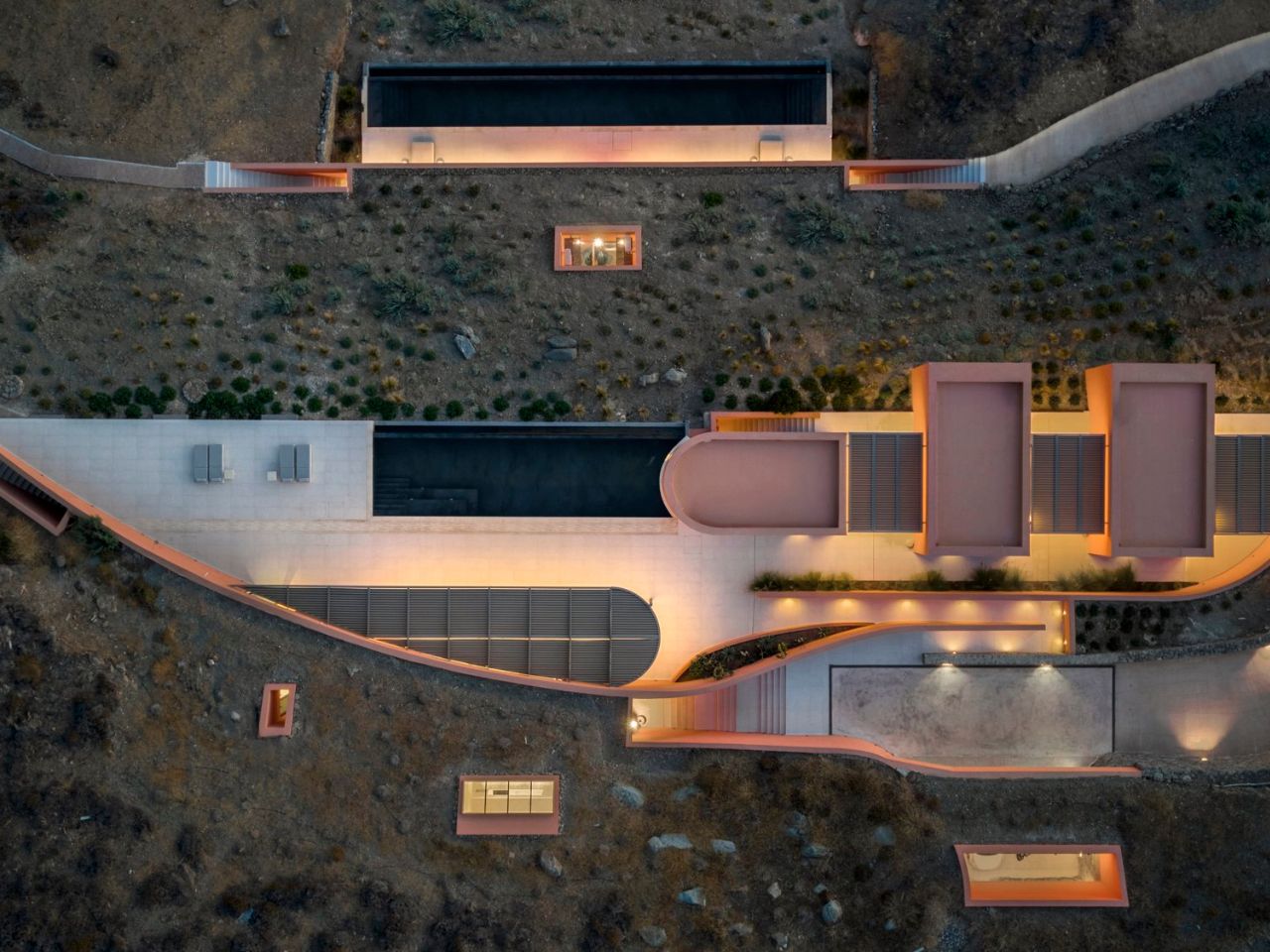
What makes Olen particularly interesting is the way the architecture is composed. Instead of focusing on striking building forms, the design is shaped through terraces, retaining walls, and subtle cuts into the earth. These elements create a series of spaces that unfold gradually across the cliff. The result is a composition that feels embedded in the landscape rather than imposed on it.

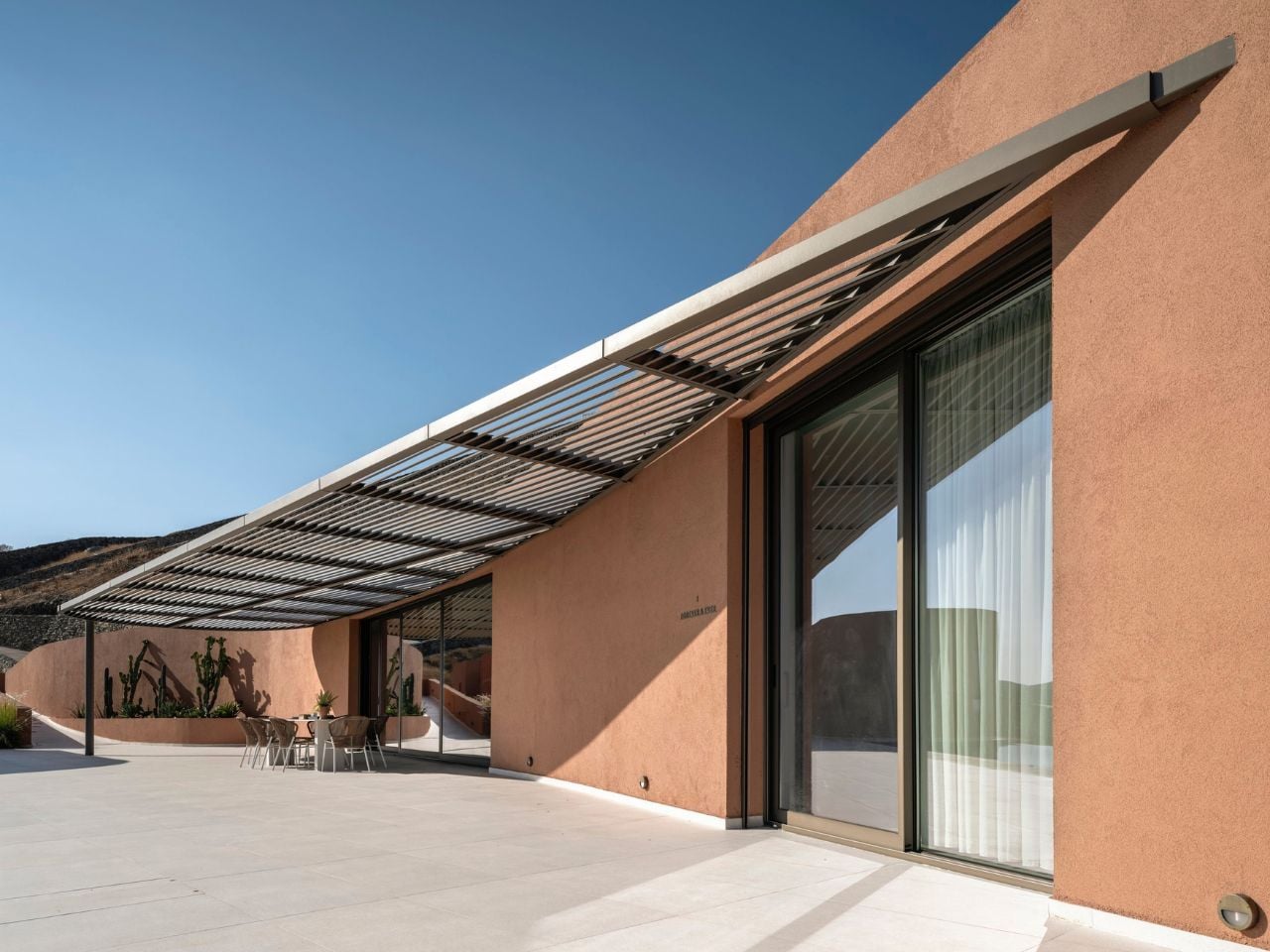
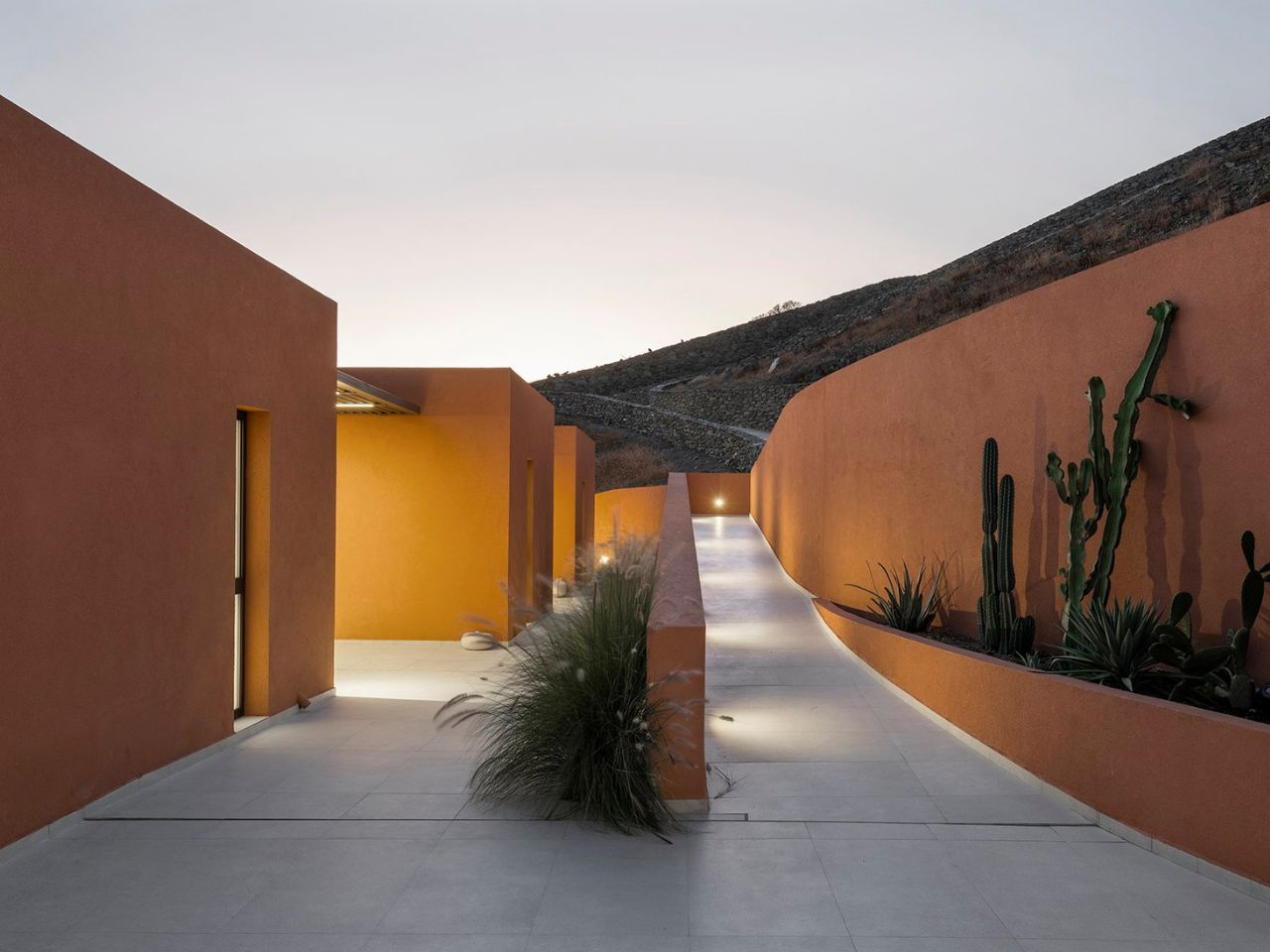
The resort steps down the slope in what the architects describe as an amphitheatre-like arrangement. As you move through the site, open terraces reveal sweeping views of the Aegean while more private rooms are tucked deeper into the hillside. The walls throughout the project are finished with textured render in warm, earthy tones, which helps the architecture blend naturally with the surrounding rock.

The layout of the resort is organised into three distinct parts called The Plane, The Line, and The Point. These areas are connected by a winding path that gently guides guests down the hillside. As you move lower on the site, the spaces become increasingly private.

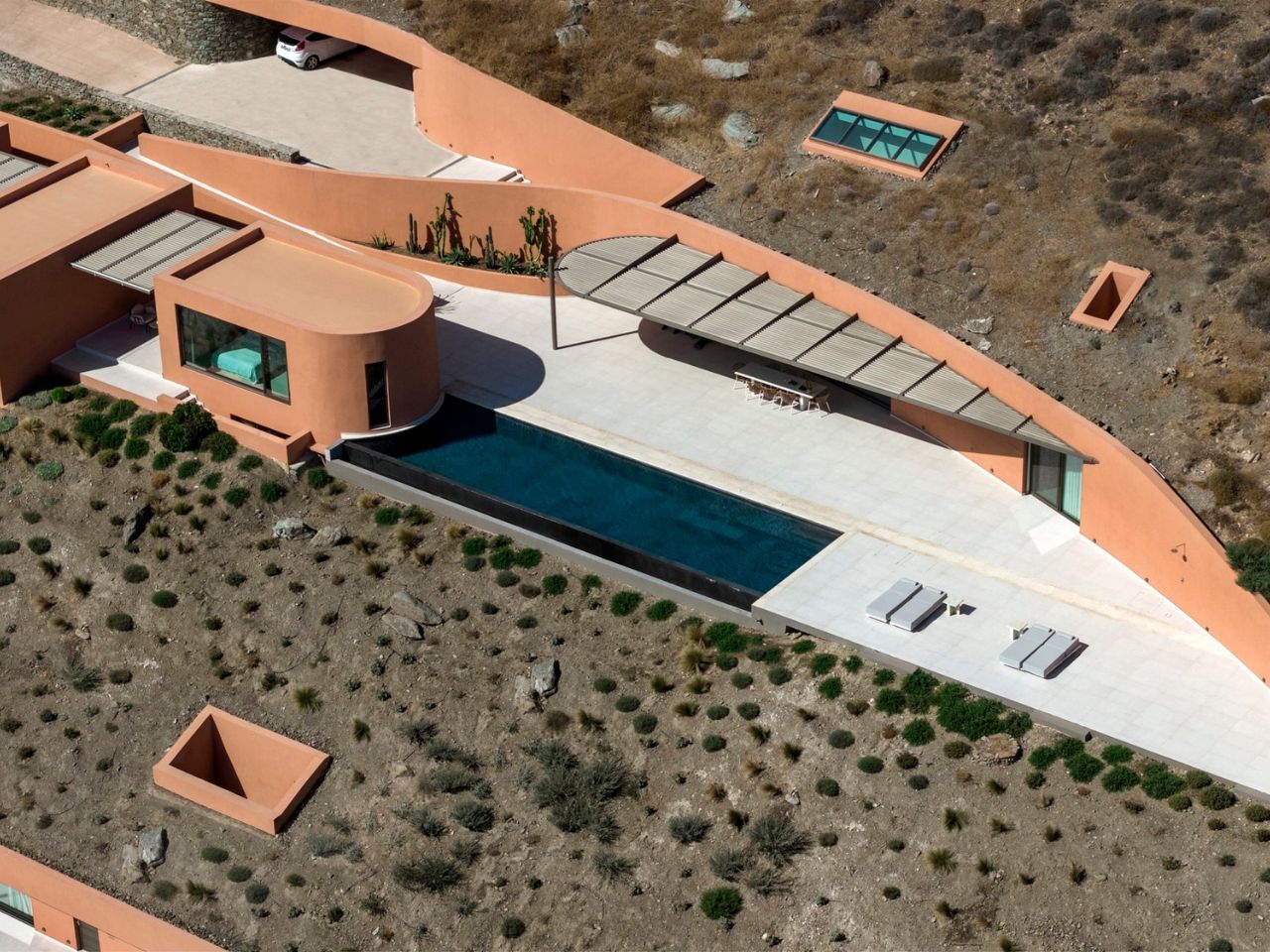
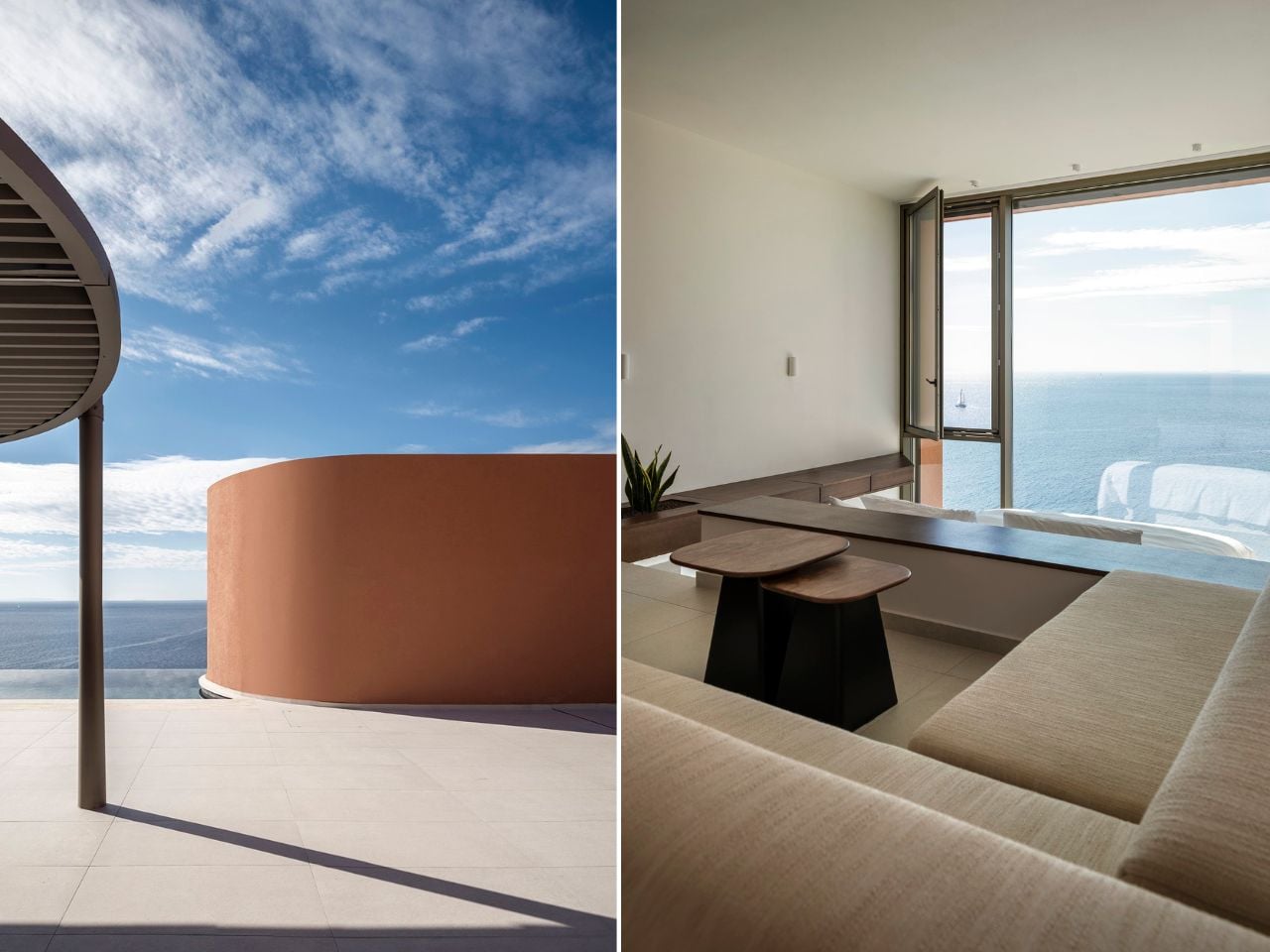
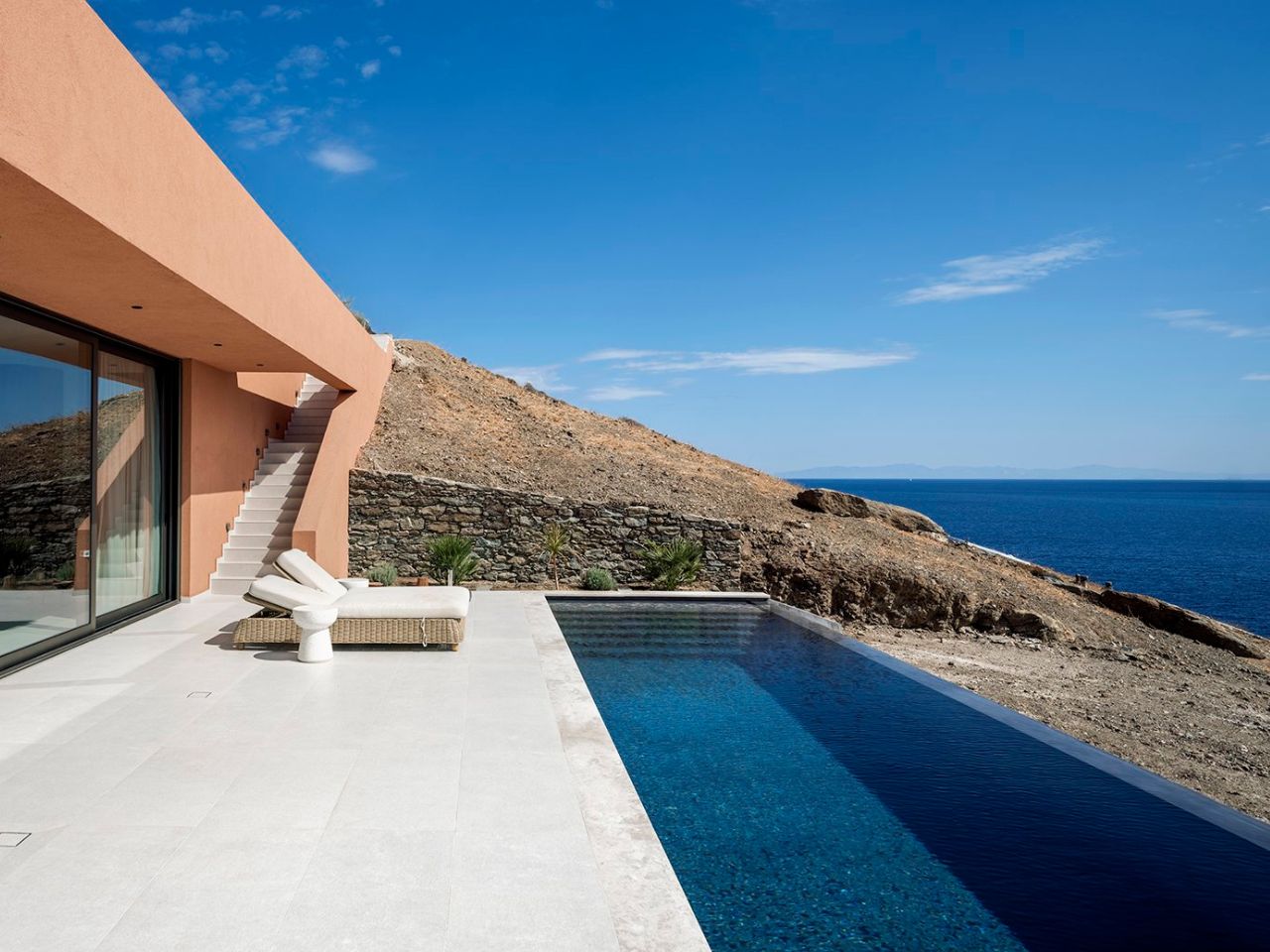
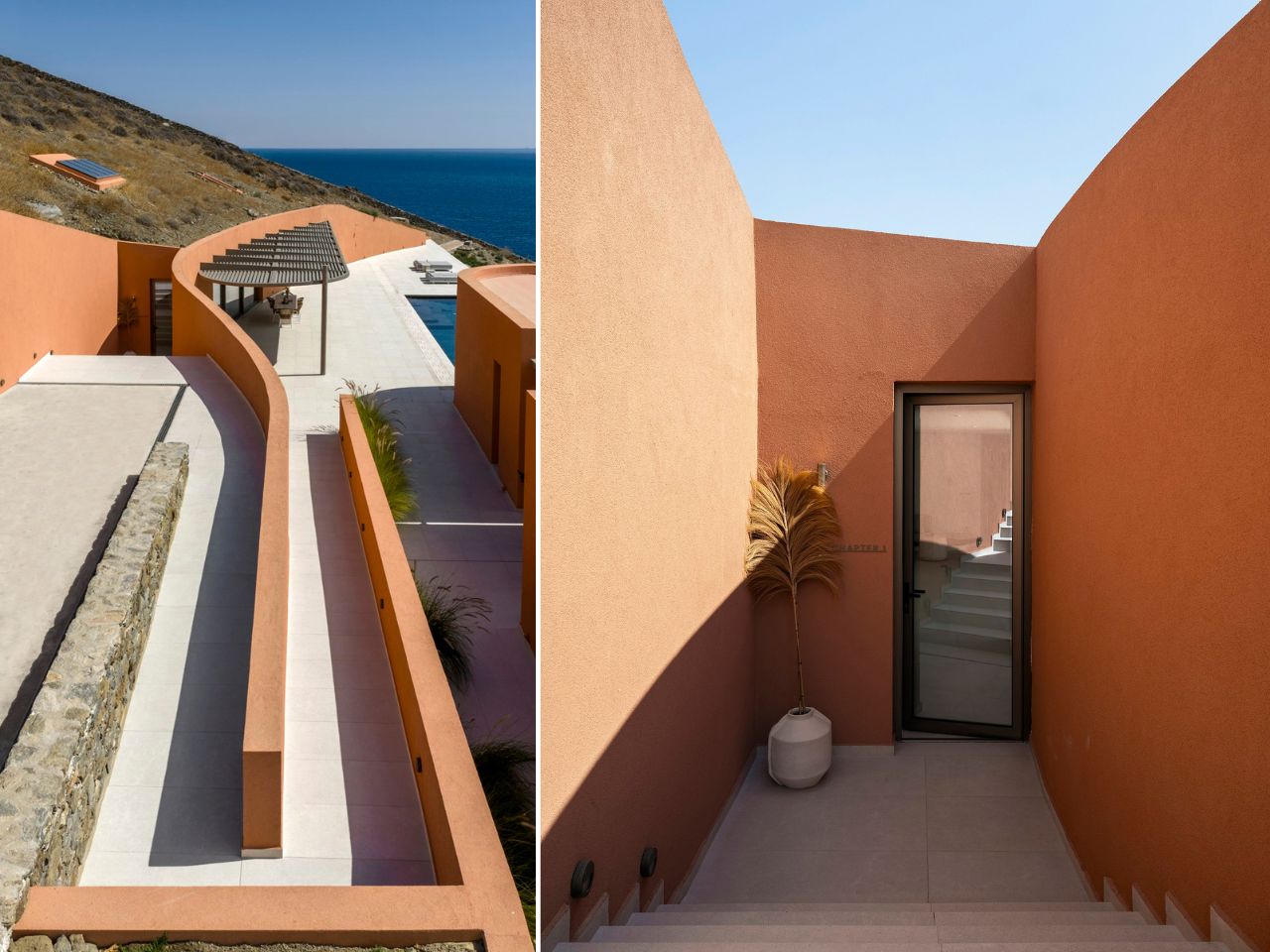
At the very top sits The Plane, which acts as the social heart of the resort. A curved retaining wall wraps around a generous terrace that opens out toward the sea. Here, a sculptural pergola shaped like a leaf provides shade while a pool reflects the blue horizon beyond. Beneath this terrace, shared living areas and one bedroom are tucked into the hillside. Nearby, three additional bedrooms extend outward in simple cubic forms that frame the sea views.

The sweeping curve of the retaining wall is one of the most memorable features of the project. It creates a sense of enclosure and protection while still allowing the terrace to remain completely open to the landscape and the vast sea beyond.

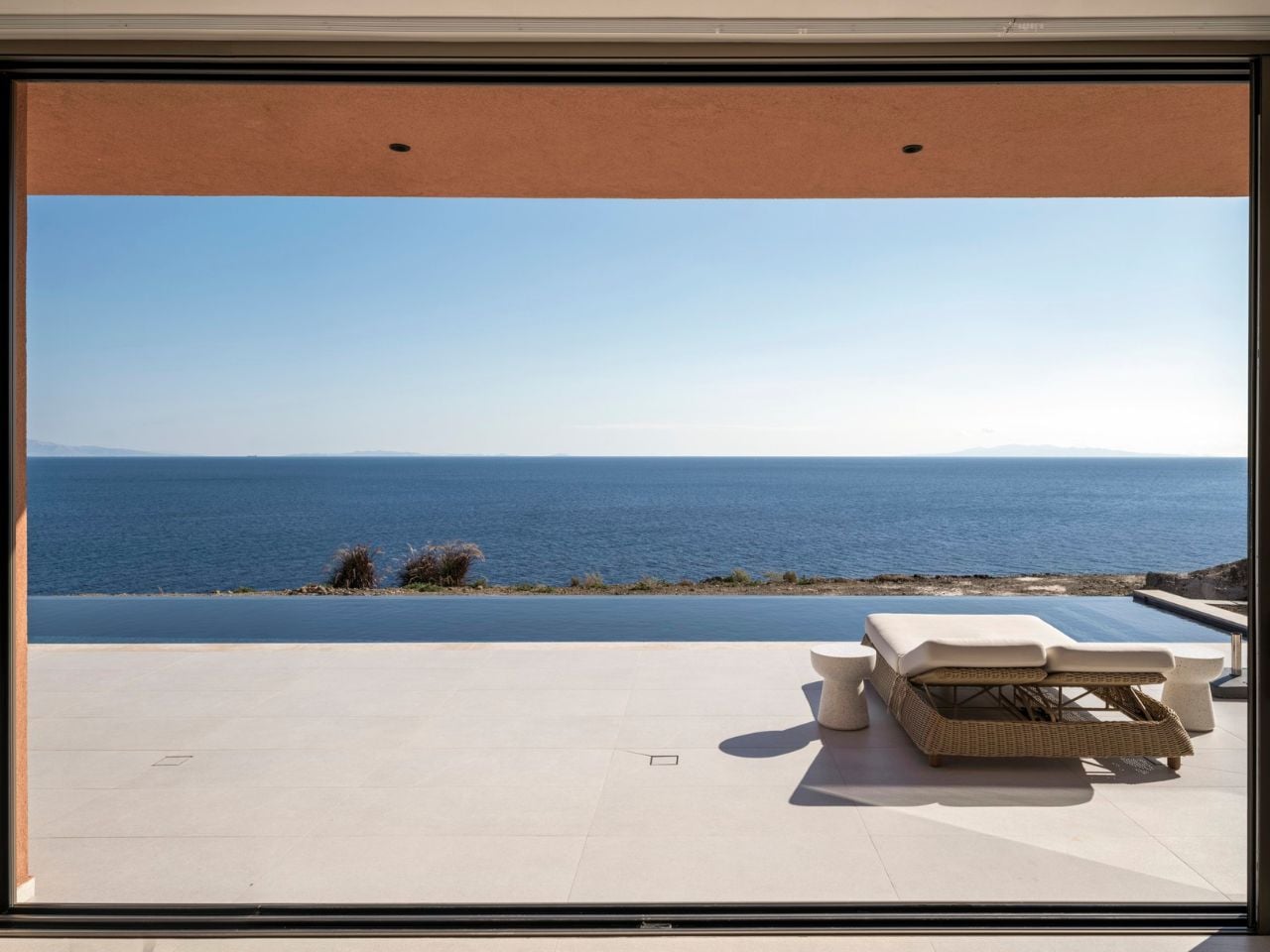
Further down the hill is The Line, which contains two larger underground suites. These can operate as separate accommodations or be combined to form a larger living unit. Both open onto a shared terrace with a long, narrow infinity pool that stretches toward the horizon.

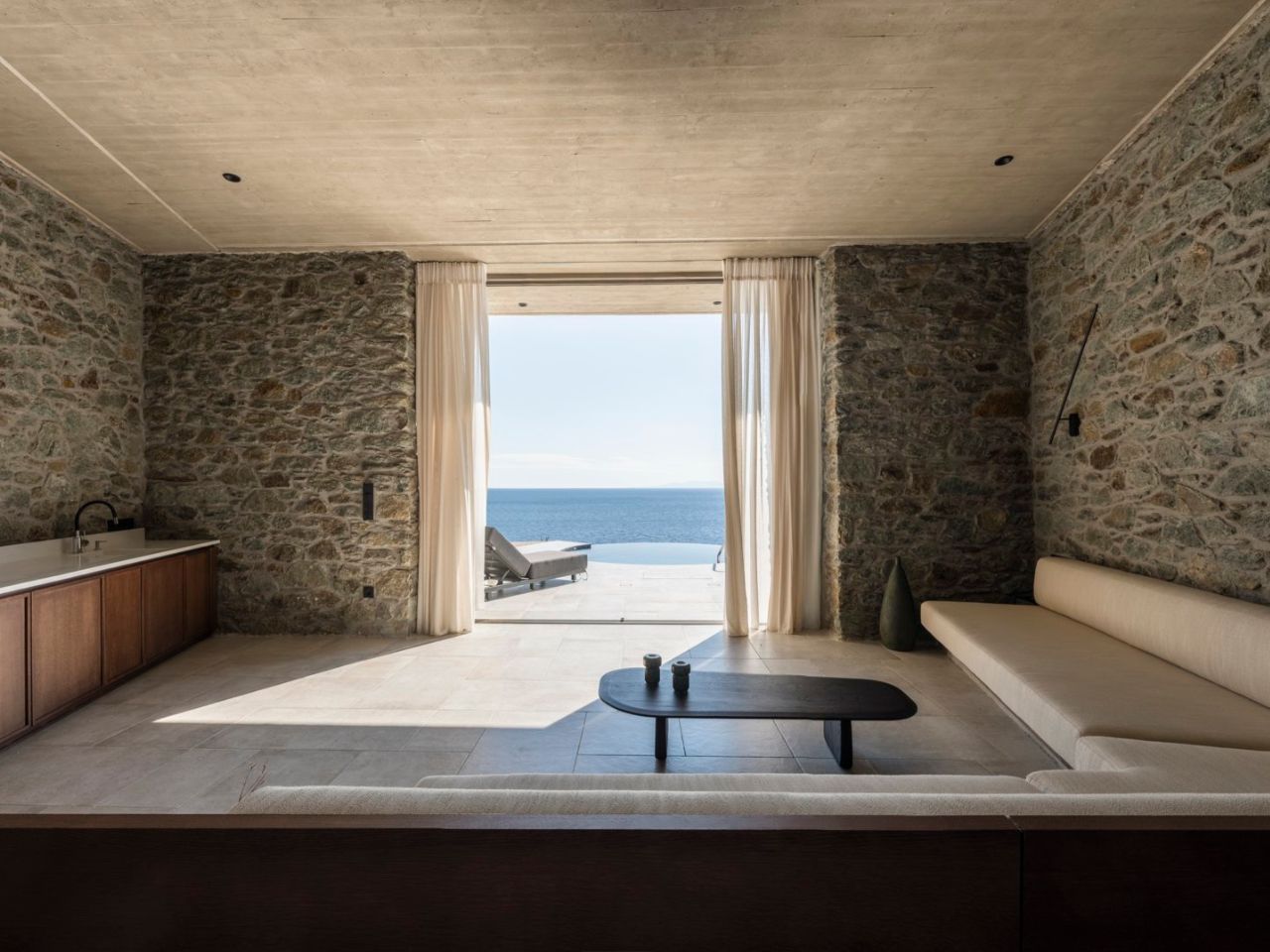
At the very bottom of the site lies The Point, the most secluded part of the resort. This independent guesthouse is framed by a curved stone wall and features a small circular pool. The exposed stone here provides a subtle contrast to the rendered walls used elsewhere across the project.

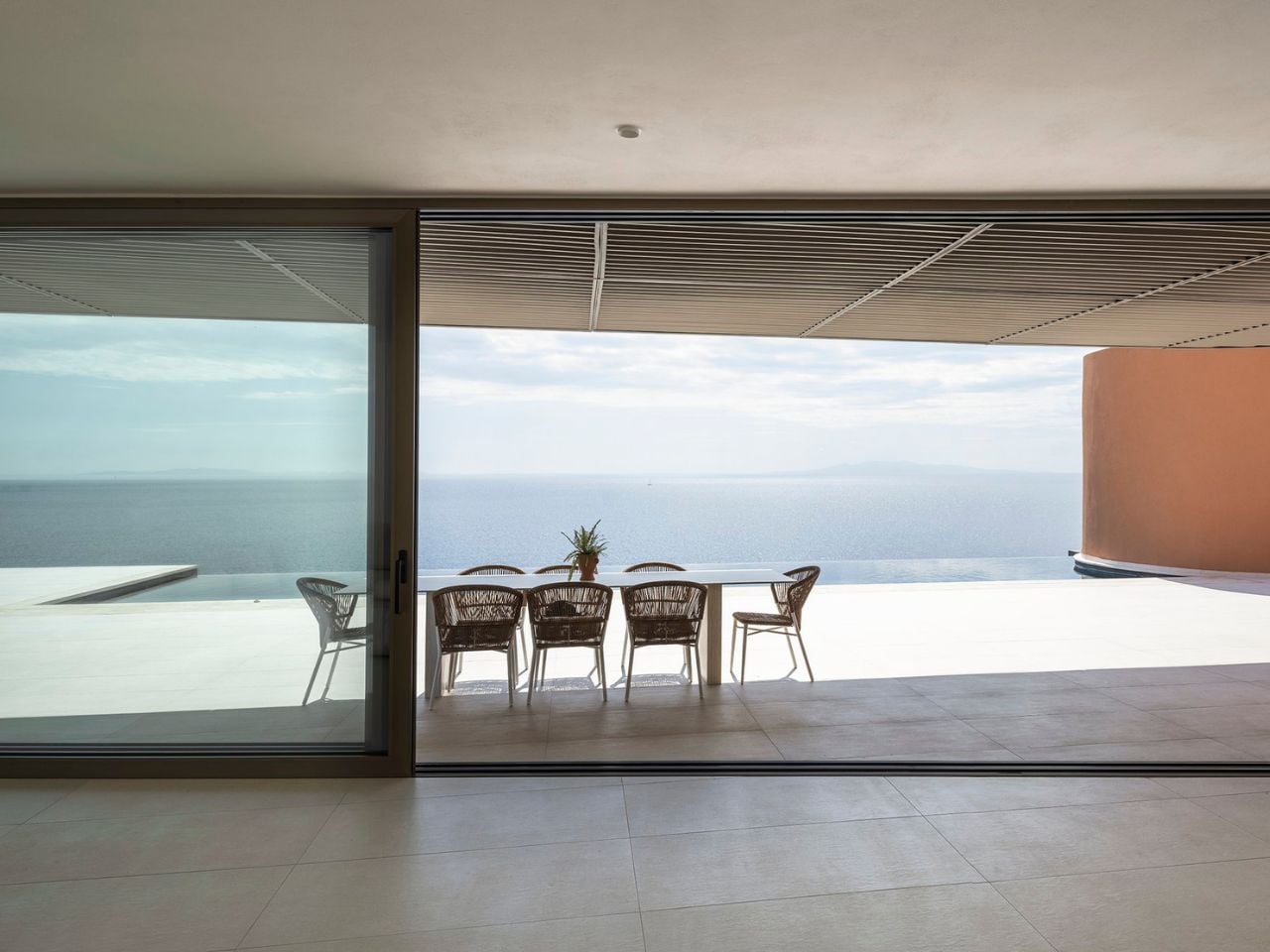
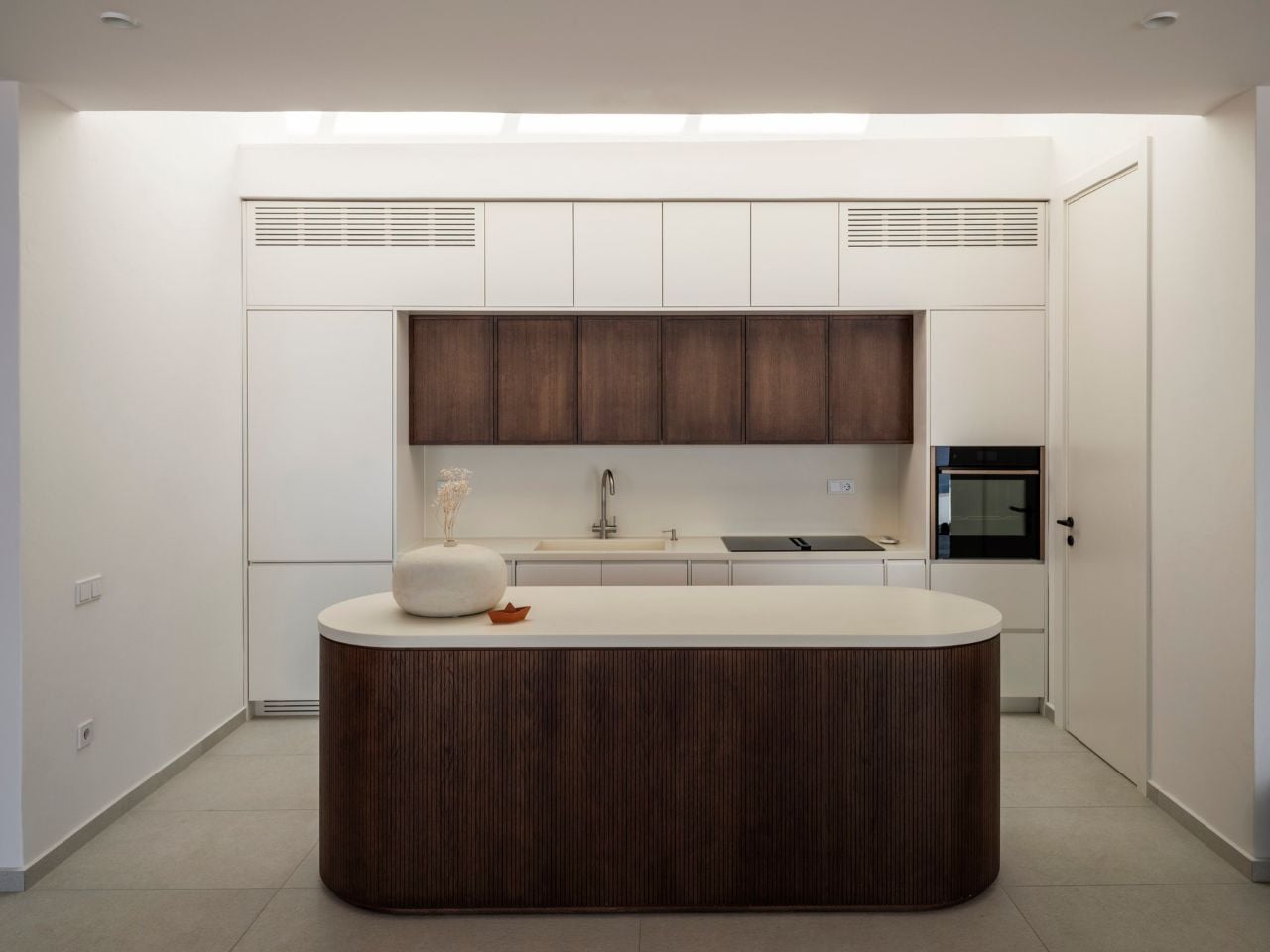
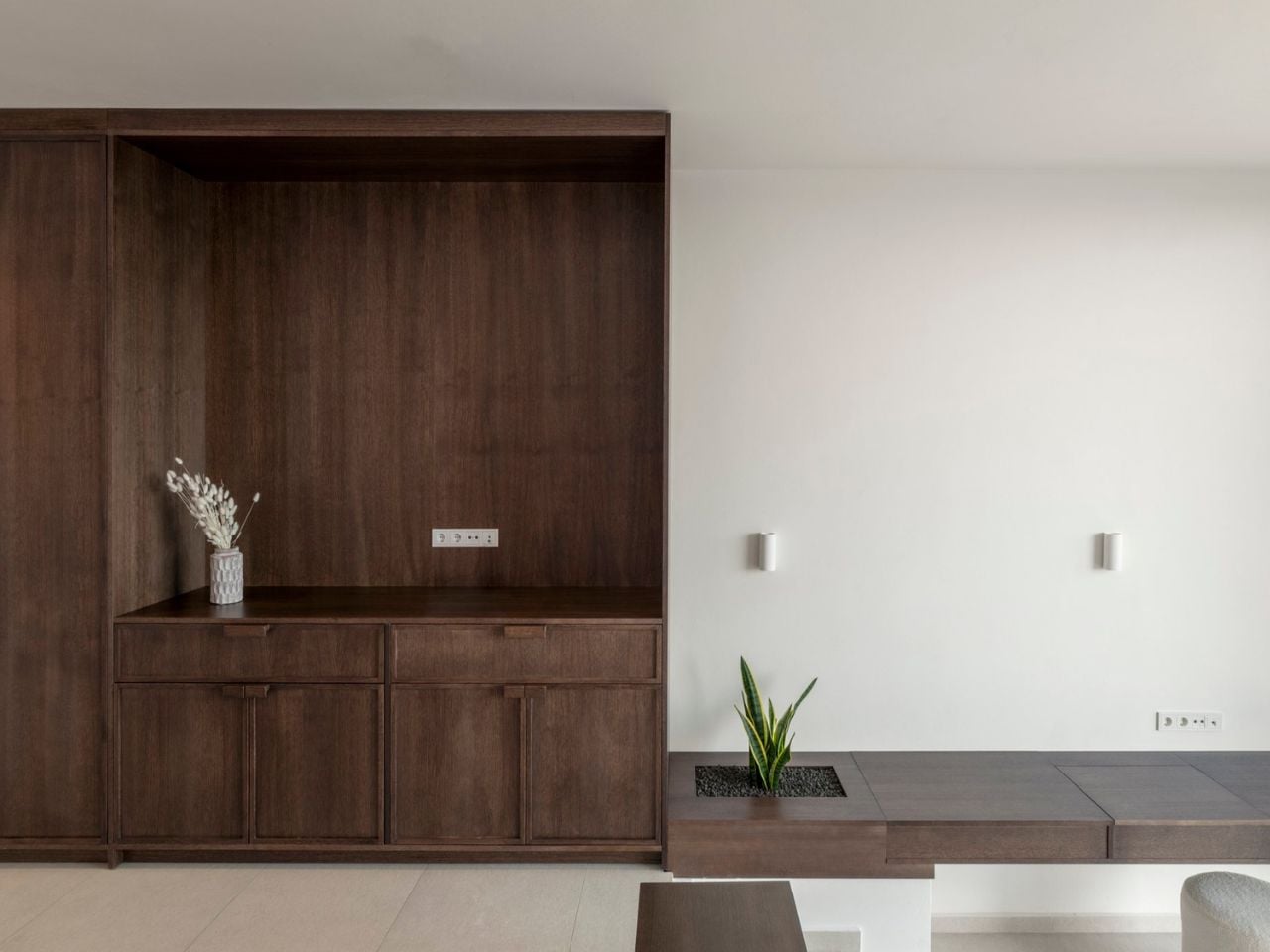
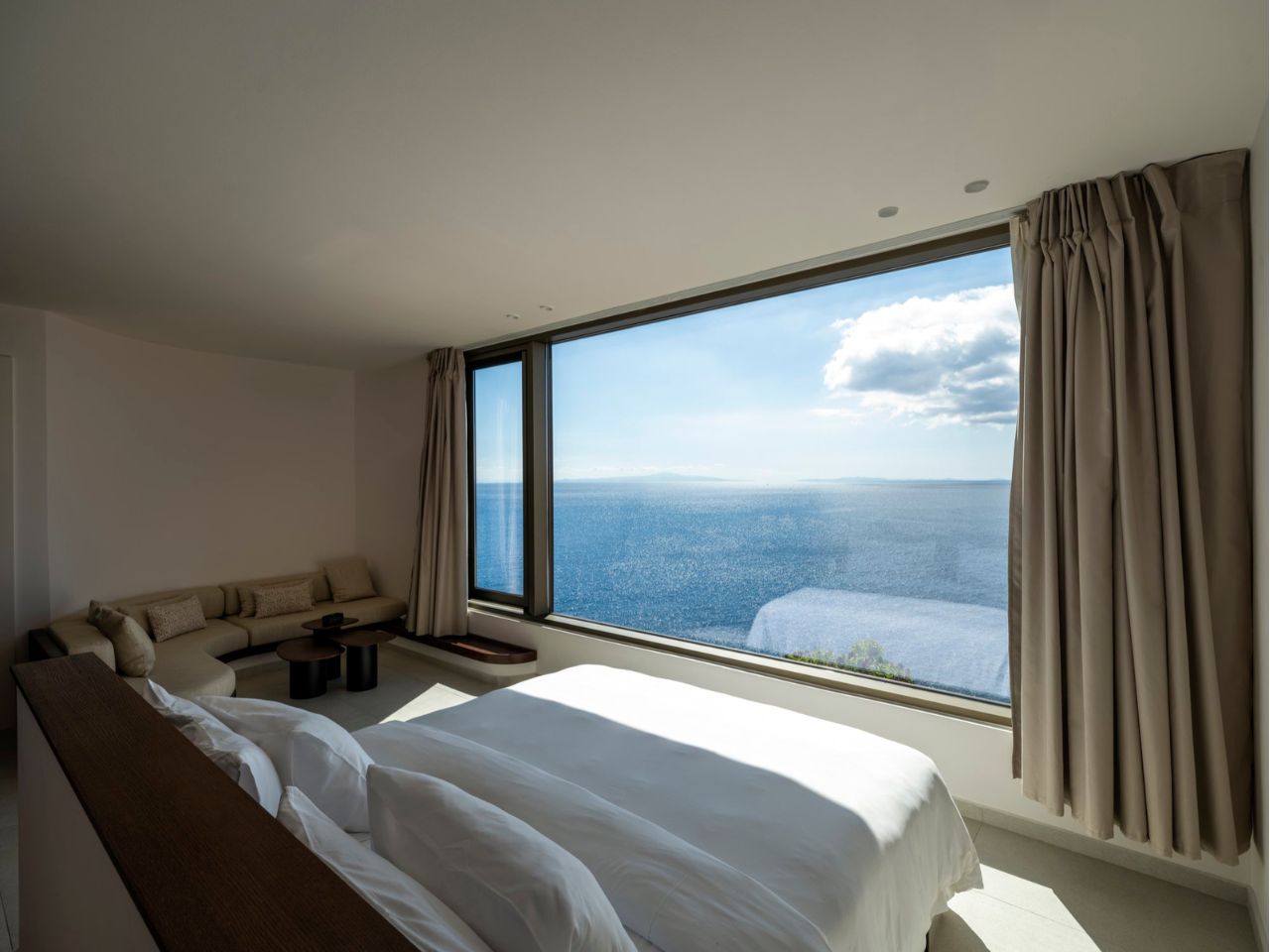
Inside the resort, the interiors are designed to feel calm and light despite the fact that many of the spaces sit within the hillside. Soft off-white tones reflect natural light throughout the rooms, while pale stone flooring connects indoor spaces with the terraces outside. This continuity helps blur the boundary between interior and exterior and keeps the atmosphere relaxed and airy.

In many ways, Olen feels less like a building placed on the landscape and more like an extension of it. The architecture follows the natural slope, opening itself gradually to the sea while remaining quietly anchored to the cliff. Guests move through terraces, shaded paths, and hidden rooms carved into the hillside, constantly aware of the surrounding horizon. The experience becomes less about staying in a hotel and more about inhabiting the landscape itself.

The post A Hotel in Greece That Hides Inside the Cliff Instead of Sitting on It first appeared on Yanko Design.
A Cluster of Volcanic Cabins Rises From Inner Mongolia’s Fragile Steppe

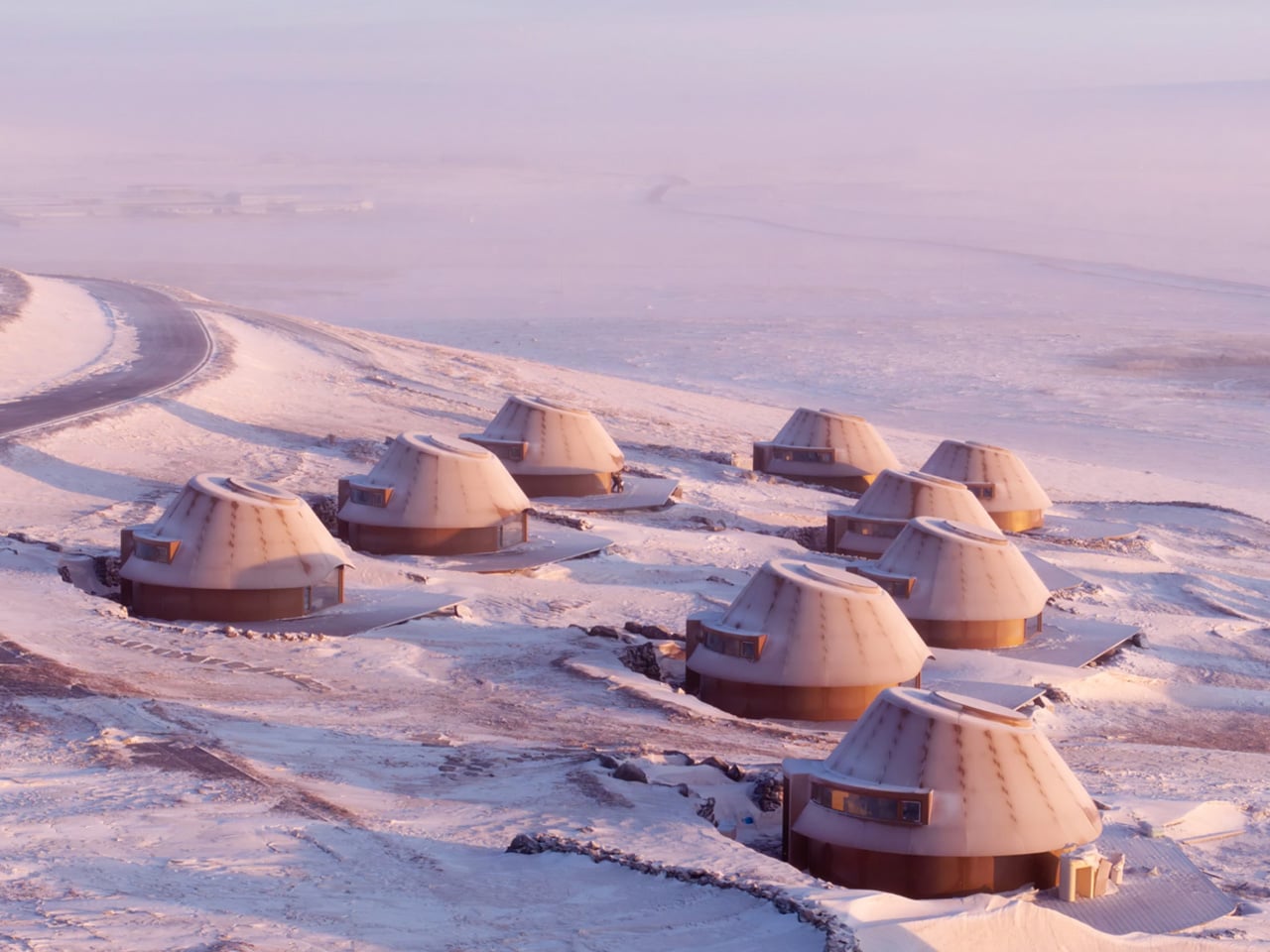
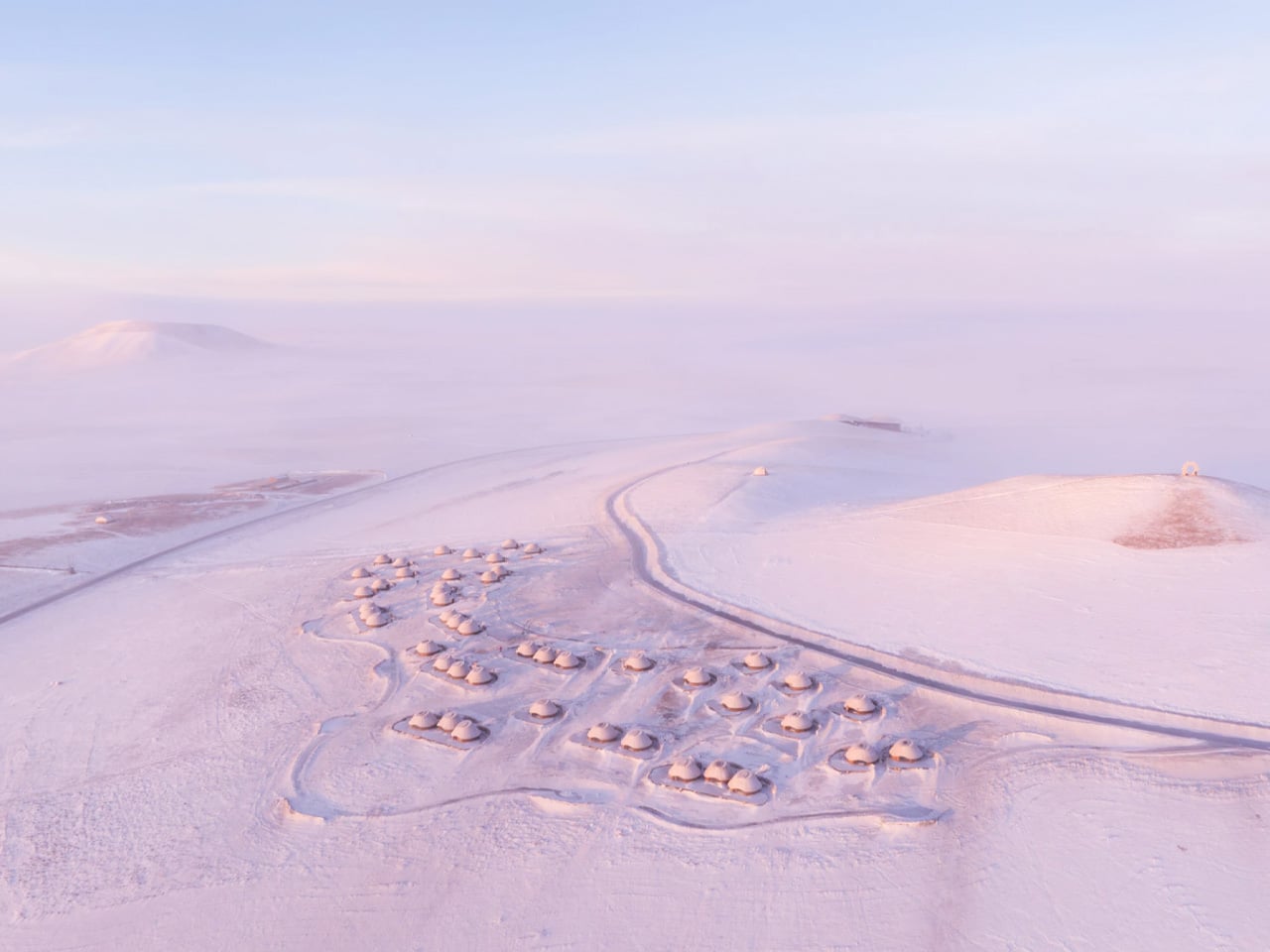
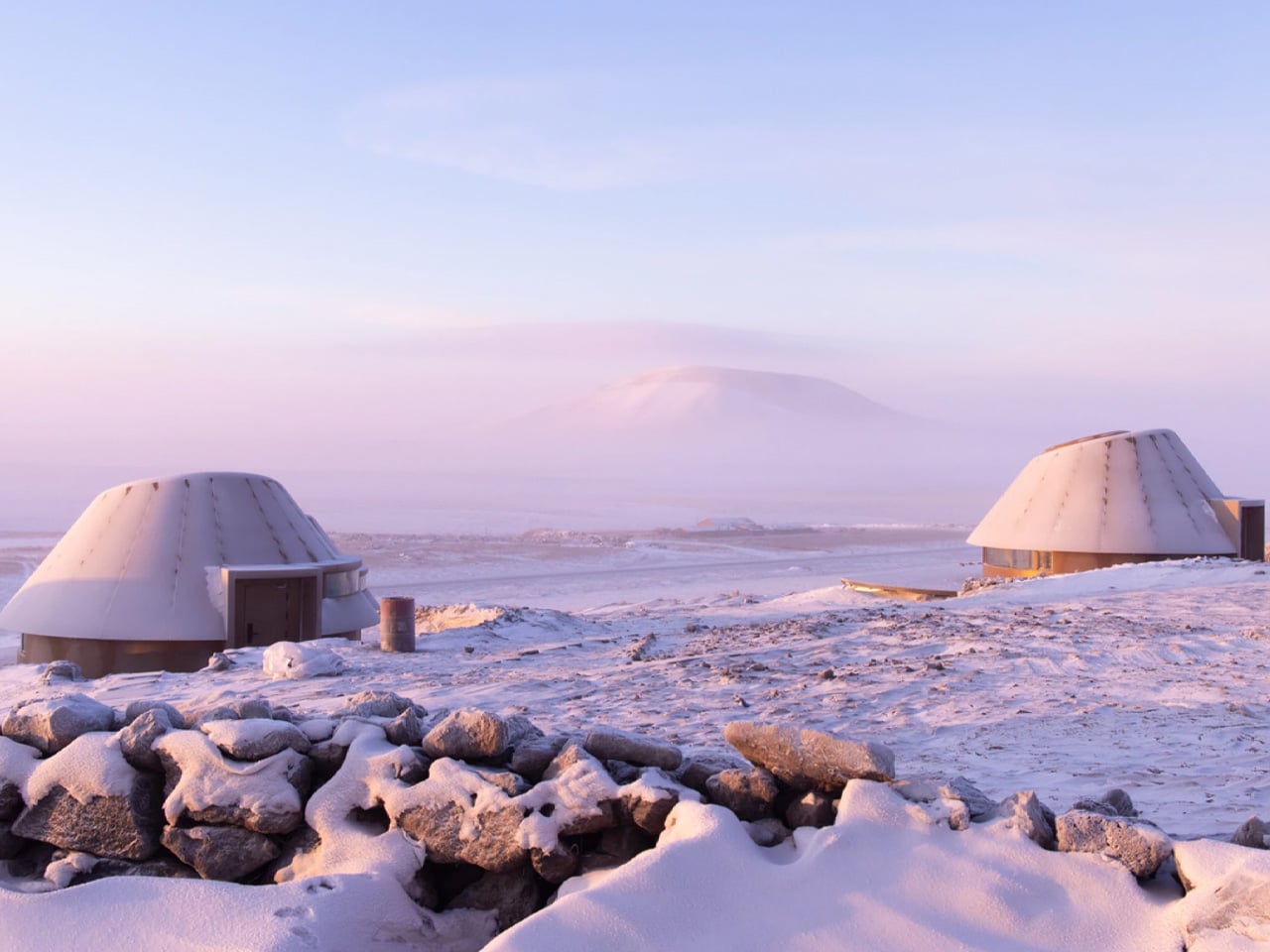
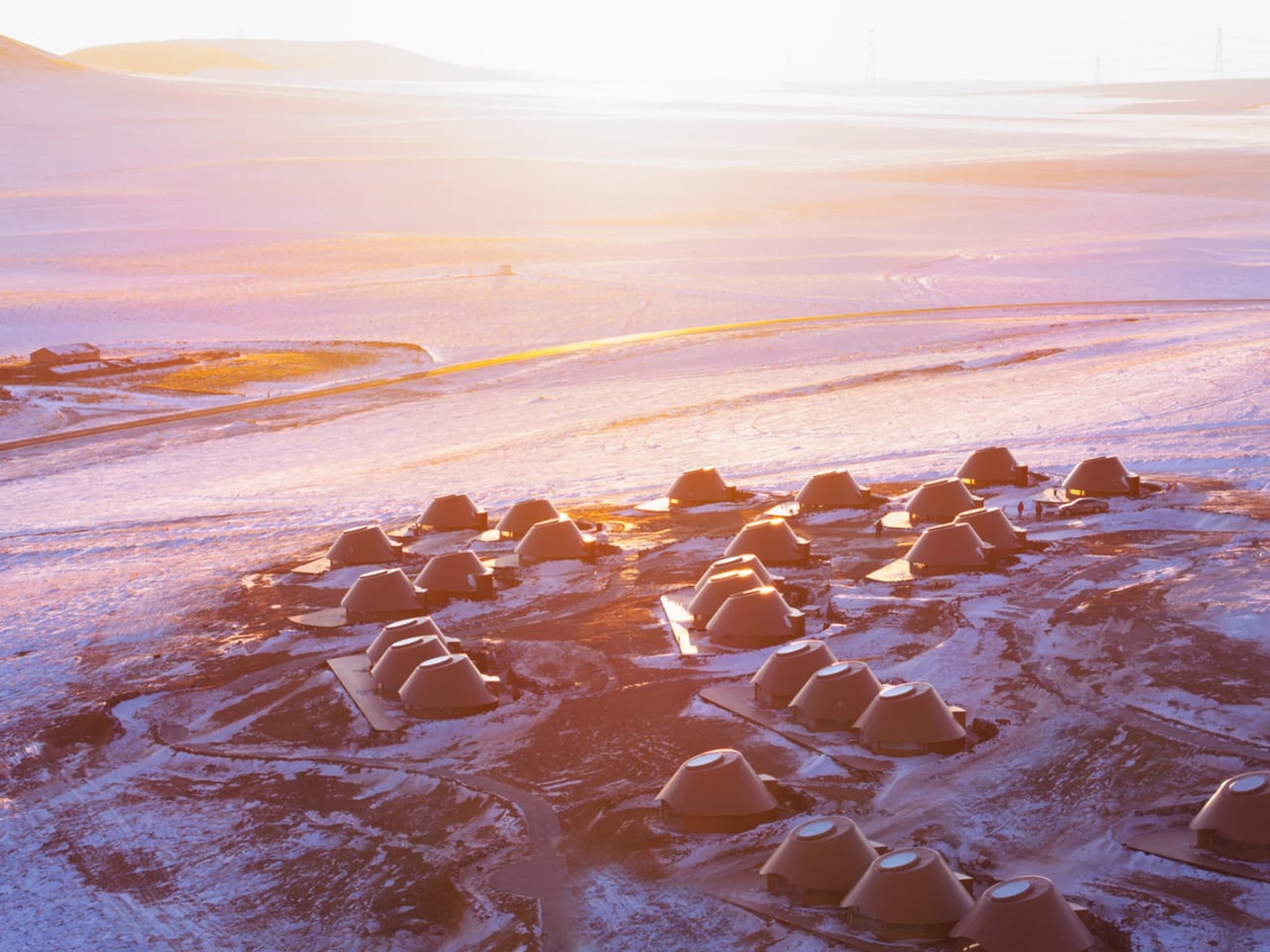
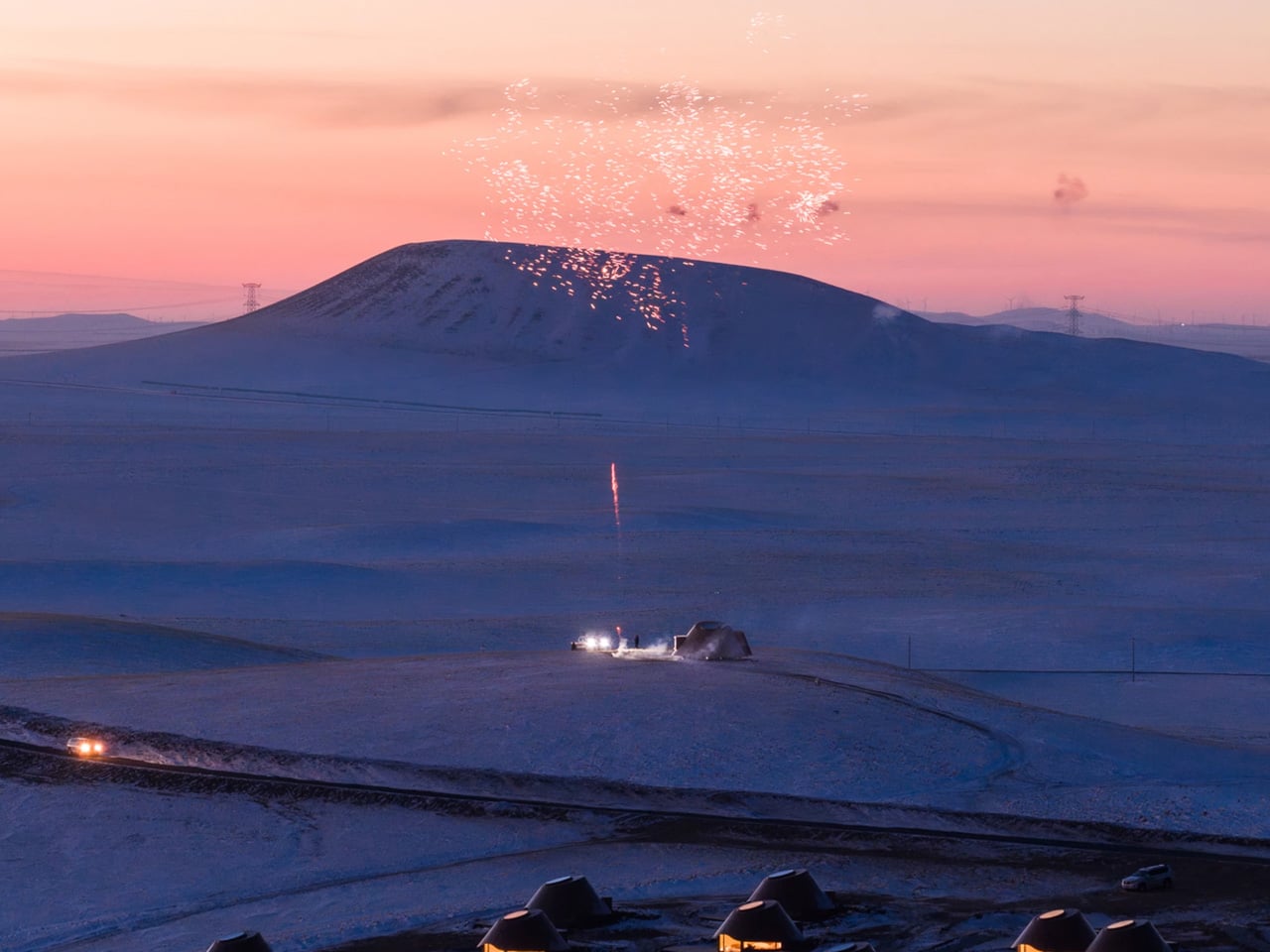
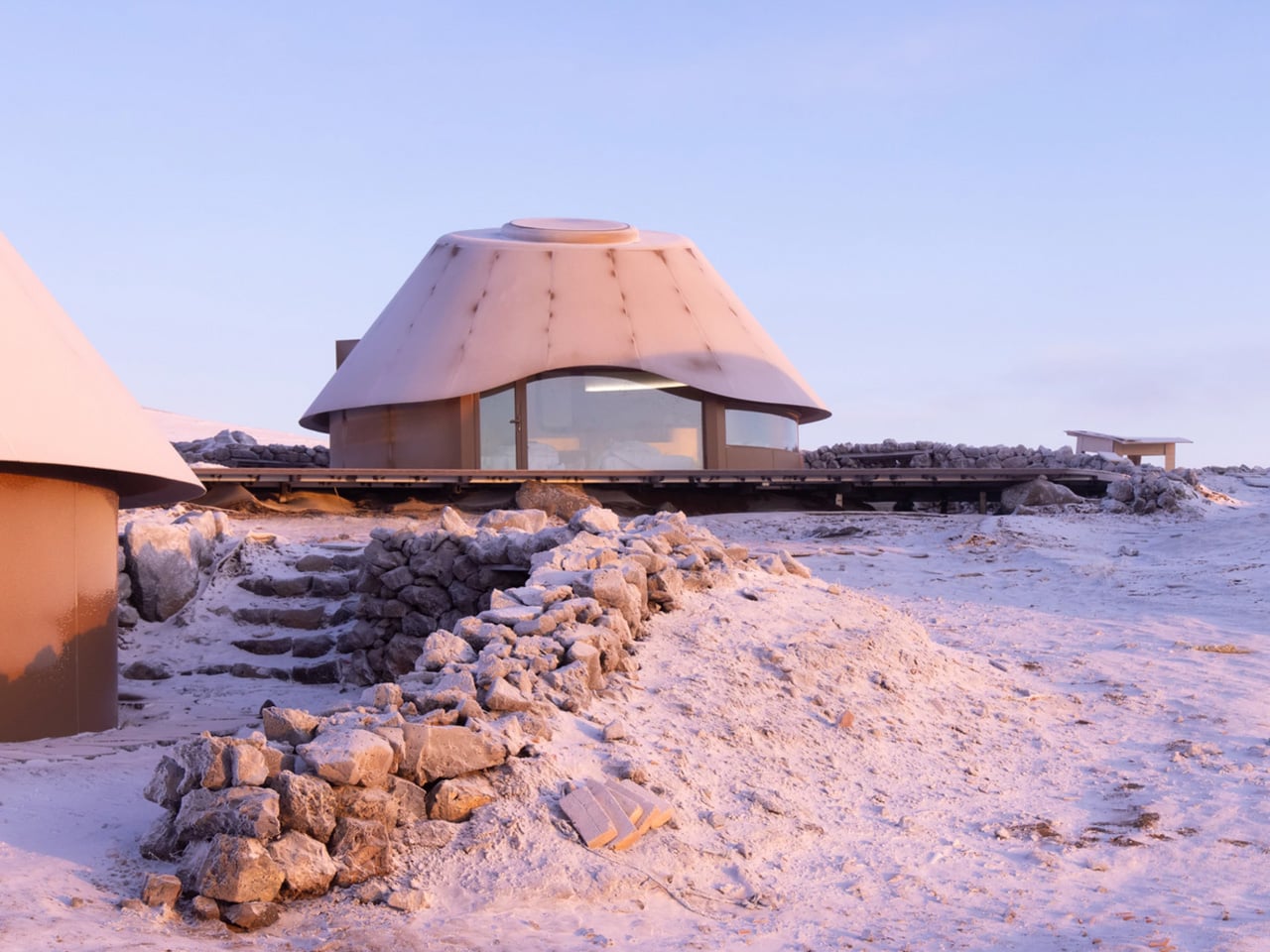
Somewhere in the vast Baiyinkulun Steppe of Inner Mongolia, where dormant volcanoes have shaped the earth for millennia, a new hotel settles quietly into the land it hopes to heal. Designed by PLAT ASIA, the Volcano-In Hotel of Arrivals spans 1,634 square meters across an ancient volcanic field roughly 150,000 years in the making. Rather than imposing itself on this remote terrain, the resort scatters a constellation of compact, sphere-fronted cabins across the landscape, each one placed with surgical intention over patches of degraded sand where vegetation has long struggled to take root.

That placement is the project’s central gesture. By positioning guest suites directly atop eroding sand depressions, the architects aim to arrest soil loss and give the steppe a chance to regenerate beneath and around the structures. It’s an unusual proposition — architecture as ecological bandage — and one whose success will only reveal itself over years of careful observation.

Designer: PLAT ASIA

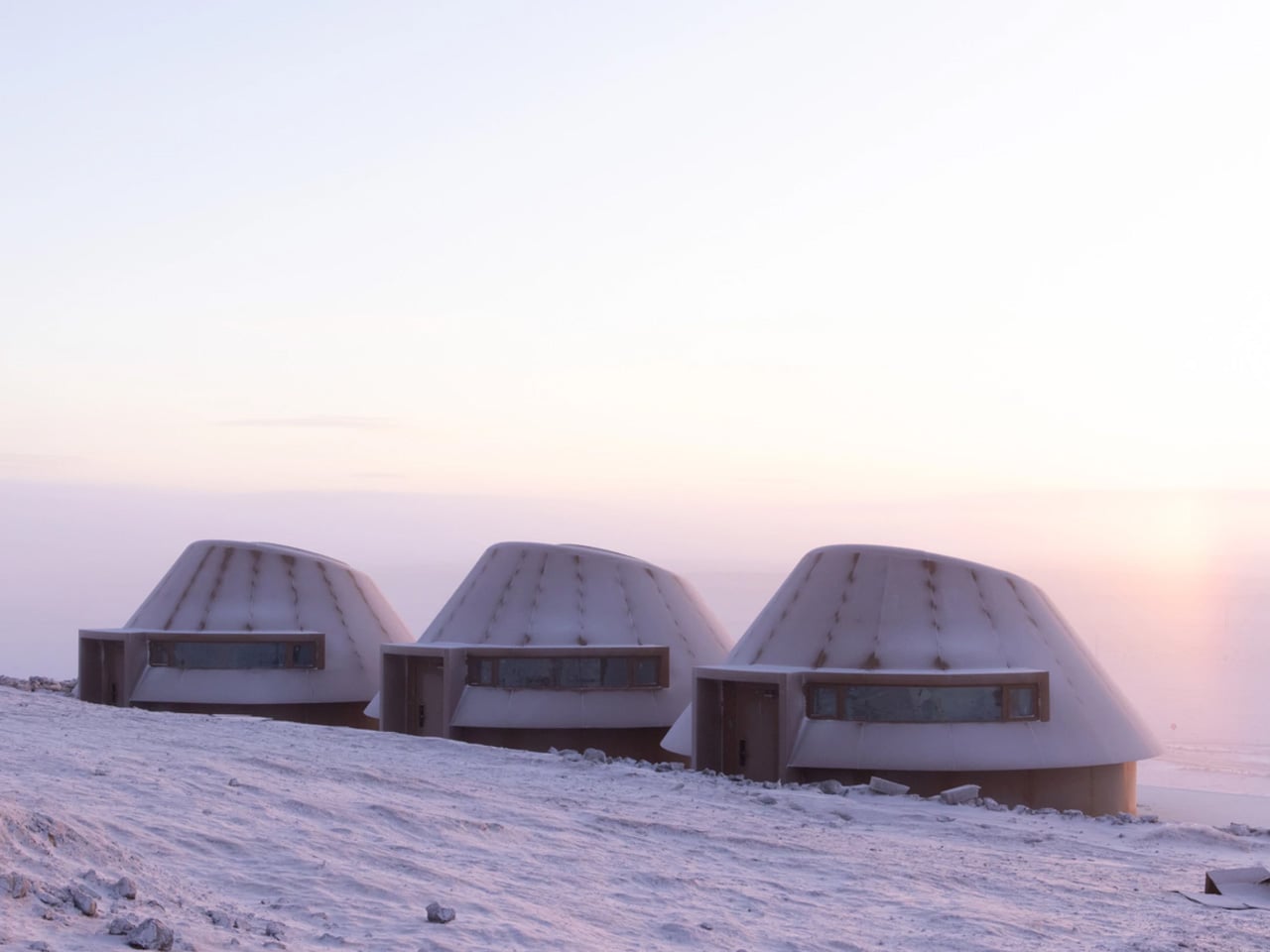
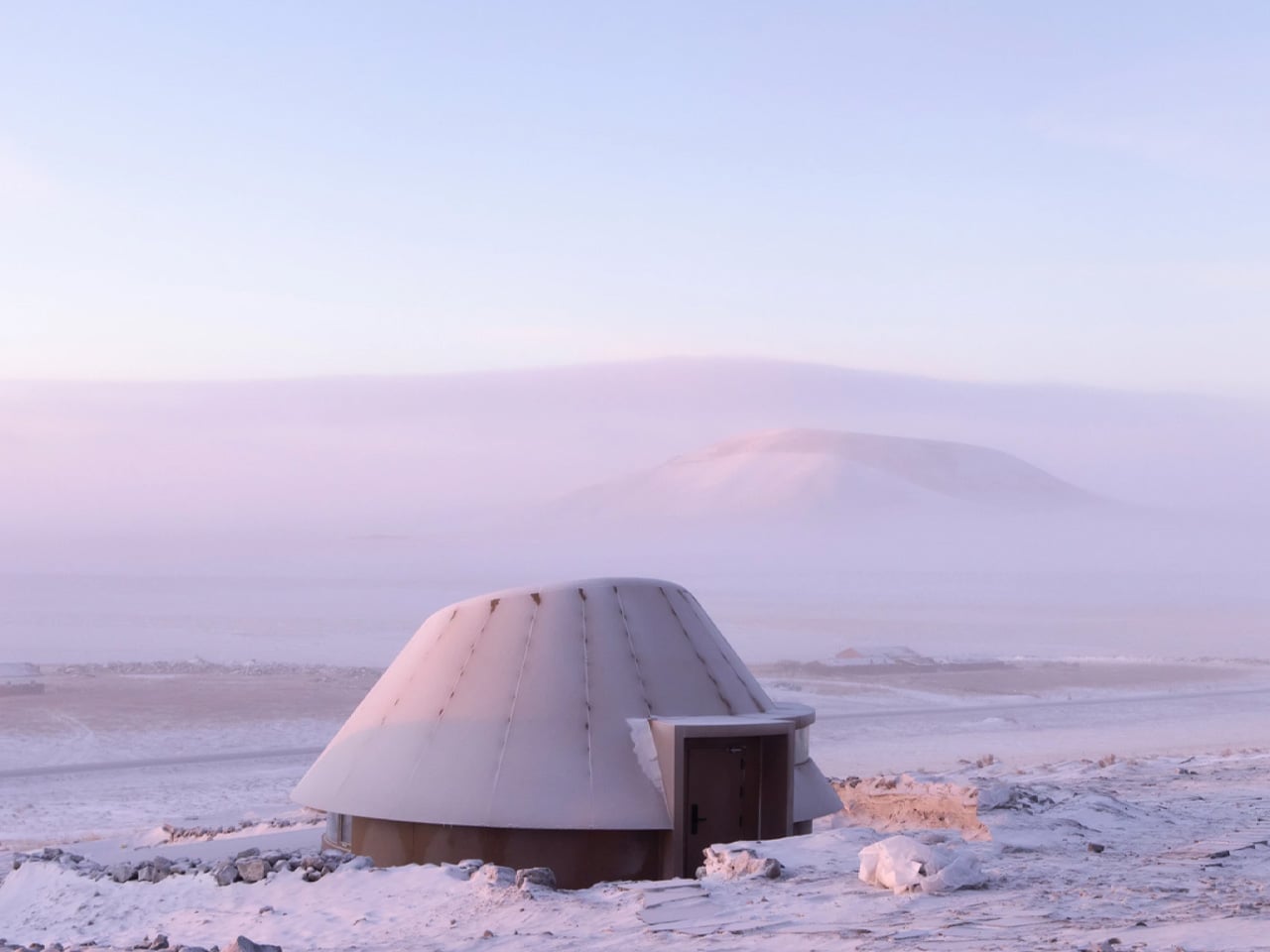
Each cabin presents a striking silhouette against the open grassland. Reddish metal panels wrap the rounded facades, nodding to the volcanic geology underfoot, while aluminum roofing caps the forms with a clean, reflective edge. The units are raised slightly off the ground, a deliberate lightness that limits their footprint. Curved retaining walls serve double duty, acting as wind buffers and snow screens against the harsh seasonal conditions that sweep through the region. Construction leaned heavily on prefabrication, with components arriving ready to assemble on site, keeping heavy machinery and deep excavation to a minimum, a pragmatic choice for a landscape this sensitive.

Inside, the cabins are compact but considered. A sleeping area, a relaxed living zone, a bathroom, and a private outdoor terrace compose each suite. The most memorable detail is overhead: an oval skylight positioned directly above the bed, turning the Mongolian night sky into a personal planetarium. A slim horizontal window extends the experience outward, framing the volcanic horizon in a single unbroken line.

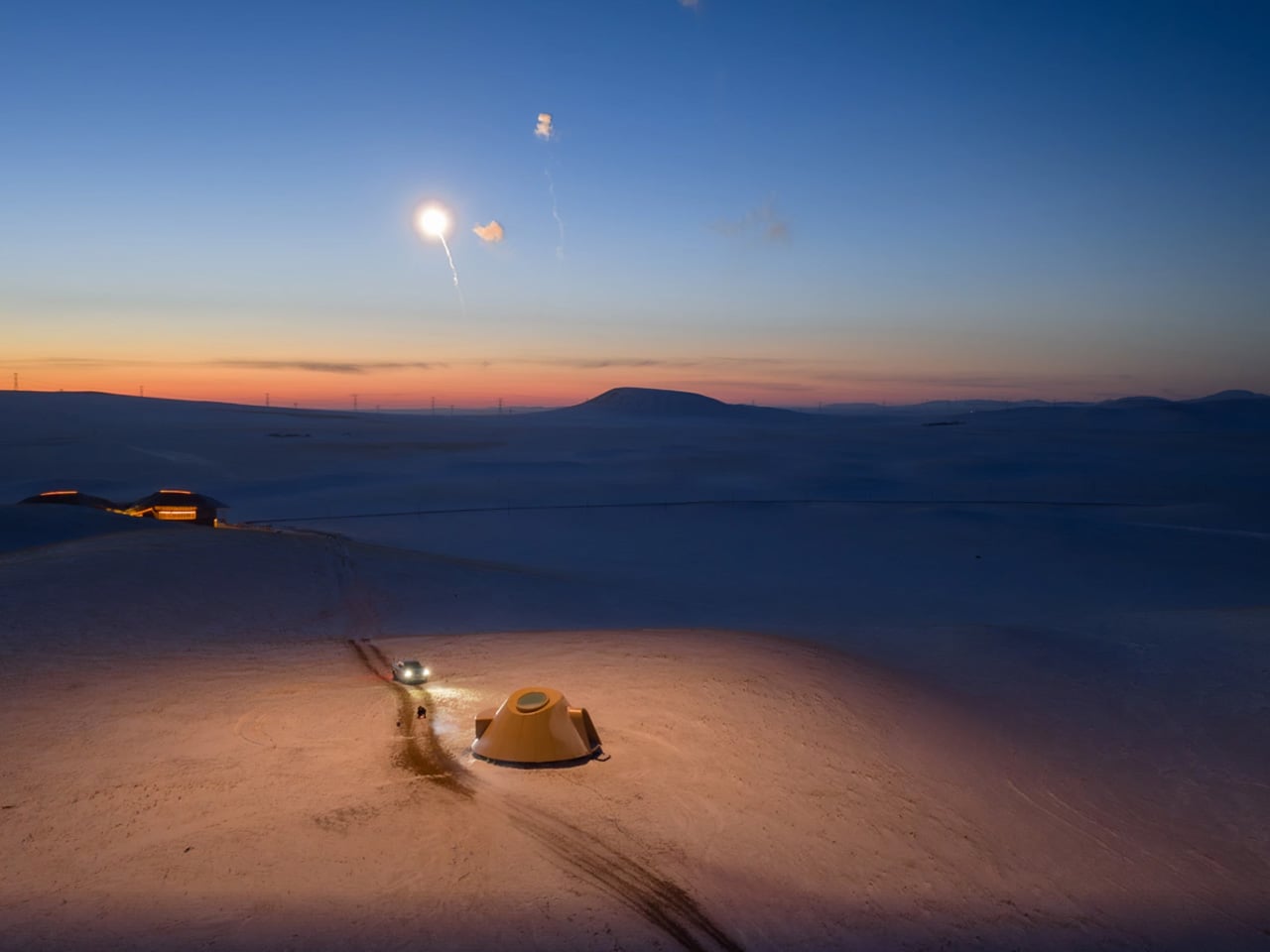
On a nearby hilltop, an earlier prototype cabin stands alone — smaller, simpler, and a remnant of the resort’s experimental beginnings. It reads almost as a sentinel, watching over the cluster that followed. Stone-paved pathways thread the cabins together, grounding the experience in a tactile, unhurried movement through the site. The hotel forms one piece of the larger Baiyinkulun Steppe & Volcano Tourism Resort, which also includes the Volcano-In Visitor Center. Whether the steppe ultimately reclaims the ground beneath these cabins remains an open question. But as a proposition, that tourism infrastructure might double as land rehabilitation, the Volcano-In Hotel offers a compelling, quietly ambitious model worth watching.

The post A Cluster of Volcanic Cabins Rises From Inner Mongolia’s Fragile Steppe first appeared on Yanko Design.
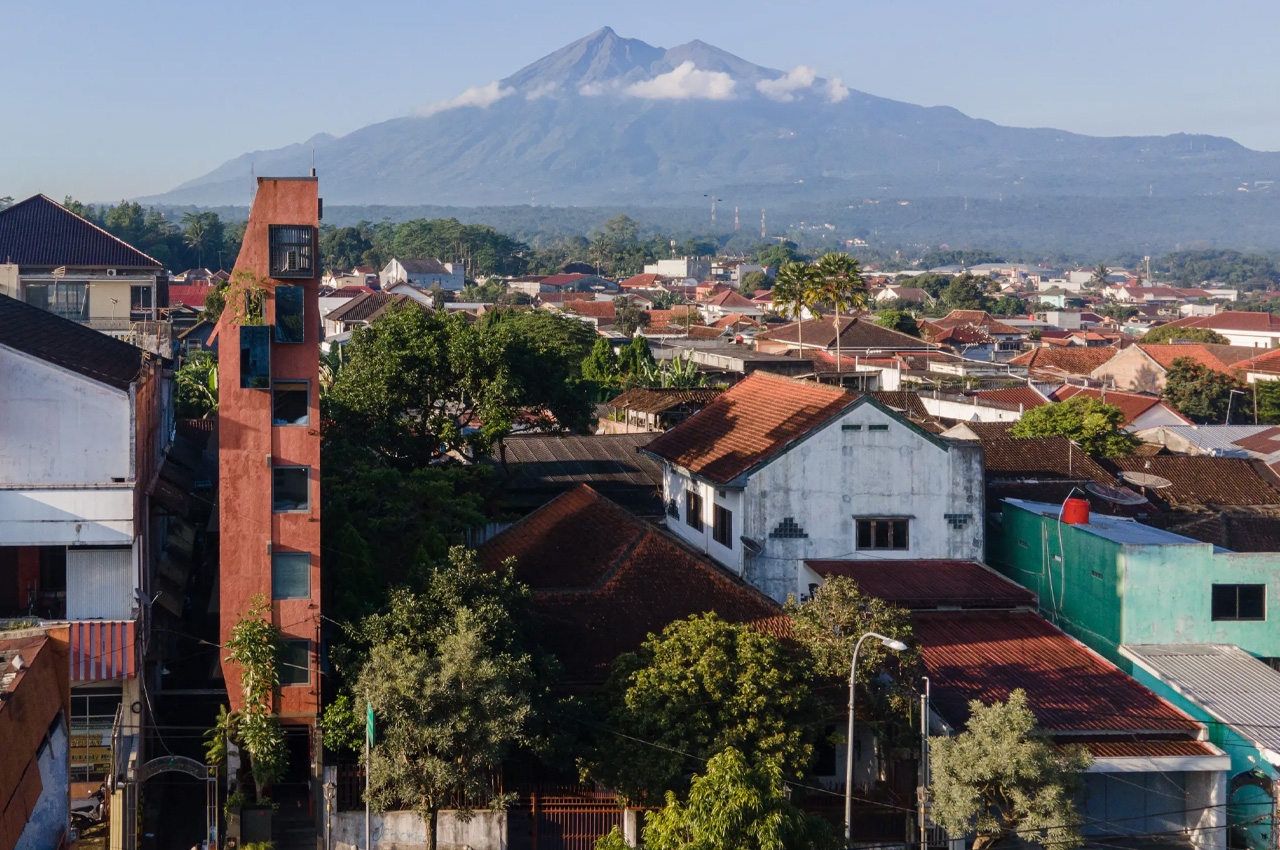
The World’s Skinniest Hotel measures just 9.1 feet in width

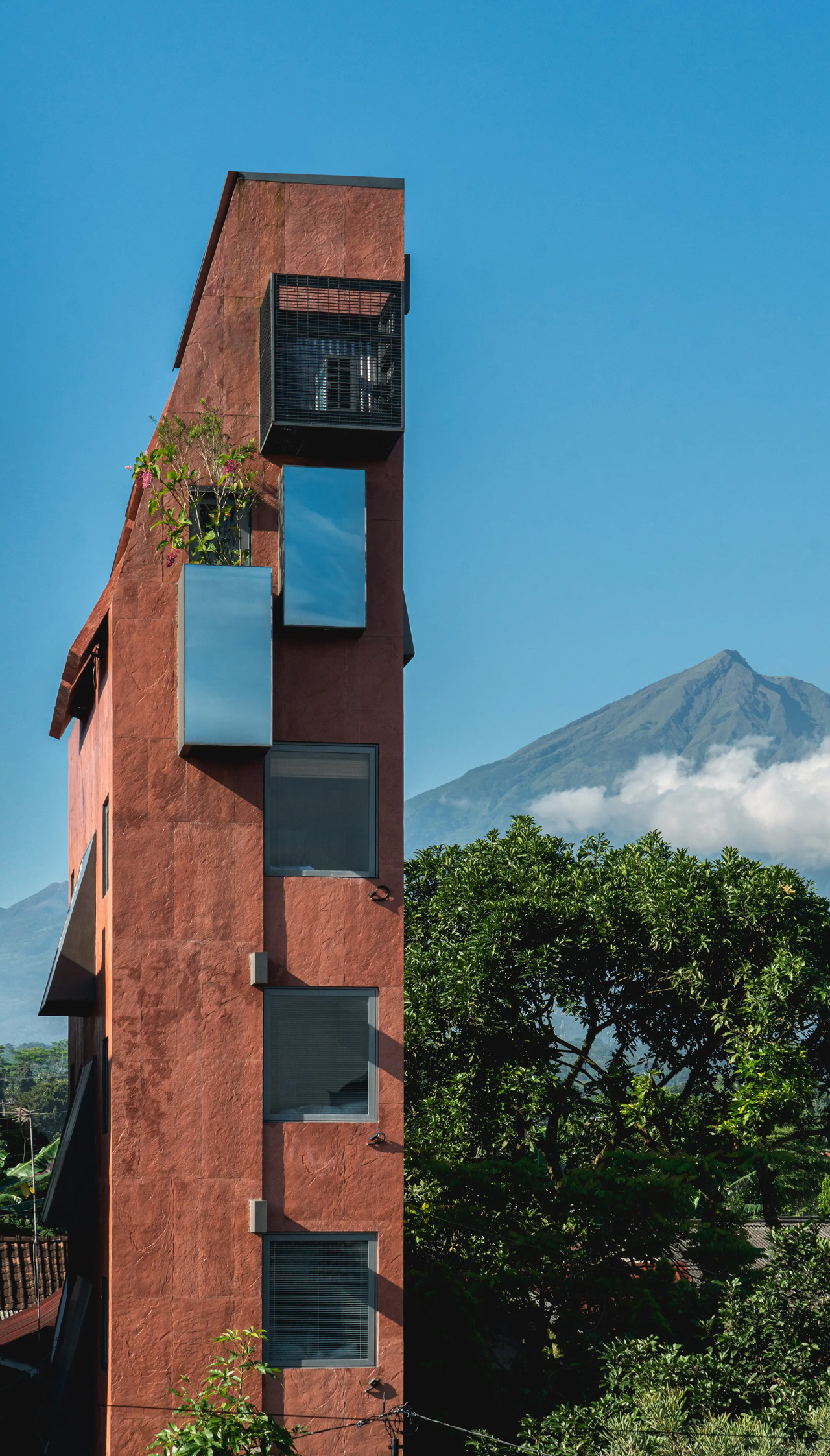
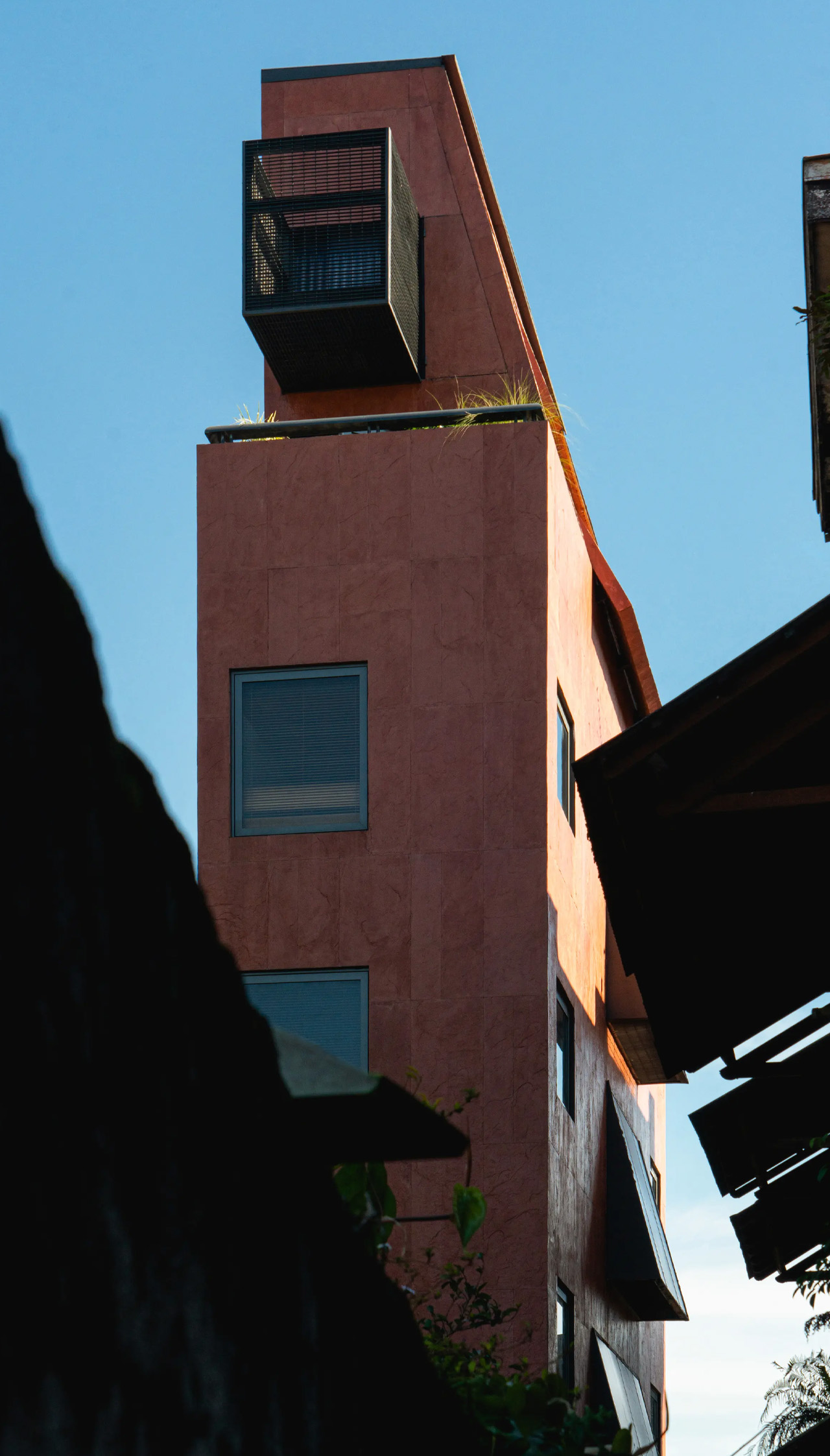
Designed by Sahabat Selojene, the Piturooms in Indonesia is one of the skinniest hotels in the world! It only has a width of 280 cm, and is an ingenious solution to combating a challenging and complicated inner-city plot. It is nestled in Central Java on a narrow site that is stuffed between an alleyway, a neighboring garden, and surrounding homes. This little space had a lot of potential, and the hotel owners wanted to turn the lack of space into a highlight, converting it into a unique skinny hotel!

Designer: Sahabet Selojene

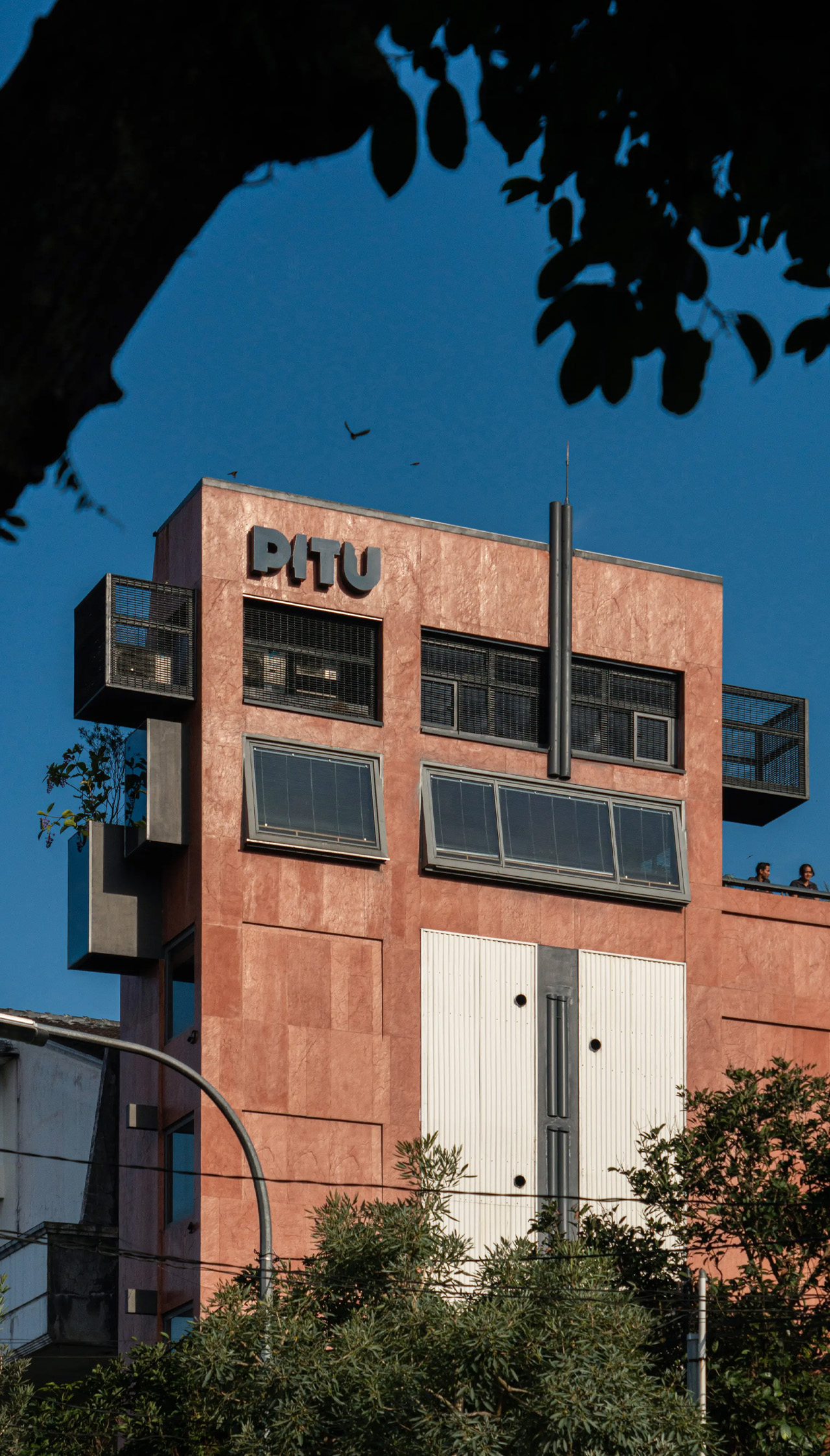
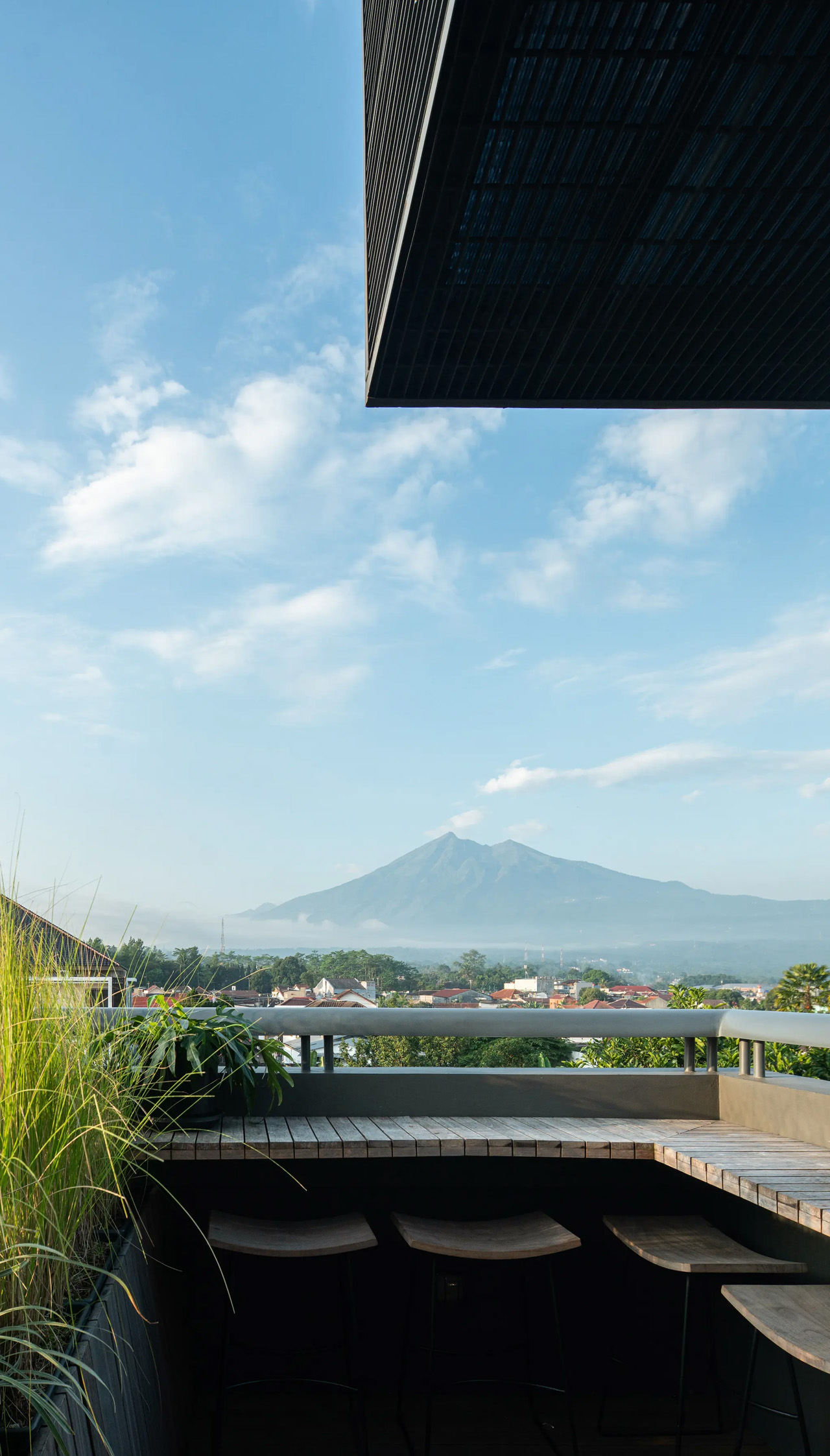
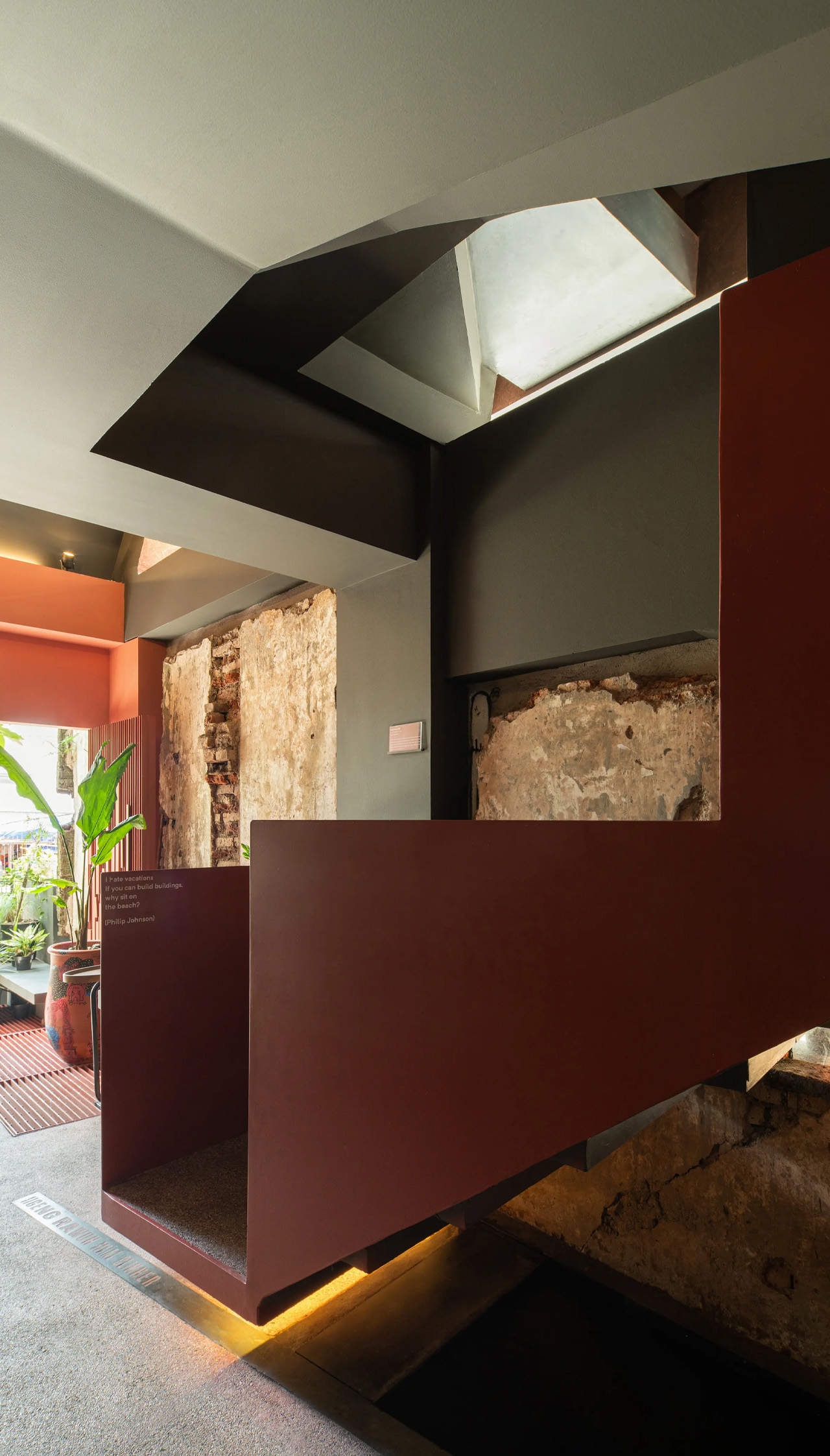
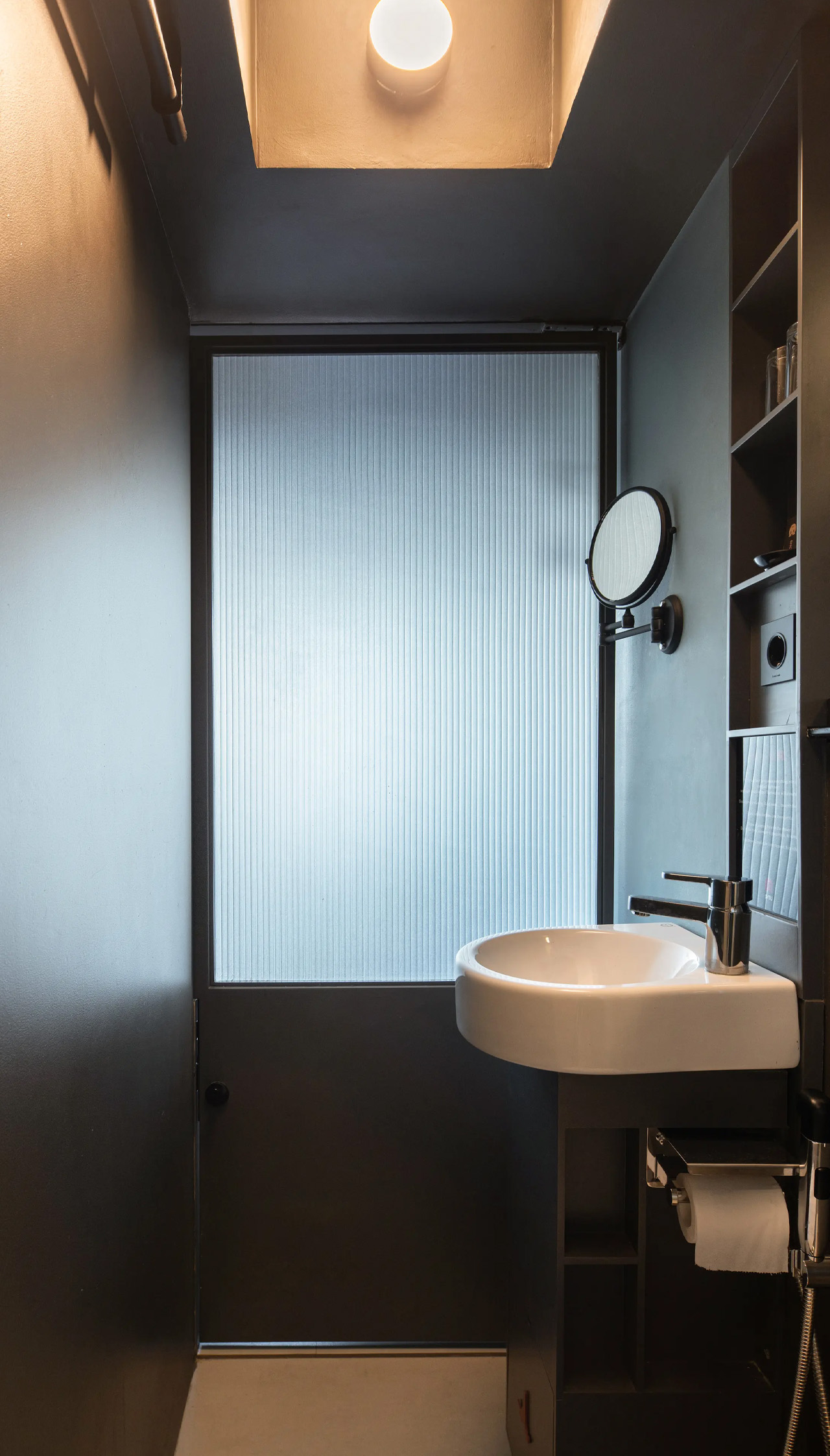
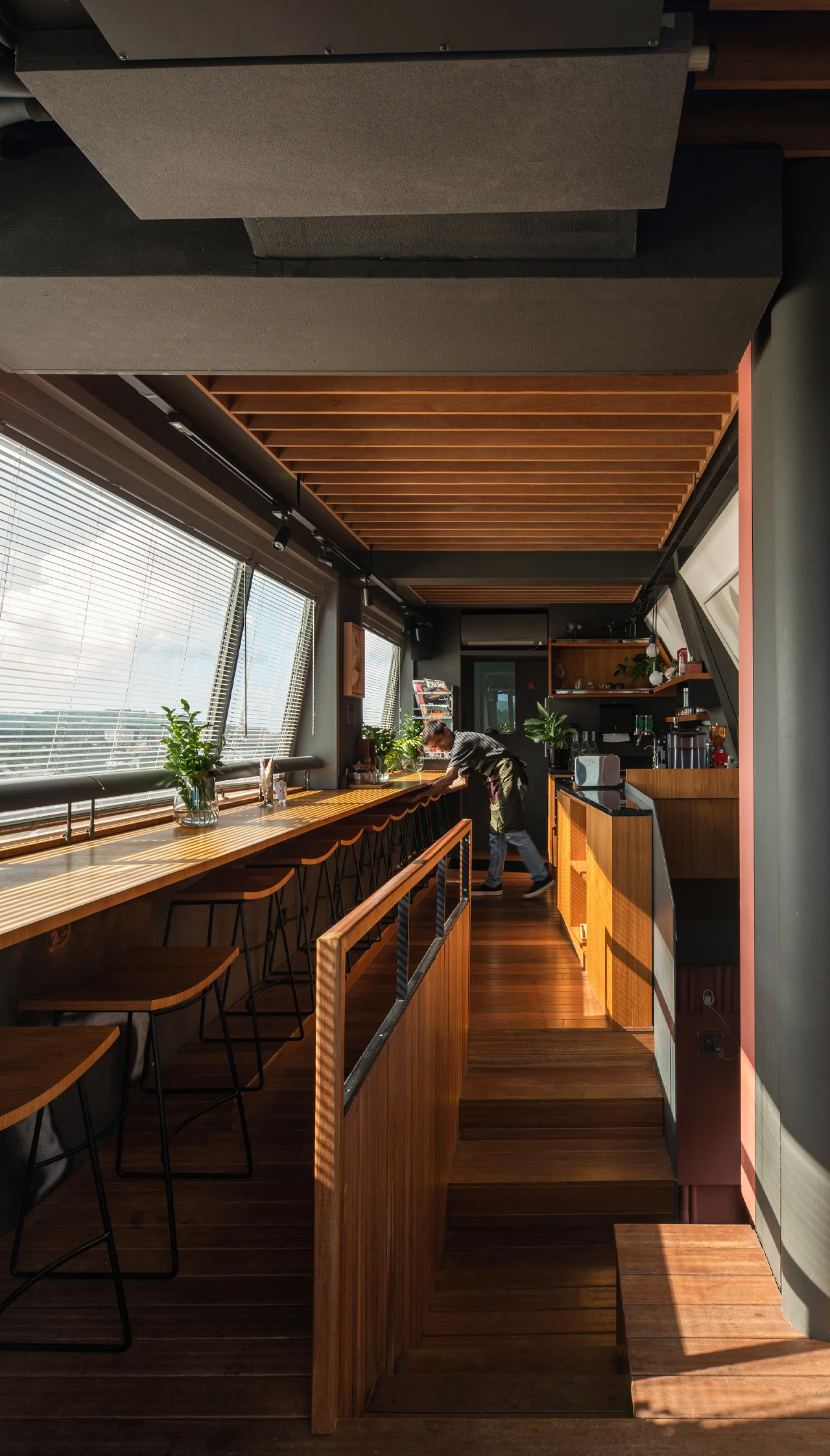
Piturooms has a height of 55 feet and a length of 31 feet. It features a well-designed interior that accommodates seven hotel rooms, an entrance lobby, a compact lounge, as well as a small outdoor terrace area close to the top of the building. A crisscrossing staircase functions as the focal point of the space, with all the hotel rooms placed around it. There is a tiny elevator as well which is intended for luggage and disabled access. The seven hotel rooms feature different color schemes and house a double bed, TV, and bathroom with shower, sink, and toilet.

“With a size of only 2.8 x 3 x 2.4 m [9.1 x 9.8 x 7.8 ft], each room has the ability to provide an intimate shell of a primitive sleeping nest while still addressing modern living with its compact yet fully equipped amenities in its interior,” said Sahabat Selojene. “The addition of various original artwork in each room introduces an even more personal touch and acts as a starting point for each different theme.

Selojene connected the various rooms, floating steps, and the narrow corridor with grating as flooring to build a unique transparent and see-through effect inside the entire building. This gives the space a larger and more expansive feel, providing it with a certain openness. The openness also allows air streams to be generated between the external walls and the opaque canopy on every floor.

The Piturooms makes for a unique and comfortable stay in the heart of Central Java. If you’re interested in staying, you can book a room for almost US$55  per night.

The post The World’s Skinniest Hotel measures just 9.1 feet in width first appeared on Yanko Design.
NEOM Siranna resort hotel looks like a fantasy castle carved from a mountainside

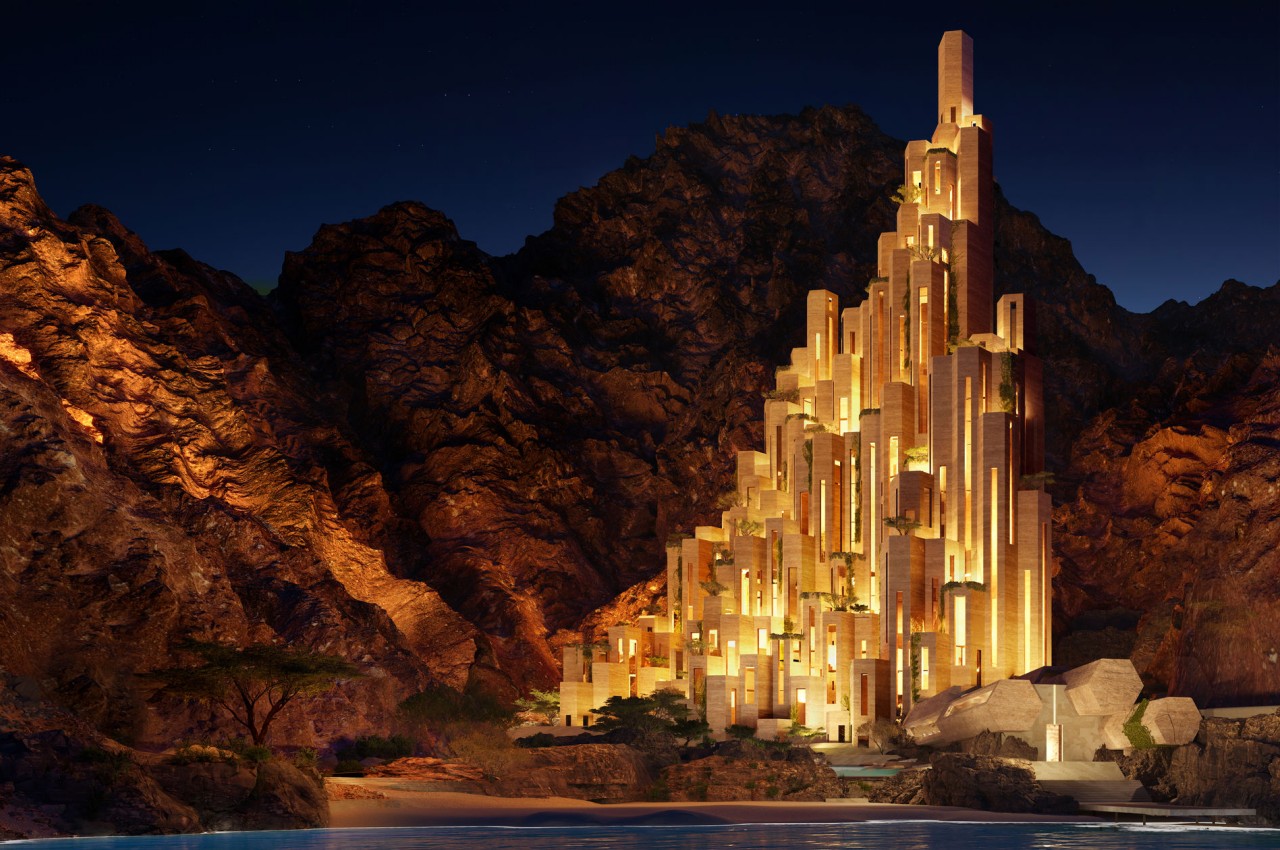
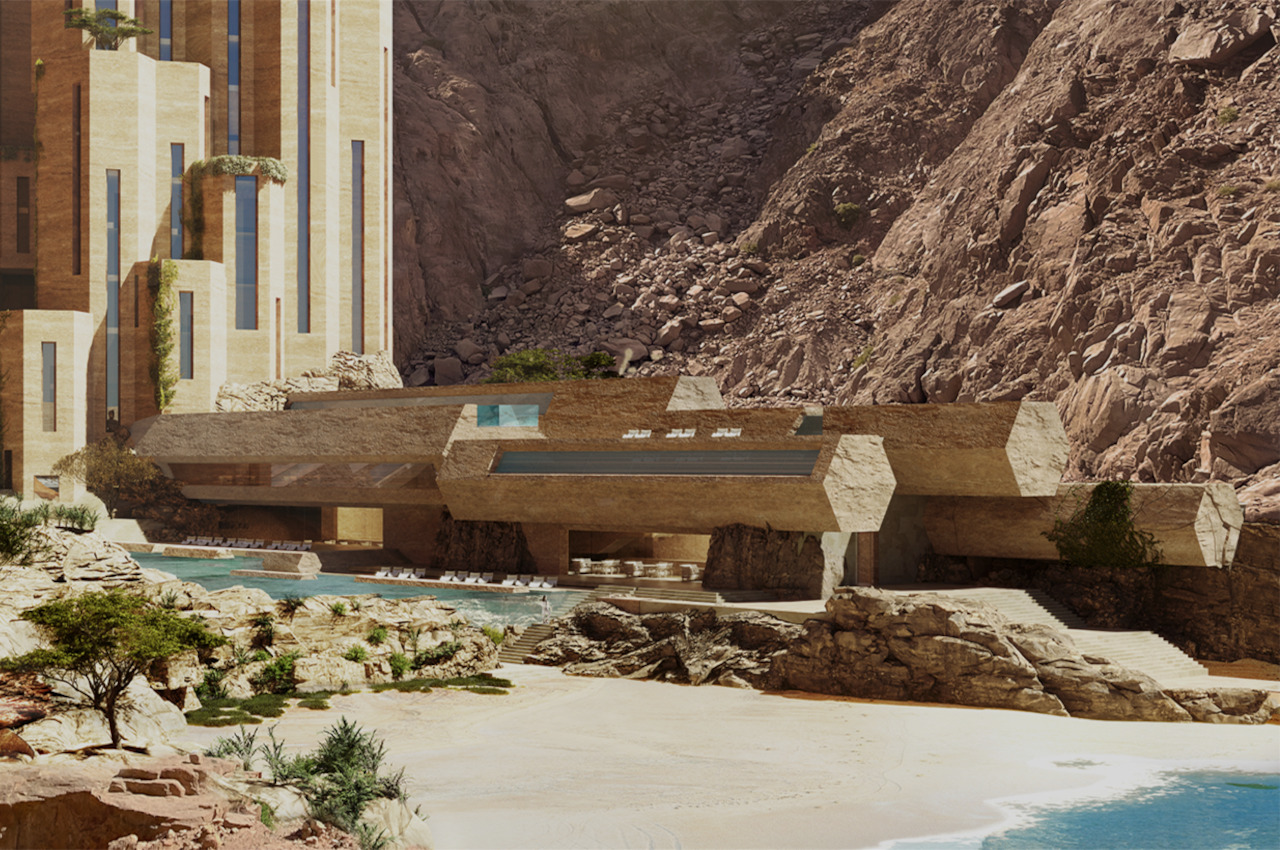
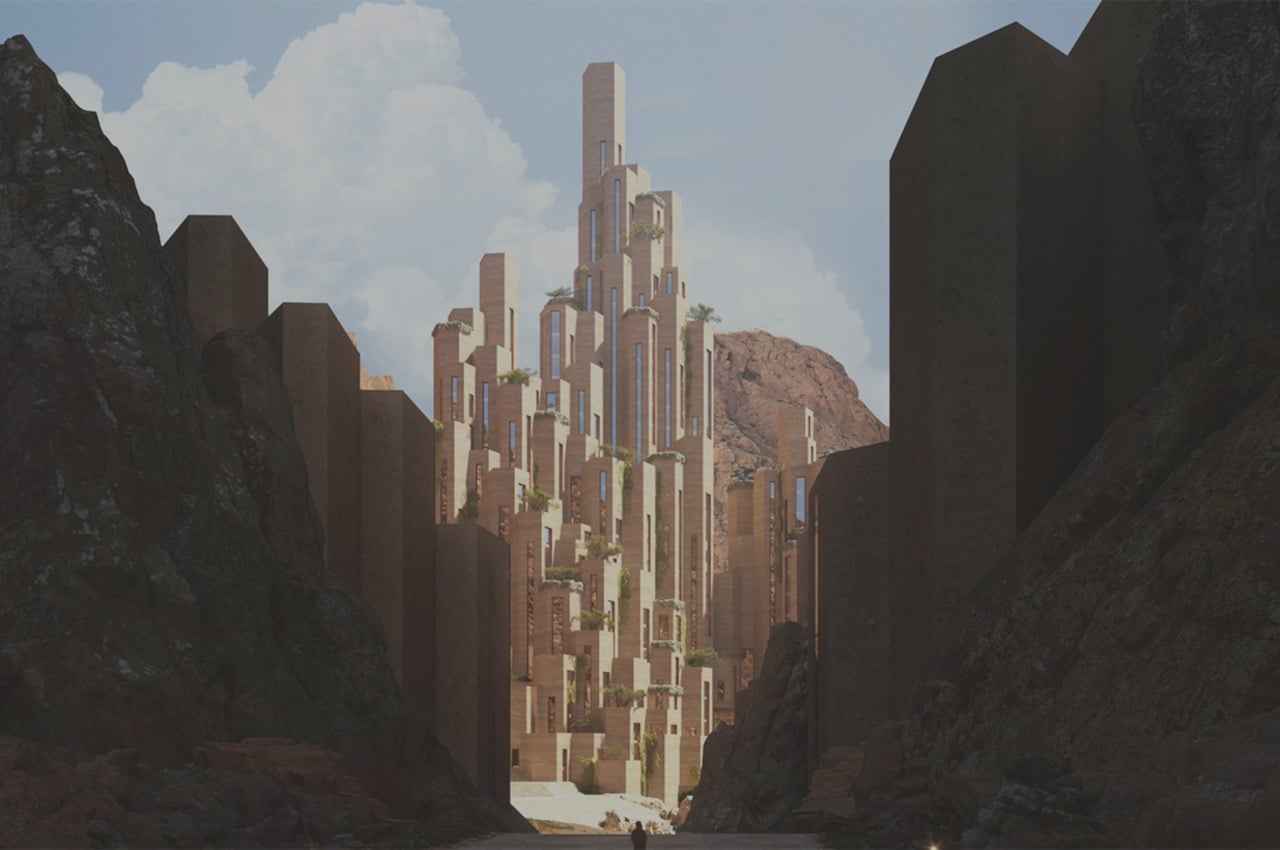
When people speak of hotels, they probably think of towering buildings in the middle of cities or near beaches and tourist hot spots. Few will probably imagine one built on desert landscapes, surrounded by imposing mountains on one end and a sea on the other. They probably wouldn’t even be able to imagine how the hotel would be composed of towering spires that seem to be made from the very same rock as the mountains. That combination of elements, however, is exactly what NEOM’s latest ambitious project is proposing, creating a picturesque tourism escape that resembles fantasy or sci-fi fortresses built from mountains, which is actually also the blueprint for this hotel and residence dream.

Designer: NEOM

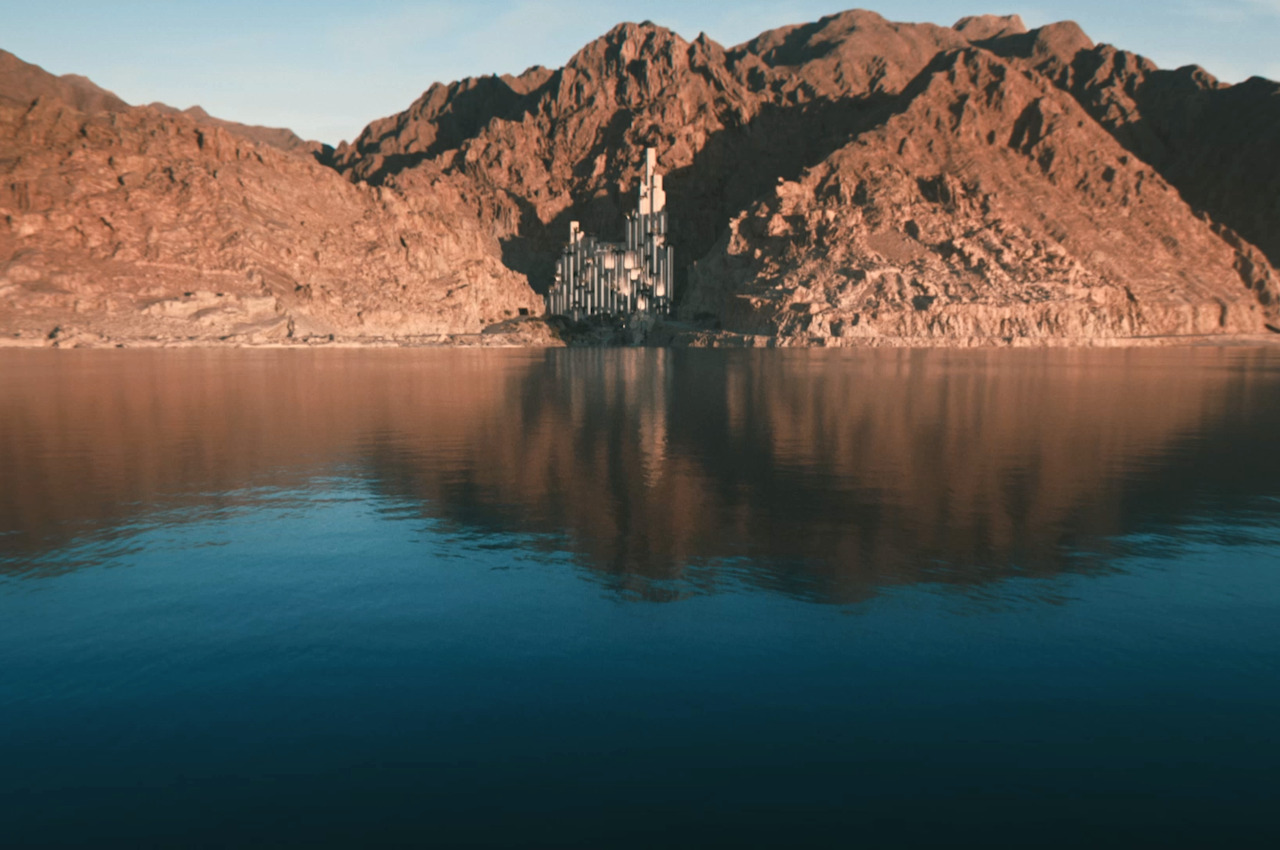
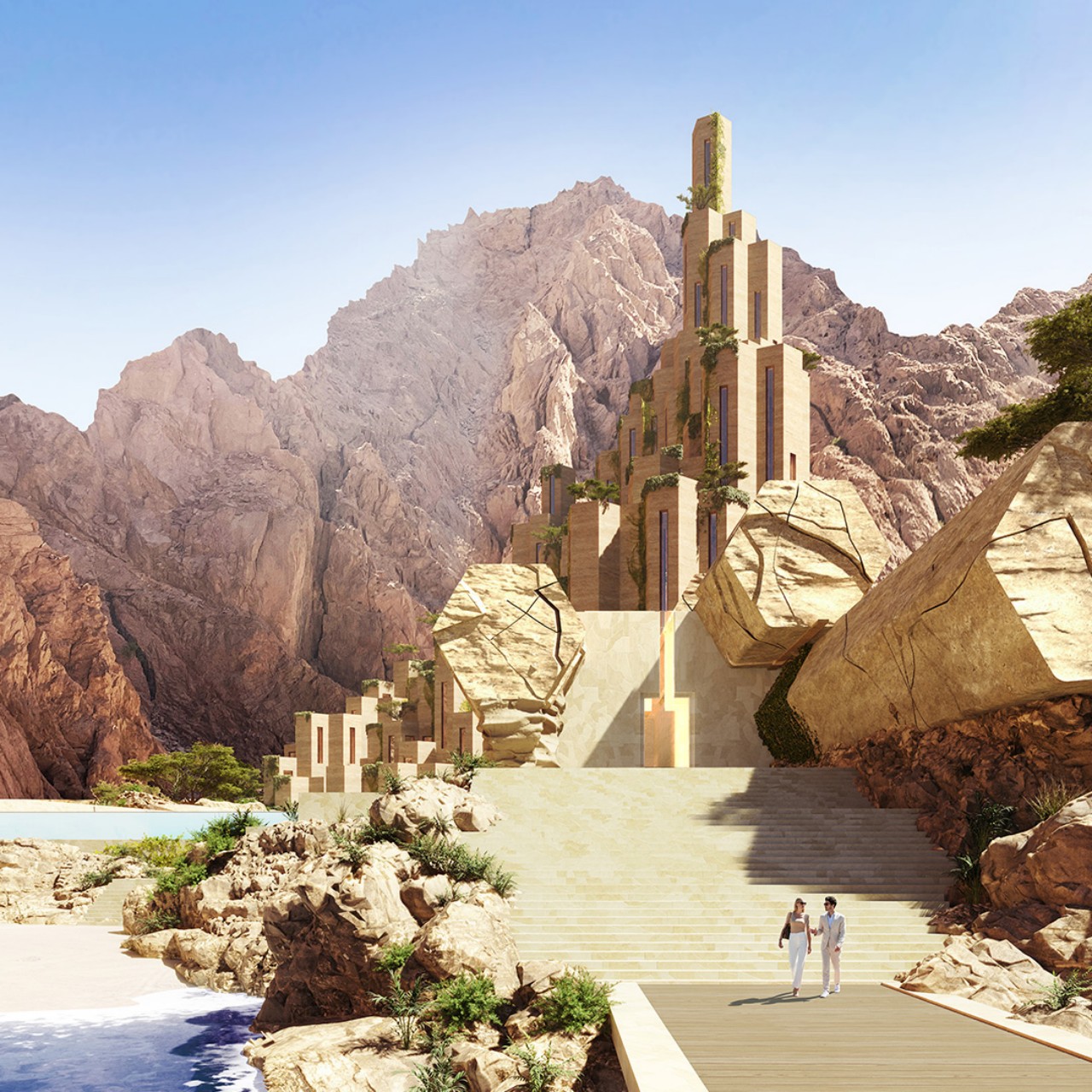
Imagine riding a boat across a sea and gazing at an imposing mountain range across the horizon. As you near the coast, you notice what seem to be stone pillars rising from the ground, their shadows during the day and lights at night casting an almost otherworldly atmosphere around them. This majestic view is actually your destination, and that’s the kind of adventure that the Siranna is meant to offer, a break from the hustle and bustle of everyday life and a journey into an ultra-luxurious and dreamy location where sea, mountains, and wadi intersect.

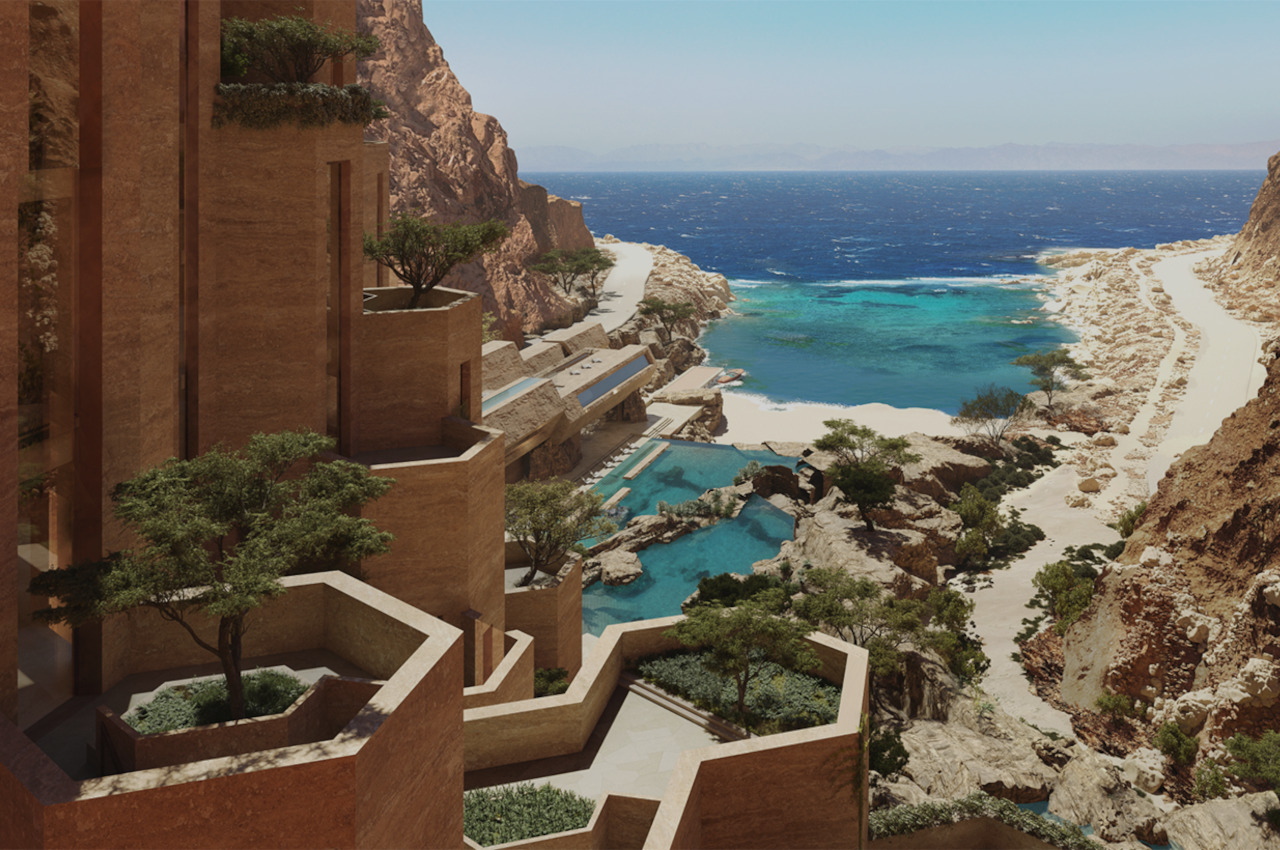
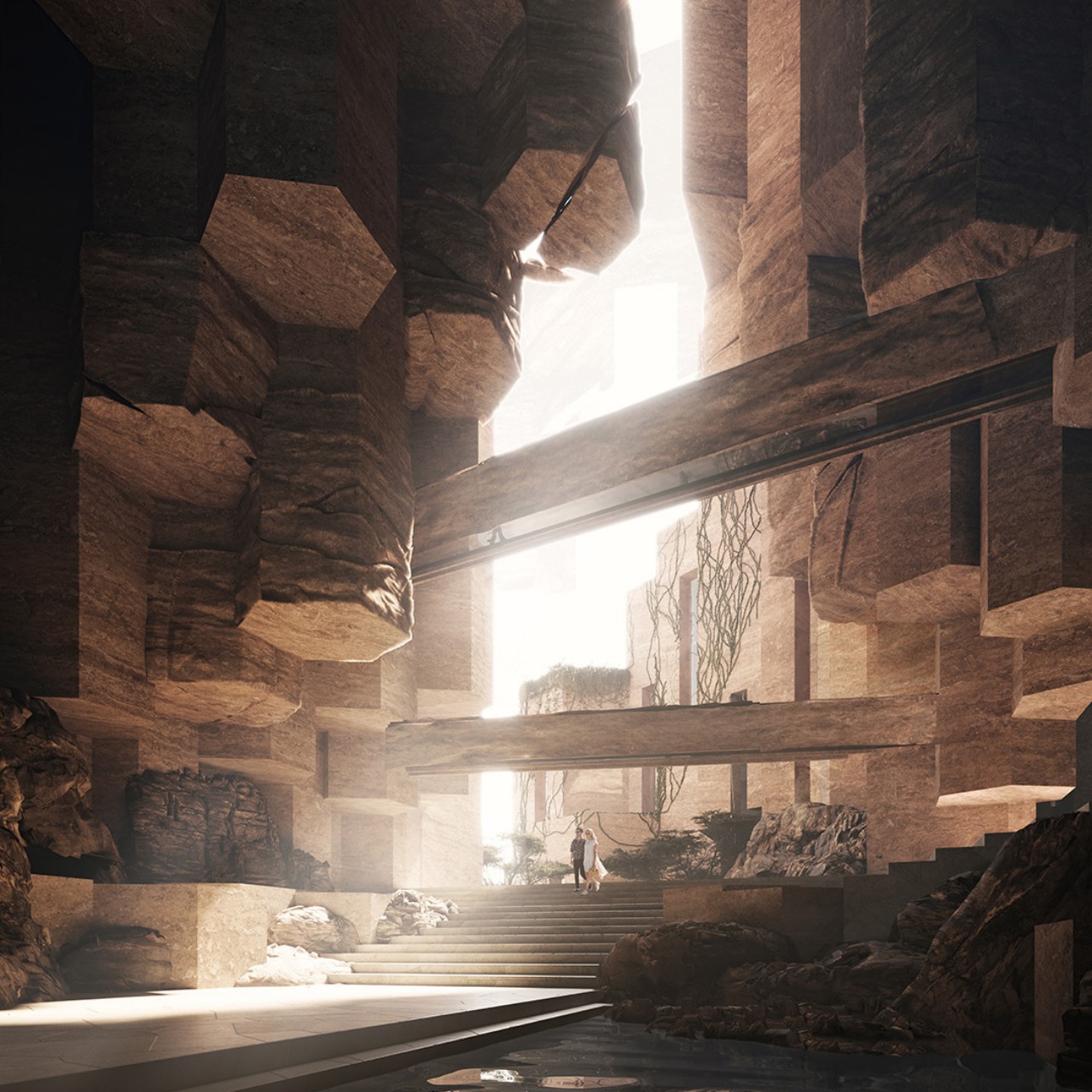
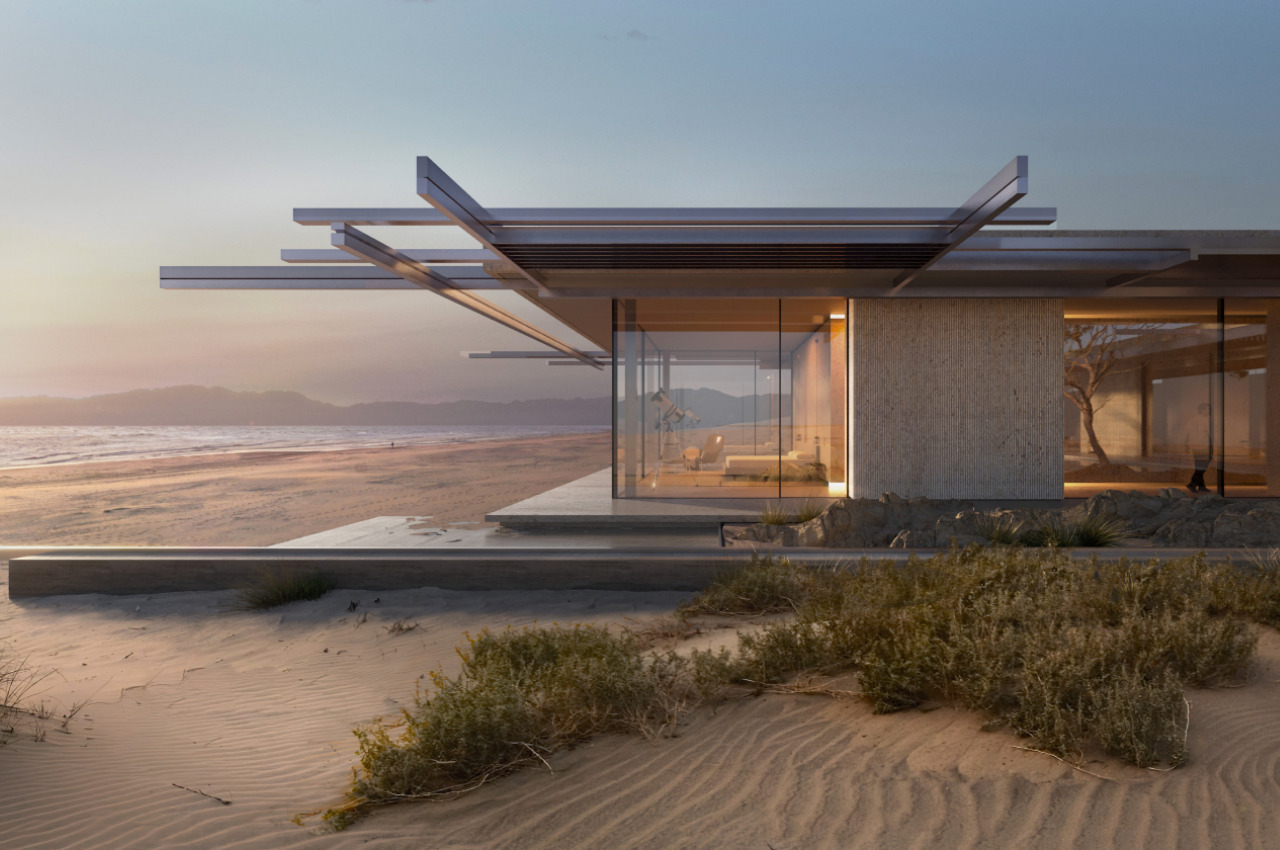
To be built on the Gulf of Aqaba coastline in Saudi Arabia, the Siranna is a complex that will be home to a 65-key hotel and 35 exclusive residences that promise top-of-the-line resort amenities, from beach clubs to spas to wellness facilities. Despite the seemingly dry environment, the experience will also include outdoor adventures, whether on foot or on horseback, to explore the awe-inspiring landscapes that surround this man-made structure. Even the way you get to Siranna will be a breathtaking journey that starts with a boat ride to a secluded bay and then a trek through the mountain’s natural rock formations before finally reaching the property.

The design of the architecture is quite unique and distinctive, with hexagonal pillars that make up both the vertical buildings as well as horizontal spaces. The towers have a single window that runs through the height of the pillar, resulting in a rather striking vertical pattern of lights at night. If you’ve ever seen fictional cities or castles built on the side of mountains, this rather unusual space definitely fits the bill.

Just as unusual as its design is the actual construction of Siranna, intended to support sustainable living and conservation at the same time. The hotel is almost literally carved into the mountainside, allowing it to seamlessly blend with its surroundings while also minimizing intervention in nature and preserving the surrounding landscape. In an age where skyscrapers are eating up the land and blocking the skies for the sake of human convenience, the NEOM Siranna represents an escape not only from the mundane but also from the devastation we inflict on the planet.

The post NEOM Siranna resort hotel looks like a fantasy castle carved from a mountainside first appeared on Yanko Design.
NEOM coastal resort and hotel concept looks straight out of a sci-fi movie

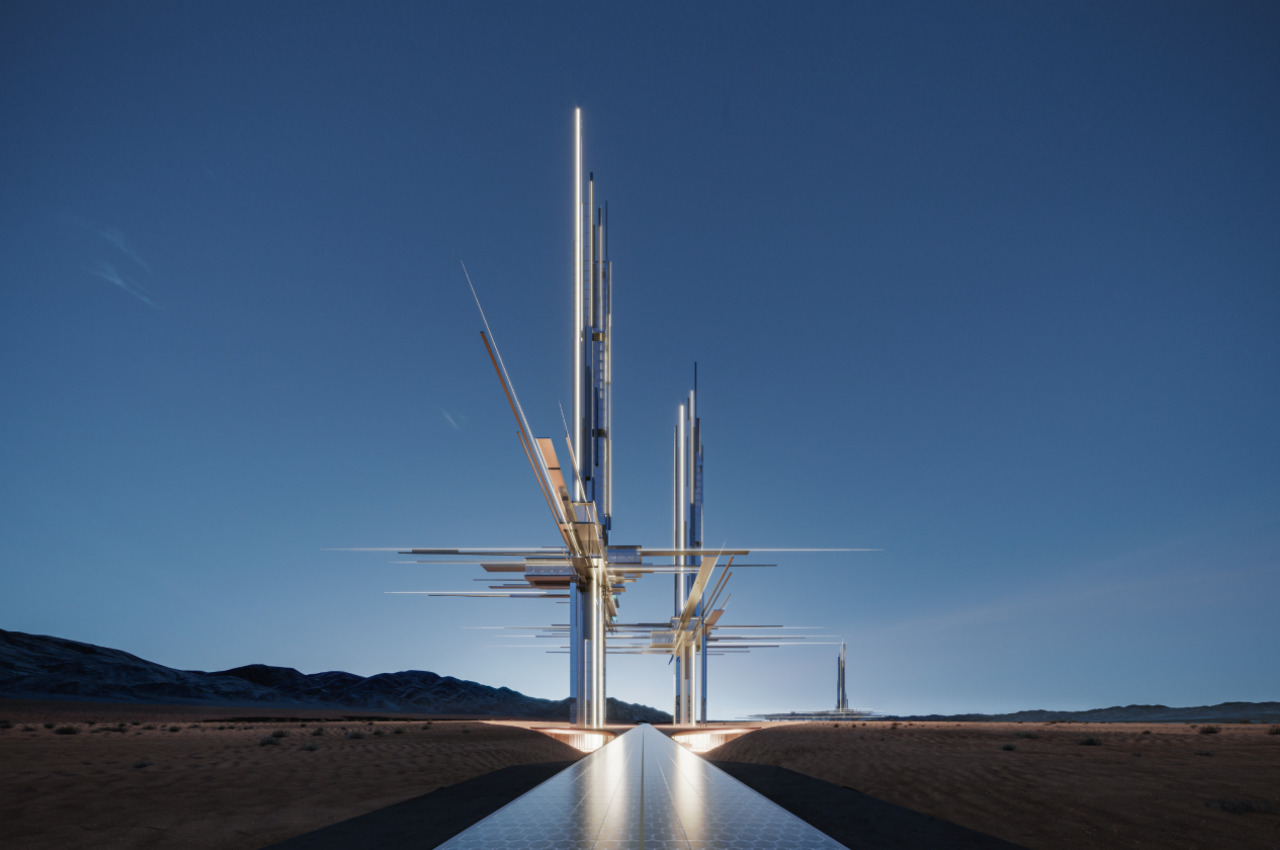
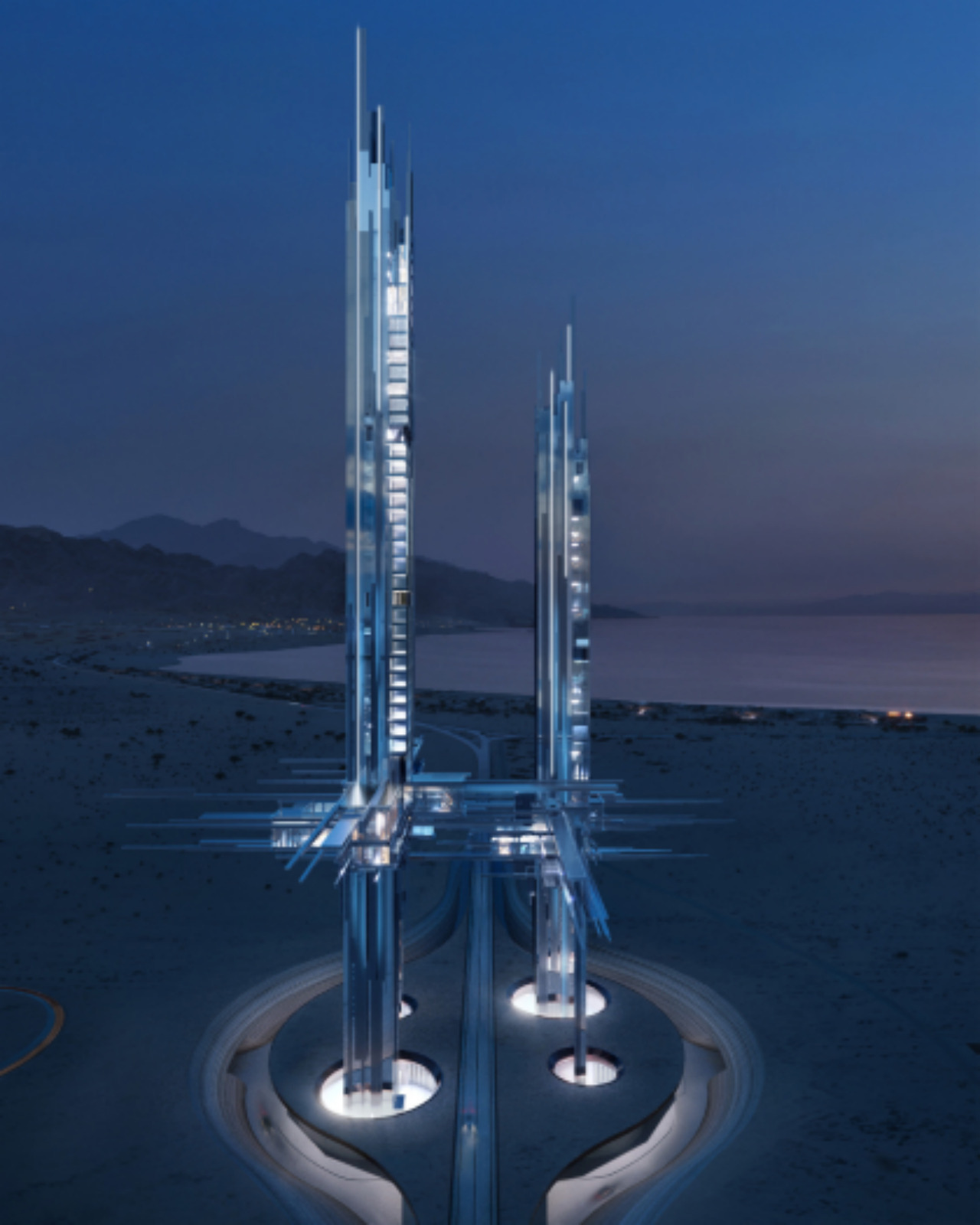
High-rise buildings seem to be the trending design in architecture, but some visionaries plan to take that to the extreme. Concepts and even actual construction of buildings seem to defy logic and physics in order to create a striking skyline that will be remembered for centuries. With their riches and resources, countries such as the United Arab Emirates and Saudi Arabia seem to be in a race to erect towering structures that will provide not only shelter but also the ultimate luxury, unlocking vistas that would be unimaginable by current standards. The latest dream to be revealed would take root on the Gulf of Aqaba in northwestern Saudi Arabia, where not just one or even two but three towers will rise like sharp needles that pierce the heavens to offer a lavish escape from the stresses of the future.

Designer: NEOM

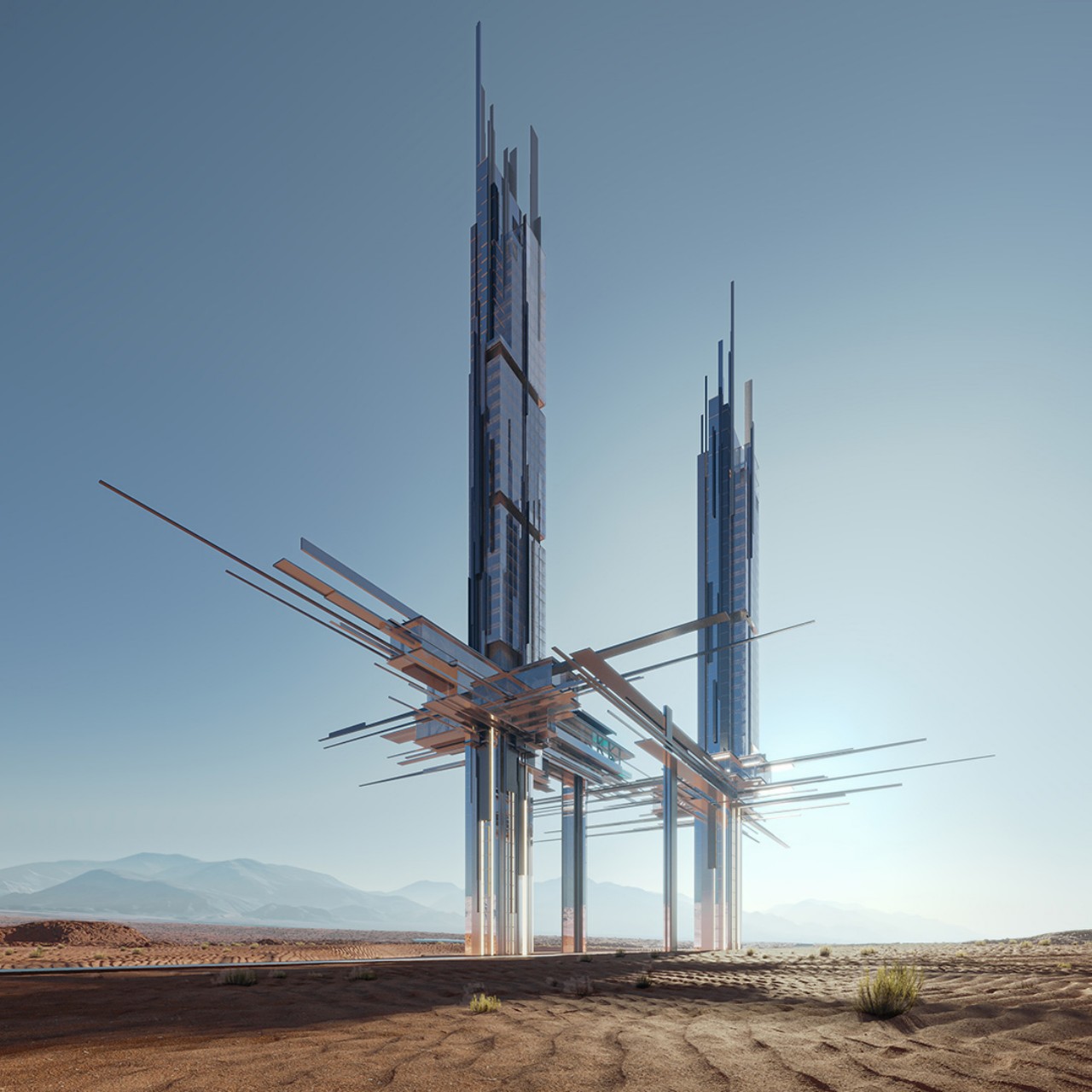
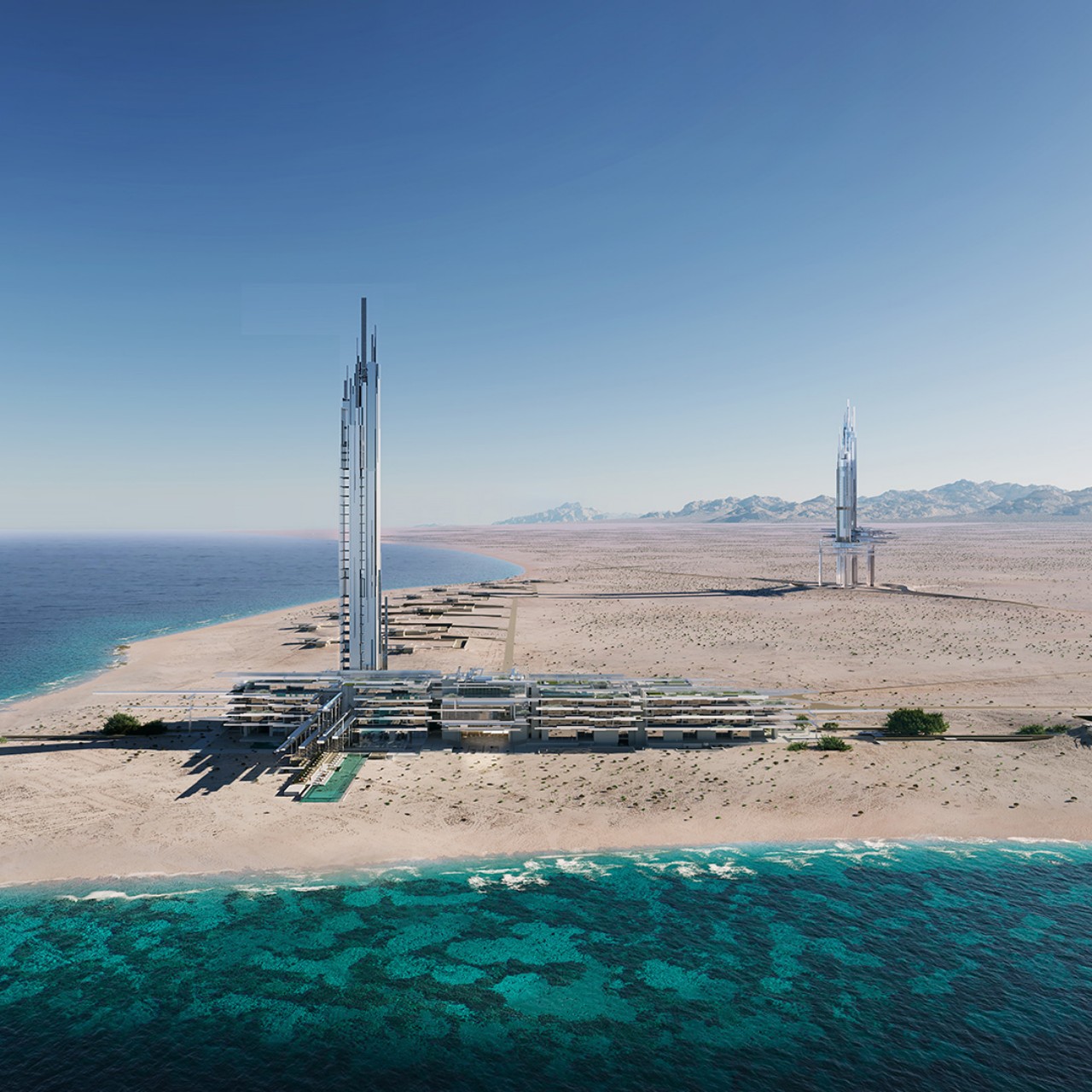
The Gulf of Aqaba, which forms one of the northern tips of the Red Sea, paints quite a dramatic picture because of the marriage of two geographical extremes: a coastal strip and a desert plain. Erecting skyscrapers would mar this picturesque scenery, but having just two creates an even more striking effect, like alien obelisks rising from the sands to act as portals to other worlds. It is perhaps not by coincidence that NEOM describes the Epicon as a gateway to the future, particularly the future of hotel and resort tourism for the region.

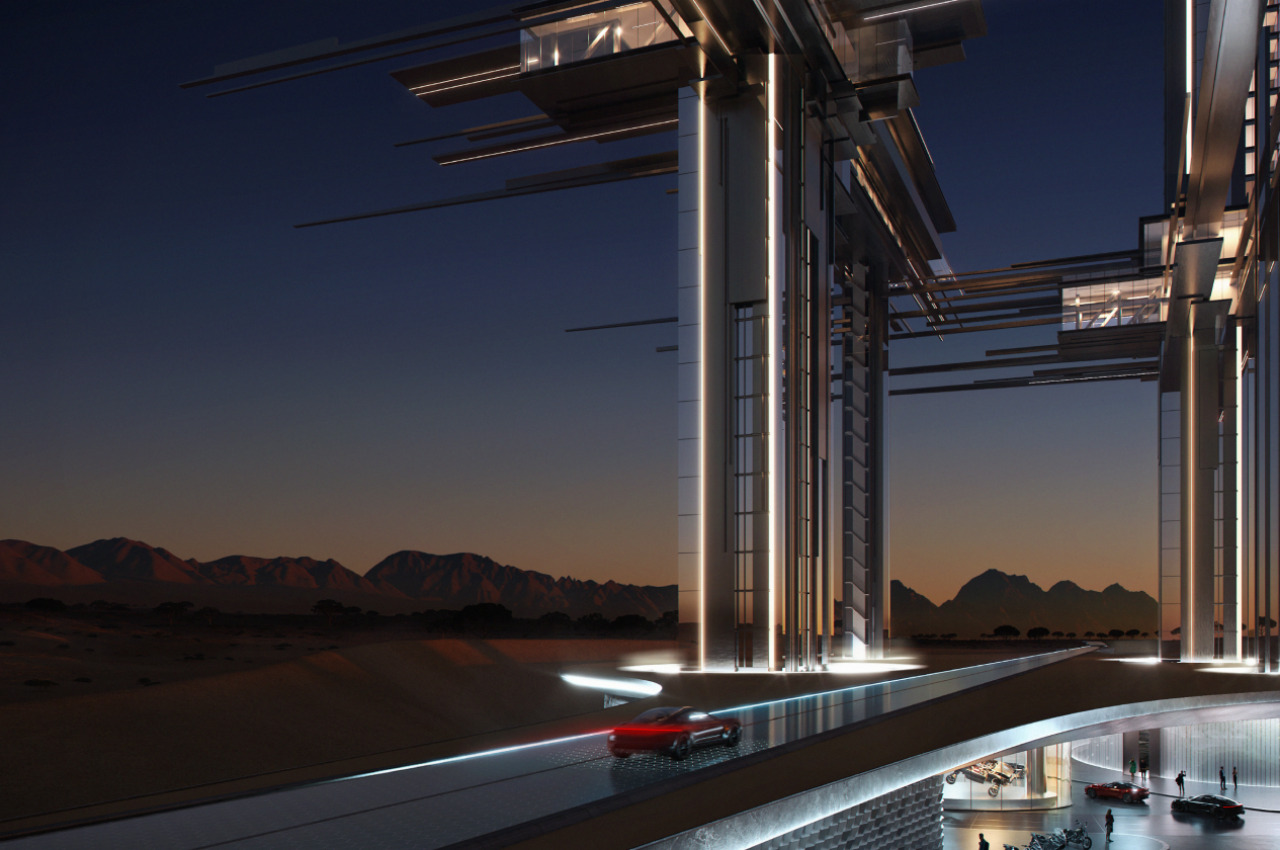
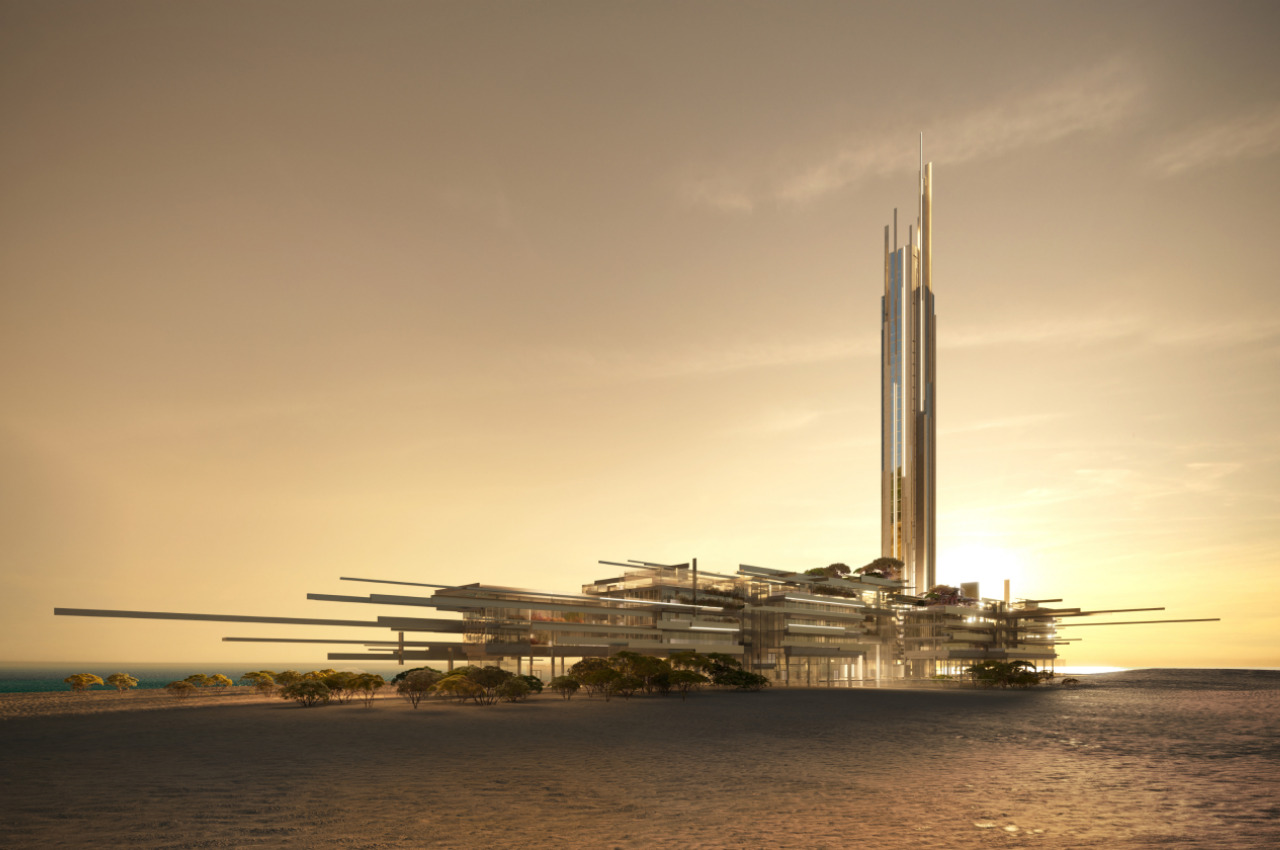
The main structure of the hotel concept is two asymmetrical towers, one 275 meters (902 feet) in height, the other only 225 meters (739 feet). The 41 key hotel and luxury residences comprise 14 suites and apartments and the two towers are connected by an elevated platform with exposed structural beams. In fact, the entire design of the Epicon towers has this industrial aesthetic from a distance, enhancing the mystique of the structure and creating a distinctive skyline that easily promotes the resort by itself.

This key motif is also employed in the Epicon resort that lines up the coastal shore, featuring 120 rooms and 45 residential beach villas. The single tower mirrors the twin hotel skyscrapers on a smaller scale, creating a play on perspective that serves to magnify the imposing presence of the twin towers. The distance between these two amenities generates an atmosphere of adventure and travel when going from one location to the other as if journeying between different worlds connected by a common vision and culture.

This otherworldly theme is especially evident at night when those structural beams are illuminated to create a visual not unlike futuristic towers from science fiction. It’s designed to invoke feelings of awe, wonder, and curiosity, inviting people from all walks of life to lose themselves in a luxurious experience away from the mind-numbing routines of daily life. The resort and hotel may be envisioned to offer first-class experiences and world-class service when it finally opens its doors, but Epicon’s design alone already entices visitors with epic moments of luxury, peace, and inspiration.

The post NEOM coastal resort and hotel concept looks straight out of a sci-fi movie first appeared on Yanko Design.
This Nordic Hotel’s Architecture Blends Beautifully into the Organic Snow-Capped Mountain Slopes

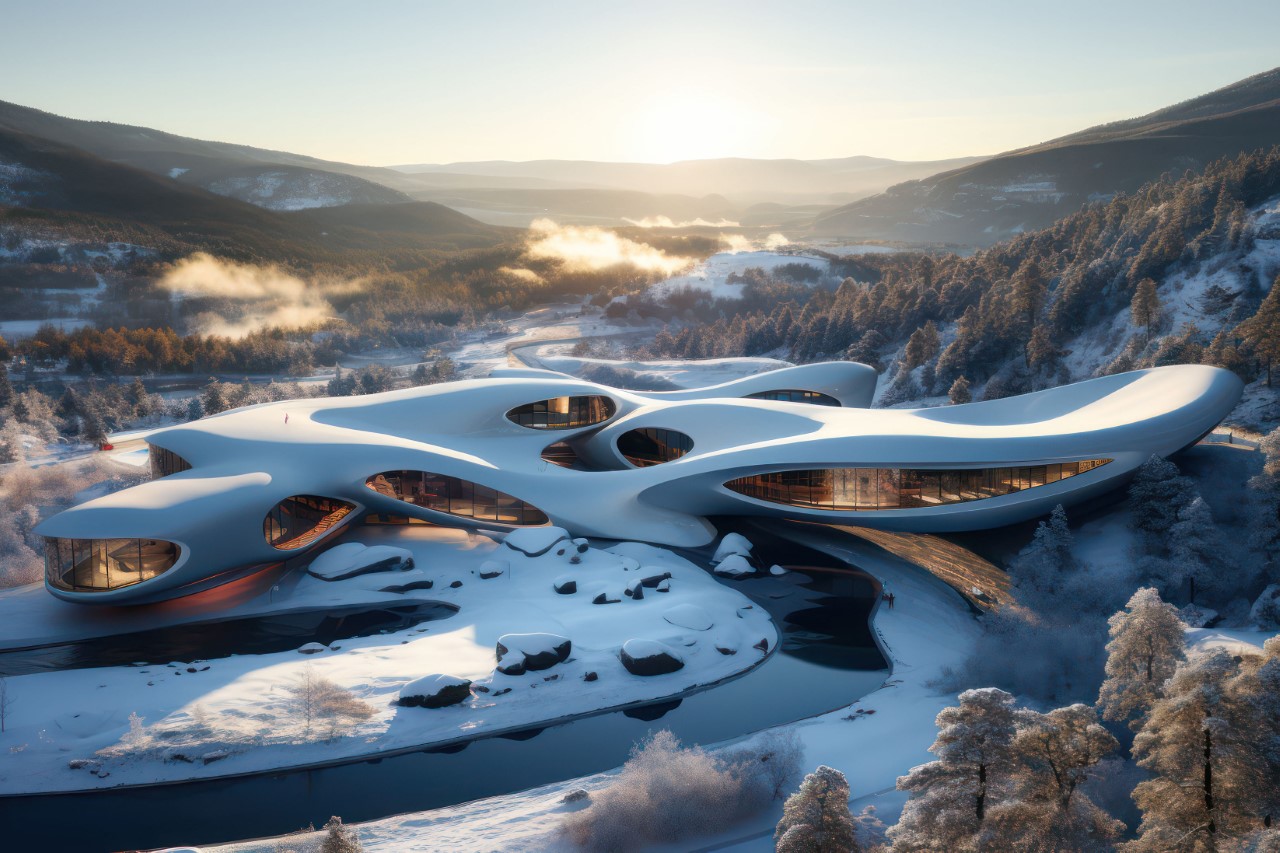
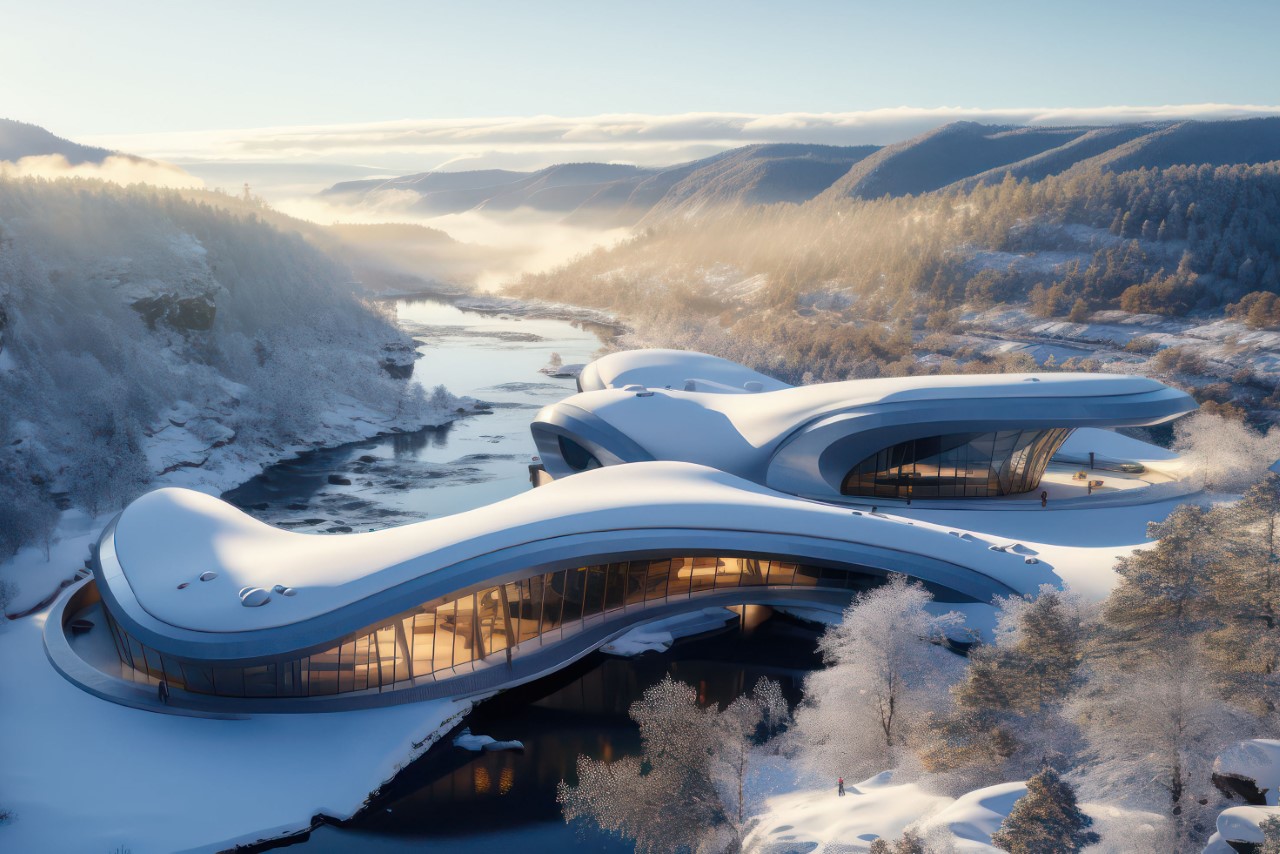
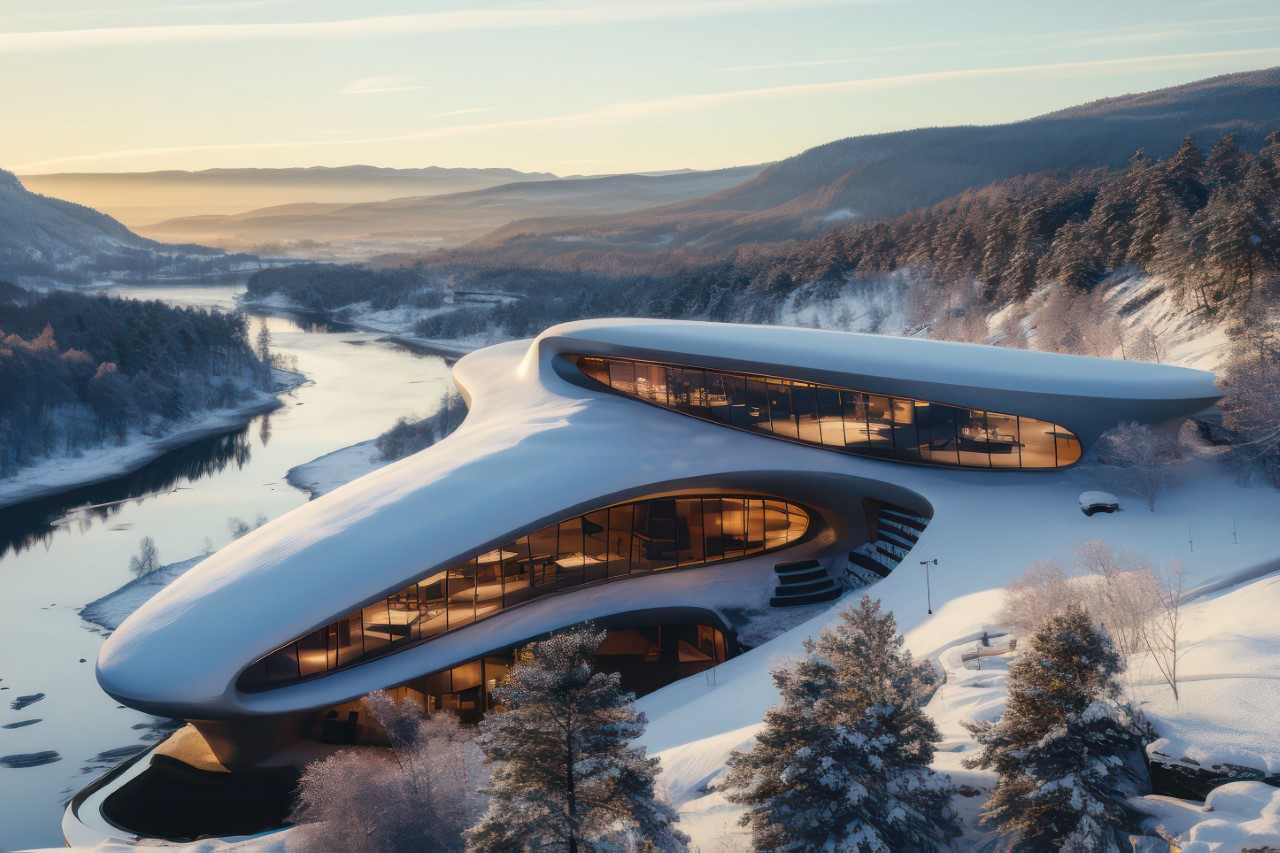
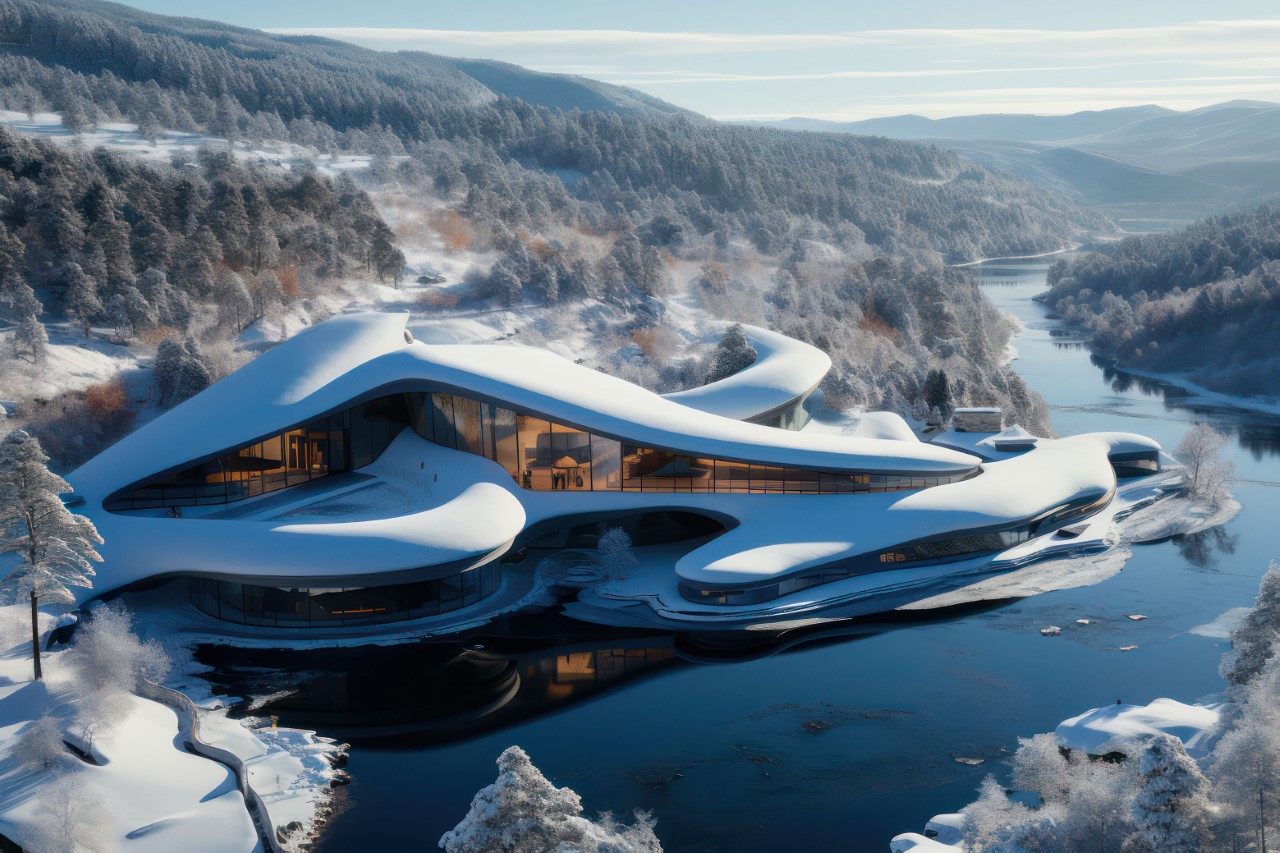
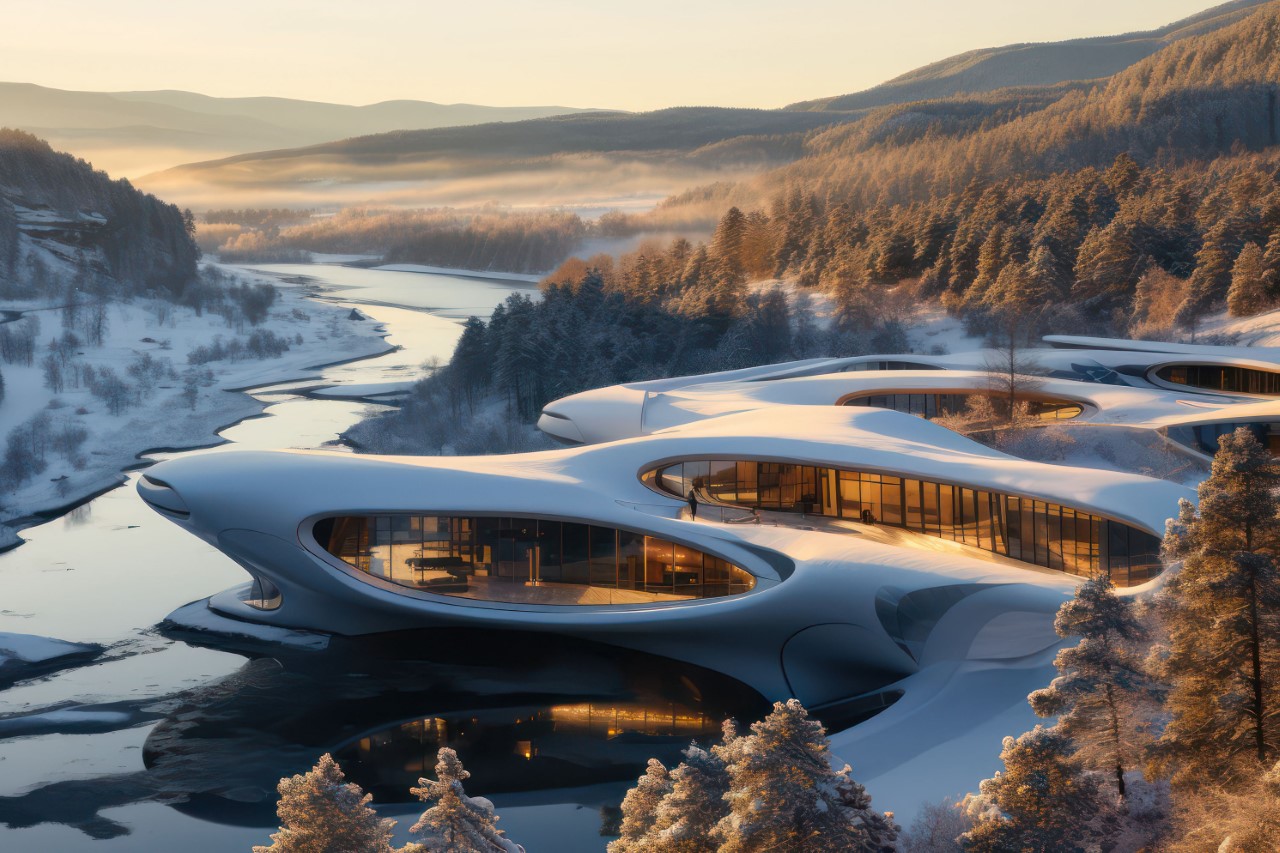
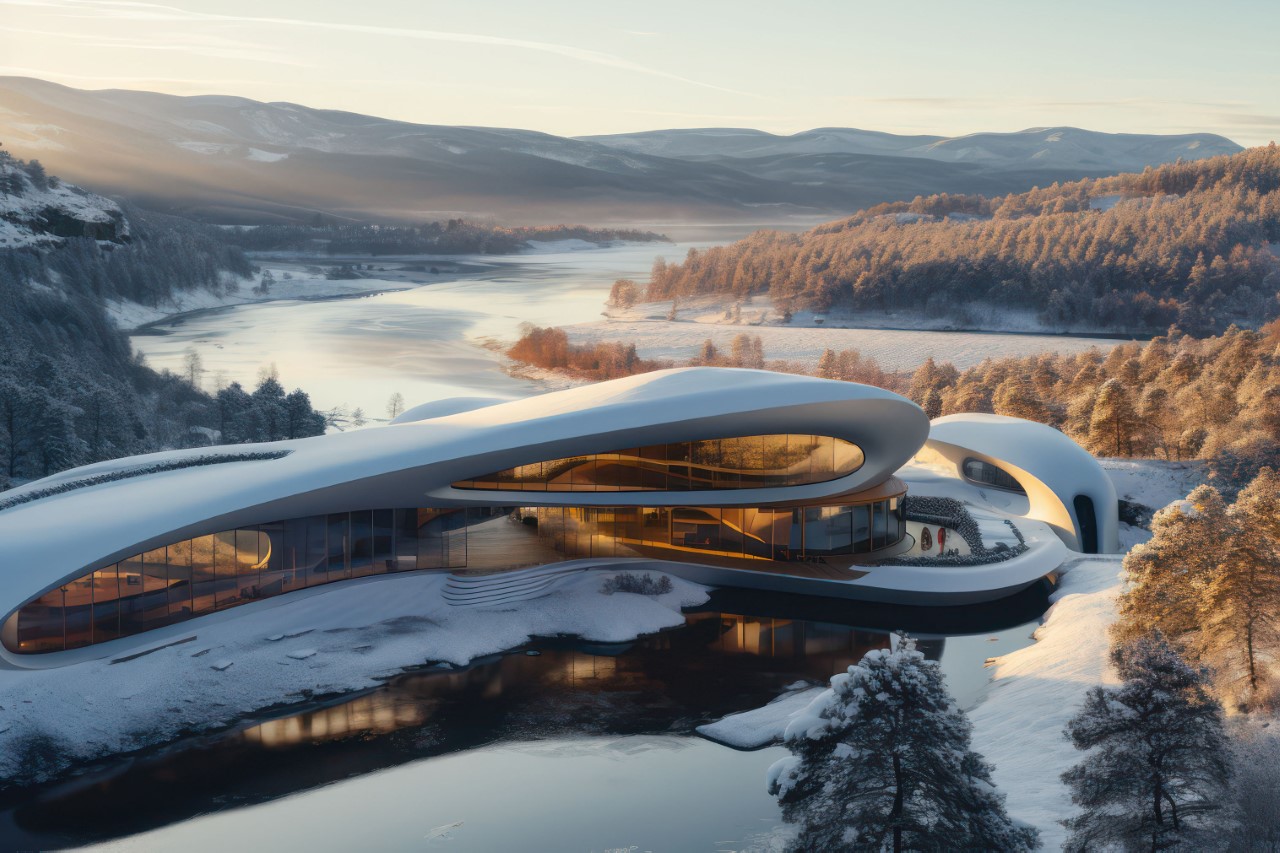
Combining luxurious architecture and natural camouflage together, Mertcan Güldilek’s Nordic Breeze hotel is easy to miss when viewed from above. As you descend into the valley, however, the gorgeous hotel becomes more apparent with its unique blend of the snow-white facade and wrap-around glass. Created using AI, Güldilek’s architectural concept shows how organic design can blend beautifully into a landscape, complementing it rather than contrasting it.

Designer: Mertcan Güldilek

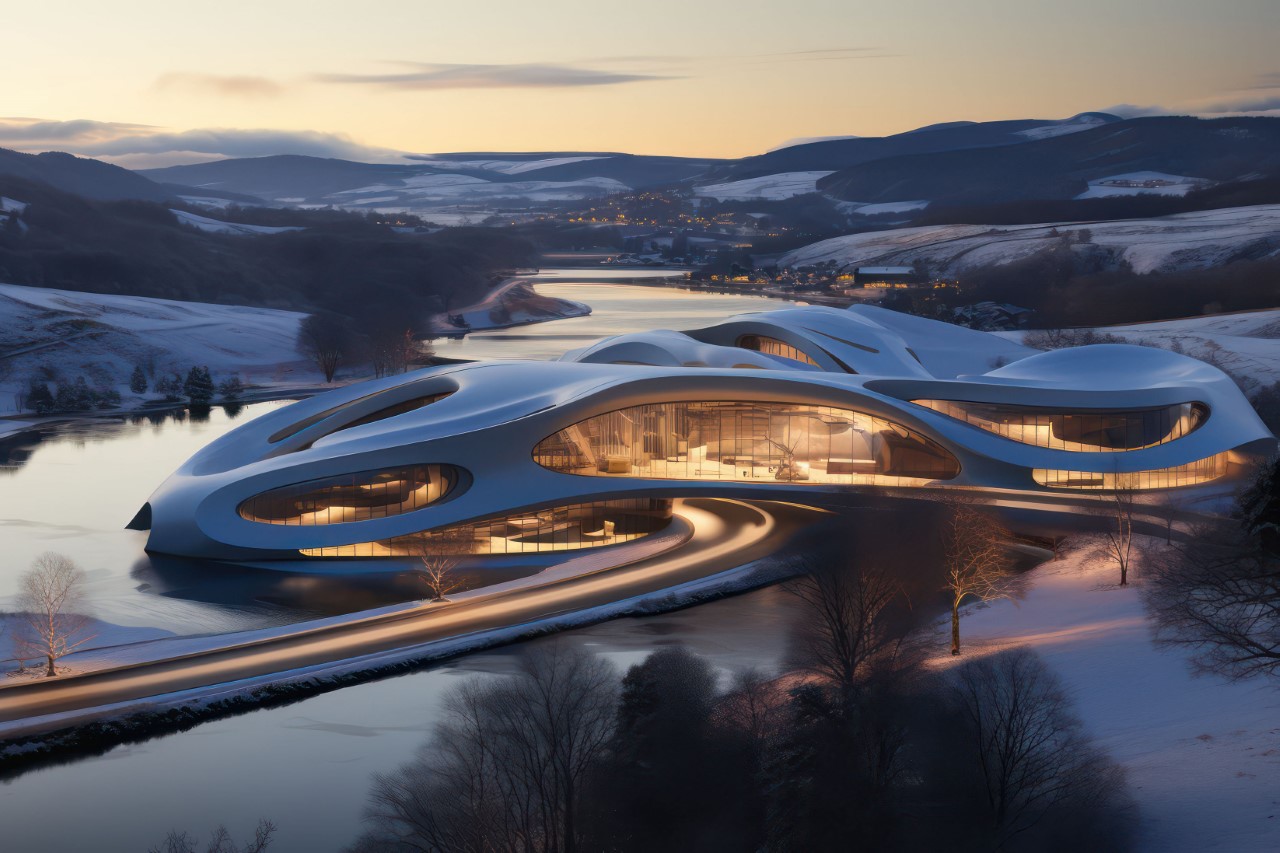
The AI experimentations take on a rather organic design reminiscent of Ross Lovegrove’s work. The hotel’s facade is difficult to really describe as it flows quite like the mountain slope. In the negative areas created by the facade, Güldilek adds running edge-to-edge windows that help residents/patrons get a sprawling panoramic view of the landscape ahead of them.

“The hotel emerges in the heart of the Swedish valley, inviting guests to a refuge that seamlessly blends with its breathtaking surroundings,” says Güldilek. “The organic approach to design ensures that the hotel becomes an extension of the surrounding nature, creating a sense of unity that calms and inspires.”

Envisioned for Storglaciären, Sweden, these hotels are located in the valleys of a snowcapped mountain range, alongside a glacial river that adds to the hotel’s charm. Multiple iterations of the hotel’s design see it nestled on top of the glacial river, giving patrons a stunning shimmering view of the snowcapped landscape along with its reflection. Sunrises and sunsets would look amazing here for 6 months in the year!
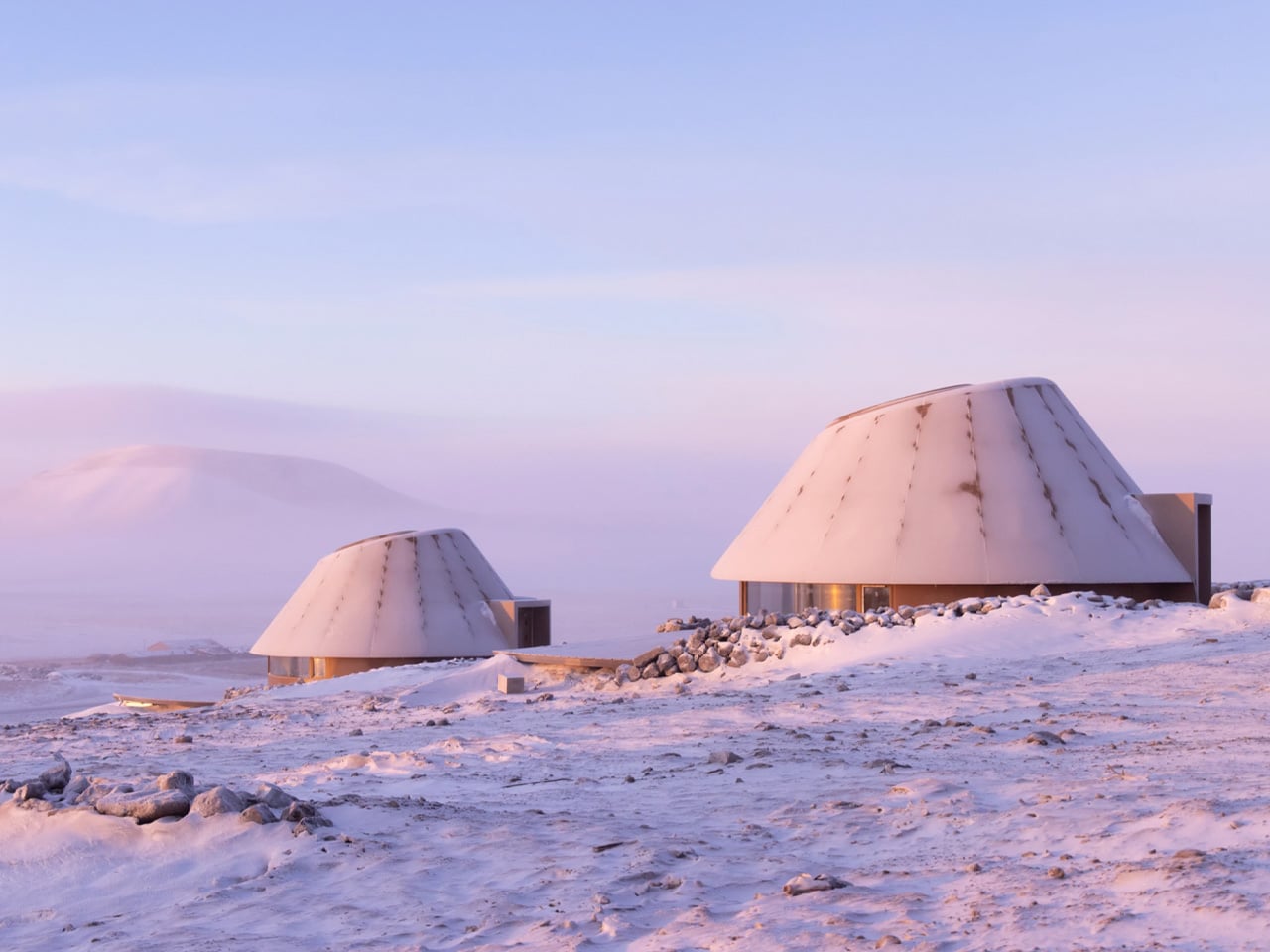
“As the sun descends, casting its golden rays across the land, the hotel radiates a warm and inviting aura that draws guests in,” adds Güldilek. “The golden hour lighting envelops the building, illuminating every detail and infusing the surroundings with a magical quality.”
Different iterations also play with volumes, adding multiple wings and levels to the architecture for a dynamic appeal. Each hotel room therefore has a unique view of what’s around them, creating a bespoke experience for everyone who comes to visit the conceptual Nordic Breeze hotel!

The post This Nordic Hotel’s Architecture Blends Beautifully into the Organic Snow-Capped Mountain Slopes first appeared on Yanko Design.