The camping trailer has quietly become one of the most thoughtfully engineered product categories of this decade. What was once a box on wheels with a mattress and a camp stove has evolved into something genuinely difficult to categorize. The best trailers of 2026 read as part tiny home, part electric vehicle, part off-grid power station. They do not just take you somewhere. They reshape what it means to live comfortably outside the four walls of a house.
Whether you are a solo remote worker chasing good terrain and reliable cell signal, a family looking to untether completely from campground hookups, or an EV driver who refuses to trade range for a weekend in the wilderness, there is a trailer on this list designed for the specific problem you are trying to solve. These are seven designs worth paying attention to right now, each earning its place for a different reason.
1. Mini House
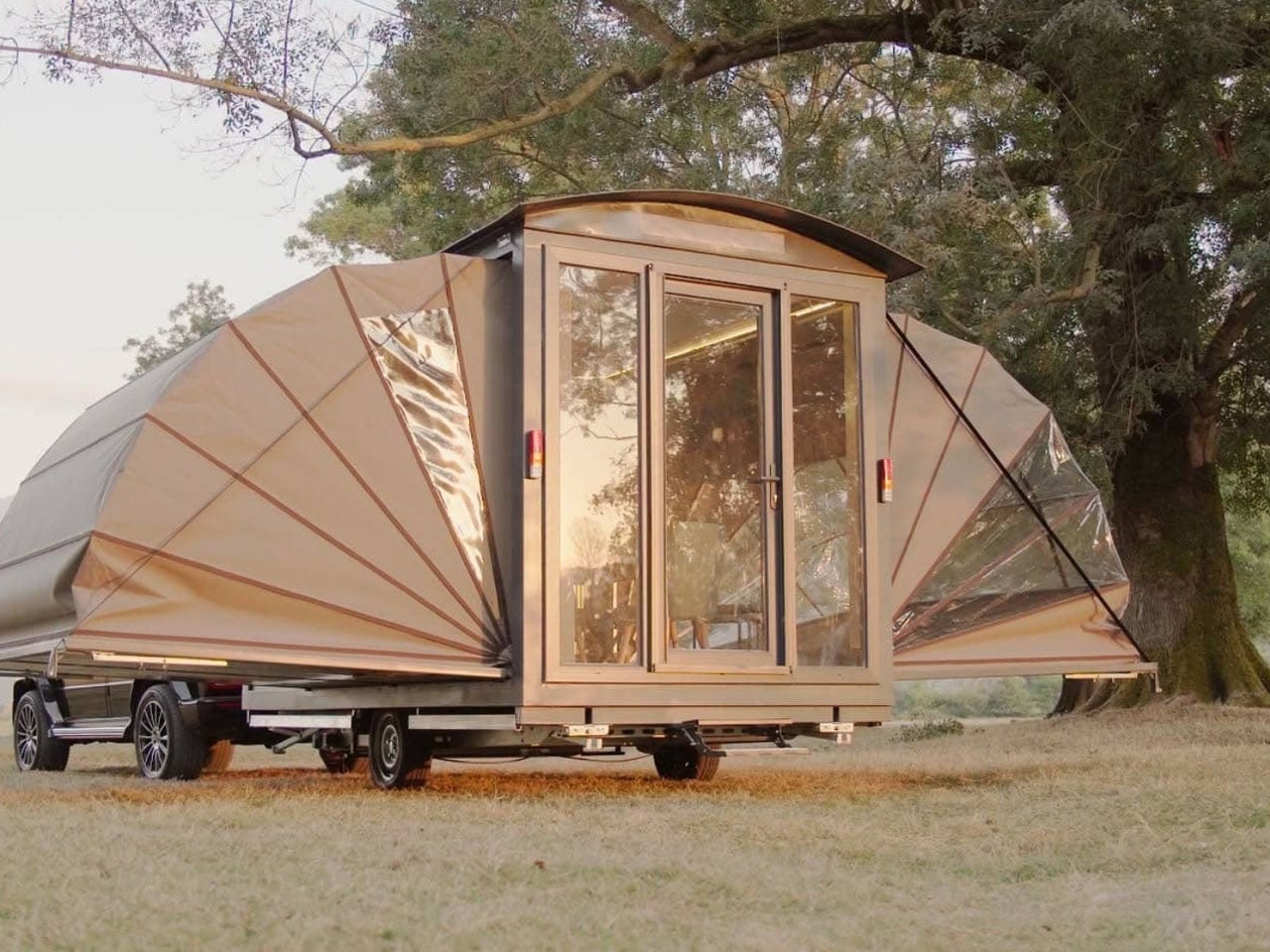
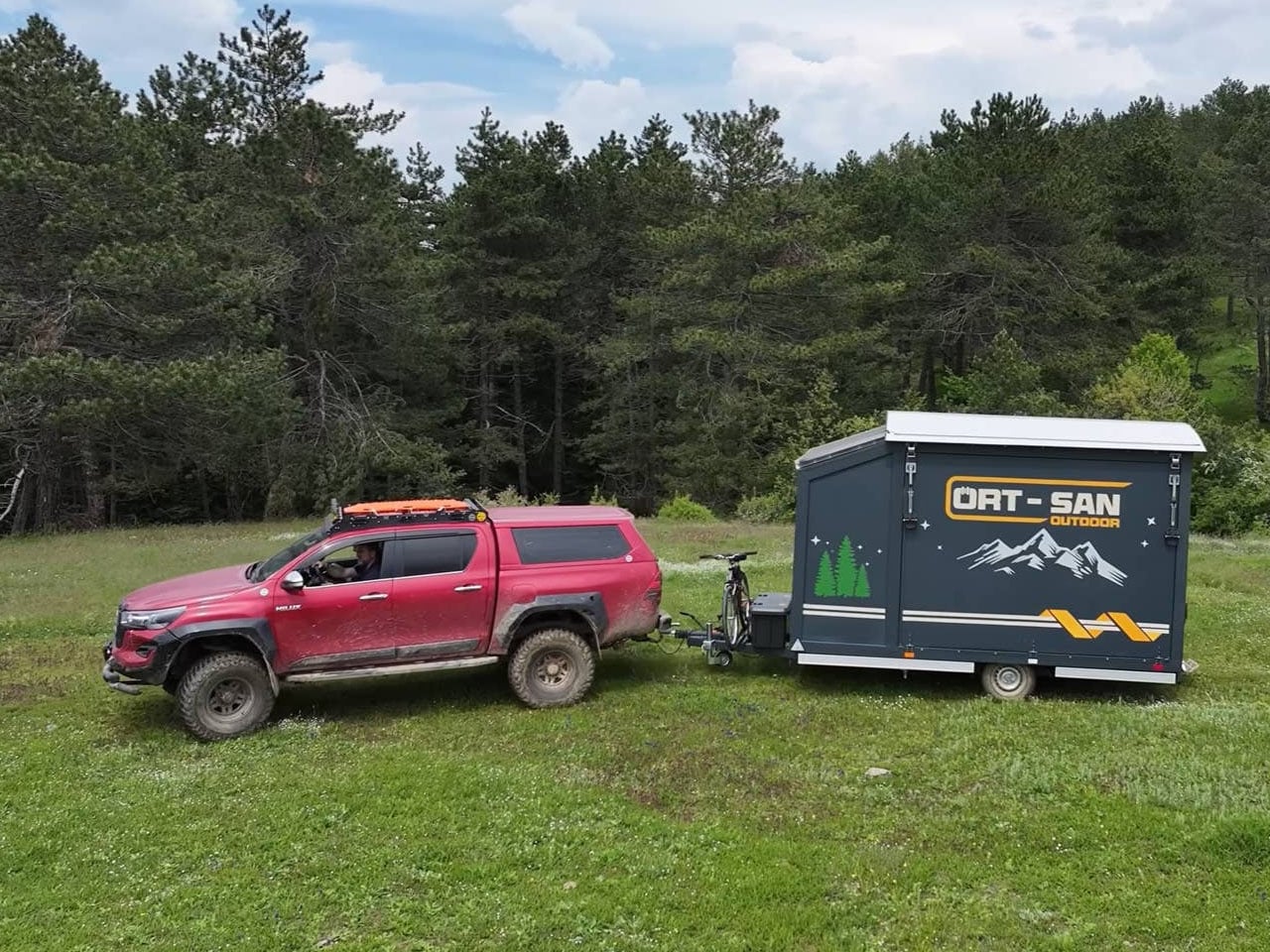
The Mini House from Turkey is one of the more mechanically earnest camper trailers to arrive in 2026. In transport mode it measures 13.1 feet long and 6.8 feet wide, compact enough to be towed by most mid-size vehicles. Once parked, two sidewalls fold outward like an accordion at the press of a button, expanding the living footprint from 90 square feet to 219. The result reads less like a camping trailer and more like a compact home that happens to have arrived on a single axle.
The off-grid package is thorough rather than symbolic. A 470-watt roof-mounted solar array pairs with a 200Ah lithium battery and inverter for electrical independence. The kitchen carries a 90-liter 12-volt refrigerator, a two-burner gas cooktop, a stainless steel sink, and a slide-out dining table. The bathroom is full-sized. A wood-burning stove, a Webasto diesel heater, and air conditioning manage climate across seasons. A tablet-based control system operates the lighting, climate, and the expansion mechanism from one central interface. It starts at approximately $19,300 before taxes, shipping, and customization.
What we like:
- A 143 percent expansion in living space from a sub-$20,000 base price is genuinely difficult to match at this price point
- The push-button accordion mechanism requires no physical assembly on arrival at camp
What we dislike:
- The canvas wing enclosures of the expanded sections offer less weather protection than a hard-shell structure
- Import and shipping costs from Turkey add meaningfully to the final price for North American buyers
2. Campinawe Crossover Solo
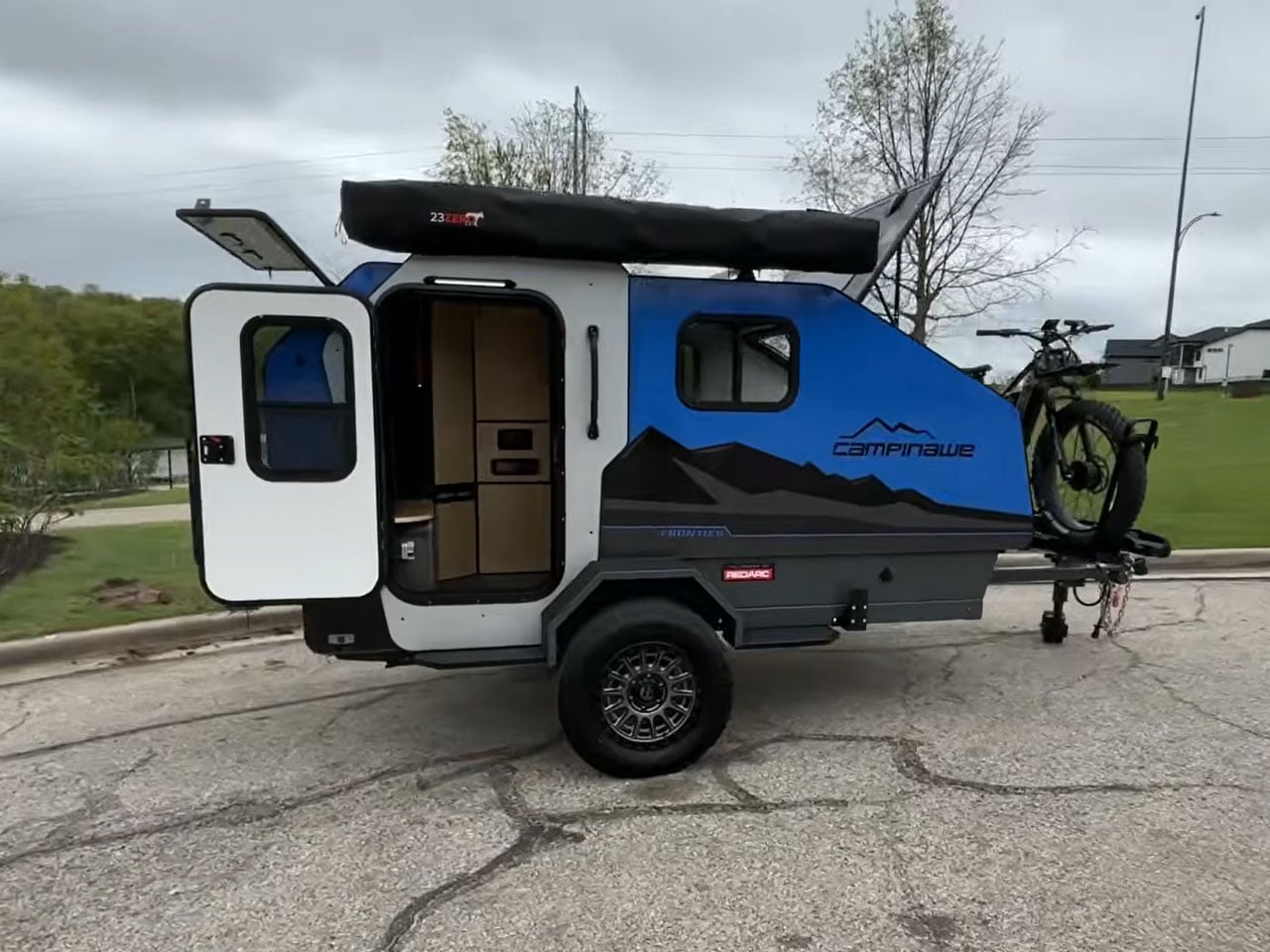
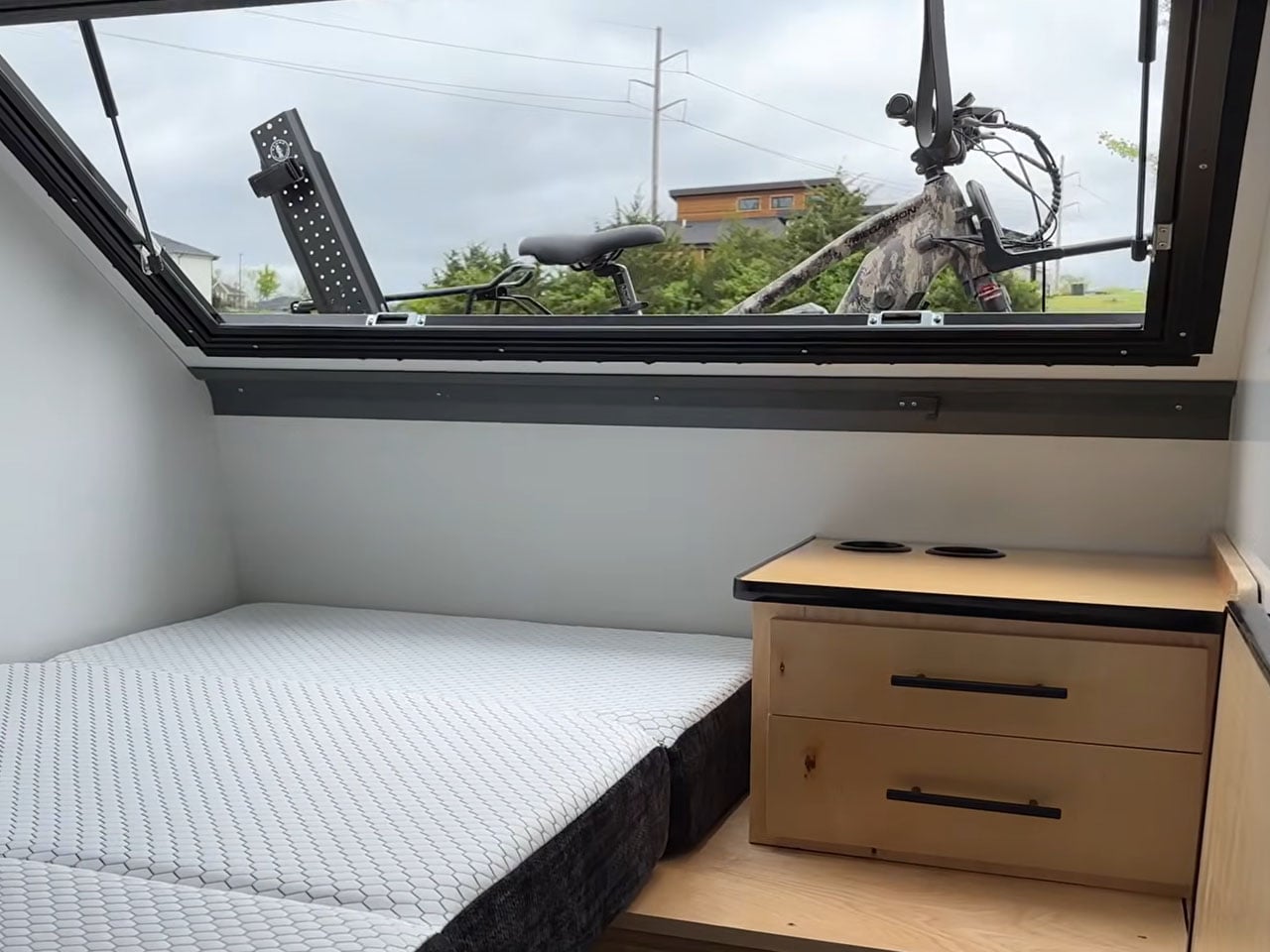
The Campinawe Crossover Solo is the rare camping trailer built around a specific kind of person — the solo traveler who also needs a proper desk. Available as a new layout for the company’s existing Frontier and Adventure trailers, starting at $39,995, it centers its interior around a single twin XL mattress that folds away entirely. The open floor becomes a workspace, a dining area, or an exercise space depending on what the day requires. The step-in foyer keeps outdoor gear separate from the living space.
What Campinawe has always done well is design for how a space functions across an entire day rather than simply around the moment you crawl into bed. The Crossover Solo extends that philosophy to its most focused endpoint. The bed folds in half and stores flush against one wall, creating something that reads more like a compact studio apartment than a camper trailer. A drop-down desk doubles as a dining table and works in combination with the bed edge as seating, while a nightstand keeps the sleeping area considered rather than improvised.
What we like:
- The fold-flat bed transforms the interior into a genuinely functional daytime workspace
- The step-in foyer keeps the living area clean in a way most manufacturers have still not figured out
What we dislike:
- The twin XL mattress is too narrow for two adults traveling together
- There is no bathroom included in the Crossover Solo layout, requiring external facilities for any extended trip
3. Adventure Pro Mini 2.0
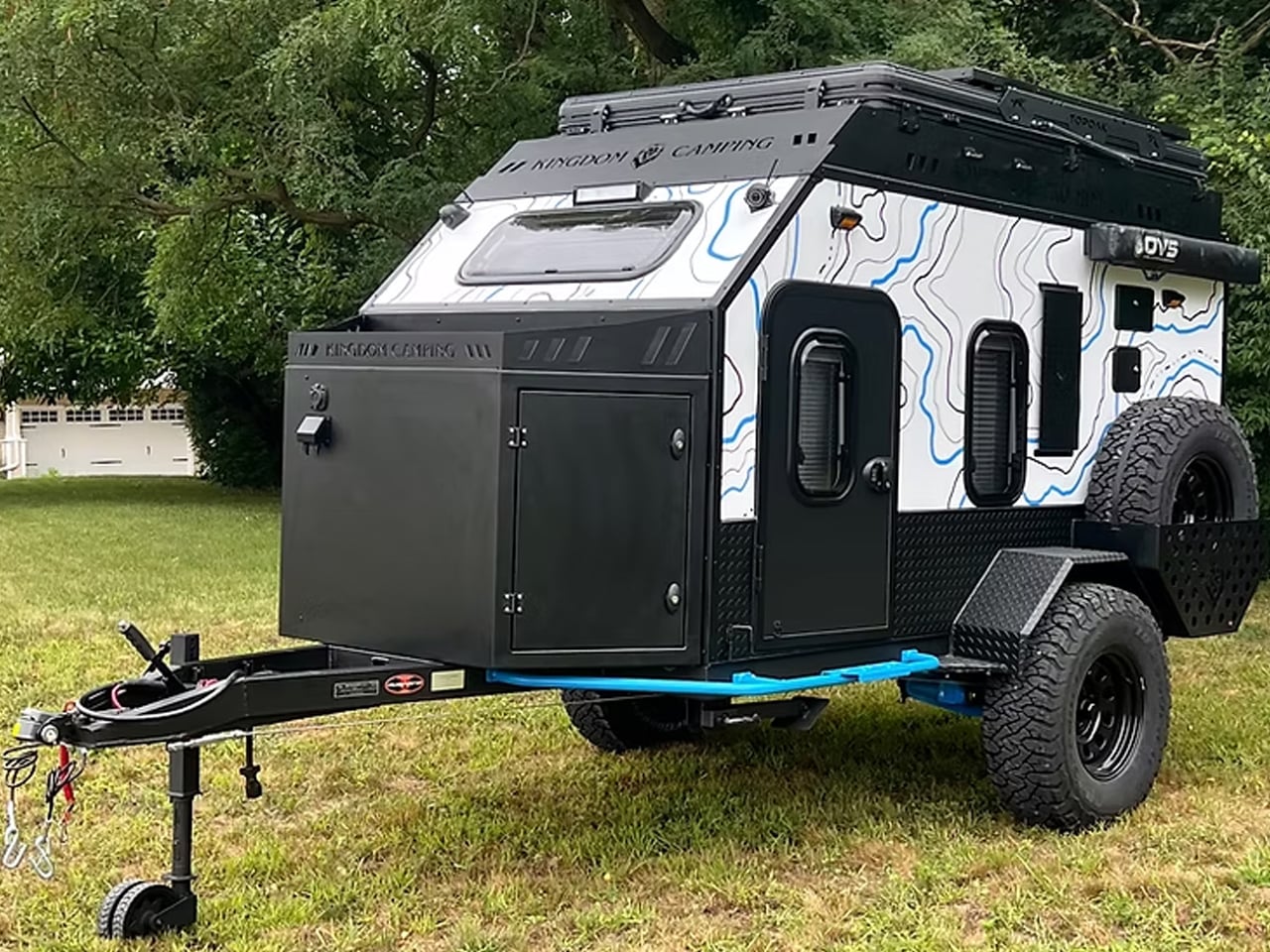
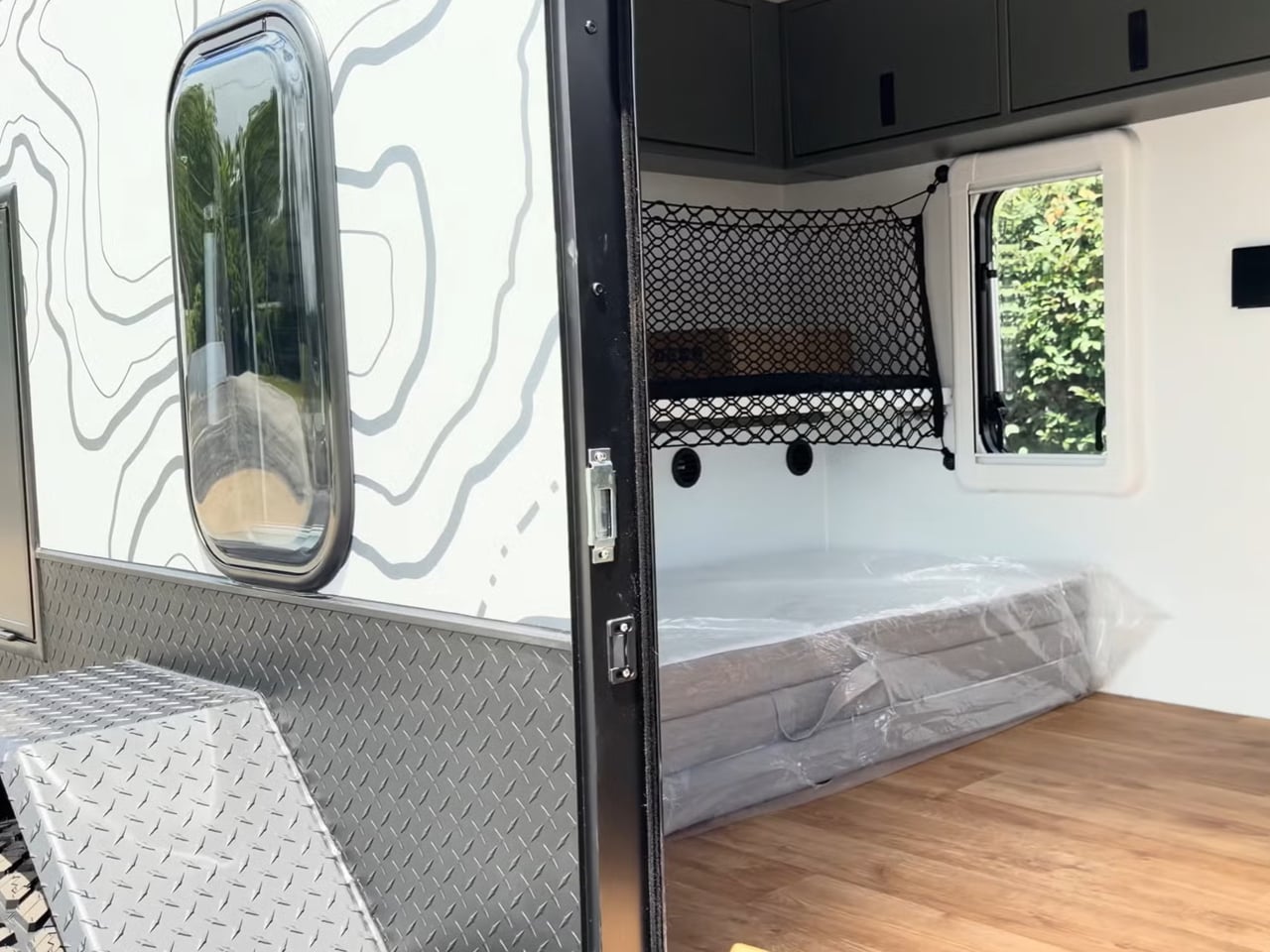
Kingdom Camping’s Adventure Pro Mini 2.0 is what happens when a builder from Indiana decides to take compact off-roading seriously without cutting corners on the interior. The fiberglass shell weighs 2,300 pounds fully loaded, sits on a steel chassis with rock sliders, and rides on 33-inch all-terrain tires with independent suspension. An articulating hitch coupling lets the trailer follow a tow vehicle across genuinely rough terrain without resistance. There is no wood anywhere inside. Every cabinet is powder-coated aluminum throughout.
The rear galley is where the Mini 2.0 earns its place on longer trips. A stainless steel sink with hot and cold water, a dual-zone Iceco BL75 fridge/freezer, and a side slide-out cooktop with quick-connect propane come standard. A 400-watt roof-mounted solar panel feeds a 300Ah lithium battery and a 2,000-watt inverter, while a Dometic RTX 12-volt air conditioner manages climate year-round. A dual-pane skylight above the sleeping area pulls in natural light, and safety-netted bunk space handles a child or a pet you have along for the trip.
What we like:
- The completely wood-free, powder-coated aluminum interior is built for moisture resistance and longevity in a way conventional trailers cannot match
- A full rear galley with hot and cold water is uncommon at this weight class
What we dislike:
- Pricing requires a direct conversation with the builder rather than a published figure, which slows the decision process
- At 3,500 pounds GVWR, the trailer needs a properly rated tow vehicle to go anywhere worth going
4. Fortress Explorer
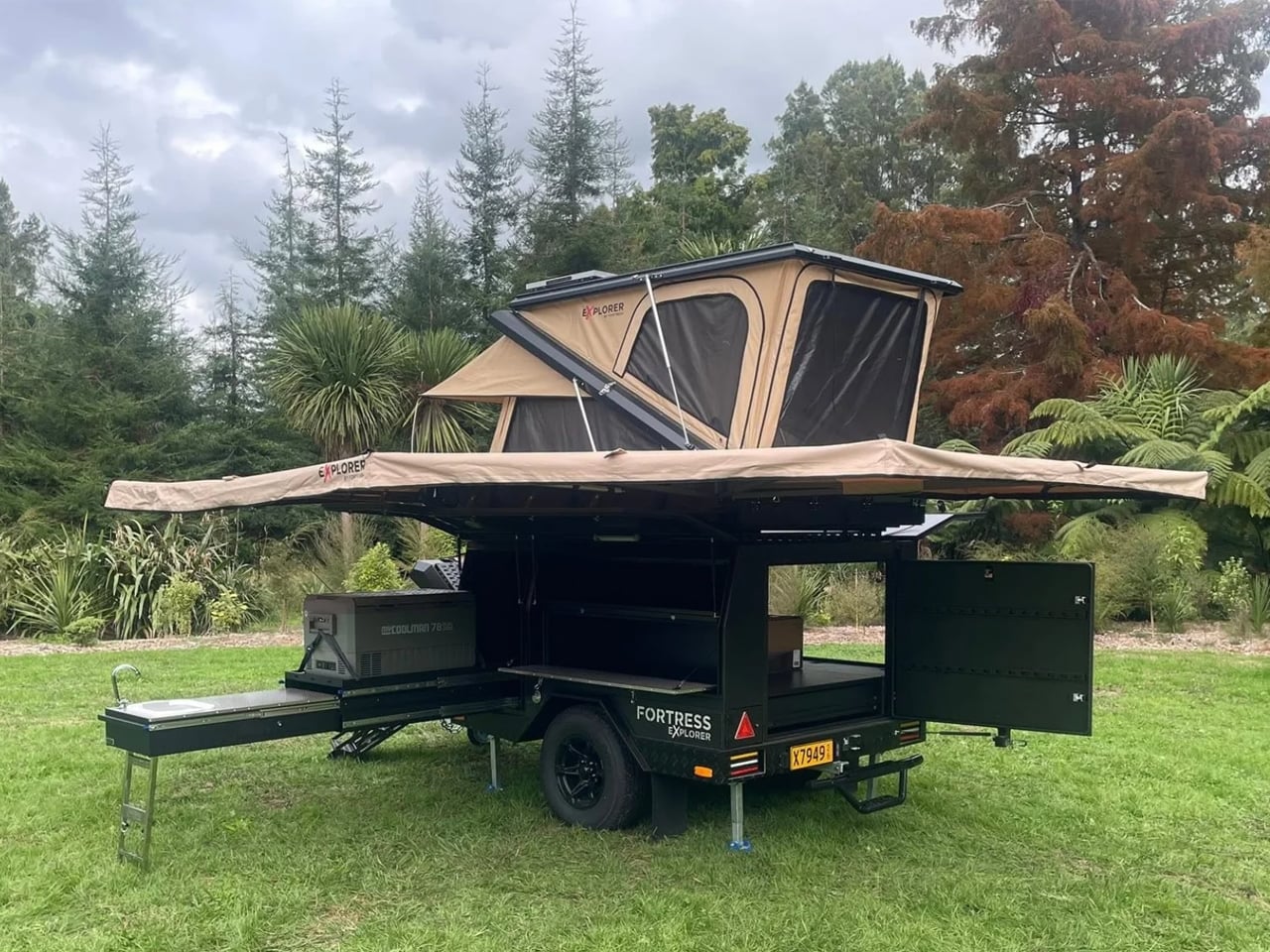
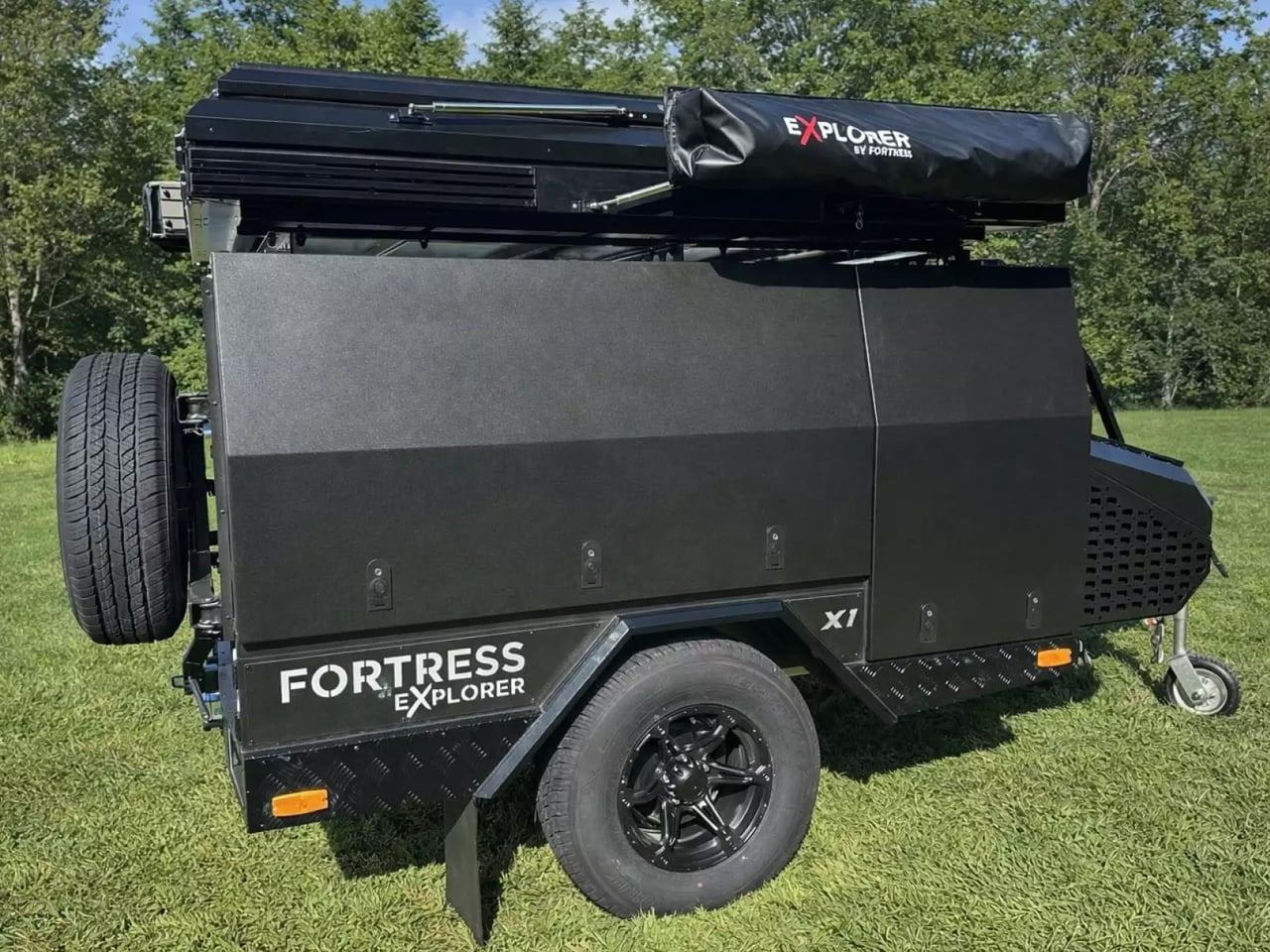
New Zealand’s Fortress Trailers spent years building secure, commercial-grade utility trailers for tradespeople before turning its attention to the outdoors. The Explorer is its first camping trailer, and the commercial DNA is visible throughout. The body is aluminum with scratch-resistant paint, while the chassis remains hot-dipped galvanized steel. It stretches 13.5 feet, offers 6.9 feet of headroom, and rides on 15-inch wheels. A 270-degree awning extends the living area outward, transforming the exterior into a proper outdoor room for cooking and relaxing.
A rooftop tent expands sleeping capacity beyond the queen-size memory foam bed inside the main cabin. The slide-out kitchen carries a 90-liter fridge, bench space, and cooking storage, while a 120-watt solar system paired with a 100Ah battery and a 1,000-watt inverter handles power. A 100-liter water tank covers water needs, and a separate shower tent provides privacy for washing up. A slide-out gear drawer keeps equipment organized on arrival. At roughly $25,000 USD, the Explorer is currently available only in New Zealand, with no confirmed plans for North American distribution yet.
What we like:
- The galvanized steel chassis and aluminum body represent a level of structural integrity most camping trailers in this price range never approach
- The overall value proposition for the build quality is genuinely competitive
What we dislike:
- The 120-watt solar system is modest compared to competitors at a similar price point
- North American availability remains unconfirmed, which is a significant limitation for the majority of buyers reading this
5. LIV E-Leaf Offroad
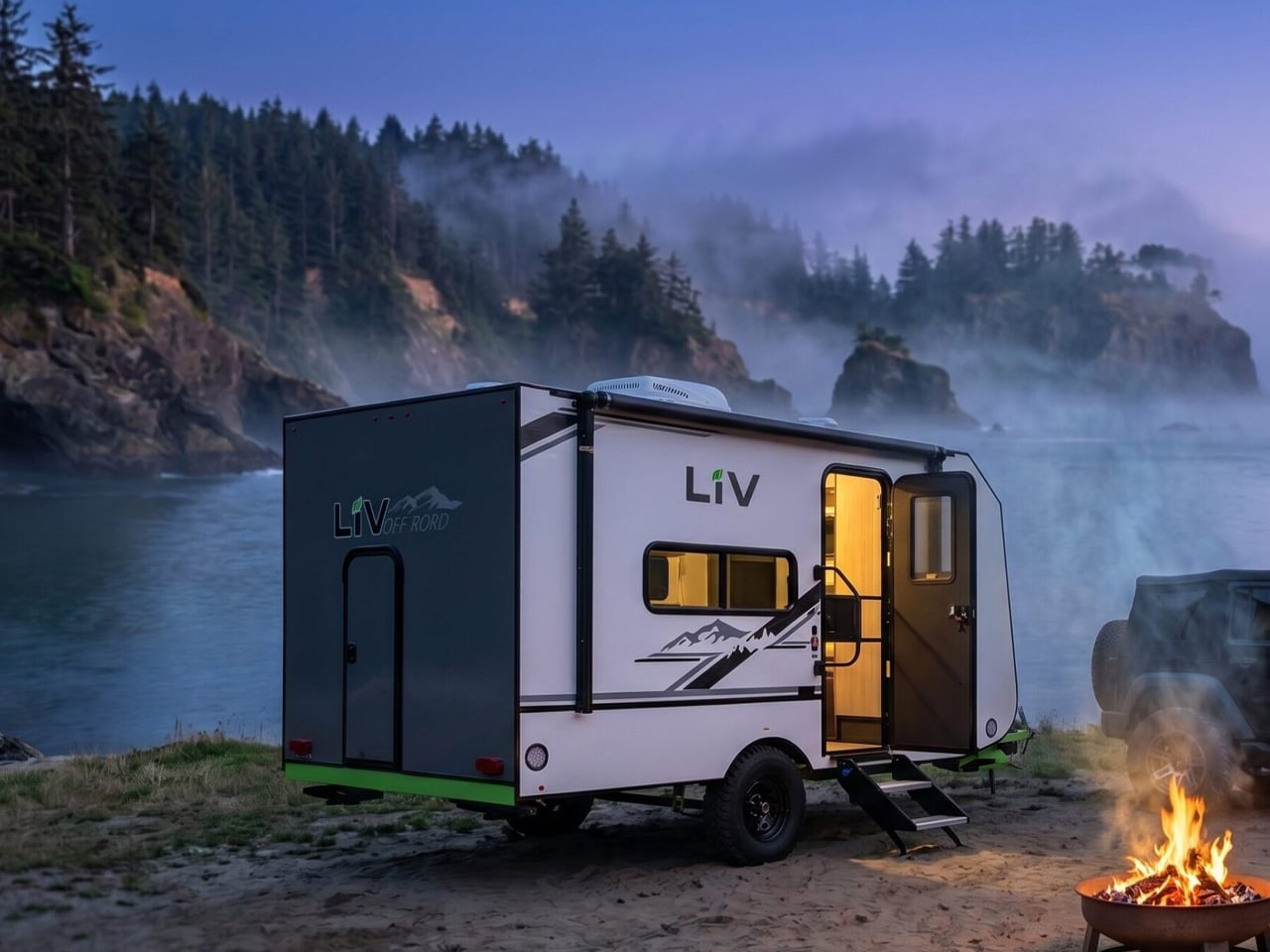
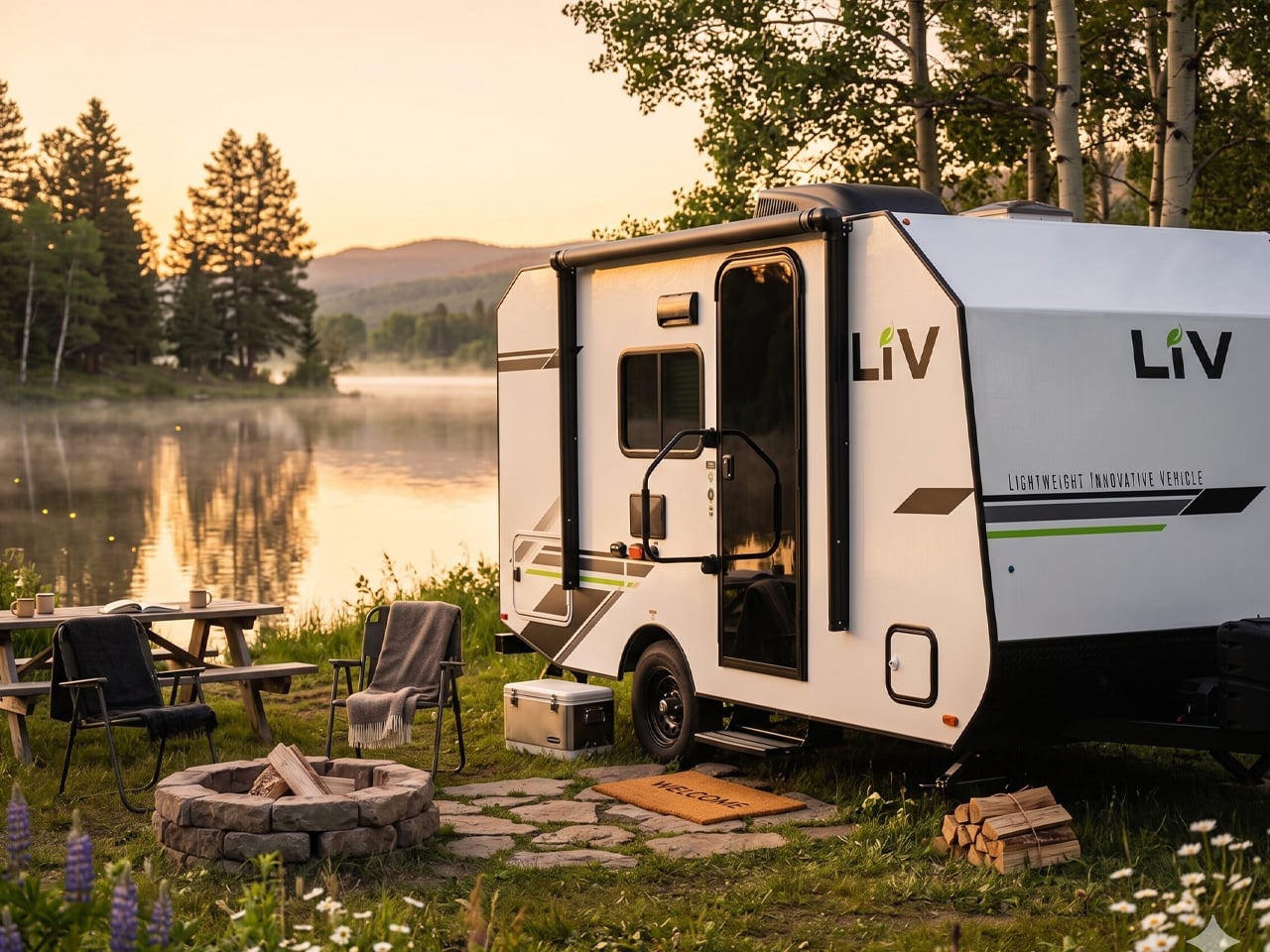
LIV Trailers has spent years making the case against wood and fiberglass in travel trailer construction. The E-Leaf Offroad takes that position further by adding an all-electric powertrain to a single-piece thermoplastic shell. The body is formed by welding the roof, walls, and wheel wells into one continuous structure with no seams for water to enter and no risk of corrosion. The result is a trailer that is simultaneously lighter, more rugged, and more structurally uniform than anything built with conventional methods, starting under $25,000.
Inside a form factor that reportedly measures just over 17 feet, LIV fits a Murphy bed on one side and a gaucho sofa that converts to a second sleeping surface on the other. The L-shaped corner kitchen includes a single-burner electric cooktop, door fridge/freezer, and microwave. A 30-liter electric water heater feeds the full bathroom, with both a toilet and a shower included. A 400-watt rooftop solar system charges a 300Ah lithium battery, while a 3,000-watt inverter manages output. A 20-amp DC-to-DC charger can also push power directly back to the towing vehicle.
What we like:
- The seamless thermoplastic unibody eliminates the most common failure points in conventional trailer construction
- An all-electric feature set under $25,000 is a price point very few competitors can approach
What we dislike:
- Most specifications remain announced but unconfirmed at the time of launch
- Official dimensions have not been published, which makes direct comparison with established alternatives genuinely difficult
6. Polydrops P21X
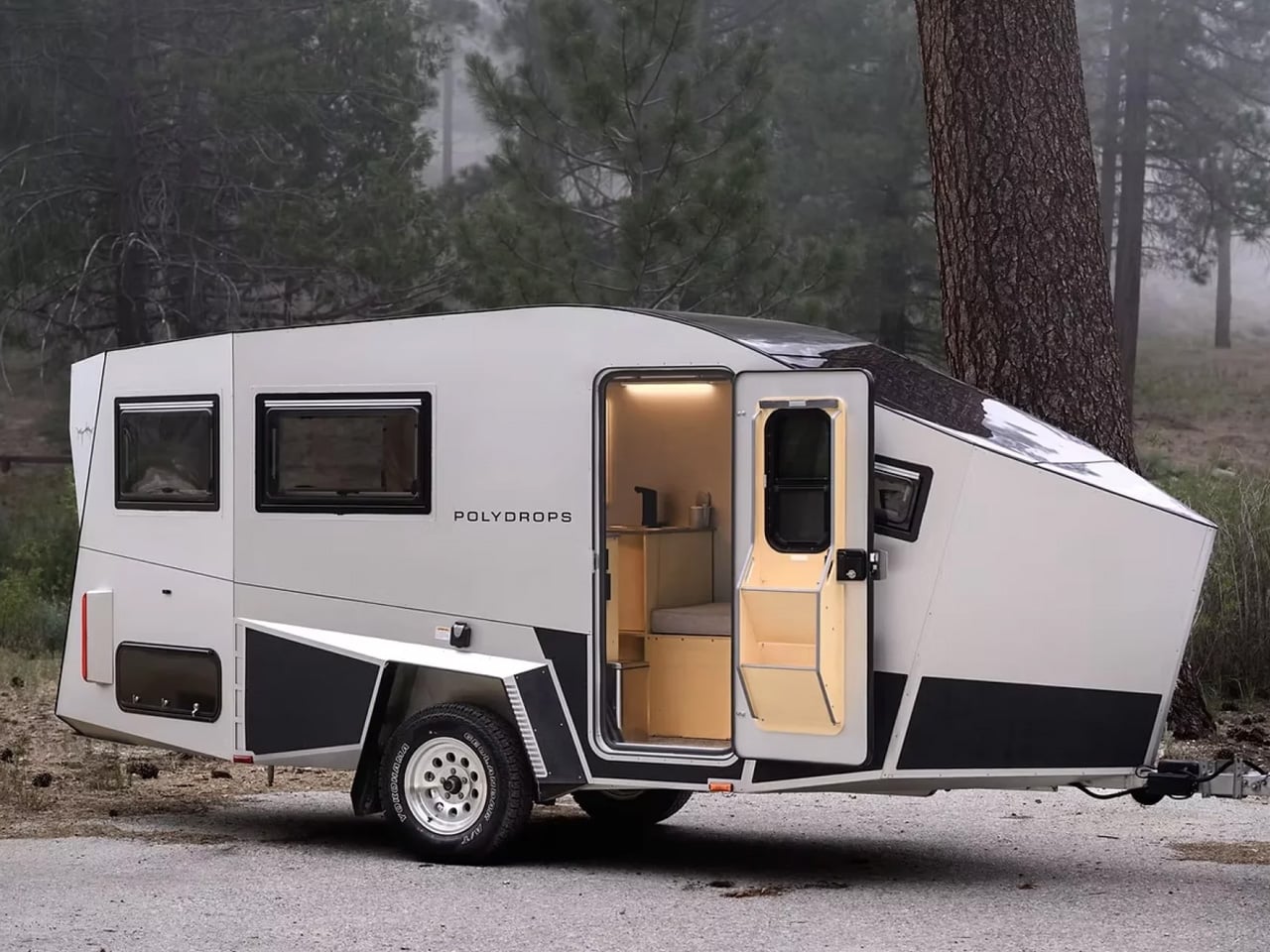
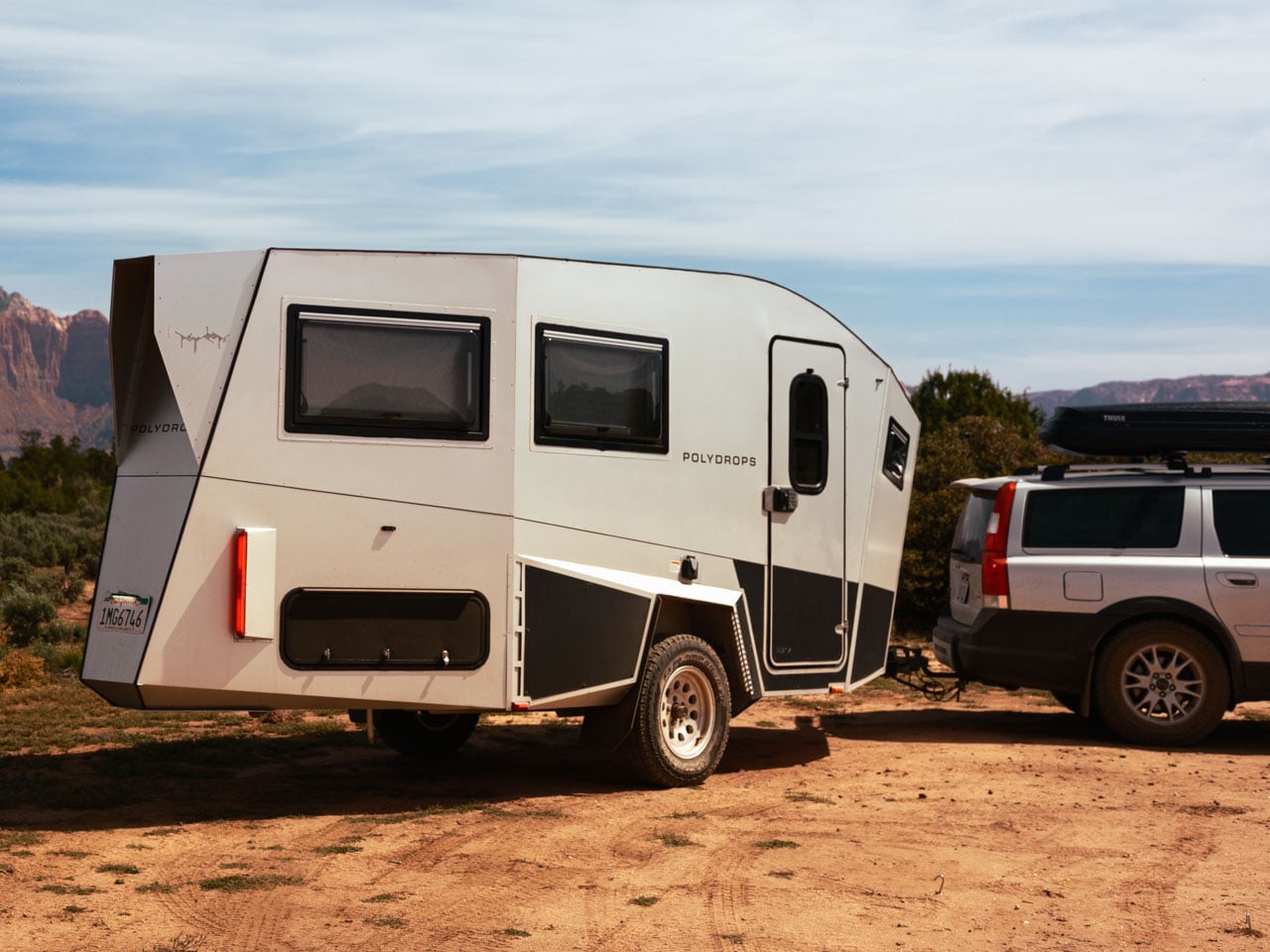
Polydrops built its reputation with the P21 by proving that a well-shaped trailer could reduce drag enough to make EV towing practical. The P21X extends that premise into off-road territory. The wedge-shaped, angular body now sits 15 inches off the ground on all-terrain tires with independent axle-less suspension. Every surface angle remains calculated for aerodynamics, with the rear tapered deliberately to compensate for the added height. The rooftop carries 1,300 watts of glass solar panels developed with Aptera Motors, a meaningful step up from the sub-1,000-watt system found on its predecessor.
Only 20 units will be produced, each starting at $76,900 with a 50 percent deposit required to reserve. The interior offers six feet of standing height for up to four people. A central kitchen feeds a convertible dinette in the rear that becomes the main sleeping area. A swiveling table up front creates a second bed alongside a separate lounge space. The hidden shower pan and pull-out toilet serve bathroom needs without a dedicated room. A 5kWh LFP battery manages storage with an upgrade path to 10kWh, and a 10,000-BTU unit handles both heating and cooling.
What we like:
- The solar collaboration with Aptera Motors produces one of the highest-output rooftop systems on any production trailer in this size class
- Aerodynamic engineering that genuinely reduces drag for EV-specific towing remains rare at any price
What we dislike:
- Twenty total units make this inaccessible to the overwhelming majority of buyers regardless of budget
- The $76,900 starting price is difficult to justify when competing trailers offer comparable off-grid capability at a fraction of the cost
7. Aboard T4
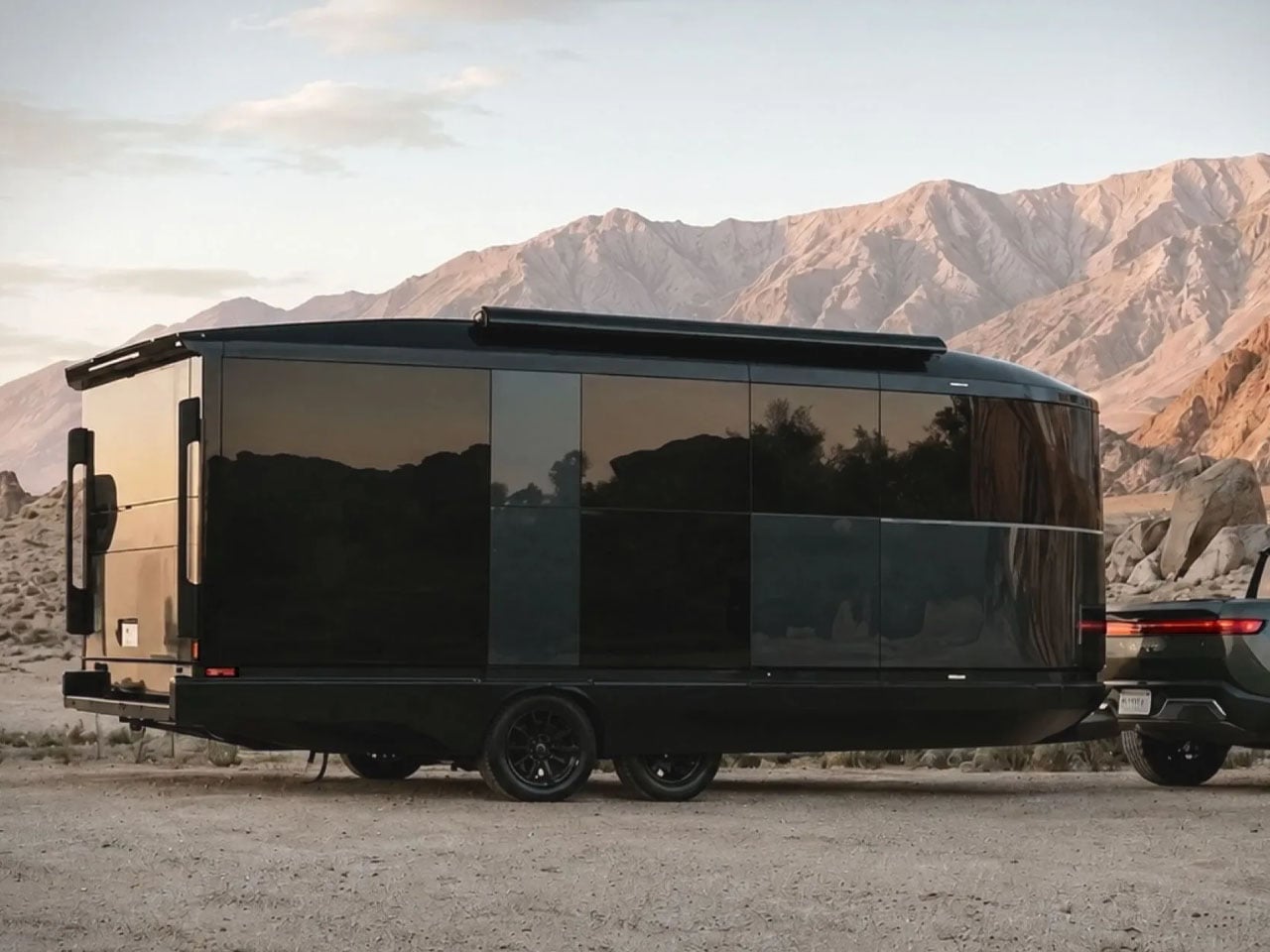
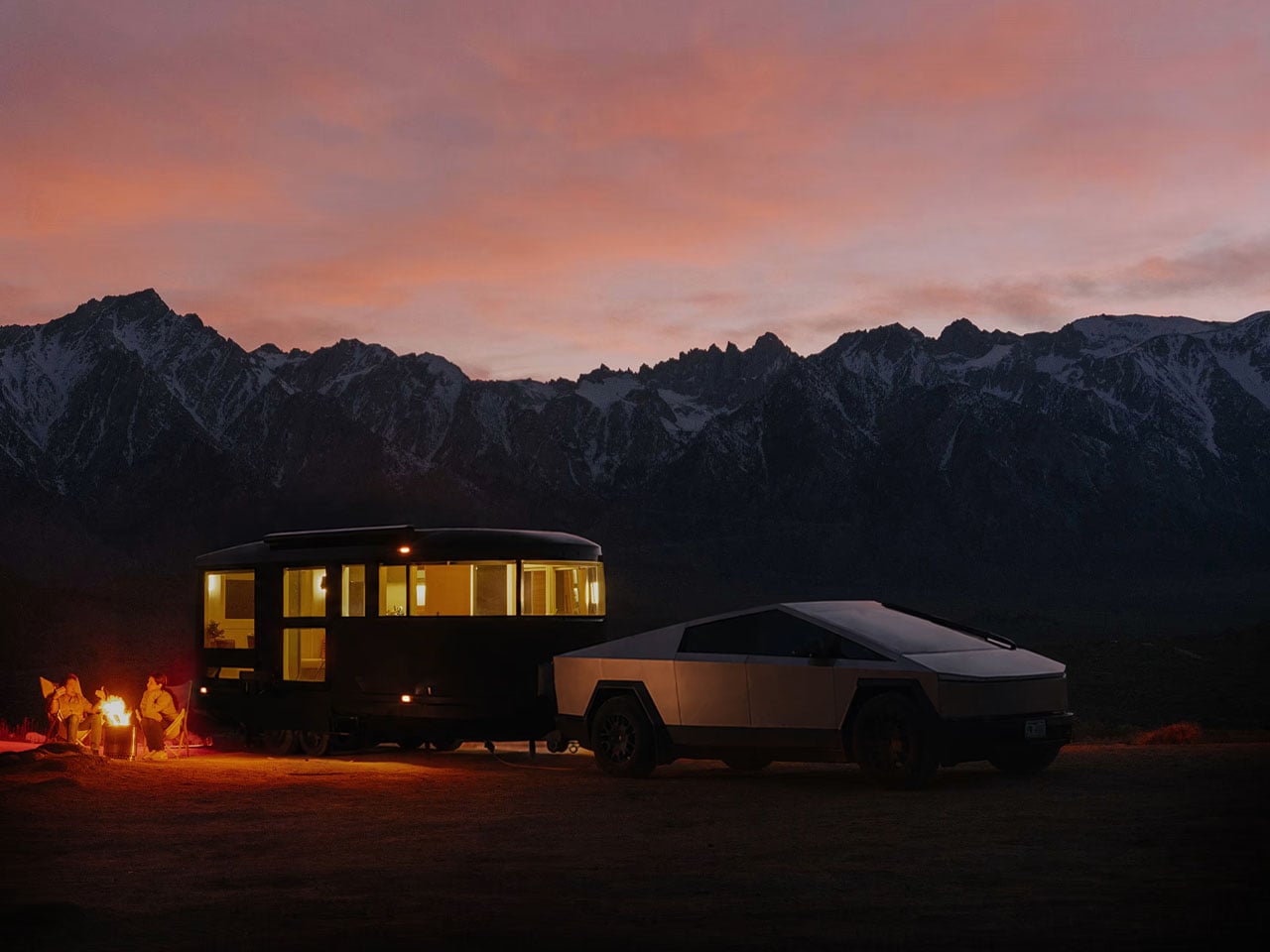
California-based Aboard RV has built something closer to an automotive platform than a conventional trailer. The T4 is 24 feet long and weighs 6,500 pounds, but its Extended-Range Electric Vehicle powertrain means the towing vehicle does not carry that load alone. A powered axle uses its own 41kWh LFP battery and a 60-kilowatt range-extending generator to assist propulsion, reducing drag on the tow vehicle and extending its effective range. The generator recharges in under 30 minutes. Total onboard power exceeds 200kWh, making extended off-grid stays a realistic proposition rather than a marketing claim.
Two convertible lounges flank the central kitchen and bathroom, transforming at night into sleeping areas for four people. The kitchen carries an induction cooktop, refrigerator, and microwave. The bathroom doubles as a mudroom with two separate entry points. Panoramic windows cover 270 degrees of the exterior. A 52-gallon fresh water tank, 35-gallon grey water, and 30-gallon black water tank support long-haul off-grid stays. The T4 starts at $80,000 and can be reserved now with a fully refundable $100 deposit, though a confirmed delivery date has not been announced.
What we like:
- The self-propelling drivetrain is a genuine engineering advancement that no other production trailer currently offers
- Total onboard power exceeding 200kWh makes extended off-grid living a realistic proposition rather than a marketing claim
What we dislike:
- At $80,000 with no confirmed delivery timeline, the T4 remains aspirational for most buyers
- The 6,500-pound weight still demands a heavy-duty tow vehicle regardless of how much the powered axle assists
The Category Is at an Interesting Moment, and These Seven Trailers Prove It
What this particular group of trailers makes clear is that the category is no longer converging on a single idea of what a travel trailer should be. From thermoplastic shells to accordion expansion mechanisms, from solo-tuned floor plans to self-propelled electric powertrains, the engineering diversity visible in 2026 reflects a market that is genuinely experimenting rather than simply iterating.
The price range covered here stretches from $19,300 to $80,000, and the most considered design on this list is not the most expensive. What links all seven trailers is an honest attempt to solve a specific problem well rather than produce another product that simply exists. That distinction is becoming rarer, which is exactly why it is worth recognizing when it shows up.
The post 7 Best Campers & Trailers of August 2026 first appeared on Yanko Design.