How to stop your iPhone tracking your in iOS 17 (Video)

iPhone tracking

iPhone tracking with iOS 17 takes user consent to a new level with its App Tracking Transparency feature. By disabling the “Allow Apps to Request to Track” option, you effectively stop apps from monitoring your online behavior. This change not only enhances your digital privacy but also puts you in charge of your digital footprint. […]

The post How to stop your iPhone tracking your in iOS 17 (Video) appeared first on Geeky Gadgets.

Endlesss Clubs is like a Discord server for making music

Producing music with friends and colleagues from afar can be tricky but, hopefully, it's about to get a bit smoother. Endlesss, a remote music creation platform, is rolling out a feature called Clubs that could make it easier to share and blend ideas. The new tool is reminiscent of Discord — something Endlesss (yes, with a triple s) outright states in its promotion.

Endlesss Clubs are live chat channels where members can add riffs, make comments, combine parts and share files. Just like Discord, members can belong to multiple Clubs, and each has different channels, depending on what people want to create. 

The company first announced the upcoming release of Endlesss Clubs back in August. "Music-makers all have to compete for attention on the same distribution platforms. This results in bad outcomes for everyone but the very best," Tim Exile, founder and CEO of Endlesss, said at the time. "We're excited to provide community-owned places for music-makers of all levels to go deep with their people."

Endlesss debuted at the start of the COVID-19 pandemic, allowing musicians to connect remotely. It was initially available only as an iOS app before launching Endlesss Studio for desktop at the end of 2020. There were some kinks when we first tested it, many of which seem to have been straightened out in the years since.  

Anyone can test out Endlesss for free or get unlimited sample packs, sample presets, VST/AU plugin presets and high quality audio for $10 per month. Endlesss Clubs are now available for members to join and play around in. 

This article originally appeared on Engadget at https://www.engadget.com/endlesss-clubs-is-like-a-discord-server-for-making-music-112509781.html?src=rss

Using ChatGPT Assistants API to build custom AI chatbots

how to build custom chatbots with Assistants API

In the fast-paced world of technology, developers are constantly on the lookout for the latest advancements that can enhance their work. OpenAI, a leader in artificial intelligence, has recently introduced Assistants API a suite of tools that promise to take AI integration to the next level. These innovations are designed to make it easier for […]

The post Using ChatGPT Assistants API to build custom AI chatbots appeared first on Geeky Gadgets.

Teenage Engineering Grip Car tests how far your minimalism loyalty can go

The minimalism design trend is still going strong, especially because of how it leans toward an economy of resources and production. Of course, it isn’t the only design paradigm around, nor is it always the best for every kind of product. Cars, for example, don’t easily lend themselves to minimalism because of the assortment of complex parts, some of which are required to be designed in a certain way to be safe and legal. Toy cars, on the other hand, don’t have such limitations, and aside from faithfully recreating existing cars, they can come in a variety of designs and interpretations. This particular “doodad,” for example, probably stretches the definition of a car while also trying to see how much people will be willing to pay for an odd yet beautifully minimalist toy car.

Designer: Anders Hermansen for Teenage Engineering
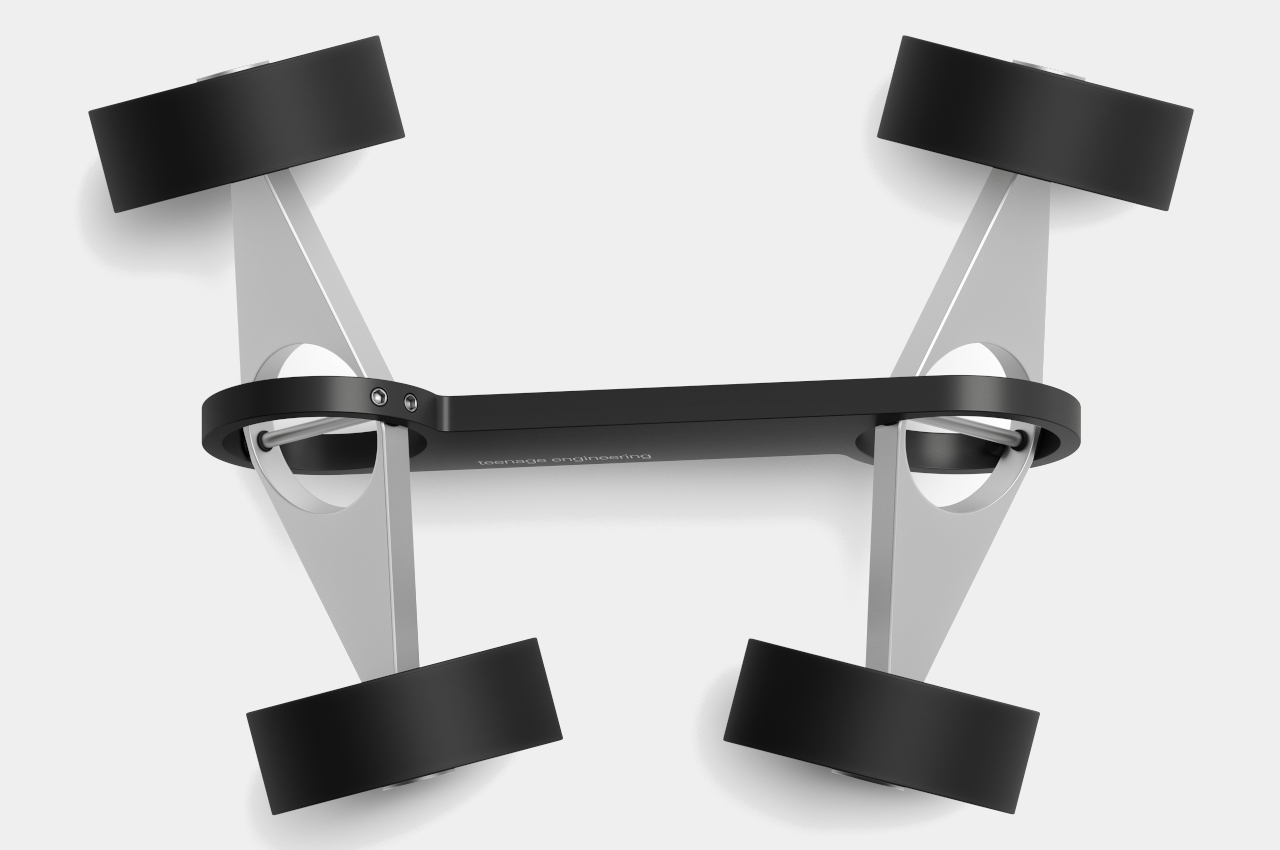
There’s a standard definition for a car, but that doesn’t apply to toys, especially not this one. In fact, the only semblance it has to a car is having four wheels, two on each side of an elongated body. This “grip car,” as it is called, doesn’t even run on its own, unlike the more advanced battery-powered vehicles that kids (and some adults) clamor for during holiday sales. It’s more like those wooden or plastic cars for toddlers that you grip by the body and move using your own power. You can push it forward or backward, spin it around, and turn it in any direction, but that’s pretty much it.

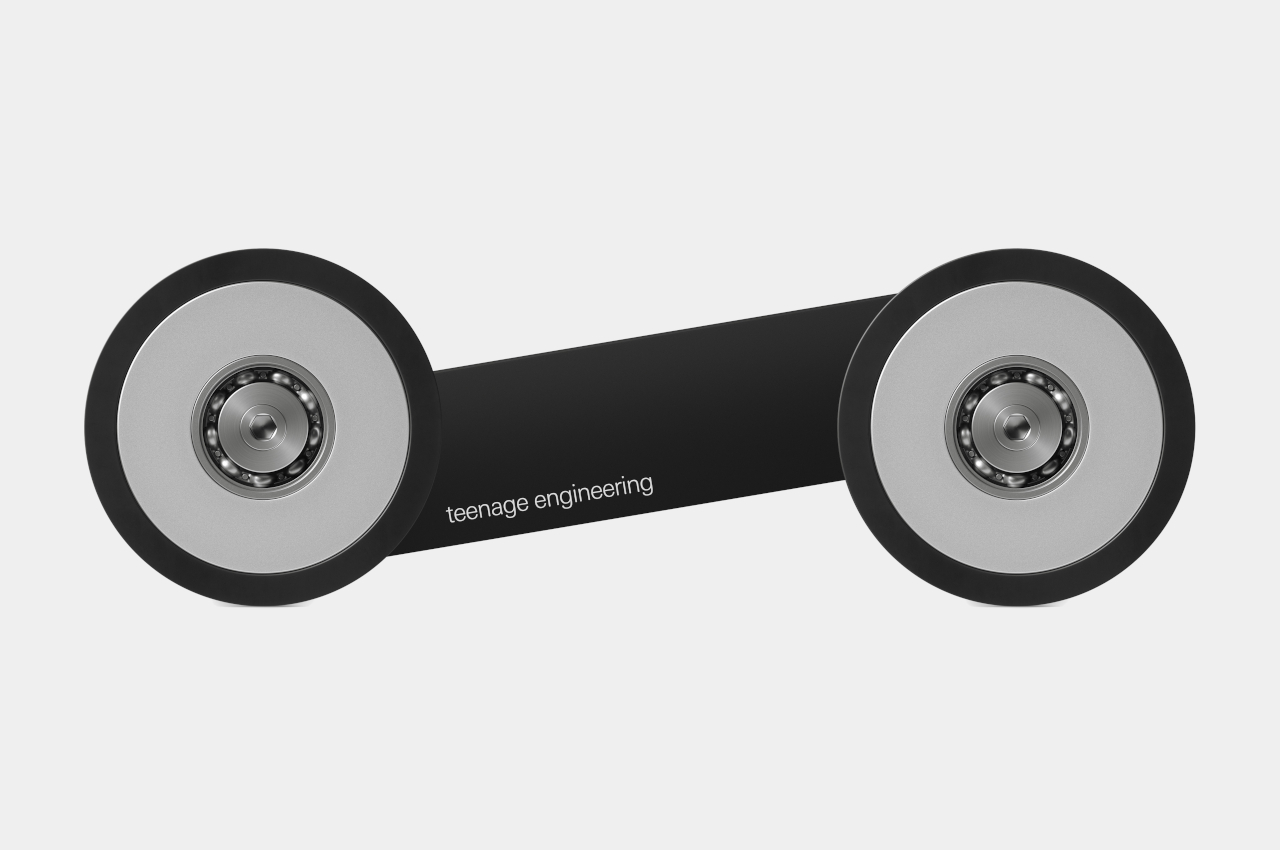
Of course, teenage engineering didn’t earn its fame from making toys. Like its other electronic products, the Grip Car is a glowing example of fine engineering and meticulous design, without the electronics in this case. The parts are CNC machined from 6063-T6 aluminum as well as stainless steel while utilizing rubber for parts like the tires. The red model gets a glossy paint job while the black and aluminum versions sport a matte surface instead. No matter at which angle you look at it, it hardly looks like a car, unless you’re simply talking about the undercarriage or even just the axles.
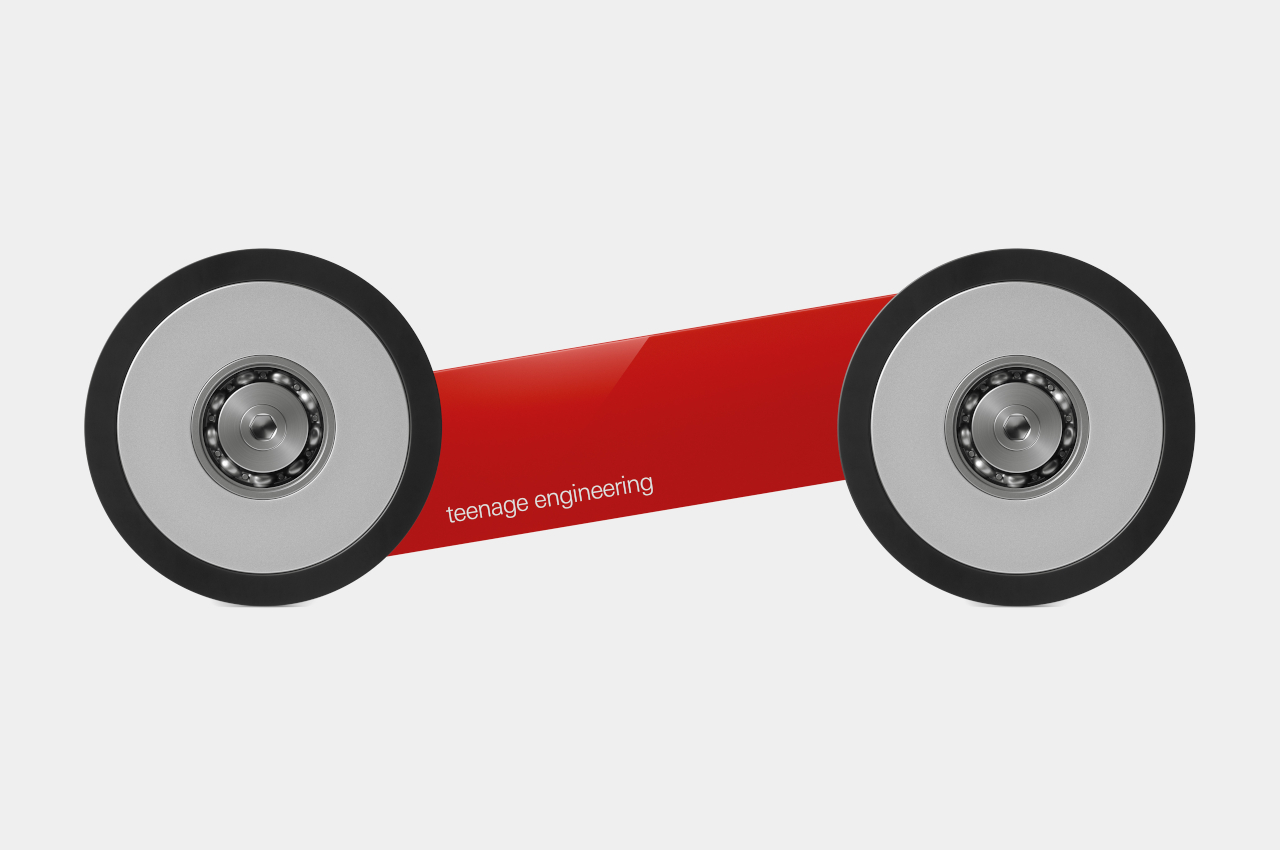

What differentiates the Grip Car even further from other toy cars is its mechanics, particularly the ball bearings that allow the car to spin 360 degrees while still keeping all four wheels grounded. This is the part where the “engineering” in teenage engineering really shines, even when there are none of the brand’s usual electronics involved. Thanks to this smooth movement and physical interaction, the toy car really encourages playful moments, making the Grip Car both a striking desk decoration as well as an addictive desk fidget toy.

The slight bump on the road is the Grip Car’s $250 price tag, an amount that sounds almost ridiculous for a beautiful yet still crude toy car. People have paid more for well-designed products, of course, but there will always be a point when it gets a little excessive. teenage engineering has established quite a name for itself, especially in the high-end audio equipment market, but it remains to be seen how well this super-minimalist and super-expensive doodad will sell.


The post Teenage Engineering Grip Car tests how far your minimalism loyalty can go first appeared on Yanko Design.

Samsung named a Global Top 5 Brand for 2023

Samsung global top brand

Samsung has announced that it has been named a Global Top 5 Brand for 2023 as part of the Interbrand Best Global Brands, this is the fourth consecutive year that Samsung has made the list. Samsung Electronics today was recognized by Interbrand, a global brand consultancy, as a “Global Top 5” brand for the fourth […]

The post Samsung named a Global Top 5 Brand for 2023 appeared first on Geeky Gadgets.

How Shopify is integrating AI into its e-commerce services and workflows using Copilot

how Shopify is using AI to improve its services and workflow 2023

Shopify, a prominent e-commerce platform, is bringing to life a vision of a world where tools used for online businesses not only simplify workloads but also enhance creativity and productivity. They achieve this through strategic integration of artificial intelligence (AI) into their services. This transformation is revolutionizing the online retail experience for all involved, from […]

The post How Shopify is integrating AI into its e-commerce services and workflows using Copilot appeared first on Geeky Gadgets.

The AI startup behind Stable Diffusion is now testing generative video

Stable Diffusion's generative art can now be animated, developer Stability AI announced. The company has released a new product called Stable Video Diffusion into a research preview, allowing users to create video from a single image. "This state-of-the-art generative AI video model represents a significant step in our journey toward creating models for everyone of every type," the company wrote. 

The new tool has been released in the form of two image-to-video models, each capable of generating 14 to 25 frames long at speeds between 3 and 30 frames per second at 576 × 1024 resolution. It's capable of multi-view synthesis from a single frame with fine-tuning on multi-view datasets. "At the time of release in their foundational form, through external evaluation, we have found these models surpass the leading closed models in user preference studies," the company said, comparing it to text-to-video platforms Runway and Pika Labs

Stable Video Diffusion is available only for research purposes at this point, not real-world or commercial applications. Potential users can sign up to get on a waitlist for access to an "upcoming web experience featuring a text-to-video interface," Stability AI wrote. The tool will showcase potential applications in sectors including advertising, education, entertainment and more. 

The samples shown in the video above appear to be of relatively high quality, matching rival generative systems. However, it has some limitations, the company wrote: it generates relatively short video (less than 4 seconds), lacks perfect photorealism, can't do camera motion except slow pans, has no text control, can't generate legible text and may not generate people and faces properly. 

The tool was trained on a dataset of millions of videos and then fine-tuned on a smaller set, with Stability AI only saying that it used video that was publicly available for research purposes. The origin of the data set is important, given that Stability AI was recently sued by Getty Images for scraping its image archives. 

Video is a key goal for generative AI, due to its potential to simplify content creation. However, it's also a tool with the most potential for abuse via deepfakes, copyright violations and more. And unlike OpenAI with its ChatGPT product, Stability has had less success commercializing its Stable Diffusion product and burned through cash at a high rate, TechCrunch noted. And last week, vice president of audio at Stability AI, Ed Newton-Rex, resigned over the use of copyrighted content to train generative AI models. 

This article originally appeared on Engadget at https://www.engadget.com/the-ai-startup-behind-stable-diffusion-is-now-testing-generative-video-105519658.html?src=rss

New Silicon Anode batteries offer even faster charging and longer battery life

Silicon Anode batteries

Imagine a world where your phone’s battery lasts for days, electric cars charge in minutes, and renewable energy storage is more efficient than ever. This future is closer than you might think, thanks to the advancements in silicon anode battery technology. Silicon anode batteries are shaping up to be a significant improvement over the lithium-ion […]

The post New Silicon Anode batteries offer even faster charging and longer battery life appeared first on Geeky Gadgets.

How to build a web user interface for Microsoft’s Autogen AI model

code a web user interface for Autogen

Wouldn’t it be great if you’re complex tasks were managed effortlessly by a team of digital assistants, each one communicating and collaborating to make your workday smoother. Microsoft Autogen is at the heart of this scenario, a framework designed to streamline intricate processes by coordinating these assistant-like agents. The magic of Autogen truly shines when […]

The post How to build a web user interface for Microsoft’s Autogen AI model appeared first on Geeky Gadgets.

OpenAI and Microsoft hit with copyright lawsuit from non-fiction authors

OpenAI has been hit with another lawsuit, accusing it of using other people's intellectual property without permission to train its generative AI technology. Only this time, the lawsuit also names Microsoft as a defendant. The complaint was filed by Julian Sancton on behalf of a group of non-fiction authors who said they were not compensated for the use of their books and academic journals in training the company's large language model. 

In their lawsuit, the authors state how they spend years "conceiving, researching, and writing their creations." They accuse OpenAI and Microsoft of refusing to pay authors while building a business "valued into the tens of billions of dollars by taking the combined works of humanity without permission." The companies pretend copyright laws do not exist, the complaint reads, and have "enjoyed enormous financial gain from their exploitation of copyrighted material."

Sancton is the author behind Madhouse at the End of the Earth: The Belgica’s Journey Into the Dark Antarctic, which tells the true survival story of an 1897 polar expedition that got stuck in the ocean in the middle of a sunless Antarctic winter. Sancton spent five years and tens of thousands of dollars to research and write the book. "Such an investment of time and money is feasible for Plaintiff Sancton and other writers because, in exchange for their creative efforts, the Copyright Act grants them 'a bundle of exclusive rights' in their works, including 'the rights to reproduce the copyrighted work[s],'" according to the lawsuit. 

As Forbes notes, OpenAI previously said that content generated by ChatGPT doesn't constitute "derivative work" and, hence, doesn't infringe on any copyright. Sancton's lawsuit is merely the latest complaint against the company over its use of copyrighted work to train its technology. Earlier this year, screenwriter and author also Michael Chabon sued OpenAI for the same thing, as did George R.R. Martin, John Grisham and Jodi Picoult. Comedian Sarah Silverman filed a lawsuit against OpenAI and Meta, as well. Sancton is now seeking damages and injunctive relief for all the proposed class action's defendants. 

This article originally appeared on Engadget at https://www.engadget.com/openai-and-microsoft-hit-with-copyright-lawsuit-from-non-fiction-authors-101505740.html?src=rss