Galaxy S24 and S24 Plus hands-on: Samsung’s AI phones are here, but with mixed results

I’ve never thought of Samsung as a software company, let alone as a name to pay attention to in the AI race. But with the launch of the Galaxy S24 series today, the company is eager to have us associate it with the year’s hottest tech trend. The new flagship phones look largely the same as last year’s models, but on the inside, change is afoot. At a hands-on session during CES 2024 in Las Vegas last week, I was more focused on checking out the new software on the Galaxy S24 and S24 Plus.

Thanks to a new Snapdragon 8 Gen 3 processor (in the US) customized “for Galaxy,” the S24 series are capable of a handful of new AI-powered tasks that seem very familiar. In fact, if you’ve used Microsoft’s CoPilot, Google’s Bard AI or ChatGPT, a lot of these tools won’t feel new. What is new is the fact that they’re showing up on the S24s, and are mostly processed on-device by Samsung’s recently announced Gauss generative AI model, which it has been quietly building out.

Samsung’s Galaxy AI features on the S24

There are five main areas where generative AI Is making a big difference in the Galaxy S24 lineup — search, translations, note creation, message composition and photo editing and processing. Aside from the notes and composition features, most of these updates seem like versions of existing Google products. In fact, the new Circle to Search feature is a Google service that is debuting on the S24 series, in addition to the Pixel 8 and Pixel 8 Pro.

Circle to Search

With Circle to Search, you basically press the middle of the screen’s bottom edge, the Google logo and a search bar pop up, and you can draw a ring around anything on the display. Well, almost anything. DRMed content or things protected from screenshots, like your banking app, are off limits. Once you’ve made your selection, a panel slides up showing your selection, along with results from Google’s Search Generative Experience (SGE).

You can scroll down to see image matches, followed by shopping, text, website and other types of listings that SGE thought were relevant. I circled the Samsung clock widget, a picture of beef wellington and a lemon, and each time I was given pretty accurate results. I was also impressed by how quickly Google correctly identified a grill that I circled on an Engadget article featuring a Weber Searwood, especially since the picture I drew around was at an off angle.

This is basically image search via Google or Lens, except it saves you from having to open another app (and take screenshots). You’ll be able to circle items in YouTube videos, your friend’s Instagram Stories (or, let’s be honest, ads). Though I was intrigued by the feature and its accuracy, I’m not sure how often I’d use it in the real world. The long-press gesture to launch Circle to Search works whether you use a gesture-based navigation or if you have the three-button layout. The latter might be slightly confusing, since you pretty much hold your finger down on the home button, but not exactly.

Circle to Search is launching on January 31st, and though it’s reserved for the Galaxy S24s and Pixel 8s for now, it’s not clear whether older devices might get the feature.

Chat Assist to tweak the tone of your messages

The rest of Samsung’s AI features are actually powered by the company’s own language models, not Google’s. This part is worth making clear, because when you use the S24 to translate a message from, say, Portuguese to Mandarin, you’ll be using Samsung’s database, not Google’s. I really just want you to direct your anger at the right target when something inevitably goes wrong.

I will say, I was a little worried when I first heard about Samsung’s new Chat Assist feature. It uses generative AI to help reword a message you’ve composed to change up the tone. Say you’re in a hurry, firing off a reply to a friend whom you know can get anxious and misinterpret texts. The S24 can take your sentences, like “On my way back now what do you need” and make it less curt. The options I saw were “casual,” “emojify,” “polite,” “professional” and “social,” which is a hashtag-filled caption presumably for your social media posts.

I typed “Hey there. Where can I get some delicious barbecue? Also, how are you?” Then I tapped the AI icon above the keyboard and selected the “Writing Style” option. After about one or two seconds, the system returned variations of what I wrote.

At the top of the results was my original, followed by the Professional version, which I honestly found hilarious. It said “Hello, I would like to inquire about the availability of delectable barbecue options in the vicinity. Additionally, I hope this message finds you well. Thank you for your attention to this matter.”

It reminded me of an episode of Friends where Joey uses a thesaurus to sound smarter. Samsung’s AI seems to have simply replaced every word with a slightly bigger word, while also adding some formal greetings. I don’t think “inquire about the availability of delectable barbecue options in the vicinity” is anything a human would write.

That said, the casual option was a fairly competent rewording of what I’d written, as was the polite version. I cannot imagine a scenario where I’d pick the “emojify” option, except for the sake of novelty. And while the social option pained me to read, at least the hashtags of #Foodie and #BBQLover seemed appropriate.

Samsung Translate

You can also use Samsung’s AI to translate messages into one of 13 languages in real-time, which is fairly similar to a feature Google launched on the Pixel 6 in 2021. The S24’s interface looks reminiscent of the Pixel’s, too, with both offering two text input fields. Like Google, Samsung also has a field at the top for you to select your target language, though the system is capable of automatically recognizing the language being used. I never got this to work correctly in a foreign language that I understand, and have no real way of confirming how accurate the S24 was in Portuguese.

Samsung’s translation engine is also used for a new feature called Live Translate, which basically acts as an interpreter for you during phone calls made via the native dialer app. I tried this by calling one of a few actors Samsung had on standby, masquerading as managers of foreign-language hotels or restaurants. After I dialed the number and turned on the Live Translate option, Samsung’s AI read out a brief disclaimer explaining to the “manager at a Spanish restaurant” that I was using a computerized system for translation. Then, when I said “Hello,” I heard a disembodied voice say “Hola” a few seconds later.

The lag was pretty bad and it threw off the cadence of my demo, as the person on the other end of the call clearly understood English and would answer in Spanish before my translated request was even sent over. So instead of:

Me: Can I make a reservation please?

S24: … ¿Puedo hacer una reserva por favor?

Restaurant: Si, cuantas personas y a que hora?

S24 (to me): … Yes, for how many people and at what time?

My demo actually went:

Me: Can I make a reservation please?

pause

Restaurant: Si, cuantas personas y a que hora?

S24: ¿Puedo hacer una reserva por favor?

pause

S24 (to me): Yes, for how many people and at what time?

It was slightly confusing. Do I think this is representative of all Live Translate calls in the real world? No, but Samsung will need to work on cutting down lag if it wants to be helpful and not confusing.

Galaxy AI reorganizing your notes

I was most taken by what Samsung’s AI can do in its Notes app, which historically has had some pretty impressive handwriting recognition and indexing. With the AI’s assistance, you can quickly reformat your large blocks of text into easy-to-read headers, paragraphs and bullets. You can also swipe sideways to see different themes, with various colors and font styles.

Notes can also generate summaries for you, though most of the summaries on the demo units didn’t appear very astute or coherent. After it auto-formatted a note titled “An Exploration of the Celestial Bodies in Our Solar System,” the first section was aptly titled “Introduction,” but the first bullet point under that was, confusingly, “The Solar System.” The second bullet point was two sentences, starting with “The Solar System is filled with an array of celestial bodies.”

Samsung also borrowed another feature from the Pixel ecosystem, using its speech-to-text software to transcribe, summarize and translate recordings. The transcription of my short monologue was accurate enough, but the speaker labels weren’t. Summaries of the transcriptions were similar to those in Notes, in that they’re not quite what I’d personally highlight.

The Galaxy S24 held in mid-air, with the viewfinder of its camera app showing on the screen.
Photo by Sam Rutherford / Engadget

That’s already a lot to cover, and I haven’t even gotten to the photo editing updates yet. My colleague Sam Rutherford goes into a lot more detail on those in his hands-on with the Galaxy S24 Ultra, which has the more-sophisticated camera system. In short though, Samsung offers edit suggestions, generative background filling and an instant slow-mo tool that fills in frames when you choose to slow down a video.

Samsung Galaxy S24 and S24 Plus hardware updates

That brings me to the hardware. On the regular Galaxy S24 and S24 Plus, you’ll be getting a 50-megapixel main sensor, 12MP wide camera and 10MP telephoto lens with 3x optical zoom. Up front is a 12MP selfie camera. So, basically, the same setup as last year. The S24 has a 6.2-inch Full HD+ screen, while the S24 Plus sports a 6.7-inch Quad HD+ panel and both offer adaptive refresh rates that can go between 1 and 120Hz. In the US, all three S24 models use a Snapdragon 8 Gen 3 for Galaxy processor, with the base S24 starting out with 8GB of RAM and 128GB of storage. Both the S24 and S24 Plus have slightly larger batteries than their predecessors, with their respective 4,000mAh and 4,900mAh cells coming in at 100mAh and 200mAh bigger than before.

Though the S24s look very similar to last year’s S23s, my first thought on seeing them was how much they looked like iPhones. That’s neither a compliment nor an indictment. And to be clear, I’m only talking about the S24 and S24 Plus, not the Ultra, which still has the distinctive look of a Note.

Four Galaxy S24 handsets in white, cream, black and purple, laid down on a table with their rear cameras facing up.
Photo by Sam Rutherford / Engadget

It feels like Samsung spent so much time upgrading the software and focusing on joining the AI race this year that it completely overlooked the S24’s design. Plus, unlike the latest iPhones, the S24s are also missing support for the newer Qi 2 wireless charging standard, which includes magnetic support, a la Apple’s MagSafe.

Wrap-up

I know it’s just marketing-speak and empty catchphrases, but I’m very much over Samsung’s use of what it thinks is trendy to appeal to people. Don’t forget, this is the company that had an “Awesome Unpacked” event in 2021 filled to the brim with cringeworthy moments and an embarrassingly large number of utterances of the words “squad” and “iconic”.

That doesn’t mean what Samsung’s done with the Galaxy S24 series is completely meaningless. Some of these features could genuinely be useful, like summarizing transcriptions or translating messages in foreign languages. But after watching the company follow trend after trend (like introducing Bixby after the rise of digital assistants, or bringing scene optimizers to its camera app after Chinese phone makers did), launching generative AI features feels hauntingly familiar. My annoyance at Samsung’s penchant for #trendy #hashtags aside, the bigger issue here is that if the company is simply jumping on a fad instead of actually thoughtfully developing meaningful features, then consumers run the risk of losing support for tools in the future. Just look at what happened to Bixby.

This article originally appeared on Engadget at https://www.engadget.com/galaxy-s24-and-s24-plus-hands-on-samsungs-ai-phones-are-here-but-with-mixed-results-180008236.html?src=rss

Open Roads preview: Bring me to life in 2003

I own a jacket that’s eerily similar to Tess’ in Open Roads. It’s a blue bomber with yellow and burnt orange accents, and it’s not the only thing that Tess and I have in common. As she leisurely explores her childhood bedroom in the first few minutes of the game, Tess comes across set pieces that ground her environment in the early 2000s. There’s a chunky black television set and scattered DVD cases, little bottles of bright nail polish, a black-and-white strip from a photo booth, newspapers remembering 9/11 and hunting for bigfoot, and a bright pink tube of sickly sweet lip balm. These are the leftovers of her adolescence — the room is disheveled and largely empty, with most of her possessions packed away, ready to move. Tess picks through the room’s remaining photos and yearbooks, her hand-drawn fingers reaching out to interact with 3D objects, revealing more of her backstory with each touch. The cuff of her jacket is jarringly familiar every time it enters the frame.

Open Roads is a narrative-driven, exploration-focused game about the road trip that Tess and her mother take when a death in the family uproots their life. After clearing out the house and finding a mysterious diary in the attic, Tess and her mom, Opal, print out directions from RoadBuddy (not MapQuest) and set off on a long drive. Emotional upheaval is bound to ensue.

Open Roads
Annapurna Interactive

I watched developers play the first 15 minutes or so of Open Roads, and the preview reeled me in immediately. Visually, the game is polished and engaging; the settings and interactable objects are 3D, while characters are hand-drawn, carving depth into each scene. Developers at the Open Roads Team uploaded real-life handwriting samples to create yearbook pages, postcards and letters, which removes the threat of pixelated text ruining the immersion. In conversation, the characters float between movements like old-school Disney storyboards, making the entire experience feel like a lucid dream.

Tess and Opal are fully voiced by two mainstream actors, Kaitlyn Dever and Keri Russell, and in the scenes I’ve seen, their performances are fantastic. The interactions between Tess and Opal are simultaneously loving and strained, as mother-daughter relationships can be. The writing is also evocative and genuine; dialogue flows smoothly, even with the various player-chosen paths that each conversation can take. These characters feel real right away.

Open Roads
Annapurna Interactive

The house that Tess and Opal are leaving is lived-in and it has a sense of history. There are personal, hand-crafted touches in every room, and developers added bits of their own lives to the game. The chair by that desk? It was modeled after a developer’s own childhood memories. Those old, creepy ornaments in the attic? A developer’s grandma passed down those exact decorations in real life. The scribbles on the wall? They’re drawings from the creators’ kids. These details won’t be obvious to most players, but they lend a sense of authenticity to the game as Tess explores the closets and corners of her family home.

Open Roads doesn’t just provide early-2000s nostalgia, but it also reaches back and references the ’60s and ’70s, covering multiple generations in Tess’ family. As Tess investigates the house and picks up various objects, Opal provides context and tells stories about their life, and there are branching dialogue paths. At one point during the preview, the developer that was playing decided to make Tess walk away from the refrigerator without shutting its door, and this caused Opal to scold her. Tess and Opal’s relationship is charming and warm, but there’s a sense of tension running through their interactions that I’m eager to examine in the full game.

Open Roads feels like a mix of Gone Home, Life is Strange and What Remains of Edith Finch, in the best possible way. The writing, voice acting and animation style harmonize in the first few minutes of the game to create a realistic and nostalgic world populated with vivid characters. I’m ready to hit the road with Tess, Opal and their printed-out driving directions when the game hits PC, Switch, PlayStation and Xbox on February 22. After all, I already have the jacket.

This article originally appeared on Engadget at https://www.engadget.com/open-roads-preview-bring-me-to-life-in-2003-170007873.html?src=rss

Alphabet’s Wing shows off a larger delivery drone with a bigger payload capacity

Alphabet-owned Wing has been trying to make drone delivery an actual thing, but the relatively minuscule payload capacity of modern delivery aircraft has been a serious obstacle. The company just unveiled a new drone that’s a step in the right direction. The new model can handle payloads of up to five pounds, which is twice as much as Wing’s previous flagship drone.

It can also travel up to 65 MPH, which is pretty darned fast. The onboard battery allows for a 12 mile round trip, which is in line with previous metrics, so that translates to an under six-minute delivery time. That certainly beats pizza delivery. Speaking of, most pizzas are well under five pounds. Just saying.

The increased weight limit will also allow Wing to complete more deliveries at once and limit the number of orders that require more than a single drone. The company says that 30 percent of current deliveries demand two drones, but that’s with the 2.5 pound payload capacity. Adam Woodworth, Wing CEO, says the new aircraft will “streamline our deliveries of larger orders” and gave an example of a customer ordering last minute ingredients for a pasta dinner.

The new drone will be unleashed on the masses sometime in the next year. Also, there are more redesigns coming. It’s announced something called an Aircraft Library, in which teams are working on a wide configuration of builds to suit different use case scenarios. Woodworth likens it to how a standard delivery company operates a fleet of different-sized trucks. Even with this initiative, however, we are likely a long ways off from a drone delivering something heavy and bulky, like an Xbox.

Wing currently operates in the Dallas-Fort Worth area, in addition to Australia, Finland and Ireland. It’s teamed up with retailers like Walgreens and Walmart to offer deliveries. 

This article originally appeared on Engadget at https://www.engadget.com/alphabets-wing-shows-off-a-larger-delivery-drone-with-a-bigger-payload-capacity-163148392.html?src=rss

Space elevator concept will make travel to the stars more accessible

If you’ve watched a lot of science-fiction or future-based movies and TV series, then you’ve seen a lot of products and inventions that may seem impossible and fantastical now. But over the past decades, we’ve seen a lot of advancement in technology that some of these, especially those that were released in the 80s, have actually come true. And those that seem improbable now can actually become reality in the near and far future.

Designer: Jordan William Hughes

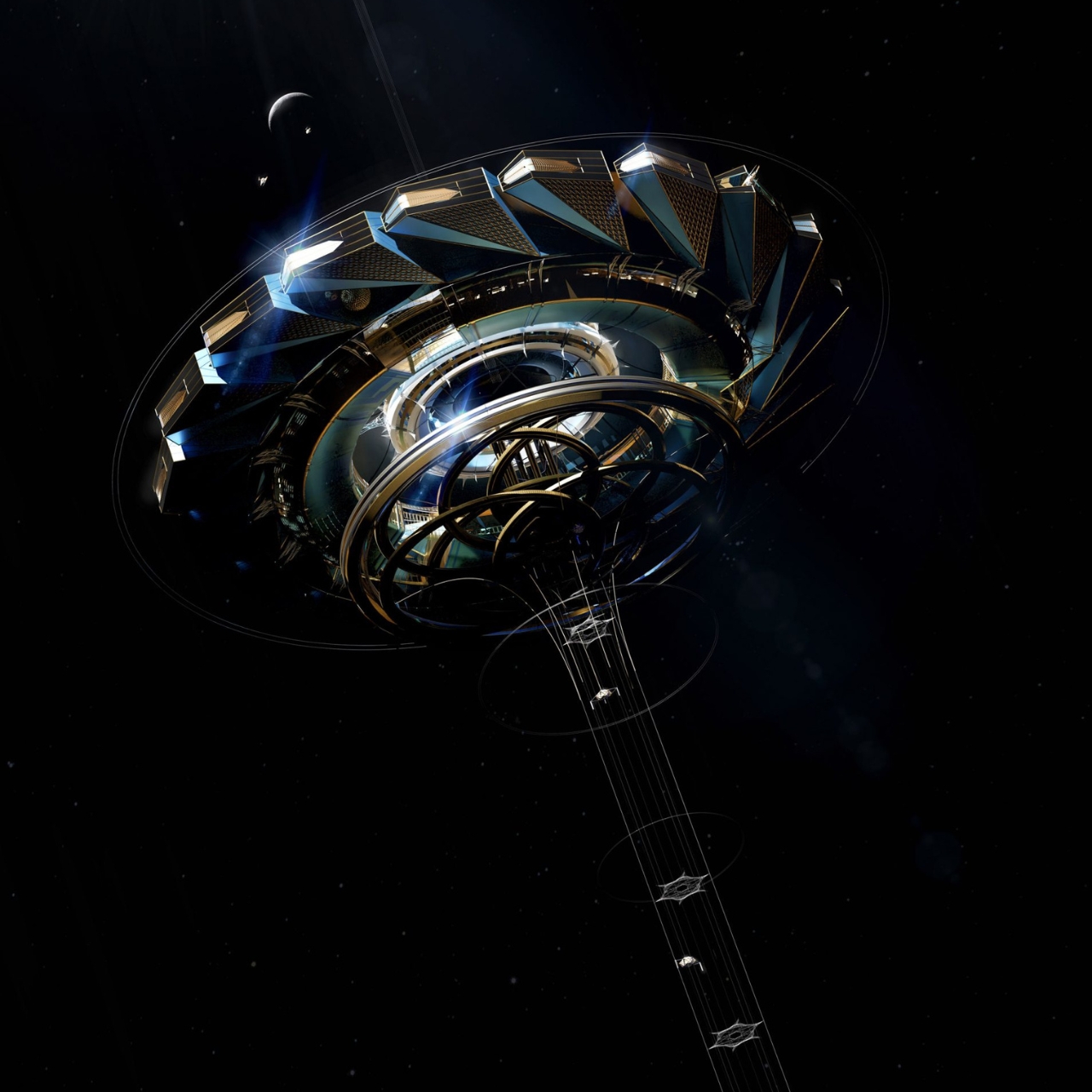
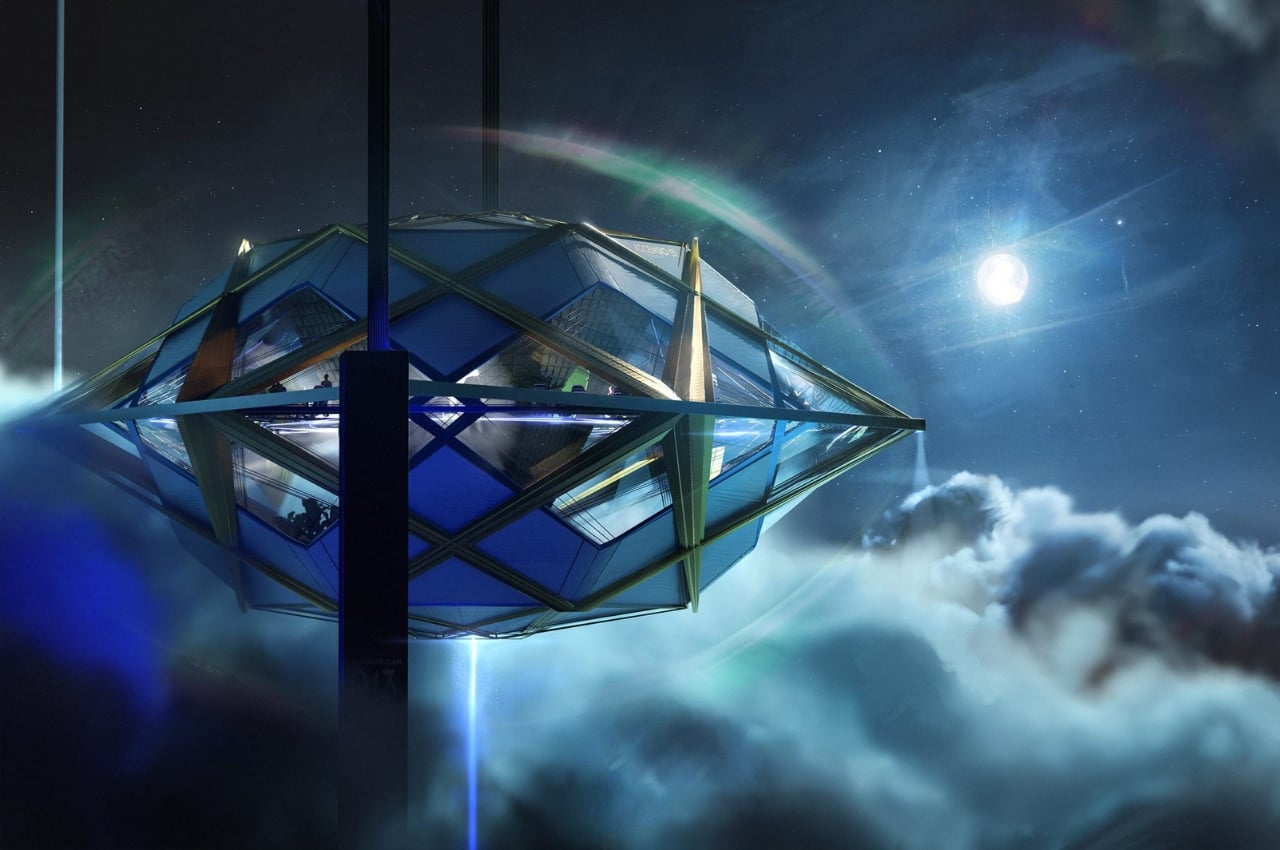
This conceptual design for a space elevator seems right out of a movie but it is actually based on data from existing research by physicists and engineers. If this eventually becomes a reality, space travel would become much easier and maybe even affordable. It will be a more viable alternative to the existing space travel that is currently possible with rockets. It will also save a ton of fuel that is currently being utilized.

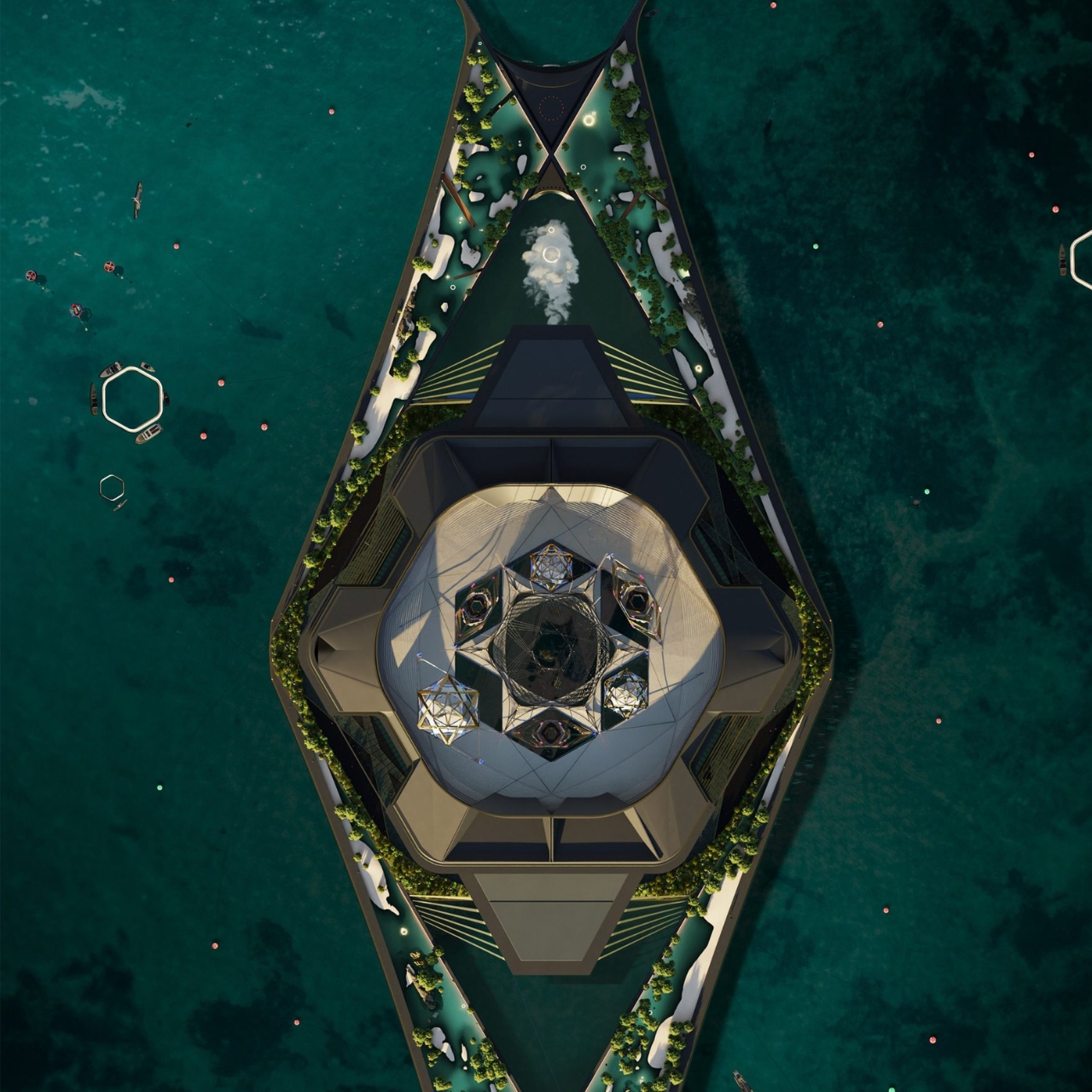
The concept is for an asteroid in geostationary orbit to serve as the counterweight for this spaceport. The elevator will be connected to the ocean through a robust tether that will transport it from the asteroid to Earth. Drones will be able to go up and down the tether and be able to transport both cargo and people. The idea is for the space station to be more than 26,000 kilometers above Earth and then the spaceport here on our planet to be at sea-level.

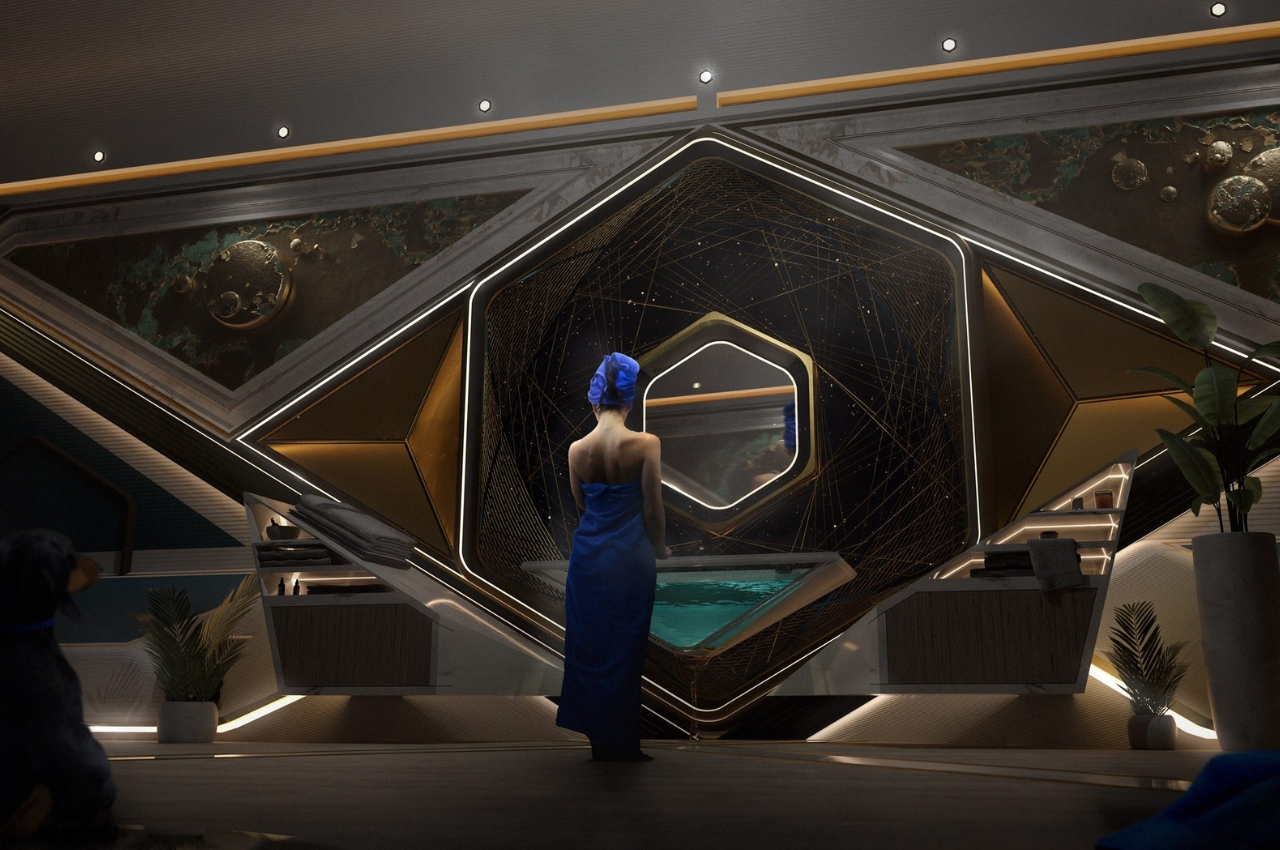
The spaceport will also be a movable vessel so it can also not be limited by possible bad weather conditions. The concept art still seems to be pretty fantastical and right out of a sci-fi fantasy movie. But in the next few years, we can see if this is actually something possible.

The post Space elevator concept will make travel to the stars more accessible first appeared on Yanko Design.

PITAKA MagEZ Case 4 range for Samsung Galaxy S24 launched

PITAKA1

The new Samsung Galaxy S24 range of smartphones will launch later today and PITAKA has launched it new range of cases for the handsets, including the new PITAKA MagEZ Case 4 range of the new Galaxy S24. The new cases are available for all models of the Galaxy S24, including the Galaxy S24, The Galaxy […]

The post PITAKA MagEZ Case 4 range for Samsung Galaxy S24 launched appeared first on Geeky Gadgets.

LIVA X3A and LIVA P500 H610 ADLN-I3 and H610H7-IM1 industrial PC motherboards

Industrial Computer

ECS Industrial Computer (ECSIPC) has unveiled its latest range of industrial PC motherboards, which are set to be showcased at the upcoming ISE 2024 event. These new offerings are specifically designed to enhance smart retail experiences and meet the demanding requirements of industrial computing, promising to bring a new level of efficiency and performance to […]

The post LIVA X3A and LIVA P500 H610 ADLN-I3 and H610H7-IM1 industrial PC motherboards appeared first on Geeky Gadgets.

AVerMedia next generation PCIe live streaming capture cards

PCIe live streaming capture cards

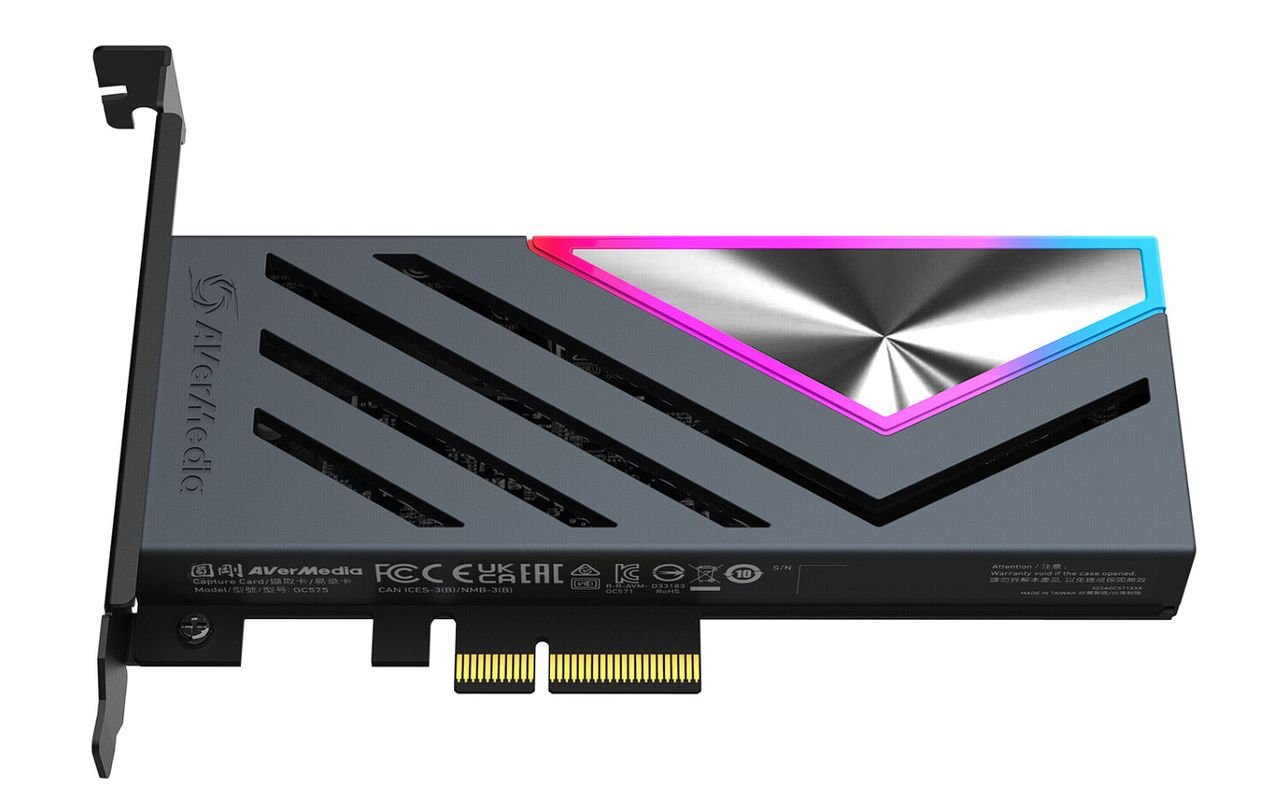
In the dynamic world of live streaming and content creation, AVerMedia Technologies has stepped up its game by unveiling two new PCIe capture cards that promise to take your streaming experience to the next level. The HDMI 2.1 Live Gamer 4K 2.1 (GC575) and the Live Streamer ULTRA HD (GC571) are the latest additions to […]

The post AVerMedia next generation PCIe live streaming capture cards appeared first on Geeky Gadgets.

Vauxhall Mokka Electric Long Range launched

Vauxhall Mokka Electric

Vauxhall has launched a new longer-range version of their Mokka, the Vauxhall Mokka Electric Long Range and the car will come with a new 54 kWh battery, this gives the car a 20% increase in range to 252 miles. The new Mokka Electric Long Range is powered by a new, more efficient and quieter 115kW […]

The post Vauxhall Mokka Electric Long Range launched appeared first on Geeky Gadgets.

WhatsApp Channels now let owners send voice messages

WhatsApp has introduced new features Channels can use to interact with their followers. The biggest one, perhaps, is voice updates. Channel admins and owners, such as celebrities, can now send voice messages to their group. Meta says Puerto Rican rapper Bad Bunny was the first celebrity to test it out, but it's rolling out the feature broadly today. Voice updates is one of WhatsApp's most popular features, probably because it allows users to send messages without having to type, even while they're driving or doing something else. Apparently, WhatsApp users send 7 billion voice messages on the app every day, so it was most likely a very easy decision for Meta to bring the feature to Channels. 

In addition to voice updates, admins can now also share polls in chat that their followers can answer. Plus, WhatsApp now allows Channels to have as many as 16 administrators if they want to make sure that their followers are always up to date with the latest news. As for fans, they'll now be able to share a Channel update as their Status, which is the messaging service's version of Instagram Stories. Since it's possible to share voice notes as a WhatsApp Status, that presumably means they can also share a Channel voice update if they want. All of these features are making their way to WhatsApp users around the world. 

This article originally appeared on Engadget at https://www.engadget.com/whatsapp-channels-now-let-owners-send-voice-messages-150016866.html?src=rss

Synopsys announces the acquisition of Ansys simulation software for $35 billion

Synopsys acquires Ansys

In a significant move within the tech industry, Synopsys, a major player in electronic design automation, has made a bold step by agreeing to purchase Ansys, a company known for its engineering simulation software, in a deal valued at $35 billion. This acquisition is set to create a powerhouse by combining Synopsys’ expertise in design […]

The post Synopsys announces the acquisition of Ansys simulation software for $35 billion appeared first on Geeky Gadgets.