A group of former Twitter executives, including former CEO Parag Agrawal, are suing Elon Musk and X over millions of dollars in unpaid severance benefits. The claims date back to the chaotic circumstances surrounding Musk’s takeover of the company in October 2022.
When Musk took control of the company, his first move was to fire Agrawal, CFO Ned Segal, chief legal officer Vijaya Gadde and general counsel Sean Edgett. According to the lawsuit, Musk had “special ire” for the group because of the role they played in the months-long court battle that forced Musk to follow through with the acquisition after he attempted to back out of the deal. According to the lawsuit, Agrawal is entitled to $57.4 million in severance benefits, Segal is entitled to $44.5 million, Gadde $20 million and Edgett $6.8 million, for a total of about $128 million.
The lawsuit cites Musk biographer Walter Isaacson’s account of the events, which explains that Musk rushed to close the Twitter deal a day early so he could fire the executives “for cause” just before their final stock options were set to vest. According to Isaacson, Musk bragged that the legal maneuver saved him about $200 million.
“Musk doesn’t pay his bills, believes the rules don’t apply to him, and uses his wealth and power to run roughshod over anyone who disagrees with him,” the lawsuit states,“Because Musk decided he didn’t want to pay Plaintiffs’ severance benefits, he simply fired them without reason, then made up fake cause and appointed employees of his various companies to uphold his decision.”
X didn’t respond to a request for comment on the lawsuit. Of note, it’s not the first time former Twitter employees have sued the company for failing to pay severance benefits. A separate lawsuit claimed Twitter owed former workers more than $500 million in unpaid severance. Agrawal, Segal and Gadde also previously sued the company over unpaid legal bills as a result of shareholder lawsuits and other investigations that resulted from Musk’s takeover,
This article originally appeared on Engadget at https://www.engadget.com/twitters-former-ceo-and-other-execs-are-suing-elon-musk-and-x-for-128-million-in-unpaid-severance-231428042.html?src=rss
A group of former Twitter executives, including former CEO Parag Agrawal, are suing Elon Musk and X over millions of dollars in unpaid severance benefits. The claims date back to the chaotic circumstances surrounding Musk’s takeover of the company in October 2022.
When Musk took control of the company, his first move was to fire Agrawal, CFO Ned Segal, chief legal officer Vijaya Gadde and general counsel Sean Edgett. According to the lawsuit, Musk had “special ire” for the group because of the role they played in the months-long court battle that forced Musk to follow through with the acquisition after he attempted to back out of the deal. According to the lawsuit, Agrawal is entitled to $57.4 million in severance benefits, Segal is entitled to $44.5 million, Gadde $20 million and Edgett $6.8 million, for a total of about $128 million.
The lawsuit cites Musk biographer Walter Isaacson’s account of the events, which explains that Musk rushed to close the Twitter deal a day early so he could fire the executives “for cause” just before their final stock options were set to vest. According to Isaacson, Musk bragged that the legal maneuver saved him about $200 million.
“Musk doesn’t pay his bills, believes the rules don’t apply to him, and uses his wealth and power to run roughshod over anyone who disagrees with him,” the lawsuit states,“Because Musk decided he didn’t want to pay Plaintiffs’ severance benefits, he simply fired them without reason, then made up fake cause and appointed employees of his various companies to uphold his decision.”
X didn’t respond to a request for comment on the lawsuit. Of note, it’s not the first time former Twitter employees have sued the company for failing to pay severance benefits. A separate lawsuit claimed Twitter owed former workers more than $500 million in unpaid severance. Agrawal, Segal and Gadde also previously sued the company over unpaid legal bills as a result of shareholder lawsuits and other investigations that resulted from Musk’s takeover,
This article originally appeared on Engadget at https://www.engadget.com/twitters-former-ceo-and-other-execs-are-suing-elon-musk-and-x-for-128-million-in-unpaid-severance-231428042.html?src=rss
On Tuesday, Shure unveiled its better-late-than-never entry into the creator-focused wireless consumer lapel mic space. The audio company’s MoveMic system — available in single-channel (the $249 MoveMic One) and dual-channel (the $349 MoveMic Two) models — joins an increasingly crowded space of wireless lavalier mics alongside three tiers of Rode’s Wireless Go system and two iterations of DJI’s Mic.
Most products in this space require a receiver for your phone, but Shure offers direct-to-phone wireless transmission — including for two mics in the dual-channel model. But the catch is that it only works when using Shure’s MOTIV apps (available on iOS and Android), which won’t be everyone’s cup of tea.
For more versatile recording (including with cameras, computers and third-party phone apps), you’ll have to use the MoveMic Receiver. It’s available as a standalone $199 purchase or as part of a $499 bundle with two dual-channel mics.
Shure
The mic has subtle styling, with most of its body designed to tuck away behind clothing. Each mic weighs 8.2g and measures 46 x 22mm, and it has an IPX4 rating for resistance to at least light splashes and sprays of water (including rain).
The MoveMic has a 50Hz to 20kHZ frequency range with a tolerance of +/-1dB. Its range covers up to 100ft away (direct line) from the paired device. Shure estimates eight hours of recording per mic, plus another two full charges when using its bundled charging case.
The MoveMic two bundle includes two lapel mics, a charging case and receiver.
Shure
Shure’s entry into this space isn’t cheap. The single-channel MoveMic One costs $249, the dual-channel model (including two mics) jumps to $349 and a bundle with a pair of mics with a receiver runs $499.
By comparison, the Rode Wireless Go II costs $299 for a bundle with a pair of dual-channel mics and a receiver, and the DJI Mic 2’s equivalent package is $349. (And that isn’t including those companies’ budget models.) Shure is banking on its industry reputation and the MoveMic’s more subtle appearance to justify the extra cost. Still, creators and video journalists will want to ask themselves whether those warrant the premium before taking the plunge.
This article originally appeared on Engadget at https://www.engadget.com/shures-first-wireless-lapel-mic-can-connect-to-your-phone-without-a-receiver-221517242.html?src=rss
On Tuesday, Shure unveiled its better-late-than-never entry into the creator-focused wireless consumer lapel mic space. The audio company’s MoveMic system — available in single-channel (the $249 MoveMic One) and dual-channel (the $349 MoveMic Two) models — joins an increasingly crowded space of wireless lavalier mics alongside three tiers of Rode’s Wireless Go system and two iterations of DJI’s Mic.
Most products in this space require a receiver for your phone, but Shure offers direct-to-phone wireless transmission — including for two mics in the dual-channel model. But the catch is that it only works when using Shure’s MOTIV apps (available on iOS and Android), which won’t be everyone’s cup of tea.
For more versatile recording (including with cameras, computers and third-party phone apps), you’ll have to use the MoveMic Receiver. It’s available as a standalone $199 purchase or as part of a $499 bundle with two dual-channel mics.
Shure
The mic has subtle styling, with most of its body designed to tuck away behind clothing. Each mic weighs 8.2g and measures 46 x 22mm, and it has an IPX4 rating for resistance to at least light splashes and sprays of water (including rain).
The MoveMic has a 50Hz to 20kHZ frequency range with a tolerance of +/-1dB. Its range covers up to 100ft away (direct line) from the paired device. Shure estimates eight hours of recording per mic, plus another two full charges when using its bundled charging case.
The MoveMic two bundle includes two lapel mics, a charging case and receiver.
Shure
Shure’s entry into this space isn’t cheap. The single-channel MoveMic One costs $249, the dual-channel model (including two mics) jumps to $349 and a bundle with a pair of mics with a receiver runs $499.
By comparison, the Rode Wireless Go II costs $299 for a bundle with a pair of dual-channel mics and a receiver, and the DJI Mic 2’s equivalent package is $349. (And that isn’t including those companies’ budget models.) Shure is banking on its industry reputation and the MoveMic’s more subtle appearance to justify the extra cost. Still, creators and video journalists will want to ask themselves whether those warrant the premium before taking the plunge.
This article originally appeared on Engadget at https://www.engadget.com/shures-first-wireless-lapel-mic-can-connect-to-your-phone-without-a-receiver-221517242.html?src=rss
Jack Teixeira, the Massachusetts Air National Guardsman accused of leaking classified defense secrets on Discord, has pled guilty. The New York Timesreports the 22-year-old withdrew his not-guilty plea on Monday, trading a guilty admission for up to around 16 years in prison. Had he gone to trial and lost, he could have faced up to 60 years.
In a Boston federal court, Teixeira pleaded guilty to six counts of “willful retention and transmission of national defense information” under the Espionage Act. Federal authorities arrested the airman at his mother’s house last April.
The Air National Guardsman is accused of sharing classified documents on a Minecraft-focused Discord server in late 2022. The posted files included volumes of information about the war in Ukraine (including details about military equipment and Russian and Ukrainian troop movements), as well as Russia’s attempts to stockpile more weapons from Egypt and Turkey. The content eventually landed on 4chan, Telegram and other Discord servers.
The leaked docs also contained a report about the hacking of an unnamed American company by “a foreign adversary” and details about a plot to assault US troops serving abroad.
The government said it didn’t find evidence of deliberate espionage motives, nor did it accuse Teixeira of acting as a whistleblower in the mold of Edward Snowden. Instead, prosecutors concluded he wanted to gain status with his online friends. The New York Times reports that a senior federal law enforcement official, speaking anonymously to the paper, said the DOJ wouldn’t have agreed to the reduced sentencing if it had uncovered more malicious motives.
The judge presiding over the case, Indira Talwani, scheduled a hearing in September to finalize her endorsement of the deal. The sentencing guidelines range from 11 to more than 16 years in prison. His lawyer, Michael K. Bachrach, told reporters Teixeira’s immaturity played a pivotal role while promising he would push for the lowest sentence. “He is very much a kid,” the attorney reportedly said. “We will be able to establish why his youth played a substantial role.”
A NYT investigation of more than 9,500 of Teixeira’s messages, published last May, revealed an obsession with “weapons, mass shootings, shadowy conspiracy theories — and proving he was in the right, and in the know.”
This article originally appeared on Engadget at https://www.engadget.com/national-guardsman-who-leaked-us-defense-secrets-on-discord-agrees-to-16-year-plea-deal-215721722.html?src=rss
Jack Teixeira, the Massachusetts Air National Guardsman accused of leaking classified defense secrets on Discord, has pled guilty. The New York Timesreports the 22-year-old withdrew his not-guilty plea on Monday, trading a guilty admission for up to around 16 years in prison. Had he gone to trial and lost, he could have faced up to 60 years.
In a Boston federal court, Teixeira pleaded guilty to six counts of “willful retention and transmission of national defense information” under the Espionage Act. Federal authorities arrested the airman at his mother’s house last April.
The Air National Guardsman is accused of sharing classified documents on a Minecraft-focused Discord server in late 2022. The posted files included volumes of information about the war in Ukraine (including details about military equipment and Russian and Ukrainian troop movements), as well as Russia’s attempts to stockpile more weapons from Egypt and Turkey. The content eventually landed on 4chan, Telegram and other Discord servers.
The leaked docs also contained a report about the hacking of an unnamed American company by “a foreign adversary” and details about a plot to assault US troops serving abroad.
The government said it didn’t find evidence of deliberate espionage motives, nor did it accuse Teixeira of acting as a whistleblower in the mold of Edward Snowden. Instead, prosecutors concluded he wanted to gain status with his online friends. The New York Times reports that a senior federal law enforcement official, speaking anonymously to the paper, said the DOJ wouldn’t have agreed to the reduced sentencing if it had uncovered more malicious motives.
The judge presiding over the case, Indira Talwani, scheduled a hearing in September to finalize her endorsement of the deal. The sentencing guidelines range from 11 to more than 16 years in prison. His lawyer, Michael K. Bachrach, told reporters Teixeira’s immaturity played a pivotal role while promising he would push for the lowest sentence. “He is very much a kid,” the attorney reportedly said. “We will be able to establish why his youth played a substantial role.”
A NYT investigation of more than 9,500 of Teixeira’s messages, published last May, revealed an obsession with “weapons, mass shootings, shadowy conspiracy theories — and proving he was in the right, and in the know.”
This article originally appeared on Engadget at https://www.engadget.com/national-guardsman-who-leaked-us-defense-secrets-on-discord-agrees-to-16-year-plea-deal-215721722.html?src=rss
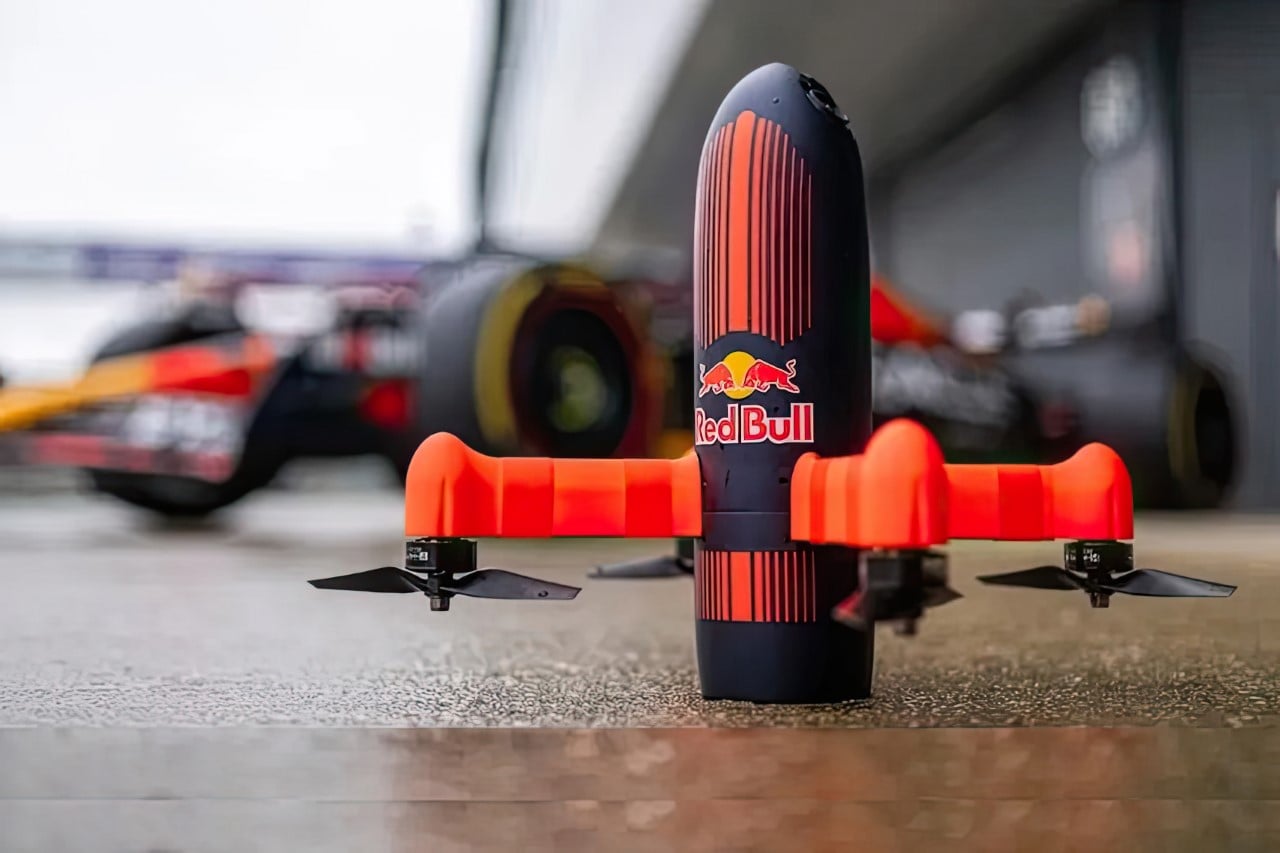
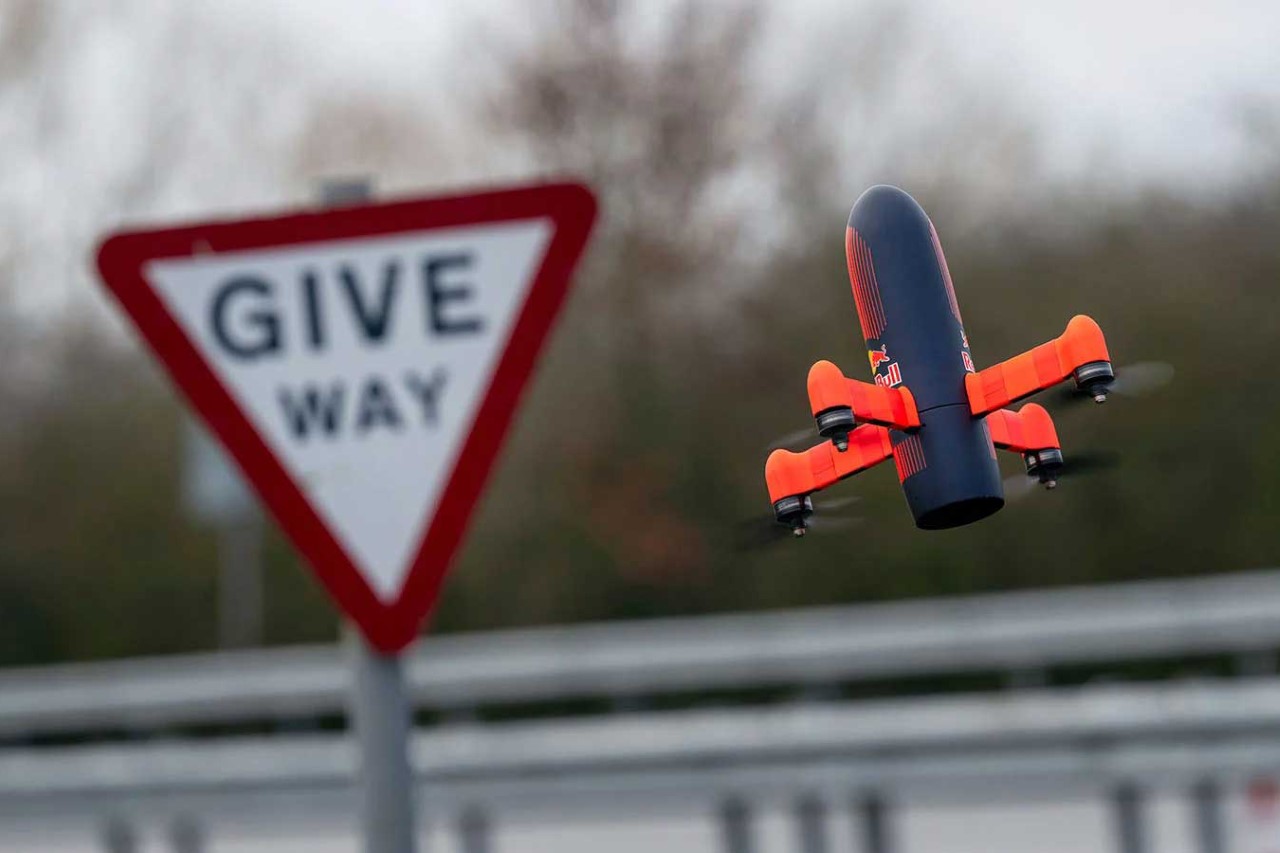
The fact that the world’s fastest FPV drone looks somewhat like a missile is simultaneously incredibly cool and incredibly scary. It might change how we watch F1 races, but it has the potential to change much more than just that.
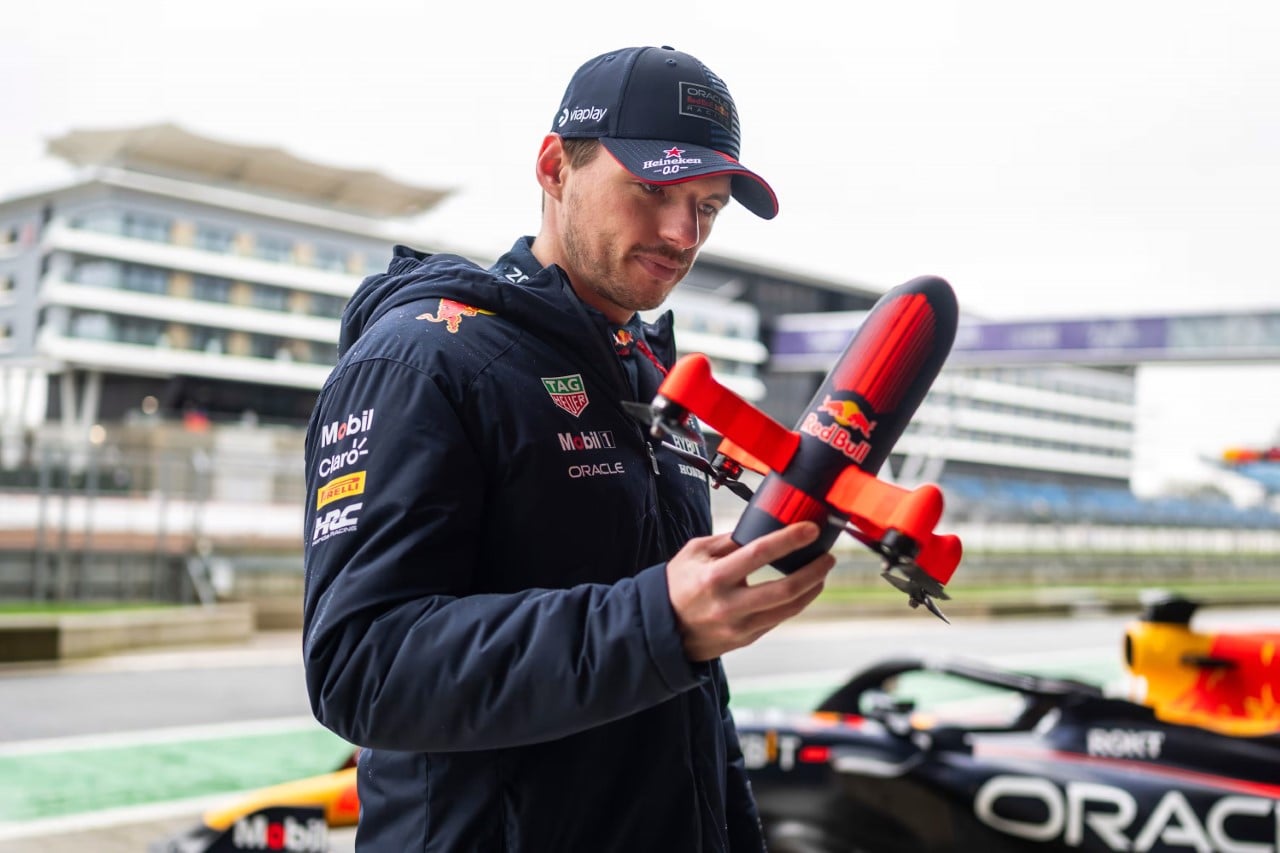
This just seems like the kind of crazy thing Red Bull would pull off. The company decided to challenge multiple-time F1 champion Max Verstappen to a race – the catch, Verstappen would be behind the wheel of a Red Bull F1 car, while his opponent would be the world’s fastest FPV drone. The project was in collaboration with Dutch Drone Gods, a group of FPV drone makers and pilots known for holding the existing title of the world’s fastest FPV filming drone with a 150km/h top speed. The only problem – Verstappen’s F1 car is more than twice as fast.
Drones aren’t new in the F1 circuit, given that the racing organization uses a combination of aerial filming methods to get their shots. Sustained footage is taken on helicopters that hover above the track, but for up-close shots, the F1 team relies on drones… the only problem is that these drones don’t follow the car around. They simply hover in the air, taking cinematic panning/dolly shots before the camera angle changes. Understandably, creating a drone that can follow an F1 car around like a third-person camera in a video game is just a tad bit short of impossible. Drones have a notoriously low flight time, outputting probably a maximum of 15-20 minutes of flight before their batteries get drained. Moreover, F1 cars can hit speeds of almost 400km/h and are designed to be highly responsive, making razor-sharp turns on the tarmac. The Dutch Drone Gods’ FPV maxes out at 150km/h, and can’t perform sharp maneuvers in mid-air. This meant redesigning the drone to hit higher speeds while being responsive, and perhaps most importantly, not melting or exploding in the air because of all the heat generated by hitting upwards of 300km/h speeds.
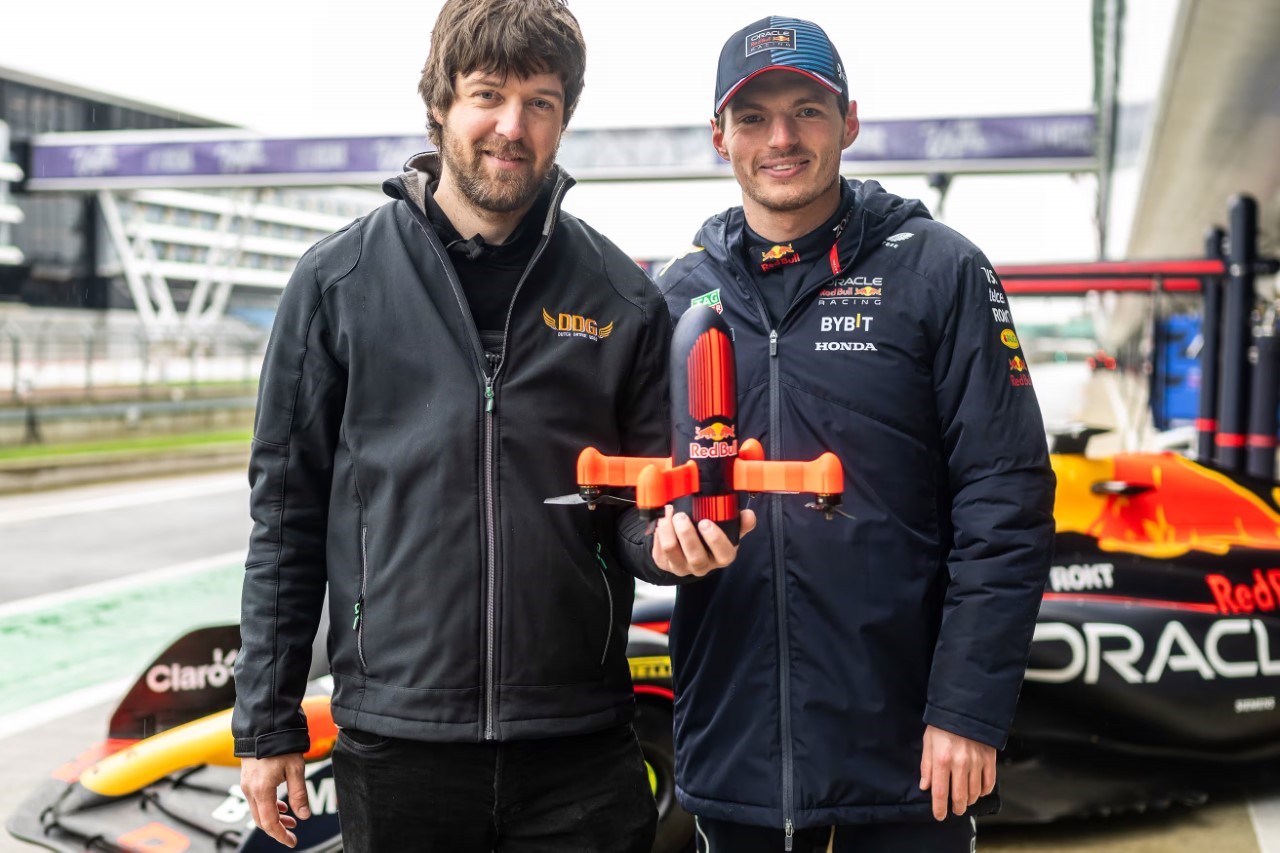
Pilot and Founder of DDG Ralph Hogenbirk and F1 World Champion Max Verstappen with the Red Bull PFV Drone
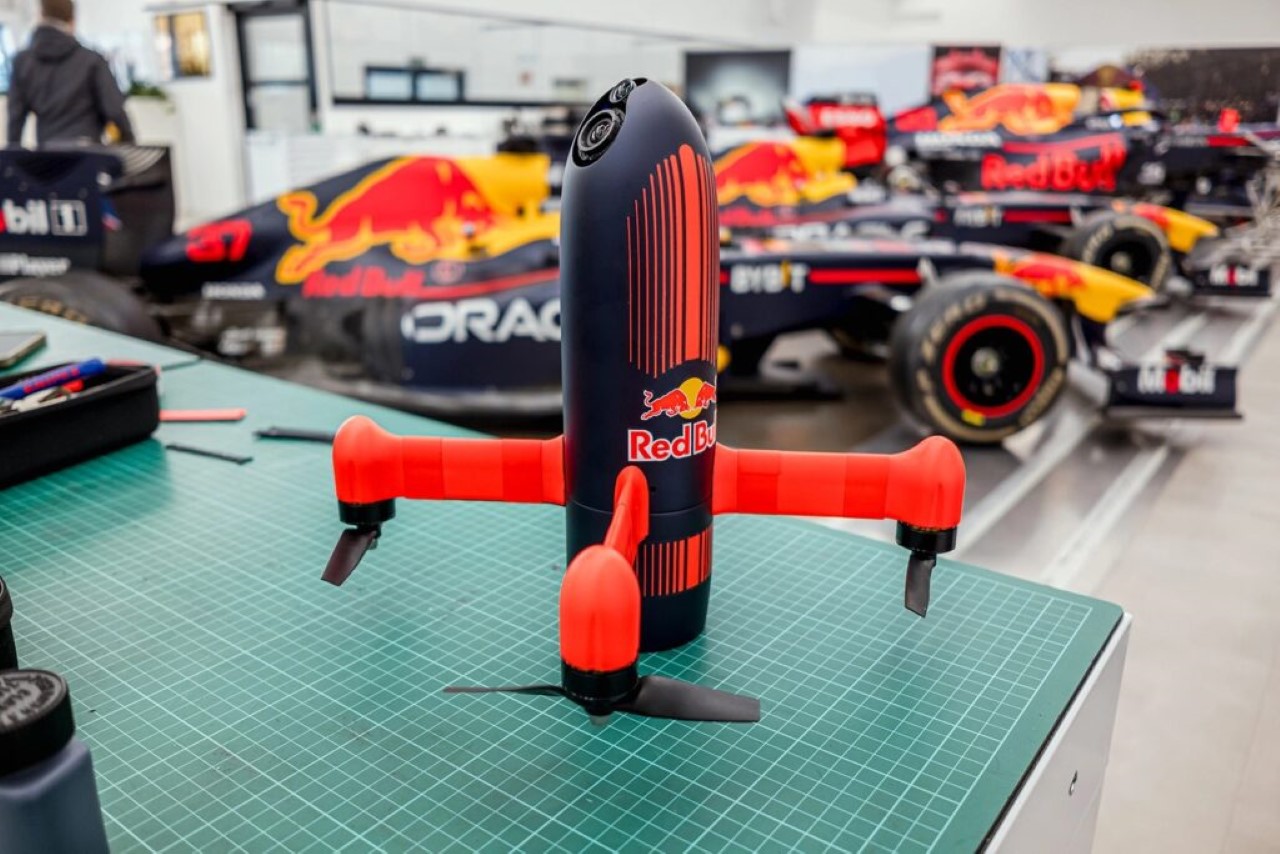
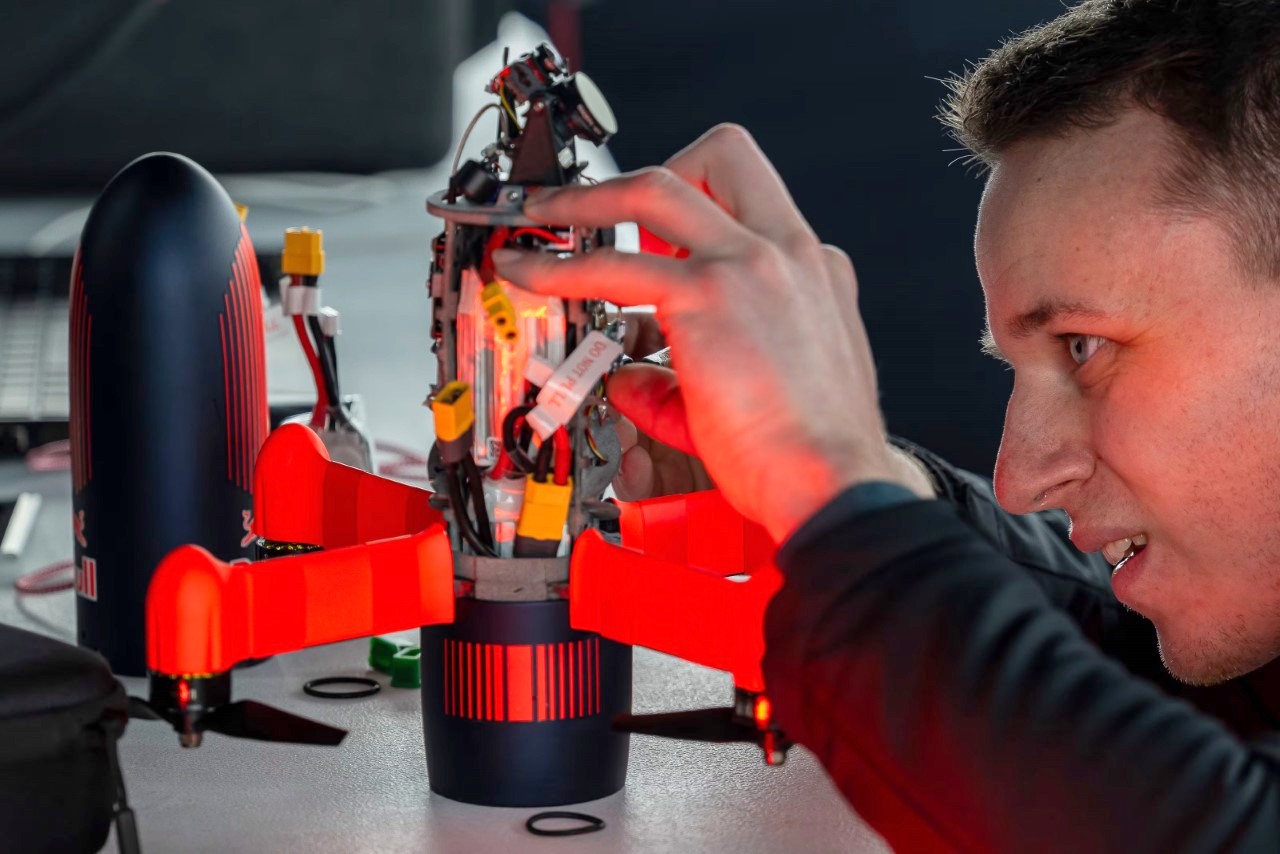
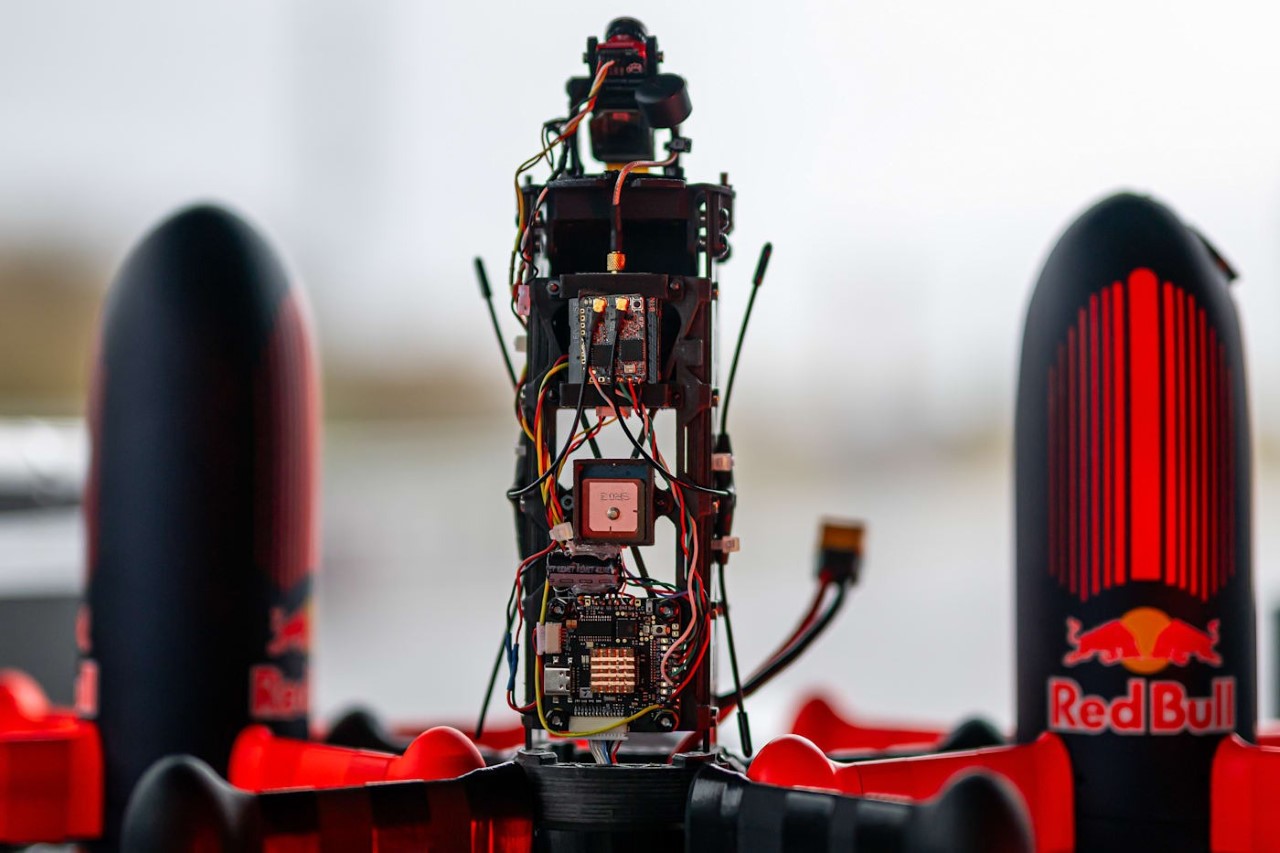
The process saw multiple iterations from the Dutch Drone Gods’ team, who took up the challenge of pushing their drone to be as fast as a Formula 1 racecar. The challenge, aside from speed, was also to make the drone maneuverable, and durable. Initial tests yielded a few pitfalls, wires would melt under extreme heat, parts would wear and tear or even explode, but more interestingly, the drone’s stability would take a beating just because of the wind turbulence created by the F1 car as it zoomed across the track. Two rounds of prototypes also showed that simple off-the-shelf components and 3D-printed outer shells couldn’t handle the task, so the DDG team decided to visit the Red Bull Advanced Technologies headquarters to partner with the team there to design the drone. The new drone had machined metal structures, speed-capable inner components, and an FRP composite outer shell that was lightweight but highly resilient.
The final drone prototype got one single chance to race against Verstappen in the latest RB20 car on the Silverstone track. It fared incredibly well against Verstappen, filming the car as it blitzed through the track. The goal wasn’t to go faster than Verstappen’s car, that would be a foolish mistake, but rather, to capture the racecar from a unique following PoV, giving the audience the effect of moving at the same speed as Verstappen. F1 race broadcasts are already pretty exciting to begin with, but imagine being able to follow a car with a camera, capturing the intense speed, adrenaline, and reflexes of the race in real-time…
The engineering of Red Bull’s FPV drone could potentially revolutionize the landscape of F1 filming. Instead of static camera shots or quick drone shots that just pan across a track, Red Bull has potentially unlocked the ability to now follow cars as they race, creating an even more thrilling broadcast that could practically reinvent how people enjoy the sport. Heck, I could totally conceive the creation of a drone racing championship as a result too. The implications for Hollywood are just as exciting too, with cinematic drones getting a whole lot faster thanks to the Red Bull FPV Drone’s unique shape.
However, a drone hitting speeds of 350km/h has its own pitfalls too. Reconnaissance, surveillance, or potentially even weapon-based payload delivery could somehow become even easier and more accessible to anyone with the right tools. Sure, the Red Bull FPV drone isn’t a ballistic missile, but it’s dangerously close to being unstoppable. Try stopping a drone cutting through a military zone or an airport at 350km/h. This new world is exciting, but just as scary too.
That doesn’t take away from how incredibly impressive Red Bull and Dutch Drone Gods’ demonstration was. The Red Bull FPV Drone currently holds the record for defeating its predecessor by a factor of nearly 200km/h. The new FPV drone also gets the bragging rights of being able to keep up with Verstappen, a feat that not even other F1 racers can hold claim to!
Tropic Haze, the popular Yuzu Nintendo Switch emulator developer, appears to have agreed to settle Nintendo’s lawsuit against it. Less than a week after Nintendo filed the legal action, accusing the emulator’s creators of “piracy at a colossal scale,” a joint final judgment and permanent injunction filed Tuesday says Tropic Haze has agreed to pay the Mario maker $2.4 million, along with a long list of concessions.
Nintendo’s lawsuit claimed Tropic Haze violated the anti-circumvention and anti-trafficking provisions of the Digital Millennium Copyright Act (DMCA). “Without Yuzu’s decryption of Nintendo’s encryption, unauthorized copies of games could not be played on PCs or Android devices,” the company wrote in its complaint. It described Yuzu as “software primarily designed to circumvent technological measures.”
Yuzu launched in 2018 as free, open-source software for Windows, Linux and Android. It could run countless copyrighted Switch games — including console sellers like The Legend of Zelda: Breath of the Wild and Tears of the Kingdom, Super Mario Odyssey and Super Mario Wonder. Reddit threads comparing Switch emulators praised Yuzu’s performance compared to rivals like Ryujinx. Yuzu introduces various bugs across different titles, but it can typically handle games at higher resolutions than the Switch, often with better frame rates, so long as your hardware is powerful enough.
A screenshot from Yuzu’s website, showing The Legend of Zelda: Breath of the Wild
Tropic Haze / Nintendo
As part of an Exhibit A attached to the proposed joint settlement, Tropic Haze agreed to a series of accommodations. In addition to paying Nintendo $2.4 million, it must permanently refrain from “engaging in activities related to offering, marketing, distributing, or trafficking in Yuzu emulator or any similar software that circumvents Nintendo’s technical protection measures.”
Tropic Haze must also delete all circumvention devices, tools and Nintendo cryptographic keys used in the emulator and turn over all circumvention devices and modified Nintendo hardware. It even has to surrender the emulator’s web domain (including any variants or successors) to Nintendo. (The website is still live now, perhaps waiting for the judgment’s final a-okay.) Not abiding by the settlement’s agreements could land Tropic Haze in contempt of court, including punitive, coercive and monetary actions.
Although piracy is the top motive for many emulator users, the software can double as crucial tools for video game preservation — making rapid legal surrenders like Tropic Haze’s potentially problematic. Without emulators, Nintendo and other copyright holders could make games obsolete for future generations as older hardware eventually becomes more difficult to find.
Despite the settlement, it appears unlikely the open-source Yuzu will disappear entirely. The emulator is still available on GitHub, where its entire codebase can be found.
This article originally appeared on Engadget at https://www.engadget.com/makers-of-switch-emulator-yuzu-quickly-settle-with-nintendo-for-24-million-203204698.html?src=rss
Tropic Haze, the popular Yuzu Nintendo Switch emulator developer, appears to have agreed to settle Nintendo’s lawsuit against it. Less than a week after Nintendo filed the legal action, accusing the emulator’s creators of “piracy at a colossal scale,” a joint final judgment and permanent injunction filed Tuesday says Tropic Haze has agreed to pay the Mario maker $2.4 million, along with a long list of concessions.
Nintendo’s lawsuit claimed Tropic Haze violated the anti-circumvention and anti-trafficking provisions of the Digital Millennium Copyright Act (DMCA). “Without Yuzu’s decryption of Nintendo’s encryption, unauthorized copies of games could not be played on PCs or Android devices,” the company wrote in its complaint. It described Yuzu as “software primarily designed to circumvent technological measures.”
Yuzu launched in 2018 as free, open-source software for Windows, Linux and Android. It could run countless copyrighted Switch games — including console sellers like The Legend of Zelda: Breath of the Wild and Tears of the Kingdom, Super Mario Odyssey and Super Mario Wonder. Reddit threads comparing Switch emulators praised Yuzu’s performance compared to rivals like Ryujinx. Yuzu introduces various bugs across different titles, but it can typically handle games at higher resolutions than the Switch, often with better frame rates, so long as your hardware is powerful enough.
A screenshot from Yuzu’s website, showing The Legend of Zelda: Breath of the Wild
Tropic Haze / Nintendo
As part of an Exhibit A attached to the proposed joint settlement, Tropic Haze agreed to a series of accommodations. In addition to paying Nintendo $2.4 million, it must permanently refrain from “engaging in activities related to offering, marketing, distributing, or trafficking in Yuzu emulator or any similar software that circumvents Nintendo’s technical protection measures.”
Tropic Haze must also delete all circumvention devices, tools and Nintendo cryptographic keys used in the emulator and turn over all circumvention devices and modified Nintendo hardware. It even has to surrender the emulator’s web domain (including any variants or successors) to Nintendo. (The website is still live now, perhaps waiting for the judgment’s final a-okay.) Not abiding by the settlement’s agreements could land Tropic Haze in contempt of court, including punitive, coercive and monetary actions.
Although piracy is the top motive for many emulator users, the software can double as crucial tools for video game preservation — making rapid legal surrenders like Tropic Haze’s potentially problematic. Without emulators, Nintendo and other copyright holders could make games obsolete for future generations as older hardware eventually becomes more difficult to find.
Despite the settlement, it appears unlikely the open-source Yuzu will disappear entirely. The emulator is still available on GitHub, where its entire codebase can be found.
This article originally appeared on Engadget at https://www.engadget.com/makers-of-switch-emulator-yuzu-quickly-settle-with-nintendo-for-24-million-203204698.html?src=rss
X has, once again, quietly changed its rules around deadnaming and misgendering without an explanation. With the latest change, it seems that there will be no penalties for misgendering or deadnaming people on X after al, except in cases when it may be “required by local laws.”
The update, which was first spotted by Mashable, comes after X appeared to reinstate some aspects of Twitter’s former policy, which fell under its hateful conduct rules. Prior to Elon Musk’s takeover, Twitter had barred targeted deadnaming and misgendering. That section of the company’s rules then disappeared last April. Then, last week, ArsTechnica noted that the policy was quietly updated to indicate that X would “reduce the visibility of posts that purposefully use different pronouns to address someone other than what that person uses for themselves, or that use a previous name that someone no longer goes by as part of their transition.”
While it wasn’t a full reversal of the earlier policy — under the company’s previous leadership, intentional misgendering was grounds for a suspension — it seemed that there once again would be penalties for this type of harassment. Now, that section of Twitter’s rules is prefaced with “where required by local laws.”
As with so much of what happens at X, there is significant confusion about the policy as the company’s rules seem to change based on the whims of Musk rather than a considered process. This was on display over the last fewldays as Musk fielded several complaints from right-wing personalities about last week’s change. On Thursday, Musk told one such account that the update “is just about repeated, targeted harassment of a particular person.” But by Saturday, Musk was offering a new explanation. “Turns out this was due to a court judgment in Brazil, which is being appealed, but should not apply outside of Brazil,” he said.
X didn’t respond to a request for comment about the policy or why it was changed twice in a matter of days. But Musk is known to be sympathetic to people who regularly engage in anti-trans harassment. One of his first moves after taking over the company was to reinstate a number of accounts banned for violating the company's previous hateful conduct policy. He has also repeatedly mocked people who specify their pronouns and publicly criticized X staff for attempting to apply the company’s “freedom of speech, not reach” policy to a transphobic documentary.
This article originally appeared on Engadget at https://www.engadget.com/x-walks-back-its-misgendering-policy-after-right-wing-complaints-202433498.html?src=rss