What if the cursor, a staple of digital interaction for decades, became obsolete? Bold claim, right? Yet, Google DeepMind’s latest innovation, Antigravity, might just be the technology to make that happen. Positioned as more than just an Integrated Development Environment (IDE), Antigravity introduces a paradigm shift in software development by blending autonomous agents with human […]
November 2025 marks a turning point for LEGO. The Danish brick giant has evolved from childhood toy manufacturer into something more nuanced: a creator of kinetic sculptures, display pieces that command adult spaces, and intricate tributes to pop culture that blur the line between building set and collectible art. This month’s releases span from mechanical aquariums to starships, from Hollywood race cars to space exploration milestones, each demonstrating how far brick-based design has traveled.
What unites these seven releases is their refusal to sit still on shelves. They demand interaction, closer inspection, and appreciation for the engineering challenges their designers solved. Whether through cranks that animate underwater scenes, modular sections that separate like the real starship, or intricate layering that creates dimensional depth, these sets prove LEGO understands its adult audience wants more than nostalgia. They want conversation pieces that justify their desk space.
1. LEGO Icons Tropical Aquarium (10366)
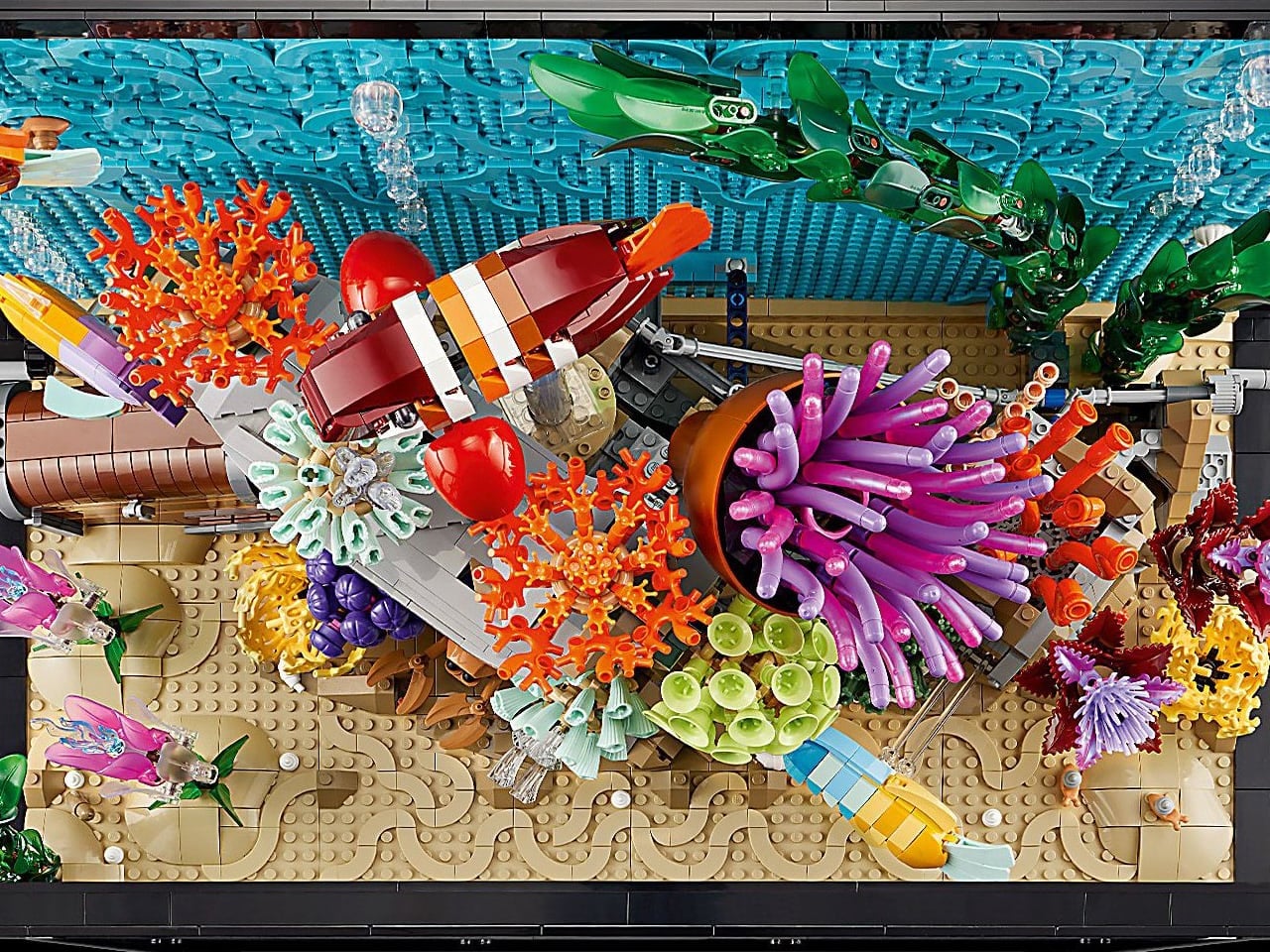
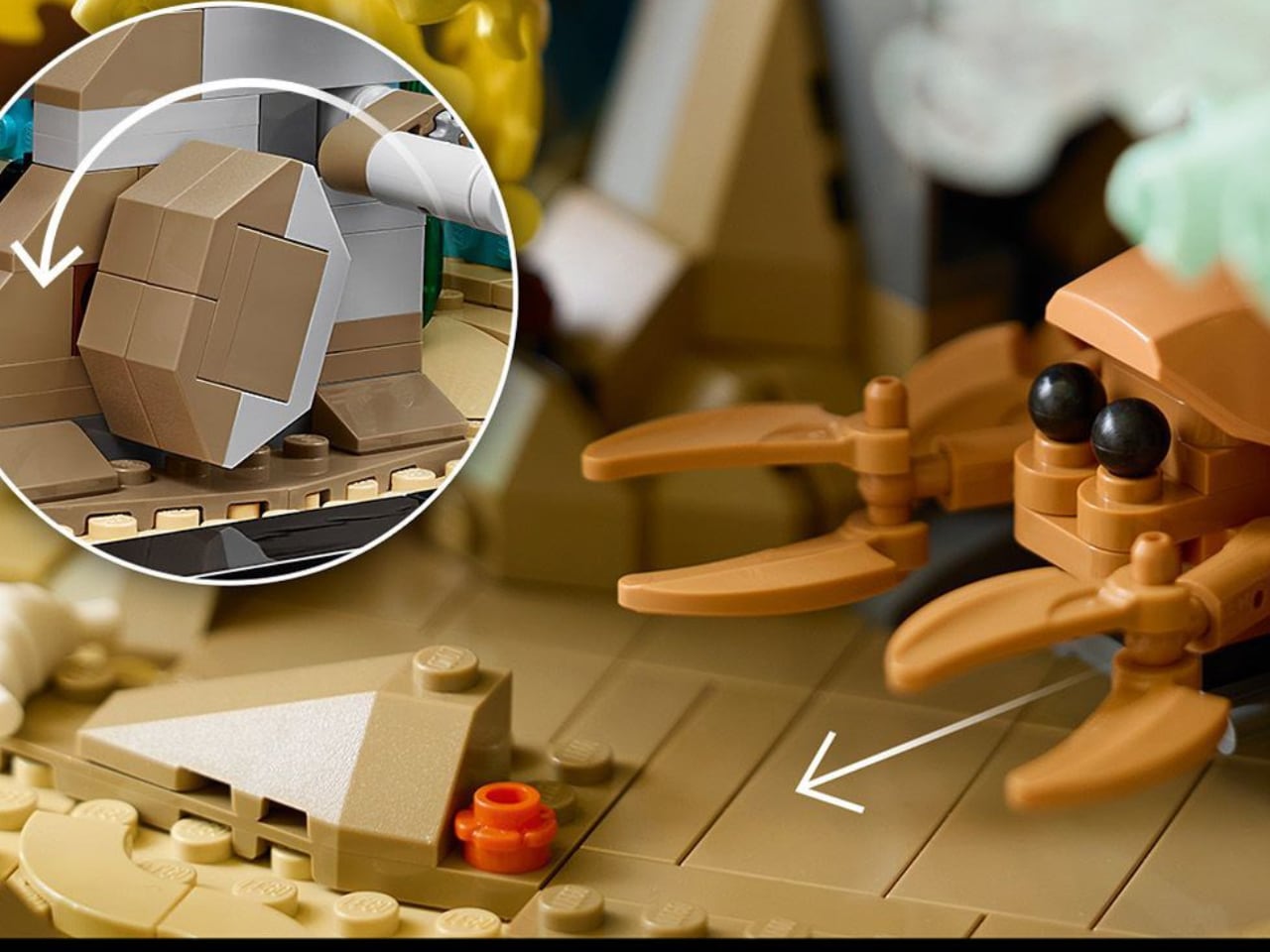
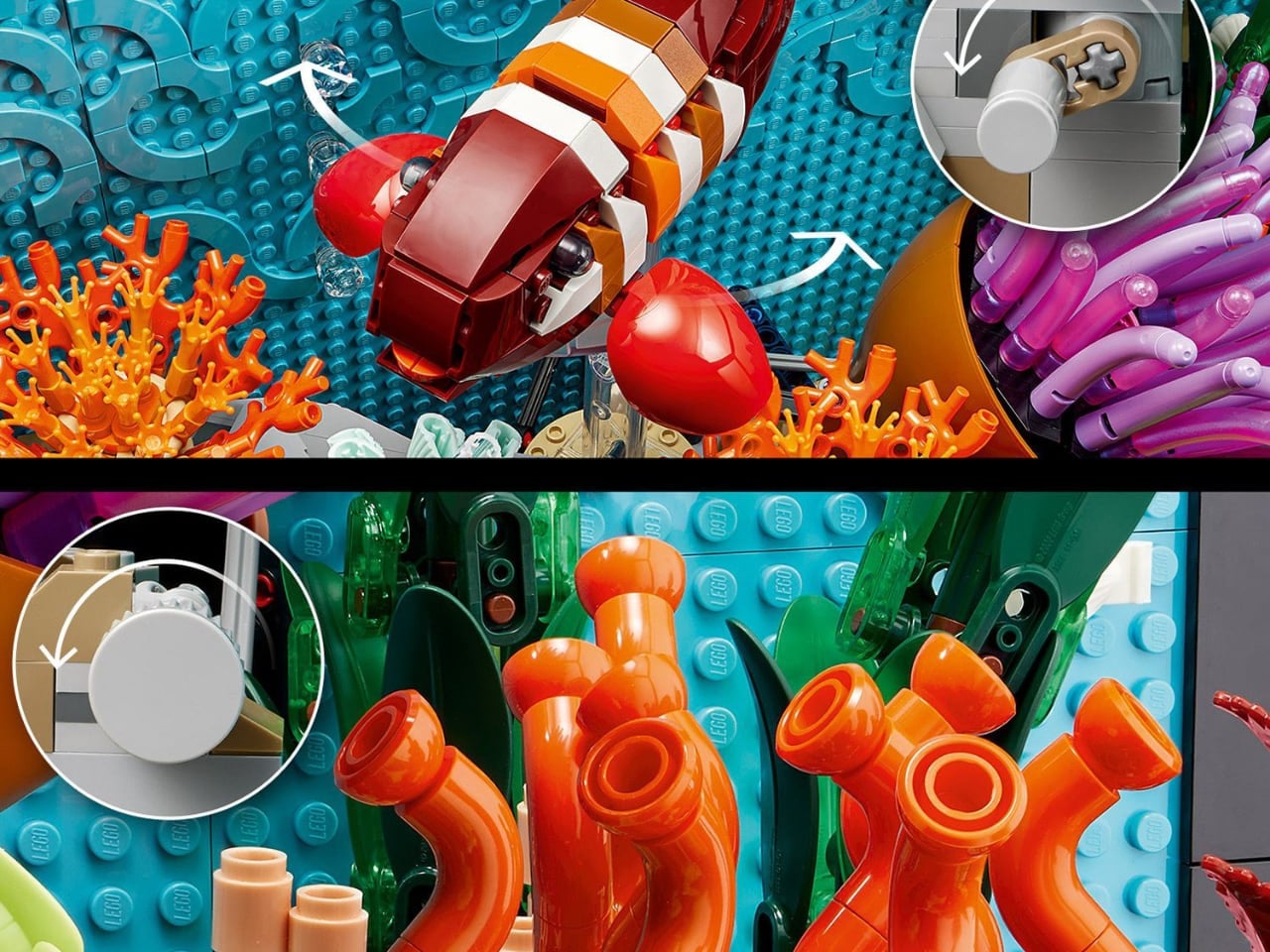
The Tropical Aquarium transforms 4,154 pieces into a living mechanical tableau that launched on November 13 for $479.99. This isn’t decor that fades into the background. Three distinct cranks and dials control independent motion systems, turning the aquarium into a kinetic sculpture where your interaction determines the scene’s energy. Turn one dial and the jellyfish bob through their vertical dance. Another crank sends the sea turtle gliding past coral formations. The third activates smaller fish as they navigate through swaying seaweed and bubble streams that appear frozen mid-rise.
LEGO solved a fundamental design challenge here: creating convincing spatial depth within a fundamentally shallow display case. The build employs layering techniques with translucent elements, representing water, varied-height coral structures, and the strategic placement of marine life to establish foreground, middle ground, and background planes. Four model fish become compositional tools rather than fixed elements. You’re not assembling a predetermined scene. You’re curating an underwater environment where placement decisions affect visual balance. The set includes seaworms, an oyster shell containing a pearl, sea snails, and air bubbles, serving as additional elements for creating your personal ecosystem.
What we like
The kinetic mechanism creates genuine movement that changes depending on your crank speed and direction
Compositional flexibility lets you rearrange elements rather than following rigid instructions
What we dislike
At $479.99, this represents a significant investment for a display piece rather than a traditional play set
The mechanical systems require regular interaction to justify the kinetic elements
2. LEGO Ideas Apollo 8 Earthrise (40837)
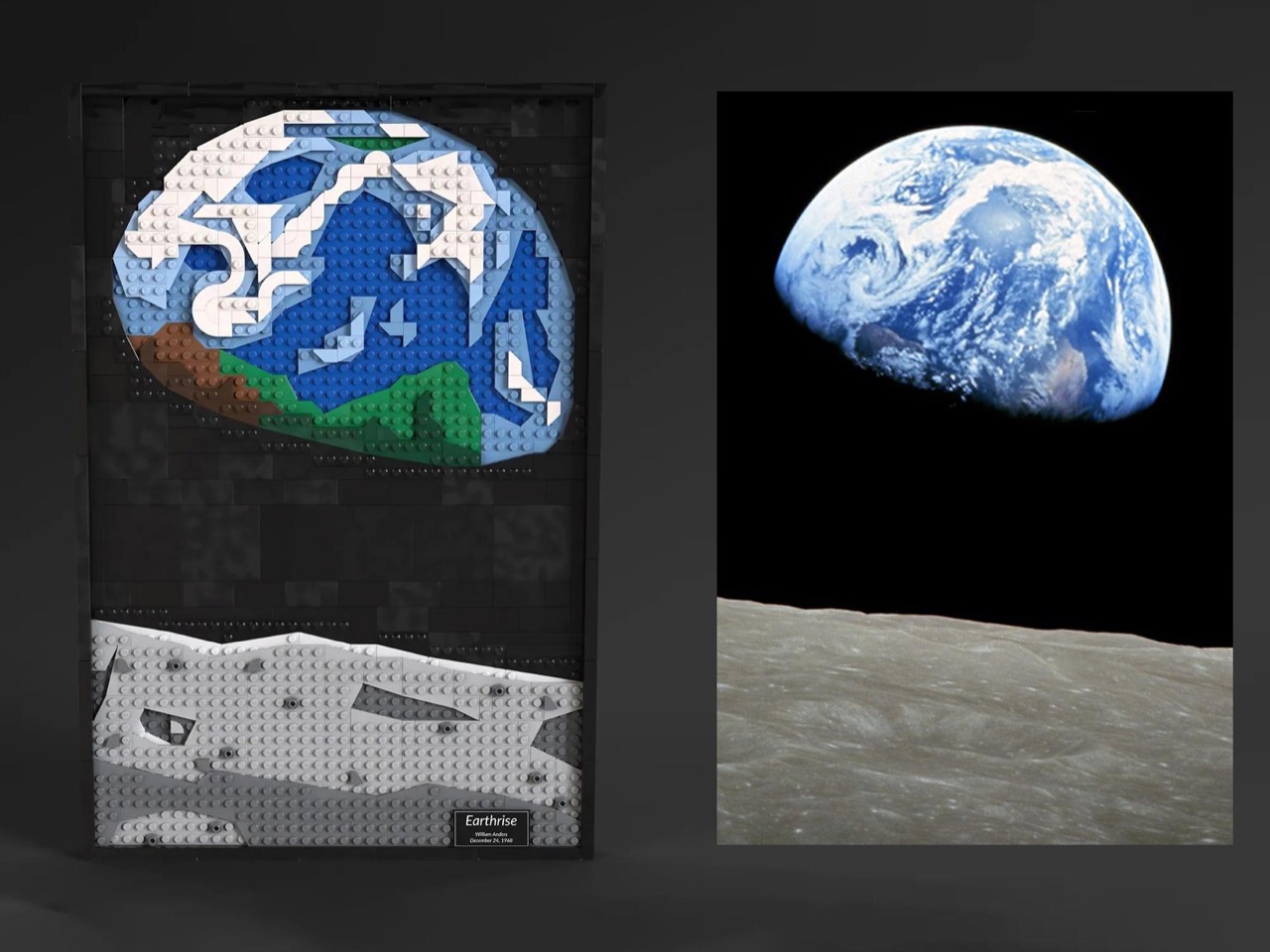
William Anders captured humanity’s first color photograph of Earth from space on December 24, 1968, using his Hasselblad 500 EL during the Apollo 8 lunar orbit. That image, titled Earthrise, showed our planet suspended above the moon’s desolate horizon and fundamentally altered how we see ourselves. Now, nearly sixty years later, LEGO Ideas has transformed that pivotal moment into an 859-piece buildable art piece that stands 48 centimeters tall and 32 centimeters wide.
This rendition captures three distinct visual elements that define the photograph: the infinite black void of space, Earth as a cloud-swirled blue marble, and the moon’s cratered, mottled surface in the foreground. LEGO’s designers used the brick medium to convey texture and color gradation across each element. The moon’s surface employs varied grey tones and deliberate gaps between pieces to suggest the shadowed irregularity of impact craters. Earth’s atmospheric layers transition from deep ocean blues to white cloud formations using careful brick selection. The black space background creates negative space that makes both celestial bodies pop forward visually.
What we like
The subject matter elevates this beyond standard space sets into historical tribute territory
At 859 pieces, the build offers enough complexity for an engaging construction experience
What we dislike
The relatively conservative piece count means some details require visual interpretation
Mounting hardware for the wall display isn’t included, requiring a separate purchase
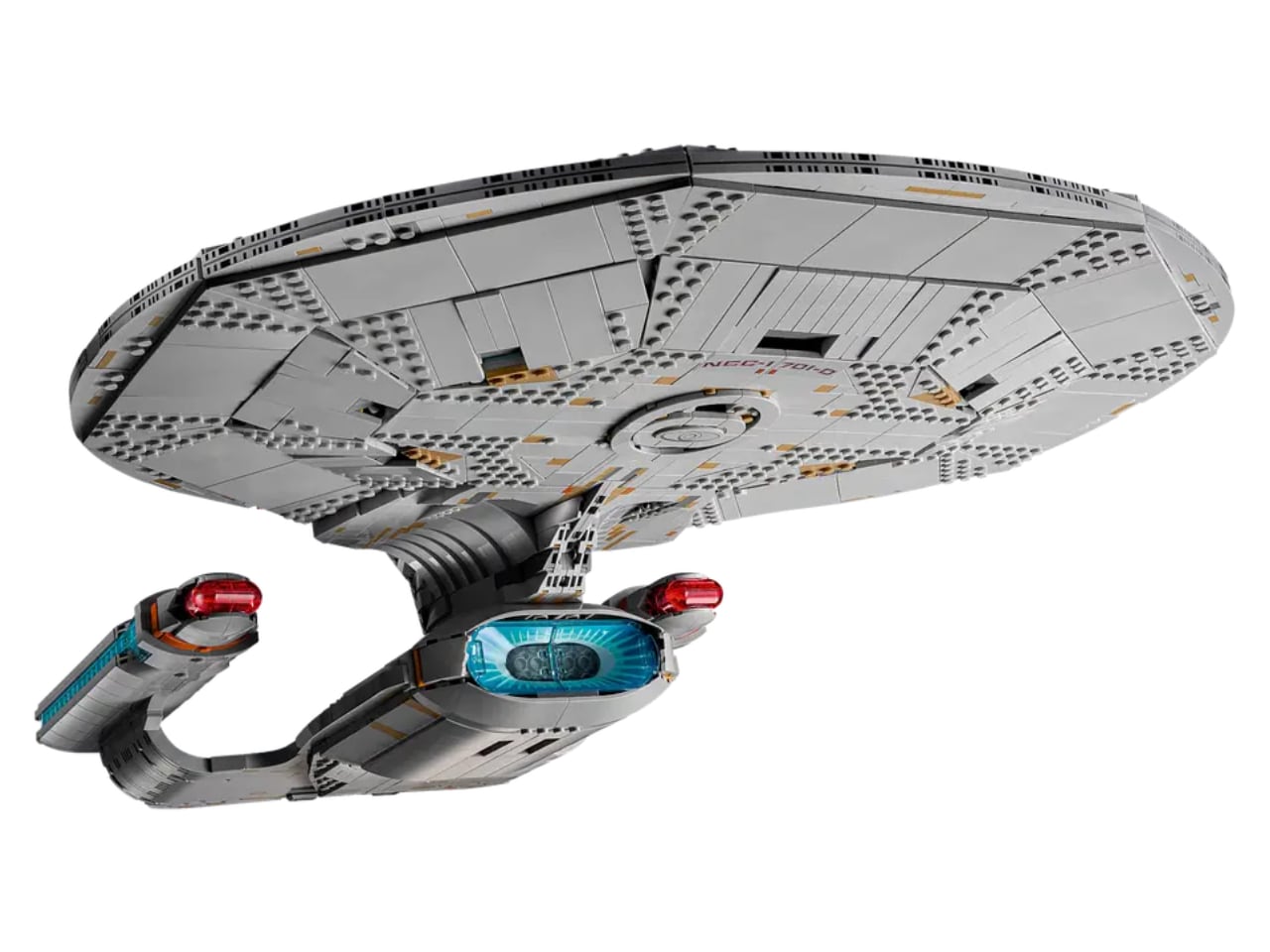
The Galaxy-class flagship from Star Trek: The Next Generation arrives in brick form on November 28 as a 3,600-piece behemoth measuring two feet long. Priced at $399.99, this isn’t LEGO’s first Trek venture, but it represents the most screen-accurate version of arguably the most beloved Enterprise design. The set captures the distinctive saucer-and-engineering-hull silhouette that defined seven television seasons and multiple films, complete with functional saucer separation mechanics that mirror the starship’s emergency protocol capabilities.
LEGO included enough minifigures to staff the bridge properly: Captain Picard, Commander Riker, Lieutenant Commander Data, Lieutenant Worf, Counselor Troi, Chief Engineer La Forge, and Doctor Crusher. Each figure comes with printed details that capture their Season 1 uniforms and distinctive features. The build itself uses advanced construction techniques to achieve the Enterprise-D’s smooth, curved surfaces while maintaining structural integrity. The warp nacelles attach via articulated pylons. The deflector dish receives intricate detailing. Even the bridge dome atop the saucer section gets architectural attention. This targets adult collectors who want the ship commanding their desk space with the same authority Picard brought to the captain’s chair.
What we like
Functional saucer separation adds interactive play value beyond static display
Screen-accurate proportions and details satisfy longtime Trek fans who know every hull panel
What we dislike
The $399.99 price point places this firmly in premium collector territory
Some builders note that the saucer section’s large, flat surfaces require patience during repetitive sections
4. LEGO Speed Champions APXGP F1 Race Car (77076)
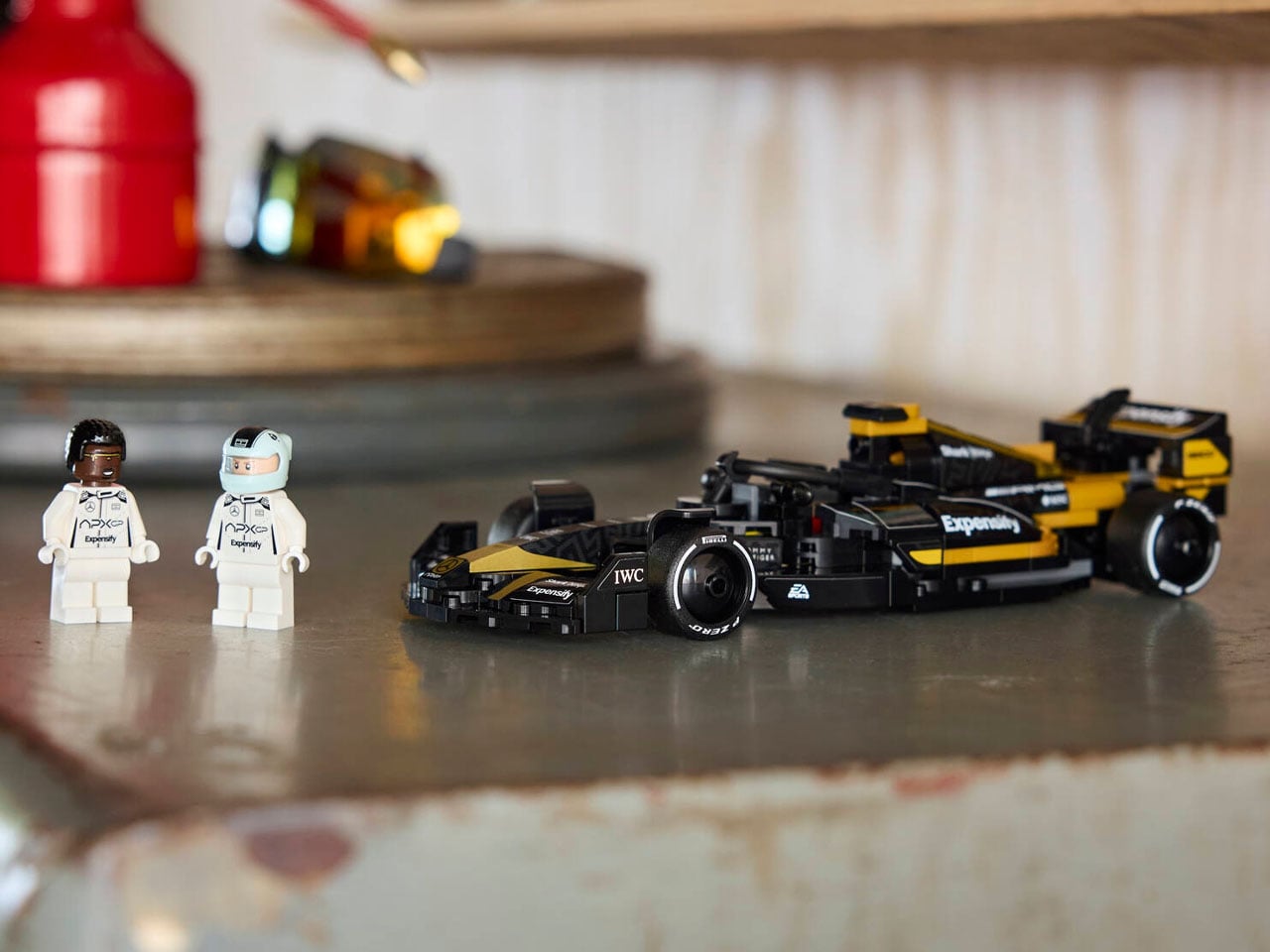
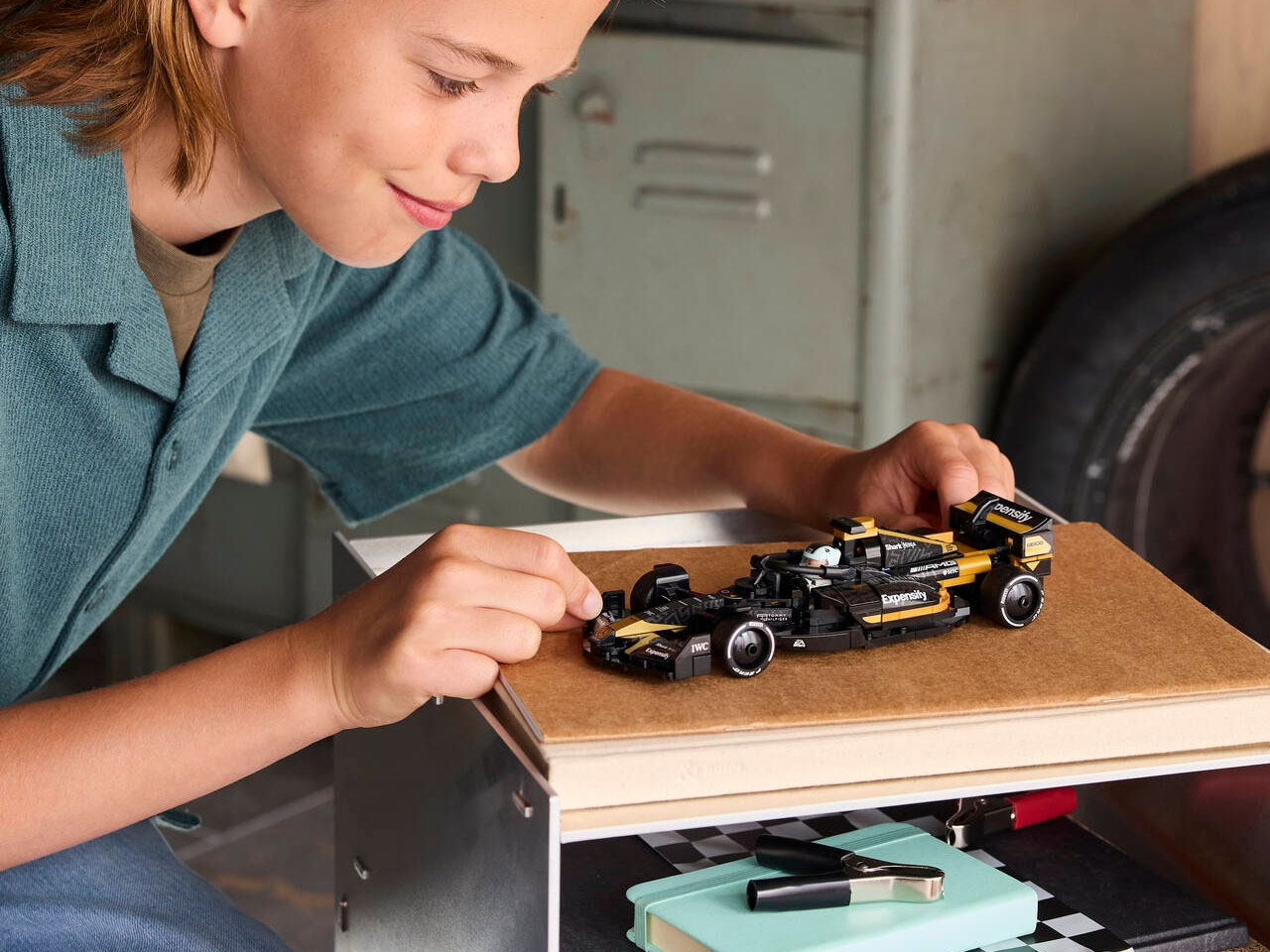
LEGO’s partnership with the upcoming F1 film starring Brad Pitt and directed by Joseph Kosinski produces this sleek recreation of the fictional APXGP team’s race car. The model wears the movie’s distinctive black-and-gold livery, capturing the cinematic energy through carefully applied decals and printed elements. Two minifigures represent drivers Sonny Hayes and Joshua Pearce, complete with race suits, helmets with reflective visors, and printed sponsor logos that tie directly to the film’s aesthetic.
The build distinguishes itself from previous Speed Champions Formula 1 sets through refined proportions and wider Pirelli-style tires that better capture modern F1 car stance. Custom decals add visual depth across the bodywork. The set includes small accessories that reward closer inspection: a wrench and a remote control that nod toward the engineering side of racing. The wrench serves double duty as an actual building tool for applying stickers or separating tight bricks. These thoughtful inclusions demonstrate LEGO understands its audience wants both display accuracy and functional building aids.
What we like
The black-and-gold livery creates a striking visual contrast suitable for display
Film tie-in elements provide cultural relevance beyond generic racing sets
What we dislike
The Speed Champions scale limits interior detail compared to larger Technic F1 sets
Movie-specific branding may not appeal to builders wanting real team liveries
5. LEGO Ideas The Goonies (21350)
This $330 LEGO Ideas release transforms the 1985 adventure classic into a full-blown tribute to one of cinema’s most beloved treasure hunts. The set isn’t just a model you build and stick on a shelf. This captures those iconic moments that blend adventure with just the right amount of creepy: the Fratelli hideout functioning as a haunted house for criminals, the terrifying boulder trap, skeleton-filled caves, and One-Eyed Willy’s legendary pirate ship, the Inferno, complete with sails, treasure, and plenty of bones.
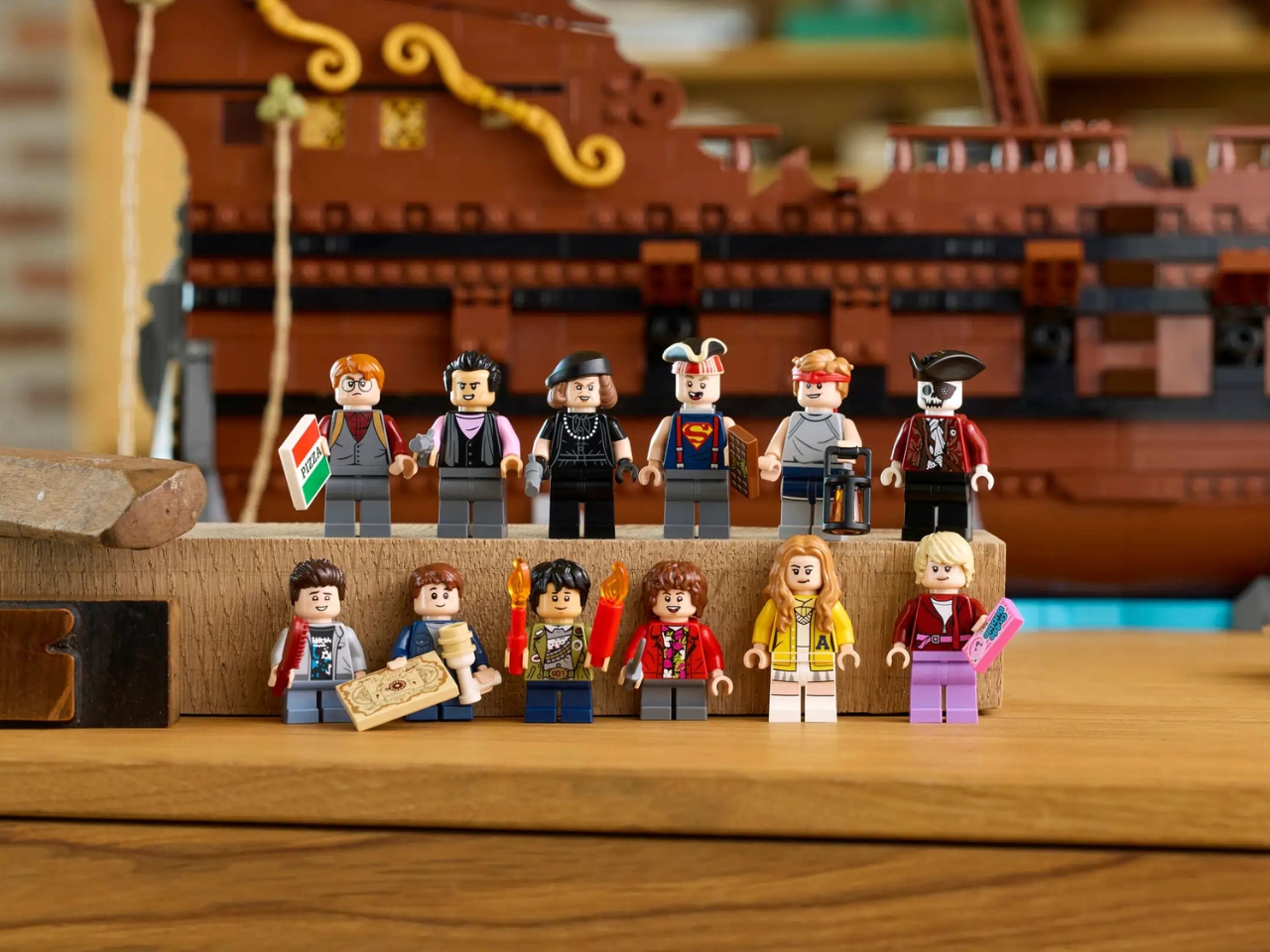
What really makes this set special are the minifigures. All twelve of them. You get the whole gang: Mikey, Mouth, Data, Chunk, Brand, Andy, and Stef, plus Sloth in his Superman shirt, Mama Fratelli, Francis, Jake, and even One-Eyed Willy’s skeleton. LEGO created brand new elements specifically for this set, like Sloth’s pirate hat and Mama Fratelli’s hair and beret combo, showing the level of detail they’re committed to. The skeleton pirate minifigure arrives perfectly timed for Halloween nostalgia, capturing both the film’s adventurous spirit and its spooky underground atmosphere.
What we like
Twelve minifigures provide the complete cast, including villains and One-Eyed Willy’s skeleton
Multiple iconic scenes from the film can be recreated with the Fratelli hideout and pirate ship
What we dislike
The $330 price point may feel steep for fans expecting a lower-tier Ideas set
Balancing multiple scenes in one set means each vignette receives less piece allocation
6. LEGO Ideas Pacific Rim Jaegers
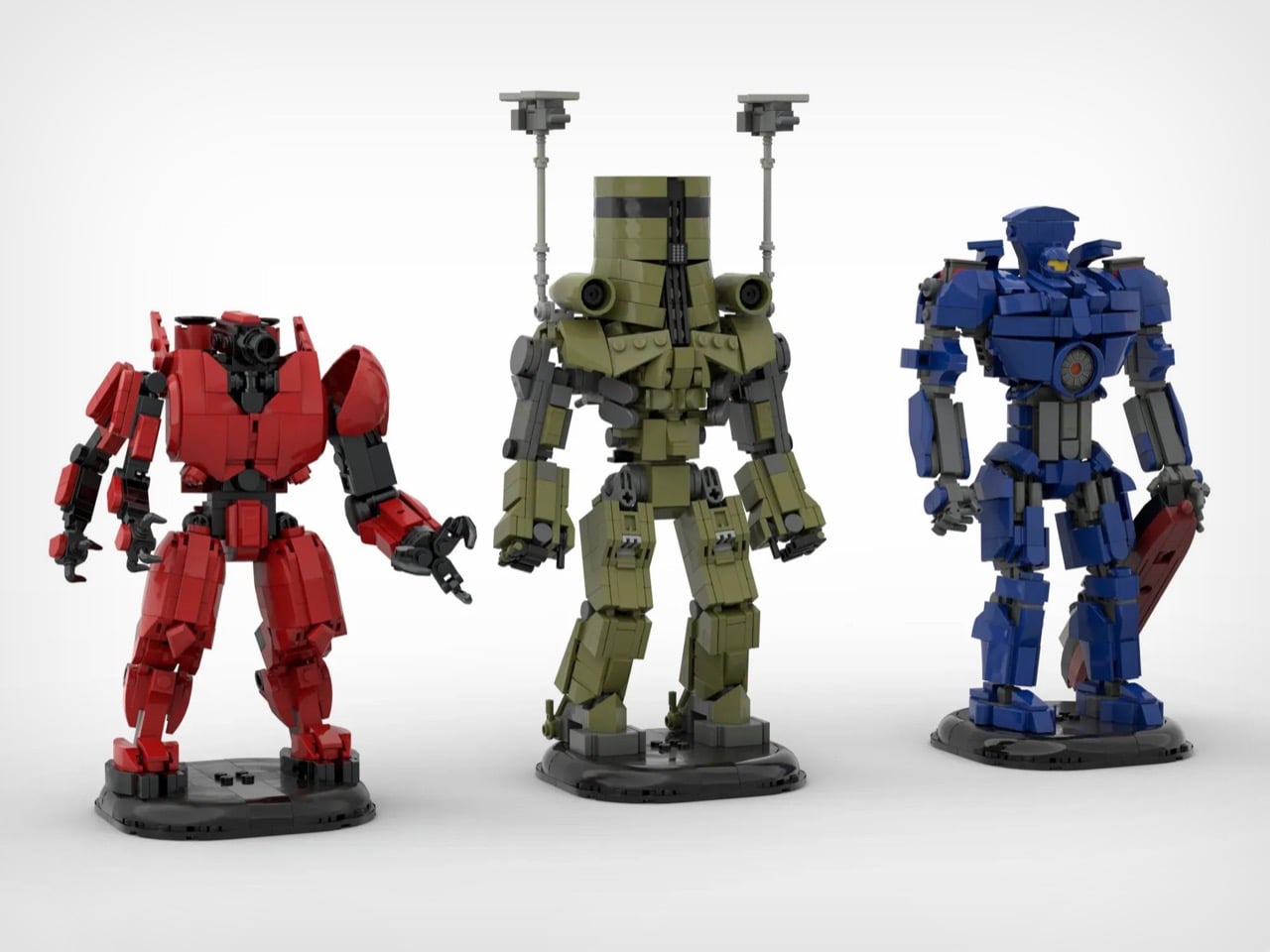
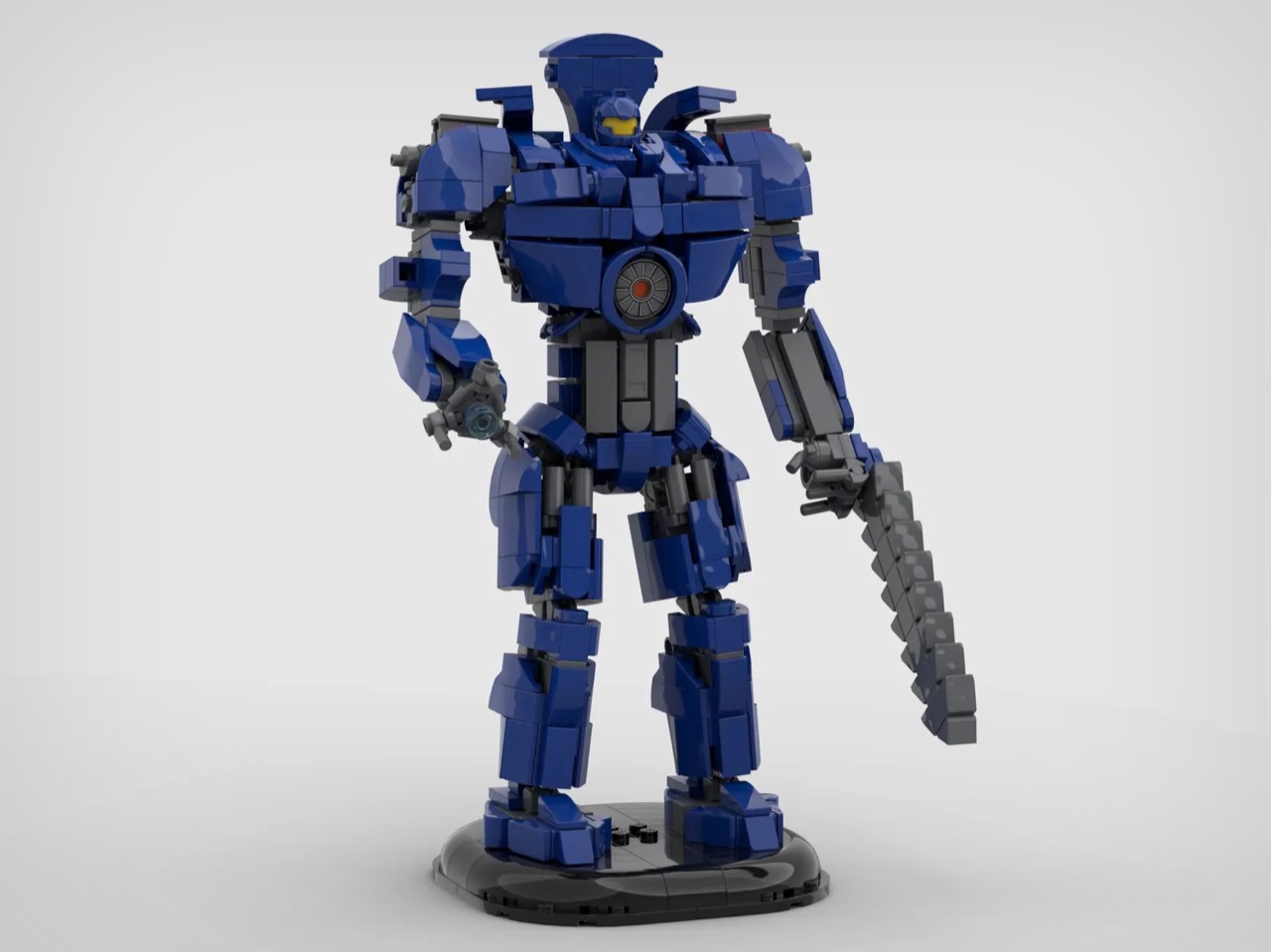
Din0Bricks’ fan-made tribute to Guillermo del Toro’s Pacific Rim has earned LEGO Ideas Staff Pick status and rallied 661 supporters toward the 10,000 needed for official production consideration. The 2,218-piece concept recreates three iconic Jaegers from the 2013 film: Gipsy Danger with a retractable sword, Crimson Typhoon with rotating saw blades, and Cherno Alpha with its brutal industrial aesthetic. Support helicopters accompany each mech, capturing the logistical reality behind deploying humanity’s towering defenders against Kaiju threats.
What makes this concept remarkable is how Din0Bricks solved the challenge of capturing the Jaegers’ massive, imposing presence while maintaining structural stability and playability. Each mech features articulated joints at shoulders, elbows, hips, and knees, allowing authentic combat poses. The retractable sword mechanism on Gipsy Danger uses internal gearing. Crimson Typhoon’s three-armed configuration required custom engineering to balance properly. Cherno Alpha’s distinctive fists and nuclear reactor detailing push LEGO’s aesthetic toward industrial brutalism. This isn’t just a fan project. It’s a masterclass in translating screen designs into buildable, poseable figures that honor the source material’s scale and mechanical complexity.
What we like
Three distinct Jaegers provide variety and display options in a single set
Articulated joints enable dynamic combat poses that capture the film’s action sequences
What we dislike
As a LEGO Ideas concept, this isn’t guaranteed for production without reaching 10,000 supporters
The 2,218-piece count and three large models suggest a premium price point if approved
7. LEGO Ideas NASA James Webb Space Telescope
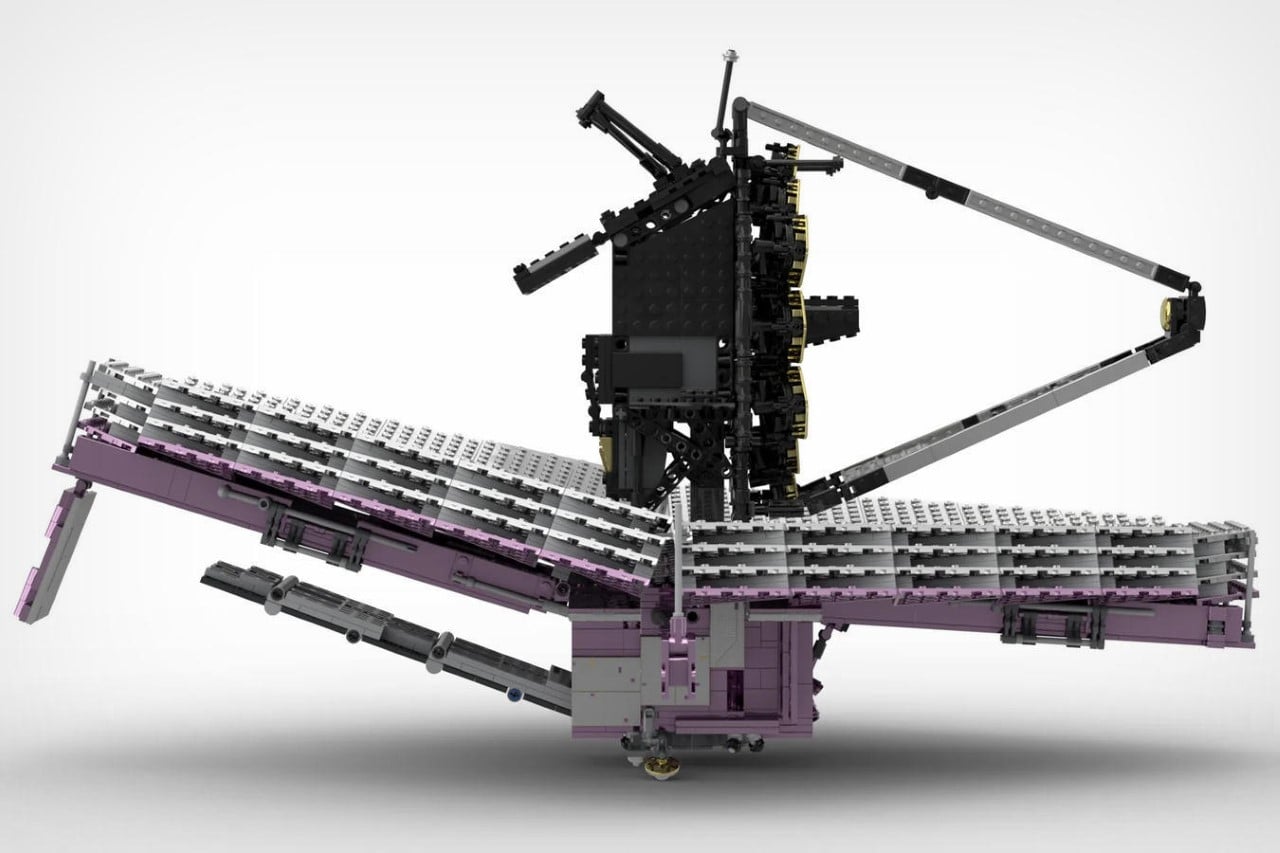
The LEGO James Webb Space Telescope replica tackles one of modern engineering’s most complex achievements through brick-based construction that mirrors the actual satellite’s intricate folding mechanisms. This build captures the telescope’s launch-critical ability to fold into a compact configuration before unfolding in space, requiring builders to understand both structural engineering and the precise mechanical sequences that made the real JWST mission possible. The design transforms complicated aerospace engineering into an accessible building experience that educates while it entertains.
Every major subsystem finds representation in this meticulous replica, from the eighteen iconic hexagonal mirrors that form the light-gathering array to the layered sun shield that protects sensitive instruments. The secondary hinged mirror, science instruments, propulsion systems, and communications arrays all function through LEGO’s mechanical systems, creating an interactive educational experience that illuminates the genuine complexity behind space exploration’s latest triumph. This isn’t a simplified approximation. It’s a functional demonstration of how the telescope actually operates in its orbit at the L2 Lagrange point.
What we like
Functional folding mechanism replicates the actual telescope’s deployment sequence
The complex folding mechanism requires careful handling to avoid stressing connection points
As a concept, availability depends on the LEGO Ideas approval process
Why November 2025 Matters for LEGO Design
These seven releases demonstrate LEGO’s strategic expansion into adult collector territory while maintaining the building experience that defines the brand. The kinetic mechanisms in the Tropical Aquarium, the historical gravitas of Earthrise, the pop culture cachet of the Enterprise and Goonies sets, the cinematic energy of the F1 car, and the community-driven passion behind the Pacific Rim Jaegers and James Webb Telescope all point toward a company that understands its audience has evolved. These aren’t toys. They’re display pieces that arrive in buildable form, offering the satisfaction of construction before claiming their space on shelves, desks, and walls.
What November’s lineup proves is that LEGO has moved beyond simple recreation into thoughtful interpretation. Each set solves specific design challenges: creating depth in shallow spaces, capturing kinetic energy through mechanical systems, translating beloved designs into brick form with screen accuracy, honoring cultural moments that shaped cinema, and making complex aerospace engineering comprehensible. The result is a collection of releases that justify their premium pricing through engineering sophistication, visual impact, and the kind of cultural resonance that makes people stop and ask about the objects commanding your workspace. That’s the difference between a toy and a design statement.
iPadOS 26 introduces a new feature that combines the advanced capabilities of ChatGPT with Apple’s Image Playgrounds app. This integration enables you to create high-quality, AI-generated images with an impressive range of customization options. Whether you are an artist, designer, or hobbyist, this update enhances creative possibilities, offering tools that cater to both personal and […]
What if the future of AI development wasn’t just about creating smarter models but building entire ecosystems where innovation thrives without limits? Enter Microsoft Foundry, a new platform that’s reshaping how developers craft and deploy intelligent applications. With the recent integration of Anthropic’s Claude models, alongside OpenAI and Meta’s Llama, Microsoft Foundry isn’t just keeping […]
Apple’s upcoming iPhone 17e seeks to redefine its budget lineup by combining modern features with affordability. Positioned as an entry point into the iOS ecosystem, it is designed for users who prioritize reliability and long-term software support over innovative technology. However, its compromises and incremental upgrades raise questions about its value in an increasingly competitive […]
What if the future of IoT didn’t depend on Wi-Fi? Imagine deploying a fleet of sensors in the remotest corners of the world, tracking wildlife, monitoring environmental changes, or managing logistics, without ever worrying about connectivity. Bold claims? Not with the ESP32-based “Walter” board, a device that redefines what’s possible in cellular IoT development. Combining […]
Apple’s iOS 26.1 introduces a suite of advanced features aimed at refining your dark mode experience. These updates provide greater control over your device’s display, allowing you to enhance comfort, accessibility, and aesthetics. Whether you’re looking to reduce glare, soften bright highlights, or achieve a more cohesive interface, iOS 26.1 equips you with tools to […]
What if the humble cursor, a tool we’ve relied on for decades, was no longer essential? Imagine an Integrated Development Environment (IDE) so advanced it could anticipate your needs, execute tasks autonomously, and even debug your code without requiring you to lift a finger. Enter Google Antigravity, a new platform that promises to transform software […]
Palmtops and UMPCs are experiencing a quiet resurgence among people who want something more focused than a laptop and more tactile than a phone. Compact e-ink devices and tiny Bluetooth keyboards have become affordable building blocks for exactly this kind of project, letting makers combine them into pocketable machines tailored to writing, reading, or just tinkering. The result is a small but growing wave of DIY cyberdecks and writerdecks that feel like modern reinterpretations of classic Psion palmtops.
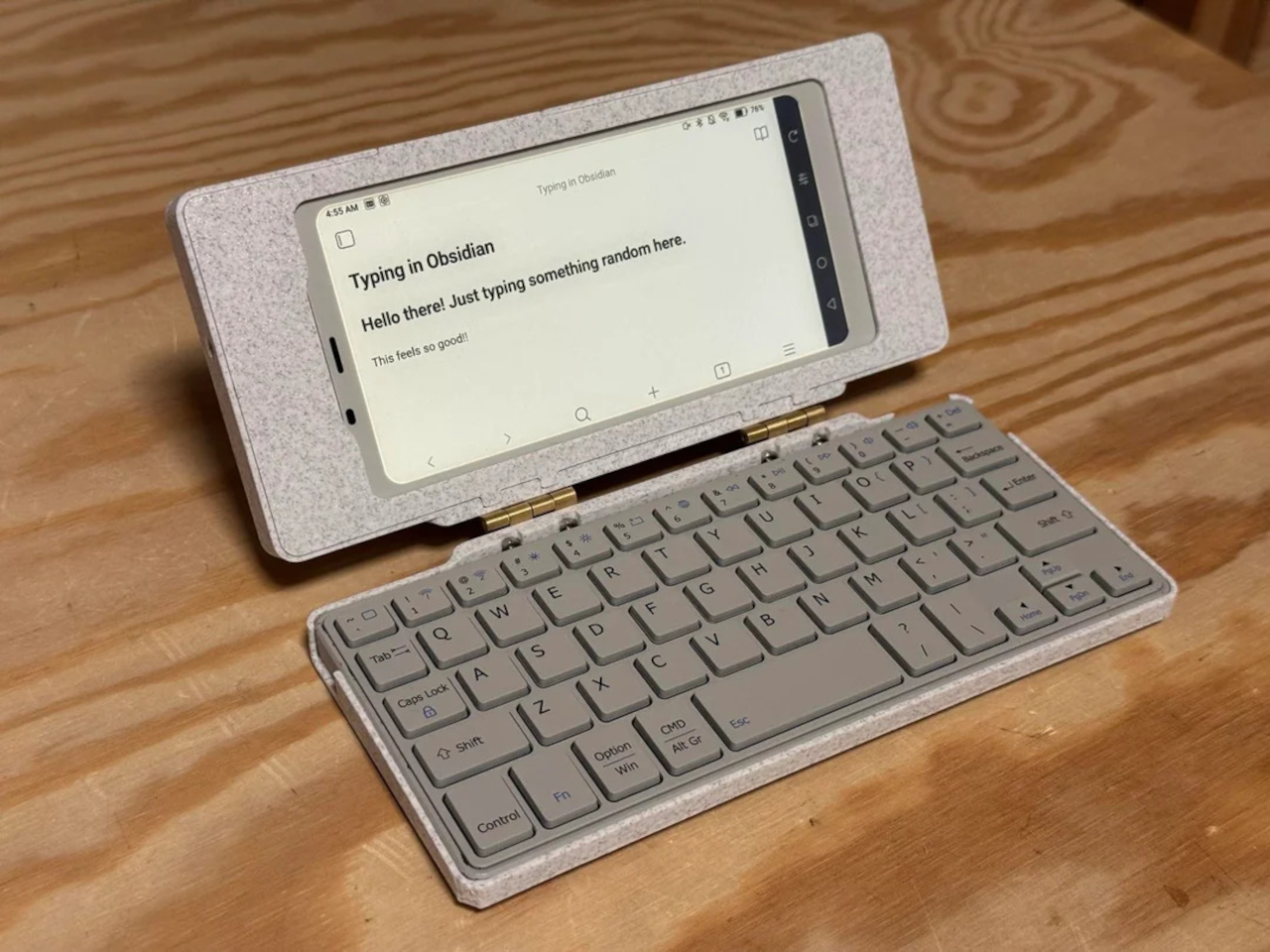
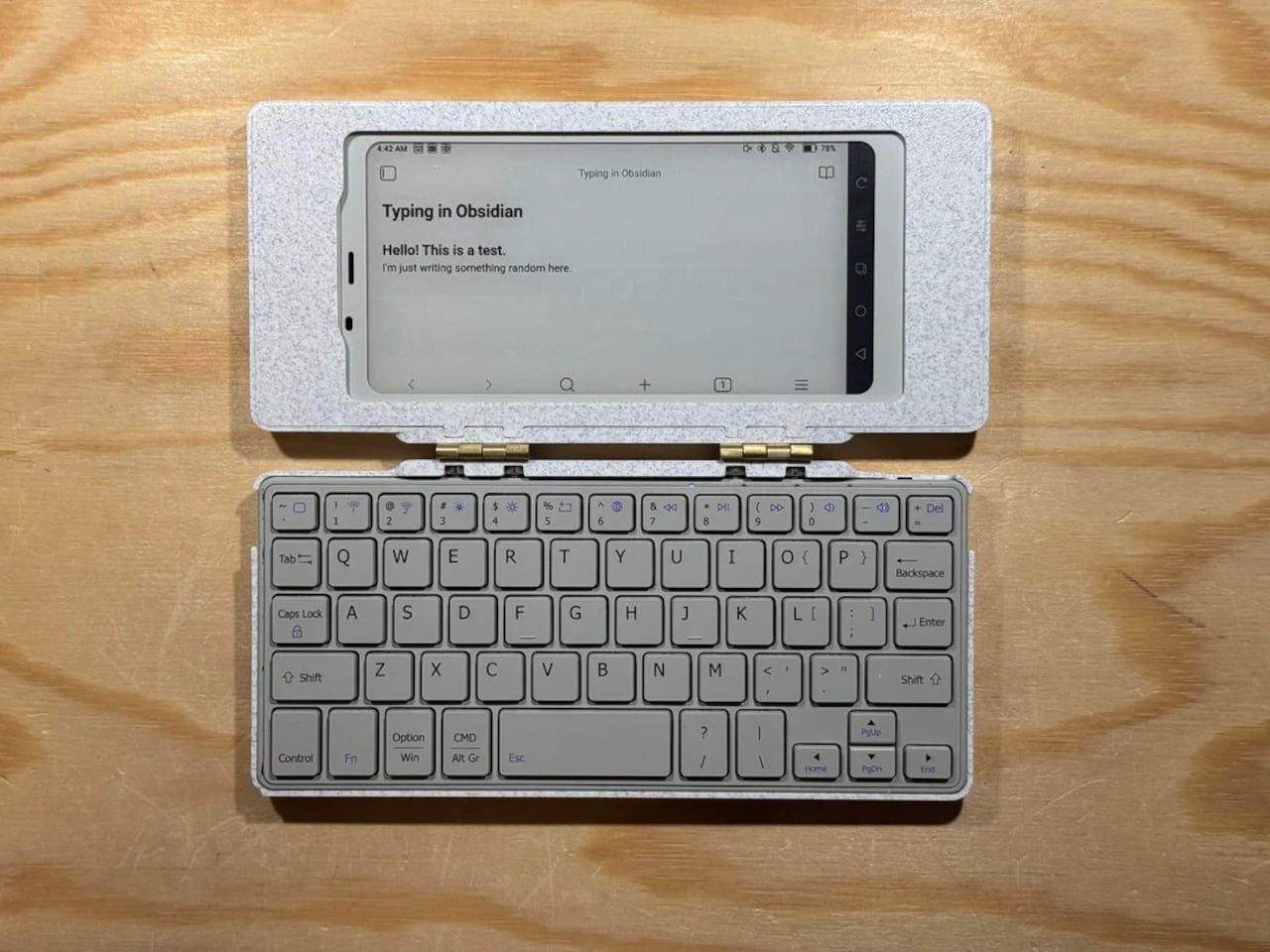
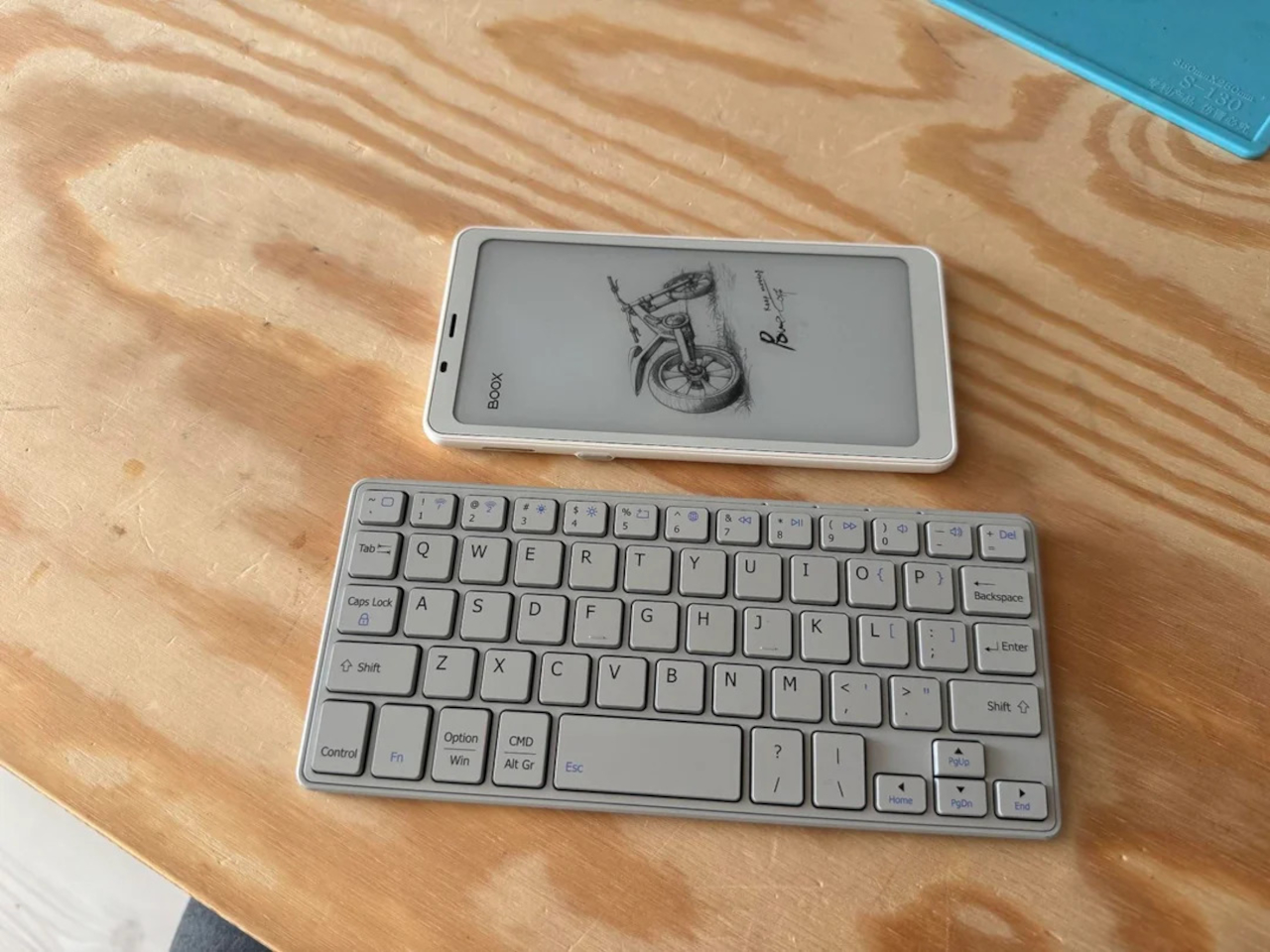
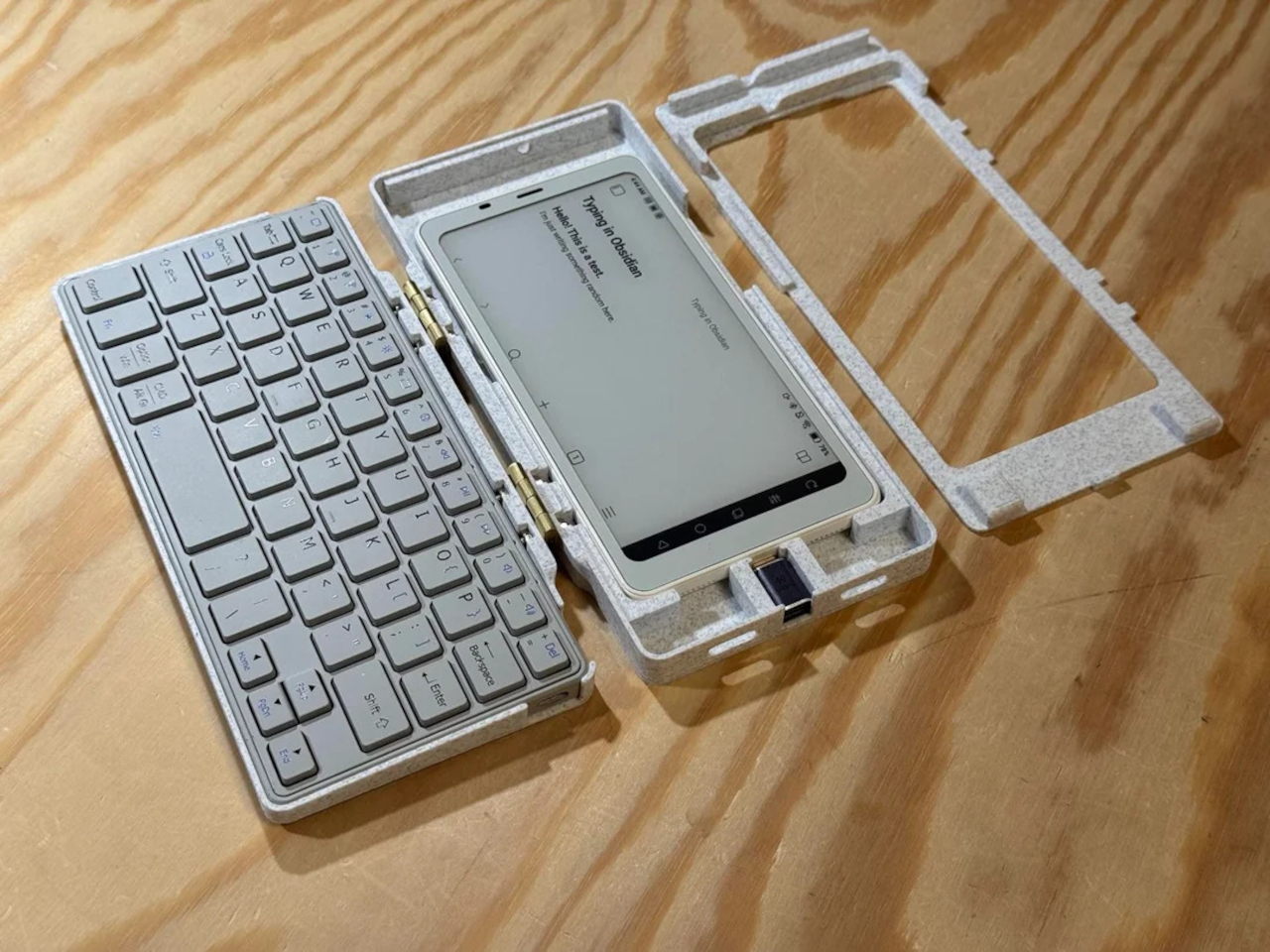
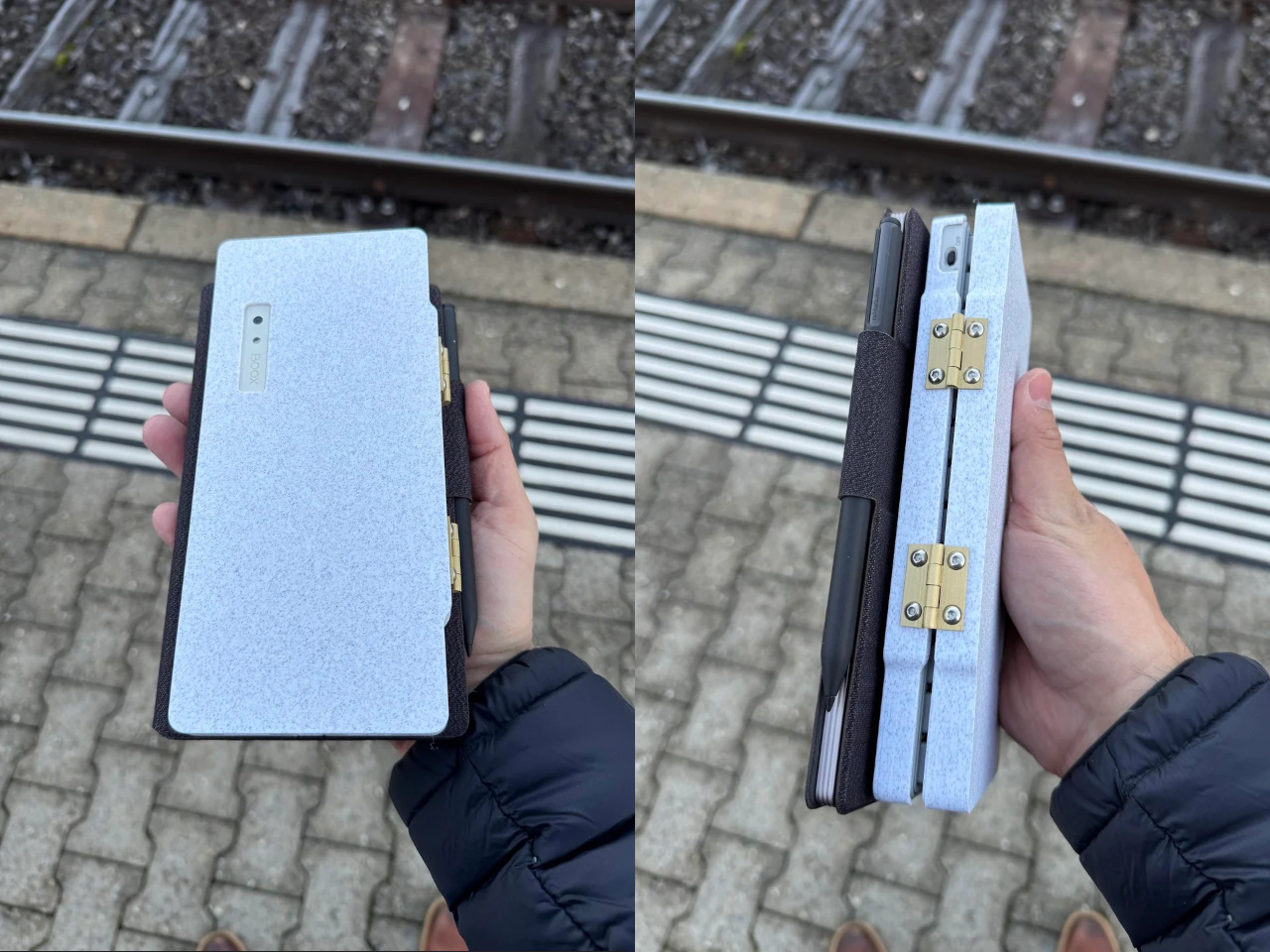
The Palm(a)top Computer v0 is one of those projects, born on Reddit when user CommonKingfisher decided to pair a BOOX Palma e-ink Android phone with a compact Bluetooth keyboard and a custom 3D-printed clamshell case. The result looks like a cross between a vintage Psion and a modern writerdeck, small enough to slide into a jacket pocket but functional enough to handle real writing and reading sessions on the go.
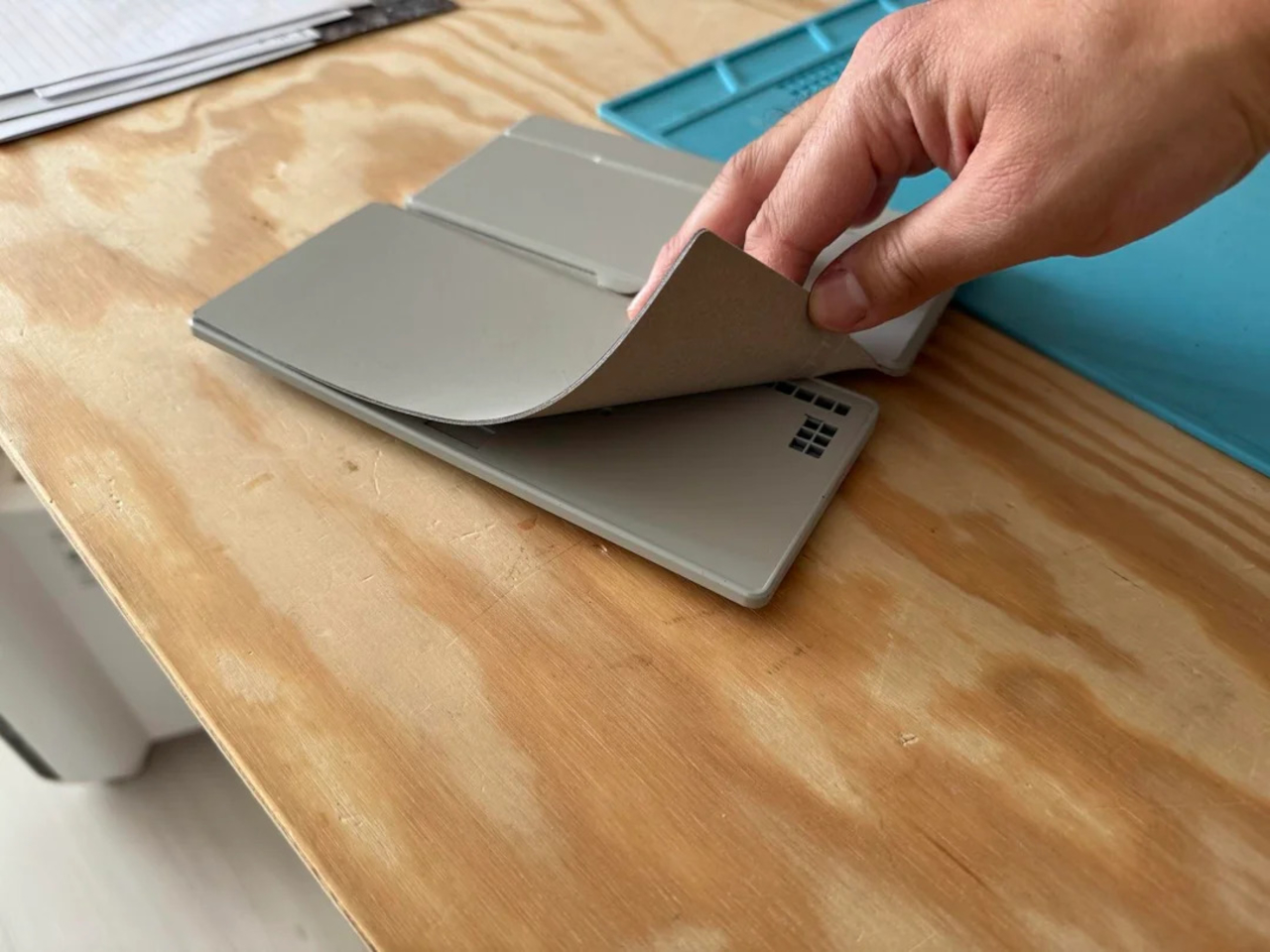
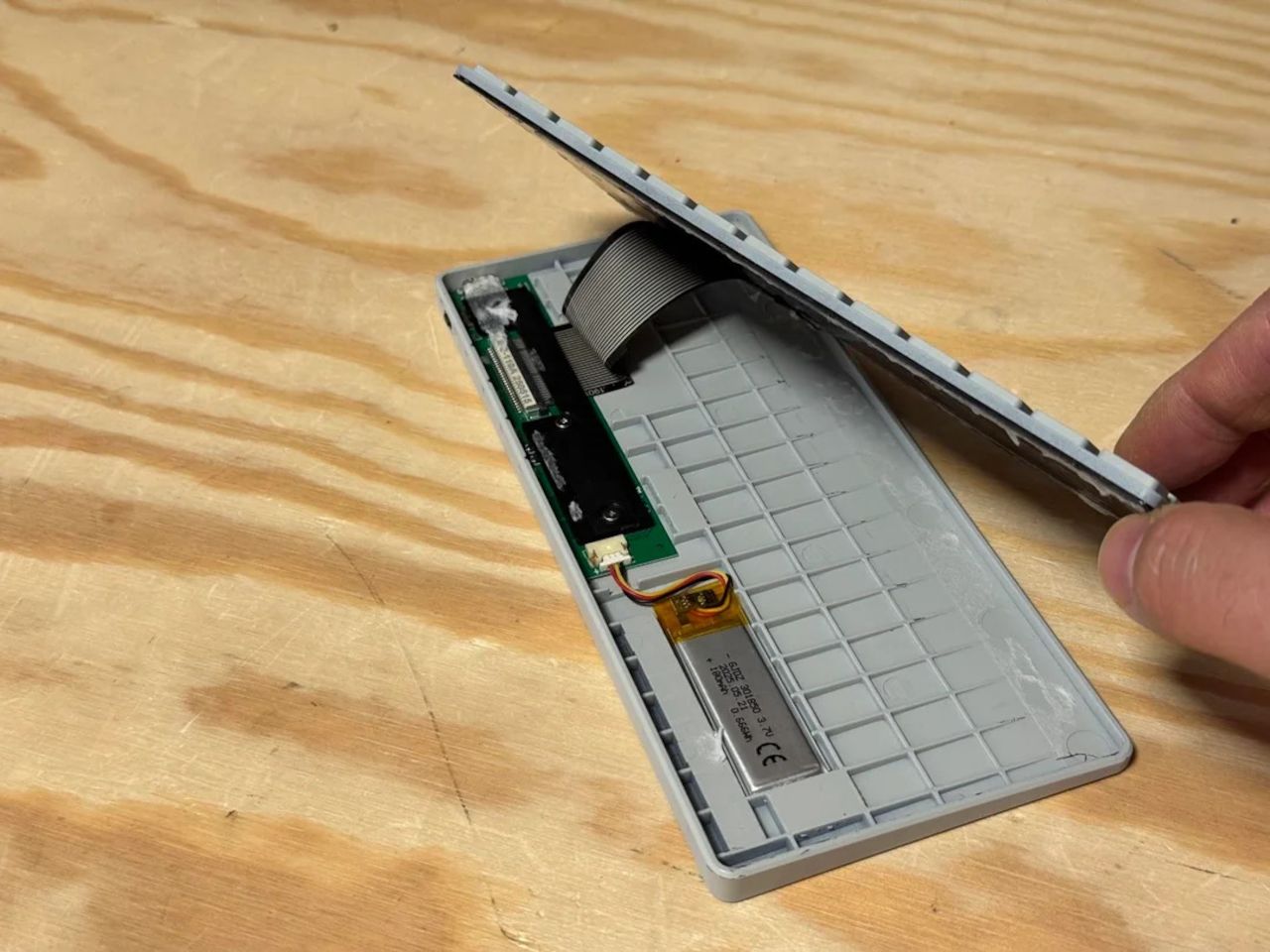
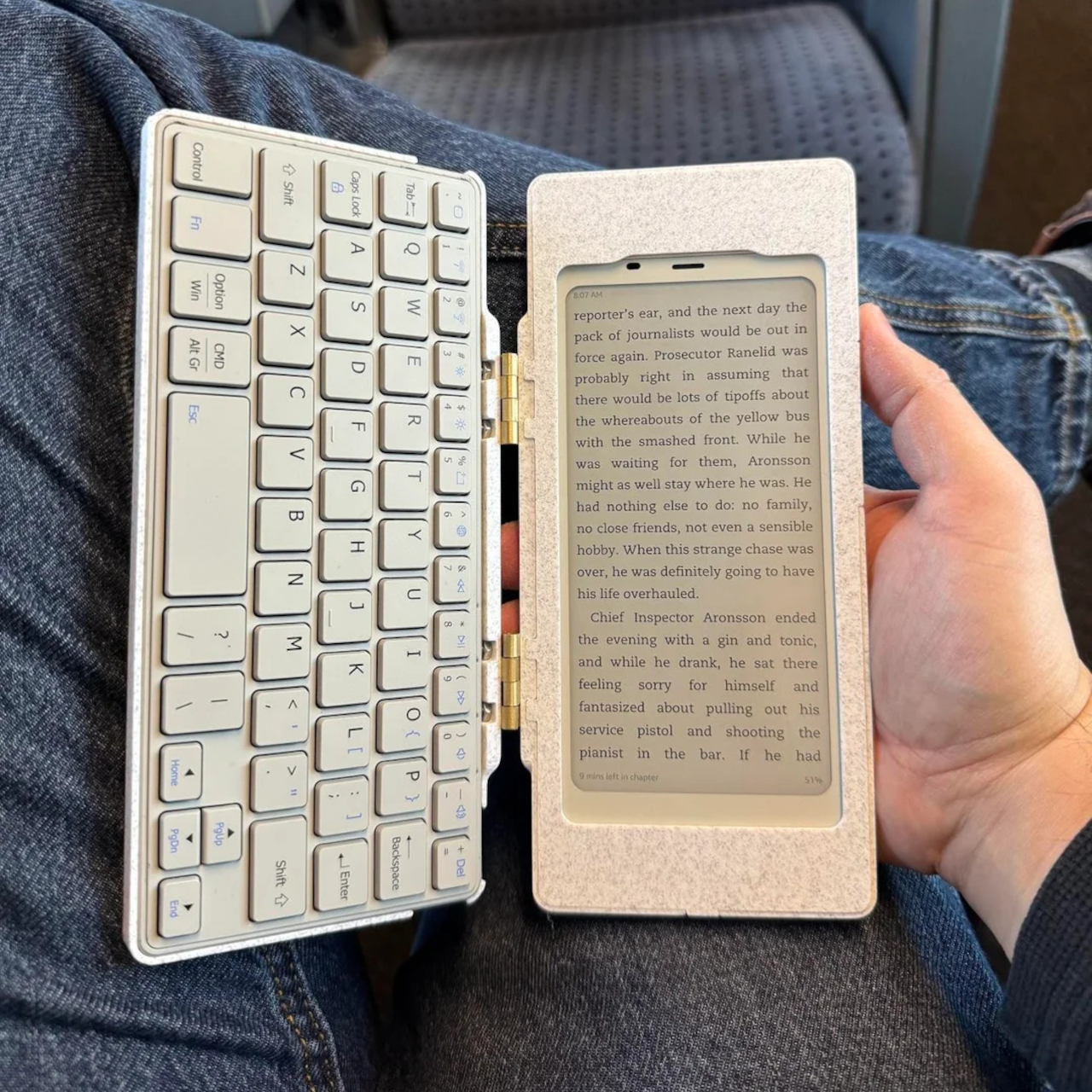
The core hardware is straightforward. The BOOX Palma sits in the top half of the shell, while a CACOE Bluetooth mini keyboard occupies the bottom half. The keyboard was originally glued into a PU-leather folio, which the maker carefully peeled off using gentle heat from a hair dryer to expose the bare board. When opened, the two halves form a tiny laptop layout with the e-ink screen above and the keyboard below.
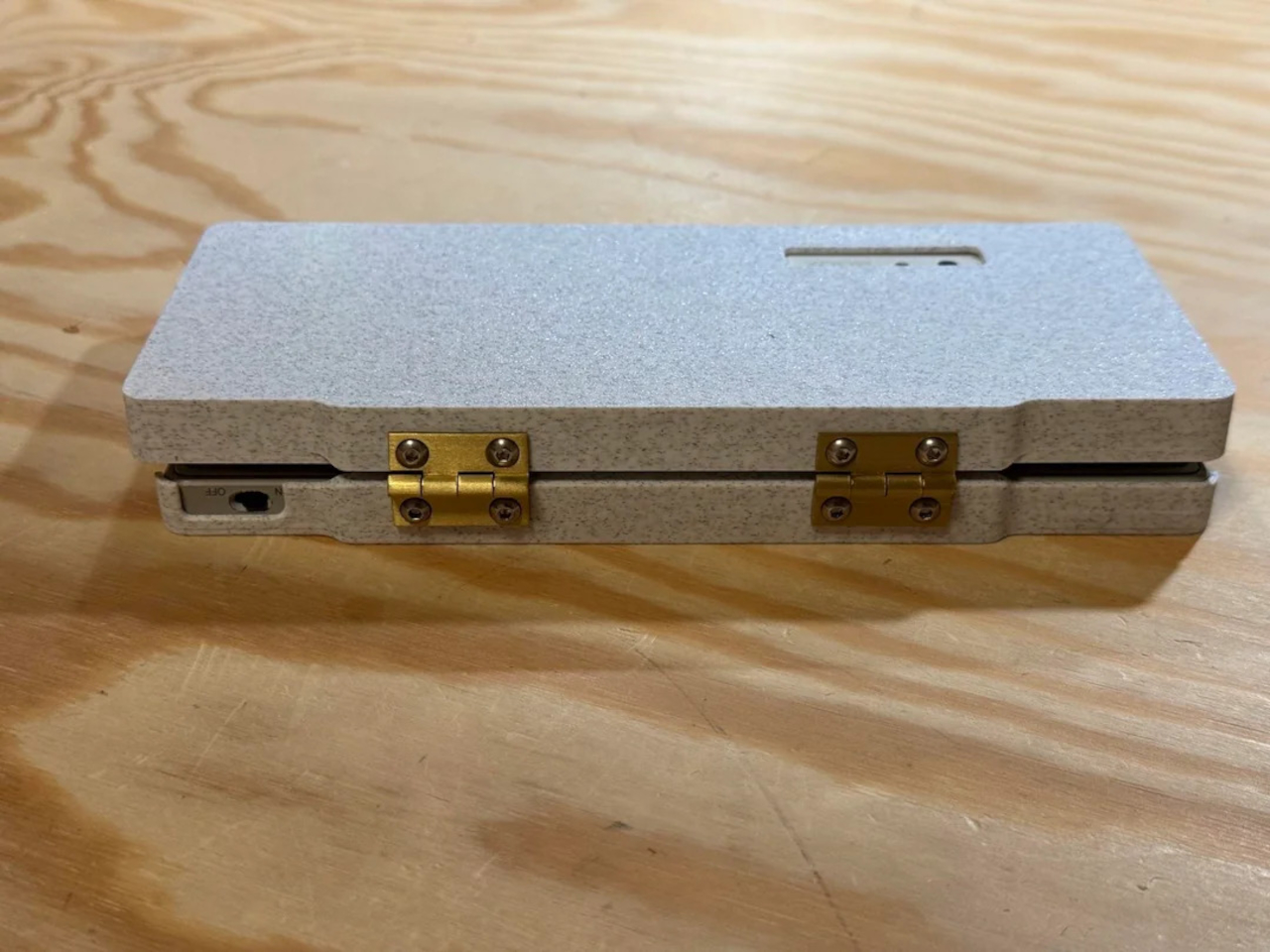
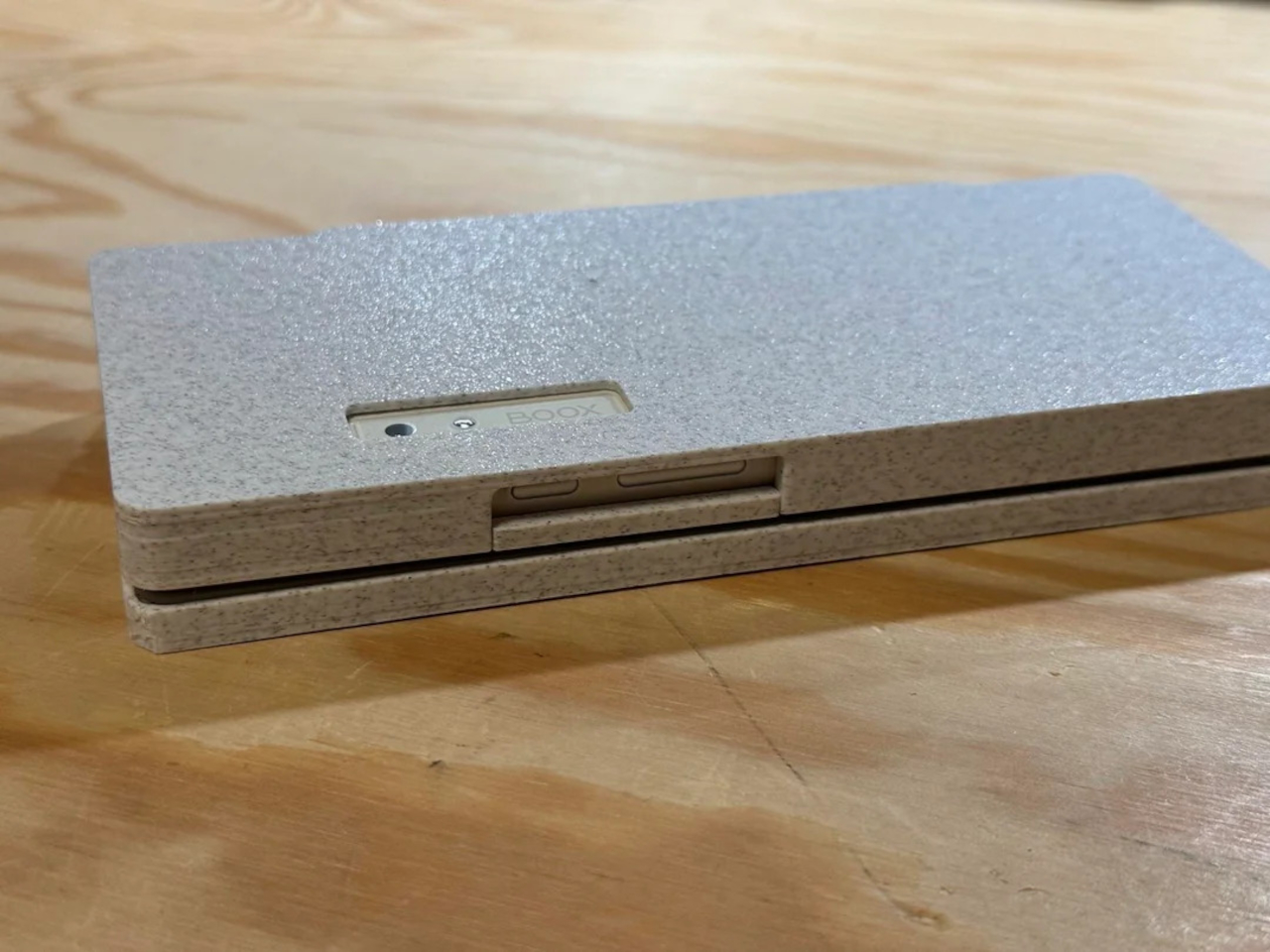
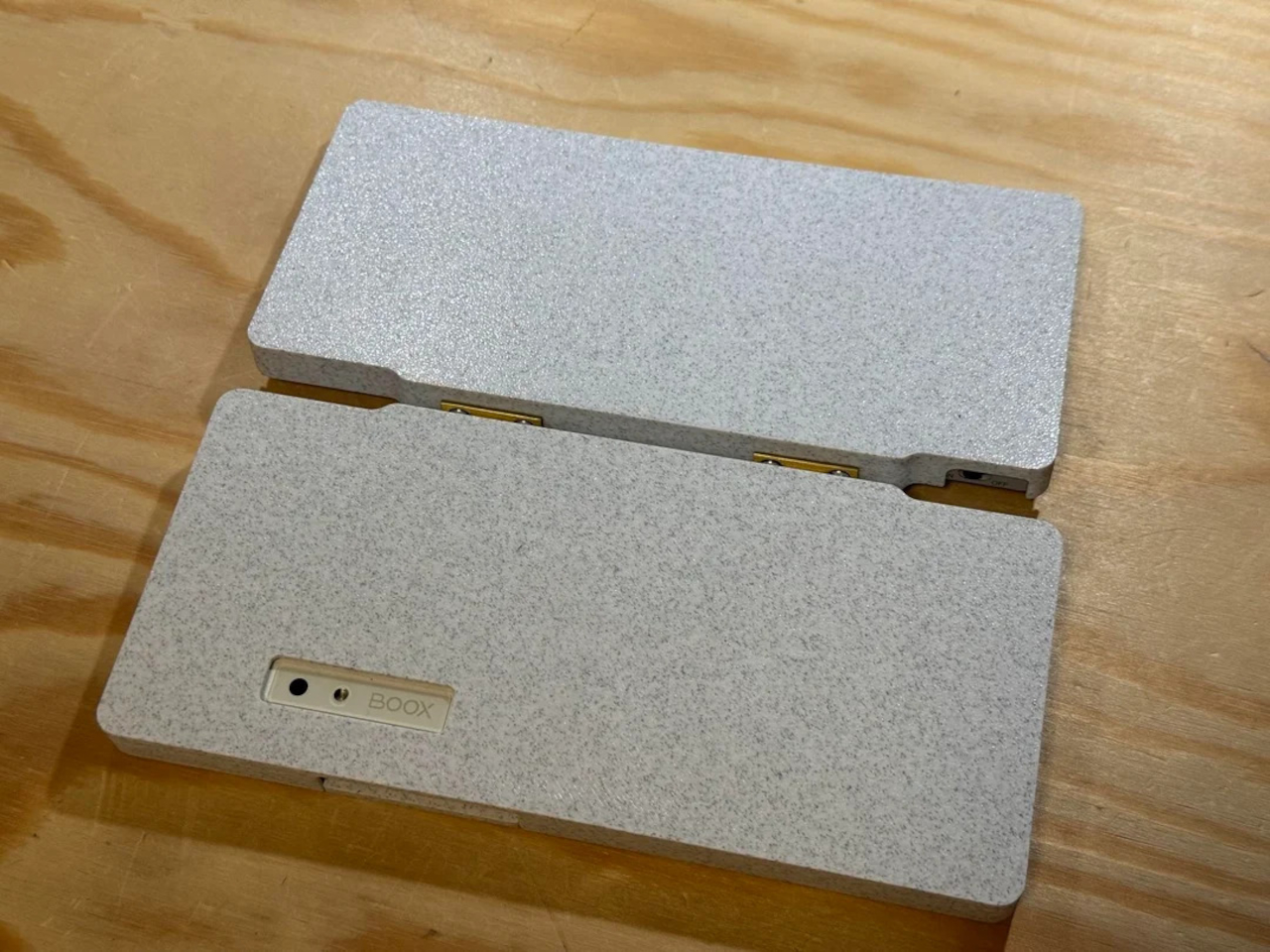
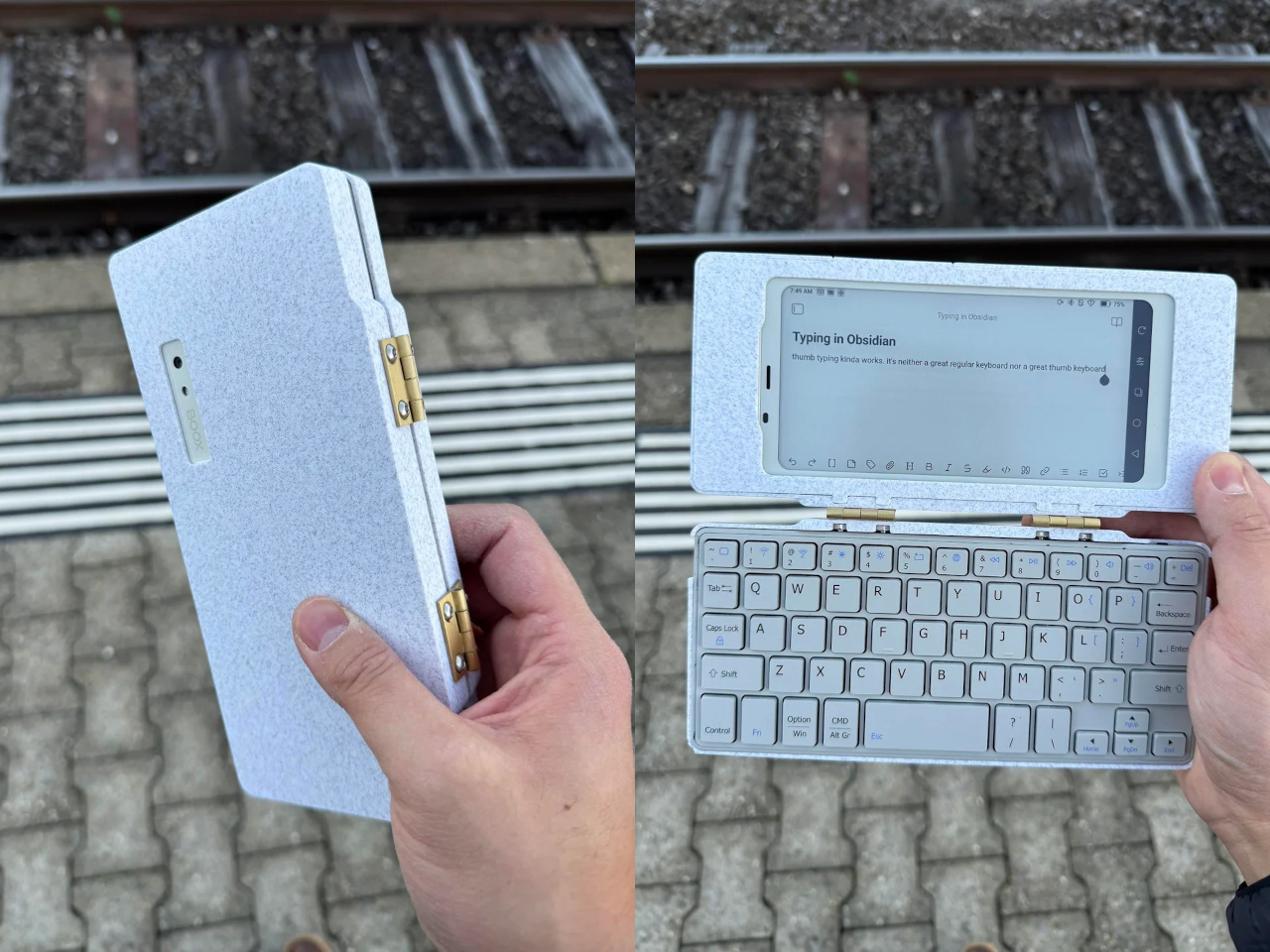
The clamshell itself is 3D-printed in a speckled filament that looks like stone, with two brass hinges along the spine giving it a slightly retro, handcrafted feel. Closed, it resembles a small hardback book with the Palma’s camera cutout visible on the back. Open, the recessed trays hold both the screen and keyboard flush, turning the whole thing into a surprisingly polished handheld computer, considering it’s a first prototype.
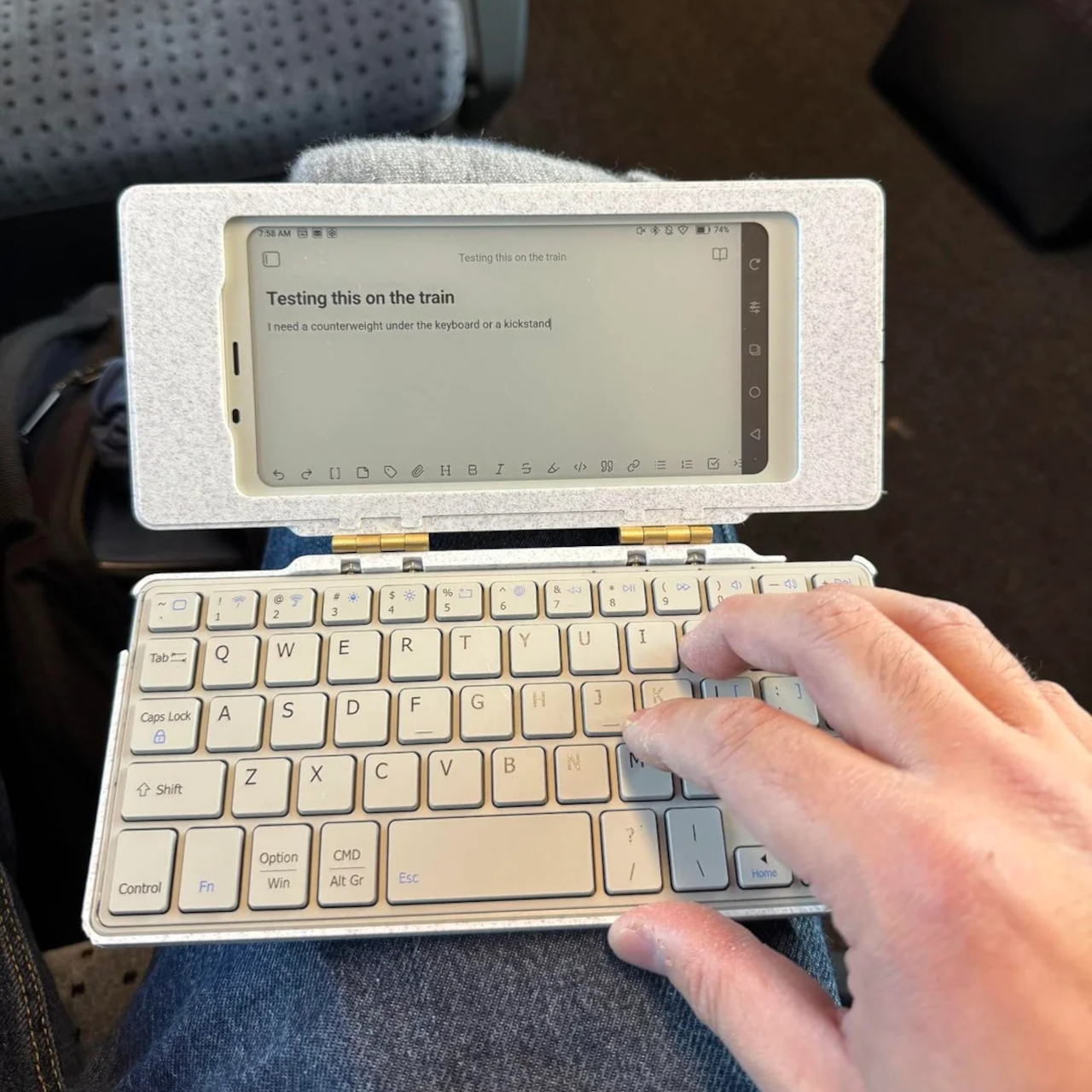
The typing experience is functional but not perfect. The maker describes it as “okay to type on once you get used to it,” and thumb typing “kinda works,” though it’s not ideal for either style. You can rest the device on your lap during a train ride and use it vertically like a book, with the Palma displaying an e-book and the keyboard ready for quick notes or annotations.
The build has a few issues that the maker plans to fix in the next version. It’s top-heavy, so it needs to lie flat or gain a kickstand or counterweight under the keyboard, possibly a DIY flat power bank. The hinge currently lacks friction and needs a hard stop around one hundred twenty degrees to keep the screen upright. There are also small cosmetic tweaks, like correcting the display frame width.
Palm(a)top Computer v0 shows how off-the-shelf parts and a 3D printer can turn a niche e-ink phone into a bespoke palmtop tailored to one person’s workflow. Most consumer gadgets arrive as sealed rectangles you can’t modify, but projects like this embrace iteration and imperfection. It’s less about having all the answers and more about building something personal that might inspire the next version.
Samsung is set to elevate the foldable smartphone market with the highly anticipated Z Fold 8 and Z Flip 8 models. These devices are designed to address persistent user concerns while introducing thoughtful upgrades that enhance functionality and usability. With features such as a creaseless display, improved battery life, and S Pen integration, Samsung aims […]