Meta has announced that BirdyChat and Haiket are the first third-party messaging services that will have interoperability with WhatsApp in the European Union. The company has been working on enabling third-party chats since 2023 after the rules of the bloc’s Digital Markets Act (DMA) came into effect. It apparently held small scale tests over the past few months to make sure WhatsApp does work with BirdyChat and Haiket, and it will roll out integration with the services across Europe “soon.”
Users will be able to send messages, images, voice messages, videos and files between the messaging services whether they’re on Android or iOS. To those wondering, any messaging service Meta teams up with will need to have the same level of end-to-end encryption as WhatsApp under DMA’s rules. Users will see a notification in their Settings tab on WhatsApp over the coming months when BirdyChat and Haiket integration becomes available, telling them how they can opt-in to third-party chats. They can choose not to enable the feature at all or to switch it off anytime they want.
When Meta released details detailing how WhatsApp will work with other messengers, the company said that users will be able to create group chats with their friends on its partner apps. That feature won’t be available at launch, though, and will come later when Meta’s partners are ready to support the capability. Meta also said that it will continue expanding WhatsApp’s interoperability with more apps, as it’s required to do so under the DMA.
This article originally appeared on Engadget at https://www.engadget.com/apps/whatsapp-enables-interoperability-with-two-other-messengers-in-the-eu-140000835.html?src=rss
Earlier this year, I played Metroid Prime for the first time in at least a decade. Back in 2023, Nintendo released a remastered version of the 2002 classic for the Switch, and I felt like dusting it off once we finally knew Metroid Prime 4: Beyond would arrive this year after about a decade in development. The original Metroid Prime holds up surprisingly well for a 23-year-old game, but there were plenty of times where it showed its age. The platforming often felt overly clunky, as precise control over Samus Aran is not the game’s strong suit. Similarly, dealing with larger hordes of energy-sucking Metroids could get pretty frustrating, again due to a lack of precision.
But the main feeling I came away from the game with was excitement over a fully modernized Metroid Prime experience. I’ve been interested in seeing how the lush alien worlds, monstrous enemies and first-person combat would feel on a current console, built with today’s technology and the many improvements that have come to game design since 2002. I finally got a chance to play about 90 minutes of Metroid Prime 4: Beyond last week and nothing I saw diminished my excitement for the series being brought into the current decade — even if the game felt almost too familiar at times.
I played two segments of Metroid Prime 4: Beyond. The first is an opening sequence that Nintendo made available for people to try at the Switch 2 demo experiences earlier this year before the console launched, while the second is a longer slice that takes place on a gorgeous alien planet where it seems the bulk of the game will likely take place. That first segment is the classic “get the player acquainted with the controls” level where Samus flies in to help defend a base under attack. Since I had played the Switch version of Metroid Prime recently, I felt right at home with the controls even though a few buttons were remapped. All of the classic Metroid moves, including charge blasts, the morph ball, the missile cannon, the scanning visor and more are intact here, and I quickly slipped back into the routine of scanning enemies for weak points and blasting away.
Right from the jump, the game looks fantastic. There’s an extensive cutscene (at least for a Metroid game) that shows Samus flying in to save the day through a battle-torn base, and everything from the flash of fireball explosions to small details on Samus’s ship give off a level of detail that we simply haven’t seen in a Metroid game before.
I was playing the game on the Switch 2, in both handheld mode and hooked up to a TV and it looked great either way. The aforementioned explosions popped nicely in HDR and the frame rate never stuttered in a way that I picked up on. As usual, Nintendo’s art direction is top-notch, but this is the first Metroid Prime game made on a console with some power behind it (remember, Metroid Prime 3: Corruption came out on the original Wii). The game isn’t quite aiming for photorealistic graphics, but it’s closer than almost any other Nintendo game I can think of. The combo of impeccable style and a modern resolution that finally lets the Metroid world shine is thrilling, and I can’t wait to see more variety in the worlds that Samus explores.
There’s also a lot more voice chatter than in the original Metroid Prime. As you get dropped into defending the base under attack, plenty of other soldiers recognize Samus, ask for help, tell her where to go and generally praise her for being a badass. It’s a lot more voice work than I’m used to in a Metroid game, and it goes a long way towards making the journey feel less isolated.
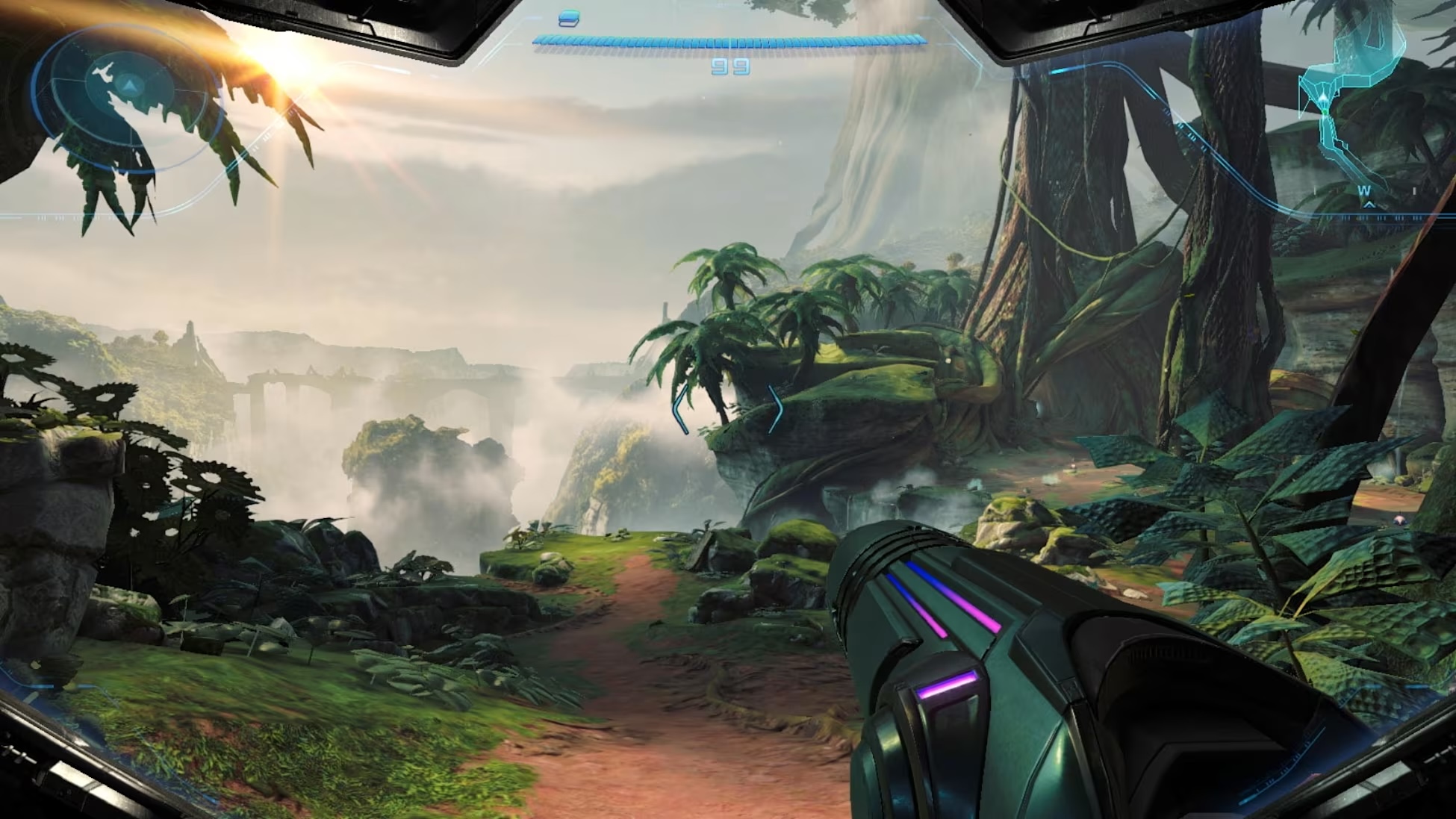
A screenshot showing the jungle world of Metroid Prime 4: Beyond.
Nintendo
The second area I got to explore looks even better than the somewhat generic base where the game kicks off. It’s a classic Metroid world that mixes natural beauty with a mysterious, alien culture. And, of course, a lot of the nature wants to kill you for invading its territory (or possibly because it is being controlled by outside forces). The big boss of the demo was cut from this cloth: a giant tentacled plant flinging its giant spiked arms at you and firing off poisonous flowers. A classic Metroid battle if ever there was one, albeit one that felt not wildly different from some of the boss battles from Metroid Prime. That said, the scope of the battle felt bigger, due to the size of the arena and how the plant’s tentacles made maneuvering and getting off clear shots a challenge. While the boss clearly had a central body right in the middle of the room, the tentacles made it feel like it was all around me, at all times
This boss felt like an upscaled but familiar version of ones from past games, and it was far from the only thing that felt familiar. For example, the game still uses save stations scattered throughout the map to save your progress rather than just autosaving at significant points. That’s a throwback I didn’t exactly miss and didn’t expect to see in 2025. Plenty of the music cues and sound effects felt like they could have been lifted straight from other Metroid Prime games, and the basic move set and weapons Samus has early in the game is nearly identical to how you start Metroid Prime. Naturally, something happens where she loses most of those abilities and has to regain them to progress — in the demo, I had to find the Morph Ball power up to move on, just as you do in nearly every Metroid game before.
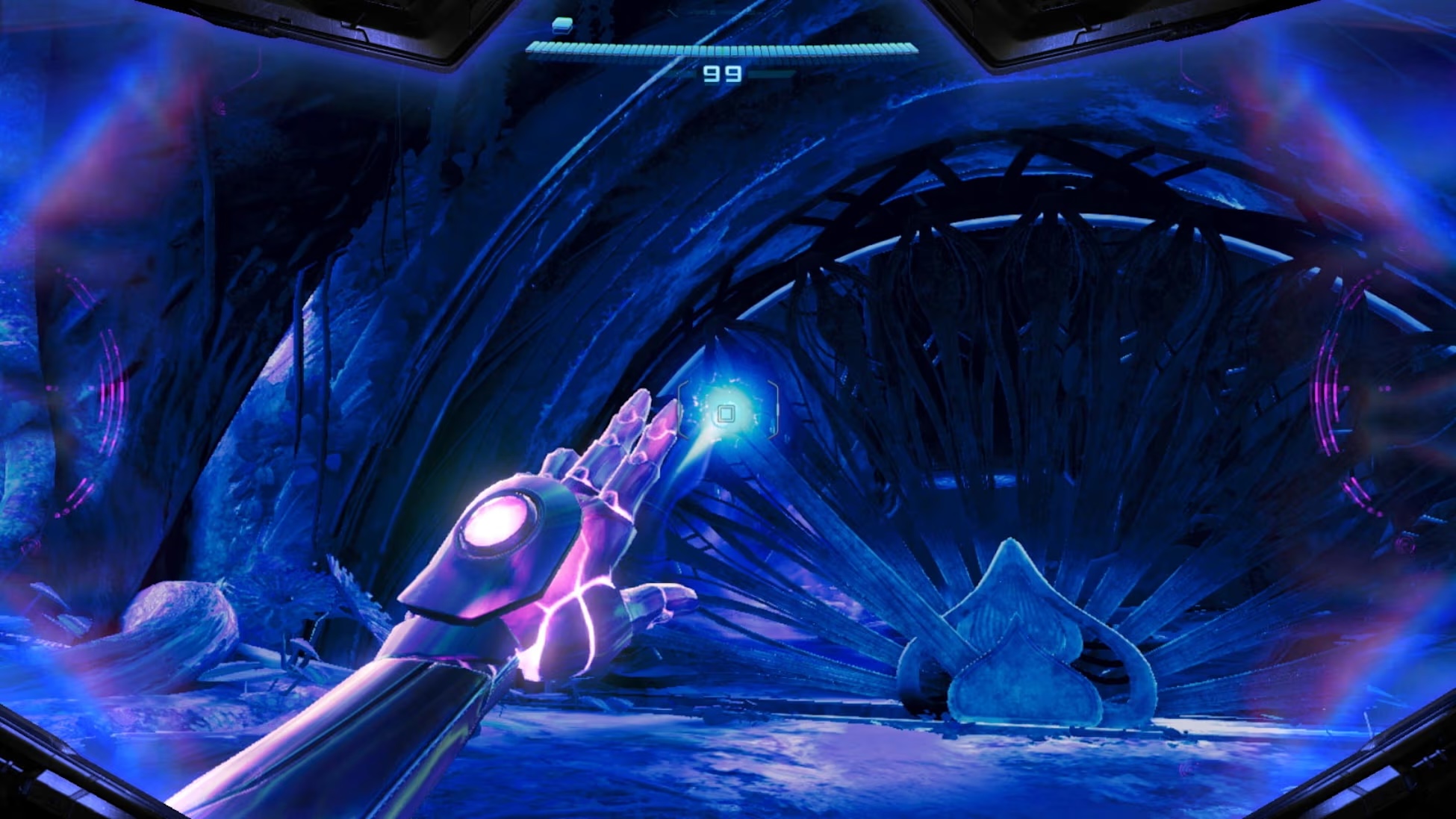
Samus Aran uses her new abilities to unlock a way forward.
Nintendo
At times, it felt like the game was leaning a bit too heavily on the already-established framework rather than trying something new. But given that I was early in the game, I’m allowing for there to be a lot of unexpected changes to come. And I did get a chance to try out the biggest gameplay change Nintendo has teased thus far (no, not the motorcycle): new psychic abilities.
These powers, at least in the demo, are primarily used for solving environmental puzzles, as they provide a new way to interact with various objects and structures. But there’s also a combat component that I needed to use to beat the aforementioned boss. You can charge and fire off a sort of psychic beam — once it leaves your blaster, time slows to nearly a crawl and you can take control of its direction with the analog stick. While fighting the boss, I had to guide the beam around a host of obstacles to hit each of the three tentacles; once I did that, the monster was vulnerable and I could then charge in and blast it with my conventional weapons. You can see some examples of this power in action in the video below.
I wish I got a chance to see how these powers would evolve throughout the game, and I’m definitely intrigued to see how they manage to separate the gameplay in Metroid Prime 4: Beyond from the aspects of it that feel merely like an updated version of what came before. And to be honest, I’m not sad the game feels familiar. Plenty of people haven’t experienced the Metroid Prime series before or haven’t played it in more than a decade, and many of the familiar aspects felt like a perfect example of “if it’s not broke, don’t fix it.” And it won’t be long before we can all find out if Metroid Prime 4: Beyond finds a way to really stand out from its predecessors after all this time. The game arrives on December 5 for Switch and Switch 2.
This article originally appeared on Engadget at https://www.engadget.com/gaming/nintendo/metroid-prime-4-beyond-thrillingly-brings-the-series-into-the-modern-era-140000932.html?src=rss
What if your AI could not only read text but also reimagine it? Traditional Optical Character Recognition (OCR) systems have long been the backbone of digitizing text, yet they often hit a wall when it comes to handling vast amounts of data efficiently. Enter DeepSeek OCR, a new innovation that doesn’t just read text, it […]
Apple is preparing to introduce a bold redesign of its MacBook Pro, featuring an OLED display, touchscreen functionality, and the next-generation M6 chipset. This upcoming model represents a pivotal evolution in the MacBook Pro lineup, combining innovative technology with a refined design. Expected to launch between late 2026 and early 2027, the new MacBook Pro […]
Have you ever wondered if a mini PC could truly rival the performance of a high-end desktop? Enter the Minisforum MS-S1 MAX, a compact powerhouse that’s rewriting the rules of what small form-factor PCs can achieve. Powered by the AMD Ryzen AI Max 395 Plus, this sleek machine doesn’t just punch above its weight, it […]
The PlayStation Portal is the rare product that launched as a truly baffling device, but has evolved into something genuinely useful. At first, it could only stream games from your PlayStation 5, it lacked core features for a handheld like Bluetooth audio and it felt a bit overpriced at $200 for such a limited product. Add on the fact that home streaming can be notoriously unreliable, since it depends entirely on your ISP and home networking setup, and the Portal simply didn't make much sense. But in 2024 Sony finally added limited cloud streaming for PS Plus titles, and last week it went even further by letting you stream games you own directly from the cloud. All of a sudden, the PlayStation Portal doesn't seem so crazy after all.
It also helps that the Portal is still $200 (or less at Gamestop and other retailers), while the cheapest Digital Edition PlayStation 5 has jumped to $500 (up from $400 at launch). Sure, it's still far from a perfect device, but at least it's more functional and significantly less than the PS5 today. Just be aware you'll need to subscribe to the $18 a month (or $160 a year) PlayStation Plus Premium plan to access the cloud streaming features.
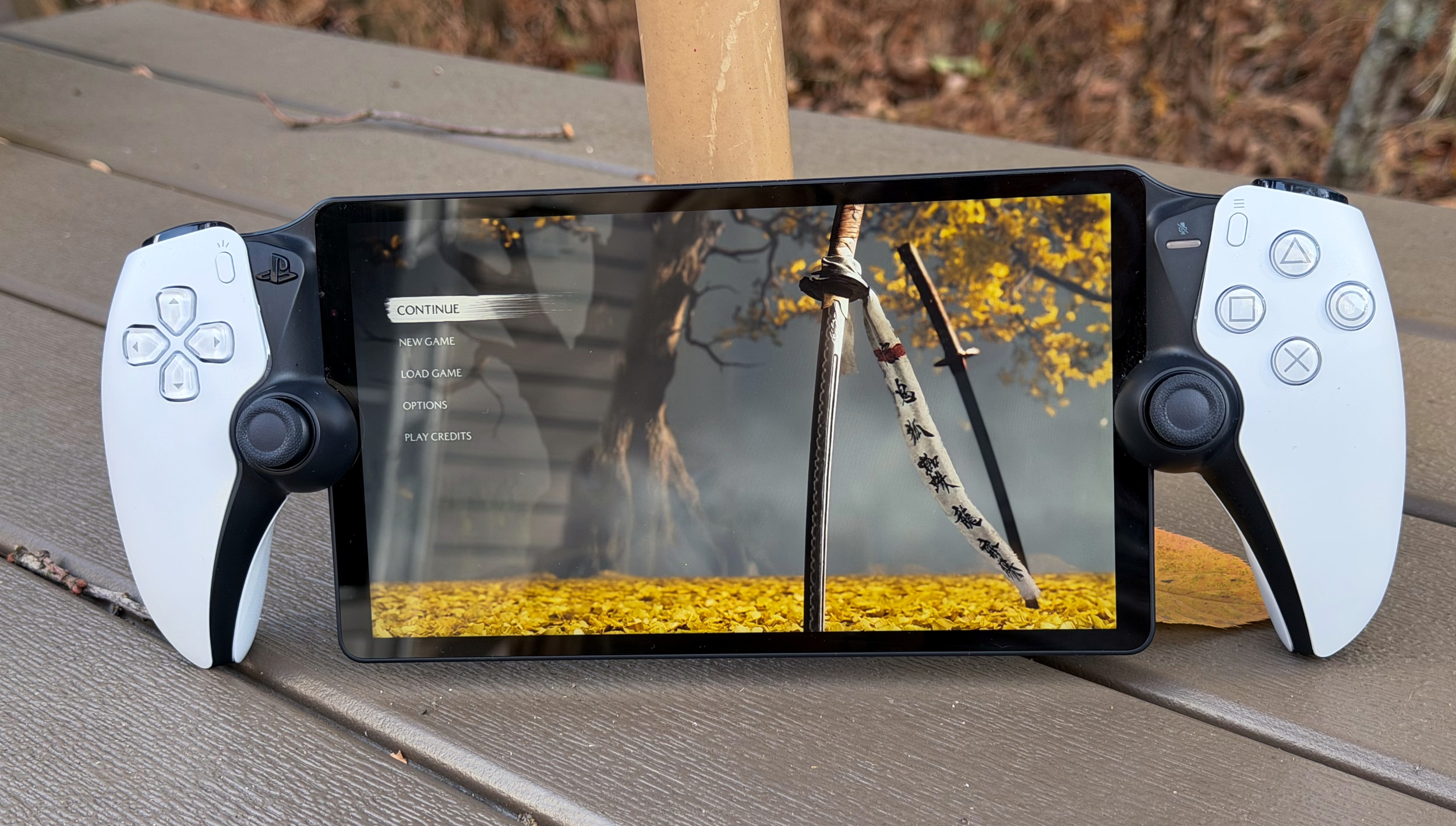
While my hardware frustrations with the PlayStation Portal remain (more on those later), I can't deny that it's a genuinely great handheld for streaming games from the cloud. Jumping into Ghost of Yotei typically takes between 15 to 30 seconds, and it often loads directly into the game world if I'm continuing from a recent session. The game also plays smoothly, with no noticeable stuttering or lag, and I can still choose between the graphics-heavy 30 fps modes or the smoother 60 fps performance option. It's far from the ideal way to play Ghost of Yotei, which demands an enormous screen and capable speakers, but it's fine in a pinch.
In comparison, using Remote Play to access my PlayStation 5 Pro remains as headache-inducing as it did when the PS Portal launched. The handheld can't consistently wake up the PS5 Pro from standby mode, so I'm forced to turn on the console manually if I ever plan to use the Portal. If my PS5 Pro is on, the Portal can typically connect in around five seconds, and it takes another five to ten seconds to launch Ghost of Yotei. Gameplay is typically smooth via Remote Play, but there's occasional stuttering that can interfere with intense combat sequences.
PlayStation Portal playing Ghost of Yotei.
Devindra Hardawar for Engadget
My main issue with the PlayStation Portal at launch was that I simply couldn't trust it. Sometimes it would let me remotely connect to my console with no problems, and sometimes it would simply refuse. I've got a fairly robust Wi-Fi 6 networking setup and AT&T gigabit fiber, so my connectivity shouldn't be much of an issue. But clearly something about my networking configuration doesn't play well with the Portal for Remote Play, even if I connect my PS5 Pro via Ethernet.
Strangely enough, the PlayStation Portal is far more reliable at streaming games from servers thousands of miles away than it is remotely connecting to the console a few dozen feet away from me. That just goes to show how far cloud streaming has come — it practically feels like local gameplay now. I suppose that shouldn't be too surprising for Sony, since it's only pumping out 1080p streams. NVIDIA's GeForce Now has proven it's possible to stream PC games in 4K, so long as you have gobs of bandwidth to support it.
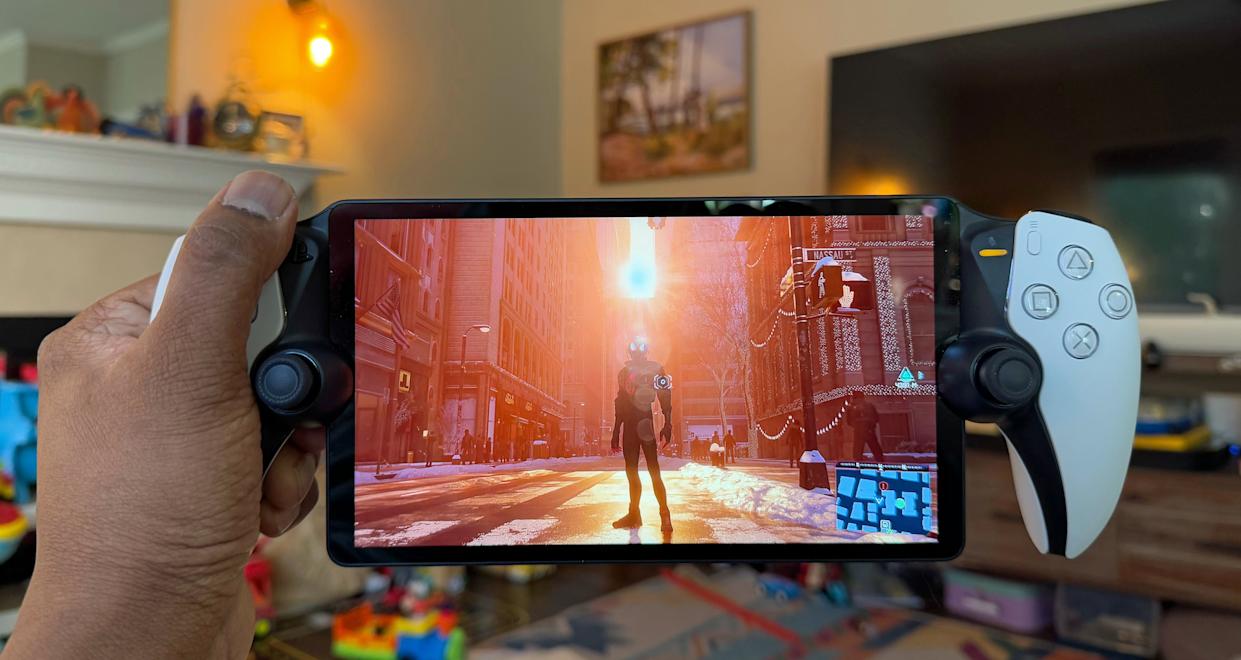
The best thing I can say about the PlayStation Portal now is that I can finally trust it — up to a point, anyway. I had no trouble signing onto its streaming servers to play Ghost of Yotei and Spider-Man 2 on my home network, and I was also able to stream games while tethering on my phone. But the Portal remains a useless device if you're stuck somewhere without decent internet access. You can forget about using it on a plane, even with fast in-flight Wi-Fi, or at hotels with crummy internet and no cellular reception.
Spider-Man 2 on the PlayStation Portal
Devindra Hardawar for Engadget
Given its need for decent connectivity and its clunky design, the PlayStation Portal also remains a terrible gaming option on the go. You'll need to find a large case to fit the Portal's huge controller and delicate display, a combination that really does look like a tablet shoved between Sony's DualSense gamepads. It's simply smarter to travel with the slimmer Switch 2, and I'd argue even the massive Steam Deck is easier to stuff into a backpack. And it’s worth noting you can also use apps on the Steam Deck to Remote Play from your console, and you can install the PlayStation Plus Windows app to stream games from the cloud.
I'm also still annoyed that Sony didn't include Bluetooth connectivity in the Portal. If you want wireless audio, you'll either have to use Sony's Pulse Explore earbuds or Pulse Elite headphones. You'll have to plug in a separate Bluetooth receiver if you want to use AirPods or any other wireless headphones. You'll definitely want to invest in some sort of audio solution if you plan to game on the Portal for long sessions, since its tinny speakers simply can't do justice to Ghost of Yotei's immersive soundscape.
Not surprisingly, cloud gaming didn’t change the Portal’s battery life much. I still saw between four and five hours of play time (broken into dad-friendly chunks, of course). And if you’re on some sort of marathon session, you can always plug in to charge. Since the Portal isn’t using any local hardware to power games — it’s really just decoding video and pushing data over its network connection — you can also expect more reliable battery life than other handhelds. The Switch 2, for example, could last between two to six hours, depending on what you’re playing.
While I still can’t wholeheartedly recommend the PlayStation Portal to every gamer, its latest updates make it a more viable option for PlayStation diehards. Maybe you’ll have better luck with Remote Play than me. And if you’re already a PS Plus subscriber, it’s the easiest way to access Sony’s cloud infrastructure. Or, like Engadget’s Jeff Dunn, it could also be the ideal way to game while you juggle the struggles of being a new parent. At the very least, the Portal is no longer truly baffling, but it’s also still not a Vita 2.
This article originally appeared on Engadget at https://www.engadget.com/gaming/playstation/playstation-portal-in-2025-from-home-streaming-dud-to-cloud-streaming-star-130000144.html?src=rss
AI video tools are exploding right now, but most of them still feel like they’re built for someone else. They’re either stripped-down apps that do a couple of tricks, or high-end tools that demand a workstation setup, a learning curve, and a lot of patience. The practical middle — where serious capability meets actual usability […]
The world of everyday carry continues to evolve, pushing beyond traditional multi-tools and basic pocket knives into territory that feels more like science fiction than utility gear. November 2025 has delivered a remarkable collection of EDC innovations that challenge everything we thought we knew about portable functionality. These aren’t just tools – they’re carefully engineered solutions that blend cutting-edge materials, ingenious mechanisms, and thoughtful design into objects you’ll actually want to carry every day.
From gravity-powered deployment systems to aerospace-grade titanium connectors, this month’s standout EDC designs represent a perfect storm of advanced manufacturing, user-centered thinking, and genuine innovation. Each piece on this list solves real problems while maintaining the kind of refined aesthetics that make you proud to pull them from your pocket. Whether you’re a seasoned EDC enthusiast or someone just discovering the world of optimized carry gear, these five designs showcase exactly where the industry is heading.
1. Cubik
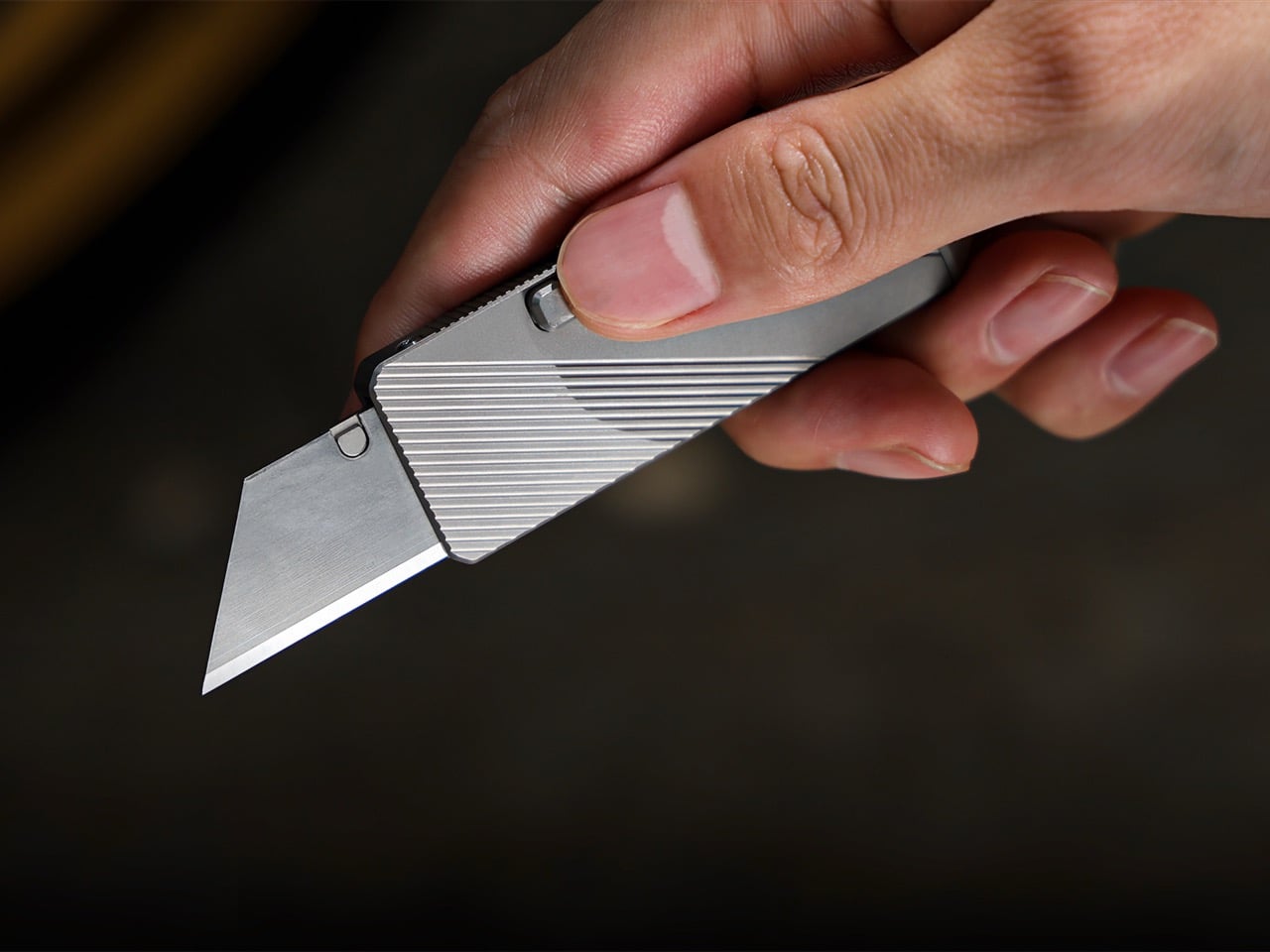
The Cubik represents a fundamental rethinking of blade deployment that feels both revolutionary and oddly familiar. Press the trigger, hold the knife upside down, and physics takes over as the blade smoothly extends from its housing. This isn’t just clever engineering for its own sake – it’s a complete elimination of the complex spring mechanisms, ball bearings, and maintenance-heavy components that plague traditional folding knives.
What makes the Cubik genuinely special is how natural the deployment feels once you understand the physics. The weight of the blade becomes your deployment mechanism, creating a tactile experience that borders on addictive. The rear-mounted tungsten carbide glass-breaker transforms this from a simple cutting tool into legitimate emergency gear. At the same time, the satisfying fidget-like quality ensures you’ll never get tired of the deployment action.
What we like
Eliminates complex mechanisms that can fail or require maintenance.
Deployment requires specific orientation and hand positioning.
May not be legal in all jurisdictions due to one-handed opening capability.
2. Titaner Quick-Release EDC Carry System
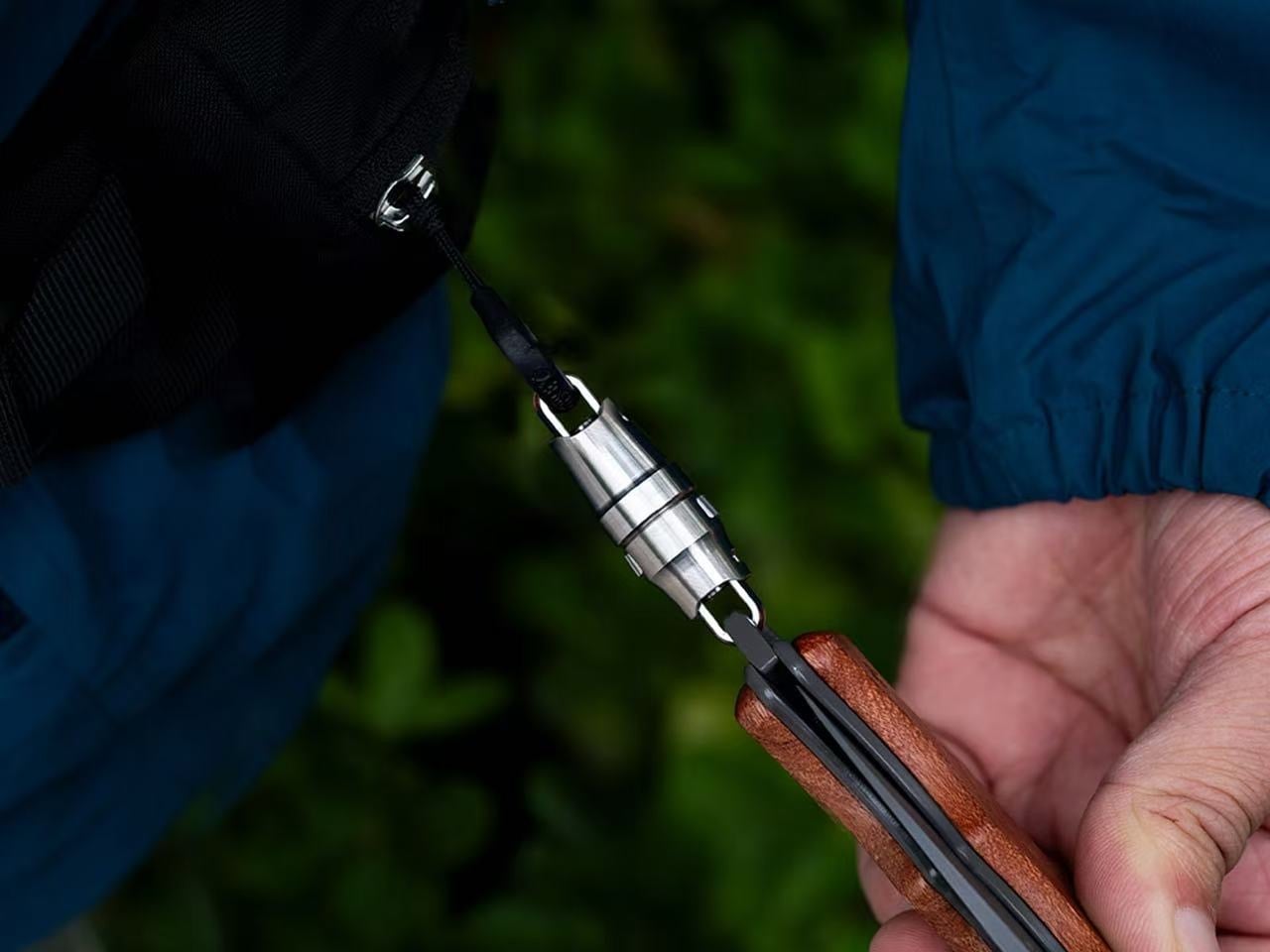
The Titaner system attacks the fundamental problem of keychain organization with aerospace-grade materials and magnetic precision. Weighing just 6.5 grams, this GR5 titanium connector system provides instant one-handed access to your gear while maintaining the kind of strength that makes traditional keychains seem almost primitive. The magnetic-mechanical lock creates a satisfying tactile feedback that confirms a secure connection every time.
Beyond the impressive engineering specs, the Titaner succeeds because it feels warm and organic rather than cold and industrial. The CNC-machined precision and choice of finishes – from understated stonewash to bold anodized colors – means this isn’t just functional gear hiding in your pocket. Four modular sub-connectors adapt to different carrying scenarios, whether you’re organizing everyday essentials or professional outdoor equipment.
Ultra-light titanium construction offers an exceptional strength-to-weight ratio.
One-handed operation with satisfying magnetic-mechanical feedback.
What we dislike
Premium materials result in significantly higher costs than traditional keychains.
A modular system may be overly complex for basic key organization needs.
3. 8-in-1 EDC Scissors
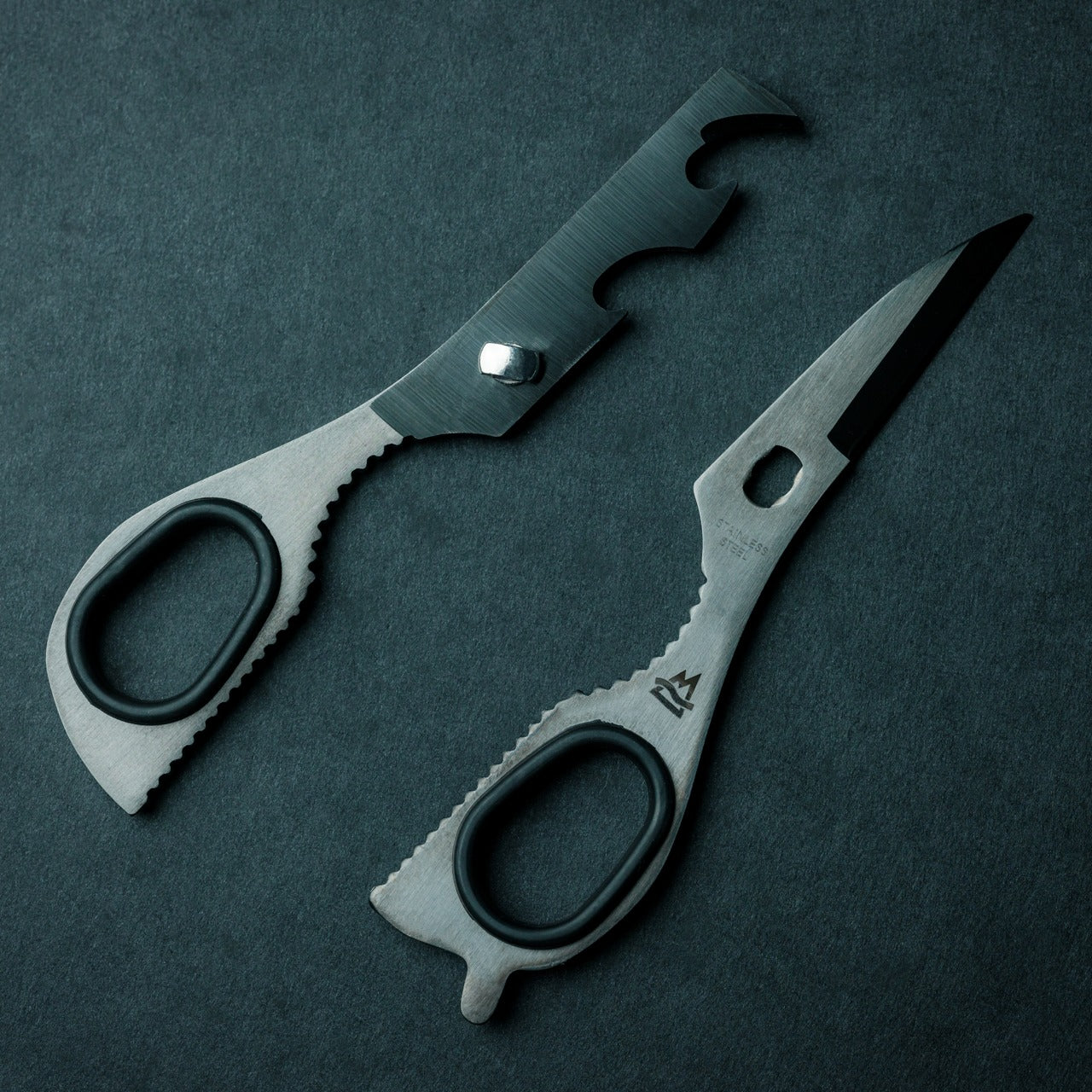
Compact multi-tools often sacrifice functionality for portability, but these palm-sized scissors prove that smart design can deliver both. Eight distinct functions are packed into a 5.1-inch form factor that disappears into any pocket while maintaining the cutting performance of dedicated scissors. The oxidation film coating provides rust resistance while creating a distinctive black finish that looks intentional rather than utilitarian.
The genius lies in how each function integrates naturally into the scissor form factor. Rather than forcing disparate tools into an awkward housing, every capability flows logically from the basic scissor design. From bottle opening to wire stripping, each function feels purposeful rather than tacked on. The result is a tool that excels at its primary cutting mission while offering legitimate backup capabilities for common tasks.
Eight functions integrated seamlessly into a familiar scissor form factor.
Compact size maintains full cutting performance in a portable package.
What we dislike
Individual tool functions may not match the performance of dedicated alternatives.
Black coating could wear over time with heavy use.
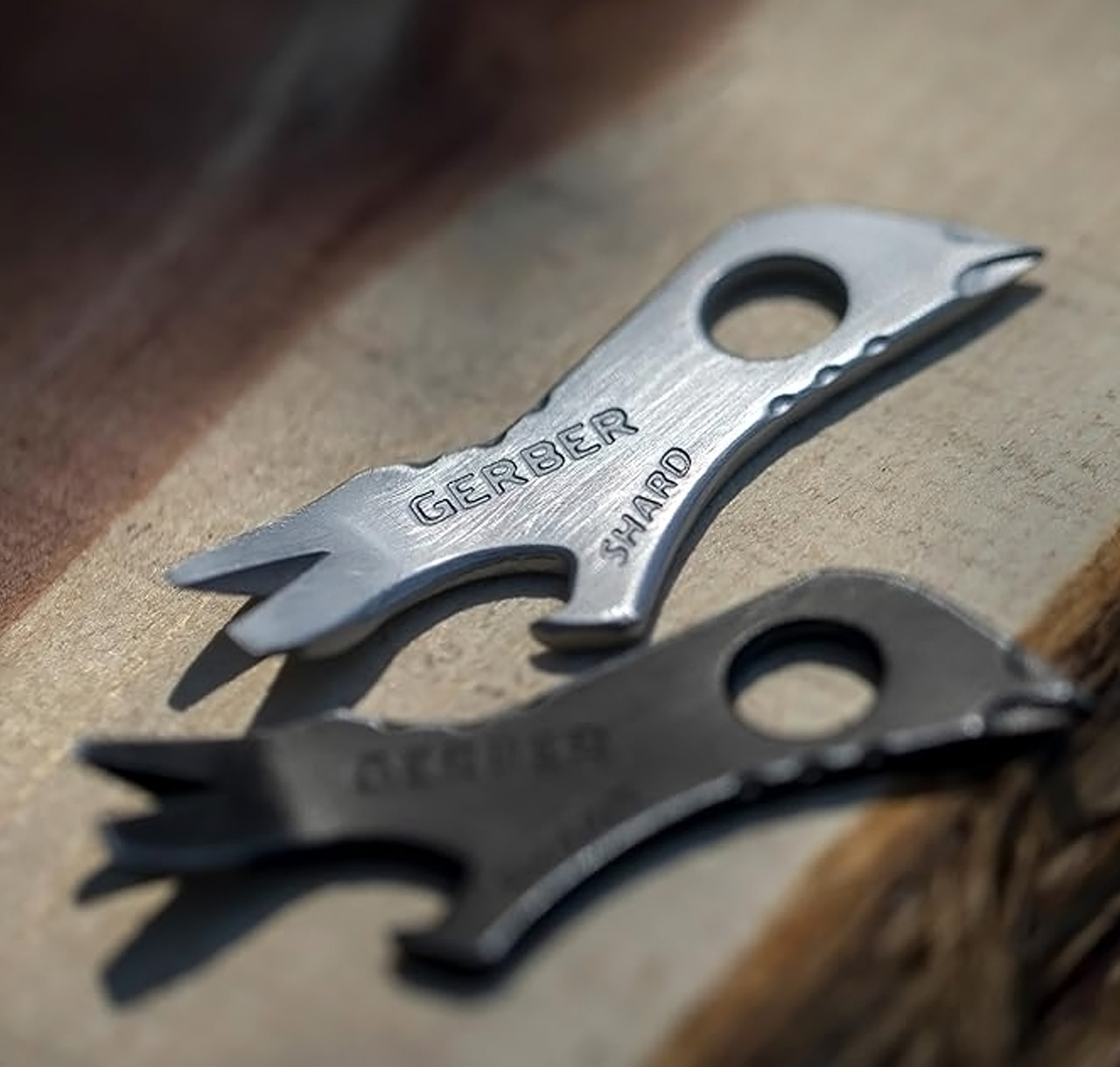
4. Gerber Shard
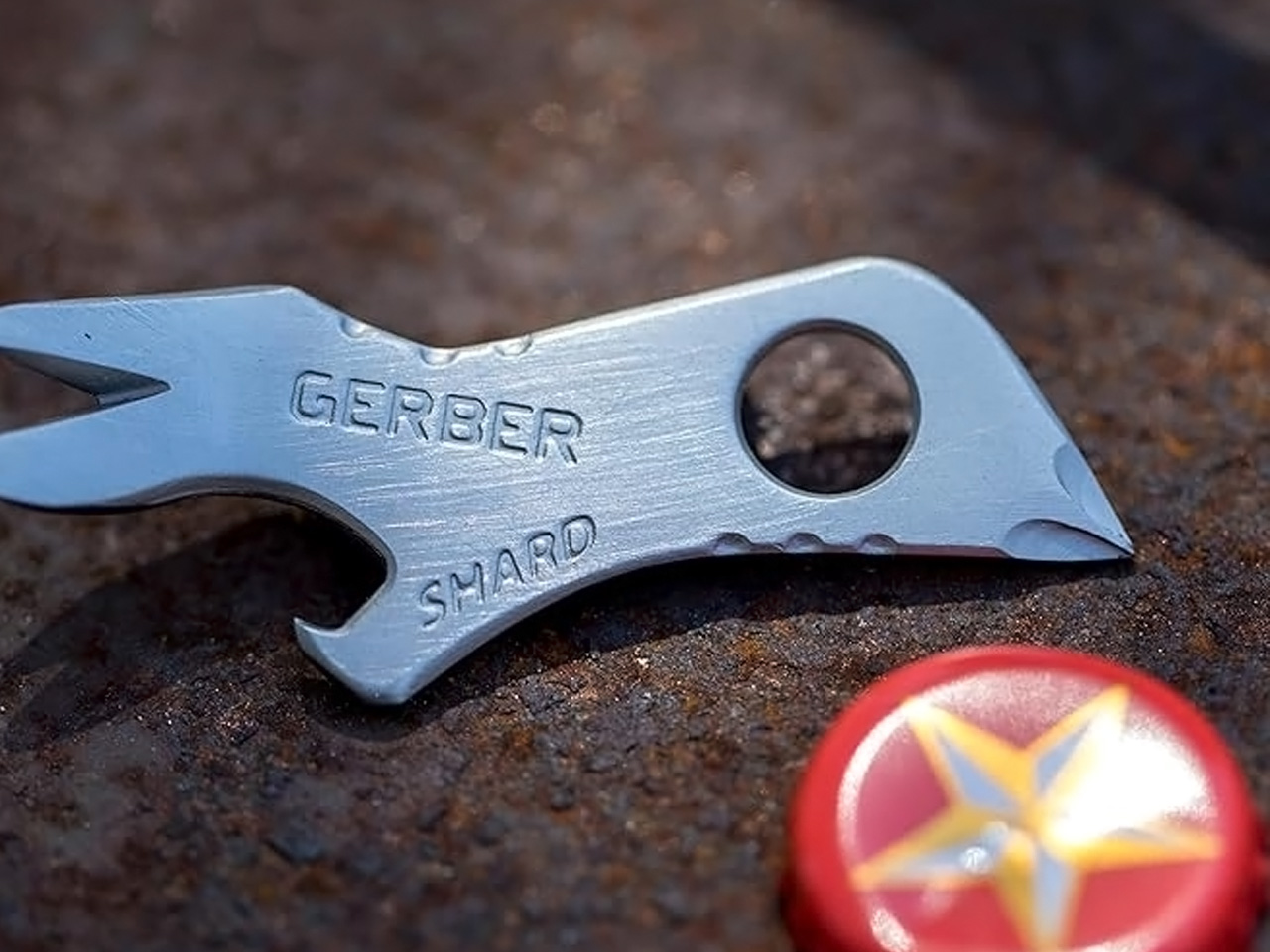
Sometimes the best design is the simplest design, and the Gerber Shard proves this philosophy with elegant restraint. Seven essential functions are integrated into a keychain-friendly package that prioritizes airline safety and everyday utility over flashy features. The titanium nitride coating provides serious corrosion resistance while maintaining a professional appearance that works in any environment.
The Shard succeeds by focusing relentlessly on the tasks you actually encounter daily. Pry bars, flathead drivers, and bottle openers get the engineering attention they deserve, while unnecessary features stay out of the way. This disciplined approach creates a tool that feels substantial despite its compact dimensions. The limited lifetime warranty signals Gerber’s confidence in the fundamental engineering, while the airline-safe design ensures it travels with you anywhere.
What we like
Airline-safe design travels without restrictions or complications.
Titanium nitride coating provides superior corrosion resistance and durability.
What we dislike
Limited to seven functions compared to larger multi-tool alternatives.
The flat profile may be less comfortable for extended use sessions.
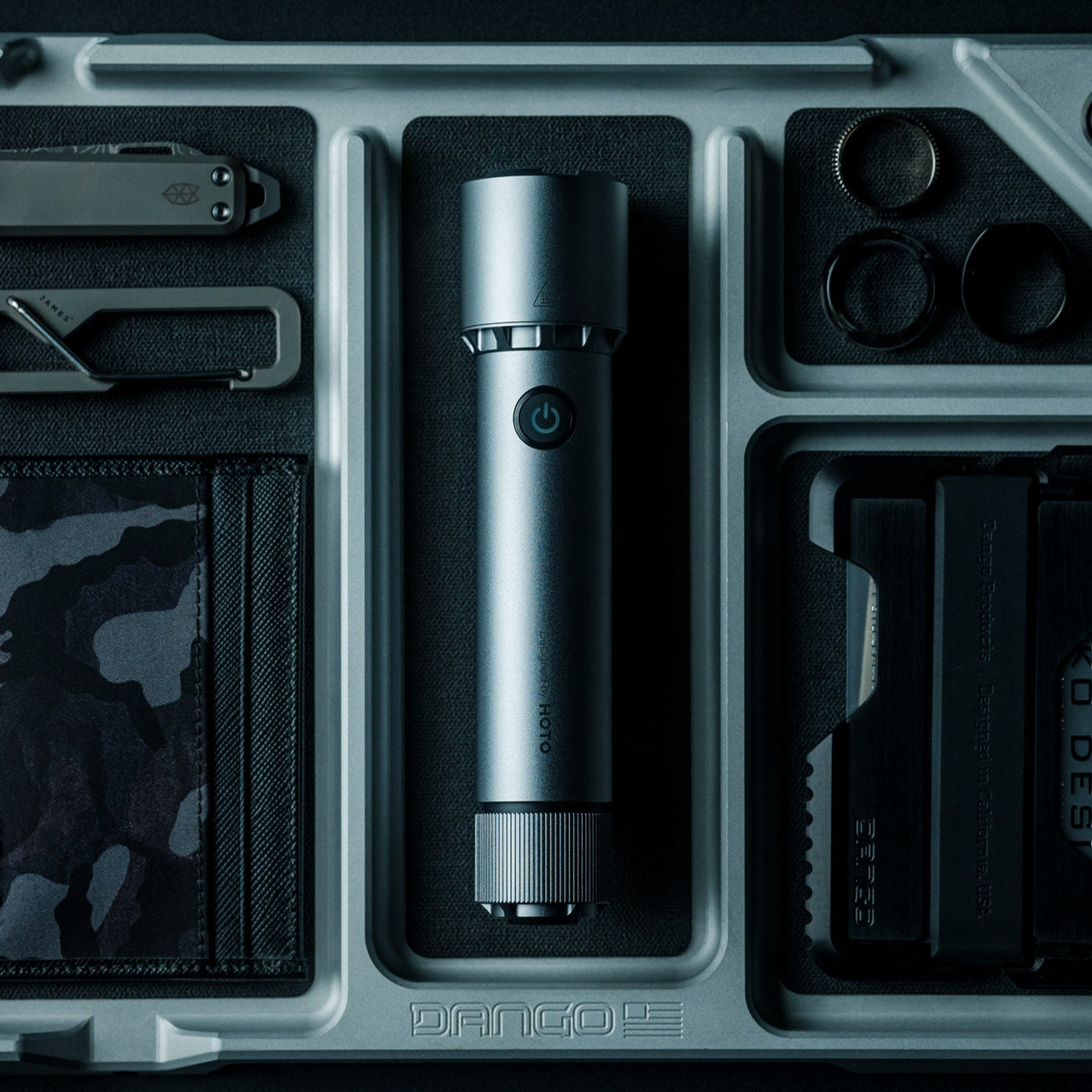
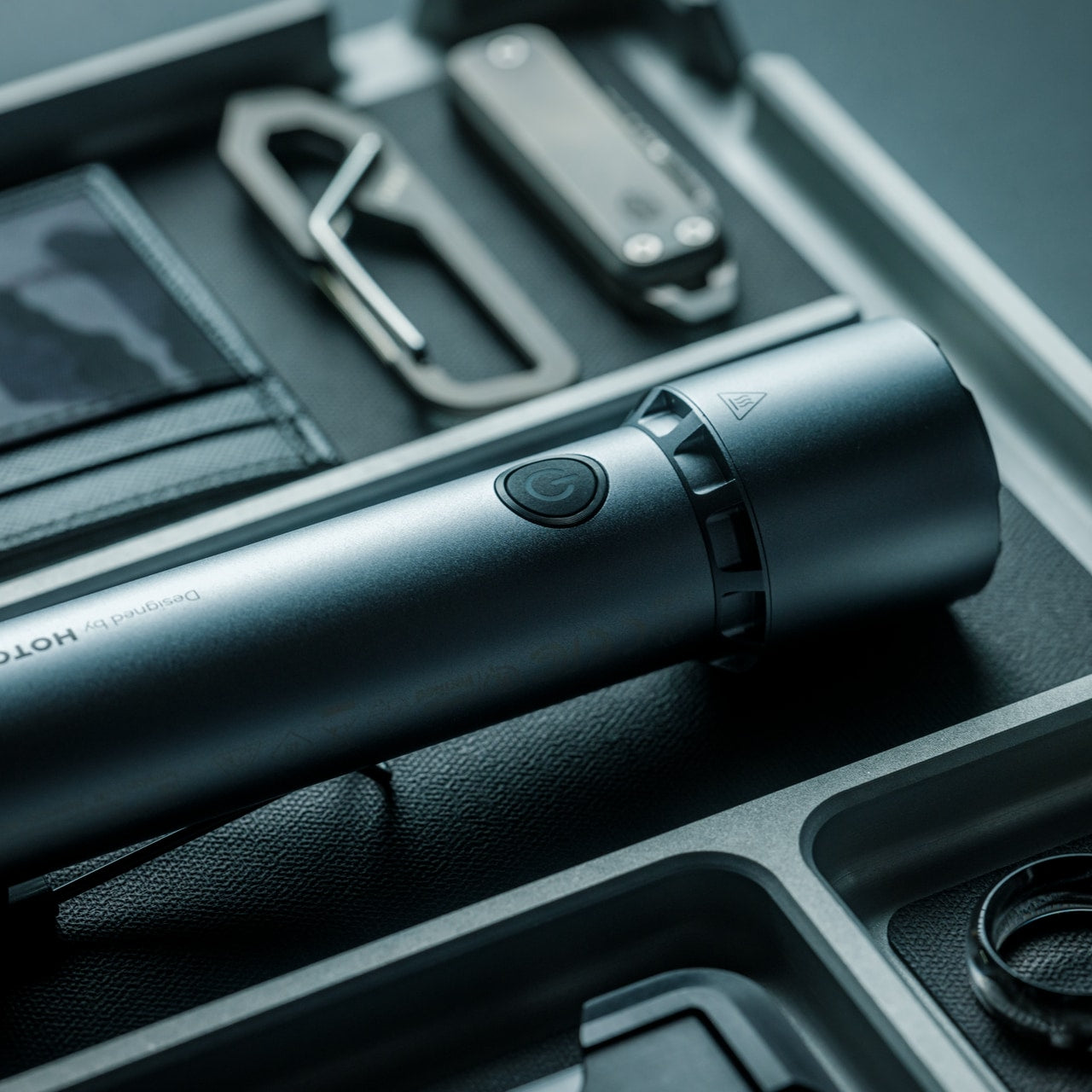
5. BlackoutBeam Tactical Flashlight
The BlackoutBeam represents tactical illumination engineering applied to everyday carry needs. With 2300 lumens available on demand and a 300-meter throw distance, this flashlight delivers professional-grade performance in a package designed for daily pocket carry. The 0.2-second response time eliminates the frustrating delay common in consumer flashlights, while the IP68 waterproof rating ensures reliability regardless of conditions.
What elevates the BlackoutBeam beyond simple lumen counting is the industrial design aesthetic that makes it look intentional rather than tactical. The durable aluminum construction feels substantial without adding unnecessary bulk, while the sleek profile integrates naturally into any EDC setup. Whether you’re dealing with power outages, navigating in darkness, or building emergency preparedness, this flashlight delivers instant clarity exactly when needed.
Exceptional 2300-lumen output with 300-meter throw for serious illumination needs.
0.2-second response time provides instant-on reliability without delay.
What we dislike
High-output modes likely drain the battery quickly during extended use.
Professional-grade features may be excessive for basic everyday lighting needs.
The Evolution of Everyday Carry
These five designs represent more than just incremental improvements in existing product categories. They showcase a fundamental shift in how we think about the relationship between tools, materials, and daily utility. The Cubik’s gravity deployment eliminates mechanical complexity while adding tactile satisfaction. The Titaner system brings aerospace engineering to a keychain organization, proving that premium materials can transform mundane tasks into satisfying experiences.
The common thread connecting these innovations is attention to the complete user experience. These aren’t just functional objects – they’re carefully considered solutions that recognize how tools integrate into daily life. From materials selection to deployment mechanisms, every design decision serves the goal of creating gear you’ll want to carry and use every day, suggesting we’re entering a golden age of everyday carry design.
What if the future of artificial intelligence wasn’t just smarter, but also smaller, faster, and more accessible? IBM’s latest innovation, Granite 4.0, is rewriting the rules of AI deployment by delivering innovative performance in a compact, resource-efficient package. Imagine AI models that don’t just excel in speed and accuracy but also operate seamlessly on smaller […]
The iPhone 17 Pro Max and Galaxy S25 Ultra represent the pinnacle of smartphone cinematic video technology in 2025. These devices cater to creators seeking professional-grade video quality without the need for bulky equipment. The video below from Versus evaluates their performance across critical areas such as edge detection, white balance, exposure, stabilization, dynamic range, […]