5 Best Tech Gadgets of March 2026

March has a habit of delivering the products that January only promised. CES demos become preorders, concept renders start circulating with real specs attached, and the gadgets worth paying attention to separate themselves from the ones that were only ever meant to look good on a stage. This month’s picks share a common thread: each one challenges an assumption about how a familiar product category should behave, look, or fit into daily life.

What makes these five stand out from the usual parade of iterative upgrades is their willingness to subtract. Less screen time, less bulk, less noise, less compromise between form and function. They are not chasing specs for the sake of benchmarks or piling on features to pad a marketing sheet. From a handheld PC that refuses to apologize for its ambition to a concept camera that wants nothing more than for its user to look up from a screen, these gadgets are worth your time and attention this month.

1. GPD Win 5

The PSP’s body plan endures, and the GPD Win 5 is its most ambitious descendant yet. Packed with an AMD Ryzen AI Max+ 395 processor, up to 4TB SSD storage, and 32GB of LPDDR5X RAM, this handheld runs a 7-inch 1080p display at 120Hz with Radeon 8060S integrated graphics. Starting at $1,400, this is not a portable console pretending to be a PC. It is a full PC compressed into two hands.

GPD removed the internal battery entirely, replacing it with a detachable 80 Wh pack that clips to the back. A quad heat pipe cooling system handles thermal loads across a TDP range from 28W to 85W on mains power. Hall effect triggers and capacitive joysticks eliminate drift and deadzone, while a proprietary Mini SSD slot pushes transfer speeds beyond microSD limits. Every design choice solves a problem created by one stubborn, central ambition: desktop-class performance in a handheld shell.

What we like

  • The external battery swaps in seconds, and plugging into the 180W adapter unlocks full 85W TDP performance that rivals many desktop setups.
  • Hall effect triggers and capacitive joysticks eliminate the drift issues that plague most handheld PCs after months of heavy use.

What we dislike

  • The external battery makes the device awkward to hold when attached, and the proprietary charger adds bulk to an already heavy travel kit.
  • Pricing starts at $1,400 and climbs past $2,000 for the top configuration, placing it deep into enthusiast-only territory.

2. NanoPhone Pro

Smartphones have spent a decade getting bigger. The NanoPhone Pro walks in the opposite direction with a credit-card-sized body measuring 0.4 x 3.8 x 1.8 inches and weighing just 2.8 ounces. Running Android 12 with Google Play certification, this 4G device handles calls, messages, navigation, and basic apps without demanding pocket real estate. At $99, it is built for minimalists, travelers, and anyone tired of their phone being the loudest object in the room.

The spec sheet is an exercise in deliberate restraint. A 4-inch edge-to-edge IPS touchscreen, dual SIM support, 2MP front and 5MP rear cameras, a 2000mAh battery, and expandable storage via microSD. Face ID handles unlocking. The NanoPhone Pro does not pretend to compete with flagships, and that restraint is the entire point. It is a quiet, pocketable alternative that runs WhatsApp, Google Maps, and everything else that matters without the attention-hungry weight of a modern slab phone.

What we like

  • The credit-card form factor disappears into wallets and running shorts, making it ideal for situations where a full-sized phone feels like overkill.
  • Google Play certification means the app ecosystem works without sideloading, so daily essentials like navigation and messaging run without friction.

What we dislike

  • The 5MP rear camera produces images that are functional at best, making this a poor choice for anyone who photographs anything beyond the occasional note or receipt.
  • Android 12 on a 4-inch screen feels cramped, and typing requires patience and smaller-than-average fingers.

3. Camera (1)

Photography migrated into phones and got buried under notifications. Camera (1), a concept posted on the Nothing Community forum by designer Rishikesh Puthukudy, imagines shooting as a tactile act again. The compact metal body fits a pocket but fills a hand, with all controls on a single edge: a shutter, a circular mode dial with a glyph display, and a D-pad reachable without shifting grip. The design draws from Nothing’s hardware-forward language with circuit-like relief and bead-blasted metal.

A curved light strip around the lens pulses for self-timers, confirms focus, or signals active recording. The engraved lens ring invites twisting rather than pinching. A rear display exists but stays deliberately out of the way, letting physical controls carry most of the interaction. Camera (1) is a student concept, not an official Nothing product, but the question it asks is worth sitting with: in a world where every screen demands something, what would a camera look like if it just wanted its user to notice what was in front of them?

What we like

  • The single-edge control layout keeps eyes on the scene rather than buried in menus, restoring a tactile shooting workflow that phone cameras abandoned years ago.
  • Nothing’s glyph design language translates well to a camera body, delivering mode feedback through simple icons rather than nested software screens.

What we dislike

  • As a concept, Camera (1) exists only as rendered images and community discussion, with no confirmed path to production or a working prototype.
  • The absence of a sensor, lens, and video specs makes it impossible to judge whether it could compete with even entry-level dedicated cameras.

4. Samsung Slac

Earbuds have looked like earbuds for too long. Samsung’s Slac concept, developed within the company’s design incubation programs, reimagines wearable audio as jewelry. Three components make up the system: an open ear ring for audio output, a wrist-worn ring that tracks listening data and doubles as a magnetic dock, and a home charging station. The circular form wraps around the ear without entering the canal, maintaining awareness of surrounding sound while layering music on top.

When listening ends, the ear ring snaps magnetically onto the wrist component, transforming into something that reads as a chunky bracelet rather than stowed tech. AI tracks a full 24-hour audio cycle, building preference profiles from sound intensity, pitch variation, and tonal characteristics. The design team behind Slak understands that Gen Z treats audio devices as expressions of taste, not utilitarian tools. Whether Slac reaches production is an open question, but the proposition that wearable tech should earn its place on the body through aesthetics feels like a direction the entire industry needs to follow.

What we like

  • The open-ear design preserves environmental awareness while delivering audio, solving the isolation problem that makes traditional earbuds socially awkward in many settings.
  • Magnetic docking between ear ring and the wrist component eliminates the pocket-case fumble and turns storage into a wearable moment.

What we dislike

  • Concept status means no confirmed specs on audio quality, battery life, or connectivity, making it impossible to evaluate whether the sound matches the visual ambition.
  • Open-ear audio struggles in noisy environments, and without active noise cancellation, Slac may underwhelm on busy streets or public transit.

5. DAP-1

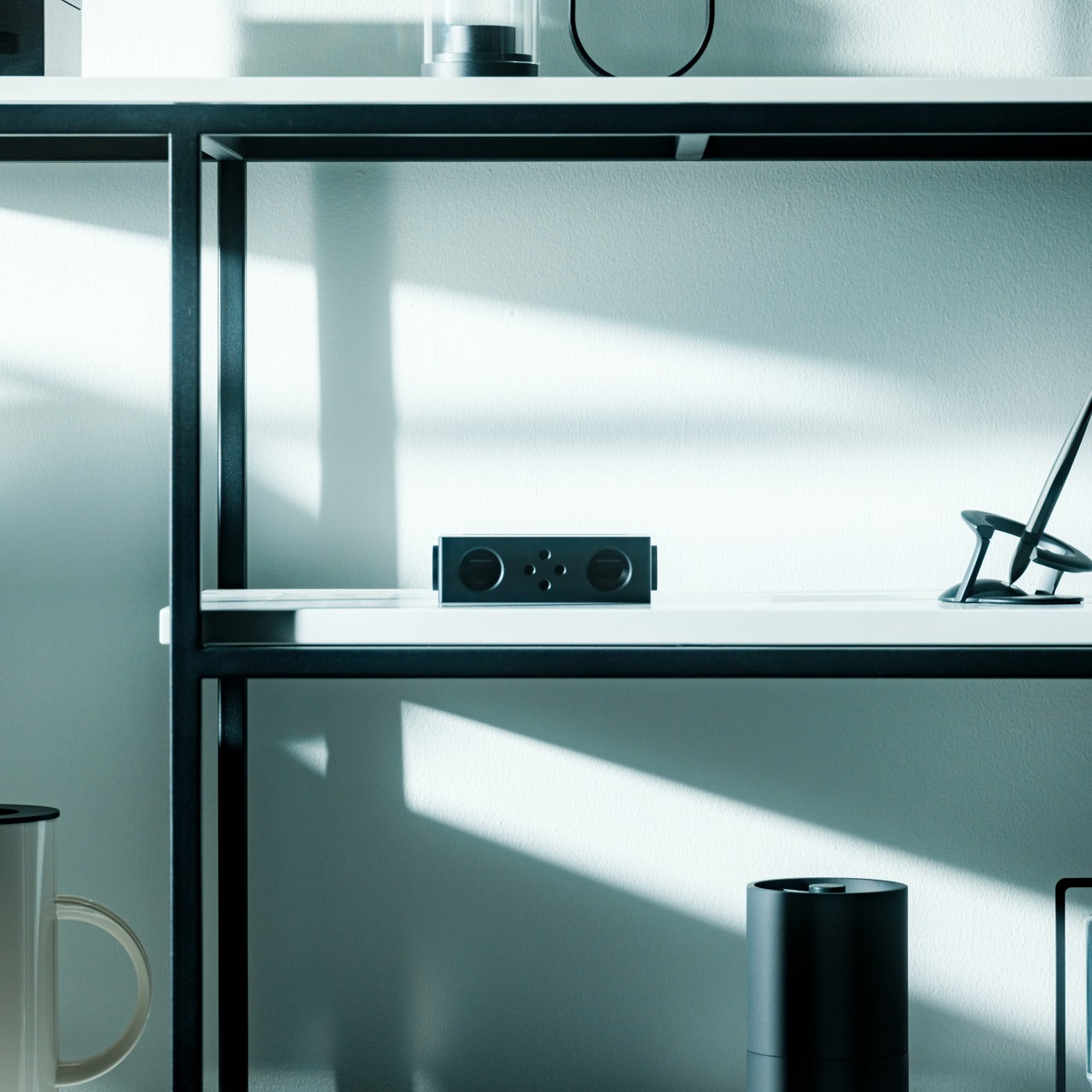
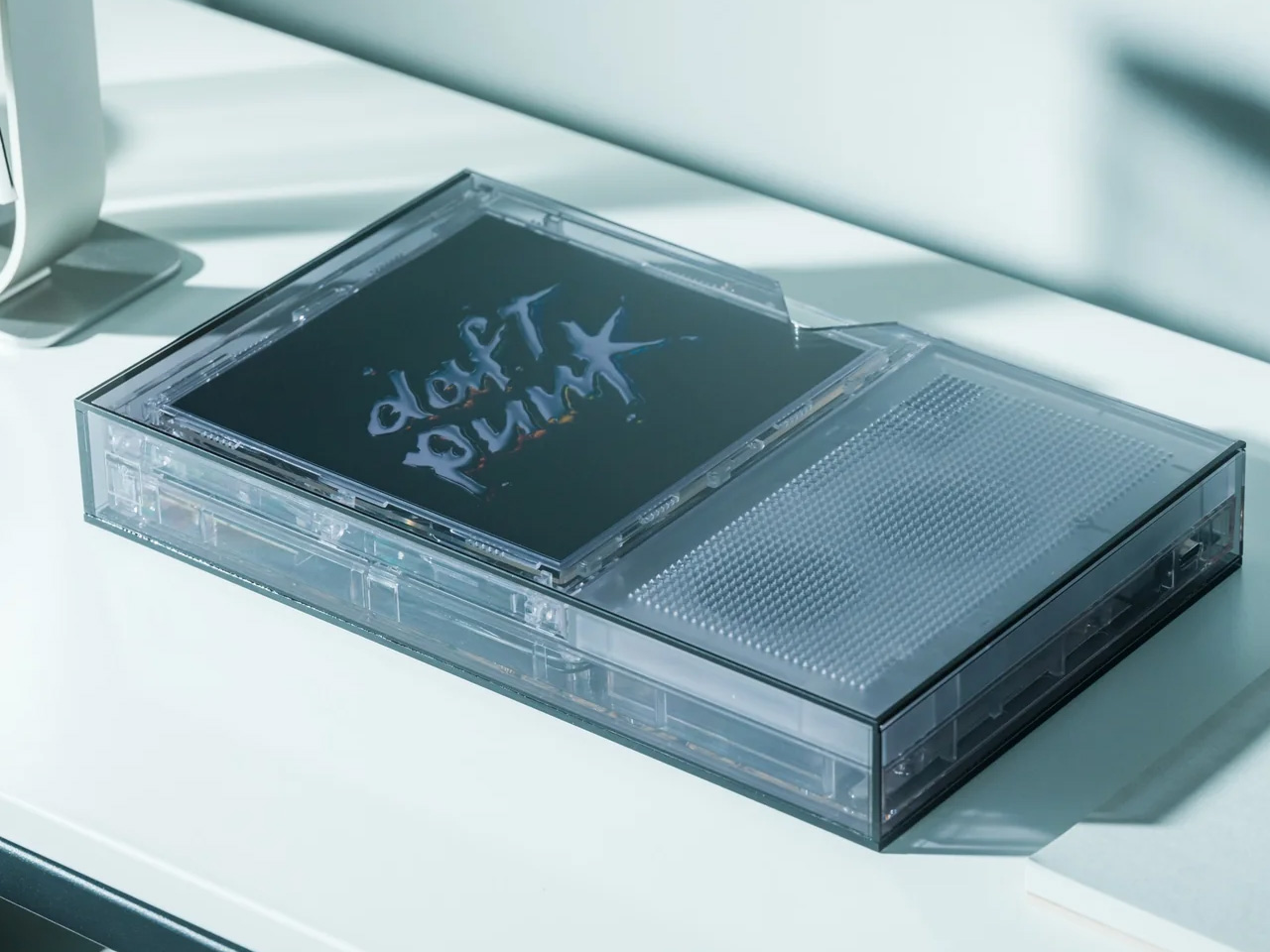
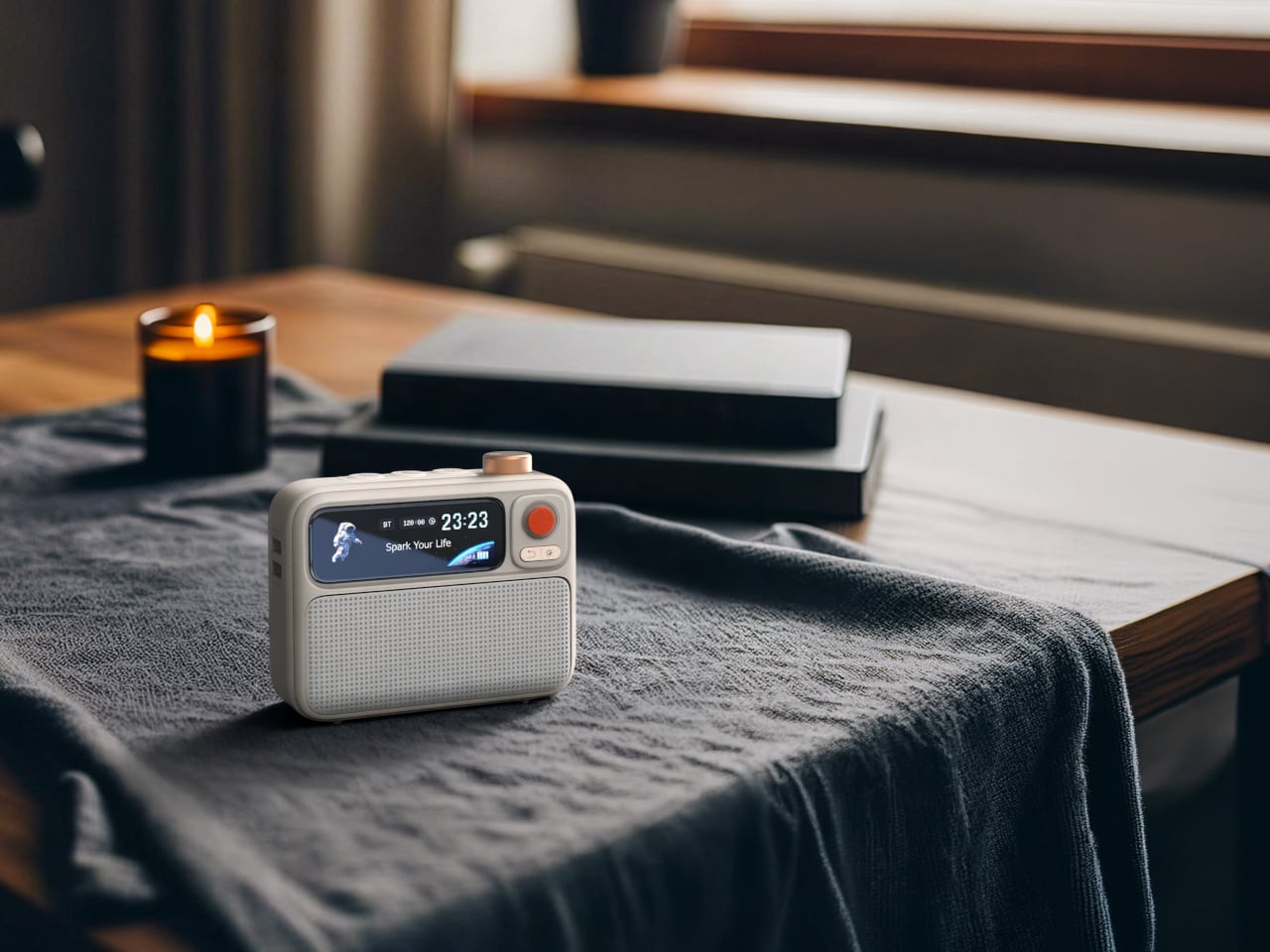
Vinyl got its comeback, and dedicated digital audio players have been staging a quieter return. The DAP-1 concept by Frankfurt-based 3D artist Florent Porta is one of the most compelling arguments for why that return matters. The device carries a slim rectangular body with an OLED touchscreen, a perforated front-facing speaker grille, and an aesthetic sitting between Teenage Engineering and Nothing’s CMF line. It looks like it arrived from a timeline where iPods evolved into something more considered.

The standout decision is the built-in speaker, a feature most high-end DAPs skip entirely. Porta’s inclusion acknowledges that music is sometimes shared, not just private. The DAP-1 is built around FLAC playback, preserving audio quality without streaming compression artifacts. A USB-C port, 3.5mm AUX output, and illuminated power switch line the top edge, while rubberized feet and torx screws on the rear give the device a repairable, tool-like quality. As a concept, it exists only in renders, but the conversation it starts outweighs most finished products on the market.

What we like

  • The built-in speaker turns a solitary listening device into something social, removing the need for external hardware to share a track with someone next to you.
  • FLAC-first design philosophy treats audio fidelity as the primary feature rather than an afterthought buried in a settings menu.

What we dislike

  • Concept-only status means no production timeline, no pricing, and no way to evaluate real-world audio performance beyond what renders suggest.
  • Dedicated music players occupy a narrow niche, and carrying a separate device for audio requires commitment most listeners will not make.

Where March leaves us

Three of this month’s five picks are concepts. That ratio says something about where consumer tech sits in early 2026: the most exciting ideas are still in render engines, while the products that actually ship tend to iterate rather than invent. The GPD Win 5 and NanoPhone Pro prove that real, purchasable hardware can still surprise, but Camera (1), Slac, and DAP-1 suggest the most interesting design thinking is happening outside production timelines and quarterly earnings calls.

What connects all five is a shared instinct to push back against the default. Against bigger screens, against feature bloat, against the assumption that technology should demand attention rather than earn it. March’s best gadgets respect the space they occupy, whether that space is a pocket, an ear, or the palm of a hand. If even a fraction of these concepts make the jump to production, the rest of 2026 could be far more interesting than the usual upgrade cycle suggests.

The post 5 Best Tech Gadgets of March 2026 first appeared on Yanko Design.
Forget Spotify: These 5 Designer Turntables Are the Real Reason Vinyl Is Having a Moment

Vinyl outsold CDs in the U.S. for the first time since 1987 back in 2022, with 41 million records moved compared to 33 million compact discs. That number was not driven by audiophiles chasing warmer bass response. It was driven by people who missed the ritual: pulling a record from its sleeve, lowering a needle, and sitting with an album the way its creators intended. Streaming made music frictionless, and in doing so, it made music forgettable.

The turntables on this list understand that tension between convenience and ceremony. None of them are trying to replace a Spotify subscription, and none of them should. What they offer instead is a physical relationship with music that no algorithm can simulate, wrapped in design languages that range from invisible minimalism to brutalist sculpture. These five are worth the counter space.

1. Miniot Black Wheel

The turntable has not changed much in form since the 1970s: platter, tonearm, plinth, visible mechanism. Miniot’s Black Wheel throws all of that away. Every electronic and mechanical component sits inside a thin circular body that disappears completely once a record is placed on top. What remains visible is the record itself, spinning in what looks like mid-air.

Standing the Wheel upright amplifies the illusion, turning a turntable into a floating disc of sound. A tactile Slide Track hidden along the edge handles volume, track selection, and even stylus weight adjustment through a single physical interface. Slide or push, and the controls respond without ever breaking the visual spell. Despite the impossibly slim profile, Miniot has not sacrificed audio quality for the sake of the trick, which is the part that separates this from a design exercise.

What we like

  • The disappearing-body design makes the record the only visible element, turning playback into a visual experience as much as an auditory one.
  • The hidden Slide Track control system is intuitive and tactile, eliminating buttons and knobs without removing physical interaction from the equation.

What we dislike

  • The minimal form factor means no dust cover, leaving the record and stylus exposed to the environment between listening sessions.
  • Repairing or servicing the internals of such a tightly integrated body is likely far more complex than working on a traditional turntable.

2. Vivia CD Turntable

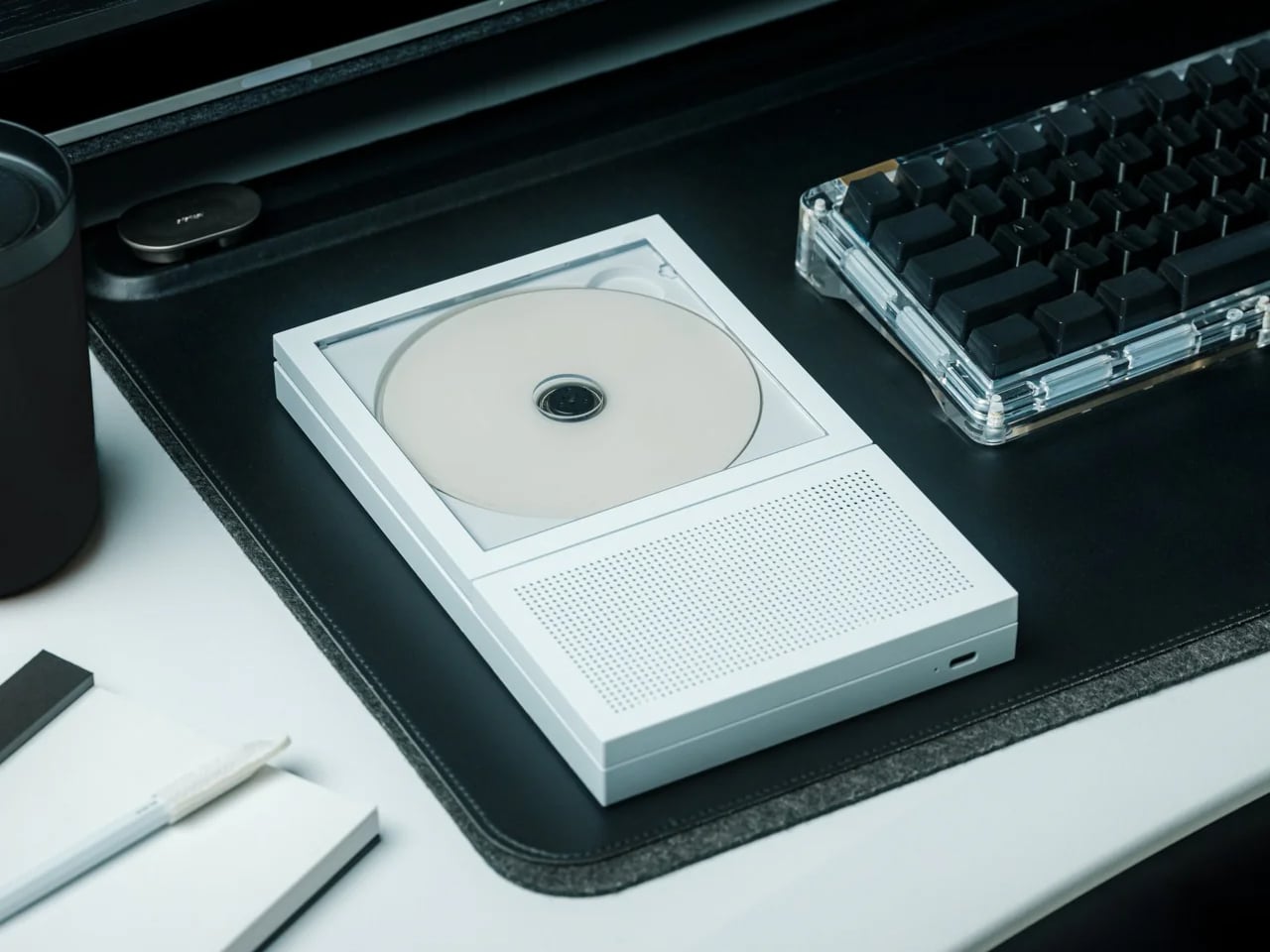
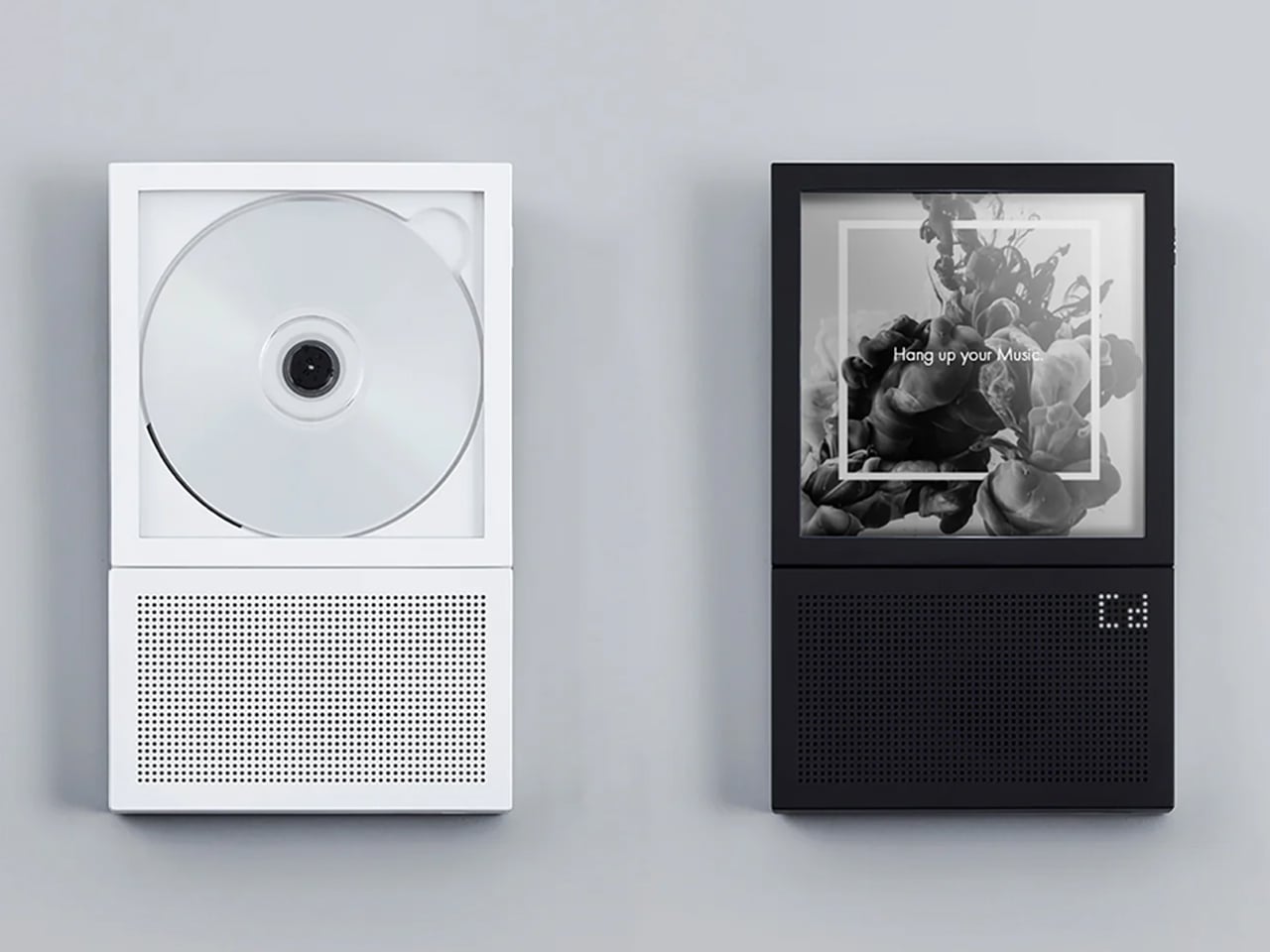
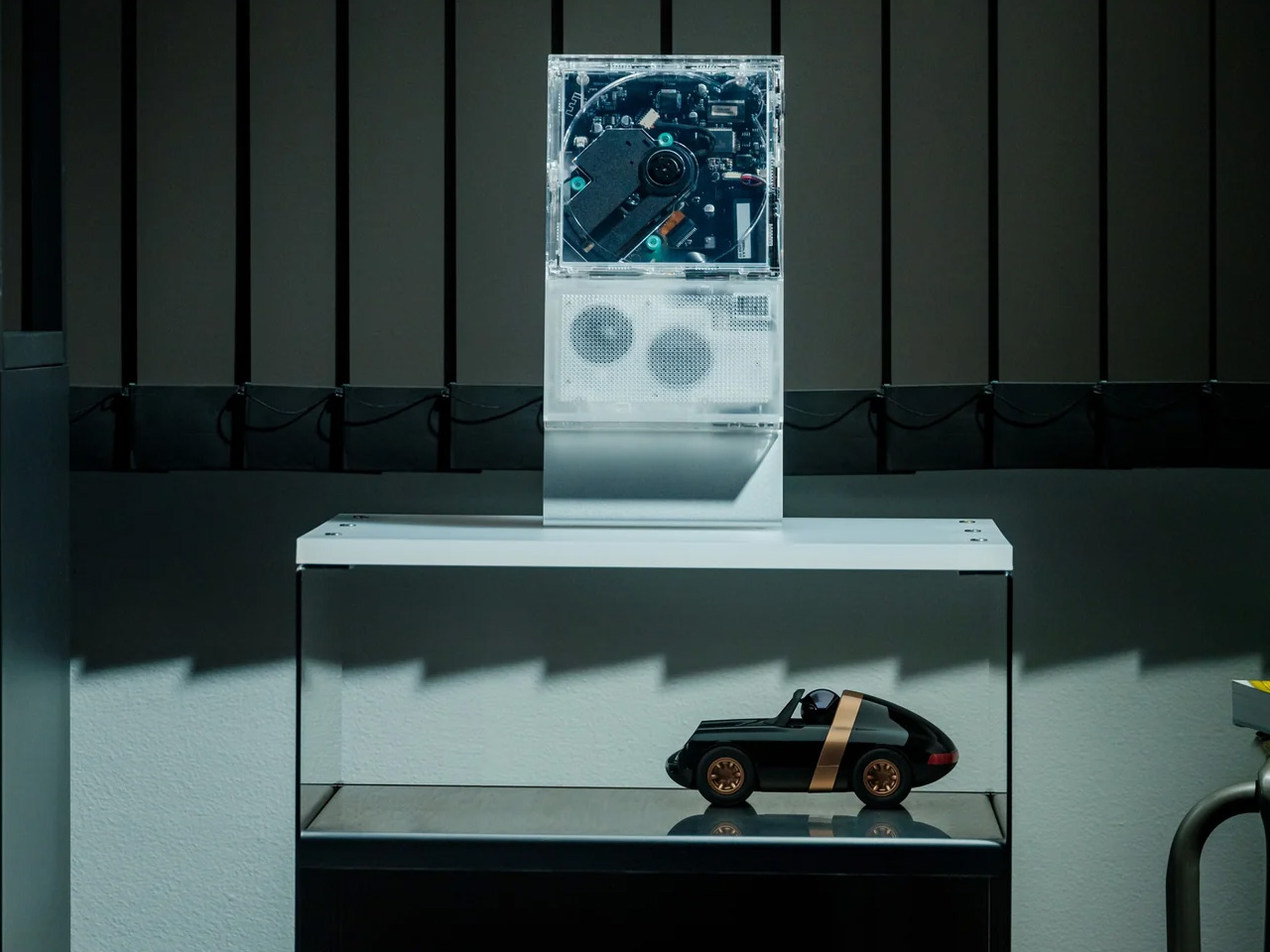
Here is where this list takes a deliberate left turn. Vivia is not a vinyl turntable at all. It is a turntable designed for compact discs, and the audacity of that idea is exactly why it belongs here. The concept takes the ritualistic appeal that drove vinyl’s comeback and applies it to a format that the industry abandoned in favor of streaming, even though CDs deliver superior audio clarity to most compressed digital files.

Vivia reimagines the CD listening experience as something tactile and intentional. Loading a disc, watching it spin, and physically interacting with playback controls recreates the ceremony that made vinyl appealing again, but for a format that has spent two decades collecting dust in storage boxes. The design borrows the visual grammar of analog turntables (the platter, the visible rotation) and translates it into a CD context that feels more like a statement about how we consume music than a product trying to compete on specs alone.

What we like

  • Visual design language borrows from analog turntables in a way that makes CD playback feel deliberate and special rather than outdated.

What we dislike

  • This remains a concept with no confirmed production timeline, pricing, or technical specifications to evaluate.
  • CD collections have shrunk dramatically, so the audience for a premium CD turntable is narrow compared to the growing vinyl market.

3. McIntosh x Sun Records Limited Edition MTI100

McIntosh has been building audio equipment since 1949, and the MTI100 carries that lineage into a format that appeals to listeners who want a complete system without a rack full of separates. This special edition, created in collaboration with Sun Records (the label that launched Elvis Presley, Johnny Cash, and Jerry Lee Lewis), packs a turntable, preamplifier, and amplifier into a single integrated unit with Bluetooth and auxiliary inputs.

The catch, and it is a deliberate one, is that speakers are not included. McIntosh recommends pairing with their own XR50 bookshelf or XR100 floorstanding speakers, but the unit connects to any audiophile-grade loudspeaker or even a pair of headphones for private listening. That flexibility is the real design move here. Instead of locking buyers into a closed ecosystem, the MTI100 acts as a hub that adapts to whatever speaker setup already exists in a room. The Sun Records branding adds a layer of music history that gives the limited edition a collectible weight beyond its audio performance.

What we like

  • The all-in-one integration of turntable, preamp, and amplifier eliminates the need for a multi-component audio rack while preserving high-fidelity output.
  • Bluetooth and auxiliary inputs mean the unit pulls double duty as a hub for digital sources alongside its vinyl playback function.

What we dislike

  • Speakers sold separately means the total system cost climbs well above the sticker price, especially if pairing with McIntosh’s own recommended models.
  • The limited edition Sun Records branding, while collectible, adds a premium that does not change the underlying audio performance of the base MTI100.

4. Samsung AI OLED Turntable

Samsung’s concept entry takes the turntable form factor and fills it with a 13.4-inch circular OLED touchscreen, turning the platter into a display surface that shows images, videos, and ambient visuals while music plays. It is part music player, part art installation, part conversation piece, and it makes no apologies about prioritizing spectacle over audiophile purity.

The circular OLED display becomes the centerpiece of whatever room it occupies, commanding attention in a way that most modern tech actively avoids. Imagine hosting friends and having the turntable surface shift between album art, ambient animations, and visual patterns that respond to the music. The design asks whether a turntable needs to be functional in the traditional sense to earn its place in a room, or whether the experience around the music matters just as much as the playback itself. Samsung has not confirmed production plans, but as a direction for where music hardware could go, this concept is more provocative than most finished products.

What we like

  • The 13.4-inch circular OLED display transforms a turntable into a visual centerpiece that adds ambiance to any room, not just sound.
  • The concept pushes the definition of what a music player can be, treating the listening experience as multi-sensory rather than purely auditory.

What we dislike

  • Concept status with no production timeline means this exists as a provocation rather than something listeners can actually buy and use.
  • The emphasis on visual spectacle raises questions about whether audio quality is a priority or an afterthought in the design.

5. RA84 Reycycled Plastic Turntable

Ron Arad’s original Concrete Stereo from 1984 was a brutalist statement piece that treated audio equipment as sculpture. Stu Cole’s RA84 revives that same energy, but swaps the concrete for recycled plastic that mimics the look and weight of stone so convincingly that the difference is nearly impossible to detect without touching it. Available in concrete grey or a black finish that reads like expensive terrazzo, the RA84 is a turntable that doubles as furniture.

The material choice is more than an environmental gesture. That heft and density kill vibration, which is the enemy of clean vinyl playback. Recycled plastic performs surprisingly well acoustically in this application, delivering isolation results that rival traditional stone or concrete builds. Built-in speakers make this a complete system out of the box, and the deliberately chipped corners reveal the recycled material’s texture in a way that turns sustainability into a design detail rather than a hidden compromise. Cole’s execution proves that environmental responsibility and luxury do not need to compete with each other.

What we like

  • Recycled plastic construction achieves the vibration-dampening performance of concrete while being lighter and more environmentally responsible.
  • Built-in speakers deliver a complete, ready-to-play system that does not require separate components or additional purchases.

What we dislike

  • The brutalist aesthetic is polarizing, and the sheer visual weight of the RA84 will dominate a room whether the owner wants it to or not.
  • Built-in speakers, while convenient, limit upgrade paths for listeners who want to evolve their audio setup over time.

The needle and the algorithm

These five turntables (and one very bold CD player concept) share a common argument: that music playback is a designed experience, not just a data delivery mechanism. Streaming solved the problem of access. Every song ever recorded lives in a pocket now. But access without friction created a generation of listeners who consume music the way they scroll feeds, passively and endlessly. The turntable is the antidote to that passivity.

What makes this current wave of designer turntables different from the vinyl nostalgia of a decade ago is the ambition of the design thinking behind them. These are not retro objects cosplaying as vintage gear. They are new ideas about what a music player can look like, what it can be made from, and what role it plays in a room and a life. The best turntable in 2026 is not the one with the flattest frequency response. It is the one that makes someone sit down and listen to an entire album, start to finish, without reaching for their phone.

The post Forget Spotify: These 5 Designer Turntables Are the Real Reason Vinyl Is Having a Moment first appeared on Yanko Design.

5 Best Spring EDC Gear Upgrades for 2026 That Actually Deserve a Permanent Spot in Your Pocket

Spring has a way of resetting what we carry. The heavy layers come off, pockets shrink, and that overstuffed pouch of winter tools starts feeling like dead weight. This is the season where everyday carry gets honest about what actually earns space against your body, and what was just riding along out of habit. The five products on this list survived that edit. They are compact, functional, and built with enough design intelligence to justify displacing whatever is currently rattling around in your jacket.

What ties these picks together is a shared rejection of bulk for its own sake. The EDC market loves to pile features into objects that end up living in drawers because they are too heavy or awkward to carry daily. These five go the other direction, packing serious utility into forms that disappear into a pocket or clip onto a keyring without protest. Each one solves a real, recurring problem with clean engineering and a material palette that does not apologize for looking good while doing it.

1. Pockitrod Multitool Pen

The pen is the oldest item in pocket carry, and it has been the target of designers trying to cram more function into that slim cylinder for decades. Most tactical pens add a single trick (usually a glass breaker nobody ever uses) and call it innovation. The Pockitrod takes a fundamentally different approach, treating the pen form as a modular platform rather than a finished object. Its body is machined from 6061-T4 aluminum with a hex cross-section that doubles as a driver grip, a detail that sounds minor until the first time a screw needs tightening and the tool is already in hand.

The system is organized around a central driver assembly inside the handle, with additional modules that thread on as extensions: a box opener with interchangeable 20CV steel tips, an inkless writing implement, and a magnetic-base LED flashlight. Etched measurement markings run along the body with a zero-reference aligned to the edge, turning the entire tool into a ruler that actually measures from where objects begin rather than from some arbitrary point inset from the tip. What makes this work different from other multitool pens that collapse under their own ambition is the threading system. Each module is a self-contained unit, so the Pockitrod can be as simple or as loaded as the day demands.

What we like

  • The hex-shaped body provides a non-slip grip when used as a screwdriver, which most round pen multitools completely ignore.
  • Modular threading means the tool adapts to different carry needs without requiring a full kit commitment every day.

What we dislike

  • The added modules increase overall length, which could push the pen past comfortable shirt-pocket territory.
  • An inkless writing tip is a niche preference, and some users will want a ballpoint option that is not currently part of the system.

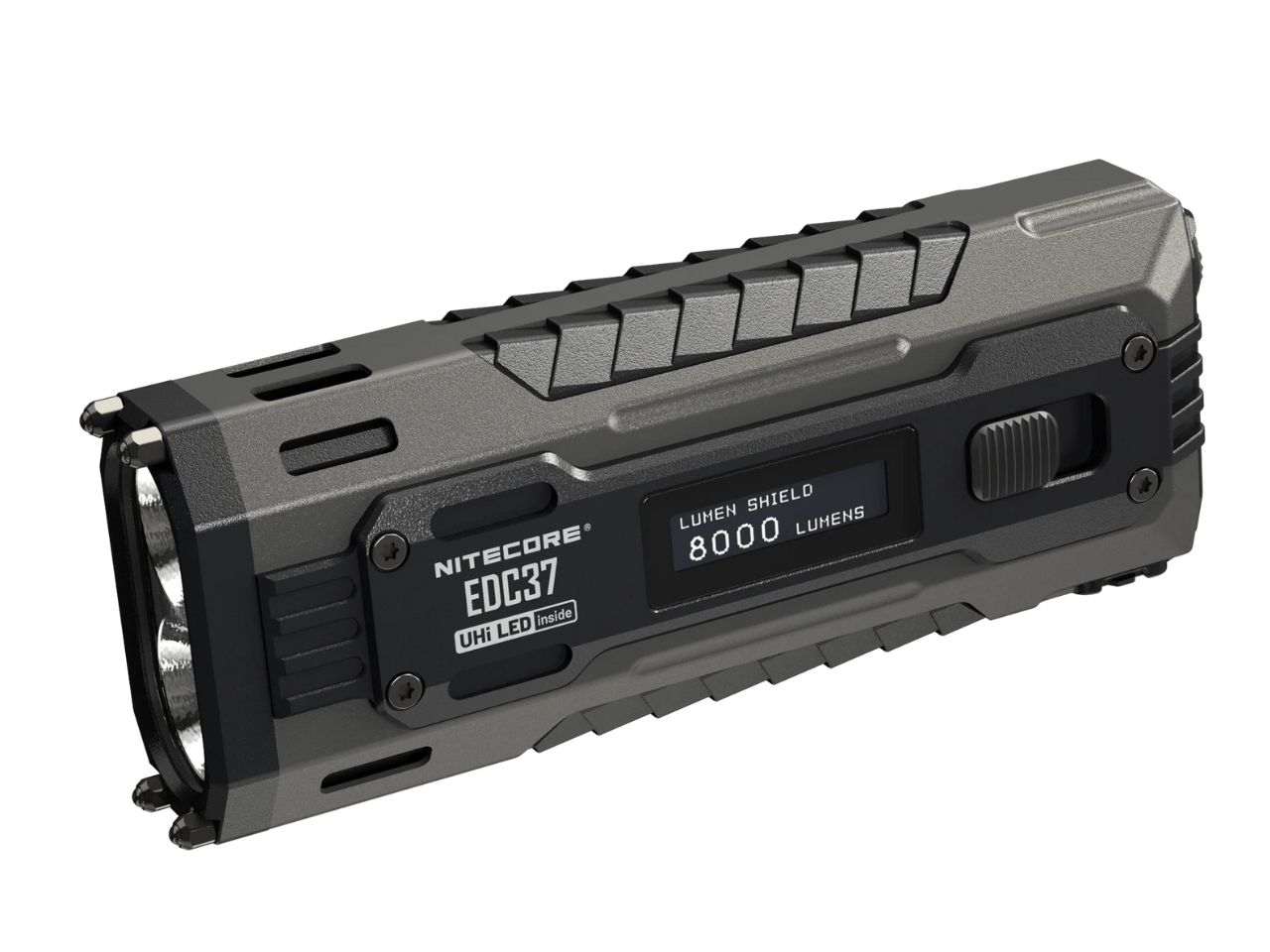
2. BlackoutBeam Tactical Flashlight

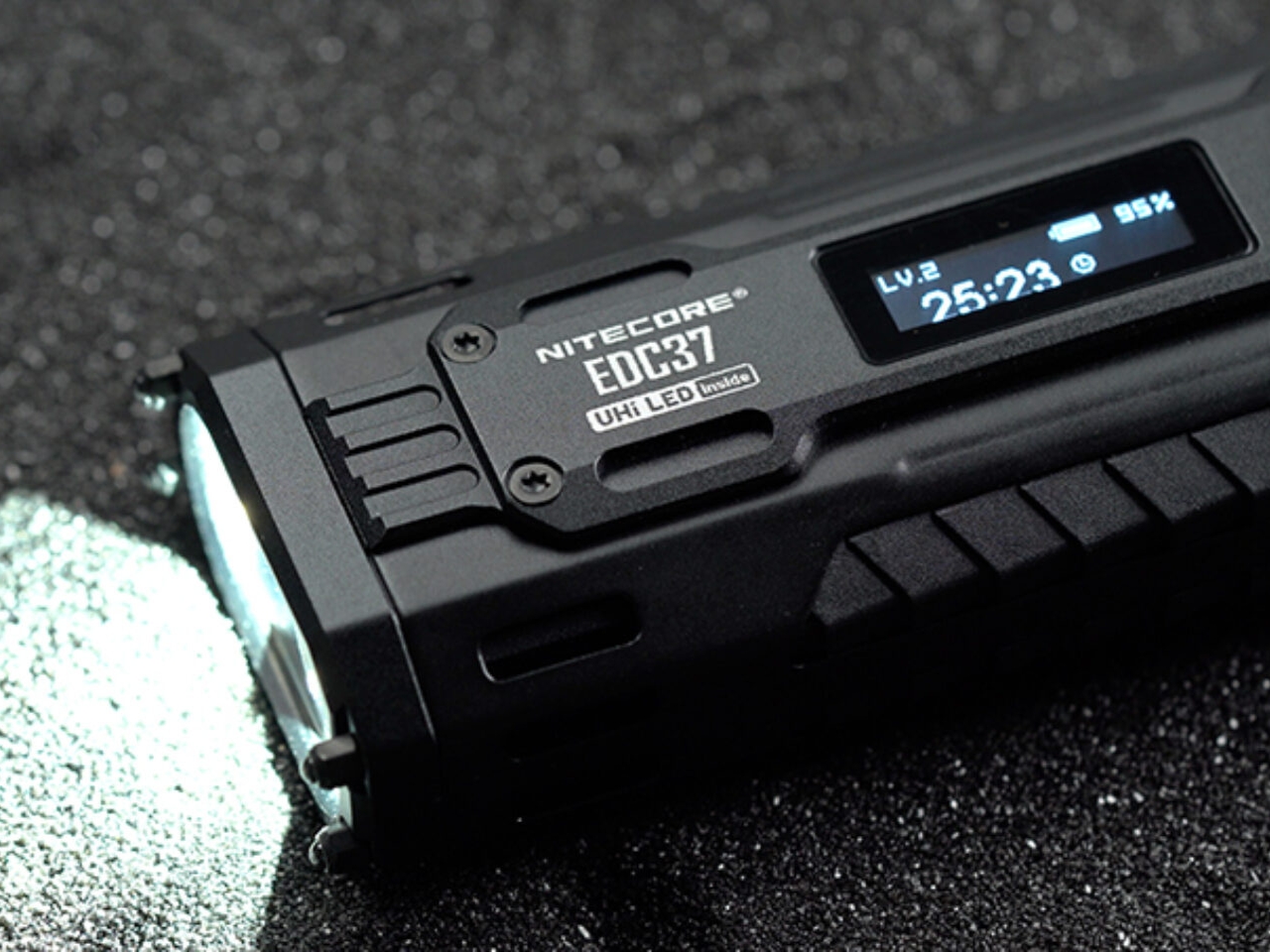
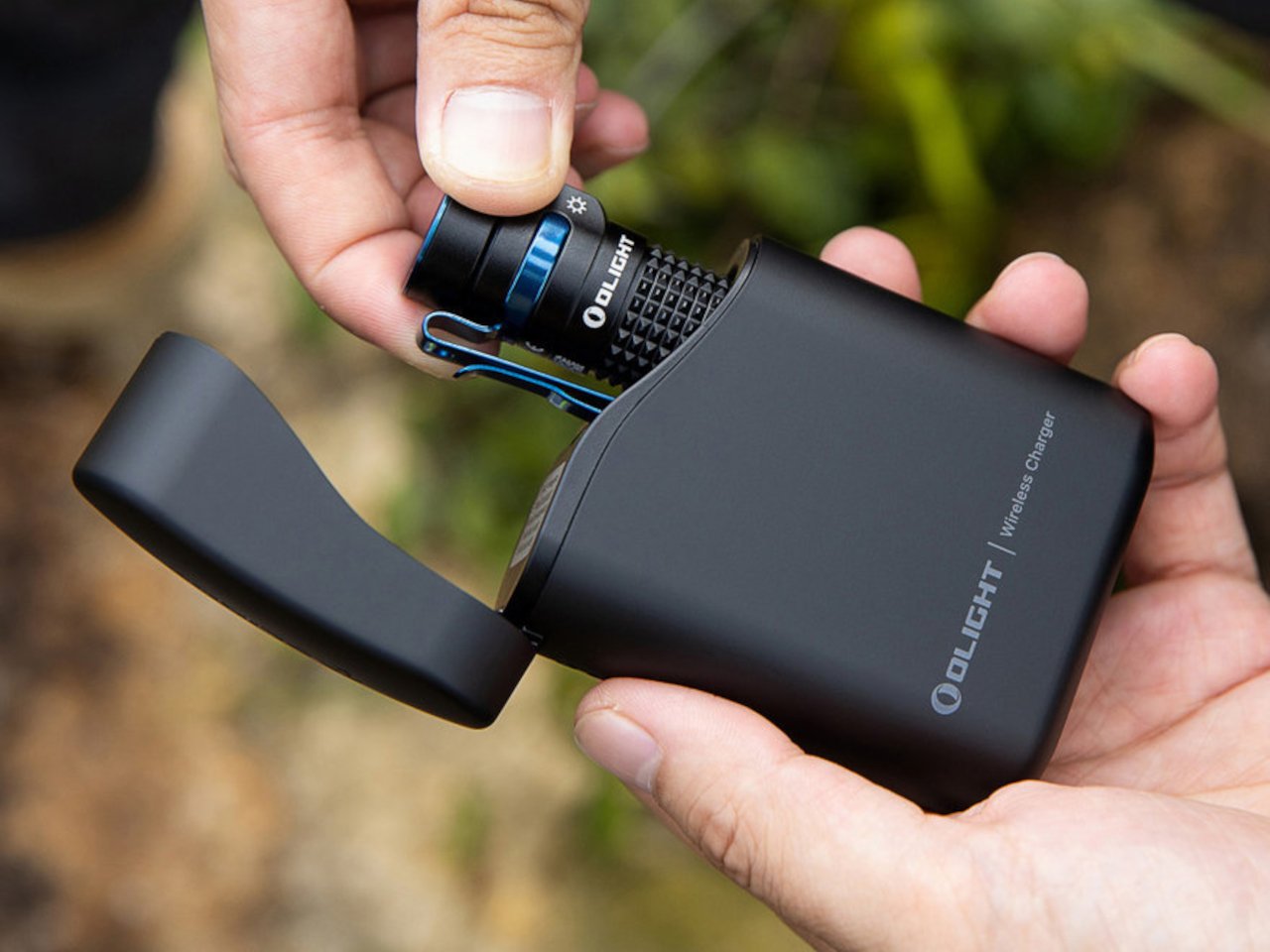
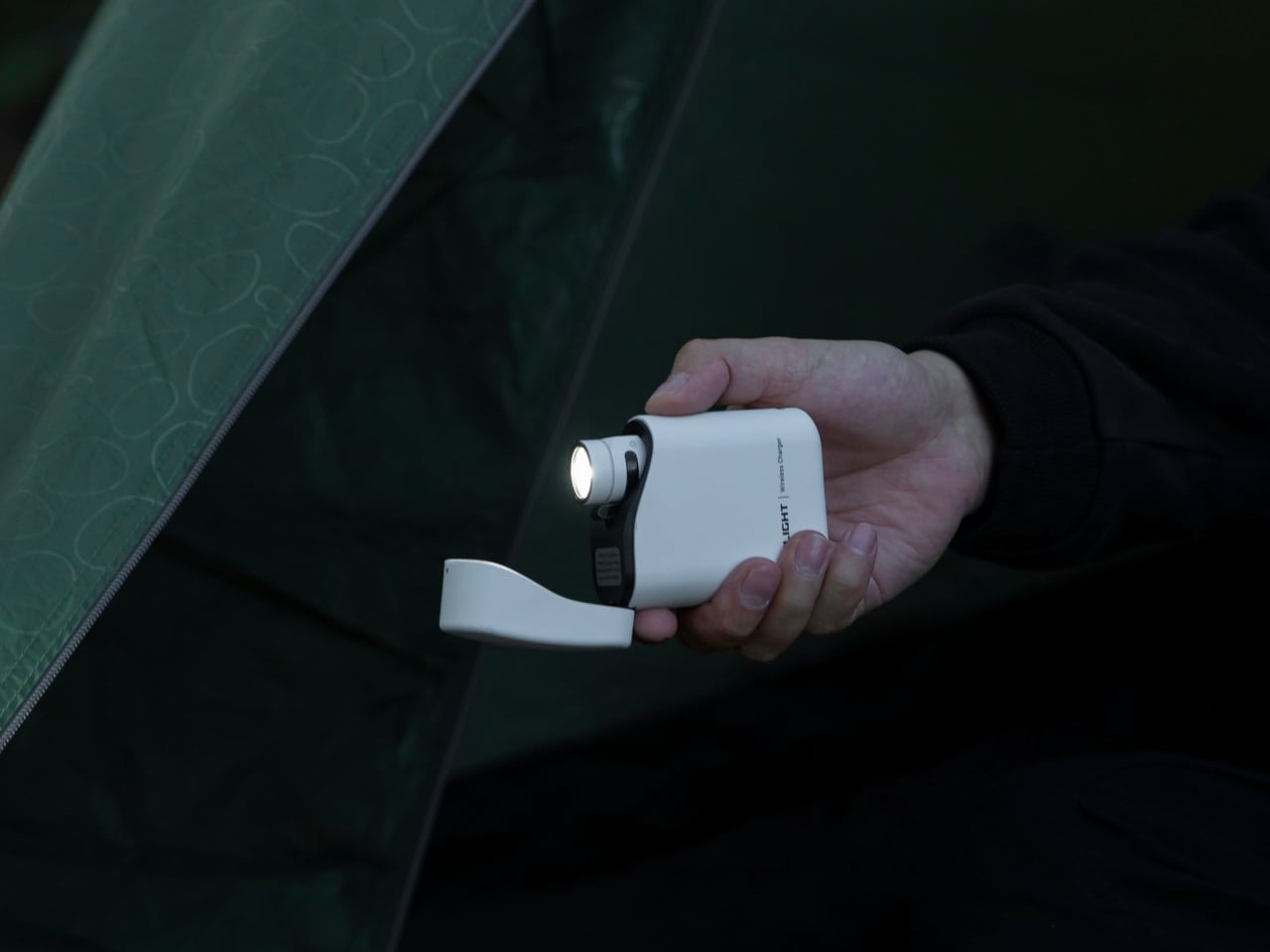
Flashlights are one of those categories where specs have outpaced what most people need, and manufacturers keep chasing lumen counts that look impressive on paper but blind the user as much as the target. The BlackoutBeam lands at 2300 lumens with a 300-meter throw, which is serious output, but the detail worth paying attention to is the 0.2-second response time. There is no lag, no warm-up flicker, no half-second of wondering whether the switch registered. Light appears the instant the button moves, and in a power outage or a dark parking lot, that immediacy changes the entire experience of using a flashlight.

The body is aluminum with an IP68 rating for water and dust resistance, which means submersion rather than just rain tolerance. Where most tactical flashlights lean into an aggressive, knurled aesthetic that screams preparedness, the BlackoutBeam keeps its lines industrial and clean. It is a tool that communicates function through proportion and material rather than surface decoration. The multiple lighting modes provide range for different scenarios, from full-blast flood to something more conservative for close work. Spring carries a flashlight that handles the transition from late-winter darkness to longer evenings without demanding a separate headlamp or phone-screen compromise.

Click Here to Buy Now: $89.00

What we like

  • The 0.2-second activation eliminates the hesitation gap that plagues cheaper flashlights in urgent situations.
  • IP68 waterproofing means genuine submersion protection, not just a splash rating that fails in real rain.

What we dislike

  • At 2300 lumens, the beam can be excessive for indoor or close-range tasks where a lower floor would be more practical.
  • Battery drain at full output will be aggressive, and the frequency of recharging could become a friction point for daily carriers.

3. Bullet SSD

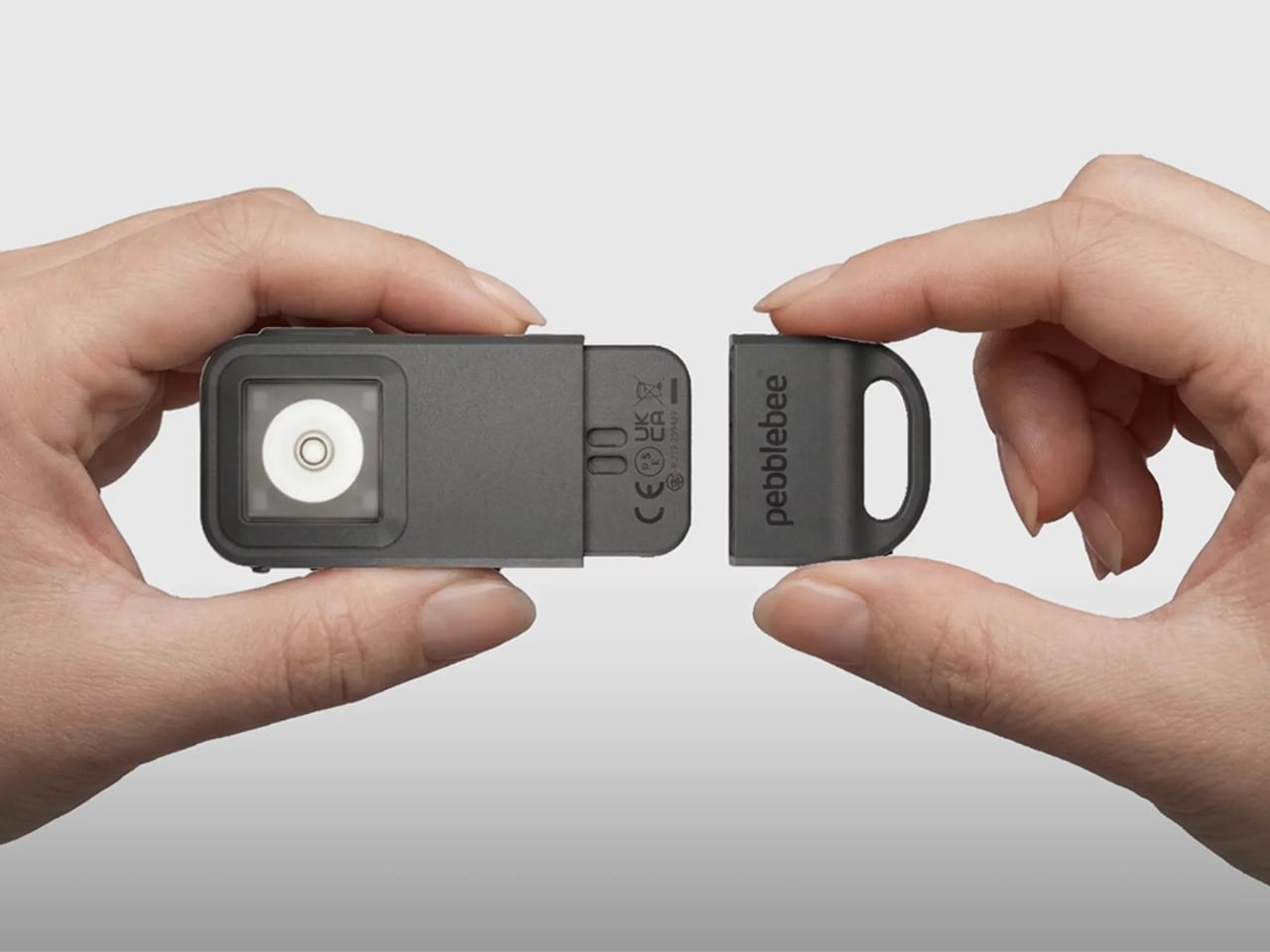
Cloud storage has convinced most people that physical drives are obsolete, right up until the moment a file transfer stalls over weak Wi-Fi, a client meeting has no internet access, or a backup needs to happen without trusting data to someone else’s servers. The Bullet SSD is built for those moments. It measures 51 x 16 x 8mm, weighs 18 grams, and clips onto a keyring with the same casual permanence as a house key. Inside that shell sits up to 2TB of TLC NAND storage with USB-C 3.2 connectivity and read/write speeds around 500 MB/s.

The body is machined from a single piece of aerospace aluminum, which gives it structural rigidity that a plastic thumb drive cannot match, and the IP67 certification means water and dust exposure are non-issues. What separates this from a standard flash drive is the SSD architecture running underneath. Transfer speeds are fast enough to edit video and photos directly from the drive without copying files to a local machine first. For creatives, field workers, or anyone whose workflow involves moving large files between devices that do not share a network, the Bullet SSD turns a keychain into a portable workstation. The form factor is the real argument here: it is small enough to carry without thinking about it, and fast enough to use without compromise when the moment arrives.

What we like

  • The 18-gram weight and keychain form factor mean this drive is always present without occupying dedicated pocket space.
  • USB-C 3.2 with 500 MB/s speeds makes direct editing from the drive a practical reality rather than a spec-sheet fantasy.

What we dislike

  • The compact body limits heat dissipation, which could throttle sustained write speeds during large, continuous transfers.
  • At this size, the USB-C connector is exposed to pocket debris and lint, and there is no integrated cap or cover to protect it.

4. CraftMaster EDC Utility Knife

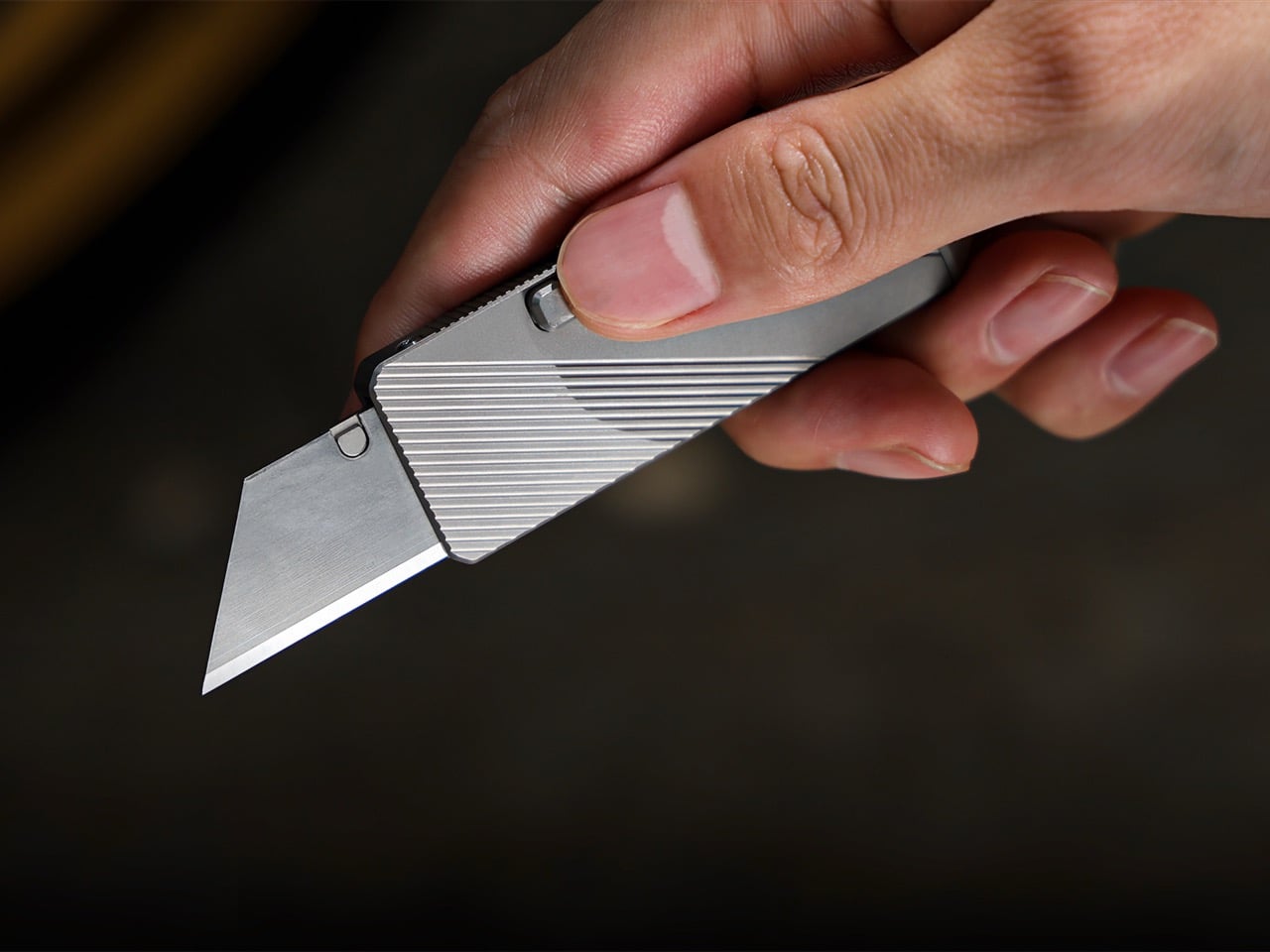
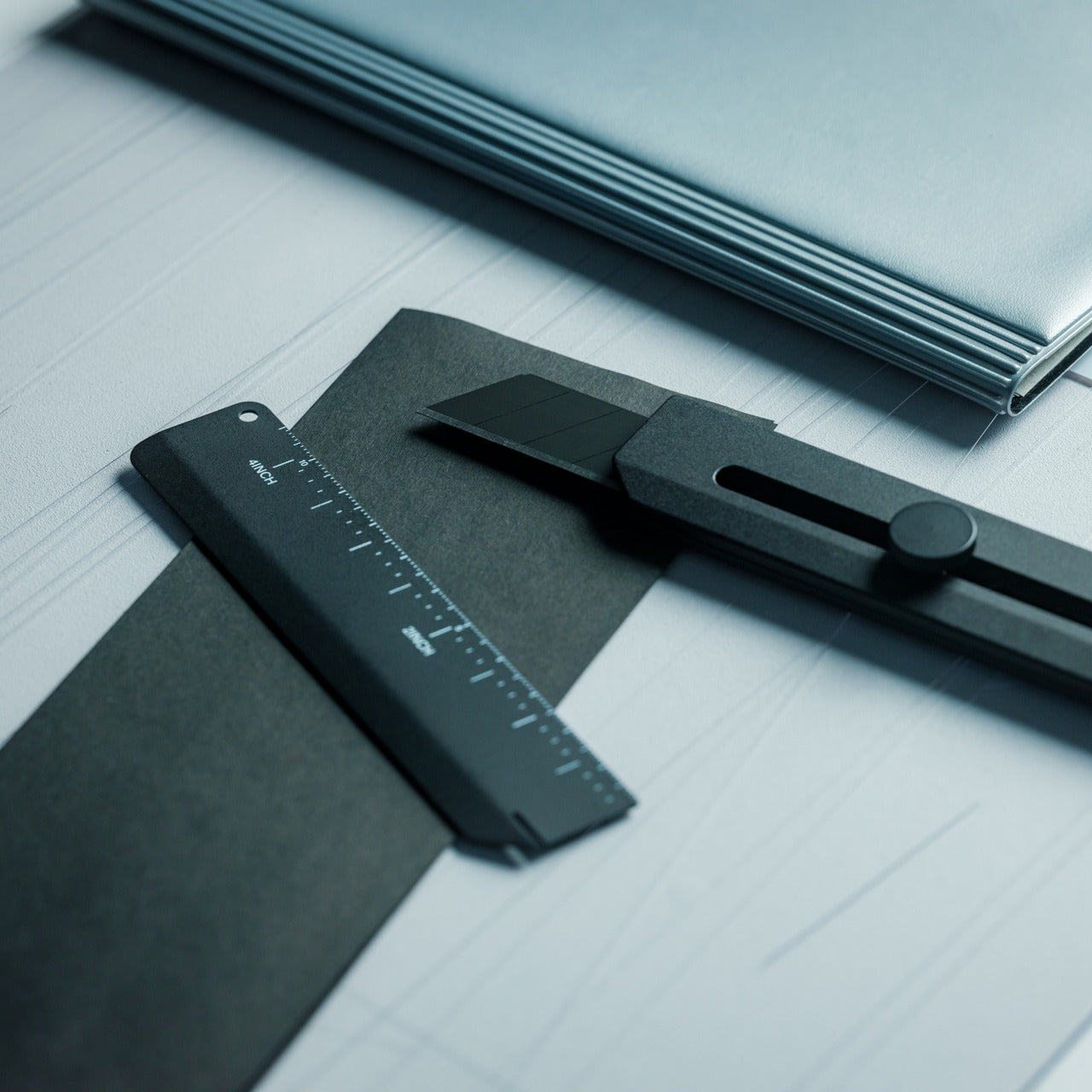
The utility knife is one of the most used and least respected tools in everyday carry. Most people settle for a flimsy box cutter from a hardware store or a folding knife that is overkill for opening packages. The CraftMaster occupies the gap between those extremes with a metal body that measures just 8mm thick and 12cm long, paired with an OLFA blade deployed through a tactile rotating knob. The thinness is not a gimmick. At 0.3 inches, this knife slides into a pocket alongside a phone without creating a noticeable bump, which is the difference between a tool carried daily and one left in a bag.

The companion metal scale docks magnetically to the knife’s back, adding dual-scale ruler markings in metric and imperial alongside a blade-breaker for snapping off dull OLFA segments. A 15-degree curvature on the ruler edge protects fingers during cutting, a small detail that reveals how much thought went into the interaction design rather than just the object’s appearance. OLFA blades are replaceable and widely available, which means the CraftMaster avoids the trap of proprietary consumables that plague many premium EDC knives. The 45-degree blade inclination is optimized for box opening, making this a tool that excels at the single task most people actually need a blade for, rather than pretending to be a wilderness survival instrument.

Click Here to Buy Now: $79.00

What we like

  • The magnetic-docking ruler scale transforms the knife into a measuring tool without adding bulk or requiring a separate carry item.
  • OLFA blade compatibility means replacements are cheap, universal, and available at any hardware store on the planet.

What we dislike

  • The rotating knob deployment, while tactile, is slower than a thumb-stud or flipper mechanism for one-handed opening.
  • At 12cm total length, the cutting depth is limited to anything beyond packages and light materials.

5. TPT (Titanium Pocket Tool)

Multitools love to advertise tool counts, but most of those numbers are inflated by variations on the same function (three slightly different screwdriver tips, two redundant pry edges). The TPT earns its ten-tool count because each function occupies its own distinct geometry on a body that measures just three inches long and weighs 28 grams. Grade 5 titanium alloy (6AL4V) gives it a strength-to-weight ratio that steel multitools cannot touch at this size, and the TSA-approved design means it travels without the anxiety of confiscation at airport security. That alone removes one of the biggest barriers to consistent carry.

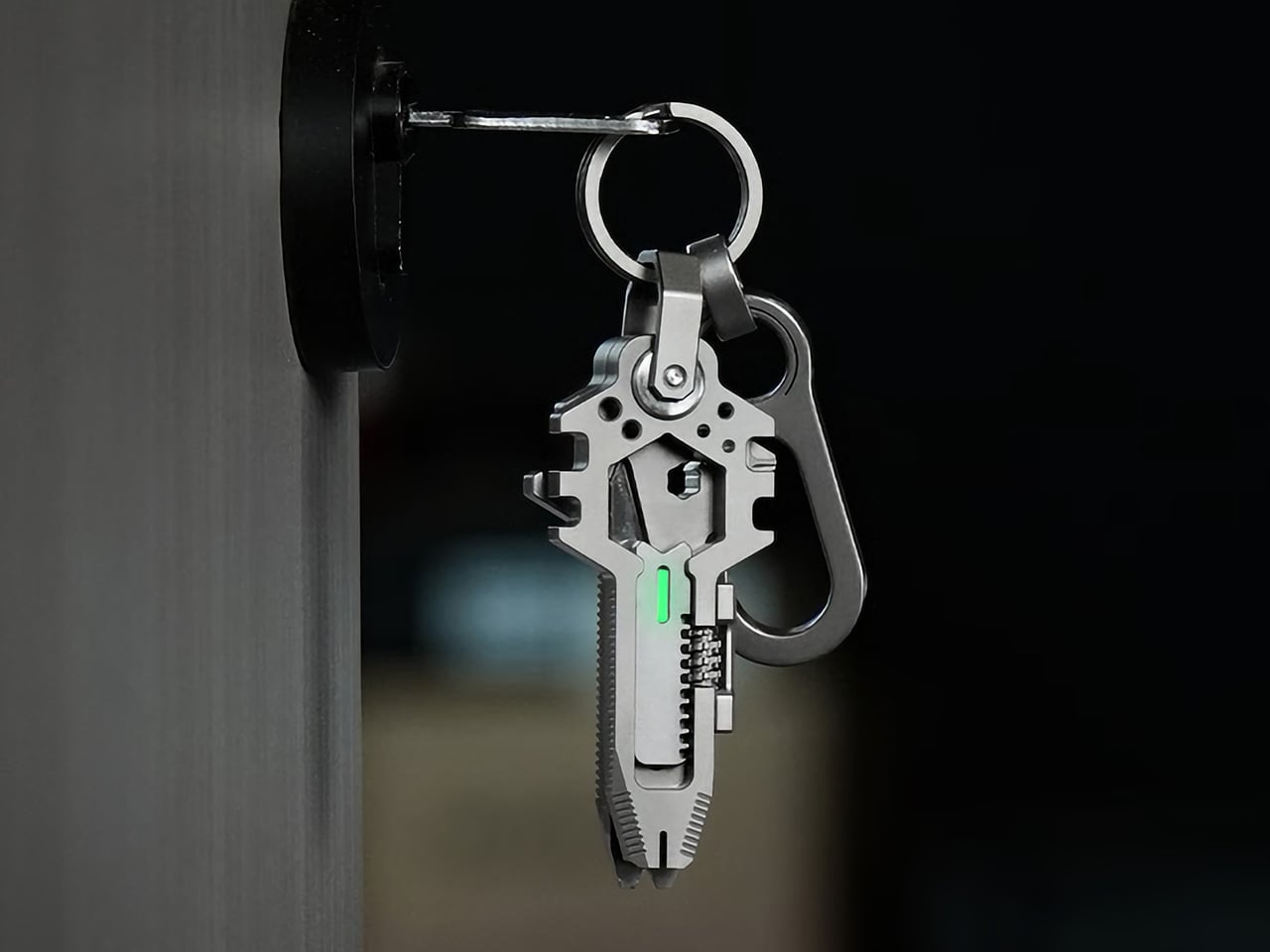
The tool set includes a full wrench array covering 15 socket sizes (both SAE and metric), a bottle opener, a hex bit driver, a scraper edge, a mini pry bar, measurement cues, and a retractable insert that functions as both a box opener and a camp fork. The stainless steel insert is dual-function, with a fork-tined end for eating and a conventional cutter shape on the other, which is a clever use of a single replaceable component. A removable pocket clip and paracord lanyard provide carry options, and the included leather sheath protects both the tool and whatever pocket it lives in. The TPT does not try to replace a full-sized Leatherman. It targets the 90% of daily situations where a compact, always-present tool solves the problem faster than digging through a bag for something bigger.

What we like

  • TSA approval means this tool crosses through airport security without issue, making it one of the few multitools suitable for travel carry.
  • The 15-size universal wrench built into the body handles quick fixes that would otherwise require a dedicated wrench set.

What we dislike

  • The retractable blade insert can be difficult to swap one-handed, and some users report that the magnet holding it in place could be stronger.
  • At three inches, the wrench openings are small, limiting torque and access in tight spaces where a longer tool would provide better leverage.

Where spring carry is heading

These five tools share a common design philosophy: carry less, carry better. The days of stuffing pockets with redundant gear are giving way to a more considered approach where each item earns its real estate through daily use rather than hypothetical scenarios. A pen that is also a driver and a ruler. A flashlight that responds before the thought finishes forming. A solid-state drive disguised as a keychain. A utility knife is thinner than most phones. A titanium multitool that flies through security.

The best EDC gear in 2026 does not demand attention or lifestyle changes. It occupies the margins of a pocket, a keyring, or a clip, and waits for the moment it is needed. Spring is the right season to audit what makes the cut and what gets retired. These five have earned permanent rotation.

The post 5 Best Spring EDC Gear Upgrades for 2026 That Actually Deserve a Permanent Spot in Your Pocket first appeared on Yanko Design.
The 5 Best Accessories That Look Like They Shipped in an Apple Box (They Didn’t)

Apple has always had this gravitational pull when it comes to design — clean lines, considered materials, and that unmistakable restraint that somehow still feels exciting. It’s the reason a whole ecosystem of third-party accessories exists that speaks the same visual language, sometimes so fluently you’d swear they came out of Cupertino.

The five products on this list sit right in that sweet spot. They’re designed for your Apple devices, they match that premium sensibility, and yet they each bring something Apple itself hasn’t thought of (or wouldn’t dare try). From a keyboard that brings BlackBerry nostalgia to your iPhone to a carabiner that turns your AirTag into a proper adventure companion, these are the accessories that deserve a spot in your setup.

1. Akko MetaKey

There’s something almost rebellious about strapping a physical keyboard to an iPhone in 2026. Akko, a company celebrated in the mechanical keyboard community for its switches and keycap artistry, decided to do exactly that with the MetaKey. It connects to the iPhone 16 Pro Max and 17 Pro Max via USB-C and features a passthrough port, so you can still charge or transfer data without detaching the whole thing. It’s clever, it’s niche, and it’s built with the kind of intentionality that makes you pause and appreciate the craft.

The keyboard layout is compact and BlackBerry-inspired, with backlit keys that work comfortably in low light. What really sets it apart, though, is the thoughtfulness in the details — dedicated shortcuts for Siri, voice dictation, and number input, plus a scroll mode that transforms the top rows into navigation buttons for breezing through long feeds. Akko even includes a tiny nine-gram counterweight that clips behind the keyboard to keep your phone balanced in your hand. It’s the kind of consideration that separates a gimmick from a genuine tool for your Apple device.

What We Like

  • The USB-C passthrough is a smart move — you never have to choose between typing and charging your iPhone, which makes the MetaKey feel like a seamless extension of the phone rather than an inconvenient add-on.
  • The scroll mode is a surprisingly intuitive touch. Turning keyboard rows into navigation buttons for scrolling through social feeds or documents on your iPhone shows that Akko was thinking beyond just text input.

What We Dislike

  • The added length and weight, even with the counterweight, will take some getting used to. It shifts the balance of the phone noticeably, and one-handed use becomes a bit of a juggling act.
  • Compatibility is limited to just two iPhone models. If you’re on an older device or a non-Pro model, you’re out of luck — and that narrows the audience considerably for something this well-designed.

2. AirTag Carabiner

If you’ve ever attached an AirTag to something and felt like the holder was letting down the tracker, this one’s for you. The AirTag Carabiner is made from Duralumin composite alloy — the same material found in aircraft and marine vessels — so it’s as tough as it is minimal. It snaps onto bags, bikes, umbrellas, or whatever else you tend to misplace, and it lets Apple’s Find My network do the rest. There’s a quiet confidence in how understated this thing looks, like it was always supposed to be part of the AirTag’s story.

Each carabiner is individually handcrafted, which gives it a tactile quality that mass-produced holders simply can’t match. It’s also available in untreated brass and stainless steel finishes, so you can match it to your personal style or let it develop a patina over time. For anyone deeply embedded in the Apple ecosystem who uses AirTags on everything from luggage to keys, this is one of those small upgrades that quietly elevates the entire experience.

Click Here to Buy Now: $129.00

What We Like

  • The Duralumin construction means it’s lightweight yet remarkably strong — suitable for use in water and at high altitudes, which makes it a genuine companion for outdoor adventures, not just a desk accessory for your AirTag.
  • The handcrafted quality and multiple finish options (brass, stainless steel) add a personal, artisanal dimension that feels right at home next to Apple’s own hardware.

What We Dislike

  • The AirTag itself isn’t included, which is expected but still worth noting — you’re investing in the holder alone, and the overall cost of the tracker plus carabiner adds up.
  • For something this minimal, the design language is almost too subtle. If you like your accessories to make a visual statement, this one deliberately doesn’t — it disappears, which is the point, but not everyone wants that.

3. Nomad Icy Blue Glow Stratos Band

The Apple Watch Ultra was built for people who push limits, and Nomad’s Stratos Band has always matched that energy. But the Icy Blue Glow edition adds something unexpected — a fluoroelastomer cast that lights up in Tron-like hues after dark. It’s a limited-run release, and it bridges the gap between serious performance gear and something you’d actually want to show off at a dinner table. Nomad describes it as proof that performance and fun can coexist, and honestly, it’s hard to argue.

Underneath the glow, the engineering is just as considered. Grade 4 titanium hardware handles the structural work, while compression-molded FKM fluoroelastomer links sit against the skin for comfort and flexibility. The dual-material design creates natural ventilation spaces between the links, helping with moisture and breathability during workouts or just everyday wear. For Apple Watch Ultra owners who’ve cycled through the usual band options and want something that feels both premium and a little playful, this Stratos edition is a standout.

What We Like

  • The hybrid construction of titanium and FKM fluoroelastomer strikes a rare balance — you get the refined, metallic look that matches the Apple Watch Ultra’s hardware with the comfort of a sport band, all in one piece.
  • The glow-in-the-dark feature isn’t just a novelty. It adds genuine visibility during nighttime runs or low-light conditions, making it functional for the adventure crowd the Ultra was designed for.

What We Dislike

  • It’s a limited-run release, which means if you don’t move quickly, it’s gone. For a band this well-made, it would be nice to see it as a permanent option in Nomad’s lineup for Apple Watch Ultra.
  • The glow effect relies on light absorption, so its intensity fades over time in darkness. After a few hours, you’re back to a regular (still great-looking) band — manage expectations accordingly.

4. Battery-Free Amplifying iSpeakers

There’s an elegance to things that work without electricity. The Battery-Free Amplifying iSpeakers from Yanko Design Select take your smartphone’s built-in speaker and amplify the sound purely through acoustic design — no charging, no Bluetooth pairing, no cables. You simply place your iPhone into the cradle and let the Duralumin metal body do the work, channeling and projecting sound waves across the room. It’s the kind of product that makes you appreciate physics as a design material.

Beyond the clever engineering, the speaker itself is designed using the golden ratio, so its proportions feel inherently pleasing on a desk or shelf. The vibration-resistant Duralumin construction — the same aerospace-grade material — means the body stays stable even when the sound is full. There are also optional add-on modules called +Bloom and +Jet that let you direct the sound in different patterns, which is a nice touch for people who care about how audio fills a space. For your iPhone, it’s a zero-fuss, zero-power way to fill a room with music.

Click Here to Buy Now: $179.00

What We Like

  • The completely passive, battery-free design is refreshing in a world of chargers and cables. You just drop your iPhone in and go — no setup, no pairing, no power source needed.
  • The golden ratio proportions and aerospace-grade Duralumin make it as much a desk sculpture as an audio accessory. It genuinely enhances the look of whatever space it sits in alongside your Apple devices.

What We Dislike

  • Acoustic amplification has its limits. Don’t expect it to compete with a powered Bluetooth speaker — it’s best suited for casual listening and background music with your iPhone, not filling a large room for a gathering.
  • The +Bloom and +Jet sound-directing modules are sold separately, which means getting the full experience requires additional investment beyond the base speaker.

5. Triple Boost 14 Pro

Dual monitors are fine. The Triple Boost 14 Pro thinks bigger. This accessory attaches to your MacBook and unfolds into three additional 14-inch IPS displays — two flanking the sides and one rising from the top — turning your laptop into a four-screen workstation that looks like it belongs in a mission control room. It connects via a single cable, and once you set it up, your MacBook’s workspace expands in a way that fundamentally changes how you multitask.

Each panel delivers 1920×1080 resolution at 60Hz with 300 nits of brightness and a matte finish that tames reflections. These aren’t color-accurate screens for photo editing or design work — they’re built for volume, for keeping your spreadsheets, code editors, Slack channels, browser tabs, and terminal windows all visible simultaneously on your MacBook. It’s a tool for people who work across multiple apps at once and hate the alt-tab dance. For MacBook users who’ve always wished their laptop could do more without being tethered to a desk setup, the Triple Boost 14 Pro is a compelling, portable answer.

What We Like

  • The sheer screen real estate is transformative for MacBook productivity. Going from one display to four means you can keep everything visible — no more cycling between windows or losing your place in a workflow.
  • The matte finish on all three panels is a smart, practical choice. It keeps reflections and glare under control, which matters when you’re staring at this much screen area on your MacBook for extended work sessions.

What We Dislike

  • At 1080p and 60Hz, the panels don’t match the Retina quality of your MacBook’s built-in display. The resolution difference is noticeable when you glance between screens, especially with text rendering.
  • Portability is relative here. While it technically travels with your MacBook, the bulk and setup process of three additional screens make this more of a semi-permanent desk solution than a true grab-and-go accessory.

Designed Different, But Designed Right

What ties all five of these accessories together isn’t just compatibility with Apple devices — it’s a shared design philosophy. They’re restrained where they need to be, bold where it counts, and built with materials and details that punch well above what you’d expect from third-party products. Each one feels like it belongs in the Apple ecosystem without trying too hard to imitate it, and that’s a difficult line to walk. These are products made by people who clearly care about craft.

If you’re particular about what sits next to your iPhone, MacBook, or Apple Watch, this list is for you. Not every accessory deserves a place in a carefully considered setup, but these five earn it. They solve real problems, they look good doing it, and they bring ideas that Apple hasn’t explored yet. Sometimes the best additions to your ecosystem are the ones that didn’t come from Cupertino at all.

The post The 5 Best Accessories That Look Like They Shipped in an Apple Box (They Didn’t) first appeared on Yanko Design.
5 Best Desk Lamps That Light Your Workspace Better Than Any Overhead Light Ever Could

Overhead lighting was never built for you specifically. It floods an entire room without discrimination, casting flat light across everything and solving nothing in particular. A well-chosen desk lamp operates differently — it targets exactly where concentration happens, reduces strain during long sessions, and brings something intentional to a space that a ceiling fixture simply cannot. The best ones do all of this while looking like they genuinely deserve to be there.

The five lamps here approach desk lighting from genuinely different directions — one learns your habits through AI, another is cast from real tractor headlight molds, one travels anywhere on AA batteries, and another chases a color accuracy standard most manufacturers don’t bother measuring. Each solves a real problem. Whether your workspace is a compact corner or a dedicated professional studio, there is a lamp on this list worth your full attention.

1. Anywhere-Use Lamp

The Anywhere-Use Lamp is designed around one honest principle — good light shouldn’t be restricted to places with power outlets. Running on four AA batteries, it removes every dependency on wall sockets and charging cables, making it as useful in a hotel room or a garden corner as it is on a permanent desk. Six high color rendering LEDs produce warm, soft output that settles gently into a space rather than announcing itself as the primary light source in the room.

Available in black, white, and an Industrial edition with a scratch-detailed metal base that treats surface wear as character rather than damage, the Anywhere Use Lamp adapts across settings without effort. Pressing any edge of the cap cycles through four brightness levels with a satisfying haptic click that makes the interaction feel considered. The modular construction breaks down quickly enough to slip into a bag, and on a desk, it reads as a minimal sculpture — quietly impressive without demanding attention from everything around it.

Click Here to Buy Now: $149.00

What We Like

  • AA battery power gives it genuine location freedom that no rechargeable or corded lamp on this list can honestly match.
  • The Industrial edition’s scratch-detailed metal base treats material imperfection as an intentional design quality rather than a manufacturing oversight.

What We Dislike

  • Four disposable AA batteries are less sustainable than a built-in rechargeable solution would be for users who run them daily.
  • Warm, atmospheric output may feel insufficient for task-heavy environments that demand stronger, more directional illumination.

2. The Lampster

The Lampster is the most funded lamp in crowdfunding history, a record that speaks to how rare genuinely characterful lighting actually is. Its head is cast from the same 40-year-old molds used for real tractor headlights, a material fact that sits at the center of everything the lamp is. Born as a side project between an architect and an engineer, it carries the kind of specificity that only arrives when something was made first for its creators, not for a market.

Functionally, the Lampster holds 120 LEDs across warm and cool white tones, controlled by a capacitive touch button on the head that adjusts intensity without needing a phone. An RGB light source connects to a mobile app that monitors power draw, saves custom settings for reading, writing, or focused work, and syncs the lamp to music. The head rotates 360 degrees while the aluminum neck bends freely in any direction. It sits on a desk and immediately becomes the most interesting object in the room.

What We Like

  • Cast from original 40-year-old tractor headlight molds, giving it a material provenance no competing desk lamp can replicate.
  • App-controlled RGB plus adjustable warm and cool white LEDs cover every working scenario without requiring separate hardware.

What We Dislike

  • Filling the hollow body with gravel for proper ballast adds a hands-on setup step that feels slightly misaligned with a premium purchase.
  • Full smart functionality depends on a mobile app, which may frustrate users who prefer straightforward, always-available physical controls.

3. DEEP

DEEP is what happens when a lamp decides your working environment should configure itself around you rather than the other way around. Turn it on with a spinning-top-inspired power button, tell it what you are about to do — studying, coding, reading, creative work — and it adjusts both lighting and ambient sound automatically. The AI underneath isn’t a selling point bolted on at the last stage. It actively shapes your workspace conditions before you’ve had to think about them yourself.

A camera positioned at eye level monitors your focus state in real time, functioning like a built-in productivity coach without requiring a separate device. Side buttons allow precise manual overrides, and when adjustments are saved, the system builds a personal profile that becomes more attuned the longer the lamp sits on your desk. Over repeated sessions, DEEP learns the exact conditions under which you concentrate best and begins applying them without being asked — a meaningfully different relationship with a piece of desk hardware.

What We Like

  • AI-driven environment configuration learns and refines your preferences over repeated sessions, becoming genuinely more useful the longer you use it.
  • Camera-based real-time focus monitoring replaces any need for an external productivity tracking application or additional device on your desk.

What We Dislike

  • A built-in camera positioned at eye level may not sit comfortably with users who value privacy in their personal workspace.
  • As a concept-stage design, software longevity, update support, and manufacturer reliability over time remain unconfirmed.

4. Lumio Ovo

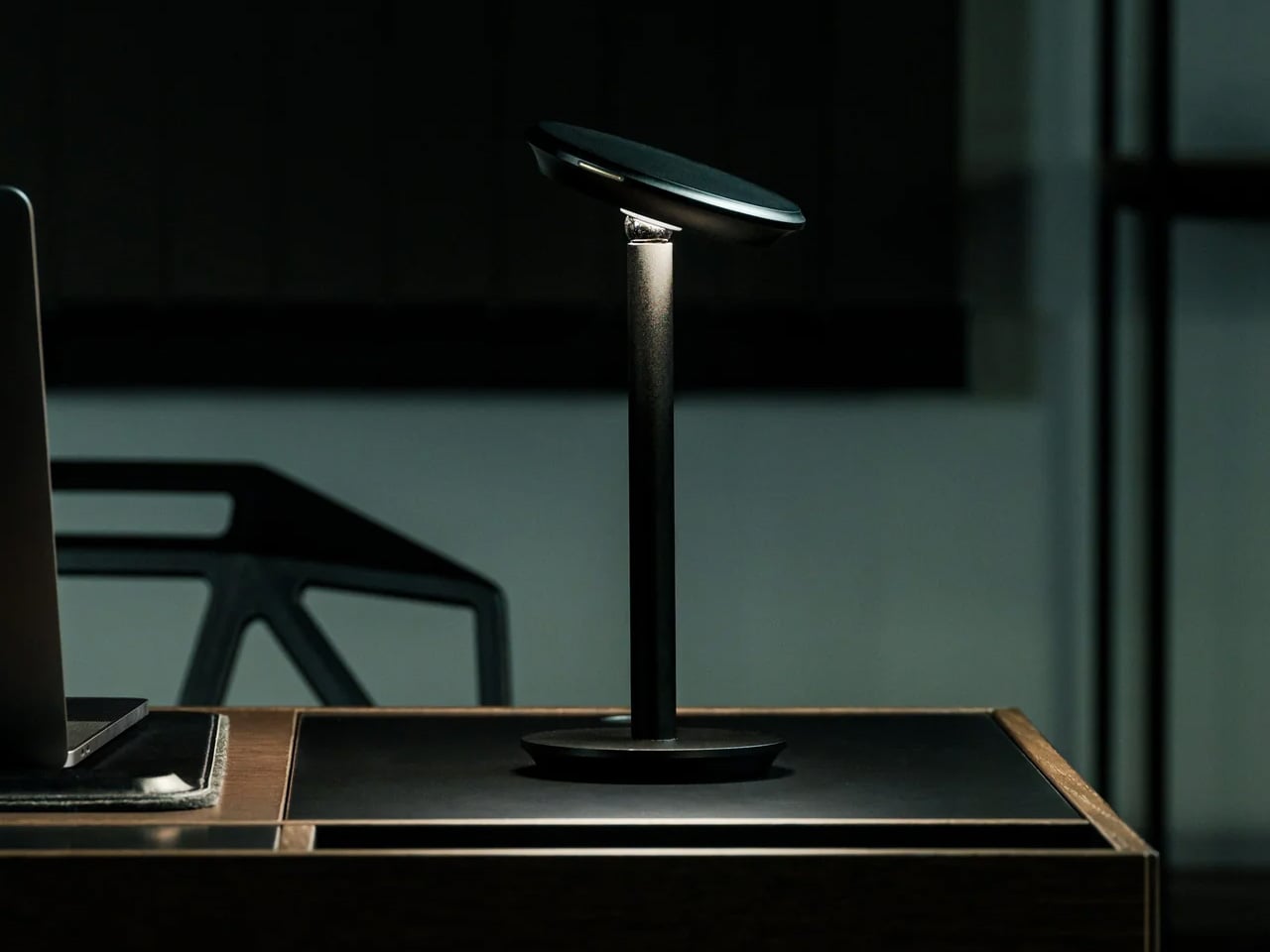
Most adjustable lamps eventually disappoint. Multiple joints accumulate play, precise positioning becomes a daily compromise, and what is marketed as flexible control quietly becomes a frustration. The Lumio Ovo addresses this by reducing the entire adjustment system to a single pivot — a seesaw-style motion that rotates a full 360 degrees around a central point and feels exact from the very first interaction. No creaking. No wobble. No accumulated looseness. Precise, repeatable directional control housed in a form that makes no apologies.

Lumio left the central pivot fully exposed rather than hiding it inside a casing, which turns the structural solution into the lamp’s most compelling visual element. At rest on a desk, the Ovo reads as a kinetic art object — the kind of piece that earns a comment from anyone who sees it for the first time. Nudge it gently, and it finds its new position with an ease that lamps carrying three times the moving parts rarely manage to deliver with the same quiet confidence.

What We Like

  • A single-pivot seesaw mechanism eliminates the joint loosening and positional drift that eventually compromise most multi-hinge desk lamps.
  • The exposed pivot transforms the engineering solution into the lamp’s defining aesthetic element, making form and function genuinely inseparable.

What We Dislike

  • Detailed light output and color temperature specifications are not widely published, making pre-purchase performance evaluation difficult.
  • The balance-based seesaw motion may not satisfy users who need a lamp to lock firmly into position without any residual movement.

5. Redgrass R9 Desk Lamp

Standard color rendering measurements evaluate eight color samples and call it accurate. Redgrass developed a methodology that evaluates 99 and achieved an extended CRI score of 98.5 — a number that places the R9 in a fundamentally different category. The practical result is light that renders color the way natural daylight does. For painters, illustrators, and anyone whose work depends on seeing accurate hues under artificial conditions, the difference is immediate and impossible to ignore.

At 1800 lumens and 3700 lux measured at 45 centimeters, the R9 delivers serious, sustained output from 96 custom-made LEDs arranged across two independently rotating bars. That dual-bar configuration isn’t decorative — it eliminates the shadows a single light source always casts across detailed work surfaces. It holds the Red Dot Best of the Best and iF Design Awards, and professional teams behind Avatar and The Lord of the Rings have adopted it as a standard studio tool.

What We Like

  • An extended CRI of 98.5 evaluated across 99 color sample sets is an accuracy benchmark that no conventional desk lamp currently comes close to reaching.
  • Two independently rotating light bars eliminate surface shadows in a way that a single light source is physically incapable of replicating.

What We Dislike

  • At $279.99, the R9 demands a meaningful financial commitment, even when the performance makes a fair and honest case for itself.
  • The clamp-based mount and larger physical footprint make it a less natural fit for compact or minimal desk setups.

The Right Light Changes Everything

Each lamp here solves something a ceiling fixture never bothered to think about. The Lampster gives a desk a genuine personality. The Anywhere Use Lamp follows you without conditions. DEEP maps your habits and builds the environment around them. The Ovo reduces all mechanical complexity to a single satisfying gesture. The R9 shows you the color the way it was actually meant to appear. All five refuse to treat workspace lighting as an afterthought worth quietly tolerating.

Good lighting doesn’t just help you see — it sustains concentration, reduces physical strain, and signals that a workspace was assembled with real intention. The difference between a desk lamp and an overhead light isn’t simply positional. One serves the room. The other serves you. Once that distinction becomes clear, returning to a fixture that has no idea what you’re working on or how long you’ve been sitting there becomes genuinely difficult to justify.

The post 5 Best Desk Lamps That Light Your Workspace Better Than Any Overhead Light Ever Could first appeared on Yanko Design.
5 Best Gadgets Every Tech-Savvy Digital Nomad Is Quietly Packing Right Now

The digital nomad bag has evolved past the obvious picks. Laptop, charger, earbuds, done. That kit worked five years ago when remote work meant answering emails from a beach hostel. Now, the people doing this full-time run dual-monitor editing setups from Lisbon apartments, take client calls from co-working spaces in Chiang Mai, and file deadlines from airport lounges without missing a beat. The gear that makes that possible is not the laptop itself but the small, clever peripherals around it, the ones that turn a single USB-C port into a proper workstation and collapse back into a carry-on when it is time to move again.

We have been tracking the gadgets that keep surfacing in nomad communities and tech-forward travel kits this year, and five products stood out for the same reason: they each solve a specific friction point that remote workers hit repeatedly. Not gimmicks, not luxury upgrades, but tools that collapse the gap between a fixed desk setup and a backpack-based office. Some are shipping now, others are in the crowdfunding stage with strong traction. All of them earn space in a bag that has no room to waste.

1. Nothing Power (1)

Power banks are the least glamorous item in any travel kit, which is exactly why most of them look like featureless plastic bricks. The Nothing Power (1) is a concept design that imagines what Nothing’s Glyph interface would look like on a battery bank: transparent layers, LED light paths that show charging status and notifications, and the same design language that made the Nothing Phone (1) and Phone (2) stand out in a sea of identical smartphones.

The concept proposes a 20,000mAh capacity with 65W fast charging, enough to hit 50% battery on a phone in under 20 minutes. Dual USB-C ports handle two devices simultaneously. The Glyph LEDs do more than look interesting; they provide intuitive visual feedback for charging status and battery levels without needing to press a button or check a display. Nothing actually had a power bank in development at one point, but scrapped it due to durability concerns with the transparent casing cracking on impact. This concept reimagines that idea with a cleaner silhouette and enough surface area to make the Glyph interface feel purposeful rather than decorative. For nomads who carry a power bank every single day, the idea that it could be a well-designed object instead of an anonymous slab is appealing. This is not a production product yet, but the demand in Nothing’s community forums suggests it is an idea the brand should revisit.

What we like

  • Glyph LED interface provides at-a-glance charging status without screens or buttons, which is faster and more intuitive than hunting for a tiny indicator light on a conventional power bank.
  • 20,000mAh capacity with 65W fast charging (as proposed in the concept) would cover a full day of heavy device use for multiple gadgets.

What we dislike

  • This is a concept design, not an official Nothing product, and the transparent casing durability issue that killed the original project remains unsolved.
  • Transparent construction would likely show internal wear, dust, and scratches over time, especially in a bag that gets tossed around daily.

2. KeyGo Gen2

1

Carrying a laptop, a portable monitor, and a separate keyboard creates a three-device problem that digital nomads have been trying to solve with lighter versions of each. KeyGo Gen2 collapses all three into one folding slab. It is an ultra-slim keyboard with a built-in 13-inch 4K/60Hz IPS touchscreen, CNC-machined aluminum construction, built-in speakers, and a 180-degree hinge that folds everything flat to 19.3mm thick when closed. A single USB-C cable handles video, power delivery (up to 65W), and data.

The original KeyGo raised over $185,000 in its first campaign, featuring a 720p screen. Gen2 bumps that to full 4K at 3,840 x 2,160, ten-point multitouch, adjustable brightness up to 300 nits, and a weight of about 1 kilogram (2.2 pounds). Unfold it, plug in a USB-C cable, and a laptop instantly gains a second display sitting right below eye level with a full keyboard beneath it. It works with Windows, macOS, Linux, and Android, which means it also pairs with mini PCs and tablets for people building ultra-compact travel rigs. The crowdfunding campaign has already passed $300,000 in pledges, with early bird pricing around $279 and estimated delivery in May 2026. For nomads editing video on cafe tables, managing spreadsheets in airport lounges, or running code with documentation on a secondary panel, this eliminates the portable monitor and keyboard as separate line items in the bag.

Click Here to Buy Now: $329 $658 ($329 off). Raised over $521,000.

What we like

  • Replaces a portable monitor and external keyboard with a single folding device, cutting significant weight and bag space from a travel workstation.
  • 4K touchscreen with 10-point multitouch and 300-nit brightness makes it genuinely usable for detail work like photo editing and timeline scrubbing.

What we dislike

  • At 1 kilogram, it is not featherlight, and the 19.3mm closed profile is thicker than a standalone portable keyboard would be.
  • Crowdfunding status means the product is not shipping yet, and the final typing experience can only be judged once production units are in hand.

3. TWS ChatGPT Earbuds

Wearable AI has spent the last two years stuck in an awkward phase. Smart pins looked strange. Pendant cameras felt forced. Smart glasses screamed, “I am recording.” This concept hides cameras inside TWS earbud stems, positioned near the natural line of sight, and pairs them with ChatGPT to create a visual AI assistant that lives entirely in the ears. No screen. No conspicuous hardware. Just a familiar form factor doing something new.

For digital nomads navigating foreign cities, the use cases are immediate. The earbuds can read menus in unfamiliar languages, interpret street signs, describe scenes, and guide navigation through voice alone, all without pulling a phone from a pocket. The social advantage is that earbuds are already normalized. People wear them everywhere without drawing attention, which removes the friction of face-mounted cameras that make conversations uncomfortable. Voice interaction keeps hands free for luggage, laptops, or coffee. The AI processes visual input in real time and responds through audio, creating an assistive loop that does not require staring at a screen. This is a concept at this stage, not a shipping product, but it represents the direction wearable AI is heading. For nomads who spend their weeks moving between cities and languages, an AI assistant that sees what the wearer sees and speaks directly into the ear could replace a handful of translation apps, navigation tools, and accessibility aids with a single pair of earbuds.

What we like

  • Familiar earbud form factor avoids the social awkwardness of face-mounted cameras, making it usable in meetings, cafes, and public spaces without drawing stares.
  • Hands-free visual AI assistance for translation, navigation, and scene description addresses real daily friction for nomads moving between countries.

What we dislike

  • Concept status means no confirmed specs, battery life, or pricing, so the product’s real-world viability is unproven.
  • Privacy concerns around always-available cameras in earbud stems will be unavoidable once production models enter public spaces.

4. HubKey Gen2

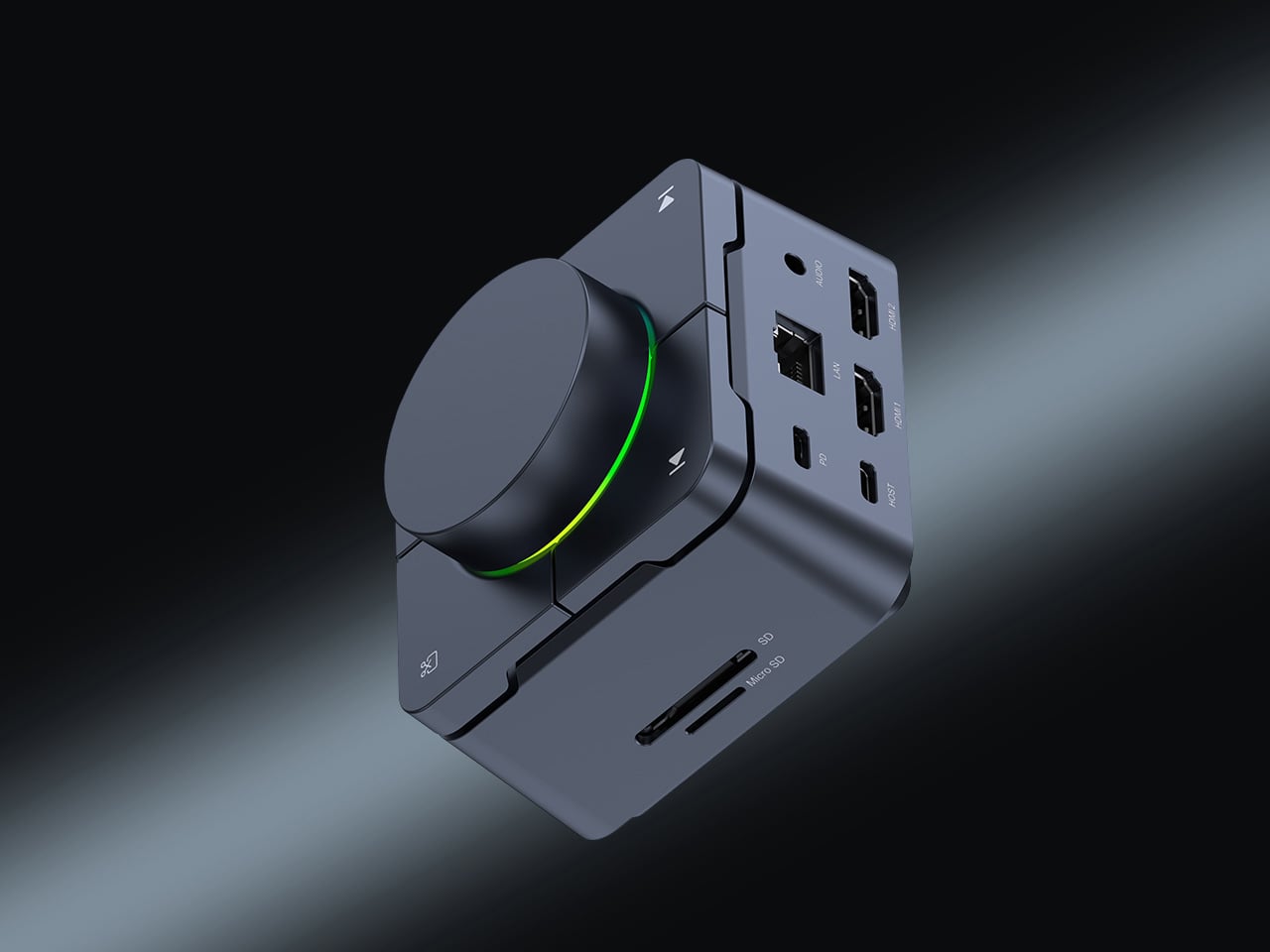
The typical nomad desk involves a laptop teetering on a cafe table surrounded by a small constellation of dongles, adapters, and cables fighting for two USB-C ports. HubKey Gen2 consolidates that mess into a single compact cube. It is an 11-in-1 USB-C hub with dual HDMI ports (both 4K at 60Hz), two USB-A 3.1 ports, one USB-C 3.1 port, SD and TF card readers, a 2.5 Gbps Ethernet jack, a 3.5mm audio port, and a 100W USB-C PD charging port. One cable from the cube to the laptop brings everything online.

What separates it from standard hubs is the top panel. Five programmable shortcut keys and a central control knob sit above the ports, turning the hub into a mini control surface. Volume, mute, screen lock, screenshot, display off: tasks that normally require keyboard shortcuts or menu diving can be done with a single tap or twist. The driver system offers 170 presets with full macro customization across Windows, macOS, Linux, and Steam Deck. At 7 x 7 x 3 cm, the cube disappears into a laptop bag pocket. For photographers and videographers constantly offloading cards while driving external displays, this removes the need for three or four separate adapters.

What we like

  • Dual 4K/60Hz HDMI output from a single hub means a nomad can build a two-monitor setup at any co-working space without carrying separate adapters for each display.
  • Programmable shortcut keys and a physical knob add hands-on control that standard hubs do not offer, cutting repetitive menu navigation during editing and video calls.

What we dislike

  • The compact form factor means ports are tightly packed along the edges, which can cause thicker cables or drives to crowd each other.

5. OrigamiSwift Mouse

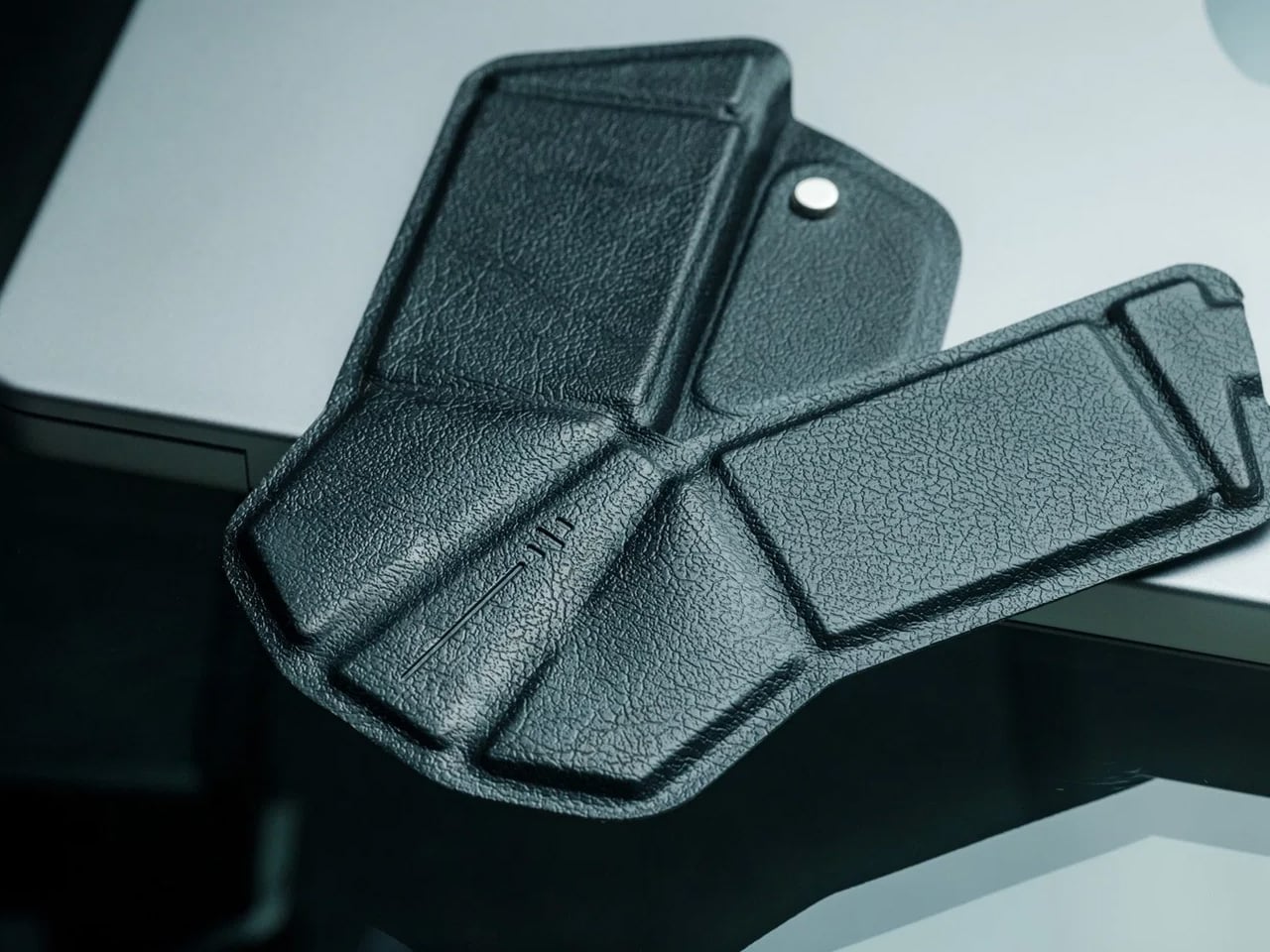
Trackpads work fine until they do not. Precise selections in spreadsheets, long editing sessions, and detailed design work all benefit from a real mouse, but carrying a conventional one eats bag space that nomads cannot spare. OrigamiSwift solves this by folding a full-sized Bluetooth mouse down to a 4.5mm-thick slab that weighs just 40 grams (1.41 ounces). Magnetic snaps lock the two sides together in under half a second, and the mouse powers on automatically when assembled. Fold it flat again, and it slides into a laptop sleeve or even a shirt pocket.

Under the origami-inspired exterior sits a 4000 DPI HD infrared sensor capable of tracking at up to 30 inches per second, paired with Bluetooth 5.2 for stable, dongle-free connectivity across Mac, Windows, Android, and iPadOS. A 500mAh lithium polymer battery charges via USB-C and lasts up to three months on a single charge, which effectively removes battery anxiety from the equation. The vegan leather skin adds grip and surface compatibility, while mechanical click switches on the left and right buttons provide tactile feedback. A touch-sensitive scroll area replaces a physical wheel, which keeps the profile flat. At around $49 to $69, depending on the retailer, it sits in a reasonable range for a travel peripheral that genuinely disappears when not in use. The trade-off is that it is not built for gaming or high-speed precision work, but for the spreadsheet-to-email-to-design workflow that defines most nomad days; it handles everything a full-sized mouse would.

Click Here to Buy Now: $85.00

What we like

  • Folds to 4.5mm flat and weighs 40 grams, making it the most packable full-sized mouse option available for nomads who cannot sacrifice bag space.
  • Three-month battery life on a single USB-C charge means one less device to worry about charging between cities and time zones.

What we dislike

  • The touch scroll area, replacing a physical scroll wheel, takes adjustment, and some users report that it lacks the tactile precision of a traditional wheel during fast scrolling.
  • Not suitable for gaming or tasks demanding sub-millisecond response times, so users with hybrid work-and-play setups will still need a second mouse.

What the nomad bag looks like now

These five gadgets share a design philosophy that would have seemed niche a few years ago: they treat portability not as a marketing checkbox but as the primary constraint around which everything else is engineered. A hub that replaces four dongles. A keyboard that is also a 4K monitor. A mouse that folds into a credit card sleeve. A power bank that communicates through light. Earbuds that double as a visual AI assistant. Each one subtracts something from the bag while adding a capability that used to require a dedicated device.

The shift is worth paying attention to. Remote work hardware is no longer about miniaturizing desk products and hoping they survive a carry-on. The best nomad gear now starts from the constraints of movement, weight, and setup speed, then works backward to figure out how much functionality can fit inside those limits. Two of these products are concepts, two are crowdfunding, and one is shipping today. That ratio will flip fast. The bag is getting lighter, the workspace is getting more capable, and the gap between a fixed office and a cafe table keeps narrowing.

The post 5 Best Gadgets Every Tech-Savvy Digital Nomad Is Quietly Packing Right Now first appeared on Yanko Design.
5 Best Portable Bluetooth Speakers of Spring 2026 — Designed for the Outdoors, Not Your Bookshelf

Most portable speakers end up on a shelf somewhere, playing lo-fi beats while someone makes coffee. There is nothing wrong with that, but it is not what these five were made for. We picked speakers that actually want to leave the house, products built around weather resistance, battery stamina, and the kind of design thinking that considers mud, rain, and a campfire playlist as standard operating conditions. Spring 2026 has delivered some interesting options, from retro survival radios to subwoofer-equipped tanks that laugh at puddles.

What makes this list different from the usual roundup is the lens we are looking through. These are not ranked by loudness or spec-sheet one-upmanship. We looked at form factor, material durability, portability logic, and whether each speaker solves a real outdoor problem or just pretends to with an IP rating sticker. Some are brand new releases, others are designs that aged into relevance this season. All five belong outside.

1. RetroWave 7-in-1 Radio

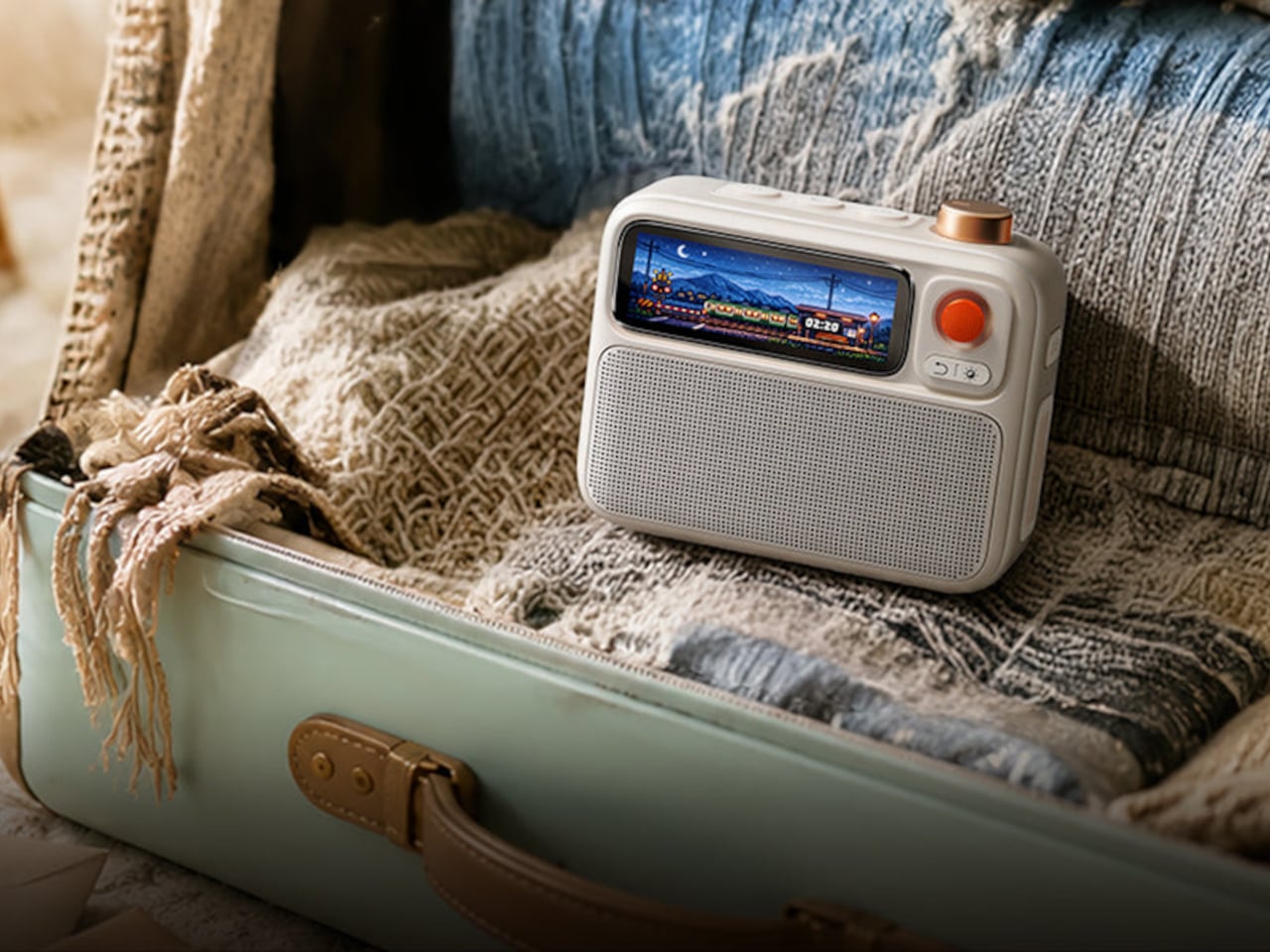
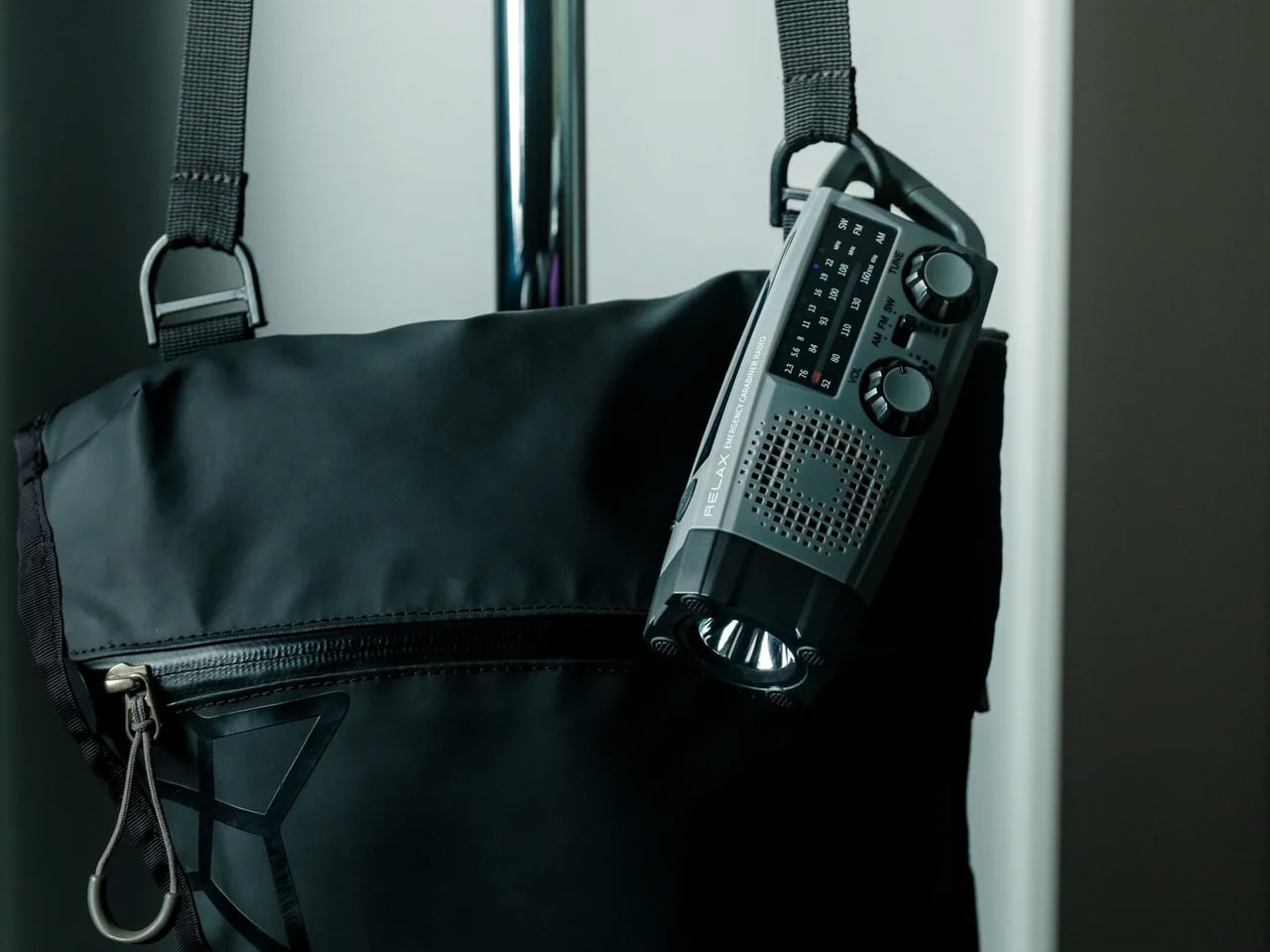
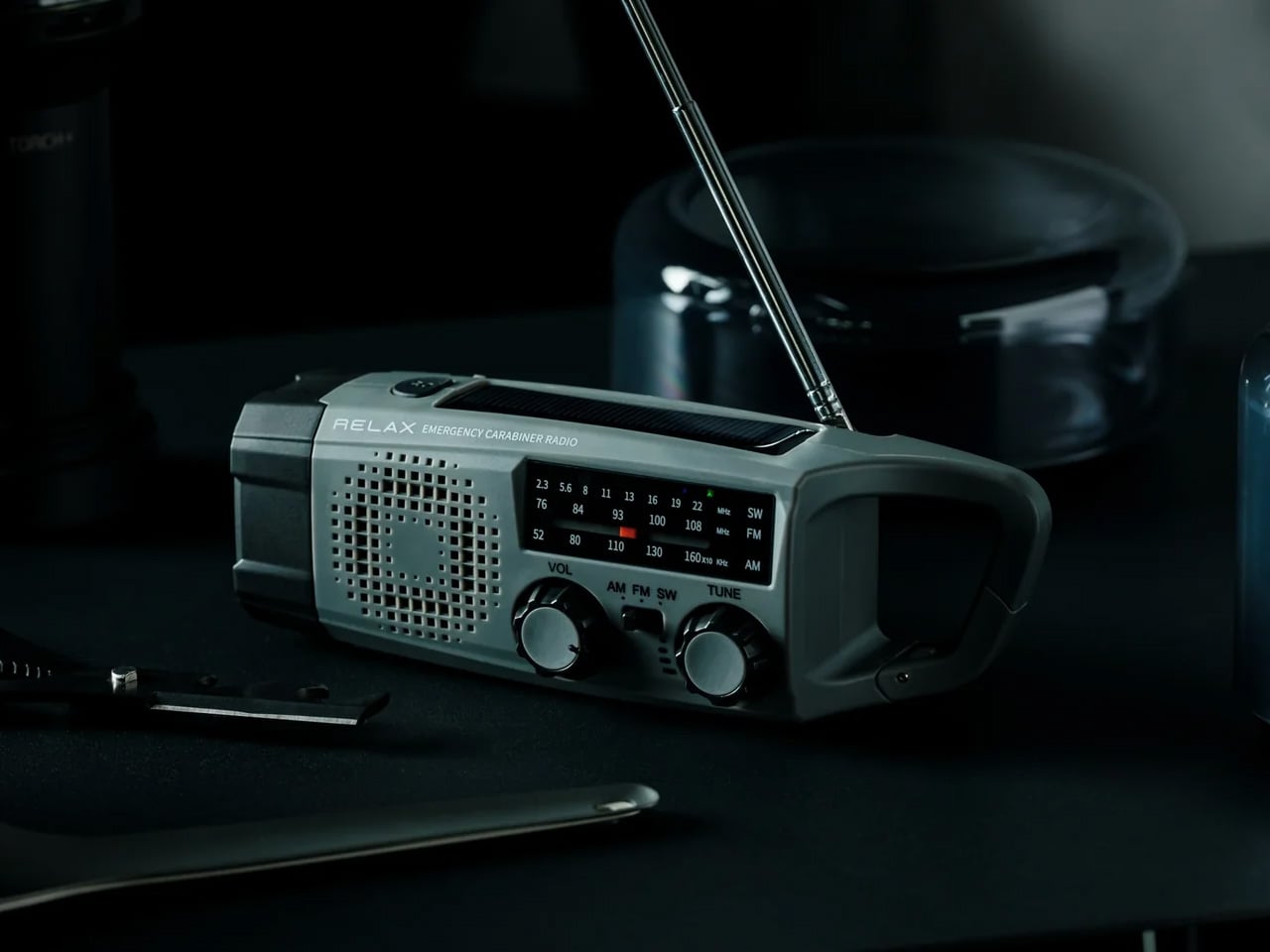
Emergency radios tend to look like emergency radios: bulky, utilitarian, designed to sit in a basement kit next to expired granola bars. The RetroWave wraps seven functions inside a form factor borrowed from mid-century Japanese transistor radios, with a tactile tuning dial and a design warm enough to earn kitchen counter space. Those seven functions: Bluetooth speaker, MP3 player (USB and microSD), AM/FM/shortwave radio, flashlight, clock, SOS alarm, and power bank. Hand-crank charging and a solar panel provide off-grid power when outlets vanish, a capability no Bluetooth-only speaker on this list can match.

The outdoor logic differs from the rest of this roundup. The RetroWave competes on self-sufficiency, not audio fidelity. A hand crank and solar panel mean it never truly dies. The flashlight and SOS siren add safety utility for trail emergencies. Bluetooth and MP3 playback handle entertainment with respectable sound for a multi-function device, though the tuning-dial analog radio experience is where the personality lives. Shortwave reception opens up international broadcasts and emergency channels that streaming apps cannot access. As an everyday speaker, it has charm. As an emergency tool that also plays music, it is hard to argue against keeping one in a daypack. It belongs on this list not because it sounds the best, but because it is the only speaker here that could keep working days after every other device has gone dark.

Click Here to Buy Now: $89.00

What we like

  • Hand-crank and solar charging make it the only speaker here that generates its own power, a genuine survival feature for off-grid situations.
  • Seven functions (speaker, radio, flashlight, clock, SOS alarm, MP3 player, power bank) consolidate multiple pieces of outdoor gear into one device.

What we dislike

  • Audio quality does not match dedicated Bluetooth speakers on this list, as the multi-function design compromises driver space and tuning.
  • The retro aesthetic, while appealing, may feel out of place for users who prefer minimal, modern gear in their outdoor kits.

2. Marshall Emberton III

The Emberton III wraps textured silicone and metal grille construction around meaningful upgrades over its predecessors. Two 2-inch full-range drivers and two passive radiators push 360-degree sound through Marshall’s True Stereophonic system, so placement on a picnic blanket or backpack strap matters less than it would with front-firing alternatives. An IP67 rating allows submersion in one meter of water for 30 minutes, and the 32+ hours of battery life cover an entire weekend trip without an outlet. A 20-minute quick charge returns six hours of playback, the kind of math that matters when departure is in half an hour, and the speaker is dead.

Bluetooth 5.3 with LE Audio readiness and upcoming Auracast support means multi-speaker setups are on the horizon. A built-in microphone, absent from earlier Embertons, handles hands-free calls. The signature brass control knob manages volume, track skipping, and play/pause with tactile precision that wet or gloved hands appreciate far more than a touchscreen. At $159, it sits in a competitive zone against the Sonos Roam 2 and JBL Flip 6, but neither offers this battery endurance. Marshall’s sound leans warm and full at moderate volumes, though pushing past 85% introduces harshness common to speakers this size.

What we like

  • 32+ hours of battery life covers multi-day trips, and the 20-minute quick charge for six hours of playback is a practical safety net.
  • IP67 rating handles submersion, dust, and sand, making it one of the most weather-resistant speakers at this price.

What we dislike

  • Sound gets harsh at very high volumes, a physical limitation of the small driver size that DSP tuning cannot fully solve.
  • No 3.5mm auxiliary input means Bluetooth is the only connection option, eliminating wired backup for devices with dead wireless.

3. Brane X

Most portable speakers fake bass by boosting mid-bass frequencies and letting psychoacoustics fill the gaps. Brane X uses a proprietary Repel-Attract Driver (RAD) that cancels internal air pressure forces, producing real sub-bass down to 27.1 Hz from a speaker just 9.3 inches wide. Five drivers total, including a 6.5 x 9-inch RAD subwoofer, two midrange drivers, and two dome tweeters, are powered by four class-D amplifiers exceeding 200 watts combined. A 72 watt-hour battery provides up to 12 hours of runtime, and full IP57 waterproofing means rain and poolside splashes are non-issues.

Outdoors, the five-driver array creates a soundstage that holds up when listeners spread across a campsite or patio. A custom DSP engine runs 500 million EQ calculations per second, maintaining clarity at volumes where competitors distort. Wi-Fi adds Spotify Connect and SiriusXM streaming, Alexa handles voice control, and the Brane app offers custom EQ and grouping for up to eight speakers. At 7.7 pounds, it is heavier than pocket alternatives, but the acoustic payoff justifies the weight for anyone tired of thin, tinny campsite sound. A 3.5mm auxiliary port also accommodates turntables, a rare inclusion in the wireless-first portable category.

What we like

  • Bass response down to 27.1 Hz from a portable form factor is a genuine engineering achievement unmatched in this size class.
  • IP57 waterproofing combined with 200+ watts of amplification delivers serious sound in weather that would sideline most premium speakers.

What we dislike

  • 7.7 pounds limits grab-and-go spontaneity for hiking or cycling trips compared to sub-2-pound alternatives.
  • Battery tops out at 12 hours at moderate volume, less than half of what the Emberton III offers on a single charge.

4. The Harman Kardon Traveller Concept

The Traveller rethinks what a portable speaker should look like for people who actually travel with one. The form factor draws from Sony point-and-shoot cameras, producing a slab so slim it fits alongside a passport wallet. Touch controls and LED indicators sit on top, maintaining the clean design language of the Harman Kardon Esquire Mini 2. A high-density battery delivers up to 10 hours of playback, and reverse charge functionality turns the speaker into an emergency power bank when a connected phone dies mid-hike. Dual microphones with echo and noise cancellation handle calls in windy outdoor conditions.

The outdoor advantage here is not ruggedness but presence. The slimmest speaker is useless if it stays home because packing it is inconvenient. The Traveller solves that by occupying almost no space, fitting into a carry pouch alongside chargers and cables. Three planned colorways (black, silver, electric blue) suggest a product designed to be seen, not hidden. Sound quality carries the Harman Kardon name, though the slim profile necessarily limits low-end output compared to thicker options on this list. For backpackers and frequent flyers who treat portability as the primary feature, this concept points toward a smarter kind of outdoor speaker: one designed to be forgotten in the bag until needed.

What we like

  • Reverse charge functionality doubles the speaker as an emergency power bank, solving two travel problems with one device.
  • Ultra-slim form factor fits in jacket pockets and travel pouches, the most packable option on this list by a wide margin.

What we dislike

  • This is a concept design, not a production product, so availability and final specs remain unconfirmed.
  • Slim profile inherently limits bass depth and volume ceiling compared to thicker, driver-stacked competitors.

5. Side A Cassette Speaker

Somewhere between a novelty gift and a legitimate audio device, the Side A leans closer to legitimate than the shape suggests. Styled after a real mixtape with a transparent shell and a Side A label, it hides a Bluetooth 5.3 speaker inside a back-pocket form factor. The cassette shape forced designers to tune for warm, analog-flavored sound within the tightest enclosure possible, and the result has a cozy quality that bigger, flatter-response speakers do not replicate. MicroSD support adds offline MP3 playback, useful on trails where phone battery conservation matters more than streaming. A clear case doubles as a display stand for desk use indoors.

Outdoors, the Side A works best as a personal-zone speaker. It will not fill a campsite, but clipped to a bag or perched on a rock beside a hammock, it handles solo listening and small-circle hangouts without the bulk of a larger unit. Bluetooth 5.3 delivers stable pairing, and range holds reliably when a phone is in a tent and the speaker is by the fire. At sub-$50, it is a low-risk purchase and an easy gift for anyone nostalgic about cassette culture. The trade-off is clear: do not expect room-filling volume or chest-thumping bass. This is a speaker for people who value character and portability over raw performance, and within that lane, it delivers more than the price suggests.

Click Here to Buy Now: $49

What we like

  • Bluetooth 5.3 and microSD playback cover both streaming and offline listening, handling connectivity gaps common on outdoor trips.
  • Pocket-sized cassette form factor weighs almost nothing, lowering the barrier to actually bringing a speaker on every outing.

What we dislike

  • Volume and bass are physically limited by the tiny enclosure, making it unsuitable for group listening in open spaces.
  • MicroSD support handles MP3 files only, excluding FLAC, WAV, and other formats that audio-conscious users may prefer.

Where spring leaves us

These five speakers share one trait that separates them from the hundreds of Bluetooth speakers released every quarter: they were designed with an awareness that speakers leave houses. That sounds obvious, but most portable speaker design still optimizes for countertops and nightstands, treating water resistance and battery life as checkbox features rather than core design drivers.

The Emberton III and Brane X represent two ends of the outdoor audio spectrum, one betting on endurance, the other on acoustic performance that refuses to compromise because the ceiling is sky instead of drywall. The Traveller and Side A cassette challenge the assumption that outdoor speakers need to be chunky, proving slimness and personality coexist with genuine trail usefulness. And the RetroWave reminds us that the most capable outdoor device might be the one that never needs charging at all. Spring is for getting outside. These are the speakers who want to come along.

The post 5 Best Portable Bluetooth Speakers of Spring 2026 — Designed for the Outdoors, Not Your Bookshelf first appeared on Yanko Design.
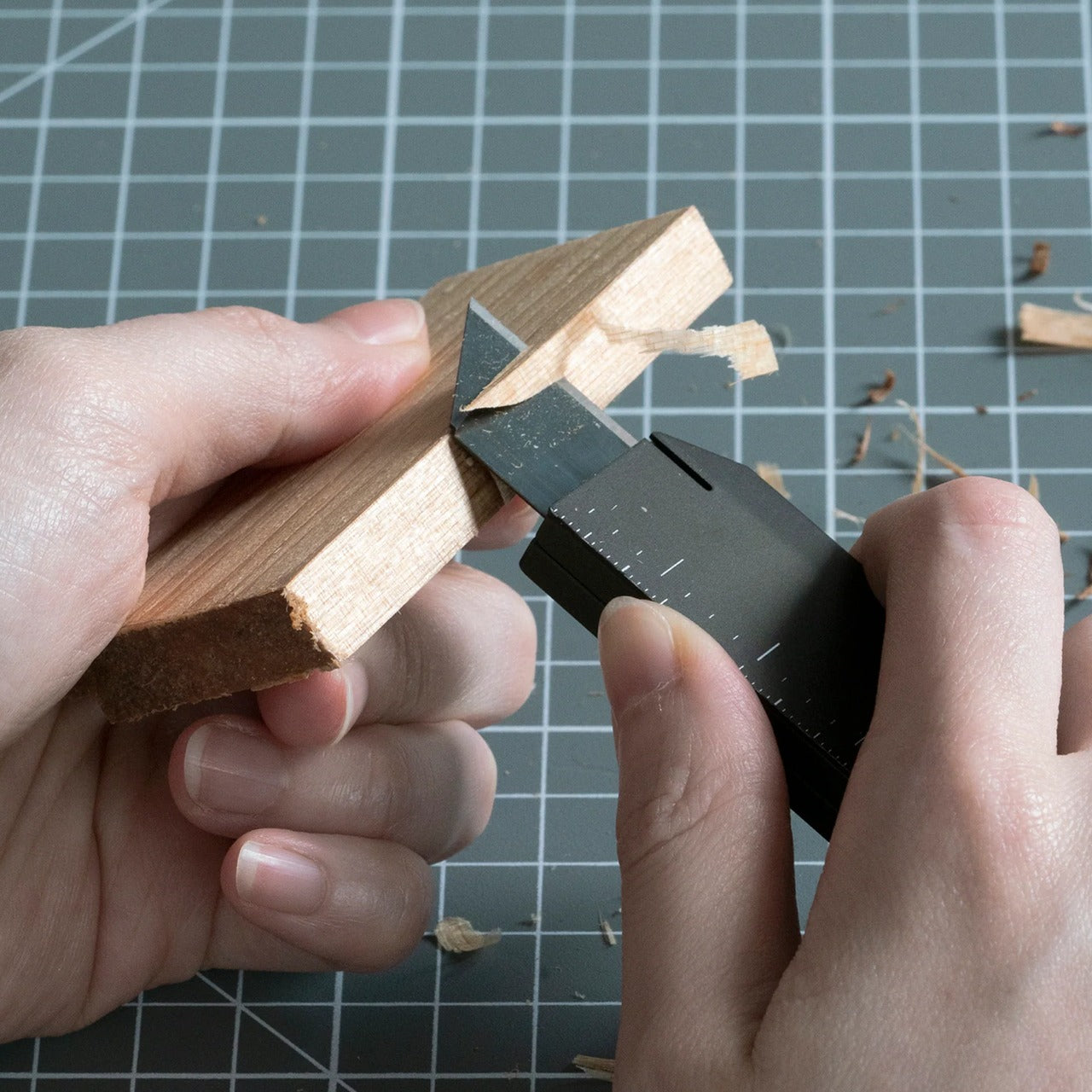
5 Best Foldable Phone Concepts We’re Still Waiting To See At MWC 2026

MWC 2026 is arriving in Barcelona next week under the theme “The IQ Era,” and the foldable conversation has never had more momentum behind it. The worldwide foldable smartphone market is forecast to grow 30% year-over-year in 2026, and with names like Samsung, Apple, and HONOR all moving pieces on the same board, the show floor feels electric. The race isn’t just about who ships first; it’s about who ships something worth keeping.

But the most interesting foldable ideas rarely make it to the keynote stage. Some live in patents. Some debut at design expos and disappear into concept archives. Others surface on design blogs and quietly accumulate a following of people who can’t stop thinking about them. These five concepts represent everything the foldable category could become if ambition and engineering ever fully agreed with each other. Barcelona feels like the right backdrop for that conversation.

1. Nothing Fold (1) — The Foldable With a Spine That Speaks

Nothing has always understood that a phone is a surface before it is a device. The brand built its entire identity on making the invisible visible — circuit boards through glass, notification patterns through LEDs, and the Fold (1) concept carries that thinking directly into foldable territory. The Glyph Interface, Nothing’s signature grid of programmable lights, doesn’t just live on the back panel here. It wraps around the spine, and at boot, it traces the number “1” across the edge like a signature being written in real time.

Once the phone is running, the spine transforms into something genuinely new: a monochrome ticker-tape display that scrolls live notifications along the fold without requiring the user to open anything or wake a screen. Inside, an 8.37-inch display gives the Fold (1) the kind of canvas that makes a book-style foldable feel worth carrying. A MediaTek Dimensity 9400 chip handles the processing alongside a dedicated neural unit for on-device AI, while a 5,500mAh battery keeps the whole system running well past a single day. Five cameras — split across the rear, the spine-side flap, and dual hole-punches on both displays — mean no shooting scenario goes uncovered. This is a concept that treats the fold itself as a feature rather than a compromise.

What We Like

  • The spine-mounted ticker display turns passive notification delivery into an active design statement that no shipping foldable currently replicates.
  • Pairing a 5,500mAh battery with a power-efficient flagship chip gives this concept the endurance its ambitions genuinely require.

What We Dislike

  • Five cameras on a foldable form factor raise legitimate questions about thickness — the hardware demands and the slim silhouette are in direct tension.
  • Nothing OS remains a compelling but narrow platform, and its app ecosystem still asks more patience from users than mainstream Android does.

2. 0/1 Phone — The Foldable That Knows When to Go Quiet

Most digital wellness tools are built on a contradiction. They ask sthe oftware to solve a problem that the software created. The 0/1 phone cuts through that logic by putting the solution in the hardware itself. Closed, the phone presents an e-ink display — customizable with analog clock faces, a calendar, a music player, or whatever belongs in a calmer version of a day. There are no feeds to scroll, no notifications engineered to demand attention, no app icons arranged to maximize tap frequency. Just the time, and whatever you decided mattered before distraction had a vote.

Open it, and the phone becomes something else entirely. A flexible display running at 1080×2640 resolution gives full access to every app, every platform, every habit the closed state was holding at arm’s length. The transition between modes isn’t managed by a screen time setting buried in a menu; it’s a physical gesture. Closing the phone is the act of choosing focus, and opening it is a deliberate decision rather than a reflexive one. That distinction sounds small until you’ve spent a week with a phone that makes you conscious of every time you reach for it. The 0/1 concept understands that people don’t want less technology. They want better control over when it starts.

What We Like

  • Mapping distraction-free mode to a physical action rather than a software toggle is a smarter and more honest approach to attention management.
  • Customizable e-ink clock faces give the closed state genuine personality, making minimalism feel like a choice rather than a penalty.

What We Dislike

  • E-ink displays still lag on refresh rate and struggle with colour depth, which could make the closed-state experience feel dated compared to what users are used to.
  • Building a dual-display device that stays genuinely slim is a serious engineering challenge, and added bulk would directly undermine the concept’s entire premise.

3. Samsung L-Fold Patent — The Tetris Block the Industry Wasn’t Ready For

Samsung’s patent library is enormous, and most of what lives inside it will never become a product. But occasionally something surfaces that reframes what a foldable phone could look like at a structural level. The L-shaped concept — which, unfolded, mirrors the elongated corner-piece of a Tetris grid — is one of those designs. The top section of the display extends to one side and then folds back on itself like a flap, bringing the phone from an asymmetric L-shape into a more conventional rectangle. It’s a transformation that takes about a second to understand and considerably longer to stop thinking about.

What makes the concept genuinely interesting isn’t the shape — it’s what the folded flap can do once it’s in position. Facing outward alongside the main cameras, it becomes a live viewfinder, letting users frame selfies through the primary camera array rather than a secondary front-facing sensor that typically offers a fraction of the optical quality. The curved strip of display wrapping the spine edge serves as an ambient information surface — battery level, the time, notification tickers — visible without waking the main screen. It draws an obvious comparison to the LG Wing’s T-shaped swivel design, but the folding mechanism introduces a layer of versatility that the Wing could never access. The L-fold isn’t trying to be novel. It’s trying to be useful in ways the rectangle hasn’t figured out yet.

What We Like

  • A folded flap that doubles as a selfie viewfinder for the main cameras is one of the most practically useful ideas to emerge from any foldable concept in recent memory.
  • The spine-edge ambient display strips away the need to fully wake the phone for low-stakes information — a subtle but genuinely valuable interaction shift.

What We Dislike

  • Asymmetric form factors demand new muscle memory from users, and history suggests the mass market is slow to warm to anything that doesn’t fit an established shape.
  • Samsung patents ideas prolifically, and the distance between a filed concept and a retail device is wide enough that this design may never leave the archive.

4. OPPO x nendo Slide-Phone — The Triple-Fold That Earns Every Stage

When OPPO partnered with Japanese design studio nendo for the slide-phone concept, the goal wasn’t to make a foldable that could compete on spec sheets. The goal was to design a phone that understood how humans actually move through a day — glancing, then engaging, then working — and matched each state with exactly the right amount of screen. The mechanism unfolds in three progressive steps, each one surfacing a different display area calibrated to a specific type of task. Nendo described the motion as caterpillar-like, and the metaphor holds. This phone doesn’t hinge open. It extends with intention.

The first stage reveals 1.5 inches of display, enough for a notification glance, music control, and an incoming call. The second opens to 3.15 inches, suited to photography, video calls, and light gaming. The third and final stage unlocks the full 7-inch widescreen panel, wide enough to run on-screen game controllers across both flanks simultaneously or to frame a proper panoramic shot. A stylus is included, pushing the concept firmly into professional productivity territory. What distinguishes this design from every other multi-fold proposal isn’t the screen count; it’s that each screen size exists for a reason. That level of purposefulness in a concept is rarer than it sounds, and it’s exactly the kind of thinking MWC 2026 needs more of.

What We Like

  • Three screen sizes, each assigned to a specific use context, is the most functionally coherent multi-fold proposal the category has produced.
  • The OPPO x nendo collaboration brings genuine design philosophy to a product type that has historically been defined by engineering decisions alone.

What We Dislike

  • Three-fold points mean three mechanical vulnerabilities, and the durability science around multi-fold hardware still hasn’t caught up to the ambition.
  • The credit card form factor, when fully closed, is irresistible in theory, but the real-world pocketability of a 7-inch unfolded device still requires a convincing answer.

5. TCL Fold ‘n’ Roll — The Concept That Refused to Choose a Size

Every other foldable phone on this list commits to a fixed set of screen configurations. The TCL Fold ‘n’ Roll doesn’t. Using a combination of the brand’s proprietary dragonhinge folding mechanism and a rollable panel that extends from the chassis, the device starts as a 6.87-inch smartphone, unfolds into an 8.85-inch phablet, and then rolls out fully to become a 10-inch tablet. Three screen sizes. One device. No trade-off required. As a concept, it reads less like a product proposal and more like a direct challenge issued to every manufacturer in the room.

TCL was candid about the technical specifications still being in development when the concept was first revealed — an admission that actually made the idea more credible, not less. It signalled a team working through real problems rather than rendering a fantasy. The rollable display space has since moved meaningfully closer to commercial viability, and with the broader foldable market accelerating sharply heading into 2026, the engineering distance between this concept and a shippable product is closing. The dragonhinge gives the Fold ‘n’ Roll a mechanical foundation most conceptual devices lack. What it still needs is a manufacturer willing to see the build all the way through, and a Barcelona stage to announce it from.

What We Like

  • Phone, phablet, and tablet in a single chassis is the most versatile screen configuration concept the foldable category has put forward to date.
  • The dragonhinge technology gives this proposal a legitimate engineering backbone, separating it from pure speculation.

What We Dislike

  • Combining folding and rolling mechanisms in one device layers mechanical complexity that no manufacturer has yet solved at the consumer scale.
  • TCL has introduced multiple foldable concepts across several years, and relatively few have made the jump from concept to shelf, which tempers excitement with reasonable caution.

The Floor Is Set — Now Someone Has to Build It.

MWC 2026’s “The IQ Era” framing is ultimately about intelligence meeting design, and these five concepts each demonstrate what that looks like when executed with real conviction. One bets on identity and spectacle. One bets on restraint. Another bets on geometric reinvention, one on human-centric layering, and the last on sheer configurability. The foldable market expanding 30% year-over-year isn’t a coincidence; it reflects a growing recognition that the rectangle-shaped smartphone has stopped being interesting.

Not all of these concepts will ship. Some may arrive in forms barely recognizable compared to the original vision. But the questions they ask…about how a phone should behave when closed, how many screens a device actually needs, whether a hinge can carry a brand identity, are already changing how the industry thinks.

The post 5 Best Foldable Phone Concepts We’re Still Waiting To See At MWC 2026 first appeared on Yanko Design.
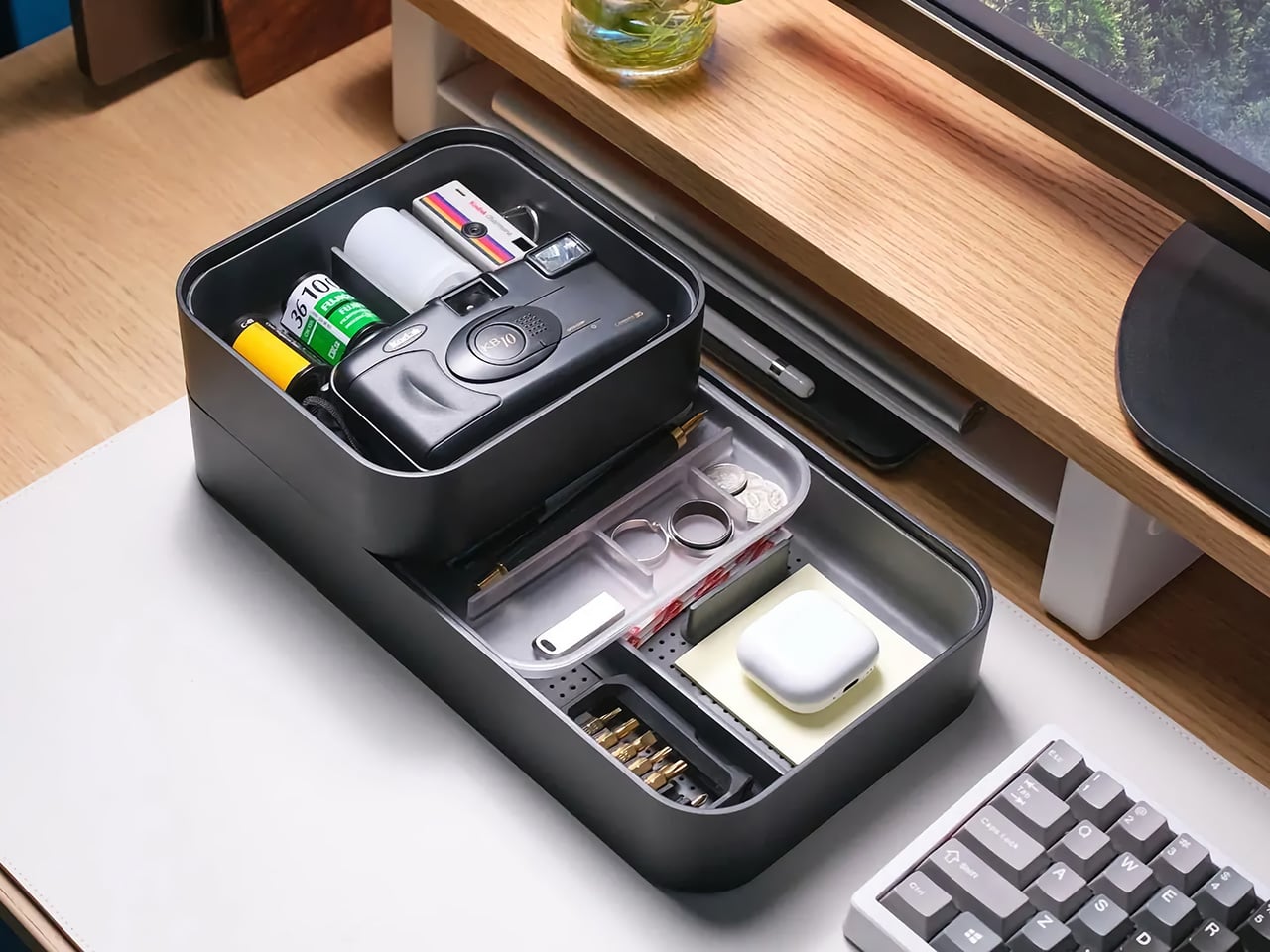
5 Best Third-Party PlayStation Controllers That Actually Beat Sony’s DualSense in 2025

The DualSense arrived with something to say. Adaptive triggers, nuanced haptics, a tactile language that made games feel physically present in your hands — it raised the bar in ways the industry hadn’t anticipated. For a while, nothing else came close. That window has closed. The third-party market in 2025 is no longer playing catch-up. It’s producing controllers with drift-proof magnetic sensors, modular physical architectures, trigger calibration measured in millimeters, and battery lives that nearly triple what Sony ships as standard. The gap has flipped.

The Goo-inspired concept controller at the top of this page is a glimpse at where peripheral design is reaching — fluid, sculptural, unresolved in the best way. It hasn’t shipped. What’s below has. Every controller in this roundup is available now, purpose-built around a specific performance argument, and doing at least one thing the DualSense doesn’t. If you’ve stuck with the stock pad out of habit, these five make a clear case for reconsidering that.

1. Razer Raiju V3 Pro

Razer’s pitch with the Raiju V3 Pro is precise: take the sensor thinking behind their best gaming mice and transplant it into a PlayStation-compatible controller. The result is Tunnel Magnetoresistance thumbsticks — TMR —, and as of 2025, no other PS5 controller ships with them. Where the Hall Effect uses magnetic fields to read position, TMR uses weak electromagnetic waves to detect even finer movement with greater resolution. Drift is resolved at a hardware level, not managed in software. Hall Effect triggers cover the other high-wear surface, meaning every primary input on this controller is engineered against degradation from the start. At 258 grams, it sits lighter than the DualSense Edge without feeling hollow, and the wider grip reduces hand strain across longer sessions.

Six extra inputs are distributed across the frame — four removable back buttons in the rubberized handles and two claw-grip bumpers flanking the triggers — all fully remappable to whatever a specific game demands. Razer’s HyperSpeed 2.4GHz wireless holds latency tight, with a polling rate that climbs to 2,000Hz on PC, a number Sony’s controllers don’t approach. Battery life is rated at 36 hours, nearly triple the DualSense standard. It’s officially licensed for PlayStation 5, requires no adapters, and connects as a native peripheral. For competitive players who want every hardware advantage consolidated in one place, the Raiju V3 Pro is currently the ceiling.

What We Like

  • TMR thumbsticks are unique to this controller in the PS5 space, resolving drift at a sensor level that Hall Effect doesn’t reach.
  • A 36-hour battery life and 2,000Hz PC polling rate are specifications Sony’s lineup has no current answer to.

What We Dislike

  • Haptic feedback and adaptive triggers are absent — a real trade-off for anyone whose gaming skews toward immersive, story-led experiences.
  • The symmetrical thumbstick layout is a deliberate competitive choice that won’t feel native to players raised on PlayStation’s standard asymmetric positioning.

2. Nacon Revolution 5 Pro

The Revolution 5 Pro starts from a principle the DualSense never acted on: if magnetic sensor technology stops drift, why limit it to the thumbsticks? Nacon applies the Hall Effect to the triggers as well, covering every primary contact surface in a single design. No stick drift, no trigger wear, no gradually worsening feel over months of use. The asymmetric layout mirrors the DualSense’s familiar posture closely enough that the transition is immediate, and the premium materials wrapped around the modular frame feel considered rather than compensatory. It’s officially licensed for PlayStation 5 and built around the ergonomics of long sessions rather than short competitive bursts.

Customization is both deep and accessible. Four profiles can be switched directly on the controller without opening a companion app, though the app itself offers trigger sensitivity curves, deadzone tuning, and full button remapping with genuine precision. Interchangeable thumbstick sizes and adjustable internal weights let players calibrate the physical feel to their own preference. A standout feature that no other controller on this list includes is built-in Bluetooth audio output, letting players pair headphones directly to the controller rather than routing through the console. The Revolution 5 Pro was also designed around a reduced carbon footprint — a thoughtful distinction for a product category that rarely acknowledges it.

What We Like

  • Hall Effect across both sticks and triggers makes this one of the most mechanically durable pro controllers on the market right now.
  • Built-in Bluetooth audio pairing is a friction-reducing feature that no Sony controller — at any price — currently provides.

What We Dislike

  • Haptic feedback and vibration don’t function during PS5 gameplay, which strips out a meaningful portion of the DualSense’s native experience.
  • The profile and customization system has a learning curve that requires time to work through before its full value becomes accessible.

3. SCUF Reflex Pro

SCUF has spent years earning credibility with competitive console players, and the Reflex Pro is the most technically resolved version of that commitment. The 2025 lineup integrated Hall Effect anti-drift thumbsticks as standard hardware, closing the mechanical gap that had followed the Reflex series across previous generations. Wireless performance is clean, adaptive triggers function as expected on PS5, and vibration rumble stays intact — a combination that most third-party alternatives compromise somewhere along the way. The physical form follows the DualSense’s geometry closely enough that picking it up for the first time feels instinctive. It’s built for precision longevity first, familiarity second, and it delivers both.

The rear paddle system is where the Reflex Pro makes its case most directly. Four fully assignable paddles run along the underside of the controller, each mappable to any function that would otherwise require lifting a thumb from the sticks — jump, reload, slide, crouch, anything the game demands. Your aim stays unbroken at the exact moments it matters. Sony’s DualSense Edge, the first-party pro option, ships with two back buttons at a higher price. The Reflex Pro ships with four. SCUF also offers a Build Your Own path that opens TMR thumbstick selection at the point of purchase, giving players the option to match or exceed the Raiju V3 Pro’s sensor performance inside a controller that keeps full haptic and adaptive trigger compatibility.

What We Like

  • Four fully assignable rear paddles outperform the DualSense Edge’s two-button setup — more inputs, better placement, and a lower price.
  • Hall Effect thumbsticks are now standard across the line, making long-term stick accuracy a structural strength rather than a premium option.

What We Dislike

  • At $269.99, the base configuration is a steep ask for players whose gaming doesn’t warrant a competitive-grade investment.
  • Selecting TMR thumbstick upgrades through the Build Your Own path increases the total cost meaningfully from an already high starting point.

4. Victrix Pro BFG Wireless

The Victrix Pro BFG Wireless asks a question most controller manufacturers skip entirely: what if the hardware itself could physically reconfigure to match the way you play? The left module is reversible, allowing a shift between PlayStation’s asymmetric thumbstick layout and an Xbox-style offset arrangement by physically swapping a component. Three D-pad options, four interchangeable thumbsticks, four gate options, and a six-button fight pad module fitted with Kailh microswitches extend that physical adaptability into nearly every directional and action input on the controller. The Reloaded refresh, released ahead of EVO 2025, upgraded both sticks and triggers to Hall Effect simultaneously. No other officially licensed PS5 controller — from Sony or anyone else — offers this degree of physical reconfiguration.

The trigger system is one of the more thoughtfully executed on this list. Patented Clutch Triggers offer five discrete stop positions and a hair trigger mode, giving players direct control over how much travel occurs before an input registers. In shooters where response time separates outcomes, that level of calibration is a measurable variable, not a theoretical one. Four mappable back buttons extend the input count further, while the free Victrix Control Hub app handles button remapping, stick sensitivity, and deadzone adjustment without subscriptions or forced account creation. The controller supports wireless play via USB dongle and wired connection for tournament-legal, zero-latency use — two modes of play, one controller, no compromises on either.

What We Like

  • A reversible left module that physically changes thumbstick layout is a feature category that the DualSense and DualSense Edge both entirely ignore.
  • Five-stage Clutch Triggers with hair trigger mode offer trigger precision that Sony’s pro controller doesn’t come close to replicating.

What We Dislike

  • The breadth of customization options means real time must be invested in the companion app before the hardware’s full potential opens up.
  • Wireless operation runs through a USB dongle rather than Bluetooth, adding a setup step that console-first players may find less convenient.

5. HexGaming Phantom Pro

Most controllers on this list ask for a trade. Usually, it’s haptic feedback, adaptive triggers, or both — the two features most central to what makes the DualSense feel like a DualSense. The HexGaming Phantom Pro doesn’t make that trade. Built on genuine Sony DualSense internals, it keeps adaptive triggers and haptic feedback fully intact. What it layers on top is everything Sony declined to include: Hall Effect joysticks, four tactile back buttons with a precise clicky actuation, adjustable trigger stops, and a physical toggle that switches between adaptive and digital trigger modes on the fly — shifting the same controller between immersive single-player feel and FPS-optimized speed without any software interaction. It’s the controller Sony had the components to build and chose not to.

The detail work is thorough. Eight interchangeable thumbsticks — concave, domed, and extended — let players configure grip geometry to their actual hand shape rather than an assumed standard. Digital triggers travel 1.5 to 2mm before actuating, delivering mouse-click response times for FPS gameplay where that matters. Six swappable profiles handle game-specific configurations on the fly, and the standard version includes a DriftFix system that lets axis deviation be corrected within a 0.12 range without hardware replacement — a calibration tool no stock controller offers. The controller ships as a complete kit with a carrying case and a charging cable. For players unwilling to give up what makes the DualSense good, this is the only way to also gain what it consistently gets wrong.

What We Like

  • Sony internals mean adaptive triggers and haptics are fully preserved — the only controller on this list that doesn’t require trading them away.
  • A physical toggle between adaptive and digital trigger modes is a genuinely smart addition that no competitor, first-party or third, provides.

What We Dislike

  • The base price of $229 is a high entry point, and the Hall Effect configuration — the one worth choosing — costs more.
  • No dedicated 2.4GHz wireless connection is a gap for players who prioritize wireless performance above the Bluetooth standard.

The DualSense Didn’t Lose. It Just Has Real Competition Now.

Sony built something worth building. The DualSense’s haptic system and adaptive triggers still represent a design vision few peripherals have matched on those specific terms. But hardware doesn’t hold its position by standing still, and in 2025, the third-party market demonstrated it doesn’t have to wait for Sony to move first. TMR sensors, Hall Effect triggers, physical modular reconfiguration, multi-stage trigger calibration — these aren’t experimental features on concept renders. They’re in production, reviewed, and on shelves.

These five controllers are what’s available right now. Whether the priority is maximum input precision, mechanical longevity, total configurability, or keeping every DualSense feature while gaining everything it withholds, the answers exist. The default option is still a good one. It’s just no longer the only one worth considering.

The post 5 Best Third-Party PlayStation Controllers That Actually Beat Sony’s DualSense in 2025 first appeared on Yanko Design.
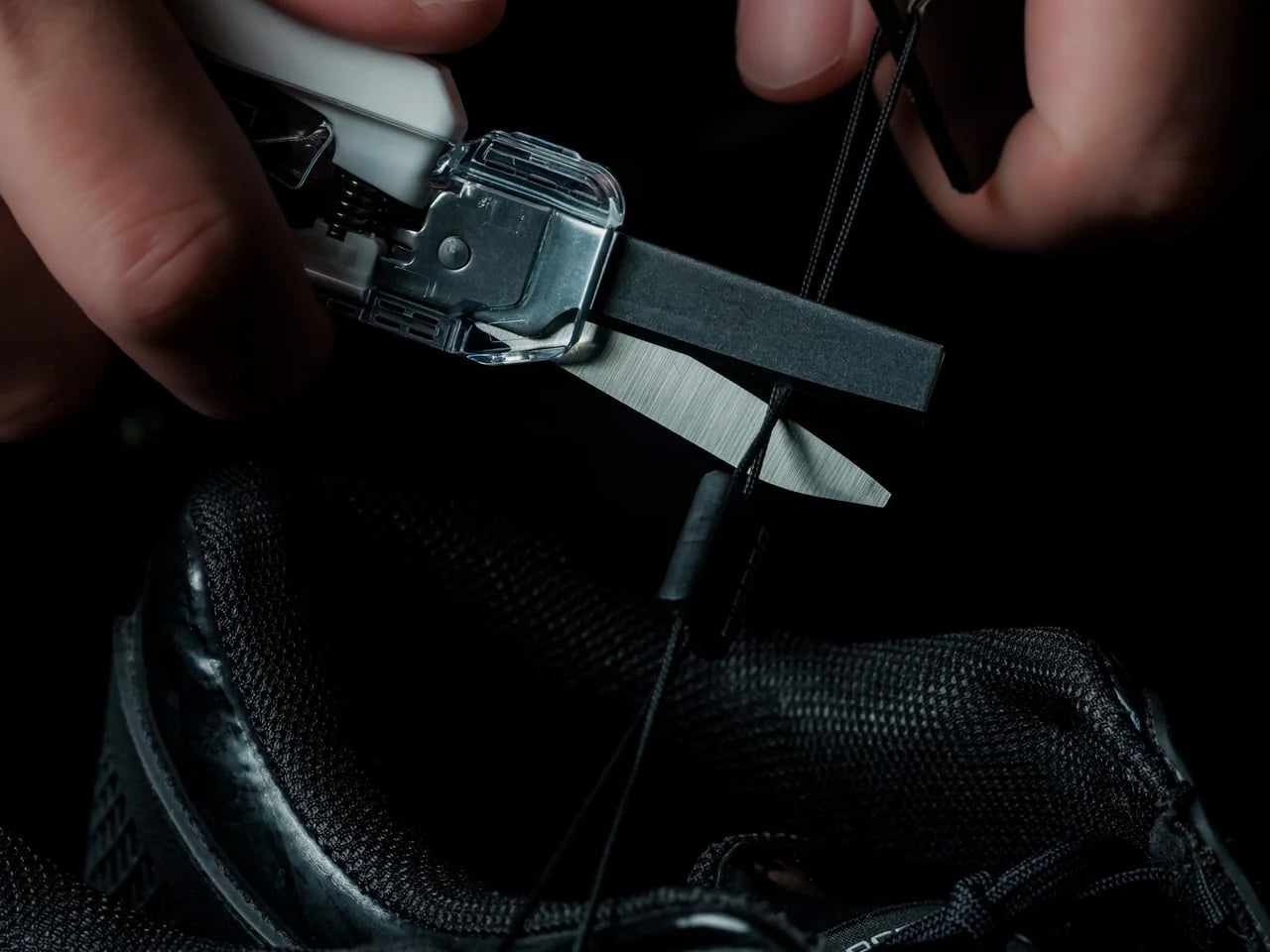
Top 5 Japanese Kitchen Knives Under $200 That Professional Chefs Use at Home – Not the Ones They Recommend for Commission

Most knife recommendations come with a quiet asterisk. A brand deal, a commission link, a product sent to a chef’s PO box before the review goes live. What gets left out of that conversation is what the same chef keeps in the drawer at home — the blade they reach for on a Sunday morning when nobody is filming. Japanese knives occupy a rare space where craft, material science, and design intersect, and choosing one well changes the way you cook in ways that are difficult to articulate until you’ve experienced it.

The five knives on this list were chosen for what they do rather than how loudly they market themselves. Some are visually striking in ways that stop you mid-prep, others are quietly exceptional tools that earn no attention but demand all the respect. All of them sit in a price range that rewards cooks who pay attention. Under $200, the Japanese knife category is genuinely competitive, and every pick below earns its place through steel quality, blade geometry, and the kind of design honesty that paid recommendations rarely manage.


1. Black Kitchen Knives

Seki, Japan, carries centuries of blade-making heritage that predates the modern kitchen entirely. The same region that once shaped swords for samurai now produces knives for home counters, and Yanko Design’s pitch-black series makes that lineage feel entirely current. Crafted from molybdenum vanadium steel with a titanium coating, each blade arrives in a matte black finish that is as functional as it is striking. The coating isn’t cosmetic theater — it contributes to durability and surface longevity while making the knife one of the most visually distinctive tools you can introduce to a kitchen without overhauling anything else.

Available in Santoku, Gyuto, and Petty styles, the series covers the full range of tasks that most home kitchens genuinely require. Each blade is crafted individually by a craftsman using a full-scale double-edged grind, which means the cutting geometry is precise rather than approximate. For anyone who has spent time thinking carefully about the objects they interact with daily and expecting those objects to have a point of view, these knives deliver it plainly. Food prep becomes something more considered when the tool in your hand looks like it was made with intention. That shift in feeling is not trivial.

Click Here to Buy Now: $99.00

What We Like

  • The titanium-coated black finish is striking and purposeful, contributing to durability rather than just aesthetics.
  • Each blade is handcrafted individually, giving it the qualities of a bespoke object rather than a factory product.
  • Three blade profiles available mean there is a version here suited to nearly every cutting preference.

What We Dislike

  • The dramatic visual identity demands deliberate care and proper storage to preserve the finish over the years of use.
  • Titanium-coated surfaces can show wear differently from bare steel if not cleaned and maintained with attention.

2. Sakai Takayuki KUROKAGE VG10 170mm

KUROKAGE translates to “dark shadow,” and the name earns its credibility from the first moment you pick the knife up. Sakai Takayuki’s fluorine resin coating on the VG-10 blade creates a surface that food simply refuses to cling to, and that quality changes the pace of prep work in surprisingly immediate ways. The hammered concavo-convex texture of the blade reinforces the non-stick effect physically, creating a topography of dimples that reduces contact between steel and ingredient. Pair that with a VG-10 core hardened to 60-61 HRC, and the edge retention consistently outperforms most knives at twice this price range.

Where the KUROKAGE separates itself further is in the details surrounding the blade. The half-rounded octagonal wenge wood handle with a buffalo horn ferrule signals genuine consideration for how a knife is held over time, not merely how it photographs. Each knife is hand-sharpened before leaving the factory, which means out-of-the-box performance is immediate. There is no break-in period, no first session on the whetstone to get it where it should have arrived. For cooks who want a knife that performs as though it were made with a specific user in mind, this is the closest that experience gets at this price.

What We Like

  • Fluorine resin coating paired with hammered dimples creates food release that genuinely speeds up the rhythm of prep.
  • VG-10 steel at 60-61 HRC delivers edge retention that outlasts chrome molybdenum alternatives, including the respected MAC non-stick line.
  • The wenge wood and buffalo horn handle is refined in a way that feels earned rather than decorative.

What We Dislike

  • The Teflon finish requires careful storage and non-abrasive cleaning to avoid surface damage over the years of heavy use.
  • The matte tones of both blade and handle show fingerprints more readily than polished steel finishes do.

3. Yoshihiro VG-10 16-Layer Hammered Damascus Nakiri 165mm

Vegetable-forward cooking has a dedicated tool, and most people discover it far later than they should have. The Nakiri, with its flat rectangular edge and full blade contact along the cutting board, makes push cuts through anything from dense root vegetables to ripe summer tomatoes faster and more precisely than any standard chef’s knife allows. Yoshihiro’s 16-layer hammered Damascus version, built around a VG-10 core, adds a visual dimension to that functionality that turns the blade into something genuinely close to an object of craft. The hammered surface reduces friction during each cut, preventing food from sticking and maintaining a clean, fluid motion through the board.

The Western-style mahogany handle extends to the full tang, giving the knife a solidity that feels well-considered for sustained daily use. Certified for commercial kitchens and handcrafted by master artisans, each blade carries Damascus layering that produces a pattern unique to that specific knife. No two are exactly alike — a meaningful distinction in an era of mass production. Whether you’re moving through greens for a salad or working down a pile of root vegetables for a slow braise, the Yoshihiro Nakiri makes even the most routine prep feel like something worth approaching carefully and with the right tool.

What We Like

  • The 16-layer hammered Damascus pattern is genuinely beautiful, with layering unique to each blade.
  • The flat Nakiri edge creates more consistent and precise vegetable cuts than a standard chef’s knife profile allows.
  • Full tang mahogany handle delivers solid balance and structural durability across extended prep sessions.

What We Dislike

  • The Nakiri is a specialist vegetable blade and is not the right choice for someone seeking a single all-purpose knife.
  • Damascus finishes require mindful maintenance to preserve both the edge geometry and the layered surface over time.

4. Tsunehisa VG1 Nakiri 165mm

Most knives in this price category top out at VG-10 as their steel of choice, and for good reason — VG-10 is excellent. The Tsunehisa VG1 Nakiri makes a more ambitious material decision. VG-1 steel, enriched with carbon, chromium, cobalt, molybdenum, and vanadium, offers a level of edge retention and sharpness that positions it as a meaningful step above the standard category offering. For a cook who sharpens their own knives and understands what they are working with, the reward is a blade that holds its edge through longer prep sessions before it asks to be returned to the stone.

The design of this knife is deliberate in its restraint, and that restraint is its strongest visual statement. There is no hammered finish, no Damascus drama, no surface treatment that distracts from the blade itself. What remains is the clean rectangular profile of the Nakiri geometry, engineered precisely for vegetable work, and a blade that carries the quiet confidence of a tool that knows exactly what it is. For kitchens that value precision over performance, and for cooks who find more satisfaction in a blade that earns attention through cutting rather than appearance, the Tsunehisa makes an entirely compelling case.

What We Like

  • VG-1 steel goes beyond what most competitors in this price range offer, making it a genuinely elevated material choice.
  • The clean, architectural aesthetic feels intentional and considered rather than understated by default.
  • Enrichment with cobalt, molybdenum, and vanadium produces exceptional hardness and long-term structural durability.

What We Dislike

  • The higher hardness of VG-1 steel can make the blade slightly more brittle than softer stainless alternatives if used carelessly on hard surfaces.
  • The restrained design will leave buyers expecting visual drama feeling underwhelmed by appearance alone.

5. SOUMA (Fujiwara Kanefusa) FKM Santoku 180mm

Every list of knives needs one that a seasoned cook would recommend to someone they genuinely care about, rather than someone they want to impress. The SOUMA FKM Santoku, formerly known under the Fujiwara Kanefusa name and recently rebranded without changing what has always made it reliable, is that knife. Made from AUS-8 molybdenum vanadium stainless steel, it delivers cutting performance, rust resistance, and ease of re-sharpening in a combination that makes daily kitchen use genuinely uncomplicated. The Santoku profile, with its tall blade and rounded tip, moves through meat, fish, and vegetables with equal ease and no change in technique required between tasks.

The black pakkawood handle and stainless steel bolster keep the visual profile composed and professional, and the bolster is positioned to distribute weight exactly where the hand expects it during longer prep sessions. This is the knife that sits beside significantly more expensive blades in the same kitchen without apologizing for its price. For first-time buyers of Japanese knives who want something honest rather than showy, the SOUMA FKM is the answer that experienced cooks would give if they weren’t being paid to say something else. Reliable, well-built, and priced in a way that leaves room to build further as the relationship with good knives deepens.

What We Like

  • AUS-8 stainless steel is genuinely easy to sharpen and maintain, making it accessible without feeling like a compromise.
  • The tall Santoku blade handles meat, fish, and vegetables with equal competence and no adjustment in grip or technique.
  • Black pakkawood handle and stainless bolster give it a clean, professional appearance in any kitchen setting.

What We Dislike

  • AUS-8 steel won’t hold an edge as long as VG-1 or VG-10, so it requires slightly more frequent attention on the whetstone.
  • The intentionally understated design lacks the visual presence of the other knives on this list.

The Sharpest Decision You’ll Make in the Kitchen

Japanese kitchen knives are one of the few purchases where the return on investment is felt with every single meal. Each knife on this list was chosen because it earns its place through material quality, considered design, and a level of performance that changes the way you move through a recipe. Whether you gravitate toward the visual authority of the KUROKAGE, the Damascus craftsmanship of the Yoshihiro, or the pitch-black confidence of the Yanko Design series, the difference a well-chosen blade makes is immediate and lasting.

The specifics of which knife fits best depend entirely on how you cook. A Nakiri for kitchens that treat vegetables as the main event, a Santoku for cooks who need a single versatile blade that handles everything without fuss, and the Yanko Design series for those who believe that every object on the counter should carry as much intention as the food being prepared on it. The list starts here. Where you go next depends on what you find yourself reaching for first.

The post Top 5 Japanese Kitchen Knives Under $200 That Professional Chefs Use at Home – Not the Ones They Recommend for Commission first appeared on Yanko Design.