What happens when a tech giant sounds the alarm? OpenAI’s recent declaration of a “Code Red” has sent ripples through the artificial intelligence industry, signaling a moment of intense urgency and recalibration. Once the undisputed leader in conversational AI, OpenAI now faces mounting pressure from rivals like Google and Anthropic, whose advancements threaten to outpace […]
Apple has officially released macOS 26.2 Release Candidate, a comprehensive update designed to enhance the functionality and performance of your Mac. This update introduces a range of new features, app improvements, and system-level optimizations aimed at improving productivity and creating a more seamless user experience. Additionally, macOS 26.2 Release Candidate aligns with updates across Apple’s […]
Netflix is in exclusive talks to acquire Warner Bros. Discovery's film and TV studios and HBO Max streaming service, according to sources from Bloomberg. That suggests Netflix submitted a superior offer to rivals including Paramount Skydance Corp (owned by billionaire Larry Ellison) and Comcast, which owns NBCUniversal. The deal could be consummated within days and, if approved, would change the landscape of Hollywood and the streaming market.
Warner Bros. Discovery's cable channels including CNN, TBS and TNT, valued at more than $60 billion, would not be part of the deal and spun off prior to the closing. However, Netflix would become the owner of the HBO network and its library of series (The Sopranos, Game of Thrones, etc.), along with its Burbank studios and massive film and TV archive consisting of 12,500 feature films and 2,400 TV series, including properties like Batman, Lord of the Rings and Friends.
A big sweetener offered by Netflix was a $5 billion breakup fee if the deal isn't approved by regulators, according to people familiar with the discussions. That's a considerable risk on Netflix's part, as the acquisition is likely to be closely scrutinized by the FCC and even President Trump himself, who reportedly has close ties to Ellison. It would also need to pass muster with regulators from other nations, considering the wide reach of WBD and Netflix.
After multiple suitors, including Paramount Skydance expressed interest in buying Warner Bros. Discovery, CEO David Zaslav put the company up for sale in October. The bidding process has been heated, with Paramount's lawyers complaining that WBD "embarked on a myopic process with a predetermined outcome that favors a single bidder," namely Netflix. Paramount argued that its deal would be more palatable to regulators around the world.
However, Zaslav's camp has said that it would achieve the best value in a sale by splitting off its cable assets and doing two separate deals, CNN reported. Both Paramount Skydance and Comcast submitted deals to buy all of WBD's assets.
Netflix offered around $28 a share for WBD minus the cable assets, according to Deadline. Shares were as low as $7.50 earlier this year. The acquisition would be far and away the largest for Netflix, which has historically favored organic growth.
An acquisition could have a huge impact on streaming customers and filmgoers. Would Netflix merge its catalog with HBO Max or continue to run the latter as a separate service? It's also not clear if Netflix would honor Warner Bros.' commitment to theatrical releases, considering that Netflix CEO Ted Sarandos has called movie theatres an "outdated concept."
This article originally appeared on Engadget at https://www.engadget.com/entertainment/streaming/netflix-is-reportedly-in-exclusive-talks-to-acquire-warner-bros-and-hbo-082233278.html?src=rss
Have you ever found yourself wrestling with Excel formulas, wondering why your data retrieval isn’t working as expected? For years, Excel users have relied on VLOOKUP, a familiar and straightforward function, to pull information from their spreadsheets. But with the introduction of XLOOKUP, a newer and more versatile alternative, the game has changed. While VLOOKUP […]
Samsung continues to redefine the foldable smartphone market with the launch of the Galaxy Z Trifold. This device introduces a bold new design and enhanced functionality, setting it apart from its predecessor, the Z Fold 7. However, with a price tag that is 40% higher, the question arises. Is the upgrade worth it? By examining […]
What if your glasses weren’t just glasses? Imagine slipping on a sleek, lightweight pair that doesn’t just help you see the world, but transforms how you interact with it. The INMO Air 3 isn’t your typical pair of augmented reality (AR) glasses; it’s a fully self-contained device that redefines what wearable tech can do. Forget […]
What if creating apps, automating workflows, or designing surveys was as simple as having a conversation? With the latest advancements in Microsoft 365 Copilot, this isn’t just a bold claim, it’s the new reality. By introducing three new agents, App Builder, Workflows, and Surveys, Microsoft is reshaping how we approach productivity. These tools use the […]
Apple has officially rolled out the iOS 26.2 Release Candidate (RC), marking another significant step in its ongoing efforts to refine and enhance its software ecosystem. This update is now available to developers and public beta testers, focusing primarily on bug fixes, minor enhancements, and backend improvements. While it does not introduce major new features, […]
Apple’s iOS 26.2 brings over 30 new features and updates, designed to enhance usability, accessibility, and personalization. With improvements spanning interface design, app functionality, and region-specific tools, this update delivers a seamless and refined experience for users worldwide. Apple just released the iOS 26.2 Release Candidate and the final version of the software is expected […]
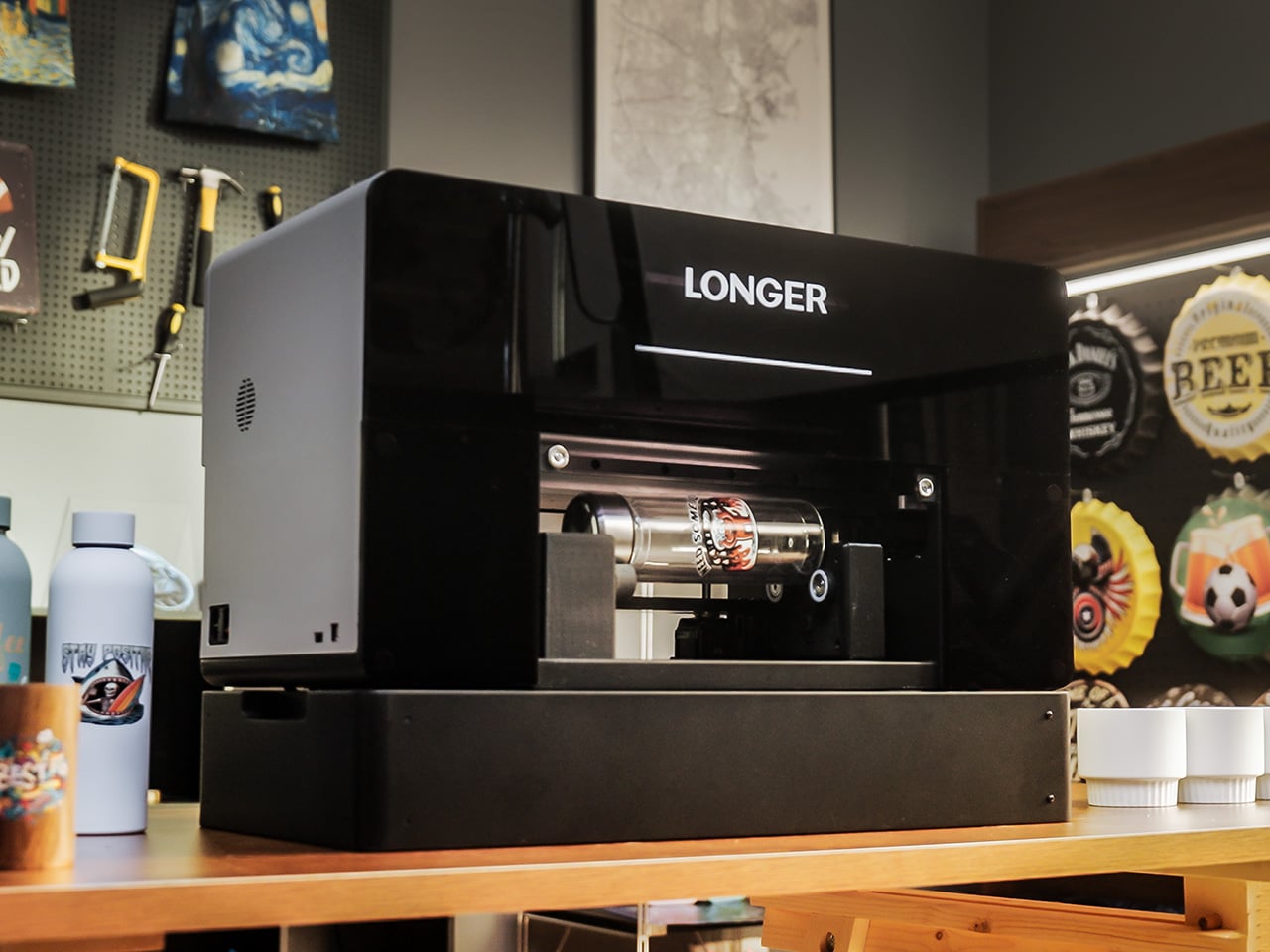
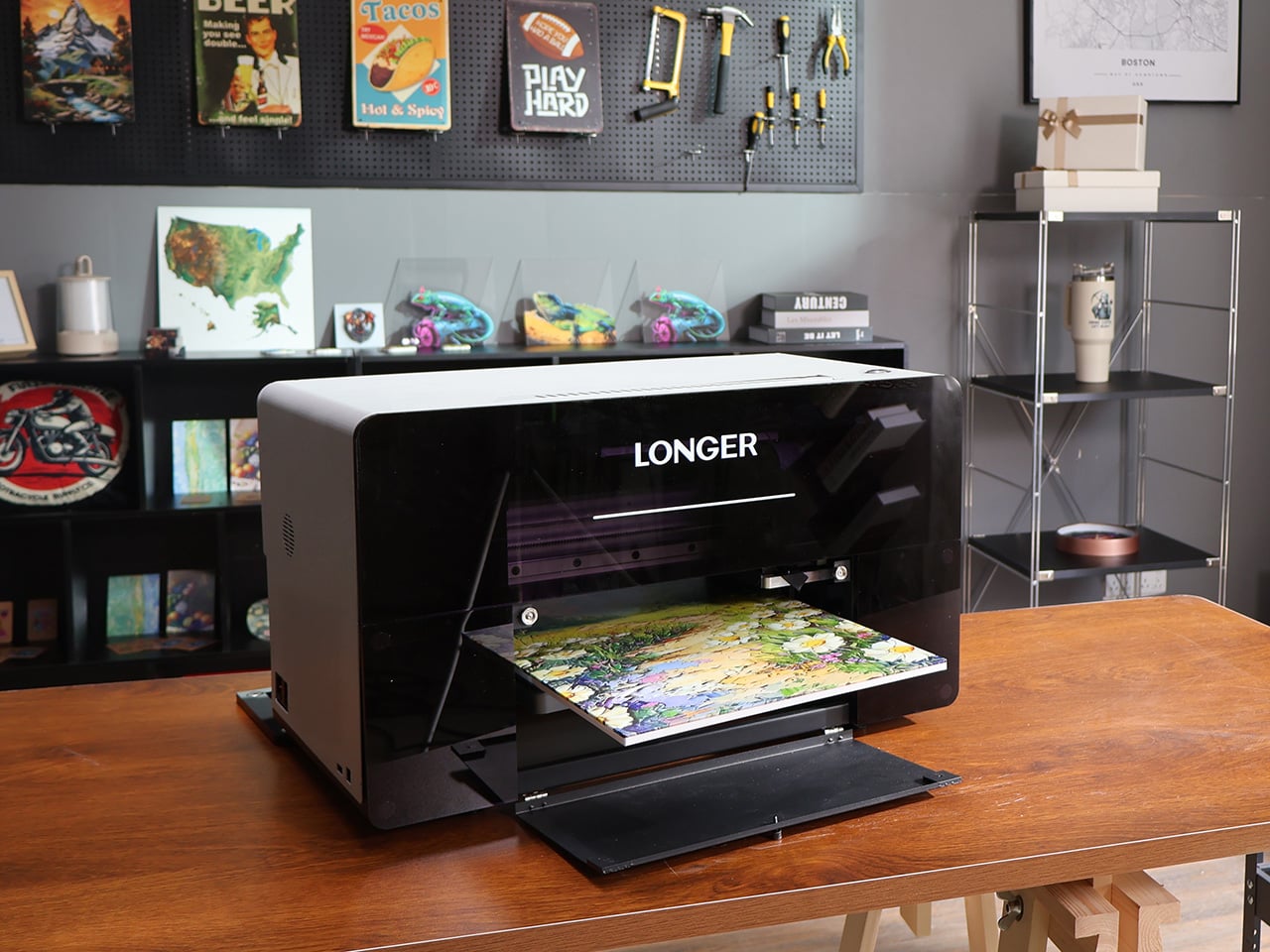
Last year, a consumer-focused UV printer made a remarkable splash on Kickstarter, marking the first time consumer UV printing made it to the big leagues. Now, LONGER ePrint enters the market, bringing unique innovation, a user-friendly experience, and highly competitive pricing to DIY enthusiasts, startups, and designers alike. Built for creative expression and customizable solutions. The campaign has already achieved an impressive $3.6 million in sales within its first week.
LONGER brings a decade of experience (and four successful crowdfunding campaigns) making 3D printers and laser engravers to this project, plus patents and research credentials from its MIT and Georgia Tech founding team. The ePrint’s headline feature is its dual-printhead design with 12 ink channels, which the company says delivers print speeds up to six times faster than single-head printers when laying down textured white ink layers. Add automated cleaning systems, white ink circulation to prevent clogging, and compatibility with third-party inks, and LONGER has assembled a feature set aimed squarely at cost-conscious small businesses.
LONGER runs 12 ink channels across two printheads in the full ePrint model: CMYK color plus six white channels and two varnish channels. Building up textured prints to the maximum 60mm height means laying down multiple passes of white ink. Six white channels working simultaneously stack ink six times faster than a single channel could manage. For flat printing without the texture work, the dual-head configuration cuts print time by 50 to 70 percent. At 1440 DPI resolution, print quality stays consistent while speeds improve.
Running a small custom merch operation means speed directly translates to how many orders you can fulfill in a day. Print a full-color design on a phone case and you’re looking at roughly 2 to 3 minutes at high quality settings, faster if you drop to balanced or draft modes. A dozen custom phone cases in under half an hour. Coasters, small signs, and similar flat items clock in at similar speeds. Want to add that 3D textured effect with raised logos or embossed details? That takes longer since you’re building up layers of white ink, but the dual printheads working together mean you’re still finishing pieces in reasonable timeframes rather than waiting hours per item. The 310mm by 420mm print bed accommodates most personal accessories and small merchandise. You’re not printing posters, but phone cases, drinkware graphics, small wooden signs, custom keycaps, personalized gifts, all the items that make up craft fair tables and Etsy shops fit comfortably.
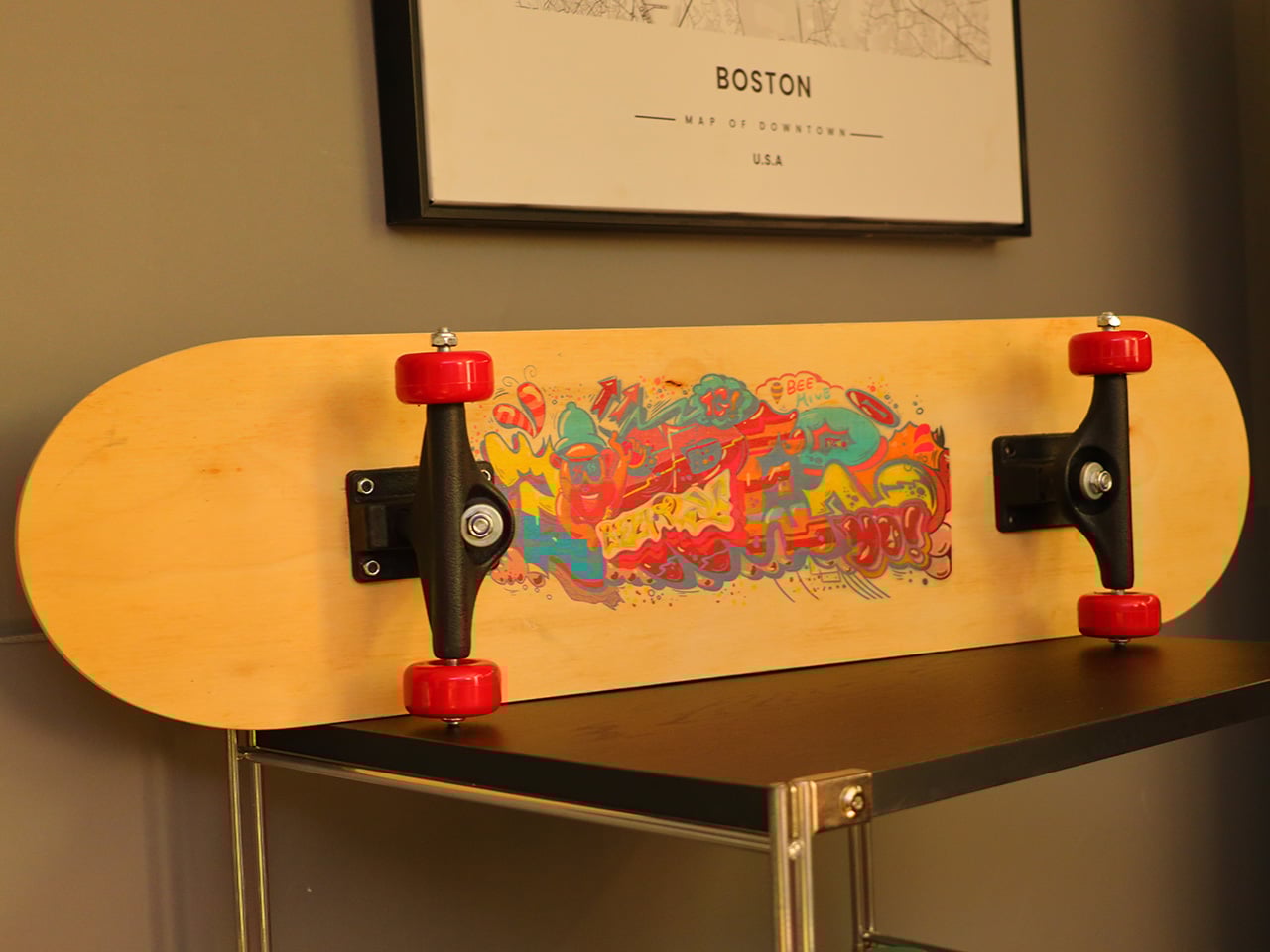
That 60mm embossing capability opens up applications beyond flat graphics. You can produce tactile braille signage with actual raised dots instead of stickers. Relief sculptures and dimensional art pieces become feasible without molding or casting. Product prototypes gain realistic texture that photographs can’t convey. Custom keycaps for mechanical keyboards, raised logos on promotional items, textured business cards that stand out in a stack. Small batch production of items that would normally require expensive tooling or outsourcing to specialty shops. Running a custom merchandise side business or handling client work for local businesses becomes viable when you’re not paying per-piece service bureau rates or minimum order quantities.
White ink creates problems for every UV printer manufacturer. Leave it sitting idle and it separates, leading to inconsistent prints and clogged nozzles that can brick expensive printheads. LONGER built a continuous circulation system that keeps white ink flowing even when you’re not printing. Automated cleaning cycles purge the printheads periodically to prevent clogs before they start. Most desktop UV printers demand manual maintenance rituals before each job. LONGER designed this to stay ready rather than requiring constant babysitting.
The best part is that this printer isn’t unscrupulously bound to specific ink cartridges – the system is designed to be open, and LONGER accepts third-party ink cartridges, including low-migration ink varieties for printing on plates and packaging. You get twelve 200ml cartridges in the dual-head model, totaling 2.4 liters of capacity. Proprietary cartridge systems lock you into whatever the manufacturer charges. Over months of production, open ink compatibility saves real money.
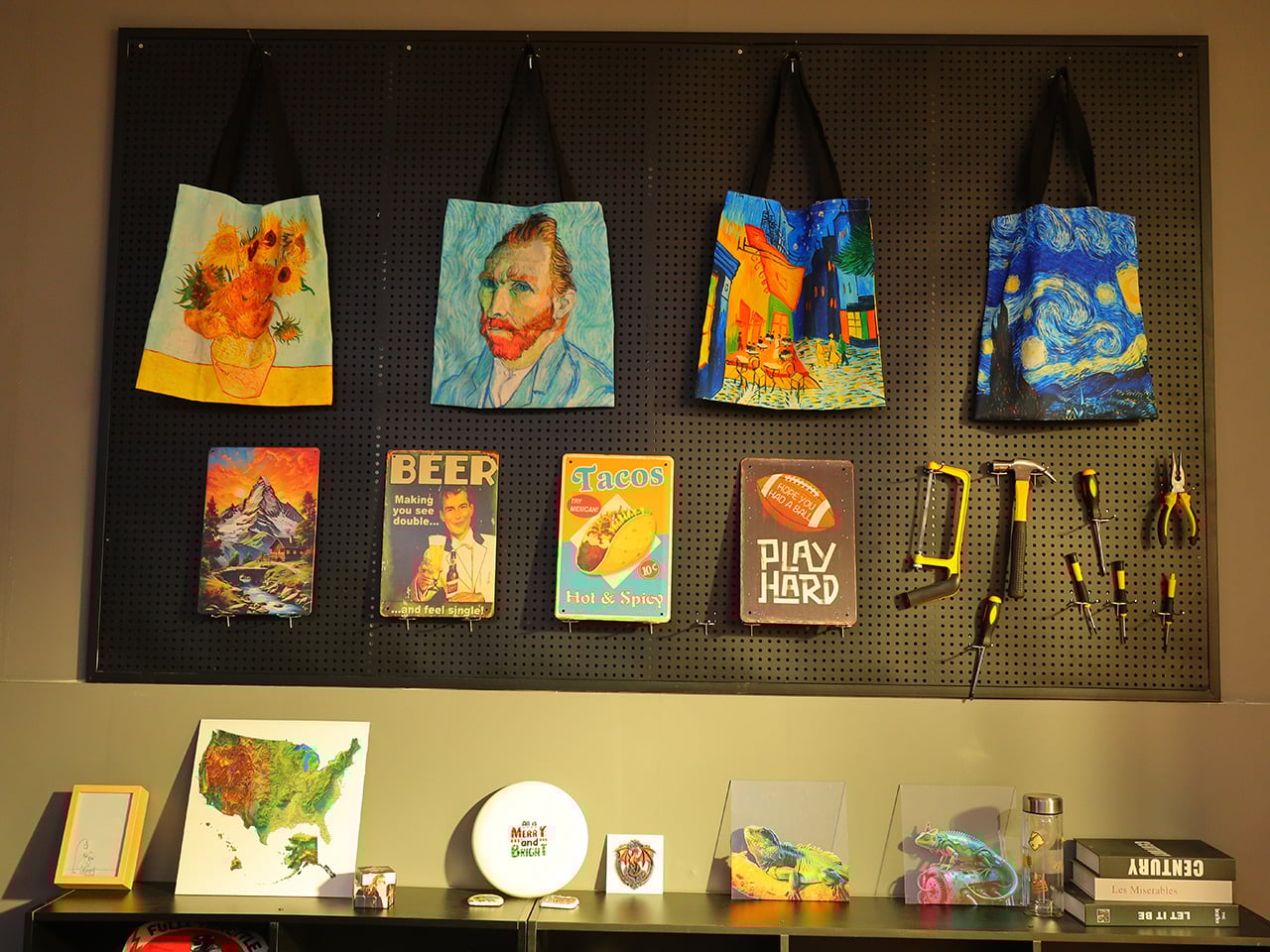
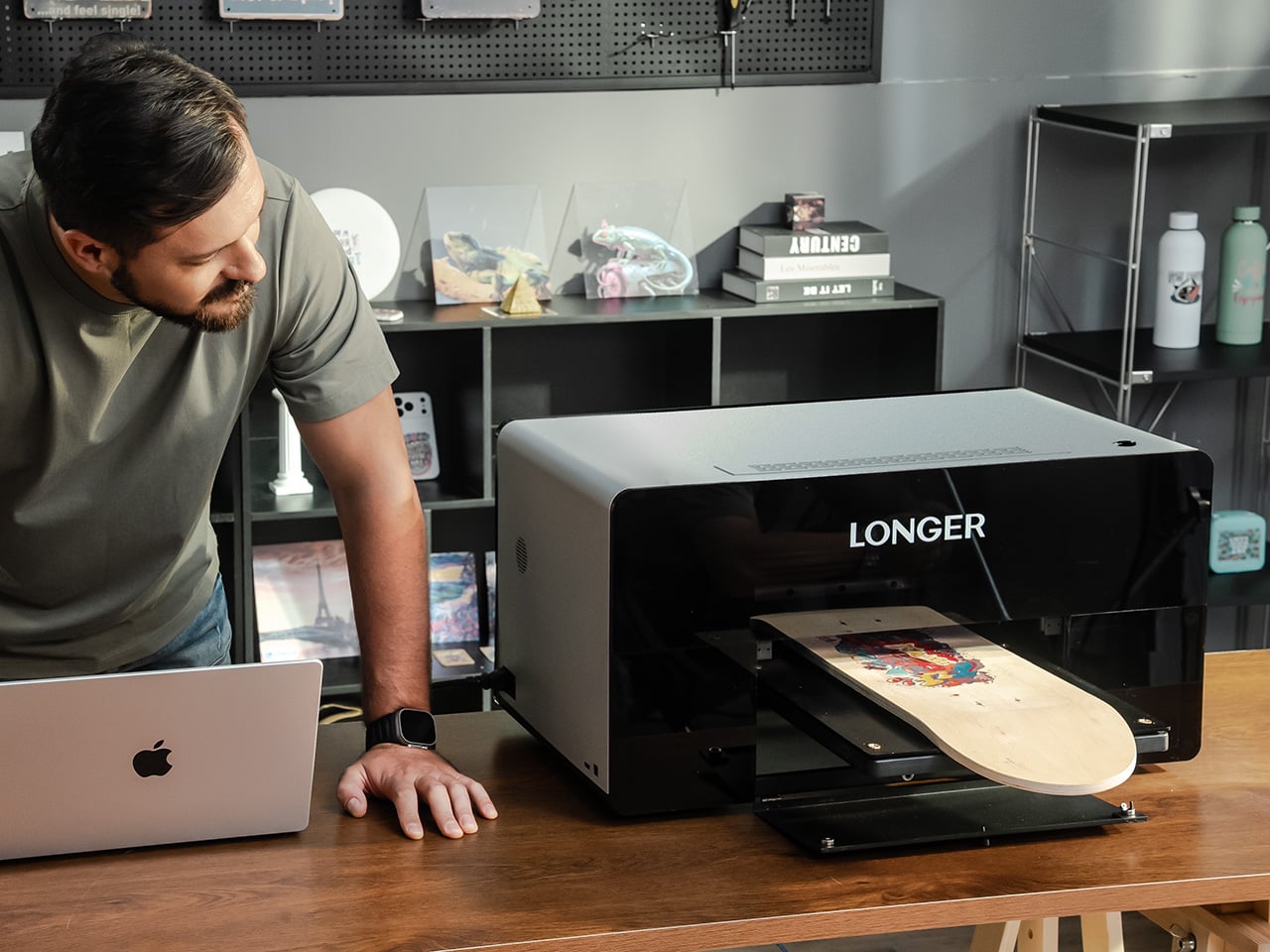
Flatbed mode handles your standard work on flat materials up to 310mm by 420mm. Wood plaques, acrylic sheets, metal panels, glass coasters, leather patches. The 10mm high-gap printing capability means the printhead stays elevated above the material, so you can print on textured wood, embossed surfaces, or slightly warped materials without the head scraping or smudging wet ink. Phone cases with camera bumps, rough stone tiles, wrinkled leather, all printable without fighting the machine.
Rotary printing opens up cylindrical objects. Water bottles, wine bottles, tumblers, pens, flashlights, anything roughly cylindrical that fits the attachment. The printer rotates the object while printing, wrapping your design around the curve. Transfer film mode takes a different approach by printing onto a special film substrate first. Print your design with the UV printer, then use the included laminator to apply heat and pressure, transferring the design onto fabric. You’re making custom heat-transfer stickers for t-shirts, jackets, bags, hats. Not direct-to-garment printing, but useful when DTG doesn’t work well or when you want that raised, glossy finish that UV ink provides. The laminator handles the heat-press work, so you’re not buying separate equipment.
Roll-to-roll attachment extends the workflow for producing multiple transfers in sequence. Instead of printing individual pieces, you load a roll of transfer film, print continuously, and wind up the finished prints on the output roll. Makes sense if you’re producing batches of vinyl stickers or multiple heat-transfer designs for a clothing run. The conveyor belt attachment serves a similar batching purpose but for rigid objects. Load up phone cases, coasters, or other small items, and the conveyor moves them through the print area automatically. No manual repositioning between pieces. Between these four modes and the accessories that enable them, LONGER built a system that adapts to different production workflows rather than locking you into one application.
Dual lasers and a 16MP camera handle object detection and positioning automatically. In batch mode, the system scans multiple objects, identifies positions, and fills patterns without manual placement for each piece. Software includes AI-powered background removal and pattern generation too.
UV printing generates fumes that need proper ventilation regardless of what the manufacturer says about filtration. LONGER includes air purification and claims operation stays under 60dB, quieter than conversation. At 650mm by 445mm by 330mm and 30kg for the dual-head version, it genuinely fits on a desk rather than demanding dedicated floor space like industrial models. You still want good airflow in your workspace, but the footprint works for small studios or home offices with proper setup.
Early bird pricing breaks down to $1,499 for the single-head ePrint SE with six ink channels, $1,899 for the dual-head ePrint with 12 channels, and $2,949 for the all-in-one combo bundling rotary, laminator, conveyor, and roll-to-roll attachments. US and EU backers get free shipping.