NASA has a leader again. On Wednesday, the US Senate confirmed Jared Isaacman as the agency's administrator, with a 67-30 vote. The billionaire entrepreneur (and Elon Musk ally) will have his hands full navigating political waters while managing a severely downsized workforce.
You might recall that this wasn't Isaacman's first shot at the job. He was nominated to the post earlier this year. But days before he was scheduled for a confirmation vote, President Donald Trump withdrew his nomination.
The reversal reportedly came after the president was told that Isaacman had donated to prominent Democrats. (Trump’s description of his decision, as based on a "thorough review of prior associations," seemed to lend weight to that.) However, that was also around the time the Trump-Musk feud was about to boil over. Regardless, Isaacman was nominated again in November.
The new NASA head reportedly has broad support from the space community. (That makes him something of an aberration among Trump appointees in scientific fields.) "I am optimistic that Mr. Isaacman will bring a steady hand and clear vision to NASA," Sen. Marie Cantwell (D-WA) told The New York Times.
The new administrator has traveled to space twice on private missions. In a document published in May, Isaacman shared his three objectives for NASA. These included human missions to the Moon, Mars and deep space; helping the organization do more with a constrained budget; and cost-cutting through industry and academic partnerships.
This article originally appeared on Engadget at https://www.engadget.com/science/space/jared-isaacman-is-nasas-new-leader-220833691.html?src=rss
Sure, we've seen millions poured into lobbying and other means of influence during every presidency, but the last two years set a whole new bar. Business leaders, including those from almost every Big Tech company, stepped over themselves to prove fealty to Donald Trump's second administration. It's easy to see why: Their kowtowing was meant to secure regulatory favors, gain tax and tariff advantages and avoid Trump's ire. Ultimately, it was all in the service of appeasing their shareholders. Why else would Apple CEO Tim Cook, someone who typically cultivates a progressive image, hand deliver a gold plaque to the President of the United States?
Before we leave 2025 behind, it's worth documenting the many ways tech companies and leaders debased themselves for political favor with the Trump administration.
Additionally, Alphabet agreed to pay $24.5 million to settle Donald Trump's lawsuit against YouTube, following the suspension of his YouTube accounts after the January 6th riot. Trump will receive $22 million, while another $2.5 million of the settlement will be paid out to additional plaintiffs who were part of the class action — which is to say, other rioters involved in the storming of the Capitol.
Amazon founder Jeff Bezos also did his fair share to support Trump: He donated $1 million to Trump's inauguration, and since purchasing the Washington Post in 2013 he pushed the paper to the right. This year, Bezos declared that the Post’s opinion pages would be devoted to the support and defense of “personal liberties” and “free markets.” He added, “We’ll cover other topics too of course, but viewpoints opposing those pillars will be left to be published by others." To that end, the Post also hired three new conservative columnists. Bezos reportedly also blocked his paper from endorsing Kamala Harris in the 2024 election.
I shared this note with the Washington Post team this morning:
I’m writing to let you know about a change coming to our opinion pages.
We are going to be writing every day in support and defense of two pillars: personal liberties and free markets. We’ll cover other topics too…
"We do allow allegations of mental illness or abnormality when based on gender or sexual orientation, given political and religious discourse about transgenderism and homosexuality and common non-serious usage of words such as 'weird,'" reads the company’s updated policy.
Even Zuckerberg’s charity, which he runs alongside his wife, bowed to Trump. The Chan Zuckerberg Initiative ended its diversity programs and stopped providing “social advocacy funding,” which supported immigration and racial equity efforts. According to The Guardian, the charity’s website removed every reference to diversity or promoting scientific research from underrepresented groups.
Microsoft contributed $1 million to Trump's inauguration fund. Previously, it donated $500,000 to Biden's fund and the same amount for Trump's first term. It’s also contributing to Trump’s $300 million White House ballroom.
Similar to Amazon, Microsoft also offered up to $3.1 billion worth of services to the Trump administration as part of the American-centric “OneGov” strategy. That includes discounts for Microsoft 365, Azure cloud services and cybersecurity tools. Copilot AI will also be discounted to government agencies, and it’ll be completely free for a year for agencies subscribing to Microsoft G5 service.
Elon Musk (X, SpaceX, Tesla)
Elon Musk was by far the biggest booster for Trump in the business world. He spent a whopping total of $277 million to back Trump and other candidates in 2024, including $239 million to America PAC, his super PAC focused on securing votes for Trump and other Republicans.
Musk went so far as to offer $1 million to people who said they would vote for Trump, a move that the Justice Department warned might be illegal. Wisconsin's Attorney General challenged Musk's ploy but the state's Supreme Court declined to hear a case on the matter, thereby giving Musk leeway to award two $1 million checks to voters. Musk's team edited a video of one of the recipients to remove her admission that she was paid "to vote."
Elon Musk spearheaded DOGE (Department of Government Efficiency), an unelected position from which he was given nearly unprecedented federal oversight. Once installed he hired his techie acolytes to chip away at government budgets and staffs. For the first few weeks of the second Trump administration, it appeared as if Musk had unfettered power to manipulate the government.
And let's not forget, while leading DOGE, the world's richest man also destroyed USAID, the world's largest food aid provider, for no apparent reason other than cruelty.
Internal docs reveal how govt and aid officials desperately tried to warn Trump advisers at State & USAID about impending disaster and death. But for months nothing changed — despite Rubio’s public promises that food programs would be spared. https://t.co/bIZC5tJKxe
This is by no means an exhaustive documenting of every single tech tycoon that has bent the knee. NVIDIA CEO Jensen Huang, for instance, told Joe Rogan in an interview that “everything that [Trump] thinks through is very practical and very common sense, and, you know, it's very logical.” According to Axios, Huang added that Trump "wants to make sure that that the important, critical technology of our nation is built in United States, and that we re-industrialize and get good at manufacturing again, because it's important for jobs."
It’s also worth remembering that OpenAI CEO Sam Altman and Oracle chairman Larry Ellison joined President Trump onstage in announcing Stargate — “the largest AI infrastructure project by far in history.” The two were joined by Softbank CEO Masayoshi Son, who called the moment the “beginning of a golden age.” The next day, Altman posted on X that he believed Trump “will be incredible for the country in many ways!”
Ellison’s son David is the CEO of Skydance, and has infamously been rebuilding Paramount with Bari Weiss since the merger of Paramount Global and Skydance Media was approved this year. The list of major tech players bowing to Trump only grows from here, and putting the bulk of the transactions in one place should serve to remind us how closely tied Big Tech is with American (and global) politics.
This article originally appeared on Engadget at https://www.engadget.com/general/big-tech-bent-the-knee-for-trump-in-2025-140000365.html?src=rss
You may be surprised to learn electricity only accounts for 21 percent of the world’s energy consumption. Fossil fuels and the rest all play their part to make the world go around, but their role is likely to diminish no matter what happens. The International Energy Agency believes electricity’s share of global energy consumption is going to double in the next decade alone. You all know the causes: Electrification, EVs, data centers and AI mean the planet needs to dramatically increase its power generation, transmission and storage capacity. It’s a shame, then, that the world is nowhere near ready to satisfy such an outrageous surge in demand.
Re-learning to love the atom
The US has certainly spent the year opening doors to dramatically increase domestic energy production. Part of that has to give the signal that the US will embrace nuclear power in ways it hasn’t for generations. This January, an executive order titled Unleashing American Energy included an instruction for the government to eliminate rules and regulations related to power generation. Its primary focus was to destroy environmental regulations limiting the extraction of oil, natural gas and coal, but also to remove roadblocks to the construction of new nuclear plants. Then, in May, a subsequent order declared a desire to ensure the deployment of “advanced nuclear technologies.”
As the driving force behind the AI push, big tech has made some high profile moves to buy up extra generation capacity. Meta signed a 20-year deal with Constellation to own the output of the Clinton Power Station, preserving the 1.1GW facility once its state tax credit expires next year. Microsoft has its own 20-year deal with Constellation to own the power generated by reactor 1 at Three Mile Island, now renamed the Crane Clean Energy Center. On November 18, that project was also given the backing of the Department of Energy which authorized a $1 billion loan. But even without the backing of big tech, other mothballed reactors are being restarted, like the Palisades plant in Michigan. Earlier this year, the Department of Energy handed out a $1.52 billion loan to get the facility, capable of generating 800MW, back up and running.
Big tech is also betting on the future of nuclear power, signing deals with a number of startups looking to build out a new generation of reactors. Google, for instance, has backed Kairos Power and its plan to build a series of small, modular reactors. Amazon, meanwhile, invested in X-Energy and has published plans for its own buildout in Washington State.
It’s not just the US that is learning to fall back in love with nuclear power, as the rest of the world is also building out new capacity. The World Nuclear Association says there are 70 reactors currently under construction across 15 countries. Russia, India, Argentina, Turkey, South Korea, Japan, and Brazil, to name just a few, are all working on new reactors.
China on its own is presently building 33 reactors and, as Nuclear Business Platform reported earlier this year, greenlit a further 10 this April. That same report adds that China’s policy of producing multiple reactors at a time has seen costs crater. It says that while the UK’s two new reactors at Hinkley Point will cost in excess of $60 billion, each of these new reactors will cost $2.7 billion.
Bridging the nuclear gap
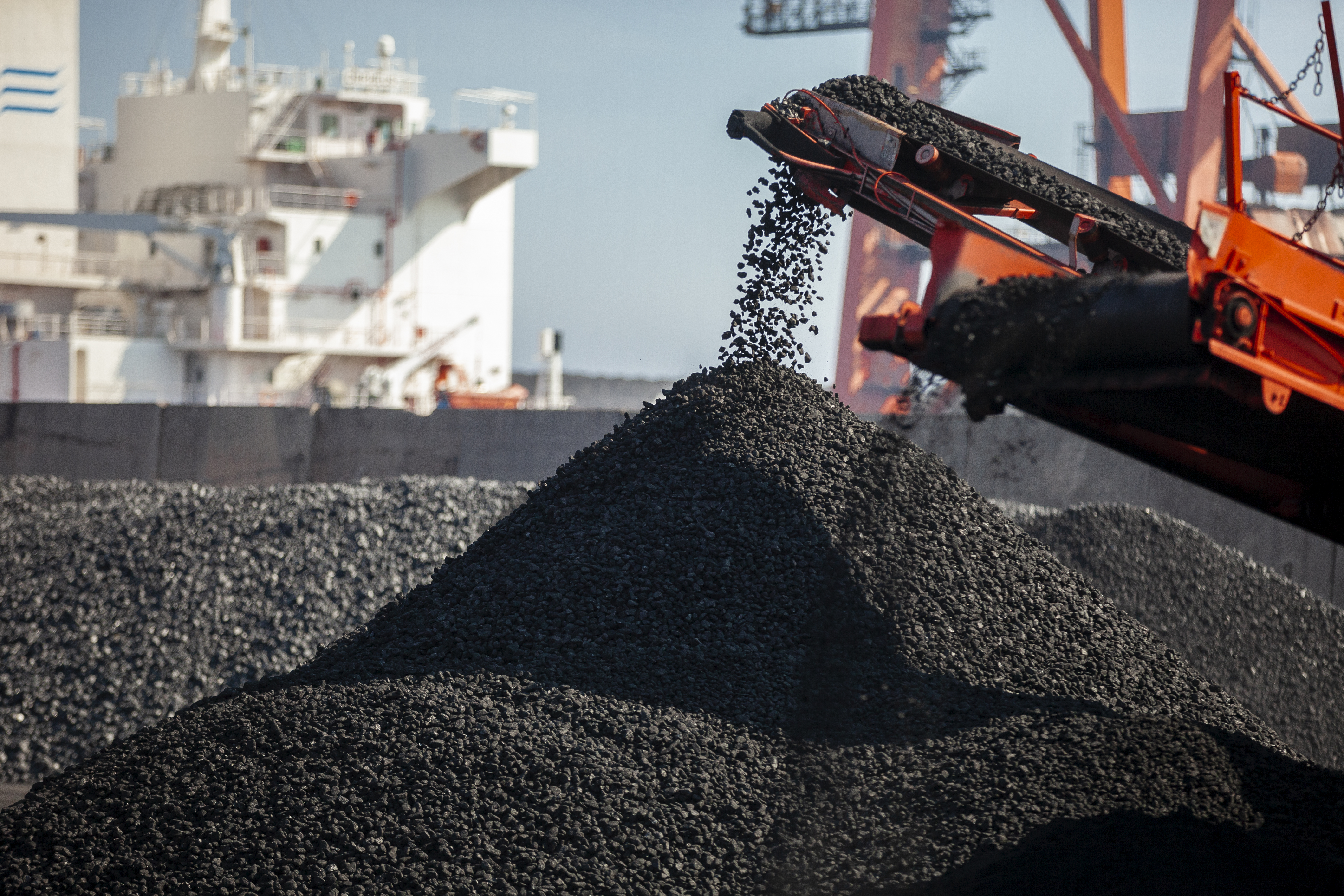
coal handling in a port
Indigo Division via Getty Images
Building a nuclear reactor is not a swift process, and construction of a facility can take the better part of a decade. You can add on a few more years if you include the necessary procedural steps that need to be undertaken before a single piece of concrete is poured. Consequently, any major shift in the US’ power generation fleet will be measured in generations, rather than years. It’s a concern that, for all of the attention nuclear power is getting, it’s merely a smokescreen for a renewed push for fossil fuel extraction.
After all, one major casualty from the Big, Beautiful Bill was the eradication of subsidies for the US’ solar industry. As we reported back in July, the act has kicked the legs out from domestic solar panel manufacturing, handing renewable energy dominance to China. This goes hand in hand with the US Department of Energy setting up a $625 million funding stream to revive America’s coal industry and recommission old power plants. Or that it is also awarding contracts to grow America’s strategic petroleum reserve.
Back in September, Energy Secretary Chris Wright made the implausible claim to BBC News that fossil fuel extraction was nothing to worry about as fusion power would be on the grid in the next decade. Wright, himself the former CEO of fracking company Liberty Energy, was taken to task by a number of climate experts for publishing a report riddled with “misleading or fundamentally incorrect” assertions. Similarly, on November 20, the Department of Energy reshuffled its org chart to eliminate several departments responsible for renewable energy and energy efficiency while forming the Office of Fusion.
Solar’s unstoppable rise
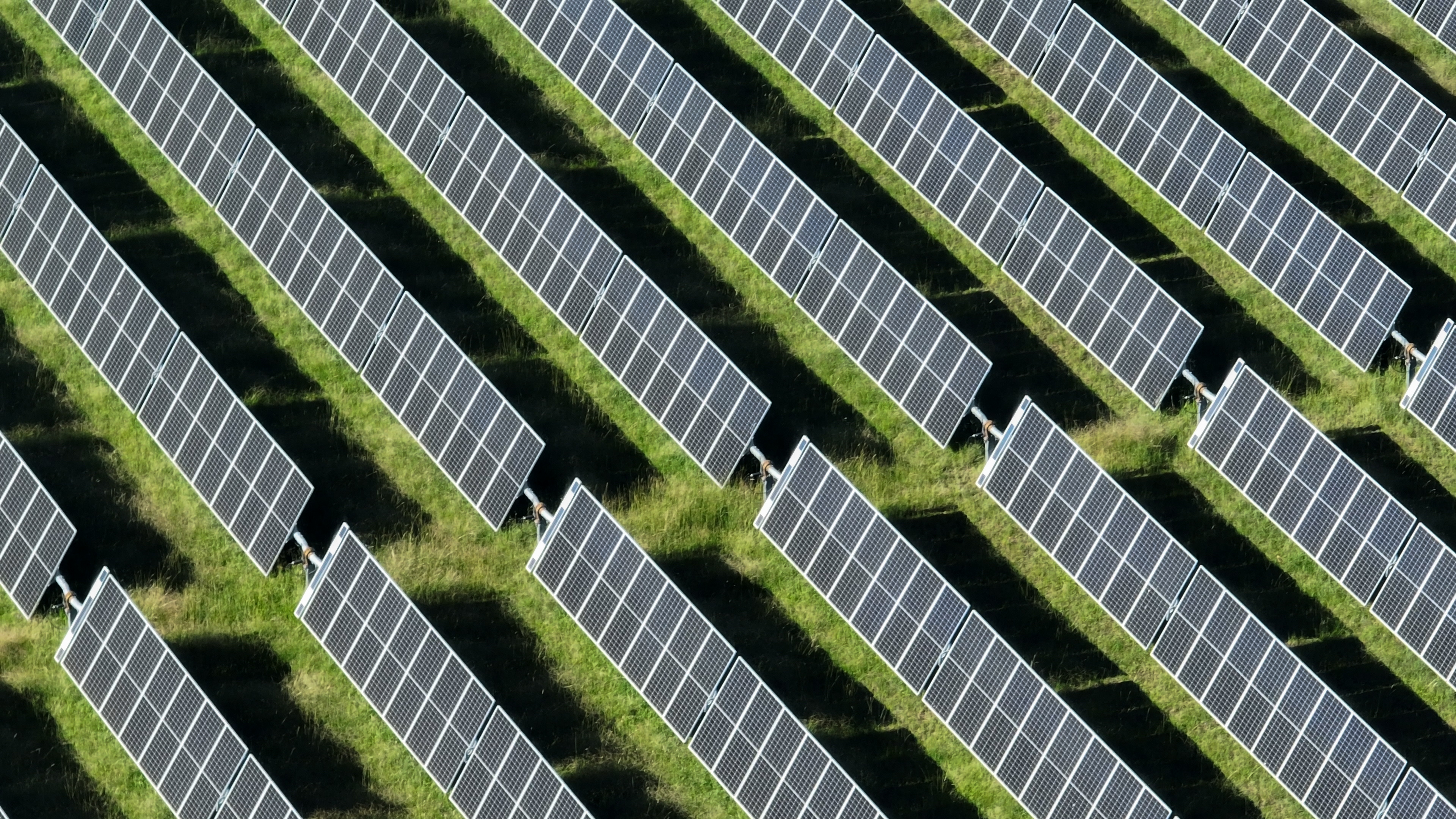
This stunning aerial view captures an array of solar panels arranged in neat, parallel rows across the landscape. From above, the panels shimmer under the bright sunlight, creating a striking contrast against the natural terrain below. The organized rows of solar panels stretch across acres of land, symbolizing the growing global shift toward renewable energy. The grid-like pattern highlights the efficiency and scale of modern solar farms, contributing to sustainable energy production.This high-resolution image showcases the incredible reach and potential of solar power as a clean, renewable energy source. Whether situated in rural fields, expansive deserts, or atop rooftops, these solar panels represent a major step toward reducing carbon footprints and combating climate change. The solar farm's orderly rows and reflective surfaces create a visually appealing scene, demonstrating both technological innovation and environmental responsibility.
Diane Keough via Getty Images
The US may have kneecapped its domestic solar industry, but it may not be enough to defeat renewables’ momentum. In October, the International Energy Agency projected renewable energy will grow by 4.6 TW by 2030 — a figure equal to the combined generation capacity of China, the EU and Japan combined. 77 percent of that figure is expected to come from solar power alone, despite the loss of subsidies in the US and less favorable circumstances in China.
The domestic US forecast has been revised downward significantly as a consequence of its policy choices. But despite this, the obvious benefits of solar power haven’t gone away even if the price may be higher than it was at the start of the year. It remains the fastest and cheapest way to add new power in many countries, and can be installed on a grid or individual basis. Not to mention its utility in remote areas with poor generation resources, where it can reduce dependency on fossil fuels. This year, clean energy think-tank Ember reported on the growth of solar power in the last decade, and how it went from adding just one percent of global power generation in 2015 to 8.8 percent in the first half of 2025.
“AI demand for electricity is the macro driver of US made solar,” said Rob Gardner, VP at the Solar Manufacturers for America Coalition. “AI investments can’t deliver expected returns without quickly deployed power, and US solar is the fastest and cheapest to deploy,” he said. Gardner cited a recent FERC forecast which predicts that 92.6GW of solar will come online between now and July 2028.
The dream of fusion
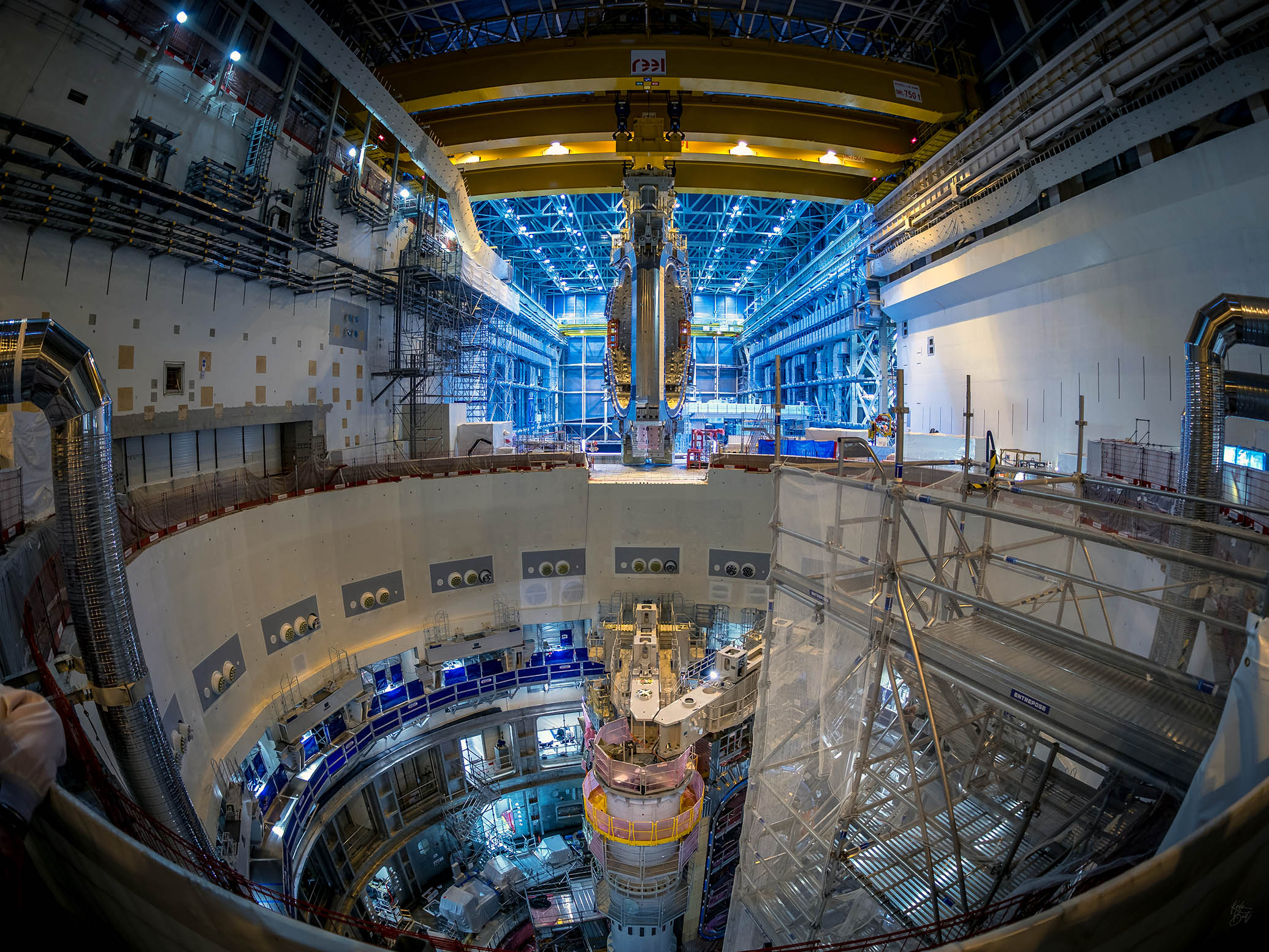
Construction inside the reactor of ITER.
ITER
The US is pinning a lot of its hopes on fusion power to wipe away the debt of our fossil fuel past. Earlier this year, the Department of Energy released a roadmap to get fusion out of the lab and into the world. It wants to coordinate the remaining resources of the federal government to close the fusion world’s “critical science, materials and technology gaps.” In the next three years, officials have been tasked with designing facilities for reactors and developing sources of fuel. Within the next decade, it’s hoped the government will be able to offer large-scale fuel cycle plants to help private sector plants start operations.
If fusion power can be harnessed, it has many of the same upsides as nuclear fission with a lot fewer downsides. If nuclear fission harnesses the energy released when an atom is broken apart, then fusion harnesses the energy released when two smaller atoms are smashed together to create a larger one. It harnesses the same principle as you’ll find inside our sun: Superheated hydrogen atoms fusing to create helium. And while nuclear fusion requires radioactive material, we can source deuterium and tritium from water and lithium.
ITER (International Thermonuclear Experimental Reactor) is a giant experimental fusion reactor under construction in France which, when operational, will be the world’s largest. It is backed by a coalition of nations, including the US, EU and China, and has the aim of both generating power and developing the technologies necessary to make Fusion a reality. The organization claims that there is enough of both materials available on the planet to run fusion plants for at least a thousand years, if not longer. There are also a raft of safety benefits, as there’s no creation of the sort of long-lived and dangerous waste associated with nuclear power, no risk of a meltdown, and its raw materials can’t be used to make weapons.
But while fusion is entirely possible, and on paper could be the salve to all of the world’s energy ills, it’s not yet a reality. There are a large number of engineering challenges sitting between us and a viable commercial reactor. The shift that has happened this year is that fusion is now being treated as a “strategic national priority,” according to the International Atomic Energy Agency. More than 160 fusion facilities are operational worldwide, each one looking to explore ways of solving the hard problems standing between us and limitless power.
But as well as ITER, there are other major nations working to build out their own fusion capacity. The biggest would likely be China’s Experimental Advanced Superconducting Tokamak (EAST) which has already set a record for energy generation. At the start of this year, it was able to produce a steady state for 1,066 seconds.
But what we are seeing now, which may offer some degree of hope, is the surge in interest from the private sector. Companies like Commonwealth Fusion, Type One Energy, Helion and Pacific Fusion are all working on their own fusion facilities. These projects have received billions in funding, but it’s likely all will need time to work out if their approaches are viable.
Stuart White is a spokesperson for Tokamak Energy, a British-Japanese startup spun out from the UK’s Atomic Energy Authority which is developing its own fusion technologies. In 2022, the company’s own reactor was able to reach a plasma temperature of 100 million degrees celsius. “It’s an incredible achievement but that isn’t going to power homes around the UK or anywhere,” he said. White believes the fusion world will spend the next decade “scaling up,” projects to find the right pathway to building commercial reactors. He cited national programs, like the UK’s STEP which is targeted to begin working in 2040, while the US’ plan for the mid-2030s he feels is “aggressive.”
White also explained that, as equally important as solving the key physics issues, is building out the supply chain to actually make the equipment. He cited the importance of manufacturing in Japan and China to produce the hardware necessary to build fusion reactors. And that this process, while time consuming now, will help accelerate the eventual development of the technology down the line. White added that another positive sign is that regulators aren’t likely to want to scrutinize fusion reactors with the same intensity as they do nuclear reactors. That will both speed up the construction of new facilities and reduce costs when they do eventually enter service.
What’s clear, however, is that Fusion is not going to be able to swoop in and decarbonize the world’s energy needs in the sort of time scale it’s likely to be required. (White said it is likely to arrive in time to complement other clean sources of energy over the next half century, rather than so quickly that every other power station gets mothballed instantly.) Consequently, the government of the world must keep prioritizing the rollout of renewables rather than hoping that fusion will simply bail everyone out in the next decade.
This article originally appeared on Engadget at https://www.engadget.com/science/in-2025-ai-and-evs-gave-the-us-an-insatiable-hunger-for-power-133000673.html?src=rss
On Thursday evening, President Donald Trump signed an executive order calling for a single, nationwide regulatory framework governing artificial intelligence at the expense of the ability of different states to regulate the nascent technology. “To win, United States AI companies must be free to innovate without cumbersome regulation,” the order states. “But excessive State regulation thwarts this imperative.”
As was expected after a draft of the order leaked earlier this week, the centerpiece of the document is an “AI Litigation Task Force whose sole responsibility shall be to challenge state AI laws inconsistent” with the president’s policy vision. US Attorney General Pam Bondi has 30 days to create the task force, which shall meet regularly with the White House’s AI and crypto czar, David Sacks.
As laid out in the president’s AI Action Plan from July, the administration will also limit states with “onerous” AI laws from accessing federal funding. Specifically, the secretary of commerce will target funding available under the Broadband Equity Access and Deployment (BEAD) Program, a $42.5 billion effort to expand high-speed internet access in rural communities.
Advocacy groups were quick to criticize the president’s order. “This executive order is designed to chill state-level action to provide oversight and accountability for the developers and deployers of AI systems, while doing nothing to address the real and documented harms these systems create,” Alexandra Givens, president and CEO of the Center for Democracy and Technology, said in a statement provided to Engadget. “States that take steps to protect their residents from such harms should not be subject to threats of legal attacks; nor should the administration punish rural Americans by threatening to withhold funding for the broadband services that could connect them to AI in the first place.”
It’s worth noting President Trump’s previous attempts to curb the ability of states to regulate AI as they see fit has proven unpopular across the political spectrum. As part of his One Big Beautiful Bill, the president attempted to impose a 10-year moratorium on state-level AI regulation. That clause was eventually removed from the legislation in a decisive 99-1 vote by the Senate.
This article originally appeared on Engadget at https://www.engadget.com/ai/trump-orders-creation-of-litigation-task-force-to-challenge-state-ai-laws-022657022.html?src=rss
Tourists from Europe and other regions could be asked to provide a five-year social media history before given entry to the United States, according to a new proposal from the US Customs and Border Protection service (CBP). The new rule would affect visitors from countries who normally enjoy relatively easy entry to the US via the Electronic System for Travel Authorization (ESTA).
The new proposal cites an executive order issued by President Trump from January titled "Protecting the United States From Foreign Terrorists and Other National Security and Public Safety Threats." In his first year in office, Trump has been hyper-focused on strengthening US borders and reducing what he calls illegal immigration.
The US state department will conduct "online presence" reviews for applicants and their dependents and require privacy settings on social media profiles to be made "public." Applicants must list all the social media handles they've used over the last five years and if any information is omitted, it could lead to the denial of current and future visas. The CBP didn't say what information they were looking for or what could be disqualifying.
On top of the social media information, CBP may require applicant's telephone numbers and email addresses used over the last five and 10 years respectively, along with information about family members.
The new conditions are liable to increase ESTA wait times and drastically boost the cost of enforcing it. The CPB's document suggests that an additional 5,598,115 man-hours would be required per year, or around 3,000 full-time jobs plus all the costs that entails. Right now, the ESTA application costs $40, allows people to visit the US for 90 days at a time and is valid for a two-year period.
The mandatory social media reporting and other requirements could discourage travelers. Some Australian tourists who were coming to the US for the upcoming World Cup have now said that they've abandoned those plans, according to The Guardian, with one person calling the new rules "horrifying."
However, when asked if the proposal could lead to a tourism decline in the US, Trump said he wasn't concerned. "No. We're doing so well," he told a reporter. "We want to make sure we're not letting the wrong people come enter our country."
The CPB emphasized that the new conditions were only a proposal for now. "Nothing has changed on this front for those coming to the United States [currently]," a spokesperson told the BBC. "This is not a final rule, it is simply the first step in starting a discussion to have new policy options to keep the American people safe."
If implemented, the rule would affect people from 40 countries, including the UK, Ireland, France, Germany, Italy, Australia and Japan. The largest number of tourists to the US come from Canada and Mexico, accounting for nearly half of the total — however, visitors with passports from those two countries don't require a visa or ESTA approval. Travel to the US was down three percent this year compared to 2024 as of August 2025, according to the National Travel and Tourism Office.
This article originally appeared on Engadget at https://www.engadget.com/social-media/us-could-demand-five-year-social-media-history-from-tourists-before-allowing-entry-102751243.html?src=rss
The US Department of State is unwinding a 2023 decision to use san-serif Calibri font on all official communications and switching to Times New Roman instead, The New York Times reports. In a memo obtained by NYT titled "Return to Tradition: Times New Roman 14-Point Font Required for All Department Paper," Secretary of State Marco Rubio frames the change as a way to return professionalism to the State Department.
"Switching to Calibri achieved nothing except the degradation of the department’s official correspondence," Rubio said in the memo. That's because the font is "informal" and clashes with the State Department's letterhead, according to Rubio, while serif fonts like Times New Roman "connote tradition, formality and ceremony."
Former Secretary of State Antony Blinken originally switched the State Department to Calibri in 2023 to improve the accessibility of official communications. The curvy, flourish-free lines of sans-serif fonts work better with assistive technologies like screen readers and text-to-speech tools. Serif fonts, meanwhile, are typically used in things like newspapers to make small, printed text legible.
While Rubio notes that Calibri "was not among the department’s most illegal, immoral, radical or wasteful instances of D.E.I.A.," it seems clear that Rubio lumps the font in with those same diversity, equity, inclusion and accessibility initiatives. Getting rid of it is an easy (and weirdly petty) way to follow through on the second Trump administration's anti-DEI stance towards just about everything.
This article originally appeared on Engadget at https://www.engadget.com/big-tech/state-department-calibri-font-was-a-dei-hire-190454957.html?src=rss
The European Union has provisionally agreed to reduce greenhouse gas emissions by 90 percent (based on 1990 levels) by 2040, the EU parliament announced in a press release. That goes beyond the goals of most other major economies, including China, but falls short of the original one recommended by the EU's climate science advisors. "The target delivers on the need for climate action while safeguarding our competitiveness and security," said Denmark's minister Lars Aagaard, who helped negotiate the deal.
The new accord — a vital step in the bloc's long-term goal of achieving climate neutrality by 2050 — was a political compromise months in the making. On one hand, countries like Poland and Hungary argued that deeper cuts would be too onerous for industries already facing high energy costs. And on the other, members including Spain and Sweden said action was needed to help blunt extreme weather events and allow the EU to catch up with China in green tech manufacturing.
To achieve the target, European industries will need to reduce emissions by 85 percent and sell carbon credits to developing nations to make up the balance. The EU also agreed on an option to use additional international carbon credits (up to five percent) to soften the impact on industry and to delay a carbon tax for fuel by a year to 2028.
Even with the reduced targets Europe is more committed than all other major polluters, having already cut emissions 37 percent from 1990 levels. During the same period, the US has only managed a reduction of about 7 percent, according to Statista. And under the Trump administration, the US has once again pulled out of the Paris climate accord, scrubbed references to climate change from government sites and promoted polluting energy sectors like coal and gas.
The deal must still be ratified by the EU parliament and individual countries to become law. Normally, though, that's a formality for such pre-agreed deals.
This article originally appeared on Engadget at https://www.engadget.com/general/eu-pledges-90-percent-cut-to-carbon-emissions-by-2040-133919256.html?src=rss
NVIDIA is now allowed to sell its second-best H200 processors to China, rather than just the sanction-approved H20 model that China had previously declined to buy, President Trump wrote on Truth Social. The United States will collect a 25 percent tariff on those sales, the Commerce Department confirmed yesterday.
Trump said that he informed China's President Xi Jinping of the decision and that he "responded positively." The Commerce Department is finalizing details and the administration will take the same approach with AMD, Intel and other US companies. He added that the administration would "protect National Security," so the latest Blackwell and upcoming Rubin chips are not part of the deal. The 25 percent tariff would be higher than the 15 percent the White House suggested in August.
Though the administration won't allow NVIDIA to send its latest high-end chips, it was reportedly concerned that the company would lose business to Huawei if it was completely shut out of China's market, according to Reuters. No details about the number of H200 chips or which companies would be eligible to buy them were released. "Offering H200 to approved commercial customers, vetted by the Department of Commerce, strikes a thoughtful balance that is great for America," NVIDIA said in a statement.
The decision is not without controversy, though. Several Democratic US senators called it a "colossal economic and national security failure" that will aid China's industry and military. Republican representative John Mollenaar put it in even starker terms. "NVIDIA should be under no illusions — China will rip off its technology, mass-produce it themselves and seek to end NVIDIA as a competitor," he said.
Despite the current restriction on Blackwell B200 processors, $1 billion worth of those and other high-end NVIDIA chips have made their way to China via black market sales, according to previous reports. That model, along with the H100 and H200, is far more capable than the H20 chip, which was designed to comply with export restrictions for sale to China. NVIDIA has said that the B200 chip is almost ten times faster than the H200 for some jobs, and the H200 is six times faster than the H20.
Washington's approval doesn't mean that China will purchase NVIDIA's chips, as Beijing has previously told companies not to use US technology. Huawei is currently the most advanced company in that regard and recently unveiled a three-year plan to catch up with NVIDIA and AMD. However, AI chip experts like Richard Windsor have said NVIDIA's tech is still far ahead of anything that Huawei or other Chinese companies can currently produce.
This article originally appeared on Engadget at https://www.engadget.com/big-tech/nvidia-can-now-sell-its-high-end-ai-chips-to-approved-customers-in-china-trump-says-130007458.html?src=rss
According to a statement from the Public Interest Research Group, the National Defense Authorization Act for Fiscal Year 2026 has removed language that would have granted the US military the right to repair its own equipment rather than requiring it to use official defense contractors for maintenance. This bill is still being considered by Congress, but it is uncertain whether the right to repair language is likely to be re-introduced once it has been removed.
"Despite support from Republicans, Democrats, the White House and key military leaders, troops will keep waiting for repairs they could perform themselves," US PIRG Legislative Associate Charlie Schuyler said in a statement from the organization. "Taxpayers will keep paying inflated costs. And in some cases, soldiers might not get the equipment they need when they need it most."
A bipartisan bill from Senators Elizabeth Warren and Tom Sheedy was introduced earlier this year to allow the military right to repair access. The topic has been a more piecemeal affair for laypeople in the US, with some states enacting their own laws and federal regulators sometimes intervening to offer consumers more choice in how they seek repairs.
This article originally appeared on Engadget at https://www.engadget.com/big-tech/congress-removes-right-to-repair-language-from-2026-defense-bill-231708835.html?src=rss
You know what they say: If at first you don't succeed at mass government surveillance, try, try again. Only two days after India backpedaled on its plan to force smartphone makers to preinstall a state-run "cybersecurity" app, Reutersreports that the country is back at it. It’s said to be considering a telecom industry proposal with another draconian requirement. This one would require smartphone makers to enable always-on satellite-based location tracking (Assisted GPS).
The measure would require location services to remain on at all times, with no option to switch them off. The telecom industry also wants phone makers to disable notifications that alert users when their carriers have accessed their location. According to Reuters, India's home ministry was set to meet with smartphone industry executives on Friday, but the meeting was postponed.
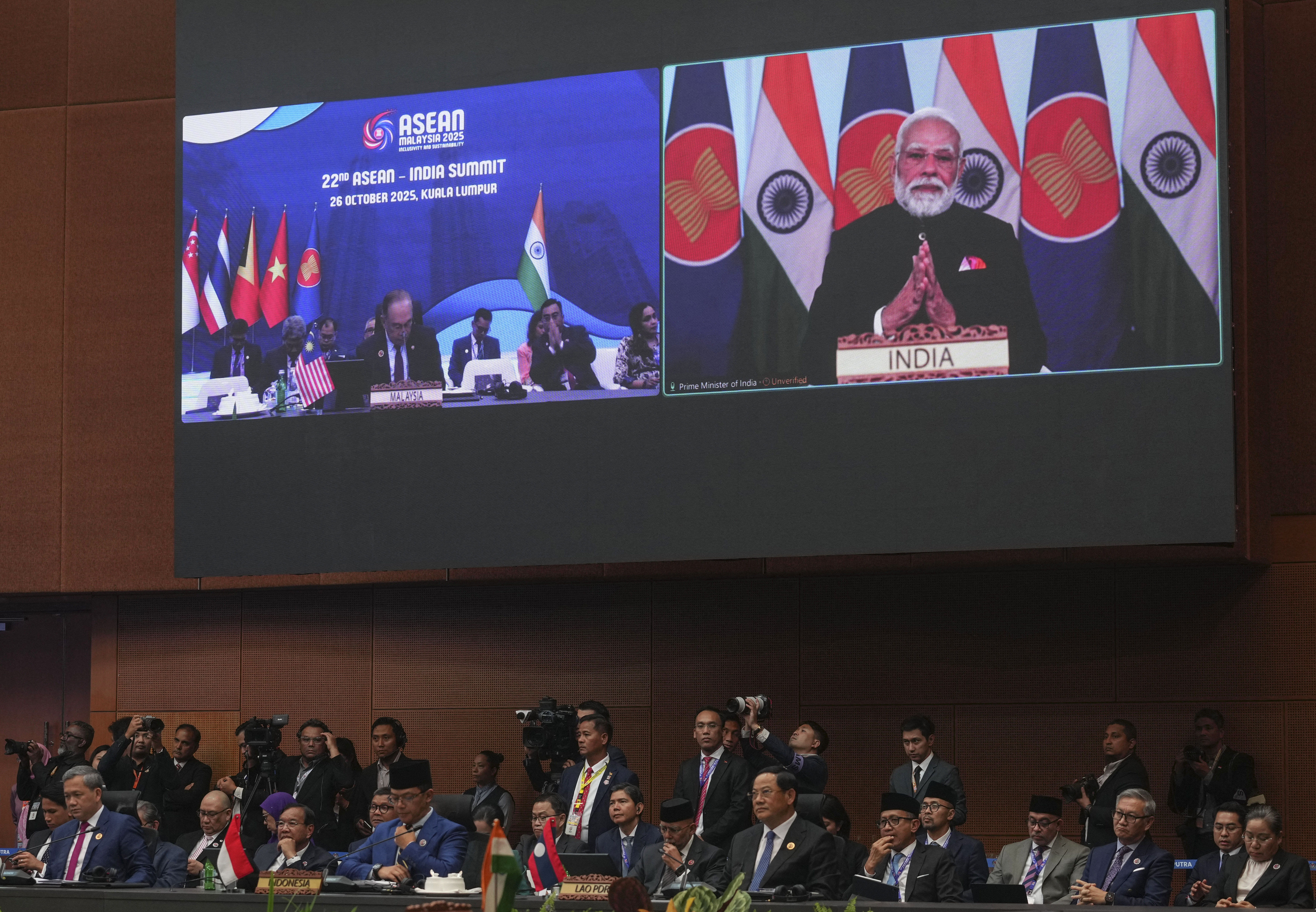
India's Prime Minister Narendra Modi appears on a screen to deliver a speech remotely as other leaders attend the 22nd ASEAN - India Summit during the 47th Association of Southeast Asian Nations (ASEAN) Summit in Kuala Lumpur on October 26, 2025. (Photo by Rafiq Maqbool / POOL / AFP) (Photo by RAFIQ MAQBOOL/POOL/AFP via Getty Images)
RAFIQ MAQBOOL via Getty Images
Predictably, proponents claim the plan is about helping law enforcement keep you safe from the bad guys. (See also: Orwell's Nineteen Eighty-Four.) The administration of Prime Minister Narendra Modi has long been concerned that law enforcement agencies can’t obtain precise enough locations during investigations. Cell tower data alone can be off by several meters. And hey, what's the privacy of 1.4 billion people next to tracking criminals with an extra 10 ft. or so of accuracy, right?
Apple, Google and Samsung are said to oppose the move and have urged the Modi government to reject it. The lobbying group India Cellular & Electronics Association (ICEA), which represents them, reportedly wrote in a confidential letter this summer that the proposal has no precedent anywhere in the world. The group's letter described the measure as a "regulatory overreach," which is probably putting it mildly. They warned that it could compromise military personnel, judges, corporate executives and journalists.
In a statement sent to Engadget, the Electronic Frontier Foundation (EFF) sounded the alarm on the proposal. "Requiring phones to have A-GPS enabled all the time would be a horrifying decision by the Indian government with significant impacts on the privacy of everyone in the country,” EFF Senior Staff Technologist Cooper Quintin said. “With this change, the phone company and law enforcement get your exact location at any time, potentially even without legal due process."
This article originally appeared on Engadget at https://www.engadget.com/cybersecurity/india-is-reportedly-considering-another-draconian-smartphone-surveillance-plan-173500327.html?src=rss