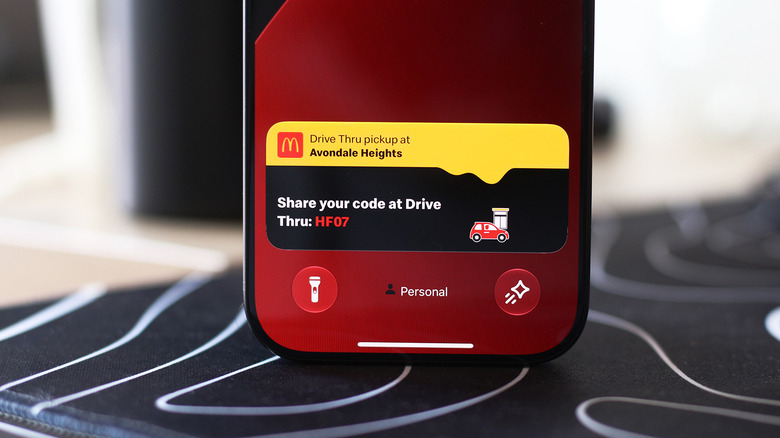
How to enable Live Activities on iPhone and CarPlay
Live Activities put the most important real-time information from apps in a place where it's easy to keep an eye on.

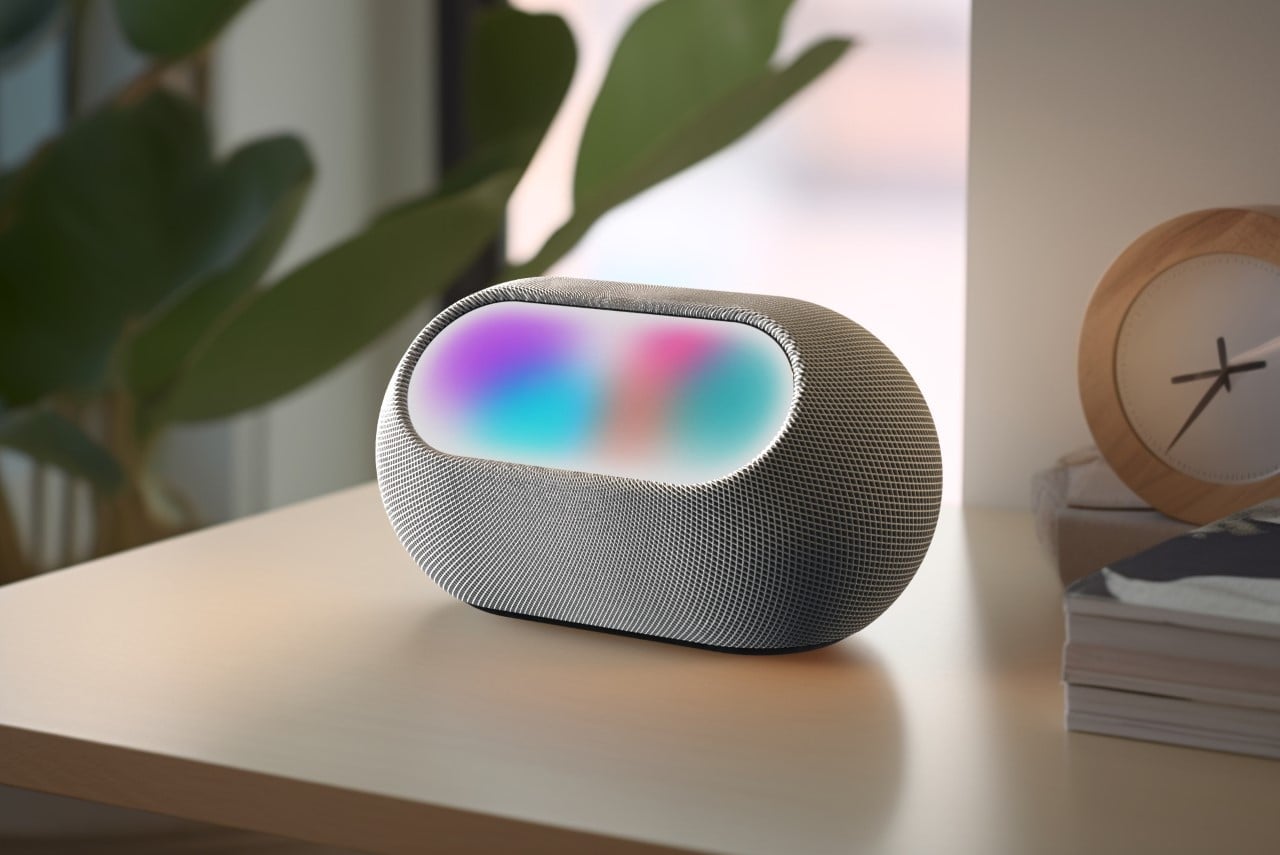
Apple event names usually read like perfume ads. Wonderlust, Scary Fast, It’s Glowtime. So when invites landed this week for an October 13 event called “Welcome home,” the bluntness was hard to miss. Apple went with a literal doormat quote. Behind it, the HomePod is reportedly getting a screen, with Bloomberg’s Mark Gurman saying the headliner is a smart home hub unofficially called the HomePad. A new Apple TV 4K and a HomePod mini 2 are expected to tag along, and press are headed to an “Apple Experience” in Tribeca, which sounds like hands-on time.
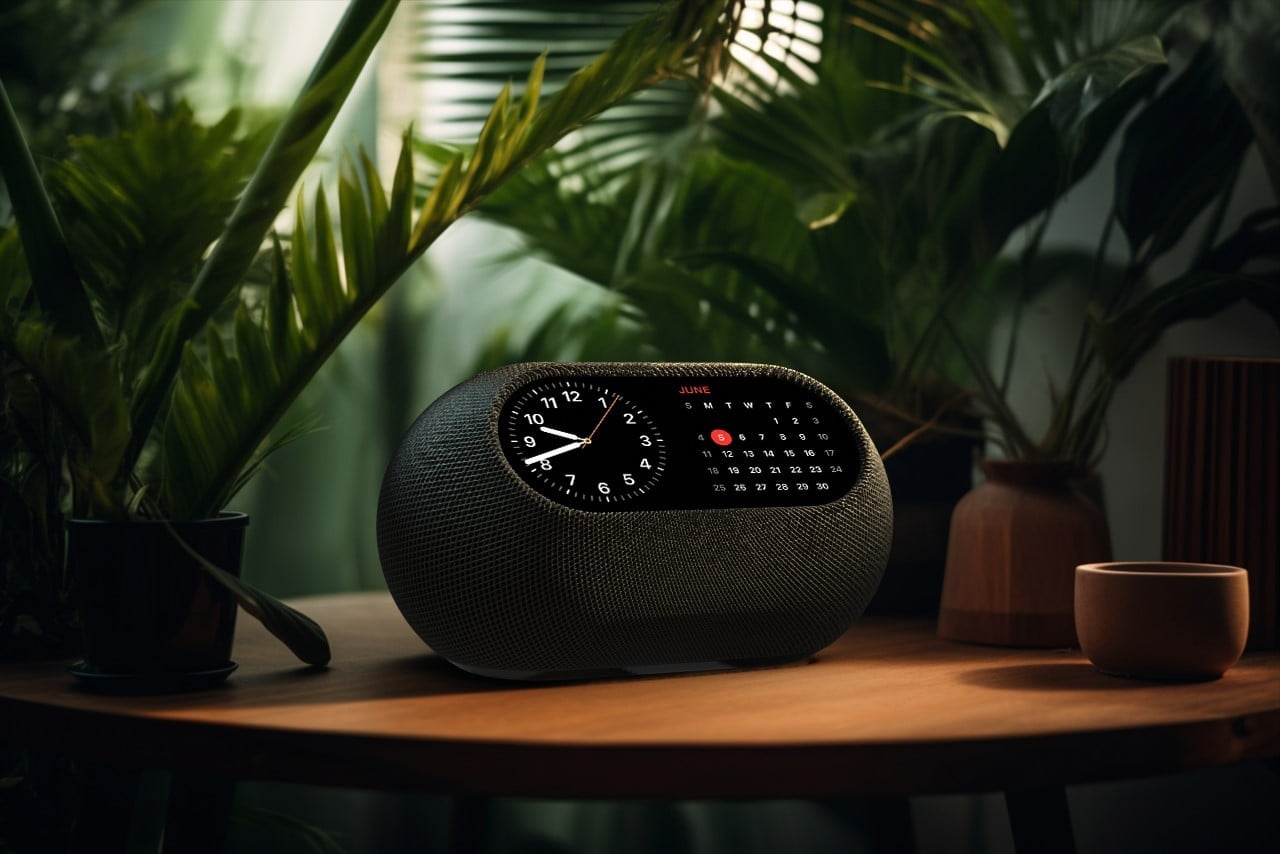
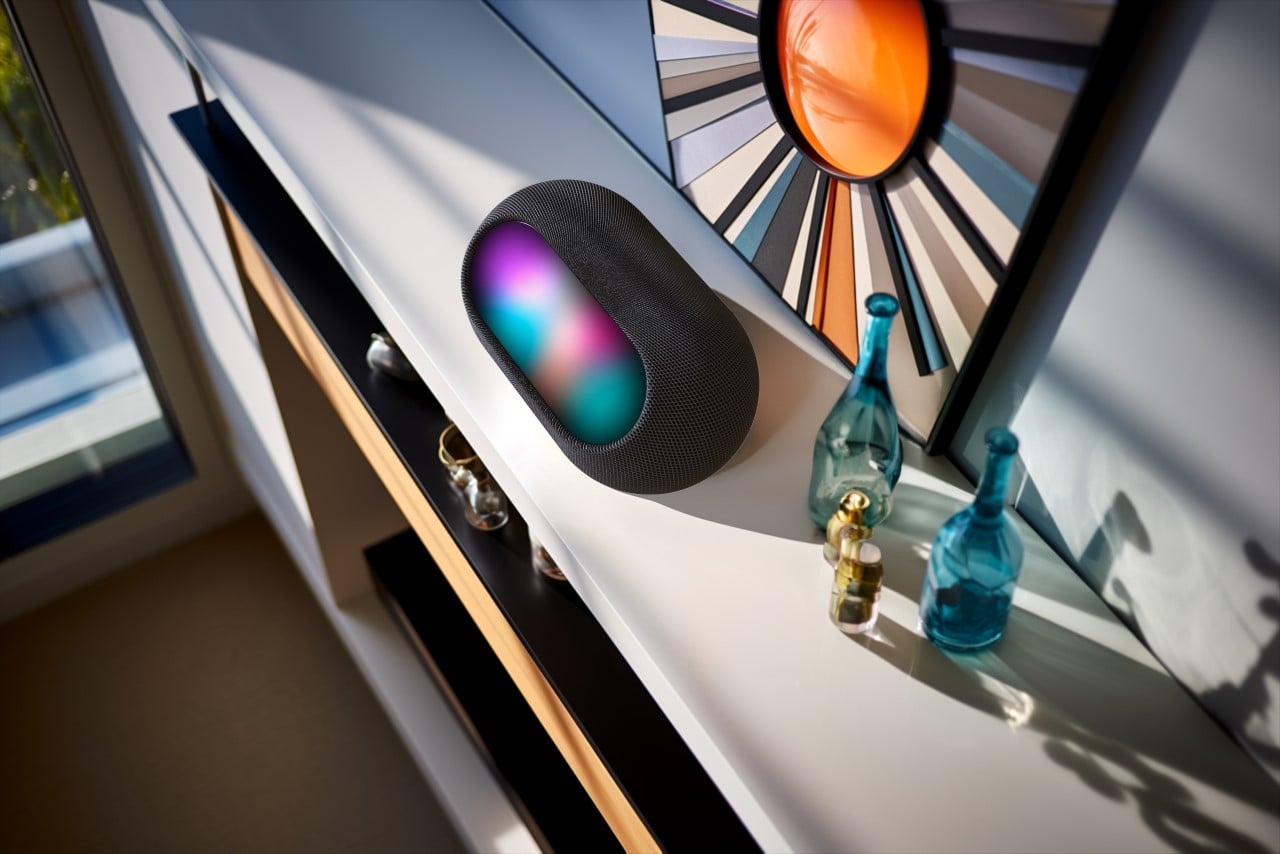
The HomePod has spent nine years as the best sounding speaker you never ask anything. We have been daydreaming about a screen for it since October 2023, when we covered the rumored HomePod Max and its 7-inch display. Gurman now describes a 6-inch square screen on a polished metal arm over a round, perforated speaker base, a look reminiscent of the 2002 iMac G4. That is the sunflower iMac everyone nicknamed the iLamp, so Apple appears to be raiding its own attic. Echo Shows and Nest Hubs have spent years looking like phones stuck on cans, so a little desk lamp energy goes a long way.
Designer: Sarang Sheth
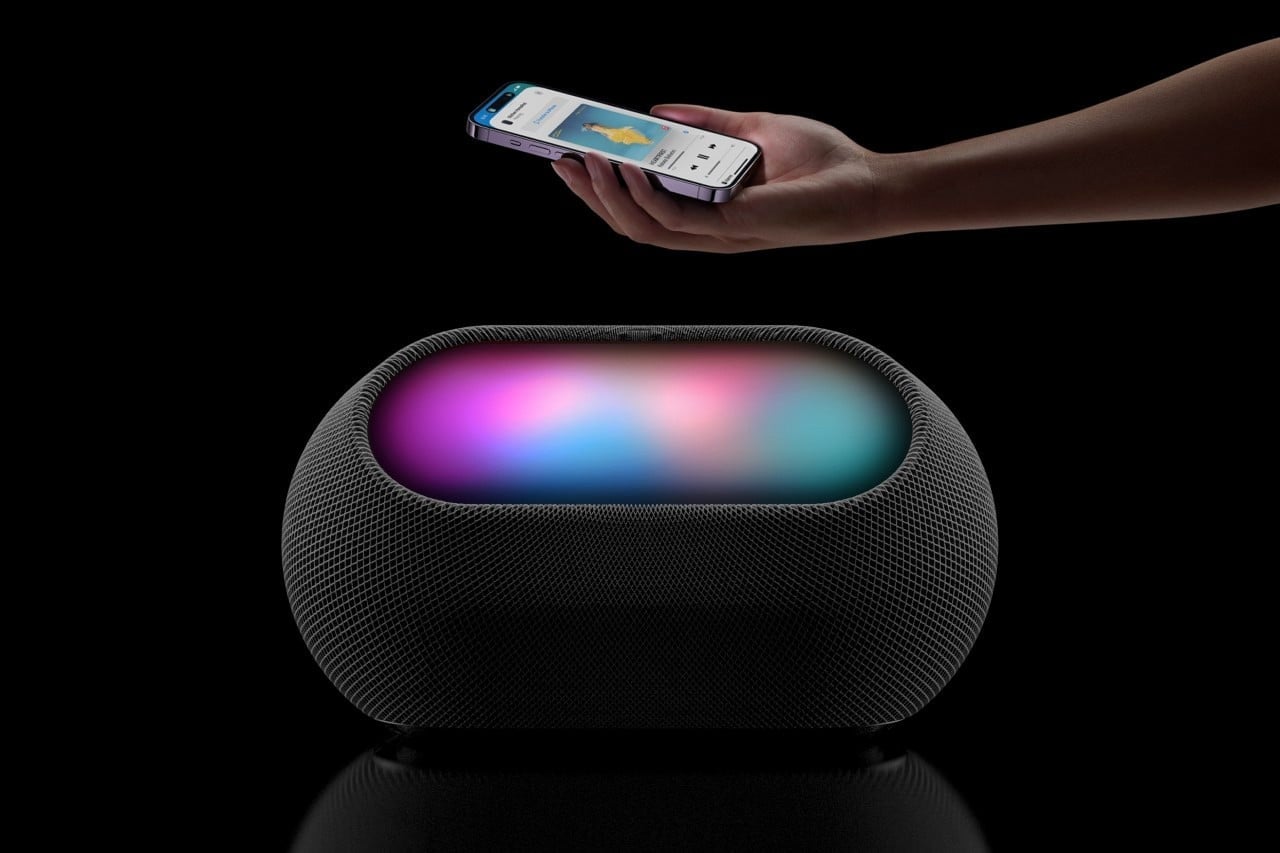
Visual Rendering of the HomePad from 2023
Gurman says Apple is building two versions, a tabletop model codenamed J490 and a wall-mounted one codenamed J491, and both need an outlet. The wall version drops the arm and round base for a thin square base with the speakers and microphones below the display. Both are meant to serve a whole household, recognizing who is talking, showing that person’s content, and hiding private info in a visitor mode. The interface reportedly borrows from Apple Watch and StandBy mode, with iPhone widgets and a single front camera for FaceTime. It also needs an iPhone for setup, so nobody is throwing their phone out yet.
Apple tried several ways of attaching the iMac G4’s screen before settling on one stainless steel arm, and Jobs listed himself as primary inventor on one of its design patents. A third HomePad is reportedly in development with a 9-inch display on a robotic arm that moves 360 degrees, which is basically Pixar’s Luxo Jr. lamp coming to life. We spotted this coming in 2024, when we covered Apple’s homeOS plans, magnetic mount and robotic arm included. The thick bezels are the odd choice, since Apple spent a decade shaving them off. On a screen you glance at from across the kitchen, they might just read as a picture frame.
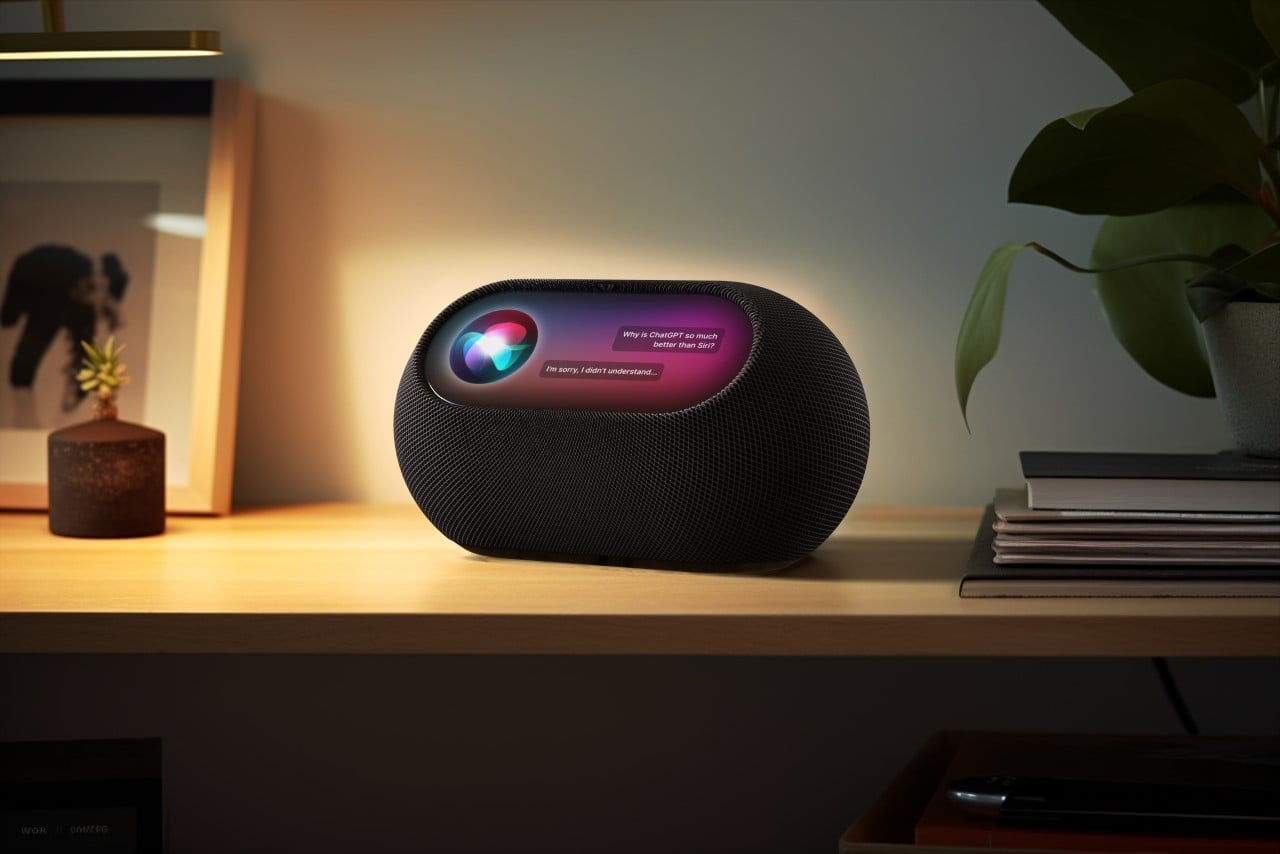
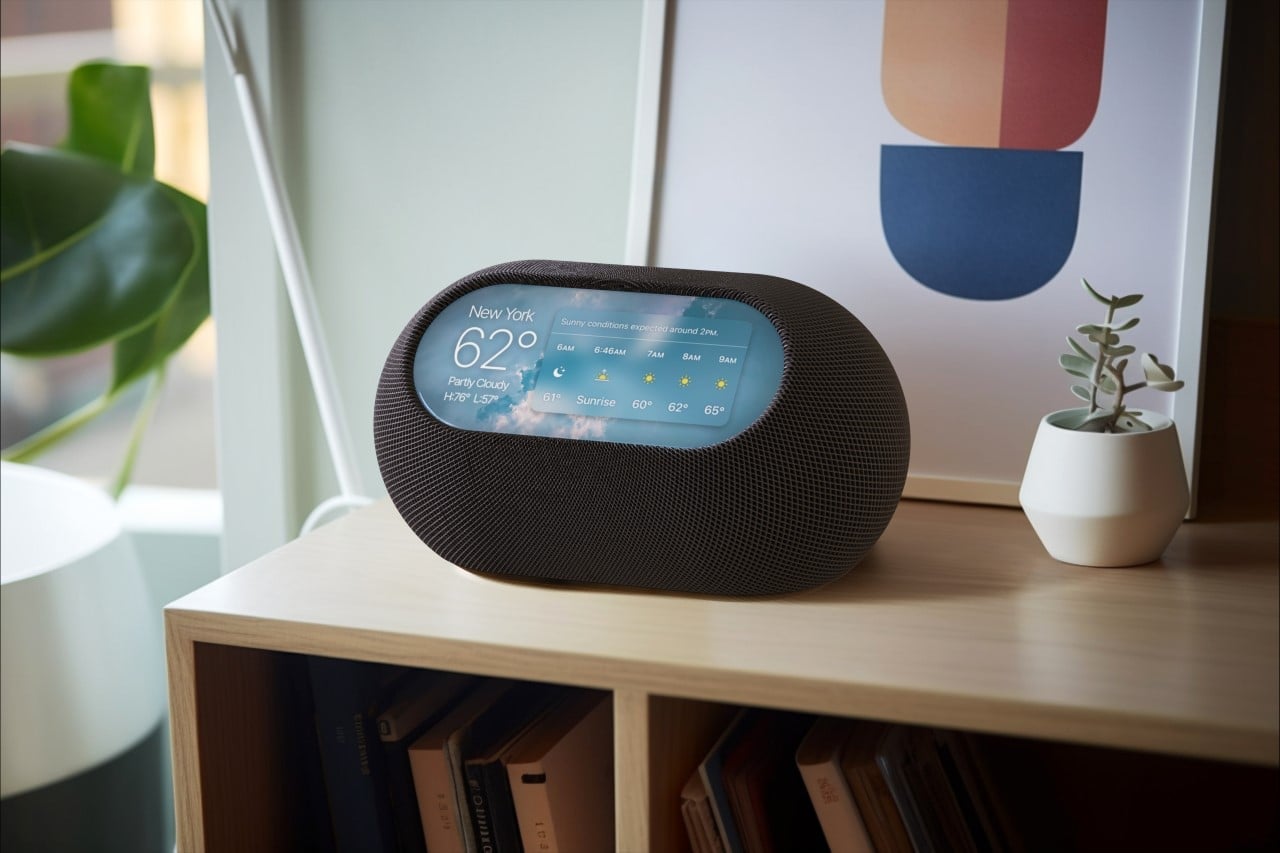
The current Apple TV 4K runs a 2021 A15 Bionic, and rumors point to either an A19 with 8GB of RAM or an A19 Pro with 12GB, which is what the iPhone 17 Pro uses. An N1 wireless chip is also rumored, adding Wi-Fi 7, Bluetooth 6, and Thread, the low-power smart home radio that keeps gadgets chatting without clogging your router. Code in tvOS 27.2 hints that four HomePods can pair with it for surround sound and relay Siri requests so answers show up on your TV. A tweaked Siri Remote is expected too. Siri AI will likely stay exclusive to the new box, so your four-year-old Apple TV gets to watch from the sidelines.
The original HomePod mini arrived in October 2020 at $99 and still runs an S5, a chip first seen in the Apple Watch Series 5. Rumors say the sequel moves to an S9, with the N1 wireless chip and a new Ultra Wideband chip. Code strings reportedly point to the same fabric-wrapped sphere with a backlit touch top, in a lighter blue and white plus new green, pink, and black. Keeping the sphere is the safe call, though I still crave the Braun T3 vibes of that fan-made HomePod Nano concept we featured in 2023. The headline feature is reportedly Siri AI, so the tiny speaker might finally earn the smart in smart speaker.

Apple reportedly co-developed a lineup with LG that includes a smart lock, thermostat, temperature sensor, video doorbell, and indoor, outdoor, and floodlight cameras, all expected to wear LG branding. Gurman suggests they won’t ship as early as the HomePod and Apple TV, though a stage cameo is still likely. Leaks describe a deadbolt with a keypad that rotates to open, a doorbell with a second downward-facing camera, and an outdoor camera sealed with O-rings and waterproof grease. Code in iOS 27.2 also lists a Schneider thermostat and temperature sensor with a “second-party” tag, which gets special treatment from the OS. That is a rare admission from a company that usually builds everything itself: HomeKit needs friends.
Earlier reports floated a HomePad price around $350, which is unconfirmed and absent from Bloomberg’s latest report. That would sit right next to the $349 the original HomePod cost in 2017, when we called it Apple’s tune-busting Fabergé egg. Apple hasn’t said whether the event will be livestreamed, and US pricing and availability are still unannounced. The Macs get their own event about two weeks later, so October 13 belongs entirely to the home. A camera shaped like an oversized lip balm tube, which sends text instead of video, is reportedly waiting until 2027. After nine years of being heard and never seen, the HomePod finally gets a face, and it is wearing a 2002 outfit.
The post The HomePod is finally getting a screen (and a robotic arm) this October 13th first appeared on Yanko Design.
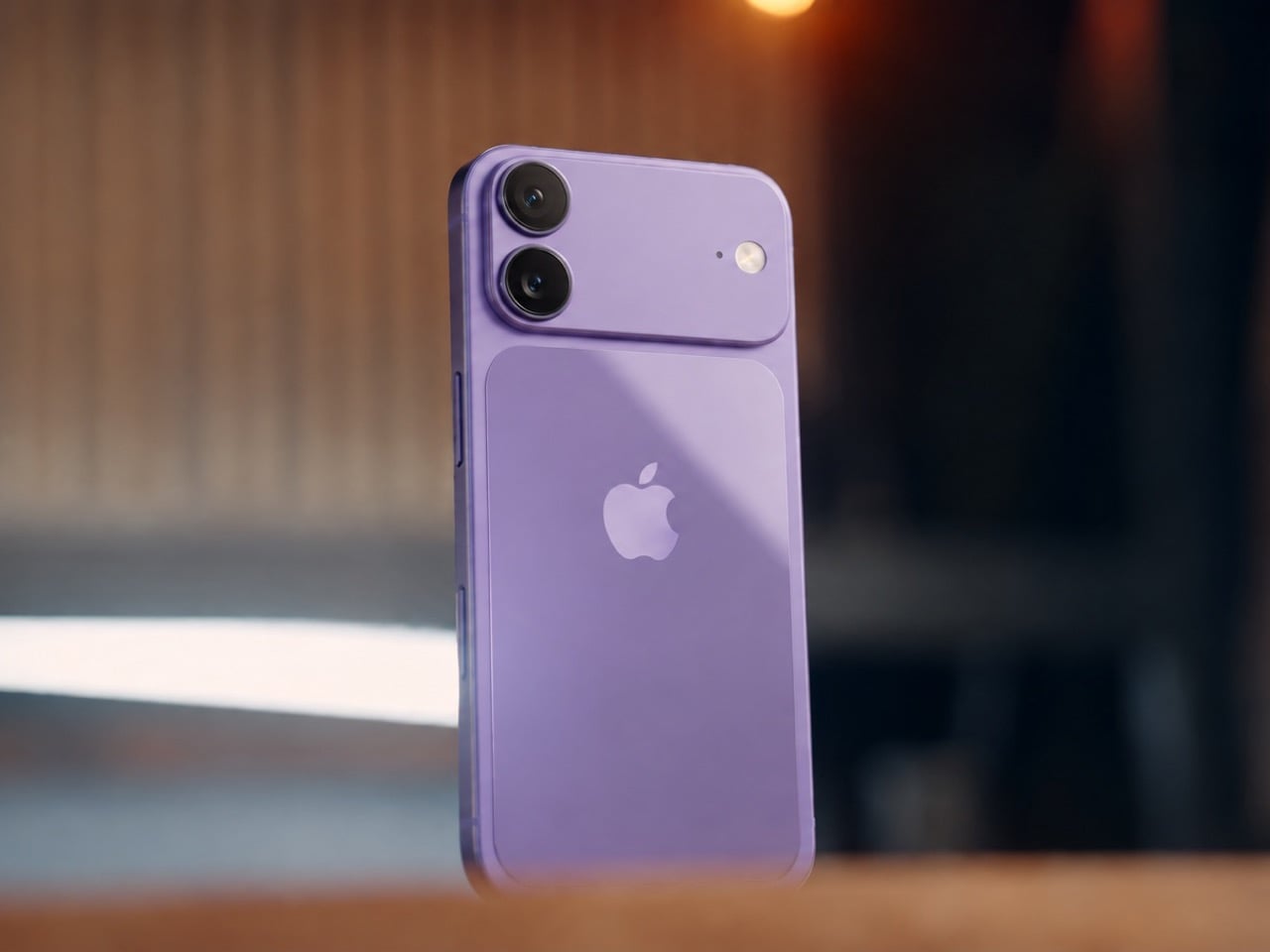
Apple has a long habit of handing last year’s brain to this year’s regular iPhone. The iPhone 15 shipped with the A16 chip while the 15 Pro got the shiny new A17 Pro, and nobody stormed Cupertino with pitchforks. It works because people shop for cameras and battery life, and nobody has ever asked a store clerk about die size. The iPhone 18 is about to run the same play with a twist. This time the regular model gets a brand new A20 chip, except it arrives months after everyone else’s.
The chip is the A20, and a leaked solder ball map analyzed on Weibo by user 白饭炒白米饭 (reported by Notebookcheck on October 1) suggests it is a slimmed down sibling of the A20 Pro. That Pro chip already powers the iPhone 18 Pro, starting at $1,199, and the iPhone Duo, starting at $1,999. Both reportedly use TSMC’s 2nm process, but the standard version supposedly keeps the AI hardware and trims the GPU, cache, and clock speeds. The base iPhone 18 is expected in spring 2027, and Apple has announced no price or date. So what does Apple cut when it wants a cheaper 2nm chip, and what does it refuse to touch?
Designer: Demon’s Tech
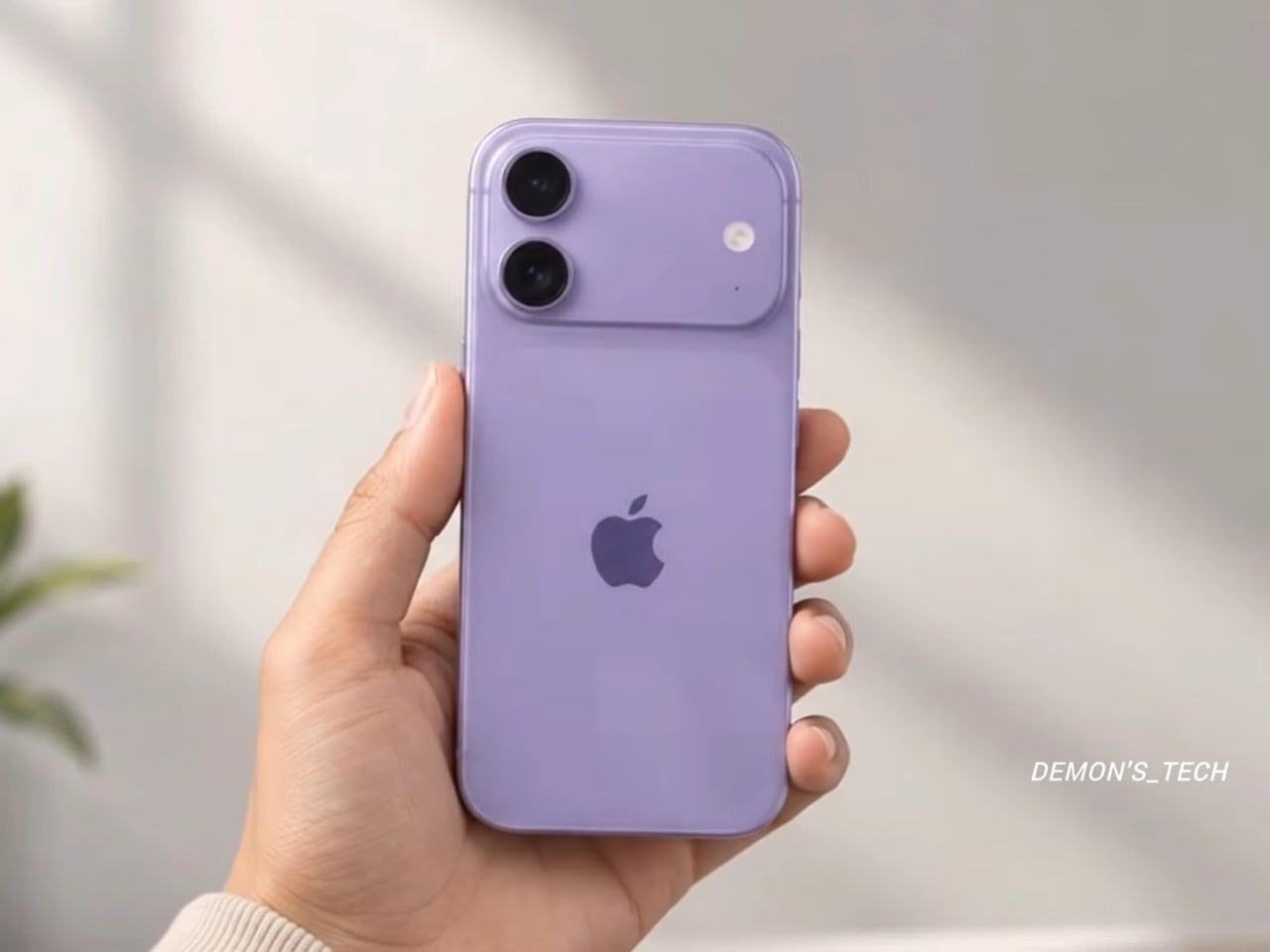
The standard A20’s bare die is estimated at 70 to 80 mm², which would make it smaller than the A19 at 82.8 mm² and well under the A20 Pro’s 98.8 mm². A die is the actual slab of silicon, and every square millimeter you shave off means more chips per wafer and a lower bill. On 2nm the savings count for more, since Notebookcheck’s report notes those wafers cost significantly more than earlier nodes. Our own look at the base iPhone 18 pegged its body as basically an iPhone 17 in disguise, so there is no fresh industrial design to pay for either. Apple looks to be spending the budget on silicon instead.
Apple reportedly gets there by halving the cache. The standard A20 is expected to carry 8 MB of L2 cache for its two super cores and 4 MB for its four efficiency cores, which is 50% less than the A20 Pro. Cache is the small, ultra fast memory sitting right next to the processor cores, so a smaller helping can mean slightly more trips out to slower memory under heavy load. It is also one of the most direct ways to shrink a die, because SRAM, the circuitry cache is built from, has scaled poorly on recent chip nodes. Honestly, it is the smartest corner to trim, since you will never see a cache spec on a phone box.
The A20 Pro reportedly uses WMCM, short for wafer-level multi-chip module, which places the processor and its memory side by side instead of stacking one on the other. That layout lets the chip connect straight to the vapor chamber, the cooling plate Apple introduced with the iPhone 17 Pro. Apple says the new Pro design delivers up to 40% better sustained performance than the 17 Pro. The standard A20 is expected to stay with traditional package-on-package, where the memory sits on top of the chip like a hat. A hat is cheap and compact, but it also traps heat right where you do not want it.
Packaging is how Apple reportedly gets the A20 Pro to 4.93 GHz, a figure from the leak analysis that Apple has never confirmed. The standard A20 is expected to clock considerably lower, so it likely does not need the same cooling tricks. Pair that with an expected 5-core GPU against the Pro’s 7 cores, and the gap could show up in a long gaming session. Past base chips trailed their Pro siblings by one GPU core, so a two-core deficit would be wider than usual. The vapor chamber stole the show in the iPhone 17 Pro teardown we covered, and the leak says nothing about the base model getting similar cooling.
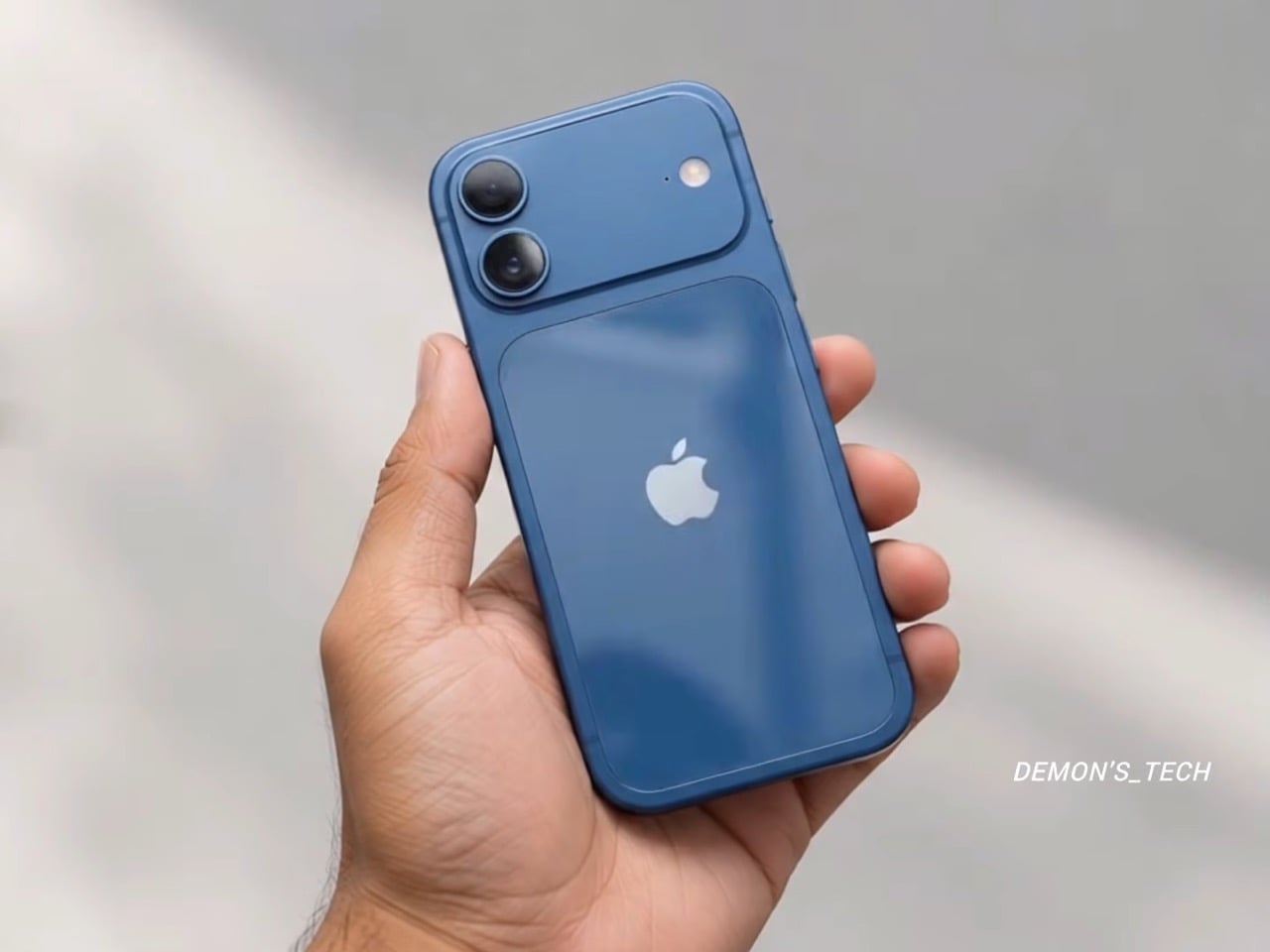
The AI side of the chip reportedly survives the cuts largely intact. The leak says the A20 keeps the same dual 16-core Neural Engine as the Pro, the dedicated block that handles on-device AI tasks, along with its own 4 MB cache. The system-level cache, a shared pool of memory every part of the chip can tap, may grow from the A19’s 12 MB to 16 MB. The memory bus is also expected to widen to 96 bits, matching the Pro, which means more data can flow to the chip per second. In real life that means live translation and photo cleanup running on the phone instead of waiting on a server.
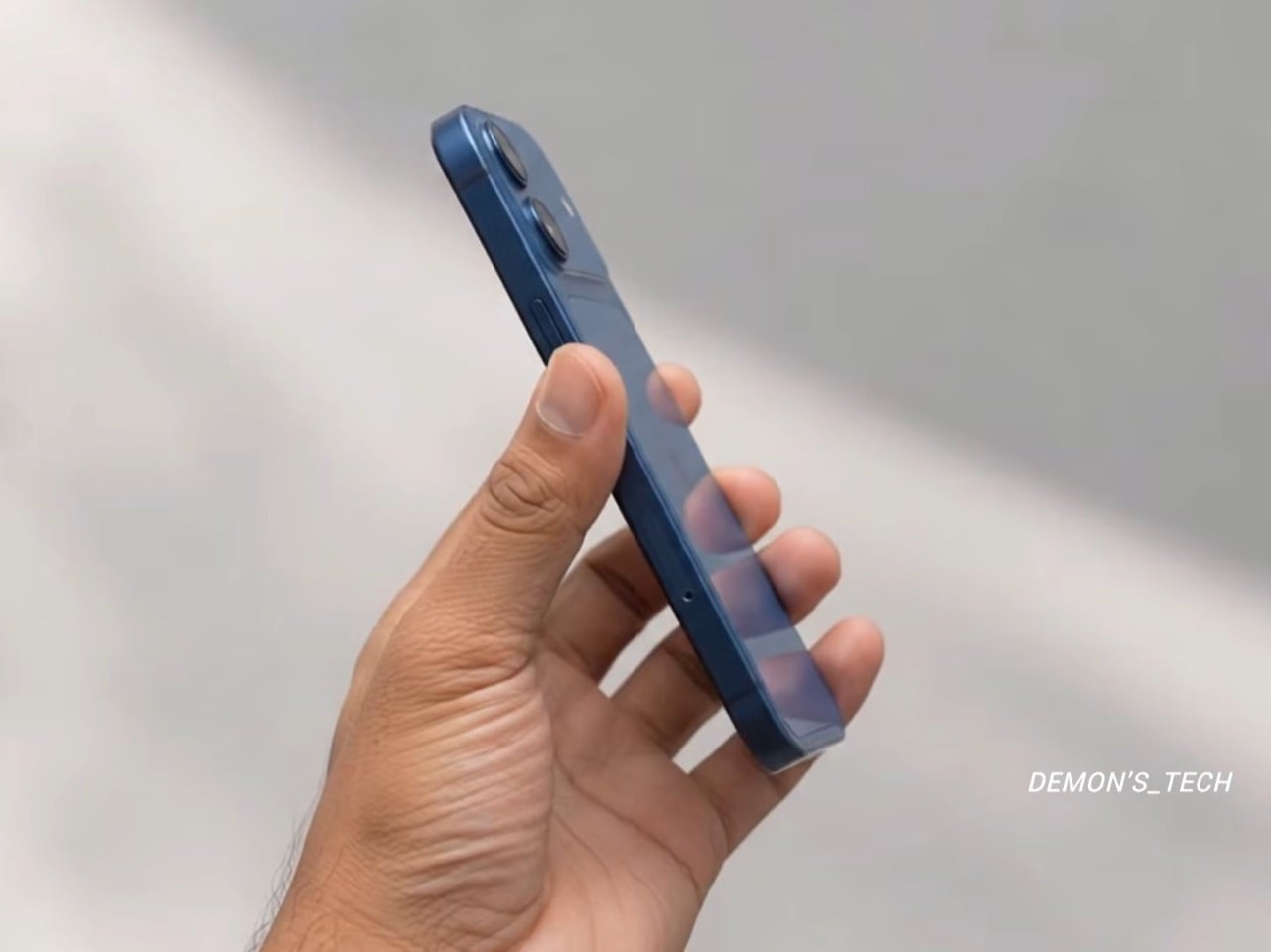
The iPhone Duo (the one with the open and close animation we gushed over) runs the same A20 Pro, so Apple’s fall lineup now shares one chip. The base model is expected to follow in spring 2027 with a lighter version of that platform. Apple has confirmed no date, price, or chip for it, so every number here is a leak. The iPhone 17 started at $799 and the Pros just rose $100, so the base model’s price is the number to watch. Back in the A16 days the hand-me-down chip was a consolation prize, but this time the regular iPhone gets a fresh 2nm brain with a little muscle trimmed, a deal I would happily take.
The post Apple’s iPhone 18 is getting a ‘cheaper’ A20 chip to keep the overall phone affordable first appeared on Yanko Design.
Apple has a long habit of handing last year’s brain to this year’s regular iPhone. The iPhone 15 shipped with the A16 chip while the 15 Pro got the shiny new A17 Pro, and nobody stormed Cupertino with pitchforks. It works because people shop for cameras and battery life, and nobody has ever asked a store clerk about die size. The iPhone 18 is about to run the same play with a twist. This time the regular model gets a brand new A20 chip, except it arrives months after everyone else’s.
The chip is the A20, and a leaked solder ball map analyzed on Weibo by user 白饭炒白米饭 (reported by Notebookcheck on October 1) suggests it is a slimmed down sibling of the A20 Pro. That Pro chip already powers the iPhone 18 Pro, starting at $1,199, and the iPhone Duo, starting at $1,999. Both reportedly use TSMC’s 2nm process, but the standard version supposedly keeps the AI hardware and trims the GPU, cache, and clock speeds. The base iPhone 18 is expected in spring 2027, and Apple has announced no price or date. So what does Apple cut when it wants a cheaper 2nm chip, and what does it refuse to touch?
Designer: Demon’s Tech
The standard A20’s bare die is estimated at 70 to 80 mm², which would make it smaller than the A19 at 82.8 mm² and well under the A20 Pro’s 98.8 mm². A die is the actual slab of silicon, and every square millimeter you shave off means more chips per wafer and a lower bill. On 2nm the savings count for more, since Notebookcheck’s report notes those wafers cost significantly more than earlier nodes. Our own look at the base iPhone 18 pegged its body as basically an iPhone 17 in disguise, so there is no fresh industrial design to pay for either. Apple looks to be spending the budget on silicon instead.
Apple reportedly gets there by halving the cache. The standard A20 is expected to carry 8 MB of L2 cache for its two super cores and 4 MB for its four efficiency cores, which is 50% less than the A20 Pro. Cache is the small, ultra fast memory sitting right next to the processor cores, so a smaller helping can mean slightly more trips out to slower memory under heavy load. It is also one of the most direct ways to shrink a die, because SRAM, the circuitry cache is built from, has scaled poorly on recent chip nodes. Honestly, it is the smartest corner to trim, since you will never see a cache spec on a phone box.
The A20 Pro reportedly uses WMCM, short for wafer-level multi-chip module, which places the processor and its memory side by side instead of stacking one on the other. That layout lets the chip connect straight to the vapor chamber, the cooling plate Apple introduced with the iPhone 17 Pro. Apple says the new Pro design delivers up to 40% better sustained performance than the 17 Pro. The standard A20 is expected to stay with traditional package-on-package, where the memory sits on top of the chip like a hat. A hat is cheap and compact, but it also traps heat right where you do not want it.
Packaging is how Apple reportedly gets the A20 Pro to 4.93 GHz, a figure from the leak analysis that Apple has never confirmed. The standard A20 is expected to clock considerably lower, so it likely does not need the same cooling tricks. Pair that with an expected 5-core GPU against the Pro’s 7 cores, and the gap could show up in a long gaming session. Past base chips trailed their Pro siblings by one GPU core, so a two-core deficit would be wider than usual. The vapor chamber stole the show in the iPhone 17 Pro teardown we covered, and the leak says nothing about the base model getting similar cooling.
The AI side of the chip reportedly survives the cuts largely intact. The leak says the A20 keeps the same dual 16-core Neural Engine as the Pro, the dedicated block that handles on-device AI tasks, along with its own 4 MB cache. The system-level cache, a shared pool of memory every part of the chip can tap, may grow from the A19’s 12 MB to 16 MB. The memory bus is also expected to widen to 96 bits, matching the Pro, which means more data can flow to the chip per second. In real life that means live translation and photo cleanup running on the phone instead of waiting on a server.
The iPhone Duo (the one with the open and close animation we gushed over) runs the same A20 Pro, so Apple’s fall lineup now shares one chip. The base model is expected to follow in spring 2027 with a lighter version of that platform. Apple has confirmed no date, price, or chip for it, so every number here is a leak. The iPhone 17 started at $799 and the Pros just rose $100, so the base model’s price is the number to watch. Back in the A16 days the hand-me-down chip was a consolation prize, but this time the regular iPhone gets a fresh 2nm brain with a little muscle trimmed, a deal I would happily take.
The post Apple’s iPhone 18 is getting a ‘cheaper’ A20 chip to keep the overall phone affordable first appeared on Yanko Design.