As a huge fan of science fiction content, from books to movies to TV shows, I am excited to see which things from what I’ve read and seen will come true one of these days. And with the advances in technology, a lot of them are not far-fetched ideas anymore. There are some things that may be scary or at least creepy but it’s still pretty interesting to see what we’ll see next which we thought were just works of science fiction before.
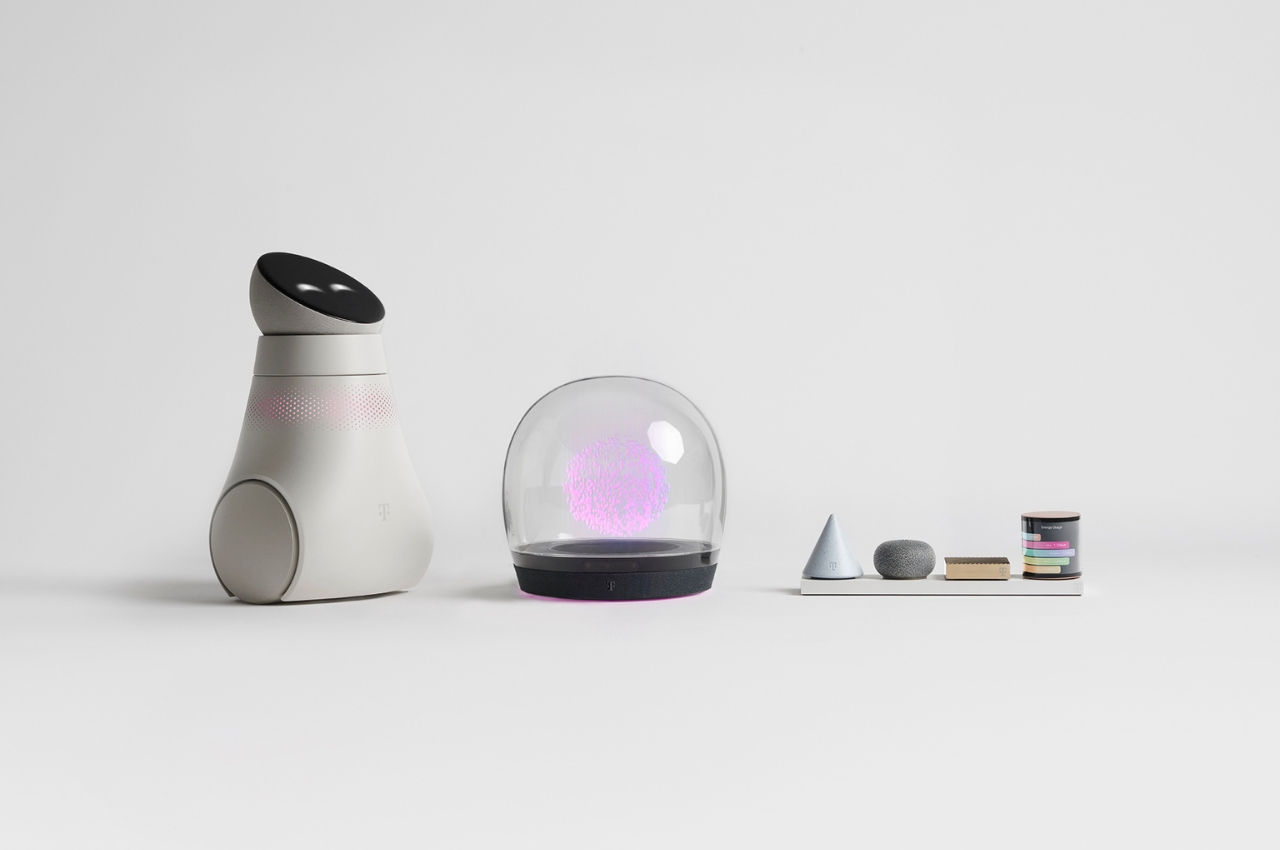
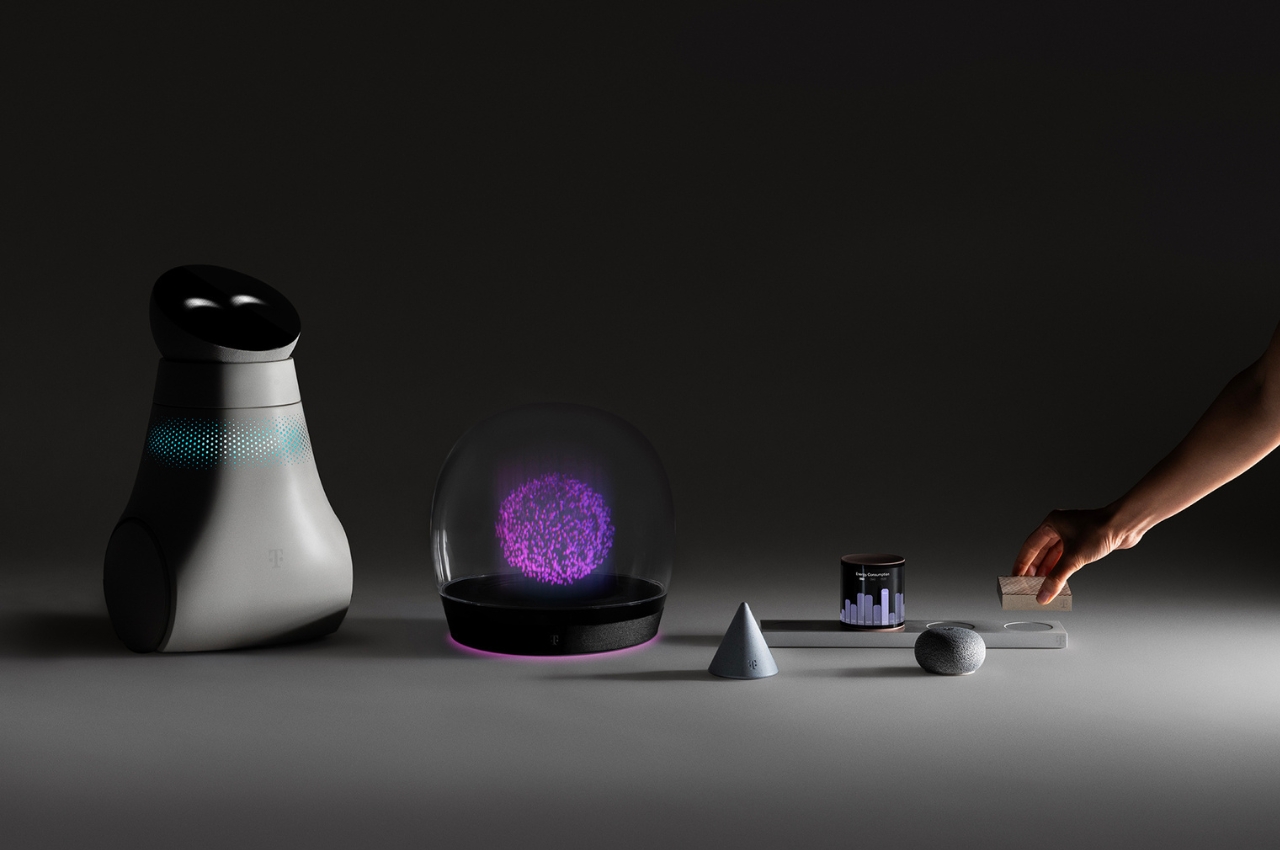
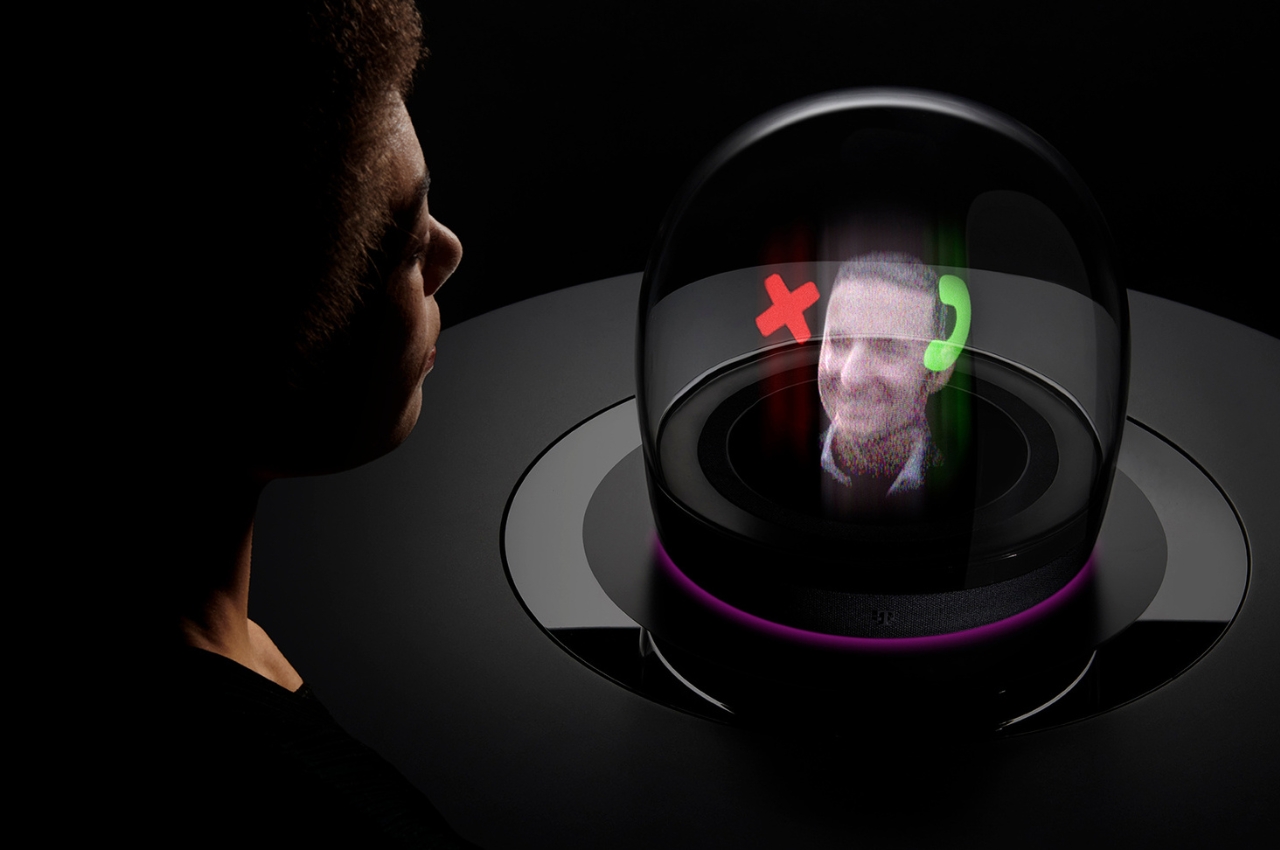
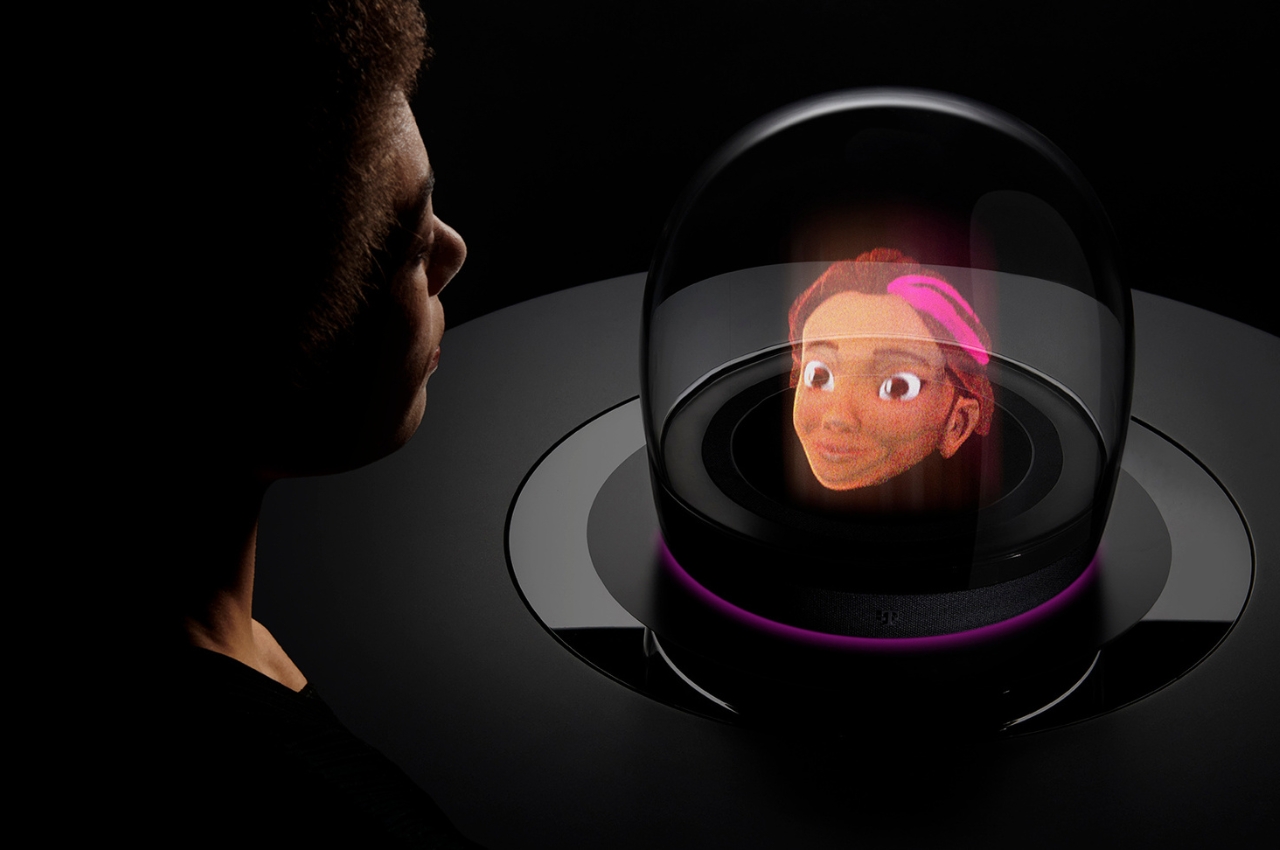
German telecommunications company Deutsche Telekom recently unveiled the Concept T project which is a collection of advanced technology and gadget concepts that will show consumers what may be the future of communications. Concept View is a home hub with a twist: it has a 3D holographic AI-equipped virtual assistant called Emma to guide you through things like video calls and other digital world activities. It looks like a cross between a crystal ball and the Palantirs from Lord of the Rings but instead of showing you what the future holds, it will show you the future of technology.
A Wi-Fi router isn’t the sexiest gadget out there but Concept Level definitely makes it more interesting. It is a re-configurable router that is made up of different interchangeable, modular elements. The set includes a display unit, Wi-Fi sensing element, mesh repeater, and computational module for Web 3 use cases. The elements are designed using different geometric forms so it looks like you have interesting mini sculptures rather than an actual router.
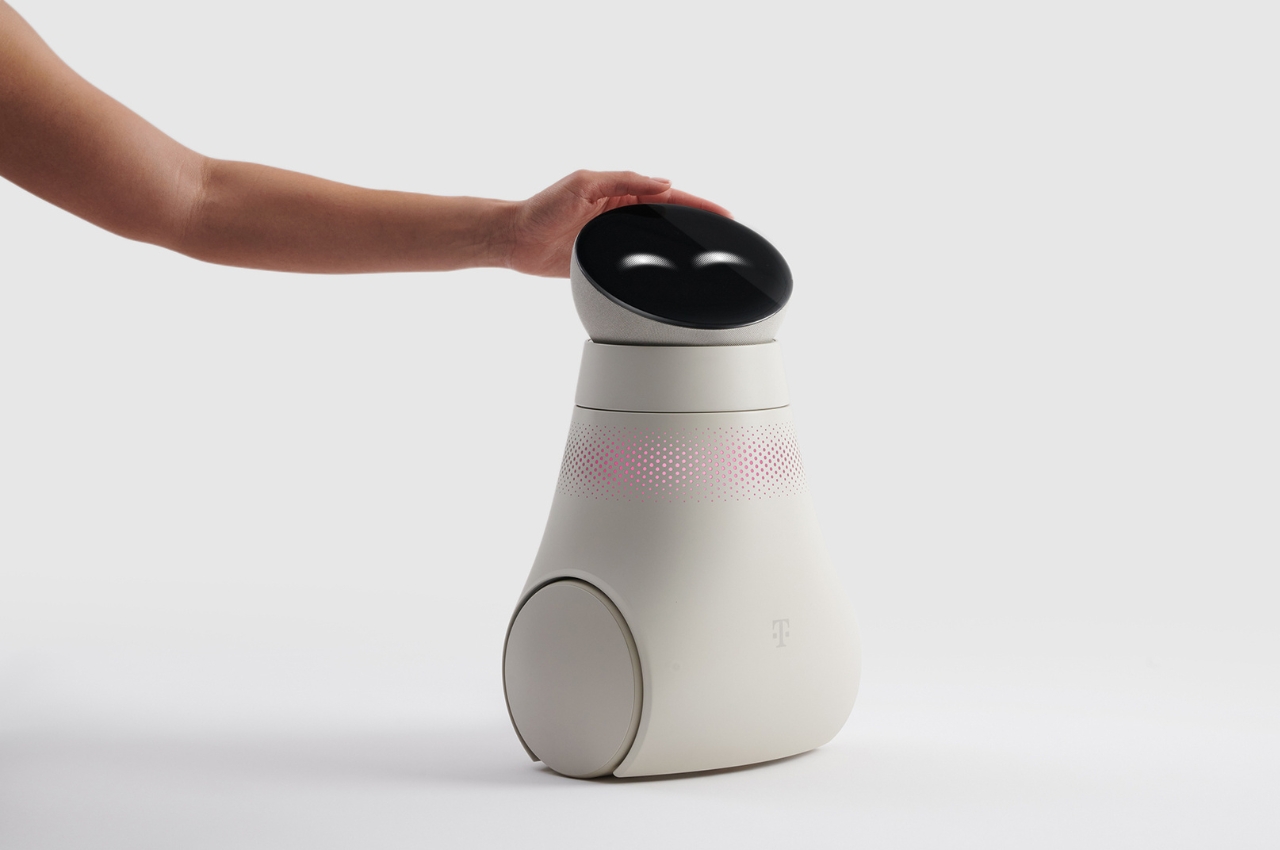
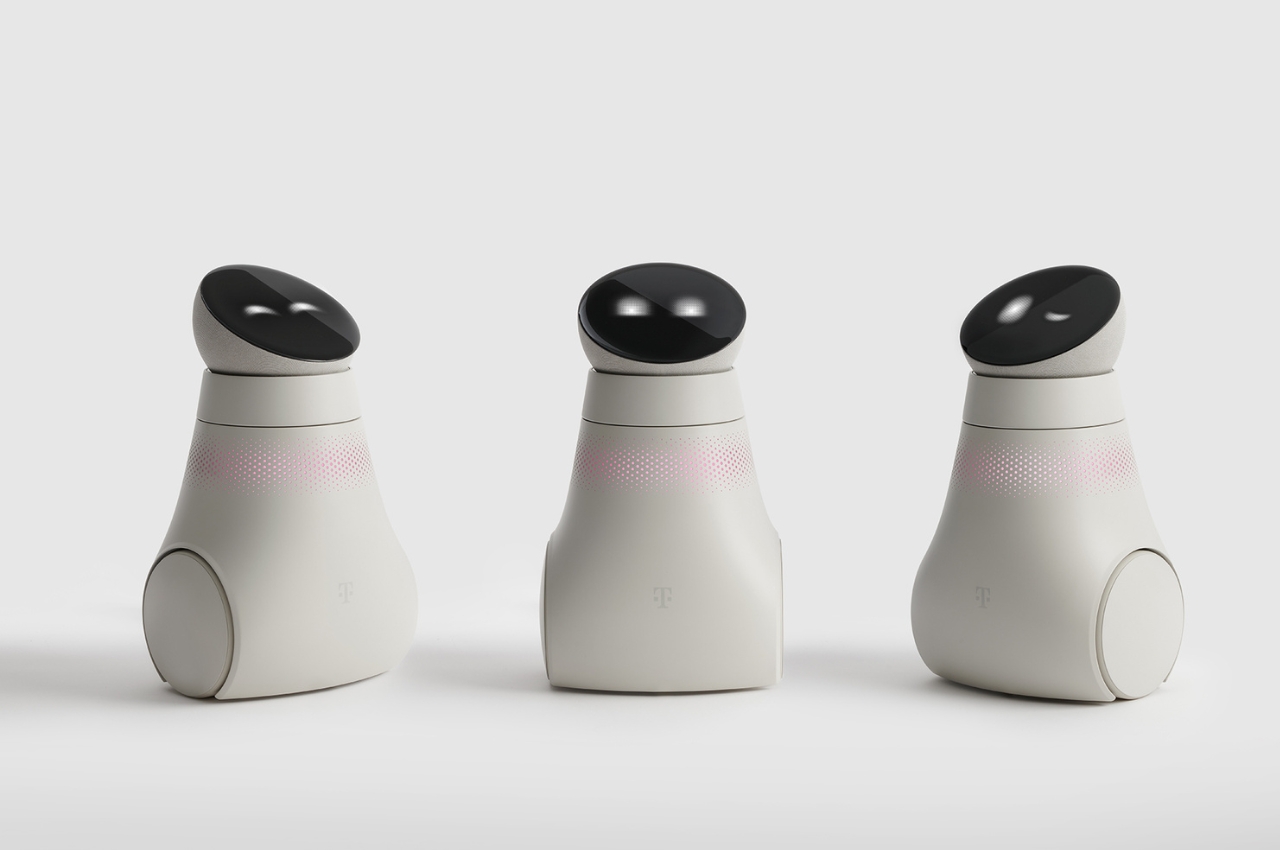
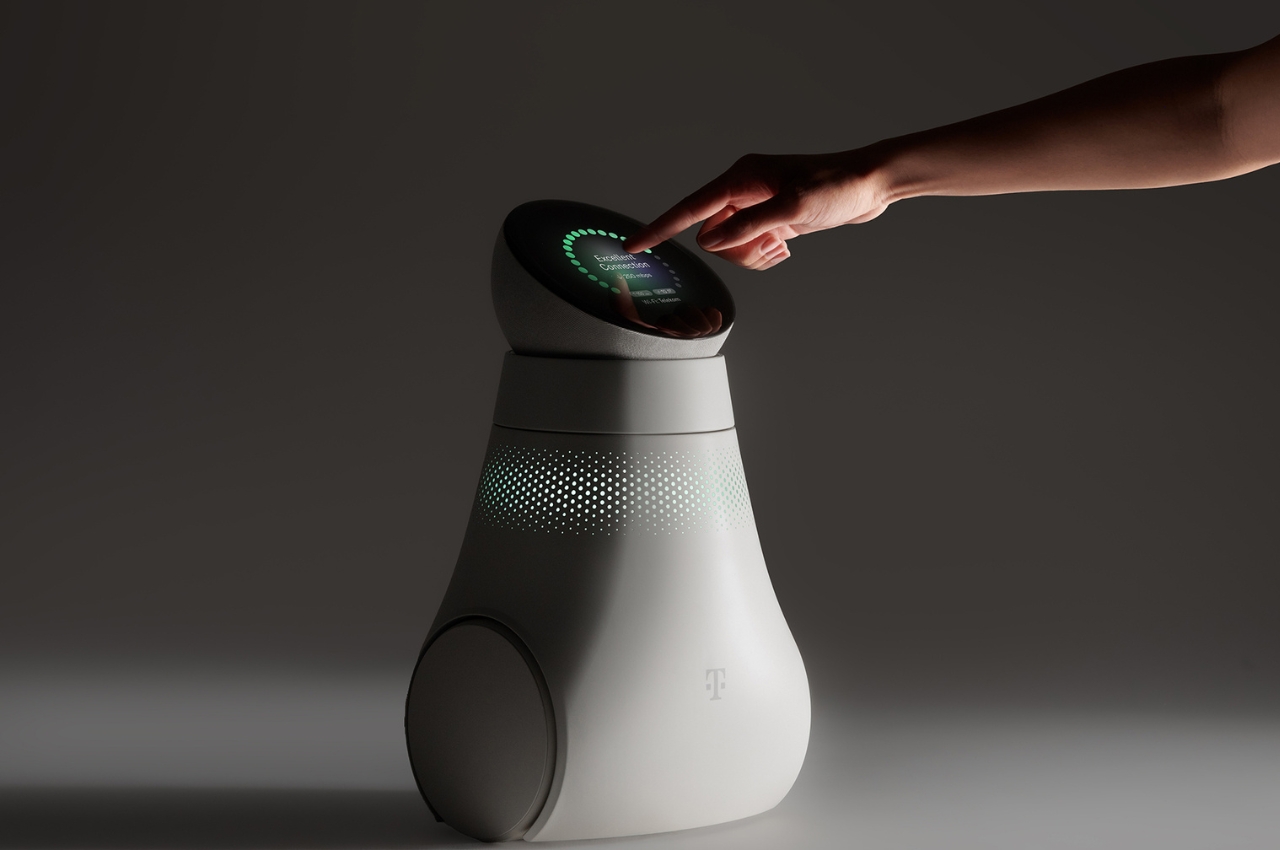
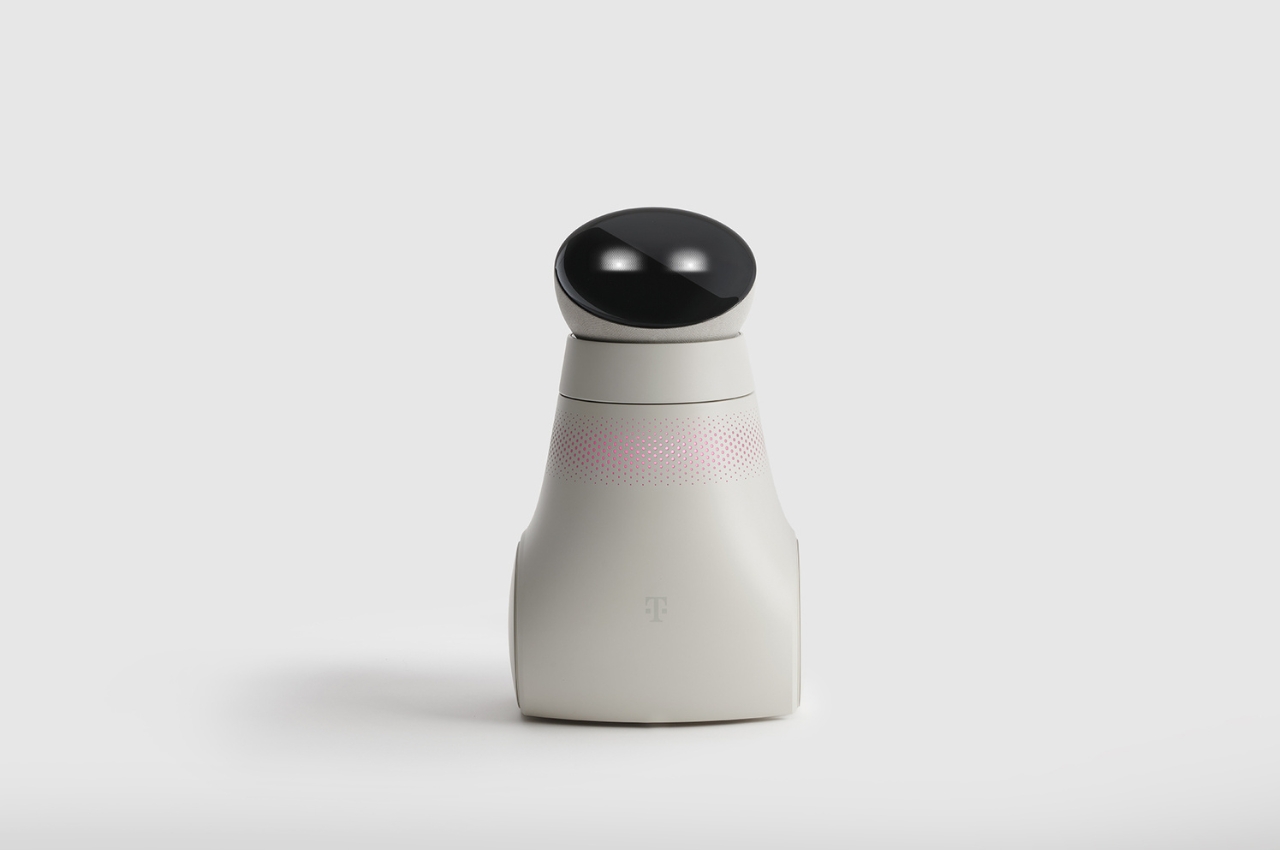
Concept Buddy is your own personal robot at home, similar to the ones you see in malls and airports. It’s an AI-based digital assistant companion that is able to communicate through the “emotion and information display”. It is able to give reminders like taking medication and household chores and can also assist in calls, online shopping, and other tasks you may need assistance. It can even warn you of potential hazards and contact emergency services if needed. It is able to adapt to your routine and will only “come alive” when it is engaged with.
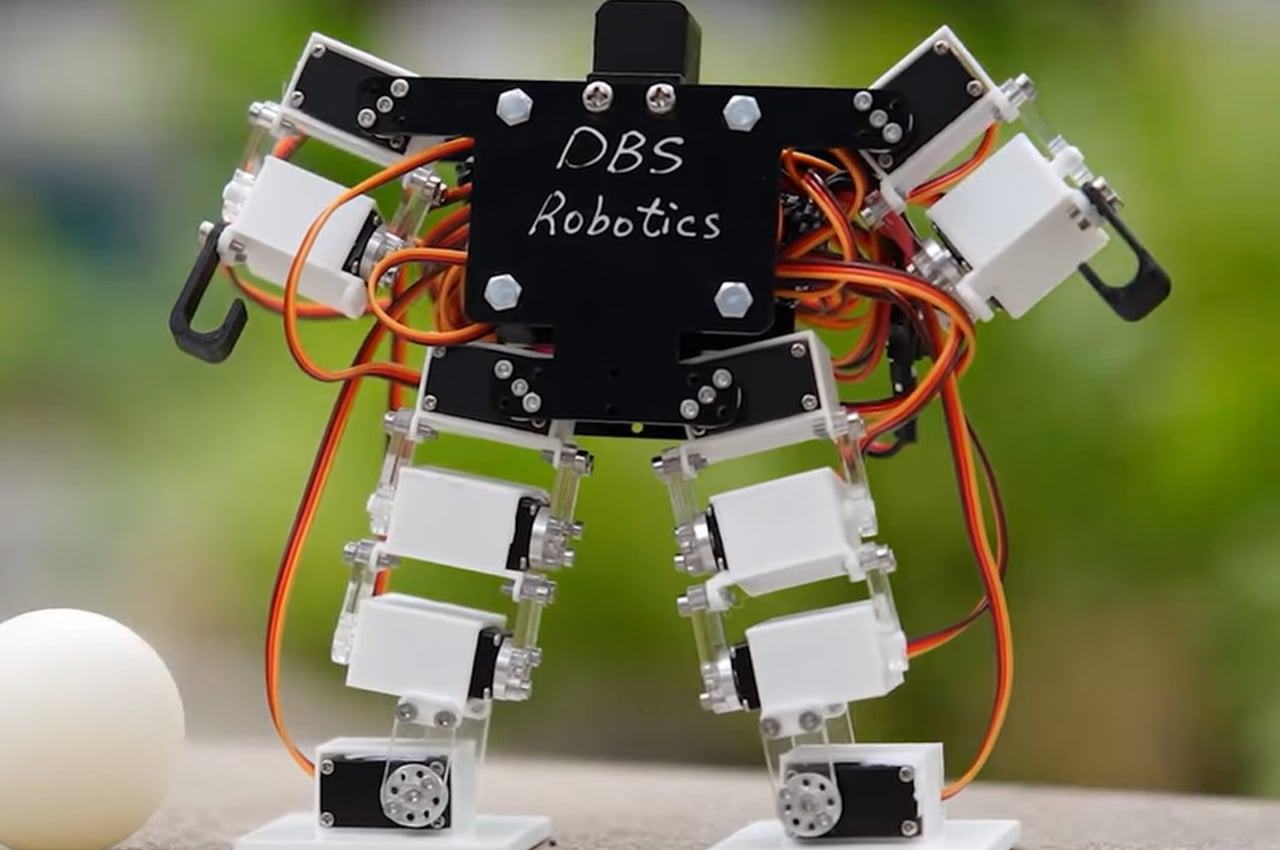
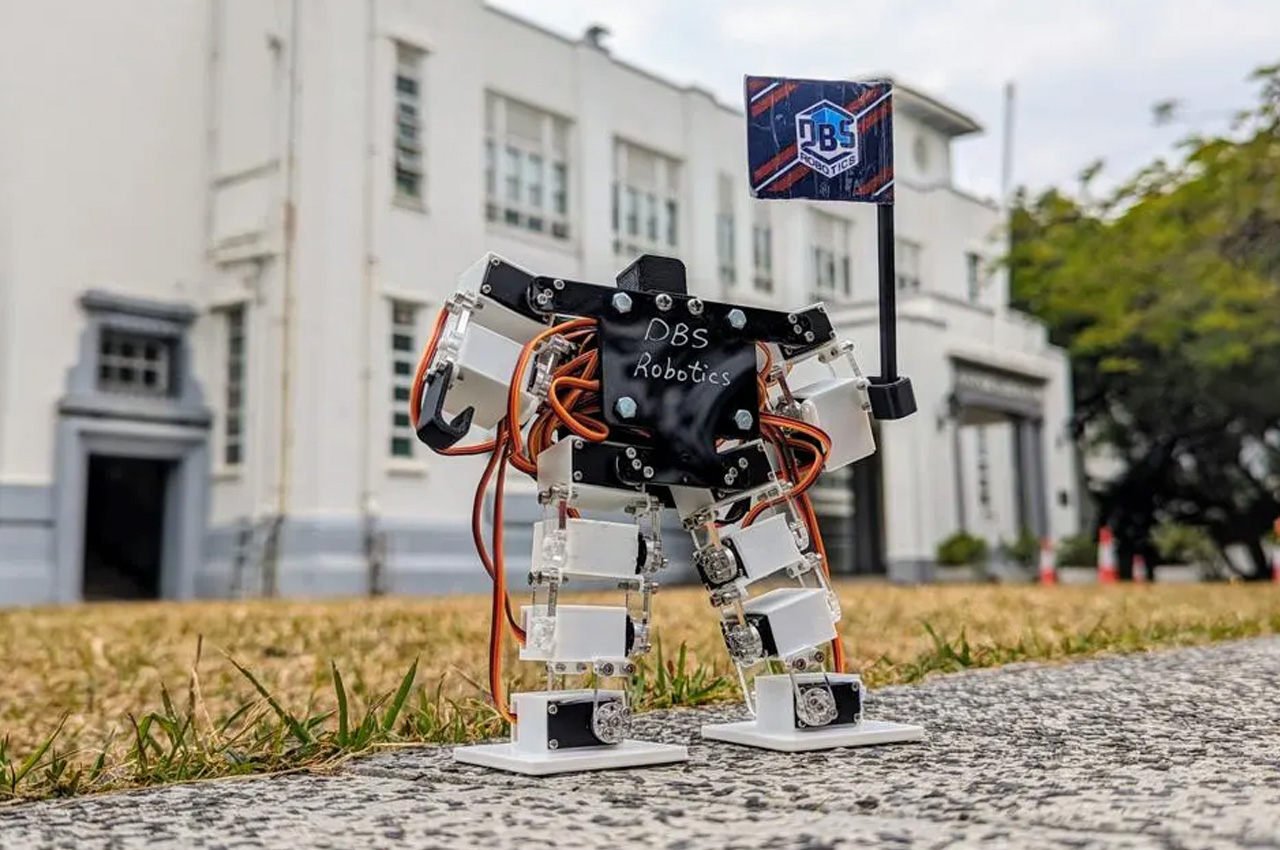
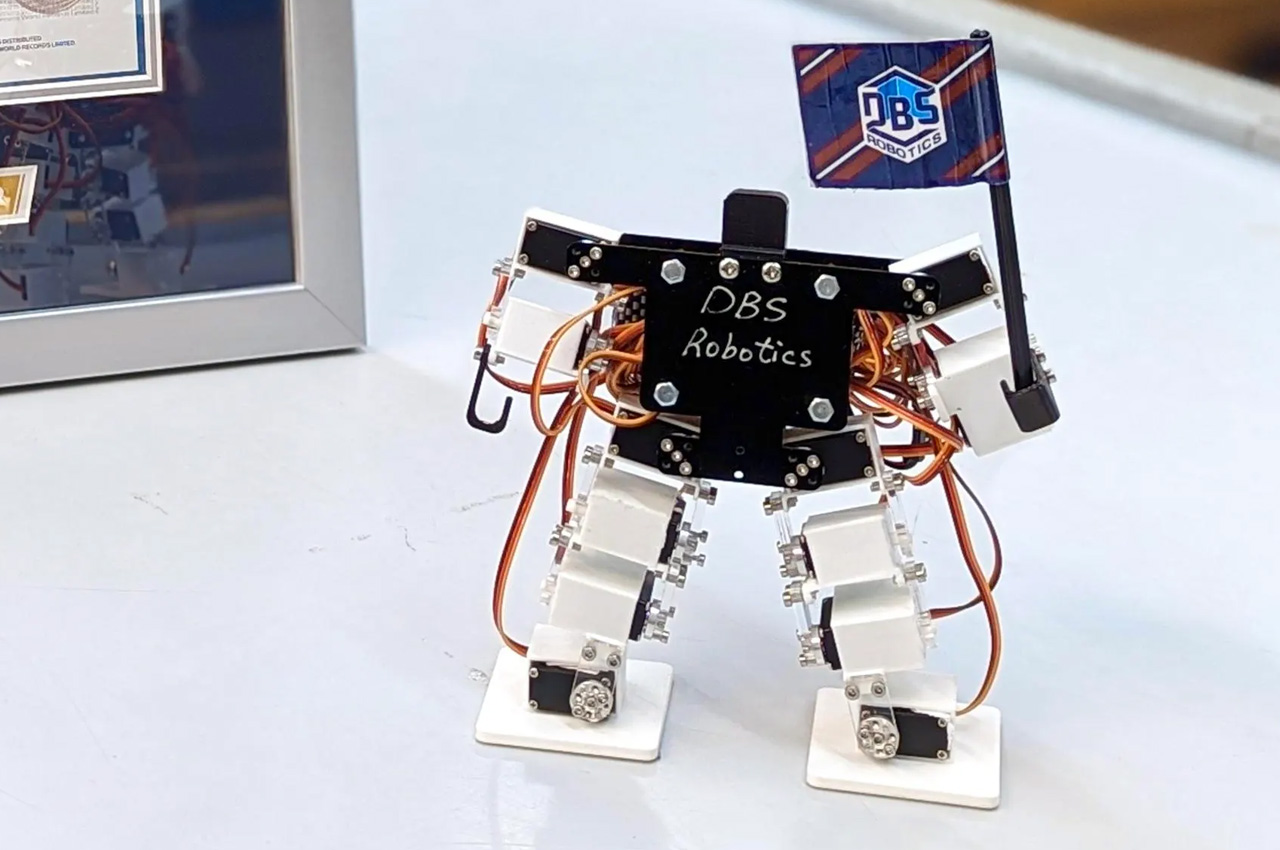
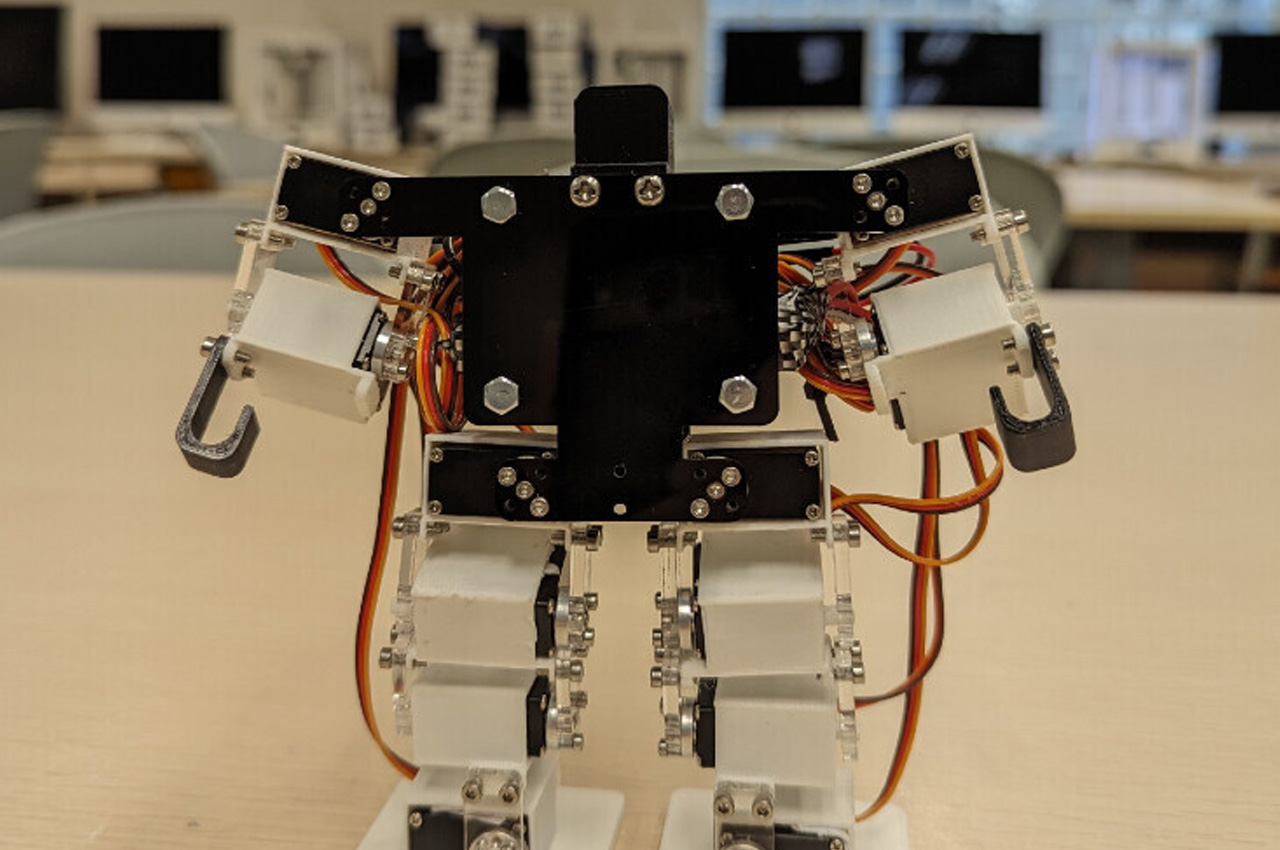
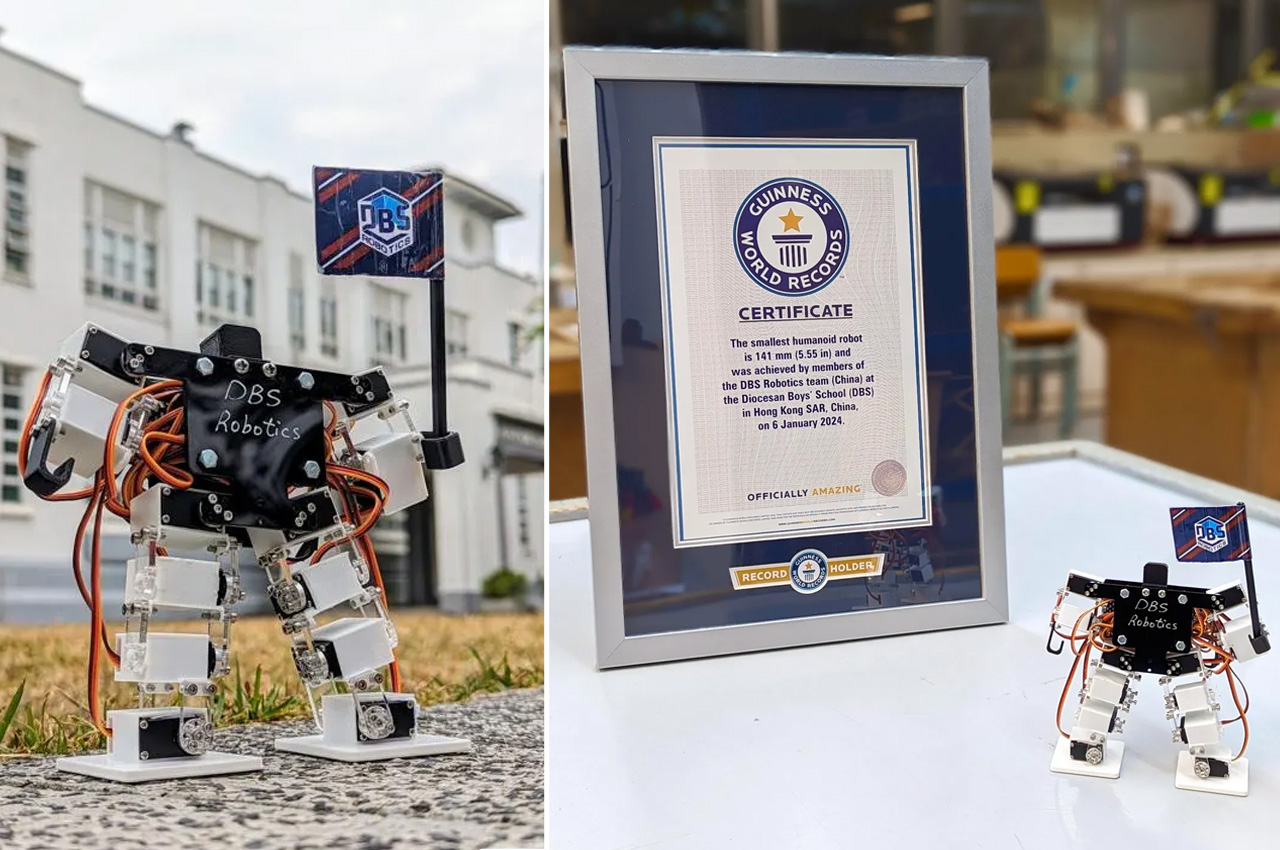
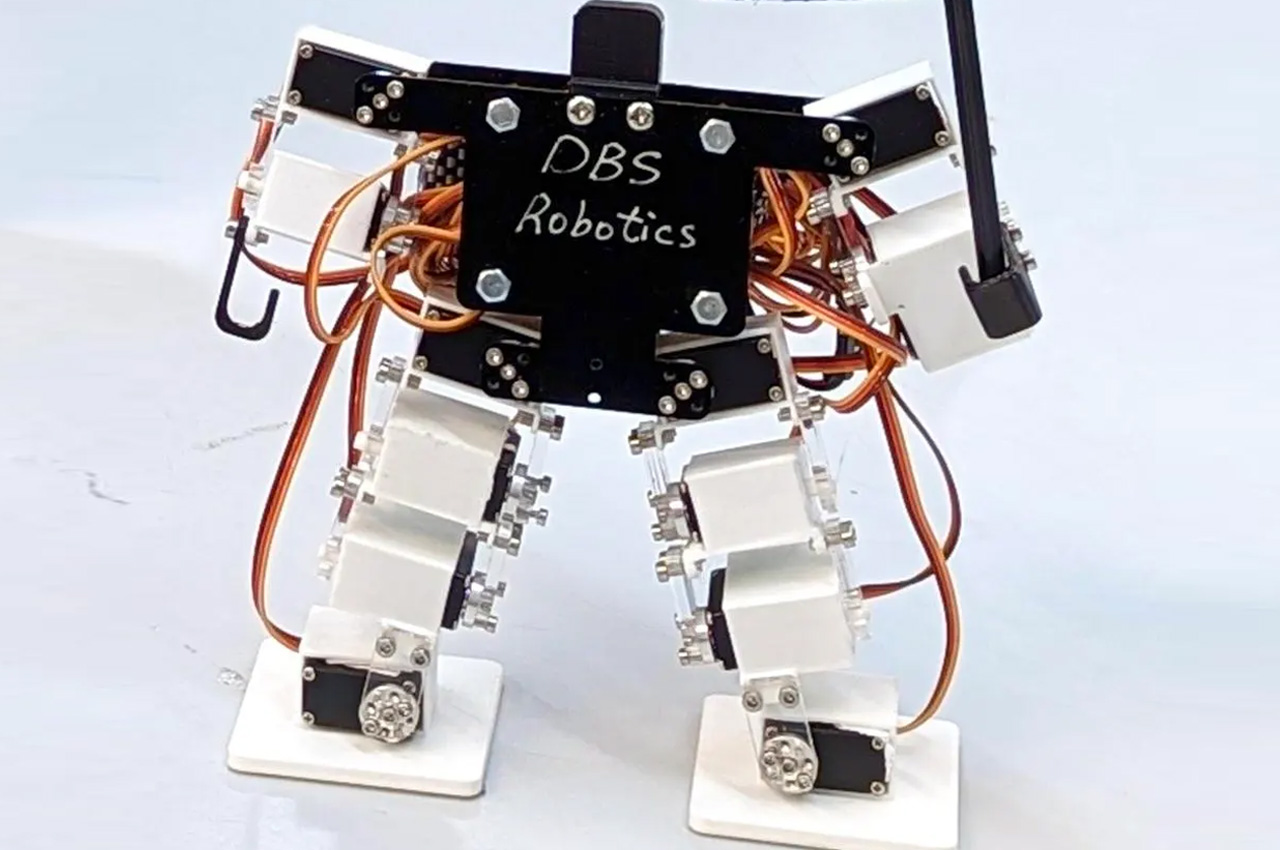
School students from Hong Kong have shined in the world sphere with an entry in the Guinness World Records. They have, in the school robotics laboratory, built what is now recognized as the smallest humanoid in the world by the ace record keeper. To reach the feat, they had to do better than just build a miniature bot. A robot to be billed a record holder must be capable of bipedal movement and able to articulate its knees, hips, elbows, and shoulders.
The four-member team of Aaron Ho Yat Fung, Isaac Zachary To, Justin Wang Tou Duong, and Ngo Hei Leung, with their bot which does not have a moniker yet, has broken the record for the smallest robot held by Pakistan’s Zain Ahmad Qureshi. For reference, the humanoid from Diocesan Boys’ School students is “shorter than a standard ballpoint pen.”
According to the information shared by Guinness World Records, the new smallest humanoid measures 141 mm tall. For the record, it is estimated 11.3 mm shorter than the previous record-holding robot by Qureshi. Even though the underlying intention of such a miniature robot was to break the Guinness Record; the brains behind it believe, the bot can be a “small, low cost, rechargeable, and programmable” platform for STEAM (science, technology, engineering, the arts, and mathematics) education. The small size also leaves the possibility of mass-producing such a robot at a lower cost.
The robot itself was first designed in CAD and then its acrylic panels and 3D-printed components were produced and assembled in the school’s robotics lab. Students thereafter reached out to a servo motors manufacturer. Putting the servos together on a 16-channel control board, installed at the back of the robot, students were able to control their bot using onboard buttons and via a mobile device.
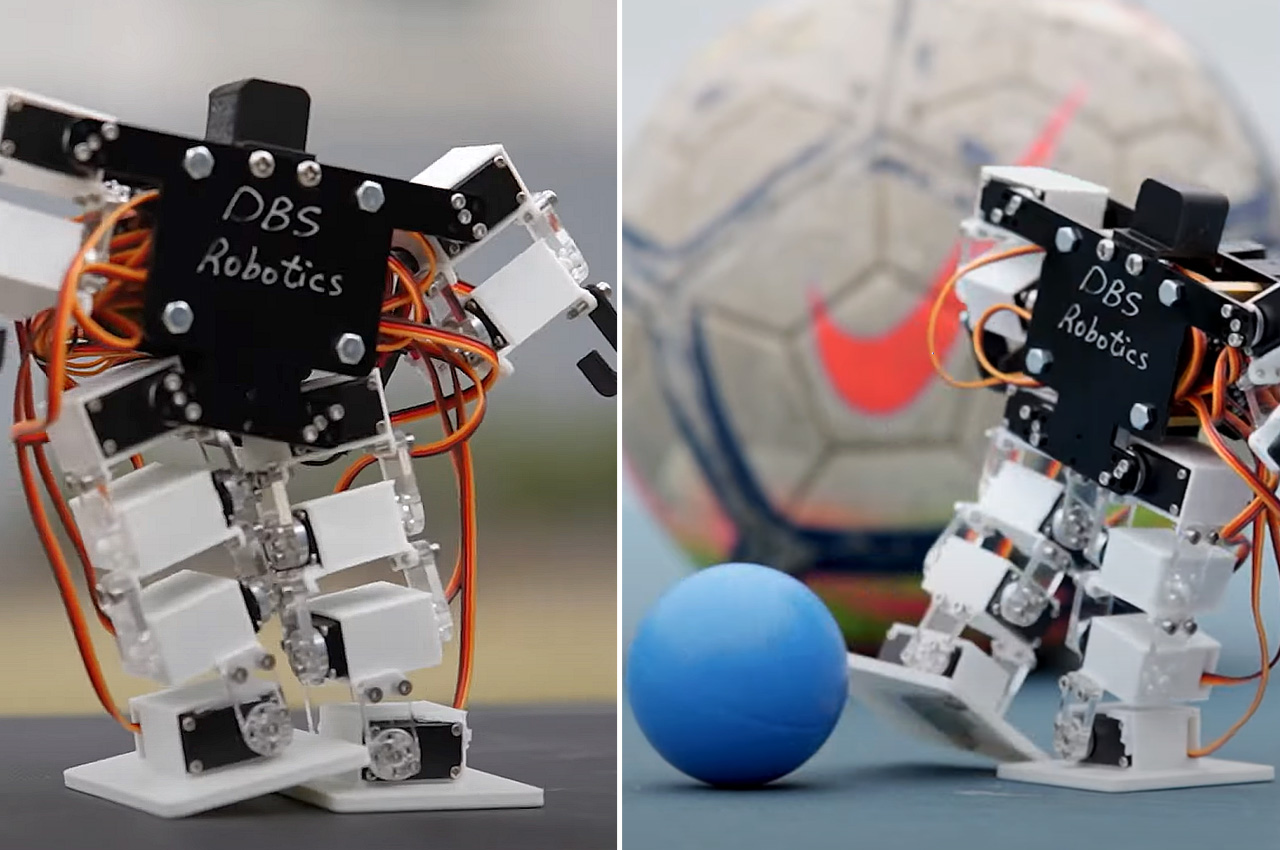
In addition to moving its legs and arms, the robot, as seen in the video above, can be programmed to dance, do kung fu, and even kick a football. These moves are powered by a built-in 7.4V lithium-ion battery. The Diocesan Boys’ School robotics team wants to make the design and code of their tiny robot open source, which would further their idea of making STEAM education workshops interesting and economically viable.
I had an idea about what’s possible with AI and machine learning integration. What I didn’t know, until today, was that LG is committed to realizing a vision of “Zero Labor Home” with robotics and artificial intelligence. Does that sound safe is a discussion for another day, but what’s on the horizon (as progress in the direction) is the pre-CES announcement of a smart home AI agent from LG.
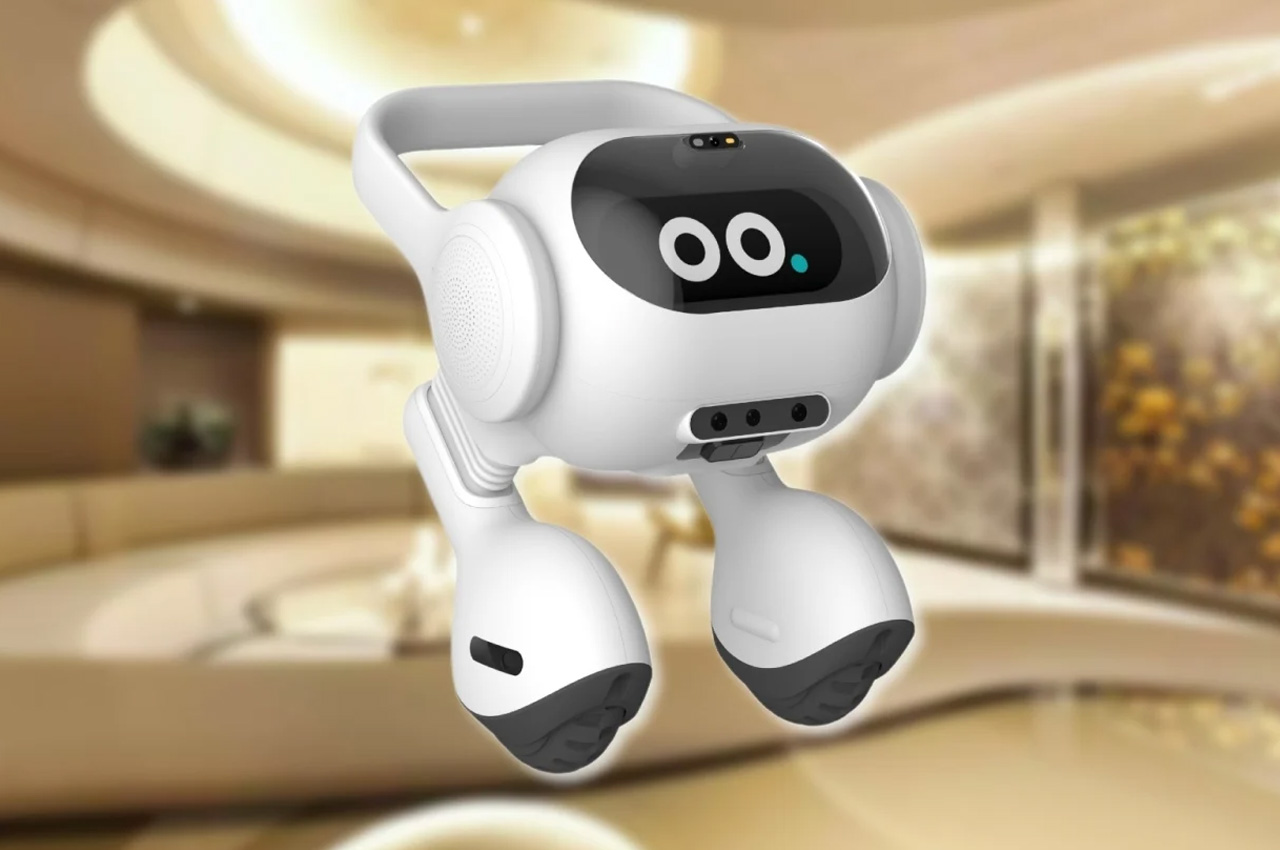
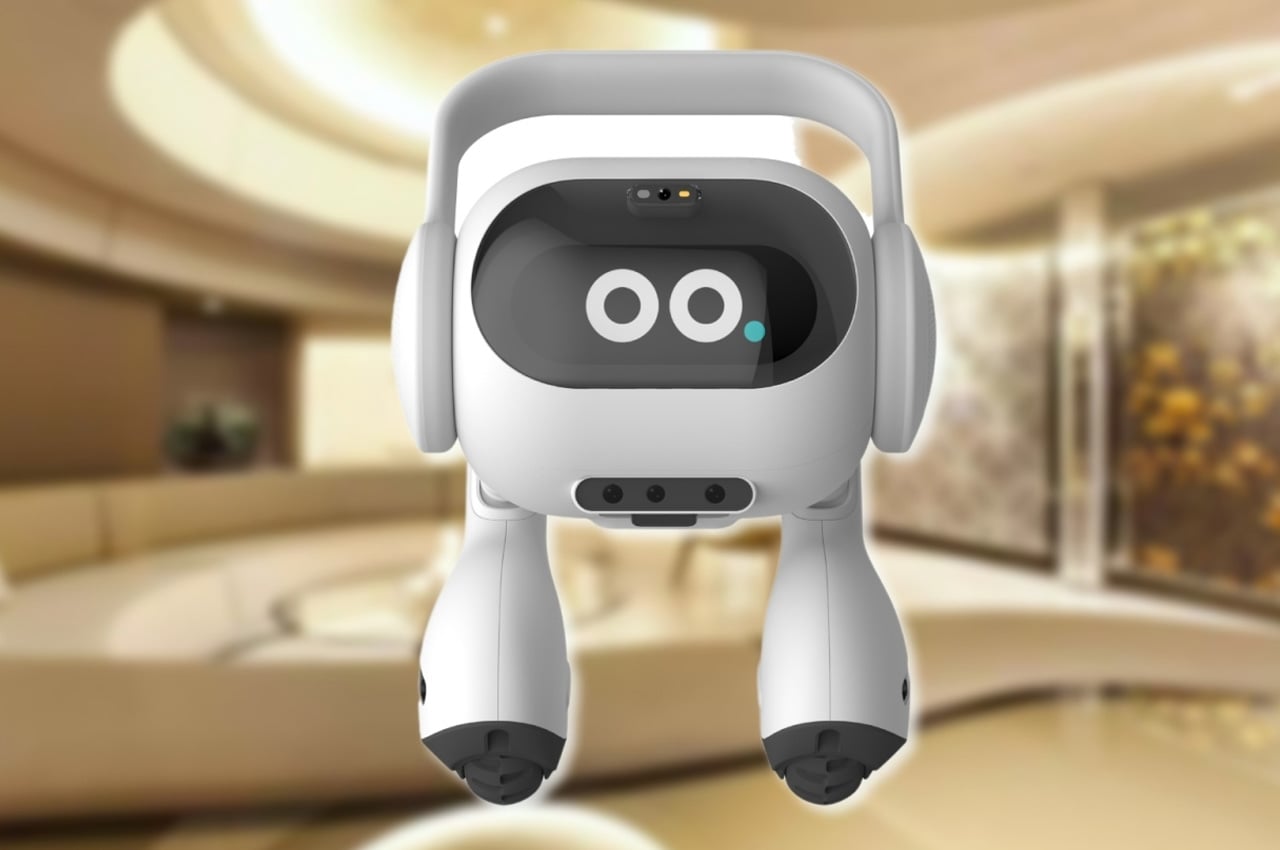
The AI agent is a cute little robot with large googly eyes that LG has outfitted with multi-modal technologies for autonomous mobility, advanced communication, and engaging functions to help homeowners with daily chores. A home manager and companion robot to say, the LG’s two-legged, wheeled agent can “move, learn, comprehend and engage in complex conversations.”
This interesting robotic figure with a headphone-like carrying handle over the head has articulated leg joints for free and independent mobility. The AI robot is based on Qualcomm Robotics RB5 development kit enabling face and companion recognition. This means that the LG smart agent can recognize users, understand and express emotions, and interact verbally. For instance, it “greets homeowners at the front door, discerns their emotions by analyzing their voice and facial expressions, and selects music or other content to suit their mood.”
“Embedded with the ability to process natural language, the robotic smart home AI agent can “understand context and intentions” to “actively communicate with users.” This is made possible with built-in sensors, camera, and a speaker. These together also put a lot of other interesting aspects to the robotic abilities of the AI agent. It can double as a mobile smart hub in the house allowing you to connect with and control IoT devices, and note temperature, indoor air quality, and humidity.
Since the little guy can move around the house quite like the humans, it can patrol the confines on your behalf to notify if you have left a window open or an appliance turned on. By this concept, it can also work as a house guard and pet monitor sending timely alerts if any unusual activity is detected or the pet needs attention. As a partner to the seniors at home, AI agent can provide reminders to take medications or manage personal schedules. With a robot capable of endless features, LG aims to “liberate” us “from the burden of housework.”
Wars bring with them massive destruction on the battlefield but the implications beyond wartime can be equally devastating in terms of mental, psychological and physical damage. The ongoing strangling in two of the most important regions in the world is a clear example of how conflicts can have devastating aftermaths. Land mines have long been one of the worst nemesis of post-war calamities, rendering fertile lands too risky to be cultivated.
Searching for these fatal buried hazards can be an arduous task even for the most potent military units and that’s where robotic land mine detectors make the task easier. This takes all the risk of human life away and also ensures the particular area of land is safely ridden of destructive land mines laid down by battling units in the past.
Designer: Subin Kim and JiHoon Park
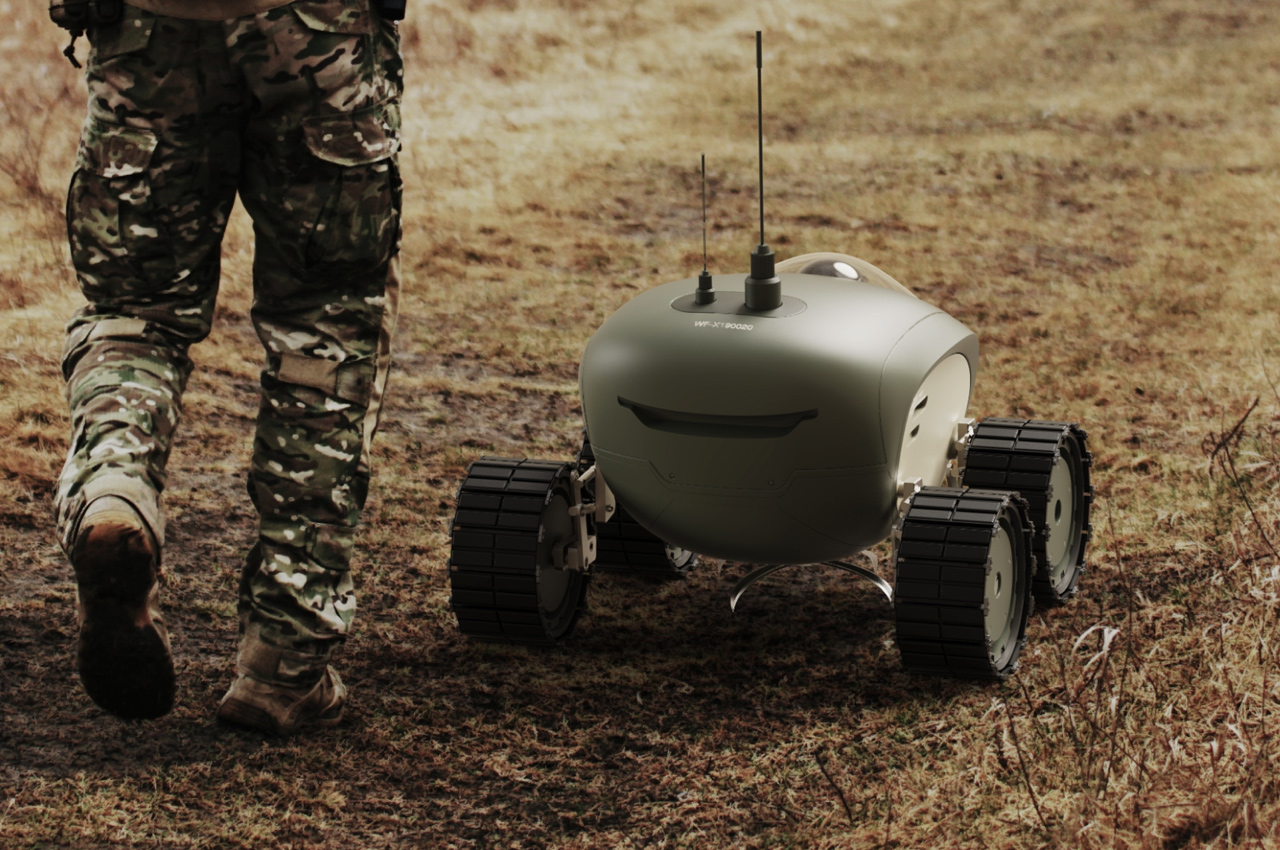
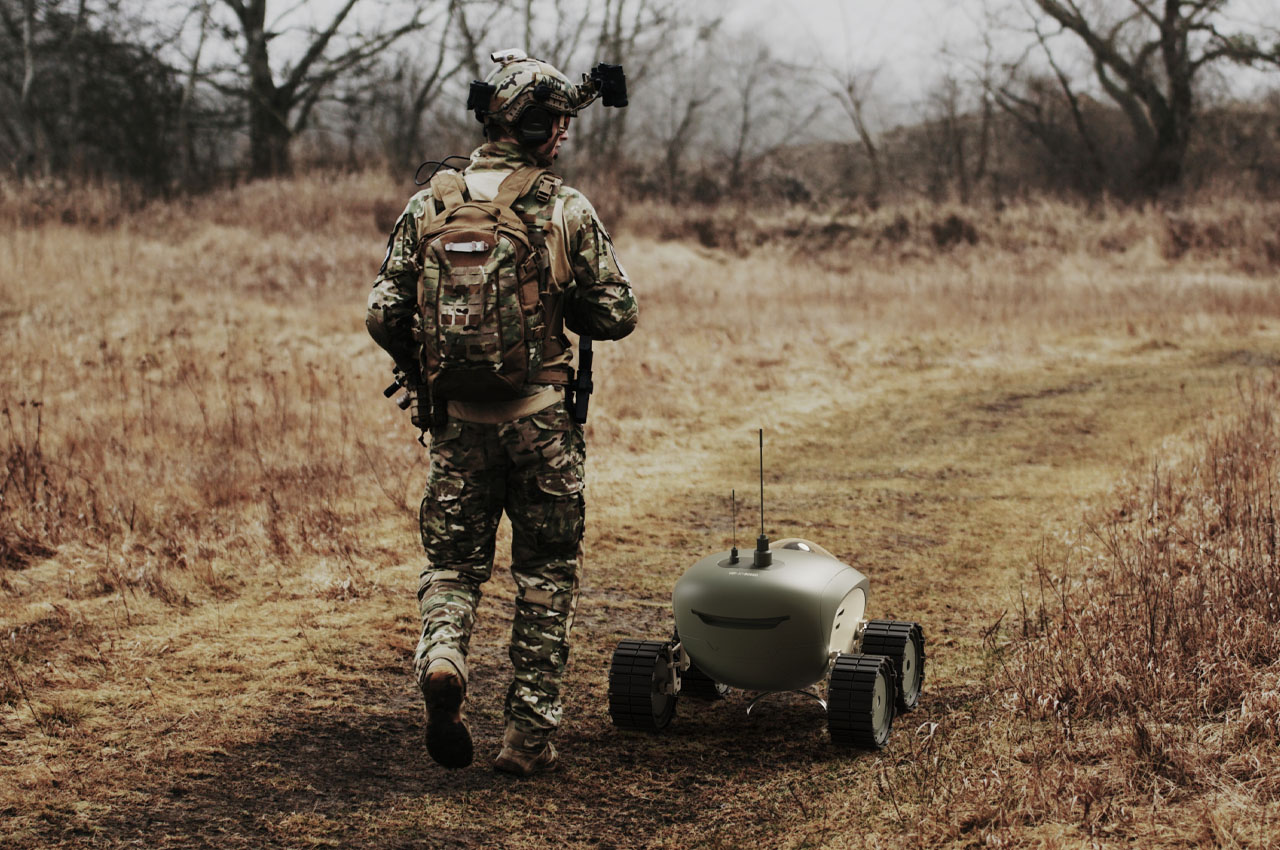
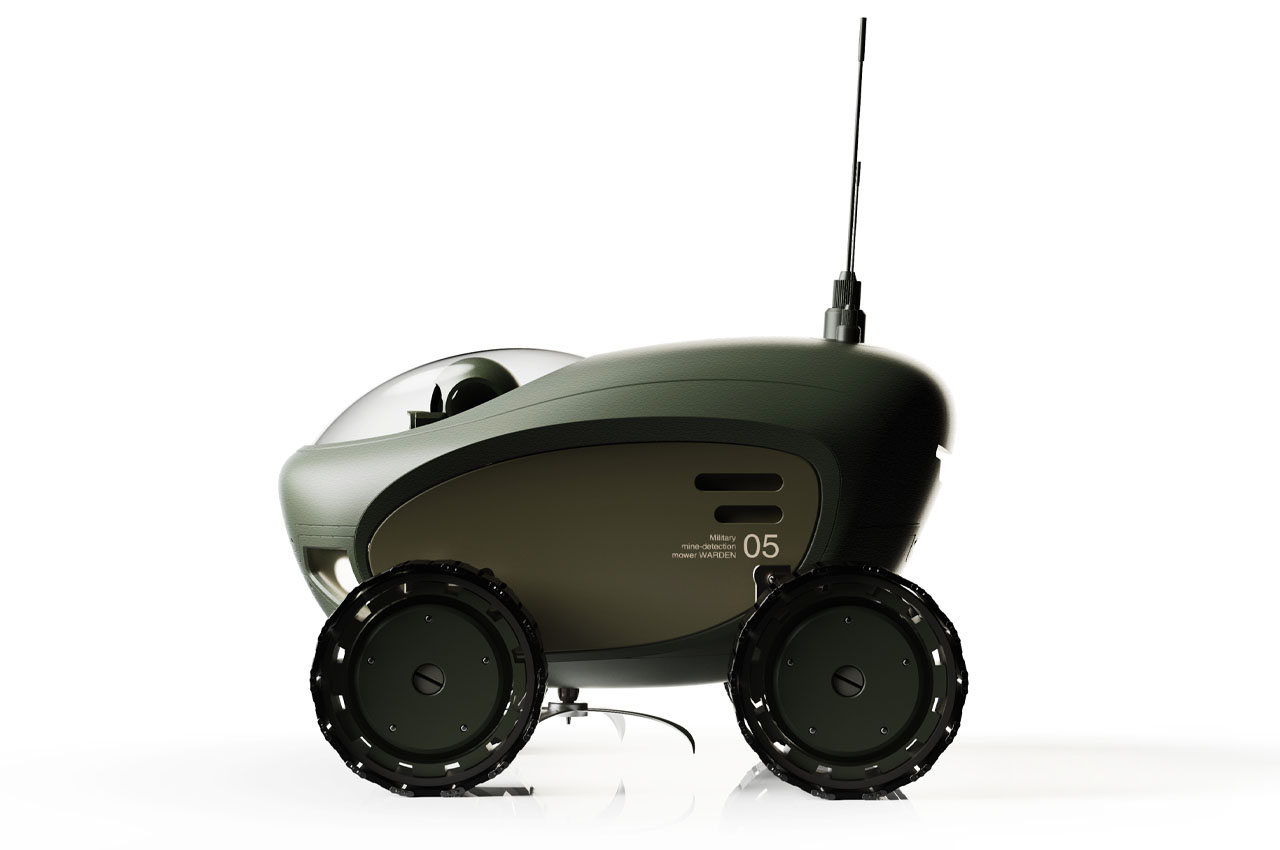
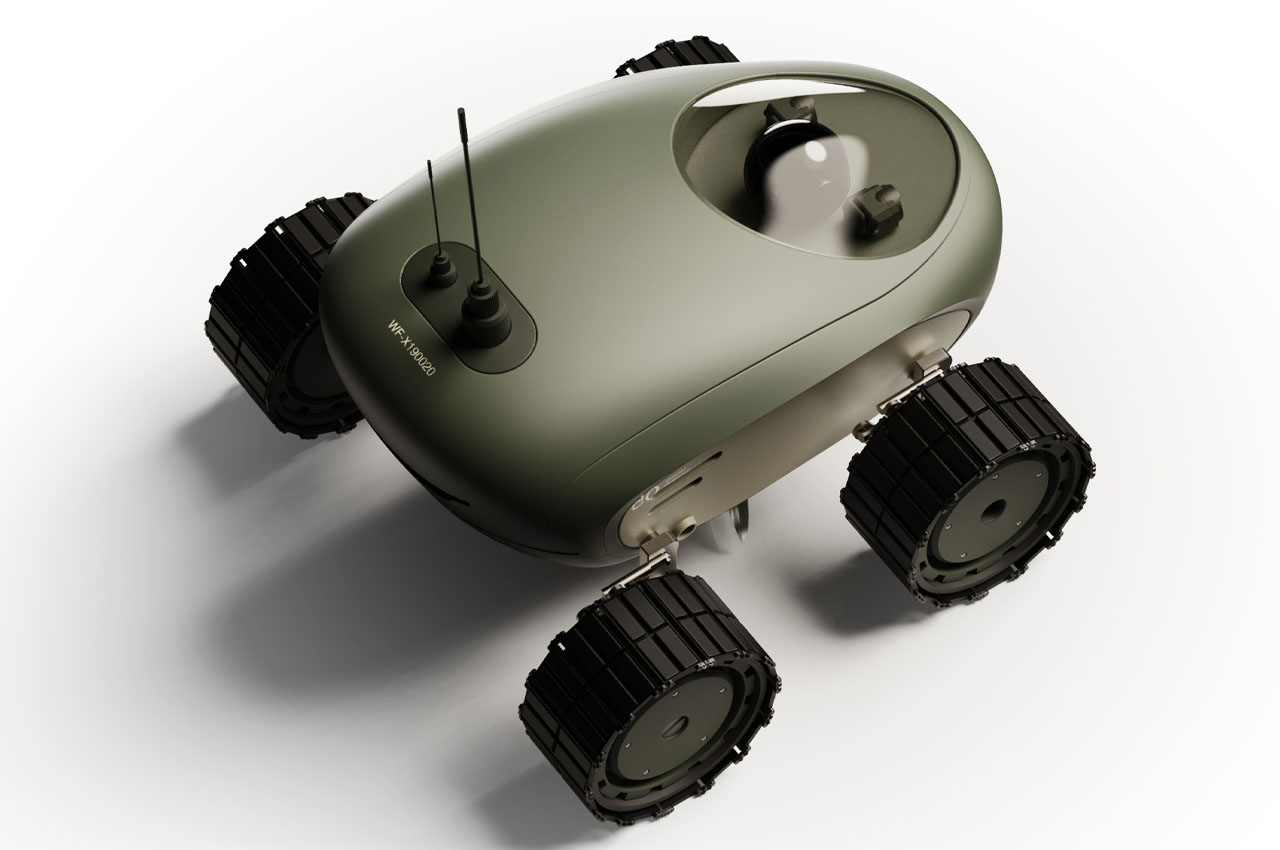
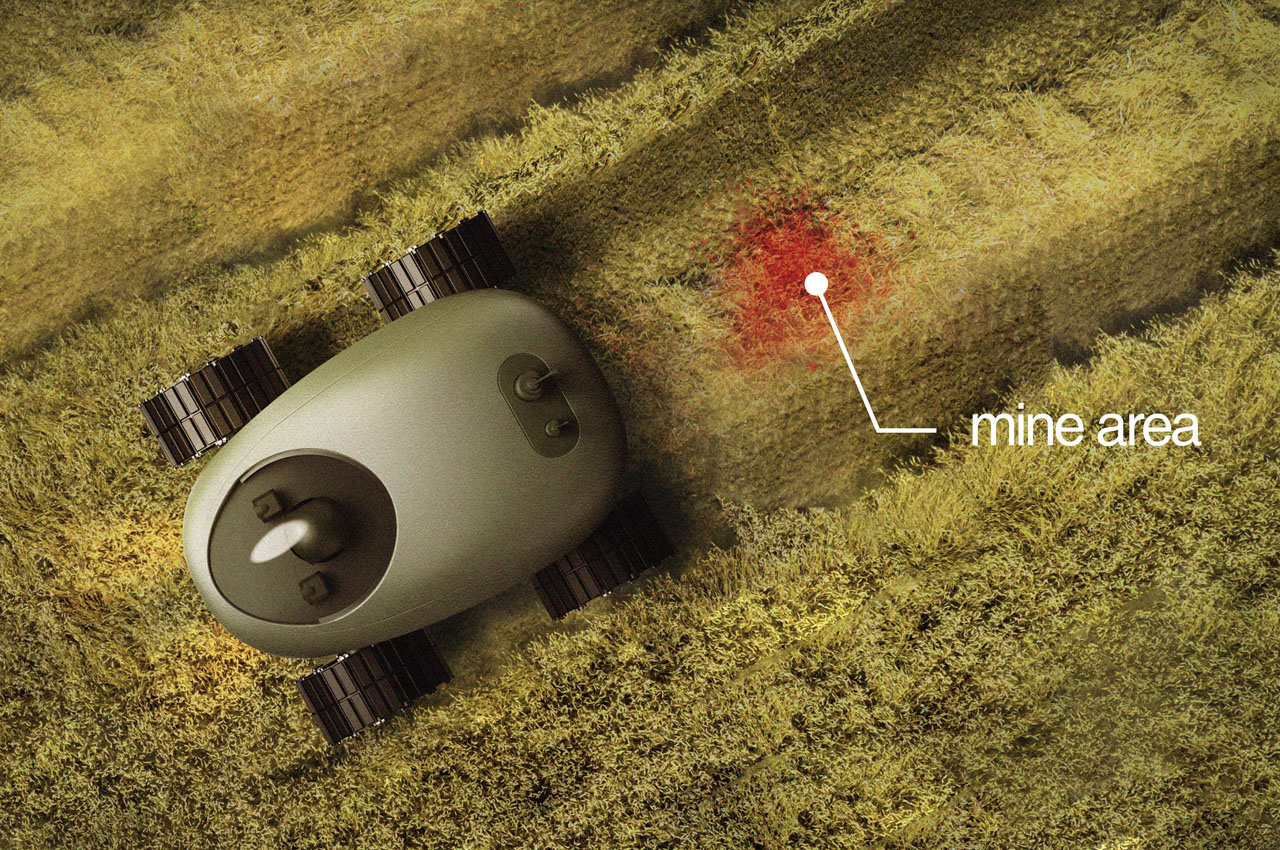
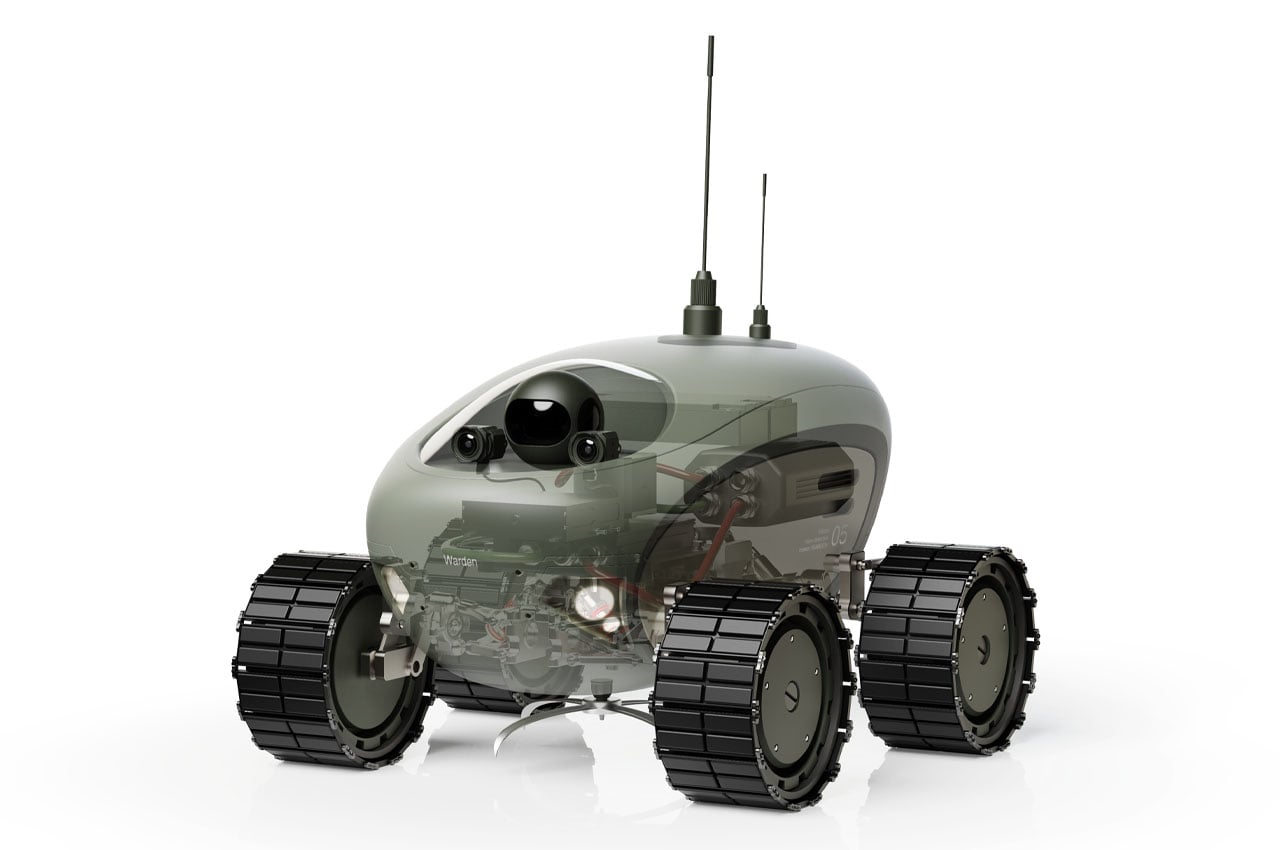
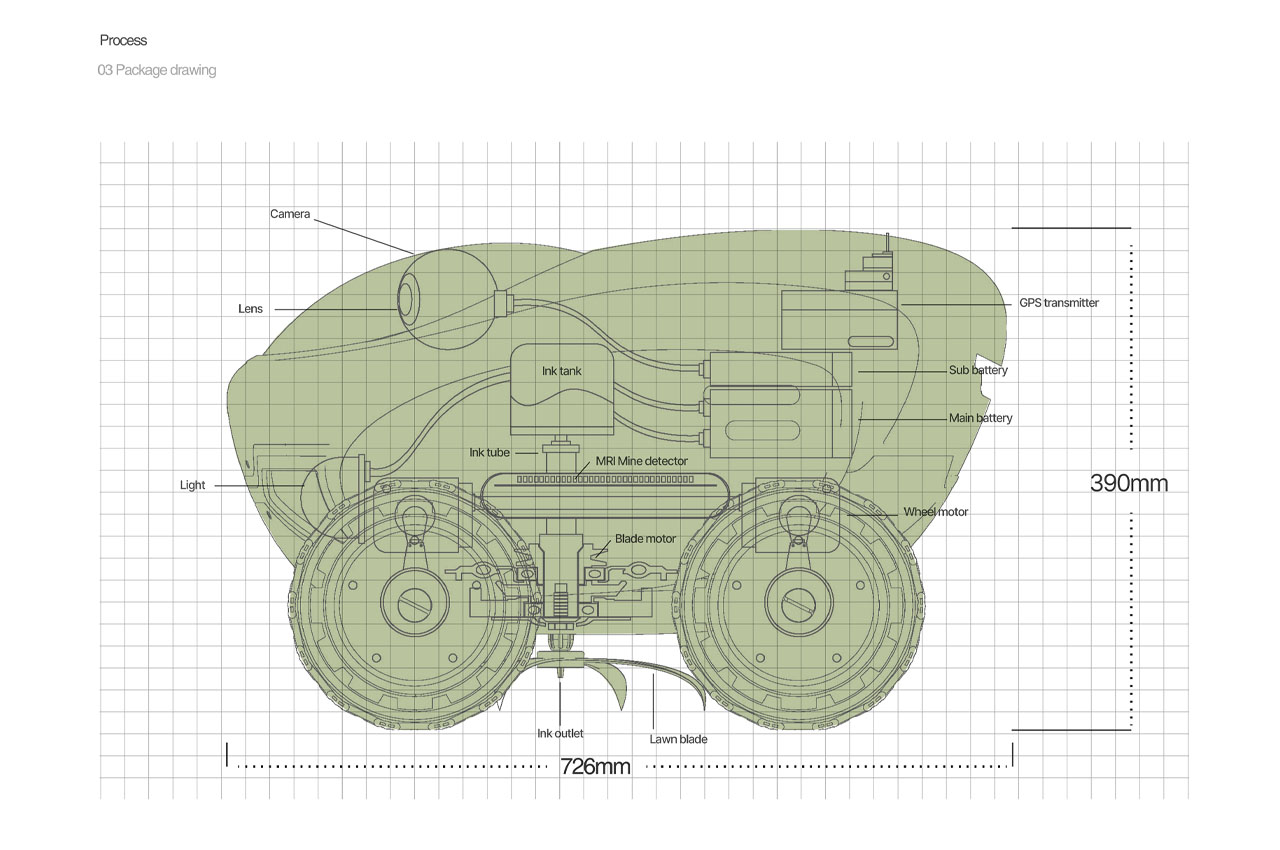
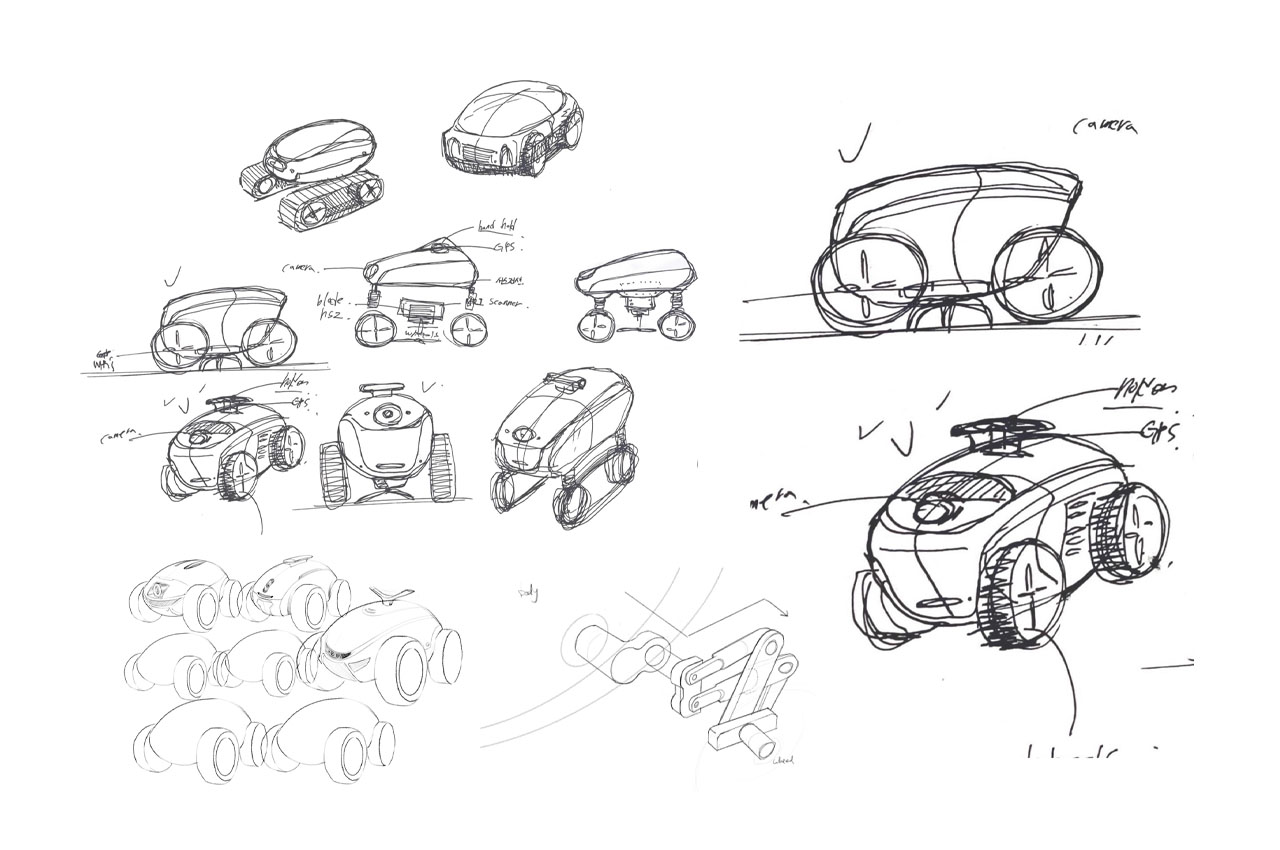
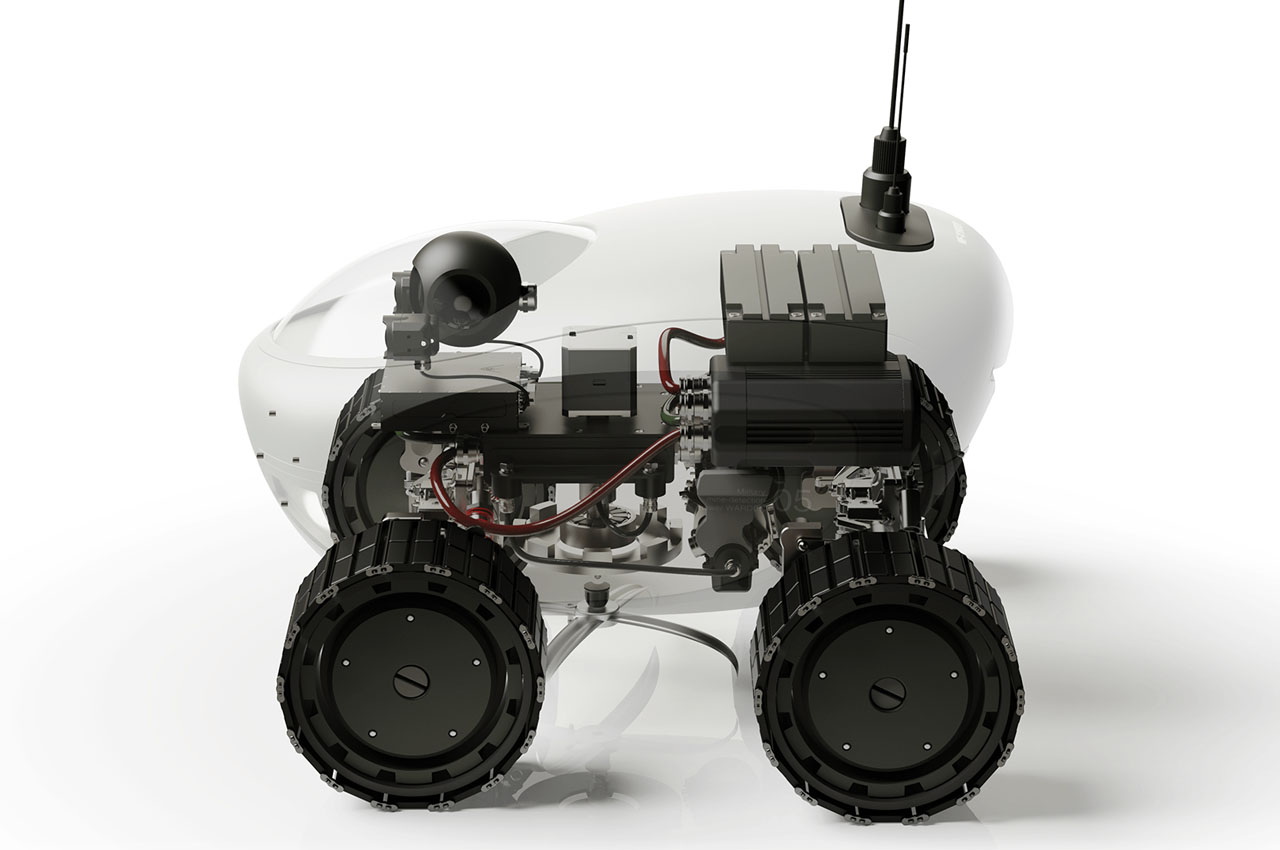
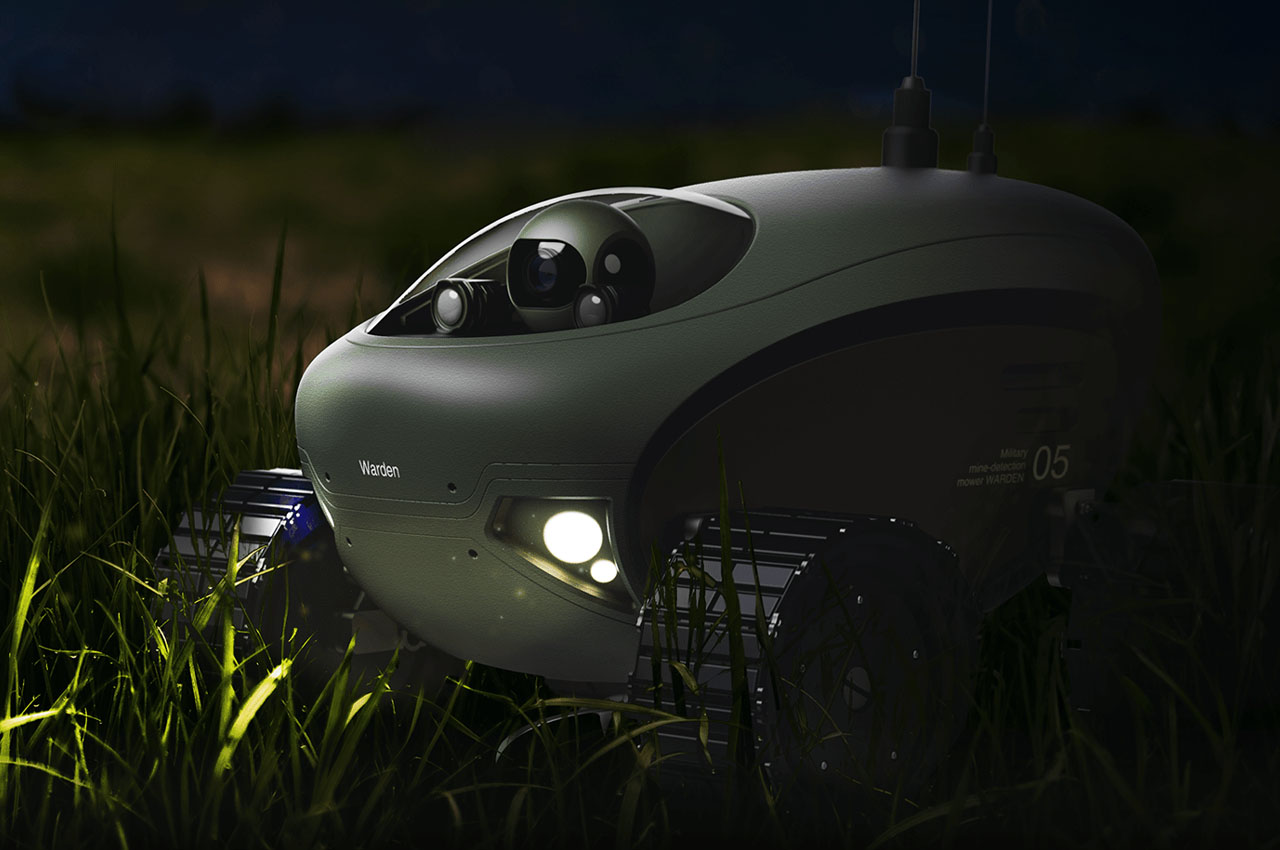
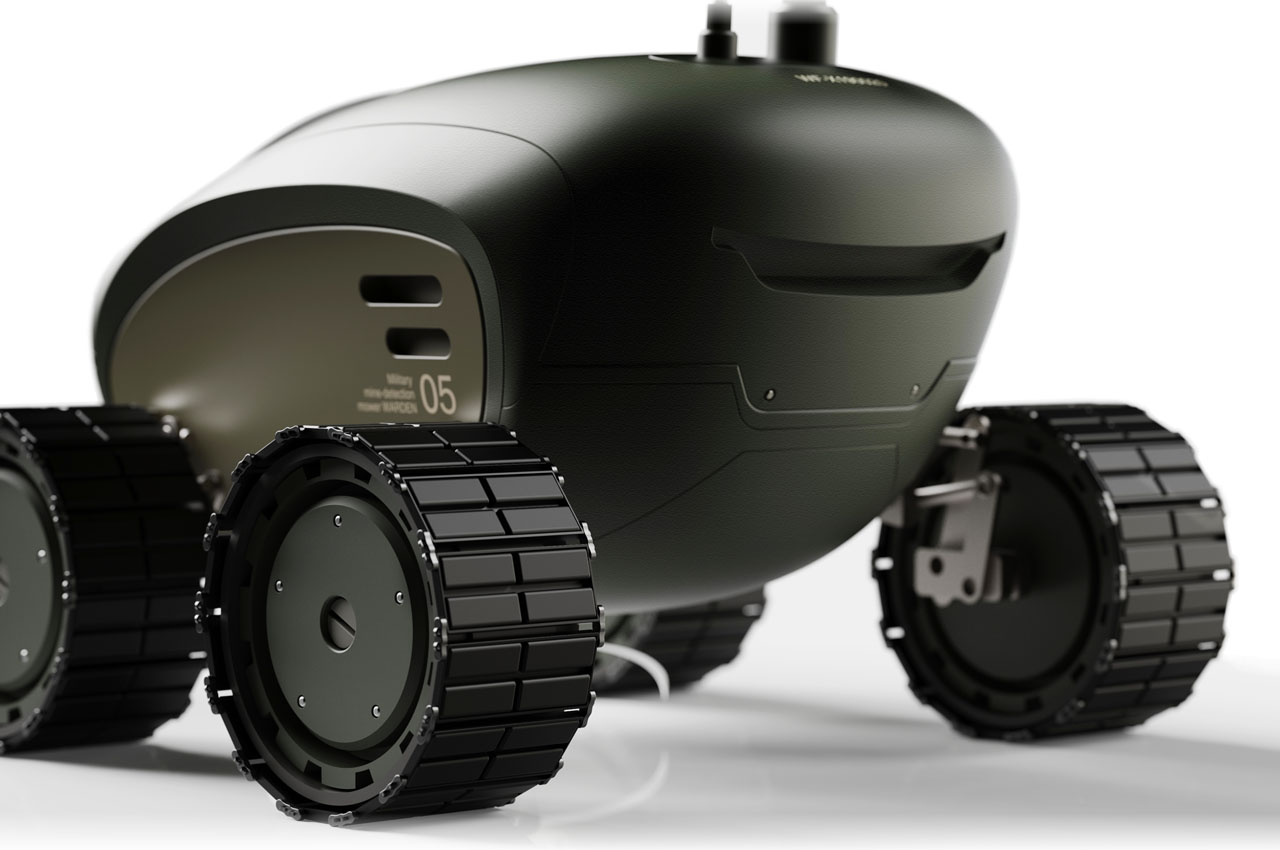
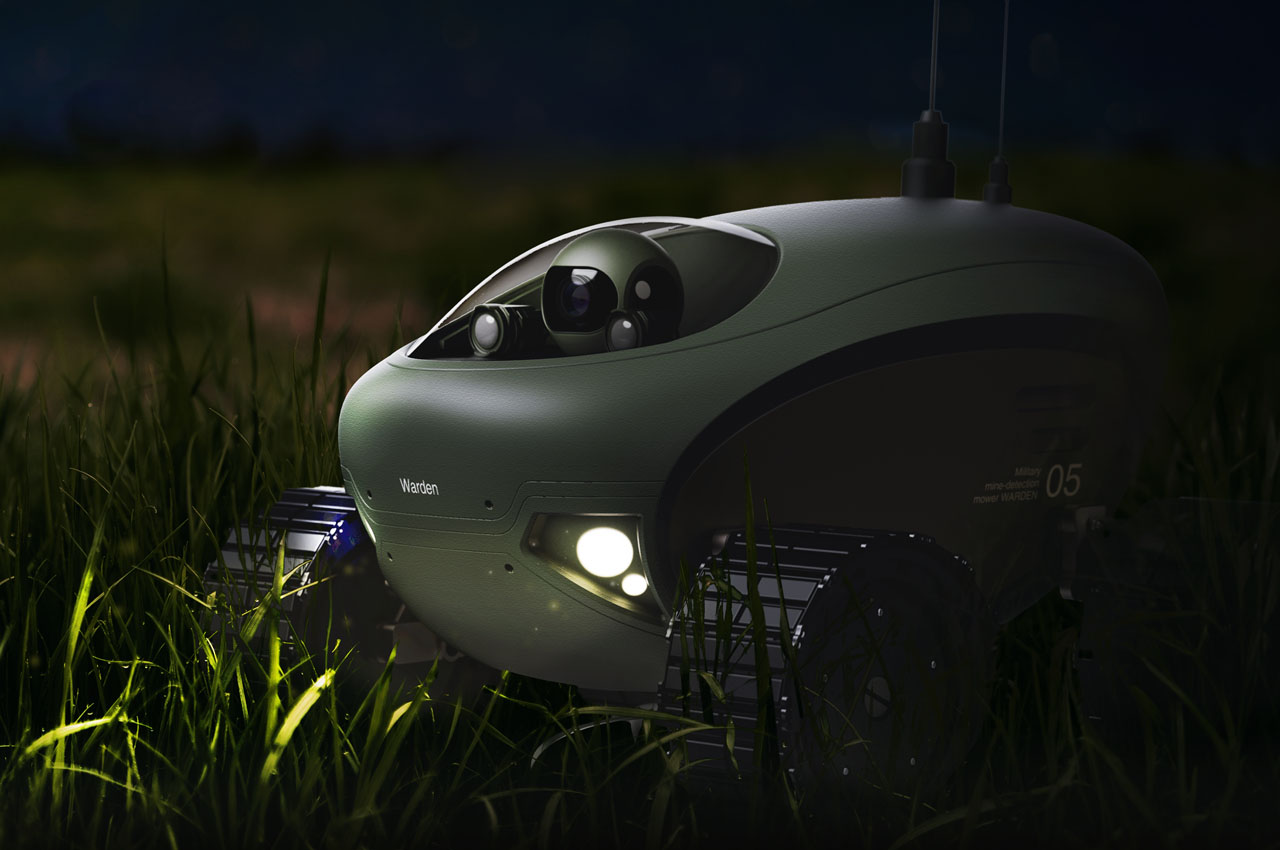
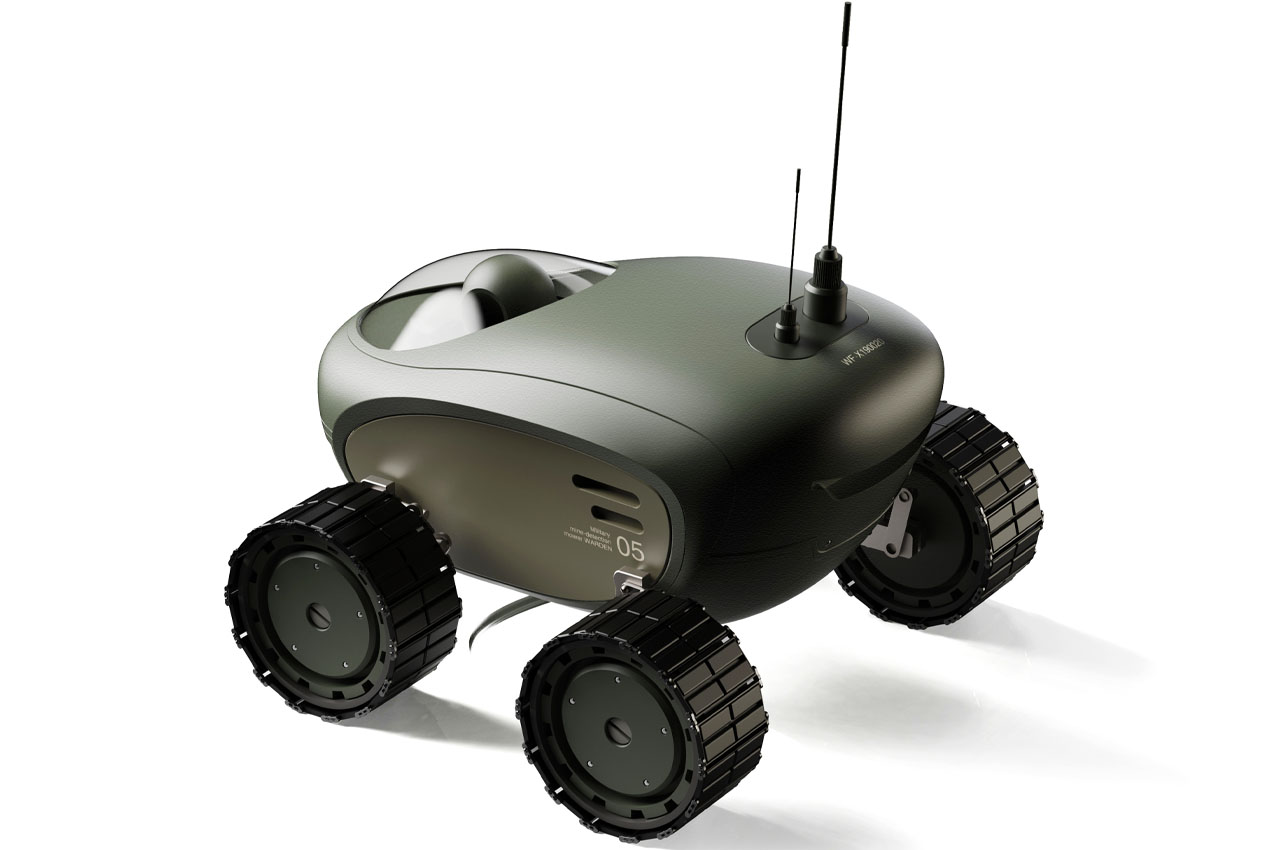
Meet the Warden mine detector proposed as a concept design that safely takes care of identifying potential land mines and marks the area with red paint to keep everyone safe. This creates a quarantined zone for residents and outsiders about the potential threats. Working autonomously to scout any kind of terrain, the smart robotic minesweeper is connected to the cloud at all times to send the real-time data of identified mines, so that they can be updated in relevant online maps and public resources.
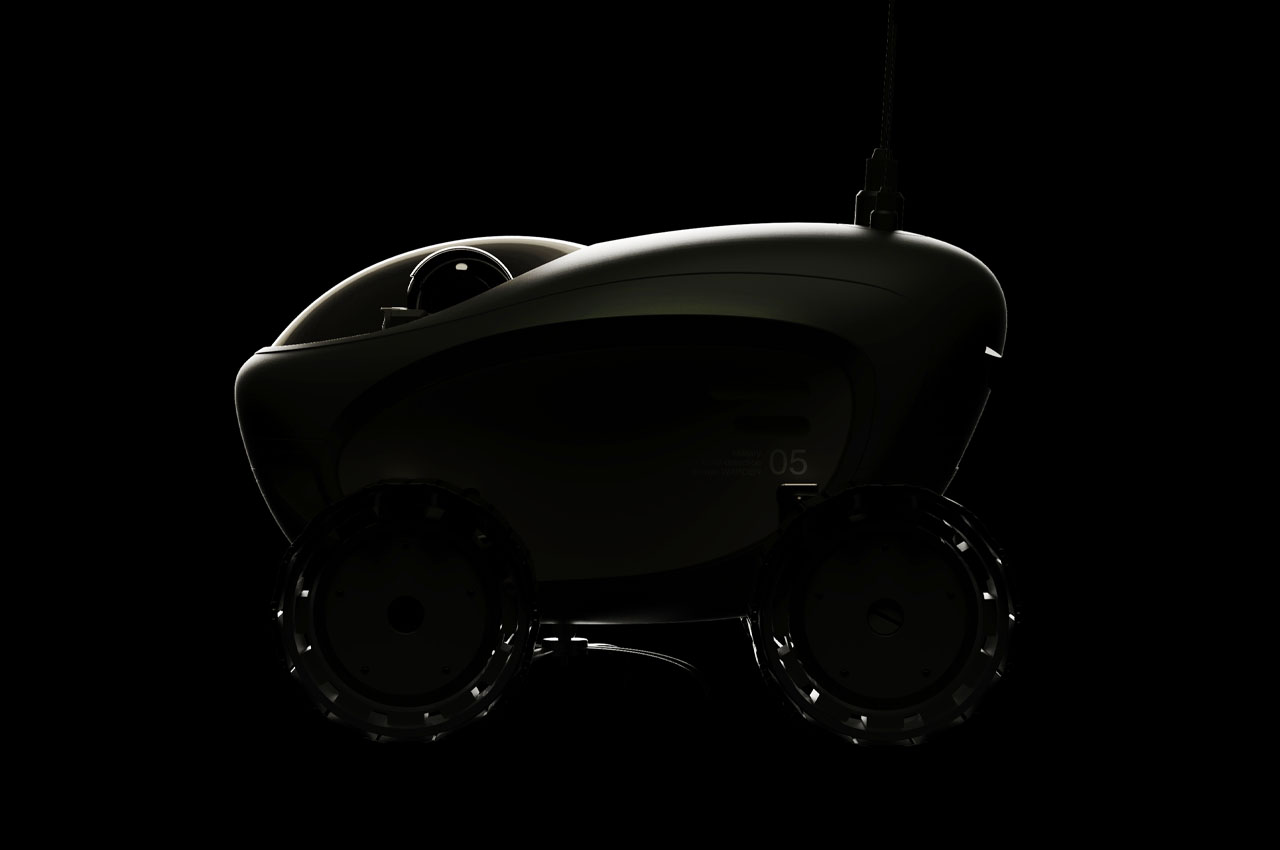
Looking like a rover moving forward on unknown lands, this robot has a high ride height to move swiftly on rocky terrain. The machine is loaded with advanced sensors and a surprising mowing attachment to remove any standing grass or weed. This makes the marked area visible even in the dark hours of the day. When not autonomous, the minesweeper robot can also be controlled by a soldier during wartime scouting.
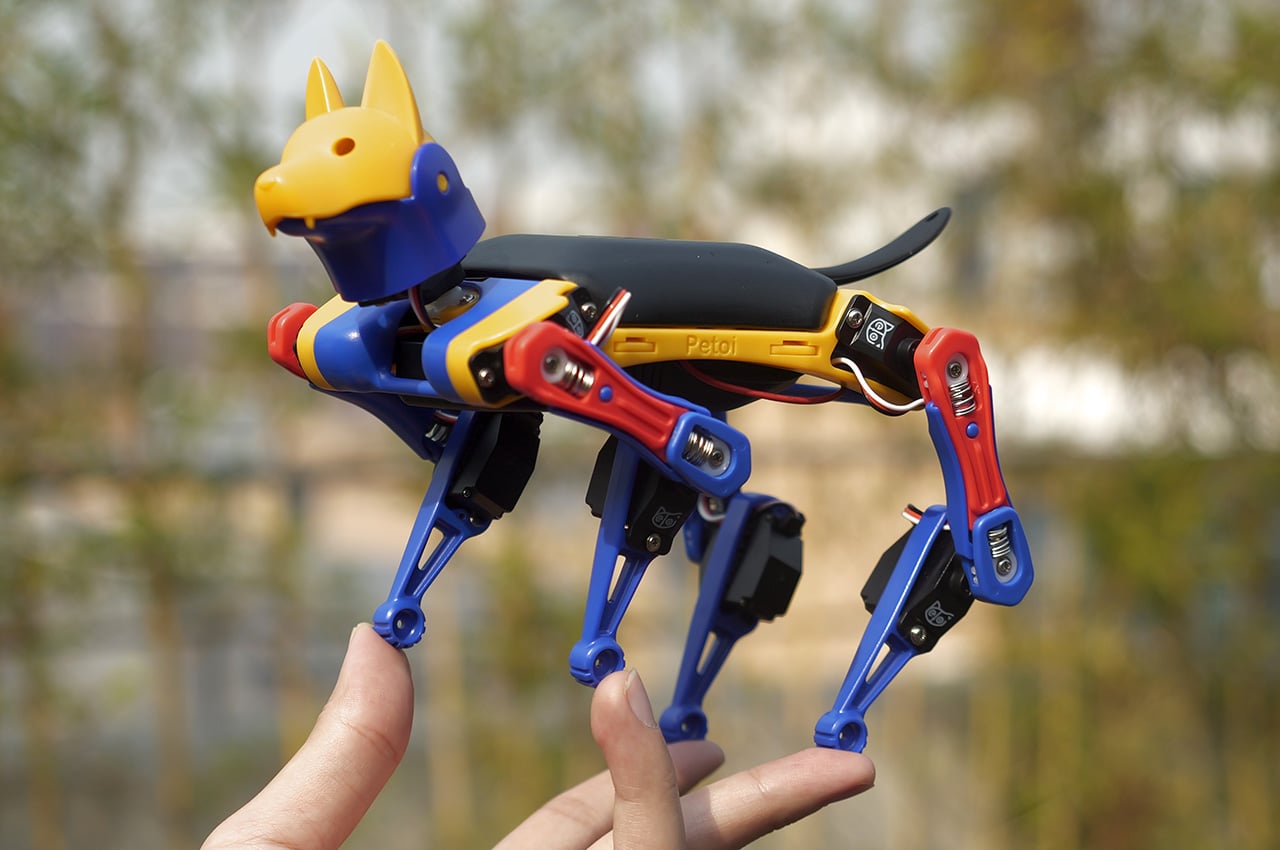
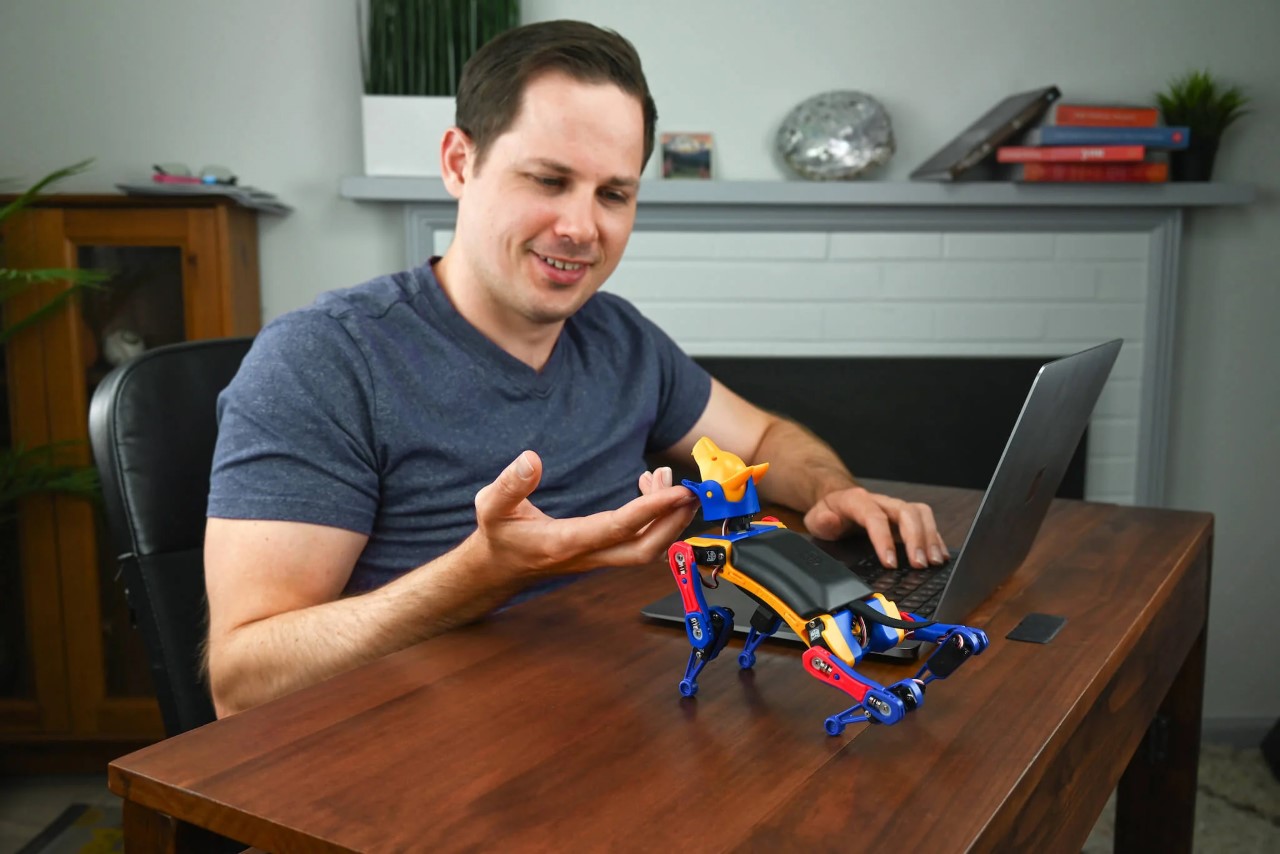
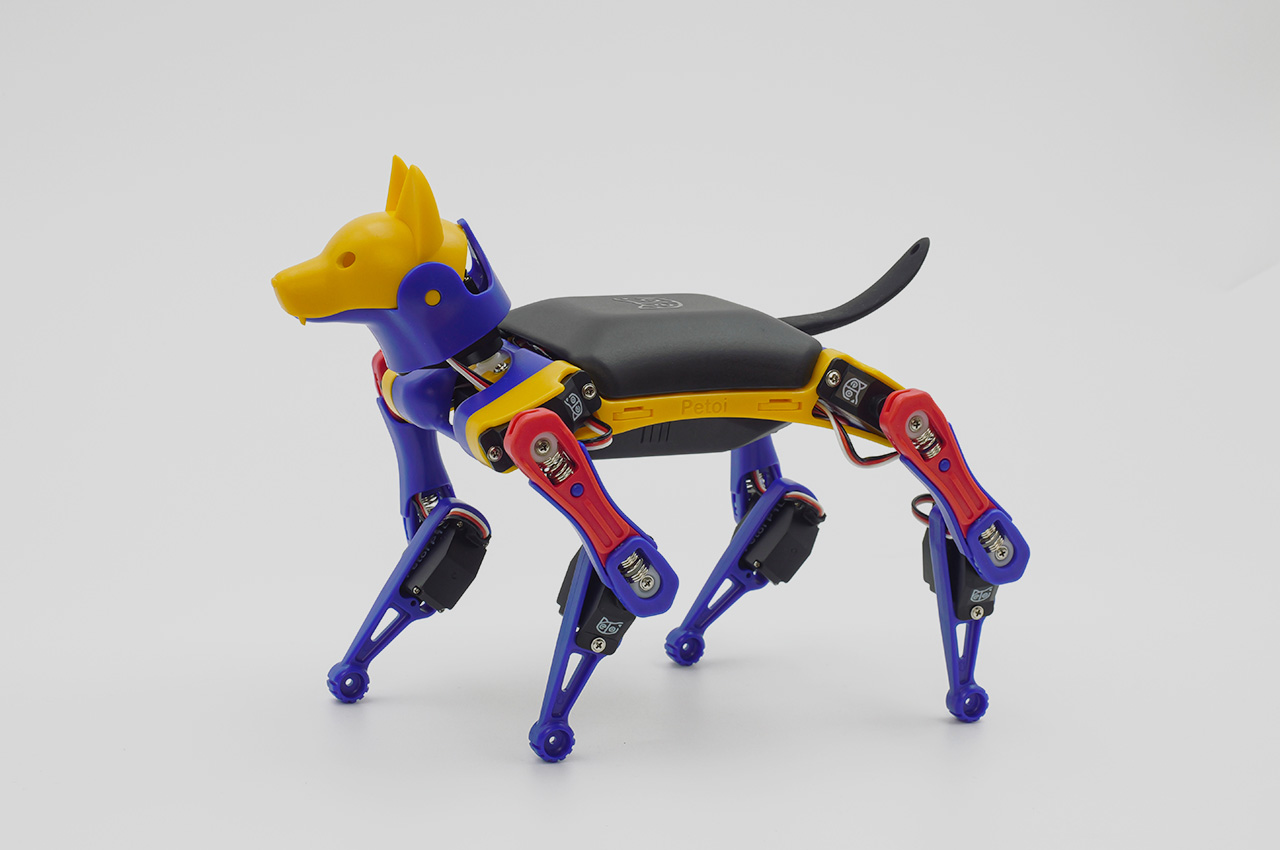
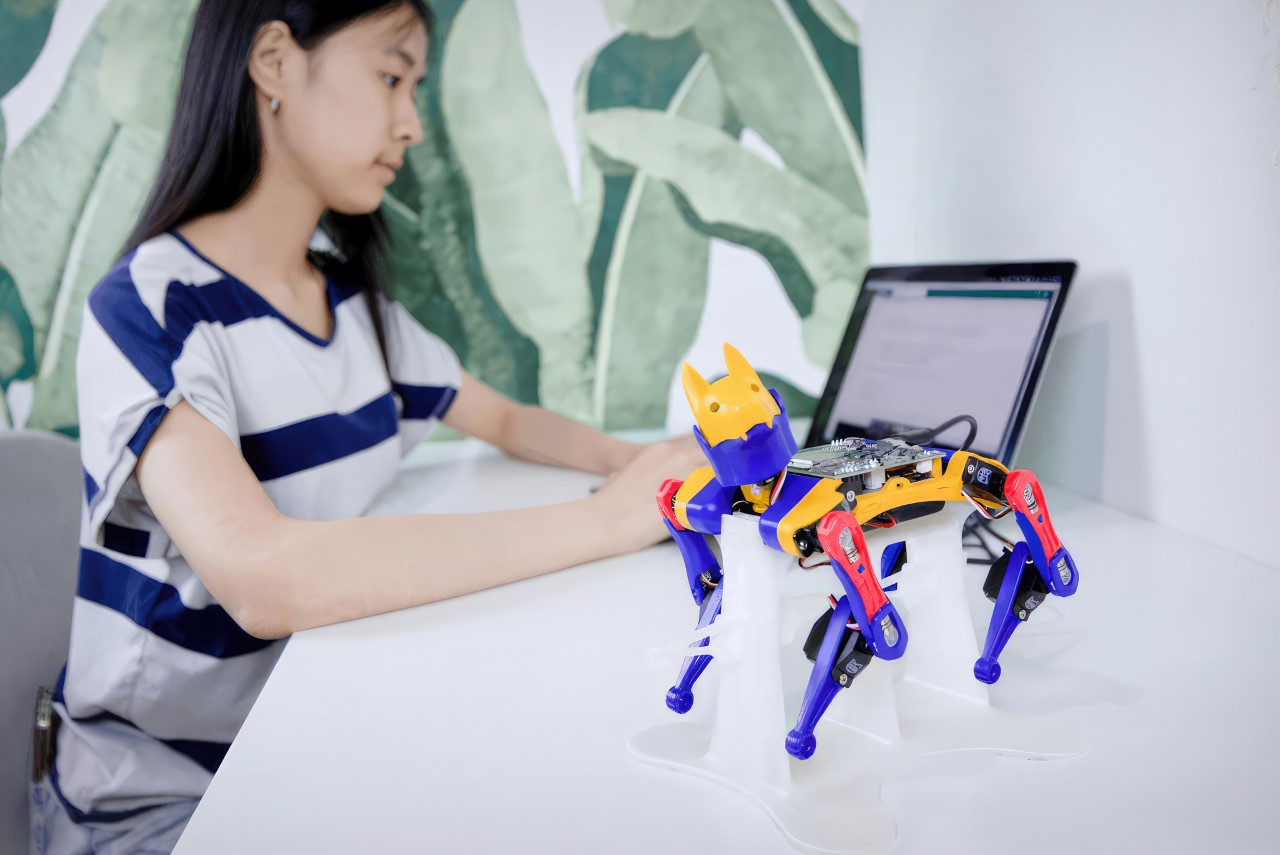
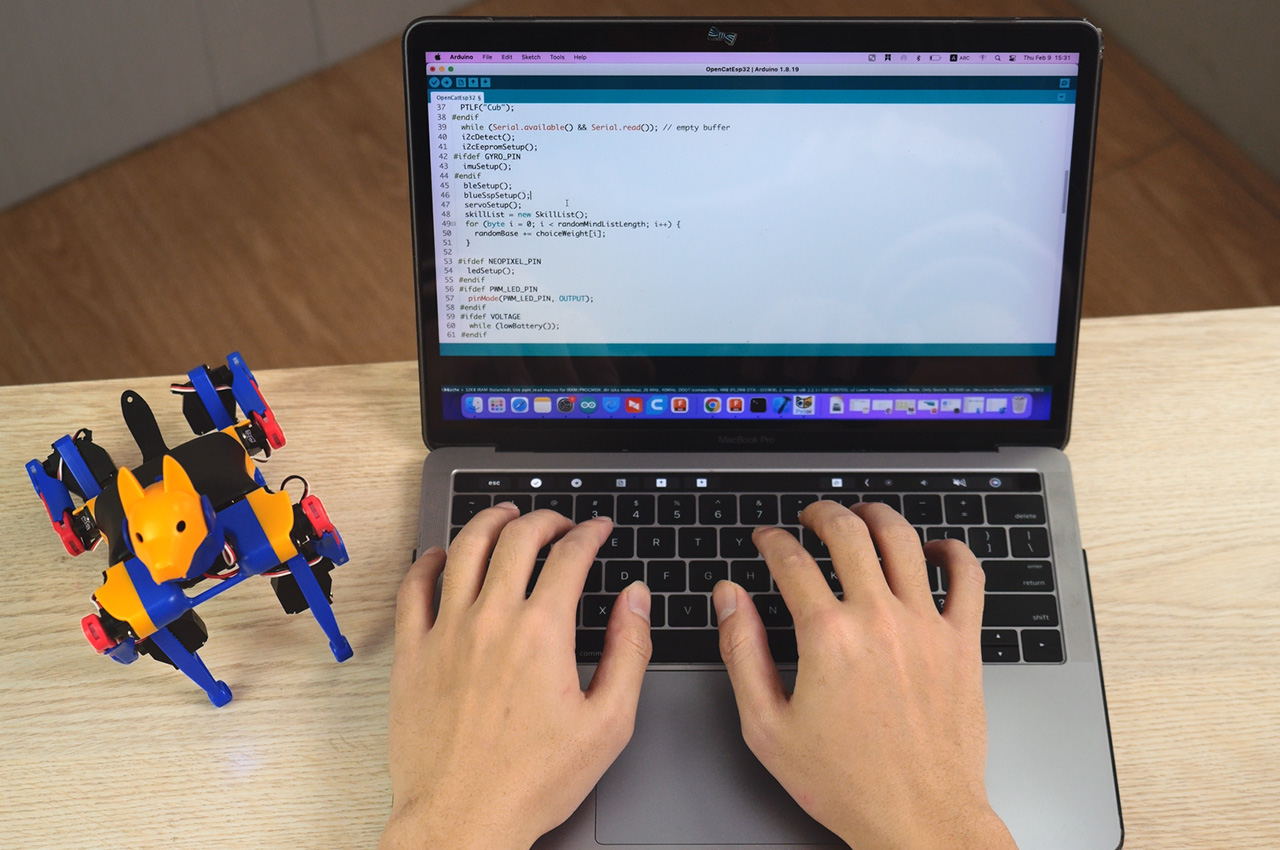
On the one hand, you’ve got incredibly capable AI that has some scary implications for the human race… but on the other hand, you have the Bittle X, an adorable toy robot dog that allows you to befriend, train, and tame technology instead of being afraid of it. A sibling to Petoi’s Bittle robot dog that debuted in 2020, Bittle X comes with a few upgrades, proving that an old dog CAN learn new tricks! Designed to resemble the Boston Dynamics robot dog, the Bittle X is a palm-sized STEM toy that’s perfect for kids, tinkerers, engineers, and people looking to experiment with coding, robotics, IoT(Internet of Things), and AI. It’s entirely open-source, runs on a block-based programming environment, has support for C++/Python programming, and comes with a few extra upgrades that the Bittle lacks, like now being able to follow voice commands, as well as record and program your own voice commands!
Designer: Rongzhong Li
Click Here to Buy Now: $225$279 (Use Coupon Code “yanko10” to get an additional $10 off). Hurry, deal ends in 48-hours!
Easy to Develop AI, IoT and Robotics Applications for Quadruped Robot Dog
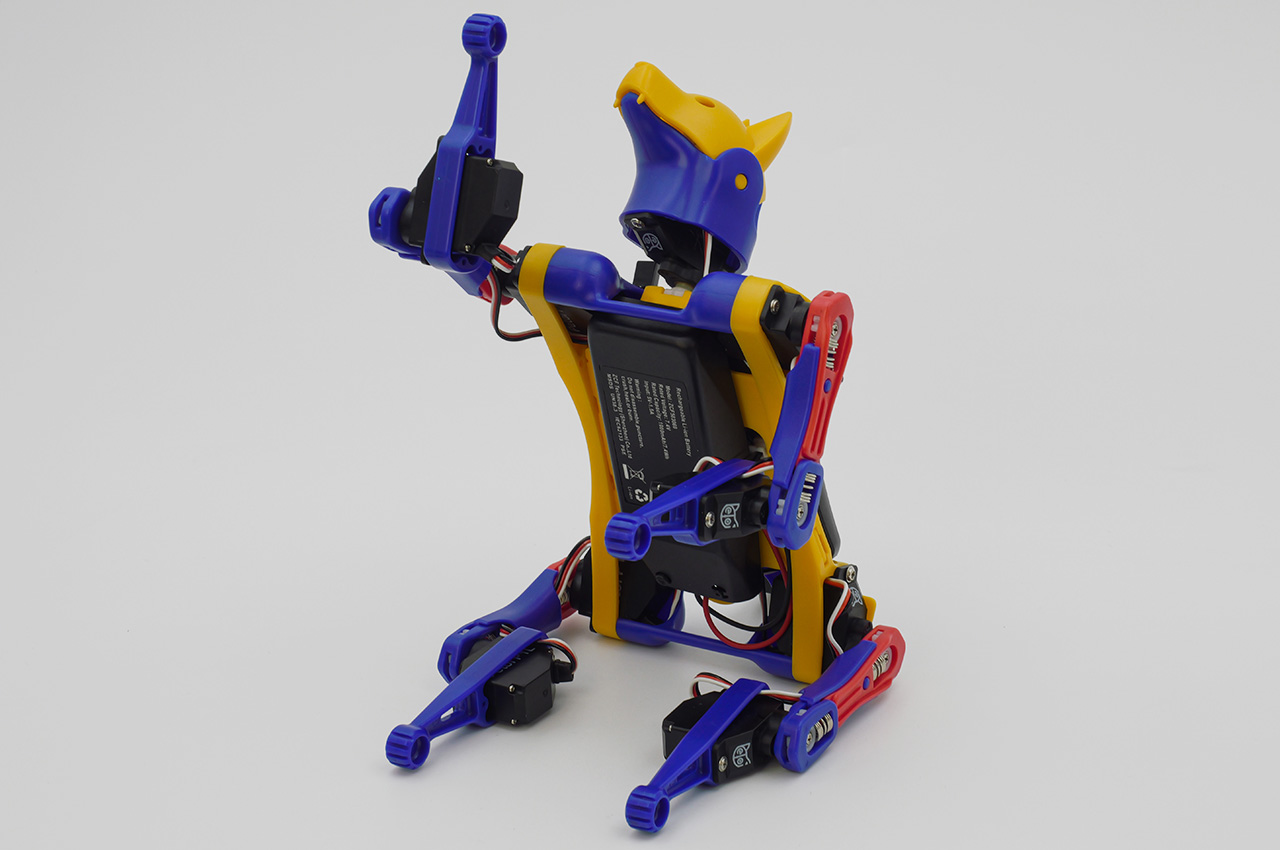
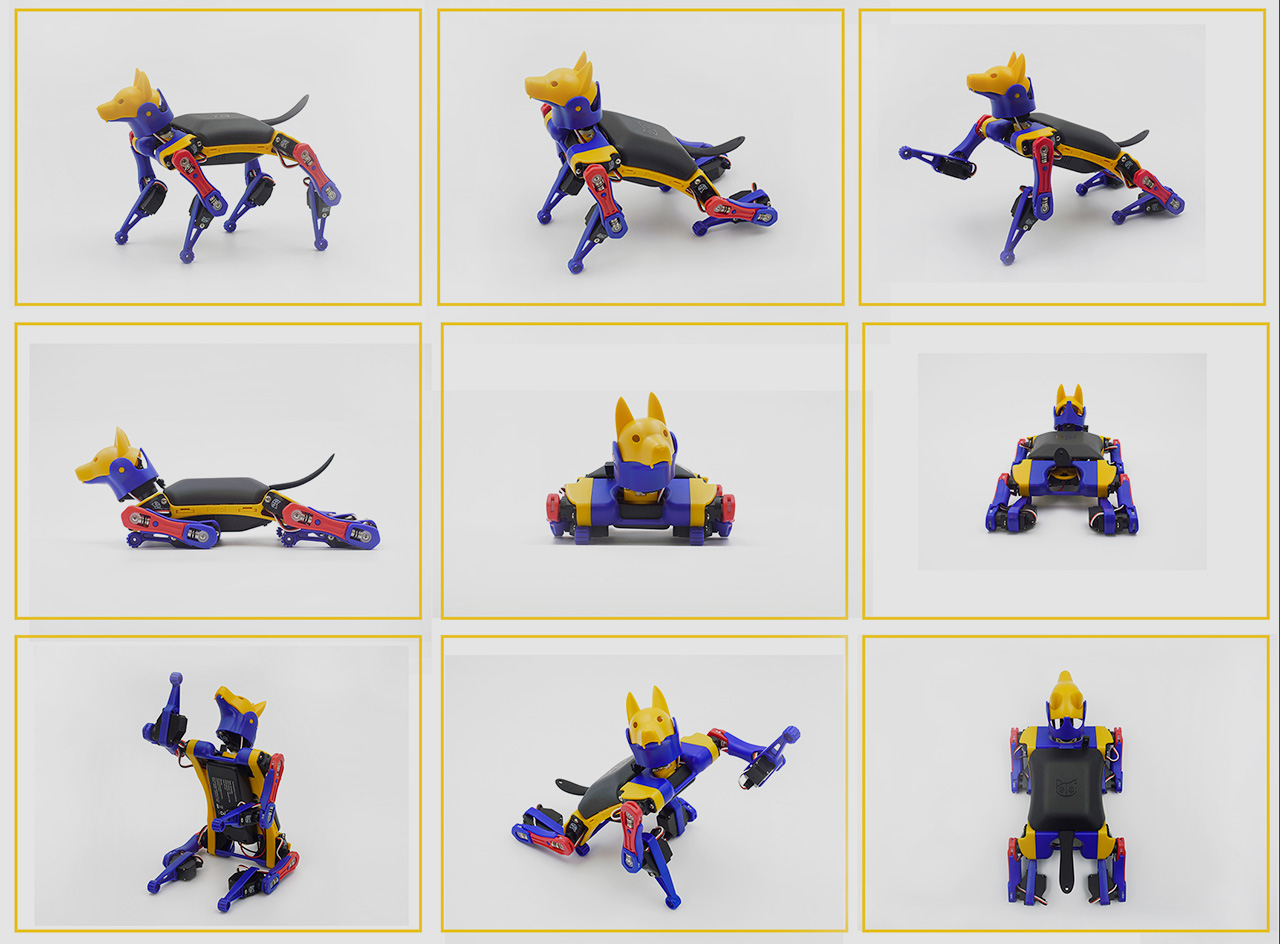
Less of a toy and more of a learning opportunity, the Bittle X was designed to make robotics more accessible to anyone looking to dive into the world of robotics. It comes with a tiny form, small enough to fit in the palm of your hand, but is designed to be incredibly articulate with multiple joints with high-performance servos that allow it to walk, sit, jump, backflip, kick, and even scratch itself like a real dog would! Moreover, its bionic leg construction gives it natural movement, allowing it to sit down, get up, recover from a flipover, and even walk across uneven terrain.
The pint-sized pooch comes in two styles – a pre-assembled kit that works right out of the box, and a construction kit that gives you the joy of being able to put together your own voice-command robot dog from scratch. Assembling the robot doesn’t require much technical knowledge, given that the plastic parts are already molded and easy to assemble with interlocking mechanisms. Once assembled, the Bittle X is ready to play/engage with you and follow your commands. A remote control lets you wirelessly operate your Bittle X, although notably, it also now has support for voice commands, allowing you to tell it to wave hello, give you a handshake, sit, crawl, dig, play dead, and even do a handstand! Right out of the box, the dog has support for 35+ voice commands, along with the ability to store 10 additional voice commands that you can program yourself.
The robot operates on the OpenCat platform, offering endless programming and customization possibilities. It supports block-based programming with Petoi’s Coding Blocks, C++, and Python, making it a versatile tool for users at different learning stages. You can also use the free Petoi Desktop App – Skill Composer to visually create new robot dog skills with ease. The creators, Petoi, even further their commitment towards STEM education by providing free curriculums for anyone looking to learn how to tinker with their Bittle X (and other robot pets). You can find all the necessary resources on Petoi’s OpenCat forum, along with ideas and prompts for experimenting with your robot dogs (like orchestrating robot wars, hosting your own doggy Olympics, and performing more complex challenges like solving mazes), and even a section where Petoi showcases works from other tinkerers playing around with their Bittles.
Underneath that playful exterior, Bittle X is powered by the BiBoard, Petoi’s latest quadruped robot microcontroller, ensuring smooth, coordinated movements. The option to integrate various smart sensors, like the Petoi intelligent camera module, the motion sensor, or the distance sensor, allows you to add depth to its perception and artificial intelligence capabilities via coding, allowing for more advanced interactions, games, and robotics competitions. The ESP32-based BiBoard comes with Wi-Fi, Bluetooth, serial connections, and voice command support, along with its servos and Li-ion battery providing about an hour of continuous playtime.
The friendly robot dog is designed for all ages above 8 (what you really need is childlike curiosity), and is sure to get along with everyone it meets! Alongside being a robot dog that learns tricks and commands, it’s also rewarding because you get to learn with it, creating a bonding experience that’s not too different from actually playing with and training real pets. The Bittle X starts at $236.99 during Petoi’s holiday sale, but YD readers can grab a nifty $10 discount, bringing the price down to $225. Grab yours now and build your army of loyal minions before the AI takes over!
Click Here to Buy Now: $225$279 (Use Coupon Code “yanko10” to get an additional $10 off). Hurry, deal ends in 48-hours!
Over the years, quadruped – four-legged – robots led by the likes of Spot, by Boston Dynamics, have captured our imagination far and wide. These robots have been through various upgrades, including the robotic dog that can now walk, jump, and maneuver like the real thing. Even though the construction of these robots is already very sophisticated, it remains to be perfected for widespread applications.
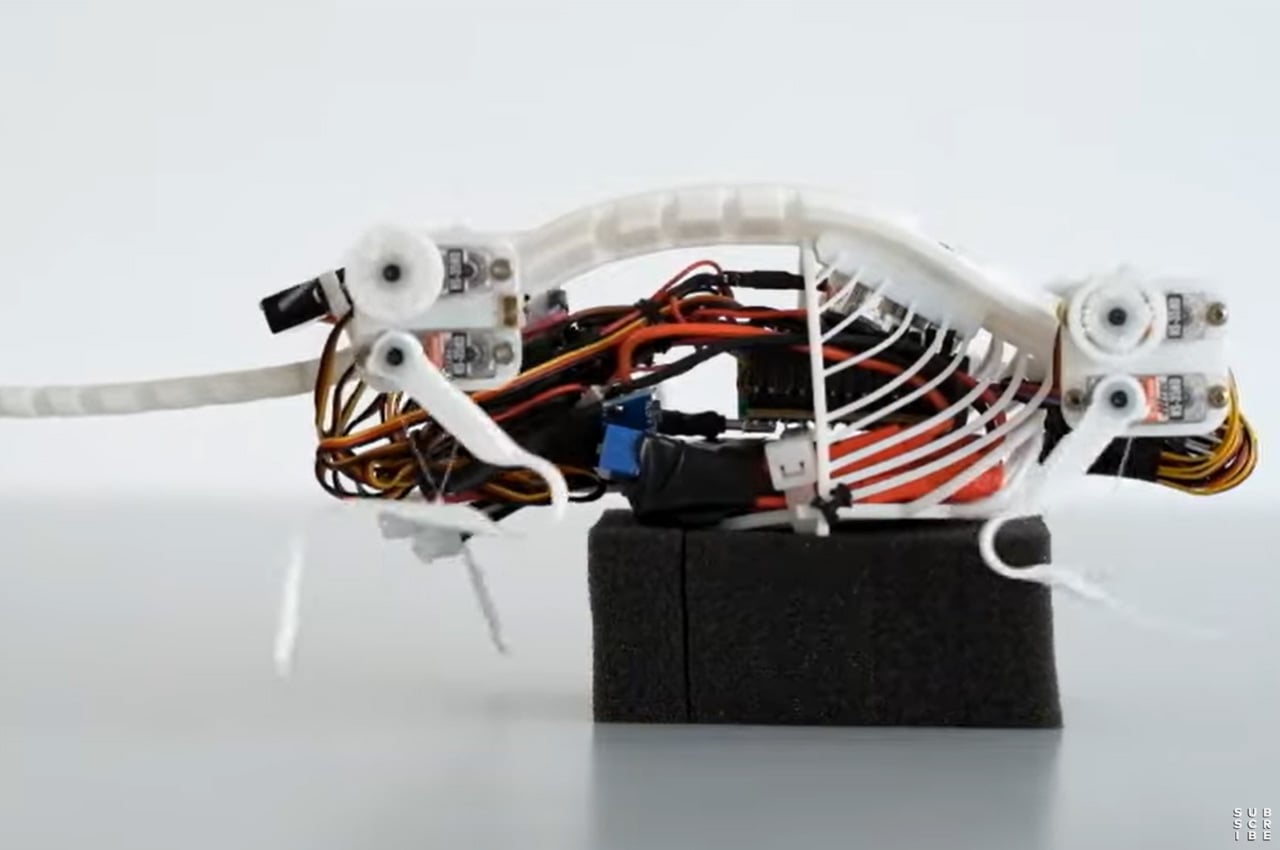
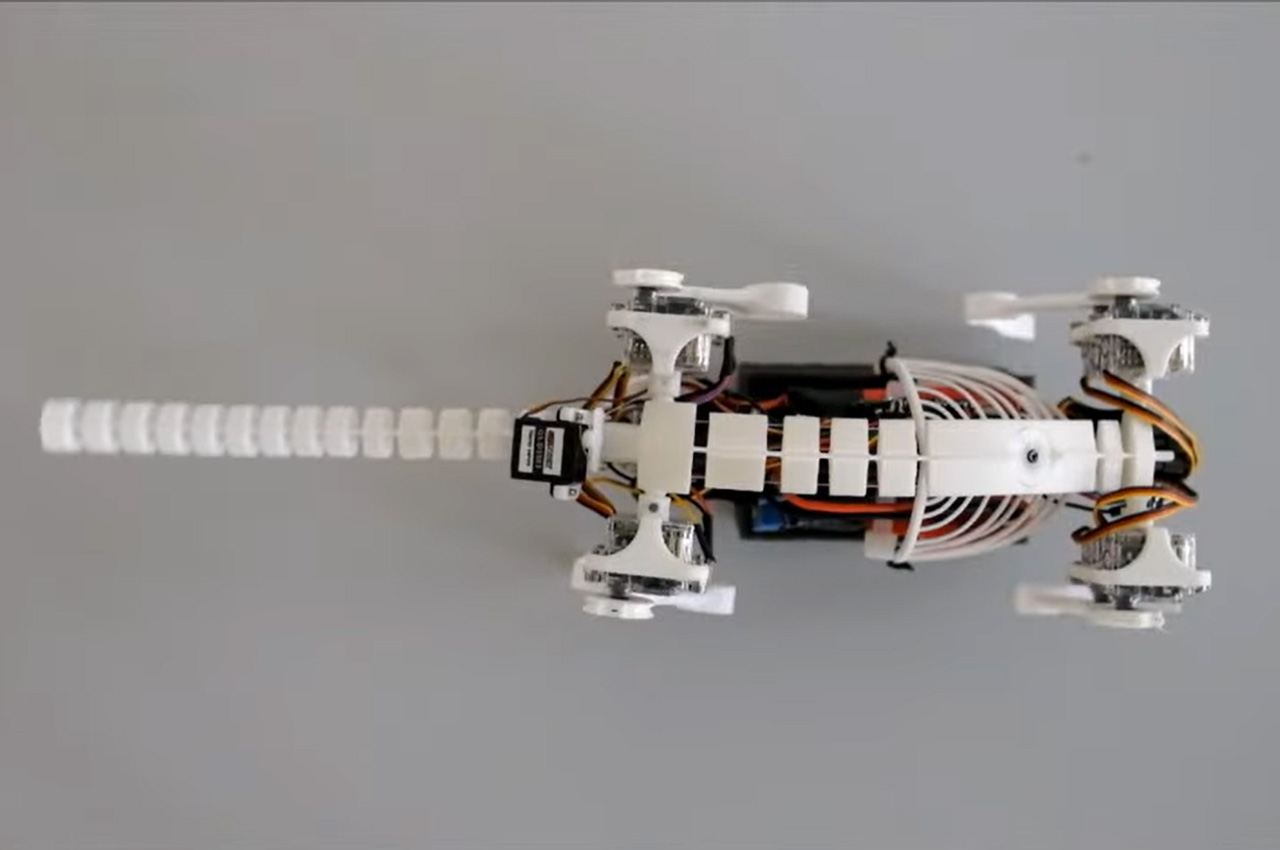
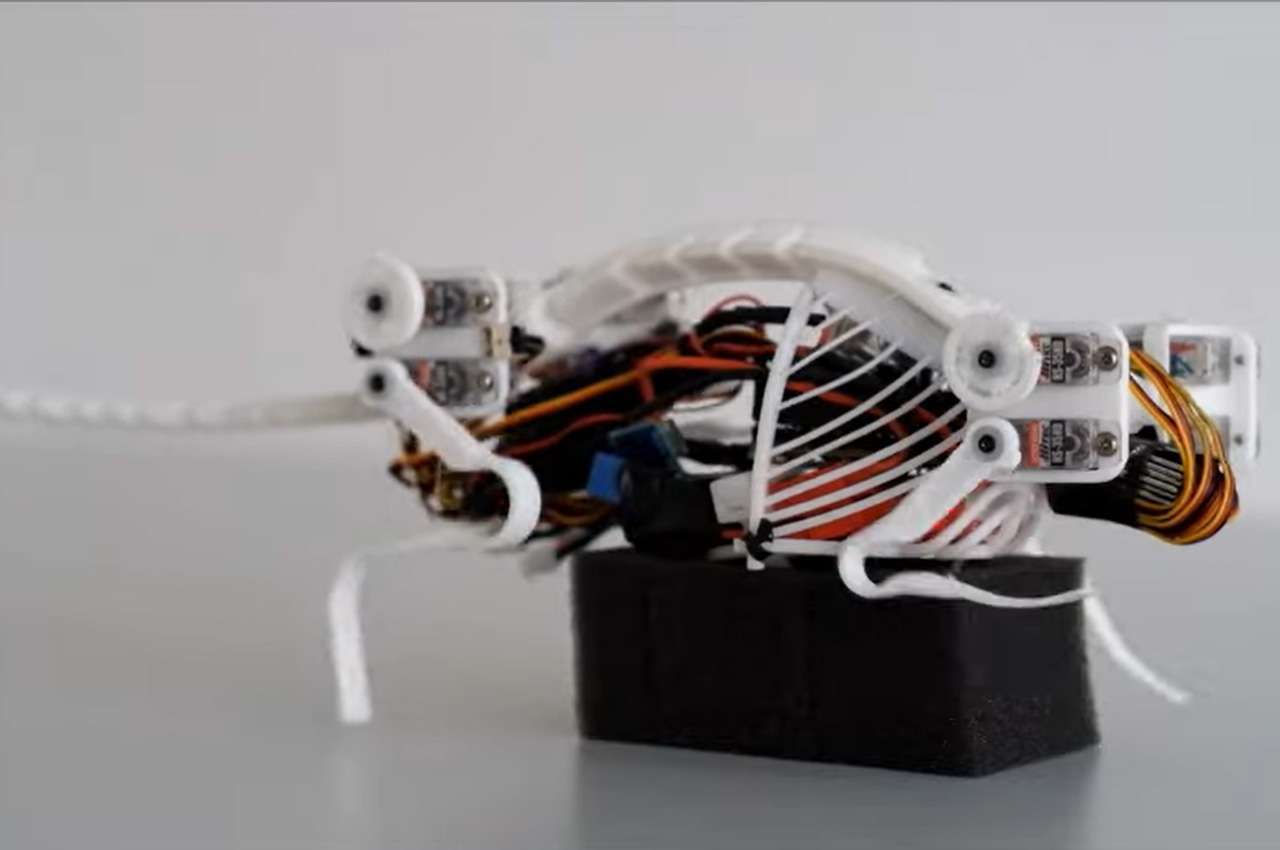
A step forward in this direction can be a mouse robot with an articulated spine developed by collaborative research teams from the Technical University of Munich, University of Technology, Nuremberg, and Sun Yat-Sen University, China. The articulation of the spine allows the mouse named NeRmo full body control and stabilization, which provides it with a more balanced frame along with agility and gait much like a real rodent with a biological spine.
Designer: Zhenshan Bing
This mouse created with a flexible spine and tendons is the first interpretation of spine-centric quadruped, unlike the four-legged robots whose anatomical mimicking just finishes at the leg-based motor skills. Yes, they can walk, jump or even pull off a few dance moves, but the NeRmo can do that and more. While the others are robotic in their movement and approach, the researchers led by Zhenshan Bing, believe their mouse – with a spine and tendons running through it – can move almost alike and turn equally efficiently as its biological counterpart.
NeRmo is an agile-legged robot that leaves behind challenges of movement and regulating spine flexion that other quadrupeds using similar spine enhancement – like in the case of Boston Dynamics’ Cheetah robot – have proved. The robot with 3D printed parts and Raspberry Pi for its brain has a sensory system that can make decisions and navigate autonomously.
The NeRmo is an experimental robot that helps understand the spine-based quadruped locomotion skills. The findings are pretty optimistic, which means, that its development can be a promising inspiration for more such small agile-legged robots. The construction of the NeRmo modular robot, according to the research team is low cost, owing to its building process. With the articulated spine, the research shows, the robotic mouse can adjust its posture, extend its stride to walk faster, and make agile maneuvers in a small turning radius and while walking.
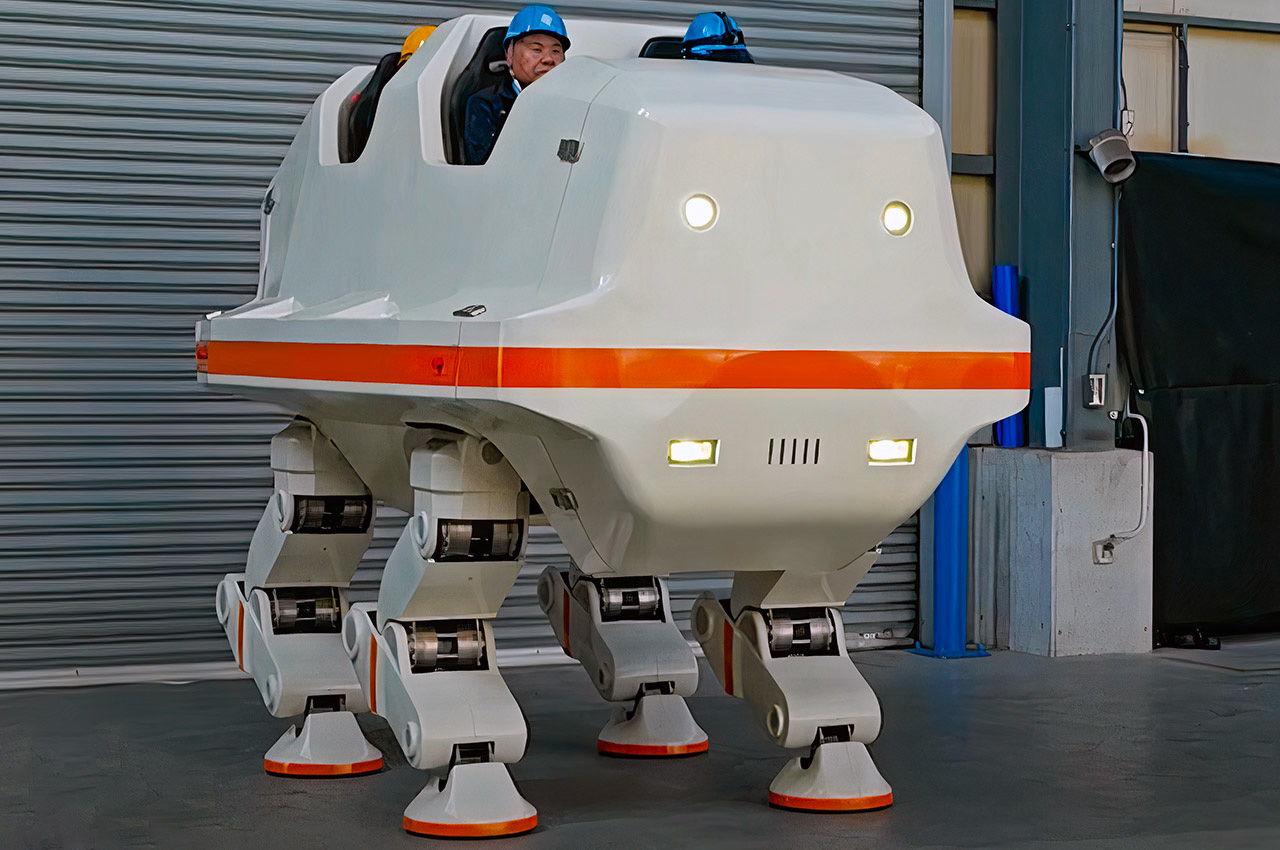
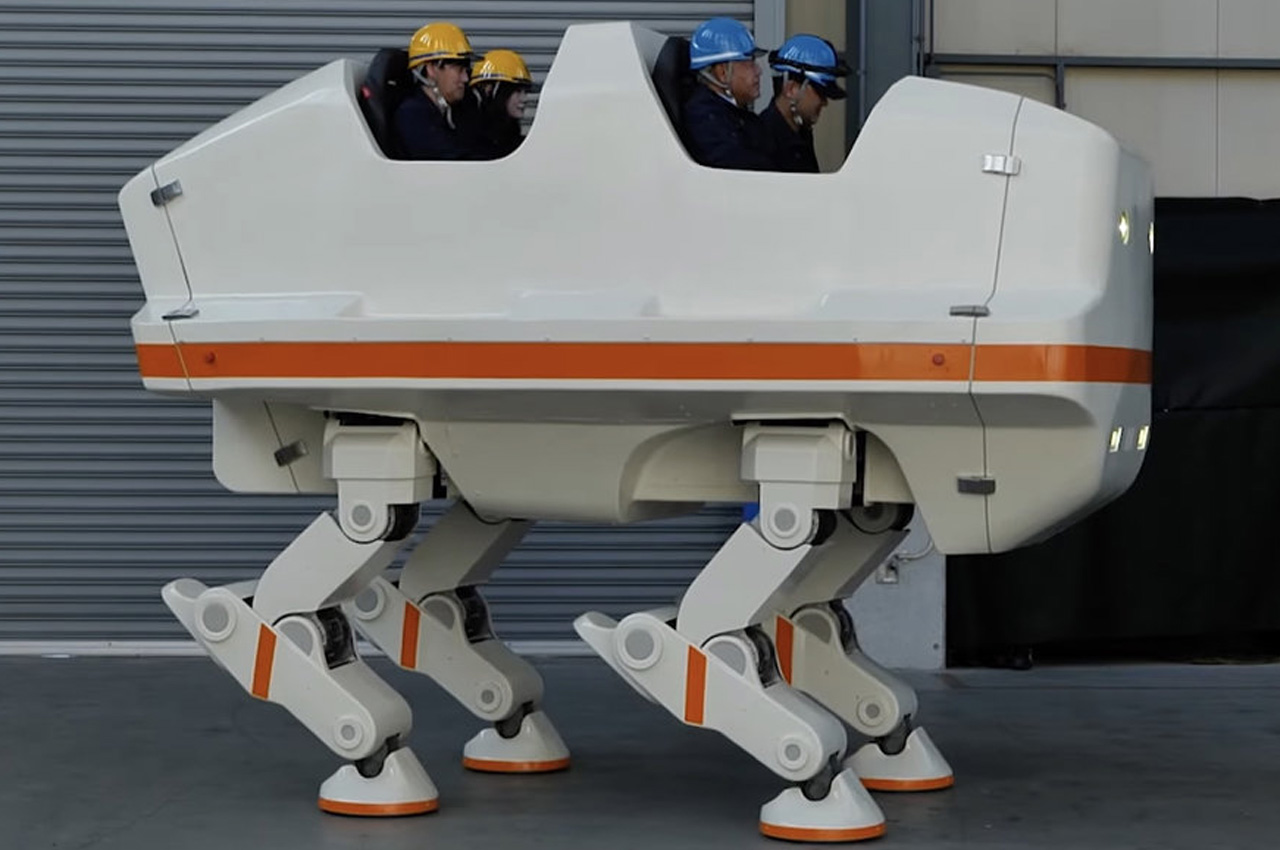
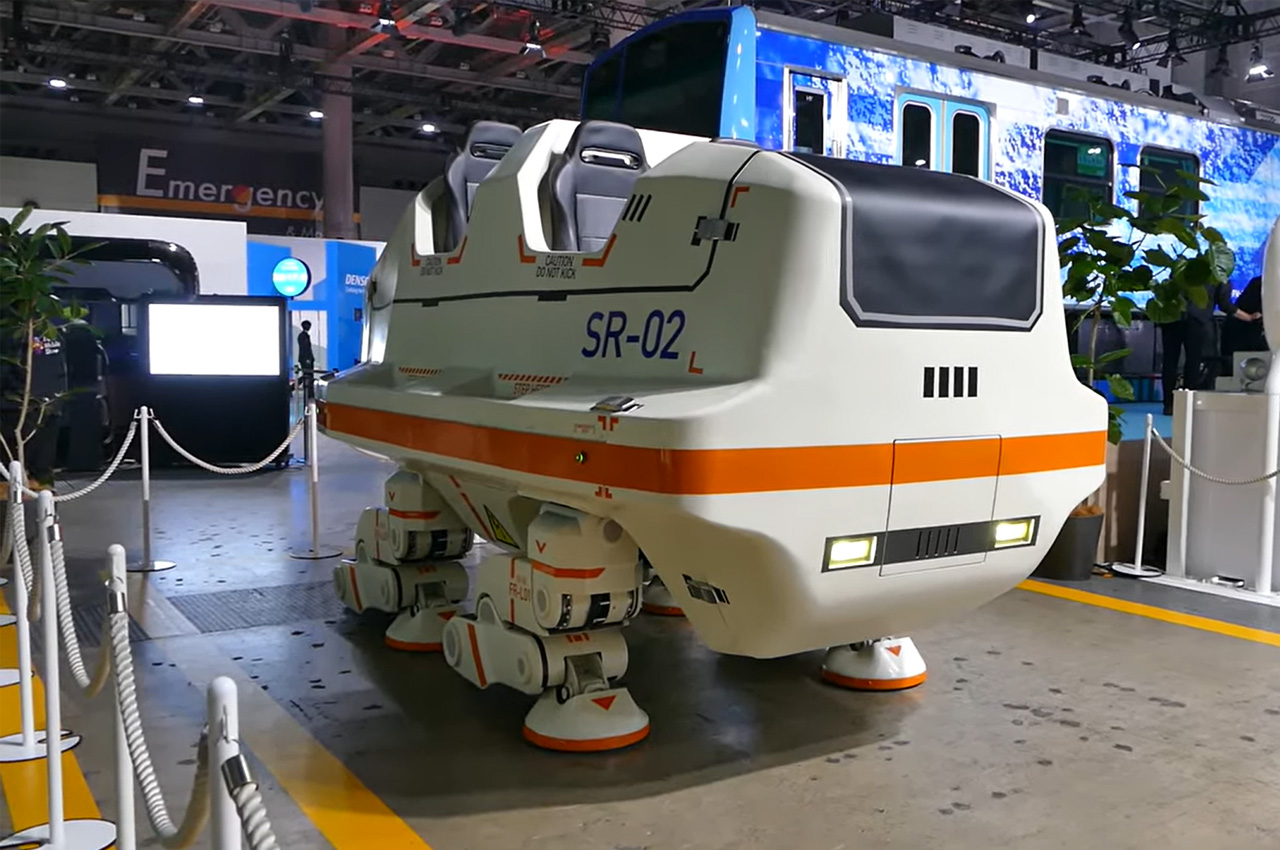
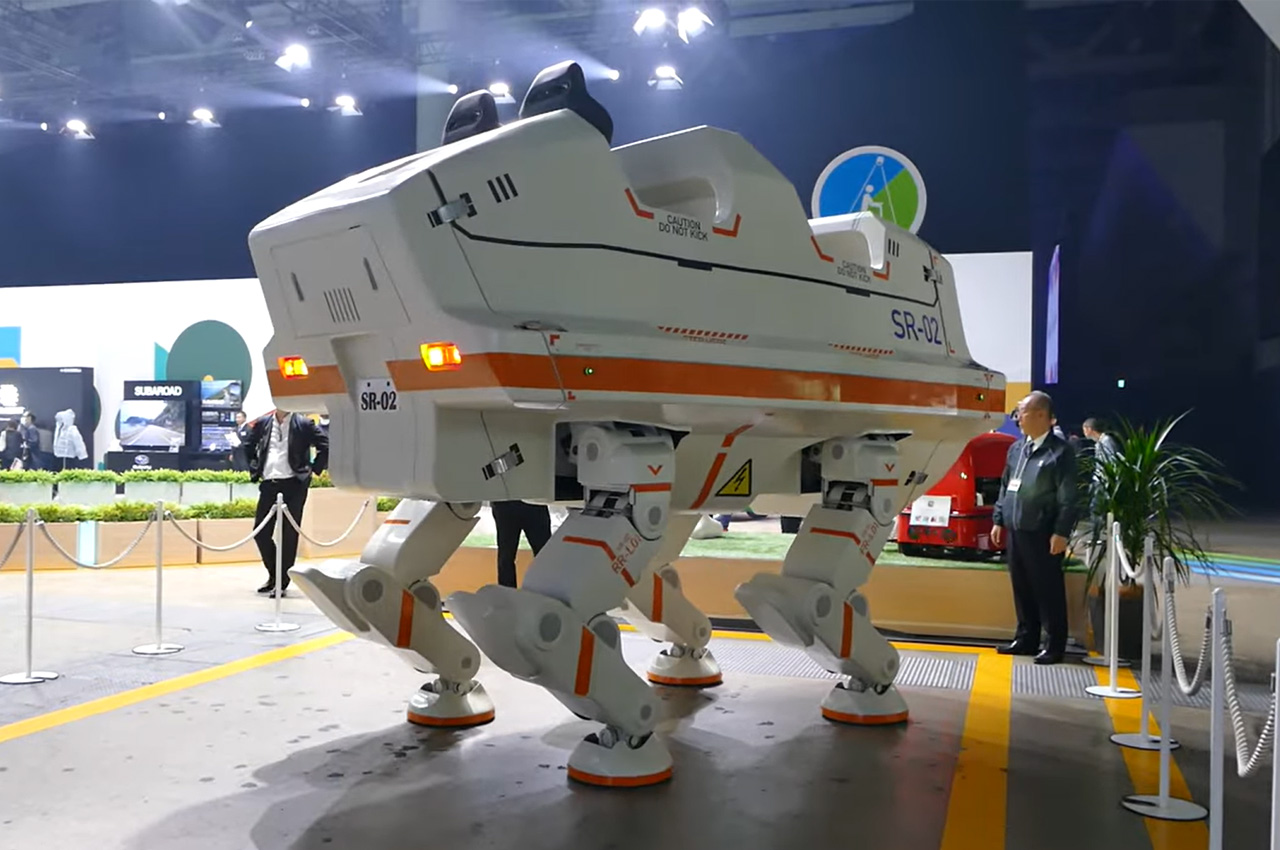
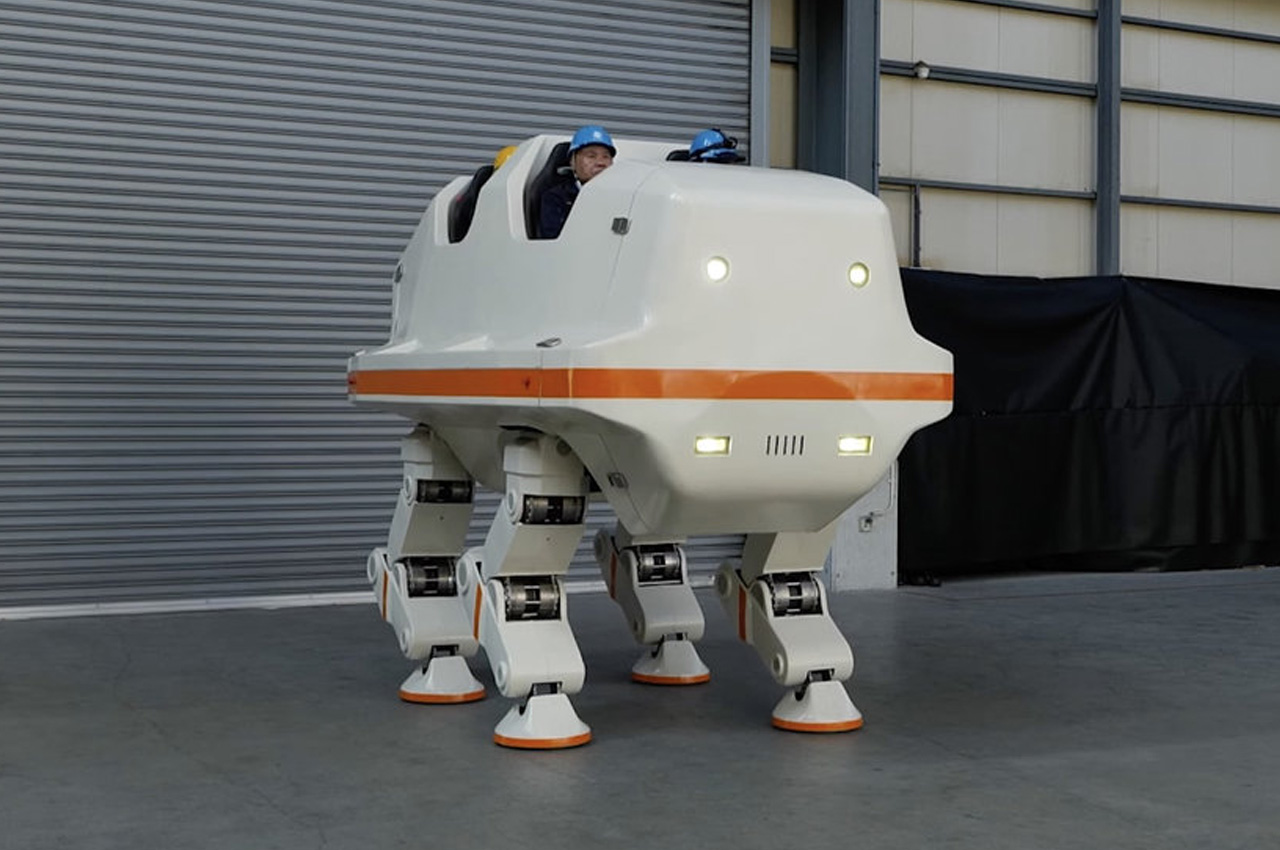
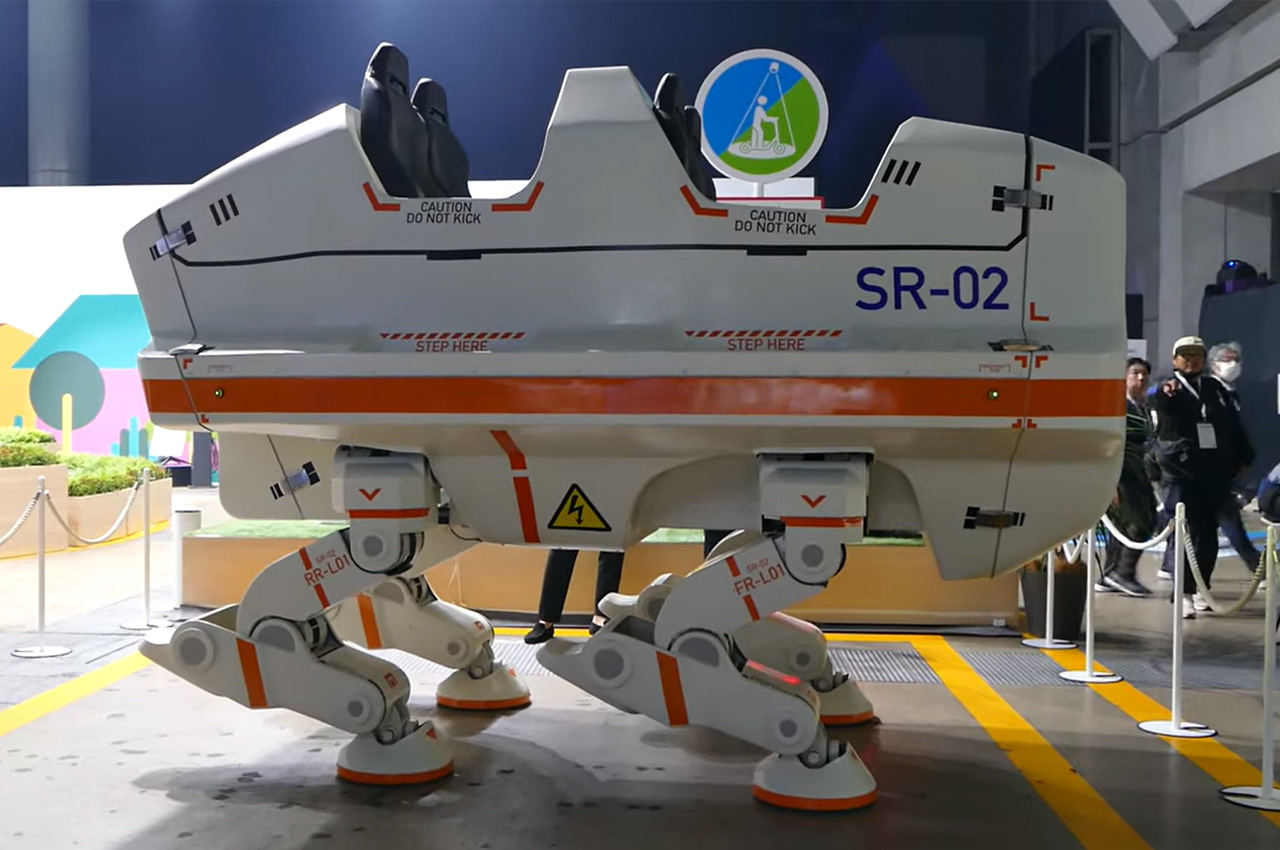
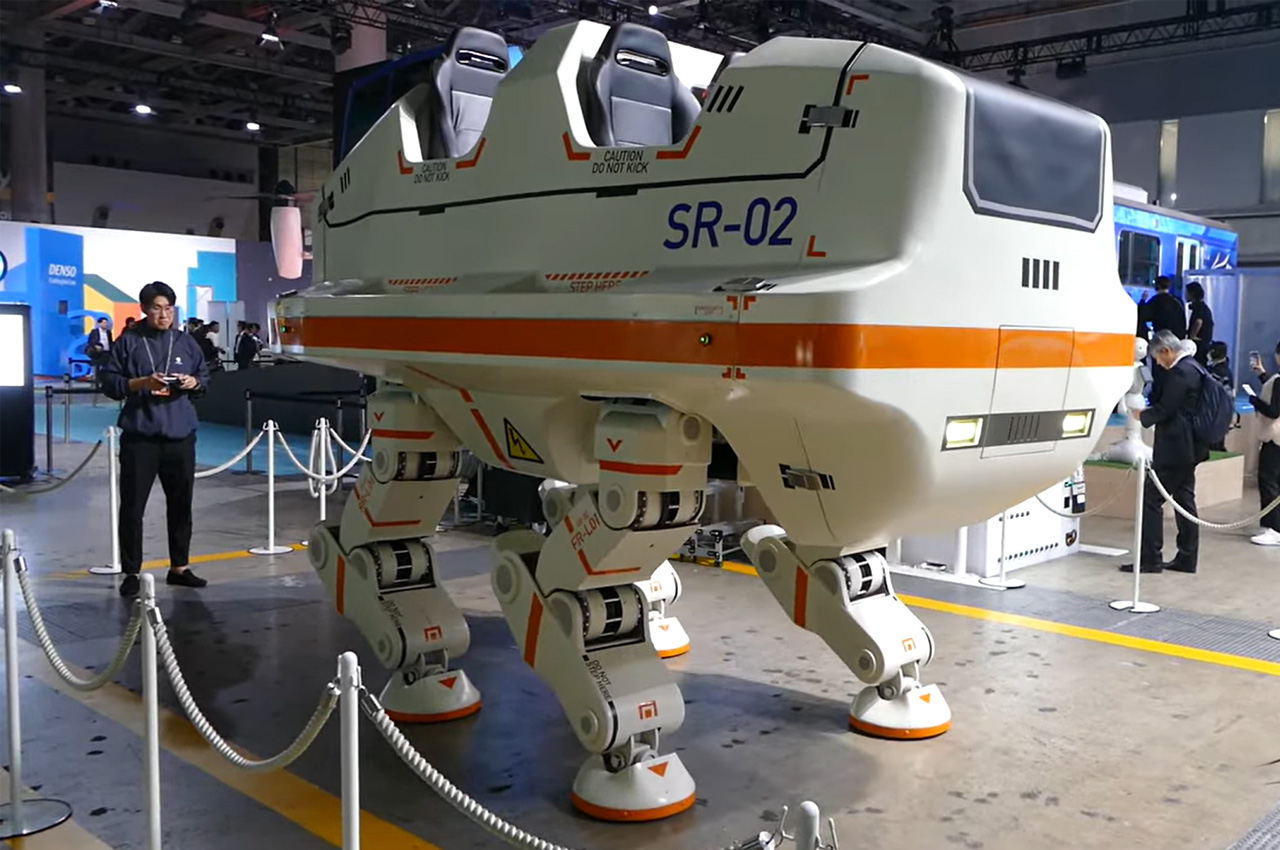
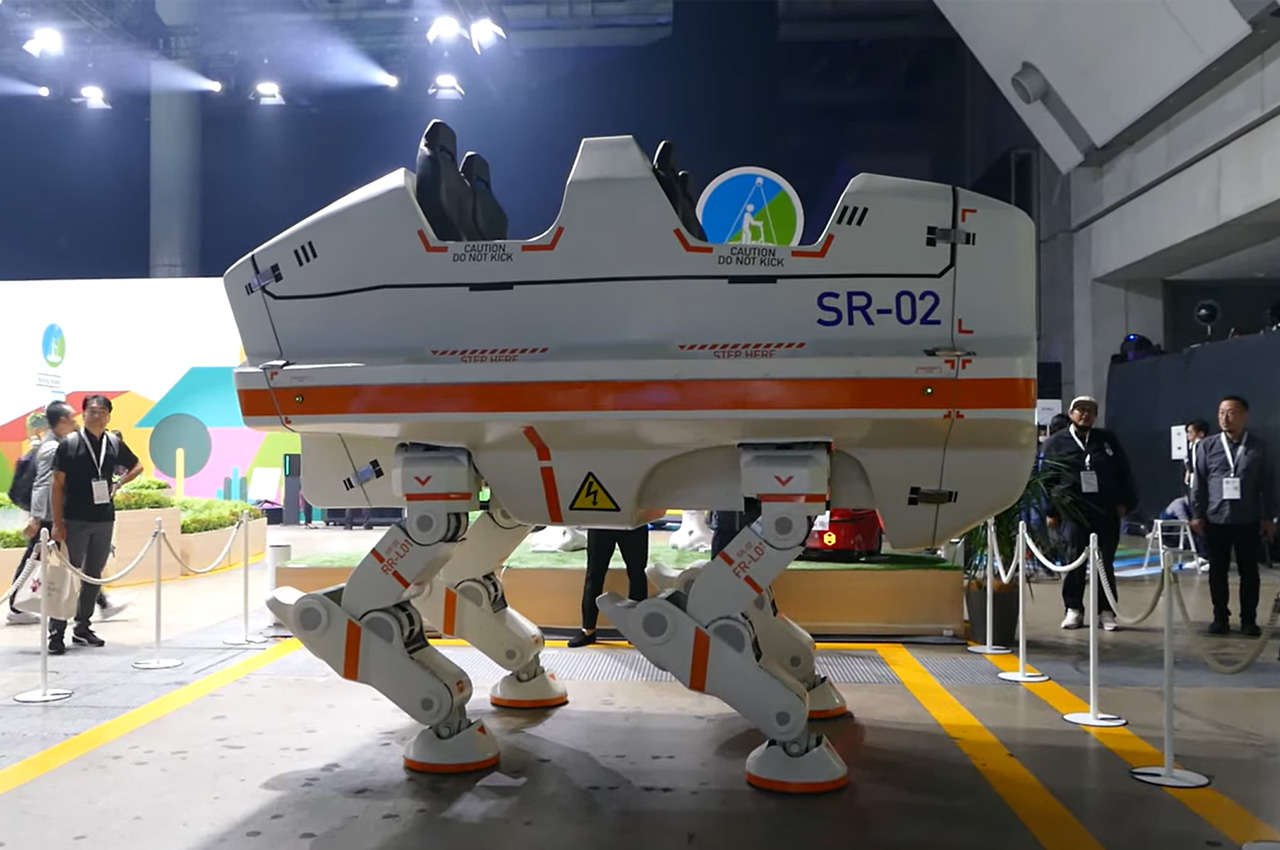
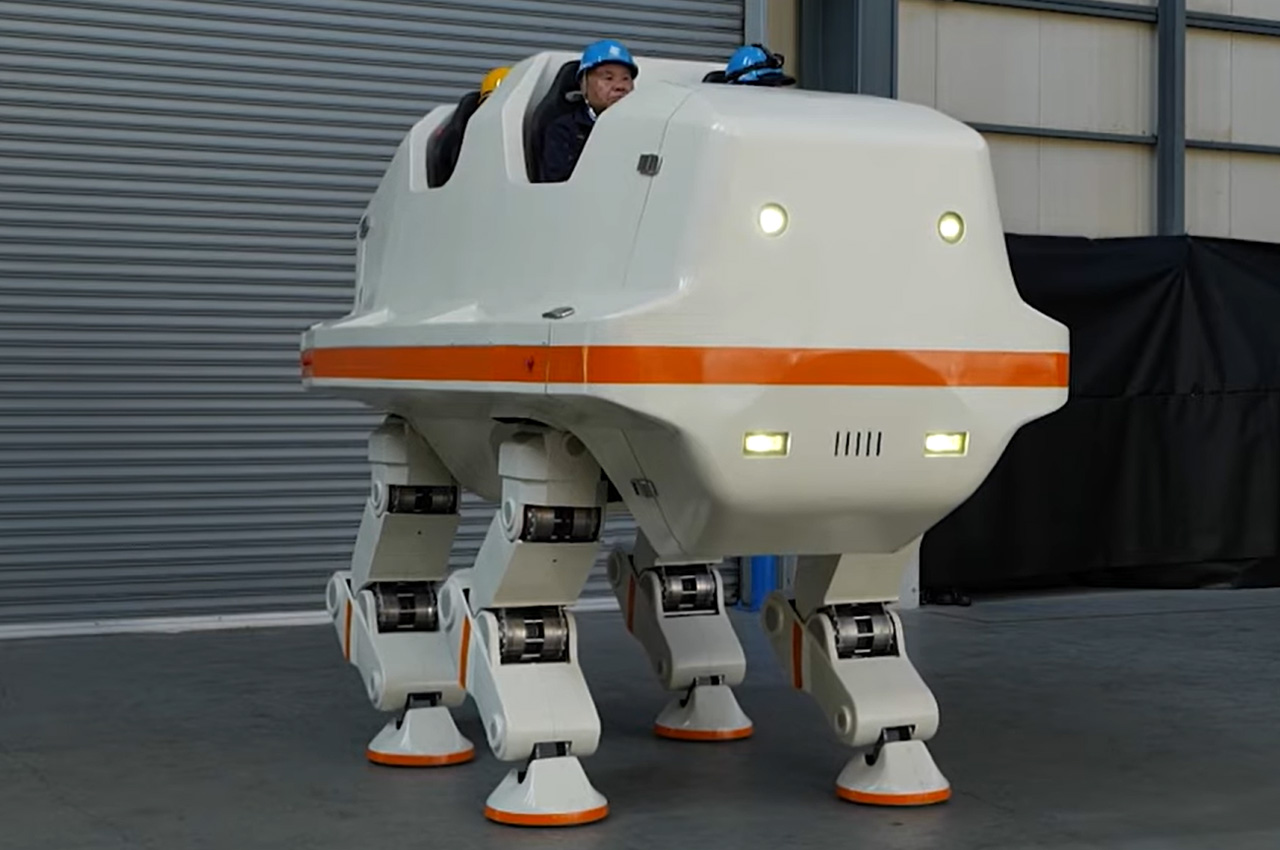
Have you ever wanted to ride a rhinoceros? I would have never thought of an idea to be even close to reality, but after seeing this rhino-inspired behemoth with four sturdy legs, engineered to walk and transport up to four adventurous passengers, I am sold by the idea!
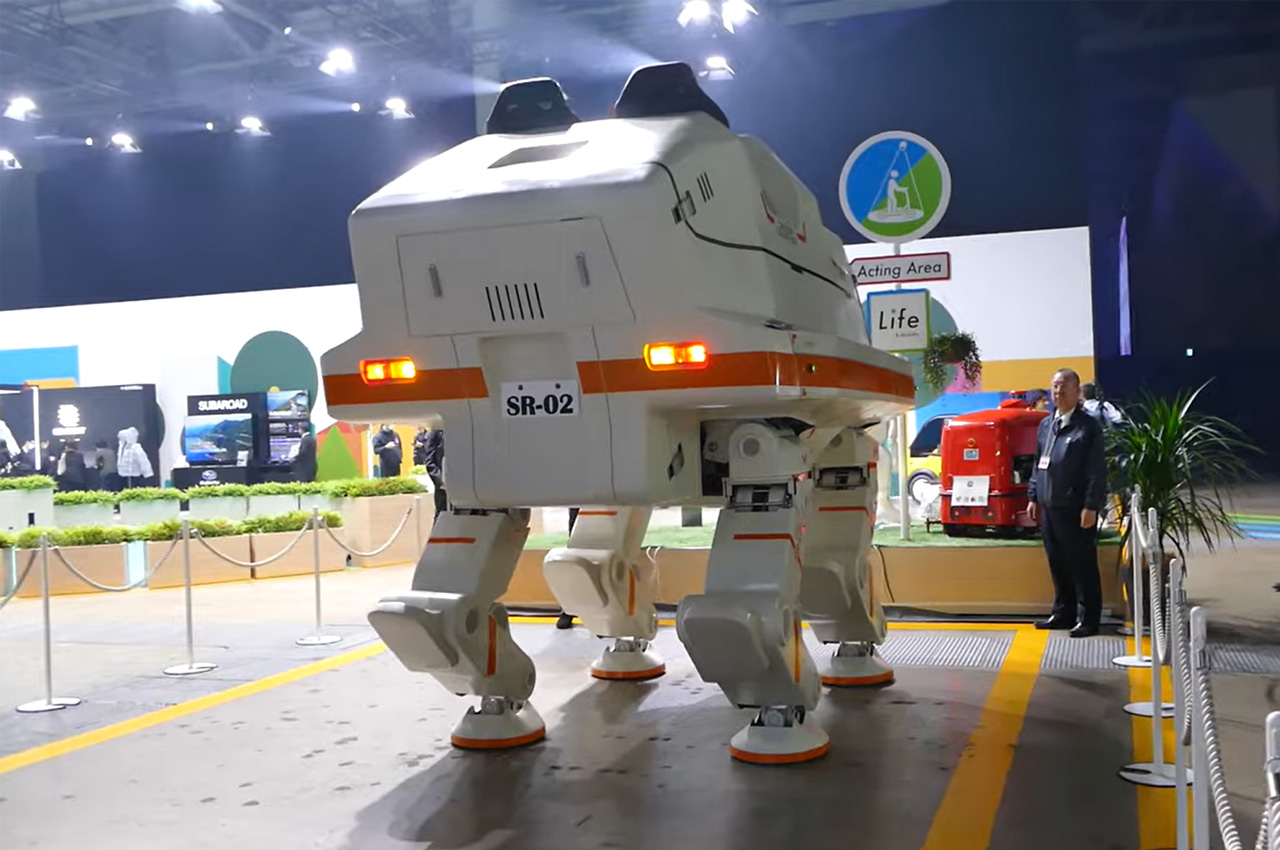
An amalgamation of entertainment and technology, this larger-than-life creation: the SR-02, a quadruped walking robot, is developed by Sansei Technologies. This is a company renowned for crafting thrilling amusement park rides that set hearts racing at Disney.
The electric-powered prototype of the four-legged walking robot was debuting at the Japan Mobility Show, previously known as the Japan Motor Show, this year. The SR-02, right to the word, stole the spotlight, hinting at a future where personal mobility takes on an entirely new form.
This ambitious creation isn’t however crafted for a specific client but instead for the pleasure of those who seek unique experiences at amusement parks. Whether you fancy taking control yourself or allowing remote guidance, this marvel of engineering provides both options, ensuring a delightfully dynamic adventure for all its passengers.
The SR-02 stands at around 11 feet in length, slightly over five feet in width, and nearly seven feet in height. Its spacious design ensures that passengers have ample room to sit comfortably, making the entire experience not only thrilling but also enjoyable.
The prospect of riding a colossal, rideable robot might sound like a dream come true for many, and the SR-02 has the potential to transform amusement park experiences into something beyond imagination. However, until further announcements are made, we can only sit back and wait to know when.