Letterboxd has introduced its first wave of exclusive digital film rentals for the company’s previously announced Letterboxd Video Store. The inaugural collection is themed Unreleased Gems and includes four movies that received awards or acclaim during a film festival. The titles will be available to watch from Letterboxd from December 10 through January 9. Each film is limited to certain geographic markets and the prices will also vary both by title and country.
The Unreleased Gems rental titles include It Ends, a mystery-horror that played at SXSW 2025; Sore: A Wife From the Future, which received eight nominations at the 2025 Indonesian Film Festival; Kennedy, a Hindi-language crime-thriller that premiered at Cannes Film Festival in 2023; and The Mysterious Gaze of the Flamingo, a drama which received the Un Certain Regard prize from this year's Cannes event.
This article originally appeared on Engadget at https://www.engadget.com/entertainment/tv-movies/letterboxd-video-stores-first-film-rentals-will-be-available-this-week-235426596.html?src=rss
According to a statement from the Public Interest Research Group, the National Defense Authorization Act for Fiscal Year 2026 has removed language that would have granted the US military the right to repair its own equipment rather than requiring it to use official defense contractors for maintenance. This bill is still being considered by Congress, but it is uncertain whether the right to repair language is likely to be re-introduced once it has been removed.
"Despite support from Republicans, Democrats, the White House and key military leaders, troops will keep waiting for repairs they could perform themselves," US PIRG Legislative Associate Charlie Schuyler said in a statement from the organization. "Taxpayers will keep paying inflated costs. And in some cases, soldiers might not get the equipment they need when they need it most."
A bipartisan bill from Senators Elizabeth Warren and Tom Sheedy was introduced earlier this year to allow the military right to repair access. The topic has been a more piecemeal affair for laypeople in the US, with some states enacting their own laws and federal regulators sometimes intervening to offer consumers more choice in how they seek repairs.
This article originally appeared on Engadget at https://www.engadget.com/big-tech/congress-removes-right-to-repair-language-from-2026-defense-bill-231708835.html?src=rss
Katsuhiro Harada is departing Bandai Namco at the end of 2025. He announced the news both with a farewell note shared on X and, in possibly the coolest exit ever, with an hour-long DJ mix. Harada's 30-year career has most closely been involved with Tekken and he's a familiar face in the fighting game community.
He began as a voice actor in the original Tekken game and continued to do so even as he became a director for the series. He has worked on other Bandai Namco titles as a producer, both in and out of the fighting genre. "Each project was full of new discoveries and learning, and every one of them became an irreplaceable experience for me," Harada wrote on X. "To everyone who has supported me, to communities around the world, and to all the colleagues who have walked alongside me for so many years, I offer my deepest gratitude."
He closed by saying that over his career, he never DJed at a tournament event. So to mark his departure, Harada posted a full set titled ‘TEKKEN: A 30-Year Journey – Harada’s Final Mix’ to SoundCloud. Which is just the most swag move I can think of and a fun way to close out this chapter for fans of the franchise.
This article originally appeared on Engadget at https://www.engadget.com/gaming/katsuhiro-harada-is-leaving-bandai-namco-after-30-years-223156258.html?src=rss
Despite making some moves to address the proliferation of AI-generated audio on its platform, Spotify failed to catch a copycat making imitations of music by King Gizzard & the Lizard Wizard. The long-running experimental rock band from Australia, has been a vocal critic of Spotify and was one of several artists that took their music off the platform in the summer. The move was in response to the discovery that outgoing CEO Daniel Ek was a leading investor in an AI-focused weapons and military company. Today, a poster on Reddit was recommended what appeared to be an AI-generated copy of one of the band's songs in Spotify’s Release Radar playlist.
The phony artist was called King Lizard Wizard and it had an album of tracks all sharing titles with songs by the original band and using their original lyrics. Futurism grabbed screenshots of the imposter, although it appears to have since been taken down; only the band's original page appears in searches for both their name and the AI name. A rep from the company provided the following statement about the issue: “Spotify strictly prohibits any form of artist impersonation. The content in question was removed for violating our policies, and no royalties were paid out for any streams generated.”
However, the phony King Gizzard band's album went unnoticed by the company for weeks before today's social post surfaced it. The Reddit thread points to several other anecdotal cases where someone attempted to trick listeners with AI-generated versions of popular bands. In September, Spotify unveiled a spam filter for catching AI slop, as well as policies for disclosing AI use in the content it hosts and how it would tackle AI impersonations. An instance like this, particularly when it features an artist that had left the platform in protest, creates a pretty big question mark about how well those policies are working.
Update, December 9, 2025, 5:15PM ET: Added statement from Spotify.
This article originally appeared on Engadget at https://www.engadget.com/entertainment/streaming/an-ai-copycat-of-king-gizzard--the-lizard-wizard-went-unnoticed-on-spotify-for-weeks-220018144.html?src=rss
Google and Apple have long existed as polar opposites, each ruling over their tech kingdoms with little interest in cooperation. But the latest build of Android's Canary operating system hints at an unusual instance of collaboration between the brands, with a new feature that seems aimed at making data transfer simpler between Android and iOS mobile device during the setup phase. It is expected to also be available in a future developer beta of iOS 26.
A representative for Google confirmed that the report from 9to5Google on this development is accurate, but didn't provide any additional details on how the transfer will work. Each brand already has their own dedicated Switch to Android and Switch to iOS apps for making the swap between ecosystems, but making the transition easier at the operating system level and adding support for moving more types of data certainly sounds promising. That said, features can go through a fair bit of iteration between the dev betas and the final launch, and Android Canary is a very early stage of development, so we'll be curious to see what actually arrives on our smartphones.
This article originally appeared on Engadget at https://www.engadget.com/mobile/smartphones/google-and-apple-partner-on-better-android-iphone-switching-204738960.html?src=rss
TikTok just announced a couple of updates that that should make the app a bit more social. There's something called Shared Feed, which is exactly what it sounds like. It's a feed that friends and family can watch together, though at different times.
This feed is shared via direct messaging and pulls up relevant content to everyone involved in the chat. TikTok says this is a "new way to discover content together." It consists of a daily curated selection of 15 videos that are generated by TikTok activity.
These feeds are shared via invitation and the participants can leave the chat at any time. There's also a new dashboard that lets viewers check out their Shared Like history and other metrics. The Shared Feed tool rolls out globally in the coming months. It sounds similar to something Instagram began offering earlier this year. Instagram is typically the onecopying TikTok, so this is a nice change of pace.
TikTok
TikTok has also announced something called Shared Collections. This is like the aforementioned Shared Feed, but for saved content. The tool lets users collect, organize and share groups of videos, with TikTok citing that people could use it to share reading lists, local restaurants to try and, of course, products to buy.
All you have to do is save a video, create a Shared Collection and send that list to someone else via direct message. Users must follow one another to access one of these lists. The tool is available globally right now to folks over the age of 16.
Finally, TikTok is rolling out themed holiday cards that can be sent in direct messages. They will be available globally later this month.
This article originally appeared on Engadget at https://www.engadget.com/apps/tiktok-announces-shared-feed-and-collections-features-193857725.html?src=rss
Rivian is about to give the public and its investors another taste of its future with an event focused on autonomy and AI on December 11. The company's Autonomy and AI day starts at 12PM ET. You can watch the event via the Rivian website. We'll be liveblogging the Autonomy and AI day right here on Engadget, so we'll be recapping the major news as it happens and sharing our reactions.
As for what to expect, the name of the event clearly indicates that Rivian will be talking about autonomous operation of its vehicles. RivianTrackr speculates, quite reasonably, that the company will share more about what CEO RJ Scaringe has referred to as a Universal Hands Free feature. Scaringe recently said he'd spent two hours traveling around Palo Alto, California, in a second-gen Rivian R1 with the vehicle taking care of everything by itself. It stands to reason that Rivian will at least offer up a demo of Universal Hands Free ahead of the company’s more affordable R2 model making its debut in 2026.
Earlier this year, Rivian said that, for 2026, "a hands-off/eyes-off feature is planned for controlled conditions with our current Gen 2 vehicles." So, this Autonomy and AI day seems as good an opportunity as any for the company to share more details about that. When Rivian unveiled the first-generation R1T and R1S in 2018, it said those would support Level 3 autonomy, allowing for the driver to take their hands and eyes off the road for short spells while they're on the freeway.
RivianTrackr also suggests that we may hear more about Rivian's sensor strategy as well as its AI and fleet-learning initiatives. The company may offer up a more detailed autonomy roadmap as well. However, the publication suggests Rivian isn't quite ready to announce rollout retails or firm pricing for full hands-off driving features.
This article originally appeared on Engadget at https://www.engadget.com/transportation/evs/how-to-watch-rivians-autonomy-and-ai-day-and-what-to-expect-192838410.html?src=rss
Meta will soon allow Facebook and Instagram users in the European Union to choose to share less data and see less personalized ads on the platform, the European Commission announced. The change will begin to roll out in January, according to the regulator.
"This is the first time that such a choice is offered on Meta's social networks," the commission said in a statement. "Meta will give users the effective choice between: consenting to share all their data and seeing fully personalised advertising, and opting to share less personal data for an experience with more limited personalised advertising."
The move from Meta comes after the European Commission had fined the company €200 million over its ad-free subscription plans in the EU, which the regulator deemed "consent or pay." Meta began offering ad-free subscriptions to EU users in 2023, and later lowered the price of the plans in response to criticism from the commission. Those plans haven't been very popular, however, with one Meta executive admitting earlier this year that there's been "very little interest" from users.
In a statement, a Meta spokesperson said that "we acknowledge" the European Commission's statement. "Personalized ads are vital for Europe’s economy — last year, Meta’s ads were linked to €213 billion in economic activity and supported 1.44 million jobs across the EU."
This article originally appeared on Engadget at https://www.engadget.com/social-media/meta-will-let-facebook-and-instagram-users-in-the-eu-share-less-data-183535897.html?src=rss
Analogue just announced new colorways for its recently-launched Analogue 3D console. The appropriately-named Funtastic limited-edition consoles are heavily inspired by Nintendo's translucent N64 models from the late 1990s. Analogue even borrowed the Funtastic branding.
In other words, these are going for the nostalgic jugular for gamers of a certain age. There's even a see-through green colorway that calls to mind the Nintendo 64 variant that shipped as a bundle with Donkey Kong 64. Just imagine booting up that bad boy as you roam around the house spouting the lyrics of the DK rap song.
Analogue 3D - Funtastic - Limited Editions. Available in highly limited quantities.
Perfectly color matched to the originals N64 models.
$299.99
On Sale: Dec 10, 8am PST. Shipping: Dec 10 with Guaranteed delivery before Christmas. pic.twitter.com/PPYgIw0vxU
There are eight translucent colors to choose from and accompanying 8BitDo controllers available as a separate purchase. The consoles cost $300 and the controllers are priced out at $45.
The Analogue 3D Funtastic consoles go on sale on December 10 at 11AM ET, with the company promising they'll ship within 48 hours to ensure delivery by Christmas. The company is also restocking the traditional colors, which will be available for purchase at the same time but won't ship until January.
Tim Stevens for Engadget
We praised the Analogue 3D in our official review. It's a fantastic way to play N64 cartridges, even if the original games don't always hold up. The 4K CRT emulation is top-notch and the overall hardware design is solid.
This article originally appeared on Engadget at https://www.engadget.com/gaming/analogue-is-weaponizing-your-nostalgia-with-these-translucent-versions-of-its-3d-console-181105740.html?src=rss
Every December, the Engadget staff compiles a list of the year’s biggest winners. We scour over articles from the previous 12 months to determine the people, companies, products and trends that made the most impact over the course of the year. Not all of that influence is positive, however, and some selections may also appear on our list of biggest losers. Still, sit back and enjoy our picks for the biggest winners of 2025.
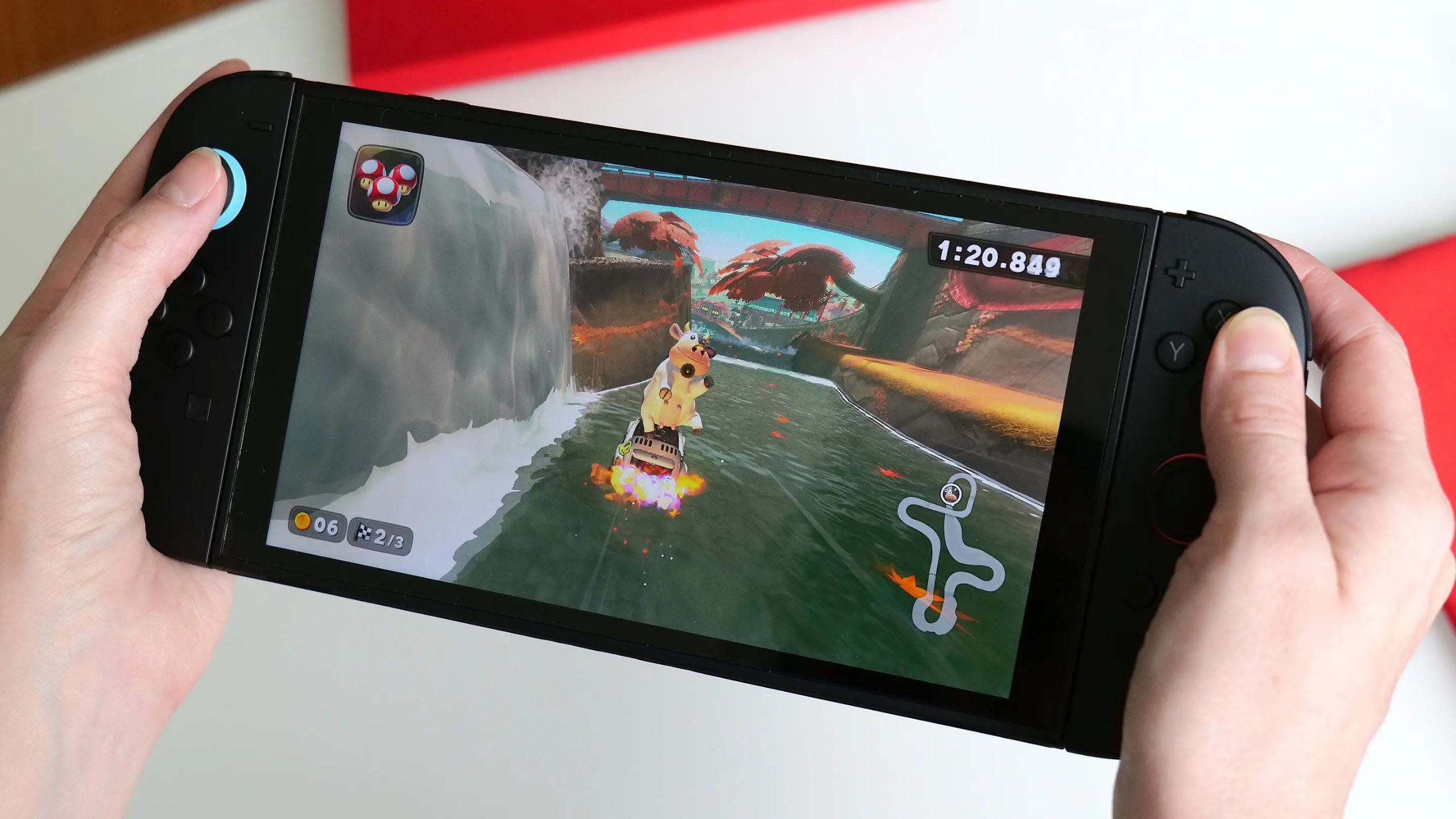
Nintendo Switch 2
Playing Mario Kart World on the Switch 2 in handheld mode.
Sam Rutherford for Engadget
Aside from a big bump in battery life that many were hoping for, Nintendo took just about everything that made its last console such a phenomenon and upgraded it on the Switch 2. A sleeker design with magnetic Joy-Cons that are less likely to break, a larger (albeit LCD) 1080p display with HDR, much stronger performance, mouse controls and a boost to the base storage were all very welcome.
Of course, the vast majority of Switch games run on the Switch 2 (often with visual improvements or other upgrades), so the new console had a vast library right from the jump. Nintendo is building out its slate of first-party games with treats like Donkey Kong Bananza and Metroid Prime 4, and the third-party support is seriously impressive too. Cyberpunk 2077, Street Fighter 6 and Hitman: World of Assassination are already available, and the likes of Final Fantasy VII Remake Intergrade and FromSoftware's Switch 2 exclusive The Duskbloods are on the way.
The Switch 2 is an iteration, not a revolution, but Nintendo didn't need to reinvent the wheel to make another great system. It's little surprise, then, that we gave the Switch 2 a score of 93 in our review. The console is surpassing Nintendo's sales expectations as well. The company said in November that it believes it will sell 19 million units (up from 15 million) by the time its current fiscal year ends in March. — Kris Holt, Contributing reporter
NVIDIA
NVIDIA GeForce 5070 Ti
Devindra Hardawar for Engadget
Could things be any rosier for NVIDIA? Once just a video card company for gamers, NVIDIA's GPU hardware is now directly tied to the rise of the AI industry. Its stock has jumped a whopping 1,235 percent over the past five years, going from $13.56 per share in 2020 to a peak of $202.49 this past October. NVIDIA's server-grade cards are being used en masse to train AI models, as well as to power AI inferencing. At home, its GeForce GPUs are enabling local AI development and they're still the gaming cards to beat, despite AMD's steadily improving competition.
Clearly, the company's bet on parallel processing has paid off enormously. Its GPUs can handle tons of computations simultaneously, making them ideally suited for the demands of the AI industry. They're not exactly efficient — that's why neural processing units, or NPUs have sprung up to power consumer AI features — but it's hard to deny NVIDIA's raw computational power.
NVIDIA's AI success may not last forever, though. Companies like Google and Microsoft are already working on their own AI chips, and it's still unclear if consumers actually want widespread AI features as much as tech companies think. If the AI industry crashes, NVIDIA will be one of the first victims. — Devindra Hardawar, Senior reporter
Tech billionaires
US President Donald Trump speaks during a news conference with Elon Musk (L) in the Oval Office of the White House in Washington, DC, on May 30, 2025.
A silhouetted individual is seen holding a mobile phone with a Sora of ChatGPT OpenAI logo displayed in the background
SOPA Images via Getty Images
AI slop didn't start in 2025, but it reached new heights thanks to updates from Meta, Google, OpenAI and others that made it easier than ever to create a real-ish (emphasis on the ish) looking clips from nothing but your most unhinged mad libs. Now, AI-generated videos are just about impossible to avoid. Some platforms, like Pinterest and TikTok, have even begun offering people the ability to ask their algorithms to show less AI content in their feeds. Unfortunately, there's no way to stuff Shrimp Jesus back into the bottle.
AI video is everywhere and it's here to stay. It's not only overtaken Facebook and Instagram's recommendations, Meta created an entirely separate feed just for users' AI-generated fever dreams. OpenAI's Sora, which lets you make AI videos of real people, was downloaded a million times in just a few days. Google's Veo, which generated more than 40 million videos in a matter of weeks, is now built-in to YouTube Shorts.
It's now trivially easy for creators to churn out fake movie trailers, cute animal videos that never happened or viral clips of made up ICE raids. Hell, the president of the United States regularly shares bizarre, sometimes poop-themed, AI videos on his official social media channels. During the government shutdown, the official X account for Senate Republicans shared a deepfake of Senate minority leader Chuck Schumer.
AI video is winning not just because it's everywhere, but because so many are unable, or unwilling, to understand what's real and what isn't. More than half of Americans say they are not confident in their ability to distinguish between human and AI-generated content, according to Pew Research. Similar numbers of people report being "more concerned than excited about the increased use of AI in daily life." But those concerns have done little to stop AI slop from dominating all of our feeds, and there's no sign it will ever slow down. — Karissa Bell, Senior reporter
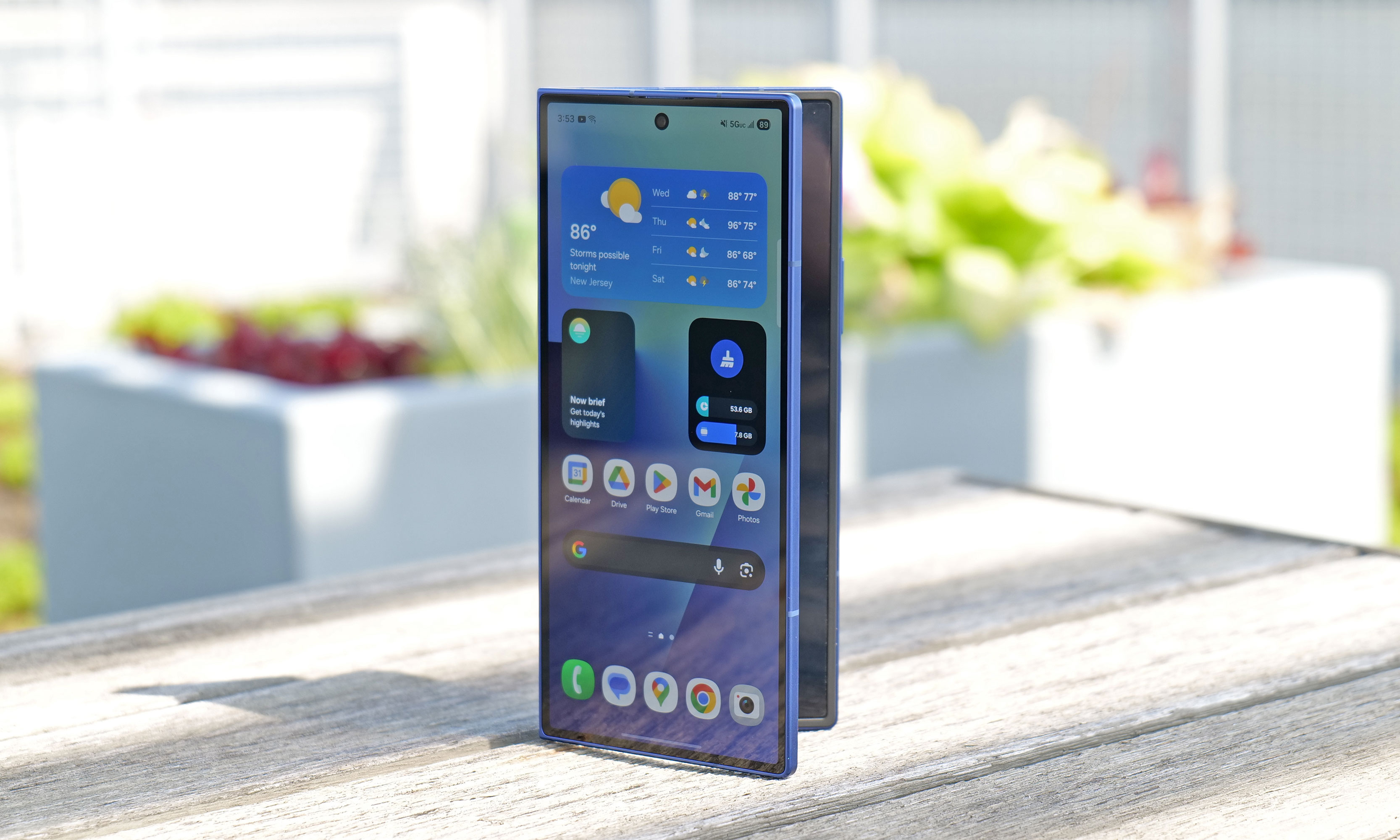
Galaxy Z Fold 7
Samsung Galaxy Z Fold 7
Sam Rutherford for Engadget
After seven generations, Samsung reached an important milestone this year with its Galaxy Z Fold line: It made a foldable phone that’s the same size as a regular handset. In fact, weighing 7.58 ounces and measuring 72.8mm wide, the Galaxy Z Fold 7 is actually lighter and narrower than an S25 Ultra, while being practically just as thin at 8.9mm (folded). It’s a real marvel of engineering, especially when you consider the phone also features a 200MP main camera, an IPX8 rating for water resistance and a 5,000 mAh battery with 45-watt wired charging. And of course, there's that huge 8-inch main screen hiding inside, which makes the Z Fold 7 both a phone and a tablet in one device. The only thing it's really missing is the improved dust resistance Google gave to the Pixel 10 Pro Fold.
But perhaps more importantly, the Z Fold 7's reduced size and weight have created a device with wider appeal. This has propelled sales of Samsung's latest flagship foldable up 50 percent compared to the previous generation while pushing shipments of foldables as a whole to record highs. Who knew that when Samsung focuses on creating world-class hardware instead of overindexing on AI, good things happen? Okay, maybe that’s a bit harsh. Regardless, for a phone category that has struggled with excess weight and bulk since its inception, the Z Fold 7 feels like a revelation and the beginning of a new era for handsets with flexible displays. Now, can we just bring their prices down, please? — Sam Rutherford, Senior reporter
Smart glasses
Senior reporter Karissa Bell wearing a pair of Ray Ban Display glasses.
Karissa Bell for Engadget
Like it or not, smart glasses are having a moment. Propelled by new devices like the Meta Ray-Ban Display and upcoming models like Xreal’s Project Aura, the idea of wearing specs with built-in screens suddenly became an attractive proposition. And that means a lot for a category of gadgets that’s often best remembered by the fashion tragedy that was Google Glass in 2013.
However, this development isn’t purely by chance. The latest generation of smart glasses has only just now become a reality due to the convergence of several branches of tech — including improved optics, lightweight batteries and, of course, AI. Now that last one might sound silly considering how many big companies seem to be betting the farm on machine learning being the next big thing, but AI will be a critical feature for enabling the hands-free experience that you need to make smartglasses work when you can’t rely on touch input. While this category is still in its early stages of development, the increased momentum we've seen from smart glasses this year seems poised to carry them towards being a future pillar of people's core tech kits. — S.R.
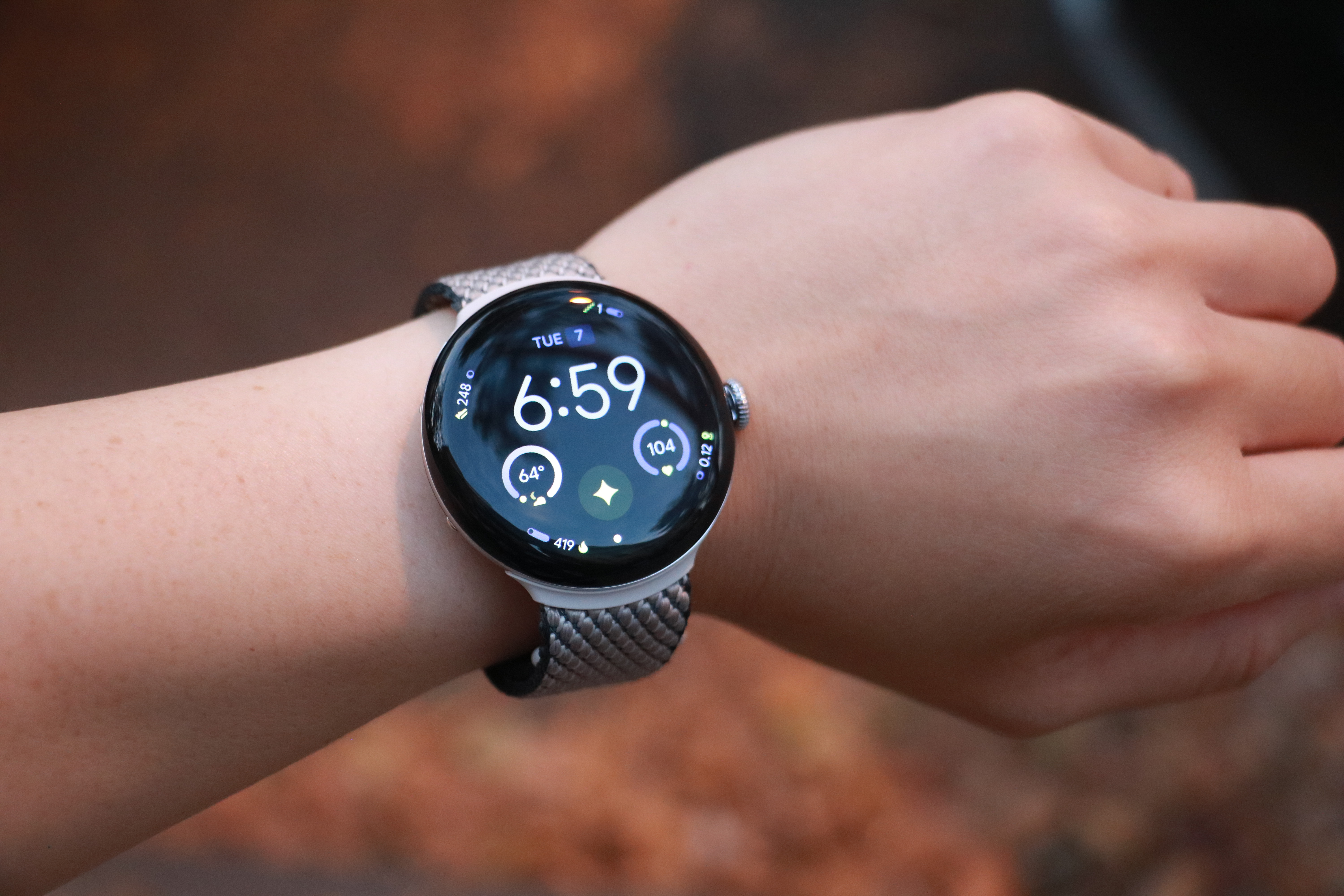
Fast charging
Fast charging on the Pixel Watch 4 is one implementation that impressed us this year.
Cherlynn Low for Engadget
Devices like tablets and smartwatches have matured to the point where each generation mostly sees iterative upgrades, making covering them seem boring. But this year, as the hardware review season came to a close, I noticed an interesting trend. One feature, across various product categories, genuinely excited myself and other reviewers at Engadget and around the internet: impressively fast charging.
By itself, high-speed charging isn’t new. But when I reviewed the Pixel Watch 4 in October, I was shocked that one seemingly little update changed how I went about my day. The new power system on Google’s smartwatch was so efficient that after about ten minutes on a cradle, the wearable went from below 20 percent to past 50 percent. With that boost, I stopped having to remind myself to plug the watch in — any time I ran low or was about to run out the door, I just plopped it on the charger and would have enough juice for hours.
Google wasn’t the only company to make fast-charging a meaningful addition to one of its 2025 products. Apple’s iPad Pro M5 is the first iPad to support the feature, and while in our testing it fell a little short of the 50 percent charge in 30 minutes that the company promised, our reviewer Nate Ingraham still found it a meaningful improvement.
Observers of the smartphone industry will likely point out two things. First, battery technology can be volatile, and larger, faster-charging cells might lead to exploding phones. So my optimism about this development is not without caution. Secondly, we’ve already seen all this come to handsets, especially in phones that launched outside the US first. OnePlus is known for its SUPERVOOC fast charging system, for example, and we’re seeing even more novel battery tech show up abroad. Calling fast charging a winner of 2025 may feel untimely to some.
Sure, it’s not the most eye-catching or novel technological development. But when counted in terms of precious time saved, fast charging coming to more types of devices certainly amounts to a greater good in gadgets in 2025. — Cherlynn Low, Managing editor
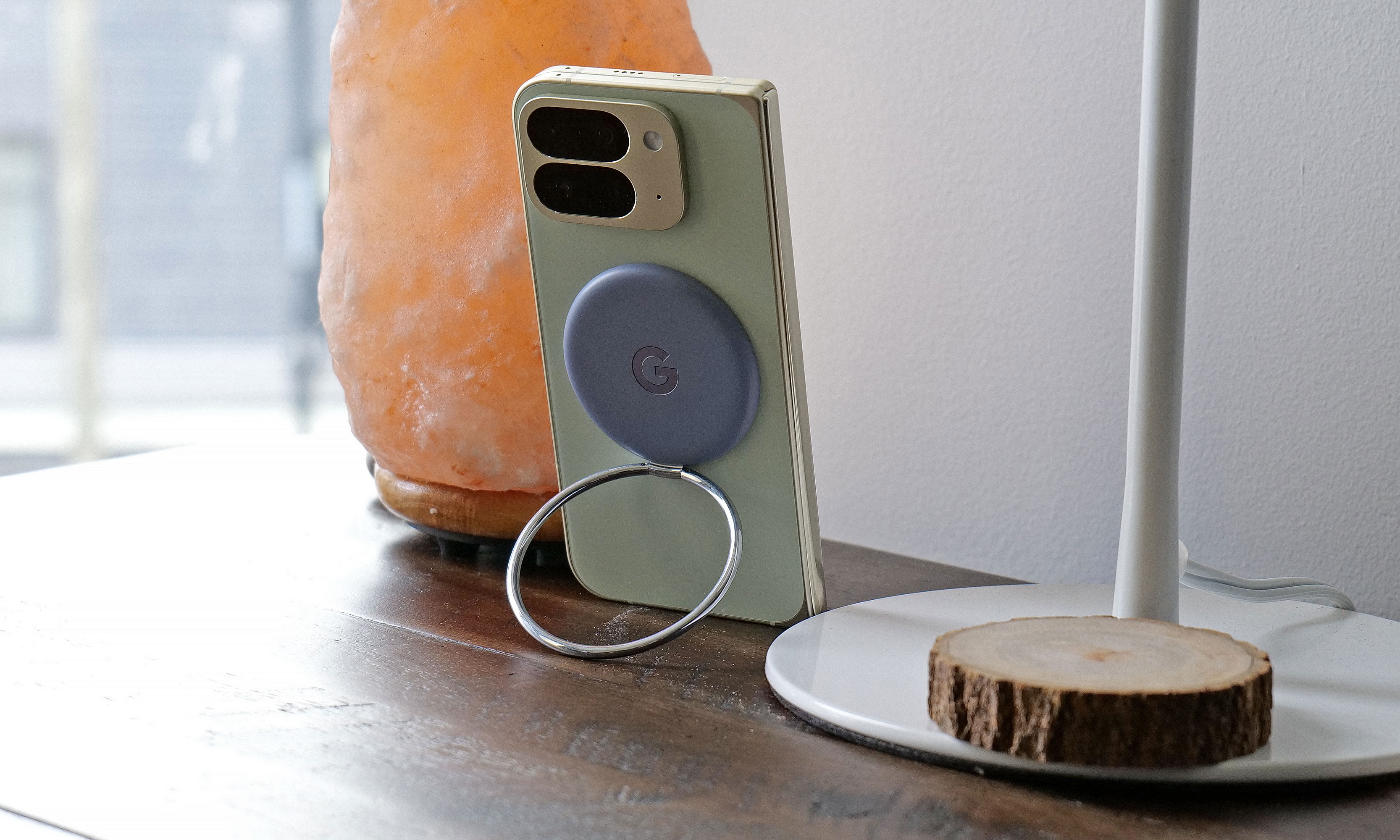
Magnets
The Pixel 10 Pro Fold and the Pixel Ring Stand
Sam Rutherford for Engadget
Two years after the announcement of the Qi 2 wireless charging standard and its support of magnetic attachment accessories (a la Apple’s MagSafe), we’re finally seeing one of the more mainstream Android devices adopt it. In 2025, Google became the first Android phone maker that’s not HMD to do so, bringing such magnetic capabilities to the Pixel 10 series. It also introduced Pixelsnap — its own version of a MagSafe accessory ecosystem, including a slim puck with a fold-out kickstand that you can snap onto a phone.
I love the Pixel Ring Stand and make sure to bring it with me whenever I can. It works perfectly with my iPhone 17 Pro, and has a compact footprint that makes it easy to take anywhere. Of course, it’s not the first of its kind — Case-Mate and PopSocket, among others, already make similar products but they’re either pricier or rated poorly.
But it’s not just Google that made a magnetic accessory I unexpectedly adored. When reports of Apple’s Crossbody Strap first trickled out, I was underwhelmed. Who cares about a crossbody strap for an iPhone? But when I was presented with one to try at the iPhone 17 launch event, my cynicism quickly melted into desire.
Setting aside the convenience of having your phone on your person when you don’t have pockets or a purse, the way magnets play a part here also won me over. To adjust the length of the straps, you just separate the two overlapping pieces that stick together magnetically, move them along each other till you’re satisfied with the length and let them snap back in place.
I’m sure Apple isn’t the first to make a crossbody strap accessory for iPhones, nor is it the first to use magnets to adjust such straps. But like many Redditors, I’ve slowly come to realize the differences between those products and the Crossbody Strap for iPhone 17. It’s far from perfect, but in 2025 it was another implementation of magnets in tech that caught my attention and brought convenience to my life. — C.L.
This article originally appeared on Engadget at https://www.engadget.com/techs-biggest-winners-of-2025-180000177.html?src=rss