Presidents’ Day is a great time to buy appliances, mattresses and furniture as they are often on sale for the holiday. Tech also gets discounted around this time, but you have to do a bit more digging to find actually good deals. And this year, Presidents’ Day comes right after Valentine’s Day and Super Bowl 2026, which means there are some overlapping sales to consider. If you don’t want to sort through the mess of bad deals out there, Engadget has you covered. We’re curating the best President Day sales on tech we can find right here. We’ll update this post through the holiday as more deals become available.
Presidents’ Day deals under $50
Disney+ and Hulu bundle (one month) for $10 ($3 off): You can get one month of Disney+ and Hulu access for only $10 right now. That represents a small savings over the standard $13-per-month price for the bundle, but a 58-percent discount when you compare it to the price of paying for both services separately. It’s a good way to test out the bundle without paying too much before you decide if you want to subscribe for the long haul.
Waterpik cordless rechargeable water flosser for $40 (20 percent off): A water flosser like this one can make it easier (and less painful in some cases) to floss your teeth on the regular. This model from Waterpik includes two interchangeable tips and has two pressure settings. Its battery life should last up to four weeks with regular use as well.
Amazon Fire TV Stick 4K Max for $40 ($20 off): Amazon’s most premium streaming dongle supports 4K HDR content, Dolby Vision and Wi-Fi 6E. You may even be able to get it for $10 less than the sale price listed, for a final price of $30, when using the code MAX4KFTV at checkout.
Blink Mini 2K+ — 2 cameras for $45 (50 percent off): Blink’s latest plug-in security cameras support 2K video and improved audio quality. Like previous versions, these cameras have two-way talk, motion alerts and support for Alexa voice commands.
Apple Magic Mouse for $68 (14 percent off): Apple’s sleek wireless mouse has a multi-touch surface that supports gesture control, and its battery should last about a month in between charges. And yes, it has a USB-C port.
Apple Watch Series 11 for $299 ($100 off): The latest flagship Apple Watch has excellent performance, a boosted battery life and a lightweight design that you can comfortably wear all day long — and even into the night to track sleep.
iPad mini (A17 Pro ) for $399 ($100 off): The updated iPad mini runs on the A17 Pro chip for improved performance, plus it has an 8.3-inch Liquid Retina display, a 12MP ultra wide camera with Center Stage, USB-C charging and compatibility with the Apple Pencil Pro.
Beats Studio Pro for $200 (43 percent off): Beats updated these cans to have improved sound quality, and you can really hear the difference from models that came before it. These headphones also have solid Transparency mode, good voice performance and USB-C audio.
Beats Solo 4 headphones for $150 (25 percent off): These on-ear headphones support spatial audio and dynamic head tracking, and they have up to 50 hours of battery life. The “fast fuel” feature allows them to get up to five hours of playback time with just a quick 10-minute power-up.
Beats Studio Buds+ for $100 (41 percent off): These tiny buds have both active noise cancellation and transparency mode, and they’ll work just as well with either Apple or Android devices.
This article originally appeared on Engadget at https://www.engadget.com/deals/presidents-day-sales-2026-are-live-the-best-tech-deals-up-to-43-percent-off-to-shop-from-apple-samsung-anker-and-others-163000321.html?src=rss
The big game is one of the few instances now in the US where most people gather around the TV to watch the live event together. While the teams playing in Super Bowl 2026 are the true stars of the show (and Bad Bunny, of course), your TV is a pretty important part of the puzzle of putting together an excellent Super Bowl party. Maybe you’ve been thinking about replacing an aging set, or you’re itching for a full refresh of your home theater setup — either way, you’ll want to try to get a good deal on a new TV. Thankfully, the weeks leading up to the Super Bowl can be a great time to shop for a new TV.
Generally, TV prices steadily decrease after a new model comes out. Some 2026 TV models were announced at CES and are forthcoming things year, making now a good time to look for discounts on 2025 sets. Aside from the holiday shopping season, now is one of the best times of the year to save on a TV. Here, we’ve curated the best Super Bowl TV deals we could find this year, from already affordable sets discounted even further to high-end OLEDs that are hundreds of dollars off.
Super Bowl 2026 TV deals for less than $500
You can easily find solid 1080p and 4K TV sets within this budget-friendly price range. What you’ll be more limited in is size — most TV deals under $500 we’re seeing right now are on sets up to 55 inches. There are a few 65- and 75-inch models in there, but the pickings are slim.
This is where you want to look if you want your new TV to have the richest colors, deepest blacks and excellent contrast performance. Of course, that all comes at steeper prices — it can be difficult to find a good OLED set for less than $1,000, even on sale.
This will likely be the sweet spot for many people when it comes to TV features, performance and price. Good 4K sets are common in this price range, and you’ll also find some Mini LED sets available here as well.
A good TV is key, but having the right peripherals and accessories to go along with it will complete your home theater setup. Deals we’re tracking right now include discounts on streaming devices, soundbars and projectors.
This article originally appeared on Engadget at https://www.engadget.com/deals/super-bowl-2026-tv-deals-the-best-sales-we-found-this-week-on-oleds-and-other-smart-tvs-ahead-of-kickoff-160000654.html?src=rss
A good home theater setup goes beyond just having the right TV (although that certainly does help a lot). Getting the right sound for your space, the right lighting and making sure your streaming gear is up to date are all things that can go a long way to making your setup feel premium.
And don’t think that just because you’re not hosting movie night every weekend that a good home theater setup is a waste. Whether your family is full of cinephiles, you love playing video games with your kids or you plan on hosting friends to watch Super Bowl 2026, the right home theater equipment can make your experience much better. We test a ton of that technology here at Engadget; if you’re looking to make some changes to your setup, we’ve collected some of our favorite home theater gear here to make your shopping list a bit easier to compile.
Best home theater gear
This article originally appeared on Engadget at https://www.engadget.com/home/home-theater/the-best-gear-to-upgrade-your-home-theater-setup-130000755.html?src=rss
Over 4,000 exhibitors flocked to Las Vegas, Nevada this week to showcase their wares at CES 2026. The Engadget team, as usual, was out in full force covering the show. The week began with press conferences from huge companies at the show, mostly filled with AI buzzwords, vague promises and quite little in the way of hard news.
More than one company even decided to forgo announcing things during their conferences to make way for more AI chatter, only to publish press releases later quietly admitting that, yes, actually, they did make some consumer technology. It's appropriate, I guess, that as we're beginning to feel the knock-on cost effects of the AI industry's insatiable appetite for compute resources — higher utility bills and device prices — companies would rather use their flashy conferences to reinforce AI's supposedly must-have attributes rather than actually inform the public about their new products.
We're by no means AI luddites at Engadget, but it's fair to say that our team is more excited by tangible products that enrich our lives than iterative improvements to large language models. So, away from all of the bombast of NVIDIA's marathon keynote and Lenovo's somehow simultaneously gaudy and dull Sphere show, it's been a pleasure to evaluate the crowd of weird new gadgets, appliances, toys and robots vying for our attention.
Over the course of several days of exhaustive discussion and impassioned pitching, our CES team has whittled down the hundreds of products we saw to pick our favorites. Starting with an initial shortlist of around 50 candidates across a diverse range of product categories, we eventually landed on 15 winners and our singular best in show.
If you've been with us all week, stay tuned for a lot more to come — despite publishing almost 200 articles from the show already, there's still plenty we have to tell you about. For now, though, here are our winners, each introduced by the editor most familiar with it. — Aaron Souppouris, Editor-in-chief
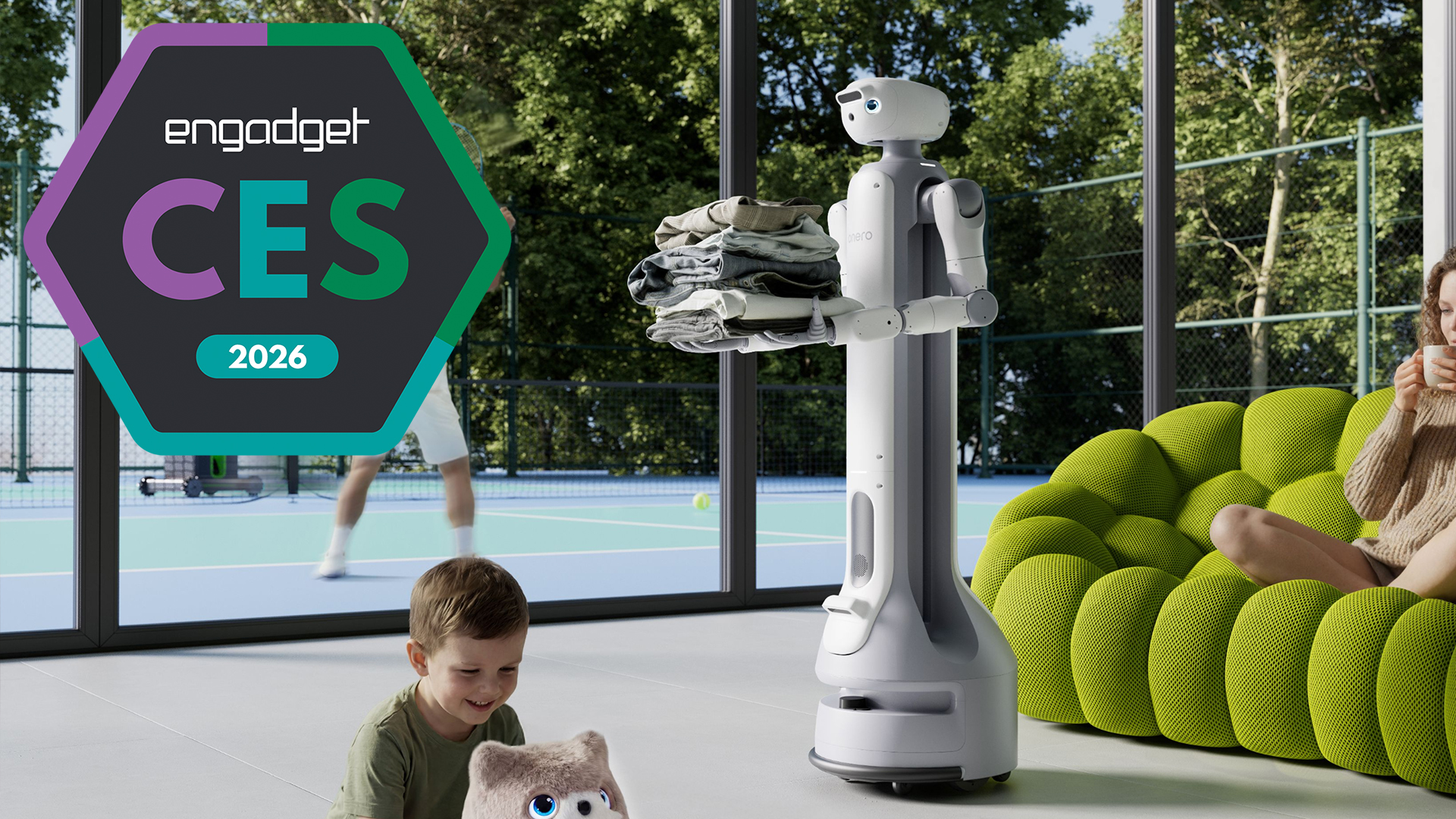
Best robot: Switchbot Onero H1
Onero H1 robot
Onero
We saw a lot of robots showing off intriguing and useful capabilities at CES 2026. While a lot of robots impressed us, there were fewer companies willing to commit to actually making them available. But Switchbot's Onero H1, which we watched pick up clothes and load a washing machine, is a helper robot the company intends to sell this year.
The demo we saw was limited, but Switchbot claims it can help with an array of household chores (even if it might do them more slowly than a human). It's also kind of cute. The company hasn't said how much Onero will cost, though it promises the droid will be less than $10,000. A nearly five-figure price tag is still out of reach for most, but it at least gives us hope we'll see it somewhere outside of the CES showfloor. — Karissa Bell, Senior reporter
Best accessibility tech: WheelMove
WheelMove power assist for manual wheelchairs
Cheyenne MacDonald for Engadget
WheelMove offers a simple upgrade for manual wheelchairs that could make it much easier for the rider to navigate rough surfaces like grass and uneven dirt paths. The add-on is affixed to the front bars of the wheelchair and can lift the small caster wheels off the ground, in addition to providing power assistance with five speed options. It's portable, has a decent range of about 15 miles — with the option to swap out its battery on the go — and could give wheelchair users greater access to areas that would otherwise be difficult to move about in. It can also keep the wheelchair from speeding up when a person is traveling on a downward slope.
This feels very much like a product that will actually see the light of day, and could be genuinely helpful. It builds upon an existing category of wheelchair accessories to address a real issue in a way that doesn't overcomplicate things, and would work with the wheelchairs people already use. — Cheyenne MacDonald, Weekend editor
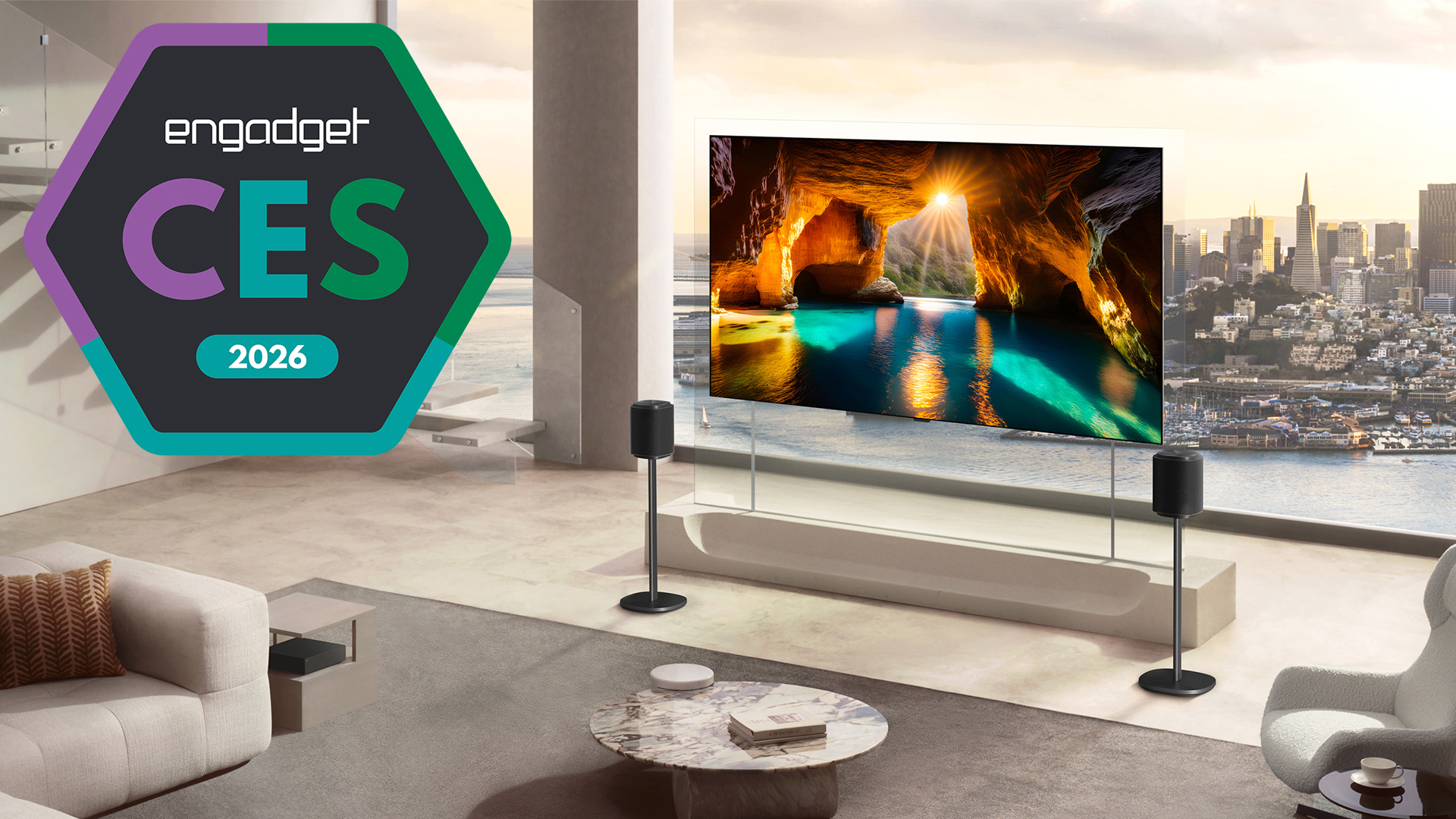
Best TV: LG Wallpaper TV (OLED Evo W6)
LG OLED Evo W6 "Wallpaper TV"
LG
I’ve seen plenty of TVs at CES this year, but few stopped me in my tracks like LG’s OLED Evo W6. It’s the resurrection of the company’s “Wallpaper TV,” but this time it’s even thinner (about the depth of a pencil), and it’s no longer tied to a soundbar. It also uses LG’s wireless control box to reduce cabling — the only cord you need to hide is the one for power.
And best of all, the OLED Evo W6 features LG’s latest OLED technology, which promises to be about 20 percent brighter than previous generations. Video demos looked absolutely stunning, with all of the wonderful contrast and black levels we’ve come to love from OLED. But it’s also a work of art when it’s turned off, one that practically disappears when viewed from an angle. — Devindra Hardawar, Senior reporter
Best AI hardware: Subtle Voicebuds
Subtle Voicebuds
Subtle
Subtle’s Voicebuds are earbuds with a twist: They feature an AI model that’s trained to transcribe your voice accurately in very noisy environments, or when it's below a whisper in quiet spaces. We’ve seen these things in action on the bustling CES show floor, where they managed to transcribe several sentences amid the chaos. The only downsides is that the Voicebuds require internet access to use the best transcription models, and you need to subscribe to the Subtle app to use it. Without the app, it relies on a smaller local model for transcription.
While we still need to put the Voicebuds through their paces, they’re intriguing because we haven’t seen many genuinely useful AI hardware products. Plus, it’s been a while since we’ve seen a tiny startup deliver hardware trying to take on the likes of Apple. — Devindra Hardawar, Senior reporter
Best smart home: IKEA Matter-compatible smart home
IKEA KAJPLATS smart bulb range
IKEA
The best smart home devices I saw at CES had nothing to do with AI or robots. It seems every other company, from Bosch to LG to Samsung, had one or both of the buzzy technologies baked into their new smart home offerings. But IKEA came to its first CES with a simple lineup of basic, Matter-enabled smart plugs, sensors, lamps and remotes at screamingly good prices. Function paired with accessible pricing is sort of what IKEA is known for, so the lineup didn’t exactly surprise me as much as make me appreciate that someone is finally simplifying and democratizing smart home stuff.
There are 21 Matter-compatible devices in all. They include a $6 smart bulb, an $8 smart plug, a $6 smart remote and a slew of home sensors. A slightly pricier ($15) globe bulb looks very lovely. Finally, there’s a smart bulb you’d actually want to look at — one that doesn’t cost $50. Another standout is the BILREA remote control. Not only is it an intuitive controller for IKEA’s smart devices and new smart lamps, it also has a magnetic mount so you don’t lose the thing. Matter devices require a hub to function. Here, you can either go for IKEA’s own DIRIGERA or use a Matter hub you already own. The new lineup should land at IKEA’s website and stores sometime in January. — Amy Skorheim, Senior reporter
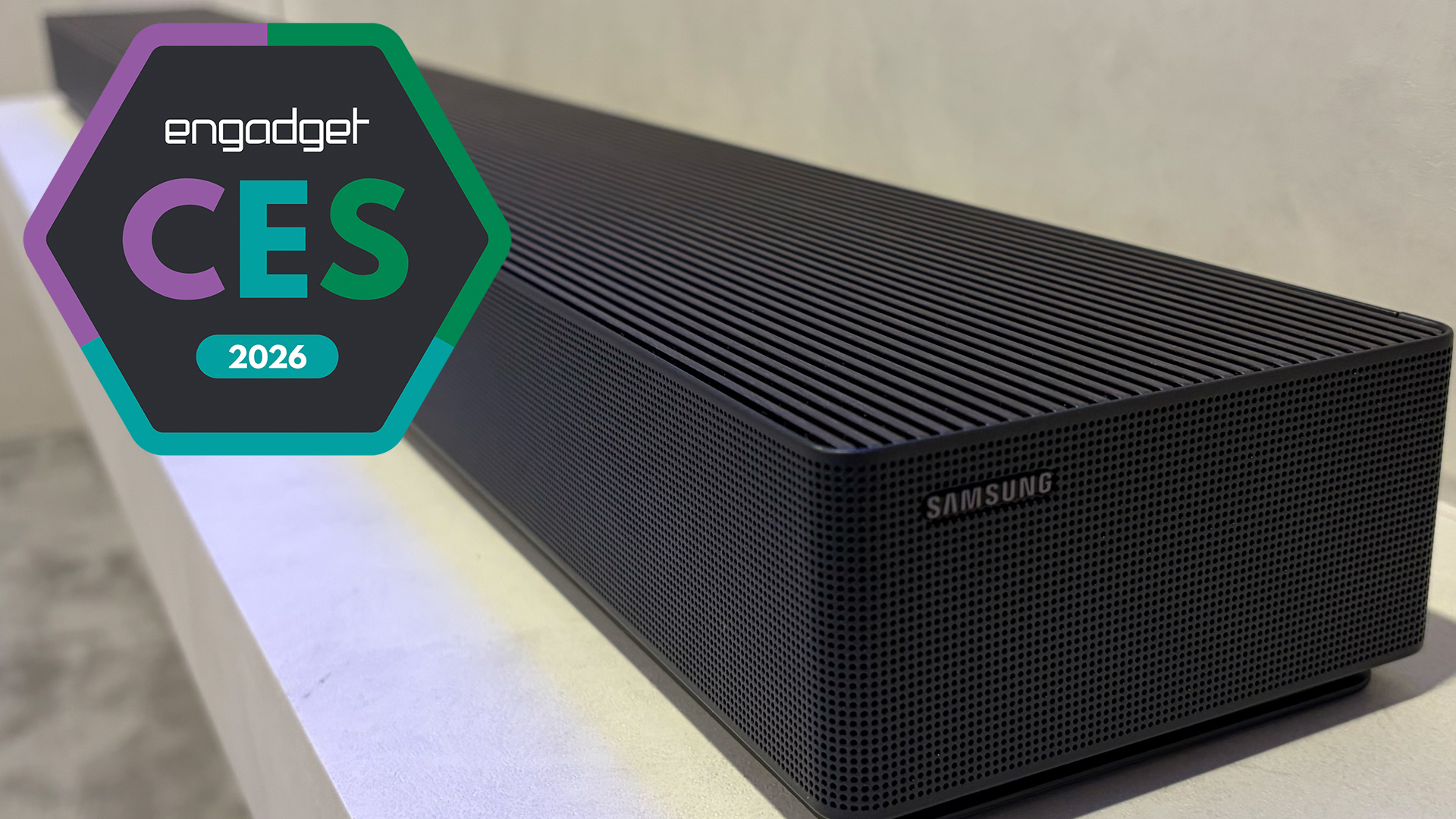
Best home theater: Samsung HW-QS90H
Samsung HW-QS90H soundbar
Billy Steele for Engadget
Many companies claim their soundbars have enough bass that you don’t need a separate subwoofer. Those promises rarely pan out, even when the company devises new technology to solve the problem. With the HW-QS90H, Samsung is pledging to do the same with its Quad Bass woofer system. Those woofers move in two directions, producing a lot more low-end tone than most soundbars are capable of on their own. What’s more, Samsung included its Convertible Fit Design tech that debuted last year, so you can lay this speaker flat or mount it on a wall and the built-in sensors will automatically adjust the driver output accordingly. So, if you’ve longed for deep bass on a soundbar without a large or ugly sub in the corner, you may finally get your wish later this year. — Billy Steele, Deputy editor
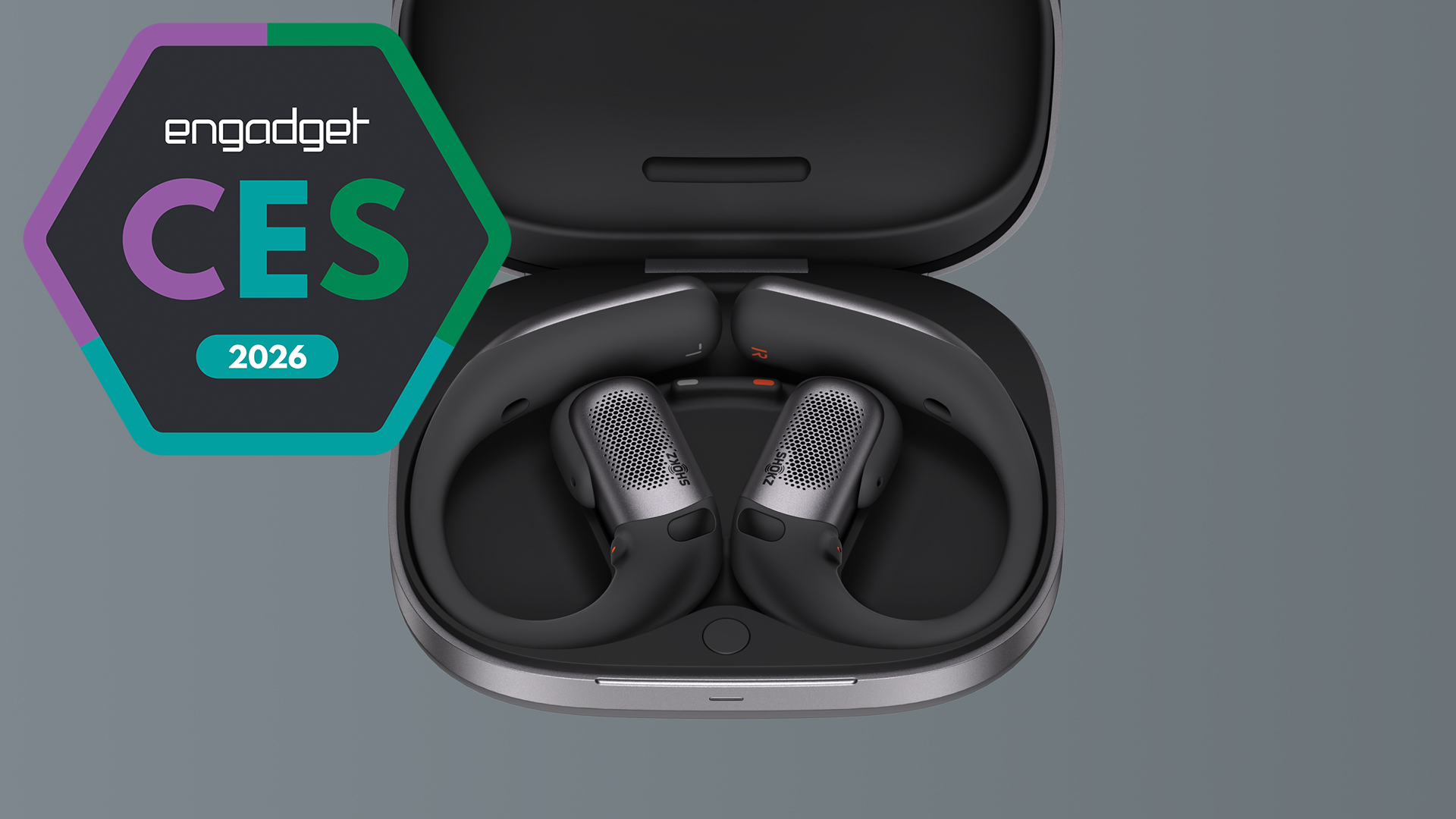
Best audio: Shokz OpenFit Pro
Shokz OpenFit Pro
Shokz
When it comes to open fit earbuds, companies that claim to offer active noise cancellation (ANC) usually don’t deliver; It’s difficult to effectively block external sound when your ears aren’t completely sealed off. Shokz is one of the few that has cracked the code with its OpenFit Pro. The over-the-ear hook design allows the earbuds to sit outside of your ear for a clear line to your surroundings. When you need a bit more quiet, the company’s noise reduction tech does well to silence moderate sounds in a cafe, office and more. It’s seriously impressive how much noise reduction you’ll get here, and the fact that nothing is stuck in your ear canals makes them very comfortable to wear. Plus, Shokz improved overall sound quality with new drivers, and tacked on Dolby Atmos for good measure. — Billy Steele, Deputy editor
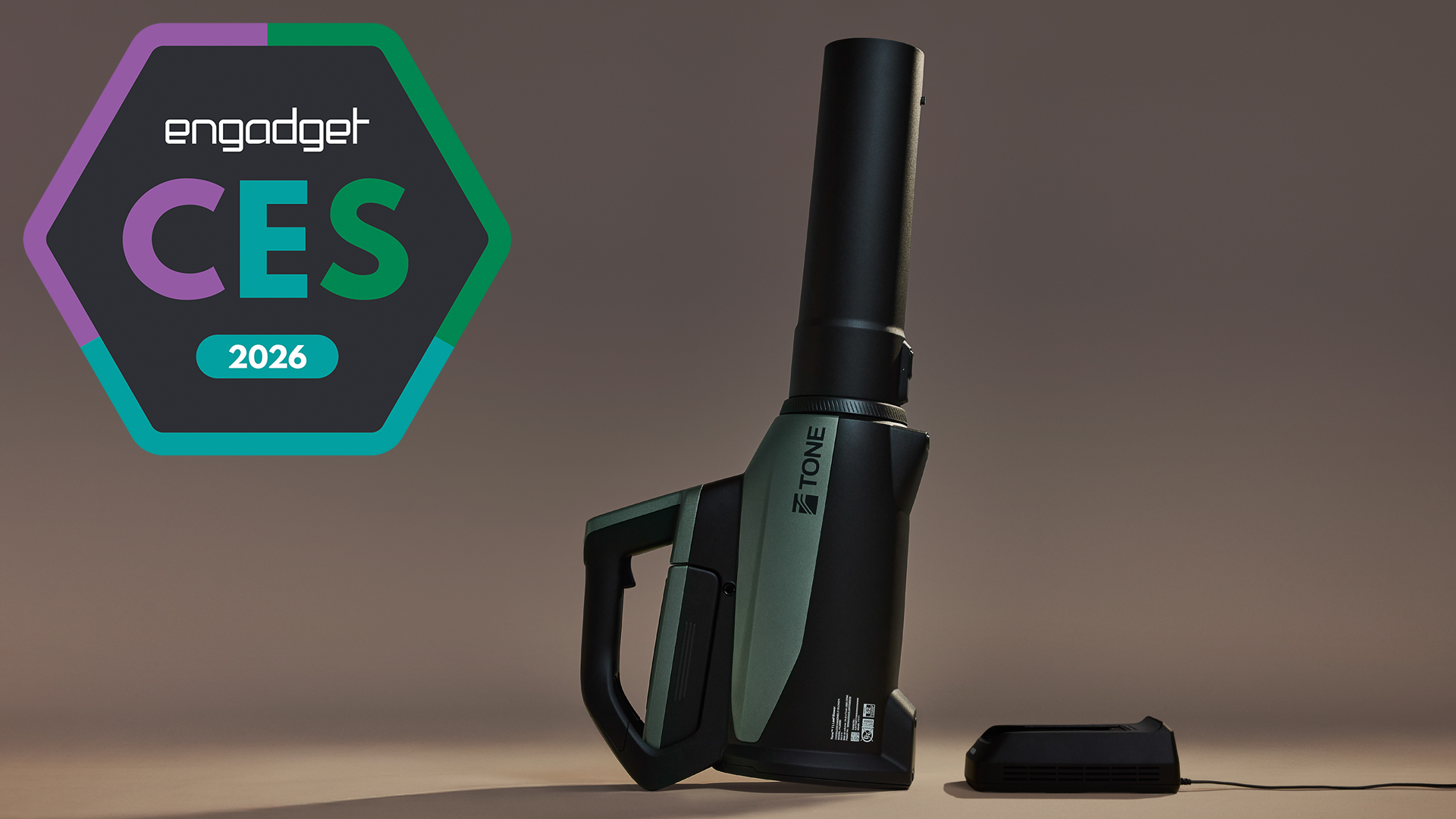
Best outdoor tech: Tone Outdoors T1
Tone Outdoors T1
Whisper Aero
Outdoor tool companies have increasingly shown up at CES, especially the ones that offer a range of battery-powered gear. Tone Outdoors isn’t your usual power tool outfit though; it’s a spin-off of the aerospace engineering company Whisper Aero. Through its development of quieter electric airplane engines, Whisper Aero realized its technology had other uses. Enter the T1 leaf blower.
The T1 is significantly quieter than most handheld gas models, clocking in at just 52 decibels of peak noise on average. It’s also more powerful than most of them with 880 CFM of airflow volume. The T1 can run longer too, and an upcoming backpack will extend run time for several hours. But the most important advancement here is not annoying your neighbors — or yourself — when it’s time to do some yard work. — Billy Steele, Deputy editor
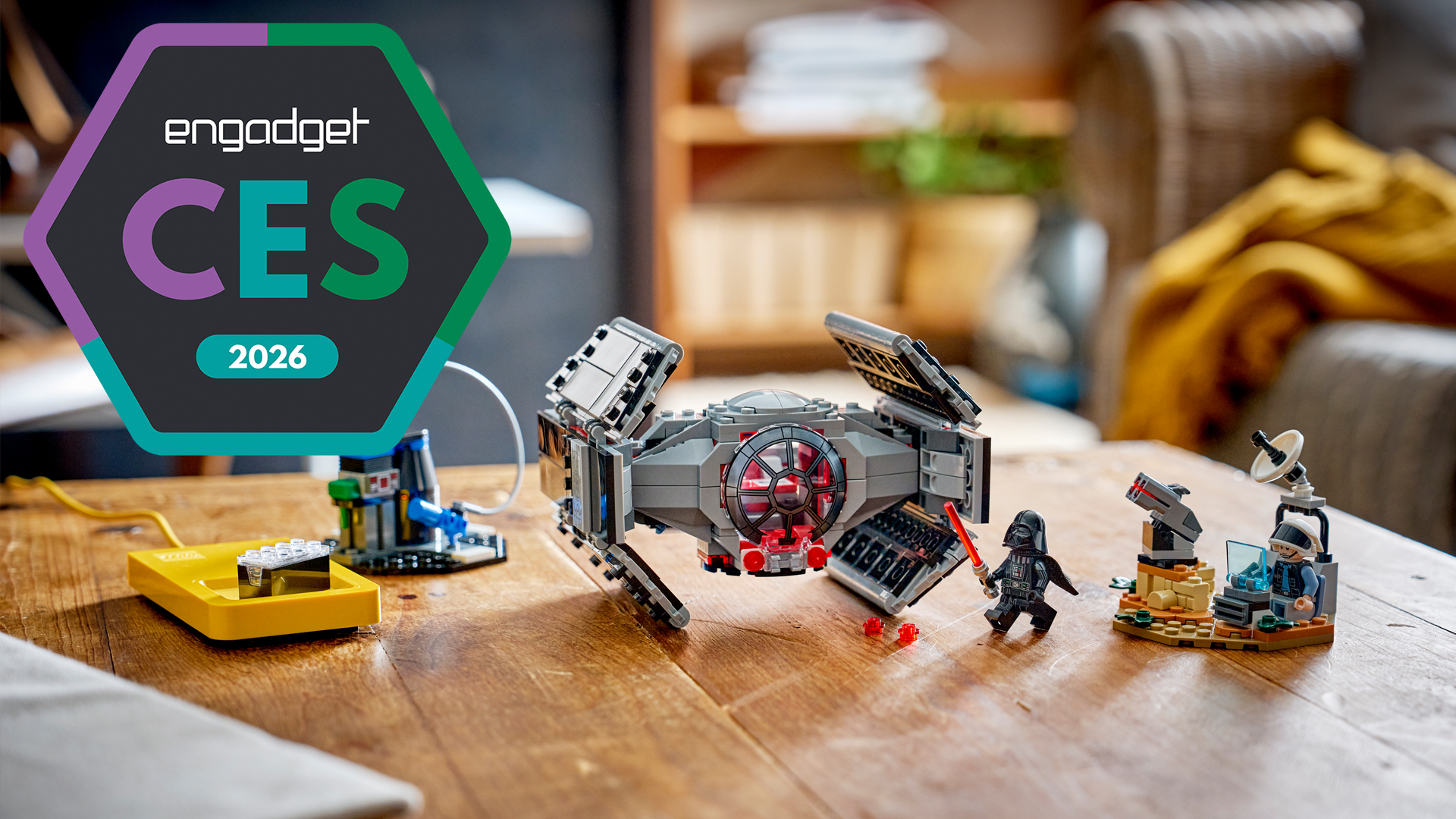
Best toy: Lego Smart Play
Lego Smart Play
Lego
Lego is constantly evolving, but rarely does it make as big a move as it did with Smart Play. The system is designed to take standard Lego sets and make them more interactive thanks to a tech-packed Smart Brick. Those bricks have a tiny chip the size of a Lego stud that enables things like motion, color and proximity sensing. They also have a tiny speaker that further helps bring Lego builds to life.
The Smart Brick is mostly a blank slate, but pairing it with Lego's Smart Tags and Smart Minifigures is what enables these new play scenarios. Unsurprisingly, Lego introduced the Smart Play system alongside Star Wars sets that make these new immersive elements more obvious. An X-Wing piloted by Luke Skywalker can get into a dogfight with Darth Vader's TIE fighter, and you'll hear the engines roar to life, the characters exclaim as they come under fire and the spaceship explodes if it gets hit too many times. And Smart Play requires no setup, meaning that the technology packed into the Smart Brick fades away and lets kids (and kids at heart) get down to the business of playing. You don't need to know how it works — it just does. — Nathan Ingraham, Deputy editor
On the XPS 14 and XPS 16, we’re getting brand new chassis featuring the latest chips from Intel, gorgeous tandem OLED displays and precision engineering that embodies everything we loved about XPS laptops from previous years. Dell also streamlined its designs with the larger XPS 16 dropping an entire pound compared to the previous generation. The company even addressed a number of our previous critiques by switching from capacitive touch controls back to a classic row of function keys and reverting to segmented touchpads instead of seamless glass ones that made it hard to keep track of your cursor.
But perhaps the best part is that Dell isn’t stopping here, because the company also teased a new version of its legendary XPS 13 slated for later this year, the thinnest and lightest member of the family yet. There are also placeholders for two more XPS models slated to arrive in the not too distant future. — Sam Rutherford, Senior reporter
Best health tech: Eyebot vision test booth
Eyebot vision test
Eyebot
Wouldn’t it be nice if getting an updated eyeglasses prescription wasn’t as lengthy a process as it is right now? Eyebot’s new kiosk is designed to automate the process of visiting a doctor’s office to three minutes rocking up to a machine. It uses a combination of analog and digital wizardry to identify what you need to see properly in no time at all. Even better is that the prescriptions have to be signed off by a licensed eye doctor, so you can still rely on a degree of professional rigor. We like Eyebot because it proved itself in our tests: its brief examination matched my professionally completed prescription from last year. But its ability to make effective eye care accessible and affordable in a way that it isn’t at present is even more compelling than the tech itself. — Daniel Cooper, Senior reporter
Best gaming tech: ASUS ROG Zephyrus Duo
ASUS ROG Zephyrus Duo
ASUS
The ASUS ROG Zephyrus Duo is big, weird and potentially awkward to set up. But honestly, what kind of gamer doesn’t want more screens? Even if you can’t use its second display in the middle of a firefight, more real estate means extra room for Discord, build guides or anything else you might need. Furthermore, ASUS included not one but two brilliant OLED panels with up to 1,100 nits of brightness and color accuracy so good you won’t have a problem editing photos or videos. You also get a ton of ports, and with support for up to an NVIDIA RTX 5090 GPU, the ROG Zephyrus Duo has more than enough performance to handle anything you can throw at it. — Sam Rutherford, Senior reporter
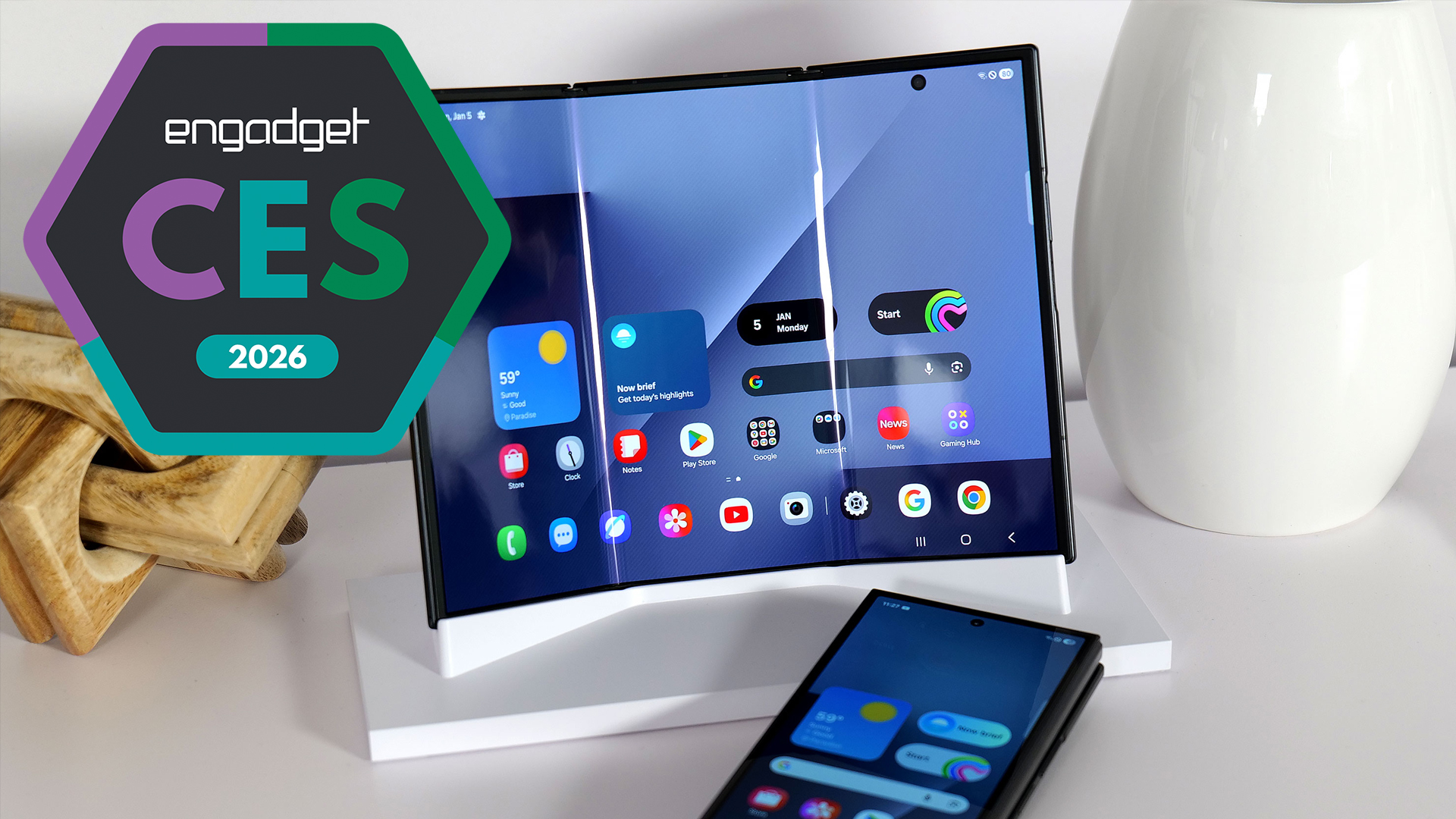
Best mobile tech: Samsung Galaxy Z TriFold
Samsung Galaxy Z TriFold
Sam Rutherford for Engadget
Samsung might have announced the latest iteration of its foldable smartphones in Korea, but CES was the first chance for many of us to see the Galaxy Z TriFold in person. It’s a 10-inch Android tablet hidden within a 6.5-inch smartphone form factor.
The jump from the almost-square screen ratio of Samsung’s past foldables to approximately 4:3 is a major improvement. This is a device that I could happily watch entire movies on. There’s more horizontal space to read, more room to type and more bright, vivid AMOLED everything. Unfurling the sides is incredibly satisfying and, perhaps because it’s thicker, it has a reassuring heft, too. The rest of the spec sheet reflects another fashionable Galaxy phone with a 200-megapixel main camera and the biggest battery yet in a Samsung foldable.
It’ll likely be expensive though. Samsung hasn’t confirmed pricing in the US, but based on its launch cost in Korea, it could be around $2,500. — Mat Smith, UK bureau chief
Most promising concept: Lenovo Legion Pro Rollable
Lenovo Legion Pro Rollable
Lenovo
Concept devices are hard to judge because even the ones with a ton of potential might be too difficult to make or too niche to bring to market. But with the Legion Pro Rollable concept, Lenovo created something with a simple yet powerful premise: A gaming laptop with a screen that gets wider at the touch of a button.
To make the Legion Pro Rollable, Lenovo took a regular Legion Pro 7i and then swapped its standard 16-inch display for a flexible one that can expand all the way up to 23.8 inches — with a bonus stop in between. This means you have the option to choose from 16:10, 21:9 or even 24:9 depending on the situation, which feels like an incredible way to enhance racing games, flight sims and anything else that can take advantage of extra wide aspect ratios. Granted, when its screen is fully deployed, it does look a bit ungainly. But of all the concepts we saw this year at CES, the Legion Pro Rollable is the one we hope survives to become a proper retail product someday. — Sam Rutherford, Senior reporter
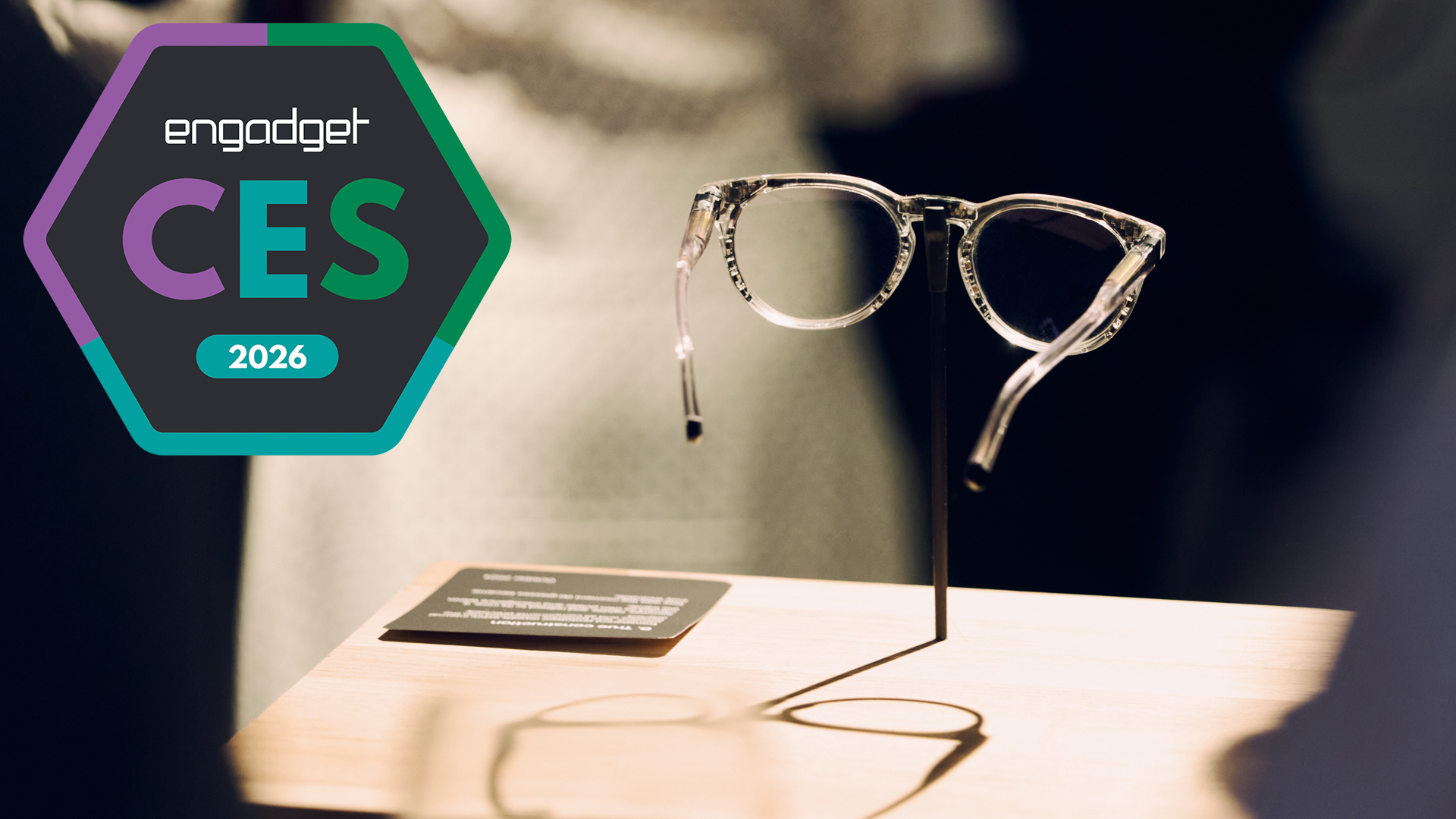
Best emerging technology: IXI autofocus lenses
IXI Autofocus lenses
IXI
IXI’s autofocusing glasses were a late addition to our discussions, but we were impressed by what could be a significant advancement in spectacle technology — something that’s been largely static since the 1950s. IXI’s glasses feature an elegant, unique, cameraless eye-tracking system that uses ultra-low-power LEDs and photodiodes to precisely monitor the user's eye movement and focus convergence. This data drives a liquid crystal lens layer, enabling a focus switch between near and far distances in approximately 0.2 seconds. Focus your gaze elsewhere, and your glasses return to their normal prescription. Think of them as a high-tech take on the often thick and clunky multifocal lenses we’re currently stuck with.
IXI is now finalizing the production process, developing manufacturing and gaining the necessary medical certification to sell its glasses, but it has already struck deals with lens manufacturers in Europe. The company has a busy year ahead as it turns its technology into a consumer product. — Mat Smith, UK bureau chief
Best in show: Lego Smart Play
Lego Smart Play
Lego
There's perhaps no place better than CES to highlight how quickly industry trends die. Over the years the show has been a driver of cornerstone technologies like the VCR, DVD, flatscreen TVs, PDAs and more. Some trends stick, some don't.
Lego could almost be seen as the antithesis of the typical CES product: The company's core concept of creative play has remained in place throughout its long history, boosted by a gradual and ongoing evolution of block types and brand tie-ins.
Announced at its first-ever CES press conference, Smart Play represents a thoughtful integration of technology to the classic toy. A tiny chip the size of a single Lego stud allows the company's Smart Bricks to sense what's around them, opening up new ways to play. The system will debut with a trio of Star Wars sets, but we’re sure Lego has plans for a wide range of licensed and unlicensed options.
Our team instantly fell in love with Smart Play, and Deputy editor Nathan Ingraham had the opportunity to both build some sets and talk with some of the people behind the technology. Amid parental anxieties about screentime, it's refreshing that Smart Play doesn't require an app or a screen to get started. Kids can just get building. — Aaron Souppouris, Editor-in-chief
This article originally appeared on Engadget at https://www.engadget.com/engadgets-best-of-ces-2026-all-the-new-tech-that-caught-our-eye-in-las-vegas-200057123.html?src=rss
The festive lights, time off and cute scarfs can only conceal the truth for so long: Winter can be pretty bleak. I don't mean to be a downer, but it's cold all of the time, dark most of the time and this lasts far beyond the most wonderful time of the year. Here at Engadget, we've tried so many tools and products to make winter more bearable from therapy lamps to heaters. We've invested in tea sets, wrapped ourselves in heated blankets and learned to grow herbs indoors — really, anything that will make these three-plus months more bearable, we've tried.
Here, you'll find some of the best winter tech getting us at Engadget through the coldest months, plus a number of recommendations from our other gift guides that will get anyone through the winter warm, comfortable and content.
Best winter tech and gear
This article originally appeared on Engadget at https://www.engadget.com/home/smart-home/the-best-winter-tech-for-2026-to-help-get-you-through-the-coldest-months-130009890.html?src=rss
If streaming services’ year-in-review campaigns have shown us anything, it’s that we’ve spent a staggering amount of time drowning out the hum of everyday life with music, podcasts and audio series. And with some incredible new releases this year, we were really eatin’ good. Here are some of the Engadget team’s favorite things we listened to in 2025.
Spiritbox - Tsunami Sea
I became aware of Spiritbox in late 2024 shortly before the band dropped its latest album, Tsunami Sea. At the time, I was in a deep Sleep Token phase, and I don’t remember how I stumbled upon Spiritbox, but I’m sure glad I did. Not knowing anything about the band, I initially thought it had two singers: one for clean vocals and another for the harsh, guttural screams.
Well, I was wrong. Vocalist Courtney LaPlante handles it all, and she is a force of nature. After learning of a new band, I do what any self-respecting music nerd does: I looked up live videos of them on YouTube. The way LaPlante seamlessly transitions from airy, ambient singing to some of the best growls you’ll hear in metal music is effortless. And after seeing Spiritbox live in person earlier in December, I can attest to her ability to consistently nail both vocal styles for the entirety of an hour-long set.
My infatuation with Spiritbox isn’t just with the vocalist though. Guitarist Mike Stringer, LaPlante’s husband, also has a lot of unique abilities to offer. Stringer’s use of noise and whammy effects in his riffs create a signature style, not to mention his mix of nu-metal, djent and metalcore sensibilities. He also has some of the thickest guitar tones I’ve ever heard live, and I was mesmerized for the full set. Stringer’s guitar work on Tsunami Sea is a prime example of a unique musician at the height of his powers.
Tsunami Sea takes you on a ride. The first two tracks are all-out ragers, and after a slight respite in “Perfect Soul” and “Keep Sweet,” the album’s best song comes fifth. I’ve heard LaPlante dedicate it to “all the people I love to fucking hate,” and it’s clearly written about her enemies. It’s also the perfect example of what this band is capable of. It’s three minutes of LaPlante’s screams interlaced with plenty of Stringer’s trademark guitar work.
The rest of the album showcases the band’s ability to blend dynamics, with “No Loss, No Love” and “Ride The Wave” providing the highlights on the back half of the record. The album’s title track is a great vehicle for LaPlante’s clean vocals, serving as the introduction to the album’s second act. If you’ve been enamored with Sleep Token this year like I have, give Spiritbox a go — you won’t be sorry you did. — Billy Steele, Deputy Editor, Reviews
Bandsplain
I didn’t discover Bandsplain in 2025, but I definitely listened to it more than any other podcast in terms of total time spent. Sure, that’s because most episodes are over three hours long, but I digress. Host Yasi Salek does a deep dive on “cult bands and iconic artists” to… ahem, bandsplain why people love them. There’s a deep catalog of back episodes, so there’s sure to be an in-depth analysis of a band you’re familiar with. But even if you think you know an artist, I’m willing to bet Salek will divulge parts of the story you weren’t aware of.
Jimmy Eat World’s Clarity is a top 5 all-timer for me, and Salek had plenty to offer about the narrative around that album I didn’t know. Her grunge series from 2024 was a history lesson I wish I’d had in middle school when I first discovered Soundgarden, Pearl Jam, Alice in Chains and the rest of the lot. An older episode about Nine Inch Nails served as the primer for me seeing the band live for the first time in September. And that’s the thing about the show: the back catalog holds up. If you’re waiting for the next installment to drop, there’s certainly something in the archives you’ll enjoy.
No shade to Salek’s colleagues at The Ringer, but the best episodes of Bandsplain are when the guest is a musician. Thursday front man Geoff Rickly was excellent on that Nine Inch Nails episode, and Death Cab for Cutie singer Ben Gibbard had me on the edge of my seat when he was on to discuss The La’s — a band I’d never heard of before. I’d also highly recommend the episodes on Oasis and the more recent one on Alanis Morissette. But, really, you can’t go wrong starting from anywhere on the episode list. — B.S.
Lucy Dacus - Forever is a Feeling
I remember being a teenager and hearing from an adult that they did not religiously seek out, research, evaluate and introduce new bands and songs into their lives as if all existence would cease without the life-sustaining energy of new music. I was confused, concerned and damn sure that wouldn’t happen to me.
You know where this story goes: Job. Kid. House. Spouse. Pets that will die if I don’t feed, walk, play with and/or medicate them. I allow the algorithm to feed me new songs but rarely does something stick, so I end up listening to tracks I bonded with in my teens and twenties.
This year, Blossom & Bones, a three-day music festival in Ghost Ranch, New Mexico, managed to push through the churn and lodge new music into my brain. Along with my kid and some friends, I camped among some of the most beautiful landscapes imaginable and ambled over to the stage each evening for performances by Santigold, Ani DiFranco and about a dozen more.
Lucy Dacus, one third of the indie group Boygenius, did a one-hour set with plenty of songs from her latest album Forever is a Feeling. Hearing the songs for the first time, I felt like I’d been listening to them for years. Lilting harmonies and layered strings create a lovely backdrop for Dacus’s velvet voice, but there’s a sharpness to her observations about relationships, rejection and sex. I’ve been looping the album ever since. — Amy Skorheim, Senior Reporter, Buying Advice
Blanco White - “So Certain” (single)
Early on the last concert of the day at that same festival, Blanco White took the stage. People were aimlessly milling about and the sun hadn’t yet set. Kids were playing on the lawn and the smell from the food trucks was intense, but I was enrapt by the four people on stage. The sad violin and strummy guitars floated with the hand-beat drum out into the red hills. The music sounded like I felt: rooted and wrapped in the harsh beauty of the desert and I was really glad to take that home with me. — A.S.
Martian Revolution
If you're as big a nerd as I am, you might know that Leo Tolstoy didn't consider War and Peace to be a novel. The story is what most people read for, but in the author's mind, all the drama was a parable to illustrate his grand theory of history.
Over the last year, history podcaster Mike Duncan has accomplished a similar feat using a medium Tolstoy never imagined. Duncan's Revolutions podcast has covered ten different revolutionary upheavals across history, starting with the English Civil War and ending with the Russian Revolution. After wrapping up the Bolsheviks, Duncan took a few episodes to suggest a grand theory of how revolutions unfold. For a while, it seemed like that was all we'd get. Then, in the middle of 2024, he started posting original sci-fi — without any indication that this tale, which followed future Martians revolting against their corporate overlords on Earth, was in any way different from the previous ten seasons.
Part of what makes the Martian Revolution so excellent is Duncan's deadpan delivery. He never once breaks character. He rattles off lists of fictional sources, apologizes for inaccuracies in prior episodes, and introduces made-up historical figures with the same gravity he once used to mention George Washington or Simon Bolivar. If you're a fan of Revolutions, you'll have a blast recognizing character archetypes. (Mabel Dore is the Liberal Noble! Timothy Werner is the Man of Blood!)
But the podcast is great even if you've never listened to an episode of Revolutions. It has an excellent grasp of character and a sense of inevitable tragedy, but with moments of joy leavened throughout. I certainly hope we don't wind up in the megacorp-ruled future of the podcast, but if we do, it'll be a great consolation if it eventually turns out the way Duncan imagines. — Sam Chapman, Senior Writer
Ron Gallo - Checkmate
My favorite artists are ones that surprise me, and Ron Gallo is a master of reinvention. He's dabbled in absurdist punk, psychedelia, garage rock, Beatles-tinged pop and, now, stripped-down acoustic music. This is not a genre I am typically a fan of, Elliott Smith withstanding, but Checkmate is something special. His lyrical prowess is off the charts here, trading his usual wordplay for simple and emotionally-gutting truisms about life, love and, well, the end of the world.
Of course, the lyrics wouldn't work if the songs weren't good. The songs are very good. The title track is just about the perfect love song, with a primary hook that gets lost in your head for weeks. Other tracks offer hints of Mac DeMarco, Dan Fogelberg, Kevin Morby and just about everyone else who has crafted great songs on an acoustic guitar. It's fitting that Gallo has found a home on the label Kill Rock Stars, which released so much of Elliott Smith's work back in the day. As an aside, Gallo regularly posts songs about current events on TikTok and other social media platforms, which are worth checking out if you like stuff like Jesse Welles. — Lawrence Bonk, Contributing Reporter
De La Soul - Cabin in the Sky
There have been hip-hop albums that explored the finality and tragedy of death, but not many that truly tackled spirituality and long-term grief. De La Soul has done just that, following the passing of founding member Trugoy the Dove. This album serves as a final testament of sorts for Trugoy, as he's heavily featured throughout. In that way, Cabin in the Sky is reminiscent of A Tribe Called Quest's 2016 masterpiece We Got It from Here... Thank You 4 Your Service, which followed the death of rapper Phife Dawg.
Like Tribe's modern classic, Cabin in the Sky is filled with absolute bangers. It features standout beats by DJ Premier, Pete Rock, Trugoy, Jake One and others. The rhymes are great and all three primary De La members are given time to shine. Guest rappers like Common and Nas got the memo, delivering some of their most memorable verses in years. Heck, even Giancarlo Esposito is on board as the narrator. Some reviewers have dinged this album for being too long but, come on, that's like complaining there's too much pizza. It's De La Soul. — L.B.
FKA twigs - Eusexua
This was a really good year for new music IMO, so much that I've been finding it pretty difficult to think back and settle on my favorite releases. But, FKA twigs' Eusexua undeniably did some heavy lifting for me, pretty much carrying me through the first six or so months of the year without much competition, and I've circled right back to it as the year closes. It's an album that somehow seems to meet every vibe. It'll have you in club mode and ready for a night of sweaty, filthy dancing in under three minutes, or feeling bright and upbeat like a midday walk on the first day of spring — yet it still hits when you're having a good ol' car cry.
"Girl Feels Good" is for sure one of my most-played songs of the year, followed closely by "Eusexua," "Perfect Stranger," "Keep It, Hold It" and "Striptease." If ever I can't decide what I'm in the mood to listen to, I throw this album on and it doesn't disappoint. — Cheyenne MacDonald, Weekend Editor
Faetooth - Labyrinthine
Faetooth's sophomore album, Labyrinthine, is face-melting, melancholic perfection. The band describes its sound as "fairy doom," but don't let that first word fool you into thinking it isn't heavy as hell. Labyrinthine goes unbelievably hard, and will have you feeling like you're eternally wandering a cursed bog, surrounded by the wailing of the unfortunate souls who came before you. Don't believe me? Put on "White Noise." This is really an album that should be enjoyed in its entirety, though, and I can't individually name half the songs on it because I tend to just keep the whole thing playing on rotation. — C.M.
Orville Peck - Appaloosa
This EP is truly a testament to my ability to run my obsessions into the ground, because it only came out in mid-November and somehow landed on my most-listened wrapup for the end of the year… which was released some two weeks later. It's front-loaded with its strongest songs, a powerful and kind of haunting trio that just flows beautifully from one into the other: "Dreaded Sundown," to "Drift Away" into "Atchafalaya" (ft. Noah Cyrus). As a fan of musicals, I also loved the inclusion of "Maybe This Time," a cover from Cabaret, especially since I was pretty bummed to have missed Peck's stint as the Emcee in Cabaret on Broadway this summer. — C.M.
Case 63
I got into an audio series kick this year, and dove into shows like Unicorn Girl, Stalked! and more. But none of the dramatized fiction I listened to in 2025 had me hooked like Case 63. Setting aside that it’s voice-acted by A-listers Julianne Moore and Oscar Isaac, which is a phenomenal pairing that won me over on star power alone. The best thing about Case 63 is its storytelling.
Moore stars as a psychologist, meeting Isaac for the first time in a prison interview. Isaac has been claiming to be a traveler of sorts, and through recorded sessions and voice notes, we hear his side of the story, as well as her reactions and ultimate involvement in the adventures. Every step of the way, particularly in the beginning, there is clear explanation as to why the exchange is being recorded. It isn’t necessary, but it’s helpful in my buying into the realism of the story.
It isn’t just the method and technical aspects of the storytelling, of course. Narratively, Case 63 is a gripping ride, and thanks to its short episodes, it’s easy to binge really quickly. There is certainly a generous use of cliffhangers to help speed things along, but I found myself eager to devour the entire series in one commute. The story continued to linger in my mind days after I finished both existing seasons, and I’m hoping the new one drops soon. If you’re looking for a quick and easy sci-fi audio series, do not miss Case 63. — Cherlynn Low, Managing Editor
Secure Love
I spent a lot of time this year trying to learn more about my attachment style and how it shows up in all the relationships in my life. Between Stephanie Rigg’s On Attachment podcast, the TV show Couples Therapy and all the books on the topic of attachment styles, trauma and more, I’ve consumed them all. And while they’ve all been helpful in different ways, one podcast stuck out to me this year. It’s hosted by Julie Menanno, MA, LMFT, LCPC, creator of the @TheSecureRelationship account on Instagram and the author of Secure Love: Create a relationship that lasts a lifetime.
You can probably tell from that introduction what Menanno’s work is all about. Relationships, from the lens of attachment styles. The Secure Love Podcast doesn’t just re-deliver the same information we’ve seen published across various media and platforms, though. Each season of the podcast (it’s partway through the second as of this writing) sees Menanno work with one couple through their negative cycles, using somatic practices to help each partner understand their emotions, triggers and reactions. Because we’re listening to real people talk about real-life happenings, it’s not only easy to relate, but listeners often see themselves in these scenarios. At the start of each episode, too, Menanno reads out or plays notes from the audience, and you can see how fellow listeners have reacted.
This season, for example, my friend and some other listeners seemed to really dislike Brian, the anxious male partner in this season’s pair. While I’ve certainly found some of Brian’s ways of speaking borderline offensive, I had a lot more sympathy for him as I started seeing his traits in my loved ones. I also started to identify with his partner Bethany, who Menanno typed as having an avoidant attachment style.
As I listened to Bethany and Brian describe the reasons they got into fights and explain where they were coming from, suddenly it felt like the world made sense. I saw similar patterns and reasonings in my own relationship, as well as those of my parents, relatives and friends.
It is slightly voyeuristic to listen to something so intimate, of course, but Menanno makes it all educational rather than just entertaining. She gently interrupts parts of each episode to tell the audience why she asks certain questions or what she’s attempting to achieve by asking Brian or Bethany to sit with their difficult feelings.
I found her method familiar, as I recently started working with a somatic coach whose approach is similar to Menanno’s, which is rooted in emotion-focused therapy (EFT). Staying with uncomfortable feelings makes me want to jump out of my skin, but being able to endure them, question why they arise and then understand where they come from is crucial to helping uncover the thinking that causes them. Sometimes they’re the result of flawed logic, catastrophic thinking or a simple lack of context, but often they’re very reasonable reactions.
If you’re looking to understand yourself and your emotions a bit better, or just want to get an idea of what EFT or couples therapy sounds like, I can’t recommend The Secure Love Podcast highly enough. — C.L.
This article originally appeared on Engadget at https://www.engadget.com/entertainment/music/what-we-listened-to-in-2025-201308584.html?src=rss
This was the kind of year that felt 100 years long, so who could blame us for leaning into a bit of escapism? Some of us buried our noses in books in 2025, and thankfully, there were plenty of good reads to get lost in. Here are some of the Engadget team’s top picks from the year.
Wild Dark Shore by Charlotte McConaghy
Wild Dark Shore pulls off a magnificent balancing act of telling an intimate, personal story coupled with the backdrop of impending climate disaster. A father and three children are living on a remote island near Antarctica, taking care of a vast seed bank that was part of an abandoned research facility. They’re literally trying to stay above water for a few months until they get bailed out from the island along with as much of the seed bank as they can save before it goes under when a woman named Rowan washes up on shore. She survives, is nursed back to health, and starts forming bonds with her rescuers and their mission — but at the same time, she has some unexpected connections to the island and the former research team that lived there that she keeps to herself.
The magic of this book is in the way Charlotte McConaghy builds tensions from many sources throughout the book; you feel a lingering sense of discomfort through, waiting for the other shoe to fall even as Rowan gets closer and closer to the family. It’s a small-scale story at its heart, but with the backdrop of disaster looming the stakes feel extremely high. And McConaghy is a master at putting these feelings on the page in gorgeous prose. As she showed in her previous work Migrations, she has a real talent for realistically describing near-future climate disasters, but Wild Dark Shore raises the personal stakes in a visceral way. — Nathan Ingraham, Deputy Editor
Moonflow by Bitter Karella
This book is a chaotic and deeply weird rollercoaster ride that repeatedly gave me whiplash, and I loved it. Fair warning, it's not for the weak-stomached. It is horrifying, hilarious, nauseating and somehow a very good time and a very bad time simultaneously. Moonflow is told through dual narratives, one following Sarah, a trans woman and mushroom dealer who has found herself in a desperate situation, and the other following the henchwomen of a deranged cult that's made its home in a cursed forest. After Sarah ventures into these woods in search of the King's Breakfast, a rare mushroom said to grant divine understanding to those who consume it, all hell breaks loose.
Karella's writing is immersive, and this is the kind of book you can see, feel, hear and smell, for better and worse. Every person in this book is like a caricature of someone I've crossed paths with at some point in life, and the names of the cult members are just… chef's kiss. Some of them had me howling. It is completely unpredictable — except in those few moments where it seems the author wants you to know exactly where things are going just to make you dread the inevitable. Reading Moonflow was a visceral, unforgettable experience. — Cheyenne MacDonald, Weekend Editor
Simplicity by Mattie Lubchansky
Another one about a cult, except this cult rules. I picked up Simplicity knowing nothing about it except that everyone cool on the internet seemed to be praising it, and was excited to discover that it's set near where I live in New York's Hudson Valley, in a future version of the Catskills. And here in the Hudson Valley, it often feels like I'm one or two innocuous decisions away from accidentally joining a cult, so there was an immediate connection. In Simplicity, it's the year 2081 and New York City is a high-tech dystopia run by a billionaire. North of the city, though, various communities have settled off-grid, including a group called The Spiritual Association of Peers.
Lucius Pasternak, a trans man, is sent on an anthropological assignment from the mayor to SAP's compound, Simplicity, and it doesn't take long for their uninhibited way of life to start growing on him. But Lucius soon begins to have strange dreams, and a series of violent attacks shakes up the community. Through his mission to understand the people of SAP and later to find and stop the entity that's targeting them, a beautiful story about queerness and identity and belonging and fighting for what's important unfolds. This feels like the kind of book that should be passed around between friends who just get it, and I imagine many readers will feel incredibly seen by it like I did. — C.M.
The Buffalo Hunter Hunter by Stephen Graham Jones
Or Stephen Graham Jones' Interview with the Vampire. The Buffalo Hunter Hunter blends historical fiction and horror to give us one of the most impactful vampire novels of our time — one that serves as an uncomfortable but necessary reminder of the atrocities committed against indigenous people in the US by white settlers. It begins with the discovery of a crumbling journal that claims to contain the confession of a Blackfeet man-turned-vampire named Good Stab, as told to Lutheran pastor Arthur Beaucarne. What follows is a gutting chronicle of slaughter, heartbreak and revenge. It's a classic in the making. — C.M.
Isola by Allegra Goodman
Historical fiction is how I trick my brain into possibly learning something. And because the endings are set, the author has to hook you into the drama with more than just the peril of an unknown outcome. I fell deep into Wolf Hall even though I knew which heads Henry VIII chopped off. I thought Isola might be similarly gratifying.
It tells the story of Marguerite de la Rocque de Roberval, a young noblewoman from France who was intentionally marooned on an island off the coast of Canada in 1542. The story is based on historical records so you know the plot won’t adhere to safe formulas, but mon dieu, I was not prepared for how rough things would be for Marguerite.
Her troubles began long before she found herself fighting for survival on a wild uninhabited island with brutal winters. From birth, nearly every happiness was undercut by more dominant forces, yet the woman never stopped moving forward. Thankfully, Goodman draws Marguerite’s character not as some tired brand of plucky heroine with grit and a wink, but as a perceptive, pragmatic being who also gives in to impulse and doesn’t have everything figured out.
Isolais beautifully rendered, from the stone chateaus to creaking ships and rough abundance of the island. Despite being set over 400 years ago, nothing feels dated. Human versus universe is an unfair battle, but I rooted for Marguerite on every page — and those pages turned quickly. — Amy Skorheim, Senior Reporter, Buying Advice
Old Soul by Susan Barker
This was one of the first books I read this year, and it's really stuck with me.Old Soul travels through time and all over the world, across multiple storylines to trace the devastating impact of one mysterious woman who seems to defy the rules of mortality and always leave tragedy in her wake. Barker's writing in Old Soul pulls the reader in and doesn't let go. It's an unsettling slow burn that did a great job of getting under my skin. — C.M.
Meet Me at the Crossroads by Megan Giddings
If a door appeared out of nowhere, would you go through it not knowing what lies beyond or if you'd be able to return? In Meet Me at the Crossroads, seven doors pop up one day around the world, and people are unsurprisingly captivated by them. Regular people tempt fate, the ultra-wealthy plan exclusive excursions through them, religions form around their mystique. Ayanna is a teenager who was brought up in one of these religions. She's also a twin, with a sister named Olivia who she's been separated from after their parents' split. When it comes time for Ayanna to go through one of the doors as part of a ceremony, Olivia makes a last-second decision to go with her. What follows is the aftermath of that decision. Meet Me at the Crossroads is a haunting and emotional journey. — C.M.
Woodworking by Emily St. James
I am a cisgender, white middle-aged man, so the experience of learning and accepting a different gender identity is something I will never fully understand. But Woodworking, the debut novel by Emily St. James, is a hilarious, tragic and ultimately hopeful look at two trans women navigating different moments of acceptance in their lives. Erica is a mid-30s high school teacher who is recently divorced and just figuring out that she’s trans, something no one else knows about her at the start. Her student, 17-year-old Abigail, is her opposite: proudly out about her identity in a way that’s uncommon and dangerous in her small, conversative town in South Dakota.
Their paths intersect, and Abigail ends up in the uncomfortable and somewhat unethical role of helping Erica find herself. After all she’s confident and not afraid of who she is — but she’s also still a teenager, one dealing with massive trauma of her own. The dual look into these two protagonists, each with sections of the book narrated from their own points of view, gave me a vivid picture of the different challenges, emotions and dangers trans people face. But the unexpected community that develops around both characters plainly shows the value of living as your true self in a way that (hopefully) anyone should be able to relate to. — N.I.
This article originally appeared on Engadget at https://www.engadget.com/entertainment/our-favorite-books-we-read-in-2025-160000704.html?src=rss
Streaming has become the default way most of us watch TV and movies, but the sheer number of services now available can make choosing what to subscribe to feel like a chore. Each platform leans into something different, from original shows and blockbuster films to comfort rewatches and niche libraries, and not all of them earn a permanent spot in your monthly budget.
This guide focuses on the on-demand streaming services that are the most worthwhile to live with day to day. Whether you’re lining up a few episodes after work, sharing an account with family or just want a reliable place to find something worth watching, these are the streaming services that consistently deliver the best mix of content, value and usability right now.
Best streaming services for 2026
This article originally appeared on Engadget at https://www.engadget.com/entertainment/streaming/best-streaming-services-154527042.html?src=rss
From indies like Silksong,to AAAs like Ghost of Yotei, and everything in between, 2025 truly had it all, and is likely to go down in the history books as one of the best years in gaming. But these are the games that felt truly special to the Engadget team.
Arc Raiders
I’m genuinely shocked by how much I love ARC Raiders. I’ve never been very interested in the whole PvE (Player vs. Environment) genre, aside from some brief stints with Destiny, but ARC Raiders's sci-fi post-apocalyptic vibe just works for me. I love the Blade Runner/anime-like aesthetic of its environments, enemies and outfits. I’m a sucker for its synthy soundtrack and immersive soundscape. And somehow, I’ve just fallen for the game’s loop, which involves running out for resources and missions, and hopefully making it back home safe.
Sure, I’ve had a few runs where I’ve lost all my gear, thanks to random online jerks. But even those setbacks kept me motivated to play. You can always head out into the world with free gear, so if you fail, all you really lose is a bit of time. ARC Raiders reminds me of playing Phantasy Star Online on the Dreamcast decades ago, an early multiplayer experience that’s genuinely been hard for me to replicate since then.
I sometimes explore maps just to soak up their architecture and environmental sounds. Sometimes I jump in to help other players, especially when they’re being harassed by others. Through success or failure, I can’t wait to head back in.
— Devindra Hardawar, Senior Editor
Avowed
Obsidian kicked off 2025 with a bang, introducing a fresh and deeply engaging fantasy RPG universe in Avowed. It’s an expertly crafted and narratively rich adventure through mystical lands blighted by a mysterious fungus, set against a backdrop of political scheming, spiritual manipulation, colonization and resistance. The writing is stellar throughout, though the sidequests that reveal your companions’ backstories are particularly poignant. Avowed is gorgeous, its combat systems are fully customizable, its characters are intriguing and its encumbrance limit is generous. There’s a real sense of magic about the entire game — and no, that’s not just the mind-altering mushrooms talking.
— Jessica Conditt, Senior Reporter
Baby Steps
Baby Steps is a true walking simulator: Your left trigger controls your left leg, and your right trigger controls your right. At first, you'll be stumbling and comically falling every few paces, and it’s easy to write the game off as some sort of Octodad affair, where half the fun is dealing with the jank of basic navigation. But before long, you’ll find the rhythm and confidently pace through the game’s open world.
Of course, the challenge ramps up with your skill. Baby Steps has incredibly tight mechanics and a rewarding if punishing difficulty curve. Various surfaces and steeper inclines are introduced, and the game ends with a truly horrific mountain pass. Through it all, you’ll be treated to a light but touching story full of comedic improvisation from the game’s developers, who voice most of the characters themselves.
— Aaron Souppouris, Editor-in-chief
Ball X Pit
I don’t usually go in for roguelike-style games, but my colleague Kris Holt convinced me to try Ball X Pit and, in doing so, ruined my autumn. This is, quite simply, one of the most addictive games I’ve ever played. The base gameplay is rooted in classic Brick Breaker-style games from the ‘80s. Balls bounce from the bottom to the top of the screen, but instead of hitting and breaking bricks you’re bouncing them off a massive series of demonic enemies. There are eight levels and over a dozen different playable characters, each with their own distinct strengths and play styles, and the vast combination of upgrades you can unlock means no run will ever be quite the same.
Perhaps the most fun thing about it is unlocking the different fusions and evolutions you can find along the way. Beyond the basic balls that your character shoots, you have slots for special balls that do things like freeze enemies, deal extra damage or blind enemies so they can’t accurately attack you. You can combine those special balls into even more powerful weapons, and finding the best evolutions that work with each character and each level adds yet another layer to the madness. While you can easily pick it up and play for 20 or 30 minutes, I’ve found it pretty difficult to end a session without whiling away multiple hours. Think carefully about whether you’re ready to ruin your productivity for a few weeks (or months) before you dive into Ball X Pit.
— Nathan Ingraham, Deputy Editor
Blue Prince
My absolute favorite experience in all of gaming is when I'm several hours into a puzzle game and I discover there's more going on than meets the eye. It's the moment where I realize an already-good game is in fact an excellent one, and I want to simultaneously curse the creators' evil brains and applaud their brilliance. I feel fortunate if I have that reaction once during a playthrough. Blue Prince provided me with that experience of total delight many times over.
The biggest downside to a game like Blue Prince is that it's hard to talk about. For starters, it defies categorization. Sure, there are some roguelike elements and obviously plenty of puzzles, but playing it goes beyond a single genre tag. And more importantly, the journey of uncovering its surprises is a big reason why this game is so special. If you haven't tried it yet, I strongly suggest you do so and that you read as little about it as possible before diving in. All you need to know is that if you enjoy burrowing ever deeper into a rabbit hole of mysteries and problem-solving, you must play this game. Blue Prince is a real masterpiece by creative lead Tonda Ros and the whole Dogubomb team. It earns all the hype it gets.
— Anna Washenko, Contributing Reporter
Citizen Sleeper 2: Starward Vector
No game I played this year has stuck with me the way Citizen Sleeper 2: Starward Vector did. At a time when it feels like our governments are failing us and corporate greed is destroying the world, Citizen Sleeper 2 tells a critical story about finding hope and purpose in the people and communities around you. And as great as the original Citizen Sleeper was, the new one is an even better game, with more polished systems that do a great job of reinforcing its narrative themes.
There's a good chance many of you missed Citizen Sleeper 2, seeing as it arrived at the start of the year, but if you're feeling down about the state of the world, I can't recommend it enough. It will change your perspective.
— Igor Bonifacic, Senior Reporter
Clair Obscur: Expedition 33
Clair Obscur made a striking impression when we first glimpsed it in 2024, with its French dark fantasy aesthetic, its wild concept of a god-like Paintress and a turn-based combat system that seemed uniquely cinematic. It instantly became my most anticipated game of 2025. Thankfully, the game itself lived up to my expectations, with a thrilling story, memorable characters and some of the most beautiful visuals I’ve ever seen in a game. Sure, its twists and turns might not feel entirely surprising if you’re an RPG connoisseur, but no other game captures such a specific vibe. It may not fully stick the landing, but Clair Obscur was certainly one of the most fulfilling narrative experiences I experienced this year.
— D.H.
Date Everything!
This dating sim is witty as heck. That's the first reason I loved Date Everything. The writing is equal parts sharp and sensitive, silly and sincere, with a dose of pointed social commentary in between bouts of flirtation with anthropomorphized household items. Even the artwork is witty, transforming everything from a toaster to a treadmill into attractive humans in wildly clever and creative ways.
The second and most important reason I loved this game is that Date Everything is a cavalcade of virtuoso voice acting that must be heard to be appreciated. I've played a bunch of visual novels without voiceover where the writing alone wasn't strong enough to make the characters pop, as well as voiced ones where middling performances detracted from the story. Date Everything's cast of 100 of the best in the business make their dialogue shine (and like I said, the dialogue is really damn good).
There are some endearingly obvious casting choices. The horny clothes dryer? Yeah, it's Neil Newbon, who probably charmed your pants off as Astarion in Baldur's Gate 3. Your D&D dice set? It couldn't be anyone but Matt Mercer. On the flip side, Cherami Leigh as perky Chairemi (yep, your chairs) was unrecognizable from her stellar turn as V in Cyberpunk 2077. Laura Bailey has voiced countless heroines over the years, so the last place I expected to hear her was screaming her lungs out as one half of the toxic relationship playing out in your laundry room. Whether you're looking for love or laughs, Date Everything is a marvelous showcase of talents that often go underappreciated in gaming.
— A.W.
Despelote
Having grown up with grandparents from South America, I'm familiar with a flavor of soccer fanaticism that hasn't quite taken root in the US. What makes Despelote so moving to play in 2025 is how it makes that sports fandom universal. The semi-autobiographical game lets you play your way through narrative vignettes, rendered in a stunning mix of filtered, photorealistic backgrounds and almost comics-inspired characters, primarily with a soccer ball at your feet. There's more to the game than kicking, however.
Despelote asks players to walk, run and kick through the life of the game's lead developer Julian Cordero as he recounts his memories of Ecuador's historic attempt to win the World Cup. It's a personal history and national one, and by the end of the game, not quite what it seems. To put it another way: Despelote is melancholy, humorous and quite possibly the first game to capture what soccer means rather just than what it feels like to play.
— Ian Carlos Campbell, Contributing Reporter
Dispatch
If you miss the heyday of Telltale's multiple choice narratives, like The Walking Dead and The Wolf Among Us, and you aren't tired of superheroes yet, you'll love Dispatch. Developed by AdHoc Studio, which was formed by former Telltale alum, it's essentially a workplace dramedy for superheroes. But the mechanics don't matter as much as the characters, who are all uniquely intriguing, sad and hilarious.
You play as Robert Robertson III, AKA Mecha Man, a former Iron Man-esque hero who can no longer fight crime on his own. He decides to manage a group of former villains for SDN (the Superhero Dispatch Network), hoping to imbue them with his own ideals of heroism. By day, you assign them to deal with crimes around Los Angeles, but through conversations and crucial Telltale decisions, you also encourage them to work as a team and hopefully become better people (or mutants). Buoyed by strong voice acting (including actors like Aaron Paul as the lead, and Jeffrey Wright in a hilarious supporting role), AdHoc's sharp writing, and excellent animation, Dispatch is a reminder of just how powerful adventure games can be.
— D.H.
Donkey Kong Bananza
The Switch 2 had a decent enough first year, but there's only one true killer app so far in my mind. Donkey Kong Bananzais the primary reason to pony up for Nintendo's new console. It's a 3D platforming classic up there with any Mario game, which makes sense given that the team behind Super Mario Odyssey made this one.
It actually reinvents the formula by adding wanton destruction into the mix. Donkey Kong can destroy just about everything in the game and that's not hyperbole. You can literally spend hours absolutely pummelling entire game worlds into dust. This isn't just a stress reliever, as it leads to new kinds of puzzles and platforming ideas. As a bonus, DK is joined by a young Pauline, making this the cutest riff on The Last of Us ever.
— Lawrence Bonk, Contributing Reporter
Fast Fusion
Fast Fusion is a sci-fi arcade racer that wants little more than to bring the oldWipeout and 3D F-Zero games into modern times. Those games ruled. So does this one.
As the name implies, it is seriously fast, and it commits to enhancing that sense of speed with every choice it makes. Whooshing lines drag from the back of your hard-angled, anti-grav ships. Their engines wheeze. The backgrounds blur. Each course is littered with boost pads, and there’s a boost meter you can keep persistently charged by taking turns just right. Because this is what some may call a “video game-ass video game,” you can also make your ship jump, skipping entire turns or launching into a fiery wreck in equal measure.
The courses here aren’t as thematically consistent as those in Mario Kart World. One minute you’re dashing through an Endor-style forest, the next you’re dodging tornadoes on a rainy highway. There are no cute mascots, either. But the tracks are spectacles, and they always give room to keep up your pace. When there is an obstacle to dodge, you tend to just whiz by, furthering the sense of threading the needle. In a year unusually loaded with high-profile arcade racers, few are better than Fast Fusion at keeping you engaged. It makes blinking feel risky.
— Jeff Dunn, Senior Reporter
Ghost of Yōtei
Sucker Punch Productions' return to a feudal Japan setting is another triumph for the studio. In Ghost of Yōtei, the developer crafted a world that I happily got lost in for hours, doing everything and anything but the main story missions until I absolutely had to. There was something to do around almost every corner and some of the game's many secrets were well-hidden. That's not to say the game's plot is anything to sniff at: this is a brutal tale of revenge, featuring rich writing and performances.
The open-world format is a little at odds with protagonist Atsu’s steely desire for vengeance, but Ghost of Yōtei is beautifully orchestrated enough for that to be a minor complaint. The combat is stellar — to be most effective, you’ll need to swap between weapons to counter what your current opponent is wielding. Still, I couldn’t help but use the kusarigama whenever possible, especially to carry out stealthy assassinations from a distance. Strengthening Atsu’s bond with a wild wolf that becomes an ally in combat is also a highlight, while the deeply customizable difficulty settings are very welcome.
Like its predecessor, Ghost of Tsushima, this is a technical masterpiece. Sucker Punch created another lush game that will surely be the source of countless desktop backgrounds. Blood-stained snow has rarely looked this good, especially if you enable the Miike Mode (named after director Takashi Miike and his gory films) to really paint the landscape red.
— Kris Holt, Contributing Reporter
Hades 2
The first thing to know about Hades II is that it's more Hades. It's the standard roguelite RNG grindfest, but with charm and enough detail-oriented flourishes to disguise what is essentially cranking the arm on a slot machine. The second thing to know is that you are no longer Zagreus, but Melinoë, princess of the underworld, and if you are a gay woman this game exists to roast you mercilessly.
Zag was a lovable himbo engaged in a petty dispute against his father and free to romance a variety of Greek gods along the way. By contrast the world around Mel is coming apart at the seams, and her dating options are considerably less satisfying. Several of her in-game relationships with women are written to be warm and reciprocal, but of course they're with the found family of deities who support her. Nemesis and Eris, her two options for romance, seem to actively hate her and, after dozens of runs, are never interested in anything beyond a threadbare situationship.
Juggling two different mission paths with their own distinct enemies and biomes is a treat — as are the new, sometimes brutally hard bosses. If only the rest didn't so closely resemble the indignities of dating in your 30s.
— Avery Ellis, Deputy Editor
Is This Seat Taken?
Every incurable people pleaser has been told, at some point in their life, “you can’t make everyone happy.” Perhaps not in life. But in the sweetly cozy, zero-pressure, logic-puzzle indie game Is This Seat Taken? making people happy is not only possible, it’s the entire point.
The game is set in a line-drawn, sepia-toned Barcelona and other cities. You act as a set of pinching fingers that lifts and places shape-people in their preferred seats — on the bus, in a restaurant, at a movie theater and so on. Each person has preferences (window seat, no bad smells, wants to read) and attributes (forgot to shower, plays loud music) that mesh or conflict.
Tiny accessories and icons not only make each shape more adorable, they help keep track of some of their proclivities. Bubbly smiles or heartbreaking frowns tell you whether you’ve met a seated shape’s needs, and tapping on them tells you exactly what they want. A simple story involving a few of the shapes and an indie film takes form as you advance levels, but for the most part, you’re just checking in on what people want and arranging them to optimize happiness.
I obsessively plowed through the game, soothed by the strummy music, delighted by the plops, bloops and chatters of the sound effects. As more people get on the bus (show up to the coworking space, arrive at the restaurant) it gets increasingly tougher to satisfy everyone — more than once I had to clear everyone off the train and start from scratch — but achieving 100 percent contentment is always possible. And if that’s not true IRL, then at least it is here.
— Amy Skorheim, Senior Reporter
Keeper
Keeper is a surprisingly quiet and soul-soothing experience from Double Fine Productions, a studio best known for sassy, cartoon-style games like Costume Quest, Psychonauts and Brütal Legend. Keeper is a gorgeous and dialogue-free adventure through fantastical lands of deep shadows and vivid pastels, presented in a claymation-like art style that’s a joy to interact with. The game follows a sentient, walking lighthouse and its bird companion as they attempt to reach a mountaintop and cleanse the land of a nasty parasitic presence. Keeper only lasts about four hours tops, but its striking visuals, smooth mechanics and heartwarming story leave a lasting impression.
— J.C.
Kingdom Come: Deliverance II
Kingdom Come: Deliverance IIis a modern-day Morrowind. I mean that as a compliment. It's a game built on a series of complex, interlocking systems that work together to create one of the most immersive worlds I've had a chance to experience in recent years.
As I guided my version of Henry of Skalitz through Warhorse Studios' beautiful recreation of 15th century Bohemia, I spent dozens of hours doing mundane things like blacksmithing, playing dice, foraging for herbs and concocting potions. Each of these activities feels like it could be a game on its own, and they work together to create an experience that feels refreshingly old-school. No one is making RPGs like Warhorse anymore — not even Bethesda — and that's what makes this game feel so special. It's the kind of experience studios used to make when games didn't need to appeal to everyone to recoup their development costs.
— I.B.
Look Outside
Months after its release, Look Outside is still the game I can't shut up about, and it probably will continue to be for the foreseeable future. In Look Outside, your character wakes up to discover that an apocalyptic event has taken place, and anyone who looks outside to observe it is transformed into some sort of abomination. You have to survive two weeks inside your apartment building, gathering resources and, if you're trusting, accumulating allies to fight by your side. There are monsters everywhere, and their designs are wildly creative. It's a joy encountering all of the freakish creatures for the first time.
There are tons of choices to make in Look Outside that will affect the course of your playthrough, and there are both moments of gut-wrenching bleakness and sheer absurdity. It's in a league of its own, blending a multitude of horrors — survival horror, cosmic horror, body horror, psychological horror — and captivating artwork (not to mention an S-tier soundtrack) into a gripping RPG that has enough substance to justify playing it again and again.
— Cheyenne MacDonald, Weekend Editor
Lonely Mountains: Snow Riders
Most games involving mountains are about a heroic climb. Lonely Mountains: Snow Riders is about a series of humbling descents. This is a physics-driven downhill skiing game that, like its predecessor, starts you at the top of various summits and tasks you with racing to the goal in one piece. The way down is filled with interweaving routes and shortcuts, but there are no directional markers to guide you. Nor is there any music to pump you up, just the sounds of skis cutting into powder, winds whipping, birds chirping, nature being nature.
The result is a game that pits you against yourself. You rush down to beat a target time, but you’re always fighting gravity and cold, hard earth. So you crash, again and again, until you manage to survive that one clean run. The mountain becomes something to respect, not conquer. It’s fast, thrilling and total slapstick: Steering your low-poly, literally blockheaded avatar into a tree or off a cliff is always good for a laugh. (Seeing others do it in multiplayer is even better.) It’s also gorgeous, all glistening snow, intimate sounds and serene vistas. More than an enjoyably tense sports game, Snow Riders is a vivid expression of our relationship with nature. Think of it like a more contemplative SSX.
— J.D.
Metroid Prime 4: Beyond
Metroid Prime 4: Beyond is not a perfect game. The story barely hangs together at times, the addition of a squad of companions can really disrupt the atmospheric isolation the series is known for, there are a few unfair difficulty ramps and the open-world desert is a bit of a slog. And yet, it also does so many things right. As with most Metroid games, there are varying biomes to explore, each with a distinct identity and various flora and fauna that do not like intruders. As with most Nintendo games, the design of these levels are excellent across the board, with clever challenges and puzzles that reward continued exploration.
But for me, seeing a Metroid Prime game in 4K was worth the price of admission alone. Beyond doesn’t reinvent the wheel, but it presents an absolutely gorgeous and immersive spectacle the likes of which we haven’t seen in a Metroid game before. Given that Metroid Prime 3: Corruption came out in 2007 on the Wii, a console that maxed out at 480p, seeing the series’ impeccable art style brought to life on modern hardware was a delight. It may have some issues, but Metroid Prime 4: Beyond is still worth experiencing.
— N.I.
Ninja Gaiden Ragebound
I'd somehow never played a single Ninja Gaiden game until this year, but I could hardly have had a better introduction to the series. The Game Kitchen's Ninja Gaiden Ragebound is an old-school, hack-and-slash platformer with top-notch pixel art, an excellent score and slick level design.
The combat helps ensure that everything hangs together. Dual protagonists Kinji Monzu and Kumori (whose souls fuse together) have distinct abilities that work in harmony, and using the right tools to tackle each enemy helps charge up a powerful hyper attack. Ragebound isn't necessarily easy, but it isn't frustrating either — unless you're trying to put it down and do something else, because this is a very absorbing, entertaining game.
— K.H.
Peak
Peak perfectly captures the delightful, simultaneous disasters that can happen when multiple people make stupid decisions at the same time. Ostensibly a multiplayer game about child scouts who crash land on a deserted island and are forced to climb to the top of a mountain to get rescued, Peak's multitude of dangerous biomes, status-affecting consumables and hidden secrets make it fun to get you and your friends killed. The game is an awkward first-person platformer where it's sometimes easier to shoot someone out of a cannon than it is to get them to toddle up a hill, but those obstacles feel good to overcome because the game lets you talk to people while you do it.
The term "friendslop" was coined following the popularity of Peak and games like it, a burgeoning micro-genre where games with deceptively simple virtual tasks are paired with proximity-based voice chat. Unsurprisingly, it's fun to play video games with your friends, but Peak stands out because the ongoing support of developers Aggro Crab and Landfall has managed to keep things interesting in the game for nearly half the year.
— I.C.C.
Oblivion Remaster
There's a comfort in knowing exactly what you're going to get from a game. The Elder Scrolls 4: Oblivion Remastereddelivers all the things I love about Bethesda creations. It's a world I want to get lost in, where the detours are the true point of the journey. I become a stealth archer cat person who can cause chaos or save the day. And I can enjoy the studio's signature open-world RPG experience without suffering through the wonky design ideas that made the original game frustrating. For Bethesda fans, this remaster is a joy whether it's your first time playing Oblivion or your fiftieth.
— A.W.
Öoo
I have a deep appreciation for games that give you a limited set of tools and many ways to use them. Puzzle-platformer Öoo is a brilliantly constructed example of that. It's so thoughtfully crafted that even the name is perfect. The large Ö looks like the caterpillar character you control and the smaller characters resemble the two bombs that you drag around and use to solve a variety of conundrums. Öoo is also the noise I involuntarily made when I solved some of the puzzles.
Nama Takahashi (who made Öoo with help from Tiny Cactus Studio and Tsuyomi) uses deeply clever level design to teach you how to use the bombs and move forward. Takahashi clearly wants you to succeed. Checkpoints are everywhere, so if you die while trying to find a puzzle solution, there's no lengthy runback to worry about. The developer (who previously created ElecHead) even made his own walkthrough video to help you get to the end.
Öoo — which you can complete in a single sitting — respects your time. It looks and sounds wonderful too. The music reminds me a lot of the outstanding Poinpy. While I remain sad that it's not currently possible to play that game, I'm more than happy to have Öoo to return to.
— K.H.
Silksong
It’s such a relief to know that, finally, this is probably the last time I’ll write about Silksong. (Oh no, more is coming.) Seven years in the making, from DLC to standalone game to Reddit meme, Silksong arrived across pretty much every mainstream gaming platform.
The Hollow Knight sequel swaps to a new protagonist, Hornet, who was a recurring boss in the original. She’s faster, she can attack in diagonal dives, and just plays pretty differently from the Knight. Off the back of the slowburn hit of Hollow Knight, Team Cherry have lavished more attention, more fun and more diverse boss battles, ensuring this feels like a better (although possibly more challenging) game.
I prefer the faster, risk-and-reward playstyle too. Hornet uses silk to heal, which, like soul in Hollow Knight, you build up by attacking enemies. However, Hornet does this in bulk, healing three hearts at once. When you die, you’ll leave a bounty of silk behind, making for a tempting health top-up you can grab mid-boss fight. If you don’t die before then.
You can equip Hornet with different weapon and subweapon loadouts, adding a little more variety in this sequel. Heavy, slower weapon swings, or relentless strikes with a much shorter range? Your choice.
When it launched, half the Engadget team were sharing tales of bottlenecks and seemingly impossible boss fights, and we were all exploring the world of Silksong in entirely different directions. That’s the blessing and the curse of a Hollow Knight game.
— Mat Smith, UK Bureau Chief
Silent Hill f
It’s a rare and special thing when a horror game lives up to the gruesome promises of its cinematic teaser trailer, and Silent Hill f accomplishes this and more. Silent Hill f is a heart-pounding survival-horror game set in a rural Japanese village in the 1960s and starring Hinako, a high school student with crappy friends and a tormented home life. Hinako’s town is ravaged by demonic creatures and an infectious botanical fungus, and she has to fight her way through it, shifting among realities and encountering a cast of untrustworthy peers and fox worshippers. The combat starts out great and only gets better as Hinako sacrifices her flesh in the name of salvation, meaning the body horror steadily ramps up as the game progresses. Hinako’s world is filled with terrifying mannequin minions, bulbous pus monsters and disturbing, trypophobic visuals. It’s beautiful.
— J.C.
Subway Builder
Subway Builder
Aaron Souppouris
Subway Builder is an indie transport sim like no other. Creator Colin Miller combined OpenStreet maps of large cities with government data about where people live and work. This creates a complex web of nodes representing residents and workplaces for you to connect. You’ll start with no public transport infrastructure and try to build out a profitable network. In dense cities like New York this is incredibly easy, but freeing even 20 percent of Phoenix's endless sprawl from cars without going bust is very challenging.
The game scratches the same itch for me as Mini Metro, only instead of cutesy vector graphics you're basically working in Google Maps. It's also expanding at a rapid pace: When I first played in October, there were maybe 15 locations, and as of writing there are now 29 US cities and, most recently, five UK options. I spent the first 35 years of my life bouncing around Croydon and Lewisham in London; giving South Londoners a proper tube network (while ignoring anything north of Highbury) has been a real treat.
— A.S.
Sword of the Sea
While the game might always be evoked in the same breath as Journey, the PlayStation classic with which it shares a key creative, Sword of the Sea is more than just another beautiful trek towards a mountain. Combining delectable traversal mechanics from The Pathless and beautiful sea creatures like those in Abzu, the game is a culmination of everything developer Giant Squid is good at. More importantly, though, Sword of the Sea's surfing mechanic just looks and feels damn cool.
I don't know that I ever mastered how to surf on a sword during Sword of the Sea's silent and surprisingly brief narrative, but I do know it didn't take long to care. Carving through sand and snow immediately came easy enough that getting to any of the game's intriguing landmarks and collectibles was a matter of how, not if. That's not to discredit the game's other charms, like a score from Austin Wintory and a photo mode that's perfect for capturing close encounters with dolphins, whales and sharks. If you need a reason to play Sword of the Sea, though, let it be the surfing. It tells you more about the game and what it wants you to feel than any piece of dialogue could.
— I.C.C.
Sworn
Let's get one thing out of the way. Yes, Sworn is a Hades clone, but it's a darned good one. This game swaps out the Olympian gods for characters sourced from Arthurian legend, but the nuts and bolts gameplay is pretty much the same. So why was this one of my favorite games in a year when Hades 2 set the world on fire? The combat is extremely addictive and there are multiple character classes that truly change how everything plays.
Some characters are for up close combat and others are better at dropping turrets and related items that do damage over time. It's super fun to litter a bunch of poison-soaked cannons in a level and just let them do their thing. It also has four-player co-op, which is chaotic in all the best ways. The story is totally forgettable when compared to Hades, but that's not why I play roguelites.
— L.B.
This article originally appeared on Engadget at https://www.engadget.com/gaming/engadgets-favorite-games-of-2025-153000109.html?src=rss
For many of us at Engadget, a big part of our jobs is testing out new tech on a regular basis. Our desks are cluttered with new smartphones, power banks, gaming accessories and more pretty much all the time, and there are plenty of winners and losers amongst them. Similarly, there are winners and losers in the things we buy for ourselves throughout the year, and we like to sing their praises just as much as we do for the best new tech that (professionally) comes across our desks. These are the best things Engadget staffers purchased in 2025 that will continue to get lots of use in the new year.
This article originally appeared on Engadget at https://www.engadget.com/the-best-things-engadget-editors-bought-in-2025-130000576.html?src=rss