A Call of Duty movie is still happening, but don't hold your breath for it to hit screens any time soon. Today, the popular FPS' social media revealed that the movie's theatrical release date will be June 30, 2028.
A film adaptation of the game franchise was first revealed last year, and shortly after, we learned that Taylor Sheridan and Peter Berg would be serving as the producers. The duo, whose past credits include Friday Night Lights and Yellowstone, will also be co-writing the project under Berg's direction. We still haven't heard anything about the cast, or even what era of the long-running series will be depicted, so it seems like a safe bet that there's still a ways to go before this wraps. But CoD is nothing if not a money-maker, so reimagining it as a summer blockbuster seems pretty expected.
This article originally appeared on Engadget at https://www.engadget.com/entertainment/tv-movies/call-of-duty-movie-arrives-on-june-30-2028-200033481.html?src=rss
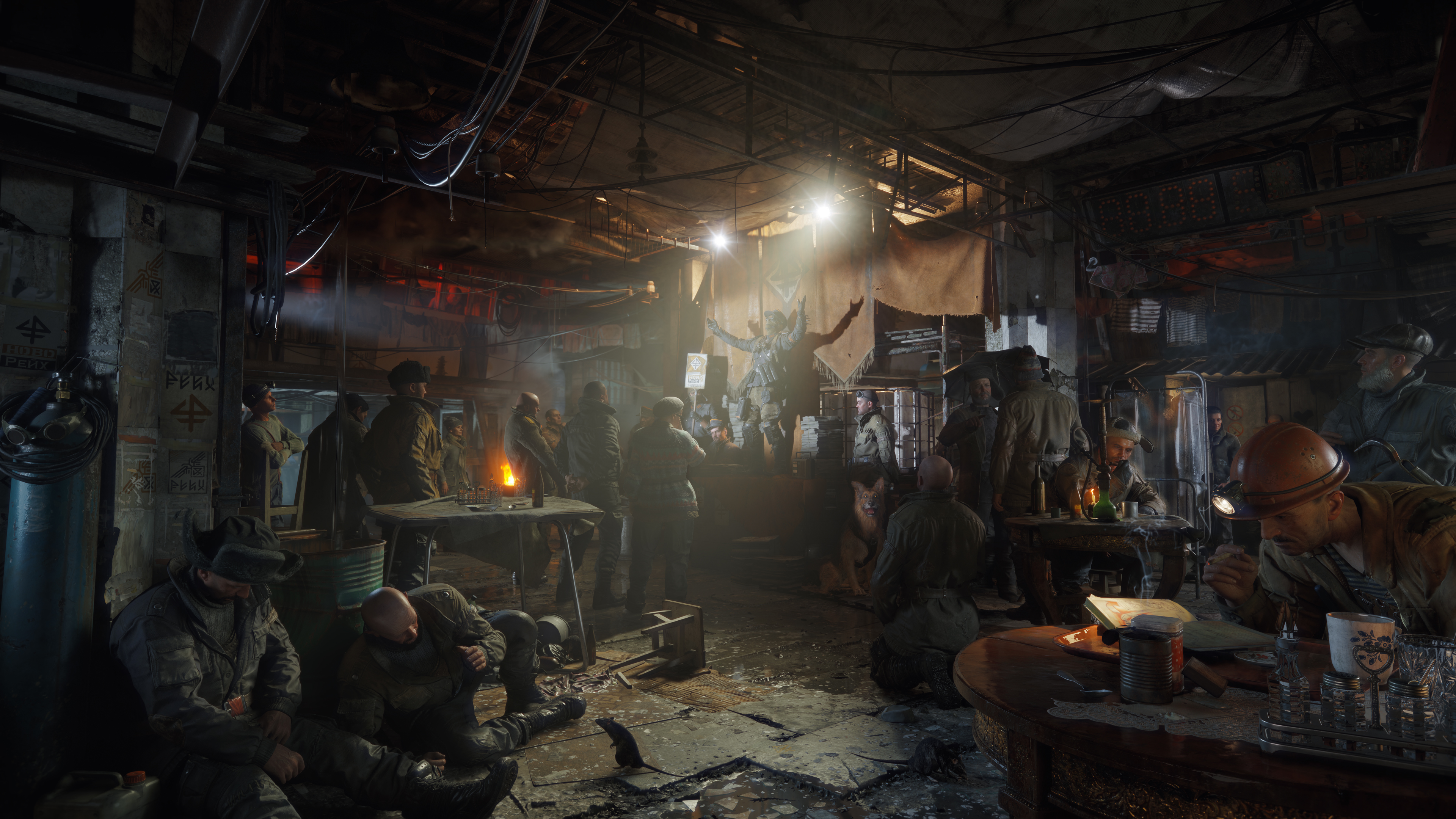
If the real world isn’t grim enough for you, Ukranian developer 4A Games has your back: Metro 2039 has been announced and is scheduled to arrive this winter. And based on the developer’s first look at the title, Metro 2039 looks to be an even darker affair than previous titles in the series. A tall order, but the real-world turmoil that has enveloped 4A Games since Russia’s invasion of Ukraine sounds like it has turned into a painful inspiration for the developer.
The lengthy cinematic reveal, which also contains a brief bit of gameplay at the end, doesn’t give much of the story away. But it does serve to place you right in the ruined, terrifying world of the Metro series. Metro 2039 arrives about 25 years after a nuclear apocalypse wiped out most life on the planet. The series focuses on survivors who live in Moscow’s ruined metro system. 4A says that this time out, the different underground factions have been united by a group known as “the Novoreich,” complete with a new ruler, the Spartan known as Hunter.
Despite Hunter promising “salvation and a new life” for the survivors left on the surface, things aren’t exactly rosy underground. As you might expect, this supposedly “united” society is still a complete disaster, with propaganda, authoritarian rule and violence the hallmark of the regime.
Screenshot from Metro 2039.
4A Games
The Metro series is based on novels by Dmitry Glukhovsky, a Russian author who has been in exile due to his public denouncement of Russia’s invasion of Ukraine. 4A Studios says that while this new game isn’t based specifically on one of his works, they worked in collaboration with Glukhovsky on the story for Metro 2039 “shaped by shared values of freedom and truth, and informed by the harsh realities of the world today.”
In statements from the studio, 4A directly acknowledges the conditions that Metro 2039 was created under. “Many developers continue to work from multiple locations, facing daily challenges never anticipated,” the studio says. “Through power outages, reliance on generators, and disruptions from missile and drone attacks, development has continued – driven by resilience, shared support, and a commitment to the work.”
It goes on to state that: “The war has directly shaped the development of Metro 2039, with its story focused acutely on choices, actions, consequences, and the cost of securing a future. While told from a distinctly Ukrainian perspective, Metro 2039 remains an authentic Metro story.” While the Metro series has been unfailingly bleak, it’s not hard to imagine how Russia’s invasion could have influenced the storytelling coming out of a Ukranian studio with an exiled Russian being part of the story team. But the limited bit of the game we’ve seen so far doesn’t make anything too explicit.
Screenshot from Metro 2039's reveal trailer.
4A Games
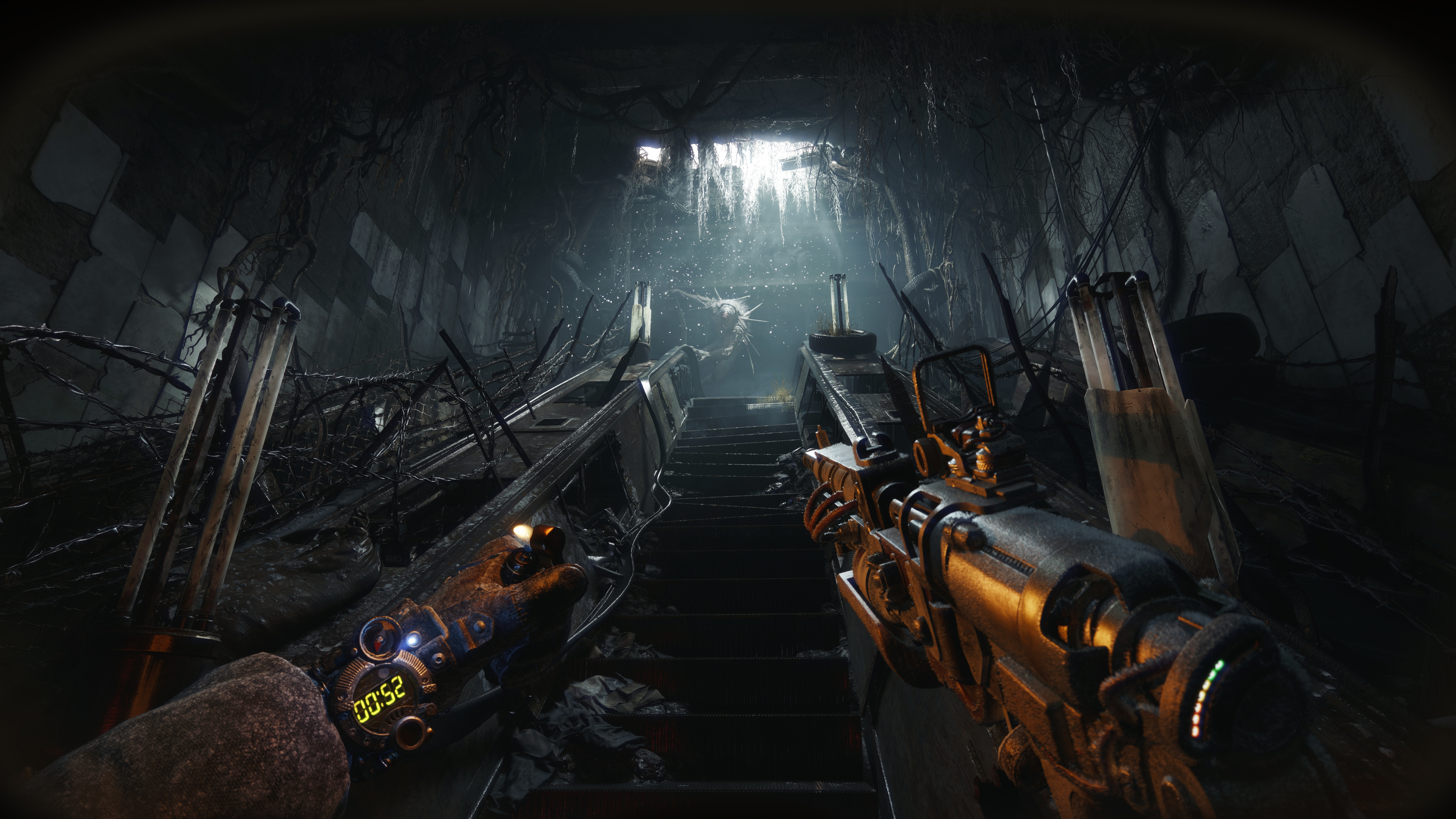
The trailer shows off the new player-character known as The Stranger, the first voiced protagonist in the series (though we don’t hear him do anything but scream in the preview). The Stranger has apparently been surviving in the above-ground wasteland but is forced to return to the metro. The little bit of gameplay we saw was the standard first-person shooter view of The Stranger heading underground to be immediately ambushed by a pretty horrific monster that he barely escapes from — he’s then dragged to “safety” by a group of survivors who just get the doors to their shelter shut before being overrun by a larger horde. Creepy stuff.
The rest of the preview largely feels like a dream (or nightmare) sequence — but while it’s hard to put together what is going on, there’s no doubt that the detail in the environments and characters is top-notch. Given that the last metro game, Metro Exodus, was released way back in 2019, it’s fair to say that we’re getting a more graphically impressive rendering of ruined Moscow and the tunnels beneath it.
There’s no exact release date yet, but 4A Games says Metro 2039 will arrive this winter for Xbox Series X/S, PlayStation 5 and PC.
This article originally appeared on Engadget at https://www.engadget.com/gaming/a-first-look-at-metro-2039-shows-how-its-ukrainian-developer-turned-the-darkness-up-to-11-171500713.html?src=rss
We finally have a real-deal trailer for the upcoming Street Fighter movie, after a short teaser dropped at The Game Awards last year. This is nearly three minutes of fighting, silly dialogue and, of course, Easter eggs from the games.
To the latter point, there's a scene of Ken beating up a car like in the bonus stages from Street Fighter II and footage of Ryu powering up one of his famous Hadoken fireballs. There's even a cheeky reference to Chun-Li's notoriously-large and powerful thighs. This is all helped along by the fact that the actors all look very silly and mostly accurate to the games.
The plot looks to be fairly standard for this type of adaptation. There's a big, important fighting tournament and Chun-Li is recruiting people from around the globe, acting like the franchise's Nick Fury or something. Ken and Ryu are beefing, M. Bison is involved in a criminal conspiracy (big surprise) and everyone else is punching and/or making snarky asides. It looks campy as hell, which is a good thing.
Street Fighter is directed by Kitao Sakurai, who made the film Bad Trip and was heavily involved with The Eric Andre Show. It hits theaters on October 16.
The cast is actually stacked. Noah Centineo and Andrew Koji lead the film as Ken and Ryu, but Jason Momoa is playing Blanka and Curtis '50 Cent' Jackson is portraying Balrog. Other actors involved include David Dastmalchian, Callina Liang, Cody Rhodes and Orville Peck.
This is the third attempt at a live-action Street Fighter adaptation. The 1994 film is famous for Raul Julia's iconic performance as M. Bison and 2009's Street Fighter: The Legend of Chun-Li is famous for being very bad.
This article originally appeared on Engadget at https://www.engadget.com/entertainment/tv-movies/the-first-real-trailer-for-the-street-fighter-movie-is-filled-with-crowd-pleasing-moments-153145868.html?src=rss
The open-source library and search engine Anna’s Archive has been ordered to pay Spotify and the three of the world’s largest music labels $322 million in damages after it claimed to have scraped the entirety of the streaming platform’s library of music.
Spotify, Universal Music Group, Warner Music Group and Sony Music Entertainment, sued Anna’s Archive in January for a slightly comical $13 trillion. They alleged Anna's Archive had illegally scraped 86 million songs — a significant chunk of all the music on the planet — and intended to make them available for download via BitTorrent. At the time, Spotify called the scraping a "brazen theft of millions of files containing nearly all of the world’s commercial sound recordings."
In a since-deleted blog post, Anna's Archive stated the scraping was an act of preservation. Still, a New York federal judge sided with the plaintiffs after the archive's anonymous operator failed to respond to the lawsuit.
The court order finding Anna's Archive guilty of direct copyright infringement, breach of contract and violation of the Defense Contract Management Agency (DCMA) was filed on April 14. A further claim of violation of the Computer Fraud and Abuse Act (CFAA) was dismissed by the judge.
The total breakdown of damages includes $7.5 million to each of Sony and Universal Music and $7.2 million to Warner Music, with the remaining $300 million going to Spotify. The latter figure amounts to $2,500 for each of the 120,000 scraped music files already made available by Anna’s Archive. The remainder of the 86 million files were due to be released to the public at a later date.
The court also ordered Anna’s Archive to "immediately destroy all copies and phonorecords of any work ‘scraped,’ downloaded, copied or otherwise extracted from Spotify," but whether it actually does this, or indeed hands over a penny of the damages, remains to be seen. The bizarre reality of this case is that the person (or people) behind Anna’s Archive remains a mystery.
This article originally appeared on Engadget at https://www.engadget.com/big-tech/annas-archive-told-to-pay-spotify-and-record-labels-322-million-over-unprecedented-music-scraping-151034032.html?src=rss
Fresh off the box office success of Project Hail Mary, Amazon MGM Studios has announced its theatrical release lineup for the next year. Most of the titles aren't likely to hit the highs of the Ryan Gosling starrer which has grossed $515 million in theaters. However, there are a number of promising releases like Spaceballs: The New One and Highlander starring Henry Cavill, both sequels to '80s films. Another is The Sheep Detectives with Hugh Jackman, the trailer for which has been a hit on YouTube.
Earlier this year, Amazon MGM promised to release up to 14 films in theaters over the next year and leave them to run for as long as 45 days — a far cry from its previous policy of releasing just a few films for several weeks at most. That strategy is paying off so far. "Four months. Four films. Over $670 million at the box office. And we have nine more on the way,” said Amazon MGM's head of domestic theatrical distribution, Kevin Wilson.
The company said that it's not about volume, but impact. "We are building films that give audiences a reason to leave the house. Films with scale. Ambition," Wilson said. Looking at the slate, though, some of those films are likely to be hits and some not so much.
First up is The Sheep Detectives set to arrive on May 8th. You may scoff at the title, but the trailer has racked up 20 million views and mainly positive comments. It looks like fun, family-friendly fare and stars a popular actor, so one could easily see this being a hit for Amazon MGM.
Masters of the Universe is next up on June 5, 2026. "Director Travis Knight brings the world of Eternia to life on a massive scale with stars Nicholas Galitzine, Camila Mendes, and Idris Elba," Amazon explains. The film is based on the Mattel toy franchise and animated series so again, it could be another magnet for kids and their nostalgic parents.
How to Rob a Bank is a heist comedy with a solid cast including Nicholas Hoult, Zoë Kravitz, Anna Sawai, Pete Davidson, and John C. Reilly, set to arrive on September 4. That's followed by Verity (October 2, 2026) based on the Colleen Hoover novel and Peter Farrelly's I Play Rocky Sylvester Stallone biopic about the production of the 1976 film Rocky.
2027 starts with the The Beekeeper 2 (January 15) starting Jason Statham, followed by The Thomas Crown Affair (March 5, 2027) directed by and starring Michael B. Jordan. Spaceballs: The New One, a sequel to the classic Mel Brooks movie arrives on April 23, 2027 with Rick Moranis, Josh Gad, Keke Palmer, Lewis Pullman, Daphne Zuniga, Bill Pullman, and Mel Brooks.
Other films expected but without release dates yet include The Chosen: Crucifixion, A Colt is My Passport, Your Mother Your Mother Your Mother and Highlander starring Henry Cavill based on the 1986 cult classic.
This article originally appeared on Engadget at https://www.engadget.com/entertainment/amazon-mgms-2026-theatrical-slate-includes-highlander-and-spaceballs-the-new-one-094505690.html?src=rss
Japanese entertainment company Toho has released a teaser video for Godzilla Minus Zero, the upcoming sequel to the award-winning film Godzilla Minus One. The teaser shows the famous monster next to the Statue of Liberty as it rampages across New York. Godzilla Minus Zero is set in 1949, two years after the events of the first film, and will be a direct sequel. You’ll see familiar faces from Minus One in the short trailer, as well, namely Koichi Shikishima and Noriko Oishi, two of the first movie’s main characters.
The kaiju flick was filmed specifically for IMAX with high-definition digital cameras. Even its audio was optimized for the massive screen’s immersive cinema experience. Minus One won an Oscar for Best Visual Effects, so expectations are high for this sequel. The good news is that this movie is also helmed by Takashi Yamazaki, who wrote, directed and oversaw the visual effects for Minus One. Godzilla Minus Zero is heading to cinemas in Japan on November 3 and in the United States on November 6 this year.
This article originally appeared on Engadget at https://www.engadget.com/entertainment/godzilla-goes-to-new-york-in-minus-zero-teaser-trailer-015029346.html?src=rss
Japanese entertainment company Toho has released a teaser video for Godzilla Minus Zero, the upcoming sequel to the award-winning film Godzilla Minus One. The teaser shows the famous monster next to the Statue of Liberty as it rampages across New York. Godzilla Minus Zero is set in 1949, two years after the events of the first film, and will be a direct sequel. You’ll see familiar faces from Minus One in the short trailer, as well, namely Koichi Shikishima and Noriko Oishi, two of the first movie’s main characters.
The kaiju flick was filmed specifically for IMAX with high-definition digital cameras. Even its audio was optimized for the massive screen’s immersive cinema experience. Minus One won an Oscar for Best Visual Effects, so expectations are high for this sequel. The good news is that this movie is also helmed by Takashi Yamazaki, who wrote, directed and oversaw the visual effects for Minus One. Godzilla Minus Zero is heading to cinemas in Japan on November 3 and in the United States on November 6 this year.
This article originally appeared on Engadget at https://www.engadget.com/entertainment/godzilla-goes-to-new-york-in-minus-zero-teaser-trailer-015029346.html?src=rss
If you love Pokémon and electronic dance music, the Pokémon Company made the perfect event for you. As part of Pokémon’s 30th anniversary festivities, the company is holding EDM concert experiences called “Pokémon Night Out” in Los Angeles and London. American DJ Marshmello, known for wearing a marshmallow-like mask on stage, will be headlining the events, with Australian DJ Alison Wonderland as a supporting act. The experiences will feature custom sets and Pokémon-inspired visual storytelling.
The events will be open to fans 16-years-old and up. It will be held at the Intuit Dome in Los Angeles on October 24, 2026, and at the O2 arena in London on November 10. You can get tickets for both concerts starting on April 18 at 10AM Pacific time for the Los Angeles concert and at 10AM British time for the London experience.
In addition to holding EDM concerts, Nintendo and the Pokémon Company re-released the Game Boy Advance remakes of Pokémon Red and Blue on Nintendo Switch Online for the franchise’s 30th anniversary. They also released a Game Boy-shaped portable Pokémon jukebox, little music players that can be loaded witha different melody or sound effect from the original games' soundtracks.
This article originally appeared on Engadget at https://www.engadget.com/gaming/nintendo/you-can-attend-pokemon-edm-shows-in-los-angeles-and-london-120405128.html?src=rss
An R-rated animated film adaptation of Bloodborne is currently being developed by Sony, according to Variety. Sony Pictures Entertainment Motion Picture Group held a presentation at CinemaCon, where the division’s president said that the adaptation will be “very true” to the violent and graphic nature of the game. Bloodborne was created by Japanese studio FromSoftware and was published by Sony back in 2015. The critically acclaimed title is an RPG in the style of Dark Souls, featuring heavy blood splatters during combat and other body horror elements. Its director, Hidetaka Miyazaki, said his biggest inspiration for the game was HP Lovecraft’s works.
Bloomberg had reported in February that Bluepoint Games, the now-defunct Sony studio behind many PlayStation remakes, wanted to work on a new version of the classic Gothic horror RPG for modern consoles. However, FromSoftware blocked the project. Miyazaki reportedly wanted to work on the remake himself. Despite being too busy to do it, he said during an interview that he "doesn't want anyone else to touch it."
The Bloodborne film adaptation will be co-produced by PlayStation Productions, Lyrical Animation and Seán McLoughlin, a gaming YouTube known by his pseudonym jacksepticeye. It seems to be early stages at this point, and Variety doesn’t have a target release date for it yet.
This article originally appeared on Engadget at https://www.engadget.com/gaming/sony-is-developing-a-bloodborne-animated-film-adaptation-110421866.html?src=rss
Many creators have already switched from Adobe Premiere to DaVinci Resolve, and now the developer, Blackmagic Design, is going after Lightroom and Photoshop. The Australian company just unveiled DaVinci Resolve 21 in beta at the NAB 2026 broadcast convention with a brand new page called Photo designed to let you do things like crop and color-correct still images. At the same time, the new version introduces video AI tools that can age a subject or reshape their facial features.
DaVinci Resolve has always let you edit photos as clips on a video timeline, but now it's greatly simplified with the Photo page. You can import and manage photographs, including RAW files from Canon, Fujifilm, Nikon and Sony, directly into the new page. Then, you adjust them using the node-based Color page that offers similar and arguably even more powerful tools than Adobe's Lightroom.
Just as with video, the Color page includes primary color correction, curves, qualifiers and power windows (along with noise reduction, sharpening and more). However, Resolve's node-based workflow really shines for photo editing. You can add nodes in series or parallel to build complex grades, then save them to apply to other images or an entire photo album. You can also reframe and crop images at their original source resolution and aspect ratio, without affecting the original image quality.
Steve Dent for Engadget
The LightBox view lets you see an entire album with grades applied. "Select any image and grade it live while seeing the results update across the whole collection in real time. Filter by graded, ungraded, star rating, flag and clip color," Blackmagic Design explains in a press release. Albums, meanwhile, let you build collections like you do in Lightroom. Those also appear as timelines in the Color, Cut and Edit pages for easy access.
For pro photographers, the Color page includes camera controls that let you tether a Sony or Canon camera to Resolve for live image capture, while adjusting settings like ISO, exposure and white balance. You can save capture presets to "lock in a consistent look before customers shoot," according to Blackmagic.
Other Resolve tools also work with the Photo page, like the AI Magic Mask that lets you make one click selections of an object or person. It's also possible to do advanced VFX on still photos using Resolve's Fusion page, or add OpenFX or FusionFX filters directly on the Photo page. Finally, you can collaborate with others using Blackmagic Cloud, though that does require a paid subscription.
I briefly tested the Photo and Color tools and, as someone who's admittedly familiar with DaVinci Resolve, I found it easy to grasp. It's simple to import and organize images (easier than Lightroom in my opinion) and is as powerful as Lightroom's Develop page for most adjustments, though I really missed the latter's "Clarity" tool. The node based workflow is powerful, and Resolve makes it easier to apply adjustments to multiple images. When you're ready to export, that's done through a special photo-only version of the "Export" page and is relatively intuitive as well. Whether or not I'll cancel my Photoshop/Lightroom subscription remains to be seen, however.
Blackmagic Design
On top of the Photo page, Blackmagic Design introduced a number of new features for video and VFX as well. Among the most interesting are a series of AI tools for facial adjustments. The AI Face Age Transformer tools lets you analyze a face, enter the subject's age and adjust the age offset slider to add things like wrinkles and facial fullness. You can also change the way a subject looks through the AI Face Reshaper tool that lets you adjust the eyes, nose, mouth, eyebrows and overall face shape. Plus, you get an AI Blemish Removal feature that reduces the appearance of superficial skin imperfections like acne, discoloration and large pores, while retaining the skin's natural texture.
Another tool that will no doubt be popular is AI UltraSharpen that can upscale video "to make previously unusable footage sharp in higher resolutions," according to the company. It can also be used to improve slight focus errors. Meanwhile, the AI Motion Deblur fixes slightly blurred images, making it particularly useful for slow motion and freeze frame shots.
Other key new upgrades, to name just a few, include the ability to edit Fusion effects from within the Cut and Edit pages, the addition of the Krokodove library of compositing tools and new immersive VR tools for delivery to platforms like Meta Quest and YouTube VR. Most of the new features are available in Blackmagic Design's free version of DaVinci Resolve, though a couple of tools (AI Magic Mask and Film Look Creator) are only available with the paid, $295 DaVinci Resolve Studio version. A complete list of new features is here and you can download the free and paid versions here.
This article originally appeared on Engadget at https://www.engadget.com/apps/blackmagics-davinci-resolve-21-takes-on-adobe-lightroom-with-a-new-photo-page-053034084.html?src=rss