Amazon Luna’s December lineup of games has been announced, and there are plenty of early Christmas presents to sink your teeth into. For those unaware, Prime members automatically qualify for Luna standard, the entry-level tier of Amazon’s cloud gaming service, and each month the company also hands out a number of codes for PC games that permanently join in your library once redeemed.
Among those claim-and-keep-forever games this month are the underrated open-world Lego racing game, Lego 2K Drive, the very pretty Metroidvania, Bō: Path of the Teal Lotus, and a couple of retro Fallout games, just in time for the new season of the Prime Video show. Here’s the full list of games for December. Most come in the form of codes you can redeem on GOG, but a couple are tied to the Epic Games Store or Legacy Gaming.
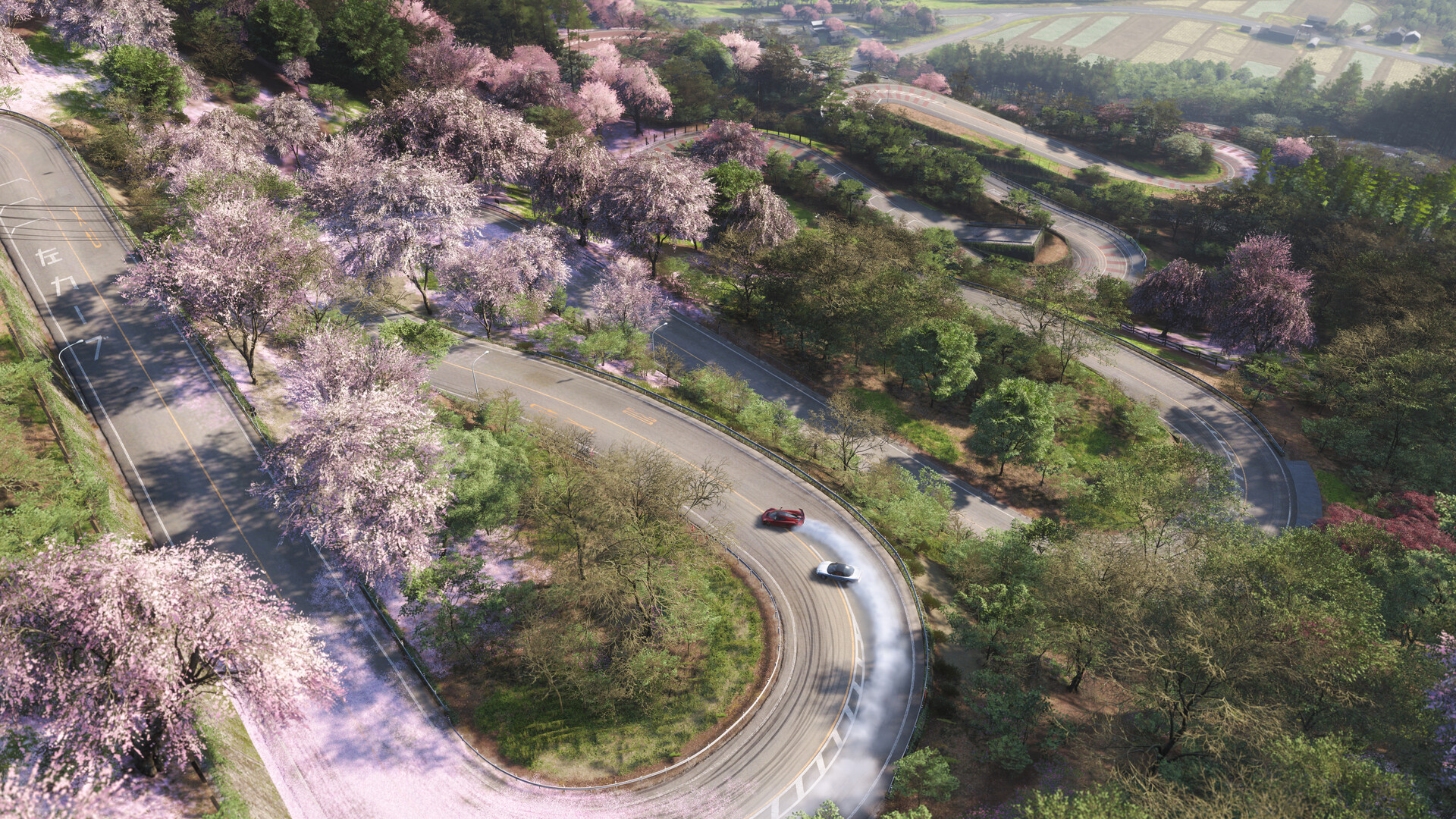
LEGO 2K Drive
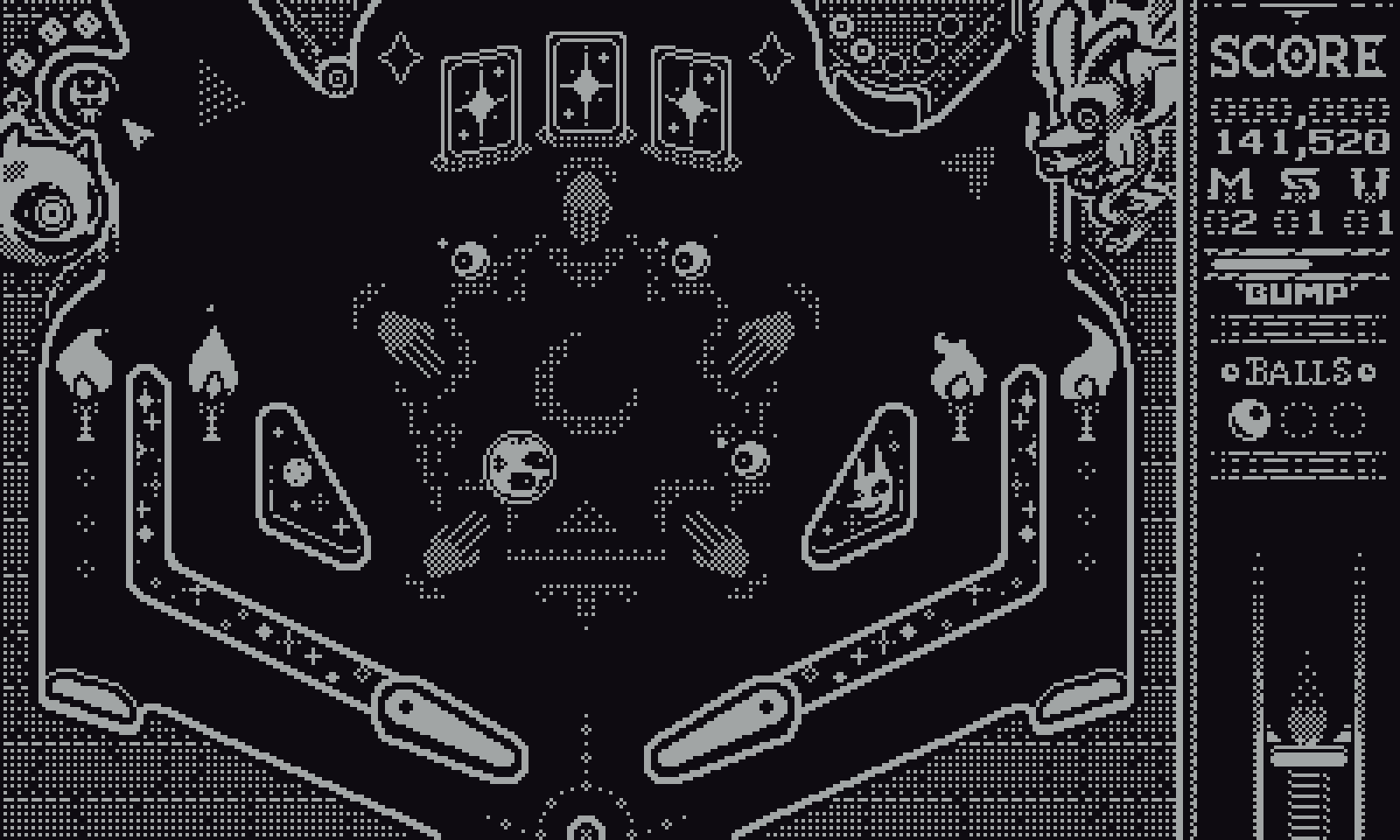
Bō: Path of the Teal Lotus
Fallout: A Post Nuclear Role Playing Game
Fallout 2
Forgotten Realms: The Archives - Collection One
Gylt
Forgotten Realms: The Archives - Collection Two
Christmas Adventure: Candy Storm
Gunslugs 2
Ashworld
Forgotten Realms: The Archives - Collection Three
Dreamscaper
On the cloud side of things, Luna members can stream the likes of Fallout 4: Game of the Year Edition, with Fallout 3 and fan favorite New Vegas already available. Quite the month for wasteland wanderers, then. Mafia: Definitive Edition, Hollow Knight and Shadow of the Tomb Raider: Definitive Edition also feature in the current library.
Amazon relaunched its revamped Luna service at the end of October, when it also added a beginner-friendly collection of smartphone-controlled multiplayer games for Prime subscribers to play at no additional cost.
This article originally appeared on Engadget at https://www.engadget.com/gaming/amazon-lunas-december-lineup-includes-hollow-knight-lego-2k-drive-and-a-few-fallout-games-180048528.html?src=rss
Based on what we've seen, Replaced is a gaming art director's dream. The long-delayed indie title has lush pixel-art environments, set in a cyberpunk fever dream. And now we finally know when it's arriving. Mark your calendar for March 12, 2026.
If you've been following Replaced's journey, you'll know that's four years after its original release date. Shit happens! In this case, that included having to relocate from Belarus to Cyprus after Russia invaded Ukraine in 2022. It will be the first game from developer Sad Cat Studios. Thunderful Games is publishing.
Gaming still from Replaced. "Pit's Diner," set in a dystopian cyberpunk world (pixel art). Various shady characters mill about.
Sad Cat Studios / Thunderful Games
Replaced is set in a dystopian alternate 1980s America. In this timeline, nuclear winter has reshaped the world. "Step into a world where neon lights flicker over rain-soaked streets, industrial decay meets futuristic technology, and every shadow holds a secret," the blurb reads. You play as R.E.A.C.H., an AI unwillingly trapped in a human body.
As for gameplay, it's a 2.5D cinematic action platformer. "Chain precise melee strikes with satisfying ranged attacks to take down enemies in high-intensity encounters while keeping the flow of exploration," the description reads. Expect plenty of running, climbing and kicking ass.
You can see some of the dazzling art direction, fluid movement, and smooth combat in the new trailer below. You can wishlist Replaced now through Steam or Xbox.
This article originally appeared on Engadget at https://www.engadget.com/gaming/pixel-art-cyberpunk-game-replaced-arrives-in-march-170253220.html?src=rss
Sony Interactive Entertainment has signed a deal to produce and publish a game from Bad Robot, JJ Abrams’ production company. The two sides are keeping most of the details close to their chest for now, but the game is a four-player co-op shooter for PlayStation 5 and PC directed by someone who knows a thing or two about that genre: Left 4 Dead creator Mike Booth.
Bad Robot Games — which is a fully remote studio — was formed in 2018 with the help of Tencent. It has lent a hand on games including Weird West (as an investor and creative consultant) as well as interactive streaming series Silent Hill: Ascension. This new game is the first one that Bad Robot Games is developing in-house.
A few months back, Booth dropped into the Left 4 Dead subreddit to say that he was working on a new co-op game “built on the foundations of what made L4D special. If you enjoyed the teamwork, tension and replayability of my past games, you’ll probably find this one interesting. It expands on the co-op formula in ways I’ve wanted to explore for a long time.” He added that, while the game was still in early development, Bad Robot was opening up a waitlist for access to playtests.
According to a press release, “Bad Robot Games is a dedicated game studio working on new and existing transmedia franchises.” So, this project could well be part of an entirely new franchise, but the prospect of co-op shooter from the designer of Left 4 Dead that’s set in the Cloverfield universe is pretty darn intriguing.
This article originally appeared on Engadget at https://www.engadget.com/gaming/playstation/playstation-teams-up-with-bad-robot-and-the-creator-of-left-4-dead-for-a-co-op-shooter-144637802.html?src=rss
PC gamers have almost too many options when it comes to titles to play, which is a great problem to have. With decades of games to choose from (and the first port of call for most indie titles, too), the options are endless. You also get the perks of (nearly always flawless) backward compatibility and console-beating graphical performance — if you've got the coin for it when you’re building your perfect kit or picking up a high-powered gaming laptop.
The whole idea of what a gaming PC is and where you can play it is shifting, too, with the rise of handheld gaming PCs like the Steam Deck. We've tried to be broad with our recommendations here on purpose; here are the best PC games you can play right now.
The developer of Cozy Grove and Alphabear is leaving Netflix. Spry Fox is being sold back to its original founders, Game File reports, and will continue to work on its upcoming "cooperative village life sim" Spirit Crossing as an independent company. Unlike other shuttered Netflix games studios Team Blue and Boss Fight Entertainment, Netflix will remain involved with the studio as Spirit Crossing's publisher on mobile.
As part of the arrangement, Spry Fox founders David Edery and Daniel Cook will be able to shop Spirit Crossing to other publishers for console and PC releases of the game. While reverting to being an independent studio is definitely a happier version of the typical studio closure story, it might not be without issues. Game File reports that layoffs at Spry Fox are still possible and the developer will need to find additional funding to continue long-term. Spirit Crossing may also need to be altered so that Spry Fox can continue to make money from the game after players purchase it.
Netflix acquired Spry Fox in 2022, a little over a year after it acquired Oxenfree developer Night School. Spry Fox released its first game for Netflix subscribers, a sequel to Cozy Grove, in 2024. The studio formally announced Spirit Crossing in March of this year, as an ambitious attempt to fuse the cozy life simulation elements of something like Animal Crossing: New Horizons with the online social experiences of MMOs like World of Warcraft or Final Fantasy XIV.
That pitch apparently no longer jives with Netflix's current game strategy, which changed when Epic Games' Alain Tascan took over from ex-EA executive Mike Verdu. Whereas Netflix Games under Verdu acquired studios, funded projects and licensed an eclectic collection of mobile games for Netflix subscribers, Tascan has refocused the company's games business around titles based on Netflix IP, social party games and known quantities, Game File writes. Spirit Crossing doesn't fit neatly into any of those categories, which might be one reason Netflix is parting ways with Spry Fox.
This article originally appeared on Engadget at https://www.engadget.com/gaming/netflix-is-getting-rid-of-another-of-its-game-studios-by-selling-it-back-to-its-founders-203645232.html?src=rss
Sony wants the court to block the game from sale entirely, but as the case continues Tencent has agreed to keep Light of Motiram out of the spotlight. The company submitted a court filing that says there will be "no new promotion of public testing" of the game as Sony's injunction request is argued. In return, Sony will give Tencent more time to respond to the injunction.
Tencent has also issued a request to dismiss the lawsuit entirely. Both companies have jointly requested that the injunction request and the motion to dismiss be moved to the same day, which could be as early as January.
For the uninitiated, Light of Motiram is an open-world hunting game that has some obvious similarities to Horizon Zero Dawn and its sequel. The basic setup is similar, as is the visual appearance of the characters and marketing materials. This all caused Sony to refer to it as a "slavish clone" in the lawsuit.
Sony
To be fair, there are differences. The Horizon games are third-person adventures in the mold of Zelda, but Light of Motiram looks to be primarily a cooperative survival game.
Tencent is a giant multi-tentacled company that actually owns Riot Games, Supercell and Funcom. It also has investment stakes in Epic, Ubisoft, Activision and Blizzard and Larian Studios, among many others.
This article originally appeared on Engadget at https://www.engadget.com/gaming/tencent-agrees-to-stop-promoting-its-horizon-ripoff-during-sony-lawsuit-193043644.html?src=rss
Indie studio Santa Ragione is facing more strife after claiming its latest game has been blocked on another major storefront. The developer previously said it was at risk of closure after Valve banned Horses from Steam, noting that it would be very difficult to recoup its investment without access to the world’s largest PC gaming storefront. The situation became more dire this week after Epic Games blocked Horses as well.
Santa Ragione said Epic notified the studio of its decision just 24 hours before the game was released on Tuesday, despite approving Horses for sale on the Epic Games Store weeks earlier. “Once again, no specific indication of problematic content in the game was given, only broad and demonstrably incorrect claims that it violated their content guidelines,” the studio wrote in an FAQ. “Our appeal was denied twelve hours later without further explanation.”
According to an email from Epic that Santa Ragione shared, the company banned Horses from its store due to violations of its inappropriate content and hateful or abusive content policies, the latter of which “prohibits content that promotes abuse and animal abuse.” It also determined that Horses had received an adults-only rating, and such games aren’t allowed on its store. Engadget has contacted Epic for comment.
Horses is a horror game about a college student who works on a farm during the summer. The farm’s so-called horses are actually nude human adults who wear equine masks and live as horses.
Santa Ragione said that, in its appeal to Epic, it pointed out that Horses is a “strong critique of violence and abuse in general” and that it doesn’t promote any kind of abuse. It claimed that there are no “explicit or frequent depictions of sexual behavior,” as nudity is pixelated and although the three-hour game has four “sexual sequences,” these are brief and censored, with two mainly taking place off-camera. However, Santa Ragione said Epic stuck by its decision to block the game from its store.
With Horses being banned from Steam and the Epic Games Store, that leaves GOG (where it’s currently at the top of the bestsellers chart) and Itch.io as the only storefronts on which the $5 game is available as Santa Ragione tries to recoup the $100,000 or so it spent on development. Horses was supposed to have been available via the Humble Store as well but, as Gamespot notes, the URL for the listing now redirects to the store’s homepage.
This article originally appeared on Engadget at https://www.engadget.com/gaming/epic-bans-indie-game-horses-from-its-storefront-24-hours-before-release-173500417.html?src=rss
The playtests will take place in Japan from December 19 to 21, and in California on December 19. Pixelity says it will use the same number of players at each venue. If you’re near either location, you can apply for access today on Pixelity's X account.
The XR trilogy, Evangelion: Cross Reflections, was announced earlier this year. The games will be set within the original anime's timeline, with the first installment focusing on episodes 1 to 11. The first game is scheduled for a 2026 release. We don’t yet know which platforms it will be on, but Meta Quest headsets seem like a safe bet.
This article originally appeared on Engadget at https://www.engadget.com/gaming/pixelity-will-playtest-its-evangelion-xr-game-later-this-month-200000634.html?src=rss
It’s been 18 years since the last Metroid Prime game, but I felt right at home in Metroid Prime 4: Beyond. Almost too at home. Whether fighting my way through a volcano, exploring a research base in a frozen tundra or getting lost in a vast desert, I couldn’t shake the feeling I’d done this before. As the fourth game in a series, that’s not a huge surprise, but it was my main disappointment in Metroid Prime 4: Beyond. Think about the leap Nintendo took going from 2011’s The Legend of Zelda: Skyward Sword and 2017’s Breath of the Wild. They were both recognizably Zelda games, but Nintendo redefined what that means between those two games.
No such reinvention has happened with Metroid Prime 4: Beyond. But that doesn’t mean it isn’t a great time — it executes the template for a Metroid Prime game extremely well. It’s thrilling to see the series finally make the jump to HD, iconic bounty hunter Samus Aran has some intriguing new powers, there’s a badass motorcycle to shuttle her around the game’s open world hub and the game’s design and art direction show Nintendo at its best. It's everything you’d expect from a Metroid Prime game — no more, no less. Whether that’s a good thing is up to you to decide.
If you haven’t played the previous Metroid Prime games before, fear not. There isn’t anything story-wise that you need to know before you jump into this adventure. As with all Metroid games, you take control of acclaimed bounty hunter Samus Aran, an ultra-powerful warrior with a mechanized suit full of fun tricks. The vast majority of the game takes place in first-person view where you can lock on to the many creatures trying to kill you and blast away with an ever-expanding arsenal. The other main interface is your scan visor, where you can learn about your surroundings and enemies to find weaknesses and figure out what you need to do to advance.
Metroid Prime 4: Beyond
Nintendo
Beyond throws you right into a firefight that serves as a solid tutorial for the game's varied control schemes. A Galactic Federation outpost is under attack, and Samus flies in to help defend the troops and keep a secret artifact safe. This somewhat bombastic intro is a great way to show off the Switch 2's power. Sure, we're not talking about a PS5 Pro here, but this is perhaps the most visually-advanced game Nintendo has released. With a Switch 2 docked to a TV, you can play it at either 4K / 60fps or 1080p / 120fps (in handheld mode, that drops to 1080p or 720p with the same frame rates). I don’t have a huge TV, so I mostly went with “performance mode,” but in either case the game felt extremely fluid with no frame rate drops and looked outstanding.
The game starts as Samus Aran flies in to help the Galactic Federation fight off an invasion, and that opening cut scene shows off with some HDR-enhanced explosions and a detailed environment of a space base in chaos. There are little fires and explosions everywhere; it's visually busy but in a good way that serves the setting, and it all looks vibrant and life-like. As with basically all Nintendo games, Metroid Prime 4: Beyond isn't aiming for realism, but it's closer to a game like Horizon Forbidden West or Cyberpunk 2077 than any other Nintendo titles I can think of. Things like the textures of metal installations, the leaves on alien trees or Samus' gloves all have a level of textural detail you don't usually see in Nintendo's games. Often, that's due to a conscious art direction choice to go in a more cartoonish direction, but the Switch 2's hardware is helping make the game as lifelike as possible.
Metroid Prime 4: Beyond
Nintendo
(Note that Metroid Prime 4: Beyond is also available on the original Switch. I didn’t play it there so I can’t comment on how things like frame rates and textures hold up on that much older console. If you’re thinking about trying this game on the first Switch, it’s probably a good idea to see how other reviewers find that experience before shelling out $60.)
The aforementioned intro sets up the big conflict in Beyond. As Samus comes in to try and help the troops defend a mysterious artifact, the game’s big bad Sylux shows up and everything hits the fan. Samus and some other Galactic Federation forces are mysteriously transported to the planet Viewros, where Samus comes into contact with a near-excinct society called the Lamorn. A Lamorn elder telepathically pleads with Samus to try and save the society from being totally forgotten — indeed, she may be able to bring them back from the brink of extinction if all goes well. They’ve been waiting for a “chosen one,” you see, and Samus is naturally it.
As part of this intro, Samus gains her signature new physic powers in Beyond. These allow her to interact with otherwise-hidden parts of the environment to solve puzzles. The most significant is the Control Beam. When you charge your arm cannon while in the psychic scan visor mode (a slight tweak on the environmental scanning feature that has been a major part of all Metroid Prime games), you can fire a beam that slows time down and can be controlled with the right joystick. That means you can pass the Control Beam through multiple targets, something you’ll need to do periodically to weaken enemies or unlock the way forward.
Metroid Prime 4: Beyond
Nintendo
For the most part, though, the psychic powers besides the beam are just repackaging of already-familiar tools. Metroid veterans will be familiar with the Spider Ball, an upgrade to the Morph Ball that lets Samus magnetically attach to tracks that help her get to out-of-reach areas. In Beyond, you instead get the “Psychic” Spider Ball — that does essentially the same thing. Occasionally, you’ll find Psychic Ball Tracks that you have to scan to reveal; they’ll then blast Samus into a secret area that usually has a weapon upgrade or energy tank. Even Samus’ main weapon gets a fancy “Psychic Beam” name — but the description of it in the inventory admits that it’s the same weapon. “The Psychic Beam’s strength and performance are equal to the standard Power Beam.” While the Control Beam adds a fun wrinkle to the gameplay, the psychic abilities don’t otherwise change the Metroid Prime formula in any significant way.
The main task Samus faces is collecting five Teleporter Keys that can get her off the planet. Those keys are hidden in various environments around Viewros that are all connected by Sol Valley, a large desert that holds lots of upgrades and side quests that you’ll need to clear to advance in the game. The desert is more of a hub than an open world — there are small areas to explore dotted around it, but the main action happens in places like Ice Belt, Volt Forge, Flare Pool and several others you’ll find your way to as you collect those teleporter keys.
Metroid Prime 4: Beyond
Nintendo
As those names suggest, Ice Belt is a frozen area where you explore an abandoned research facility, while Flare Pool is inside of a volcano. And, as you might expect, you’ll need certain weapons to advance in those areas. In addition to her standard beam and missile weapons, Samus collects the obligatory freeze ray and fire blaster sort of weapons. This is where the game really started to remind me of the original Metroid Prime — the three elemental weapons she collects are essentially the same as those in the first game, and environments like a frozen wasteland or a fiery volcano are nearly identical to ones you’ll find in that game. The Lamorn, meanwhile, reminded me a lot of the departed Chozo tribe you’ll find on Tallon IV in the first Metroid Prime. Of course, that game came out all the way back in 2002, and Metroid Prime 4: Beyond will likely be the first game of the series many play. A little recycling of classic elements is forgivable.
That said, I was a bit disappointed that the game has a tightly-scripted flow. After the intro and the first mission on Viewros, you hit the desert with multiple locations where Teleporter Keys are believed to be hidden. But you can’t tackle them in any order you choose. This is a Metroid game, after all, and that means exploring to find powers that let you explore a new area that was previously closed off. Part of me was hoping for the freedom of a game like Breath of the Wild where you could tackle areas in any order you choose. But after playing through nearly the entire game, I appreciate the excellent execution of the familiar formula.
Metroid Prime 4: Beyond
Nintendo
Another thing that’ll be familiar to those who’ve played the older Metroid Prime games is the control scheme. For the most part, you can pick up the controller and get right to it, as the main control layout employs a two-joystick first-person view that should be pretty easy to get the hang of. But there are definitely times where I found myself wishing for more precision. You can lock onto enemies and targets with the ZL button and start blasting away with your chosen weapon, but many of the boss battles require you to lock on to a large creature and then use the right stick to adjust your aim to hit very specific targets. This took some getting used to, because I was used to the lock-on target vulnerable areas. Doing it with a Switch Pro Controller made things much easier, but using the standard Joy-Cons could get frustrating in a hurry. If I was playing in handheld mode, I would often pause before a big battle and wait until I could hook up to my TV and use a proper controller. I’d recommend you do the same — it’ll make for a much more enjoyable experience.
Beyond also offers the option of using one Joy-Con in “mouse” mode for aiming while using the other for moving around. For me, this isn’t a viable option. I tried it a few times and immediately felt completely disoriented and far worse at aiming than I was with the right stick. I can appreciate the idea behind offering mouse-like controls for a first-person FPS game, but it just did not feel well executed. That said, this might be on me. I haven’t played a game with a keyboard and mouse in years; nearly all of my gaming is on a twin-stick controller, so I’m just more comfortable with that setup. I’m thinking about starting from the beginning and seeing how I adapt to mouse mode and will update this review if my opinion changes.
There are a few things that Beyond does that are completely new to the series. The most obvious one is Vi-O-La, the wild robotic motorcycle that Samus rides. You’ll unlock that early in the game, and its primary utility is to get around Sol Valley. For anyone worried that the game is overly focused on an element that admittedly feels a bit anachronistic to the usual Metroid vibe, fear not. You’ll use it a bunch, but it’s more about fast transportation and exploration than something that has detailed mechanics you need to master. There are a few segments where it’s a major part of the mission, but for the most part it’s just another tool in your arsenal rather than something that steals the focus of the game.
Metroid Prime 4: Beyond
Nintendo
The same can be said for the motley crew of adventures you assemble. One of the loudest bits of feedback that came out of the preview Nintendo offered the press a few weeks ago was “what’s the deal with Myles MacKenzie?” You see, in the first hours of the game you come across MacKenzie, a bumbling engineer type who you rescue in the jungles of Viewros shortly after landing on the planet. You then have to escort him around a bit, during which he makes some pretty bad and occasionally obnoxious jokes. This led many who played the preview to worry about MacKenzie shattering the quiet and lonely solitude the Metroid series is known for.
Don’t worry — Samus is on her own for the vast majority of the game. You’ll encounter a few more stranded Galactic Federation soldiers throughout the game, but they usually only stick around for short segments before returning to the home base you establish with Myles. And as for Myles himself, he’ll help upgrade your weapons and is available on the radio to give you hints on where you need to go, something that I honestly didn’t mind. I’d rather have hints at hand than spend all my time wandering lost throughout the vast world of Beyond. But I can also see that the hint system is occasionally too aggressive in dropping details on where to go next.
As a seasoned player, Beyond mostly felt challenging but fair. Games in the Metroid Prime series are notorious for moments of serious difficulty, but this one feels a little more forgiving. When battling bosses, there were plenty of ammo and energy drops that helped me even the score. I usually died a handful of times while figuring out my strategy or getting a feel for their attacks, but it wasn’t overly frustrating or tedious. That said, there were two bosses near the end (including the final boss) where the difficult curve spiked in a way that felt completely unreasonable.
Metroid Prime 4: Beyond
Nintendo
There were also a few times when I felt wildly lost, with no useful information about my next step to be found anywhere on the map. Myles told me to find a member of the crew “out in the desert.” And while Sol Valley isn’t the same open-world scale of some bigger games, it’s still a pretty big space to explore without any other indication of where to go. I wasted far too much time riding my motorcycle across dunes aimlessly figuring out where to go. It wouldn’t be a Metroid game if you didn’t get hopelessly stuck at some point, though.
For the most part, I enjoyed the addition of some people helping Samus along her way. It helps flesh out the world of the game in small ways, giving some perspectives on everything going on from people who aren’t ultra-powerful, silent bounty hunters. It did make Samus’ never-ending silence feel a bit awkward, but it also fits with her otherworldly, not-quite-human presence.
Metroid Prime 4: Beyond
Nintendo
In some ways, it’s easy to sum up Metroid Prime 4: Beyond. It’s the Metroid Prime experience, modernized. The graphics are better, the world is bigger, experiences like Vi-O-La and Samus’ psychic abilities offer a greater variety of gameplay experiences. But it’s also very much a Metroid Prime game at its core, with the familiar but effective mix of biomes to exploration, giant enemies to dispatch and weapon upgrades to find. And, of course, there were moments of immense frustration when things just got too difficult, another hallmark of the series. Seriously, the final battle is wildly frustrating. Maybe I just need to get good, but it felt so far out of sync with the entire rest of the game that it almost ruined the fun that came before.
That intense moment of frustration aside, anyone who played earlier games in the series will find a lot to love here. But, they also might be disappointed that Nintendo didn’t push the series further. However, there are also a lot of people who’ve never played a Metroid Prime game in the last two decades or so — those people will find that the formula Nintendo engineered in the 2000s still holds up here. Metroid Prime 4: Beyond is far more unique than your average first-person shooter, it was worth the long wait, and it’s a must-play for anyone who is up for the challenge.
This article originally appeared on Engadget at https://www.engadget.com/gaming/nintendo/metroid-prime-4-beyond-review-an-excellent-modernization-but-not-a-total-reinvention-150000082.html?src=rss
Whether you’re into shooters, fighting games or immersive RPGs, there’s something for every Xbox owner out there. While Microsoft’s first-party output has been a bit slim lately, the company has been on a tear acquiring the likes of Bethesda and Activision Blizzard, as well as pumping up the amount of worthwhile titles in its Game Pass subscription service. The result is a plethora of games to choose from, which can be either a blessing or a curse for the indecisive gamer.
To make life a bit easier, we’ve highlighted some of the best titles available on the Xbox Series X and S (some of which are also playable on older Xbox One systems). We’ve chosen a mix of old and new titles, but given the hundreds of hours we’ve put into these games, we can guarantee they’re well worth your time.