Google announces Axion, its first Arm-based CPU for data centers

Google Cloud Next 2024 has begun, and the company is starting the event with some big announcements, including its new Axion processor. It's Google's first Arm-based CPU specifically created for data centers, which was designed using Arm's Neoverse V2 CPU.

According to Google, Axion performs 30 percent better than its fastest general purpose Arm-based tools in the cloud and 50 percent better than the most recent, comparable x86-based VMs. They also claim it's 60 percent more energy efficient than those same x86-based VMs. Google is already using Axion in services like BigTable and Google Earth Engine, expanding to more in the future.

The release of Axion could bring Google into competition with Amazon, which has led the field of Arm-based CPUs for data centers. The company's cloud business, Amazon Web Services (AWS), released the Graviton processor back in 2018, releasing the second and third iterations over the following two years. Fellow chip developer NVIDIA released its first Arm-based CPU for data centers in 2021 named Grace, and companies like Ampere have also been making gains in the area.

Google has been developing its own processors for several years now, but they've been primarily focused on consumer products. The original Arm-based Tensor ship first shipped in the Pixel 6 and 6 Pro smartphones, which were released in late 2021. Subsequent Pixel phones have all been powered by updated versions of the Tensor. Prior to that, Google developed the "Tensor Processing Unit" (TPU) for its data centers. The company started using them internally in data centers in 2015, announced them publicly in 2016, and made them available to third parties in 2018. 

Arm-based processors are often a lower-cost and more energy-efficient option. Google's announcement came right after Arms CEO Rene Haas issued a warning about the energy usage of AI models, according to the Wall Street Journal. He called models such as ChatGPT "insatiable" regarding their need for electricity. "The more information they gather, the smarter they are, but the more information they gather to get smarter, the more power it takes, Haas stated. By the end of the decade, AI data centers could consume as much as 20 percent to 25 percent of US power requirements. Today that's probably four percent or less. That's hardly very sustainable, to be honest with you." He stressed the need for greater efficiency in order to maintain the pace of breakthroughs.

This article originally appeared on Engadget at https://www.engadget.com/google-announces-its-first-arm-based-cpu-for-data-centers-120508058.html?src=rss

New Vauxhall Frontera SUV gets official

New Vauxhall Frontera

Get ready to experience a new level of excitement with the Vauxhall Frontera SUV, the latest addition to the electric vehicle market. This vehicle is not just a means of getting from point A to point B; it’s an invitation to embark on an adventure like no other. With its bold design, spacious interior, and […]

The post New Vauxhall Frontera SUV gets official appeared first on Geeky Gadgets.

Google Gemini chatbots are coming to a customer service interaction near you

More and more companies are choosing to deploy AI-powered chatbots to deal with basic customer service inquiries. At the ongoing Google Cloud Next conference in Las Vegas, the company has revealed the Gemini-powered chatbots its partners are working on, some of which you could end up interacting with. Best Buy, for instance, is using Google's technology to build virtual assistants that can help you troubleshoot product issues and reschedule order deliveries. IHG Hotels & Resorts is working on another that can help you plan a vacation in its mobile app, while Mercedes Benz is using Gemini to improve its own smart sales assistant. 

Security company ADT is also building an agent that can help you set up your home security system. And if you happen to be a radiologist, you may end up interacting with Bayer's Gemini-powered apps for diagnosis assistance. Meanwhile, other partners are using Gemini to create experiences that aren't quite customer-facing: Cintas, Discover and Verizon are using generative AI capabilities in different ways to help their customer service personnel find information more quickly and easily. 

Google has launched the Vertex AI Agency Builder, as well, which it says will help developers "easily build and deploy enterprise-ready gen AI experiences" like OpenAI's GPTs and Microsoft's Copilot Studio. The Builder will provide developers with a set of tools they can use for their projects, including a no-code console that can understand natural language and build AI agents based on Gemini in minutes. Vertex AI has more advanced tools for more complex projects, of course, but their common goal is to simplify the creation and maintenance of personalized AI chatbots and experiences. 

At the same event, Google also announced its new AI-powered video generator for Workspace, as well as its first ARM-based CPU specifically made for data centers. By launching the latter, it's taking on Amazon, which has been using its Graviton processor to power its cloud network over the past few years. 

This article originally appeared on Engadget at https://www.engadget.com/google-gemini-chatbots-are-coming-to-a-customer-service-interaction-near-you-120035393.html?src=rss

Google’s new AI video generator is more HR than Hollywood

For most of us, creating documents, spreadsheets and slide decks is an inescapable part of work life in 2024. What's not is creating videos. That’s something Google would like to change. On Tuesday, the company announced Google Vids, a video creation app for work that the company says can make everyone a “great storyteller” using the power of AI.

Vids uses Gemini, Google’s latest AI model, to quickly create videos for the workplace. Type in a prompt, feed in some documents, pictures, and videos, and sit back and relax as Vids generates an entire storyboard, script, music and voiceover. "As a storytelling medium, video has become ubiquitous for its immediacy and ability to ‘cut through the noise,’ but it can be daunting to know where to start," said Aparna Pappu, a Google vice president, in a blog post announcing the app. "Vids is your video, writing, production and editing assistant, all in one."

In a promotional video, Google uses Vids to create a video recapping moments from its Cloud Next conference in Las Vegas, an annual event during which it showed off the app. Based on a simple prompt telling it to create a recap video and attaching a document full of information about the event, Vids generates a narrative outline that can be edited. It then lets the user select a template for the video — you can choose between research proposal, new employee intro, team milestone, quarterly business update, and many more — and then crunches for a few moments before spitting out a first draft of a video, complete with a storyboard, stock media, music, transitions, and animation. It even generates a script and a voiceover, although you can also record your own. And you can manually choose photos from Google Drive or Google Photos to drop them seamlessly into the video.


It all looks pretty slick, but it’s important to remember what Vids is not: a replacement for AI-powered video generation tools like OpenAI’s upcoming Sora or Runway’s Gen-2 that create videos from scratch from text prompts. Instead. Google Vids uses AI to understand your prompt, generate a script and a voiceover, and stitch together stock images, videos, music, transitions, and animations to create what is, effectively, a souped up slide deck. And because Vids is a part of Google Workspace, you can collaborate in real time just like Google Docs, Sheets, and Slides.

Who asked for this? My guess is HR departments and chiefs of staff, who frequently need to create onboarding videos for new employees, announce company milestones, or create training materials for teams. But if and when Google chooses to make Vids available beyond Workspace, which is typically used by businesses, I can also see people using this beyond work like easily creating videos for a birthday party or a vacation using their own photos and videos whenever it becomes available more broadly

Vids will be available in June and is first coming to Workspace Labs, which means you’ll need to opt in to test it. It’s not clear yet when it will be available more broadly.

This article originally appeared on Engadget at https://www.engadget.com/googles-new-ai-video-generator-is-more-hr-than-hollywood-120034992.html?src=rss

Top 10 Sustainable Stools To Incorporate Eco-Friendly Furniture Designs In Your Home

Stools are truly the way to go in today’s world! Stools deserve to be given way more credit than they get. Stools are often overlooked, maybe because they occupy minimum space, and aren’t overbearing. But these traits are what make stools so great in my opinion! I mean, they’re compact, and a great space-saving furniture option for our modern homes. They are also super portable, and if you make them sustainable, well they’re everything you could need. And, we’ve put together a collection of stool designs that not only provide a healthy seating experience while promoting a good and stable posture but most of them are created from sustainable materials as well. From a minimal stackable stool with slim wooden legs to a stool made from recycled bike parts – these well-designed stools are the furniture pieces you need to add to your home.

1. Drum Stool

Dubbed the Drum Stool, this stackable, minimal, and sustainable stool looks like a cute little wine cork when you first look at it. But as you dig and look deeper, you realize the stool has quite a lot to offer. The sustainable stool is made using cork and wood, creating a sturdy and durable seating design that is truly eco-friendly, and also quite aesthetic to look at.

Why is it noteworthy?

Cork and wood were selected to build the wood, rating it pretty high on sustainability. The seat was built using cork, while wood was used to build the legs, creating a sustainable and eco-friendly seating solution, that will integrate well with modern contemporary homes.

What we like

  • Equipped with a round trimmed surface that gives it a fun and playful shape
  • Functions as a cohesive and harmonious furniture piece

What we dislike

  • The trimmed cork seat doesn’t look too comfy to sit on for longer durations of time

2. The 2 Stools from 1 Bicycle
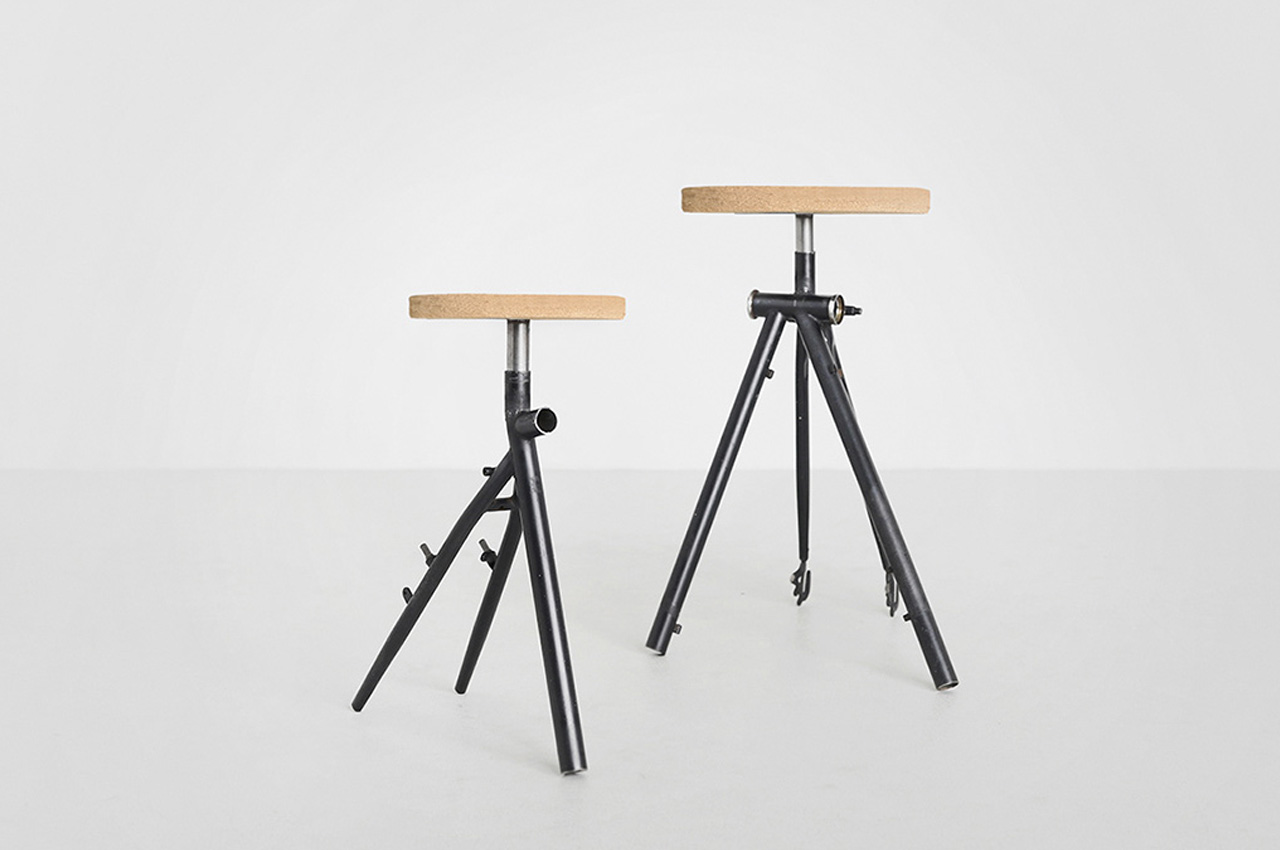
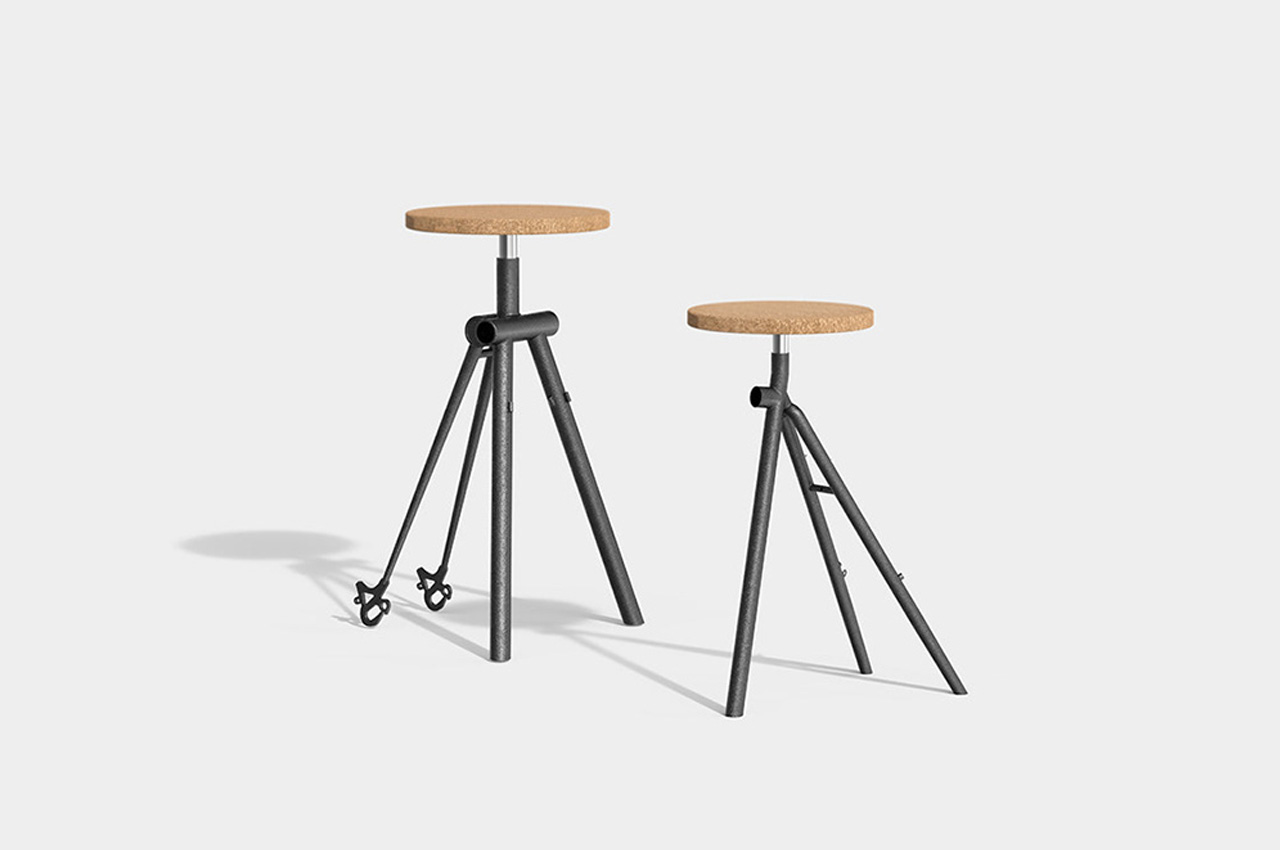
The 2 Stools from 1 Bicycle project upcycled old bikes to create new stools. They create a product that can be easily used by everyone, and won’t be easily thrown away by people. The stools feature unique and noteworthy aesthetics, that will add some personality and charm to your living space, and you won’t feel like giving them away at all.

Why is it noteworthy?

The stools feature slanted legs which offer it a usual and unique shape, which brings to mind the image of the original bike frames they were taken from. One stool is equipped with three legs, while the other has four legs. The seat is crafted from recyclable cork, which isn’t from the bike, it does maintain the stool’s sustainable personality.

What we like

  • Unusual and unique aesthetics

What we dislike

  • The stools don’t look too comfy to sit on for long periods

3. The +52 Stool

Studio Plastique conducted extensive and deep research on the current timber designs in the market and their manufacturing. They then utilized all their knowledge to build a unique and sustainable wooden step stool called the +52 Stool. The +52 stool isn’t just a typical furniture design and is created to be a scenario.

Why is it noteworthy?

The stool captures and showcases the potential of the undervalued wood types, and how they can be used as sustainable alternatives to the typically-used wood types. The stool is manufactured using non-commercial woods such as koto, willow, elm, acacia, and birch.

What we like

  • The stool is created to address the lack of awareness regarding lesser-known wood species

What we dislike

  • The look of the stool is pretty rustic and raw, which won’t be preferred by everyone

4. Superpop Tables
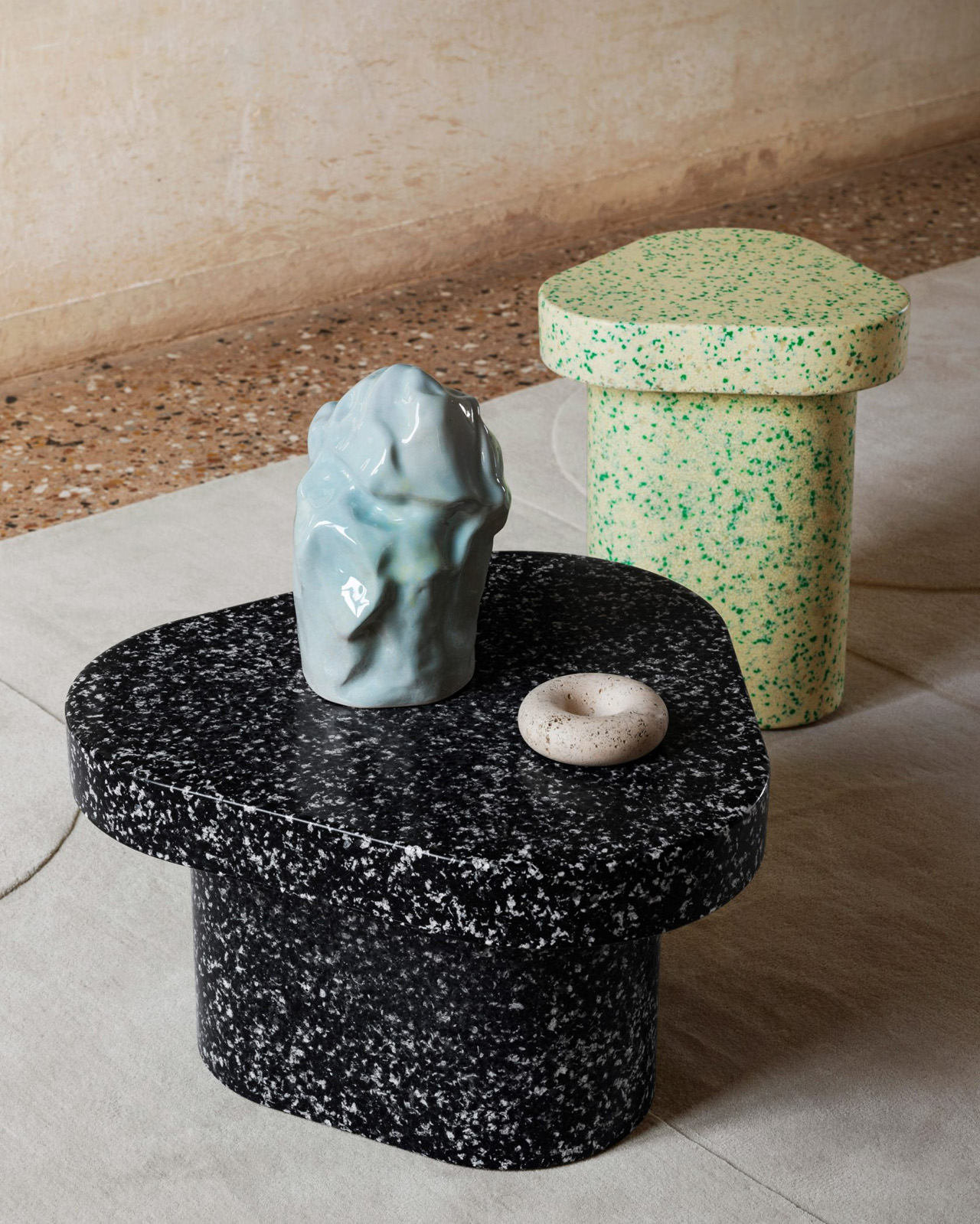
These colorful little stools/tables are called the Superop tables, and they have mesmerizing terrazzo-like surfaces that have been crafted from recycled plastic. The Superpop tables are designed by Paolo Cappello for Miniforms, and they function as attractive little furniture pieces, that add a much-needed pop of color and character to your living space.

Why is it noteworthy?

The Superpop tables are quite versatile, and they can be utilized as side tables, stools, or even coffee tables. They are versatile, lightweight, and sustainable furniture pieces with a pop of fun!

What we like

  • Feature versatile functionality with a universal appeal

What we dislike

  • Since they’re so colorful and eccentric, could be difficult to match them with different interior styles

5. Plastic Translation Stool

Named the Plastic Translation Stool, this interesting stool design recreates a plastic form, building a form that is familiar and yet unique. This enables the unique wooden stool to possess a character of its own, adding some wooden minimalism and subtlety to your living space.

Why is it noteworthy?

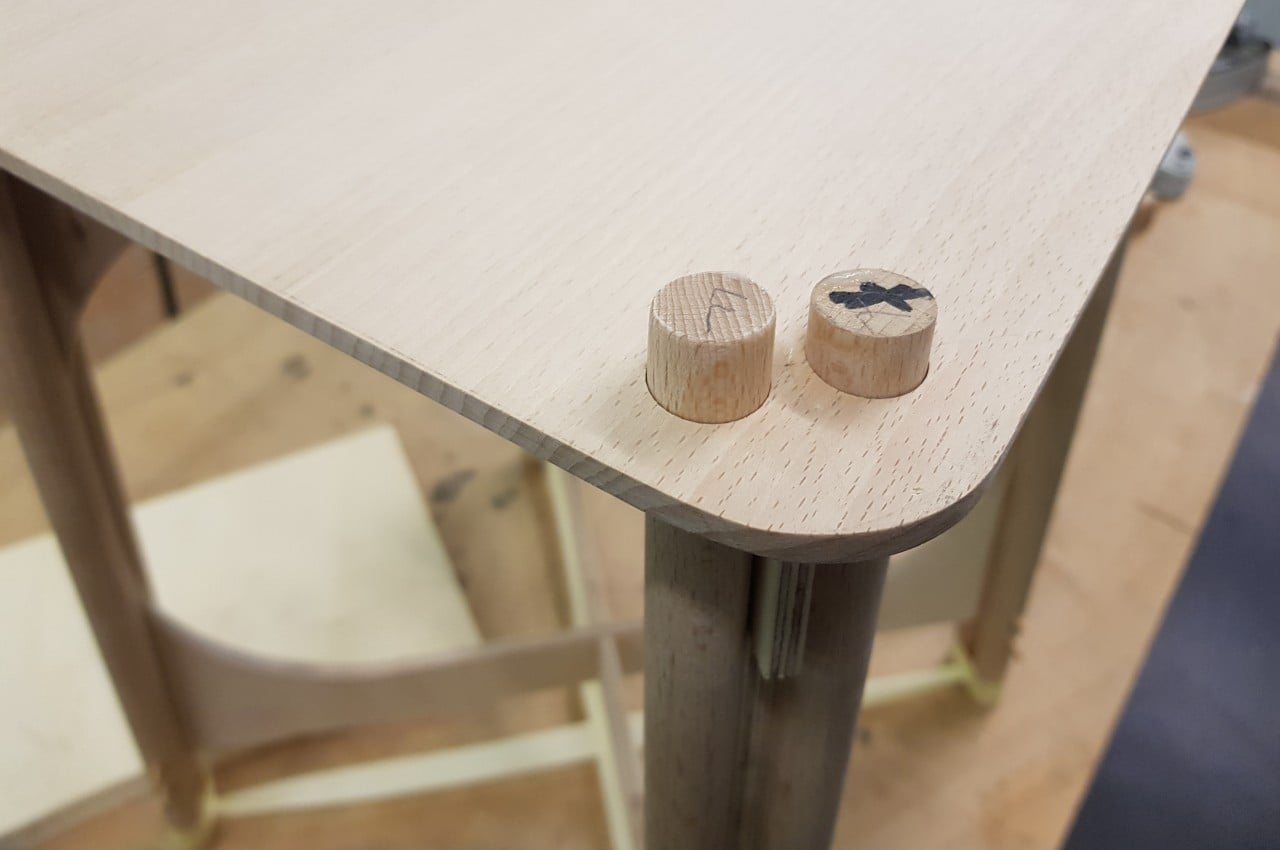
Since the wooden legs won’t offer the same stability as the plastic bits, another element – the Birch plywood buttresses is added to the stool. It evens out some of the force across the beechwood legs, allowing the buttresses to be held together. This increases architectural stability, as well as visual amplification.

What we like

  • The stool doesn’t need screws or nails to be assembled
  • Features a fun puzzle-like design

What we dislike

  • Options to customize the stool are currently missing

6. Stump Recycled Stool

Derlot designed the original Stump stool sometime ago, and now they’ve unveiled the new Stump Recycled stool which has the same structure of the OG Stump stool, but it is interesting built from 80% recycled post-industrial plastic LPDE. The Stump Recycled stool is quite colorful and visually intriguing to look at, which adds extra brownie points besides its sustainability.

Why is it noteworthy?

The new Stump stool features a different design, as the patterns form a terrazzo-like design that offers the stool a textured and colored look. You can pick stools with a kaleidoscope-like finish, which provides a fresh interpretation of how recycled materials can be used to elevate a design.

What we like

  • Offers a new and fresh take on how recycled materials can be utilized

What we dislike

  • The stool is quite small and doesn’t look too comfy to sit on for long

7. Tie Stool

Dubbed the Tie Stool, this stunning stool is made from three bent pieces of plywood that effortlessly lock into one another, creating a unique tripod form that is quite comfy to sit on. It is a simple stool made using minimal materials making the stool quite a beauty.

Why is it noteworthy?

The three plywood strips can be split into 6 total parts, forming individual parts that are built using high pressure, causing the plywood to bend and retain its shape. The cutting processes are performed on the parts allowing them to interlock into one another.

What we like

  • Flat-packed and shipped to customers
  • Features a stackable form

What we dislike

  • Its compressed design means it needs a tabletop to add more space on the stool

8. TAKEoSEAT

Meet the TAKEoSEAT – a folding stool unlike any other. Designed by KRETHO, this portable stool allows you to simply pick it up, and move around as you please. You don’t need to rearrange furniture or sweat over a particularly heavy chair. It flattens down to a large portfolio and looks like a stylish bag made of felt.

Why is noteworthy?

The TAKEoSEAT is made from PET felt, and this felt is derived from plastic bottles that we often use and throw away without giving a second thought about where they may end up. They are put through a special process, to create material that is familiar to touch, but also strong and sturdy.

What we like

  • The stool is crafted from PET-felt
  • Has an easy-to-carry and portable form

What we dislike

  • Folding designs are quite common these days, so not much to set the stool apart

9. Cork Stool Concept
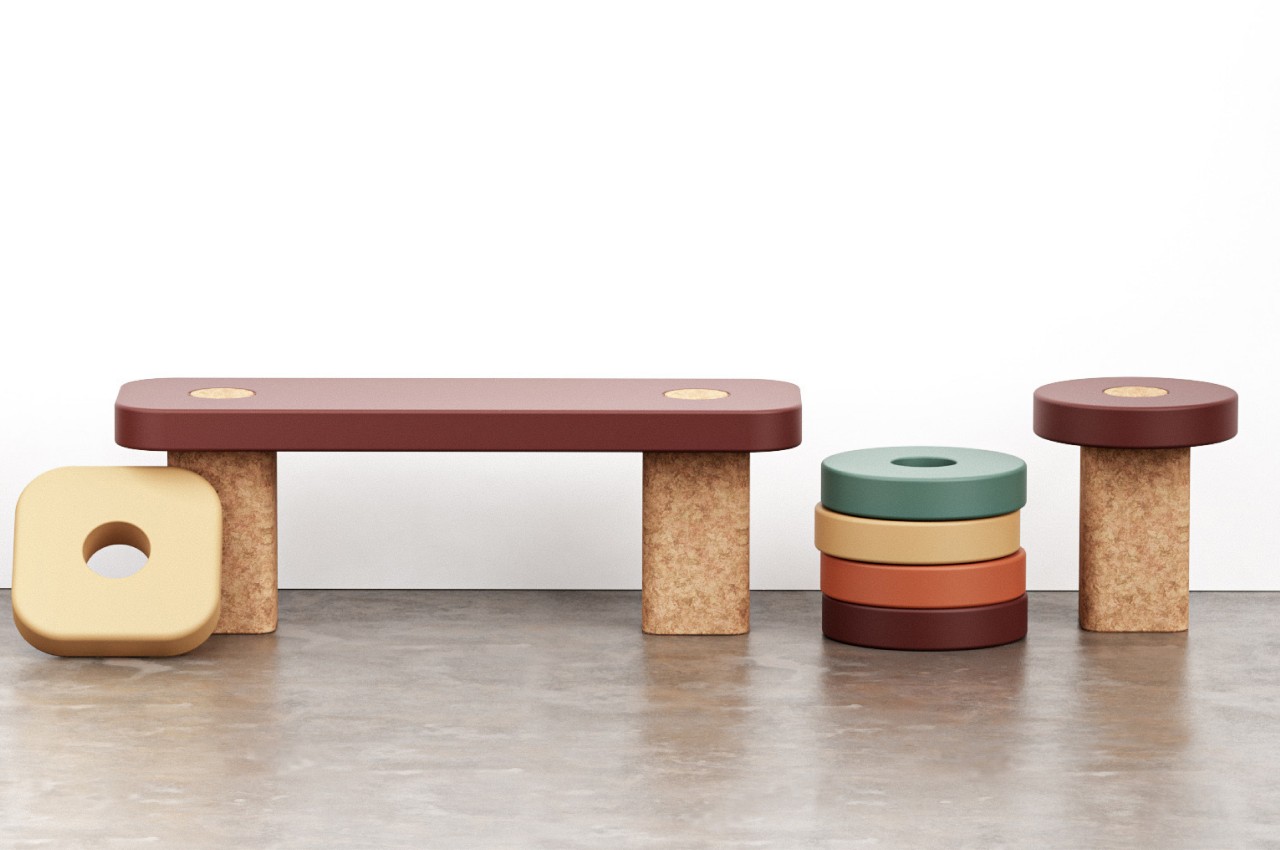
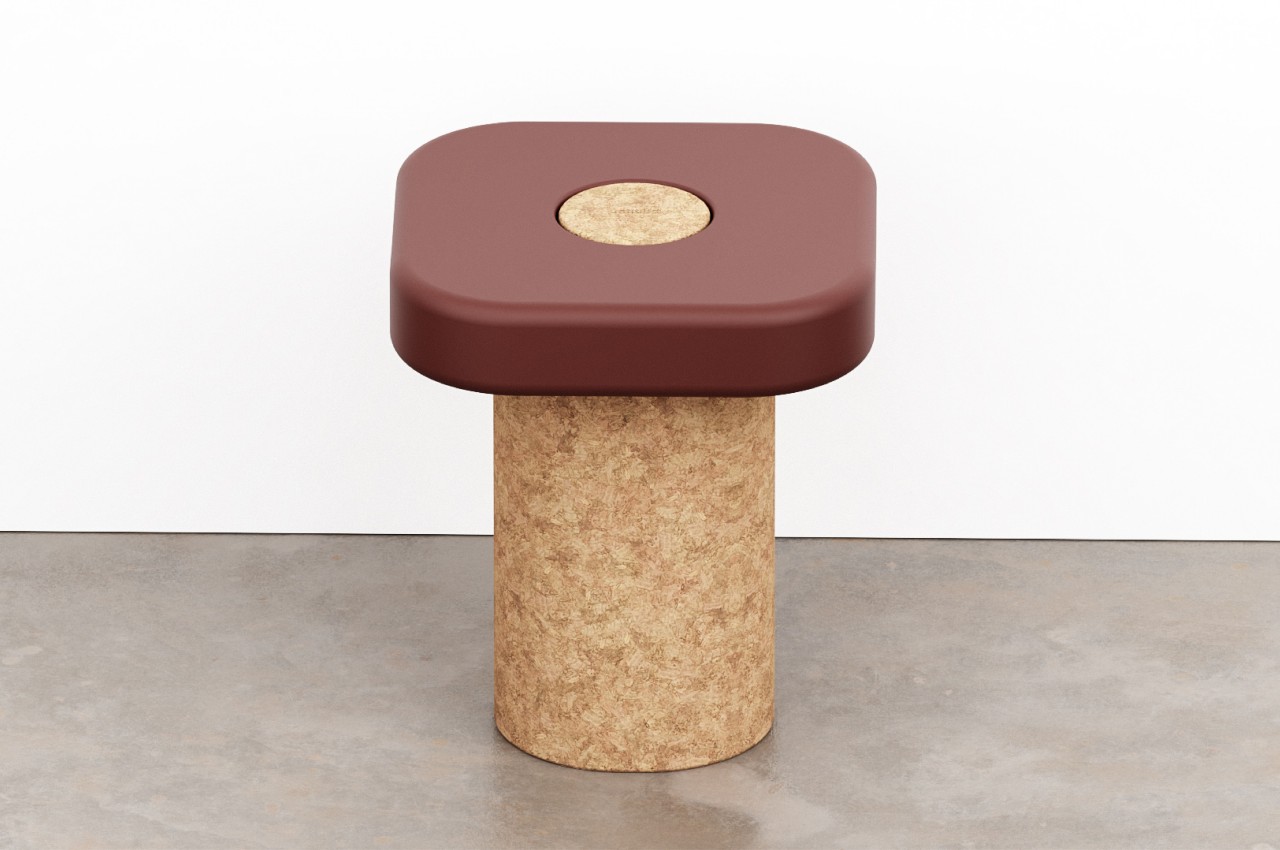
Made from cork, this minimalist stool concept is designed to offer you a sustainable seating solution, that reduces waste by converting two stools into one single bench, and then back again, as and when needed. It is like an “unknown” stool design, but it features a modular nature which leaves it interestingly open to interpretation and implementation.

Why is it noteworthy?

The design has a core element of a sturdy column of cork, which functions as a single cylinder, and forms the center of the stool. However, a smaller circle connects it to the removable seat with a hole in its center. It functions as a simple system that doesn’t need any extra parts or screws.

What we like

  • The seats can be changed or replaced without throwing away the cork

What we dislike

  • The bench variant will occupy substantial space in your home

10. Vale Collection

Named the VALE collection, this range of eco-friendly chairs and stools by Layer was designed for the US furniture brand KFI Studios. The furniture is made from recycled PET bottles and was created to protest against the plastic waste that often drowns and pollutes the oceans and landfills.

Why is it noteworthy?

The innovative collection is designed to be an eco-friendly and sustainable solution to the rising issue of plastic waste. The furniture is a refreshing change and an excellent specimen of sustainable furniture, in today’s world when 9 million tons of furniture are thrown in landfills.

What we like

  • The furniture is made using a material derived from recycled PET bottles. The material is durable and eco-friendly

What we dislike

  • The looks of the chairs and stool are a bit boring, more aesthetic details could have been added

The post Top 10 Sustainable Stools To Incorporate Eco-Friendly Furniture Designs In Your Home first appeared on Yanko Design.


The Morning After: Tesla settles lawsuit over fatal Model X crash

Back in 2019, the family of Apple engineer Wei Lun Huang (aka Walter Huang) sued Tesla a year after he was killed when his Model X crashed while Autopilot was engaged. The automaker has settled the lawsuit — on the very day jury selection was supposed to take place. Tesla’s lawyers asked the court to seal the settlement agreement so the payout amount wouldn’t be made public.

Tesla confirmed shortly after the accident that Autopilot was on at the time of the crash, but it also insisted Huang had time to react and had an unobstructed view of the divider. In a statement to the press, the company insisted the driver was at fault, and the only way for the accident to have occurred was if Huang “was not paying attention to the road.”

The National Transportation Safety Board (NTSB) investigation found Huang running a mobile game but couldn’t confirm if he was holding the phone during impact.

— Mat Smith

The biggest stories you might have missed

Google’s long-awaited Find My Device network launches today

Logitech’s tiny G Pro X 60 gaming keyboard has some big competition

NASA will be studying the total solar eclipse. Here’s how you can help

​​You can get these reports delivered daily direct to your inbox. Subscribe right here!

Nintendo’s Wii U and 3DS online servers are gone

They lived their life like two candles in the wind.

TMA
Engadget

Both the Wii U and 3DS’ online servers have been switched off. This means the end of online multiplayer gaming for both consoles, turning Mario Kart 7 for 3DS and the original Splatoon for the Wii U into single-player or couch co-op experiences — AKA the best Mario Kart experience. The first Super Mario Maker is also effectively dead.

Continue reading.

Play Tekken, get free Chipotle

Mild salsa for Mishima.

The Chipotle Challenger Series featuring Tekken 8 will kick off on PS5 Tournaments with a qualifier round from April 15 to 26, open to anyone who wants to test their fighting-game skills — or just score some free snacks. All qualifier participants will receive a code for free chips and guacamole from Chipotle. If you’re actually good (at Tekken, not eating Chipotle), there’s a $5,000 prize and a trip for two to Evo 2024 in Las Vegas, plus free Chipotle for a year. Adobo chicken for Asuka, Barbacoa for Bryan Fury, Carnitas for King. I could go on.

Continue reading.

Spotify tests AI-generated playlists based on text prompts

Again, it’s trialing features in the UK first.

Spotify is dipping its toe into the world of AI prompts. It announced AI Playlist, a new beta feature for creating playlists with a few words to get into the music vibe you want, such as “an indie folk playlist to give my brain a big warm hug.” Ugh.

The beta is available to Premium subscribers on Android and iOS devices in the United Kingdom and Australia. You can access it through the + button at the top right of your library. Click AI Playlist and let your imagination run wild.

Continue reading.

Fairphone’s repairable wireless earbuds put the industry on notice

Swap the Fairbuds’ batteries in 30 seconds.

TMA
Engadget

The big problem with the boom in true wireless earbuds is they’re pretty much never repairable. Once the batteries wear out, they’re done. Fairphone, however, has built a pair of buds with not only replaceable batteries but easily replaceable ones. The Fairbuds are made of 70 percent recycled and fair materials, while 100 percent of the rare earth elements and tin are recycled. They are €149, and it’s likely we’ll see them in the US at some point, just like its phones.

Continue reading.

This article originally appeared on Engadget at https://www.engadget.com/the-morning-after-tesla-settles-lawsuit-over-fatal-model-x-autopilot-crash-111621559.html?src=rss

2024 Audi S3 Comes with 333 PS

2024 Audi S3

Get ready to experience an adrenaline rush like no other with the 2024 Audi S3. This compact sedan has undergone a complete transformation, offering you more than just a cosmetic upgrade—it’s a performance revolution that will leave you breathless. Under the hood, you’ll find a turbocharged 2.0-liter TFSI engine that delivers an astounding 333 horsepower […]

The post 2024 Audi S3 Comes with 333 PS appeared first on Geeky Gadgets.