Rope Replaced Every Screw and Dowel in This $77 Wooden Folding Stool

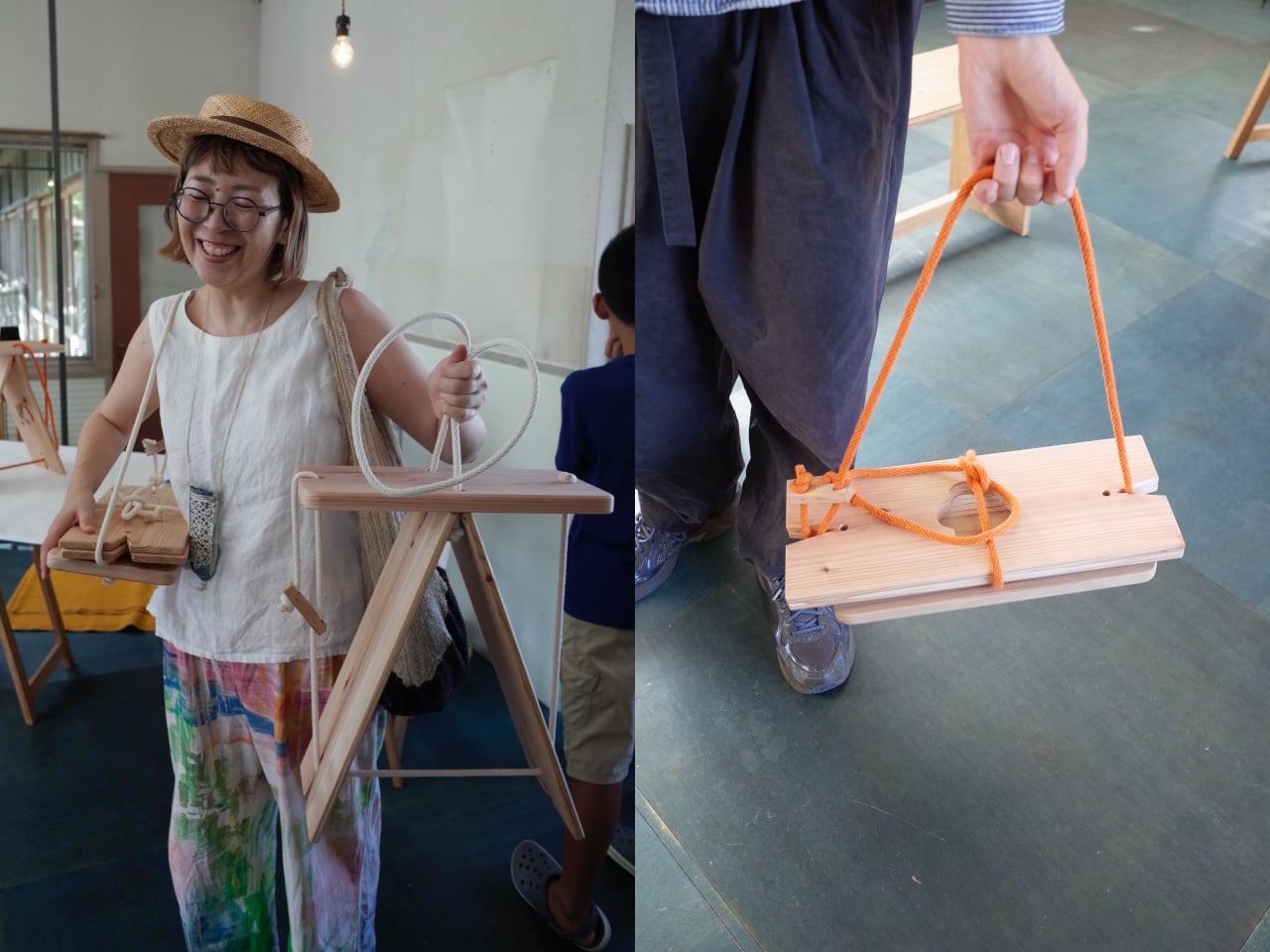
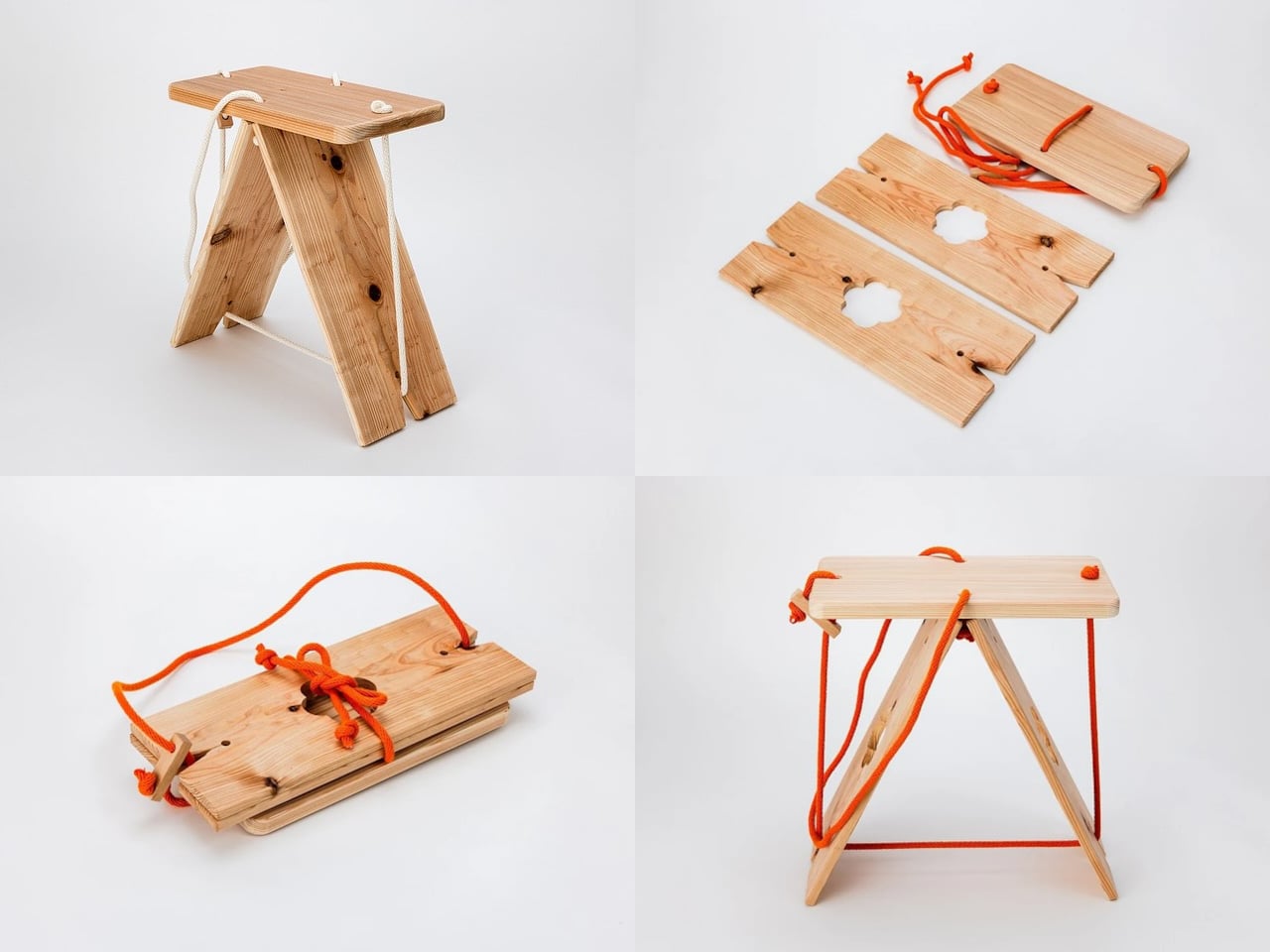
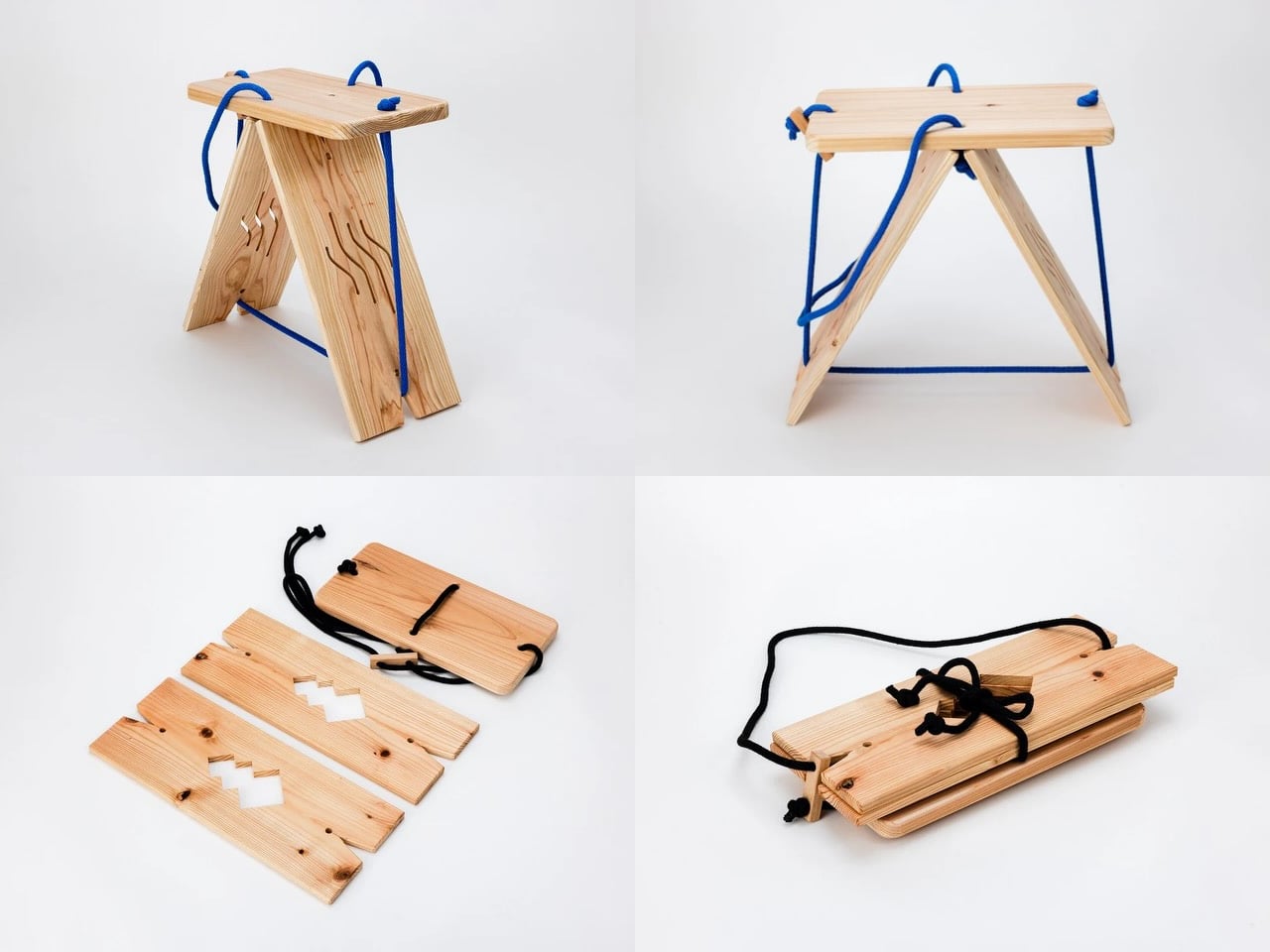
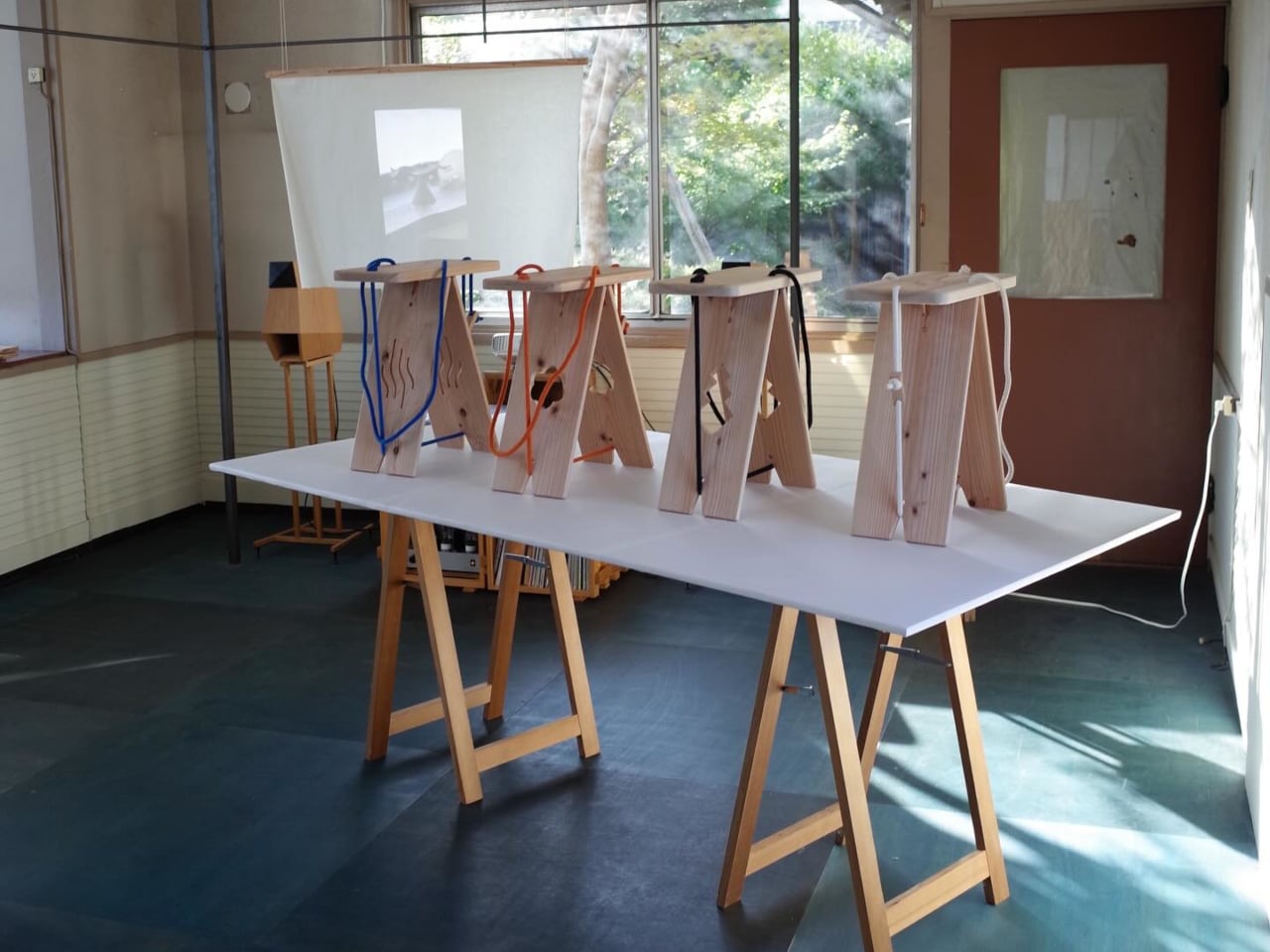
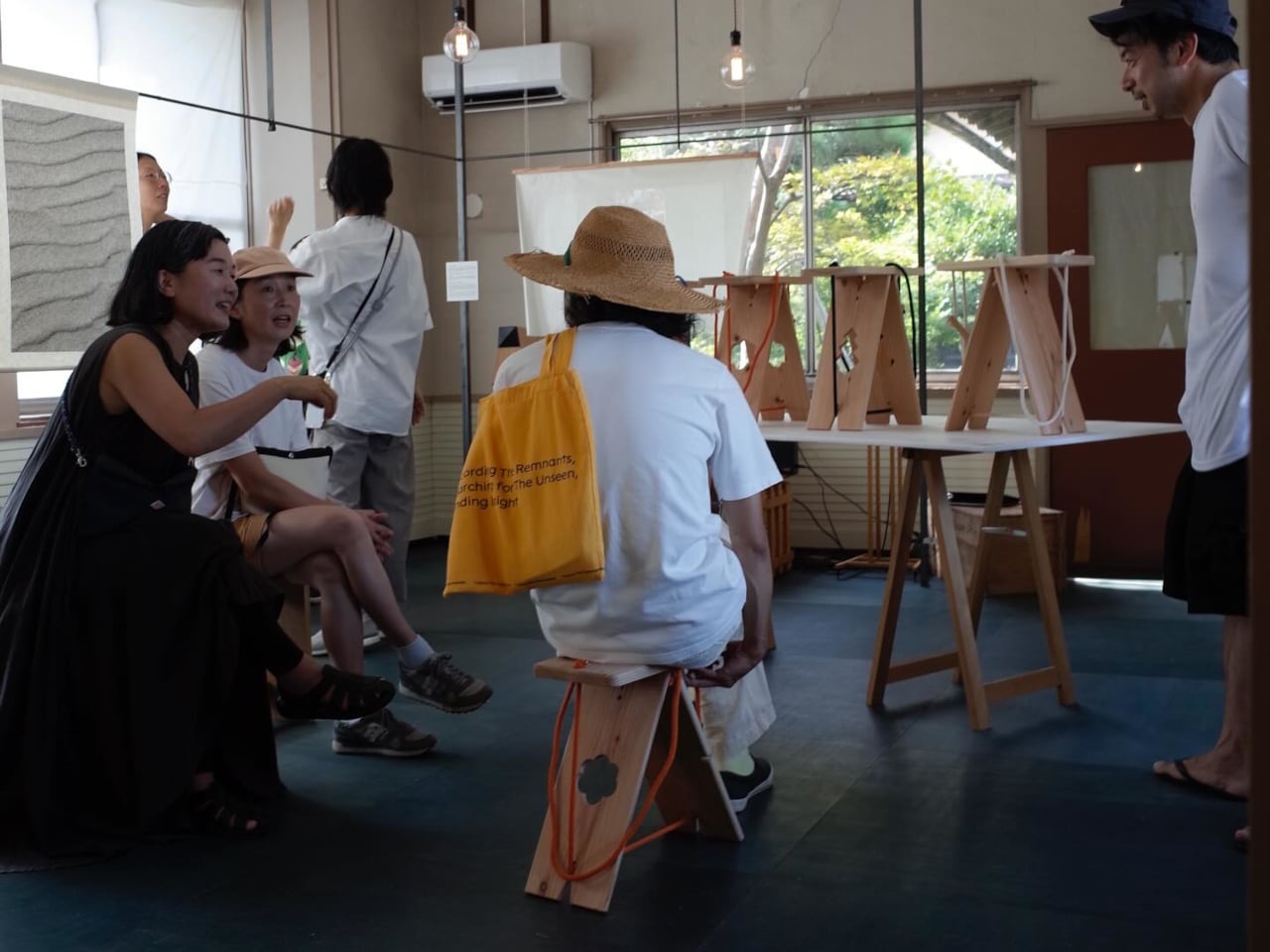
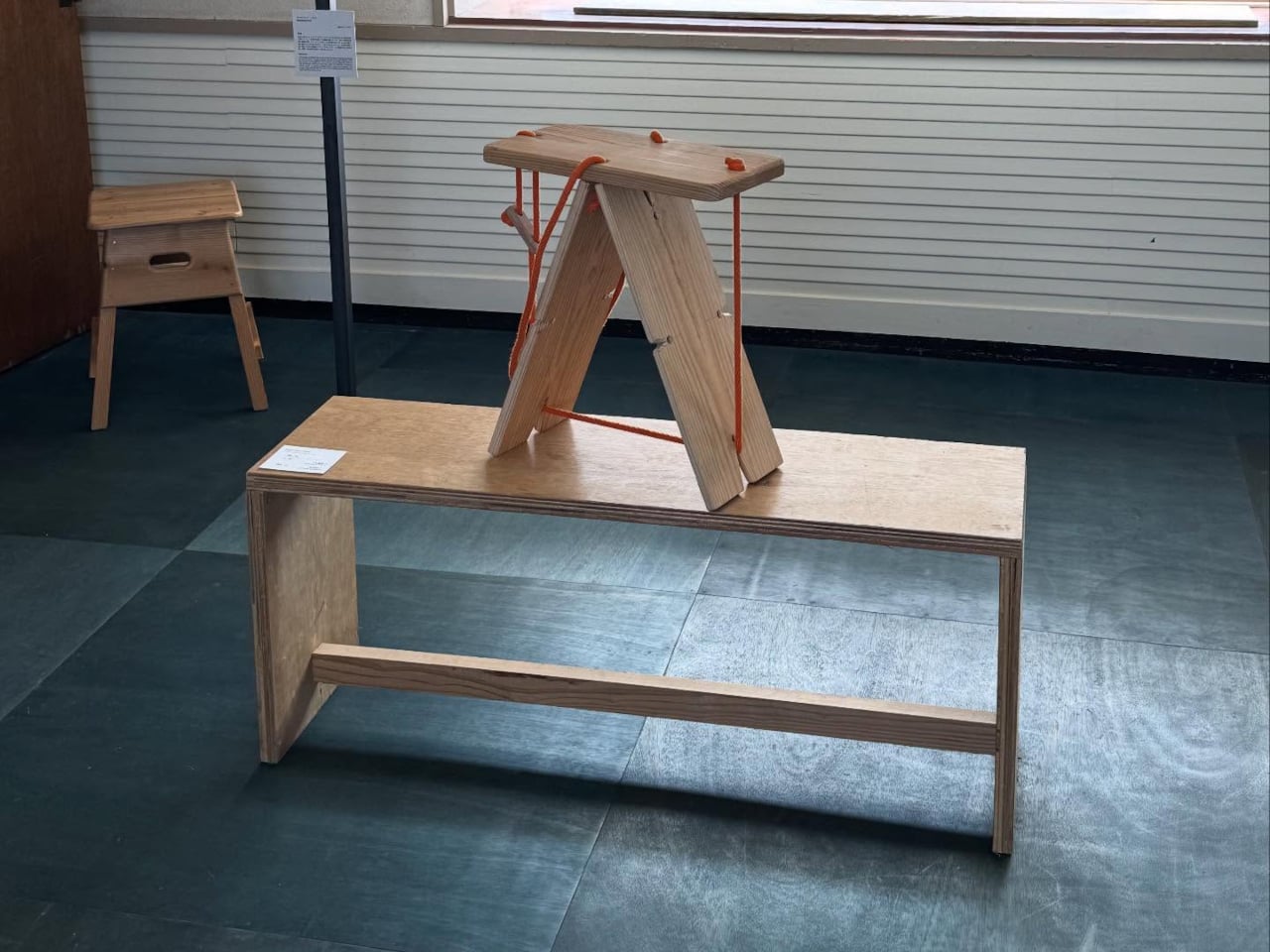
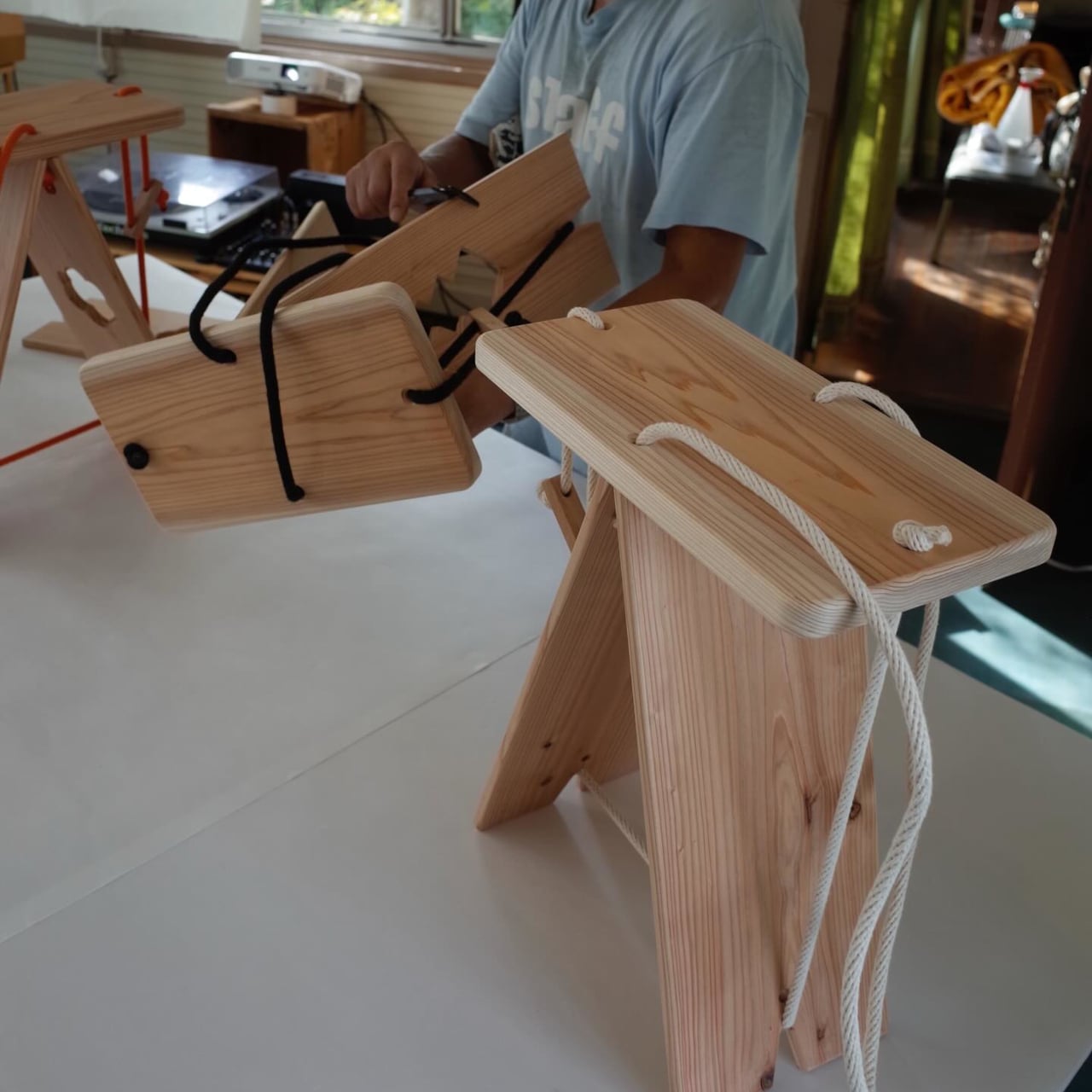
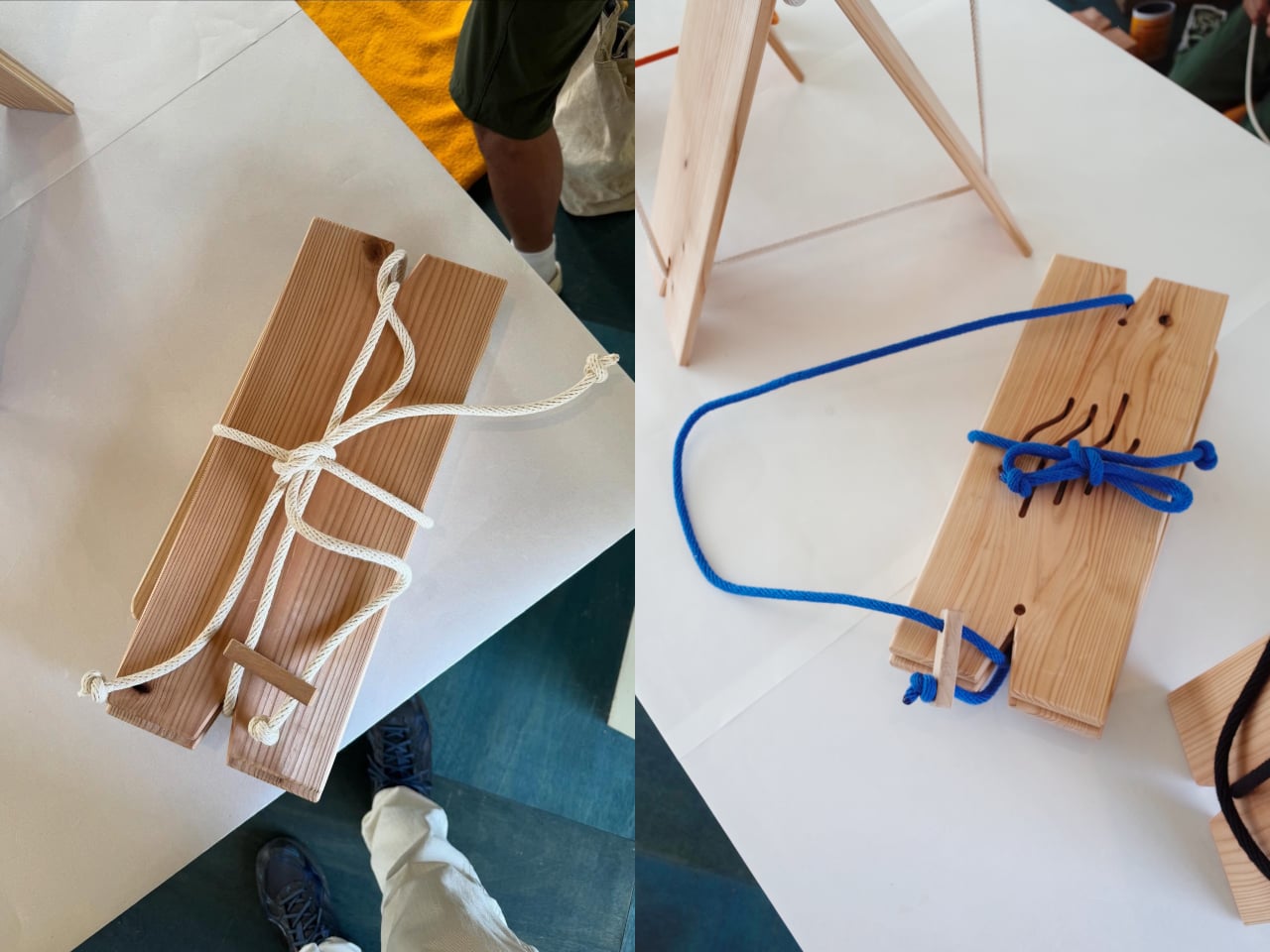
Most furniture relies on hardware you can’t see to hold everything together. Screws, bolts, dowels, and adhesives do the invisible work that keeps chairs and stools from coming apart. The Rope Stool does without all of it. Designed as part of a craft exchange between Tottori, Japan, and Gothenburg, Sweden, it holds its flat cedar boards together through rope tension alone, and it folds flat when it’s done.

The exchange that produced it ran for three weeks in Tottori Prefecture, where six Swedish creatives came to collaborate with local Japanese craftspeople. The initiative was organized by Oshinsha, a Japanese retailer dedicated to promoting the work of local artisans, with funding from both countries. It was structured as a genuine creative residency, not a cultural showcase, and the stool that came out of it reflects that difference.

Designers: Esbjorn Grip, Junsei Fujimoto

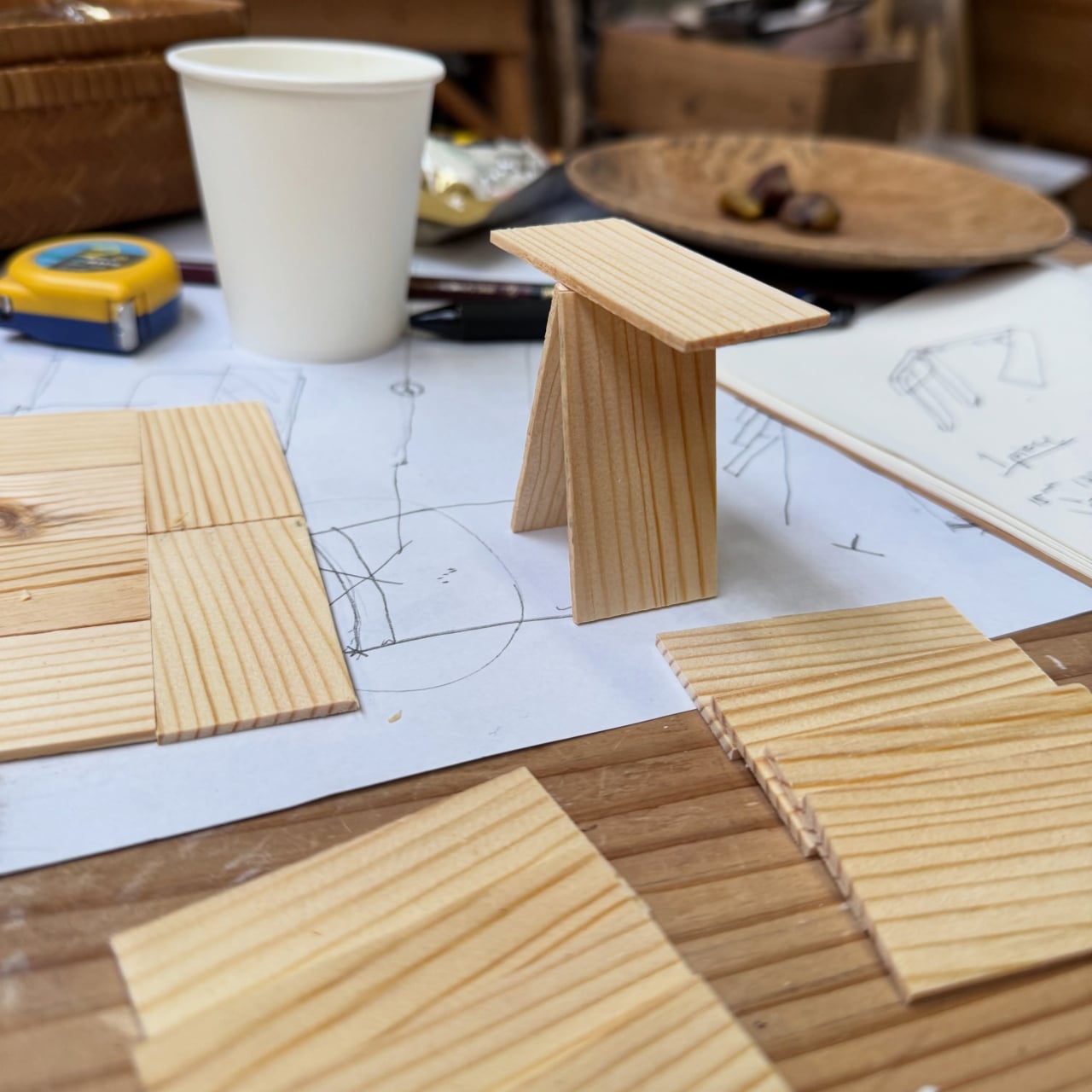
The brief handed to the pair who made the Rope Stool was deliberately restrictive: create a piece of furniture from a single, repeatable wooden element. What they arrived at is a seat made entirely from identical flat boards of Japanese cedar, no custom-cut components, no specialized hardware. The rope pulls them into formation and holds them there, tight enough to carry a person’s weight, loose enough to release when you want to pack up and leave.

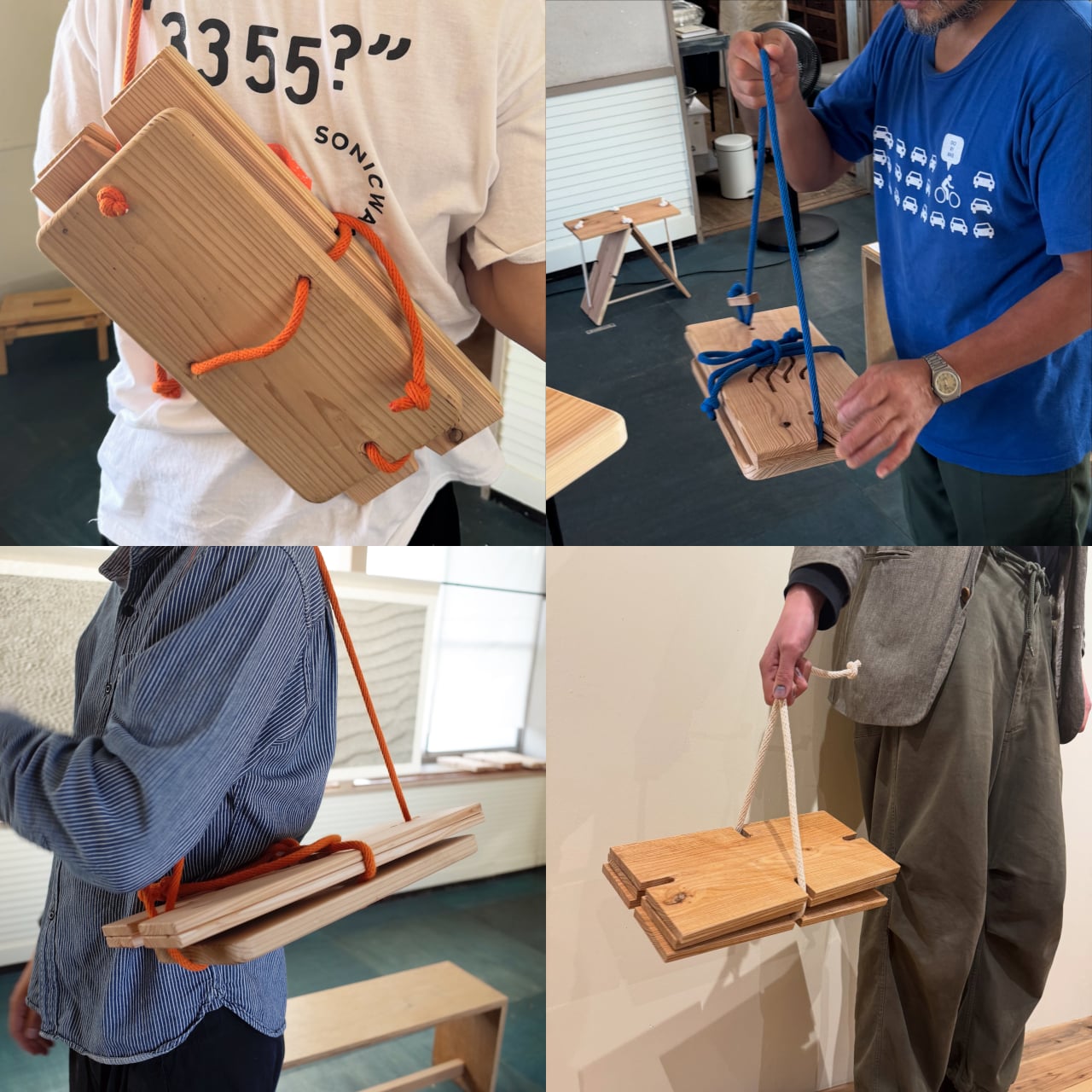
That packing-up quality is one of the things that makes the stool more than a design exercise. A seat that disassembles into a flat bundle of boards and a length of rope is genuinely portable in a way that most stools aren’t. You can bring it to a market stall, a workshop, an outdoor event, or anywhere that needs a seat more than it needs a chair stored permanently in the corner. The rope tension is what creates the rigidity; without it, the parts stay separate and flat.

The cedar itself is a considered choice. Japanese cedar, or sugi, is one of the most widely used traditional wood materials in Japan, valued for its light weight, straight grain, and durability. Flat boards cut from it are uniform enough to be truly interchangeable, which is the point of the single-repeatable-element brief. Each board in the stool is the same as the others, and the rope is what differentiates a pile of boards from something you can sit on.

There’s a conceptual clarity to the construction that most furniture doesn’t achieve. The structure is visible, the logic is readable, and nothing about how it stays together is concealed. Pull the rope, and it assembles. Loosen it, and it comes apart. The simplicity isn’t a limit on what the stool can do: it’s the thing itself, expressed as directly as the brief demanded.

The post Rope Replaced Every Screw and Dowel in This $77 Wooden Folding Stool first appeared on Yanko Design.

Most Active Stools Just Wobble, but This One Runs on Skateboard Trucks

The active sitting market has been trying to solve the same problem for years by adding instability to an otherwise conventional seat. Balance boards, wobble stools, and kneeling chairs attempt to make sitting less sedentary through varying degrees of discomfort and compromise. Most solutions lean toward one extreme: either too unstable for focused work, or barely different from a regular chair once the body learns to compensate.

Ollie is a concept that emerged during the pandemic, when the question of how to stay physically active without leaving home became unusually pressing. Developed in collaboration with Italian furniture brand Magis, it approaches active sitting from an unexpected direction: the same equilibrium-based mechanism that makes a skateboard respond to a rider’s weight shifts turns out to be an ideal platform for a seat that keeps the body in motion.

Designers: Heitor Lobo Campos, Alessia Pinna

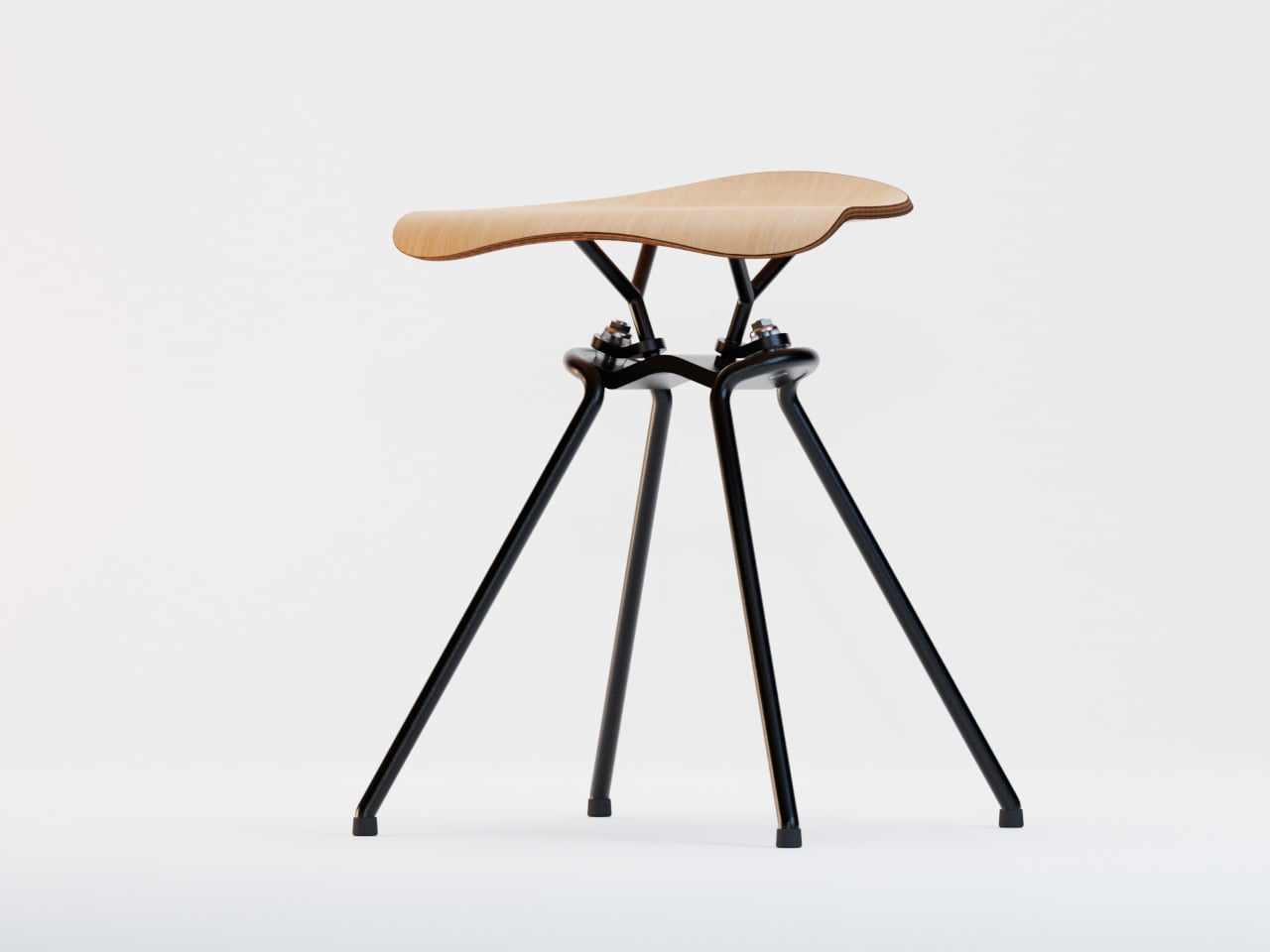
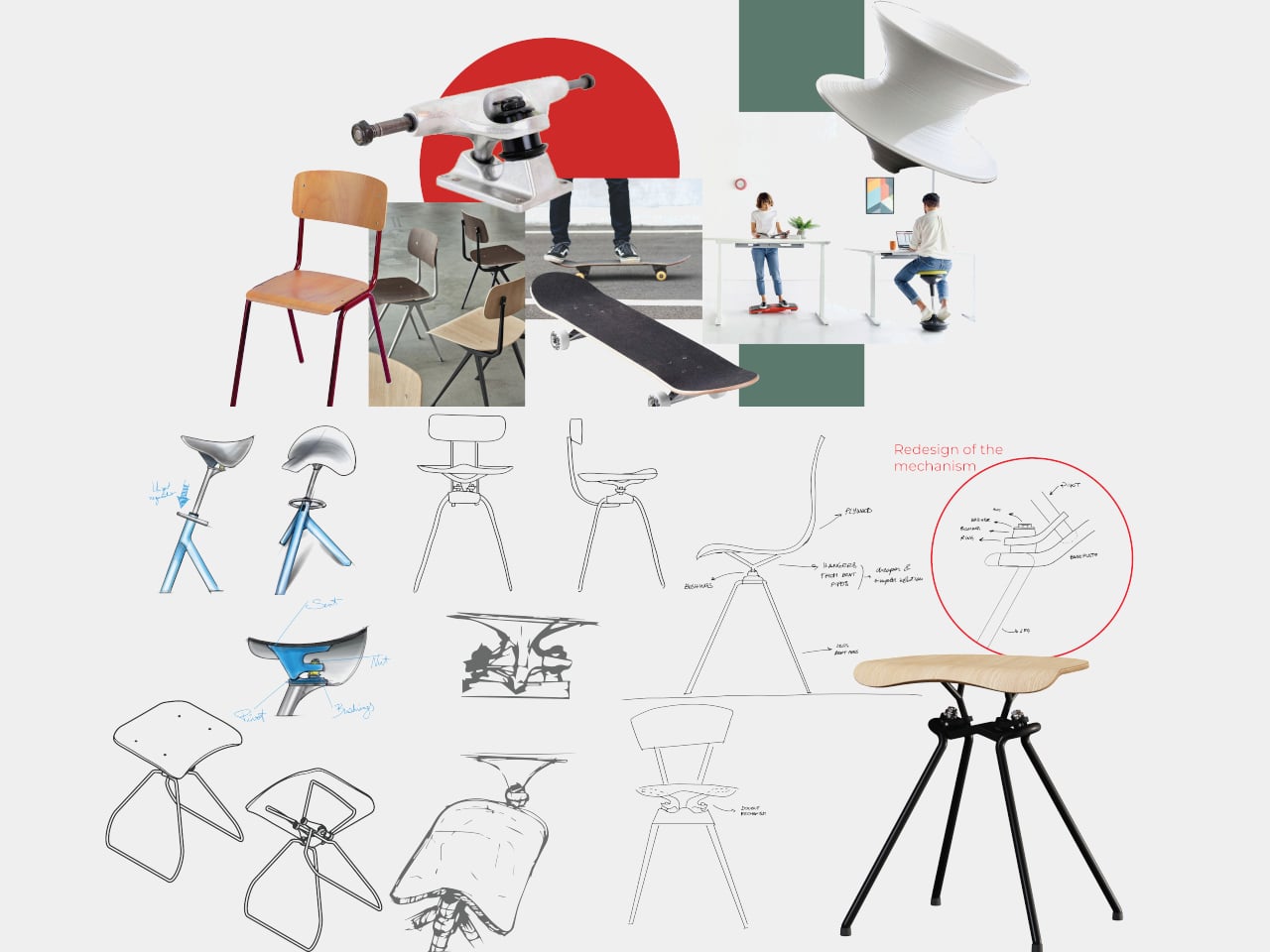
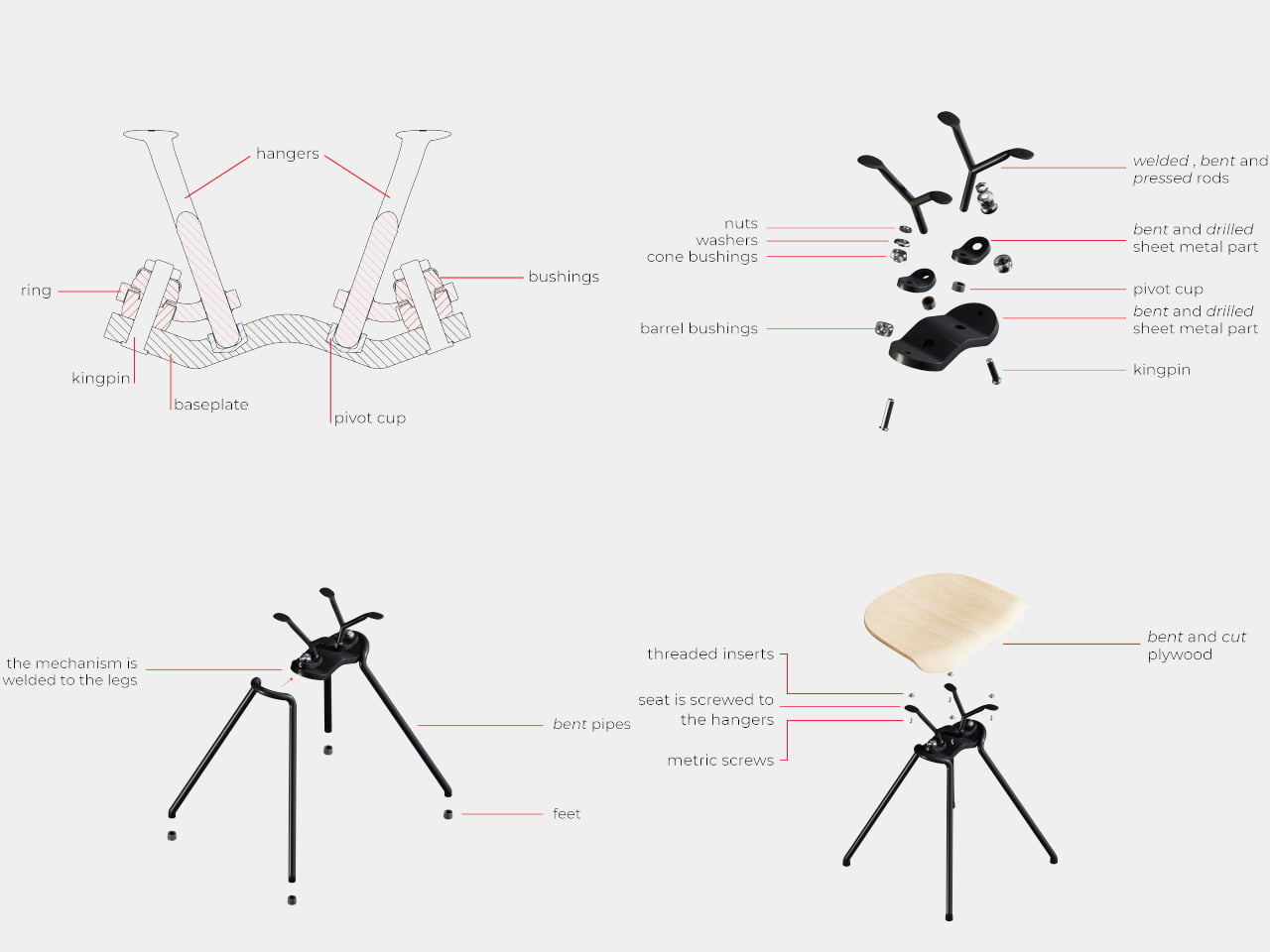
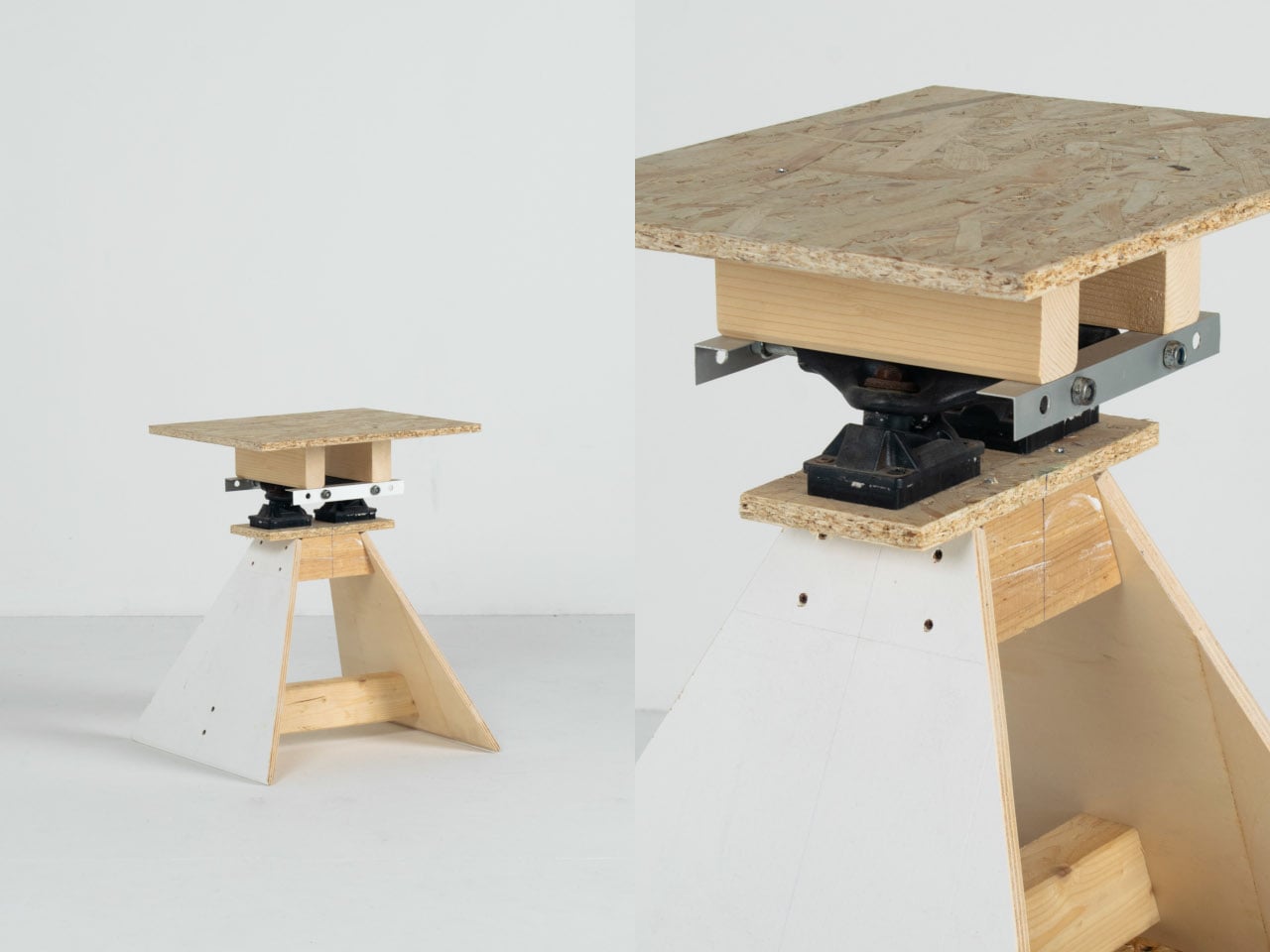
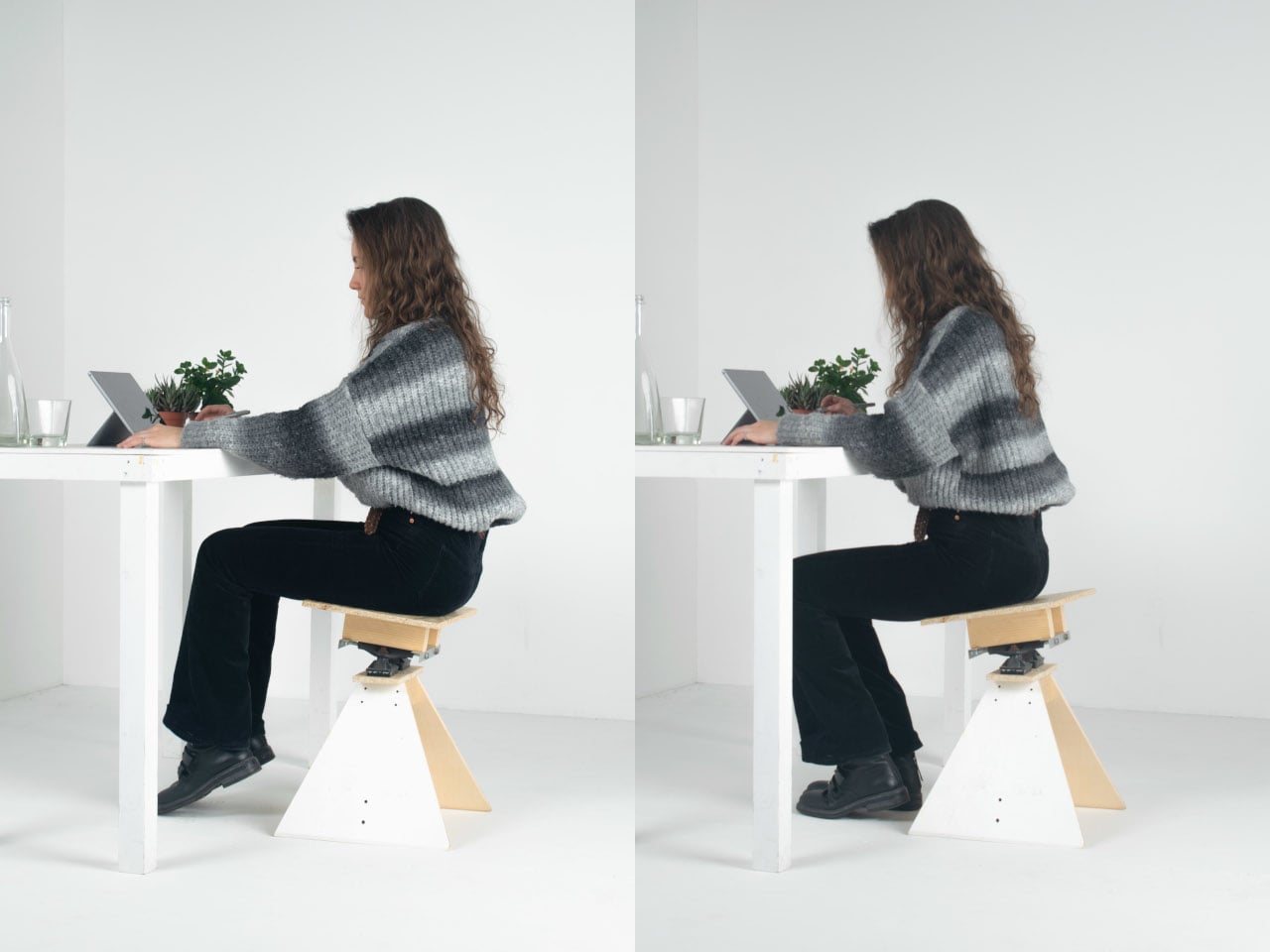
The connection to skateboarding goes beyond metaphor. The mechanism uses two skateboard trucks connected in parallel below the seat, with a central point pivoting on an axis controlled by a bearing. What lets a skateboard maneuver through a turn becomes what lets a seated person shift their weight, tilt, and continuously engage their core without interrupting what they’re working on.

Resistance is tunable. The tightness of the bushings, the rubber rings that skaters adjust to control how stiff or responsive a truck feels, determines how much effort the seat requires to tilt. Tighten them for a more stable platform that still allows movement; loosen them for a seat that demands continuous micro-adjustments. That range makes Ollie adaptable to different users and different tasks without changing anything fundamental about the design.

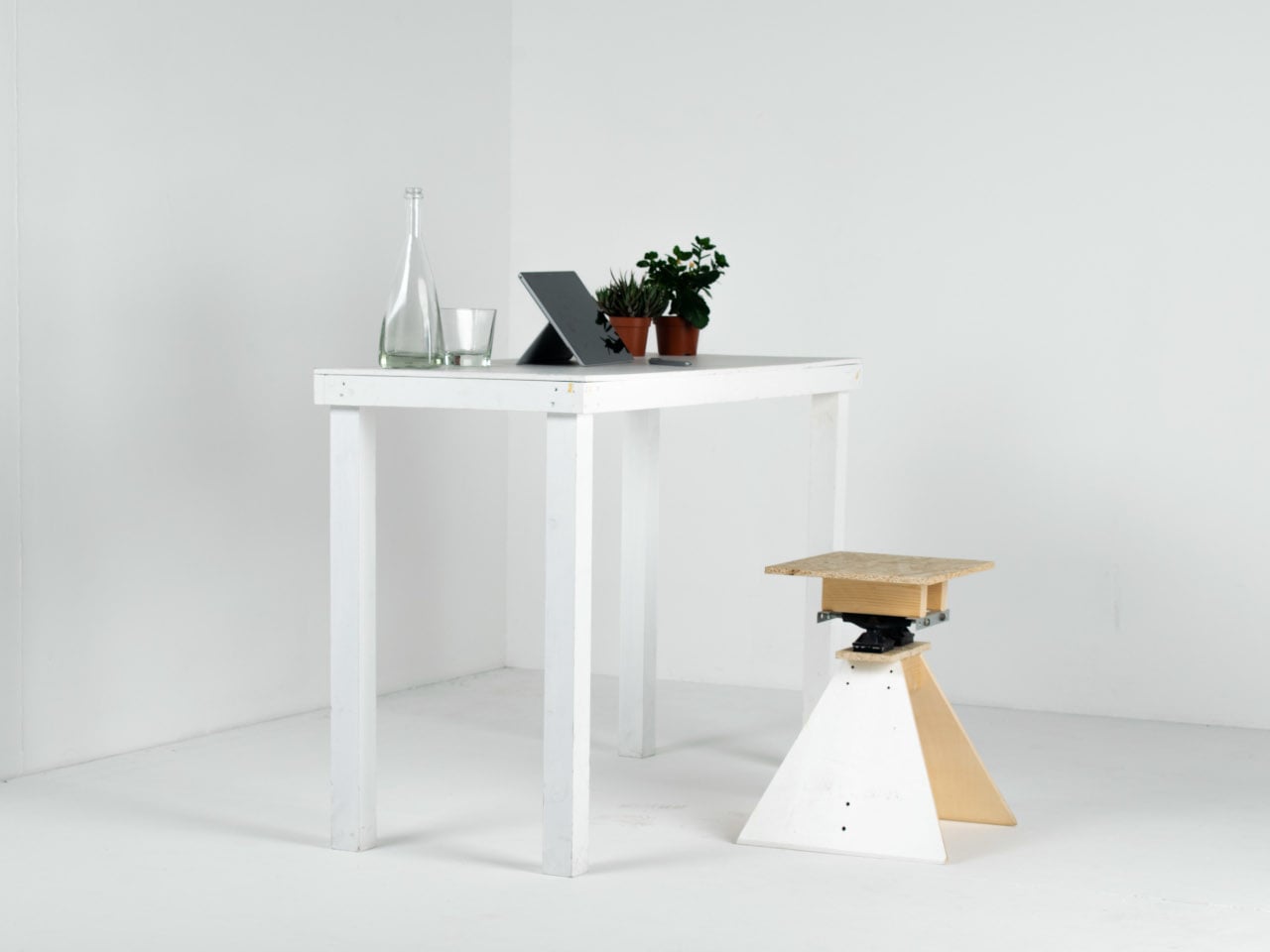
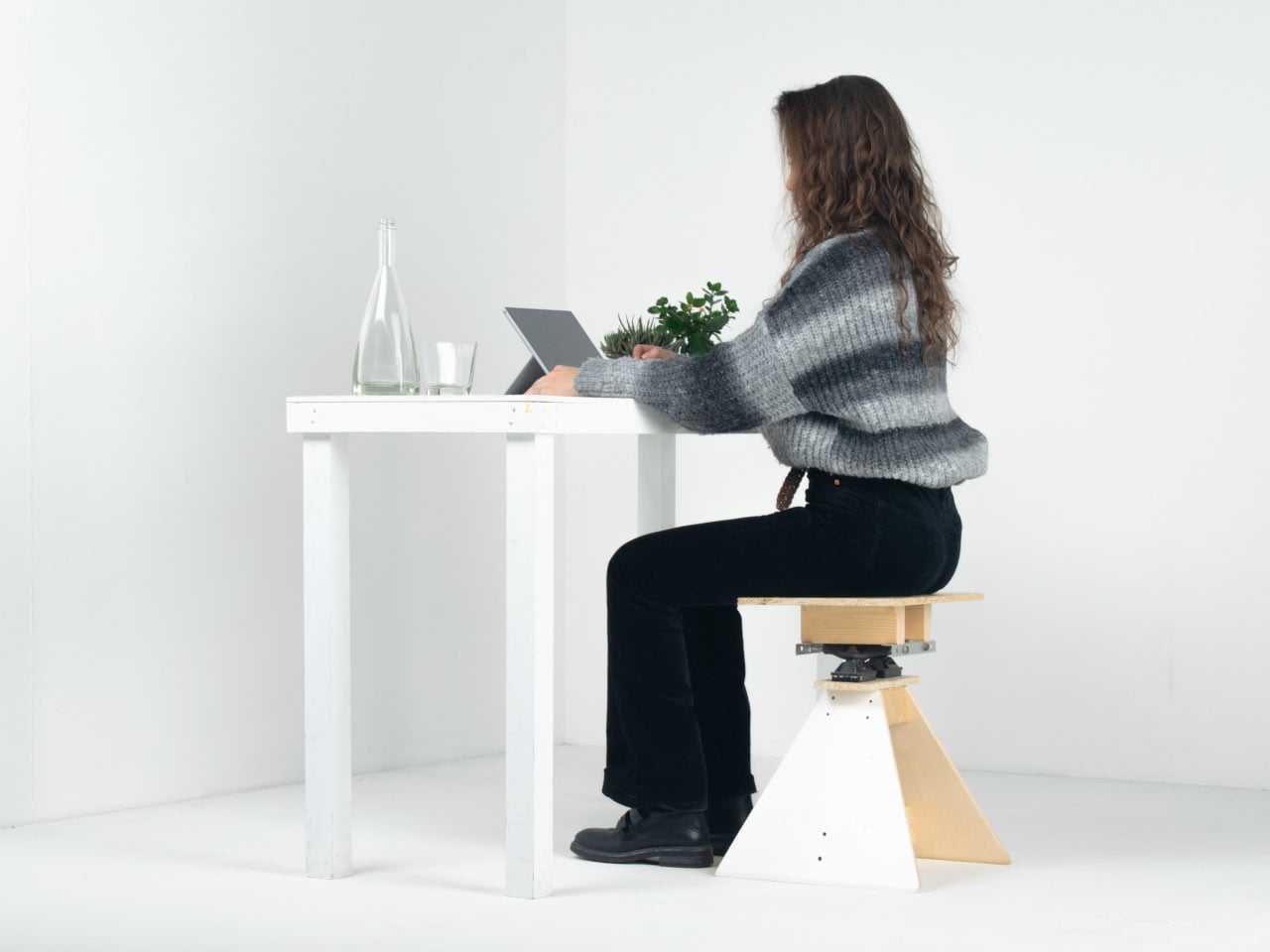
At a standing-height desk, Ollie puts the body in a middle position between sitting and standing, where the core and lower back engage in small amounts of stabilizing work throughout the session. The movement it introduces isn’t dramatic; it’s subtle enough that focus on work isn’t interrupted, but persistent enough that it adds up over the course of a day, particularly for anyone spending several hours at a screen.

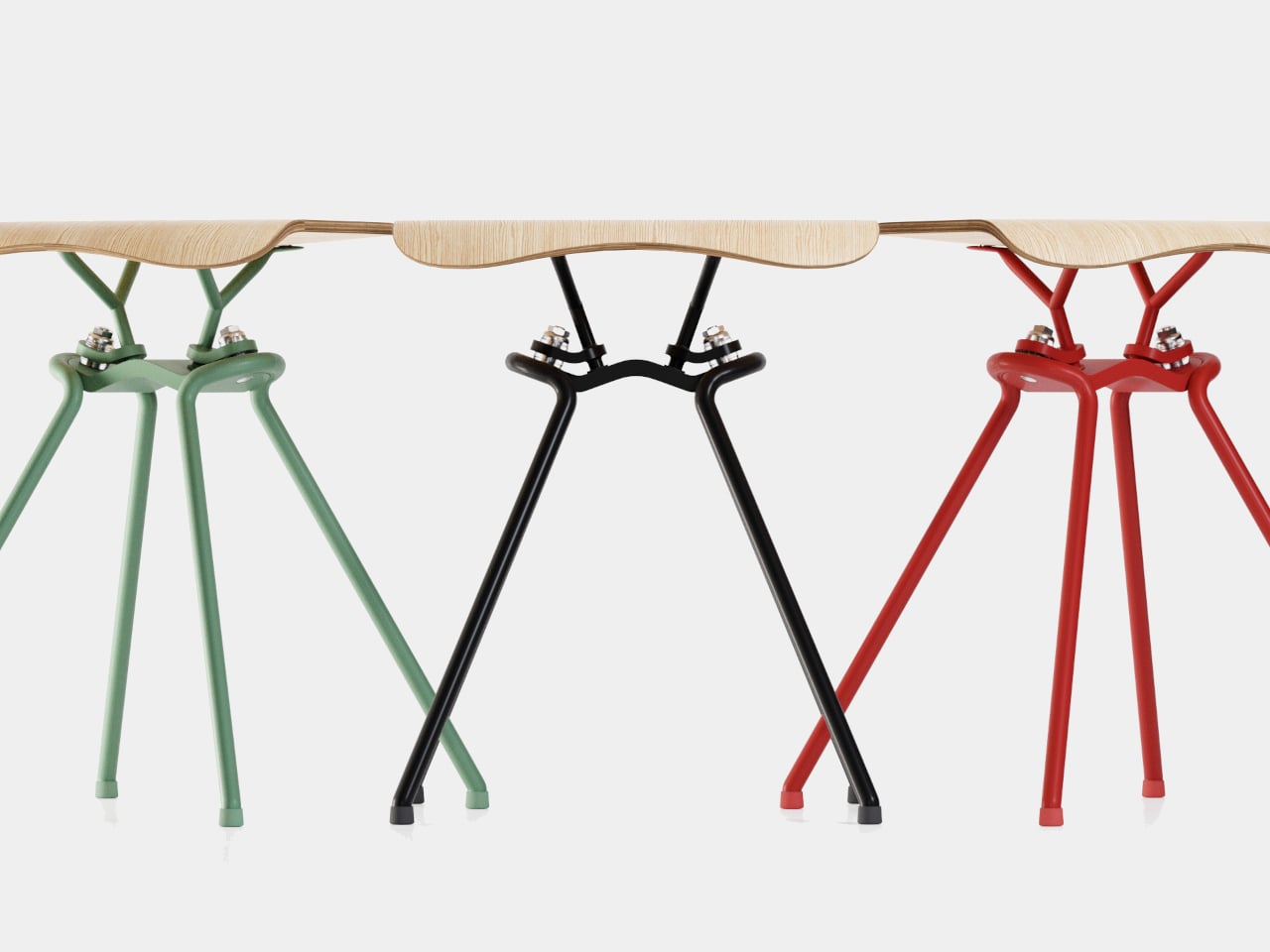
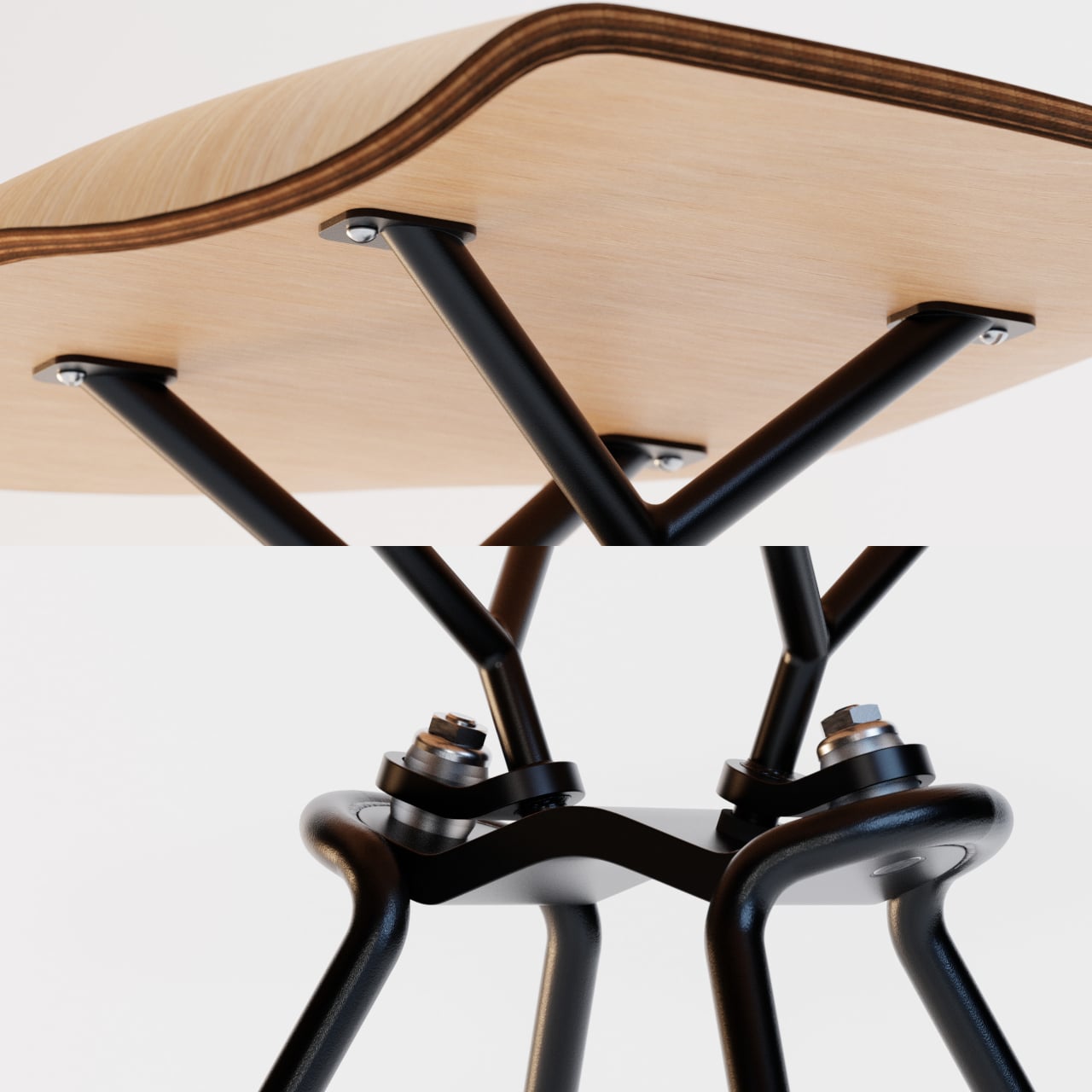
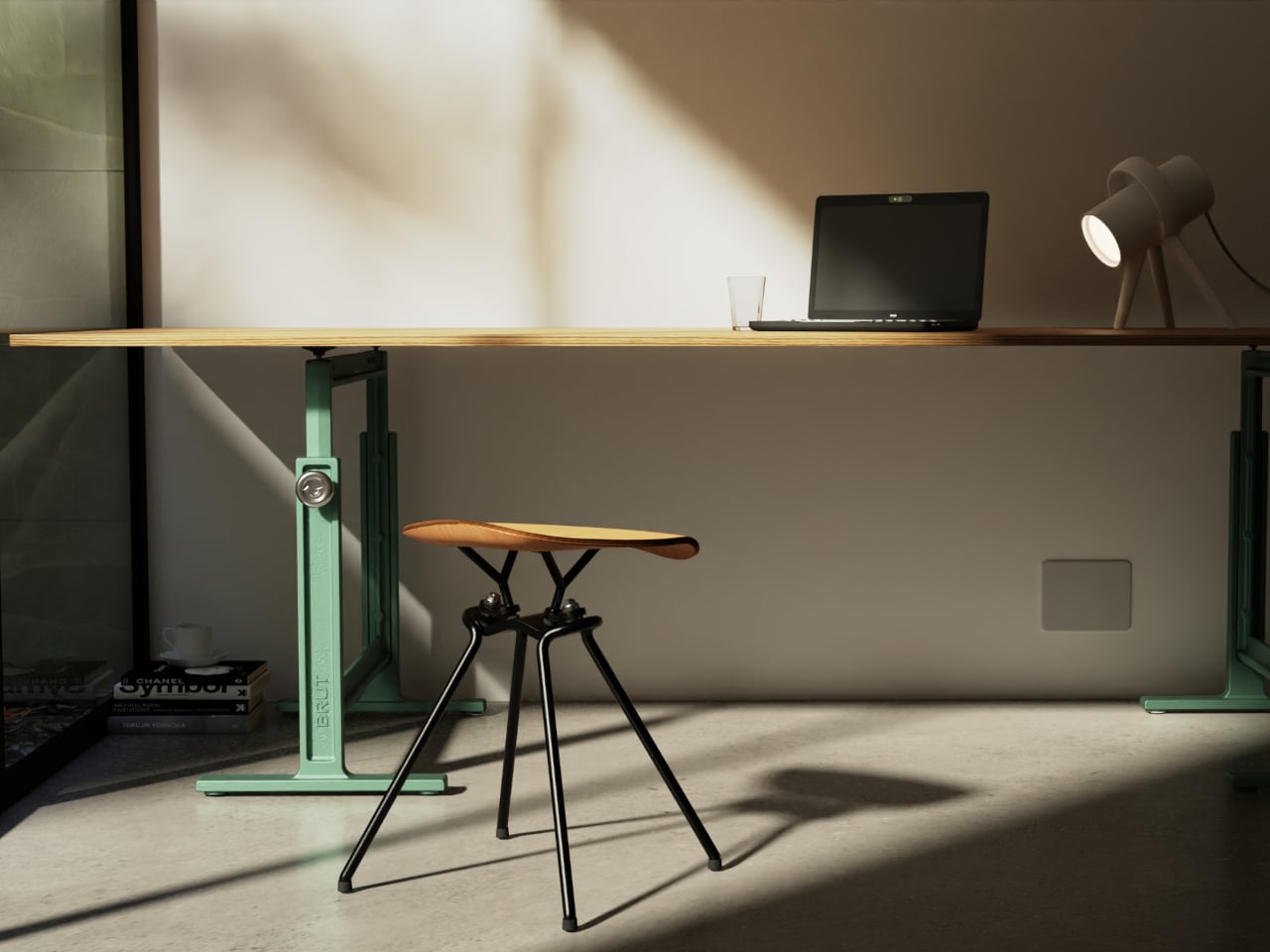
The seat is a bent plywood saddle that screws to the truck hangers through threaded inserts, making it removable with standard metric fasteners. The base uses bent steel pipes welded to the mechanism, keeping the frame visually minimal despite the mechanical complexity at its center. Three colorways, green, black, and red, give the frame character that ergonomic seating rarely attempts, preferring to disappear behind neutral plastics and black foam.

Repairability is a design principle rather than an afterthought. Every component on the Ollie can be removed and replaced individually, mirroring how skateboard culture has always approached maintenance. A worn bushing or a cracked seat doesn’t require replacing the whole stool, only the failed part. That approach extends the product’s useful life considerably without adding design complexity, and keeps manufacturing costs down on components that see the most stress.

The name explains the concept more precisely than most product names manage. An ollie in skateboarding is the foundational jump, the first trick a skater learns and the prerequisite for everything that follows. The same equilibrium-based logic that gives a skateboard its flexibility in maneuvering gives Ollie its range of active response, which is a more direct lineage than most furniture carries from its sources of inspiration.

The post Most Active Stools Just Wobble, but This One Runs on Skateboard Trucks first appeared on Yanko Design.

A Portable Cork Brainstorming Stool For Literal Lightbulb Moments

Productive brainstorming rarely stays in one room. Teams move between floors, commandeer empty meeting rooms, or pull chairs into an open corner when a whiteboard becomes available. The problem is that the tools that make those sessions work, the markers, sticky notes, and papers, rarely travel with the people. So you set up, leave to gather supplies, and whatever momentum was building quietly evaporates.

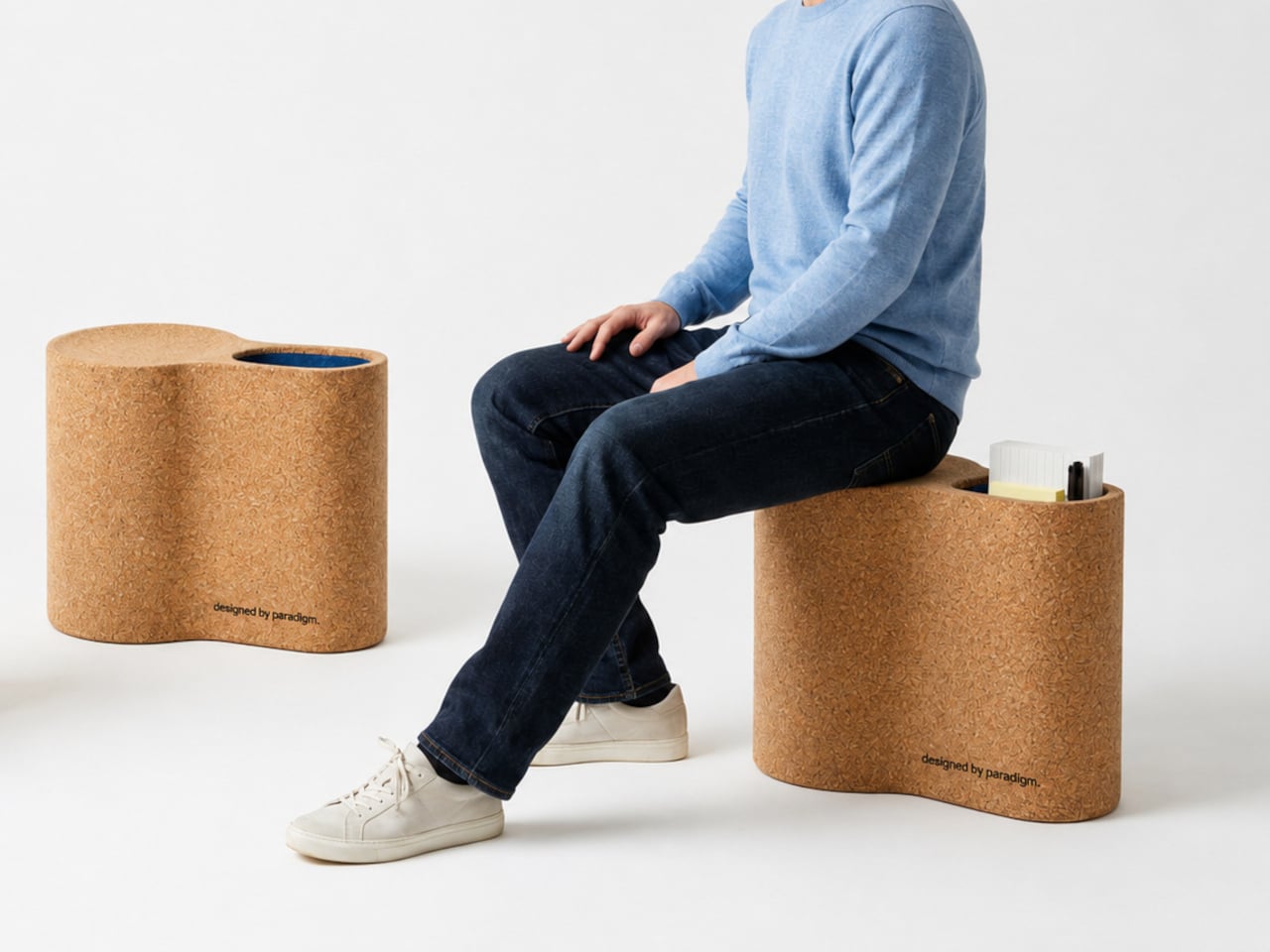
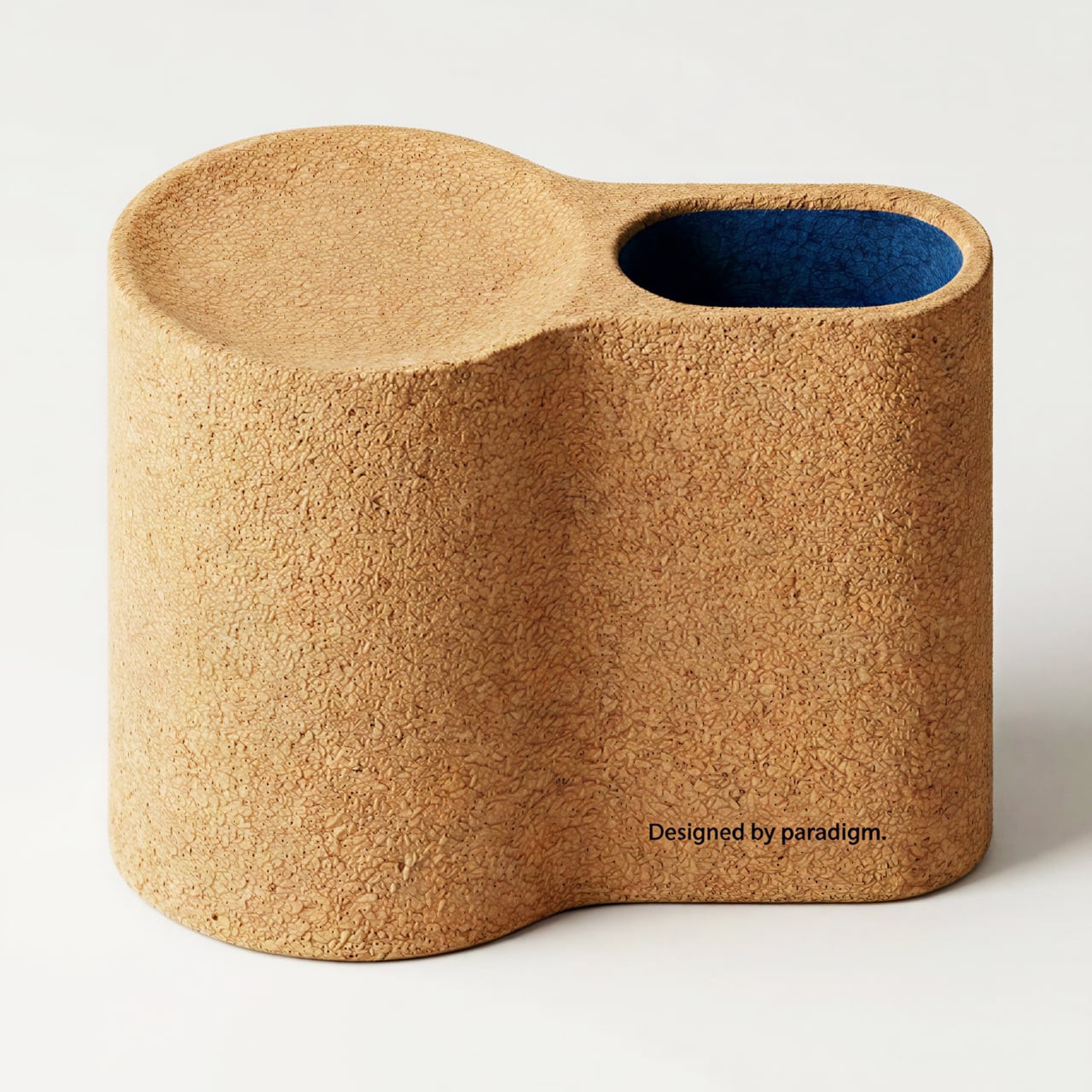
The Bulb is a portable cork stool designed for exactly that problem. It combines a seat with a built-in storage compartment that holds everything a brainstorming session needs, from markers and sticky notes to papers and notebooks. Bring the stool to the session, and the supplies arrive with it. The workspace assembles wherever the work actually needs to happen, without a second trip back to a supply drawer.

Designer: Germain Verbrackel

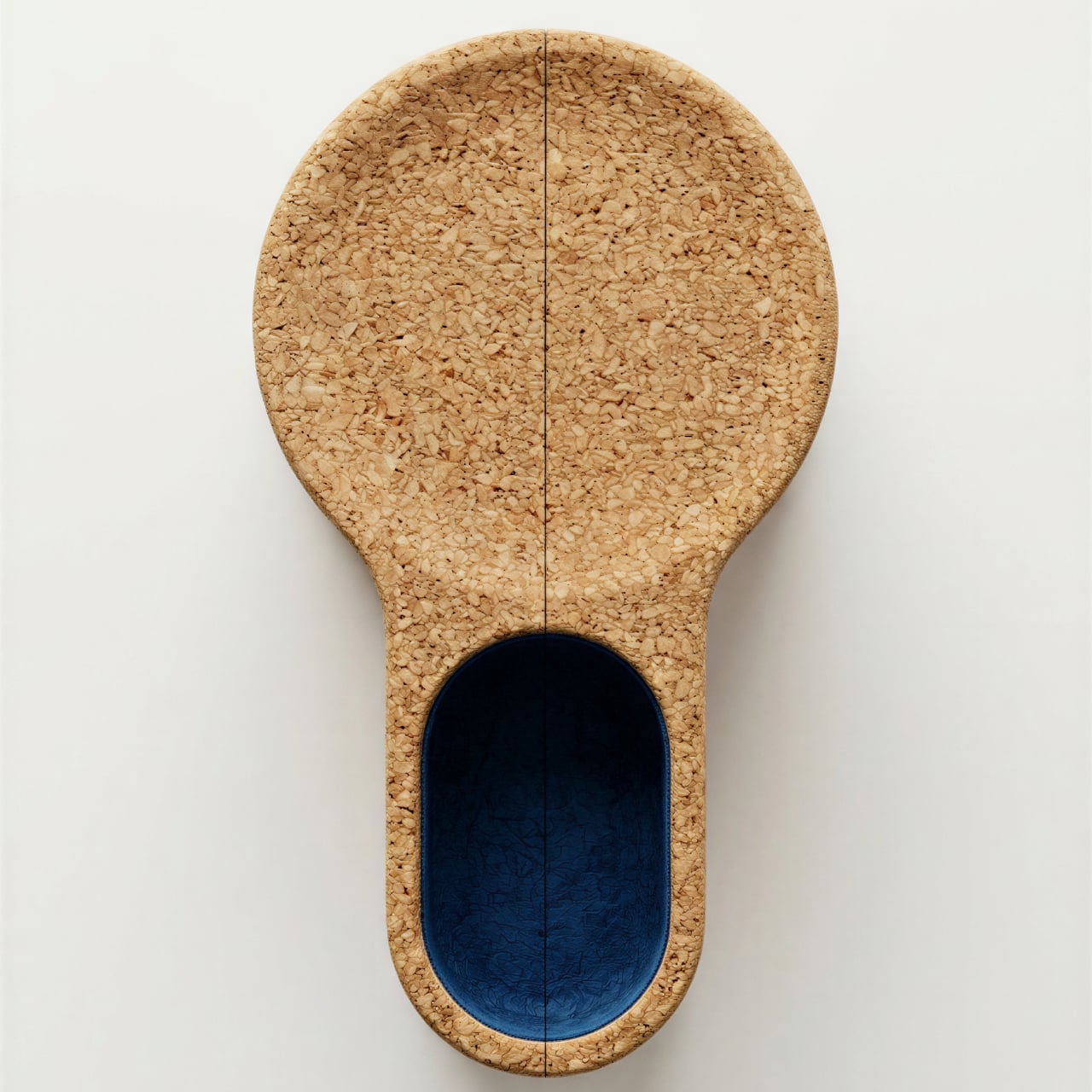
The name earns its meaning when you look down at the stool from above. The silhouette is that of a lightbulb: the wide, rounded seat forms the bulb itself, while the elongated storage compartment extends below to complete the base. It’s the kind of concept that rewards a moment of recognition, where the symbolism arrives quietly after the form does, without the design needing to announce it.

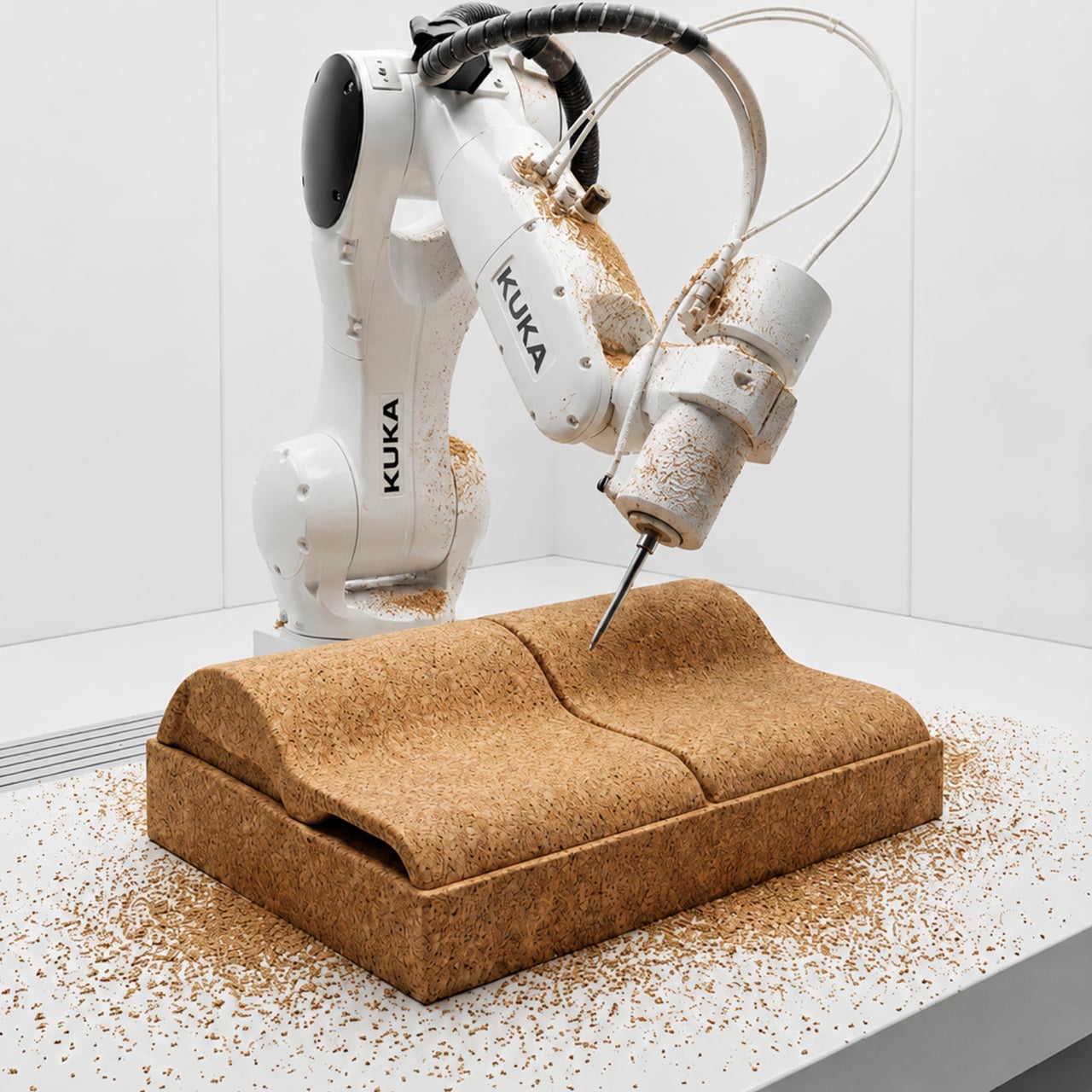
Cork makes a very specific kind of sense as the material here. It’s naturally lightweight, which matters when people are carrying stools between rooms or across an open office floor. The texture and warm sandy color also keep it from reading as institutional furniture. The body is meant to be CNC-milled from compressed cork blocks using a robotic arm, which gives the organic, curved form its precision without traditional joinery or assembly hardware.

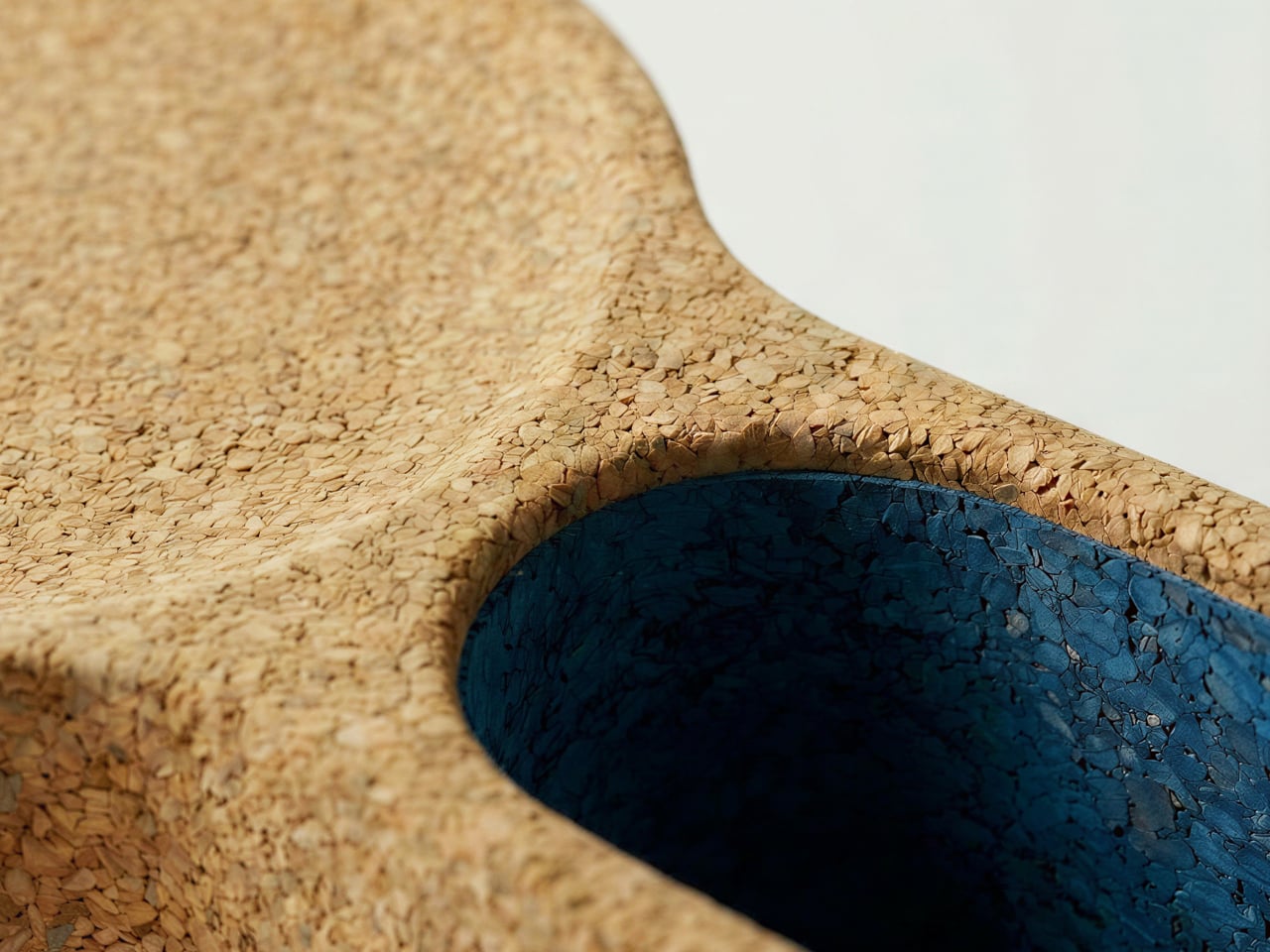
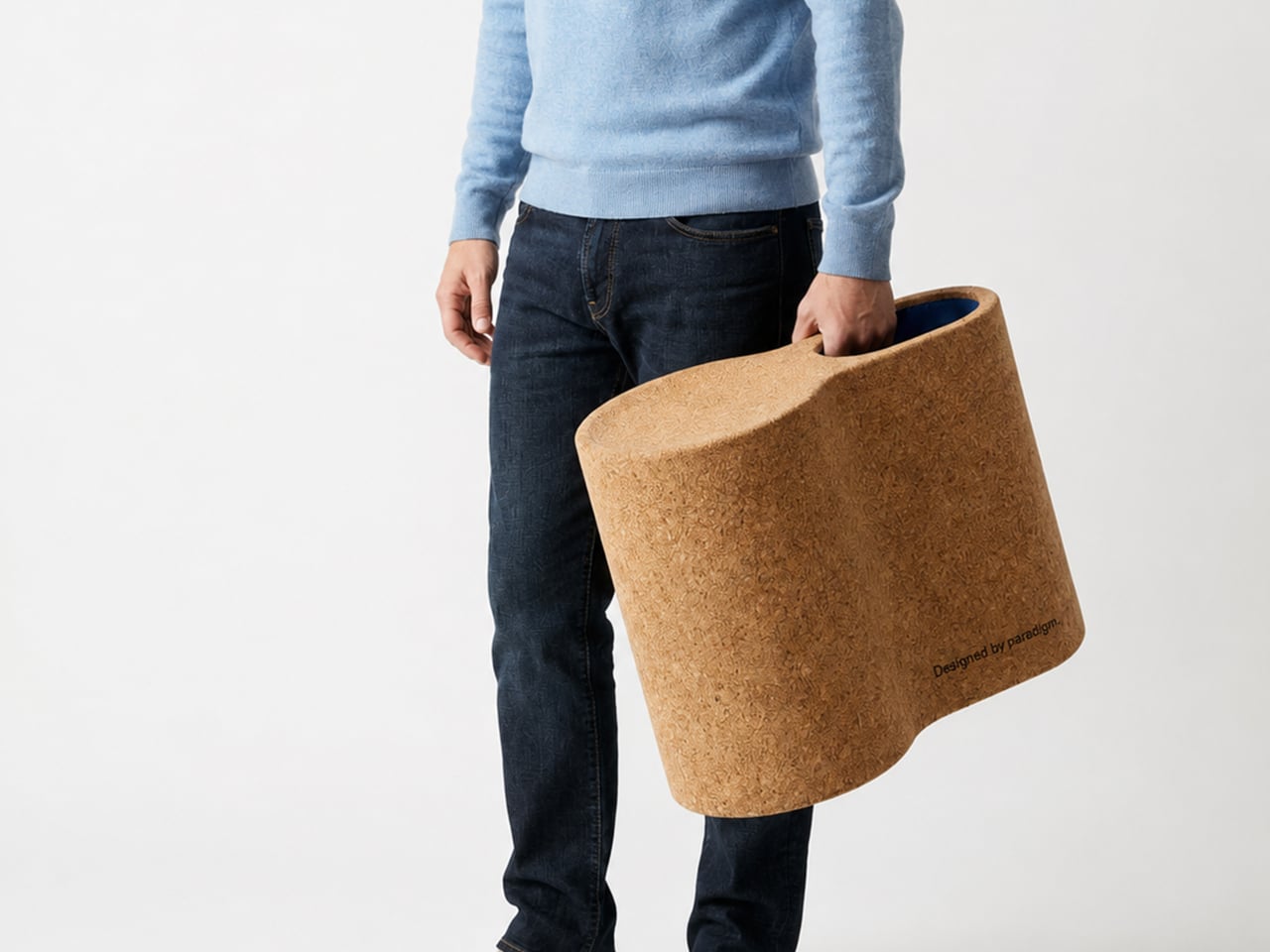
The interior of the storage compartment is lined in deep blue cork, making the cavity immediately identifiable against the natural exterior. The opening holds markers, sticky notes, papers, and notebooks securely enough to carry while walking. It also functions as the carry handle: the curved indentation along the stool’s side fits a hand comfortably, so the stool and its contents travel together in a single grip.

That practicality extends to how quickly a session can actually get started. One person can carry a stool at arm’s length without effort, and someone with a reasonable reach can manage two at once. A small team can have seating and supplies in place within moments of deciding where to gather, removing one of the more underappreciated obstacles from any impromptu collaborative session.

Cork also makes a credible case beyond its weight advantage. The material is harvested by stripping bark from the tree rather than cutting it down, allowing the tree to regenerate and be harvested again roughly every nine years. The Bulb isn’t trying to replace permanent office furniture or redefine how meeting rooms work. It’s a more modest proposal: a seat that assumes the people sitting on it want to get something done, and brings along the things they’ll need to do it.

The post A Portable Cork Brainstorming Stool For Literal Lightbulb Moments first appeared on Yanko Design.

The Collapsible Stool That Actually Gets Stronger When You Sit On It

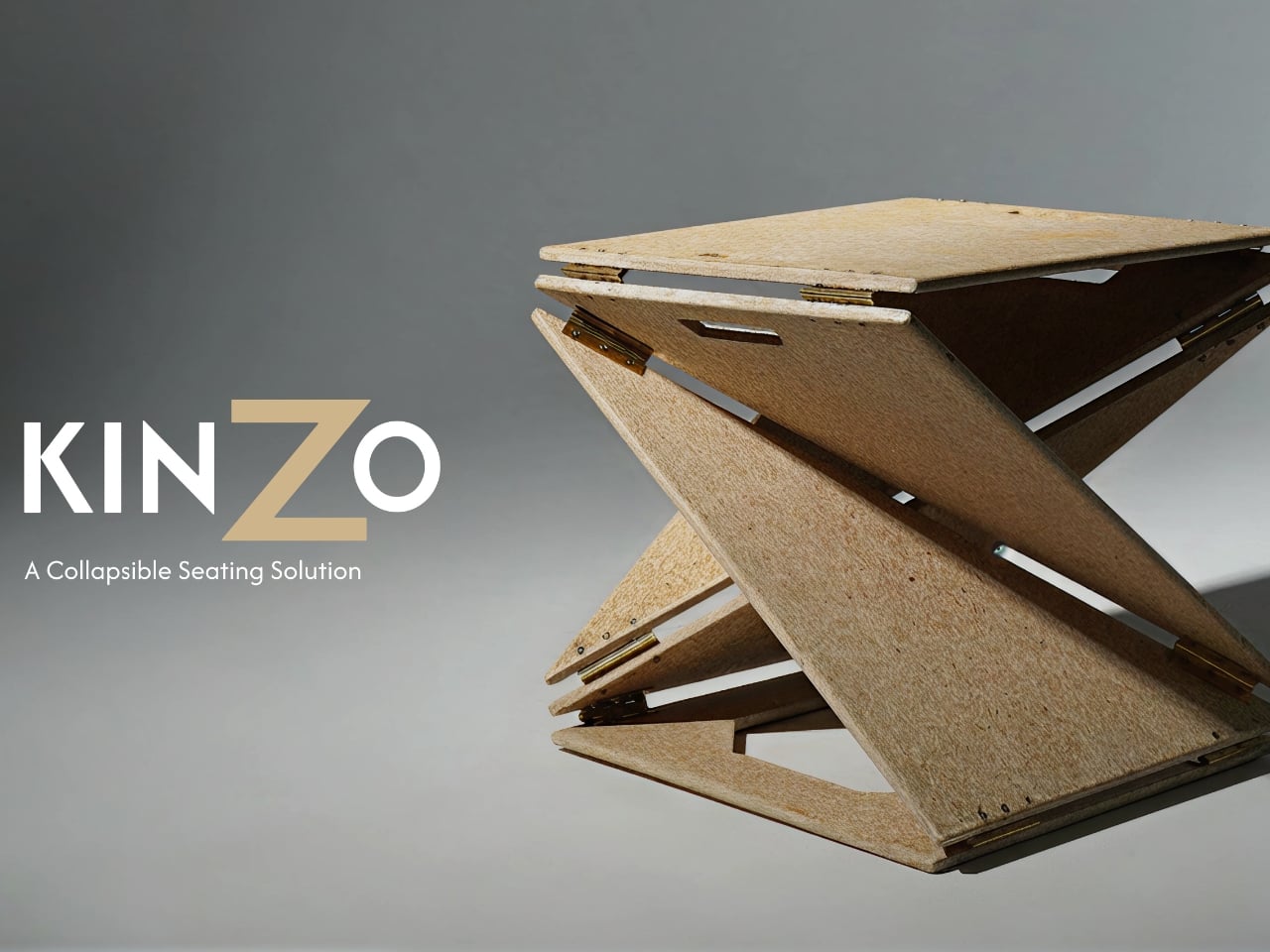
The flat-pack furniture concept is hardly new. IKEA built an empire on it. But Kinzo, a collapsible stool designed by students Jack Rathod, Pingla More, Kuldeepsingh Yadav, and Gayathri Rakesh, does something that flat-pack rarely bothers to do: it makes the transformation genuinely satisfying.

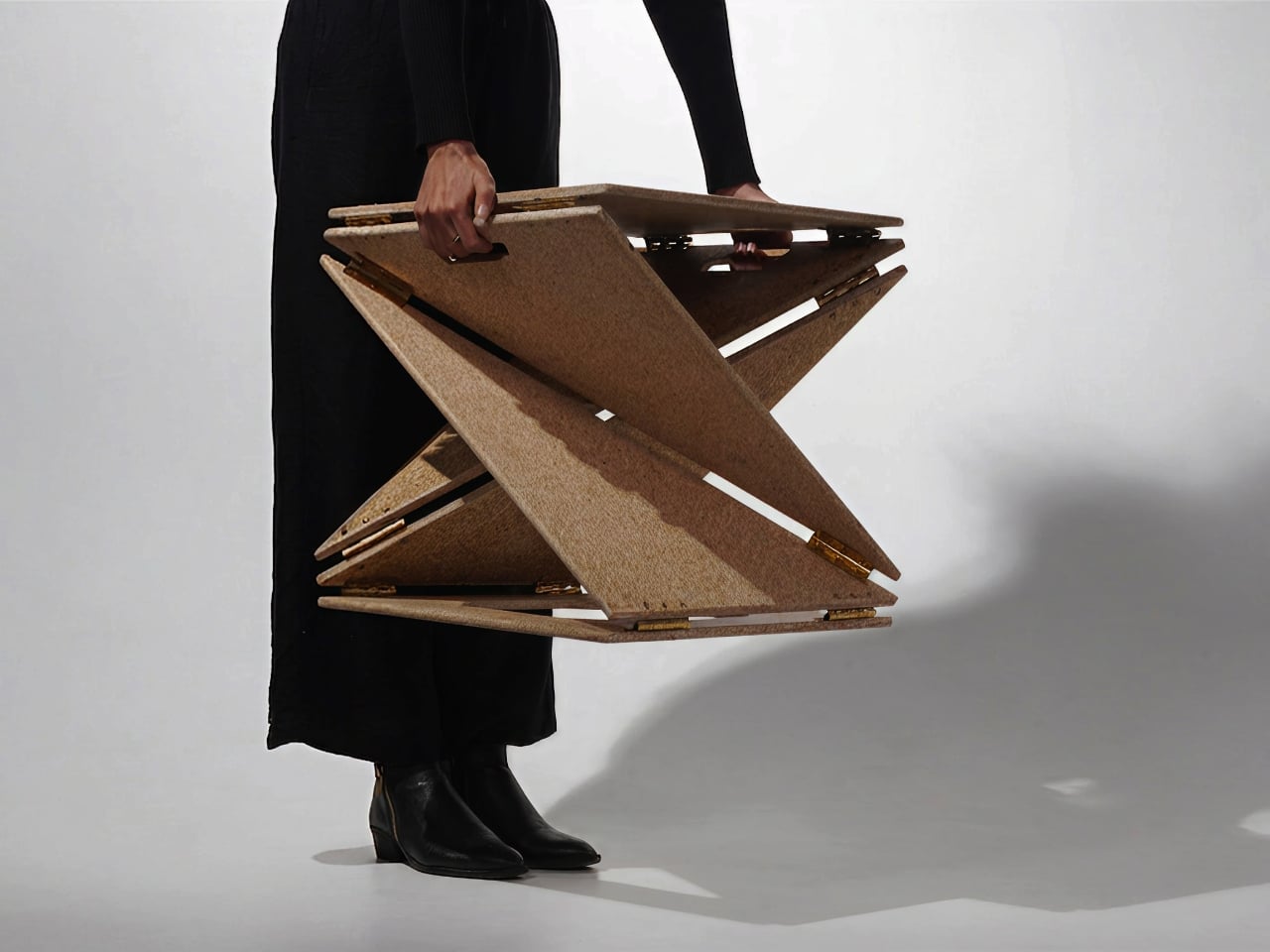
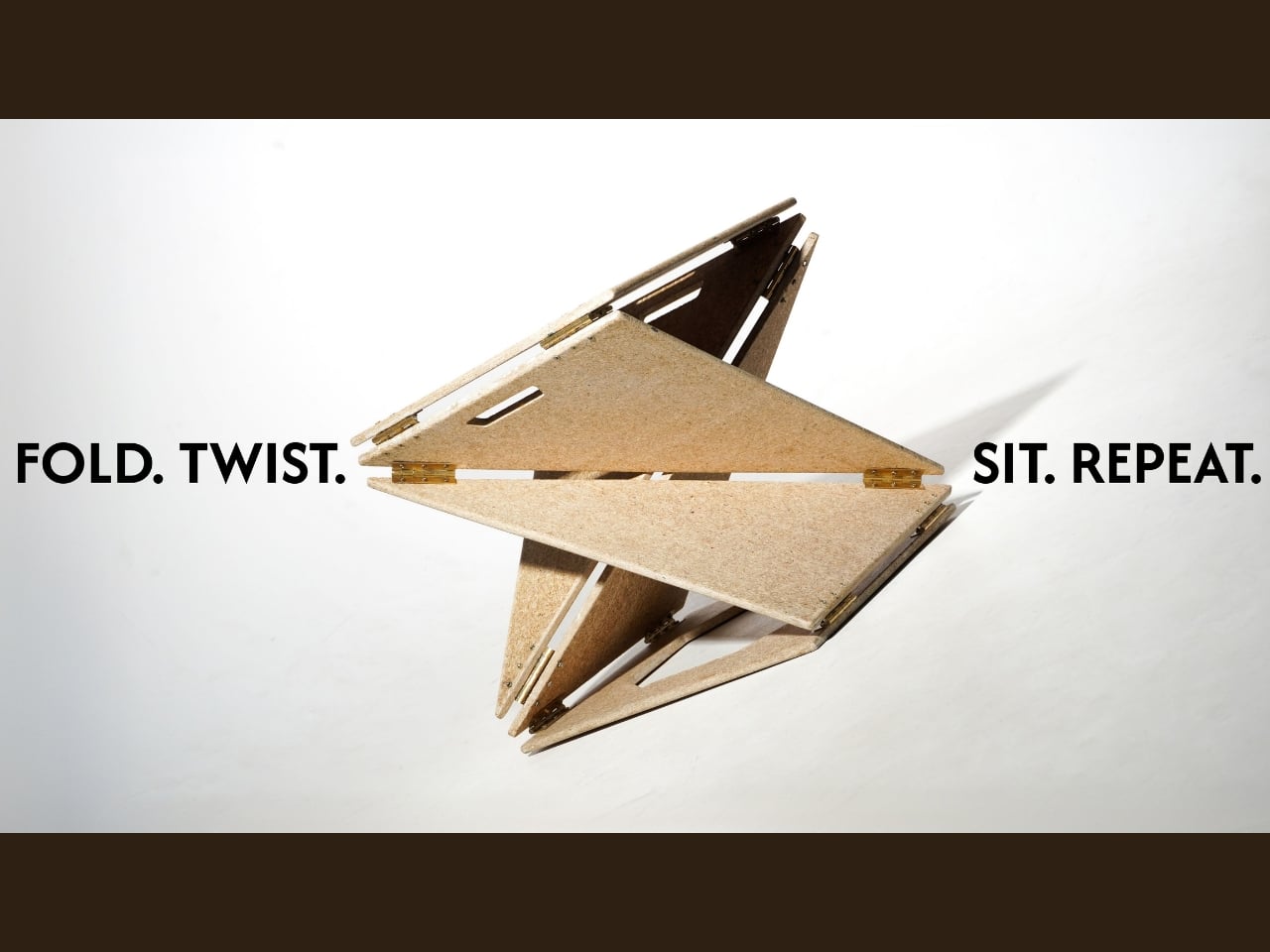
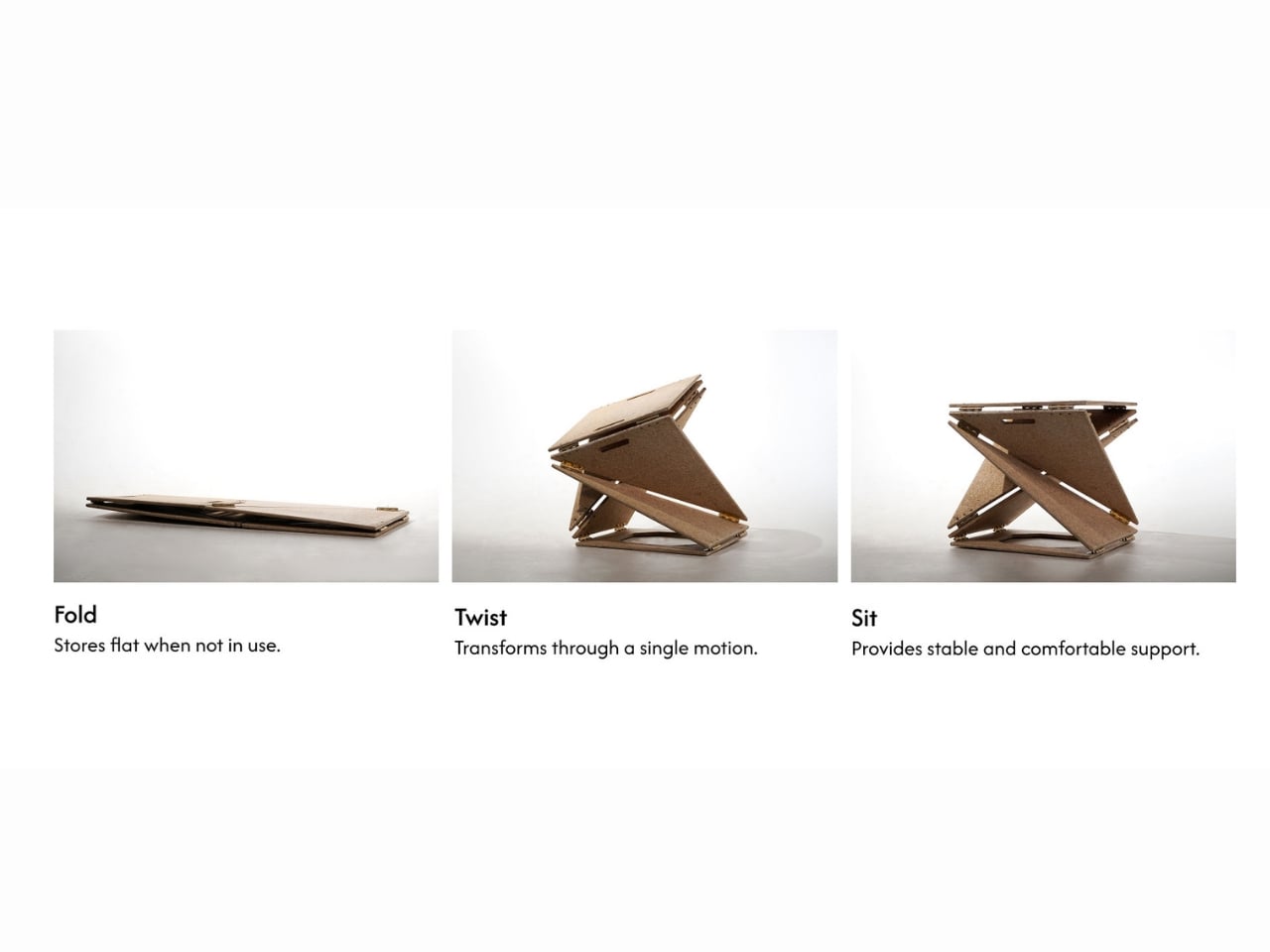
The mechanism is a single twist. Flat to upright, folded to functional, all in one motion. No tools, no assembly, no instruction booklet you’ll lose before you’ve finished reading it. The stool folds completely flat when you’re done and tucks away wherever you have a slim gap to spare. Carry it to a café, slide it under a bed, lean it against a wall in a studio apartment. For anyone working with limited space, that kind of portability is not a minor detail.

Designers: Jack Rathod, Pingla More, Kuldeepsingh Yadav, Gayathri Rakesh

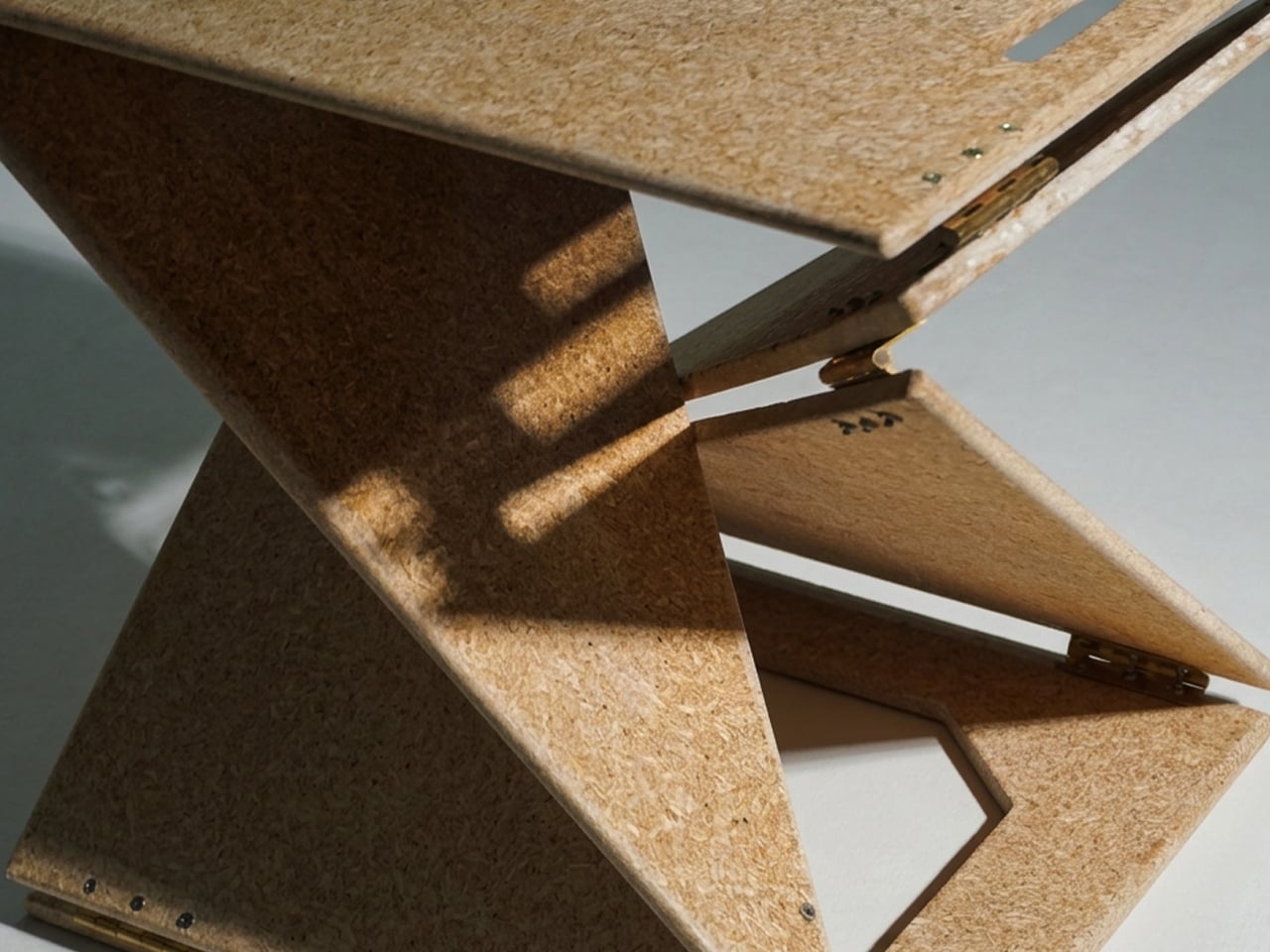
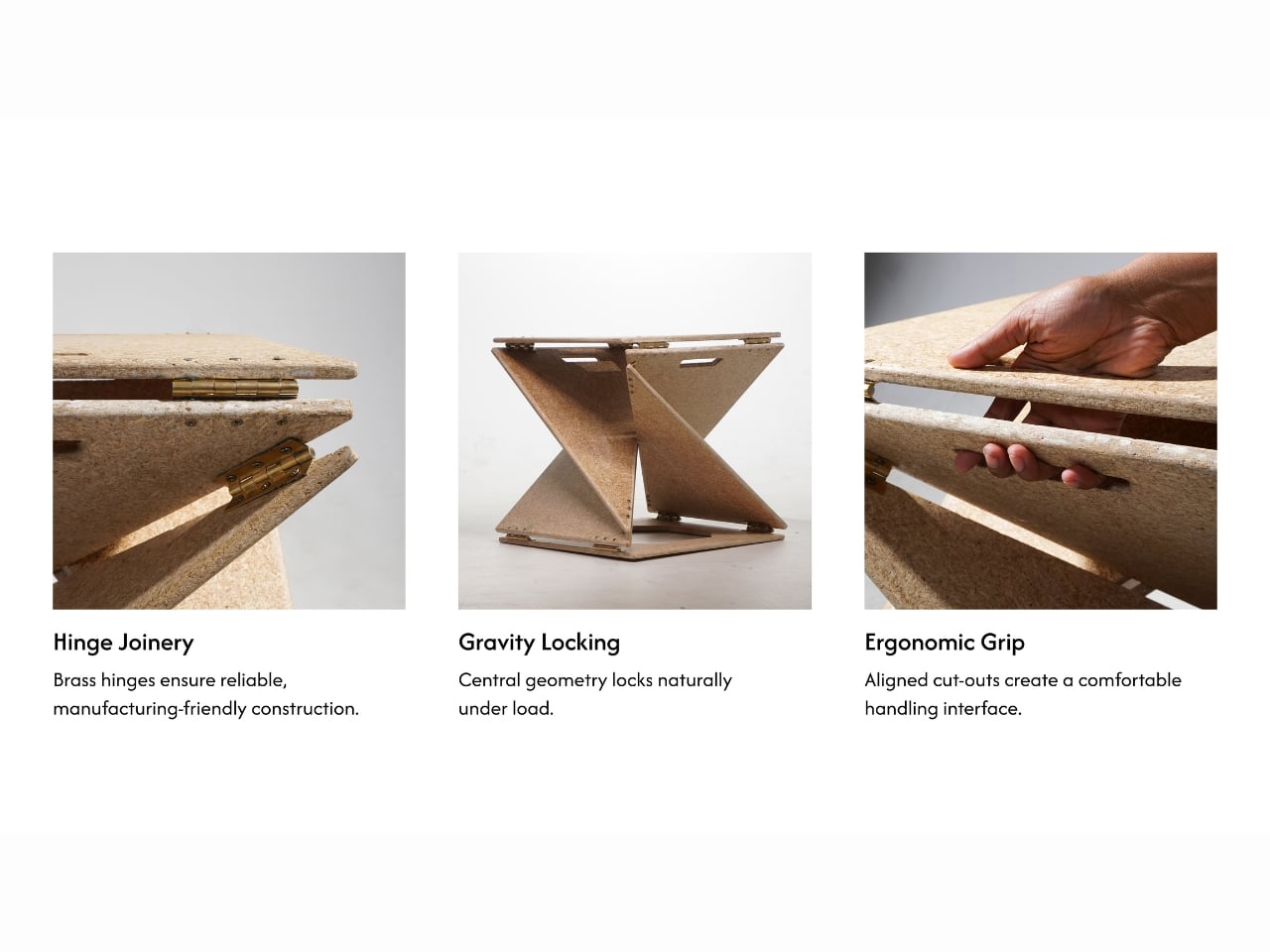
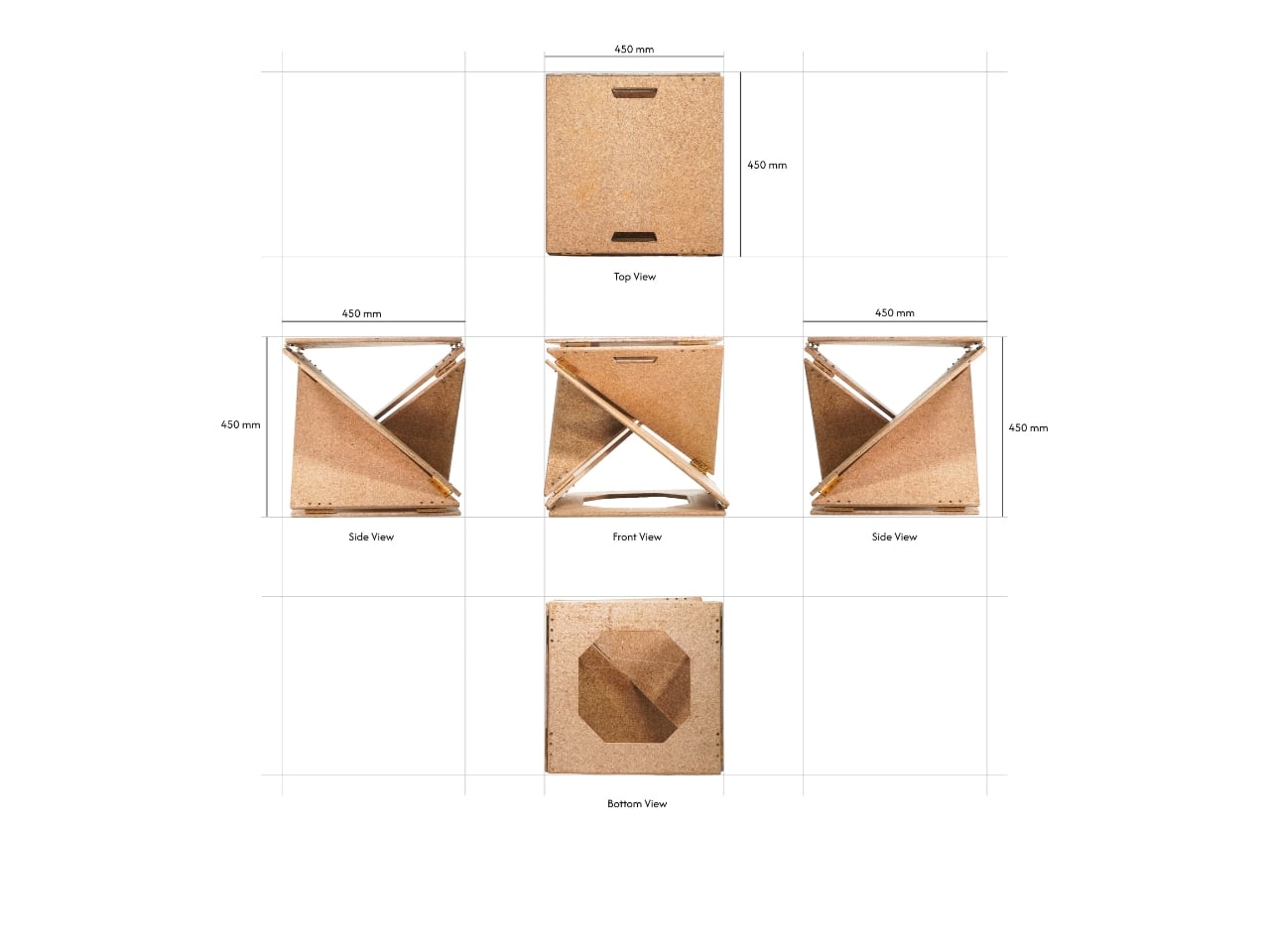
The inspiration came from origami. The design team used paper as a stand-in for Craste board during early prototyping, testing different joint structures and fold geometries before settling on a basic origami fold as their core starting point. That methodical approach shows clearly in the final form. The geometry isn’t decorative, it’s structural. The central X-shaped form locks naturally under load, meaning the more weight placed on it, the more stable it becomes. Gravity does the work, which is exactly the kind of engineering thinking that separates a well-considered design from one that just looks interesting in photographs.

Brass hinges hold the panels together, chosen for both reliability and manufacturing compatibility. The cut-outs along the edges aren’t just visual breaks in the material. They align precisely to create a grip interface, making the stool comfortable and intuitive to carry. None of this was left to chance. The team built 1:5 scale paper models before moving to a full 1:1 prototype, stress-testing the joinery and geometry before committing to the final form. They’re the kind of details that show up when a design team has thought through the full lifecycle of an object, from the moment you pick it up to the moment you sit down.

The material deserves its own mention. Kinzo is made from Craste boards, engineered from agricultural residues and completely formaldehyde-free. That last part matters more than it might seem. Most manufactured wood products contain adhesives and binders that off-gas over time. Choosing a material that sidesteps that entirely isn’t just a sustainability talking point. It’s a considered decision about what kind of object you want in a space where people actually live and breathe.

The brief came from Agrikraft 2026, India’s National Furniture Design Competition hosted by Craste. Student competitions can sometimes feel like exercises in presentation over substance, but the constraint of designing around a specific, real-world material tends to produce sharper results. You can’t be vague when the board has a known weight, texture, and set of properties. The Kinzo team clearly used that constraint as a guide rather than a limitation.

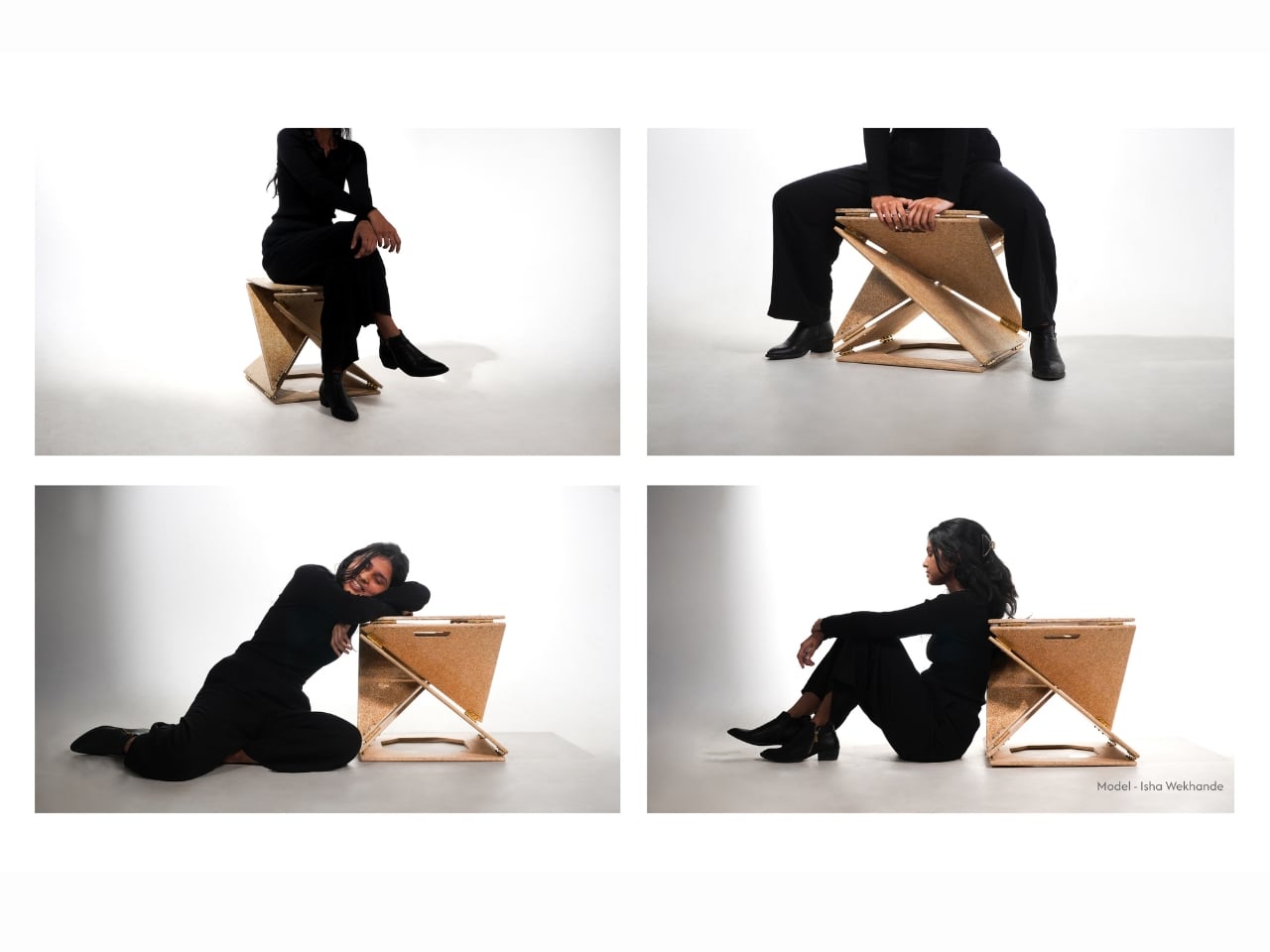
Worth noting too is how context-agnostic the design is. A stool that works equally well in a bedroom corner, a café, and a lounge space without looking out of place in any of them is solving a harder problem than it appears. Most seating communicates a very specific setting. Kinzo doesn’t. Its warm, natural texture and clean geometric form read differently depending on where they land. That kind of quiet versatility is genuinely difficult to achieve.

Student work often gets praised with a kind of tempered enthusiasm: impressive for its level, promising for what might come next. Kinzo doesn’t need that qualifier. It’s a resolved piece of design that addresses real constraints with real intelligence, built from a material with a genuine reason to exist, using a mechanism that earns its elegance. The fact that it came out of a competition is almost beside the point.

Good seating is underrated. We spend enormous attention on the surfaces we look at and very little on the things we actually rest on. Kinzo is a reminder that a stool can carry a point of view. This one carries several.

The post The Collapsible Stool That Actually Gets Stronger When You Sit On It first appeared on Yanko Design.
Mililab Made a Dining Table, Got Distracted, and Made a Better Stool

Modern furniture design has been quietly shifting priorities. Smaller homes and more deliberate interiors have created real demand for pieces that do more without taking up more space or sacrificing how they look. Stools and side tables are easy targets for this kind of dual-purpose thinking, but most of them still feel like a workaround, a compromise dressed up as a solution, rather than a genuinely well-considered object.

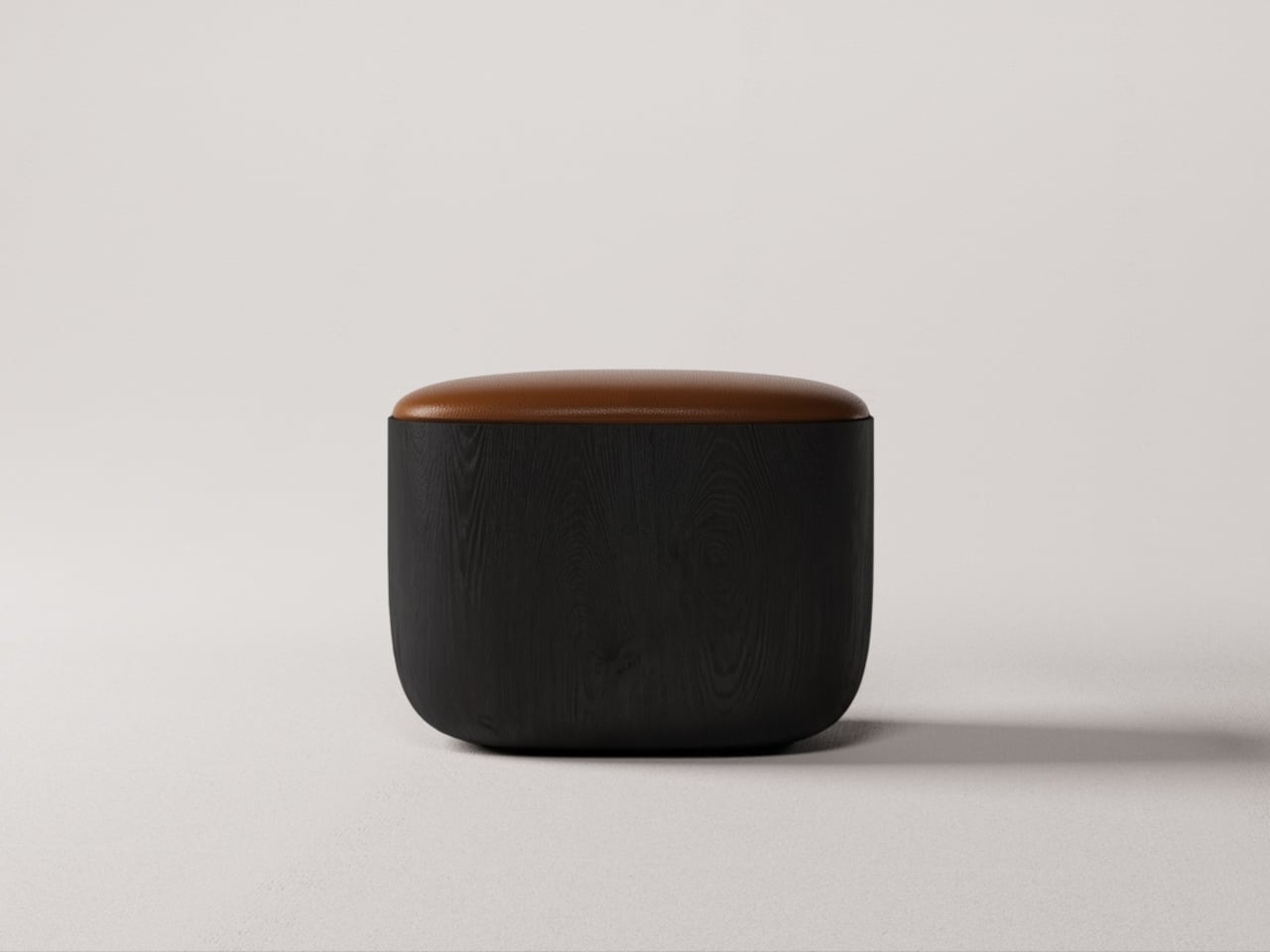
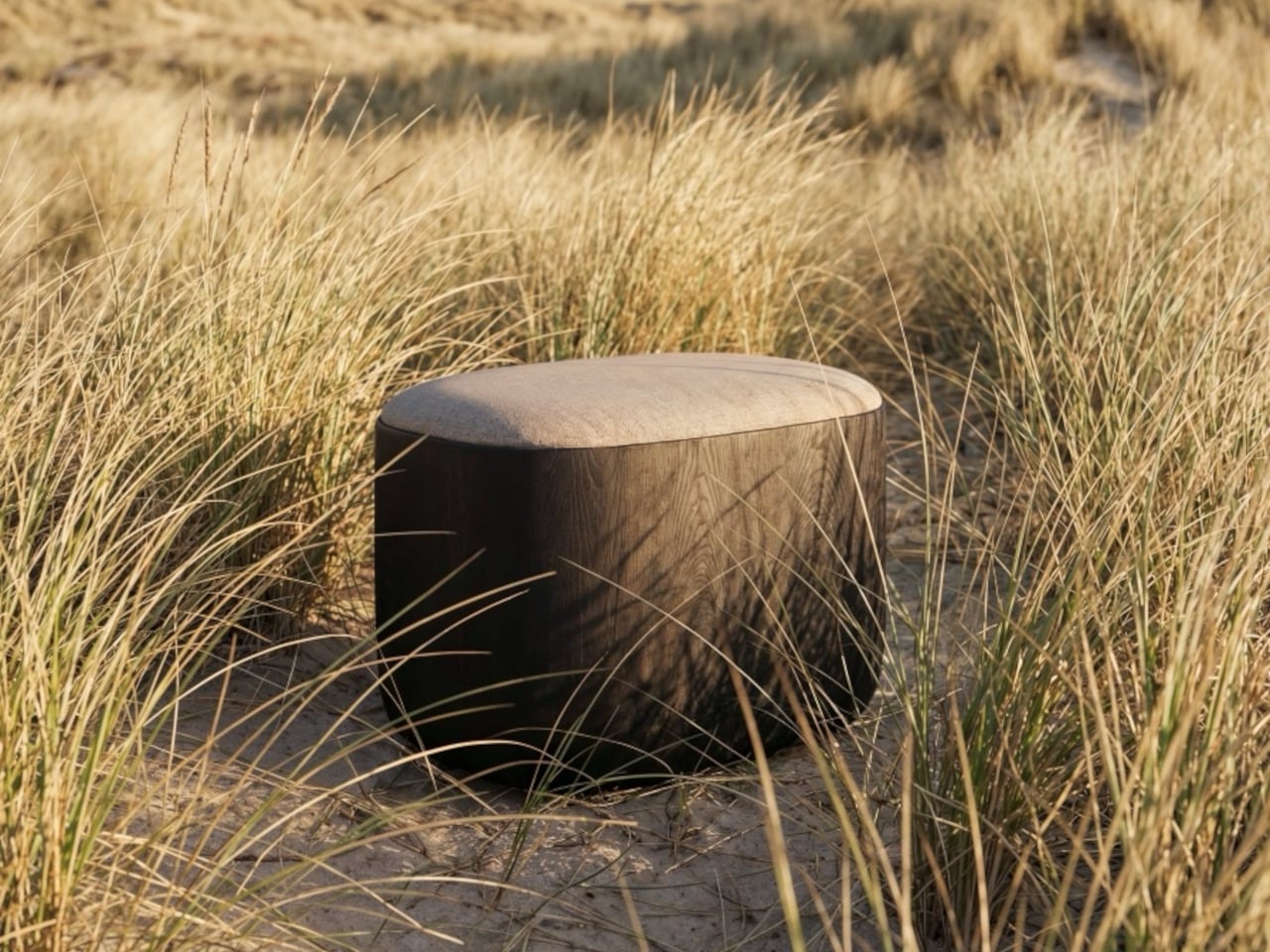
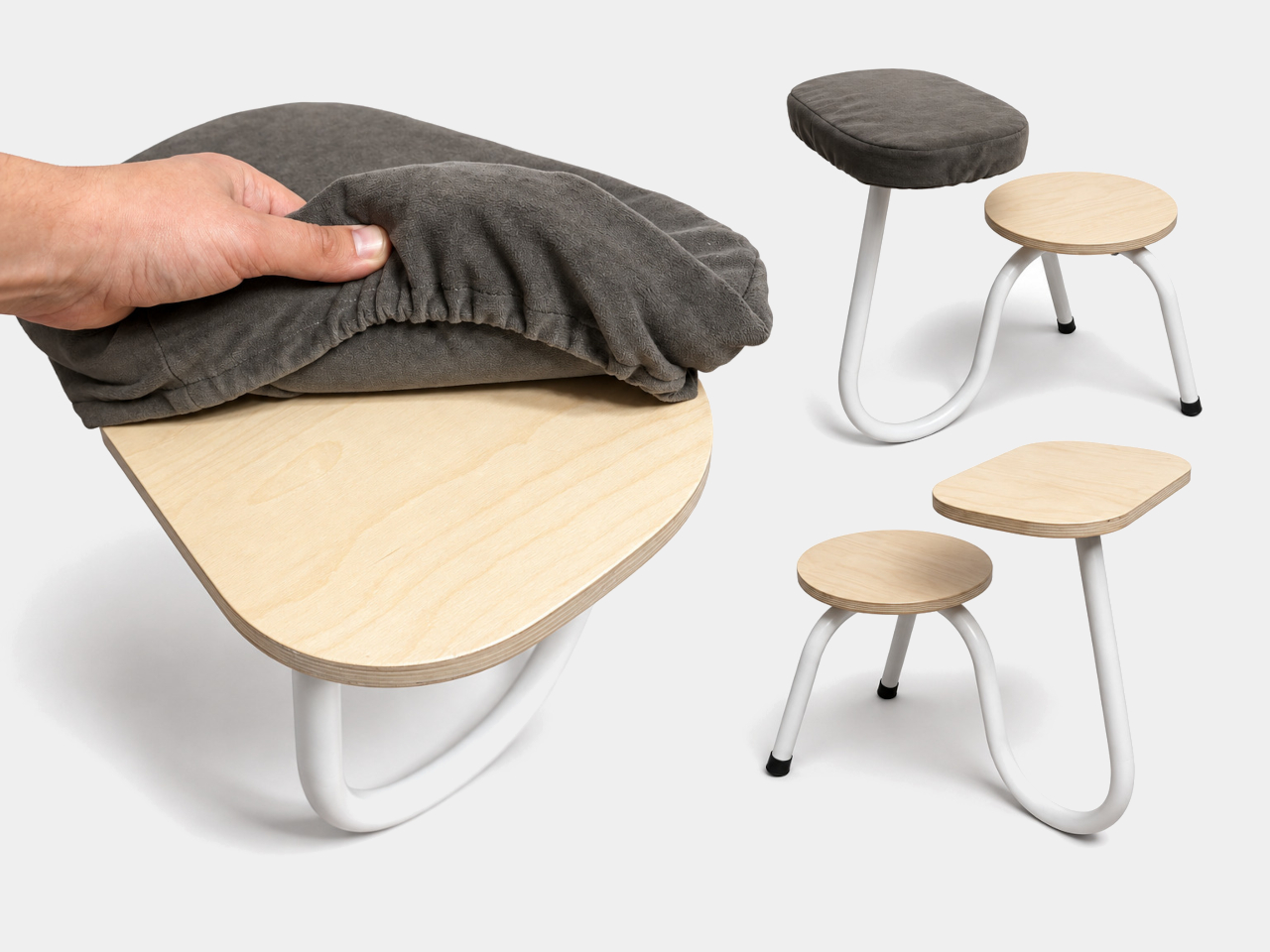
The Ishi stool from Japanese studio Mililab isn’t that kind of compromise. It came out of a separate project entirely, one that had nothing to do with stools, and it ended up as something that’s equal parts furniture object and quiet design statement. That accidental origin is actually central to understanding why it looks the way it does, and why it works as well as it does.

Designer: Mililab

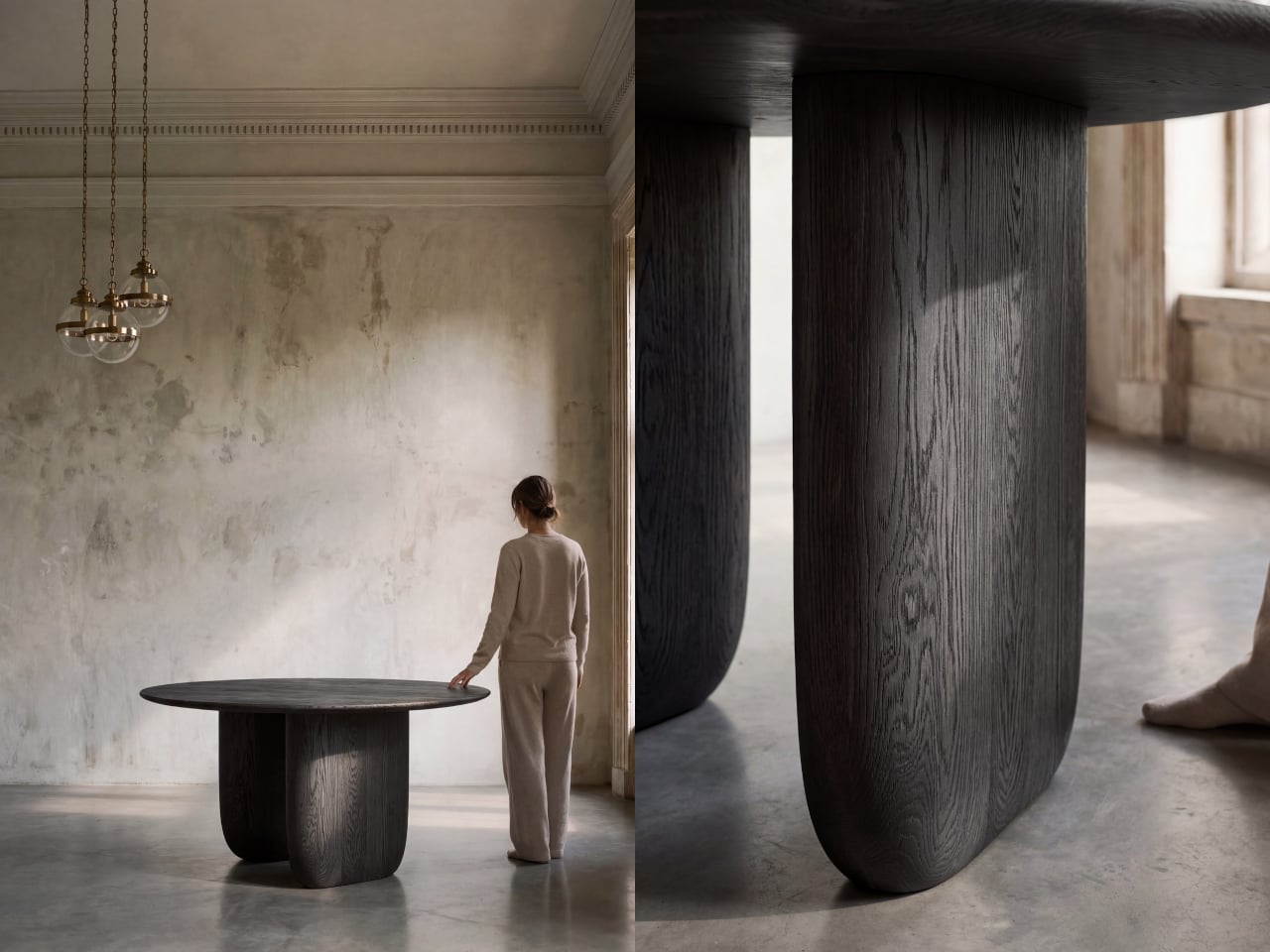
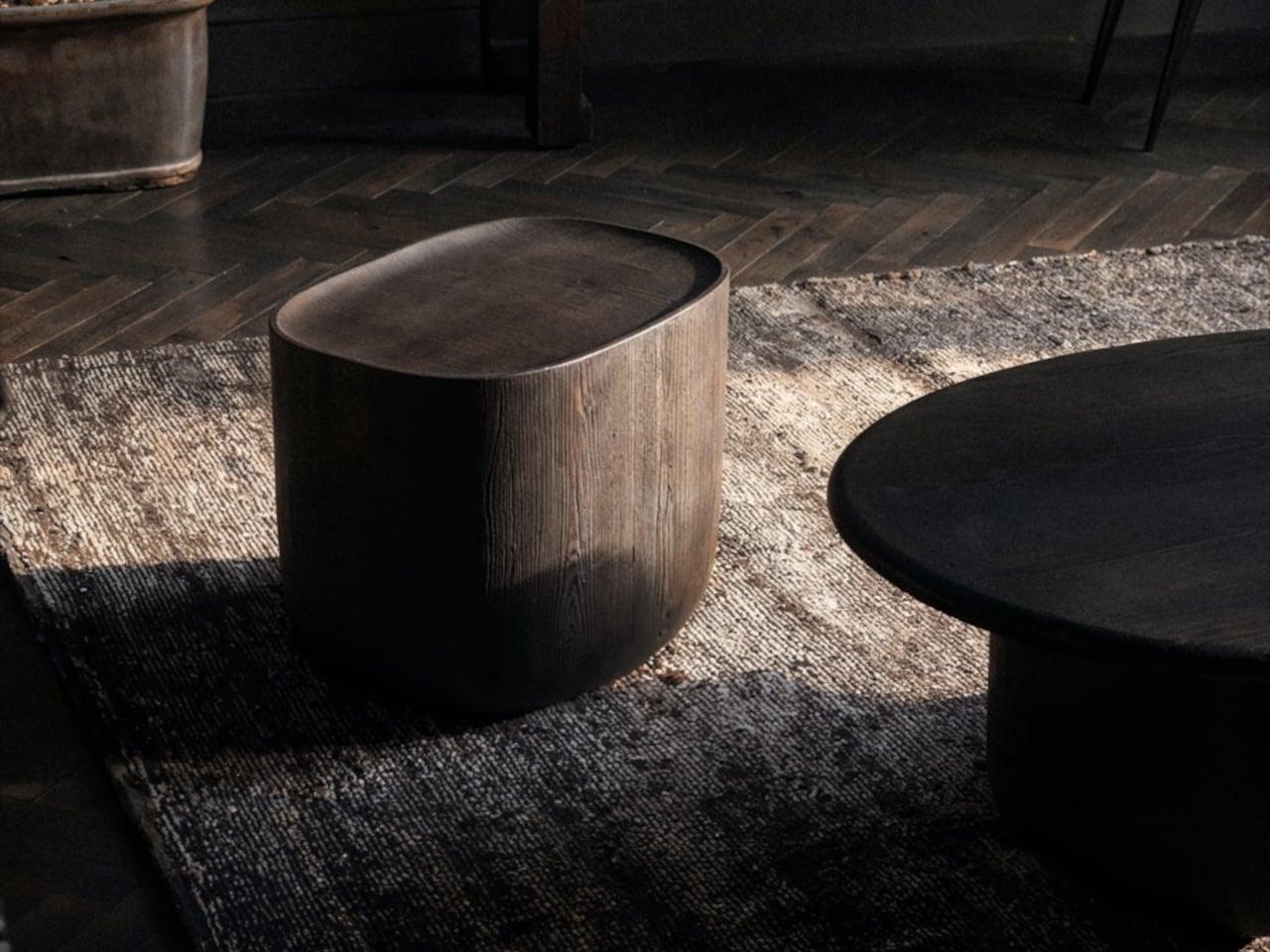
The story starts with the studio’s own Maru dining table. While developing it, founders Livert Lim and Mengfei Wu kept drifting back to the legs, almost despite themselves. Those legs tapered inward along one unbroken curve, giving them a presence that had little to do with the tabletop above. As Mililab described it: “A shape that didn’t need the table above it.” So they separated it and let it stand alone.

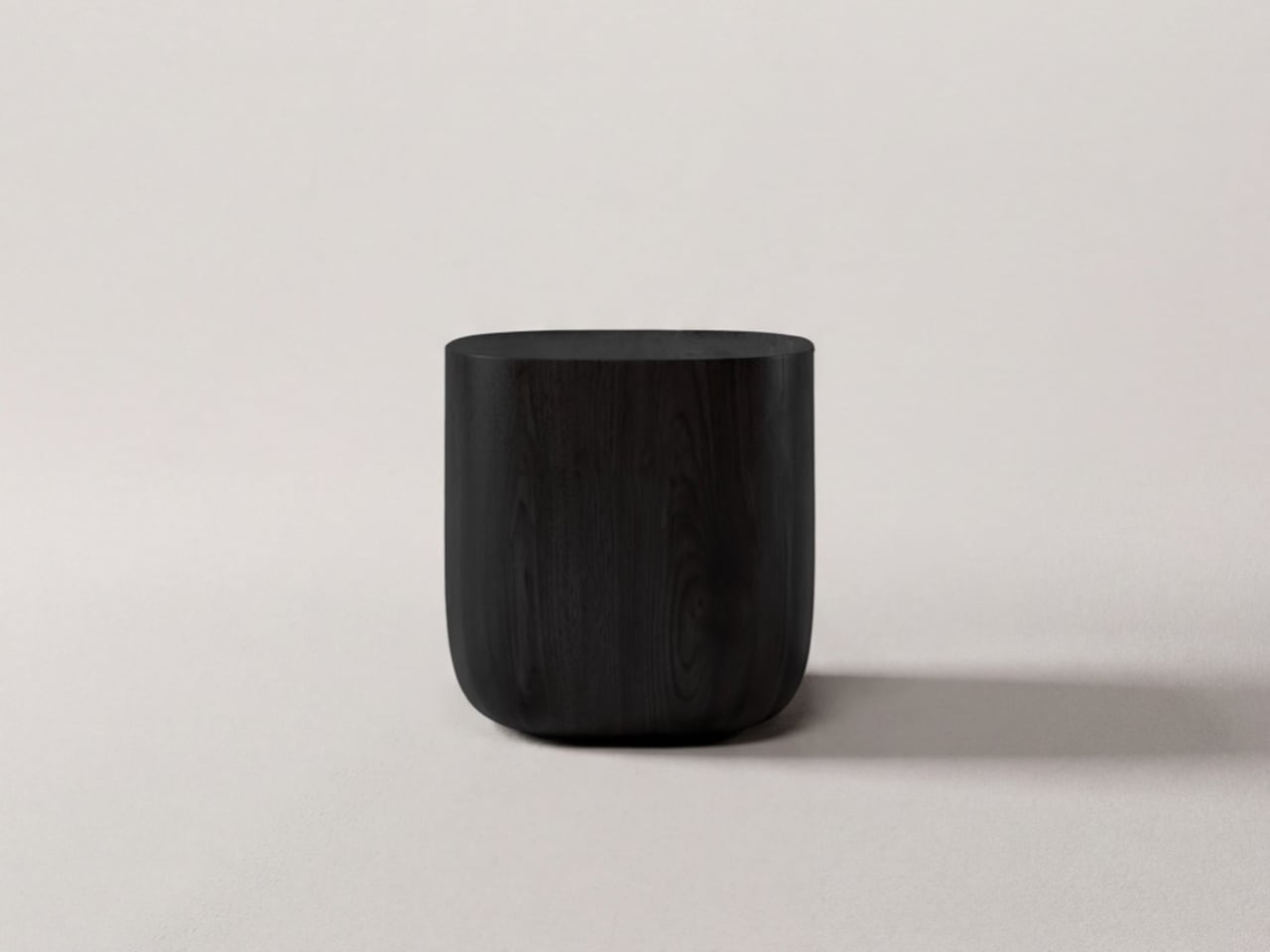
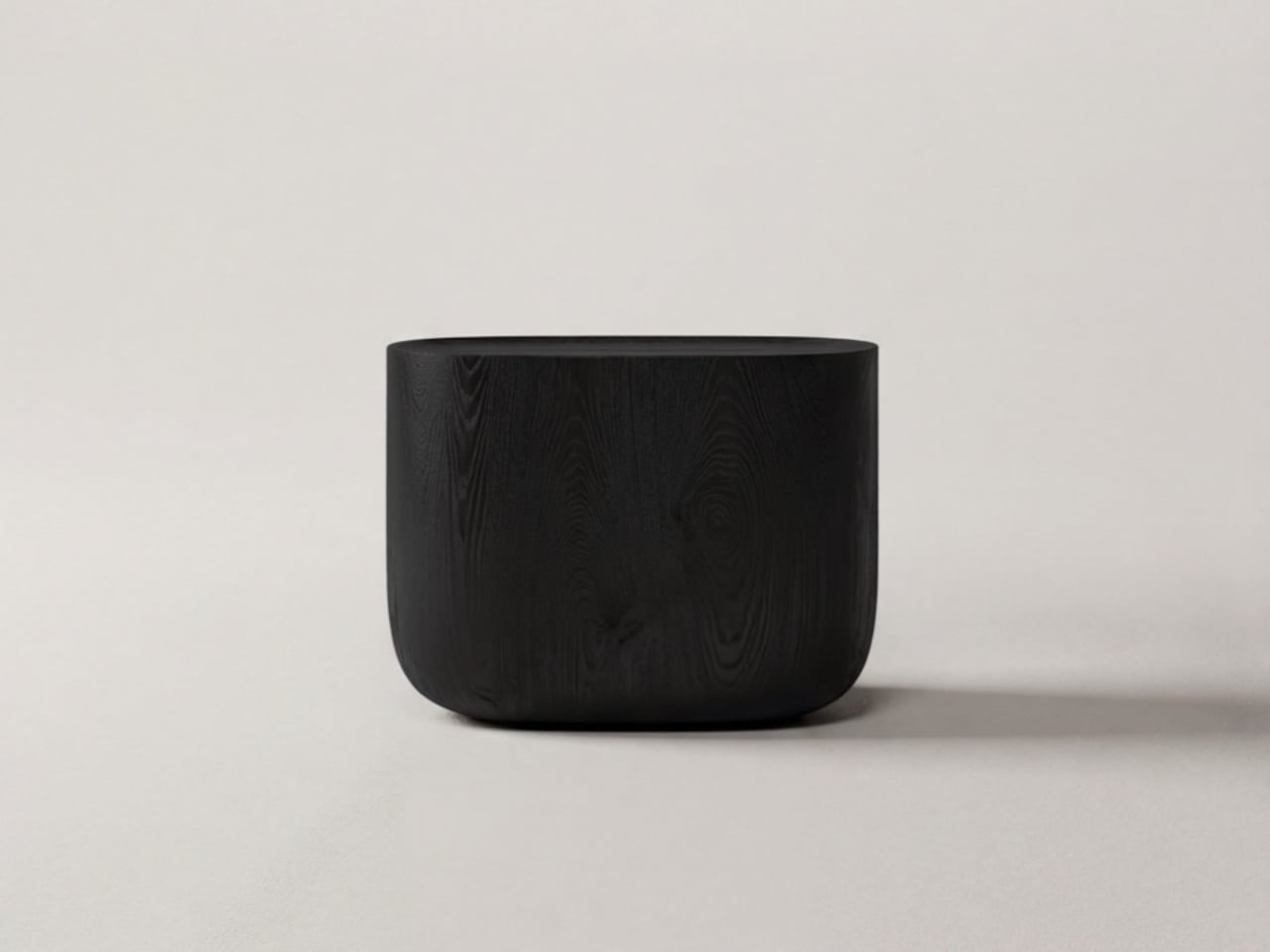
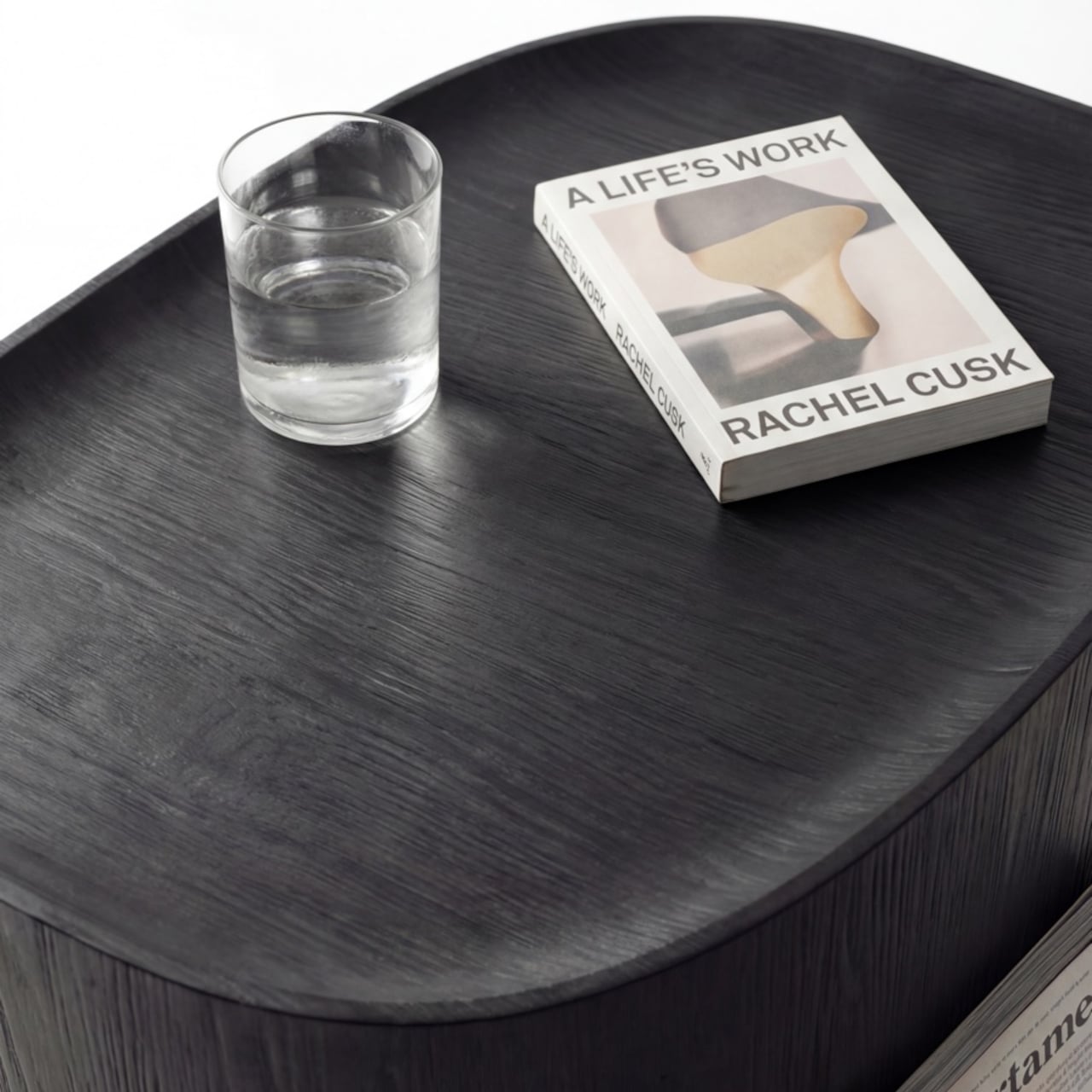
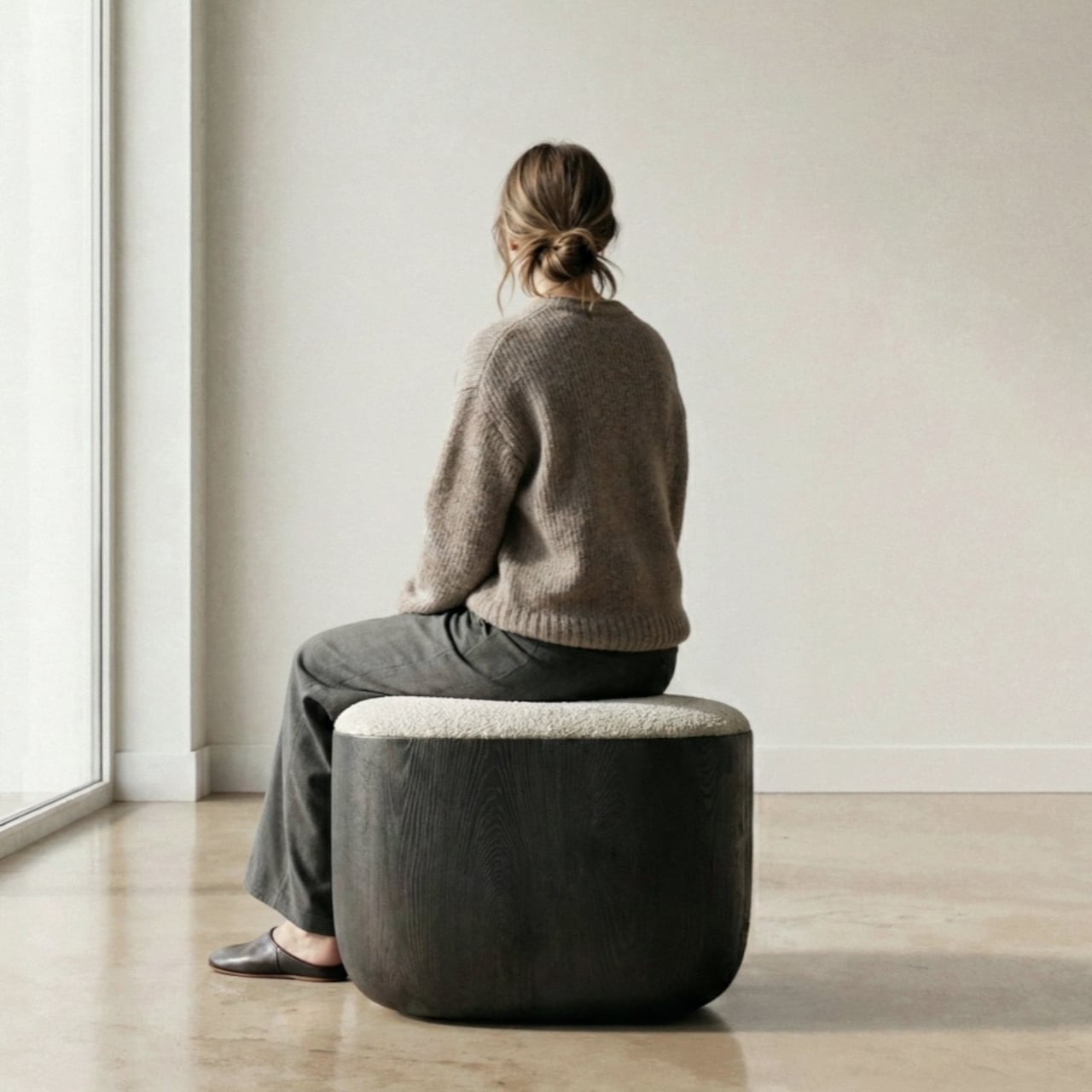
Working with collaborator Djordje Cebic, they developed Ishi into a form that’s both monolithic and unexpectedly soft, something like a river-worn pebble given volume. From across the room, it appears impossibly thin; up close and under your hand, it’s substantial. That tension between visual lightness and physical solidity isn’t accidental. It’s the result of curves computed in Tokyo and then realized by hand in the workshop.

The material process behind that solidity gets genuinely obsessive. The stool is made from North American white oak, selected for grain consistency, kiln-dried, hand-shaped, then kiln-dried again, because the glue introduced during assembly brings moisture back into the wood. Most workshops skip that second drying. Mililab doesn’t. It’s sealed immediately after, locking in a 10% moisture content, the exact point at which white oak is most dimensionally stable.

The cushion on top, available in Kvadrat Savanna, Dedar fabric, or Italian leather, looks fully integrated with the oak base. It isn’t, of course, which is the point. Pull it off, flip it over, and the flat underside becomes a surface, turning the stool into a side table. It works just as well beside a sofa at home as it does in a hotel lobby or a studio apartment. At 430mm, the height was chosen deliberately. It’s low enough to pair with a lounge chair, yet also tall enough to sit beside a dining table or vanity desk.

There’s something refreshing about a piece of furniture that arrived this way, not from a brief or a market gap, but from genuine distraction. Lim and Wu were supposed to be designing a dining table and kept staring at the legs instead. It’s not a narrative most furniture studios would lead with, but it does explain why the Ishi stool feels like something they simply couldn’t help making.

The post Mililab Made a Dining Table, Got Distracted, and Made a Better Stool first appeared on Yanko Design.
Mosaic-like stools are made from the soles of discarded rubber shoes

The fashion industry is known for its striking designs, lavish materials, and sometimes mind-blowing forms, but it also has a dirty little secret when it comes to sustainability. Many of those materials, processes, and even ingredients have a tendency to harm the environment, especially mass-produced pieces of clothing, accessories, and footwear. Even something that sounds so innocent like the rubber soles of shoes can have a long-term negative impact on the planet’s health, especially when they’re thrown away without much thought. Although it’s not enough to make this discarded material disappear, these distinctive artistic stools help reduce their numbers while providing furniture that makes an impact in more ways than one.

Designer: BENTU Design

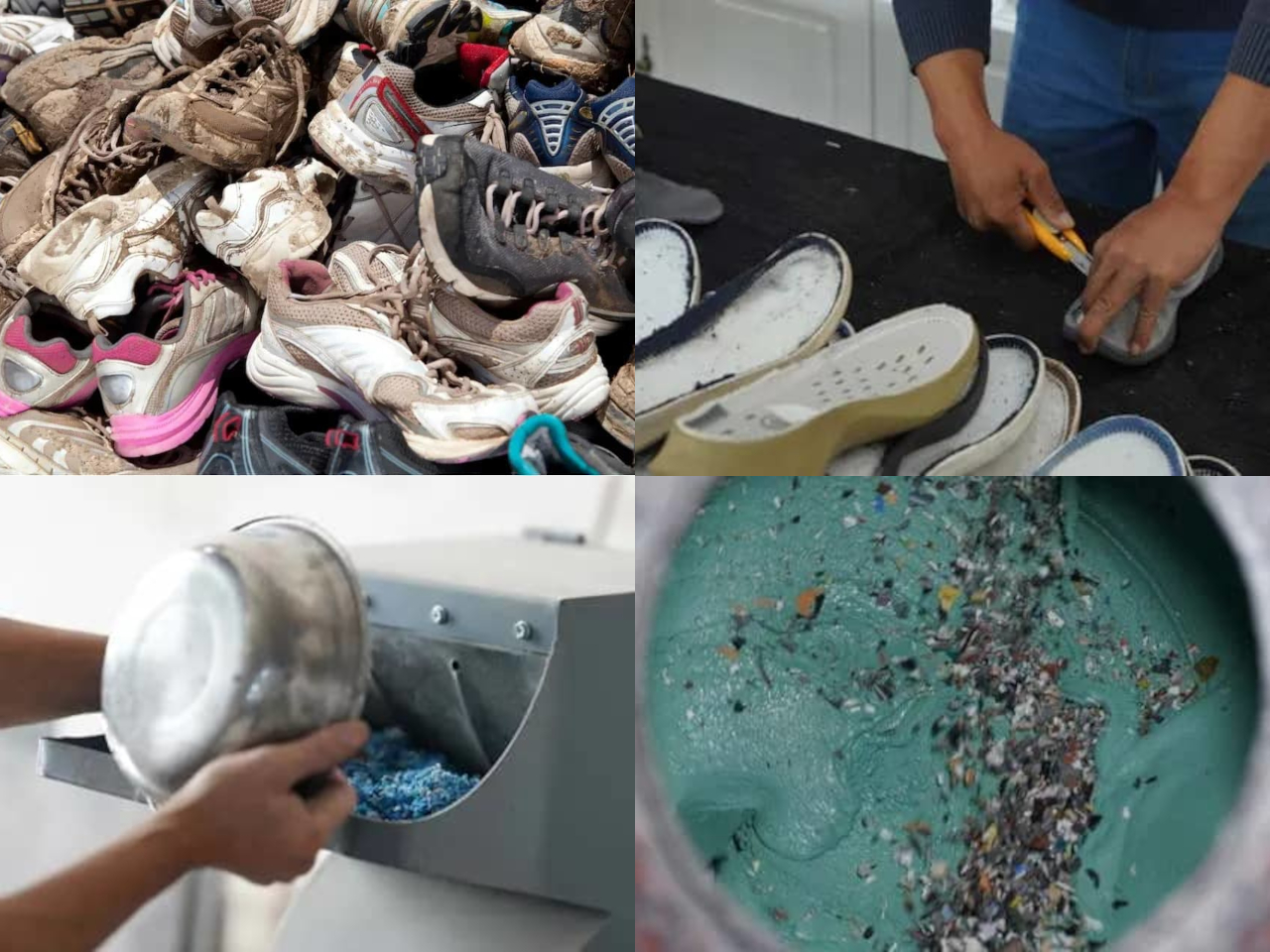
According to figures, 20 billion pairs of shoes are produced each year, and nearly all of those end up in landfills sooner or later. Footwear is usually made with half a dozen synthetic materials, with outsoles using plenty of rubber that takes more than a hundred years to decompose. Burning them, on the other hand, releases toxic gases, which is usually what happens in garbage disposal sites. Even though the process still uses water and energy, recycling these materials is still a significantly better way to deal with all the waste.

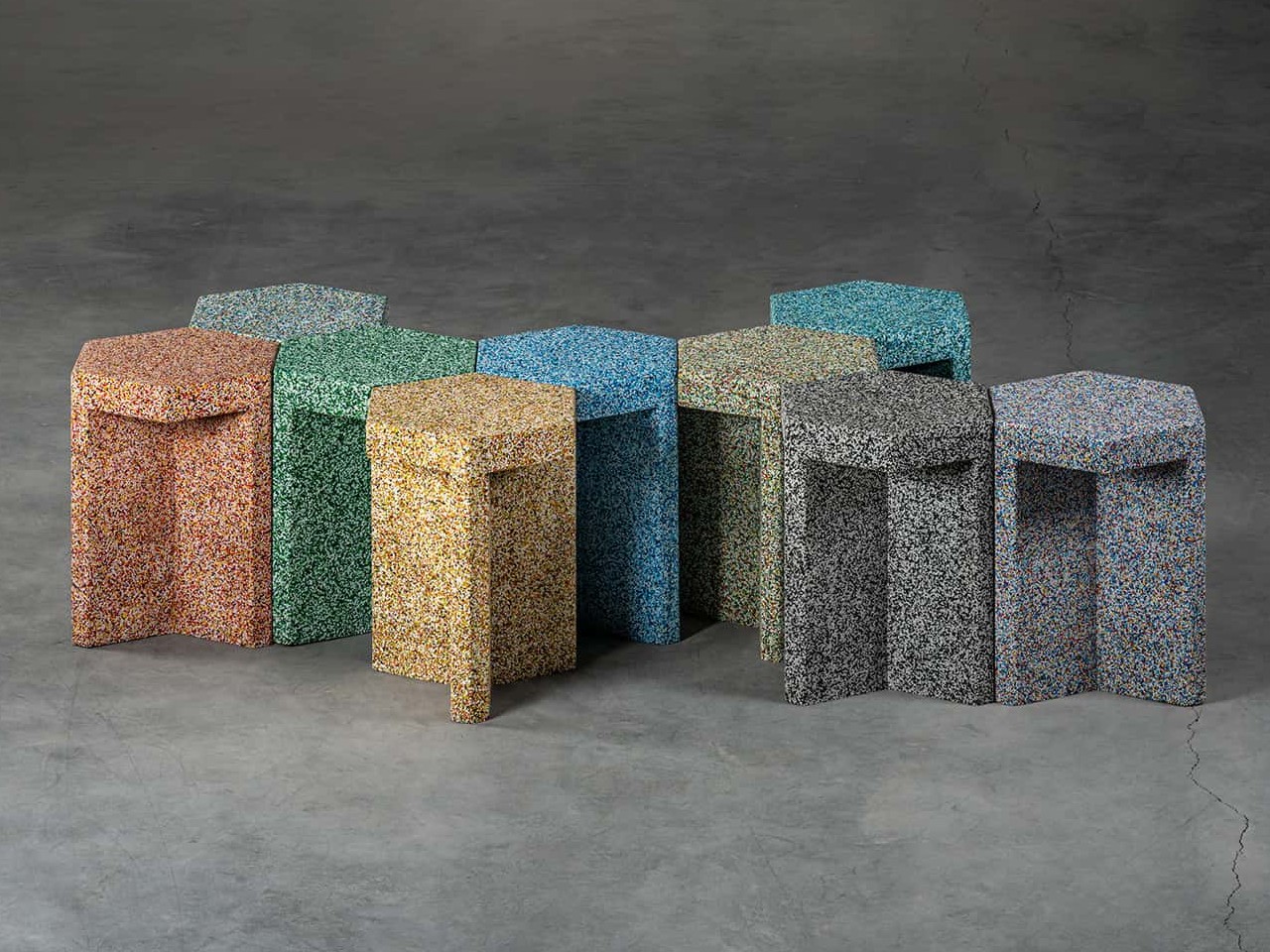
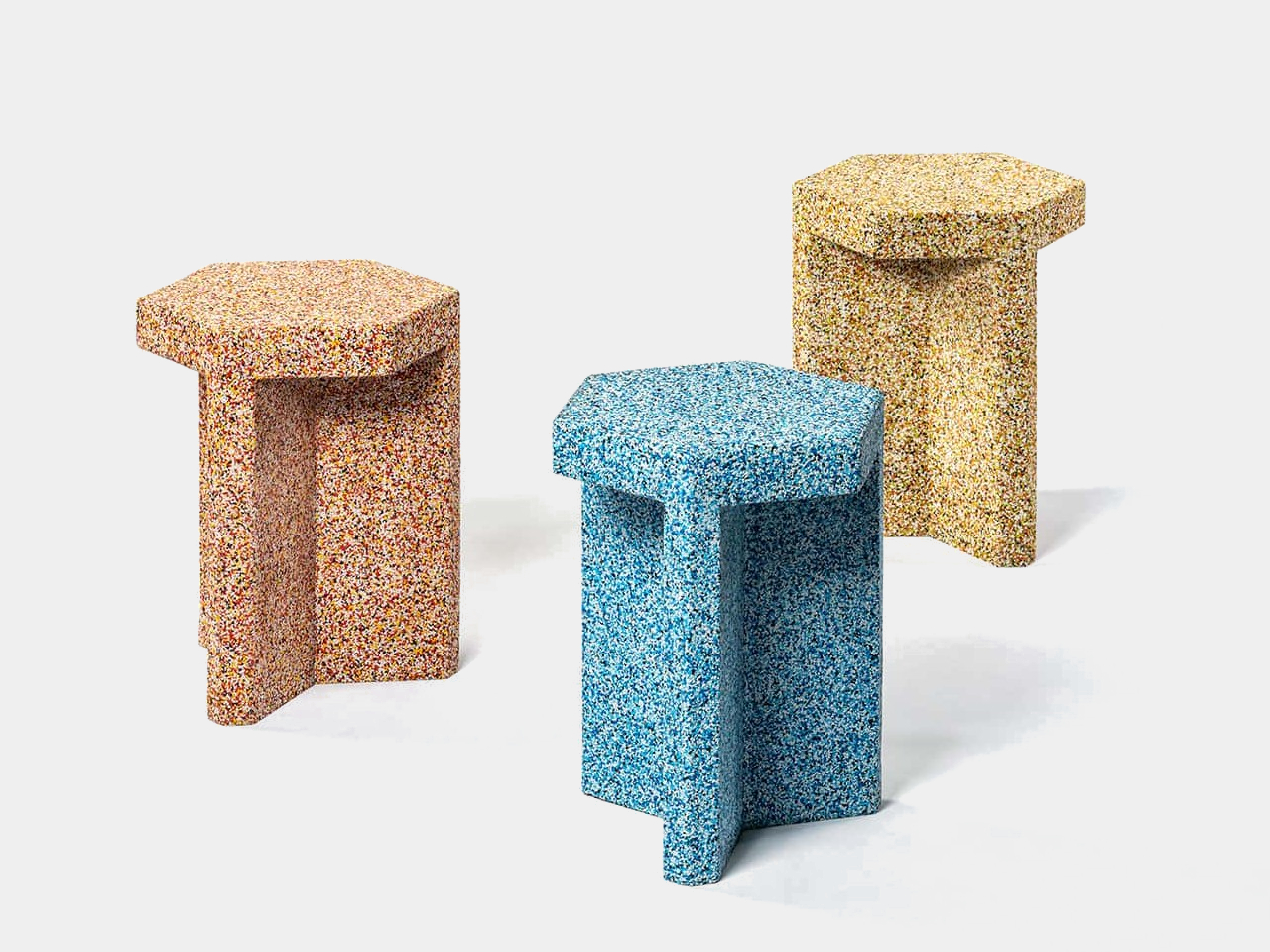
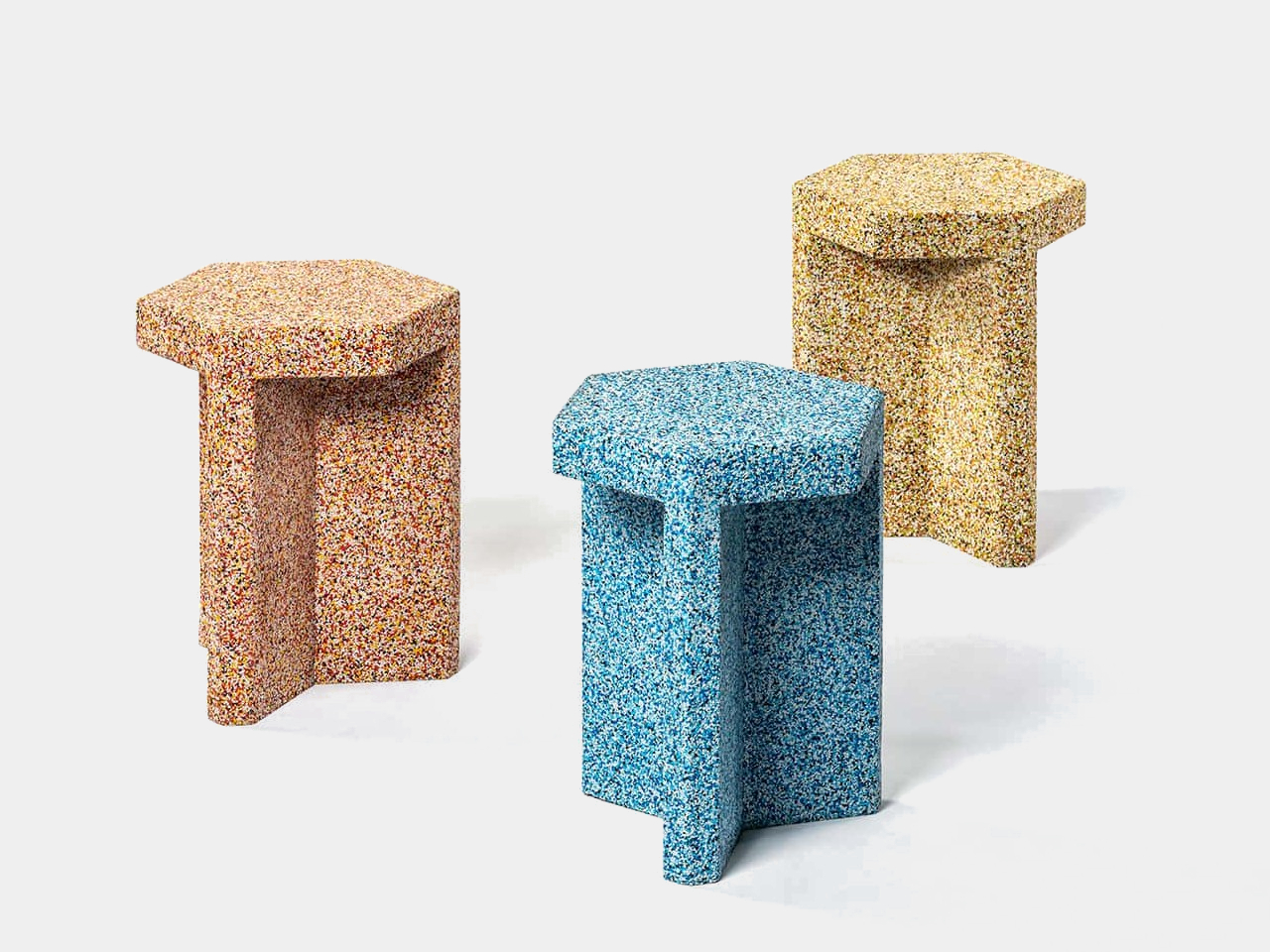
WU is a line of stools that does exactly that, giving new life to shoe soles that result in an even more interesting design. 90% of each stool’s raw materials are made from recycled rubber shoe materials, about 15kg of material that is equivalent to 60 rubber soles. It’s a small number compared to the amount of shoes being thrown away, but even just 10 of these stools mean 600 shoes are kept away from landfills.

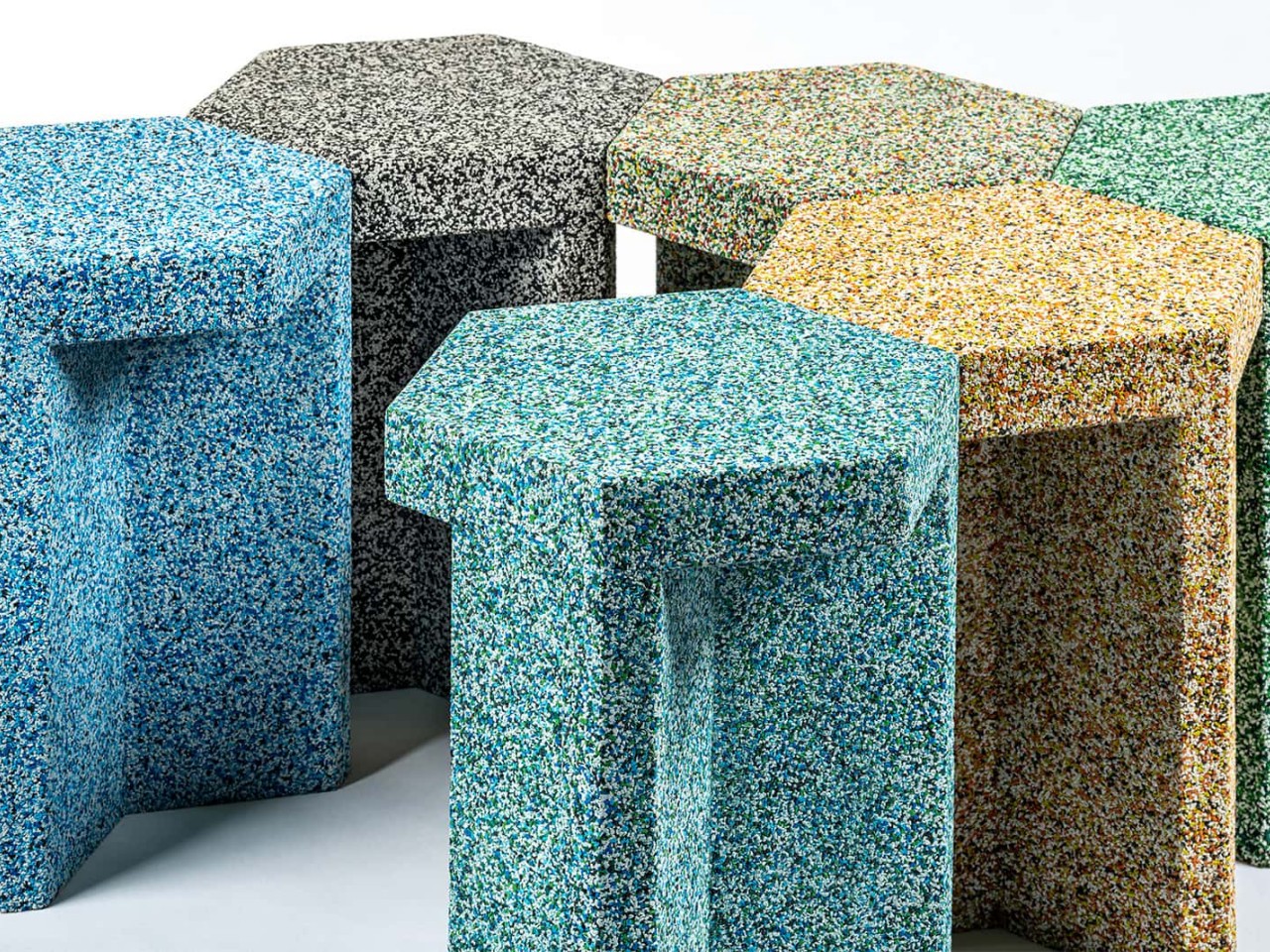
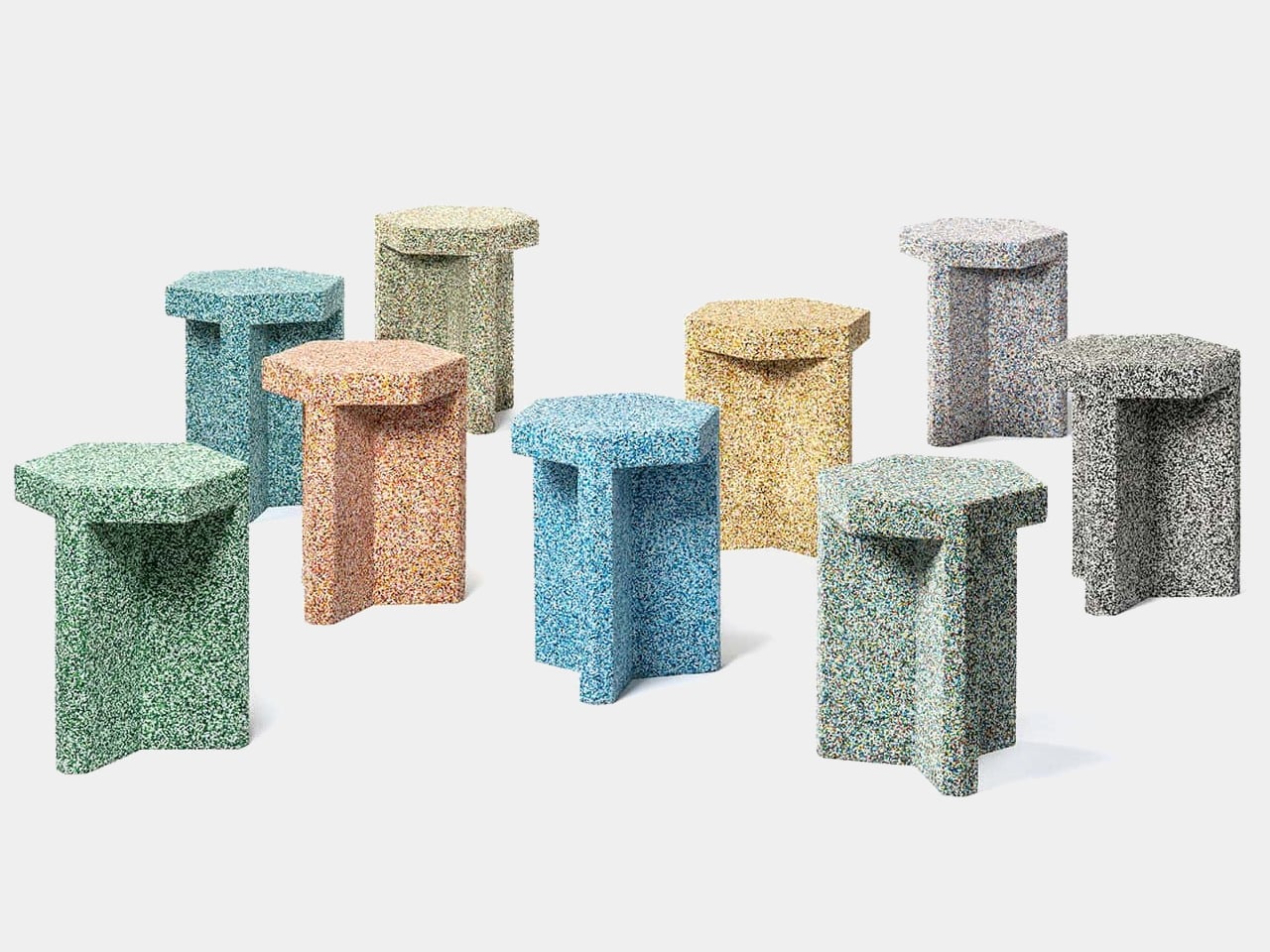
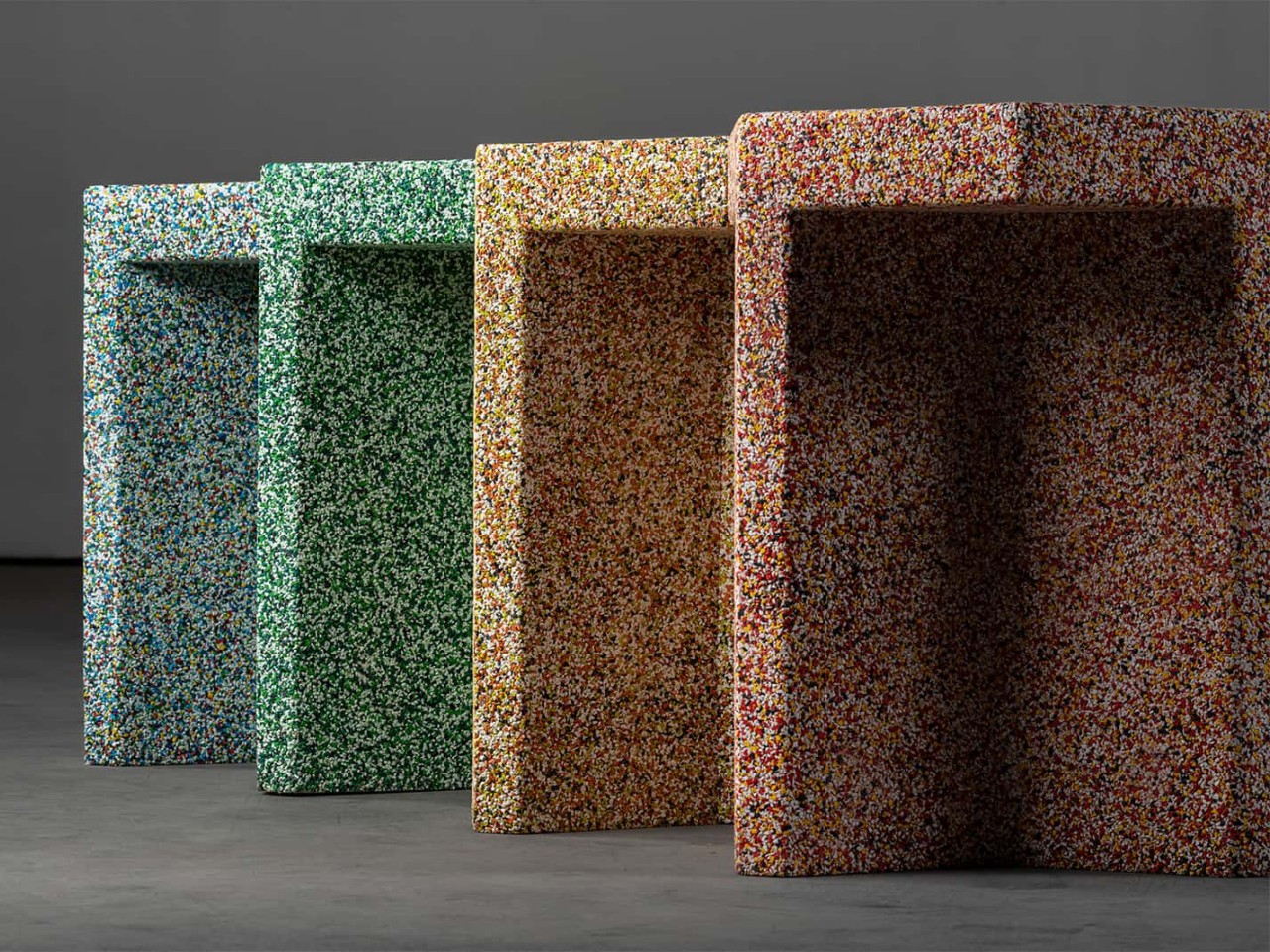
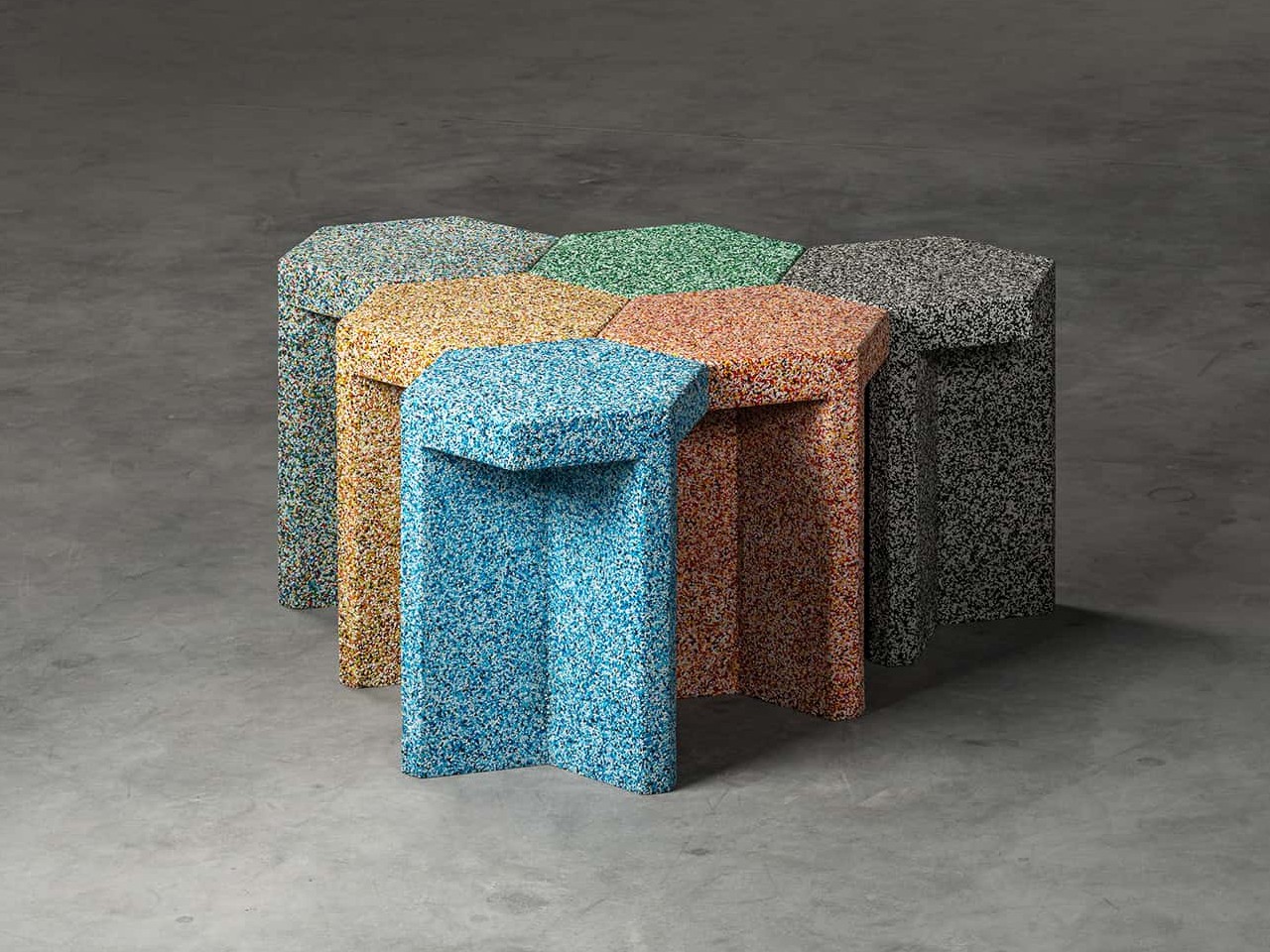
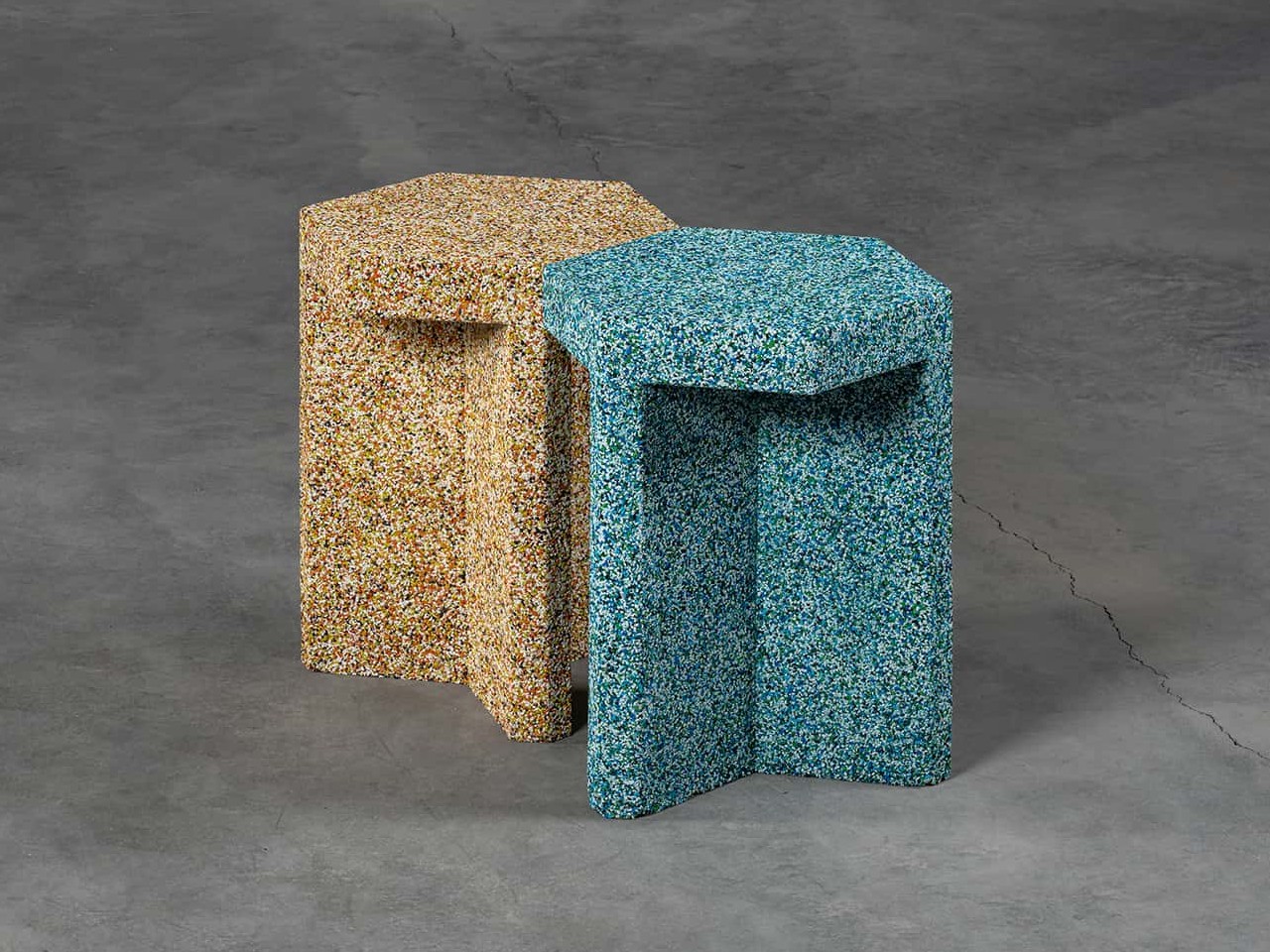
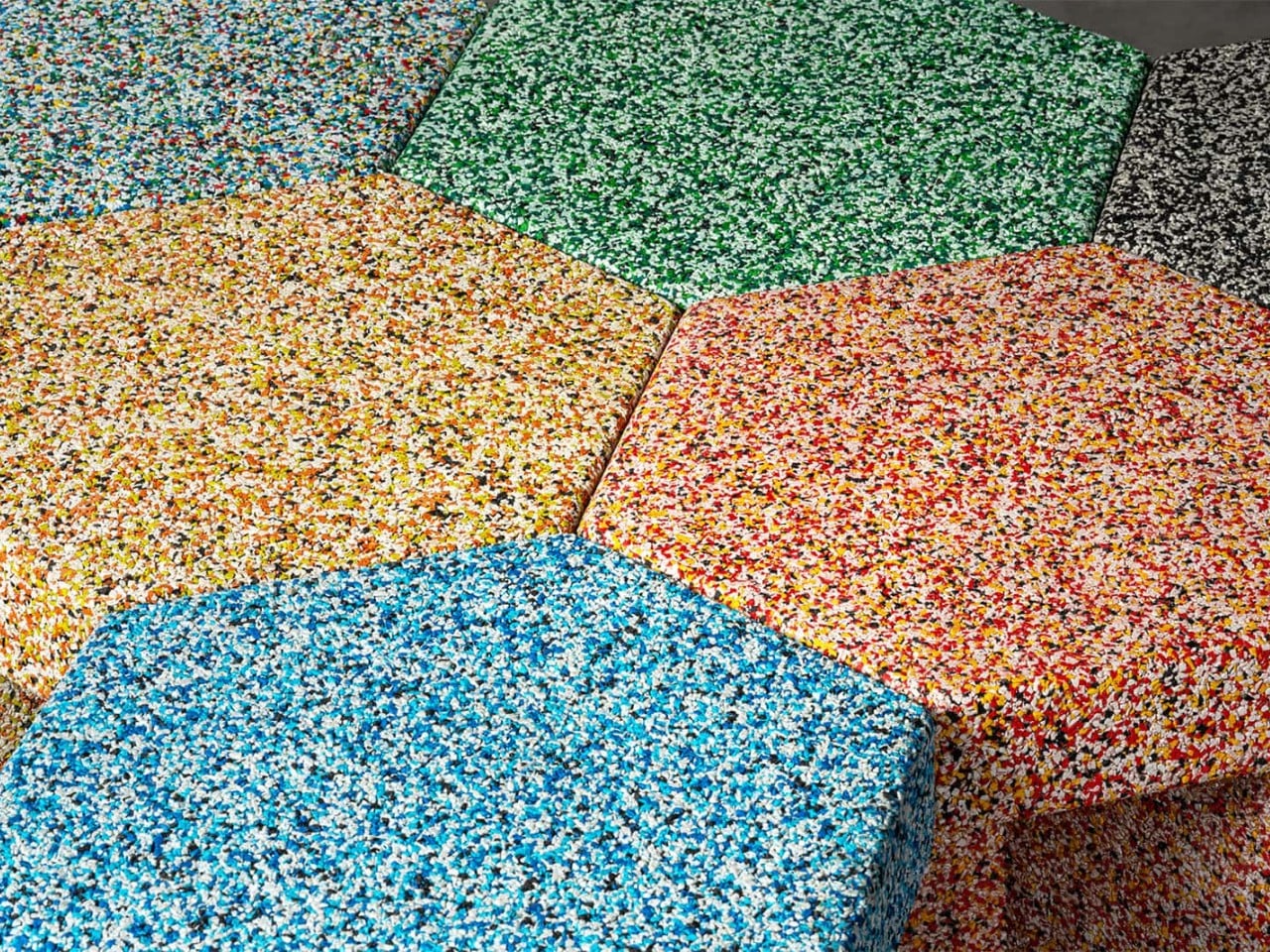
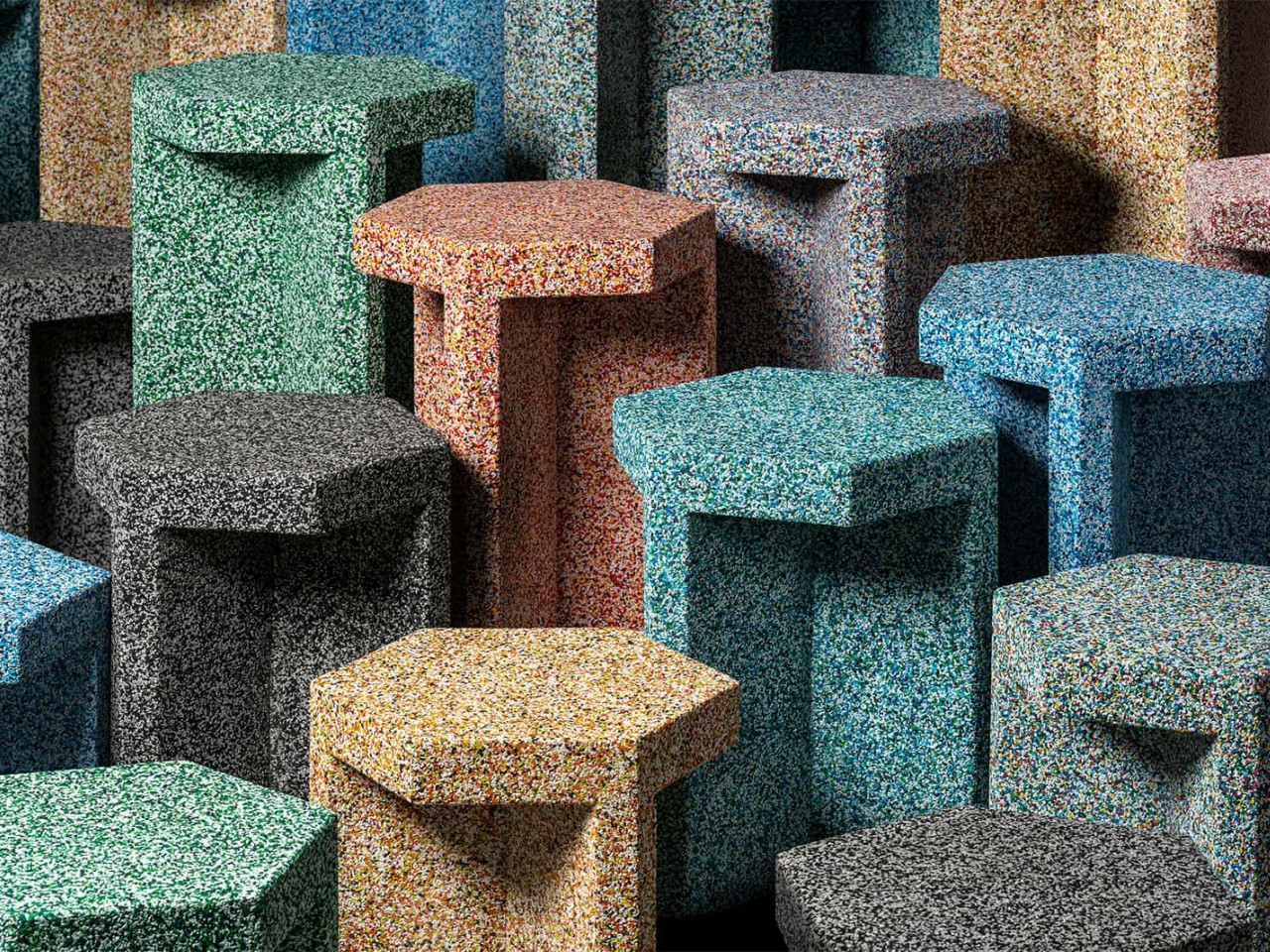
The resulting design is quite intriguing as well. The raw materials are classified according to color to have a more uniform appearance, but the uniqueness still comes out in tiny bits of colors and microtextures. If some recycled plastics create a terrazzo effect, the recycled rubber soles result in finer and smaller pieces that have a grainy appearance as if painted with oils or mixed in with concrete.

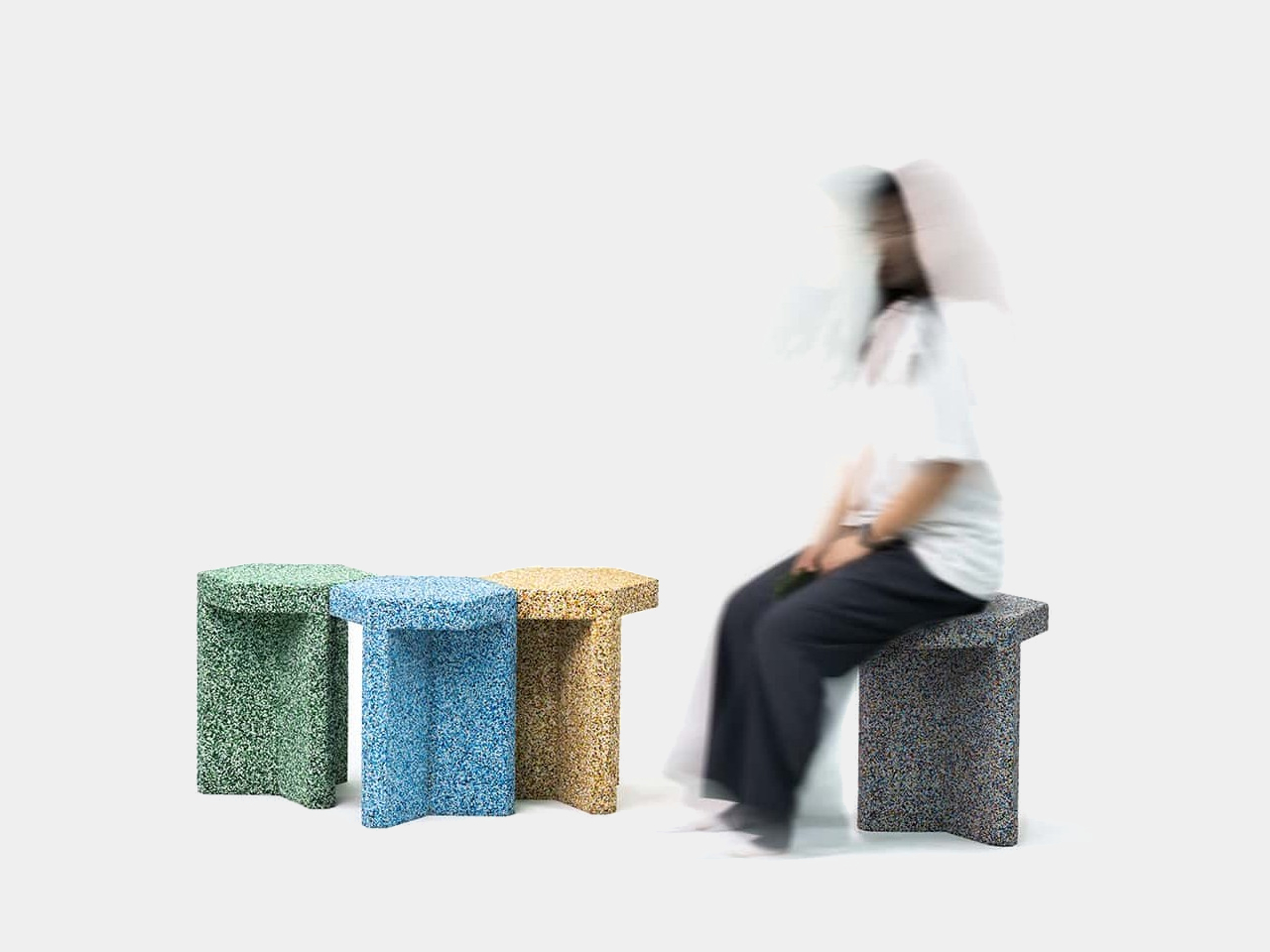
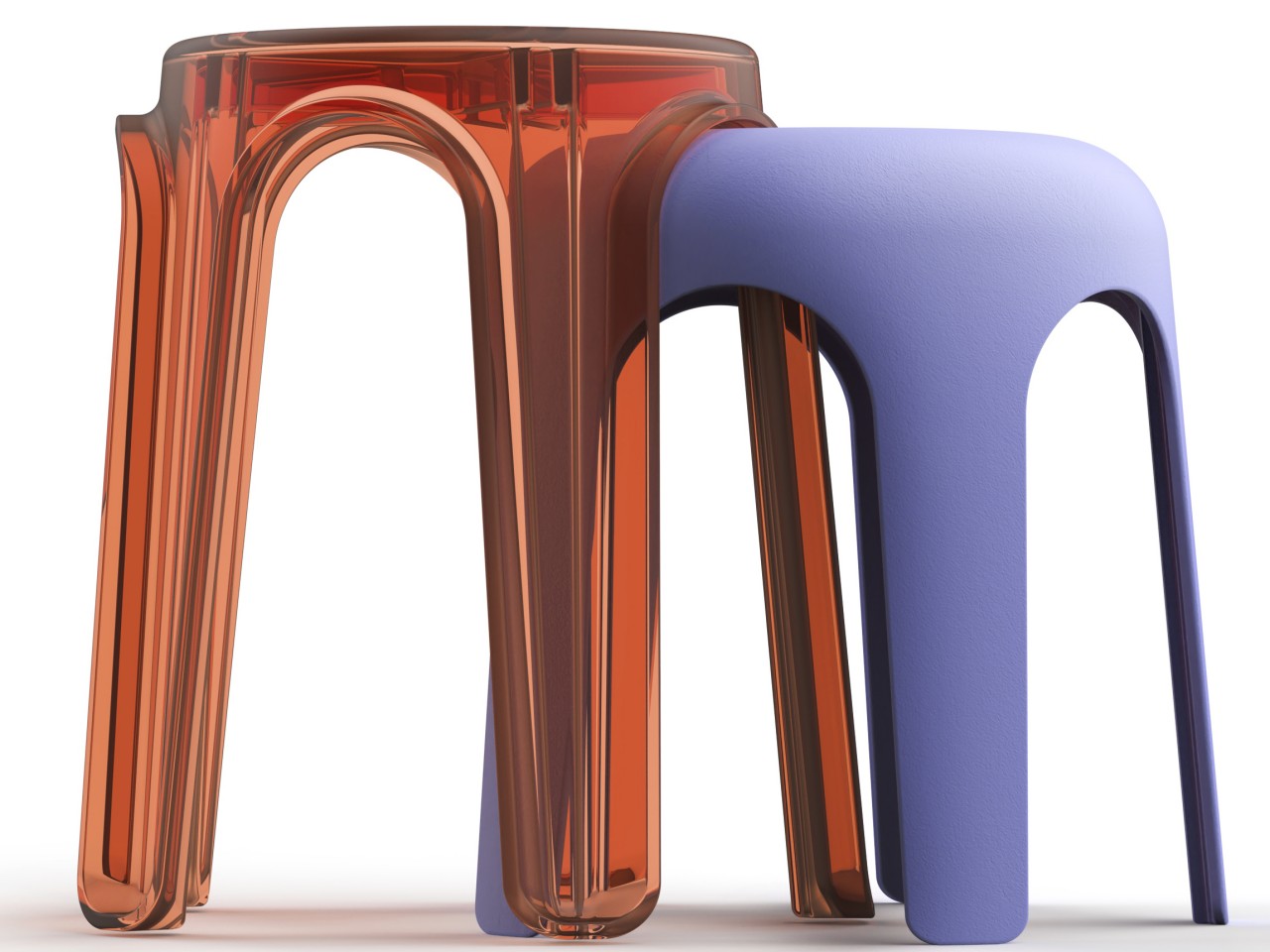
The shape of the WU stool is also unusual, with a hexagon seat and a three-pointed base. This makes it easy to combine the stools into a larger form like a bench, though the connection will be superficial and perhaps a bit unstable. When placed together, these stools paint a rather eye-catching picture, almost literally, as if somebody took reality and applied a mosaic filter on it. Either way, no one will be the wiser that these were probably made from the pair of shoes they threw away years ago.

The post Mosaic-like stools are made from the soles of discarded rubber shoes first appeared on Yanko Design.
Alien-like metal stool concept inspires awe rather than fear

Grotesque alien creatures will probably be trending again thanks to the revival of a long-running movie franchise, but all extraterrestrial creatures will look horrifying. They might be breathtaking, defying all the preconceived notions of our limited human minds. They might not even be organic, at least as defined by what we know on earth. If we ever encountered an inorganic, metallic alien that didn’t look like any biped or quadruped Earthbound creature, it could probably look like this metal stool with its symmetric tentacles that seemingly invite you to approach and, well, sit on it for your comfort.

Designer: Riley MacKay

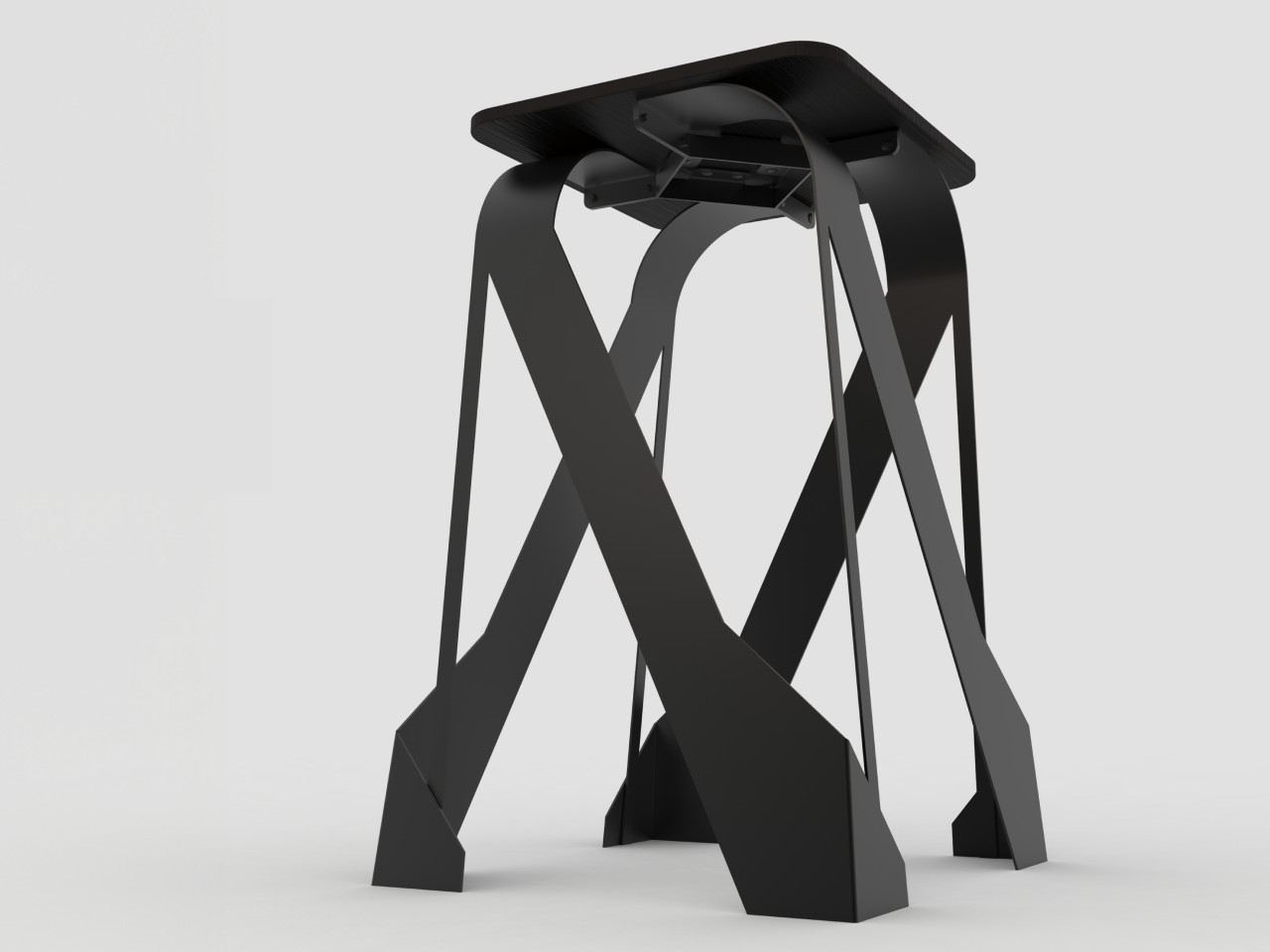
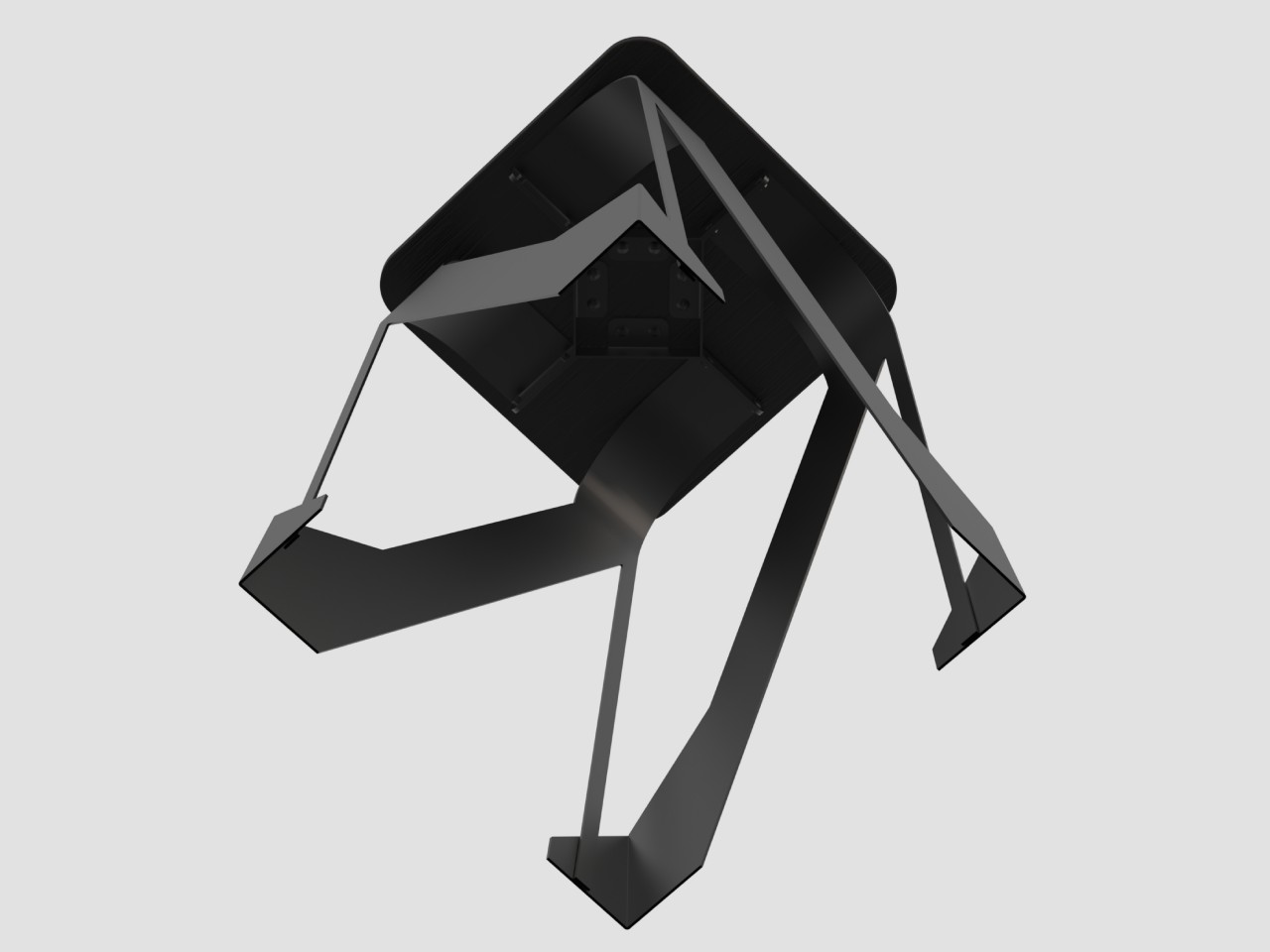
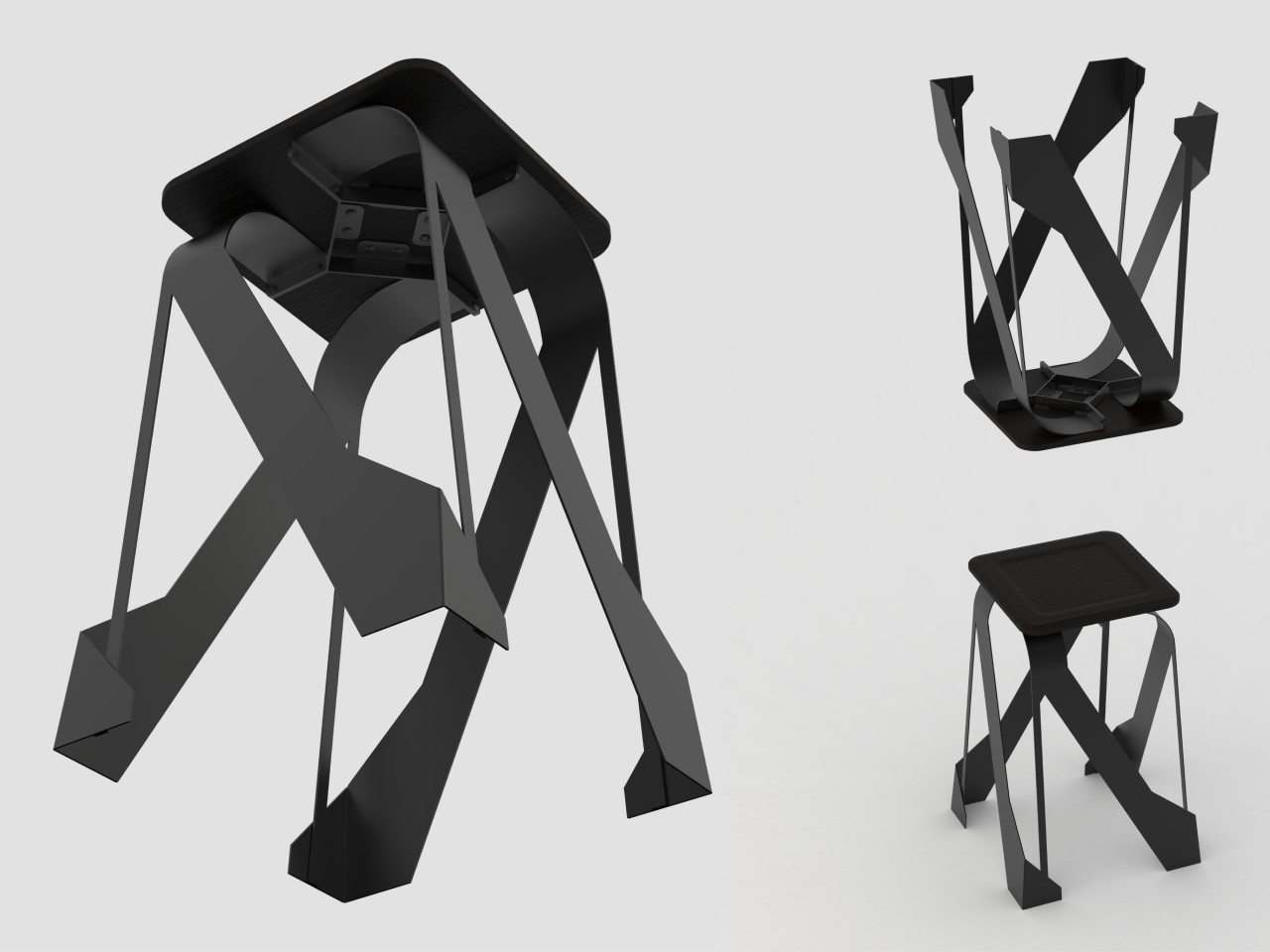
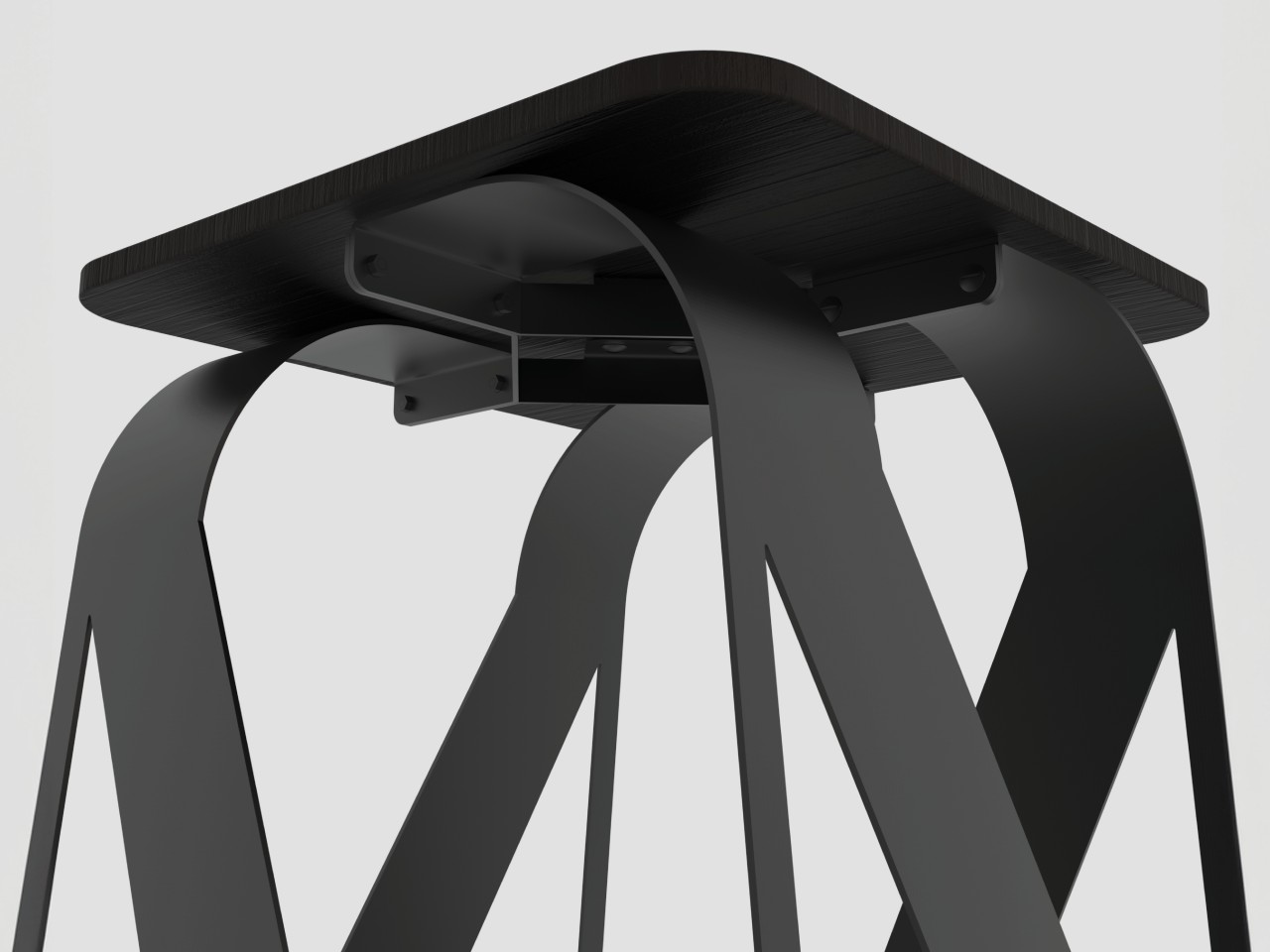
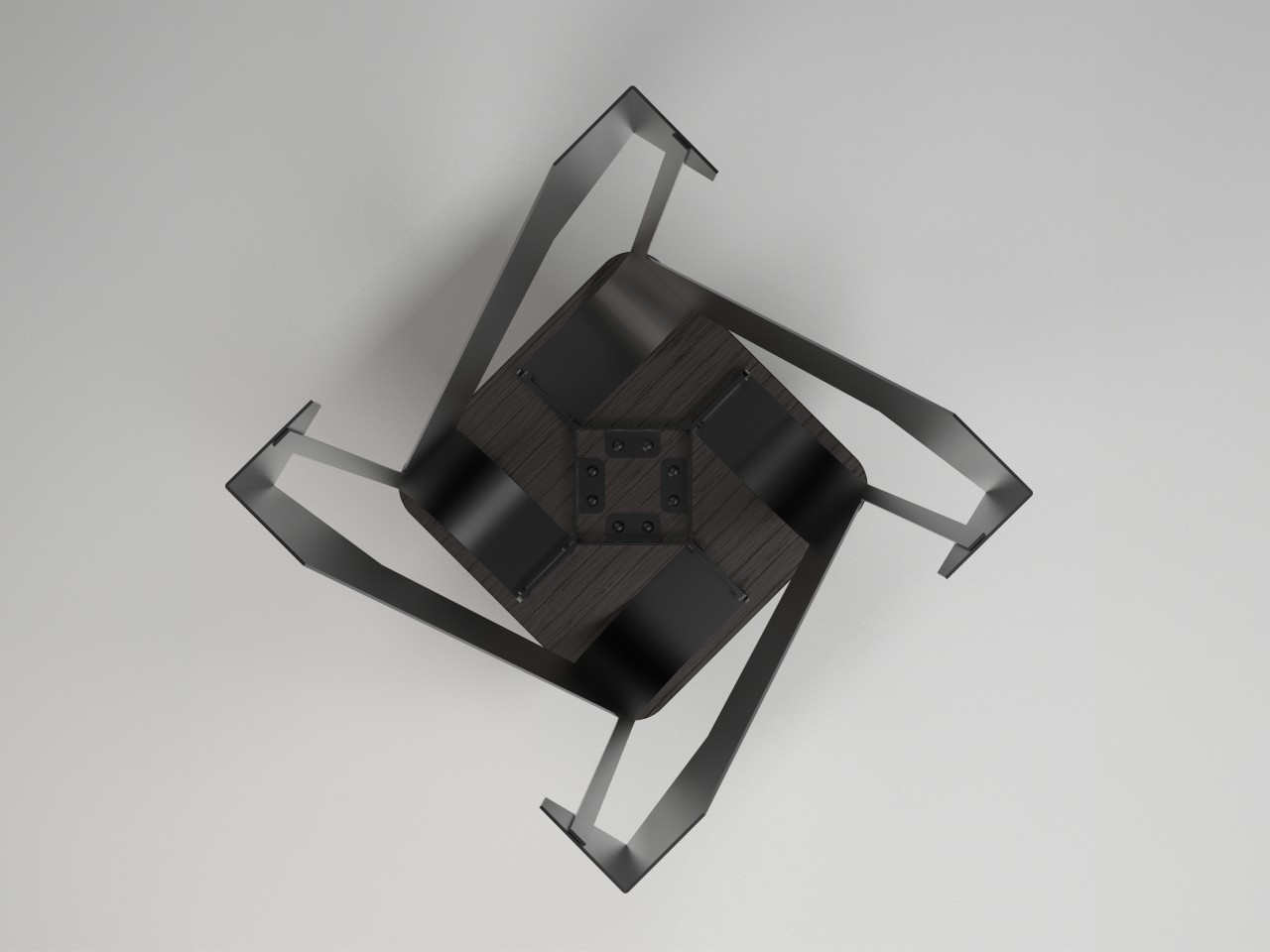
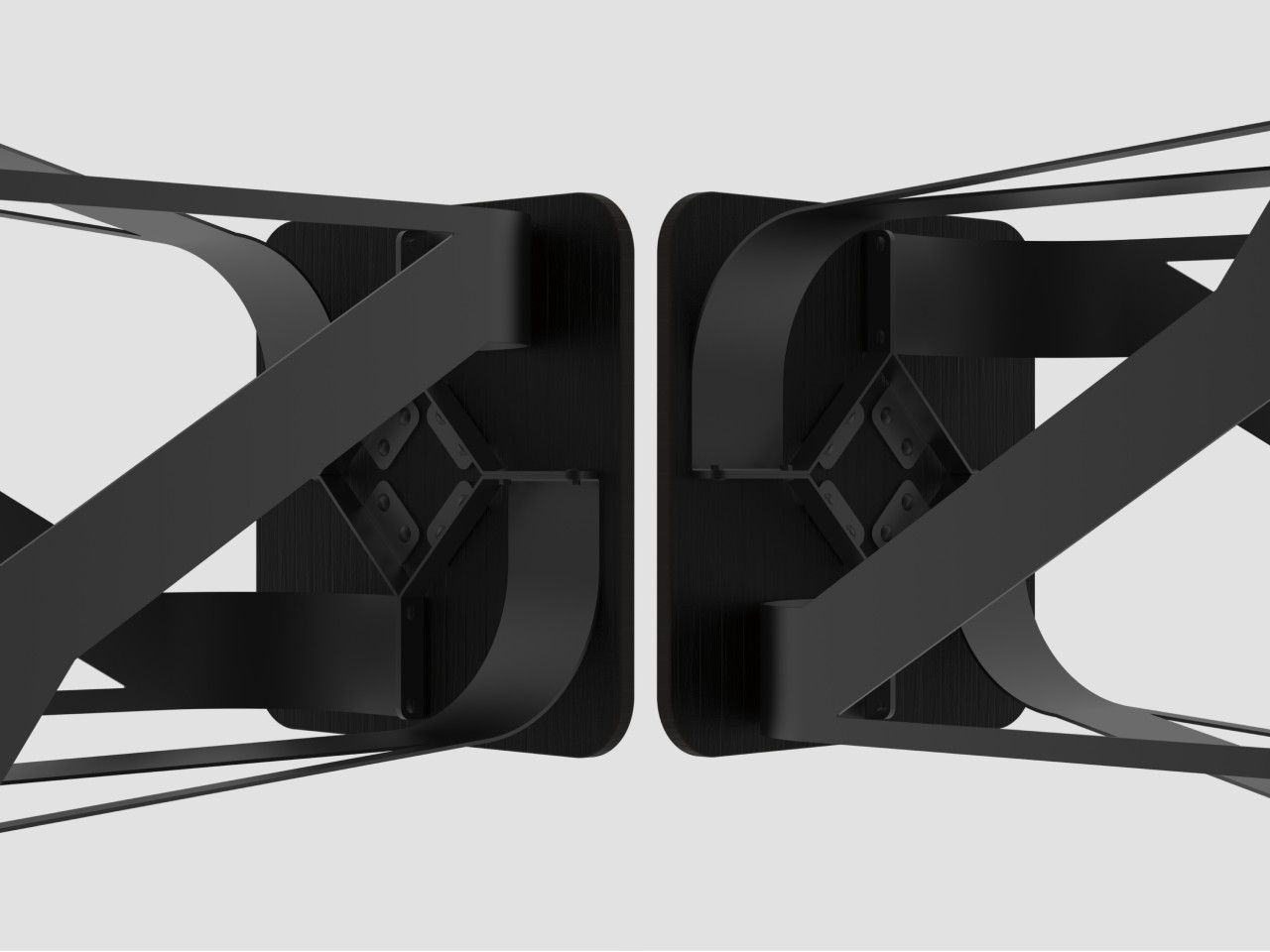
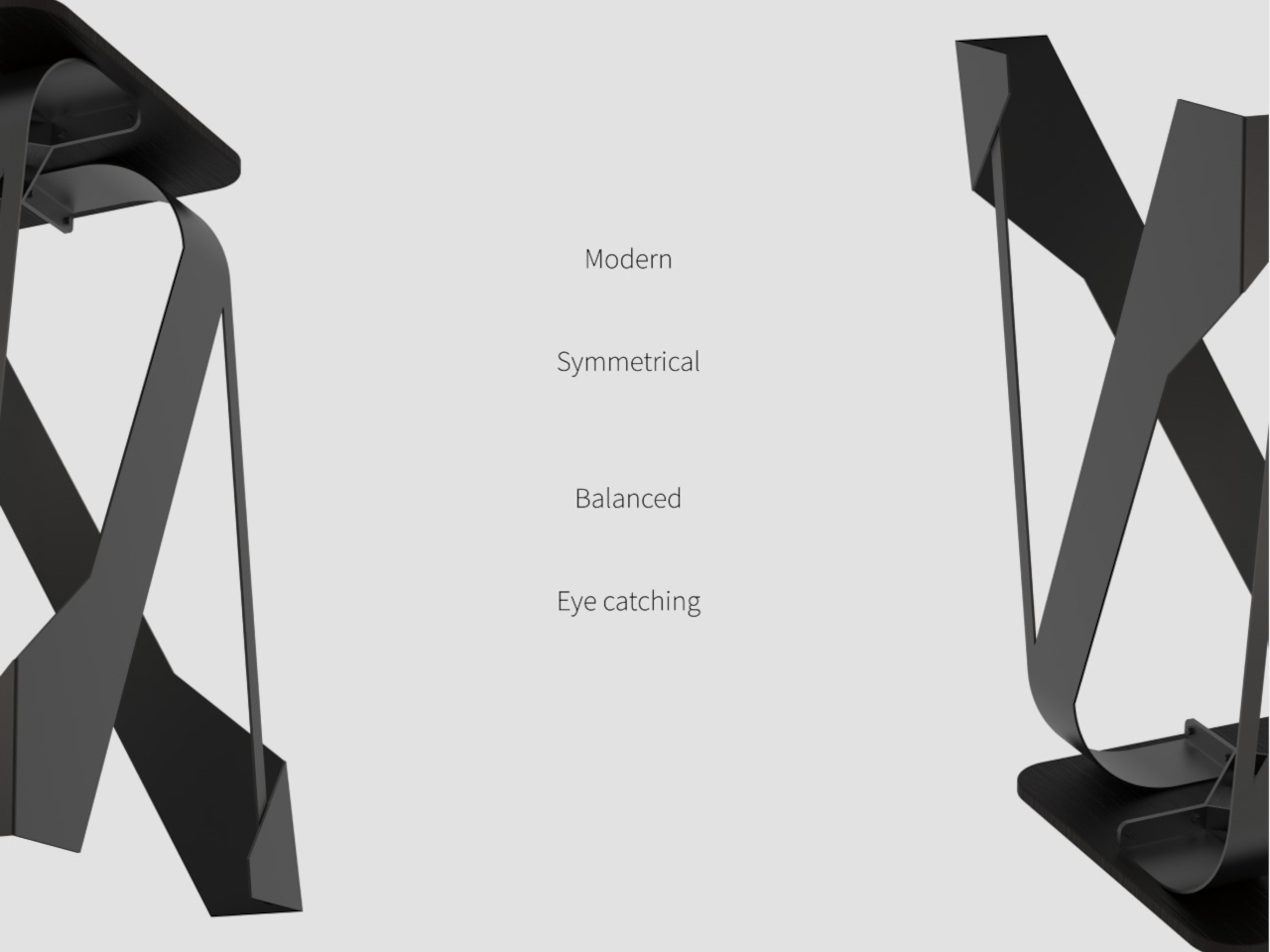
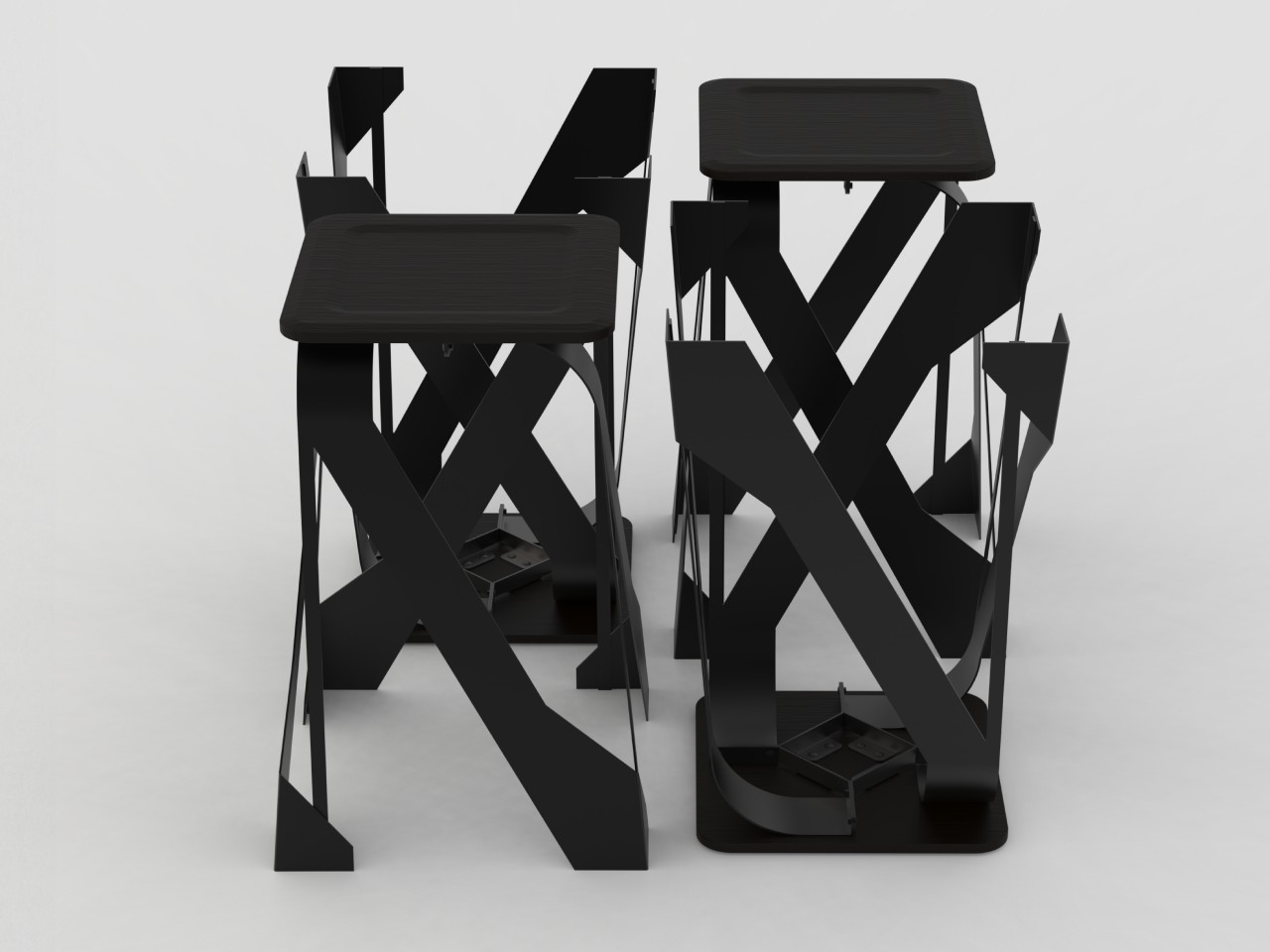
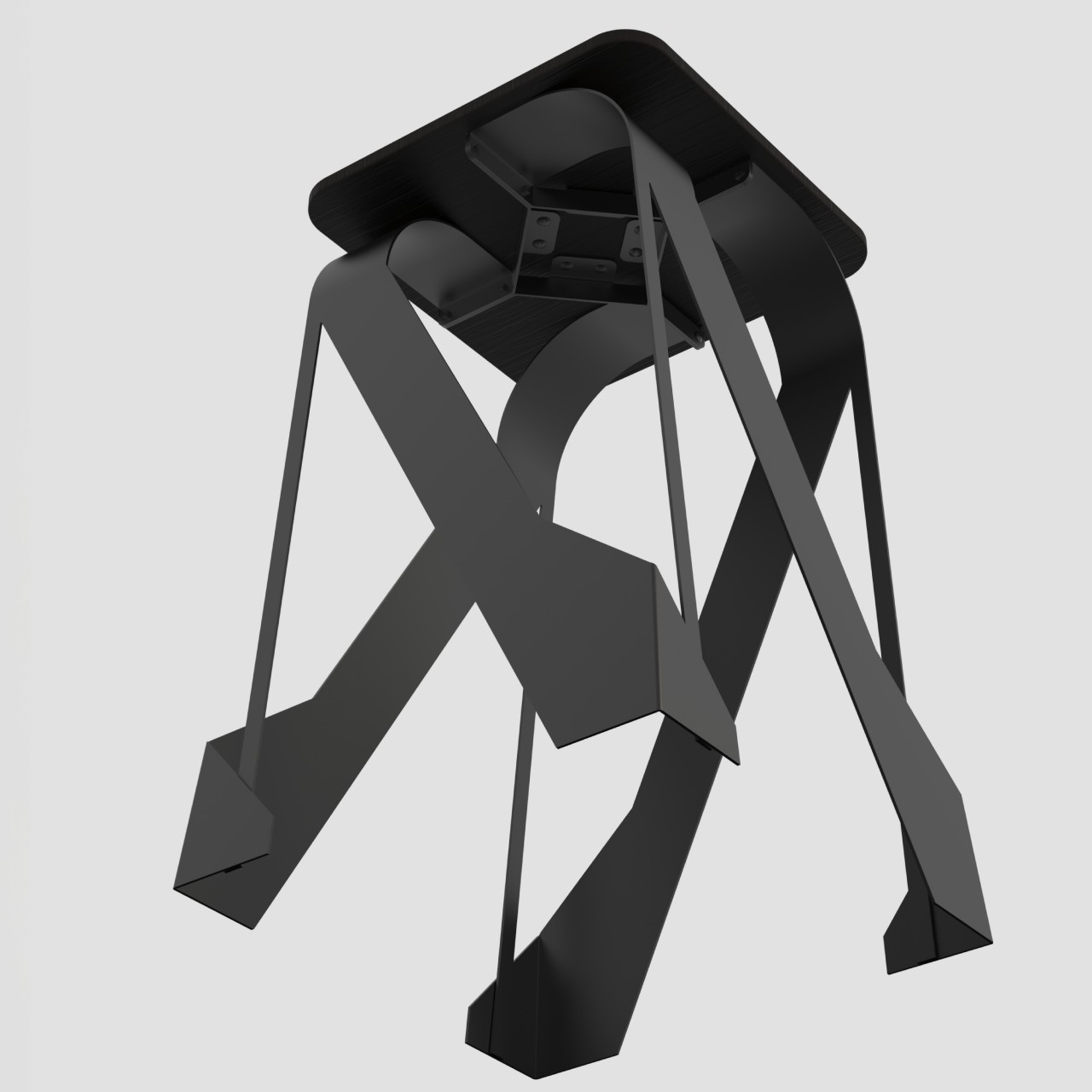
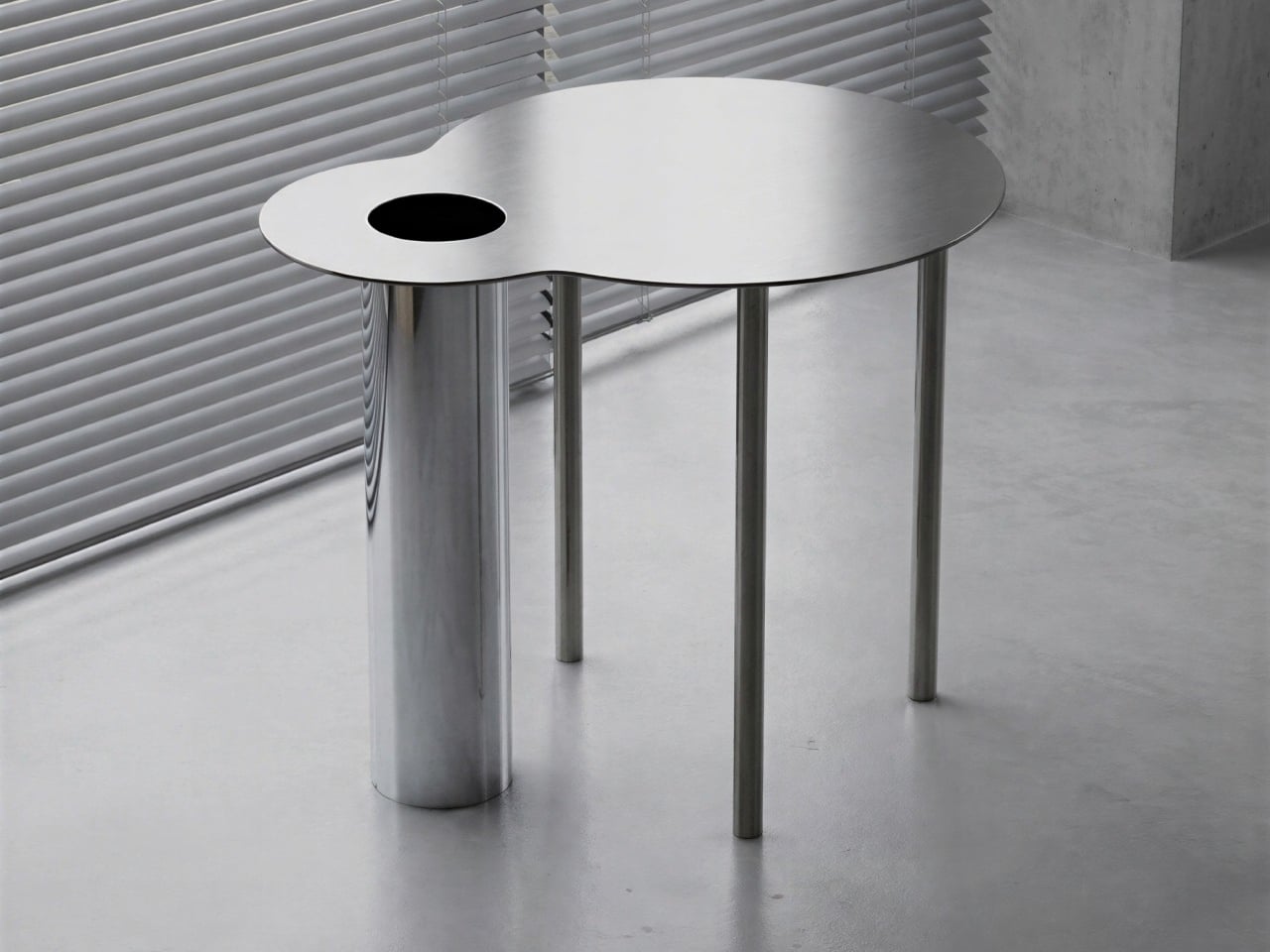
Alien references aside, this metal and wood stool definitely doesn’t look like your typical piece of furniture. There are technically still four legs, though they look double that number because of how each leg splits into two. The legs seemingly turn and swirl around the center of the stool, giving the impression of tentacles moving around a metallic creature.

Unlike what you’d see from a jellyfish or octopus, however, there is a strict symmetry to the stool’s geometric design. The legs protrude at a specific angle away from the body and to the side, creating the shape of a spinning star when the stool is viewed from the top. This design provides both visual and mechanical balance, giving the stool stability despite its seemingly thin and flat legs.

There is also a sustainability angle to the Metal Stool, though perhaps a bit indirectly. The legs are made from sheet metal while the seat is birch wood, both of which can be sourced from sustainable or renewable options. The minimalist design could mean that these parts can be taken from factory offcuts as well, providing a new purpose for otherwise discarded and wasted materials.

The Metal Stool is a prime example of a simple and subtle design that manages to look quite stunning just by shifting the formula just a little bit. Whether it reminds you of aliens, jellyfish, or abstract art, the stool has the same effect of catching your attention and adding a unique character to any space. And, of course, you can sit on it as well without fear of toppling over or, worse, being taken by metal tentacles into the depths of a dark void.

The post Alien-like metal stool concept inspires awe rather than fear first appeared on Yanko Design.
Modular stool concept is designed for people who love sitting cross-legged

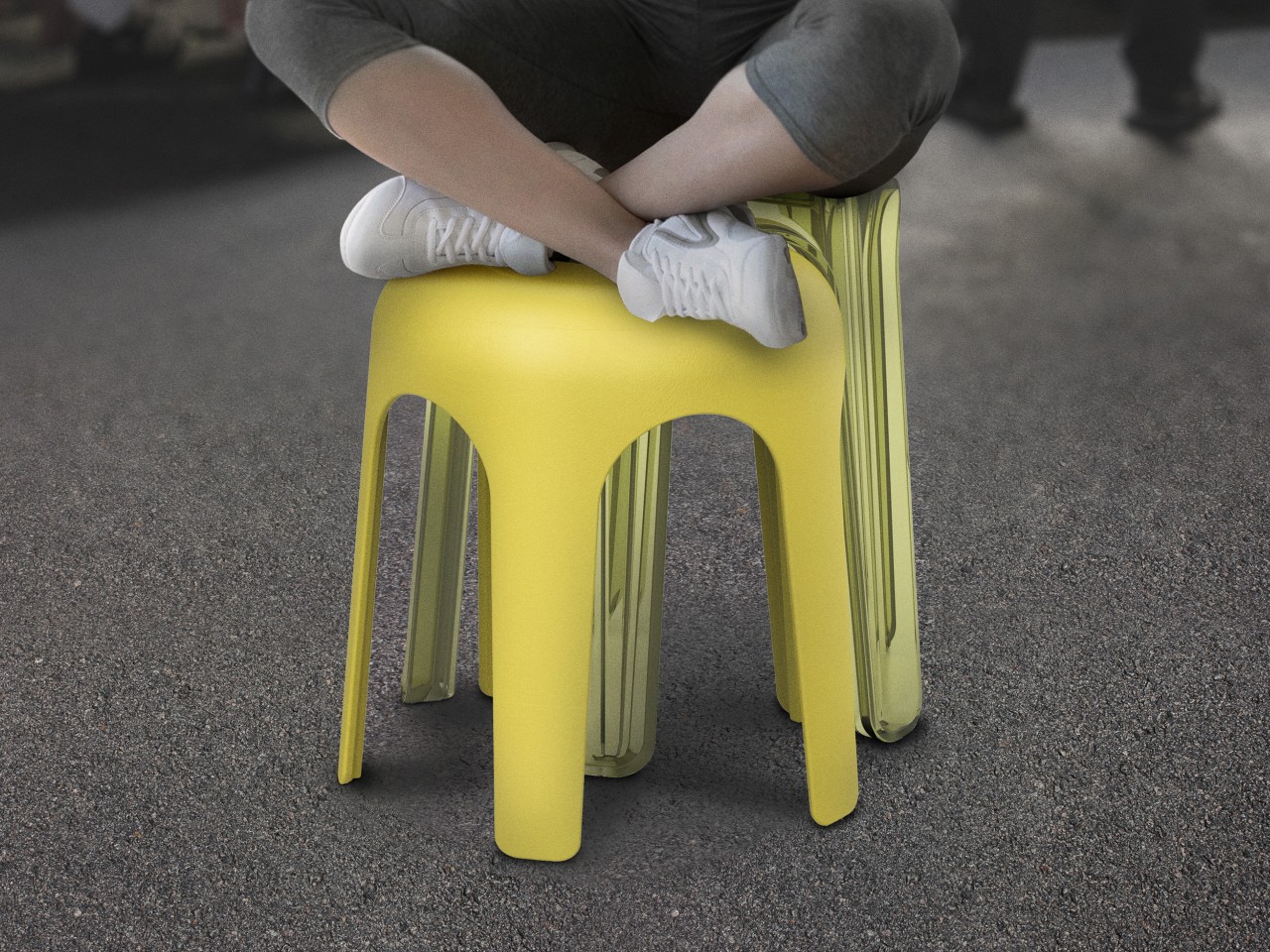
Stools are often classified as tall, backless chairs, and like most seats, they’re designed to be used in a specific way. You simply sit on top of the stool and have your legs hanging from the edge, with your feet planted firmly on the ground. This style of sitting might be common, but it’s definitely not how everyone sits around the world. In some cultures, particularly in Asia, people tend to sit cross-legged on the floor, at least when they’re at home or in establishments designed to cater to that culture. Stools, of course, aren’t meant to support that way of sitting, but this concept design tries to expand the traditional stool design to be more inclusive while also offering an additional feature completely unrelated to sitting.

Designer: Gisung Han

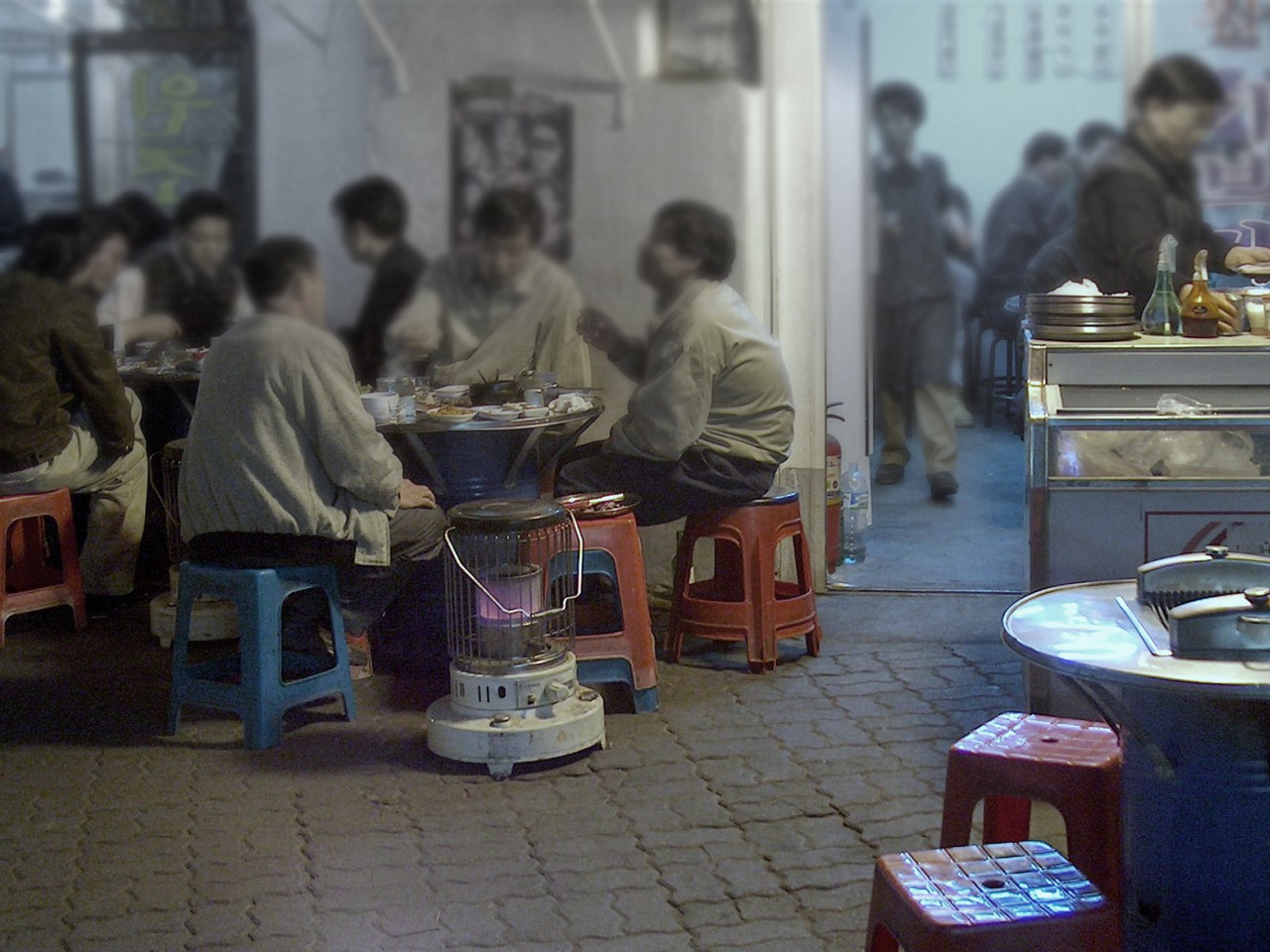
It’s probably too much of a generalization but sitting cross-legged has become associated with Asian cultures. Especially in countries like Korea and Japan, some families tend to sit on the floor during meals in that position, something that might not sit well with those who don’t consider it proper during meals. Eating outdoors, of course, is a completely different matter, especially in public places like outdoor restaurants that only provide simple stools for customers. One simply can’t sit cross-legged comfortably, but still try to do it.

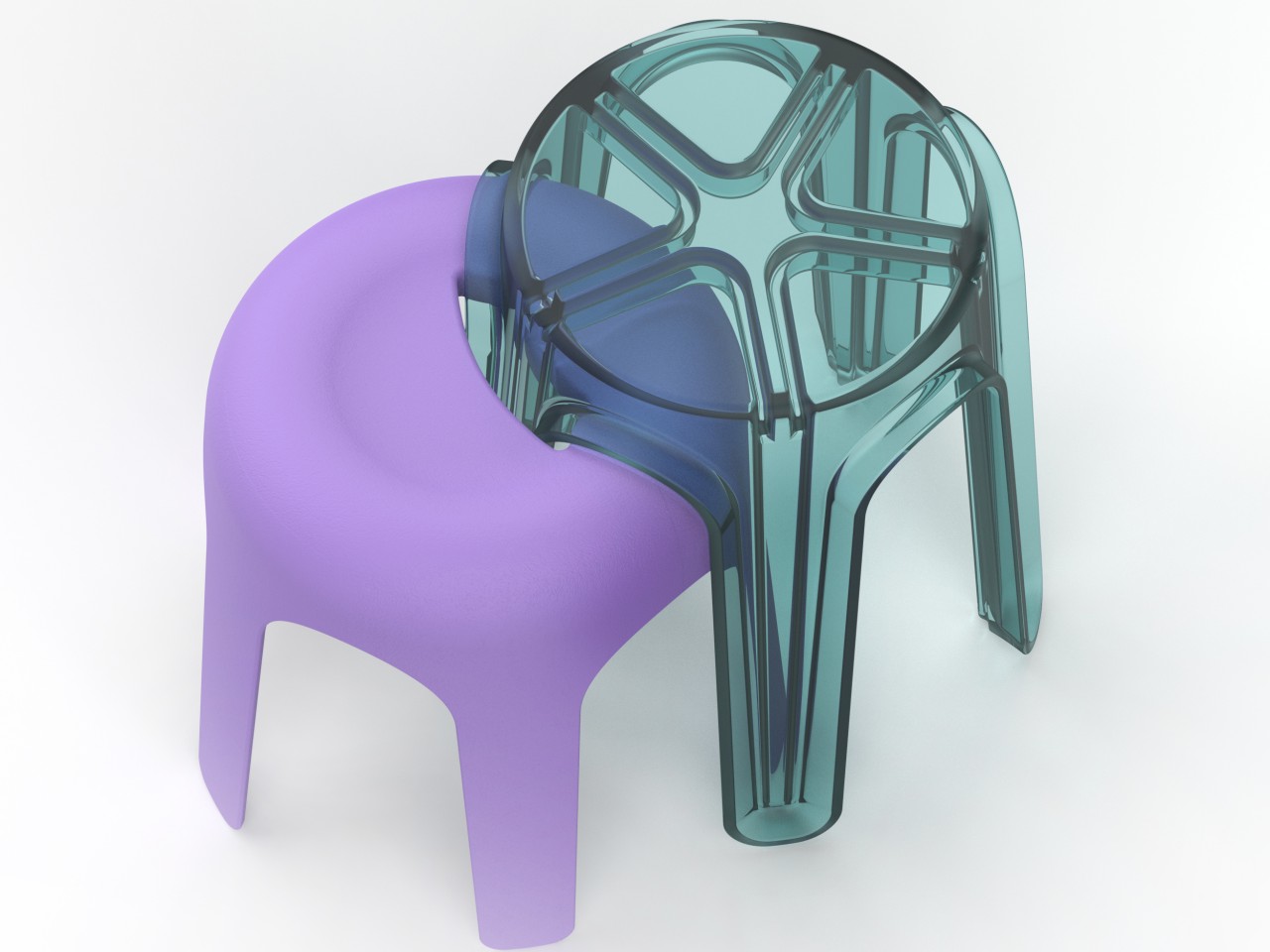
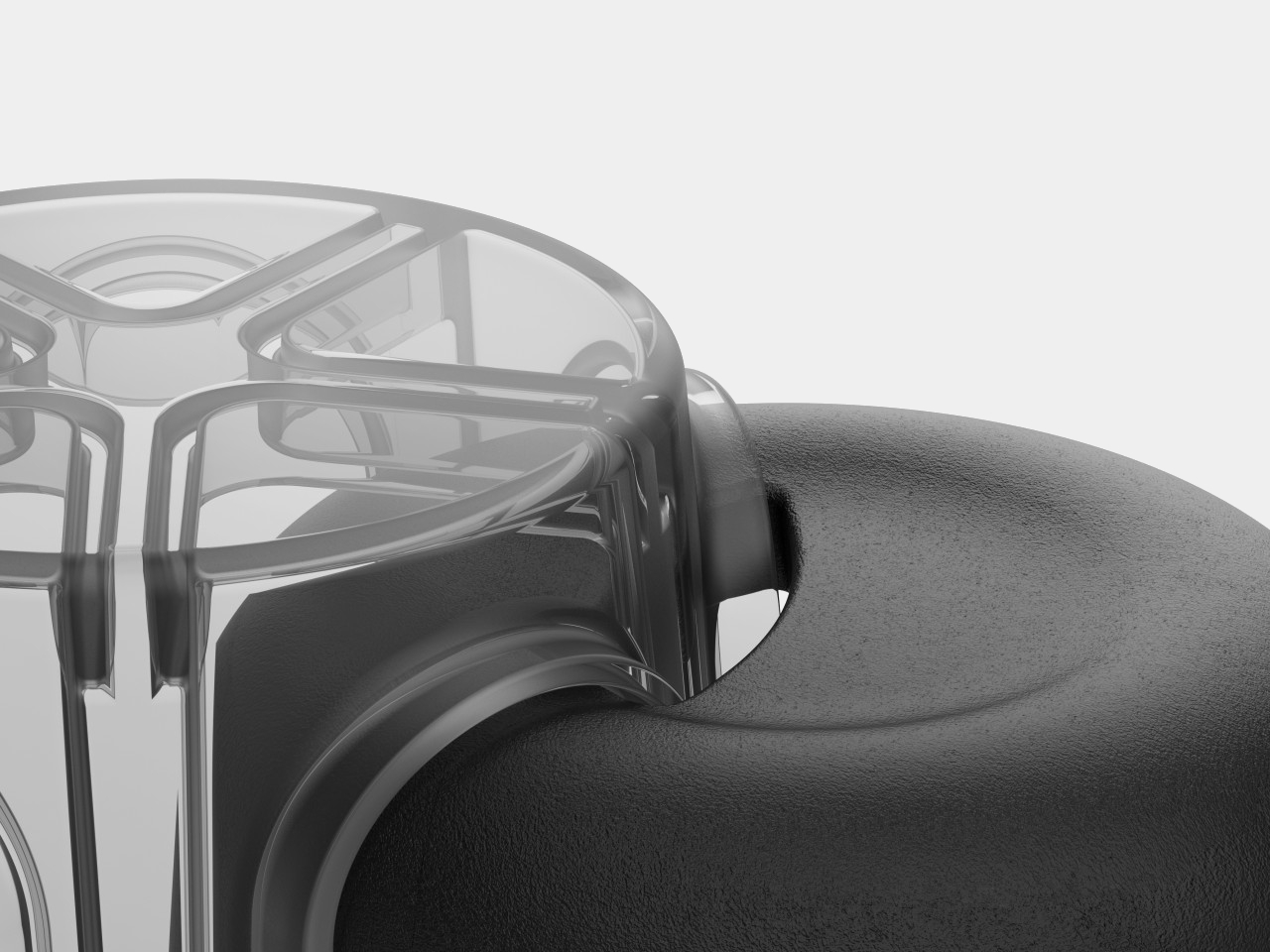
Named after a famous avenue in South Korea, the Euljiro stool concept tries to solve this conundrum with a design that caters to both normal sitting and cross-legged sitting. This seemingly magical capability is made possible by the stool’s two-part modular design. When joined together, it looks like a simple, two-color stool that you can use normally. But remove the top part and you actually get two stools, with the top shorter than the bottom.

1

When you insert one of the legs of the taller stool into the middle of the shorter one, you get a two-tier seat seemingly joined at the hip. This setup would allow the person to sit with their legs crossed without worries they’ll tumble backward or to the side. It doesn’t take up too much space either, and it can even be used as two separate stools if there aren’t enough seats to go around.

Euljiro’s flexibility also extends to its use as a place to put bags while eating. This is especially useful in restaurants that don’t have designated storage for bags, where putting bags down on the ground might be unhygienic. It’s definitely a creative way to solve multiple problems with a single design while ironically still sticking to the most common stool shape of all.

The post Modular stool concept is designed for people who love sitting cross-legged first appeared on Yanko Design.
Bent wooden stool requires no screws or hinges to assemble from flat packaging

Flat-packed furniture has become quite the sensation, satisfying both the need for easy-to-assemble mass-produced products as well as a craving for the trendy minimalist design. There are, however, certain limits to those designs, especially because of the need to be flat and tightly packed. Putting them together also sometimes requires a bit of patience and know-how, particularly when small parts and screws are involved. This stool concept design challenges those conventions, however, by using mechanisms that require no extra parts, no screws, and even no glue, yet still delivers a multifunctional piece of furniture that looks unique and distinctive, unlike most mass-produced flat-packed products.

Designer: Joao Teixeira

The easiest method to join two separate pieces after they have left the factory would be to either screw or glue them together. The former entails more complicated parts while the other often employs chemicals harmful to the environment. There are, however, techniques that simply use shapes and the force of physics, particularly gravity, to keep two parts together. The dovetail joint, which looks like two puzzle pieces getting wedged together, is one such mechanism, and it is the technique employed by this Flat Stool design.

That in itself is already impressive, but the stool’s real claim to fame is how its sides can curve and bend despite being flat-packed. You’d usually have to resort to tricks like hinges, which you have to screw, to change a wooden plank’s direction, but the Flat Stool uses a rather unconventional design to do the same. Specifically, it uses kerf bending on those bent areas to create a gentle curve that makes it look like the piece was shipped that way right from the start.

The effect is a stool whose sides bend down and inward, attaching to the middle of the slanted legs that also have a kerf bend to them. This creates a loop on both sides, an empty space that can serve as a holding space for books, phones, or other objects that don’t need a flat, horizontal surface to lie on. As a bonus, the kerfs and ribs of the stool are exposed and visible for everyone to see, creating visual accents that make the stool look more interesting.

Admittedly, some might have concerns about how long the dovetail joints will hold over time as the wooden contacts between the joints wear down. The kerfs might also look a bit worrying, especially on the legs, given the decrease in the mass of the wooden boards. Nevertheless, it’s an interesting concept that tries to think outside the flat-packed box to provide a design that isn’t as flat, literally and figuratively.

The post Bent wooden stool requires no screws or hinges to assemble from flat packaging first appeared on Yanko Design.
Stackable, plastic stool is colorful short-term multi-functional seat

Because of my bad back, I am not that much a fan of stools. But there are times that it’s the most practical (and only available) kind of seating especially if you live in Asia. On our side of the world, it’s often used for short-term use at places like street food stalls, markets, and corner pubs. There’s always room for well-designed stools that may also serve other purposes aside from sitting on it.
Designer Name: Sheng-Wen, Wang

StOol is a concept for stools that are meant for short-term use. The seat has a fan-shaped design with a stem-like backrest. It is meant for areas with minimal space and They are easily stackable so it’s easy to put them away and get them out for places that also have small storage spaces. They are made from polypropylene plastic so you can use them indoor and outdoor as well.

With the way it’s designed, you can also use the stool for other purposes. Those standing can use it as backrest or armrest. The surface of the stool can also be used to place items if you need a sort of side table. It can also be used as support for hanging objects. There can also be many colors available so it can add a splash of color to your space.

It may not seem the most comfortable place to sit on, especially for people like me who may need a sturdier backrest. But for short-term use and for small spaces, it may be an ideal kind of furniture to have.

The post Stackable, plastic stool is colorful short-term multi-functional seat first appeared on Yanko Design.