Black people across the country have been getting racist texts about slave plantations

Black people throughout the country, in more than 20 states, have been getting racist text messages that order them to report to a plantation for slave labor, according to reporting by CNN and numerous other outlets. The texts reference “slave catchers” and “picking cotton,” in addition to warning the recipients that they will be searched upon arrival.

These hate-filled messages have been received by both kids and adults. The “texts appear to be targeting Black and Brown individuals, including students,” New York’s attorney general Letitia James said. Various AG offices from other states have also issued statements.

The texts all come from unknown phone numbers and began ramping after the election on Tuesday. NAACP president Derrick Johnson said that “these messages represent an alarming increase in vile and abhorrent rhetoric from racist groups across the country, who now feel emboldened to spread hate and stoke the flames of fear that many of us are feeling after Tuesday’s election results.”

The mother of a University of Alabama student who received one of the messages said that “it’s eerie that it’s the day after the election. It’s eerie that it came to my daughter’s personal phone. It’s eerie that it’s only going to Black students.”

A spokesperson for Donald Trump’s presidential campaign wrote in a statement that it “has absolutely nothing to do with these text messages.” The FBI has addressed the situation in a statement, noting that it’s been in “contact with the Justice Department and other federal authorities on the matter.”

It remains unclear who sent the texts and how they did it. The messages targeted people of color, suggesting that the senders had biographical information on the recipients. Many of the messages were sent through TextNow, a free app that provides phone numbers, texting and calling services.

TextNow told CNN that it believes this is a “widespread, coordinated attack.” The service lets people sign up anonymously and sends texts via randomly-generated phone numbers. It says it has been busy “rapidly disabling the related accounts.” The company is also “working alongside our industry partners to uncover more details and continue to monitor patterns to actively block any new accounts attempting to send these messages.”

If you have received one of these horrific texts, lawmakers encourage you to reach out to your state’s AG or email OAGCivilRights@dc.gov. It’s currently unknown how many people have received the messages.

This article originally appeared on Engadget at https://www.engadget.com/big-tech/black-people-across-the-country-have-been-getting-racist-texts-about-slave-plantations-173059798.html?src=rss

Striking New York Times tech workers made their own versions of Wordle and Connections

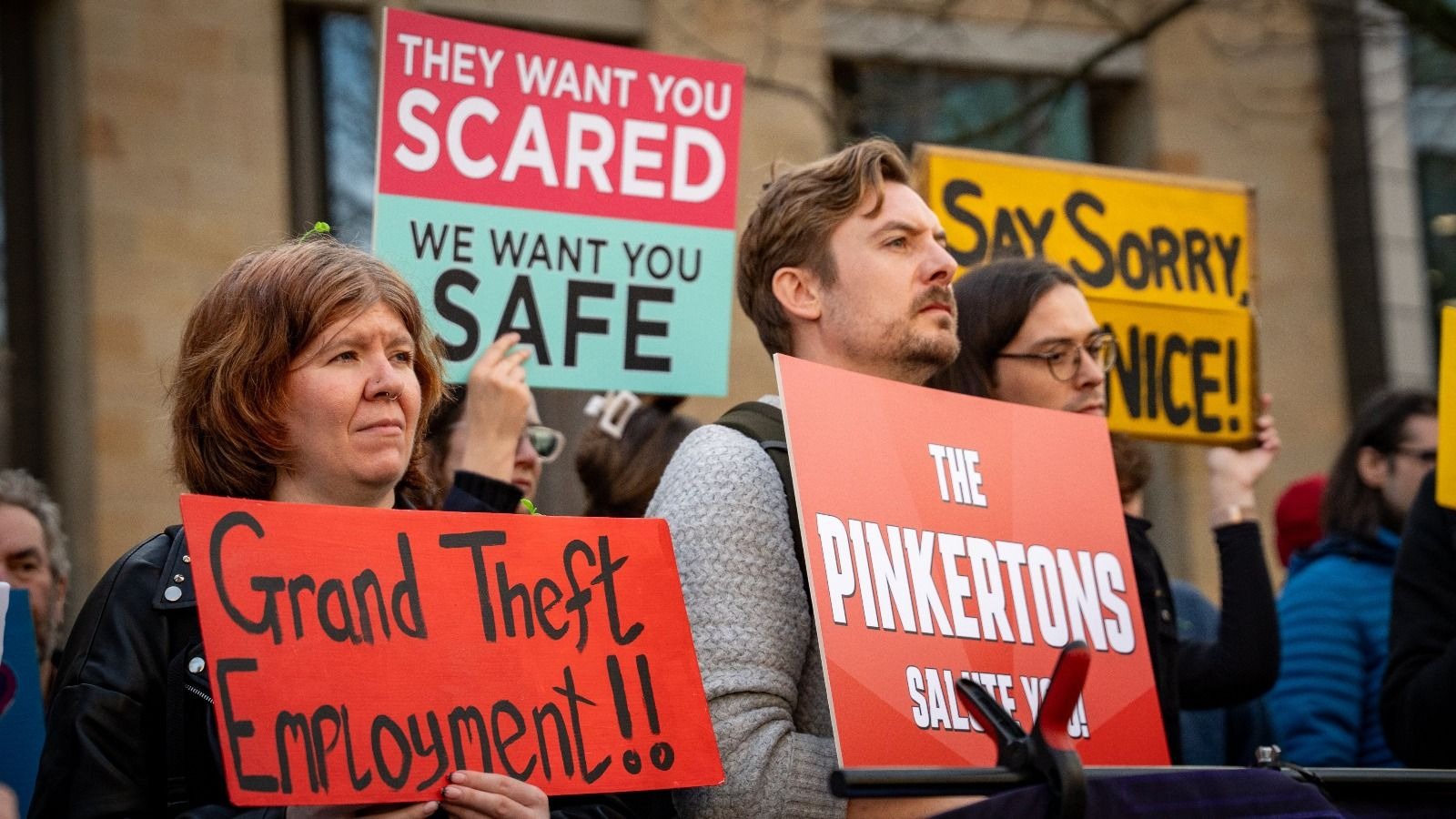
The New York Times Tech Guild asked the publication's readers not to play its games, including Wordle and Connections, in solidarity when it announced that it was going on strike on November 4. Now, the guild has released its own versions of the The Times' games so that readers can still play without crossing its digital picket line. Of course, the workers' versions won't be able to keep your Wordle streak running, but they're pretty much the same games you've been playing on the publication's website. 

The guild is made up of over 600 unionized tech workers that include software engineers, product managers, data analysts and designers — the people behind the publication's games, as well as The Times' Cooking app. In the guild's GoFundMe for the strike, it said it's been bargaining for its first contract over the past two years, but the The Times' management "dragged its feet" and even allegedly committed unfair labor practices by implementing return-to-office mandates without bargaining and trying to intimidate members who were going on strike. 

The guild explained that it's pushing for The Times to address racial disparities in its workers' pay and to ensure real job security. Apparently, the publication's management had fired someone days before a major brain surgery in the past and had used performance review plans as a pretense to fire employees. The guild is also accusing management of disproportionately targeting women and POCs with its "arbitrary disciplinary process."

This article originally appeared on Engadget at https://www.engadget.com/general/nyt-tech-workers-on-strike-made-their-own-versions-of-wordle-and-connections-130047922.html?src=rss

Rideshare drivers in Massachusetts can unionize without being full-time employees

Massachusetts has passed a statewide ballot initiative that gives rideshare drivers the opportunity to unionize while remaining independent contractors. The initiative was brought forward by the Service Employees International Union and the International Association of Machinists and Aerospace Workers. It passed with a narrow margin of about 54 percent of the vote.

The measure will allow the state's 70,000 rideshare drivers to form unions and leverage collective bargaining power, which is not permitted for independent contractors under the National Labor Relations Act. These workers can unionize if they receive signatures from at least 25 percent of active drivers in Massachusetts. The initiative also creates a hearing process so that drivers for companies such as Lyft and Uber can bring complaints about unfair work practices to a state board. However, the ballot initiative does not contain language about strike protections. It also does not extend to food delivery drivers.

Uber and Lyft did not actively campaign against the Massachusetts measure, but they have raised concerns about the specific language. Some labor advocates also opposed the initiative, cautioning that it could hamper efforts for rideshare drivers to win recognition as full-time employees. "We're not against unionization," Kelly Cobb-Lemire, an organizer with Massachusetts Drivers United, told The New York Times. "But we don't feel this goes far enough."

Independent contractors often are not protected by federal or state labor laws because they aren't full-time employees. The Massachusetts ballot measure could create a precedent for other states to offer unionization options for gig workers. California has been a battleground for labor protections for gig workers who drive for Uber and Lyft for several years. Most recently, a court allowed California drivers to retain independent contractor status.

This article originally appeared on Engadget at https://www.engadget.com/transportation/rideshare-drivers-in-massachusetts-can-unionize-without-being-full-time-employees-212202426.html?src=rss

NLRB accuses Grindr of using a return-to-office mandate to upend a unionization drive

The National Labor Relations Board (NLRB) has filed a complaint against Grindr. According to Bloomberg, the agency alleges that a return-to-office (RTO) mandate that limited remote work and effectively meant a relocation requirement for many workers was an attempt to fend off a unionization drive. Around 80 of Grindr's 178 employees quit as a result of last year's RTO demand, according to the Communications Workers of America (CWA).

The NLRB's general counsel office has accused Grindr of violating labor law by retaliating against workers who were attempting to organize. Per Bloomberg, the agency additionally claims the company refused to recognize the union or to negotiate with it in good faith, which would also be a violation of labor law.

A Grindr spokesperson told the publication that the claims were "meritless." They added that some employees started signing union cards "only after it was known that the transition back to in-office work was underway."

According to the CWA, the company announced on August 4 last year that workers would have to attend its offices at least two days a week. A supermajority of workers announced their unionization in July. The union claims that, by the end of August, around half of the staff had been forced to resign. This, in part, was said to a result of relocation requirements. 

Among other issues, having to relocate would have required some of Grindr's trans employees to find alternate healthcare providers, the union has said. "The RTO mandate gave workers two weeks to choose between ending their tenure at Grindr or relocating to their respective team’s newly assigned 'hub' city to work in-person twice a week," the CWA said when it filed an Unfair Labor Practice against Grindr in September 2023. As CNN noted, many of the workers who had been hired remotely were suddenly required to report to a Grindr office in New York, Chicago, Los Angeles, San Francisco or Washington DC. 

This is hardly the first time Grindr has been in hot water lately. Earlier this year, the company was sued for allegedly sharing personal information — including HIV statuses and test dates, ethnicity and sexual orientation — with advertising companies without users' consent.

In a statement sent to Engadget, Grindr United-CWA called today's complaint "another huge victory" for the union. The full statement follows:

Today’s complaint from the NLRB is another huge victory for our union. After management instated a retaliatory relocation policy just days after we went public about our organizing efforts, more than half of our colleagues were either forced to relocate to a “hub” to work in person, or leave the company with a severance in exchange for our silence.

When we filed an unfair labor practice charge with the NLRB last year, we collectively held Grindr accountable in protecting workers’ rights and our right to form a union. That’s why we formed Grindr-United: to ensure collaboration and a seat at the bargaining table.

We hope this NLRB filing sends a clear message to Grindr that, with a union, we are committed to negotiating fair working conditions in good faith. As we continue to build and expand worker power at Grindr, this win in our favor is a positive step toward ensuring that Grindr remains a safe, inclusive, and thriving place for users and workers alike. 

Update, November 4, 5:40PM ET: This story was updated after publish to include a statement from Grindr United-CWA.

This article originally appeared on Engadget at https://www.engadget.com/big-tech/nlrb-accuses-grindr-of-using-a-return-to-office-mandate-to-upend-a-unionization-drive-211507122.html?src=rss

An AI-generated ad left thousands of Dubliners waiting for a Halloween parade that never came

Thousands of people took to the streets in Dublin to attend a Halloween parade that never came, according to reporting by The Independent. Why did they do such a thing? It was all due to an AI-generated ad that promoted the fake event.

The My Spirit Halloween website advertised the completely fabricated Macnas Halloween Parade, which was supposed to take place from 7PM to 9PM on the streets of Dublin. News of the parade quickly spread online, and it even received a news ranking on Google.

So, yeah, thousands of people put on their Halloween costumes and stood on the street for a couple of hours, waiting for an event that would never happen. They even left room in the street for the parade to pass by. That’s thoughtful, but also a bit sad.

The situation forced Ireland’s police force to put out a message to urge would-be parade-goers to “disperse safely.” A spokesperson for the organization said that “contrary to information being circulated online, no Halloween parade is scheduled to take place in Dublin city center this evening or tonight.”

Local city councilor Janice Boylan expressed disappointment over the whole situation.“Everyone is trying to have a fun and safe Halloween. Having a parade to go to sounded really good,” she said. “I know an awful lot of people turned up. It’s a terrible pity.”

The My Spirit Halloween listing has been taken down, but there remains the question as to why it turned up in the first place. It’s worth noting that this is a different entity from the popular seasonal retailer Spirit Halloween.

The My Spirit Halloween website looks to come from Pakistan and posts all kinds of AI-generated content like the ad that caused all of this trouble, according to Yahoo News. This particular post happened to get picked up by TikTok and Google, causing the rapid dissemination of the, literal, fake news.

It’s pretty wild, right? An AI-generated post likely created in Pakistan caused thousands of actual people to take to the streets halfway across the globe. What is that curse again? Oh yeah. “May you live in interesting times.”

This article originally appeared on Engadget at https://www.engadget.com/ai/an-ai-generated-ad-left-thousands-of-dubliners-waiting-for-a-halloween-parade-that-never-came-162550781.html?src=rss

An AI-generated ad left thousands of Dubliners waiting for a Halloween parade that never came

Thousands of people took to the streets in Dublin to attend a Halloween parade that never came, according to reporting by The Independent. Why did they do such a thing? It was all due to an AI-generated ad that promoted the fake event.

The My Spirit Halloween website advertised the completely fabricated Macnas Halloween Parade, which was supposed to take place from 7PM to 9PM on the streets of Dublin. News of the parade quickly spread online, and it even received a news ranking on Google.

So, yeah, thousands of people put on their Halloween costumes and stood on the street for a couple of hours, waiting for an event that would never happen. They even left room in the street for the parade to pass by. That’s thoughtful, but also a bit sad.

The situation forced Ireland’s police force to put out a message to urge would-be parade-goers to “disperse safely.” A spokesperson for the organization said that “contrary to information being circulated online, no Halloween parade is scheduled to take place in Dublin city center this evening or tonight.”

Local city councilor Janice Boylan expressed disappointment over the whole situation.“Everyone is trying to have a fun and safe Halloween. Having a parade to go to sounded really good,” she said. “I know an awful lot of people turned up. It’s a terrible pity.”

The My Spirit Halloween listing has been taken down, but there remains the question as to why it turned up in the first place. It’s worth noting that this is a different entity from the popular seasonal retailer Spirit Halloween.

The My Spirit Halloween website looks to come from Pakistan and posts all kinds of AI-generated content like the ad that caused all of this trouble, according to Yahoo News. This particular post happened to get picked up by TikTok and Google, causing the rapid dissemination of the, literal, fake news.

It’s pretty wild, right? An AI-generated post likely created in Pakistan caused thousands of actual people to take to the streets halfway across the globe. What is that curse again? Oh yeah. “May you live in interesting times.”

This article originally appeared on Engadget at https://www.engadget.com/ai/an-ai-generated-ad-left-thousands-of-dubliners-waiting-for-a-halloween-parade-that-never-came-162550781.html?src=rss

UK man gets 18 years in prison for using AI to generate CSAM

A UK man who used AI to create child sexual abuse material (CSAM) has been sentenced to 18 years in prison, according to The Guardian. Hugh Nelson, 27, created the images by using photographs of real children, which were then manipulated by AI. Nelson was convicted of 16 child sexual abuse offenses back in August, after a lengthy police investigation. This was the first prosecution of its kind in the UK.

Nelson used modeling software called Daz 3D to manufacture the loathsome images. The program has a suite of AI tools, which he used to transform regular photos of children into CSAM. Greater Manchester police said that he sold these images online and was even commissioned in several cases to create specific items of CSAM via photographs of real kids. Police say that Nelson made around $6,500 by selling images online.

He was caught when trying to sell images to an undercover cop in a chatroom. “I’ve done beatings, smotherings, hangings, drownings, beheadings, necro, beast, the list goes on,” Nelson said to the cop to entice a sale. This is according to a transcript of a conversation provided by the prosecution.

It’s worth noting that Daz 3D doesn’t create deepfakes, in which one face is swapped onto another body. Nelson created actual 3D renders by feeding the photos to the AI algorithm.

At sentencing, the judge called the images “harrowing and sickening” and addressed Nelson specifically, saying “there seems to be no limit to the depths of depravity exhibited in the images that you were prepared to create and exhibit to others.” He also said that it was “impossible to know” if children had been abused as a result of the images. Police searches of Nelson’s devices did find a series of text messages in which he encouraged people to sexually abuse children under 13. These suspects and potential victims are allegedly located throughout the world, including the US.

The United States is, of course, not immune from this horrifying trend. A soldier was arrested back in August for allegedly using AI to generate CSAM. A Wisconsin man faces 70 years in prison for allegedly creating over 13,000 AI-generated images depicting CSAM. The world’s leading AI companies have signed a pledge to help stop this type of software from being used to generate child sexual abuse material.

This article originally appeared on Engadget at https://www.engadget.com/ai/uk-man-gets-18-years-in-prison-for-using-ai-to-generate-csam-154037476.html?src=rss

UK man gets 18 years in prison for using AI to generate CSAM

A UK man who used AI to create child sexual abuse material (CSAM) has been sentenced to 18 years in prison, according to The Guardian. Hugh Nelson, 27, created the images by using photographs of real children, which were then manipulated by AI. Nelson was convicted of 16 child sexual abuse offenses back in August, after a lengthy police investigation. This was the first prosecution of its kind in the UK.

Nelson used modeling software called Daz 3D to manufacture the loathsome images. The program has a suite of AI tools, which he used to transform regular photos of children into CSAM. Greater Manchester police said that he sold these images online and was even commissioned in several cases to create specific items of CSAM via photographs of real kids. Police say that Nelson made around $6,500 by selling images online.

He was caught when trying to sell images to an undercover cop in a chatroom. “I’ve done beatings, smotherings, hangings, drownings, beheadings, necro, beast, the list goes on,” Nelson said to the cop to entice a sale. This is according to a transcript of a conversation provided by the prosecution.

It’s worth noting that Daz 3D doesn’t create deepfakes, in which one face is swapped onto another body. Nelson created actual 3D renders by feeding the photos to the AI algorithm.

At sentencing, the judge called the images “harrowing and sickening” and addressed Nelson specifically, saying “there seems to be no limit to the depths of depravity exhibited in the images that you were prepared to create and exhibit to others.” He also said that it was “impossible to know” if children had been abused as a result of the images. Police searches of Nelson’s devices did find a series of text messages in which he encouraged people to sexually abuse children under 13. These suspects and potential victims are allegedly located throughout the world, including the US.

The United States is, of course, not immune from this horrifying trend. A soldier was arrested back in August for allegedly using AI to generate CSAM. A Wisconsin man faces 70 years in prison for allegedly creating over 13,000 AI-generated images depicting CSAM. The world’s leading AI companies have signed a pledge to help stop this type of software from being used to generate child sexual abuse material.

This article originally appeared on Engadget at https://www.engadget.com/ai/uk-man-gets-18-years-in-prison-for-using-ai-to-generate-csam-154037476.html?src=rss

A Scottish children’s hospital now has a gamer-in-residence to play games with kids

A children's hospital in Scotland now has a gamer-in-residence in what's said to be a first in the UK and Ireland. Steven Mair, the first person to take on the full-time role, will play games with kids at the Royal Hospital for Children in Glasgow.

As with other gaming-related charitable efforts at children's hospitals, the aim is to help patients relax and minimize feelings of boredom and isolation, while offering them a sense of escapism. Studies have indicated that playing games can help reduce the procedural pain and anxiety of pediatric patients, as well as their caregivers' anxiety.

Mair is also organizing gaming events at the facility, fundraising for new gaming equipment and managing gaming volunteers for the Glasgow Children’s Hospital Charity. The charity established the gamer-in-residence position with the help of partners Devolver Digital and Neonhive after raising over £100,000 ($129,000) last year through efforts such as a Scottish Games Sale on Steam for a campaign called Games for the Weans ("weans" is a Scottish word for "kids"). Meanwhile, a $12,000 donation from Child's Play earlier this year will help fund the replacement of older Xbox 360 and PlayStation 3 systems with hospital-adapted consoles.

“Children in Jace’s ward can have long stays and intense treatment plans. This can include physical pain and a lot of new emotions. Often, parents can feel helpless at times. For my son Jace in particular, he is an experienced gamer. His blood disorder prevented him from going outside or starting school," Catherine Reid, the mother of seven-year-old Jace, said in a statement that I could barely get all the way through without welling up.

​“When the gamer-in-residence came round to play Mario on the Nintendo, he immediately lit up and smiled. It was an instant energy boost for him mentally and physically. In reality, I think often what kids want is some quality time and gaming with new friends.”

This is a fantastic idea. Hospital stays can be tough for anyone, but especially so for kids and their families. You can help support the gamer-in-residence program and other charitable efforts that help young hospital patients through gaming by donating to the likes of the Glasgow Children’s Hospital Charity and Child's Play.

Meanwhile, Extra Life's Game Day, an event during which gamers and communities raise funds for children's hospitals, takes place on November 2. You can sign up to take part or make a donation over at the Extra Life website.

This article originally appeared on Engadget at https://www.engadget.com/gaming/a-scottish-childrens-hospital-now-has-a-gamer-in-residence-to-play-games-with-kids-182303354.html?src=rss

The FBI arrested an Alabama man for allegedly helping hack the SEC’s X account

A 25-year-old Alabama man has been arrested by the FBI for his alleged role in the takeover of the Securities and Exchange Commission's X account earlier this year. The hack resulted in a rogue tweet that falsely claimed bitcoin ETFs had been approved by the regulator, which temporarily juiced bitcoin prices.

Now, the FBI has identified Eric Council Jr. as one of the people allegedly behind the exploit. Council was charged with conspiracy to commit aggravated identity theft and access device fraud, according to the Justice Department. While the SEC had previously confirmed that its X account was compromised via a SIM swap attack, the indictment offers new details about how it was allegedly carried out.

According to the indictment, Council worked with co-conspirators who he coordinated with over SMS and encrypted messaging apps. These unnamed individuals allegedly sent him the personal information of someone, identified only as “C.L,” who had access to the SEC X account. Council then printed a fake ID using the information and used it to buy a new SIM in their name, as well as a new iPhone, according to the DoJ. He then coordinated with the other individuals so they could access the SEC’s X account, change its settings and send the rogue tweet, the indictment says. 

The tweet from @SECGov, which came one day ahead of the SEC’s actual approval of 11 spot bitcoin ETFS, caused bitcoin prices to temporarily spike by more than $1,000. It also raised questions about why the high profile account wasn’t secured with multi-factor authentication at the time of the attack. “Today’s arrest demonstrates our commitment to holding bad actors accountable for undermining the integrity of the financial markets,” SEC Inspector General Jeffrey said in a statement.

The indictment further notes that Council allegedly performed some seemingly incriminating searches on his personal computer. Among his searchers were: "SECGOV hack," "telegram sim swap," "how can I know for sure if I am being investigated by the FBI," "What are the signs that you are under investigation by law enforcement or the FBI even if you have not been contacted by them," "what are some signs that the FBl is after you,” “Verizon store list," "federal identity theft statute," and "how long does it take to delete telegram account," the indictment says.

This article originally appeared on Engadget at https://www.engadget.com/cybersecurity/the-fbi-arrested-an-alabama-man-for-allegedly-helping-hack-the-secs-x-account-193508179.html?src=rss