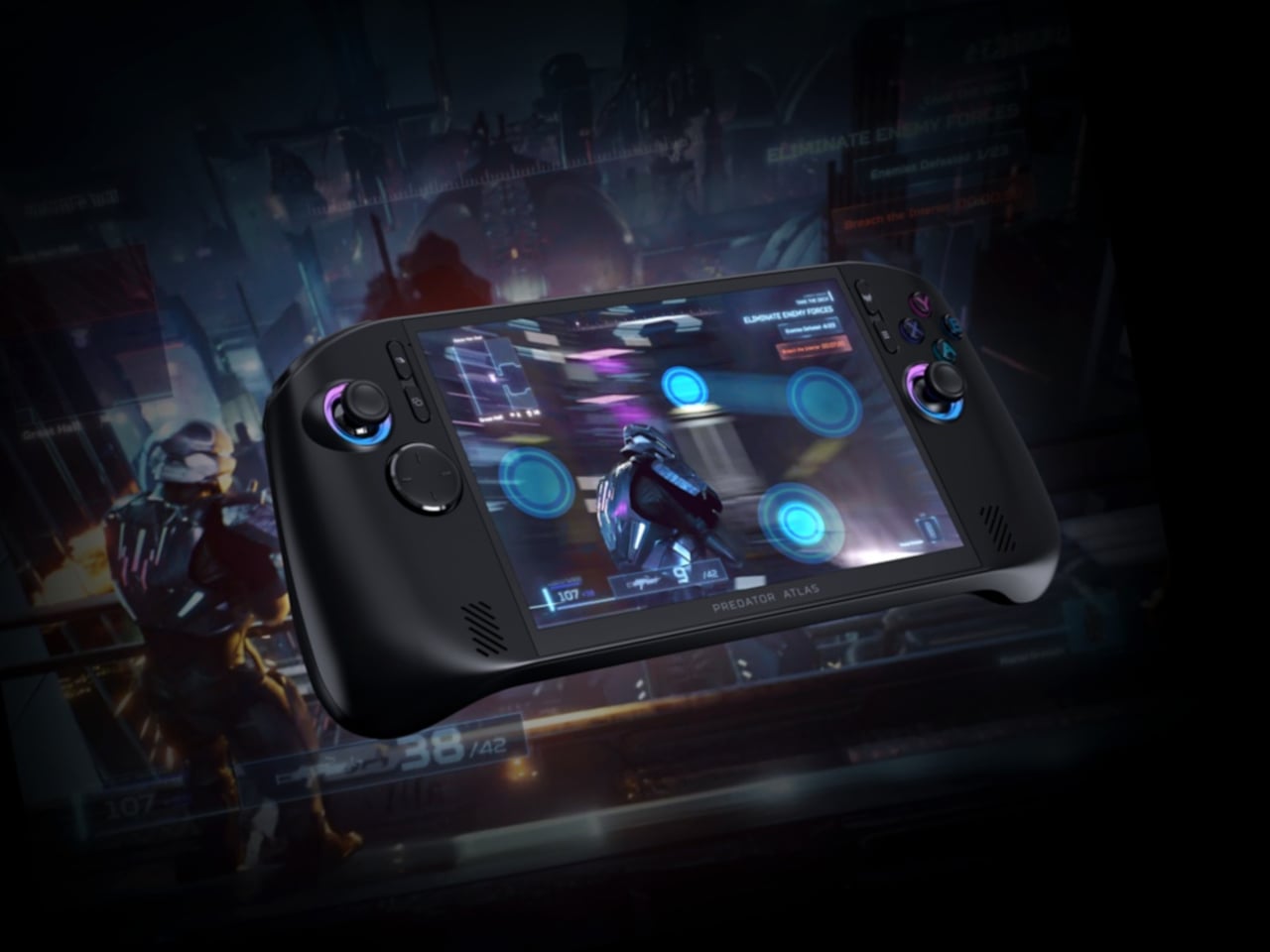
Acer’s Predator Atlas 8 Is the First Gaming Handheld With a Metal Fan

Handheld gaming PCs have come a long way in a short time, but two problems follow every device in the category. Performance peaks early in a session and then quietly retreats as thermals climb, and battery life forces a trade-off that no amount of power management has fully resolved. The Steam Deck addressed portability. The ROG Ally pushed performance. Both still leave room for something that takes thermal management seriously at the hardware level.

Acer’s answer is the Predator Atlas 8, a Windows 11 handheld announced at Computex 2026 and built directly from the same engineering philosophy behind the Predator laptop line. Rather than adapting a tablet platform, Acer treated the Atlas 8 as a PC that happens to be handheld, pulling familiar solutions into a smaller chassis. It arrives in North America, EMEA, and Australia in October 2026.

Designer: Acer

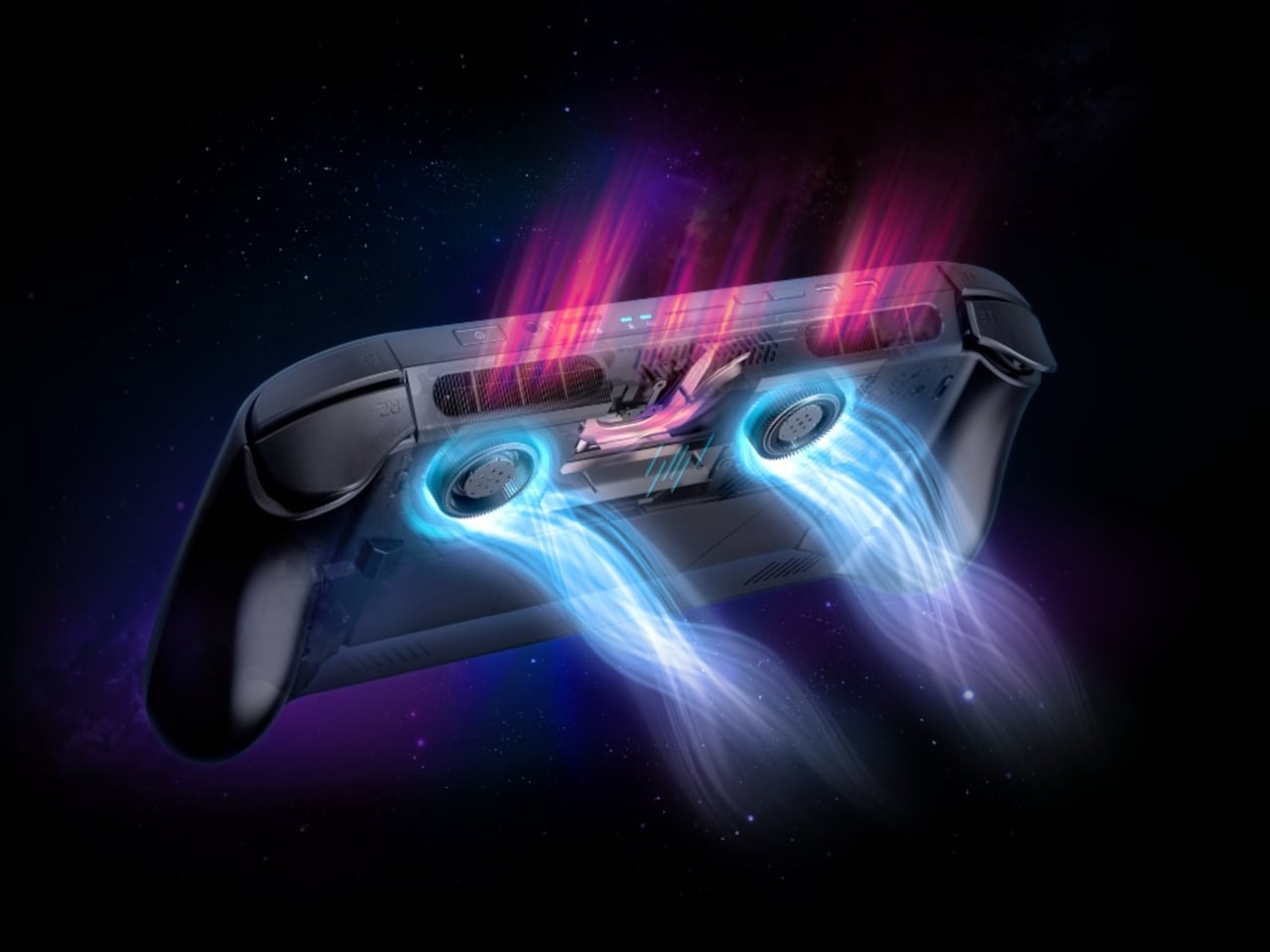
The cooling system is the headline. The Predator AeroBlade fan, a fixture in Predator laptops, makes its handheld debut here and brings a genuine first with it: the first metal fan in any gaming handheld. At 89 blades and just 0.1mm of thickness, it delivers up to a 10% increase in airflow compared to a plastic equivalent. A second plastic fan works alongside it, with Vortex Flow tuning directing air through angled internal channels so heat exits faster.
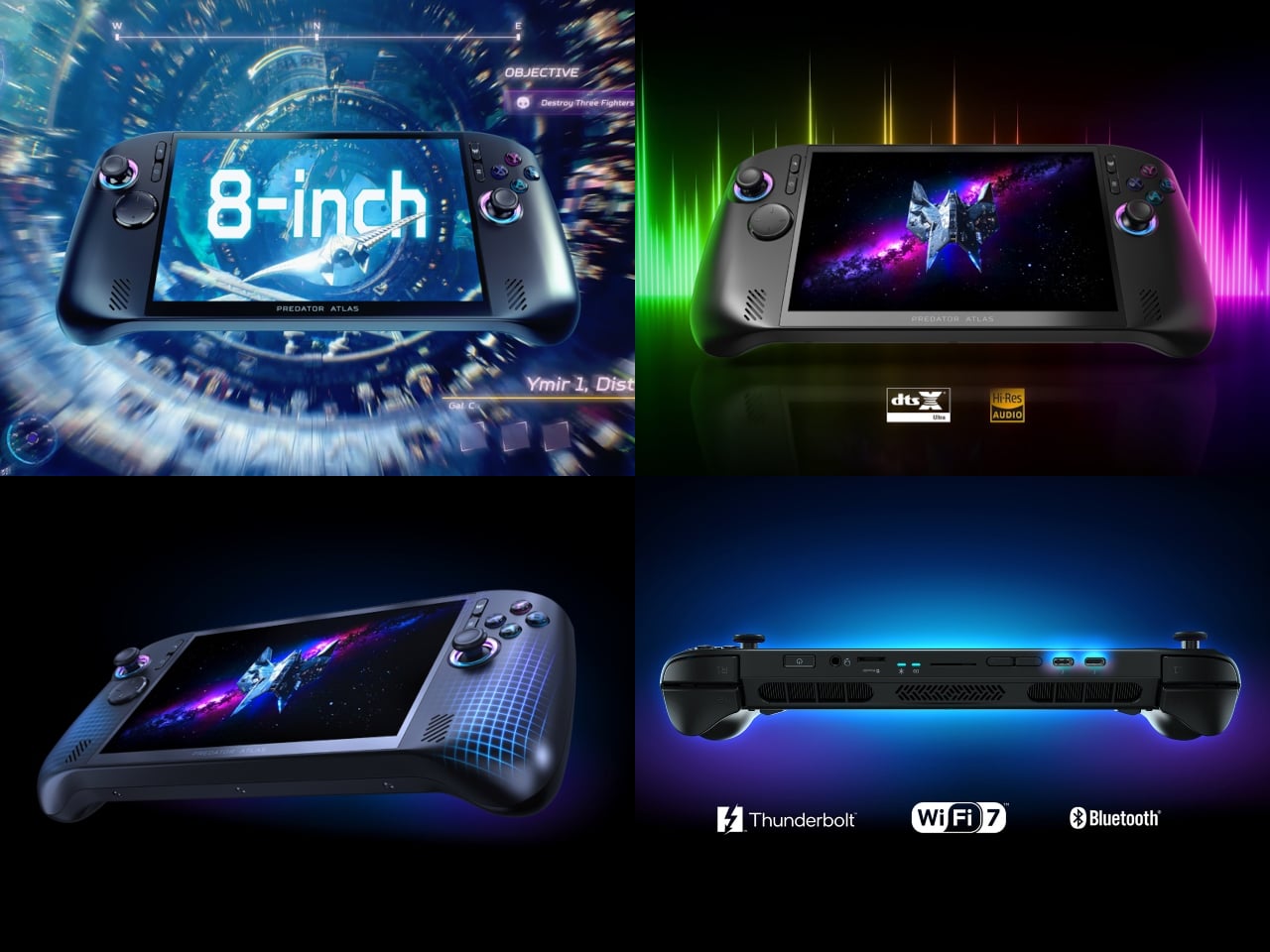
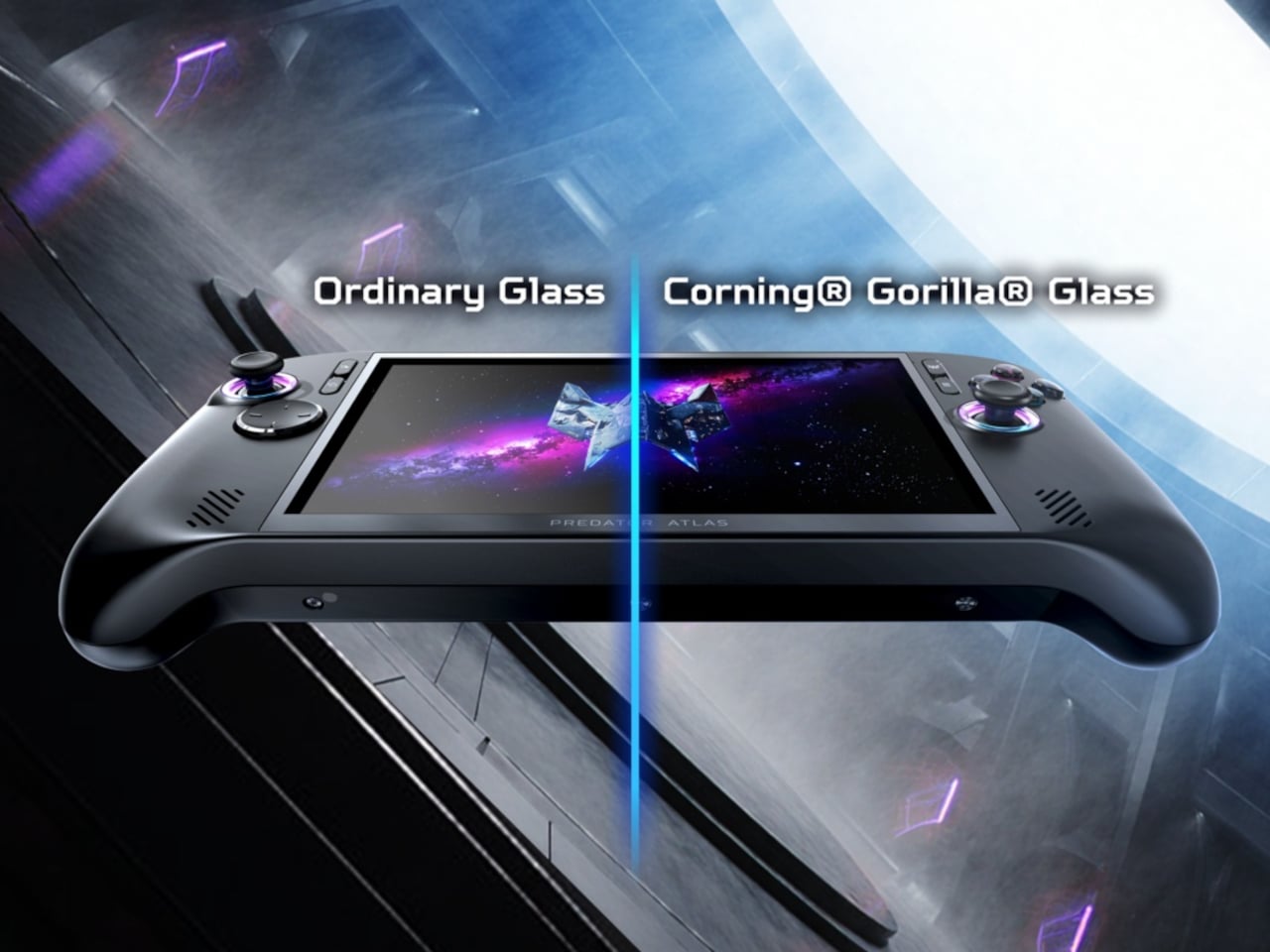
The display is a 16:10, 8-inch WUXGA panel running at 120Hz with Variable Refresh Rate (VRR) support and 500 nits of peak brightness. Corning Gorilla Glass Victus with DXC covers glare and scratch resistance for outdoor play. Audio runs through dual 2 W speakers with DTS:X Ultra, and dual microphones backed by Acer PurifiedVoice AI noise reduction keep voice chat clean even when the game gets loud.
The top configuration pairs the Intel Arc G3 Extreme processor with Intel Arc B390 graphics, adding ray tracing support and Intel XeSS 3 AI-powered upscaling to sustain high frame rates during heavy GPU workloads. Paired with an 80Wh battery and Intel Endurance Gaming, which balances frame rate against power draw dynamically, the Atlas 8 makes a credible case for longer sessions away from a wall without sacrificing visual quality.
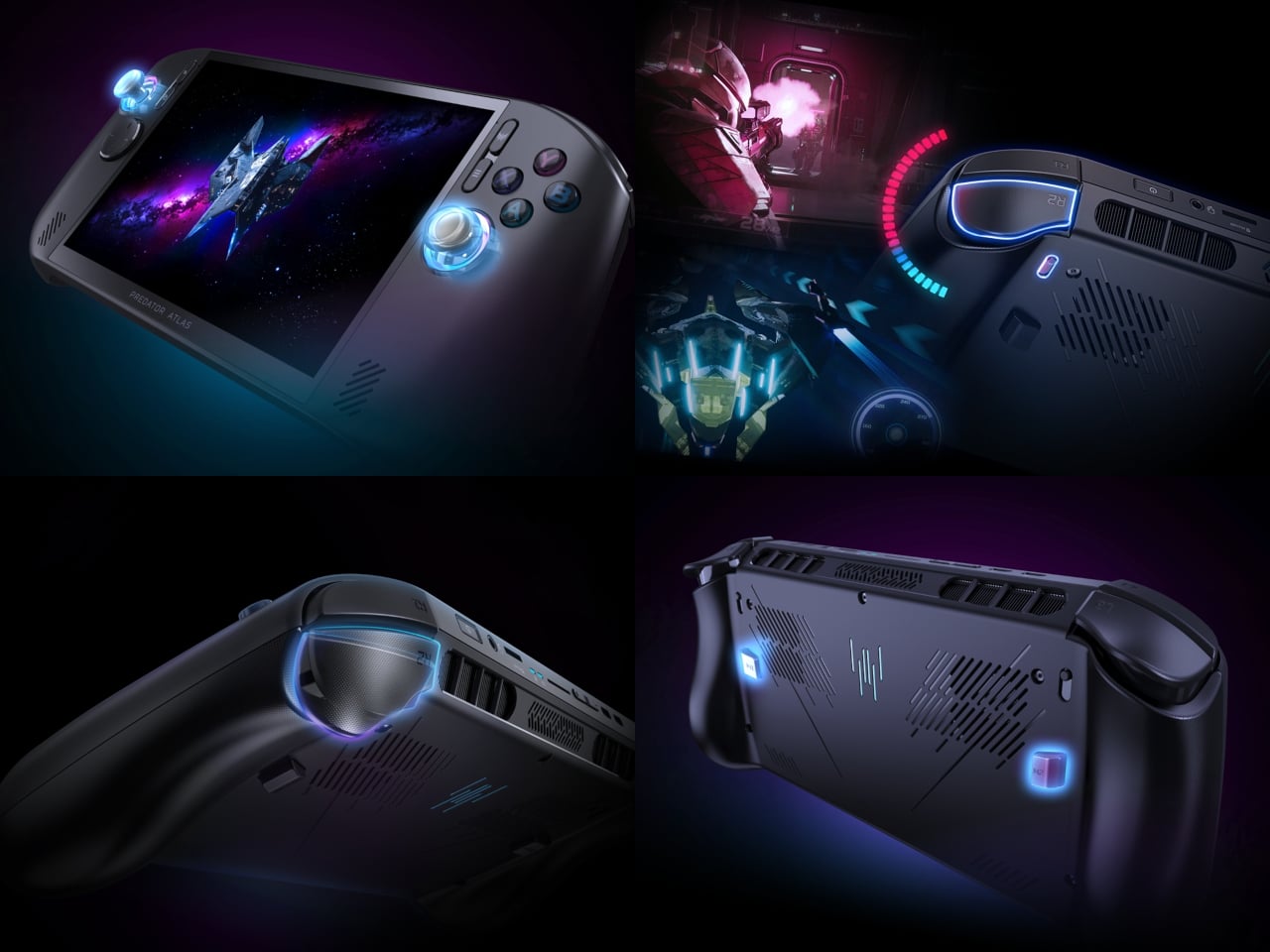
The trigger system earns its own mention. A physical switch on each trigger toggles between two distinct response modes on the fly. Micro-switch mode provides an instant click suited to first-person shooters, while Hall-effect analog mode gives racing games and flight simulators the full pressure range they need. Switching between the two mid-session takes a moment, not a menu.
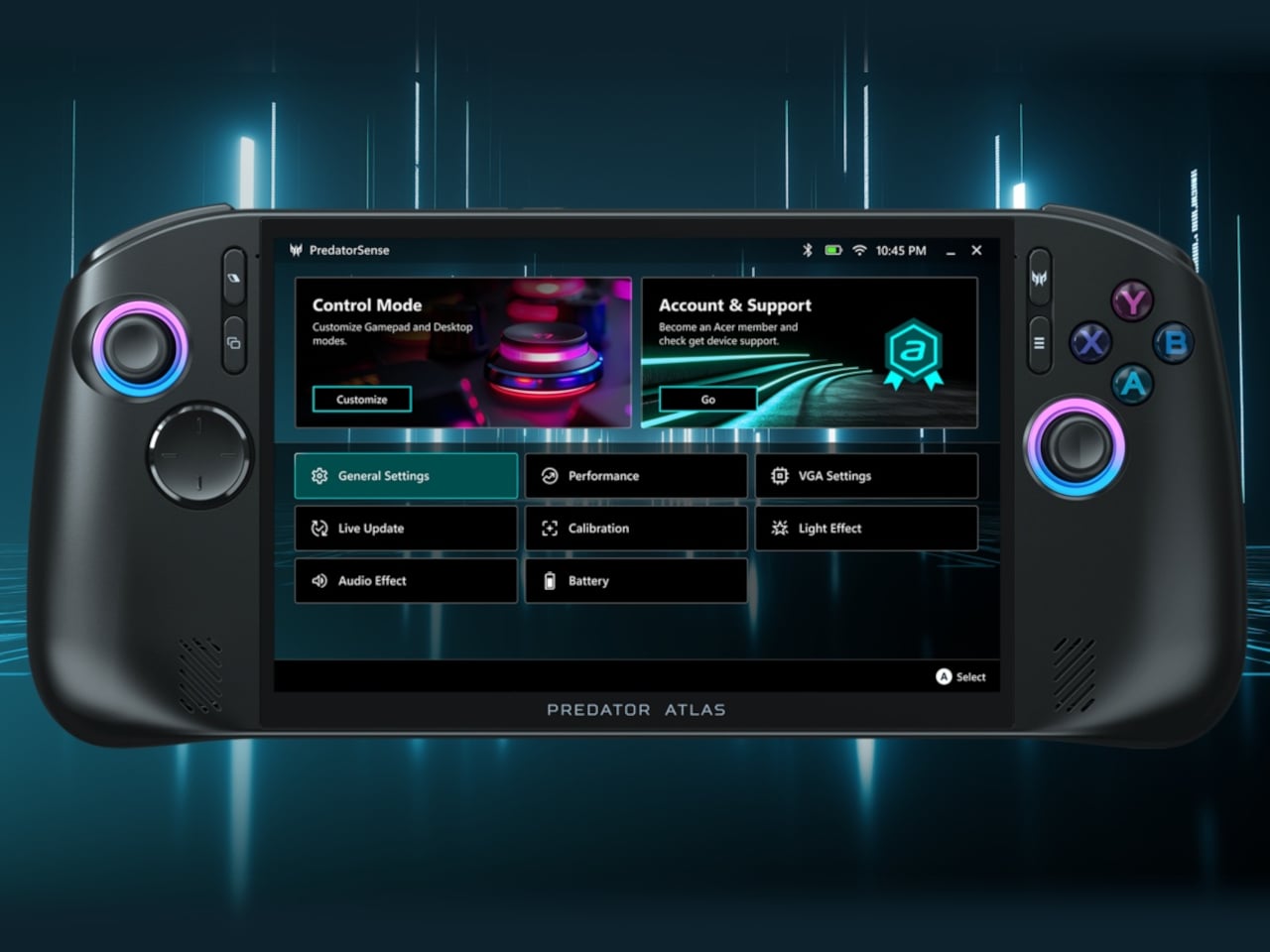
PredatorSense makes its handheld debut here, too. The app, which has been a cornerstone of Predator laptops for years, now sits behind a dedicated button on the device, bringing live system monitoring, performance modes, RGB lighting, and gameplay settings into one fast-access dashboard. XBOX Mode and an included XBOX Game Pass subscription reduce the friction of getting into a library of hundreds of titles from the first boot.
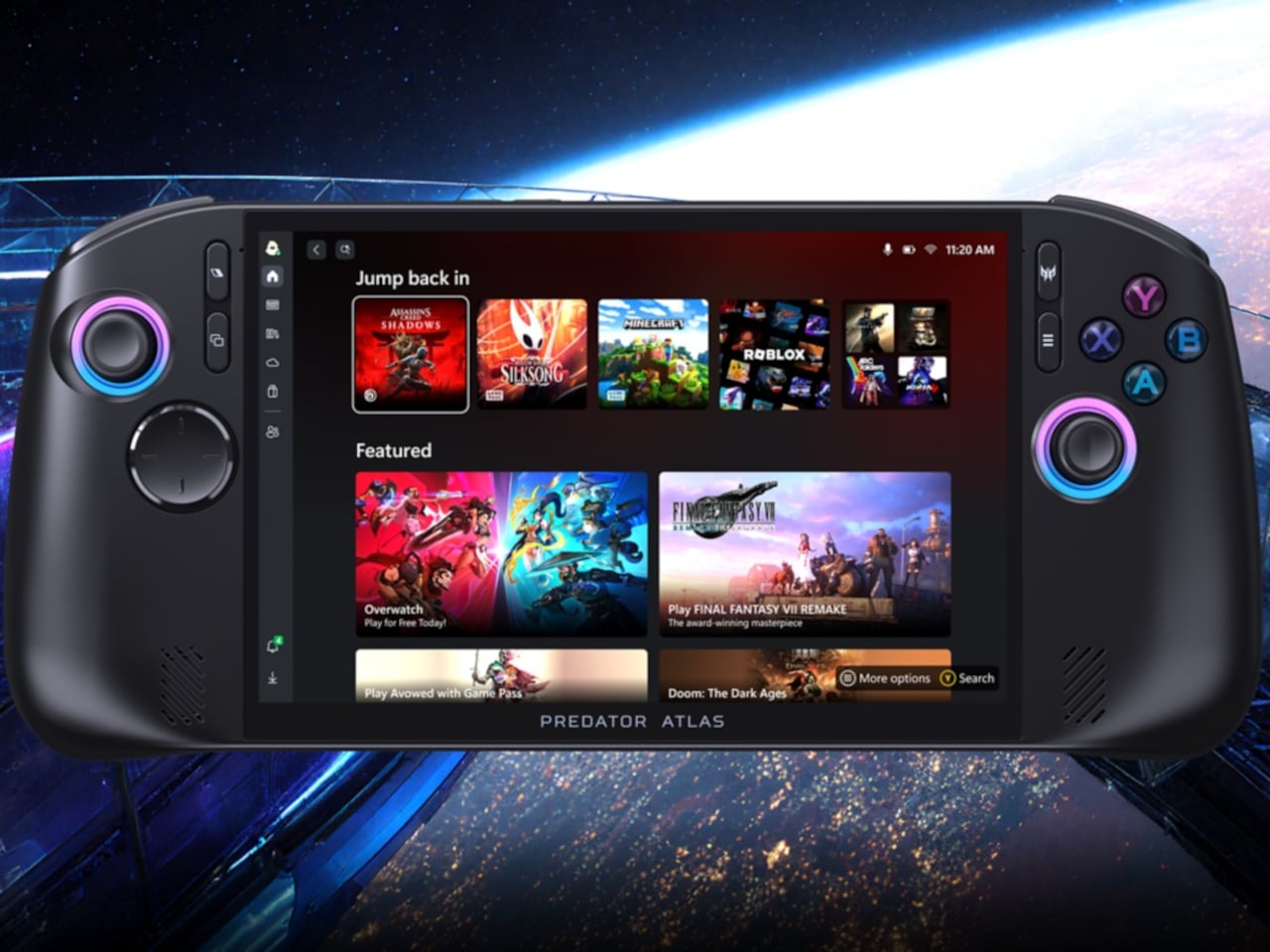
Memory reaches up to 24 GB of LPDDR5x, storage goes up to 1 TB via PCIe Gen 4, and the Atlas 8 weighs under 810 g with the larger battery. Dual Thunderbolt 4 ports, Intel Killer Wi-Fi 7, and Bluetooth 5.4 round out the connectivity. Pricing hasn’t been confirmed, but for a handheld that’s drawing from a decade of Predator laptop engineering, October 2026 can’t come fast enough.

The post Acer’s Predator Atlas 8 Is the First Gaming Handheld With a Metal Fan first appeared on Yanko Design.

Acer’s Aspire Go 15 Is the First Budget Laptop Built on Snapdragon C

Qualcomm’s Snapdragon processors have spent the past couple of years proving themselves in premium laptops, winning over skeptics with extended battery life and capable on-device AI. The architecture has benefited from that validation, but it has largely stayed in the upper tiers of the market, leaving mainstream buyers without access to the same platform. That split is exactly what Acer is addressing at Computex 2026.

The company announced two laptops at opposite ends of the price range: the Swift Spin 14 AI, a premium convertible running on Snapdragon X2 Series processors, and the Aspire Go 15, which holds a distinction of its own as the first laptop ever announced with Qualcomm’s new Snapdragon C processor. Together, they cover more of the market with ARM-based computing than any single product could manage alone.

Designer: Acer

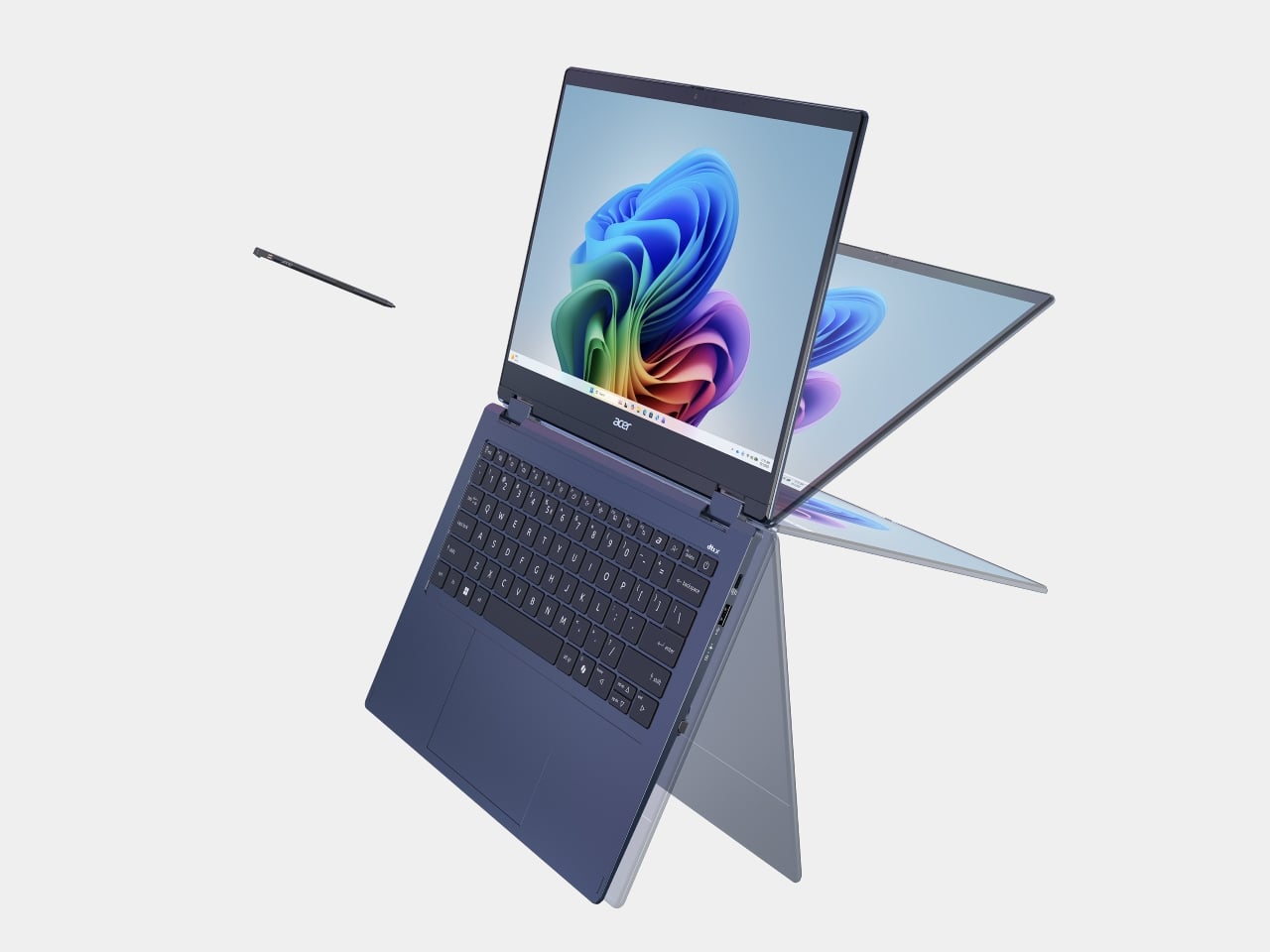
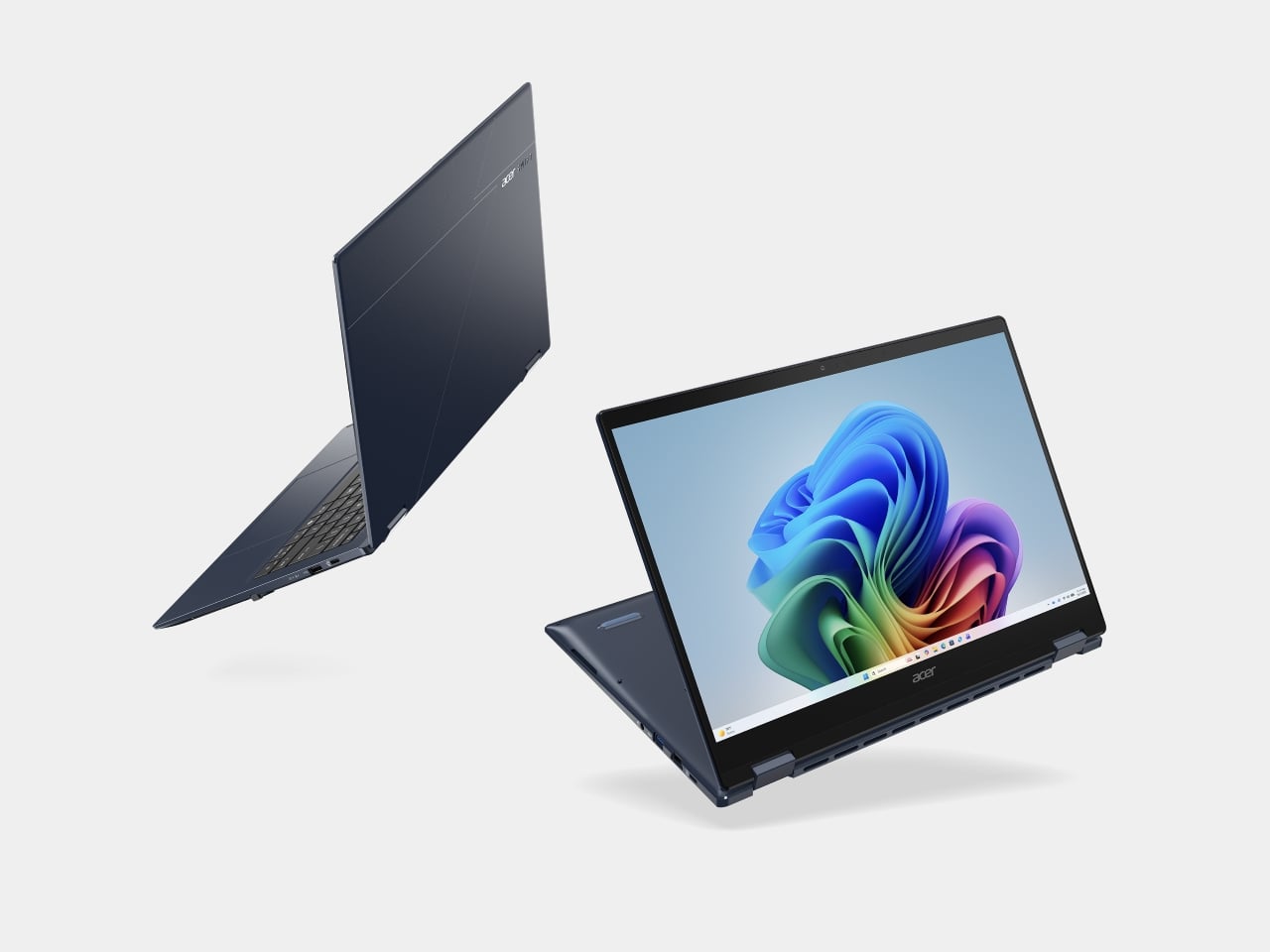
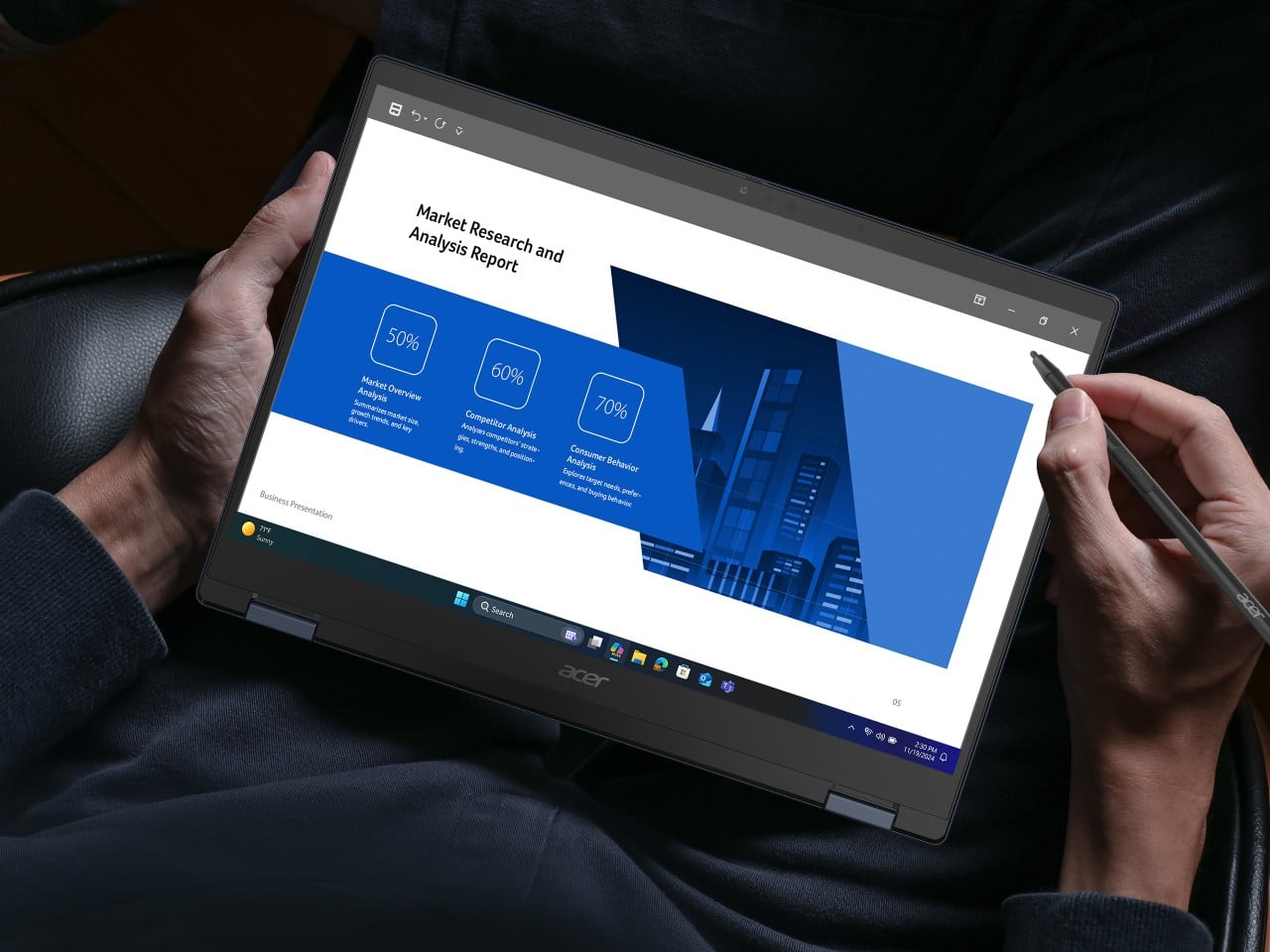
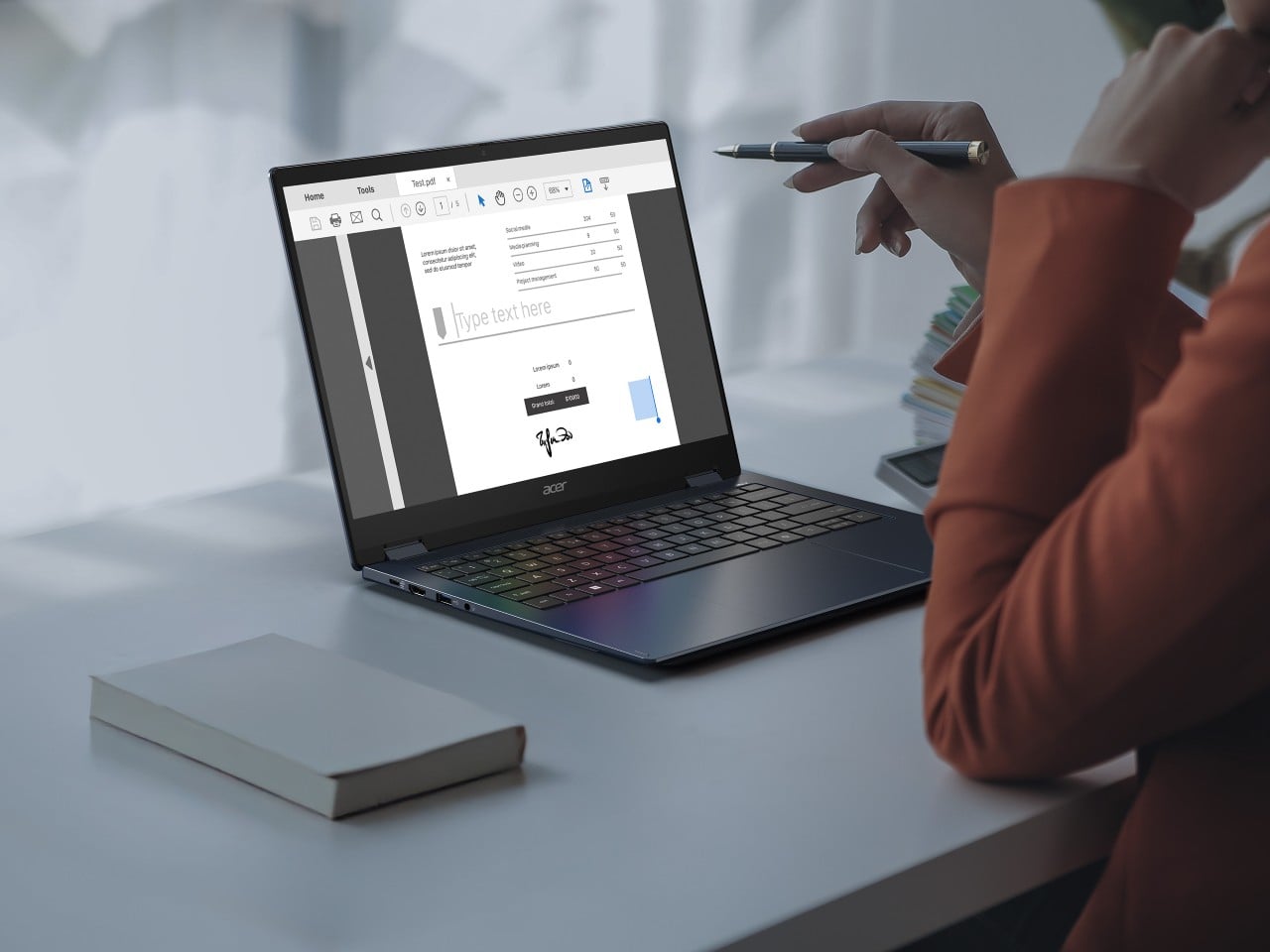
The Swift Spin 14 AI carries up to a Snapdragon X2 Elite processor paired with an 80 TOPS NPU, qualifying it as a Copilot+ PC with full on-device AI support. The 14-inch WUXGA IPS display runs at 120Hz and handles touch input alongside the included Acer Active Stylus 420, which uses Wacom AES 2.0 technology with 4,096 pressure levels and tilt detection for natural pen-on-screen writing and annotation.

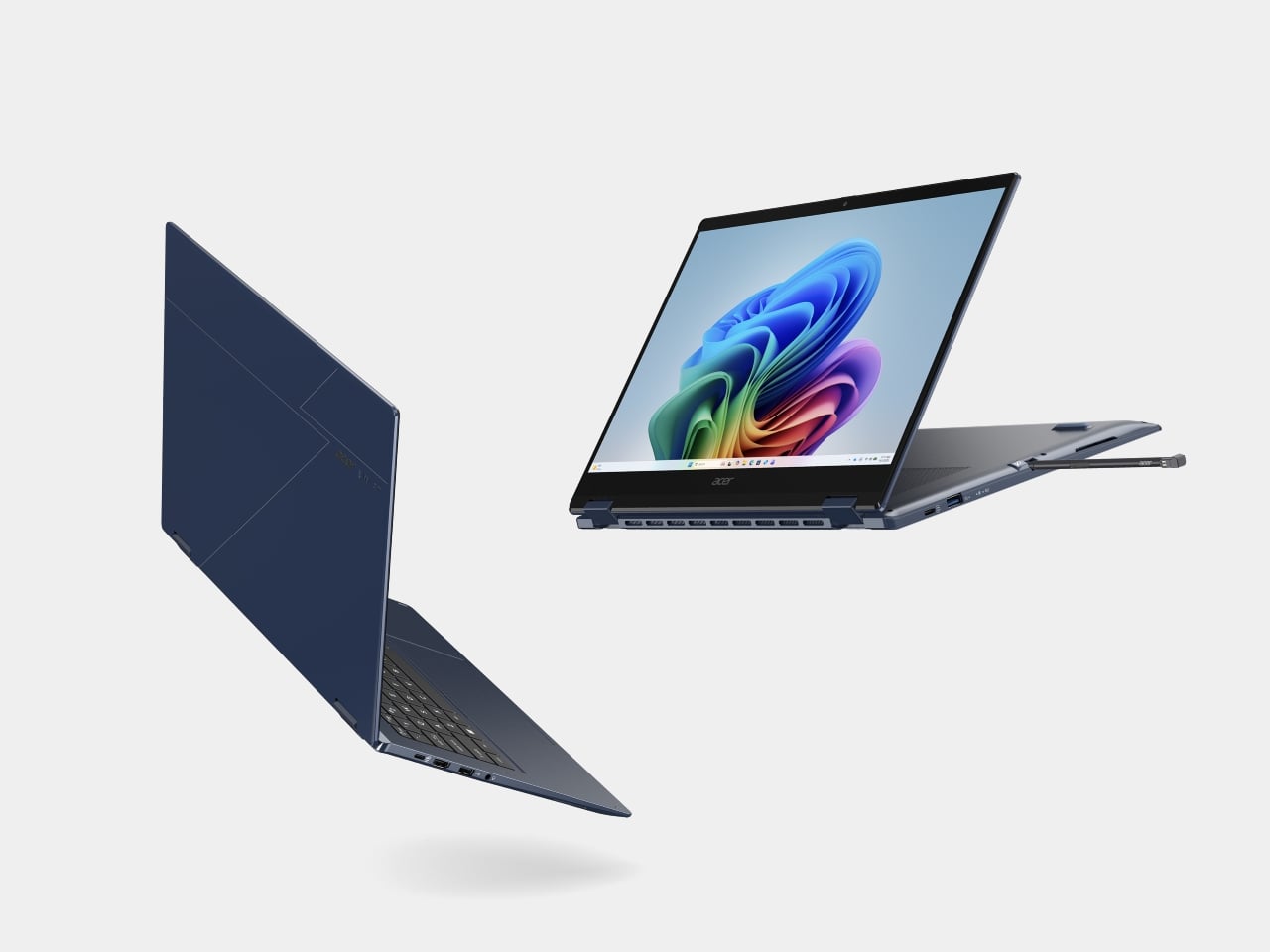
The 360-degree hinge lets it shift between laptop, presentation stand, and flat tablet without swapping accessories. Weighing just 1.34 kg and measuring 15.9–16.5 mm thin, it fits in a small bag without much thought. The cobalt blue aluminum chassis is MIL-STD-810H certified, and the 65Wh battery is advertised to last up to 23 hours under video playback, with a 100W USB4 Type-C fast-charging option for quick power-ups between sessions.

The stylus parks in an onboard garage and charges for 100 minutes of use in just 30 seconds. The laptop connects via Wi-Fi 7 and Bluetooth 6.0, and the port lineup covers dual USB4 Type-C, dual USB 3.2 Type-A, and HDMI 2.1. Three microphones with Acer PurifiedVoice AI noise cancellation keep calls clear, while the 5 MP IR camera handles Windows Hello and automatic screen-lock for privacy.

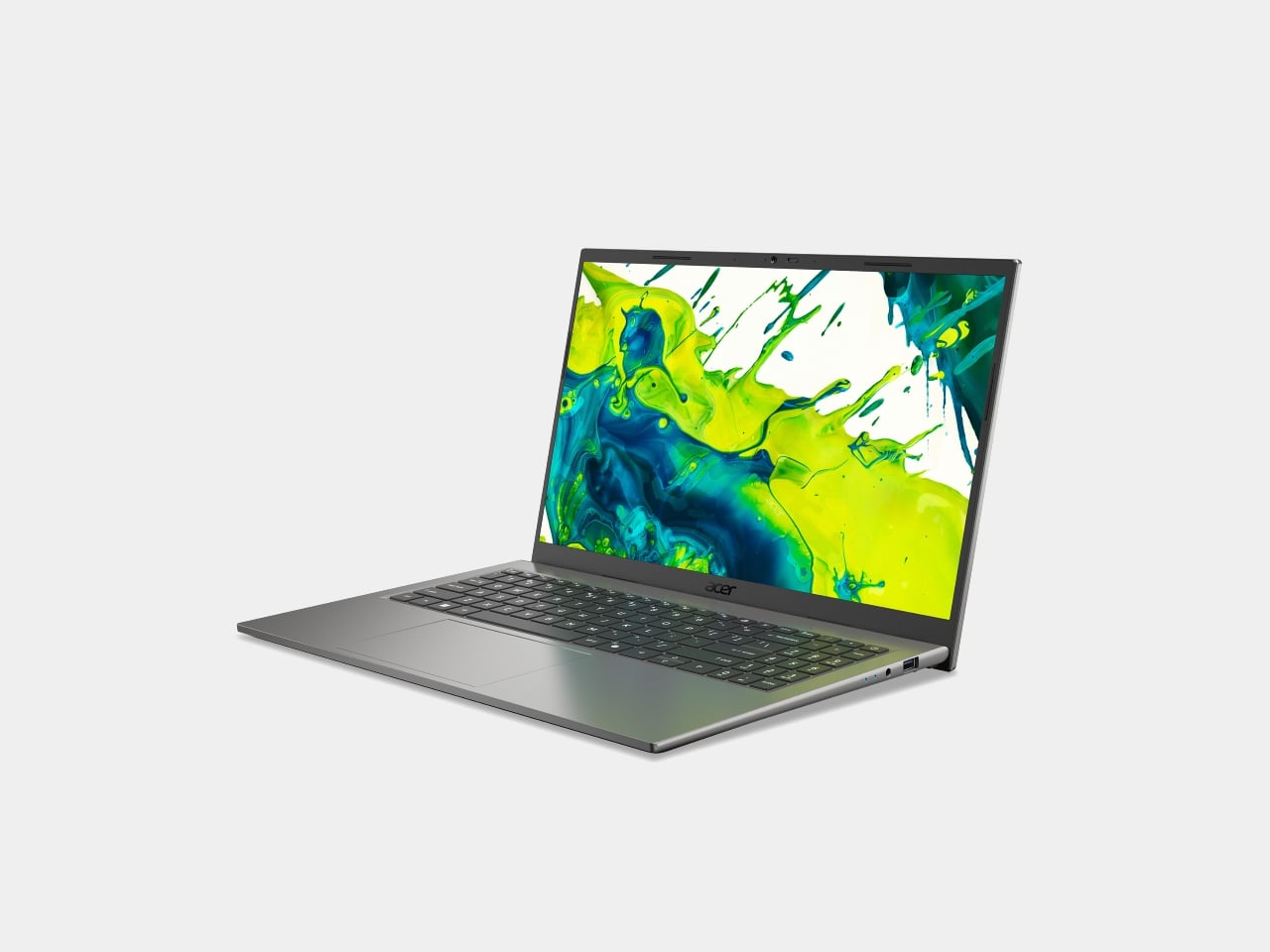
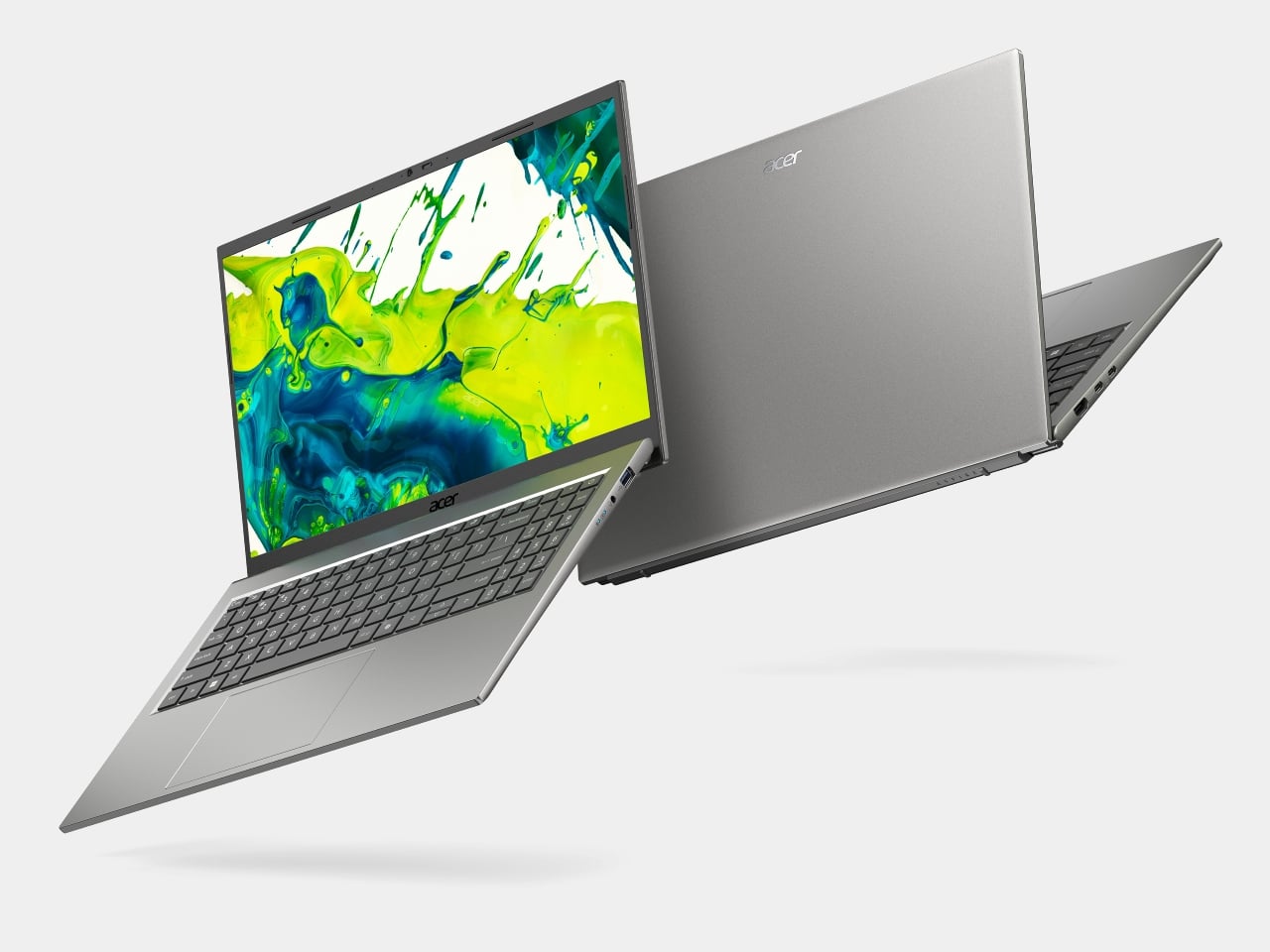
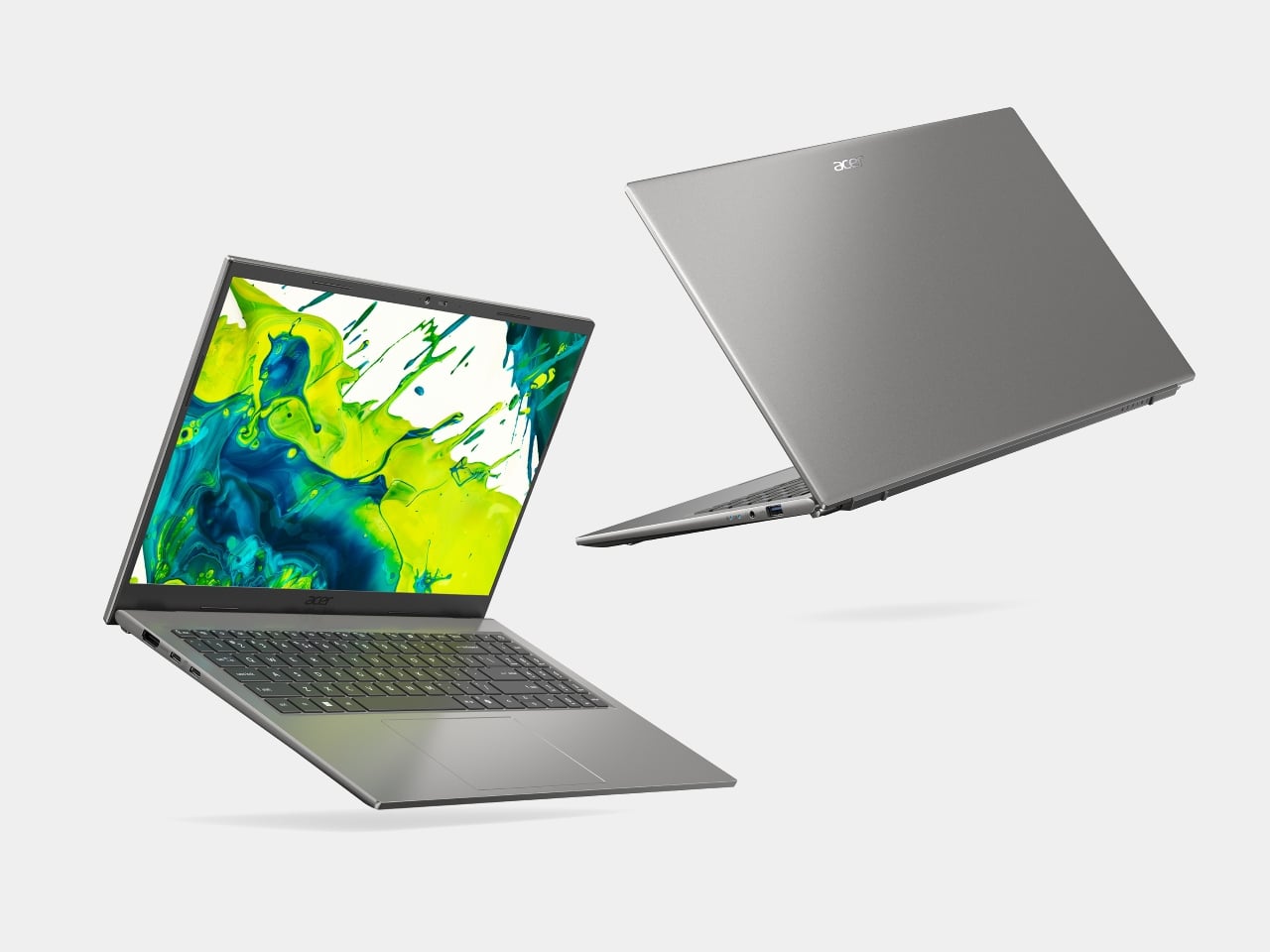
The Aspire Go 15 carries a different kind of significance. Acer is the first PC maker to announce a laptop powered by Qualcomm’s Snapdragon C processor, a platform aimed squarely at the entry-level market. The 15.6-inch Full HD display and straightforward clamshell design target users who want reliable daily performance for browsing, documents, and streaming without the overhead or cost of a premium machine.

Acer also built post-consumer recycled plastic into the back cover and power adapter, packaged the whole thing in 100% recyclable materials, and earned both Energy Star certification and EPEAT registration. Wi-Fi 6E, dual full-function USB Type-C, and a 53Wh battery are positioned for all-day unplugged use. AcerSense manages battery and app settings, and the programmable Acer My Key provides one-press access to frequently used tools.

The Swift Spin 14 AI reaches EMEA in July 2026, North America in August, and Australia in Q3. The Aspire Go 15’s availability window hasn’t been confirmed yet, and neither laptop carries an announced price. Taken together, they mark a significant expansion in how broadly Qualcomm Snapdragon-based Windows computing now reaches, from someone signing contracts on a cobalt blue convertible to a student getting through the day on a tight budget.

The post Acer’s Aspire Go 15 Is the First Budget Laptop Built on Snapdragon C first appeared on Yanko Design.

Ferrari-inspired TESTaZERO is a flamboyant speedster for open air adventures, all-electric Luce better watch out

Ferrari has finally entered the electric-powertrain domain with its Luce sports car, which some adore while others absolutely hate. The controversial performance car is the Italian marque’s maiden venture into clean, responsible transition, designed in collaboration with Johnny Ive. While the names involved are larger than life, I hope they have some vehicle planned for the near future that lands everyone on the same page.

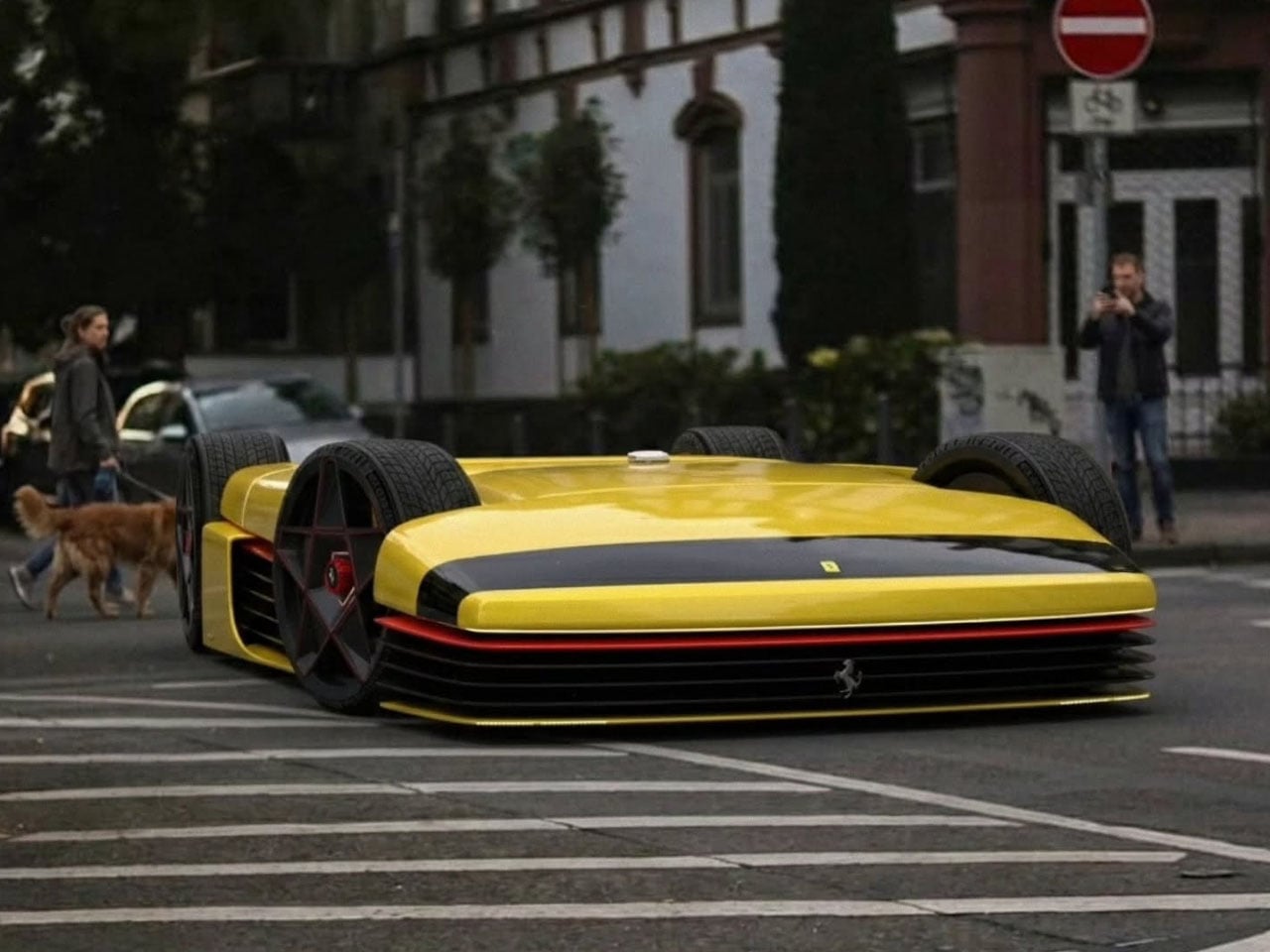
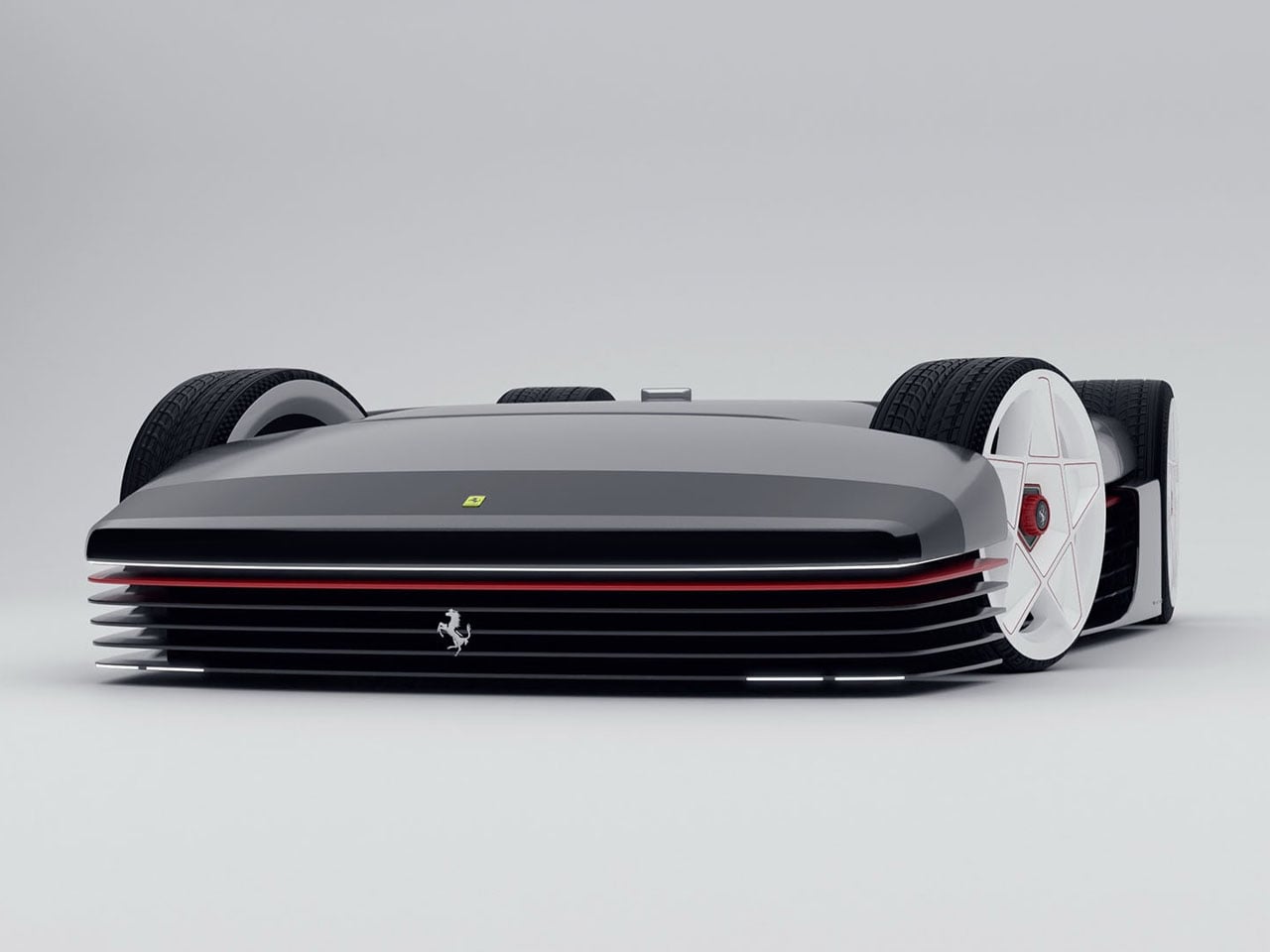
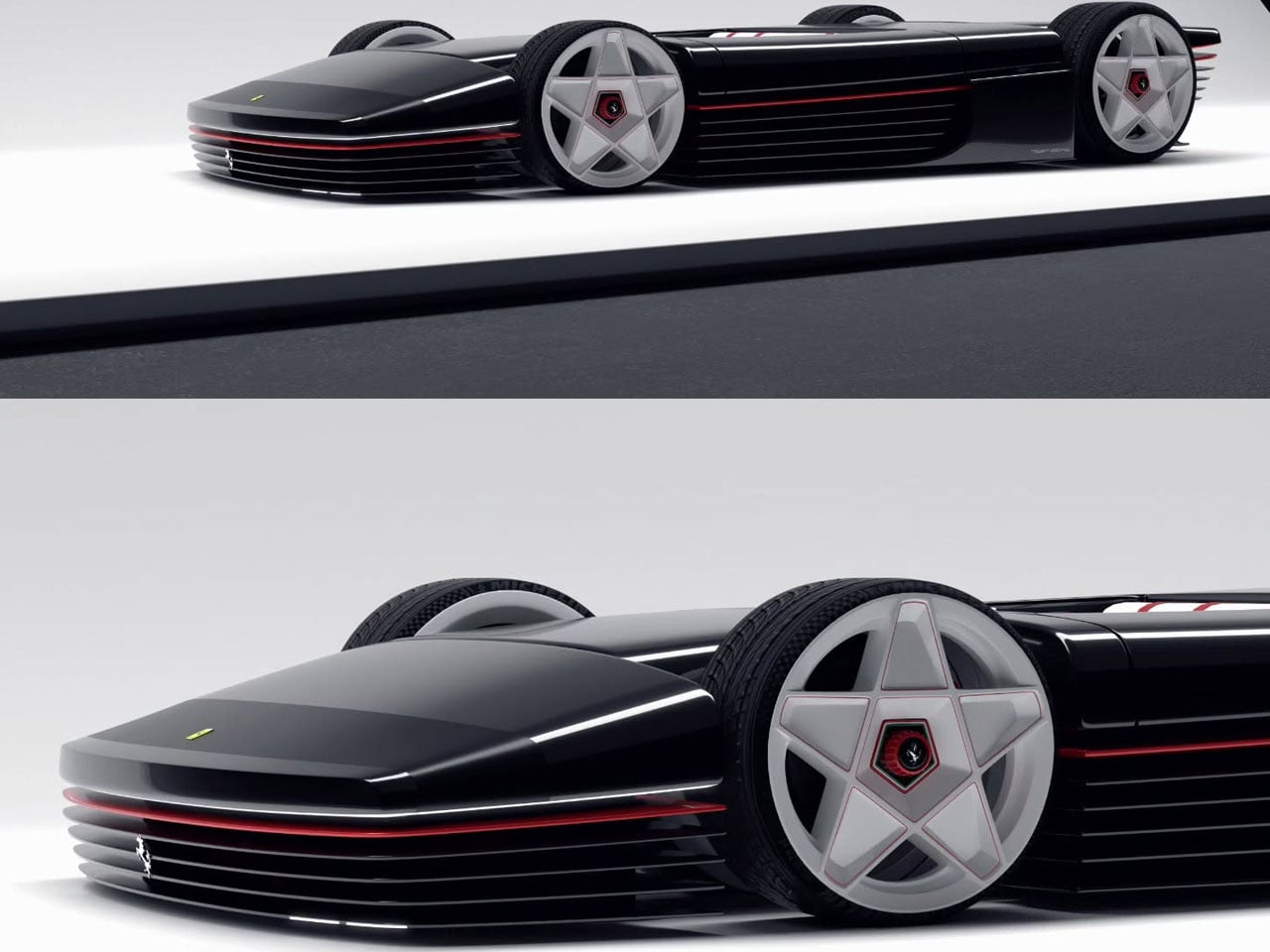
While the world is busy dissecting what’s right and what’s sheerly comical about the new prancing horse on the block, a retro-futuristic Ferrari concept takes us away from all the noise and into a realm where performance cars are minimalist and purely revealing. Meet the Ferrari TESTaZERO, which feels more Ferrari than the Luce for good measure!

Designer: Antonio Pavento

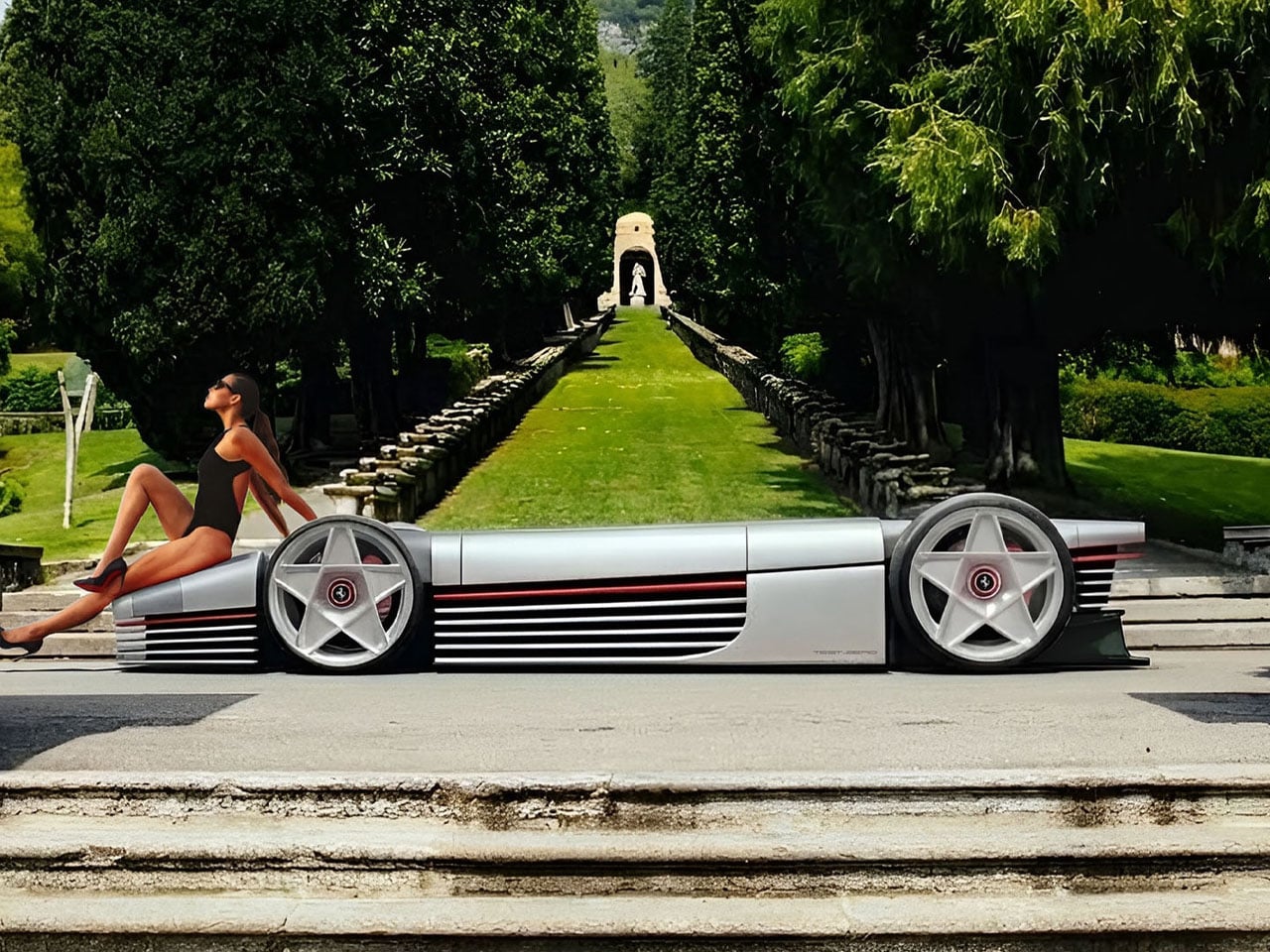
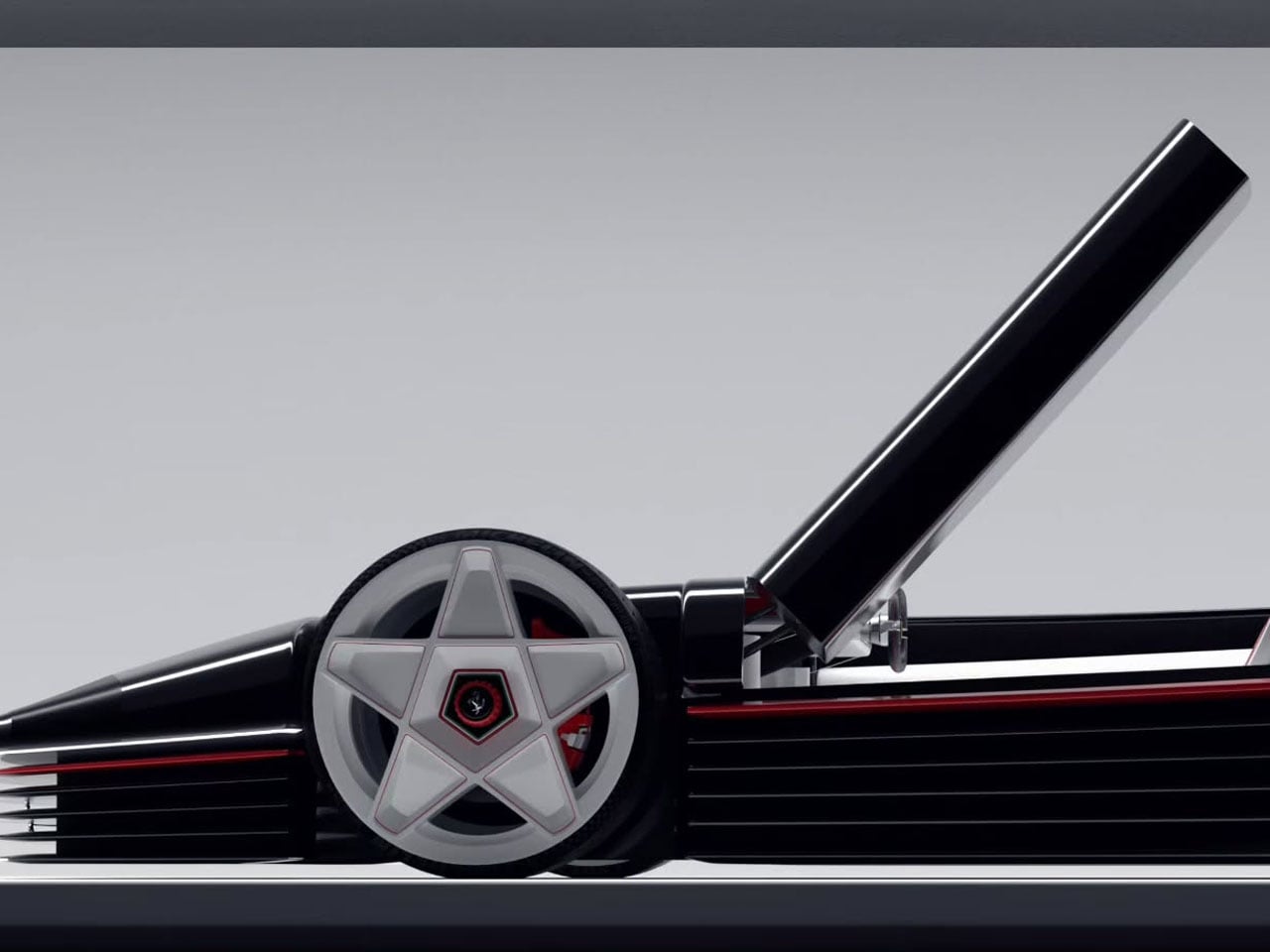
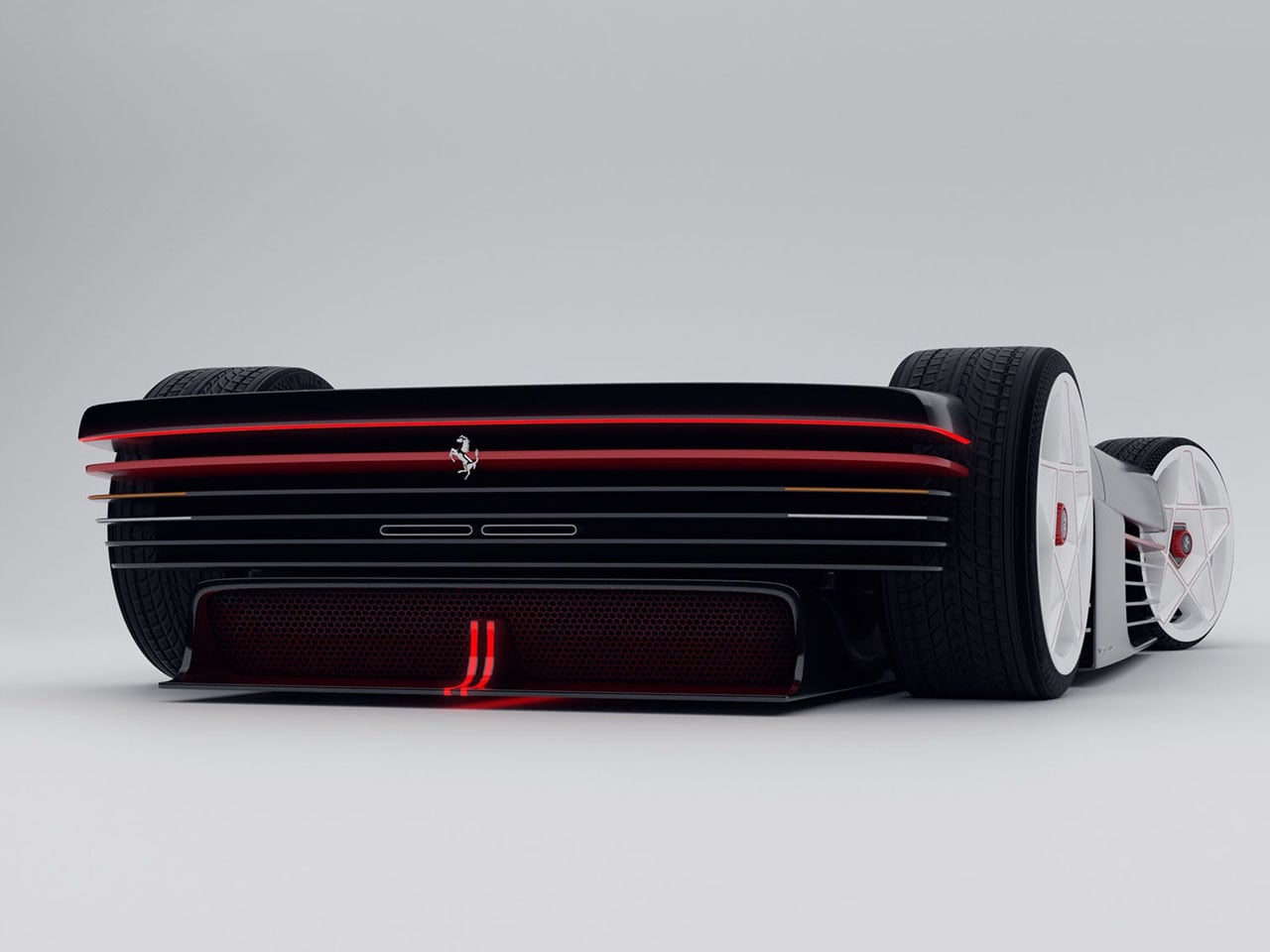
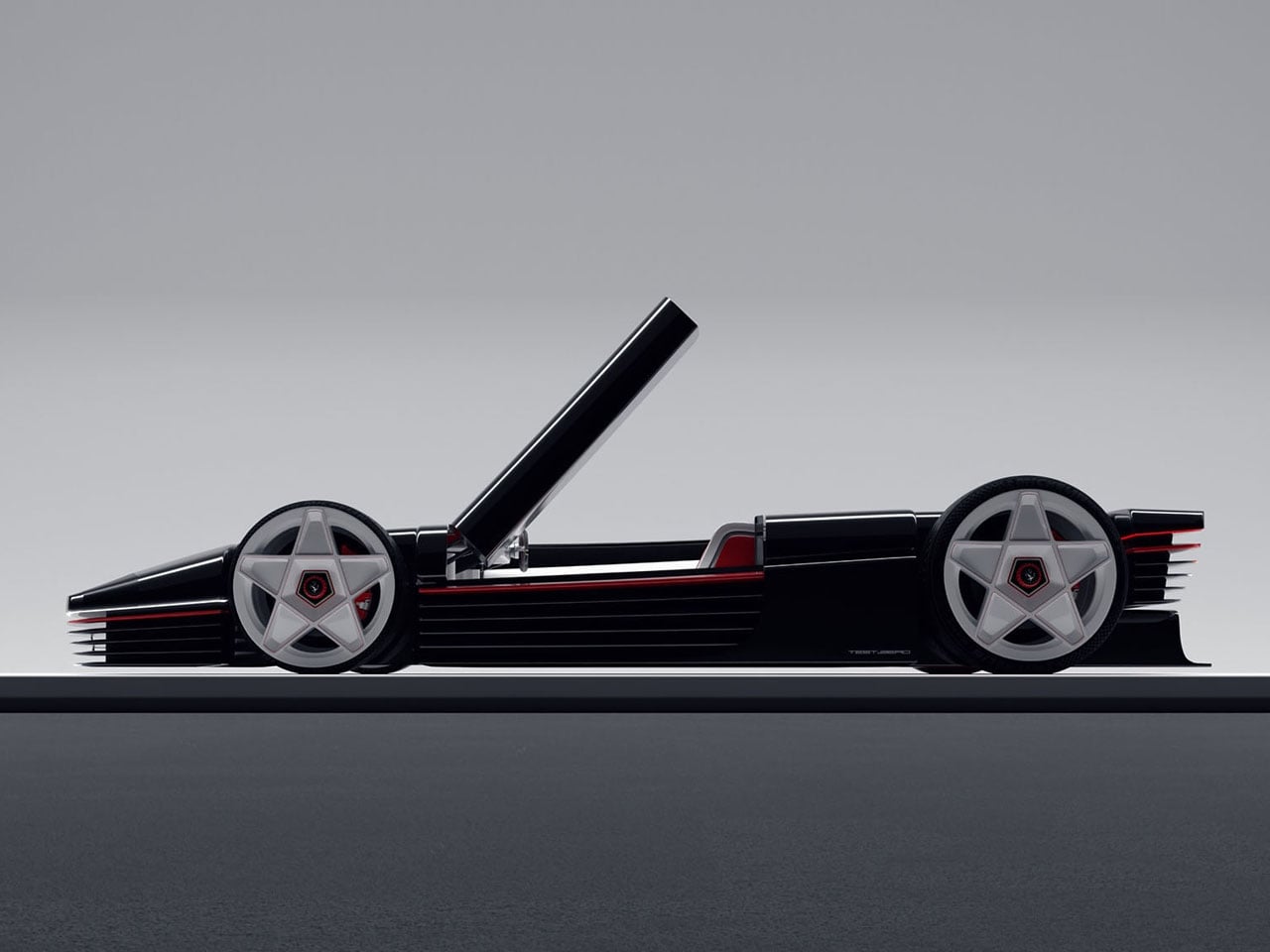
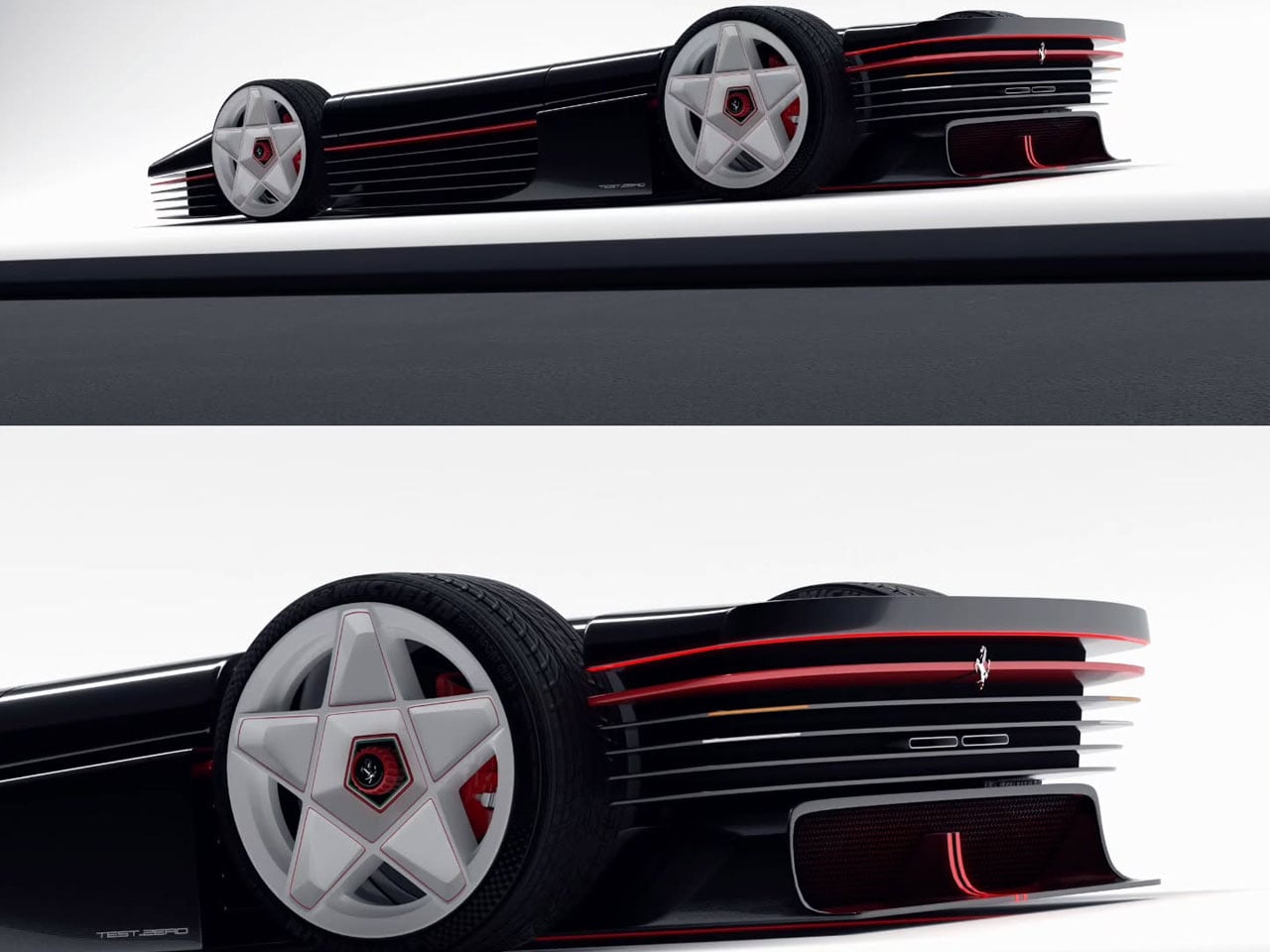
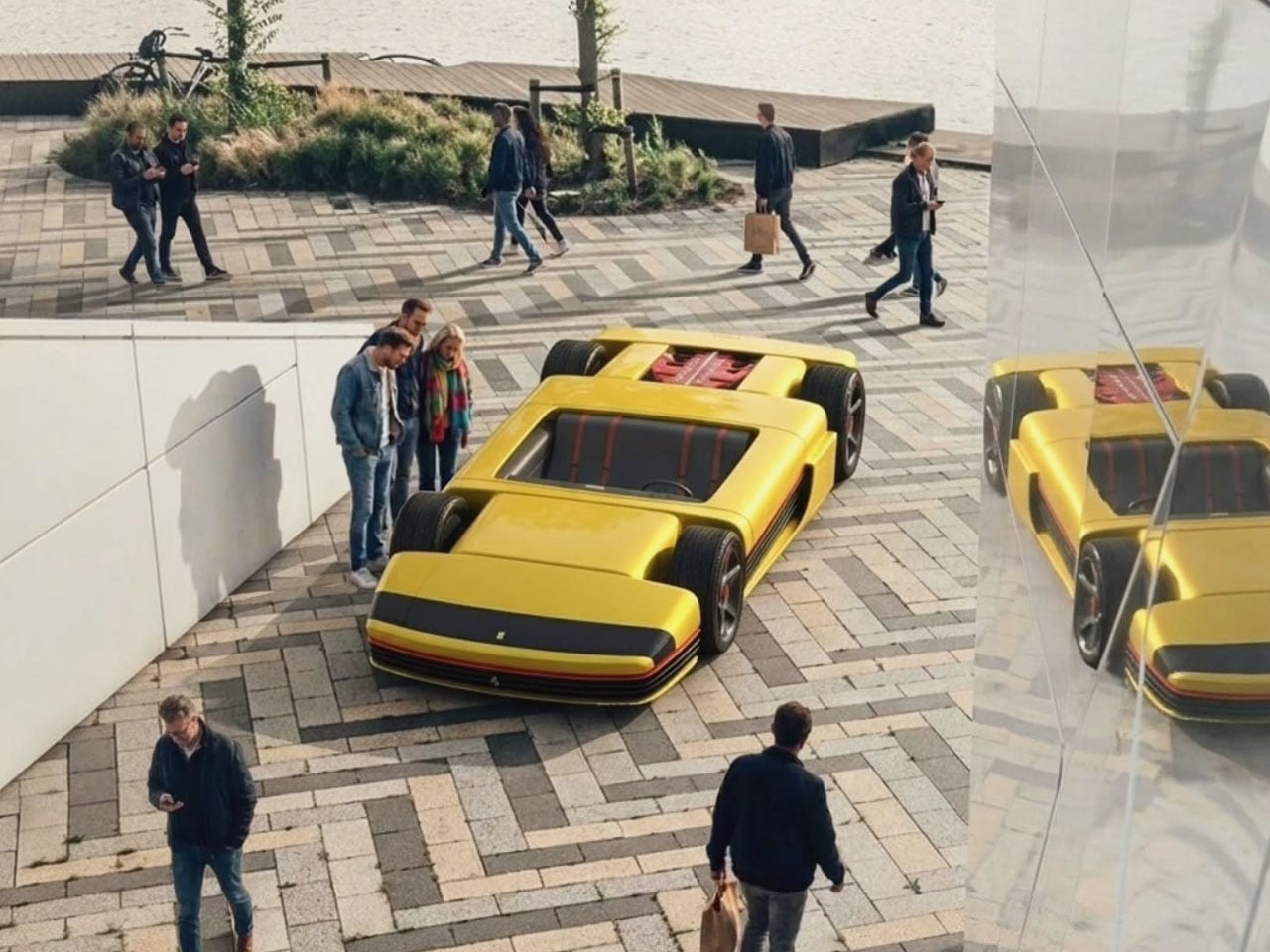
What defines the concept is its pure geometric design language, which cliches the usual Ferrari territory, yet it manages to adapt the core Ferrari DNA in a very unassuming manner. That DNA comes from the Pininfarina-designed Testarossa, preserving the 12-cylinder mid-engine sports car’s skeletal. The side stakes and width are more synthetic in their adaptation, while the side profile and the front and rear sections of the body give off PlayStation vibes.

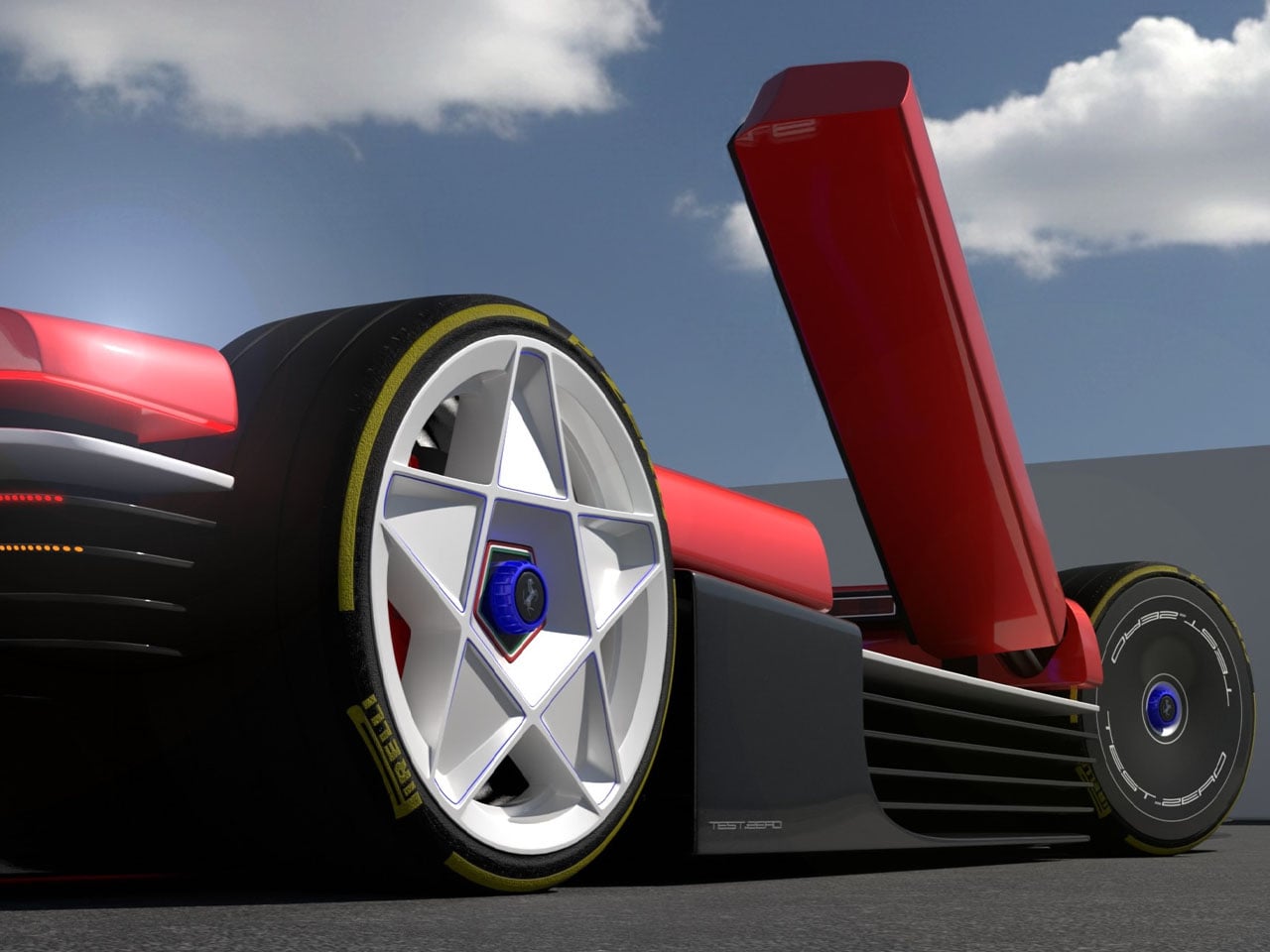
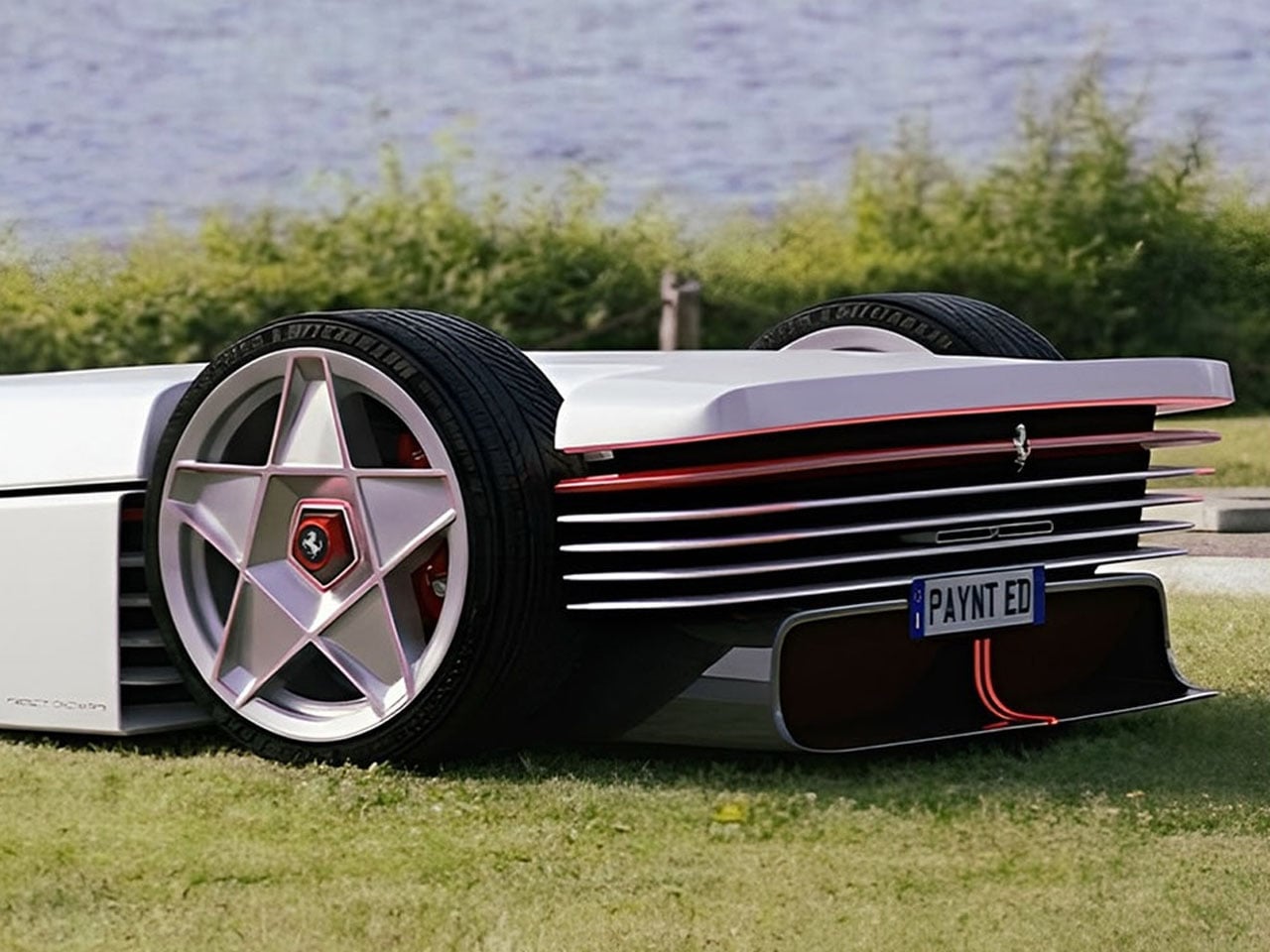
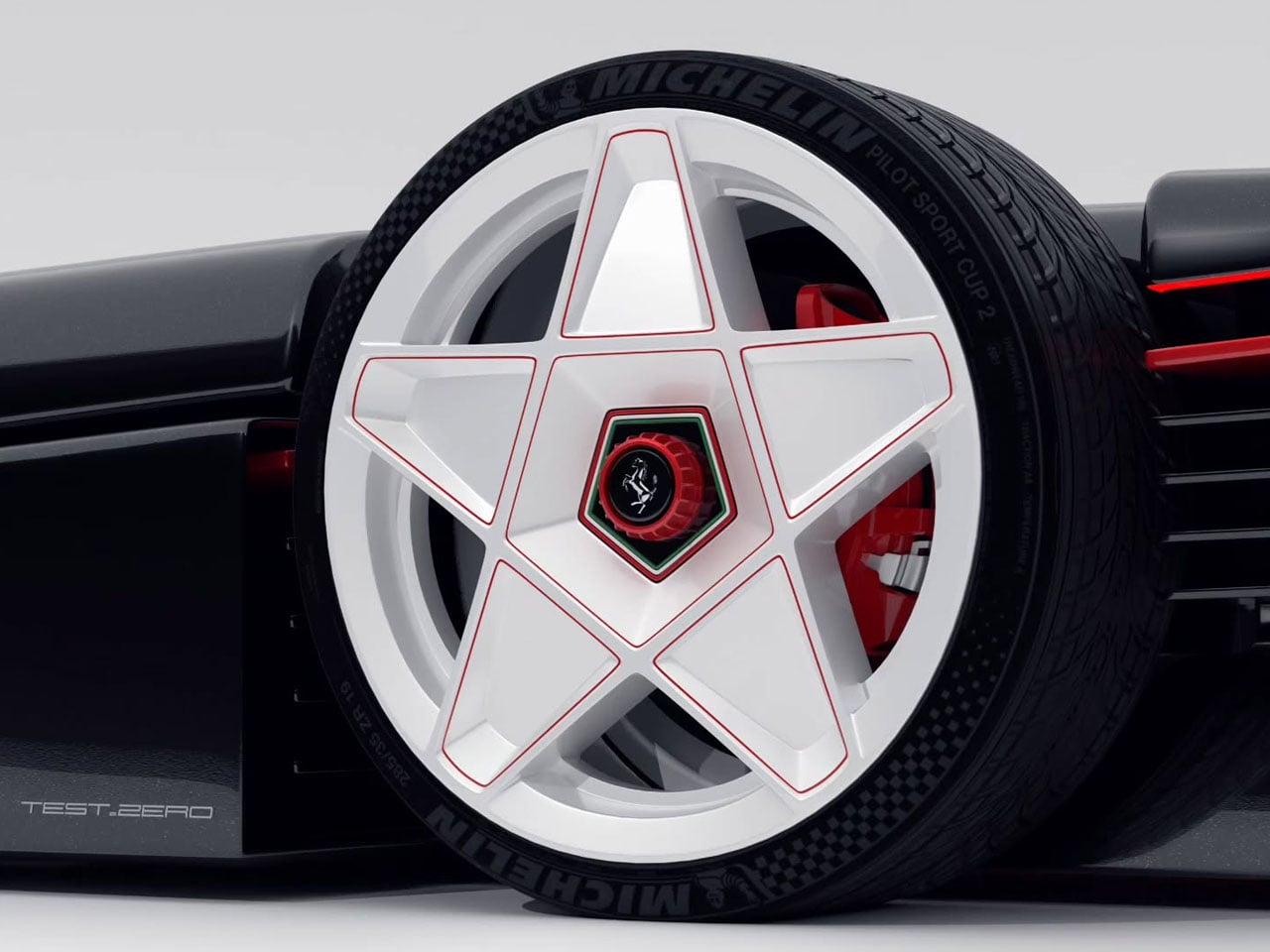
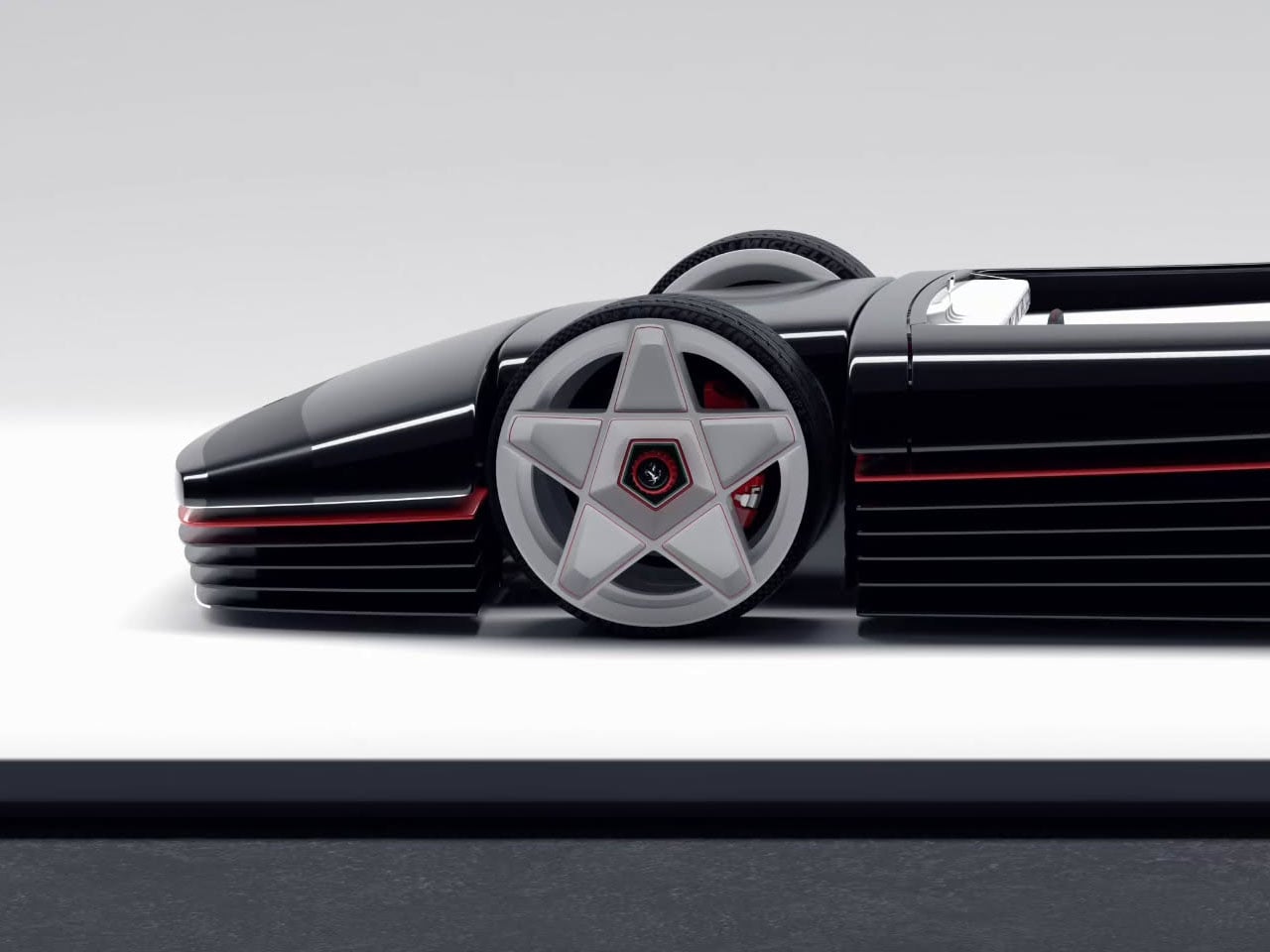
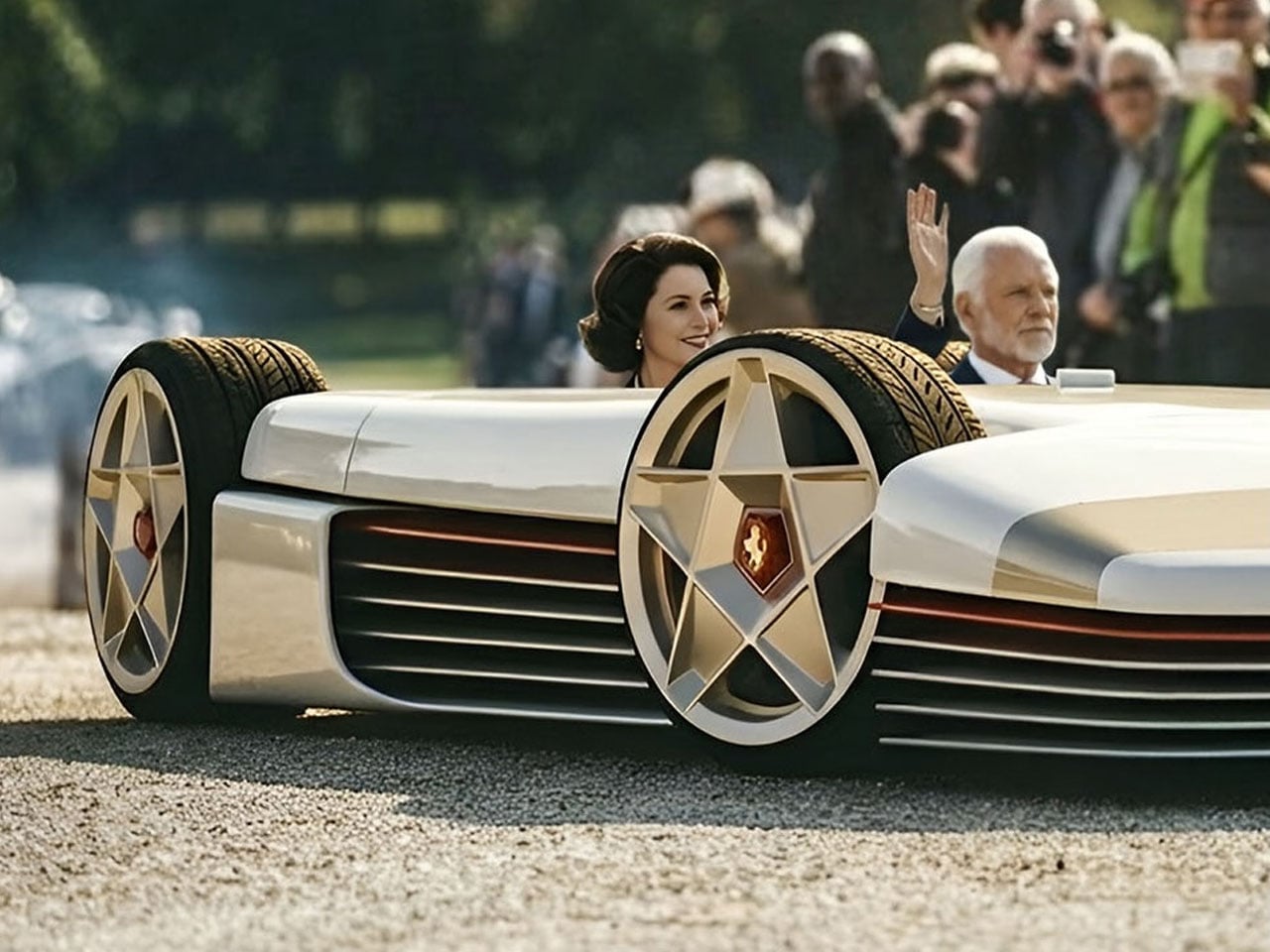
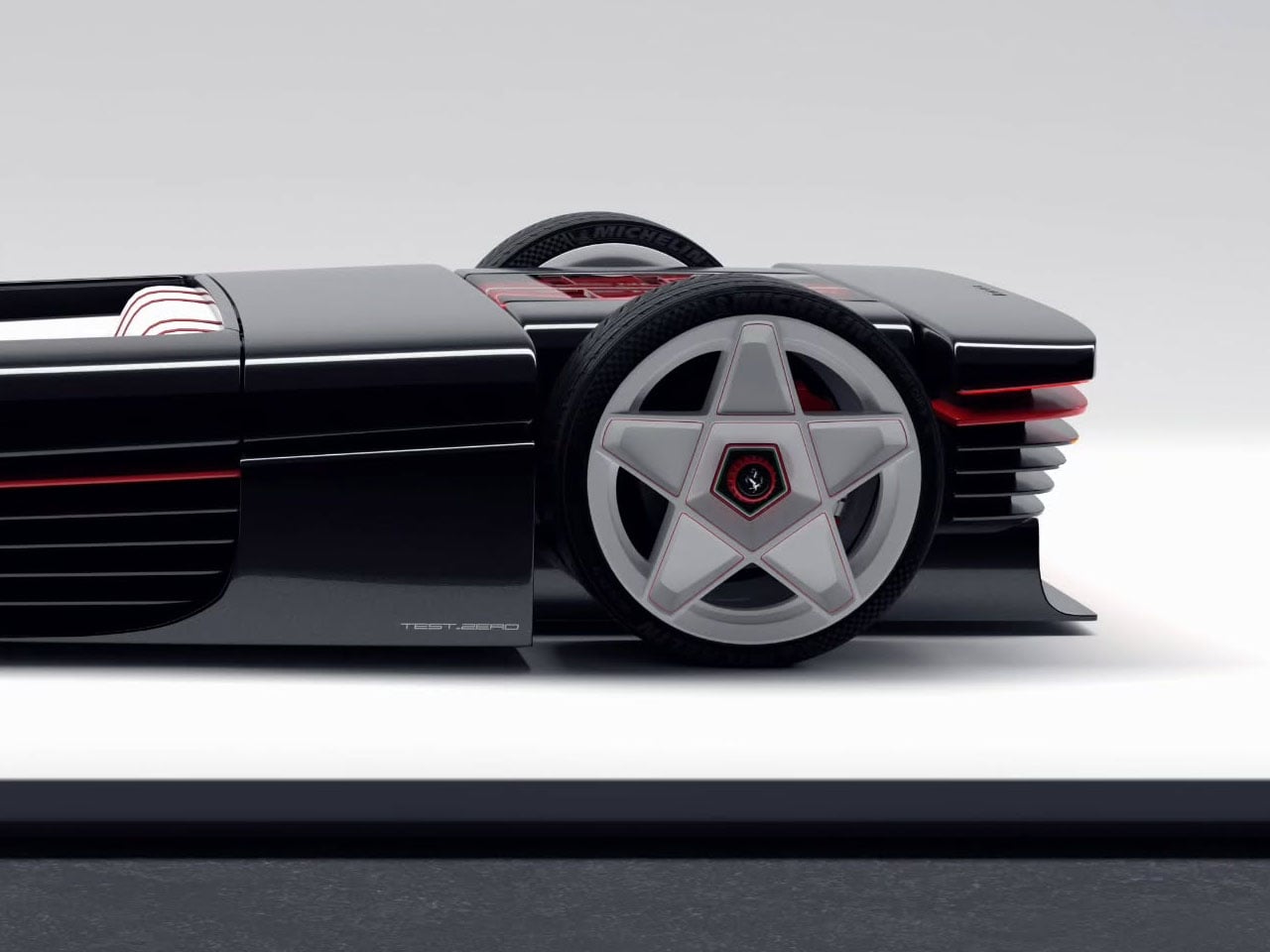
The body has a very low-slung presence with the skirtings hugging the tarmac, barely having a paper-thin distance between. Knee up, and you have everything chopped off literally. The body above the wheels, forged by Spanish firm Llagos Design, simply doesn’t exist, giving new meaning to open-air roadster fun on a cozy tropical evening drive. Those five-spoke wheels are inspired by the Maranello Sport Prototypes of the late 1960s, and they matter ever so much more in this concept as they are the focal point.

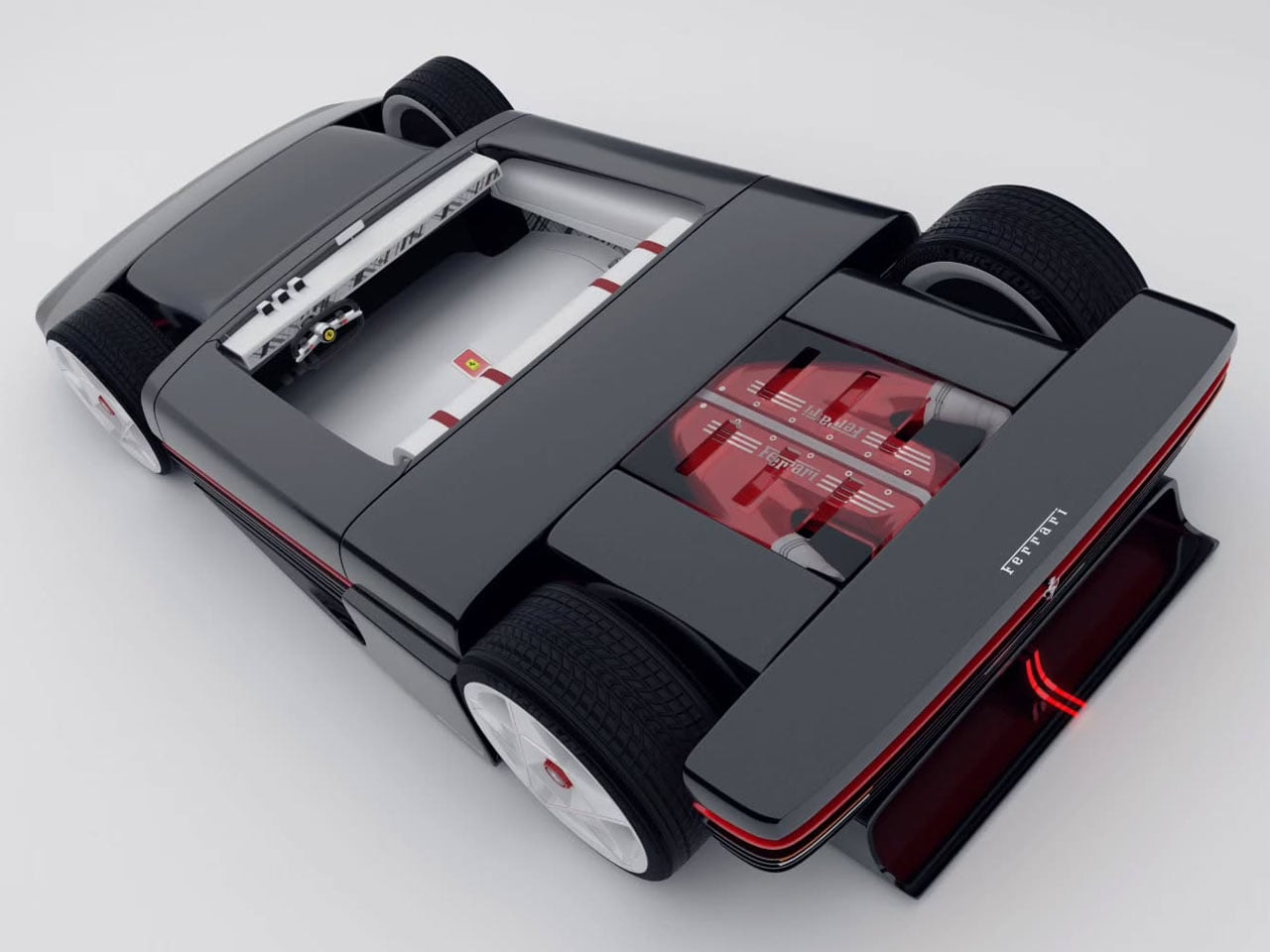
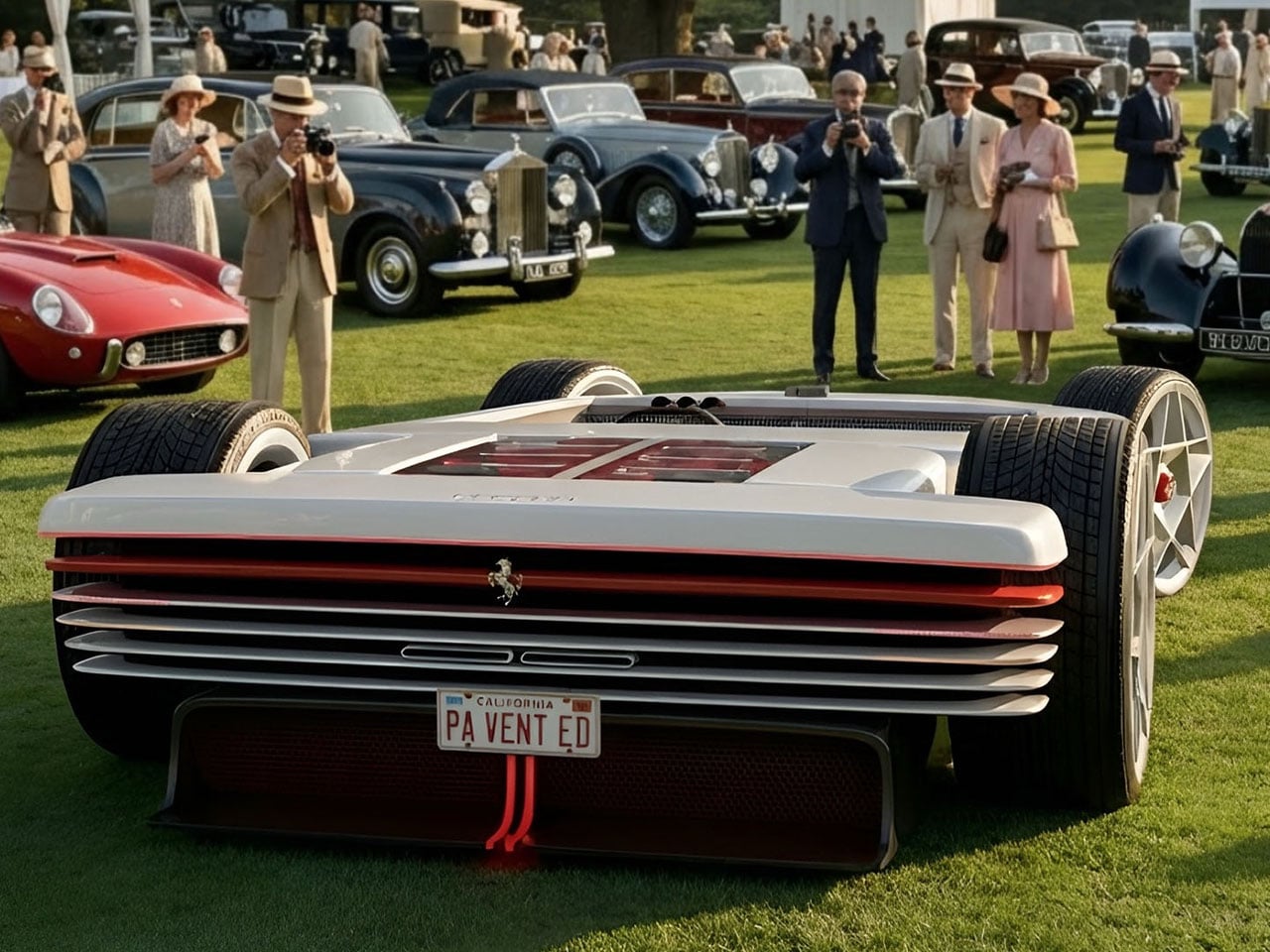
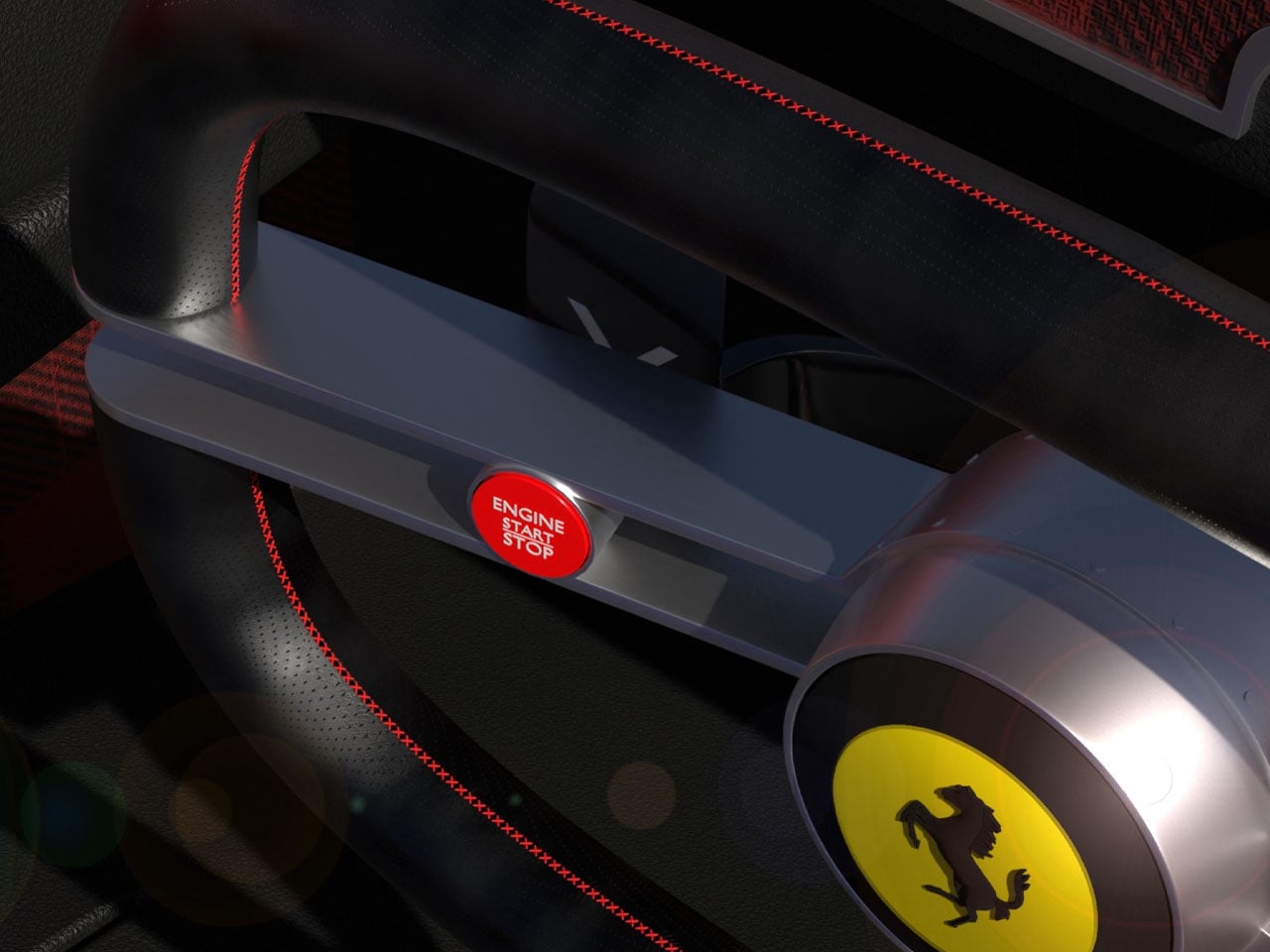
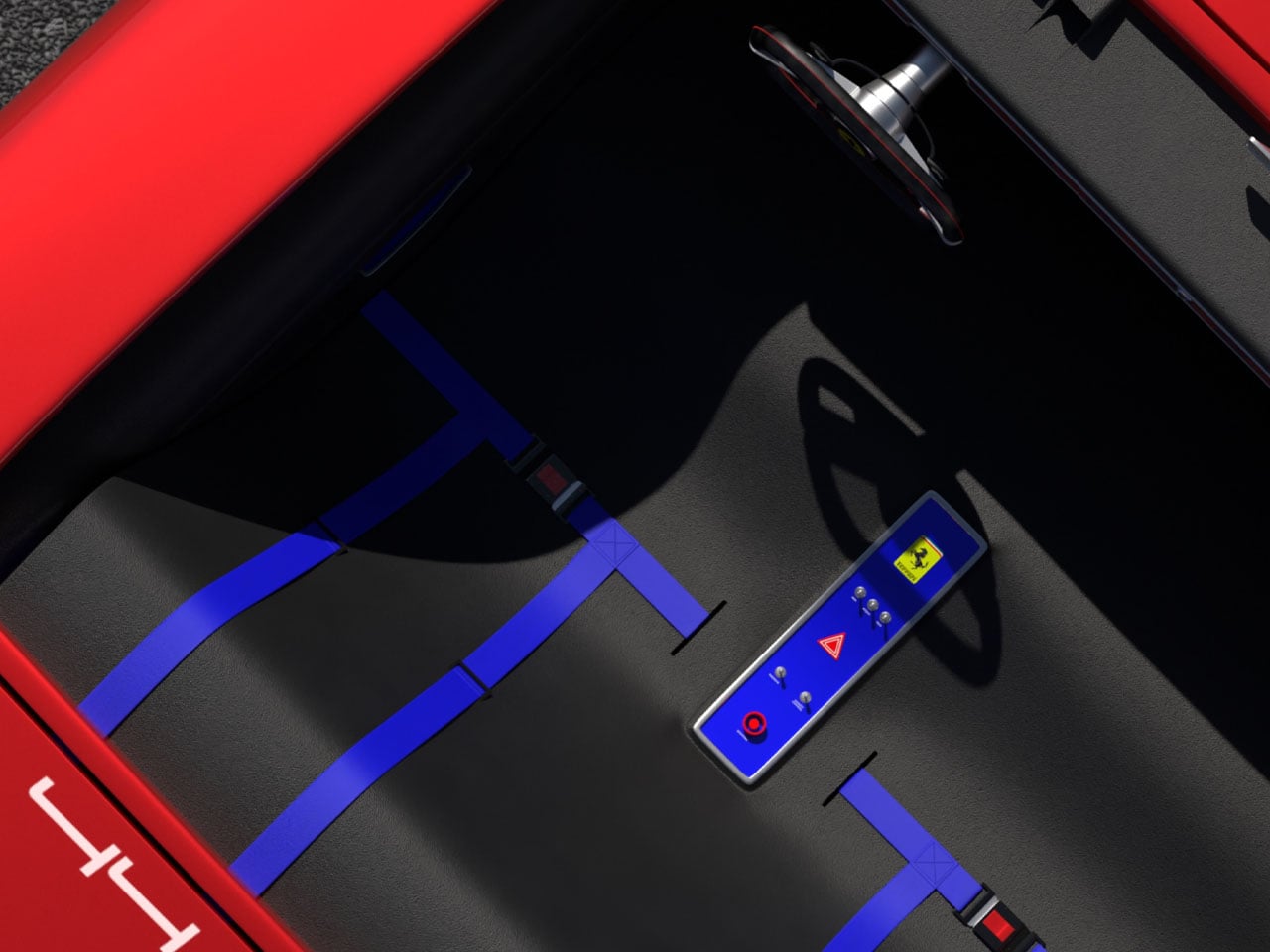
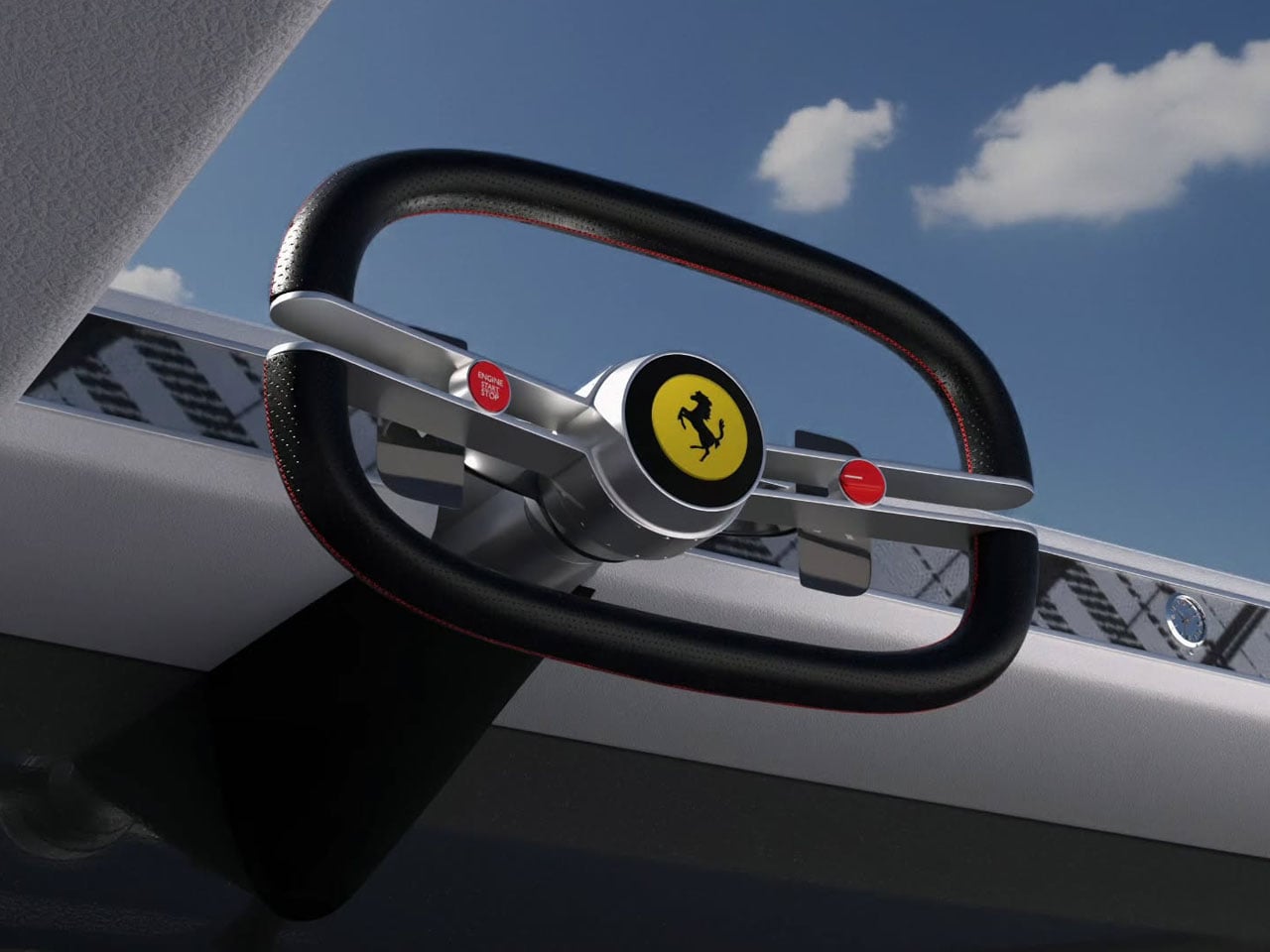
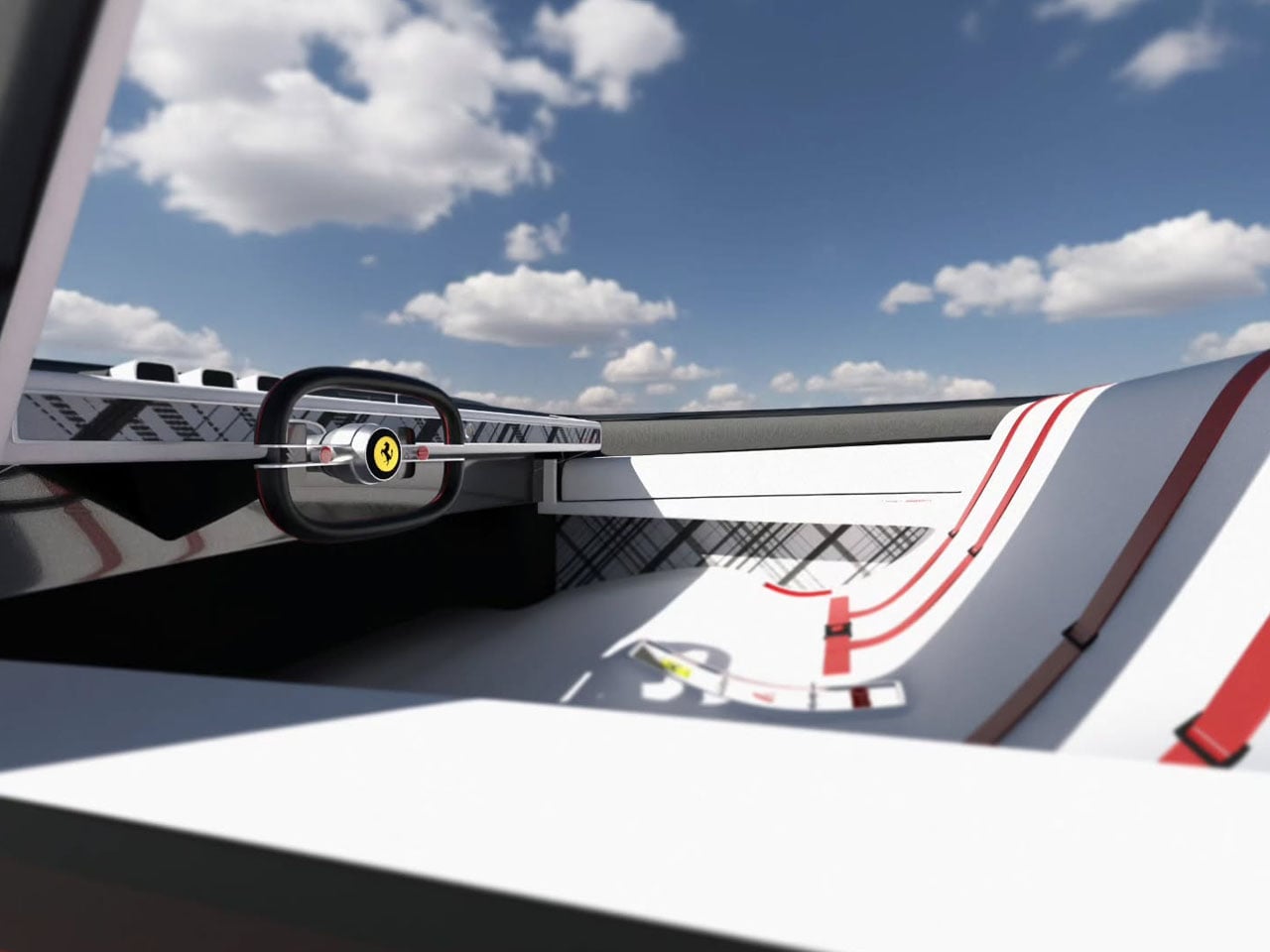
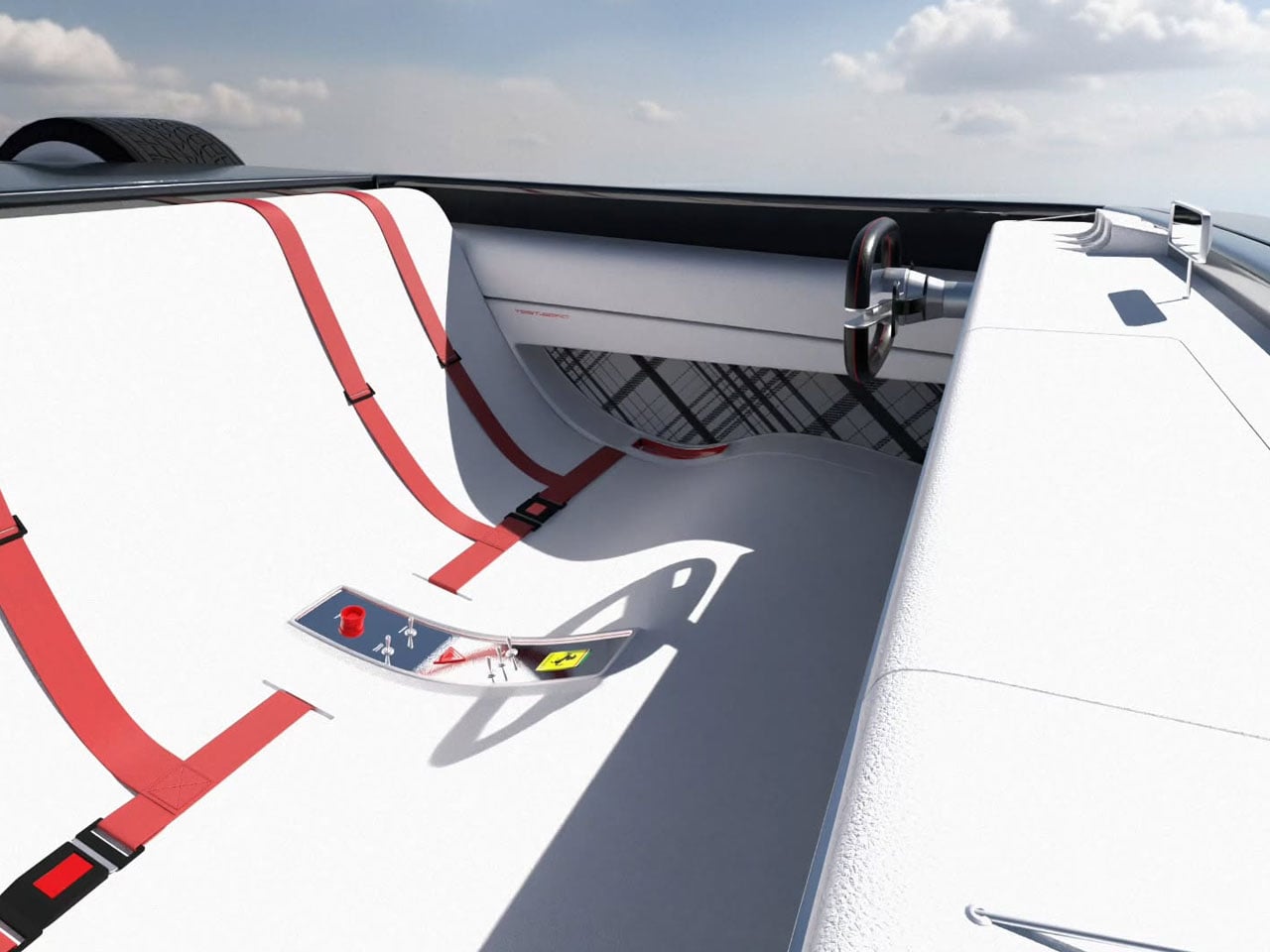
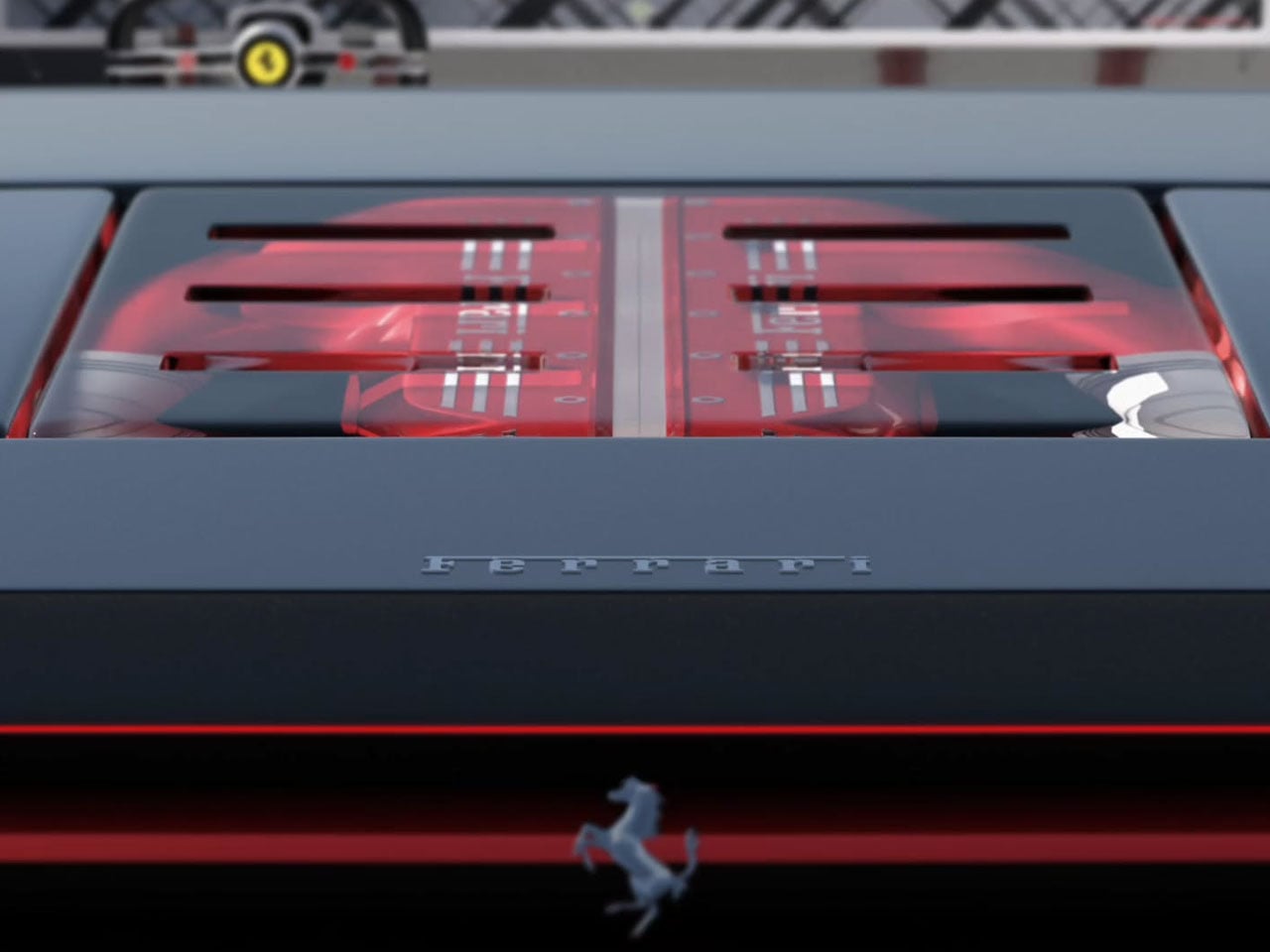
The rear-wheel-drive TESTaZERO accommodates the V6 engine in a see-through compartment on the flat rear. Flush in the middle is the space for the two riders who nestle in the minimalist interior of the vehicle. The contoured shape of the unified cabin section is ergonomically designed for comfort as one takes this radical Ferrari on a spin. There are no unnecessary dashboard elements or dials, just the ones necessary for the thrill of driving. The yoke-style steering wheel carries the same minimalist design language.

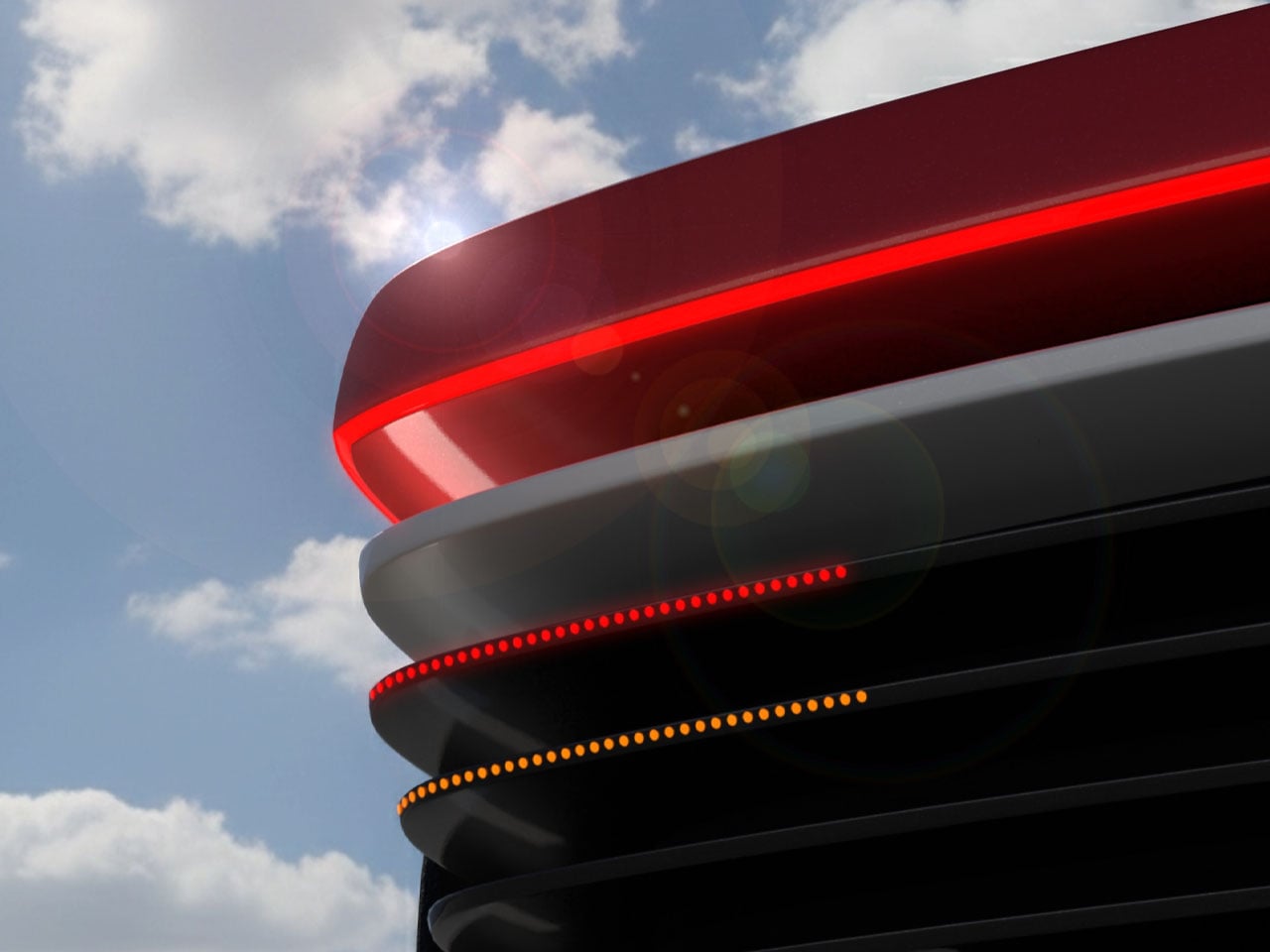
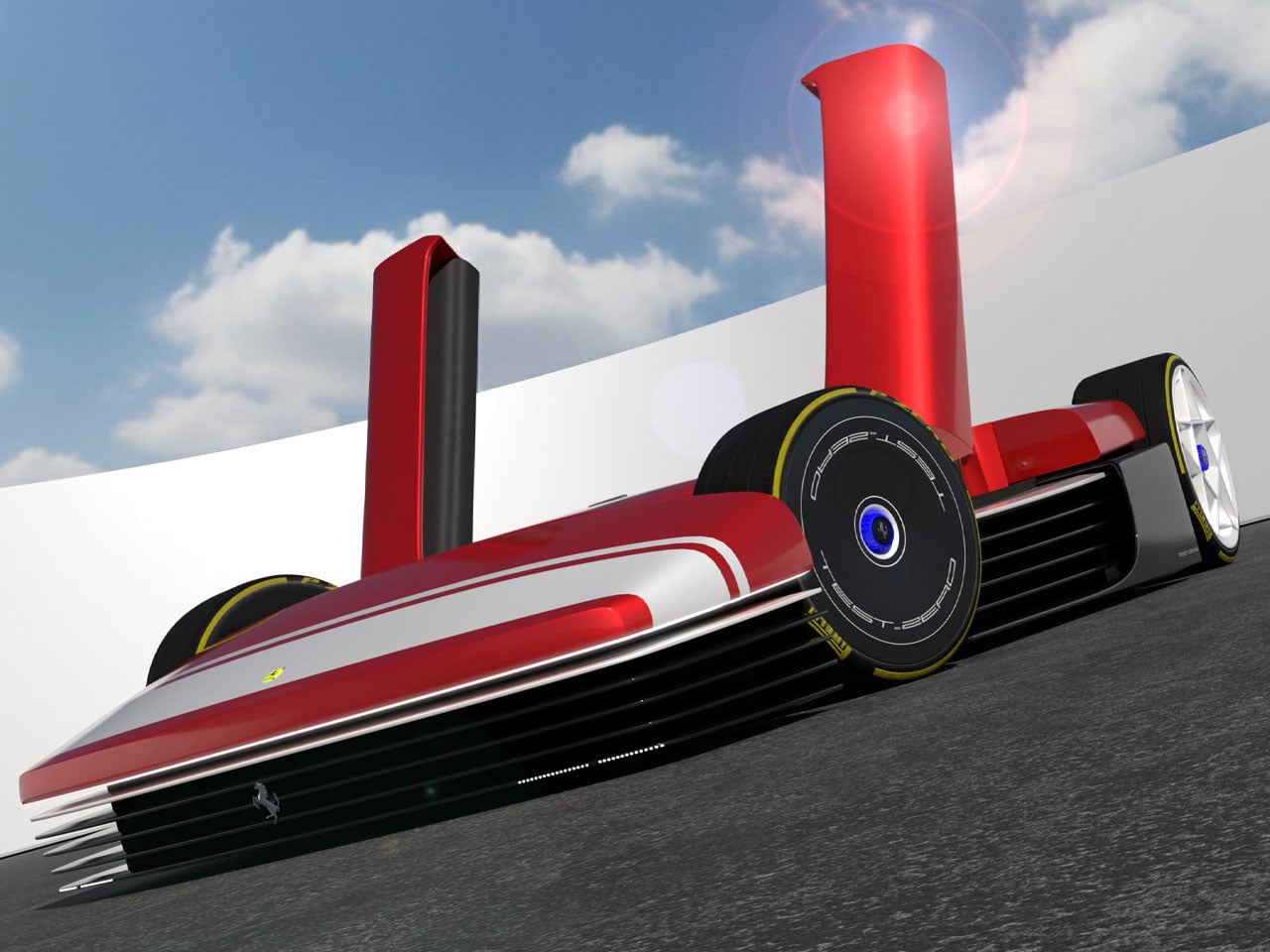
On the whole, the sports car is designed for the thrill of driving, although the aerodynamics might take a backseat due to the open shell configuration and the layered design of the front grille and the sidepods. The headlights and the tail lights are neatly fused into this layered architecture, which also conceals the rear diffusers, which could have done with a more full-bodied approach. In customary Ferrari style, the scissor doors add flair to the whole experience. I just hope the riders don’t take it out when the weather is unforgiving!

The post Ferrari-inspired TESTaZERO is a flamboyant speedster for open air adventures, all-electric Luce better watch out first appeared on Yanko Design.
Louis Vuitton Just Made a One-of-a-Kind Clock for UNICEF

Not every luxury piece earns the word “meaningful.” Beautiful, yes. Covetable, absolutely. But meaningful is a harder category to land in, and the Louis Vuitton Unity Time Object lands there without trying too hard about it.

Unveiled at the Fall-Winter 2026 Men’s Fashion Show in Paris, the piece was created to mark ten years of the Louis Vuitton for UNICEF partnership. A decade of fundraising, direct action, and advocacy for vulnerable children around the world. That’s the kind of milestone that deserves more than a press release, and Louis Vuitton clearly agreed.

Designer: Louis Vuitton

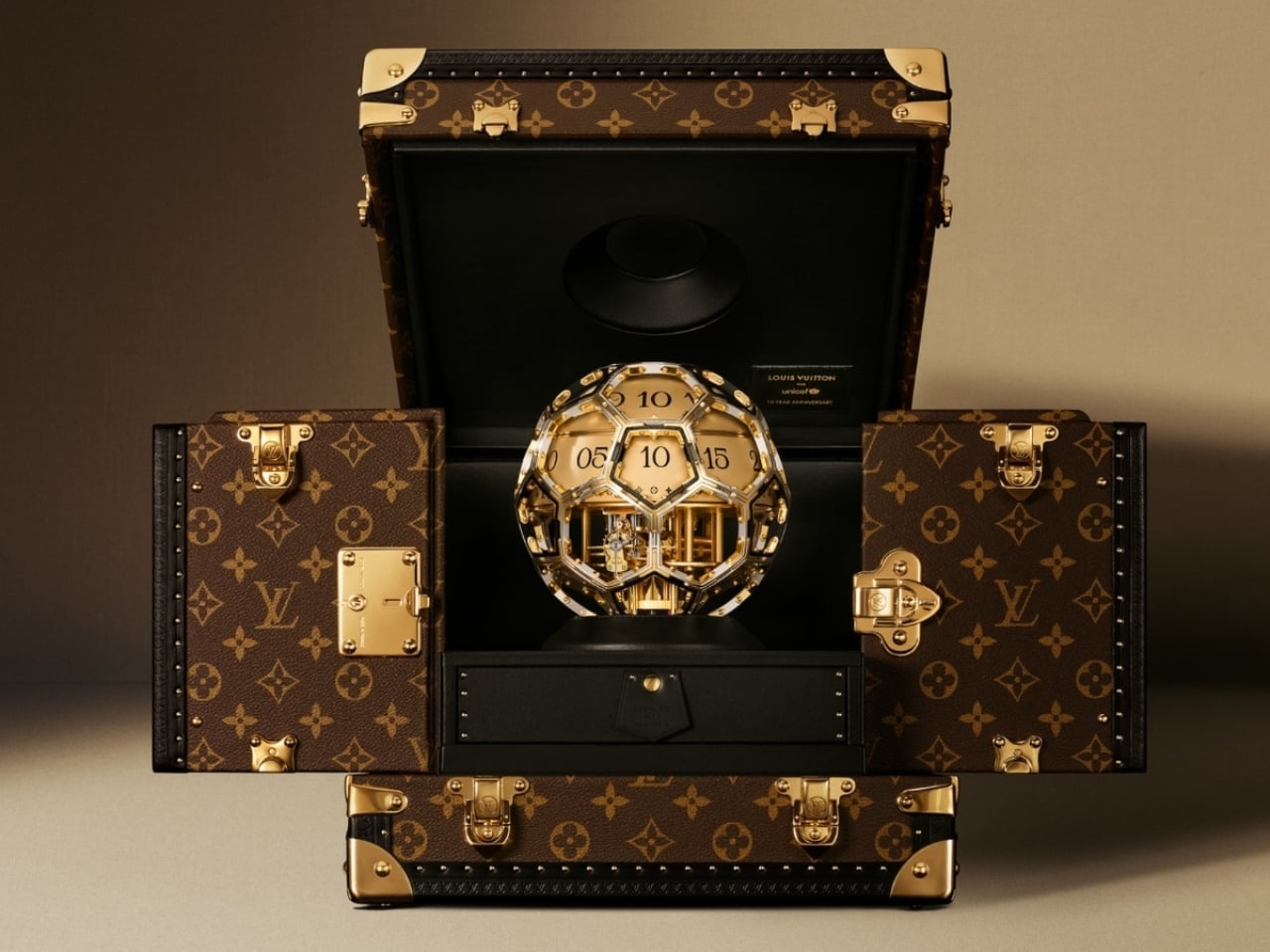
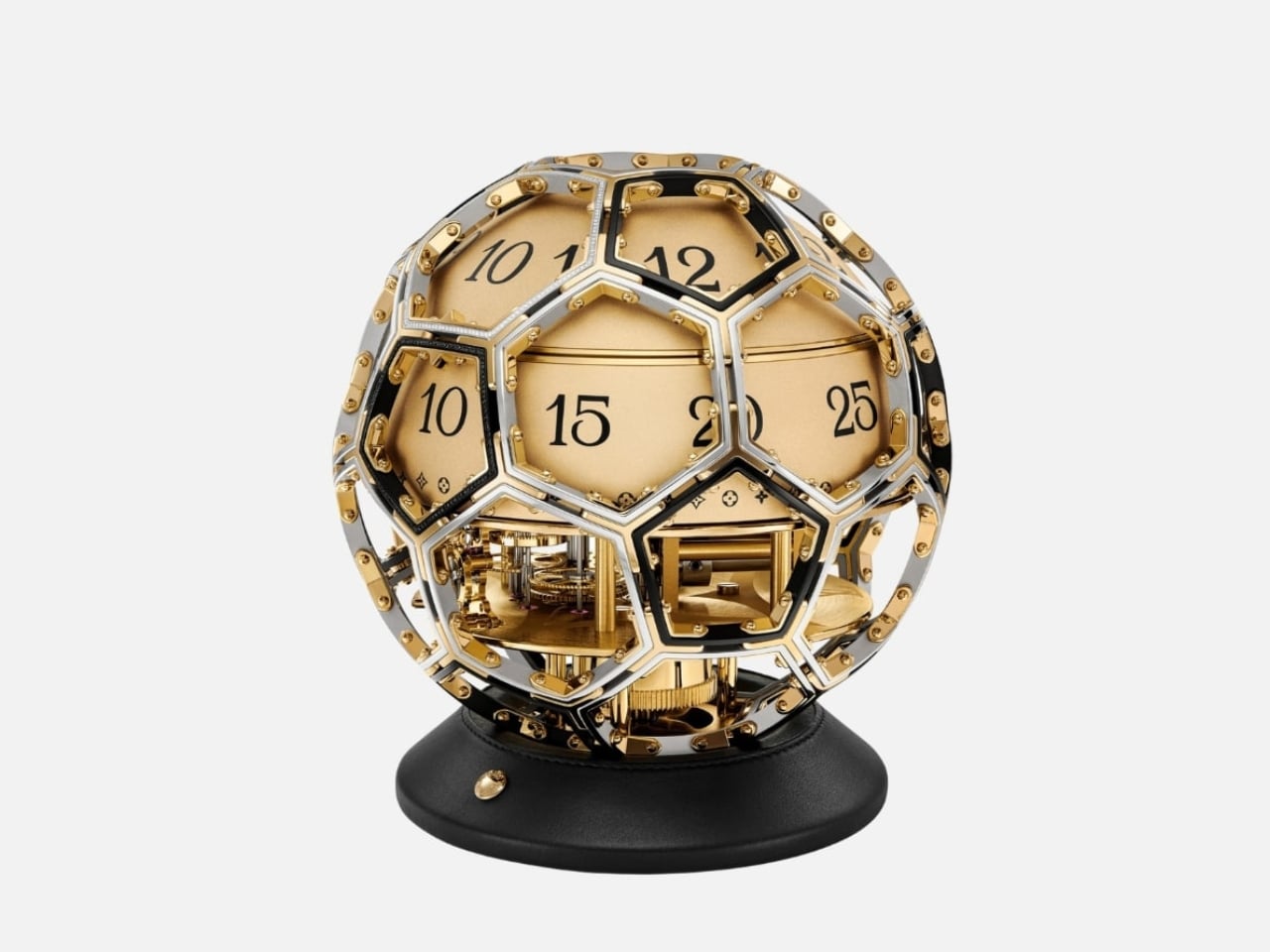
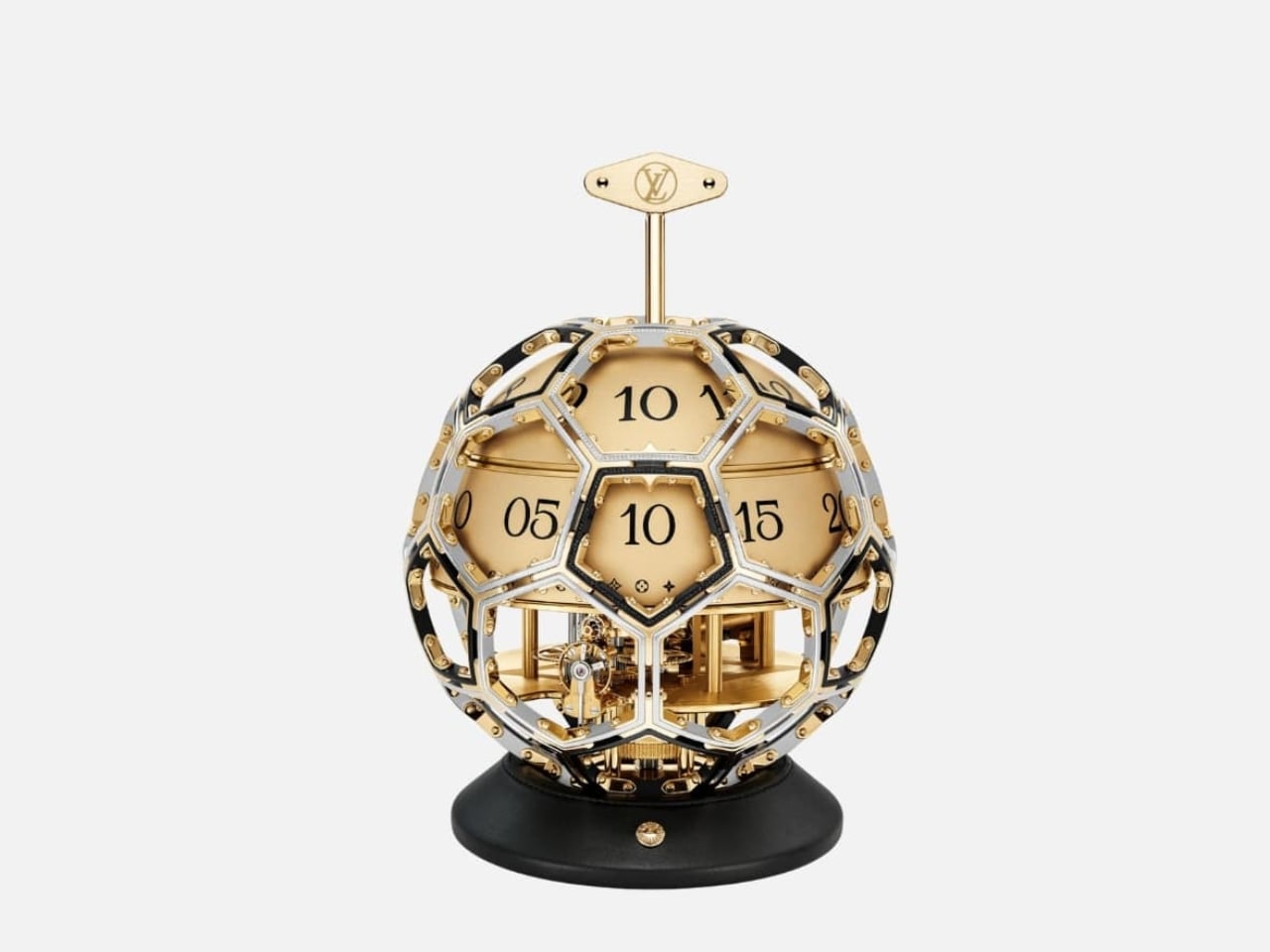
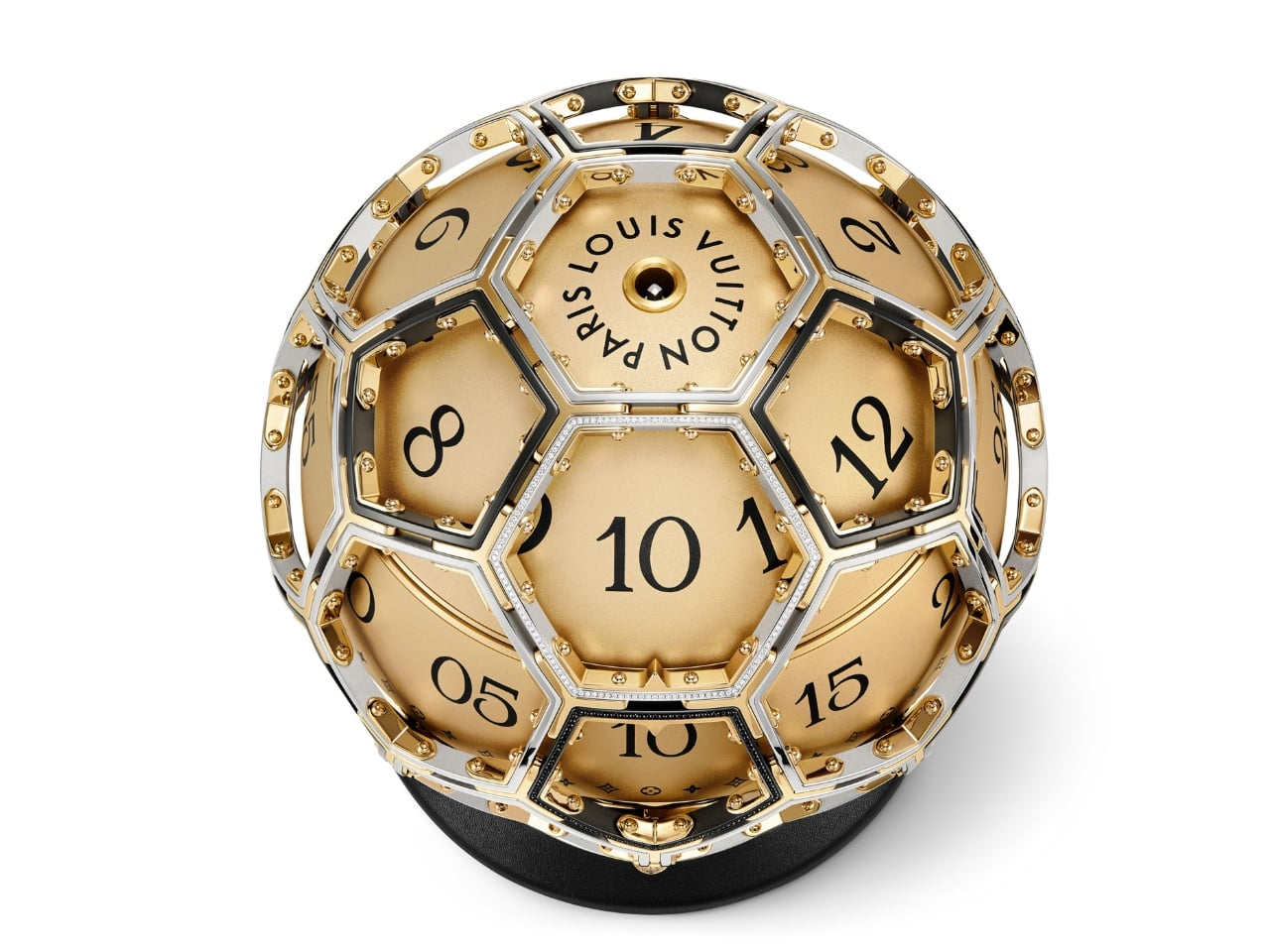
The form alone is worth sitting with for a moment. The clock takes its shape from the LV Soccer Ball, one of the house’s most recognized sporting objects, now reimagined as a sculptural timepiece that functions equally as objet d’art and design statement. A sphere has no front or back, no implied hierarchy, no right way to face. It looks the same from every corner of the room, every corner of the world. For a partnership rooted in the idea that every child deserves access and dignity regardless of where they were born, the shape isn’t just aesthetic. It’s a quiet argument made in steel and gold.

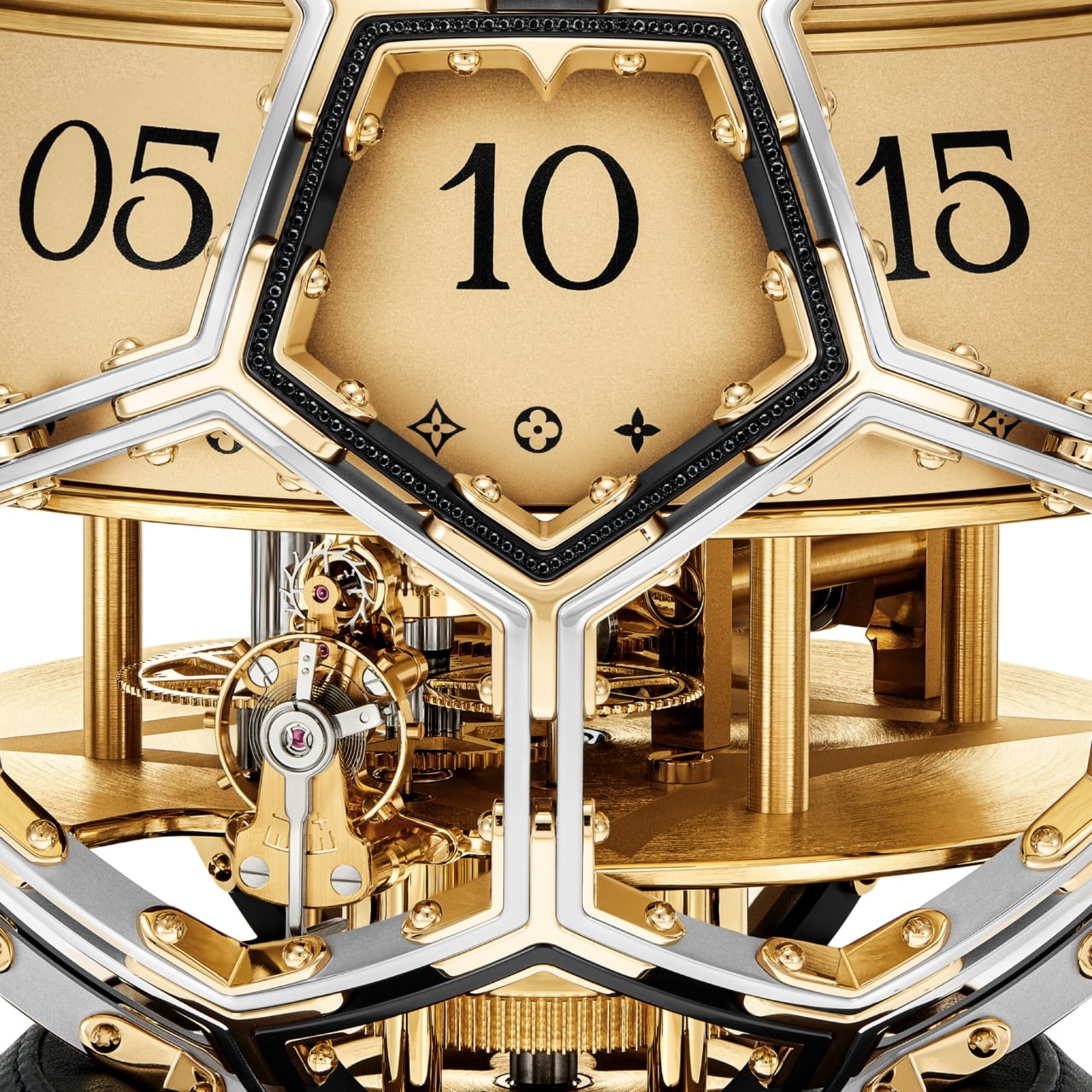
Time on the Unity Time Object is told through two rotating cylinders rather than conventional hands. A sculpted golden steel dome forms the upper half of the clock, and beneath it, one cylinder tracks the hours while the other handles the minutes. The minute cylinder is engraved with Louis Vuitton’s Monogram motif and flowers, with “Louis Vuitton Paris” running along its top. You wind it with a key inserted at the side or top, and the act carries an almost ceremonial quality. It asks you to slow down, to pay attention. In a product era built on digital convenience, that small ritual feels genuinely countercultural.
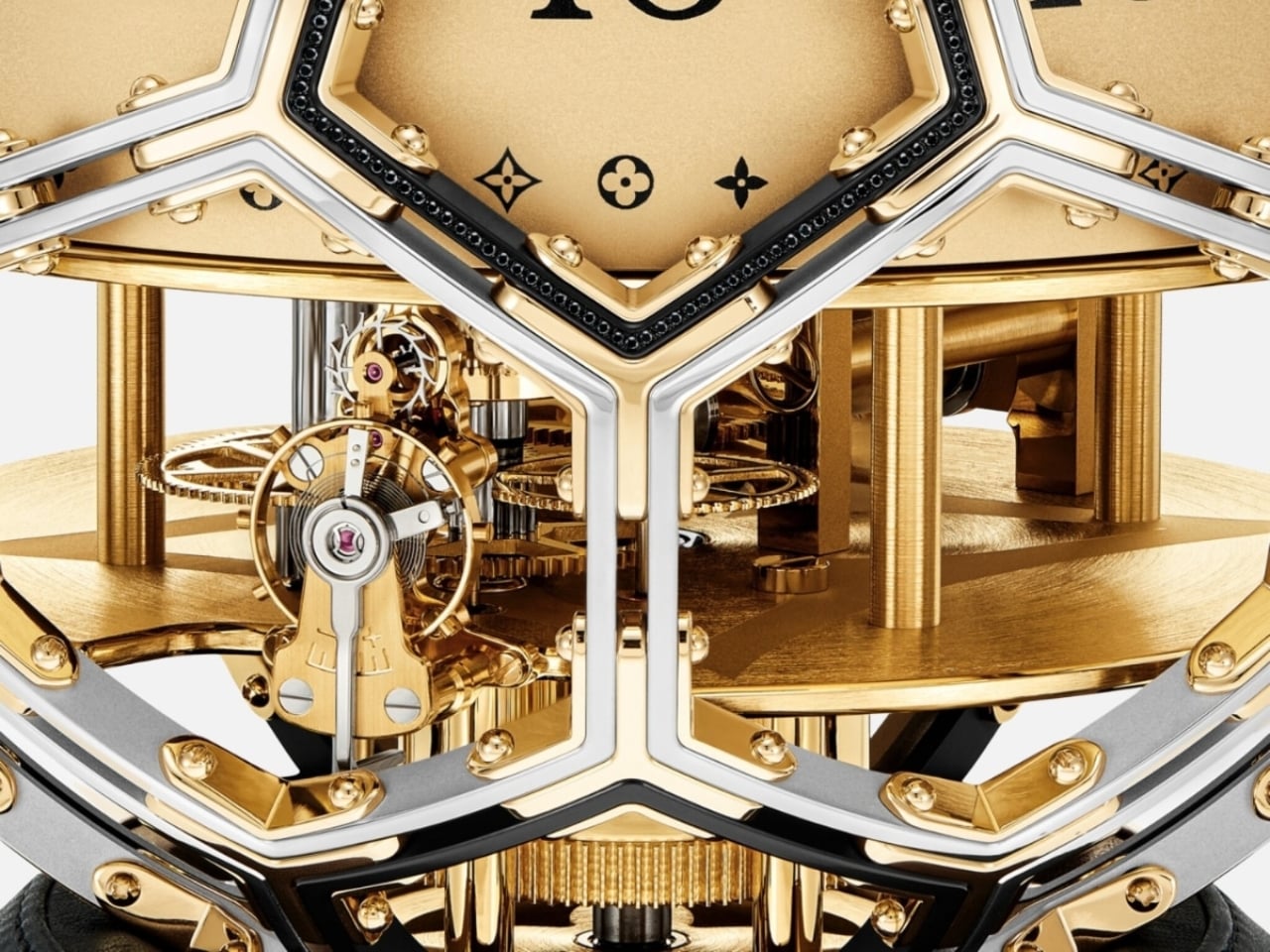
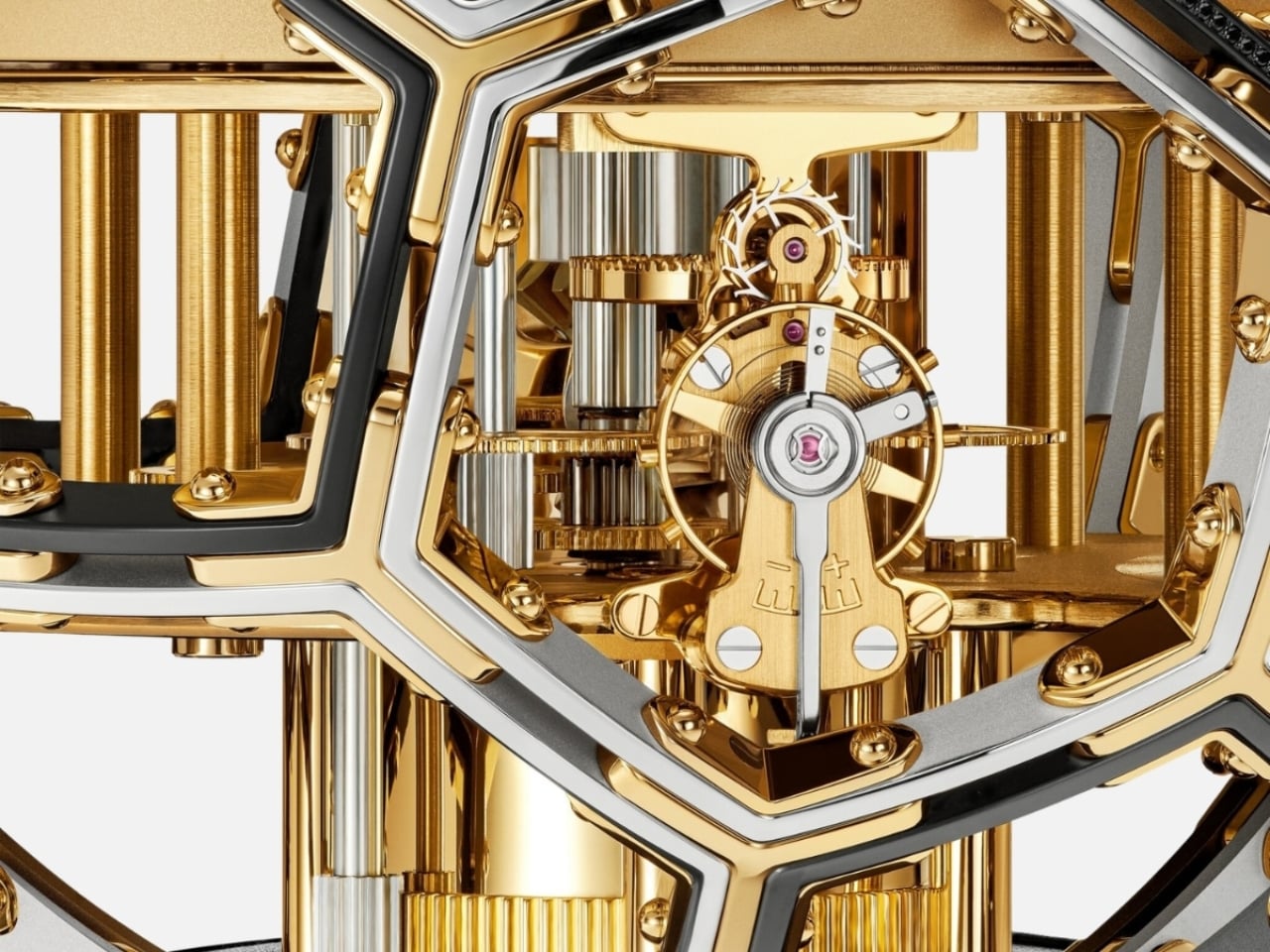
The movement was developed in collaboration with L’Épée 1839, the Swiss clockmaker with nearly two centuries of history behind it. It’s entirely visible through the skeletonized structure, with every screw and movement plate worked with the Monogram flower. Diamond-set details add richness without overwhelming the mechanical poetry underneath. The whole piece reads like a conversation between decoration and precision, and neither side loses.

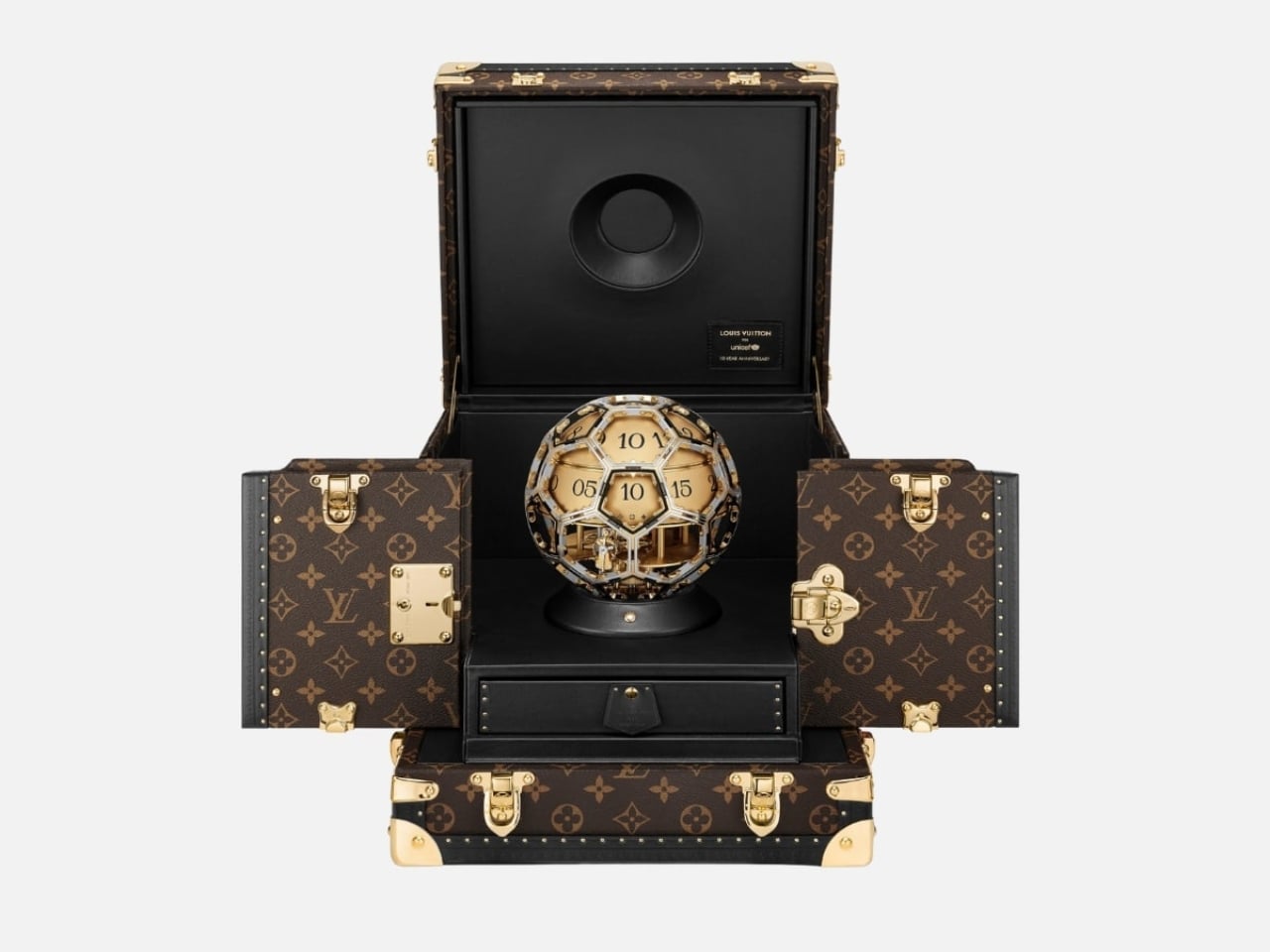
The clock arrives in a trophy-style trunk made from Louis Vuitton’s Monogram canvas, handcrafted at the house’s historic Asnières workshop. The brass corner protectors, lock, and clasps are the same ones found on Louis Vuitton trunks going back to the 1860s. A display case built with 160 years of muscle memory, housing an object shaped like a ball. It shouldn’t cohere as well as it does, and yet here we are.

The Unity Time Object is classified as a pièce unique at Sotheby’s, meaning one exists in the world, full stop. It goes to auction on June 9, 2026, with the sale closing June 18, and all proceeds going directly to UNICEF and its work supporting children globally. The estimate is available upon request, which is auction-house language for a number most of us should simply appreciate from a respectful distance.

What I keep returning to is the simplicity of the choice. Louis Vuitton could have marked a ten-year UNICEF partnership with a capsule line or a limited-edition accessory. Something accessible, something scalable. Instead, they made a single, unrepeatable object with no commercial return for the house. Every dollar from the sale goes to the cause. That kind of gesture is rare in luxury, where even the most philanthropic moves tend to benefit the brand as much as the cause.

Good design holds meaning without over-explaining it. The Unity Time Object doesn’t need paragraphs of context to communicate its weight. A sphere. A clock. A trunk built by the same craftspeople who have been making trunks for generations. Whether you’re drawn to the horology, the design, or just the idea of what luxury could stand for at its very best, the Unity Time Object makes a compelling case that beauty and purpose don’t have to be separate conversations.

The post Louis Vuitton Just Made a One-of-a-Kind Clock for UNICEF first appeared on Yanko Design.