Rockstar developers go public with first union
The Rockstar Game Workers Union has members across the developer's UK offices.

Damien Chazelle made La La Land as a love letter to a Los Angeles that barely exists anymore, and to a style of filmmaking that Hollywood had largely abandoned. The big-studio musical, with its choreographed sidewalks and color-saturated dreamscapes, had been gathering dust since the golden age of MGM. Chazelle dusted it off, handed it to two impossibly charming leads, and aimed it squarely at the part of your chest that still believes in chasing something impossible. The result was fourteen Oscar nominations, six wins, and one of the most recognizable movie posters of the decade.
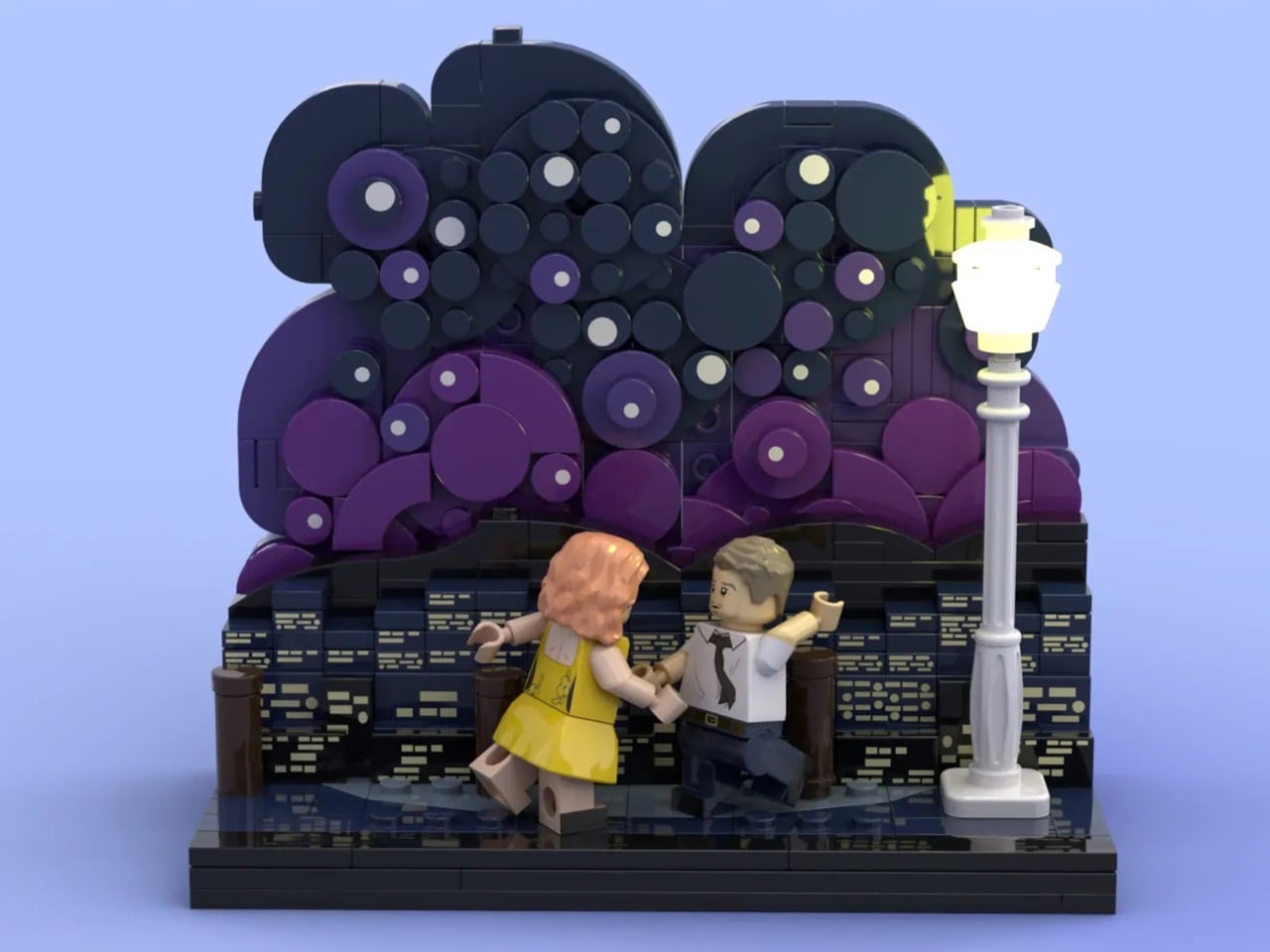
The scene that lives on that poster, Mia and Sebastian dancing above the lights of Los Angeles on a clear, impossible evening, is the film distilled to its purest emotional frame. TesrYer, a LEGO Ideas builder, had the good sense to freeze it in plastic. The resulting diorama layers a deep gradient night sky in dark navy and purple, studded with circular brick elements that somehow read as stars and rolling hills simultaneously, with two minifigures caught mid-step below a glowing streetlamp. The city of stars shimmers behind them in stacked dark tiles, each lit window implied rather than stated.
Designer: TesrYer
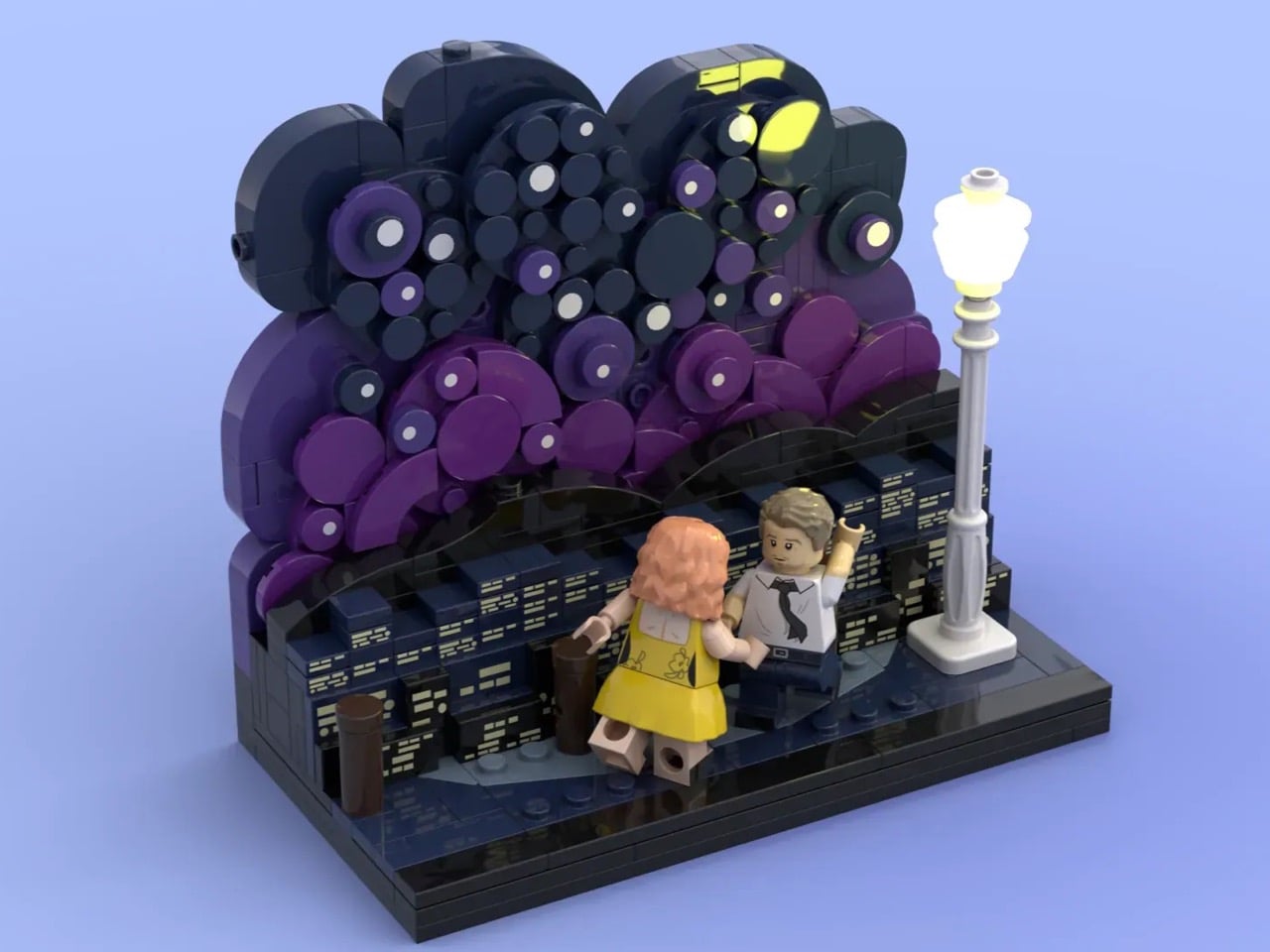
The building technique behind that night sky is a bit of LEGO ingenuity. TesrYer has used round plates and dish elements of varying diameters, packed together in overlapping clusters across multiple shades of dark blue, dark purple, and near-black, to create a backdrop that feels organic and volumetric rather than flat. It reads as clouds, as hills, as a stylized abstract sky all at once, which is exactly the kind of visual ambiguity that Chazelle’s cinematographer Linus Sandgren was doing with light and color on the actual film. My favorite detail, though, is the streetlamp. A single white gas-lamp post rising at the right edge of the composition, its globe rendered in translucent white bricks, warm and slightly luminous. It anchors the whole scene the way a key light anchors a stage, and without it the diorama would lose half its atmosphere.
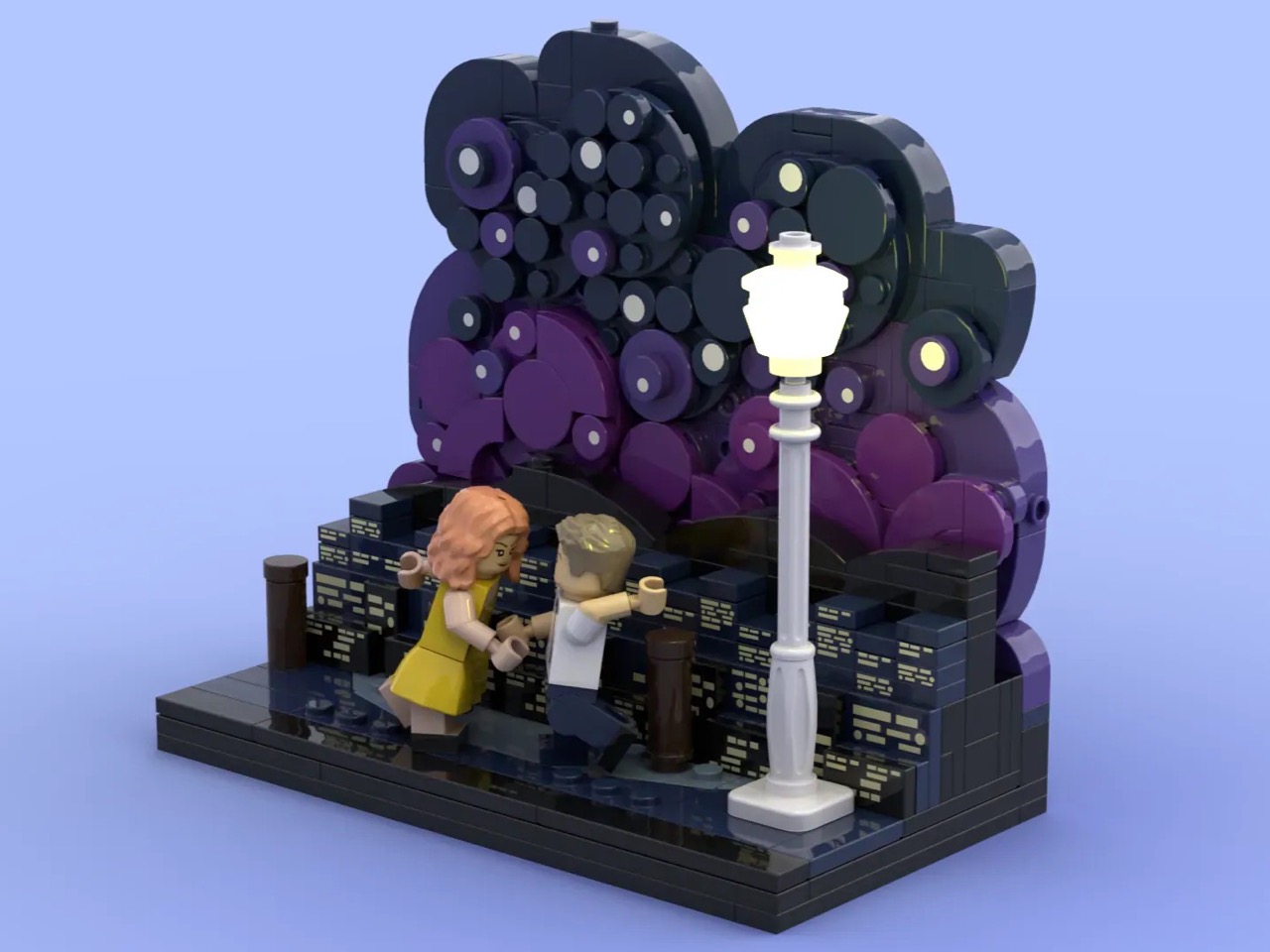
The minifigures are pitch-perfect. Mia arrives in her yellow dress, printed with the small floral detail visible in the film, while Sebastian stands opposite in his white shirt and black tie, one arm raised mid-movement. Whether his hand is positioned correctly is a matter I will leave between TesrYer and Ryan Gosling.
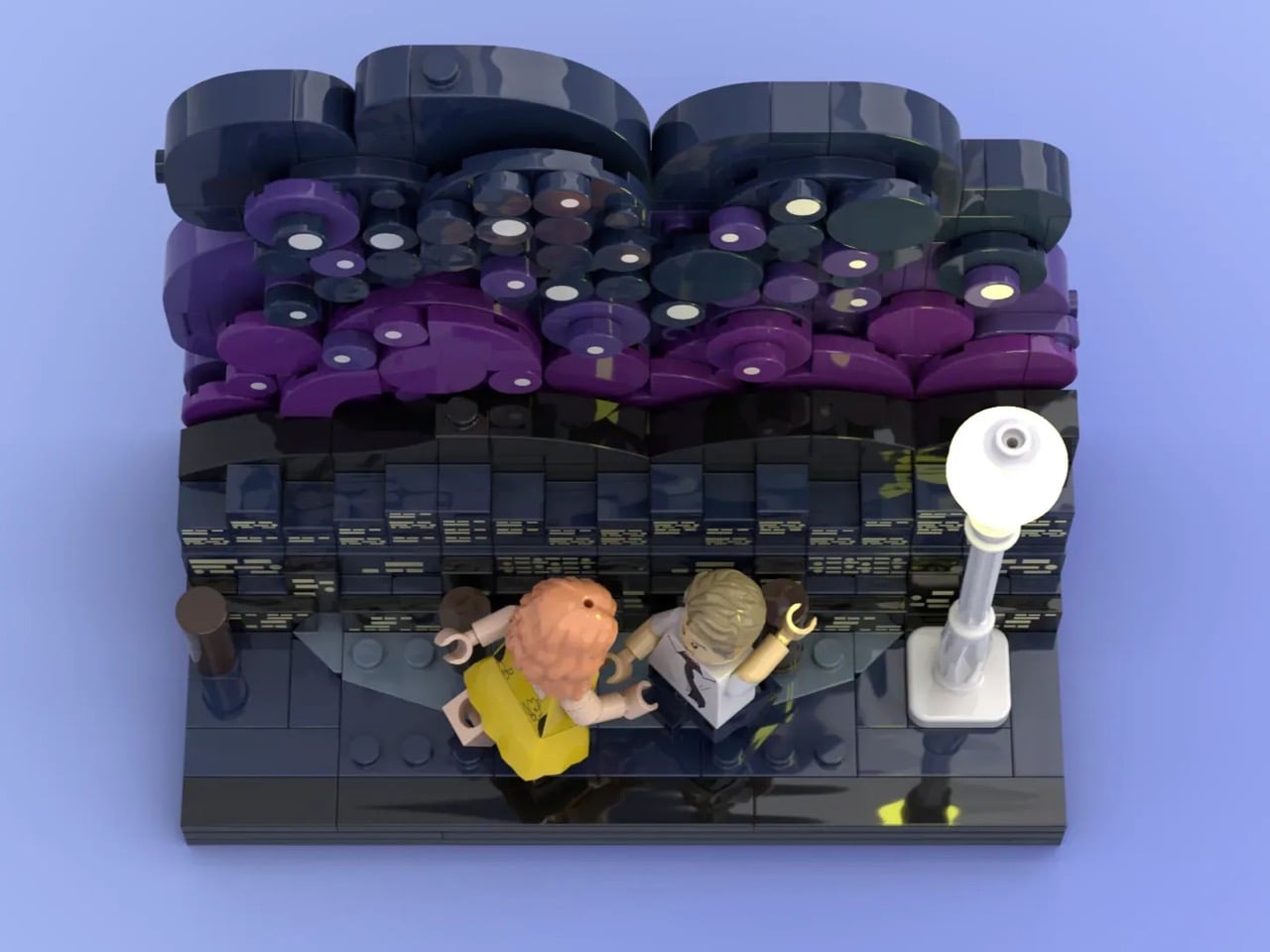
LEGO Ideas is the fan-design platform where community-built MOCs (My Own Creations) gather votes toward the 10,000-supporter threshold required for official LEGO review. TesrYer’s diorama is currently in the early stages of its run, with nearly a 1,000 supporters and 334 days left on the clock. If you want to see this lovely little slice of cinematic nostalgia make it to a box, head to the LEGO Ideas page and cast your vote here.
The post La La Land’s Iconic Poster Gets Its Own LEGO Recreation With Minifigure Ryan Gosling and Emma Stone first appeared on Yanko Design.

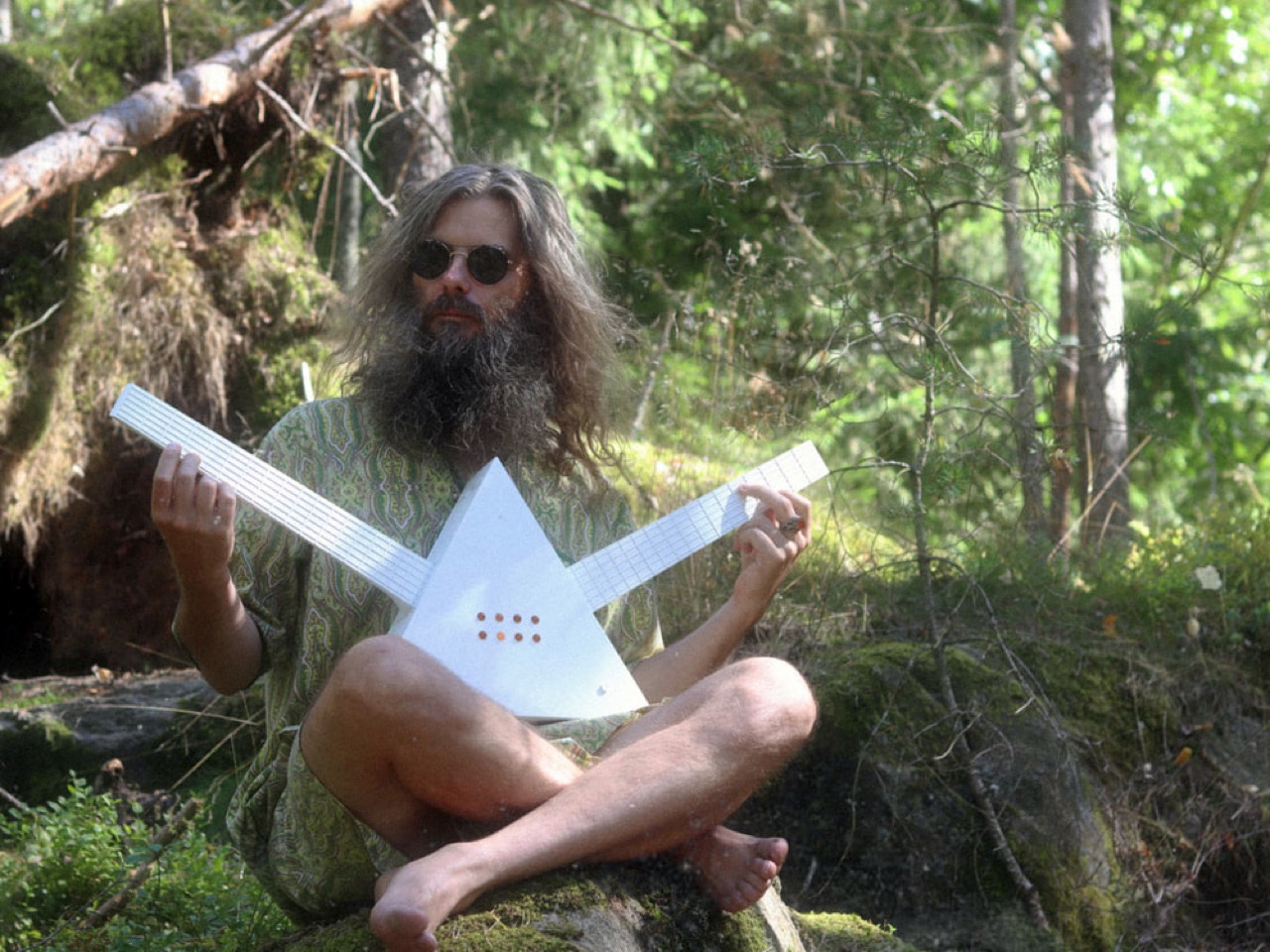
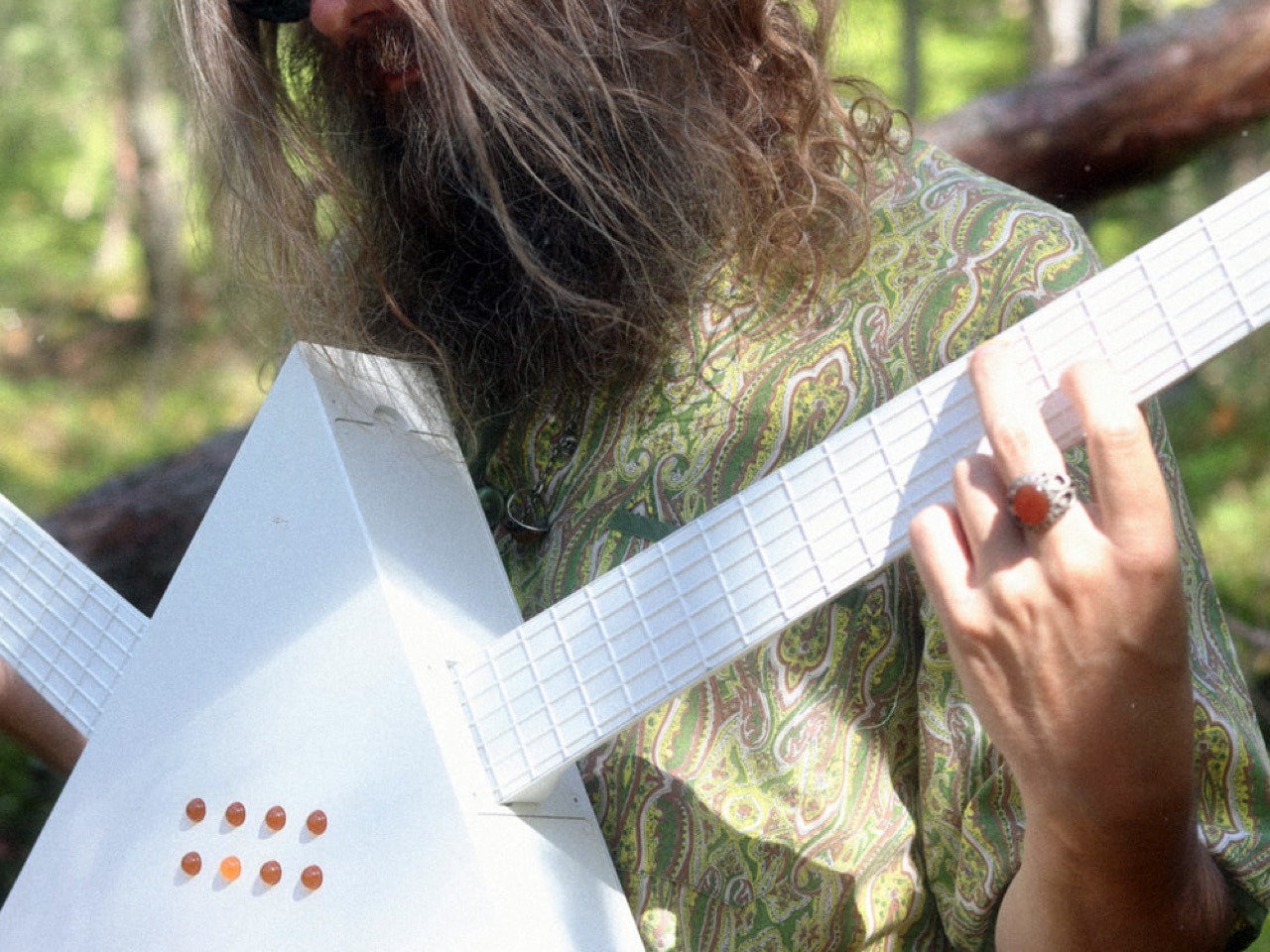
The equilateral triangle is one of the most psychologically loaded forms in Western visual culture. It appears on currency, on occult diagrams, on the cover of the best-selling rock album of all time, and now, with precise white planes and amber jewel controls, on the body of a custom synthesizer guitar made by Swedish instrument designer Love Hultén. The Magicos-2, unveiled in late 2025, carries that shape with full awareness of its freight. Hultén has built Darth Vader synths, bonsai MIDI sculptures, NES-inspired keyboards, and a circular Game Boy for clients over the years, and we have covered the lot of them here at YD. Each one takes a form that feels conceptually wrong for an instrument and makes it feel inevitable. This one takes the prism from The Dark Side of the Moon and turns it into something you can actually play.
Commissioned by a private client and described by Hultén himself as a “triangular oddity born from deranged imagination and psychedelic fandom,” the Magicos-2 is a double-necked instrument housing a 1010music Tangerine module on one arm and a Lemondrop on the other. The detachable base unit, a trapezoidal slab that sits below the main body and separates cleanly for transport, contains the effects chain: Walrus Audio Lore for reverse reverb and ethereal drones, Collision Devices TARs for fuzz and distortion. A rose quartz crystal pyramid sits at the center of that base, lit from within. Hultén calls it the crystalline emitter, and at this point, questioning the nomenclature feels beside the point.
Designer: Love Hultén
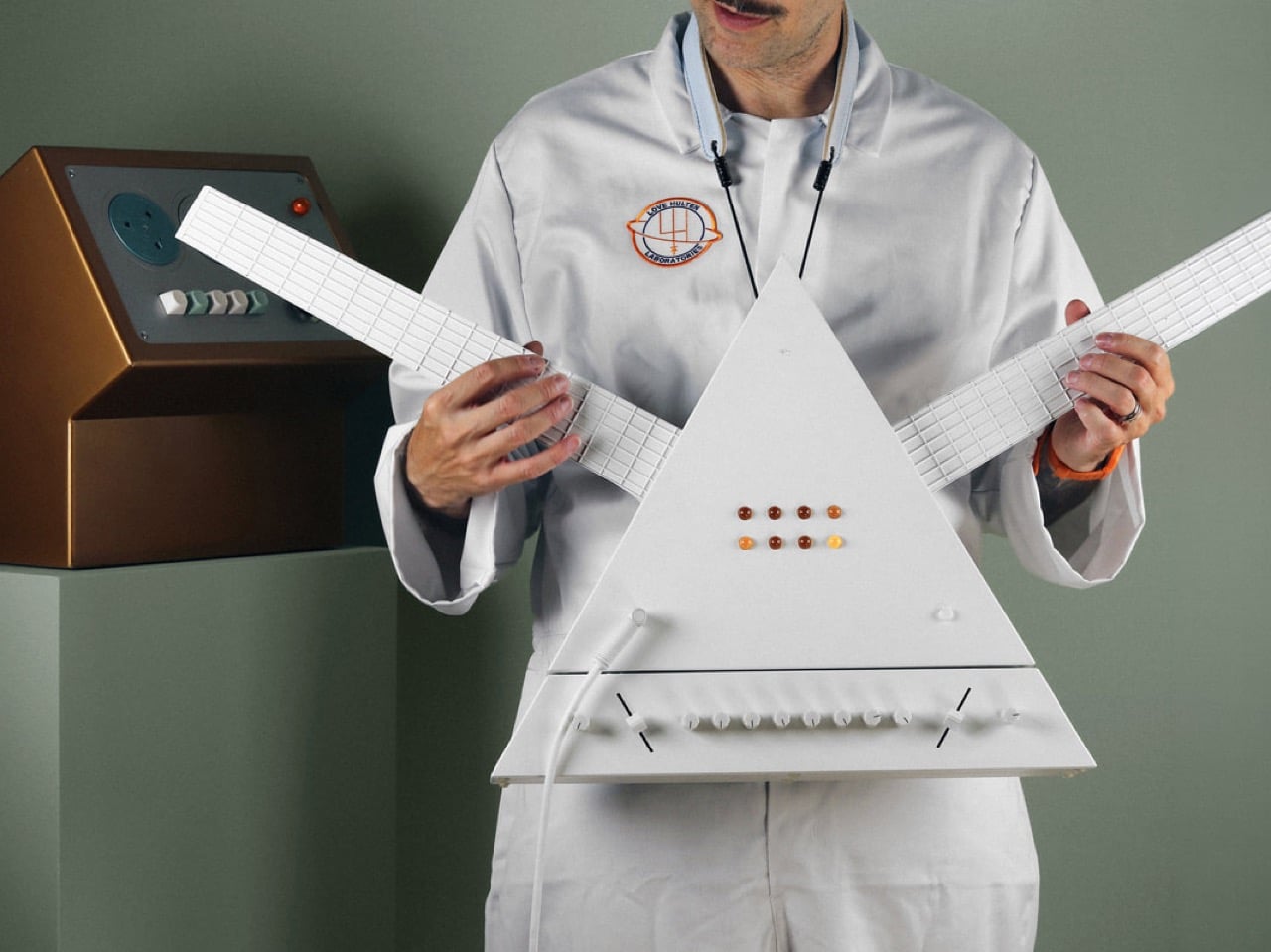
Alexis Mardas, better known as Magic Alex, was the Beatles’ in-house electronics wizard during the Apple Corps years, a man who promised John Lennon wallpaper that played music, a force field for the house, and an amplifier that would go to a million. Almost none of it worked. What he left behind was the irresistible idea of a device that operates somewhere between real technology and pure mythology, an object whose presence in a room changes the room’s frequency before it ever produces a sound. Hultén name-drops Mardas directly in the Magicos-2’s description, and the invocation lands. This instrument carries that same energy: technically rigorous, visually hallucinatory, and spiritually somewhere between a laboratory prototype and a sacred relic.
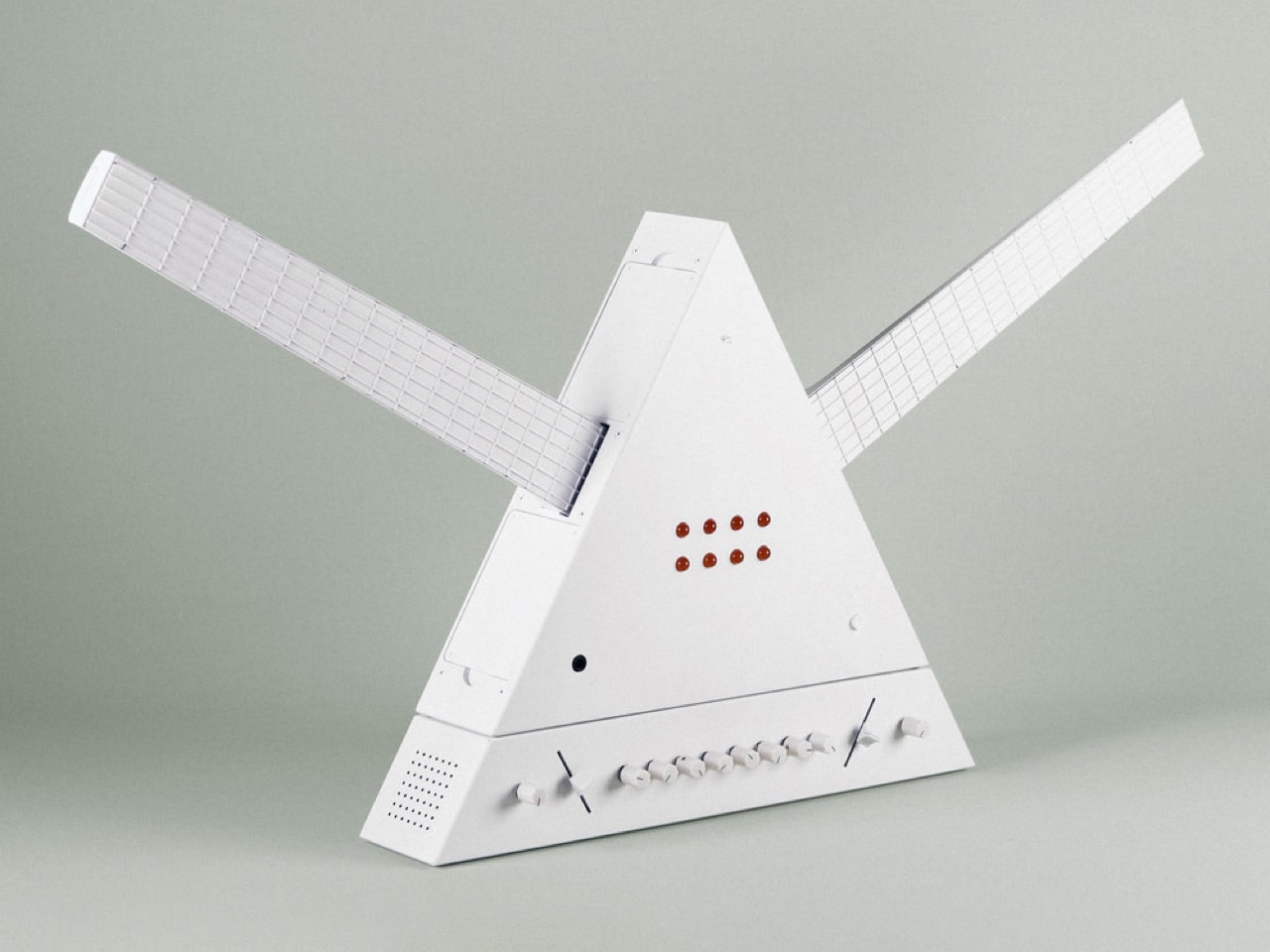
The Tangerine and Lemondrop, both 1010music modules, sit one per neck, each a dense and malleable synthesis engine with its own voice and parameter set. Having two discrete sound sources mounted symmetrically on the triangular body means the player can run parallel sonic worlds simultaneously, layering Mellotron-style string leads against drones, or pushing both into the Lore’s reverse reverb to create the kind of sustained wash that makes people stop and stare at the ceiling. The fretboard grids running along each white arm read visually as pure geometry, equal parts instrument neck and architectural elevation drawing. Two necks, two engines, one triangular chassis: the form follows the function with a directness that most instrument designers would kill for.
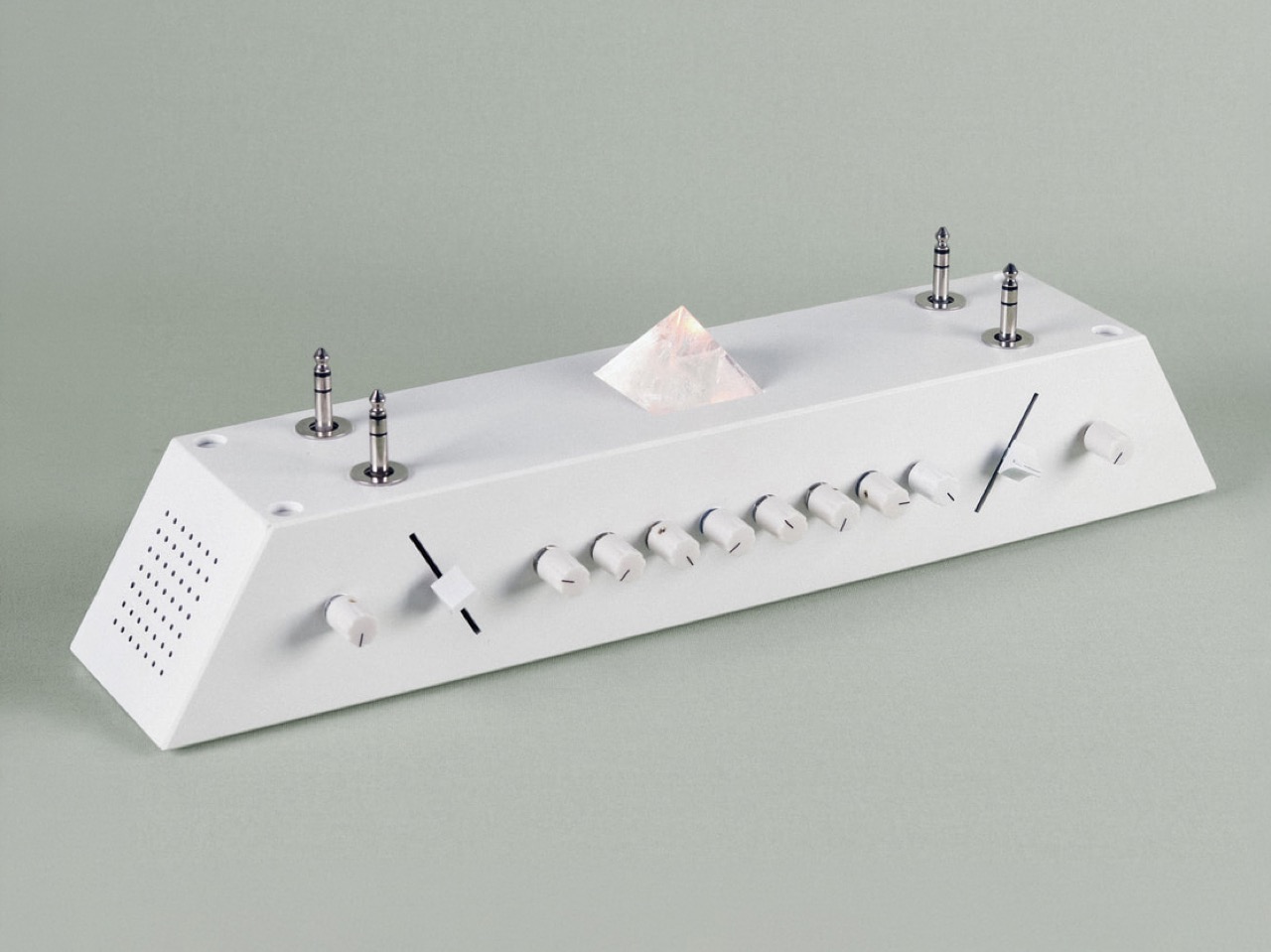
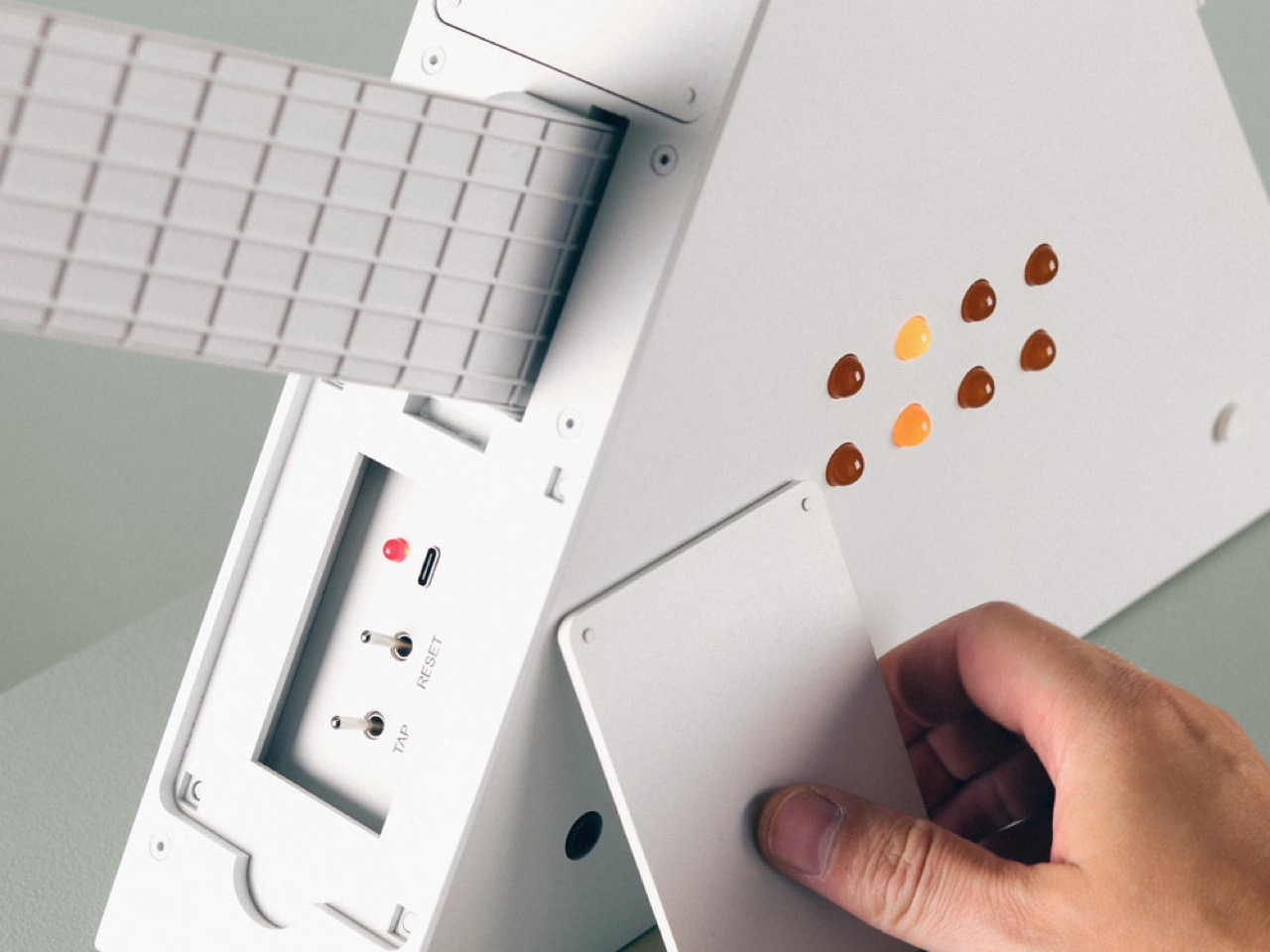
Walrus Audio’s Lore pedal handles the reverse delay and ethereal glow, celebrated among ambient and drone players for its ability to turn almost any input into a sustained, backward-breathing atmosphere. Collision Devices’ TARs sits alongside it, adding the fuzz and harmonic density that filters the whole signal into what Hultén memorably describes as a carpet of sonic moss. The base connects to the triangular body via a clean physical joint visible as a horizontal seam in the silhouette, detaching entirely for transport or for reconfiguring the signal chain. That modularity reinforces the instrument’s identity as a system rather than a single object, which matters practically when you are carrying something shaped like a pyramid to a gig.
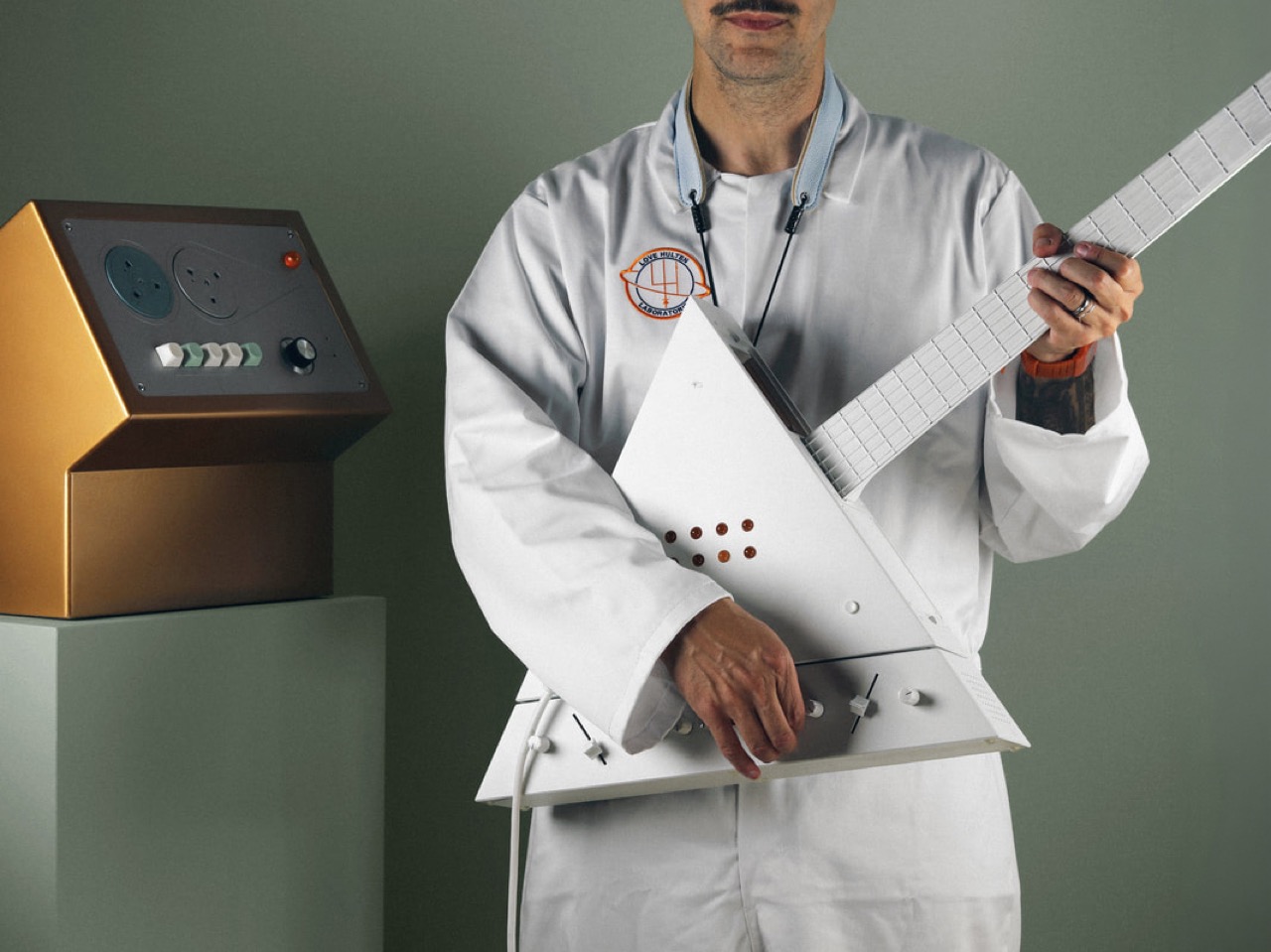
The nine amber teardrop controls embedded in the triangular face, warm brown and orange against the flat white surface, are the one moment of color in the whole instrument, and they carry the weight of that responsibility well. They read like something between a control panel and a constellation. The crystal pyramid in the base glows softly beneath them. The chakras, per Hultén, are aligned. I believe him.
The post Love Hultén Built a Pink Floyd Prism Guitar You Can Actually Play first appeared on Yanko Design.
The midsize truck and off-road SUV segment is the most brand-loyal territory in the American automotive market. Bronco buyers bleed blue oval. Wrangler owners have a hand wave. Fourth-generation 4Runner devotees treat the truck’s stubborn resistance to modernity as a feature. Breaking into that world requires something that goes beyond competitive specs, because specs are table stakes and loyalty is emotional. Hyundai has spent forty years earning American trust one rational purchase at a time, and with the Boulder Concept, the brand is making its first bet on something less rational: the idea that a Korean automaker can build an object with genuine off-road soul.
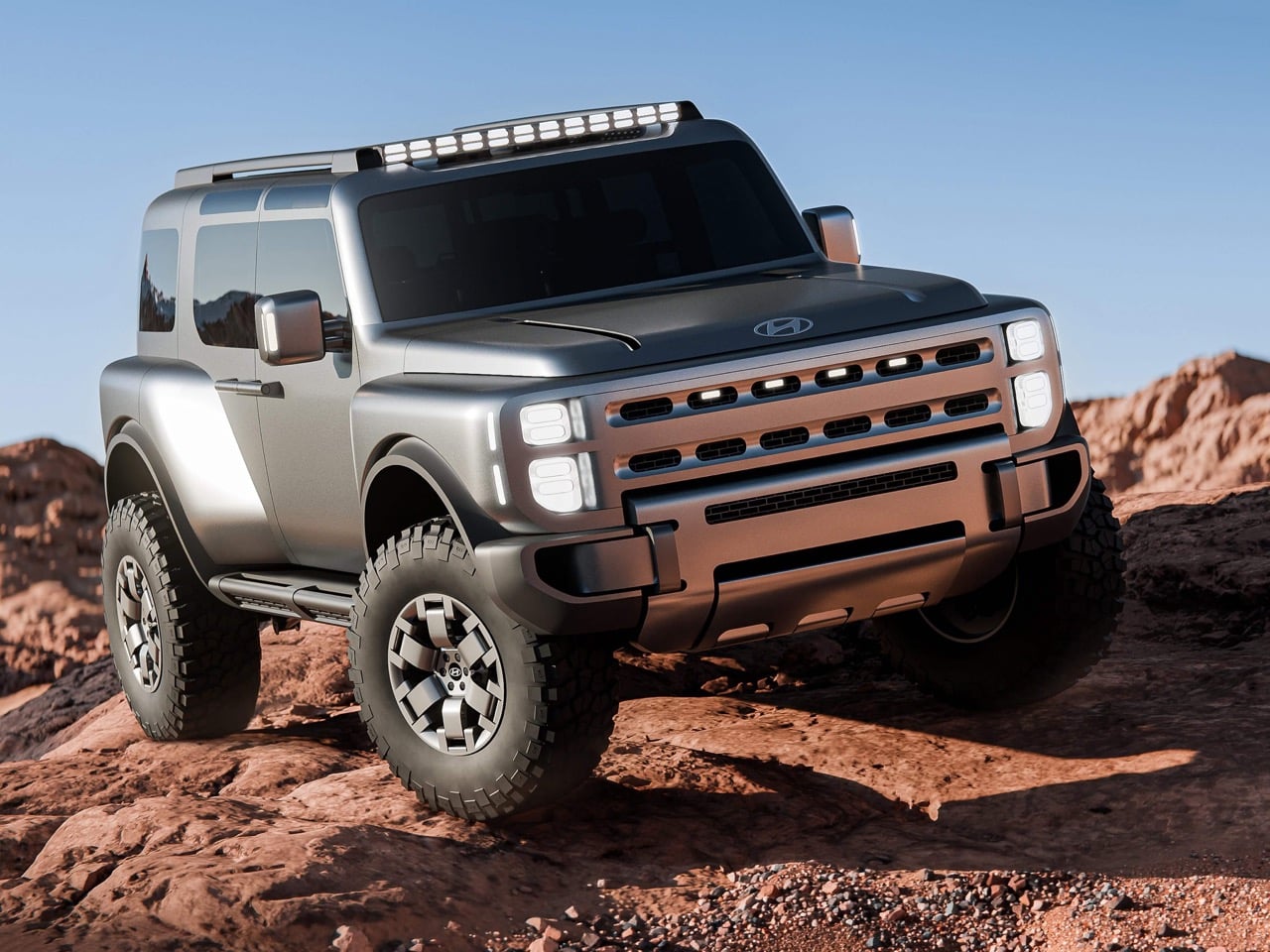
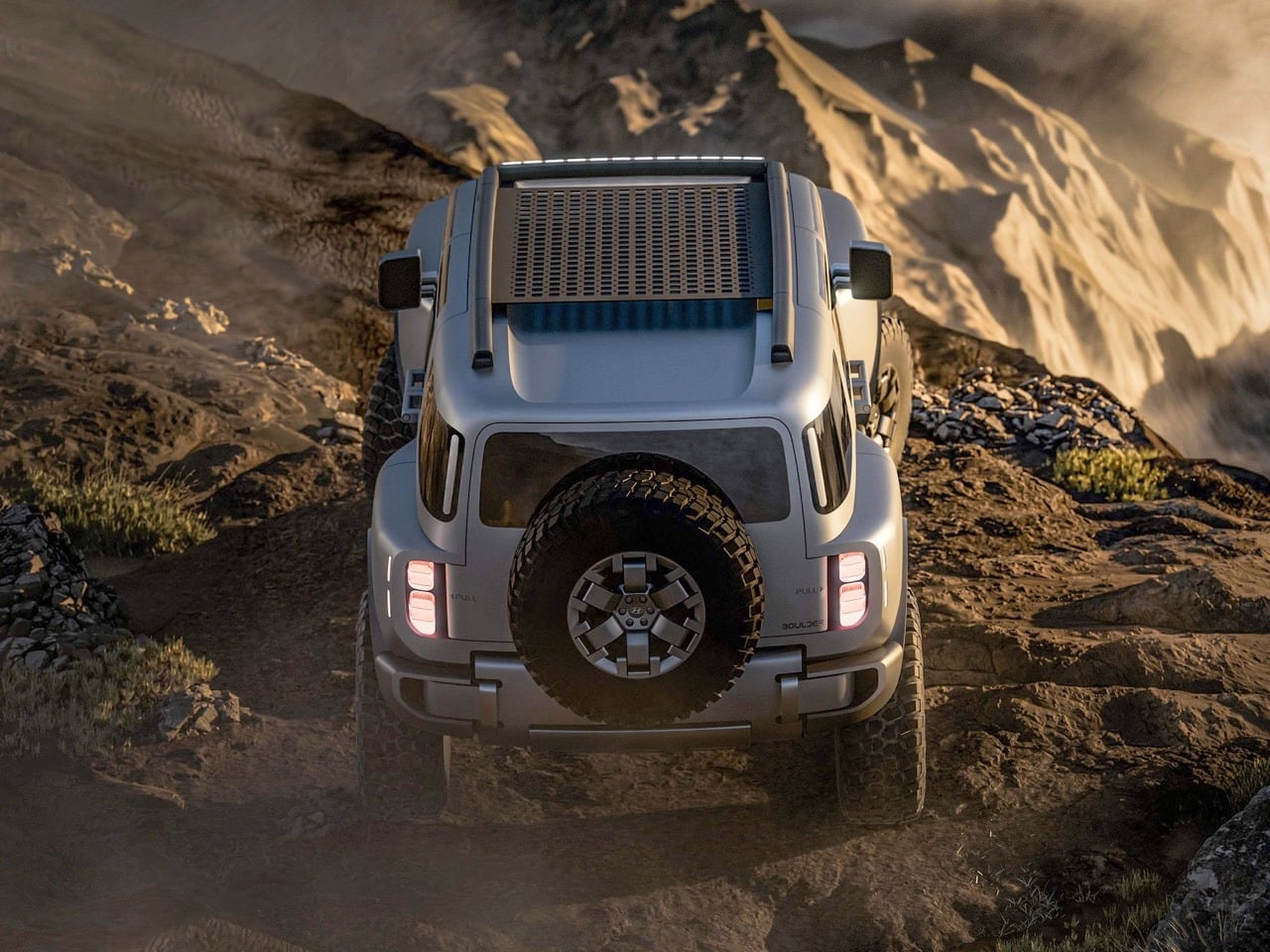
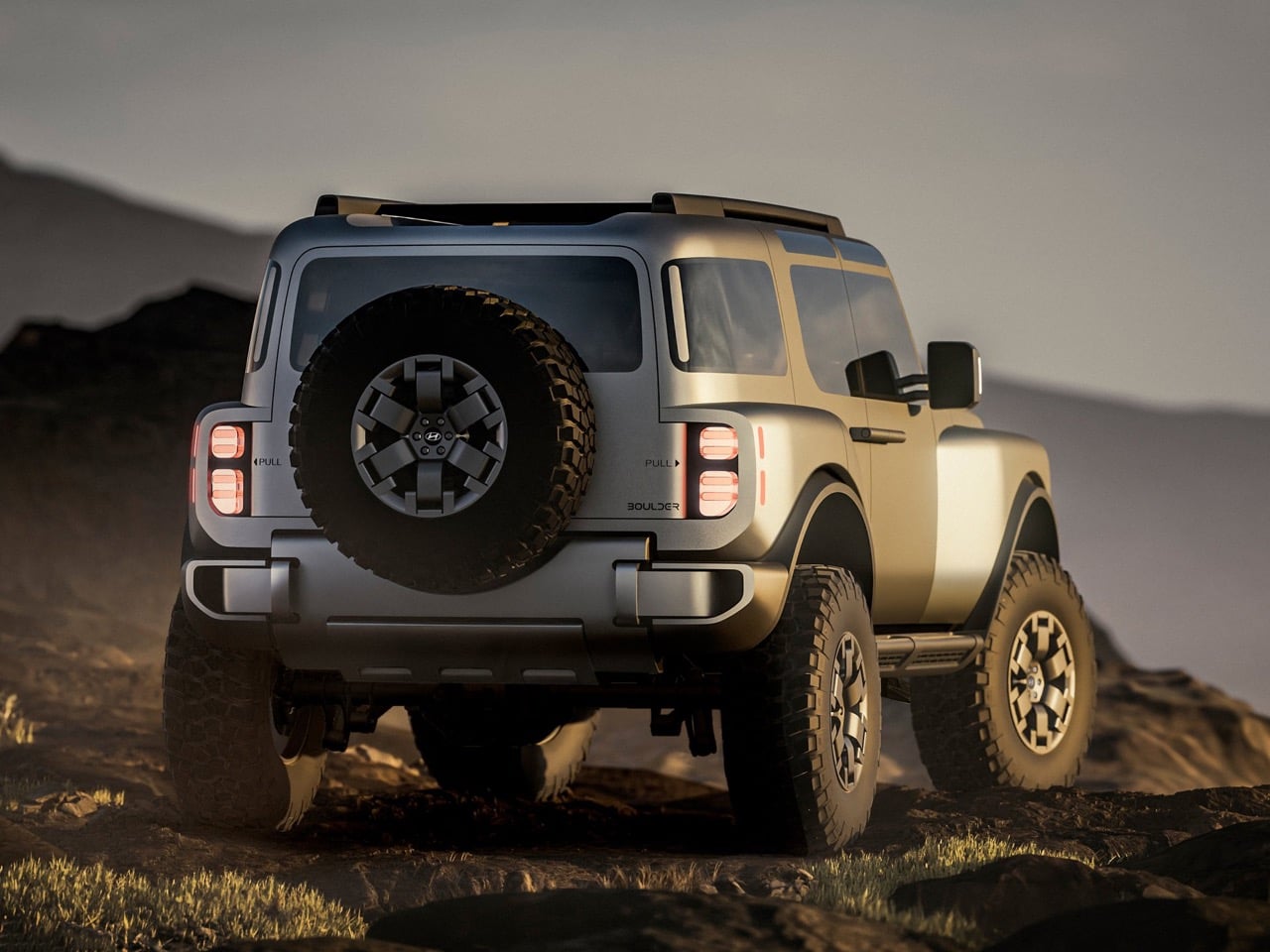
The Boulder debuted as a surprise at the 2026 New York International Auto Show, carrying Hyundai’s first fully-boxed ladder-frame platform and a confirmed production midsize pickup by 2030 as its subtext. The design language is “Art of Steel,” a philosophy connecting the Southern California design team’s decisions directly to the material science of Hyundai’s own steel division. The concept wears 37-inch mud-terrain tires, coach-style rear doors, dual safari windows, and a double-hinged tailgate across a Liquid Titanium body that looks less like a design study and more like a declaration of intent.
Designer: Hyundai Design North America
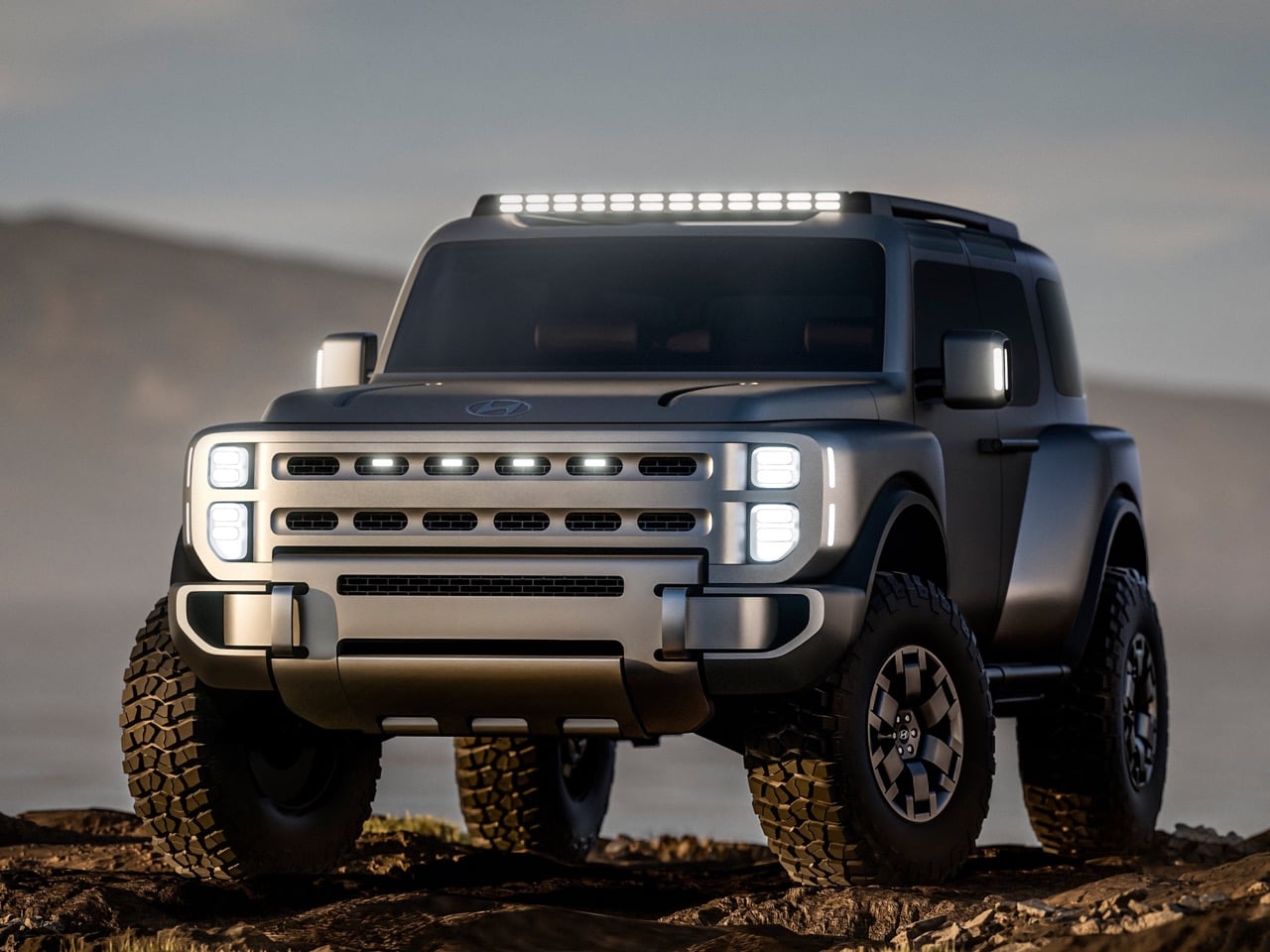
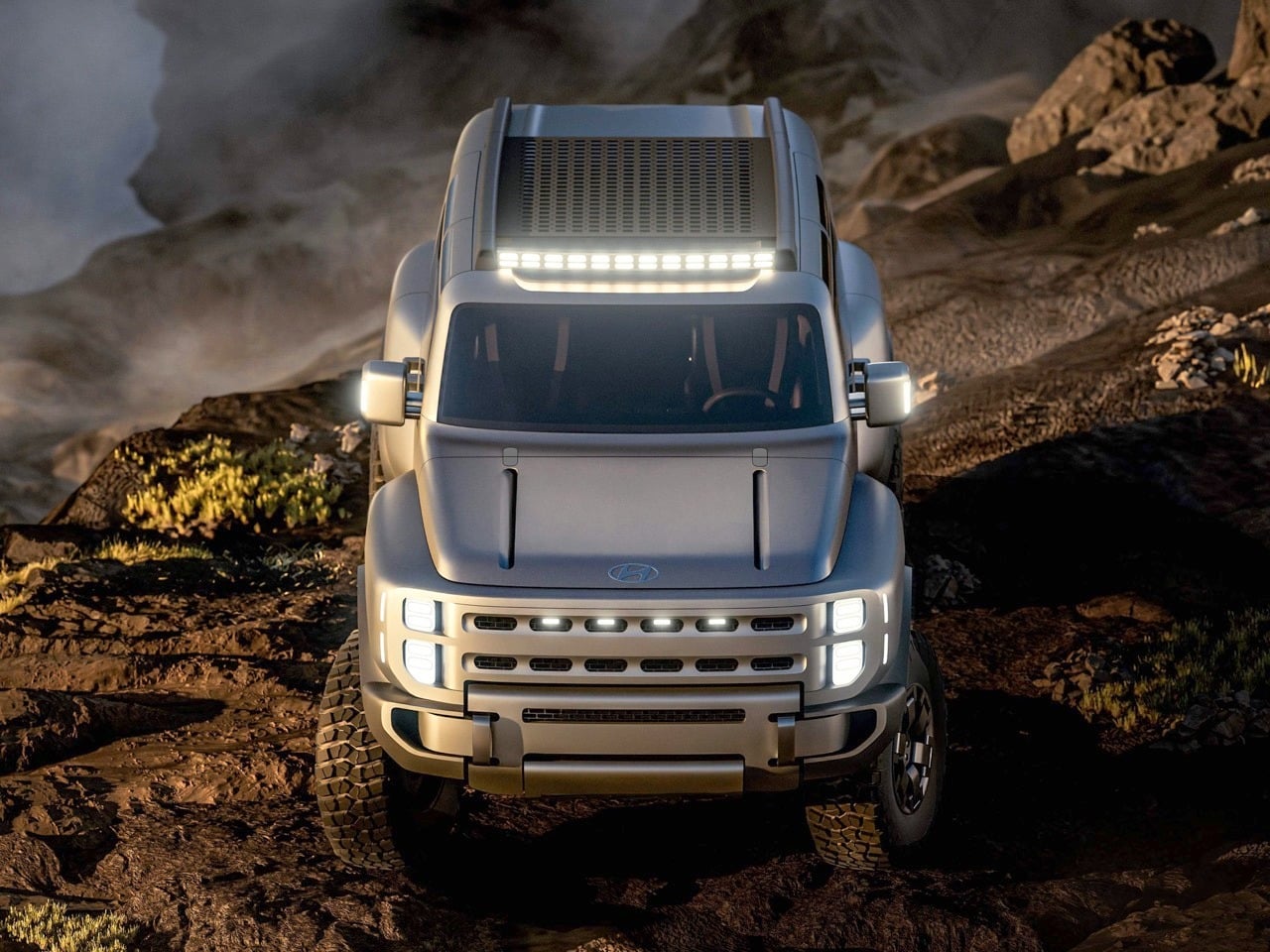
From the front, the Boulder looks like it was designed by someone who spent more time on trails than in trend reports. The headlights are stacked in two rectangular modules, recessed deep into the bodywork so the surrounding steel reads as structure first and styling second. That bronze-toned horizontal slat grille sits between them like the face of something that has already decided it doesn’t need your approval. The hood carries a pronounced power dome, and the roof-mounted light bar integrates into the low-profile rack with steel webbing between the rails rather than getting bolted on as an afterthought. Design chief SangYup Lee described the approach as one that “celebrates the gaps,” treating the deliberate negative space between panels as a feature that exposes the construction logic rather than disguising it beneath flowing bodywork. Every recess, every shadow line, every recessed lamp housing is doing exactly that.
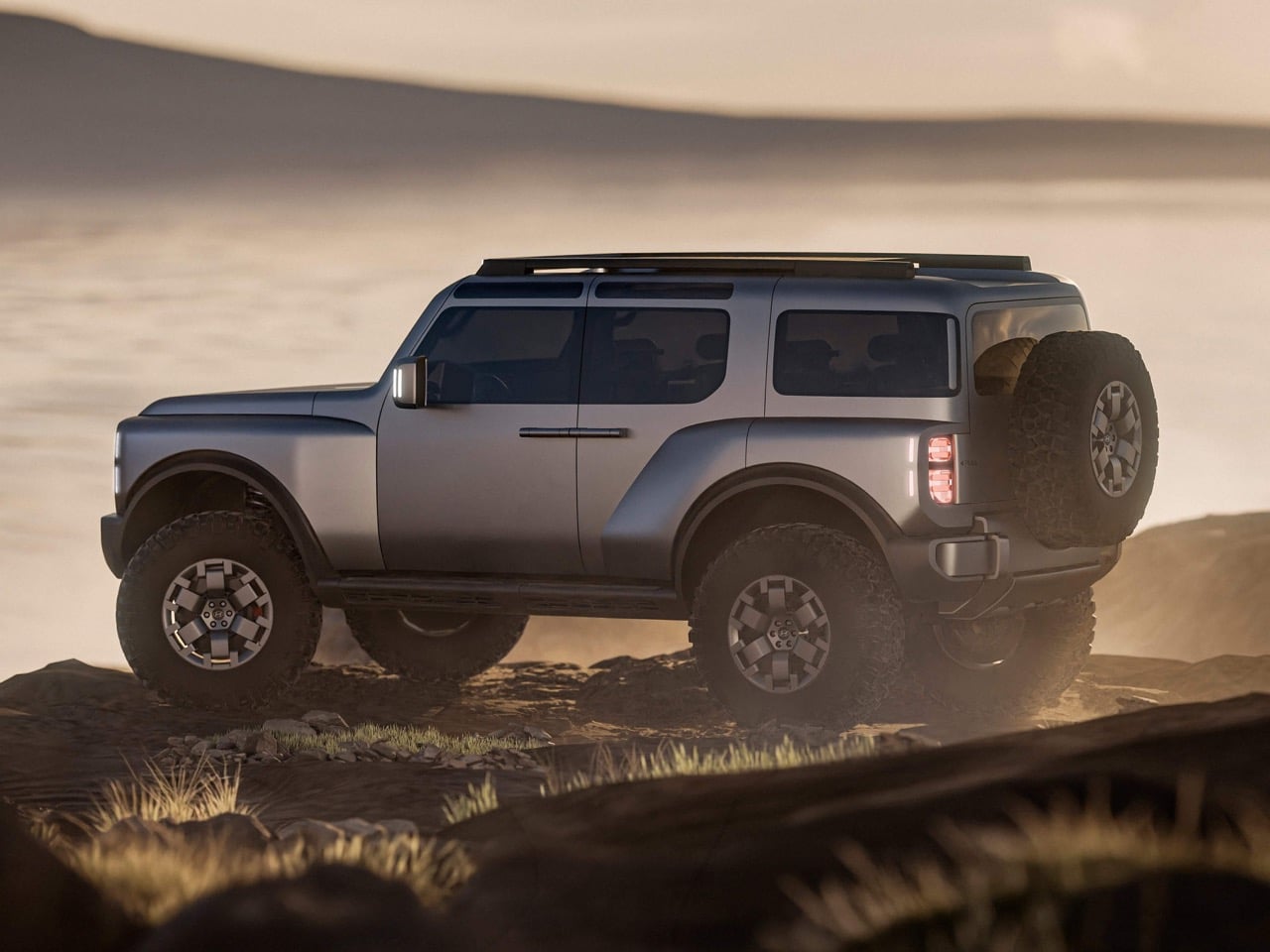
The side profile is where the Boulder’s proportions really land. The roofline is ruler-flat, the greenhouse is upright and nearly square, and the body sides are almost completely clean of character lines. Hyundai is generating all the visual mass through wheel arch geometry alone, with those flared cutouts punching hard against the otherwise minimal sheetmetal. Brad Arnold, Head of Hyundai Design North America, framed the whole project around restraint: “It’s a tool for getting to that sunset, to have that experience, not for distracting you from that moment.” That philosophy reads clearly in the silhouette. The short-wheelbase four-door proportion feels closer to a Defender 90 than anything in Hyundai’s current lineup, which is either a coincidence or the most confident piece of product positioning the brand has ever attempted.
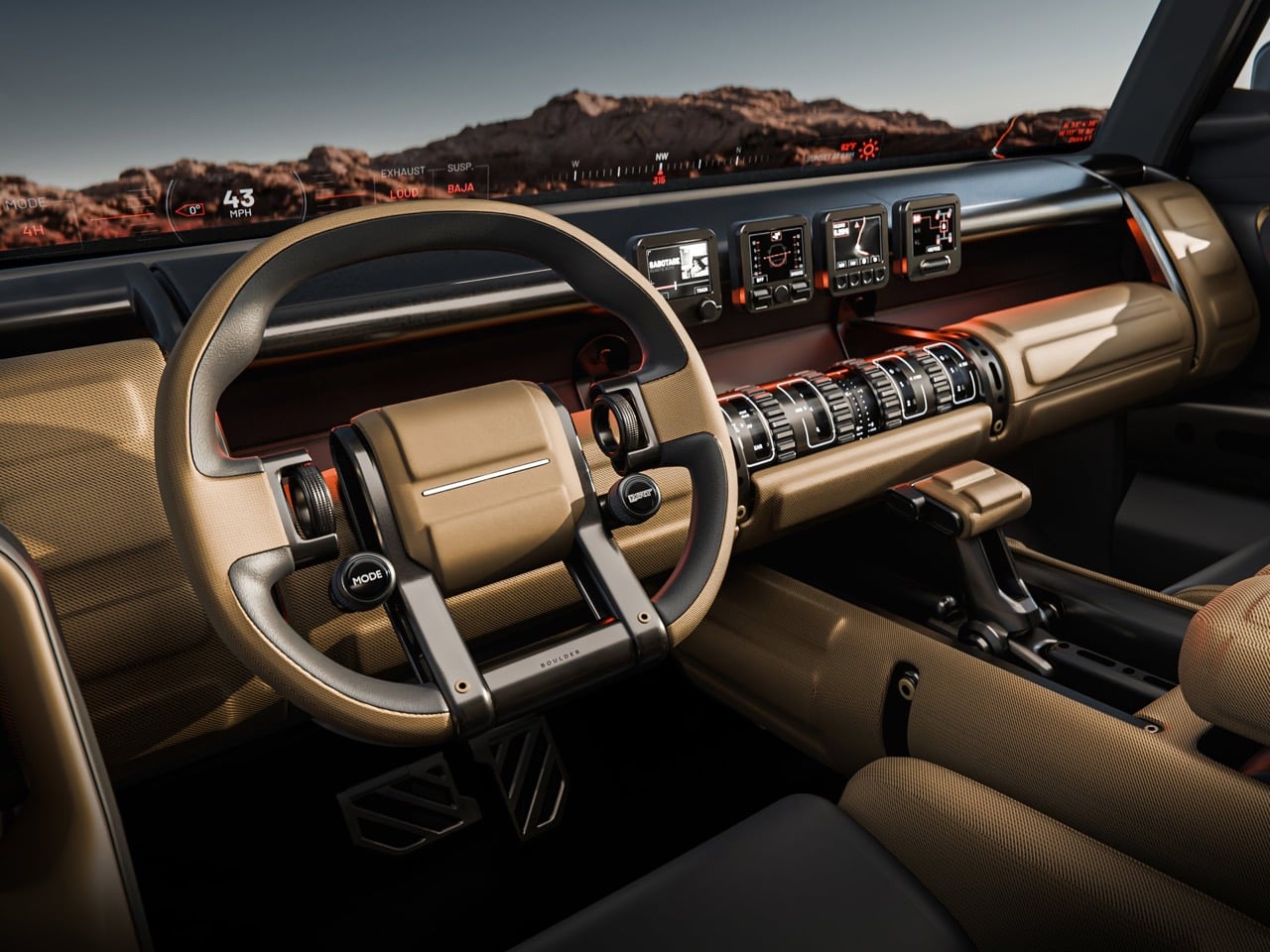
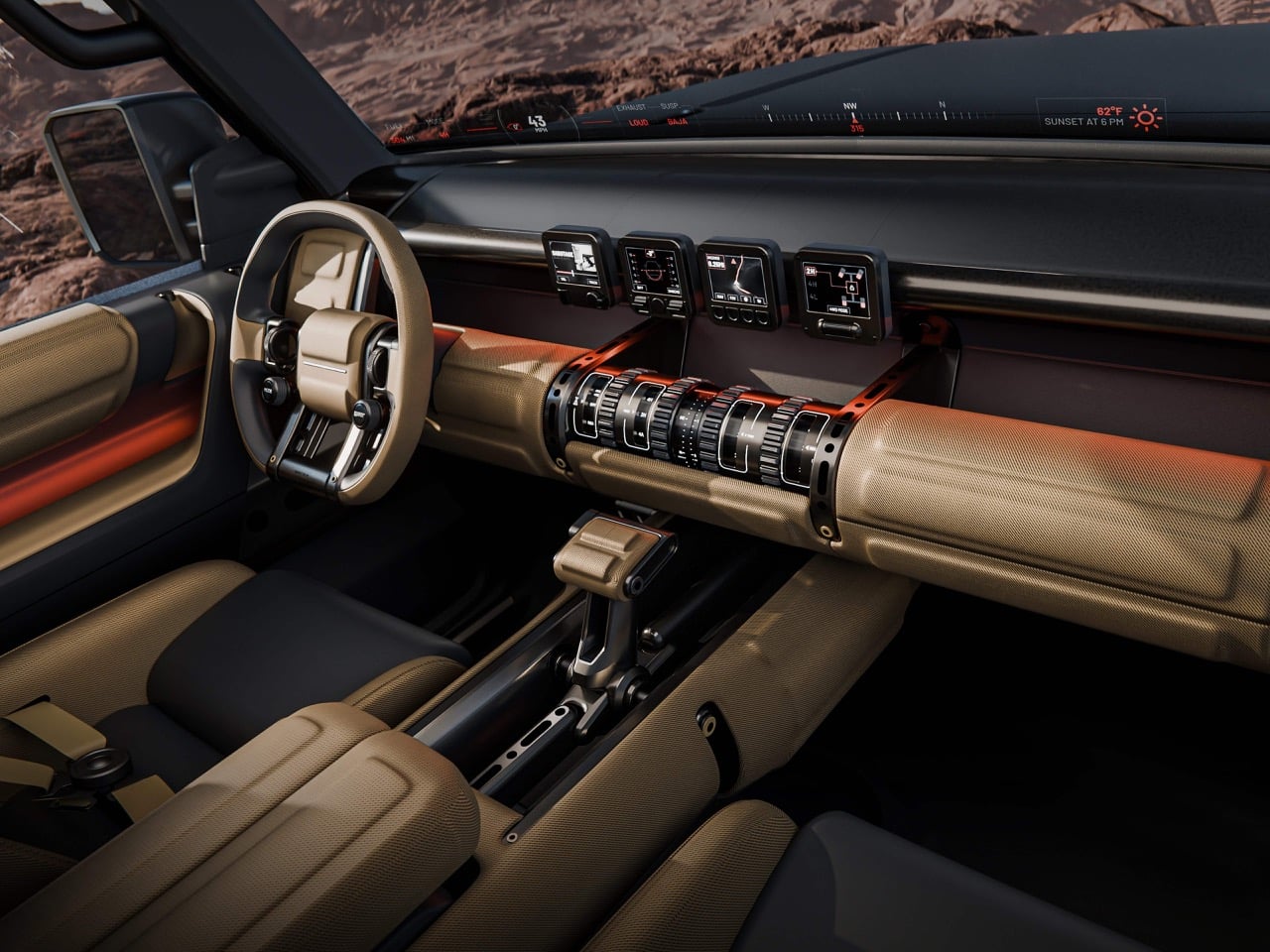
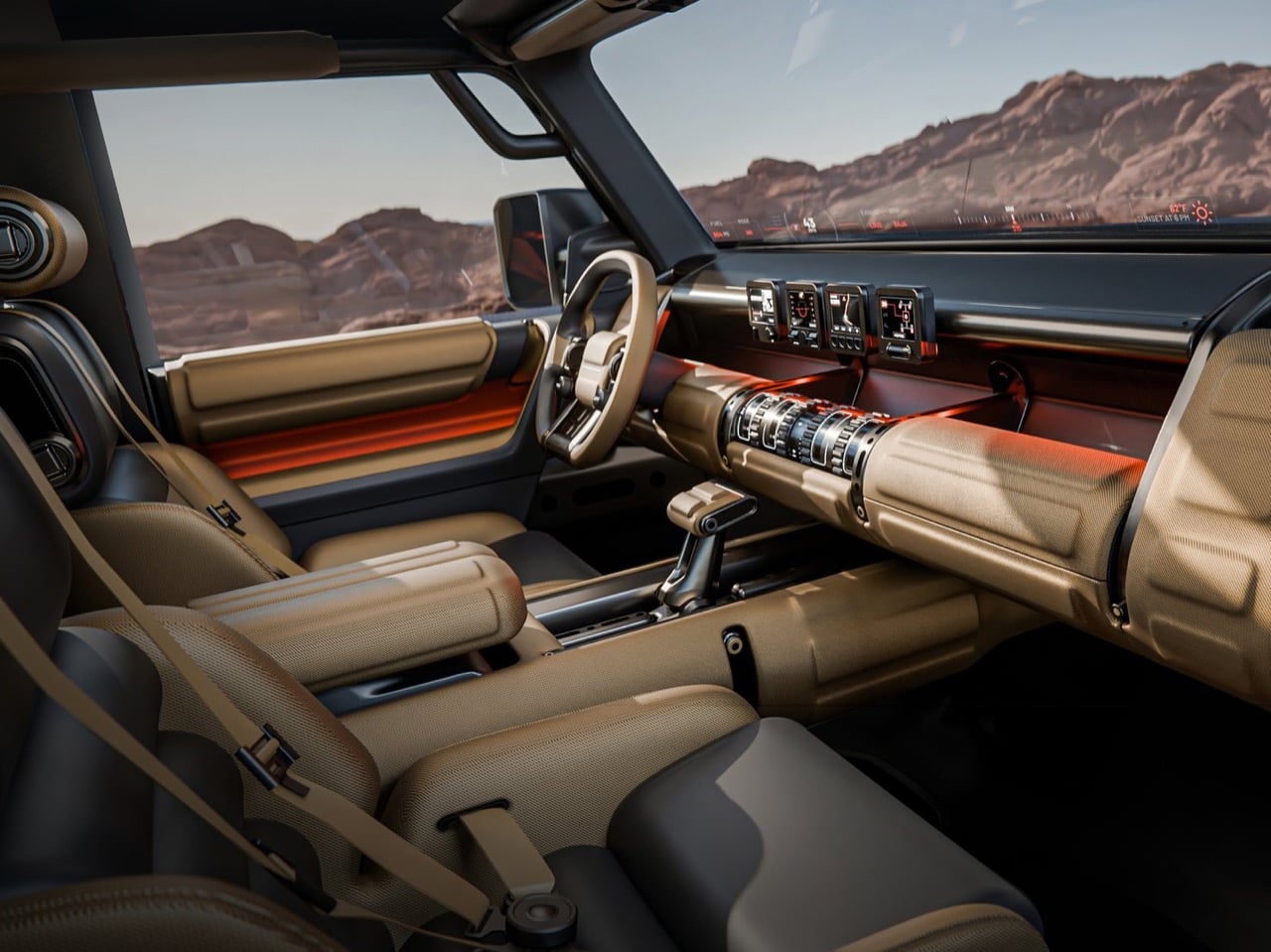
Inside, Hyundai eliminated the conventional instrument cluster and center touchscreen entirely, replacing them with a pillar-to-pillar head-up display integrated across the base of the windshield, complemented by smaller dashboard-mounted screens and a modular “Bring Your Own Device” rail system for customizable digital interfaces. Physical knobs and grab bars handle the high-frequency controls, fold-out tray tables serve field lunches and laptop sessions equally, and a software-driven off-road guidance system acts as what Hyundai calls a digital spotter riding shotgun. The cabin avoids the trap of over-digitization without tipping into retro nostalgia theater. That balance is harder to strike than it looks.
The body-on-frame platform is engineered to accept pure electric, internal combustion, and hybrid configurations, giving Hyundai maximum flexibility to match market conditions when production begins. Industry signals point toward an extended-range electric setup pairing electric drive with a gasoline generator, a configuration that Scout Motors and Ram are both pursuing for similar reasons: EV torque on the rocks, combustion range in the backcountry. No horsepower figures, no confirmed engine lineup, no price. Hyundai is keeping the powertrain conversation deliberately vague, and given that production is four years out, that restraint is as strategic as it is honest.
The Boulder arrives backed by an $18.4 billion US manufacturing commitment, with the production truck confirmed to be designed and built in America. That context matters for a brand entering a segment where provenance and identity carry weight that no press release can manufacture. The Wrangler’s tribal loyalty was built over decades and through genuine capability. Hyundai knows the Boulder has to earn that the same way, one trail at a time. If the production truck keeps even half of this concept’s architectural confidence and design clarity, that process has a very credible starting point.
The post 37-Inch Tires, Body-On-Frame, No Touchscreen: Hyundai’s Boulder Concept Should Make Jeep Nervous first appeared on Yanko Design.