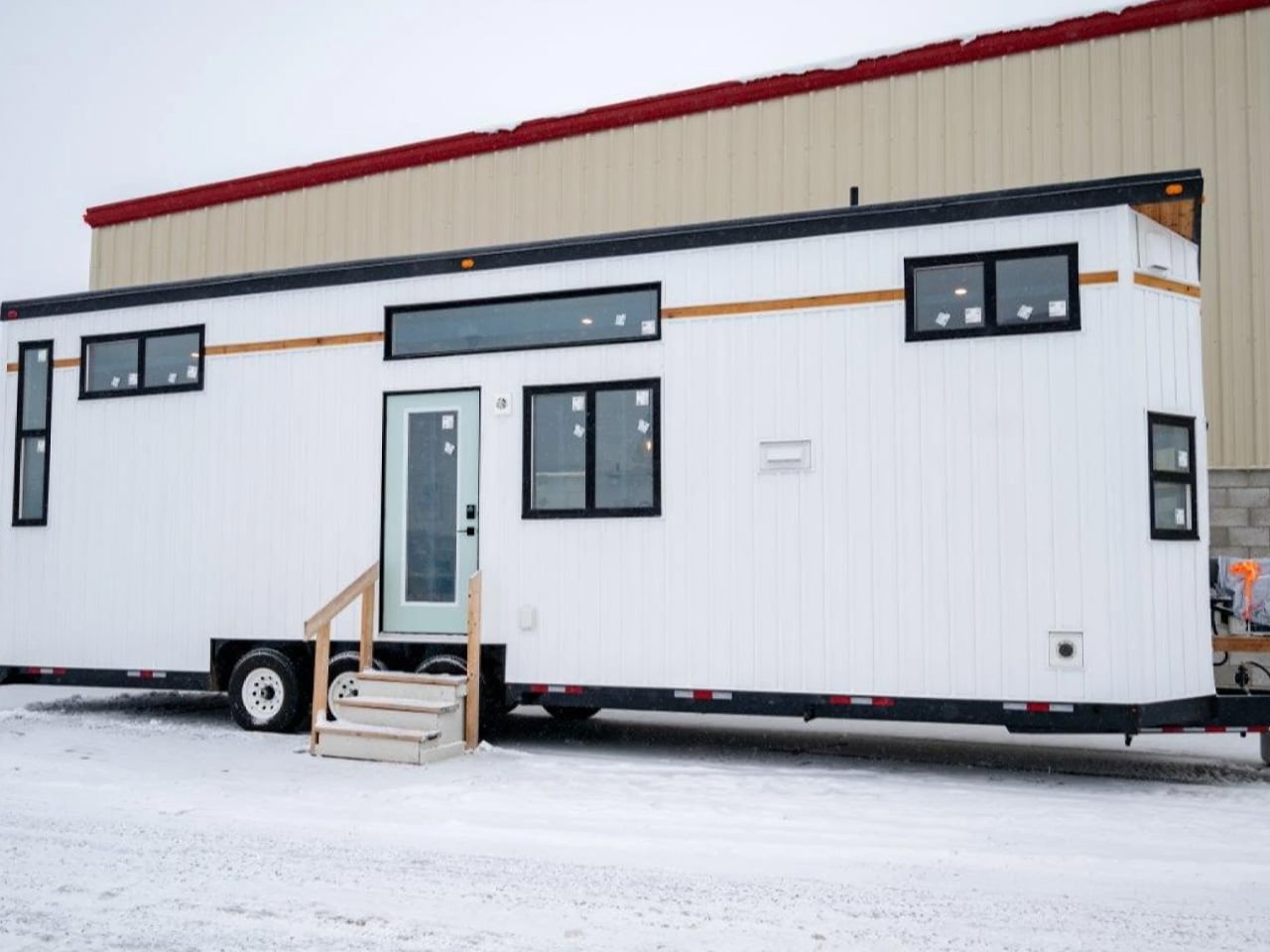
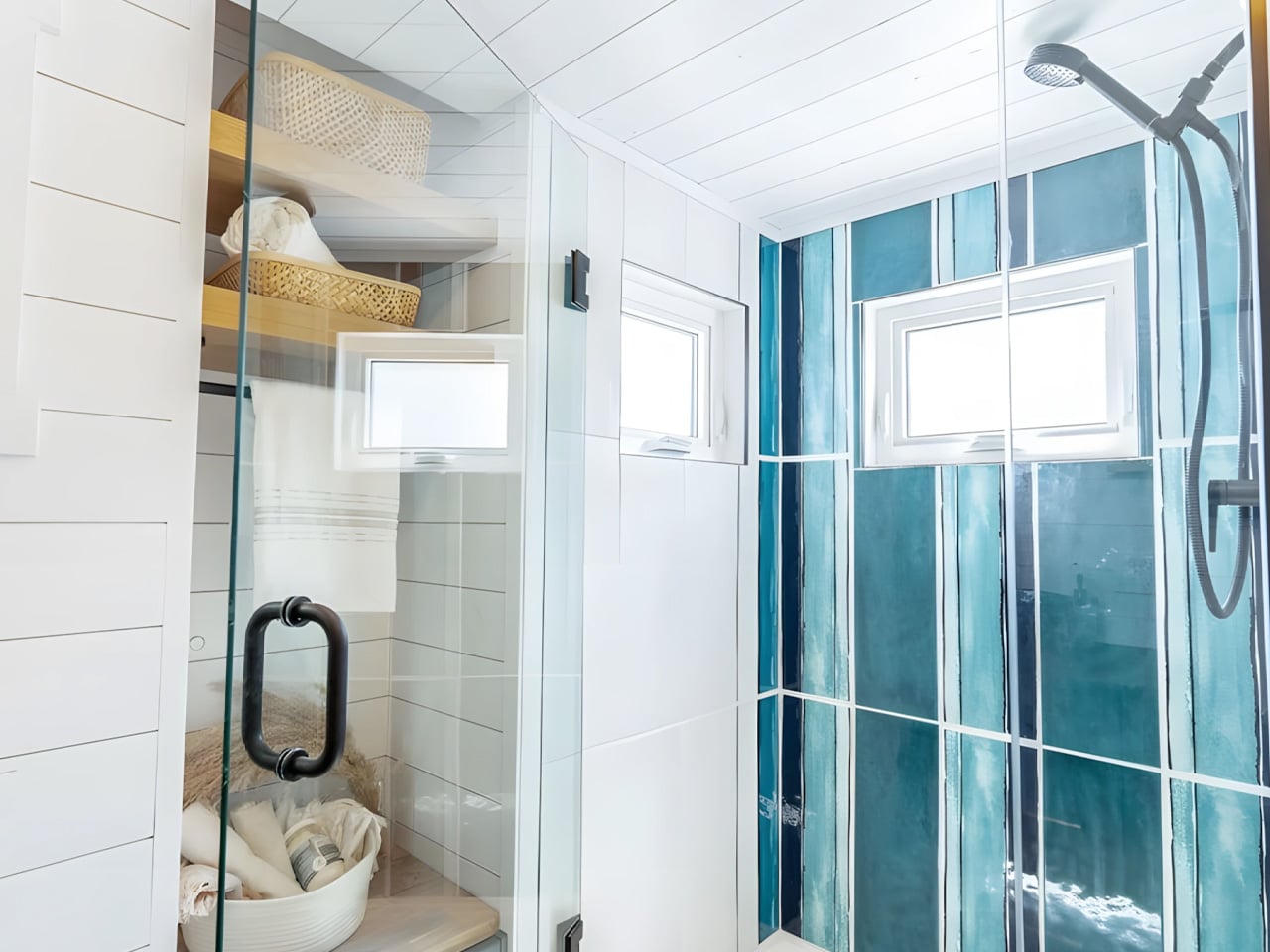
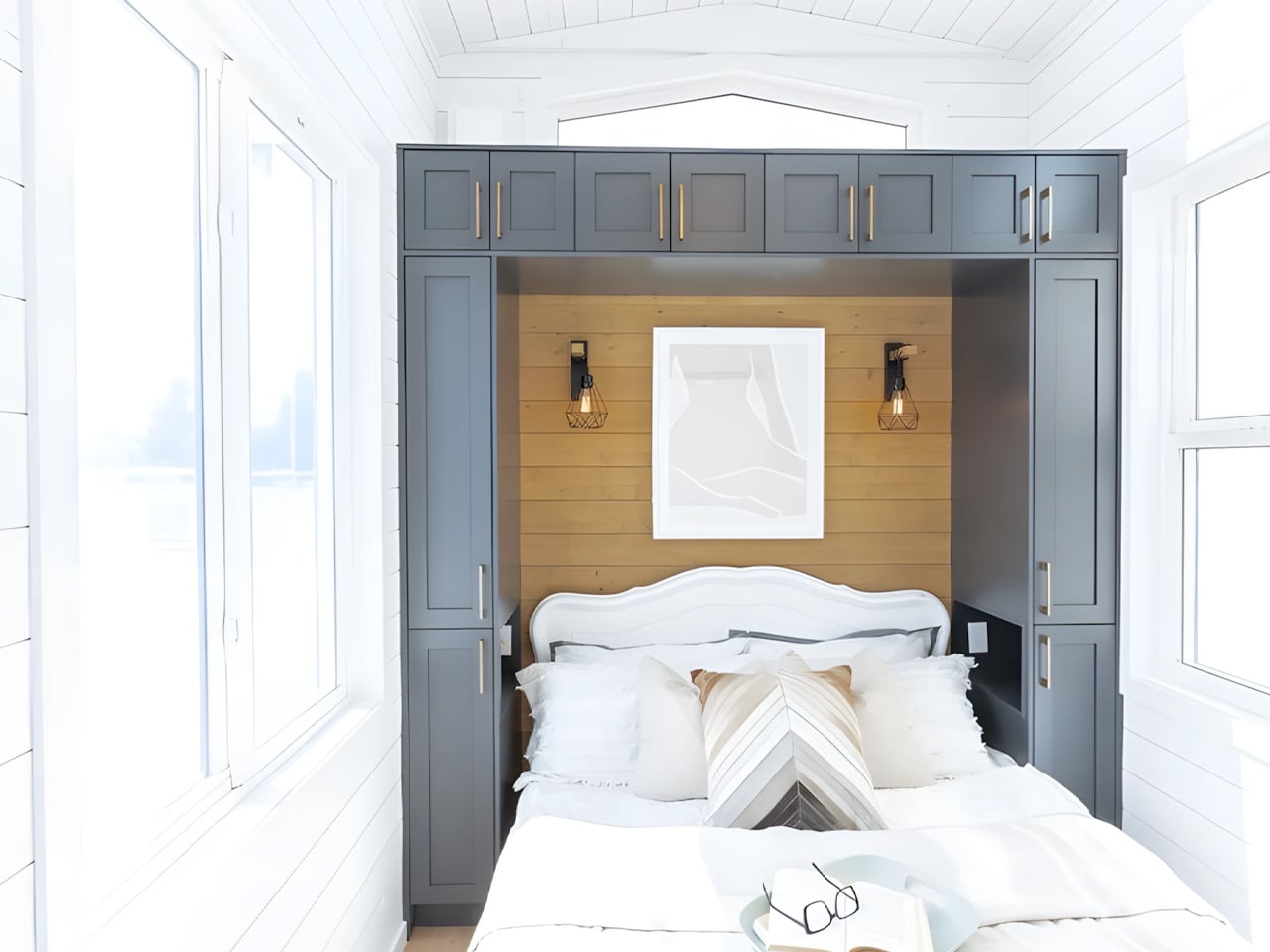
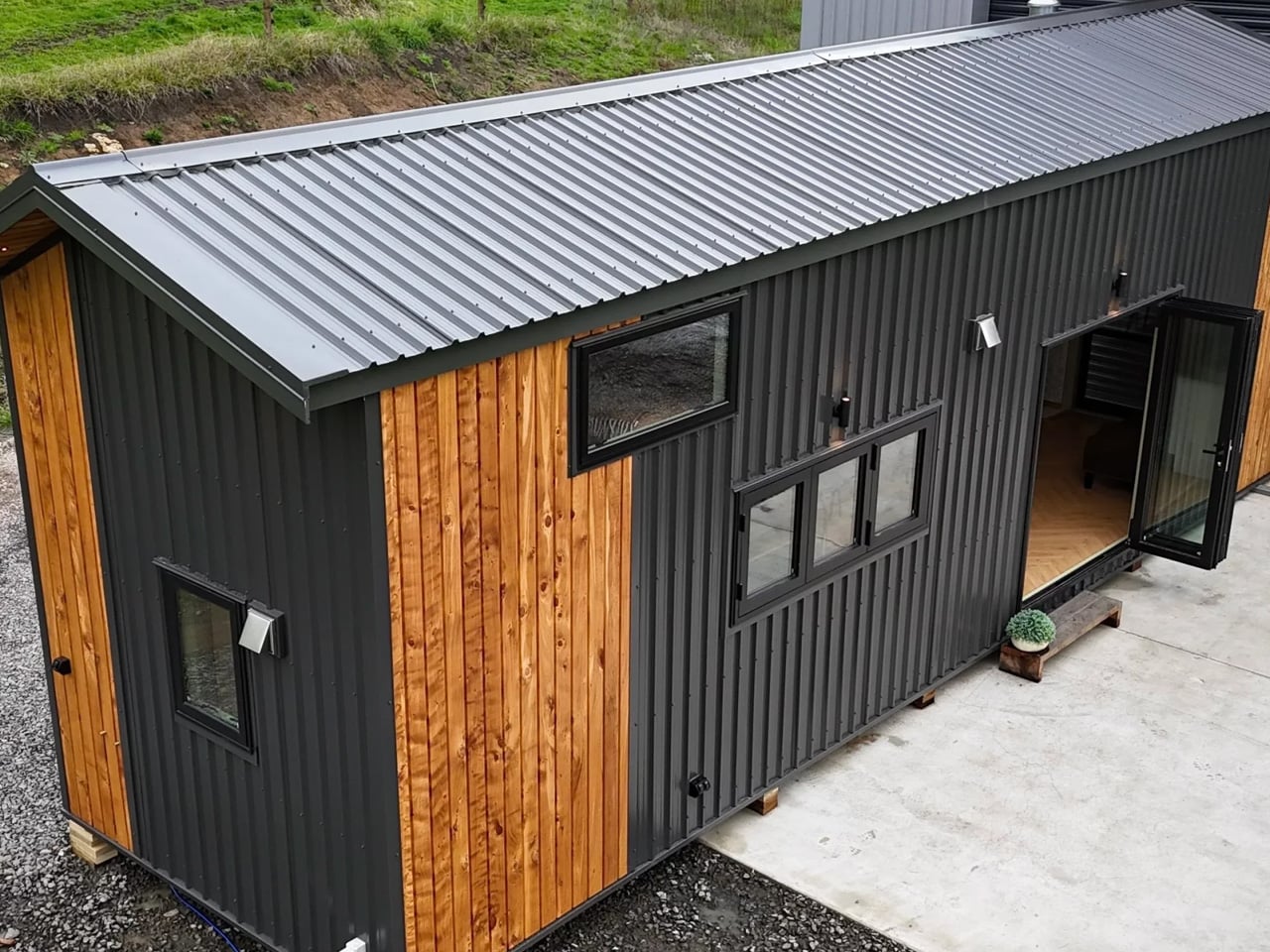
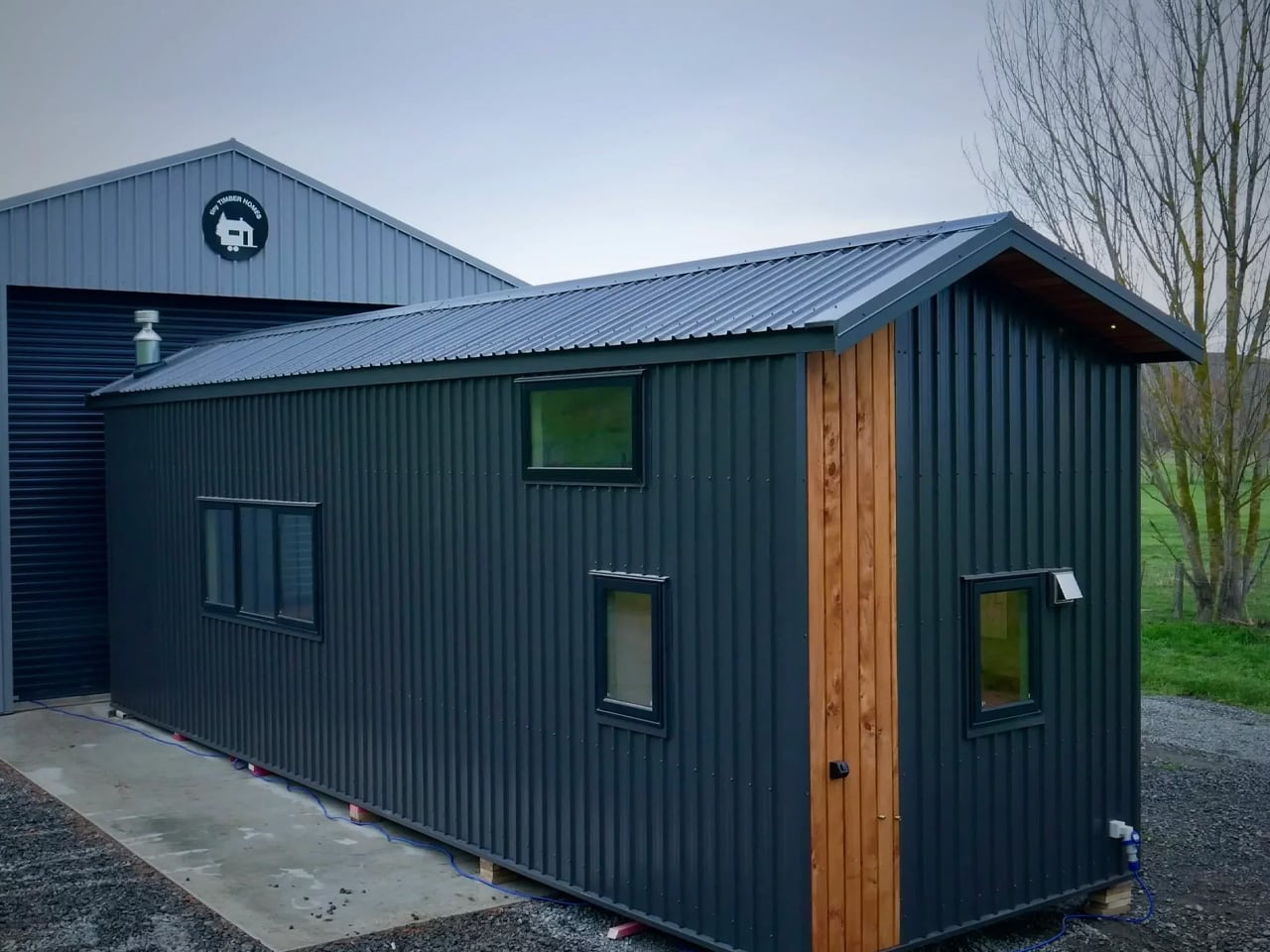
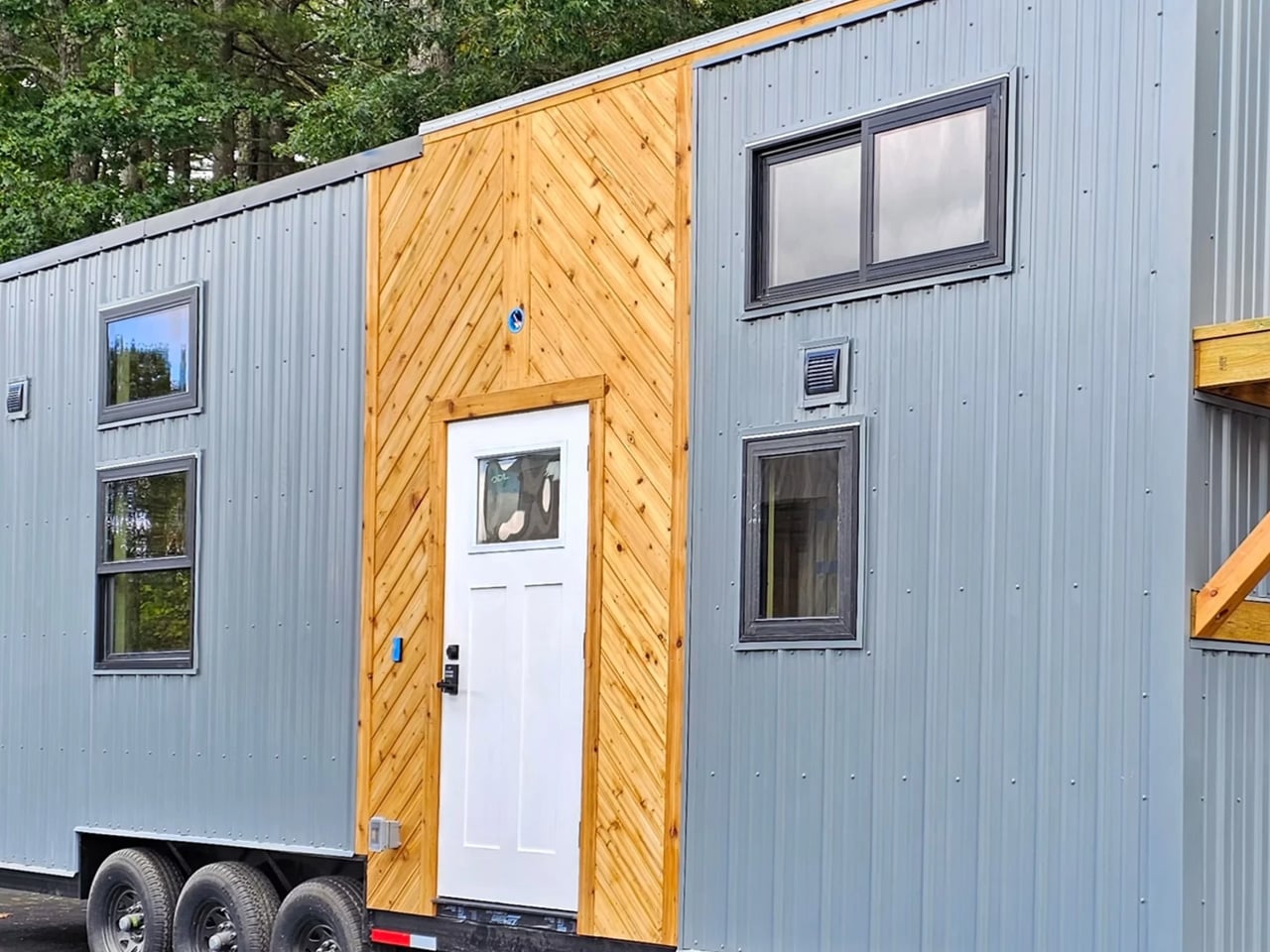
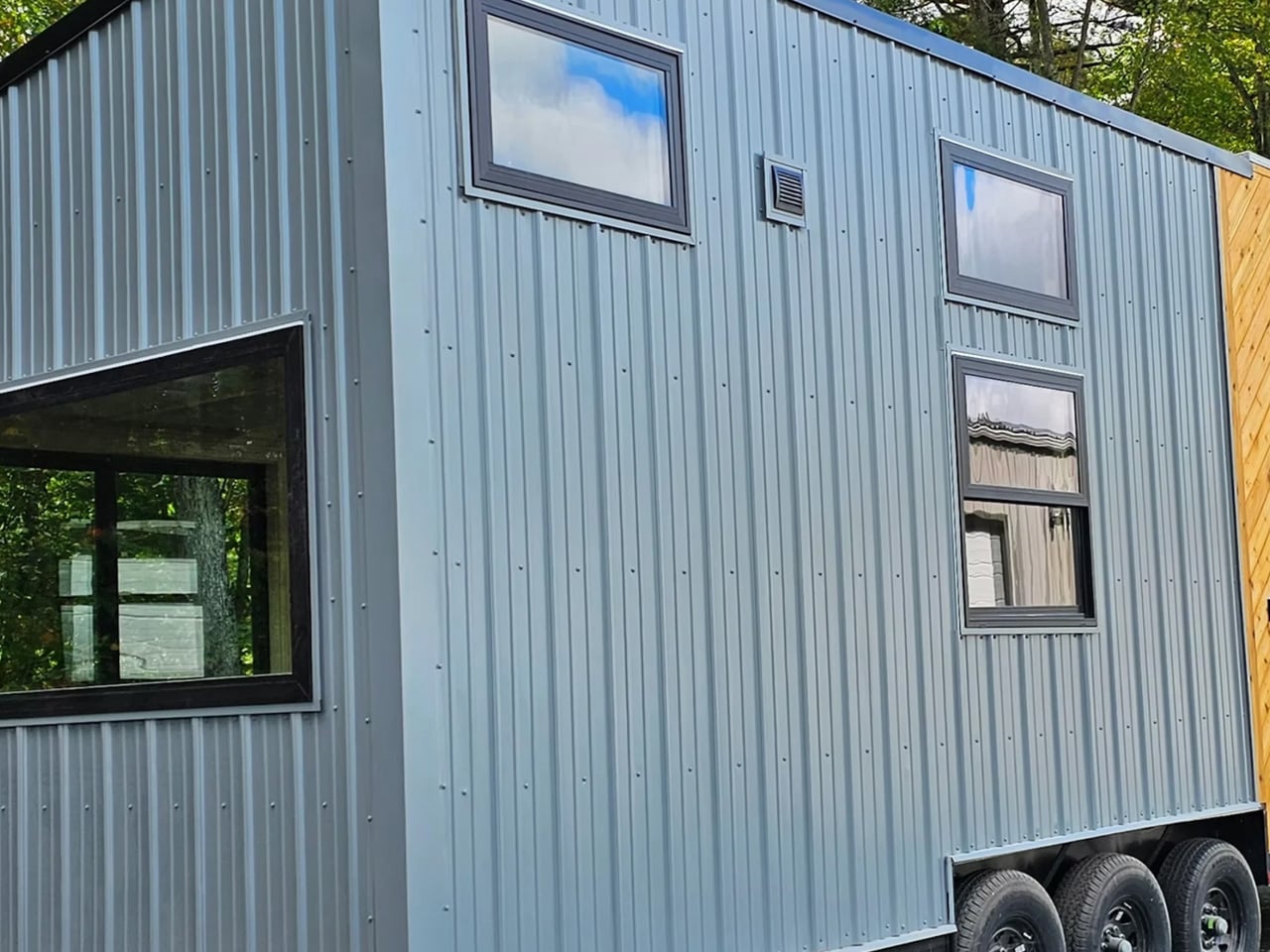
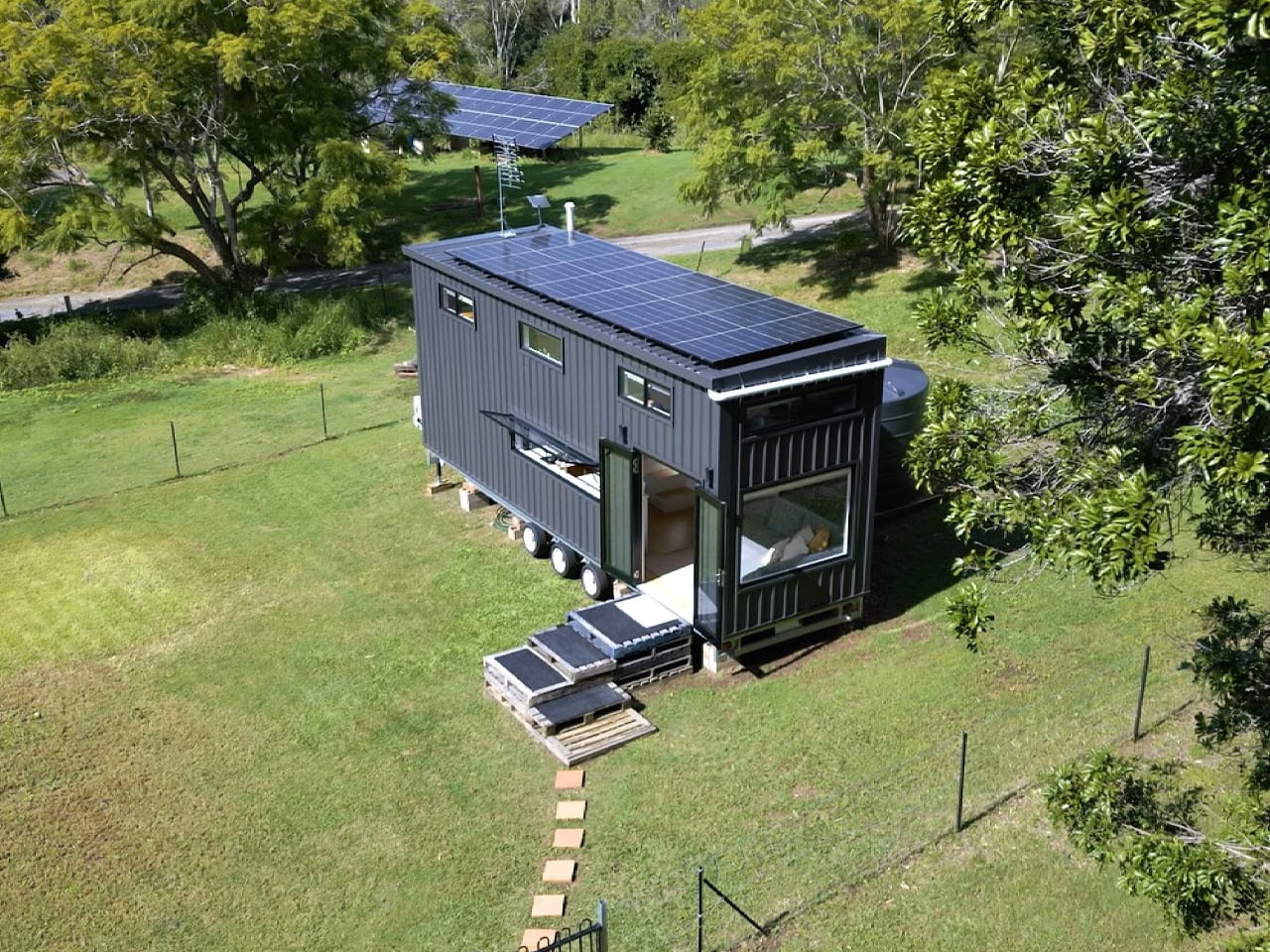
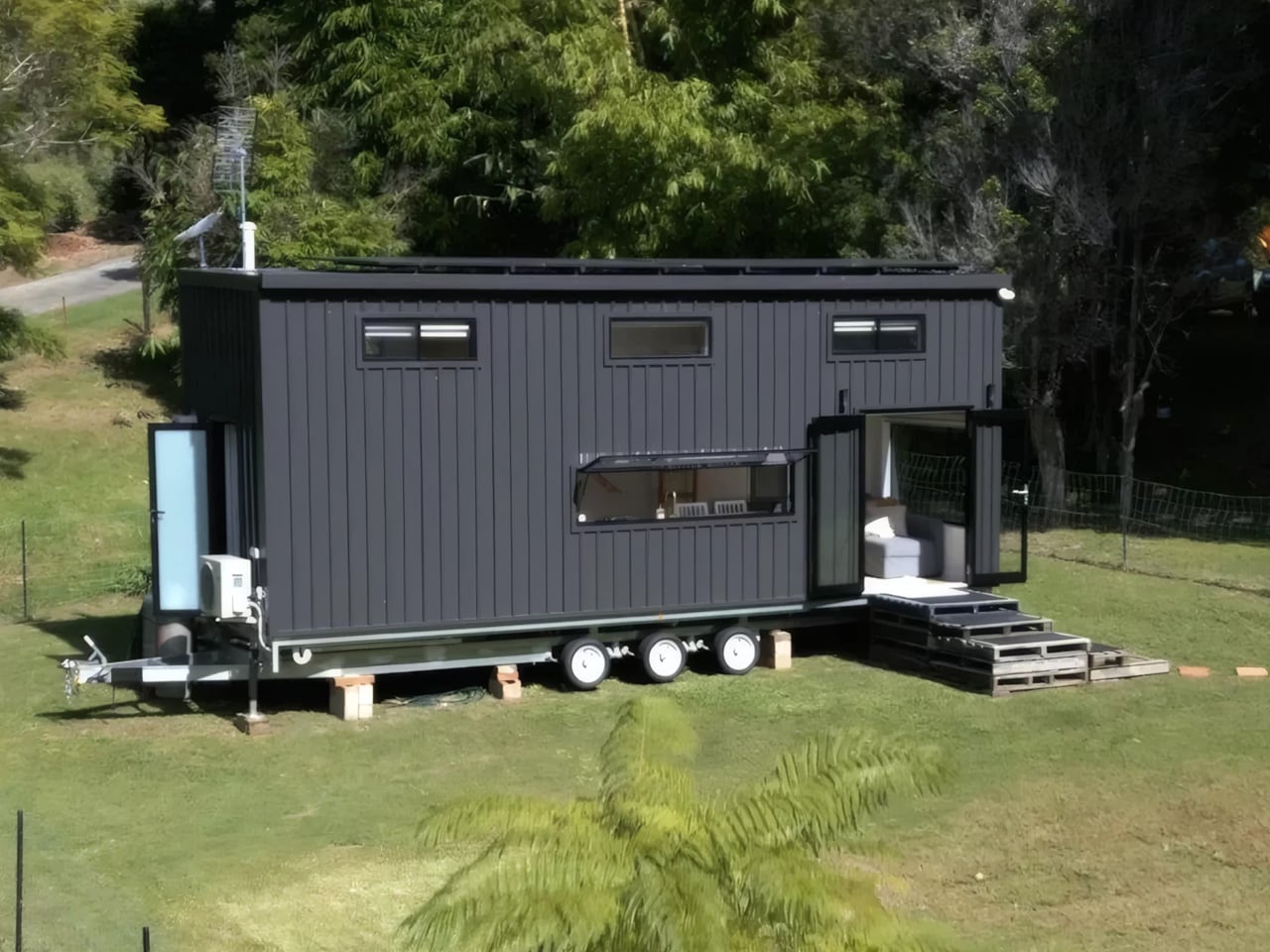
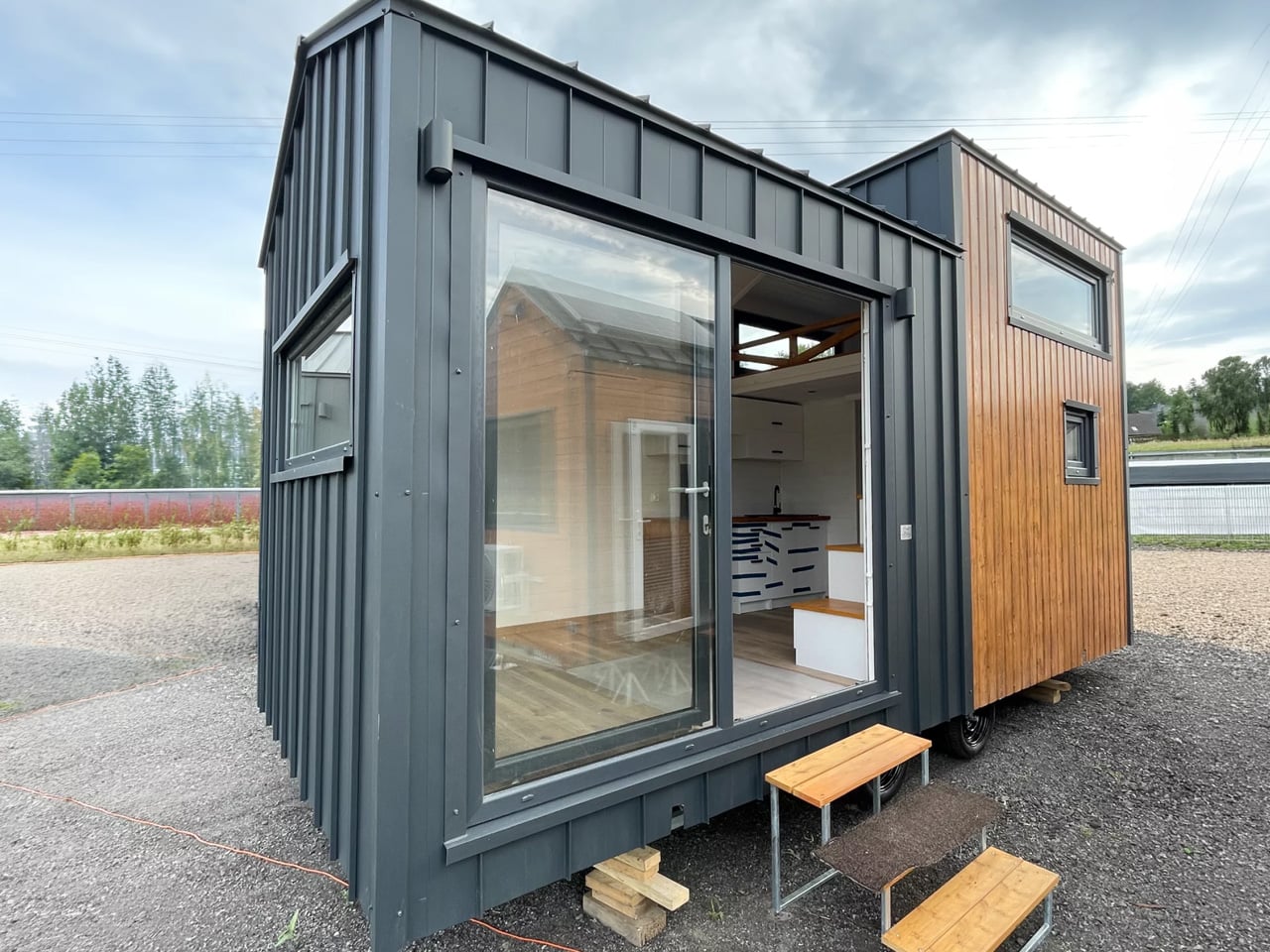
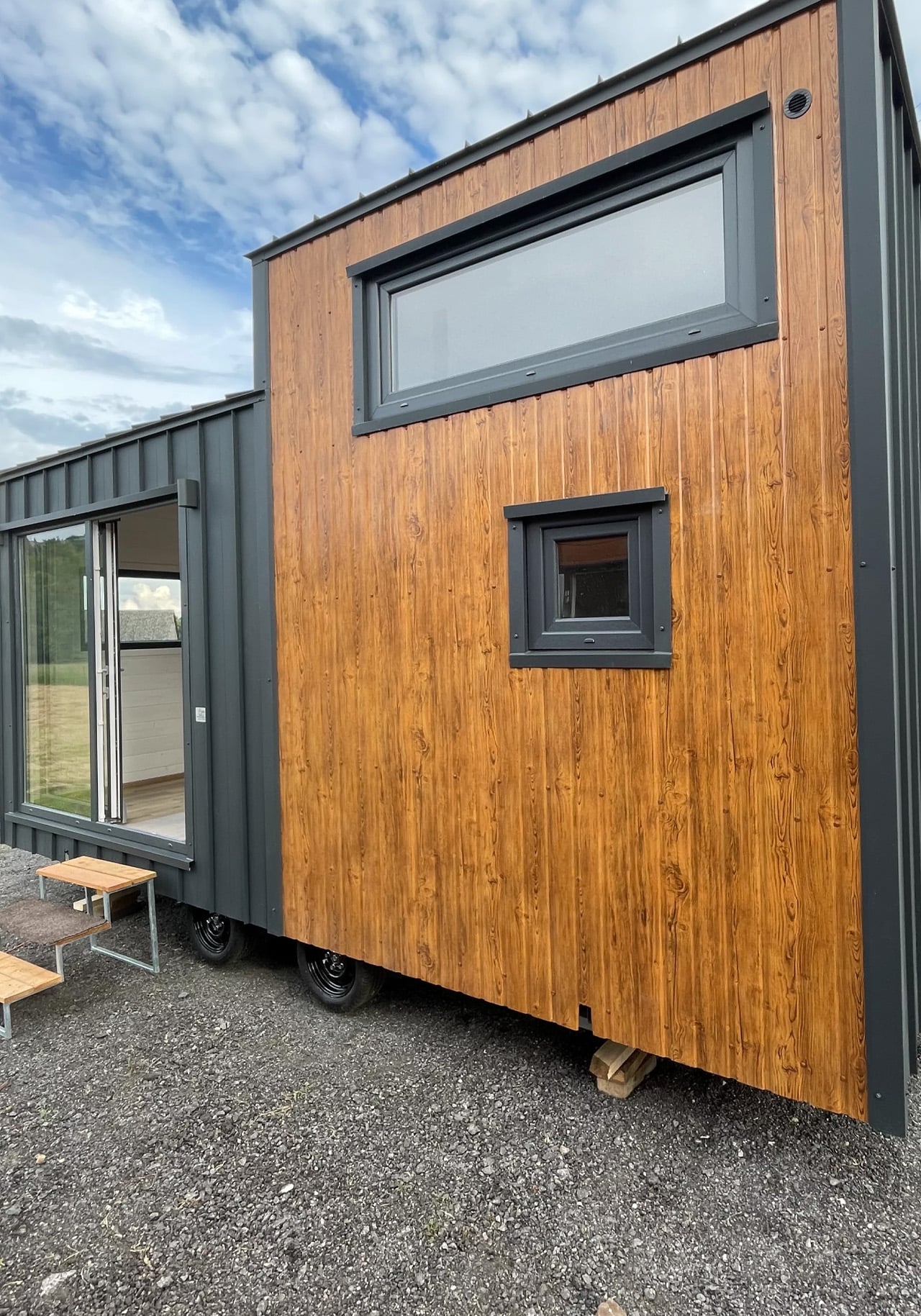
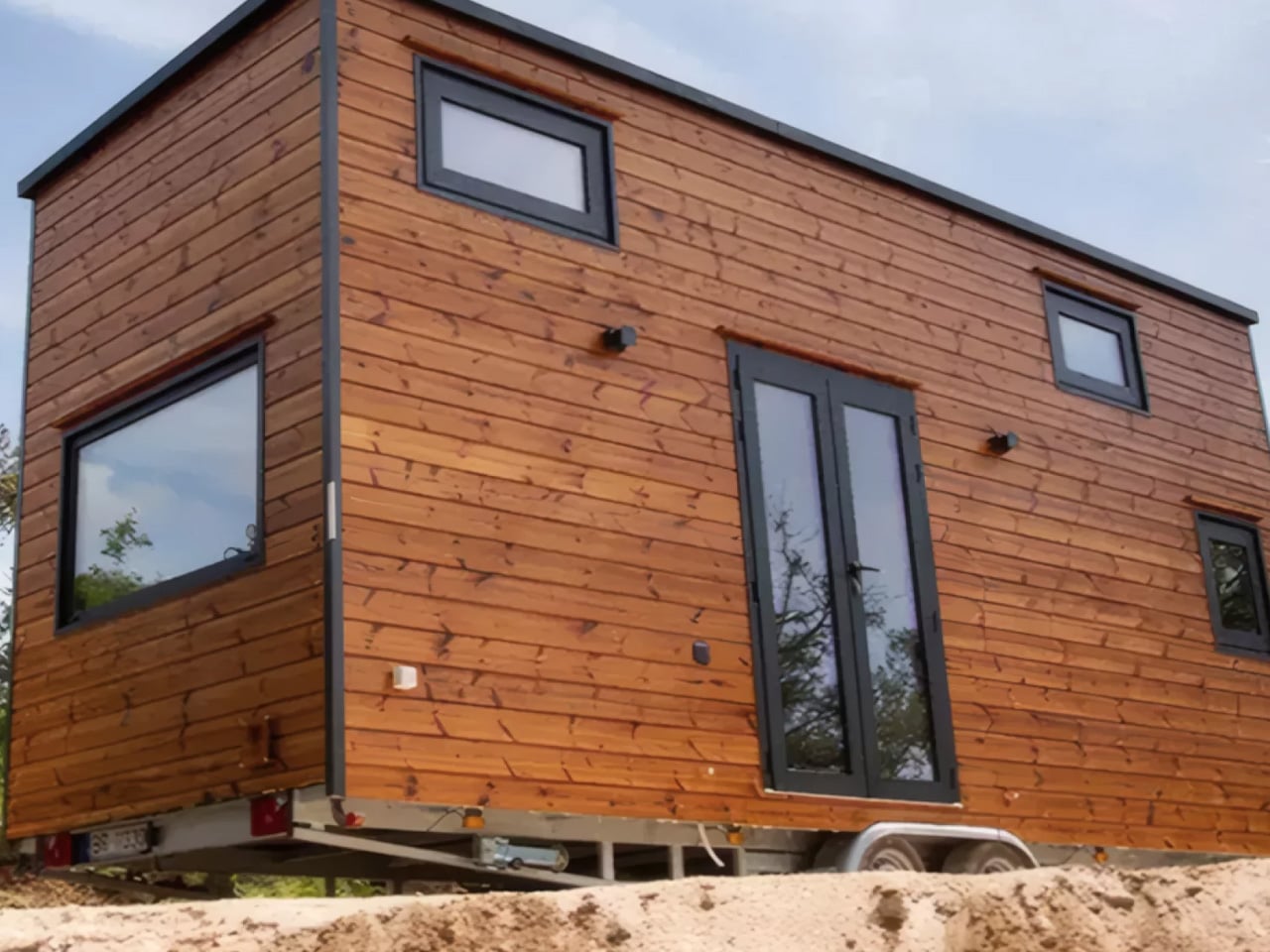
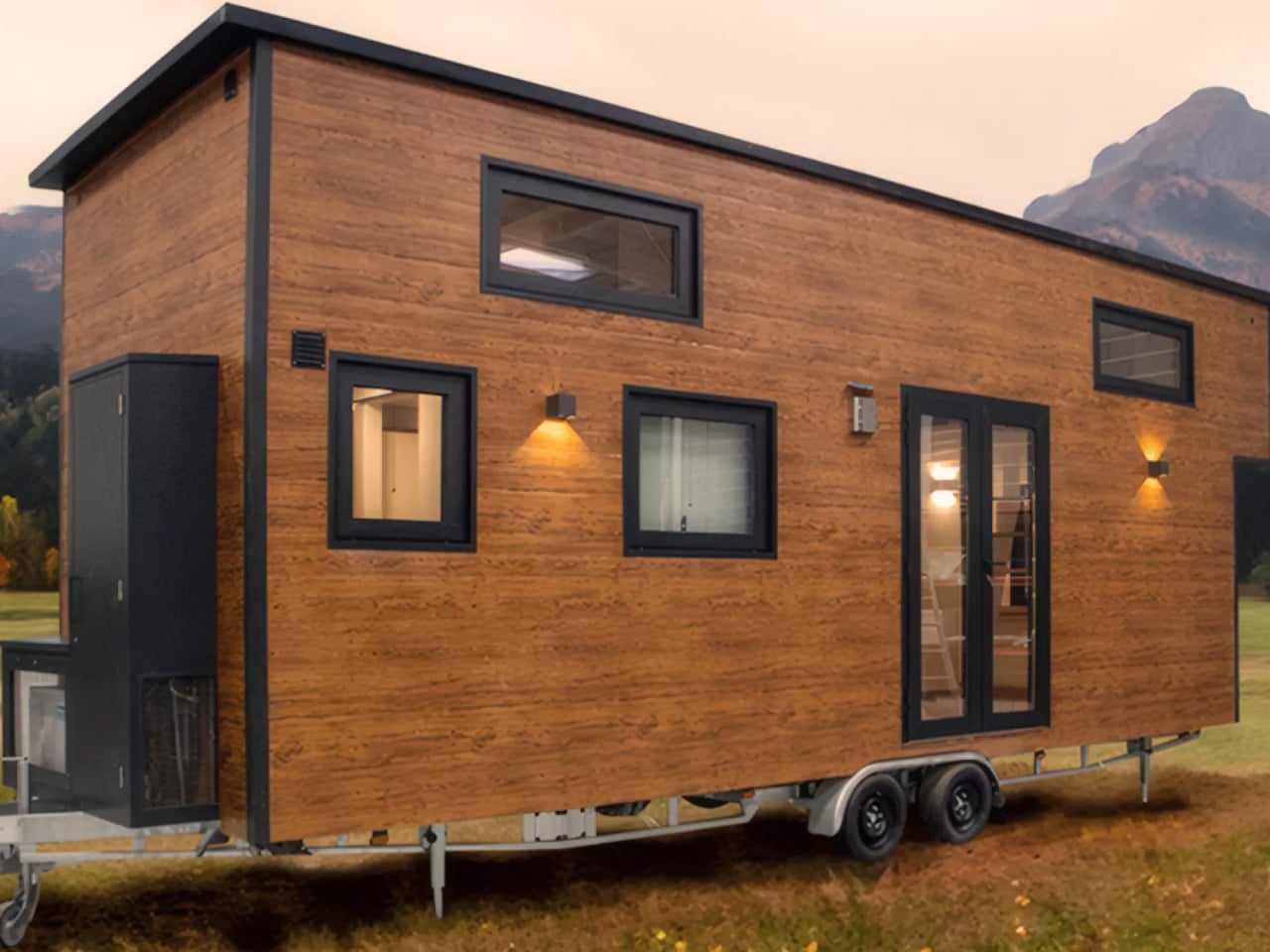
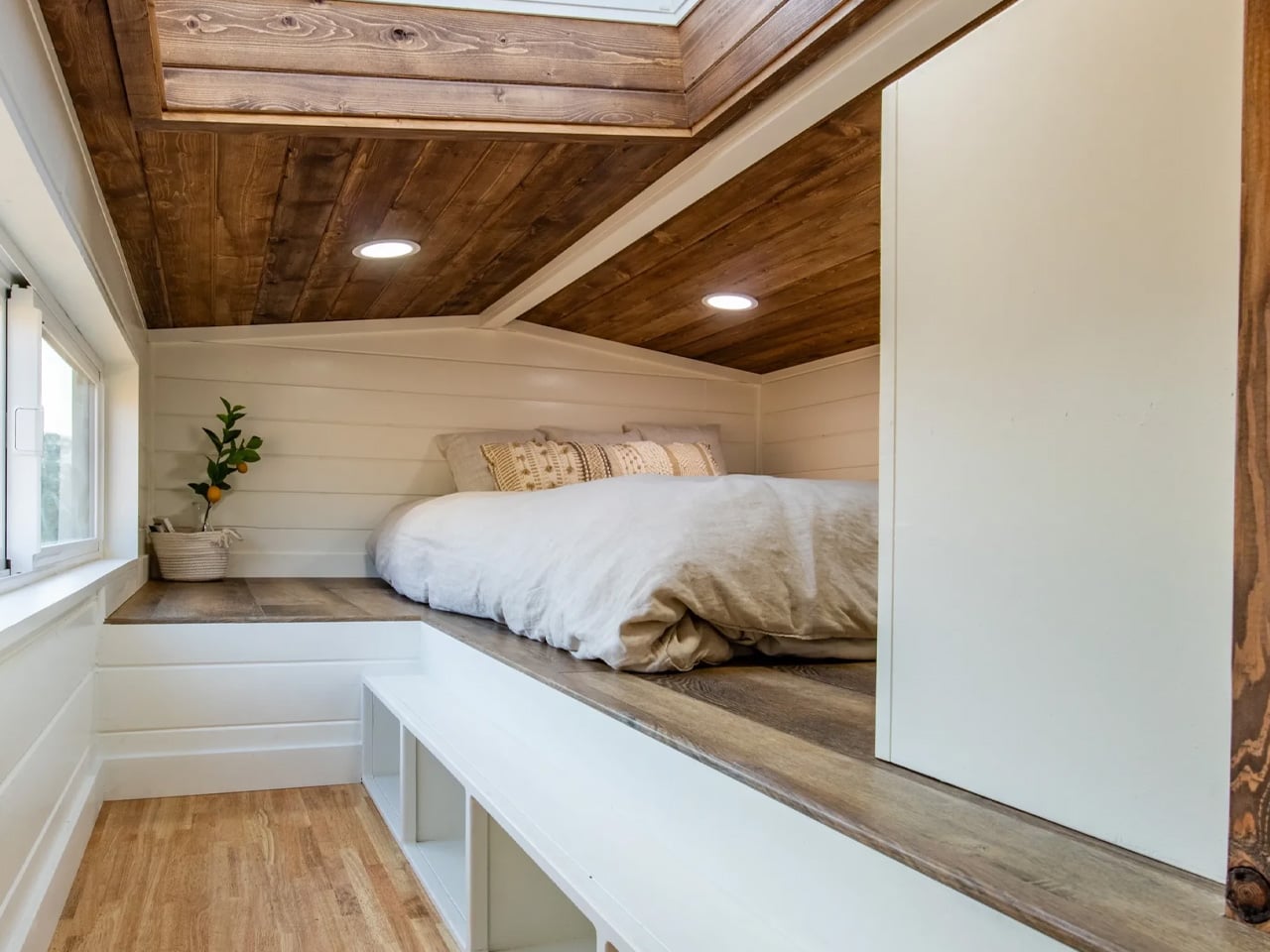
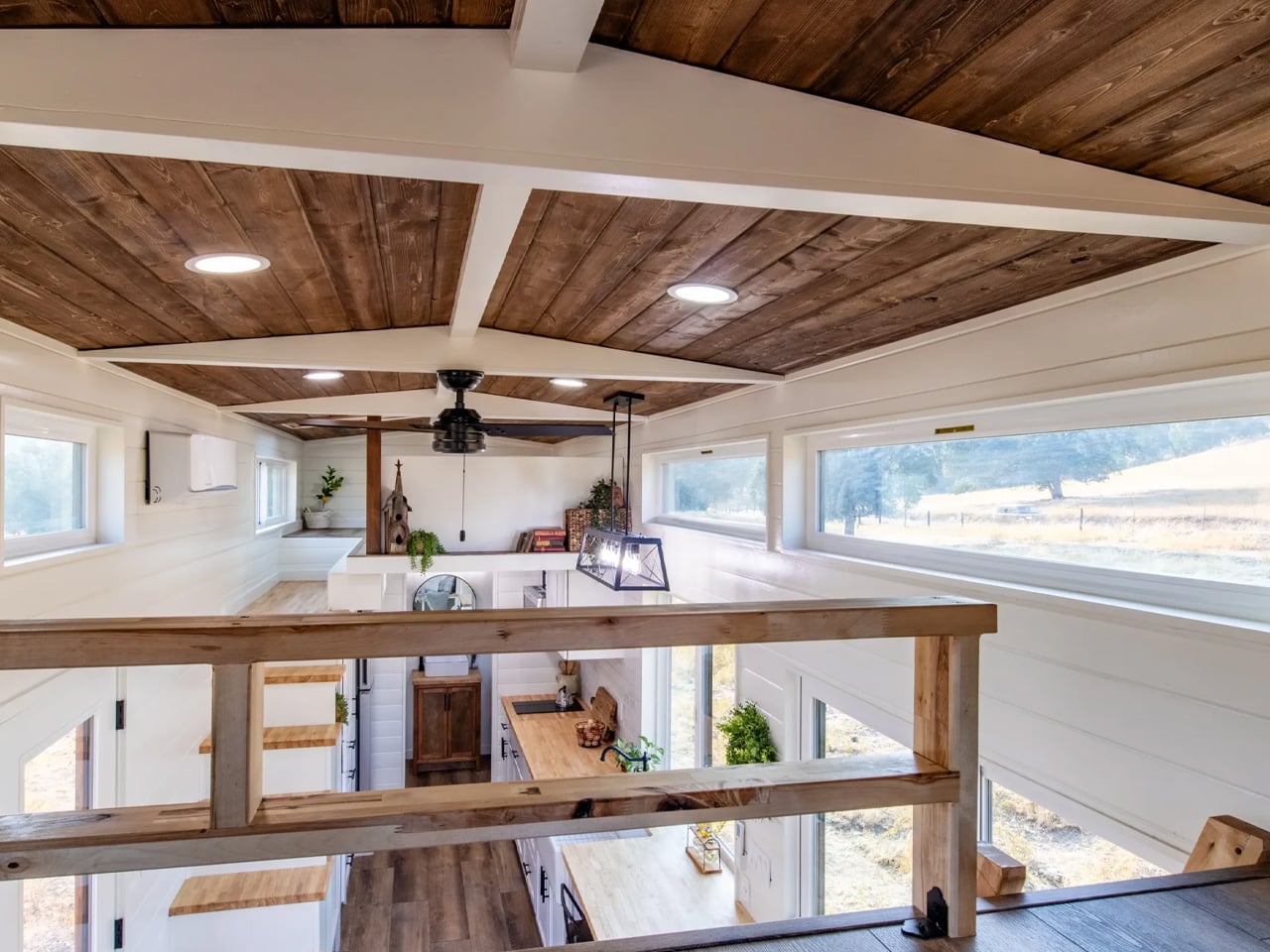
Most tiny homes make you choose: comfort or portability, but rarely both. The Laurel, a custom build by Canadian builder Teacup Tiny Homes based on their Bernice plan, manages to sidestep that entirely. At 423 square feet across a 34-foot triple-axle trailer, it sleeps four people, fits a dishwasher, a full bathtub, and still feels like somewhere you’d actually want to live.
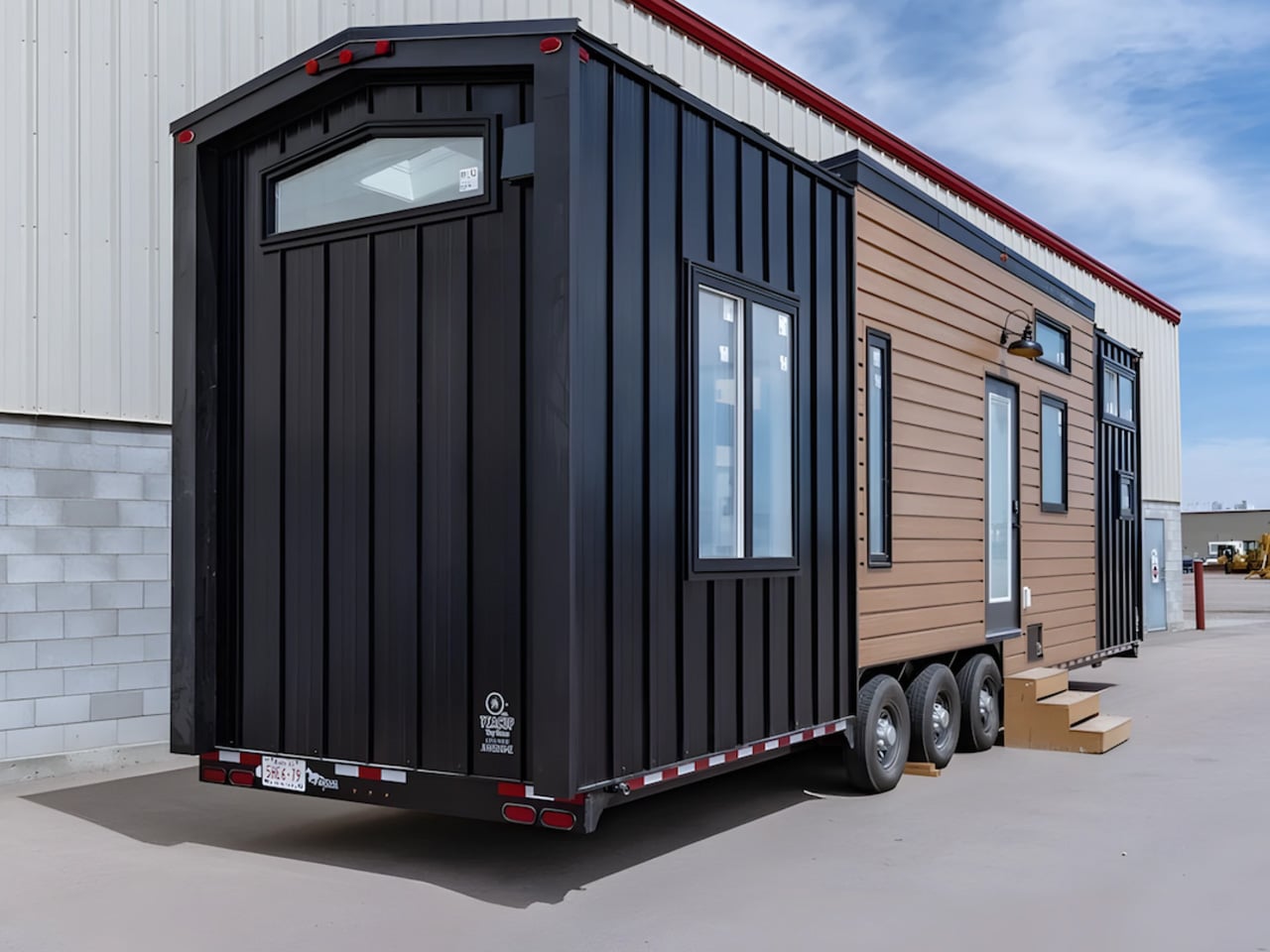
The exterior sets the tone before you step inside. White vertical siding runs the length of the home, capped by a black metal roof — clean, modern, and unfussy. At 8.5 feet wide, it stays within standard road-legal dimensions, which means taking it to a new site doesn’t require a special permit or a nervous conversation with your tow truck driver.
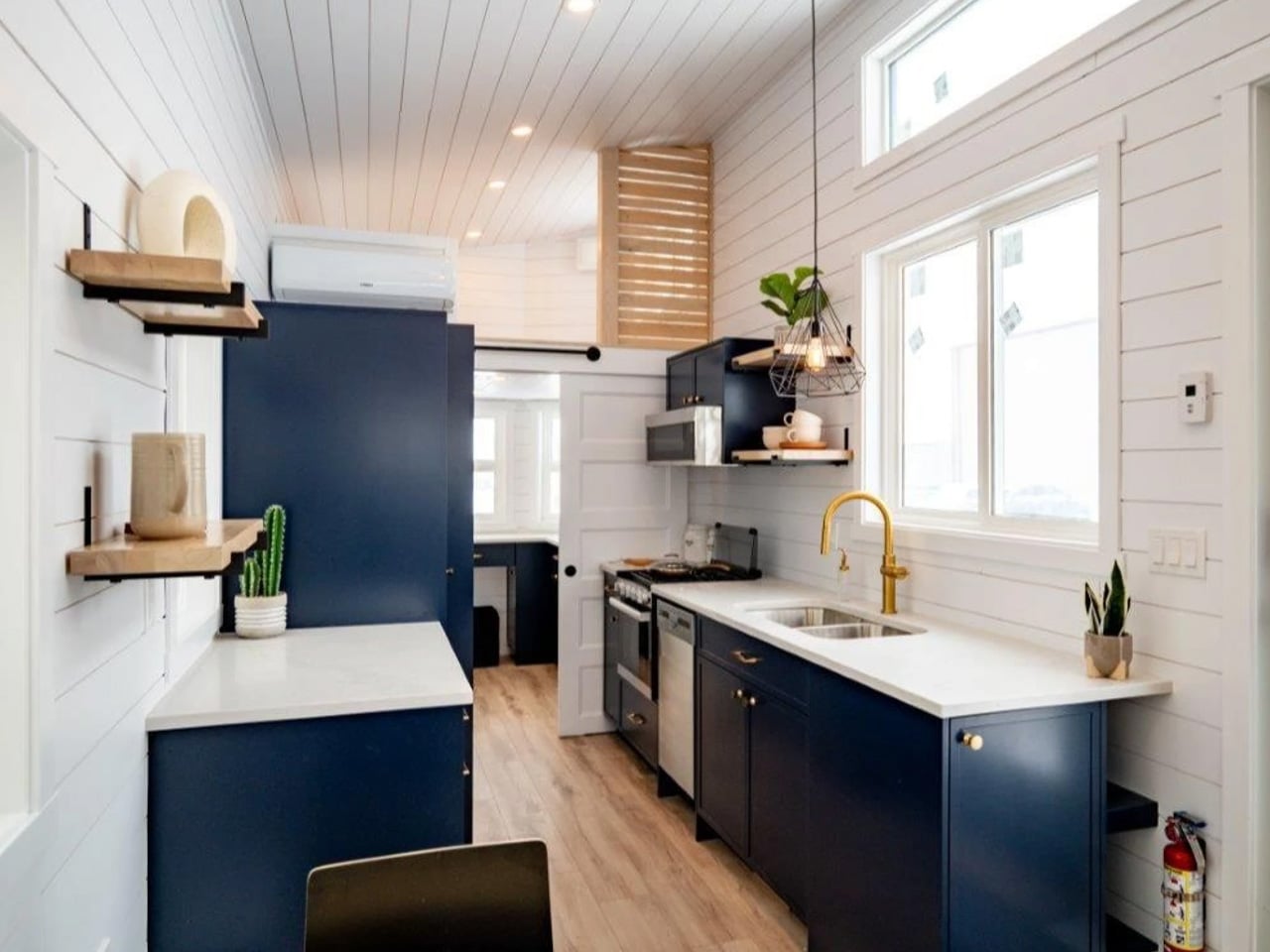
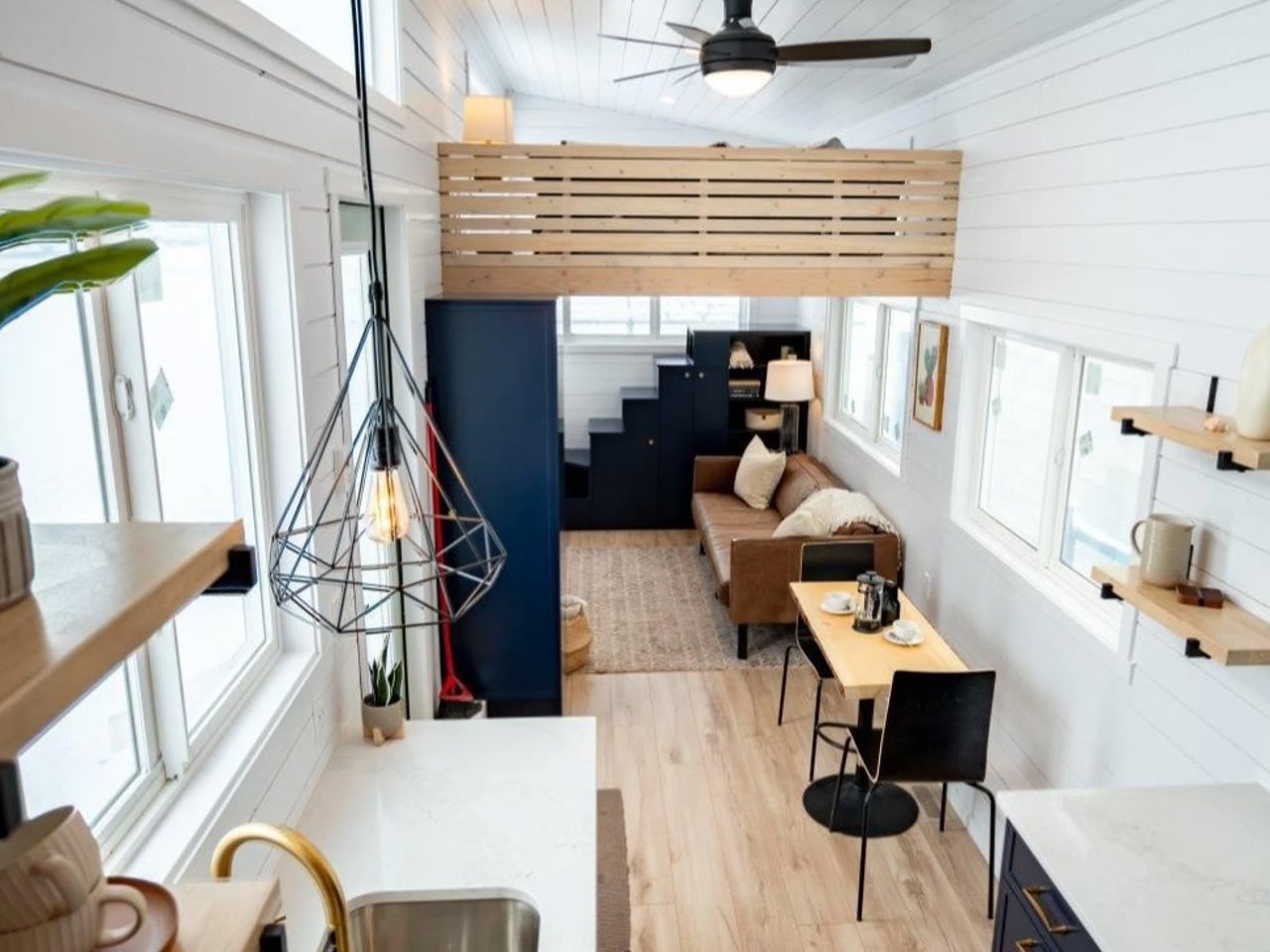
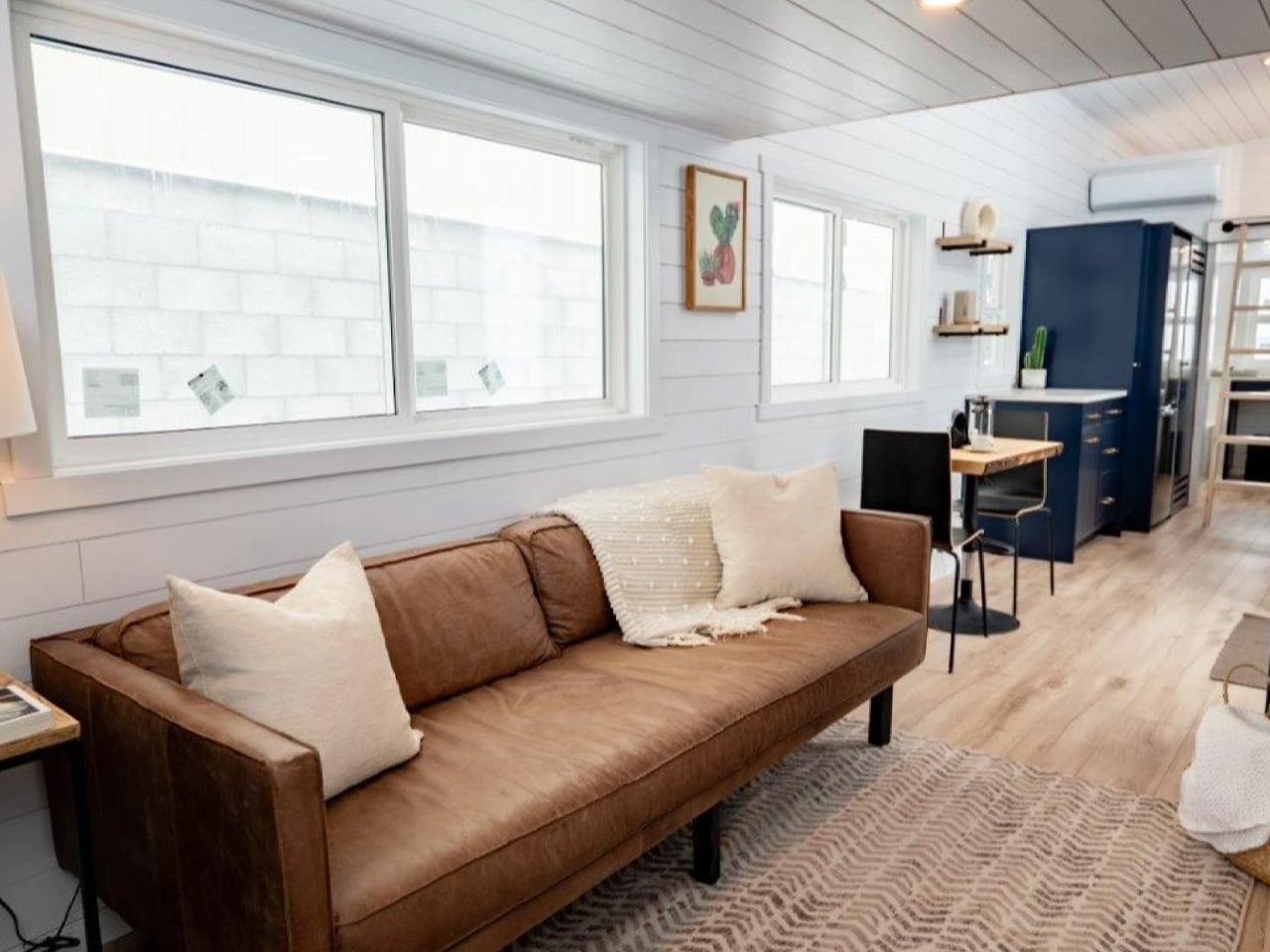
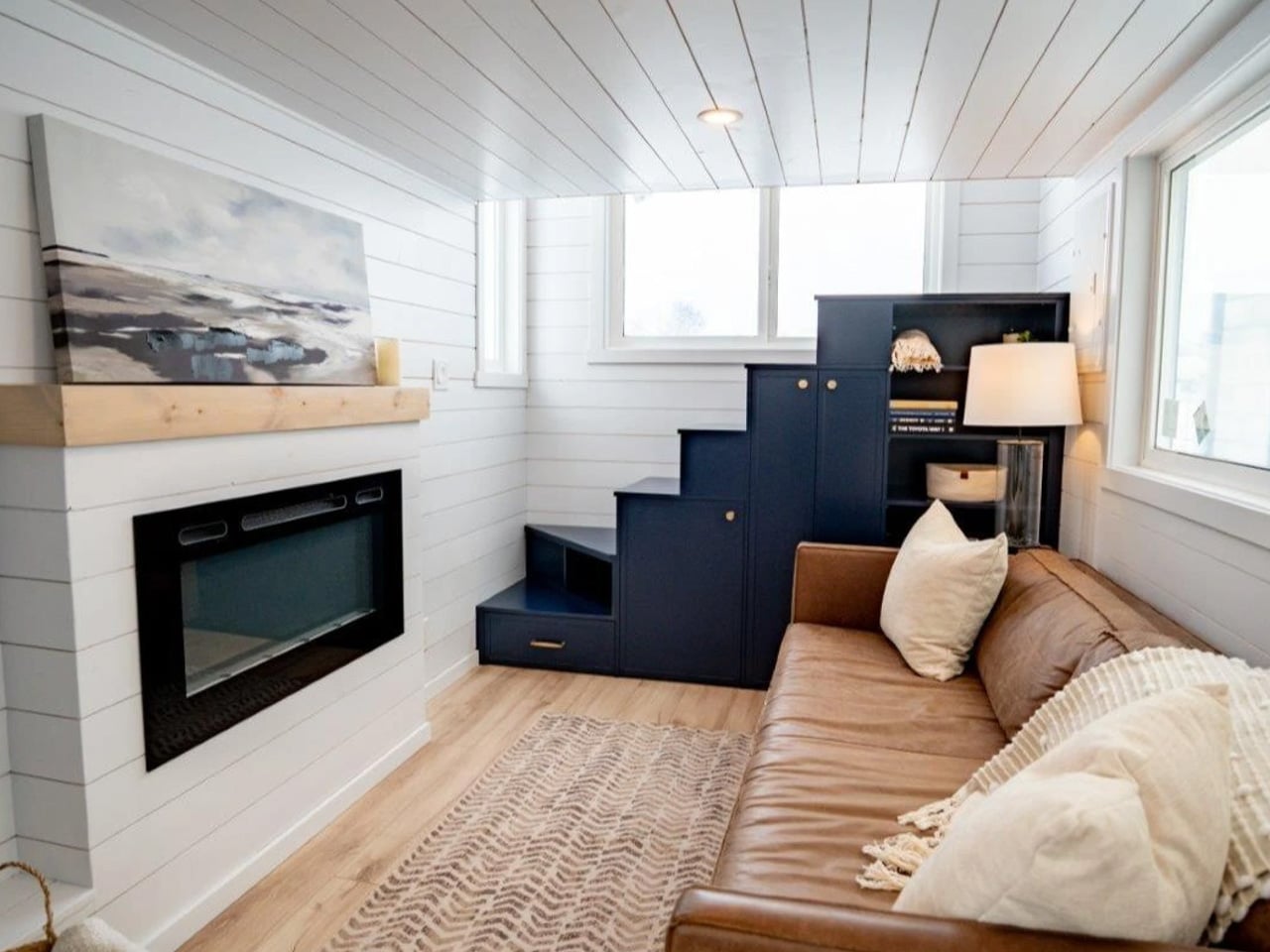
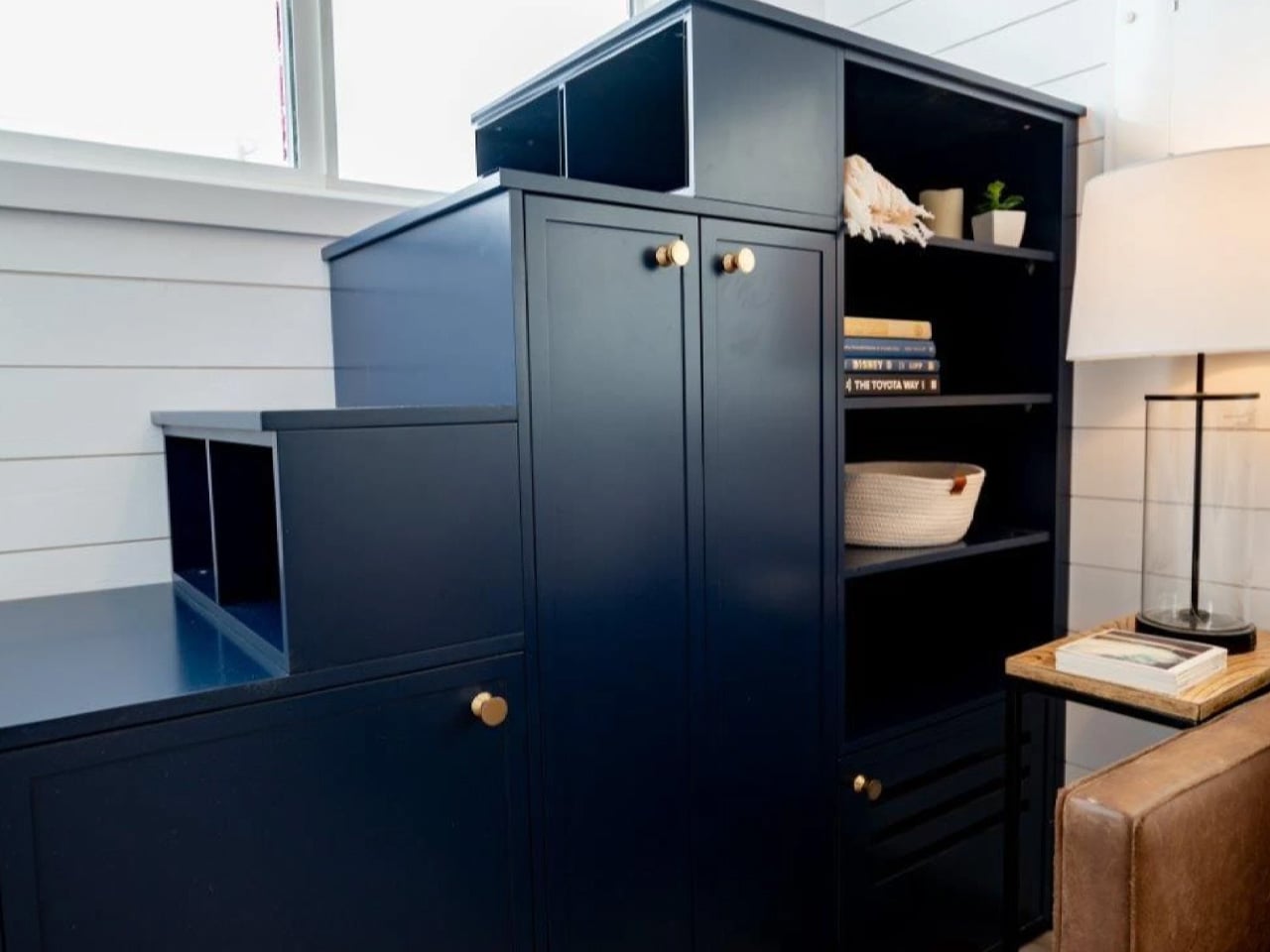
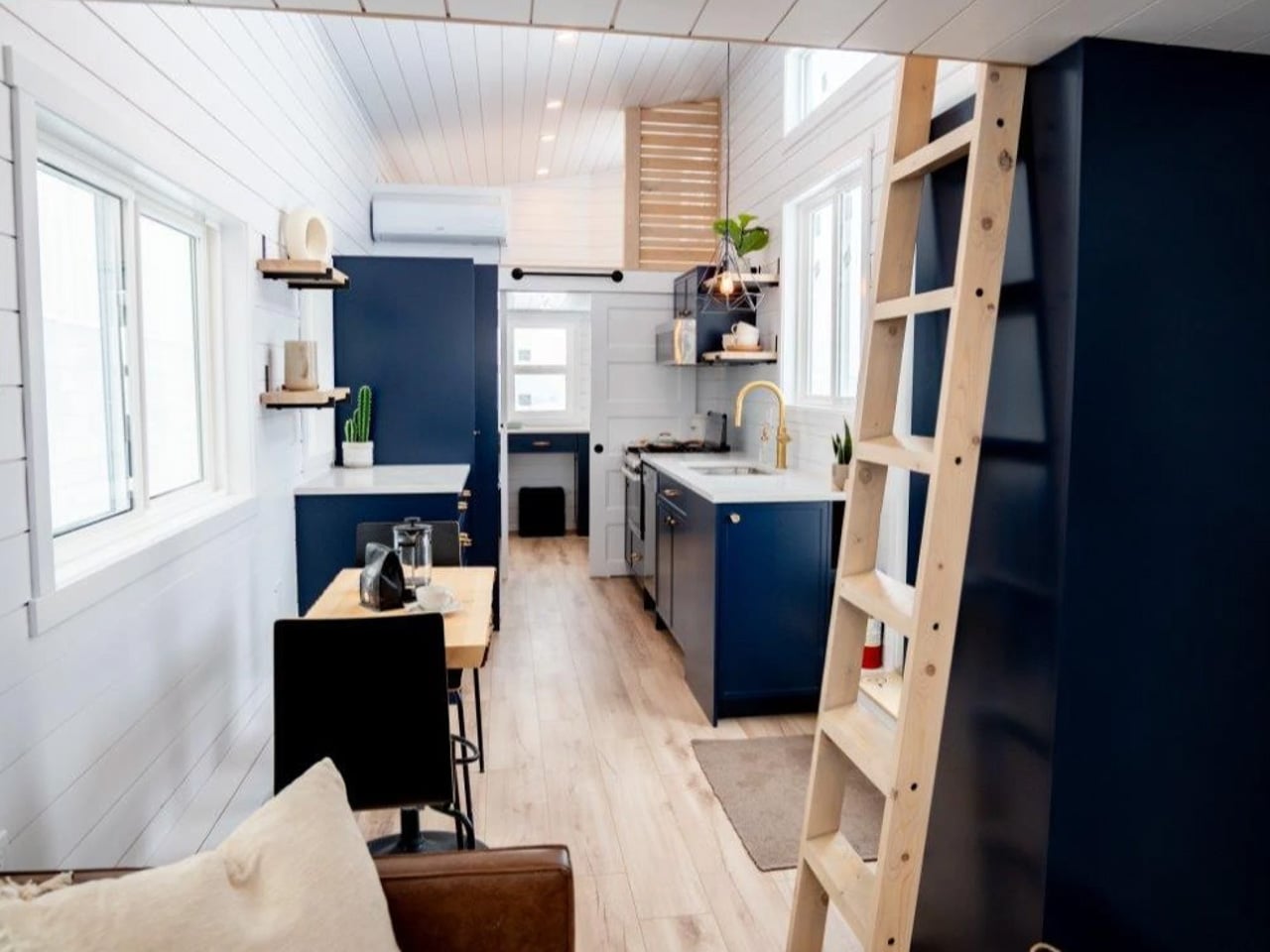
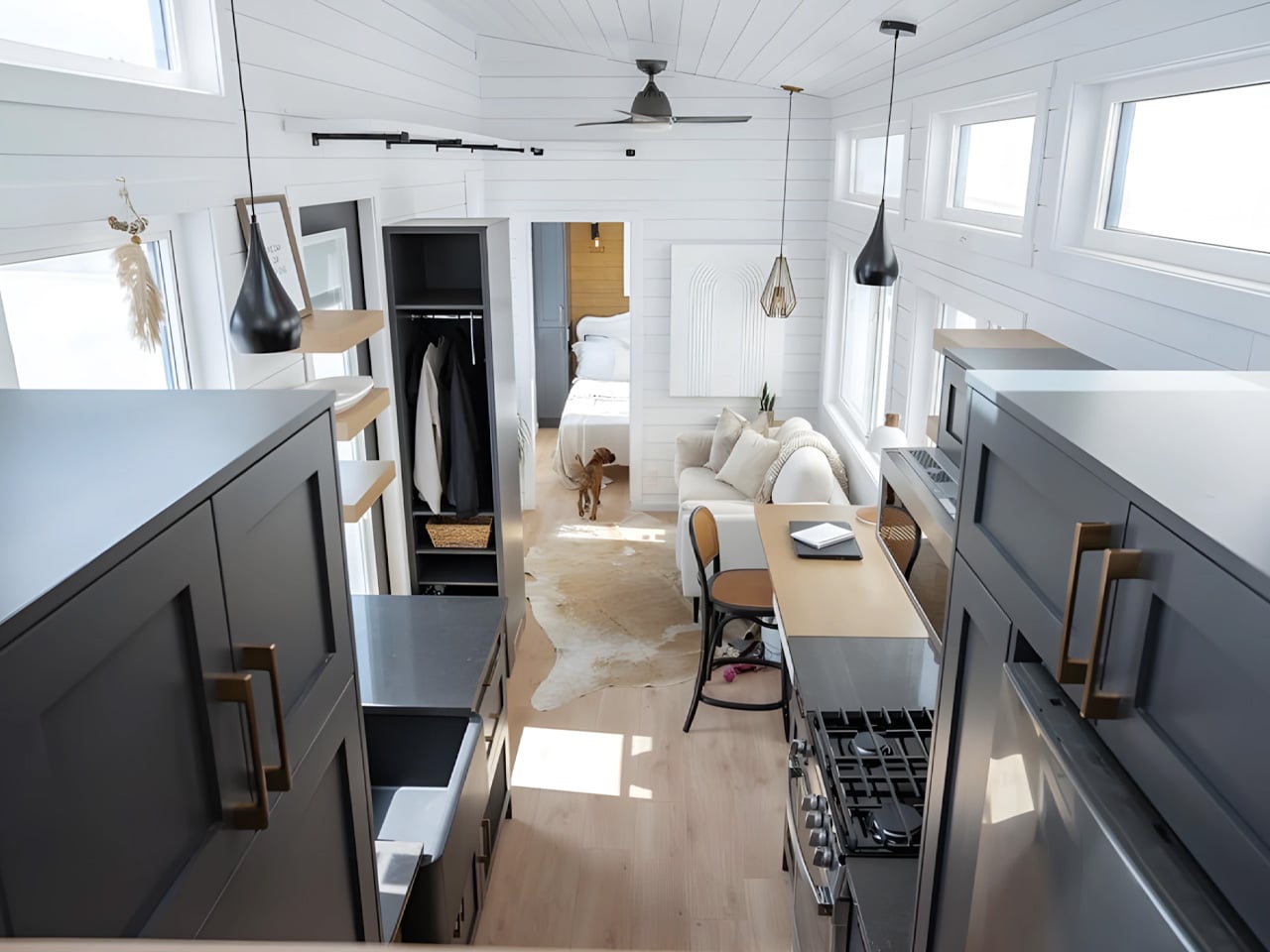
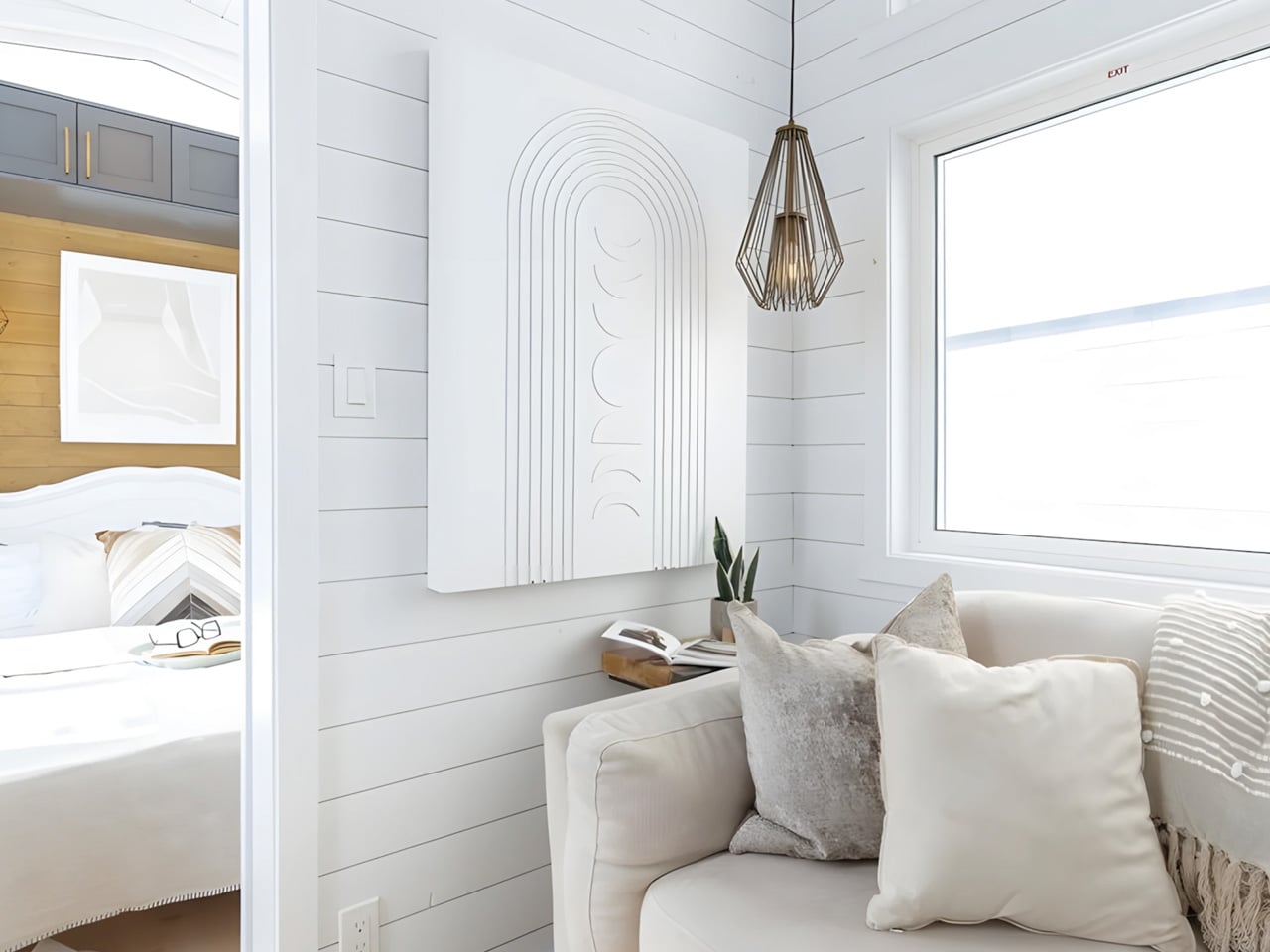
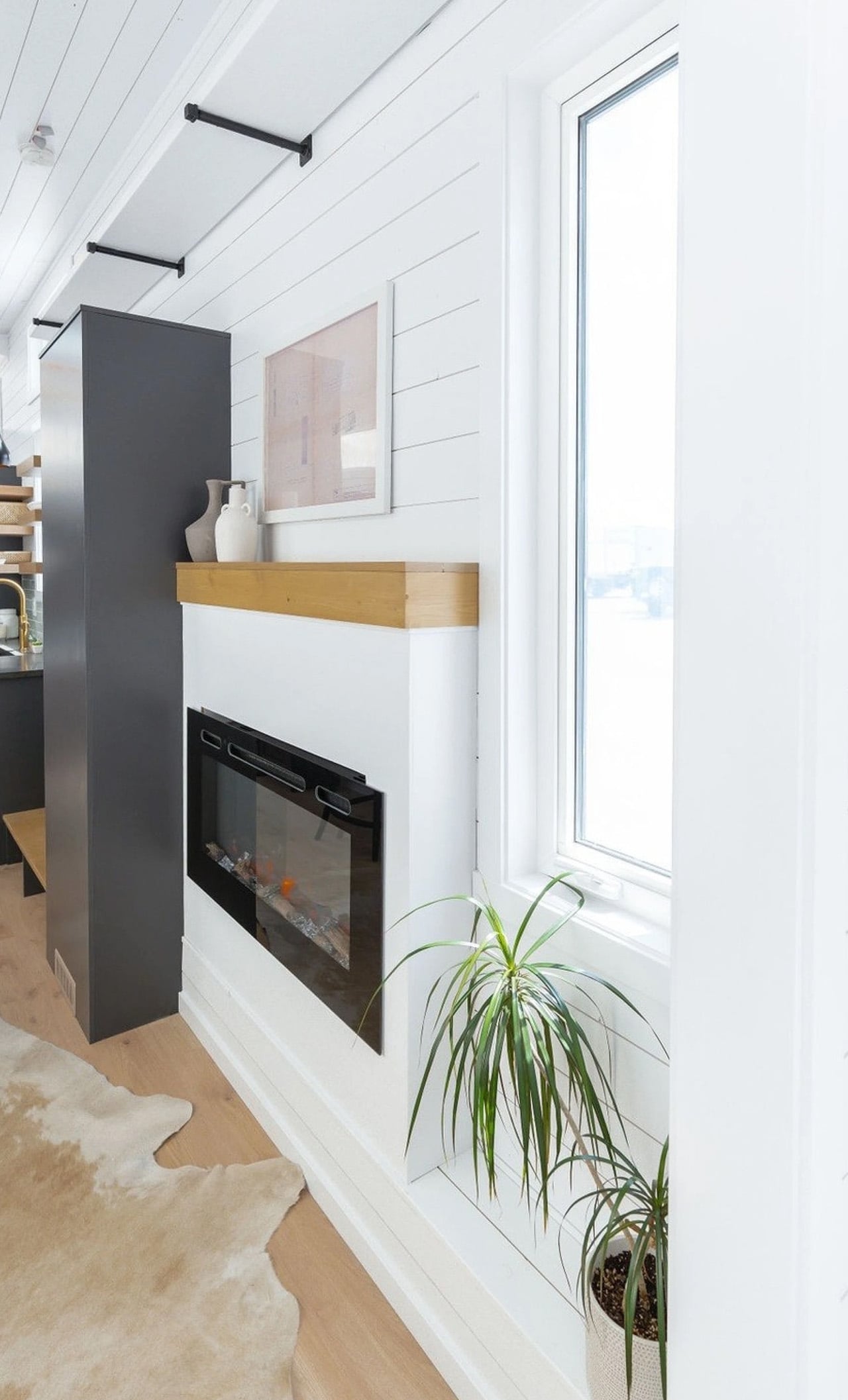
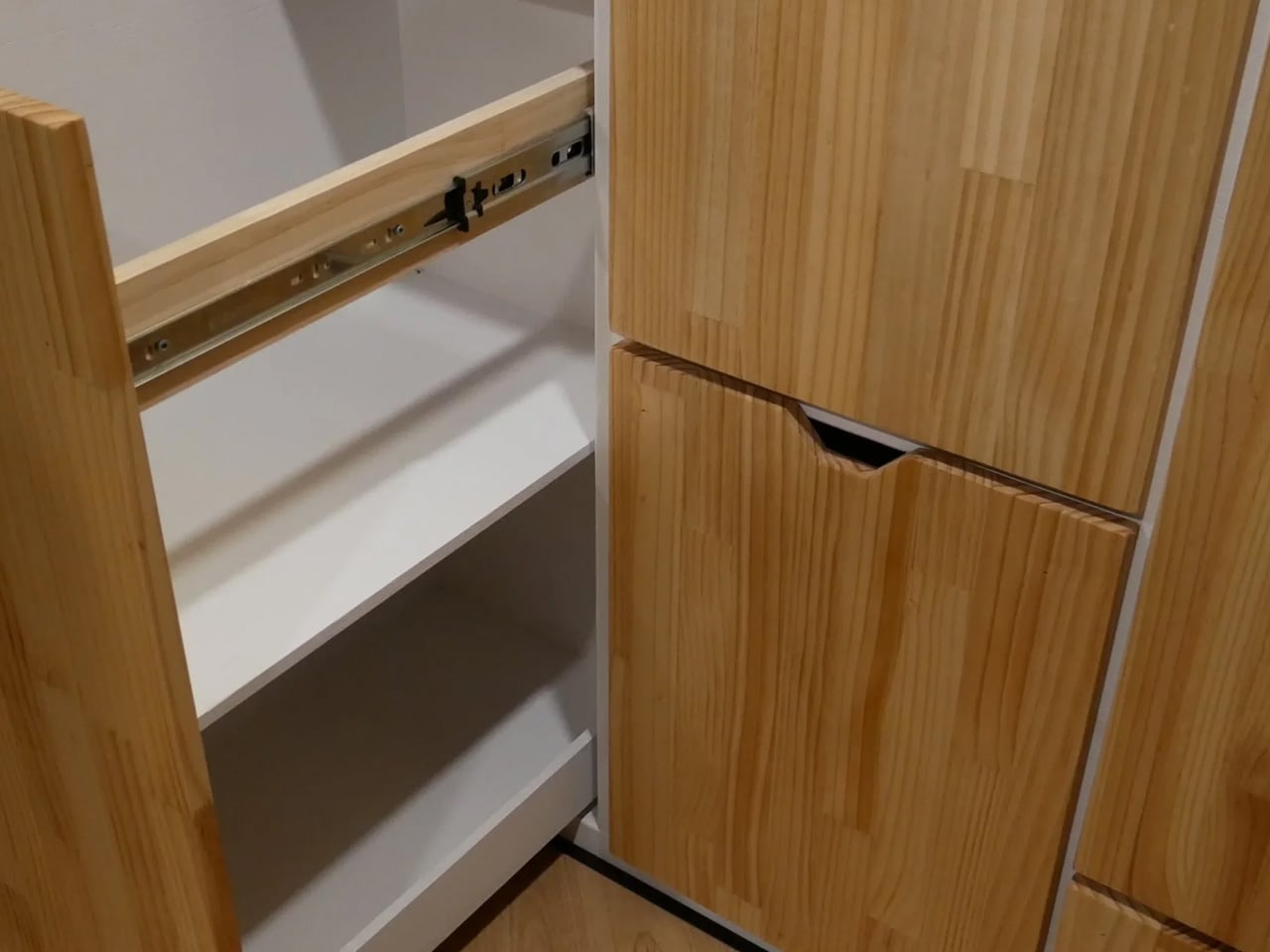
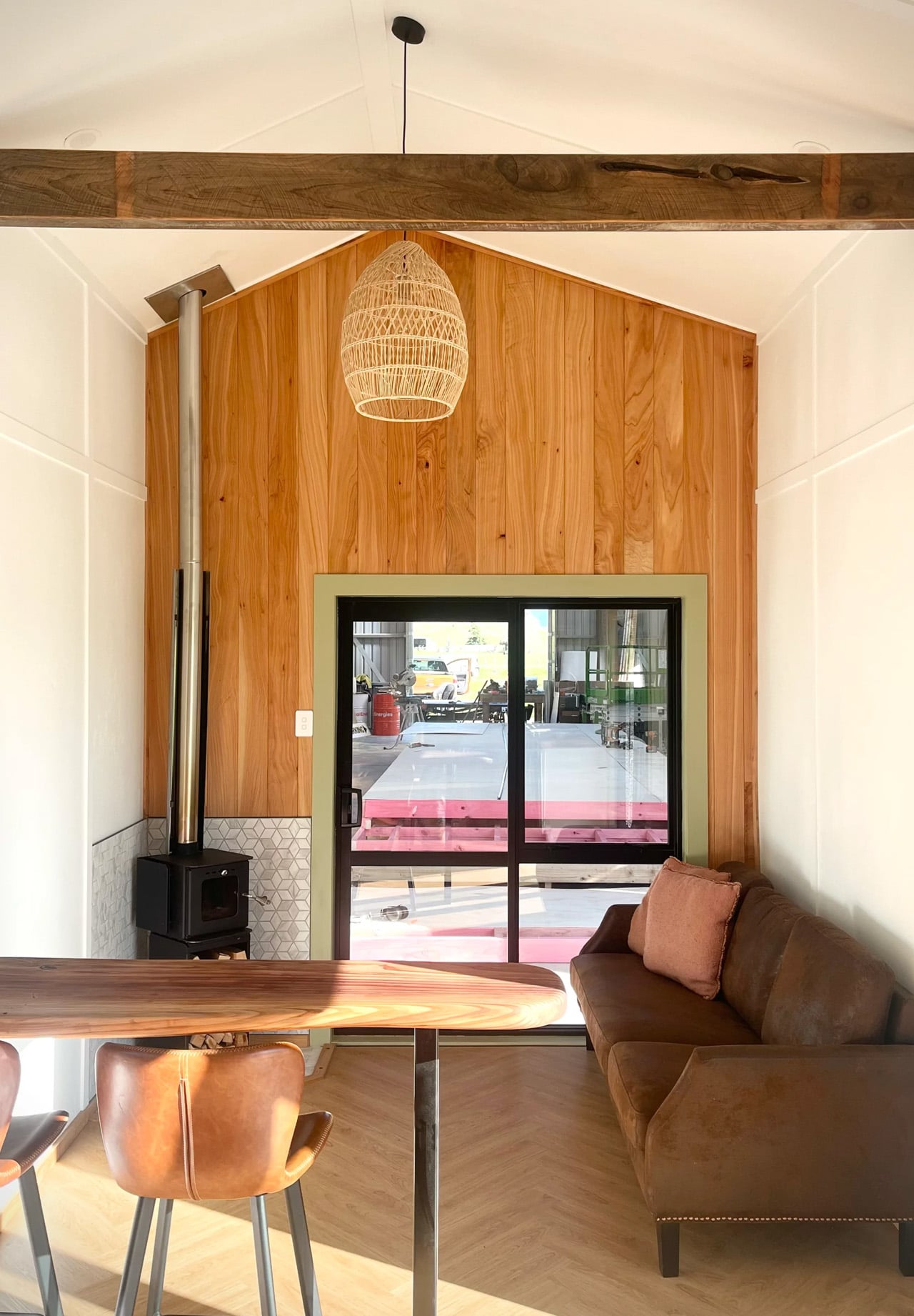
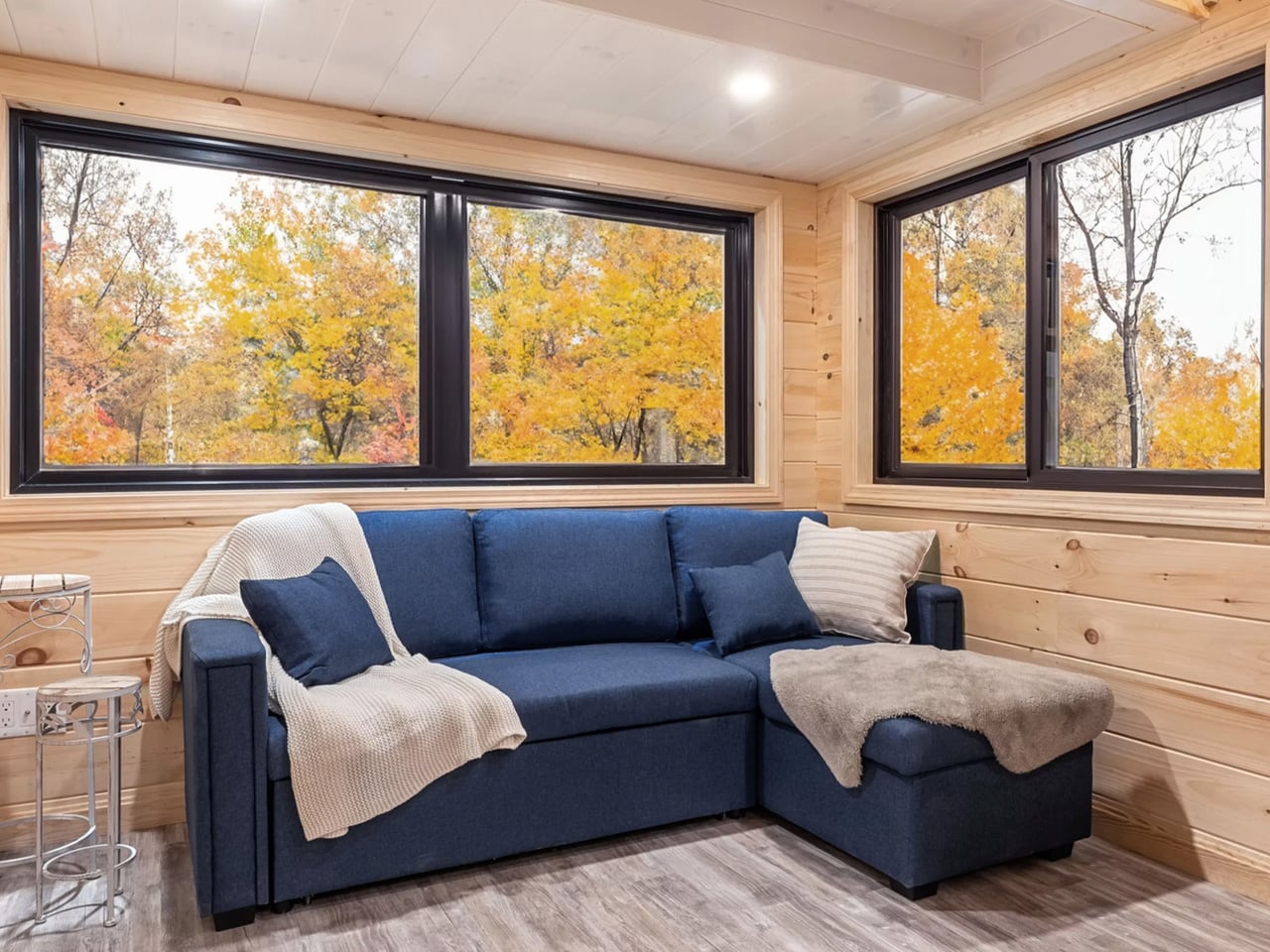
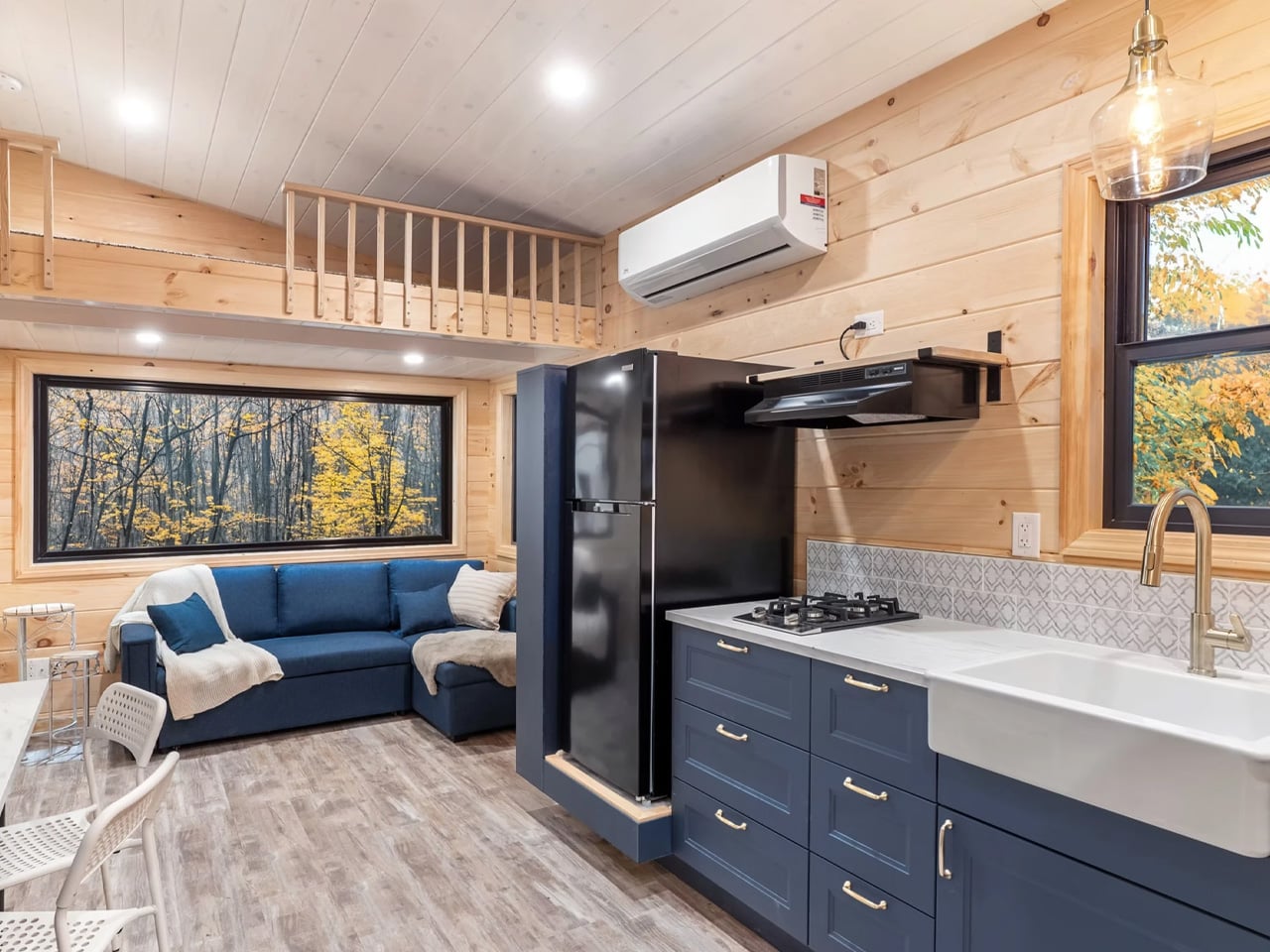
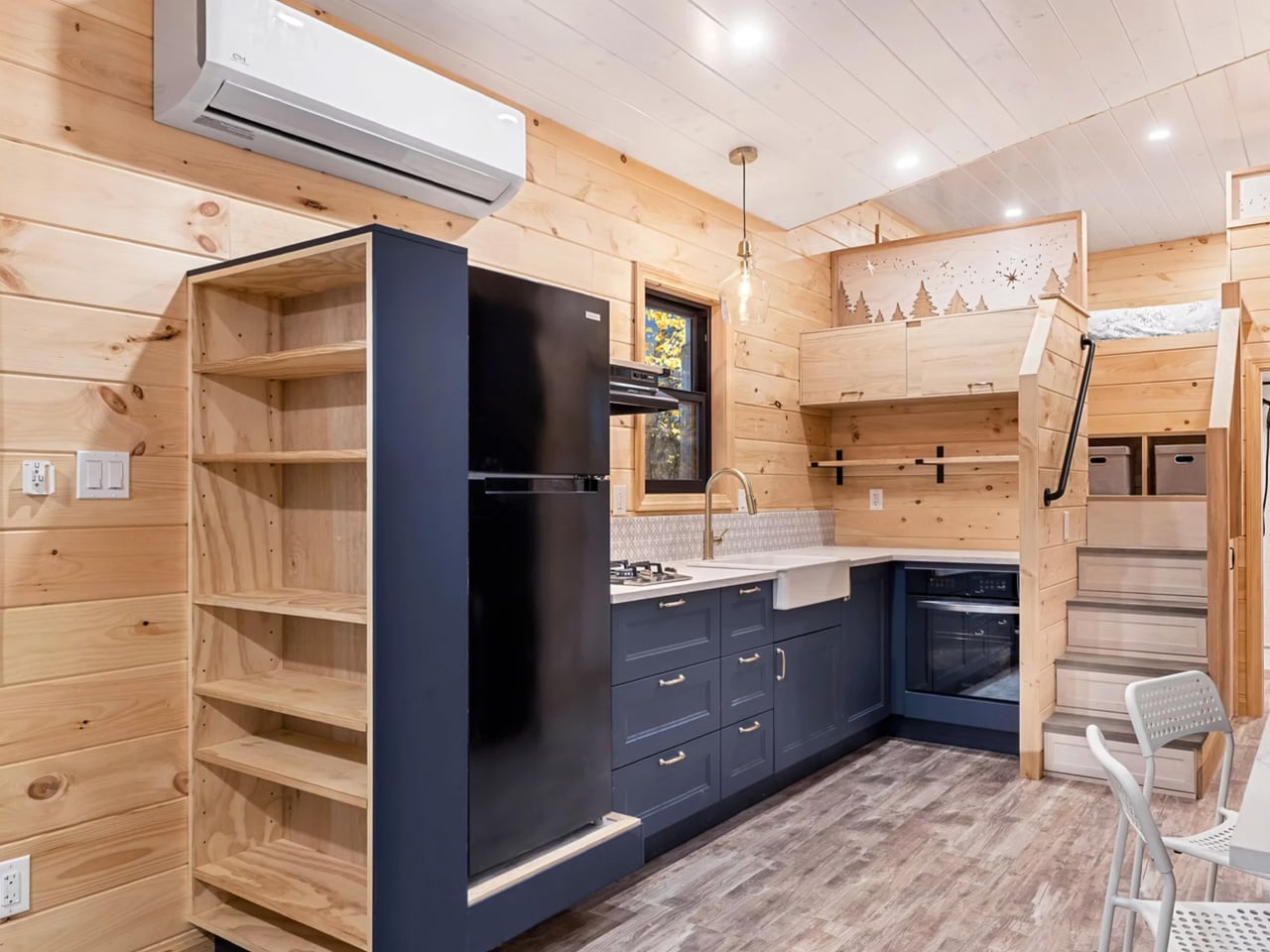
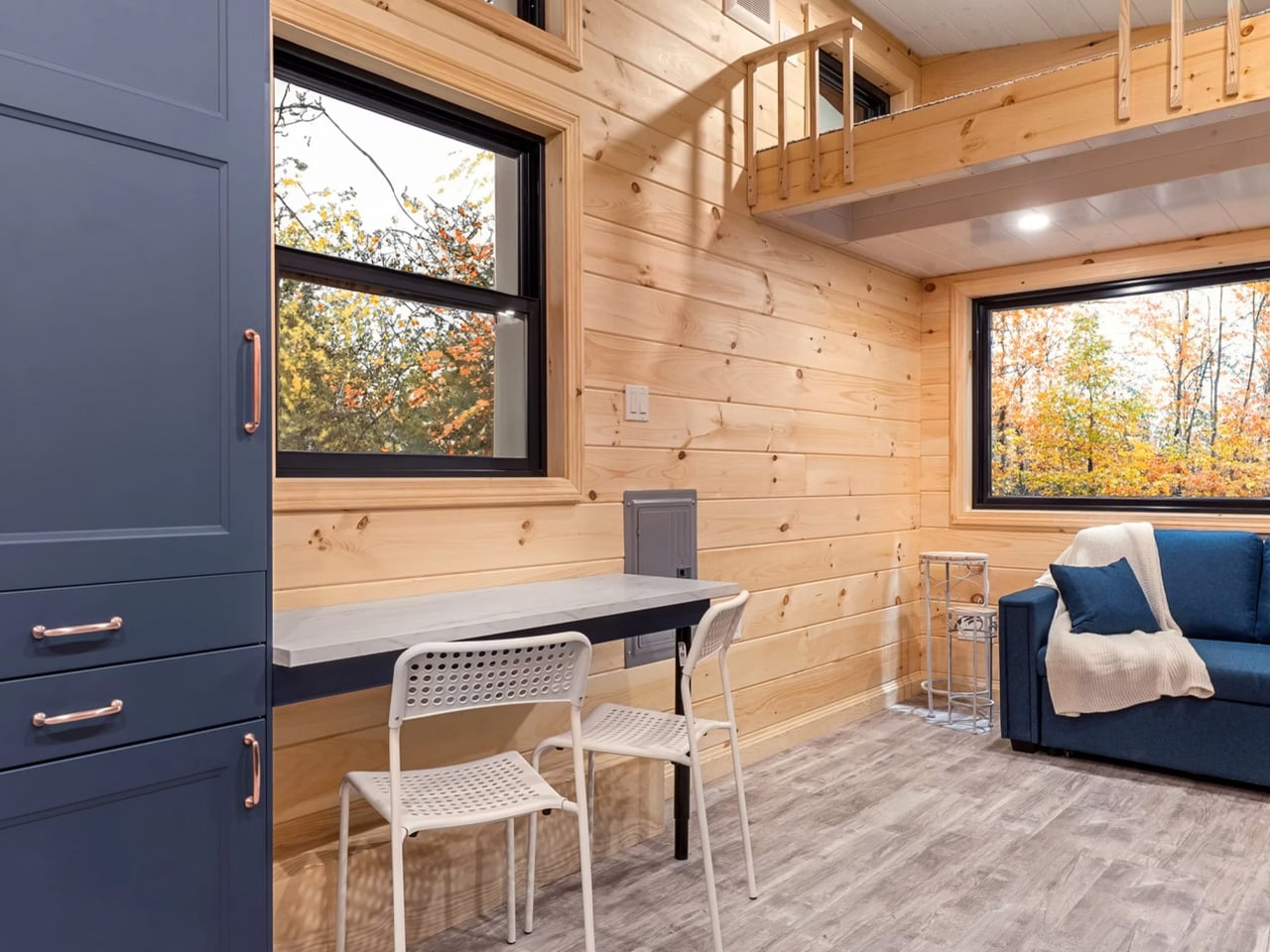
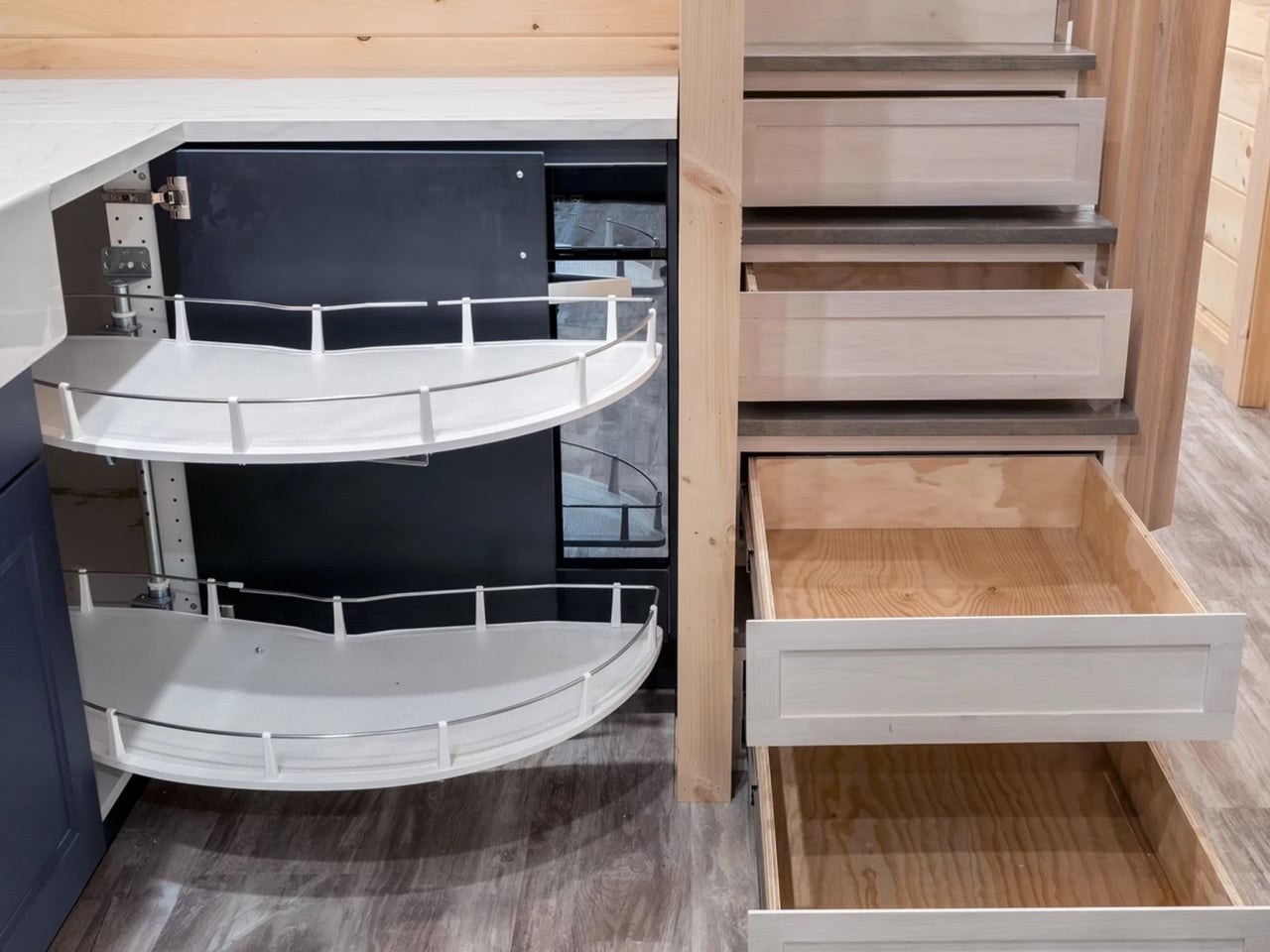
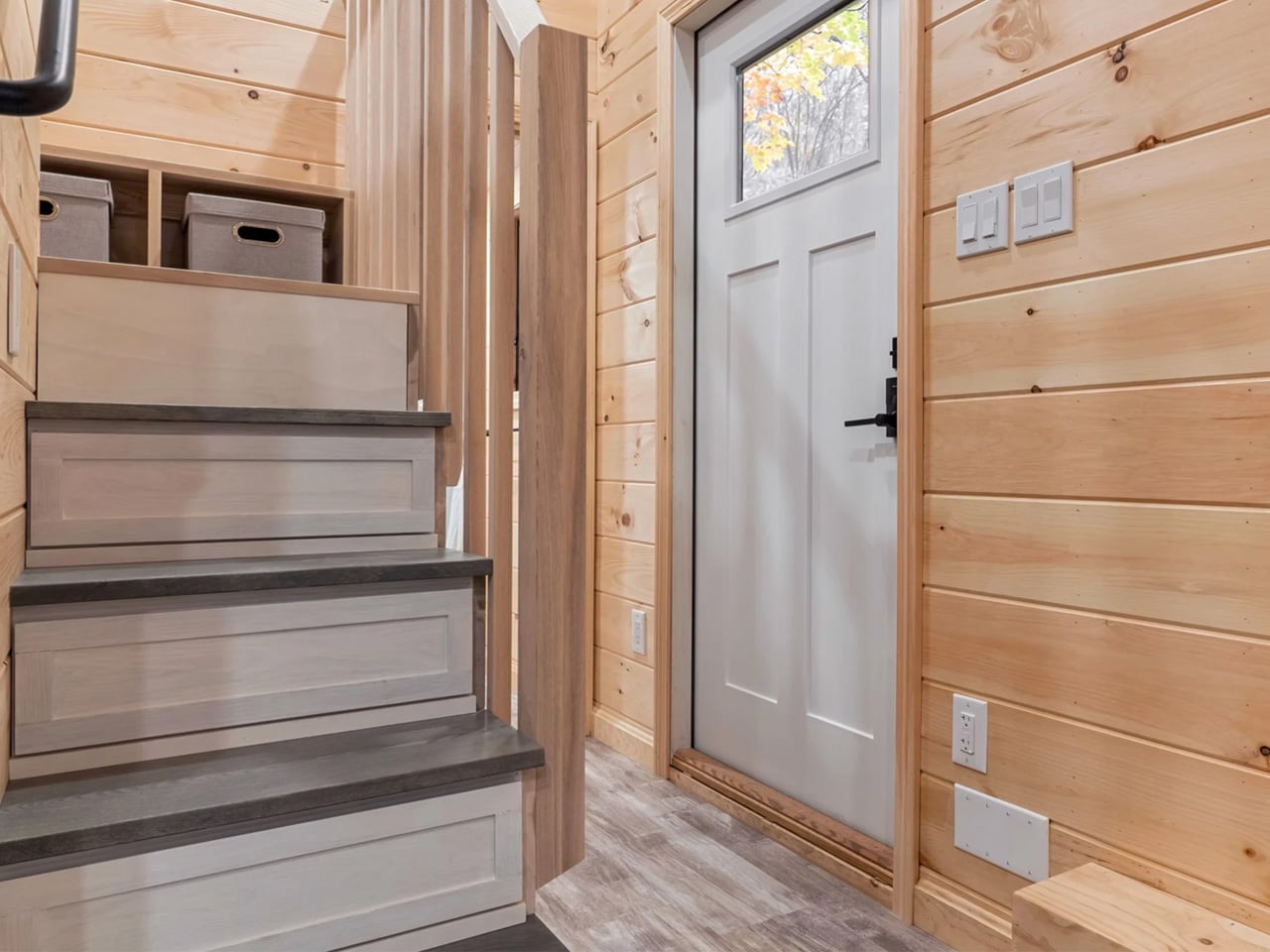
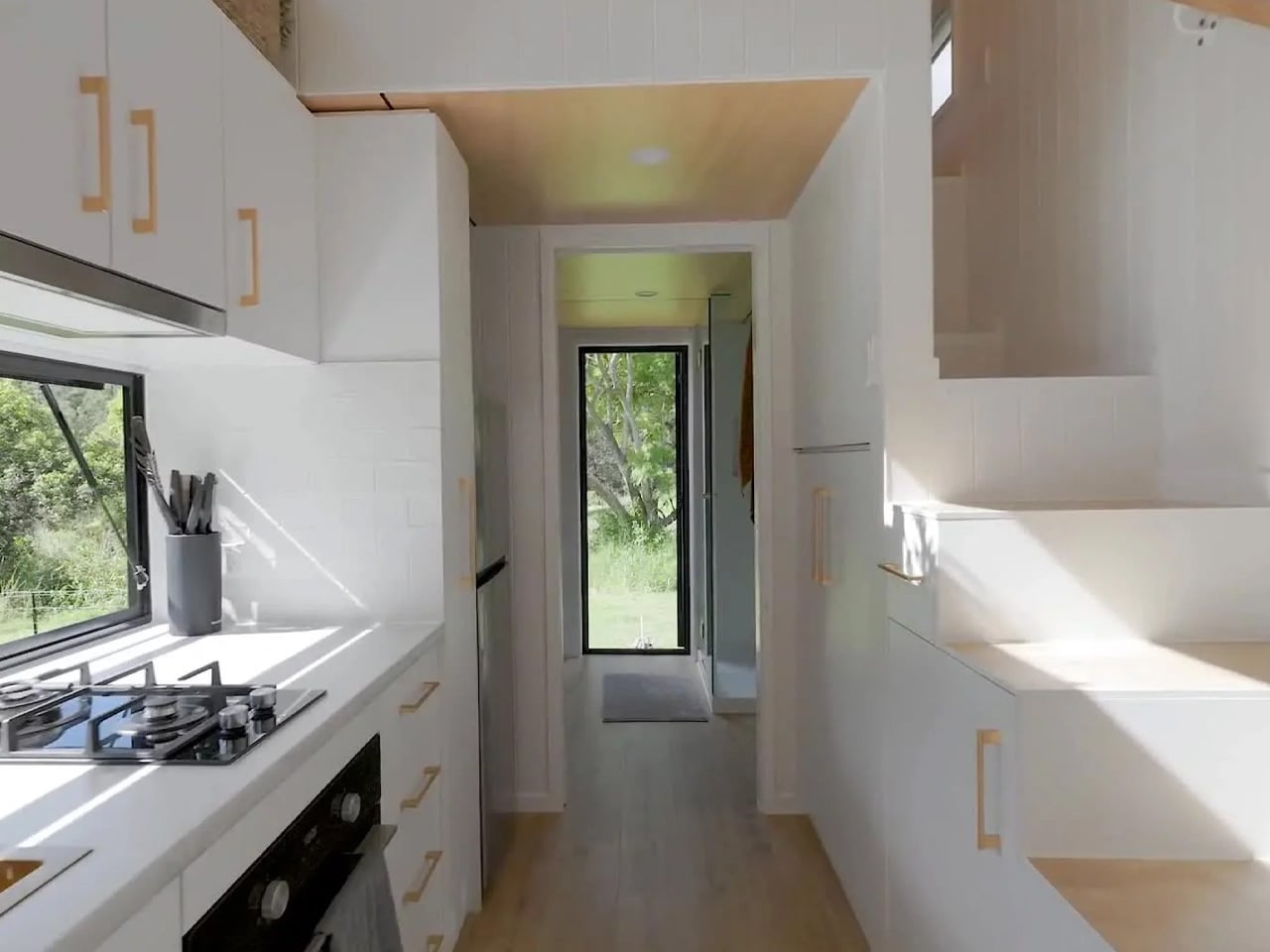
Inside, the aesthetic leans into modern farmhouse without being heavy-handed about it. White tongue-and-groove paneling lines the walls, dark blue cabinetry anchors the kitchen, and vinyl flooring runs throughout the lower level, kept warm by propane-powered underfloor heating. The living room is proportioned well enough to hold a full sofa and an electric fireplace, with room for a TV and actual breathing space. The staircase leading up to the main loft doubles as a storage unit — drawers and cupboards built directly into each step, so no square inch goes to waste.
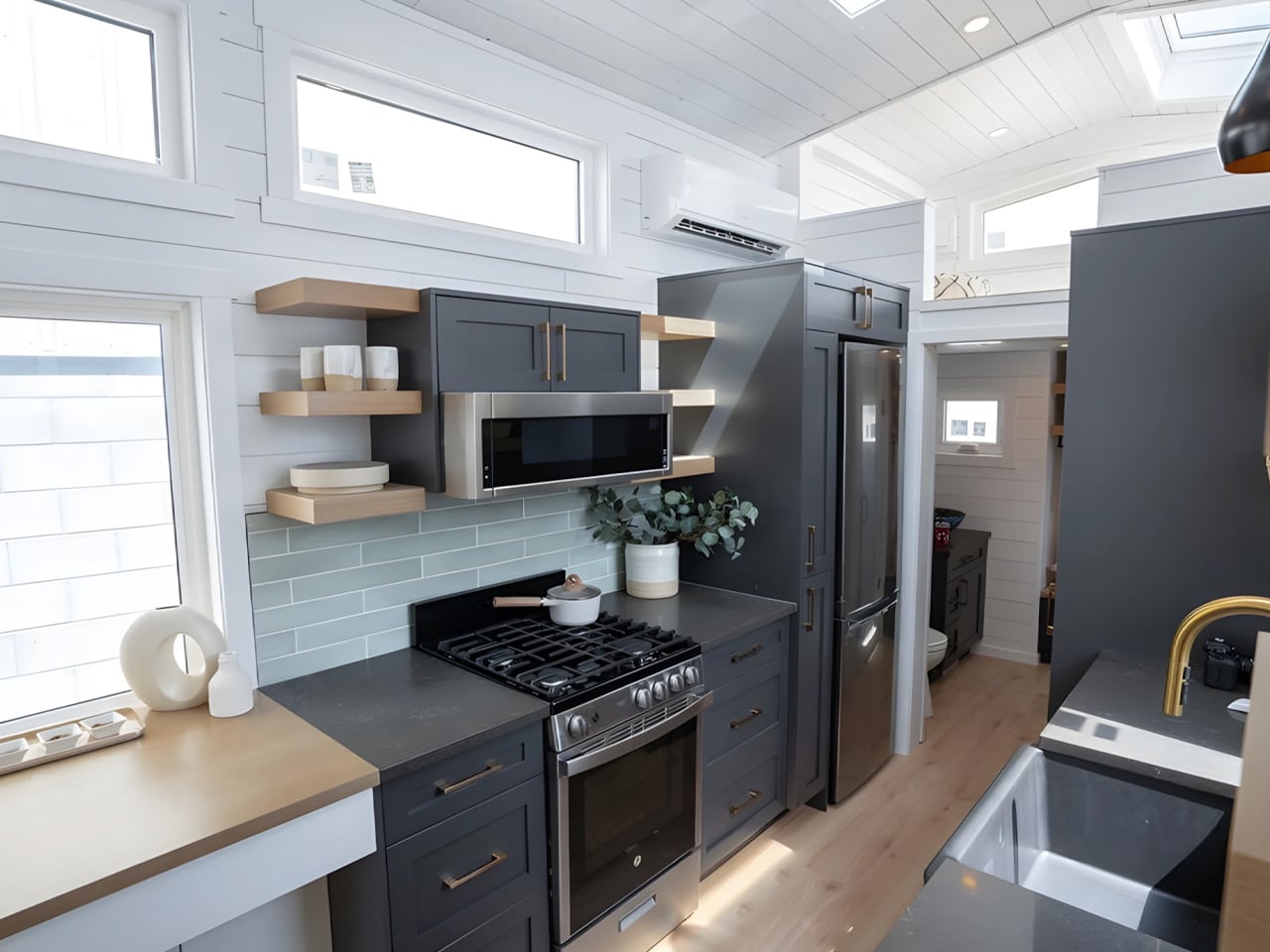
The kitchen is galley-style with cabinetry on both sides, and it’s more capable than most tiny homes manage. A four-burner propane stove, oven, fridge and freezer, microwave, twin-basin stainless steel sink, and a dishwasher. That last one gets mentioned a lot because it rarely shows up in this category. A small dining table seats two just off the kitchen.
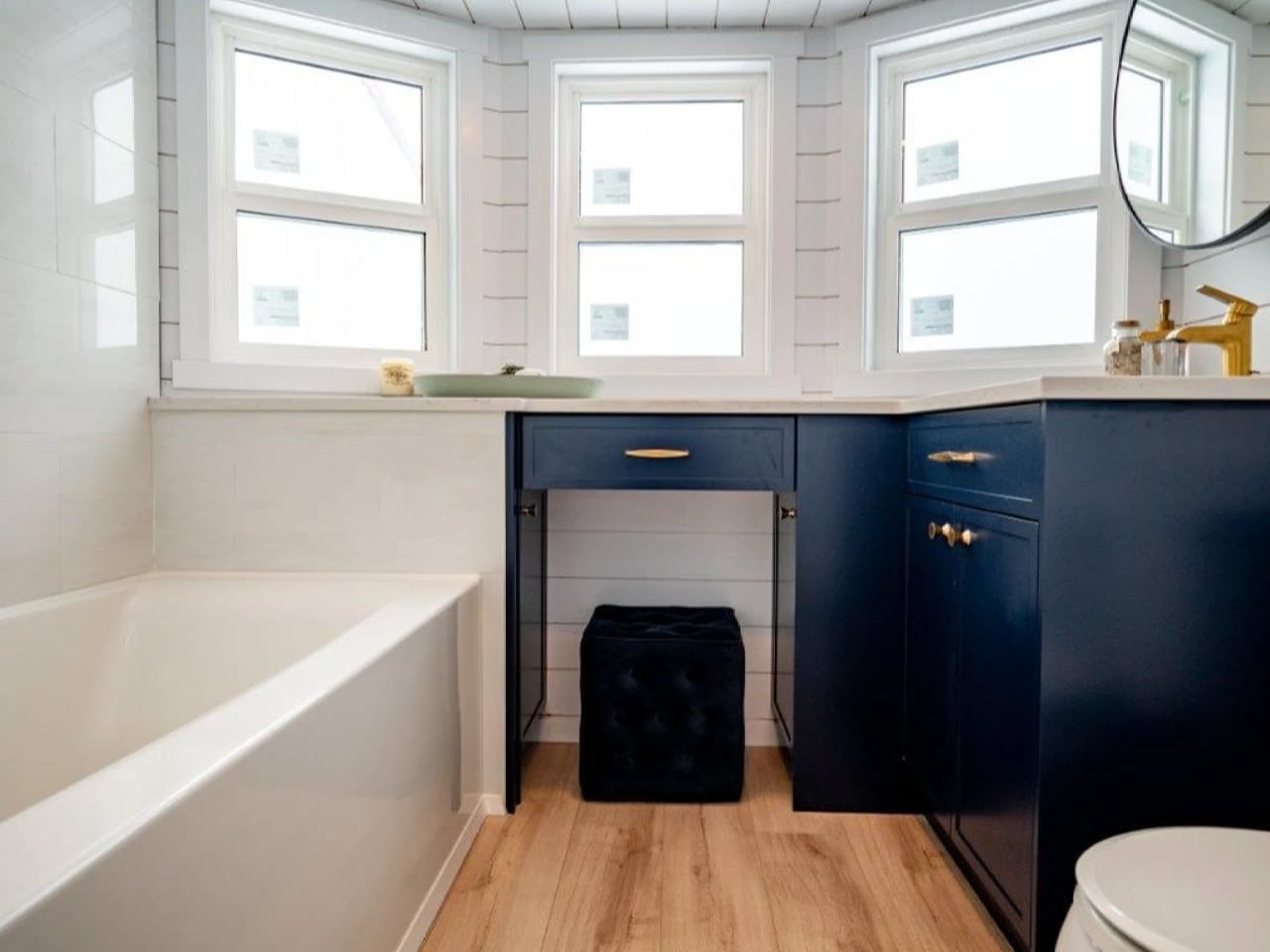
The bathroom earns its own mention. A sliding barn door opens into a space with an L-shaped vanity, a flushing toilet, and a combined bathtub and shower. Bathtubs in tiny homes are practically currency — most builders skip them entirely to save the square footage. Finding one here, in a home that’s also road-legal, is genuinely rare.
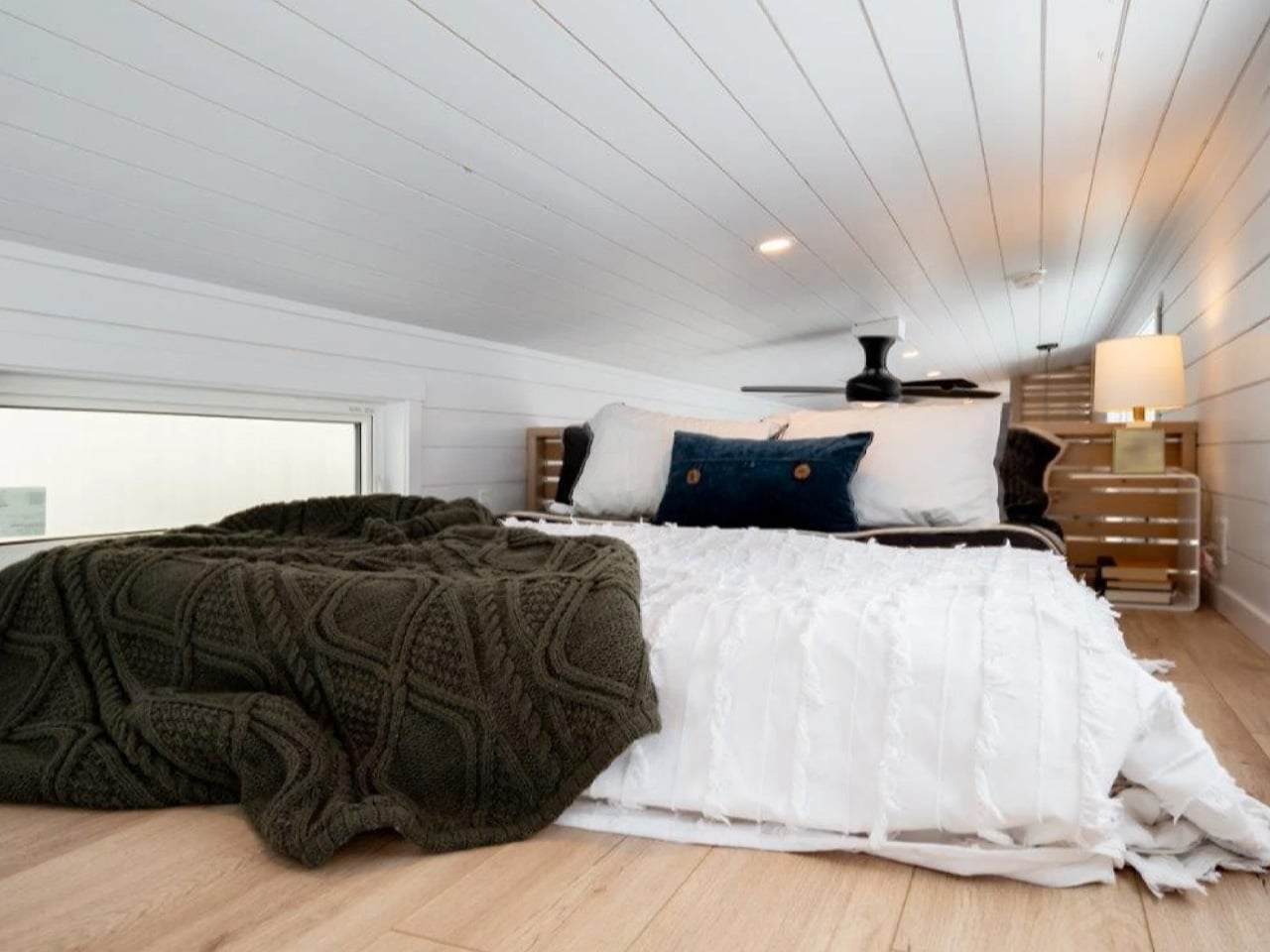
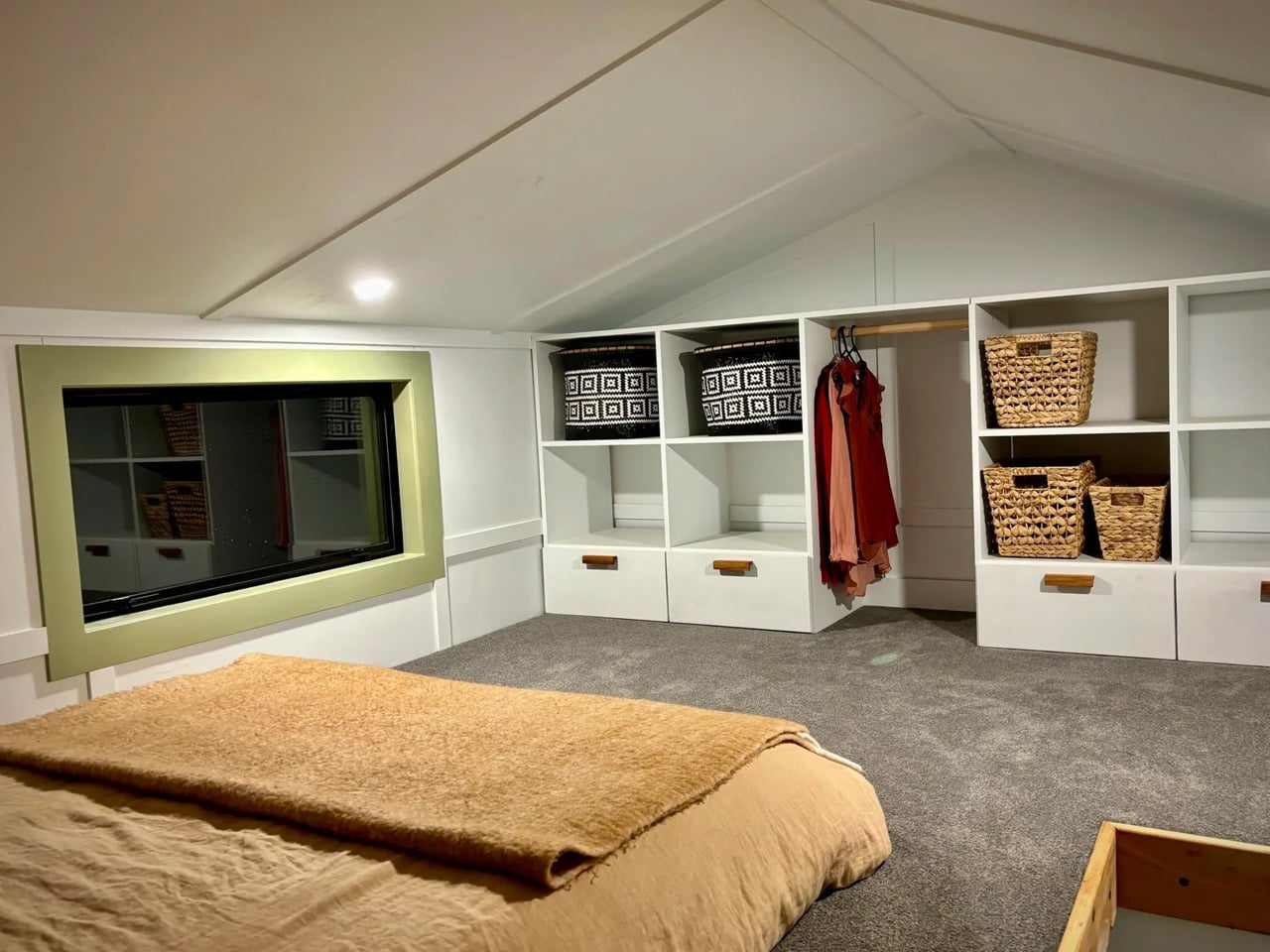
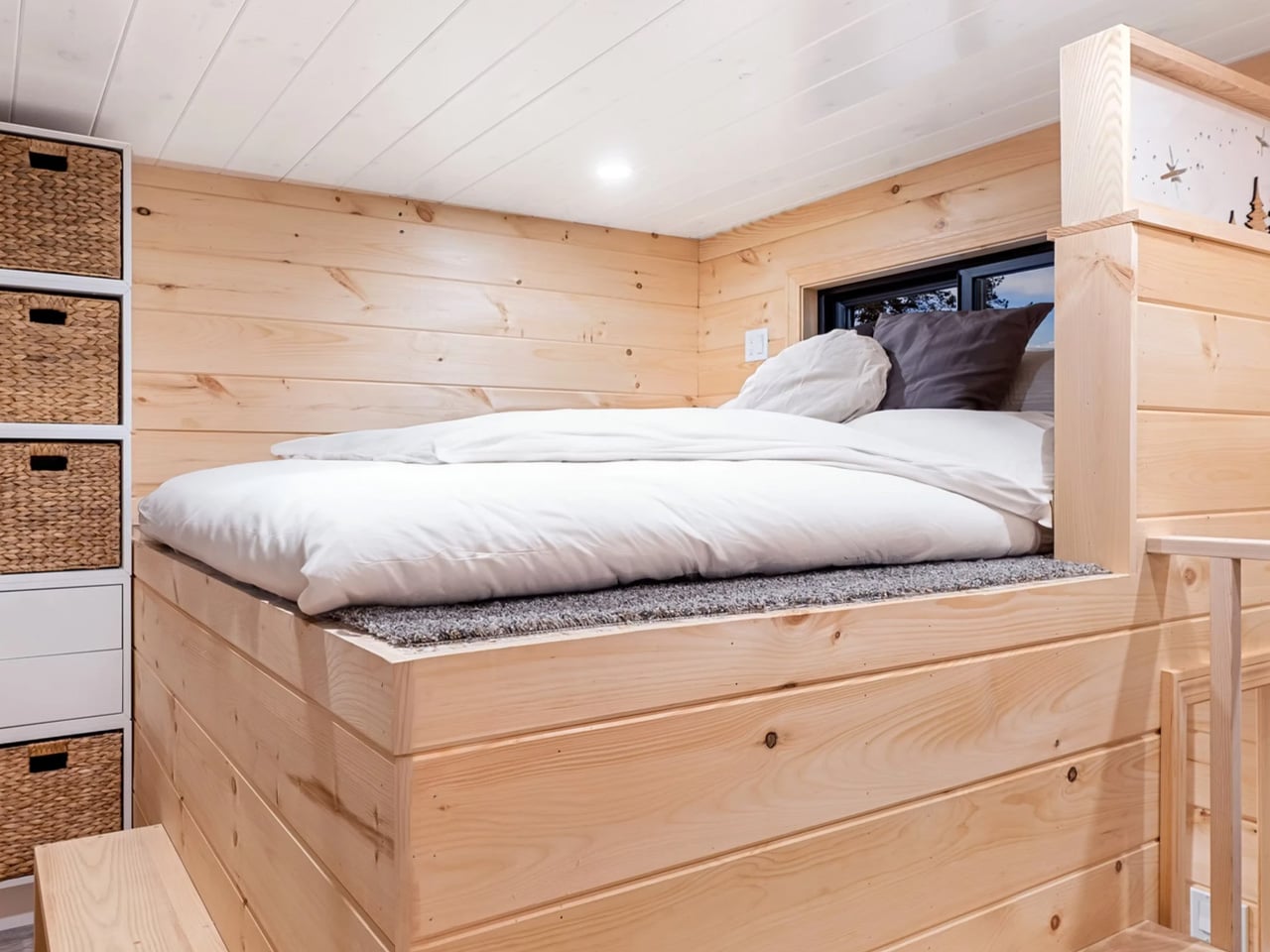
Two loft bedrooms handle the sleeping situation. The main loft sits above the living room with a double bed, storage, and a privacy divider. A second loft above the kitchen and bathroom is accessed by a removable ladder and fits another double bed. Combined, the Laurel sleeps four comfortably. Pricing is based on Teacup’s Bernice Range, which starts at roughly US$121,000, with delivery rates depending on location.
Most tiny homes are upfront about their limitations. The Florence isn’t interested in that conversation. The Florence, by Alberta-based Teacup Tiny Homes, is the argument against all of that. Sitting on a triple-axle trailer, the Florence stretches 36 feet long and 8.5 feet wide, placing it at the roomier end of the towable tiny home spectrum. Its 355 square feet of interior space is arranged with the kind of logic you’d expect from a full-size home — not an afterthought. That discipline in planning is what separates it from the crowd.
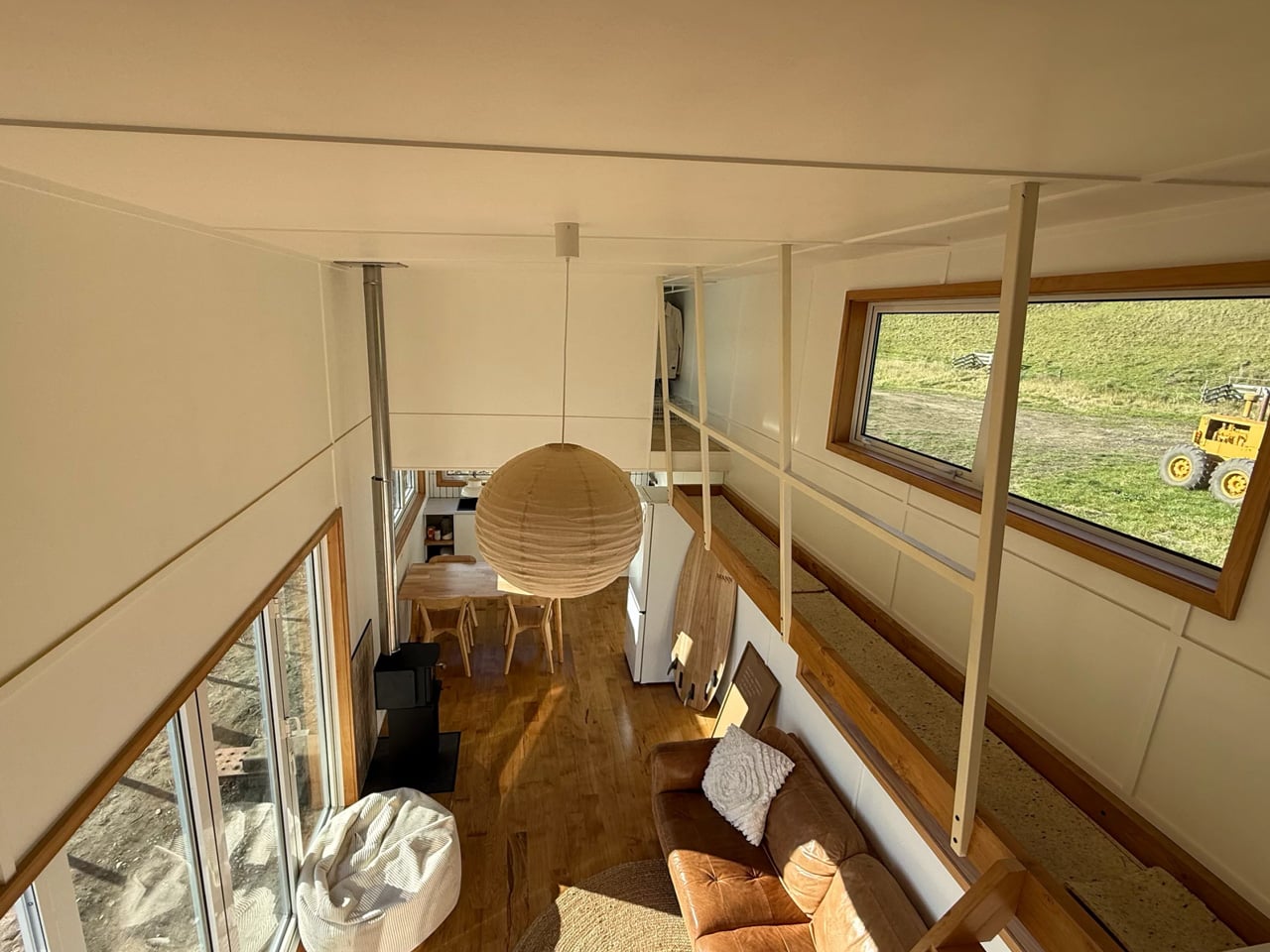
Step inside and the first thing you notice is light. White tongue-and-groove paneling wraps the walls, 11-foot vaulted ceilings push the space upward, and generous windows pull the outdoors in. The living area anchors the layout, centered around a sofa and electric fireplace, with room for a television and a large built-in storage unit near the entrance. It doesn’t read like a compromise. It reads like a considered home.
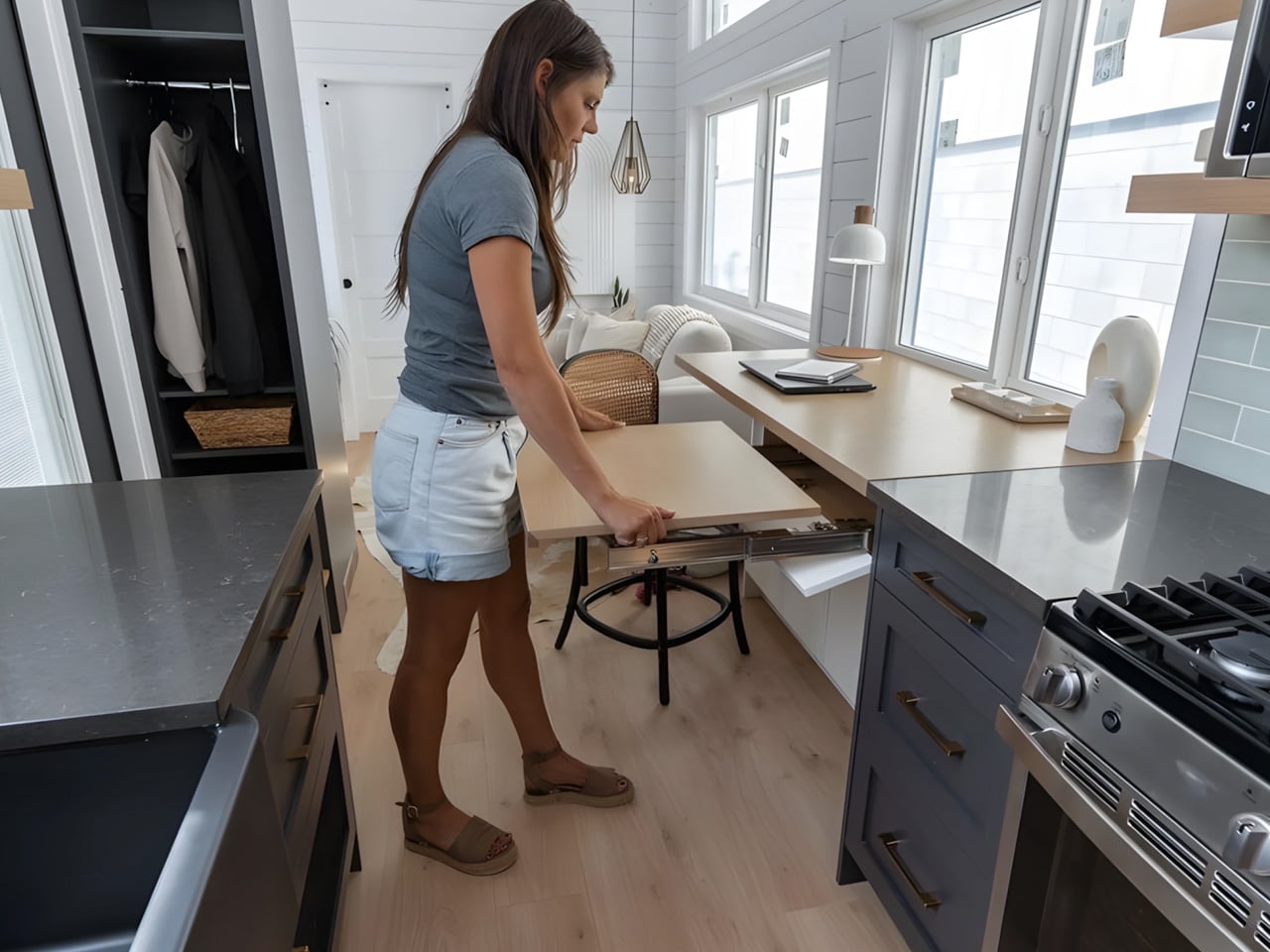
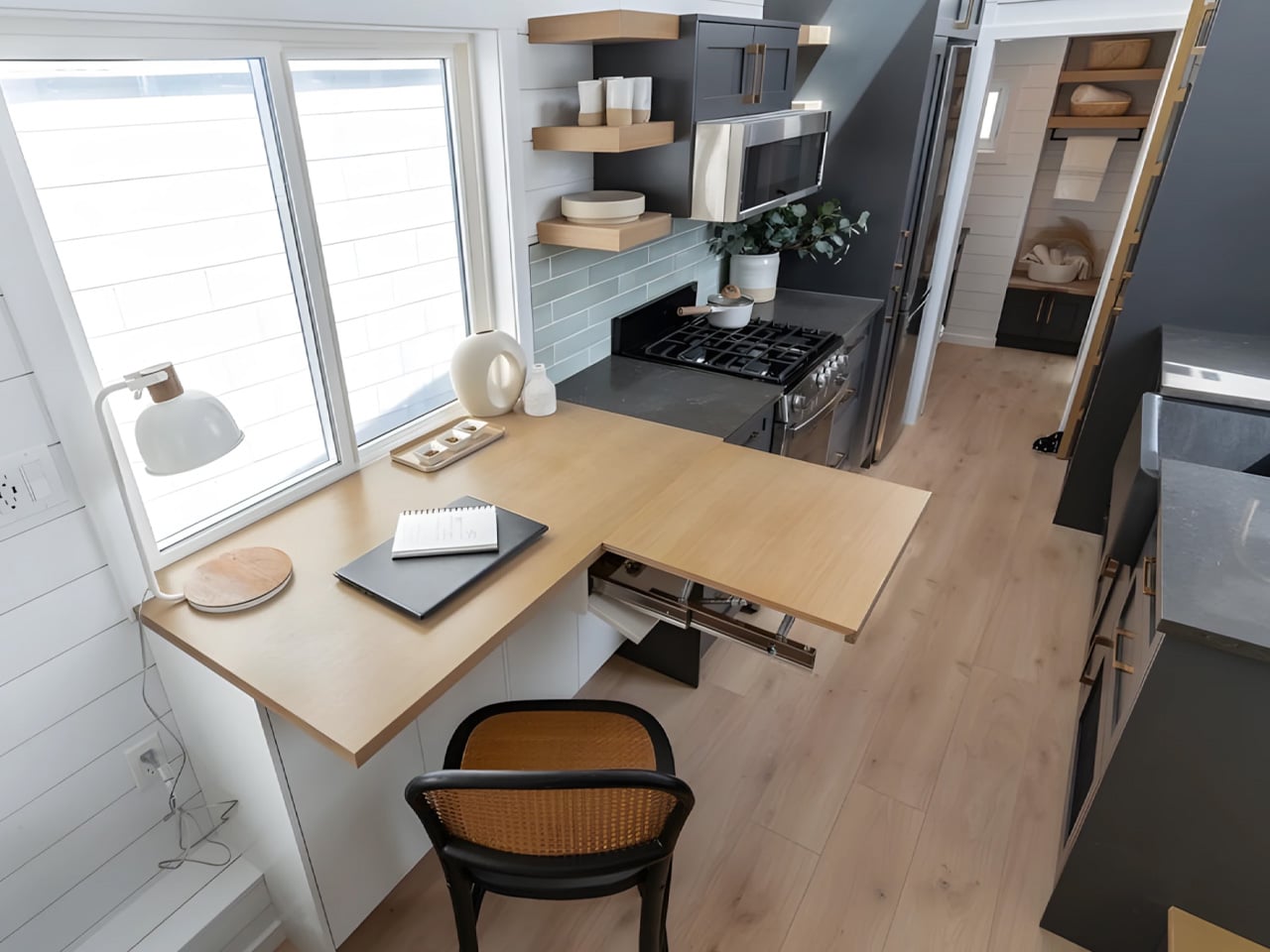
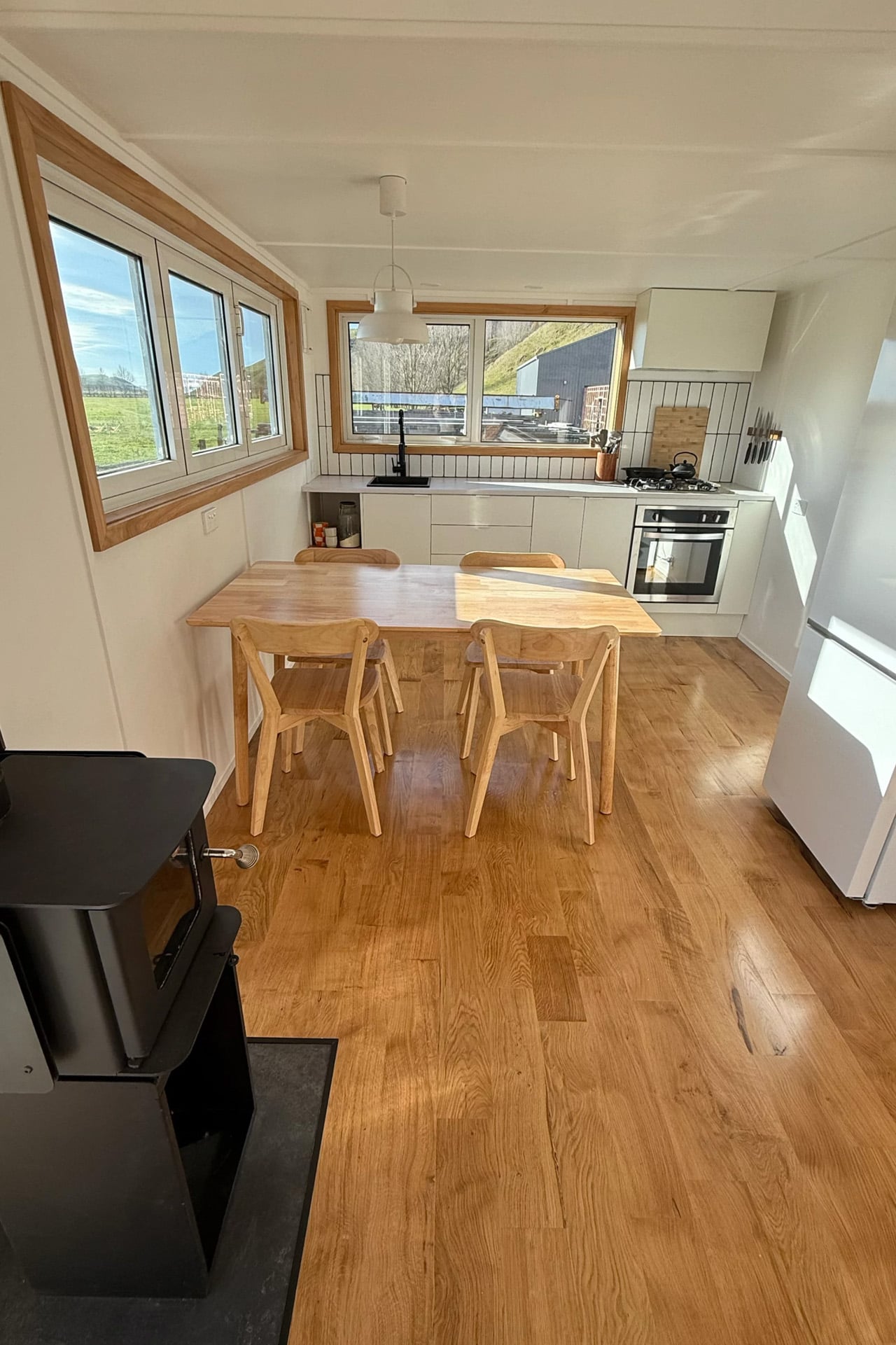
Immediately adjacent is one of Florence’s more thoughtful touches — a dining nook that doubles as a home office, complete with an extending desk and integrated storage. For remote workers or anyone who needs a dedicated workspace without sacrificing a room, this dual-function zone is quietly brilliant. The kitchen runs along the galley wall nearby, equipped with a four-burner propane stove, oven, microwave, fridge/freezer, a large sink, and storage that actually holds things.
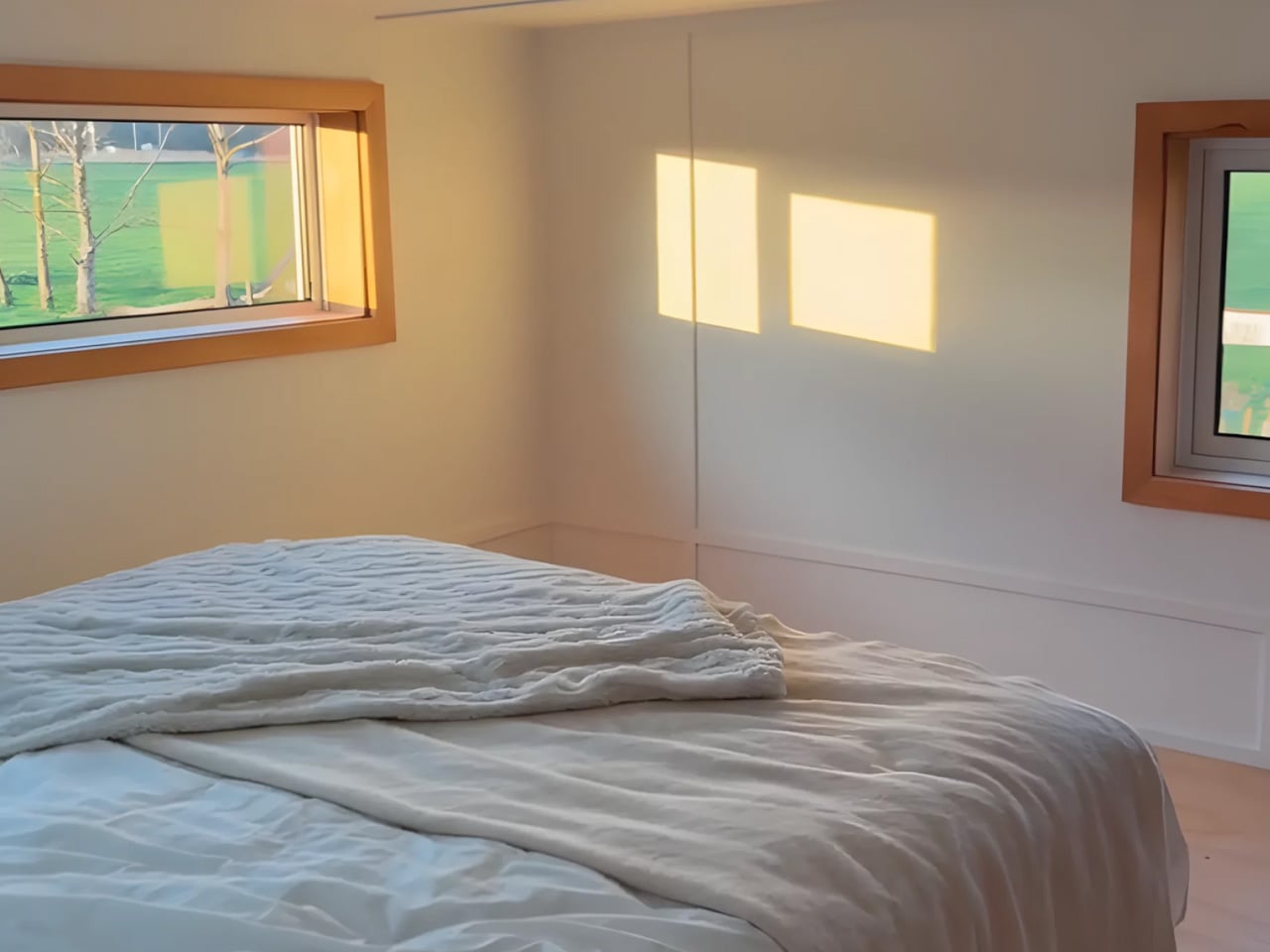
The master bedroom is located on the main floor, which is rarer than it should be in the tiny home world. Positioned next to the living area, it fits a double bed with genuine walking clearance on both sides and enough built-in storage to feel like a real room. A secondary sleeping loft sits above the kitchen and bathroom, accessed by a removable wooden ladder, offering space for a second double bed. The bathroom, tucked between the kitchen and bedroom, features a glass-enclosed shower, flushing toilet, and vanity sink.
Teacup Tiny Homes, a 100% female-owned and operated company founded in 2016, offers the Florence with a range of customization options — a soaking tub in place of the shower, choice of materials and furnishings, and permanent foundation installation if mobility isn’t the priority. Delivery runs across both the US and Canada. The Florence starts at roughly US $122,000. For a home this size, it’s a number that’s easier to justify than it might first appear.
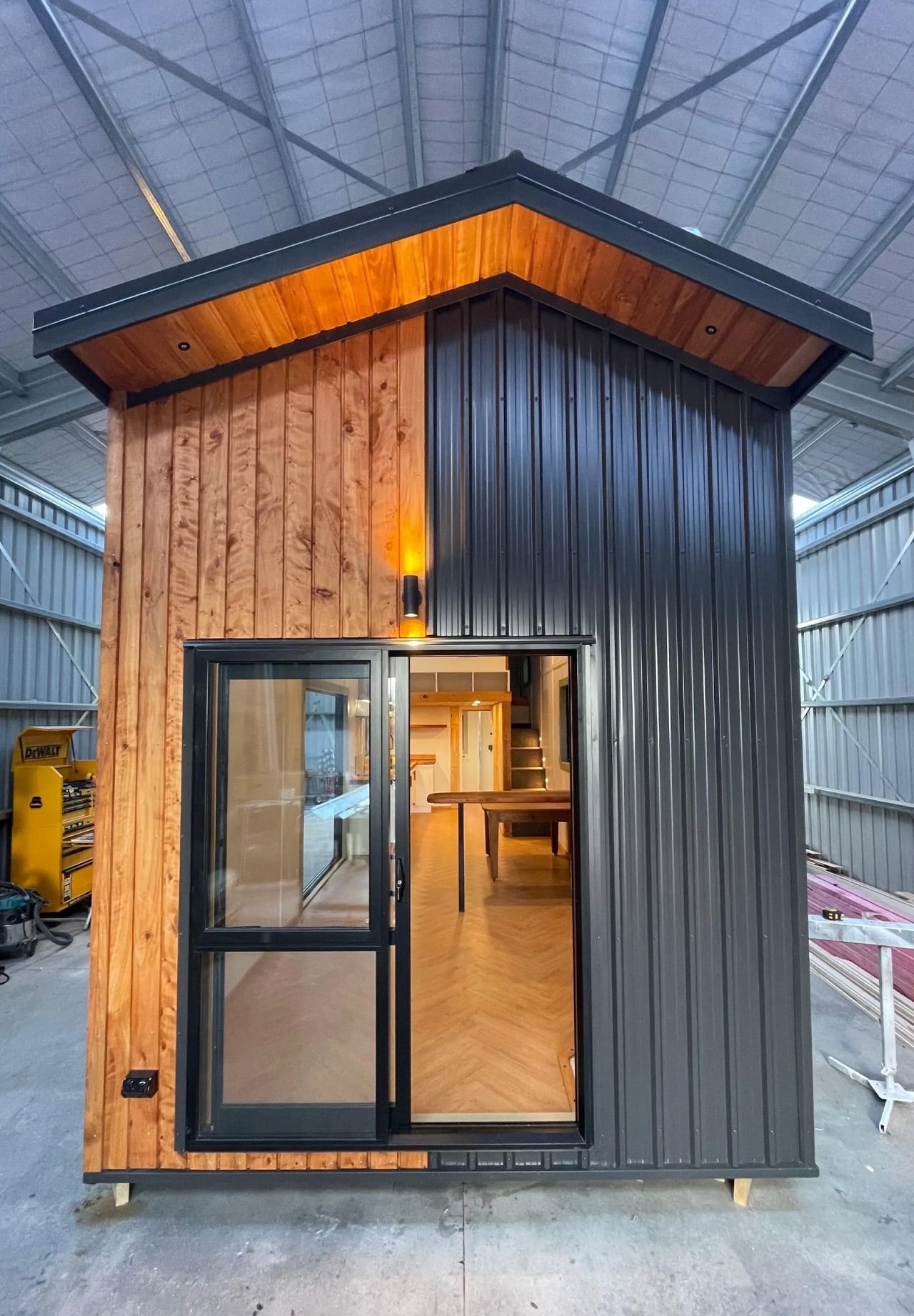
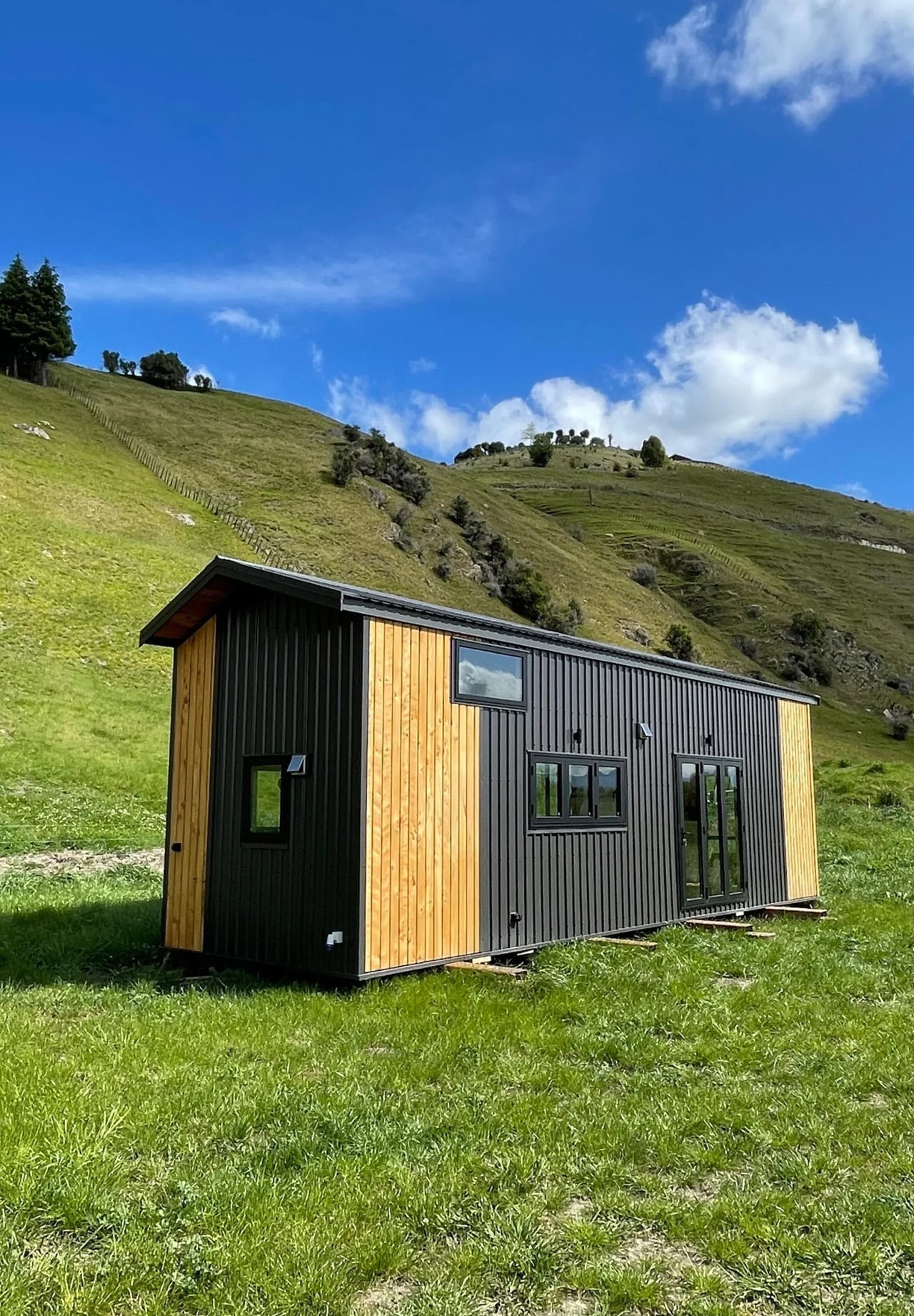
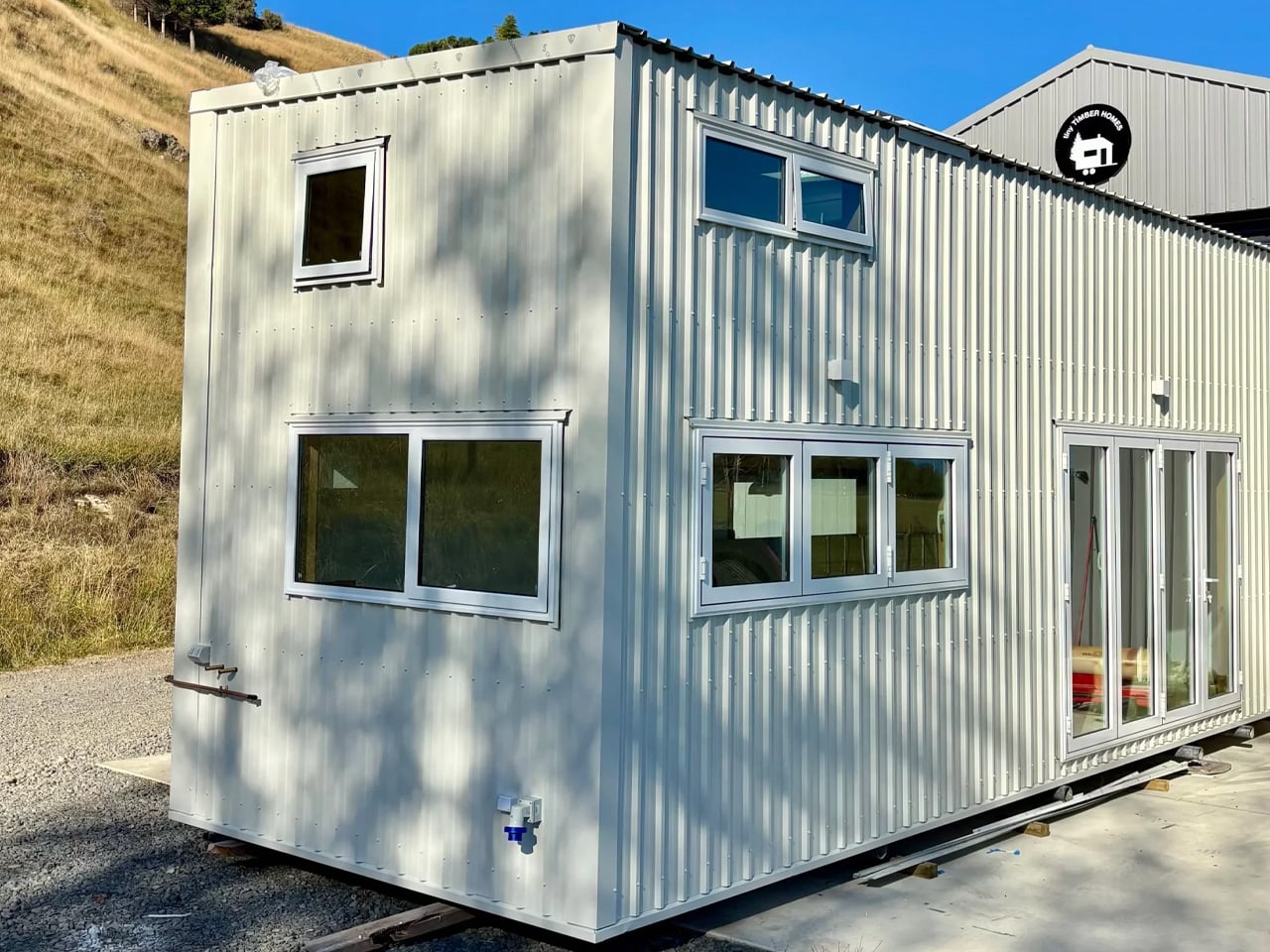
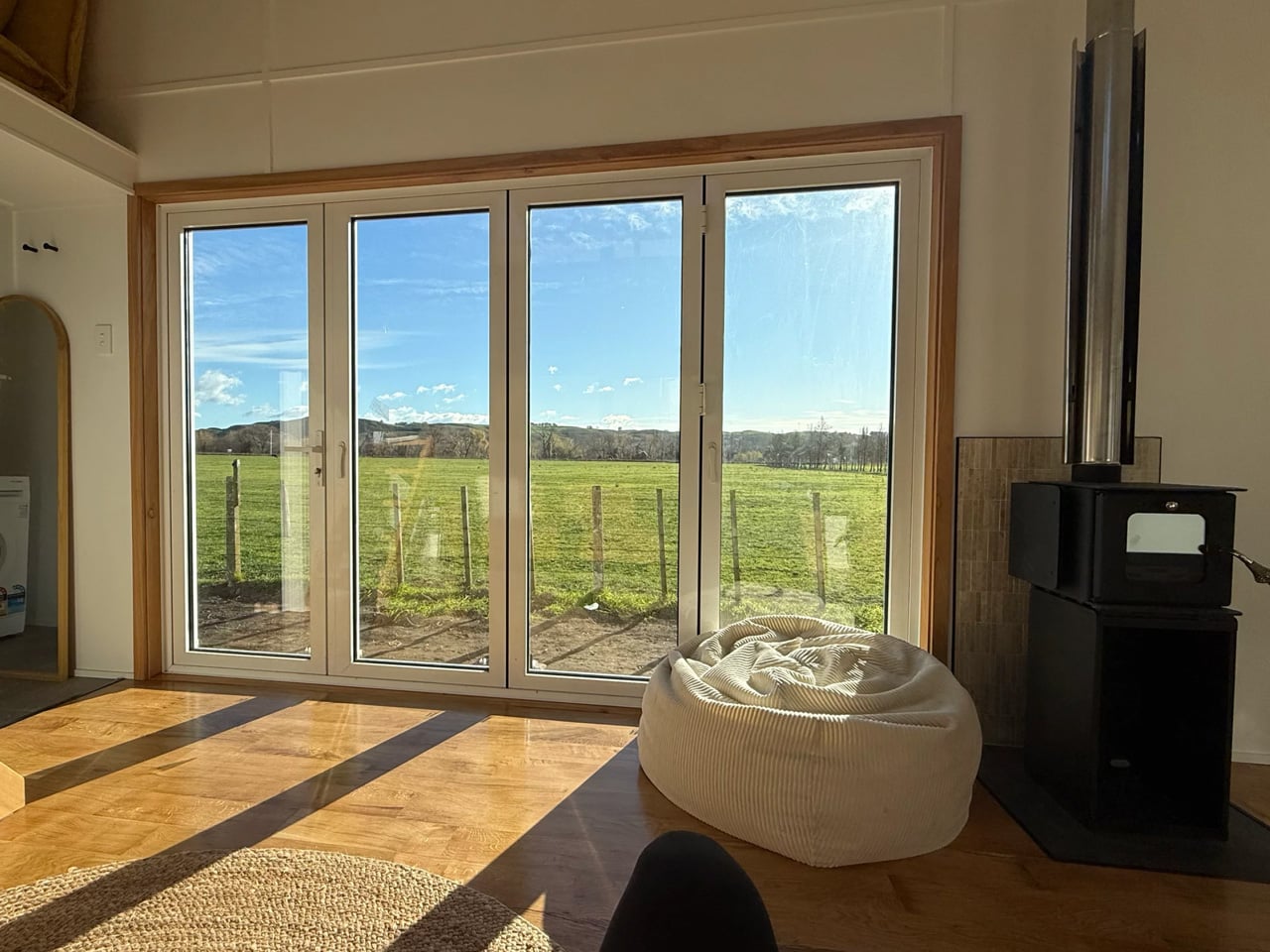
Wood has a way of telling you exactly where it’s been — and the Redwood by Tiny Timber Homes wears that history well. The Redwood leans into that quality completely — and the result is a tiny house that feels less like a compromise and more like a choice you’d make twice.
Tiny Timber Homes has built its reputation on one idea: that small spaces deserve the same craftsmanship as full-sized ones. The Redwood is perhaps the clearest expression of that philosophy. Its exterior reads immediately as intentional — warm wood cladding, clean rooflines, and a silhouette that sits confidently without trying to mimic a traditional house. It’s not cosplaying a cabin. It’s its own thing.
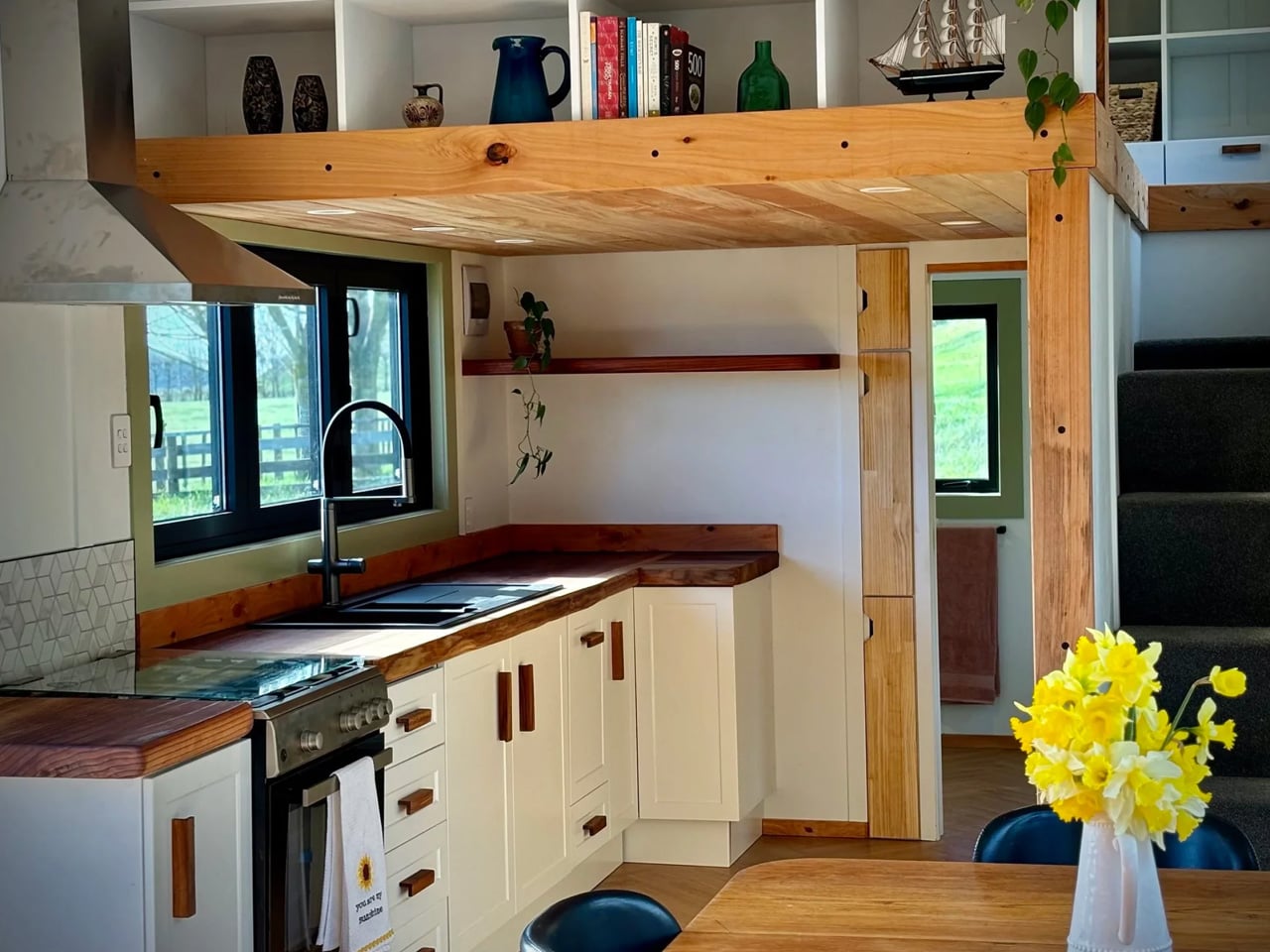
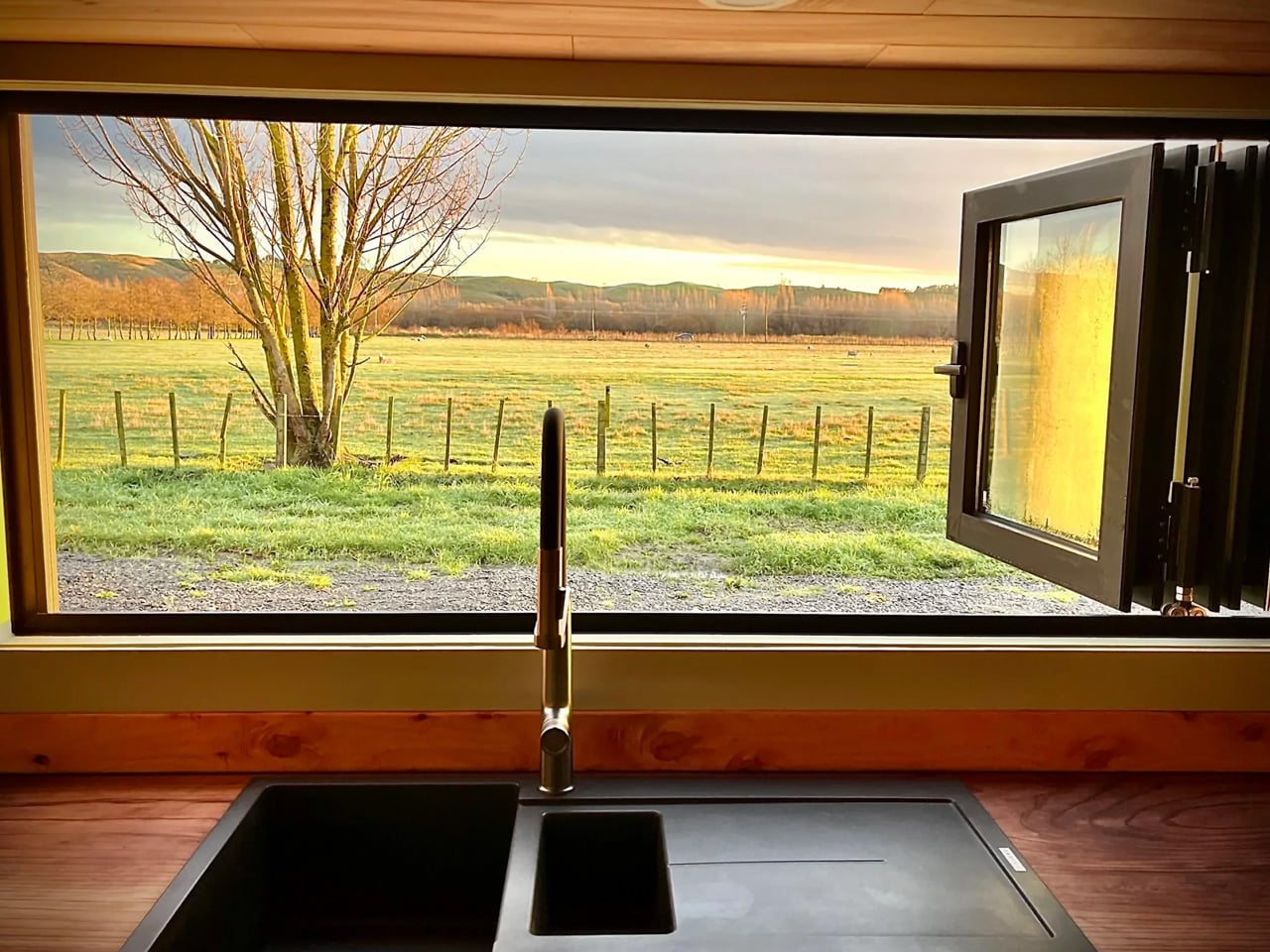
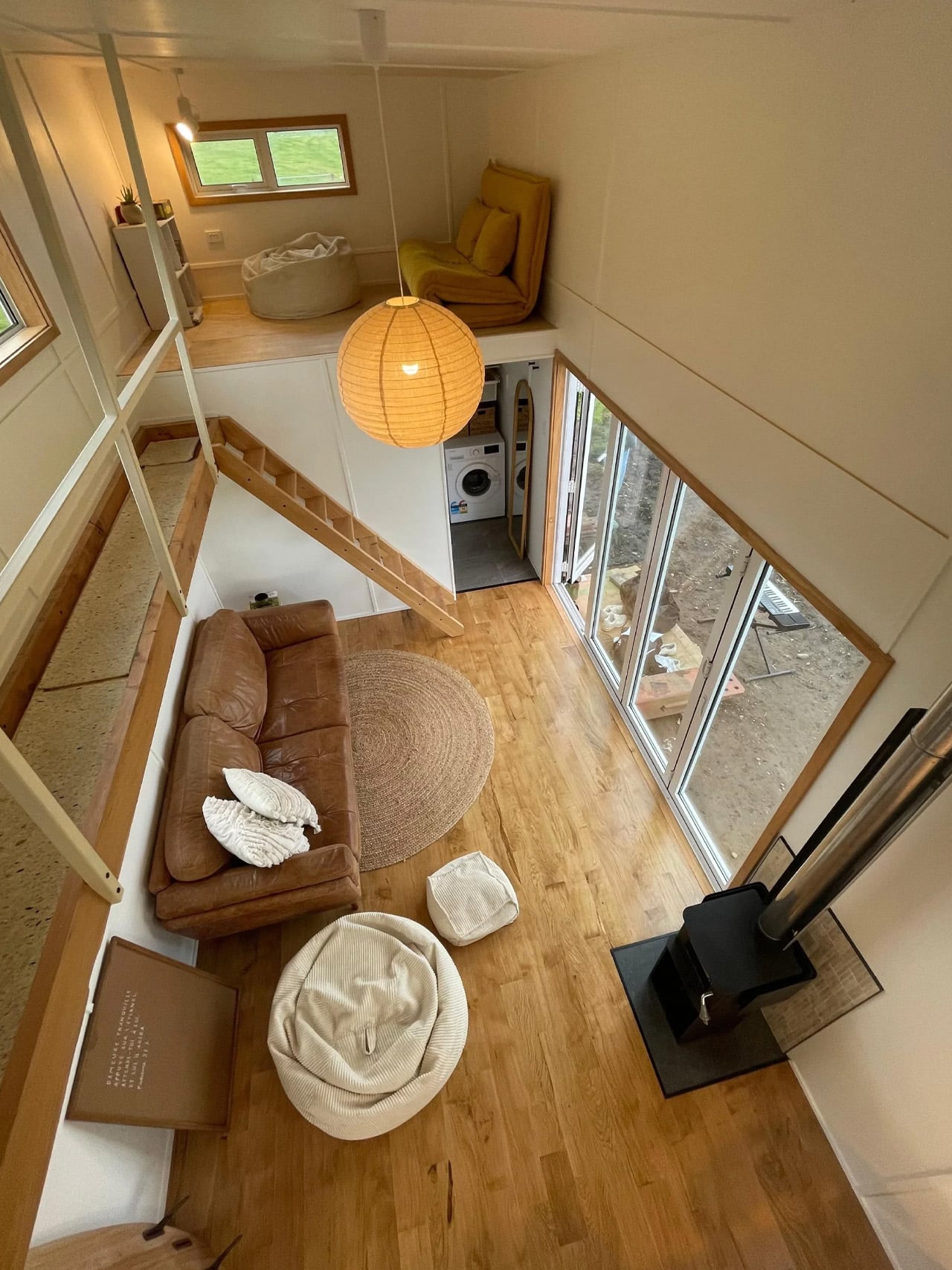
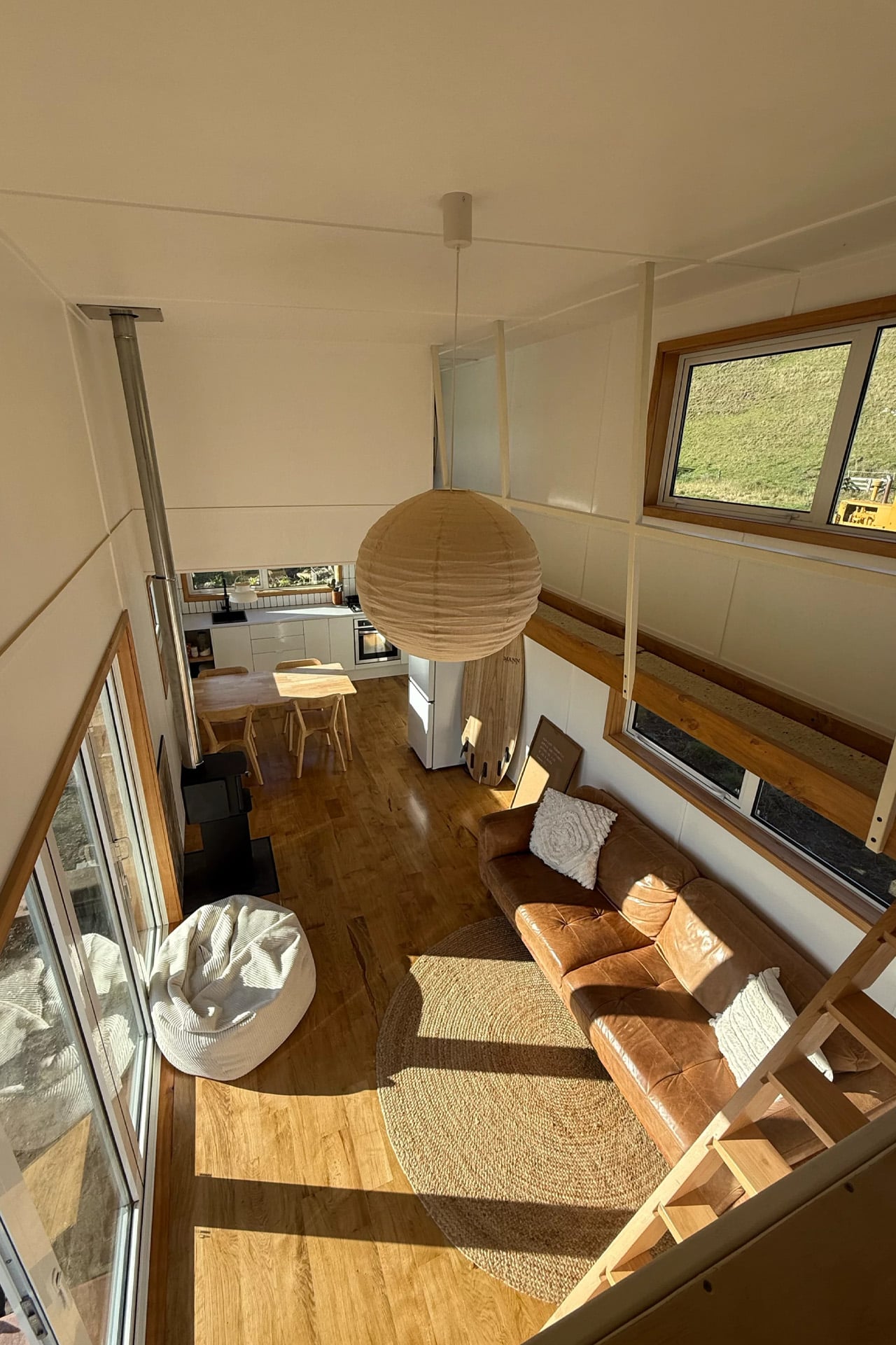
Step inside and the material language continues without interruption. Exposed timber framing lines the interior walls, giving every room a structural honesty that most tiny homes paper over with drywall and distraction. Natural light does the heavy lifting here — strategically placed windows pull the outdoors in and keep the interior from ever feeling like a box you’re trapped inside.
The kitchen is compact but considered. Counter space is used with real intention, storage is tucked where you’d actually look for it, and the layout doesn’t ask you to turn sideways to reach the sink. It’s the kind of kitchen that rewards a slower pace — coffee in the morning, dinner from scratch, no dishwasher you don’t need.
The sleeping loft sits above it all, accessible by a stair ladder that doubles as storage. From up there, the whole space reads differently. You see the structure, the grain of the wood, the way everything fits without forcing. It’s a perspective that makes you appreciate the design more, not less.
What separates the Redwood from the growing noise in the tiny home market is restraint. There’s no attempt to cram in features that don’t belong, no feature list that sacrifices livability for a spec sheet. What you get instead is a home that understands its own scale and works with it — not against it.
Tiny Timber Homes builds for people who’ve thought seriously about what they actually need from a home. The Redwood answers that question with timber, light, and a layout that respects the person living inside it. In a category full of aspirational renderings and underwhelming follow-through, that’s worth something. It looks like a home. It lives like one too.
Most tiny homes ask you to make peace with the compromise. Wind River Built’s Rogue Mini skips that conversation entirely. Built in Tennessee by one of the most respected names in the tiny home space, the Rogue Mini is a trailer-mounted dwelling that treats small square footage not as a limitation, but as a design brief.
From the outside, the Rogue Mini reads clean. Board-and-batten siding, a pitched roofline, and restrained exterior detailing give it the visual composure of something far more permanent than its wheels suggest. Wind River Built has always leaned into quality construction over novelty, and the Rogue Mini reflects that. Every edge feels considered. Nothing about the exterior screams “novelty camper” — it looks like a house someone actually wants to live in.
Step inside, and the interior continues that conversation. Wood-paneled walls and vaulted ceiling lines open the space upward, drawing the eye in a way that makes the square footage feel more generous than it is. The kitchen is compact but functional, with enough counter space to cook a real meal rather than reheat one. The sleeping loft sits above, accessible by a staircase or ladder depending on configuration, and offers a surprisingly comfortable retreat that feels separated from the main living area in the way a bedroom should.
What Wind River Built understands — and what a lot of tiny home builders get wrong — is that smallness only works when the details are right. Inadequate storage, poor natural light, and awkward transitions between zones make a small home feel punishing. The Rogue Mini sidesteps most of those pitfalls. Windows are placed deliberately, throwing light into corners that would otherwise collapse. Storage is woven into the structure rather than bolted on as an afterthought.
The Rogue Mini isn’t designed for the weekend warrior or the festival-goer chasing Instagram backdrops. It’s designed for someone who has genuinely decided to live differently — to trade square footage for mobility, and square footage for intention. That kind of design decision requires a builder who takes the task seriously, and Wind River Built clearly does.
At a time when housing feels increasingly abstract — prices climbing, spaces shrinking, and permanence fading — the Rogue Mini offers something rare. It chooses to make living small feel like an upgrade rather than a retreat. That’s not an easy thing to design. Wind River Built pulls it off.
There’s a certain kind of freedom that comes with owning less. Escape’s eBoho Go leans into that idea with zero apology — a 16-foot, all-electric tiny home that packs a kitchen, bathroom, queen bed, and a surprising amount of breathing room into just 152 square feet. It starts at $39,440, and a production unit is currently available for $45,440. For context, that’s less than some high-end camping trailers, and considerably more livable than any of them.
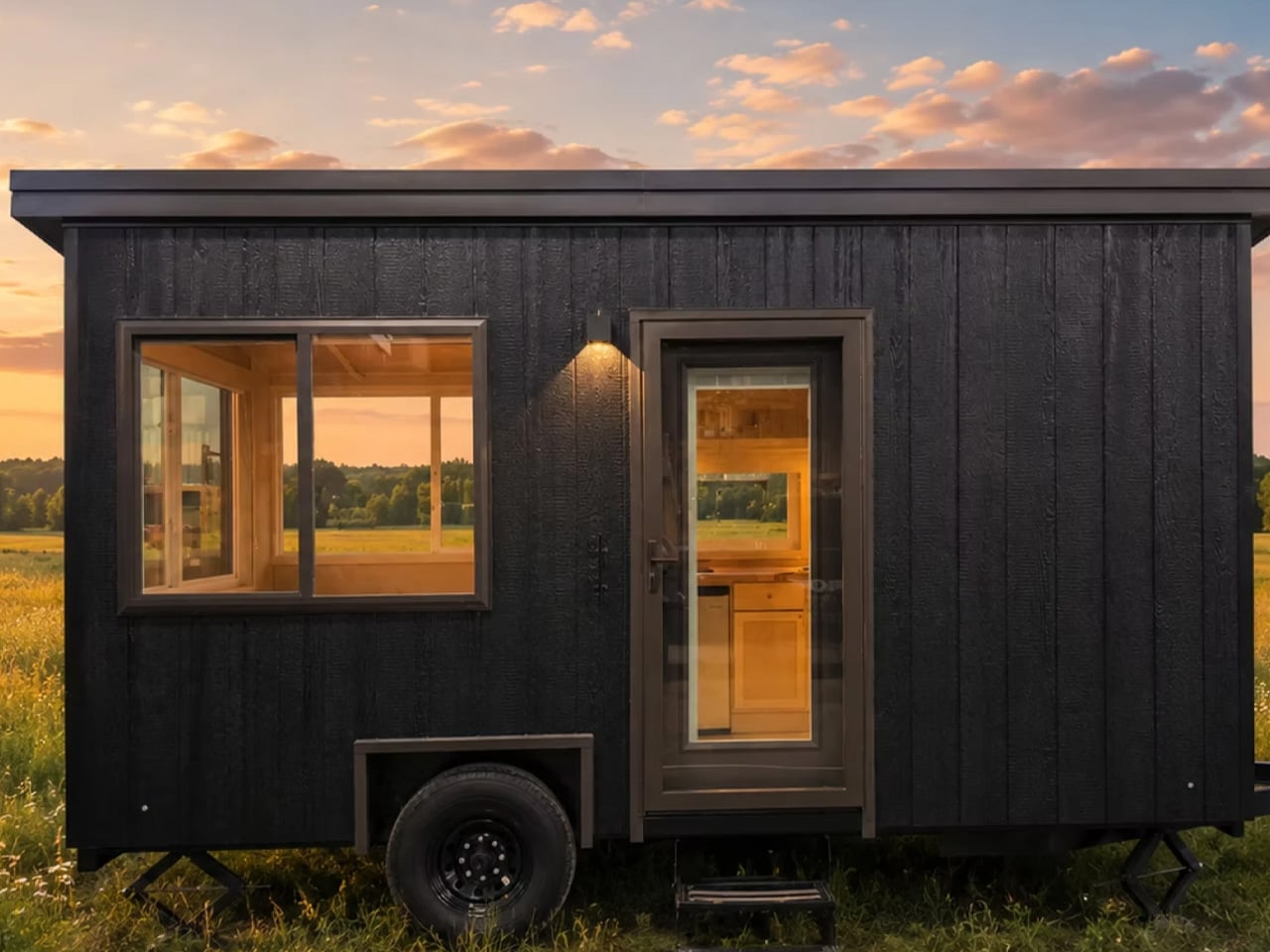
The eBoho Go rides on a single-axle trailer, making it one of the more portable tiny homes on the market. Escape clads the exterior in engineered wood siding and wraps it in large glazed panels that pull daylight deep into the interior. From outside, it reads as the smaller sibling of Escape’s premium N2 model — the same clean design language, just distilled down to its essentials. An all-steel roof caps the structure, giving it an architectural finish that most homes in this price range don’t deliver.
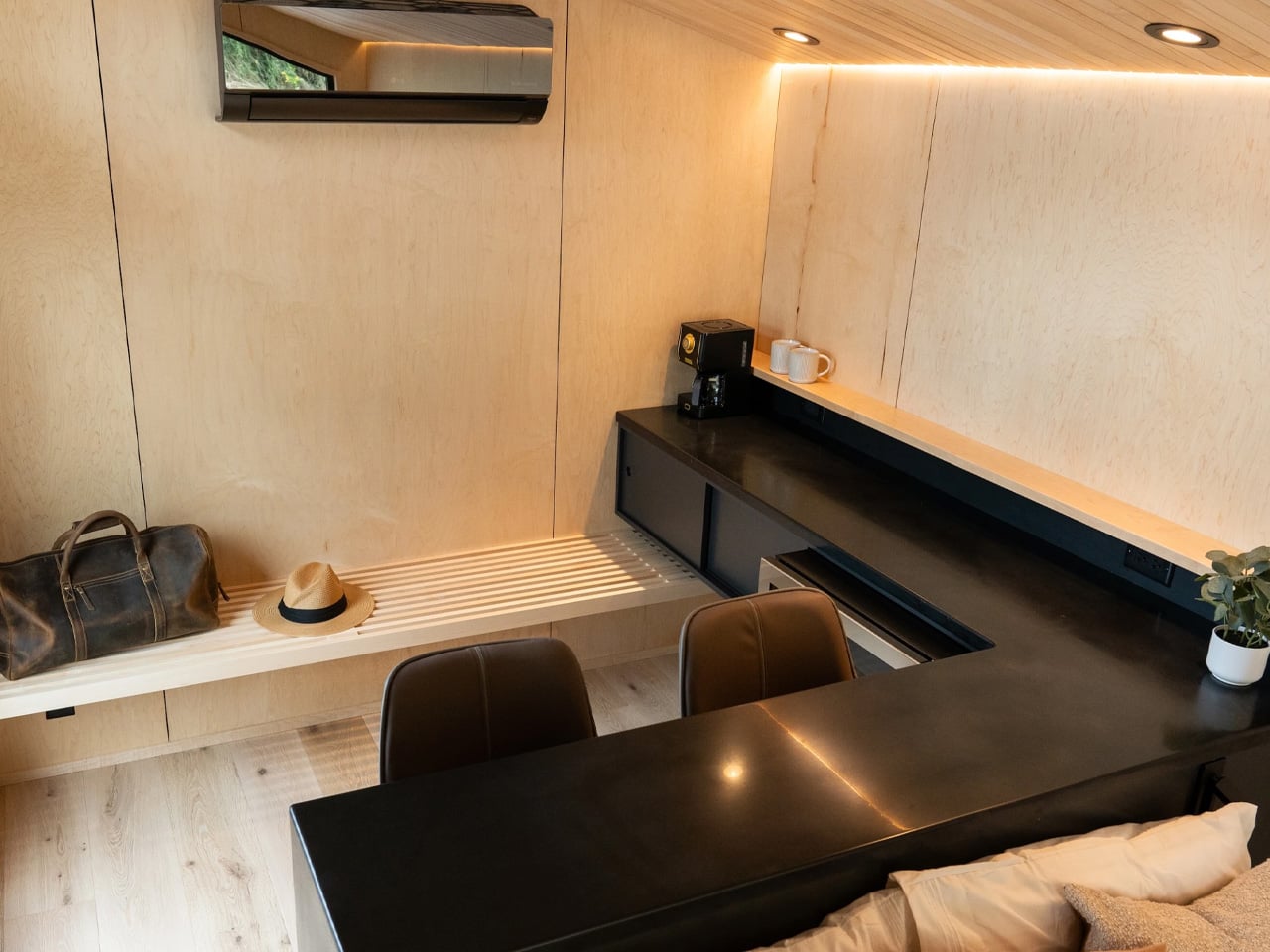
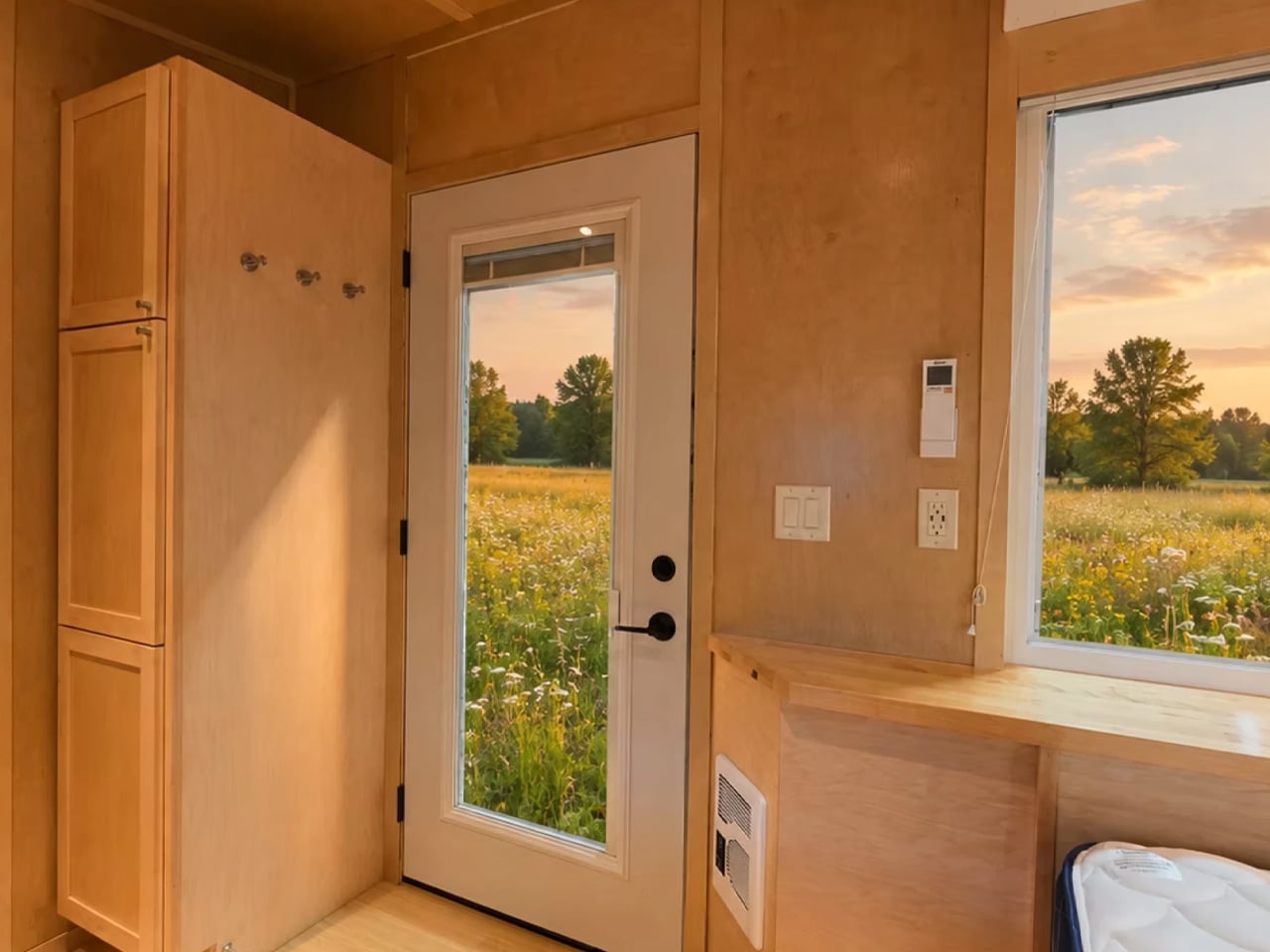
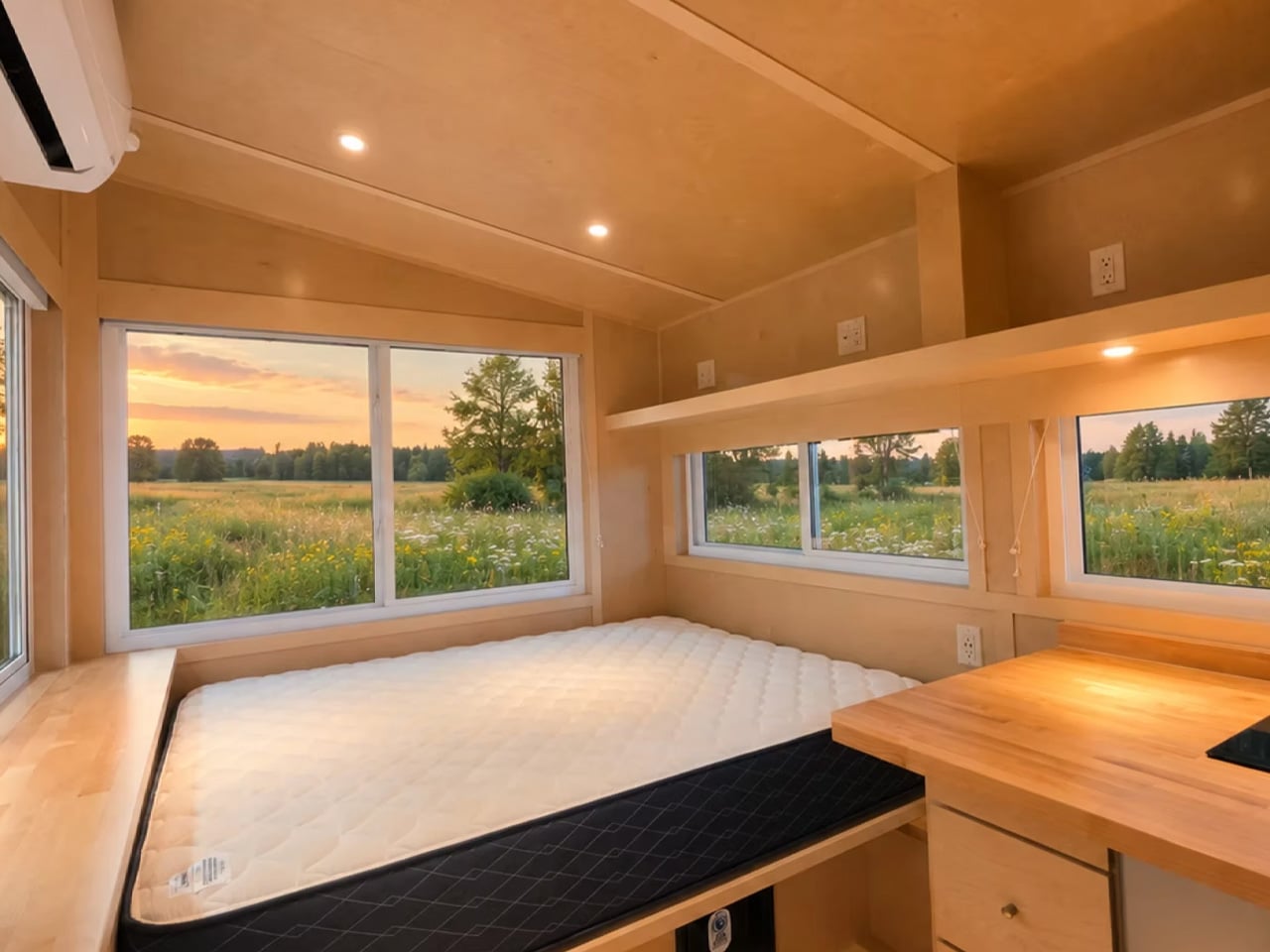
Inside, everything is finished in sealed birch — warm, tactile, and easy to maintain. The layout is a single floor, which is the right call for a home this compact. A dedicated living room would have been a compromise too far. Instead, the sleeping area earns its real estate twice over: the queen-sized bed anchors the space during the night and functions as the primary seating during the day, framed by multiple opening windows and integrated storage underneath and alongside. A mini-split AC unit handles climate control, and it’s more than sufficient for a footprint this size.
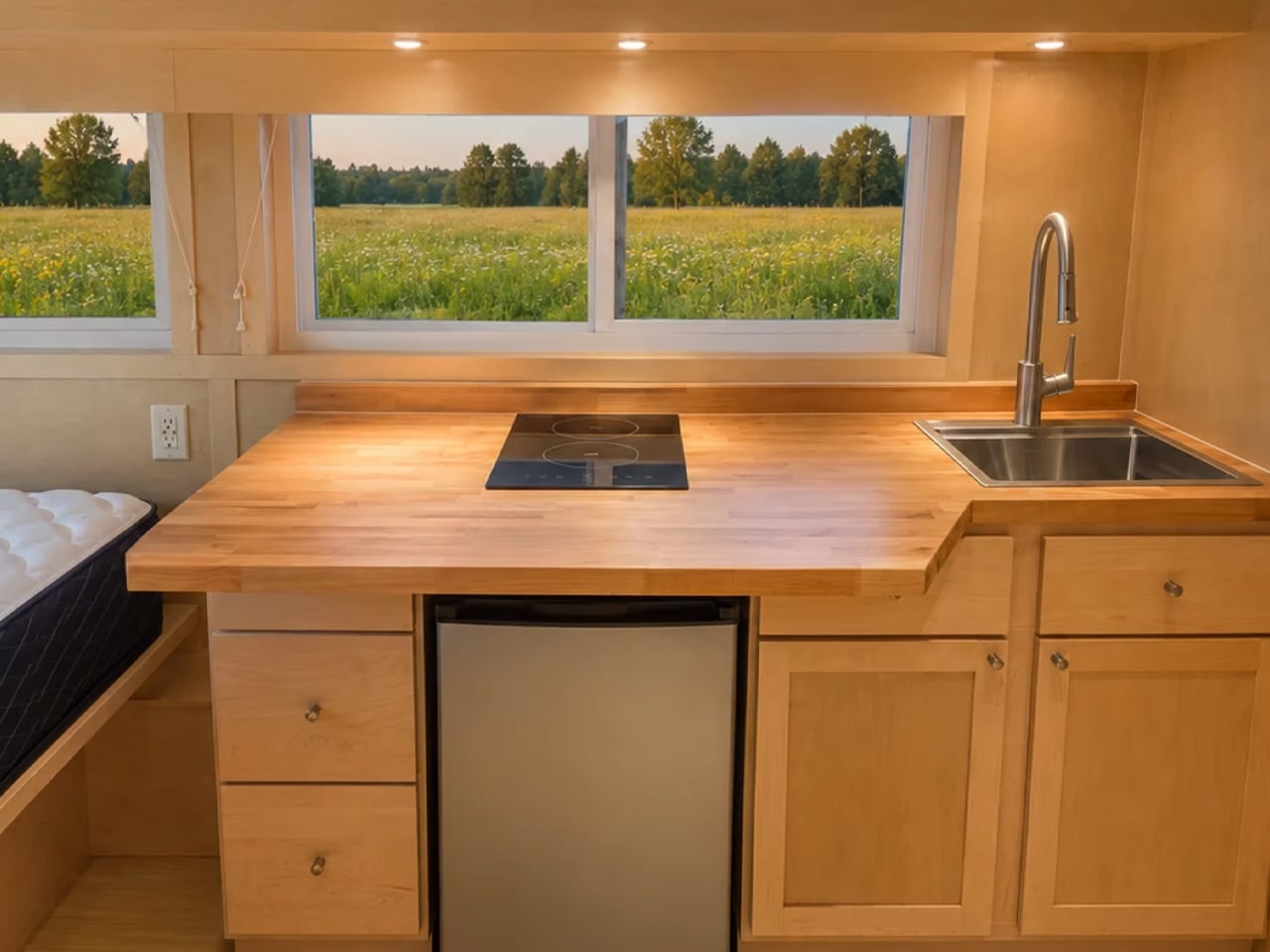
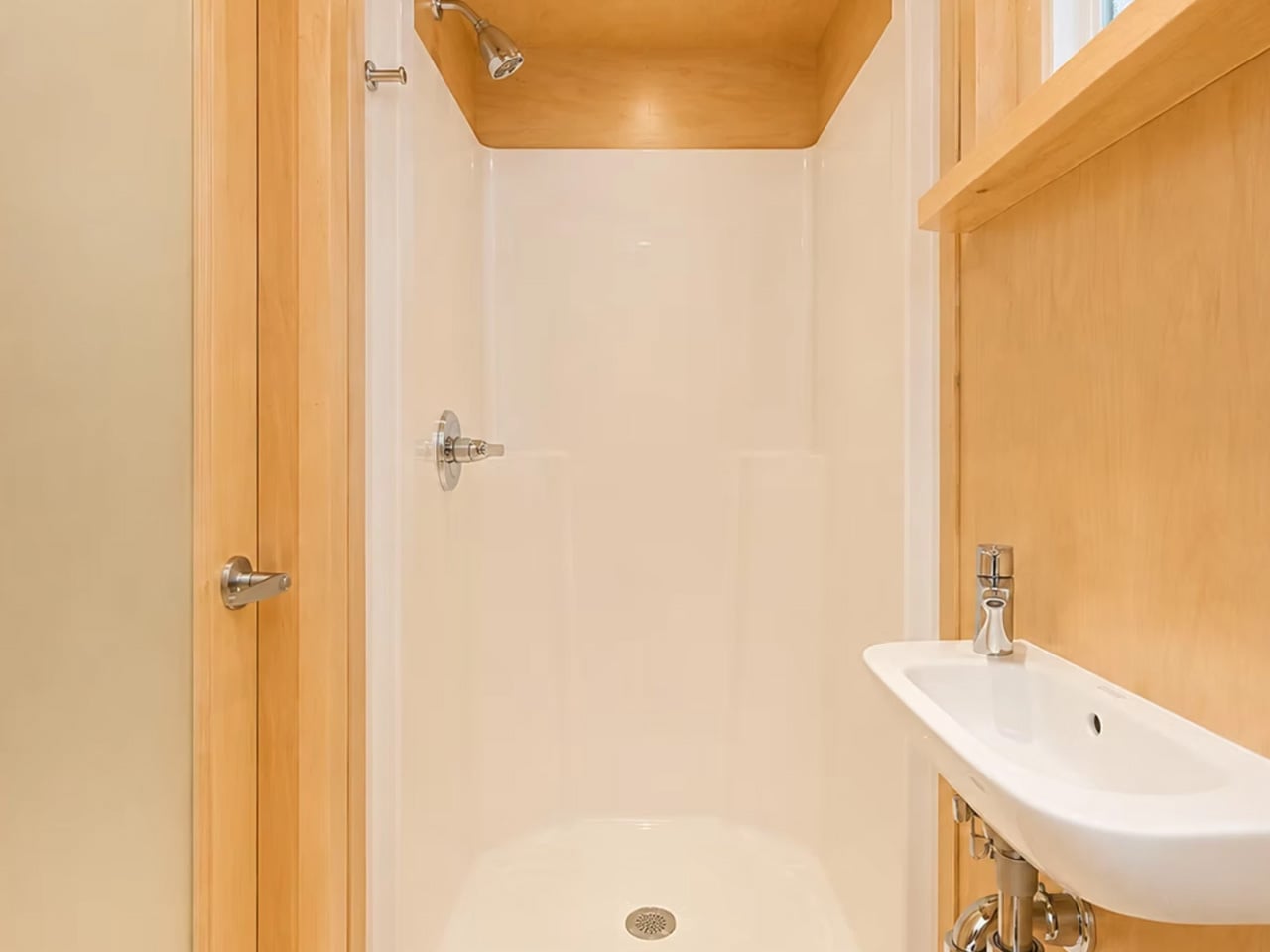
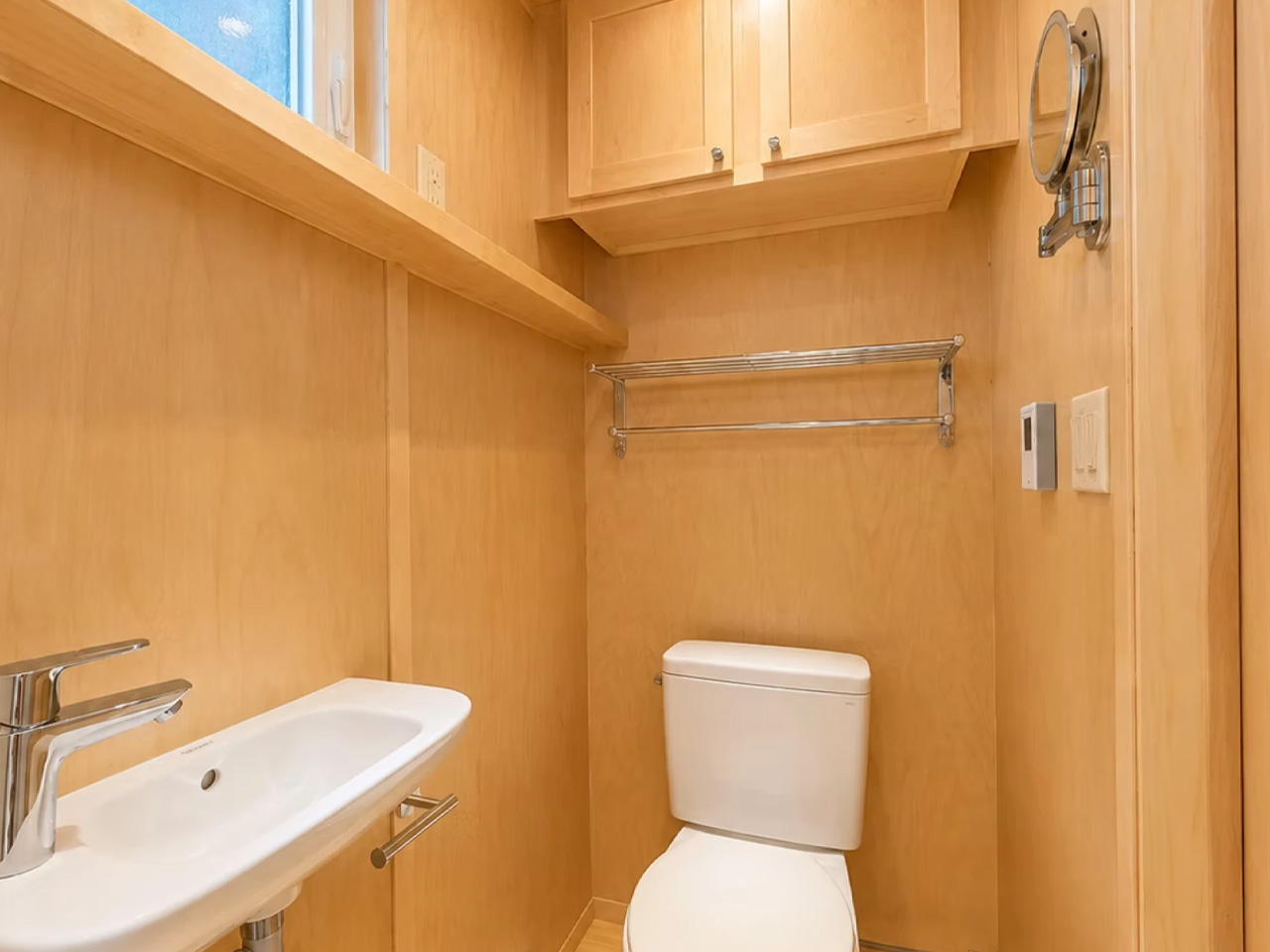
The kitchen is compact but complete. An induction cooktop, fridge/freezer, sink, and butcher block countertops sit along one wall, fronted by solid cabinetry. It won’t host dinner parties, but it handles daily life without friction. The bathroom, behind a wooden door, punches above its weight — walk-in shower, flushing toilet, vanity sink, heater, and a towel rack. Storage is tucked in wherever the geometry allows.
What makes the eBoho Go genuinely interesting isn’t just the footprint or the price. It’s that Escape built it as a real production unit — not a concept, not a preorder — powered entirely by electricity. The brand calls the lineup eESCAPE, and the Go is the entry point. As a rental unit, a guest house, or a private office dropped at the edge of a property, it makes a compelling case. Escape delivers nationwide, with costs depending on location.
At 152 square feet, it won’t suit everyone. But for those who’ve been waiting for a well-designed, genuinely affordable entry into the tiny home space, the eBoho Go might be the most honest answer yet.
Most tiny homes ask you to forgive something. The Amelia doesn’t. It speaks that language fluently — treating constraint as a design language rather than something to apologize for.
Stretching 26 feet long and 8.5 feet wide, the Amelia sits on a double-axle trailer and clocks in at 341 square feet of living space. It wears white board-and-batten siding with a maintenance-free steel base and a snap-lock metal roof — clean, unfussy, built to hold up wherever you put it. The kind of exterior that looks deliberate rather than compromised.
Step inside and the first thing you notice is the light. Generous dual-pane, low-E windows fill the living room with natural brightness, and the layout feels considered rather than cramped. There’s room for a full sofa — a sofa bed is available as an upgrade — alongside a large storage unit. A propane-powered underfloor heating system keeps the ground level comfortable year-round, complemented by a mini-split air conditioning unit and a Lunos heat recovery ventilator for air quality. The Amelia was built for Canadian winters, and it shows.
The kitchen sits just past the living area and does not ask you to compromise. A white apron-front farmhouse sink anchors the space, joined by a four-burner Furrion propane range, an oven, a fridge-freezer, a stainless over-the-range microwave, and a large pull-out pantry. Waterfall-edge marble-like countertops run along the perimeter, with an eating bar doubling as a workstation. Every detail, from the soft-close cabinet doors to the black Kohler pull-down faucet, feels chosen rather than settled for. It is the kind of kitchen that makes cooking feel like something worth doing.
A sliding door connects the kitchen to the bathroom — a thoughtful detail that keeps the living zone open. Inside, a 30×30 stand-up shower with easy-clean fiberglass walls, a custom vanity with a rectangular vessel sink, and an oversized round medicine cabinet handle the essentials without feeling like a compromise. There is also a laundry rough-in for those who want to add machines later.
Two loft bedrooms occupy the upper level. The main loft, positioned over the kitchen, fits a king-size bed behind a slatted privacy wall. The secondary loft, accessed by a removable wooden ladder above the living room, handles a queen or king with room to spare. A storage-integrated staircase is available as an upgrade and is worth it for full-time living.
The Amelia starts at roughly US$102,000 and is available for delivery across the United States and Canada. Teacup Tiny Homes, a 100% female-owned Alberta-based builder operating since 2016, offers significant customization across layouts, materials, and finishes. For a home this size, it carries a lot of conviction.
Most tiny homes ask you to give something up. The White Pine, by Backcountry Tiny Homes, is more interested in what it can give back. At 30 feet long and 10 feet wide, it runs wider than a standard tiny house model, and that extra foot of breathing room changes the experience considerably. The interior feels less like a clever puzzle and more like a small apartment — one that happens to sit on a triple-axle trailer and come with a rooftop terrace.
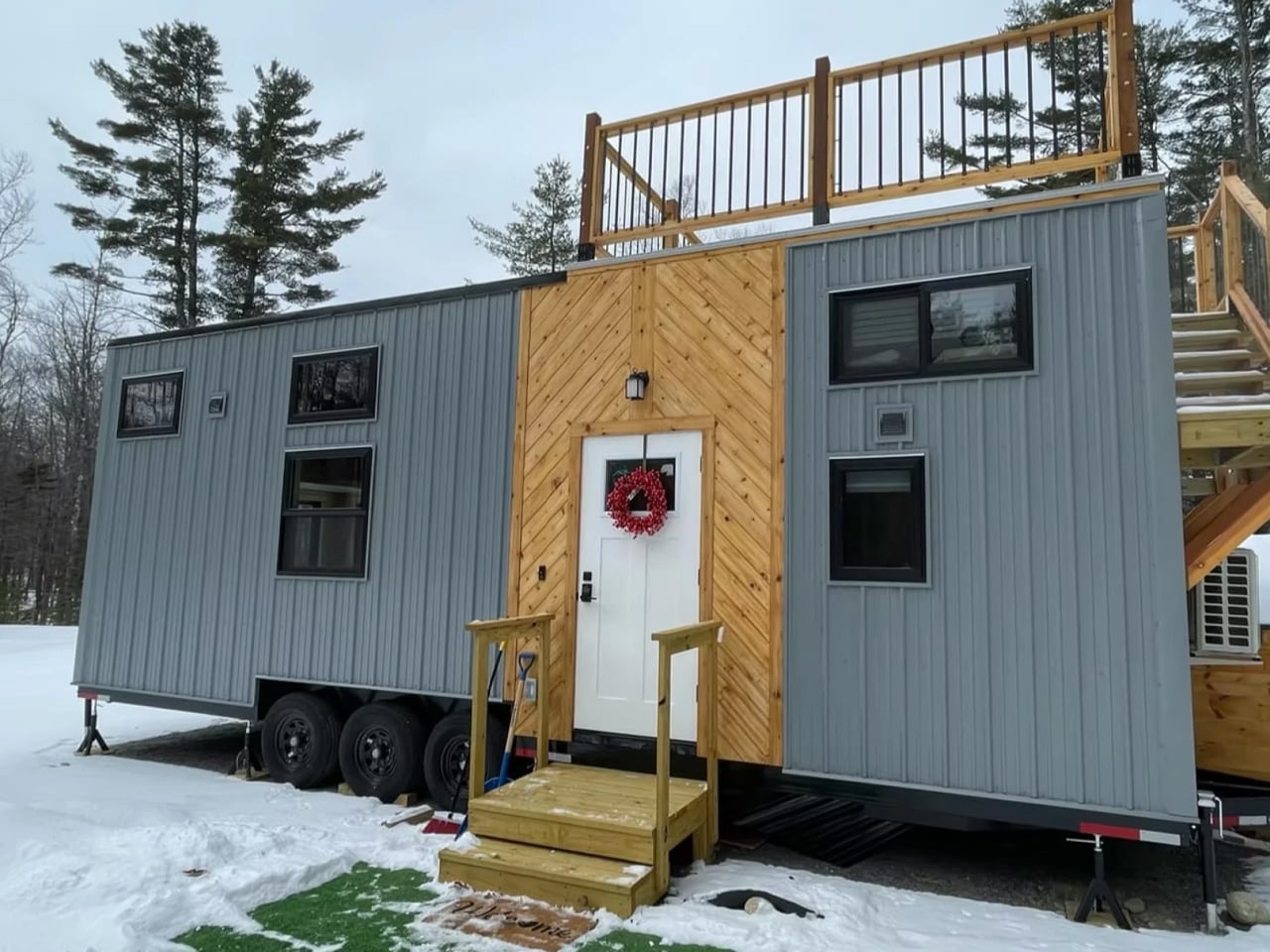
That terrace is the first thing worth discussing because it reframes the whole floor plan. Reached from outside via detachable stairs, it converts what would otherwise be dead roof space into a genuine outdoor living area. In a home of this size, an additional hangout space above the treeline isn’t a luxury detail. It’s a meaningful expansion of the livable footprint, and it gives the White Pine a vertical dimension that most tiny houses don’t bother to explore.
The exterior pairs cedar tongue-and-groove cladding with metal paneling, a combination that reads as considered rather than rustic. Inside, the same tongue-and-groove logic continues in pine, with whitewashed ceilings and vinyl flooring throughout. The material palette is warm without being precious, the kind of finish that ages gracefully and photographs well without demanding too much maintenance.
The layout is organized around a generous open living area anchored by a sofa bed, a coffee table, and a dining table for two. The glazing here is generous enough that the room doesn’t feel compressed. The adjacent kitchen is more capable than its footprint suggests — a farmhouse sink, a two-burner propane stove, an oven, a fridge/freezer, and a surprising amount of cabinet and shelf storage that makes daily living genuinely workable rather than merely possible.
Sleeping capacity is one of the White Pine’s more impressive claims. The master bedroom, accessed via a storage-integrated staircase from the kitchen, sits on a lowered platform that allows full standing height — a detail that sounds minor until you’ve crouched in a tiny home loft at 7 a.m. It fits a queen bed and carries a decorative forest-scene divider that lends the space some character. A second loft over the living room, reached by a removable ladder, sleeps one adult or doubles as storage. The sofa bed handles two more guests, bringing the theoretical total to five.
The White Pine is currently available in three configurations: a shell at $74,280, unfurnished at $132,610, or fully furnished and turnkey at $140,010. Backcountry Tiny Homes offers delivery across the US and internationally. The extra width does require a transport permit, which adds a logistical step, but for a home that genuinely lives larger than its dimensions suggest, it’s a reasonable trade.
Tiny home design has spent years wrestling with the same stubborn question: how small can you go before the space starts working against you? In 2026, the most compelling builders are no longer running from that question. They’re making it irrelevant, designing structures with enough spatial intelligence that the footprint becomes almost secondary to the experience of living inside them. Smarter layouts, wider trailers, and deliberate material choices are redefining what small-scale architecture can actually deliver.
This month’s five standout designs span continents and building philosophies. Some are road-towable, built for people who want the freedom to pick up and move. Others are modular and permanently placed, trading mobility for architectural depth. What connects them is an honest reckoning with what compact living actually demands, and a commitment to meeting those demands without pretending the constraints don’t exist. These are the tiny homes that made the most compelling case for going small in July 2026.
1. Coolangatta 8.4
The Coolangatta 8.4 from Gold Coast-based Removed Tiny Homes takes its name from its footprint: 8.4 meters, or 27.5 feet, mounted on a triple-axle trailer. The exterior wraps in monument Colorbond steel cladding softened with natural texture accents, landing somewhere between coastal restraint and contemporary edge. Clean rooflines and a tight material palette give it the kind of presence that reads well in late afternoon light, not demanding attention, simply having it. It’s the exterior of a home that’s been genuinely thought through, not styled.
Inside, generous glazing fills the space with natural light in a way floor area alone never could. A kitchen with a breakfast bar anchors the main living zone, and storage is embedded throughout the architecture rather than applied on top. What sets the Coolangatta 8.4 genuinely apart is the second loft, floating above the living space and adapting as a workspace, a guest room, or a second bedroom depending on the day. That programmatic range is rare at this size, and for anyone planning to live in this full-time, it fundamentally shapes how the home can be used across different seasons and different circumstances.
What we like:
Two functional lofts multiply how the home can be used without adding a single square metre to the footprint
The custom build process is designed around how individual clients actually plan to live, not a catalogue selection
What we dislike:
Pricing isn’t publicly listed and requires direct contact with Removed Tiny Homes
A triple-axle trailer demands a tow vehicle rated for the additional weight and configuration
2. Mini House 300 x 600
Poland’s Mini Domy has refined the tiny home formula across several designs, and the Mini House 300 x 600 is their most focused offering yet. At 247.5 square feet on a double-axle trailer measuring 20 feet long and 9.8 feet wide, the defining decision here is the extra width. Most tiny homes are corridor-thin by necessity, which creates a permanent spatial negotiation between two people sharing the same compact floor plan. The 300 x 600 sidesteps that problem entirely, and the difference registers the moment you step inside. The exterior pairs metal cladding with timber accents, reading closer to a European cabin than anything trailer-park adjacent.
Inside, white-painted tongue-and-groove paneling keeps the space light and warm without relying on visual tricks. The open plan places the living room and kitchen side by side, the kitchen fitted with an induction cooktop, sink, and considered cabinetry. A wooden barn-style sliding door leads to a bathroom with a glass-enclosed shower, sink, and flushing toilet. The storage-integrated staircase is the most precise detail in the whole design, with each step earning its footprint by doubling as storage. The loft bedroom fits a double bed comfortably with built-in cabinetry along both sides. For couples ready to simplify without giving up livability, the 300 x 600 makes its case quietly and convincingly.
What we like:
The 9.8-foot width creates genuine interior breathing room that serves two-person living without compromise
The storage-integrated staircase is a textbook example of small-space architectural thinking applied precisely
What we dislike:
The extra width requires a towing permit on public roads, which adds a logistical layer to any relocation
Pricing is not publicly available and must be requested directly from Mini Domy
3. Gerês
Named after one of Portugal’s most striking national parks, the Gerês is Casagaea’s most ambitious tiny home to date. Built on a double-axle trailer stretching 7.8 meters (25.7 feet), it covers 30 square meters (322 square feet) of interior space and arrives clad in engineered wood that ages into its surroundings rather than fighting them. A small storage box sits near the tow hitch, and it’s the kind of practical detail that tells you this design came from people who thought carefully about how the home actually gets used every day, not just how it photographs from the outside.
The open-plan kitchen and living area forms the heart of the interior, with a breakfast bar seating two acting as a social anchor in the compact floor plan. The real story is the sleeping capacity: the Gerês sleeps up to six adults across two bedrooms, with the living area capable of accommodating two more when needed. For you, that kind of flexibility is genuinely unusual in a structure this road-ready. Whether you’re hosting family on a rural plot, building a short-term rental with real design credibility, or wanting a home you can take with you, the Gerês covers that full range without any space feeling like a sacrifice. Optional off-grid upgrades extend placement well beyond conventional infrastructure.
What we like:
Sleeping capacity of six in a 322-square-foot, road-towable structure is a rare achievement in spatial planning
Engineered wood cladding integrates naturally into most outdoor and rural landscape contexts
What we dislike:
Interior specification detail is limited in available documentation and requires direct inquiry with Casagaea
The 25.7-foot footprint carries significant occupancy expectations for a build of its length
4. Cascade Max
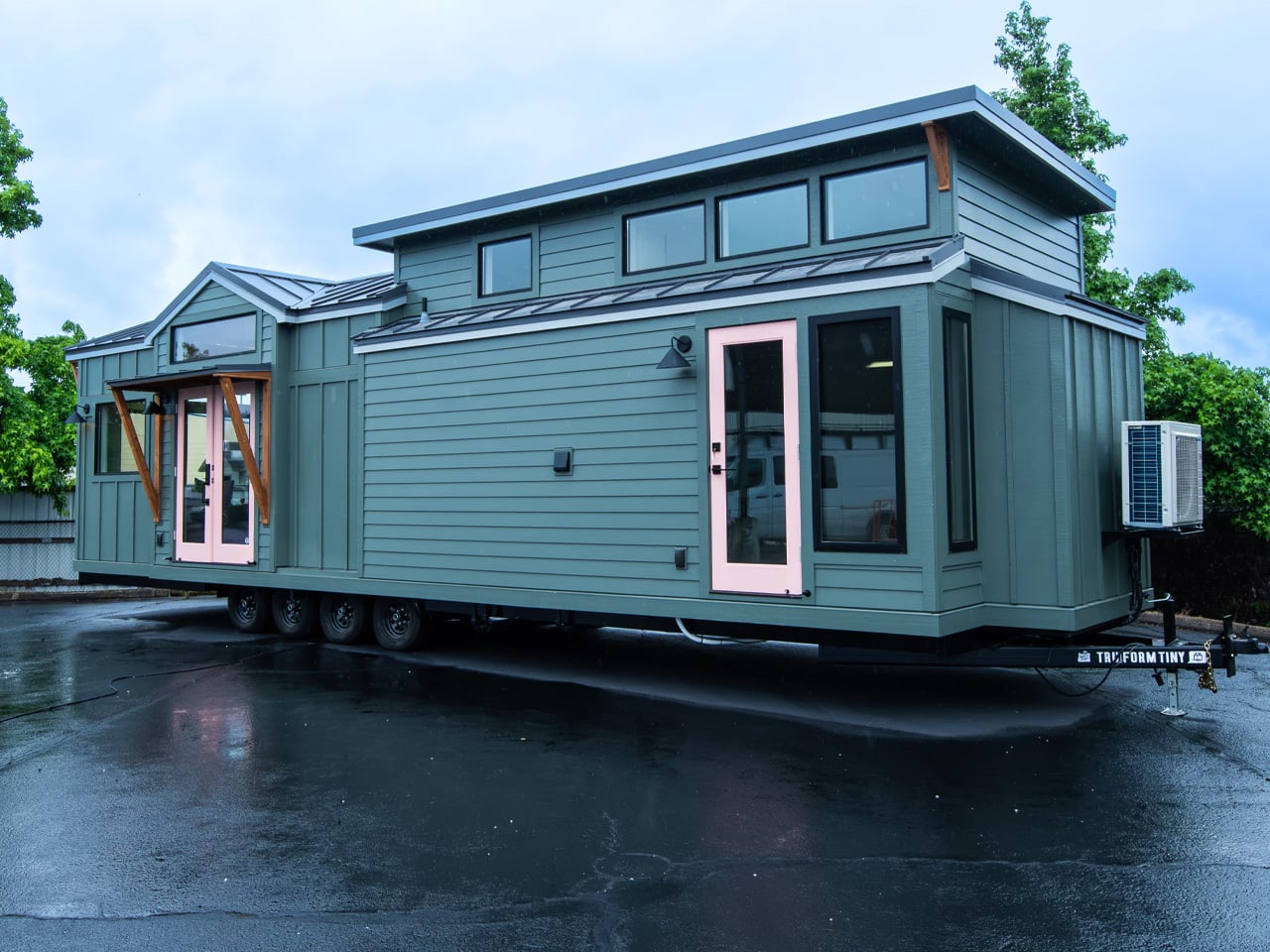
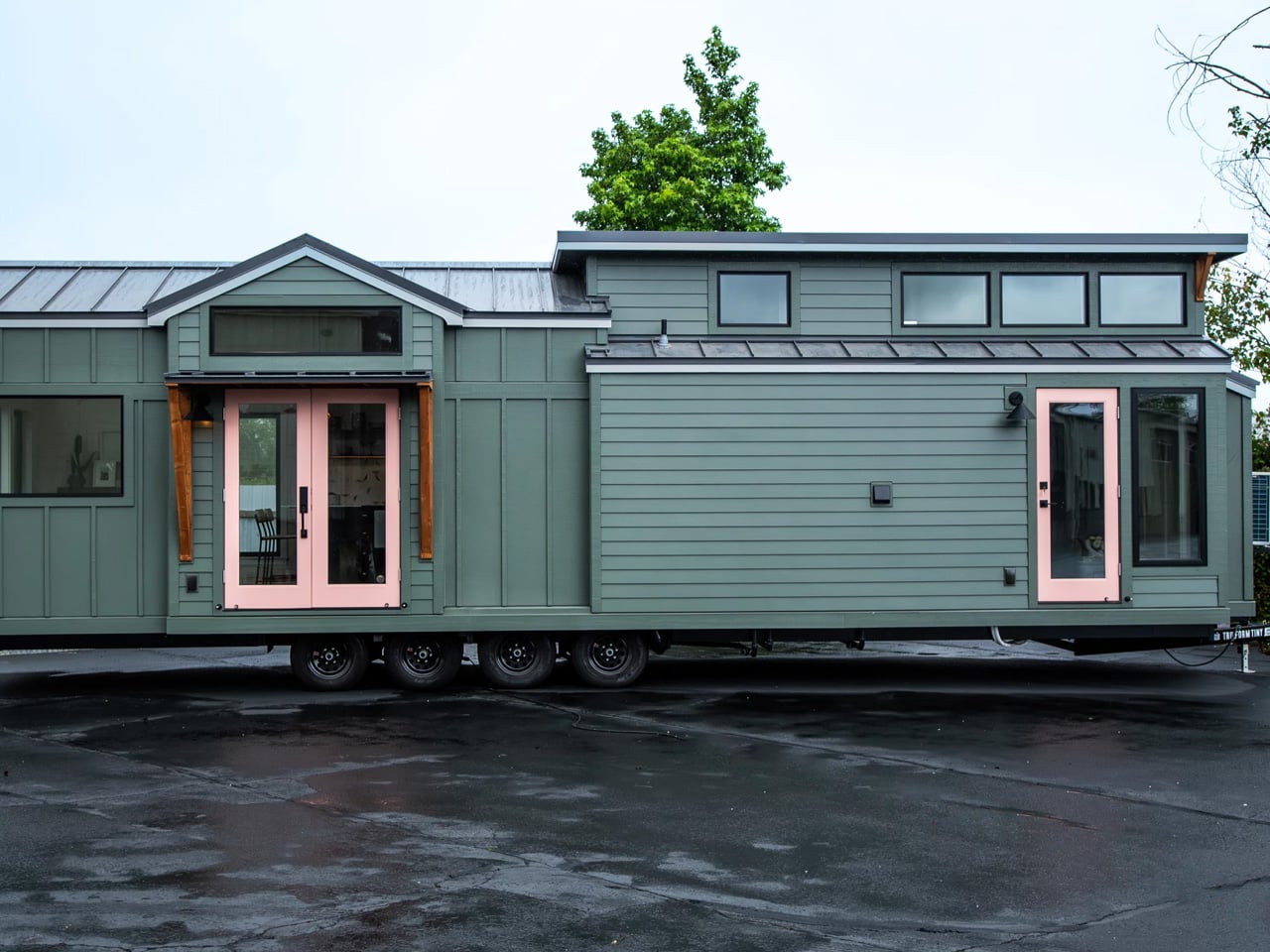
Starting at $198,900, the Cascade Max is Oregon-based Tru Form Tiny’s most celebrated design, and the reputation it’s built among full-time tiny home residents is straightforward to understand. At just under 400 square feet across a 38-by-10.5-foot single-level floor plan, it approaches compact living from the opposite end of the minimalism spectrum. Eleven-foot vaulted ceilings do most of the spatial heavy lifting, pulling the eye upward and producing a sense of volume that reads more like a well-considered loft apartment than a structure on wheels. This is a home that doesn’t ask you to romanticize its constraints.
The kitchen arrives with quartz countertops, a custom tile backsplash, open shelving, and bar seating, details built for people who actually use kitchens rather than endure them. The bedroom accommodates a king-sized bed, dual closets, and a storage headboard with built-in shelving and wall sconces, nothing squeezed and nothing compromised. The bathroom is the most cleverly resolved space in the build: a walk-through layout makes it significantly roomier than any standard tiny home bathroom, fitted with a freestanding tub, glass-enclosed shower, Delta faucets, and a stacking washer and dryer. For you, the Cascade Max is the design that proves stepping down in square footage doesn’t require stepping down in quality. Real people live in these full-time, and the floor plan makes that entirely believable.
What we like:
Eleven-foot vaulted ceilings generate genuine volume that overrides the modest footprint completely
The walk-through bathroom with a freestanding tub and stacking washer-dryer is an unexpected level of finish at this scale
What we dislike:
At $198,900 as a starting price, it sits firmly at the higher end of the tiny home market
As a park model, it isn’t road-towable in the traditional sense and requires advance site planning
5. Lucia
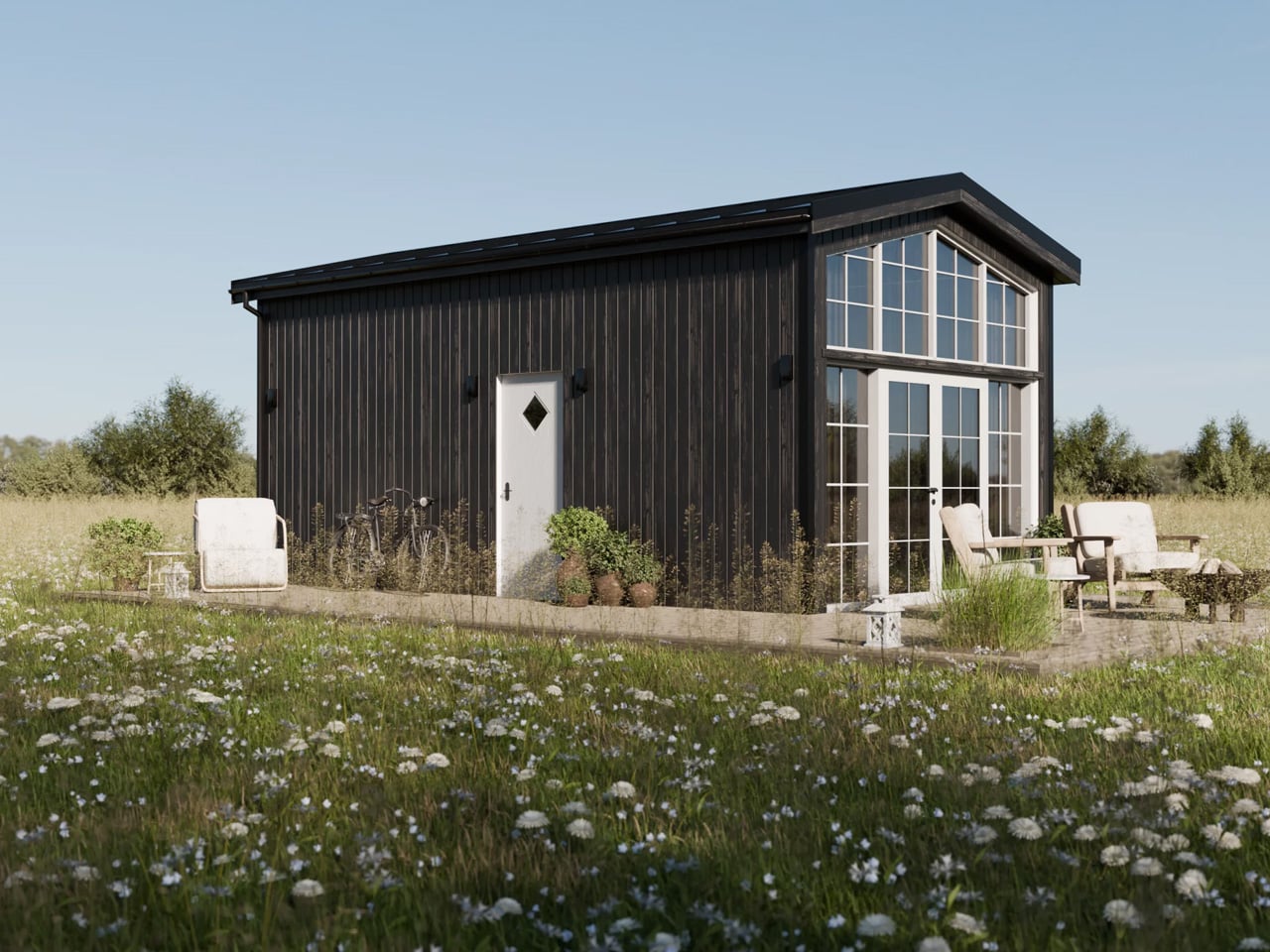
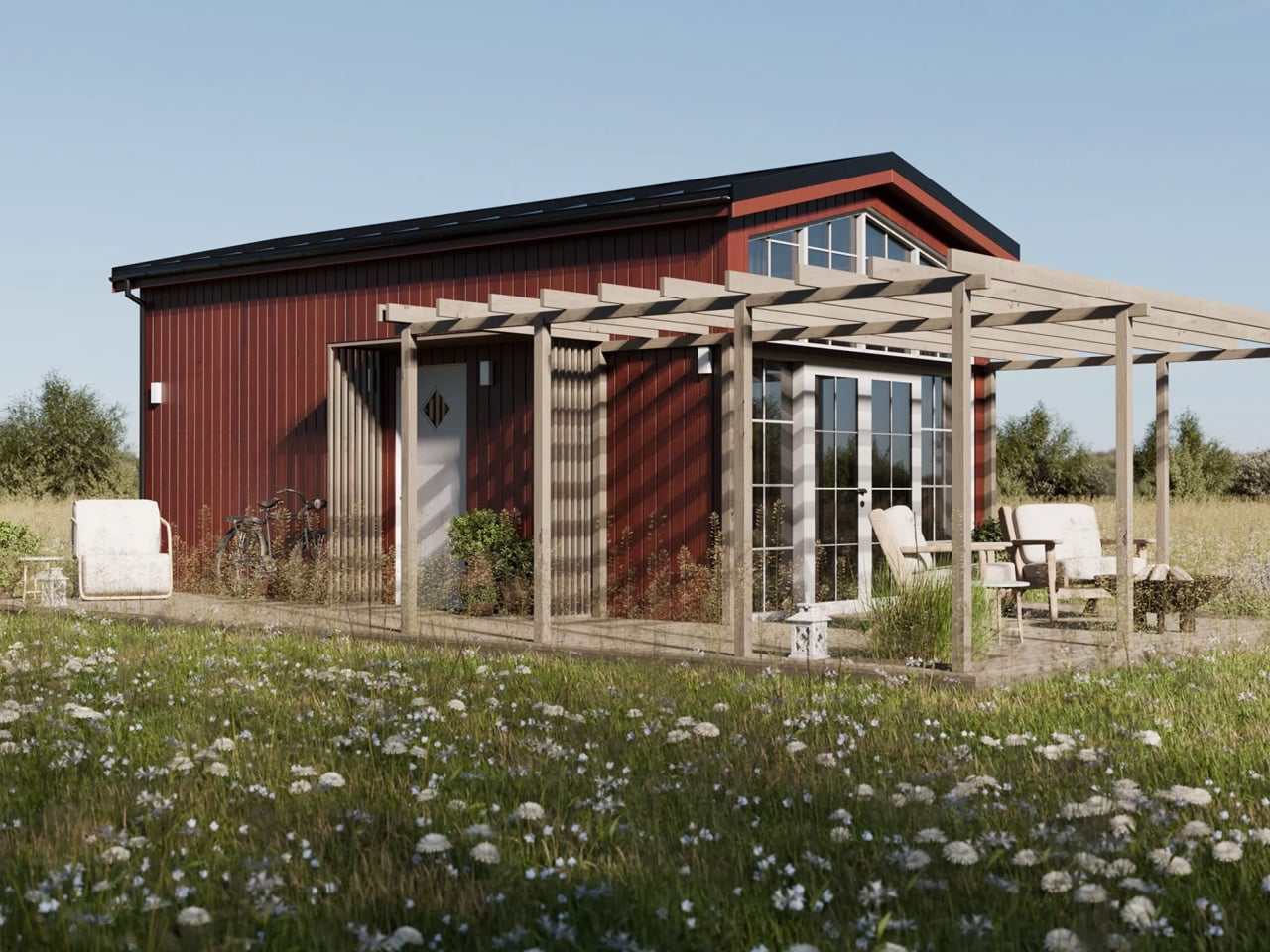
Scandinavian tiny home builder Vagabond Haven takes a different position in the category with the Lucia: a modular, architect-designed structure placed on a permanent foundation and built to handle year-round Nordic conditions. At 39 square meters across a 7.5-meter frame, it makes a deliberate trade, exchanging road mobility for architectural depth. Clad in spruce or engineered wood siding with a clean metal roof, it’s available in a range of color options, the deep black exterior and natural wood tone being the most visually striking. A large glass façade opens up the entire front face of the home, pulling light deep into the ground floor and establishing a relationship with the surrounding landscape that most compact structures simply never achieve.
Inside, the ground floor holds a full kitchen, a living area, and a dedicated home office with a built-in desk and integrated storage. That last detail is what separates the Lucia from nearly everything else in its size bracket. Building a functional workspace into a 39-square-meter floor plan is a meaningful design decision rather than a gesture, and for you, it means a home that supports the actual shape of your working week rather than asking you to improvise around it. The loft bedroom, accessed by a staircase that doubles as storage throughout, fits a double bed comfortably alongside built-in cabinetry. Starting at $97,000, the Lucia makes a quiet but persuasive case that thoughtful design at this scale can outperform thoughtless design at twice the size.
What we like:
A dedicated home office with built-in desk makes the Lucia one of the most work-ready compact homes currently available
Scandinavian construction standards using eco-friendly materials deliver long-term structural and material durability
What we dislike:
A fixed permanent foundation means no mobility once the home is installed and placed on site
Loft ceilings run low in the bedroom area, which may feel restrictive for taller residents
The Best Tiny Homes Don’t Ask You to Settle — They Ask You to Reconsider
Across five countries and five different building philosophies, these designs share something worth sitting with. The best tiny homes of 2026 are not defined by what they’ve stripped away. They’re defined by how carefully their designers thought about what to keep: a second loft, an extra 20 centimeters of trailer width, a real workspace embedded into 39 square meters. The details that look minor on a floor plan become the entire texture of daily life once you’re actually living inside them.
The tiny home category is no longer asking people to settle. It’s asking people to reconsider. A well-designed 247-square-foot home outperforms a thoughtlessly planned space twice its size across the dimensions that shape how you feel in your own home each day: morning light, storage intelligence, material honesty, and the quiet satisfaction of knowing every element of your environment was chosen with purpose. These five designs, from Portugal to Scandinavia to the Pacific Northwest, make that argument convincingly.
Portable architecture is shifting how space, ownership, and mobility are defined. What once existed as temporary or emergency structures now evolves into refined, design-led systems that move with the user. Compact cabins and adaptable living units reflect a growing demand for flexibility while maintaining comfort, function, and a strong sense of identity.
A clear transition is visible from static buildings toward environments that can expand, relocate, and adjust over time. This evolution aligns with changing lifestyles where mobility, efficiency, and intentional living shape how spaces are experienced. The result is a new architectural language where structures are no longer fixed, but responsive and continuously adaptable.
1. Fold-Out Cabins with Compact Design That Expands on Demand
Fold-out cabins transform the way space is utilized by shifting from compact units into fully functional living environments within minutes. Designed for flexibility, they can be transported and deployed wherever required, making them suitable for remote work, short-term retreats, or temporary housing. Smart layouts integrate sleeping, cooking, and storage within a minimal footprint, ensuring efficiency without compromising comfort.
Their appeal lies in balancing mobility with a sense of permanence. These structures can be placed in natural landscapes, urban backyards, or transitional sites, creating continuity between movement and stability. For Gen Z and minimal living approaches, they reflect a lifestyle that prioritizes flexibility, purpose, and essential comfort.
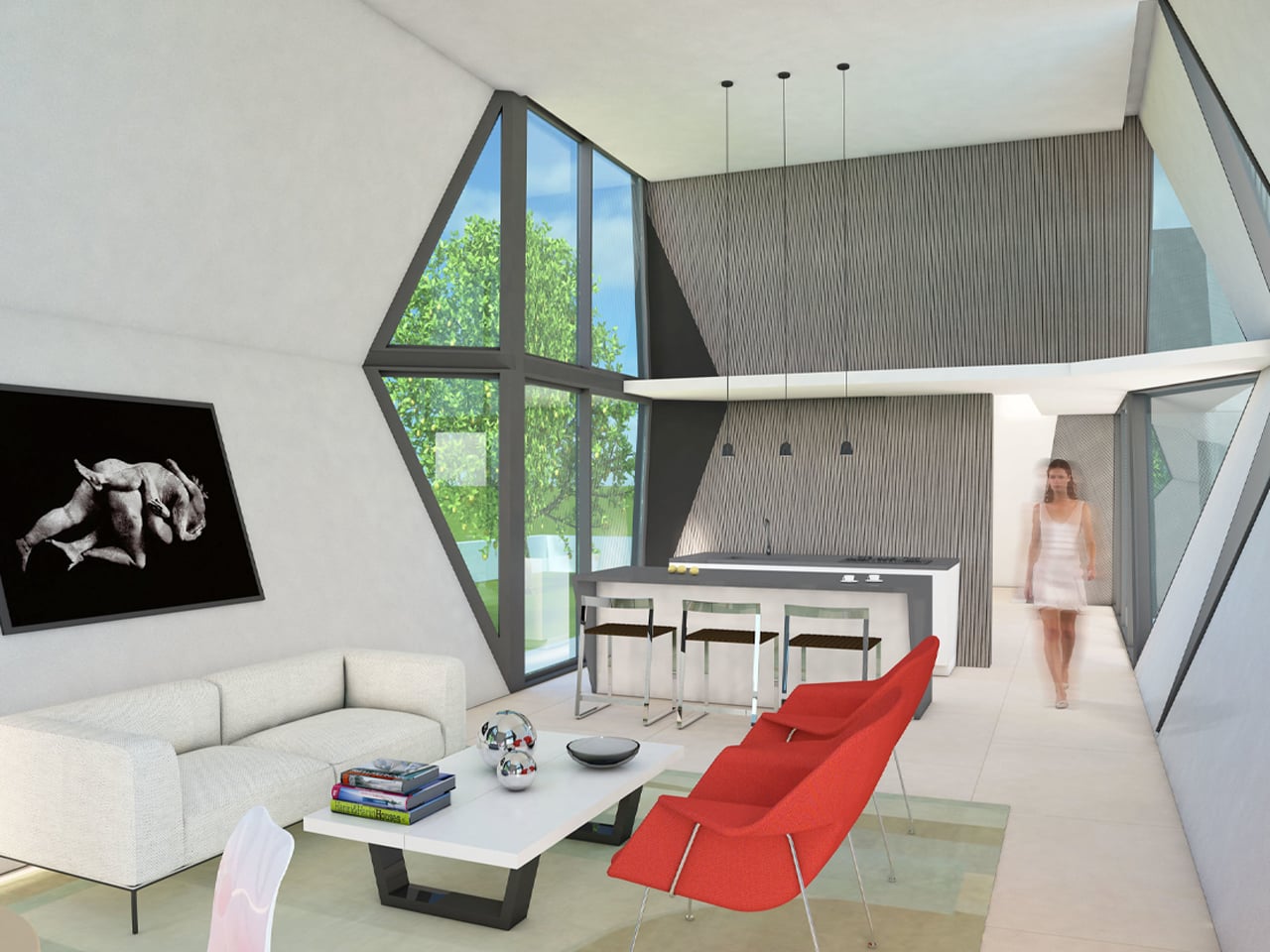
The modern world is increasingly shaped by overlapping crises such as climate change, displacement, and large-scale emergencies, pushing architects to rethink how shelter can be delivered quickly and effectively. In this context, Hariri & Hariri, a New York–based architecture practice founded by Gisue and Mojgan Hariri, developed a prefabricated folding cabin designed to provide immediate, functional housing without the need for tools, hardware, or manual assembly.
Inspired by origami, the cabin is engineered as a compact folded structure that can be transported efficiently on flatbed trucks. Once placed on site, it unfolds into a fully formed modular unit, expanding rapidly into a single-story living space. The design emphasizes speed and autonomy, allowing the structure to self-deploy when activated, which is especially critical in emergency conditions where time and resources are limited. Lightweight materials such as glass and Equitone panels ensure portability while maintaining durability and usability across diverse environments and needs.
2. Portable Saunas for Recreation and Wellness on the Move
Portable saunas shift the focus from living to recreation by bringing wellness into flexible, transportable formats. These compact units allow users to create a sauna experience wherever they choose, from outdoor settings to travel destinations, without relying on permanent installations. Designed for ease of setup and use, they make relaxation and recovery more accessible in changing environments.
This evolution highlights how portable architecture is extending into lifestyle and leisure. It is not about redefining home, but about enhancing moments of pause and restoration. By integrating heat therapy into mobile setups, portable saunas support a routine centered on well-being, adaptability, and everyday recreation.
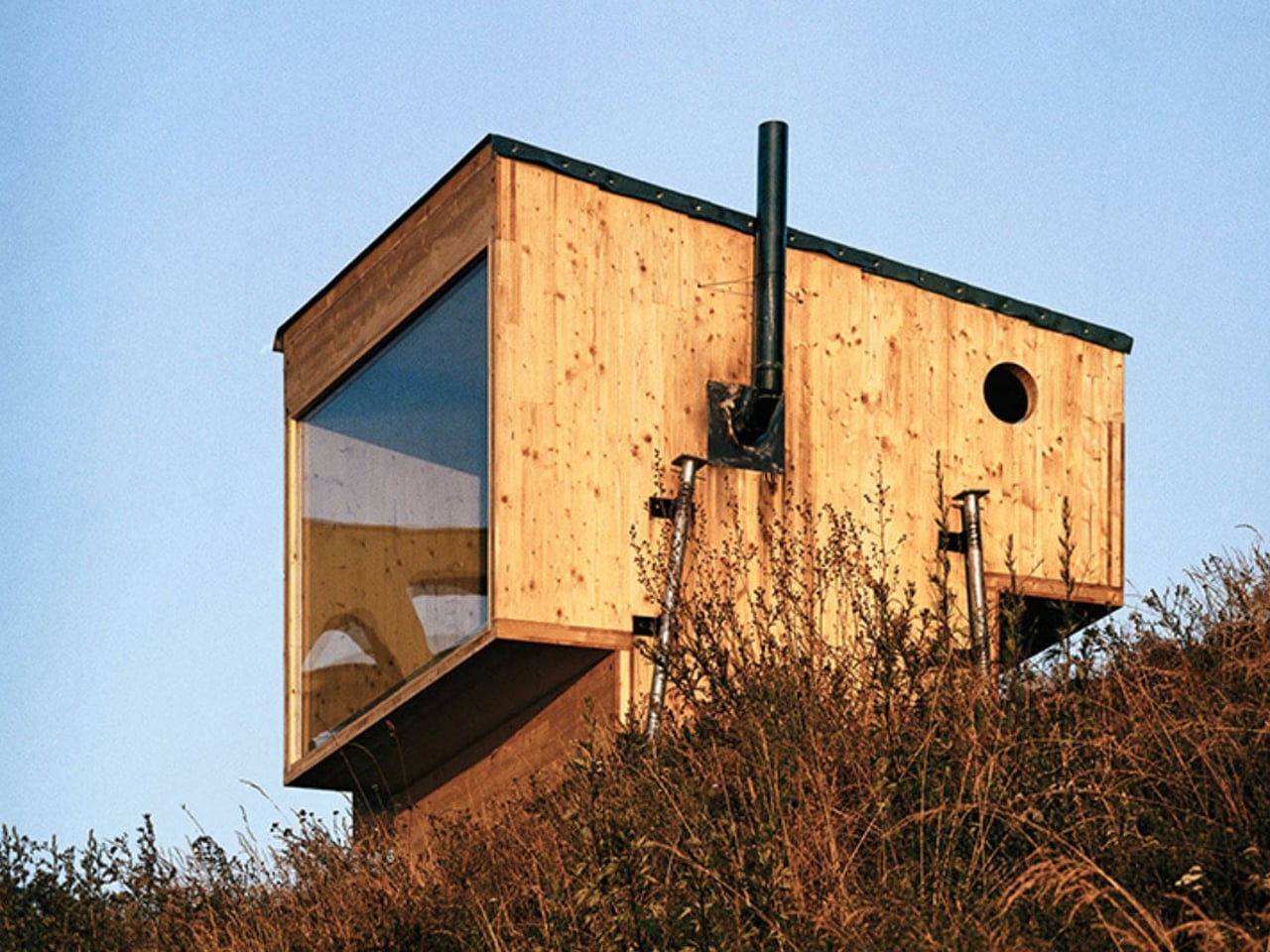
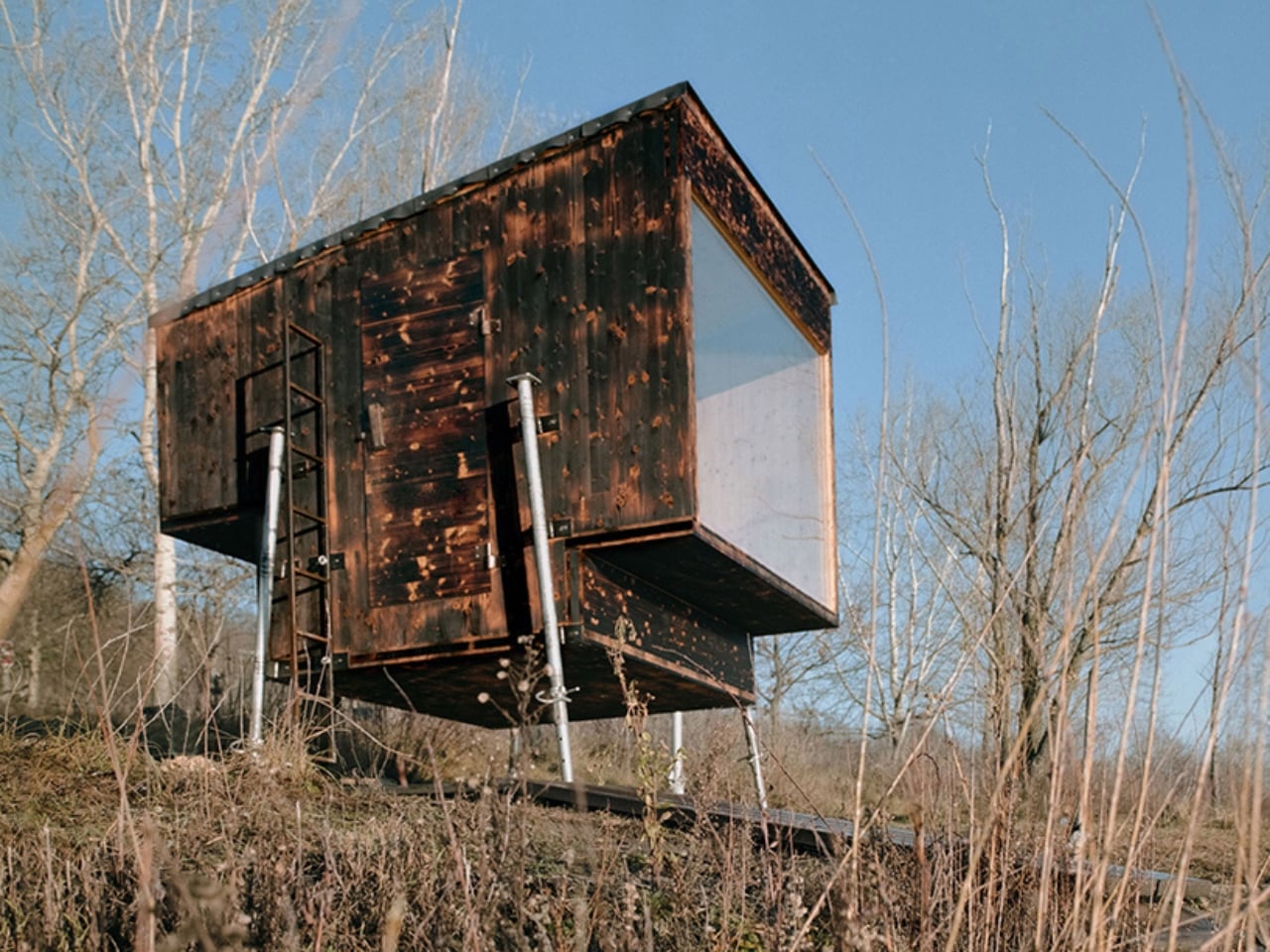
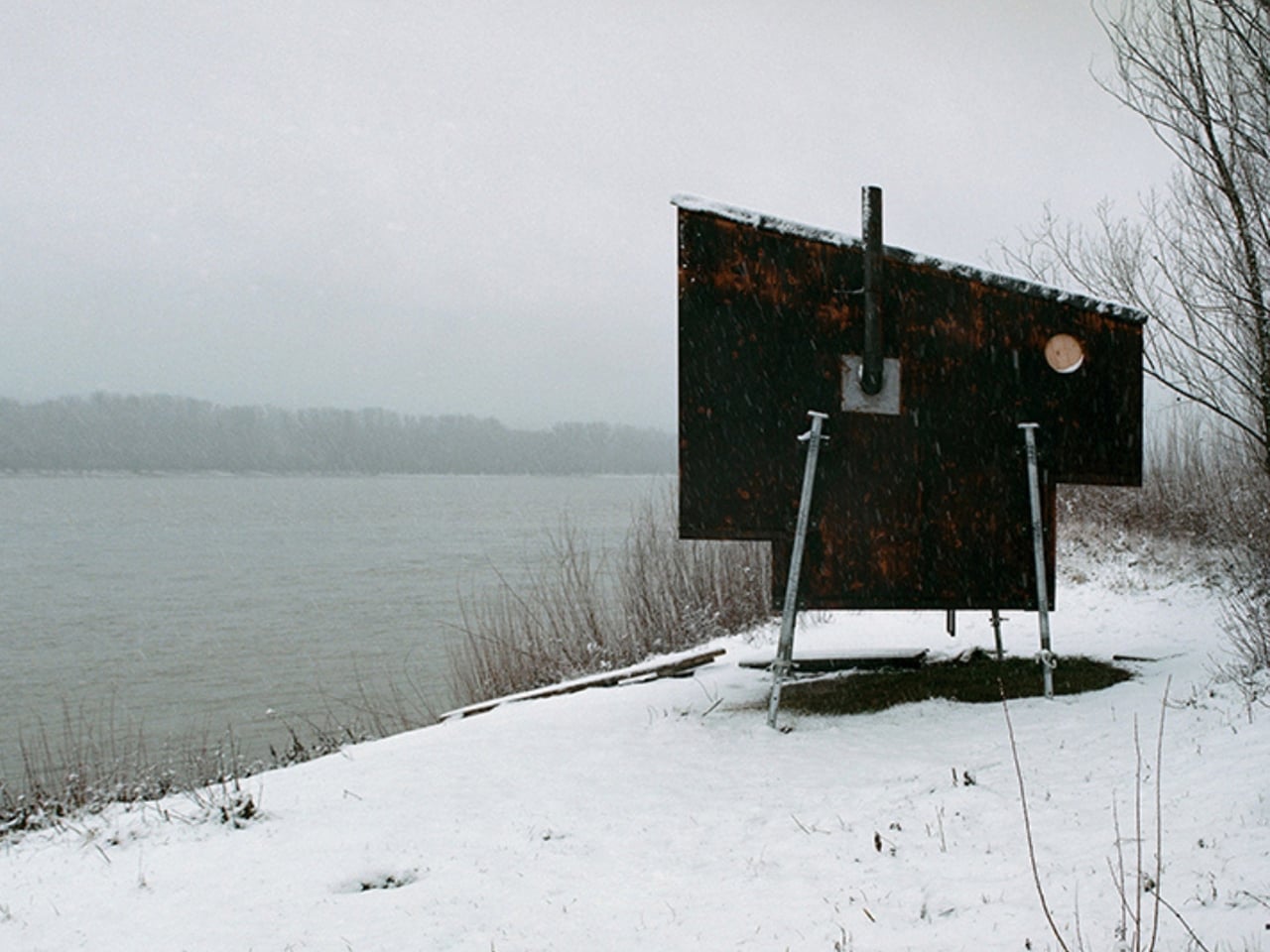
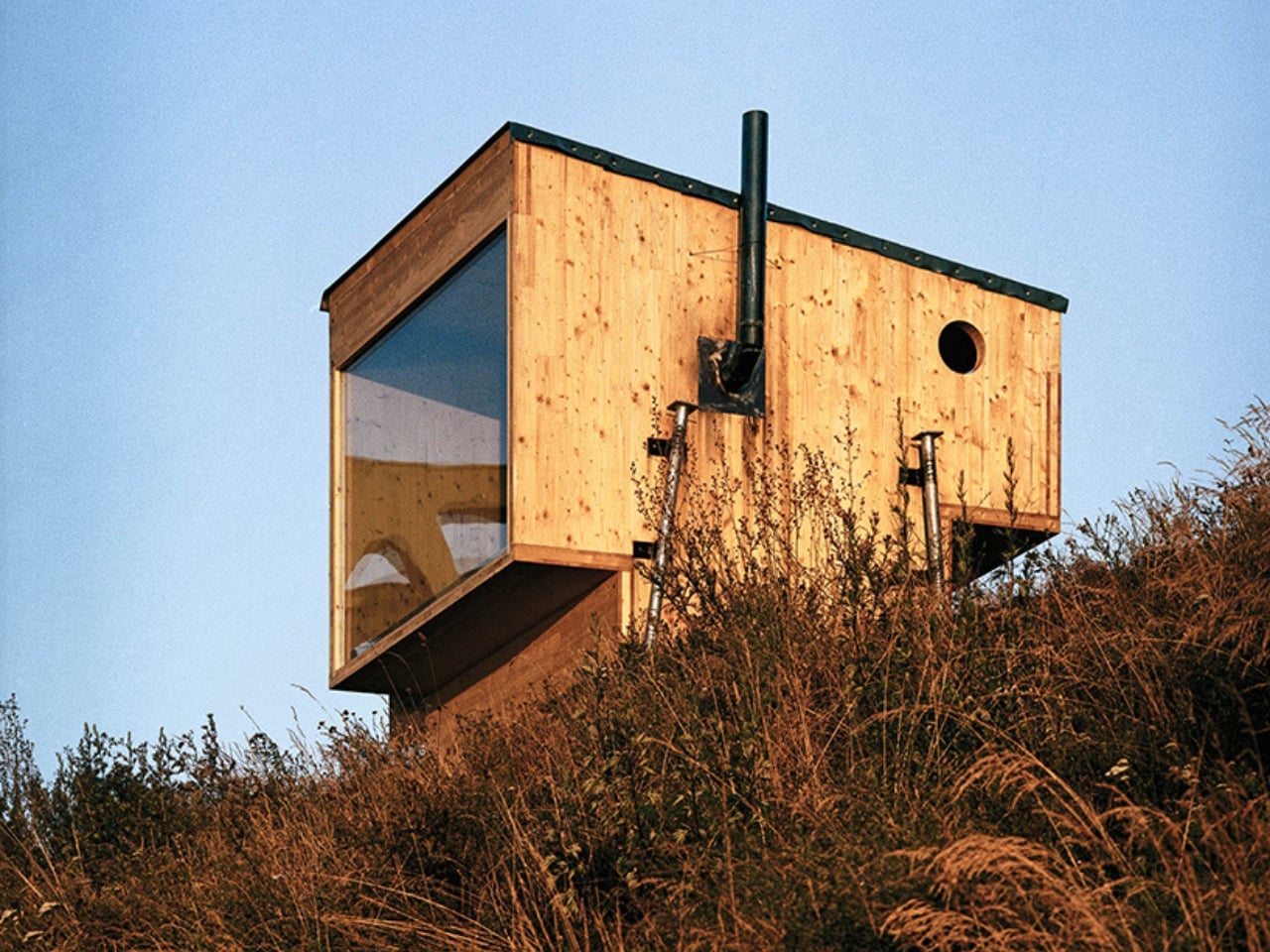
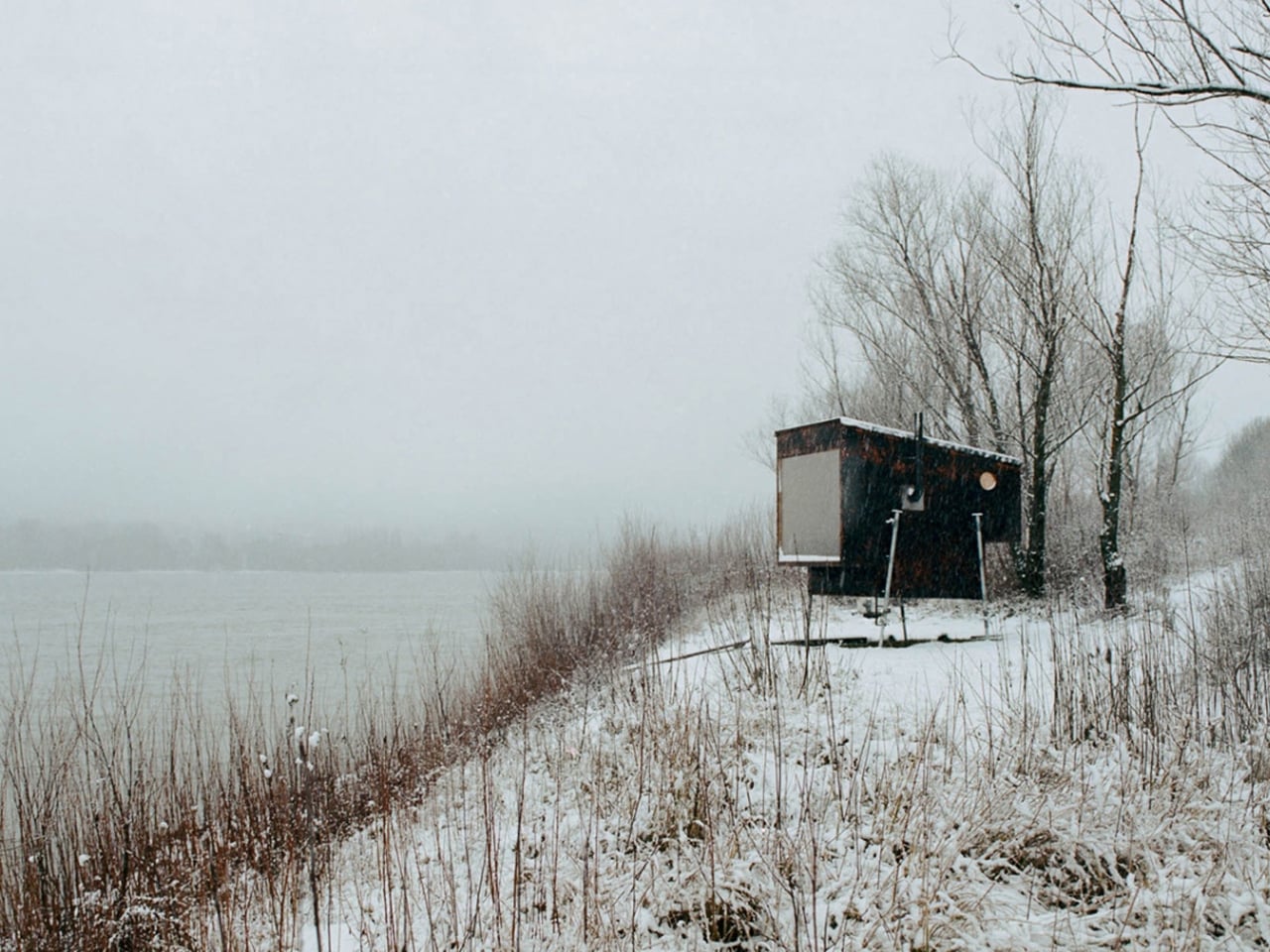
For those who enjoy saunas, the idea of a semi-portable structure that can be transported, assembled, and disassembled across different terrains offers a new way to experience relaxation in nature. Instead of being tied to a fixed location, this concept allows wellness spaces to move with the user, opening possibilities for retreats in forests, mountains, or coastal landscapes. Designed by BIVAK Studio, the SAUNABIVAK explores this idea through a prefabricated, transportable sauna system intended for ease of setup and mobility.
The structure features a double-layer glass wall that preserves views of the surrounding environment while maintaining insulation. It is built using cross-laminated timber panels for strength and lightness, supported on four legs that eliminate the need for permanent foundations. Treated with linseed oil for durability, it is weather-resistant and insect-protected, with natural ventilation and a firewood heating system inside. Designed within European towing limits, it can be installed by two people in about an hour, making it a practical blend of mobility, simplicity, and immersive outdoor wellness.
3. Micro Offices That Redefine Work Beyond Fixed Spaces
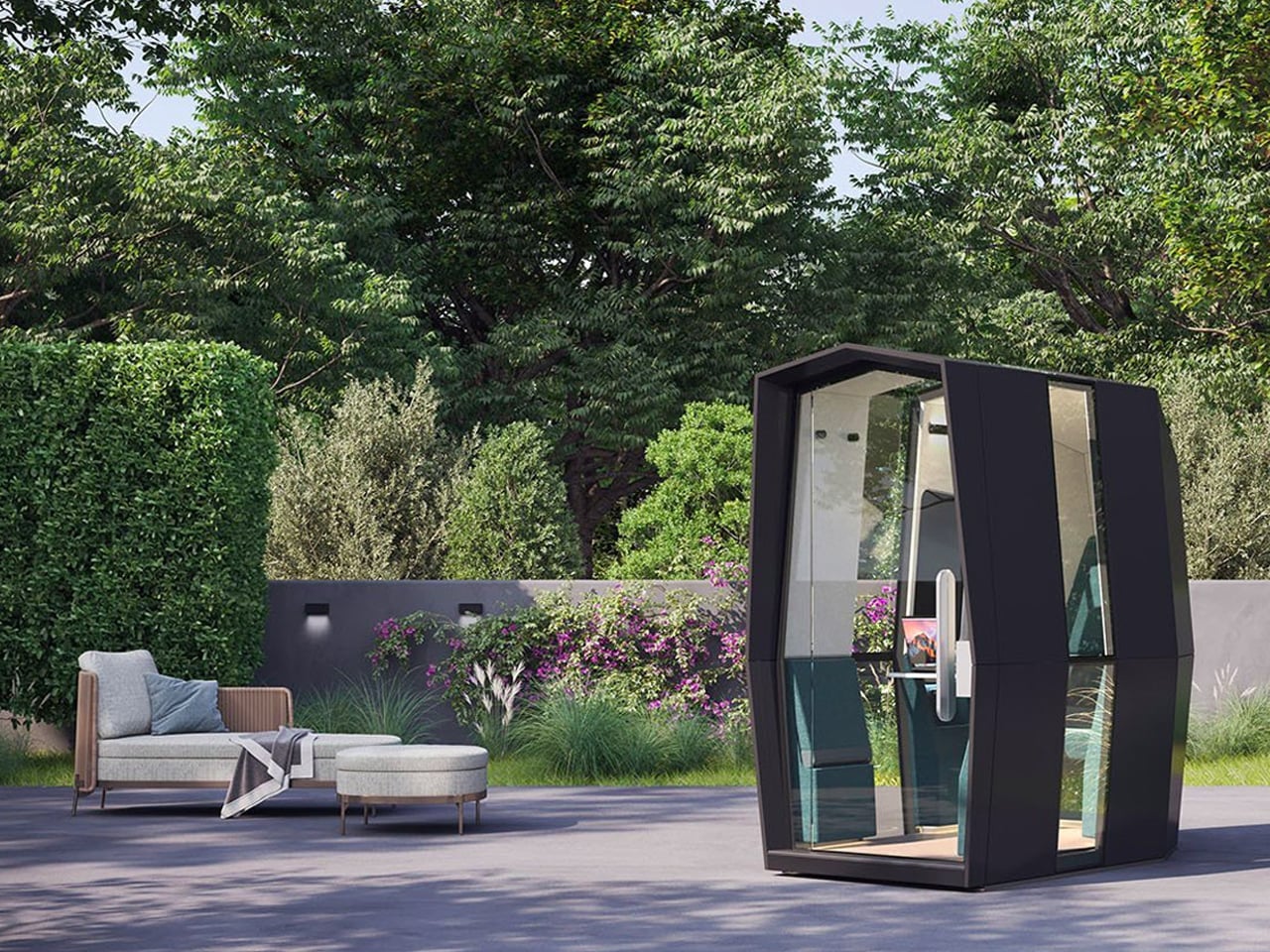
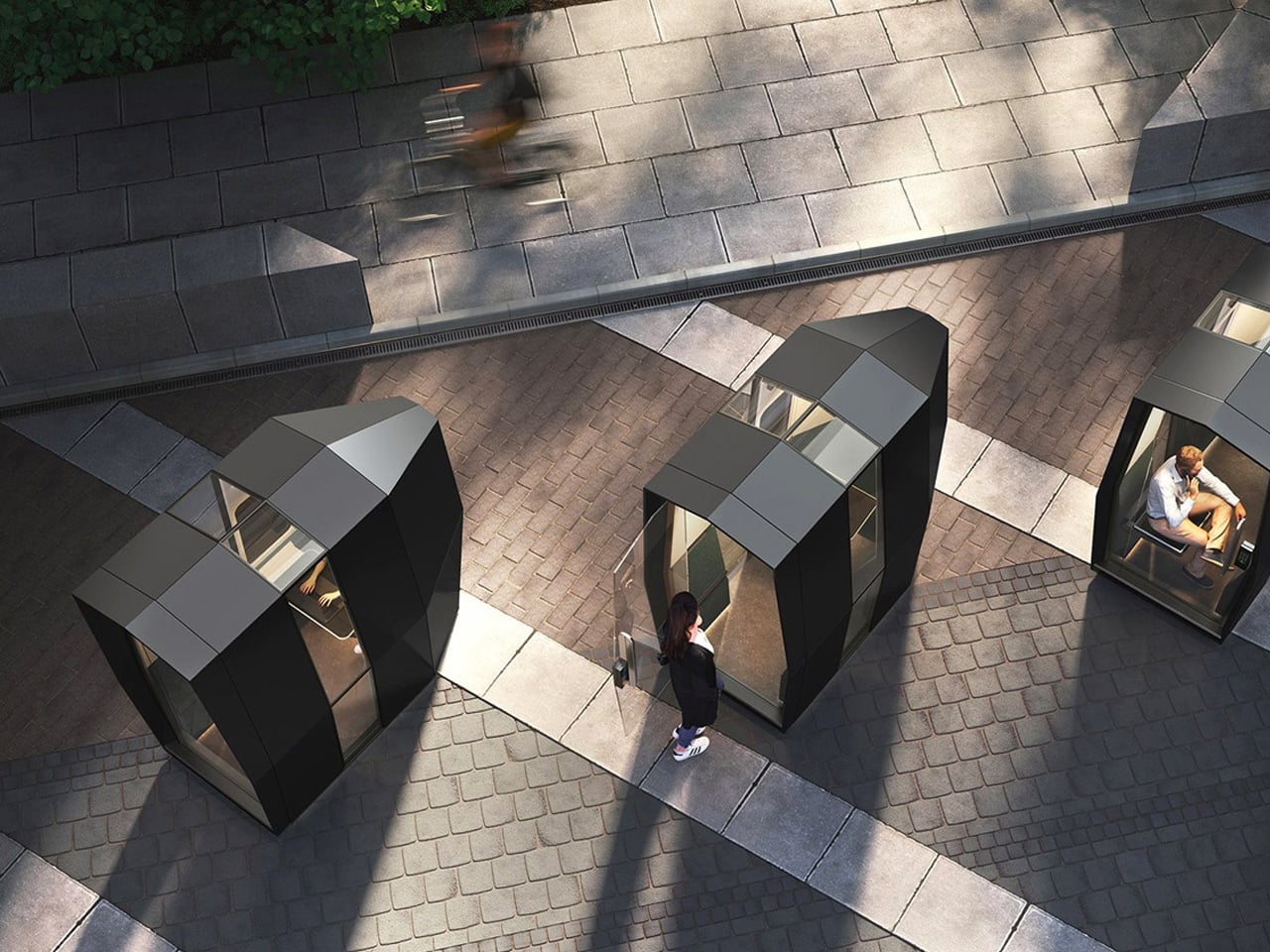
Micro offices respond to evolving work culture by offering compact, transportable environments designed for focus and flexibility. These units can be placed in a range of settings, providing a private workspace without the need for long-term leases or permanent infrastructure. Their efficient design supports daily productivity while adapting to changing professional needs.
They enable greater control over how and where work happens while maintaining mobility. Positioned in gardens, rooftops, or shared environments, micro offices challenge traditional office models by removing fixed spatial limits and supporting a more adaptable, self-directed way of working.
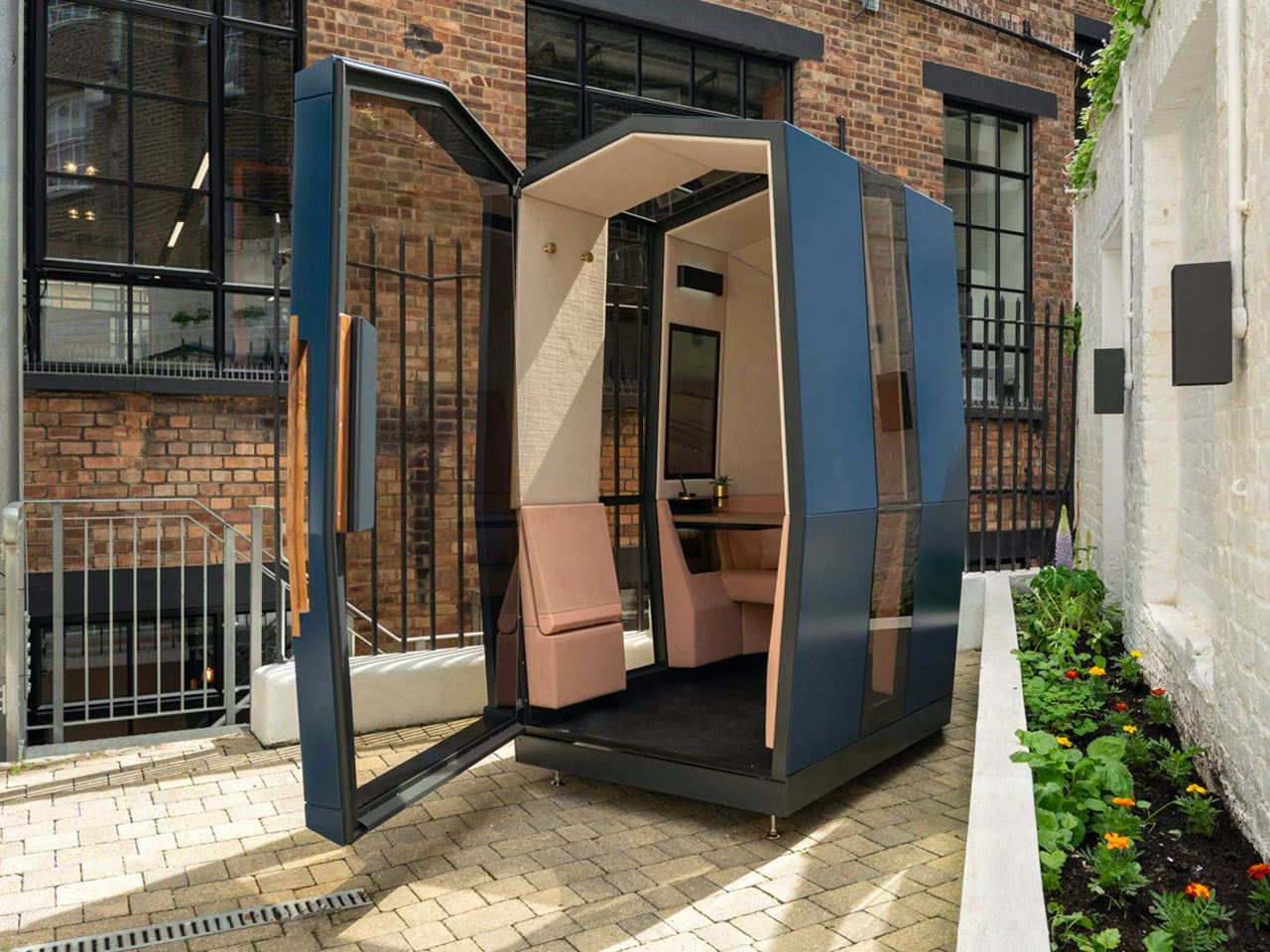
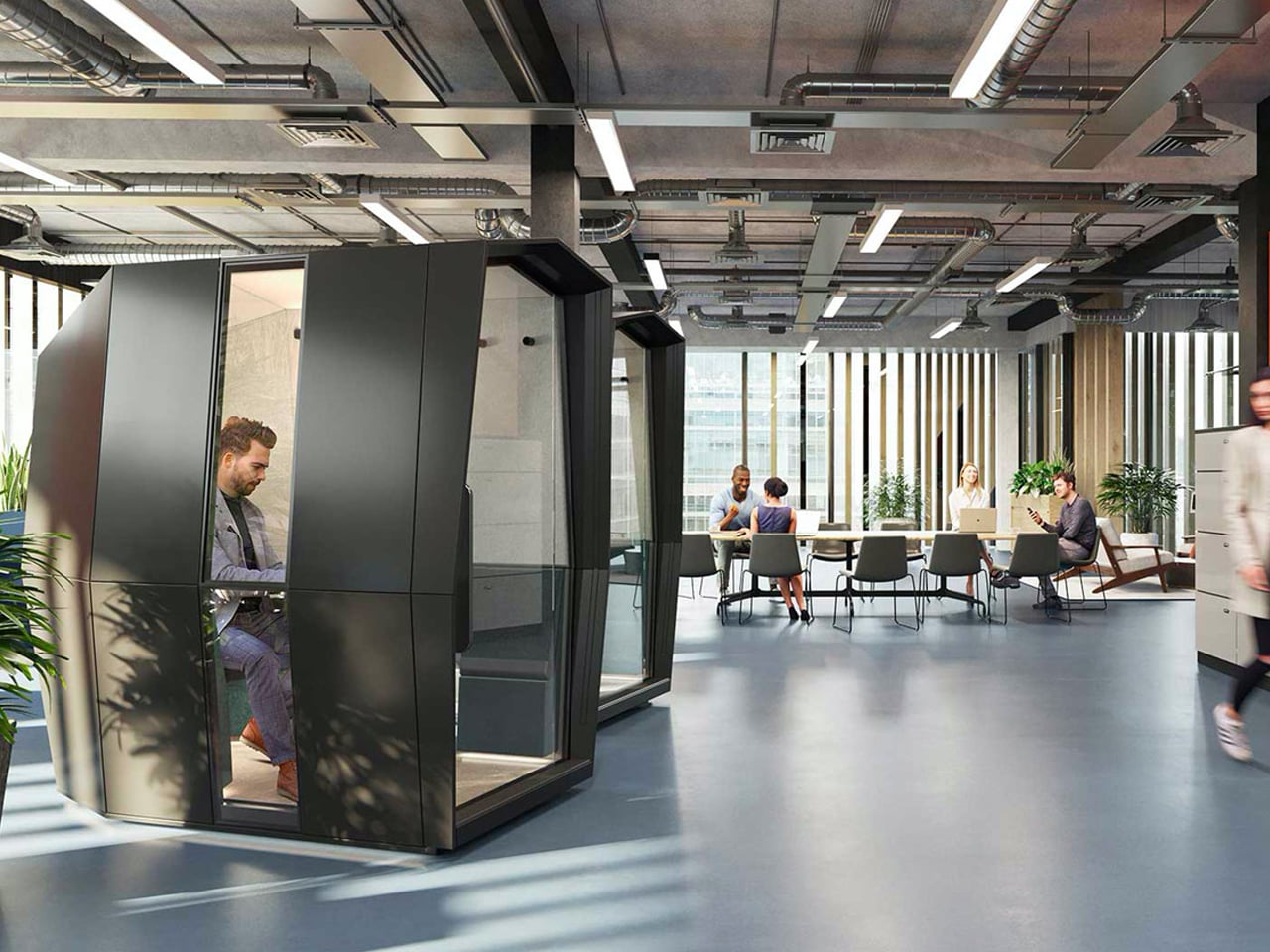
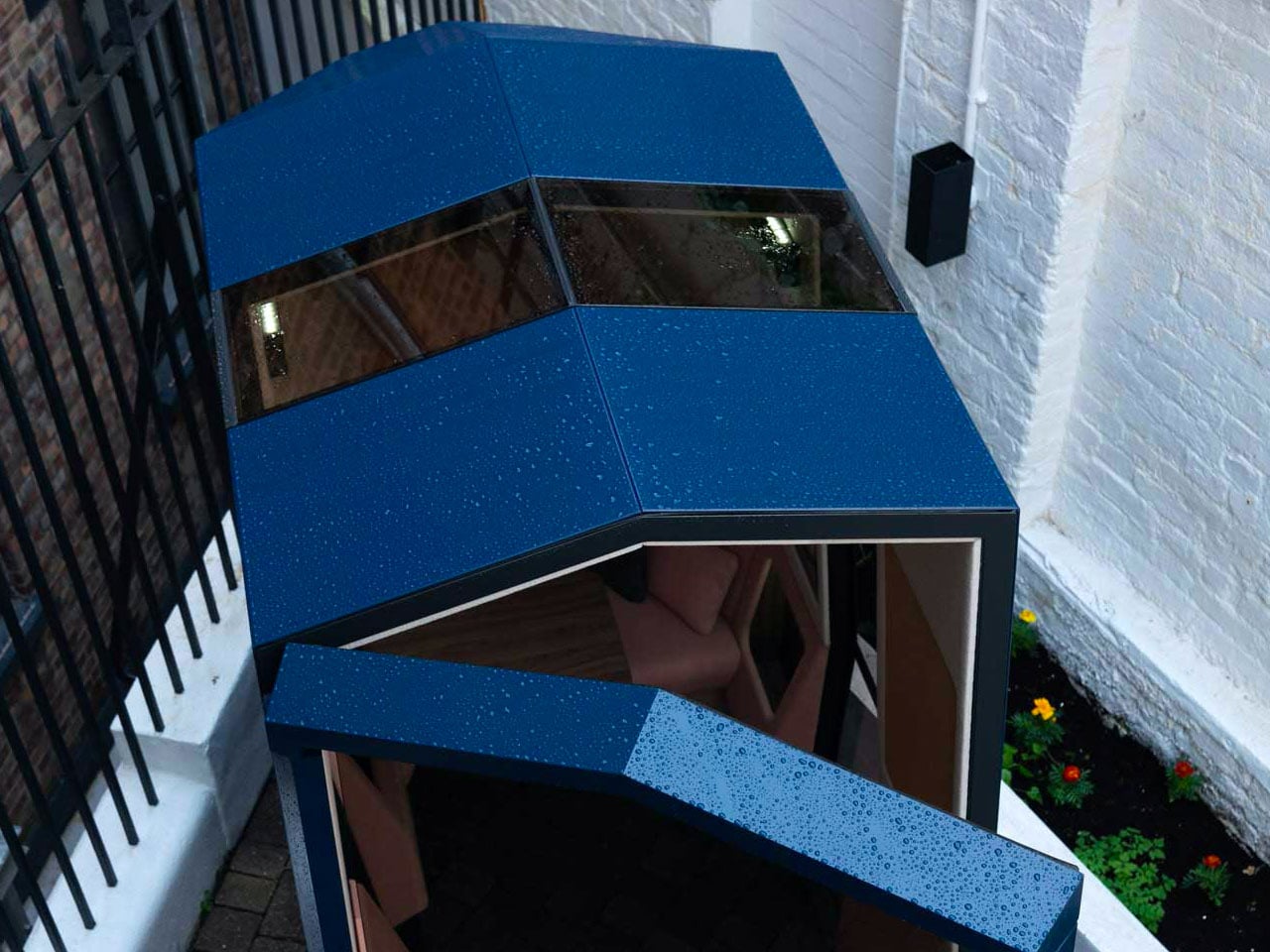
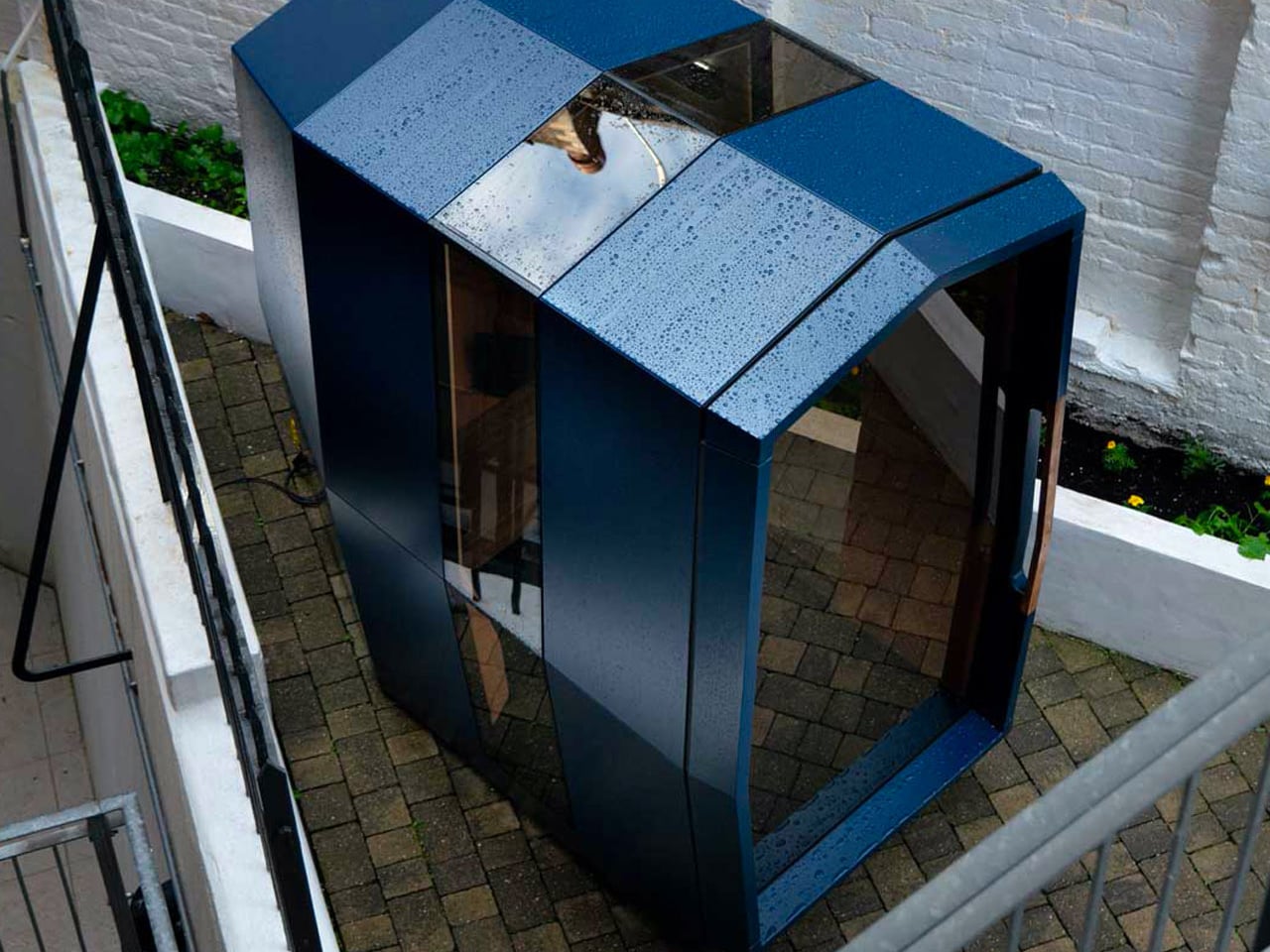
The rise of micro offices has introduced a new way of thinking about workspaces, focusing on compact, flexible environments that support concentration and privacy. In this context, Make.Work.Space presents itself as a personal work pod designed to function as a private productivity zone. It can be installed in homes, corporate offices, or even public environments, adapting easily to different spatial needs while improving efficiency and comfort.
The system is available in three modular versions: Micro-Office 1, 2, and 3, each designed for varying levels of use and comfort. The most compact model includes essential features such as a fixed desk, acoustic paneling, lighting, and built-in power access. The larger versions expand functionality with ergonomic tables, panoramic windows, ventilation systems, and optional air conditioning. Across all versions, the design prioritizes privacy, focus, and adaptability, while also making better use of underutilized spaces. Make.Work.Space offers a flexible solution for modern working, resting, or retreating within limited environments.
4. Houses on Wheels Enabling Fully Mobile Living
Houses on wheels merge the idea of home with continuous mobility, creating self-contained living systems designed for travel. Unlike temporary shelters, they support long-term habitation, often incorporating kitchens, bathrooms, and sleeping areas within a compact structure. This integration allows everyday living to function seamlessly while on the move.
They appeal to those seeking to move beyond fixed living patterns without losing a sense of stability. Relocation becomes part of routine life, not a disruption, allowing continuity across changing locations while maintaining comfort, familiarity, and independence.
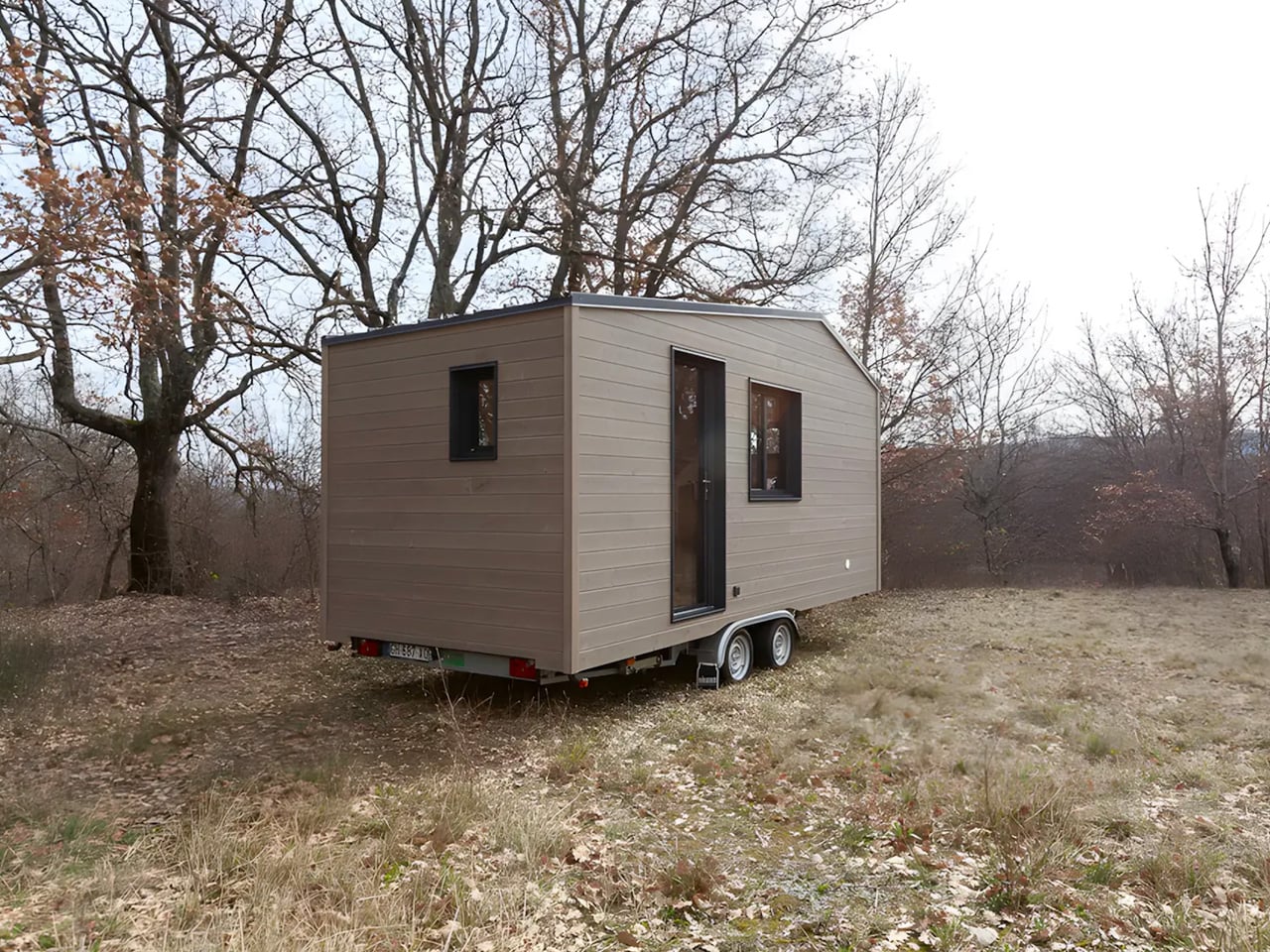
Tiny House du Lac by Plume is designed within the constraints of France’s strict towing regulations, which often result in more compact and highly efficient mobile homes. At just 17.8 feet in length, the structure prioritizes portability while still accommodating up to two people comfortably, or a small family of three in a more tightly arranged layout. The design reflects a clear focus on minimal footprint and mobility without sacrificing essential living functions.
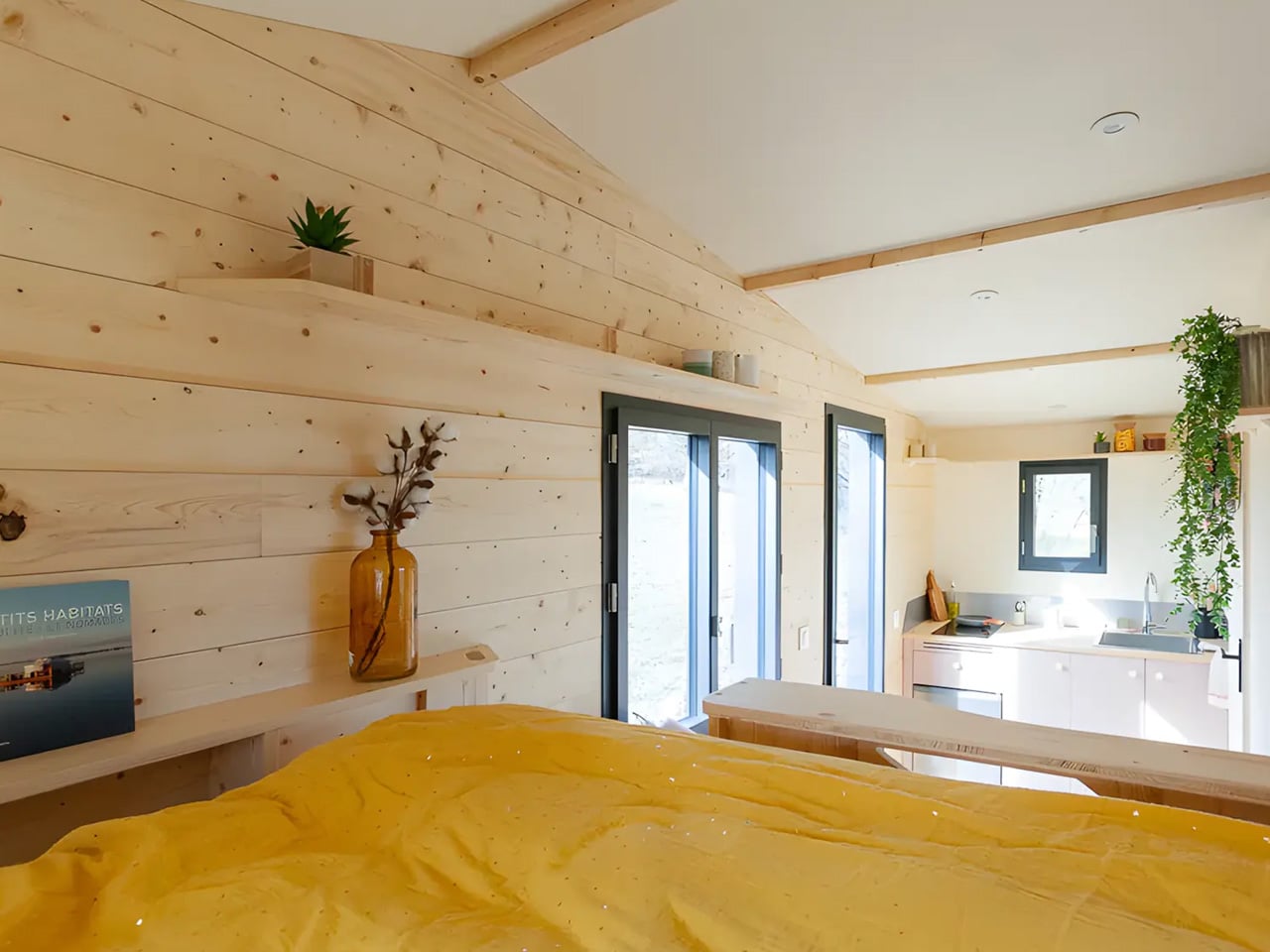
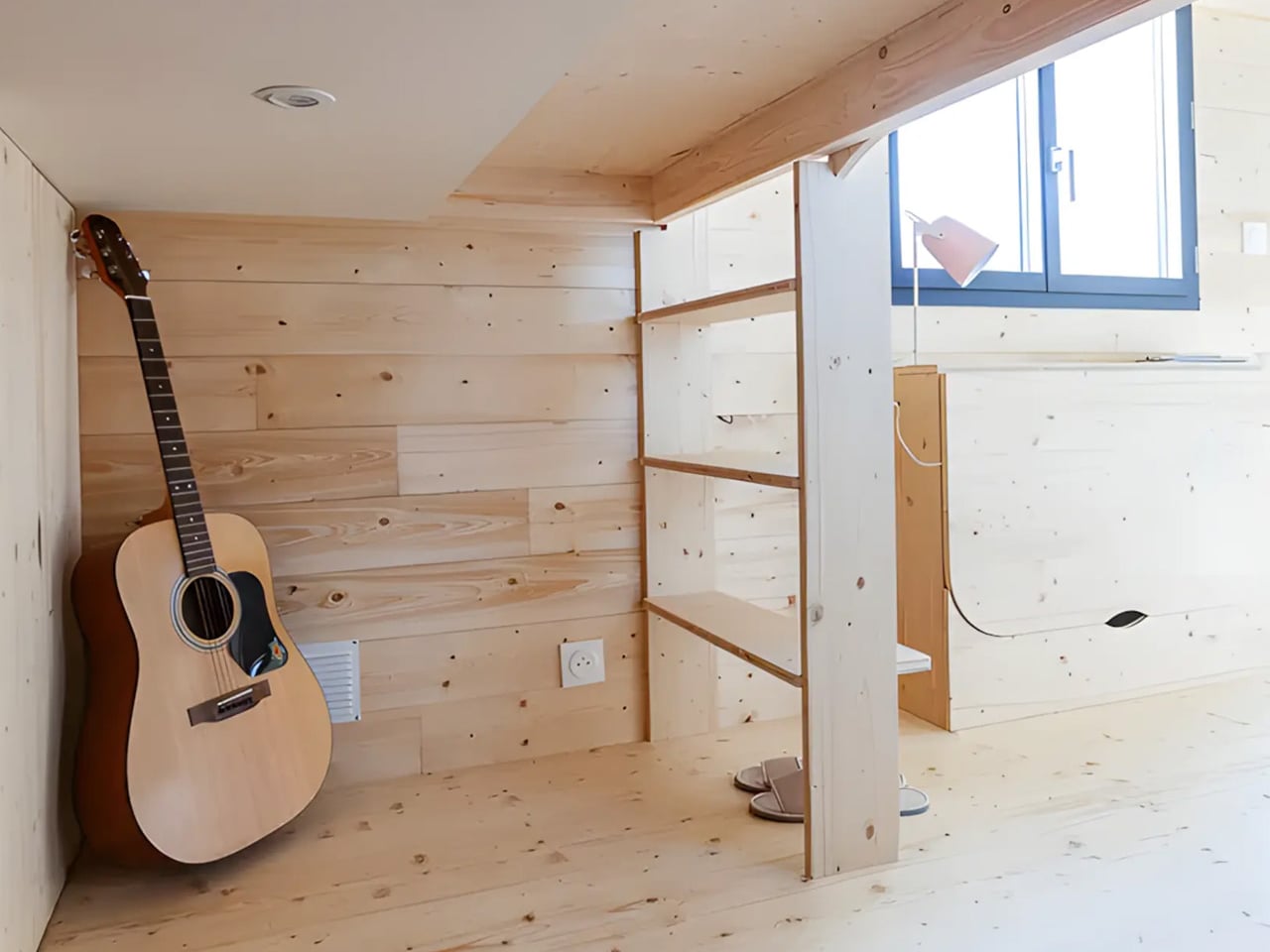
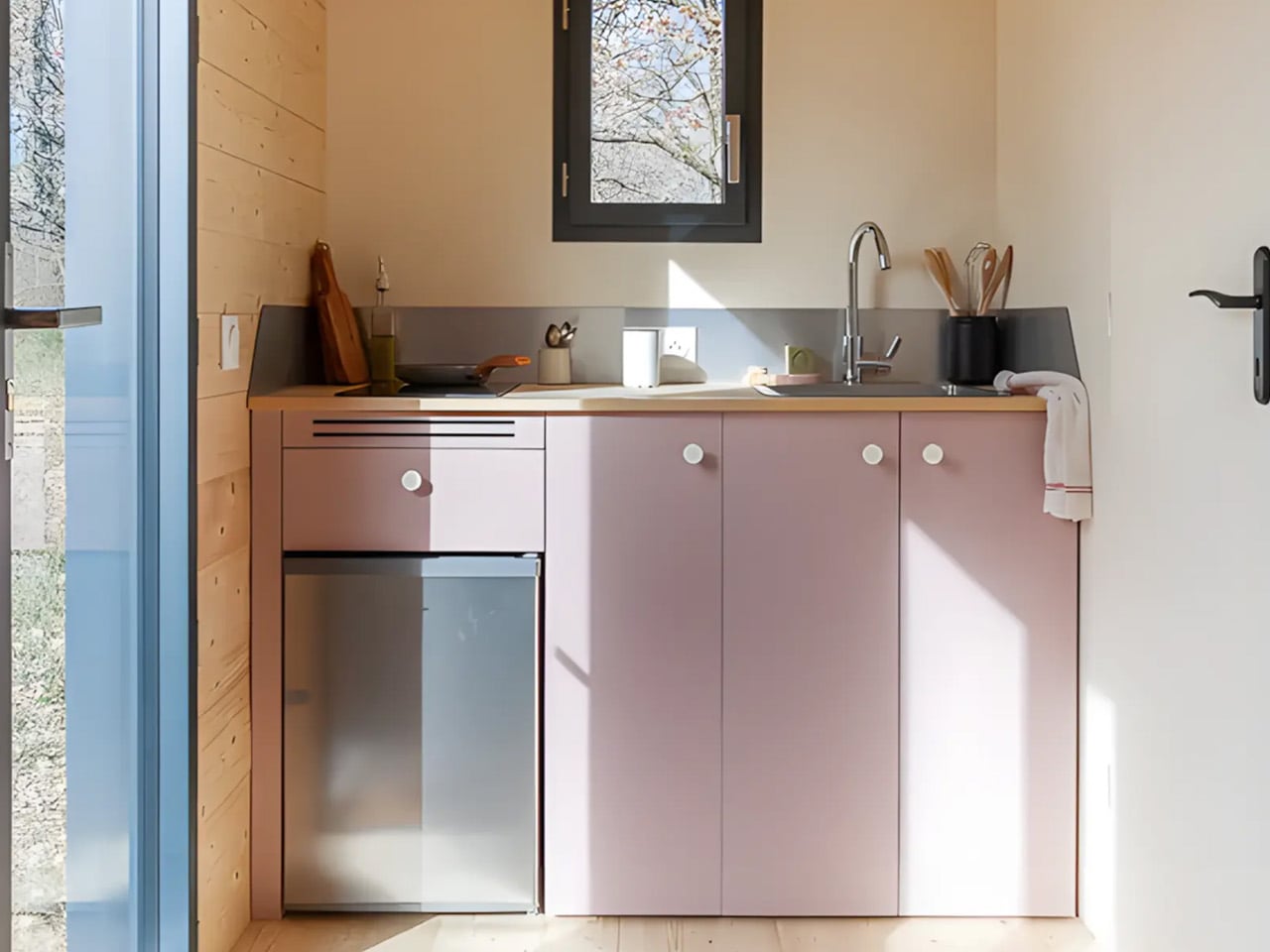
Inside, the layout is defined by a single continuous space that maximizes every inch of the interior. The kitchen is compact yet fully equipped with essential fittings, while the adjacent living area includes a small sofa and a fold-down dining table, maintaining a sense of openness through light tones and wooden finishes. At the opposite end, the bedroom is designed as a loft-style sleeping area accessed by wooden steps, with the space beneath adapted for storage or additional use.
5. Towable Stores Bringing Retail Directly to Changing Locations
Towable stores place commerce in motion by enabling businesses to operate through mobile retail units. These setups can be moved across locations, events, or neighborhoods, allowing brands to engage directly with audiences without depending on fixed storefronts. Their compact and adaptable design supports quick deployment and efficient operation in varied settings.
This approach encourages flexibility and experimentation within retail. Businesses can test new markets, respond to shifting demand, and create immediate, location-driven shopping experiences. It redefines how products are presented and accessed, making retail more responsive, mobile, and connected to its audience.
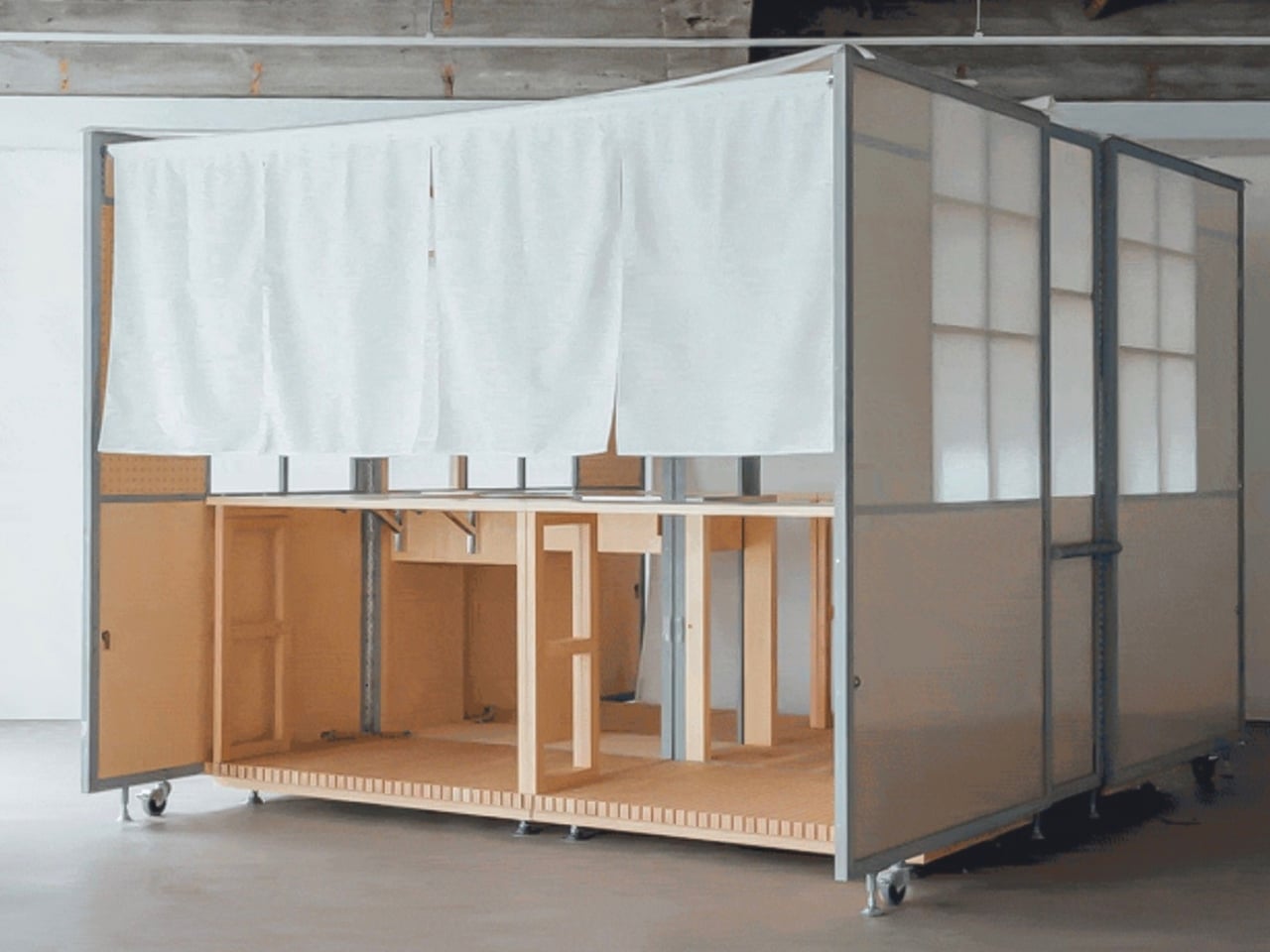
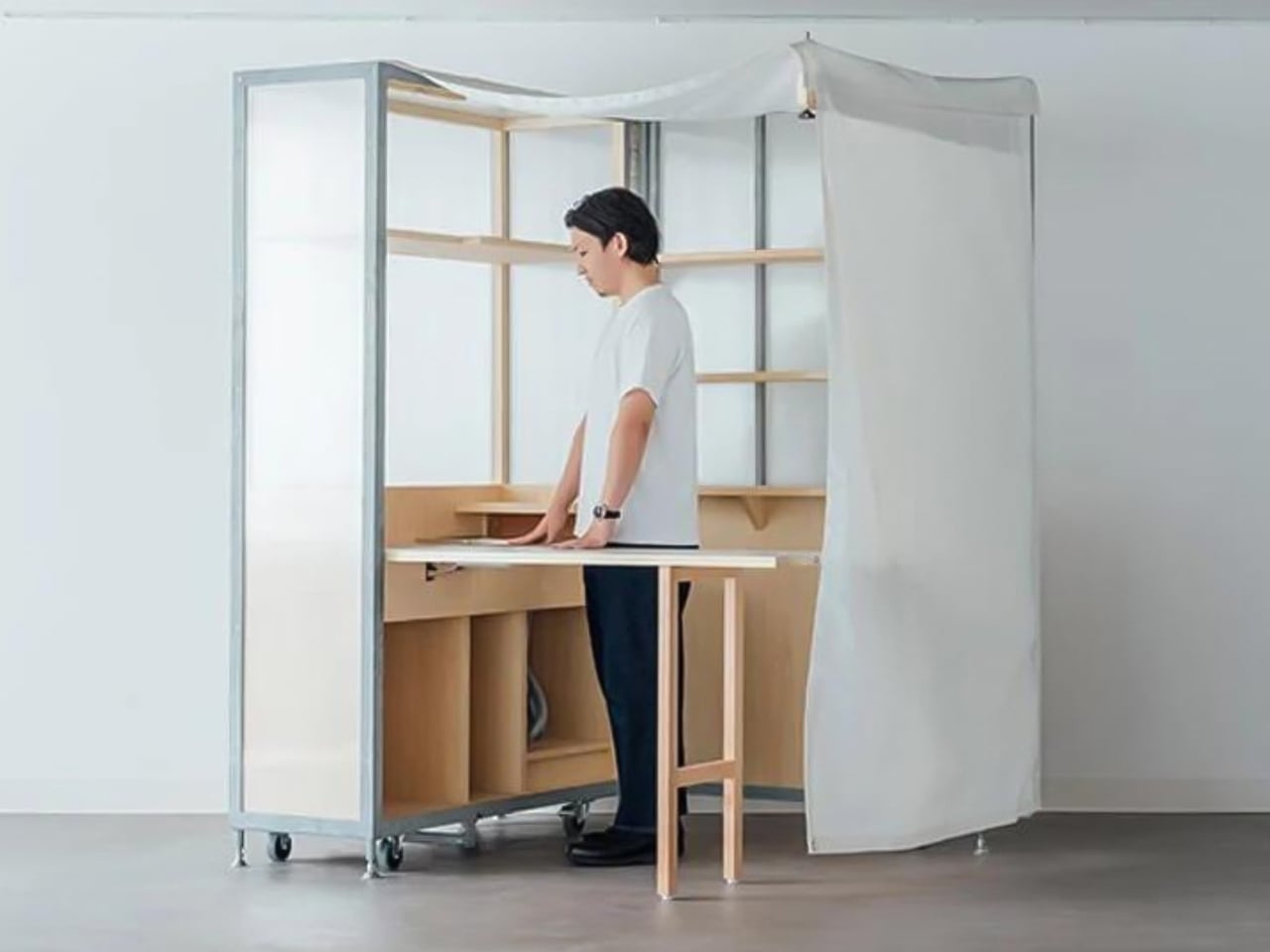
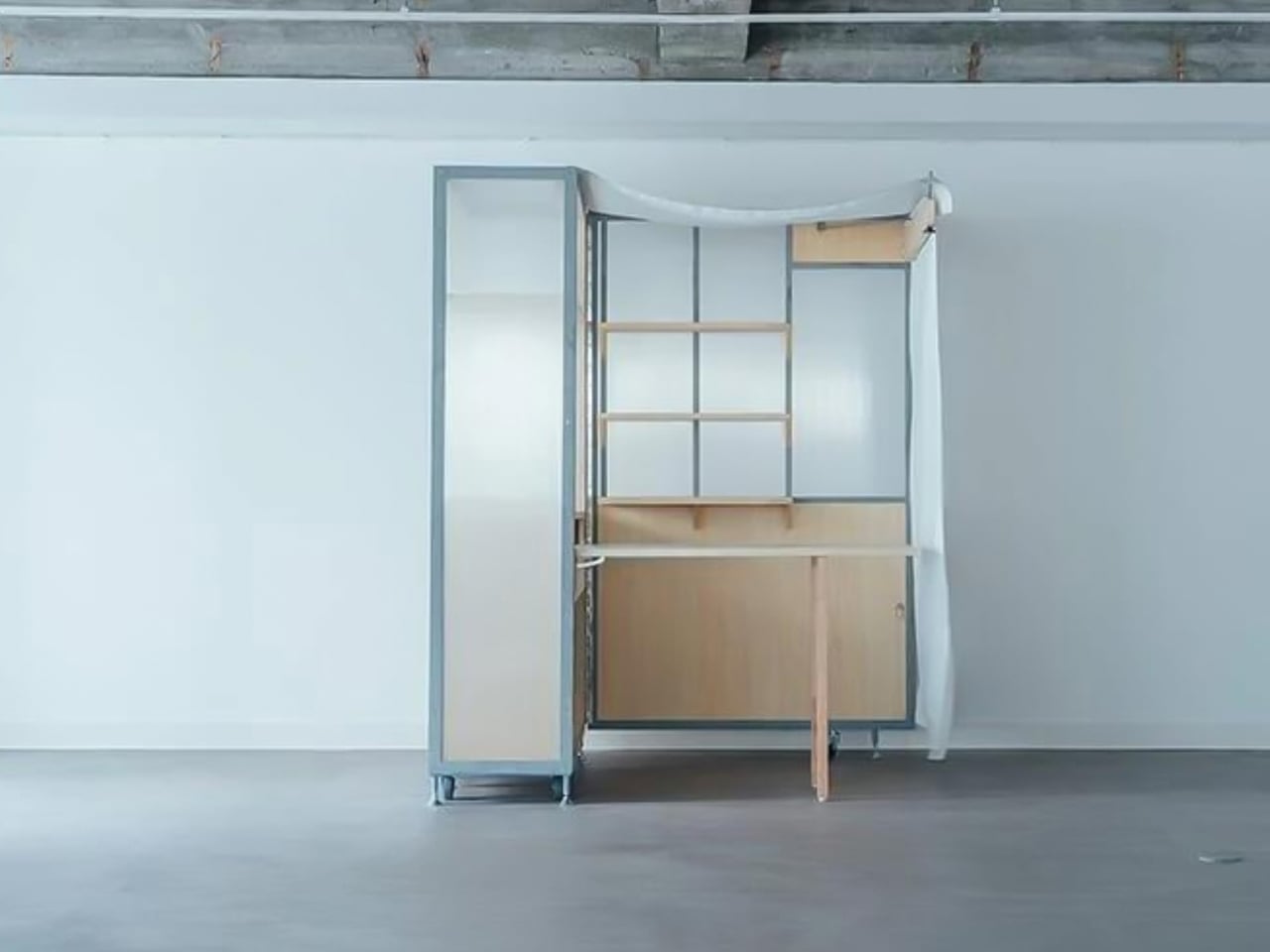
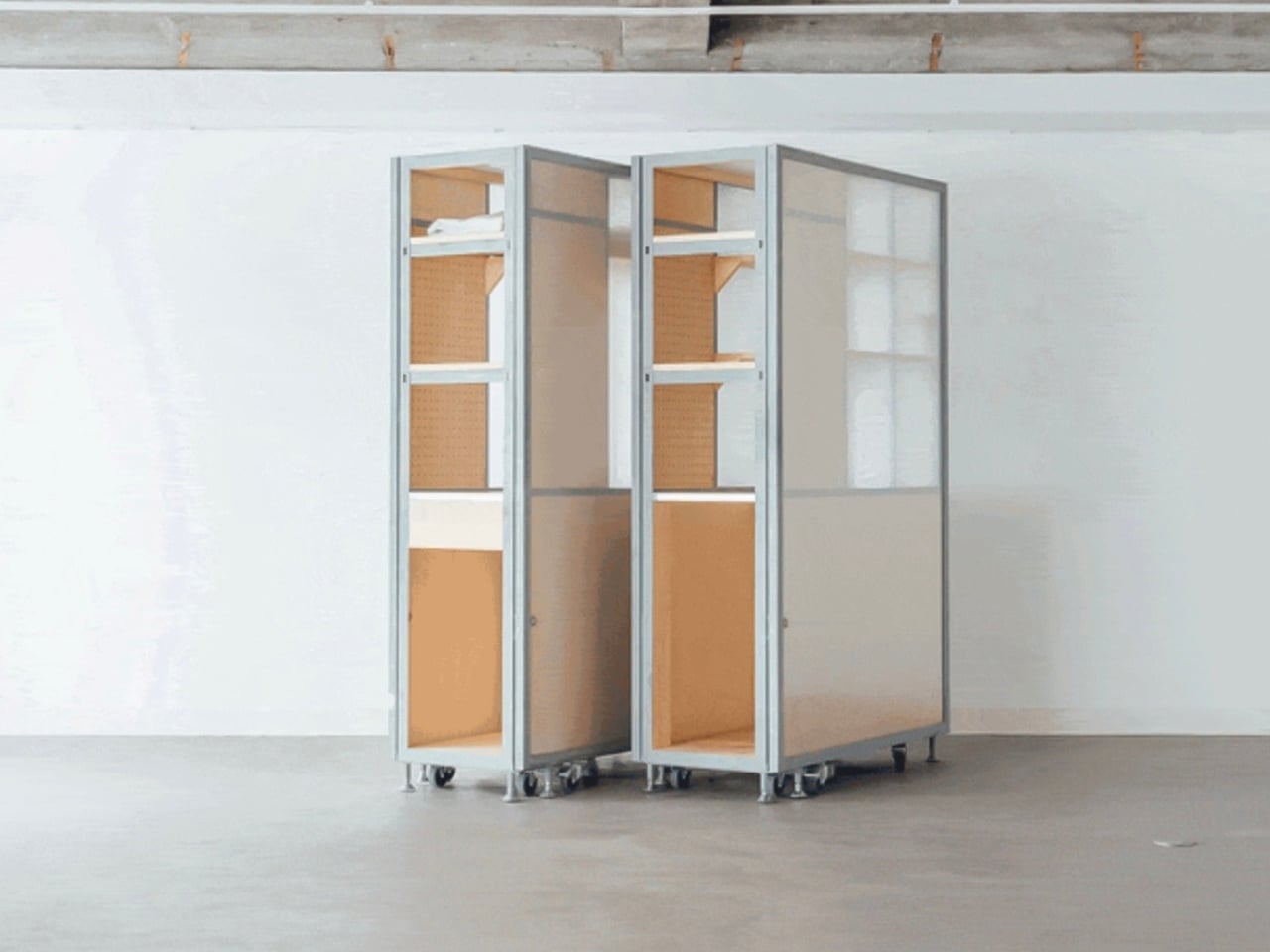
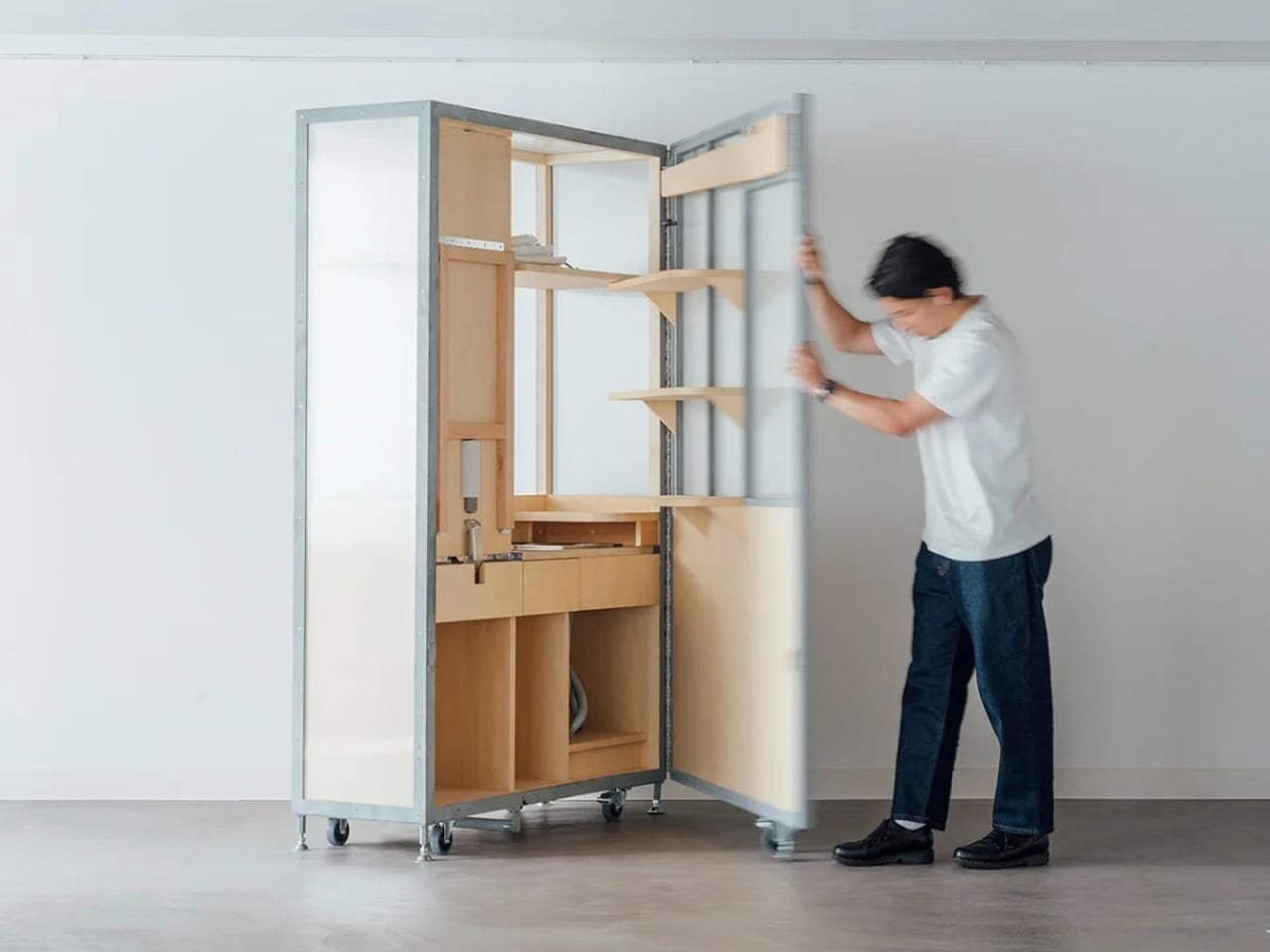
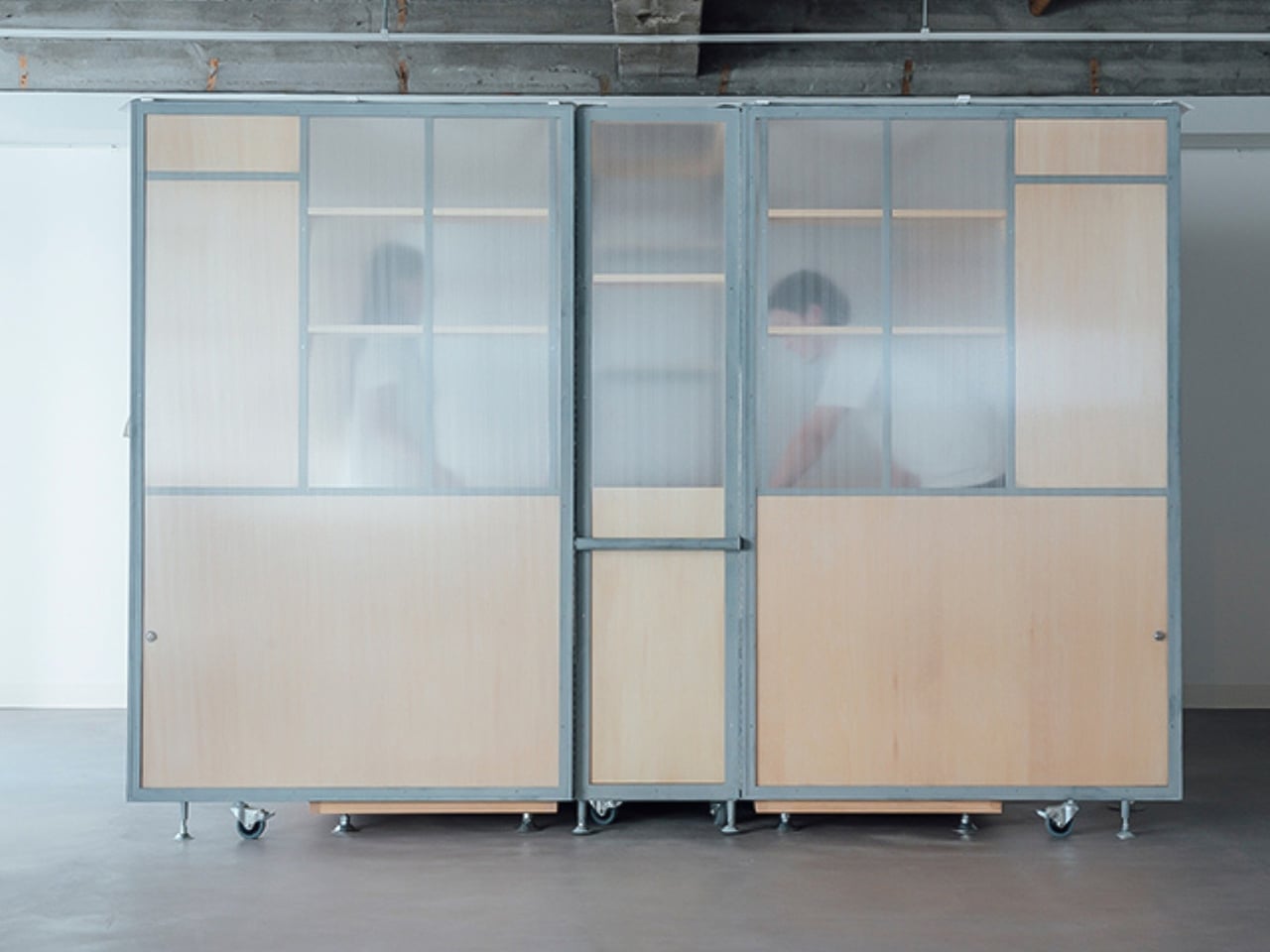
SHOPKIT, designed by Japanese studio COC, is a modular mobile store system created for easy setup, transport, and reuse in different environments. It functions as a compact retail unit that can be quickly assembled and disassembled, making it suitable for events, exhibitions, trade fairs, or temporary shop installations. Built with materials like wood, steel, and polycarbonate, the structure maintains a clean, minimal design while remaining durable and adaptable across various urban and outdoor settings.
The system is available in two configurations: a single-door version and a larger double-door version. The single-door unit offers a simple, compact retail setup, while the double-door option expands into a more functional store layout with counters, translucent panels for natural lighting, and space for display and interaction. Designed to be portable and efficient, SHOPKIT transforms temporary retail needs into a structured mobile shop that can be placed wherever selling space is required.
Portable architecture reflects a shift toward flexible, mobile living where spaces adapt to changing needs. It spans living, work, and recreation, rethinking how environments function and respond to users. Mobility, efficiency, and intentional use become central to contemporary design, replacing fixed and static spatial models.
Most tiny homes ask you to compromise. The Cedar Ridge by JT Collective Tiny Homes doesn’t feel like one of them — a 360-square-foot house on wheels that trades the usual sense of sacrifice for something that genuinely feels considered. Built on an 8.5′ x 30′ triple-axle trailer with brakes and pier jacks for stability, it’s designed to move when you need it to and settle when you don’t.
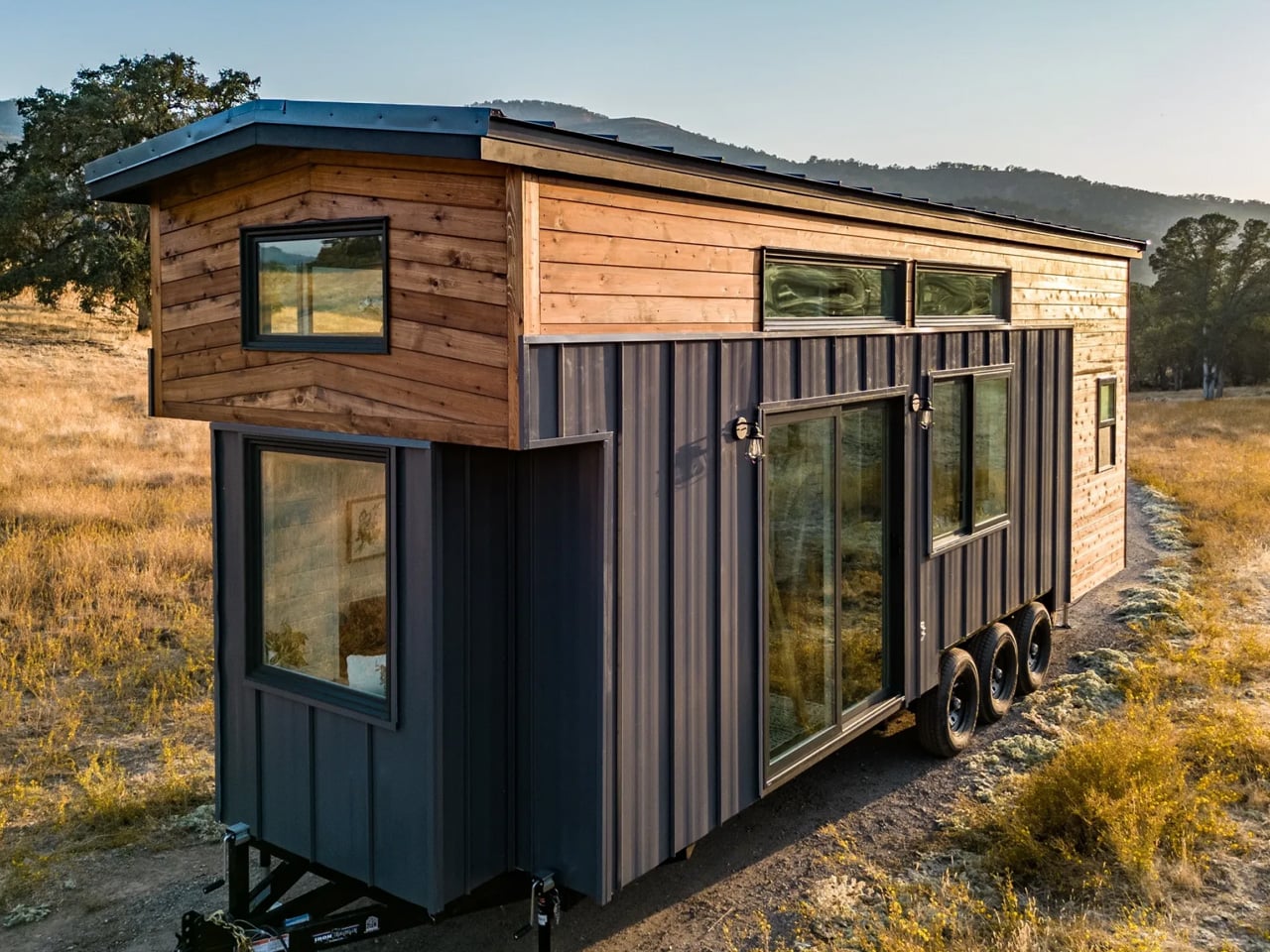
The exterior makes the first case. Cedar cladding runs alongside dark grey metal accents, giving the home a rugged, farmhouse-inflected look that holds up in nearly any landscape. Large front and upper windows pull natural light deep into the interior, and two entry points — a single glass door and wider sliding glass doors — keep things airy without compromising the insulated envelope. The dual-pane, tempered windows are built for longevity, not just aesthetics.
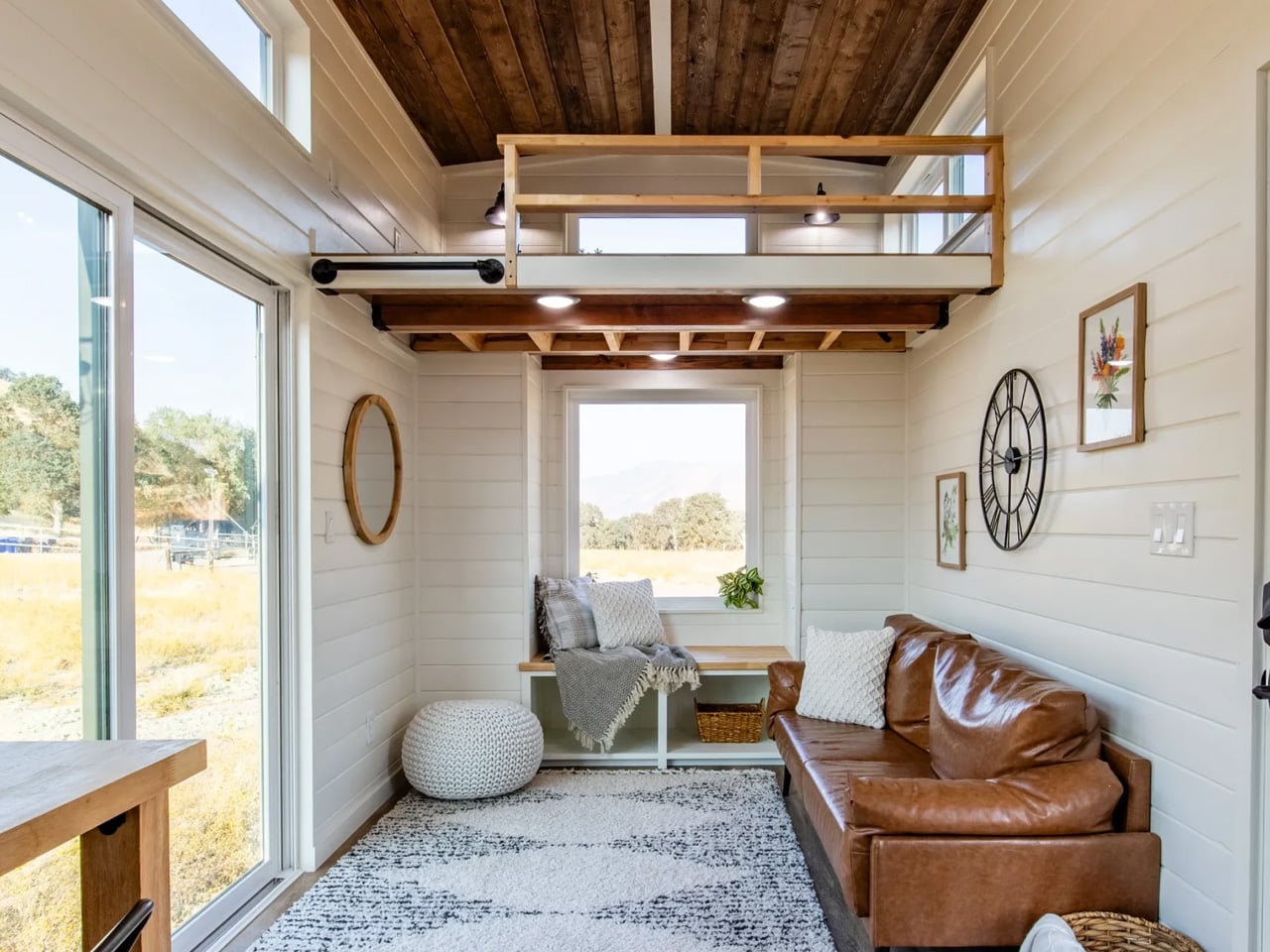
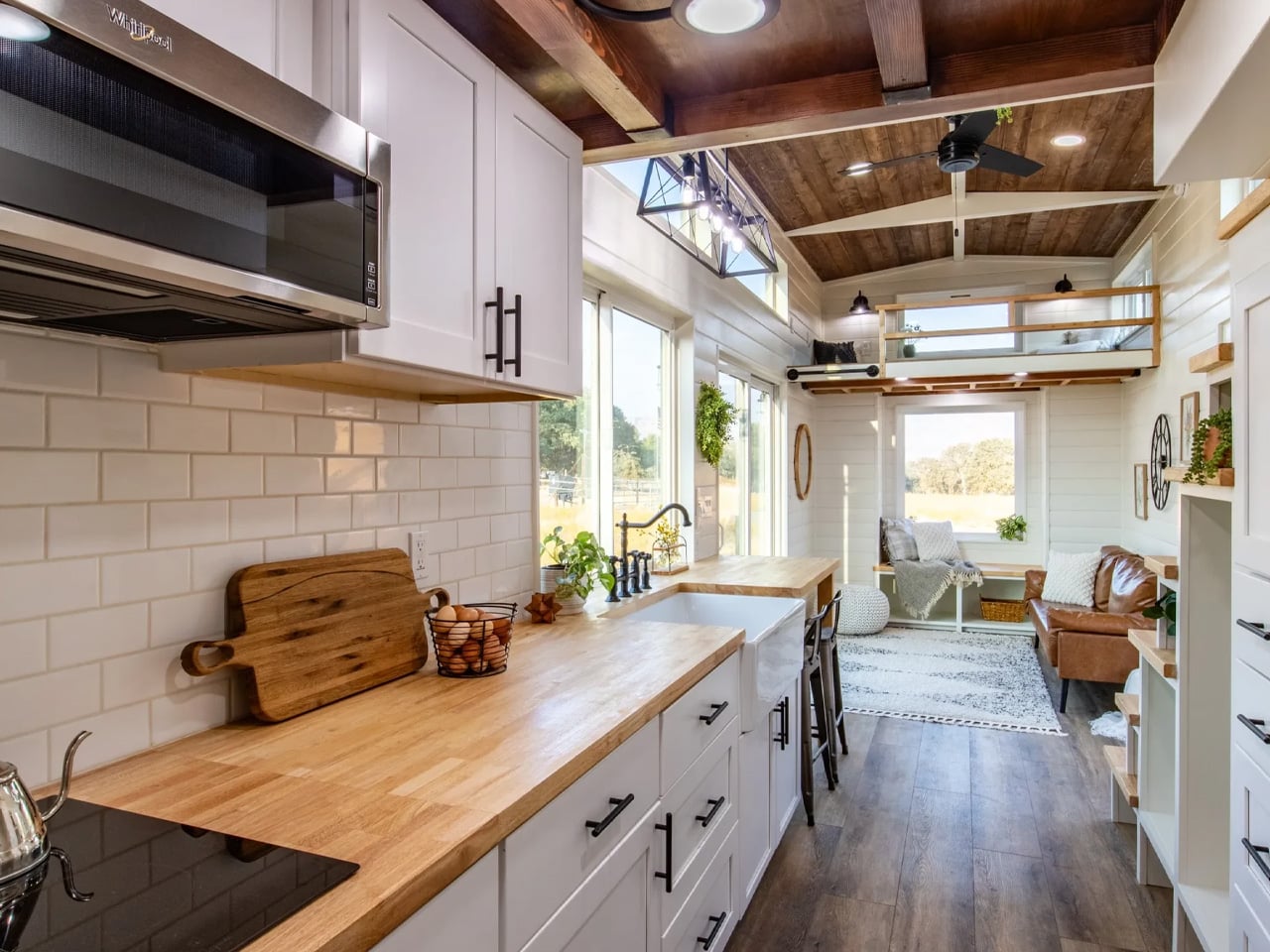
Step inside and the 360 square feet feel surprisingly open. White shiplap paneling, exposed timber beams, and warm wooden accents run throughout, and the living room anchors the space with a cozy window seat with built-in storage — a detail you rarely find at this scale. A ceiling fan and a wall-mounted mini-split handle the climate year-round. Nothing about the layout feels pinched.
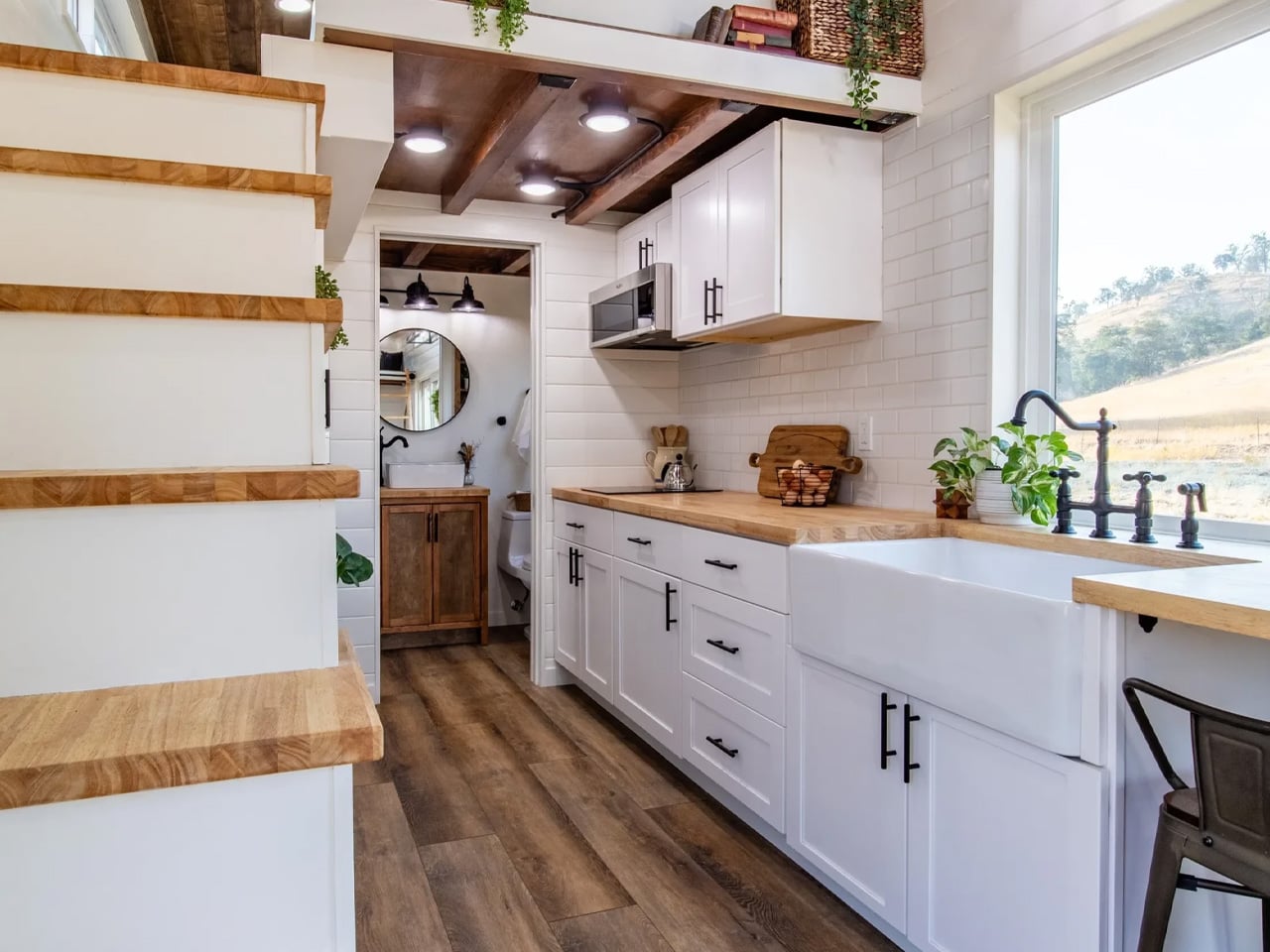
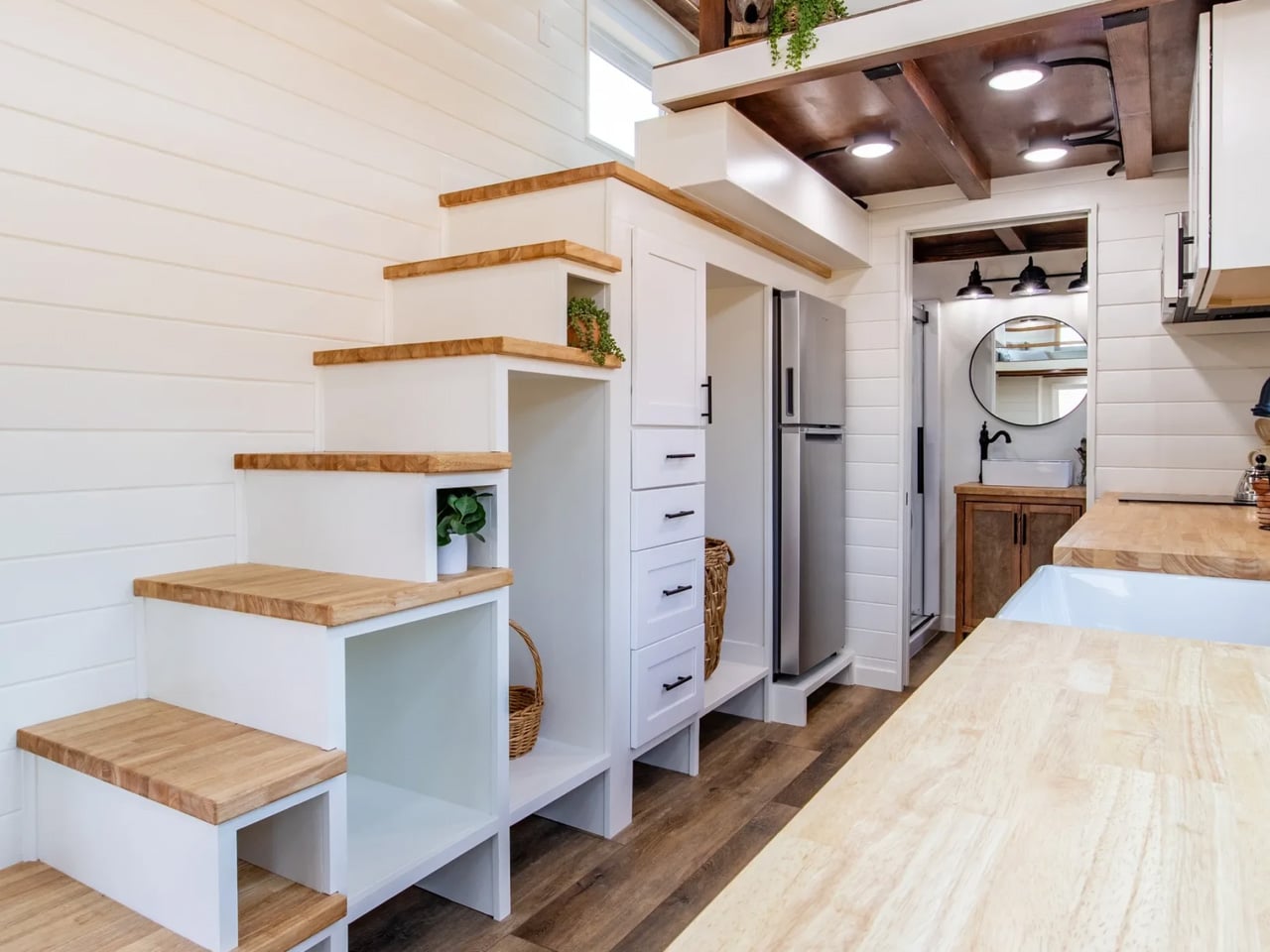
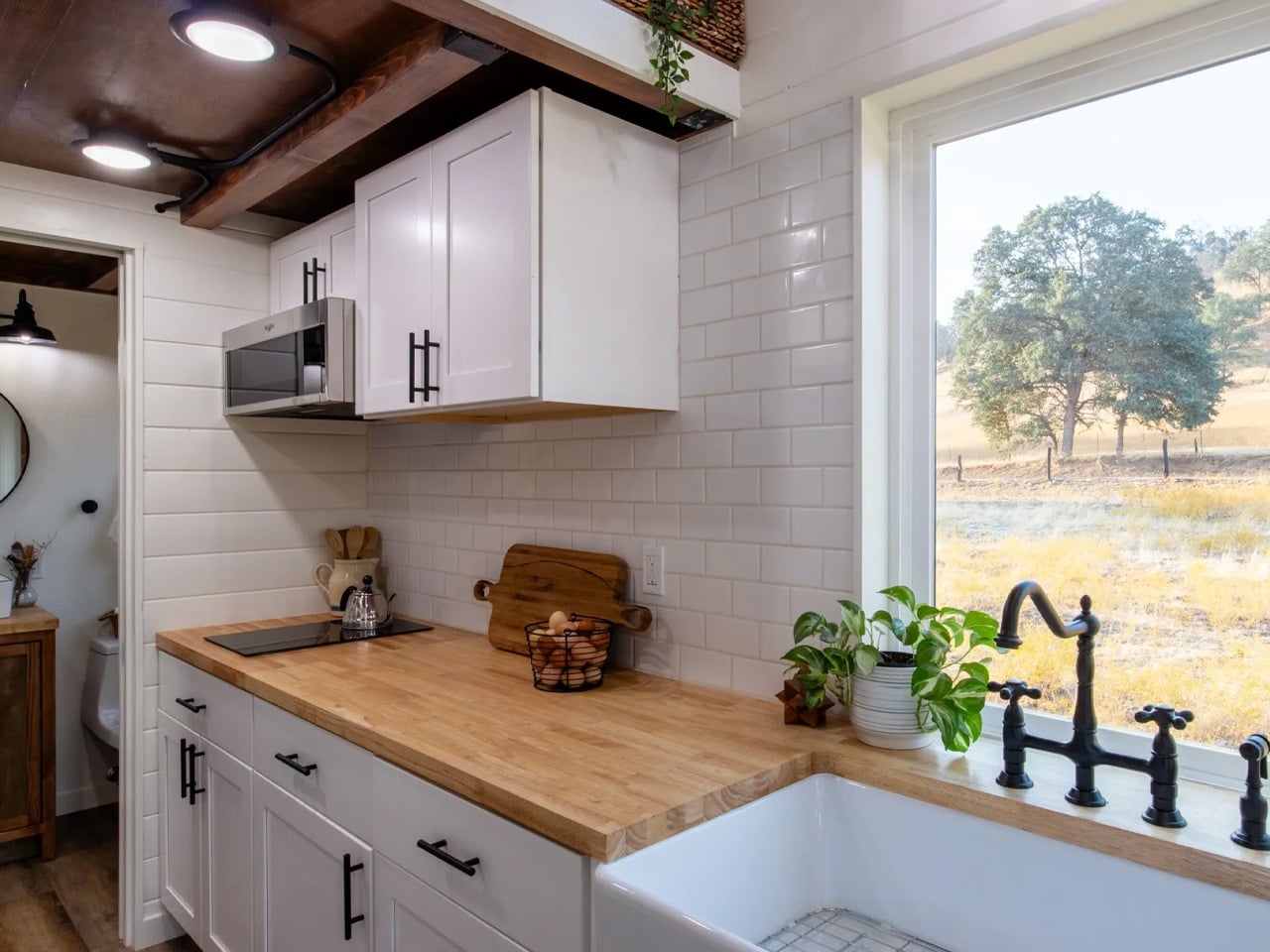
The kitchen is where JT Collective puts in serious design work. A farmhouse apron sink sits against a butcher block countertop, and buyers can choose between an induction cooktop or a propane oven configuration. A top-freezer fridge and low-profile microwave handle the practical side, while a breakfast bar for two turns the space into something worth lingering in. The staircase leading to the main loft doubles as storage, with drawers, nooks, and cupboards built into every riser — one of those quietly brilliant space solutions that defines a well-designed tiny home.
The main sleeping loft spans roughly 80 square feet and includes a lowered standing platform that makes getting dressed in the morning less of an acrobatic event, plus a skylight overhead. A secondary loft — accessed by a removable ladder that tucks neatly into the ceiling when not in use — works as a second bedroom or a casual retreat. The bathroom below features a glass-enclosed shower, a custom vanity, and two inset wall niches for storage.
Hookups include a 50-amp RV plug, potable water spigot, and city sewer or septic connections, making it fully functional on a prepared site. The Cedar Ridge starts at $124,000. An XL version with nearly 500 square feet is also available for those who need a little more room to breathe.