UK reverses course on AI copyright position after backlash

Chalk up a win for creative artists against AI companies. On Wednesday, the UK government abandoned its previous position on copyrighted works. It’s currently working on a data bill that, if unaltered, would have allowed AI companies like Google and OpenAI to train models on copyrighted materials without consent. Artists and other copyright holders would only have been offered a mere opt-out clause.

After significant backlash, the UK backed off from that position. "We have listened," Technology Secretary Liz Kendall said on Wednesday. However, the government’s new stance is, well, not a stance at all. It currently "no longer has a preferred option" about how to handle the issue.

Still, backpedaling from its previous position is viewed as a win for artists. UK Music CEO Tom Kiehl described the decision as "a major victory," while promising to work with the government on the next steps.

WEST HOLLYWOOD, CALIFORNIA - MARCH 15: (Exclusive Coverage) (L-R) Elton John and Dua Lipa attend Elton John AIDS Foundation's 34th Annual Academy Awards Viewing Party on March 15, 2026 in West Hollywood, California. (Photo by Kevin Mazur/Getty Images for Elton John AIDS Foundation)
Elton John and Dua Lipa spoke out against the government's previous stance. (Photo by Kevin Mazur/Getty Images for Elton John AIDS Foundation)
Kevin Mazur via Getty Images

Last year, some of Britain's highest-profile artists objected to the government's position. Sir Elton John and Dua Lipa were among those speaking out. Even Sir Paul McCartney weighed in, warning that the AI industry could "rip off" artists and lead to a "loss of creativity."

"You get young guys, girls, coming up, and they write a beautiful song, and they don't own it, and they don't have anything to do with it," McCartney told the BBC in 2025. "And anyone who wants can just rip it off. The truth is, the money's going somewhere… somebody's getting paid."

The government will now weigh its options, taking "the time needed" to balance the wishes of artists and the tech industry. "We will not introduce reforms to copyright law until we are confident that they will meet our objectives for the economy and UK citizens," it wrote in a report. "This means protecting the UK's position as a creative powerhouse, while unlocking the extraordinary potential of AI to grow the economy and improve lives."

"Any reform must ensure that right holders can be fairly rewarded for the economic value their work creates, and that they are protected against unlawful and unfair use of their work. It must also ensure that AI developers can access high-quality content."

This article originally appeared on Engadget at https://www.engadget.com/ai/uk-reverses-course-on-ai-copyright-position-after-backlash-175630732.html?src=rss

Microsoft will finally let you turn off Quick Resume for individual games

Microsoft is rolling out a number of Xbox Series X|S updates to those on its Xbox Insiders program, and one of them has been requested by the community for years. You’ll soon be able to disable the Quick Resume feature for specific games, meaning they'll boot up fresh each time you launch them.

As a reminder, Quick Resume is a feature that Microsoft introduced with its current generation of consoles. It lets you suspend a number of games simultaneously so they’re running in the background even when the console is turned off. When you want to return to a game that supports Quick Resume, it'll drop you back in exactly where you left it within a few seconds, often even when it’s been months since you last played that game. It’s a pretty neat feature, and still impressive more than five years since the Series X|S launched.

But over the years, players have discovered that Quick Resume isn’t ideal for every title, particularly always-online games. When you take these out of their suspended state, they’ll often shout at you for letting them disconnect, forcing you to manually close the game down properly and then relaunch it. Other games just don't seem to get on with it for a variety of other reasons. You can manually close any game you want at any time, but it takes a few more button presses than Quick Resume, so it’s easy to forget.

The latest Xbox update finally addresses this, letting you turn off the feature on a game-by-game basis by selecting "More Options" and then "Manage Quick Resume" on a game tile. That way you can ensure it’s only enabled for single-player titles in which the ability to instantly pick up where you left off is very appealing. It’s a change that has gone down well with ex-Xbox icon Larry “Major Nelson” Hryb, who said on X that he first requested it five years ago when still employed by Microsoft.

Microsoft is also adding more customization options to the Xbox dashboard in the upcoming update. You’ll be able to create custom background colors, rather than having to select one of the existing color options, while the amount of Groups you can add to your Home screen has been increased from two to 10. These can be reordered in the same way you reorder individual game tiles.

Select Xbox Insiders can start using the new features now, before they’re eventually made available to everyone.

This article originally appeared on Engadget at https://www.engadget.com/gaming/xbox/microsoft-will-finally-let-you-turn-off-quick-resume-for-individual-games-174639730.html?src=rss

Double Fine’s Kiln pops out of the oven and onto PC, Xbox and PS5 on April 23

Double Fine is following up on Keeper — one of our favorite games of 2025 — with Kiln, a “multiplayer online pottery party brawler.” The game was showcased during Xbox’s Developer Direct stream in January and now it has a release date. It’s coming to Xbox Series X/S, Xbox on PC, Xbox Cloud, PlayStation 5 and Steam on April 23. Xbox said Kiln will be Handheld Optimized from the jump. 

In Kiln, you'll use a virtual pottery wheel to shape a piece of clay into a vessel and then decorate it. The size and shape will determine how much health you have, the water capacity of your vessel and your speed. For instance, smaller pots will be able to attack faster, while a larger, slower pot might be more powerful. The shape you opt for (bowl, bottle, chalice and so on) determines which special ability you have. The decorations are purely cosmetic.

In the main Quench mode, the aim is to gather water and be the first team of four to put out the other side's kiln three times (which sounds a bit like a MOBA to me). Doing so won't exactly be straightforward, of course. When you run into an enemy vessel, you can try to smash it, and they'll probably attempt to do the same to you.

In one map, you'll be able to pour water onto sponges to create barriers. In another, there's a "disco dance floor that compels players to dance on the flashing squares for a short while." There's no in-game voice chat, but players could easily get around that using their console's built-in party features or the likes of Discord.

An open beta will take place on Steam from April 9 to 11. Pre-orders will go live at that time as well. The base version of the game is $20. A $30 "Fired Up" edition includes premium cosmetic options as well as extra chips, the in-game currency that's used to unlock customizations. Otherwise, chips can only be earned through gameplay.

This article originally appeared on Engadget at https://www.engadget.com/gaming/xbox/double-fines-kiln-pops-out-of-the-oven-and-onto-pc-xbox-and-ps5-on-april-23-171433966.html?src=rss

The Spider-Man: Brand New Day trailer is filled with MCU cameos

We just got our first trailer for Spider-Man: Brand New Day, the next big Marvel film. This is the fourth installment led by Tom Holland and follows the multiversal shenanigans of Spider-Man: No Way Home.

I'm about to get into some spoilers, for those still working through the MCU catalog. No Way Home ended with the entire world forgetting about the existence of Peter Parker, so this new movie will deal with the fallout from that. His whole support system is gone, though it looks like he still checks in on besties MJ and Ned from time to time.

Peter Parker may be lonely, but he's not alone in the film. He's teaming up with the Punisher, who is still played by Jon Bernthal after returning to the role in Daredevil: Born Again. In the comics, Spider-Man and the Punisher are long-time work buddies and occasional sparring partners. As a matter of fact, Frank Castle made his introduction in a Spider-Man comic that was published in 1974.

Bruce Banner also shows up in the trailer, potentially as Parker's professor. Mark Ruffalo is returning to the role, but we don't have any confirmation that he'll turn into the Hulk. It's worth pointing out that this is the regular human Banner, and not the hybrid version that's been popping up in recent MCU projects.

The trailer even highlights an iconic Spider-Man villain. Michael Mando is playing Scorpion, which is a pretty deep MCU cut. The character was teased all the way back in Spider-Man: Homecoming. The footage also shows Spidey battling ninjas that look suspiciously like the Hand, who were last seen in The Defenders on Netflix. This lends credence to rumors that Daredevil could be appearing in the film.

We don't have all that long to wait. Spider-Man: Brand New Day premieres in theaters on July 31. This is the final MCU film before the long-awaited Avengers: Doomsday, which hits cinemas in December.

This article originally appeared on Engadget at https://www.engadget.com/entertainment/tv-movies/the-spider-man-brand-new-day-trailer-is-filled-with-mcu-cameos-170215452.html?src=rss

Meta’s latest creator push comes with $3,000 bonuses for posting on Facebook

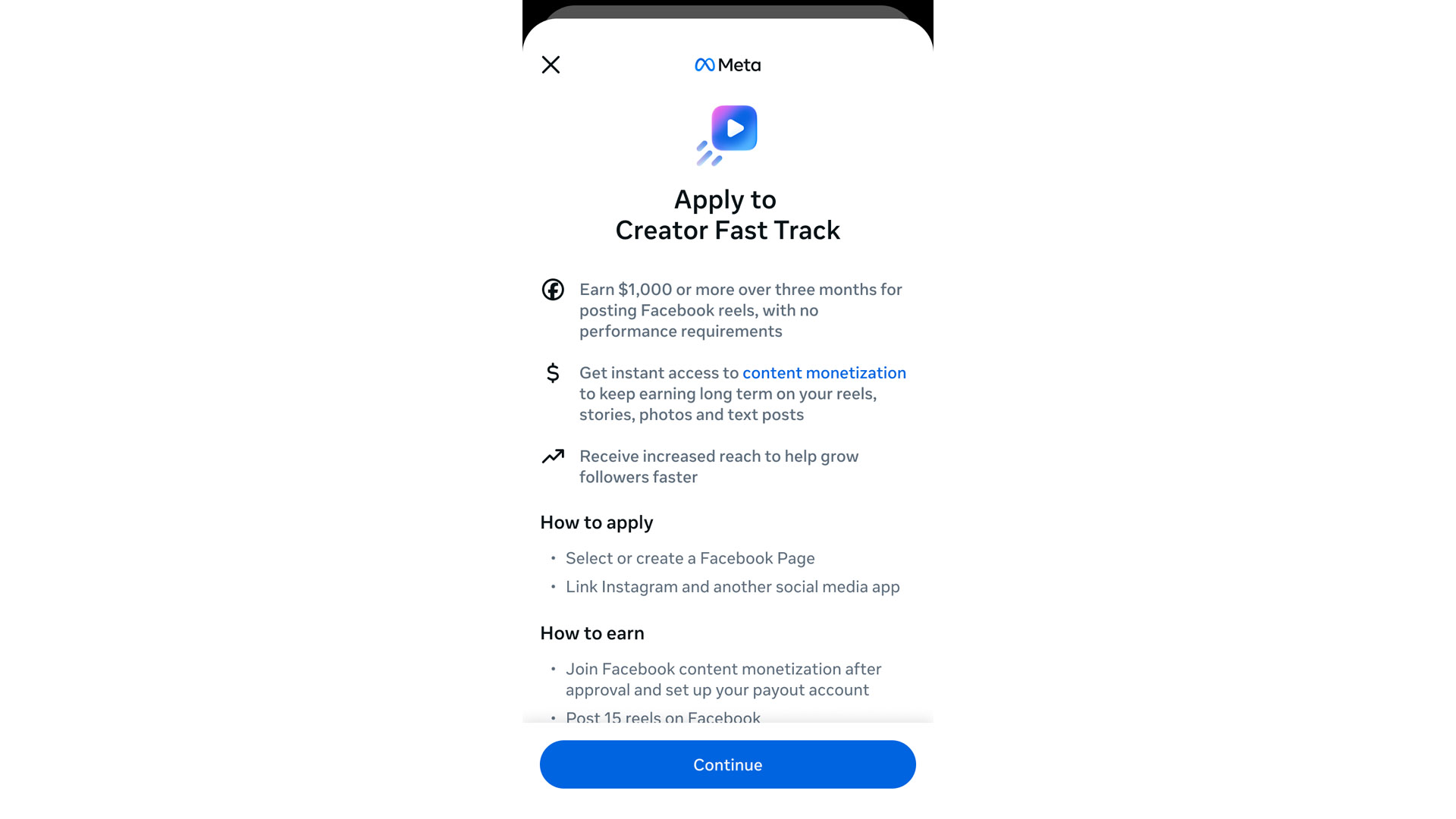
Stop me if you've heard this before: Meta has a new program to lure top creator talent to Facebook and it comes with hefty bonus payments. The company is launching a new initiative aimed at popular creators who already have large followings on TikTok, YouTube or Instagram and offering them bonuses up to $3,000 a month just for posting on Facebook.

Meta's goal is to draw more top talent to its Content Monetization program, which pays creators based on views and other engagement metrics across Stories, Reels and posts. The new bonuses will be part of an initiative Meta has dubbed "Creator Fast Track," which is meant to make the onboarding process easier — and more enticing — to Facebook newcomers.

Under the new "Fast Track" program, Meta is offering monthly bonuses of $1,000 to creators who have at least 100,000 followers on another platform and $3,000 for those that have a million or more. Creators who join will need to post a minimum number of Reels per month to earn the bonuses, but aren't required to meet engagement targets or post exclusive content to earn. They also aren't limited to video content as Facebook also rewards text and photo posts, as well as Stories

That may sound like a pretty good deal (it is), but it's also a limited one. The fast track bonuses will only last for three months. Creators should think of the bonuses as payment "for the hassle of starting on a new platform," not the central part of the program, Meta's VP of Product for Creators, Yair Livne, tells Engadget. "Our hope is that within a few months … the earnings that you see from Facebook Content Monetization will become the more important thing." He also notes that Meta will boost the reach of creators it fast-tracks, which should help them speed up their earning potential. 

Creators can apply for the new program in Facebook's app.
Meta

It's far from the first time Facebook has sought to lure big names with big checks. It promised publishers big payouts when it launched Facebook Watch nearly a decade ago. It once courted game streamers for its (now defunct) Twitch competitor. A year after launching Reels to take on TikTok, it invested $1 billion in a bonus program that offered creators as much as $35,000 a month only to pull the plug in 2023.  

Livne acknowledged that it "took us a long time to find our path" to a more sustainable creator program. "We don't have a pool structure so you're not competing with other creators for dollars. It really is based on your performance." 

There are already signs that the Facebook Content Monetization program, which it introduced in the fall of 2024, is working — at least for some. Meta says it paid Facebook creators nearly $3 billion in 2025, a new high for the social network. Creators have also reported that the new streamlined program is paying off. 

One political news creator told the newsletter Chaotic Era that they made $250,000 from Facebook in January alone. Publishers told Digiday last year that they expected to make "between six and seven figures" in 2025 thanks to the program. There are numerous recent posts in Reddit's r/passiveincome forum where users report making five figures a month from the program, which is still invitation only. 

Livne agrees that Facebook's monetization program has been something of a "well kept secret" in the creator community. "We're trying to make it less well kept and less of a secret." 

Are you in Facebook's Content Monetization Program, Creator Fast Track or another creator program at Meta? You can reach Karissa by email, on X, Bluesky, Threads, or send a message to @karissabe.51 to chat confidentially on Signal.


This article originally appeared on Engadget at https://www.engadget.com/social-media/metas-latest-creator-push-comes-with-3000-bonuses-for-posting-on-facebook-160000283.html?src=rss

Google is testing Search Live in more markets

Update, 4:05PM ET: A few hours after this story was published, Google reached out to retract the news. The company provided Engadget with the following statement:

"Search Live has not rolled out globally to all users. It remains available in the US and India, with testing currently underway in additional markets. We apologize for the earlier miscommunication."

Given that the company says it is testing in more markets, it seems entirely possible that the global Search Live release will happen sooner than later. But, for now, it’s on hold.

The original, unedited article follows below:

After rolling out Search Live to all US Google app users last September, Google is now bringing the feature to every place where it offers its AI Mode chatbot. Search Live, if you need a reminder, allows you to point your phone's camera at an object or scene and ask questions about what you see in front of you. Google debuted the tool at I/O 2025 before it began rolling it out to users. With today's expansion, Search Live is available in more than 200 countries and territories. 

What's more, Google has updated the feature to run off its Gemini 3.1 Flash model, an upgrade the company says should translate to more natural conversations, in addition to a faster and more reliable experience. The new model is also natively multilingual. You can access Search Live from the Google app on Android and iOS. Tap the "Live" button below the search bar to get started. You can also access Search Live through Google Lens. As in the Google app, look for the "Live" icon, here located near the bottom of the screen, to start chatting.

This article originally appeared on Engadget at https://www.engadget.com/ai/google-is-testing-search-live-in-more-markets-150000316.html?src=rss

It’s time for Game Freak to finally give Pokémon some proper voice acting

Ever since making the jump to the Nintendo Switch, there's something that's bugged me about practically every modern Pokémon game, a feeling that has only intensified after spending countless hours in Pokopia. For titles based in big, open worlds and filled with adorable polygonal characters and lovely music, why is nearly every pokémon still saddled with a call that sounds like a dial-up internet connection? 

As someone who played Pokémon Red and Blue at launch, I'm very aware that the origin of these sounds is tied directly back to those original titles on Game Boy, which was powered by an 8-bit SM83 processor from Sharp. Back then, it was a herculean challenge to fit the entire game into a single 512KB cartridge. So as a way to save space, the voice (or cry as they are more commonly known) of each of the original 151 Pokémon came from just 38 base cries, which then had their pitch or duration modified to create more unique sounds. 

Naturally, this tradition of lo-fi cries continued throughout Pokémon's run on the Game Boy and Game Boy Advance and onto the Nintendo DS and 3DS. And despite the higher-res graphics we got in subsequent titles, the use of sprite-based icons and other nostalgic touches made those bitcrushed calls sound right at home. However, when the series moved to the Switch and Switch 2 and embraced larger 3D worlds, those cries began to feel disconnected, especially for newer players without years of nostalgia to draw from. 

The first issue is one of identifiability. They all kind of sound the same, especially in earlier titles like Red and Blue or Gold and Silver, where around one hundred new Pokémon are represented by just 30 base cries. Ideally, a monster's voice would be just as recognizable as its silhouette. Unfortunately, the current lo-fi cries just don't fit the bill. 

The second problem is that the continued use of the old-school cries feels out of place in the grand scheme of Pokémon. When you watch the Pokémon anime, monsters don't use the same crunchy screams. Same goes for the movies, including big theatrical releases like Detective Pikachu. At this point, pretty much every new piece of Pokémon media except the games (and the TCG for obvious reasons) features proper voice acting, which sort of brings us to the biggest reasons to ditch the audio clips from the Game Boy era: Pokémon that actually say their name is just super fun and easy to understand. 

Sure, it's a bit of a gimmick, but it works. Plus, it kind of resonates with the philosophy that many vexillologists hold that says flags should be simple enough for a child to draw. Kids can say "Charmander," "Greninja" and even "Alomolola." But there ain't no way they are pronouncing this. For a game that's intended to be played by younger audiences, having the reinforcement of hearing a pokémon say its name while also seeing it written out in text isn't just easier to comprehend, it can also be a learning exercise. Also, just ask yourself, when you think of Squirtle, what do you hear in your head: this or this

Now, there are several reasons why Game Freak hasn't made this leap already. The first is obviously money. Granted, localization costs only make up a fraction of the budget for a Pokémon game, but it's still a lot of work to translate things for various regions across the world, especially with modern titles available in at least nine different languages. This includes adjusting the names of specific monsters to better suit a specific market. For example, in Japanese, Hitmonchan and Hitmonlee are named Ebiwalar and Sawamular as a tribute to some of the country's most famous boxers. So when you consider the need to get different voice actors across the world to perform all of these variations, things get expensive. 

Furthermore, there's an argument that creating a canonical voice for a main character like Victor or Gloria from Sword and Shield takes away from players' ability to imagine their own. Pokémon is an RPG after all. However, I don't think that reasoning flies when it comes to each monster's individual cry, even though many of them have been upgraded or refined in recent years. Same goes for the idea that a Pokémon that says its name sounds less natural than whatever this is. At the end of the day, these monster calls are iconic, and the Pokémon devs know this, because they've given proper cries to characters like Pikachu and Eevee in certain situations.

Regardless, for a franchise that's one of, if not the most valuable media property on the planet, I really hope that one day we can get proper vocal performances in Pokémon games, even if it costs Game Freak and Nintendo a little extra money. To be clear, I don't hate the old 8-bit cries and I don't think Game Freak needs to delete them entirely. They can simply be an alternate choice for anyone who prefers them over their actual voices. I just feel like after recently celebrating its 30th birthday, it's time for Pokémon to move on and celebrate some of the voice acting that helped make the franchise so popular in the first place.

This article originally appeared on Engadget at https://www.engadget.com/gaming/nintendo/its-time-for-game-freak-to-finally-give-pokemon-some-proper-voice-acting-130000851.html?src=rss

BMW’s i3 is reborn as a sporty 440 mile range EV sedan

After letting us drive a prototype around in the snow earlier this month, BMW has fully unveiled its all-new i3 electric vehicle. It's a far cry from the original funky hatch launched way back in 2013, offering more of everything including power, range and space. It also looks like you'd hope a 3-series EV would: a sporty sedan, minus the polarizing grille on the gas-powered M3. 

The i3 uses BMW's Neue Klasse platform and indeed borrows inspiration from the company's Vision Neue Klasse concept unveiled in 2023. With motors on the front and rear in the 50 xDrive configuration, along with the 800-volt electrical system, it delivers a combined 463 HP and 476 lb-ft of torque, just a touch less than BMW's G80 M3. 

BMW's i3 has been reborn as a sporty 440 mile range EV
BMW

That will make the BMW quick (the automaker didn't say how quick yet), but it will also be efficient. BMW estimates that the i3 will go 440 miles on a charge according to EPA guidelines and offer quick energy replenishment as well via DC charging speeds up to 400kW — up to 30 percent faster than its previous Gen5 tech. The battery pack will also be directly integrated into the chassis to reduce weight and increase torsional rigidity, while allowing bidirectional charging so you'll be able to use it as a battery on wheels to power your home in a blackout. 

Styling-wise, the i3 is much simpler up front with the grille and headlights incorporated as a single unit. A recess down the center of the hood draws your eye to the badge, while giving the EV muscle car allure. The side intakes add to that impression, as do the bulgy fenders, "Le Catellet Blue" metallic paint and optional lighting animations (Relaxed, Excited and Balanced).

BMW's i3 has been reborn as a sporty 440 mile range EV
Fabian Kirchbauer Photography

On the tech side, the i3 supports BMW's Digital Key Plus so you can open the doors or trunk with a smartphone or smartwatch. The interior, meanwhile, looks as futuristic as I've seen in any recent EV thanks to the 17.9-inch Panoramic Vision display that's angled toward the driver, along with an optional 3D heads-up display. The system features a self-learning voice assistant with Amazon Alexa+ AI and supports customizable themes, colors and background images. It also includes a wireless charging pad for your smartphone or other devices.

Inside, you can choose between multifunction and M Sport seats trimmed in different themes, including imitation leather in Agave Green, Digital White, Castanea or Black, or an M Design World theme in Black Veganza with M Performtex material. Alternatively, you can go for the BMW Individual scheme with real black Merino leather. For controls, BMW is using a hybrid system with physical buttons for the hazard lights and parking brake and "Shy Tech" buttons on the steering wheel that activate only when required. 

BMW will start i3 production in August 2026 and deliveries later in the fall, with pricing set to be revealed around that time. From what we've seen so far it's going to offer outstanding performance and range, but don't expect it to be cheap.

BMW's i3 has been reborn as a sporty 440 mile range EV
Fabian Kirchbauer Photography

This article originally appeared on Engadget at https://www.engadget.com/transportation/evs/bmws-i3-is-reborn-as-a-sporty-440-mile-range-ev-sedan-124614369.html?src=rss

The Defense Department reportedly plans to train AI models on classified military data

The Pentagon is making plans to have AI companies train versions of their models specifically for military use on classified information, according to the MIT Technology Review. If true, it wouldn’t come as a surprise, seeing as the US is aiming to become an “AI-first" warfighting force, based on the statement [PDF] released by Secretary of Defense Pete Hegseth earlier this year.

The department is already using AI models in the military: For instance, the US reportedly used Anthropic’s Claude to help with the capture of Venezuelan President Nicolás Maduro and with its attack on Iran, even after President Trump ordered federal agencies to ban its technology. But models trained on actual classified data could give more accurate and detailed responses, say, for situations similar to what happened in the past that aren’t public information.

MIT Tech Review says the department is looking to conduct the training in a secure data center that’s allowed to host classified government projects. The Pentagon would train copies of AI models, but it would remain the only owner of any data used for training. In rare cases, someone from the AI company could be granted the appropriate security clearance to see classified information.

Aalok Mehta, who previously led AI policy efforts at Google and OpenAI, told the publication that training models on classified data carries certain risks. It’s not that the information could go public, since the the models trained would be versions made specifically for military purposes. However, if the same model is used across the whole Defense Department, for instance, personnel without the correct clearance level could end up getting information that they weren’t supposed to have access to.

If the initiative pushes through, the department would likely be training models from OpenAI and xAI, which recently signed agreements with the agency. Anthropic, which has long worked with the government, might not be part of this project. The company refused to allow its technology to be used for mass surveillance and the development of autonomous weapons, and Trump ordered all federal offices to ban it as a result.

This article originally appeared on Engadget at https://www.engadget.com/ai/the-defense-department-reportedly-plans-to-train-ai-models-on-classified-military-data-120332113.html?src=rss

How to prepare your phone for trade-in

There was once a time in which many people couldn't wait to toss their smartphone aside every two years (and sometimes even more frequently) in order to get the latest model as soon as it hit shelves. But that world has faded for the most part now as shoppers demand devices that last for years so they can hold on to them for longer. And when the time finally comes to upgrade, many are being more conscientious about what happens to their old gadgets.

You may want to trade in your smartphone or sell it when you're ready to upgrade; either option can keep your device out of a landfill in addition to scoring you some extra cash. There are also options to recycle part or all of your phone if it's too old to make a trade-in worthwhile. Whatever path you choose, there are important steps to take to prepare a phone you're about to get rid of. These instructions apply to any model you might have, including both iPhones and Android phones. Here's what you need to know.

Let's start with a very important reminder to do regular backups for all of your gear, not just your phone. It's a task you should keep up with routinely even when you aren't about to recycle or trade-in a device.

Most hardware manufacturers have an automatic cloud backup system, but you'll like your new phone a lot less if it doesn't have your full, up-to-date library of contacts, photos and other information. This is the time to manually back everything up with all of your latest data.

Also, before you get any further into the process, make sure that you know the critical details for your phone and the main accounts associated with it. Halfway through is the worst time to lose access to your device because you can't remember your username or password.

Most people connect their phone to many other gadgets via Bluetooth. There are obvious ones, like smartwatches and wireless headphones, but you might also have your phone paired with something like a car stereo or a portable speaker. All of them should be unpaired from the phone you're about to trade in.

If you use your phone in two-factor authentication for sensitive accounts, you'll want to make sure that you disconnect the device from those services, too.

Next, you'll sign out of the device's cloud-based service. For iPhone owners, that's iCloud, and on Android, it's the Google suite. This will avoid any confusion with your new device. You'll also want to turn off Find My on iPhones or Find My Device on Android phones. iPhone users should also deregister iMessage on their old iPhone, particularly if they’re moving to a non-Apple smartphone. These steps might seem unnecessary when you'll end up wiping your device entirely, but you don't want to risk having your personal information accidentally made available to whoever might get your phone next.

Also, if you are under a plan that protects your phone, such as Apple Care or Preferred Care, you can usually cancel that coverage early. You'll get a refund on any unexpired coverage, and given how expensive gadgets can be now, it's worth getting that money back if you can.

At this point, your to-do list will vary. If you're planning to trade up to a newer model from the same manufacturer and you already have your new phone, then you'll want to transfer your data before moving on to wiping your old phone. Either in the store or on your own, in most cases you can wirelessly migrate your data from the old device to the new one.

If you're changing lanes between the Apple and Google universes, you can also do most data swapping yourself. There's a Google Play app called Move to iOS and one in the App Store called Android Switch that can walk you through the process. Just be sure that your device meets the requirements to use those programs.

However, if you aren't immediately setting up a new device, then you can skip this and move on to the next phase.

Once you double-check that you have everything backed up (seriously, don't take chances on this), then it's time to perform a factory reset. This will remove all of your data and apps, and bring the phone back to its original state. It’s ideal to do this reset as the final step of trading in, selling or recycling a device.

Whatever phone model you have, the reset option will be in the Settings app. It will commonly be nested under a tab like General or About, or you can search “reset” within Settings to find exactly where it is on your device.

This might seem obvious, but right before handing off your phone, make sure that you remove any accessories. Cases, grips and screen protectors should stay with you, not with the phone when it goes to its new home.

Check out more from our spring cleaning guide.

This article originally appeared on Engadget at https://www.engadget.com/mobile/smartphones/how-to-prepare-your-phone-for-trade-in-120000724.html?src=rss