A live-action adaptation of Totally Spies is now in production at Amazon. According to a report from Variety, Will Ferrell is the executive producer of the live-action series based on the popular 2000s animated series from French media company Banijay Kids, formerly known as Marathon Media.
The live-action Totally Spies will follow Sam, Clover and Alex as they balance saving the world as international spies working for the agency WOOHP with tackling schoolwork and social lives as college freshmen. No actors have been cast as any of the iconic girls, nor are writers attached to the project just yet.
The original Totally Spies was created by Vincent Chalvon-Demersay and David Michel, and it revolved around the three aforementioned teenage girls from Beverly Hills, California as they are recruited by WOOHP to solve worsening crimes that arise around the world. They’re equipped with spy gear disguised as women’s accessories such as hair dryers, high-heel shoes and lipstick. It’s like an animated Charlie’s Angels, except the girls actually see their boss in person.
Since its premiere in 2002, the series aired over 180 episodes, as well as spawned a prequel movie and a spin-off show, The Amazing Spiez. The seventh season of Totally Spies premiered in France last month after a nearly ten-year break, and it will air on Cartoon Network and Max in the US later this year.
This article originally appeared on Engadget at https://www.engadget.com/amazon-is-developing-a-live-action-totally-spies-series-201623189.html?src=rss
Delicious in Dungeon just wrapped up its first season on Netflix, and we now have confirmation that there will be another. The studio behind the show shared on social media this week that a season two is coming, and it’s already in production. The anime, based on the manga by Ryoko Kui, follows a group of broke adventurers who end up eating monsters along their quest to save their friend from the belly of a dragon. It’s one of the most unexpectedly delightful things I’ve watched recently and, despite the questionable ingredients that often go into the meals, has some truly top-tier examples of mouthwatering anime foods.
🐲 DELICIOUS IN DUNGEON SEASON 2 🐲
🔥 Now in production! We want to thank you for supporting #DeliciousinDungeon!
— Delicious in Dungeon - Official (@dun_meshi_en) June 13, 2024
Delicious in Dungeon is produced by the Japaneses animation studio, Trigger, Inc. The first season got a 24-episode run with weekly releases, but it’s all available and ready for binge-watching now if you haven’t gotten around to it yet. The final episode dropped on Thursday. Just don’t go into it hungry.
This article originally appeared on Engadget at https://www.engadget.com/sweet-theres-going-to-be-another-season-of-delicious-in-dungeon-224918513.html?src=rss
HBO has announced that House of the Dragon will be back for a third season. The network confirmed the renewal of the Game of Thrones spinoff series in a press release just three days ahead of its Season 2 premiere.
“George [R.R. Martin], Ryan [Condal] and the rest of our incredible executive producers, cast and crew have reached new heights with the phenomenal second season of House of the Dragon,” Francesca Orsi, executive vice president of HBO Programming and head of HBO Drama Series and Films, said in the press release.
HBO hasn’t revealed any details about the third season of House of the Dragon, nor has it given a release window. Still, it’s not uncommon in the streaming era for networks like HBO to renew shows for future seasons before upcoming seasons go live, like The Last of Us.
Last year, Orsi told Deadline that House of the Dragon may have more than four seasons. She added that Martin, whose book Fire & Blood inspired the spin-off series, and showrunner Condal were going to discuss where to end the show before the writers’ strike started. That strike ended on September 23, 2023 with the Writers Guild of America reaching an agreement on protections against generative AI.
The renewal also comes two days after Martin confirmed in a blog post that HBO is moving forward with another Game of Thrones spin-off, Ten Thousand Ships. He wrote that playwright Eboni Booth is “working on a new pilot” for the prequel about Queen Nymeria and the Rhoynar after the show was previously scrapped.
This article originally appeared on Engadget at https://www.engadget.com/house-of-the-dragon-renewed-for-season-3-ahead-of-season-2-premiere-203425819.html?src=rss
It looks like the sun hasn’t quite set on Finn, Jake, Marceline, Princess Bubblegum and the rest of the post-apocalyptic gang. The iconic cartoon Adventure Time is coming back in a big way, according to a report by Variety.
Cartoon Network Studios is working on three new entries in the franchise, one movie and two TV shows. There are no plot details regarding the movie, which makes sense given the end of the show and those follow-up specials, but there’s a bunch of talented people behind the scenes.
Rebecca Sugar is back, who made many of the best episodes of the original run before creating Steven Universe. The same goes for Adam Muto, the showrunner throughout the latter half of the series, and Over the Garden Wallco-creator Patrick McHale. We don’t have any release date or platform information for the movie, but it’ll likely stream on Max.
Adventure Time: Side Quests is a kids' show that looks similar in theme to the early seasons of the OG series. It stars a younger Finn and Jake as they get their start in adventuring throughout the Land of Ooo. This won’t be a heavily serialized show. It’ll mostly be standalone episodes starring earlier versions of beloved characters, like The Ice King. Nate Cash, who was an animator on the original series, is attached to this one.
"ADVENTURE TIME: HEYO BMO" is in development at Cartoon Network Studios. The first-ever #AdventureTime preschool series follows little BMO as he approaches each challenge he faces with his unique brand of enthusiasm and a curiosity to learn and fill his database. #AnnecyFestivalpic.twitter.com/ifsOsNFbaz
Finally, there’s Adventure Time: Heyo BMO. This show won’t just be for kids, it’s being made for preschoolers. As the name indicates, it stars everyone’s favorite sentient portable gaming console, BMO. An early promotional still indicates that the animation will be some sort of riff on claymation. Adam Muto will also be involved with this project.
It looks like there’s something here for everyone. The movie should please adults who grew up on the show. Side Quests is for kids, like the original Adventure Time was at first, and Heyo BMO is for preschool-aged children. Also, Max recently greenlit the alt-universe spinoff Fionna and Cake for a second season. The adventure truly will never end! For the record, I’m here for it.
This article originally appeared on Engadget at https://www.engadget.com/adventure-time-is-coming-back-with-a-movie-and-two-spinoff-series-163357706.html?src=rss
Somehow, it's already been almost a year and a half since the first season of The Last of Us arrived on HBO. Things are well underway with the second season, and we've known for a while that it won't premiere until 2025. We still don't know exactly when to expect it (though given that they're well into shooting, an early-year debut isn't out of the question), but we do now know that season two will only have seven episodes.
In an extensive interview with Deadline, showrunners Craig Mazin and Neil Druckmann (director of the two The Last of Us games that Naughty Dog has released for various PlayStation consoles) confirmed the shorter season. "The story material that we got from Part II of the game is way more than the story material that was in the first game, so part of what we had to do from the start was figure out how to tell that story across seasons,” Mazin said to Deadline. “When you do that, you look for natural breakpoints, and as we laid it out, this season, the national breakpoint felt like it came after seven episodes.”
That said, Mazin said that season three will likely be "significantly larger" — we don't know if that's from a scope perspective or running time perspective, but it's an interesting thing to broadcast given that we're still six months minimum away from season two premiering. And Deadline also confirmed that season two will have at least one extra-long episode, much like the 90-minute series premiere and the 70-plus minute episode focused on Bill and Frank in season one.
We've known for a while that Mazin and Druckmann were going to spread The Last of Us Part IIover multiple seasons, but it even sounds like the story could spin into a forth season. "We feel like it’s almost assuredly going to be the case that — as long as people keep watching and we can keep making more television — Season 3 will be significantly larger. And indeed, the story may require Season 4," Mazin said.
While the plotting of The Last of Us Part IIwas fairly involved, with lots of flashbacks and multiple points of view, stretching it over three seasons seems like a bit much. But based on this interview, it sounds like Mazin and Druckmann have figured out exactly where they want each season to begin and end and what story beats it'll cover. Of course, the show hasn't yet even been renewed for season three yet, so all this is contingent upon continued success. Given that season one was one of HBO's biggest ever, that probably won't be an issue.
Pedro Pascal as Joel in the first image from The Last of Us, season two.
HBO
Finally, Deadline dropped a surprising tidbit about a potential third game in the series — specifically, it's still unknown if one will happen. Indeed, the publication says that "a new installment has not been picked up or put into development." That's a very strong statement, albeit one that isn't sourced directly from a quote or given any real attribution. If true, it means a third The Last of Us game could easily be more than five years away, if it ever happens.
Druckmann did confirm that the show won't go beyond the what has been portrayed in the video games, unlike the HBO Game of Thrones series infamously moving beyond the novels it was based on (not that they had much of a choice). "As a fan, I’m thrilled that there might be a third Last of Us game," Mazin said. "As the co-creator of this television show, there’s no world where I would want our show to go beyond the source material that people have in the world."
Hopefuly, Deadline just has its lines crossed about a potential third game — with Summer Games Fest just days away, there's a lot of buzz around what Sony's first-party studios, including Naughty Dog, might be planning to announce. The last bit of concrete news we got around the game series was that the planned multiplayer game set in the Last of Us universe was canceled.
This article originally appeared on Engadget at https://www.engadget.com/hbos-the-last-of-us-season-two-will-only-be-seven-episodes-long-203949287.html?src=rss
The following article discusses spoilers for the first season of X-Men ‘97.
I was excited about the return of the ‘90s Saturday morning cartoon version of the X-Men. Still, I wasn’t sure Marvel, under the auspices of Disney, could deliver on the flavor of the original while also making a modern show that older fans, now adults in their 30s and 40s, could enjoy. And X-Men '97 is a total play on our nostalgia, which makes it even odder that it delivers. And is better than the original in pretty much every way.
And of all the Marvel baubles that needed some affection, the X-Men arguably needed it most. The ten-episode run managed to cram in so many plotlines, cameos, comic sagas, villains, plot twists and even deaths that, at times, it was hard to process everything — but I utterly loved how relentless it all was. X-Men ‘97 goes hard, especially if you’re already an obsessive fan.
When Marvel first launched an all-you-can-read comic book app, I went in hard on the X-Men back catalog, especially stories by Chris Claremont and Grant Morrison, two of my favorite writers. X-Men ’97 mines a lot of my favorite characters and stories. Magneto is put on trial, and begins a (brief?) redemption arc, Jean Grey turns out to be a clone, and the cartoon crammed a roughly-year-long comic arc, Inferno, into a single episode. Other arcs either included wholesale, or with some riffs, include Lifedeath, Fatal Attractions, Motendo, Operation: Zero Tolerance and more.
The highlight of this first season (a second is already underway) has to be the crushing episode 5, where the mutant nation of Genosha is devastated by a high-powered sentinel mothership… thing. Just before the attack destroys mutant adults, mutant children and eventually even an X-man, Cable, the time-traveling son of Scott Summers and Jean’s clone. (See: Inferno, mentioned above) reappears to stop the attack. But he fails again and his mother dies.
Magneto is left helpless as mutants are slaughtered and he’s forced to relive the genocide he suffered as a child. Eventually, Gambit sacrifices himself and lights up the entire robot with his mutant ability. This is after Rogue reignites a romance with Magento, changes her mind, and decides to be with Gambit. As I said, each episode is a lot.
I may be alone in this, but I still prefer the older series’ animation style and look. A cartoon can look a little scrappy, in my opinion —or maybe I’m just 39 and also not a Disney executive. The majority of the action scenes are great, too. Cyclops is finally not done dirty and gets to thrive in fights. There are some great combination attacks comparable to the iconic fastball special.
Sometimes, the show can feel a bit too “anime” (And I love anime, don’t at me!), where the ridiculous scale of the fight removed a lot of my interest in it. Cool, Bastian has metal wings in the final episode. Yes, yes, very cool. But didn’t one of his super sentinel underlings wipe the floor with the X-Men mid-series? And did we need the Phoenix to reappear (again!) so that Jean can save her 50-something son from the future? Probably not.
But, it’s the X-Men. It wouldn’t be the X-Men without this kind of nonsense.
I also adored the attention to detail. How Storm changed back to her original comic-book attire, Rogue transitioned to her green and white look, Magneto wore the same black-and-white costume while on trial, just like the original comic book. X-Men '97 doesn’t miss the chance to sprinkle in other Marvel characters, too. Captain America pops up a few times, we spot an out-of-costume Spider-Man, with Mary Jane Watson, watching the fall of Asteroid M. The Silver Samurai, who got his own episode in the original series, stares on as Tokyo loses power due to Magneto’s attack on the whole of Earth.
In other episodes, an aged Polaris, Rachel Grey and more mutants briefly appear in a vision of the future. The series is bursting at the seams with references, easter eggs and surprises. Did you know that Bastian is briefly, obliquely, on-screen during the horrific attack on Genosha, long before he’s revealed as the X-Men’s primary antagonist? Well, he is. It’s a show that’s ripe for debate and discussion in an era of Reddit, Discord and YouTube reactions.
Marvel Studios President Kevin Feige stipulated that both the cast and the music had to return for the project to happen. I’m glad it did and I’m glad the theme song still slaps.
This article originally appeared on Engadget at https://www.engadget.com/x-men-97-didnt-have-to-go-that-hard-140023964.html?src=rss
The following article discusses spoilers for the first season of X-Men ‘97.
I was excited about the return of the ‘90s Saturday morning cartoon version of the X-Men. Still, I wasn’t sure Marvel, under the auspices of Disney, could deliver on the flavor of the original while also making a modern show that older fans, now adults in their 30s and 40s, could enjoy. And X-Men '97 is a total play on our nostalgia, which makes it even odder that it delivers. And is better than the original in pretty much every way.
And of all the Marvel baubles that needed some affection, the X-Men arguably needed it most. The ten-episode run managed to cram in so many plotlines, cameos, comic sagas, villains, plot twists and even deaths that, at times, it was hard to process everything — but I utterly loved how relentless it all was. X-Men ‘97 goes hard, especially if you’re already an obsessive fan.
When Marvel first launched an all-you-can-read comic book app, I went in hard on the X-Men back catalog, especially stories by Chris Claremont and Grant Morrison, two of my favorite writers. X-Men ’97 mines a lot of my favorite characters and stories. Magneto is put on trial, and begins a (brief?) redemption arc, Jean Grey turns out to be a clone, and the cartoon crammed a roughly-year-long comic arc, Inferno, into a single episode. Other arcs either included wholesale, or with some riffs, include Lifedeath, Fatal Attractions, Motendo, Operation: Zero Tolerance and more.
The highlight of this first season (a second is already underway) has to be the crushing episode 5, where the mutant nation of Genosha is devastated by a high-powered sentinel mothership… thing. Just before the attack destroys mutant adults, mutant children and eventually even an X-man, Cable, the time-traveling son of Scott Summers and Jean’s clone. (See: Inferno, mentioned above) reappears to stop the attack. But he fails again and his mother dies.
Magneto is left helpless as mutants are slaughtered and he’s forced to relive the genocide he suffered as a child. Eventually, Gambit sacrifices himself and lights up the entire robot with his mutant ability. This is after Rogue reignites a romance with Magento, changes her mind, and decides to be with Gambit. As I said, each episode is a lot.
I may be alone in this, but I still prefer the older series’ animation style and look. A cartoon can look a little scrappy, in my opinion —or maybe I’m just 39 and also not a Disney executive. The majority of the action scenes are great, too. Cyclops is finally not done dirty and gets to thrive in fights. There are some great combination attacks comparable to the iconic fastball special.
Sometimes, the show can feel a bit too “anime” (And I love anime, don’t at me!), where the ridiculous scale of the fight removed a lot of my interest in it. Cool, Bastian has metal wings in the final episode. Yes, yes, very cool. But didn’t one of his super sentinel underlings wipe the floor with the X-Men mid-series? And did we need the Phoenix to reappear (again!) so that Jean can save her 50-something son from the future? Probably not.
But, it’s the X-Men. It wouldn’t be the X-Men without this kind of nonsense.
I also adored the attention to detail. How Storm changed back to her original comic-book attire, Rogue transitioned to her green and white look, Magneto wore the same black-and-white costume while on trial, just like the original comic book. X-Men '97 doesn’t miss the chance to sprinkle in other Marvel characters, too. Captain America pops up a few times, we spot an out-of-costume Spider-Man, with Mary Jane Watson, watching the fall of Asteroid M. The Silver Samurai, who got his own episode in the original series, stares on as Tokyo loses power due to Magneto’s attack on the whole of Earth.
In other episodes, an aged Polaris, Rachel Grey and more mutants briefly appear in a vision of the future. The series is bursting at the seams with references, easter eggs and surprises. Did you know that Bastian is briefly, obliquely, on-screen during the horrific attack on Genosha, long before he’s revealed as the X-Men’s primary antagonist? Well, he is. It’s a show that’s ripe for debate and discussion in an era of Reddit, Discord and YouTube reactions.
Marvel Studios President Kevin Feige stipulated that both the cast and the music had to return for the project to happen. I’m glad it did and I’m glad the theme song still slaps.
This article originally appeared on Engadget at https://www.engadget.com/x-men-97-didnt-have-to-go-that-hard-140023964.html?src=rss
Doctor Whois famous for constantly reinventing itself while remaining more or less exactly the same. The show has had a rough few years, which has led to some dramatic changes behind the scenes. Russell T. Davies, who was behind Doctor Who’s 2005 revival, has stepped in to rescue the show. What was historically an in-house BBC production is now being handled by a Sony-owned production company. And Disney has bankrolled it, with this new revival billed outside the UK as a Disney+ Original.
The dramatic behind-the-scenes changes prompted some fundamental questions about how Doctor Who would thrive in this new world. Would Davies be able to bring the show back from the brink a second time? And would the show appeal to Zoomers in the same way it found a devoted audience of Millennials? And would Doctor Who survive intact under Disney, which is used to obsessive levels of control?
It’s that last question I can already answer, having watched the first two episodes of this new eight-episode season: Doctor Who hasn’t been watered down to suit its new paymasters or the broad international audience who will see this show pop up every Friday. In fact, Who ‘24 has doubled down on being weird, avant-garde, difficult to handle and harder to pigeonhole. It’s a little punk and a little rough around the edges which makes it all the more interesting compared to, say, some other Disney+ series I could choose to mention.
I’m not allowed to share much of what I saw, but episode one, “Space Babies,” features the Doctor (Ncuti Gatwa) and Ruby (Millie Gibson) visiting a space station crewed by babies. As you can see in the trailer, there’s liberal use of unconvincing and creepy CGI mouths for said rugrats. “The Devil’s Chord,” meanwhile, sees the TARDIS head to Abbey Road to meet the Beatles at the dawn of their careers.
If this is your first experience of Doctor Who, please start with the Christmas Day special “The Church on Ruby Road.” These first three episodes are the jumping-on point, and form Davies standard “Present,” “Future” and “Past” trilogy he uses to open his runs. All three are sold as fun romps, but there's a spikiness that stems from Davies’ underlying cynicism. As much as he may paint in primary colors, his worldview is a lot darker than some of his colleagues.
Davies is a strong advocate for better queer representation in film and TV and is arguably one of the most powerful gay men in media. Many of his shows, including Queer as Folk, Cucumber, A Very English Scandal and It’s a Sin center on queer narratives. Davies has made it clear he wants to foreground queer experiences in this season of Doctor Who and does so, proudly. He toldVariety that the Doctor “chimes with queer energy” and that he’s not a “neutered Doctor.”
Some context: In 2021, Davies called out Disney+ for its lack of real representation in some of its other shows. During a virtual panel as reported by Pink News, he pointed at Loki’s single reference to the lead character’s fluid sexuality as a warning sign. “Loki makes one reference to being bisexual once and everyone’s like ‘oh my god, it’s like a pansexual show,” he said. Adding the single spoken reference was a “a ridiculous, craven, feeble gesture towards the vital politics and the stories that should be told.”
Davies returned to the job after the failure of his immediate predecessor, Chris Chibnall, who will likely go down in infamy. Chibnall inherited a successful show and opted to broaden its horizons by hiring a far more diverse crew both in front of and behind the camera. That included writers like Malorie Blackman and Vinay Patel and casting two women, Jodie Whittaker and Jo Martin, to play the Doctor. Chibnall also refused to bow down to culture war pressure when tedious people started screaming that the show had “gone woke.”
But for all of the goodwill the show had — and which Chibnall’s early decisions helped accrue — the showrunner quickly started to burn his own legacy as he built it. The quality of his episodes were never great and he wrote episodes that were incoherent, or said some pretty awful things by implication. He then started using the show as a vehicle for his own fan theories, re-litigating niche matters of continuity so nit-picky even I rolled my eyes so hard my skull caved in.
And then he created a secret origin story for the Doctor that essentially overwrote much of the previous 60 years’ worth of character development. He turned the Doctor into some sort of Space Jesus and then set about destroying a significant amount of the series’ fictional universe. Audiences were not thrilled: 8.2 million people watched Chibnall’s first regular-season episode but, by the end of his tenure, the figure had tumbled to 3.47 million.
It would have been smart to ditch all of this and declare a fresh start but Davies took a different approach. He has opted to Yes-And Chibnall’s hamfistedness, incorporating the catastrophic events of the last season as a new backdrop for the series. The universe is now "knackered," which has led to the show’s fictional reality warping in new, weirder and more whimsical directions. Whereas before Doctor Who sat at the crossroads of science and fantasy, it has now become a soft fantasy show. Villains like the Toymaker and the Goblin King push the Doctor into a more mythic register than ever before.
BBC / Disney+
CGI baby mouths aside, Doctor Who’s slick production values don’t work unless they're tied to great writing and great acting. Ncuti Gatwa had already become a superstar thanks to his work on Sex Education and Barbie and is a magnetic presence on screen. I struggle to take your eyes off him, but he’s clearly willing to cede space and time to his co-stars. Millie Gibson has the harder role as Ruby Sunday, having to keep her character grounded and believable in this fantastic world. The role of the Doctor’s traveling companion has minted many British A-listers since the show’s return and Gibson is clearly destined for big things.
If there’s one thing that comes across too much in these opening episodes, it’s that Doctor Who isn’t the same show from one week to the next. It revels in being chaotic, freewheeling through genres and styles with the freedom its lead character so relishes. So, if this is your first time on board the TARDIS, welcome, and strap yourselves in for some silly and serious fun.
Thanks to smart home technology integration, we have become dependent on digital displays for communication, infotainment, and even for preparing culinary bites in the kitchen. This means we need multiple displays: one in the family room for entertainment, another in the bathroom to read news and weather updates, one in the study for working from home, and if you’re not a Michelin chef yourself, a display in the kitchen to run the recipe guide for help!
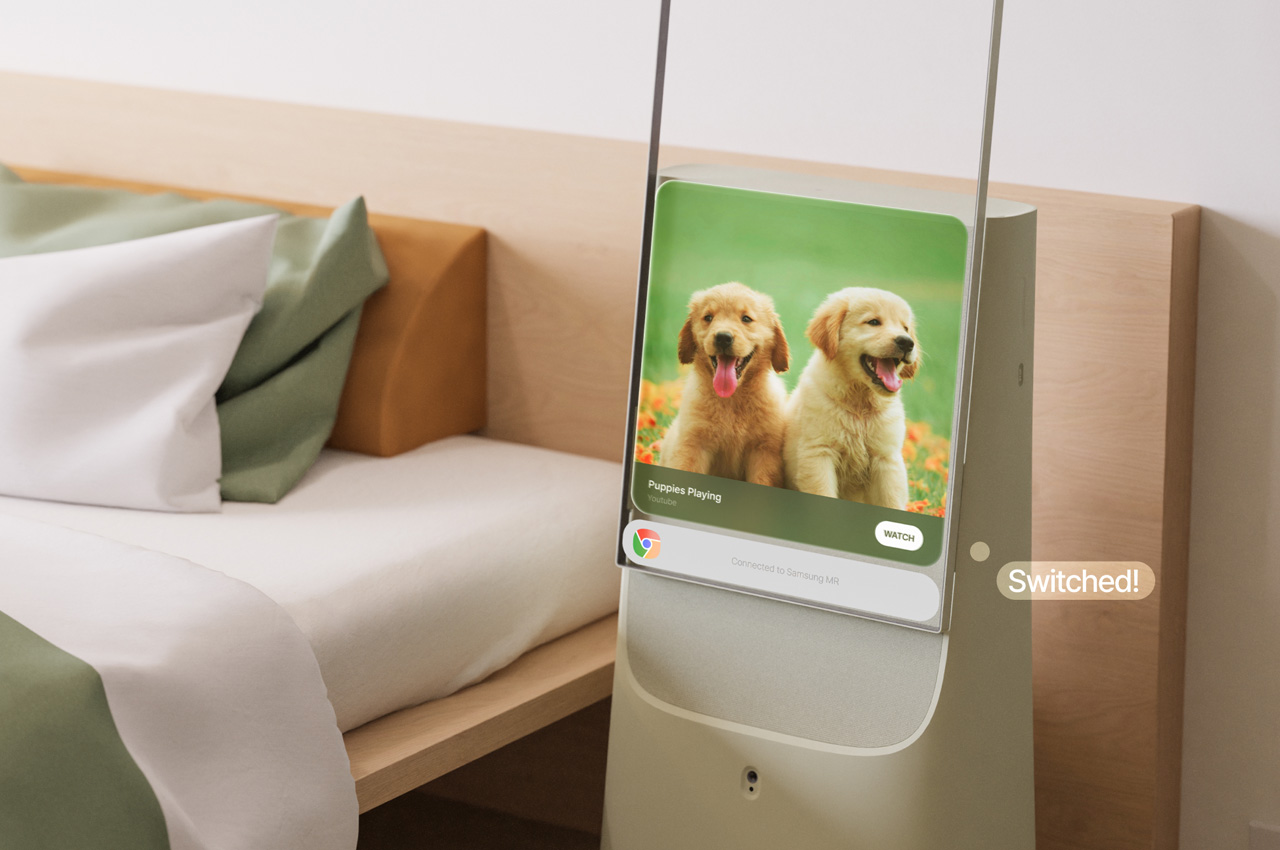
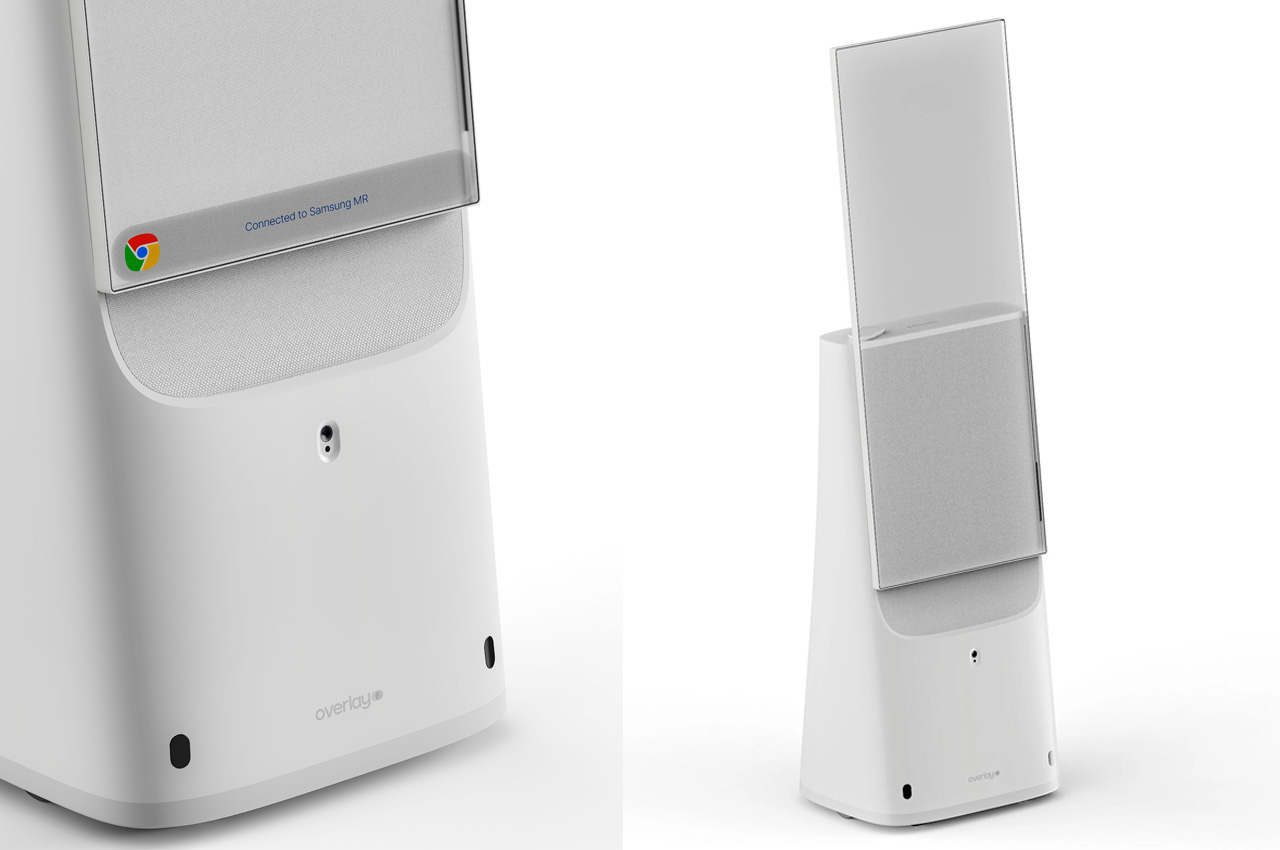
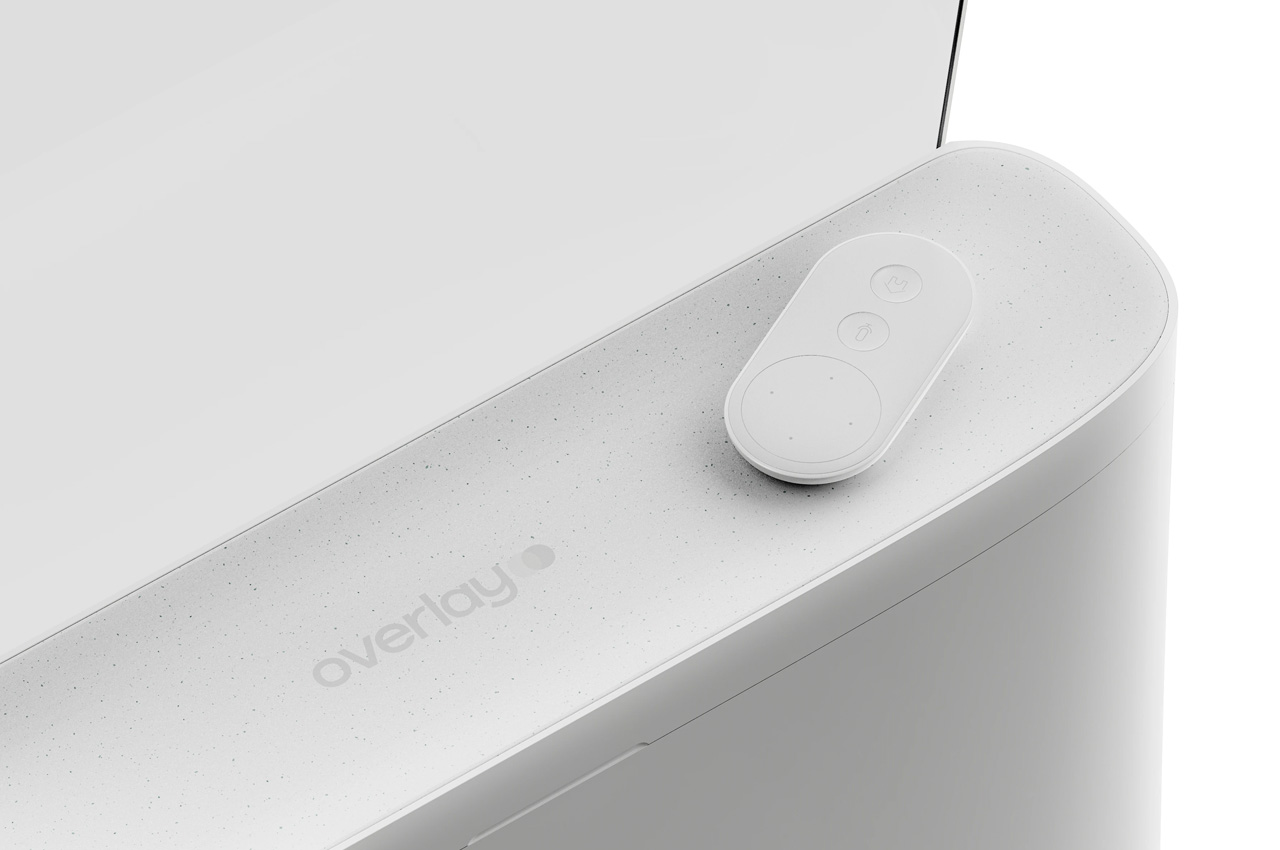
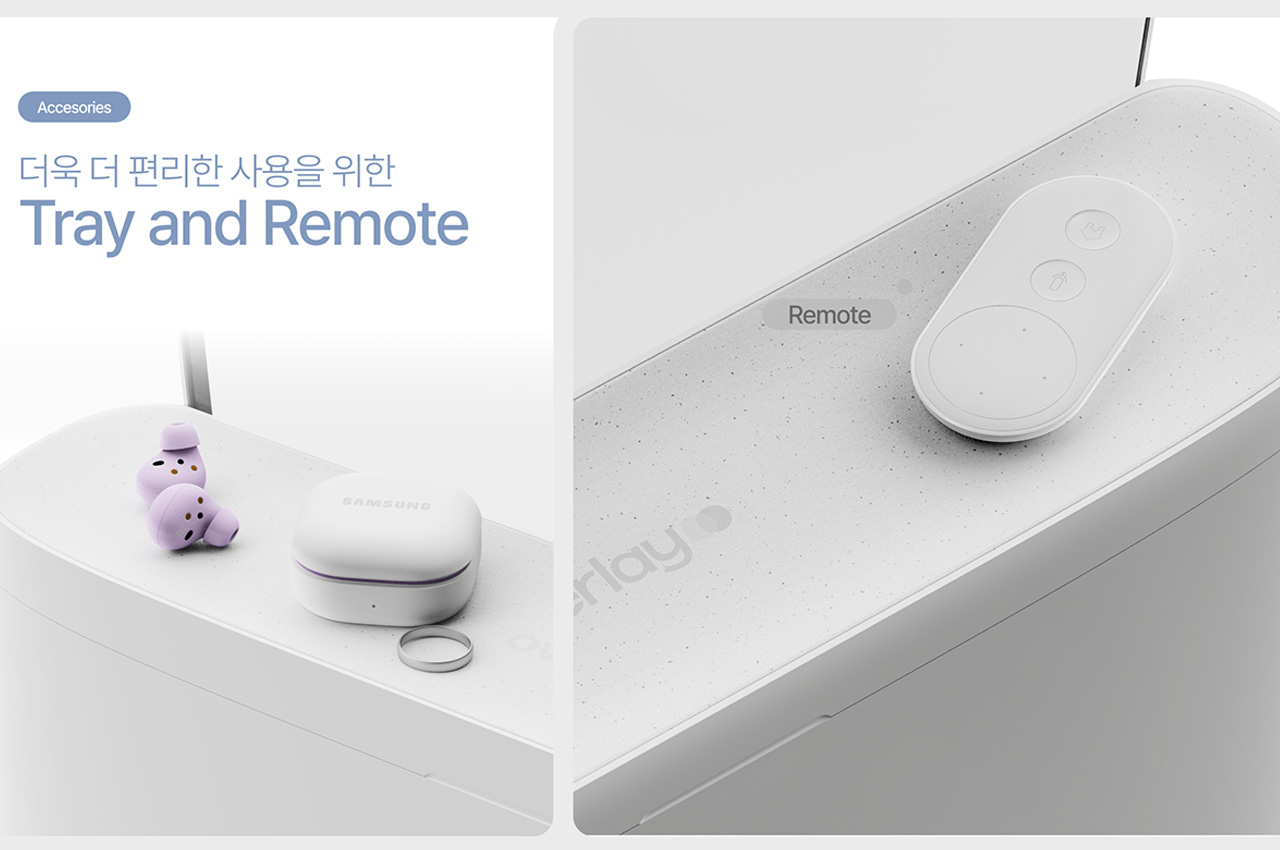
Investing in all such displays, and still having them suffice for only one purpose at one place doesn’t really add up in 2024. If you’re in the same league of thought, Overlay – designed for Samsung – is the “Next Home Display” that wants to skim down the multiple display demand and fill it with one wholesome unit that has mobile roots.
More than an adjustable, mobile display, the Overlay is a sensor-enabled contraption that can move about the house – on preset commands or on call – to suffice a multitude of infotainment objectives and more. The onboard mapping sensors allow the mobile display to map the space and divide it into understandable zones. Users can pin the desired location on the map and set content (entertainment, information, etc) for each pin with a time. For instance, “the user” can pin the dining “table area to watch Netflix” while dining.
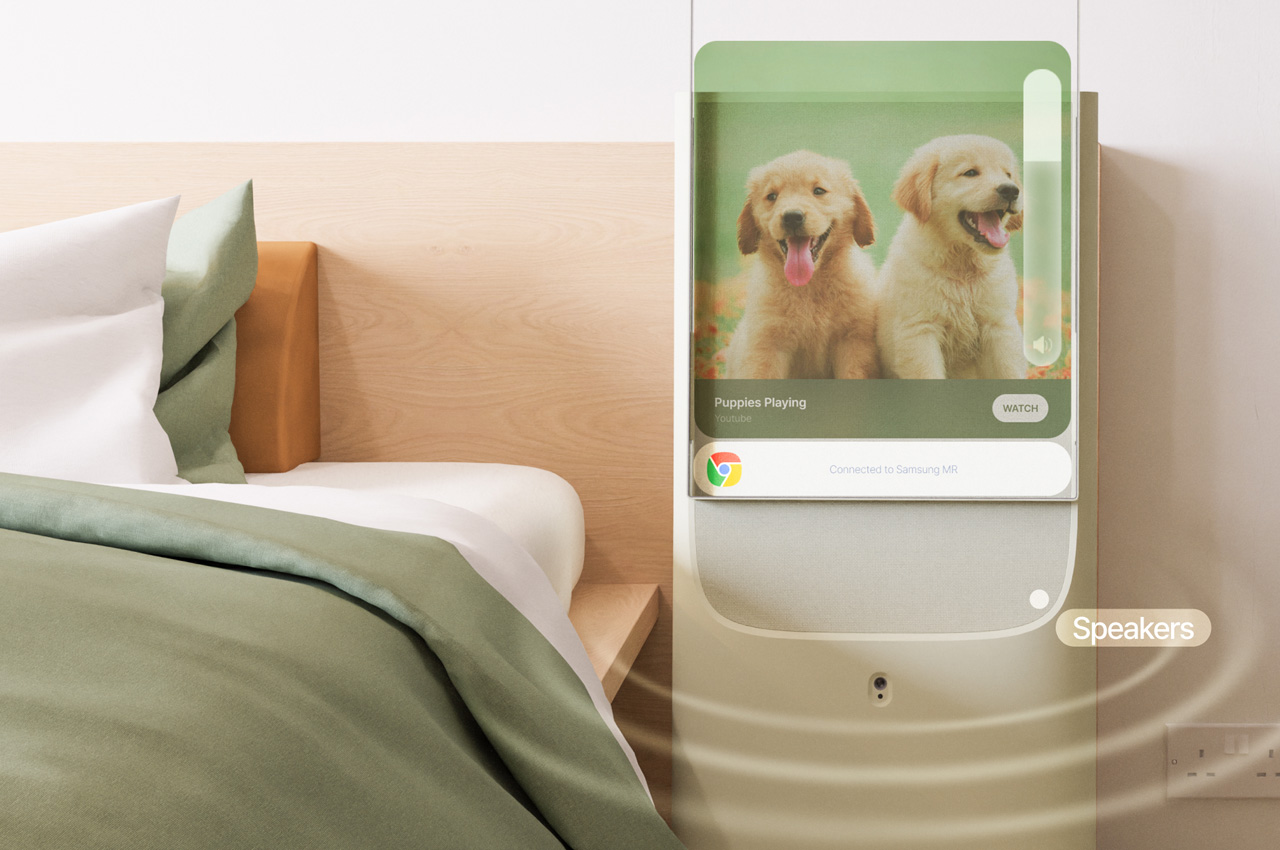
When it is time for dinner, the Overlay will automatically arrive at the table and turn on Netflix, as advised. The user can adjust the height of the display to their liking and watch the movie on Netflix without additional setup requirements (it has an integrated speaker system). In case you are too lazy to adjust the height, Overlay is designed to do that automatically for you. Auto height adjusting display rests on a solid base which is equipped with small radius omni-wheels for smooth maneuvering within the mapped space.
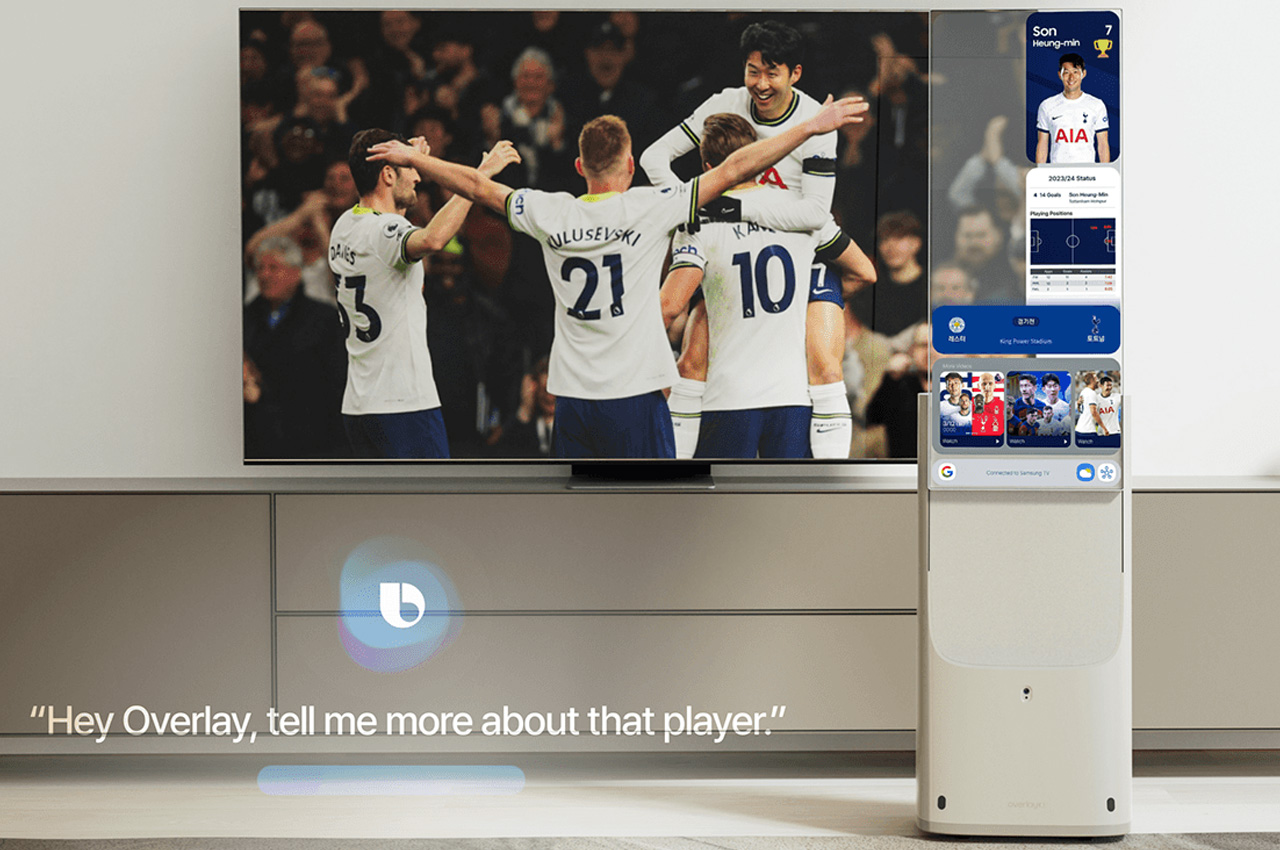
It can be teamed up with the TV or other devices in the house as an enlarged display for them. The unit can overlay more information about what you’re watching on TV or stand by the washing machine and give you a heads-up about when it’s time to take them to the dryers. It comes with an AI assistant to take voice commands and has a transparent screen to display match or player statistics when you’re watching a game of football on TV for instance.
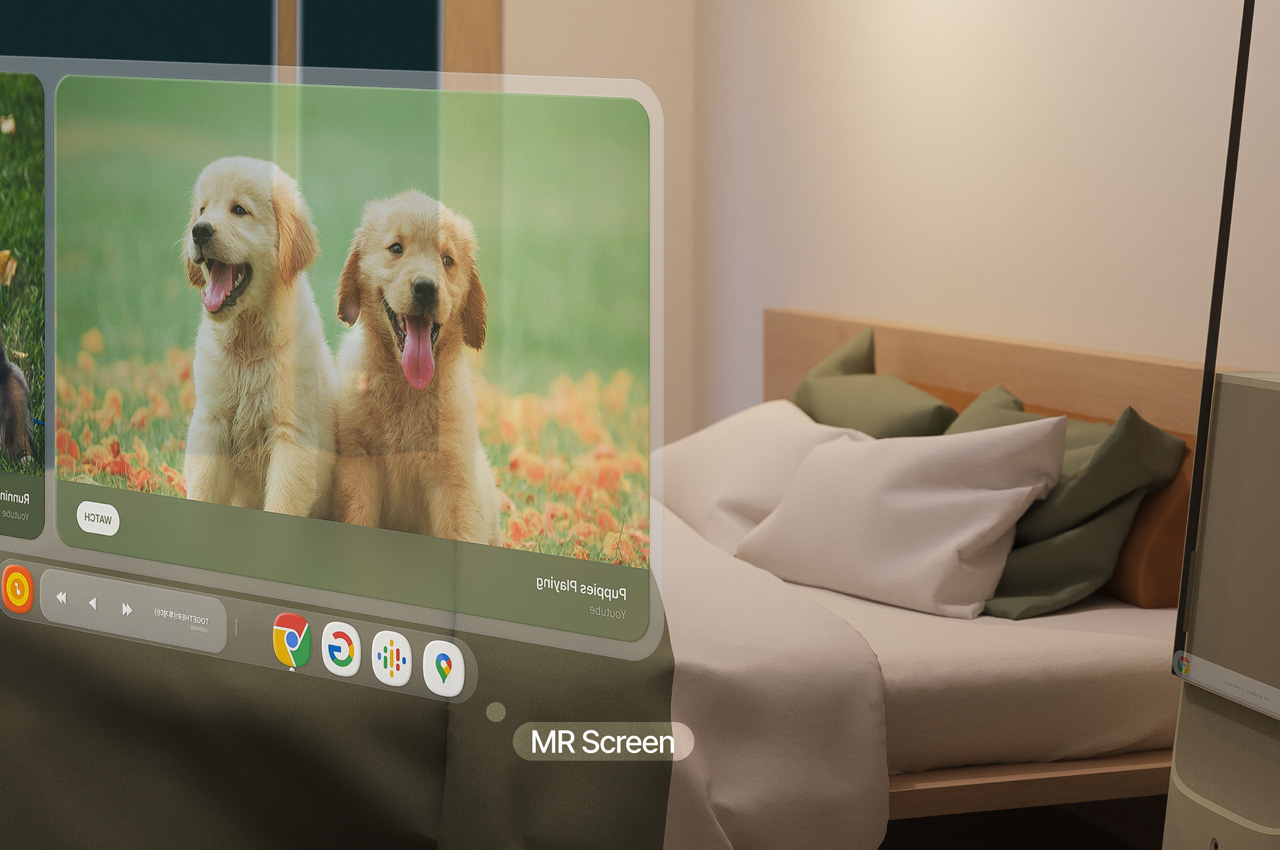
Alongside being an omnipresent mobile display, the Overlay comes with motion sensors and LiDAR camera that provide it the ability to identify objects and perhaps provide plant and pet care tips to the user. Over and above monitoring the condition of plants in its mapped space, it can even regulate watering for personalized, automated care. All this functionality demands great power, for which the Overlay is pretty self-sufficient as well. It is powered by a rechargeable battery that it juices up by heading straight to the charging dock when the power is running low (no human intervention required here either). Capable of bringing MR experience to the home, the Overlay is designed in four distinct colors that should complement any home effortlessly.
Parents throughout the country just breathed a sigh of relief at the prospect of allowing more screen time for their kids that doesn’t revolve around some really loud and annoying YouTube dude. PBS just launched a new free ad-supported channel called PBS Retro, as reported by The Wrap. As the name suggests, this is a repository for all of your favorite edutainment classics from the 1980s, 1990s and beyond. The nostalgia is strong with this one.
PBS Retro is available via The Roku Channel, which is a streaming service on smart TVs and, of course, Roku devices. The 24/7 channel airs all of the shows you’re likely picturing right now, including Reading Rainbow and Mister Rogers’ Neighborhood. You’ll also be able to introduce your kids to Thomas and Friends, Zoboomafoo and Kratt's Creatures, among others. It’s a collection of old-school classics.
This isn’t the only PBS-adjacent channel available on Roku’s platform. It’s home to other ad-supported channels like PBS Antiques Roadshow, Antiques Road Trip, PBS Food, Julia Child and PBS Nature. There are also plenty of PBS-related channels available via subscription, including PBS Masterpiece, PBS Kids, PBS Living, PBS Documentaries and PBS America. Some of these are available on Hulu+ Live TV.
PBS may become an even bigger fixture in the free ad-supported streaming television (FAST) space in the future. The organization says it's in the “early days of experimentation” with a goal of making PBS content “available in new places.” It will “continue to consider additional opportunities” if these FAST channels increase revenue and brand awareness. In the meantime, Mister Rogers’ Neighborhood makes for some mighty fine ASMR.
This article originally appeared on Engadget at https://www.engadget.com/pbs-retro-is-a-new-fast-channel-playing-just-the-classics-173125500.html?src=rss