MB&F’s Alien-Inspired Desk Clock Ships as 222 Loose Parts You Assemble Yourself Over 10 Hours

There is a term in behavioral economics called the IKEA effect, which says we value things more when we build them ourselves. It explains why you defend that wobbly BILLY bookcase like it’s family. MB&F and French clockmaker Maison Alcée have taken that idea, put it in a suit, and charged CHF 12,000 for it. Their new desk clock arrives at your door as 222 loose components in a wooden box, along with a set of watchmaking tools and a 250-page book. You are the assembly line, and the clock does not tell time until you make it.

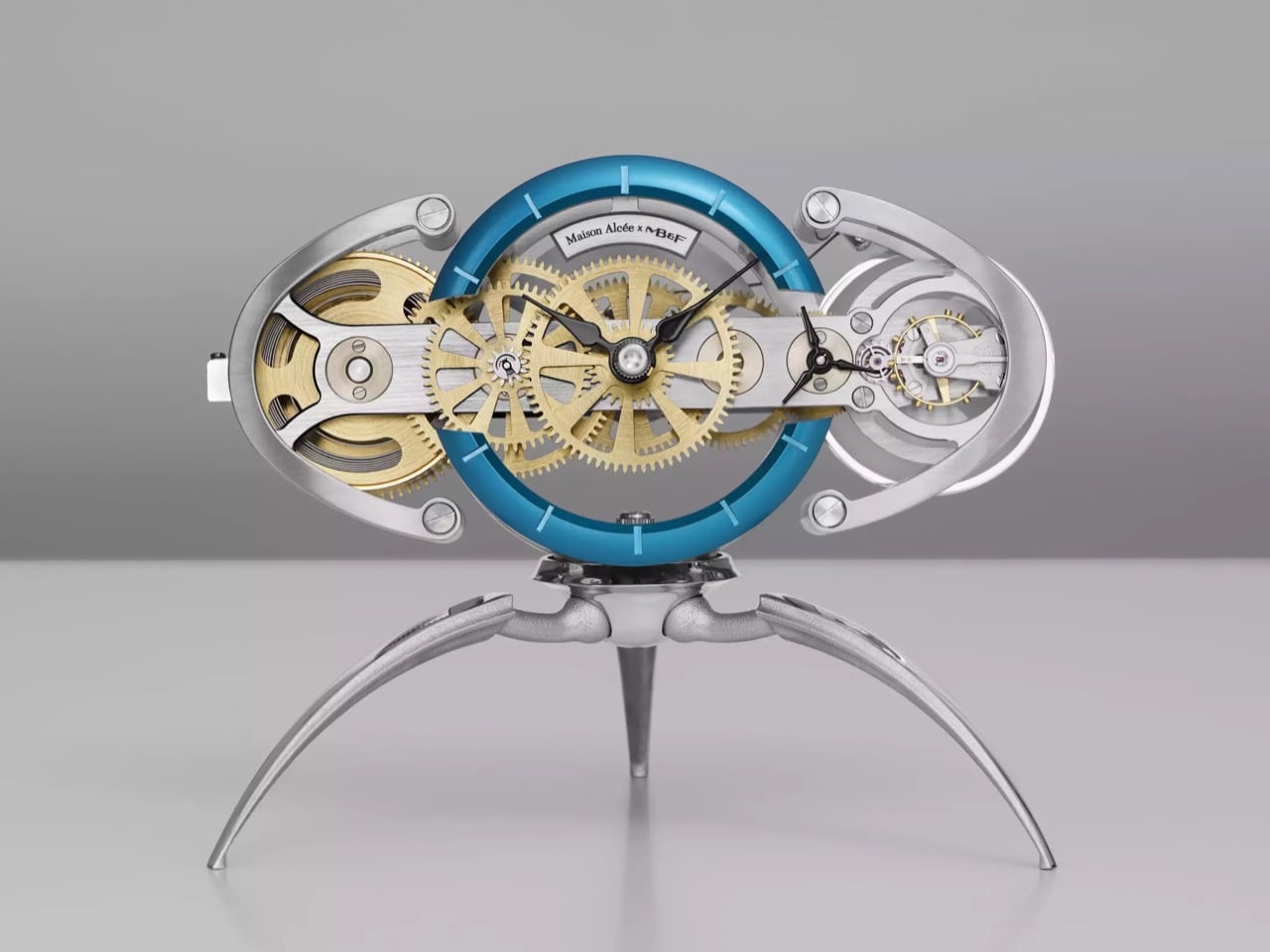
It’s called the Nostromo, and it looks like a chrome beetle crouching on your desk. Maximilian Maertens, MB&F’s creative designer and Max Büsser’s anointed successor, designed it to celebrate 15 years of the M.A.D.Gallery. Maison Alcée manufactures the parts in the French and Swiss Jura, then hands the fun part to you. Roughly ten hours of tweezer work stand between the box and a running mechanical clock with a 14-day power reserve and a switchable hour chime. Only the regulating organ arrives pre-built, because some things are best left to people who do this for a living. Fifty pieces exist.

Designer: Maximilian Maertens for MB&F, crafted by Maison Alcée
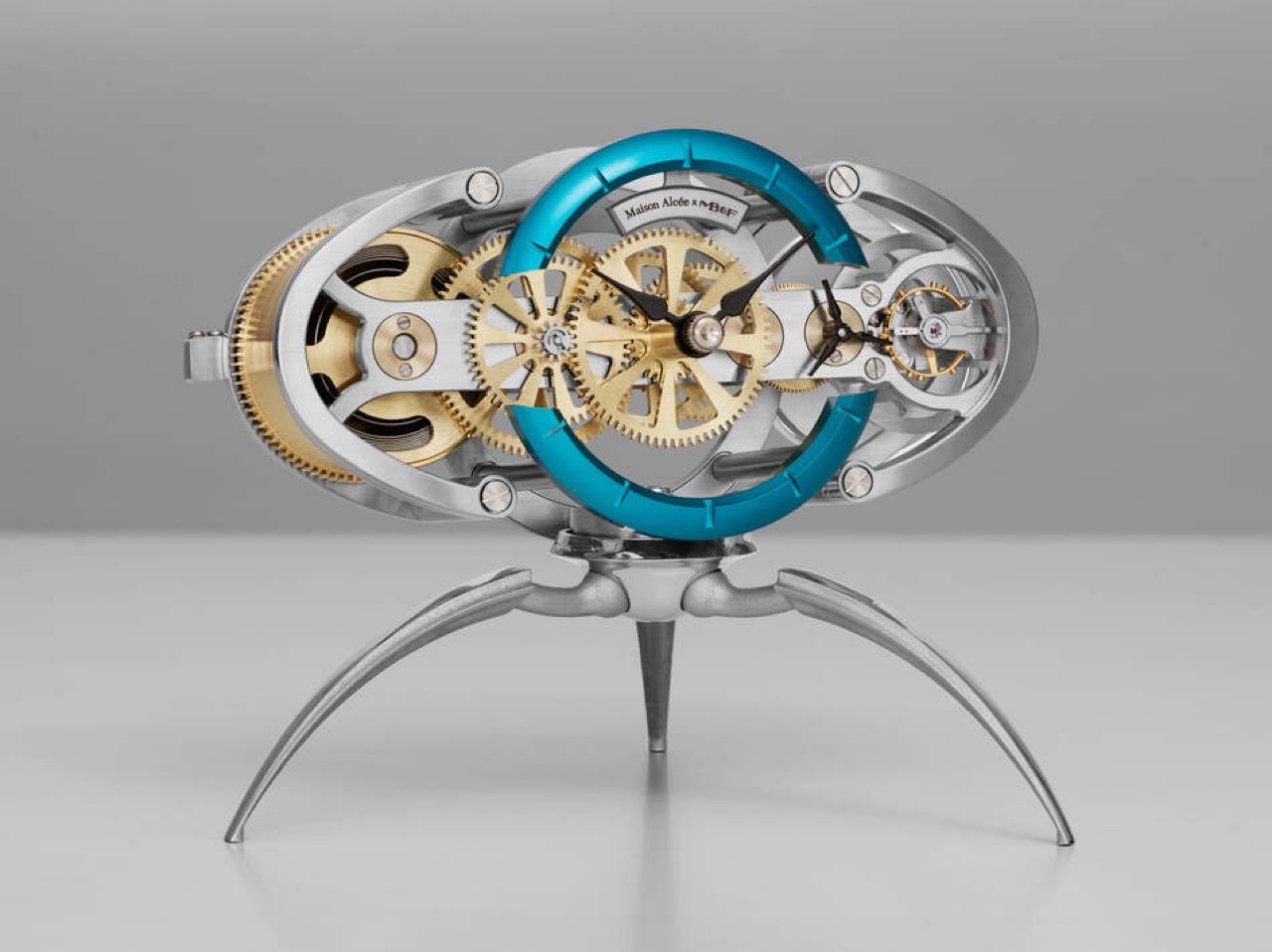
The body is a symmetrical steel ovoid, two brushed arcs meeting top and bottom, wrapped around brass wheels and a saturated peacock blue dial ring floating dead center. That silhouette reads as carapace rather than xenomorph, closer to a scarab than anything H.R. Giger ever airbrushed. Every ounce of creature in this object lives in the three tapered legs below, which sweep outward in compound curves and end in points. Maertens had to leave the movement architecture assemblable by amateurs, so the sculpture went where the freedom was.

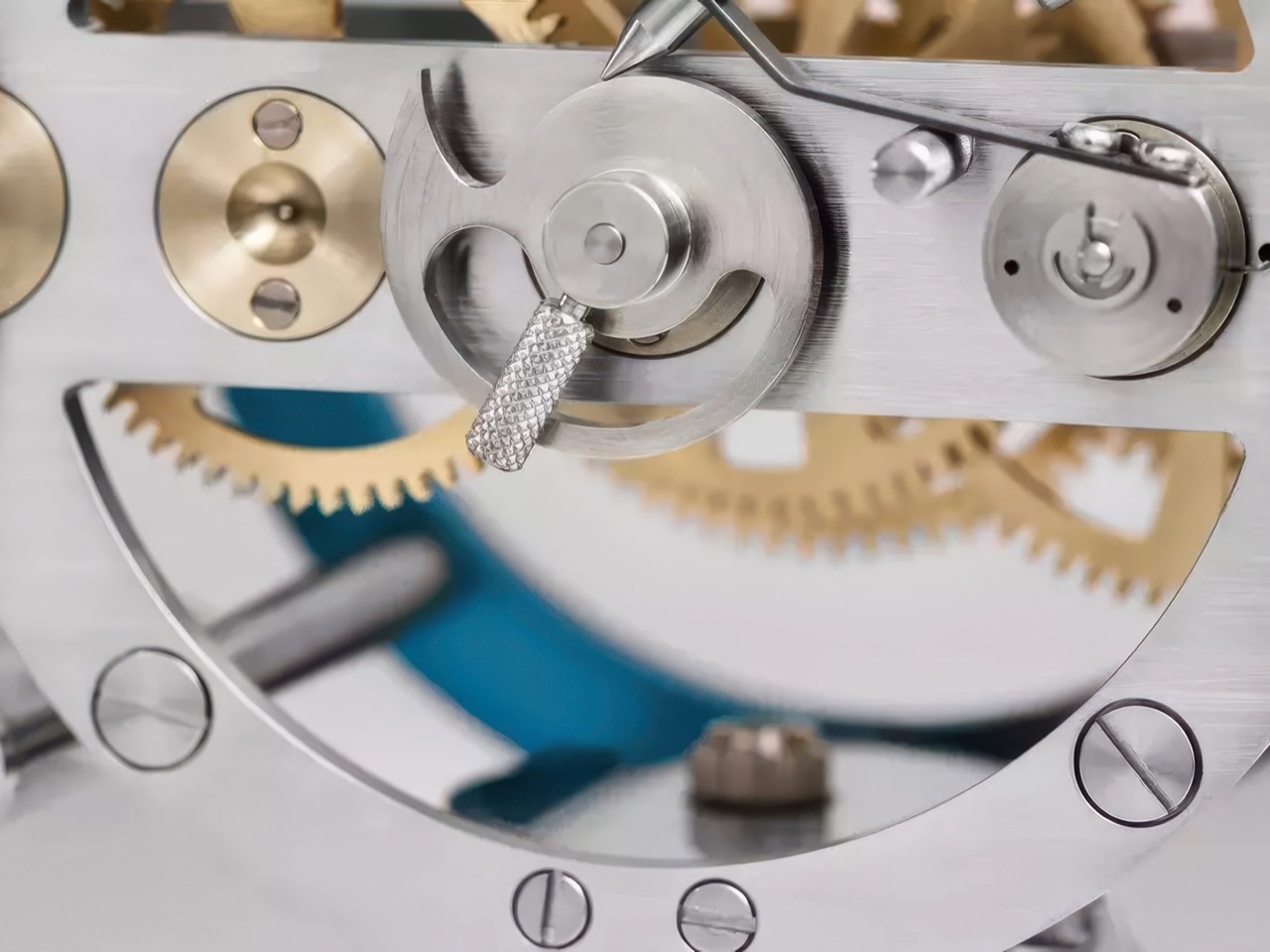
That movement comes from the Persée, Maison Alcée’s first clock, launched in 2022 and built on wristwatch architecture scaled up to desk size. Maertens turned the whole thing on its side, angled the display upward for easier reading, and split the Persée’s continuous dial ring into segments so the gear train shows through the gaps. The finished clock rotates on its feet, which sounds like a gimmick until you remember three-point support never rocks on an uneven desk. Black hands replace the originals for contrast against all that brass. The changes are small in engineering terms and enormous in posture.
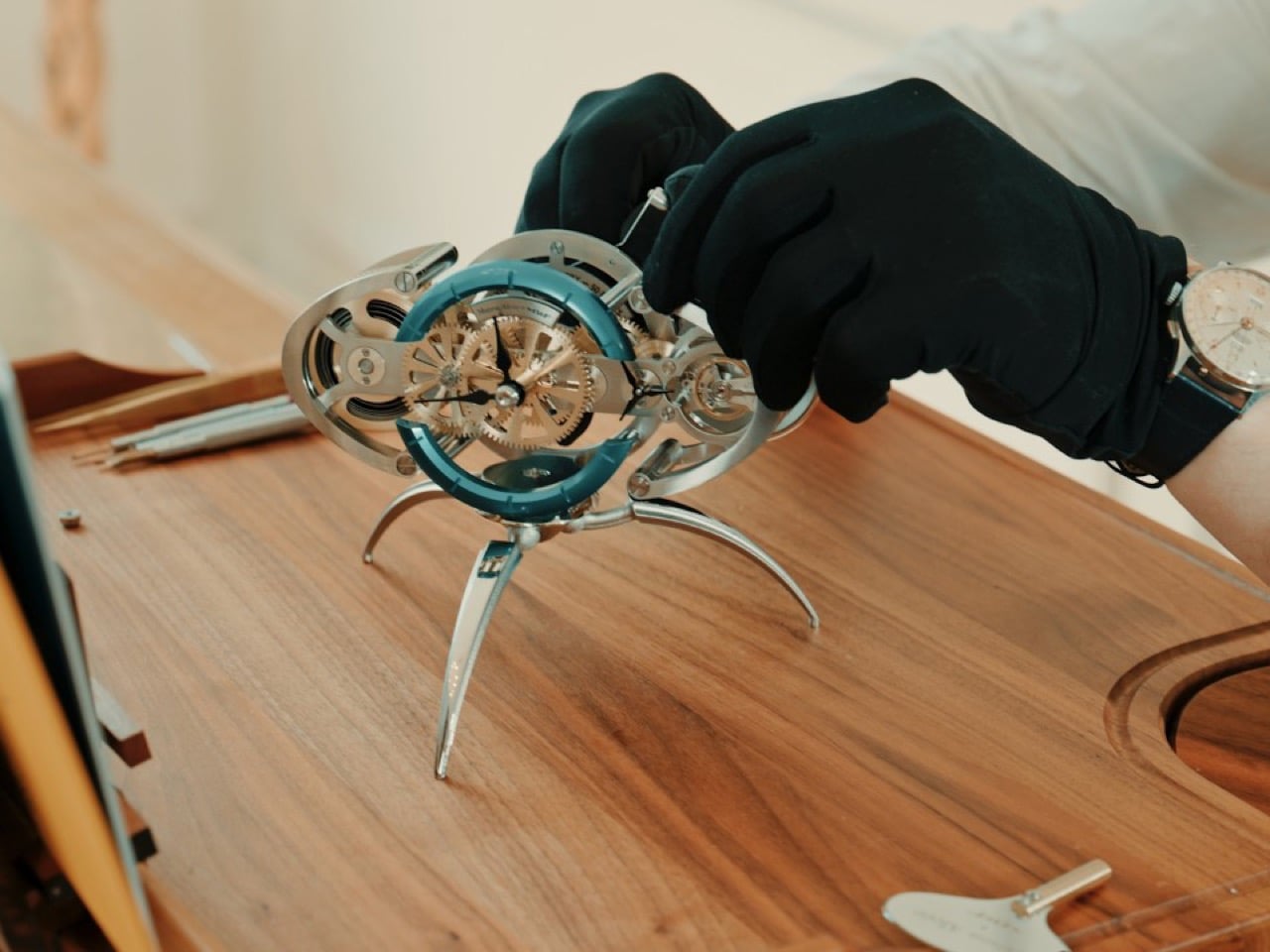
Slotted screws sit visible across every plate, the steel is brushed instead of polished, and the brass wheels carry plain spokes with no anglage anywhere. That reads as a deliberate call rather than a cost saving, because every one of those surfaces will be handled by someone in cotton gloves who has never held tweezers. Maison Alcée even had its screwdriver blades made in a copper-beryllium alloy, softening them specifically to reduce the risk of scratching your own clock. The kit includes seventeen tools, several adapted for beginners. The pedagogy runs all the way down to the hardware.
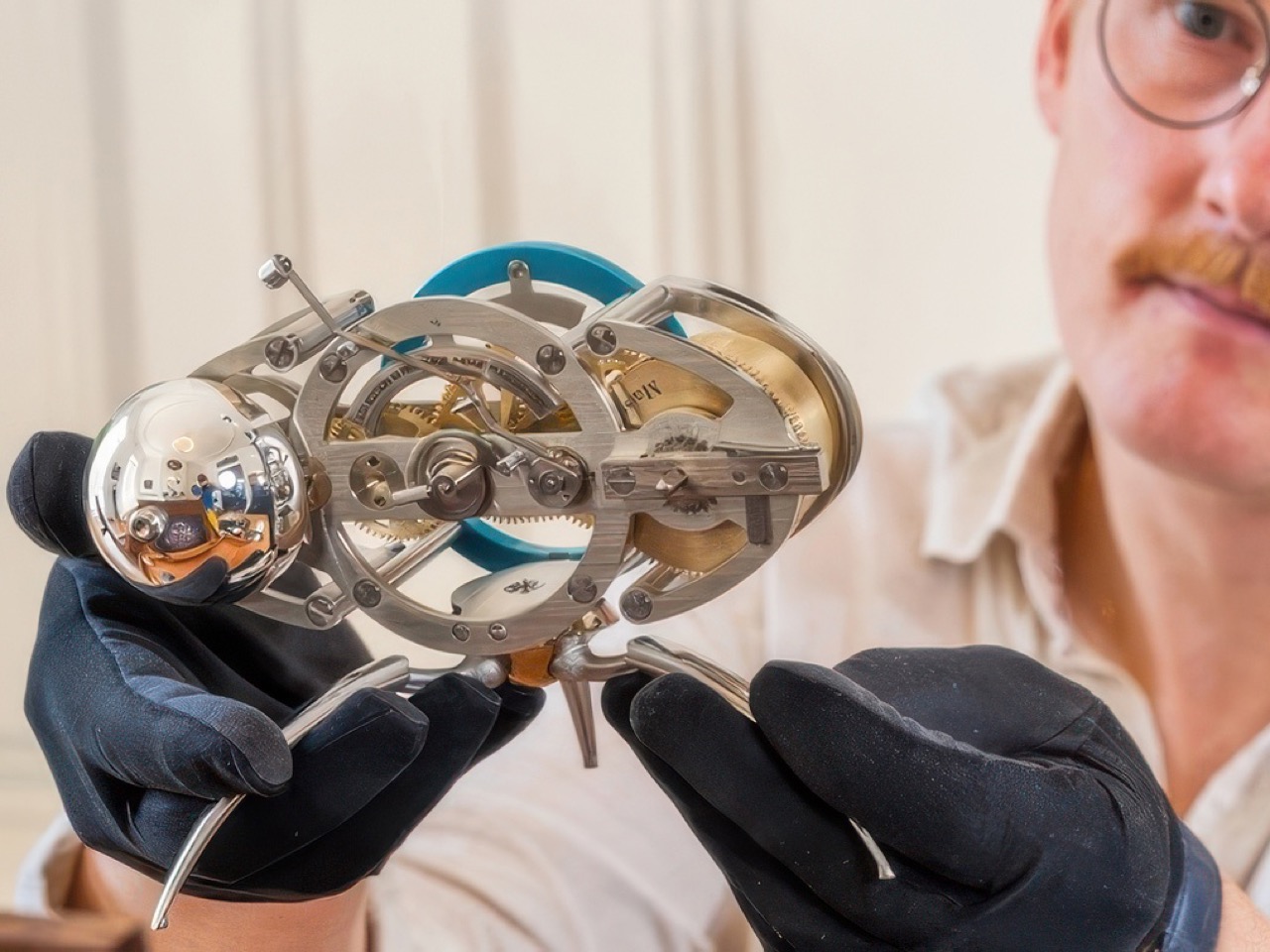
Ridley Scott borrowed the name Nostromo from a Joseph Conrad novel, and Ron Cobb designed the ship as a grimy commercial tugboat crewed by people arguing about bonuses. Giger got the monster and the derelict. Most of us have merged the two in memory, which is why the word now sounds biomechanical. Maertens, a self-declared Giger obsessive, has effectively put Cobb’s name on a Giger-adjacent body, and I doubt anyone at MB&F loses sleep over it. The brand has been mining outer space since HM1 in 2007.
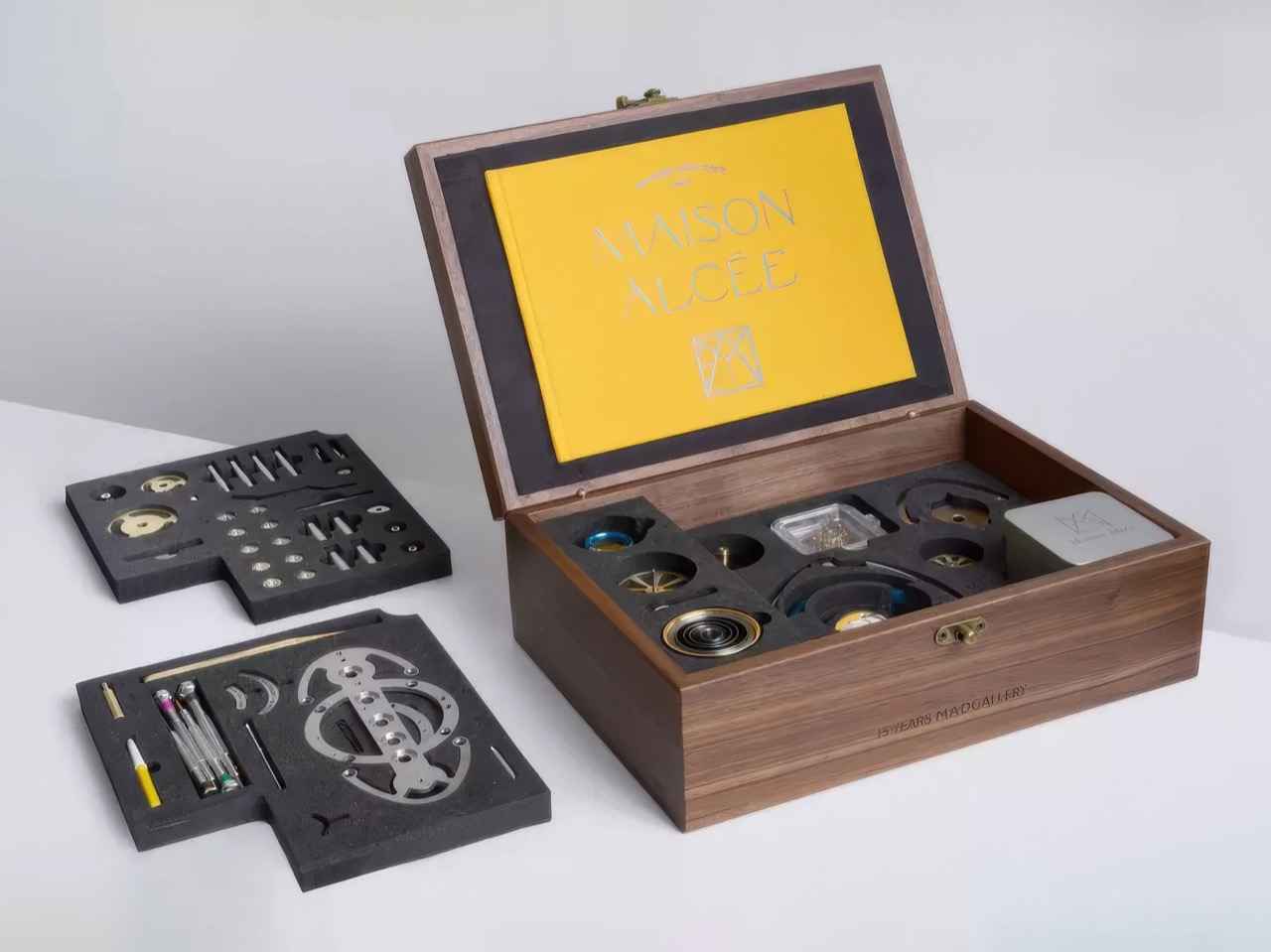
CHF 12,000 ($14,840 USD) excluding VAT, sold through the M.A.D.Galleries in Geneva and Dubai and MB&F LABs worldwide, with deliveries landing October to November. A base Persée runs closer to EUR 5,500 ($6,379 USD), so the premium buys the Maertens design and the 50-piece cap rather than more mechanism. Here’s the catch, though. A company whose entire philosophy is teaching horology through your own hands has capped this particular lesson at fifty units for fifty eager students. The clock is wonderful. The classroom is very small.

The post MB&F’s Alien-Inspired Desk Clock Ships as 222 Loose Parts You Assemble Yourself Over 10 Hours first appeared on Yanko Design.

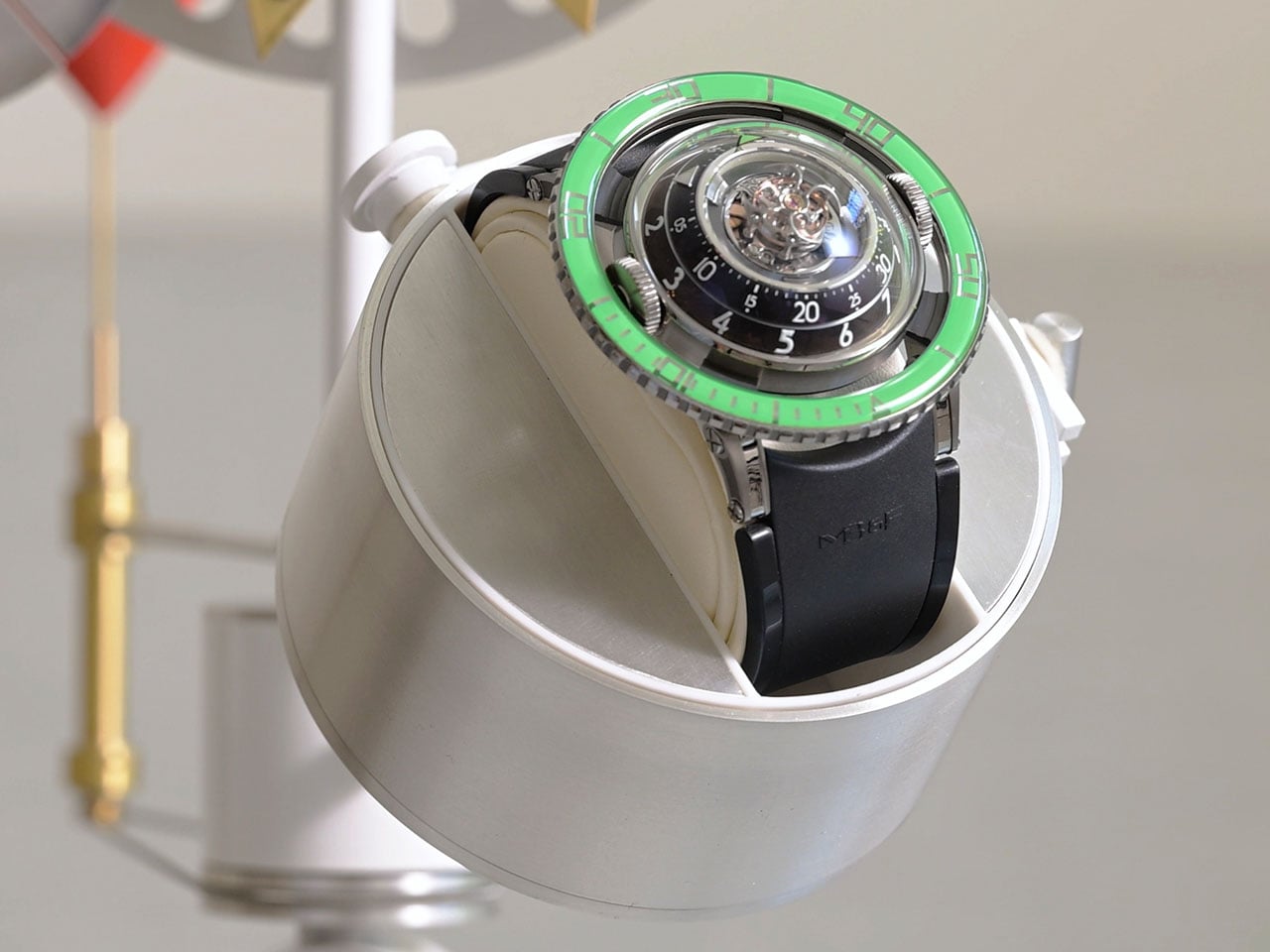
Martin Smith creates sculptural watch winder to mark MB&F M.A.D. Gallery’s 15th anniversary

The 15th anniversary celebration of the M.A.D.Gallery, MB&F’s network of spaces dedicated to “Mechanical Art Devices,” was kicked off with the first commemorative ML15 Helios earlier this year. The 9kg sculptural lamp made from 120 handmade parts by Berlin-based artist Frank Buchwald is now followed by Solar Orbiter, a 60-centimeter-tall kinetic sculpture that doubles as a silent watch winder.

Solar Orbiter watch winder is made by prominent British kinetic artist and designer Martin Smith through Laikingland, his design house, co-founded with engineer friend Nick Regan. The sculptural watch winder’s design is inspired by the 1957 Eames Solar Do-Nothing Machine, which showcased one of the first uses of solar electricity to power an aluminum toy in random dance.

Designer: Laikingland x MB&F

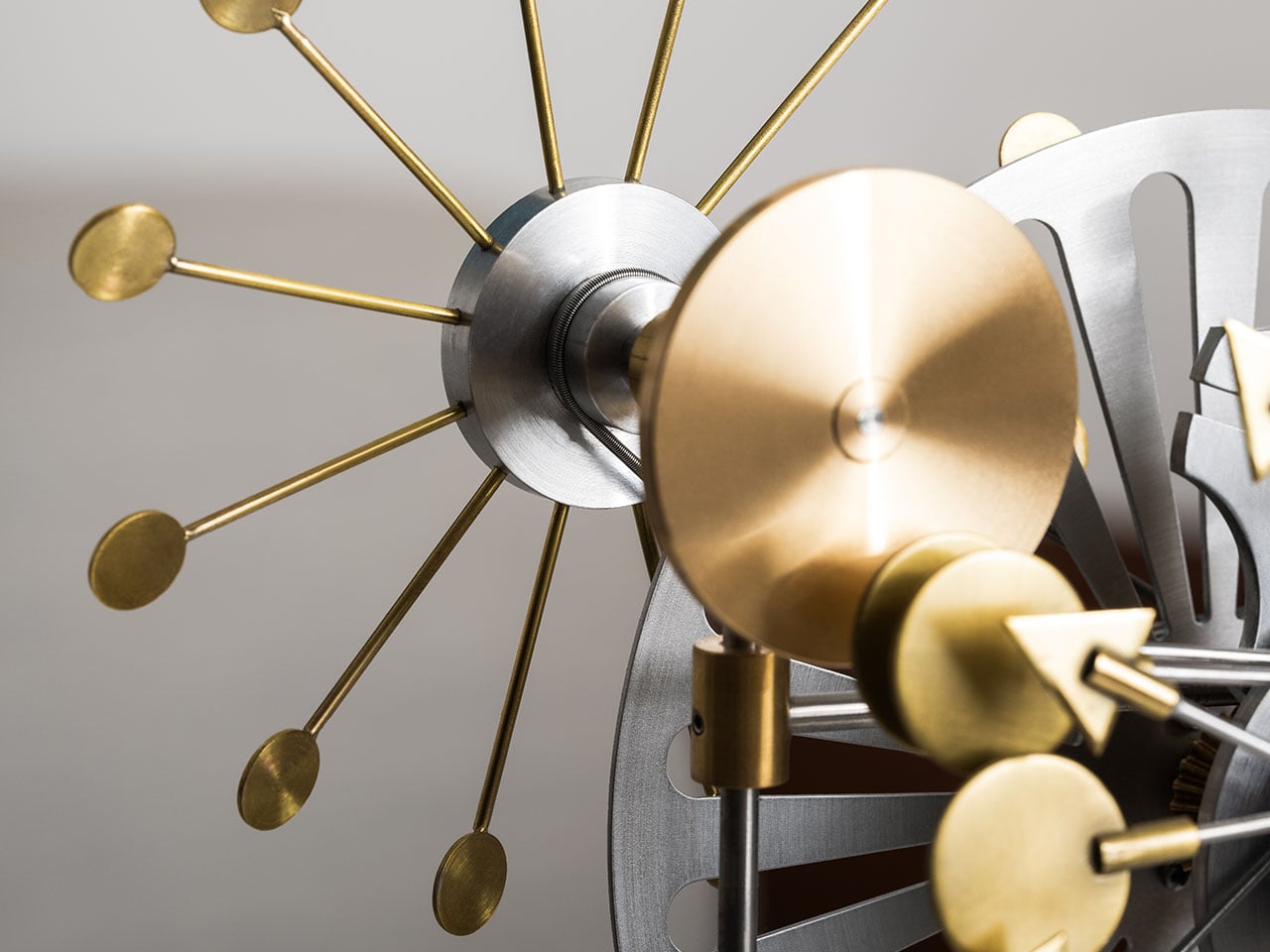
The Solar Orbiter is not an experimental toy; it is designed to be a conversation starter in Smith’s own studio in West Yorkshire. A device enticing enough to sit in the middle of your living room or office and make some heads turn. Instead of showcasing the application of solar power, this marries kinetic sculpture with high-end watchmaking to commemorate the long-term association between MB&F founder Maximilian Büsser, Martin Smith, and his company Laikingland.

As is the norm with Martin Smith creations – case in point, the applause machine – viewers become part of the Solar Orbital through physical and visual interaction. The highly sophisticated, limited-edition kinetic sculpture is handmade from nearly 300 gear trains and moving limbs that are set into motion by human interaction.

Turning a physical knob onboard puts the otherwise abstract Orbiter into a kinetic performance with a watch at the epicenter. Each element used in the construction of the Smith’s Solar Orbiter is either made from steel, aluminum, brass, or carved from wood. From what we know, Smith generally produces almost all the components used in his creations himself, using traditional equipment; we are presuming the same is the case with this sculptural watch winder.

There is no definite information to validate the same at this point, but the intricate details of the winder, which Smith describes as “chaotic, mesmerizing, sophisticated in its construction, and a bit quirky,” are worth appreciating nonetheless. The exclusivity of this creation is maintained by its limited-edition availability. Priced at CHF 9,900 (approximately $12,000), the watch winder’s production is strictly limited to just 10 pieces worldwide.

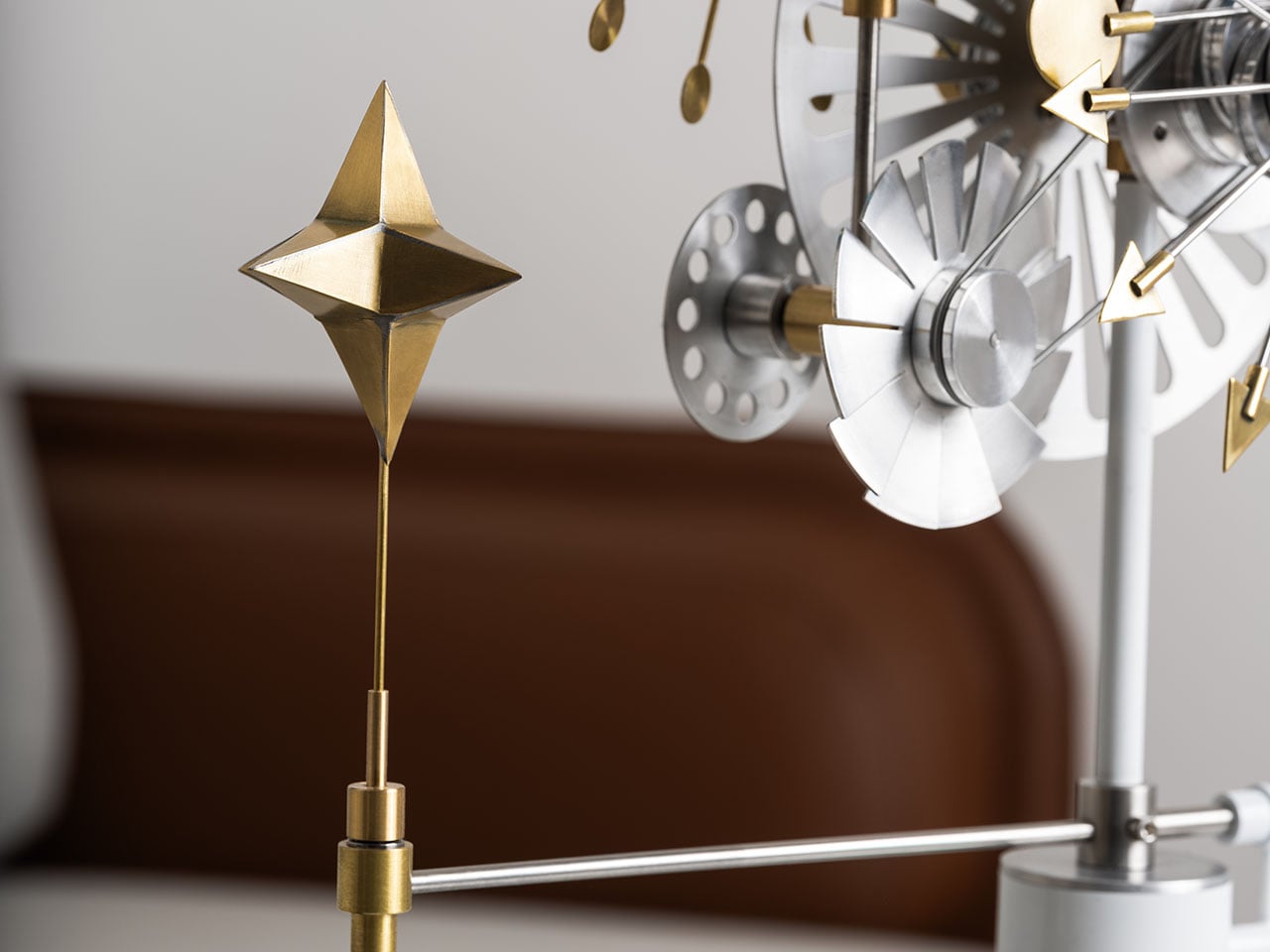
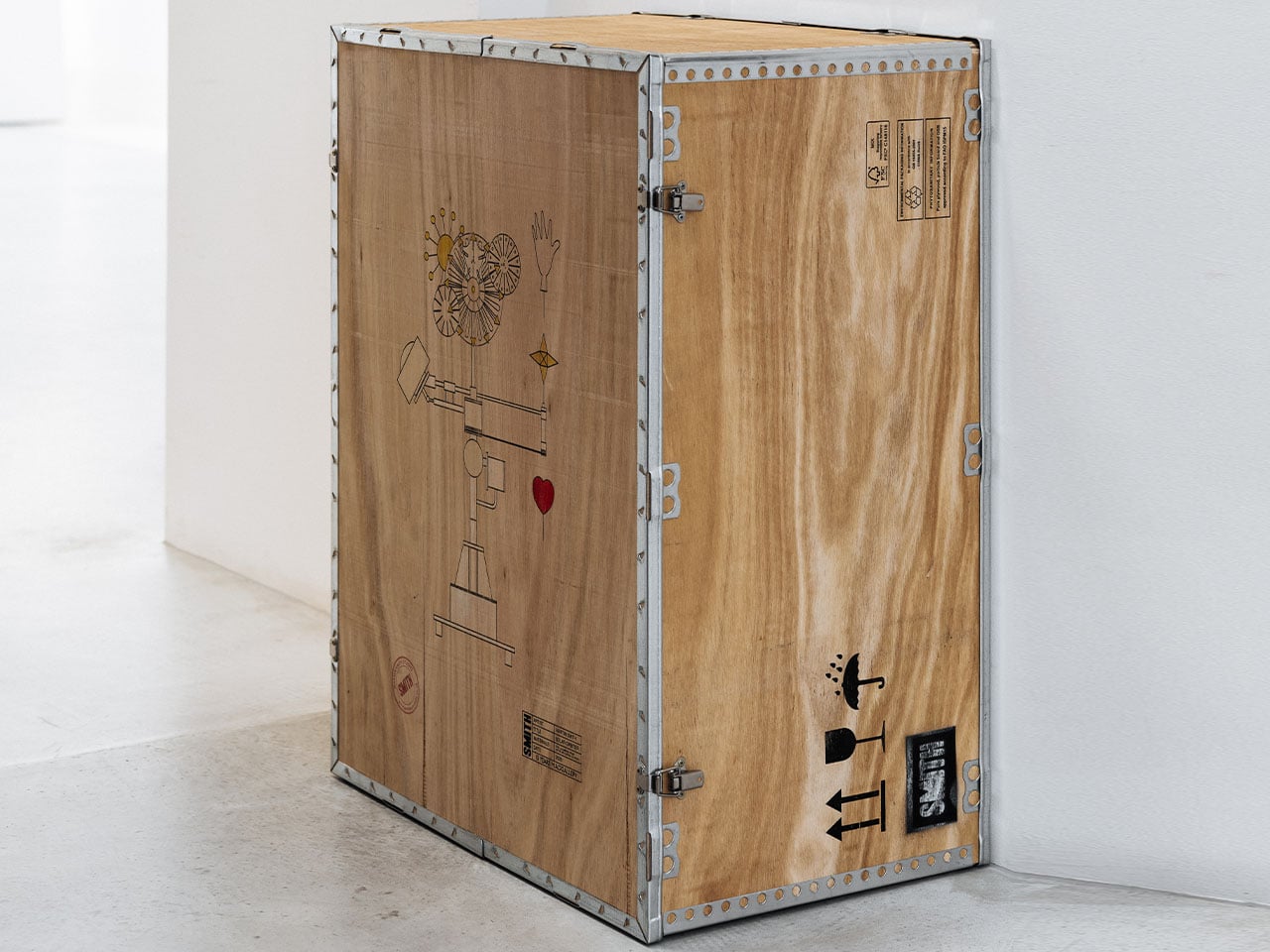
For collectors who like to tinker with just about everything to personalize it to their requirements, the Solar Orbiter allows swapping out different kinetic elements – including a hand, a heart, and a star – sitting at the top of this watch winder. If you happen to order one of these kinetic watch winders, Martin Smith will ship it your way inside a bespoke wooden crate, personalized with screen printing, and an A2 Certificate of Authenticity signed and hand-numbered by the artist himself.

The post Martin Smith creates sculptural watch winder to mark MB&F M.A.D. Gallery’s 15th anniversary first appeared on Yanko Design.

This Art Deco Watch Looks Like a City on Your Wrist

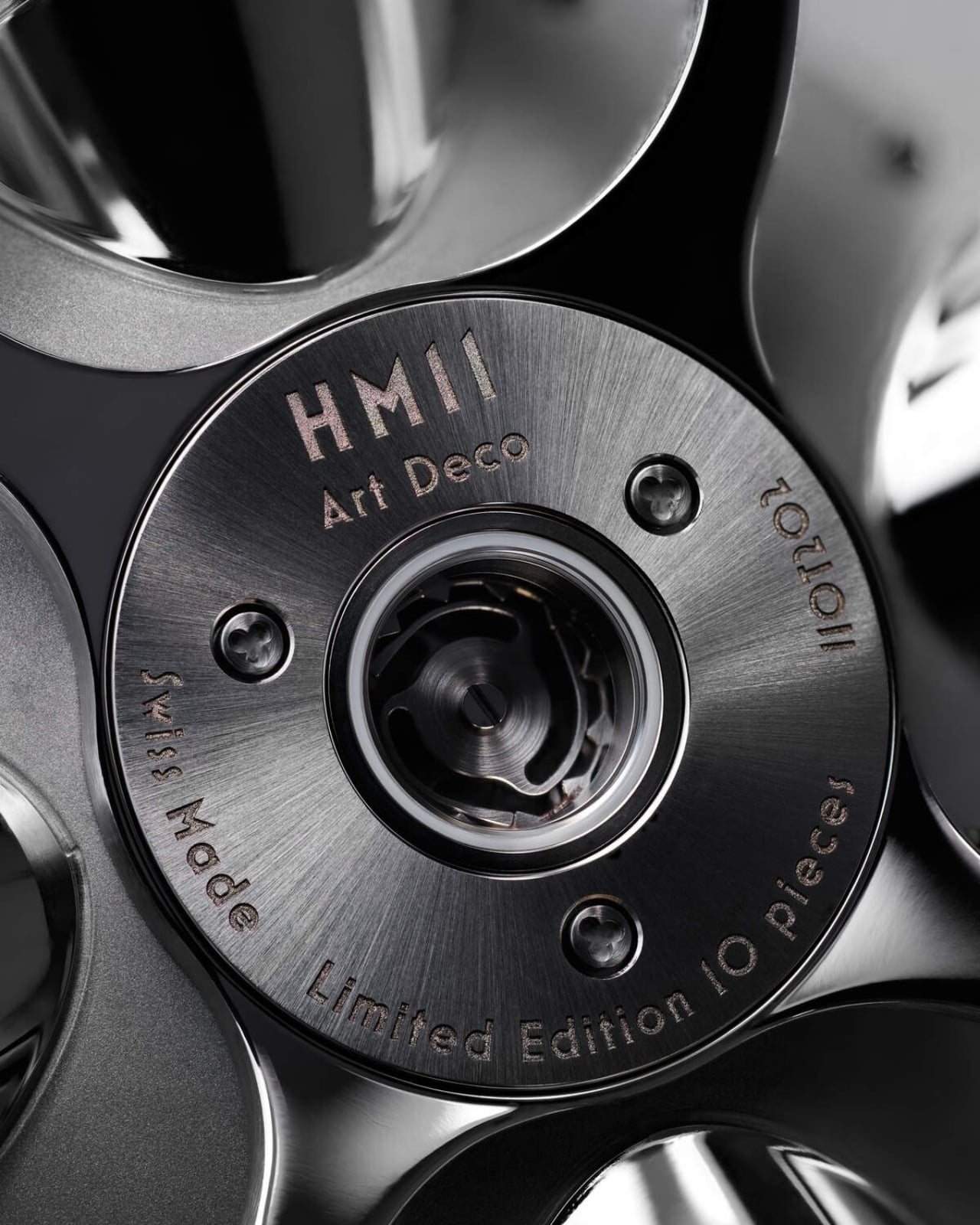
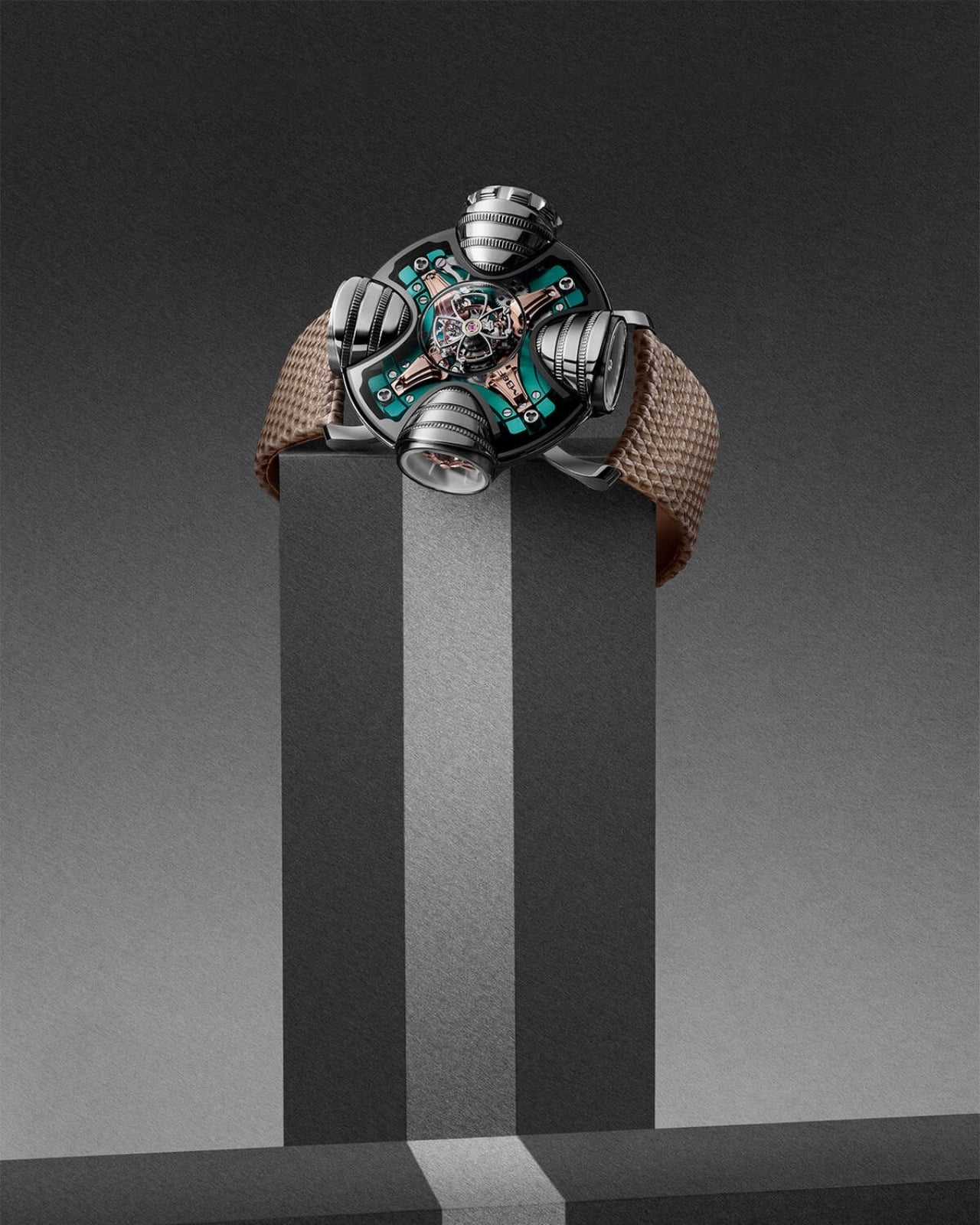
You know that feeling when you spot something so unexpected it makes you stop mid-scroll? That’s exactly what happened when I saw MB&F’s latest creation. The HM11 Art Deco doesn’t just tell time, it looks like someone shrunk an entire 1930s metropolis and strapped it to your wrist. And honestly, I’m here for it.

Let’s talk about what makes this thing so wild. MB&F introduced their HM11 series back in 2023 with the Architect edition, which already pushed boundaries with its architectural inspiration. But the new Art Deco versions, released in 2025, take that concept and run it through a time machine straight to the Jazz Age. Instead of the organic, humanist forms of the original, these new editions embrace the geometric vocabulary of 1930s design, complete with vertical lines, stepped profiles, and those signature sunburst graphics that defined the era.

Designer: MB&F

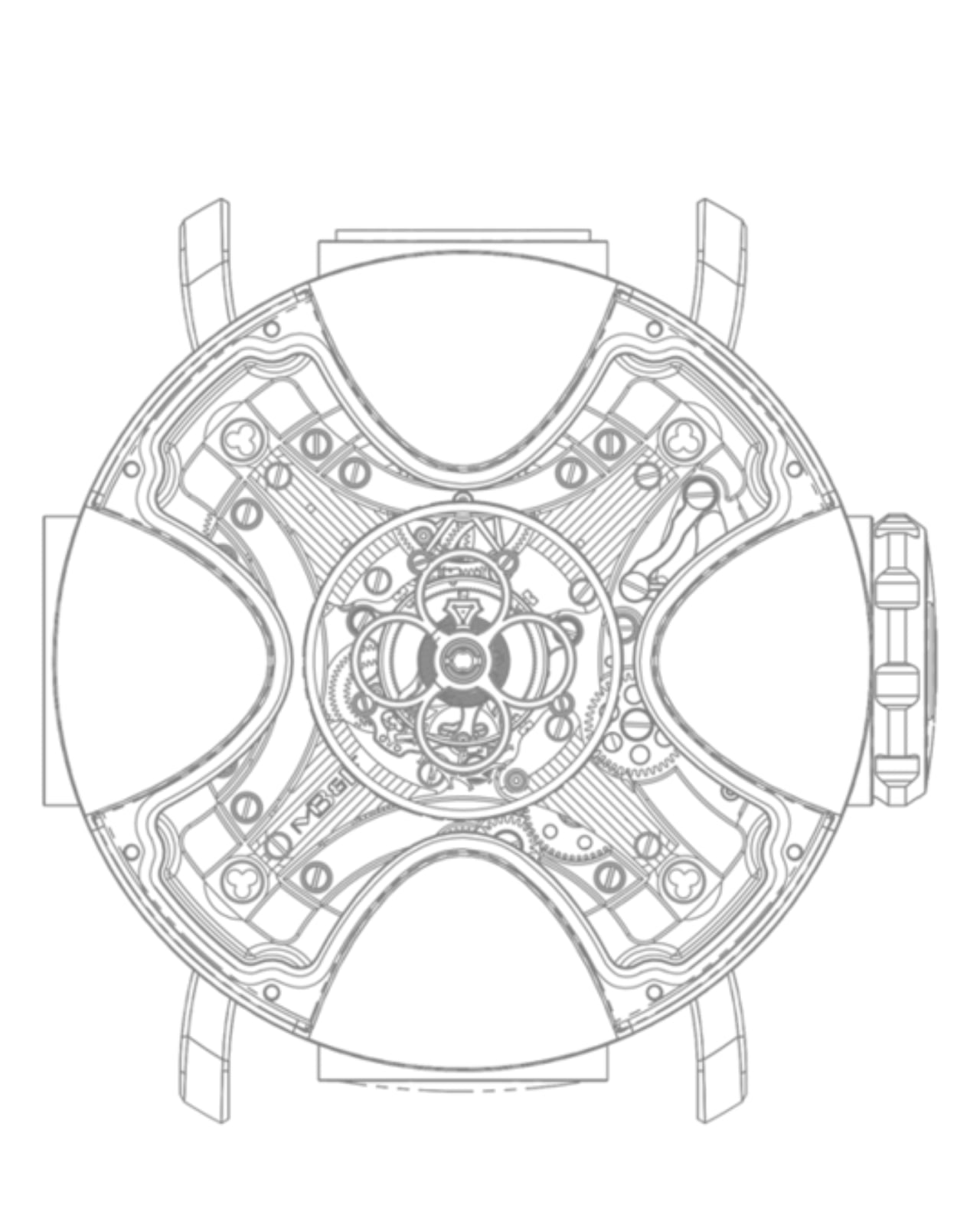
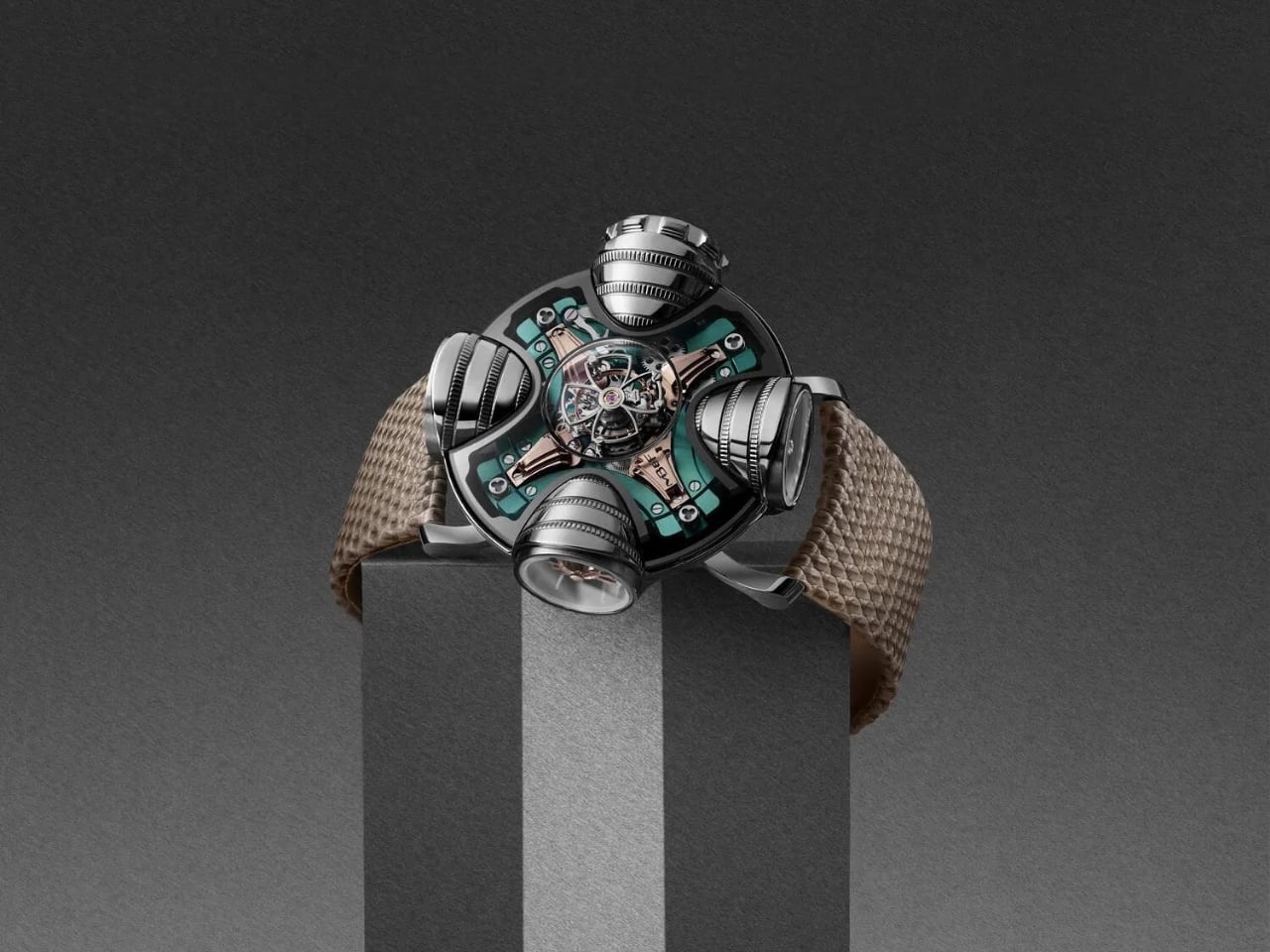
The case itself is a masterclass in three-dimensional thinking. Picture this: a central atrium surrounded by four peripheral pods, each covered with its own sapphire crystal window. The whole thing sits under a double-domed sapphire roof that creates this incredible play of light and shadow. It’s like looking down at a miniature cityscape from above, which is exactly what MB&F intended. The titanium construction keeps it surprisingly wearable at 42mm wide, though at 23mm tall, this isn’t exactly a watch that’s going to slip under your shirt cuff.

What really gets me excited are the details. MB&F released two versions, and each one has its own personality. The blue dial version features 3N yellow-gold-toned bridges that catch the light beautifully, while the green edition goes for 5N rose-gold-toned bridges. The display markers aren’t your typical hour indexes either. They’re laser-cut with a circular grain finish that echoes Art Deco’s obsession with geometric patterns. And those hands? They’re white gold skeletons with transparent red enamel inserts that create this stunning stained-glass effect when light passes through.

Here’s where things get really interesting from a mechanical standpoint. The movement inside is a fully in-house creation that’s basically a three-dimensional sculpture. It features a flying tourbillon (that’s the fancy spinning cage that helps with accuracy) and uses bevel gears to distribute the mechanics throughout those four pods. The power reserve clocks in at 96 hours, which means you can take it off Friday night and it’ll still be running Monday morning.

But my favorite quirk? You don’t wind this watch with a crown. Instead, you wind it by rotating the entire case clockwise. It’s such a tactile, engaging way to interact with your timepiece, and it completely fits the architectural theme. You’re literally turning a building to power it up. The straps deserve a mention too. The blue version comes on a white lizard leather strap, while the green gets a beige lizard strap, both with titanium folding buckles. They’re textured and refined, adding another layer of 1930s luxury to the whole package.

Now, let’s address the elephant in the room: the price. At CHF 198,000 (or about EUR 215,000), this is firmly in “if you have to ask” territory. But for that price, you’re getting one of only 10 pieces per color. Twenty watches total for MB&F’s 20th anniversary. This is wearable art that happens to tell time, not just another luxury watch.

What makes the HM11 Art Deco so compelling is how it refuses to play by conventional rules. In a world where most high-end watches still look fundamentally like, well, watches, MB&F went ahead and created something that challenges every assumption about what can sit on your wrist. It’s bold without being gaudy, complex without being cluttered, and somehow manages to be both a tribute to 1930s design and utterly futuristic at the same time.

Whether you’re into horology, design history, or just appreciate objects that make you think differently about everyday things, the HM11 Art Deco is worth paying attention to. It’s the kind of piece that sparks conversations and makes people question what’s possible. And in a market saturated with safe choices and heritage reruns, that’s pretty refreshing.

The post This Art Deco Watch Looks Like a City on Your Wrist first appeared on Yanko Design.