Funnels That Harvest Rain and Solar Power While Shading a Public Plaza

Water scarcity and urban heat are two separate crises that public infrastructure rarely addresses together. Most public spaces are designed primarily for social use, with sustainability features treated as additions bolted on during planning approvals. The result is civic furniture that looks environmentally conscious on paper but often functions in ways that keep each system largely isolated from the others.

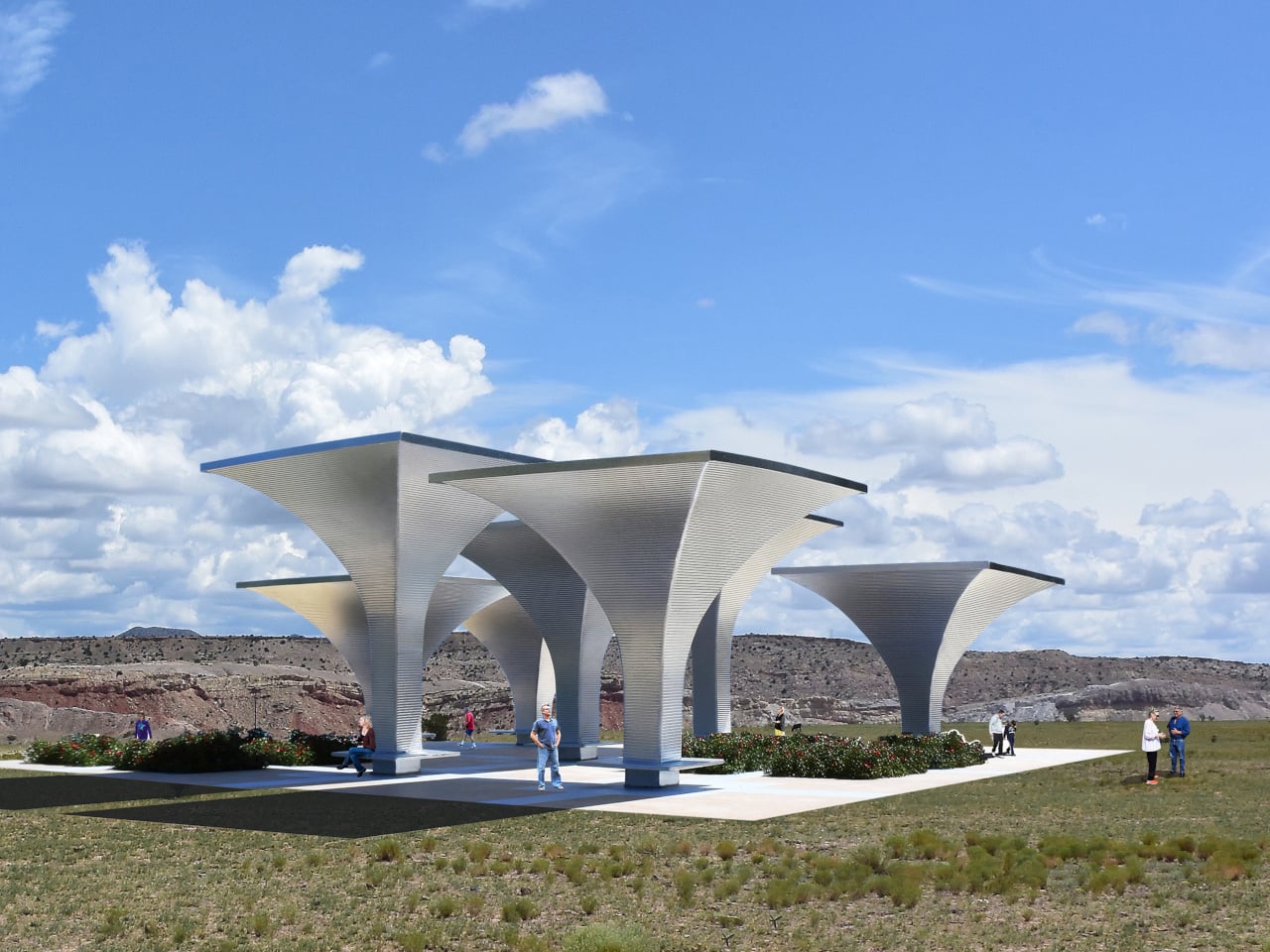
The Solar Rain Funnels propose a different model. Each funnel-shaped structure is a prefabricated, modular unit made from galvanized steel that collects rainwater, generates solar electricity, and provides shaded public seating, all from the same form. Rather than treating harvesting and gathering as separate programs, the design bundles them into a single object that does each job without architectural compromise.

Designer: Michael Jantzen
The form does most of the work. Each funnel is wide at the top and narrows toward the base, which means its surface naturally directs rainfall inward and downward into collection channels. Solar cells line the top edge, capturing sunlight from the same surface that intercepts rain. A bench is mounted around the perimeter at the base, completing the third function without requiring a separate structure.

What’s collected below the surface matters as much as what happens above it. Rainwater storage containers, or diversion channels connecting to off-site containment, are installed under the plaza to hold water for later community use. The solar electricity powers the pump that moves water from storage and lights the funnels after dark. Excess power feeds into the local grid, and on-site batteries let visitors charge devices.
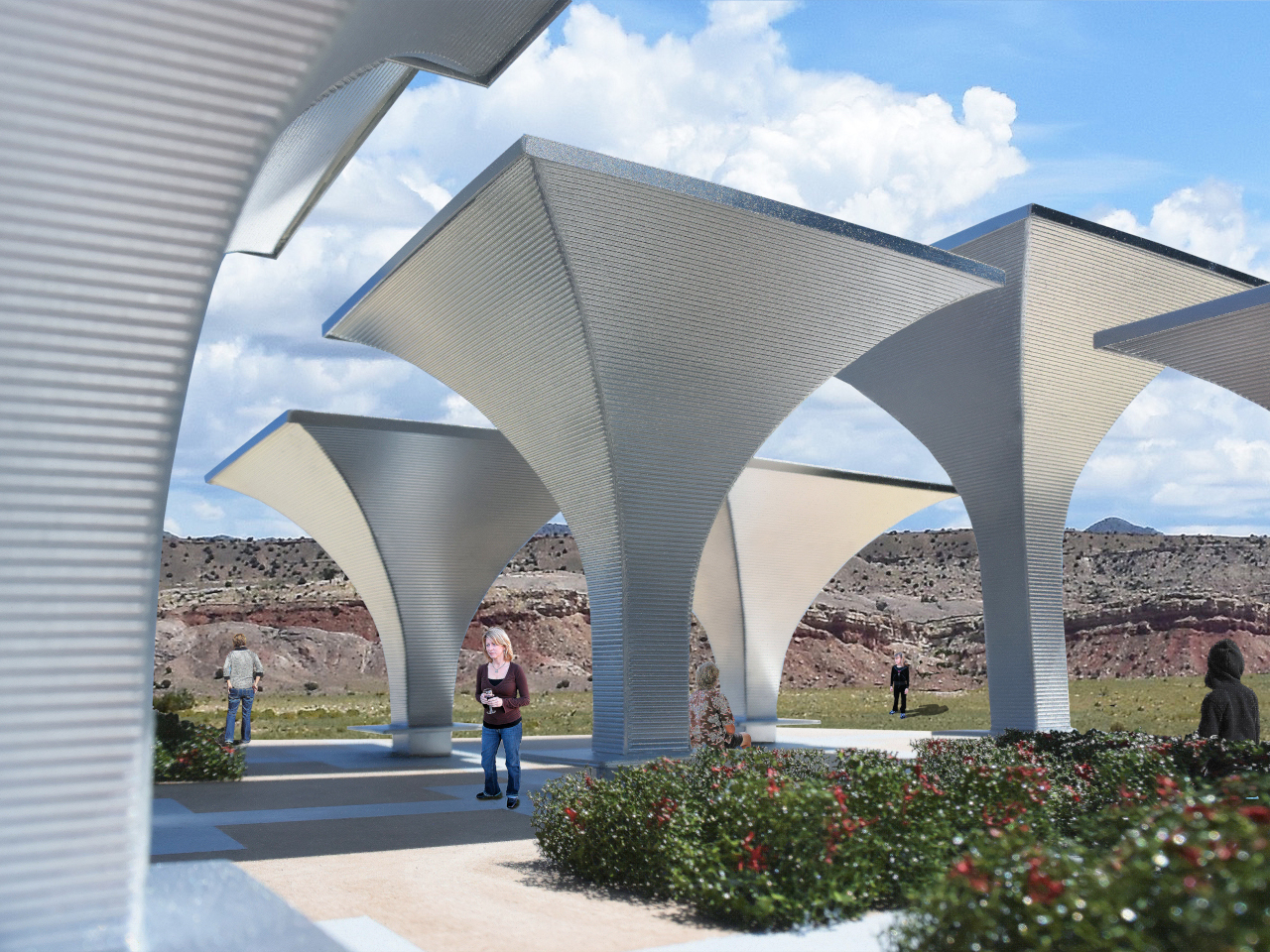
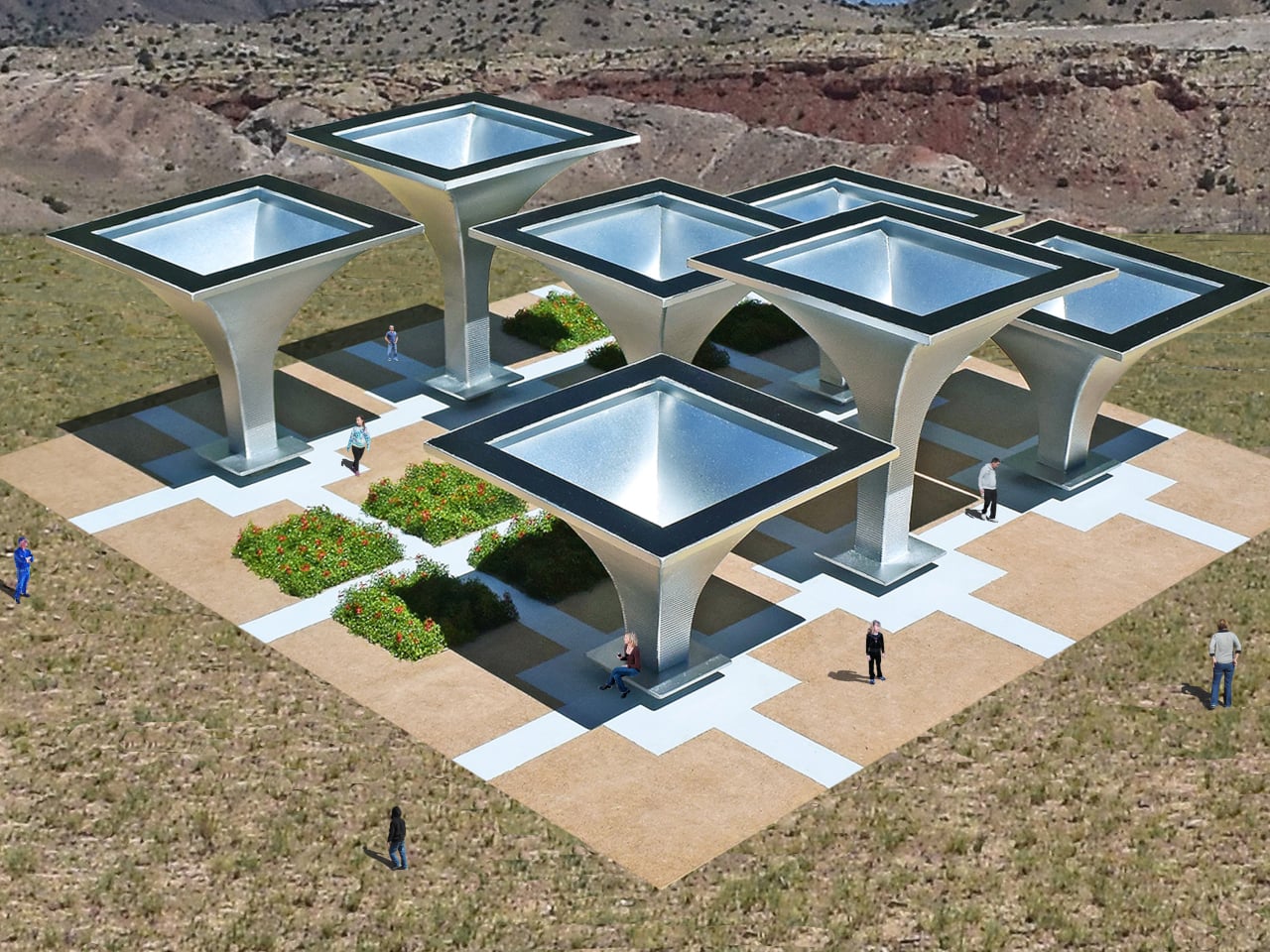
The prefabricated and modular nature of the design means installation doesn’t require building a new structure from scratch each time. Each funnel arrives at the site in pre-made sections that bolt together, and any number of units can be arranged into any configuration the site allows. In the reference proposal, seven funnels are arranged in a grid over a plaza, with drought-tolerant garden plantings filling the spaces between them.
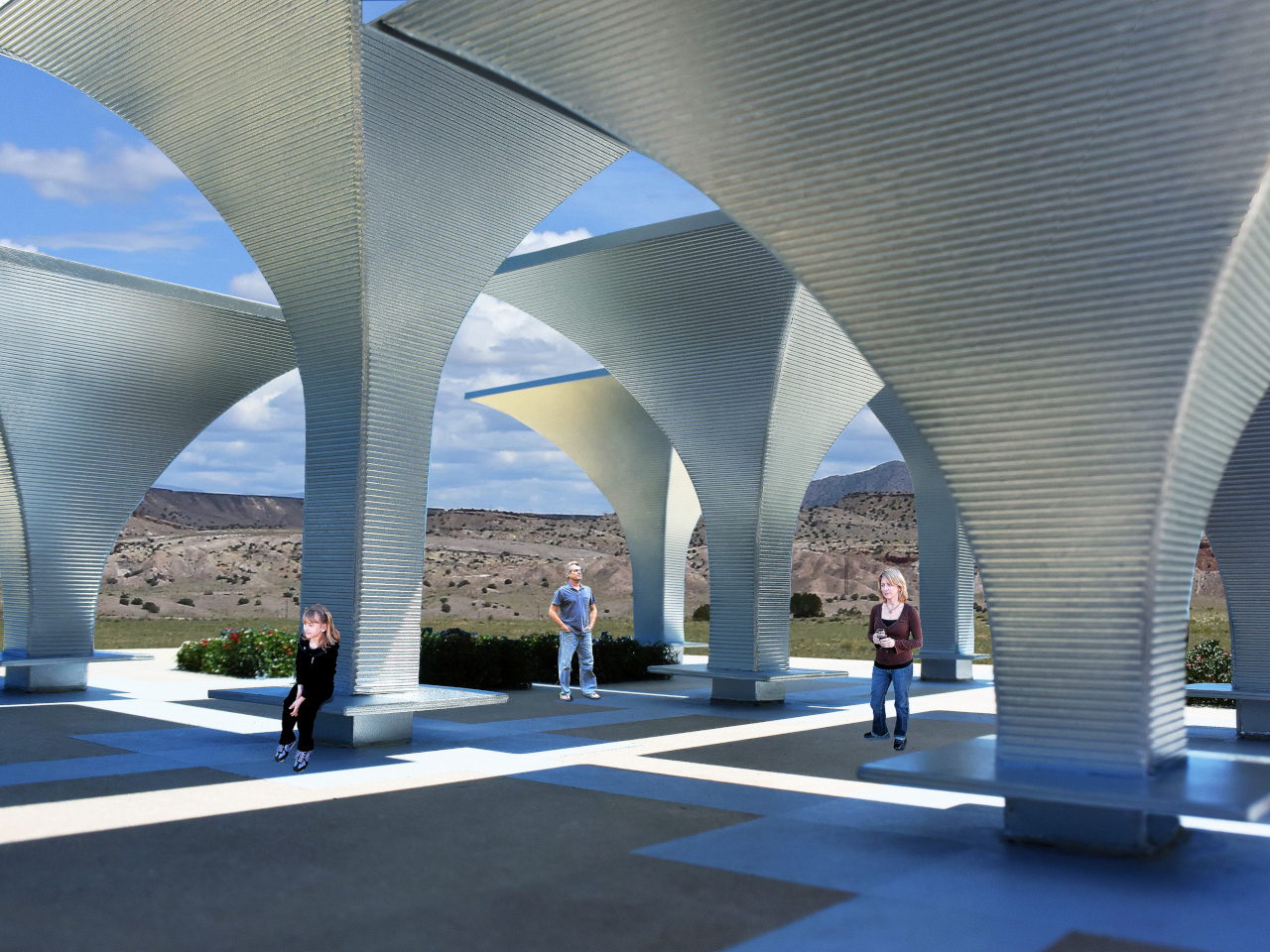
That plaza arrangement gives visitors something more useful than just shade. The overhead canopy formed by the funnel array blocks enough direct sunlight to make the space comfortable in hot, arid conditions, which is significant given that the concept is intended for communities experiencing water stress. Gardens planted with low-water-consuming species fill the gaps between funnels, making the plaza functional as a green space even in dry climates.

Size is treated as a variable rather than a fixed specification, because the concept anticipates installation across different kinds of sites. A smaller cluster of funnels might serve a neighborhood corner or transit stop, while a larger array could anchor a civic plaza or regional park. The galvanized steel construction and bolted assembly make each installation relatively straightforward to adapt, scale, and transport to wherever it’s needed most.
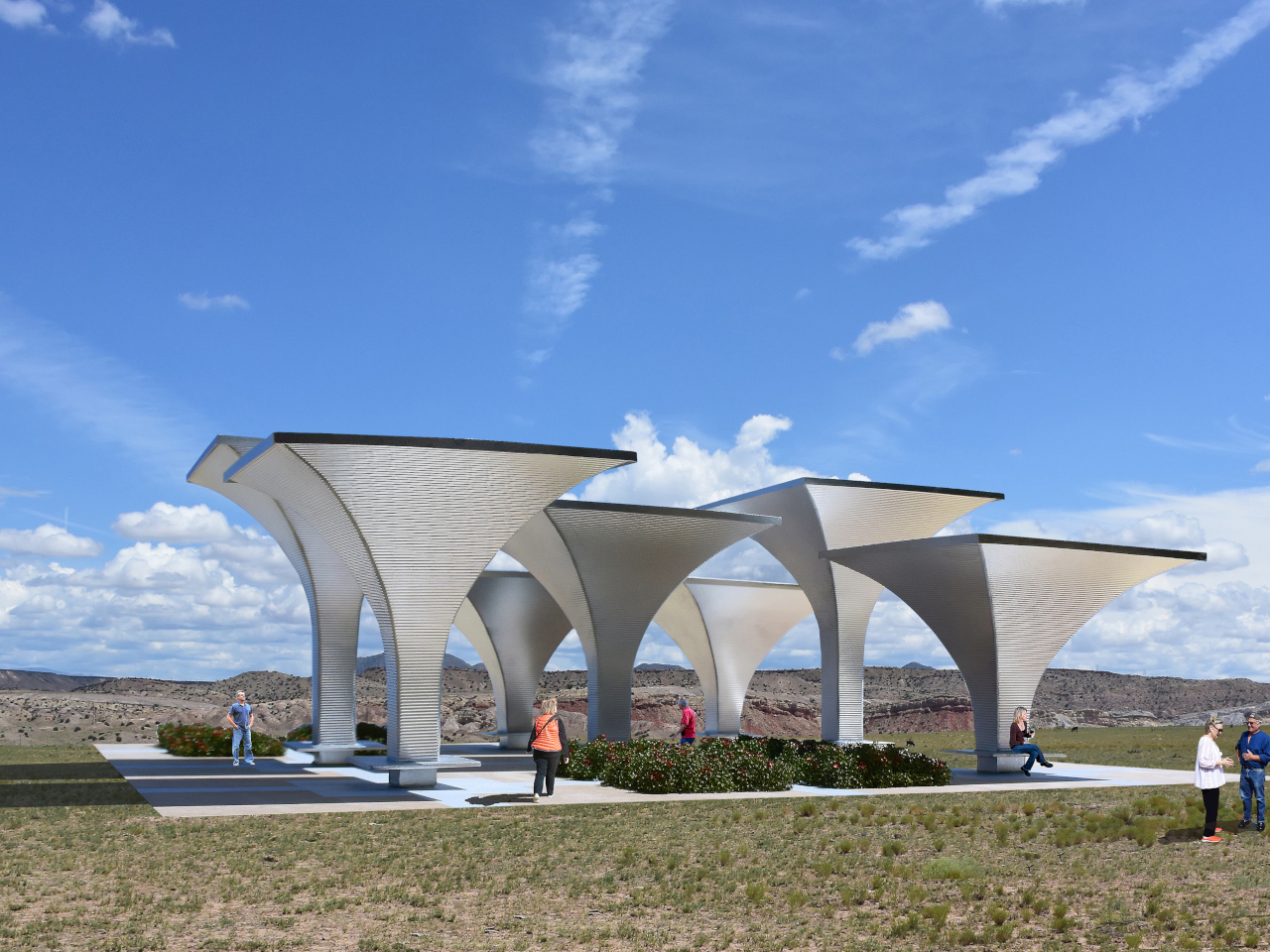
The concept is currently unbuilt, but what distinguishes it from other multi-function proposals is that each function follows directly from the form rather than being added to it. The wide, concave top collects rain. The exposed edge holds solar cells. The shaded base provides seating. Nothing requires the structure to be shaped any differently to perform those jobs, which is the kind of efficiency that makes a proposal feel plausible.

The post Funnels That Harvest Rain and Solar Power While Shading a Public Plaza first appeared on Yanko Design.
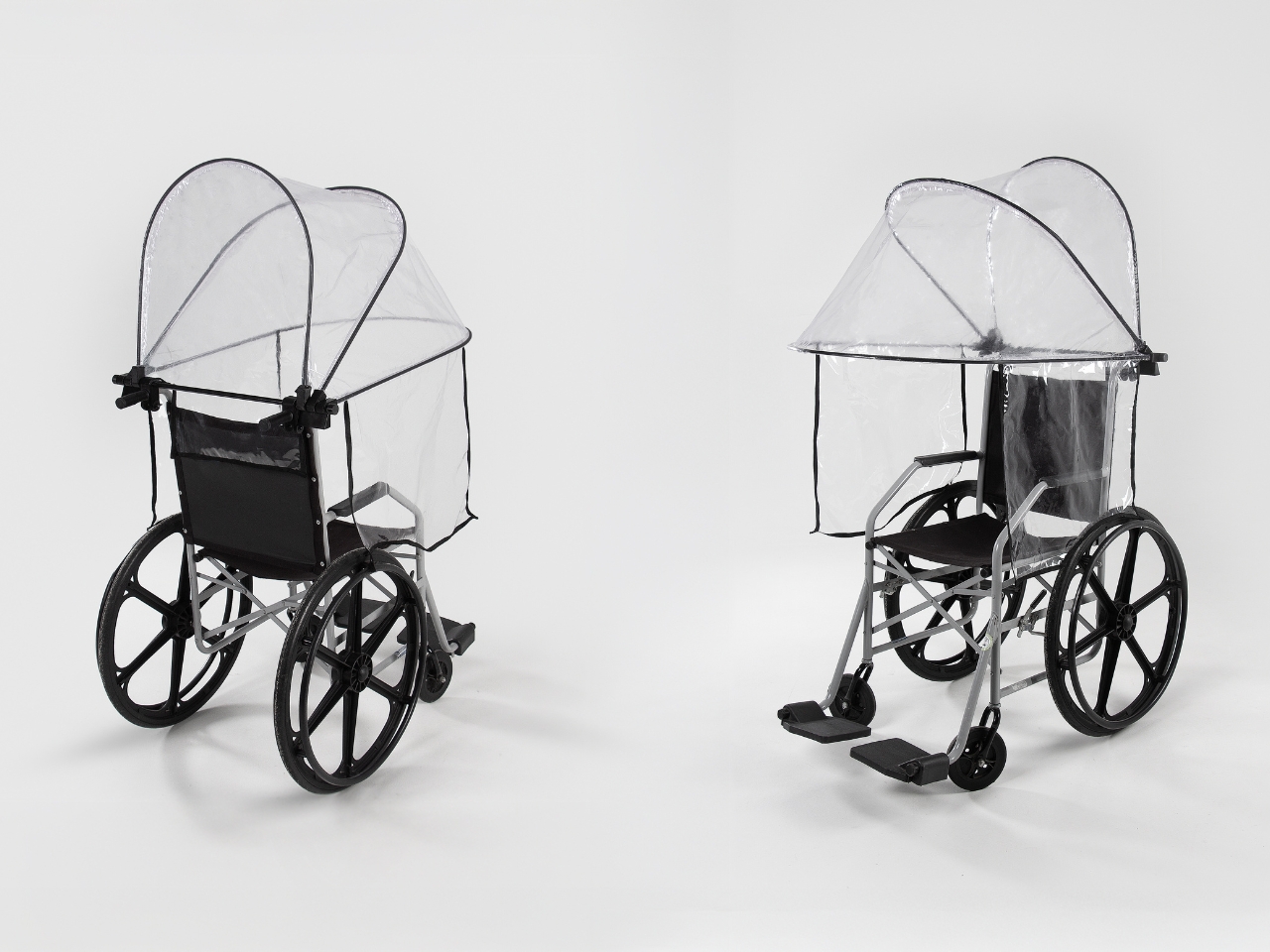
This Wheelchair Dryer Just Made Rainy Days Way Less Awkward

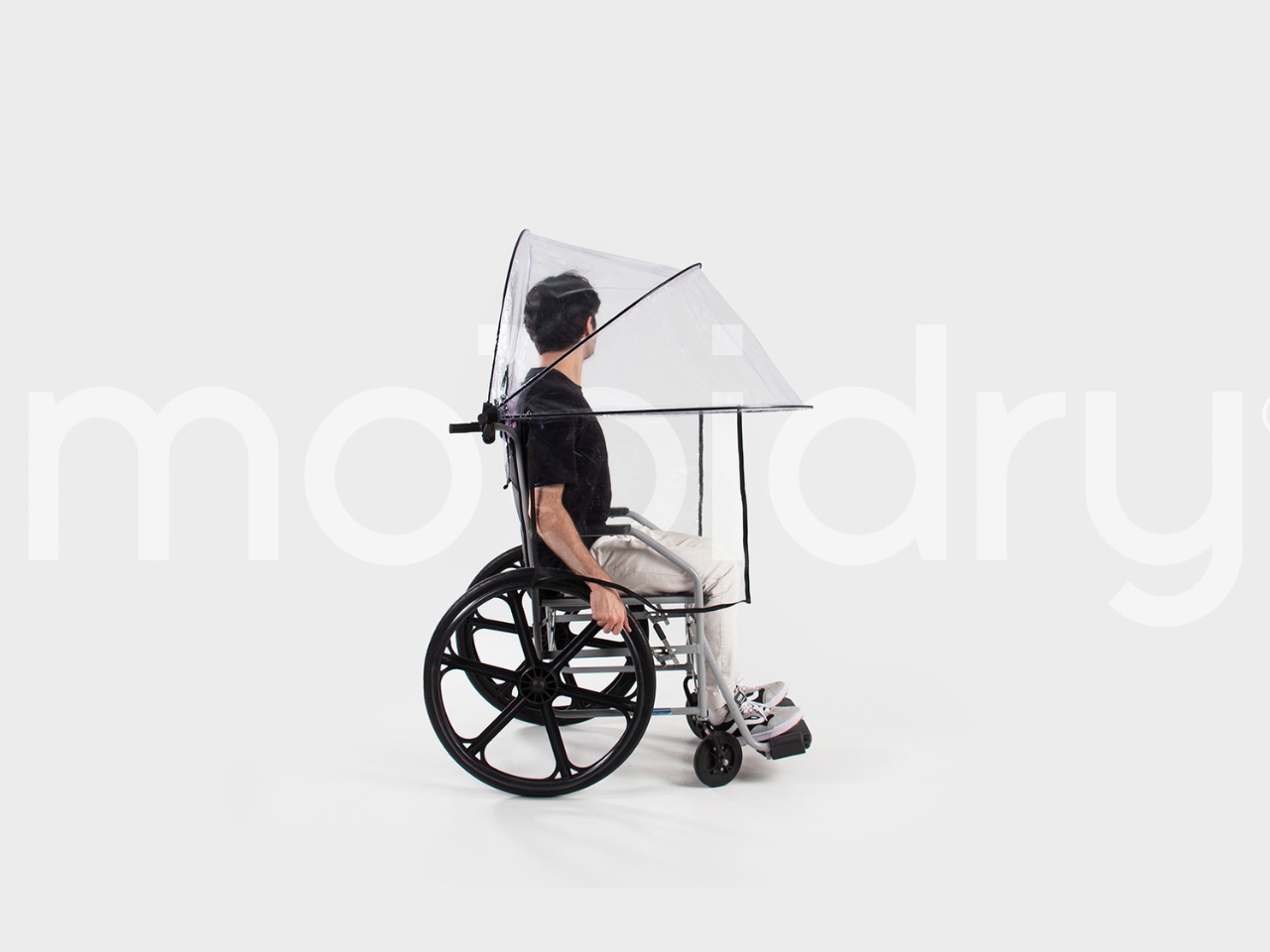
Look, here’s a design problem that most people never think about: what happens when wheelchair users get caught in the rain? Traditional umbrellas require a free hand, ponchos bunch up awkwardly, and standard rain gear just wasn’t designed with wheelchair ergonomics in mind. Nicolas Odorizi’s Mobidry tackles this overlooked challenge with a solution that’s both elegantly simple and surprisingly sophisticated.

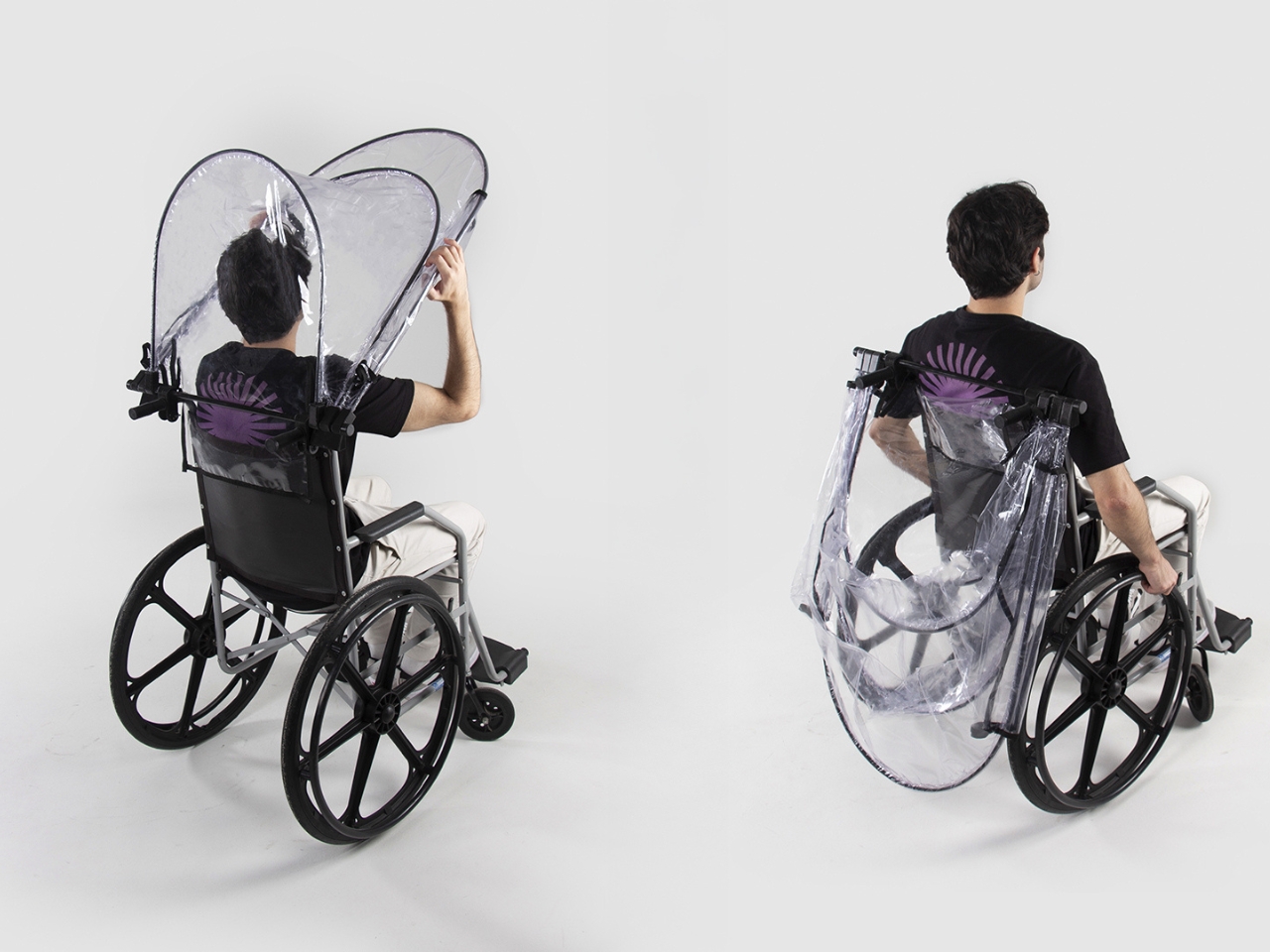
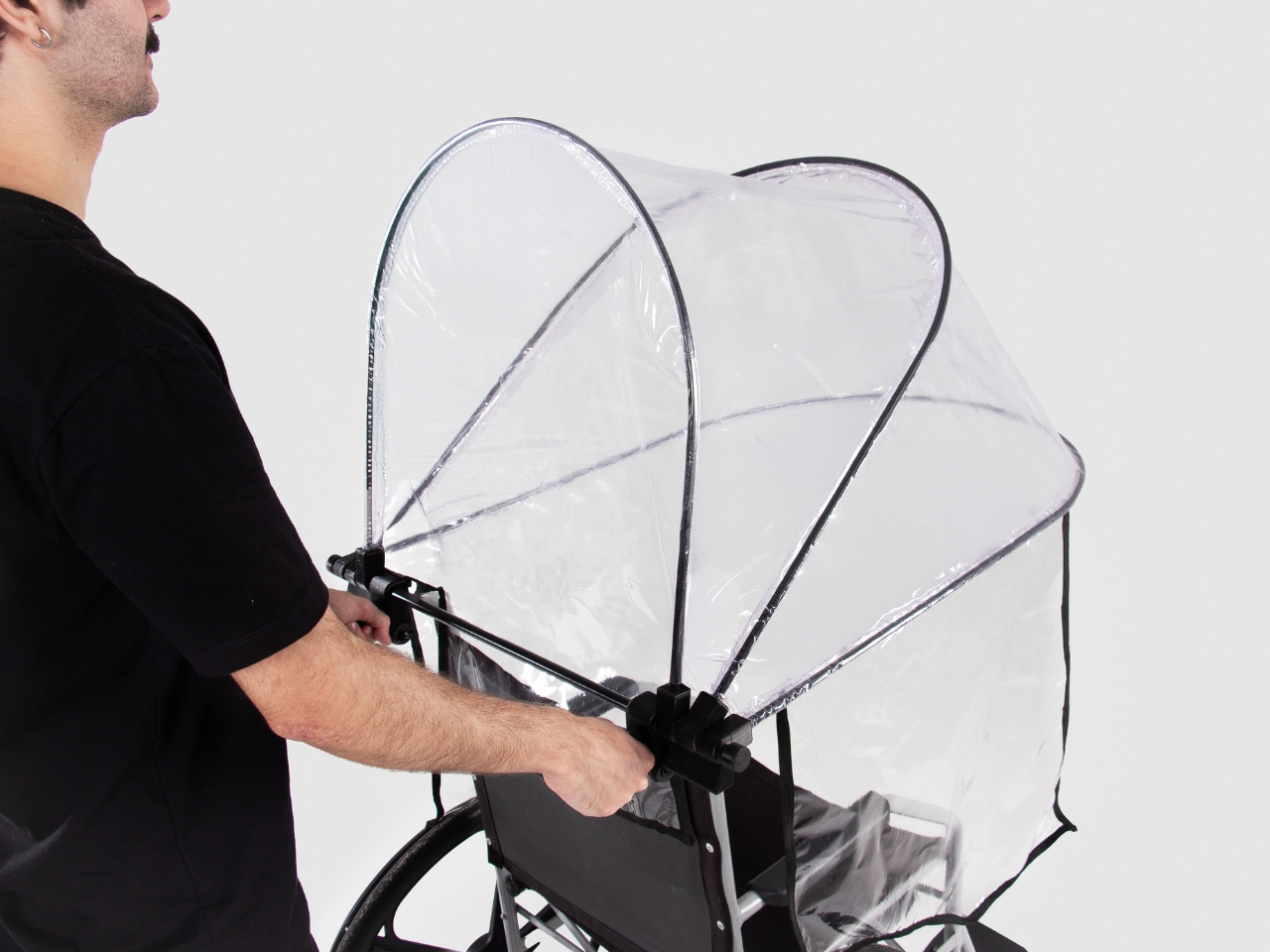
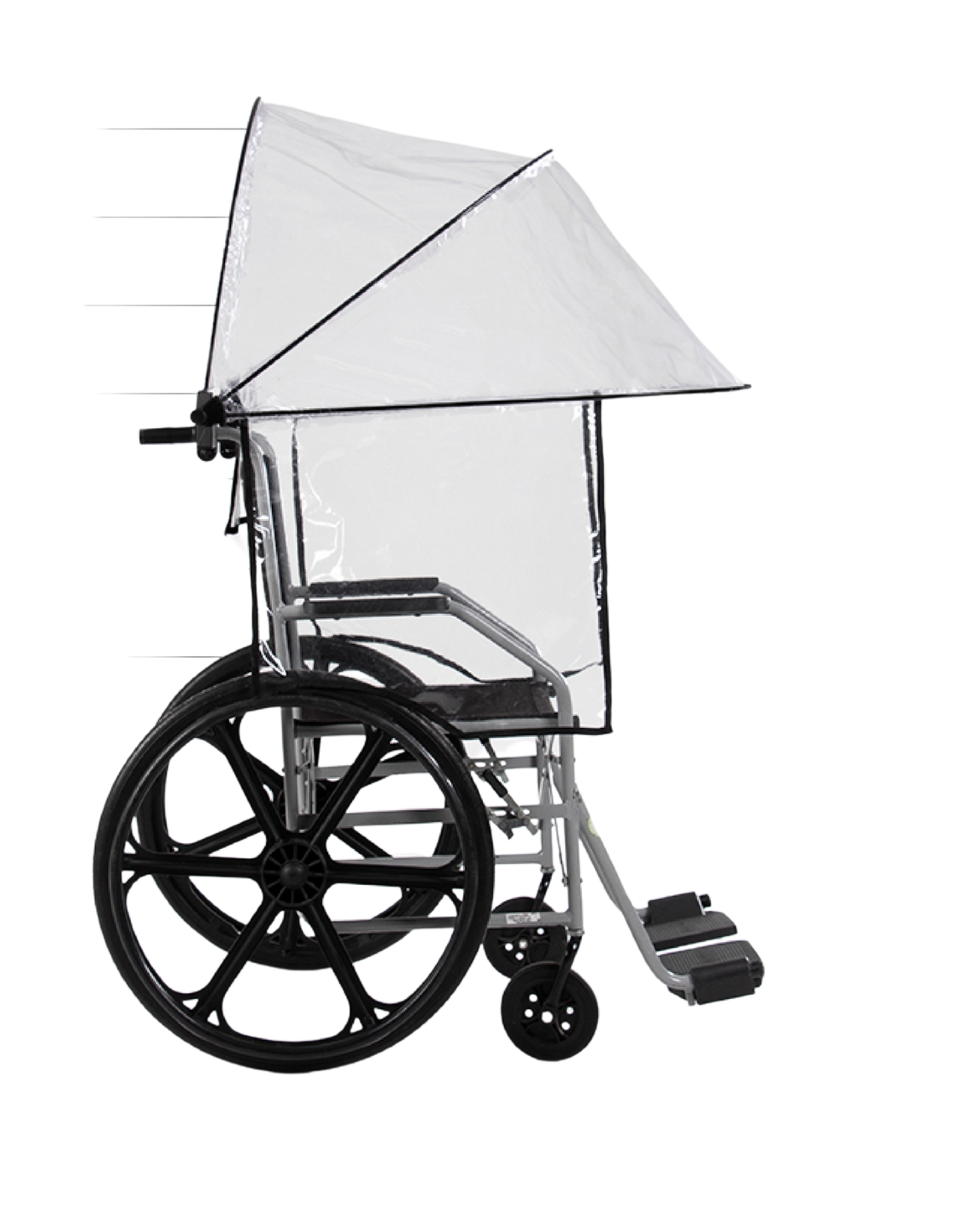
At first glance, Mobidry looks almost futuristic. A transparent dome-like canopy wraps around the wheelchair and user, supported by a minimal aluminum frame. But what makes this design genuinely clever isn’t just how it looks. It’s how thoroughly Odorizi thought through every detail of the user experience. The frame itself is lightweight aluminum, which matters more than you might think. Wheelchair users are already managing equipment weight with every push and transfer. Adding bulky protective gear to that equation creates real physical strain. The aluminum structure keeps things light while maintaining enough rigidity to hold the canopy securely in place, even when wind tries to turn it into a sail.

Designer: Nicolas Odorizi

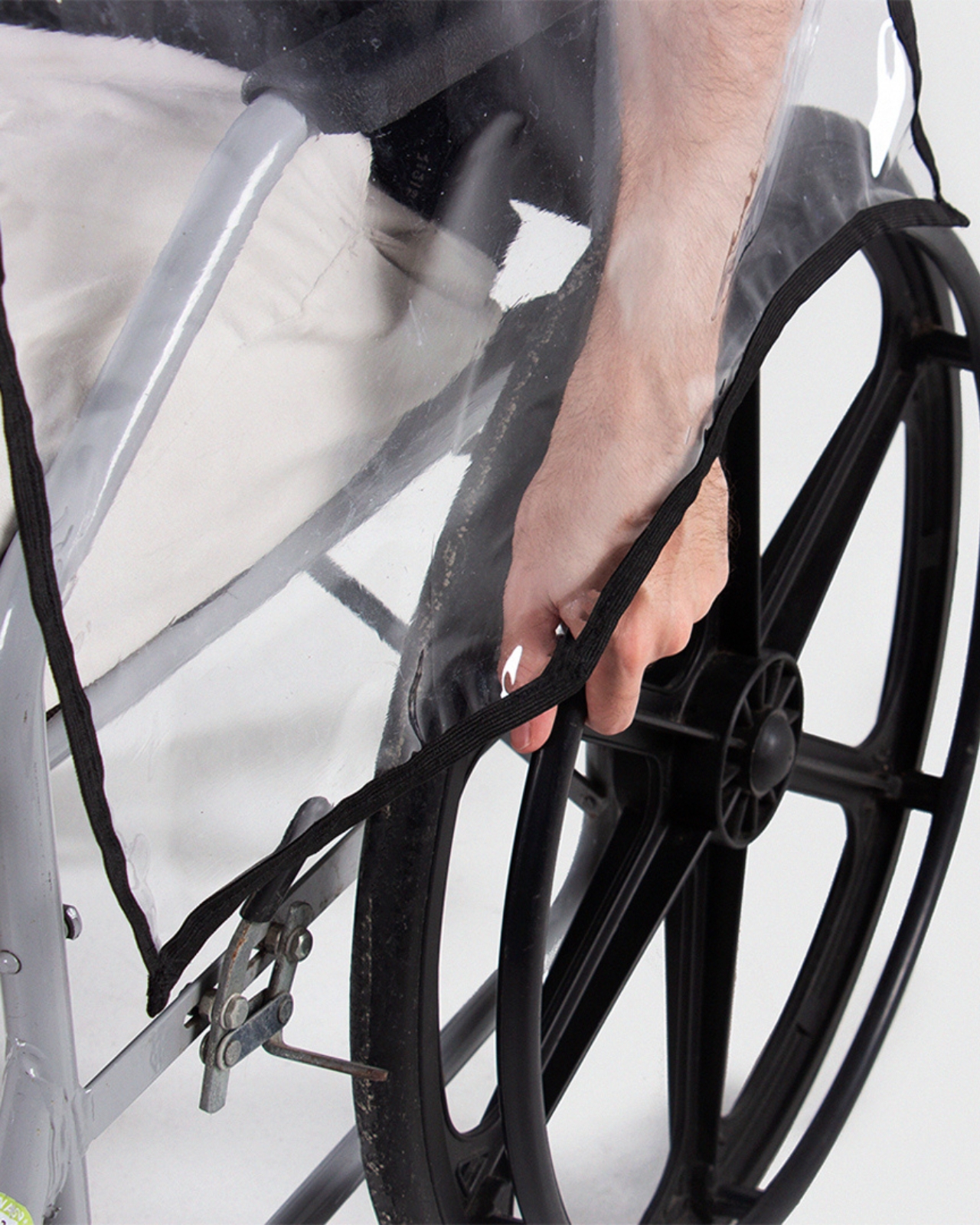
The canopy material is transparent and waterproof, which solves two problems simultaneously. Waterproofing is obvious, but transparency is crucial for maintaining visibility and reducing that closed-in feeling that opaque covers create. You can see the careful seaming along the edges where the material curves around the frame, following the wheelchair’s contours rather than fighting against them. This isn’t just fabric draped over a frame. It’s a precisely engineered shape.

One of the standout features is the rotation and fixation system. The entire canopy structure can pivot and lock into position, which means users can adjust coverage based on wind direction or simply fold it back when the rain stops. This kind of flexibility transforms Mobidry from a single-purpose rain shield into something more versatile. The mounting mechanism appears robust but unobtrusive, integrating with the wheelchair frame without requiring permanent modifications.

The coverage itself is comprehensive. Top, front, sides, and rear protection work together to create an enclosed protective zone. But look closely at how the design handles the transition points. Where the canopy meets the wheelchair frame, there’s a bias-tape finish that contours around the wheels. This detail prevents the material from catching on moving parts while maintaining a weather-tight seal. It’s the kind of thoughtful touch that separates good design from great design.

What really strikes me about this project is how it balances protection with dignity. Accessibility products often veer into two extremes: either aggressively medical-looking or trying too hard to be “inspirational.” Mobidry just looks like well-designed gear. The transparent material and clean lines give it an almost architectural quality, like a tiny modern pavilion that happens to travel with you.

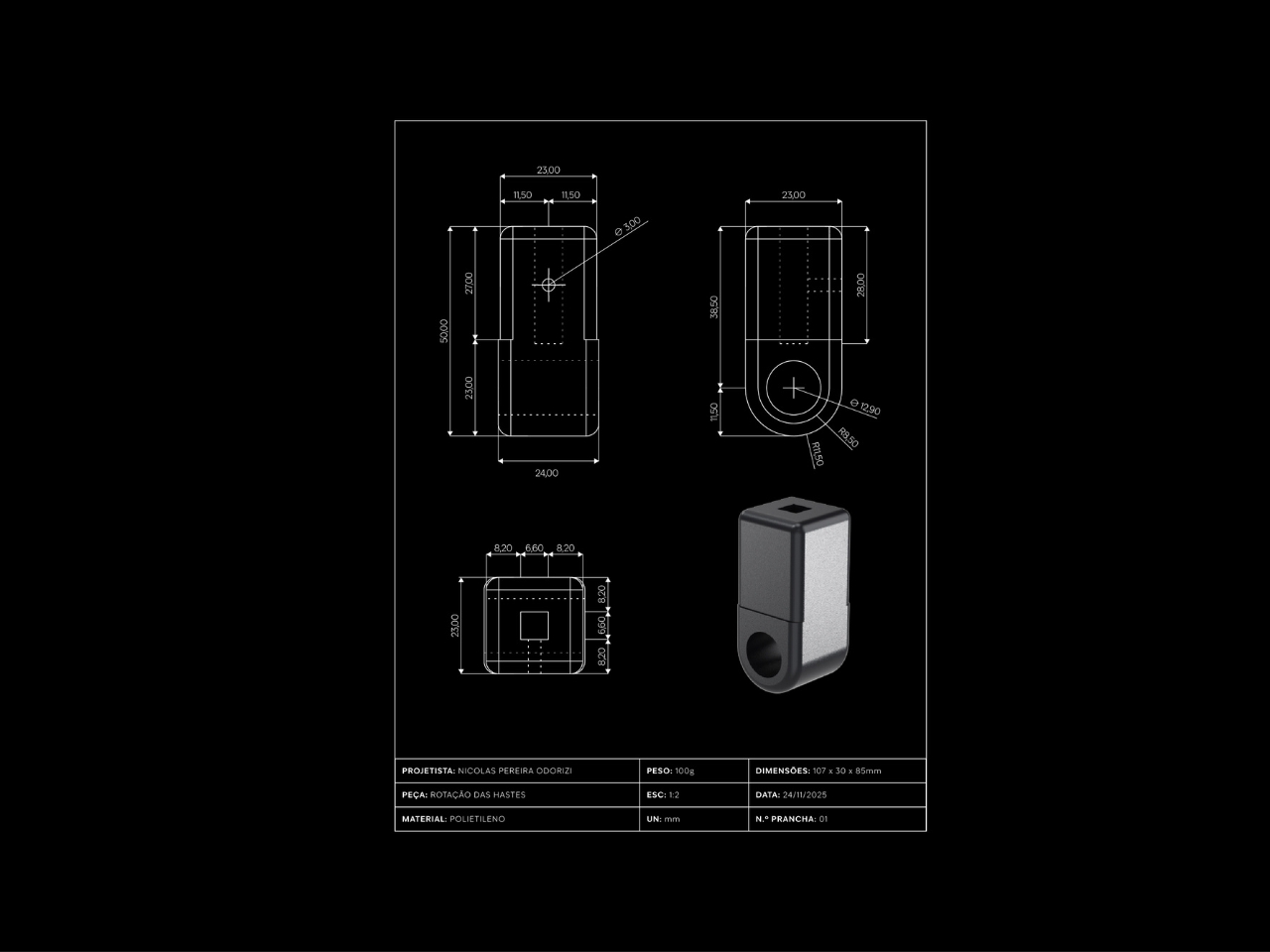
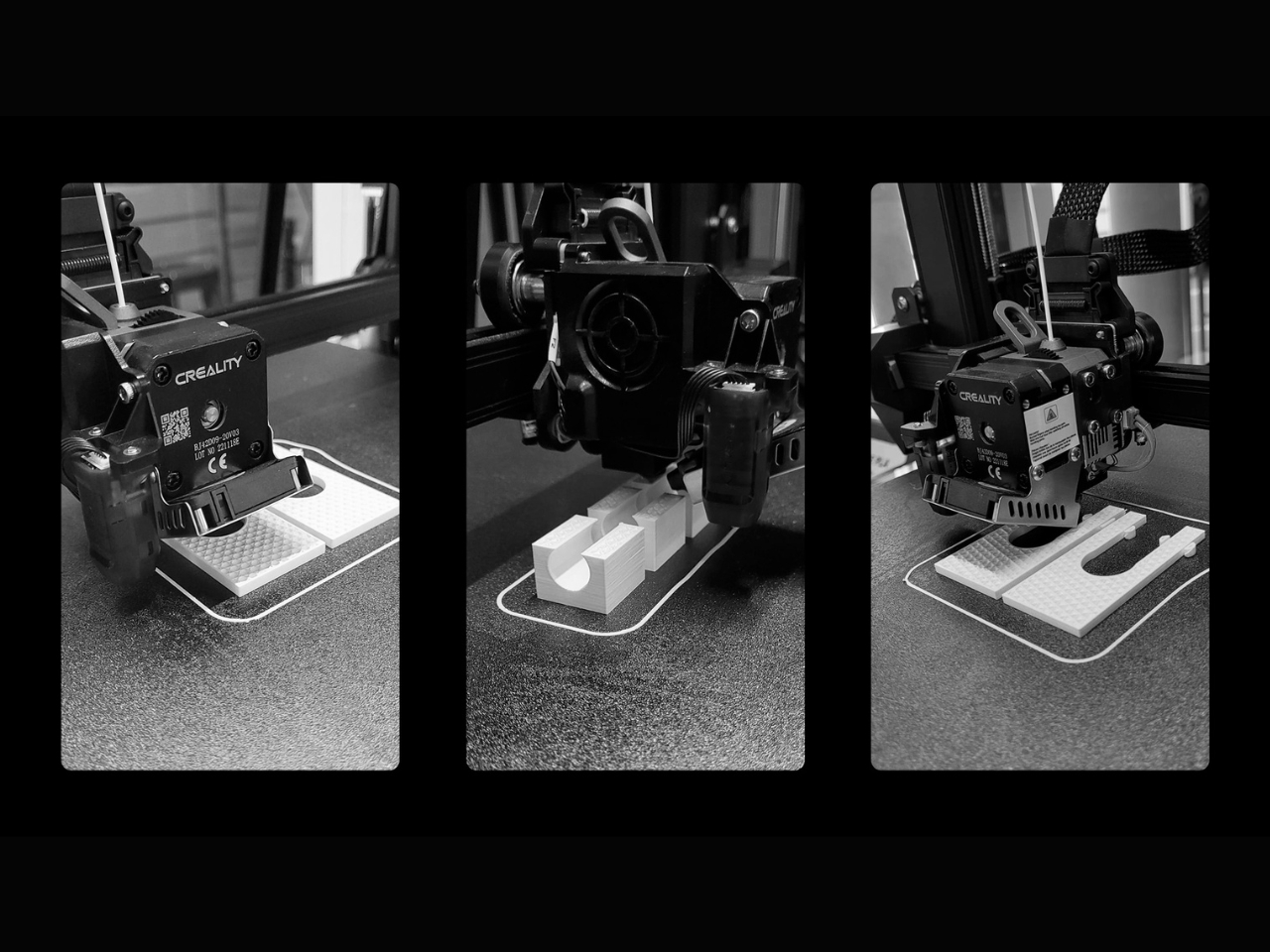
The project documentation shows Odorizi worked through multiple prototypes, refining the form and testing the mechanics. You can see evidence of 3D printing used for component development, suggesting an iterative design process that prioritized function over flash. The technical drawings reveal careful attention to dimensions and clearances, ensuring the canopy provides adequate coverage without restricting arm movement or visibility. There’s a quote in the project materials that really captures why this matters: “Rain affects our independence and autonomy to go places.” That’s the core insight driving this entire design. It’s not about staying dry for comfort’s sake. It’s about maintaining the freedom to move through the world on your own terms, regardless of weather.

From a broader design perspective, Mobidry represents a shift in how we think about accessibility products. Rather than adapting existing solutions poorly or creating specialized equipment that screams “medical device,” it asks what a purpose-built solution could look like when designed from the ground up with wheelchair users in mind. The result respects both the technical requirements and the aesthetic expectations of its users.

Nicolas Odorizi, working from Porto Alegre, Brazil, has created something genuinely useful here. Not revolutionary in the sense of reinventing wheelchairs, but revolutionary in addressing a specific, frustrating gap in the market with intelligence and style. Sometimes the best design isn’t about grand gestures. It’s about solving real problems with grace and precision. Mobidry does exactly that.

The post This Wheelchair Dryer Just Made Rainy Days Way Less Awkward first appeared on Yanko Design.