
NASA shares beautiful timelapse of the Psyche spacecraft’s view over Mars
The spacecraft made a close approach to the red planet in May on its way to explore the asteroid it's named after.

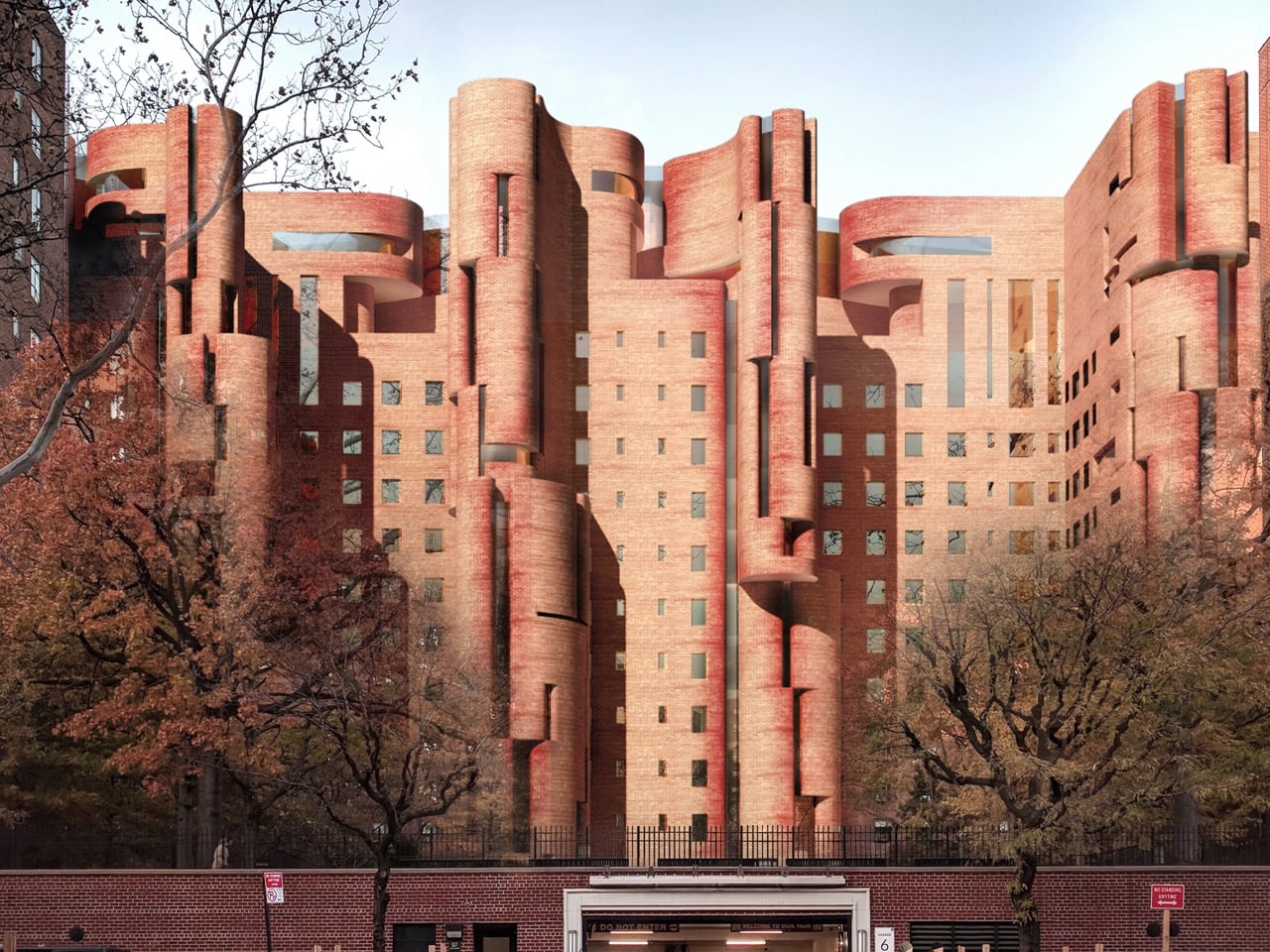
Cities have gotten very good at stacking people on top of each other and very bad at getting those people to actually interact. High density housing solves a real estate problem while quietly creating a social one, isolating seniors on one floor and young families on another with nothing but an elevator connecting them. Architect Yi Lu looked at this fragmentation and asked what it would take to reverse it without bulldozing the buildings already holding millions of people. Her answer, submitted to the A’ Design Award, treats an aging superblock not as a liability but as raw material for a new kind of social infrastructure. It is ambitious, a little sculptural, and grounded in something most housing renewal proposals ignore entirely.
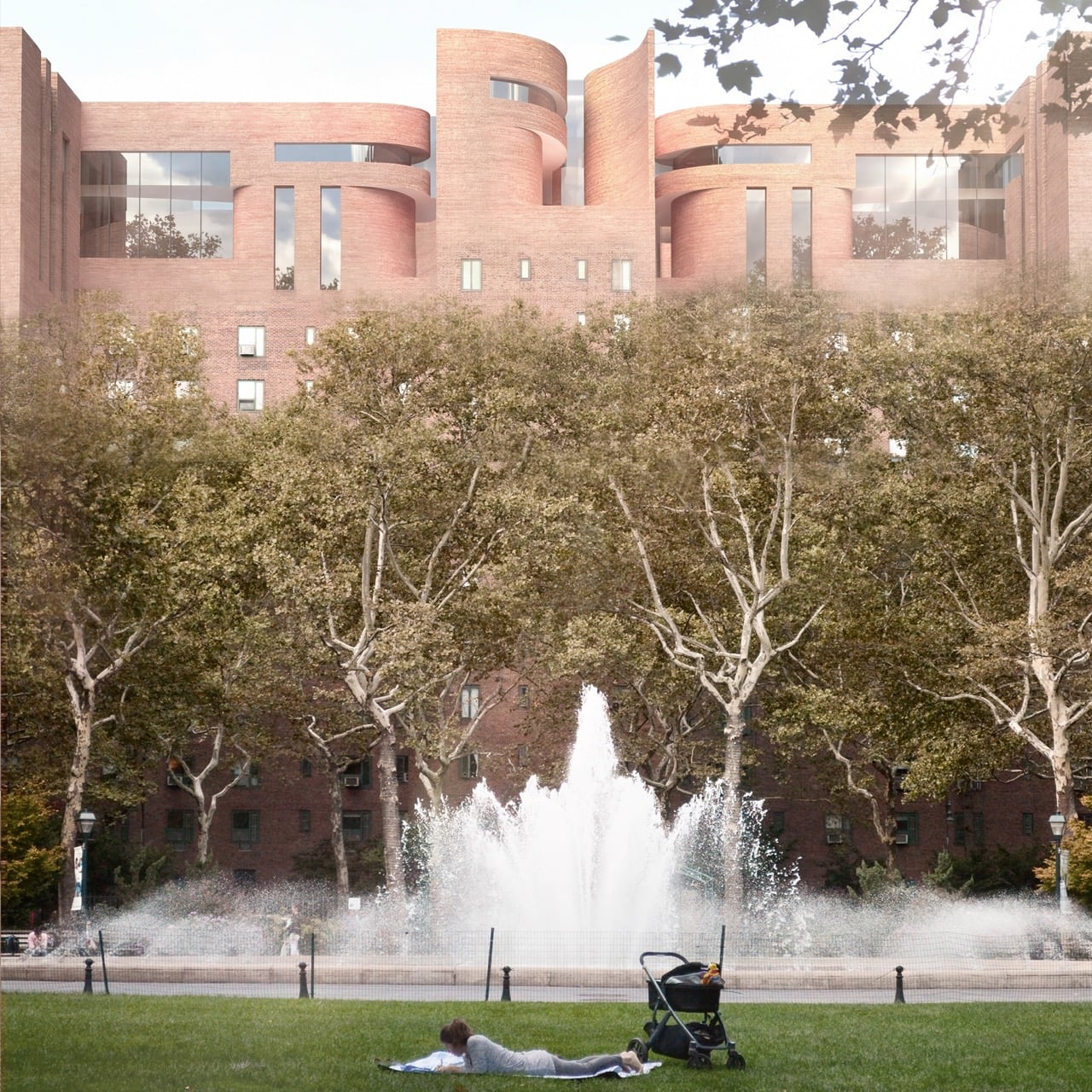
The project, titled The Intergenerational Commons, targets Stuyvesant Town, New York City’s massive postwar housing development, as its test case. Lu’s proposal keeps roughly 75 to 85 percent of the existing floor area as housing while converting the rest into a revitalized podium, rooftop kindergartens, and a network of terraces threading through the brick shell. The renderings have a strange, compelling silhouette to them, cylindrical brick towers twisting up past staggered floor plates, like Michel de Klerk got handed Frank Gehry’s sketchbook. A horizontal community spine activates street level life, while stairs, lifts, and terraces stitch the floors together into what Lu describes as a continuous social landscape. The result looks sculptural from the outside and feels intentional from within, which is a harder balance to strike than either quality on its own.
Designer: Yi Lu

Stuyvesant Town was built as postwar efficiency housing, rows of near identical brick towers designed to move people through the city’s housing shortage as fast as possible. That efficiency came at the cost of any real social texture, and decades later the superblock reads as functional but flat, a place people live rather than a place people encounter each other. Lu’s retrofit does not fight that brick language so much as bend it, pulling curved, tower-like volumes out of the existing grid and letting them collide at odd angles. Load-bearing steel reinforcement and reversible insertions allow the new geometry to sit on top of the old structure without gutting it. The brick stays, but its logic changes completely, from repetition to rupture.
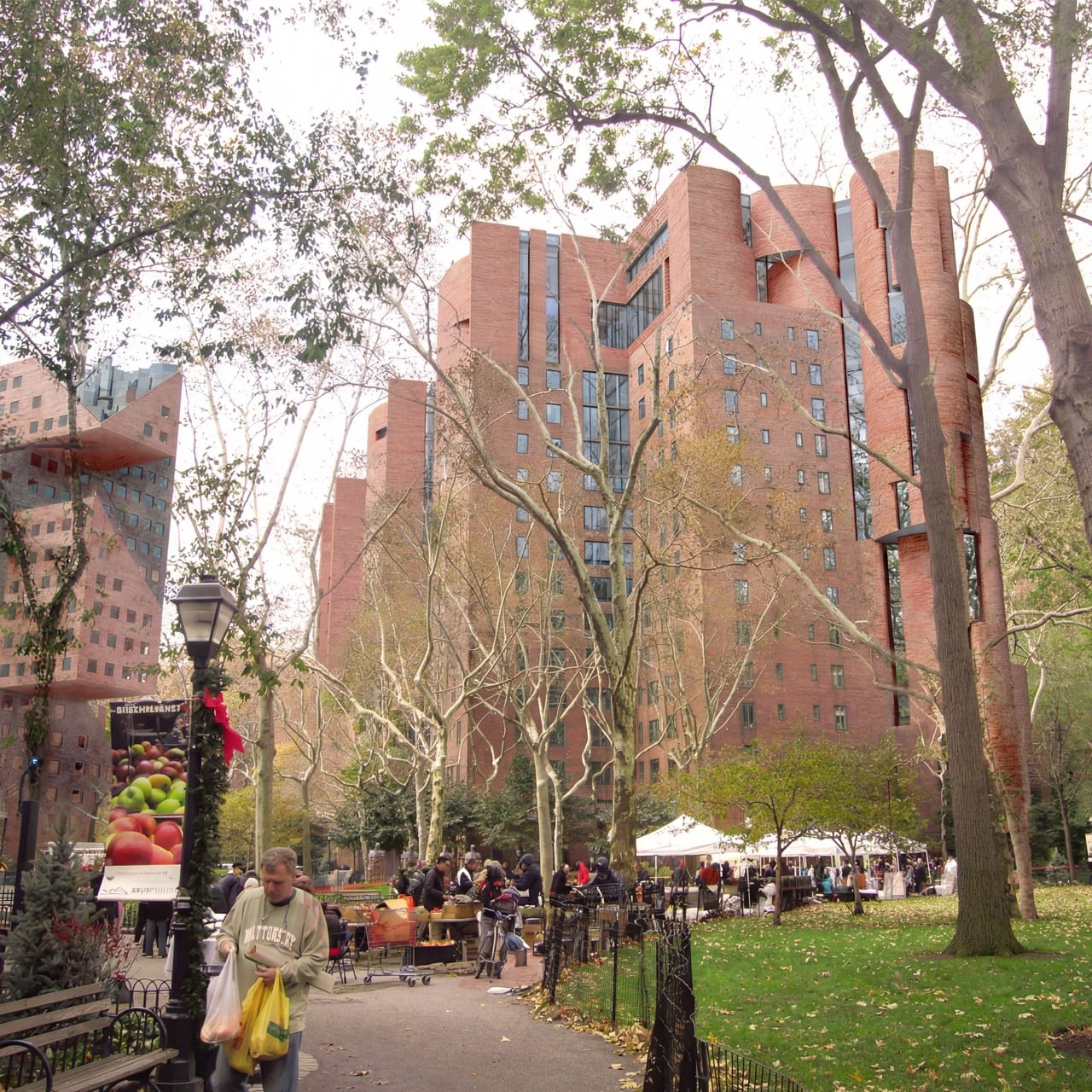
A standardized kit of parts, built around 3,600 millimeter modular bays and lightweight steel framing, lets construction happen in phases without displacing current residents, a constraint that kills most ambitious renewal proposals before they leave the page. Bolt on terraces extend outward from the existing brick shell, adding outdoor space that the original superblock never had. A 1,200 square meter community hub anchors street level activity, while stacked shared terraces and a 300 millimeter green roof system carry that social infrastructure upward through the building. None of it requires the wholesale demolition that usually accompanies large scale housing renewal.
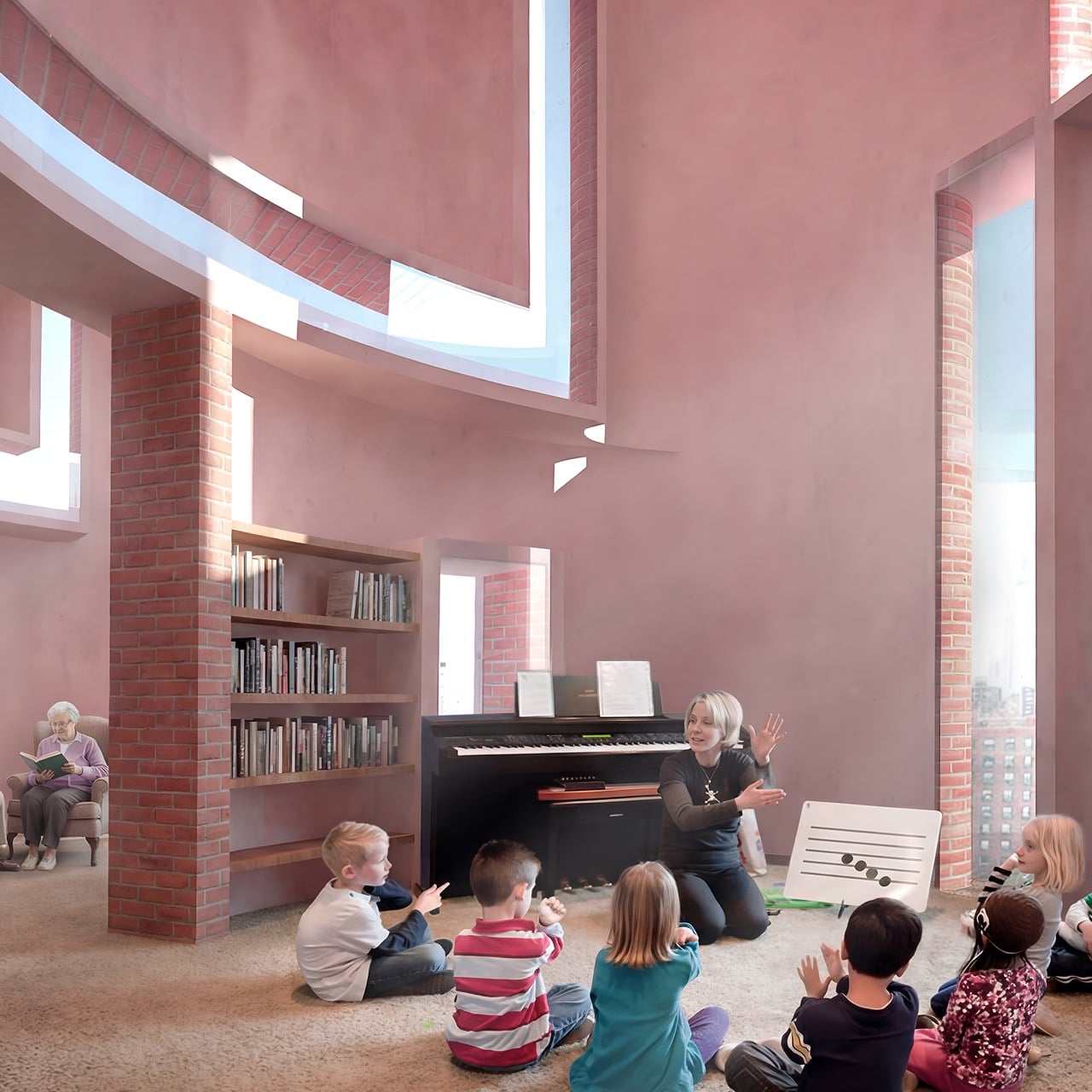
The interesting part is how Lu orchestrates ‘intergenerational’ overlapping zones, connecting seniors and children rather than the more common strategy of designating separate zones for each. Rooftop kindergartens sit close enough to senior learning spaces on the revitalized podium that informal encounters happen without anyone having to schedule them. Interaction stays optional throughout, preserving privacy for residents who want it while making mutual support available for those who do not. That flexibility separates the proposal from the well-meaning but rigid intergenerational housing models that came before it. Whether a project this structurally ambitious ever gets built at Stuyvesant Town is a separate question from whether it should, and Lu’s entry makes a genuinely compelling case for the second one.
The post “Adaptive Reuse” Housing in NYC Reshapes Aging Brick Superblock Into An Interconnected Society first appeared on Yanko Design.

Samsung’s highly anticipated 2026 Galaxy Z Fold 8 and Flip 8 lineup has been leaked, offering a detailed glimpse into the future of foldable smartphones. According to reliable industry sources, the Galaxy Z Fold 8 Ultra, Galaxy Z Fold 8, and Galaxy Z Flip 8 models bring significant advancements in design, hardware, and software. These […]
The post Huge Samsung Leak Reveals Galaxy Z Fold 8, Fold 8 Ultra, and Flip 8 appeared first on Geeky Gadgets.

The last debate you expected to find at the heart of a design story was a surfing one, but here we are. For years, the surf community has been at odds over something surprisingly technical: should surfboards be measured in volume, using litres? It sounds like a niche argument, but for shapers and surfers, the stakes are genuinely real. Leave it to an Australian brewery to turn that argument into one of the most interesting design objects of the year.
Gage Roads Brew Co. partnered with legendary board shaper Chris Garrett of Phantom Surfboards to create the Beerboard, a custom single-fin surfboard built with a sealed internal chamber capable of holding 10 litres of Gage Roads Summer Ale Single Fin. Yes, it actually surfs. And yes, it actually pours beer. That’s the whole glorious point.
Designer: Chris Garrett with Gage Roads Brew Co

The concept itself is brilliantly simple, but the execution was anything but. The engineering challenge of making a surfboard capable of storing pressurised beer without leaking, or worse, imploding mid-session, required serious work. Garrett’s decades of experience as a shaper came into play here in ways that go well beyond surface aesthetics. He’s been crafting boards since 1979, and Phantom Surfboards has been his life’s work since 1984. Designing the Beerboard meant rethinking the interior construction entirely, embedding a food-safe chamber that could handle pressurisation while preserving the board’s hydrodynamics. The build process reportedly came with a few explosions along the way, which is either alarming or just the most Australian development story imaginable.


The board draws inspiration from the iconic Greenough Spoon, a shape dating back to the 1960s. Choosing that reference wasn’t accidental. The Spoon was itself a radical rethink of what a surfboard could be, and the Beerboard follows directly in that spirit. It doesn’t look like a novelty item. It looks like a real board, clean and purposeful, and that restraint is exactly where the design succeeds. A gimmick slapped together for a social media moment would have felt cheap. This doesn’t feel cheap at all.

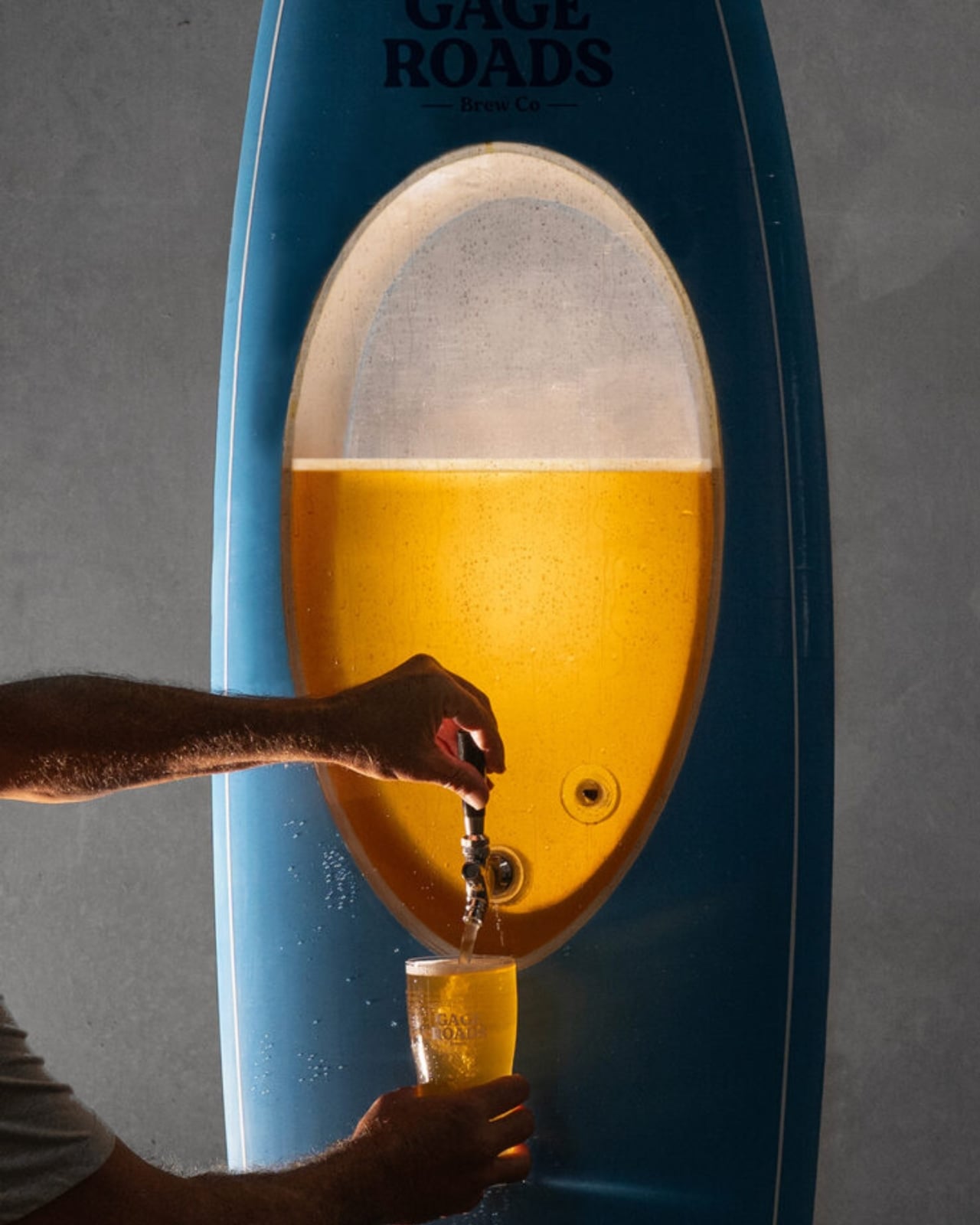
Once the board was finished, Gage Roads called in Olympic surfing medalist and part-owner Jack Robinson alongside legendary free surfer Brendan “Margo” Margieson for sea trials. The fact that professional surfers actually took it into the ocean, rode it, and then presumably poured a cold one from it afterward is a key part of why the Beerboard registers as more than a marketing stunt. It works, both as a surfboard and as a beer dispenser. That functional integrity is what elevates the whole project.


Is the Beerboard a practical product? Not remotely. You’re not about to wax this thing down and paddle out for your morning session while worrying about keeping your lager cold. But practicality is the wrong lens here entirely. The most interesting design objects rarely exist to solve a purely utilitarian problem. They exist to reframe one. The Beerboard reframes the entire surfboard volume debate by making it physical and playful, by literally filling a surfboard with the very unit of measurement causing all the fuss. It’s design as commentary, and it genuinely lands.


It also matters who made this. Chris Garrett isn’t an ad agency prop designer. He’s a craftsman with nearly 50 years in the industry, someone whose boards have been trusted by some of the world’s top surfers across decades. Bringing his expertise to a project like this gives the Beerboard a credibility it wouldn’t have had otherwise. It’s the difference between a concept and a creation.
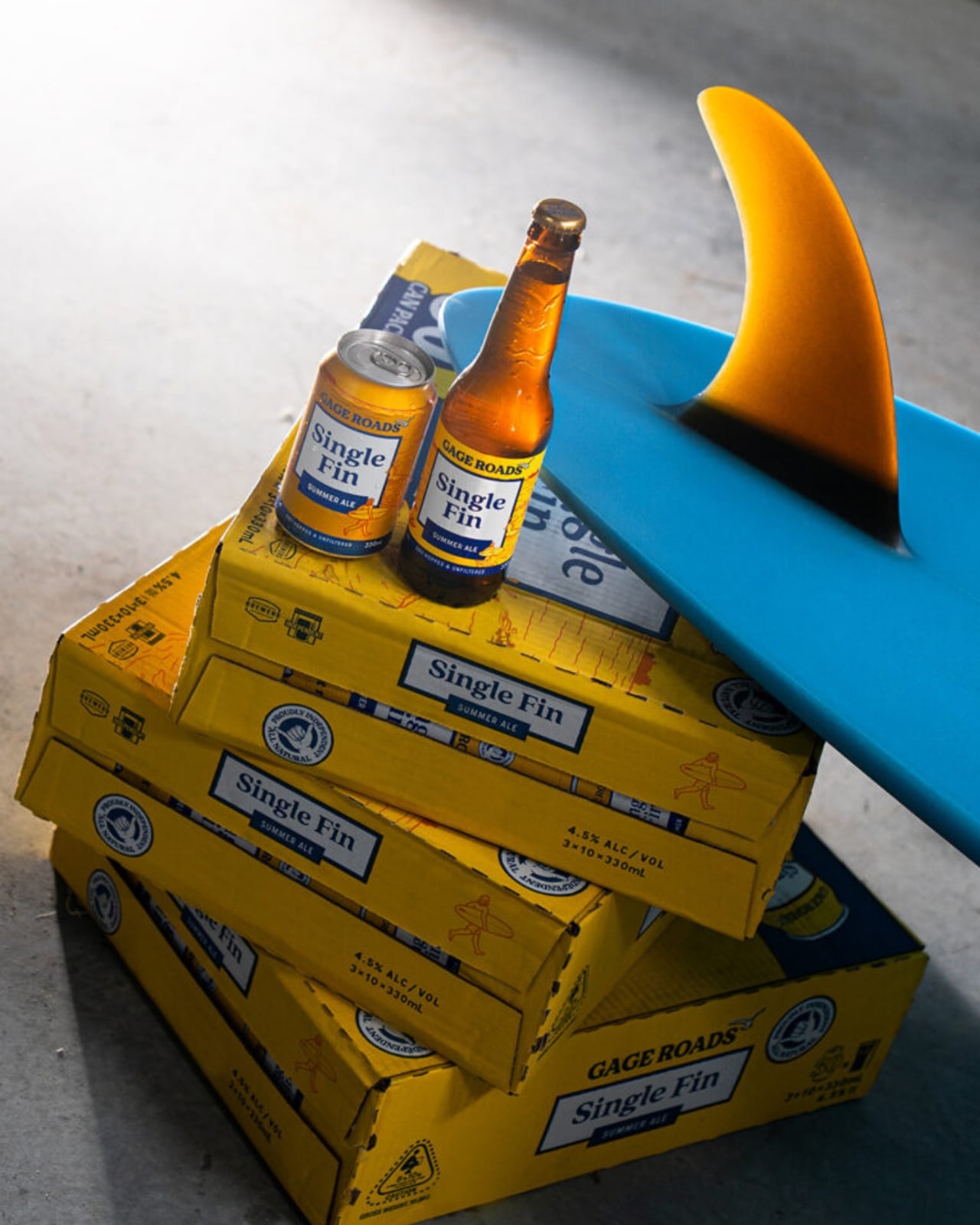
I’ve seen plenty of branded design collaborations that felt hollow or performative, where the “design” was really just a logo slapped on a limited-edition container. The Beerboard isn’t that. It required genuine engineering, real craft expertise, and the confidence to commit fully to a ridiculous idea until it became a remarkable one. That, I think, is what good design actually looks like. Sometimes it just happens to come with a tap.

The post Gage Roads Just Turned a Surfboard Into a Beer Tap first appeared on Yanko Design.

Apple’s upcoming iPhone 18 Pro Max is shaping up to be more than just a typical annual refresh. Rumors and supply-chain leaks suggest that this is the device where Apple cuts ties with major third-party suppliers, debuting its own custom-built wireless technology alongside a history-making processor. From an incredibly dense, ultra-efficient internal architecture to a […]
The post Why the iPhone 18 Pro Max might cost $200 more than you expected appeared first on Geeky Gadgets.

The XREAL Aura and URXR One augmented reality glasses represent two distinct approaches to AR technology, each catering to different user preferences and scenarios. The URXR One stands out with its expansive 90° field of view (FOV), six degrees of freedom (6DoF) tracking and multi-window productivity features, making it a strong contender for immersive entertainment […]
The post URXR One vs XREAL Aura: AR Glasses Specs and Features Compared appeared first on Geeky Gadgets.

Samsung is about to launch the Galaxy Z Fold 8 and Z Fold 8 Ultra, marking a significant advancement in foldable smartphone innovation with the debut of its Flex Titanium technology. This innovative development addresses persistent challenges in foldable devices, such as display durability, crease visibility, and overall user experience. With this release, Samsung aims […]
The post Samsung Just Used Titanium to Finally Kill the Galaxy Z Fold 8 Crease appeared first on Geeky Gadgets.