Forget 5,000mAh: Samsung S27 Ultra Leaks Point to the Biggest Battery Upgrade in a Decade

Forget 5,000mAh: Samsung S27 Ultra Leaks Point to the Biggest Battery Upgrade in a Decade Technician measures a Samsung phone battery prototype during silicon-carbon cell testing for future Galaxy S27 Ultra models.

Samsung is poised to redefine smartphone battery performance with the anticipated release of the Galaxy S27 Ultra. For years, the company has adhered to a 5,000 mAh battery capacity in its Ultra series, balancing performance with design constraints. However, the introduction of silicon-carbon batteries could mark a significant step forward. This innovative technology promises to […]

The post Forget 5,000mAh: Samsung S27 Ultra Leaks Point to the Biggest Battery Upgrade in a Decade appeared first on Geeky Gadgets.

Posted in Uncategorized

How WiFi 7 Eliminates Network Congestion for Faster, Smoother Streaming

How WiFi 7 Eliminates Network Congestion for Faster, Smoother Streaming UniFi AirWire access point mounted on a wall during a 3 Gbps wireless network speed test.

WiFi 7 is the latest wireless standard, designed to deliver faster speeds, lower latency and improved reliability. One standout feature is Multi-Link Operation (MLO), which enables devices to connect to both the 5 GHz and 6 GHz bands at the same time. This capability enhances performance and ensures smoother transitions between bands, making it particularly […]

The post How WiFi 7 Eliminates Network Congestion for Faster, Smoother Streaming appeared first on Geeky Gadgets.

Posted in Uncategorized

Upcoming Apple Products 2026: iPhone Fold, iPhone 18 Pro, and 13 More Leaks

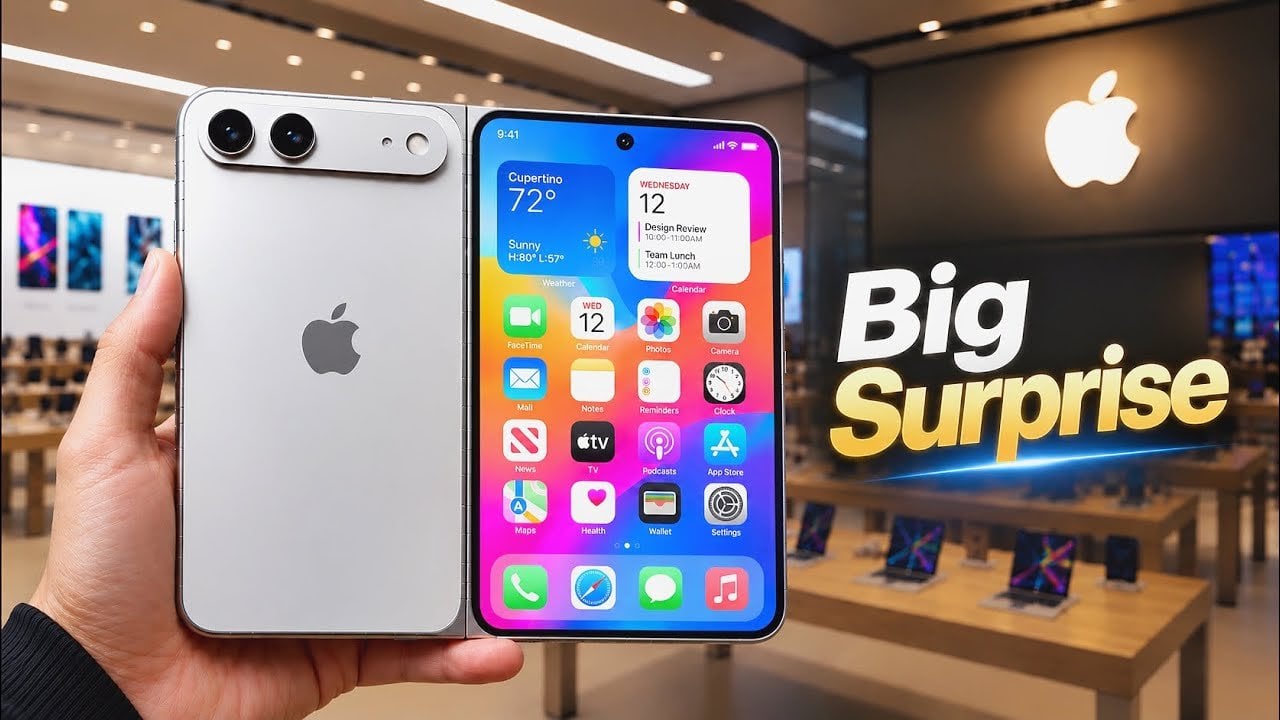
Upcoming Apple Products 2026: iPhone Fold, iPhone 18 Pro, and 13 More Leaks Render-style view of a foldable iPhone Ultra showing a 7.8-inch inner display and 5.5-inch outer screen.

Apple is poised for an exciting year in 2026, with over 15 rumored product releases that could significantly enhance its ecosystem. From foldable smartphones to AI-powered accessories, these anticipated innovations reflect Apple’s focus on premium features, innovative technology, and seamless device integration. While these details remain speculative, they offer valuable insights into the company’s strategic […]

The post Upcoming Apple Products 2026: iPhone Fold, iPhone 18 Pro, and 13 More Leaks appeared first on Geeky Gadgets.

Posted in Uncategorized

Essential Guide to Building a Professional iPad Workspace In 2026

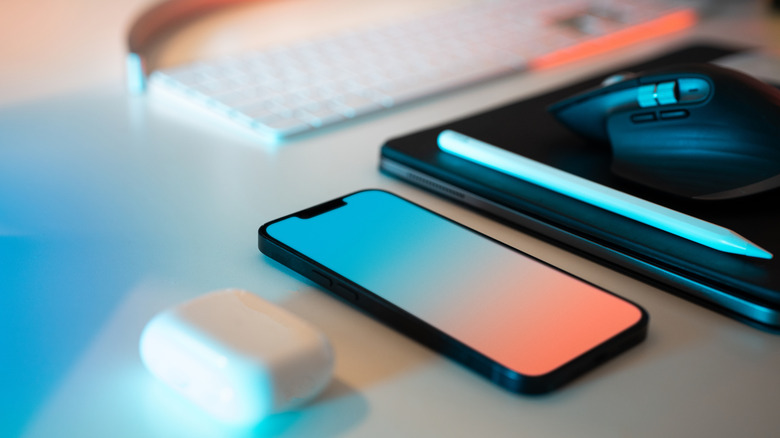
Essential Guide to Building a Professional iPad Workspace In 2026 Professional workspace featuring an M-series iPad as the primary computer

Building an effective iPad desk setup in 2026 means balancing the capabilities of the device with a workspace that supports your tasks. Terren Rule highlights how features like M-series chips and iPadOS updates have expanded what iPads can handle, but emphasizes the importance of intentional setup choices. For instance, combining an M2 iPad Pro with […]

The post Essential Guide to Building a Professional iPad Workspace In 2026 appeared first on Geeky Gadgets.

Posted in Uncategorized

iOS 26.4.2 Released: Apple Fixes Critical Notification Bug

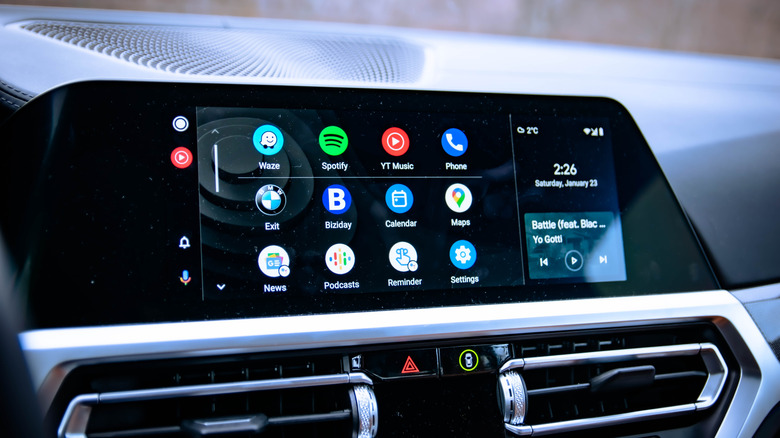
iOS 26.4.2 Released: Apple Fixes Critical Notification Bug Car dashboard display with Apple CarPlay connected, highlighting ongoing connection problems reported after iOS 26.4.2.

Apple has officially released iOS 26.4.2, a minor but essential update for all devices running iOS 26. This update primarily focuses on addressing critical security vulnerabilities, resolving bugs and enhancing overall system performance. If your device is currently running iOS 26.4.1, it is strongly recommended to install this update to ensure your device remains secure […]

The post iOS 26.4.2 Released: Apple Fixes Critical Notification Bug appeared first on Geeky Gadgets.

Posted in Uncategorized

The Ultimate iPhone Privacy Checklist: 10 Essential Settings to Change

The Ultimate iPhone Privacy Checklist: 10 Essential Settings to Change Safari Advanced settings on iPhone with tracking and fingerprinting protection set to block across all browsing.

Your iPhone is a powerful device designed to simplify your life, but its default settings may leave your personal data vulnerable to tracking. While Apple emphasizes privacy, many features require manual adjustments to fully protect your information. By fine-tuning specific settings, you can significantly enhance your privacy without compromising the functionality of your device. These […]

The post The Ultimate iPhone Privacy Checklist: 10 Essential Settings to Change appeared first on Geeky Gadgets.

Posted in Uncategorized

The Brightest EDC Flashlight of 2026 packs 12,300 Lumens, Active Cooling, and Still Fits in Your Pocket

EDC gear is converging. The knife becomes a multitool, the multitool becomes a bit driver, the bit driver becomes a pry bar, and somewhere in the middle someone bolts on a bottle opener. The flashlight, meanwhile, has resisted this trend longer than most categories. A light is a light. You charge it, you carry it, you press a button, photons happen. The addition of a USB port to charge your phone feels like a gimmick until you’re three days into a camping trip and your power bank dies at 11 PM. Then the flashlight that can push 15 watts back out through USB-C stops feeling like feature bloat and starts feeling like the obvious move the entire industry should have made years ago.

The Wuben X1Pro carries two 21700 Li-ion cells (4,800mAh each, user-replaceable, tool-free access) that deliver light output and device charging through a 30W input, 15W output PD system. Peak output hits 12,300 lumens across five Cree XHP50.3 emitters: one HI (high intensity, no dome) for spot throw, four HD (high density, domed) for flood coverage. A physical three-position slider lets you activate spot, flood, or both channels simultaneously without cycling through modes. Active cooling via a waterproof removable fan sustains 3,000 lumens for 1.8 hours, a threshold most non-cooled EDC lights hit for maybe 90 seconds before thermal management kicks in. Wuben machines the body from aluminum alloy, anodizes the black sections, die-casts the white sections, and sets the whole thing in a flat-tube form factor (59.6mm wide, 29.5mm thick, 138mm long) that rides in a pocket the way a good fixed blade rides on a belt.

Designer: Wuben

Click Here to Buy Now: $139.99 $174.99 (20% off). | Website Link Here. Hurry, deal ends in 48-hours!

Active Cooling: The Performance Difference That Actually Matters

Most high lumens EDC flashlights marketing themselves as “high output” can hold their advertised lumen count for roughly the time it takes to walk from your car to your front door. Thermal stepdown kicks in fast because the LED and driver generate more heat than a pocket-sized aluminum body can dissipate passively. The light throttles itself to prevent component damage, and what started as 10,000 lumens drops to 2,000 or less within two minutes. This limitation has defined the entire category for years. Manufacturers chase peak numbers for the spec sheet, enthusiasts make peace with the reality that sustained brightness requires a larger light, and everyone accepts the compromise. Active cooling fans exist in the flashlight world, but they’re almost exclusively found in large, heavy units designed for search-and-rescue or industrial use, not everyday carry.

The X1Pro’s waterproof removable fan sustains 3,000 lumens for 1.8 hours, a threshold even the brightest EDC flashlight alternatives can hold for 90 seconds at best before firmware forces a stepdown. The fan uses a modular design, meaning users can replace it without voiding warranty or sending the light back to Wuben. Independent testing from 1lumen.com confirmed sustained output hovering around 2,500 lumens in real-world use, far exceeding what passive cooling can achieve in this size class. Lights like the Astrolux MF09 or Lumintop Mach 4695 offer similar active cooling, but they weigh considerably more and sacrifice pocket carry entirely. As a 21700 flashlight with active cooling baked in, the X1Pro delivers fan-stabilized output in a 383-gram package that still fits in a jacket pocket, cargo pocket, or belt holster. That makes it the only actively cooled EDC light at this price point that you’d actually carry daily.

Dual-Beam System: Three Lights in One Body

Single-beam flashlights force you to choose your compromise upfront. A thrower gives you distance but floods your peripheral vision with darkness. A flooder lights up your immediate area but can’t reach beyond 50 meters. Most users end up carrying two lights or cycling through brightness modes that still don’t address the fundamental beam shape limitation. The problem becomes obvious the moment you’re navigating a trail at night and need both close-range footing visibility and long-distance obstacle awareness simultaneously. Switching between lights or modes breaks your stride, kills your night vision adaptation, and adds friction to a task that should be seamless. A rechargeable power bank flashlight with a genuine dual-beam system solves this at the root.

The X1Pro runs 1 x Cree XHP50.3 HI emitter (no dome, high intensity, 3,500 lumens) for spot throw and 4 x Cree XHP50.3 HD emitters (domed, high output, 9,500 lumens combined) for flood coverage. A physical three-position slider on the front face toggles between spot only, flood only, or both channels firing simultaneously for 12,300 lumens peak output. The slider is mechanical, which means it’s faster and more intuitive than digital mode cycling, and it gives you tactile feedback even with gloves on. Each LED has its own reflector, and Wuben uses an orange-peel texture specifically to eliminate hot spots and smooth out the beam pattern. The spot channel delivers 410 meters of throw, while the flood channel covers a wide area for close-to-mid-range work. The ability to run both simultaneously or isolate one channel based on the task makes this genuinely versatile in a way most single-beam EDC lights simply cannot match.

Power Bank Functionality: Emergency Backup When You Need It Most

Carrying a separate power bank makes sense until you’re three days into a camping trip, your phone dies at 11 PM, and you realize your 20,000mAh brick ran out of juice six hours ago because you’ve been charging your headlamp, GPS unit, and backup radio all day. Redundancy in the backcountry matters. A flashlight that can push power back out through USB-C stops being a novelty feature and starts being a legitimate safety layer when you’re operating in environments where a dead phone means no emergency contact, no navigation, and no weather updates. The same logic applies to urban emergencies, power outages, or any scenario where device uptime determines whether you stay informed or go dark.

The X1Pro’s dual 21700 batteries deliver 35.52Wh of total capacity and feed a bidirectional USB-C PD system rated for 30W charging input and 15W power bank output. That 15W output is enough to fast-charge most smartphones, tablets, or USB-powered devices at rates comparable to a wall charger. Independent testing from ZeroAir confirmed that with a proper PD power source, the X1Pro charges at 20V and completes a full recharge in roughly 2.5 hours. On a standard 5V source, charging takes just over five hours, which is still reasonable for overnight recovery. The ability to swap out the 21700 cells means you can carry spares and extend both light runtime and power bank capacity indefinitely. Most EDC lights with USB output are limited by non-replaceable internal batteries, meaning once they’re drained, you’re done until you find an outlet. The X1Pro gives you control over your power supply, which fundamentally changes how the tool functions in extended-use scenarios.

Replaceable 21700 Batteries: Longevity by Design

Sealed-battery flashlights have a built-in expiration date. Lithium-ion cells degrade with charge cycles, and after 300 to 500 cycles (roughly two to three years of regular use), capacity drops noticeably. Once the internal battery loses enough capacity to compromise performance, you’re left with a choice: send the light back for a factory battery replacement (if the manufacturer even offers that service), attempt a DIY repair that likely voids warranty, or retire the entire light and buy a new one. This disposability model benefits manufacturers who want recurring revenue, but it punishes users who invest in quality tools and expect them to last.

The X1Pro uses dual 21700 cells (4,800mAh each) accessed through a push-latch battery compartment that opens without tools. When the cells degrade after years of use, you buy new batteries for $15 to $25 per pair and swap them in 30 seconds. The 21700 format offers 4,000 to 5,200mAh typical capacity compared to the older 18650’s 2,200 to 3,500mAh, and the larger cell surface area improves heat dissipation under high-drain conditions. The format has become the standard in electric vehicles and high-performance flashlights specifically because it balances energy density, thermal performance, and discharge capability better than any previous consumer cell size. Wuben’s decision to make the batteries user-replaceable transforms the X1Pro from a disposable gadget into a long-term tool. You’re not buying a flashlight with a two-year lifespan. You’re buying a chassis, an LED array, a cooling system, and a driver circuit that you can keep functional for a decade or longer by spending $25 every few years on fresh cells. That’s a fundamentally different value proposition.

Flat-Tube Ergonomics: Why Shape Matters in EDC

Cylindrical flashlights roll off tables, spin in your hand under recoil or vibration, and waste pocket space because a circle inscribed in a rectangle leaves every corner unused. The cylinder is an inherited form factor from the days when flashlights used C or D cell batteries, and while LED technology has evolved radically, the basic shape has remained largely unchanged out of manufacturing inertia. A flat-tube design addresses these issues directly by widening the body, flattening the profile, and giving your palm four distinct edges to grip. The shape prevents rolling, increases surface area contact with your hand, and sits flat against your body when clipped to a belt or stored in a pocket.

Wuben machines the X1Pro body to 59.6mm wide, 29.5mm thick, and 138mm long, creating a rectangular profile that fits naturally in the palm and occupies pocket space efficiently. The four corners feature chamfered edges specifically redesigned in the Pro model to improve grip comfort and reduce weight. The original X1’s buttons were positioned on the front face, but Wuben moved them to the left side of the X1Pro so your thumb rests on them naturally during normal carry. This detail matters during extended use or when manipulating the light with gloves. The CNC-machined and anodized black sections provide texture, while the die-cast white sections add visual contrast that helps with gear identification in a pack. The flat profile also stabilizes the light when set down on a surface, allowing hands-free use without the need for a tripod in many situations. Combined with the included 1/4″ threaded port and optional zinc alloy bike mount, the form factor adapts to a wider range of mounting and carry configurations than a traditional cylindrical light can support.

Value Proposition: What $139.99 Actually Gets You

High-output EDC flashlights from established brands like Olight, Nitecore, and Fenix typically land between $100 and $200 depending on features. A comparable Olight Warrior model with 3,000 to 5,000 lumen output runs $120 to $150 but uses a sealed battery, single-beam design, and passive cooling that forces brightness stepdown within minutes. Nitecore’s high-output EDC offerings in the same class deliver excellent build quality and UI design but similarly lack active cooling or dual-beam switching. Fenix lights are known for durability and reliable performance, but again, you’re working within the constraints of passive thermal management and fixed beam patterns. None of these competitors offer power bank output in their EDC-class lights, and none offer user-replaceable batteries in their high-output models.

The X1Pro at $139.99 includes active cooling via a modular waterproof fan, dual-beam switching with independent spot and flood control, user-replaceable 21700 batteries, 30W PD charging with 15W power bank output, IP65 water resistance, 1-meter drop rating, and a zinc alloy bike mount in the box. Wuben launched the X1Pro on Kickstarter with early bird pricing at $99 to $119 before settling at the $139.99 retail price, which positions it aggressively against passive-cooled competitors that offer fewer features at similar or higher prices. The active cooling alone represents technology typically reserved for lights in the $200-plus range, and the dual-beam system eliminates the need to carry a second light for different beam profiles. The replaceable battery design extends the usable lifespan of the tool by years, effectively reducing long-term cost of ownership. If you’re evaluating high-output EDC lights and comparing feature sets at similar price points, the X1Pro delivers more functional capability per dollar than anything else currently available in the category.

Click Here to Buy Now: $139.99 $174.99 (20% off). | Website Link Here. Hurry, deal ends in 48-hours!

The post The Brightest EDC Flashlight of 2026 packs 12,300 Lumens, Active Cooling, and Still Fits in Your Pocket first appeared on Yanko Design.

The Brightest EDC Flashlight of 2026 packs 12,300 Lumens, Active Cooling, and Still Fits in Your Pocket

EDC gear is converging. The knife becomes a multitool, the multitool becomes a bit driver, the bit driver becomes a pry bar, and somewhere in the middle someone bolts on a bottle opener. The flashlight, meanwhile, has resisted this trend longer than most categories. A light is a light. You charge it, you carry it, you press a button, photons happen. The addition of a USB port to charge your phone feels like a gimmick until you’re three days into a camping trip and your power bank dies at 11 PM. Then the flashlight that can push 15 watts back out through USB-C stops feeling like feature bloat and starts feeling like the obvious move the entire industry should have made years ago.

The Wuben X1Pro carries two 21700 Li-ion cells (4,800mAh each, user-replaceable, tool-free access) that deliver light output and device charging through a 30W input, 15W output PD system. Peak output hits 12,300 lumens across five Cree XHP50.3 emitters: one HI (high intensity, no dome) for spot throw, four HD (high density, domed) for flood coverage. A physical three-position slider lets you activate spot, flood, or both channels simultaneously without cycling through modes. Active cooling via a waterproof removable fan sustains 3,000 lumens for 1.8 hours, a threshold most non-cooled EDC lights hit for maybe 90 seconds before thermal management kicks in. Wuben machines the body from aluminum alloy, anodizes the black sections, die-casts the white sections, and sets the whole thing in a flat-tube form factor (59.6mm wide, 29.5mm thick, 138mm long) that rides in a pocket the way a good fixed blade rides on a belt.

Designer: Wuben

Click Here to Buy Now: $139.99 $174.99 (20% off). | Website Link Here. Hurry, deal ends in 48-hours!

Active Cooling: The Performance Difference That Actually Matters

Most high lumens EDC flashlights marketing themselves as “high output” can hold their advertised lumen count for roughly the time it takes to walk from your car to your front door. Thermal stepdown kicks in fast because the LED and driver generate more heat than a pocket-sized aluminum body can dissipate passively. The light throttles itself to prevent component damage, and what started as 10,000 lumens drops to 2,000 or less within two minutes. This limitation has defined the entire category for years. Manufacturers chase peak numbers for the spec sheet, enthusiasts make peace with the reality that sustained brightness requires a larger light, and everyone accepts the compromise. Active cooling fans exist in the flashlight world, but they’re almost exclusively found in large, heavy units designed for search-and-rescue or industrial use, not everyday carry.

The X1Pro’s waterproof removable fan sustains 3,000 lumens for 1.8 hours, a threshold even the brightest EDC flashlight alternatives can hold for 90 seconds at best before firmware forces a stepdown. The fan uses a modular design, meaning users can replace it without voiding warranty or sending the light back to Wuben. Independent testing from 1lumen.com confirmed sustained output hovering around 2,500 lumens in real-world use, far exceeding what passive cooling can achieve in this size class. Lights like the Astrolux MF09 or Lumintop Mach 4695 offer similar active cooling, but they weigh considerably more and sacrifice pocket carry entirely. As a 21700 flashlight with active cooling baked in, the X1Pro delivers fan-stabilized output in a 383-gram package that still fits in a jacket pocket, cargo pocket, or belt holster. That makes it the only actively cooled EDC light at this price point that you’d actually carry daily.

Dual-Beam System: Three Lights in One Body

Single-beam flashlights force you to choose your compromise upfront. A thrower gives you distance but floods your peripheral vision with darkness. A flooder lights up your immediate area but can’t reach beyond 50 meters. Most users end up carrying two lights or cycling through brightness modes that still don’t address the fundamental beam shape limitation. The problem becomes obvious the moment you’re navigating a trail at night and need both close-range footing visibility and long-distance obstacle awareness simultaneously. Switching between lights or modes breaks your stride, kills your night vision adaptation, and adds friction to a task that should be seamless. A rechargeable power bank flashlight with a genuine dual-beam system solves this at the root.

The X1Pro runs 1 x Cree XHP50.3 HI emitter (no dome, high intensity, 3,500 lumens) for spot throw and 4 x Cree XHP50.3 HD emitters (domed, high output, 9,500 lumens combined) for flood coverage. A physical three-position slider on the front face toggles between spot only, flood only, or both channels firing simultaneously for 12,300 lumens peak output. The slider is mechanical, which means it’s faster and more intuitive than digital mode cycling, and it gives you tactile feedback even with gloves on. Each LED has its own reflector, and Wuben uses an orange-peel texture specifically to eliminate hot spots and smooth out the beam pattern. The spot channel delivers 410 meters of throw, while the flood channel covers a wide area for close-to-mid-range work. The ability to run both simultaneously or isolate one channel based on the task makes this genuinely versatile in a way most single-beam EDC lights simply cannot match.

Power Bank Functionality: Emergency Backup When You Need It Most

Carrying a separate power bank makes sense until you’re three days into a camping trip, your phone dies at 11 PM, and you realize your 20,000mAh brick ran out of juice six hours ago because you’ve been charging your headlamp, GPS unit, and backup radio all day. Redundancy in the backcountry matters. A flashlight that can push power back out through USB-C stops being a novelty feature and starts being a legitimate safety layer when you’re operating in environments where a dead phone means no emergency contact, no navigation, and no weather updates. The same logic applies to urban emergencies, power outages, or any scenario where device uptime determines whether you stay informed or go dark.

The X1Pro’s dual 21700 batteries deliver 35.52Wh of total capacity and feed a bidirectional USB-C PD system rated for 30W charging input and 15W power bank output. That 15W output is enough to fast-charge most smartphones, tablets, or USB-powered devices at rates comparable to a wall charger. Independent testing from ZeroAir confirmed that with a proper PD power source, the X1Pro charges at 20V and completes a full recharge in roughly 2.5 hours. On a standard 5V source, charging takes just over five hours, which is still reasonable for overnight recovery. The ability to swap out the 21700 cells means you can carry spares and extend both light runtime and power bank capacity indefinitely. Most EDC lights with USB output are limited by non-replaceable internal batteries, meaning once they’re drained, you’re done until you find an outlet. The X1Pro gives you control over your power supply, which fundamentally changes how the tool functions in extended-use scenarios.

Replaceable 21700 Batteries: Longevity by Design

Sealed-battery flashlights have a built-in expiration date. Lithium-ion cells degrade with charge cycles, and after 300 to 500 cycles (roughly two to three years of regular use), capacity drops noticeably. Once the internal battery loses enough capacity to compromise performance, you’re left with a choice: send the light back for a factory battery replacement (if the manufacturer even offers that service), attempt a DIY repair that likely voids warranty, or retire the entire light and buy a new one. This disposability model benefits manufacturers who want recurring revenue, but it punishes users who invest in quality tools and expect them to last.

The X1Pro uses dual 21700 cells (4,800mAh each) accessed through a push-latch battery compartment that opens without tools. When the cells degrade after years of use, you buy new batteries for $15 to $25 per pair and swap them in 30 seconds. The 21700 format offers 4,000 to 5,200mAh typical capacity compared to the older 18650’s 2,200 to 3,500mAh, and the larger cell surface area improves heat dissipation under high-drain conditions. The format has become the standard in electric vehicles and high-performance flashlights specifically because it balances energy density, thermal performance, and discharge capability better than any previous consumer cell size. Wuben’s decision to make the batteries user-replaceable transforms the X1Pro from a disposable gadget into a long-term tool. You’re not buying a flashlight with a two-year lifespan. You’re buying a chassis, an LED array, a cooling system, and a driver circuit that you can keep functional for a decade or longer by spending $25 every few years on fresh cells. That’s a fundamentally different value proposition.

Flat-Tube Ergonomics: Why Shape Matters in EDC

Cylindrical flashlights roll off tables, spin in your hand under recoil or vibration, and waste pocket space because a circle inscribed in a rectangle leaves every corner unused. The cylinder is an inherited form factor from the days when flashlights used C or D cell batteries, and while LED technology has evolved radically, the basic shape has remained largely unchanged out of manufacturing inertia. A flat-tube design addresses these issues directly by widening the body, flattening the profile, and giving your palm four distinct edges to grip. The shape prevents rolling, increases surface area contact with your hand, and sits flat against your body when clipped to a belt or stored in a pocket.

Wuben machines the X1Pro body to 59.6mm wide, 29.5mm thick, and 138mm long, creating a rectangular profile that fits naturally in the palm and occupies pocket space efficiently. The four corners feature chamfered edges specifically redesigned in the Pro model to improve grip comfort and reduce weight. The original X1’s buttons were positioned on the front face, but Wuben moved them to the left side of the X1Pro so your thumb rests on them naturally during normal carry. This detail matters during extended use or when manipulating the light with gloves. The CNC-machined and anodized black sections provide texture, while the die-cast white sections add visual contrast that helps with gear identification in a pack. The flat profile also stabilizes the light when set down on a surface, allowing hands-free use without the need for a tripod in many situations. Combined with the included 1/4″ threaded port and optional zinc alloy bike mount, the form factor adapts to a wider range of mounting and carry configurations than a traditional cylindrical light can support.

Value Proposition: What $139.99 Actually Gets You

High-output EDC flashlights from established brands like Olight, Nitecore, and Fenix typically land between $100 and $200 depending on features. A comparable Olight Warrior model with 3,000 to 5,000 lumen output runs $120 to $150 but uses a sealed battery, single-beam design, and passive cooling that forces brightness stepdown within minutes. Nitecore’s high-output EDC offerings in the same class deliver excellent build quality and UI design but similarly lack active cooling or dual-beam switching. Fenix lights are known for durability and reliable performance, but again, you’re working within the constraints of passive thermal management and fixed beam patterns. None of these competitors offer power bank output in their EDC-class lights, and none offer user-replaceable batteries in their high-output models.

The X1Pro at $139.99 includes active cooling via a modular waterproof fan, dual-beam switching with independent spot and flood control, user-replaceable 21700 batteries, 30W PD charging with 15W power bank output, IP65 water resistance, 1-meter drop rating, and a zinc alloy bike mount in the box. Wuben launched the X1Pro on Kickstarter with early bird pricing at $99 to $119 before settling at the $139.99 retail price, which positions it aggressively against passive-cooled competitors that offer fewer features at similar or higher prices. The active cooling alone represents technology typically reserved for lights in the $200-plus range, and the dual-beam system eliminates the need to carry a second light for different beam profiles. The replaceable battery design extends the usable lifespan of the tool by years, effectively reducing long-term cost of ownership. If you’re evaluating high-output EDC lights and comparing feature sets at similar price points, the X1Pro delivers more functional capability per dollar than anything else currently available in the category.

Click Here to Buy Now: $139.99 $174.99 (20% off). | Website Link Here. Hurry, deal ends in 48-hours!

The post The Brightest EDC Flashlight of 2026 packs 12,300 Lumens, Active Cooling, and Still Fits in Your Pocket first appeared on Yanko Design.

Moooi’s 25th Anniversary Monster Chairs Have Hand-Embroidered Creatures on Every Backrest

When Marcel Wanders designed the Monster Chair in 2014, the “monster” part was mostly conceptual. The piece had presence, sure, with its quilted leather upholstery and angular obsidian-like legs, but the actual aesthetic leaned more toward restrained decadence than outright chaos. It was a chair that suggested mischief without committing to it fully. That restraint just got thrown out the window.

Moooi’s 25th anniversary celebration at Milan Design Week 2026 brought a reimagined Monster Chair collection to Superstudio Events, and this time the monsters are unavoidable. Each chair in the lineup features a hand-embroidered creature sprawling across the backrest, rendered in vivid, layered threadwork. One has concentric-circle eyes in clashing neon tones. Another hides behind ornate red filigree that frames its face like vintage wallpaper turned sentient. There are geometric flames, pink zigzag teeth, emerald scrollwork that could be tentacles or vines depending on your interpretation. The base silhouette stays true to the original, that black quilted leather and sculptural leg structure providing just enough formality to make the embroidered chaos feel intentional rather than random. It’s furniture that demands attention, and after 25 years of pushing boundaries, Moooi clearly has no plans to apologize for that.

Designer: Marcel Wanders for Moooi

The embroidery work transforms an already iconic chair into a craft-intensive Labubu-esque character. Each monster appears to be unique, with thread layered in ways that create dimensional relief against the quilted leather backdrop. Some faces use densely packed stitching that gives them an almost patch-like quality, while others employ looser, more organic threadwork that lets the black leather show through. The color palettes vary wildly from chair to chair. One goes heavy on emerald green and white, another commits to a red and orange gradient that feels almost pyrographic. The effect is a collection where every piece reads as an individual artwork rather than a production run with minor variations.

The Monster Chair’s original form was already theatrical, with its deep button tufting and geometric legs that look like something between furniture and sculpture. Adding these embroidered creatures could have tipped the whole thing into novelty territory, but the execution is too considered for that. The monsters are bold without being cartoonish, detailed without feeling precious. They occupy that sweet spot where high craft meets playful irreverence, which has been Moooi’s signature move since Marcel Wanders and Casper Vissers founded the brand in 2001.

Each chair has its own persona. Some monsters look menacing, others oddly appealing. The artwork has an almost luchador-ish quality to it, making the chairs look like different wrestlers in their elaborate get-ups. The wrestler comparison fits well, given that every chair’s expression stands out as attention-grabbing. Some monsters look like they’ve won a battle, others look like they’ve got battle scars. One of them even has a gauze bandage wrapped around its ‘ear’, it’s rare to find yourself laughing and sympathizing with a chair, but you end up doing so.

The collection was on display at Superstudio Events during Milan Design Week 2026, part of Moooi’s broader 25th anniversary showcase. If you’re in Milan during the design week, Superstudio is worth the trek. The exhibition space gave these Monster Chairs the gallery treatment they deserve, lined up against black curtains with dramatic lighting that made the embroidered details pop. It’s the kind of installation that reminds you why Milan remains the essential pilgrimage for anyone who takes design seriously.

The post Moooi’s 25th Anniversary Monster Chairs Have Hand-Embroidered Creatures on Every Backrest first appeared on Yanko Design.

This $60 Japanese tool might ruin canned beer forever, and that’s actually the point

There was a time when opening a can was just that, opening a can. A quick crack, a cold sip, and on with your day. Convenient, sure. But never especially satisfying. The drink stayed trapped behind a narrow opening, the aroma muted, the experience flattened into something functional instead of memorable.

Hands lift and pull back the tab on a green beer can, revealing the opening. The can sits among other cans on a surface.

But as more of us start paying attention to the objects we use every day, even the smallest rituals begin to matter. The DraftPro Top Can Opener quietly changes one of the most overlooked ones. Not as a gimmick or party trick, but as a beautifully resolved tool that turns an ordinary can into something closer to a proper pour.

Close-up of a hand opening a green Heineken can with a pull tab, revealing the metal lid edge

The Tool That Changed How I Drink From a Can

At first, I thought DraftPro was just a clever little accessory, the kind of thing you admire once, use twice, and forget in a drawer. But after a few days, I realized it had changed how I approached even the most casual drink.

  • I started reaching for it with beer at the end of the day.
  • Then with sparkling water on hot afternoons.
  • Then with canned cocktails when I didn’t feel like dealing with glassware or cleanup.

There’s something surprisingly satisfying about the motion itself. A smooth twist, a clean release, and suddenly the whole top is gone. The aroma lifts instantly. The first sip feels more open, more direct, more intentional. It turns out the difference between drinking from a can and actually enjoying what’s in it is smaller than I thought, but much more noticeable.

Coca‑Cola can with ice and a lime wedge, condensation on the can.

Designed for the Details

  • Full-top removal: Turns a standard can into a wide-mouth, glass-like drinking experience.
  • Better aroma, better taste: With the top fully removed, you smell more of the drink before you even take a sip.
  • Ice-ready opening: Drop in ice cubes directly when the drink isn’t cold enough or the day is too hot.
  • Cocktail-friendly format: Add citrus, mixers, or garnish right in the can without needing extra tools.
  • Universal compatibility: Works with domestic and international cans, so it travels easily between setups.
  • Compact, portable design: Small enough to pack for a backyard hang, picnic, hike, or cabin weekend.

DraftPro doesn’t add complexity. It removes it. That’s what makes it feel smart.

Corona Extra beer bottle at a campsite-style table with snacks, plastic cups, and a black lid or opener on top of the bottle cap

Why Convenience Doesn’t Have to Mean Compromise

We’ve been taught to think of canned drinks as the convenient option, not the ideal one. They’re easy to store, easy to carry, easy to open, but never really treated as something worth savoring. DraftPro challenges that assumption in the most understated way possible.

It doesn’t change the drink itself. It changes your relationship to it.

Suddenly, a beer feels less like something you grab and more like something you serve. Sparkling water feels less utilitarian. Even a simple canned cocktail becomes a little more considered. In a world built around speed and shortcuts, that shift matters more than it should, and maybe exactly as much as it needs to.

Close-up of several beer cans with green pull-tabs and a black curved strap resting across the tops, a bowl of mixed nuts visible in the background.

Design That Reflects Discipline

Designed by award-winning Japanese designer Shu Kanno and built in Japan, DraftPro has the kind of restraint that makes good tools feel inevitable. Nothing about it is overworked. The grip is subtle, the motion is controlled, and the result is clean without calling attention to itself.

It doesn’t shout “innovation.” It just works with a kind of quiet precision that makes most everyday tools feel clumsy by comparison. The clean cut edge, the balanced form, the lack of visual clutter, it all reflects a design philosophy rooted in discipline rather than excess.

Silver oval metal loop resting across the tops of stacked dark beverage cans in a moody lighting setup

Who It’s For

  • Design Enthusiasts

A small, useful object that feels thoughtfully made from every angle.

  • Ritual Seekers

For anyone who believes even a casual drink can deserve a better moment.

  • Gift Givers with Taste

The kind of gift that doesn’t shout “tool”—it quietly becomes a favorite.

Two oval metal carabiner-style clips (one dark gray, one silver) resting on a light wood desk, with small latch mechanisms visible.

Where Form Becomes Ritual

You don’t realize how many everyday experiences have been reduced to habit until one object slows you down just enough to notice them again. DraftPro won’t transform your life. But it does transform a cold can into something more open, sensory, and satisfying.

At the end of the day, it’s still a can opener. But sometimes, the right tool changes the entire ritual around it. The DraftPro Top Can Opener is available now for $60.

The post This $60 Japanese tool might ruin canned beer forever, and that’s actually the point first appeared on Yanko Design.