Motorola has unveiled the Edge 70 Fusion, its latest mid-range model with an impressive display and OIS-enabled camera with a Sony sensor. Though other specs are modest, the cameras, display and Pantone-inspired, fabric-like colors make it a good choice for fashion-forward and budget conscious buyers in Europe and other (non-US) territories.
The Edge 70 Fusion is a more modestly specced version of last year's Edge 70 that's thicker at 7.2mm compared to 5.9mm but has a better screen. Motorola says it has the world's first "quad-curved" display that folds into the sides for smoother lines and a more elegant look. The AMOLED screen is also huge at 6.78 inches and has a 144Hz refresh rate with Pantone-validated color accuracy, while hitting a peak 5,200 nit brightness, easily enough for sunny outdoor use.
Motorola
The 50MP main camera is also impressive, using Sony's Lytia 710 sensor with optical image stabilization and an f/1.8 aperture. That's accompanied by a 13MP ultra-wide macro camera and a 32MP from selfie camera with 4K recording.
The Edge 70 fusion is powered by Qualcomm's Snapdragon 7s Gen 3 with Cortex-A720 and A520 cores, along with an Adreno 810 GPU, promising about a 15 percent bump in performance over the last model. It supports 68W wired (no wireless) fast charging and carries a 5,200mAh battery. It will be relatively tough as well, with IP68 and IP69 dust and water resistance ratings and MIL-STD-810H durability.
It's a solid value with prices starting at $430 in Europe (about $503) when it goes on sale later this month in colors like Patone Orient Blue, Pantone Country Air and Pantone Sporting Green. There's no indication that it will be available in the US, though.
This article originally appeared on Engadget at https://www.engadget.com/mobile/smartphones/motorolas-edge-70-fusion-phone-has-a-huge-curved-144hz-display-093035809.html?src=rss
Qualcomm's Snapdragon Elite chips are reserved for the best Android phones and laptops, and now the company has introduced the first in the Elite series for wearables. The Snapdragon Wear Elite processor is designed for smartwatches and AI devices like pendants and promises up to a fivefold increase in single-thread CPU performance, Qualcomm announced.
The new processor is built on a 3nm process to improve speed and efficiency over previous models, while boosting the number of cores to five (one big core at 2.1GHz and 4 little cores at 1.9GHz). With those changes, the company is promising up to five times faster single-threaded performance, with GPU speeds boosted up to seven times.
Qualcomm
The Snapdragon Wear Elite is also equipped with a new NPU that allows low-power AI use cases like keyword recognition along with noise cancellation. It's also the first Snapdragon wearable processor with a dedicated Hexagon NPU supporting AI models with two billion parameters. That will allow new "personal AI experiences," the company said, like context-aware recommendations, natural voice interactions, life logging and AI agents that can orchestrate tasks on your behalf.
Wear OS devices with the chip should see up to 30 percent improved battery life and charging speeds of up to 50 percent in ten minutes. It also allows for more types of connectivity, including 5G reduced capability, micro-power Wi-Fi, NB-NTN for satellites, Bluetooth 6.0, GNSS and UWB. However, manufacturers will be able to source versions of the chip without some of those wireless features.
Whether the Snapdragon Wear Elite will give Wear OS watch manufacturers a better chance to chip into the 50-plus percent market share of Apple's Watch remains to be seen. The first devices using the chip will start to ship in the "next few months," Qualcomm said. "Leading global partners are supporting the platform including Google, Motorola and Samsung."
This article originally appeared on Engadget at https://www.engadget.com/wearables/qualcomms-snapdragon-wear-elite-chip-is-made-for-smartwatches-and-ai-devices-080744412.html?src=rss
Google will finally be able to provide real-time driving and walking directions in South Korea, The New York Times reported. The company has received permission from the nation's Transport Ministry to export geographic data out of the country, which will allow it to provide GPS services as well as detailed listings for restaurants and other businesses.
"We welcome today’s decision and look forward to our ongoing collaboration with local officials to bring a fully functioning Google Maps to Korea," Google's senior executive Cris Turner told the NYT in a statement. However, the approval is contingent “on the condition that strict security requirements are met,” a spokesperson from the Transport Ministry said. Those conditions reportedly restrict Google from displaying sensitive military sites and longitude and latitude coordinates.
South Korea has generally restricted the export of 1/5000 scale map data over national security concerns, as it's still technically at war with its neighbor North Korea. Google hasn't been able to provide mapping directions or business details since it arrived in the nation, though it has applied twice in 2007 and 2016.
This lack of data sharing has reportedly been a bone of contention in trade talks with the US. Google argued that it was unfairly handicapped by the restrictions that allowed local apps like Naver to thrive.
However, critics in the nation have expressed concern that Google could now come in and monopolize the market. "If Naver and Kakao are weakened or pushed out and Google later raises prices, that becomes a monopoly. Then, even companies that rely on map services — logistics firms, for example — become dependent [on Google]," geography professor Choi Jin-mu told Reuters.
This article originally appeared on Engadget at https://www.engadget.com/apps/google-maps-will-finally-be-usable-in-south-korea-104301396.html?src=rss
Despite an ultimatum from Defense Secretary Pete Hegseth, Anthropic said that it can't "in good conscience" comply with a Pentagon edict to remove guardrails on its AI, CEO Dario Amodei wrote in a blog post. The Department of Defense had threatened to cancel a $200 million contract and label Anthropic a "supply chain risk" if it didn't agree to remove safeguards over mass surveillance and autonomous weapons.
"Our strong preference is to continue to serve the Department and our warfighters — with our two requested safeguards in place," Amodei said. "We remain ready to continue our work to support the national security of the United States."
In response, US Under Secretary of Defense Emil Michael accused Amodei in a post on X of wanting "nothing more than to try to personally control the US military and is OK putting our nation's safety at risk."
The standoff began when the Pentagon demanded that Anthropic its Claude AI product available for "all lawful purposes" — including mass surveillance and the development of fully autonomous weapons that can kill without human supervision. Anthropic refused to offer its tech for those things, even with a "safety stack" built into that model.
Yesterday, Axios reported that Hegseth gave Anthropic a deadline of 5:01 PM on Friday to agree to the Pentagon's terms. At the same time, the DoD requested an assessment of its reliance on Claude, an initial step toward potentially labelling Anthropic as a "supply chain risk" — a designation usually reserved for firms from adversaries like China and "never before applied to an American company," Anthropic wrote.
Amodei declined to change his stance and stated that if the Pentagon chose to offboard Anthropic, "we will work to enable a smooth transition to another provider, avoiding any disruption to ongoing military planning, operations or other critical missions." Grok is one of the other providers the DoD is reportedly considering, along with Google's Gemini and OpenAI.
It may not be that simple for the military to disentangle itself from Claude, however. Up until now, Anthropic's model has been the only one allowed for the military's most sensitive tasks in intelligence, weapons development and battlefield operations. Claude was reportedly used in the Venezuelan raid in which the US military exfiltrated the country's president, Nicolás Maduro, and his wife.
AI companies have been widely criticized for potential harm to users, but mass surveillance and weapons development would clearly take that to a new level. Anthropic's potential reply to the Pentagon was seen as a test of its claim to be the most safety-forward AI company, particularly after dropping its flagship safety pledge a few days ago. Now that Amodei has responded, the focus will shift to the Pentagon to see if it follows through on its threats, which could seriously harm Anthropic.
This article originally appeared on Engadget at https://www.engadget.com/ai/anthropic-refuses-to-bow-to-pentagon-despite-hegseths-threats-085553126.html?src=rss
Netflix has unveiled a trailer for its upcoming documentary Louis Theroux: Inside the Manosphere set to arrive on March 11th. It will be the first full-length Netflix documentary for Theroux, and see him interview "manosphere" influencers like Sneako, Justin Waller and HS Tikky Tokky, aka Harrison Sullivan. "I’ve made documentaries for over 30 years now, and in a way, this subject feels like the final boss," the filmmaker told GQ.
"From Miami to Marbella, meet the men that are reshaping and radicalising young men’s ideas about masculinity and manhood," Netflix's description reads. In the trailer, we see Theroux interview the influencers and get the tables turned on himself. "I know that they would be streaming or filming me and would put that content out," Theroux told Deadline. "And I hoped we’d get this feedback loop where there was a meta narrative that was then affecting my approach to the story."
On top of making documentaries (and being famous for Jiggle Jiggle), Theroux is known for his Louis Theroux Interviews... podcast in which he interviews stars like Sean Penn and Florence Pugh. Prior to that, he did stories on conspiracy theories, UFOS and the porn industry, topics that he said were once niche but are now driving the internet and culture.
"I wouldn’t be the first to point out that a lot of this is down to the influence of social media and the way in which it has given vent to the darkest parts of the human soul. Not just given vent to them, but actively amplified them and pushed them into our feeds. So yeah, this is not a niche subject."
This article originally appeared on Engadget at https://www.engadget.com/entertainment/streaming/watch-the-trailer-for-louis-therouxs-new-documentary-inside-the-manosphere-131726113.html?src=rss
Like other electronics products, cameras have shot up in price in the US of late due to tariffs and other reasons. Fortunately, there are still many models available for less than the price of a budget smartphone ($750 or less) that offer great features for creators and photographers alike.
If it’s speed you want for sports or action shots of your kids, models like Canon’s R50 can shoot bursts as fast as many high-end cameras. Creators, meanwhile, can choose Sony’s ZV-E10 for vlogging jobs. There are also great, and cheap, models in the action and gimbal camera categories.
Which one to pick therefore depends not only on your budget but what you want to do with your camera. So we’ll not only detail the best picks, but how to home in on the best model for your specific needs.
Best budget cameras for 2026
What to consider before choosing the best budget camera for you
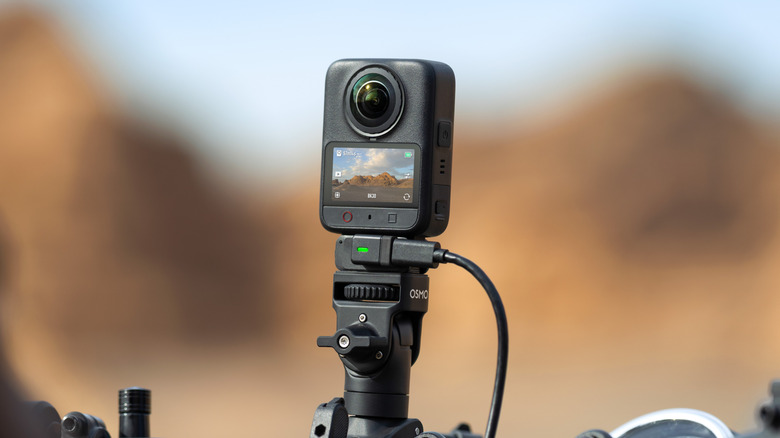
Which camera to buy obviously depends on what you shoot. If it’s mostly things like extreme sports, skiing or other adventurous activities, the best choice is obviously an action camera from GoPro, DJI or Insta360. Then, you just need to decide whether you want to shoot flat or 360 video, and whether you need a tiny or regular-sized model. The same goes for gimbal-style cameras from DJI and others.
Buying a camera for travel photography, sports photos or vlogging is a bit trickier. Here, you need to choose either a compact camera with a fixed lens or a mirrorless model that supports removable lenses.
Compact cameras tend to have smaller sensors and slightly lower quality lenses, but they’re obviously easier to carry — most will fit in a large pocket. So, if budget, convenience and portability is the most important to you, then go for a model in this category.
When you’re trying to make the highest quality videos, though, you’ll want to choose a mirrorless camera with a decent lens. With the larger sensor, you’ll be able to create nice blurred bokeh backgrounds to separate your subject from the foreground. Lenses are usually sharper as well, and you’ll be able to expand your collection over time for even more versatility.
This article originally appeared on Engadget at https://www.engadget.com/cameras/best-budget-camera-130000653.html?src=rss
French AA gaming developer and accessory manufacturer Nacon has filed for insolvency after its majority shareholder Bigben failed to make a loan repayment, the company said in a press release. "To date, the company reports available assets do not allow it to meet its liabilities," Nacon wrote. The objective with insolvency, it said, was to allow "continued operation, protect employees and maintain jobs while renegotiating with its creditors."
Nacon is behind the games Styx: Blades of Greed and was set to publish Terminator: Survivors before that title was delayed. It published Hell is Us last year to some praise, but Test Drive Unlimited Solar Crown was buggy on release and failed to find much of an audience. The company will stream its next Nacon Connect presentation on March 4, and will supposedly show off some new games and footage for previously revealed games like Endurance Motorsport Series and Cthulhu: The Cosmic Abyss.
The company also makes hardware like controllers and headsets and racing sim accessories via its Revosim brand. Those products never really caught on with mainstream gamers but did have some success with the pro gaming crowd.
With Nacon's insolvency, the future of those games and accessories is now in question. A court will decide on the company's insolvency request at a hearing in early March, but in the meantime, trading of its shares is suspended.
This article originally appeared on Engadget at https://www.engadget.com/gaming/gaming-accessory-maker-and-publisher-nacon-files-for-insolvency-104832702.html?src=rss
With its ProArt lineup, ASUS has commendably addressed a glaring hole in the PC market by targeting video editors and other creative pros. Its latest model even uses a popular camera marque in its name: the ProArt GoPro Edition PX13. It’s a true co-branding exercise, with GoPro-like styling, a dedicated GoPro hotkey, mil-spec durability for extreme outdoor users and 12 months of GoPro’s Cloud Plus Premium.
It has a lot going for it on the inside, too. The AMD Ryzen AI Max+ 395 processor offers 16 Zen 5 cores with integrated Radeon 8060S Graphics (40 cores) and AMD Ryzen AI with up to 50 NPU TOPS. It packs a relatively small but pixel-dense 13-inch 2,880 x 1,800 OLED convertible 360 touch display, 1TB of storage and an impressive 128GB of unified memory.
The rub, as you might expect with all that RAM, is the price. The ProArt GoPro Edition PX13 costs $3,000, while a version with the same processor but half the memory is $2,800. That’s high-end MacBook Pro money, and while the ProArt is a good PC creator machine, it falls short of its Apple counterpart in terms of performance and usability.
Design
In place of the ProArt P13’s smooth lines, the ProArt GoPro Edition comes with a ribbed metal back that’s designed to look like the front of a GoPro Hero 13. It also has GoPro-like ridges on the hinge and plastic above the keyboard, along with GoPro and ProArt branding. The rugged design may appeal to the extreme sports crowd, but I’d prefer something a bit sleeker.
The laptop is relatively light at 3.06 pounds, but the dedicated 200W power brick adds an extra pound of weight. Despite the small size, it offers MIL-STD 810H military-grade durability, so it can handle hot and humid conditions while surviving 500Hz vibrations and multiple four-inch drops while running. To help keep the laptop safe outside, ASUS includes a protective padded sleeve with a braided pouch to tuck a selfie stick or another accessory.
Steve Dent for Engadget
The 2,880 x 1,800 OLED touchscreen is nice but not super bright, with up to 400 nits of brightness or 500 nits in HDR mode. That’s the usual tradeoff for OLED compared to super bright MiniLED displays. However, it has deep blacks and very high color accuracy of Delta < 1 with 100 percent DCI-P3 coverage, along with Dolby Vision support, so it’s great for photo and video work or entertainment.
The ProArt is a 360-degree convertible model and ships with an ASUS Pen and Pen charger. That makes it a good option for graphic artists who want to tent the screen or fold it around to use in tablet mode for sketching or painting. The ASUS Pen works well, and though it’s not as accurate as Wacom or other dedicated pen devices, it has nice haptic feedback when you perform actions in the app.
The ProArt GoPro Edition’s keyboard is excellent, with a nice amount of travel for typing or gaming. The touchpad is also one of the better ones I’ve used on a PC thanks to the quality tactile feel. The top left of the touchpad contains ASUS’s control dial designed for jogging video footage or adjusting colors, but it’s a bit fussy and gimmicky.
For ports, you get HDMI, 3.5mm audio, USB-A 3.2 and two USB-C 4.0 with power delivery that allow up to 130 watts of charging. The laptop weirdly comes with a microSD slot to load GoPro footage straight from the camera, but it would be better to have a regular SD port and microSD adapter. As for wireless and audio, it offers Wi-Fi 7, Bluetooth 5.4 and Dolby Atmos support.
Performance
Steve Dent for Engadget
Built on TSMC’s 4nm line, the Ryzen AI Max+ 395 is AMD’s most powerful APU designed to blend performance and low power consumption. It’s married to a Radeon 8060S GPU with 40 compute units (equivalent to an NVIDIA RTX 4060, AMD says) that makes it ideal for creative chores, AI processing and gaming. This unit also comes with 128GB of unified LPDDR5X RAM that’s soldered directly to the motherboard, shared between the CPU and GPU. Given today’s RAM prices, that amount of memory no doubt contributes to the ProArt GoPro Edition’s high price.
AMD finally got its act together for video encoding and decoding. The Ryzen AI Max+’s GPU supports most 8- and 10-bit MP4 codecs, including H.264, H.265, VP9 and AV1. That means you can play back nearly all MP4 or Quicktime camera video files in real time, including the 8K H.265 files recorded by a GoPro Hero 13. At the same time, the large number of cores and threads (16 and 32) helps the ProArt GoPro Edition render certain VFX and do color adjustments quickly. The 1TB of NVMe SSD storage is limited to PCIe 4.0, but it’s relatively speedy with 6.55 GB/s read and 5.86 GB/s write speeds — easily fast enough for 8K video playback.
All of that made video work a breeze in DaVinci Resolve 20, Adobe Premiere Pro or GoPro’s Player that can be activated by a special hotkey on the ASUS laptop. Actions like color correction work in real time as well, and 4K H.264 exports can also be performed quickly.
That said, some functions like OpenFX and stabilization would work better with a more powerful discrete GPU. Also, unlike my MacBook Pro, the ProArt GoPro Edition’s fans need to engage frequently under intense workloads, creating a lot of noise and killing the battery quickly if the unit isn’t plugged in.
Steve Dent for Engadget
For other apps, including Photoshop, Illustrator and Lightroom Classic, the ASUS ProArt is ideal. It’s very responsive and the touch display and pen support fine masking or drawing work, something you can’t do on a MacBook Pro.
The ProArt also handles synthetic benchmarks well for a PC with an integrated GPU. The single/multi Geekbench 6 CPU score of 2,219/19,088 shows the benefit of 16 processor cores. The 93,108 Geekbench 6 GPU mark isn’t that far behind Acer’s NVIDIA RTX 5070-equipped Predator Titan 14 AI. Geekbench AI scores were also up there with the best laptops. However, Handbrake video encoding was slower than several MacBook M4 laptops I’ve tested.
For gaming, it had some of the higher laptop scores I’ve seen on several 3DMark tests (Wildlife Extreme and Port Royal Ray Tracing). It also did pretty darn well on Cyberpunk 2077, hitting 82 fps at 1080p and 60 fps at 1440p in Ultra mode. Considering the machine’s small size, those framerates are really good. However, the laptop is held back gaming-wise by the OLED display that tops out at 500 nits and just 60Hz.
A big benefit of the 128GB of fast unified memory is that you can run AI models locally for improved privacy. While the ProArt GoPro Edition normally allocates 64GB of memory to the CPU and splits the rest between the CPU and iGPU, you can dedicate up to 96GB of memory to the GPU for extra large AI applications via the MyASUS app.
Another plus of this APU is the battery life. The ProArt GoPro Edition lasted a solid 11:31 hours on the PCMark 10 Modern Office battery rundown test, besting all rivals with similar performance. That tells me that AMD is narrowing the performance-per-watt gap with Apple’s silicon to improve gaming and content creation for PCs on battery power alone.
Wrap-up
Steve Dent for Engadget
ASUS is one of the few PC manufacturers trying to compete with Apple in the creator market, and with the ProArt GoPro Edition laptop, it has largely succeeded. This model offers excellent performance and battery life, a huge amount of memory, a very nice OLED HDR display, a nice range of ports and an excellent keyboard and trackpad.
It easily handled my typical video and photo editing chores, even on battery power alone, and the included GoPro features like the Storyblocks cloud storage are a nice option for action cam users. The convertible configuration and touchscreen with pen option are also useful to artists and photo editors.
However, this laptop is not cheap at $3,000, which is the same price as a high-end 16-inch MacBook Pro M4 Pro. The latter offers superior battery life, better overall performance on apps like DaVinci Resolve and a far better macOS user experience than the hot mess that is currently Windows 11. However, if you want a Windows PC with a touchscreen, I think the ASUS ProArt GoPro Edition laptop is the best creator model you can get right now.
This article originally appeared on Engadget at https://www.engadget.com/computing/laptops/asus-proart-gopro-edition-px13-review-an-incredible-if-pricy-windows-creator-laptop-170016800.html?src=rss
Ahead of a full release at Mobile World Conference (MWC), Honor has teased the MagicPad 4 that it calls the world's thinnest Android tablet. The new model is just 4.8mm thick (not counting that camera bump), a full millimeter thinner than the MagicPad 3 and slightly less than the 5.1mm iPad Pro and Samsung Galaxy Tab S11, the company revealed.
On top of being thinner, the MagicPad 4 has a new 12.3-inch 165Hz OLED display. While slightly smaller than before, it should be considerably better than the LCD display on the previous model. The new model weighs 145 grams less than before at 450g thanks to that screen and the slightly smaller 10,100 mAh battery (with a 66W fast charger in the box).
The new tablet is powered by Qualcomm's Snapdragon 8 Gen 5 chipset and comes with up to 16GB of RAM and 512GB of storage. It's equipped with 13MP rear and 9MP front cameras, along with eight speakers for spatial audio. The MagicPad 4 will run MagicOS 10, Honor's flavor of Android 16. There's no word on pricing or availability yet, but we'll likely learn more at the company's press conference on Sunday — along with the company's weird robot revealed yesterday.
This article originally appeared on Engadget at https://www.engadget.com/mobile/tablets/honor-says-its-48mm-thick-magicpad-4-is-the-worlds-slimmest-android-tablet-114346615.html?src=rss
Now that Apple has started blocking users under 18 in certain regions from downloading apps, the company has introduced new age verification tools. Those will help developers "meet their age assurance obligations under upcoming US and regional laws, including in Brazil, Australia, Singapore, Utah and Louisiana," the company said in a news release on its Developer site.
As of February 24, 2026, users in Australia, Brazil and Singapore won't be able to download apps rated 18+ unless their age is confirmed through "reasonable methods." Apple noted that any apps distributed in Brazil that are declared to contain loot boxes will be updated to 18+. While the App Store can perform those checks automatically, "developers may have separate obligations to independently confirm that their users are adults," Apple wrote. For that, developers can employ the company's Declared Age Range API (on iOS, iPadOS and macOS) to get "helpful signals" about a user's age.
In Utah as of May 6, 2026 and Louisiana on July 1, 2026, "age categories will be shared with the developer's app when requested through the Declared Age Range API." That API will also provide "new signals," like whether age-related regulatory requirements apply to the user and if the user must share their age range. "The API will also let you know if you need to get a parent or guardian's permission for significant app updates for a child," Apple says.
Under Utah's new law, users must be over 18 to make a new account with an app store, while underage uses will need to link their account to a parent's in order to get permission to use certain apps. Louisiana and Texas also passed similar laws and California plans to enact age-based rules for app stores in 2027.
Those rules are designed to protect children from predators, financial harm and other problems. However, critics have described the laws as blunt tools that harm privacy and internet anonymity. "A poorly designed system might store this personal data, and even correlate it to the online content that we look at," the Electronic Frontier Foundation notes. "In the hands of an adversary, and cross-referenced to other readily available information, this information can expose intimate details about us."
This article originally appeared on Engadget at https://www.engadget.com/apps/apple-introduces-age-verification-for-apps-in-utah-louisiana-and-australia-080855449.html?src=rss