What does it take to build a home in the most unforgiving environment known to humanity, space? The International Space Station (ISS), a marvel of modern engineering, answers this question with its very existence. Orbiting 400 kilometers above Earth, this floating laboratory was pieced together module by module over two decades, defying gravity and geopolitical […]
What if you could build anything, literally anything, while automating the tedious parts and fine-tuning every detail to perfection? Enter Gemini 3, a new platform that doesn’t just promise innovation but delivers it with precision. Imagine designing an AI system that seamlessly switches between lightning-fast efficiency for simple tasks and razor-sharp reasoning for complex challenges. […]
The iPhone 17e, anticipated for release in early 2026, is poised to make a significant impact on the mid-range smartphone market. With a starting price of $599, Apple is offering a device that blends premium features with affordability, aiming to attract budget-conscious consumers while challenging Android’s dominance in this segment. By incorporating advanced technology and […]
What if you could design a stunning website, animate complex graphics, or even generate entire user interfaces, all with just a few clicks or a simple text prompt? The world of UX/UI design is experiencing a seismic shift, thanks to the rise of AI-powered tools that are transforming how creators work. These tools don’t just […]
The M4 iPad Air introduces a series of meaningful enhancements while retaining its familiar design, making sure it remains a versatile option for a wide range of users. With upgrades in storage, connectivity, and performance, this mid-range tablet continues to strike a balance between innovation and accessibility. However, the much-anticipated transition to OLED displays is […]
What if the hours you spent wrestling with spreadsheets could be reduced to mere minutes? Imagine describing your ideal financial dashboard or project timeline in plain language and watching it materialize before your eyes, complete with formulas, visualizations, and structured workflows. This isn’t a glimpse into the distant future; it’s the fantastic power of Microsoft’s […]
The Samsung Galaxy S26 Ultra is coming in early 2026, and it is expected to make a significant impact in the competitive flagship smartphone market. Some rumors suggest a global shift to Qualcomm’s Snapdragon 8 Elite Gen 5 chipset. Samsung could have moved beyond its traditional Exynos vs. Snapdragon divide. This strategic decision, combined with […]
Flagship smartphones represent the pinnacle of modern technology, offering innovative features and refined user experiences. The OnePlus 15 and iPhone 17 Pro Max are two standout contenders in this category, each catering to distinct user preferences. After a month of use, these devices reveal their strengths and limitations across key areas such as price, design, […]
Multi-function bedside consolidation, including USB-C charger
Circadian-friendly lighting system
QuietMark certified for sleep
Simple maintenance with long filter life
CONS:
Single color temperature range might not fit some preferences
Premium price for small coverage area
RATINGS:
AESTHETICS
ERGONOMICS
PERFORMANCE
SUSTAINABILITY / REPAIRABILITY
VALUE FOR MONEY
EDITOR'S QUOTE:
The Blueair Mini Restful Sunrise Clock Air Purifier quietly merges clean air with gentle dawn into one compact, sleep-focused design object.
Nightstands have quietly become cluttered charging stations over the past decade, with phones serving as alarms, small purifiers humming in corners, and separate wake-up lights trying to undo the damage of jarring ringtones at six in the morning. Sleep has turned into a wellness habit people track and optimize, but the tools meant to support it often feel scattered and visually chaotic.
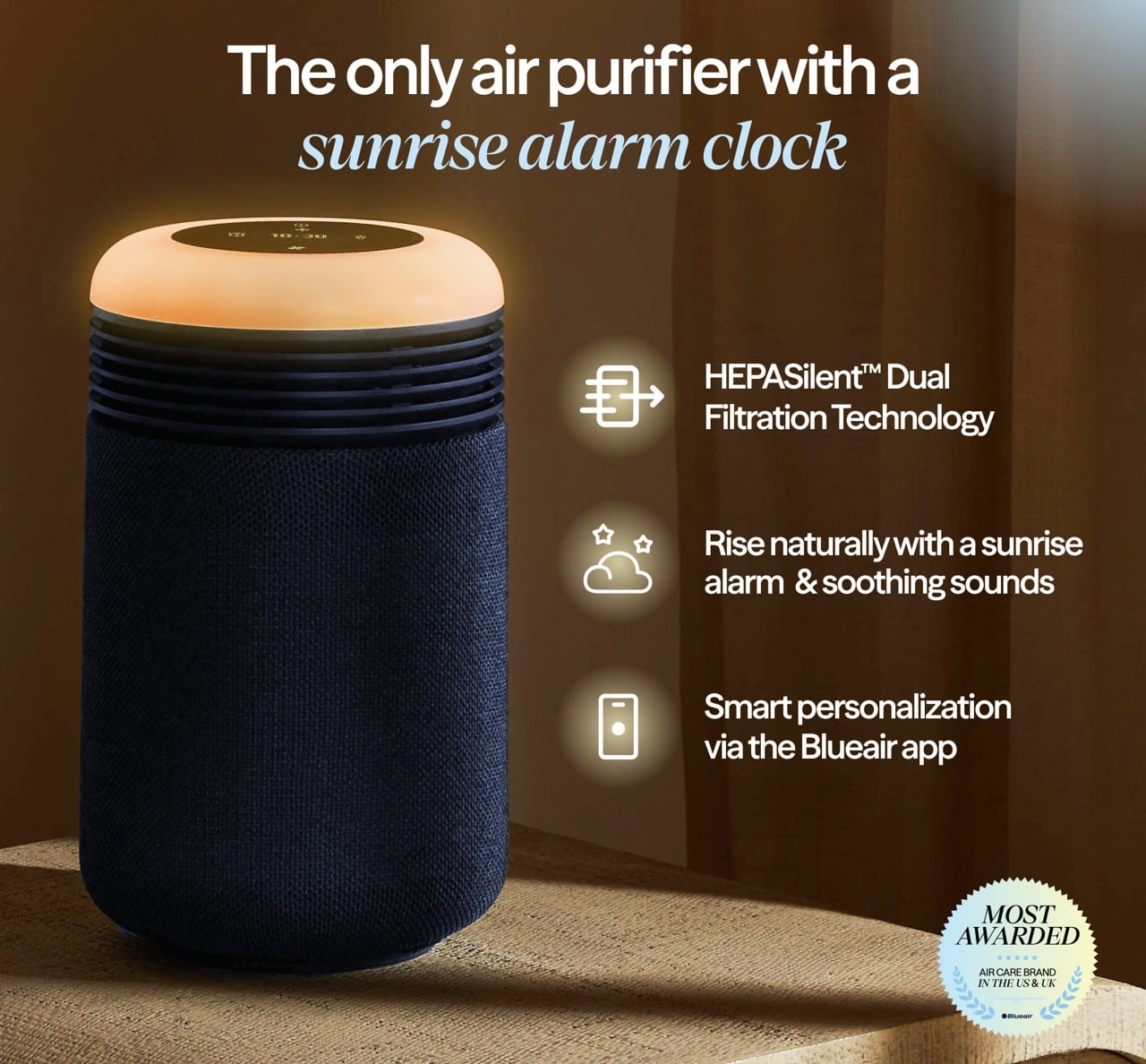
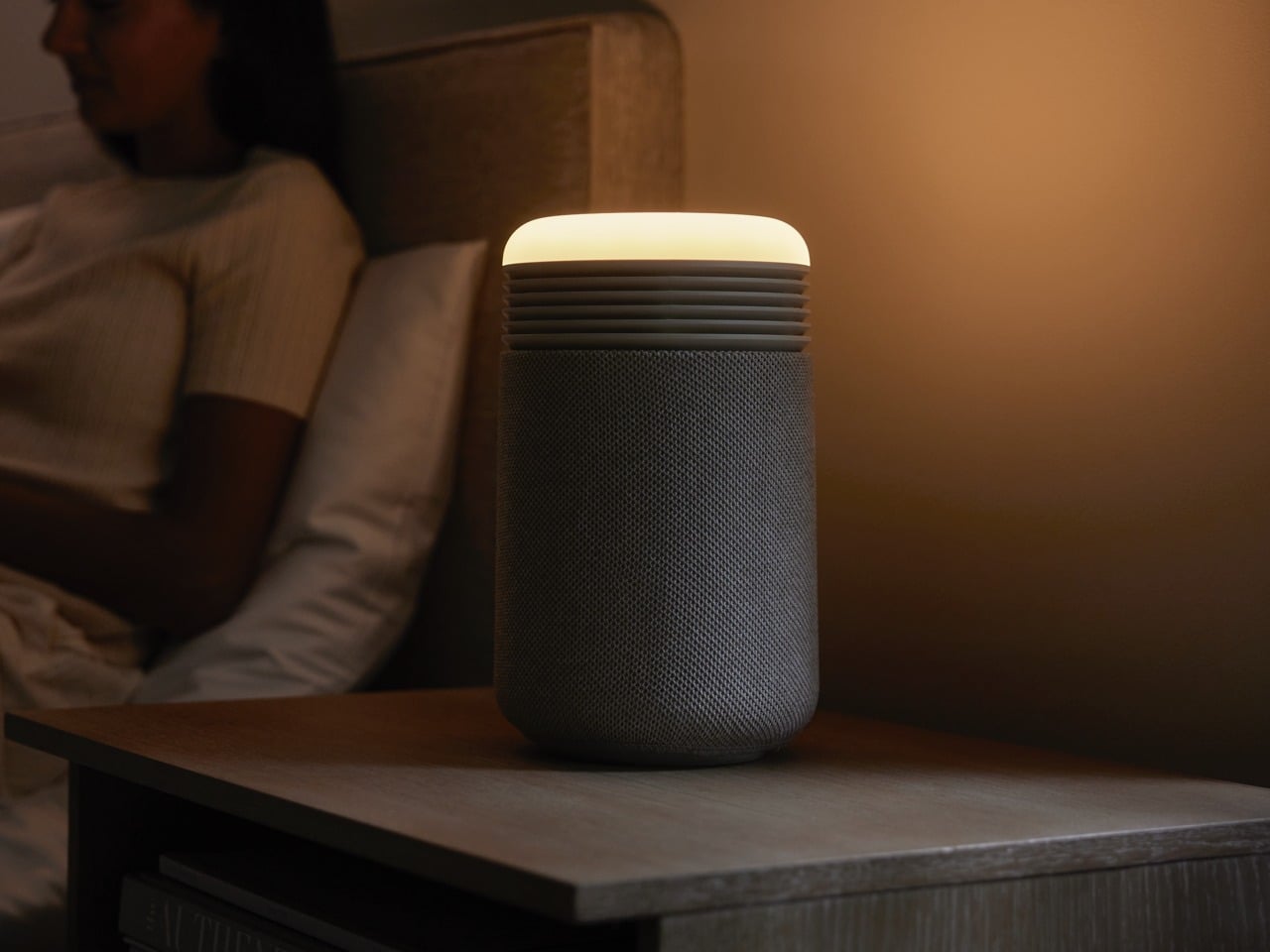
The Blueair Mini Restful() Sunrise Clock Air Purifier is a compact attempt to pull some of those tools into one object. It is a small bedside cylinder that cleans the air, glows like a sunrise to wake you gently, plays soft sounds, shows the time, and charges your phone, all while looking more like a design piece than some cold, drab piece of appliance. But does this striking appliance work as advertised? We put it beside our comfy bed to find out.
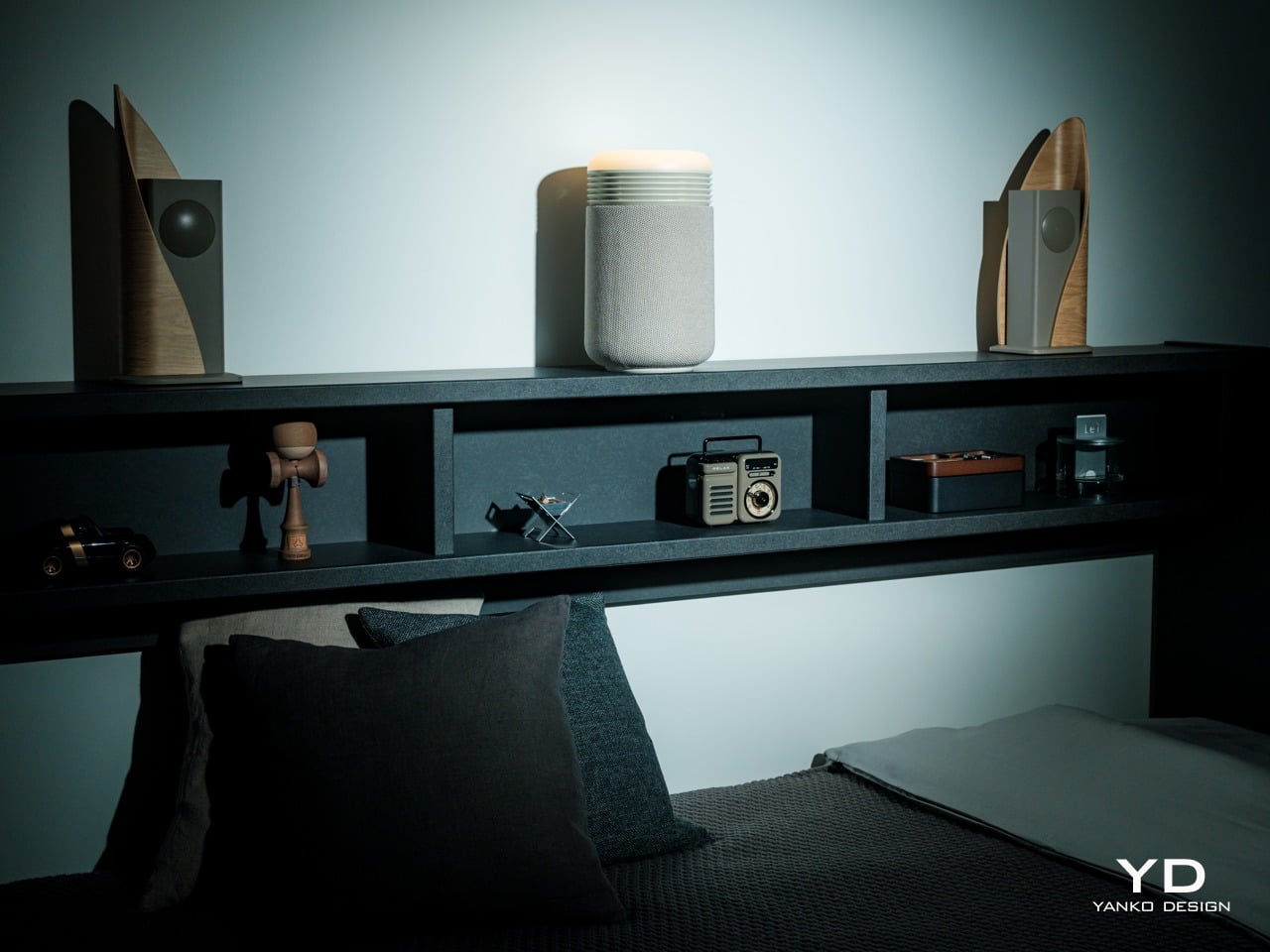
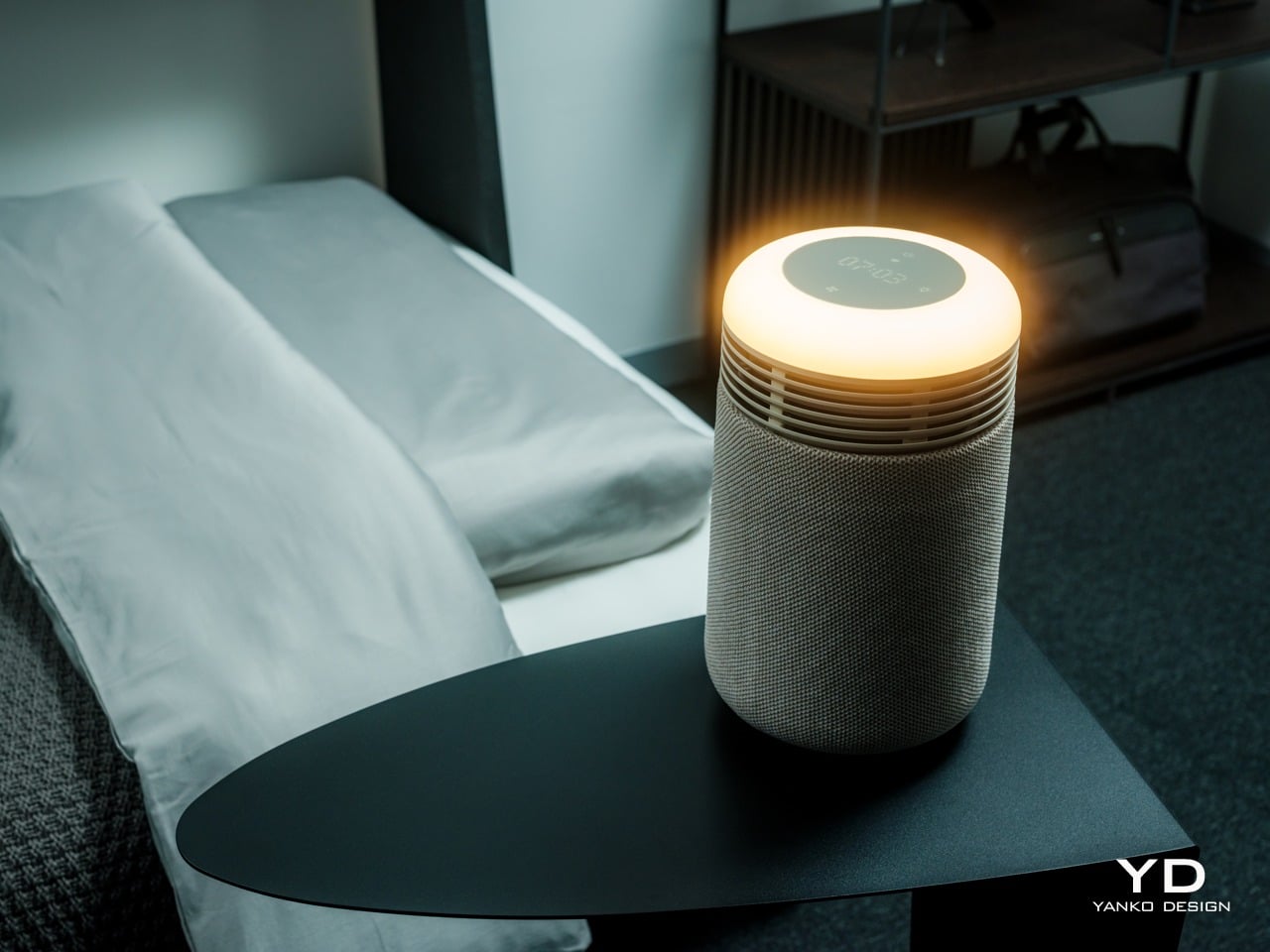
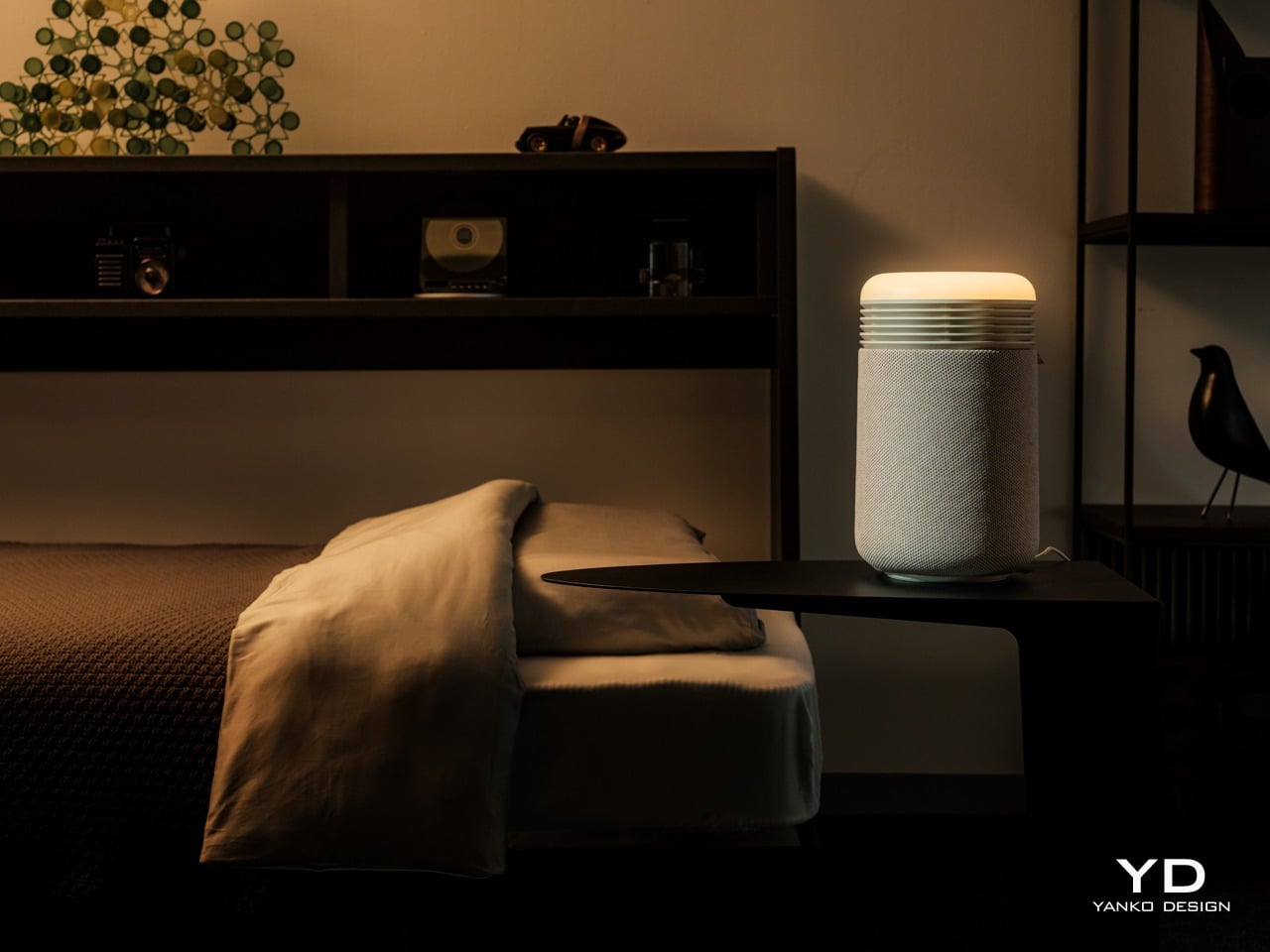
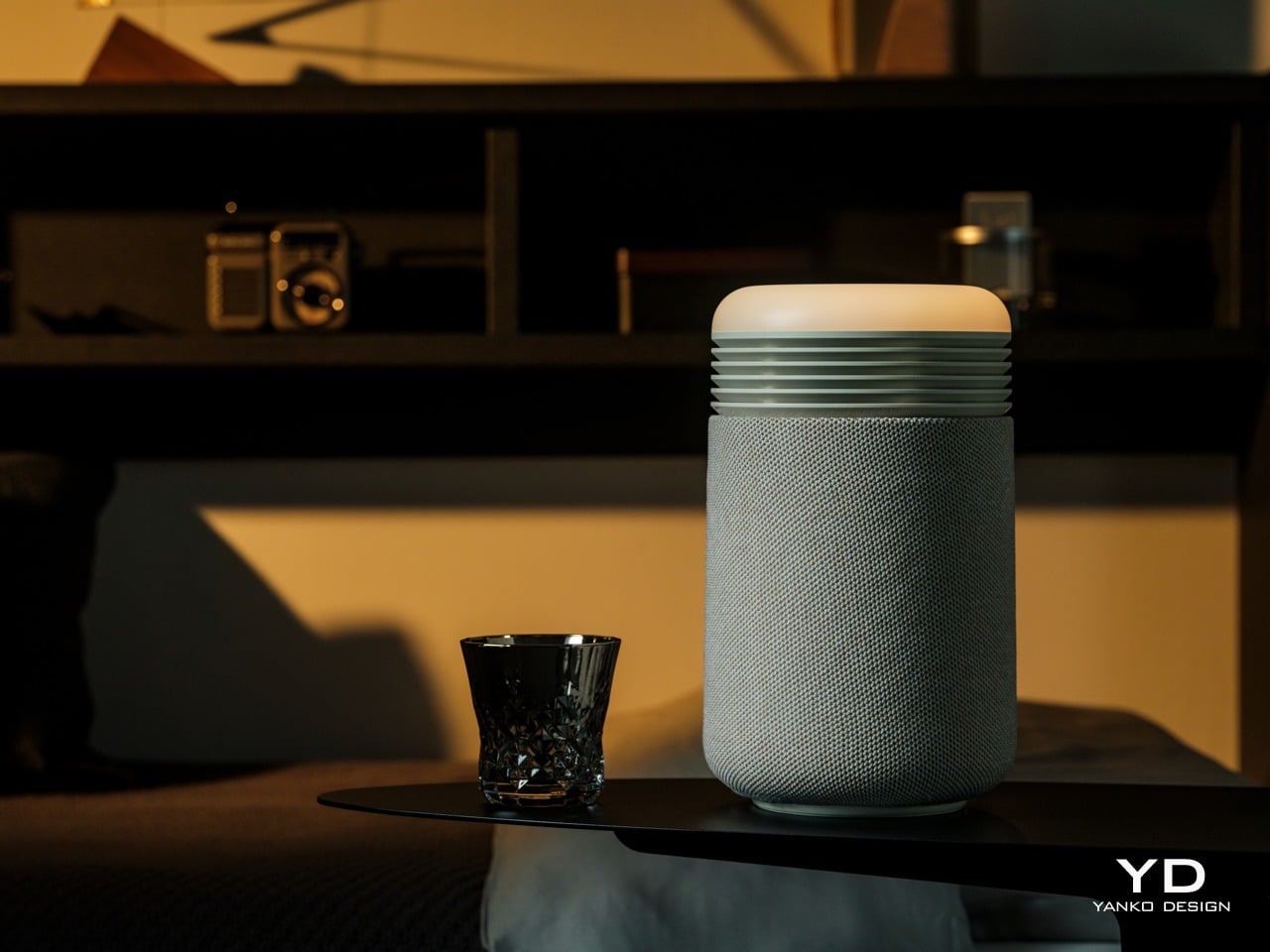
The Mini Restful is a short cylinder about eleven inches tall, wrapped in premium fabric with a smooth top disc. It looks closer to a smart speaker or a small bedside lamp than a traditional purifier, which makes it feel natural sitting on a nightstand. The proportions are deliberately compact and soft, with rounded edges and no visible vents.
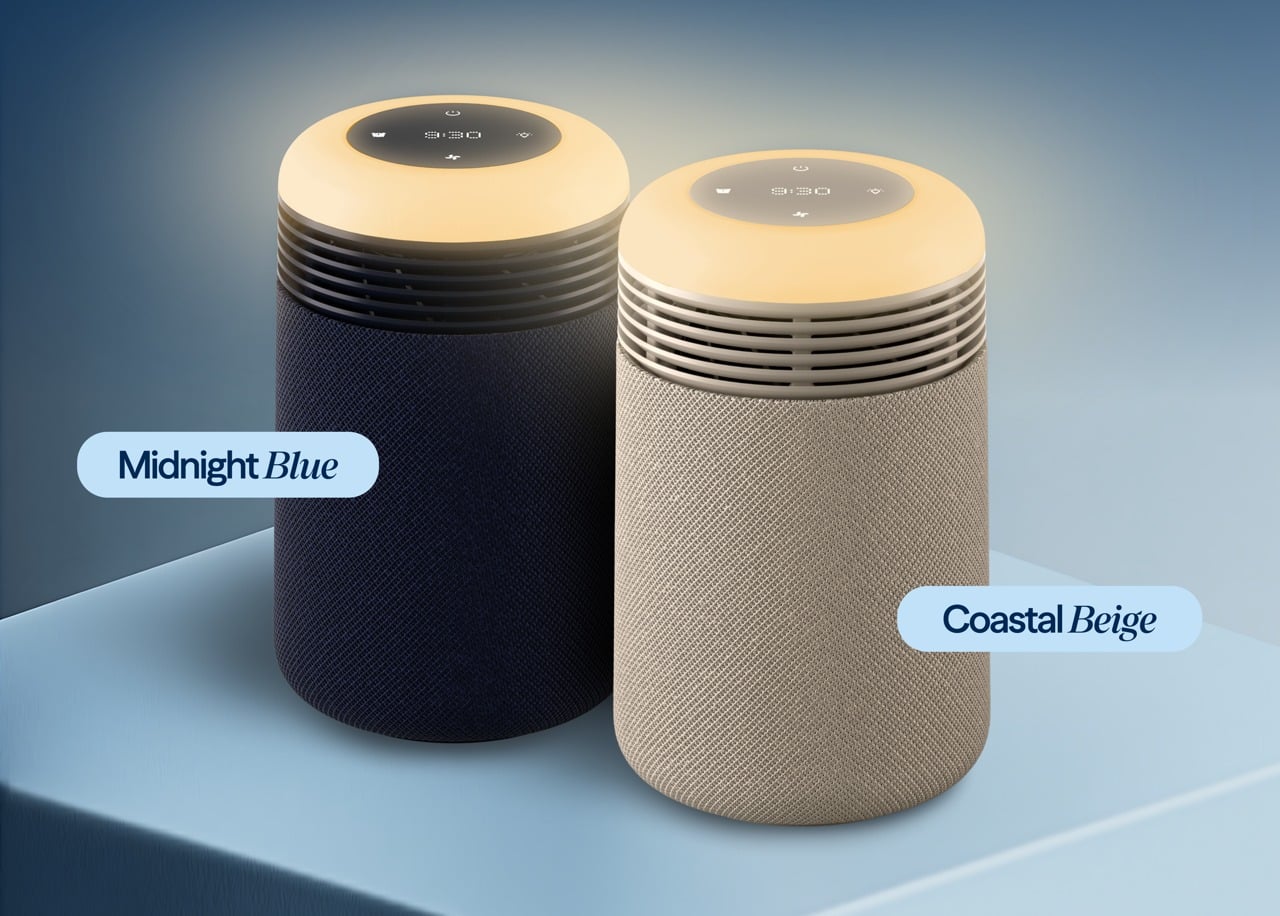
Two color options are available: Coastal Beige and Midnight Blue. Coastal Beige has a light oatmeal fabric with a warm off white top, which reads well in rooms with light wood furniture and neutral bedding. Midnight Blue uses a deep navy fabric, making it comfortable in darker, moodier bedrooms with richer tones.
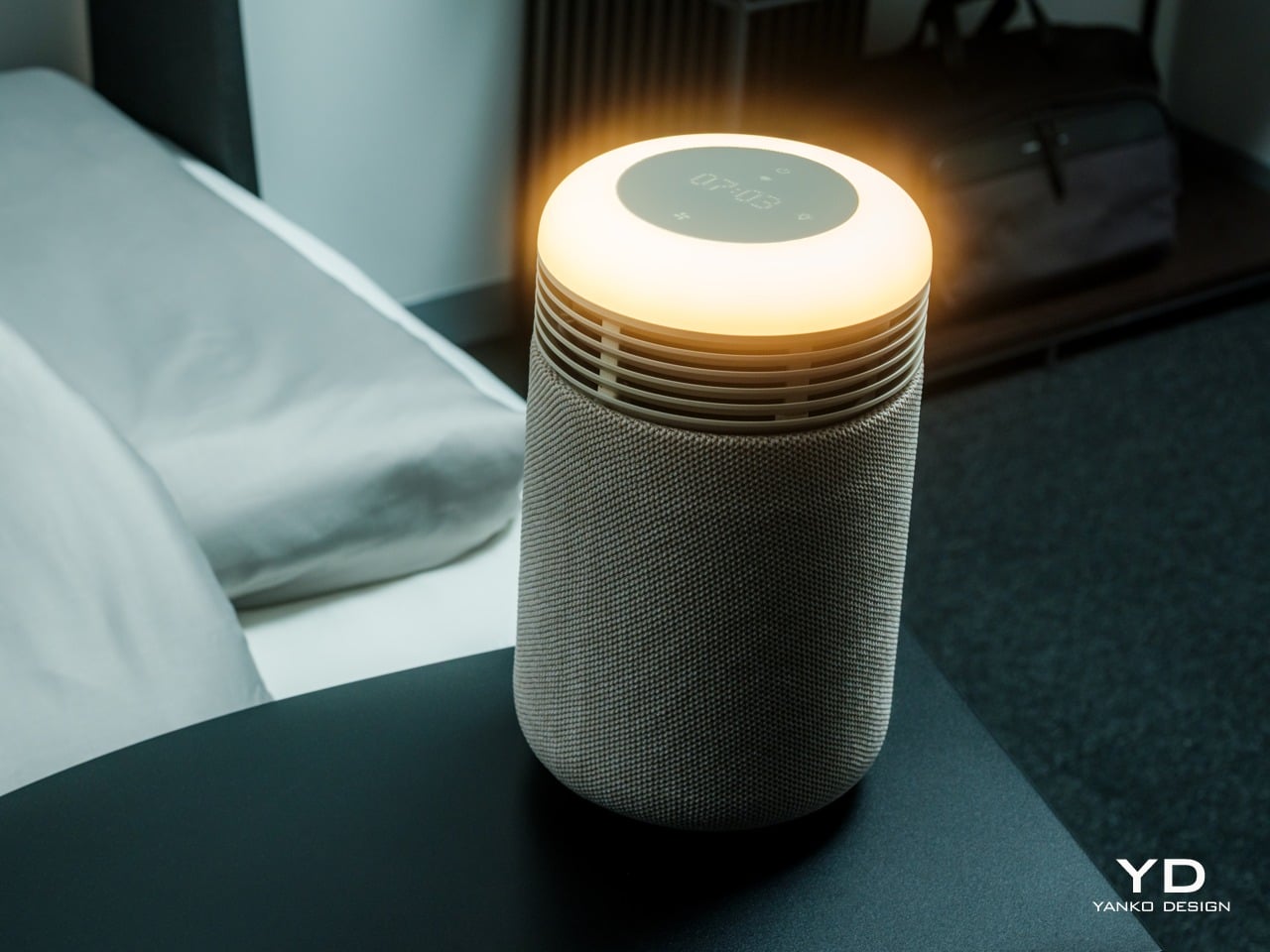
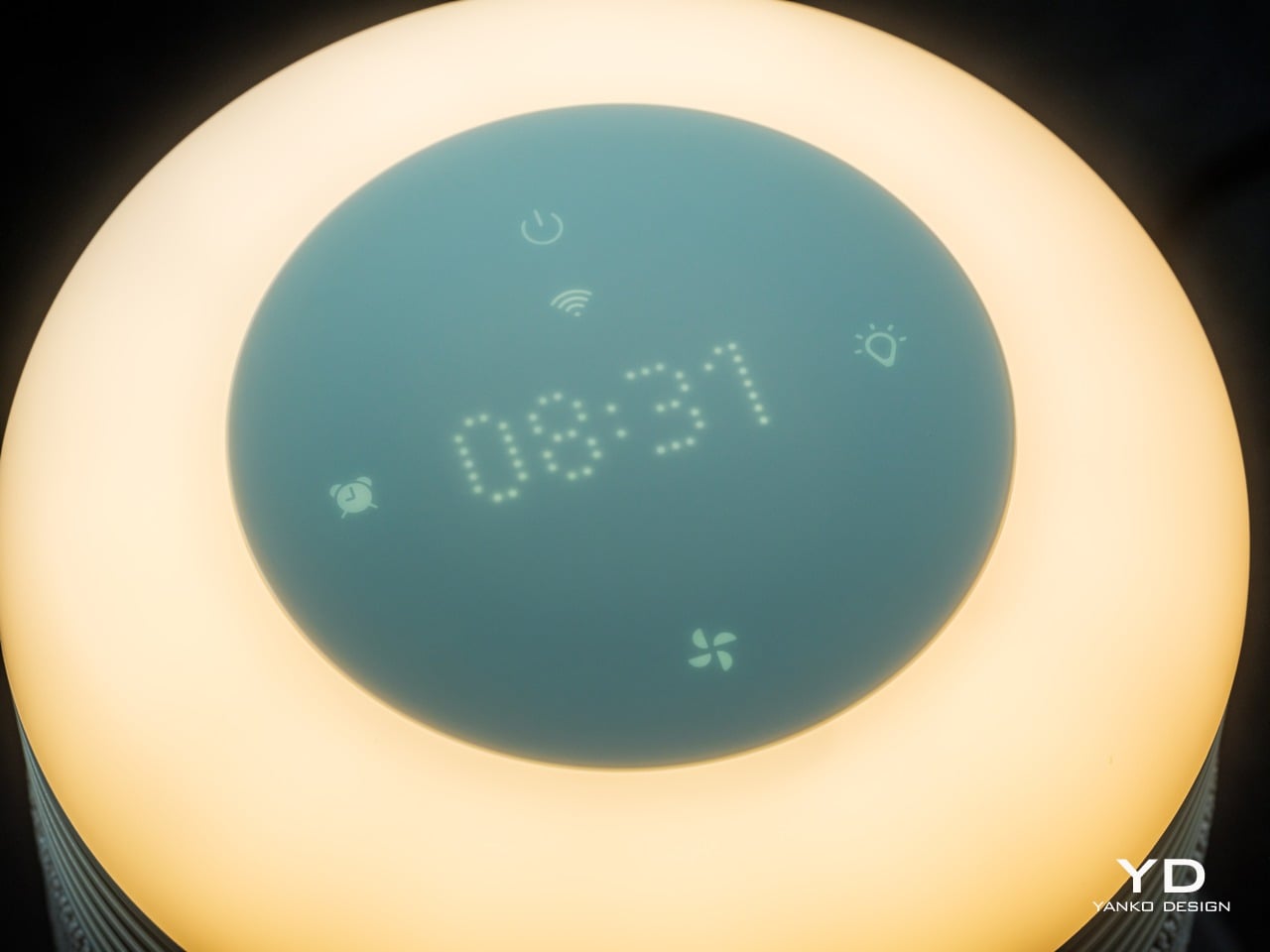
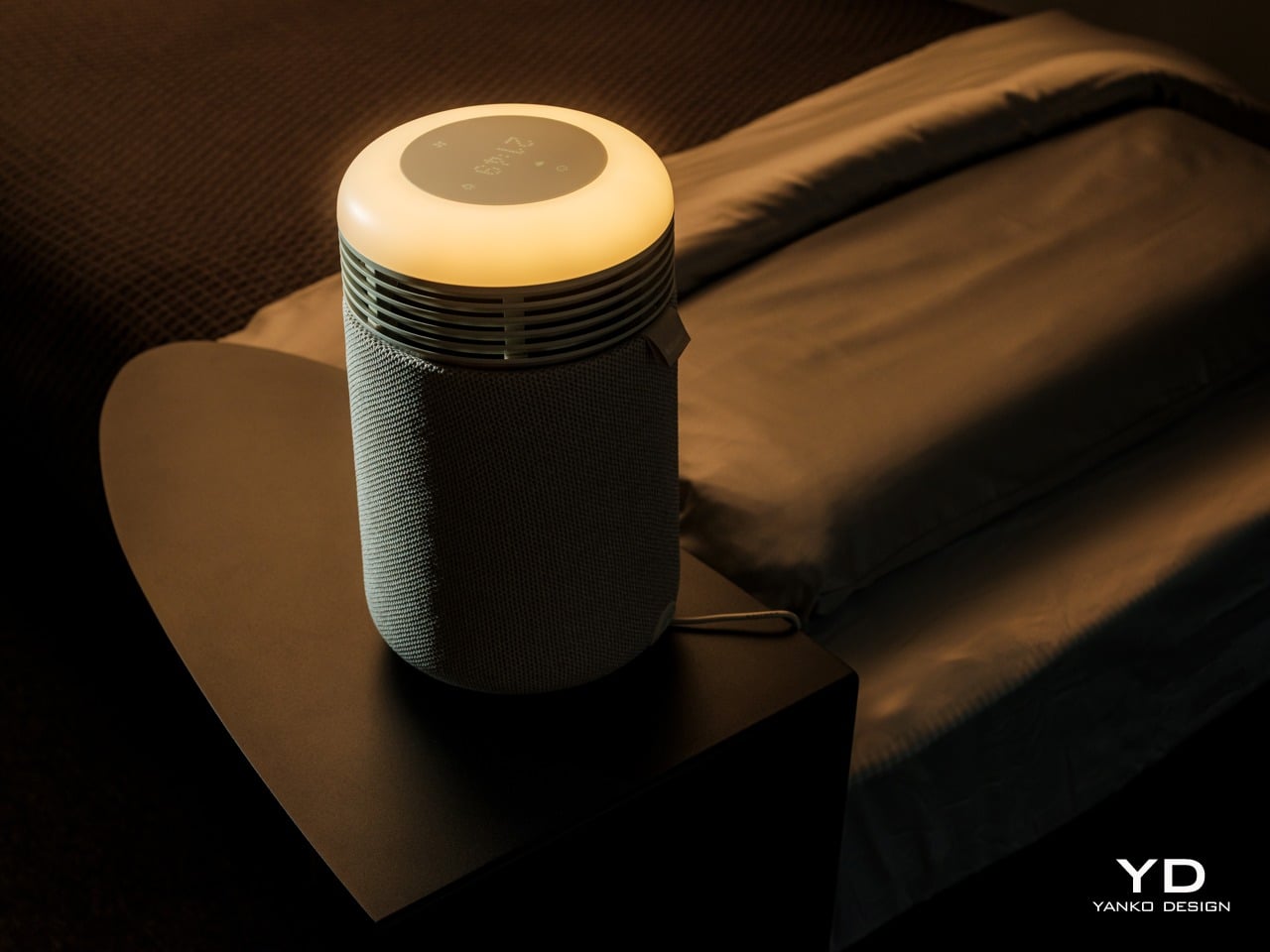
The top surface is where the aesthetic gets interesting. A circular user interface houses a dot matrix clock and touch controls, surrounded by a ring that glows when the wake-up light or mood lighting is active. When the sunrise alarm is running, the top looks like a tiny dawn, casting a warm halo onto the bedside table and wall.
It is much more pleasant than the blinking LEDs most appliances default to, and it doubles the device’s role as both a functional purifier and a kind of ambient light. The glow feels intentional, like a small lamp designed to support sleep rather than disrupt it, which is a significant shift from typical purifier status lights.
The fabric wrap is a key design choice. It softens the entire object and makes it read as part of the room’s soft furnishings rather than a hard plastic box. The textile has a fine woven texture that feels closer to upholstery than speaker mesh, and it helps the Mini Restful blend into spaces where you want calm rather than tech on display. The overall look avoids the glossy plastics and aggressive styling that make a lot of gadgets feel cheap or temporary.
Ergonomics
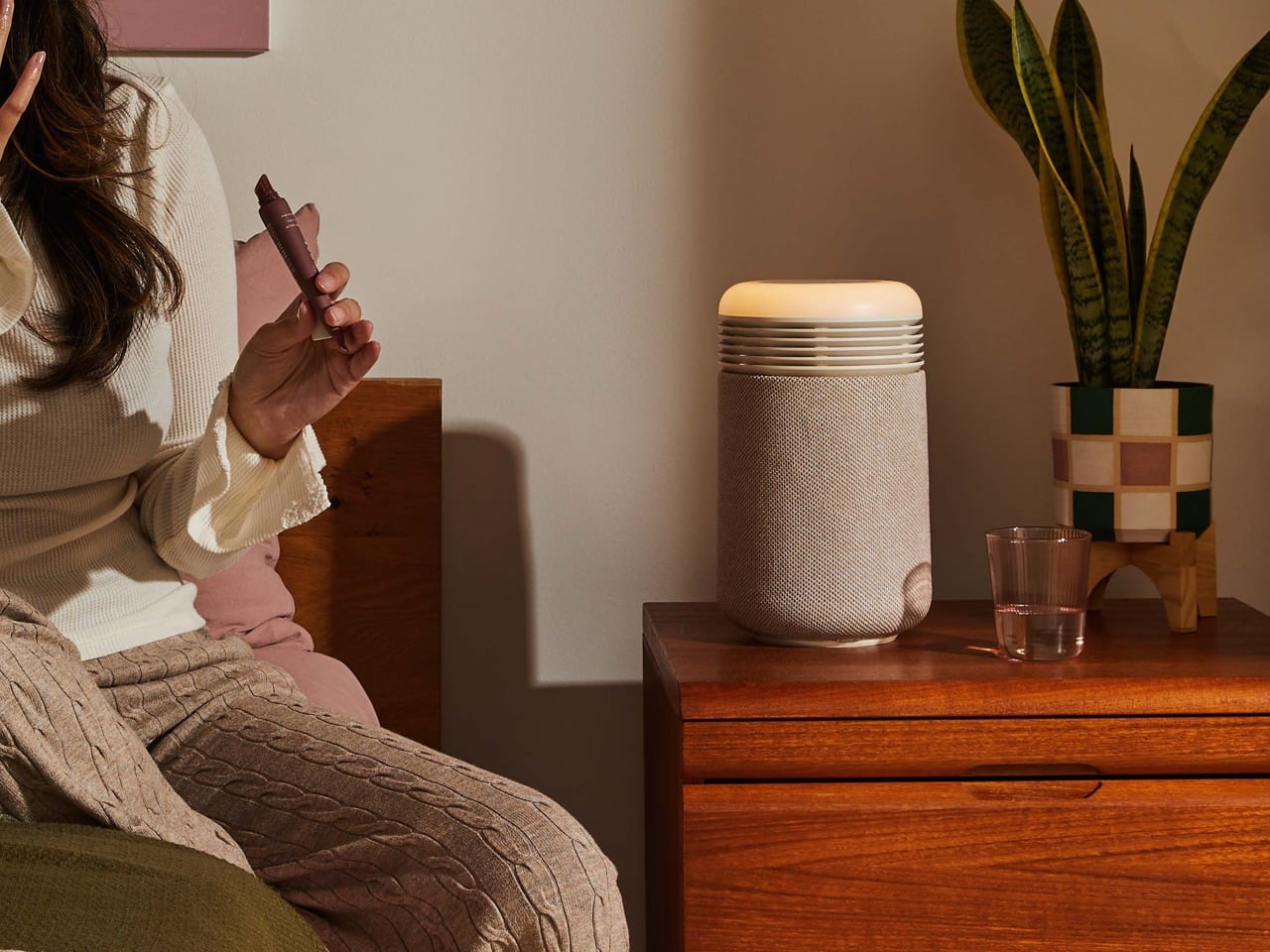
At around two and a half pounds out of the box, the Mini Restful is genuinely portable. You can pick it up with one hand and move it between rooms or reposition it without any strain. The small footprint, roughly six and a half inches in diameter, means it takes up about as much space as a medium-sized speaker or a chunky candle.
The cylindrical shape means you can place it close to the bed without worrying about sharp corners poking you if you brush against it in the dark. The air intake and outlet are all around the body, so it does not need a lot of clearance to work effectively, which is helpful in tight bedrooms or smaller apartments where every inch of surface area counts.
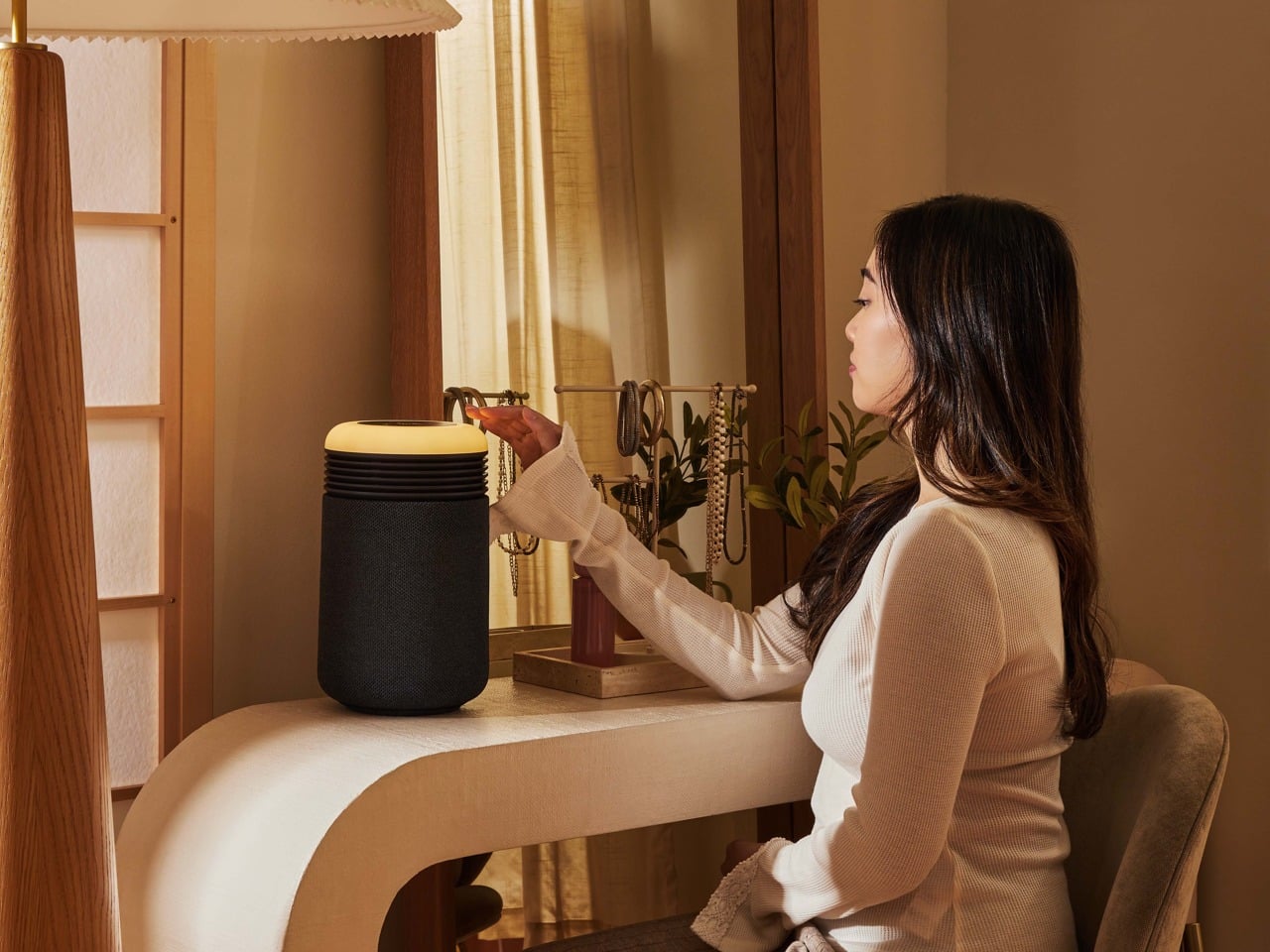
The top controls and clock are designed for quick, low-effort interaction. The dot matrix display is readable without being glaring, and the surrounding touch icons handle basic tasks like setting alarms, adjusting light brightness, and likely fan speed. You can do the essentials without grabbing your phone, which is helpful if you are trying to reduce screen time before bed.
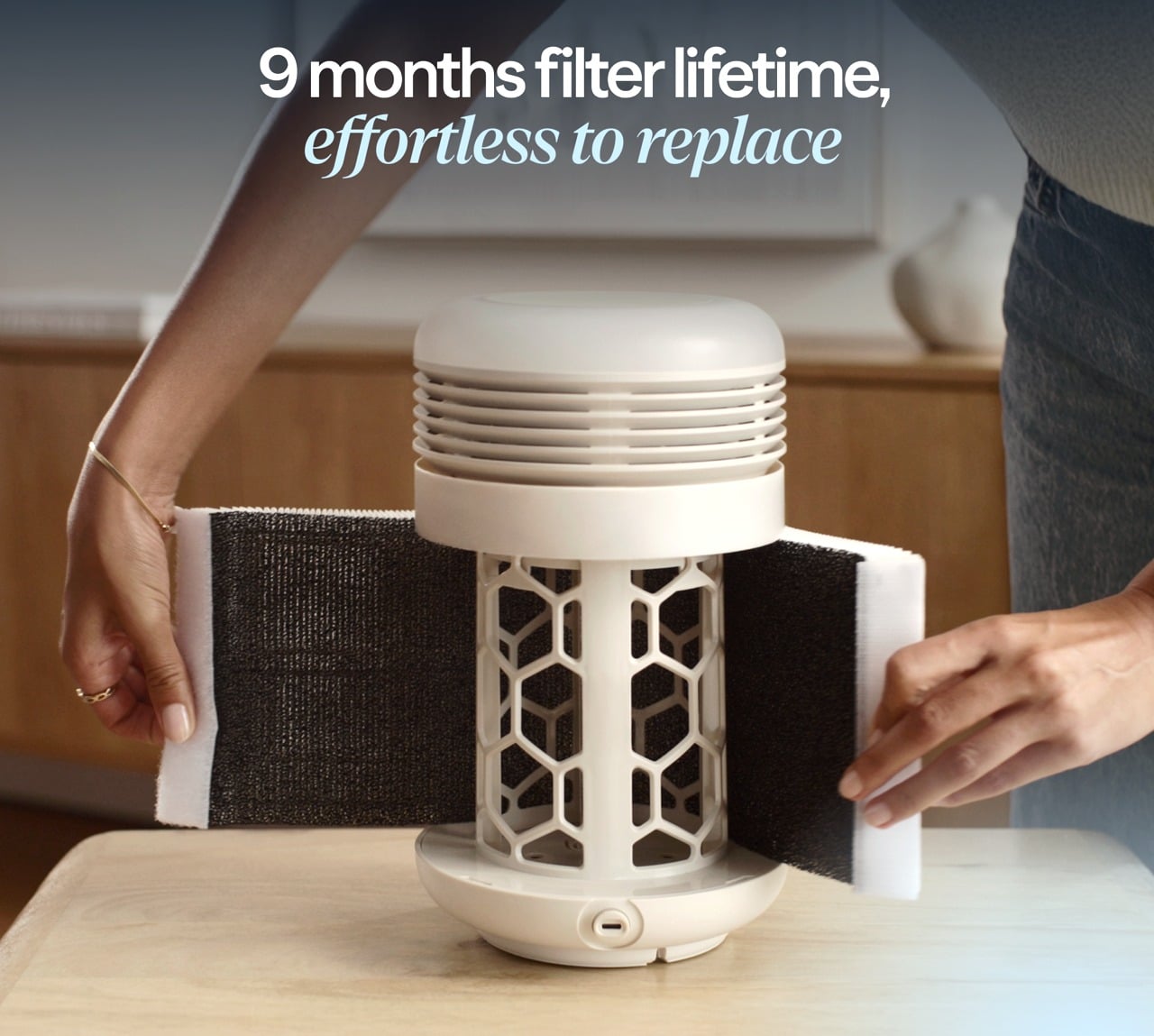
Filter access is straightforward. The fabric sleeve slips off, and the inner filter is a wraparound design with a simple closure, so replacing it does not require tools or wrestling with complicated cartridges. This kind of maintenance design makes it more likely that people will actually change the filter when it is due rather than giving up and buying a new device.
Performance
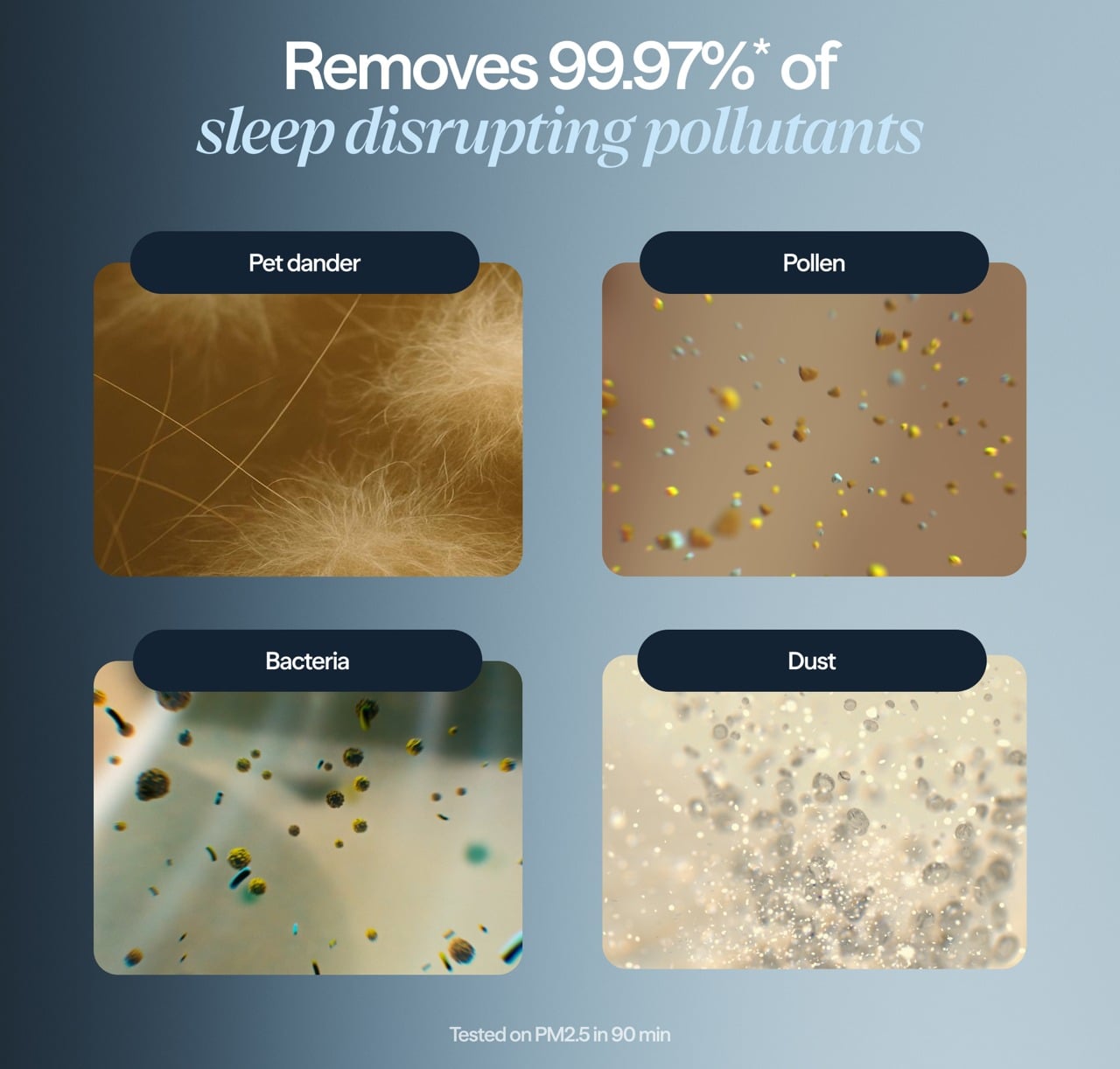
Inside the cylinder is a HEPASilent filter system that pulls in air from around the base, traps fine particles like dust, pollen, and smoke, and pushes cleaner air back out. The filtration is sized for small spaces, specifically bedrooms up to around one hundred forty square feet, which aligns with typical master bedrooms or nurseries. It is meant to clean the zone where you actually sleep.
The idea of a fresh air dome around the bed is central to how Blueair frames this product. Placing the Mini Restful on a nightstand or dresser top helps keep the immediate breathing zone cleaner, which can be especially helpful for people who deal with nighttime congestion, seasonal allergies, or asthma. The device cycles the air in a small bedroom multiple times per hour.
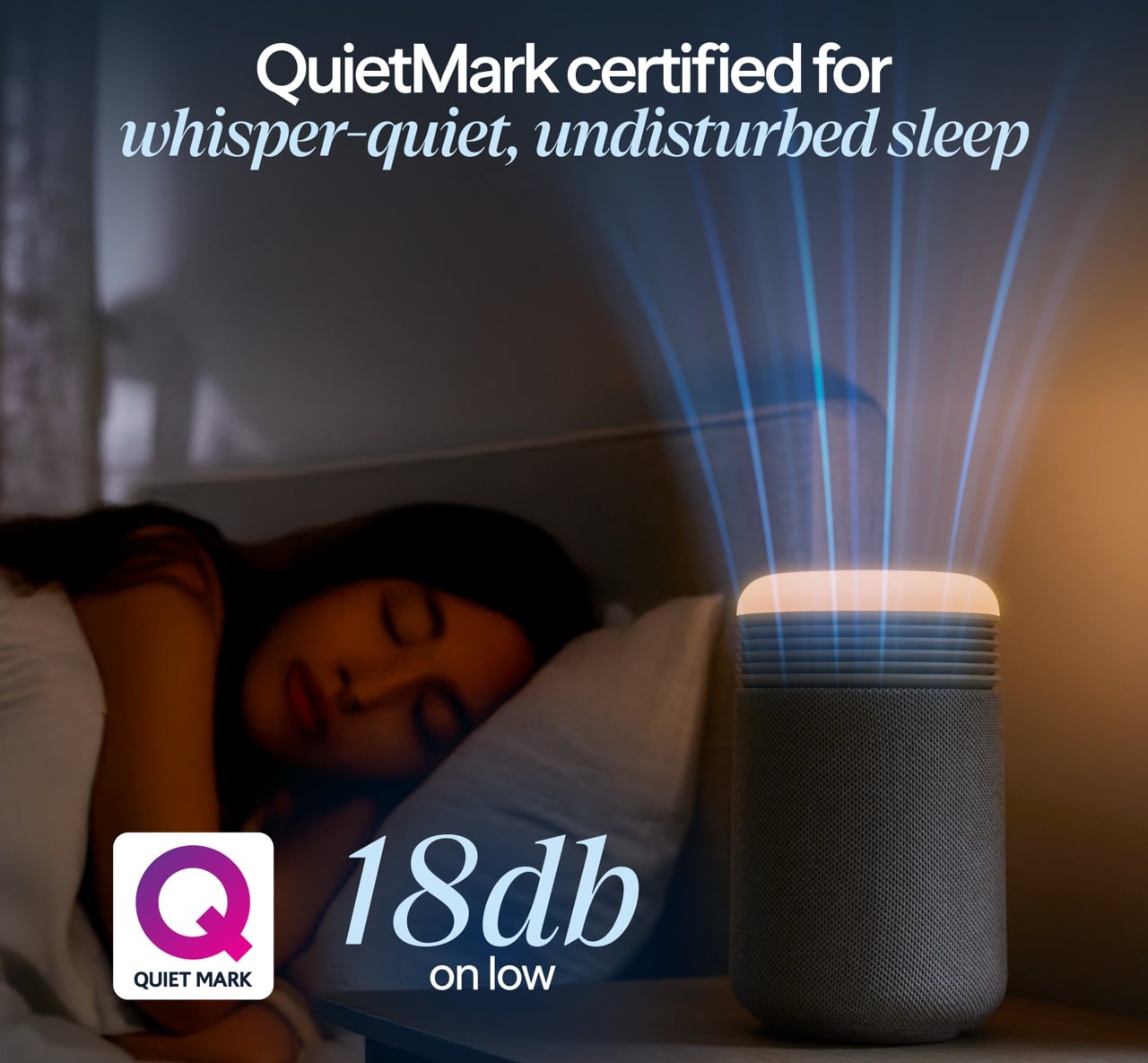
Noise performance is critical for a sleep device, and the Mini Restful is designed to be quiet. On its lowest settings, it is softer than most fans, more like a gentle whoosh than a mechanical hum. Higher speeds are audibly stronger when the device is working harder to clear the air, but the ability to drop back into whisper-quiet operation at night keeps it compatible with light sleepers.
The QuietMark certification adds third-party validation that the noise level is genuinely sleep-friendly, tested and approved by independent acoustic consultants. This matters because many purifiers claim to be quiet but still produce enough mechanical sound to disturb rest, while the Mini Restful can fade into the background entirely on low settings.
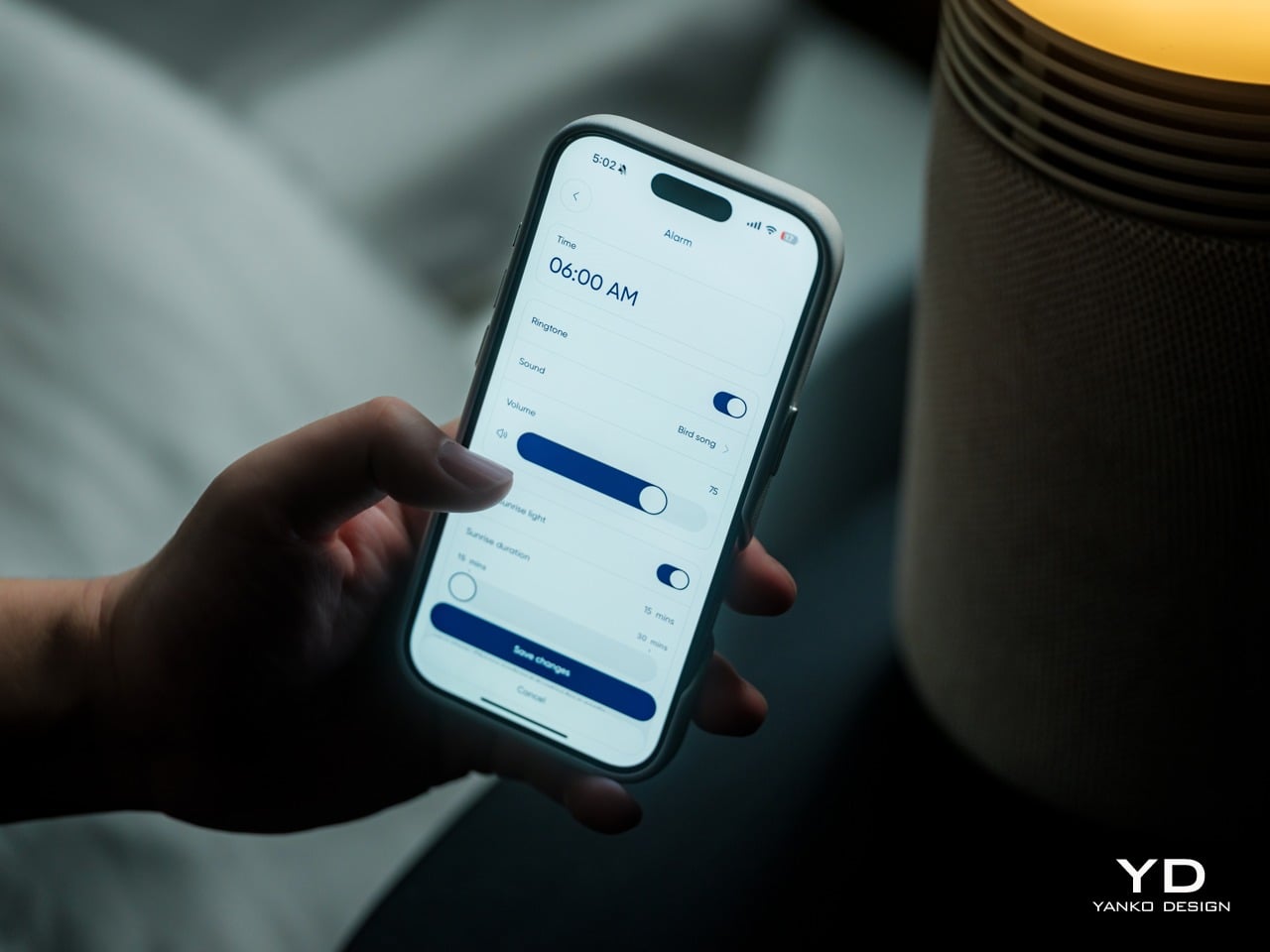
The wake-up light is where the Mini Restful starts to feel different from a standard purifier. You can set a time in the Blueair app, and then, in the fifteen to thirty minutes leading up to that time, the top light slowly brightens from a very dim glow to a warm, room-filling light. The color temperature stays in the warm range, mimicking the quality of a natural sunrise.
This gradual brightening is designed to help your body wake up more naturally than a sudden alarm. The light acts as a cue that morning is approaching, which can make the transition from sleep to wakefulness feel gentler and less abrupt, especially during darker winter months when natural light comes late or not at all.
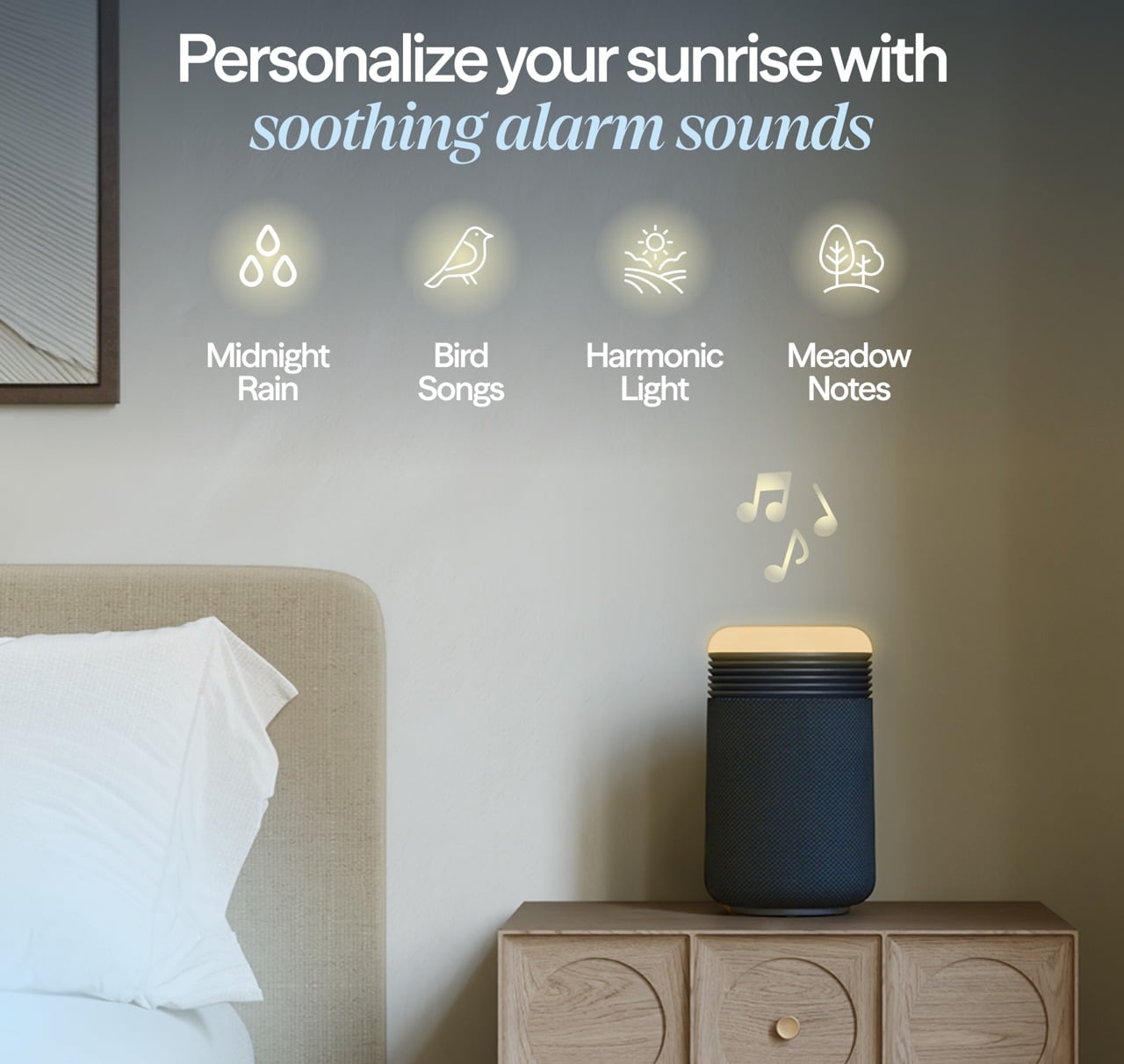
If you want more than light, you can add sound. The app includes a library of gentle wake-up tones and nature sounds, and you can choose one to start playing after the light has reached full brightness. The combination of light and sound is meant to guide you from deep sleep to wakefulness in a calmer way than a phone alarm blaring suddenly at full volume.
The same light that wakes you up can also help you wind down. In the evening, you can set the top to a very low amber glow as a night light or turn it up to a comfortable reading level, all in warm color temperatures that are gentler on melatonin production than bright white overhead lights or blue light-heavy phone screens.
The ability to adjust brightness on the device or in the app means it can match different routines, whether you are reading before bed or just want a soft ambient glow while you settle in. This dual role, supporting both wind down and wake up, makes the light feel integrated into the full sleep cycle rather than just a morning feature.
The Blueair app lets you fine-tune alarm times, choose how long the sunrise light takes to reach full brightness, select wake-up sounds, and create schedules so the device behaves differently on weekdays and weekends. The app also shows air quality and lets you adjust fan speed remotely, though most people will set a preference once. For people who like to see what is happening, the data is there, but the device does not force you into constant app interaction.
The integrated USB-C charging port on the back is a small but practical touch. It lets you plug in a phone or wearable directly into the Mini Restful, reducing the number of separate chargers and cables cluttering the nightstand. For people who currently use their phone as an alarm, this makes it easier to transition to the Mini Restful without losing charging convenience.
Sustainability
The Mini Restful uses a filter designed to last many months before needing replacement, which reduces how often you need to buy and discard new filters compared to some smaller purifiers with shorter lifecycles. The wraparound filter design with simple closure encourages full use of the filter’s lifespan and makes replacement straightforward, supporting longer ownership.
The device is relatively low power and Energy Star certified, which matters for something that might run many hours every day. At its lowest settings, the energy draw is modest, and even at higher speeds, it stays well within the range of efficient bedside appliances. Blueair, as a brand, positions itself with higher environmental standards as a Certified B Corp.
Value
The Mini Restful costs more than a basic purifier or a simple alarm clock. But that price starts to make sense when you consider the roles it plays at once: purifier, sunrise light, sound machine, clock, and phone charger, all in a single compact object designed for the nightstand. If you were to buy those devices separately, you would likely spend a similar amount while ending up with more clutter. The Mini Restful consolidates that into one cylinder that is easy to set up, easy to maintain, and designed to look intentional rather than accidental.
Space and visual calm are real forms of value, especially in small bedrooms or apartments where every object on a nightstand matters. Having one well-designed cylinder instead of multiple mismatched gadgets reduces the sense of clutter and makes the room feel more deliberate. For design-conscious consumers, that reduction in visual noise is worth something tangible, not just aesthetic preference alone.
The sleep focus is also part of the value story. For people who are already treating sleep as a wellness habit, investing in better mattresses, bedding, or blackout curtains, and adding a device that supports circadian rhythms and keeps the breathing zone cleaner is a logical next step. The fact that it is optimized for bedrooms makes it feel like a targeted tool.
The Mini Restful makes the most sense for people who care about both design and sleep quality, who want their nightstand to feel calm rather than cluttered, and who appreciate when technology quietly supports routines instead of dominating them. For users trying to break phone dependence at bedtime, or parents setting up nurseries, or anyone in a small space, it fits naturally.
Verdict
The Blueair Mini Restful Sunrise Clock Air Purifier is a compact, carefully designed object that manages to be a purifier, a sunrise light, a sound machine, and a clock without looking or feeling like four gadgets taped together. It blends into bedrooms with the kind of visual ease that makes you forget it is technology, and the combination of quiet air cleaning, warm light, and gentle sounds makes it feel integrated into sleep rituals.
As sleep continues to be treated as a key part of wellness, devices that treat air, light, and sound as one integrated experience will likely become more common. For homeowners who want their bedroom tech to be as considered as their furniture and as gentle as their nighttime routine, the Mini Restful feels like a thoughtful step in that direction, turning the nightstand into a quieter, calmer place where everything works together.
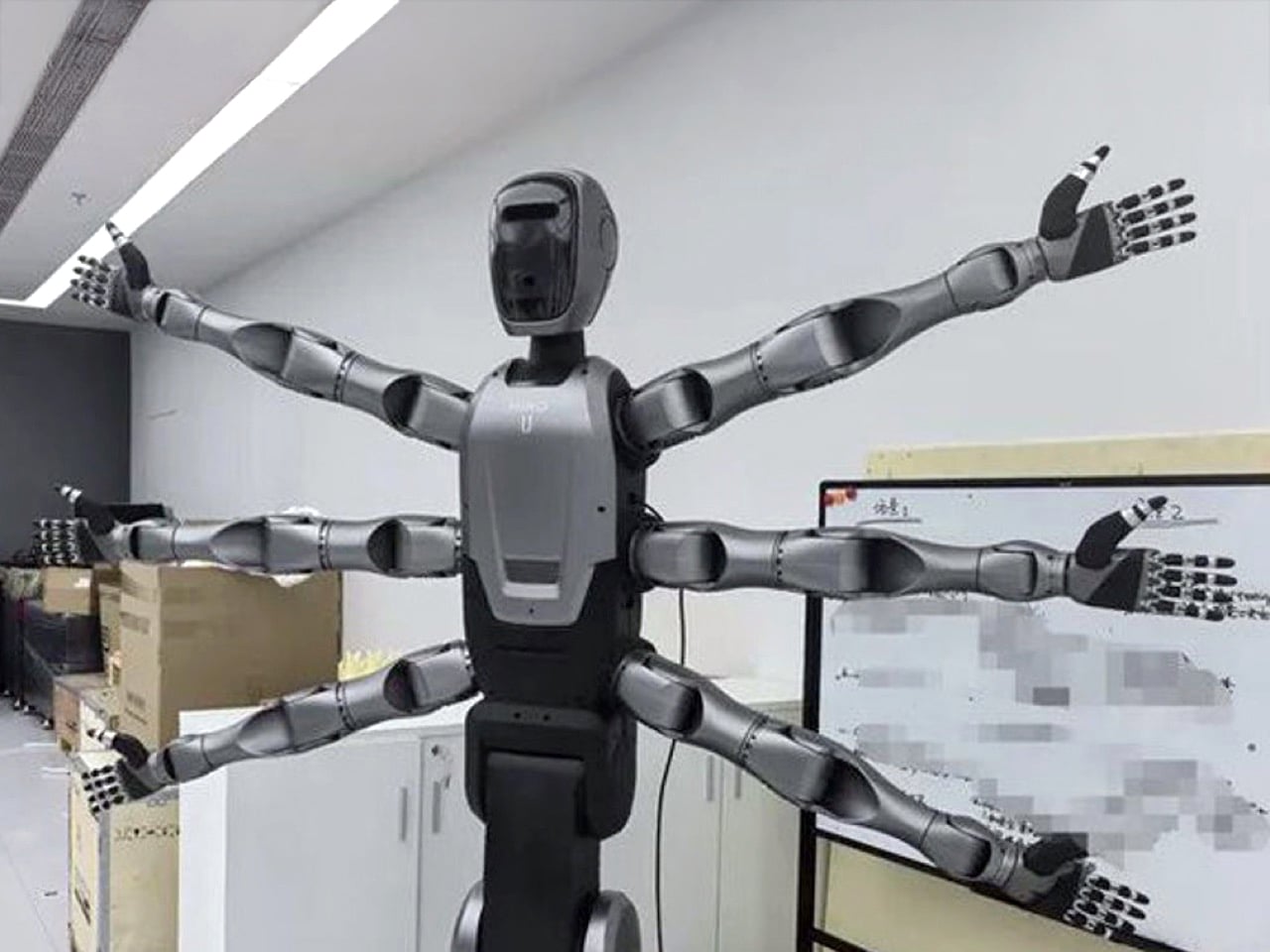
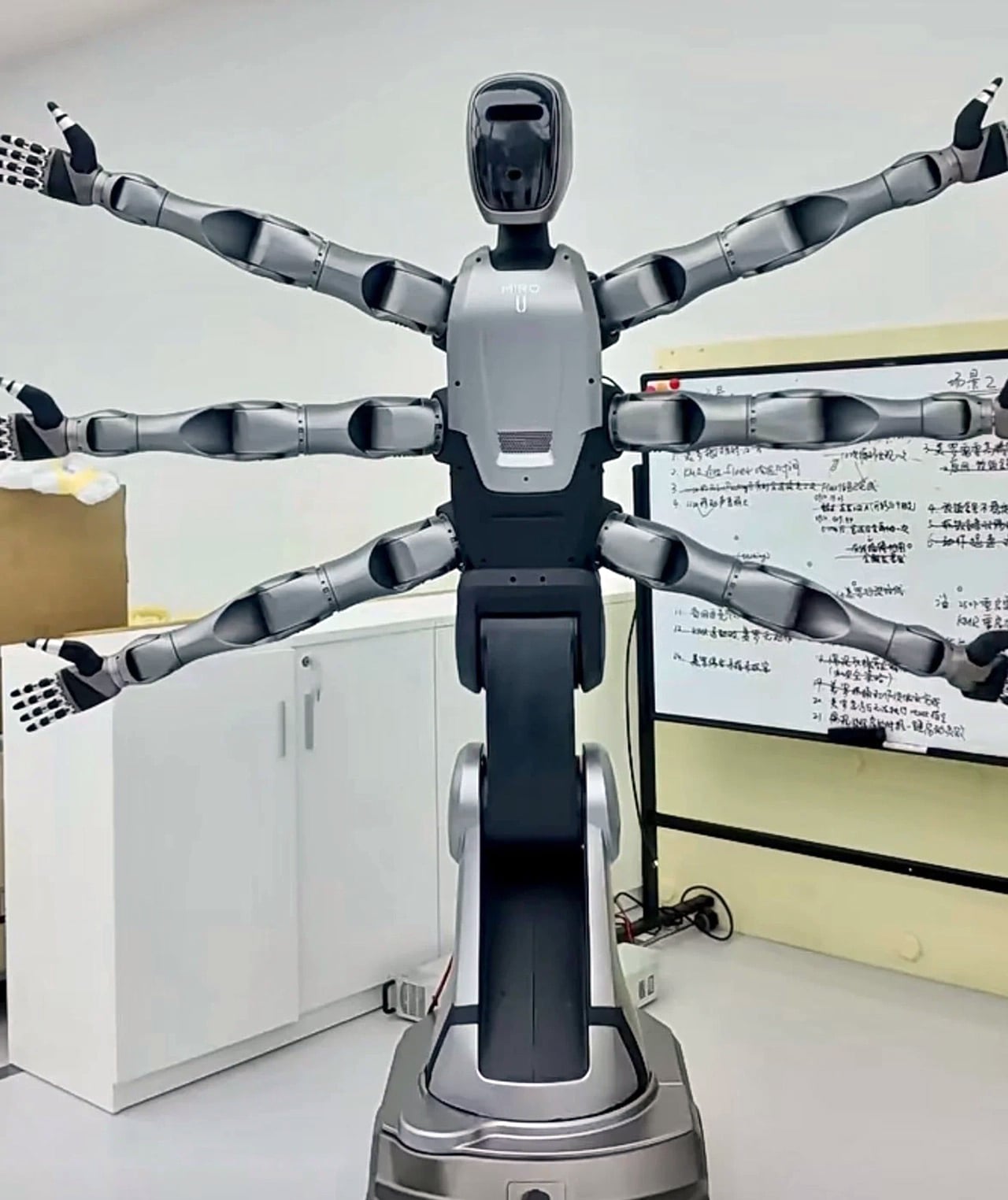
There is a moment in Infinity War where Doctor Strange fans out into a halo of spectral arms and every animator in the room probably high fived. Midea’s new Miro U looks like someone freeze framed that shot, printed it, and walked it down the hall to the robotics lab with the caption “do this, but for factories.” Six coordinated arms, a torso that feels almost cloaked, a wheeled base that spins 360 degrees in place, it reads less like industrial equipment and more like a concept sheet that escaped ArtStation. Except this thing is heading to a washing machine plant in Wuxi, with a target of boosting line changeover efficiency by about 30 percent according to Midea’s own numbers. The visual language screams sorcerer, the job description says production engineer.
You can tell a lot about a robot from what its designers chose to sacrifice. Miro U trades the prestige of bipedal walking for a wheel leg base that is brutally honest about factory floors. No stairs, no urban parkour, just flat concrete and tight aisles that reward stability and turning radius over photogenic gait. It also trades the polite two arm humanoid silhouette for six bionic arms that Midea describes as high precision and flexibly controlled, coordinated around a central spine like a mechanical mandala. That is a very specific bet on parallelism. If you care about line changeovers and modular cells, you want one body that can grab tools, fixtures, and parts at the same time without waiting for someone else to show up.
Designer: Midea
There is a design honesty here that I find refreshing. Most humanoid projects in the West are in a beauty contest with the human form. Smooth faces, leggy proportions, carefully choreographed walking demos, everything framed around the idea that “this could stand where a worker stands.” Miro U walks away from that stage and heads for the backstage rigging. Six arms mean it behaves less like a single worker and more like a compact crew. One pair can hold a housing, another can swap a jig, the remaining arms can manage cables or safety barriers. The silhouette is chaotic on purpose because the workflow is chaotic and the robot is supposed to absorb that complexity.
The numbers around it are still pretty thin, which is typical at this stage, but the broad strokes are telling. Third generation in Midea’s humanoid line, which means they have already burned through at least two iterations before this one hit the news cycle. Fully self developed tech stack, from motion control to the six arm coordination, which matters if you care about long term tuning in real factories rather than trade show floors. Scheduled deployment at the Wuxi washing machine plant this month, following an earlier wheeled humanoid that has been working in Jingzhou since August. This is not a lab mascot. This is a product being dogfooded on a line that actually has throughput targets.
The superhero resemblance is more than a meme hook. Superhero bodies are about exaggerated affordances. Extra limbs, extra reach, extra context switching. Doctor Strange with a ring of arms is a visual metaphor for parallel spellcasting. Miro U with six arms is a visual metaphor for parallel operations on a line that refuses to sit still. Factories that build multiple SKUs on shared equipment live and die by how quickly they can tear down and rebuild a station for the next run. A robot that can reposition fixtures, pull in new tools, and handle parts without waiting for a human crew starts to look less like a novelty and more like a new species of line technician.
You can also read Miro U as a quiet critique of the “humanoid or bust” hype. The question is not whether robots can walk like us, but whether they can inhabit the work in a useful way. Midea is a manufacturer first, and that shows. They do not need a robot that can walk out of the factory and hail a cab. They need something that can survive three shifts a day, roll between modules, and treat the shop floor like a mutable level layout. The wheel base, the vertical lifting, the 360 degree in place rotation, all of that is a love letter to cramped industrial layouts rather than glossy demo stages.
There is also a cultural angle that I cannot ignore. This is a Chinese appliance giant that bought KUKA in 2017 and has been quietly building a robotics stack while the rest of the world argued about whether Tesla’s Optimus would ever fold a shirt. Now they roll out a six arm sorcerer for factories and talk openly about large scale deployment of humanoids across industrial and commercial spaces. Whether Miro U itself becomes a platform or a stepping stone, it signals an attitude. The factory is not a place where you hide robots in cages anymore. It is a stage where body plans are fair game.
Does that mean humanity is cooked. No. It means the shape of “a worker” is starting to fork more visibly. On one branch, you have the leggy, two arm humanoids chasing a one to one replacement fantasy. On another, you now have creatures like Miro U, multi arm, wheeled, unapologetically weird, tuned for specific forms of chaos. The fear response is predictable, but the more interesting reaction is curiosity. If this is what a robot body looks like when you stop caring whether it resembles us, what other silhouettes are still on the cutting room floor.

 ) Sunrise Clock Air Purifier is a compact attempt to pull some of those tools into one object. It is a small bedside cylinder that cleans the air, glows like a sunrise to wake you gently, plays soft sounds, shows the time, and charges your phone, all while looking more like a design piece than some cold, drab piece of appliance. But does this striking appliance work as advertised? We put it beside our comfy bed to find out.