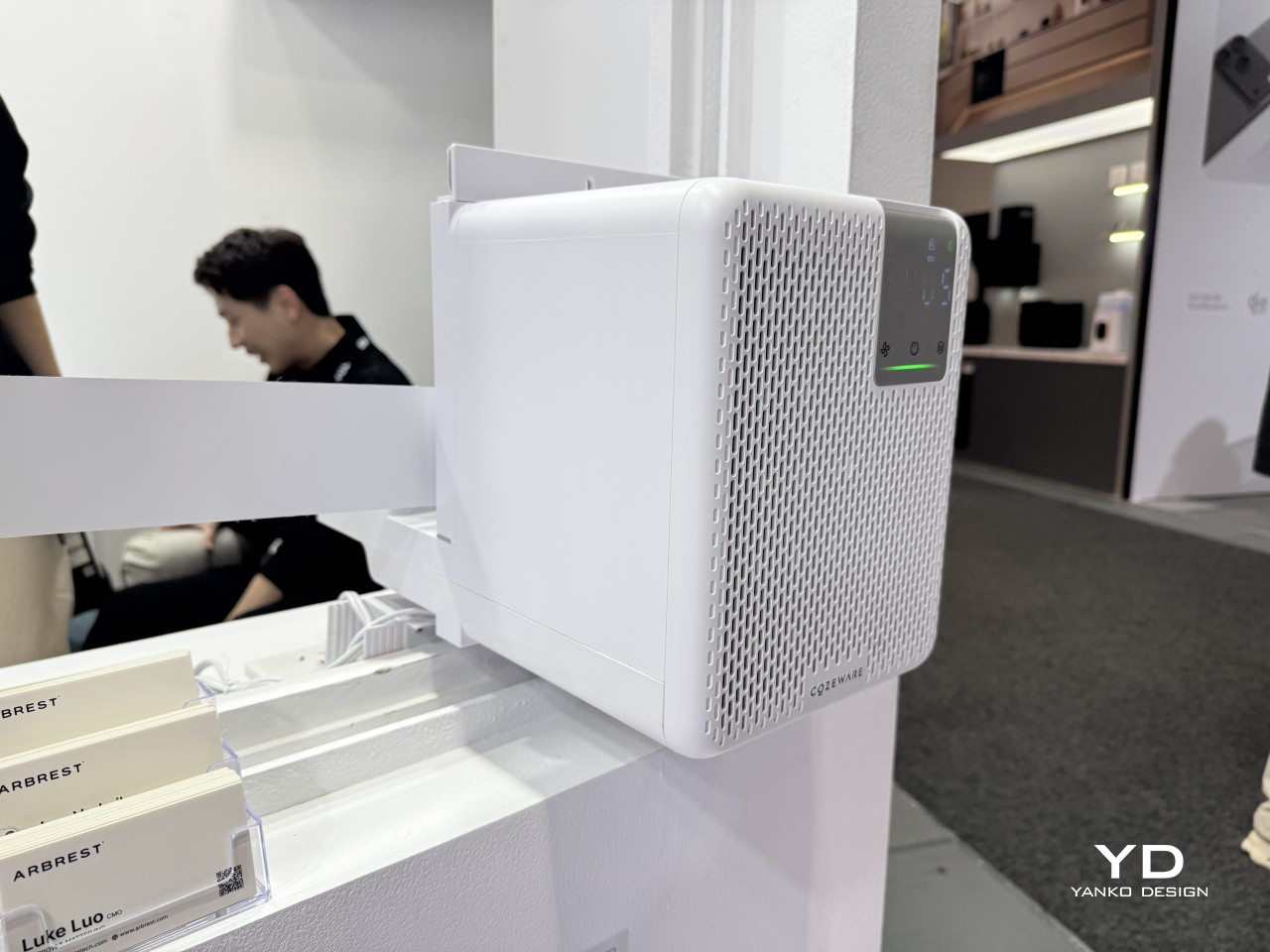
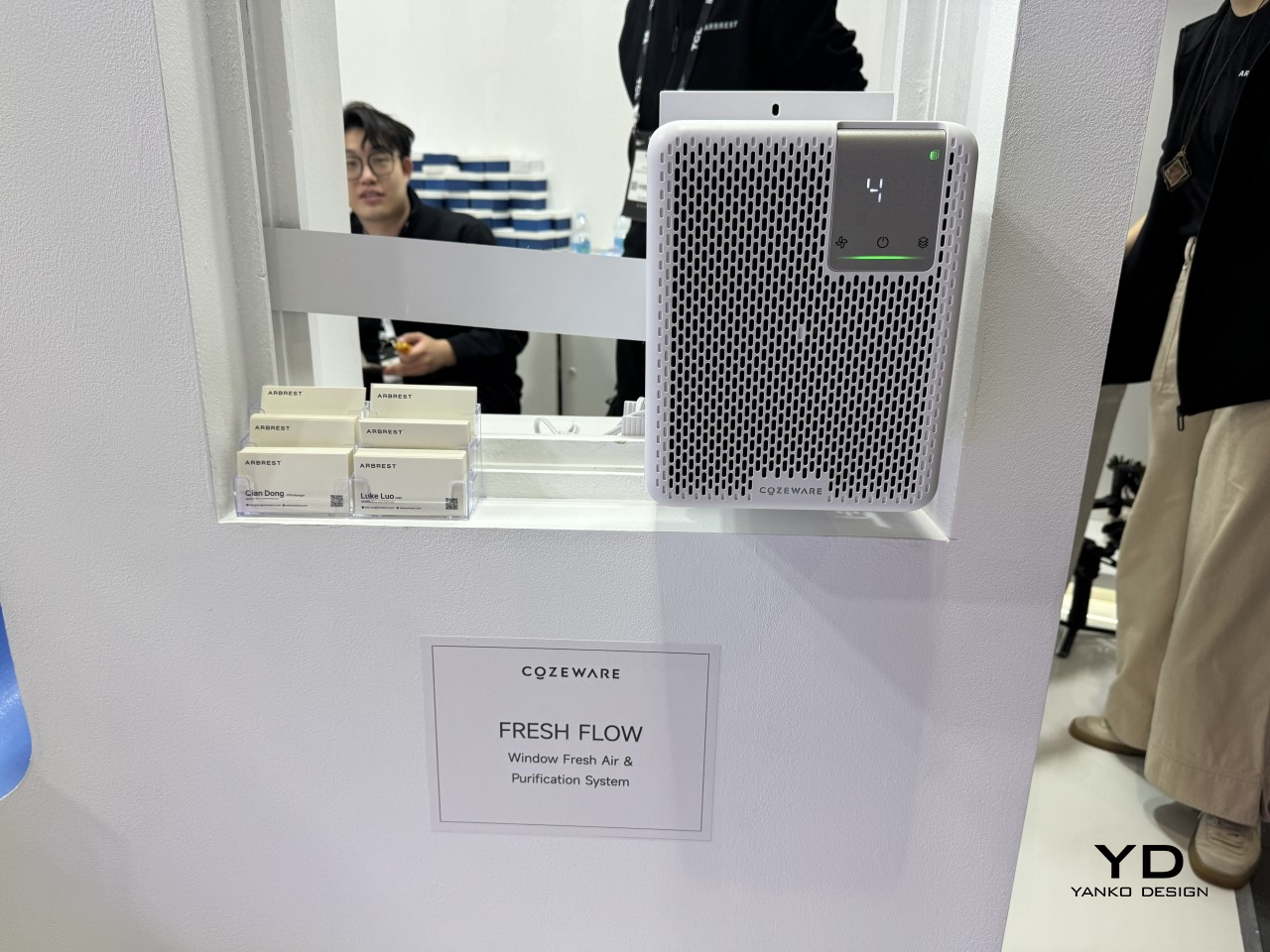
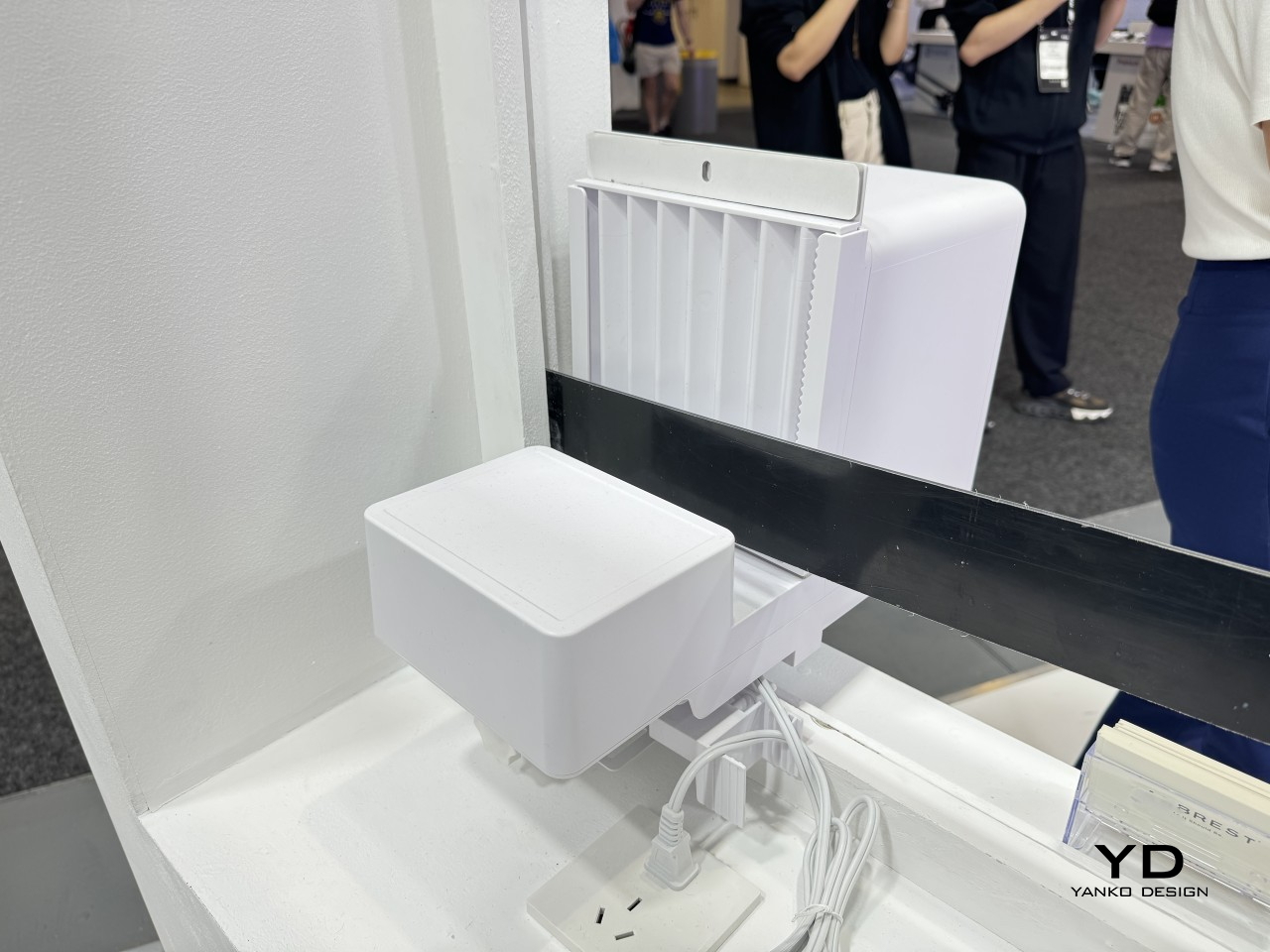
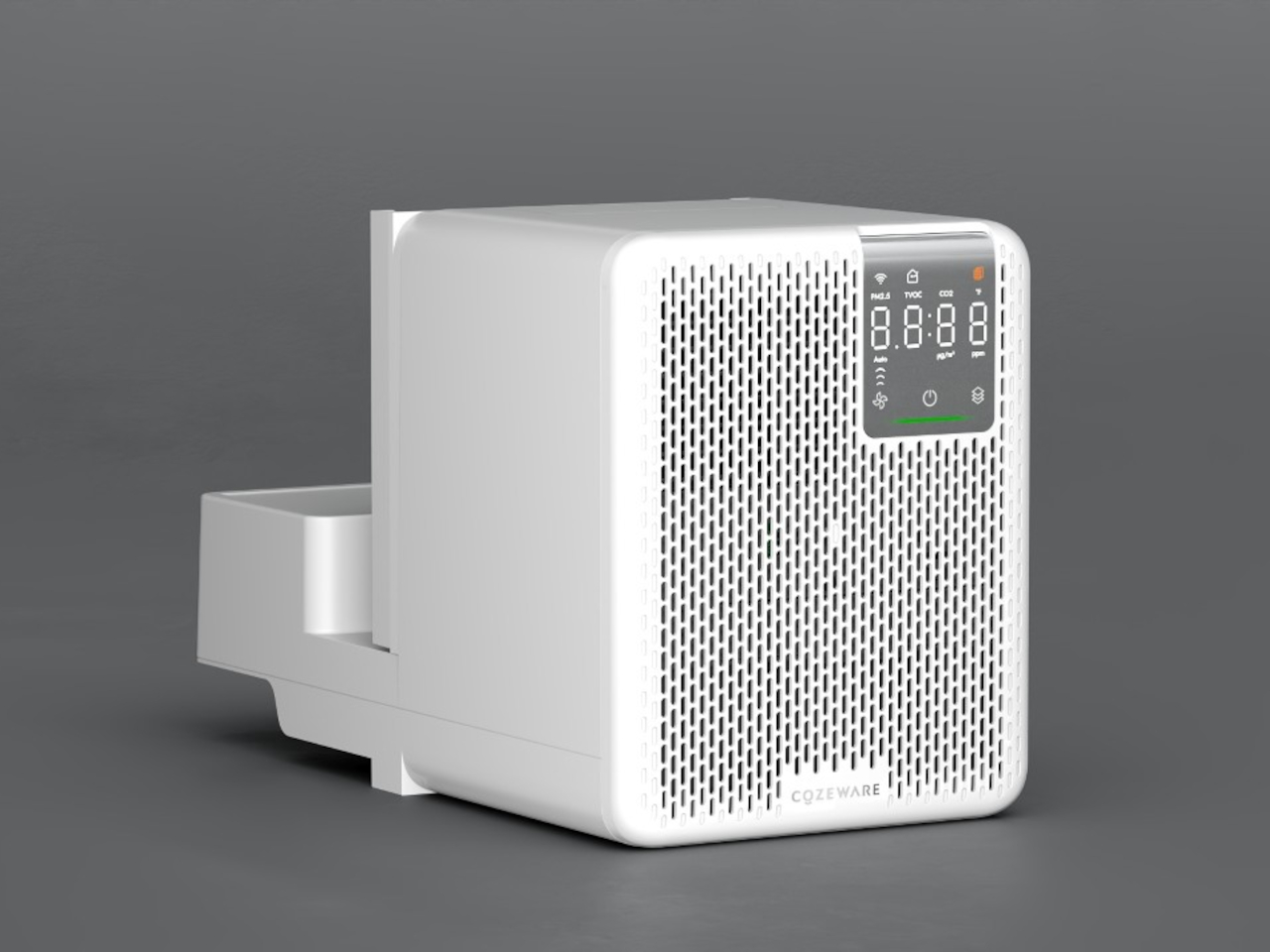
Windows have always demanded a compromise. Crack one open and fresh air arrives along with street noise, pollen, dust, and whatever temperature swing shows up that day. Keep it shut and stale air just recycles in place. COZEWARE FreshFlow, a window-mounted fresh air system, skips that trade-off by pulling filtered outdoor air straight into the room, no wall drilling required. The Pro version adds indoor purification on top.
A regular air purifier only recirculates what’s already inside a room; it never actually swaps stale air for new. Whole-home ventilation can pull that off, but usually means wall openings, ductwork, and a contractor on speed dial, ruling it out for renters, apartments, and anyone who just wants one room to feel different. FreshFlow sits in that gap: filtered exchange without the renovation.
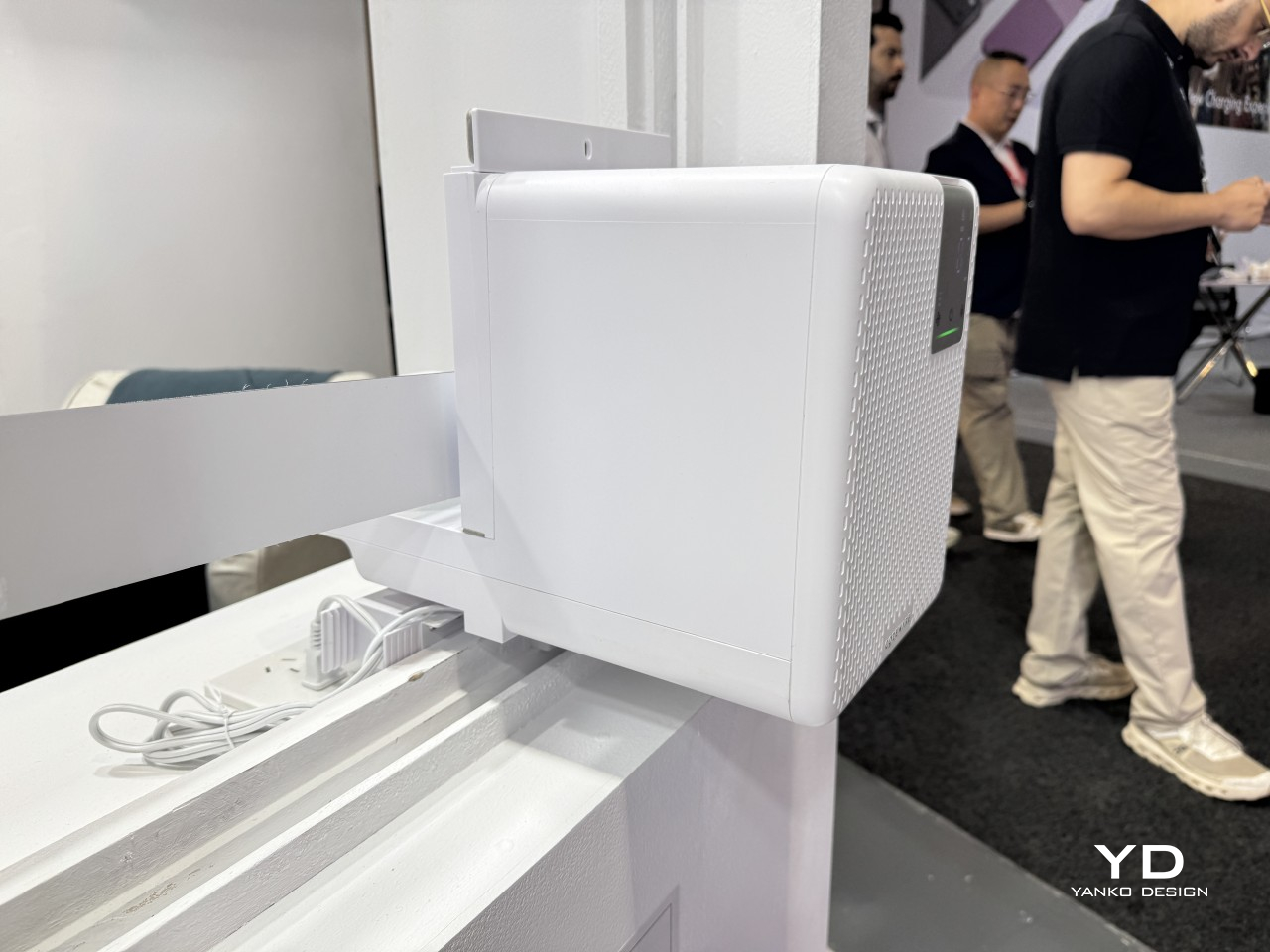
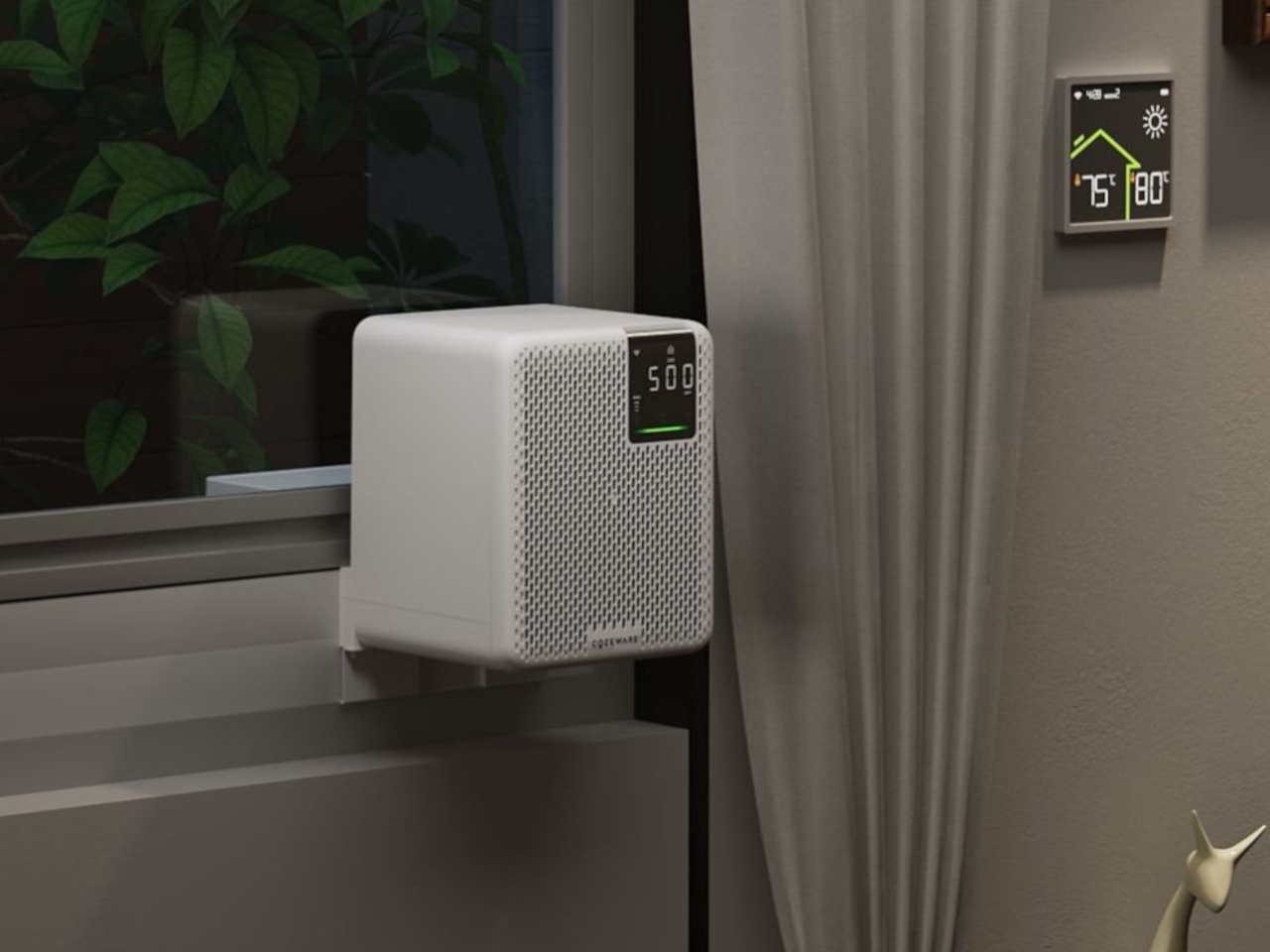
That’s the idea behind FreshFlow: no more picking between letting air in or keeping it out. It becomes a removable, filtered, and adjustable air source for a single room, mounted through COZEWARE’s WindowFit bracket system without drilling into walls or running permanent ducts. Take it down when you move, or skip it entirely if the window isn’t compatible, no commitment either way.
Picture a bedroom in an older building where the window faces a busy street. Opening it for airflow means letting in traffic noise and bugs along with a temperature drop right before bed. FreshFlow handles that trade quietly, running as low as 26 decibels on its lowest fan speed, with a Sleep mode on the Pro version keeping things low-key through the night.
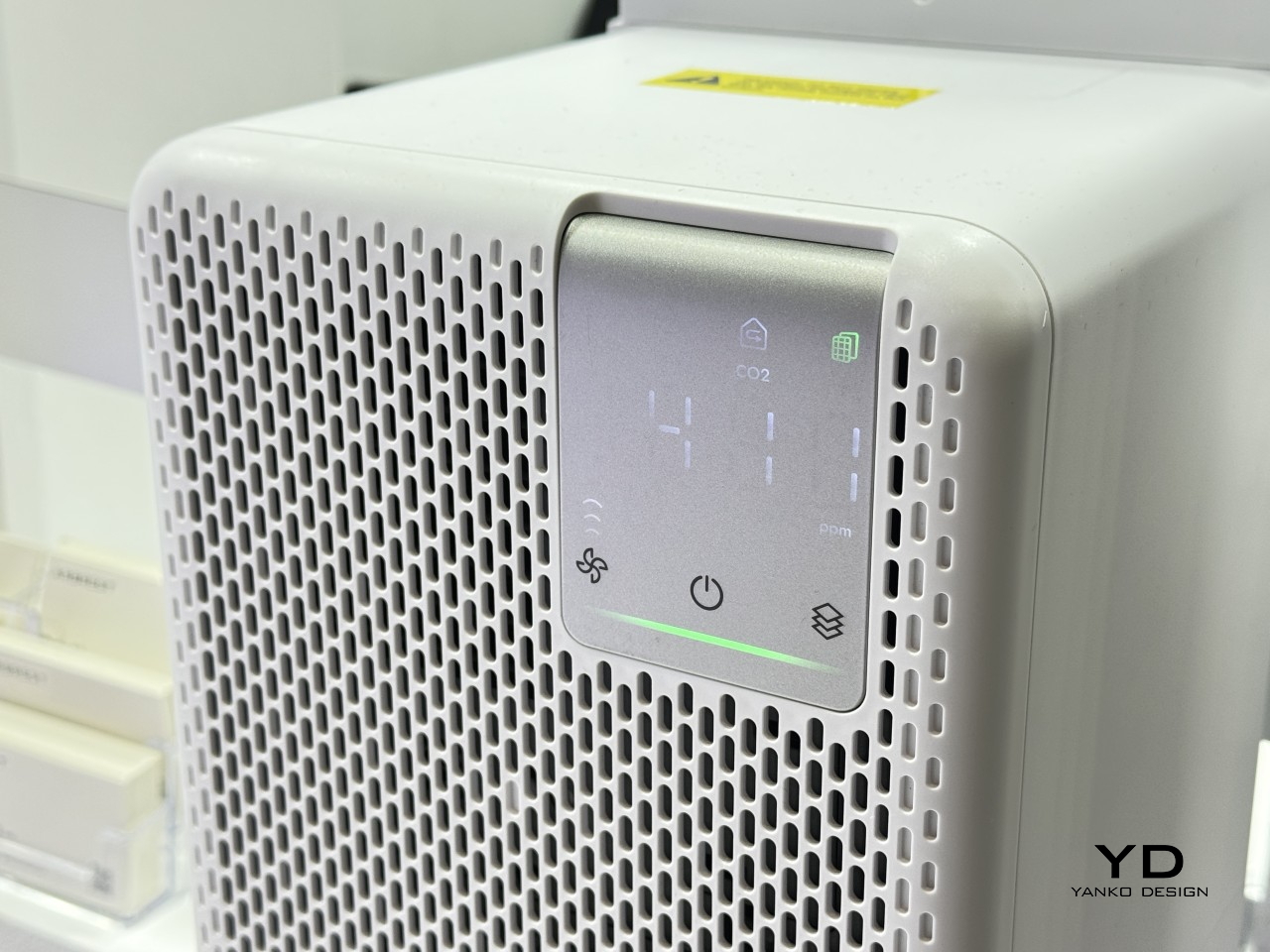
A different kind of stuffiness builds in a home office by midmorning, the kind that sends you reaching for coffee instead of realizing CO2 has crept up in the room. FreshFlow’s built-in sensor reads PM2.5, TVOC, CO2, and temperature in real time, showing the numbers on the display along with a color indicator, so air quality stops being something you only guess at.
Pollen counts spike, or a neighbor grills something that smells like a chimney fire, and pulling in outdoor air suddenly isn’t the move. FreshFlow Pro switches from fresh air intake to indoor recirculation purification without touching the mounting bracket, cleaning the air already inside the room instead. Airflow on the fresh air path reaches up to 47.1 CFM, a real exchange rather than a token breeze.
Filtering that much air means the filter needs attention eventually, and COZEWARE made that part painless. The replaceable AirMatch filter combines HEPA-grade filtration with activated carbon; swapping it out just means popping open the front cover, and the unit shuts off automatically the moment you do. Under typical use, a filter lasts around nine months before it needs replacing, depending on local air conditions.
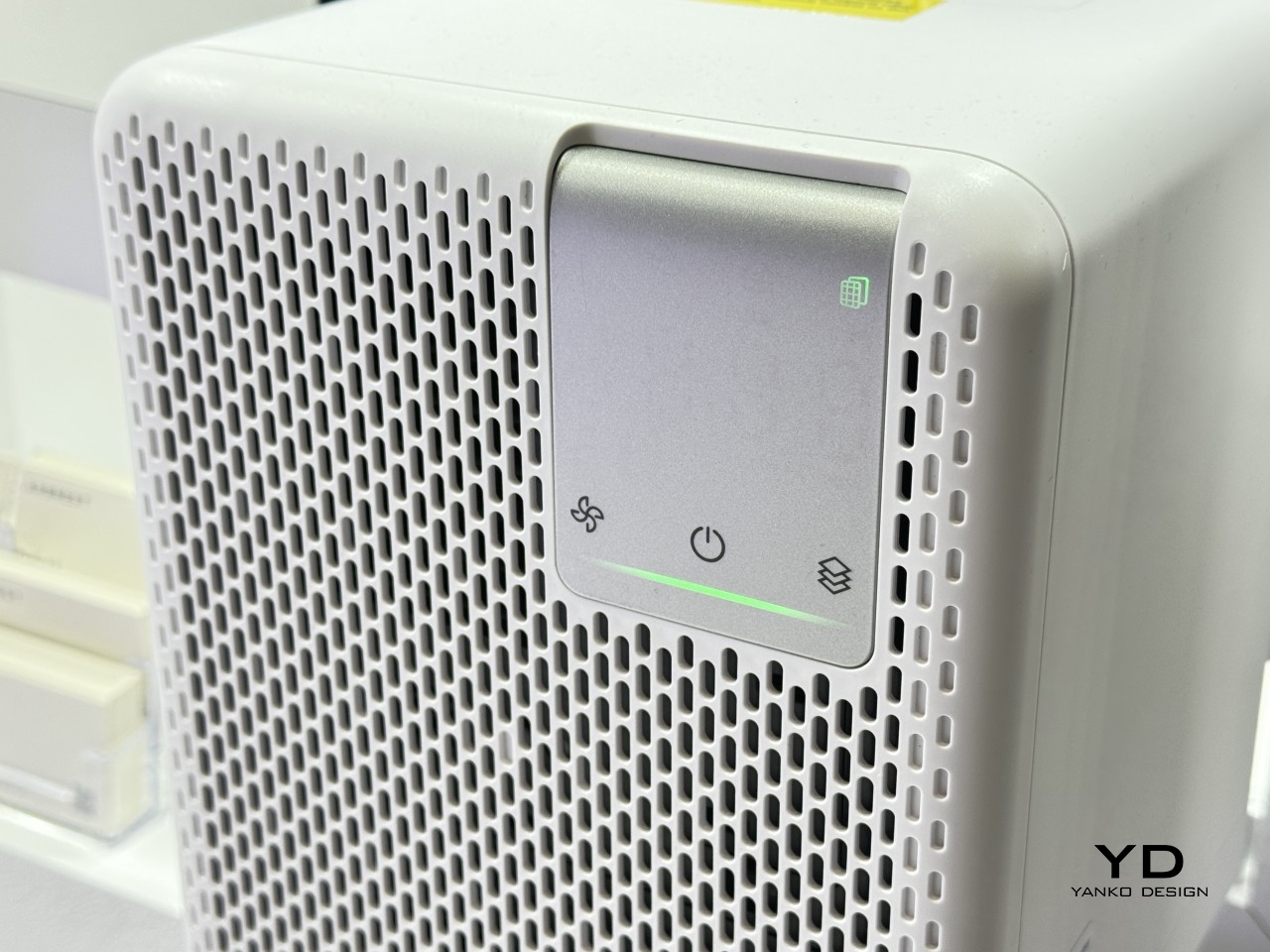
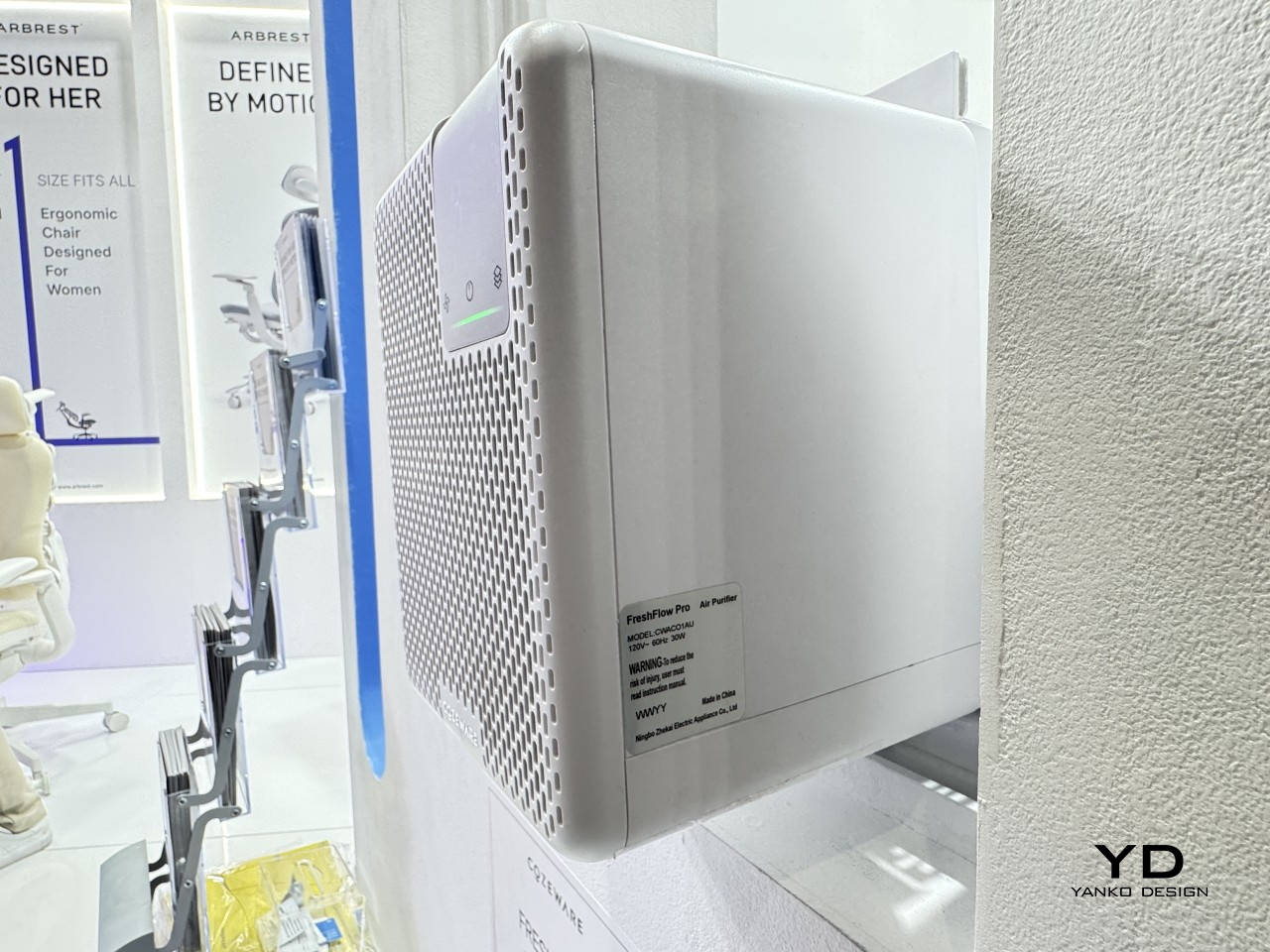
Visually, FreshFlow avoids looking like ventilation hardware bolted onto a window. The body is a compact, rounded rectangle measuring 15.67 by 7.87 by 9.76 inches, with a perforated grille up front and a small display tucked into the corner. COZEWARE built the shell from engineering-grade plastic to keep it light, while metal supports carry the load, letting the visible parts stay soft-edged instead of clinical.
Day-to-day control stays simple. FreshFlow works with Alexa, Google Home, and Apple Home, plus an app and onboard touch controls, and the Pro model adds a dedicated remote for anyone who doesn’t want to reach for their phone every time. Three fan speeds keep things flexible on both models, while Pro layers on Auto and Timer modes alongside Sleep. An auto screen-off setting keeps the display from glowing overnight.
FreshFlow comes in two versions: Core with the filtered fresh air function alone, and Pro with added indoor purification, switching modes, and a remote control. Both share the same footprint and mounting system, so the choice mostly comes down to how much flexibility a room needs. Either way, the same idea holds: a window that used to be one thing or another now does both, quietly.
Air purifiers have become a common fixture in homes and offices, quietly working to keep indoor air breathable. Most of them follow the same basic formula, drawing air through a dry filter that captures dust, pollen, and airborne particles over time. When that filter reaches its limit, you throw it away and buy a replacement, or wash it if it’s the reusable kind. It’s a familiar routine, but not exactly a thoughtful one.
CUE Air Washer from Watervation is a 2-in-1 purifier and humidifier that takes a noticeably different approach. Rather than filtering air through a dry medium that slowly fills with grime, it washes the air with water, borrowing from how rain naturally clears the atmosphere of dust and pollen. It’s a concept that sounds simple in hindsight but actually changes quite a bit about how air care works.
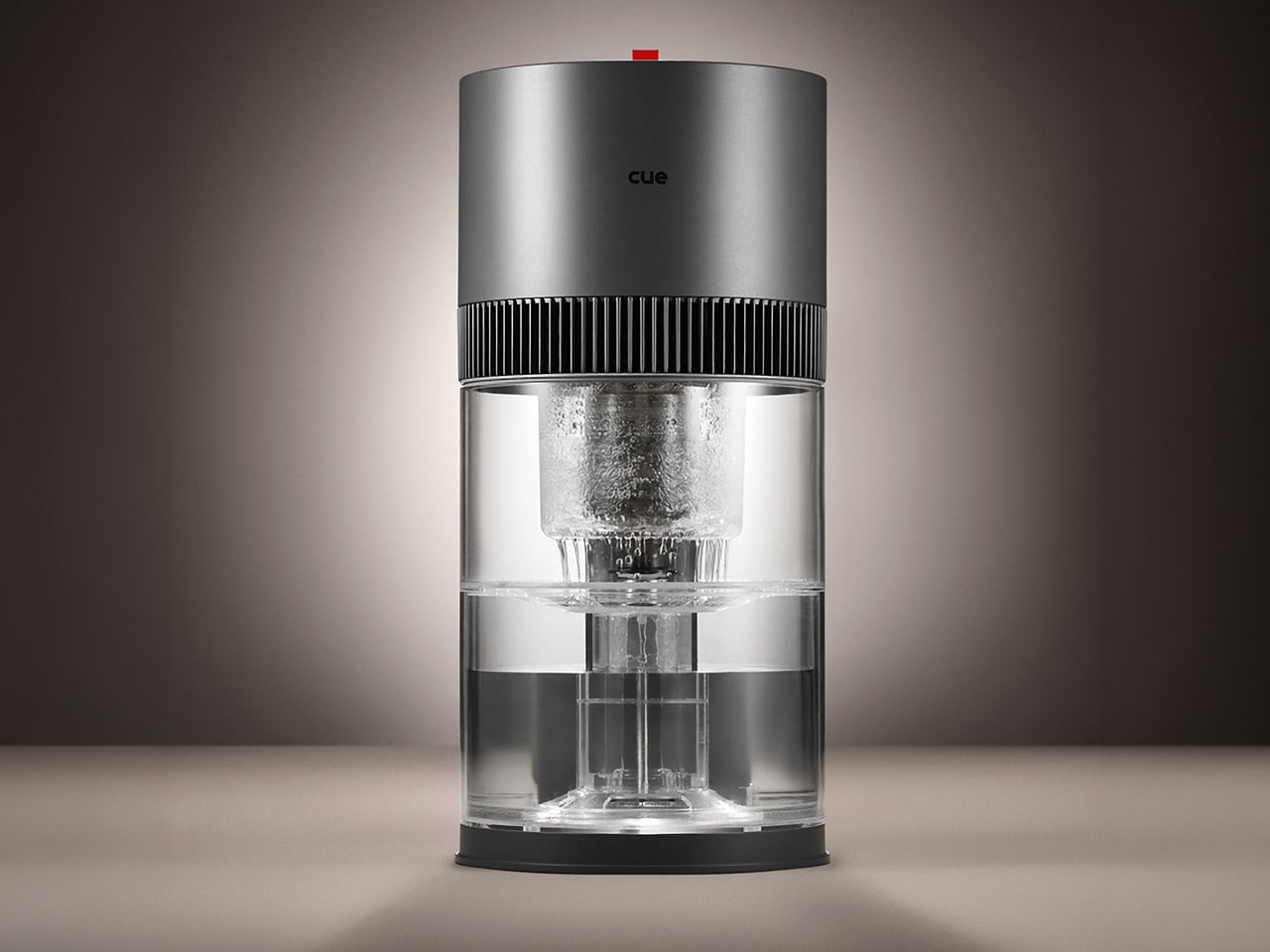
The idea at the heart of CUE is surprisingly intuitive. Instead of holding contamination inside a dry filter, the device draws air through a water-based medium that strips airborne particles and gases from the air. Once the water turns dirty, you empty it, rinse the tank, and refill it, giving the device a clean start every day. There’s nothing to replace, and nothing to accumulate.
The technology behind CUE is Watervation’s patented RainTec system, and its most notable quality is what it doesn’t rely on. Most air washers need motorized water pumps to circulate liquid, but RainTec uses fluid dynamics instead. A spinning rotor generates a vacuum that draws water upward without any pump, eliminating the most common failure point in these devices and keeping the design considerably simpler.
What makes CUE genuinely practical is how naturally it handles two common problems at once. Dry air and airborne pollutants tend to go hand in hand, especially in bedrooms during winter or in home offices that don’t have great ventilation. Instead of running two separate appliances for purification and humidity, CUE handles both, covering spaces up to 300 sq ft, which fits most personal and domestic environments.
The ownership story is where CUE makes the strongest case for itself. Conventional air purifiers can cost over $100 per year in filter replacements alone, a figure that doesn’t stop growing the longer you use the device. CUE cuts that entirely by using water as its only medium. The maintenance routine comes down to emptying the tank, rinsing it, and refilling it with fresh water.
CUE is also one of those rare appliances that’s genuinely pleasant to leave out in the open. The cylindrical device has a dark upper housing and a clear lower tank that lets you watch the water action inside. There’s something calming about it. The swirling motion of water being spun and atomized gives the cleaning process a visible, almost meditative quality that isn’t common in this product category.
Performance testing by Korea Conformity Laboratories gives the product’s claims some independent backing. Results showed a 93.5% reduction in fine particulate matter, a 99.5% reduction in acetic acid, a 99% reduction in ammonia, and a 90% reduction in formaldehyde. The device also includes a built-in UV-C sterilization module that continuously disinfects the water tank while running, keeping the water hygienic throughout each cycle.
There’s a growing appetite for home appliances that earn their place on a shelf rather than hiding behind it. CUE Air Washer fits that thinking, handling air quality in a way that’s quieter, cleaner, and far less dependent on consumables than what came before. Watervation’s direction with this product hints at what home air care could look like when the design is as considered as the engineering behind it.
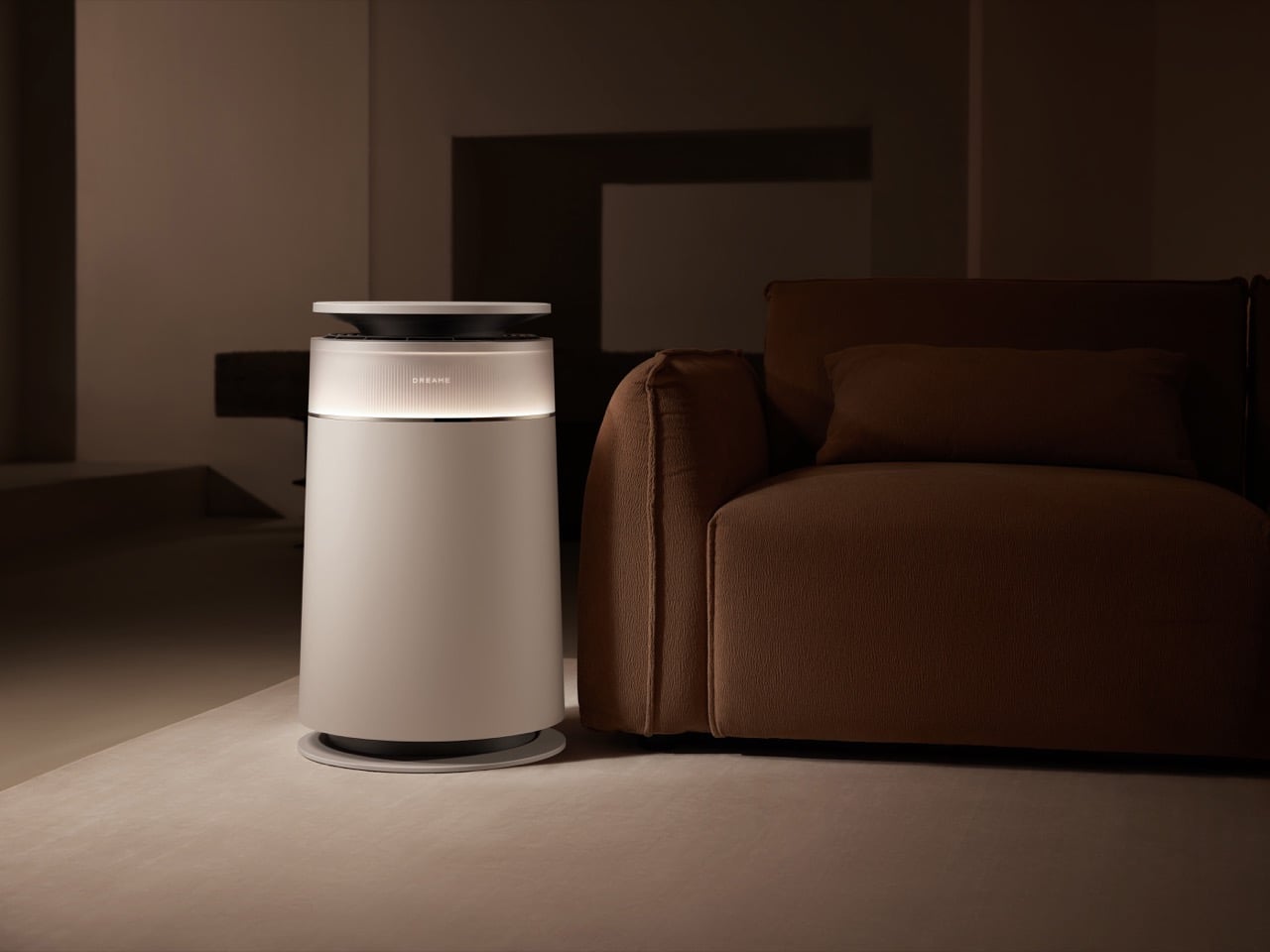
Dreame started building vacuum cleaners in 2017. They built motors that spun faster than anyone else’s, wrote algorithms that mapped rooms more efficiently than the competition, and developed bionic robotic arms that could reach where other robot vacuums couldn’t. Nine years later, they’re launching rocket cars at events in San Francisco, announcing electric SUV lineups, teasing smartphones, and showing off water purifiers alongside lawn mowers. If that trajectory feels chaotic, you’re reading it right. What holds it together is the motor technology, the same engineering philosophy that made their vacuums compelling now applied to air purification, personal care devices, and apparently vehicular propulsion systems.
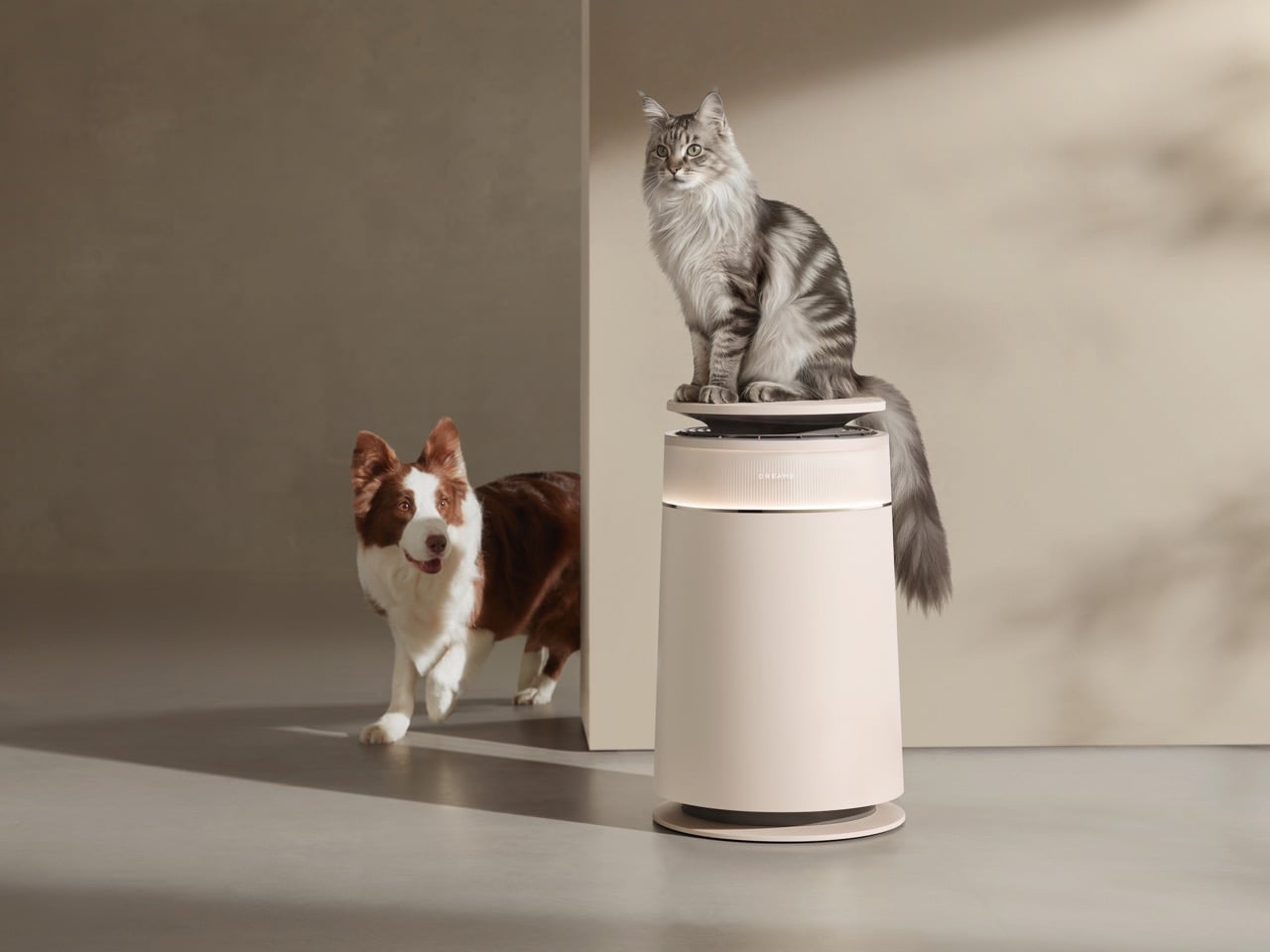
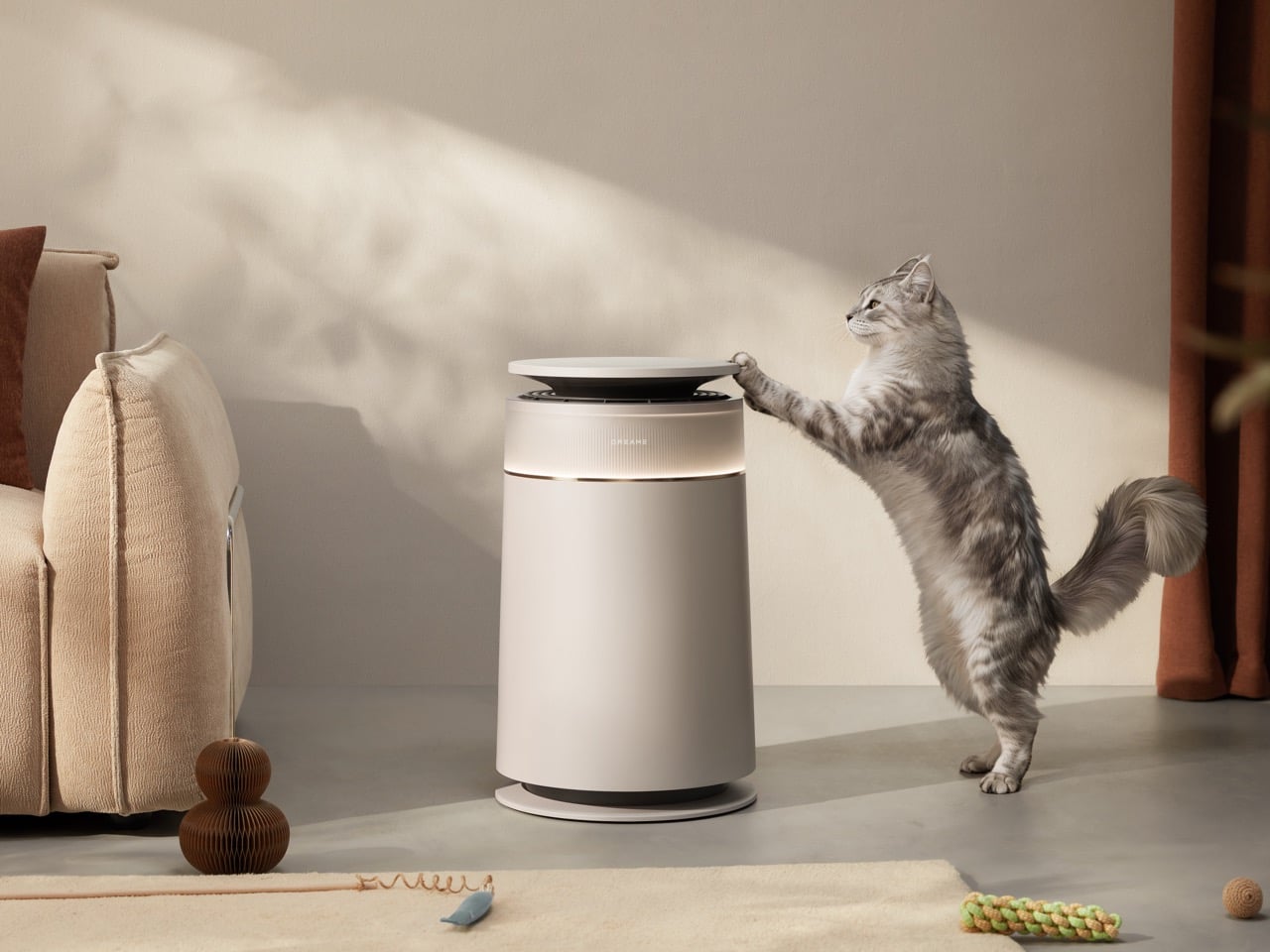
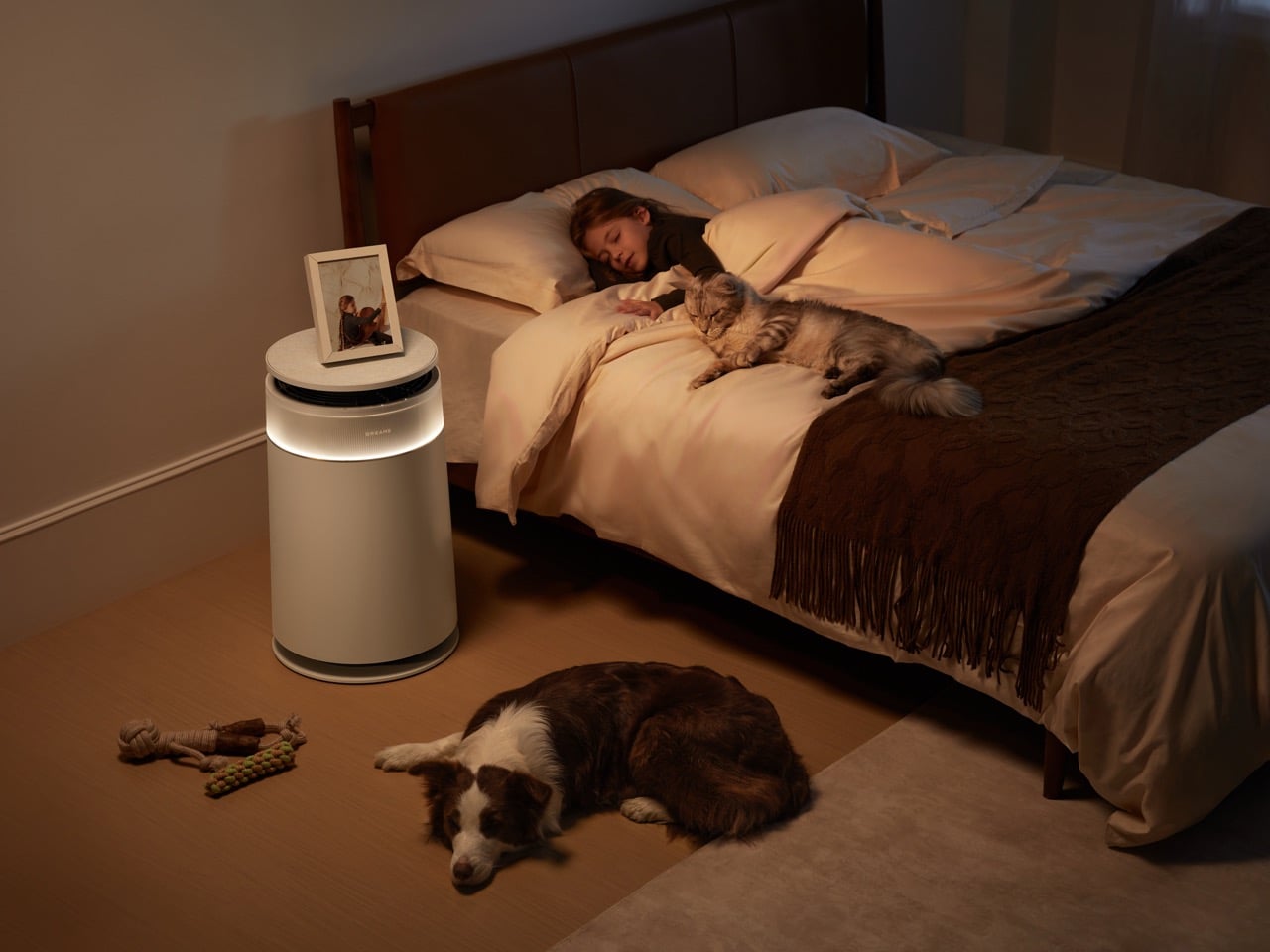
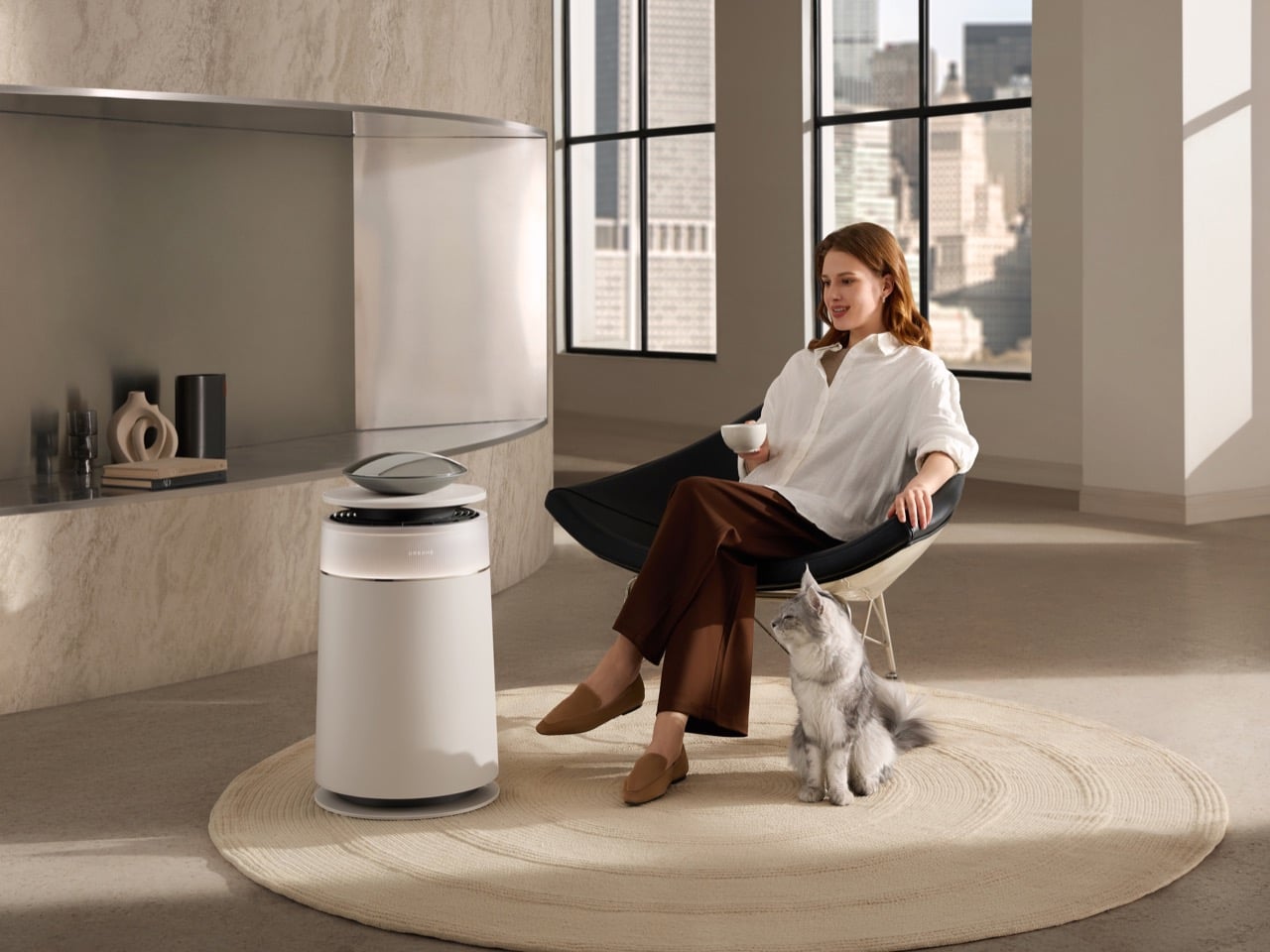
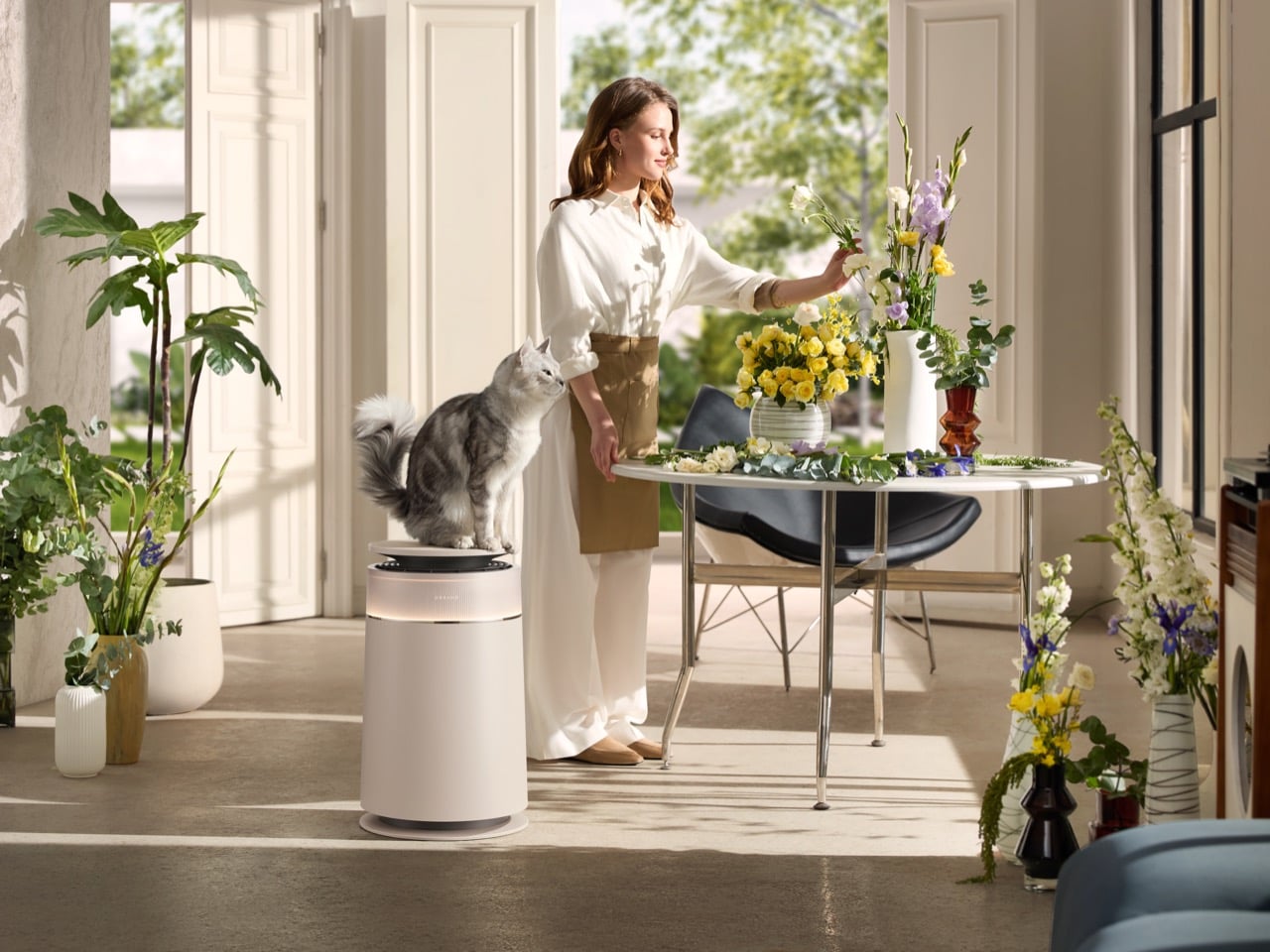
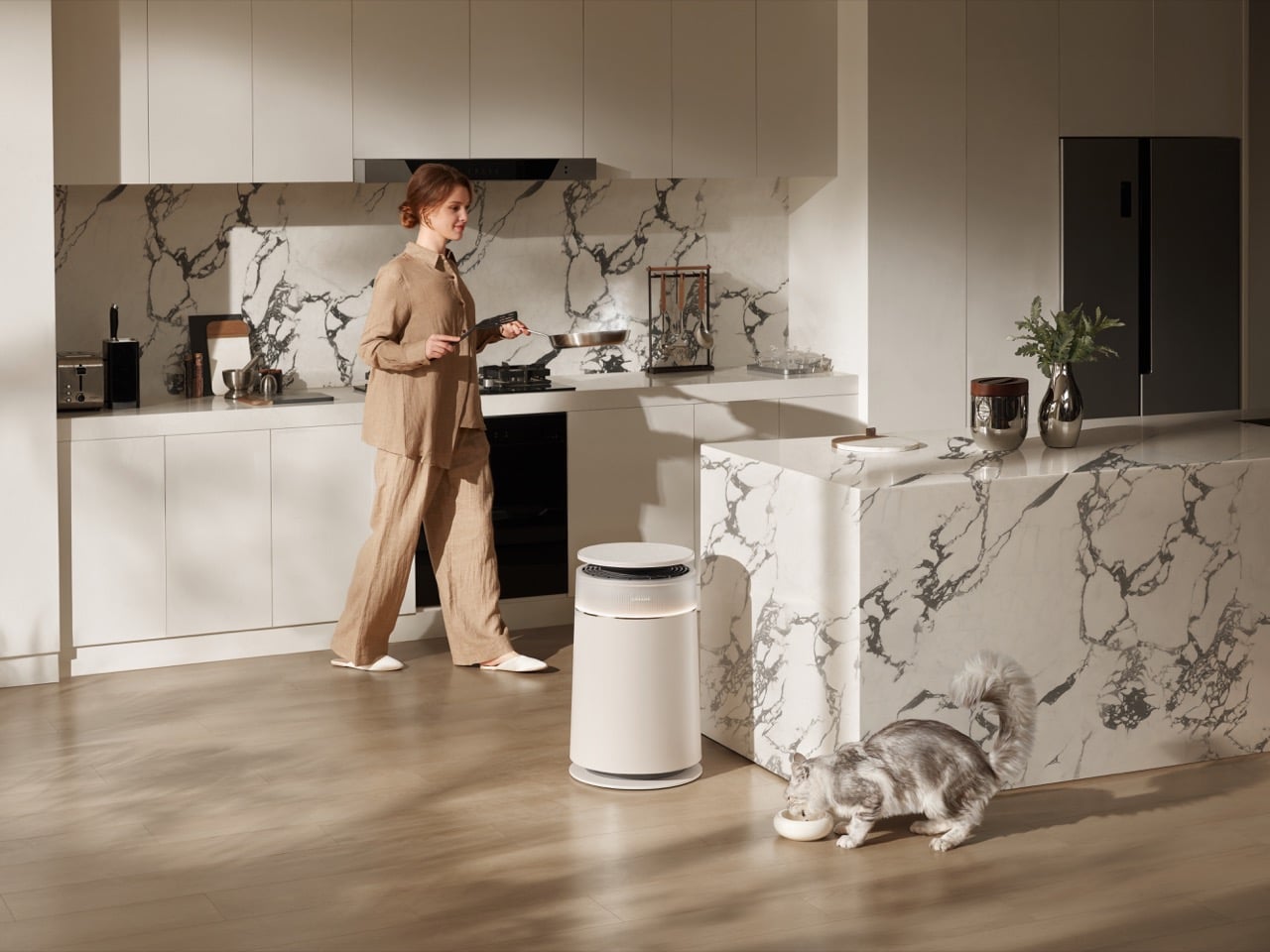
The FP10 air purifier sits somewhere in the middle of this expansion spree, and it’s the first place the company has applied robot vacuum thinking to stationary air cleaning. The core concept borrows directly from their floor-cleaning playbook: a self-cleaning roller brush that actively separates debris instead of waiting for a clogged filter to choke performance. For pet owners who’ve watched traditional purifiers lose suction as fur accumulates on intake grilles, that’s a genuinely useful pivot. The question worth asking is whether Dreame’s computational approach to home appliances translates as well to air purification as it did to floor cleaning.
Designer: Dreame
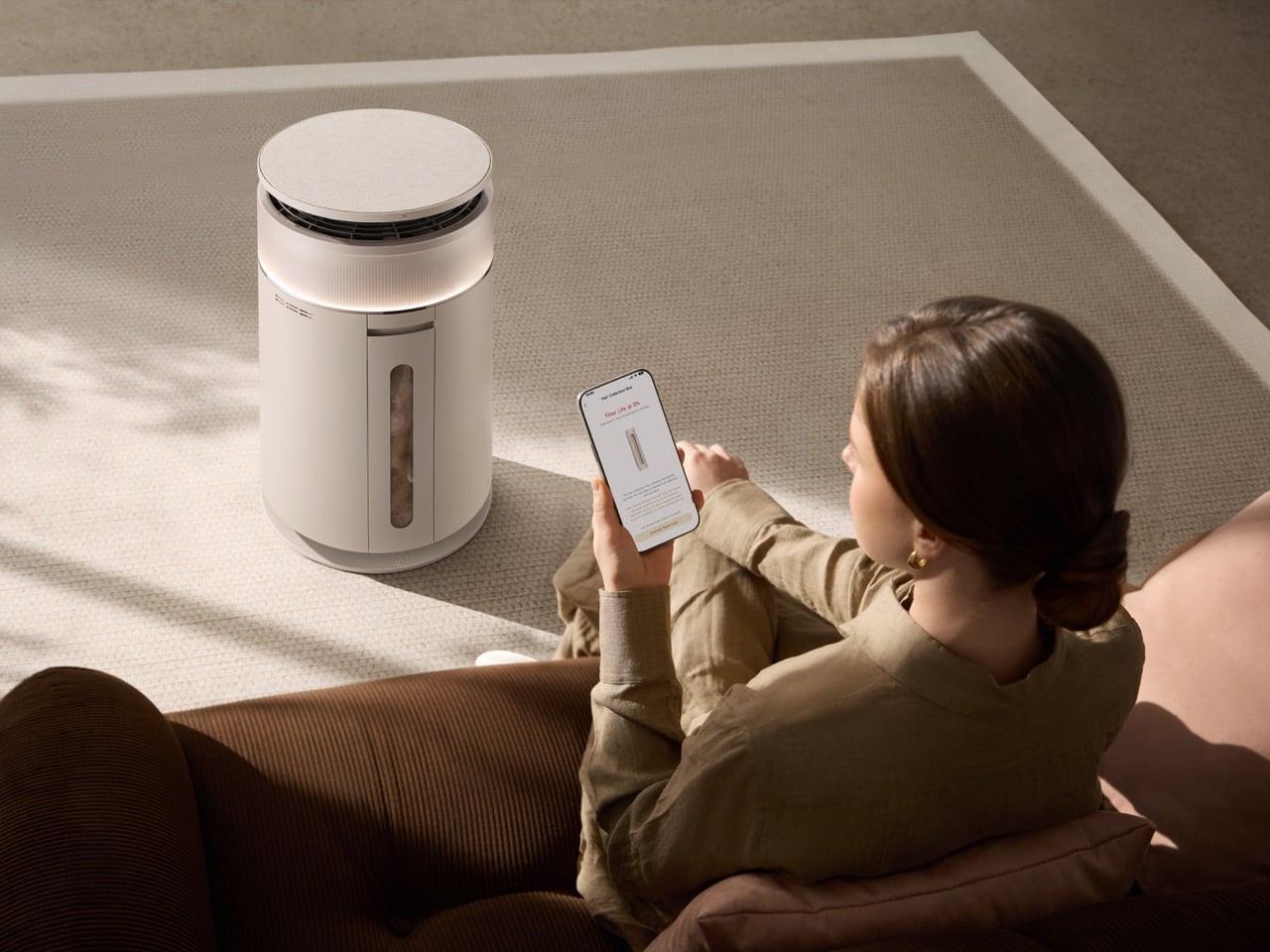
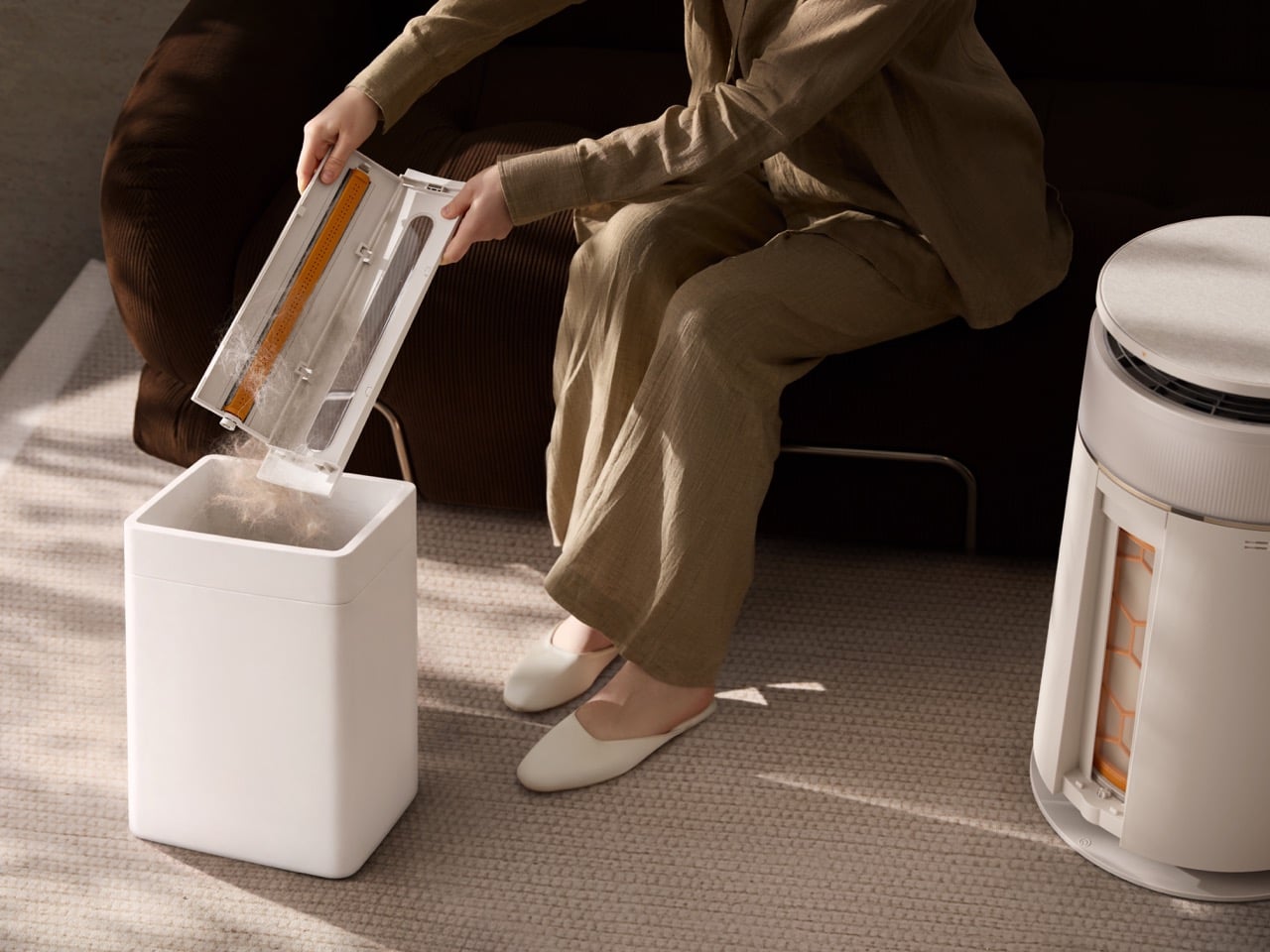
The roller mechanism operates on two axes, rotating 360 degrees to strip hair and particles from incoming air before they reach the primary filter. A dual-powered system keeps both the roller and filter moving independently, compressing debris into a sealed 460ml collection bin that you empty like you would a vacuum canister. Dreame claims a 99.5 percent hair collection rate based on lab testing with two cats in a 30-square-meter chamber over seven days, which sounds optimistic until you consider that the alternative in most purifiers is zero percent because the hair never makes it past the intake grille in the first place.
What makes this approach legitimately different is the elimination of primary filter maintenance. Traditional purifiers with washable pre-filters require you to pull them out, rinse them, dry them completely, and reinstall them every few weeks if you have shedding pets. Miss a cleaning cycle and airflow degrades fast. The FP10 handles that process autonomously, triggered either by a preset schedule or in response to air quality readings. The machine runs a self-cleaning cycle, the roller dumps collected debris into the bin, and airflow stays consistent without your involvement. Dreame calls this their Filter Maintenance 4.0 era, positioning it as an evolution beyond mesh filters that need constant washing and felt filters that burn through replacement costs.
The air purification stack itself follows convention: HEPA H13 media rated for 99.97 percent filtration of particles down to 0.3 microns, backed by what Dreame calls a CataFresh odor removal system combining 2.5 times more activated carbon than their previous flagship with a metal catalyst layer that chemically decomposes odor molecules rather than just adsorbing them. The unit pushes 350 cubic meters per hour in standard configuration, operates between 32 and 62 decibels depending on mode, and includes the expected smart home integration through the Dreamehome app with Google Assistant and Alexa support.
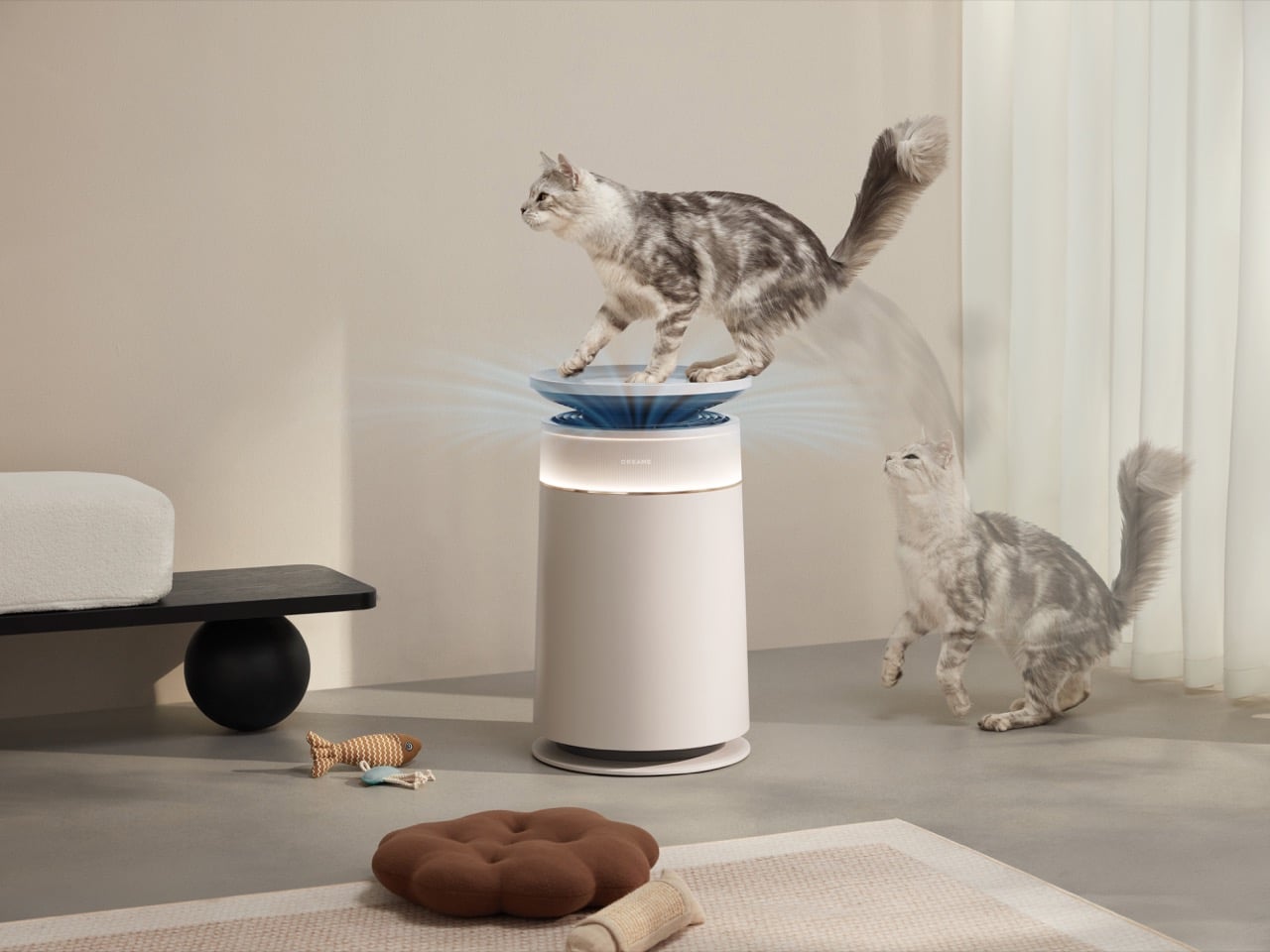
The pet-specific features extend beyond hair collection. An optional weighing tray sits on top of the unit, tracking weight and activity patterns for multiple pets through the Dreamehome app. When a pet steps onto the tray in Pet Mode, the purifier gradually reduces airflow to avoid startling them. It’s the kind of thoughtful detail that suggests someone on the team actually lives with skittish cats.
The FP10 ships in early May. Pricing hasn’t been announced for most markets yet, but it’s positioned as a premium pet-focused purifier competing against dedicated units from brands that have been in this space far longer. What Dreame brings to the fight is proven self-cleaning technology and a willingness to treat air purifiers as active systems rather than passive filters. For households where pet hair has become the limiting factor in purifier performance, that mechanical preprocessing layer might justify the premium over simpler designs that just throw bigger HEPA filters at the problem.
If you’ve ever owned an air purifier, you know the drill. You unbox it, it works great, and then you spend the next three years sliding it from corner to corner because no matter where it lands, it looks completely out of place. It hums quietly beside your bookshelf looking vaguely medical. It sits in your bedroom like it belongs in a waiting room. The technology is fine. The design? Almost always an afterthought.
That’s what makes Fläkt, designed by Laura Chaves at the Savannah College of Art and Design and a winner at the 2025 European Product Design Award, feel like such a breath of fresh air (pun very much intended). It approaches air purification not as an appliance problem to solve, but as a living space problem, and that distinction completely changes the result.
Designer: Laura Chaves
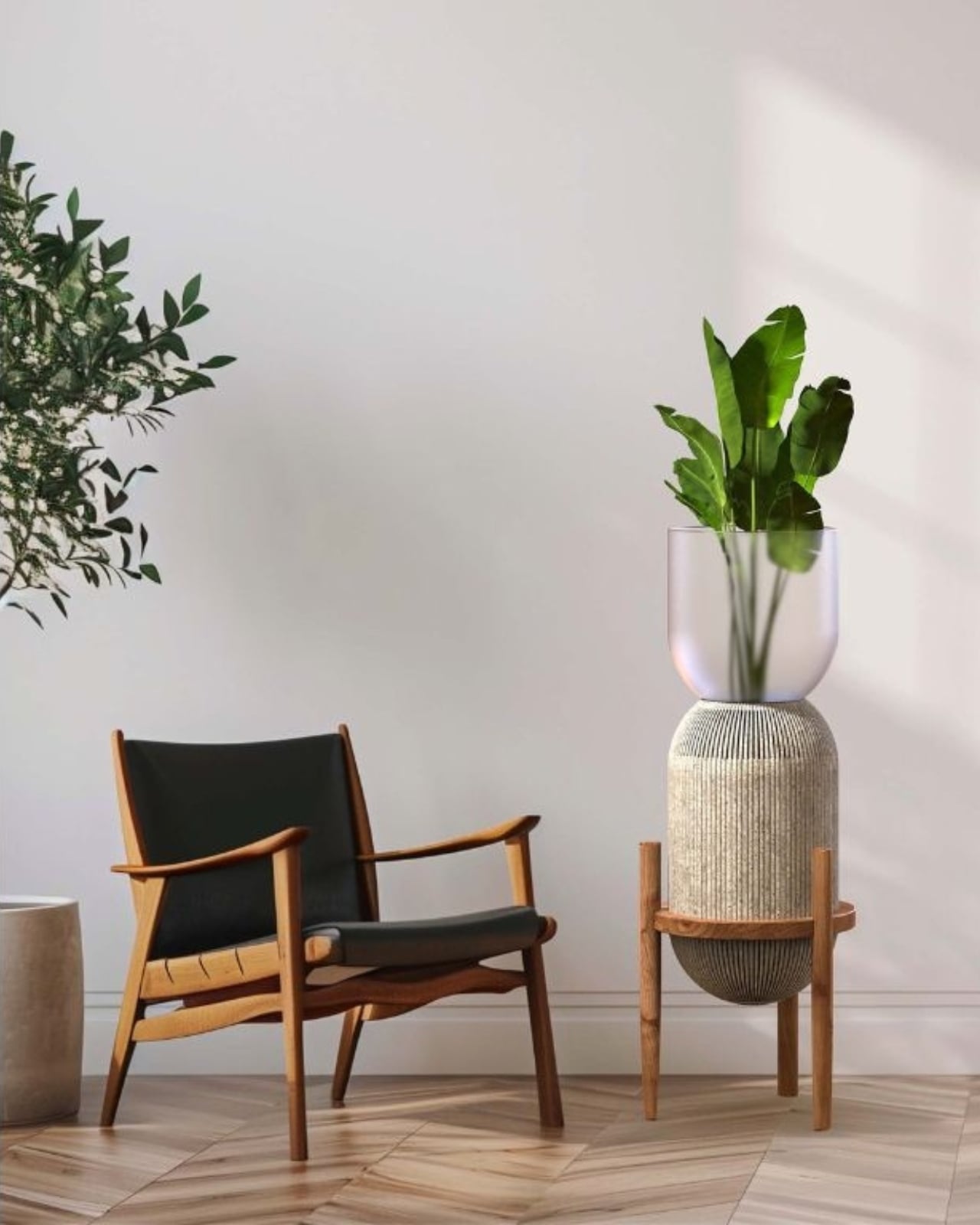
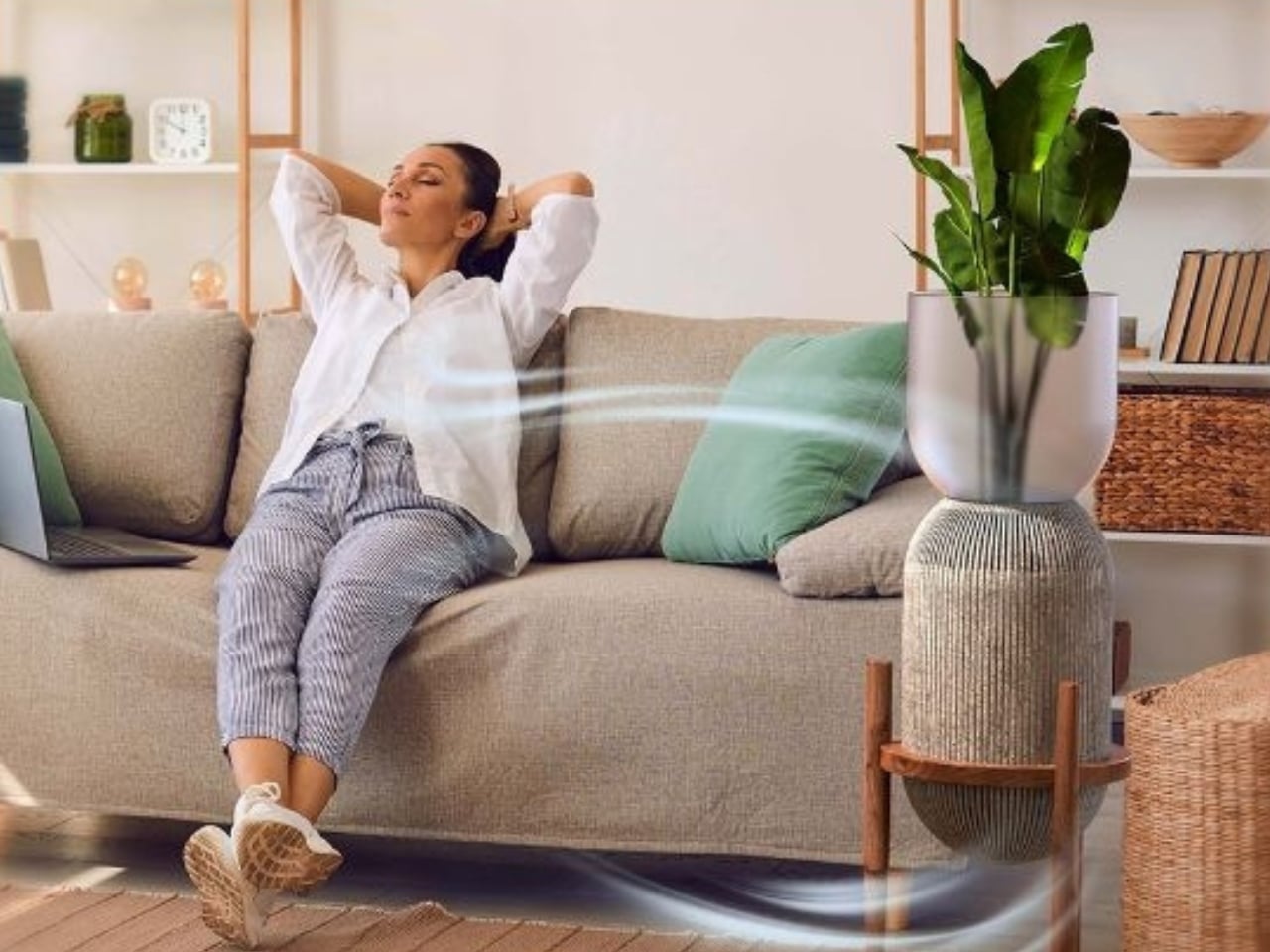
The first thing you notice is that it doesn’t look like an air purifier at all. It looks like a considered piece of furniture. The structure sits on a handmade walnut elevated stand, the kind of thing you’d see cradling a ceramic vessel in a curated Scandinavian living room. The body is encased in geopolymer concrete, a lightweight, sustainable alternative to traditional concrete, which gives it that raw, tactile quality that’s very much at home in contemporary interiors. And perched at the top is a smooth, translucent sandblasted glass vase holding a live air-purifying plant. It’s an elegant full-circle idea: the machine that cleans your air is literally growing something that cleans your air.
That layering of concept and material is the kind of design thinking that deserves real attention. Chaves didn’t just dress up a functional product and call it a day. The form, the materials, and the purpose are all pulling in the same direction, and you can feel that intentionality in every part of the object. Geopolymer concrete instead of plastic. Walnut instead of injection-molded legs. A glass vase that holds a living element rather than a decorative panel that hides the mechanics.
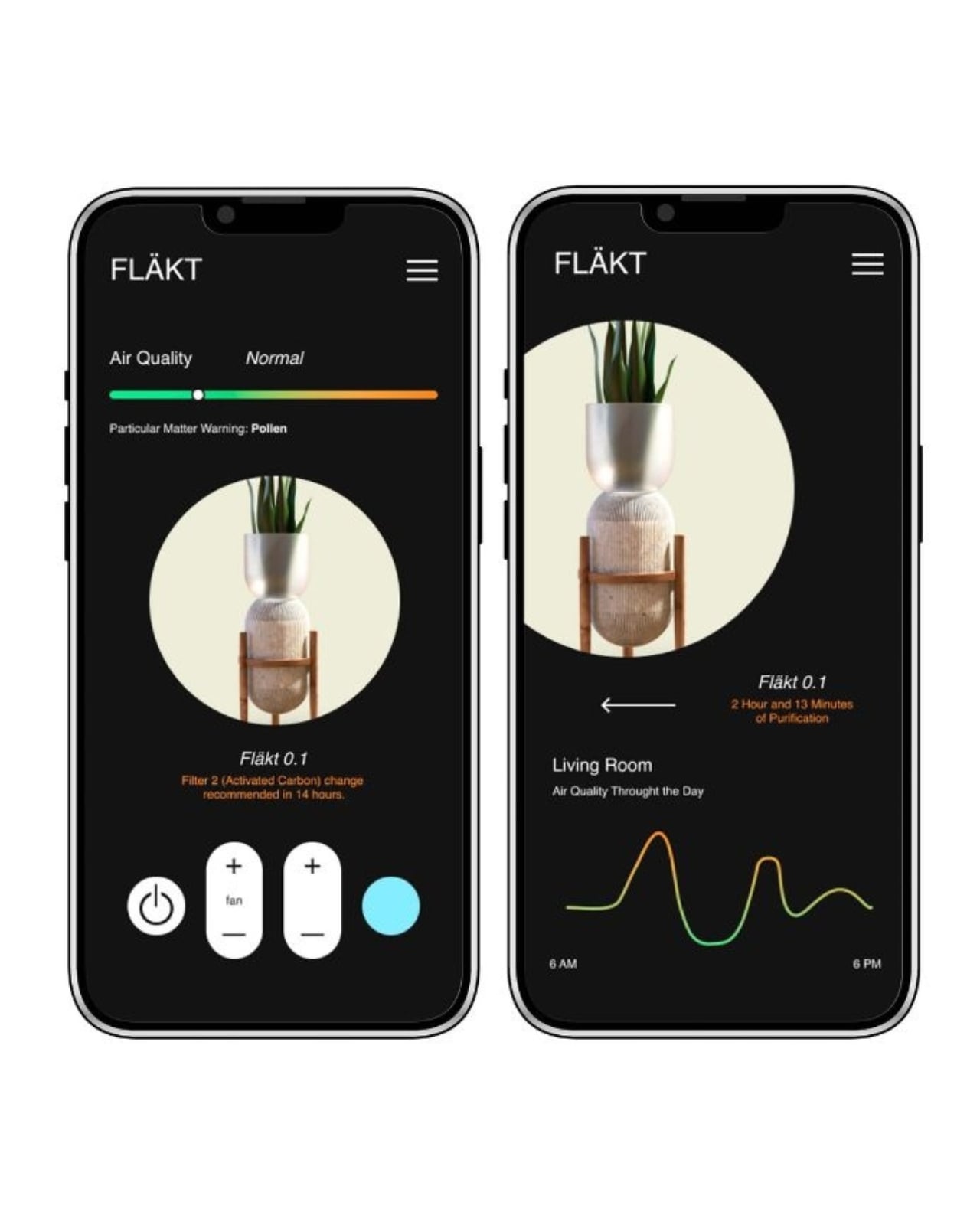
The companion app extends that same level of thoughtfulness into how you actually use it. Fläkt monitors air quality around the clock and activates autonomously when it detects pollutants or particulate matter, whether that’s pollen, dust, or anything else drifting through your space. The app surfaces this data clearly, tracking air quality throughout the day in clean, readable graphs, with timely notifications for filter changes. It’s the kind of transparency that most smart home products promise and rarely deliver with this much clarity. You’re not just handed a number and left to guess what it means. You’re given context, and that matters.
My honest take is that the air purifier category has been coasting on function alone for too long. We accept ugly hardware in our homes because we’ve been told utility and beauty are separate concerns, that you pick one or the other. Fläkt pushes back against that logic, and it does so without feeling precious or trying too hard. The design is grounded and warm, not performative. It belongs in a real room with real furniture and real life happening around it.
The decision to incorporate a live plant isn’t just a styling choice, either. It’s a statement about how design can reconnect us to something organic in spaces increasingly filled with screens and synthetic materials. A quiet confidence runs through that idea, and it makes Fläkt feel less like a tech product and more like a living object.
Whether or not Fläkt makes it to full production, it already does something useful: it raises the bar for what air purifiers are allowed to be. For a design that came out of a student project, that’s not a small thing. It’s the kind of work that tends to show up in mood boards before it shows up in stores, and that’s usually a pretty good sign.
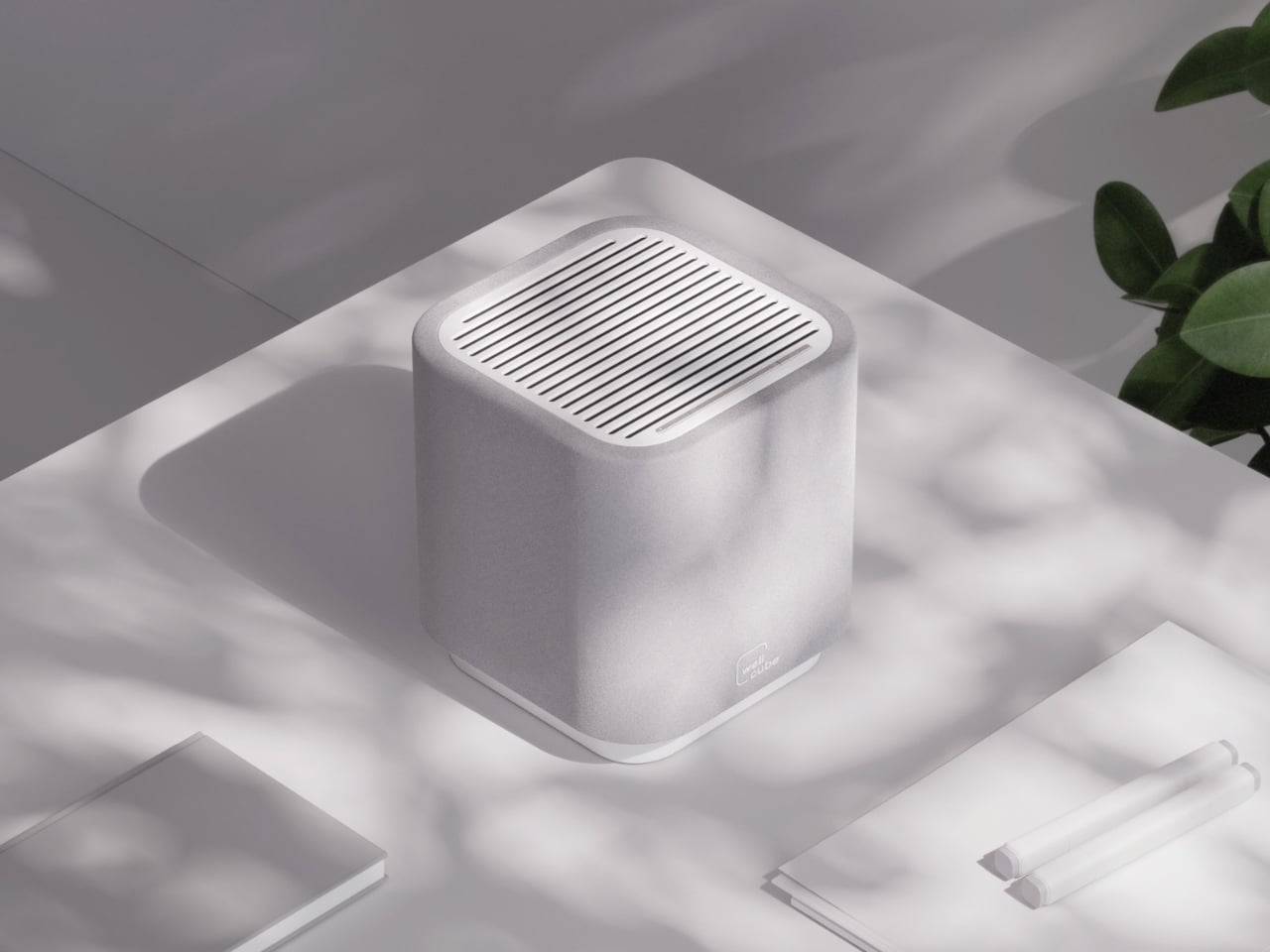
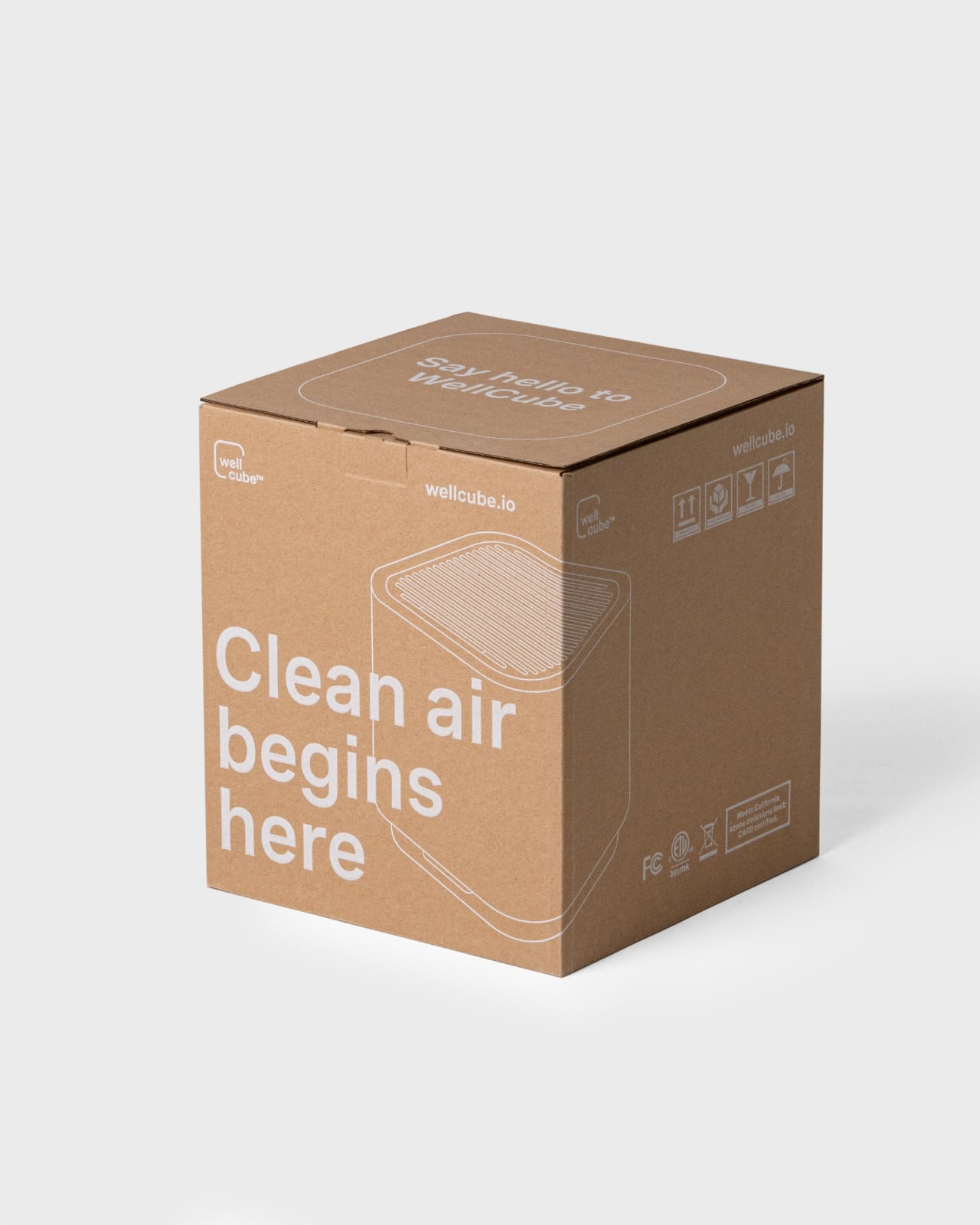
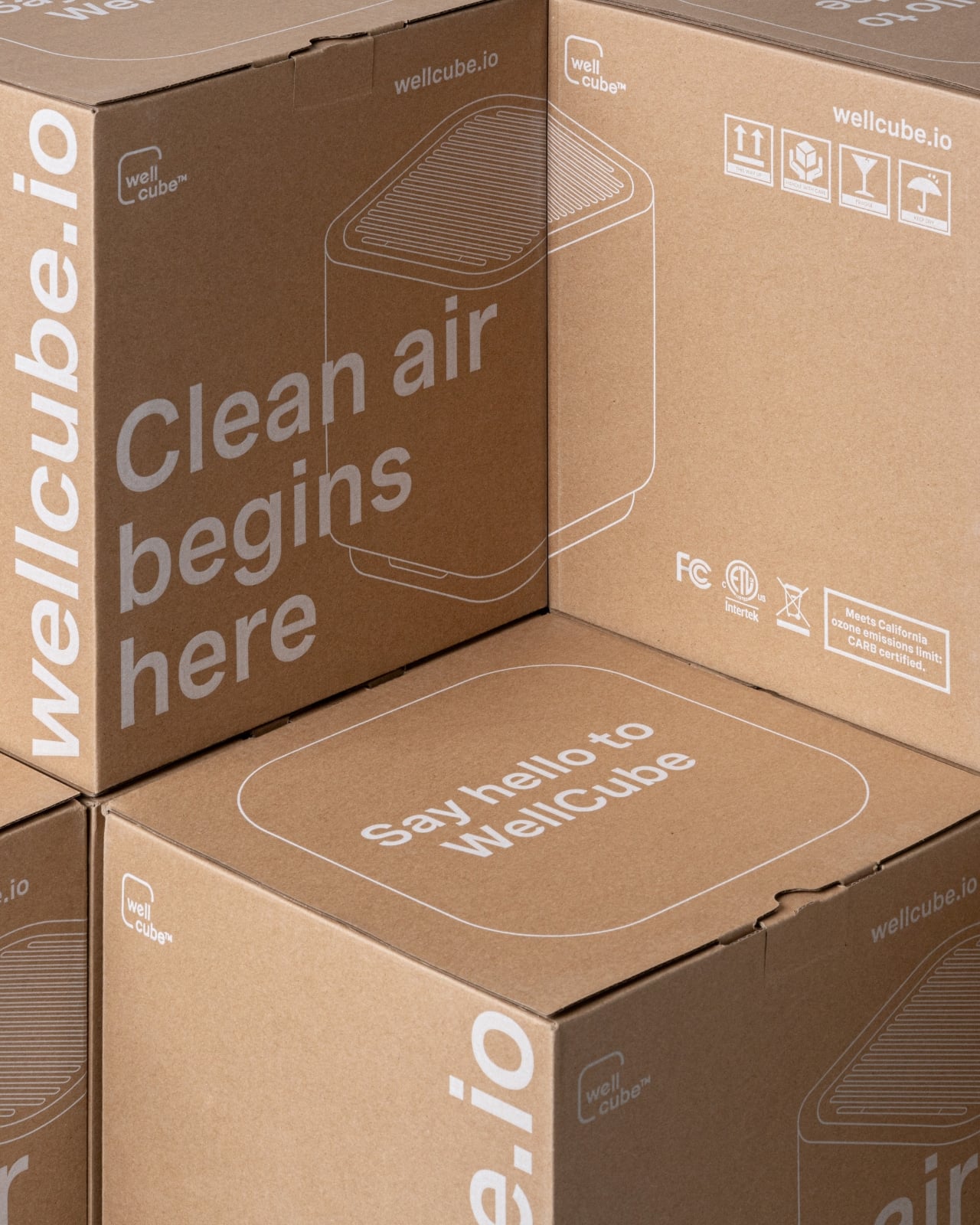
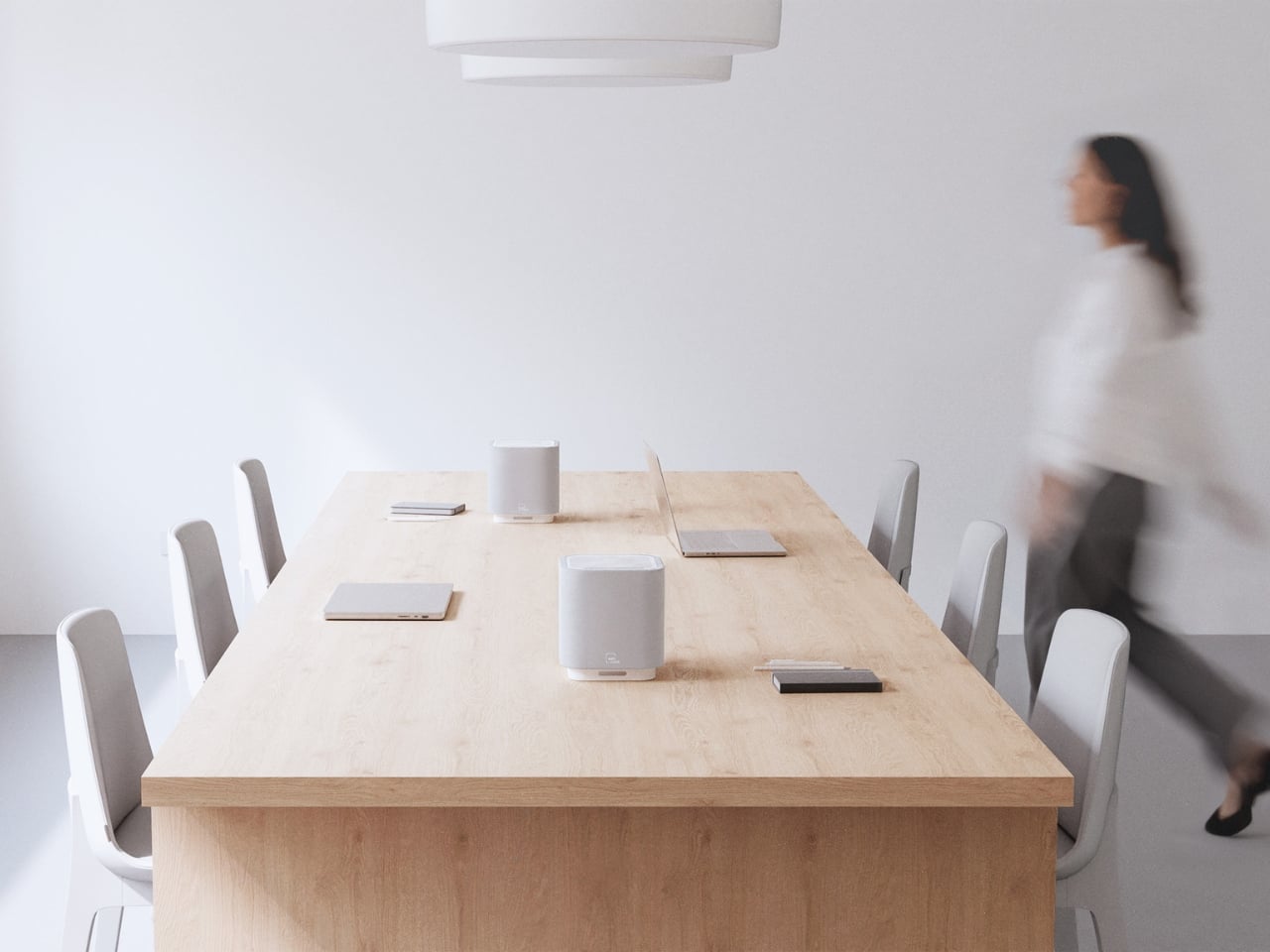
There’s a particular kind of object that design-minded people notice when they walk into a room. Not the artwork on the wall or the fancy ergonomic chair. It’s the small, considered thing sitting on a desk or a conference table that makes you stop and think, “wait, what is that?” The Delos WellCube is that kind of object.
Created by San Francisco-based studio Box Clever in collaboration with wellness technology company Delos, the WellCube represents a design challenge that most air purifier manufacturers have been getting wrong for years: how do you make something people actually want in their workspace instead of something they tolerate?
The brief was specific. Delos has spent more than a decade researching the relationship between indoor environments and human health, and they wanted to create the first connected platform of hyper-localized air purifiers designed specifically for the modern office. Eight built-in sensors. HEPA filtration. Real-time environmental monitoring. All the technical capabilities you’d expect from a serious wellness device.
But here’s where it gets interesting. Box Clever’s job wasn’t just to house all that technology in a box. It was to create something that employees, facilities managers, and companies would genuinely choose to place on desks and in shared spaces. Something that doesn’t broadcast “corporate compliance equipment” the second someone walks into a room. The result is a study in how thoughtful industrial design can completely reframe a product category.
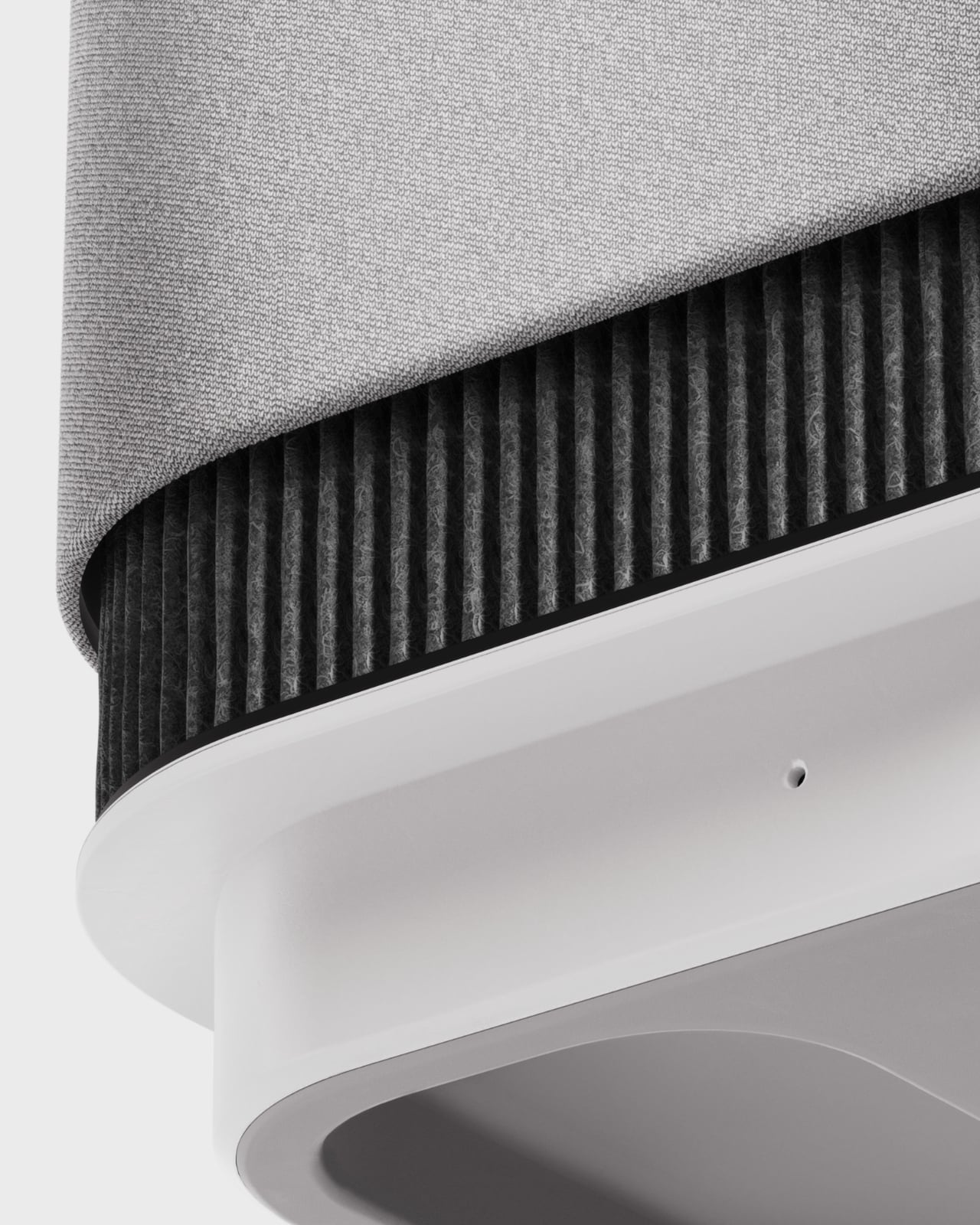
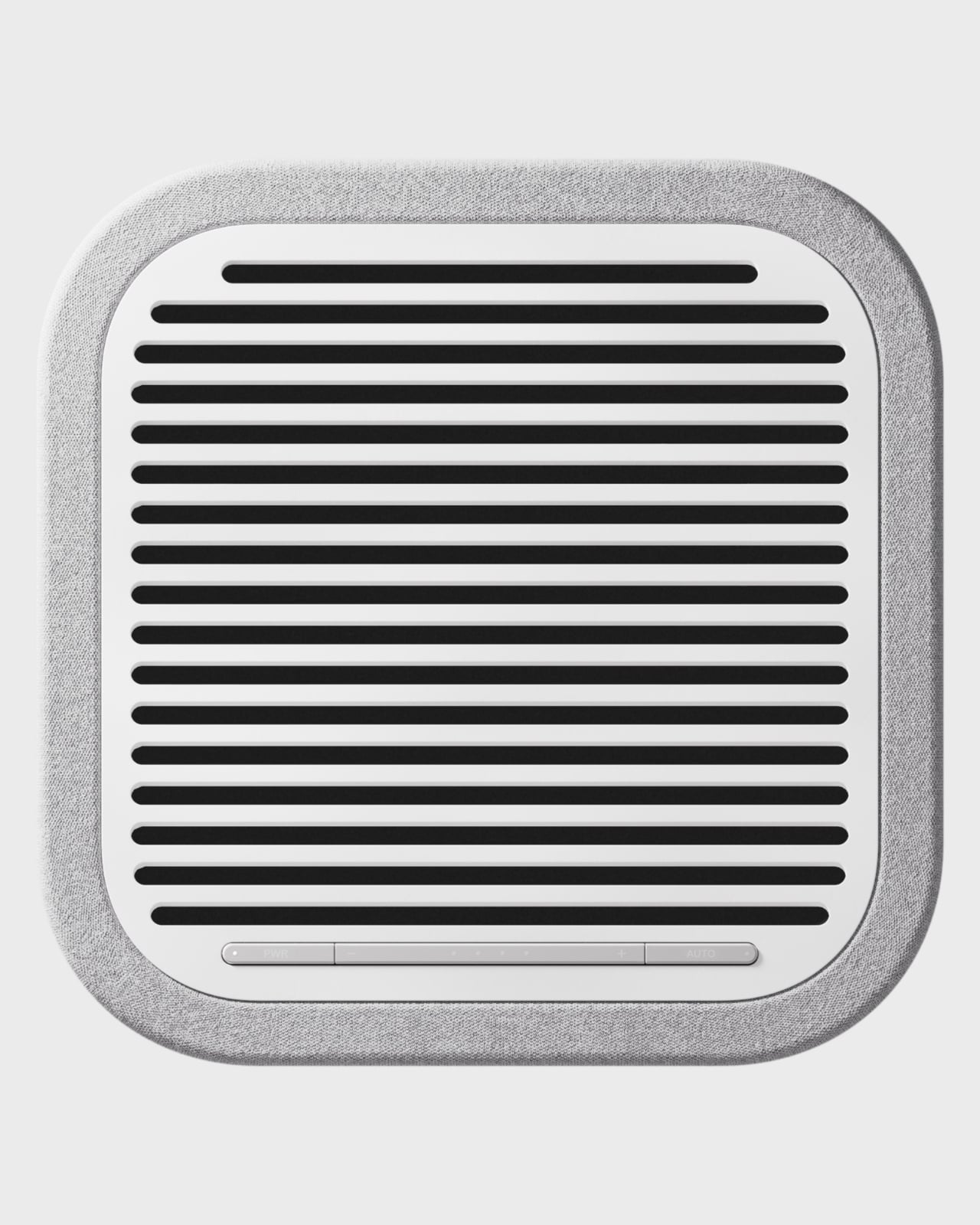
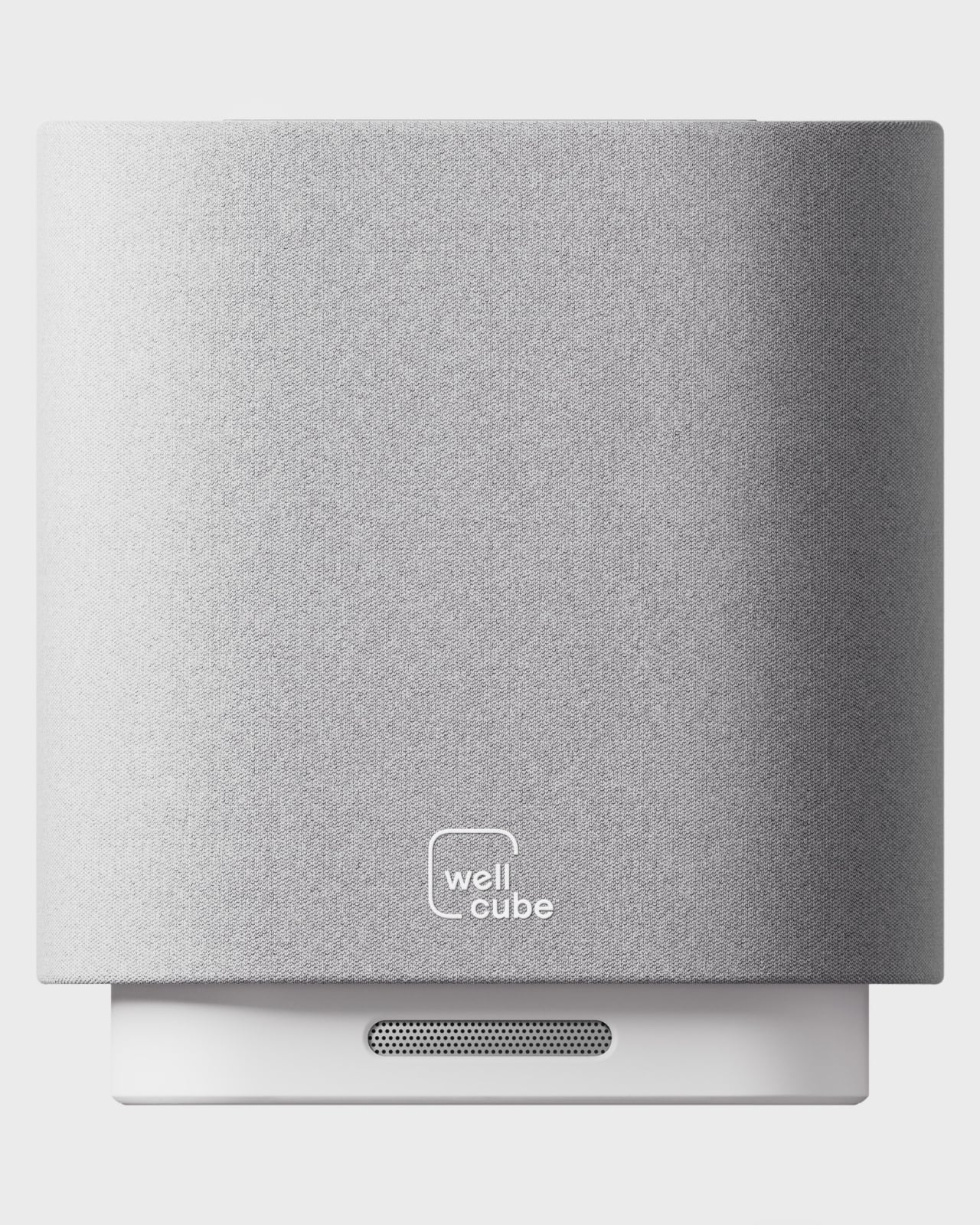
The WellCube sits compact on a desk or table, roughly the size of a Bluetooth speaker. It delivers 99.97% filtration efficiency at 0.3 microns, covering up to 250 square feet while operating at a whisper-quiet 32 to 52 dBA. Those eight sensors track air quality, temperature, humidity, occupancy, lighting levels, and noise simultaneously, creating what Delos calls an insightful view of the invisible health of office spaces.
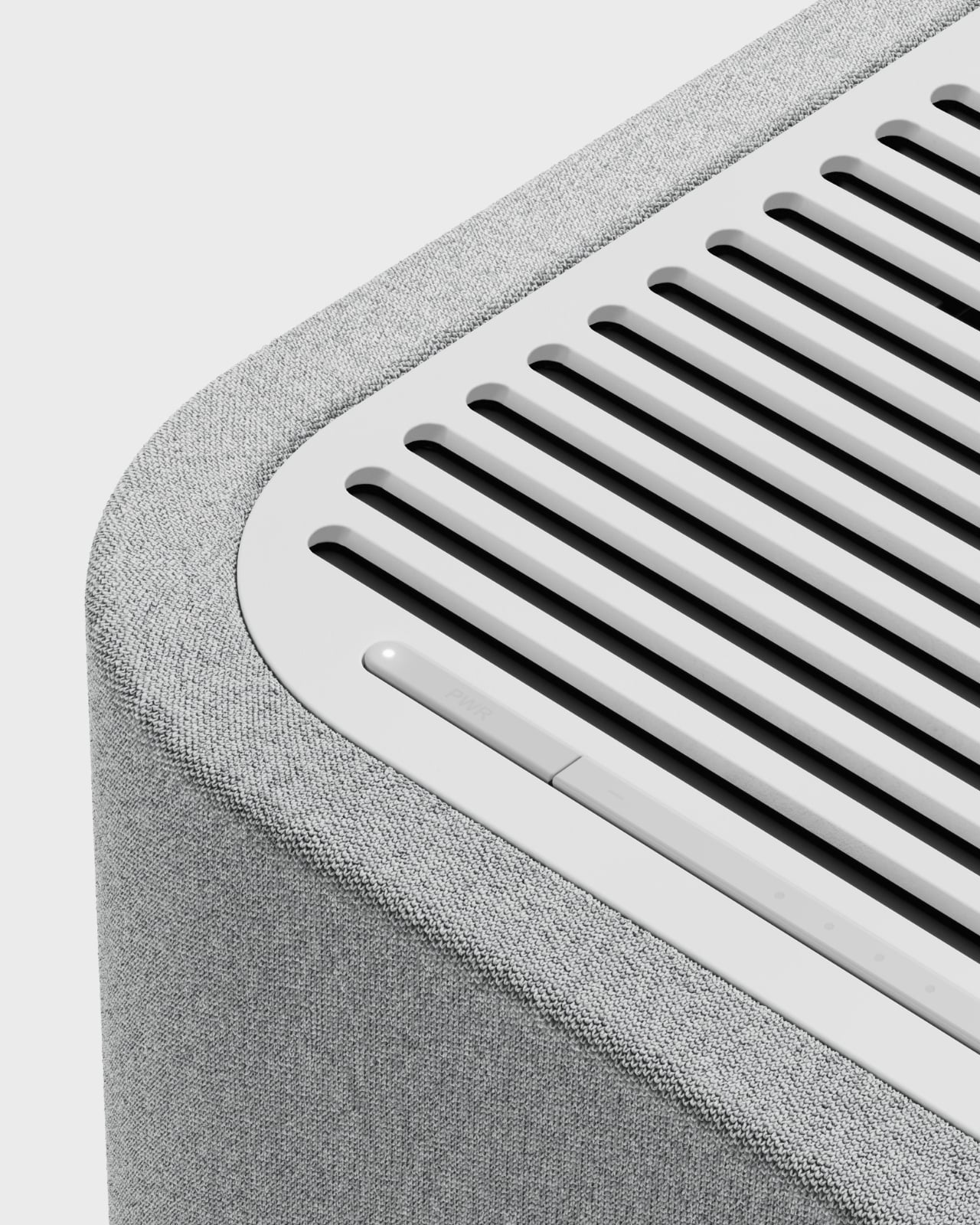
But what makes this design competition-worthy is how Box Clever handled the exterior. The outer layer is a soft, interchangeable fabric cover that completely transforms the visual language of what an air purifier can be. Instead of looking clinical or industrial, it reads as approachable and residential. The fabric isn’t just aesthetic either. It doubles as access to the replaceable filters inside, so maintenance stays simple and unobtrusive. Companies can customize the cover to match any environment’s color palette, which means the same device can feel at home on a personal desk, in a collaborative meeting space, or in an executive conference room.
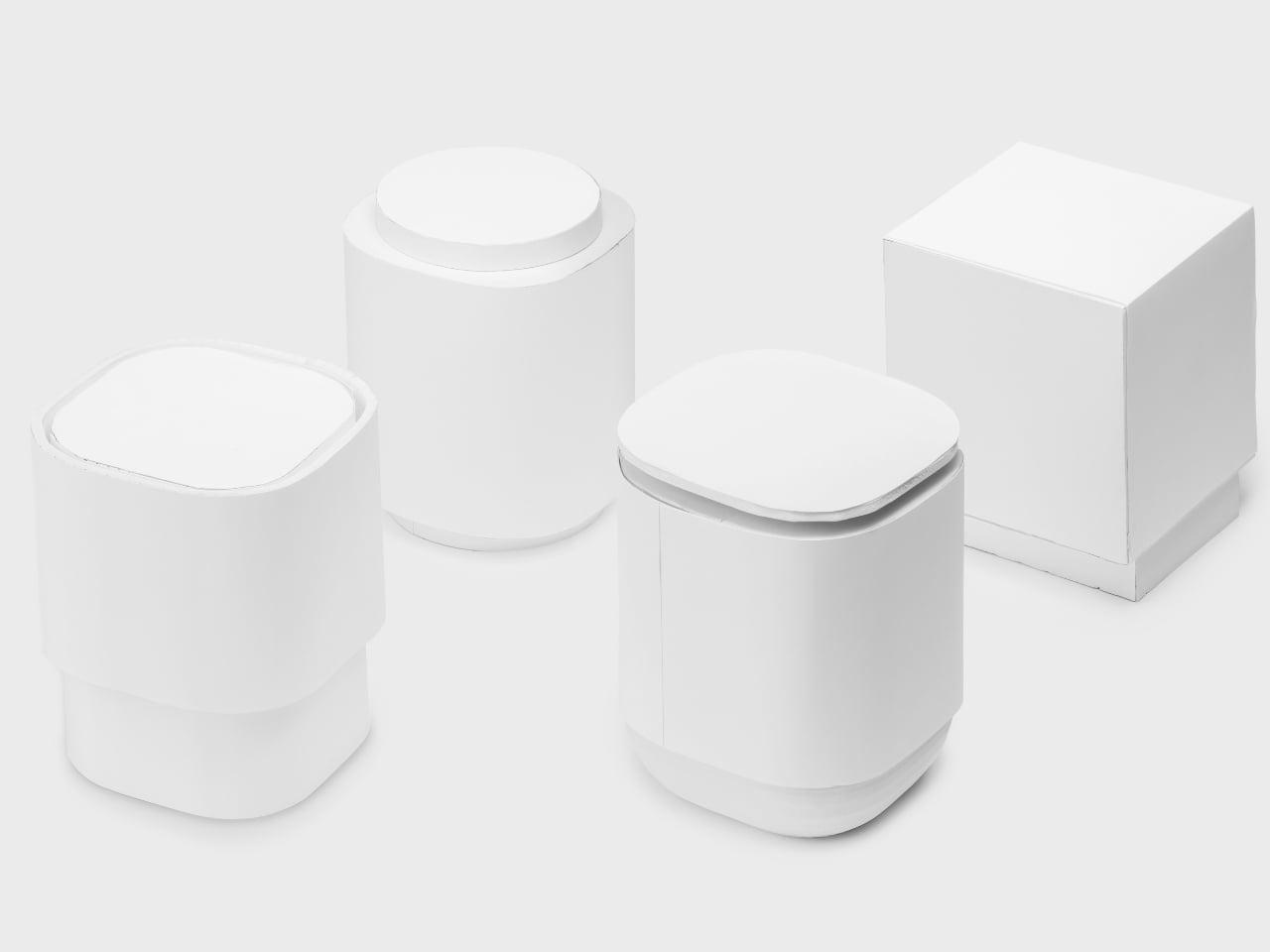
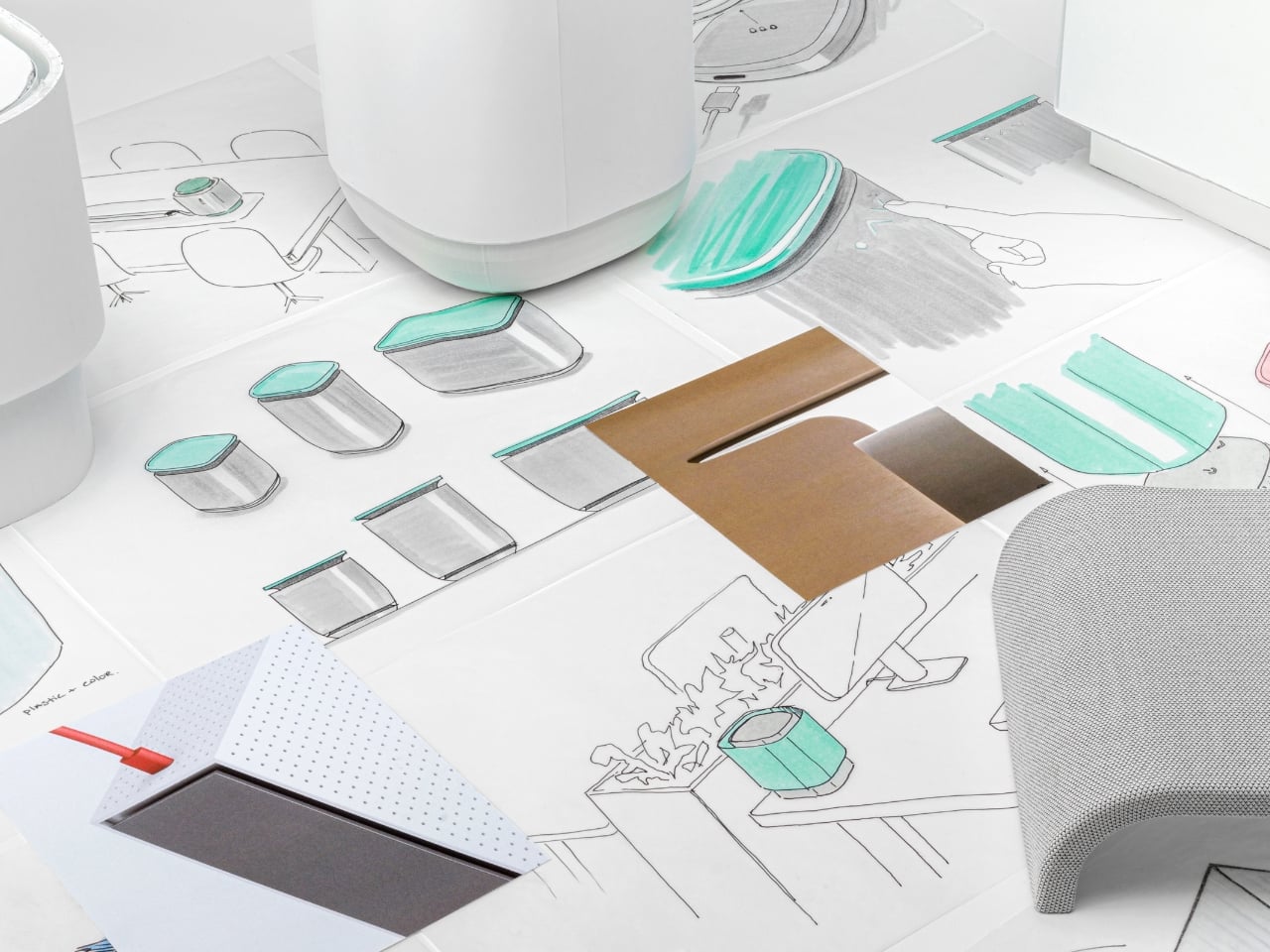
The design development process tells the real story. Box Clever’s documentation shows walls covered in sketches, early foam models exploring different proportions, material samples testing various fabric weights and textures, and iteration after iteration before landing on dimensions that feel, as the team describes it, just right. It’s the kind of rigorous, unsexy work that separates objects that merely look designed from objects that are actually designed all the way through.
What elevates this project beyond a typical product redesign is how seriously both teams took the challenge of balancing technical performance with human-centered design. Office wellness technology typically falls into one of two traps: highly capable but clinical-looking, or beautiful but functionally superficial. The WellCube pushes back on that false choice entirely. The sensor data does more than just measure. It feeds real-time information that helps facilities managers and companies optimize spaces for healthier outcomes, room by room, desk by desk. Think of it as giving buildings the ability to communicate what they actually need. But that sophisticated backend never makes the device itself feel complicated or intimidating to the people using the space.
This is exactly the kind of design thinking that contests and showcases exist to highlight. It’s not just about making something look better. It’s about fundamentally rethinking what a product category can be when you start with human needs instead of engineering specifications. If the future of office wellness is going to look anything like this, it’s going to be a lot more inviting than the sterile solutions we’ve been stuck with. And a lot better looking on your desk.
Air purifiers tend to look like medical equipment and come with apps you didn’t ask for. They arrive with dashboards, push notifications, and Wi-Fi setup rituals that turn “cleaner air” into another thing to manage on a phone. Most of them sit in corners behind plants because they look clinical, and no one wants to acknowledge the white plastic box while having guests over for dinner.
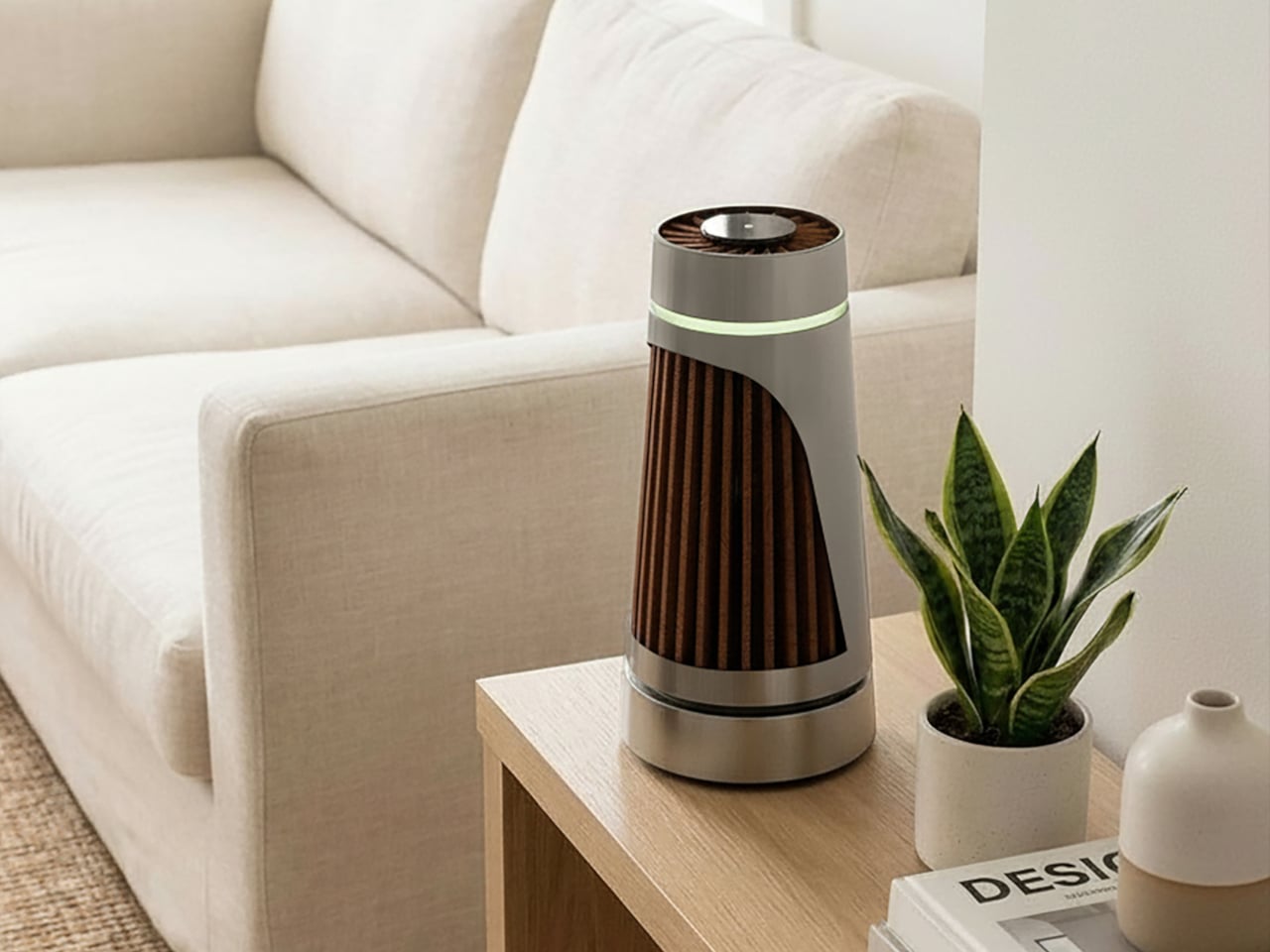
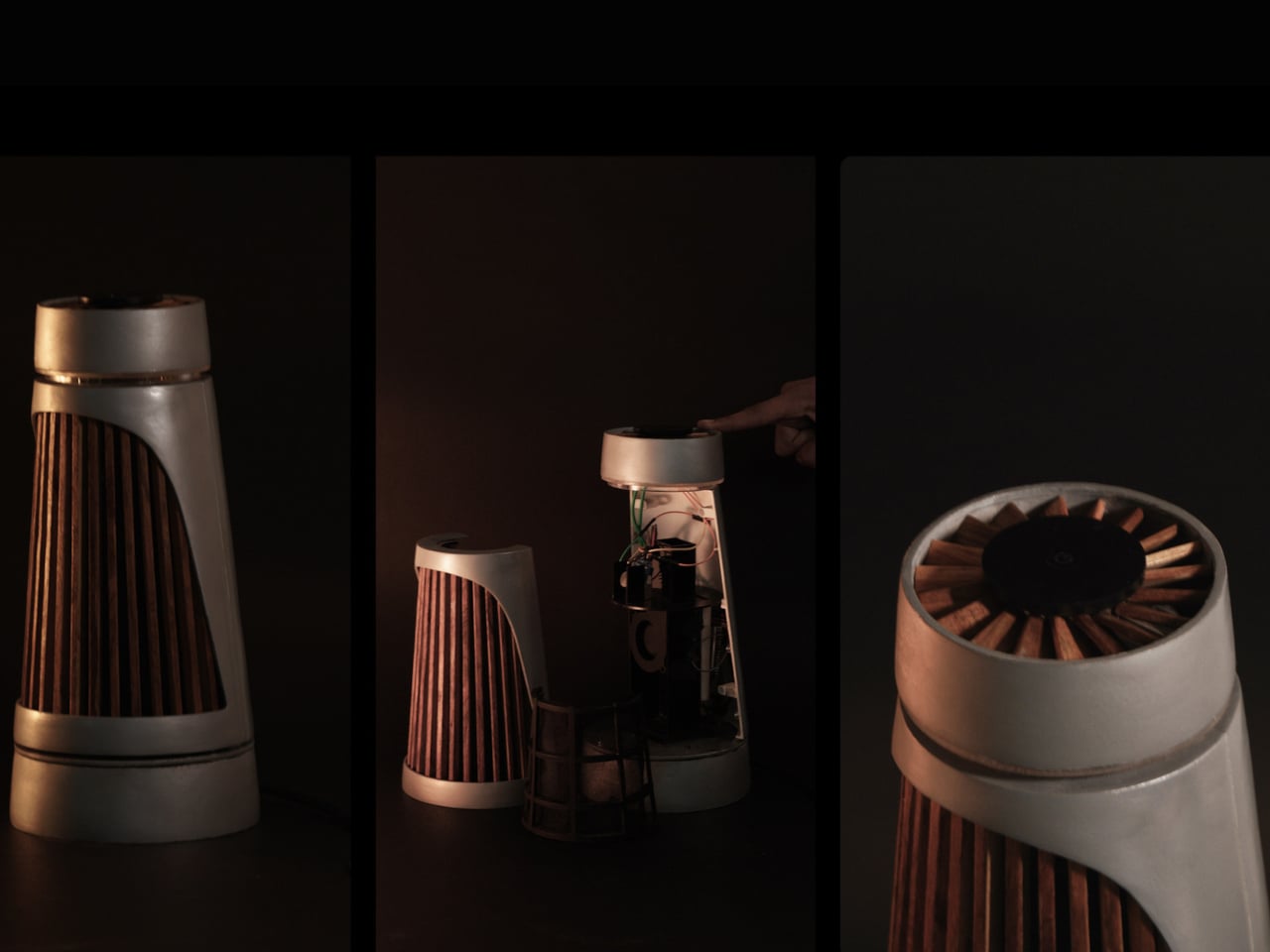
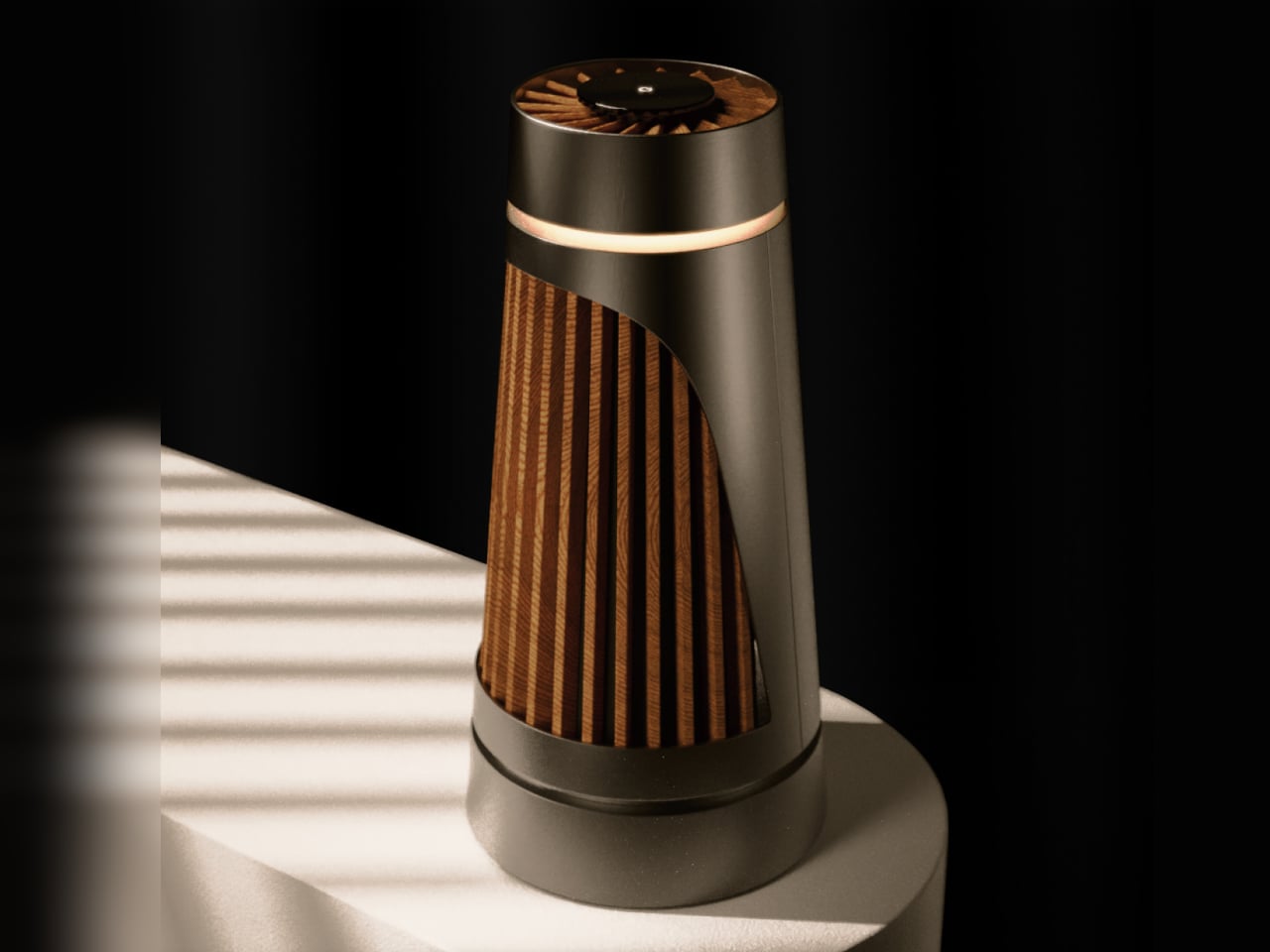
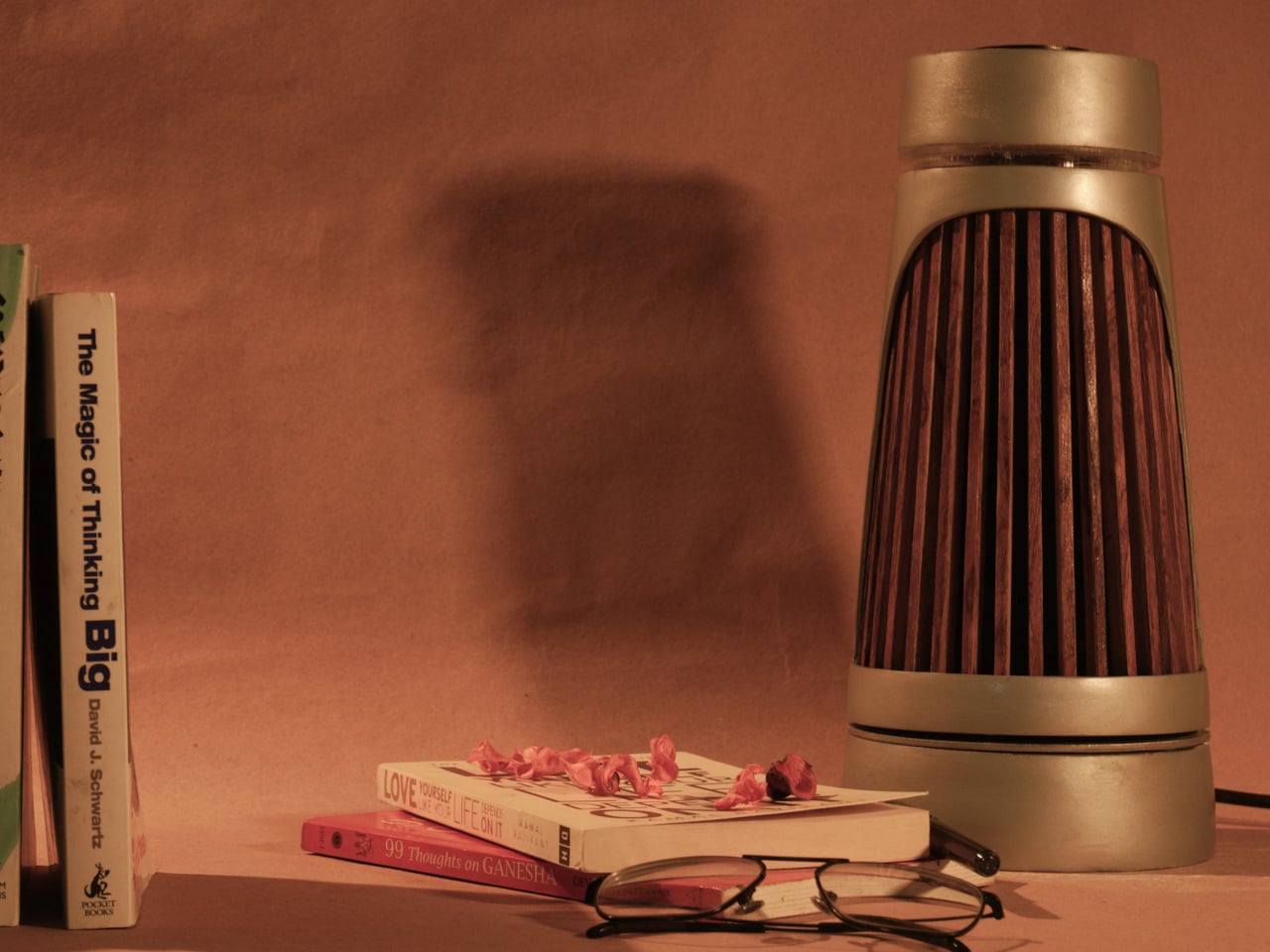
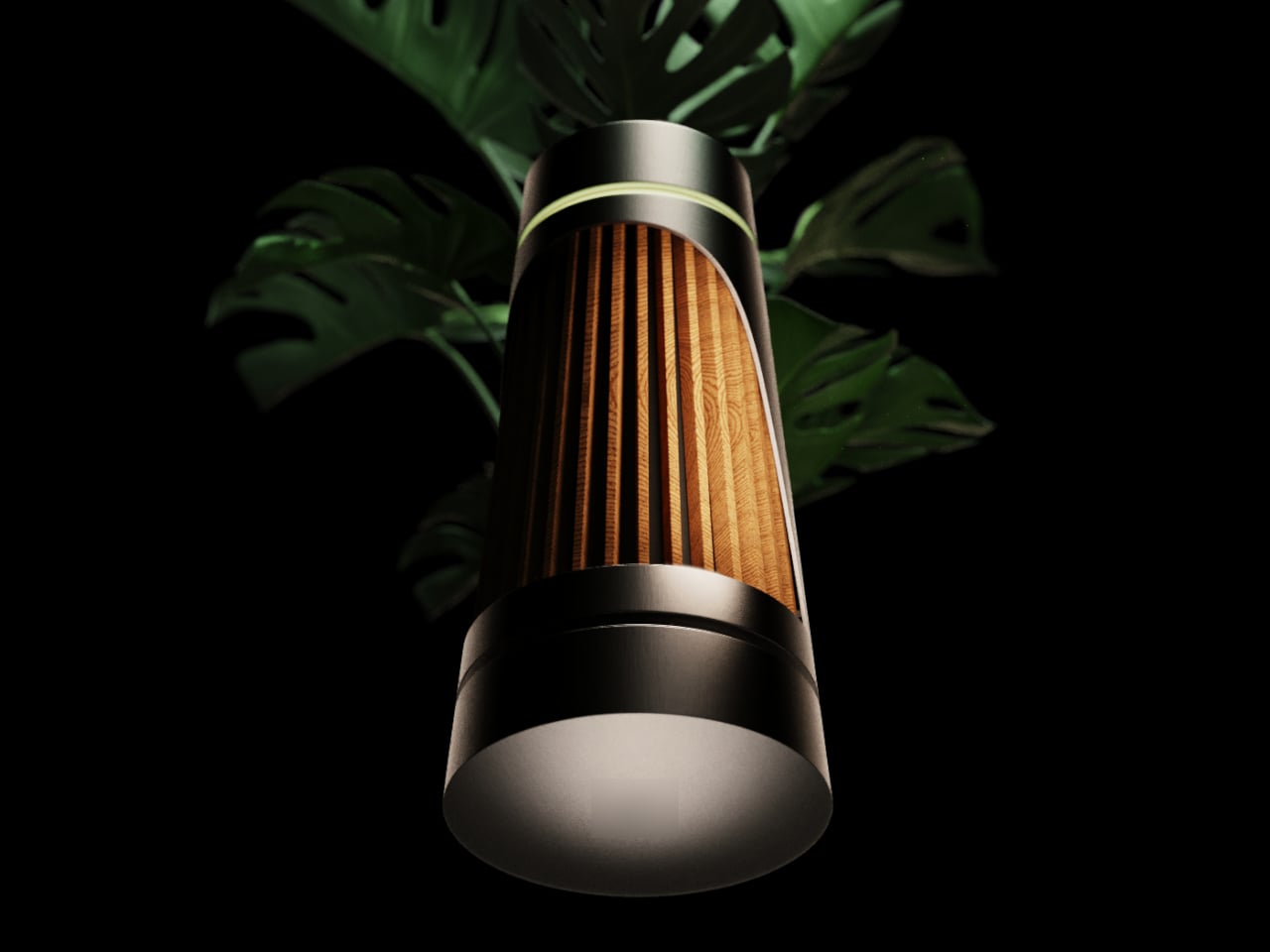
The Beolab Air 1 is a concept air purifier designed to sit in a room without announcing itself. It was developed as a student project and draws inspiration from the calm, material-driven design language of Bang & Olufsen’s Beolab line, though it’s not affiliated with the company in any way. The goal was to see what happens when you apply that kind of sculptural thinking to clean air, instead of just adding another screen to the wellness toolkit.
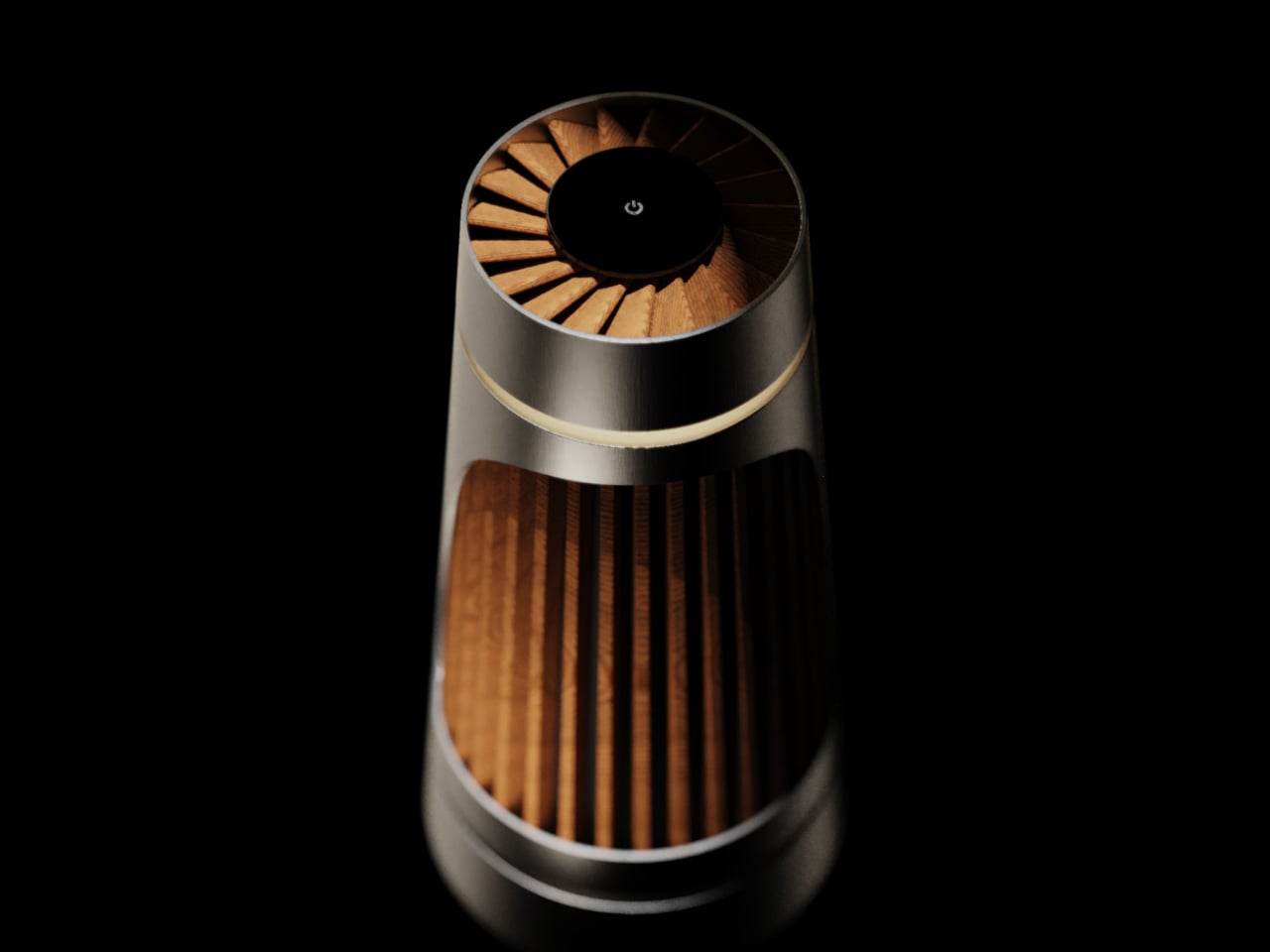
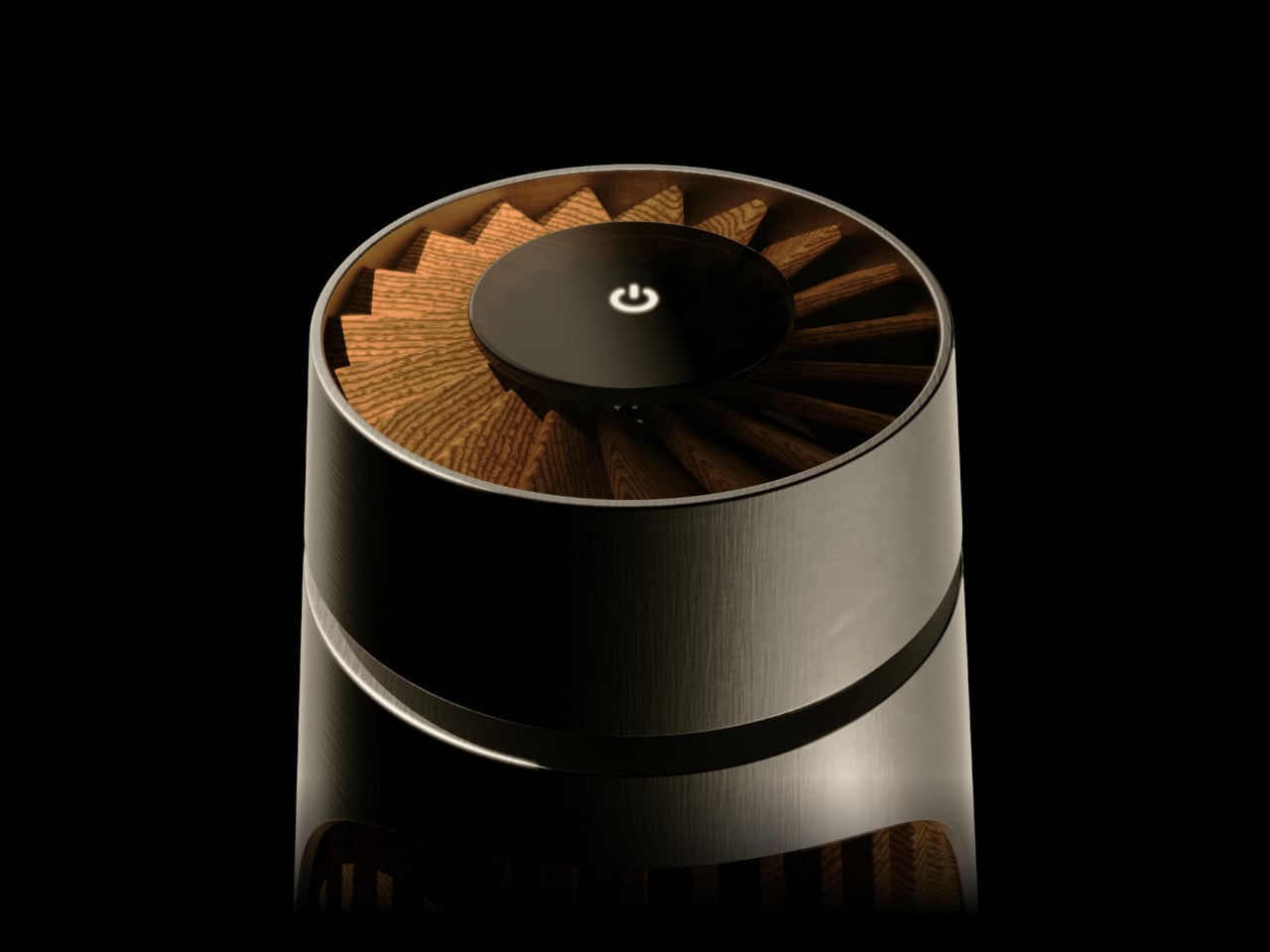
The most refreshing part of the concept is the interaction model. A single button press is all it takes to start, with no app pairing, no IoT setup, and no onboarding routine. The project frames this as “digital detox,” which is a reasonable description when most purifiers try to sell you sensor graphs and weekly air quality reports. You turn it on the way you’d turn on a lamp or a speaker, then leave it to work.
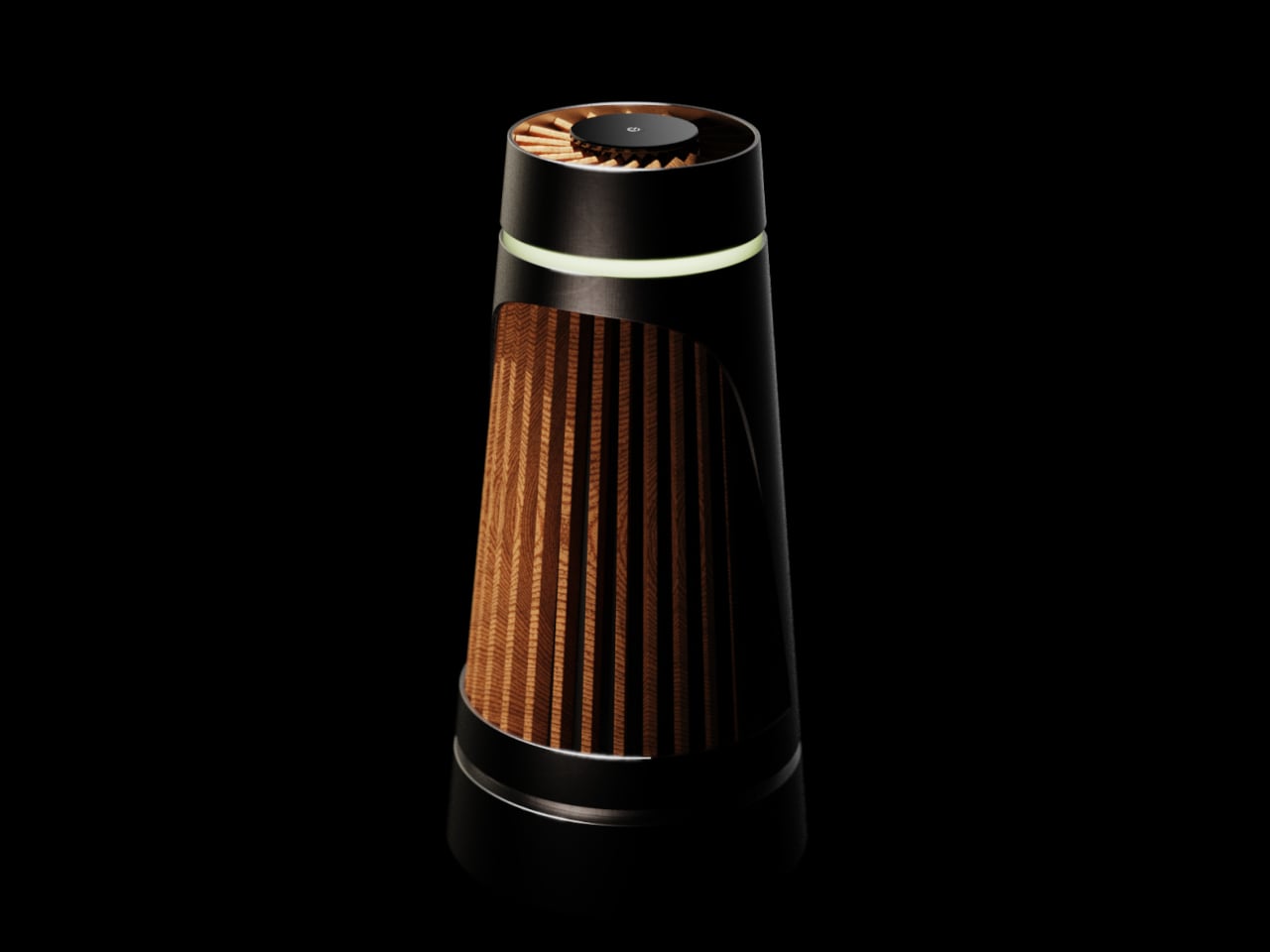
The materials do a lot of the talking. Angled teak wooden ridges wrap the body and function as vents for filtered air, so the aesthetic choice also serves a purpose. Textured aluminum handles the rest of the exterior. The project’s own critique of the category is blunt: plastic yellows and looks cheap over time, while wood and metal age better. A purifier built to look like a piece of considered furniture has a better chance of earning a spot on a sideboard than one that resembles a hospital accessory.
Under the surface, there’s a plausible engineering stack. A high-efficiency BLDC fan delivers strong airflow while staying quiet, a HEPA filter handles particulate capture, and an MQ135 gas sensor pairs with PM2.5 sensing to monitor air quality without forcing anyone into an app. The concept keeps the monitoring internal and the feedback subtle, a soft ambient light band that changes gently rather than a display demanding attention.
Of course, that ambient feedback is the whole point. Clean air is invisible and usually silent, and a purifier that communicates the same way feels more appropriate than one with a scrolling PM2.5 count on a bright panel. You can check in when you feel like it, and the rest of the time it just works.
The concept calls out a genuine gap in the category: people want wellness that integrates quietly into a room, not hospital aesthetics, and yet another app. Whether or not Beolab Air 1 ever gets built, asking what a purifier looks like when treated with the same care as a premium speaker is a question the category probably needed someone to ask.
It doesn’t give me any pleasure whatsoever to admit I come from India, a country where an AQI of 150 is considered ‘a normal day’. People living in the capital city of Delhi are accustomed to AQI hitting highs of 400 on bad days, where a single breath of air is equivalent to smoking a cigarette. It’s a terrible condition to live through, and almost everyone owns an air purifier that gets strategically placed in either the bedroom or the living room, in the hopes that this one tiny device will be able to do something… just something to clean the air around it.
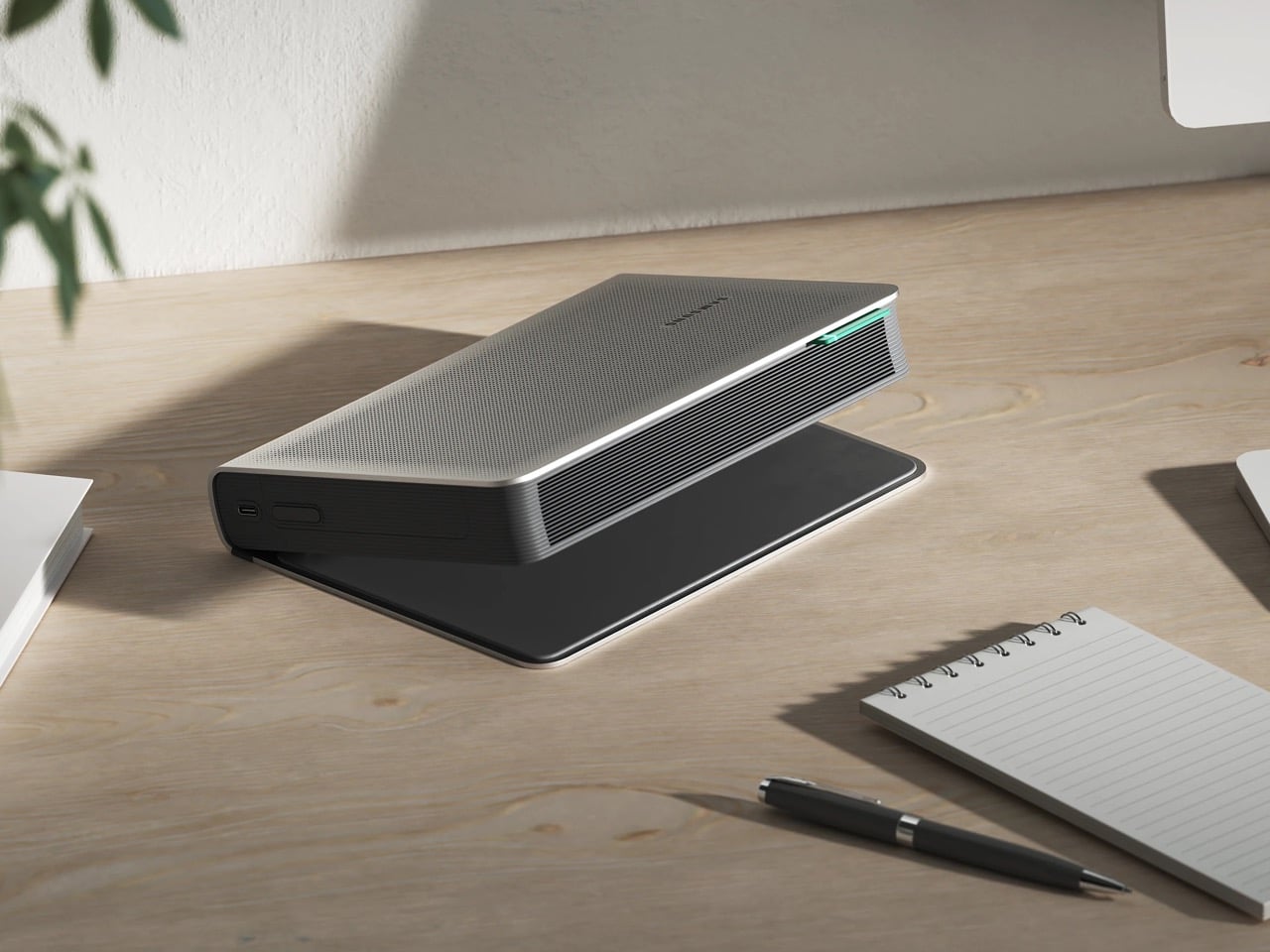
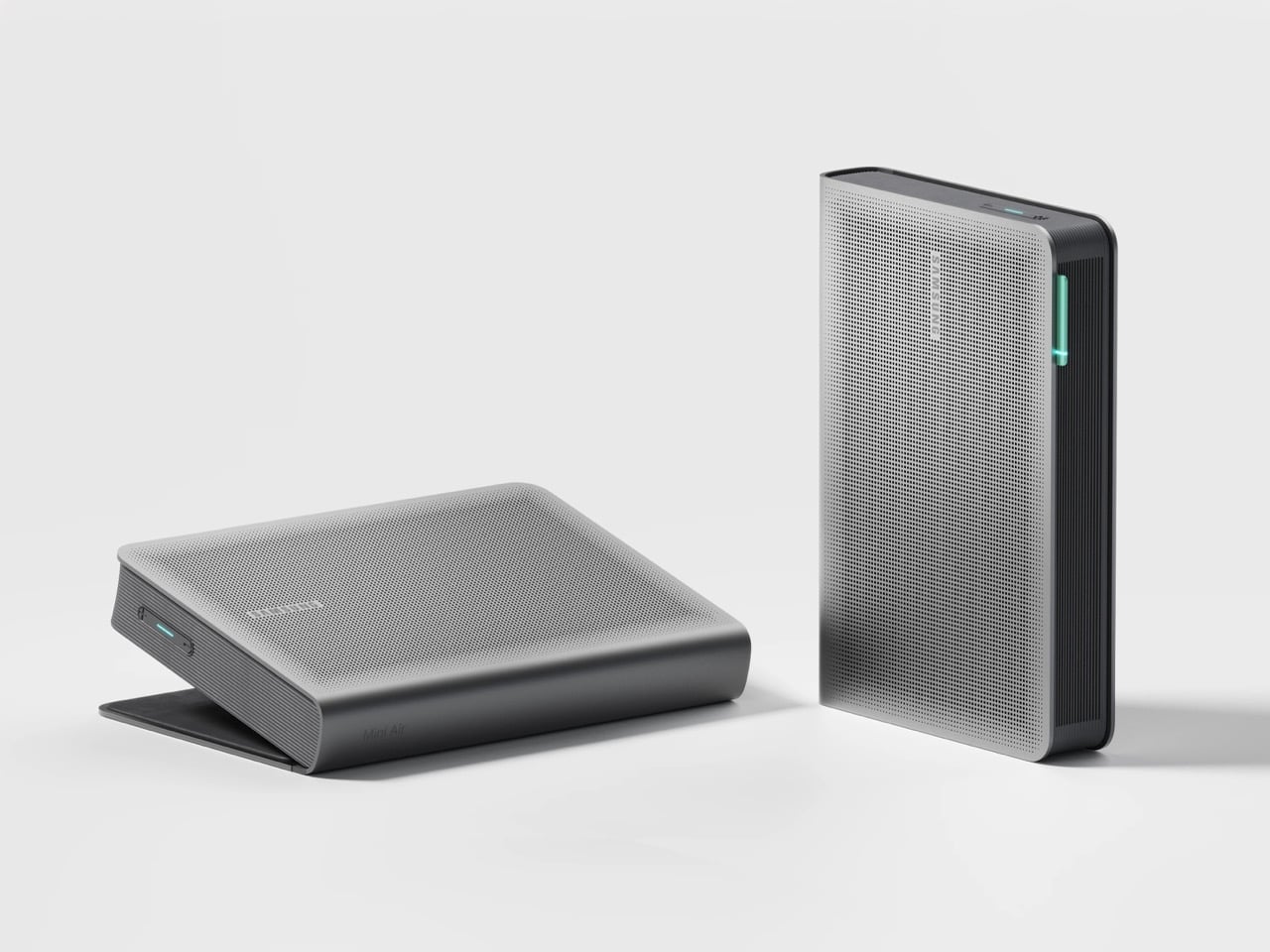
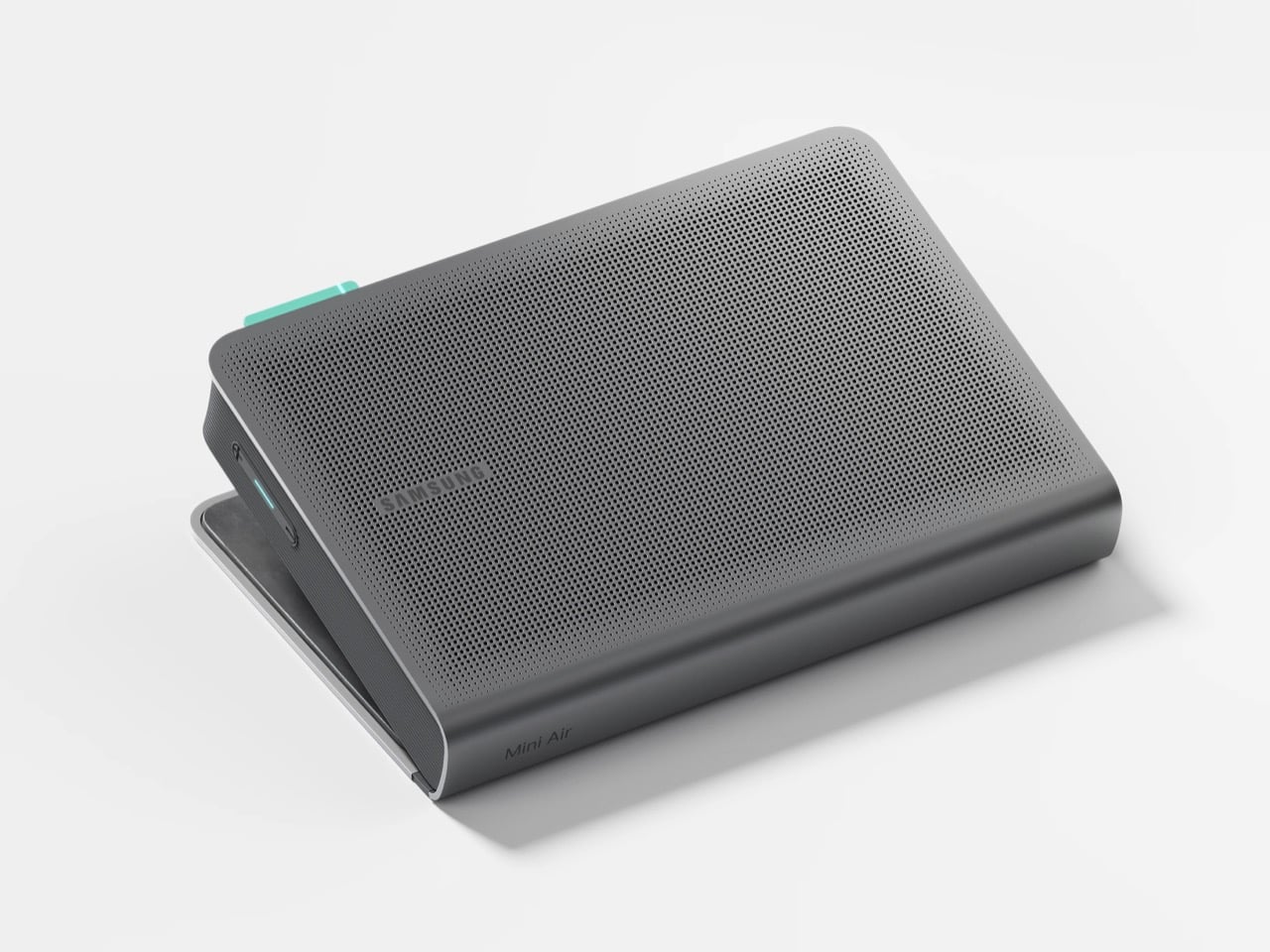
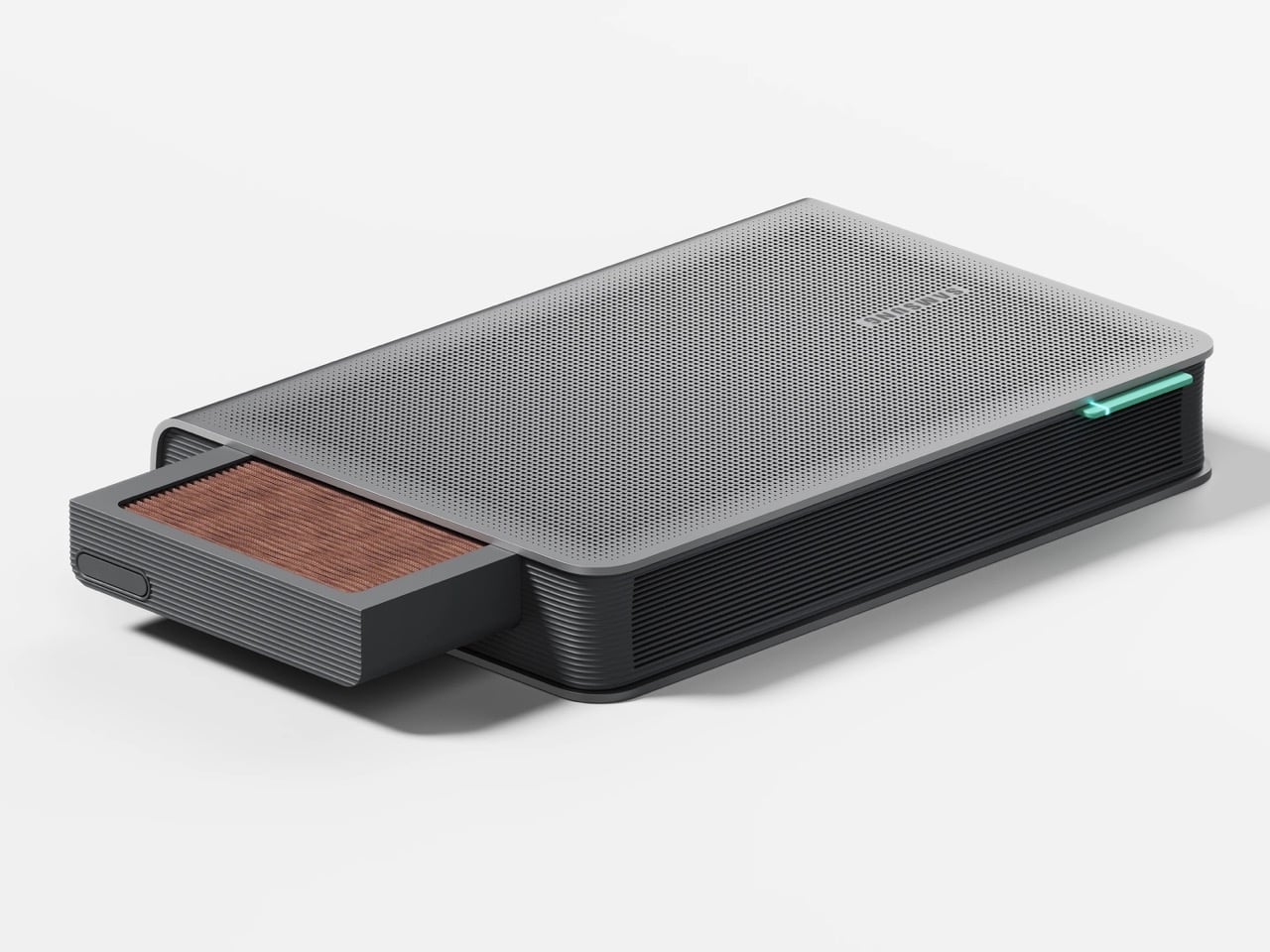
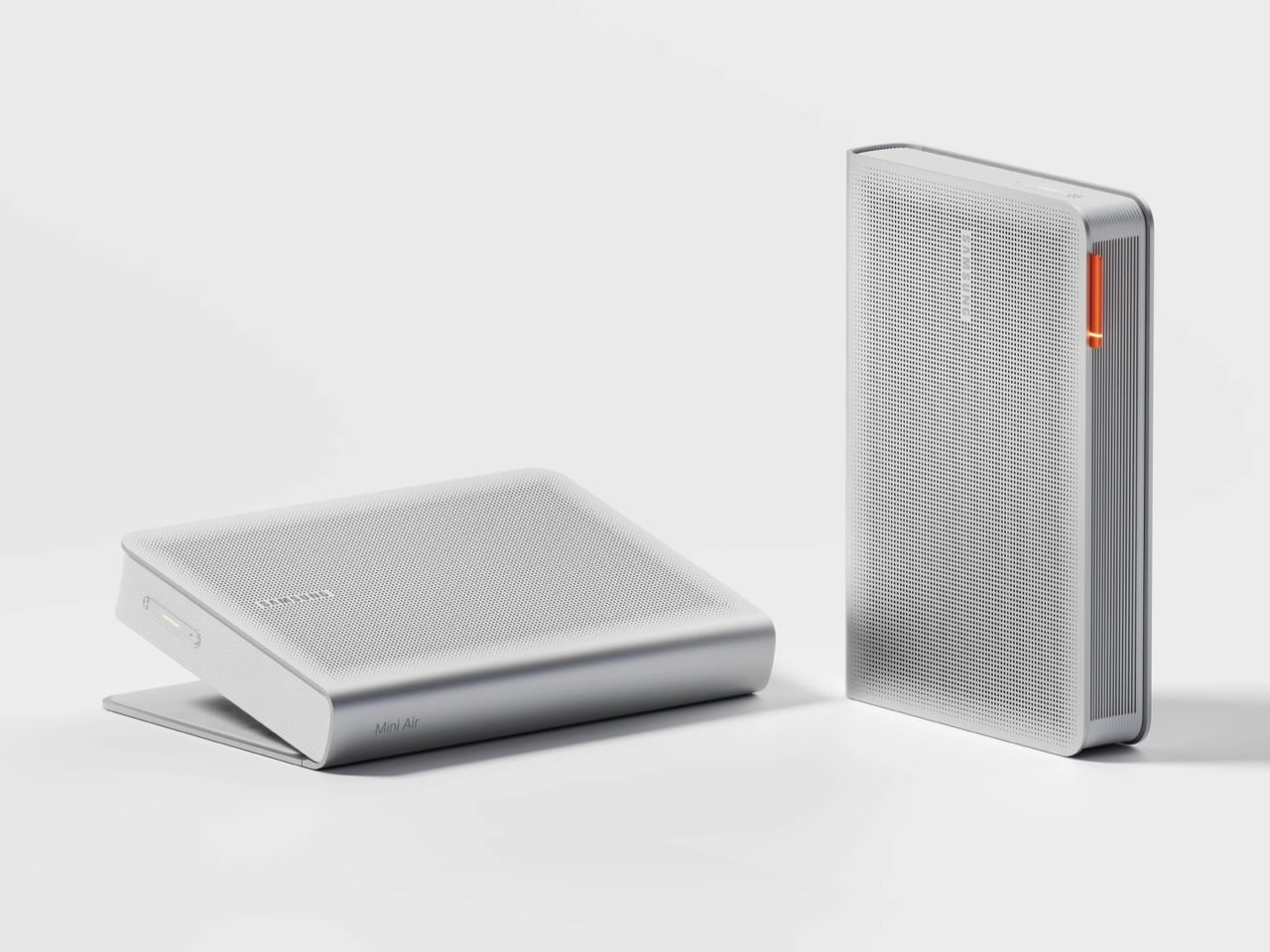
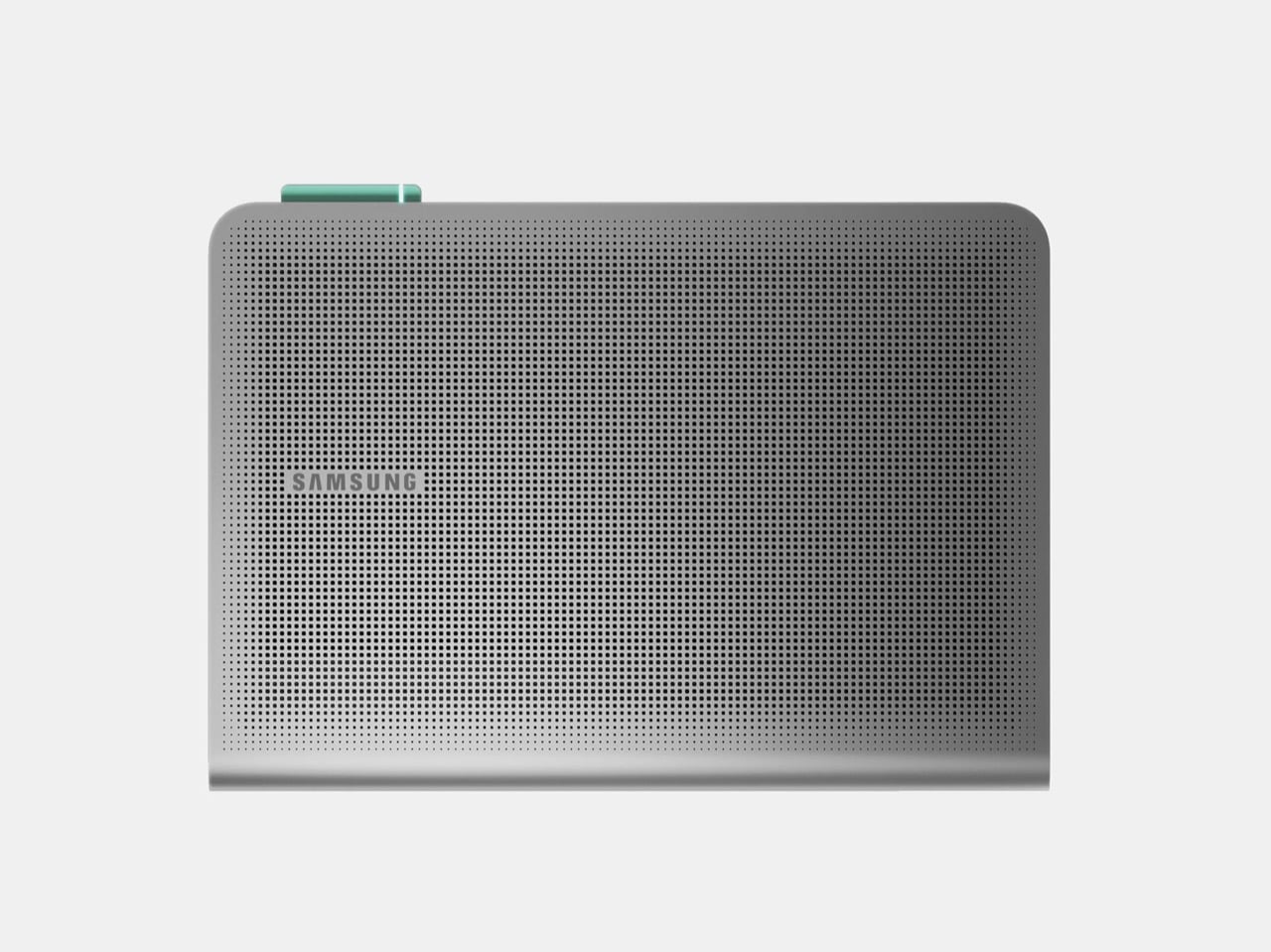
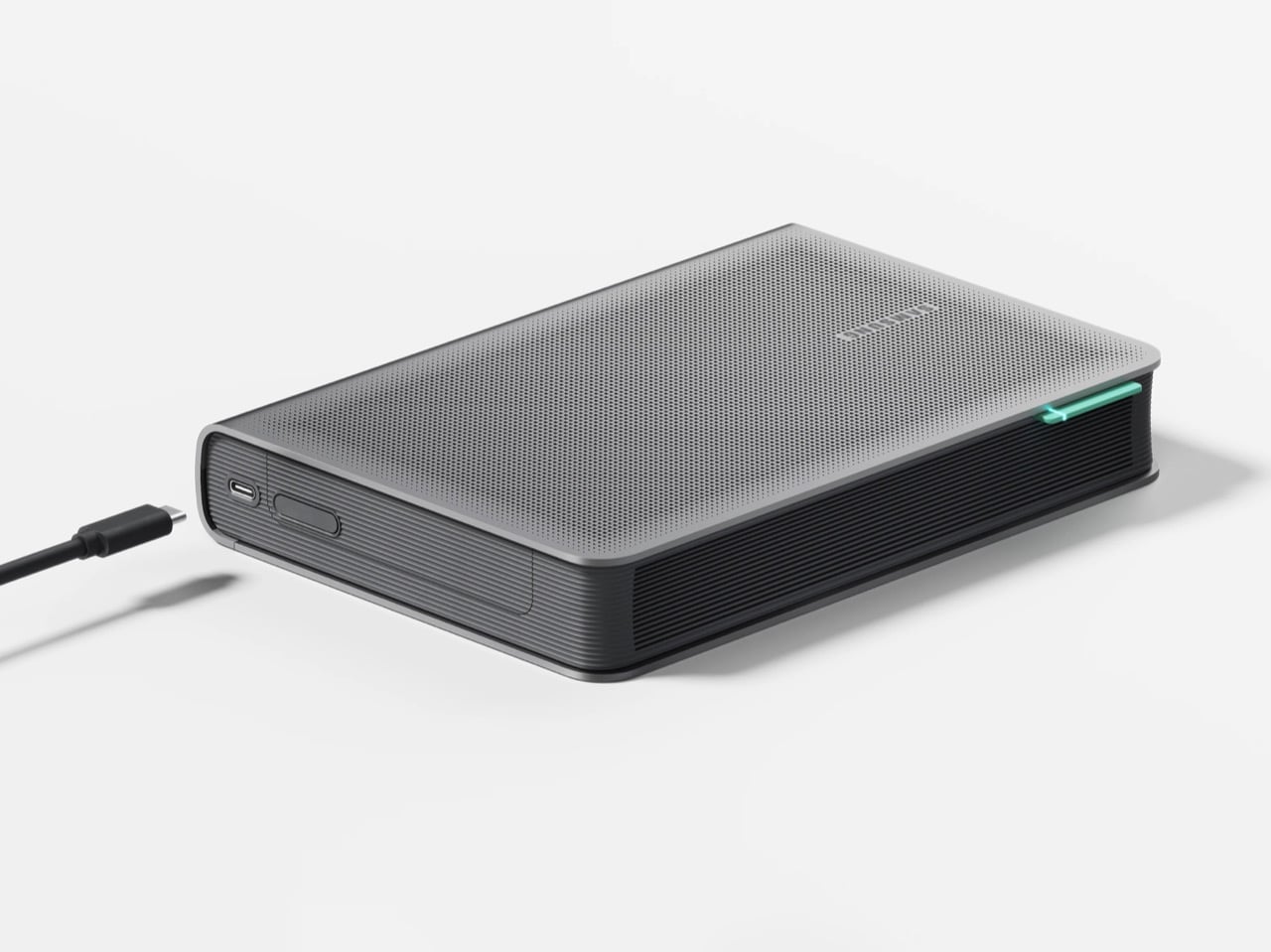
While that approach is commendable, the portable air purifier segment is still something to be explored. Imagine a tiny air purifier, small as a book, designed to be carried around from room to room with you, so that you’re always breathing clean(ish) air wherever you sit. This concept from Samsung takes on the literal shape of a hardcover book, and can be carried around with you from one room to another. The all-metal design feels premium to the touch, and opens up in ways that allow you to prop the purifier either vertically or horizontally for optimal airflow targeting.
Designer: intenxiv inc.
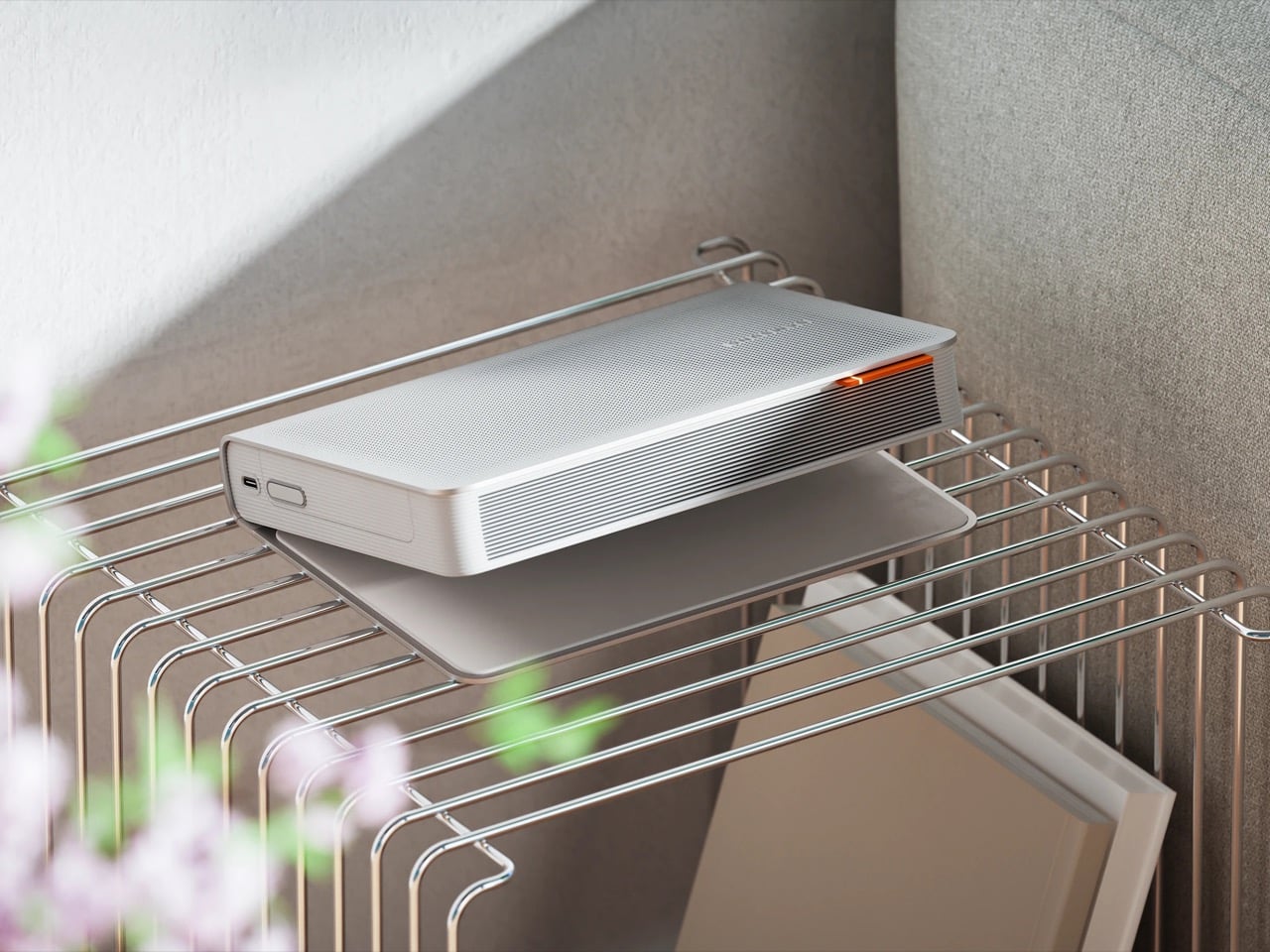
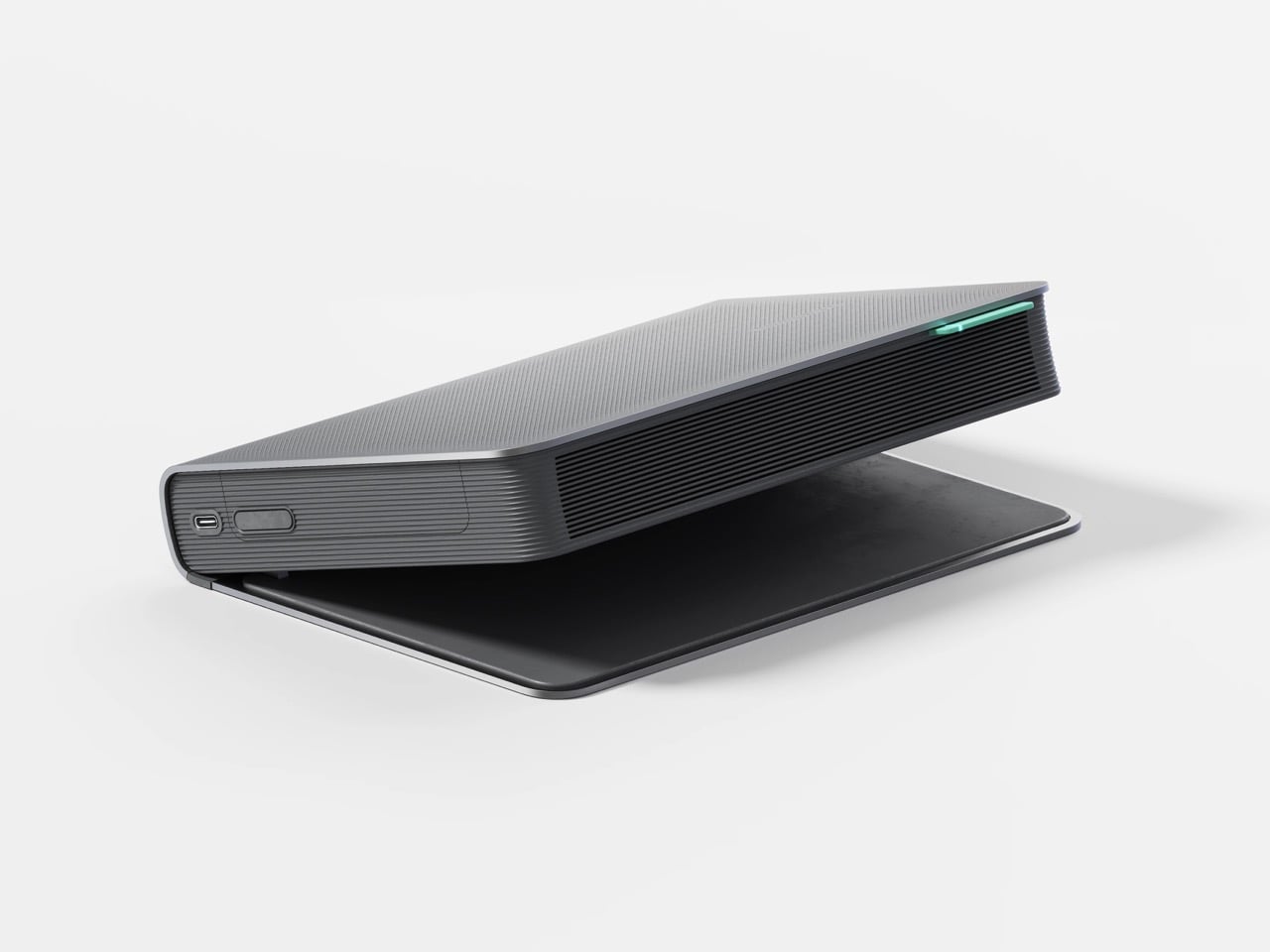
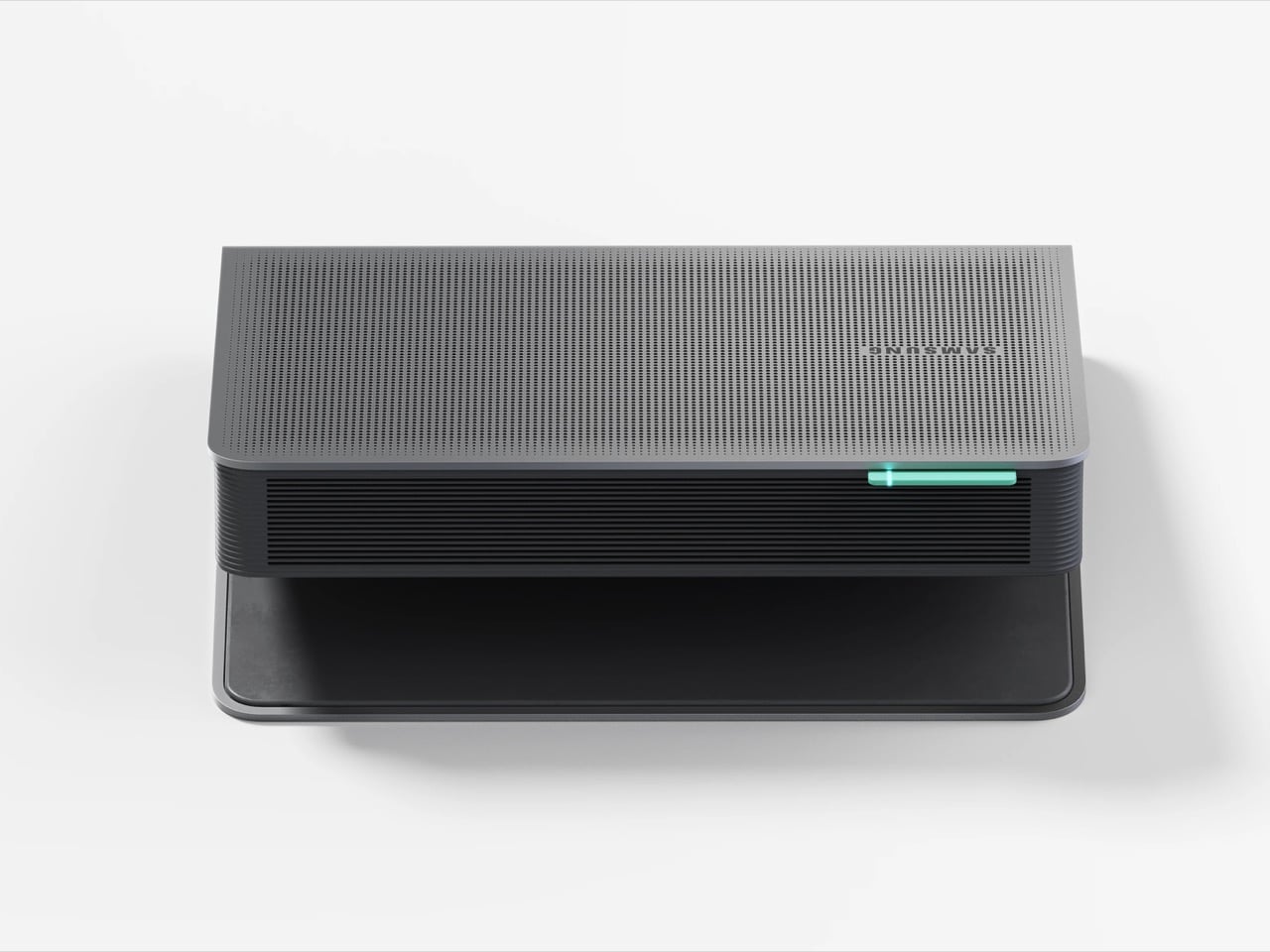
The book-shaped design gives the purifier a level of portability that your otherwise-clunky room air purifier just can’t attain. Place it on a tabletop, either horizontally or vertically, with the ability to angle it thanks to an adjustable kickstand. Air gets pulled from the top and pushed through the front, passing through a HEPA filter that traps a variety of particulate matter to give you dust-free air. This is the standard template of almost every purifier out there, but what Samsung’s concept does is make things hyper-portable.
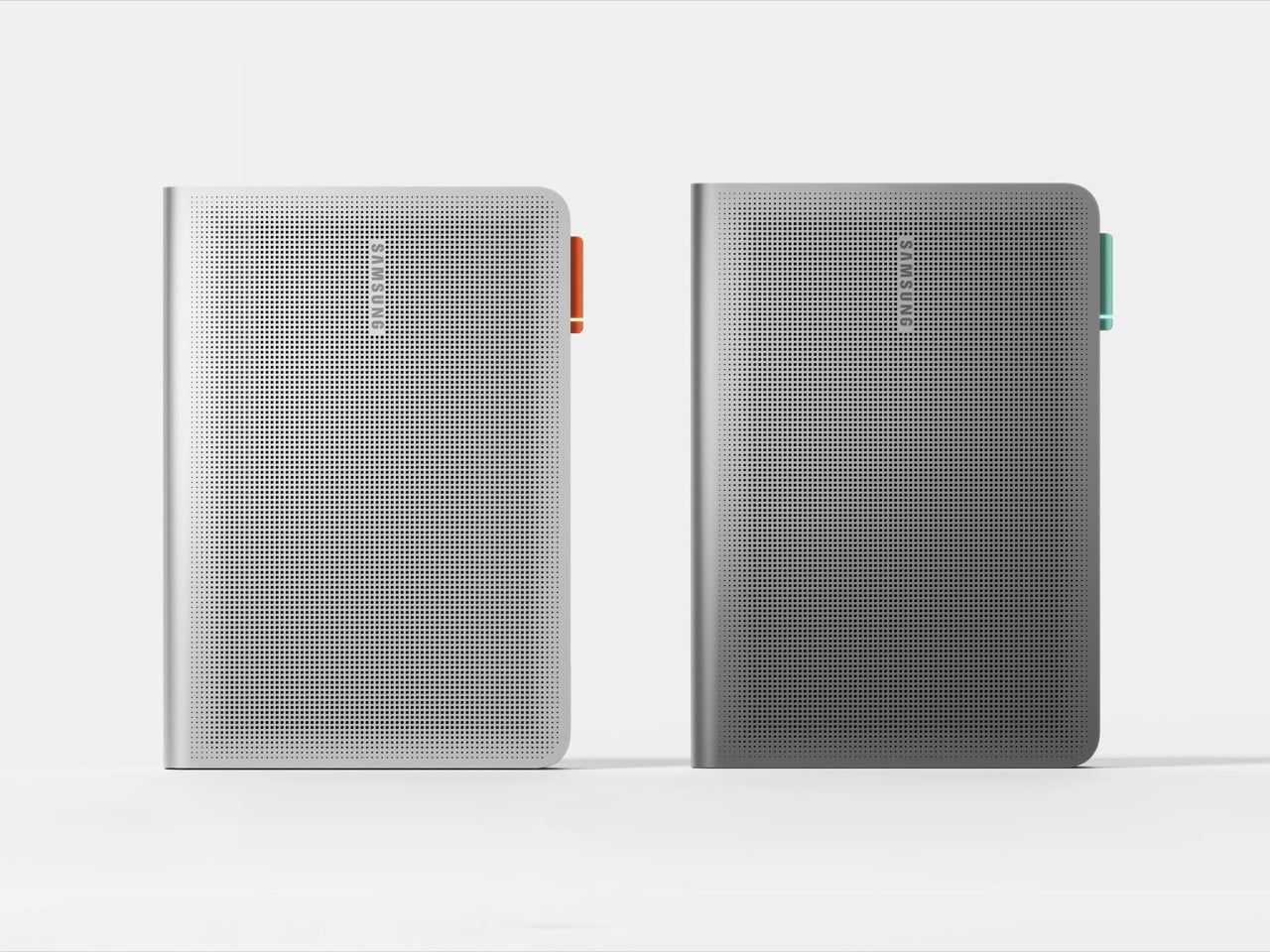
The all-metal design feels premium, with the overall minimalist appearance bordering on something you’d see from Bang & Olufsen’s speakers. This one, however, bears Samsung’s name on the top, along with Mini Air (the product name) on the ‘spine’. Controls on the side let you increase or decrease the fan speed, while a USB-C port lets you charge the purifier.
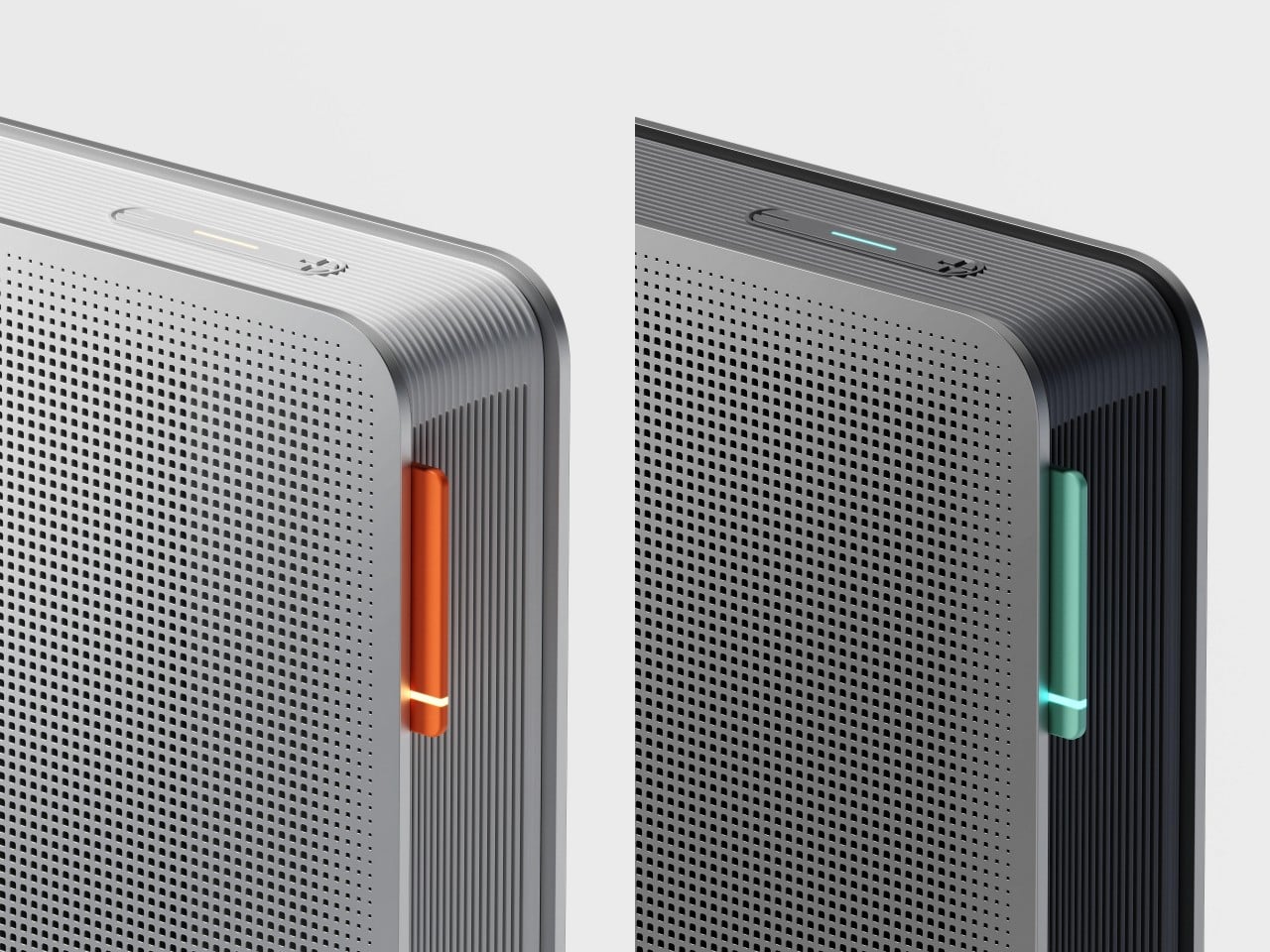
A slot on the side lets you pop the HEPA filter out for replacement or cleaning. The details aren’t clear given that this is just a concept created by intenxiv inc. under some form of an internship or apprenticeship at Samsung Electronics in 2019. A ‘bookmark’ on the front lip acts as a notification light to let you know battery status, and whether the purifier’s switched on or not. One can only assume the fans are so quiet that you’d need such a light to let you know the purifier is running.
The purifier comes in two colorways. A lighter metallic variant and a slightly darker ‘space grey’ version. Both are identical in shape and size, barring the slight color change as well as the ‘bookmark’ on the side that’s either orange or teal, depending on the variant you pick.
The design is just a concept for now, but the template absolutely shouldn’t be. Portable air purifiers are a pretty unexplored category (at least by larger companies). Dyson did release a set of air purifying headphones ages ago, but the product never managed to hit mass appeal. A smaller air purifier like this one would fit well in most smaller apartments, whether they’re dorms/hostels, office cubicles, or tiny homes in the city.
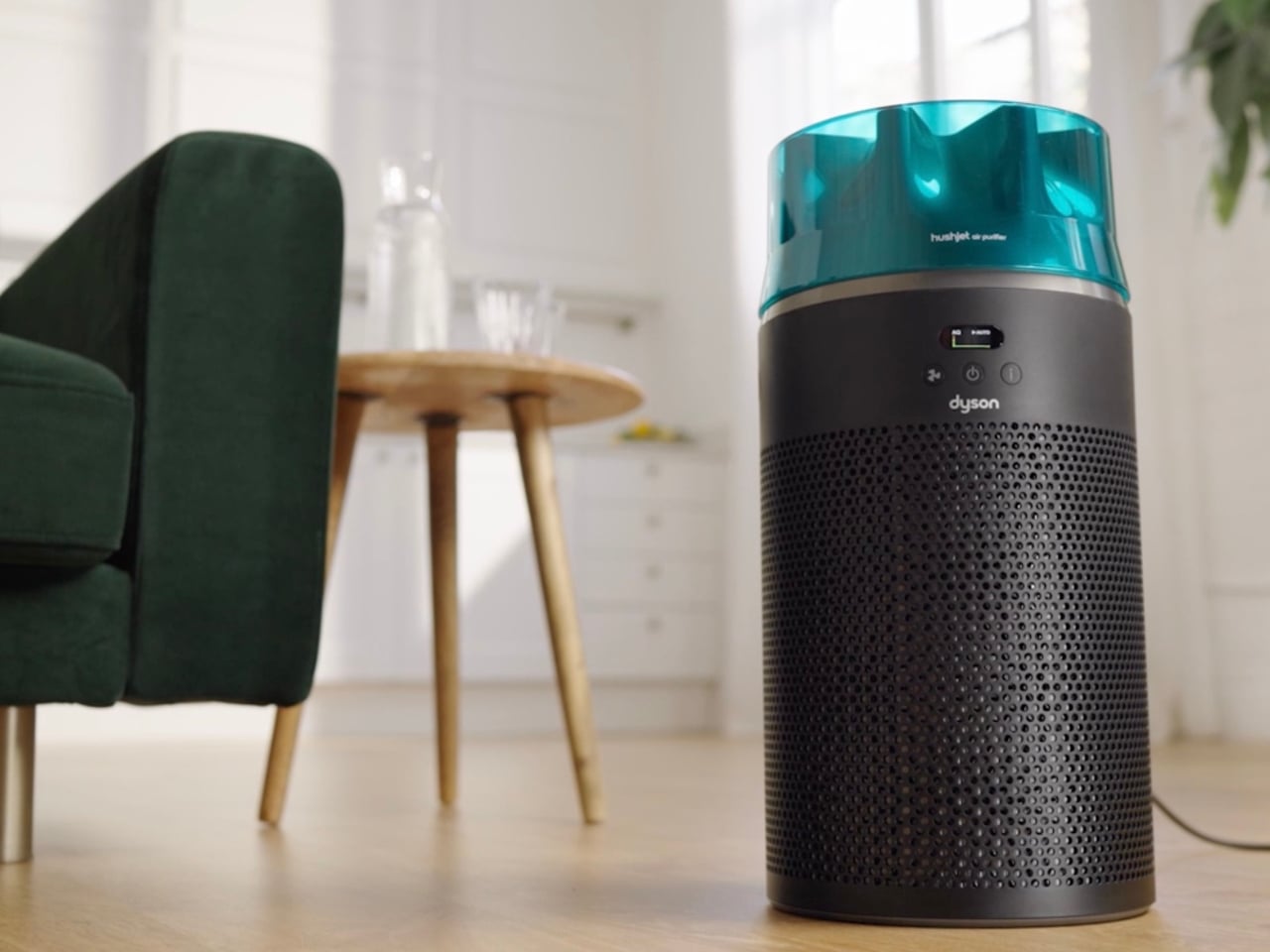
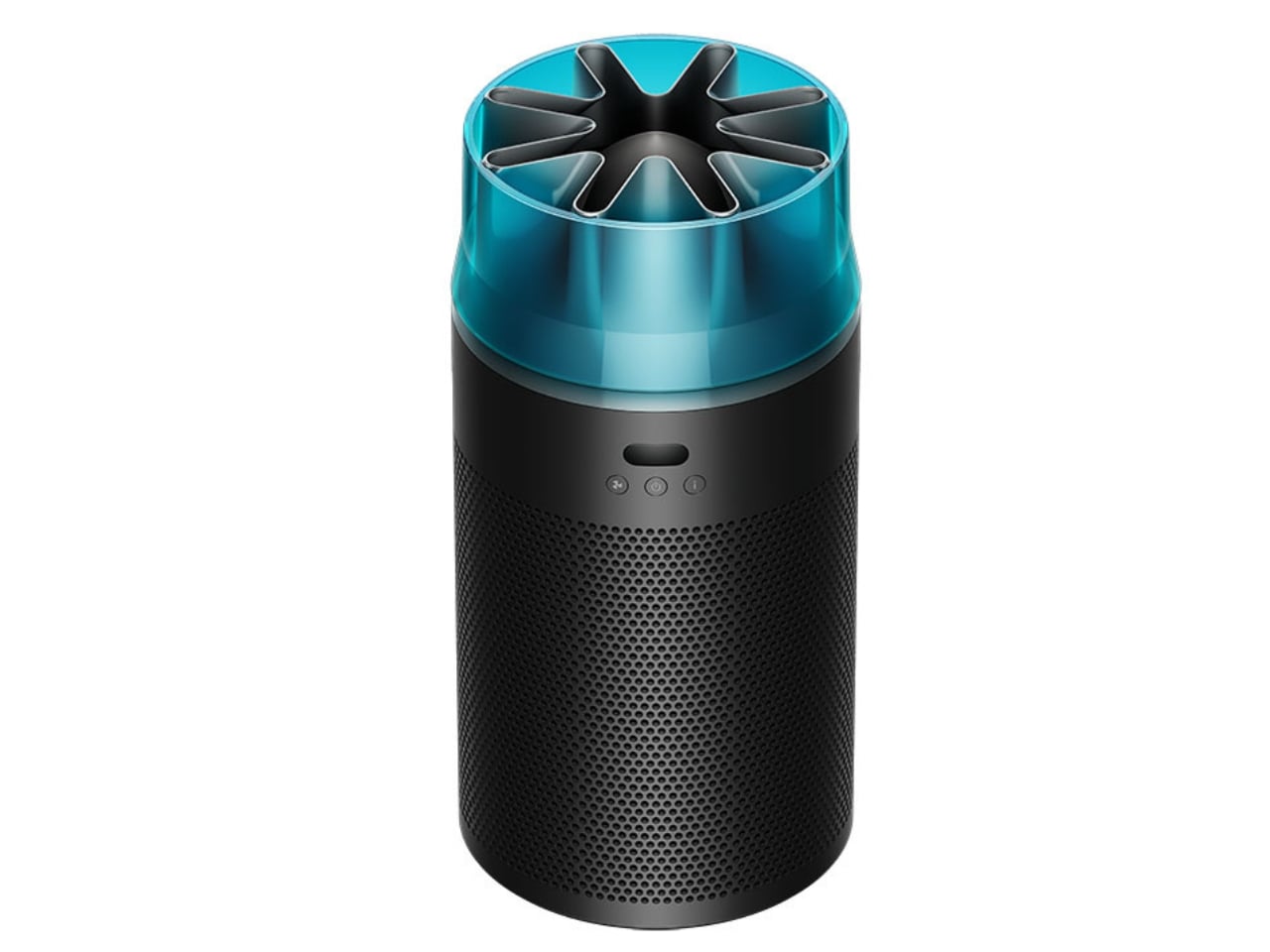
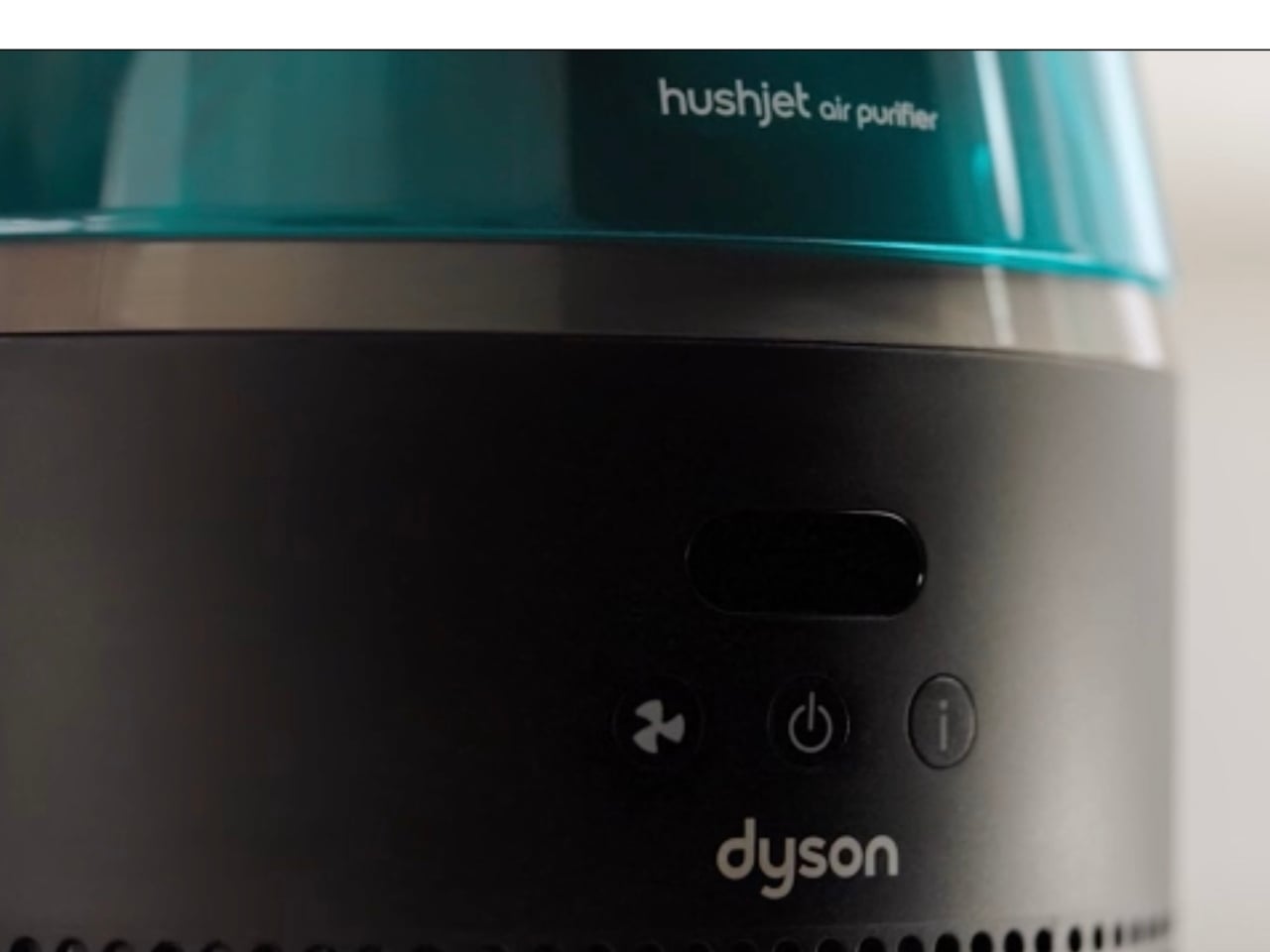
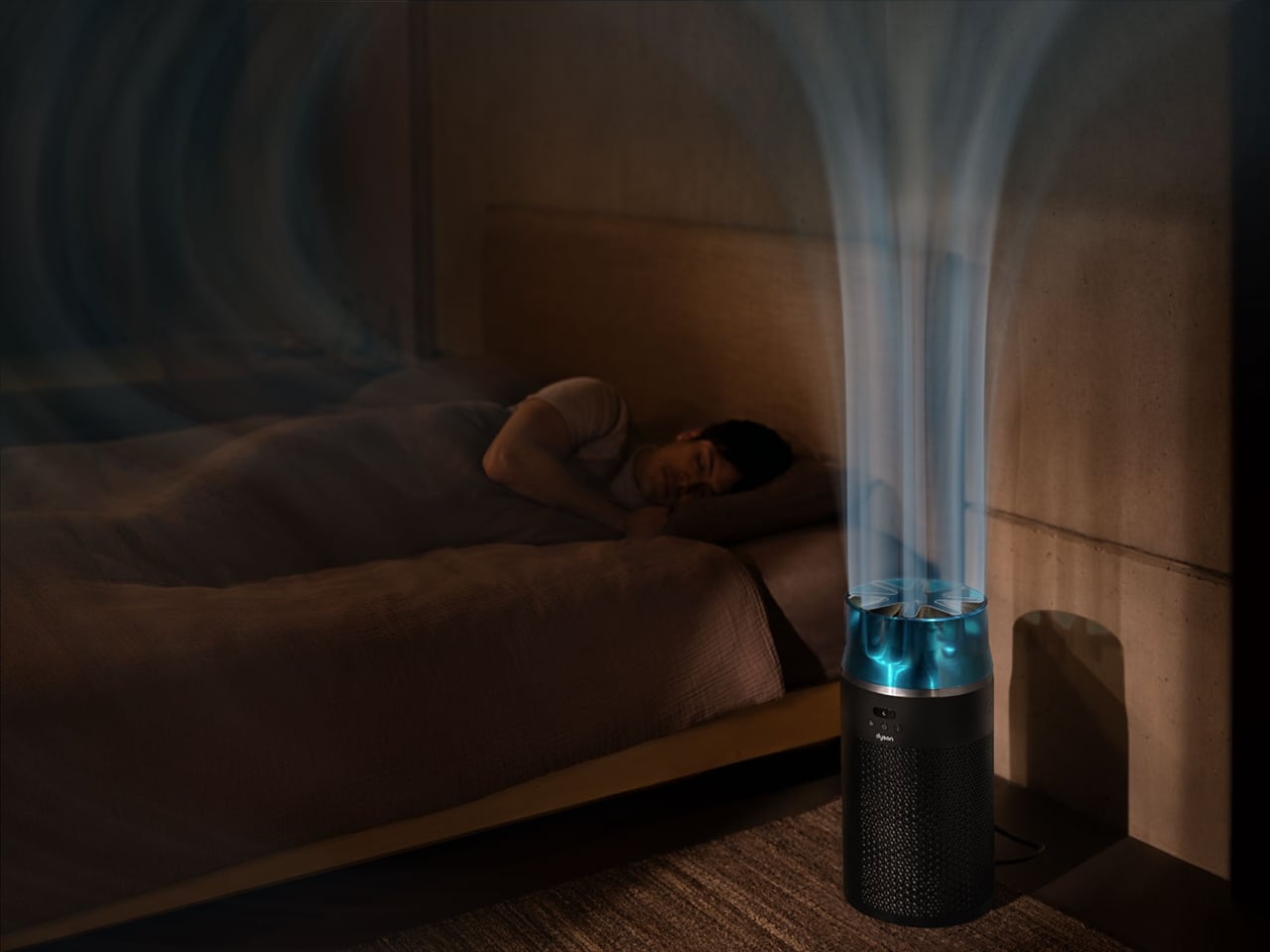
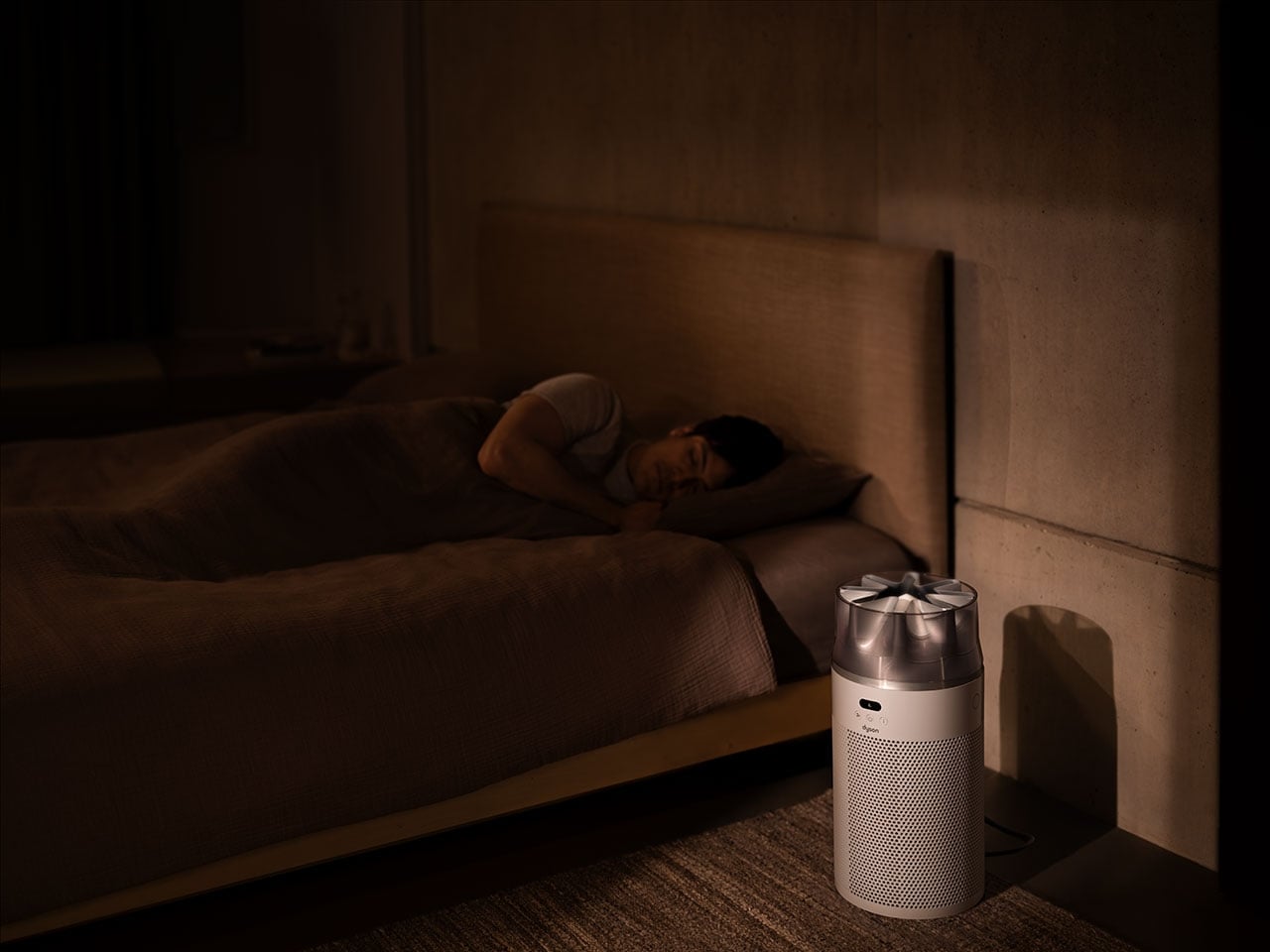
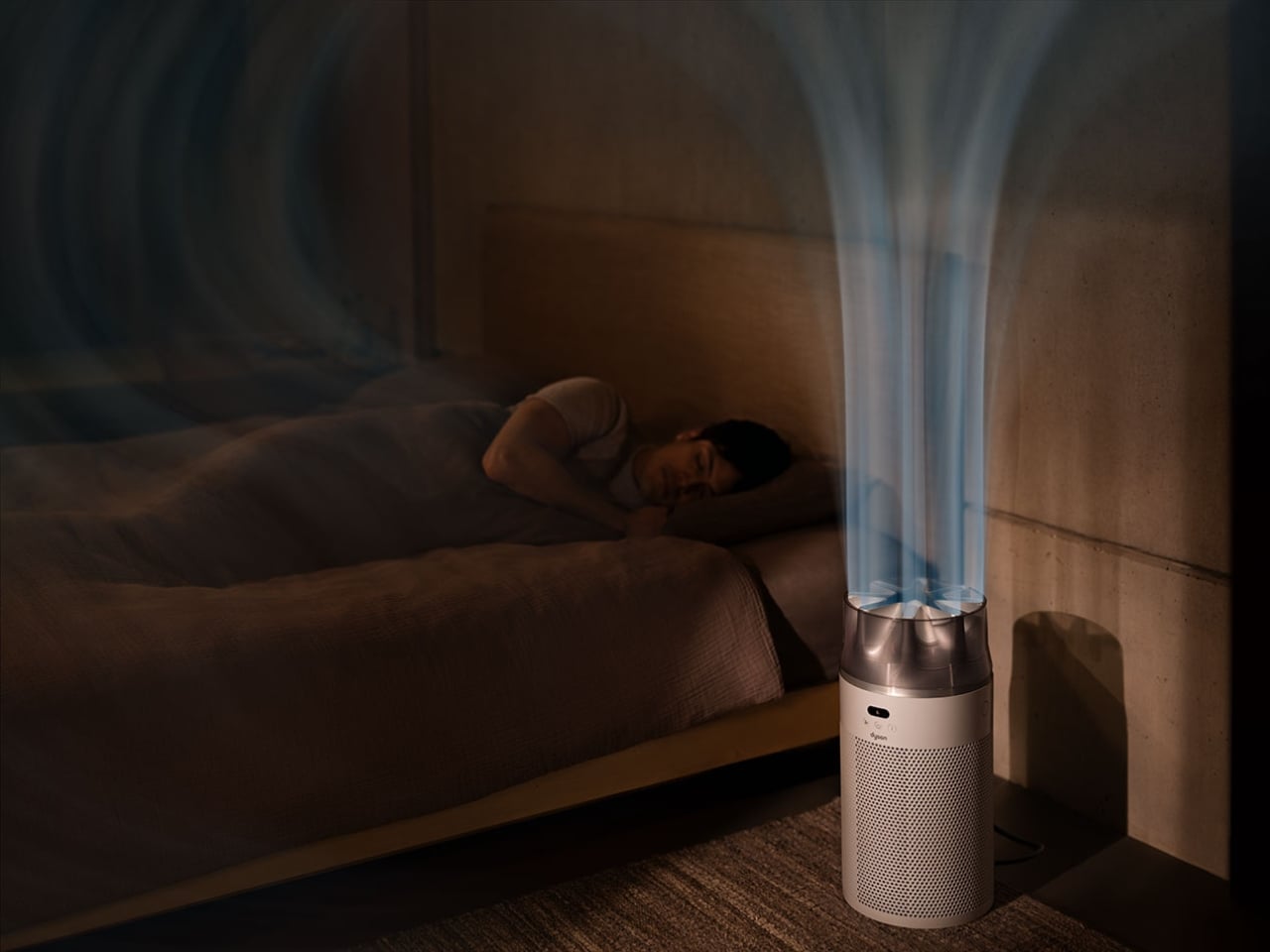
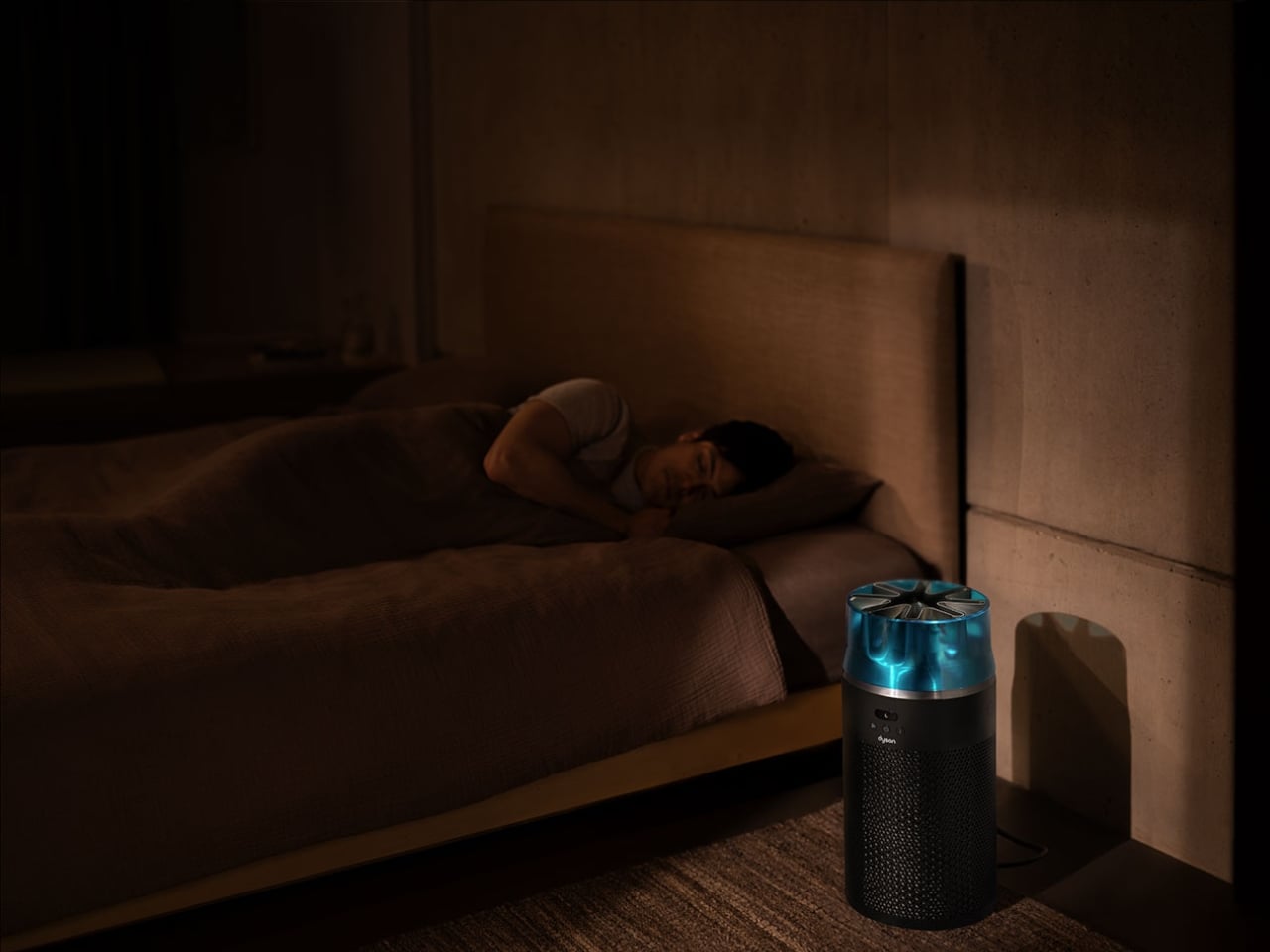
There’s something oddly satisfying about watching a company completely reinvent its own playbook. Dyson has built its reputation on that bladeless Air Multiplier technology, the kind of innovation that made you stop and think, “Wait, how does that even work?” But with the HushJet Compact Purifier, the brand is taking a totally different approach, drawing inspiration from an unexpected source: jet engines.
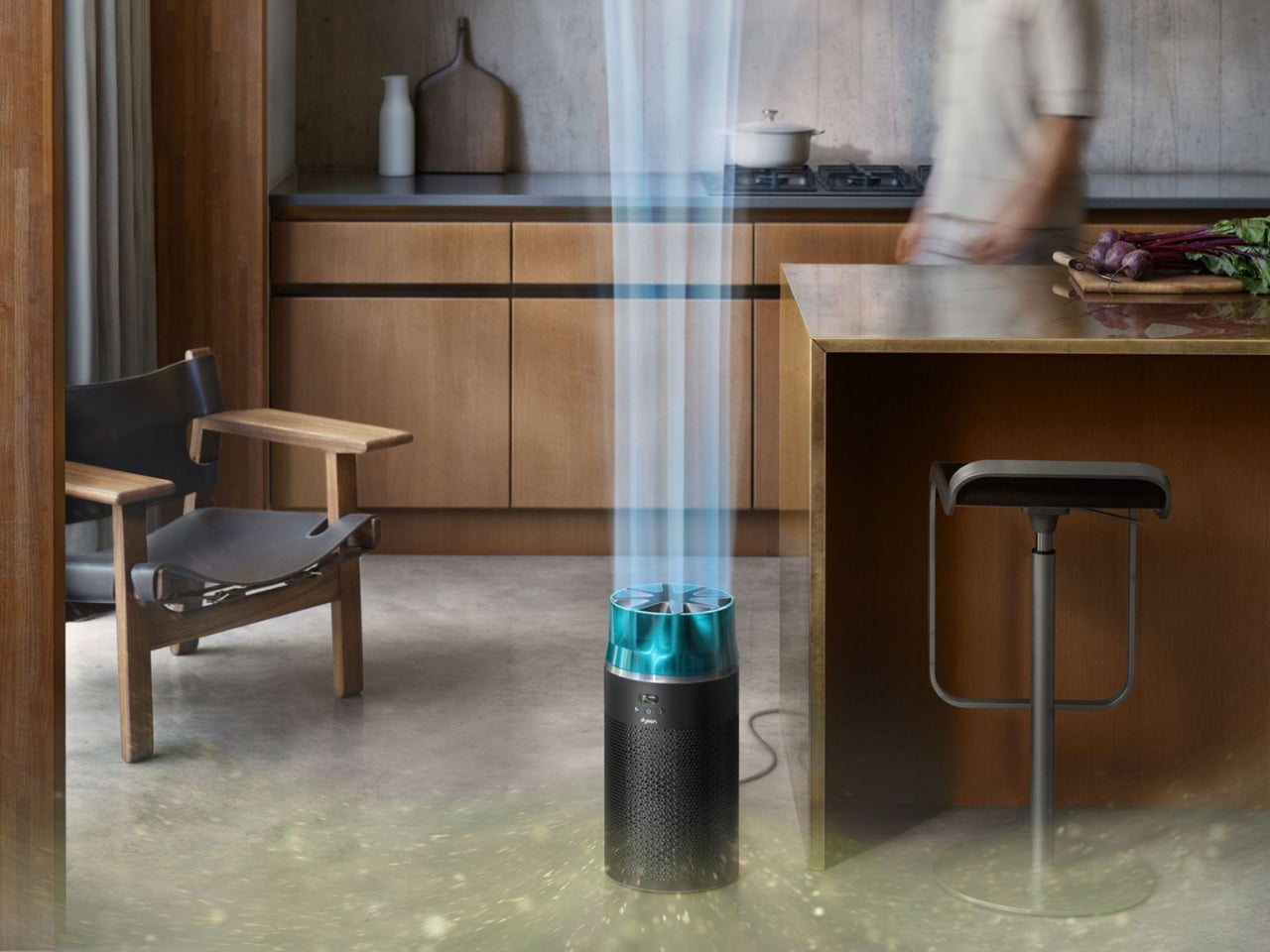
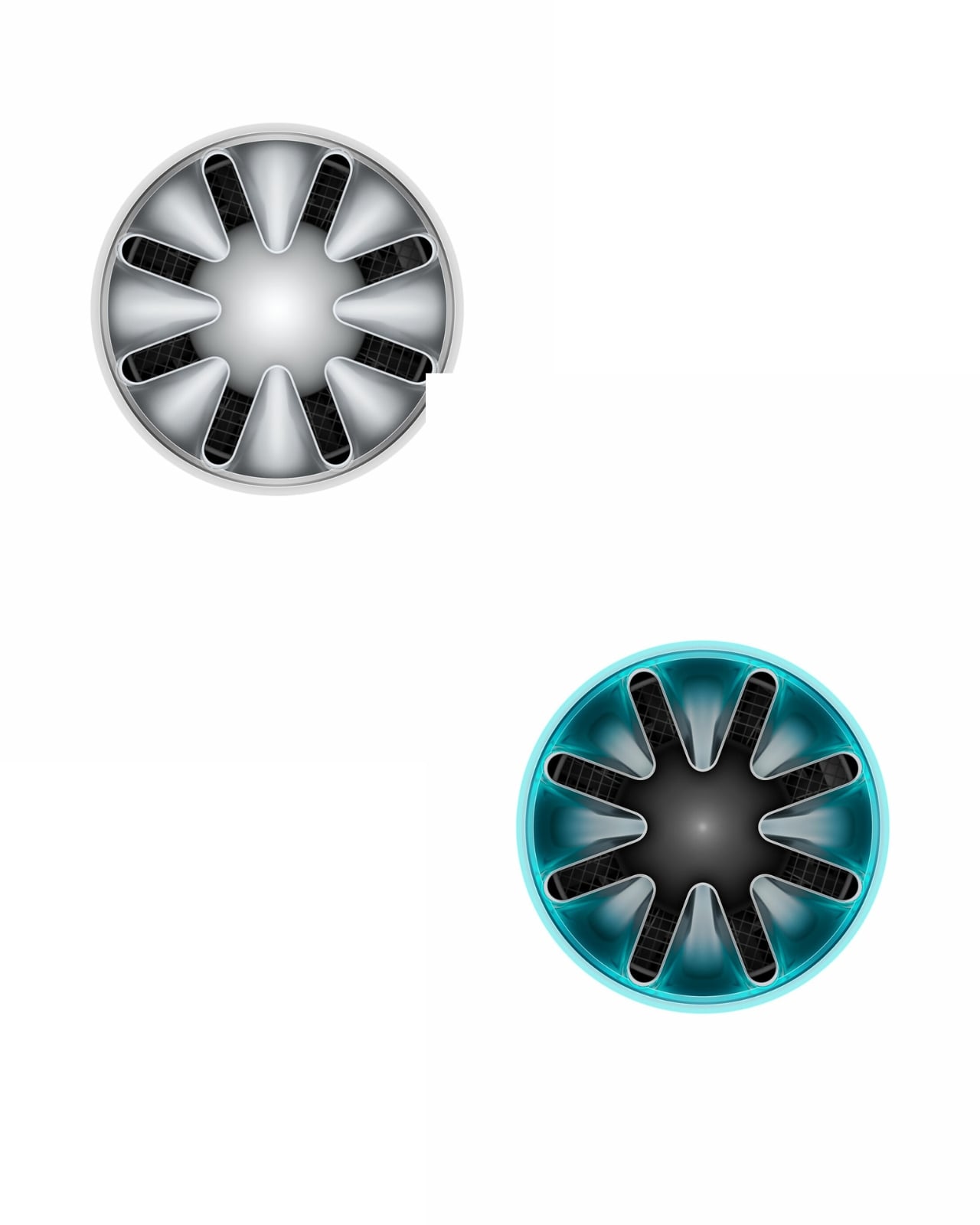
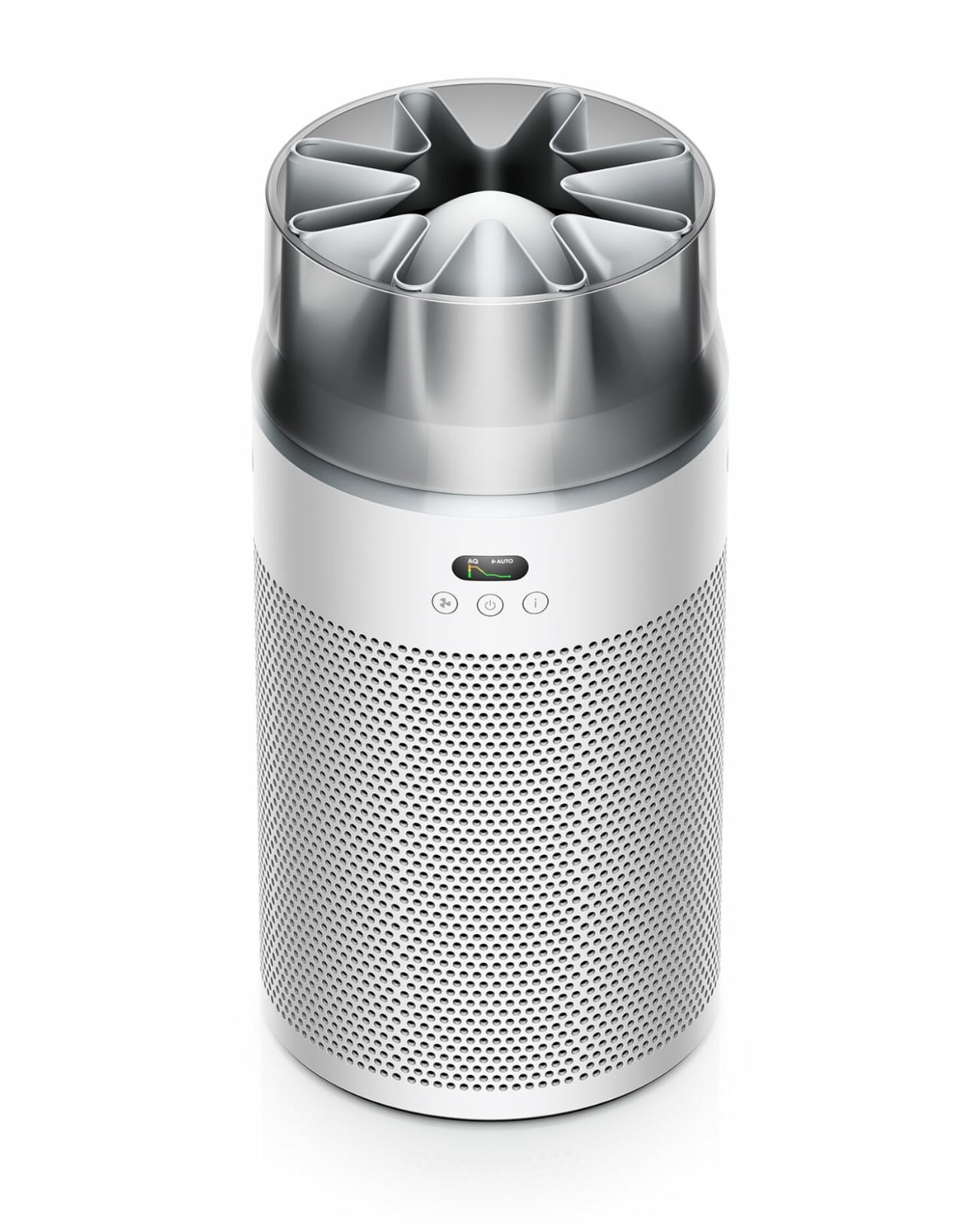
This little machine marks a departure from what we’ve come to expect from Dyson’s air purifiers. Instead of that signature circular opening, you get a star-shaped nozzle that looks like it belongs in an aerospace engineering lab. It’s not just for show, though. That unique design channels high-velocity airflow while keeping things whisper-quiet, hitting just 24 decibels in night mode. For context, that’s quieter than your average library and about the same volume as someone whispering sweet nothings into your ear.
The HushJet measures 18.5 inches tall and just over 9 inches in diameter, weighing in at a manageable 7 pounds. It’s genuinely compact, the kind of appliance that can slip into a corner of your bedroom or perch on a kitchen counter without demanding attention. But don’t let the small footprint fool you. This purifier can handle rooms up to 203 square feet, making it perfectly suited for bedrooms, home offices, or cozy apartments.
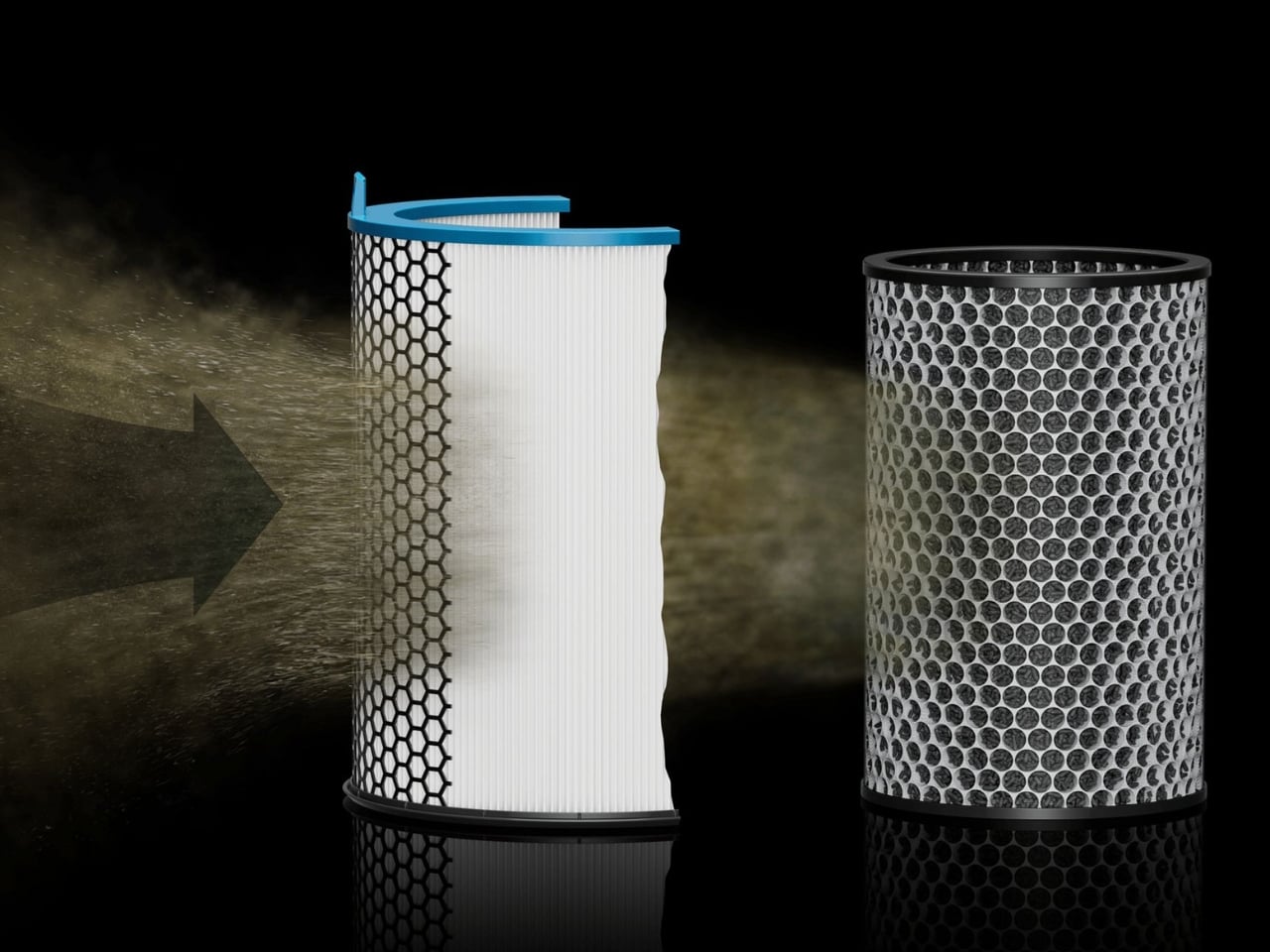
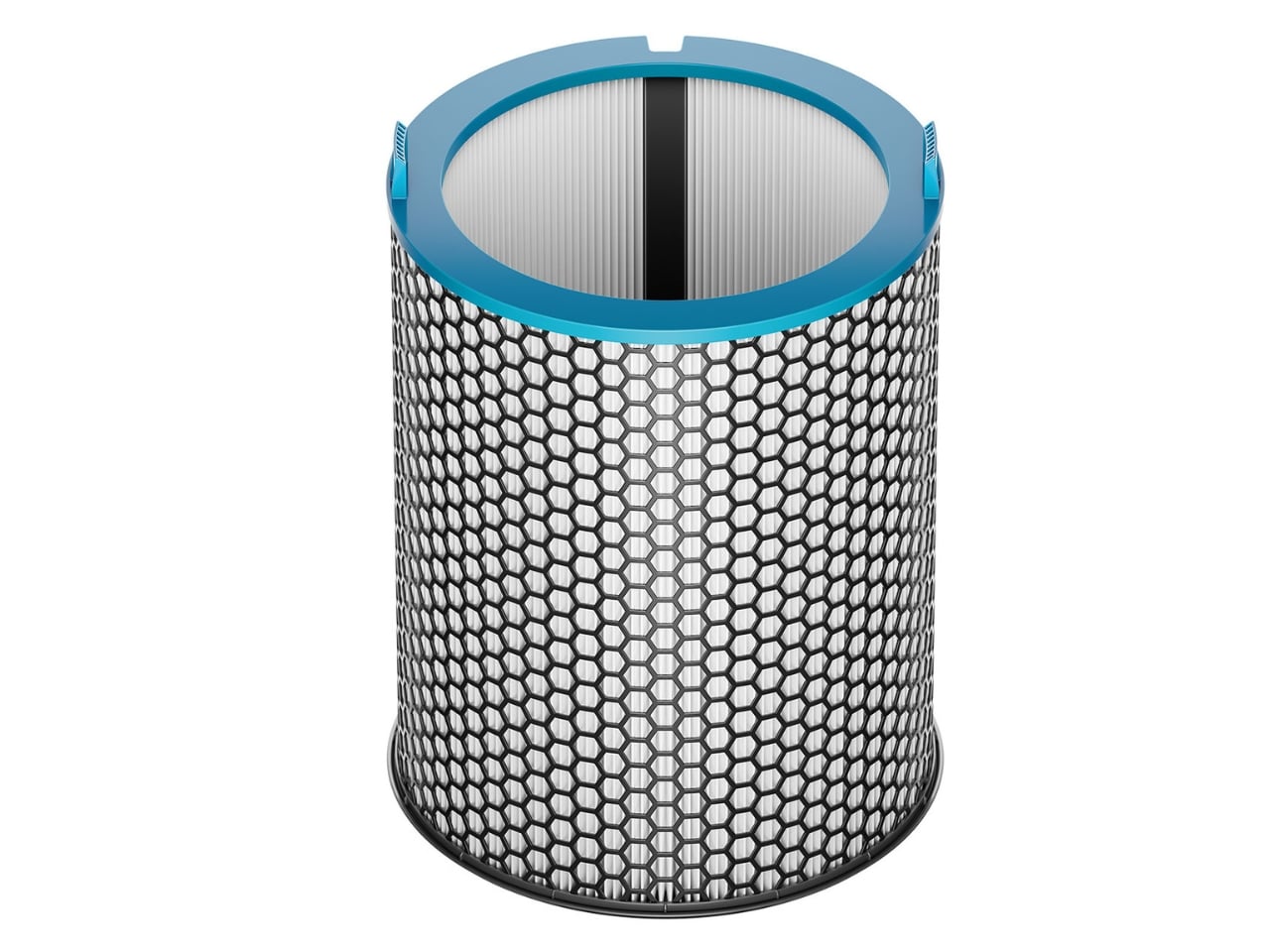
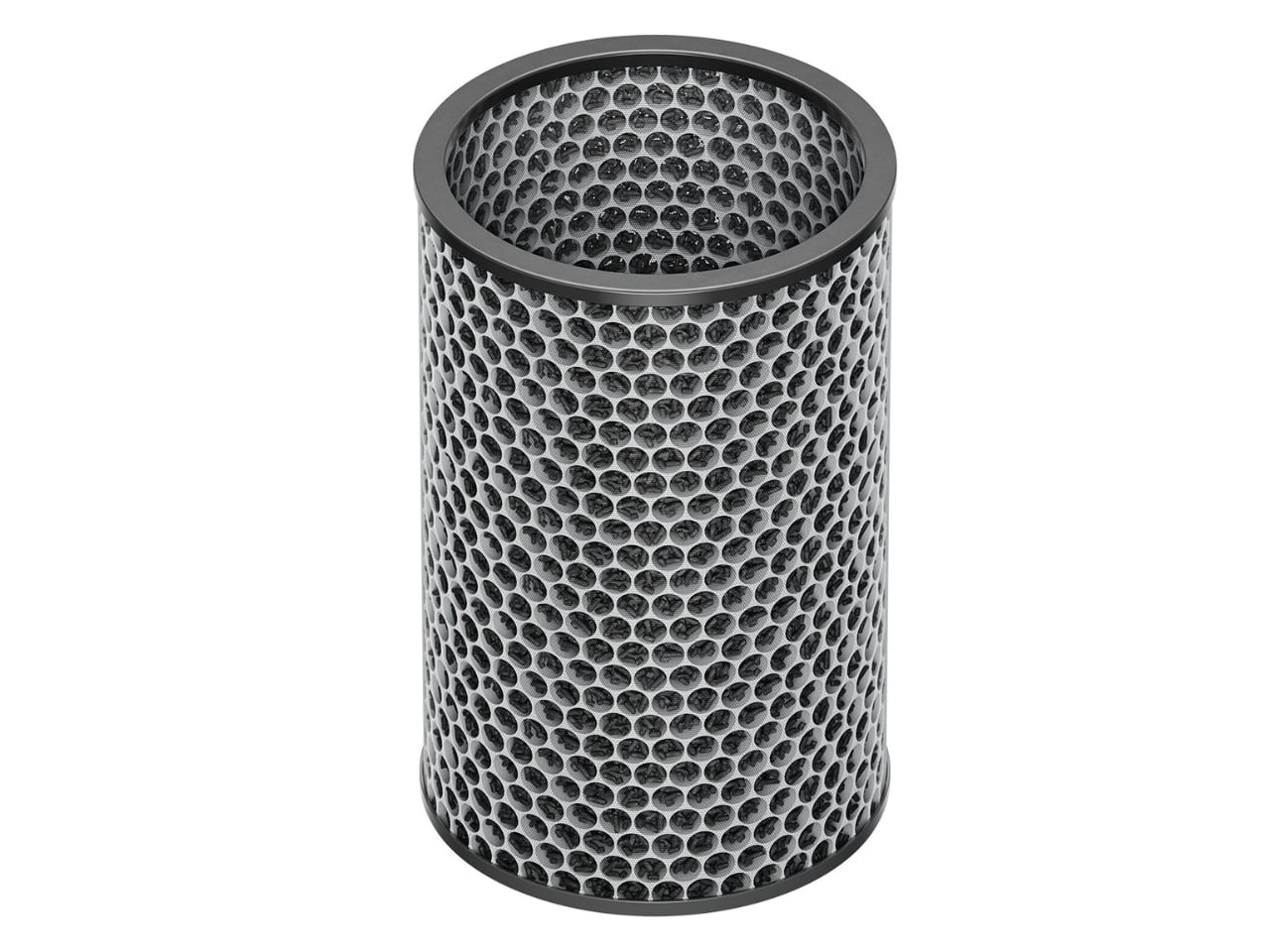
What really sets the HushJet apart is its new filtration system. The electrostatic filter captures 99.97% of particles as small as 0.3 microns, including the usual suspects like pollen, dust, and pet dander. If you’ve got pets at home, this matters more than you might think. Those microscopic skin cells and protein particles from Fluffy’s grooming sessions become airborne allergens, and the HushJet’s activated carbon layer tackles both the dander and the inevitable pet odors.
Here’s where things get interesting from a sustainability standpoint. The electrostatic filter lasts up to five years, which is five times longer than previous Dyson filters. That means fewer replacements, less waste, and one less thing to remember on your shopping list. The filter uses less material while being more energy efficient, a win across the board for anyone trying to lighten their environmental footprint.
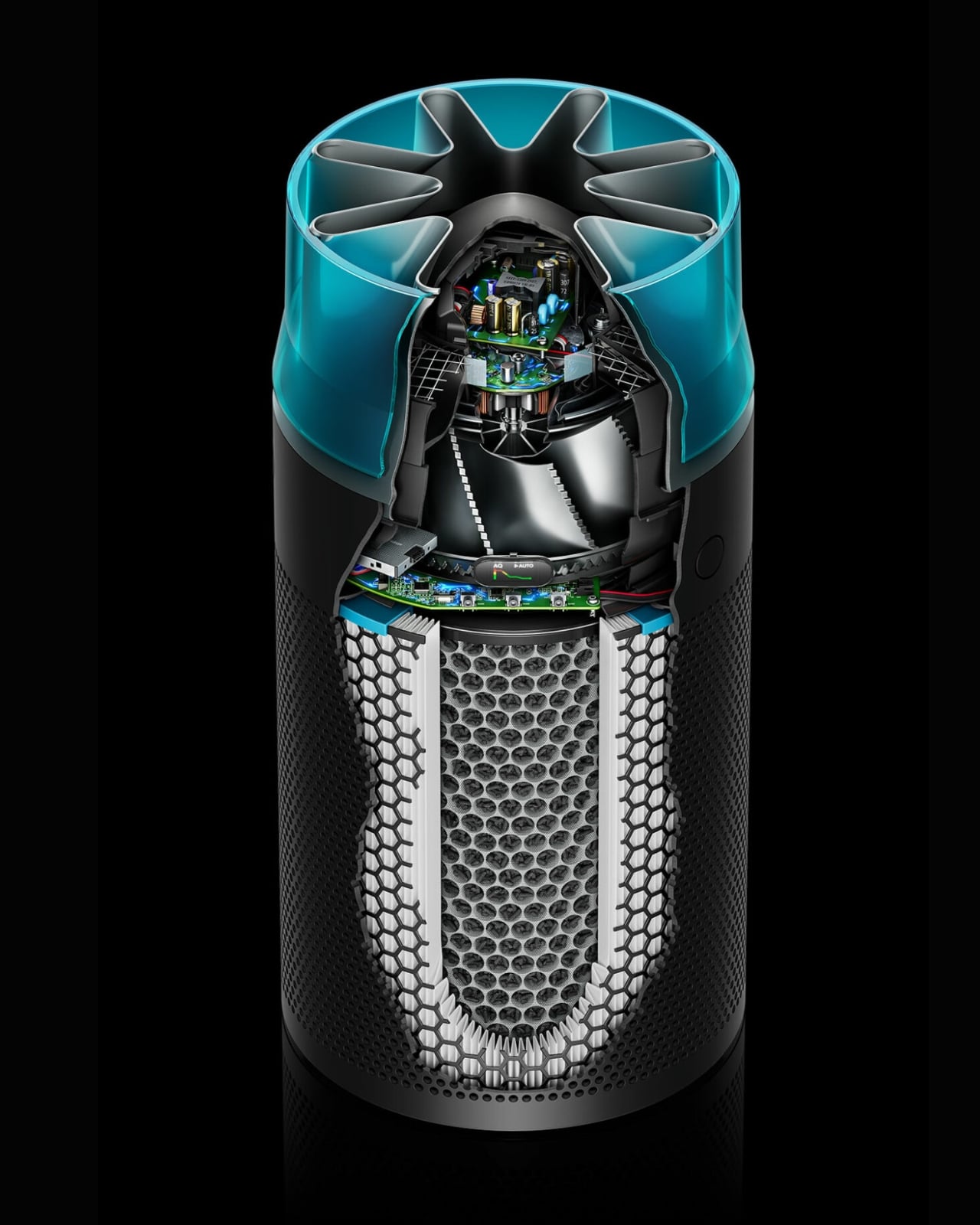
The technology powering this thing is genuinely clever. Dyson’s engineers borrowed aerodynamic principles from jet engines to create that focused stream of purified air. The star-shaped nozzle reduces turbulence and attenuates sound waves from the high-speed compressor, which is how they achieved that library-quiet operation. The whole system is fully sealed, meaning the nasty stuff it captures stays trapped inside rather than escaping back into your breathing space.
Smart features come standard. The built-in sensors monitor air quality in real time, automatically adjusting performance based on what’s floating around your room. You can also control everything through the MyDyson app, tweaking settings from your phone or setting schedules so the purifier runs only when you need it. That auto mode is particularly useful for energy efficiency, since the machine only kicks into gear when pollution levels actually warrant it.
The HushJet comes in two color options: Black/Teal and White/Silver. Both have that sleek, minimalist aesthetic Dyson is known for, the kind of design that doesn’t scream “appliance” but instead quietly complements your space. At $349.99, it sits at the higher end of the compact purifier market, though the combination of performance, filter longevity, and that jet-engine-inspired engineering might justify the price tag for air quality enthusiasts.
For anyone dealing with allergies, the HushJet makes a solid case for itself. By pulling pollen, dust, and other allergens out of circulation, it can help reduce those annoying symptoms like sniffles, scratchy throats, and itchy eyes that tend to worsen at night. Better air quality translates to better sleep, which is something most of us could use more of.
What Dyson has done here is take everything they learned from years of air purification technology and compress it into a surprisingly powerful package. The jet engine inspiration isn’t just a marketing gimmick. It’s a fundamental rethinking of how to move air efficiently and quietly in a small space. Whether you’re sensitive to noise, short on square footage, or just appreciate clever engineering, the HushJet Compact Purifier delivers on its promise to be small but mighty.
Dual functionality in a single, well-designed form
Top-fill design prevents back strain
DermaSense skin mode with intelligent humidity control
Long-life, machine-washable components
Comprehensive hygiene features
CONS:
Large and heavy body feels imposing in small spaces
Only available in one neutral color
Premium price tag
RATINGS:
AESTHETICS
ERGONOMICS
PERFORMANCE
SUSTAINABILITY / REPAIRABILITY
VALUE FOR MONEY
EDITOR'S QUOTE:
The Blueair 2-in-1 Pro Purify + Humidify makes air quality feel like part of your skincare routine, blending serious performance with bedroom-worthy design.
Air purifiers and humidifiers usually look like they belong in a hospital supply closet rather than a bedroom. Most are boxy white appliances with visible mist plumes, blinking lights, and a general vibe that says “I am here to solve a problem” rather than “I belong in this space.” Meanwhile, people who care about sleep quality and skin health are starting to realize that the air itself might be part of the routine.
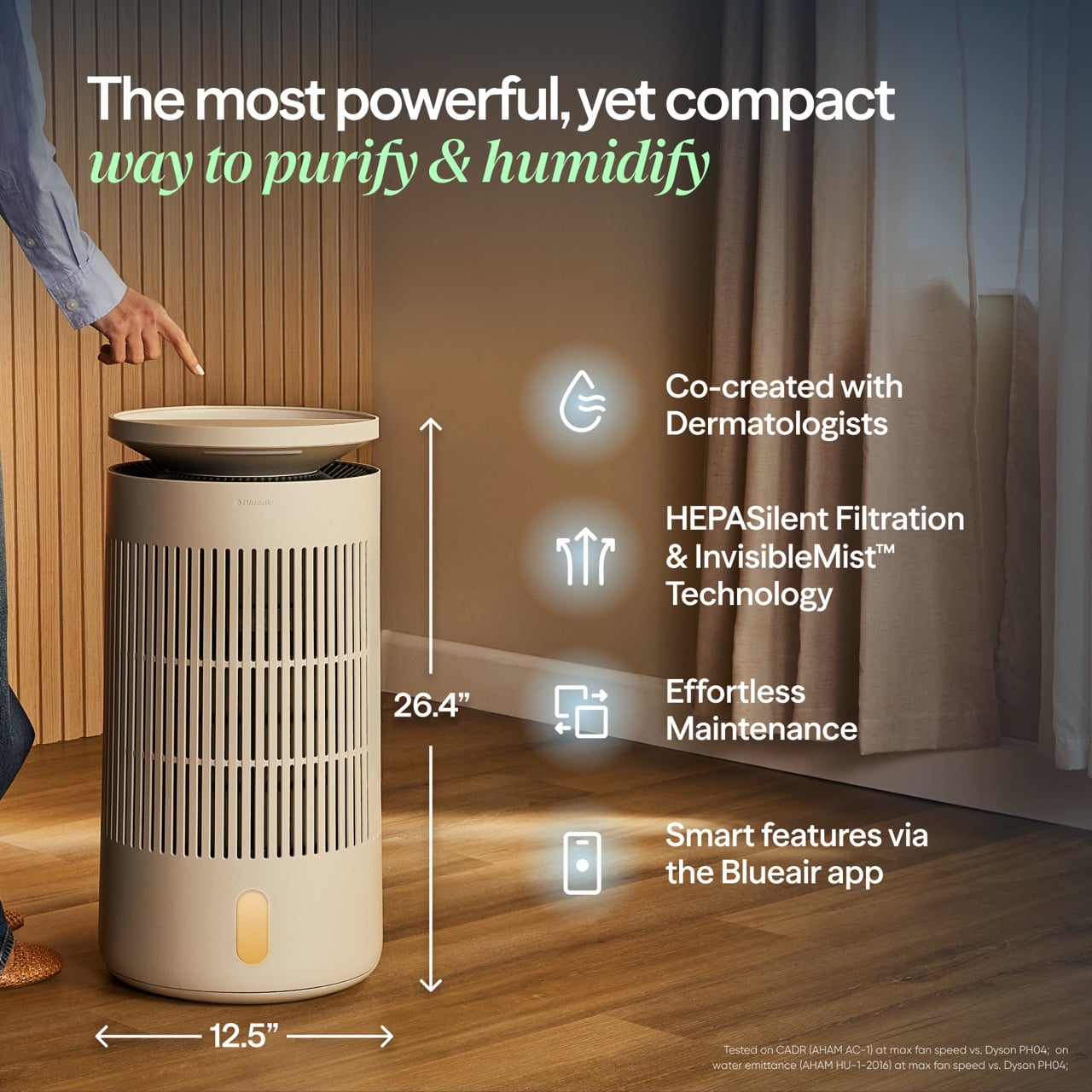
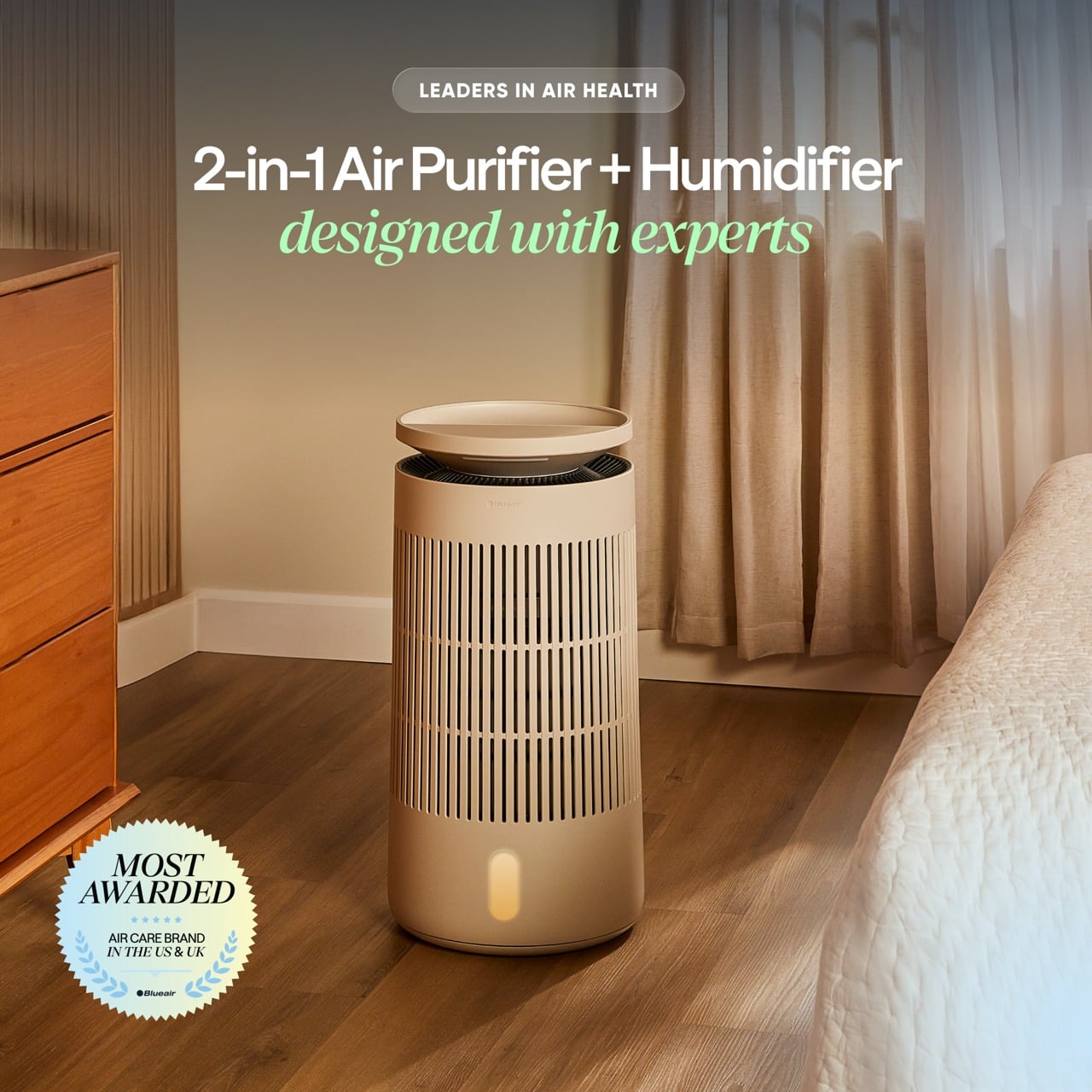
The Blueair 2‑in‑1 Pro Purify + Humidify feels like Blueair finally designed for people who want both functions but refuse to sacrifice aesthetics or simplicity. It is a tall, sculptural tower that combines serious air purification with gentle, invisible humidification and a skin-focused mode that adjusts humidity based on time of day and room temperature, positioned as step zero in a nighttime skincare routine. Let’s dive in to see if it delivers on its promises.
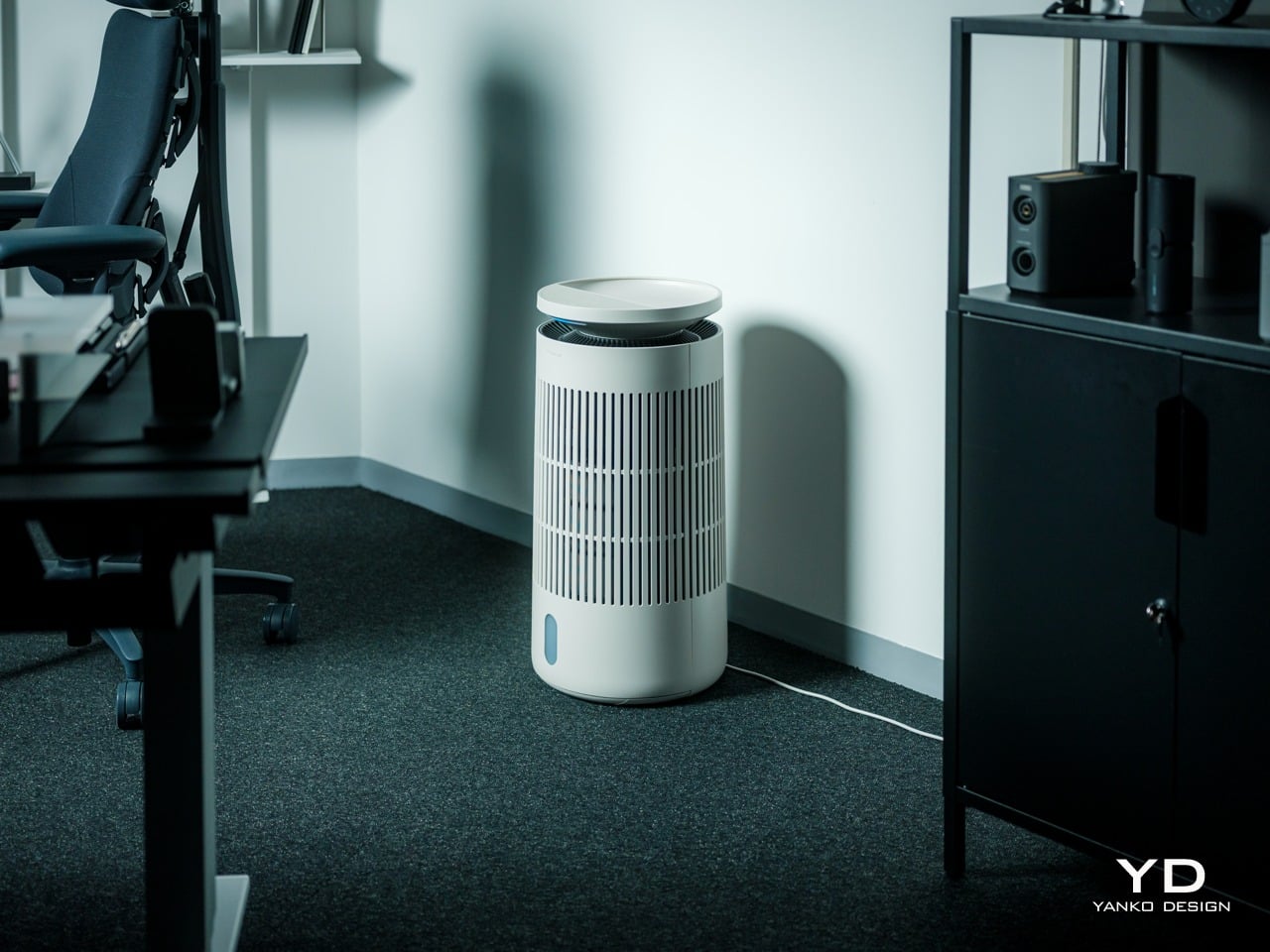
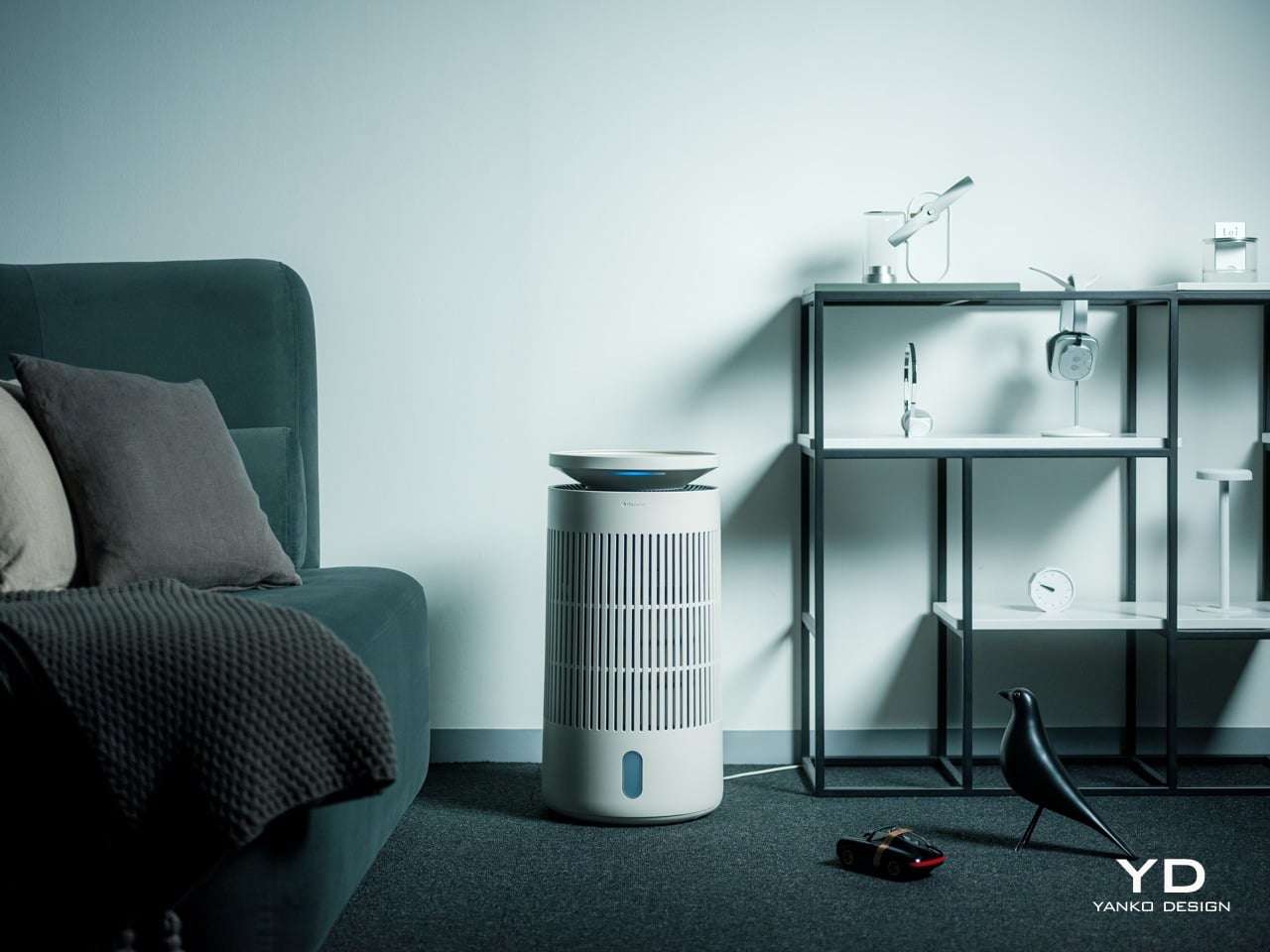
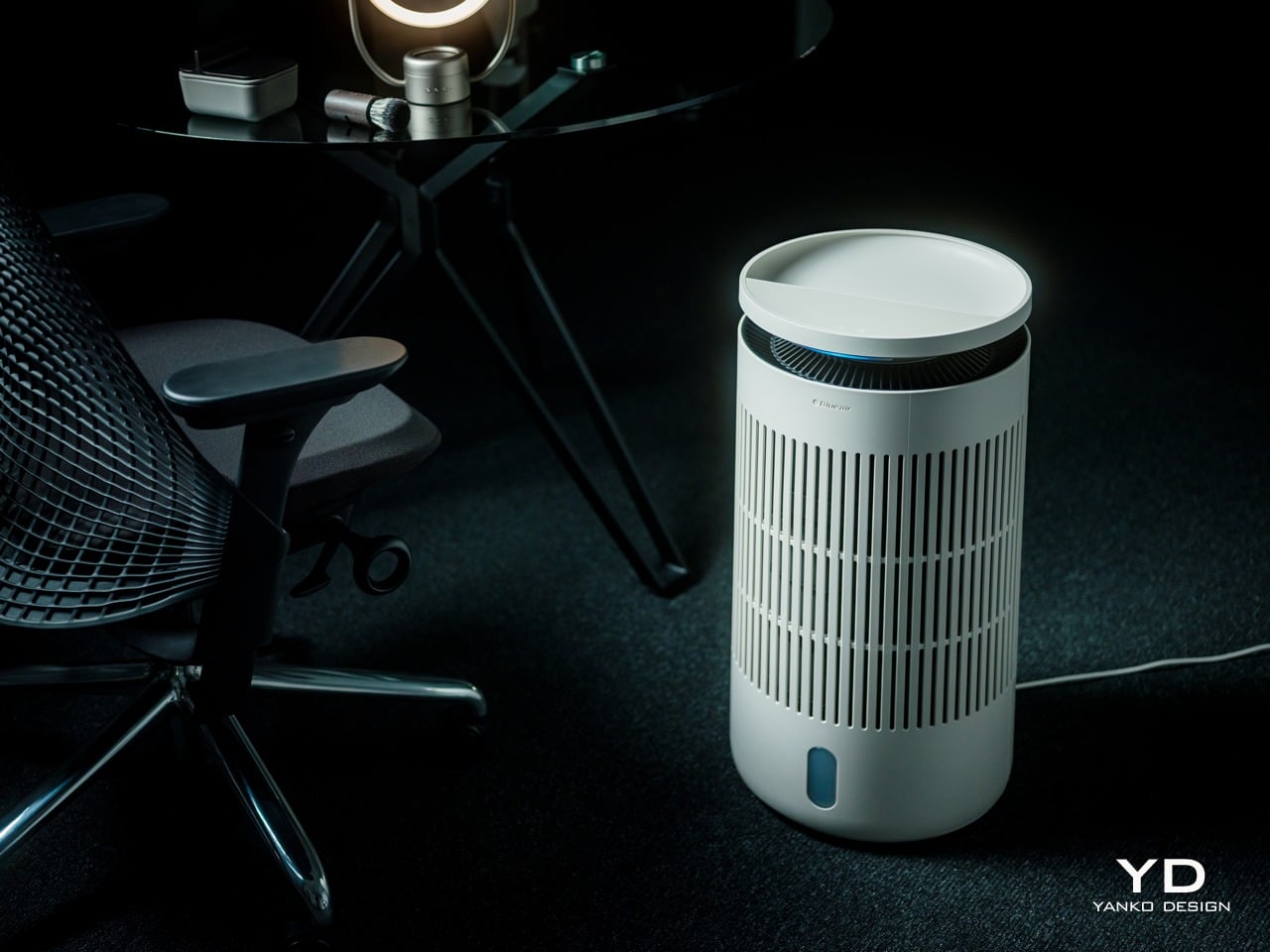
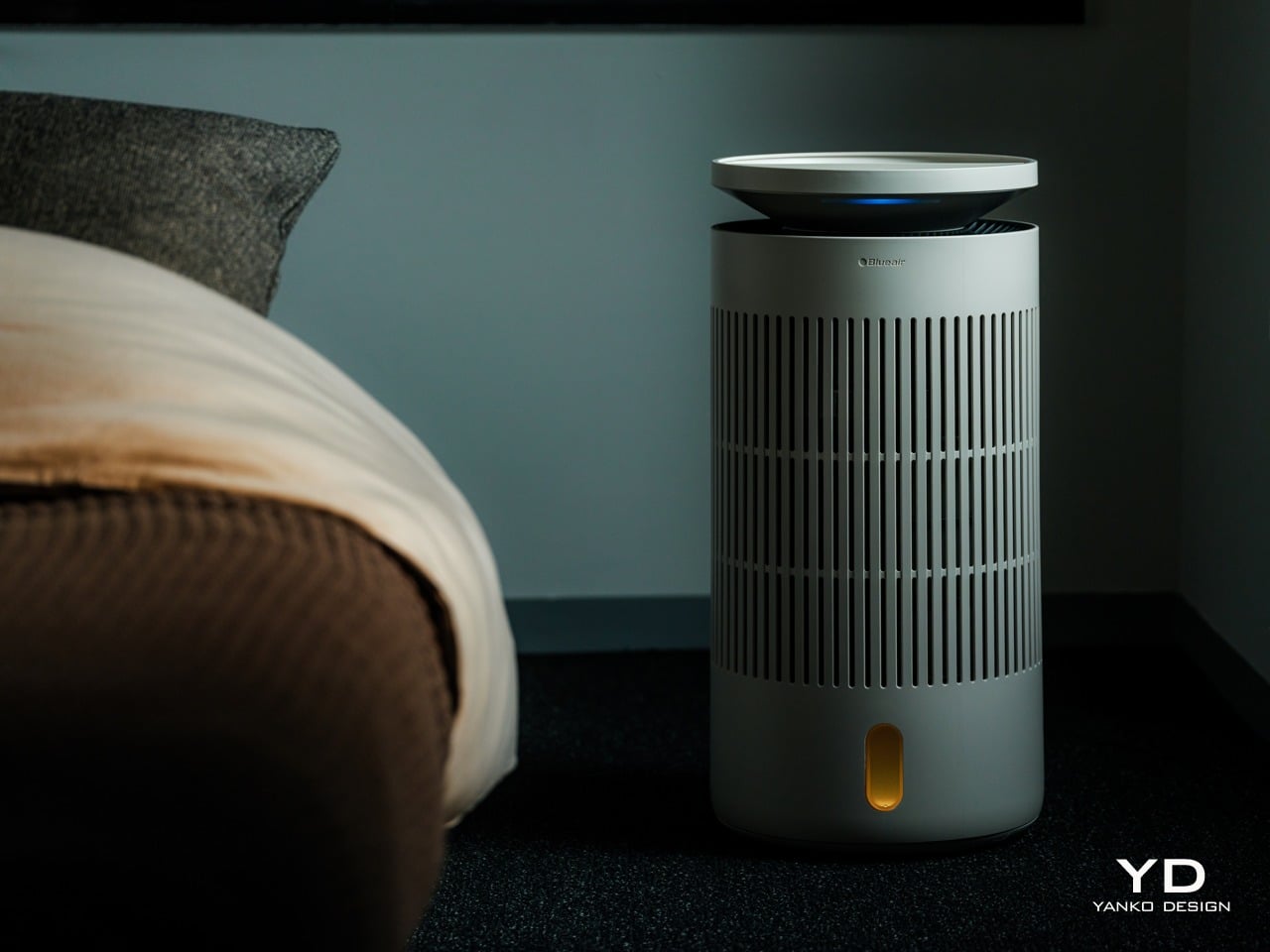
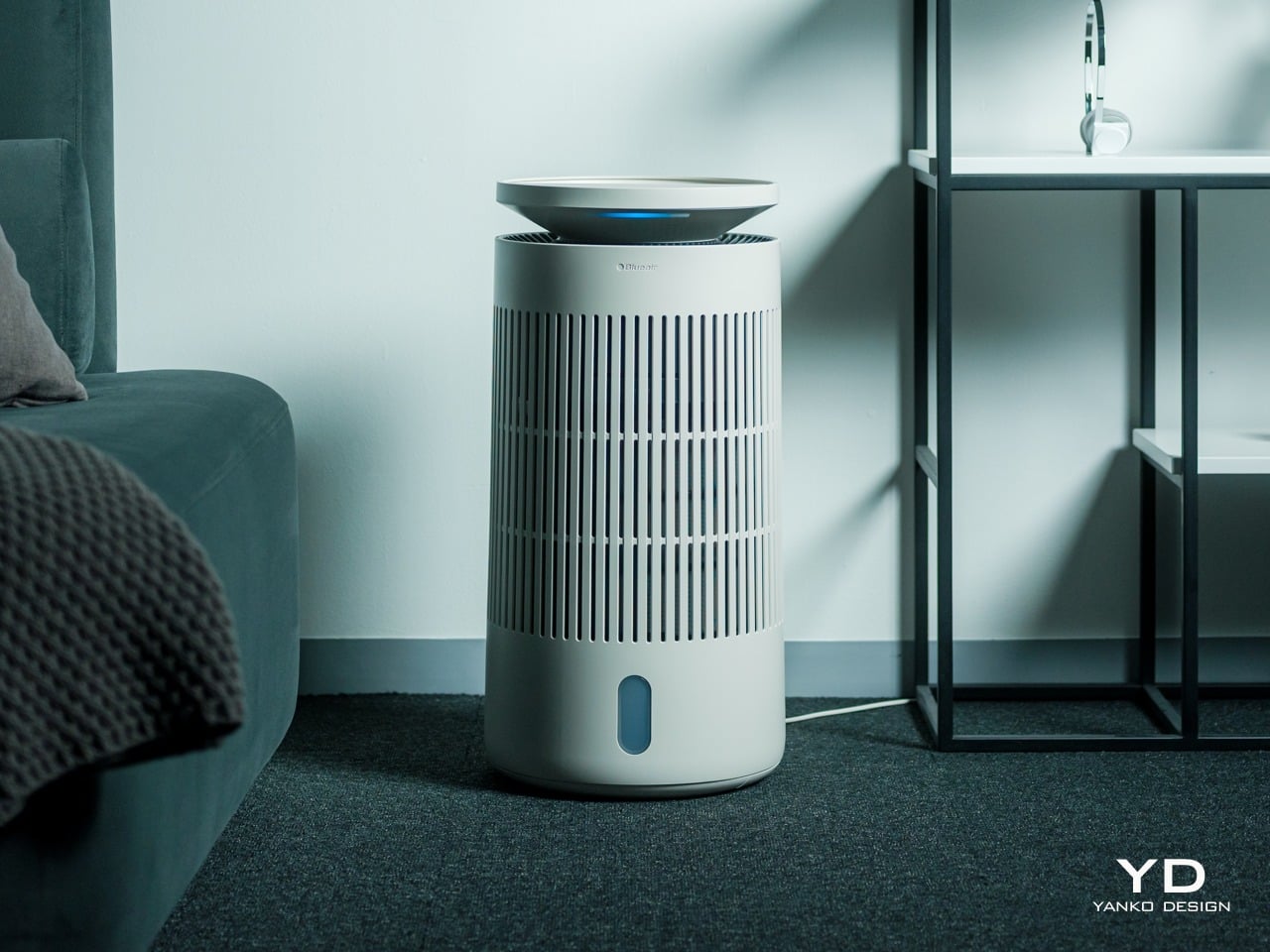
The first thing you notice about the Blueair 2‑in‑1 Pro is that it does not look like an appliance trying to hide. It is a cylindrical tower wrapped in evenly spaced vertical slats, finished in a soft off white that reads somewhere between warm beige and coastal linen, depending on the light. The proportions feel Scandinavian, tall enough to have presence but narrow without crowding the floor.
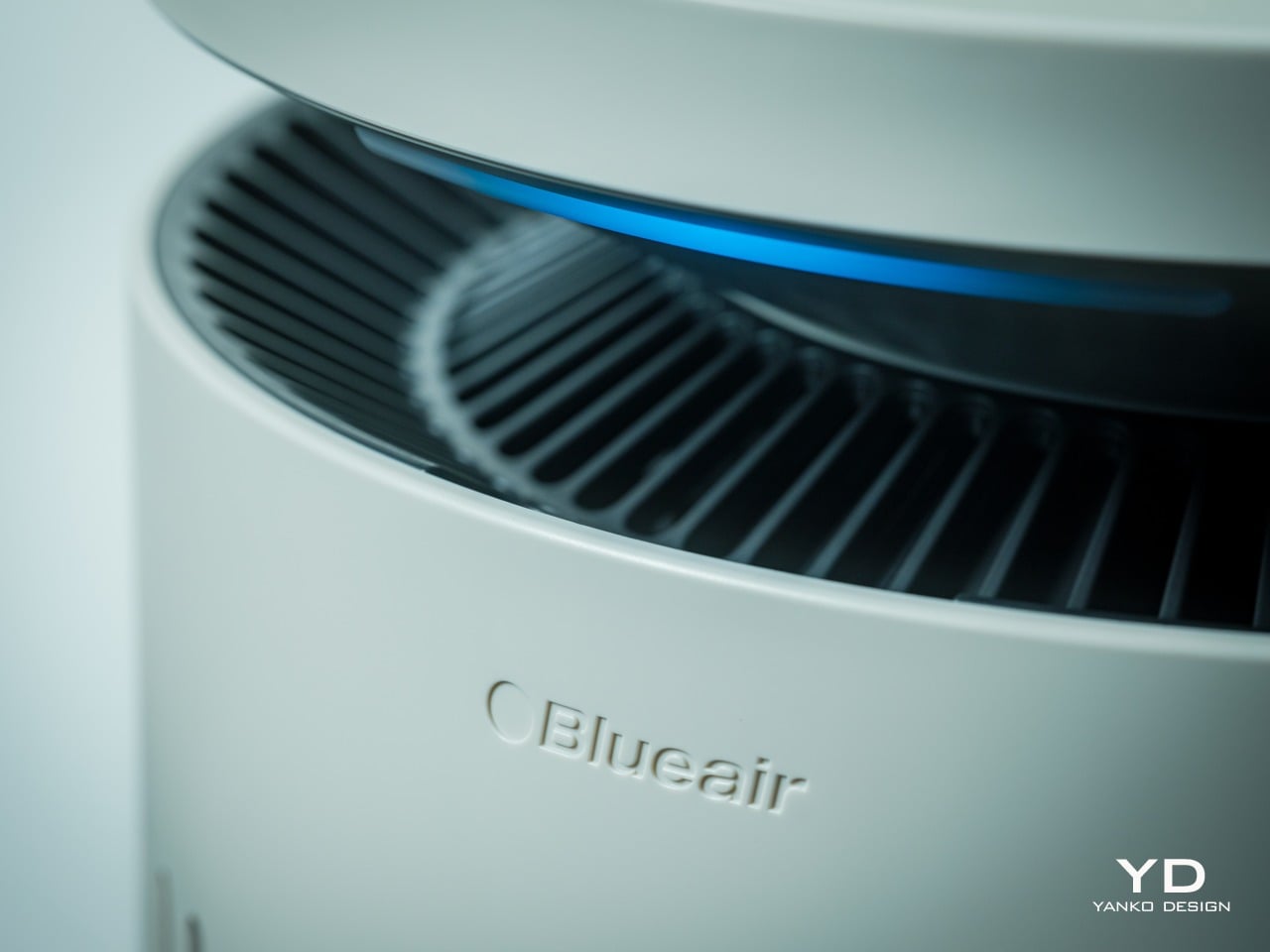
The top disc floats slightly above the body with a subtle gap, and when the device is running, a thin line of blue light glows in that gap, more like a bedside lamp than a status LED. The slats wrap 360 degrees around the body, which gives it a kind of architectural rhythm that works whether you see it from the front or the side.
Near the base, there is a small vertical window that shows the water level and projects mood lighting when enabled in the Blueair app, but it is narrow enough that it does not break the visual flow. The top disc itself is smooth and plate-like, with a matte finish that does not collect fingerprints. The material is still primarily plastic, but it is clearly chosen to feel refined rather than cheap. The matte finish softens reflections and resists the glossy sheen that makes a lot of gadgets look disposable.
The tower looks comfortable in different contexts. In a bedroom next to wood furniture and neutral textiles, it reads as another piece of the interior rather than a piece of tech parked temporarily. In a small office with dark carpet, floating shelves, and a desk chair, it sits in the corner without clashing with the more technical surroundings, which makes it easy to imagine moving between spaces. The sense you get is that someone thought about how this object would age in a room where it runs every night.
Ergonomics
The Blueair 2‑in‑1 Pro is tall enough that you do not need to crouch to reach the controls, which sounds minor until you realize how many bedside devices force you to bend or kneel just to tap a button. The footprint is compact, roughly a foot in diameter, and the weight gives it enough stability that you can brush past it without worrying it will tip.
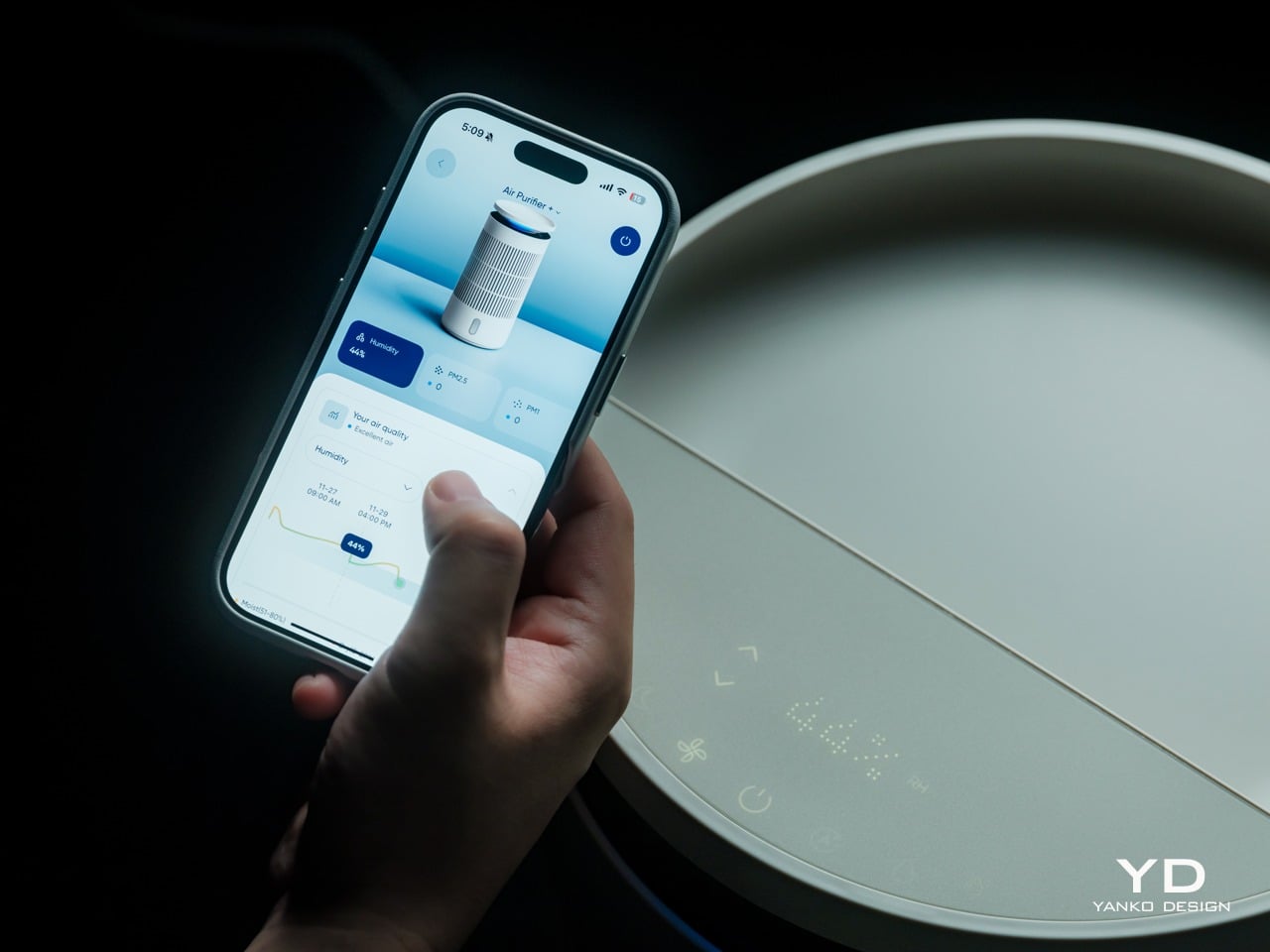
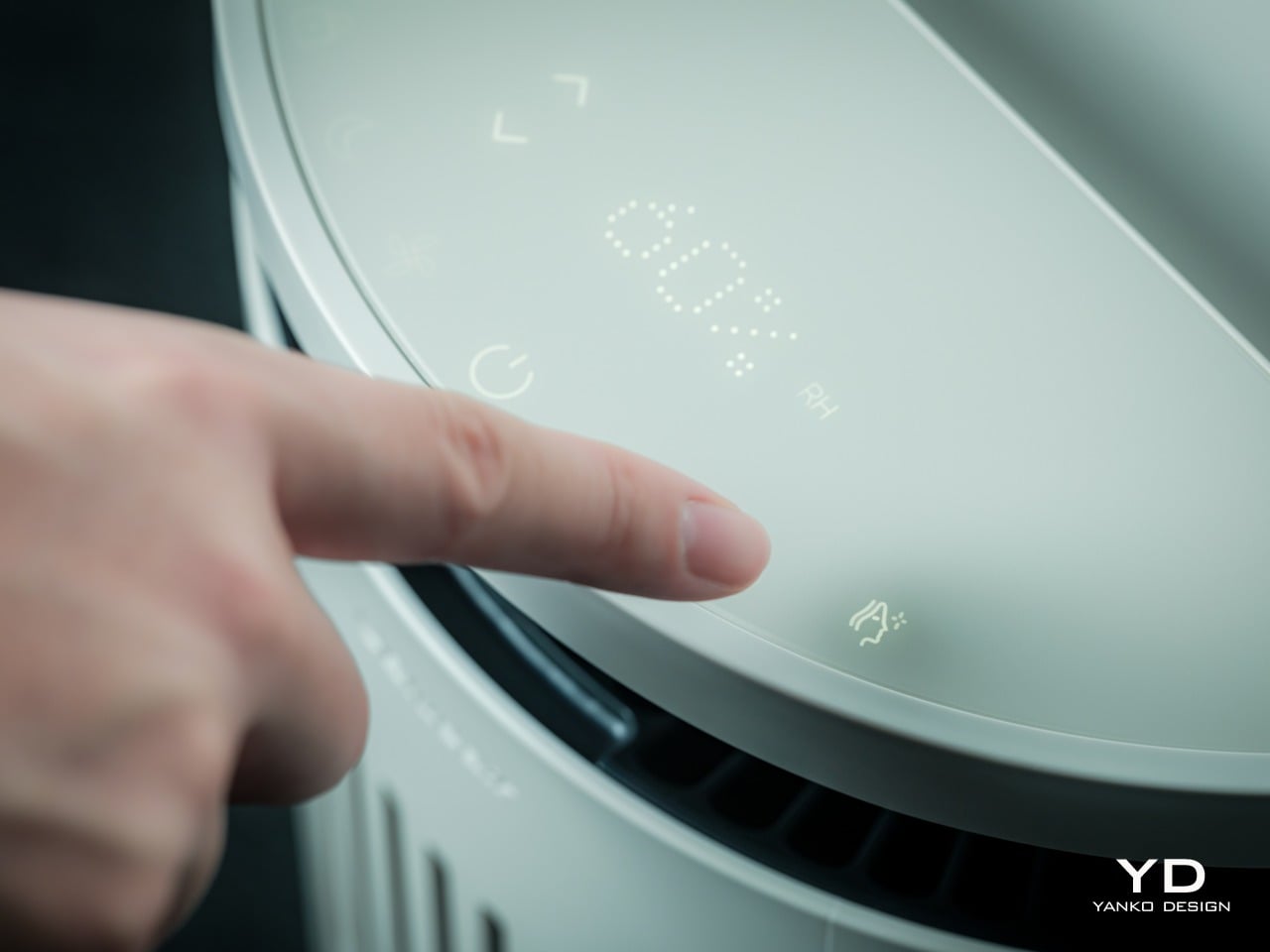
The top surface is where most of the interaction happens. A semi-circular ring houses clearly marked icons for power, fan speed, night mode, humidification toggle, and skin mode, along with indicators for air quality, humidity percentage, and water level. The layout is simple enough that you can understand it at a glance, so switching into auto mode or activating skin mode is a one-tap affair.
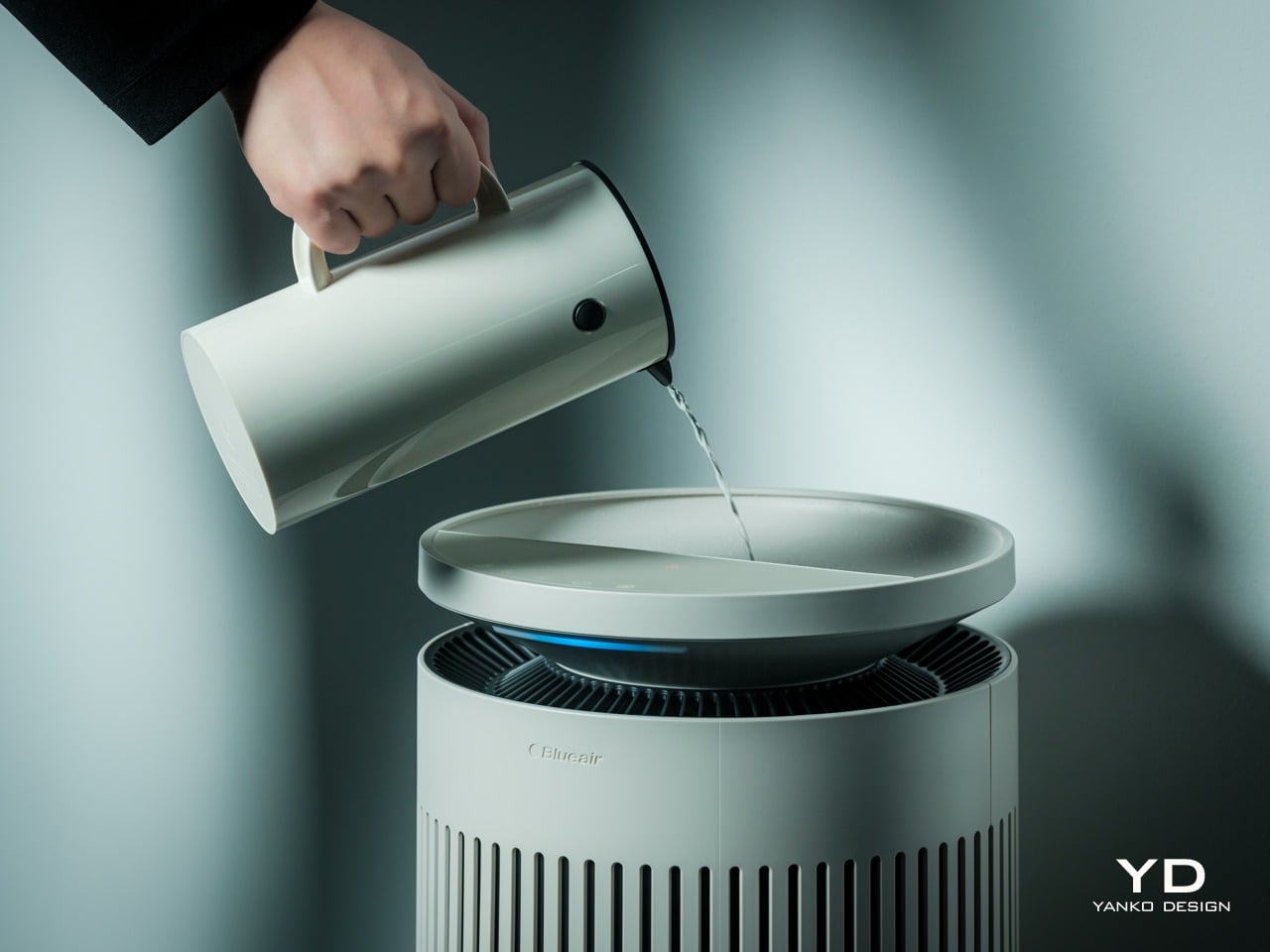
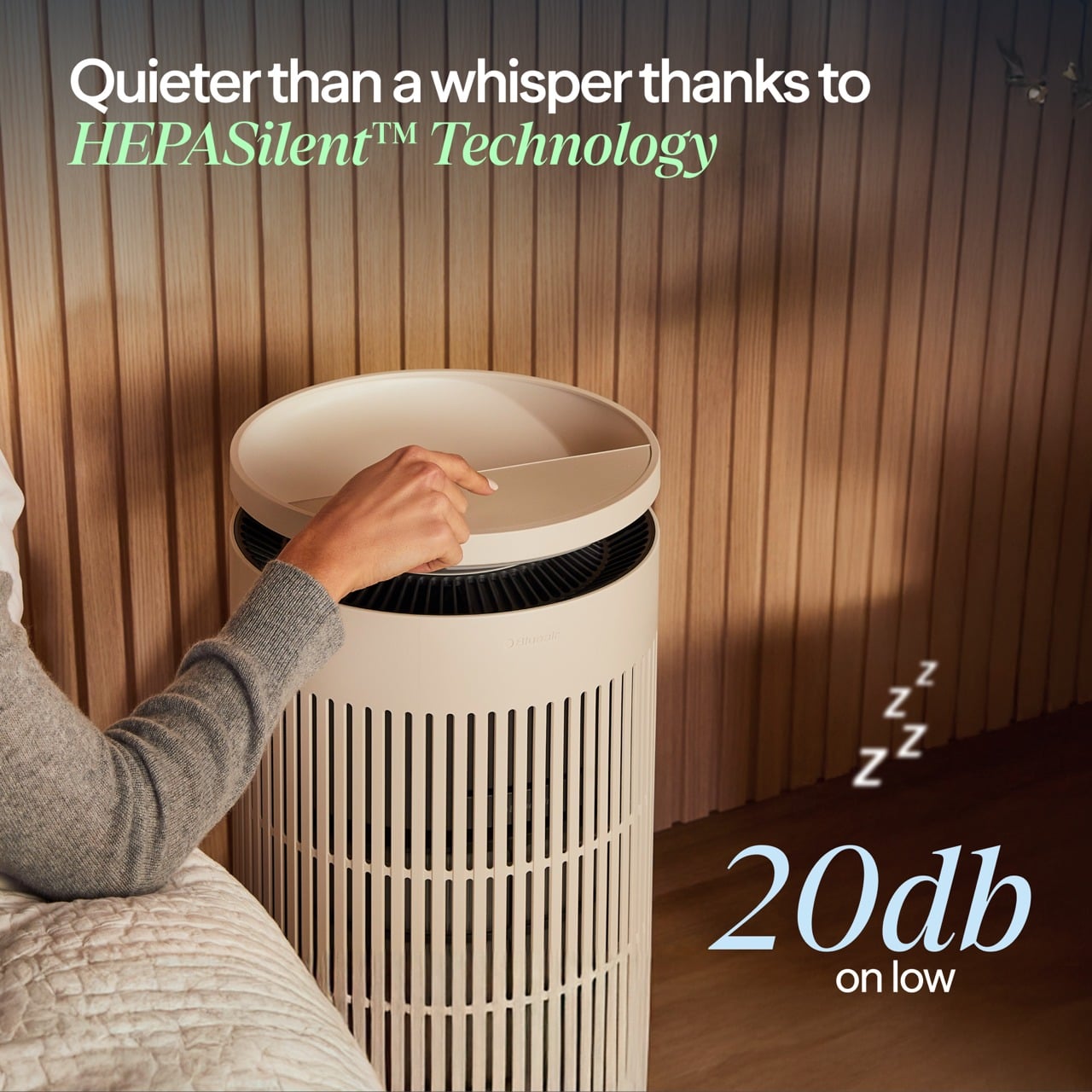
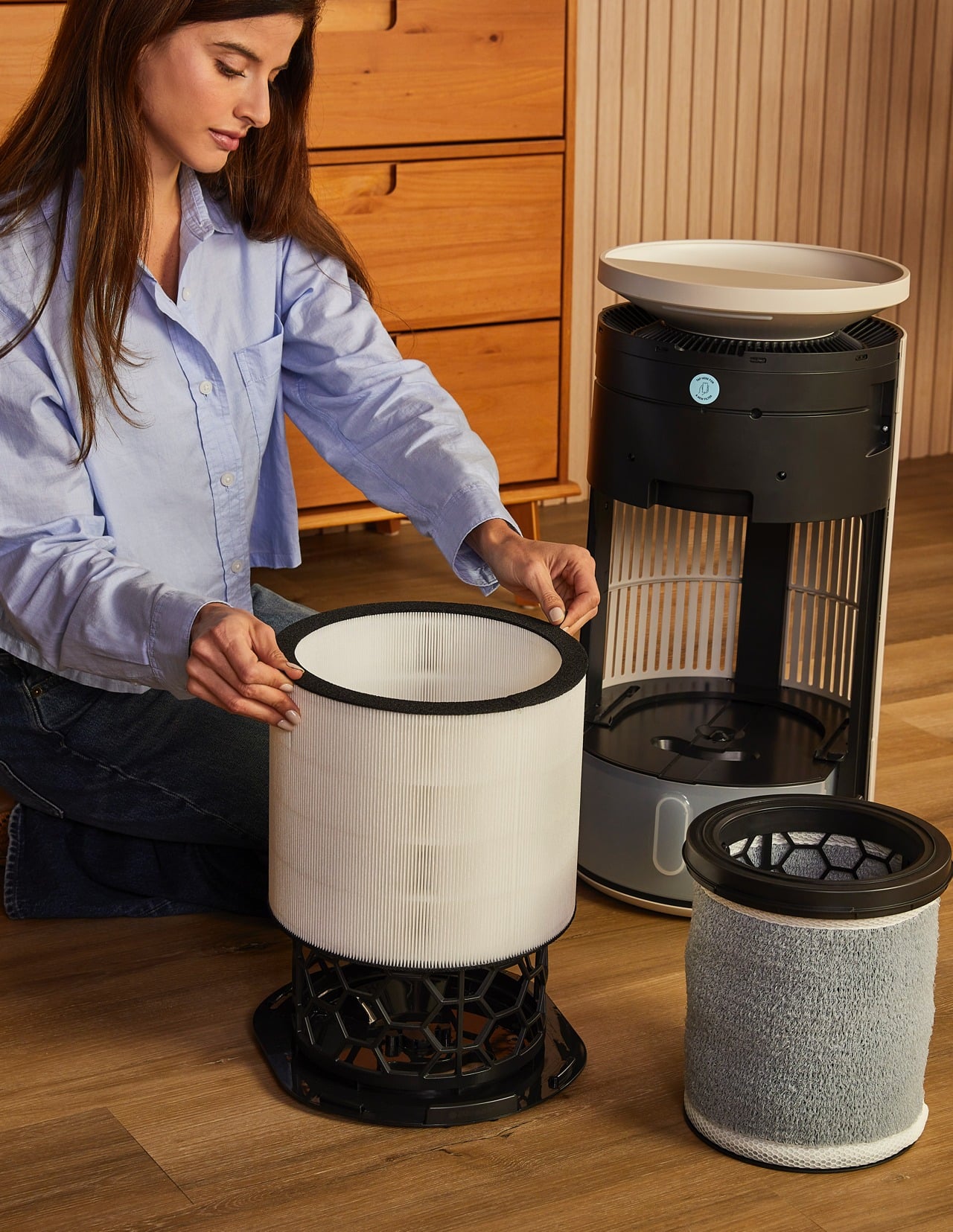
One of the most thoughtful ergonomic details is the top fill design. Most humidifiers require you to lift a heavy tank, carry it to a sink, fill it, then carefully carry it back and slot it into place, which gets old quickly and can be awkward if you have back or shoulder issues. The Blueair 2‑in‑1 Pro lets you simply lift the top disc slightly and pour water directly into the opening from a jug or carafe. The smart water sensor and real-time display remove worries by reminding you when the water level is low and alerting you when the tank is almost full.
It feels as easy as watering a houseplant, and for people who want to avoid bending and lifting, this small design choice makes day-to-day upkeep significantly less annoying. There is still the option to remove the tank entirely and fill it at a sink when you want to add a larger volume at once, but most of the time, the top fill is faster and easier.
Performance
Blueair boasts the 2-in-1 Pro Purify + Humidy as the most powerful of its kind, delivering balanced and superior performance in such a compact package. Compared to a leading competitor, its tests have proved it to offer 3x better purification and 2x cleaner humidification. Although we don’t have labs to verify these numbers, our own day-to-day use proved it to work as advertised.
The Blueair 2‑in‑1 Pro is both a capable air purifier and a serious humidifier, which is a harder balance than it sounds. The purification side uses Blueair’s HEPASilent technology, which combines mechanical filtration with an electrostatic charge to capture fine airborne particles like dust, pollen, smoke, and volatile organic compounds. The intake and outlet are 360 degrees around the body, so it pulls air from all sides and pushes it back out clean.
The humidification uses evaporative technology that Blueair calls 360° InvisibleMist. Instead of producing visible fog or mist, it adds moisture to the air in a controlled, gradual way that avoids white dust on furniture and damp spots on nearby surfaces. This matters especially in bedrooms and offices with electronics, books, or wood finishes, where you want comfortable air without worrying about residue or condensation.
The skin and beauty sleep focus is where the device starts to feel like something designed for wellness routines rather than just air quality. The dedicated skin mode keeps humidity in a range dermatologists typically recommend for skin comfort, roughly between 40-60%, and adjusts that target based on room temperature and time of day. At night, when your skin tends to lose more moisture, the device gently raises humidity levels.
In practice, this feels like setting skin mode before bed, going through your normal cleanse and treatment routine, and then falling asleep in a room that feels neither dry nor heavy. You do not wake up with that tight, parched feeling that dry winter air or overheated apartments tend to cause, and your skin does not feel irritated or raw the way it sometimes does when indoor air is harsh.
The Blueair app adds another layer of control and insight without being required for basic use. From your phone, you can set target humidity levels, create schedules for when the device runs, adjust display brightness, and choose between three mood lighting settings that turn the top ring into a warm, normal, or bright glow. You can also see air quality and humidity trends over time.
That said, most of the time you can leave it in auto or skin mode and let it manage itself quietly in the background. The app is there when you want precision or automation, but the device does not force you into it for everyday operation, which feels like the right balance for a bedroom appliance.
Noise is surprisingly gentle at lower speeds. In night mode, the sound profile is closer to a soft fan than a mechanical hum, which many people find soothing as a kind of background white noise. Higher speeds are audibly stronger when the device detects poor air quality and ramps up to clear it faster, but the ability to drop back into quiet operation keeps it compatible with light sleepers.
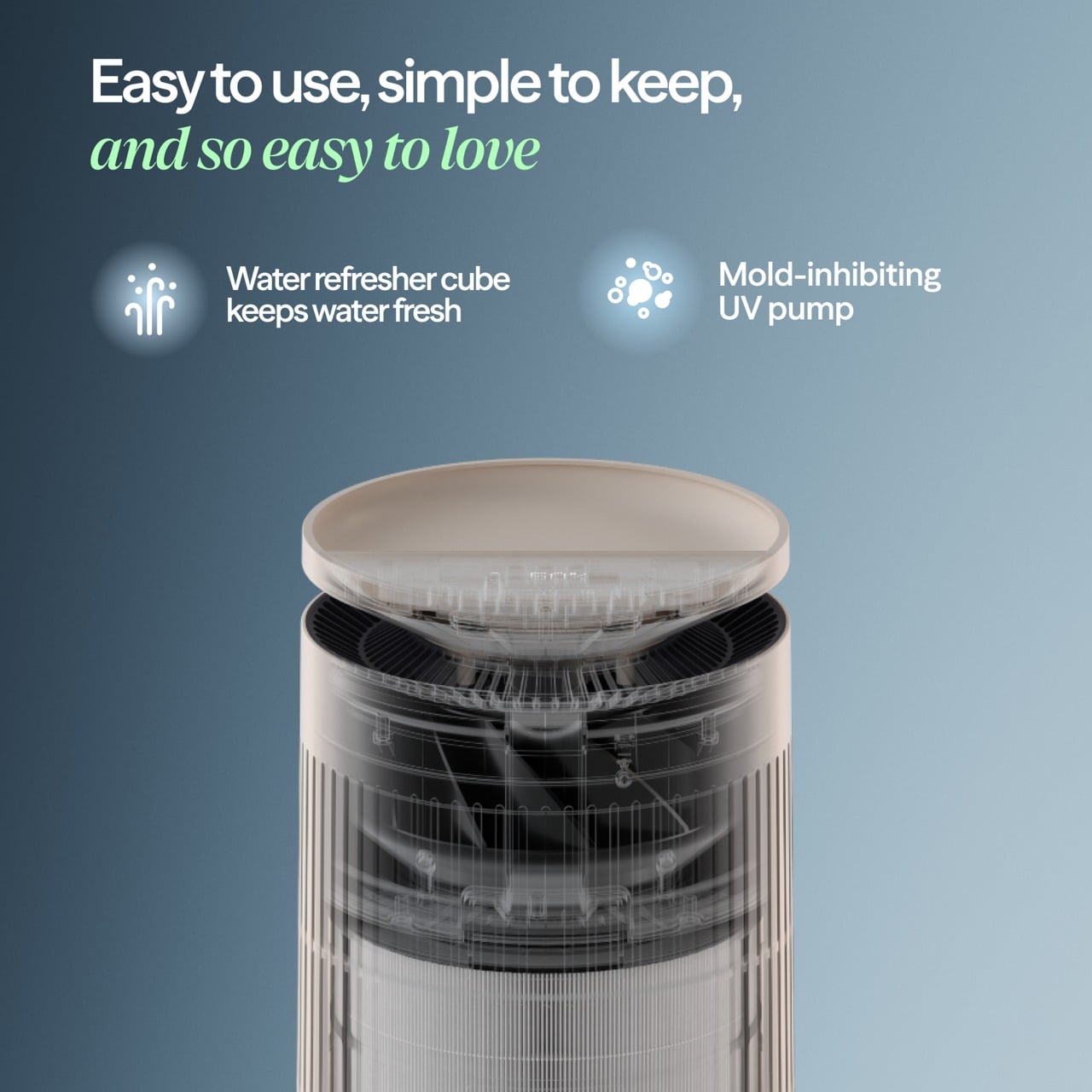
The device also includes several behind-the-scenes hygiene features that keep the humidifier side fresh over time. A built-in UV pump recirculates water to help inhibit bacterial growth, a wick dry mode runs automatically when the tank is empty, or the device goes to standby to prevent musty smells, and a water refresher module made of activated carbon helps absorb minerals and reduce discoloration.
Sustainability
Blueair is a Certified B Corp, which signals that the company has passed third-party audits for social and environmental impact. This does not magically make the device carbon neutral or eliminate its footprint, but it does suggest that longevity, energy use, and materials were part of the design conversation rather than afterthoughts. For a device designed to run every night, that kind of corporate positioning matters.
The 2‑in‑1 Pro is built around long-life, user-replaceable components. Both the air filter and the humidifier wick are rated for up to twelve months of use, which reduces the frequency of replacements and the amount of waste compared to devices that require new cartridges every few weeks. The wick is machine washable, which extends its life even further and keeps it feeling fresh without needing to buy a new one prematurely.
The hygiene features also support sustainability indirectly. A humidifier that stays clean and pleasant to use is less likely to be abandoned in a closet after one winter, which means fewer devices being replaced prematurely. The UV pump, wick dry mode, and water refresher all work together to keep the system feeling fresh, which encourages long-term ownership.
The housing is still primarily plastic, and this is an electrically powered device, so it has an environmental cost. But combining two machines into one does reduce the total number of housings, motors, and power supplies needed compared to buying a purifier and a humidifier separately. For someone who needs both functions, the 2‑in‑1 approach is a more efficient use of materials and space.
Value
The Blueair 2‑in‑1 Pro Purify + Humidify sits firmly in the premium category with its price tag, which is a real investment for a bedroom appliance. That figure makes more sense when you consider that it replaces a standalone purifier, a standalone humidifier, and in some ways a separate wellness gadget, while also adding design intelligence and app control that many basic units lack.
Space is part of the value equation. In bedrooms and small home offices, floor space and visual calm are both precious. Having one well-designed column instead of multiple mismatched boxes reduces clutter, simplifies cable management, and makes the room feel more intentional. For design-minded homeowners, that reduction in visual noise is a real form of value, not aesthetic preference alone.
The skincare and beauty sleep focus adds another dimension to the value story. For people already spending money on serums, moisturizers, and treatments, optimizing the air they sleep in is a logical extension of that investment. The fact that the device can quietly maintain a skin-friendly humidity range while filtering out airborne irritants makes it feel like a wellness tool that supports the rest of your routine.
Verdict
The Blueair 2‑in‑1 Pro Purify + Humidify is a carefully considered column that manages to be a capable purifier, a gentle humidifier, and a sleep-friendly presence without ever looking or feeling like a clinical appliance. It blends into bedrooms and small offices with the kind of visual ease that makes you forget it is technology, and the ergonomic details like top fill refilling and intuitive controls make it easy to live with day to day.
The 2‑in‑1 Pro makes the most sense for people who care about both design and wellness, who want their bedroom or office to feel like a calm, supportive environment, and who appreciate when technology quietly improves their routines without demanding constant attention. For that audience, this feels less like a splurge and more like a thoughtful upgrade to the air they live in every day.
Multi-function bedside consolidation, including USB-C charger
Circadian-friendly lighting system
QuietMark certified for sleep
Simple maintenance with long filter life
CONS:
Single color temperature range might not fit some preferences
Premium price for small coverage area
RATINGS:
AESTHETICS
ERGONOMICS
PERFORMANCE
SUSTAINABILITY / REPAIRABILITY
VALUE FOR MONEY
EDITOR'S QUOTE:
The Blueair Mini Restful Sunrise Clock Air Purifier quietly merges clean air with gentle dawn into one compact, sleep-focused design object.
Nightstands have quietly become cluttered charging stations over the past decade, with phones serving as alarms, small purifiers humming in corners, and separate wake-up lights trying to undo the damage of jarring ringtones at six in the morning. Sleep has turned into a wellness habit people track and optimize, but the tools meant to support it often feel scattered and visually chaotic.
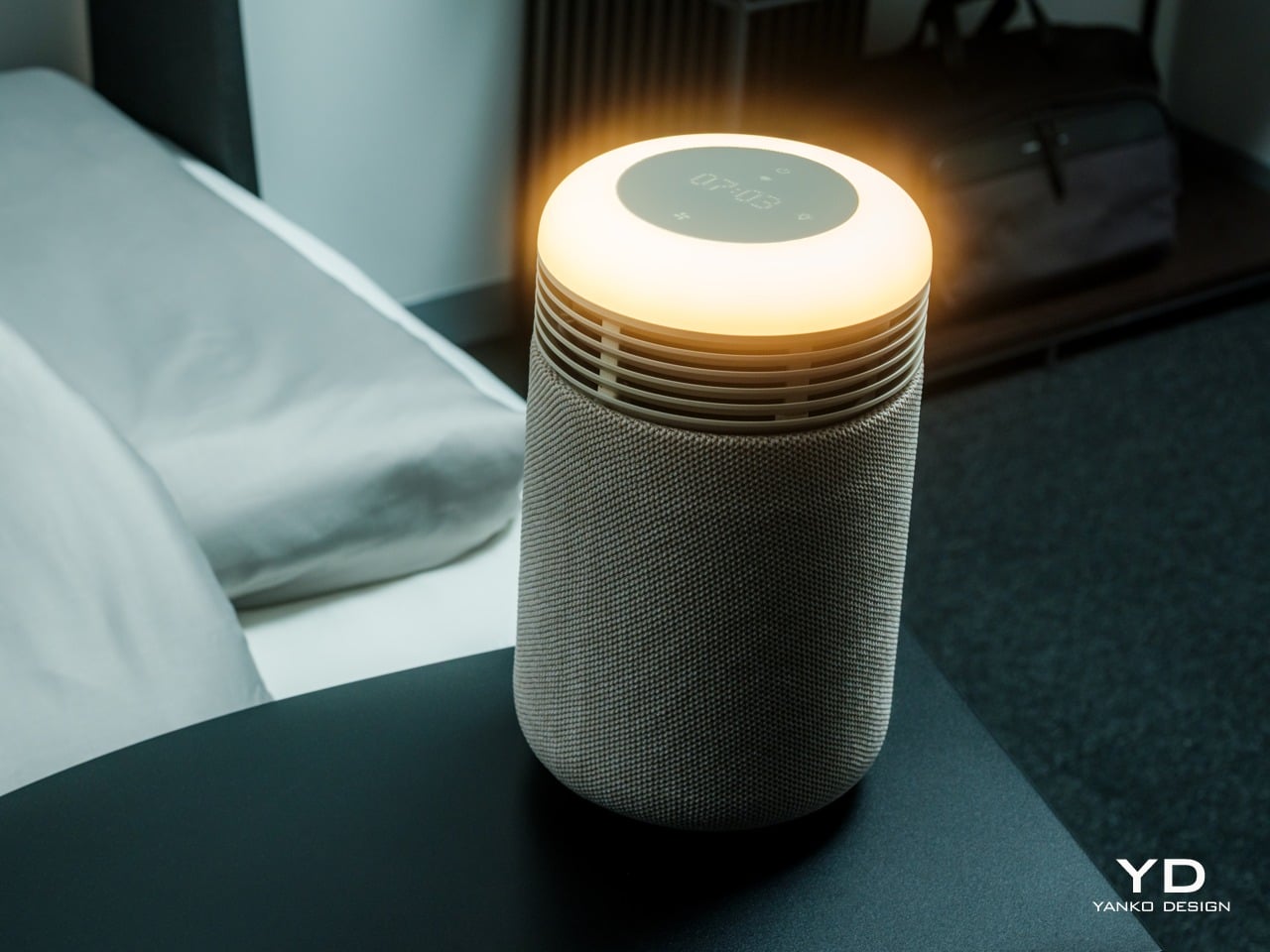
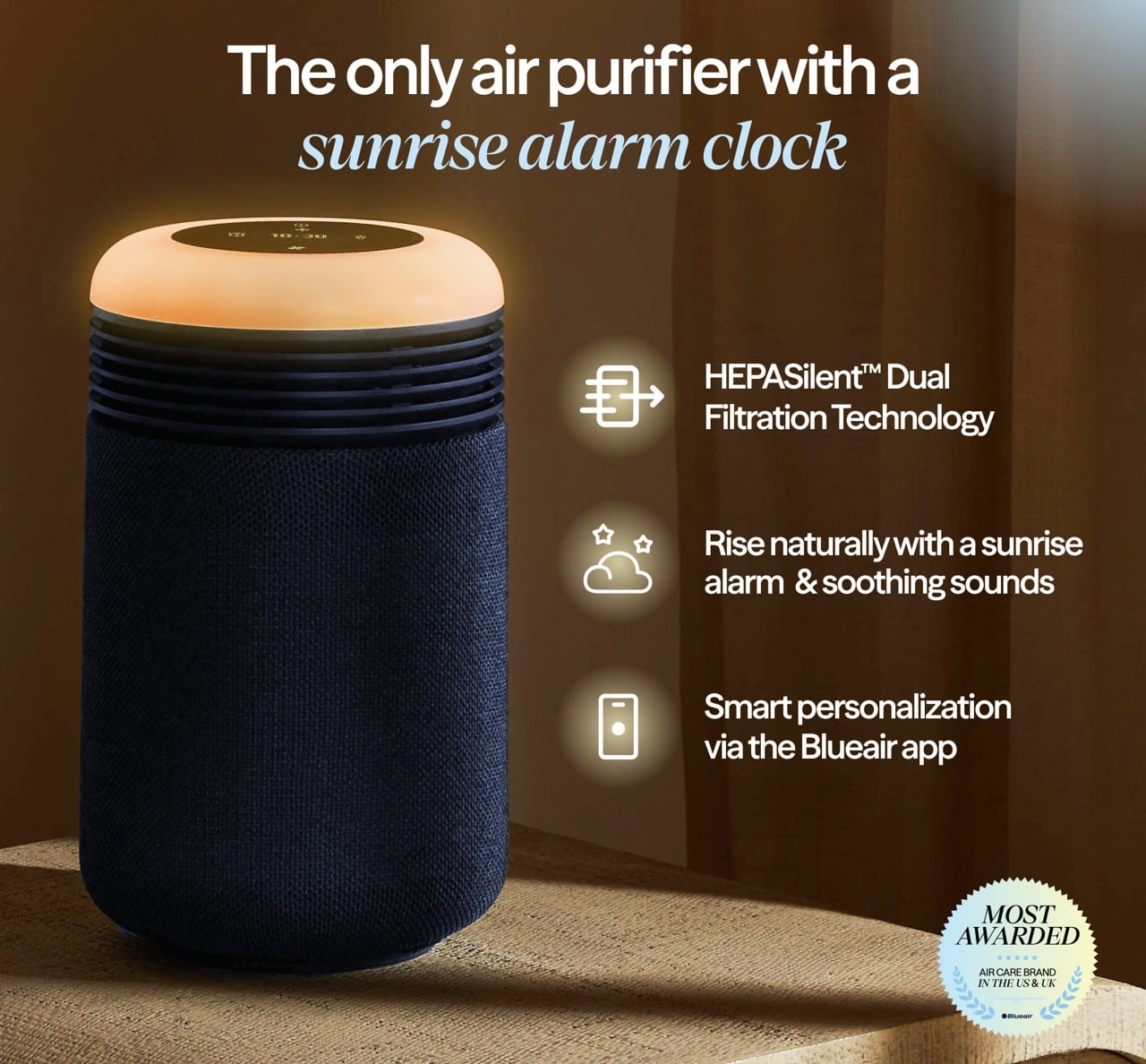
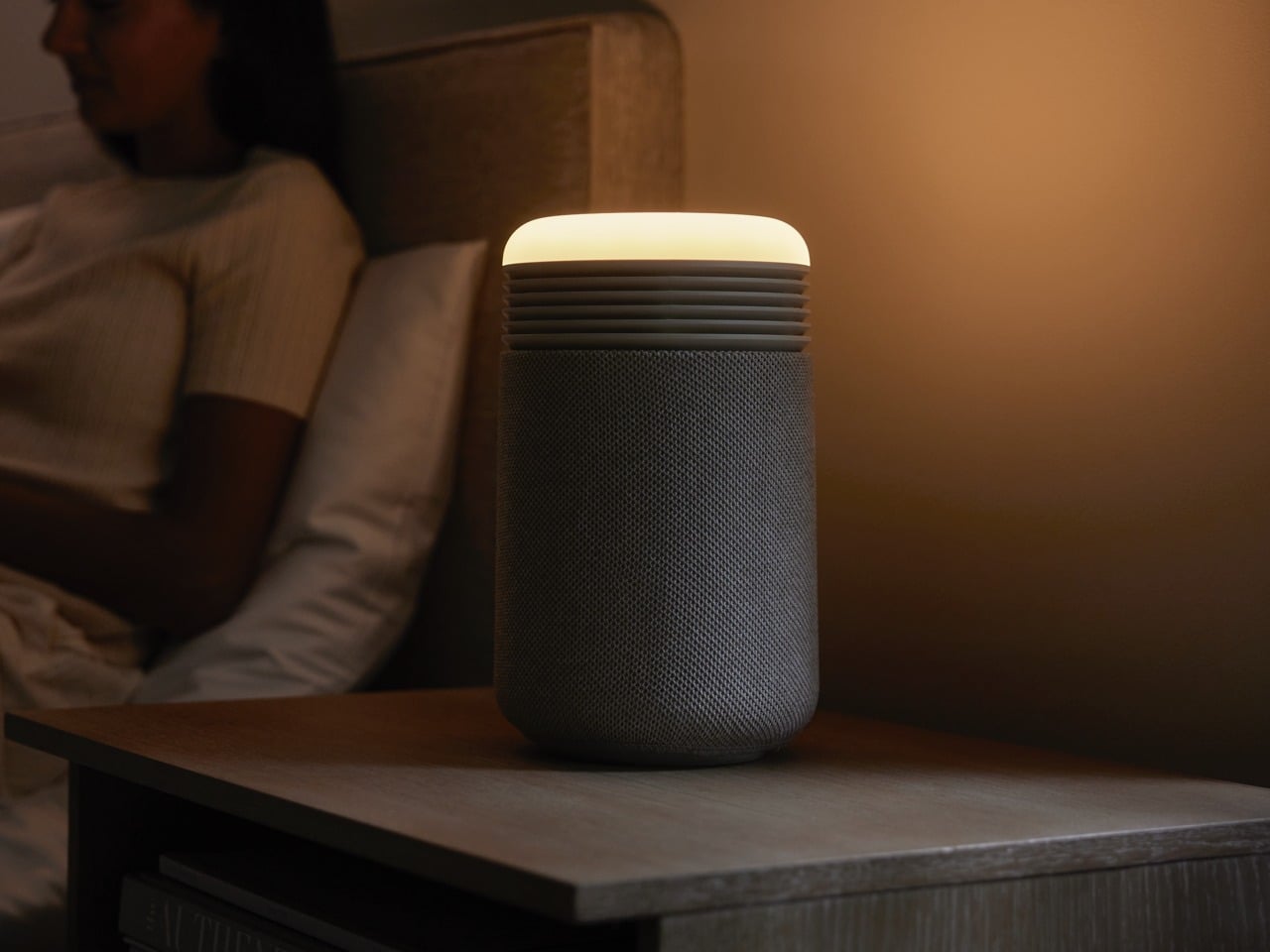
The Blueair Mini Restful() Sunrise Clock Air Purifier is a compact attempt to pull some of those tools into one object. It is a small bedside cylinder that cleans the air, glows like a sunrise to wake you gently, plays soft sounds, shows the time, and charges your phone, all while looking more like a design piece than some cold, drab piece of appliance. But does this striking appliance work as advertised? We put it beside our comfy bed to find out.
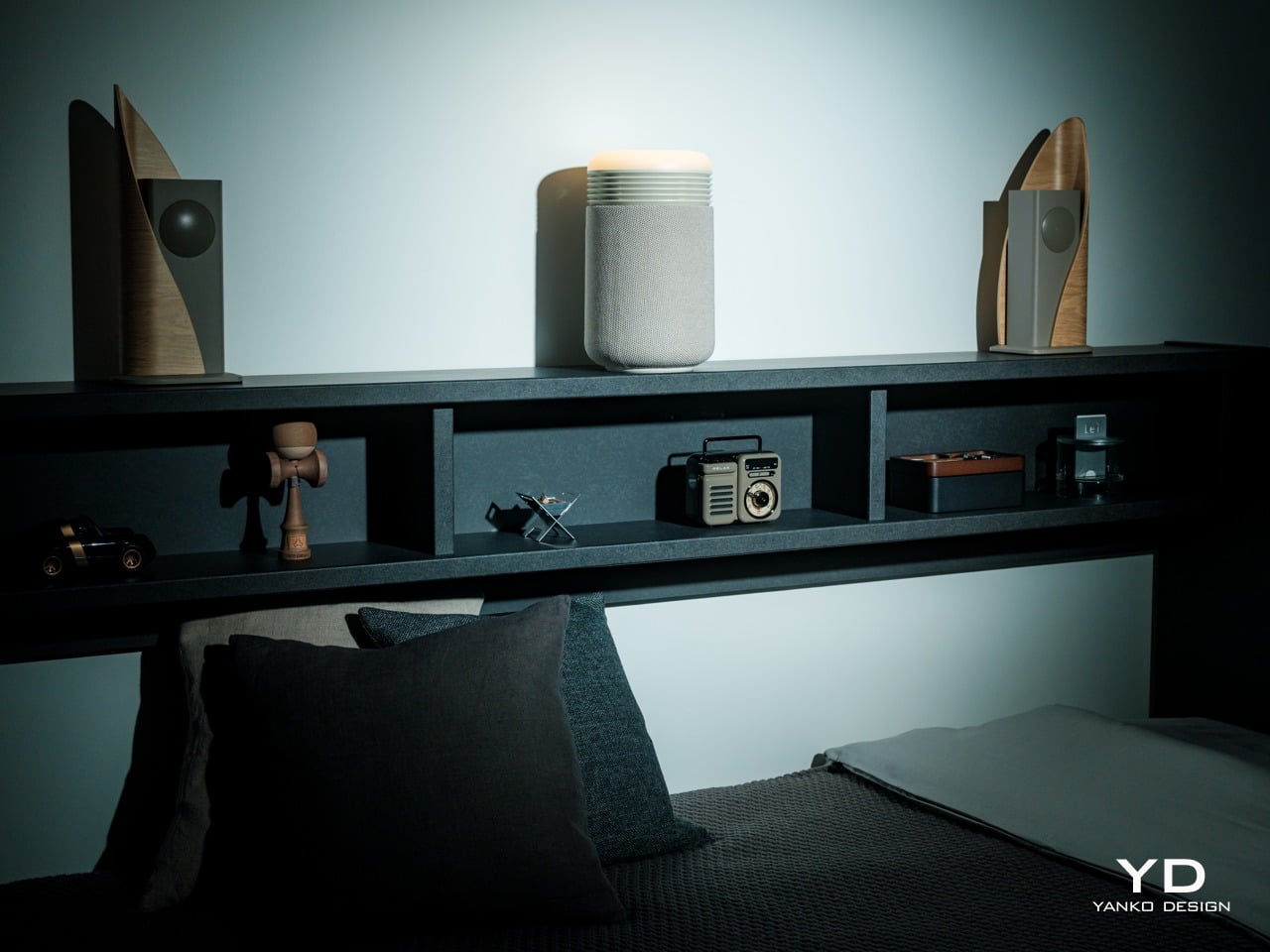
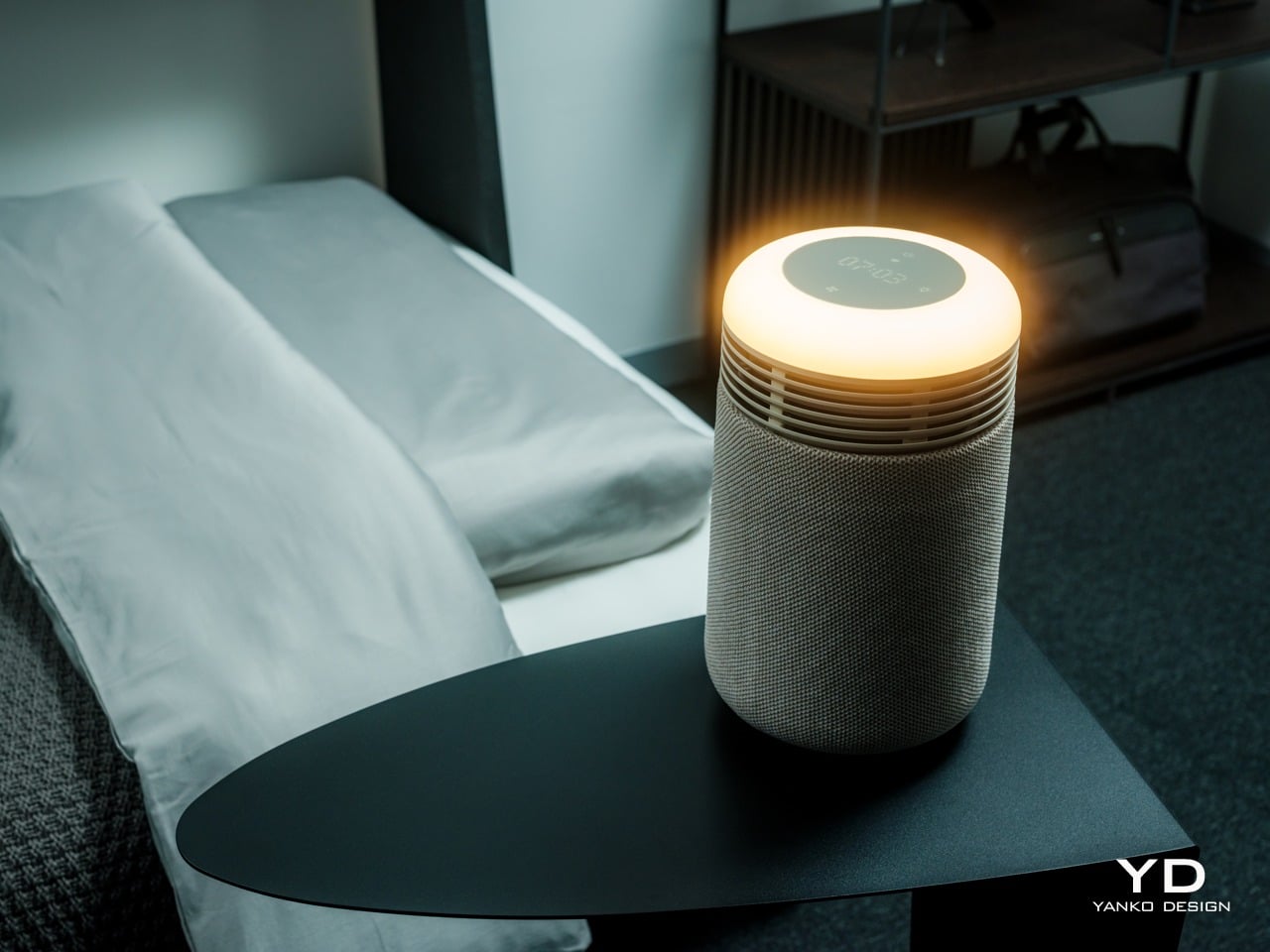
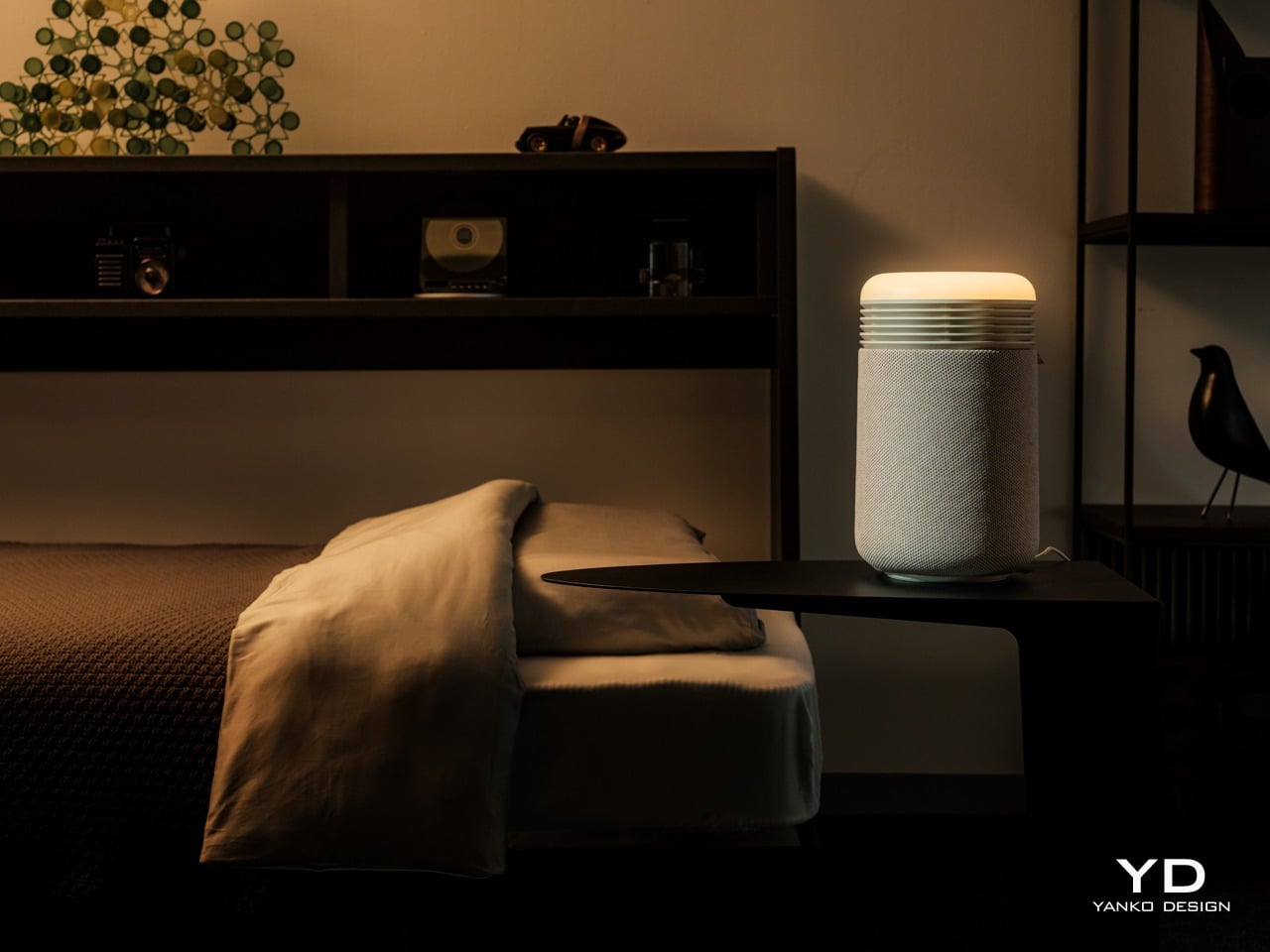
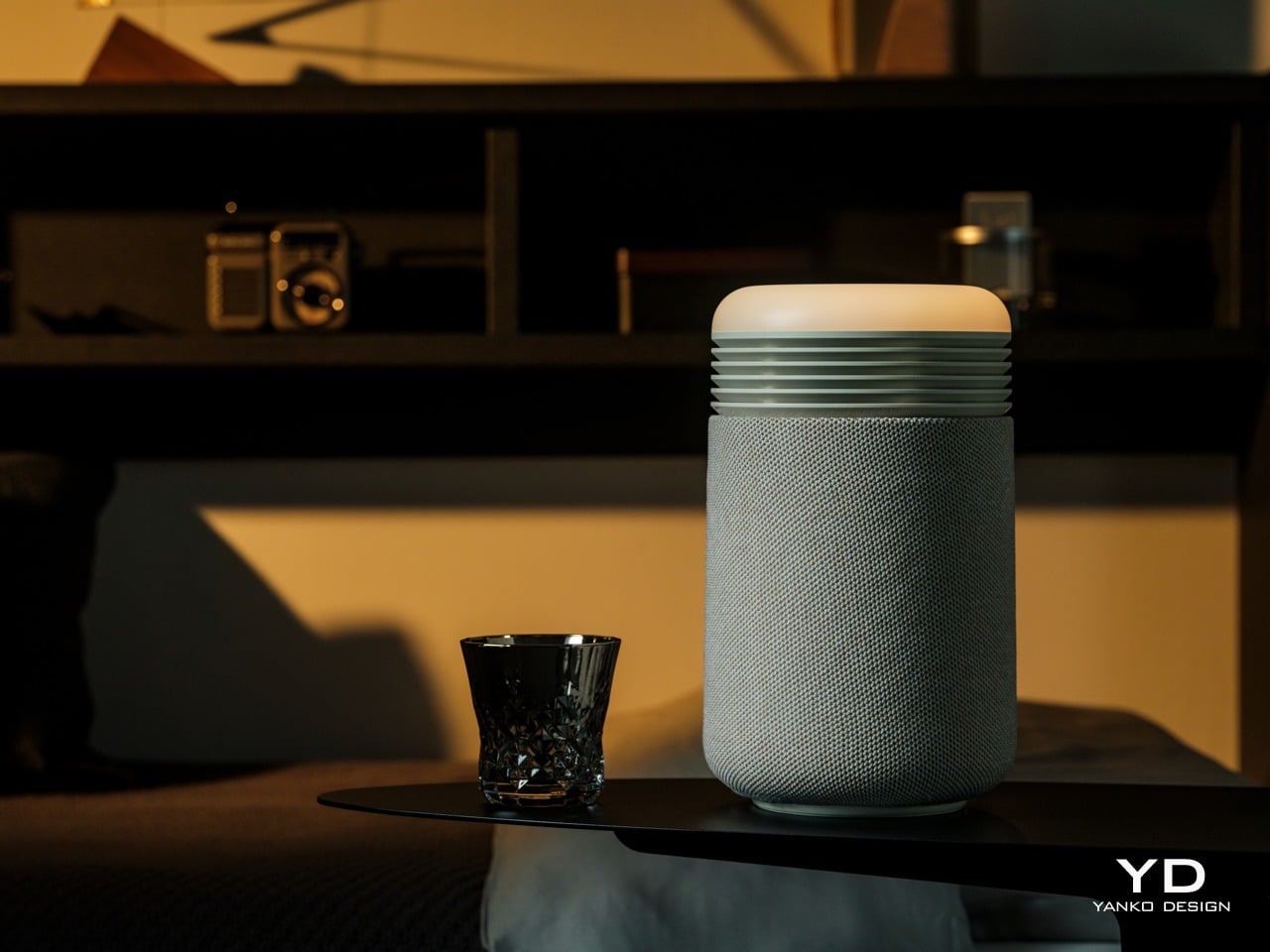
The Mini Restful is a short cylinder about eleven inches tall, wrapped in premium fabric with a smooth top disc. It looks closer to a smart speaker or a small bedside lamp than a traditional purifier, which makes it feel natural sitting on a nightstand. The proportions are deliberately compact and soft, with rounded edges and no visible vents.
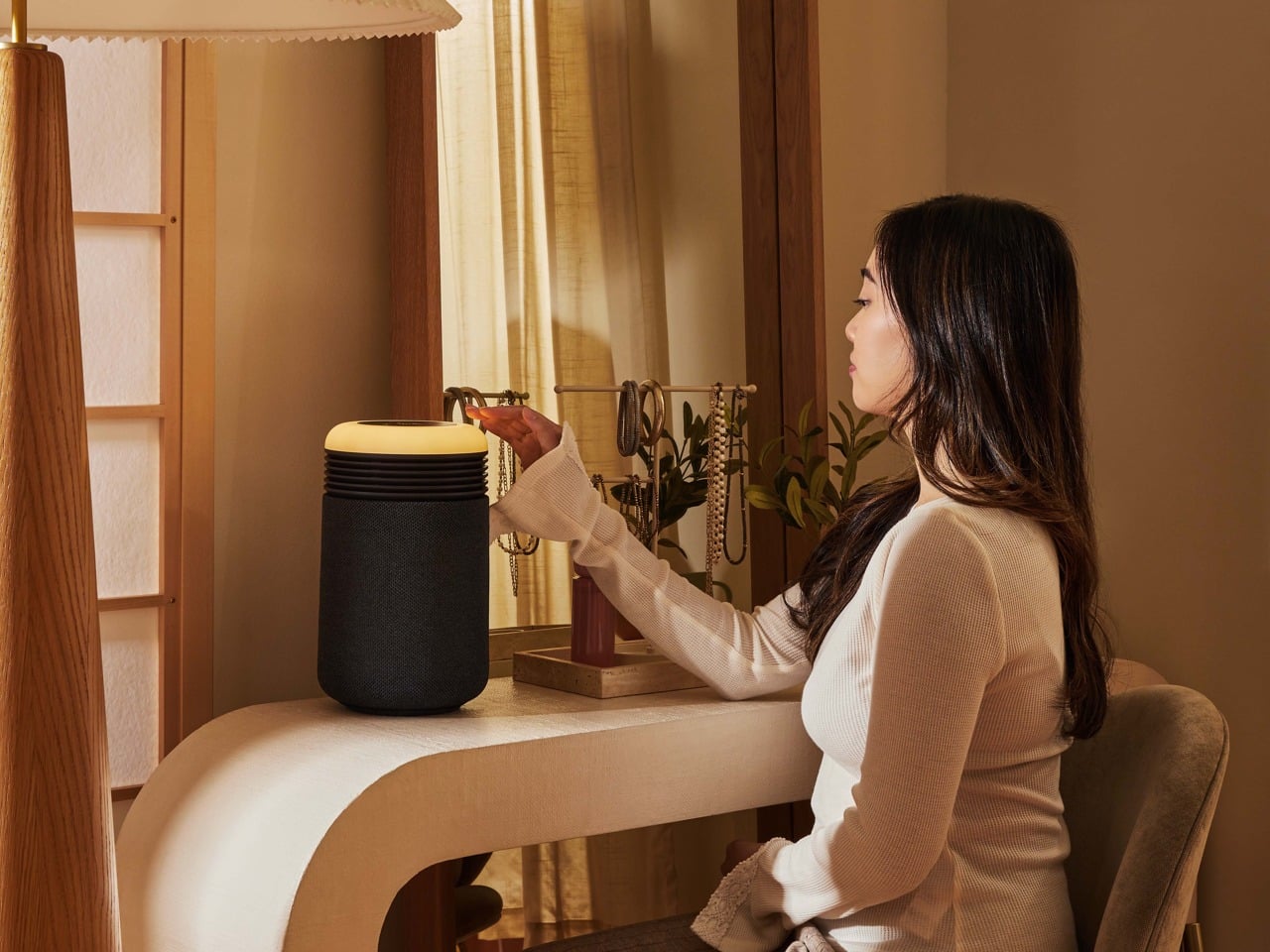
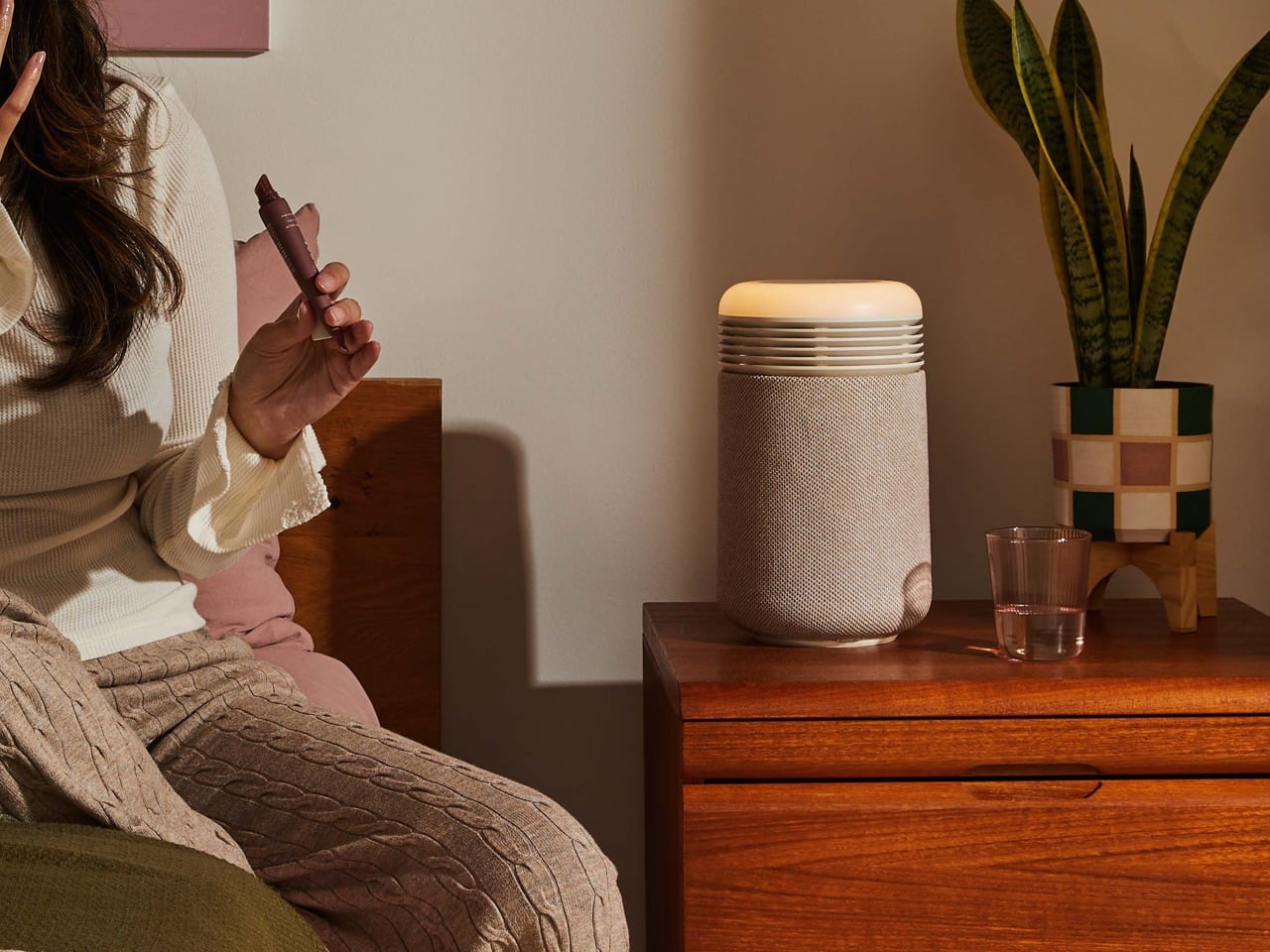
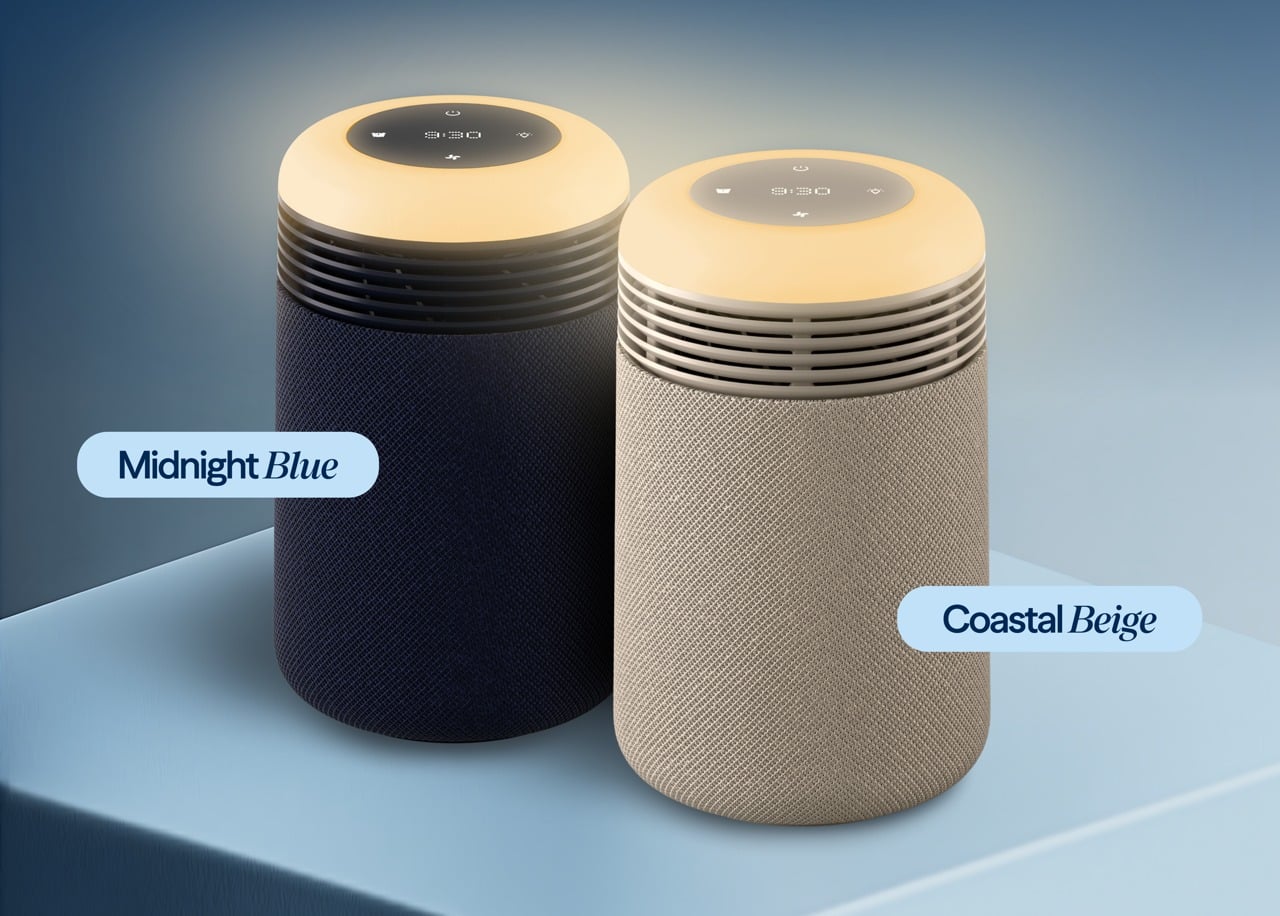
Two color options are available: Coastal Beige and Midnight Blue. Coastal Beige has a light oatmeal fabric with a warm off white top, which reads well in rooms with light wood furniture and neutral bedding. Midnight Blue uses a deep navy fabric, making it comfortable in darker, moodier bedrooms with richer tones.
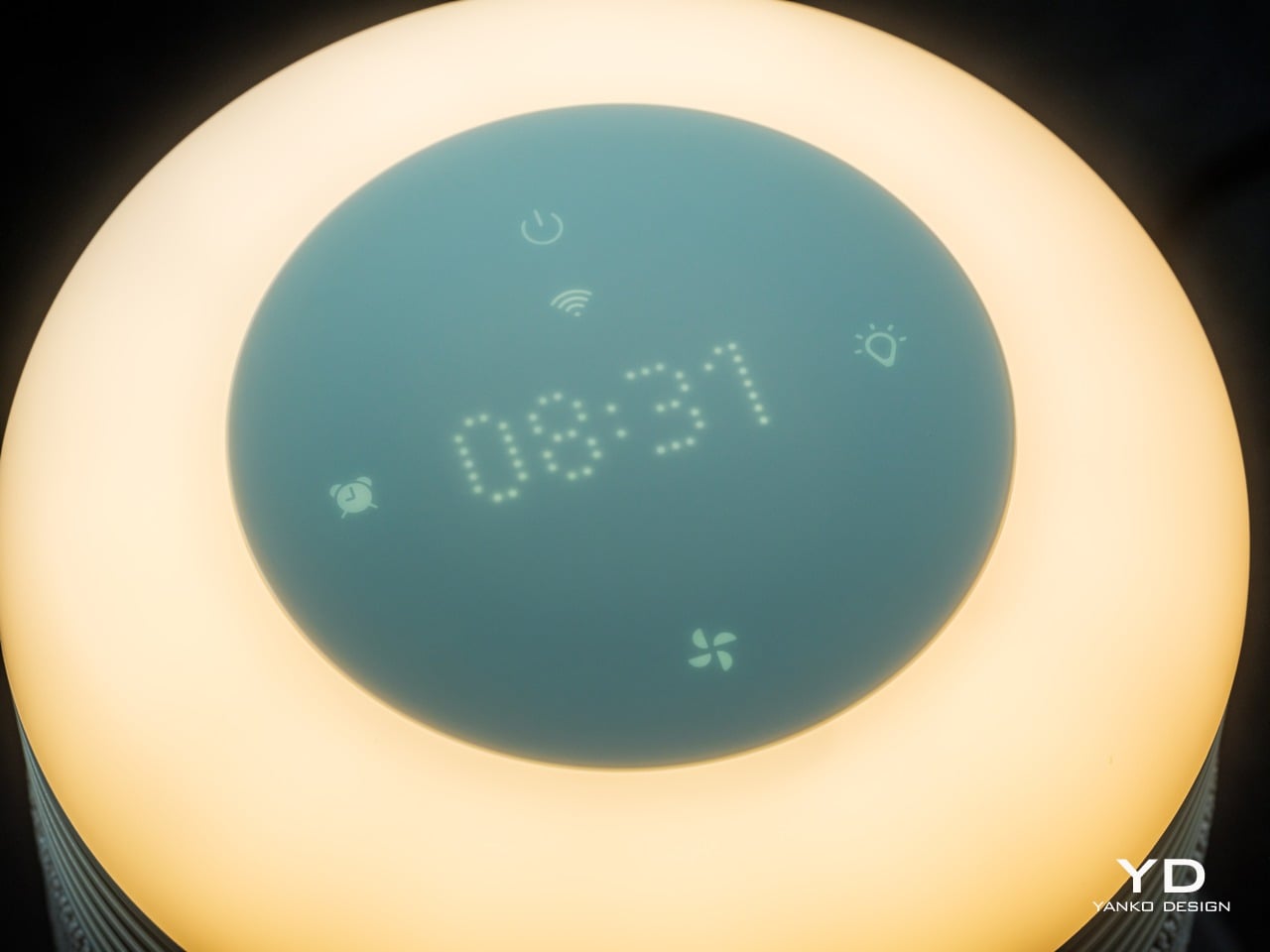
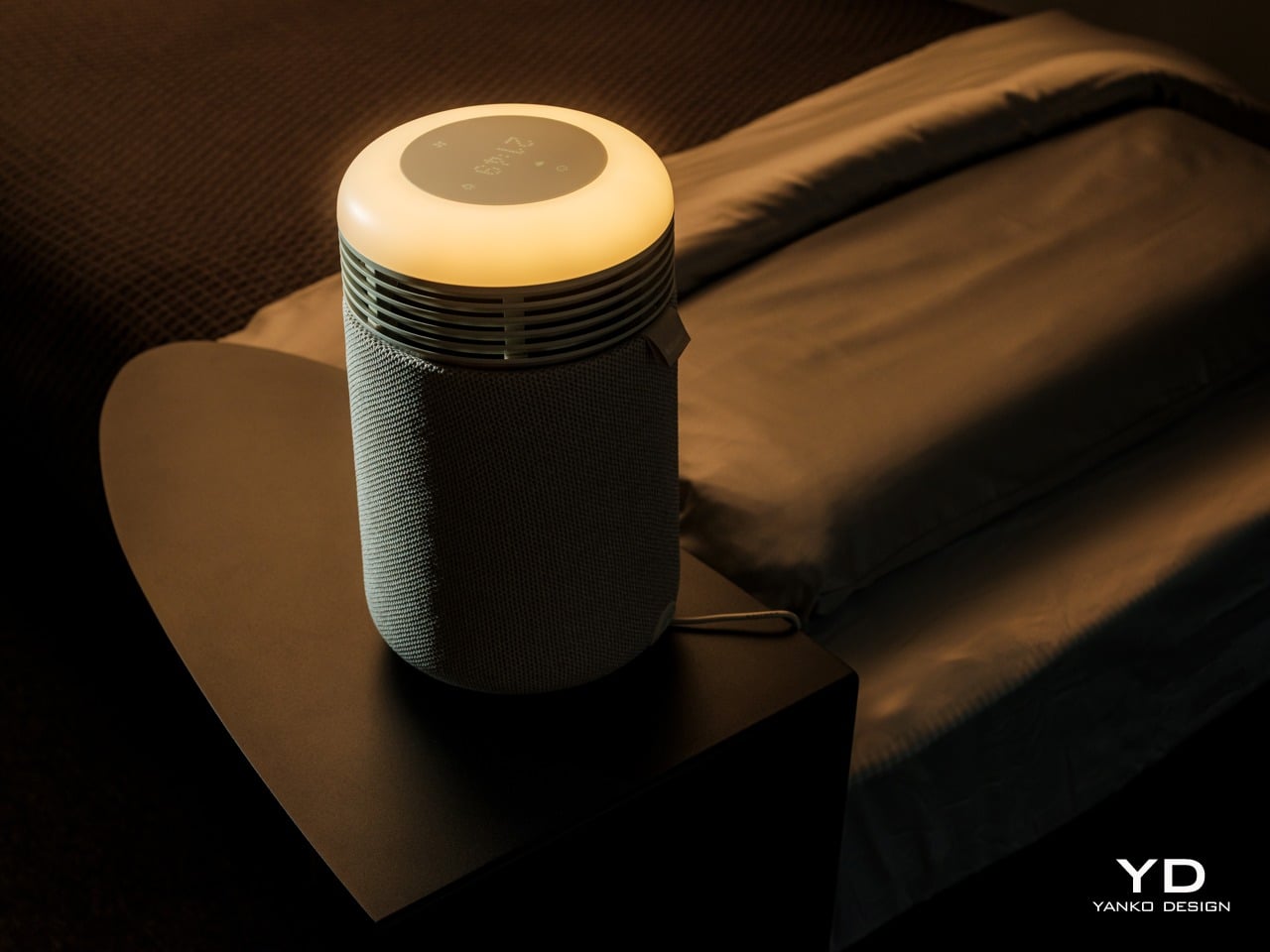
The top surface is where the aesthetic gets interesting. A circular user interface houses a dot matrix clock and touch controls, surrounded by a ring that glows when the wake-up light or mood lighting is active. When the sunrise alarm is running, the top looks like a tiny dawn, casting a warm halo onto the bedside table and wall.
It is much more pleasant than the blinking LEDs most appliances default to, and it doubles the device’s role as both a functional purifier and a kind of ambient light. The glow feels intentional, like a small lamp designed to support sleep rather than disrupt it, which is a significant shift from typical purifier status lights.
The fabric wrap is a key design choice. It softens the entire object and makes it read as part of the room’s soft furnishings rather than a hard plastic box. The textile has a fine woven texture that feels closer to upholstery than speaker mesh, and it helps the Mini Restful blend into spaces where you want calm rather than tech on display. The overall look avoids the glossy plastics and aggressive styling that make a lot of gadgets feel cheap or temporary.
Ergonomics
At around two and a half pounds out of the box, the Mini Restful is genuinely portable. You can pick it up with one hand and move it between rooms or reposition it without any strain. The small footprint, roughly six and a half inches in diameter, means it takes up about as much space as a medium-sized speaker or a chunky candle.
The cylindrical shape means you can place it close to the bed without worrying about sharp corners poking you if you brush against it in the dark. The air intake and outlet are all around the body, so it does not need a lot of clearance to work effectively, which is helpful in tight bedrooms or smaller apartments where every inch of surface area counts.
The top controls and clock are designed for quick, low-effort interaction. The dot matrix display is readable without being glaring, and the surrounding touch icons handle basic tasks like setting alarms, adjusting light brightness, and likely fan speed. You can do the essentials without grabbing your phone, which is helpful if you are trying to reduce screen time before bed.
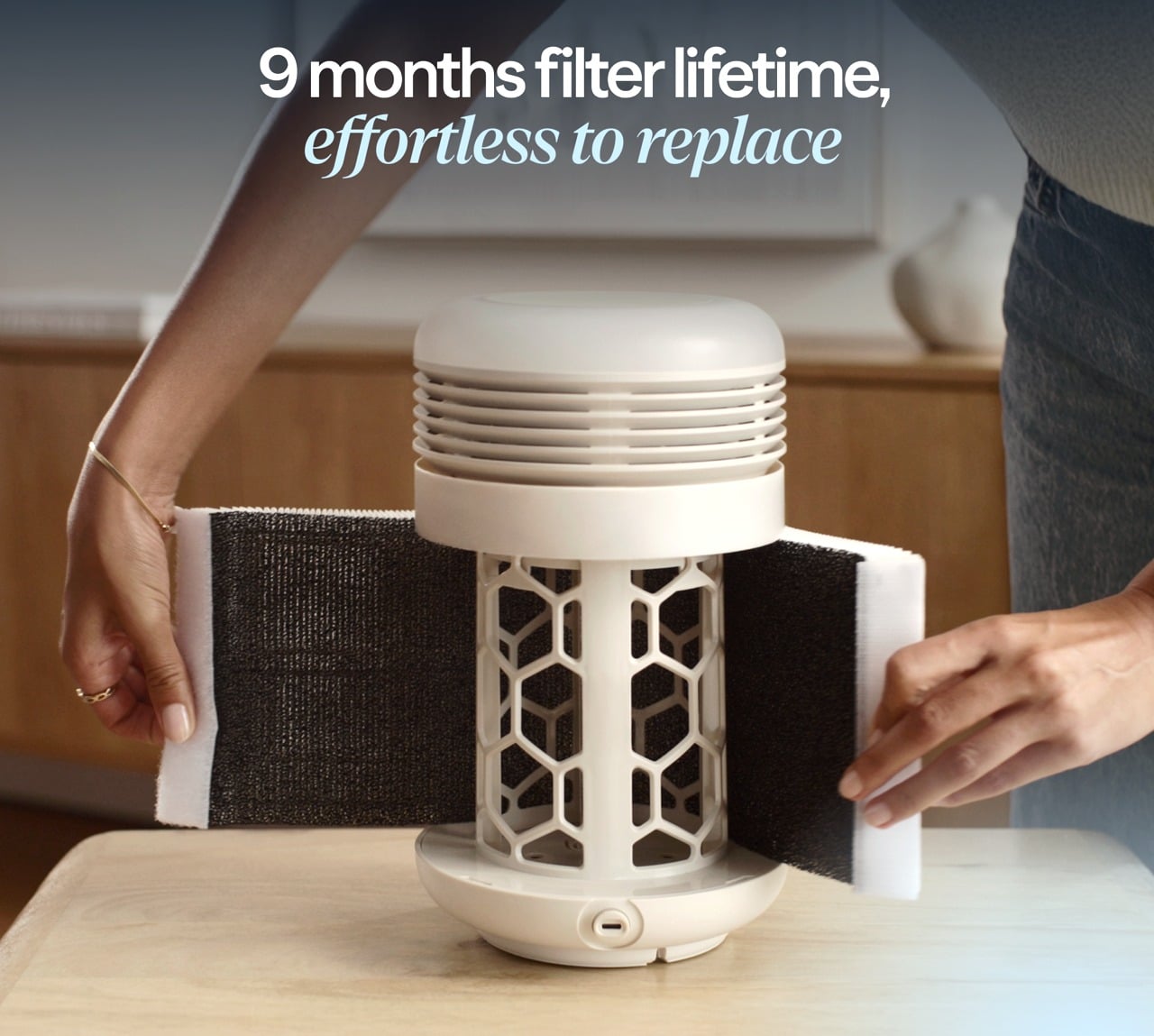
Filter access is straightforward. The fabric sleeve slips off, and the inner filter is a wraparound design with a simple closure, so replacing it does not require tools or wrestling with complicated cartridges. This kind of maintenance design makes it more likely that people will actually change the filter when it is due rather than giving up and buying a new device.
Performance
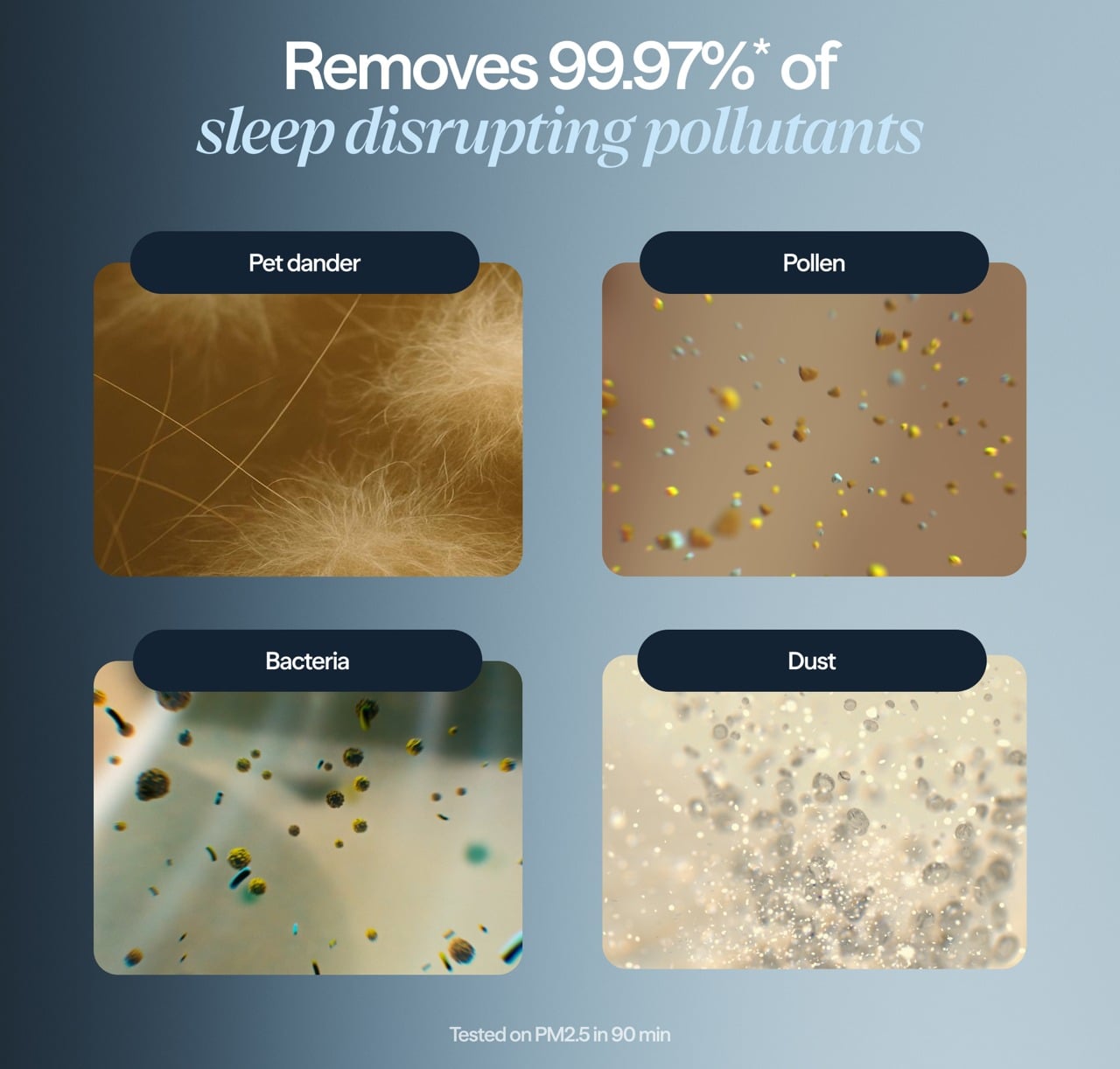
Inside the cylinder is a HEPASilent filter system that pulls in air from around the base, traps fine particles like dust, pollen, and smoke, and pushes cleaner air back out. The filtration is sized for small spaces, specifically bedrooms up to around one hundred forty square feet, which aligns with typical master bedrooms or nurseries. It is meant to clean the zone where you actually sleep.
The idea of a fresh air dome around the bed is central to how Blueair frames this product. Placing the Mini Restful on a nightstand or dresser top helps keep the immediate breathing zone cleaner, which can be especially helpful for people who deal with nighttime congestion, seasonal allergies, or asthma. The device cycles the air in a small bedroom multiple times per hour.
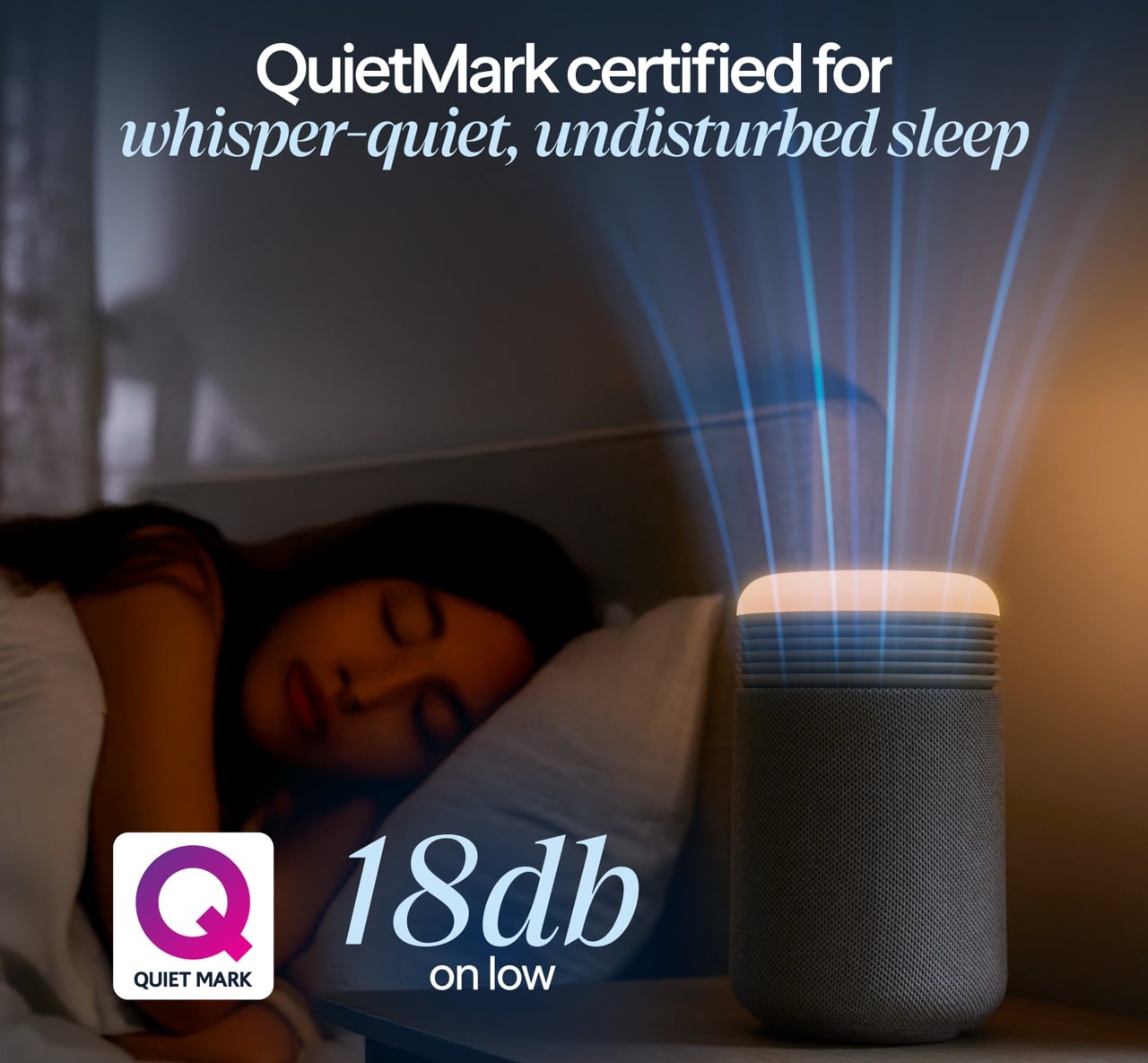
Noise performance is critical for a sleep device, and the Mini Restful is designed to be quiet. On its lowest settings, it is softer than most fans, more like a gentle whoosh than a mechanical hum. Higher speeds are audibly stronger when the device is working harder to clear the air, but the ability to drop back into whisper-quiet operation at night keeps it compatible with light sleepers.
The QuietMark certification adds third-party validation that the noise level is genuinely sleep-friendly, tested and approved by independent acoustic consultants. This matters because many purifiers claim to be quiet but still produce enough mechanical sound to disturb rest, while the Mini Restful can fade into the background entirely on low settings.
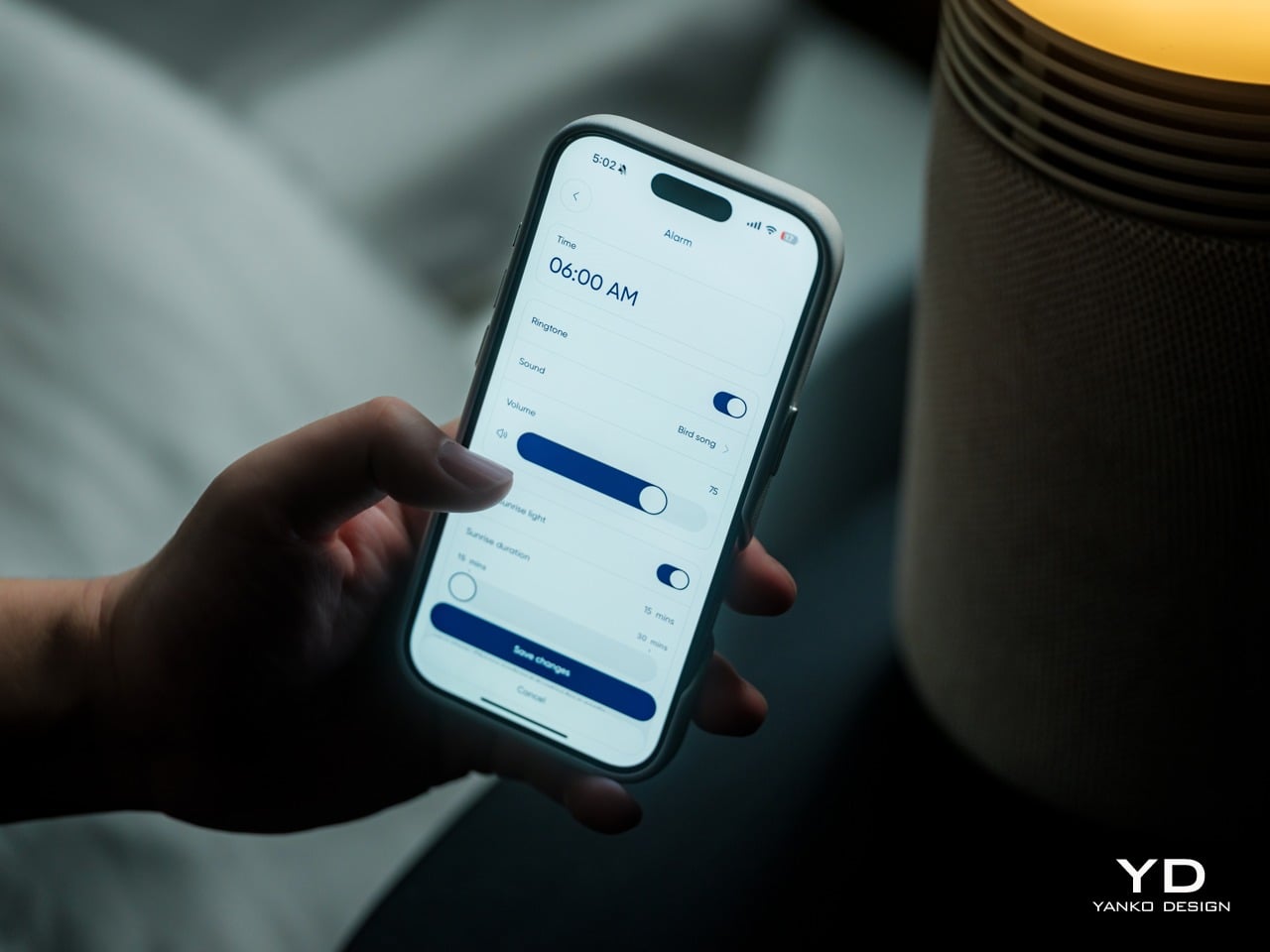
The wake-up light is where the Mini Restful starts to feel different from a standard purifier. You can set a time in the Blueair app, and then, in the fifteen to thirty minutes leading up to that time, the top light slowly brightens from a very dim glow to a warm, room-filling light. The color temperature stays in the warm range, mimicking the quality of a natural sunrise.
This gradual brightening is designed to help your body wake up more naturally than a sudden alarm. The light acts as a cue that morning is approaching, which can make the transition from sleep to wakefulness feel gentler and less abrupt, especially during darker winter months when natural light comes late or not at all.
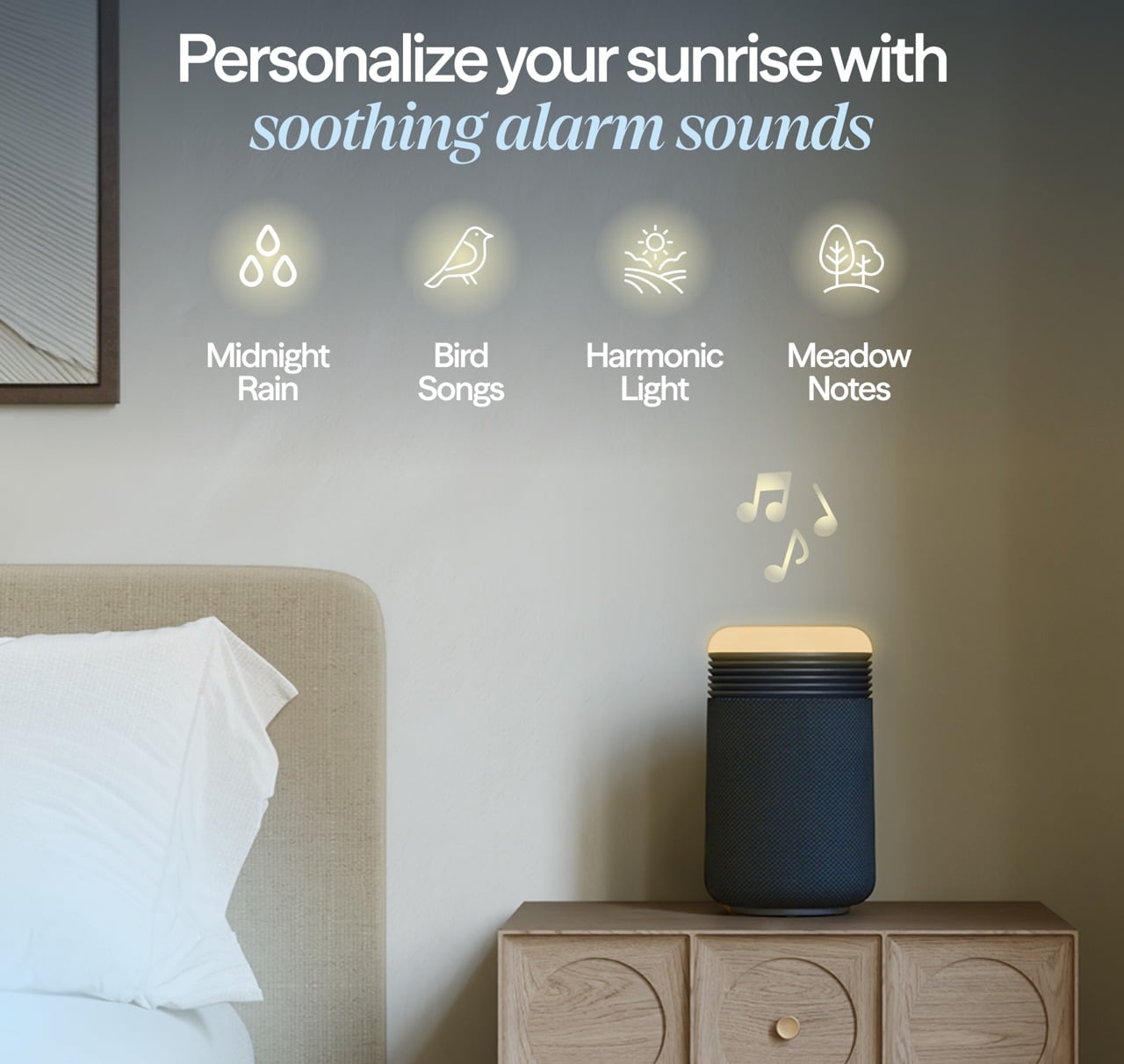
If you want more than light, you can add sound. The app includes a library of gentle wake-up tones and nature sounds, and you can choose one to start playing after the light has reached full brightness. The combination of light and sound is meant to guide you from deep sleep to wakefulness in a calmer way than a phone alarm blaring suddenly at full volume.
The same light that wakes you up can also help you wind down. In the evening, you can set the top to a very low amber glow as a night light or turn it up to a comfortable reading level, all in warm color temperatures that are gentler on melatonin production than bright white overhead lights or blue light-heavy phone screens.
The ability to adjust brightness on the device or in the app means it can match different routines, whether you are reading before bed or just want a soft ambient glow while you settle in. This dual role, supporting both wind down and wake up, makes the light feel integrated into the full sleep cycle rather than just a morning feature.
The Blueair app lets you fine-tune alarm times, choose how long the sunrise light takes to reach full brightness, select wake-up sounds, and create schedules so the device behaves differently on weekdays and weekends. The app also shows air quality and lets you adjust fan speed remotely, though most people will set a preference once. For people who like to see what is happening, the data is there, but the device does not force you into constant app interaction.
The integrated USB-C charging port on the back is a small but practical touch. It lets you plug in a phone or wearable directly into the Mini Restful, reducing the number of separate chargers and cables cluttering the nightstand. For people who currently use their phone as an alarm, this makes it easier to transition to the Mini Restful without losing charging convenience.
Sustainability
The Mini Restful uses a filter designed to last many months before needing replacement, which reduces how often you need to buy and discard new filters compared to some smaller purifiers with shorter lifecycles. The wraparound filter design with simple closure encourages full use of the filter’s lifespan and makes replacement straightforward, supporting longer ownership.
The device is relatively low power and Energy Star certified, which matters for something that might run many hours every day. At its lowest settings, the energy draw is modest, and even at higher speeds, it stays well within the range of efficient bedside appliances. Blueair, as a brand, positions itself with higher environmental standards as a Certified B Corp.
Value
The Mini Restful costs more than a basic purifier or a simple alarm clock. But that price starts to make sense when you consider the roles it plays at once: purifier, sunrise light, sound machine, clock, and phone charger, all in a single compact object designed for the nightstand. If you were to buy those devices separately, you would likely spend a similar amount while ending up with more clutter. The Mini Restful consolidates that into one cylinder that is easy to set up, easy to maintain, and designed to look intentional rather than accidental.
Space and visual calm are real forms of value, especially in small bedrooms or apartments where every object on a nightstand matters. Having one well-designed cylinder instead of multiple mismatched gadgets reduces the sense of clutter and makes the room feel more deliberate. For design-conscious consumers, that reduction in visual noise is worth something tangible, not just aesthetic preference alone.
The sleep focus is also part of the value story. For people who are already treating sleep as a wellness habit, investing in better mattresses, bedding, or blackout curtains, and adding a device that supports circadian rhythms and keeps the breathing zone cleaner is a logical next step. The fact that it is optimized for bedrooms makes it feel like a targeted tool.
The Mini Restful makes the most sense for people who care about both design and sleep quality, who want their nightstand to feel calm rather than cluttered, and who appreciate when technology quietly supports routines instead of dominating them. For users trying to break phone dependence at bedtime, or parents setting up nurseries, or anyone in a small space, it fits naturally.
Verdict
The Blueair Mini Restful Sunrise Clock Air Purifier is a compact, carefully designed object that manages to be a purifier, a sunrise light, a sound machine, and a clock without looking or feeling like four gadgets taped together. It blends into bedrooms with the kind of visual ease that makes you forget it is technology, and the combination of quiet air cleaning, warm light, and gentle sounds makes it feel integrated into sleep rituals.
As sleep continues to be treated as a key part of wellness, devices that treat air, light, and sound as one integrated experience will likely become more common. For homeowners who want their bedroom tech to be as considered as their furniture and as gentle as their nighttime routine, the Mini Restful feels like a thoughtful step in that direction, turning the nightstand into a quieter, calmer place where everything works together.







 technology, which combines mechanical filtration with an electrostatic charge to capture fine airborne particles like dust, pollen, smoke, and volatile organic compounds. The intake and outlet are 360 degrees around the body, so it pulls air from all sides and pushes it back out clean.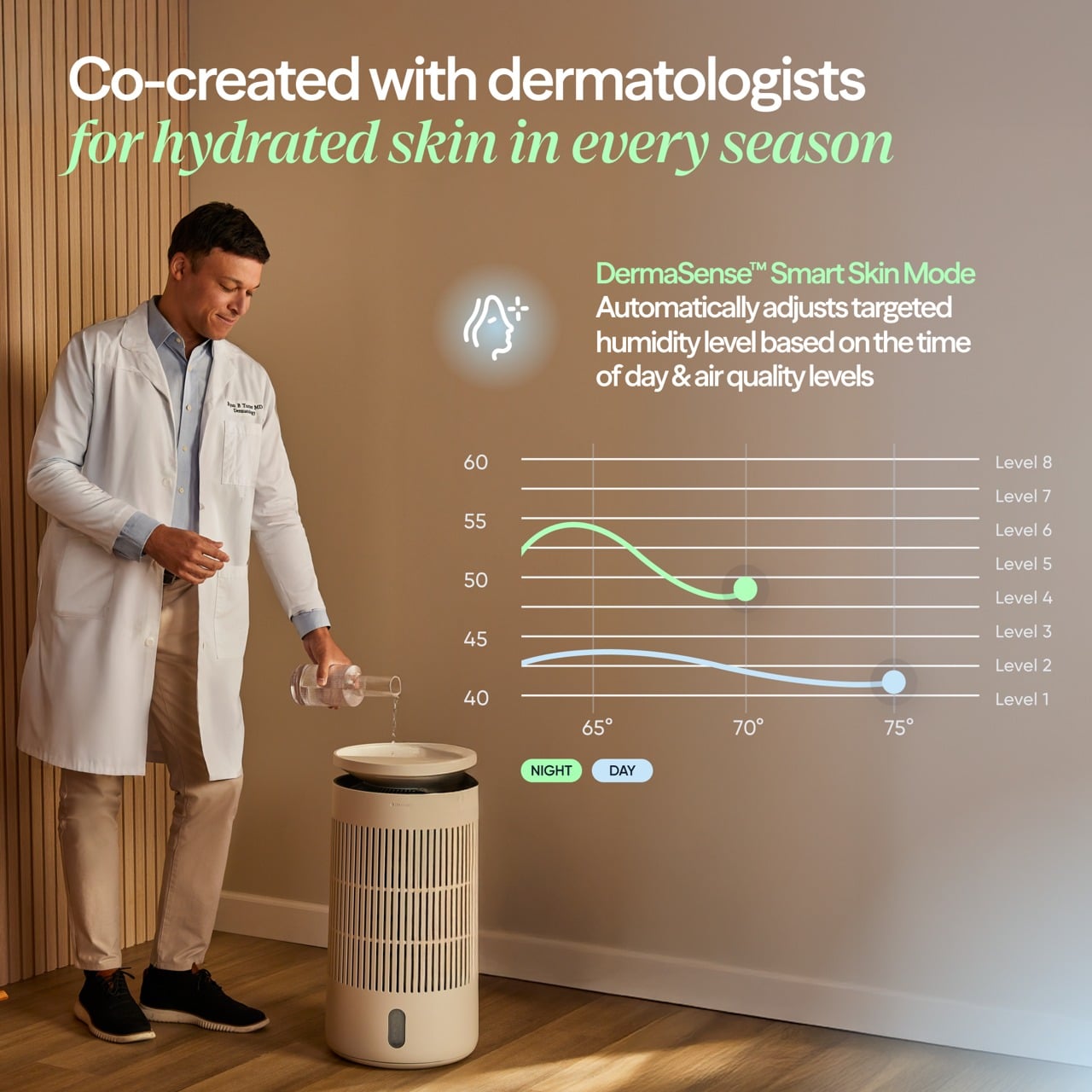


 ) Sunrise Clock Air Purifier is a compact attempt to pull some of those tools into one object. It is a small bedside cylinder that cleans the air, glows like a sunrise to wake you gently, plays soft sounds, shows the time, and charges your phone, all while looking more like a design piece than some cold, drab piece of appliance. But does this striking appliance work as advertised? We put it beside our comfy bed to find out.