Aironox GO Just Made the Hotel Room Iron Obsolete

We all know the ritual. You arrive at a hotel after a long flight, unzip your suitcase, and the outfit you were going to wear to dinner looks like it lost a fight with a dryer ball. You eyeball the iron sitting in the corner of the room. It’s coated in someone else’s starch residue. You spend twenty minutes trying to remember how to use the ironing board. You burn the sleeve. I’ve been there. You’ve been there. We’ve all been there. That’s exactly the scenario Aironox designed the GO to solve, and it does it in a way that still feels a little like a magic trick until you understand how it works.

The Aironox GO is the compact travel version of the brand’s original automatic garment care system. The idea behind it is refreshingly simple: you hang your garment over a balloon-style attachment, press start, and the machine pumps warm air through the fabric while you do literally anything else. Shower. Pack. Scroll your phone. The garment inflates slightly, the warm airflow works through the wrinkles, and in about 8 to 12 minutes, you’ve got something wearable. No ironing board. No steamer. No wrestling with a hotel iron that’s been sitting in a cupboard since 2009.

Designer: Aironox

I’ll be honest: the first time I saw the original Aironox Home model, I had questions. The concept of a fabric-inflating balloon machine sounds like a prop from a science fiction short, not a real appliance you’d unpack in a hotel room. But the more you look at how it actually works, the more it starts making sense. Ironing has always been a tactile, hands-on task, and we’ve somehow accepted that for decades without stopping to ask whether there was a smarter way to do it. The Aironox GO is essentially the first product brave enough to ask that question out loud while also being small enough to fit in your carry-on.
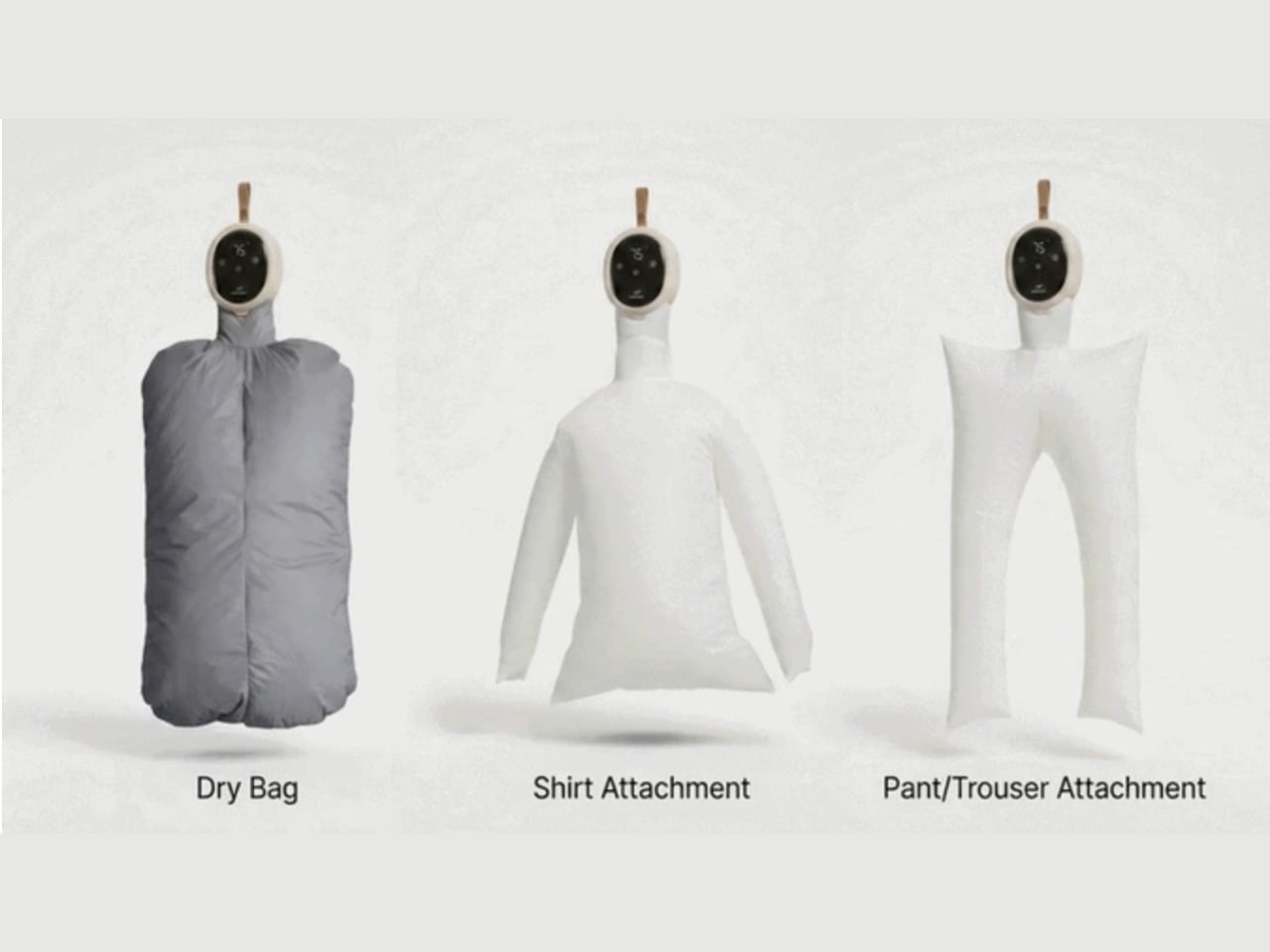
The GO is a scaled-down, portable version of the Aironox system, specifically built for travel. It’s dual voltage, which means you can take it internationally without blowing anything up. It works with both shirts and trousers via separate attachments, and the balloon itself has adjustable side zips to accommodate different garment sizes. The brand says it handles everything from small to XXL, which is either very ambitious or genuinely thoughtful design, depending on how it performs with your particular wardrobe.
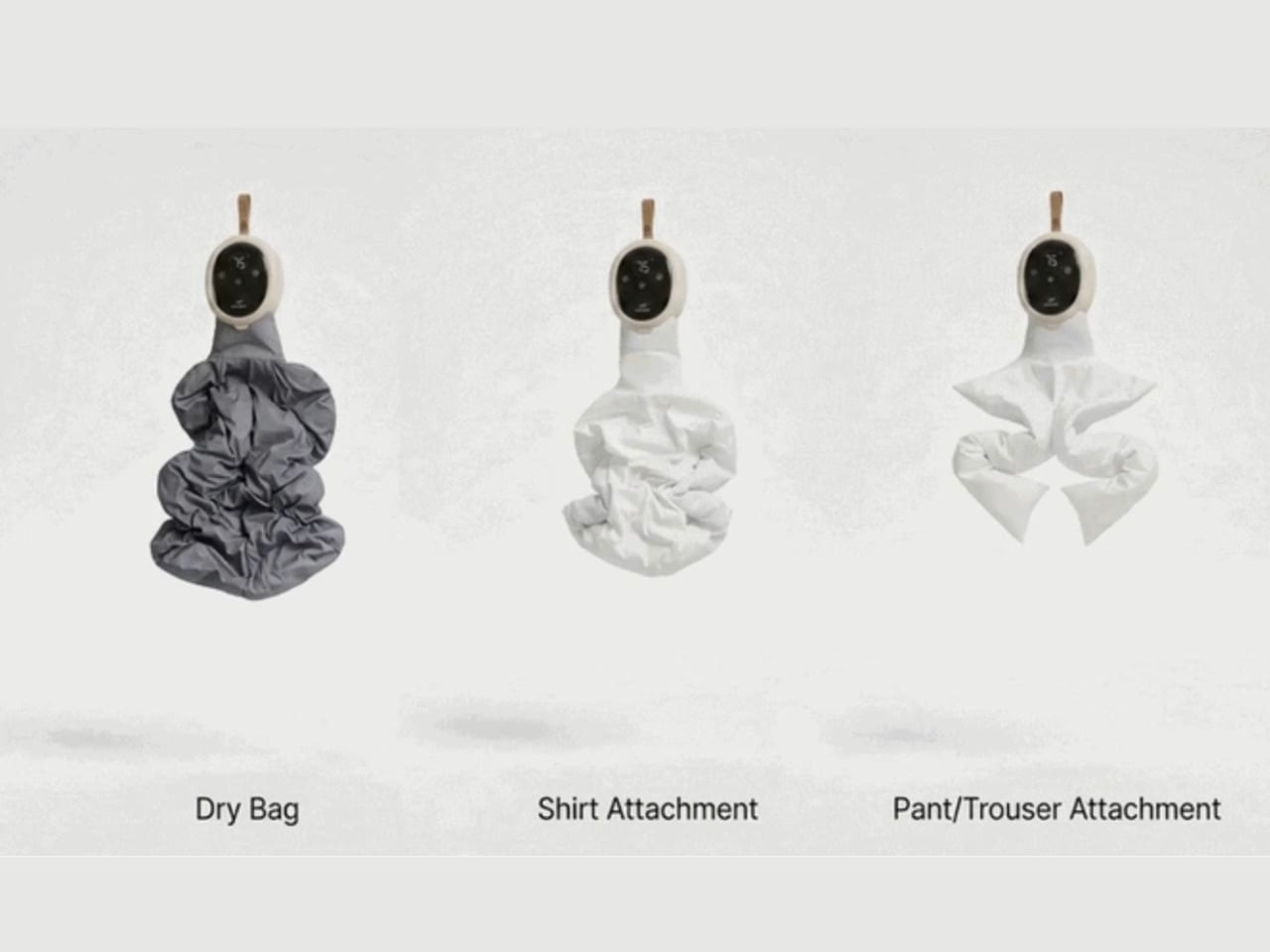
What the GO isn’t is a miracle worker. It’s not going to replicate the sharp crease of a professional press, and it won’t replace a full garment steamer for delicate fabrics that need careful handling. The Aironox Home model has more power; the GO has been built specifically around portability and travel use, which means some trade-offs come with that. The specs won’t match a home unit, and the brand is upfront about that. Knowing what a product is built to do, and what it isn’t built to do, is a big part of making a good purchasing decision. At least Aironox isn’t overselling this one.

The GO sits squarely at the intersection of practical travel essential and the kind of thing you didn’t know you wanted until someone showed it to you. For frequent travelers, particularly those who move between business meetings and events, it’s a compelling case. For the occasional holiday traveler who packs one nice outfit and hopes for the best, it’s a more personal call.

The wider design story here is worth noting, though. Aironox is part of a growing category of products rethinking domestic tasks not through incremental upgrades, but through a complete reimagining of the process itself. Removing the ironing board from the equation entirely, making garment care something the machine handles while your attention is elsewhere, is a genuinely different approach. Whether the execution fully delivers on the promise at scale is a fair question. But the idea? The idea is good. And sometimes, that’s exactly where it all starts.

The post Aironox GO Just Made the Hotel Room Iron Obsolete first appeared on Yanko Design.


Samsung Galaxy Tab S12 Ultra: The Ultimate iPad Pro Competitor Just Leaked

Samsung Galaxy Tab S12 Ultra: The Ultimate iPad Pro Competitor Just Leaked Samsung Galaxy Tab S12 Ultra resting on a desk with the included S Pen.

Samsung’s Galaxy Tab S12 Ultra arrives with an array of advanced features, yet one decision has sparked considerable debate: the battery specifications remain unchanged from its predecessor, the Galaxy Tab S11 Ultra. While the tablet introduces notable improvements in display technology, processing power, and storage configurations, the lack of battery upgrades has raised questions about […]

The post Samsung Galaxy Tab S12 Ultra: The Ultimate iPad Pro Competitor Just Leaked appeared first on Geeky Gadgets.

Posted in Uncategorized

The Architects Who Want to Grow Buildings From Bacteria

Concrete is everywhere. It’s in the walls you’re staring at right now, the floors under your feet, the skyline you pass every morning on your commute. It’s the most widely used construction material in the world, and it’s also one of the most environmentally damaging ones we have. Cement production alone is responsible for roughly 8% of global CO2 emissions, a figure that tends to get quietly buried under louder conversations about cars and plastic straws. That imbalance has always struck me as odd, and worth talking about more.

So when a team of six researchers and designers from the Technion, Israel Institute of Technology, presented CyanoCement to the world, it stopped me mid-scroll. Not because it felt like a minor improvement on what already existed. Because it framed the problem differently. It asked whether a building material could do something more than just cause less harm, whether it could actually participate in solving the problem it had always been part of.

Designers: Perla Armaly, Yuval Berger, Lubov Iliassafov, Keren Rosenblau, Yechezkel Kashi, Shany Barath

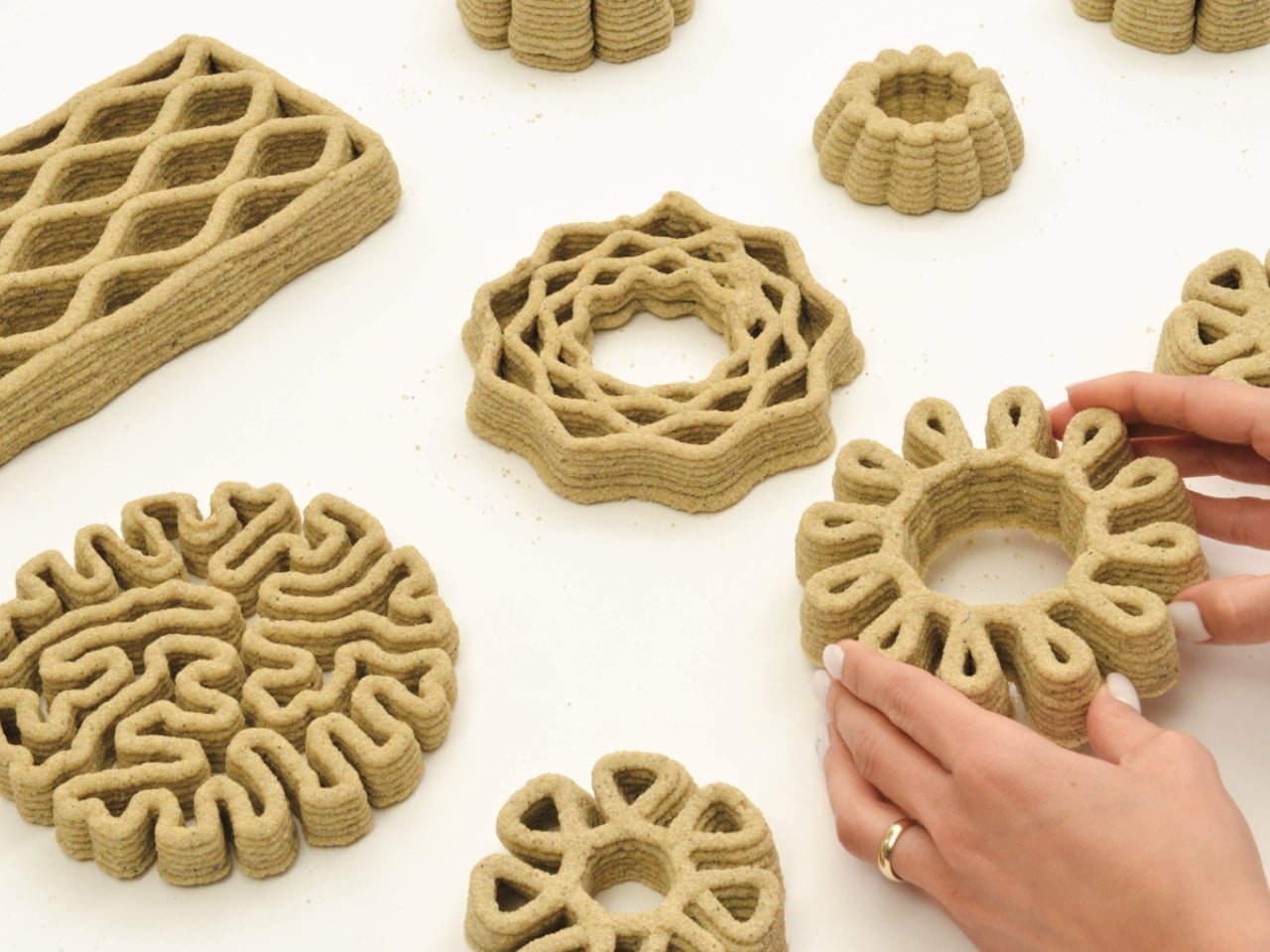
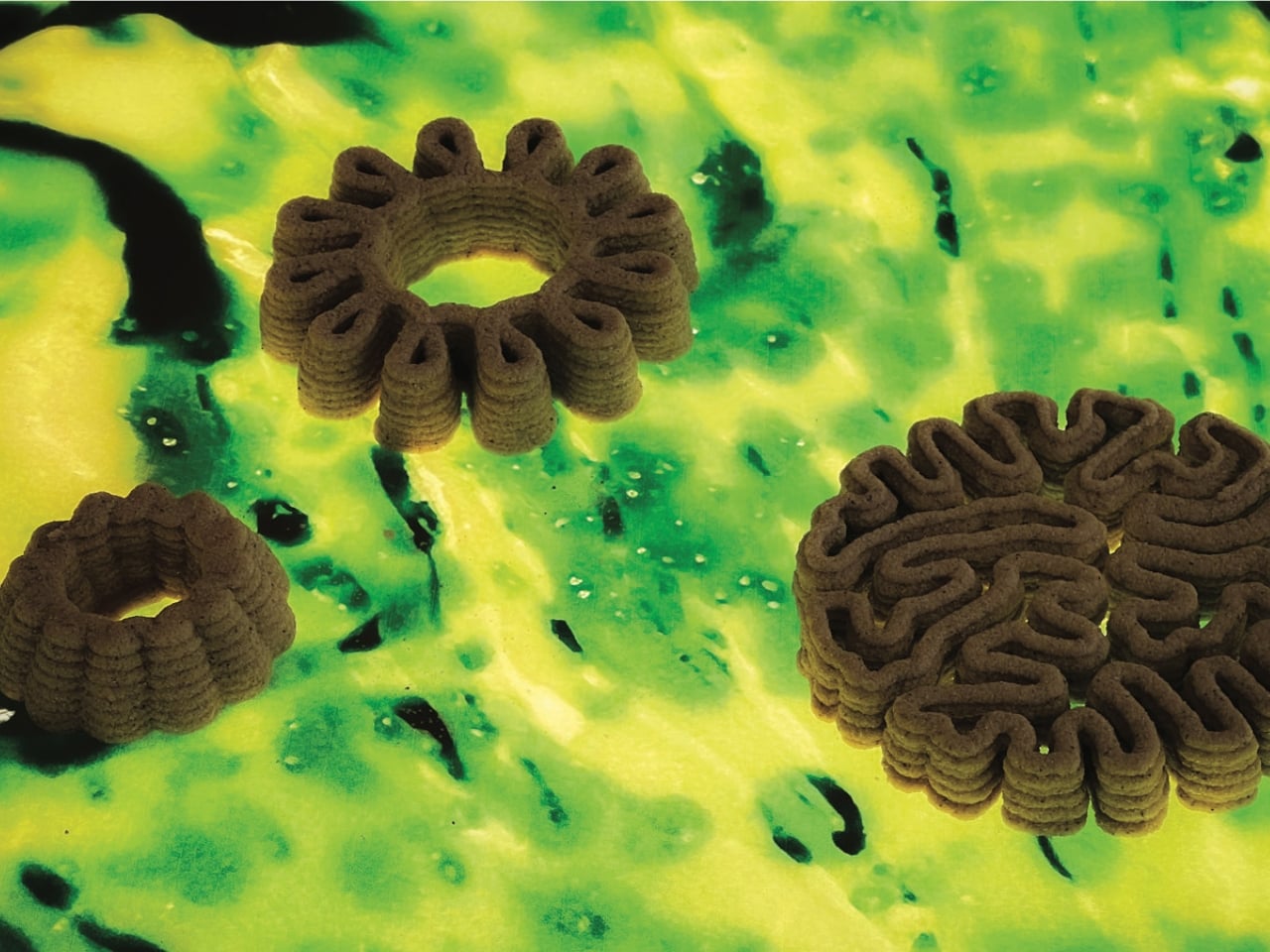
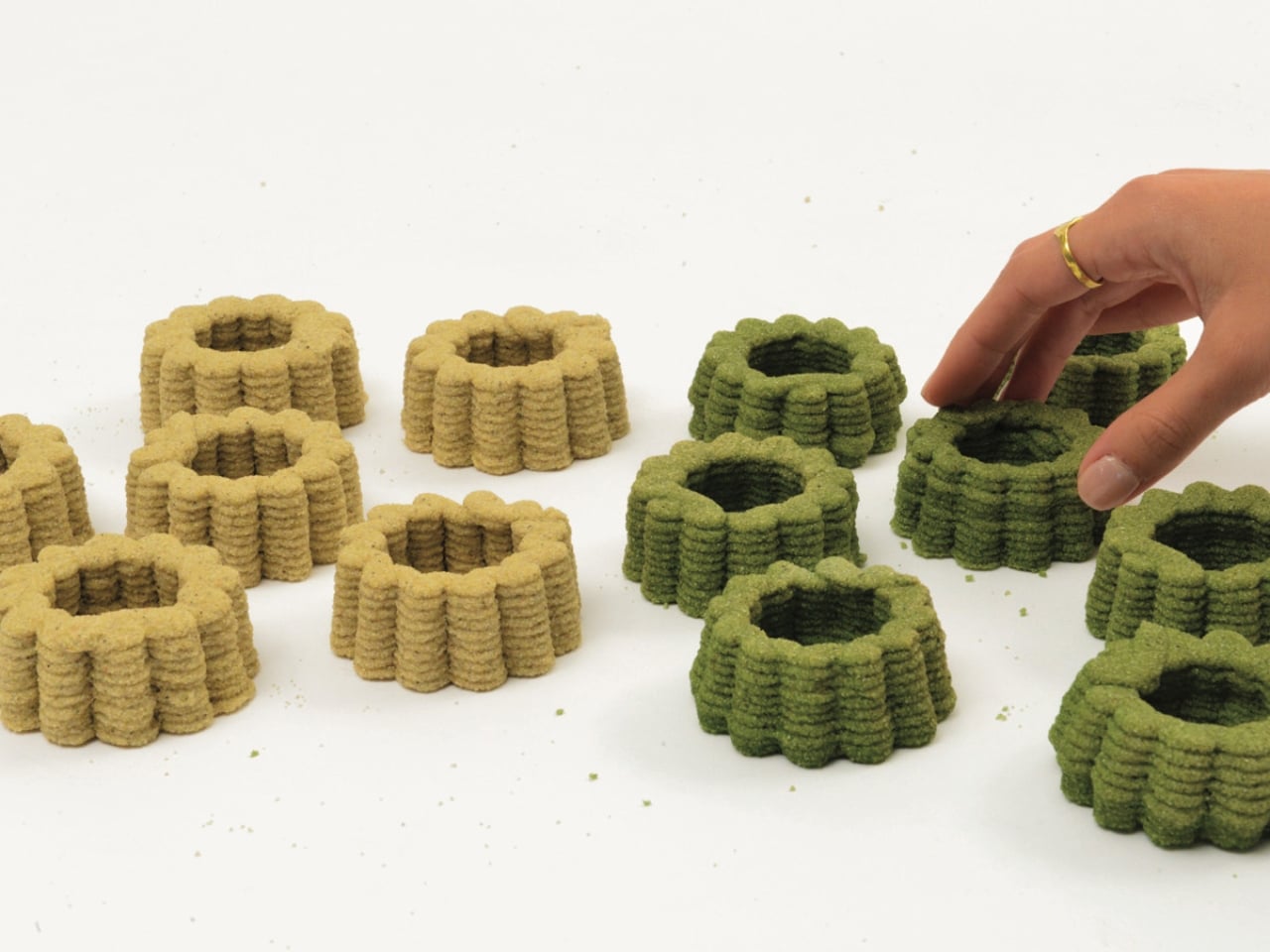
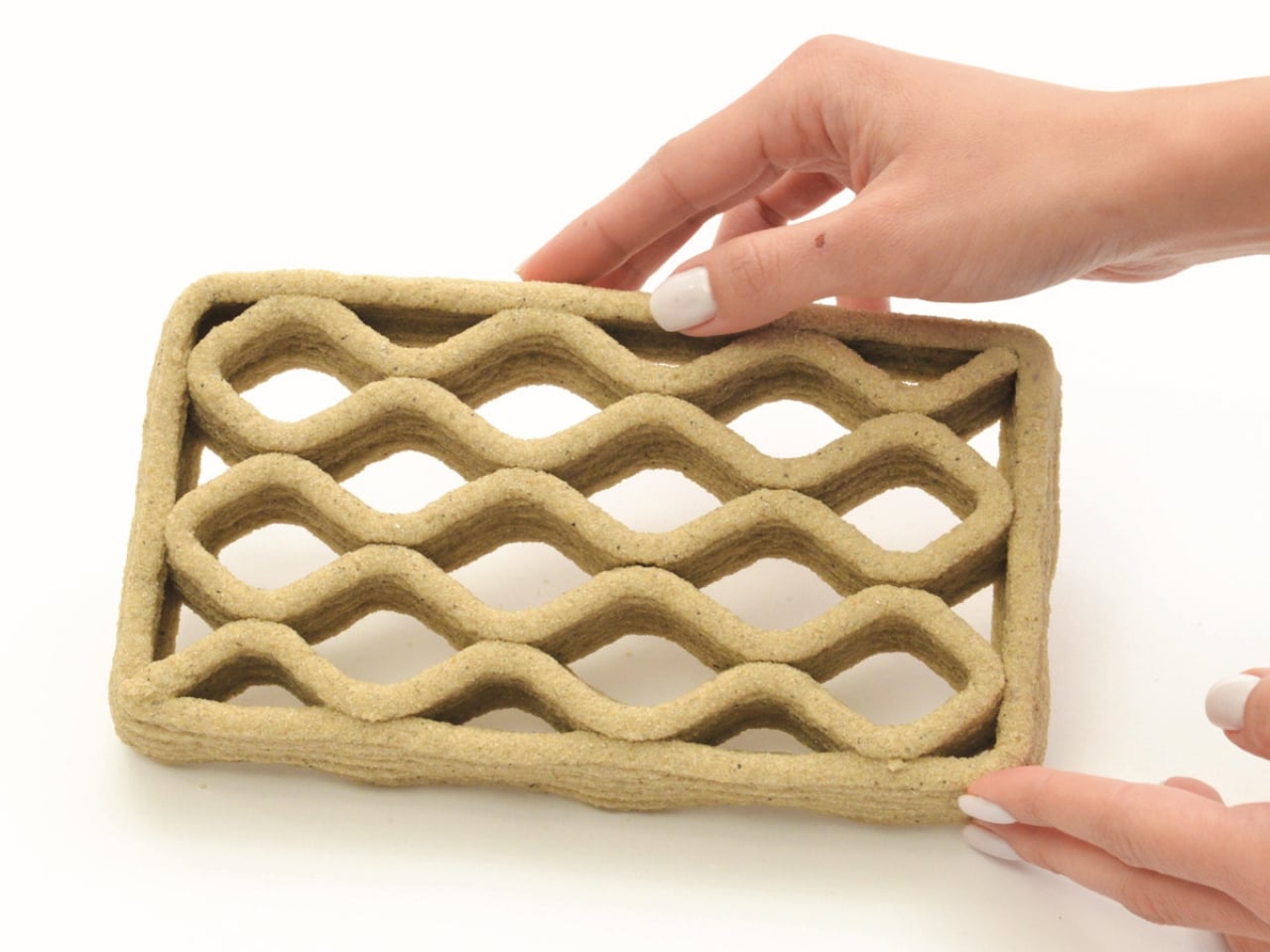
CyanoCement is a 3D-printable biocement made with cyanobacteria, tiny photosynthetic microbes that have been around for billions of years. They’re among the organisms responsible for producing Earth’s first oxygen-rich atmosphere. That’s not a throwaway fact. These are ancient, extraordinary little things, and the Technion team, Perla Armaly, Yuval Berger, Lubov Iliassafov, Keren Rosenblau, Yechezkel Kashi, and Shany Barath, figured out how to make them a functional part of the construction process.

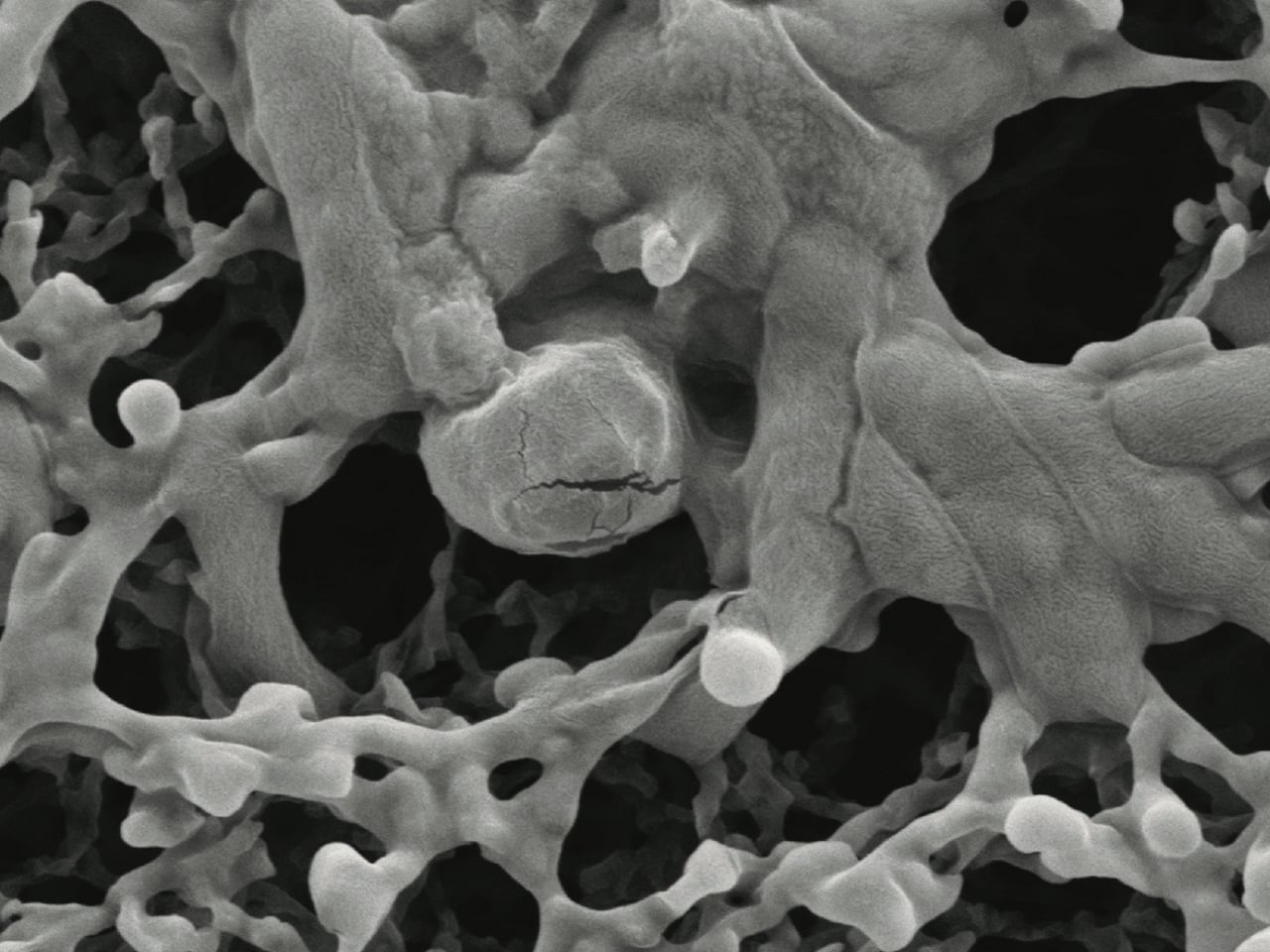
Here’s the mechanism: the cyanobacteria use photosynthesis to bind minerals and precipitate calcium carbonate, forming a solid material without any of the high-heat, high-emissions processes that traditional cement requires. The part that genuinely surprised me was that the material doesn’t stop capturing CO₂ once production is done. It continues to pull carbon from the air after it’s been formed and installed. Not just a lower-impact alternative to concrete, but a material that actively works against the problem.

The team designed it specifically for non-load-bearing architectural elements, facades, interior panels, decorative structures, which keeps the project grounded and credible. I respect that kind of restraint. The sustainable design space has a well-documented tendency to oversell, to position a concept-stage material as a revolution before the science has caught up. CyanoCement doesn’t do that. It knows what it is right now, and what it is right now is genuinely impressive.

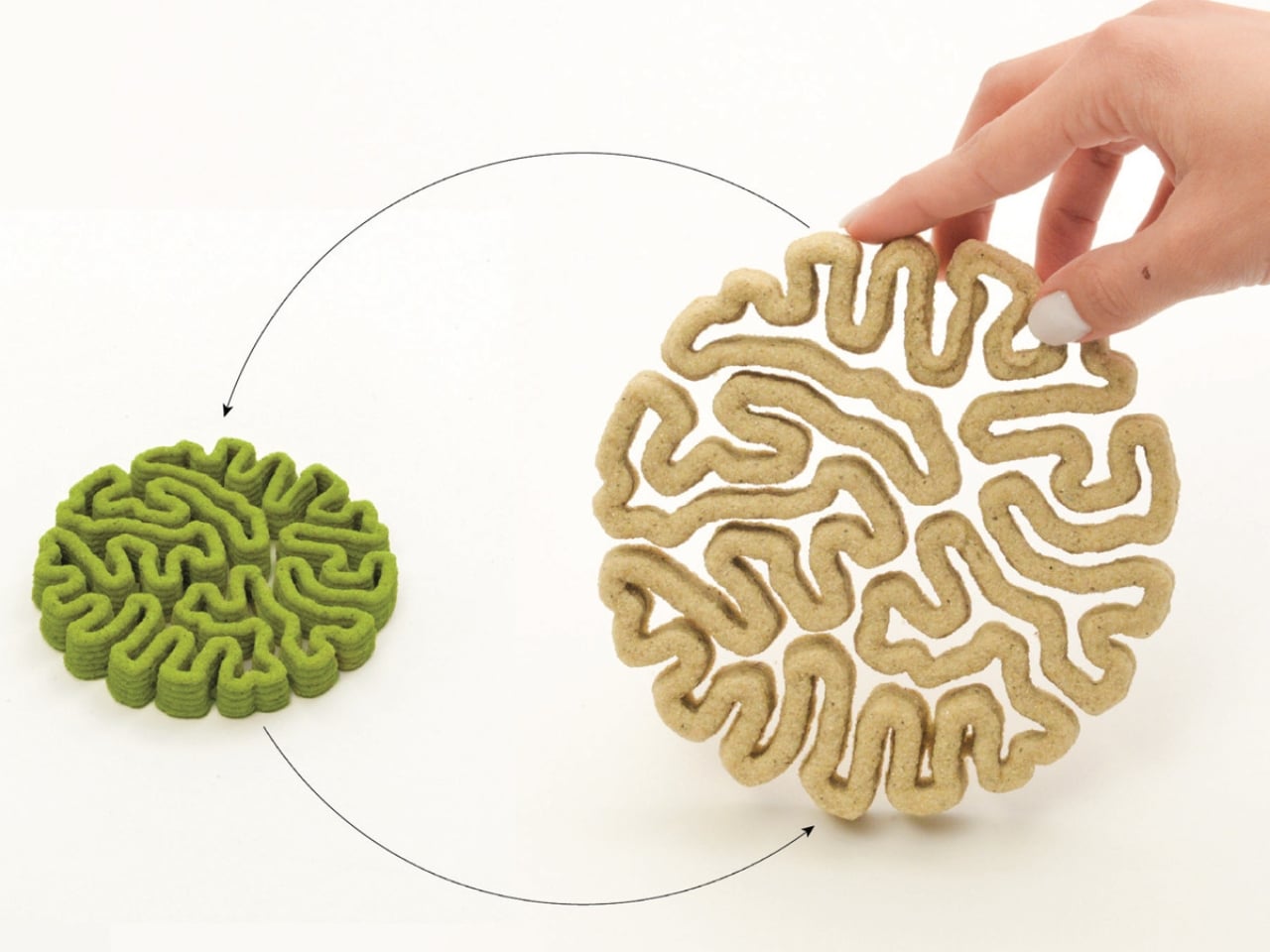
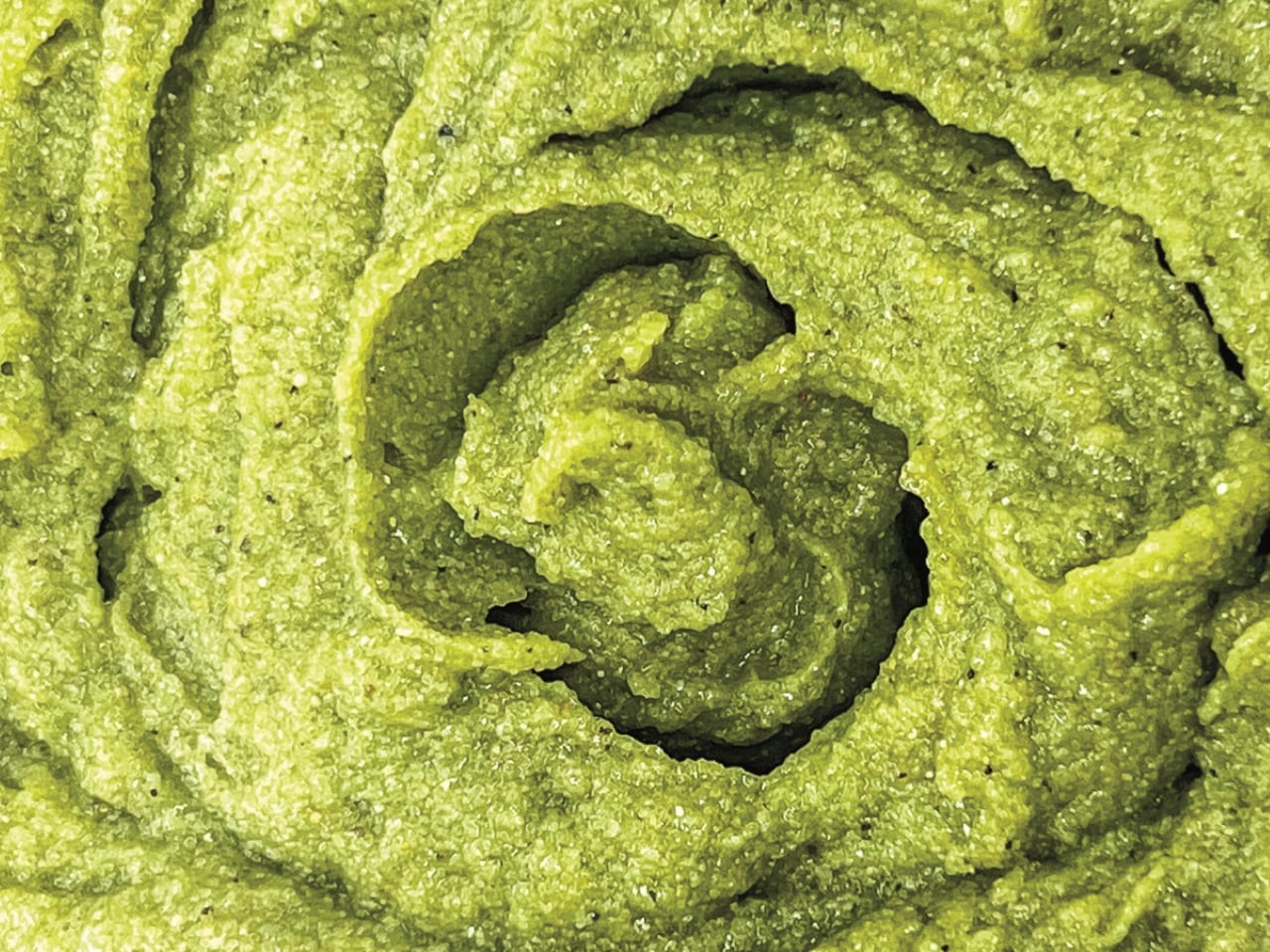
Then there’s the color. The material is green, not because of any coating or pigment, but because of the living organisms inside it. That green is a biological signal, a visual confirmation that the cyanobacteria are alive and active. I’ve seen a lot of sustainable products that ask you to trust the environmental benefit, buried somewhere in a lifecycle assessment document. CyanoCement makes it visible. The building itself tells you it’s working. That’s both smart design and, I’d argue, a kind of integrity.

The project came out of the Disrupt Design Lab at Technion’s Faculty of Architecture and Town Planning, developed in collaboration with the Applied Genomics Lab at the Faculty of Biotechnology and Food Engineering. Architecture and biology don’t typically share a lab, let alone a design philosophy. The fact that this team brought those two disciplines together into something coherent, functional, and visually compelling is its own accomplishment, separate from the material itself.

CyanoCement was recognized by the Green Product Award, which has a strong track record of identifying work that actually moves the needle rather than just speaking well in press releases. The project earned that recognition, not just for good intentions, but for the depth of research behind it and the clarity of its design logic. The more you learn about how it works, the more convinced you become.

We talk a lot about the future of architecture being green, solar panels on rooftops, recycled steel, passive ventilation. All worthwhile. But CyanoCement is asking something a little more radical: what if the walls themselves were alive? What if building something meant contributing to the atmosphere rather than depleting it? That’s the question I can’t stop thinking about. And once you know it’s being asked, I suspect you won’t be able to stop either.

The post The Architects Who Want to Grow Buildings From Bacteria first appeared on Yanko Design.
Save 10 Hours per Week by Mastering Microsoft Copilot

Save 10 Hours per Week by Mastering Microsoft Copilot Professional using Microsoft 365 Copilot to streamline daily workflows

Microsoft Copilot is changing how professionals manage their workloads by automating repetitive tasks and simplifying complex processes. As highlighted by David Fortin, one standout feature is its ability to streamline meeting preparation. For example, within Microsoft Teams, Copilot can summarize previous discussions, generate agendas and suggest topics for upcoming meetings. This functionality ensures that users […]

The post Save 10 Hours per Week by Mastering Microsoft Copilot appeared first on Geeky Gadgets.

Posted in Uncategorized

The Biggest Surprise Hidden Inside the iOS 27 Update

The Biggest Surprise Hidden Inside the iOS 27 Update An iPhone lock screen showing the new indexing notification after updating to iOS 27.

Apple’s iOS 27 beta, unveiled during the Worldwide Developers Conference (WWDC) on June 8, 2026, introduces a range of features designed to enhance functionality and user experience. From a more intelligent Siri to updates for AirPods and improved performance on older devices, this beta release showcases Apple’s commitment to refining its ecosystem. However, as with […]

The post The Biggest Surprise Hidden Inside the iOS 27 Update appeared first on Geeky Gadgets.

Posted in Uncategorized

How Kimi K2.7 Code Rivals Opus 4.8 and is 5X Cheaper to Run

How Kimi K2.7 Code Rivals Opus 4.8 and is 5X Cheaper to Run Comparison chart showing Kimiko 2.7 benchmark scores against Opus 4.8 and GPT-5.5.

Kimi K 2.7, created by Moonshot AI, offers a cost-effective alternative to models like Opus 4.8 while maintaining strong performance capabilities. With a trillion parameters and a 256k context window, it supports tasks that demand detailed analysis and extended input handling. According to Universe of AI, its open source release under a modified MIT license […]

The post How Kimi K2.7 Code Rivals Opus 4.8 and is 5X Cheaper to Run appeared first on Geeky Gadgets.

Posted in Uncategorized

How to Humanize Al Content and Bypass Al Detectors in Minutes

How to Humanize Al Content and Bypass Al Detectors in Minutes A comparison of robotic AI text versus natural human writing

AI-generated content is increasingly integrated into writing processes, yet making it feel authentically human can be difficult. Andy Stapleton outlines actionable strategies for refining AI-generated text, such as replacing vague phrases with specific examples or adding concrete details. For instance, reworking a general statement into a detailed, real-world scenario can enhance both the clarity and […]

The post How to Humanize Al Content and Bypass Al Detectors in Minutes appeared first on Geeky Gadgets.

Posted in Uncategorized

Samsung Galaxy Z Fold 8 Wide: The Fix For Every Foldable Complaint So Far

Samsung Galaxy Z Fold 8 Wide: The Fix For Every Foldable Complaint So Far Samsung Galaxy Z Fold 8 Wide

Samsung’s Galaxy Z Fold 8 series represents a pivotal moment in the evolution of foldable smartphones, offering two distinct models: the Galaxy Z Fold 8 Wide and the Galaxy Z Fold 8 Ultra. These devices are designed to cater to a broad spectrum of user preferences, with the Wide model emphasizing practicality and usability, while […]

The post Samsung Galaxy Z Fold 8 Wide: The Fix For Every Foldable Complaint So Far appeared first on Geeky Gadgets.

Posted in Uncategorized