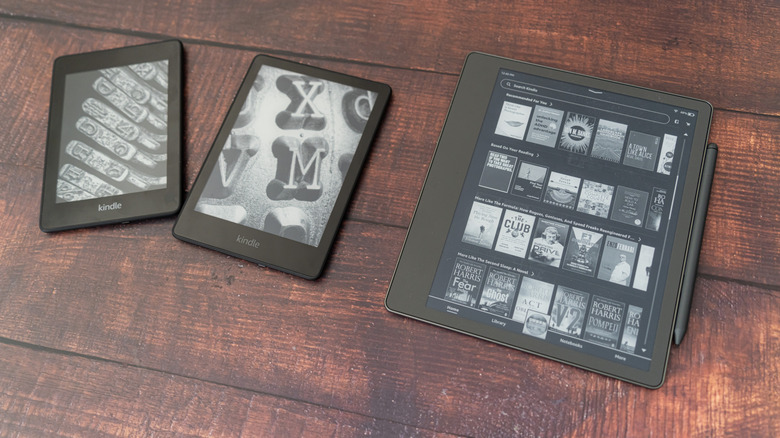
Don’t throw away your old Kindle — repurpose it instead
You can probably still read on it, and, with some finessing, you can turn it into a useful display.
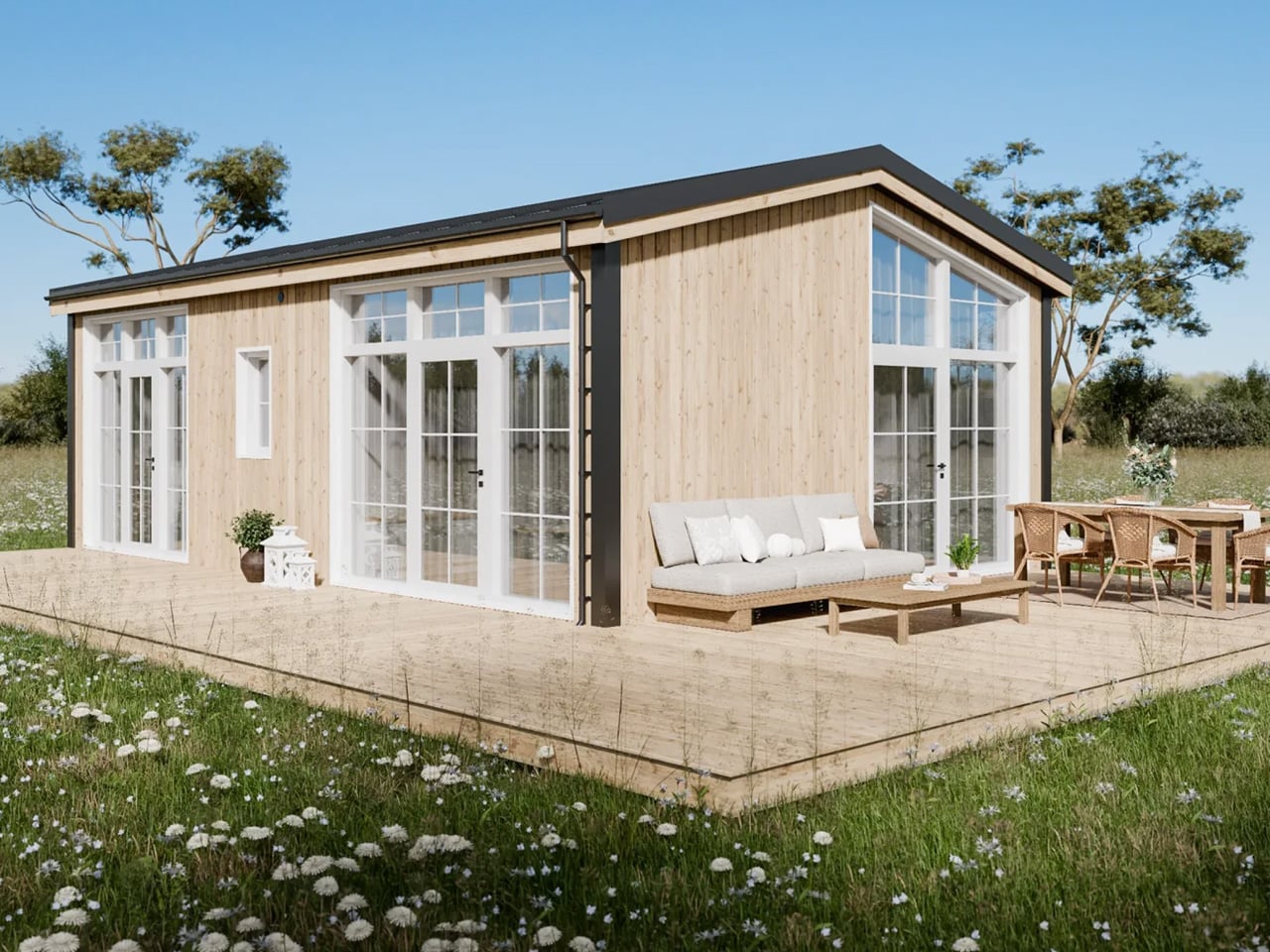
The Helena makes a straightforward case for keeping a tiny home on one floor: both bedrooms are reached through ordinary doors, with no loft ladder involved. Offered by Swedish manufacturer Vagabond Haven, this configurable modular home provides 45 square meters, roughly 484 square feet, of living space. Its layout gives sleeping, cooking, and relaxing their own clearly defined places.
Measuring 9.2 meters long and 5.98 meters wide, Helena occupies a broader footprint than its compact appearance might suggest. There are no wheels underneath its steel base. Delivery requires a low bed truck and a crane, and the house needs a foundation. That makes it a home to settle into, rather than something to hitch up for a weekend away.
Designer: Vagabond Haven
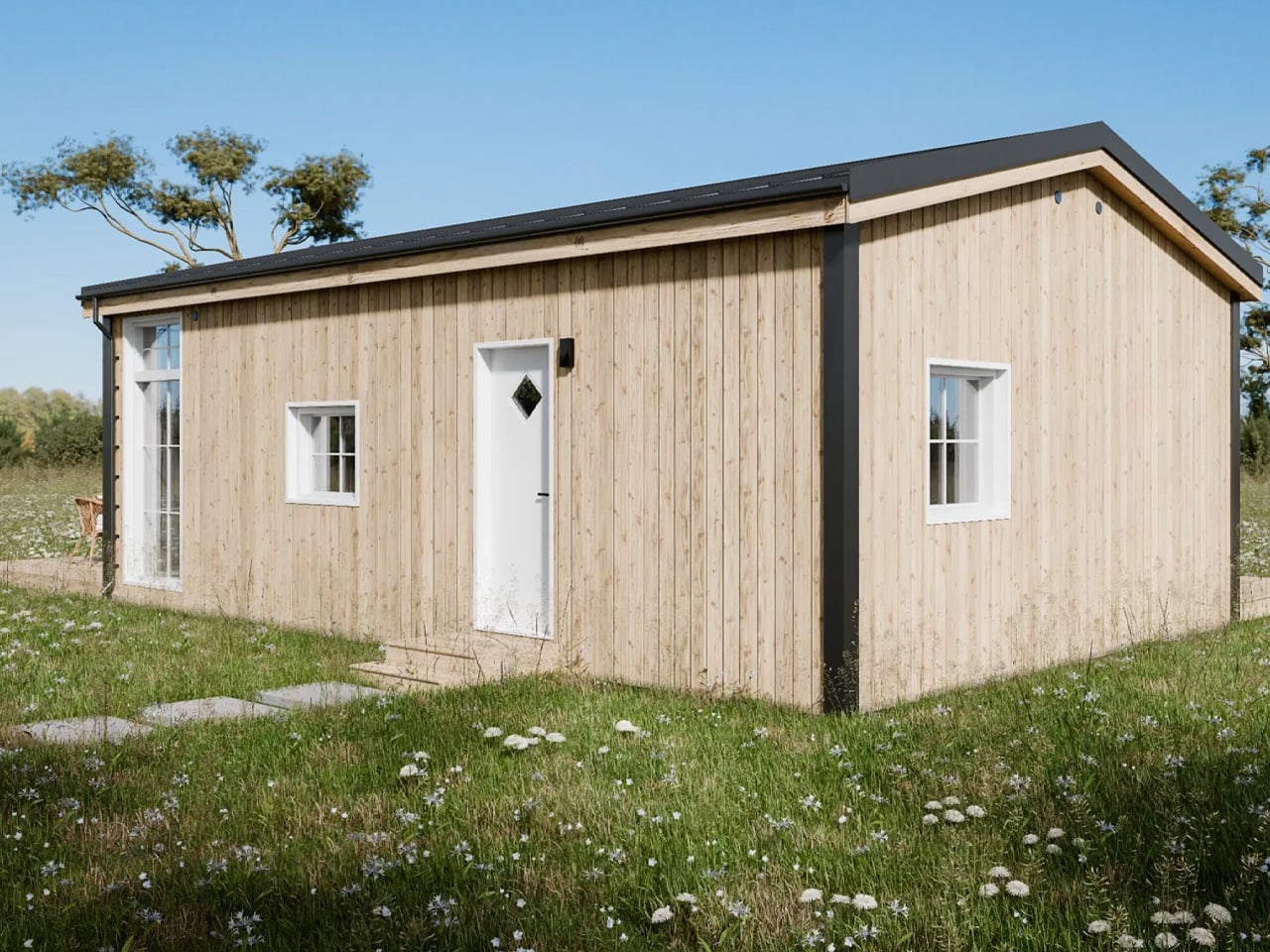
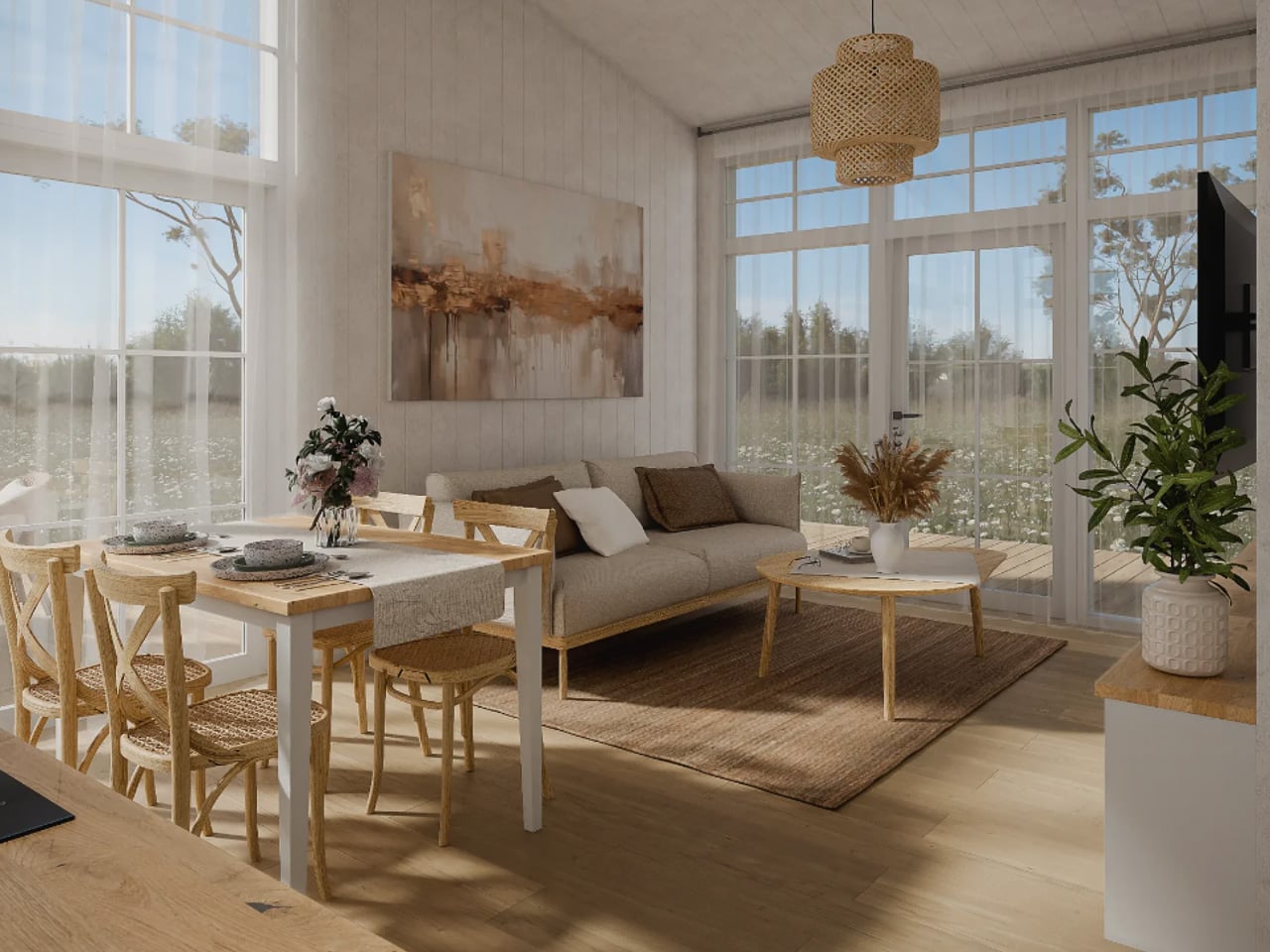
Vagabond Haven’s illustrations show pale vertical timber siding beneath a shallow pitched metal roof. Large glazed sections punctuate the facade, while a proposed terrace wraps around the exterior. The relatively plain rear elevation makes the contrast noticeable: Helena directs its biggest openings toward the outdoor living areas. The images are illustrative, so finishes and details can vary with the order.
Inside, the floor plan divides the house into a shared living zone and two enclosed bedrooms. The bathroom sits between the lounge and primary bedroom, while the entrance opens beside the smaller bedroom. This arrangement keeps the lounge out of the main arrival route. A dining table occupies the glazed corner near the kitchen, giving meals a dedicated spot without introducing another room.
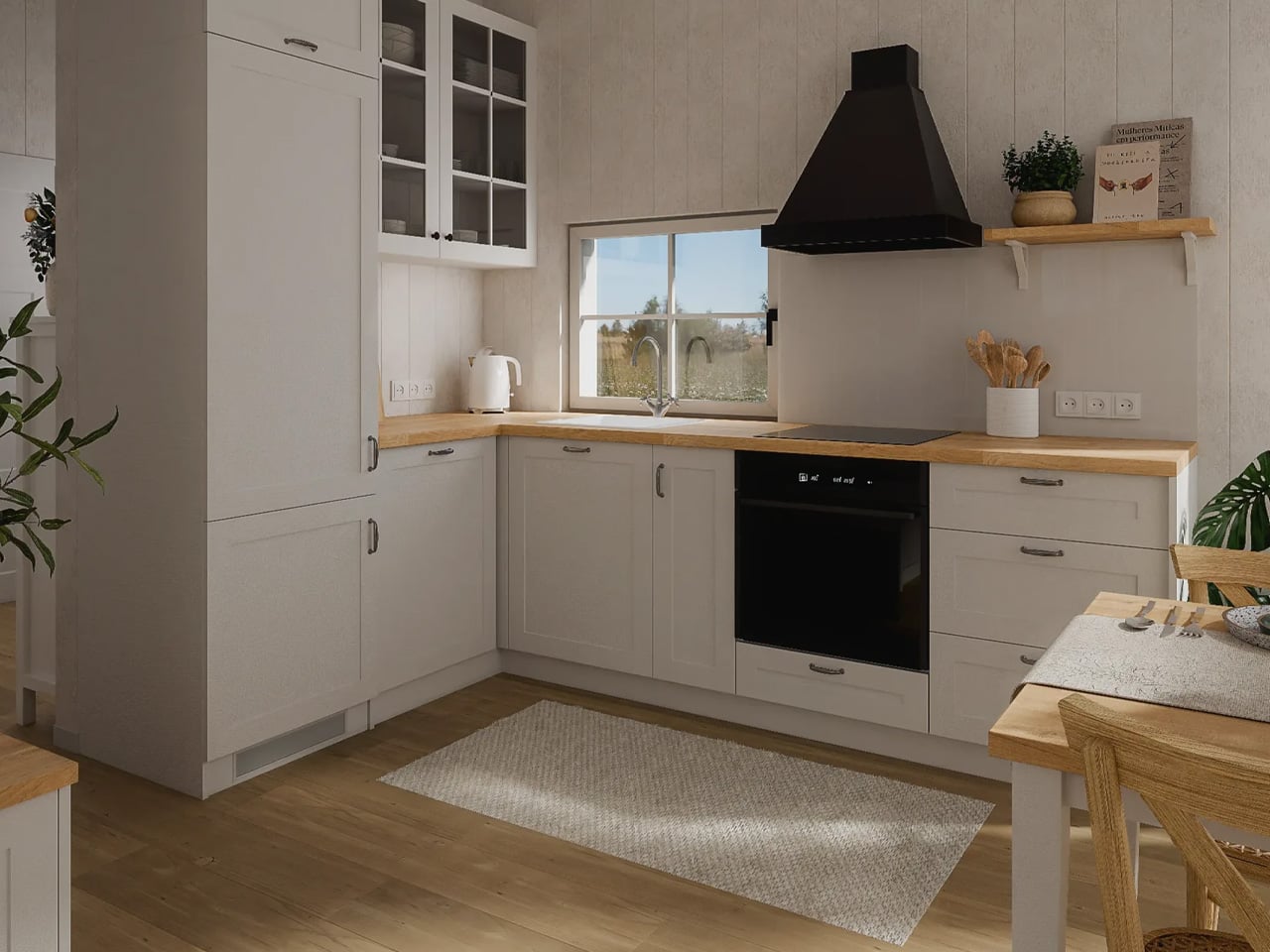
The kitchen follows an L-shaped arrangement, with cabinetry defining its edge rather than a separate partition. Buyers can specify induction or gas cooking, an oven, a built-in dishwasher, and a tall integrated refrigerator. These are configuration choices, not equipment to assume comes with the starting price. The illustrated dining setup seats four, despite the home’s stated three sleeping places.
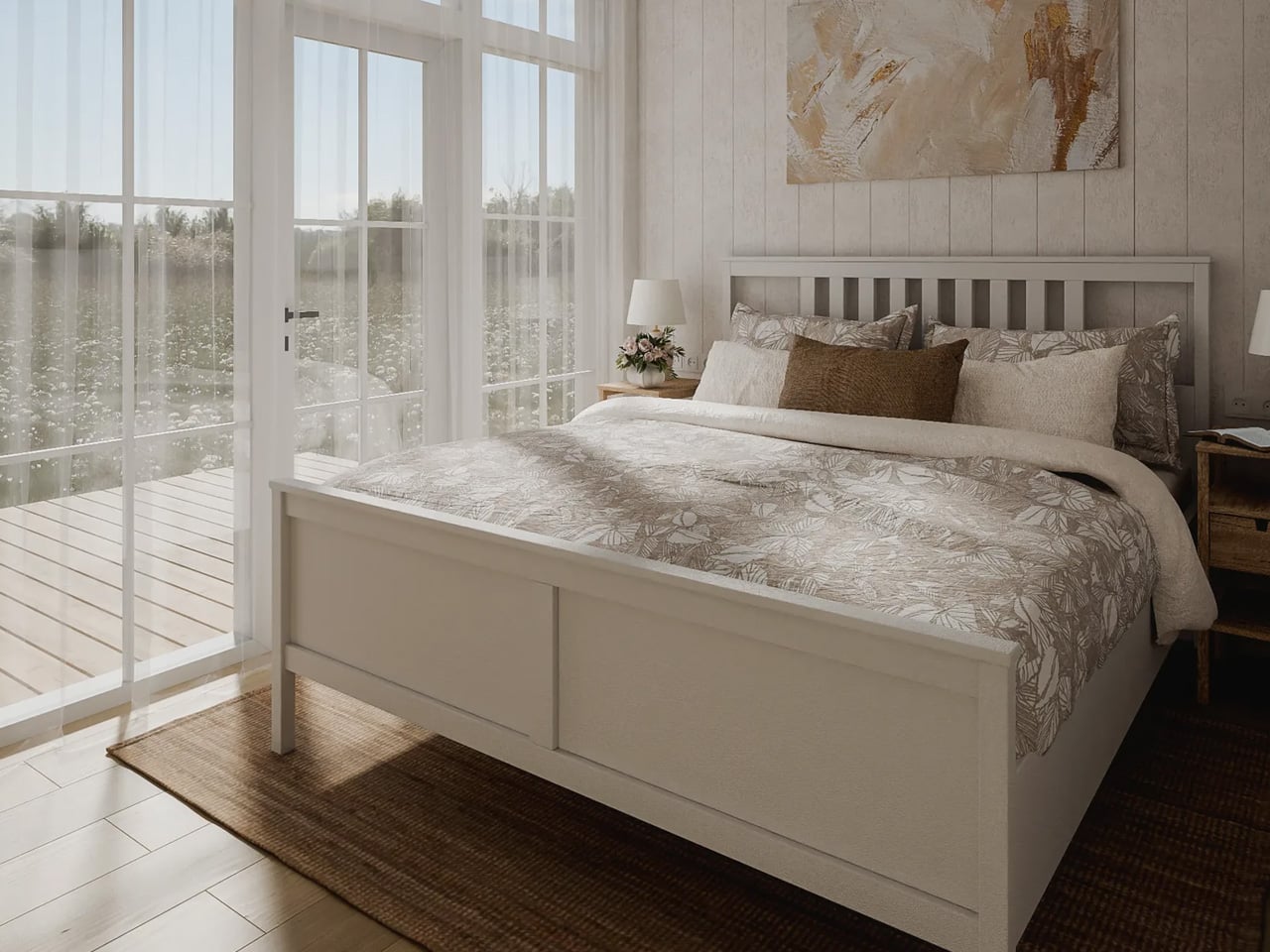
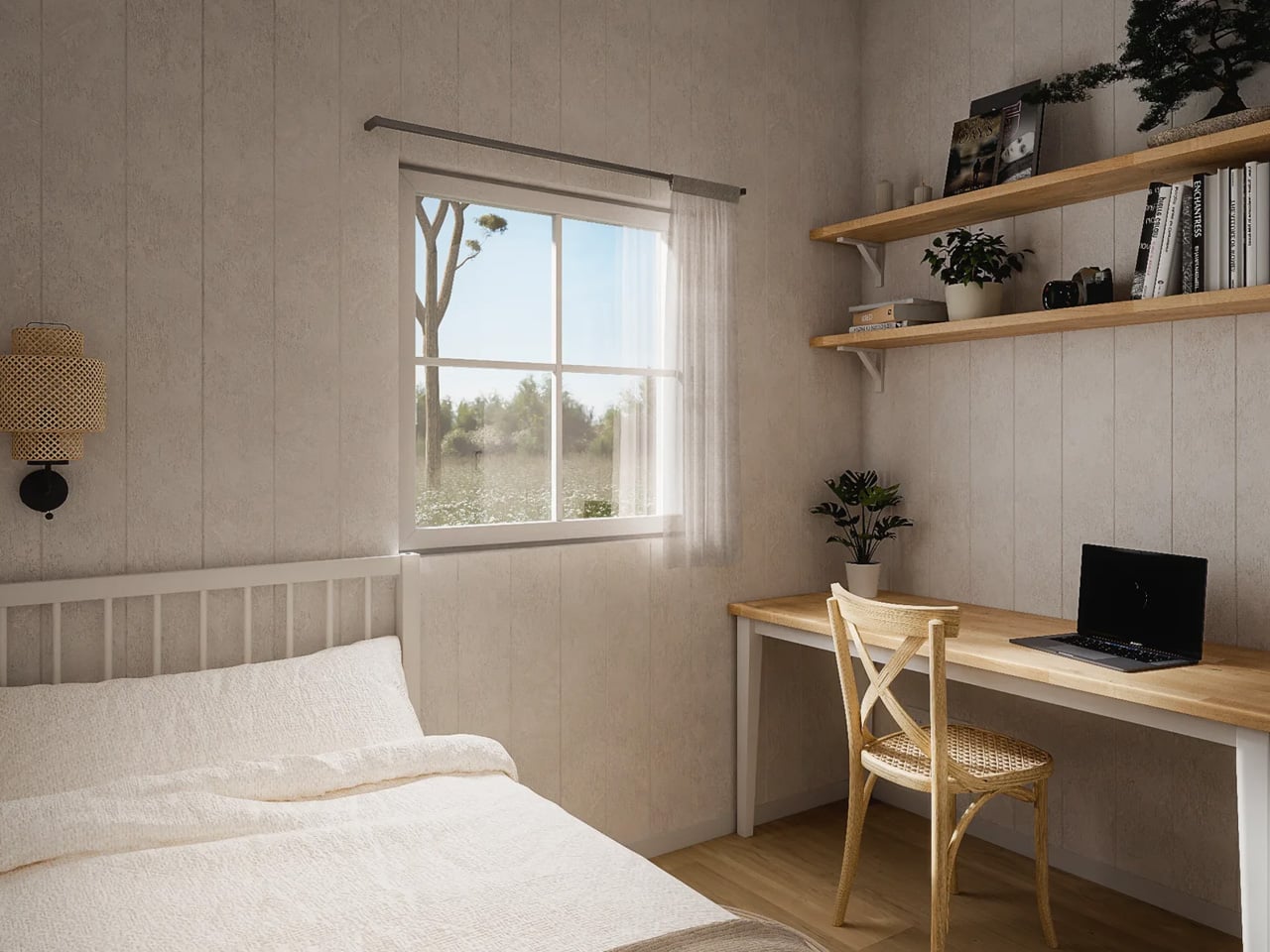
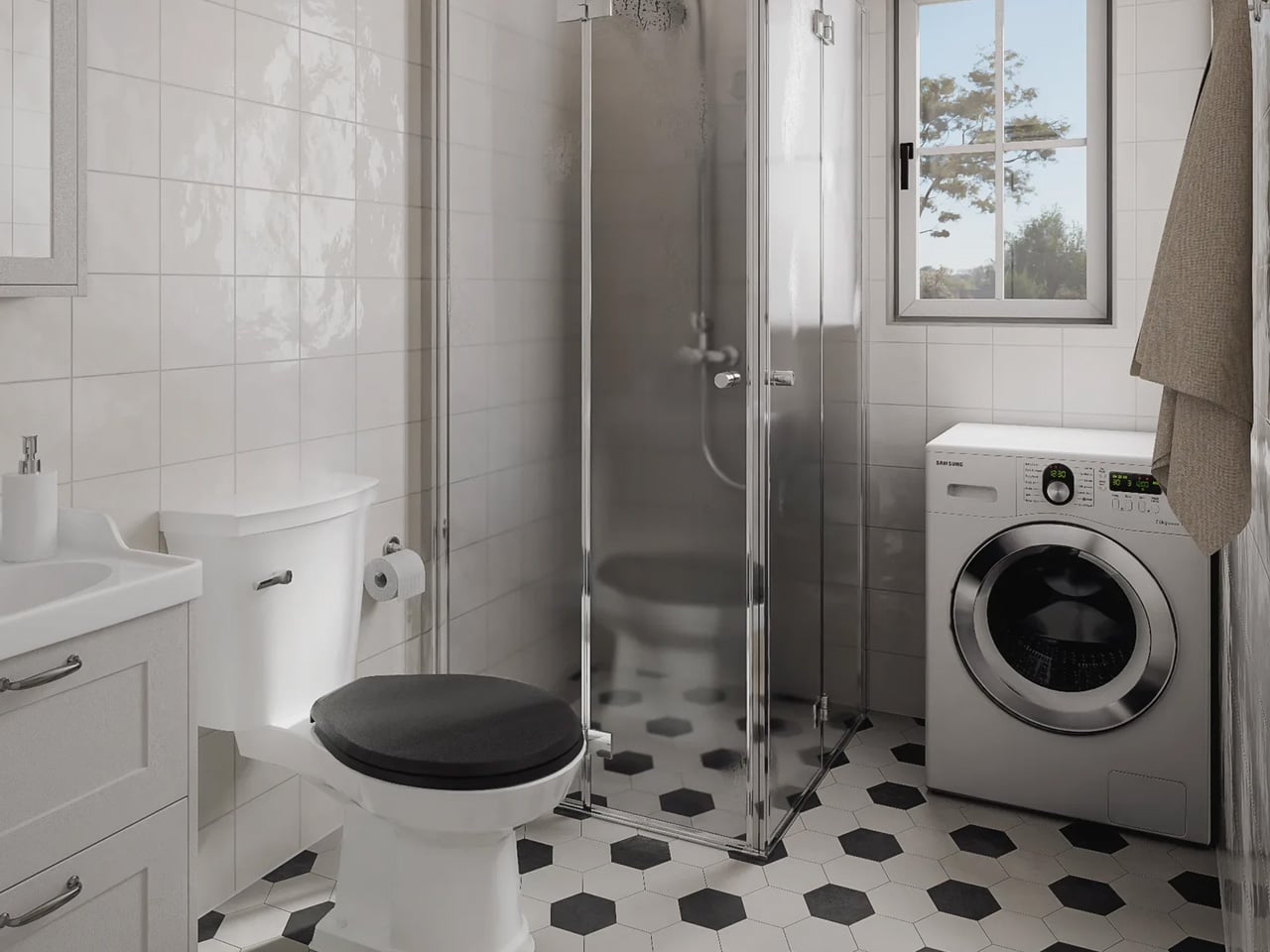
The primary bedroom accommodates a double bed, with optional lifting frames offering storage beneath the mattress. The smaller room can combine a single bed with a desk and wardrobe, making its footprint useful beyond sleeping hours. Bathroom choices include a glazed corner shower, washing machine provision, and several toilet systems. Underfloor heating is optional too, rather than a standard inclusion.
Vagabond Haven lists mineral wool insulation measuring 20 centimeters in the walls and 25 centimeters in the roof, alongside triple glazing. Helena starts at approximately US$91,200 unfurnished, rising to US$102,400 fully furnished or US$117,500 for the off-grid version, all excluding VAT. Helena’s appeal rests in its allocation of space: two private bedrooms without sacrificing the ground-floor living area. The cost is a wider, permanently sited footprint.
The post This 484-Square-Foot Tiny Home Fits Two Bedrooms Without a Loft first appeared on Yanko Design.



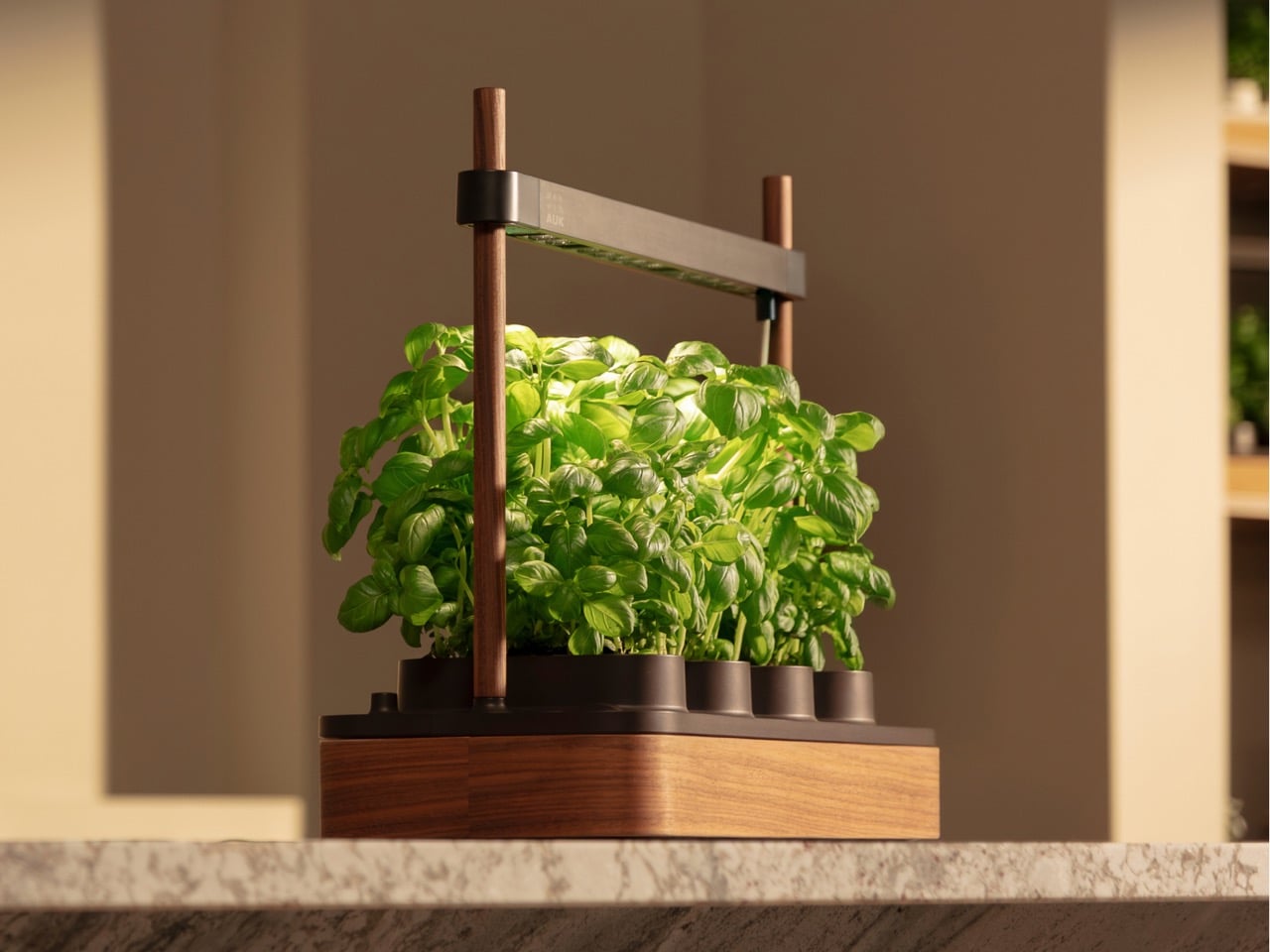
During World War II, Americans planted millions of victory gardens in backyards, vacant lots, and rooftops, and by most estimates those plots supplied roughly 40% of the country’s fresh vegetables. Today’s enemy is the grocery receipt, which now runs roughly 35% higher than it did in 2019. Prices have cooled lately, but they never came back down, and the herb aisle still charges luxury rates for a handful of leaves. Norwegian brand Auk has a counterattack in the Mini 2, a countertop garden that takes the victory garden indoors and shrinks it to fit beside the coffee maker. Your war effort is now four pots of basil, and honestly, I respect it.
The Mini 2 is the sequel to Auk’s best-selling Auk Mini, and it comes from a team in Oslo, where December daylight is more rumor than fact. Lead designer Johan Schreiner and his team just took home a 2026 European Product Design Award in the Kitchen Appliances category. That’s a jury-judged international competition with more than 800 categories, so call it a solid nod rather than an Oscar. The pitch is simple: herbs, salad greens, even chilies and tomatoes, grown from seed on your counter all year. It’s 12% smaller than the first model, holds 25% more water, and starts at $239.
Designers: Johan Schreiner, Jostein Kvitvang, Magnus Bjørnstad & Didrik Dimmen
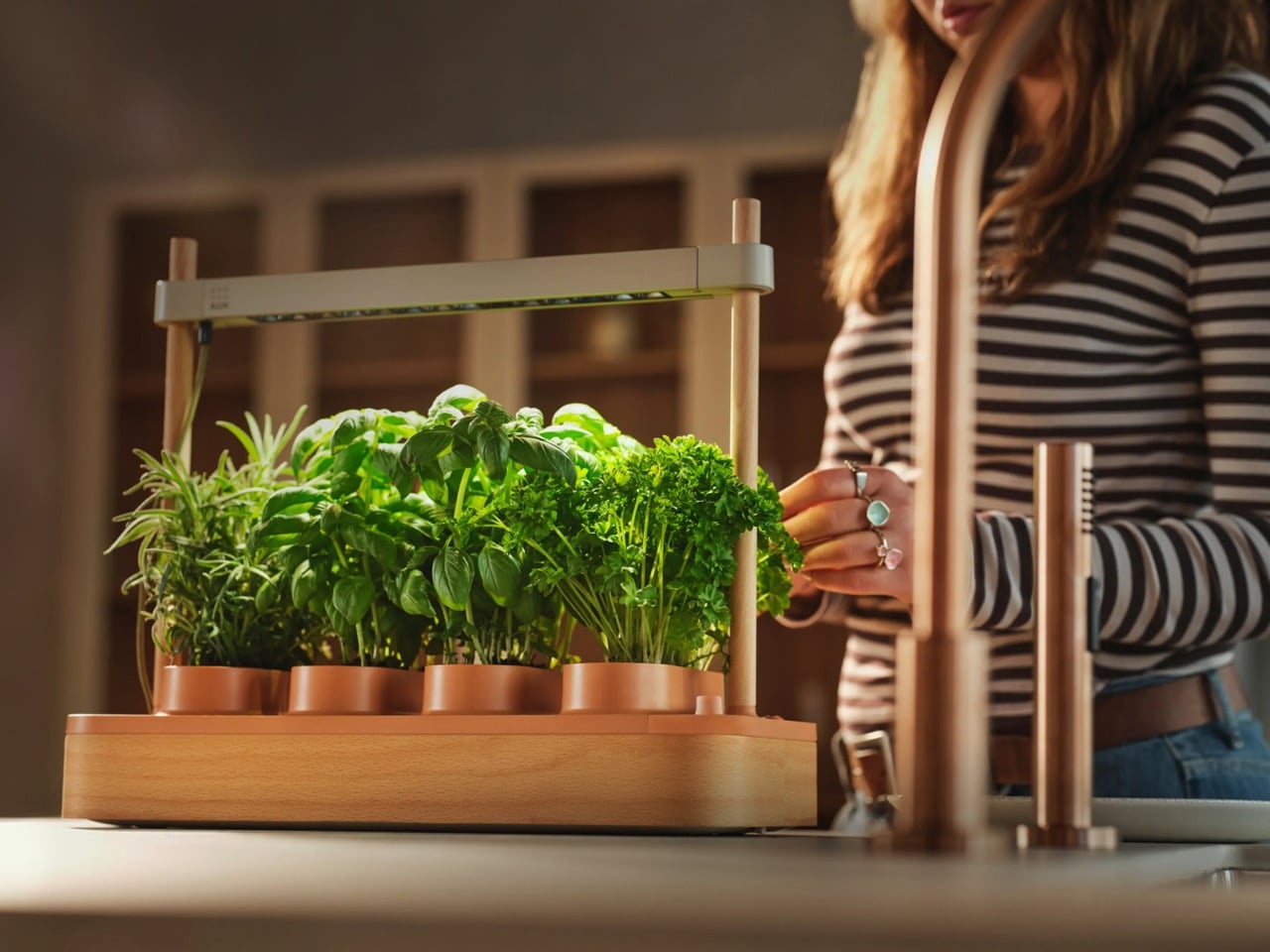
Anyone who has shared a kitchen with a grow light knows the deal: the plants get their sunshine, and so does everyone trying to eat dinner. The Mini 2 fixes that with an optical lens system that aims light down at the leaves instead of spraying it across the room. Auk’s spec sheet lists output between 300 and 1,000 µmol/m²/s of PPFD depending on mode, which is the number plants actually care about. Average power draw runs from about 5 W in slow mode to 17 W in fruit and vegetable mode. That’s somewhere between a night light and a modest LED bulb, so your electric bill barely flinches.
Scandinavian designers have been fighting glare since Poul Henningsen’s PH lamps for Louis Poulsen in the 1920s, which hid the bulb behind layered shades so light landed where people needed it. The Mini 2 carries that instinct into horticulture, and it makes a neat contrast with Lettuce Grow’s Counterstand and Glow Lamp, which tames its grow light by tuning the color temperature until it looks warm and livable. Auk controls where the light goes, while Lettuce Grow controls what the light looks like when it arrives. Henningsen was Danish, so Norway gets a polite asterisk on the heritage claim. Either way, nobody has to live under a purple haze anymore.
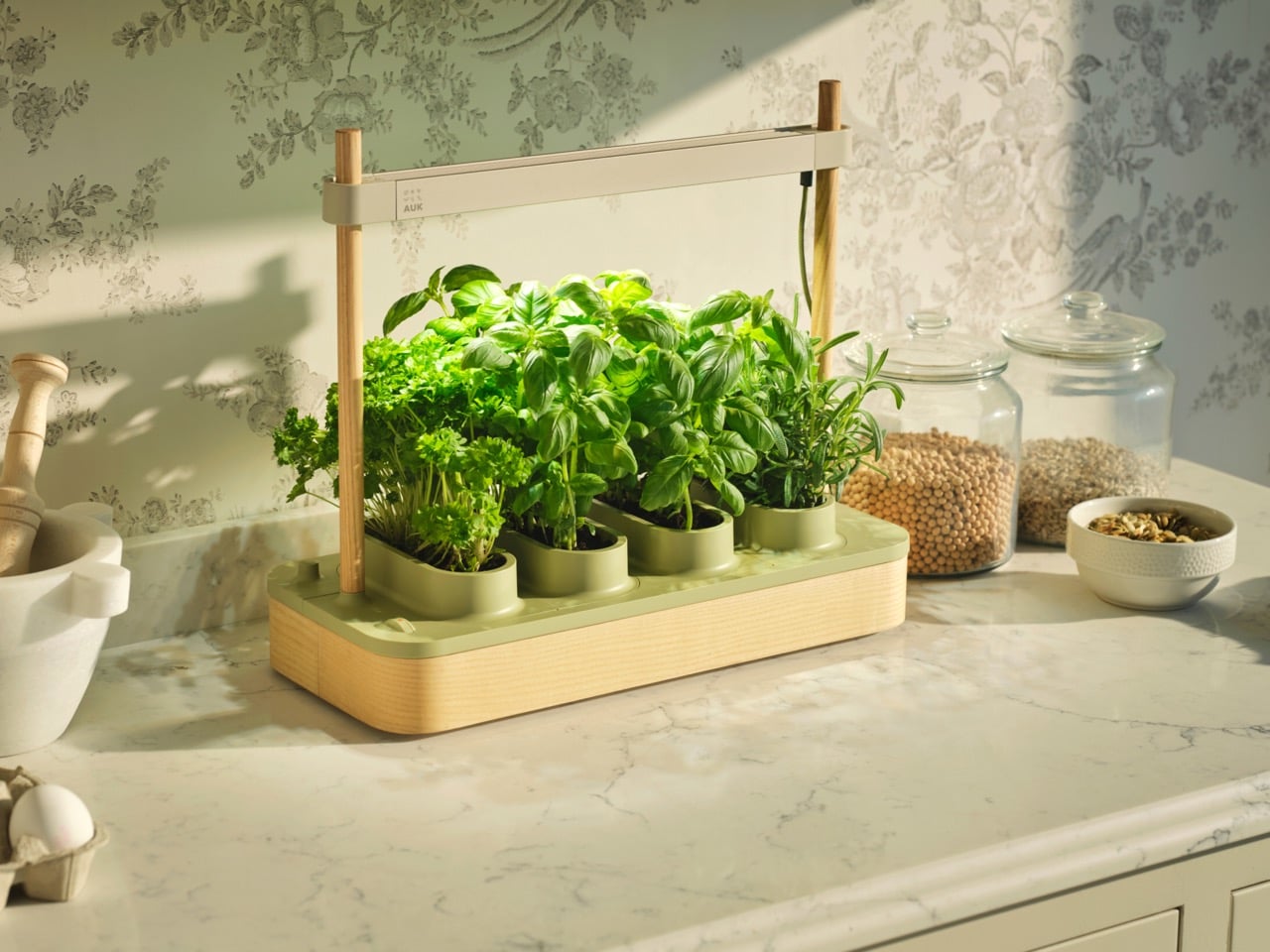
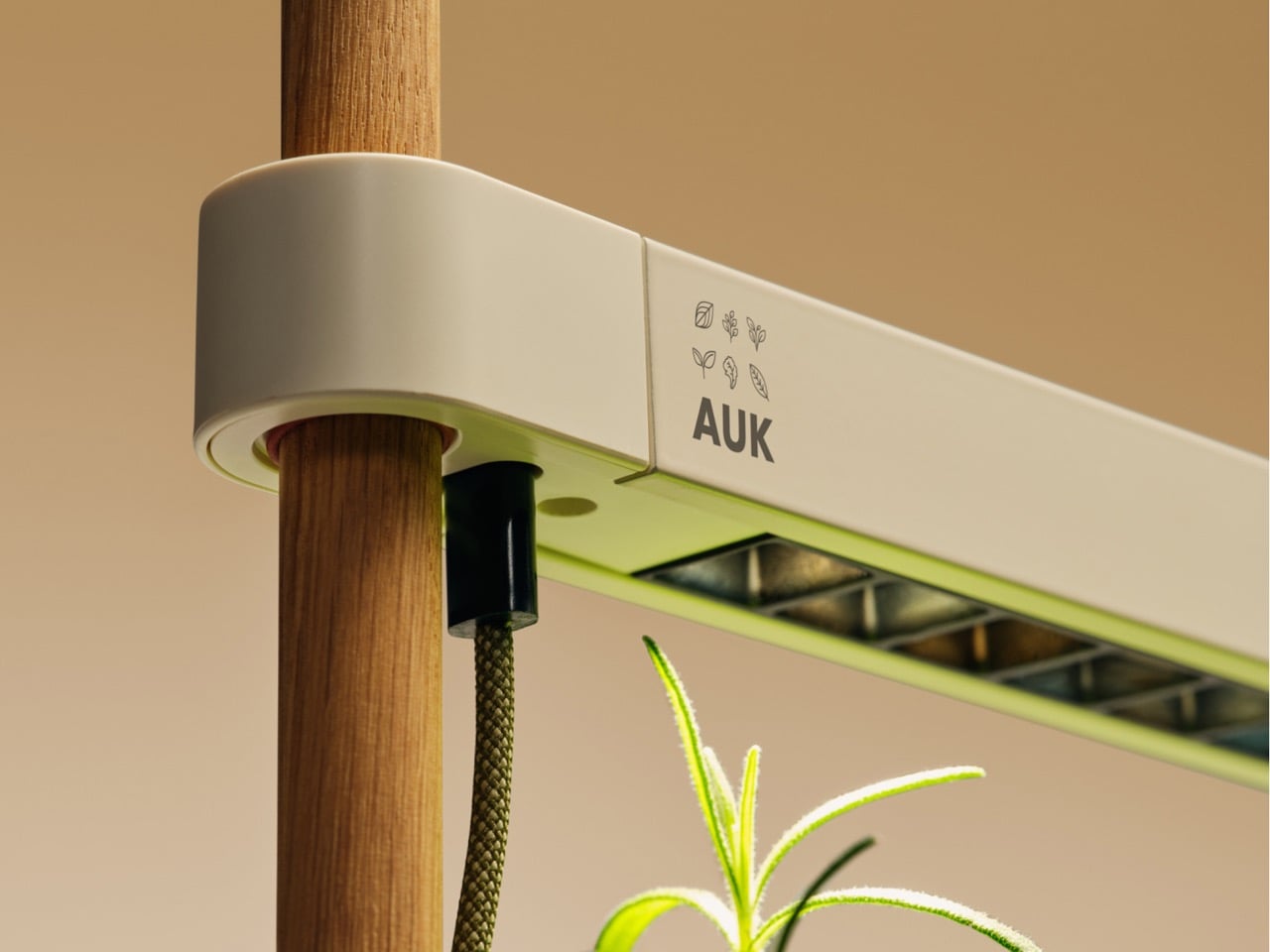
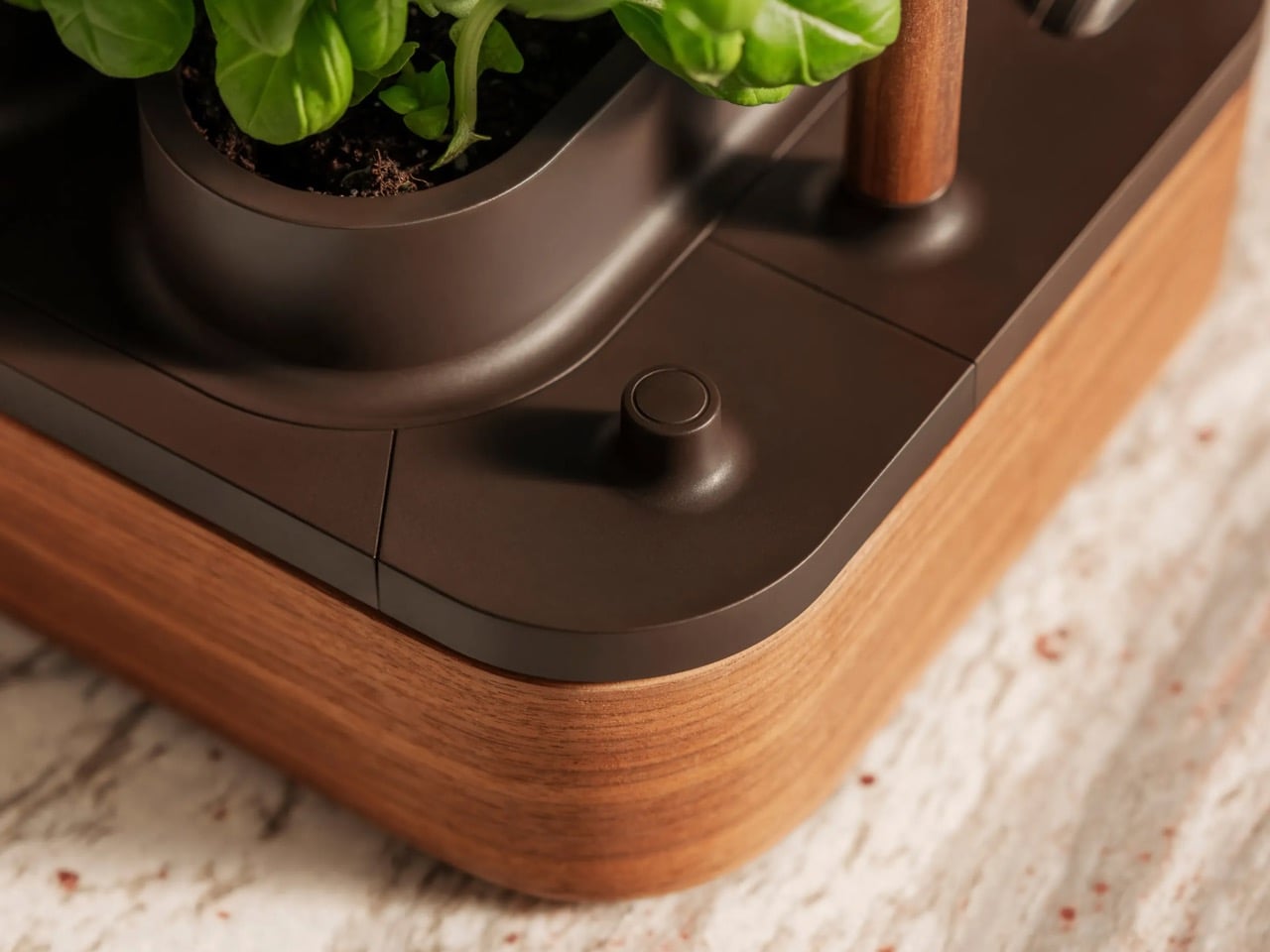
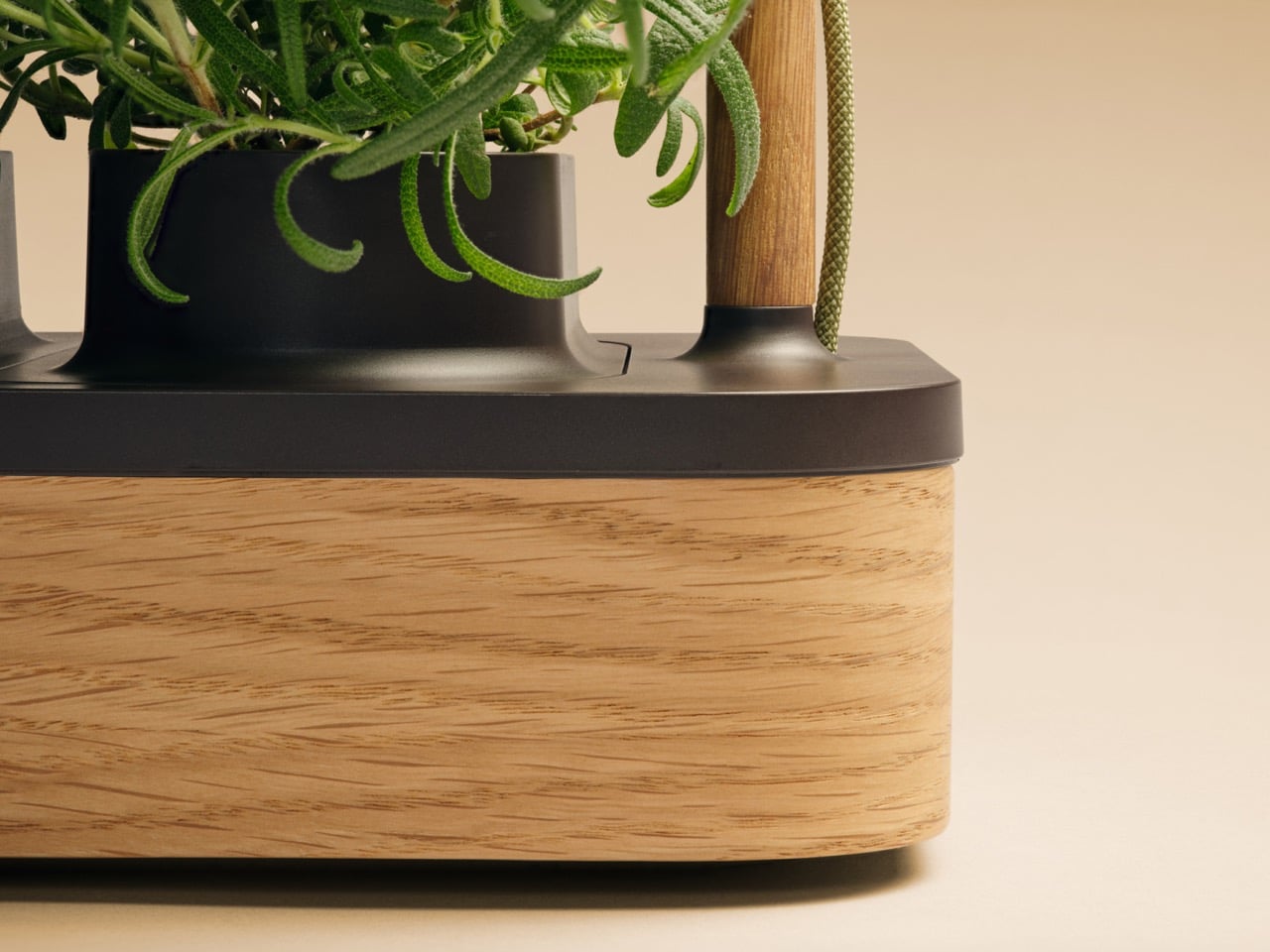
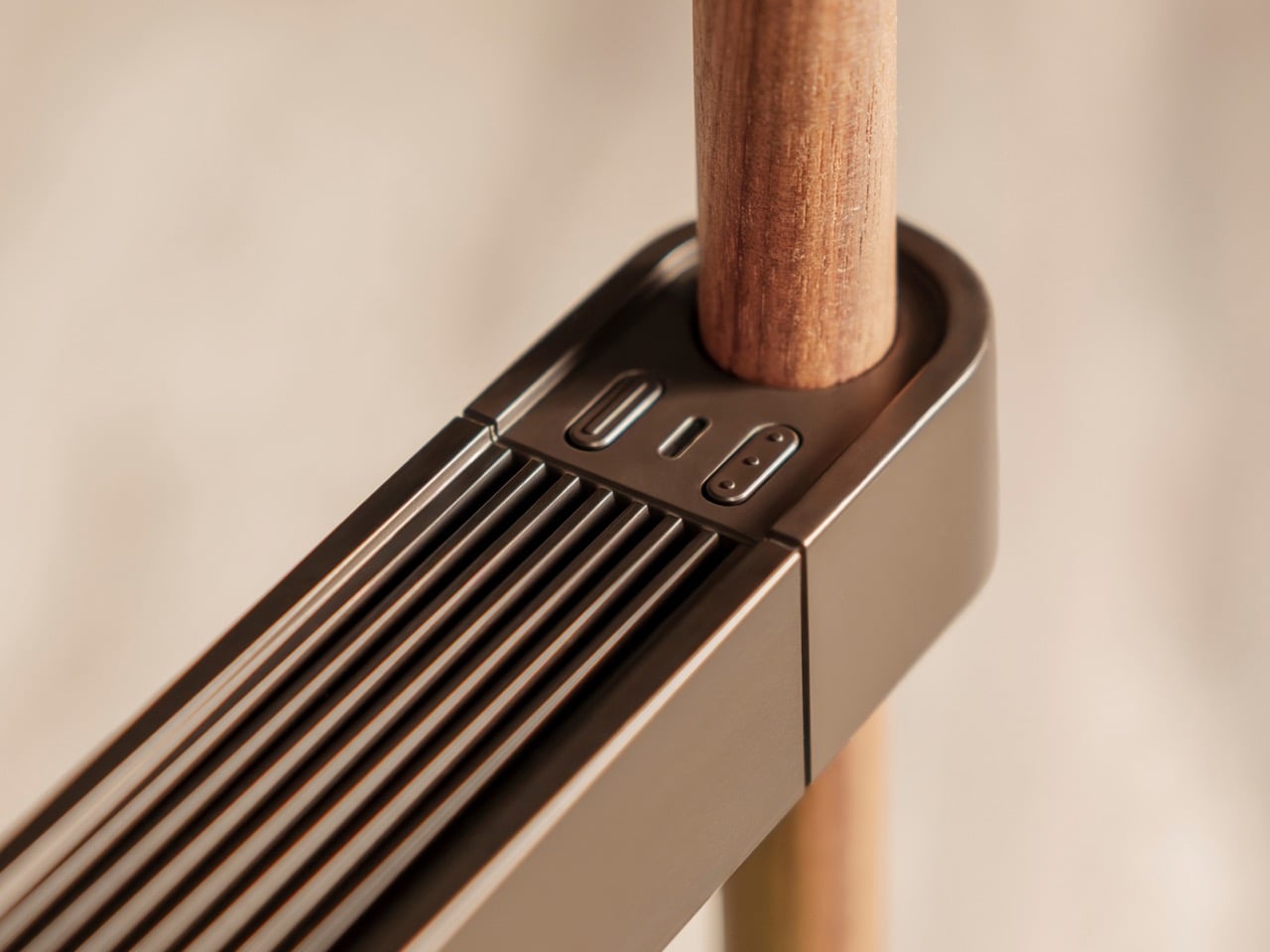
Pull the Mini 2 out of the box and it reads as furniture first, appliance second. A wraparound sleeve of FSC-certified, oil-treated European wood (walnut, oak, beech, or ash) rolls around softly radiused corners, and Auk keeps the seams flush so nothing catches the eye or your sleeve. Two slim wooden dowels, 0.63 in thick, hold up a light bar made from 100% recycled Norwegian aluminum, its ribbed top borrowing the look of heat sink fins. The base and pots are recyclable ABS plastic. Even the 5.9 ft braided USB-C cable comes in green, so the wire looks like it belongs to the plant kingdom.
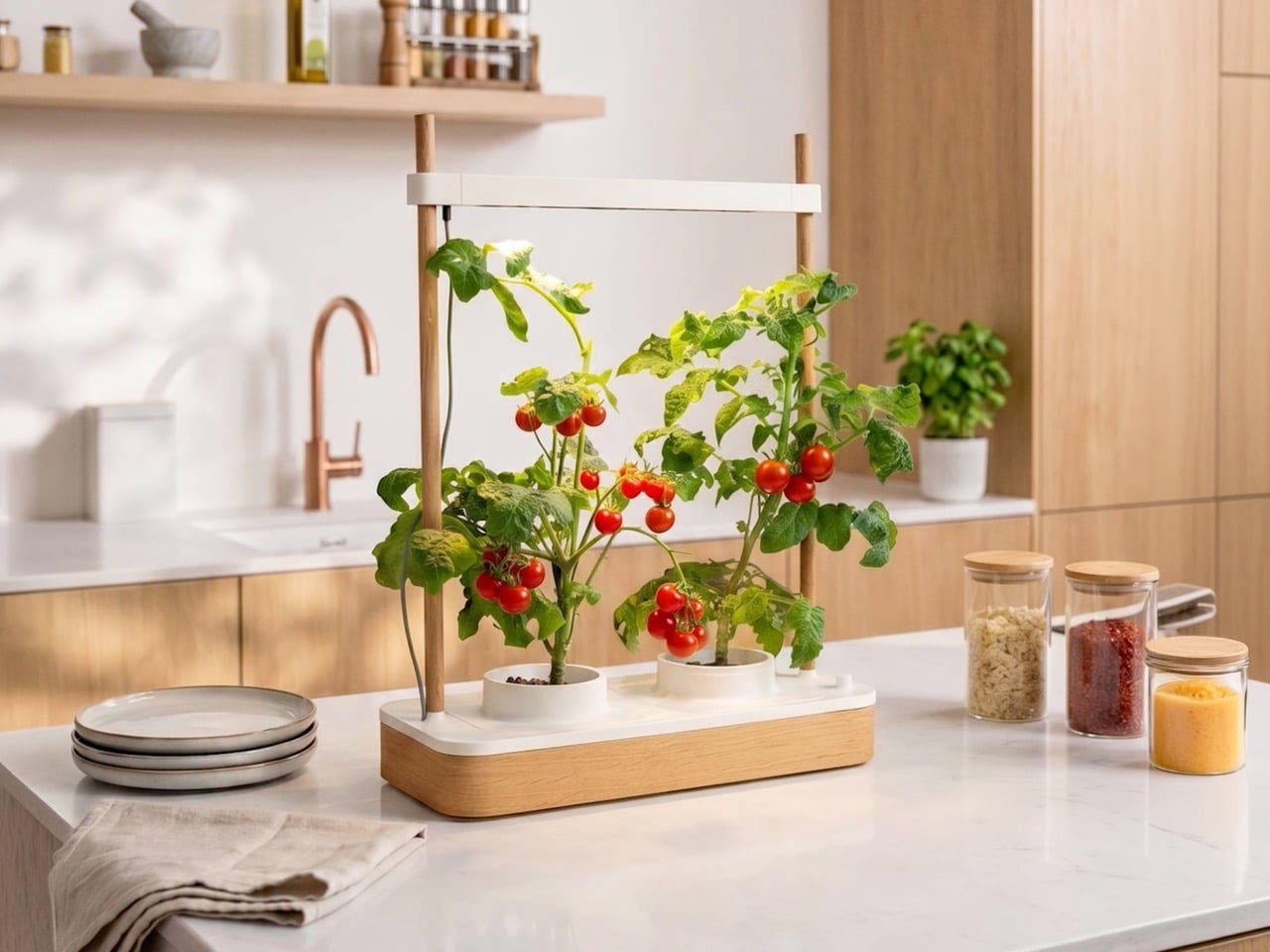
Five colorways run from Espresso Walnut to Sage Ash, so the Mini 2 can slip into a moody dark kitchen or a pale Scandinavian one without making a scene. The footprint shrinks from the original’s 17.5 x 8.5 in to 16.9 x 7.5 in, and Auk’s own math calls the whole unit 12% smaller. Yet the tank holds 0.9 gallons on the first fill, 25% more water than before, which means fewer refill trips and fewer “oops, I forgot” moments. Longer dowels and wider Big Plant Pots, bundled in a chili and tomato kit, let the Mini 2 grow fruiting plants too. Smaller box, bigger ambitions.
A clamshell of basil runs about $3.50, so if you buy one a week, the Mini 2’s $239 price covers roughly 68 of them, or about 16 months of Sunday-night pesto. Power is cheap, with Auk listing 3.6 to 12.2 kWh a month, which works out to a buck or two at typical US electricity rates. Seeds, coco fiber, and nutrients add a little, so treat 16 months as the friendly estimate. Past that point, every snip is free basil with a side of smugness. Better yet, you cut exactly one sprig and leave the rest alive, so the cilantro funeral in your fridge never happens.
Nobody is quitting the grocery store over this, but cutting a few herb runs a month adds up to a real taste of food independence. Pod-based systems like Click & Grow sell you plant capsules, while the Mini 2 grows from any seeds you like in coco fiber, with no pump and no pods. The optional Bluetooth app handles light cycles and modes, and Slow Mode keeps plants from outgrowing the light while you’re away on vacation. The victory gardeners of the 1940s never had it this easy. You can order the Mini 2 at Auk’s site, and the first basil is about four to five weeks out.
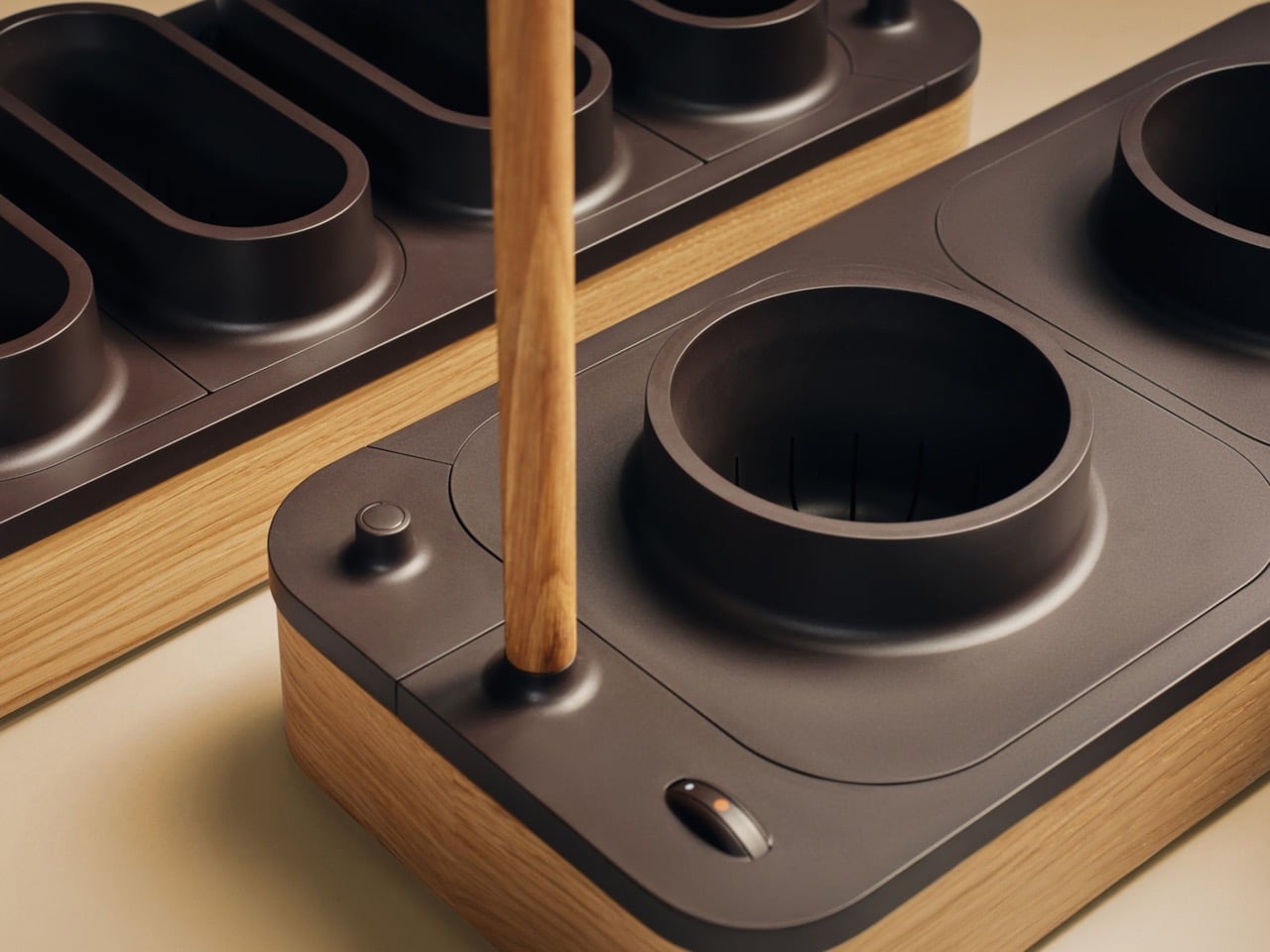
The post The Auk Mini 2 brings your grocery store’s herb aisle to your kitchen counter (with zero human effort) first appeared on Yanko Design.




Apple’s October has turned into a full-on home makeover. First came HomeView, a $299 smart display for the kitchen with a generous helping of iMac nostalgia baked into its design. Now the iMac itself is back with the M6 chip, which feels a bit like the original star showing up after the spinoff already aired. The two aren’t rivals at all, because a 7-inch hub and a 24-inch desktop live very different lives. They play for the same team, with HomeView running the house while the iMac sits on the desk handling homework, taxes, and the occasional late-night gaming session.
The new iMac skips the M5 generation and goes straight to Apple’s 2nm M6 chip, with two more CPU and GPU cores than before. It starts at $1,499 for the 10-core, two-port model, while $1,699 gets you 12 cores, four Thunderbolt ports, and 2.5 Gigabit Ethernet living inside the power brick. Apple also swapped in its own N1 wireless chip for Wi-Fi 7, Bluetooth 6, and Thread, which fits neatly with all that smart home energy. Those prices match what the M4 iMac cost after June’s price hike, so the extra cores are basically a free upgrade. Pre-orders open October 28, and the first deliveries land November 6.
Designer: Apple
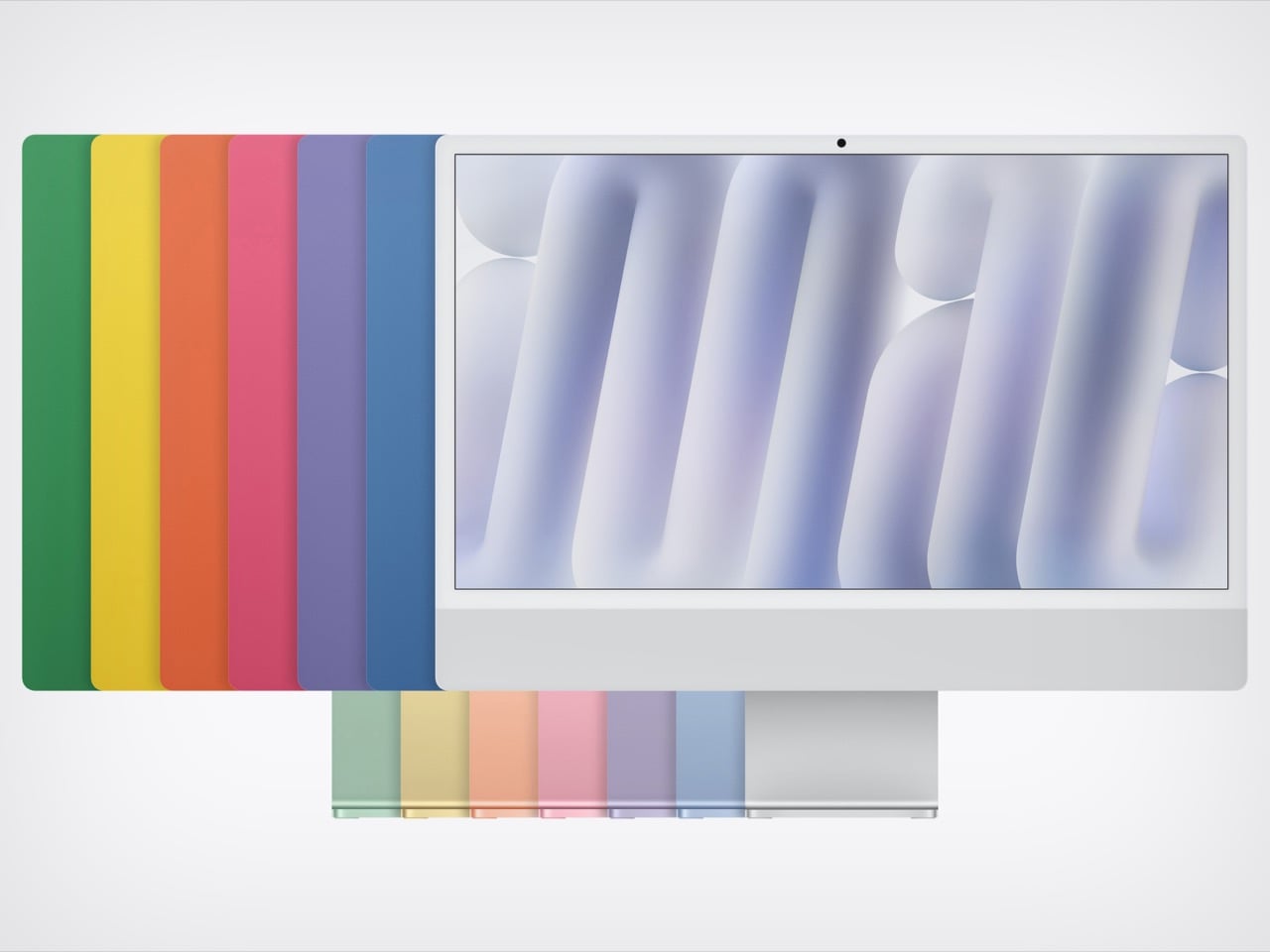
The M6 is built on TSMC’s first-generation 2nm process, swapping the M4’s FinFET transistors for gate-all-around nanosheets that leak less power at these tiny sizes. The $1,499 model gets a 10-core CPU split into two super cores, three performance cores, and five efficiency cores. The $1,699 model bumps that to 12 cores, with two super, four performance, and six efficiency cores. Both get a matching GPU with a Neural Accelerator in every core, plus two 16-core Neural Engines totaling 32 cores. Memory bandwidth climbs from 120GB/s to up to 170GB/s, and the SSD now supports PCIe 5.0 for up to twice the read and write speed.
Apple’s own numbers put the M6 iMac up to 1.5 times faster than the M4 in Microsoft Excel and up to twice as fast for photo editing in Affinity. Ray-traced gaming performance doubles too, which is great news for anyone secretly using the family computer as a gaming rig. The biggest jump is on-device AI, with prompt processing in LM Studio up to five times faster than M4. Apple’s press release even name-drops vibe coding as an iMac use case, a very 2026 thing to say about a computer that comes in pink. If you’re coming from an Intel iMac, Apple claims up to 18 times faster performance, which should feel like time travel.
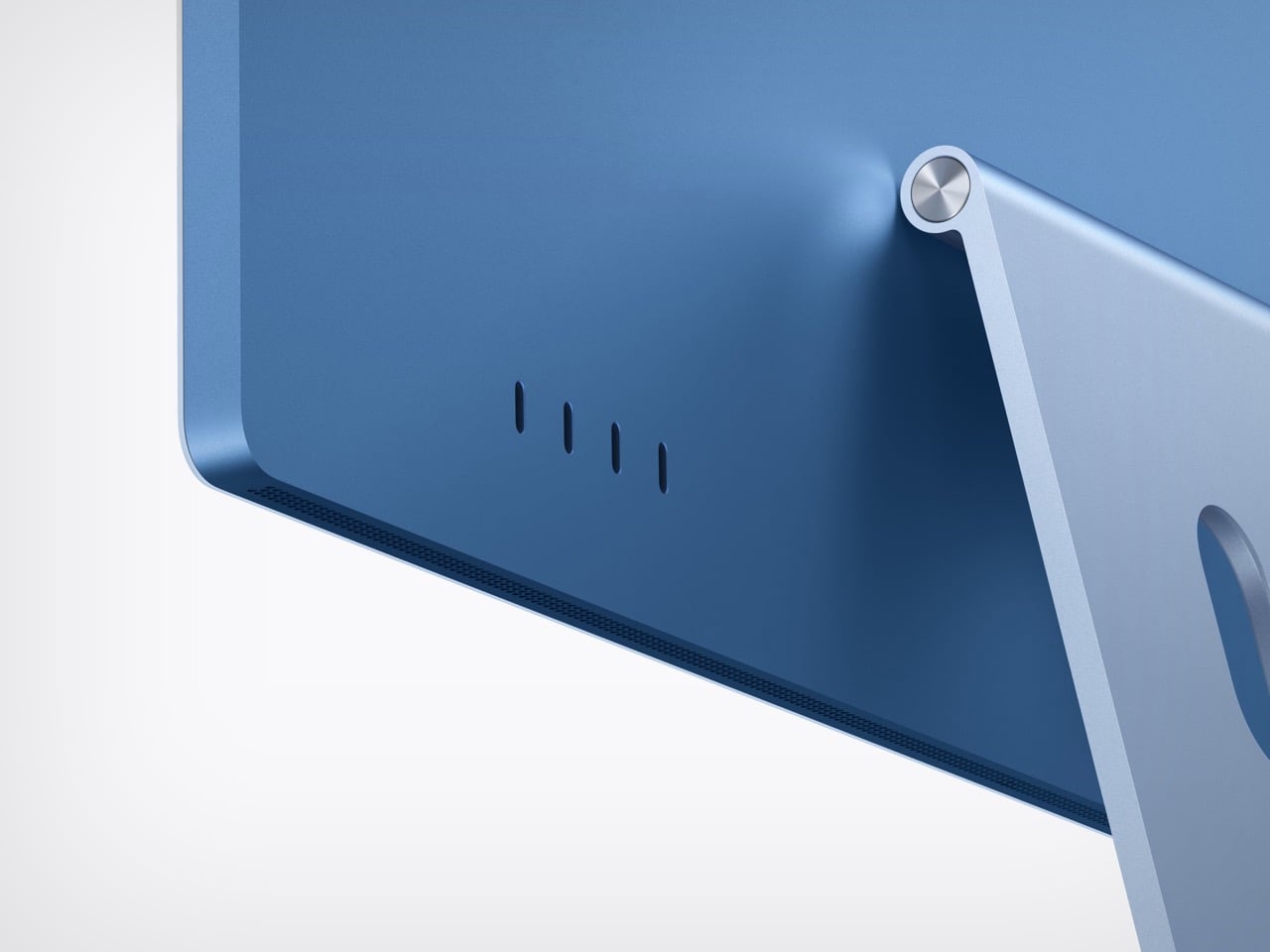
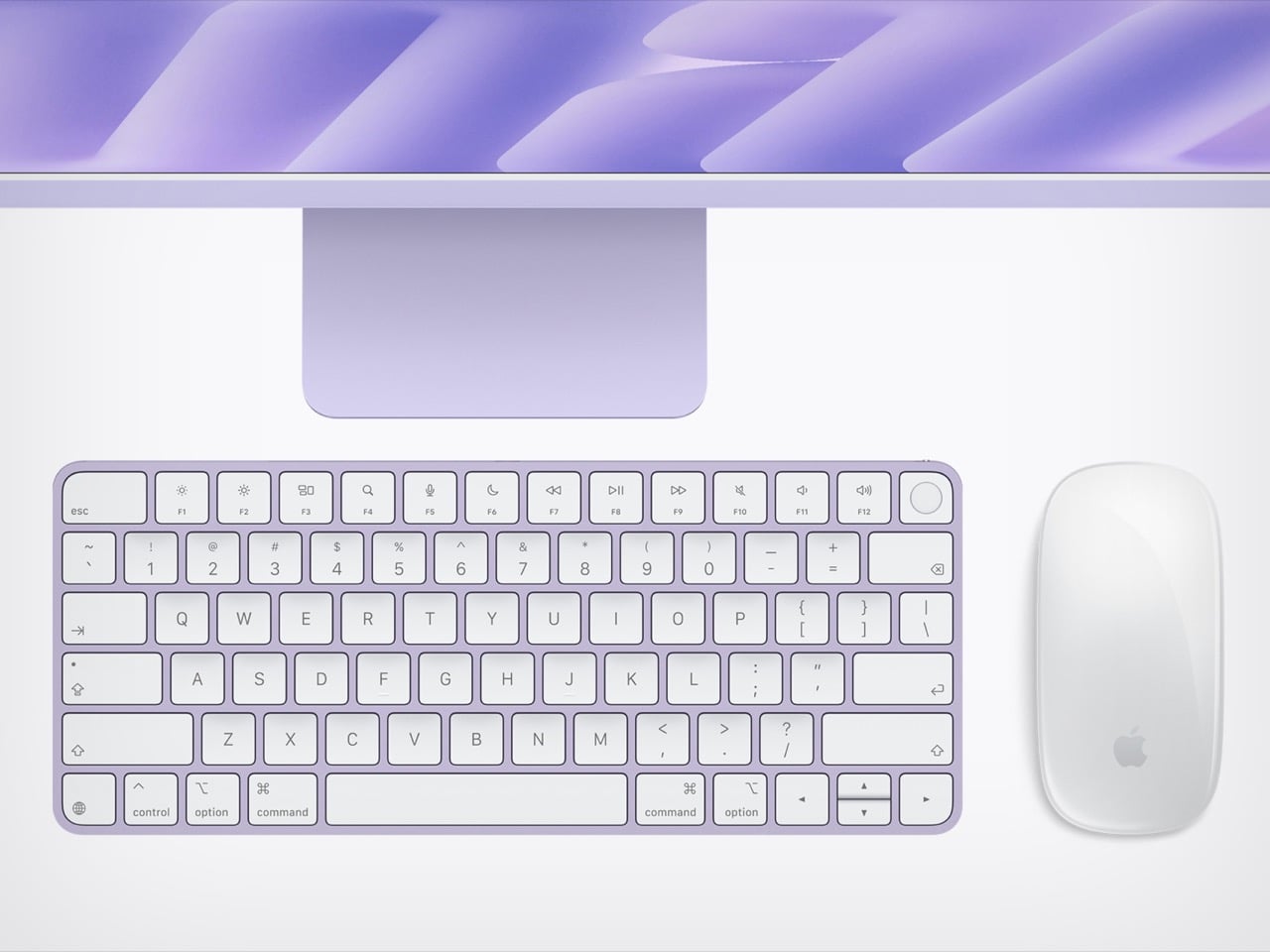
The $1,699 model comes with a 2.5 Gigabit Ethernet port as standard, and the $1,499 model can add one for $30. Apple builds that jack into the power adapter instead of the computer itself. That keeps the iMac’s 11.5mm-thin body free of a chunky network port, and your cable clutter ends up under the desk where it belongs. The previous model used the same brick trick, but it topped out at 1 Gigabit. At 2.5 Gigabit, pulling a giant photo library off a home server should feel a lot less like waiting for a kettle to boil.
Apple’s own N1 wireless chip replaces Broadcom, bringing Wi-Fi 7, Bluetooth 6, and Thread, the low-power mesh network behind a lot of Matter smart home gear. External display support gets generous on the four-port model, which can drive two 6K screens at 60Hz, two 4K screens at 165Hz, or a single 4K panel at 240Hz. It can even run both external displays off a single Thunderbolt port. Everything you see and hear stays the same, from the 24-inch 4.5K Retina display at 500 nits to the 12MP Center Stage camera and six-speaker system. The seven colors carry over too, along with color-matched keyboards and mice that charge over USB-C.
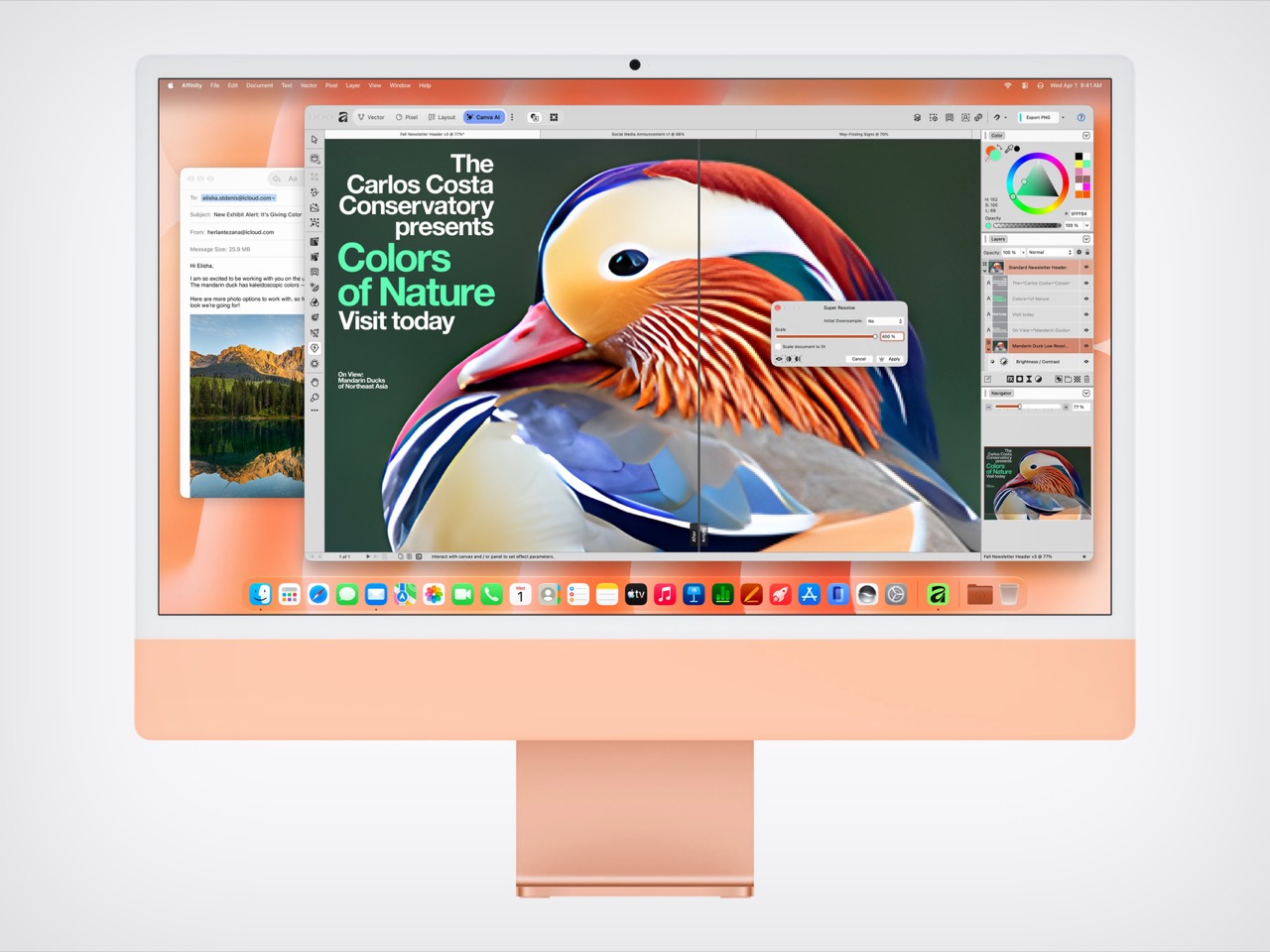
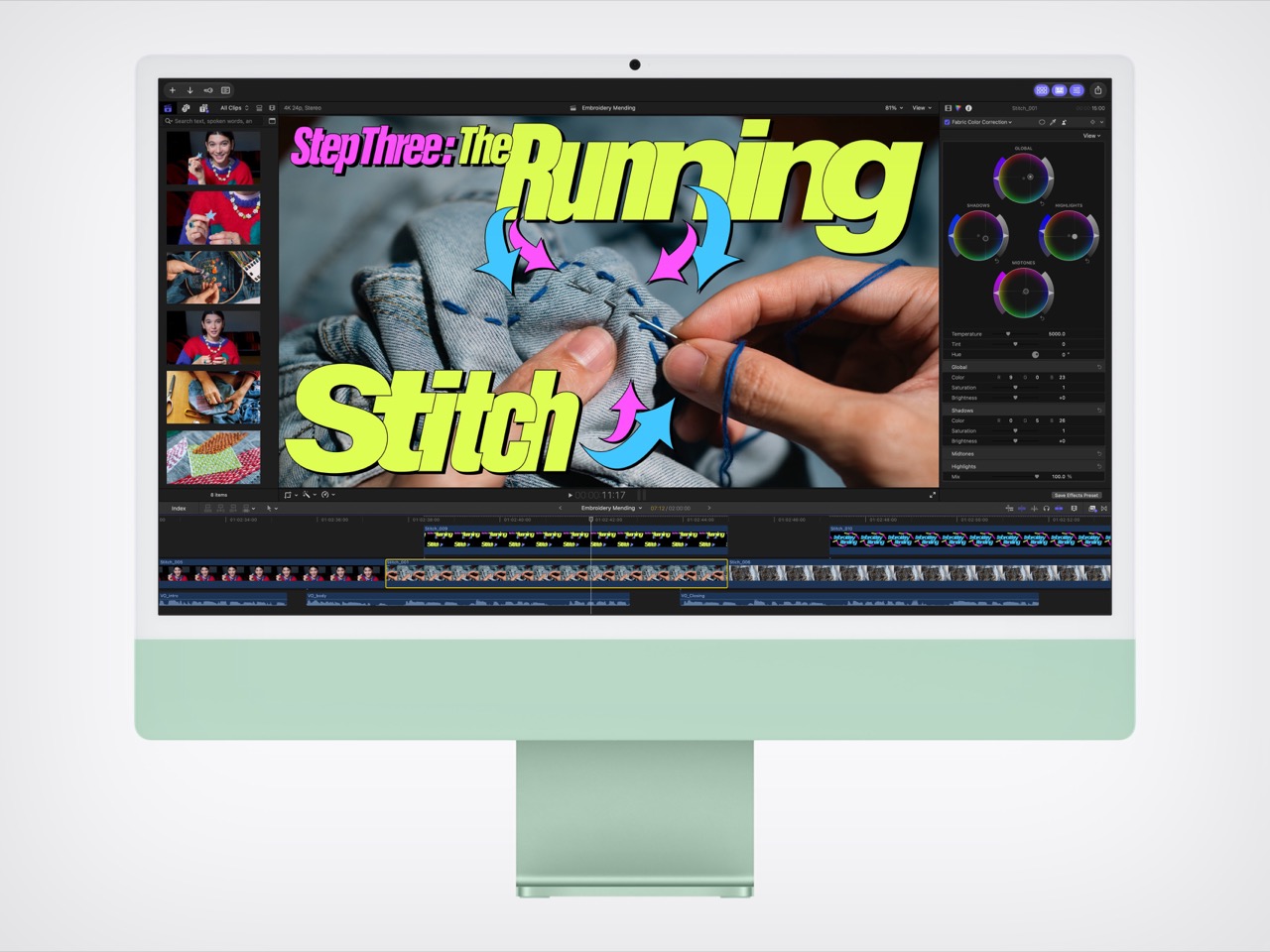
The M4 iMac launched at $1,299 back in 2024, then jumped to $1,499 in June when Apple raised prices across the Mac lineup to cope with soaring memory and storage costs. The M6 model keeps that $1,499 starting price, but the base chip now has 10 CPU and GPU cores instead of eight. Compared to yesterday, that’s two extra cores of each for the same money. Compared to two years ago, the cheapest iMac costs $200 more. The four-port model at $1,699 is the one I’d point most people toward, since it bundles Ethernet, more display options, and the full 12-core chip.
If you bought an M4 iMac, enjoy it, because the display, camera, speakers, and design are identical and your browser tabs won’t notice the difference. Families still running an Intel or M1 iMac are the real audience here, and the jump will feel enormous. Pre-orders open October 28, with deliveries starting November 6. That makes it the third new Apple product in two days, after the iPad mini and alongside the M6 MacBook Pro, with touchscreen Macs still on deck. HomeView may have gotten the nostalgic looks this month, but the iMac is still the one doing the family’s homework.

The post Apple’s new M6 iMac is faster, not different first appeared on Yanko Design.