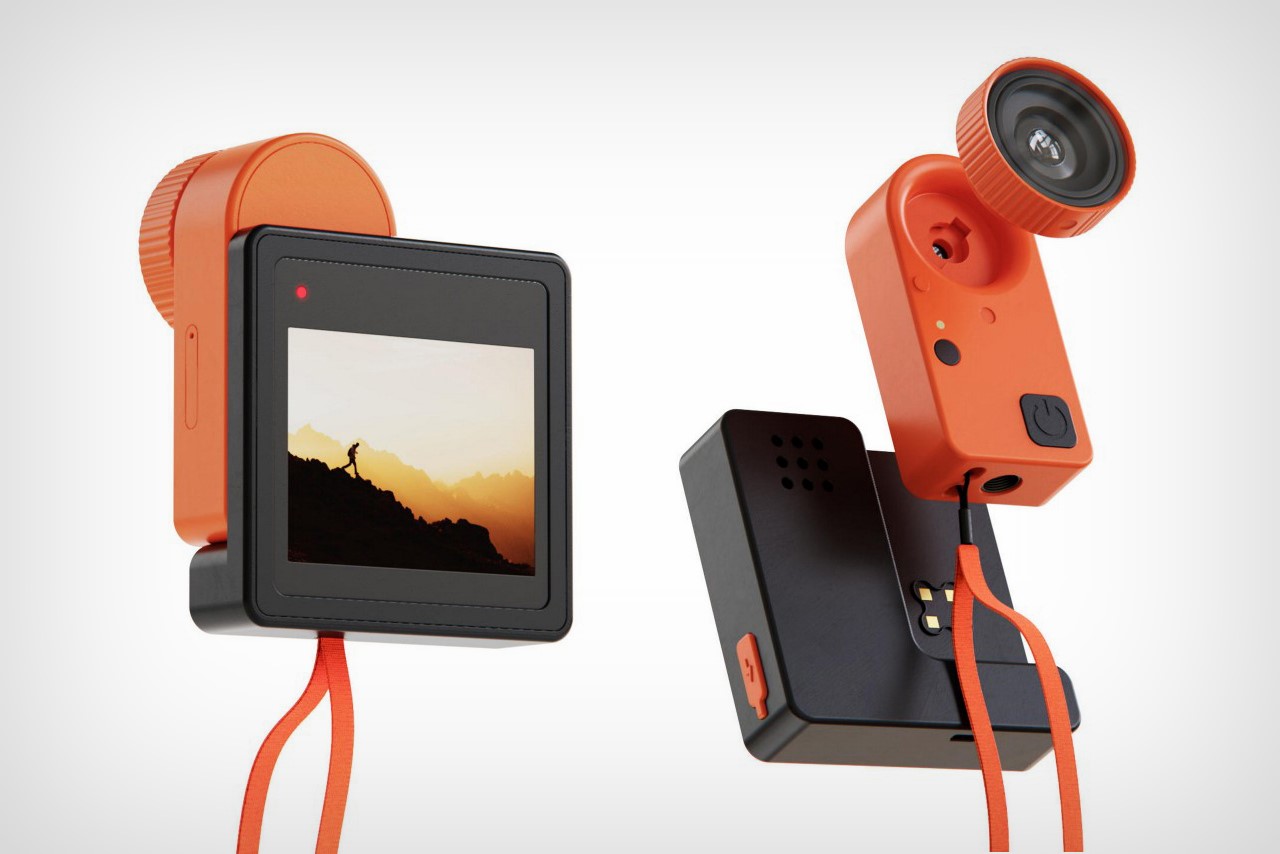
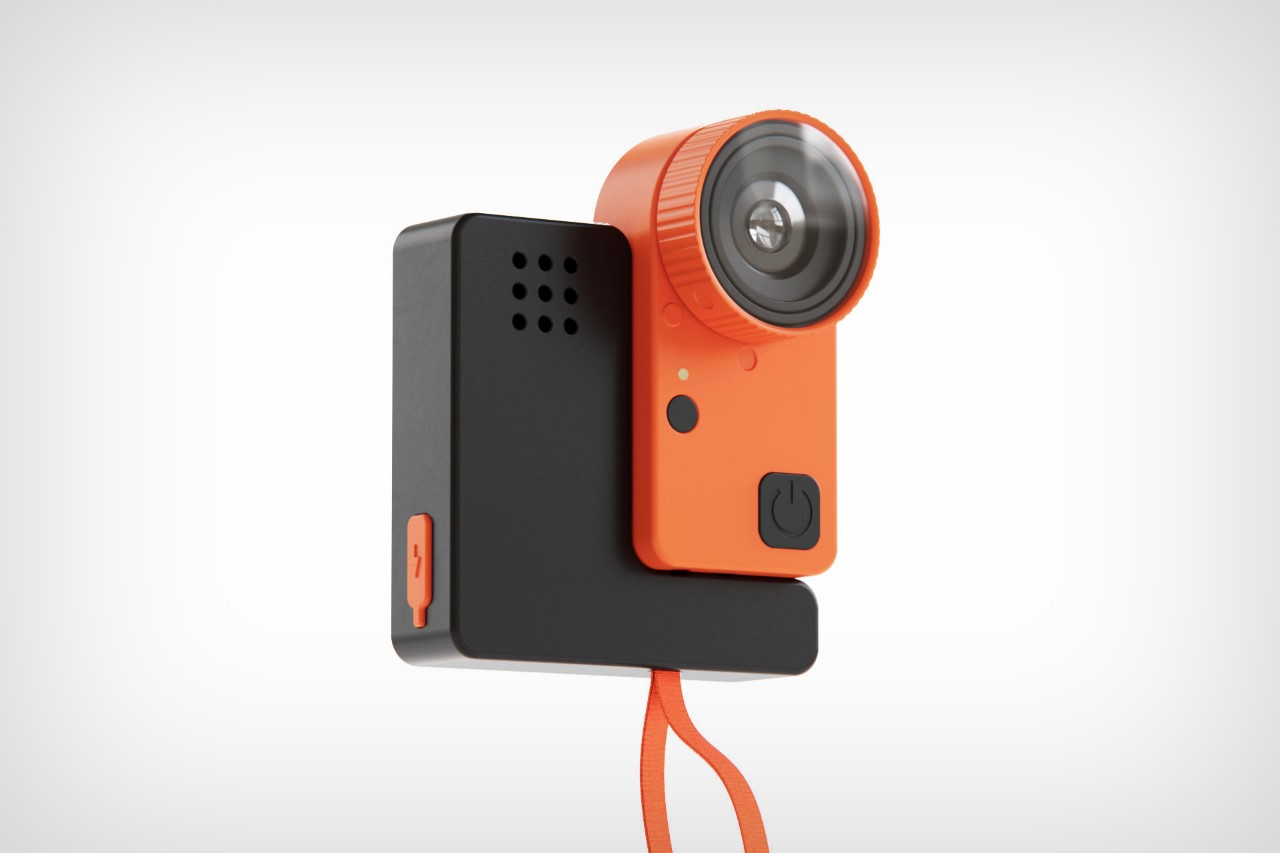
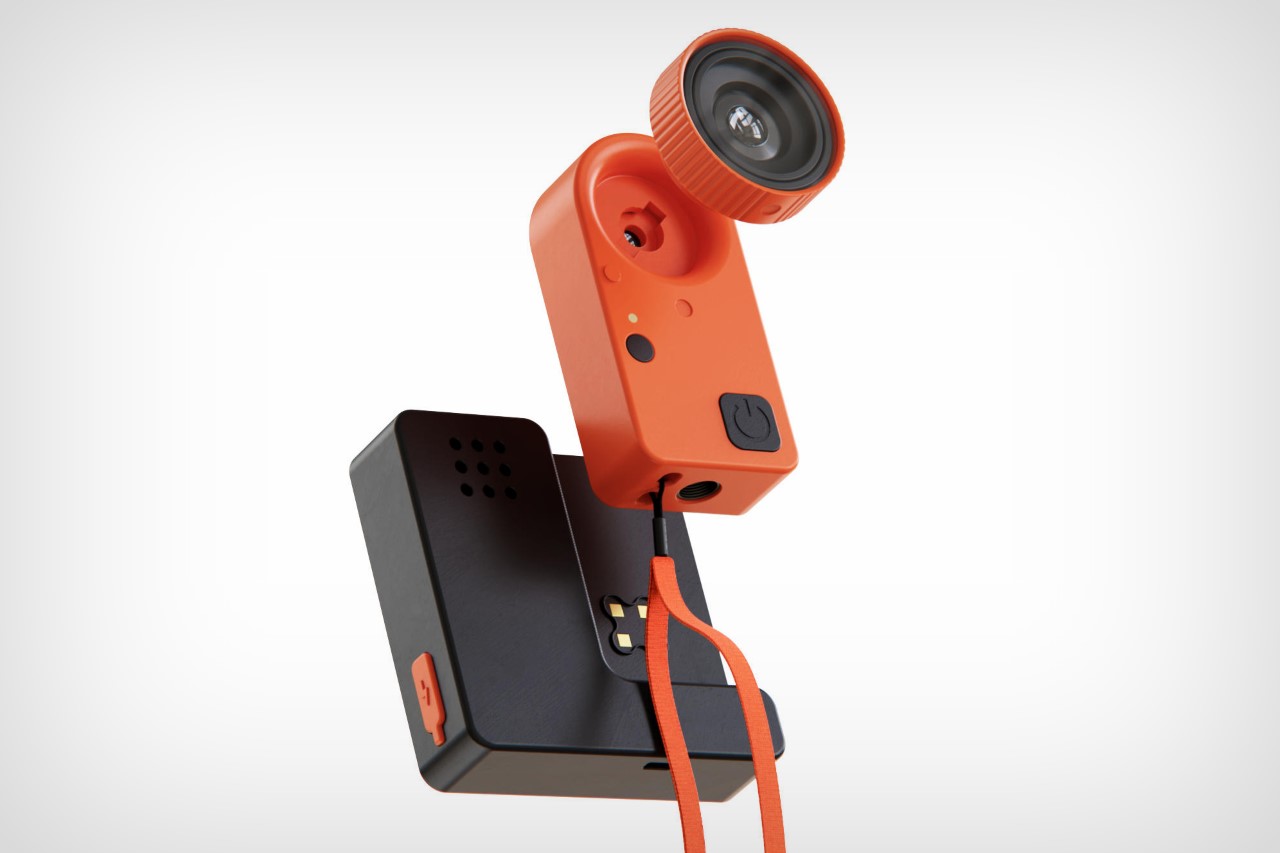
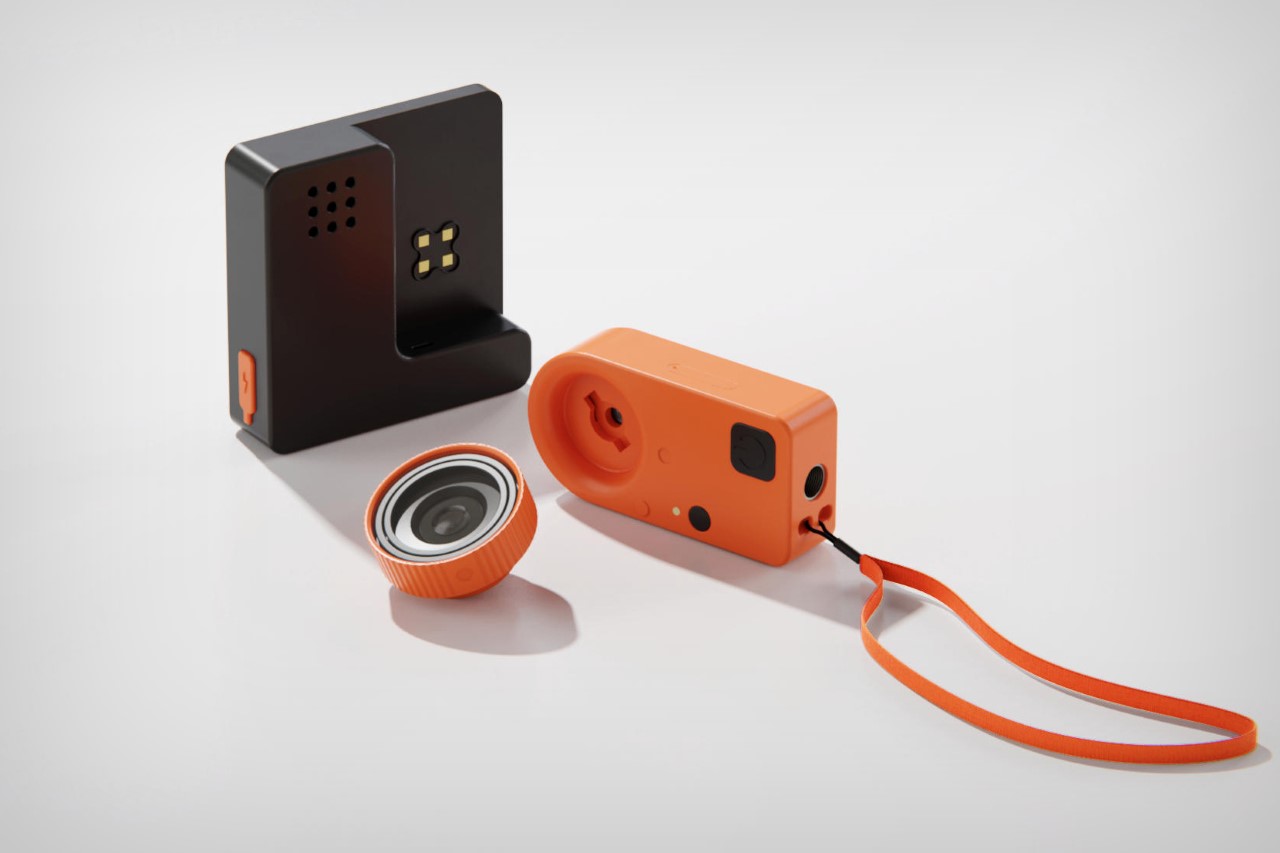
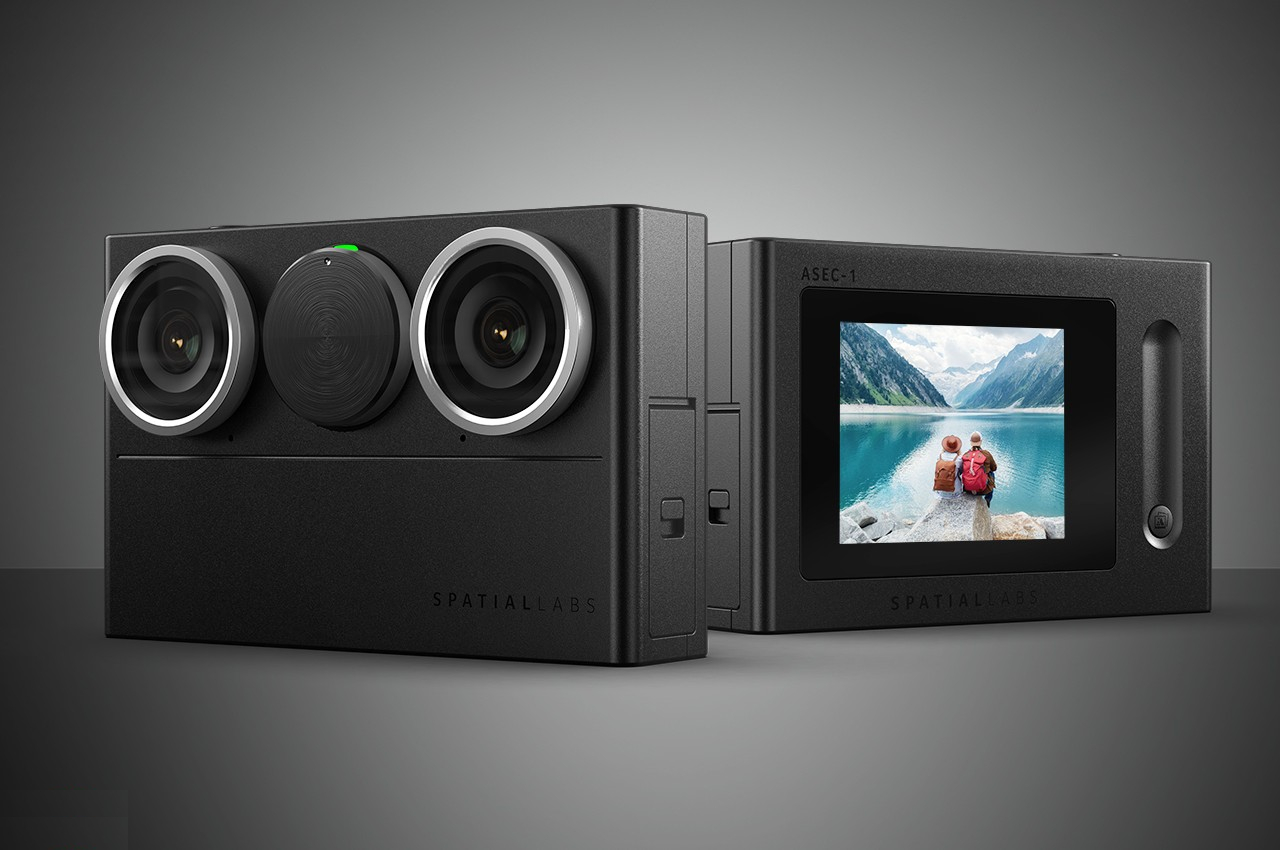
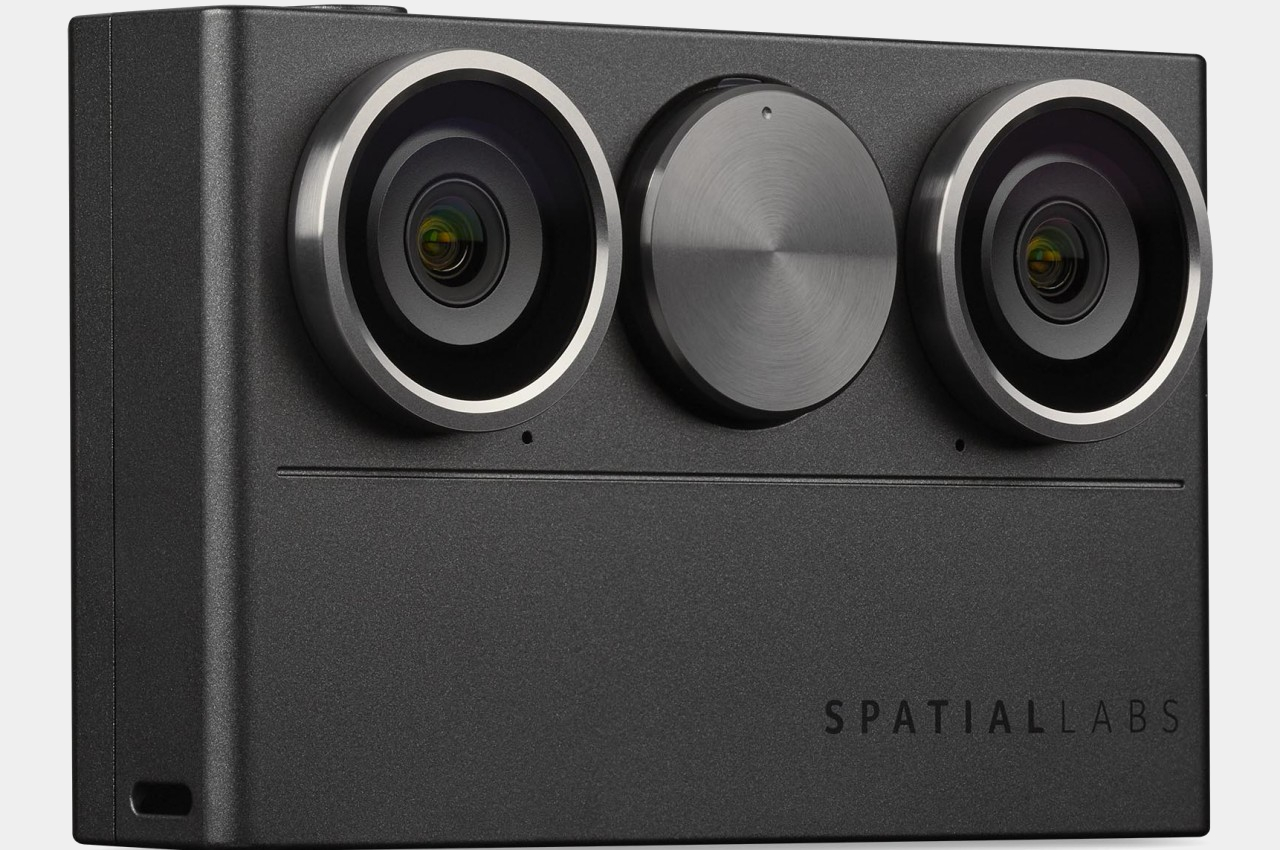
The Opal Tadpole is an iPod Shuffle-shaped Webcam with a 4K Sensor and AI Features

Webcams are to laptops what stereo systems were to cars in the past. No reputable automaker really gave a damn about how useful or functional their stereo players were, and they were almost always an afterthought to the car’s entire experience. However, with the dawn of the social age, these systems have now transformed into complex infotainment apparatuses that are sometimes the highlight of the car’s entire interior experience. I digress, but the point I’m trying to make is that up until very recently, webcams on laptops, for the lack of a more elegant term, have sucked turds. It’s barely been 2 years since companies (especially Apple) have been focusing more on just making better camera hardware for their laptops. Heck, Apple even introduced a Continuity Camera feature for their Macs that lets you use the iPhone’s main camera instead of the built-in webcam. While this movement towards building better laptop webcams is yet to gather critical mass, it’s spawned a pretty big product category in the form of external webcams, which all promise to be vastly better than the ones baked into your laptop’s hardware.

That’s where the Opal Tadpole Webcam enters the scene, promising to be a game changer. Now in its second iteration, the Tadpole promises great things with some impressive hardware specs combined with a little AI secret sauce.

Designer: Opal

Opal’s first product was launched at the height of the pandemic as the world transitioned to an online-only workplace. As people found themselves spending less time behind cubicles and more time behind crappy laptop webcams, Opal decided to debut the C1 – a promising webcam that fell short on delivering what it promised. To be honest, circumstances played a pretty big role in why the C1 wasn’t as great as it was hyped up to be. The raging pandemic was also causing a pretty ugly supply chain crisis and global chip shortage. Transportation was on a grinding halt, preventing Opal’s fledgling team from actually going to China to oversee production. However, the pandemic is now hopefully completely behind us and Opal’s grown in the time since then – not only in personally but also in how the company executes product development. In that regard, the Tadpole isn’t really the C1’s successor, given that it’s vastly better, packs new features, and is also touts a hefty $175 price tag.

First off, the Tadpole boasts a 4K Sony sensor. That’s right, 4K. In a world where most laptop webcams are stuck in the 720p dark ages, this is a significant leap forward. The video footage does get downsampled to 1080p to keep things light (a 4K stream on a Zoom call isn’t something most internet connections can handle), but Tadpole’s new machine-learning image signal processor promises “DSLR-rivaling quality.” In addition to the resolution, the Tadpole features a moderately wide 90-degree field of view. This wide angle is perfect for capturing more than just your face, helpful for those dynamic presentations, or when you want to show off more of your surroundings. Things, however, don’t stop there. The Tadpole comes equipped with an f/1.8 lens, which means it’s capable of performing admirably in low-light conditions. No more looking like you’re in a witness protection program during late-night video calls. Furthermore, the webcam includes a digital microphone array, designed to pick up your voice clearly while minimizing background noise.

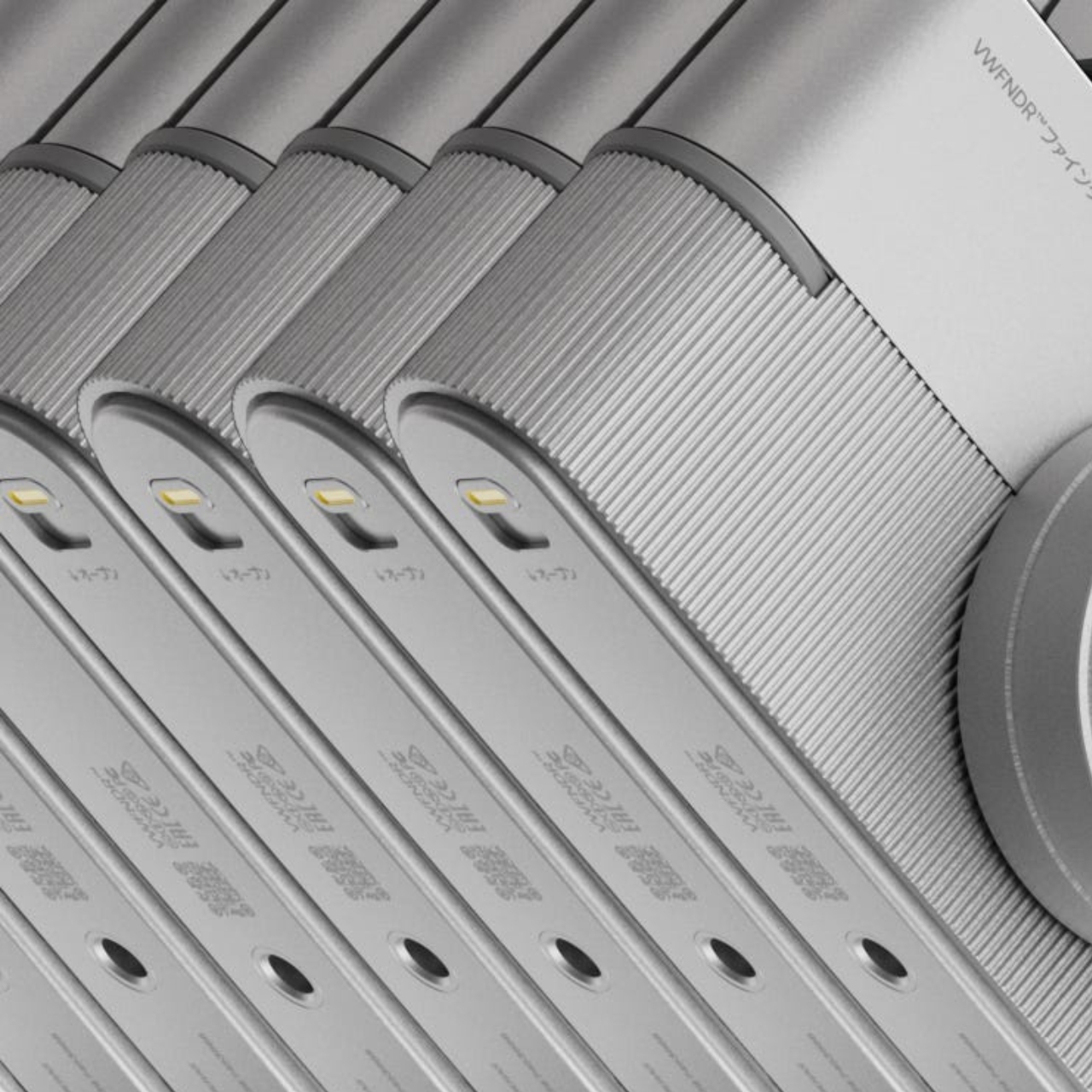
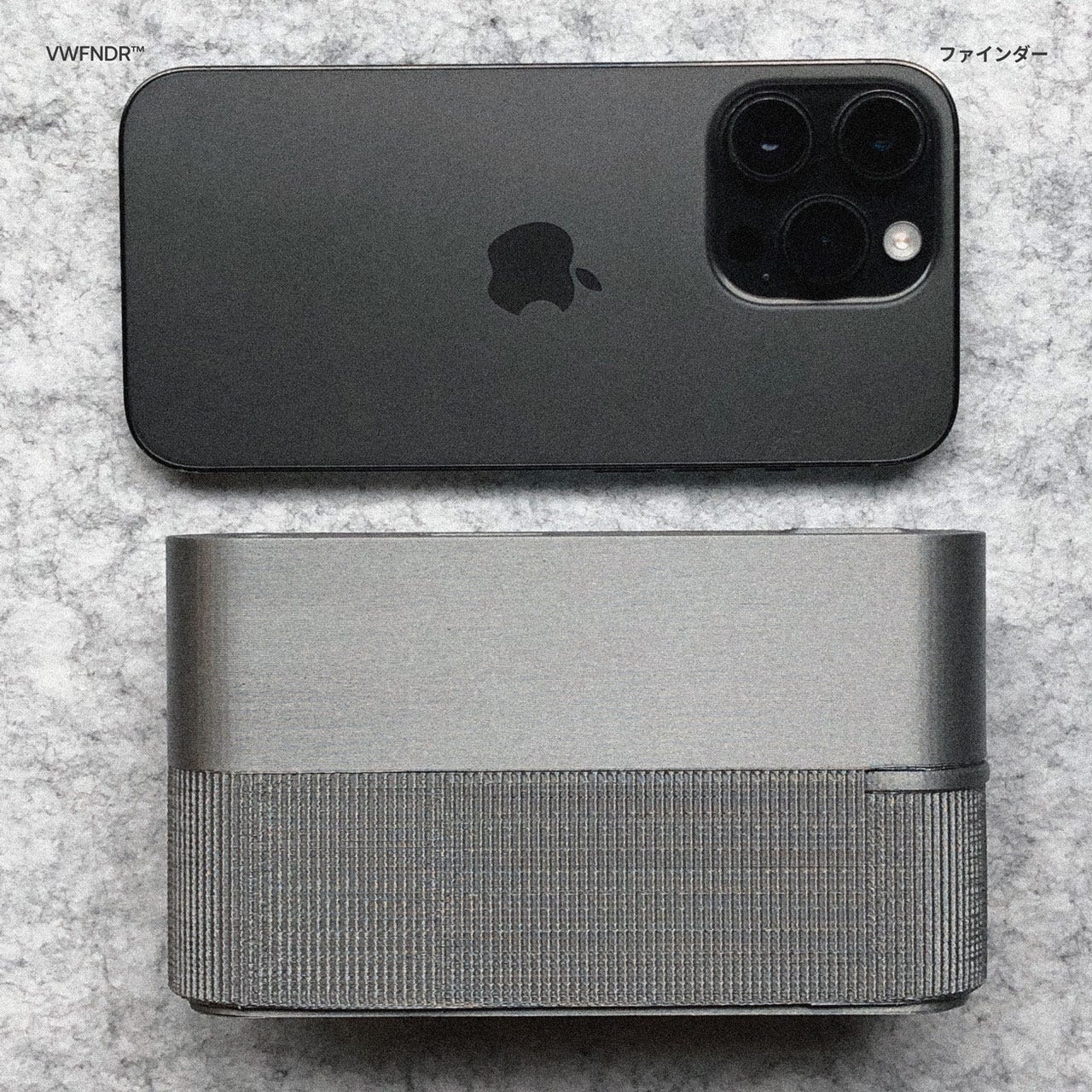
Physically, the Tadpole is compact and elegantly designed. It’s practically the shape and size of a 3rd-Gen iPod Shuffle, with a minimalist design to match. It easily clips onto your laptop or monitor, adding minimal bulk, but doing away with the standard tripod mount that would allow you to attach the Tadpole on places other than a monitor. USB-C connectivity means it’s versatile and can be used with a range of devices, not just your laptop, and the Tadpole’s USB-C port even comes with a touch-sensitive Mute button, allowing you to easily mute yourself on calls without navigating any video-chat interfaces.

What’s more intriguing about the Tadpole is its compatibility. It’s not just a plug-and-play device; it takes advantage of its own software to enhance the user experience. This includes features like auto-framing and AI enhancements, ensuring that you’re always in focus and look your best, even if you just rolled out of bed.

All those features don’t come cheap at all. With an eye-watering $175 price tag, the Tadpole is sits at the higher end of the webcam market, which might be a deterrent for some. But for those who are tired of pixelated video calls and want a top-tier webcam experience, the Tadpole might just be worth the splurge. While it may not be for everyone’s wallet, it’s certainly a step in the right direction for anyone seeking clarity, quality, and a bit of style in their video calls. And who knows, maybe it’ll make those early morning Zoom meetings a tad more bearable. Or at least, you’ll look good while you’re half-asleep, sipping your coffee, pretending to pay attention.

The post The Opal Tadpole is an iPod Shuffle-shaped Webcam with a 4K Sensor and AI Features first appeared on Yanko Design.
Canon’s RF 200–800mm Lens Combines Long Range With Excellent Stabilization

Last week, Canon announced a new telephoto-to-super-telephoto lens with the ability to zoom in 4x. This should let anyone take extremely accurate shots from a long distance with little noticeable blur, and it may open new doors for wildlife photographers (who, likely, would prefer to avoid disturbing any natural habitats) working without a tripod. It sounds like hand-holding a Canon EOS R-series full-frame camera equipped with one of these lenses provides comparable image clarity, which is important when you consider tripods are a drag on mobility. The lens making such photography wizardry possible is called the Canon RF200-800mm F6.3-9 IS USM, and — despite its $1,899 MSRP — you’re absolutely going to want one if you plan on capturing fast-moving distant objects, like wildlife or even fast-moving athletes or vehicles.

Designer: Canon

By default, this 200mm lens has a minimum focus distance of 2.62 ft or 0.8 meters. But that can be extended out to 800mm for much clearer long-distance shots with a minimum distance of 10.83 ft or 3.3 meters. Of course, that’s if you don’t use an extender. Sticking an Extender RF2x on top of a Canon RF200-800mm doubles its focal length even further to 1600mm, potentially making it one of the best super-telephoto lenses around. That’s partially thanks to Canon’s Optical Image Stabilization (OIS), which Canon claims provides “enhanced shake reduction for up to 5.5 stops”. When paired with Coordinated IS on the Canon EOS R-Series cameras, these benefits combine for “reliable handheld performance and clearer detail in low-light situations, without having to increase the ISO or decrease the shutter speed.”

Canon’s RF200-800mm F6.3-9 IS USM lens features a number of weather-proofing features which blend right into its stylish black-and-white matte design. For instance, its white paint is actually meant to work as a countermeasure against excessive heat when exposed to direct sunlight for long periods of time, as would be the case when capturing sports footage or when shooting wildlife in an area with a hot climate. The lens mount, focus/control ring, lens function buttons, and other interface pieces are rated for dust-proofing as well. Carrying it around should be a breeze; this lens only weighs 0.55 lbs, making it lightweight compared to other telephoto lenses — which usually weigh somewhere in the 1-3 lb range.

So far, reviews of the RF200-800mm F6.3-9 IS USM skew overwhelmingly positive. TechRadar praised the lens for its “unbeatable reach” and “sharp detail especially at its wider end”. Even then, it sounds like the lens’ aperture could use more headroom for lower-light scenes. But that isn’t a huge deal on its own. If you buy one of these, you’re likely going to pair it with one of Canon’s EOS cameras — packed-in with in-body stabilization — and if that’s the case, this lens should be able to capture incredibly detailed photos (even in low-light situations) from afar. According to Canon, the RF200-800mm is shipping out to customers in the United States on December 14.

The post Canon’s RF 200–800mm Lens Combines Long Range With Excellent Stabilization first appeared on Yanko Design.
Apple’s ENTIRE October MacBook Event was Shot On the iPhone 15 Pro Max

The company may have announced new MacBooks and iMacs at its latest event yesterday… but what it secretly was doing all along was creating an advertisement for their smartphones. In a rare video uploaded to Apple’s YouTube channel, the tech giant revealed that their entire October 30th Keynote was filmed on the iPhone 15 Pro. The video lifts the curtain on how Apple pulled it off, while being perhaps the greatest act of ‘putting their money where their mouth is’ in terms of proving the iPhone’s top-notch video capabilities.

While it’s easy to think that the true star of the event was Apple’s new M3 chip, in reality it was the USB-C port on its newest iPhone 15 Pro. Unveiled just fifty days ago, the new iPhone 15 Pro’s USB-C port is capable of 10Gb/s transfer speeds, allowing you to move ProRes videos in a snap, and even connect external storage, 4K displays, microphones, among other accessories to augment the iPhone 15 Pro’s overall output.

The entire event was quite different from any of Apple’s events, and that seems to be by design. For starters, it premiered in the evening (or at night depending on which coast you live on), marking a massive departure from all of Apple’s morning events. We heard Tim Cook say the words “Good Evening” for the first time, but just before, we got a tour of the Apple Park at night. The camera flew in from up above, battling not just the tricky conditions of flight and navigation, but also incredibly low-light videography.  The Apple Park was practically drenched in the Halloween spirit, with bats flying, ominous music, smoky/foggy pathways, and dimly lit scenes…  all of which were captured brilliantly on the iPhone 15 Pro Max’s massive sensor.


The pre-Halloween keynote, the evening announcement, all seemed like a brilliant setup for the fact that Apple was planning on shooting the entire event on its latest phone. Sure, Apple could have had the event during the day and still boasted a “Shot On iPhone” disclaimer… but to shoot the entire thing in low-light – there’s no way Apple could resist that massive a flex. The event was also entirely edited on a Mac, as Apple’s way of showing how powerful the two devices are on their own as well as put together.

Anyone deeply familiar with Apple’s Shot On iPhone campaign knows that there’s more than just an iPhone involved. Those massive billboards with beautifully composed and edited photos look great, but a regular user holding an iPhone in their hand could never pull off the same visual mastery. The words ‘Shot On iPhone’ are often followed by ‘with a lot of expensive accessories’, but not many people know that. For Apple’s keynote, the company is at least a little more forthcoming by showing exactly what their rigs looked like… and no, it isn’t just a dude holding an iPhone in front of Tim Cook.

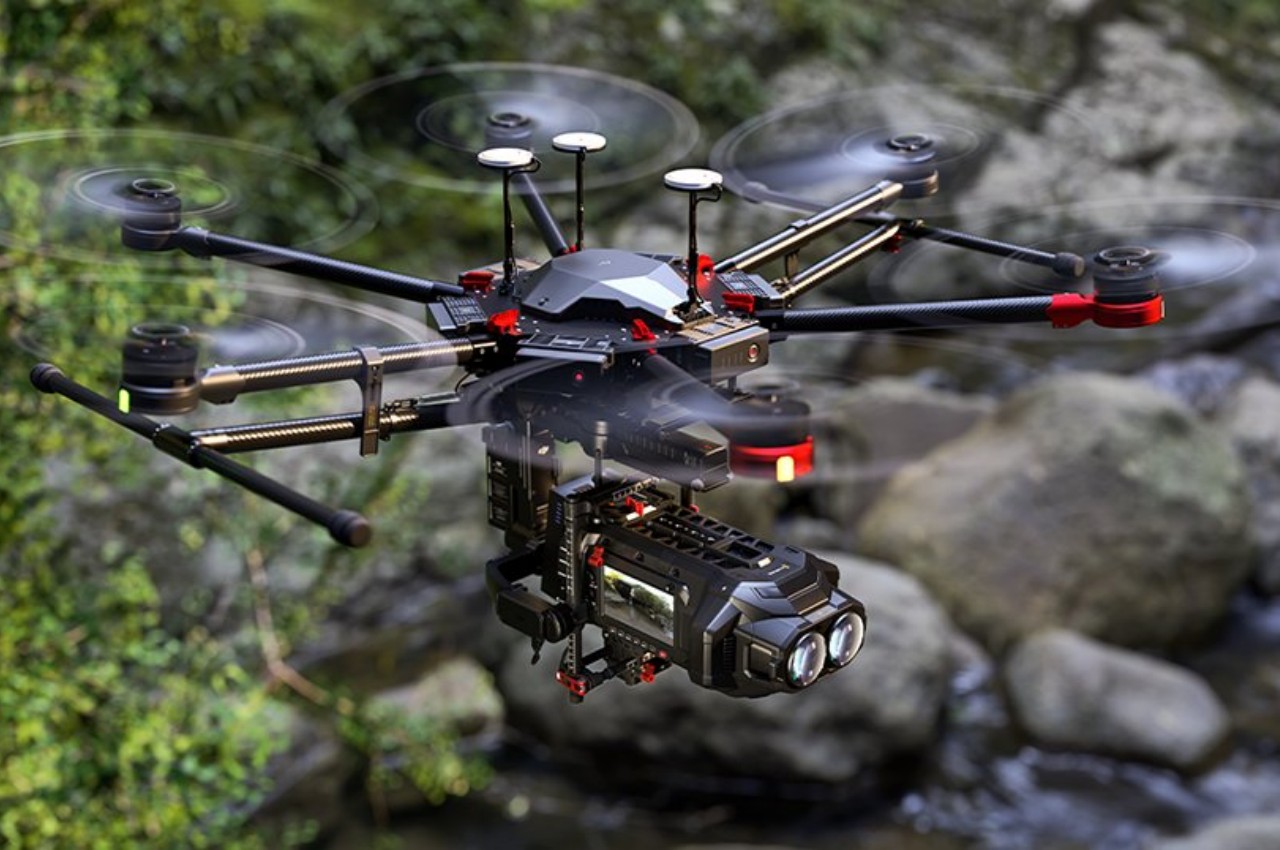
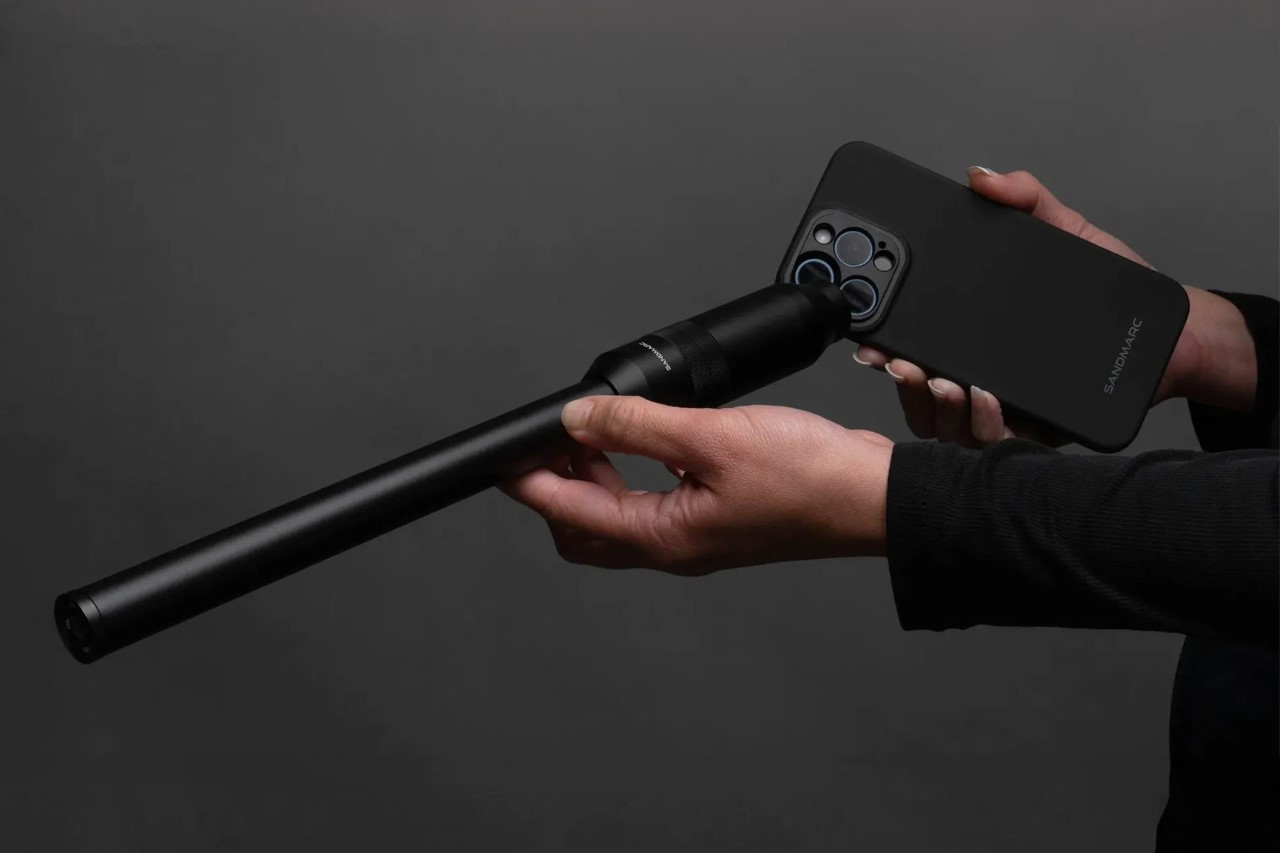
Verge reports that the entire Scary Fast event setup would have probably cost tens of thousands of dollars. The iPhone itself is mounted on a massive hand-carried rig that stabilizes the footage. For more consistent camera paths, the team used a dolly cam setup with trolleys and rails, and for the aerial shots, the Apple team literally built their own drones that held the iPhone 15 Pro Max. There are expensive microphones, monitors, battery units, lights, and a tonne of other equipment used in the picture. To be fair, Apple would still use all that extraneous equipment with a high-end camera… so just the fact that the iPhone could replace that camera does count for quite a lot.

The entire video dump was easily transferred out of the phone using the USB-C connector. Company 3, an American post-production company that handled the filming of the event, mentioned how buttery smooth the entire process was to shoot 4K ProRes with all those accessories and have all that raw footage simultaneously transferred onto an external hard disk without any hiccups. The A17 Bionic’s heavy lifting would then be complemented by Apple’s M2 chips, which were used by the Macs that edited the footage.

A quick glimpse at the hand-made drone used by Apple’s team to shoot all the aerial shots of the Scary Fast keynote.

This isn’t the first time the iPhone was used to shoot professional content. In 2015, a film named Tangerine was highlighted at the Sundance Film Festival for being shot entirely on iPhones. Notably, Olivia Rodrigo shot one of her music videos on an iPhone too, and Indian film director Vishal Bharadwaj collaborated with Apple to shoot a short film, Fursat, entirely on an iPhone. This is the first time Apple’s taken that plunge, and it seems to have paid off rather well. If only they had migrated to USB-C sooner…


The post Apple’s ENTIRE October MacBook Event was Shot On the iPhone 15 Pro Max first appeared on Yanko Design.