For years, steel furniture carried a predictable identity, purely functional and unapologetically utilitarian. It belonged to offices, factories, and workshops, valued more for endurance than aesthetics. That perception has quietly transformed. Steel now commands attention in refined living spaces, boutique hotels, and architect-designed homes.
Designers are reshaping steel’s image, balancing raw structural honesty with elegance, craftsmanship, and emotion. Let’s understand why steel furniture is not just chosen for durability, but for character, for its ability to anchor a space while making a distinct visual and artistic statement.
1. The Elegance of Slim Steel Profiles
Steel’s defining advantage lies in its exceptional structural strength, allowing designers to create remarkably slender forms without compromising stability. Where wood often demands thickness for support, steel can bear substantial weight through refined, delicate frames. The result is furniture that appears lighter, sharper, and visually precise.
This slimness transforms how a space feels. Thin steel legs, narrow frames, and minimal lines reduce visual heaviness, making rooms appear more open and breathable. In compact urban interiors, especially, steel furniture introduces a sense of airiness and subtle sophistication. Pieces seem to float rather than occupy, delivering both physical durability and a sensitive, almost effortless aesthetic presence.
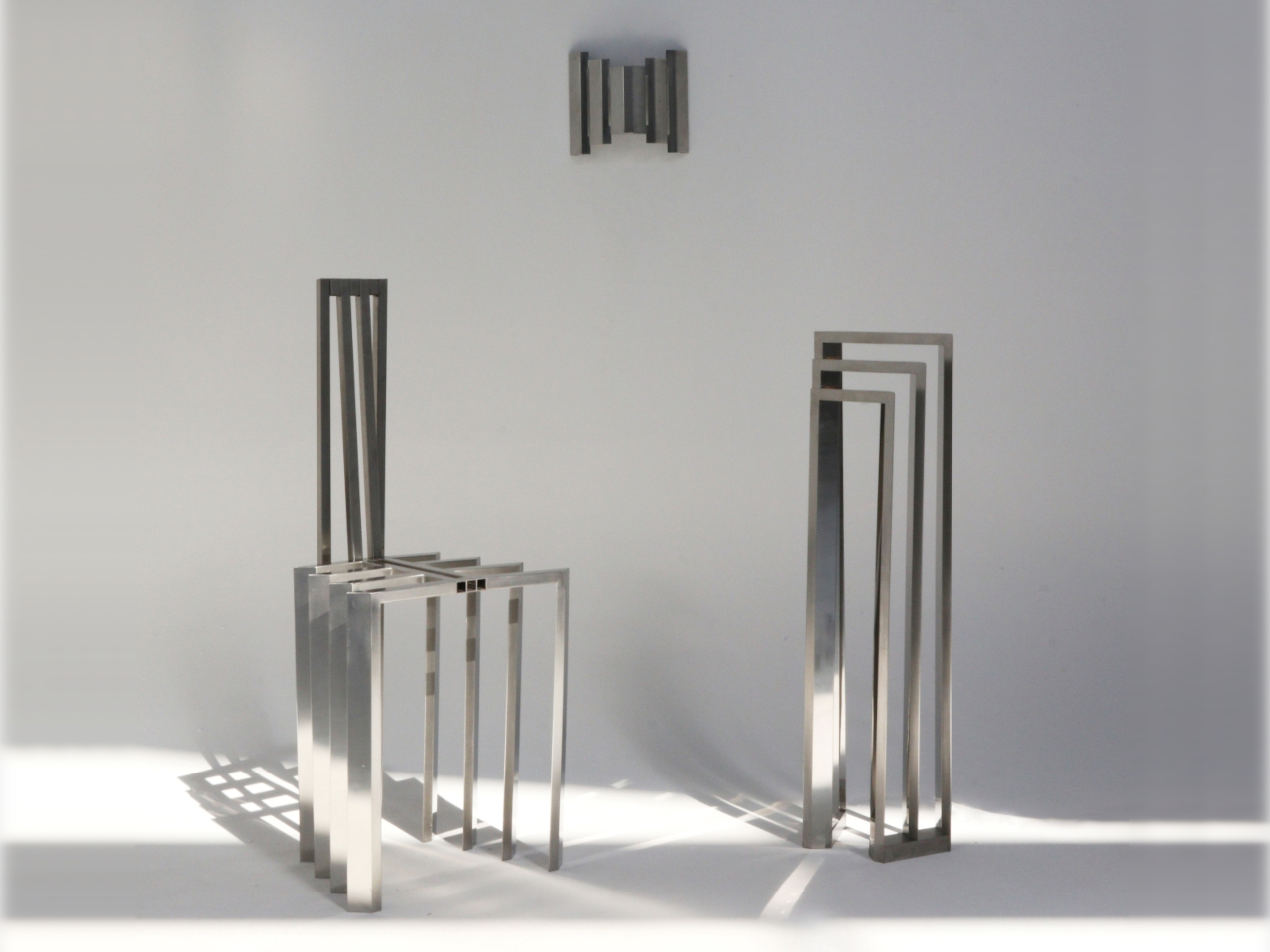
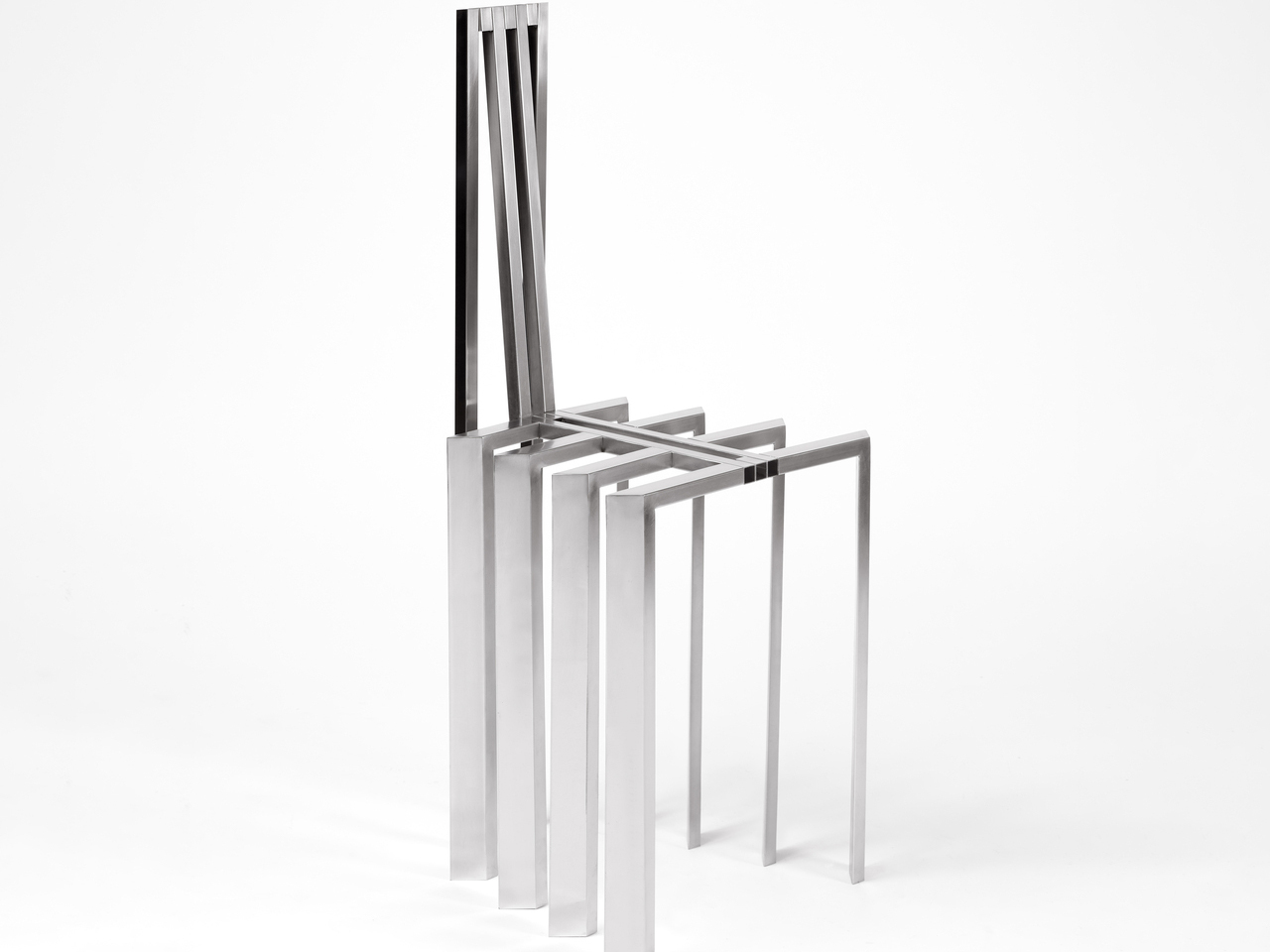
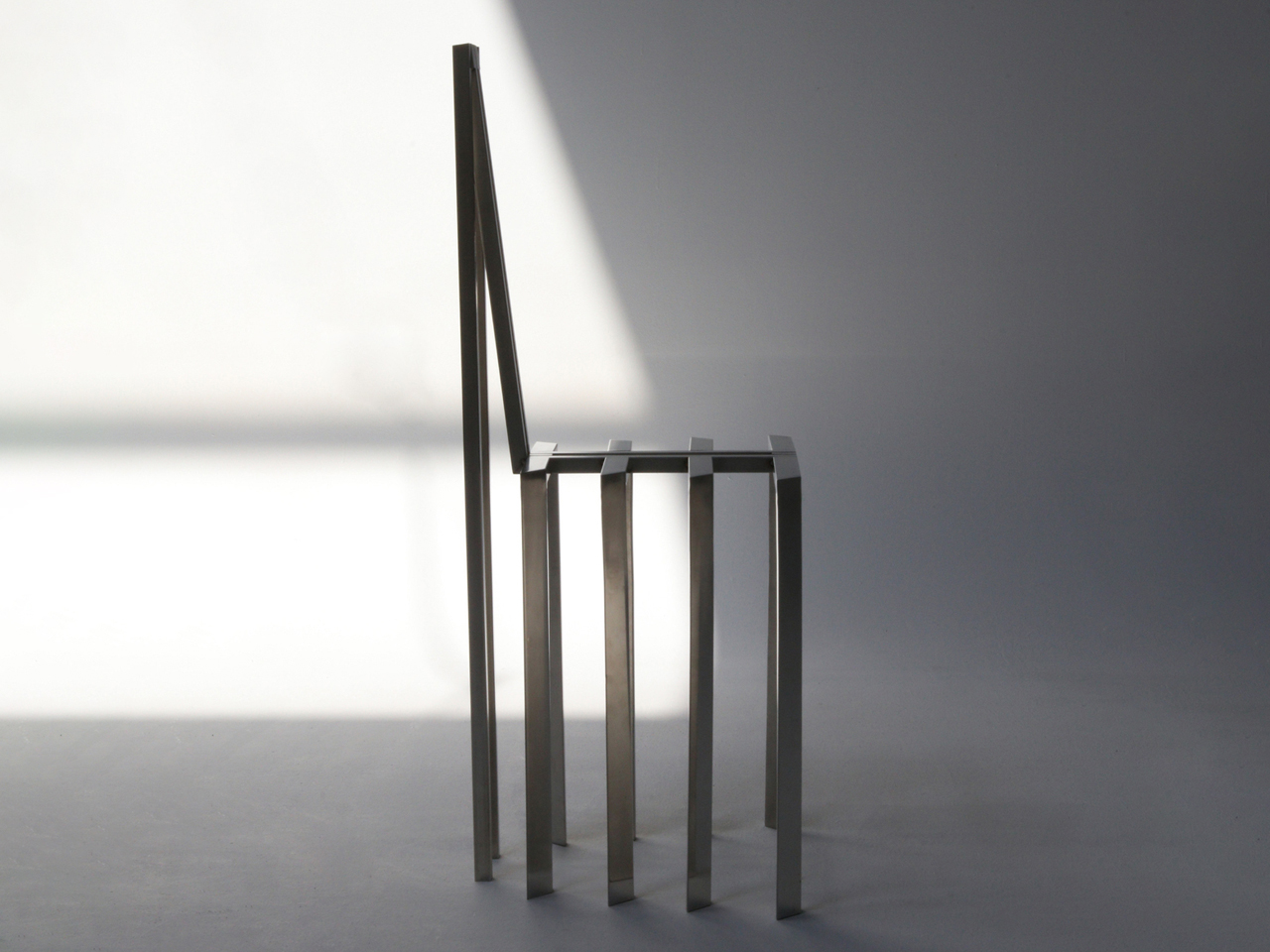
Jiyun Lee’s Foln series consists of three stainless steel pieces: the Linear Chair, a floor lamp and a wall lamp, each constructed from precisely folded metal lines. Defined by slender proportions and a vertical emphasis, the designs read as lightweight frameworks rather than solid volumes. The Linear Chair is composed of repeated uprights and crossbars that form both seat and backrest, creating a clear geometric rhythm while maintaining structural integrity. Its polished steel surface enhances the clarity of each line, allowing the form to stand out without added ornamentation.
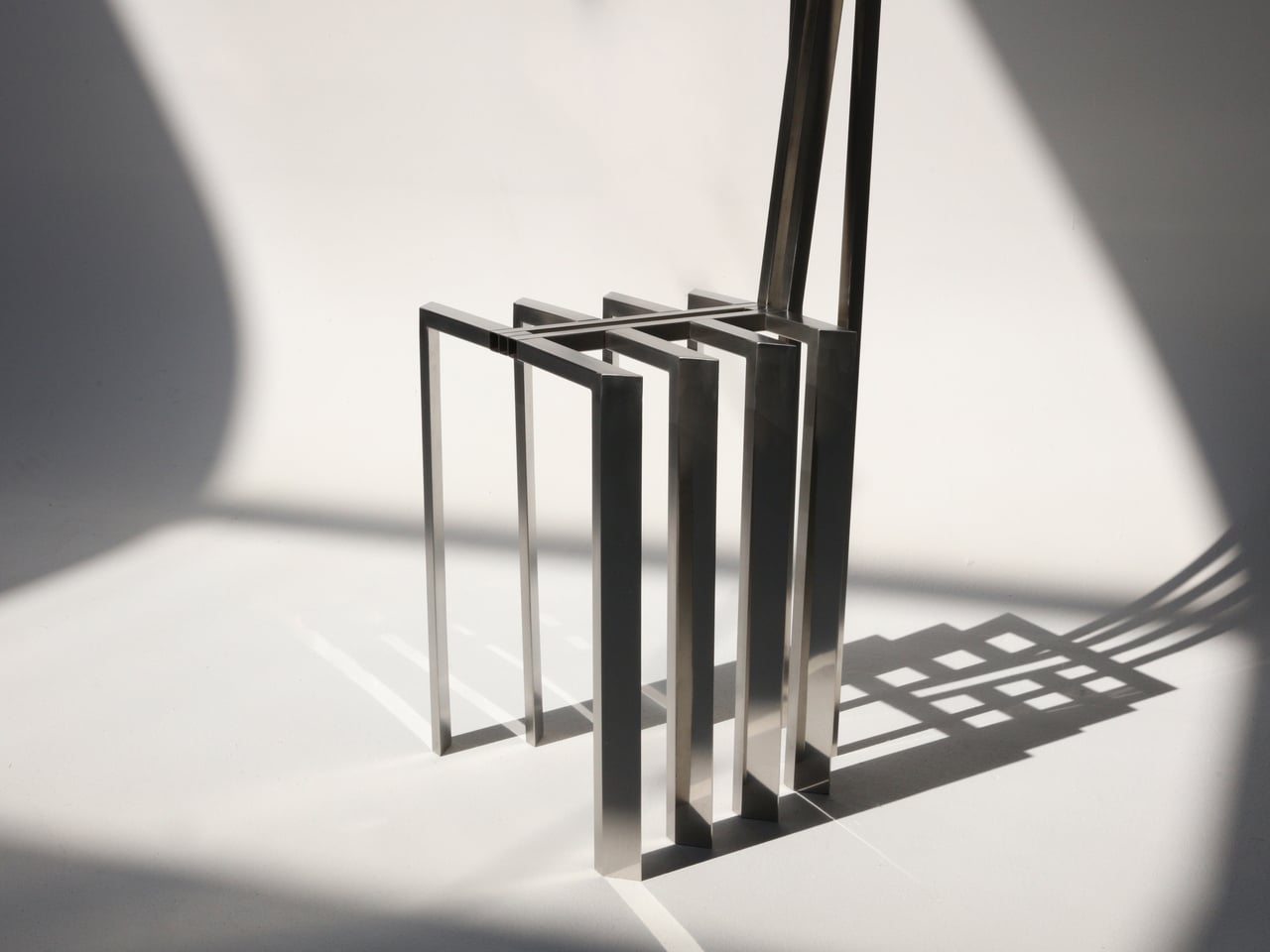
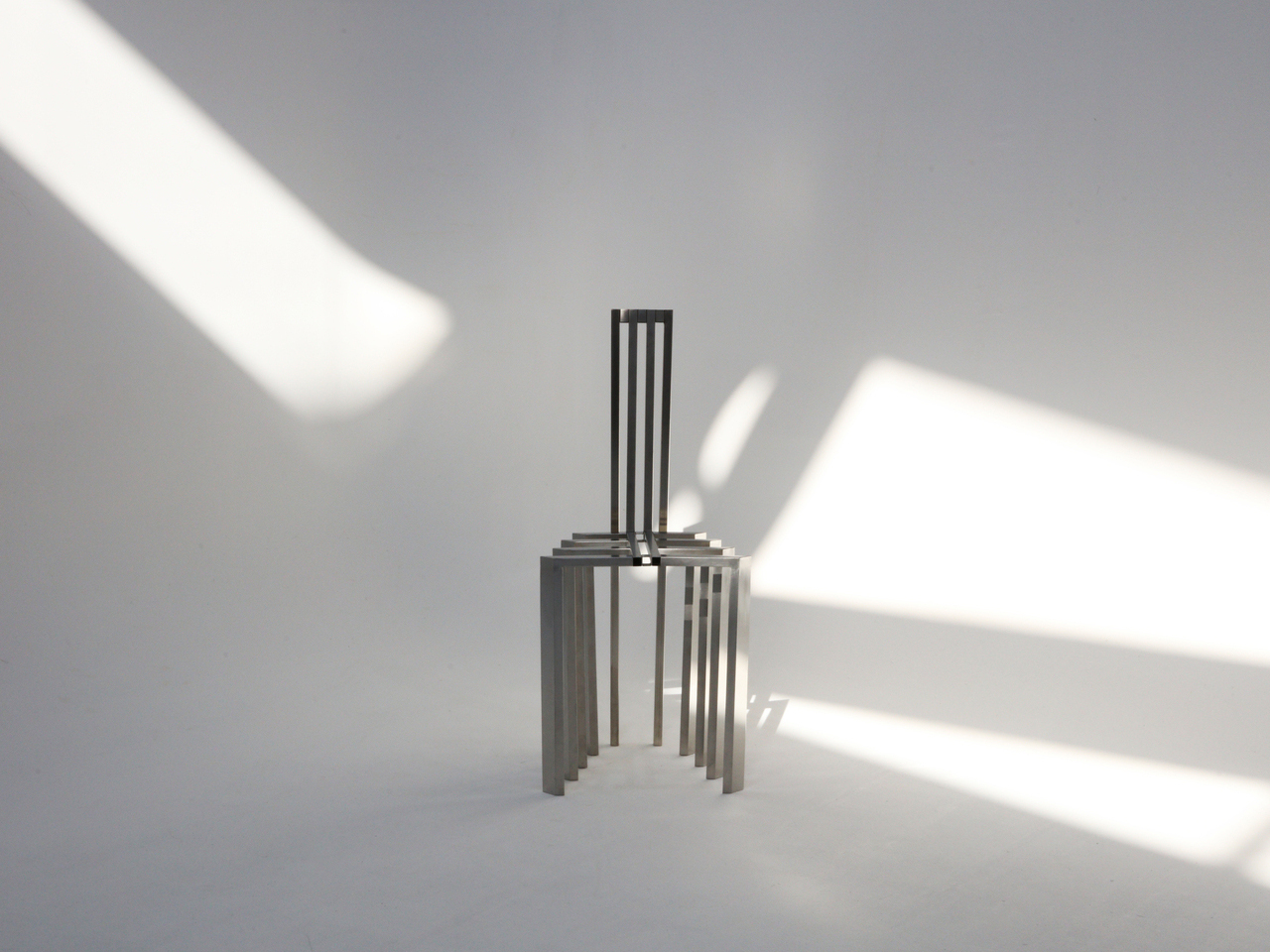
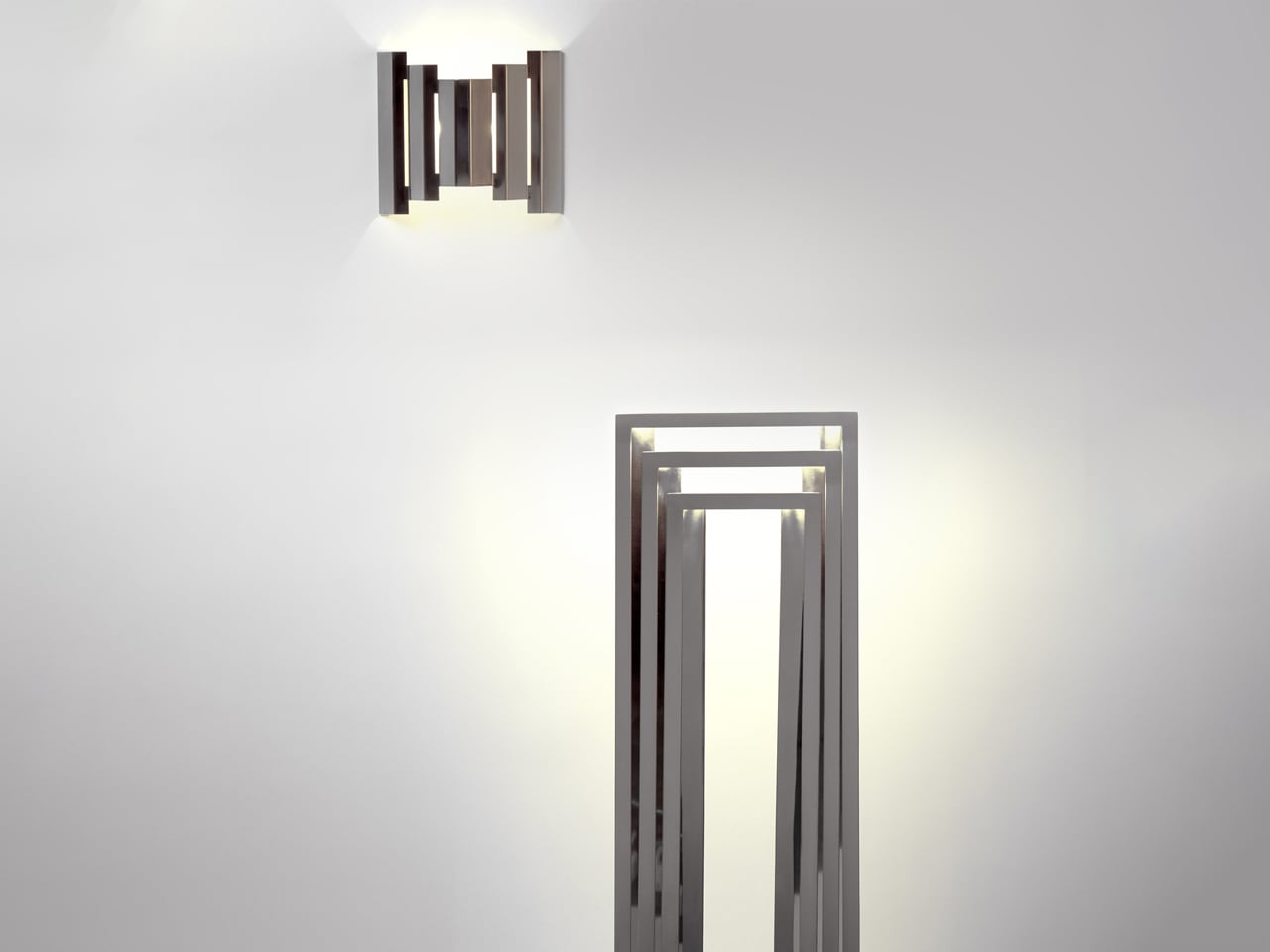
The floor and wall lamps translate the same linear language into lighting. Nested metal frames guide illumination so that it moves between bars before spilling onto adjacent surfaces. Instead of concealing the structure, the design highlights it, allowing light to interact directly with the steel geometry. Firm, minimal and sharply defined, each piece prioritises architectural presence and material clarity, positioning the collection closer to sculptural, collectible furniture than conventional everyday seating or task lighting.
2. Cool Steel Meets Warm Texture
Steel inevitably carries a sensory contradiction. Cool to the touch and visually crisp, it has long been associated with hardness and emotional distance. Its surface reflects light with precision, yet rarely conveys the immediate warmth of wood or fabric.
Contemporary design reframes this tension as an opportunity rather than a flaw. By pairing steel with tactile, human-centered materials like supple leather, textured wool, or natural timber, designers create a layered sensory experience. The contrast softens steel’s severity while amplifying its elegance. What emerges is a balanced dialogue between strength and comfort, where the metal’s cool composure enhances, rather than diminishes, the inviting warmth of the surrounding elements.
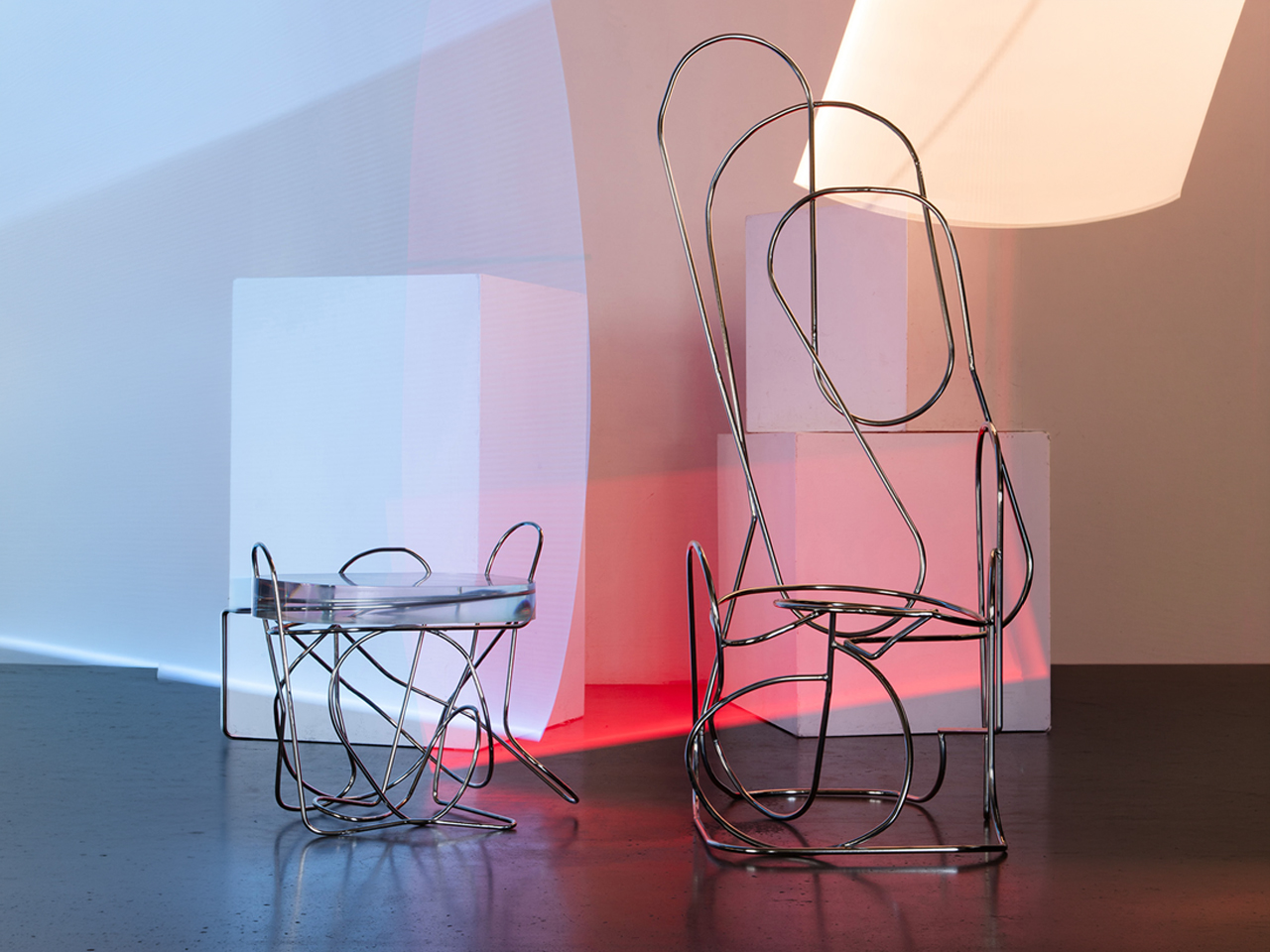
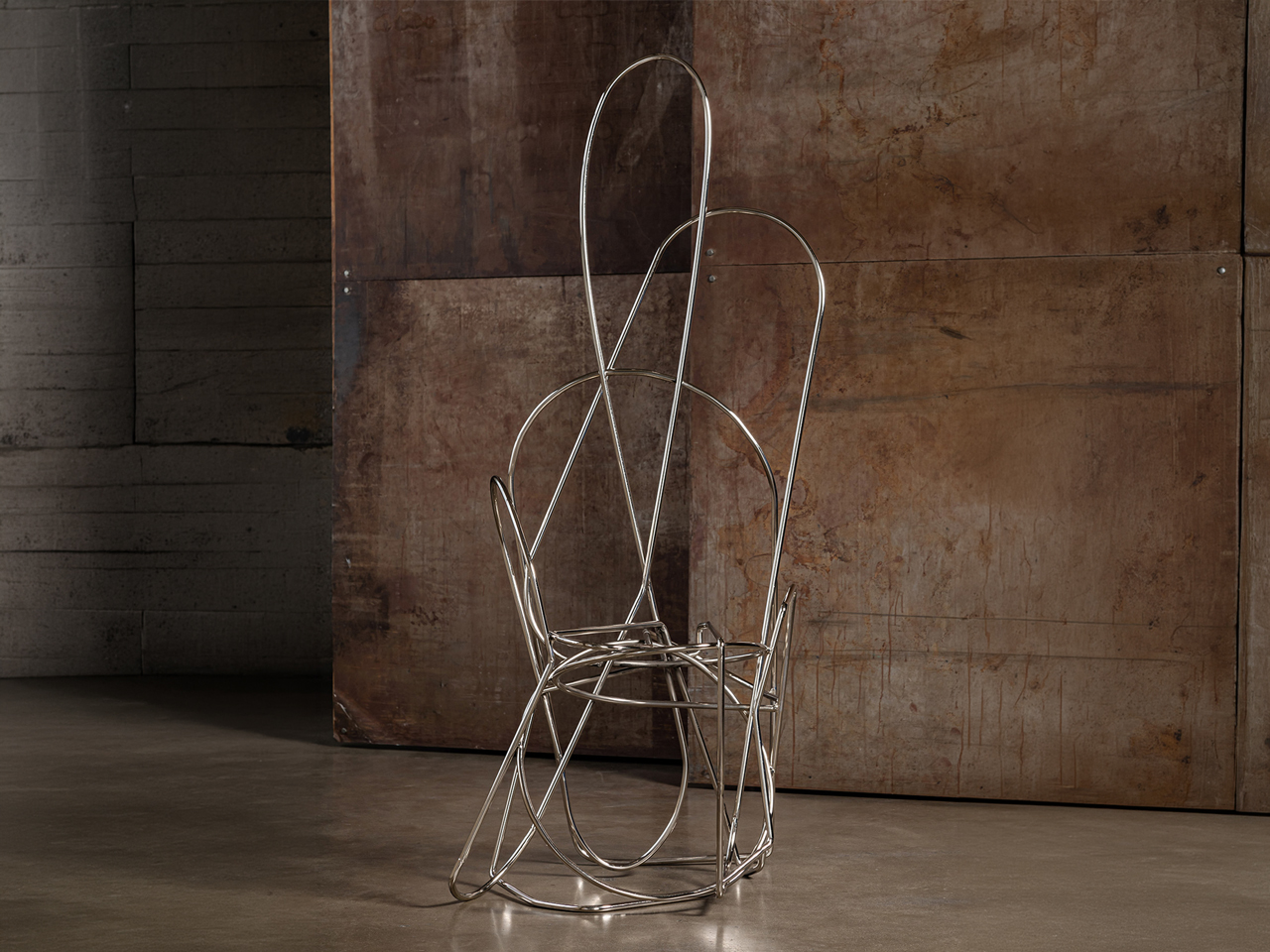
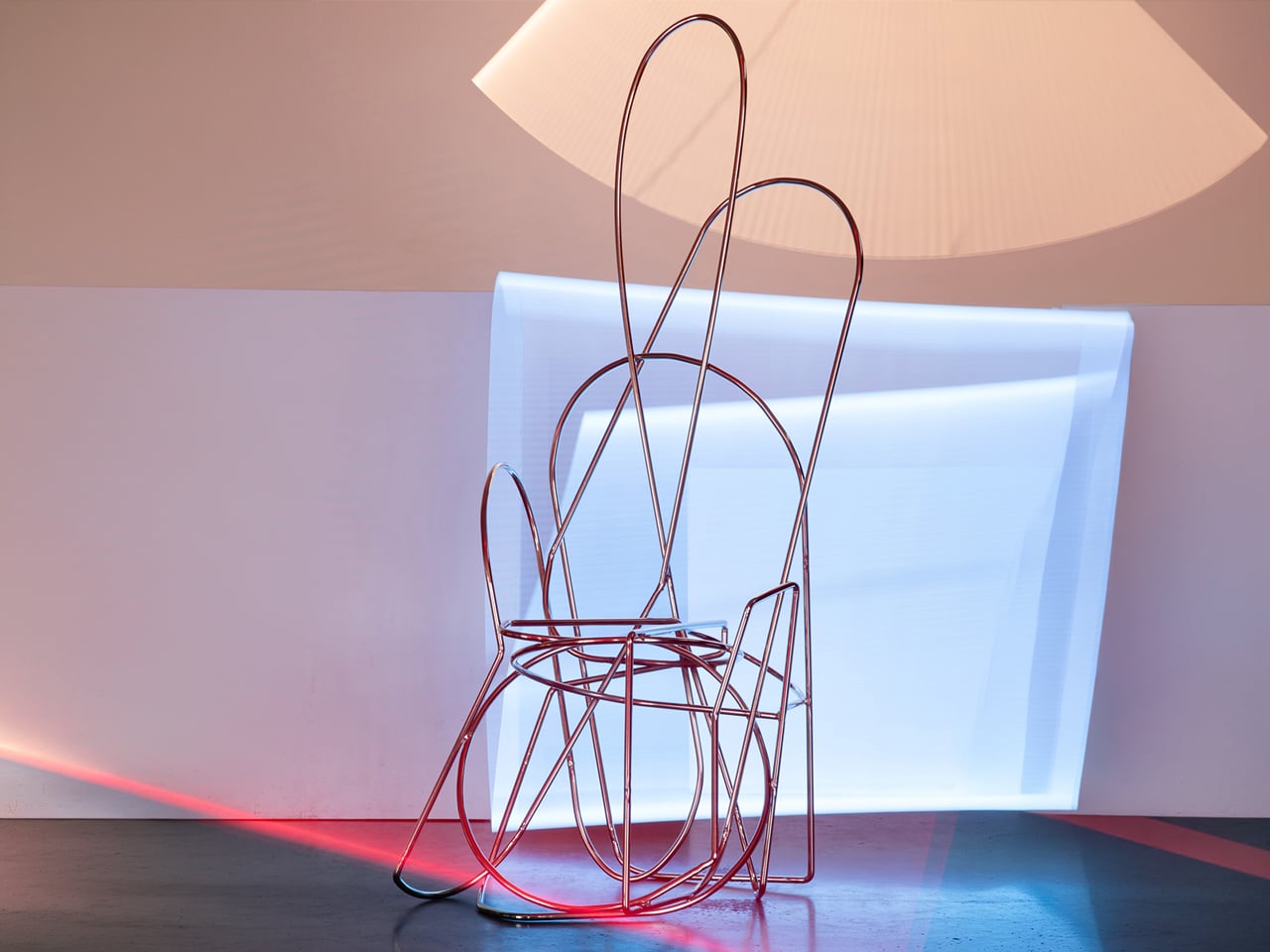
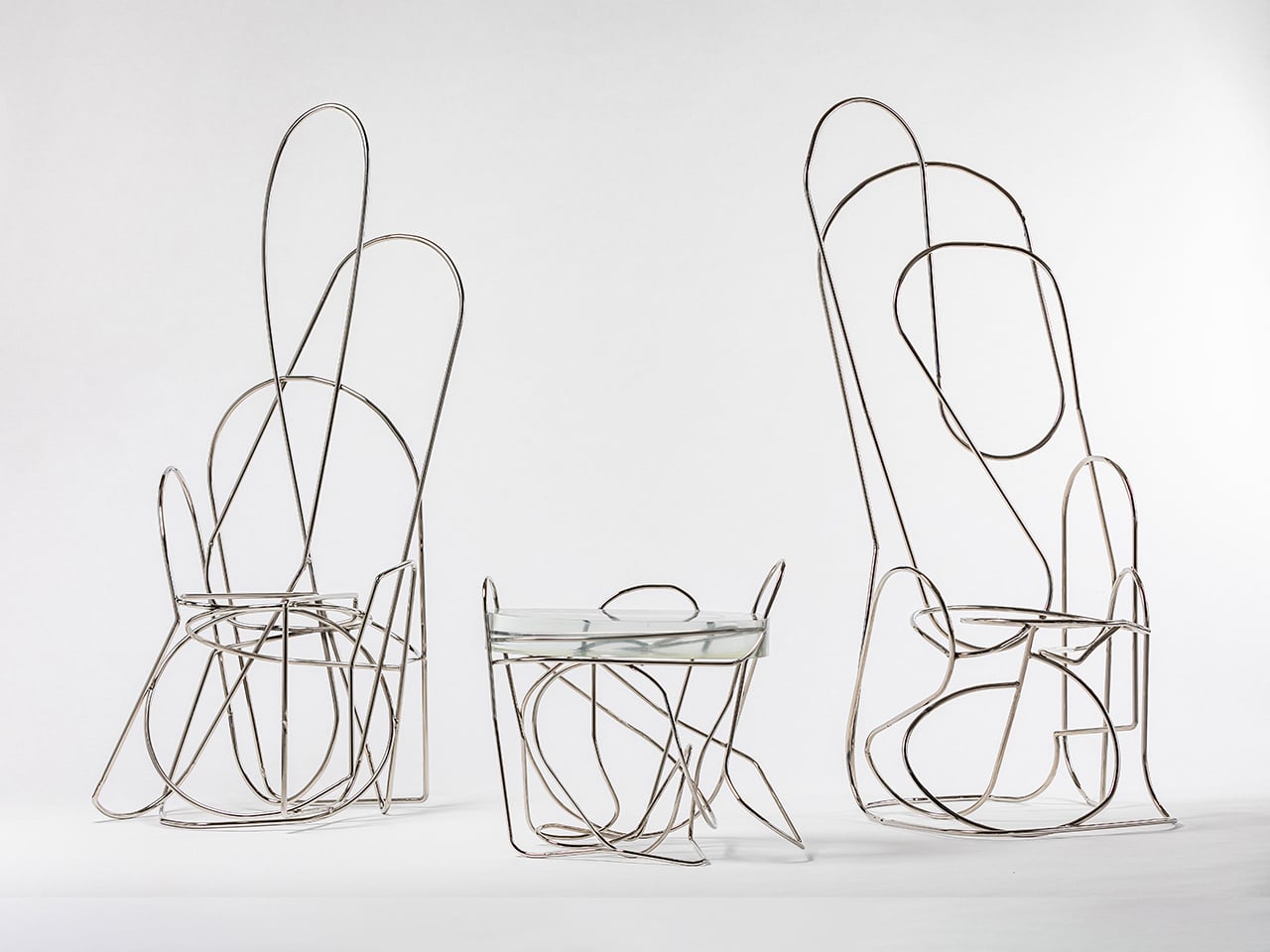
The Doodle collection by Another Human, led by Leah Ring, is a bold exploration of sculptural steel furniture. At its core are nickel-plated steel rods, meticulously hand-bent into looping, spontaneous forms that resemble freehand sketches translated into space. Each curve is shaped and welded with precision, resulting in fluid frameworks that feel dynamic and expressive rather than rigid or industrial. Subtle variations ensure that every piece remains one of a kind, reinforcing the handcrafted integrity of the metalwork.
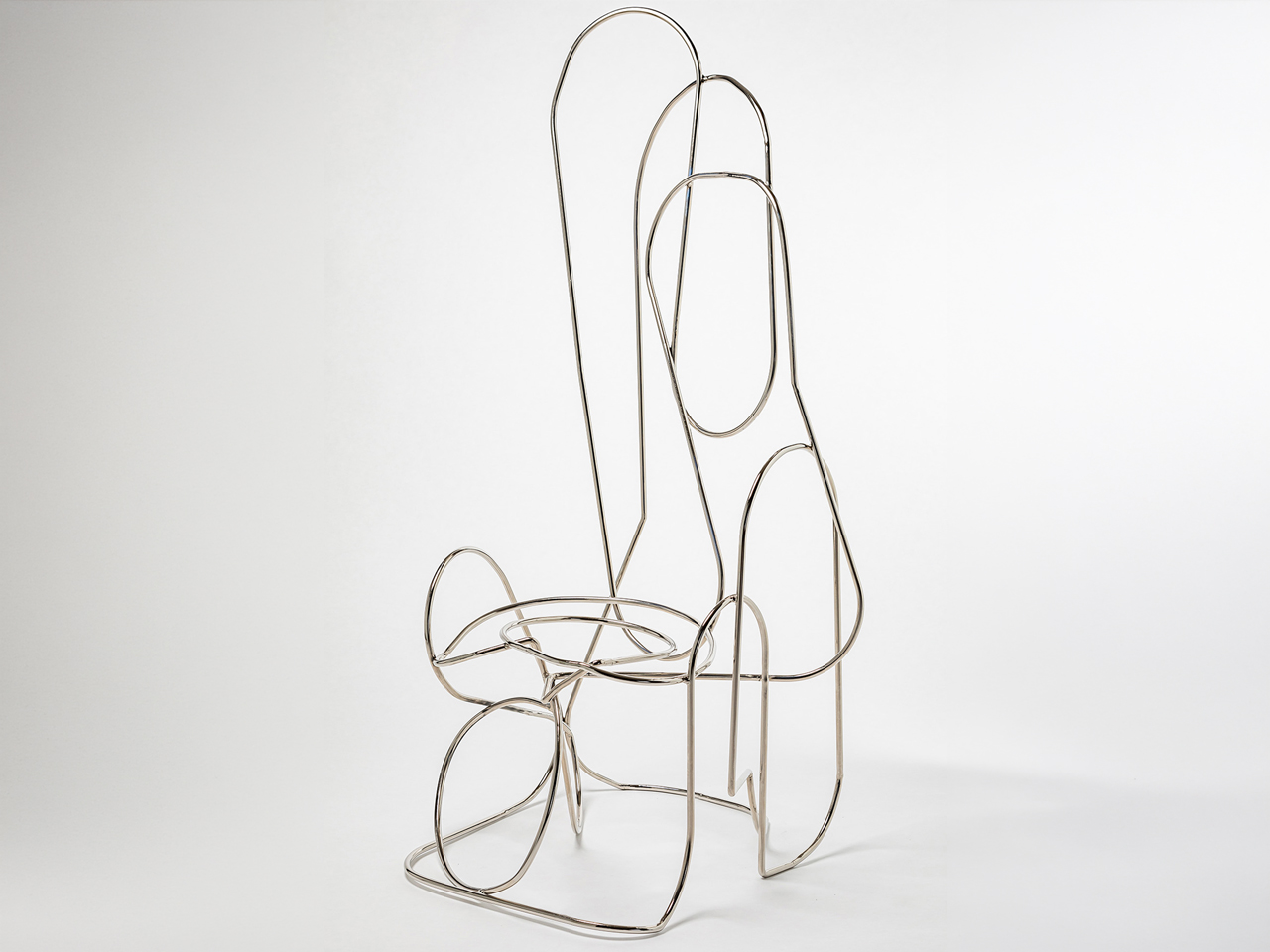
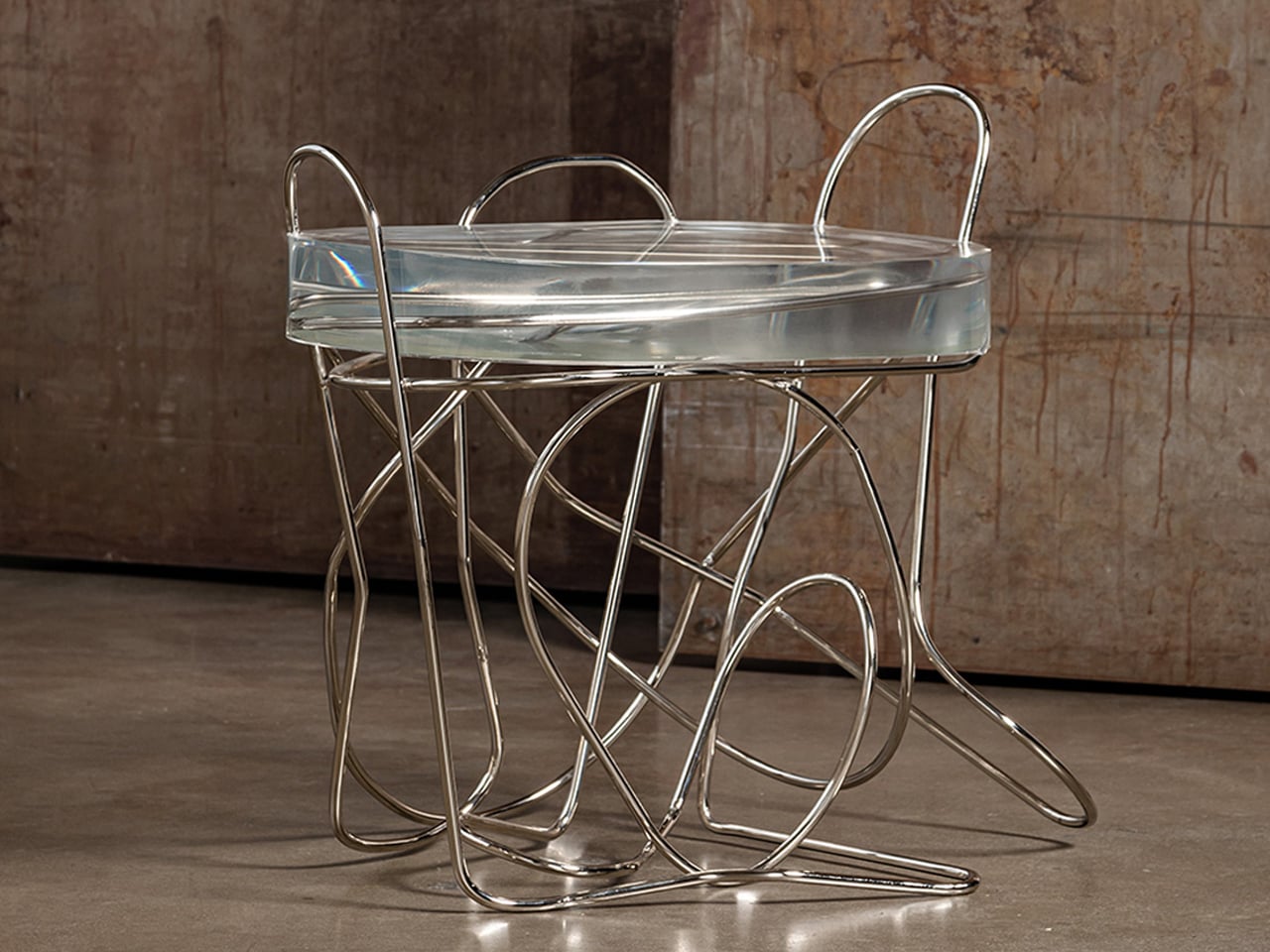
The table and chairs appear almost gravity-defying, as though drawn in mid-air, yet the welded steel armature provides structural stability and durability. The polished nickel surface reflects light across the sweeping lines, amplifying the sense of movement within the design. By leaving the steel exposed and unapologetically visible, the collection celebrates material honesty, transforming utilitarian furniture into striking, sculptural statements defined entirely by the strength and rhythm of metal.
3. Sustainability and Steel’s Immortal Lifecycle
Steel presents an intriguing environmental paradox. Its production demands significant energy, yet its long-term sustainability lies in unmatched circularity. Unlike many materials that degrade with reuse, steel can be recycled repeatedly without losing strength or quality, preserving both performance and value.
In an era dominated by fast furniture and disposable design, steel stands as a deliberate counterpoint. A steel chair is rarely a temporary purchase; it is an investment in longevity. Its durability reduces replacement cycles, waste, and resource consumption over time. Beyond physical resilience, steel embodies a mindset shift from short-term convenience to enduring responsibility and conscious ownership.
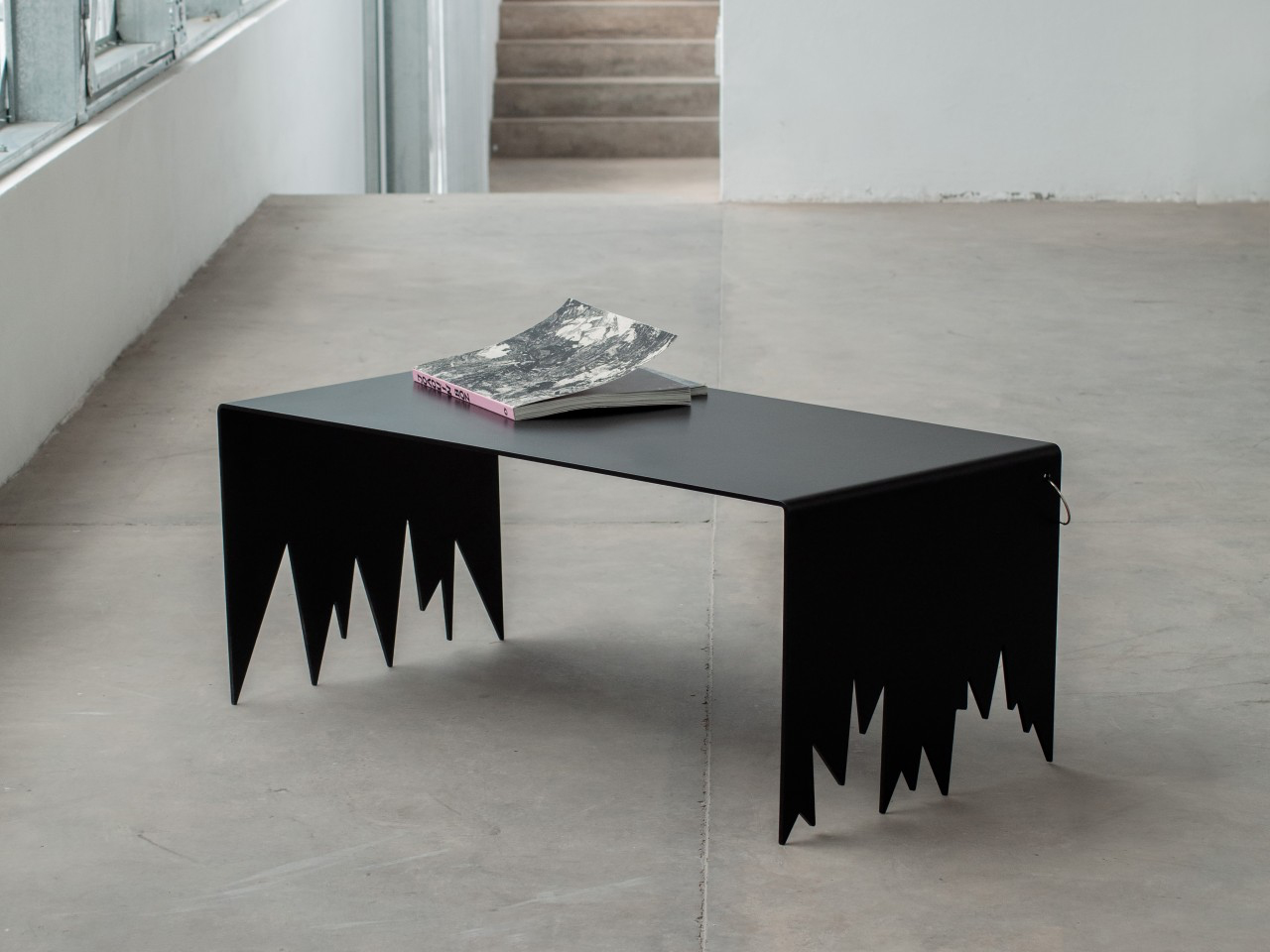
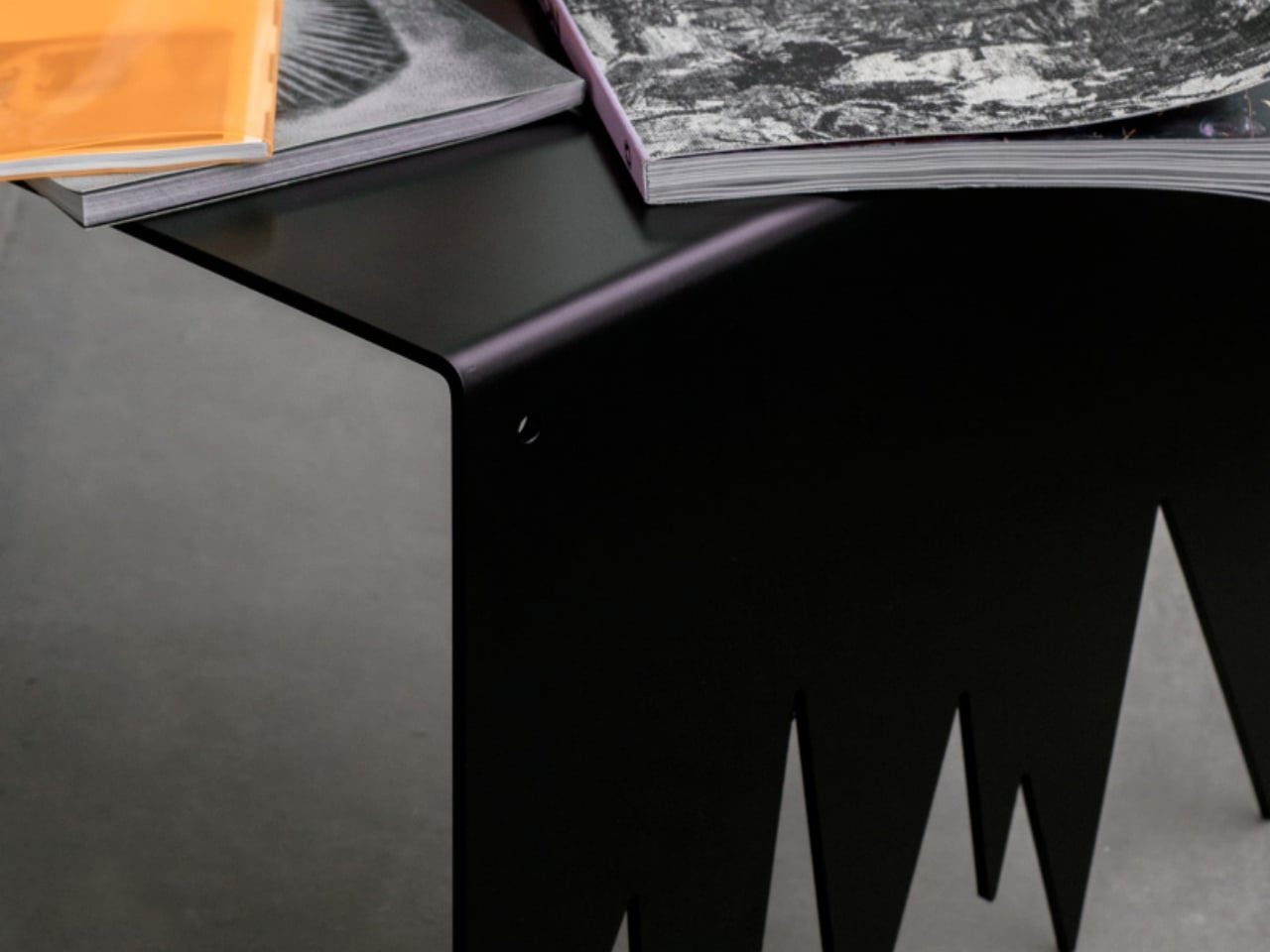
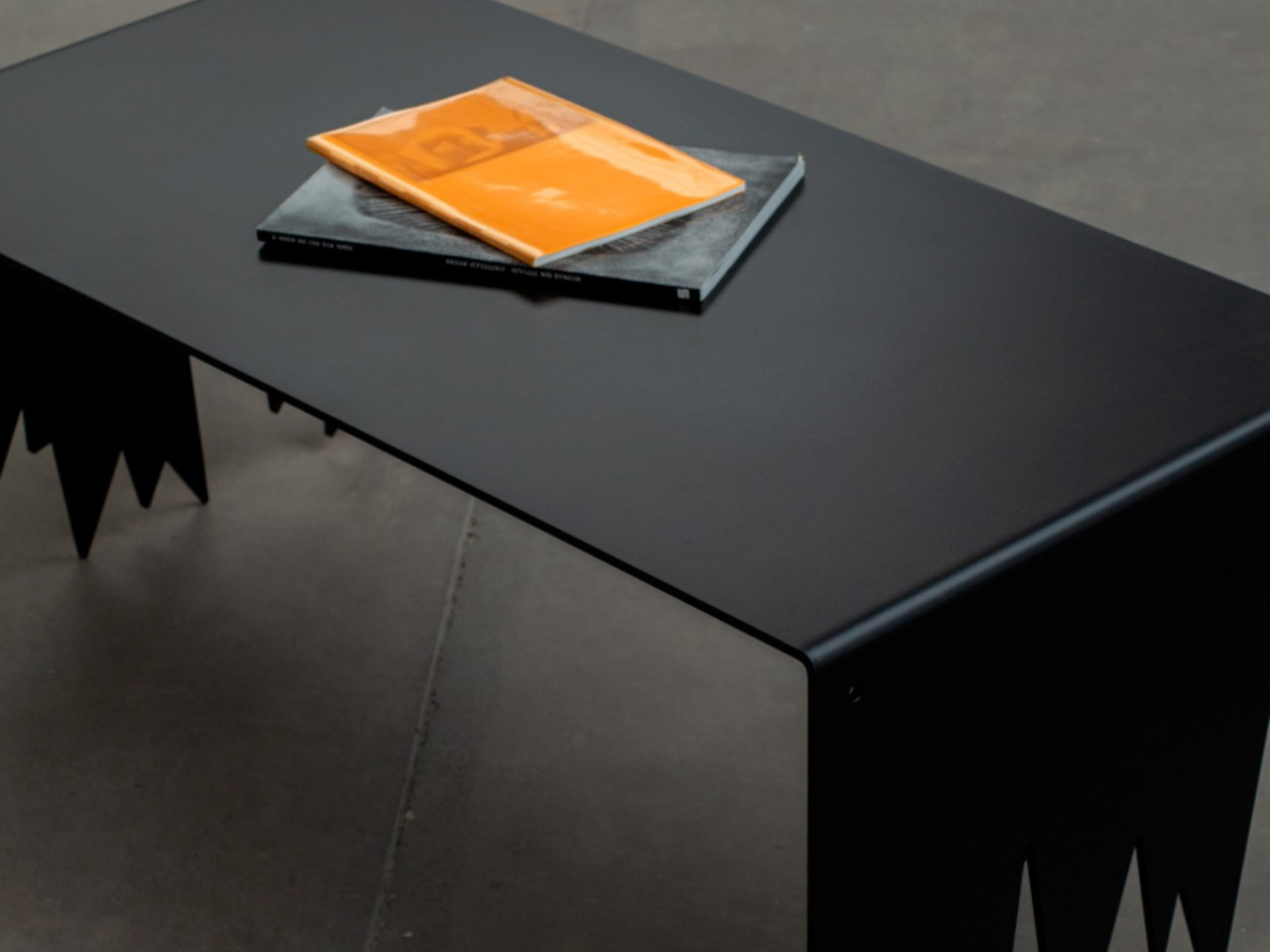
The Sharp coffee table stands as a commanding study in steel and geometry. Constructed entirely from industrial-grade steel and finished in deep black, the table is defined by its stark lines and uncompromising angles. Its surface appears clean and restrained, yet the structure beneath introduces a deliberate sense of tension. Narrow planes intersect with precision, forming a composition that feels architectural rather than decorative. The table does not rely on embellishment; instead, its impact comes from proportion, silhouette and the confident use of raw material.
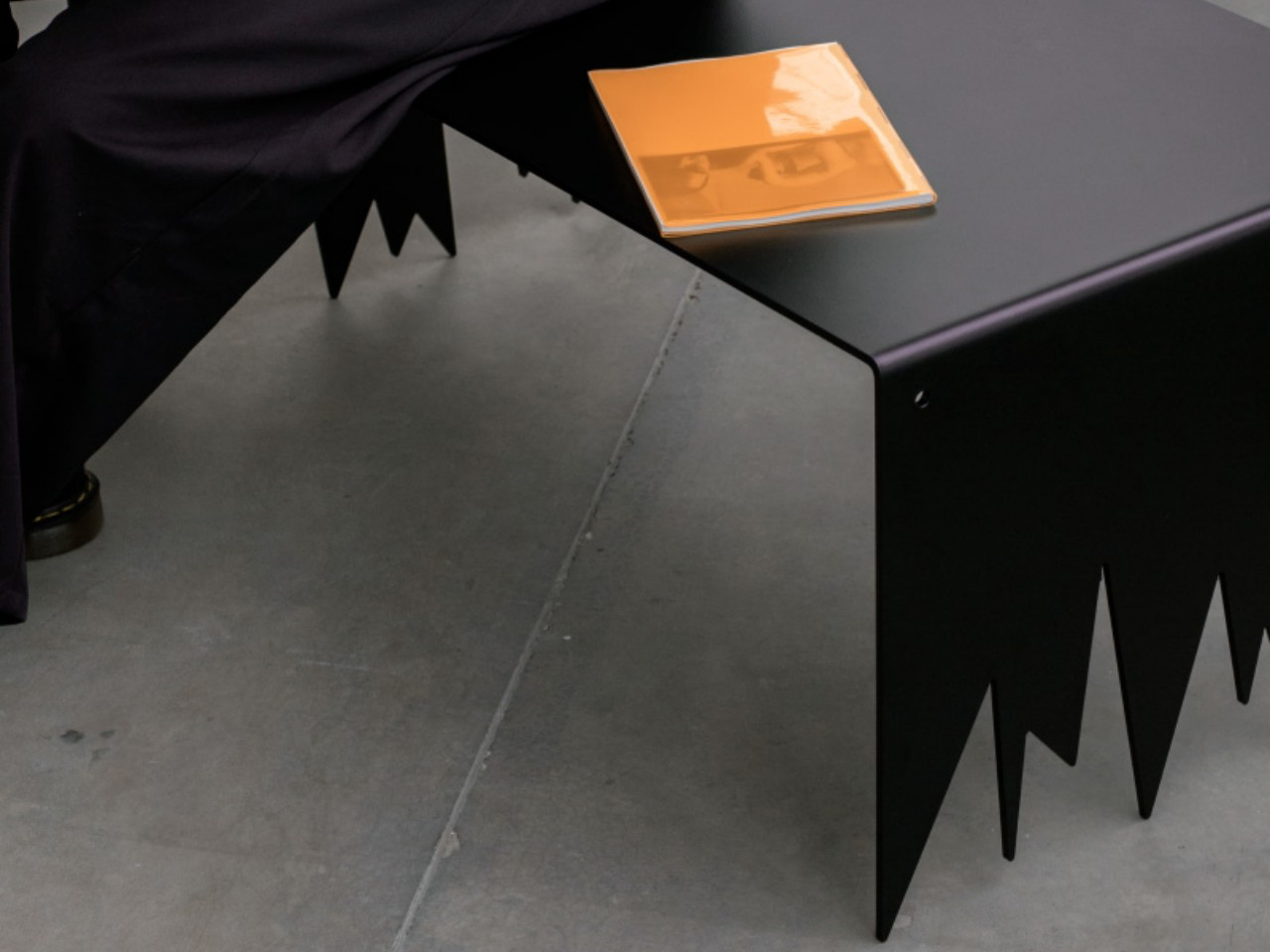
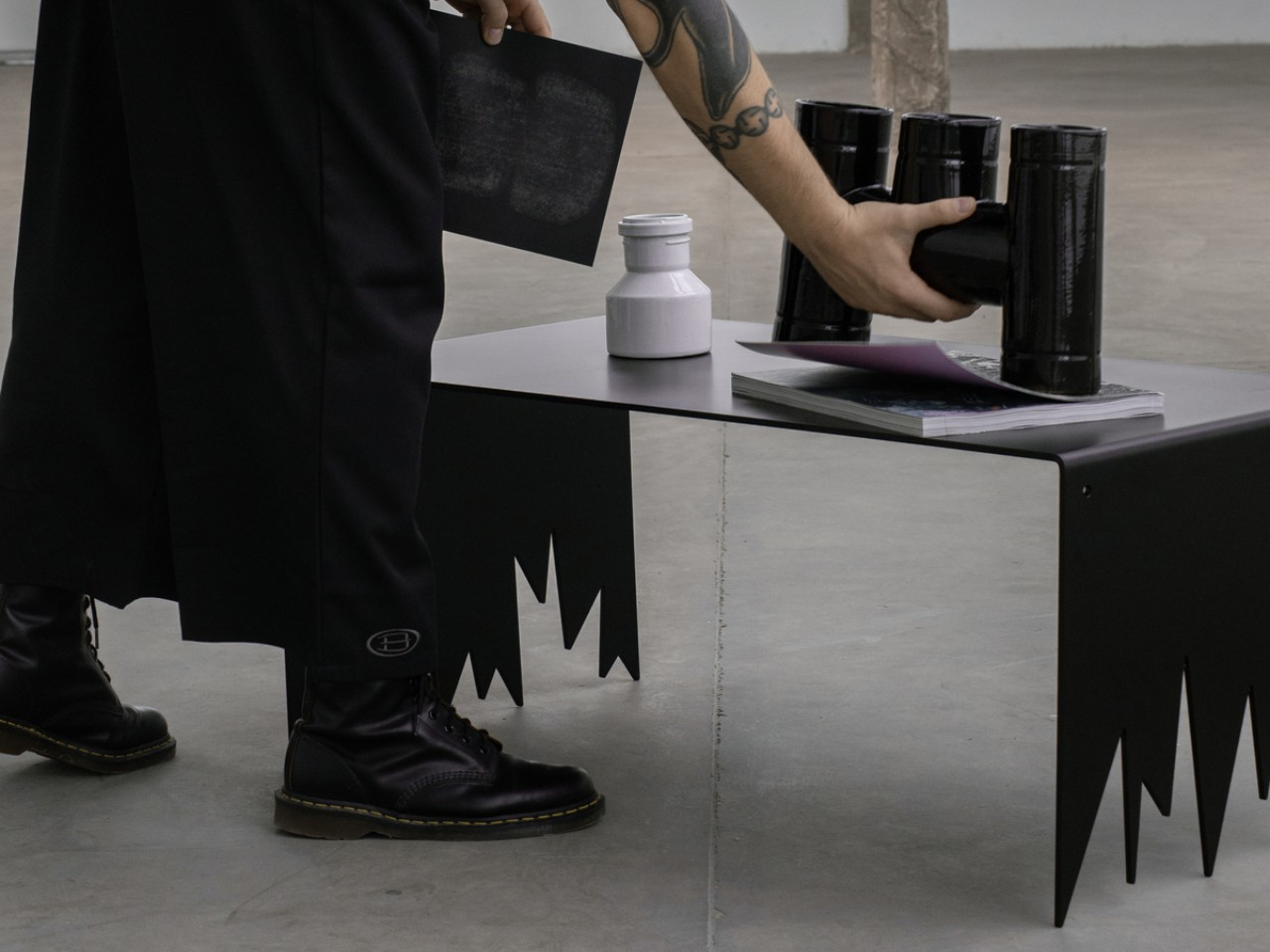
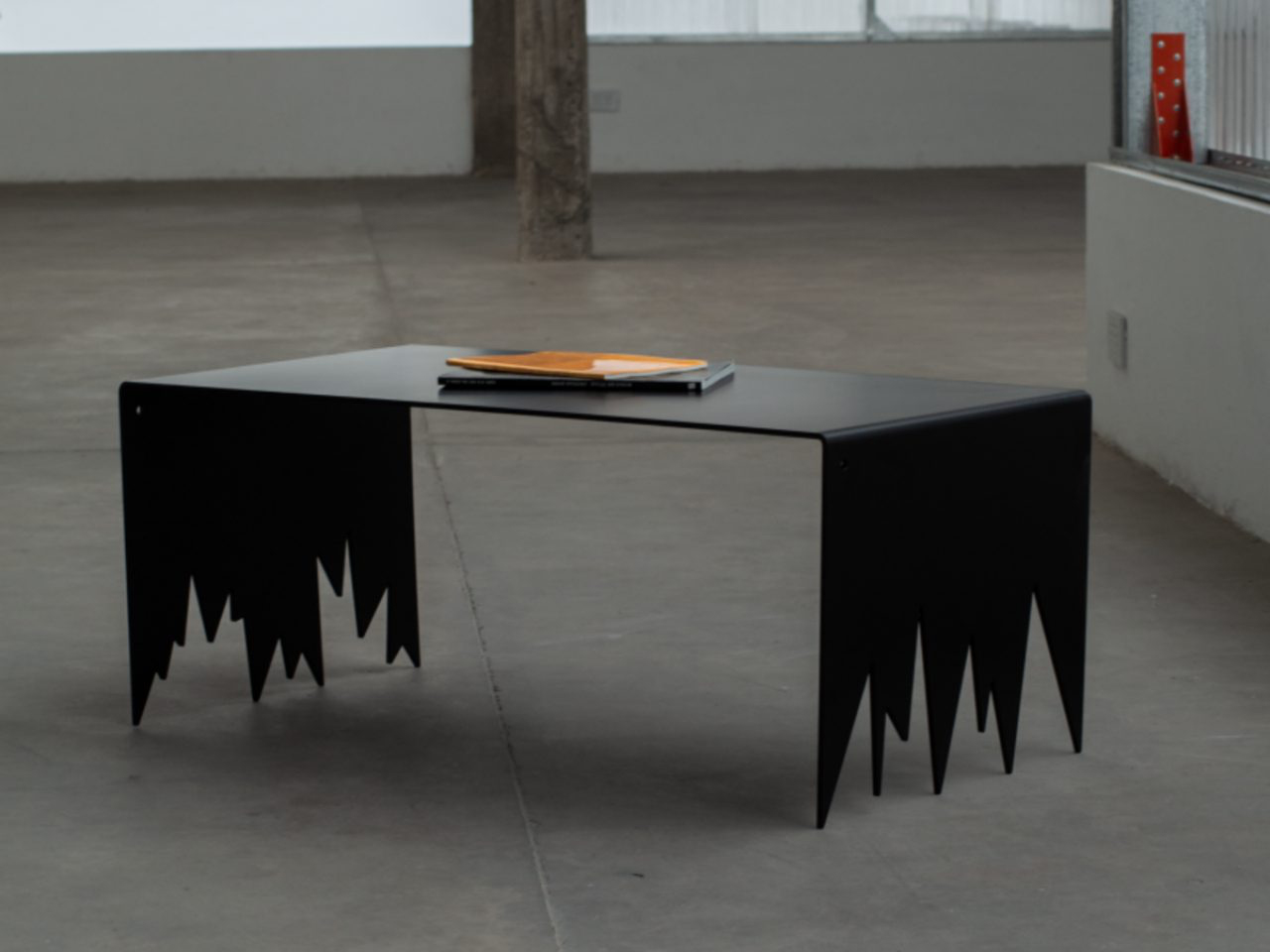
What sets the Sharp table apart are its jagged, tooth-like legs, which give the piece an imposing and almost sculptural presence. Despite their aggressive appearance, these sharply pointed supports provide remarkable stability, demonstrating careful engineering and balance. The black finish enhances the monolithic quality of the steel, amplifying its visual weight while maintaining a refined edge. Handcrafted and subtly unique in form, the table transforms steel into a bold centrepiece that redefines the expectations of a contemporary coffee table.
4. Designed to Last, Designed to Age
Steel carries a unique duality in the way it ages. On one hand, precision finishes like powder coating offer remarkable resistance to scratches, corrosion, and fading, preserving a crisp, immaculate appearance for years. The surface remains controlled, consistent, almost untouched by daily life.
On the other hand, raw or waxed steel embraces change. It records fingerprints, subtle oxidation, and the gentle evidence of use. What might once be seen as imperfection becomes narrative. The material evolves with its environment, gaining depth and individuality. This contrast allows steel furniture to satisfy the desire for flawless permanence and the appreciation of character shaped by time.
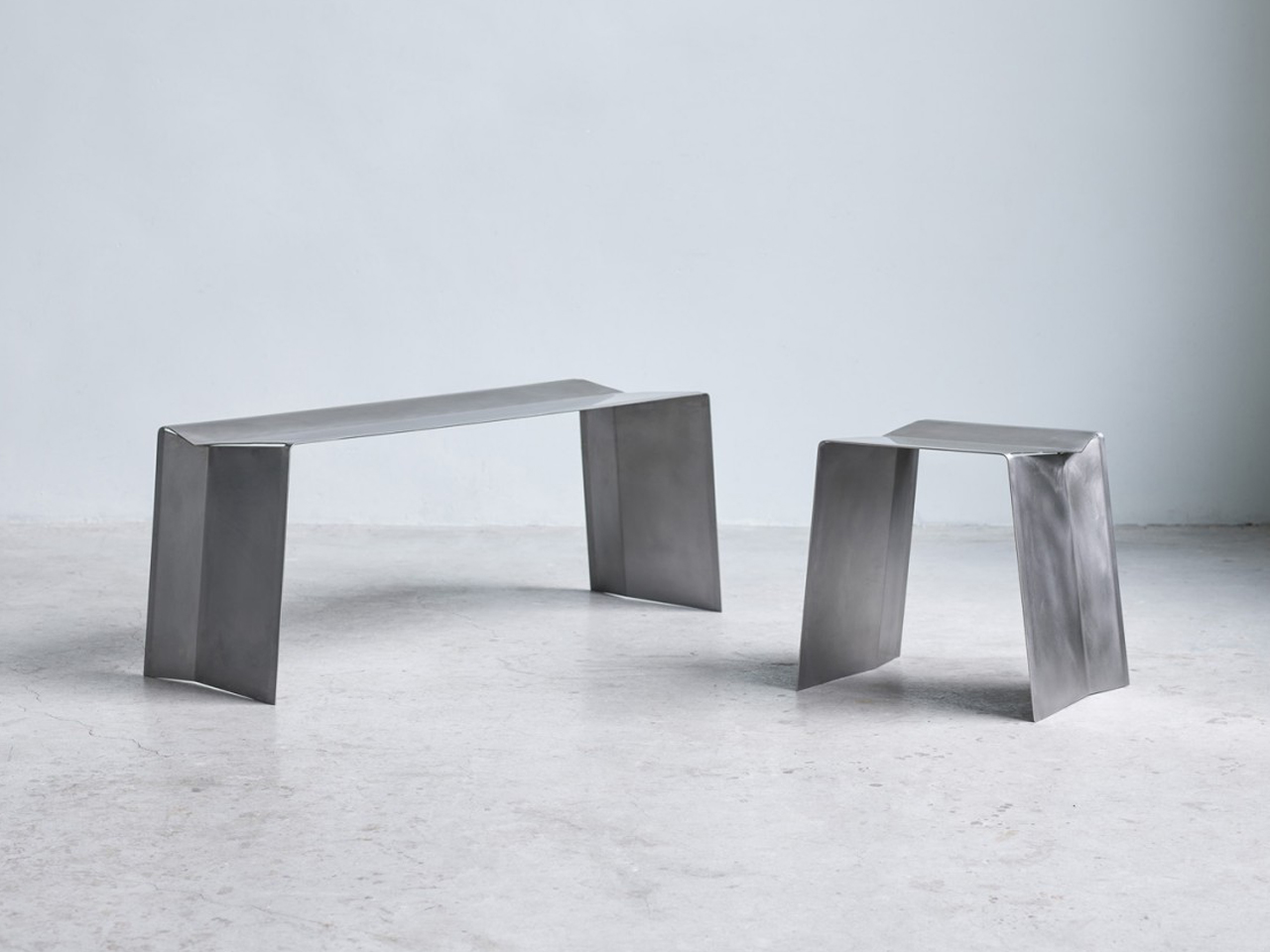
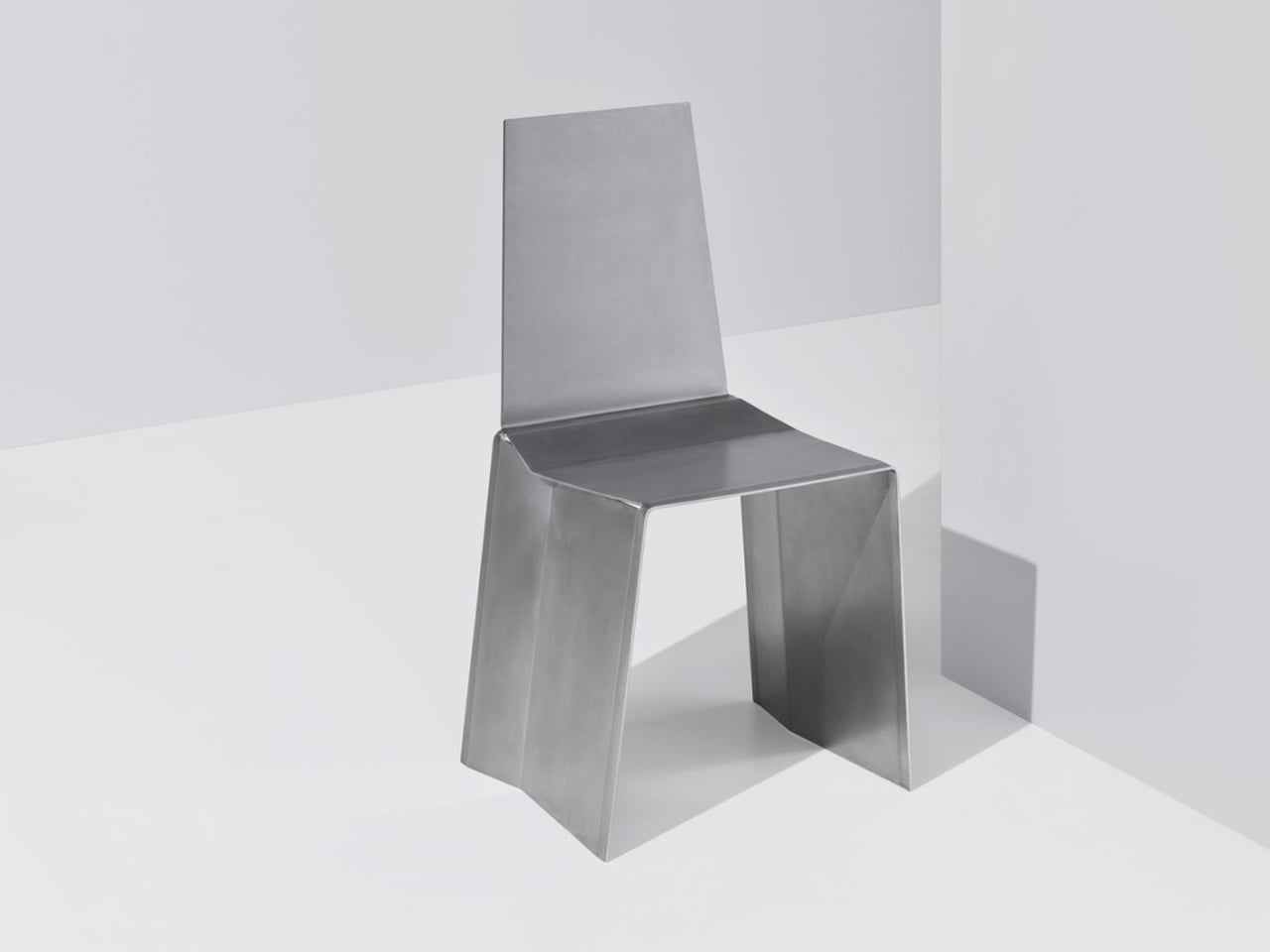
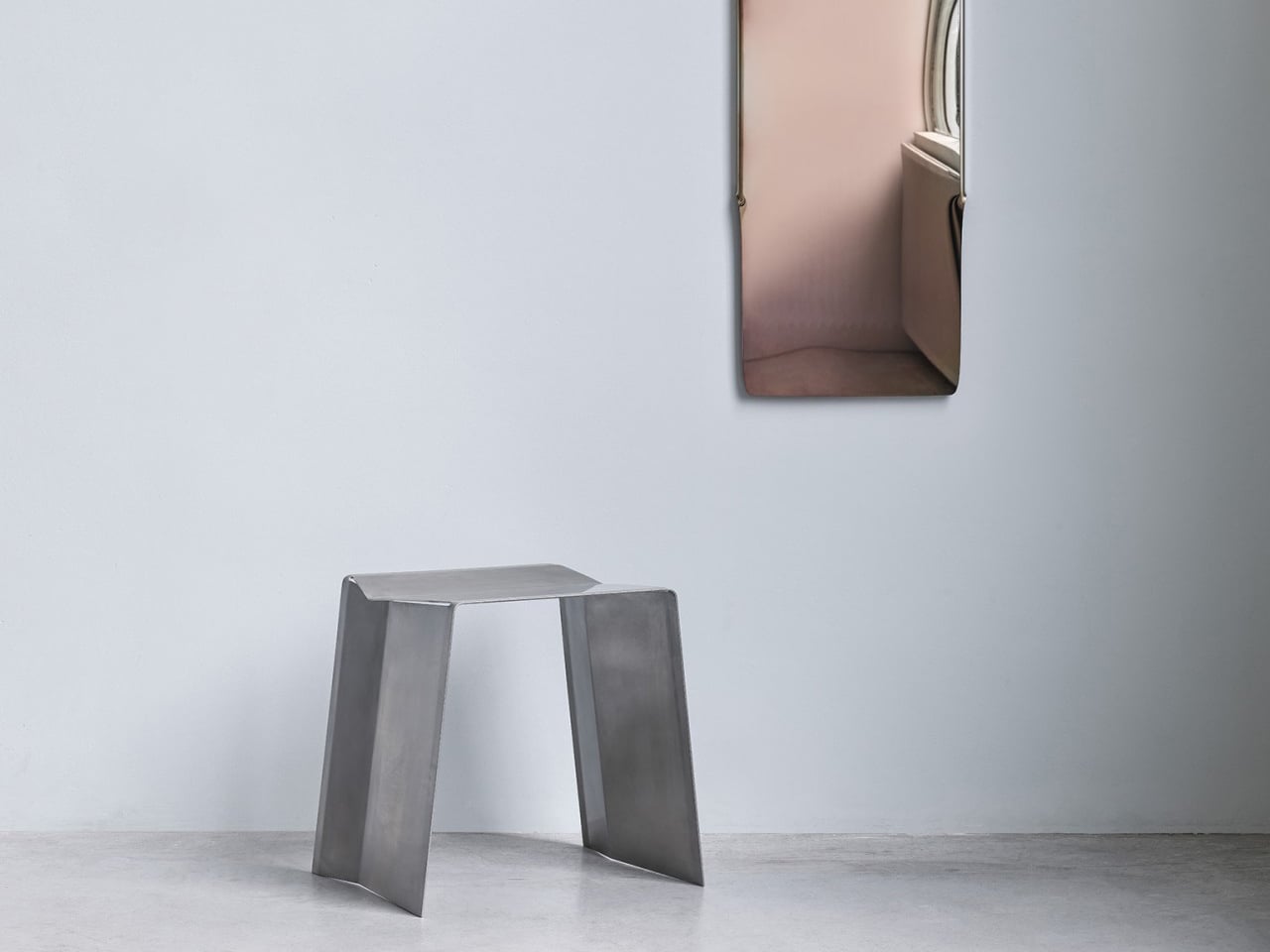
Camber is formed from a single sheet of stainless steel, precisely cut and bent to create a seamless seat and support structure. Rather than assembling multiple components, the design relies on strategic angular cuts at the fold points, allowing the metal to bend downward into stable legs. This method produces a continuous form with clean, uninterrupted lines. The geometry feels deliberate and architectural, giving the bench or stool a restrained yet confident presence. Every curve and edge emerges directly from the original sheet, reinforcing the clarity of its construction.
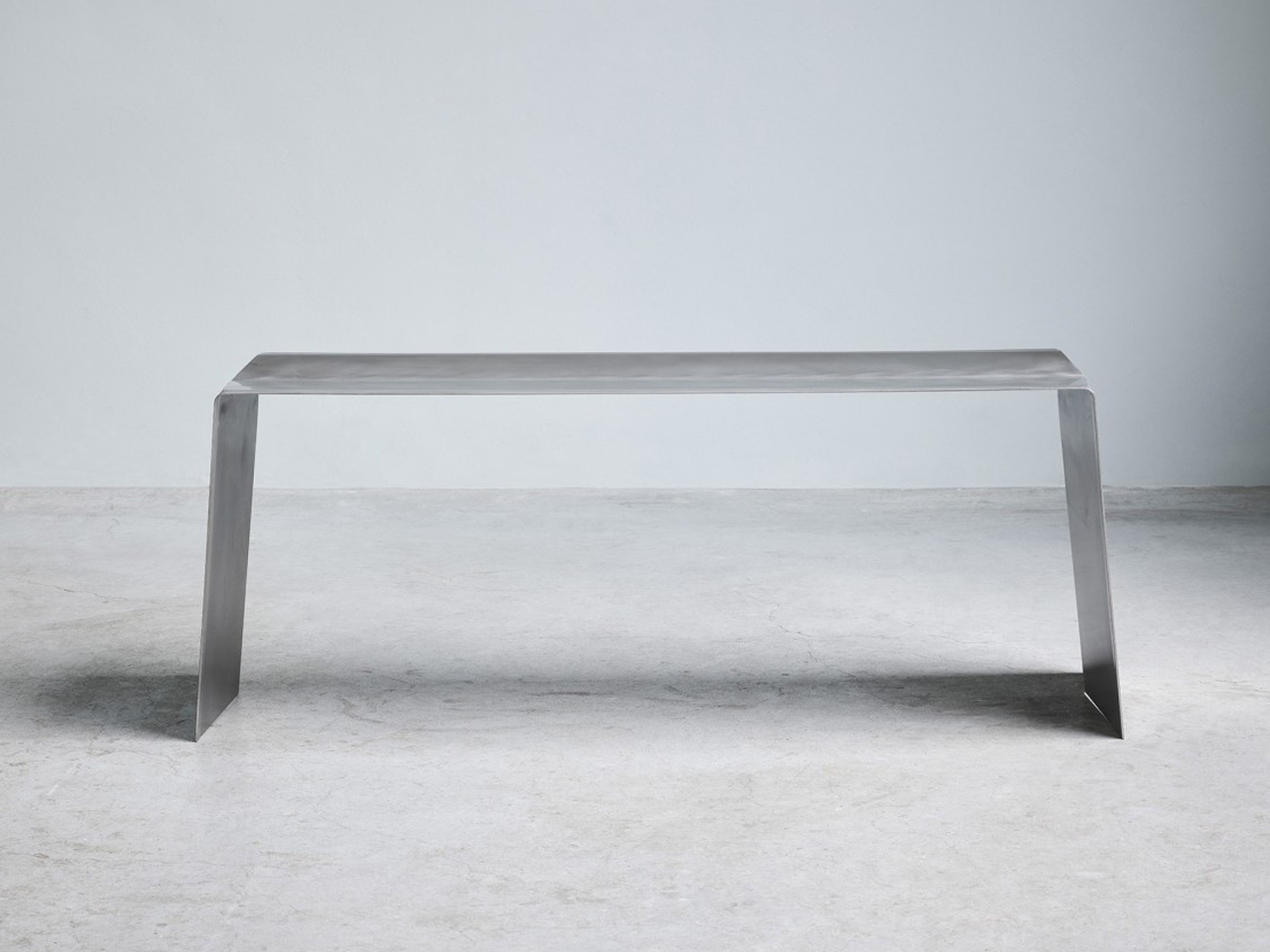
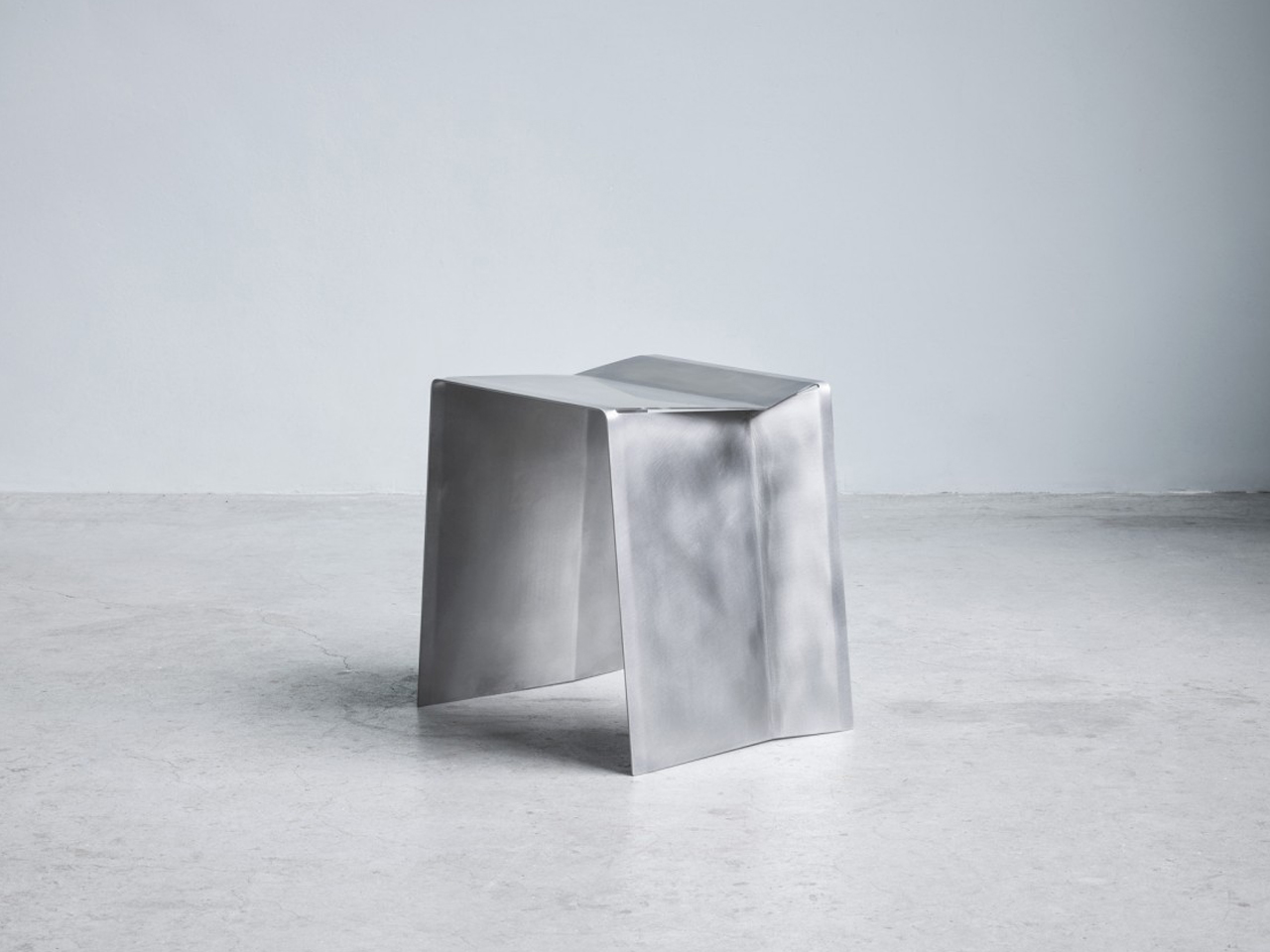
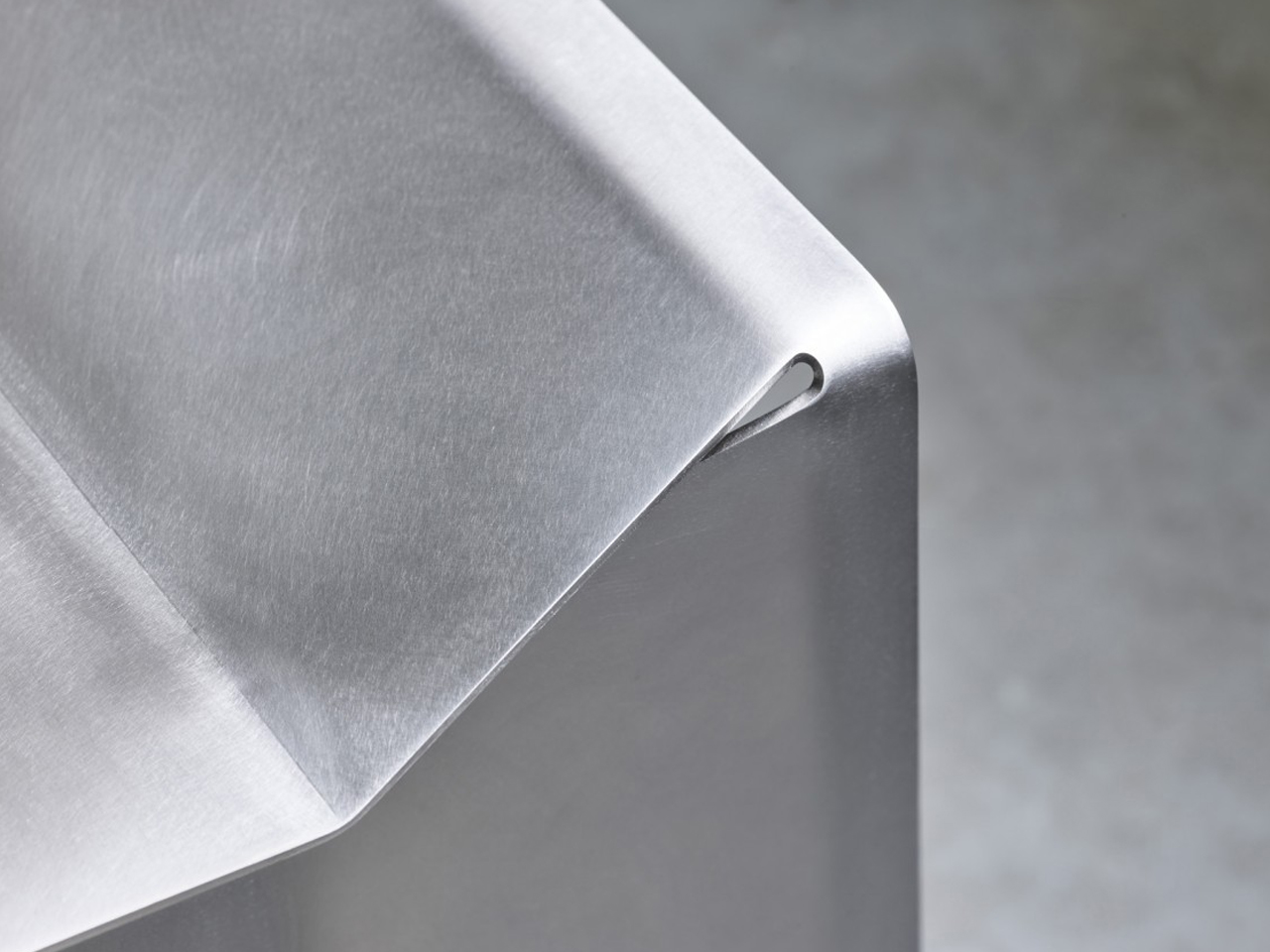
The surface is carefully sanded to achieve a soft, matte reflectivity that enhances the steel’s natural character without the need for additional coatings. Subtle light play across the planes highlights the crisp folds and sharp contours. Durable and resilient, the stainless-steel body ensures longevity while maintaining a minimal aesthetic. Camber’s strength lies in its simplicity, transforming a single industrial sheet into a refined, sculptural seating piece defined by precision and material honesty.
5. Adaptability and Modular Intelligence
Steel’s strength is not only about load-bearing capacity but also about flexibility in design. Its precision fabrication allows components to be cut, bent, welded, and reconfigured with remarkable accuracy. This makes steel inherently suited for modular systems, adjustable structures, and multifunctional furniture that evolves with changing needs.
In contemporary interiors where space must work harder, steel enables intelligent adaptability. Shelving expands, partitions shift, tables extend, and frames support interchangeable elements. The material’s dimensional stability ensures that moving parts remain aligned and reliable over time.
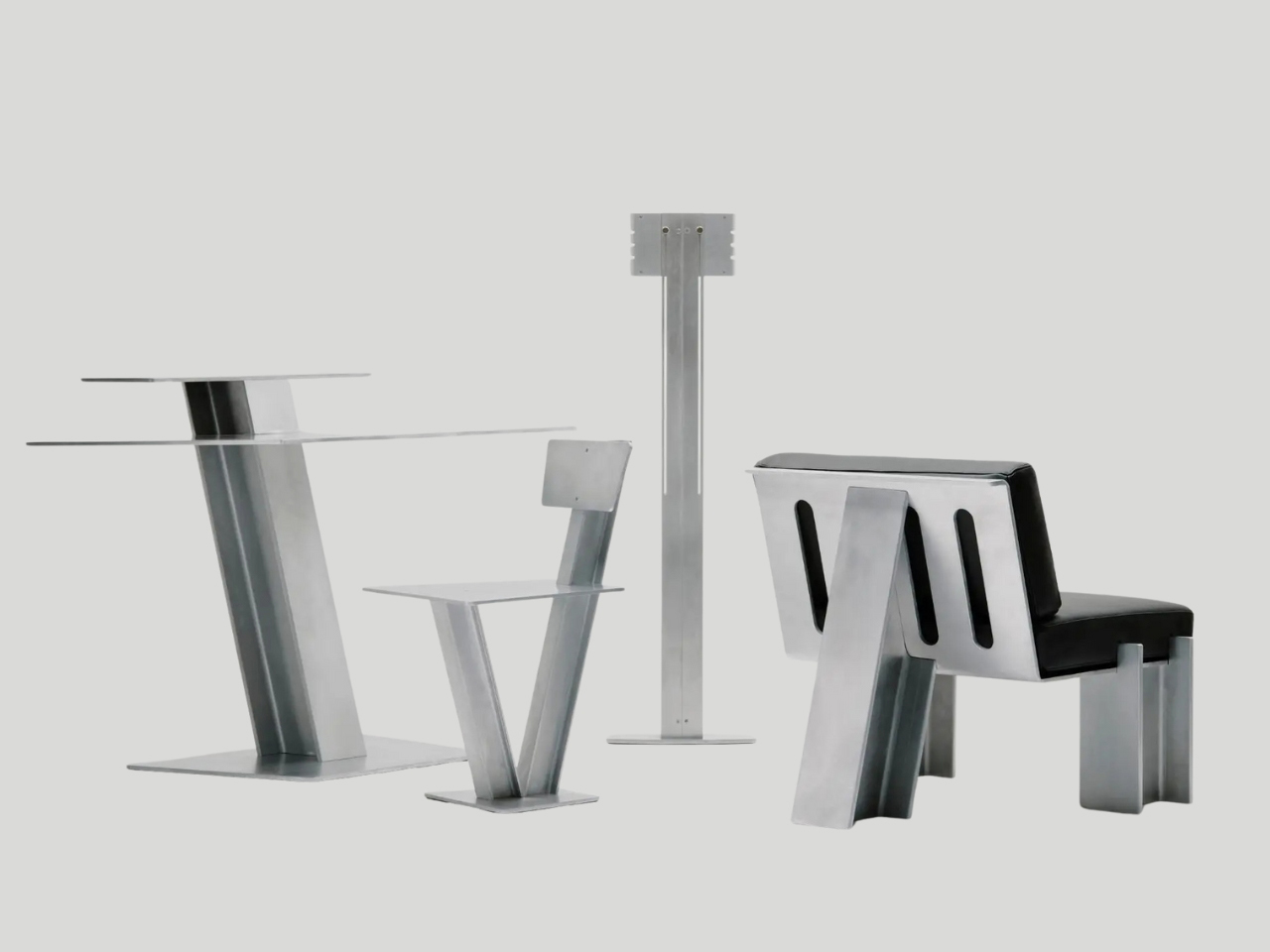
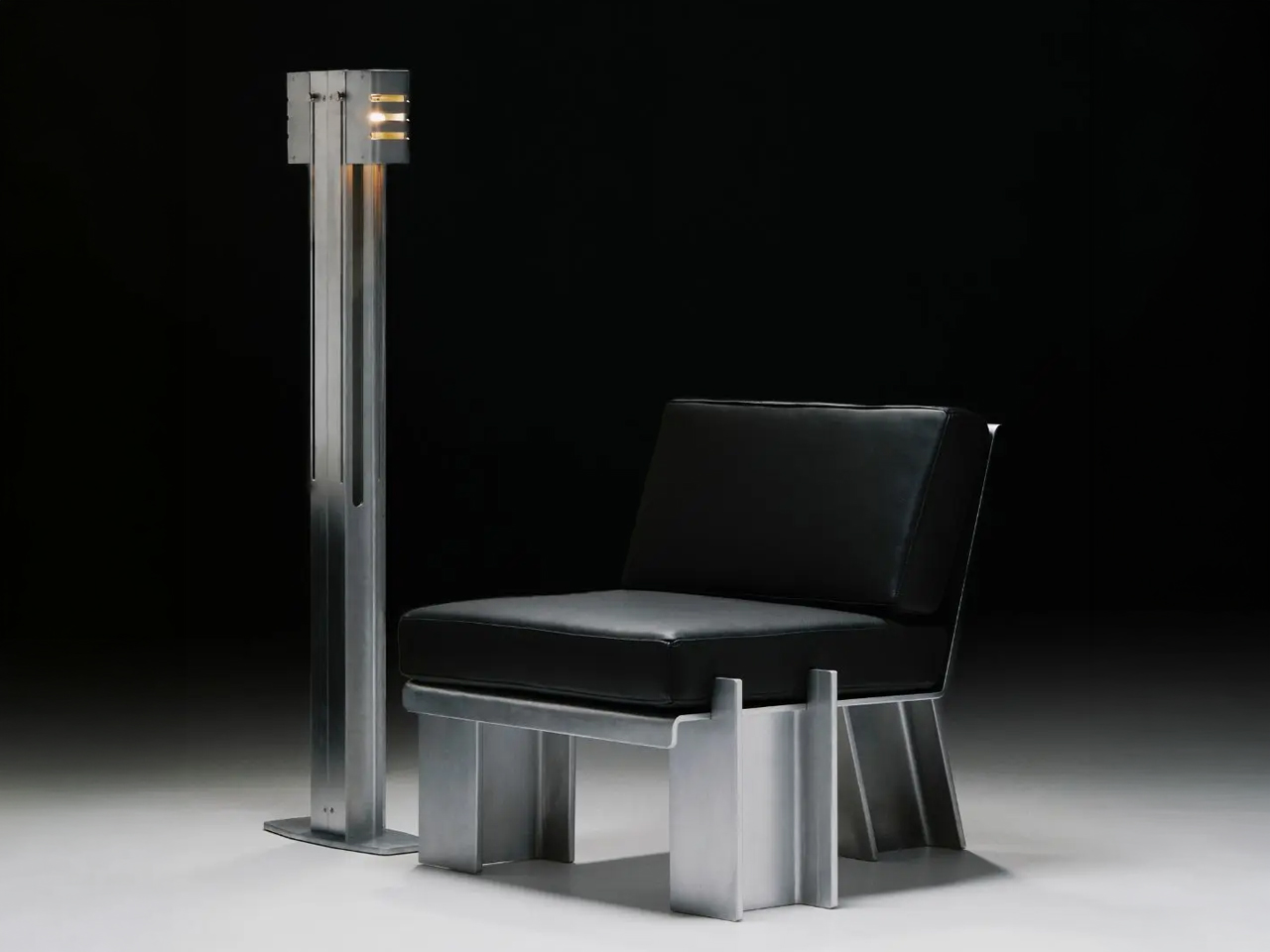
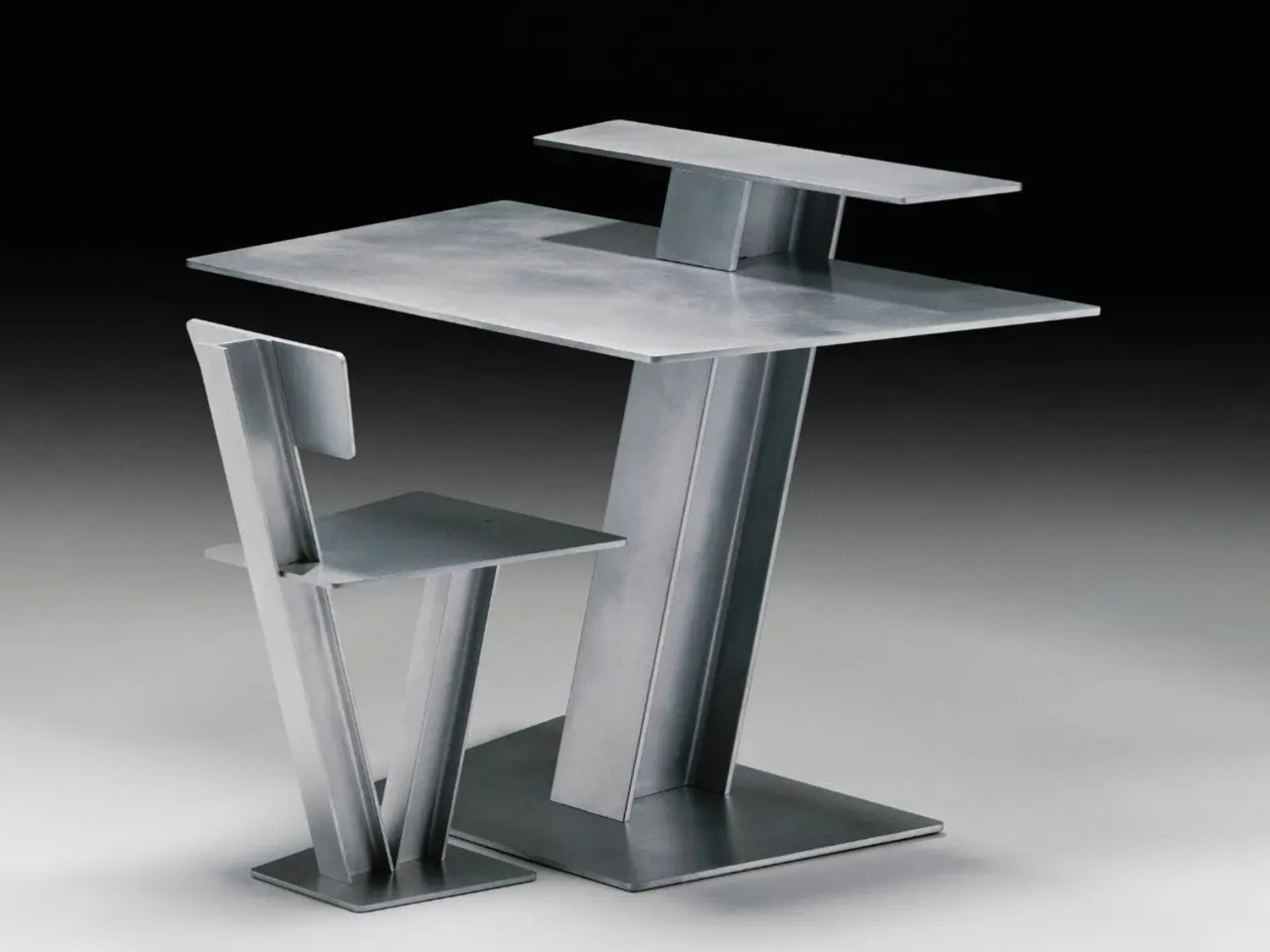
The Beams collection by Marquel Williams reimagines modular steel furniture through the disciplined use of a single structural element: the I-beam. Typically concealed within architecture, this industrial component becomes the visible backbone of chairs, desks, lounge seating and lighting. Each piece is constructed from standardised steel beams combined with metal sheets and leather upholstery, forming a cohesive system rooted in repetition and variation. By committing to one modular profile, the collection achieves structural clarity while allowing each design to express a distinct function and proportion.
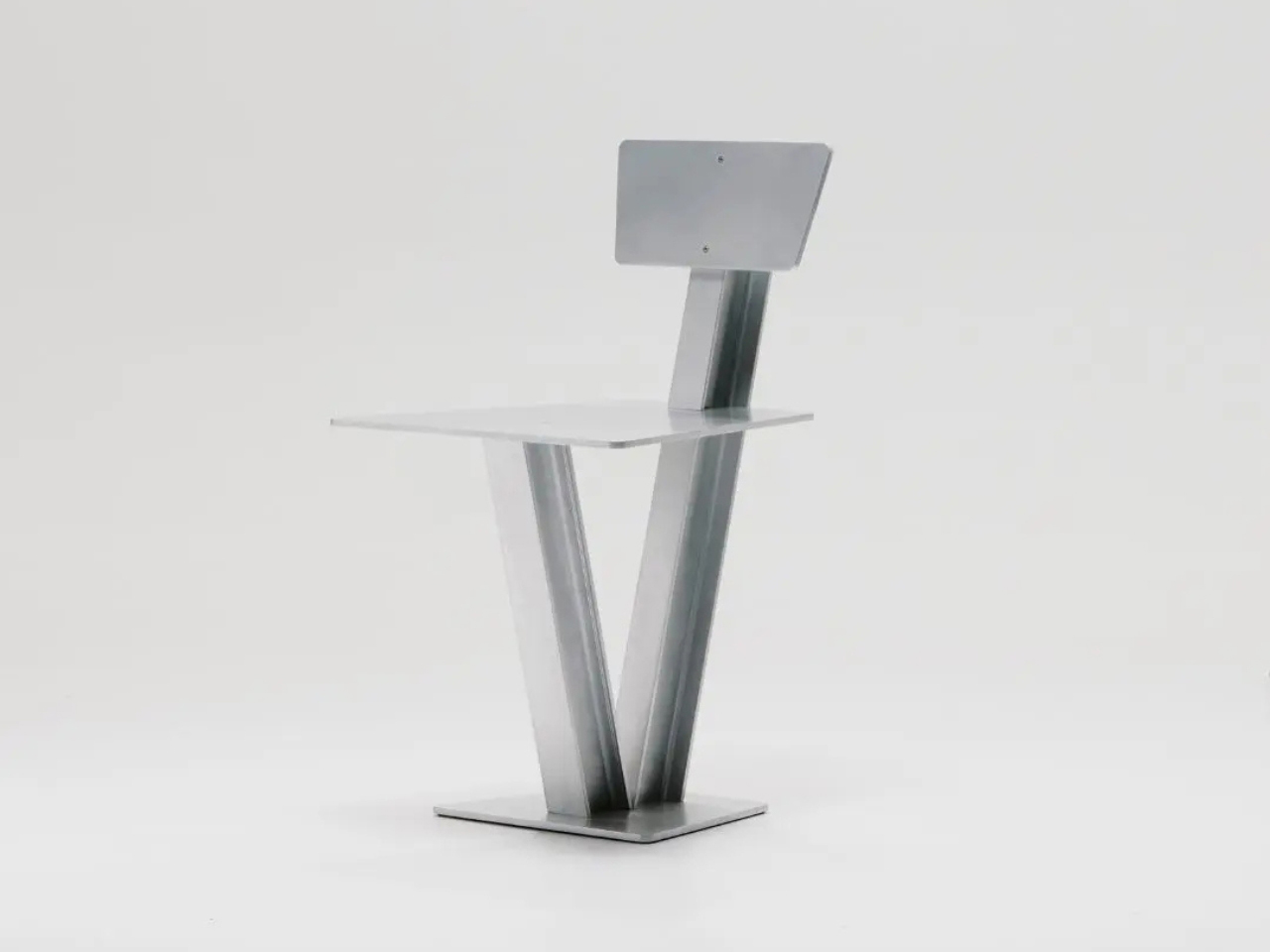
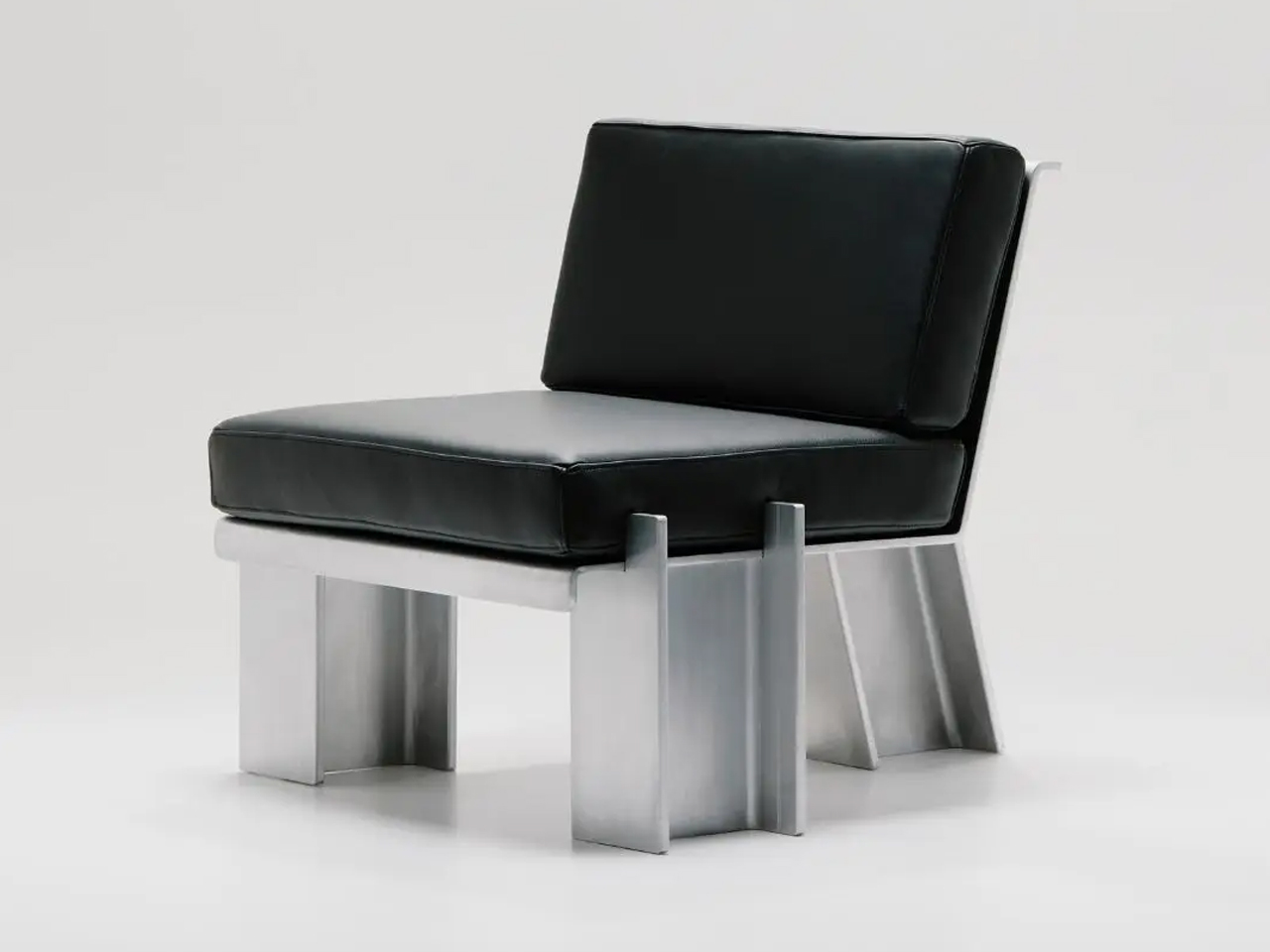
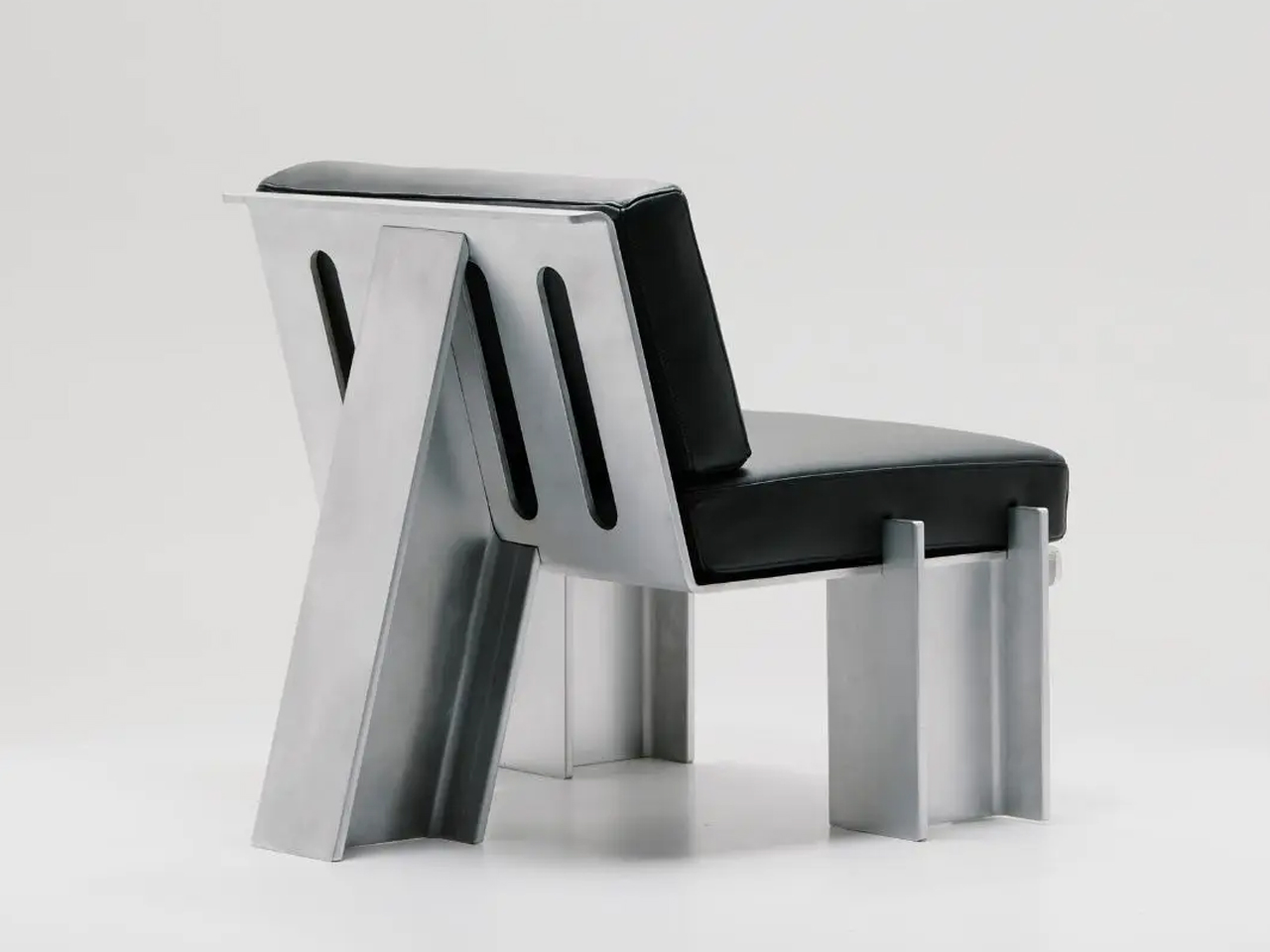
The Beam Chair emphasises sharp geometry and exposed steel, while the Chaise Longue introduces upholstered surfaces that soften the framework without concealing it. The Floor Lamp integrates adjustable shades within the beam’s linear body, even incorporating the electrical cord into the visible structure. Handcrafted in limited quantities by Caliper, the series balances industrial rawness with refined fabrication. Through modular repetition, the I-beam shifts from hidden support to expressive design language, defining a bold and unified steel furniture system.
Steel furniture captures the balance between resilience and refinement. No longer confined to pure function, it now expresses elegance, versatility, and tactile awareness. By uniting structural strength with nuanced design, steel moves beyond its industrial past. It demonstrates that durability and sensitivity can coexist, shaping interiors that feel grounded, expressive, and timeless.
The post 5 Steel Furniture Designs That Look Nothing Like Steel Furniture first appeared on Yanko Design.