Floating Cities Might Actually Save Us (And They’re Gorgeous)

You know that feeling when you see a design concept that makes you go “wait, is this for real?” That’s exactly what happened when I came across Novasis, a floating platform project by designer Mohsen Laei that just won the Grand Prix Architecture and Innovation Award for the Sea 2025. And honestly? It’s not just another futuristic pipe dream. This thing might actually change how we think about living with our oceans.

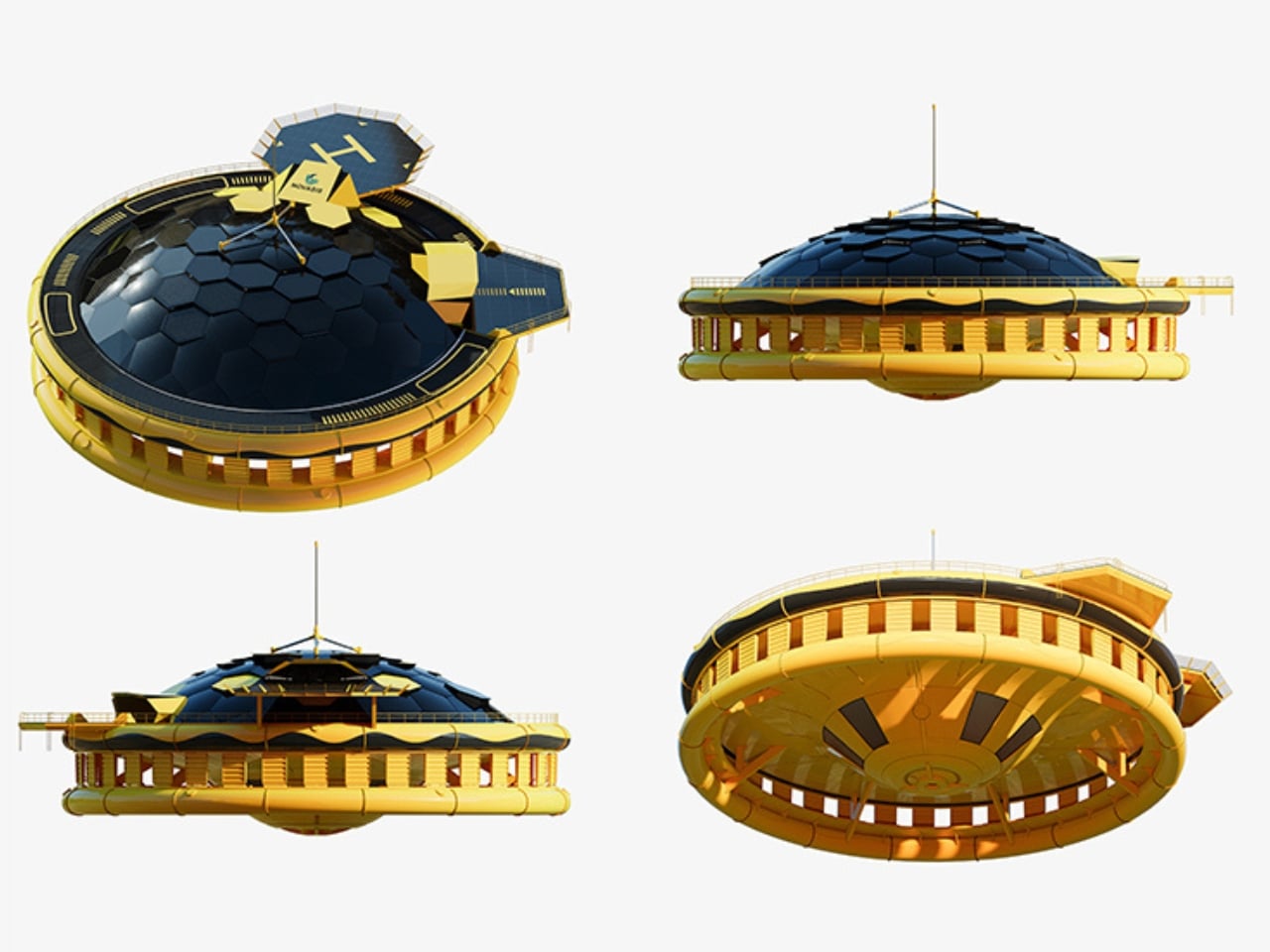
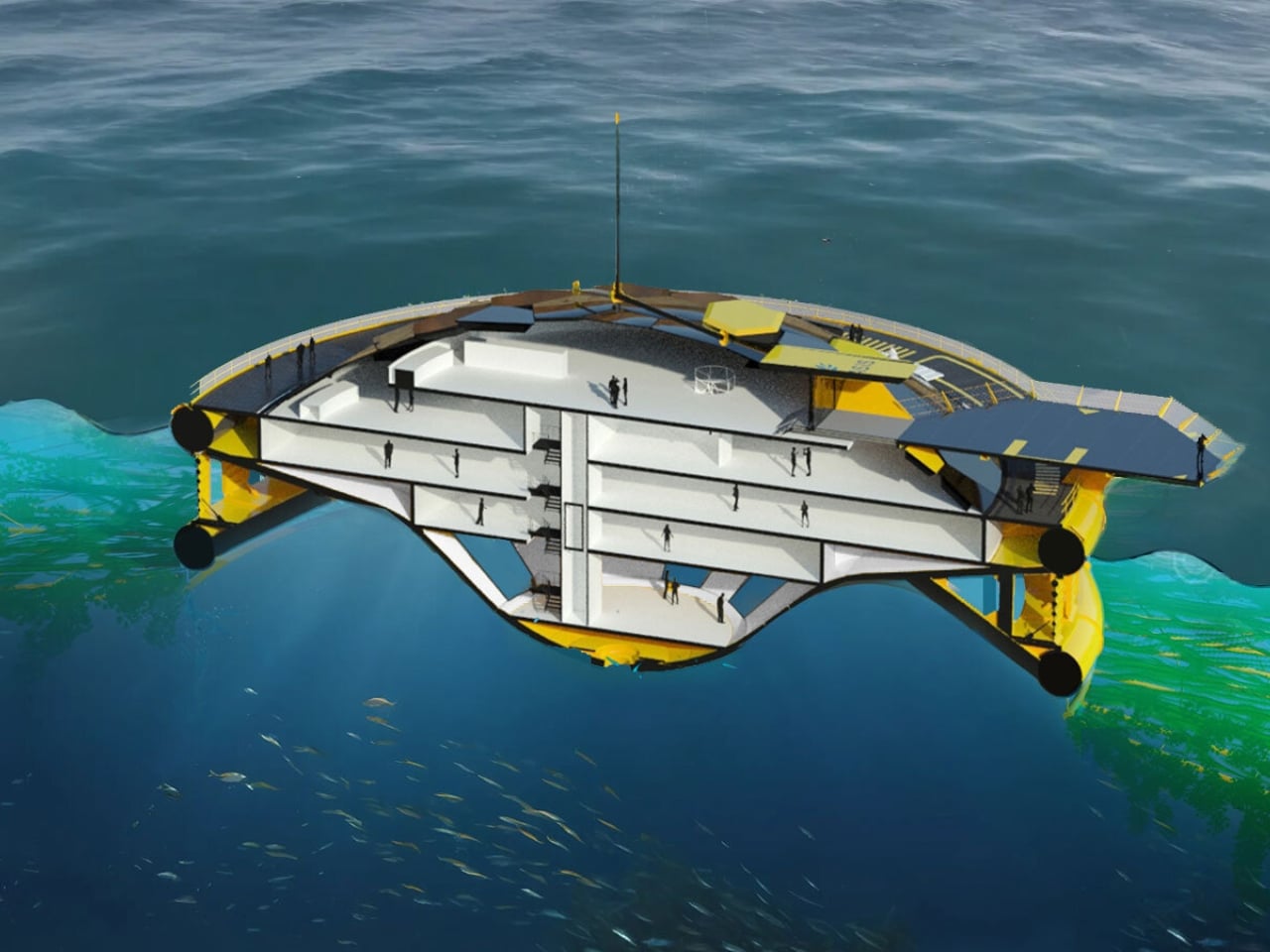
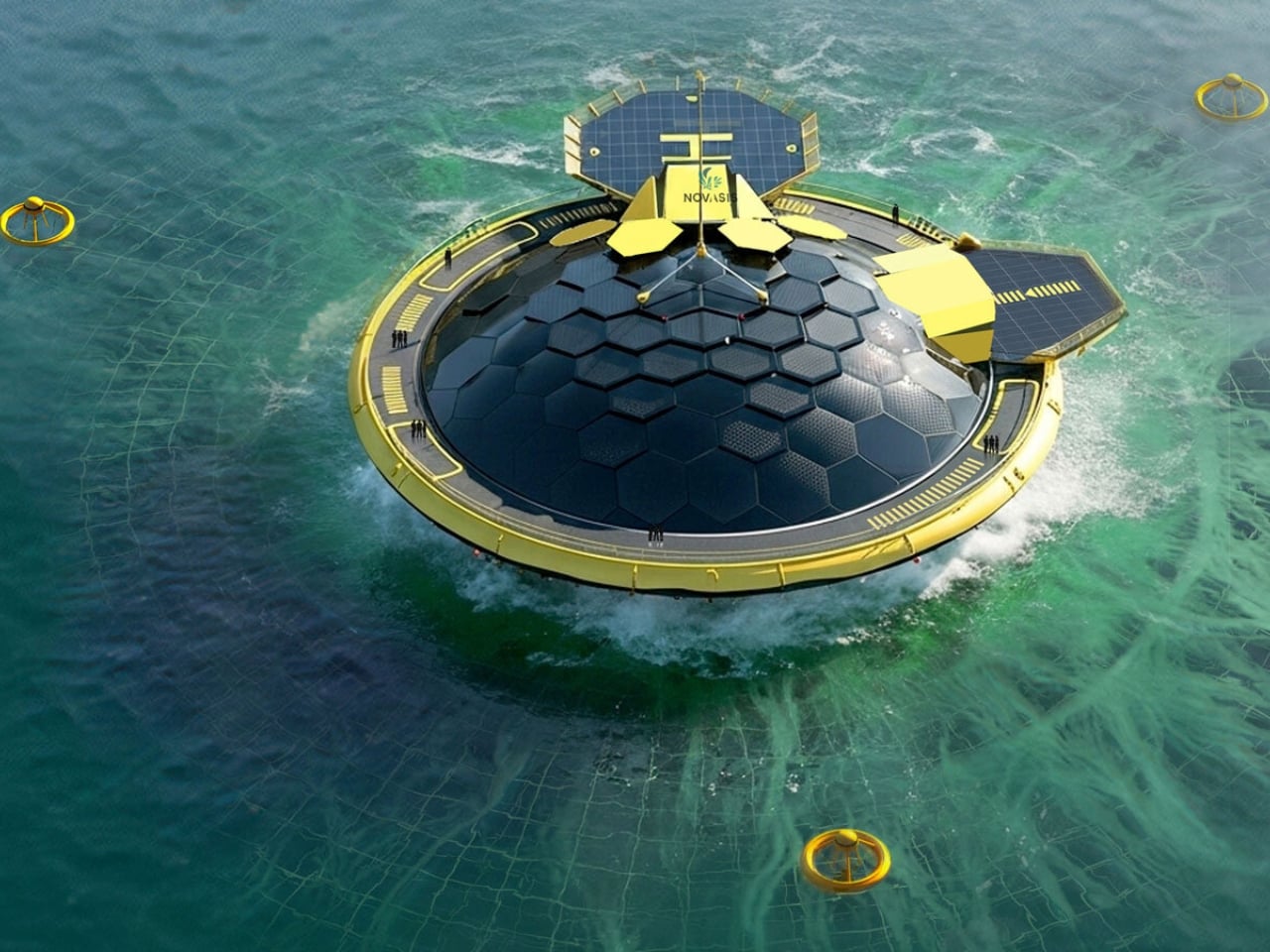
Here’s what makes Novasis so compelling. It’s a scalable floating structure that tackles three massive problems at once: climate change, resource scarcity, and marine ecosystem collapse. Unlike those dystopian visions of humans abandoning land because we’ve wrecked it, this platform is designed for genuine coexistence with the ocean. It cultivates algae on a massive scale, produces renewable energy, creates freshwater, and helps restore marine life, all while being modular, recyclable, and energy independent.

Designer: Mohsen Laei
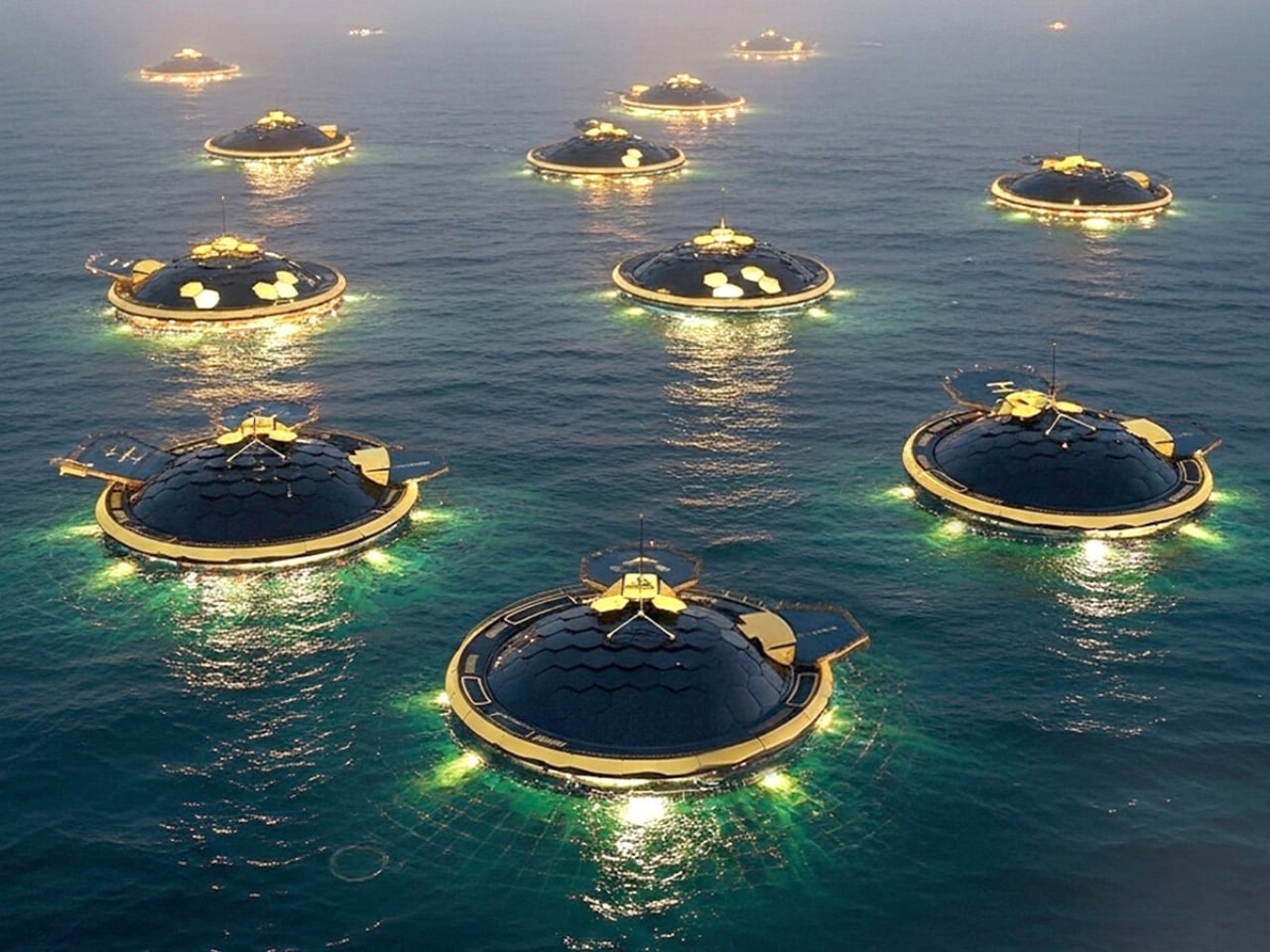
Let’s talk about the algae part, because it’s actually the star of the show. The platform uses floating and submerged nets made from recycled PET to grow both macro and microalgae. Why does this matter? Algae is ridiculously versatile. It can be turned into biofuel, food supplements, pharmaceuticals, and even carbon-neutral materials. Plus, algae cultivation naturally absorbs carbon dioxide from the atmosphere, making this a genuinely climate-positive system. We’re talking about a design that doesn’t just minimize harm but actually reverses it.
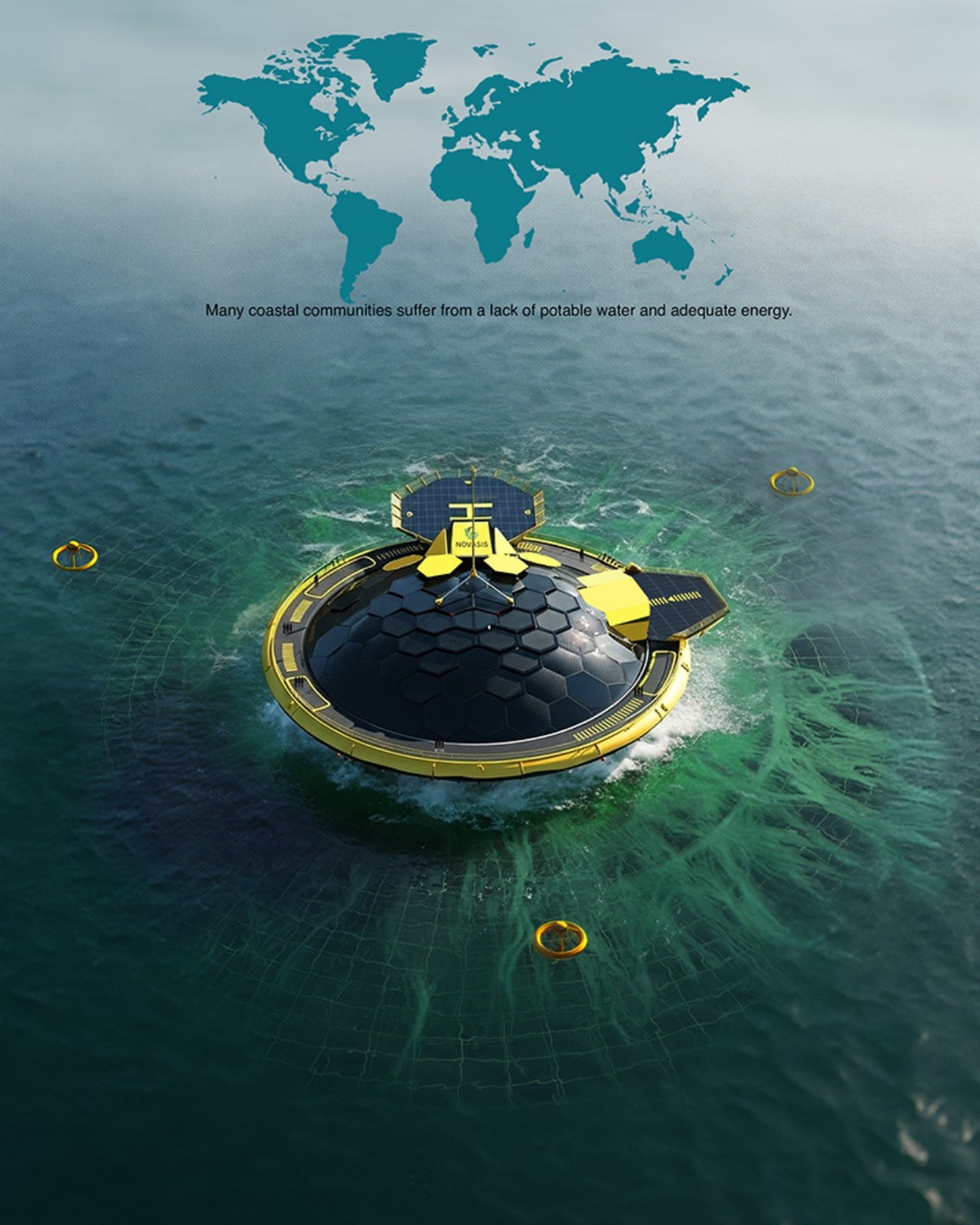
The structure itself is stunning in a practical way. Picture a circular floating platform with a central dome and perimeter walkway that organizes movement across the space. It’s designed to support research facilities, recreational areas, and even habitation. Freshwater gets produced through rainwater harvesting combined with solar and wave-powered desalination, meaning the whole thing functions as a self-sufficient ecosystem. No need to pipe in resources from mainland infrastructure.
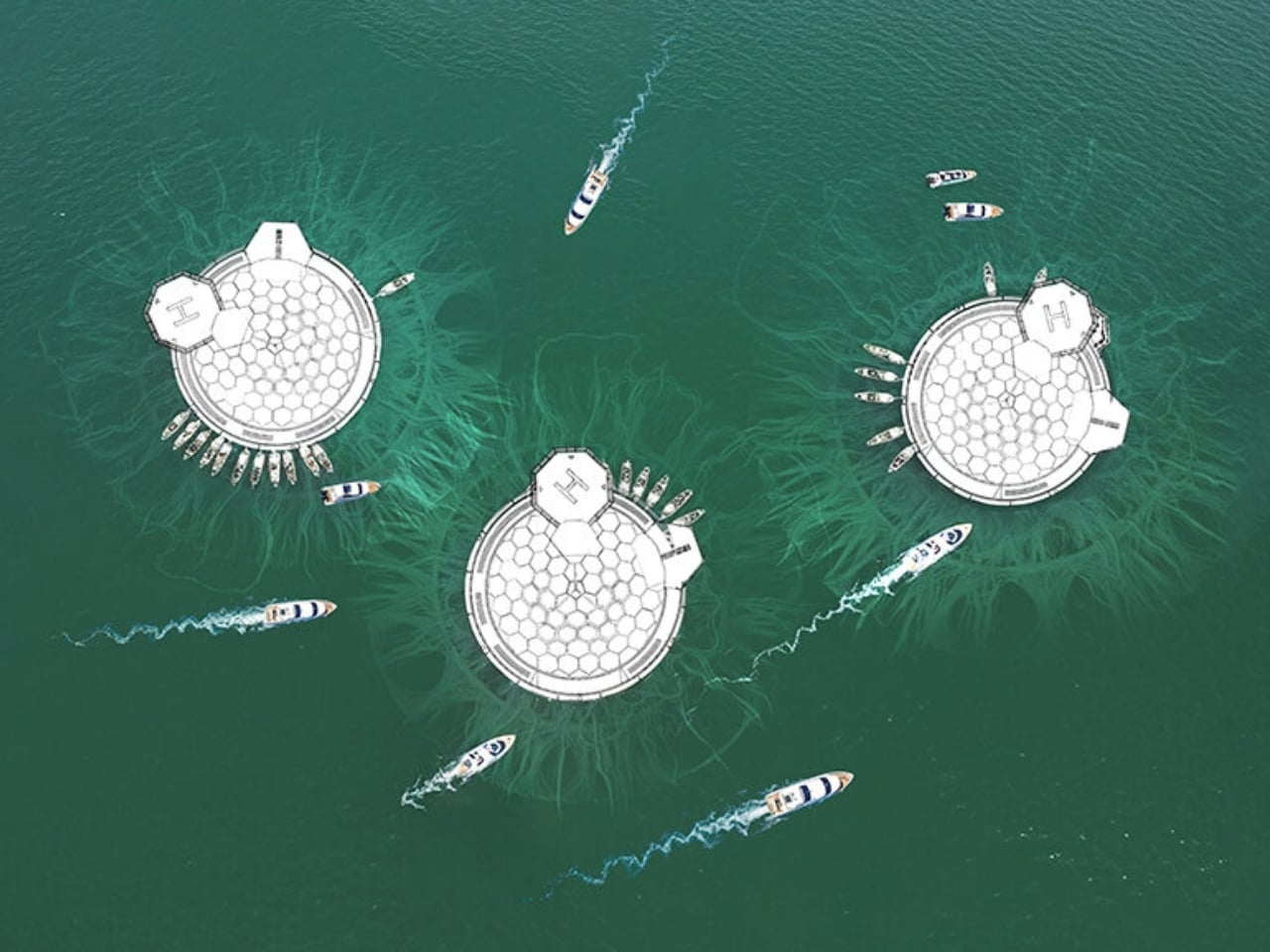
What I find most exciting about Novasis is how it reimagines what “development” can look like in coastal and open-ocean contexts. Traditional marine construction tends to be either extractive (oil rigs, commercial fishing) or leisure-focused (luxury resorts, cruise ships). This platform flips that script entirely. It’s designed to be revenue-generating through biomass production and renewable energy, making it economically viable without requiring grants or subsidies.
Laei isn’t new to ambitious ocean-based concepts either. Back in 2021, he proposed Wind Island, another floating structure that combined wind, water, and solar power with residential and research spaces. That project used flag-like blades around a central tower to capture wind energy while creating shade and cooling for the platform below. You can see the evolution of his thinking from that earlier concept to Novasis, where the focus has sharpened on ecosystem restoration and practical resource production.
The timing couldn’t be more relevant. Floating solar farms have been gaining traction as a renewable energy solution, particularly because they preserve land for other uses and can actually help clean nutrient-polluted water. But most floating renewable projects focus on just one function. Novasis integrates multiple systems into one cohesive platform, which makes it far more resilient and useful.
Critics might call this concept too ambitious or unrealistic, but I’d argue we’re past the point where playing it safe makes sense. Our oceans are warming, acidifying, and losing biodiversity at terrifying rates. Coastal cities face rising seas and freshwater shortages. We need solutions that are as complex and interconnected as the problems we’ve created. Novasis offers exactly that: a model for how humans might actually contribute to ocean health rather than just taking from it.

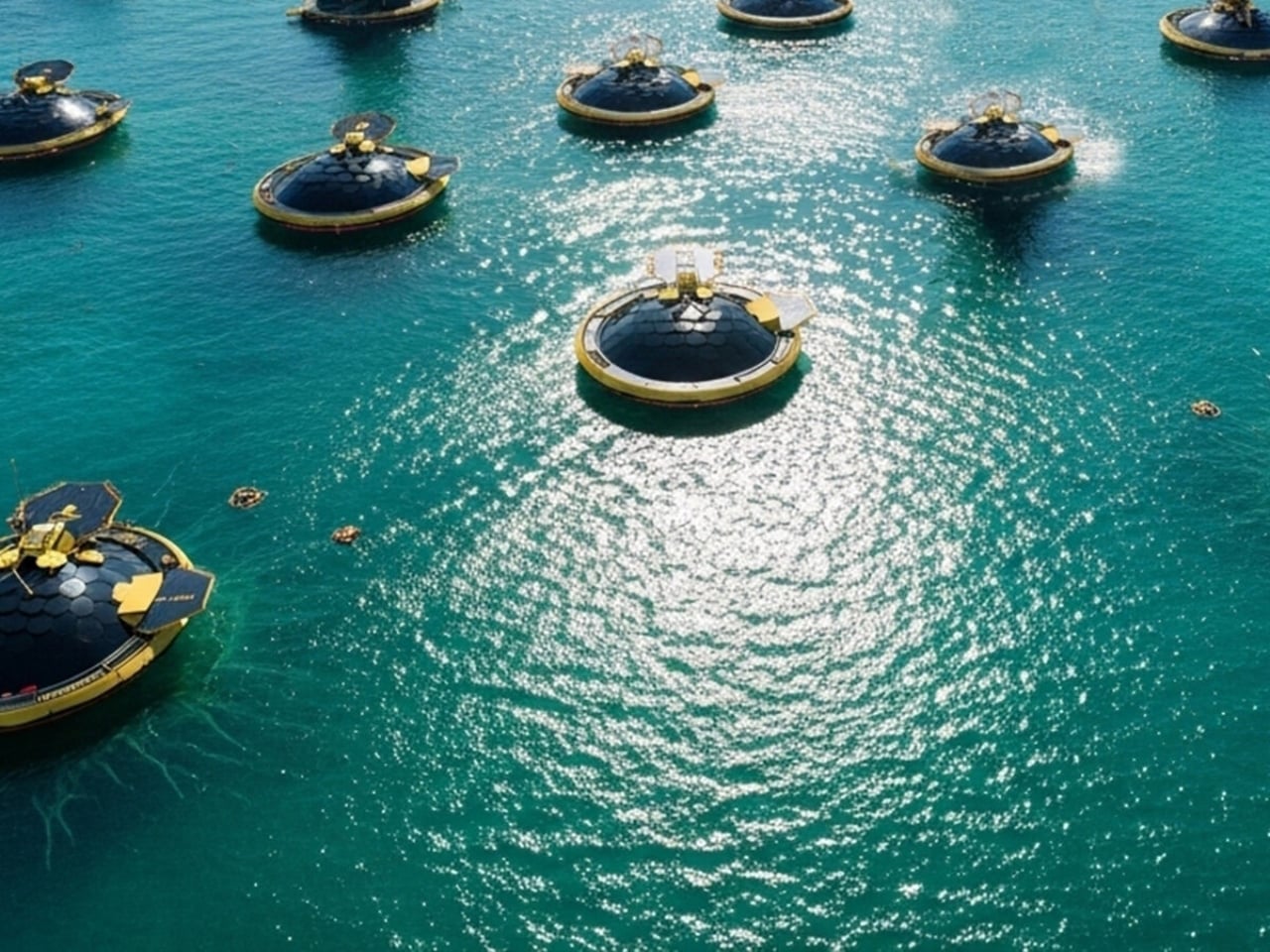
The best part? Because the system is modular, it can scale up or down depending on location and need. Small coastal communities could deploy a single unit. Larger installations could connect multiple platforms into floating networks. The design adapts rather than demanding a one-size-fits-all approach.
I’m genuinely curious to see where this goes. Will we see a working prototype in the next few years? Will governments and private investors recognize the potential here? For now, Novasis stands as proof that design can be both beautiful and functionally revolutionary, that we can build infrastructure that heals rather than harms. And in a world that desperately needs both hope and practical solutions, that feels like something worth getting excited about.

The post Floating Cities Might Actually Save Us (And They’re Gorgeous) first appeared on Yanko Design.


Apple’s New MacBook Pro Redesign: Features, Specs, and Release Date

Apple’s New MacBook Pro Redesign: Features, Specs, and Release Date

  Apple is set to redefine the personal computing landscape with fantastic updates to its Mac lineup. These advancements, driven by next-generation chips, sleek design improvements, and innovative features, aim to meet the needs of a diverse audience. Whether you are a professional seeking high-performance tools or a casual user looking for affordability, Apple’s upcoming […]

The post Apple’s New MacBook Pro Redesign: Features, Specs, and Release Date appeared first on Geeky Gadgets.

Posted in Uncategorized

Nintendo Switch 2 : 6 Month Review, Bigger Screen, Better Comfort, but Is It Worth Upgrading?

Nintendo Switch 2 : 6 Month Review, Bigger Screen, Better Comfort, but Is It Worth Upgrading?

Is the Nintendo Switch 2 the gaming revolution it promised to be, or does it fall short of the hype? Six months after its release, this question still sparks heated debates among gamers. In the video, Tech Fowler breaks down the console’s strengths and shortcomings, offering a thoughtful look at whether it’s worth the investment. […]

The post Nintendo Switch 2 : 6 Month Review, Bigger Screen, Better Comfort, but Is It Worth Upgrading? appeared first on Geeky Gadgets.

Posted in Uncategorized

Engadget Podcast: 2025 was the year of AI, smartglasses and spineless Big Tech

This week, Engadget Managing Editor Cherlynn Low joins us to look back at some of the highlights (and lowlights) of 2025. We dive into our favorite gadgets of the year, the many ways Big Tech bowed to Trump, the disappointment of AI PCs and the rise of smart glasses. We also learn way too much about our skincare routines.

Subscribe!

Topics

  • Our favorite gadgets of 2025: Kindle Scribe Colorsoft, Airpods Pro 3, bluetooth lav mics and more – 2:26

  • Favorite Media of 2025: Andor, self-improvement via podcast, and a shoutout to your library – 34:30

  • iRobot declares bankruptcy – 47:29

  • Warner Bros. Discovery board rejects Paramount’s hostile bid, shareholders yet to vote  – 53:47

  • The Oscars will air on Youtube starting in 2029 – 56:05

  • Ford to turn its F-150 Lightining into a gas generator EV – 57:41

  • Around Engadget: smart glasses had a great run in 2025, against social media age verification – 58:20

Credits

Hosts: Devindra Hardawar and Cherlynn Low
Producer: Ben Ellman
Music: Dale North and Terrence O'Brien

This article originally appeared on Engadget at https://www.engadget.com/social-media/engadget-podcast-2025-was-the-year-of-ai-smartglasses-and-spineless-big-tech-143000338.html?src=rss

This Cutlery Set Celebrates the Machine That Made It

There’s something inherently rebellious about celebrating the process instead of hiding it. But most products are still designed to look effortlessly smooth, polished to perfection, and stripped of any trace of how they came to be. Atelier Andy Carson’s G-Code flatware takes the opposite approach. This cutlery set doesn’t just acknowledge its manufacturing origins, it flaunts them.

The name itself is a clever nod to the digital backbone of modern production. G-code is the programming language that tells CNC machines exactly where to cut, mill, and carve. It’s the invisible blueprint that translates design into reality, one precise coordinate at a time. By naming this flatware collection after that very code, Australian-based designer Andy Carson and his collaborator Sam Collett are making a bold statement: the machine is not just a tool, it’s part of the story.

Designer: Atelier Andy Carson

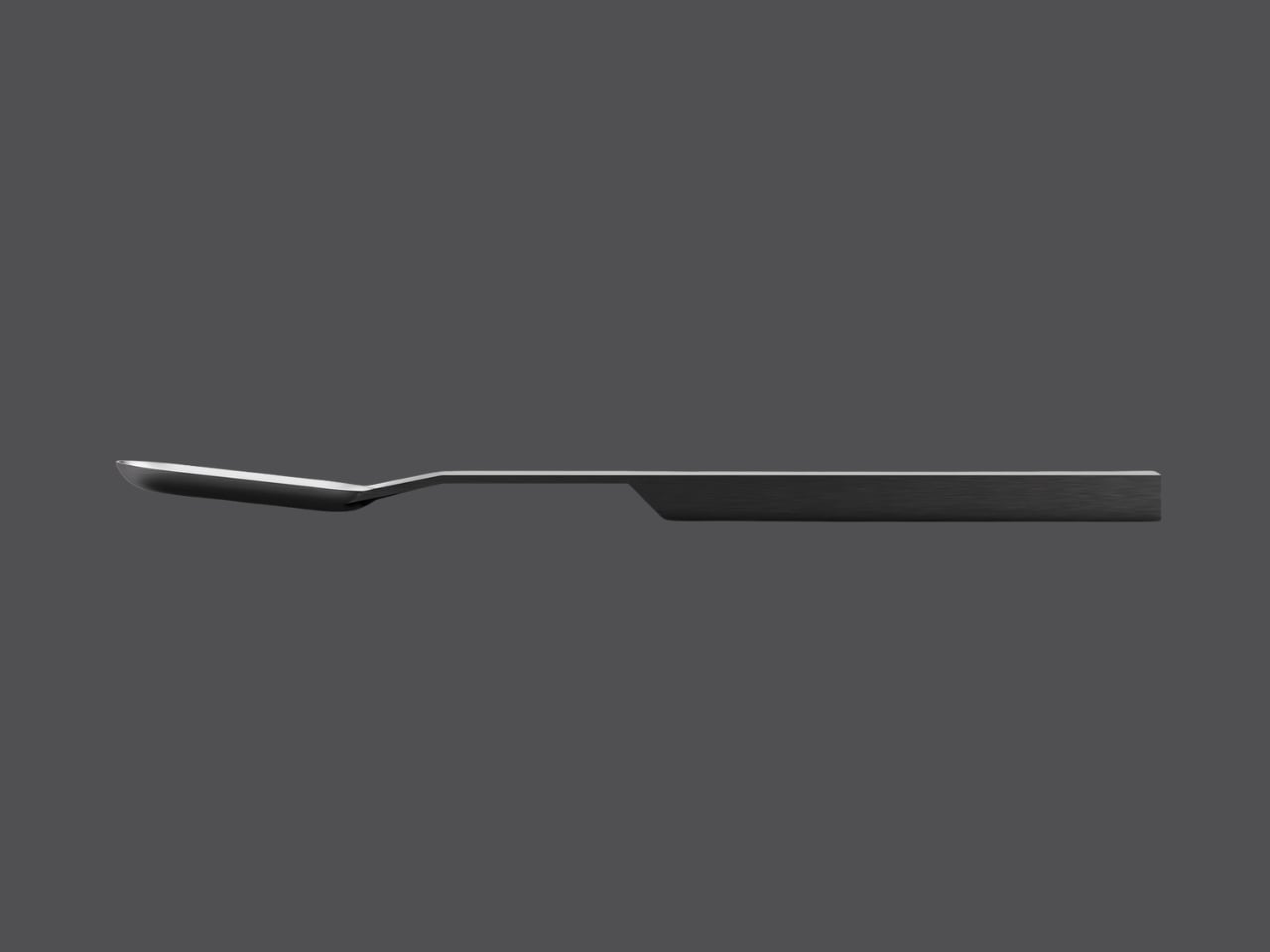
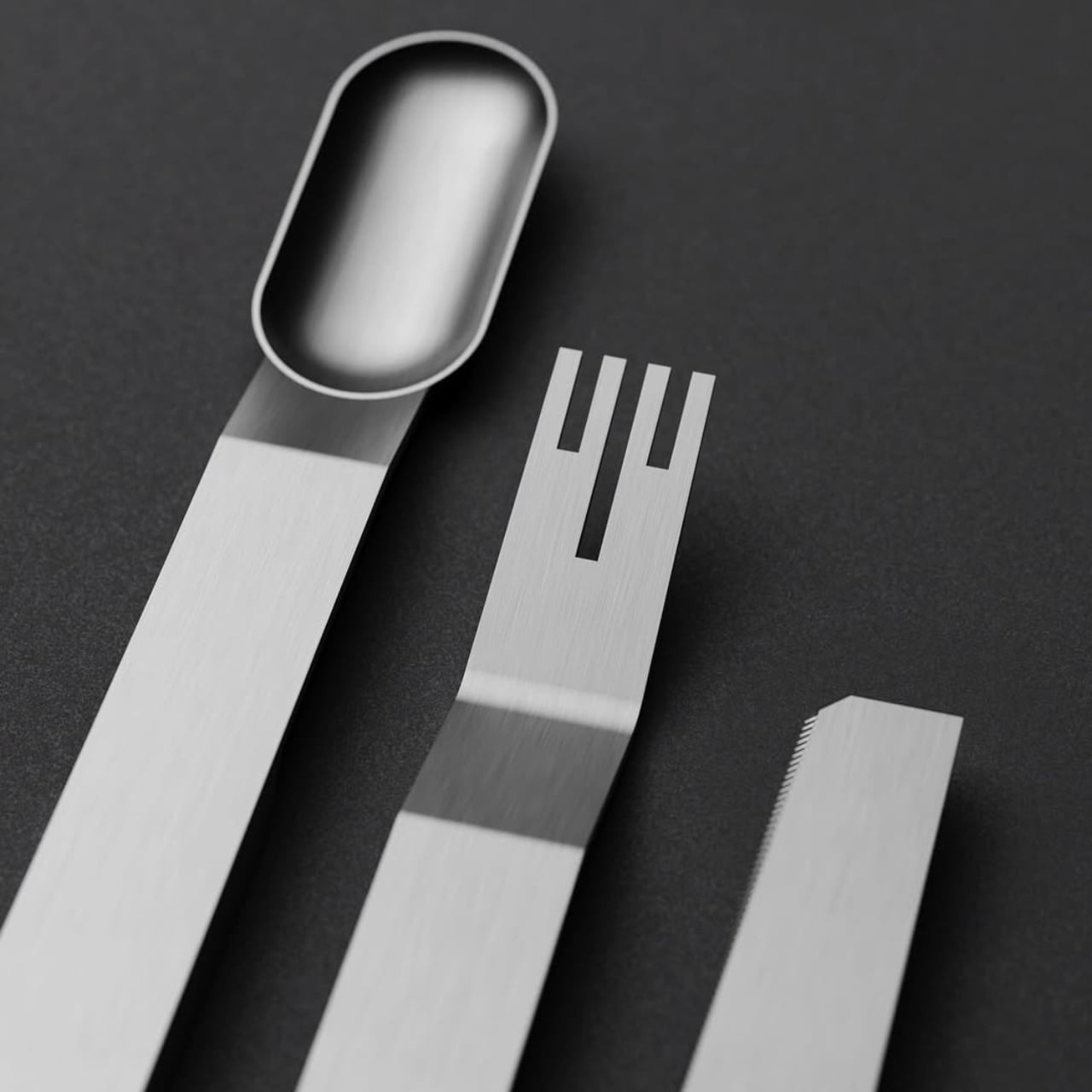
You can see that story in every angle of these pieces. Each implement in the set, a knife, fork, and spoon, is milled from solid stainless steel bar stock. There’s no stamping, no casting, no traditional manufacturing shortcuts that would smooth away the evidence of creation. Instead, what you get are geometric forms with crisp edges, flat planes, and subtle facets that catch the light in unexpected ways.

The aesthetic is unapologetically industrial, yet somehow it doesn’t feel cold or impersonal. The handles are rectangular and minimalist, tapering slightly as they extend toward the functional end. The fork features an intriguing angular bend that adds sculptural interest while maintaining perfect balance. The spoon’s oval head sits atop its geometric handle like a carefully considered punctuation mark. Even the knife, with its serrated edge, feels more like a piece of architecture than a simple eating utensil.

What makes this design particularly smart is how form and function work together so seamlessly. The weighted handles aren’t just about aesthetics or that satisfying heft you feel when you pick one up. They serve a practical purpose, ensuring that the head of each utensil hovers above the table surface when you set it down. It’s a thoughtful touch that addresses hygiene without requiring a separate knife rest or worrying about sauce staining your tablecloth. This approach challenges the conventions of how cutlery is typically made and what it’s supposed to look like. Most flatware relies on stamping or casting to achieve smooth, anonymous forms that disappear into the background of a meal. G-Code does the opposite. It asks to be noticed, to be appreciated not just as a functional object but as a celebration of precision manufacturing.

There’s a broader conversation happening here about honesty in design. In an era when so much of what we consume is mass-produced but styled to look artisanal, G-Code takes the reverse path. It’s a product that embraces its machined origins and turns them into a virtue. The flat surfaces, the geometric precision, the visible traces of the milling process, these aren’t flaws to be hidden. They’re features to be celebrated.

The monochromatic photography that accompanies the project only reinforces this philosophy. Shot against dark gray backgrounds, the flatware pieces stand like monoliths, their shadows as carefully composed as the objects themselves. The lighting emphasizes every edge, every transition from one plane to another, revealing the complexity within apparent simplicity. It’s worth noting that this isn’t just an exercise in theoretical design. These pieces are meant to be used, held, experienced. The matte finish on the stainless steel provides just enough grip without feeling rough. The proportions are calibrated for comfort. The balance point of each piece feels natural in your hand.

In a design landscape often dominated by either hyper-ornamentation or bland minimalism, G-Code carves out its own territory. It proves that celebrating manufacturing processes doesn’t mean sacrificing elegance, and that industrial aesthetics can coexist with everyday functionality. It’s flatware that makes you think about how things are made, why certain choices matter, and what it means when a designer decides to show their work rather than hide it. For anyone who appreciates when form, function, and manufacturing philosophy align perfectly, G-Code is a masterclass in intentional design. It’s proof that sometimes the most interesting stories are told not by what we conceal, but by what we choose to reveal.

The post This Cutlery Set Celebrates the Machine That Made It first appeared on Yanko Design.
Use These Clear Prompt Habits to Cut Errors, Lower Costs, and Guide AI to Better Results

Use These Clear Prompt Habits to Cut Errors, Lower Costs, and Guide AI to Better Results

Imagine spending hours refining an AI-generated output, only to realize the problem wasn’t the AI, it was the way you asked for help. In the video, Robin Ebers breaks down the findings from analyzing 2,236 AI prompts, revealing that 75% of failures stem from vague or poorly constructed instructions. It’s a frustratingly common issue: you […]

The post Use These Clear Prompt Habits to Cut Errors, Lower Costs, and Guide AI to Better Results appeared first on Geeky Gadgets.

Posted in Uncategorized

iPhone 18 Pro Max: The Game-Changing Redesign Everyone’s Talking About

iPhone 18 Pro Max: The Game-Changing Redesign Everyone’s Talking About

The iPhone 18 Pro Max introduces Apple’s most fantastic design and hardware updates in a decade, signaling a bold evolution in the smartphone market. With innovations such as under-display Face ID, a reimagined edge-to-edge display, advanced camera technology, and the next-generation A20 Pro chip, this flagship device is poised to redefine the mobile experience. These […]

The post iPhone 18 Pro Max: The Game-Changing Redesign Everyone’s Talking About appeared first on Geeky Gadgets.

Posted in Uncategorized

Home Assistant Music Assistant 2.7: Brings Guided Setup, Synced Playback & BPM-aware Crossfades

Home Assistant Music Assistant 2.7: Brings Guided Setup, Synced Playback & BPM-aware Crossfades

What if your music experience could be as seamless and personalized as your favorite playlist? In the latest video from Home Assistant, they break down the exciting release of Music Assistant 2.7, a innovative update for this open source platform. From tailored user profiles to synchronized multi-room playback, this version isn’t just an upgrade; it’s […]

The post Home Assistant Music Assistant 2.7: Brings Guided Setup, Synced Playback & BPM-aware Crossfades appeared first on Geeky Gadgets.

Posted in Uncategorized

OpenAI Codex 5.2: Blend Design, Product, and Engineering into One Fast Loop

OpenAI Codex 5.2: Blend Design, Product, and Engineering into One Fast Loop

What if writing code wasn’t just for engineers anymore? Imagine a world where a UX designer tweaks an interface, a business analyst generates actionable insights, or a junior developer contributes to a major project, all without needing years of programming expertise. Below Nate B Jones breaks down how OpenAI’s Codex 5.2 is making this a […]

The post OpenAI Codex 5.2: Blend Design, Product, and Engineering into One Fast Loop appeared first on Geeky Gadgets.

Posted in Uncategorized

8 Game-Changing iOS 26.2 Features You Need to Try Now

8 Game-Changing iOS 26.2 Features You Need to Try Now

Apple’s iOS 26.2 update brings a host of new features aimed at enhancing functionality, accessibility, and personalization. Whether you’re streamlining your daily tasks, exploring entertainment options, or customizing your device, these updates are designed to make your iPhone more intuitive and efficient. Below is a detailed look at the most impactful additions in this release […]

The post 8 Game-Changing iOS 26.2 Features You Need to Try Now appeared first on Geeky Gadgets.

Posted in Uncategorized