PROS:
- Stellar all-weather performance
- Dramatic styling
- Amazing sound
CONS:
- Terrible rearward visibility
- No more Corsa mode
- The cost
EDITOR'S QUOTE:
A beautiful all-weather supercar, a true joy in inclement conditions, and a hell of a lot of fun even when the roads are dry and smooth.
The Huracan is getting on a bit. Now entering its 10th year of production, it’s not quite as long in the tooth as the venerable Aventador became before it was finally replaced last year, but it’s getting there.
To keep things feeling fresh, the Huracan formula must keep tweaking and extending. Typically, Lamborghini does this by slapping letters like S, SV, and SVJ to its cars, dialing up the power and asking price all the while. The Sterrato, though, is something new, something different, and, as it turns out, something extraordinary.
The concept
The Huracan Sterrato is, quite simply, the ultimate off-road Lamborghini. Sure, the Urus has more ground clearance and would surely be better for climbing up a rocky trail, but the rest of the time it offers little in terms of Lamborghini feel and flare. There was also the LM002 SUV of the 1980s. That thing was a true off-road beast, but having piloted one around Northern Italy, I can tell you that when it comes to actual driving enjoyment, there’s not much to be had.
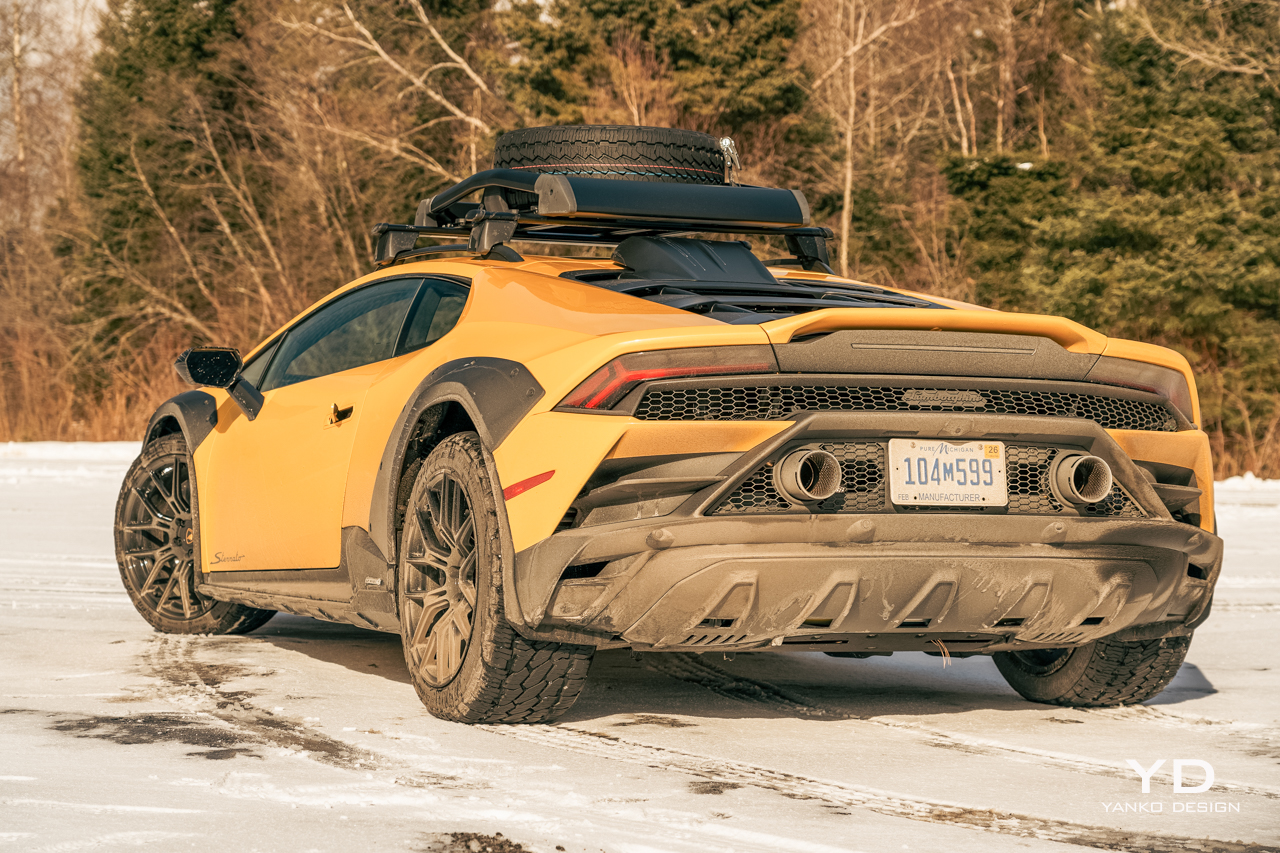

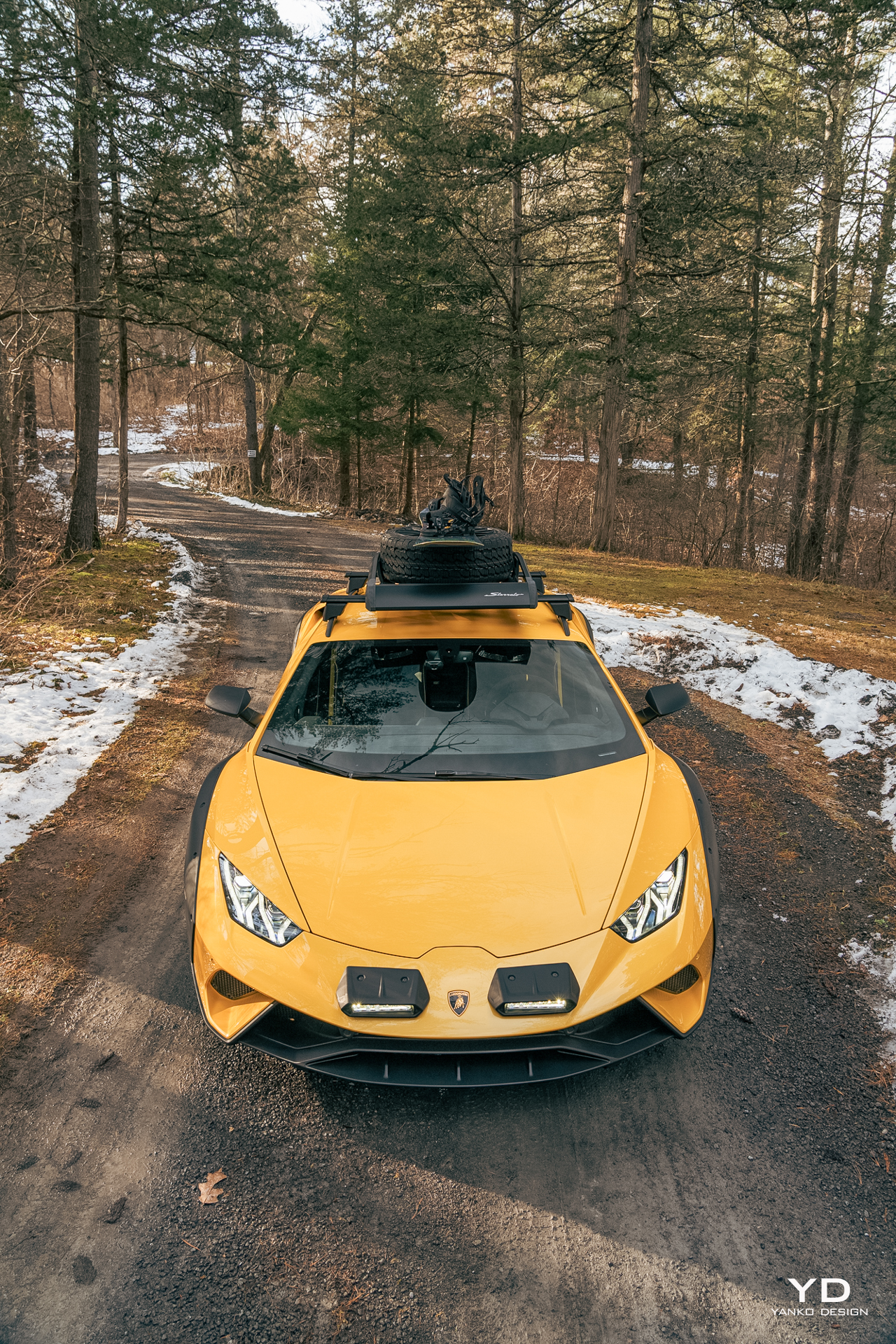
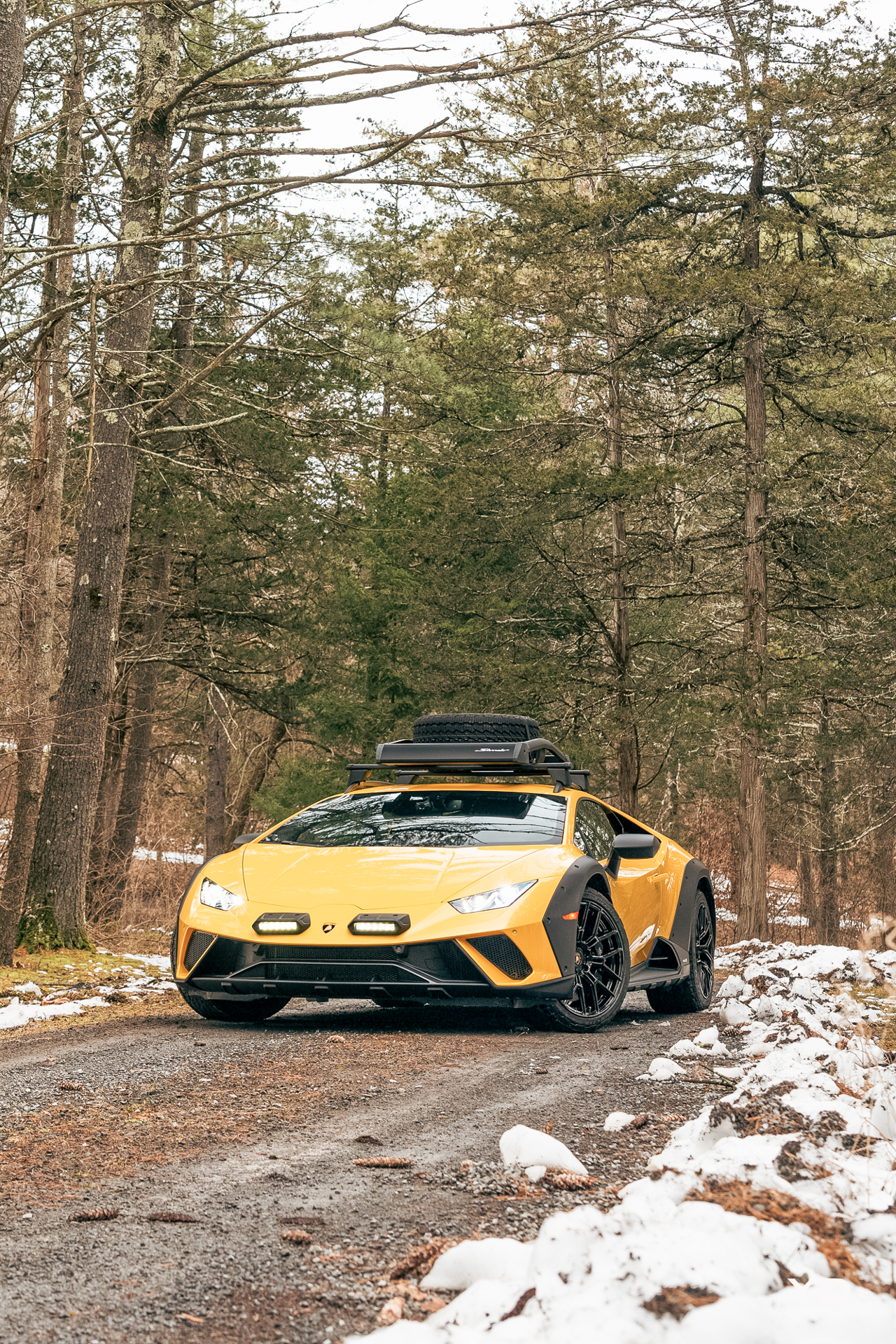
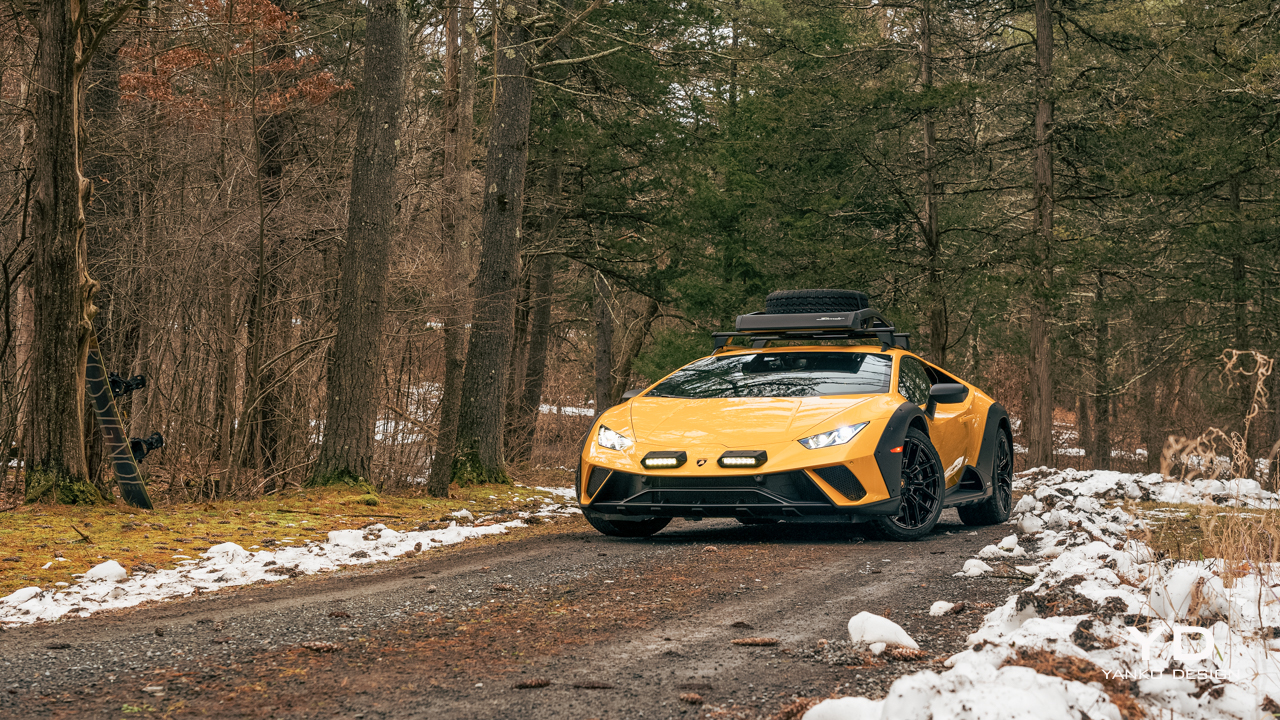
Meanwhile, the Sterrato looks and drives like a true Lamborghini, just one that’s had a few subtle additions and enhancements to ensure that the fun doesn’t stop when the asphalt does.
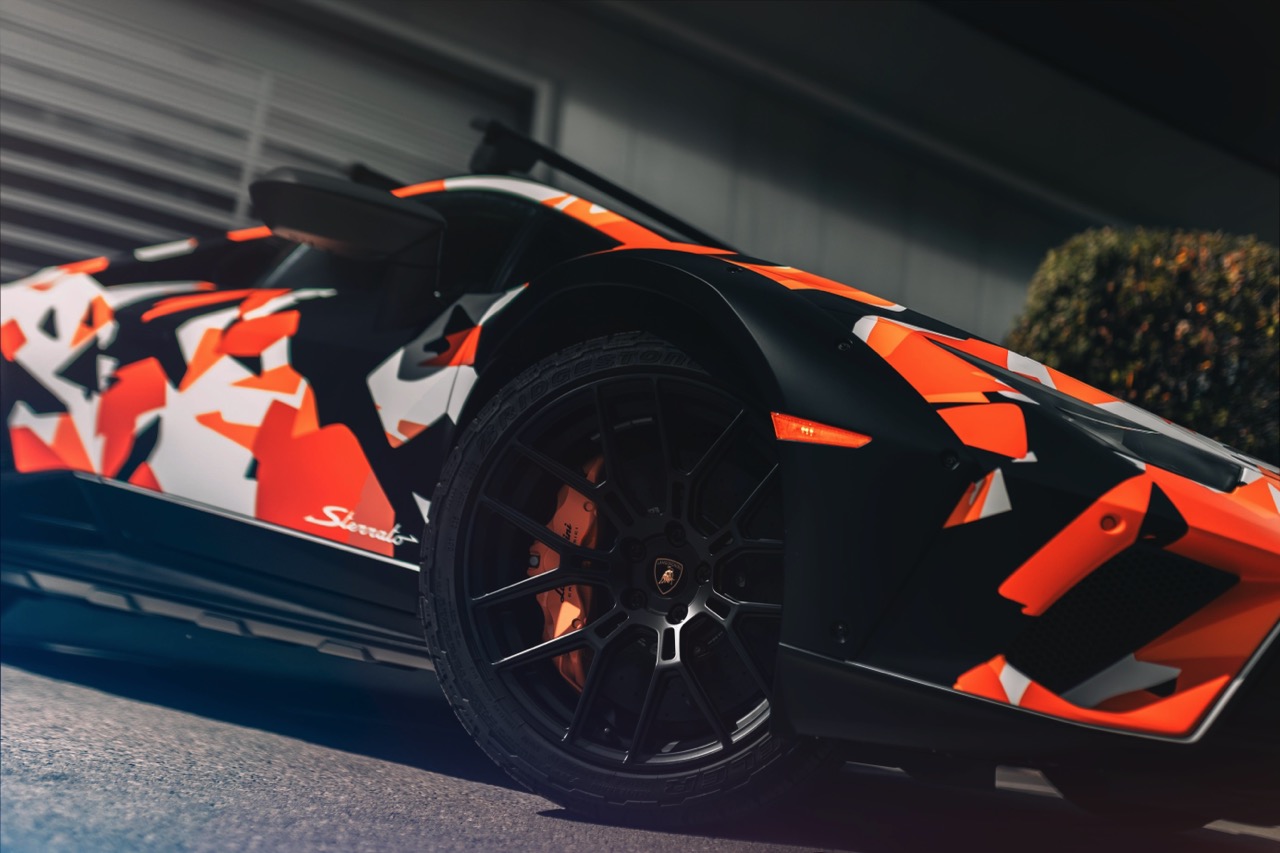
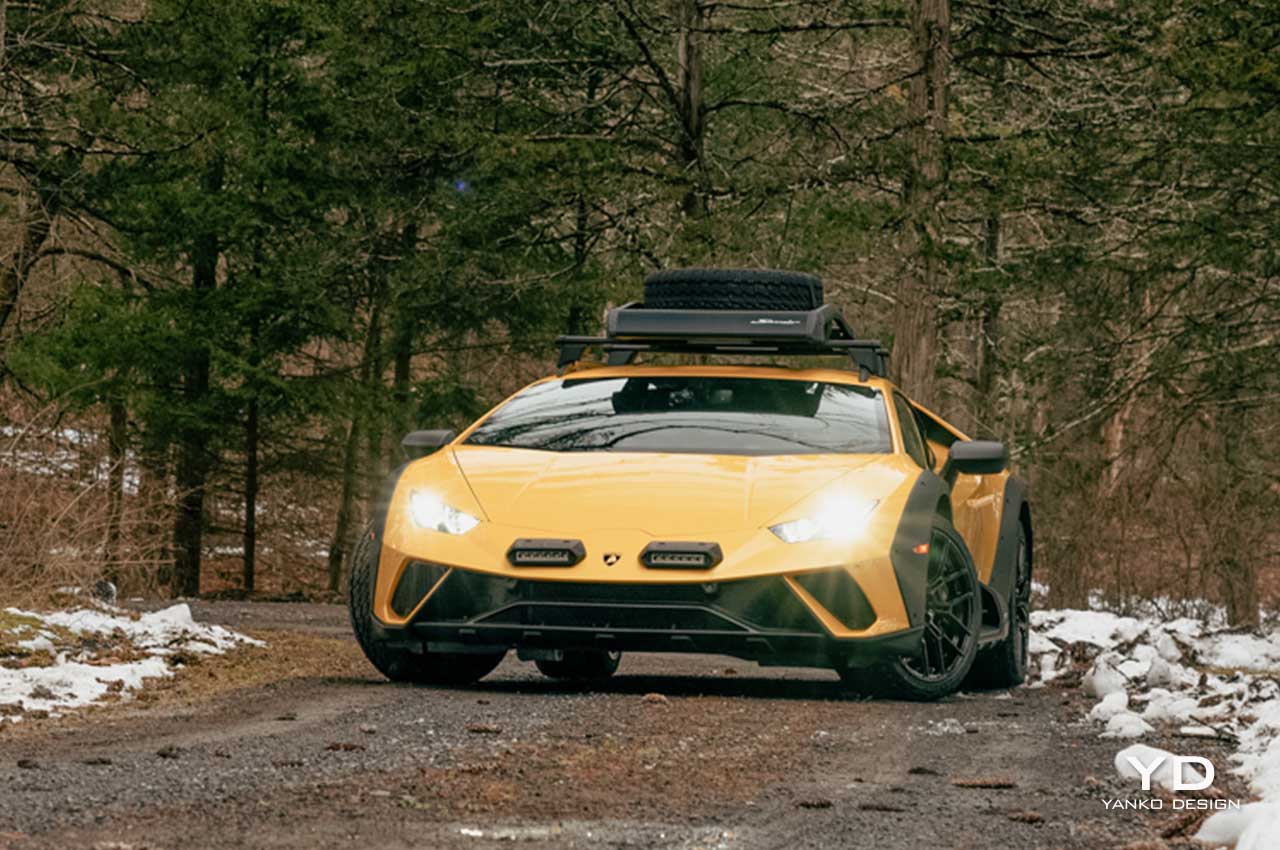
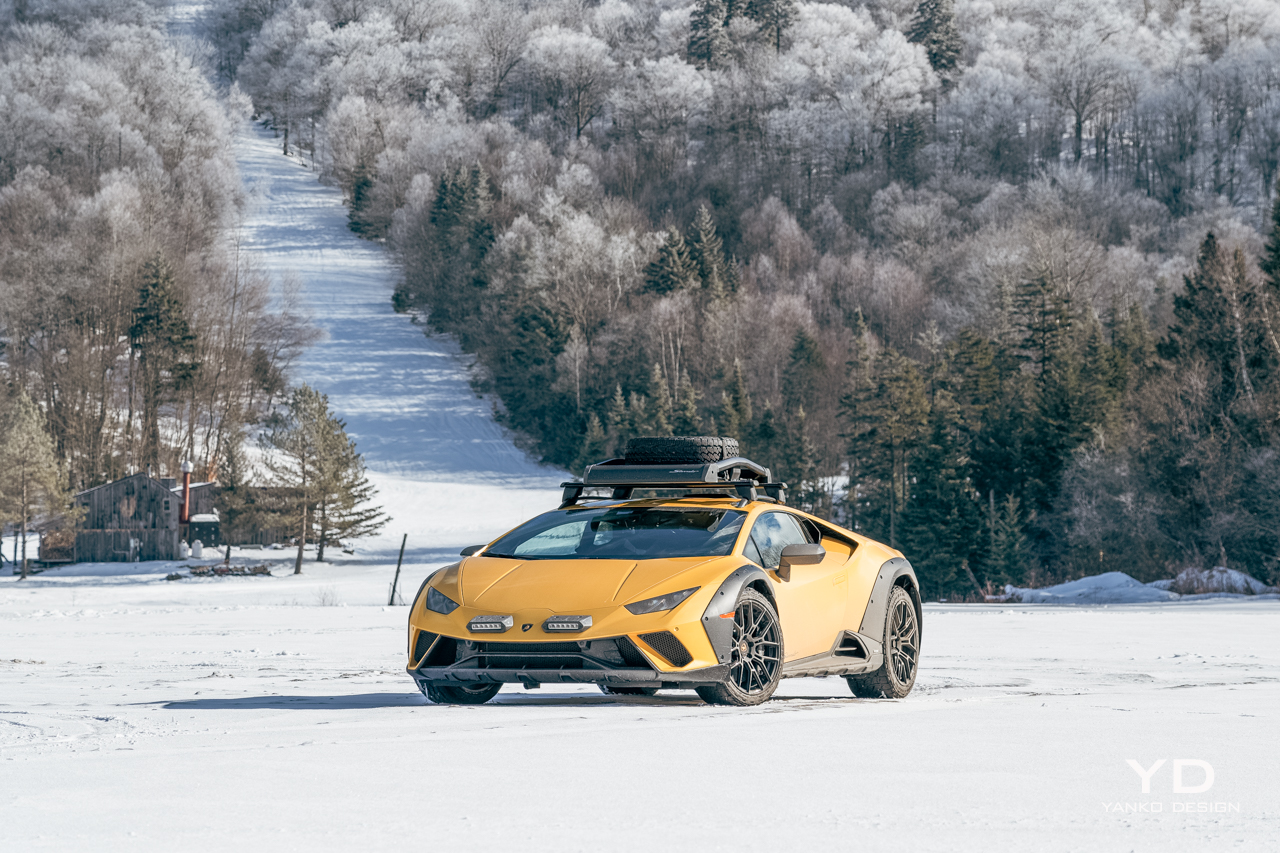
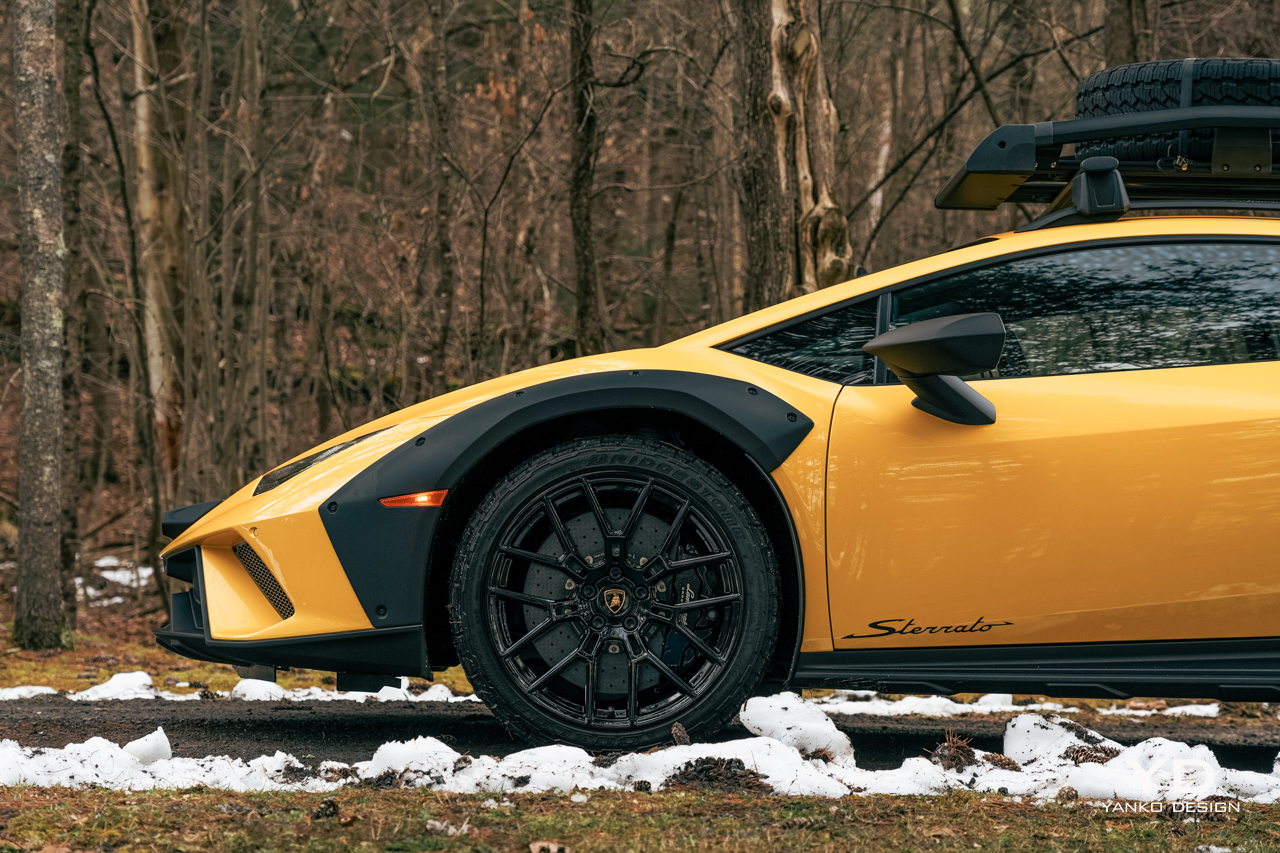
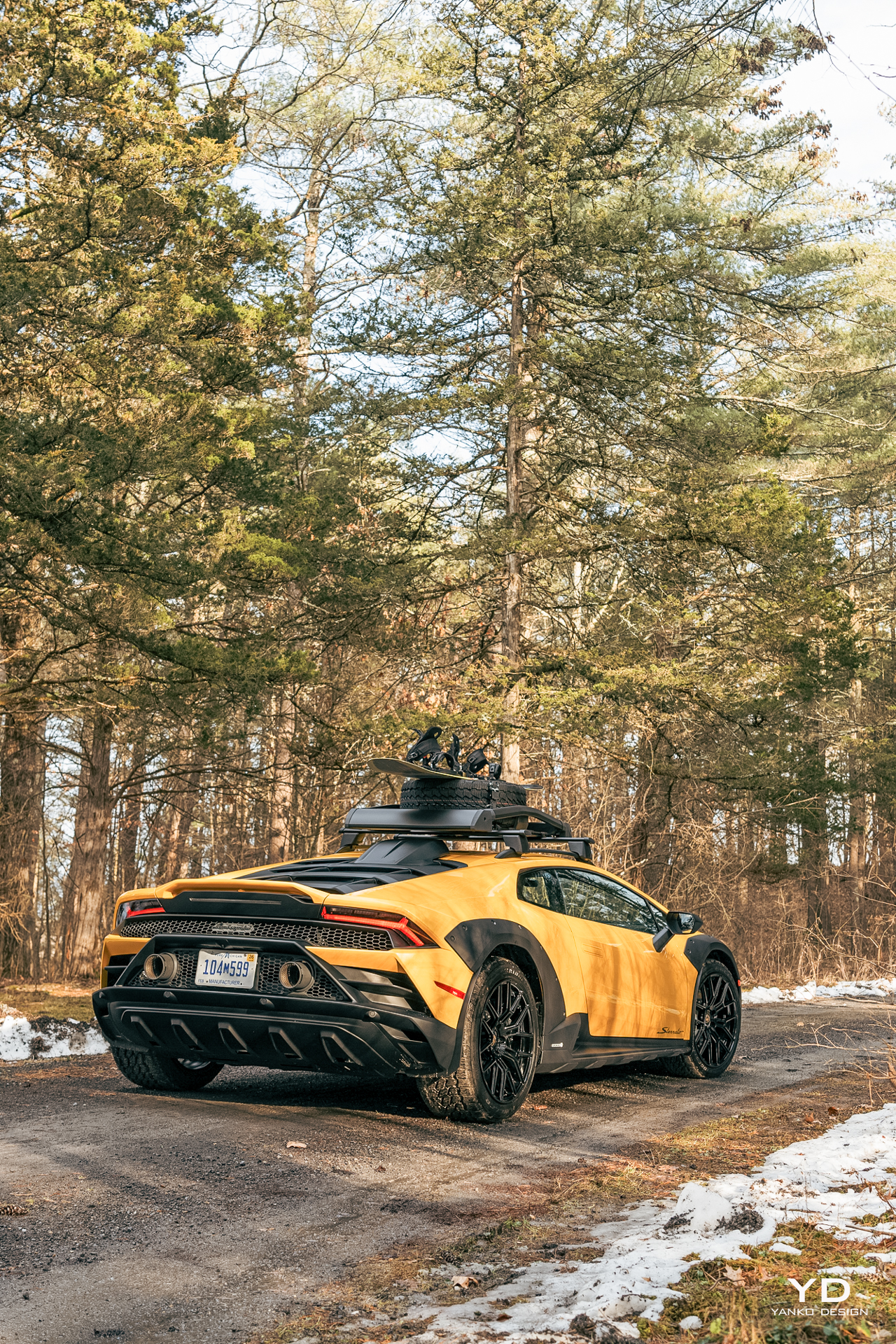
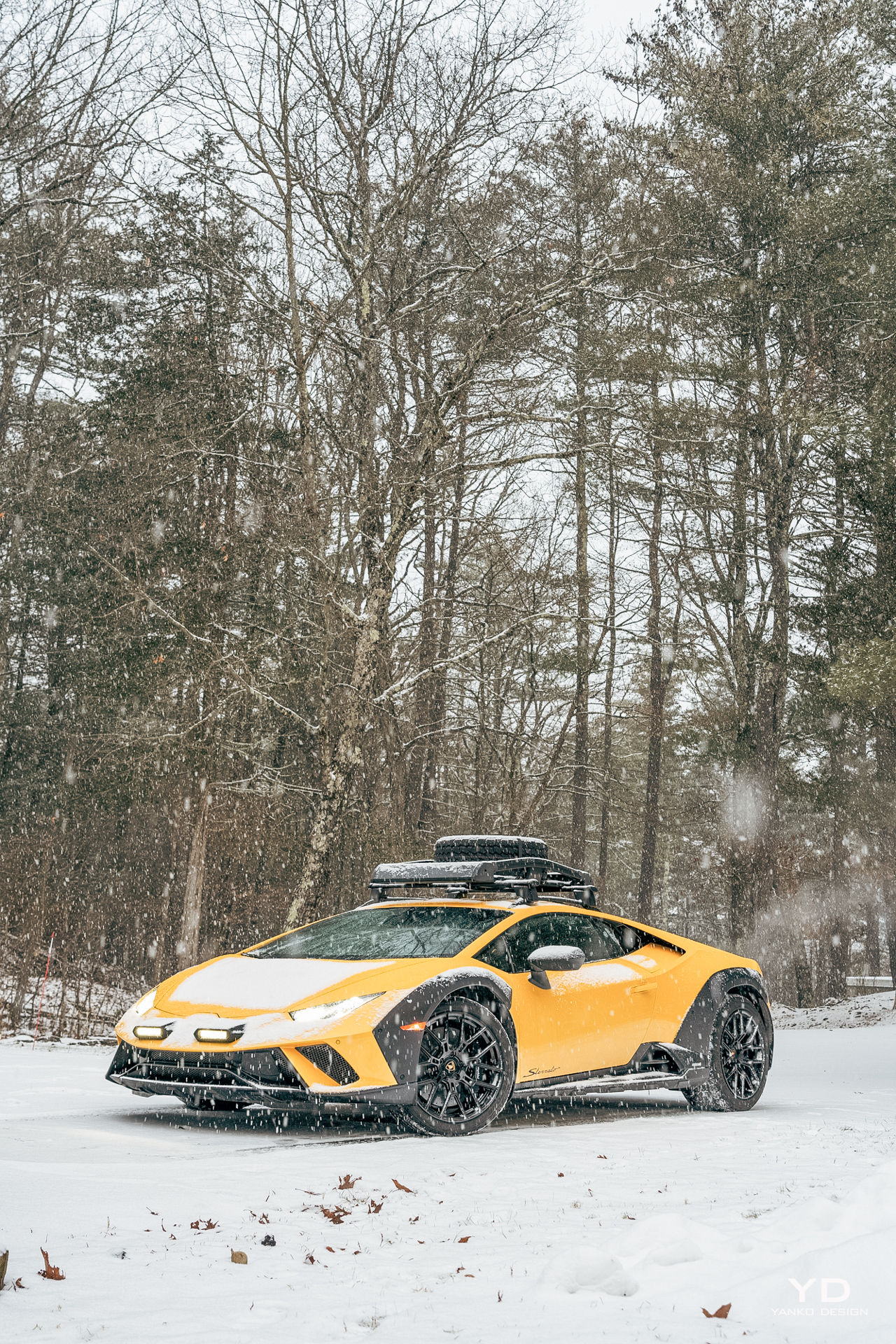
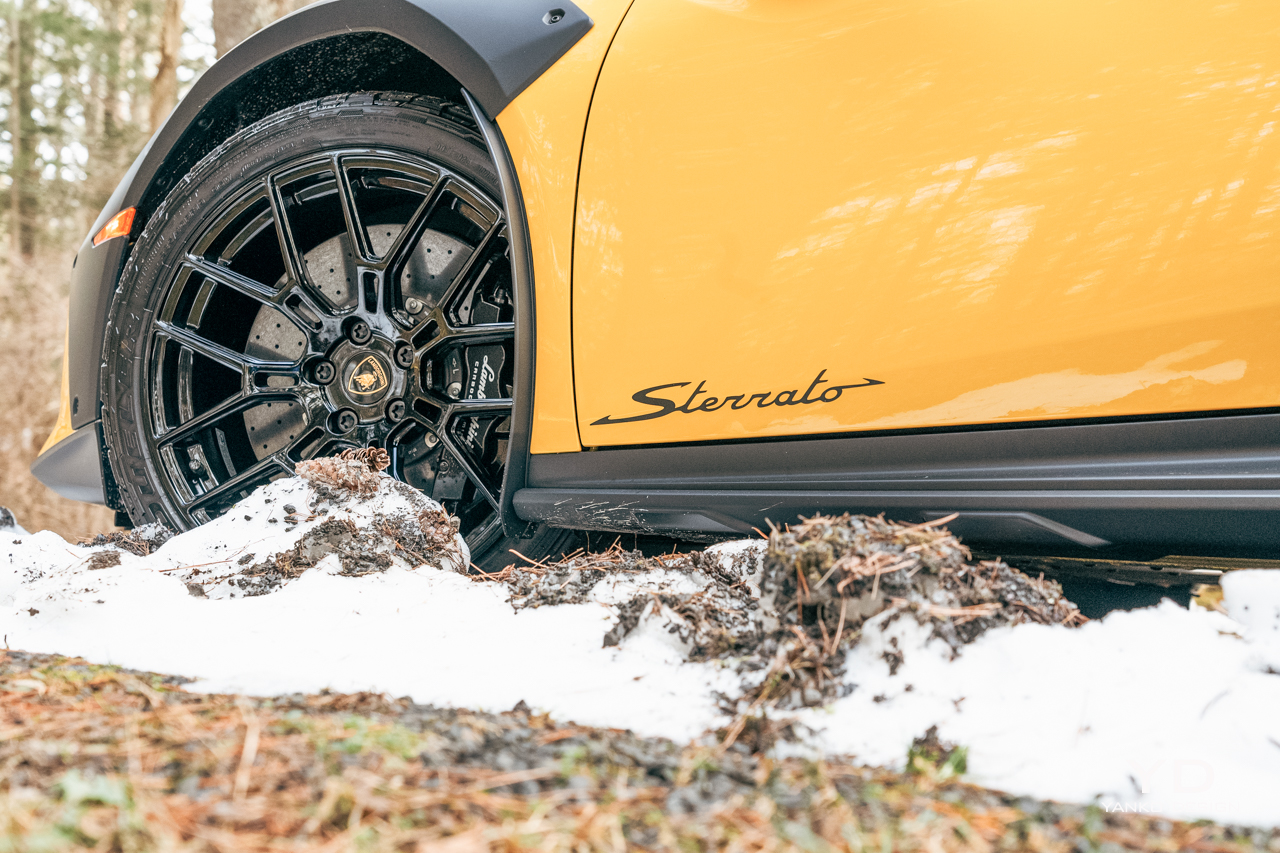
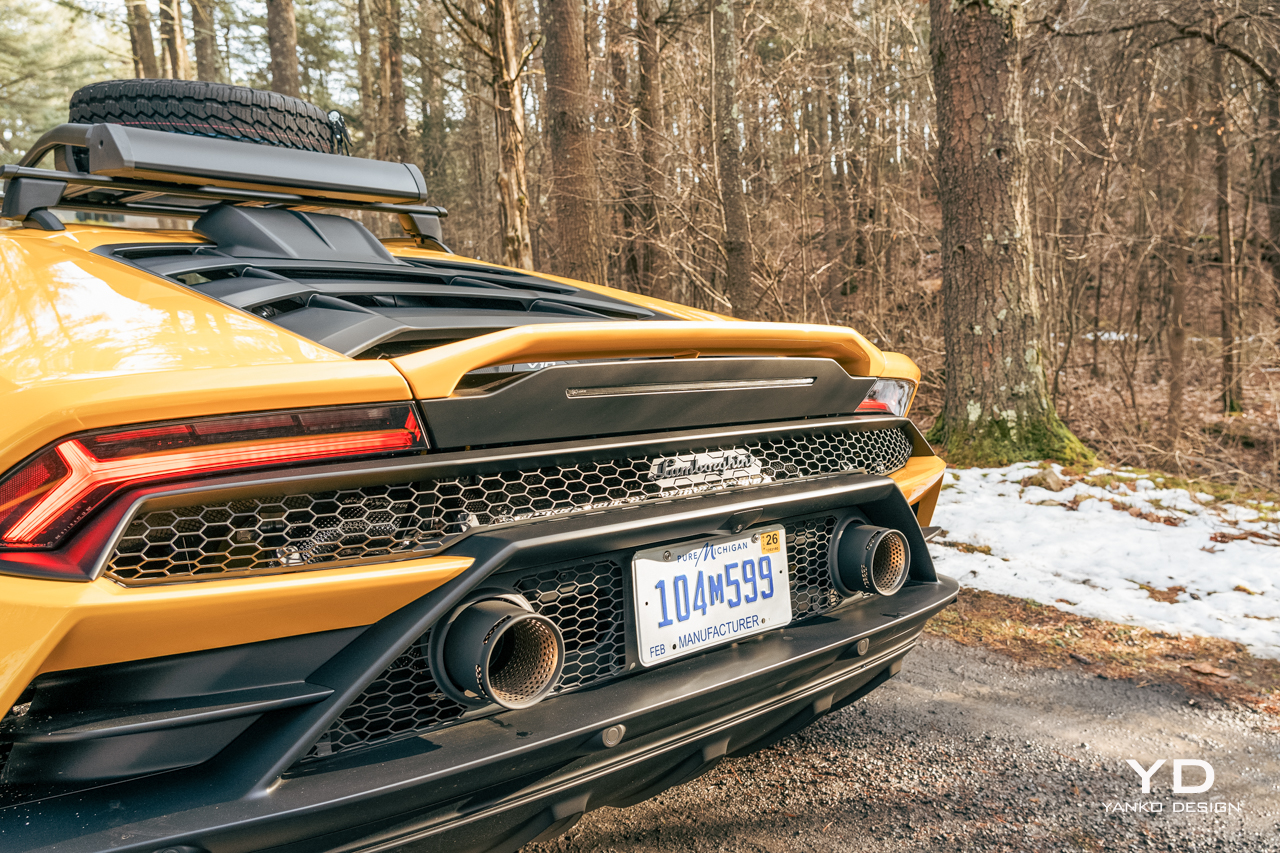
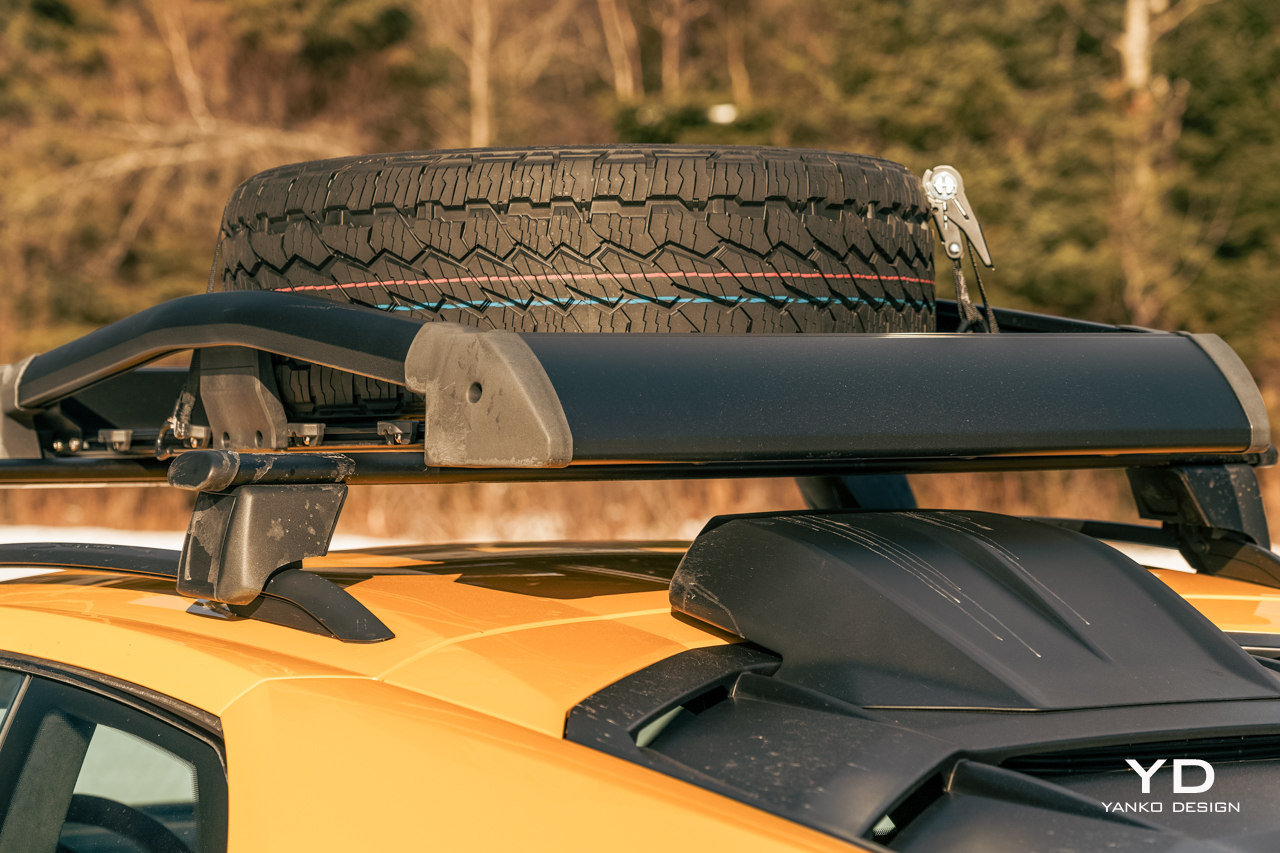
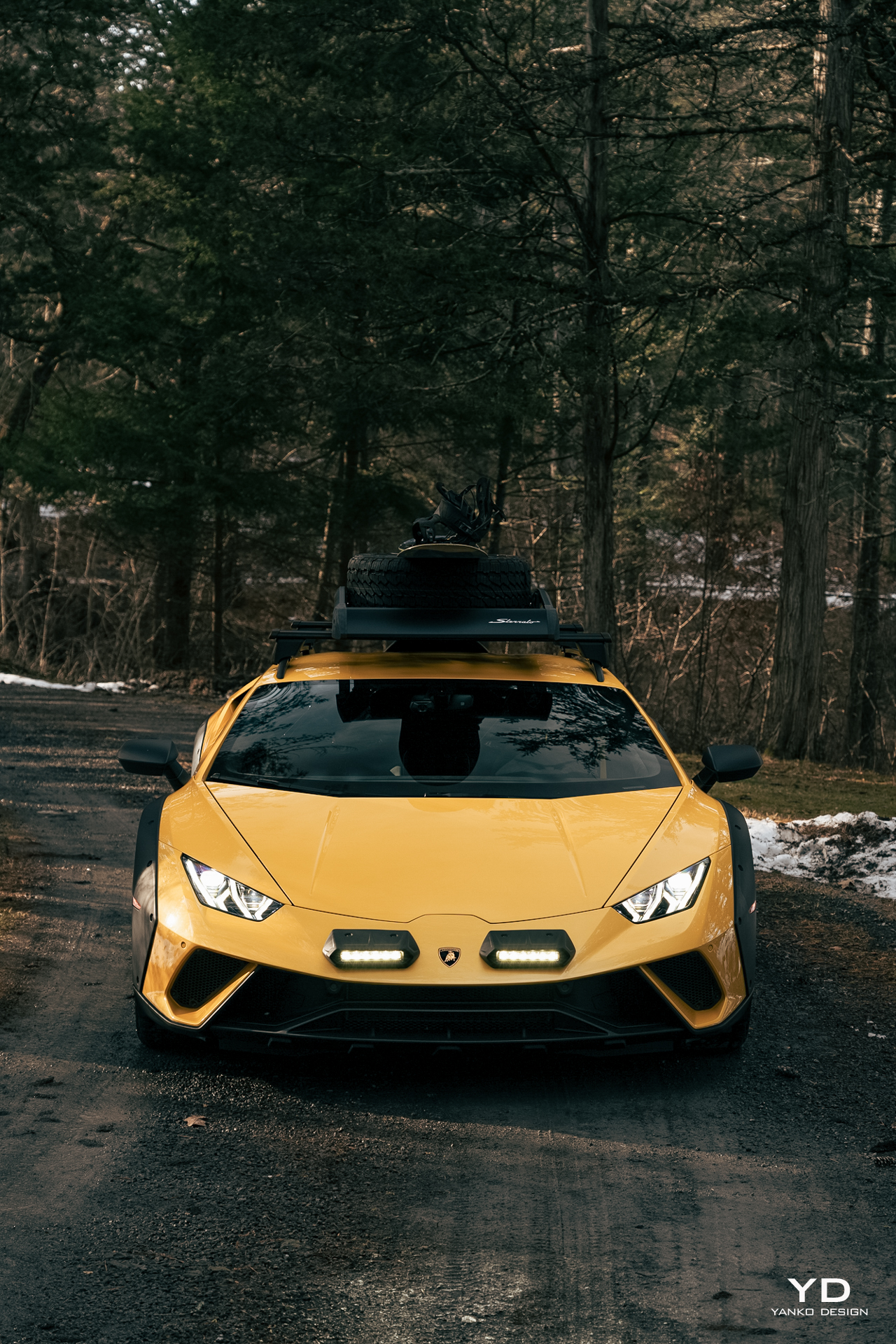
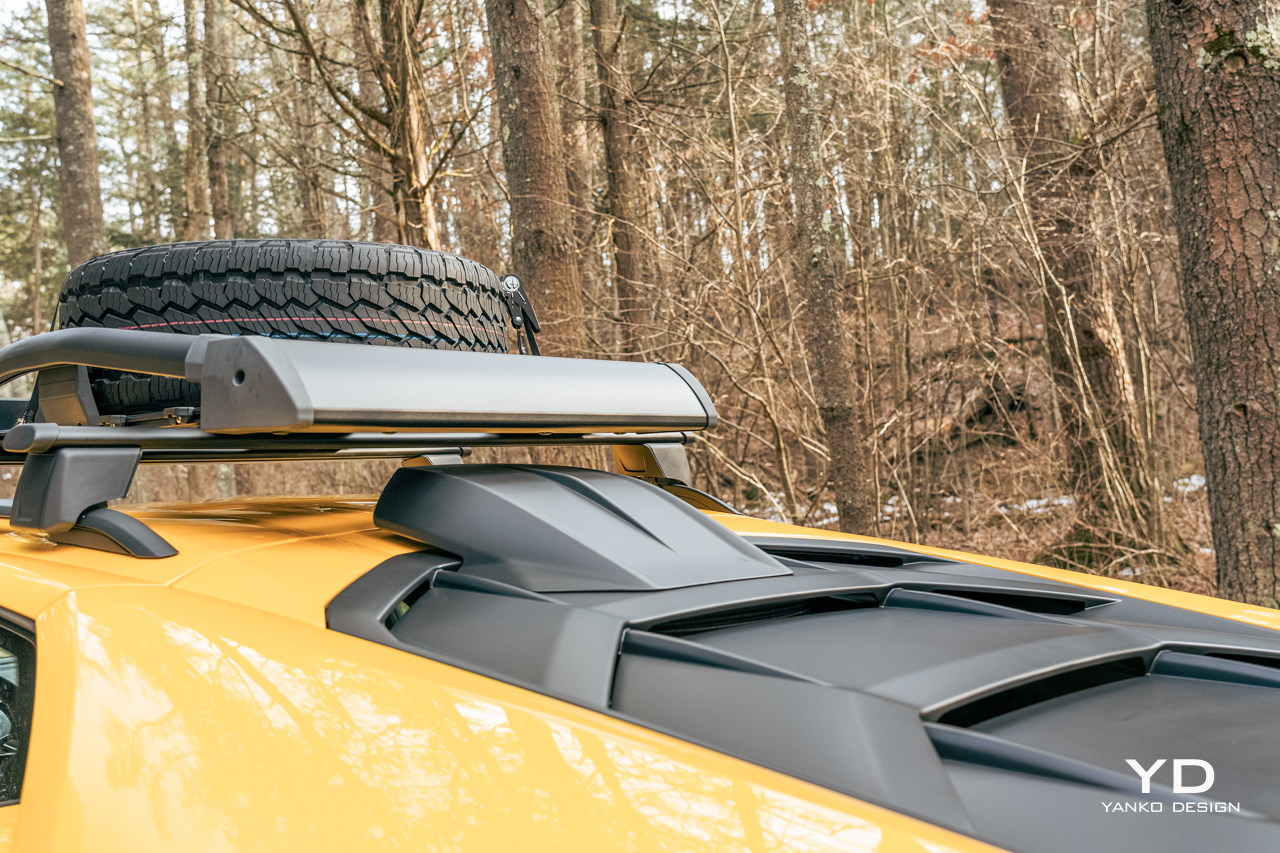
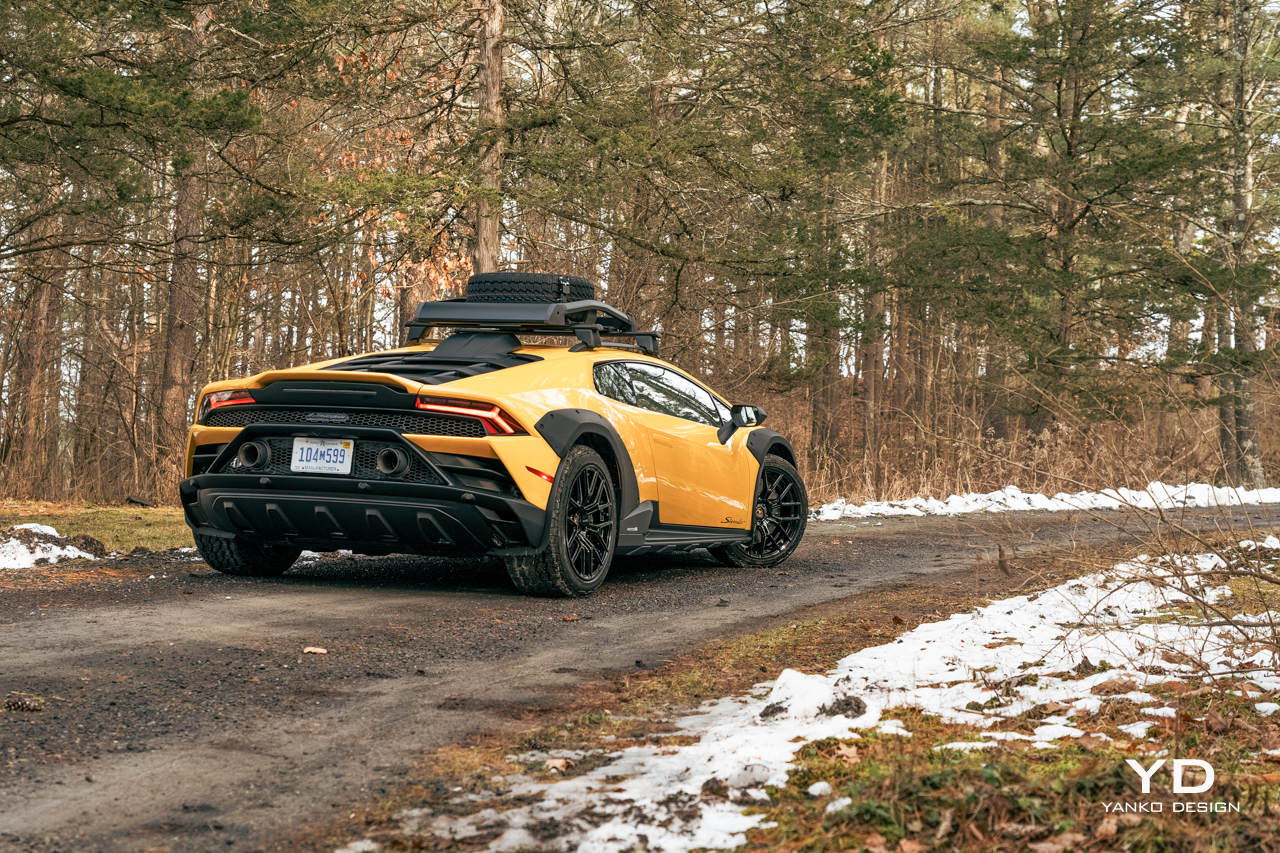
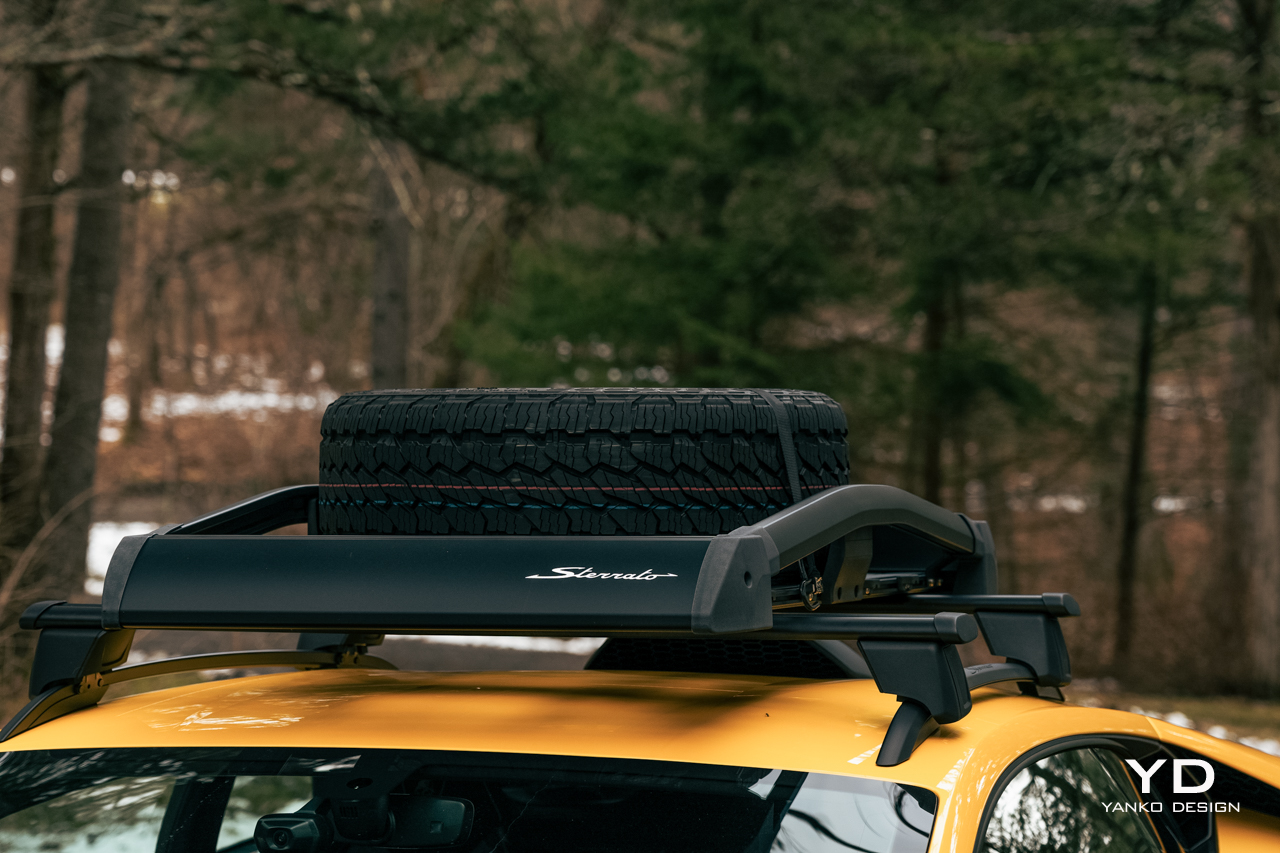
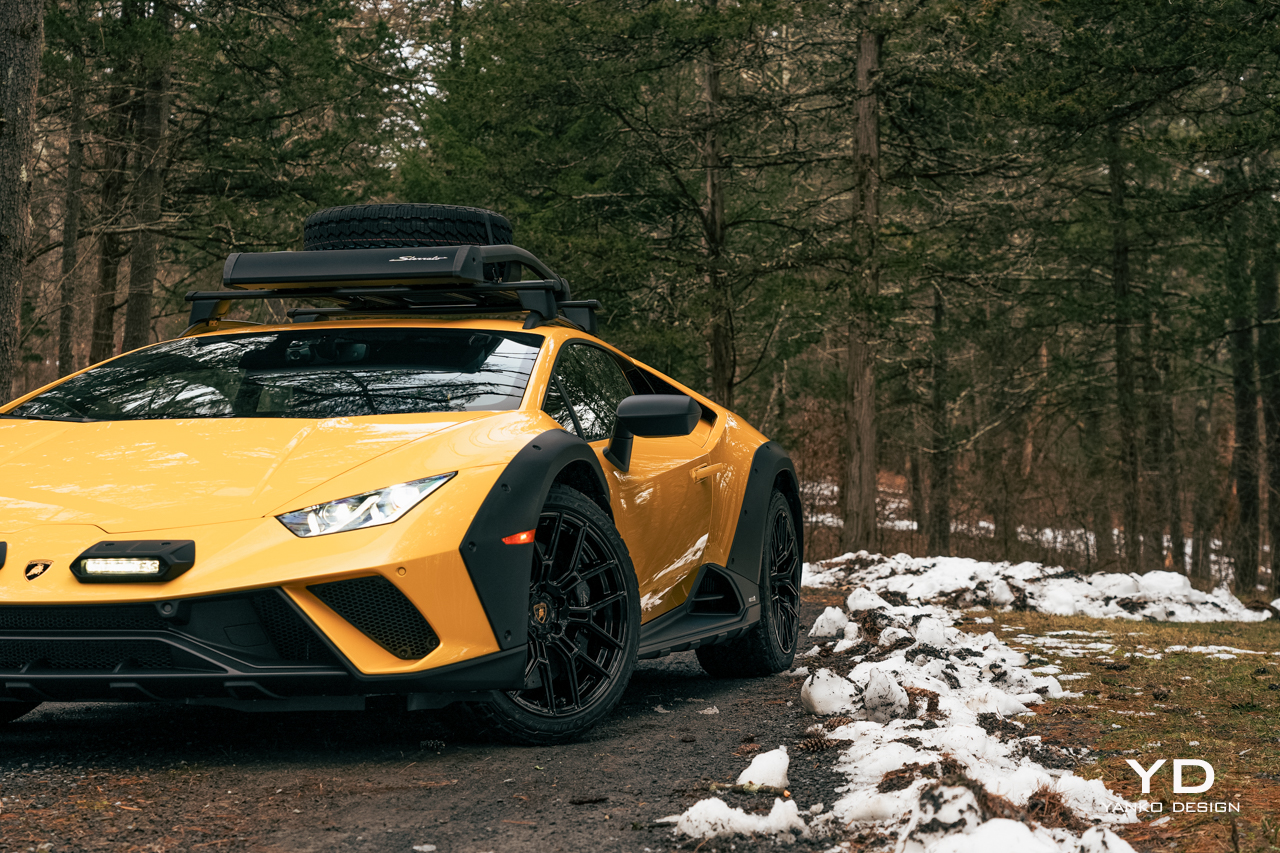
That starts with the suspension, which raises the car by 44 mm. Part of that lift is helped by the tread on a set of chunky Bridgestone Dueler AT002 tires mounted to 19-inch wheels. Five wheels, as it happens, with the car you see here outfitted with an optional spare mounted to the roof. That, though, is one option that I can’t recommend against strongly. The Sterrato, you see, doesn’t come with a jack, so even if you get a flat, you’ll have no way to change that wheel.
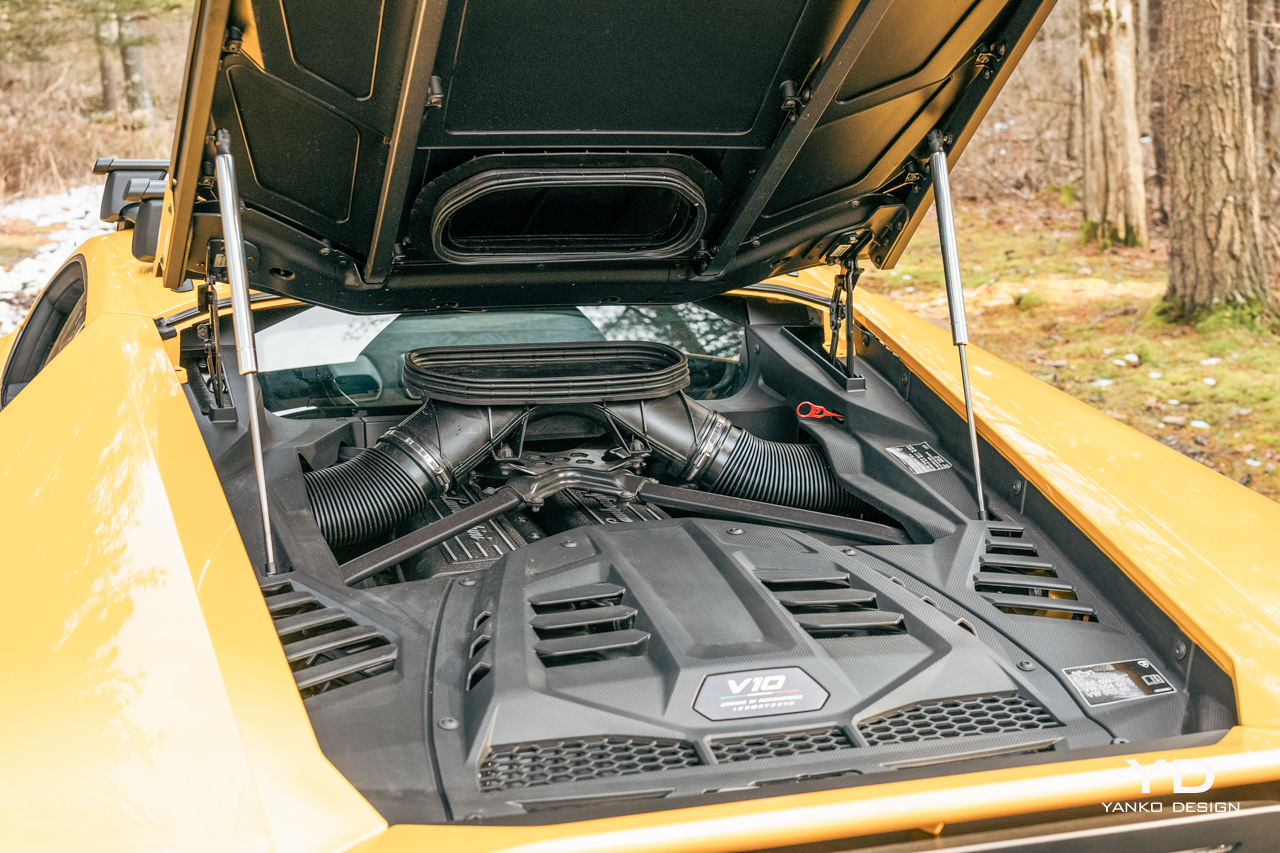
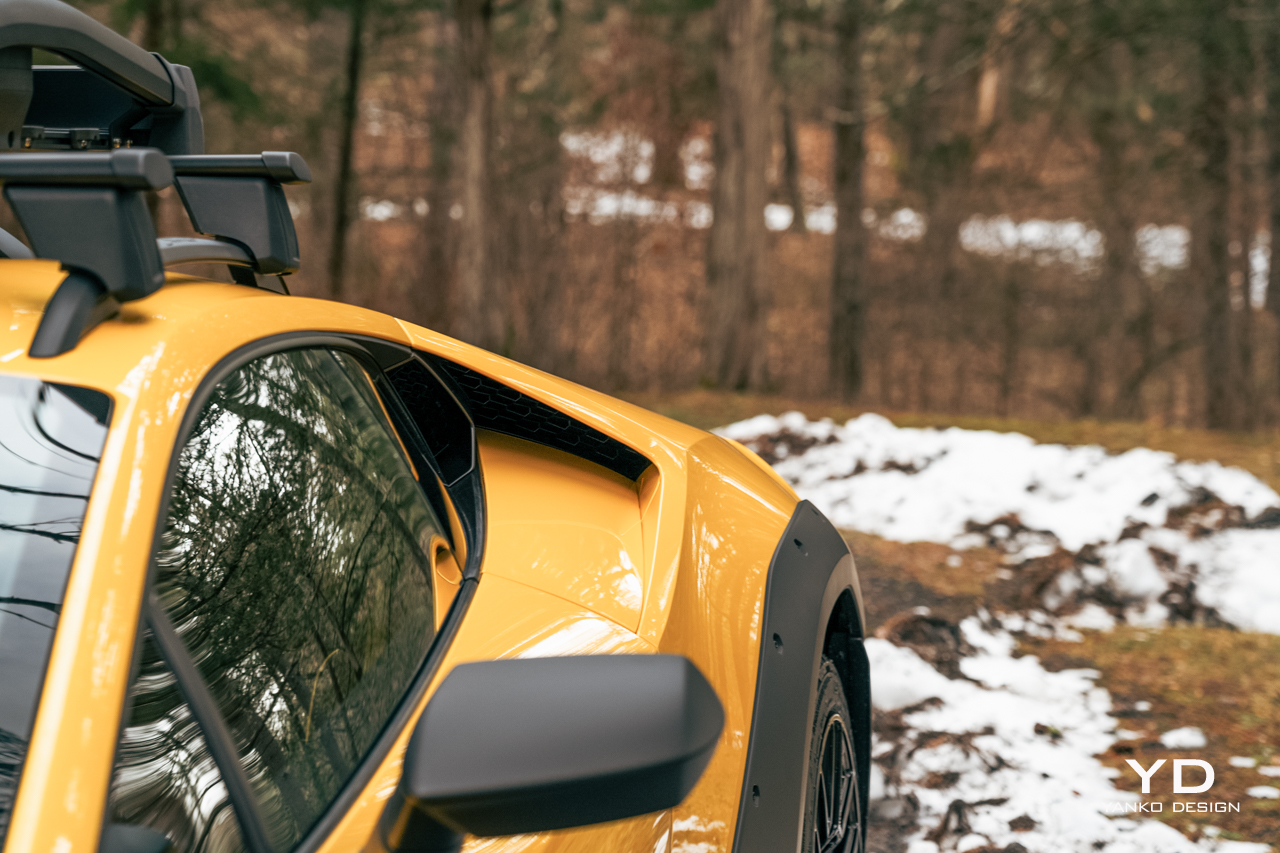
The engine, the Huracan’s brilliant 610-horsepower 5.2-liter V10, comes with top-mounted air intake, which not only looks fantastic but should help the engine suck in a little less grit on a dusty rally trail.
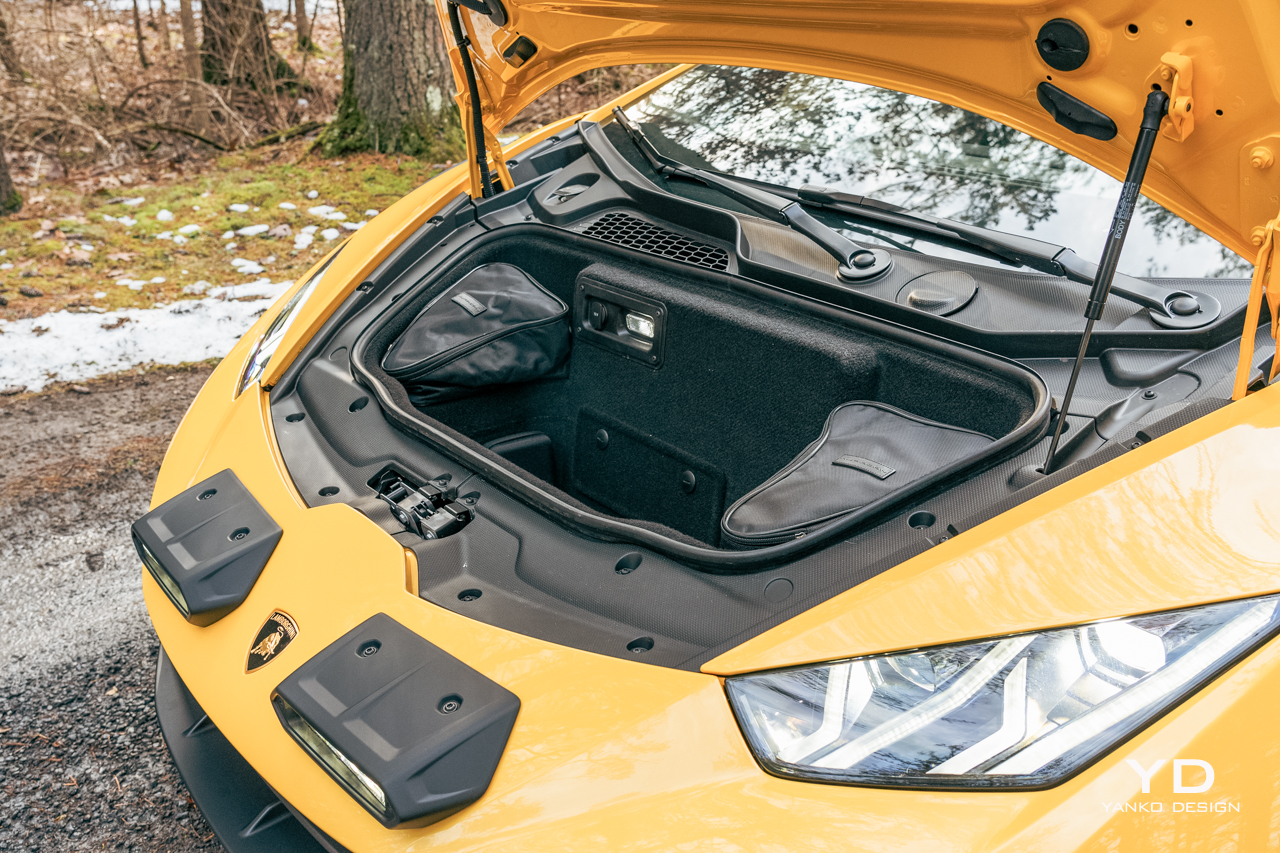
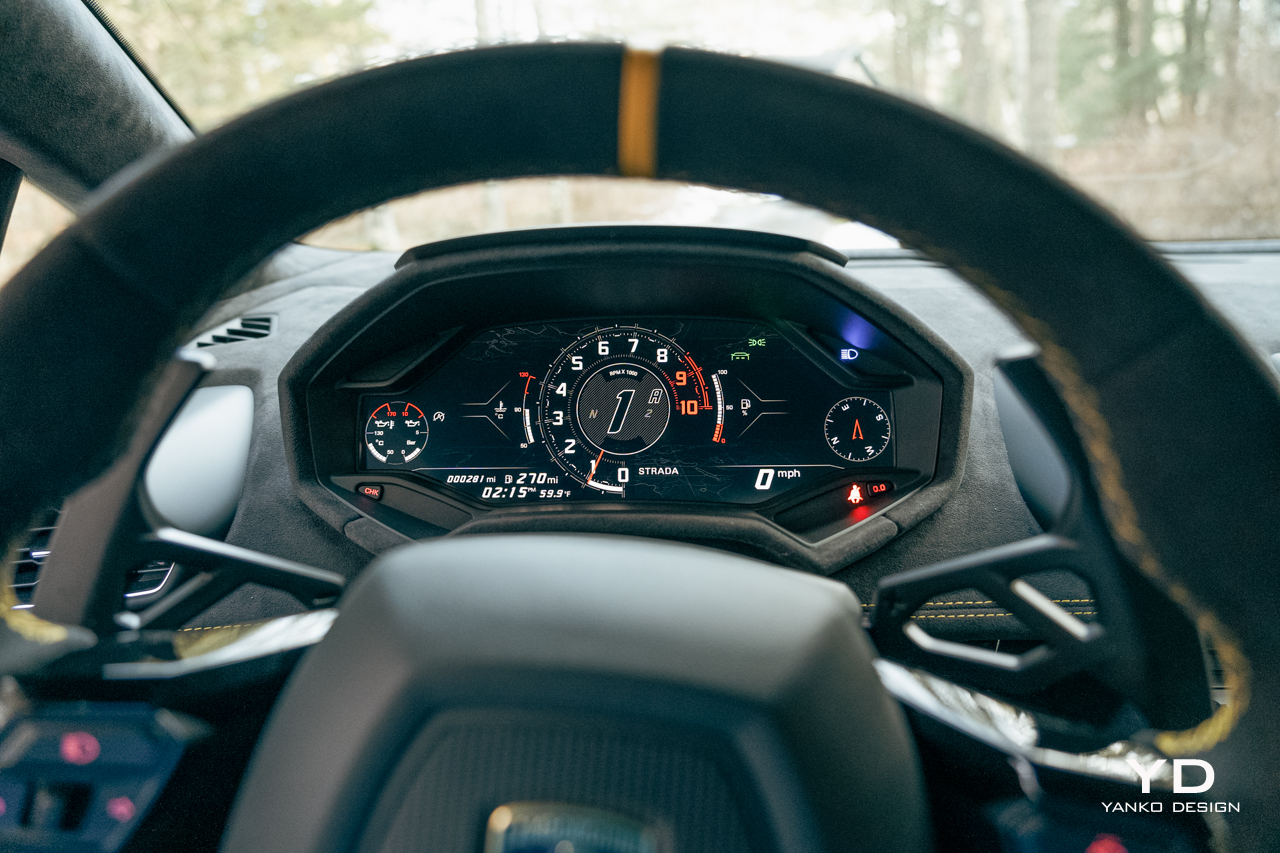
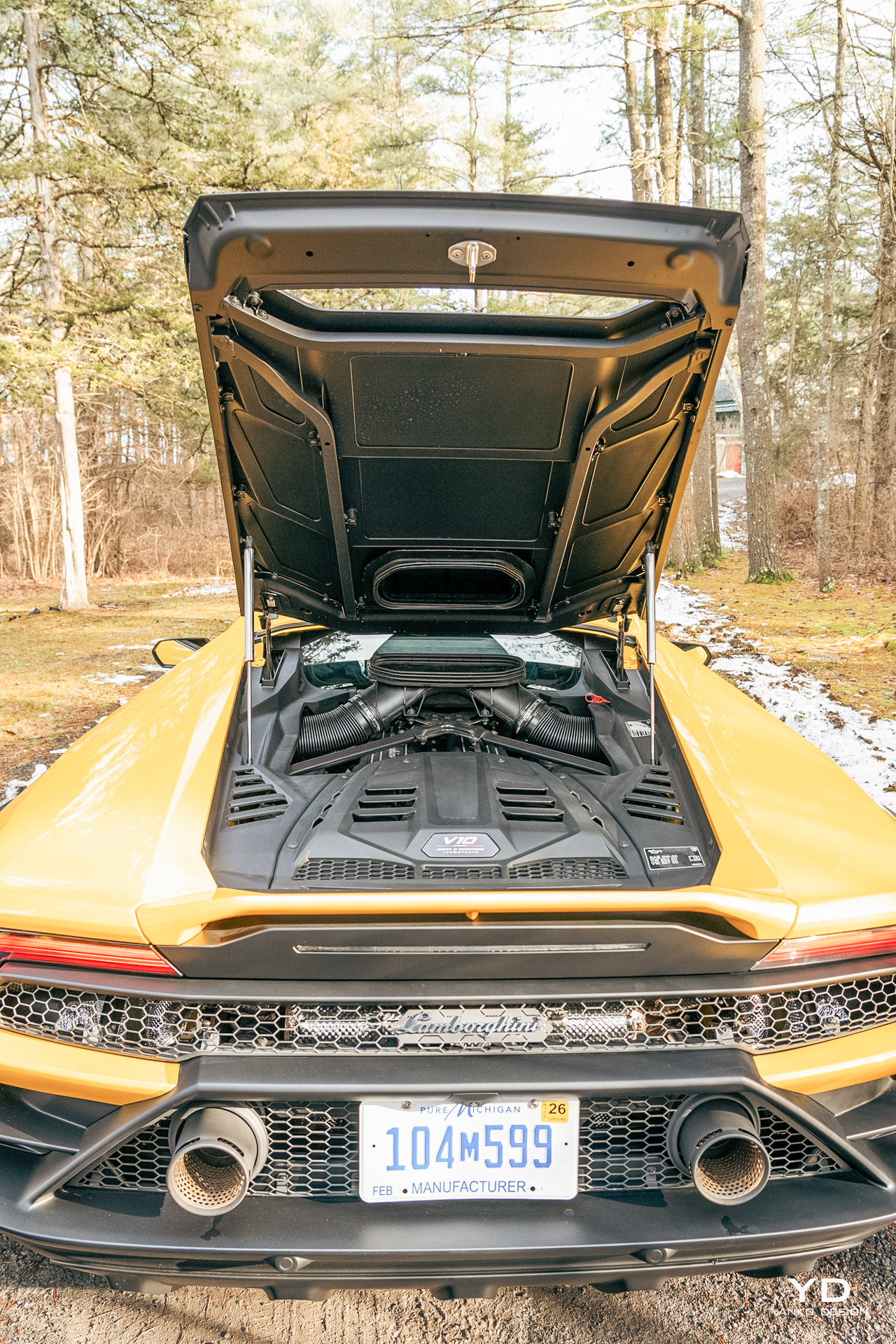
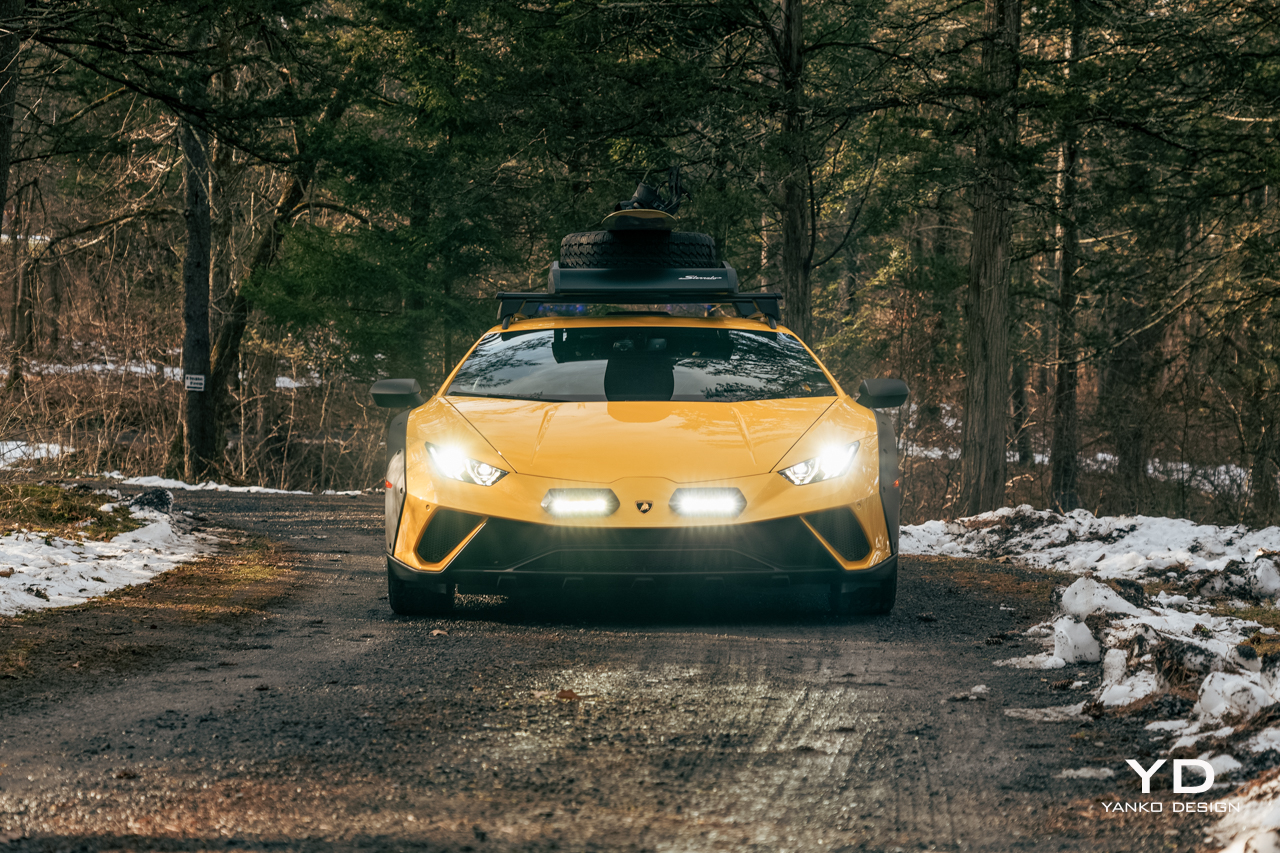
The rest of the changes are more on the lifestyle side, as ever, “style” being the most important part. The Sterrato comes with a pair of permanently affixed roof rails, to which you can mount crossbars and put whatever accessories you like. The car you see here came into my life with a top cargo basket of sorts, but given my wintery testing, a ski rack would have been more appropriate.
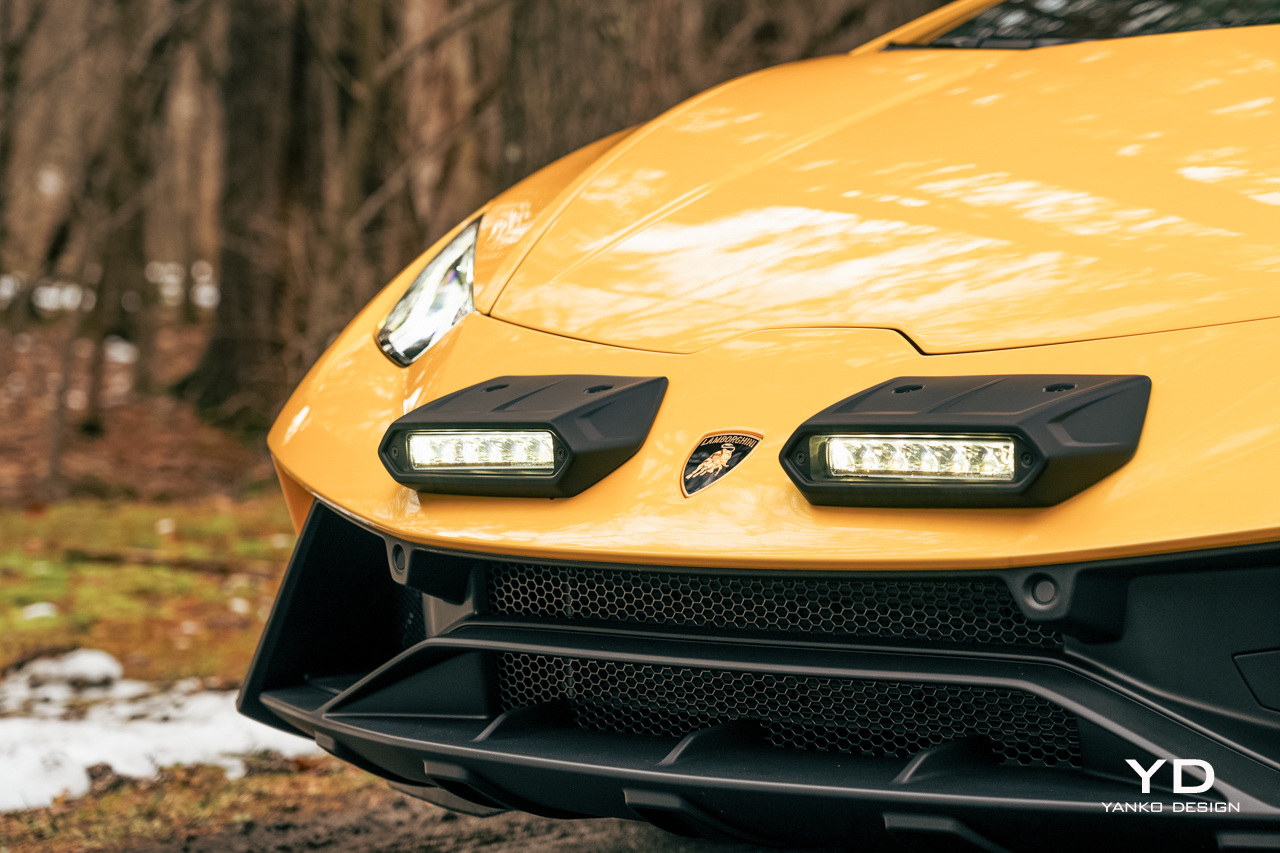
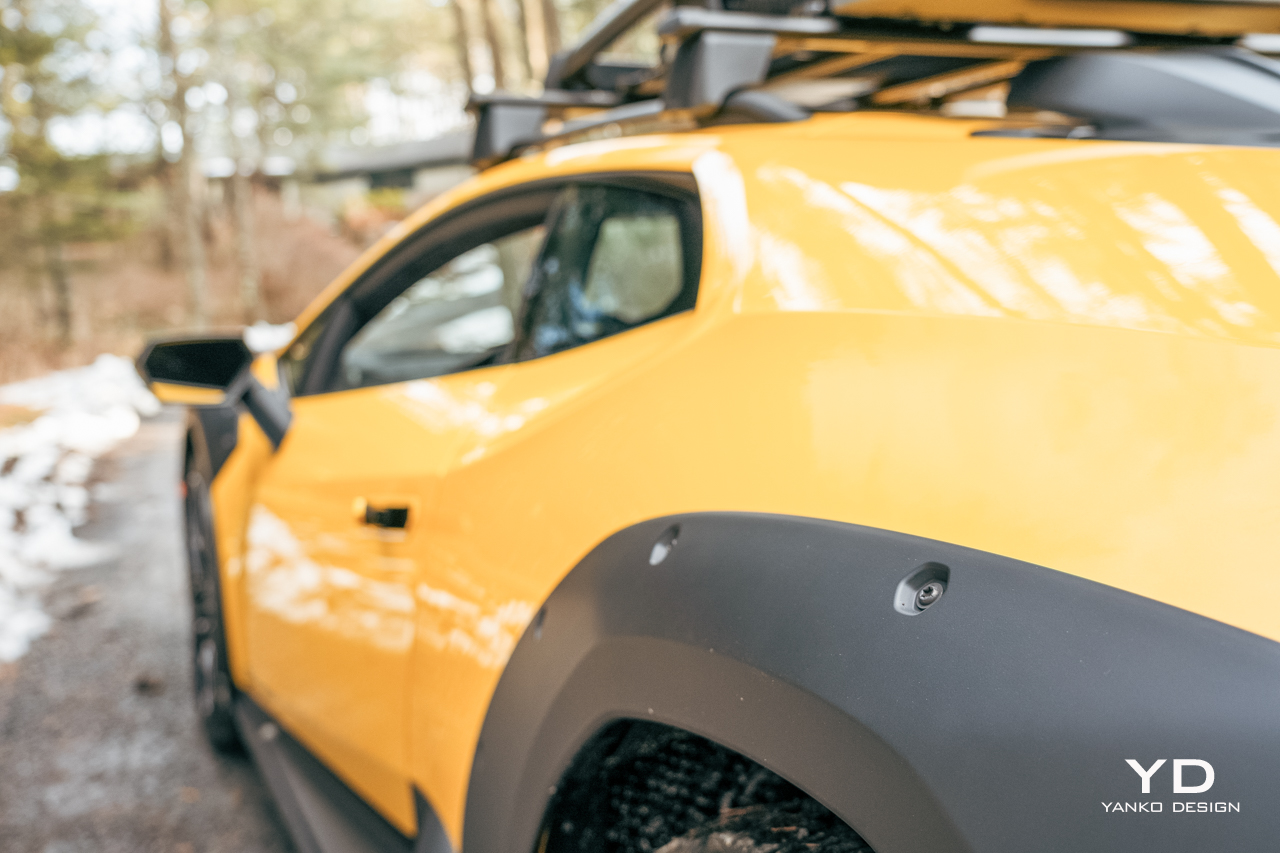
Chunky, bolted-on fender flares at every corner add stance and aggression, while some light underbody protection should keep gravel and the like from damaging that aluminum and composite chassis.
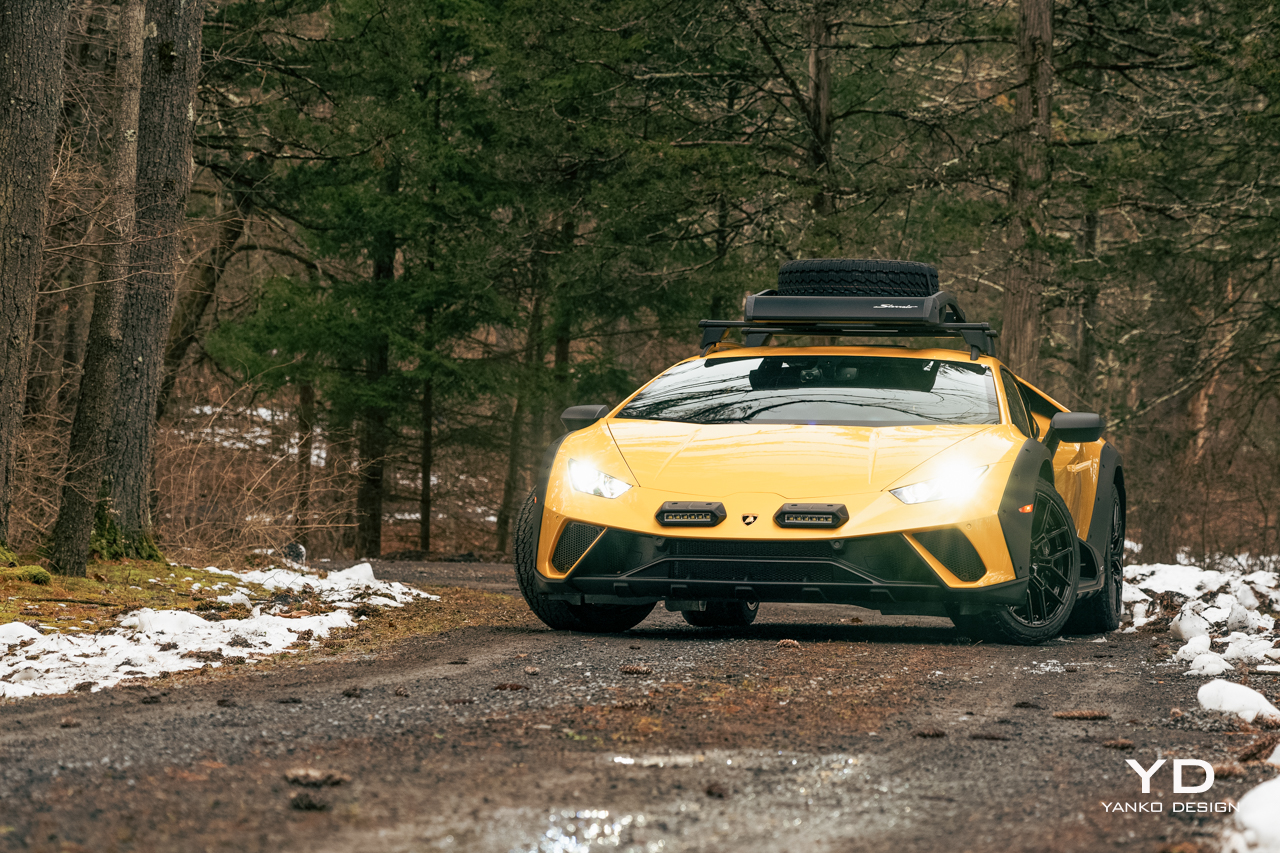
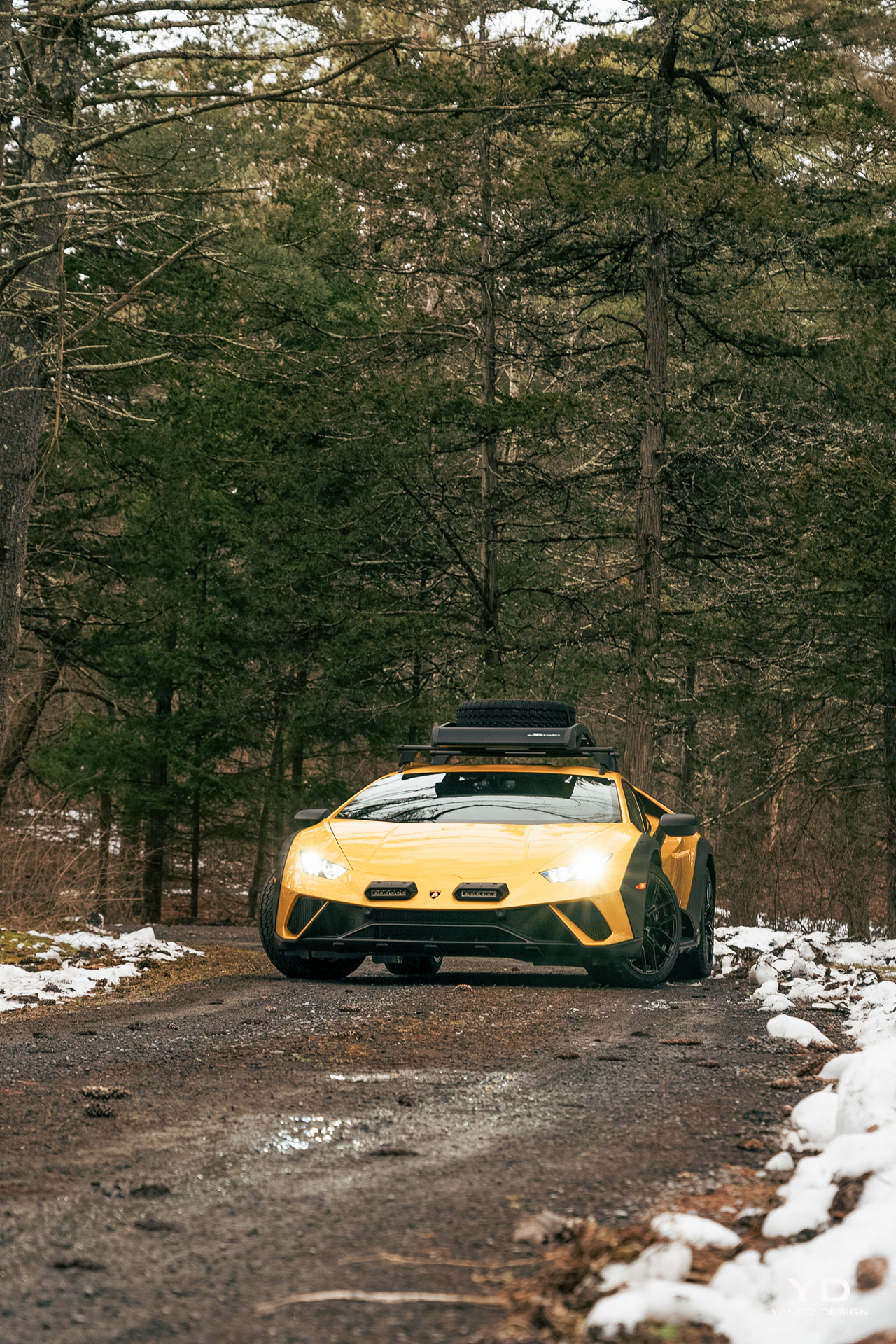
The overall shape and appearance of the Huracan isn’t much impacted. It looks essentially the same as it ever did, just slightly angrier and, most importantly, more ready for adventure.

Interior
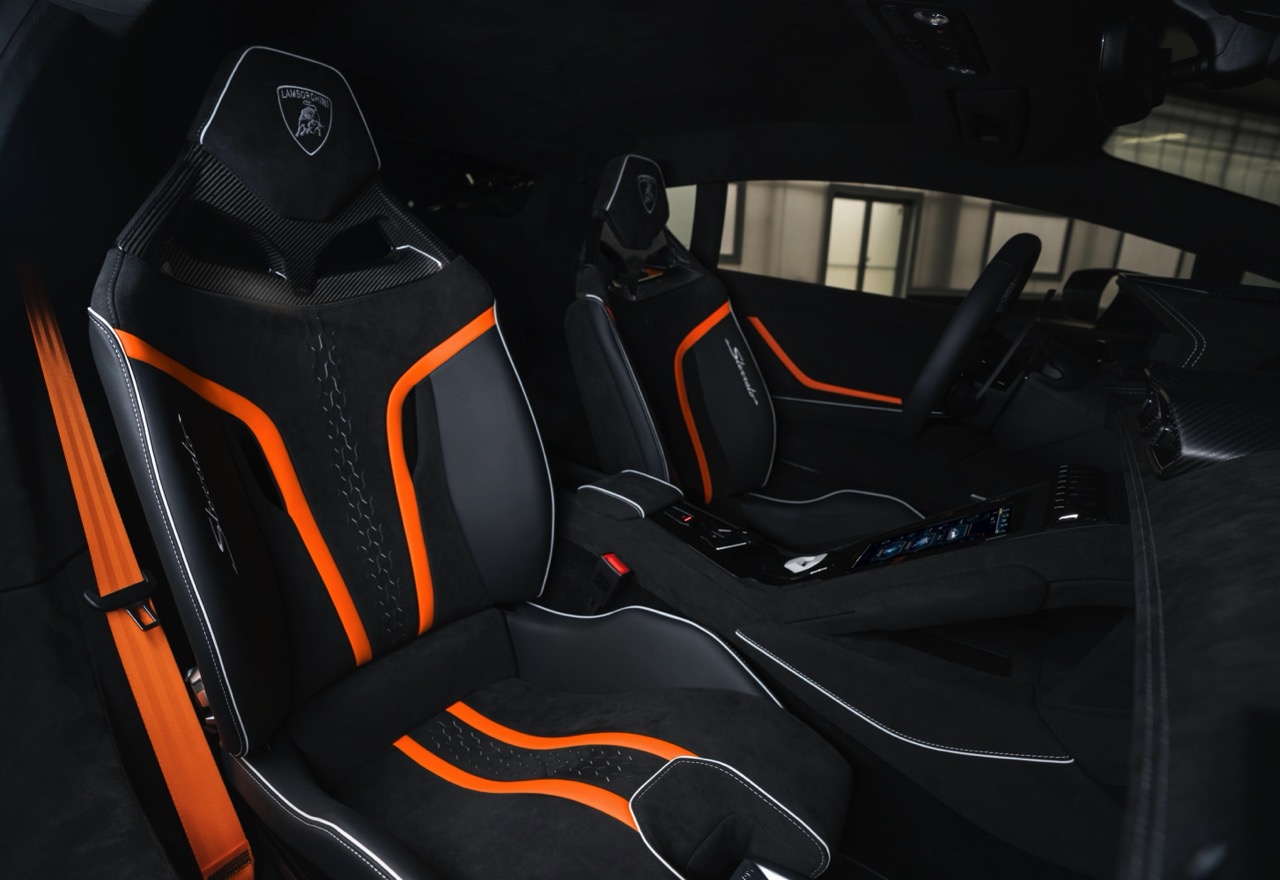
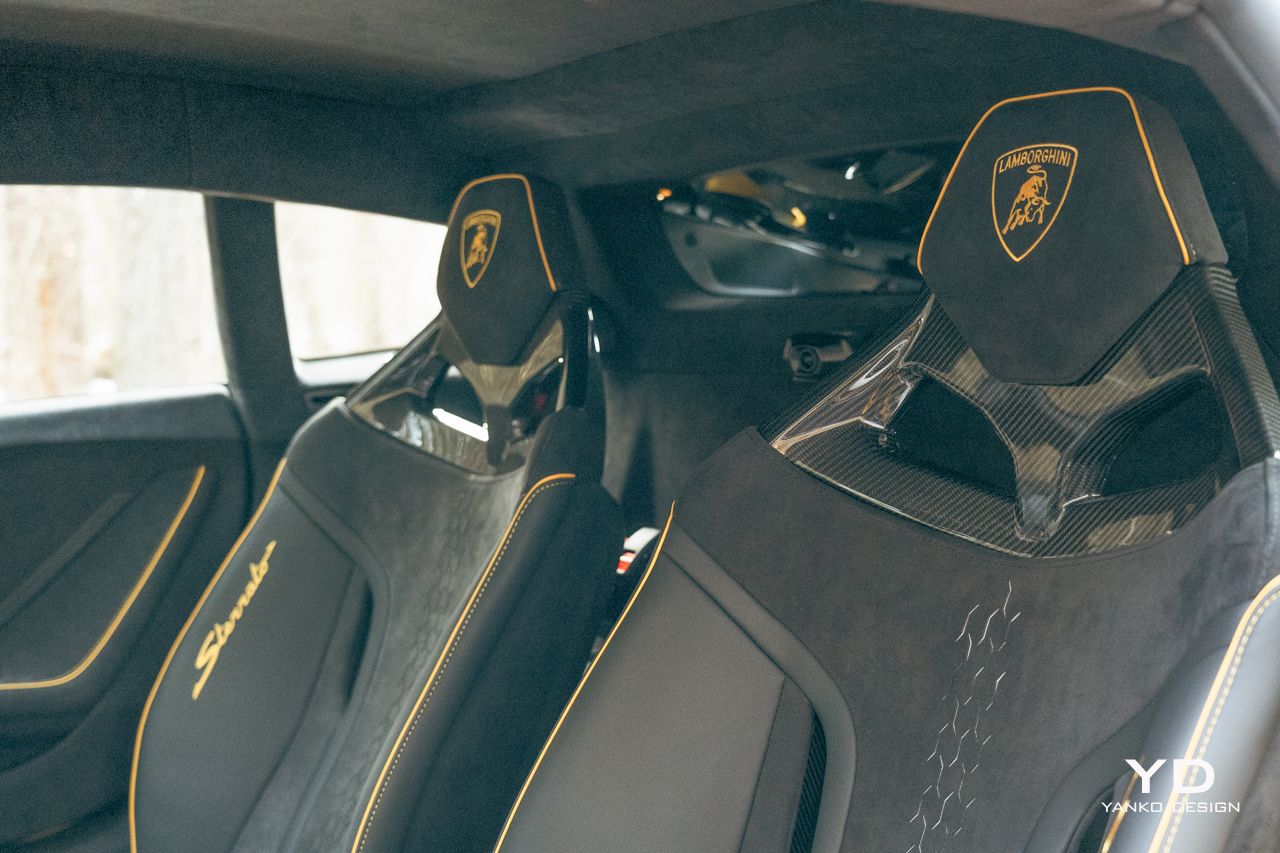
On the inside, Sterrato-specific changes are few. Lamborghini offers a pair of all-weather, rubber floor mats that fit perfectly and extend up the sides of the Huracan’s microfiber-lined interior. They’re a must-have if you’ll be braving inclement conditions.
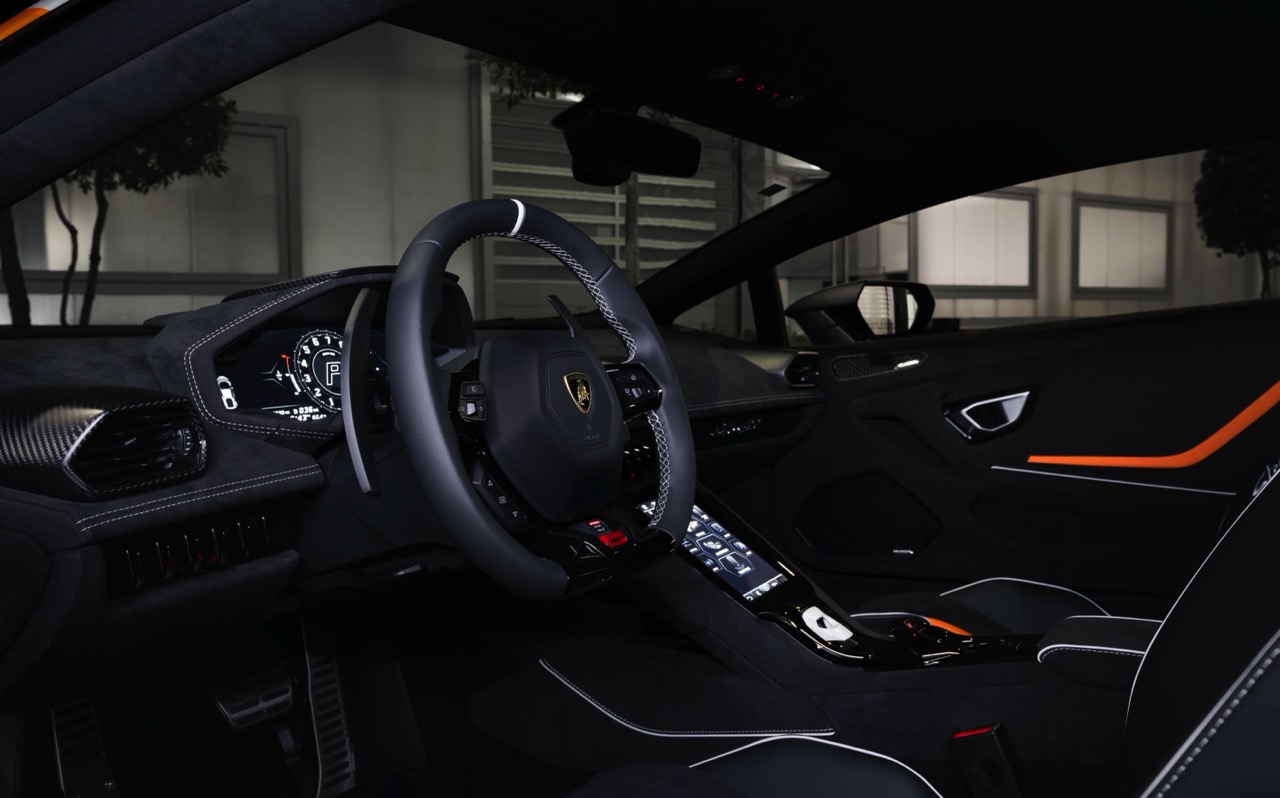
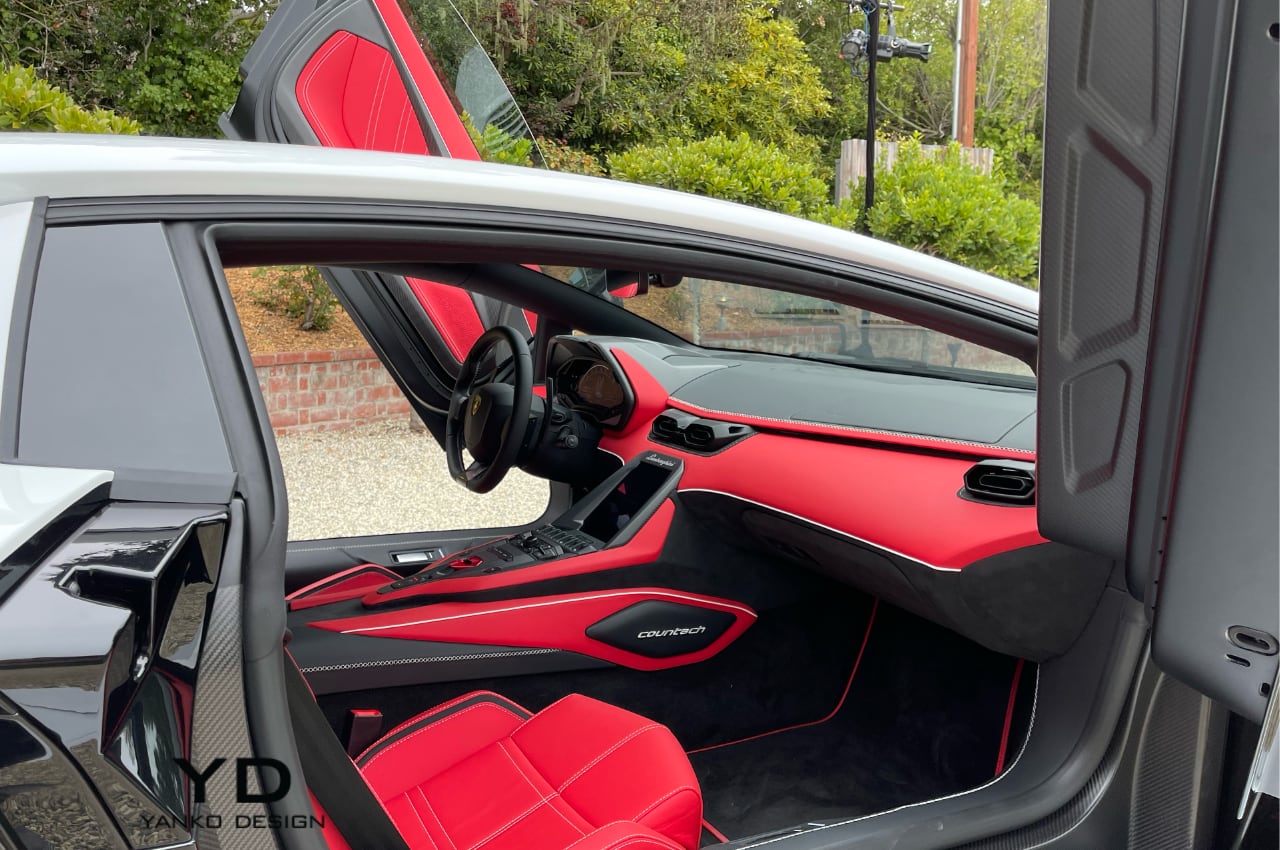
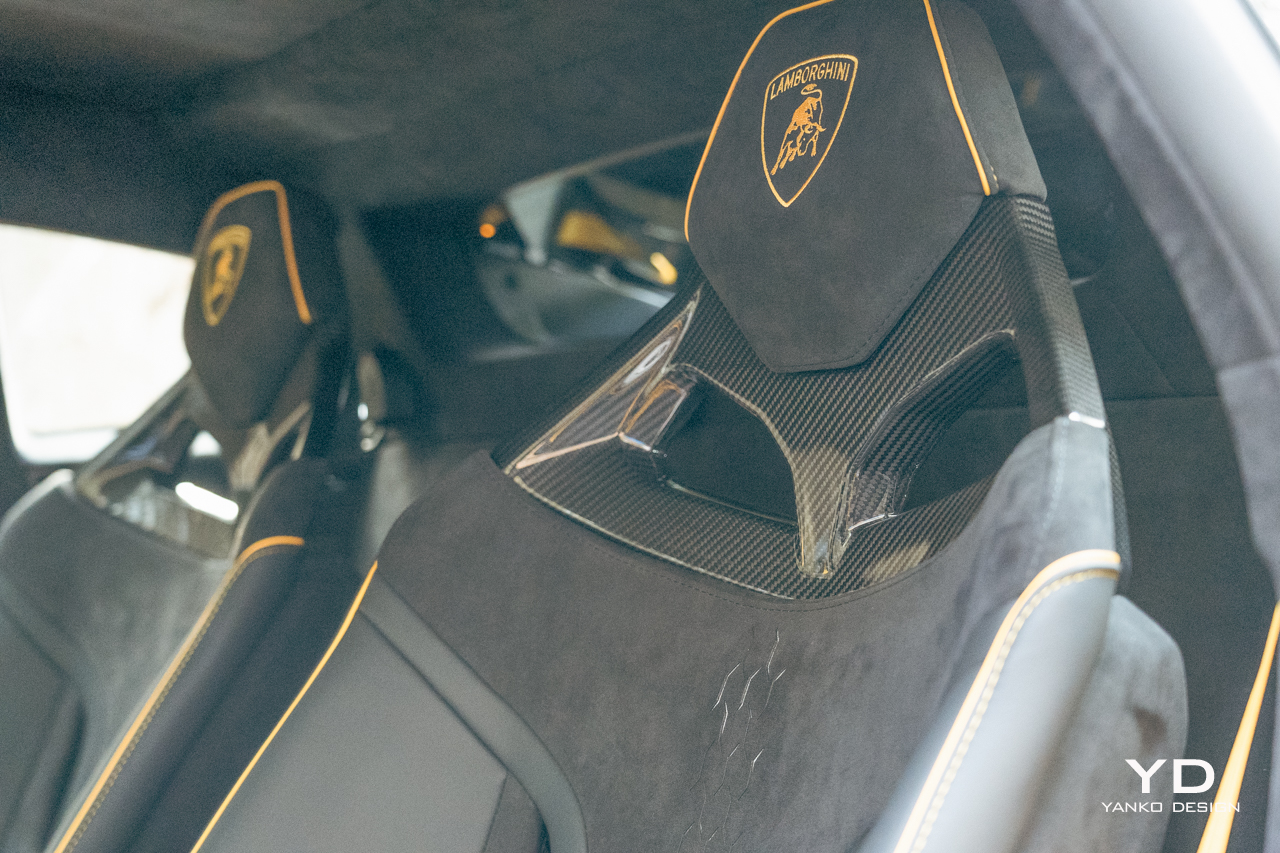
But otherwise, it’s much the same interior as we’ve seen elsewhere in the Huracan. Alcantara is the material of choice, feeling luxurious and looking great, especially with the contrasting yellow stitching and the lurid seatbelts to match. The attention to detail here is impressive, and while many will find the styling a bit excessive, it’s absolutely on-point for a Lamborghini.
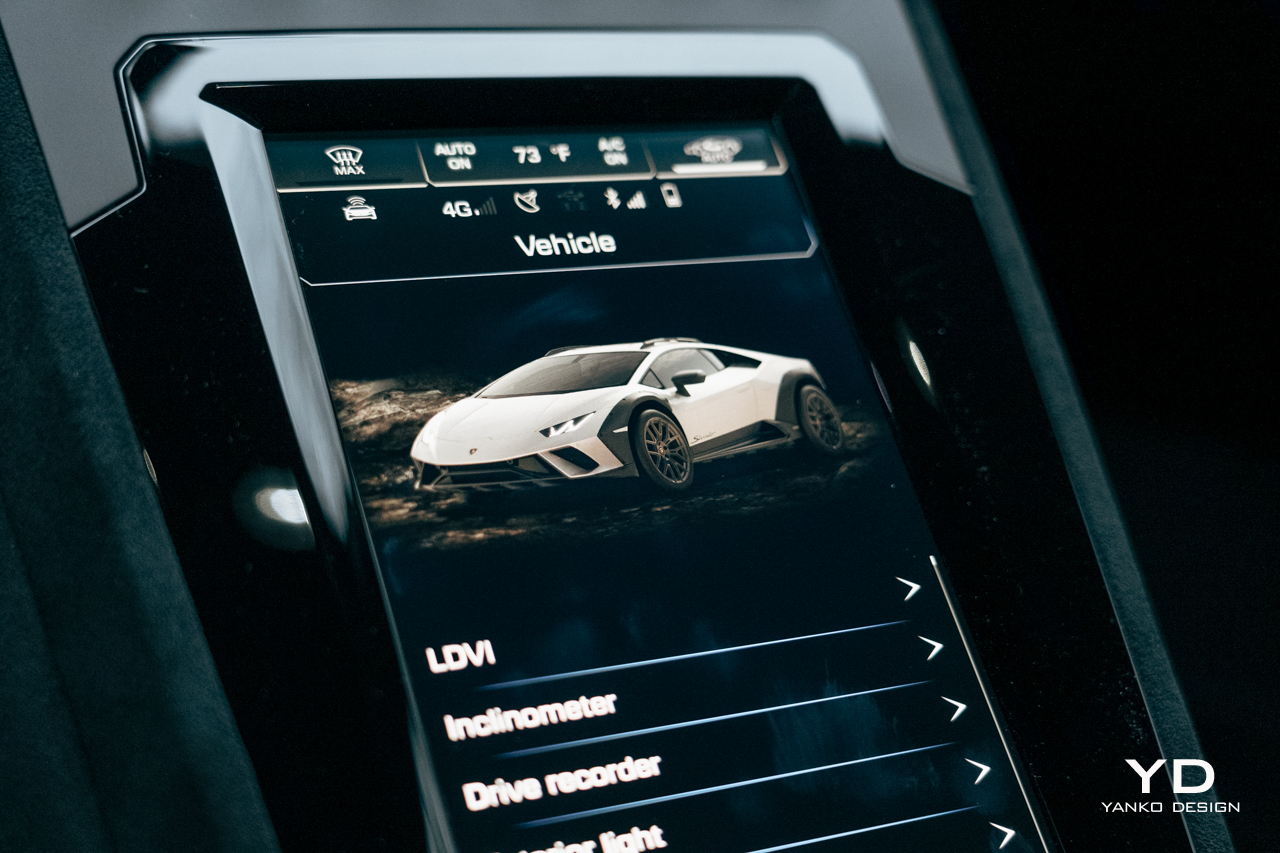
The Huracan was recently updated with a new touchscreen interface that is simple but effective. Both Android Auto and Apple CarPlay are on offer, but only wired. There’s also Alexa in here if you have an active Amazon account.
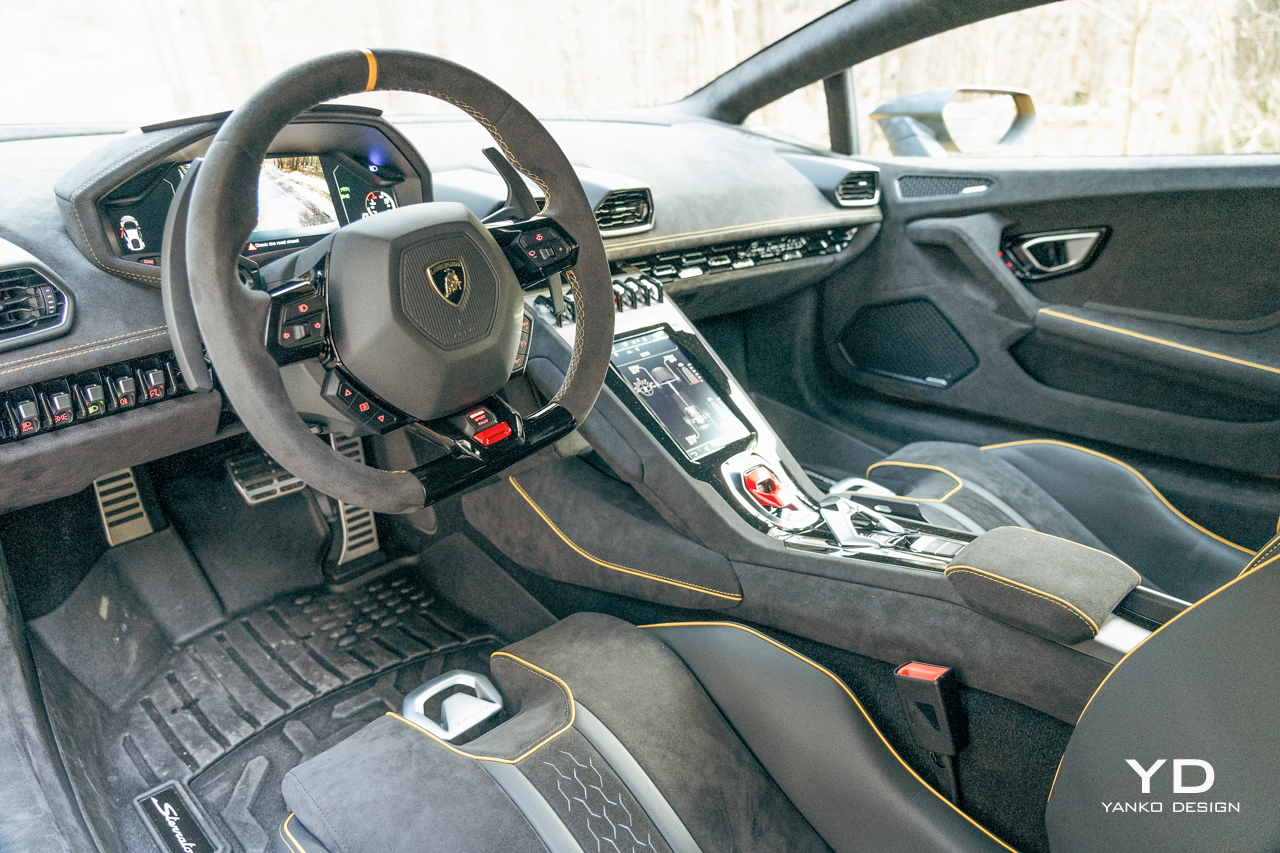
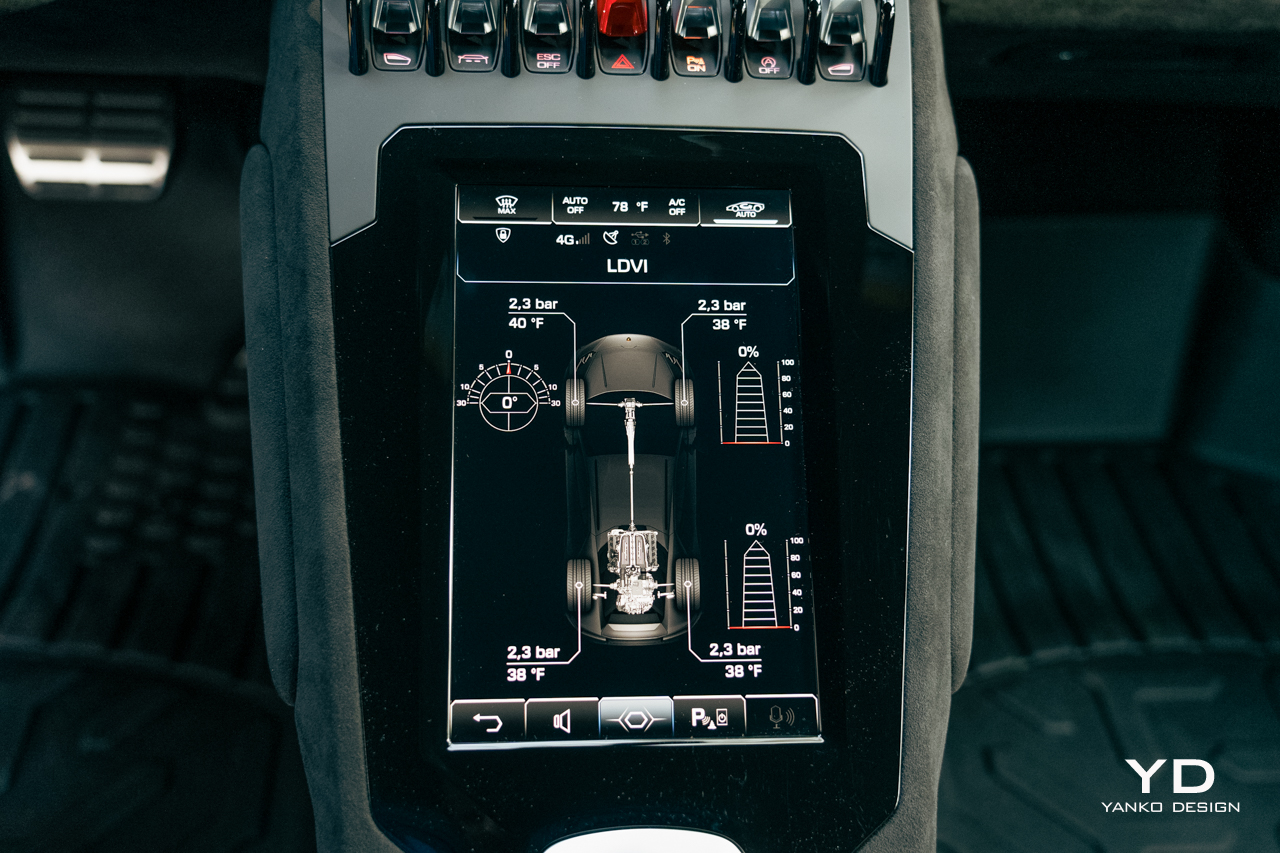
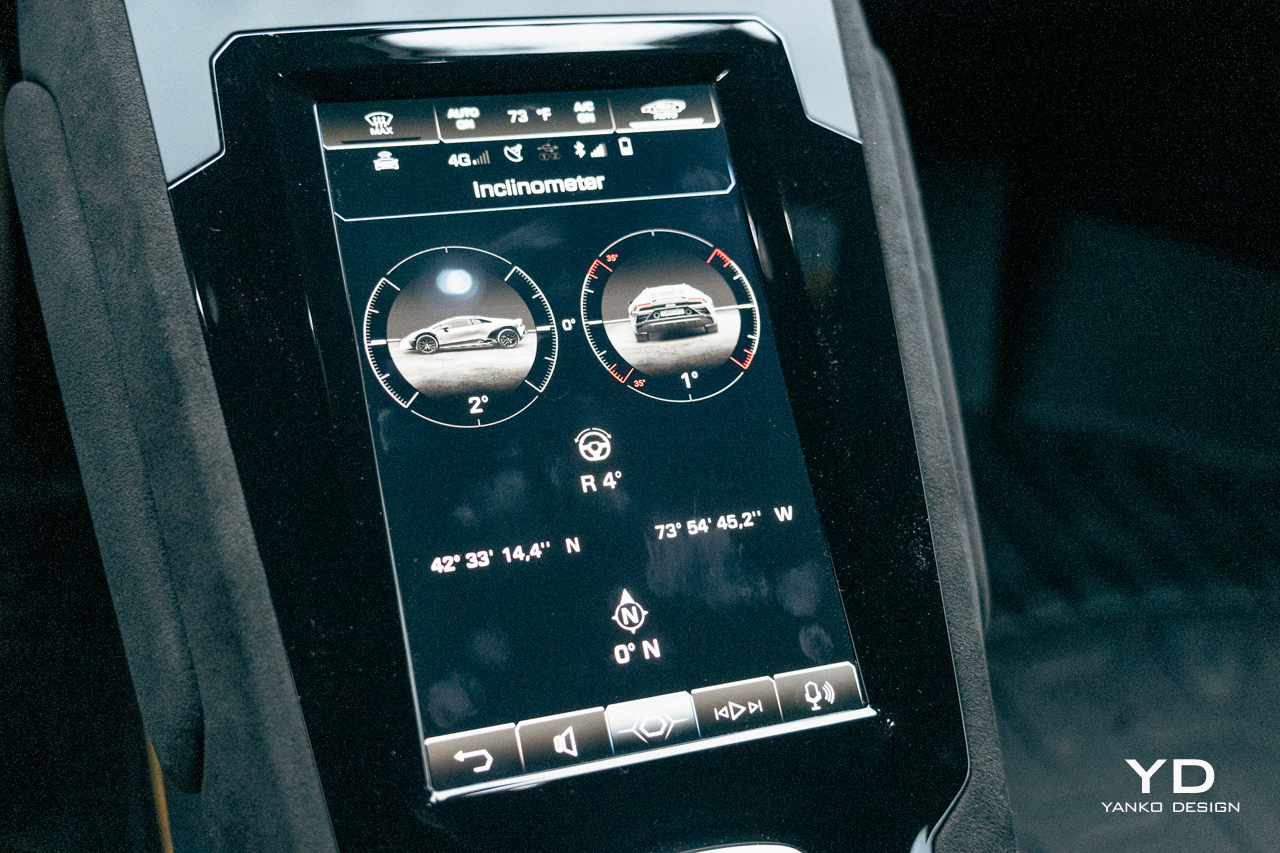
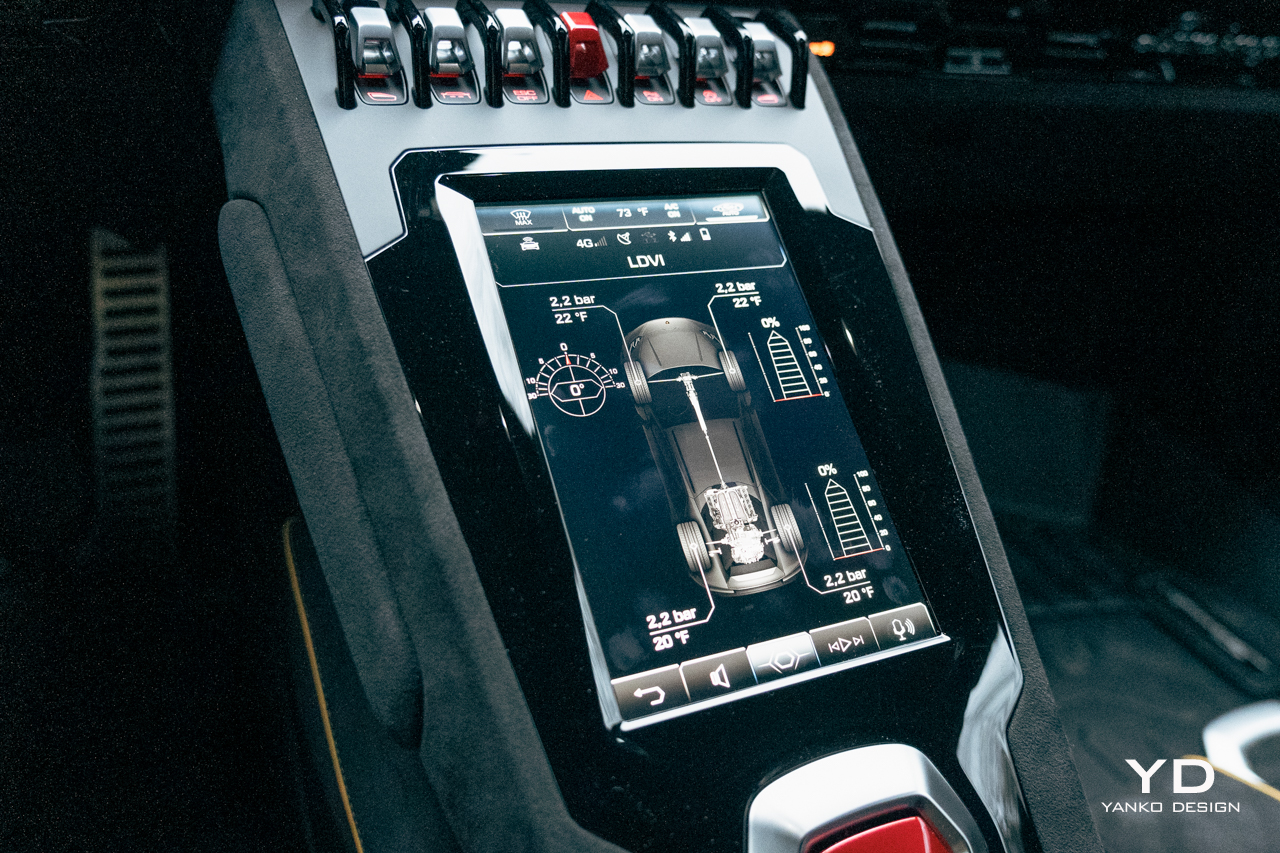
More importantly are the various telemetry screens on offer, including a new one for the Sterrato that shows off-road angle information, plus GPS coordinates, just perfect for when you’re really going out there. I found the differential display far more interesting, showing in real-time where the Huracan is sending its power, front-to-rear and side-to-side. As much of my testing was done in low-grip situations, it was a never-ending source of entertainment to see the flow of torque.
While entertaining to watch, you won’t need to spend much time stabbing at that touchscreen. Most of the essential driving controls are right on the steering wheel. Your left thumb controls the turn signals plus flashing or toggling the high beams. On the right, you’ll find the windshield wiper button.
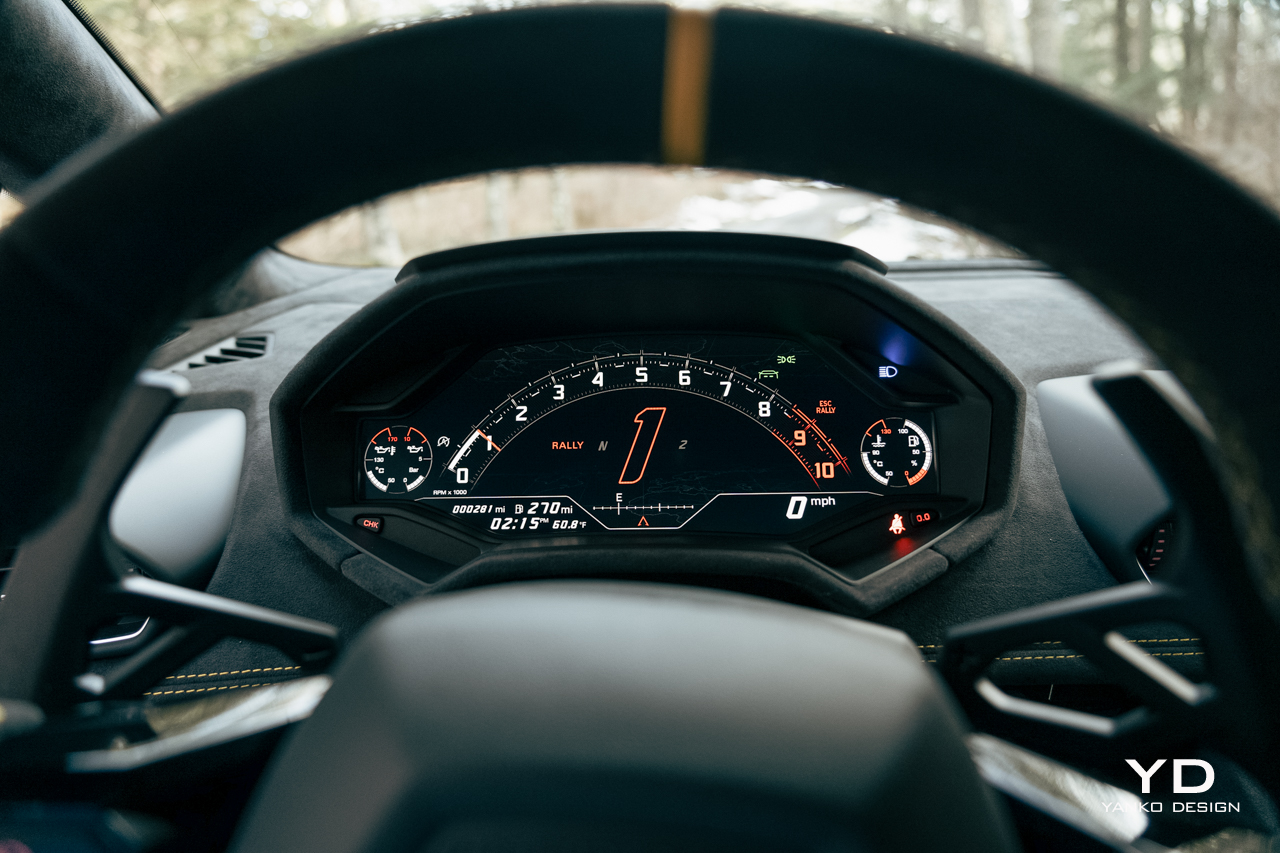
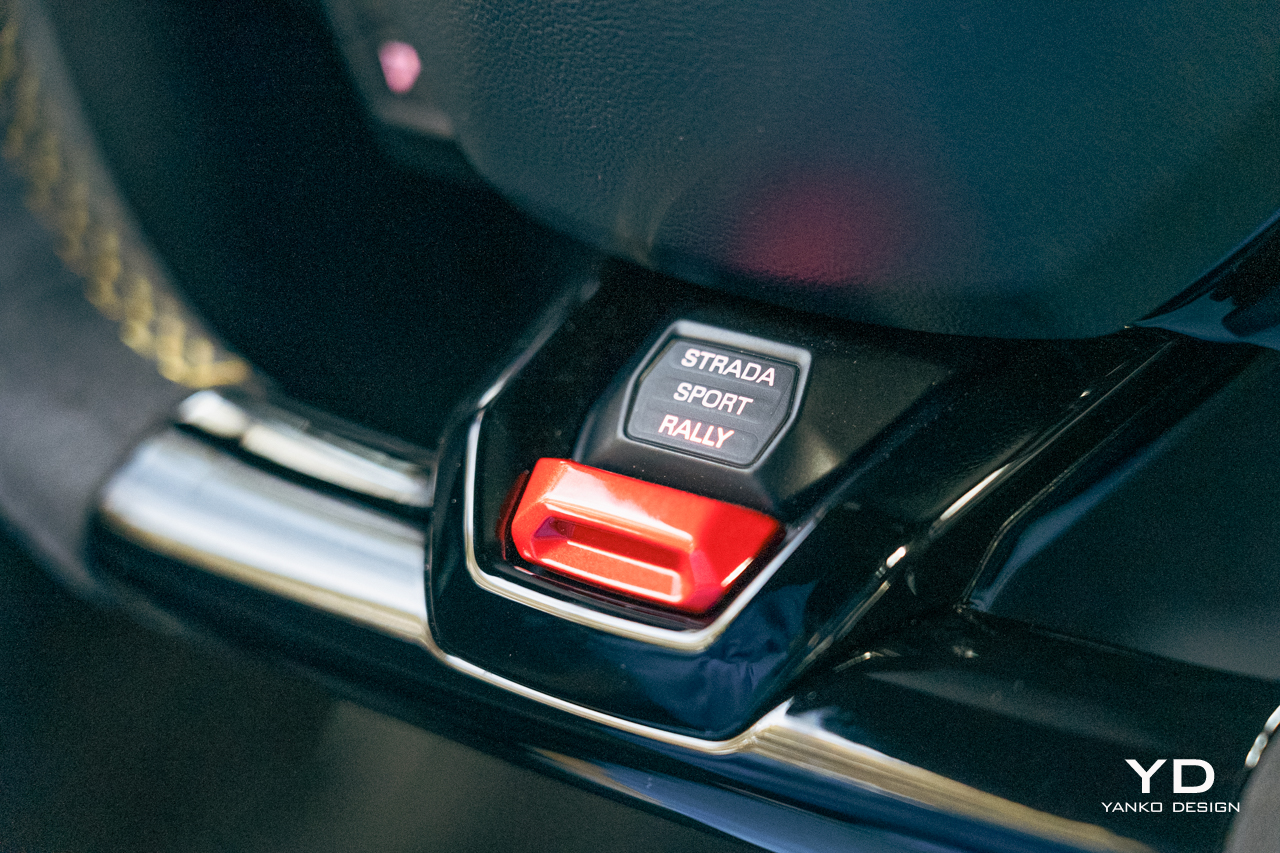
The mode toggle is on the bottom, customized for the Sterrato. Strada is the default mode on top, followed by the racier Sport, and then Rally, a new dedicated, low-grip, high-performance mode that is the hallmark of this car. The final controls within reach are the column-mounted shift paddles, made of metal and standing proud behind the wheel.
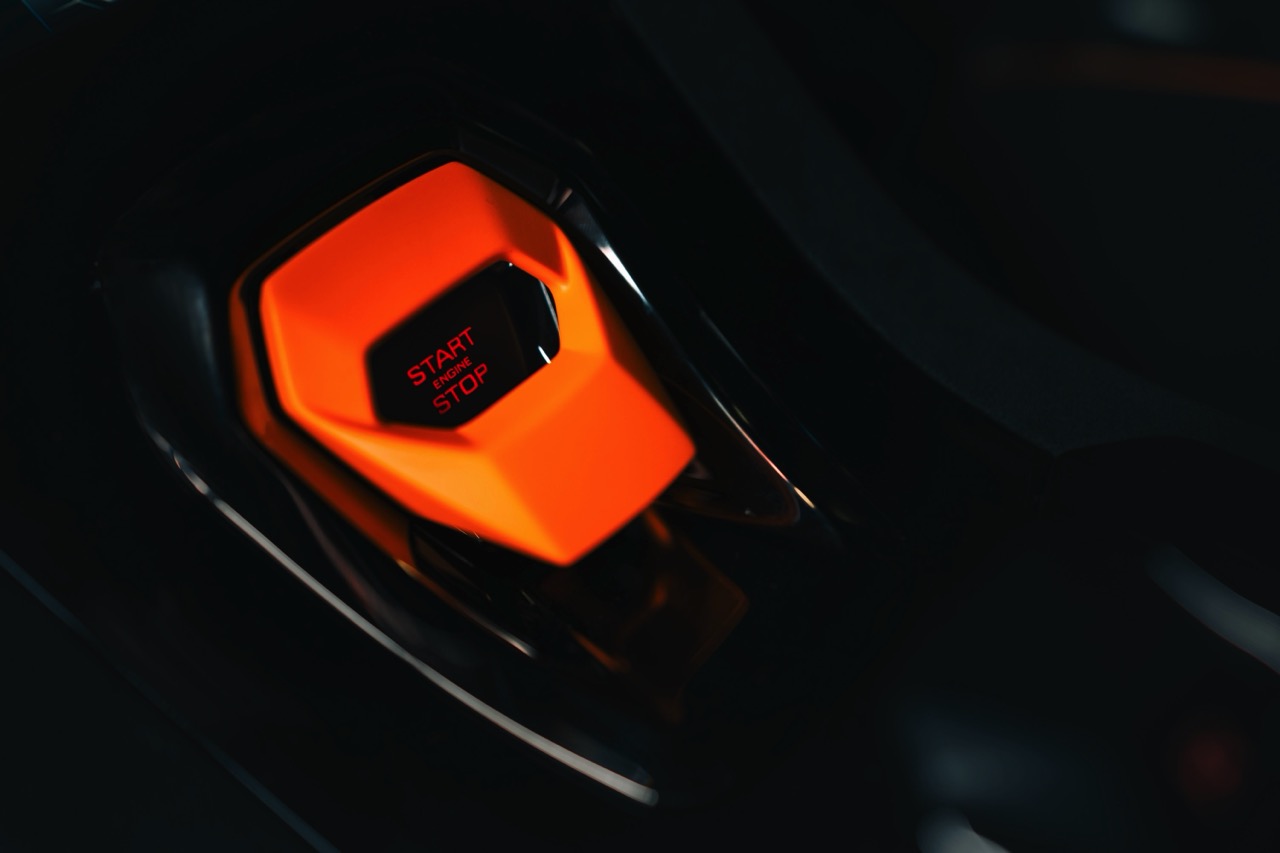
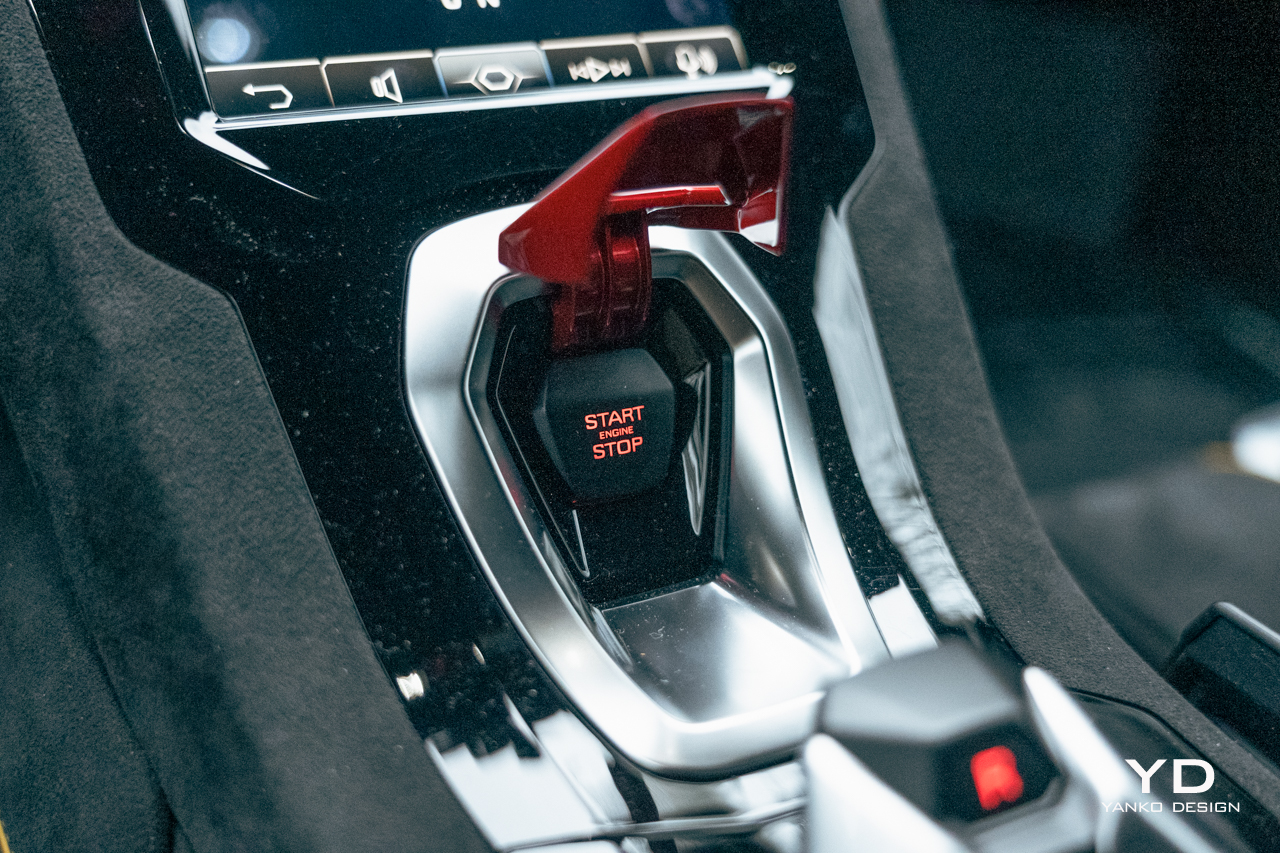
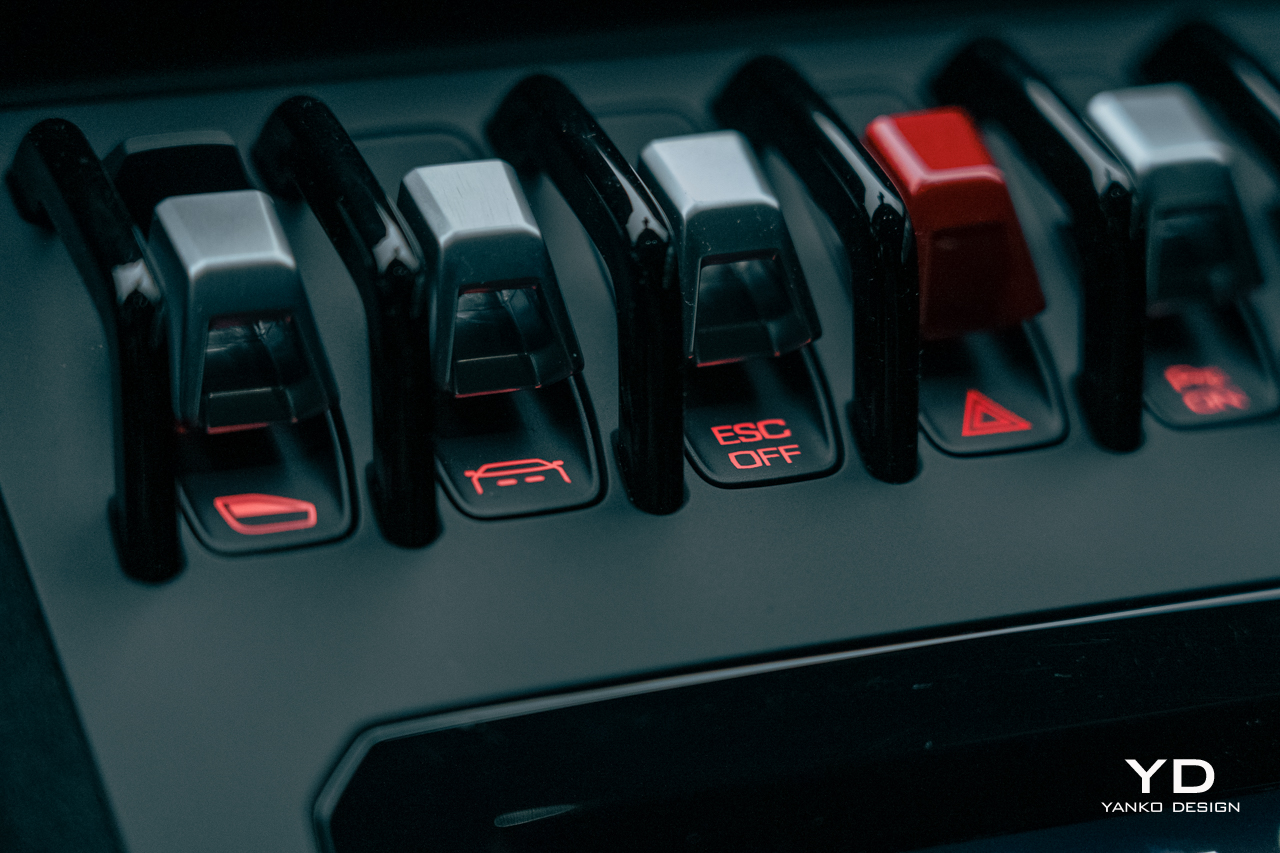
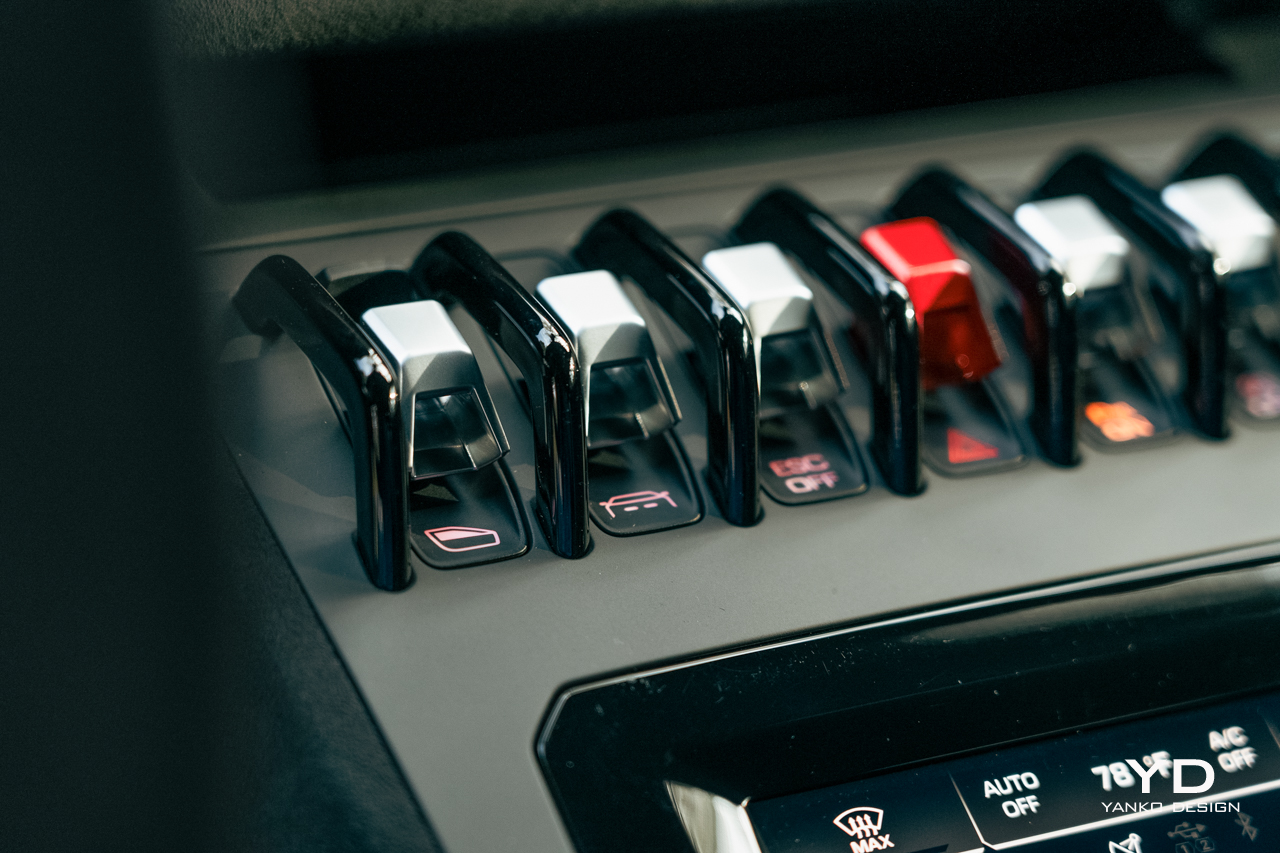
While most inputs are on the wheel, the Huracan still has plenty of physical controls elsewhere, including a row of plastic toggles that run above the touchscreen and that iconic, crimson ENGINE START/STOP button in the center console lurking under a plastic protector. Flip that up, stab the button, and everything changes.
Ignition
The Sterrato’s V10 is situated just about a foot behind the driver’s right ear, so when it spins into life, you absolutely know it.
However, to enjoy the engine’s sound, you need to toggle to Sport mode, which opens up the exhaust and adds a fair bit of bass to the experience.
In fact, you’re better off avoiding Strada mode almost entirely. The Sterrato’s default drive mode is extremely, oddly tame. It’s always trying to run you a gear or two higher in the seven-speed dual-clutch transmission than you might like and feels quite reluctant to downshift. It also enables the somewhat annoying engine start/stop feature (which you can quickly disable if you like). Finally, it’s all too eager to drop the V10 down to an inline five-cylinder whenever you’re light on the throttle.
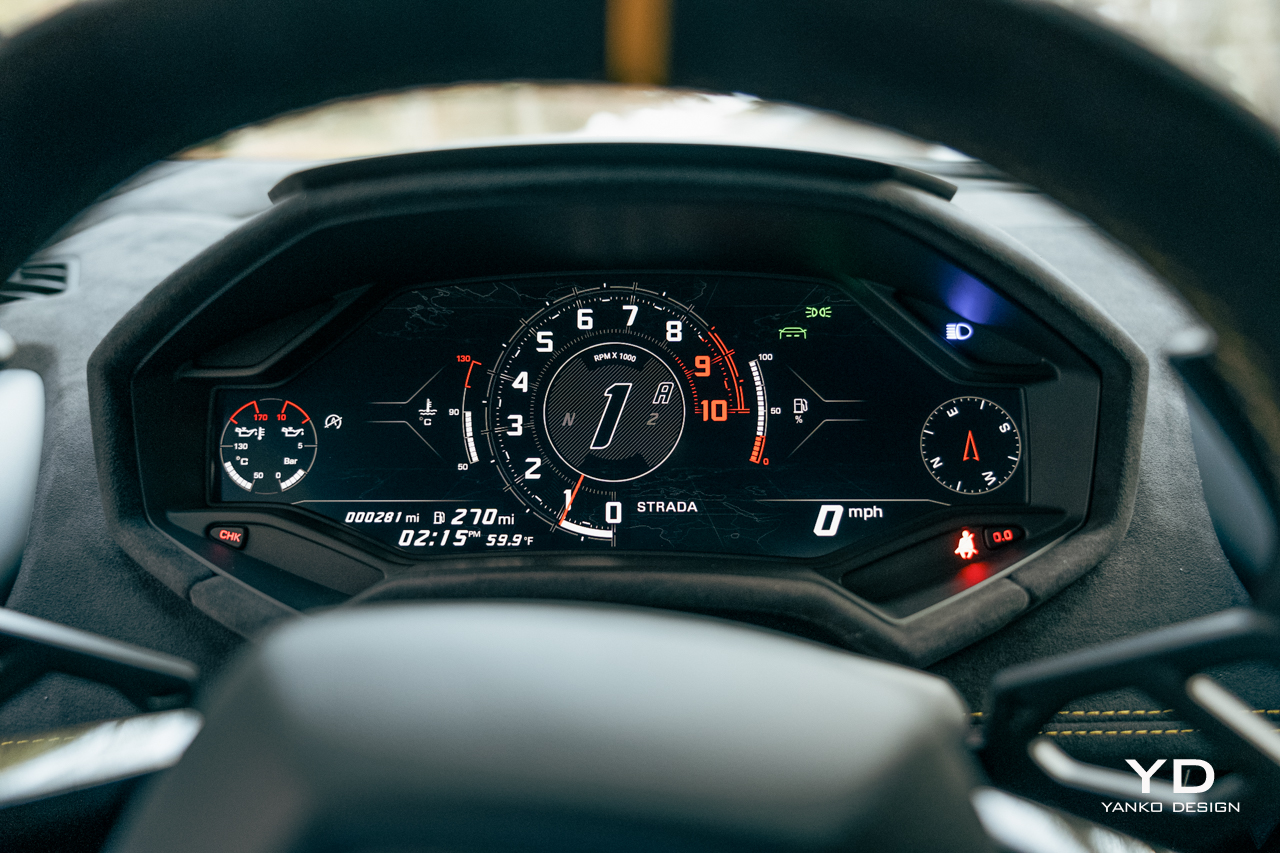
Driven in this way, I managed 15.1 mpg during my testing, which is quite reasonable for a 600-plus hp car. Indeed, that’s precisely why that mode exists. But if you want an engaging drive, step on up to Sport.
In Sport, everything just feels better. The shifts are rougher than before, but they’re lightning-quick and exactly where you want them to be. The exhaust sounds better, the engine is more responsive, and the Sterrato just feels ready to play.
However, it’s in Rally mode when things get wild. This new mode was designed to provide a much more playful experience in low-grip situations, allowing the Sterrato to spin up its wheels with more aggression than would normally be beneficial for a high-grip situation like the Corsa mode was designed for, which is found on other Huracans.

In Rally, the Sterrato is happy to let you let loose, not cutting power for me even when all four wheels were spinning wildly on an icy surface. It did cut power when I made larger steering inputs, being somewhat selective in how much counter-steering was allowed before it decided I needed some help. But it certainly didn’t ruin the fun.
I do, though, lament the loss of the Corsa mode. While the Rally mode is a good trade, it’s a shame you can’t have both. After all, though its suspension is softer, with a proper set of tires the Sterrato would still be a wonderful track day toy.
Regarding the tires, the Sterrato’s Dueler AT002s are rated for mud and snow, but certainly seem better suited for the former. While I wasn’t able to test that condition, I did spend lots of time amid wintery stuff with the Sterrato you see here. The tires didn’t provide the confidence offered by a dedicated snow tire, especially in more icy conditions, but they delivered plenty of grip to have fun. Most importantly, when they gave up that grip, they did so in a clean, predictable manner.
Options and pricing
The Huracan Sterrato starts at $273,177, plus a $3,695 destination charge and a $2,100 gas guzzler tax. The car you see here had a suite of mostly cosmetic options, including $9,800 for the lovely Giallo Inti paint and $7,600 for the sports seats.
It doesn’t take long to add another six figures onto the price of your Sterrato, with this one costing $348,649 in total, but that’s the name of the game with a car like this.
The Sterrato’s performance, however, is anything but predictable. It’s a beautiful all-weather supercar, a true joy in inclement conditions, and a hell of a lot of fun even when the roads are dry and smooth. It’s even more comfortable to drive than a regular Huracan and much less likely to dig its nose into the slightest inclines, too.
It’s the complete package, and while you’ll certainly have to pay for it, it feels very much worth every penny.
The post 2024 Lamborghini Huracan Sterrato Review first appeared on Yanko Design.