New Claude Excel & PowerPoint Skill Adds Ability to Share Single Conversation Across Both Apps

New Claude Excel & PowerPoint Skill Adds Ability to Share Single Conversation Across Both Apps Cloud deployment view listing Amazon Bedrock, Vertex AI, and Microsoft Foundry as supported platforms for the add-ins.

Anthropic has this week introduced new Claude capabilities for professionals using Excel and PowerPoint, aimed at streamlining workflows in data-driven projects. One key feature is Claude’s new Skill is to integrate these applications, allowing users to transfer data from Excel into PowerPoint with precision. For instance, financial analysts can pull data from Excel to automatically […]

The post New Claude Excel & PowerPoint Skill Adds Ability to Share Single Conversation Across Both Apps appeared first on Geeky Gadgets.

Posted in Uncategorized

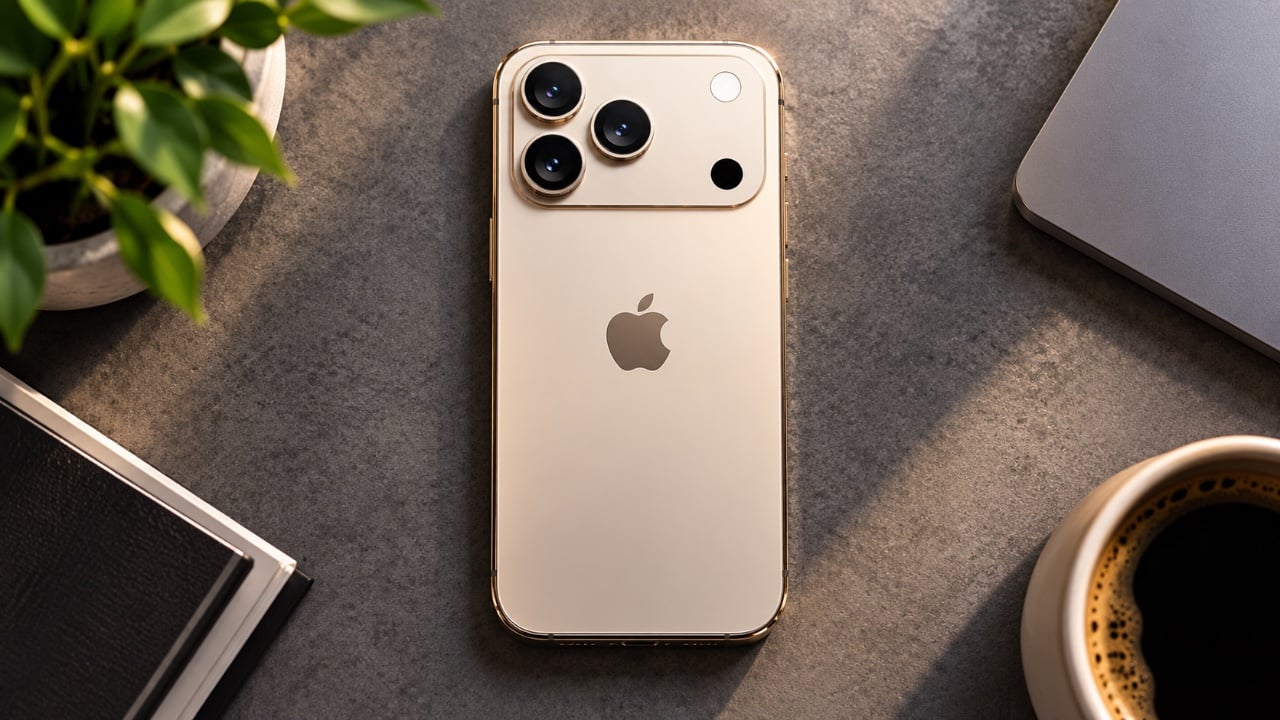
iPhone 18 Pro Trial Production Starts: The Most Significant Upgrade in Years?

iPhone 18 Pro Trial Production Starts: The Most Significant Upgrade in Years? Factory line graphic showing Apple iPhone 18 Pro entering production validation testing before an expected September launch.

Apple has apparently entered the production validation testing phase for the iPhone 18 Pro and Pro Max, signaling that the hardware design is nearing its final stages. This critical milestone confirms that the devices are on schedule for their anticipated September release. While the overall design remains consistent with the iPhone 17 Pro lineup, the […]

The post iPhone 18 Pro Trial Production Starts: The Most Significant Upgrade in Years? appeared first on Geeky Gadgets.

Posted in Uncategorized

Complete Claude Tutorial For Beginners : Master Clearer AI Outputs

Complete Claude Tutorial For Beginners : Master Clearer AI Outputs Side-by-side prompt example showing a generic request versus a GCAO structured prompt with clearer output format.

Claude is an AI assistant designed to help users manage tasks and workflows more effectively in 2026. According to AI Foundations, one of the key starting points for beginners is understanding its interface, which includes the Prompt Bar for entering instructions, the Model Selector for choosing the appropriate AI version and the Sidebar Navigation for […]

The post Complete Claude Tutorial For Beginners : Master Clearer AI Outputs appeared first on Geeky Gadgets.

Posted in Uncategorized

The Galaxy S26 Ultra Setup Guide: Do these things first

The Galaxy S26 Ultra Setup Guide: Do these things first Galaxy S26 Ultra Privacy Display menu showing side-angle blocking options and per-app controls for PIN and notifications.

The Samsung Galaxy S26 Ultra is a powerhouse of innovation, offering a range of features designed to enhance your smartphone experience. Whether your focus is on privacy, performance, or personalization, this guide provides 26 essential tips to help you unlock the full potential of your device. From configuring privacy settings to exploring advanced camera tools, […]

The post The Galaxy S26 Ultra Setup Guide: Do these things first appeared first on Geeky Gadgets.

Posted in Uncategorized

Proton Mail Guide 2026 : Privacy Expands Across Mail, AI, Drive, Pass & VPN

Proton Mail Guide 2026 : Privacy Expands Across Mail, AI, Drive, Pass & VPN Checklist of safer habits like two-factor authentication, updates, tracker blocking, Signal, and Tor alongside email use.

Proton Mail has become a cornerstone for privacy-conscious individuals in 2026, offering encrypted email services that prioritize user security. In a recent guide by CyberInsider, the focus is on how Proton’s ecosystem, spanning services like ProtonVPN, Proton Drive and Proton Pass, works together to protect your data. For example, Proton Mail employs end-to-end encryption, making […]

The post Proton Mail Guide 2026 : Privacy Expands Across Mail, AI, Drive, Pass & VPN appeared first on Geeky Gadgets.

Posted in Uncategorized

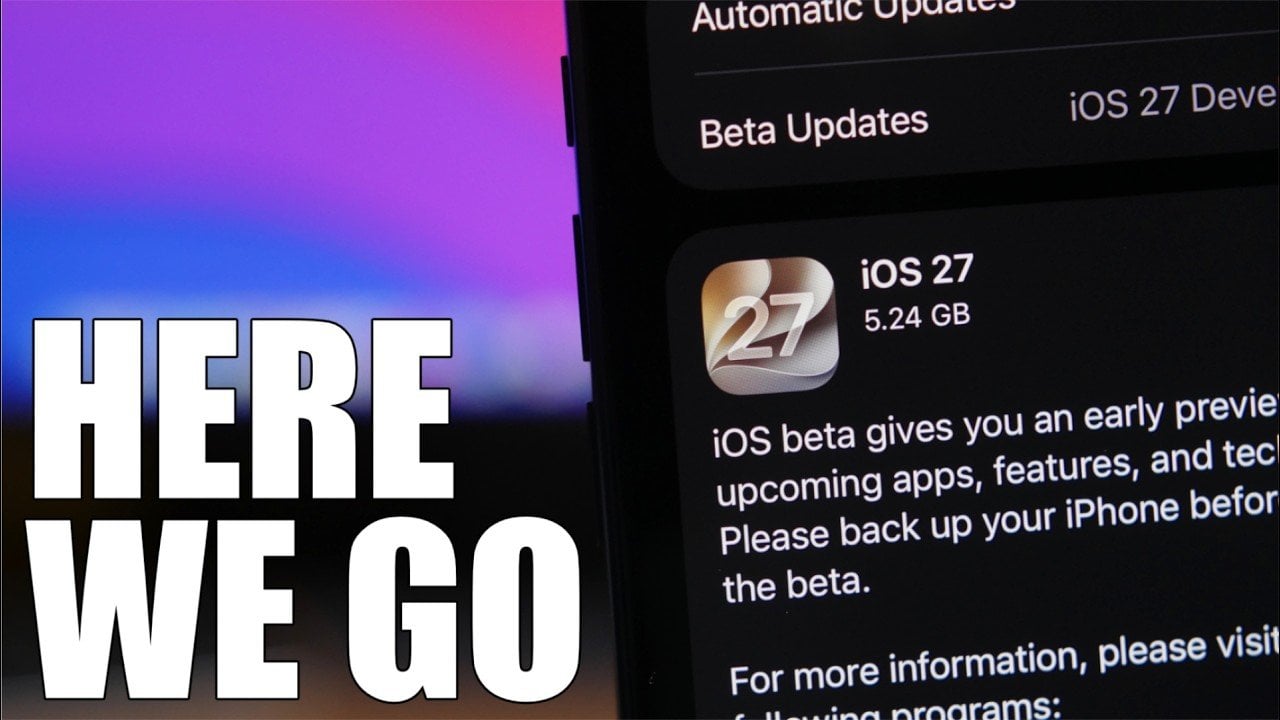
iOS 26.4 Beta 4 is Out: The Final Polish Before the Spring Release

iOS 26.4 Beta 4 is Out: The Final Polish Before the Spring Release Featured image for iOS 26.4 - Unmatched !

Apple has officially rolled out the fourth beta of iOS 26.4, marking a pivotal step toward the final release. This update focuses on enhancing performance, refining stability, and introducing new features to elevate the user experience. By prioritizing the optimization of existing functionalities, iOS 26.4 aims to deliver a seamless and efficient operating system for […]

The post iOS 26.4 Beta 4 is Out: The Final Polish Before the Spring Release appeared first on Geeky Gadgets.

Posted in Uncategorized

Apple’s iPhone Fold Leak: A 7.8-Inch ‘iPad’ That Fits in Your Pocket

Apple’s iPhone Fold Leak: A 7.8-Inch ‘iPad’ That Fits in Your Pocket iPhone Fold

  Apple is gearing up to make its debut in the foldable smartphone market with a highly anticipated device, rumored to be named the iPhone Fold or iPhone Ultra. If the leaks and speculations hold true, this device could address some of the most persistent challenges faced by foldable phones, such as visible creases, awkward […]

The post Apple’s iPhone Fold Leak: A 7.8-Inch ‘iPad’ That Fits in Your Pocket appeared first on Geeky Gadgets.

Posted in Uncategorized

Google Play will let you try a game before you buy it

Google Play has introduced a new feature called Game Trials, which will let you play a portion of paid games for free before you commit to buying them. It’s now rolling out to select paid games on mobile, and it’s coming soon to Google Play Games on PC. Titles that offer Game Trials will show a button marked “Try” on their profile pages. When you click it, you’ll see how long you can play the game before you have to buy it. In Google’s example, the survival and horror game Dredge will give you 60 minutes of free play time, after which you’ll get the option to either buy the game or delete it from your device.

Google has also announced that it’s releasing more paid indie games over the coming months, including Moonlight Peaks, Sledding Game and Low-Budget Repairs. It has launched a new section in the Play store, as well, to feature games optimized for Windows PCs. You can wishlist the games from that section to get a notification when they’re on sale.

Finally, the company is rolling out Play Games Sidekick, the Gemini-powered Android overlay it announced last year, to select games downloaded from Play. Sidekick can show you relevant info and tools for whatever game you're playing without having to do a search query. But if you’d rather ask other people for gaming advice instead of an AI, you can also look at a game’s Community Posts, a feature now available in English for select titles on their Play pages.

This article originally appeared on Engadget at https://www.engadget.com/gaming/google-play-will-let-you-try-a-game-before-you-buy-it-051854016.html?src=rss

Someone Finally Made Metal Keycaps for Low-Profile Keyboards

Low-profile mechanical keyboards have always had a bit of an identity problem. They look the part: slim, clean, desk-friendly. Set one beside a MacBook and it fits right in, at least until you start typing and the plastic keycaps remind you that the aesthetic only goes so far. It is not that PBT is bad. It is just that plastic has a ceiling, and once you have typed on a well-built board, you start to feel where that ceiling is. The sound is a little hollow. The surface wears down. For a form factor that sells itself on refinement, the keycaps have always been the weakest part of the pitch.

That gap is exactly what Awekeys Air is designed to fill. These are low-profile metal keycaps built from recycled cupronickel, a copper-nickel alloy most people know from coins rather than keyboards. Beyond the material upgrade, there is an immediate visual payoff. A set of Satin Copper or Satin Gold caps on a slim board transforms what was previously just a functional object into something that actually improves the desk around it, the kind of detail that catches the eye mid-conversation and holds it.

Designer: Awekeys

Click Here to Buy Now: $99 $169 (41% off). Hurry, only a few left! Raised over $97,000.

At 5 mm tall, the Awekeys Air is half the height of a standard keycap, which typically sits at around 11 mm. That gap matters more than it sounds. A slim keyboard paired with standard-height keycaps loses its whole visual argument, and any ergonomic board designed for low-profile switches defeats its own purpose if you pile taller caps on top. The Air keeps that geometry honest while upgrading what that geometry is made of.

As someone who writes for a living and codes on the side, I see the keyboard as less a tool and more a constant physical companion, and the I find that the Awekeys Air shifts that relationship in a way that is difficult to ignore. The cupronickel surface stays cool under extended sessions, the low profile keeps wrist angle natural, and the grip from the hand-brushed Special Edition means fingers land where they are meant to, without any of the slight drift that smooth plastic encourages over a long afternoon.

Finish is where the Awekeys Air earns a lot of its character. Seven keycap colorways cover the satin-style options: Satin Gold, Satin Silver, Satin Copper, Titanium Black, Obsidian Black in matte, Ivory White in matte, and Sakura Pink. Each of them reads differently on metal than on plastic. Satin Copper picks up warm ambient light in a way no dye-sublimated PBT can replicate. Titanium Black has that flat, composed surface that makes a keyboard look more like a precision instrument than a peripheral. Small distinctions, but they add up when the whole point is a desk setup that looks as considered as it feels.

The Special Edition hand-brushed finish takes things a step further, available in Gold, Silver, Copper, and Ti Black. Each keycap is brushed individually, which creates a directional texture that shifts under light and adds a grip that the satin versions do not have. It is the kind of finishing detail that is easy to overlook in a product photo and immediately obvious the moment you sit down to type.

Holding it all together is a second-generation nano-coating that Awekeys claims delivers twice the scratch resistance of its first version. For keycaps that will see thousands of actuations daily, surface protection matters more on metal than on plastic, where wear is expected and mostly forgiven. The coating is what keeps the finish consistent across the whole set over time, and on a metal that is this unforgiving of surface variation, that consistency is doing real work.

The recycled angle is worth taking seriously, too. Awekeys notes that processing recycled cupronickel requires roughly 15% of the energy needed for raw metal extraction. giving the material story a logic beyond a simple badge. The acoustic character completes the picture: denser, more planted, with a sound that leans satisfying rather than sharp. The slim keyboard has been waiting a long time for a keycap set built to match it, and the Awekeys Air makes a strong case that the wait is over.

Click Here to Buy Now: $99 $169 (41% off). Hurry, only a few left! Raised over $97,000.

The post Someone Finally Made Metal Keycaps for Low-Profile Keyboards first appeared on Yanko Design.

BYD Could Become Formula 1’s First Ever Chinese Team By 2027

BYD sold 4.6 million new energy vehicles last year. It operates in over 100 countries. It builds its own batteries, motors, semiconductors, and power electronics from the ground up. And yet, in the parts of the world where it most desperately wants to grow, a significant chunk of car buyers still see it as the affordable Chinese option. That perception gap between what BYD actually is and what consumers in Europe and North America think it is has become the company’s single biggest strategic problem. Formula 1, according to a Bloomberg report published this week, might be BYD’s proposed solution. The company is reportedly exploring an entry into the world championship, either by acquiring an existing team or by building its own from scratch.

It would not be the first automaker to use motorsport as a brand perception lever. Hyundai was a budget car punchline before its WRC campaigns rewired how people thought about its engineering. Honda’s F1 run in the late 80s and 90s turned sensible commuters into a byword for high revving precision. BYD has the technical chops to tell a similar story, and F1’s 2026 regulations actually play to its strengths. Roughly half the power unit’s output now comes from an electric motor, a huge jump from previous seasons. FIA president Mohammed Ben Sulayem has been openly courting a Chinese entry, confirming that talks with manufacturers have already happened. The financial hurdle is real, with annual costs pushing $500 million and Cadillac’s grid entry fee alone hitting $450 million, but BYD pulled in $86 billion in revenue last year. The money exists. The motive exists. And the regulatory window has never been more aligned.

Image Credits: @grandprix

The 2026 power unit regulations are what make BYD’s potential entry genuinely fascinating from an engineering standpoint. The MGU K now pumps out 350 kW, nearly triple the previous 120 kW figure, meaning the electric motor is responsible for roughly half of total power delivery to the rear wheels. The sport has also mandated advanced sustainable fuels and significantly increased battery capacity requirements. For context, most current F1 engine manufacturers outsource chunks of their electrical componentry or partner with specialist suppliers for battery cells and power electronics. BYD does none of that. It designs its own lithium iron phosphate battery chemistry, manufactures its own electric motor architectures, and fabricates its own semiconductor chips in house. That vertical integration, the same thing that lets BYD undercut competitors on price in the road car market, could translate into a fundamentally different approach to building an F1 power unit.

Think about what that means in practice. Ferrari, Mercedes, and Red Bull Powertrains all develop their electrical systems with relatively traditional motorsport supplier chains. BYD would show up with an entirely self contained pipeline, from raw cell chemistry to finished power electronics, informed by producing millions of electric drivetrains a year at scale. Nobody in F1 has that kind of manufacturing feedback loop. Whether that actually produces a faster car is anyone’s guess, because high volume production efficiency and single lap bespoke performance are very different disciplines. But the potential for BYD to bring a novel engineering philosophy to the grid, one shaped by mass market EV development rather than wind tunnel obsession, is the kind of wildcard that makes the sport interesting. The last time someone brought a genuinely alien approach to F1 engine design was probably Honda’s split turbo concept in 2015, and that eventually won championships.

BYD also has something else that most F1 newcomers lack: a premium performance sub brand with an actual hypercar. The Yangwang U9 is a quad motor electric supercar that clocked a sub 7 minute Nurburgring Nordschleife lap, making it one of the fastest production cars to ever circle that track. It produces over 1,300 horsepower, uses BYD’s proprietary e4 platform with independent torque vectoring on all four wheels, and was reportedly tested at speeds north of 300 km/h. If BYD enters F1, Yangwang becomes the obvious brand to attach to the racing program, the same way Toyota runs its Le Mans effort under Gazoo Racing or Hyundai channels its WRC work through its N performance division. A Yangwang branded F1 entry would give BYD a clean separation between its mass market identity and its motorsport ambitions, while feeding technology back into its flagship performance car.

China’s track record in international single seater racing is worth acknowledging here, because it adds useful context to how hard this actually is. The team originally called China Racing joined Formula E in 2013 as the second team on the grid, won the inaugural Drivers’ Championship under the NIO banner with Nelson Piquet Jr. in 2015, and then proceeded to spend years stuck at the very back of the field. It got rebranded from NIO 333 to ERT, and was eventually sold to an American investment group that now runs it as Kiro Race Co. under a U.S. license. The one Chinese flagged team in electric motorsport lost its Chinese identity entirely. BYD entering F1 would carry the weight of that unfinished story, and the engineering credibility it brings to the table through its road car dominance would need to survive the brutal reality of competing against teams that have been doing this for decades.

Some AI generated concept renders have been making the rounds online, imagining a BYD liveried F1 car in a black, red, and white color scheme with the company’s angular logo across the sidepods. The renders are speculative, but one detail stands out: the Chinese flag painted onto the nose cone. That is a loaded visual choice, and a historically significant one in F1 terms. Alpine carries the French tricolore on its cars. Force India wore the Indian flag throughout its time on the grid. A BYD car flying the five starred red flag on its nose would frame this as a national arrival, a declaration that China’s biggest automaker is ready to compete at the highest level of global motorsport. BYD’s road car design language has been trending toward clean, sharp minimalism lately, so a livery built around deep red panels, exposed carbon weave, and restrained branding could actually cut through the visual clutter of an increasingly sponsor heavy grid. It would certainly look different from anything else out there.

The post BYD Could Become Formula 1’s First Ever Chinese Team By 2027 first appeared on Yanko Design.