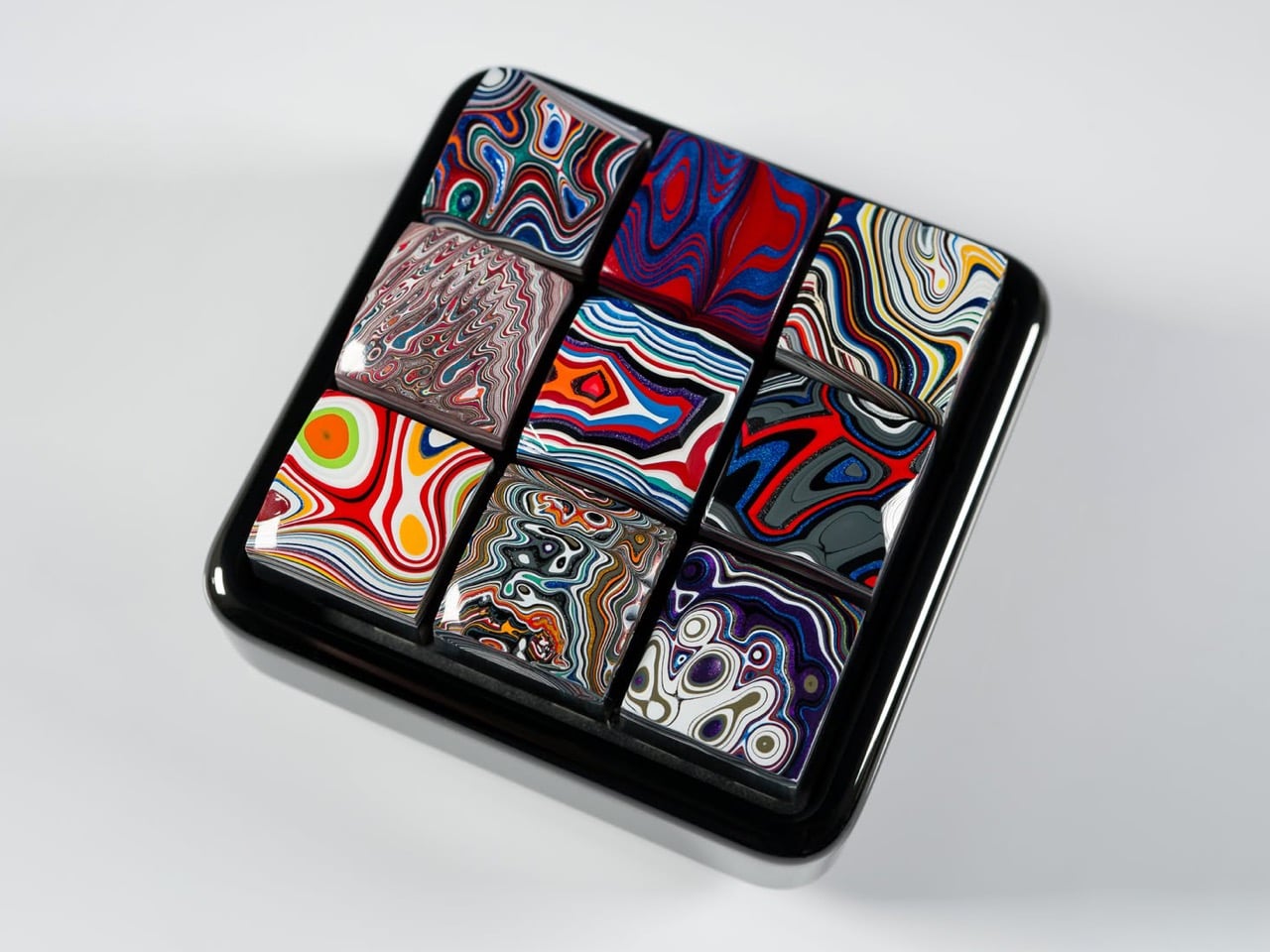
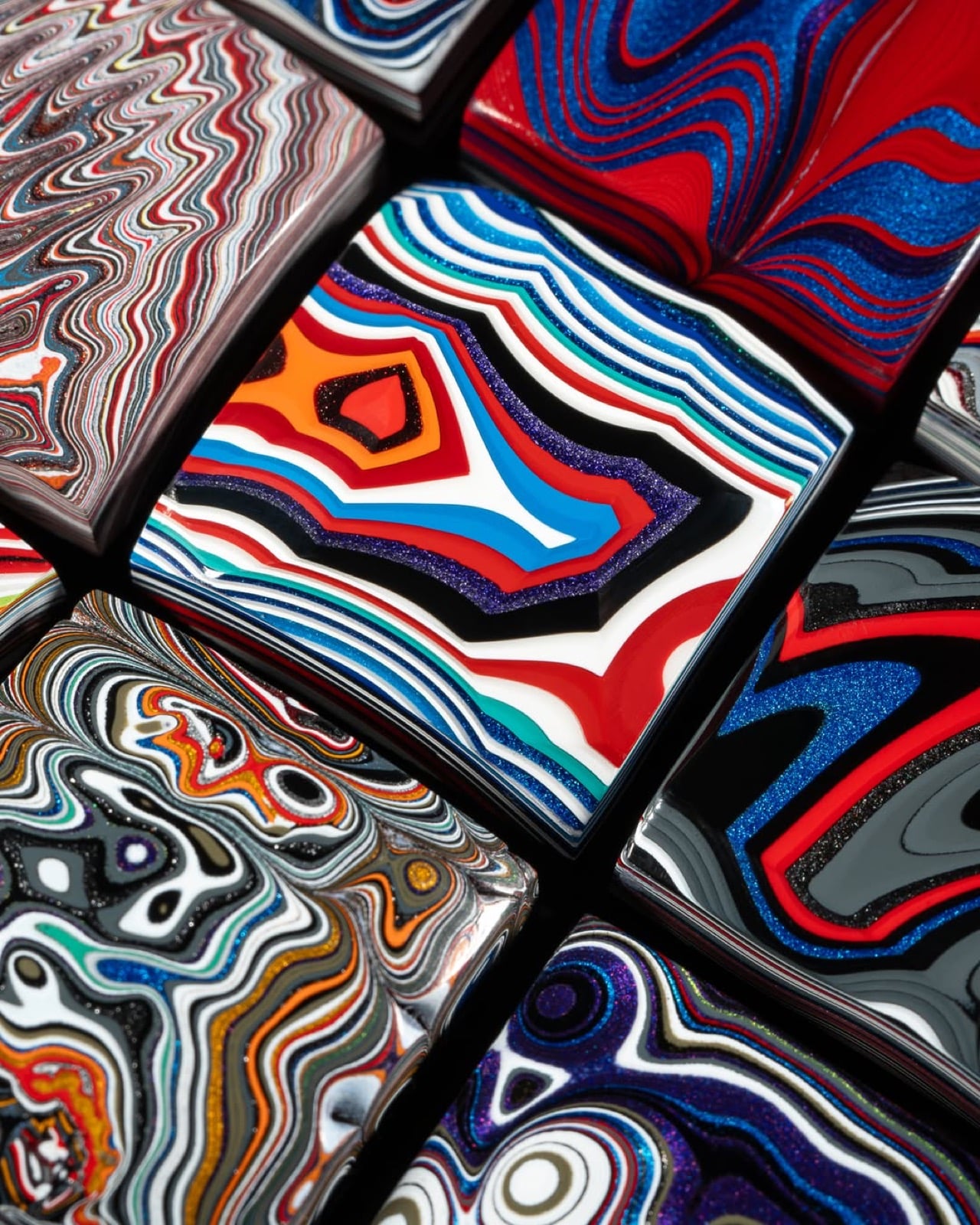
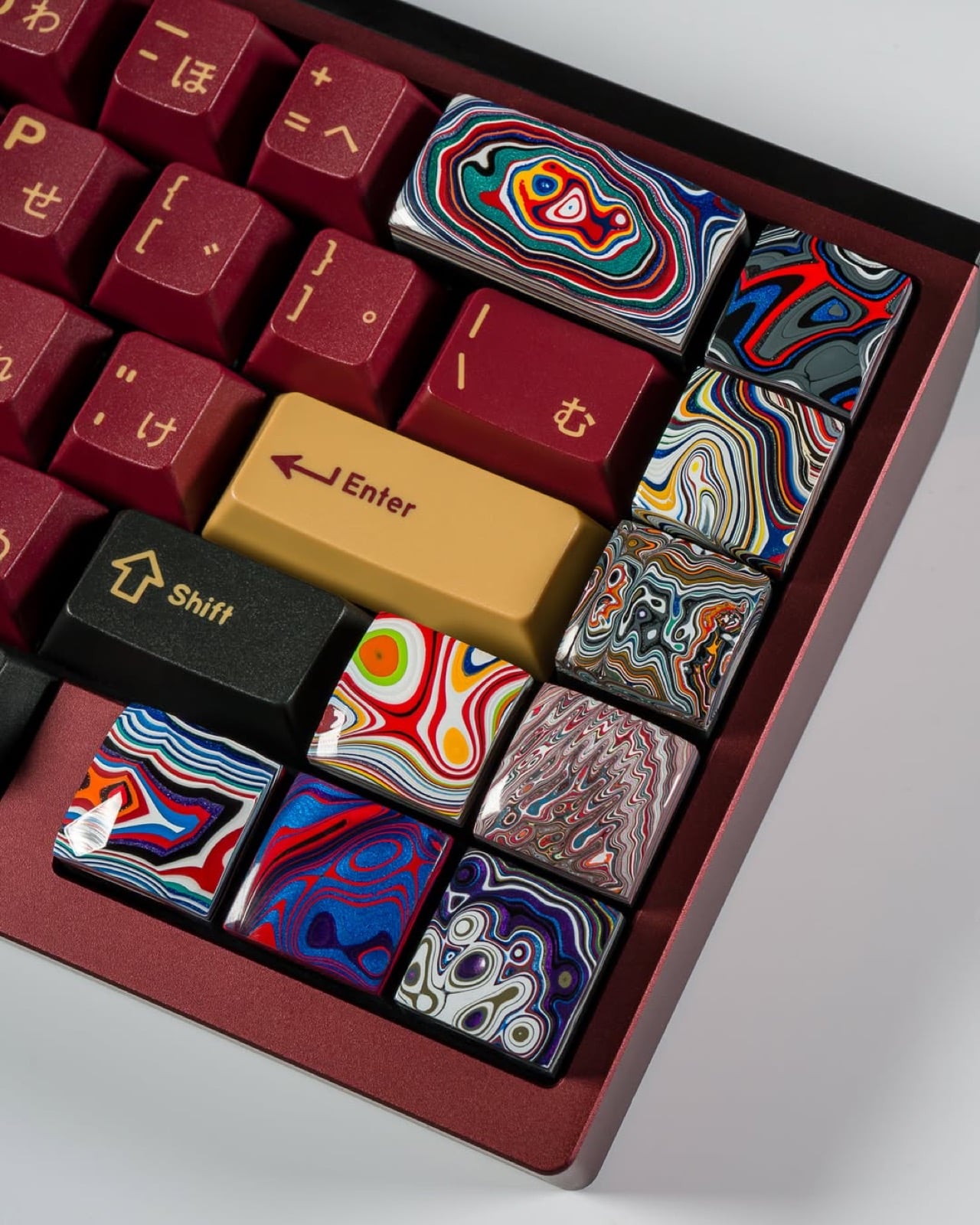
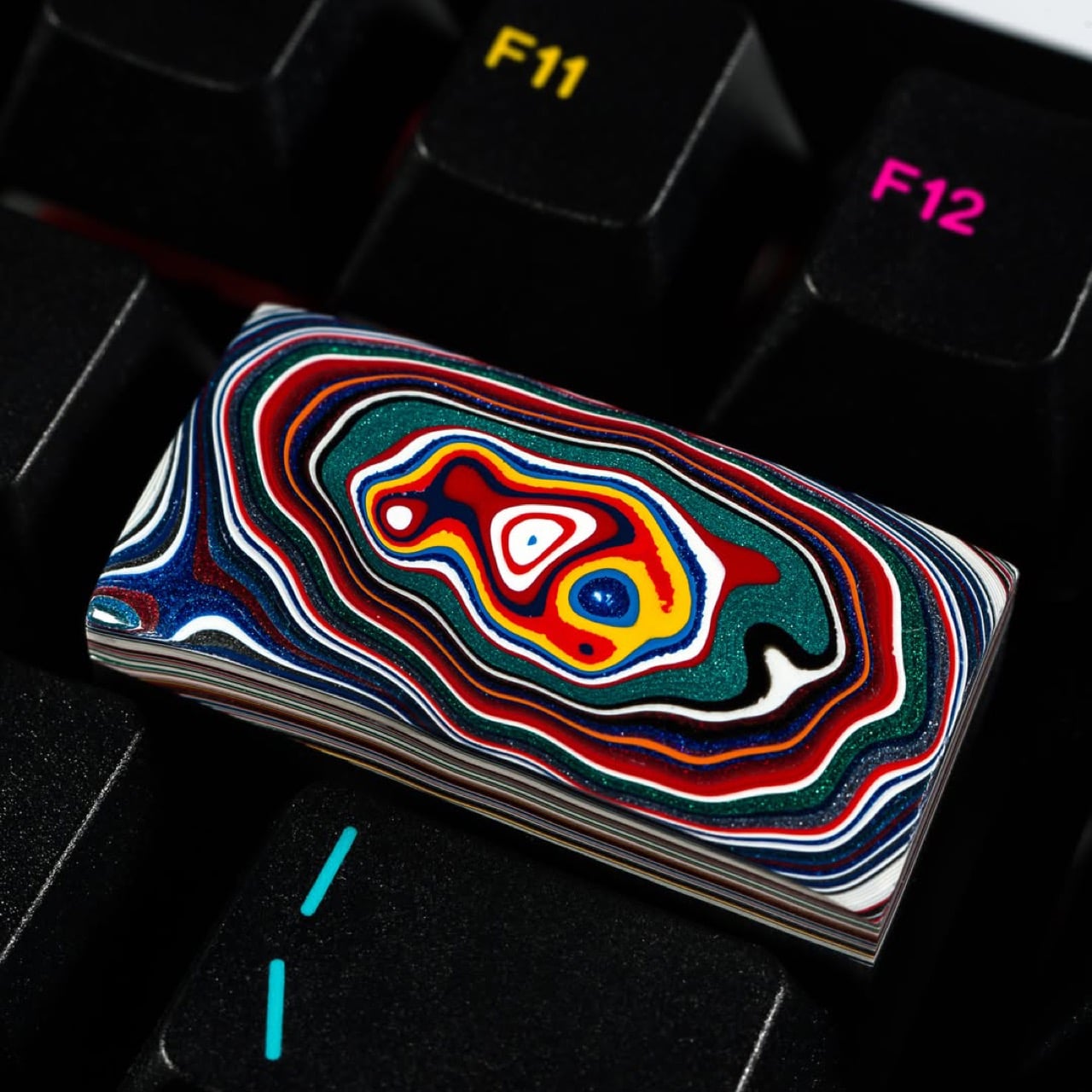
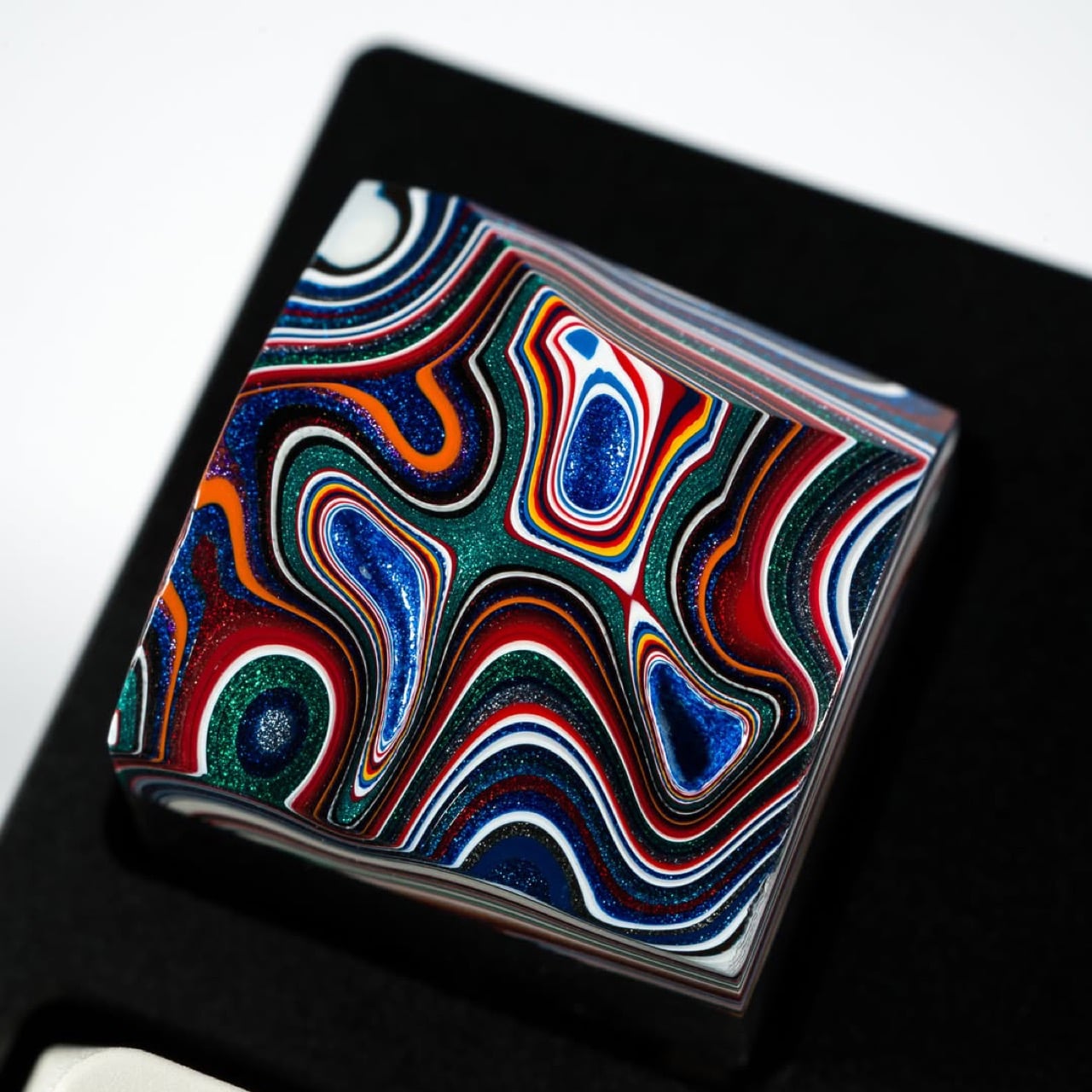
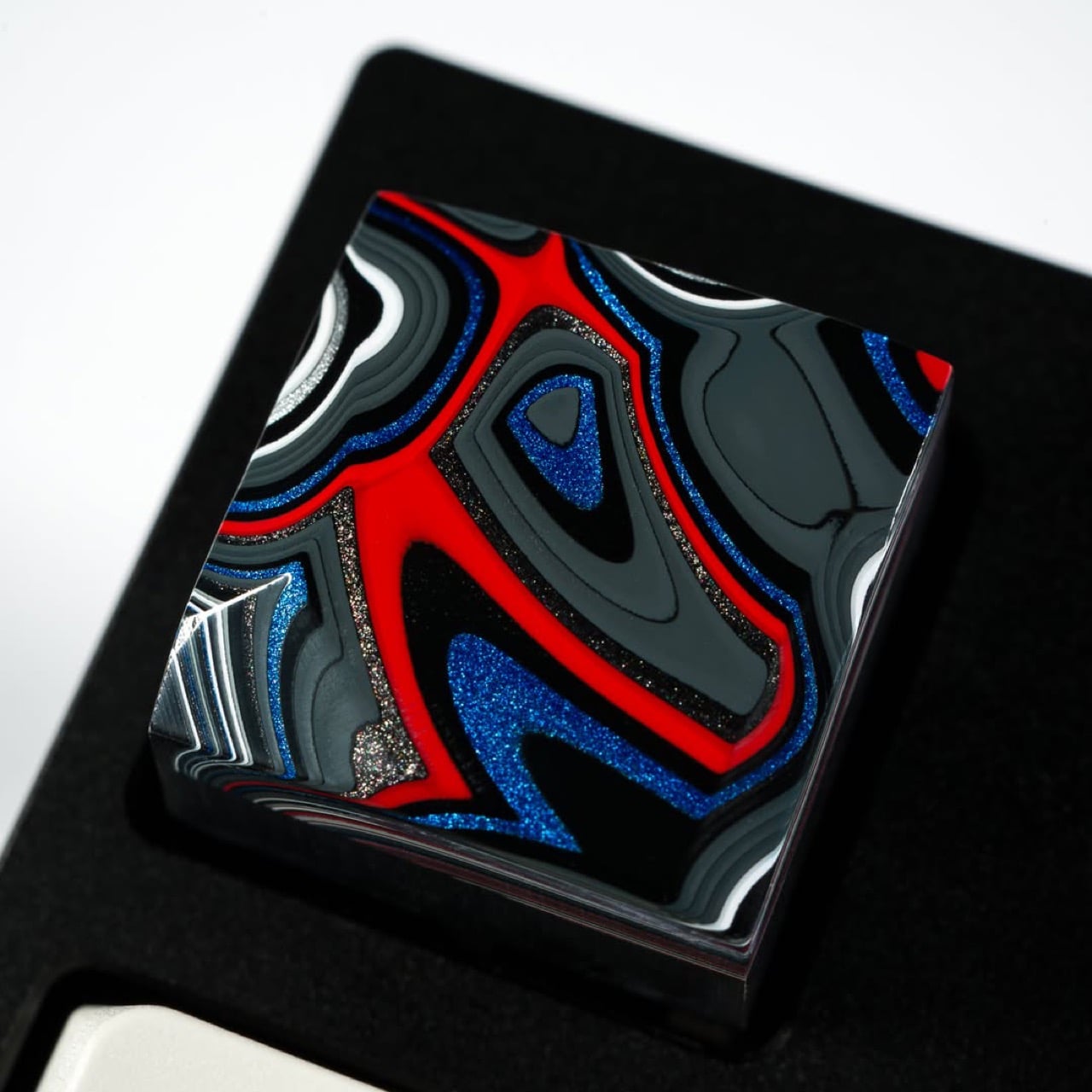
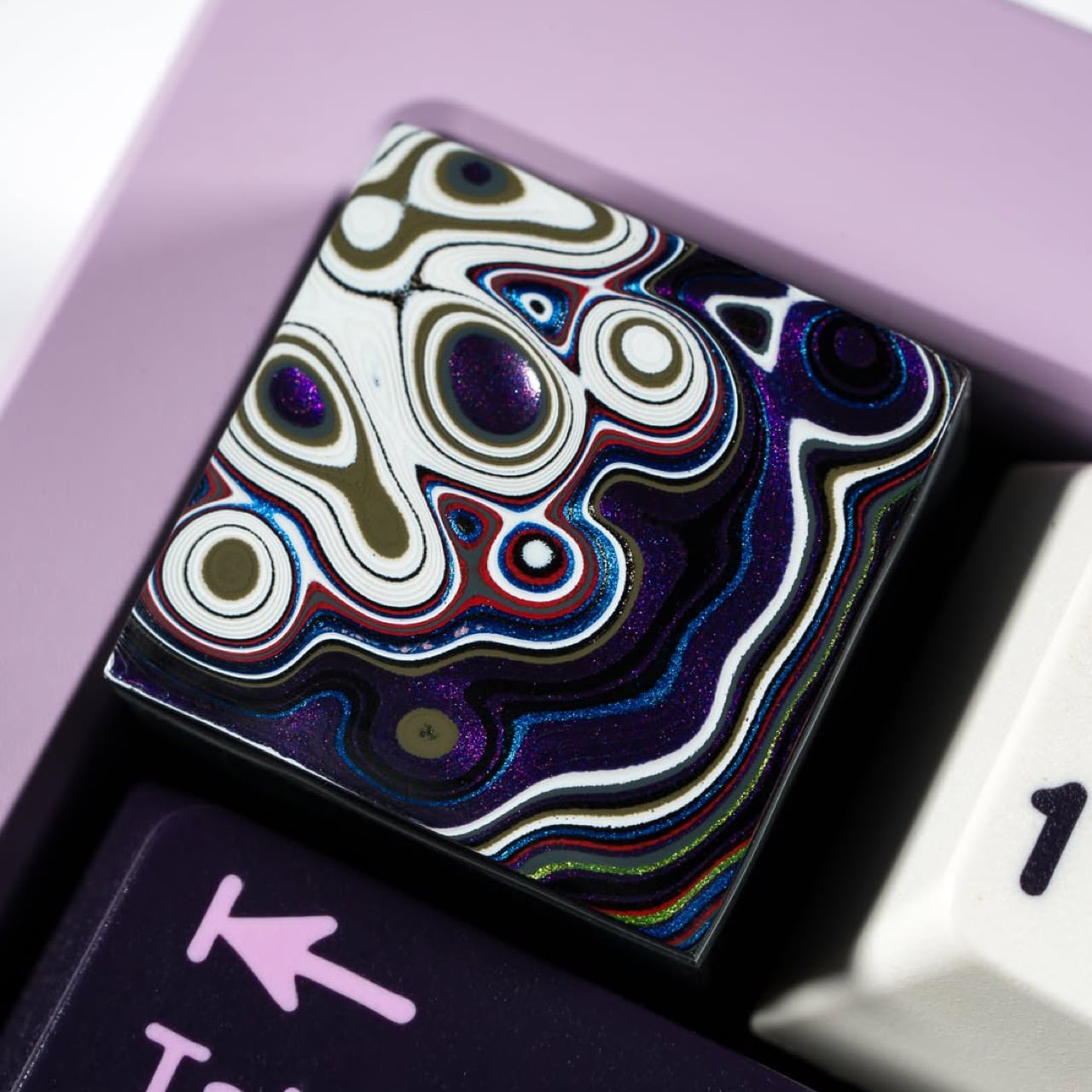
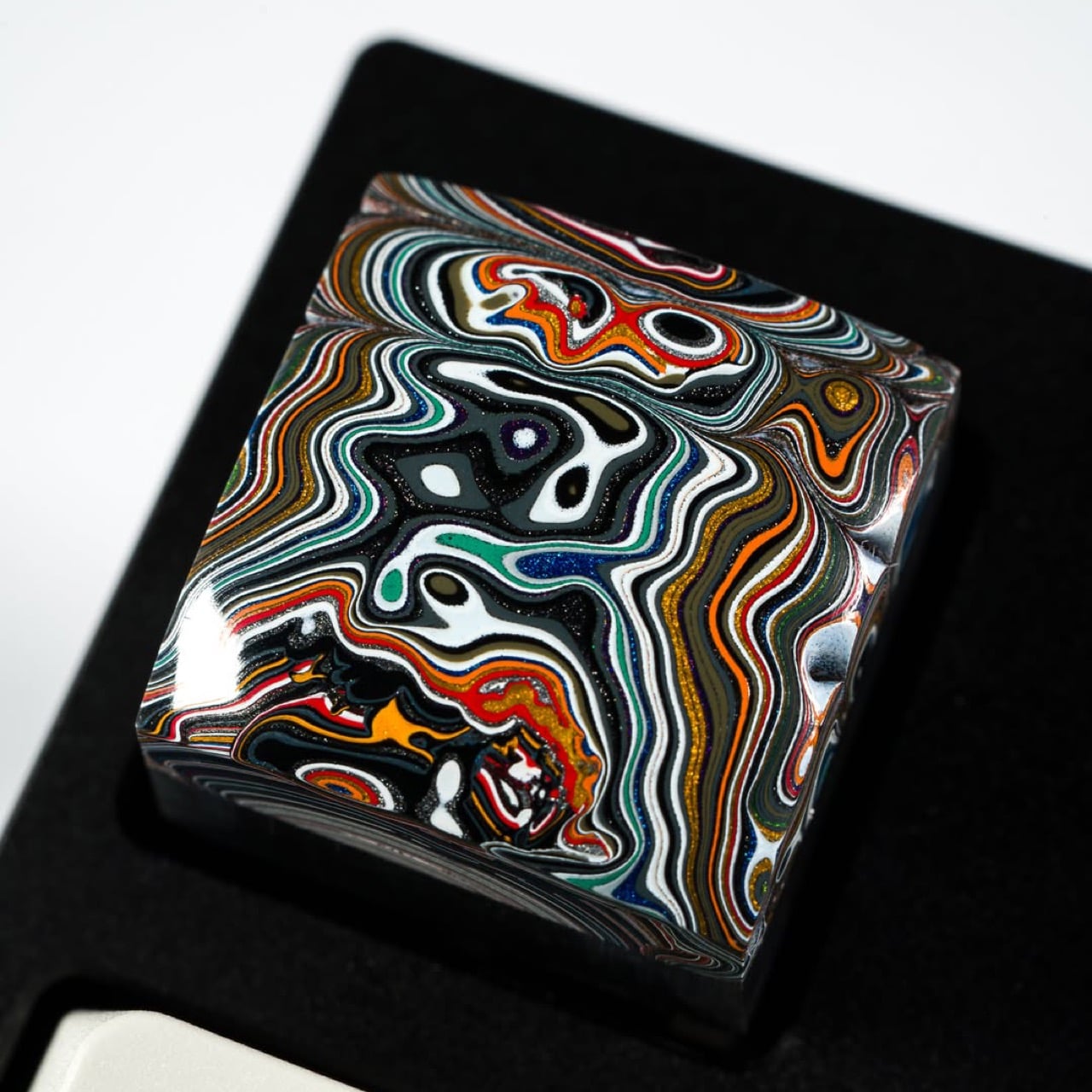
These Actual Ammonite Fossil Keycaps Put 200 Million Years of Natural History on Your Keyboard

Your keyboard connects to your computer via a 2.4GHz wireless dongle. This keycap designed to slot onto your keyboard was formed at the bottom of a Jurassic sea roughly 200 million years ago. Both of these facts are simultaneously true, and together they produce one of the more pleasingly absurd objects in recent design memory. These might be the only keycaps on Earth that existed before the dinosaurs did…

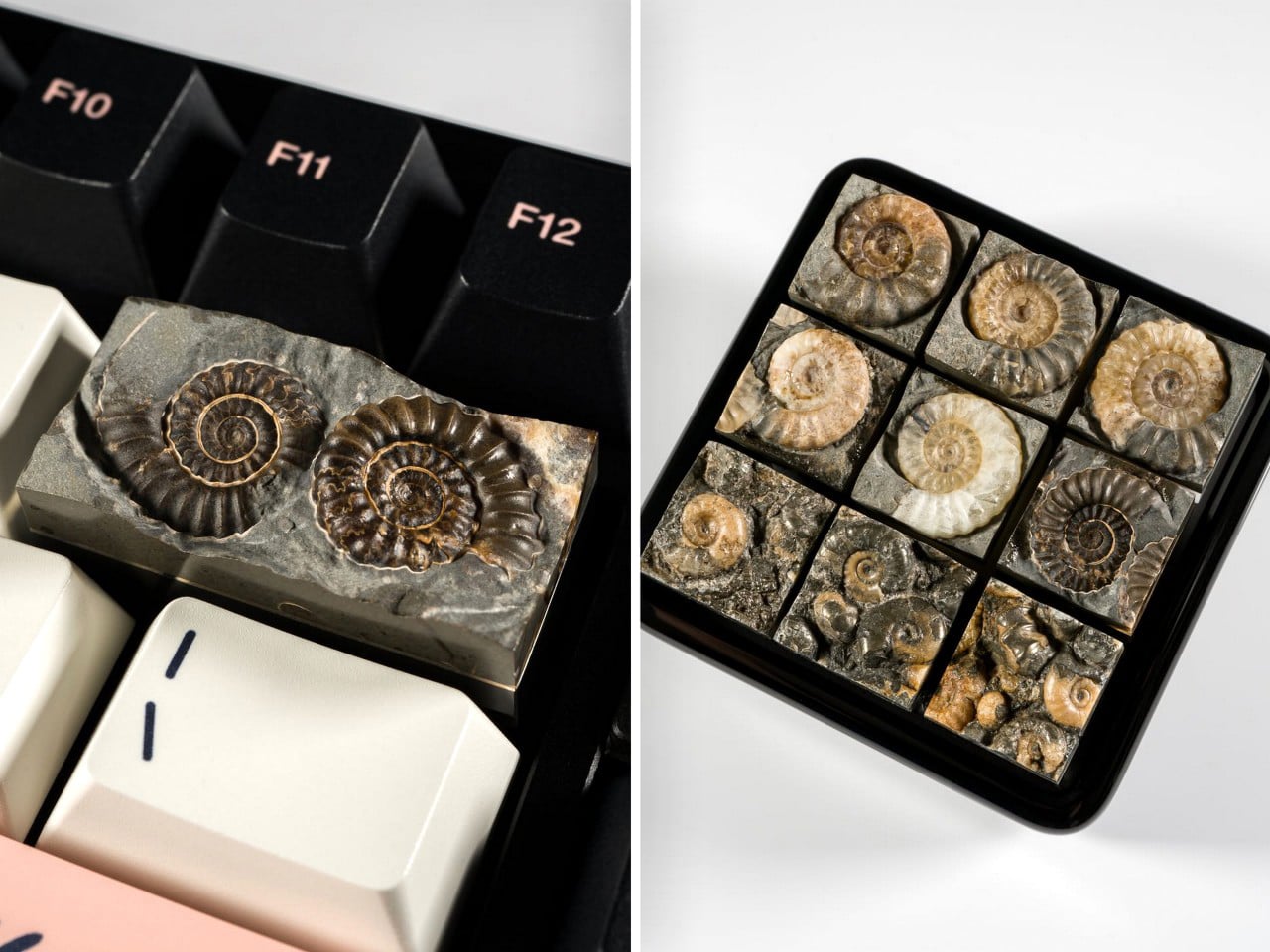
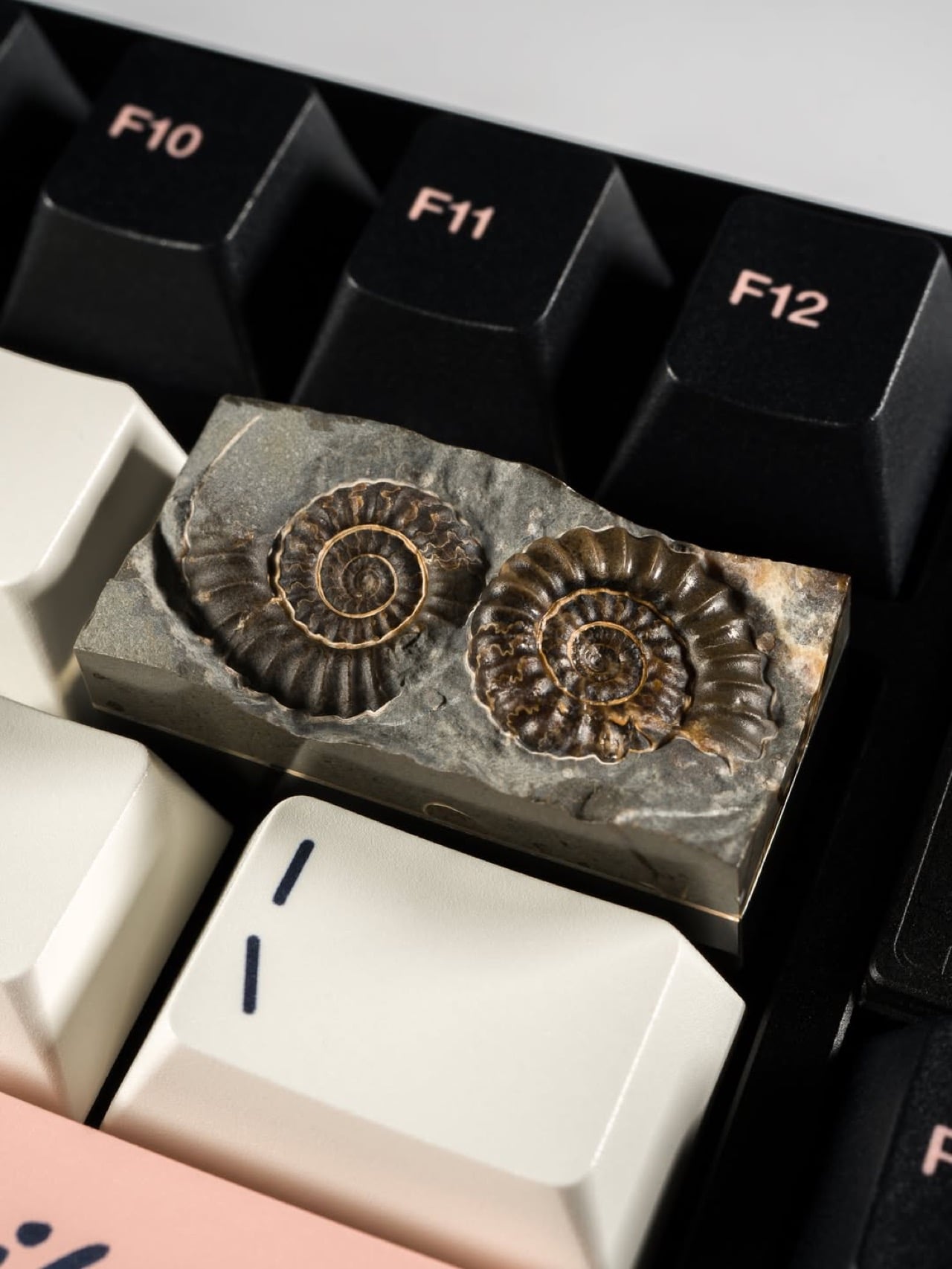
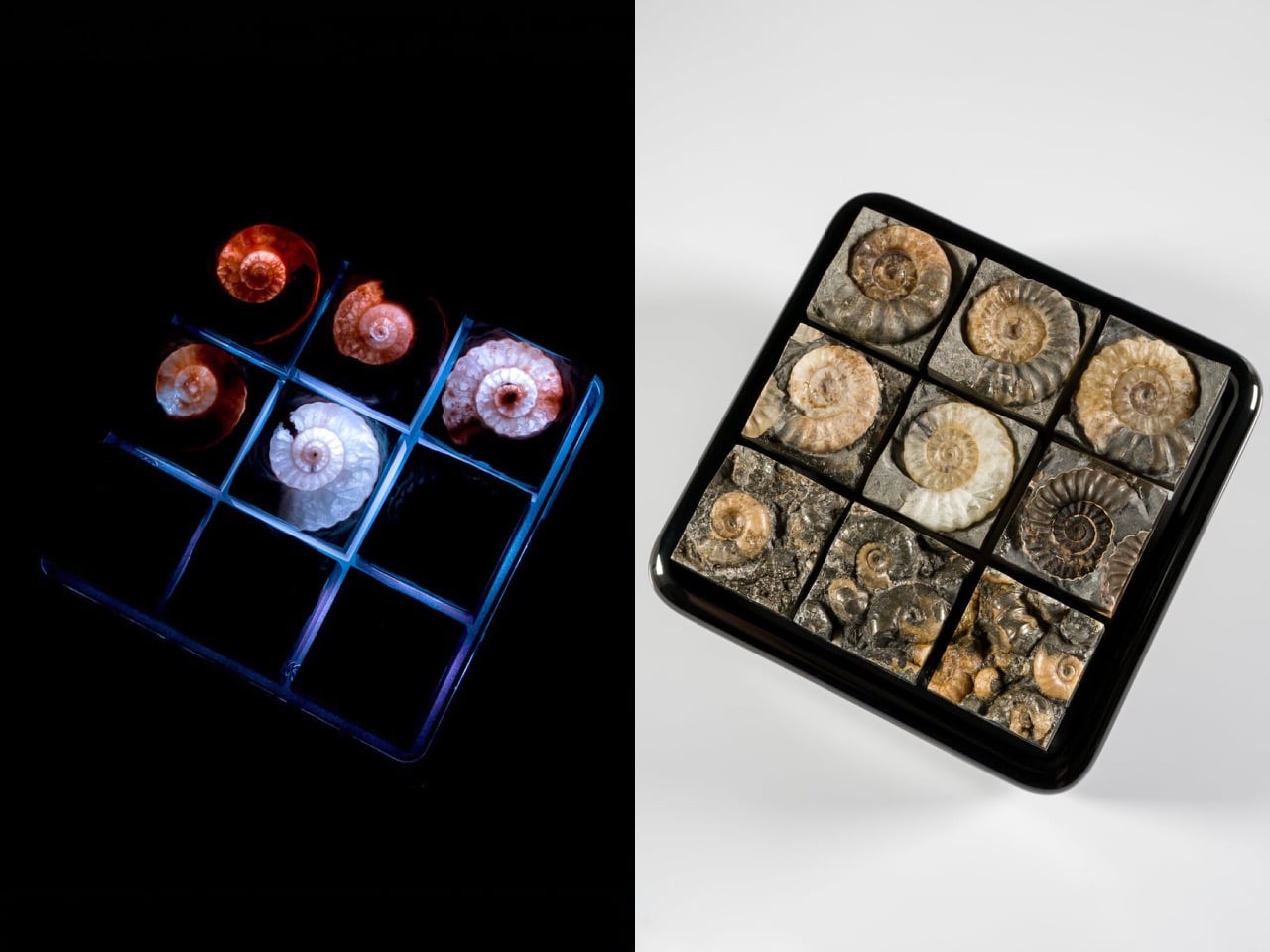
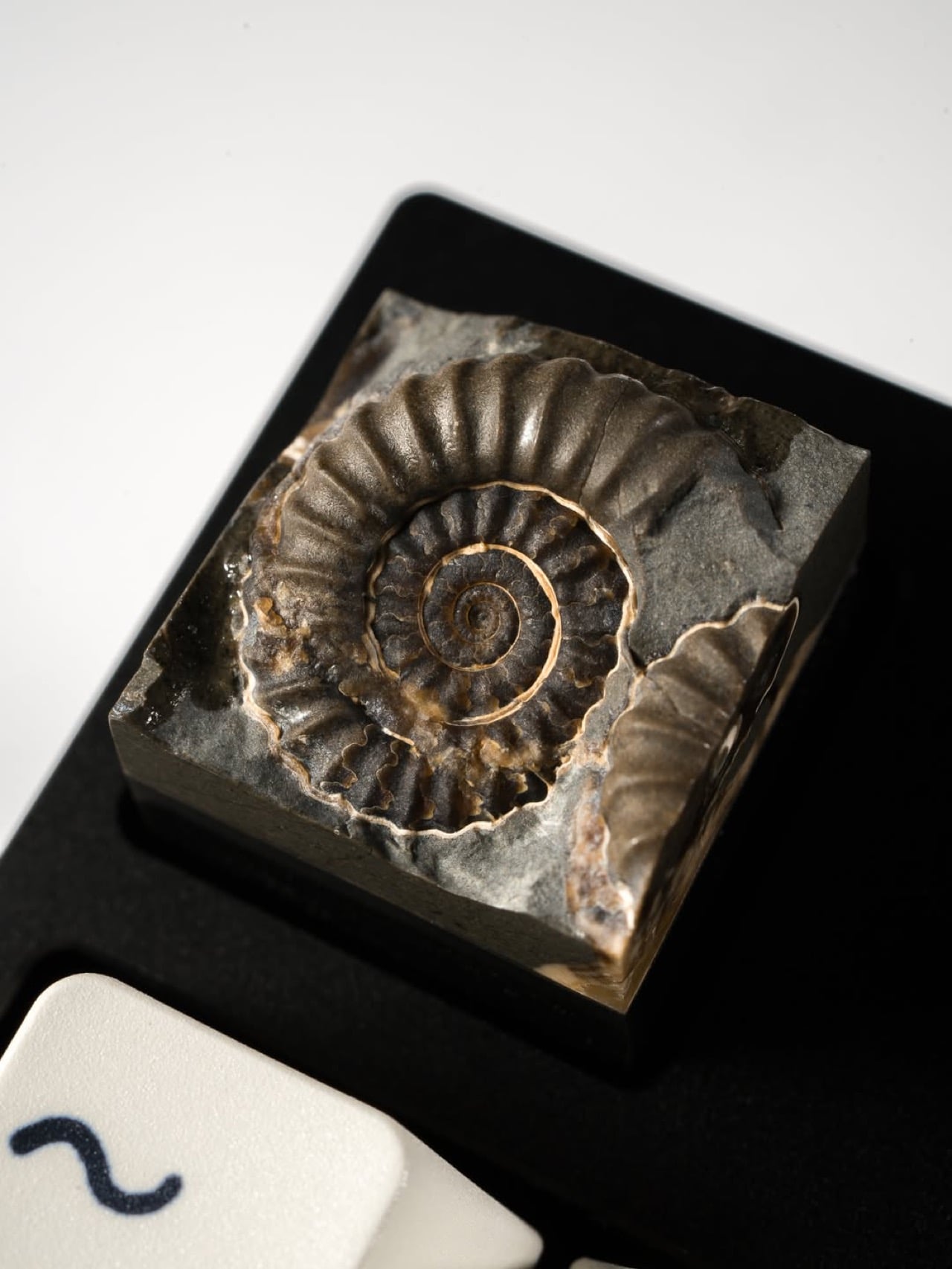
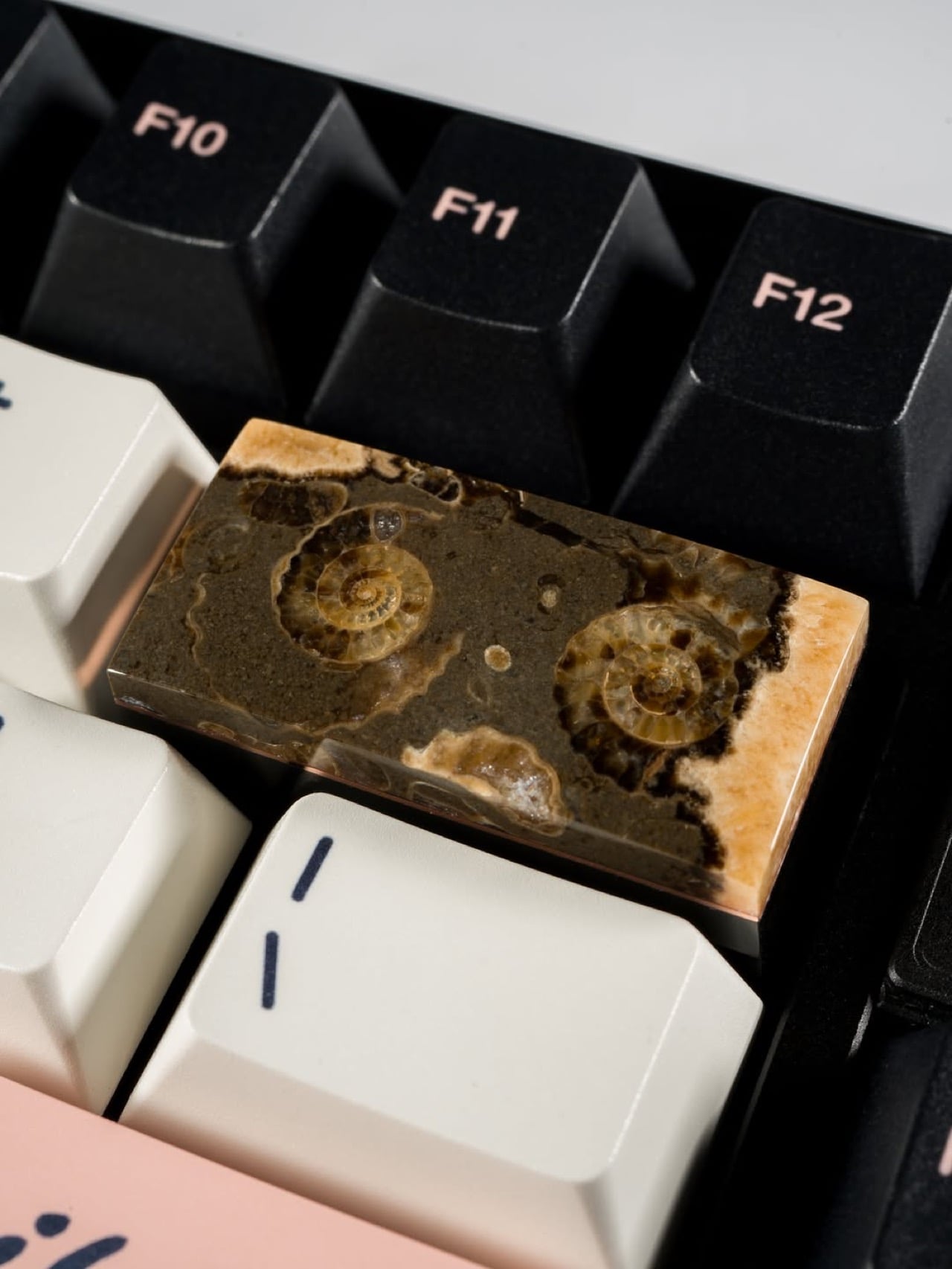
Keycap Quarry’s ammonite fossil keycaps are Carter Stay’s answer to the question nobody thought to ask: what happens when lapidary craft meets keyboard modding? Stay sources actual prehistoric ammonite specimens from England’s Jurassic Coast and the fossil-dense limestone beds of Somerset, then cuts, grinds, and polishes each one down to a functional keycap with a Cherry MX stem. The Marston Marble pieces carry clusters of tiny spiral fossils embedded in dark stone. The Charmouth calcite pieces are translucent enough that Stay hollows them from behind, letting the keyboard’s backlight pour straight through 200 million years of geological history.

Designer: Carter Stay (Keycap Quarry)

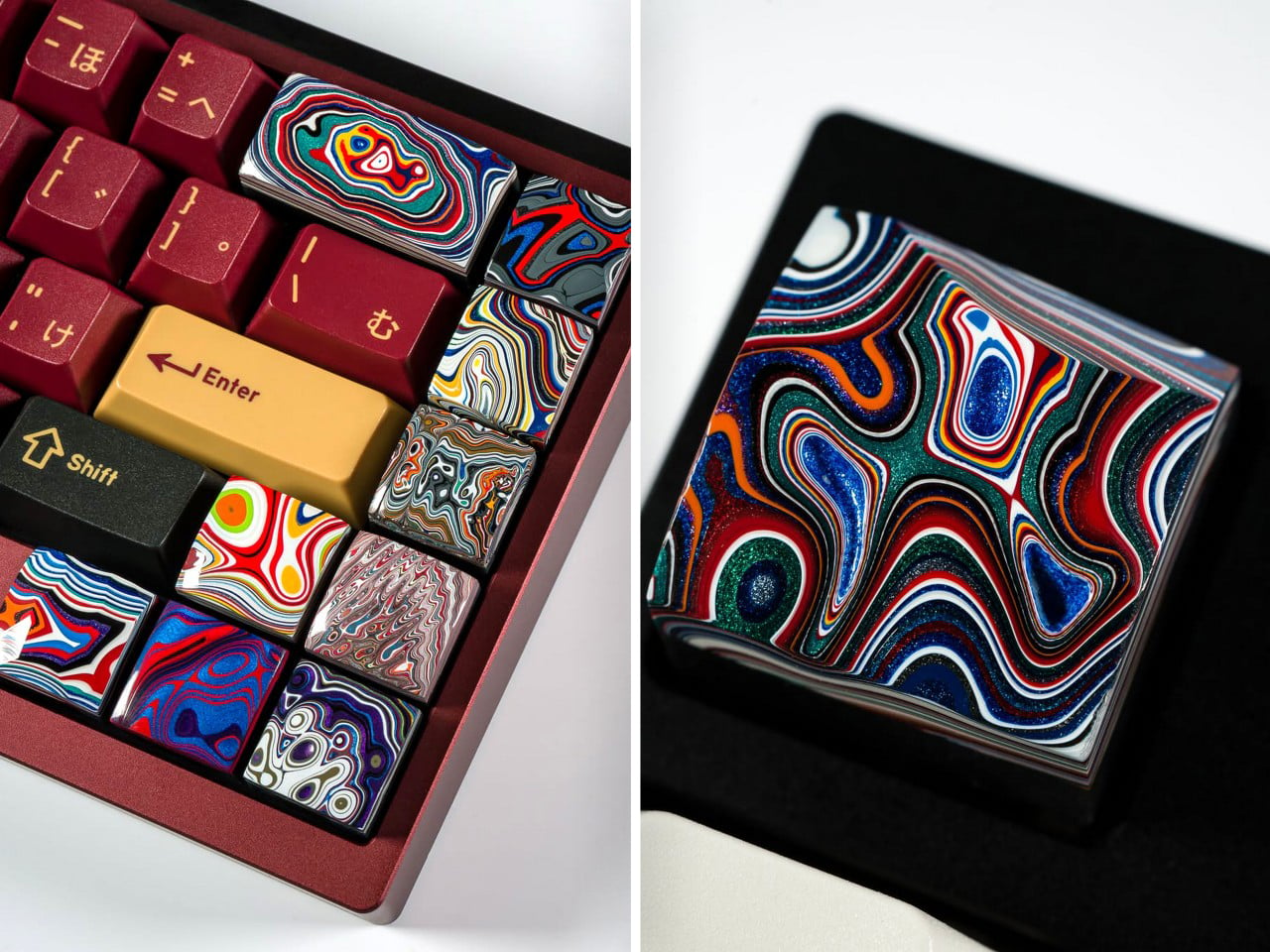
Quarried from Marston Magna in Somerset, Marston Marble is a fossiliferous limestone dense with Promicroceras marstonense ammonites from the Lower Jurassic, roughly 195 to 200 million years old. When polished, the dark grey matrix throws the cream and amber fossil spirals into sharp relief, producing a surface that looks simultaneously geological and deliberate, like a texture a product designer might spend weeks trying to simulate in resin and never quite nail. Each slab is unique because the distribution of fossils across the stone is entirely nature’s doing, meaning two Marston Marble keycaps will never look the same. The material is also becoming increasingly rare at the source, which gives these pieces a provenance weight that purely manufactured artisan caps simply cannot claim.

The Charmouth calcite ammonites come from the Black Ven Marls along the Jurassic Coast in Dorset, where mineral-rich water has replaced the original shell material with translucent calcite over geological time. Stay carves out the rear of each fossil to exploit that translucency, turning the keyboard’s own RGB into a light source that illuminates the internal chamber structure of a 200-million-year-old cephalopod. Under UV, the calcite glows with a cold blue-white that makes each keycap look less like a desk accessory and more like a biopsy slide from a natural history museum. It is the same optical trick that makes backlit calcite specimens prized in the collector market, now deployed on a 1U footprint between your F-row keys.

Dwarf Factory and the wider resin artisan world build narrative through sculpting and hand-painting, layering fiction onto a manufactured substrate. Stay works in the opposite direction, subtracting everything unnecessary from a material that already contains the narrative. No manufacturing process replicates what 200 million years of geological compression and mineralization produces, and no hand-painter can fake the variance in a Marston Marble slab or the internal chamber glow of a backlit calcite fossil.

Unlike most keycaps we’ve covered on this site, these Ammonite ones aren’t easy to replicate. They’re difficult to come across, and every single one looks different, so images don’t really reflect what newer stock will look like. Keycap Quarry’s been selling these (along with a bunch of other) keycaps on their website, and while the ammonite ones are sold out, they’re roughly in the $180 range per cap, making them fairly expensive but equally elusive and priceless.

The post These Actual Ammonite Fossil Keycaps Put 200 Million Years of Natural History on Your Keyboard first appeared on Yanko Design.
ROG Just Made Gaming Peripherals You’d Actually Put on Display

Gaming peripherals have gradually crossed from purely functional tools into design objects that enthusiasts keep, display, and collect alongside their builds. Limited-edition anniversary hardware has become part of that culture, giving manufacturers a chance to honor their history while reminding the community why certain names still carry weight. Making those commemorative pieces feel genuinely worthy of the occasion, however, is always the trickier part.

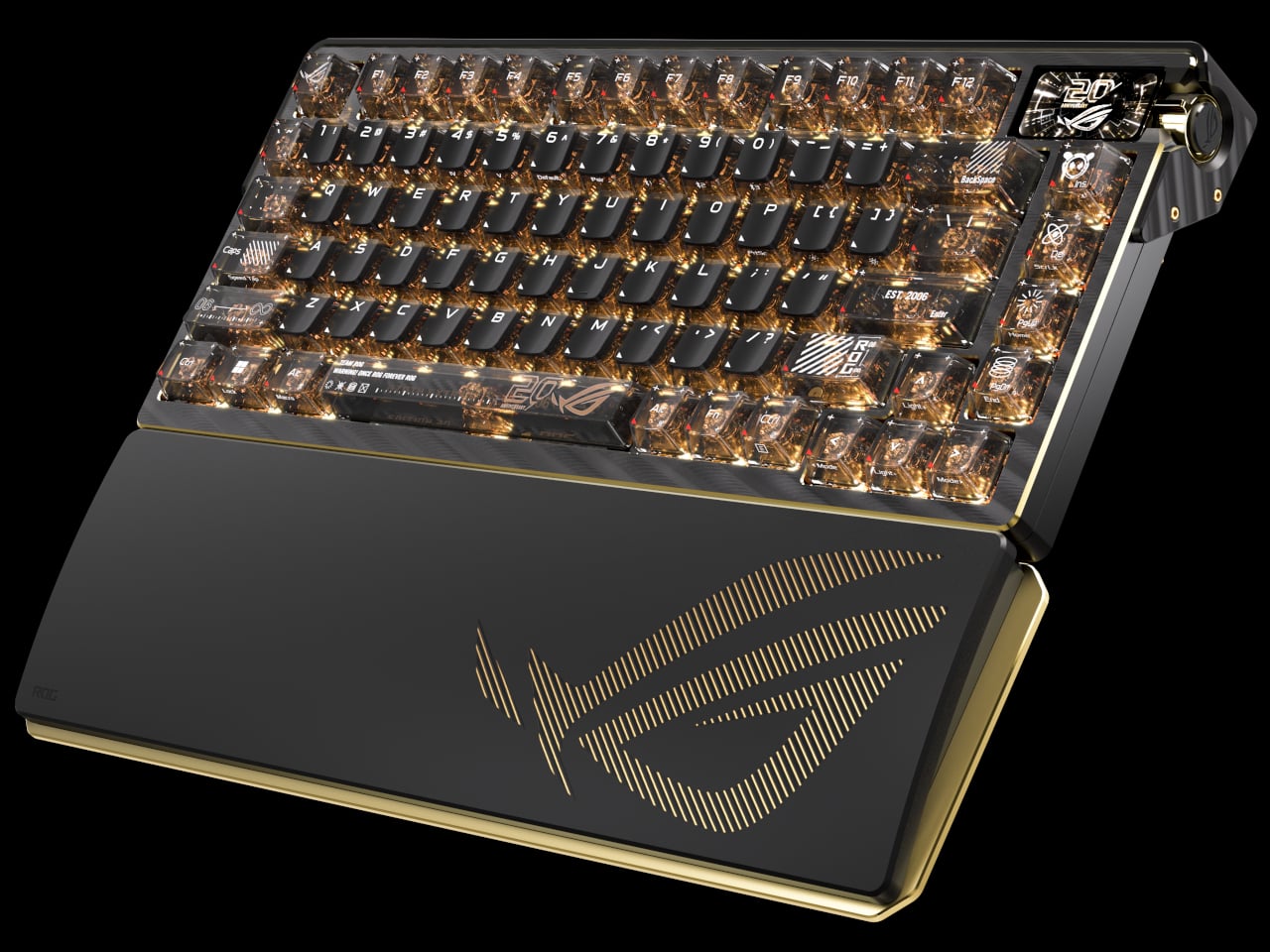
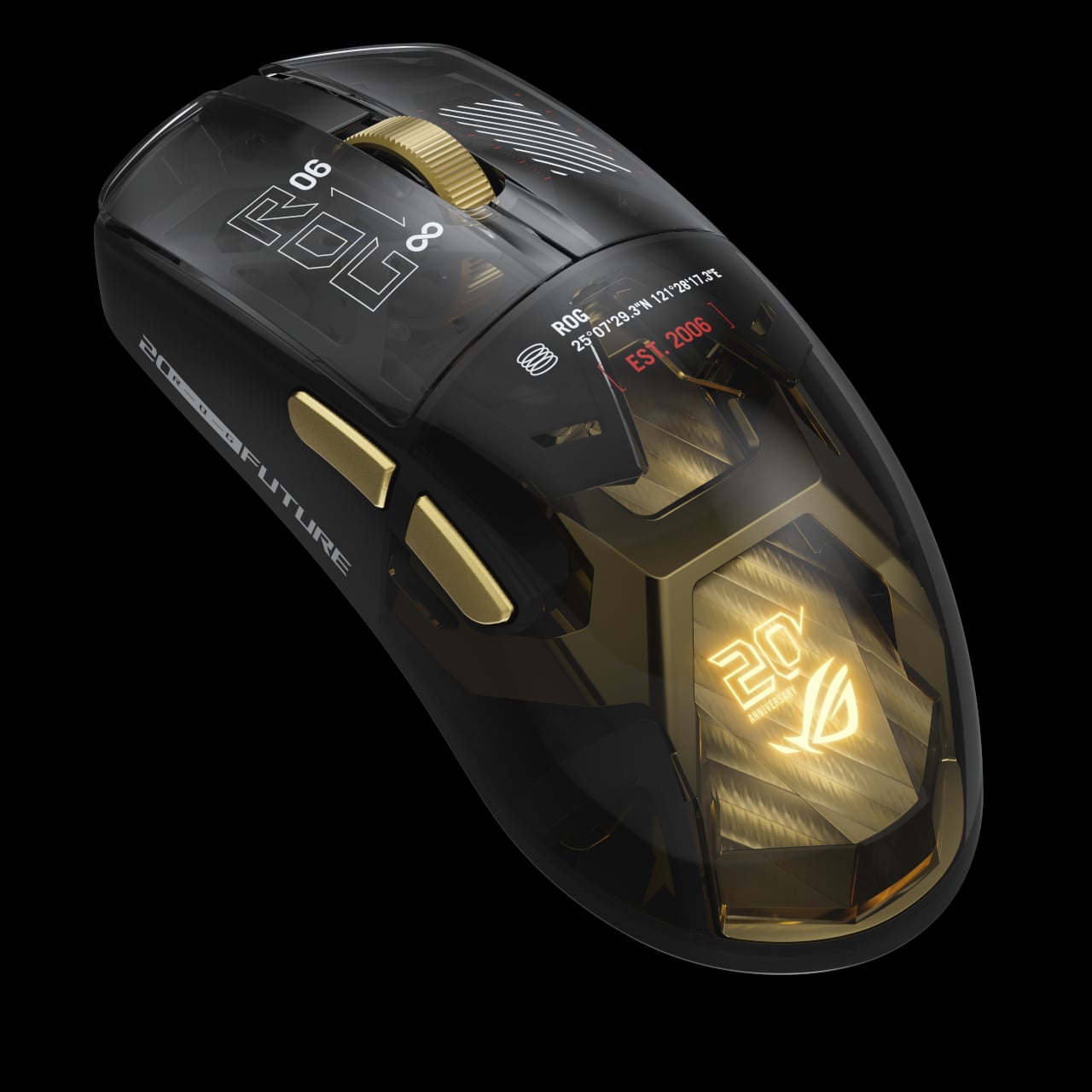
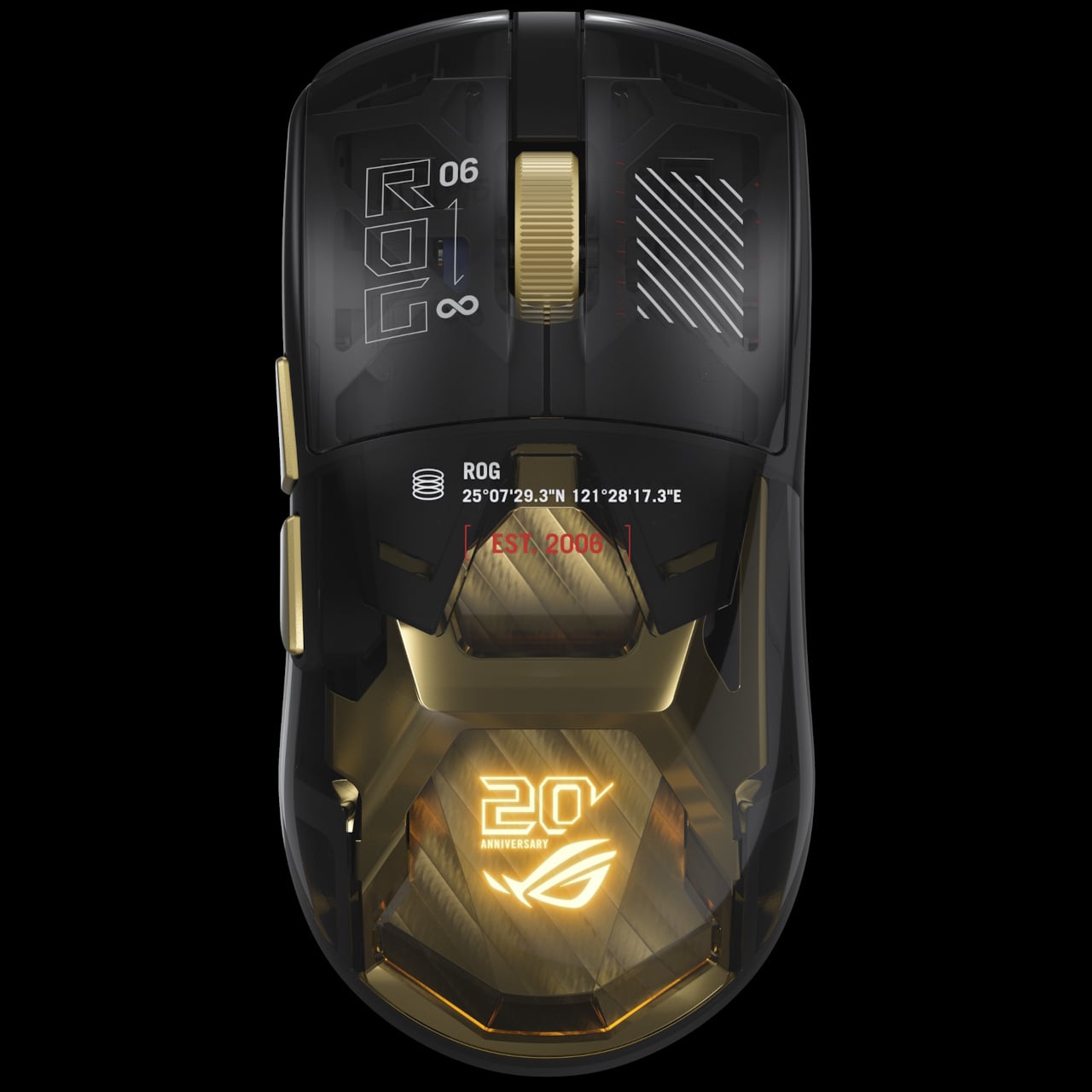
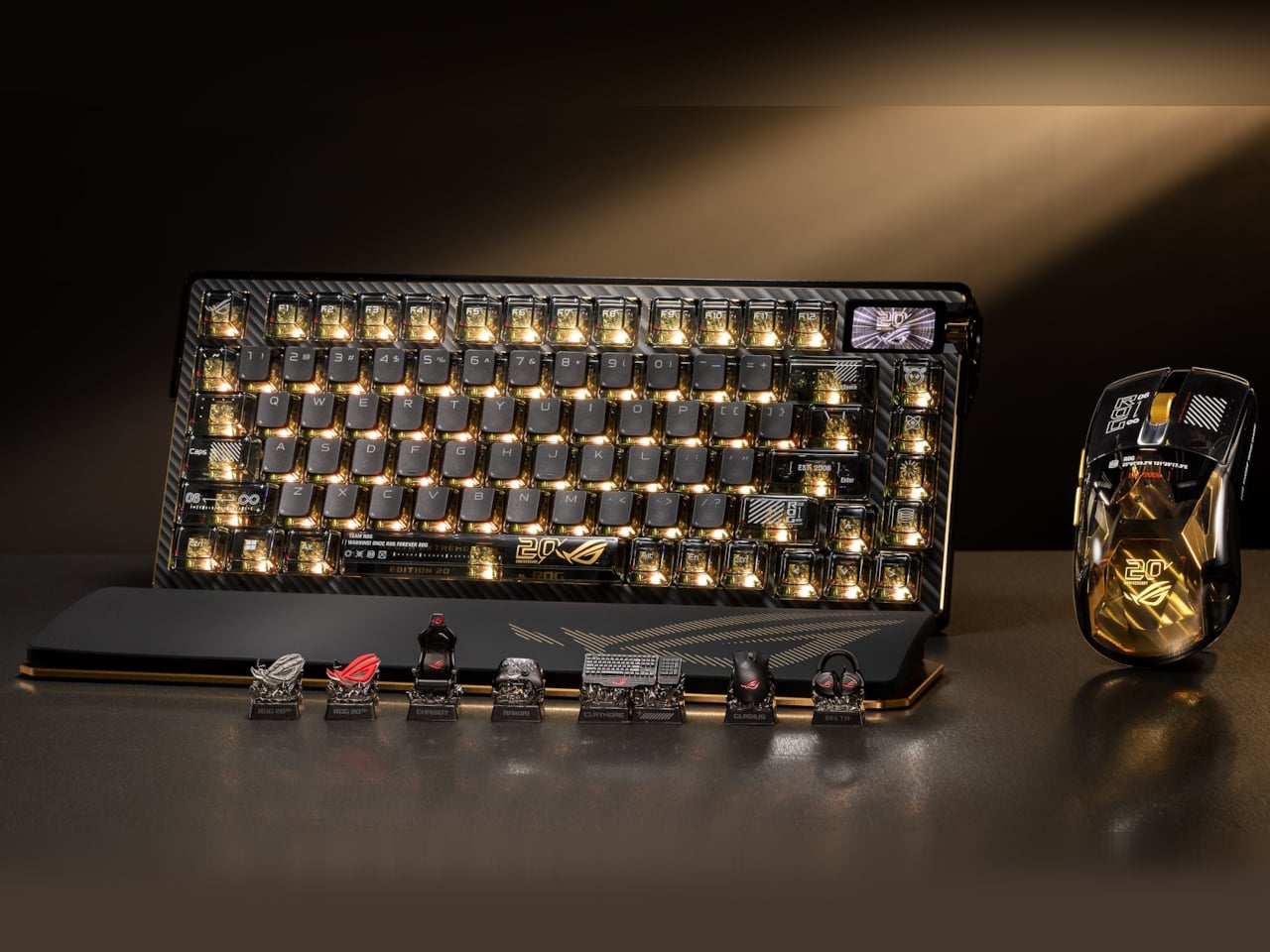
ROG, short for ASUS’ Republic of Gamers brand, is marking 20 years of gaming innovation with an anniversary lineup centered on a gold-and-black design identity it calls the Edition 20 colorway. Three peripheral additions sit at the heart of it, namely the Azoth Extreme Edition 20 keyboard, the Harpe II Extreme Edition 20 mouse, and the Keycap Mystery Box Edition 20, each making the case that high-performance hardware and collector-worthy design don’t have to live separately.

Designer: ASUS

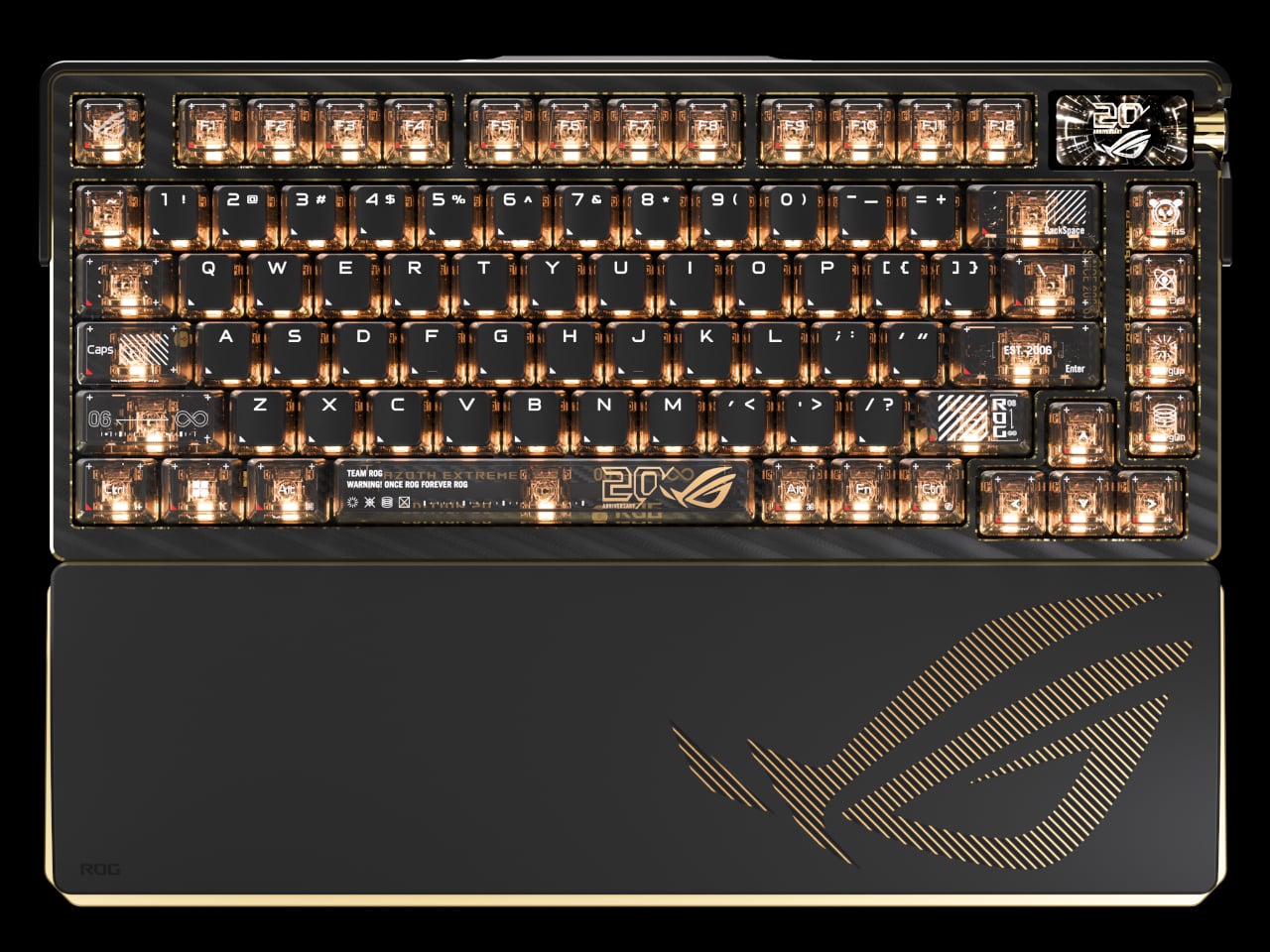
The Azoth Extreme Edition 20 is a 75% gaming keyboard that wears the anniversary theme without being heavy-handed about it. Translucent keycaps reveal the mechanics below, and a detachable 24K-gold-plated nameplate at the front makes the occasion official without being excessive. The extended silicone wrist rest adds completeness to the package, anchored by a gold-toned aluminum-alloy base that ties everything together without introducing anything out of place.

Beneath that exterior, an adjustable gasket mount toggles between Hard and Soft typing modes, useful for anyone who games and types for long hours in the same session. The custom ROG NX Edition 20 mechanical switches are transparent, factory pre-lubed, and hot-swappable, while an OLED touchscreen with a three-way control knob handles quick adjustments. In 2.4GHz wireless mode, battery life stretches to up to 1,600 hours.

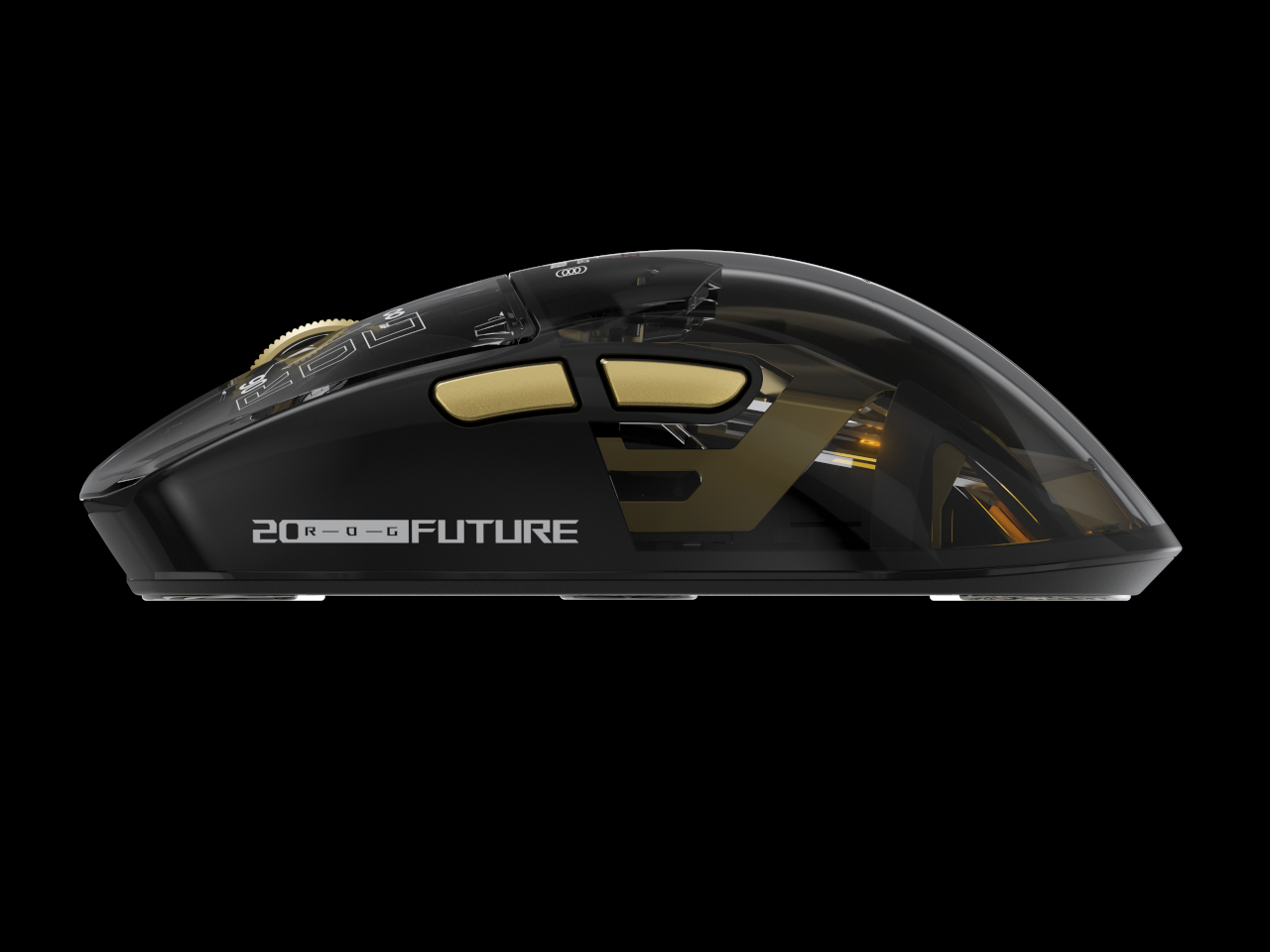
The Harpe II Extreme Edition 20 shares the same design language and makes a natural companion to the keyboard. Built on the pro-tested shape of the Harpe II Ace, it houses a 24K-gold-plated metal interior frame inside a crystal-clear shell, with an RGB light guide plate illuminating the components within. A display case ships with the mouse in the box, which feels entirely appropriate given how it looks at rest.

The ROG AimPoint Pro 65K sensor delivers 65,000 dpi with less than 1% CPI deviation and 8,000Hz wireless polling through ROG SpeedNova technology. At 82g with glass mouse feet already included, it’s ready for competitive play immediately. Battery life holds at up to 90 hours over 2.4GHz RF and 98.5 hours in Bluetooth mode, both measured with the lighting switched off.

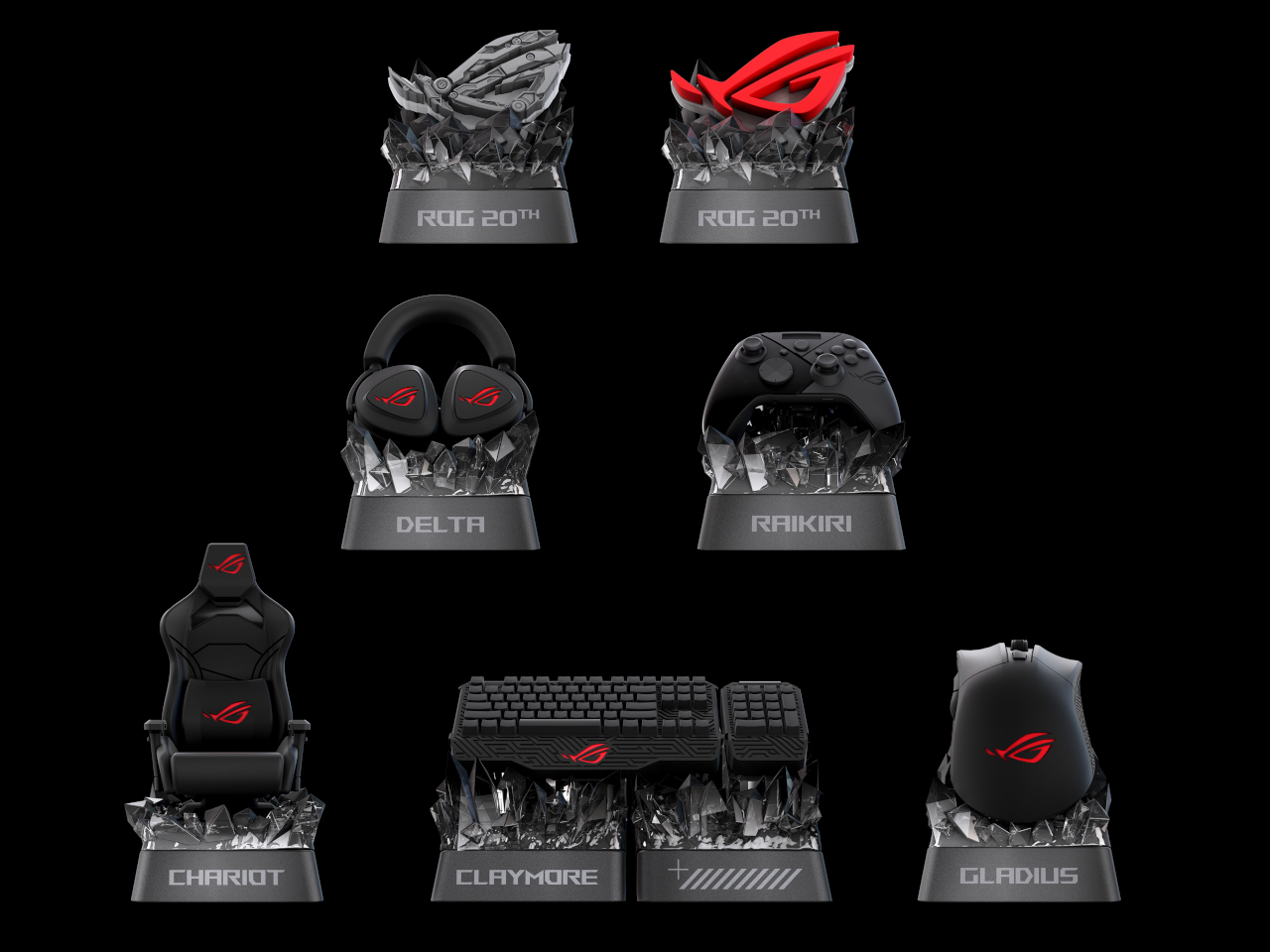
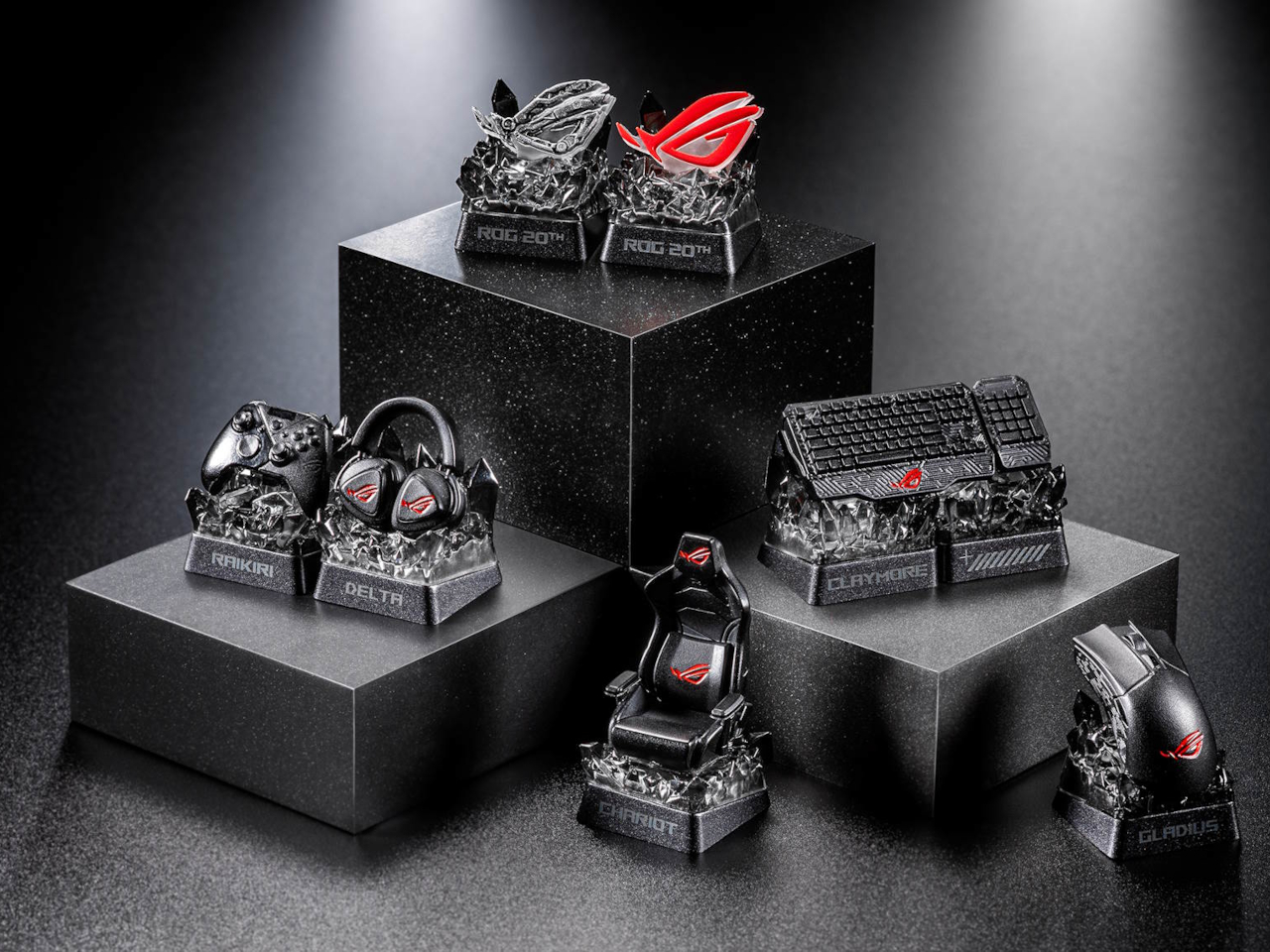
For those who aren’t swapping out their entire setup, the Keycap Mystery Box Edition 20 is the most accessible entry into the anniversary series. Each box holds a randomly selected keycap in one of seven designs inspired by iconic ROG peripherals and the ROG Fearless Eye logo, built through casting, high-pressure forming, hand-painted finishing, and structural assembly. The obsidian-inspired base and refined detailing make each piece genuinely display-worthy.

The ROG Claymore design is the one most worth watching for, as it includes two interlocking keycaps that reference the original keyboard’s modular layout. A Special Edition crystal-like ROG Logo keycap is also in the pool. Available as a single unit or a six-piece box with no duplicates, the Mystery Box turns 20 years of ROG hardware history into something you can keep in the palm of your hand.

The post ROG Just Made Gaming Peripherals You’d Actually Put on Display first appeared on Yanko Design.
ROG Just Made Gaming Peripherals You’d Actually Put on Display

Gaming peripherals have gradually crossed from purely functional tools into design objects that enthusiasts keep, display, and collect alongside their builds. Limited-edition anniversary hardware has become part of that culture, giving manufacturers a chance to honor their history while reminding the community why certain names still carry weight. Making those commemorative pieces feel genuinely worthy of the occasion, however, is always the trickier part.

ROG, short for ASUS’ Republic of Gamers brand, is marking 20 years of gaming innovation with an anniversary lineup centered on a gold-and-black design identity it calls the Edition 20 colorway. Three peripheral additions sit at the heart of it, namely the Azoth Extreme Edition 20 keyboard, the Harpe II Extreme Edition 20 mouse, and the Keycap Mystery Box Edition 20, each making the case that high-performance hardware and collector-worthy design don’t have to live separately.

Designer: ASUS

The Azoth Extreme Edition 20 is a 75% gaming keyboard that wears the anniversary theme without being heavy-handed about it. Translucent keycaps reveal the mechanics below, and a detachable 24K-gold-plated nameplate at the front makes the occasion official without being excessive. The extended silicone wrist rest adds completeness to the package, anchored by a gold-toned aluminum-alloy base that ties everything together without introducing anything out of place.

Beneath that exterior, an adjustable gasket mount toggles between Hard and Soft typing modes, useful for anyone who games and types for long hours in the same session. The custom ROG NX Edition 20 mechanical switches are transparent, factory pre-lubed, and hot-swappable, while an OLED touchscreen with a three-way control knob handles quick adjustments. In 2.4GHz wireless mode, battery life stretches to up to 1,600 hours.

The Harpe II Extreme Edition 20 shares the same design language and makes a natural companion to the keyboard. Built on the pro-tested shape of the Harpe II Ace, it houses a 24K-gold-plated metal interior frame inside a crystal-clear shell, with an RGB light guide plate illuminating the components within. A display case ships with the mouse in the box, which feels entirely appropriate given how it looks at rest.

The ROG AimPoint Pro 65K sensor delivers 65,000 dpi with less than 1% CPI deviation and 8,000Hz wireless polling through ROG SpeedNova technology. At 82g with glass mouse feet already included, it’s ready for competitive play immediately. Battery life holds at up to 90 hours over 2.4GHz RF and 98.5 hours in Bluetooth mode, both measured with the lighting switched off.

For those who aren’t swapping out their entire setup, the Keycap Mystery Box Edition 20 is the most accessible entry into the anniversary series. Each box holds a randomly selected keycap in one of seven designs inspired by iconic ROG peripherals and the ROG Fearless Eye logo, built through casting, high-pressure forming, hand-painted finishing, and structural assembly. The obsidian-inspired base and refined detailing make each piece genuinely display-worthy.

The ROG Claymore design is the one most worth watching for, as it includes two interlocking keycaps that reference the original keyboard’s modular layout. A Special Edition crystal-like ROG Logo keycap is also in the pool. Available as a single unit or a six-piece box with no duplicates, the Mystery Box turns 20 years of ROG hardware history into something you can keep in the palm of your hand.

The post ROG Just Made Gaming Peripherals You’d Actually Put on Display first appeared on Yanko Design.
Dwarf Factory’s Hyper-real 4/20 Resin Keycaps Are Handcrafted Miniature Gardens You Can Type On

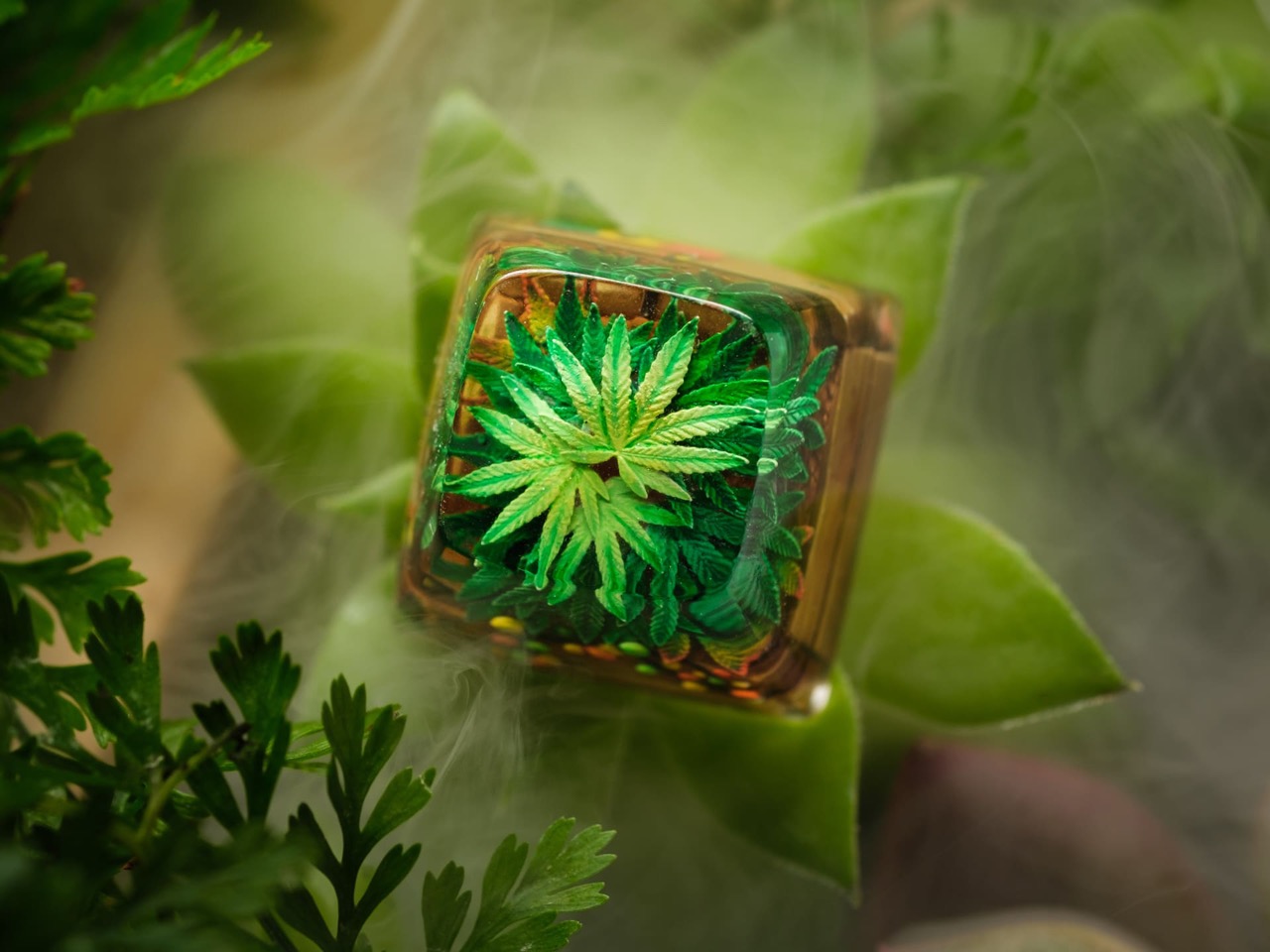
The countdown to 4/20 has begun, and if you’re the type who celebrates by upgrading your workspace aesthetics rather than raiding the nearest dispensary, Dwarf Factory sees you. The Vietnamese artisan keycap maker has built a reputation for encasing impossibly detailed miniature scenes in resin, transforming individual keyboard keys into tiny dioramas. Their Terrarium V2 collection has featured everything from succulents to seasonal florals, each one hand-painted and assembled at a scale that borders on obsessive. Their latest drop leans into the holiday with zero subtlety and maximum craft.

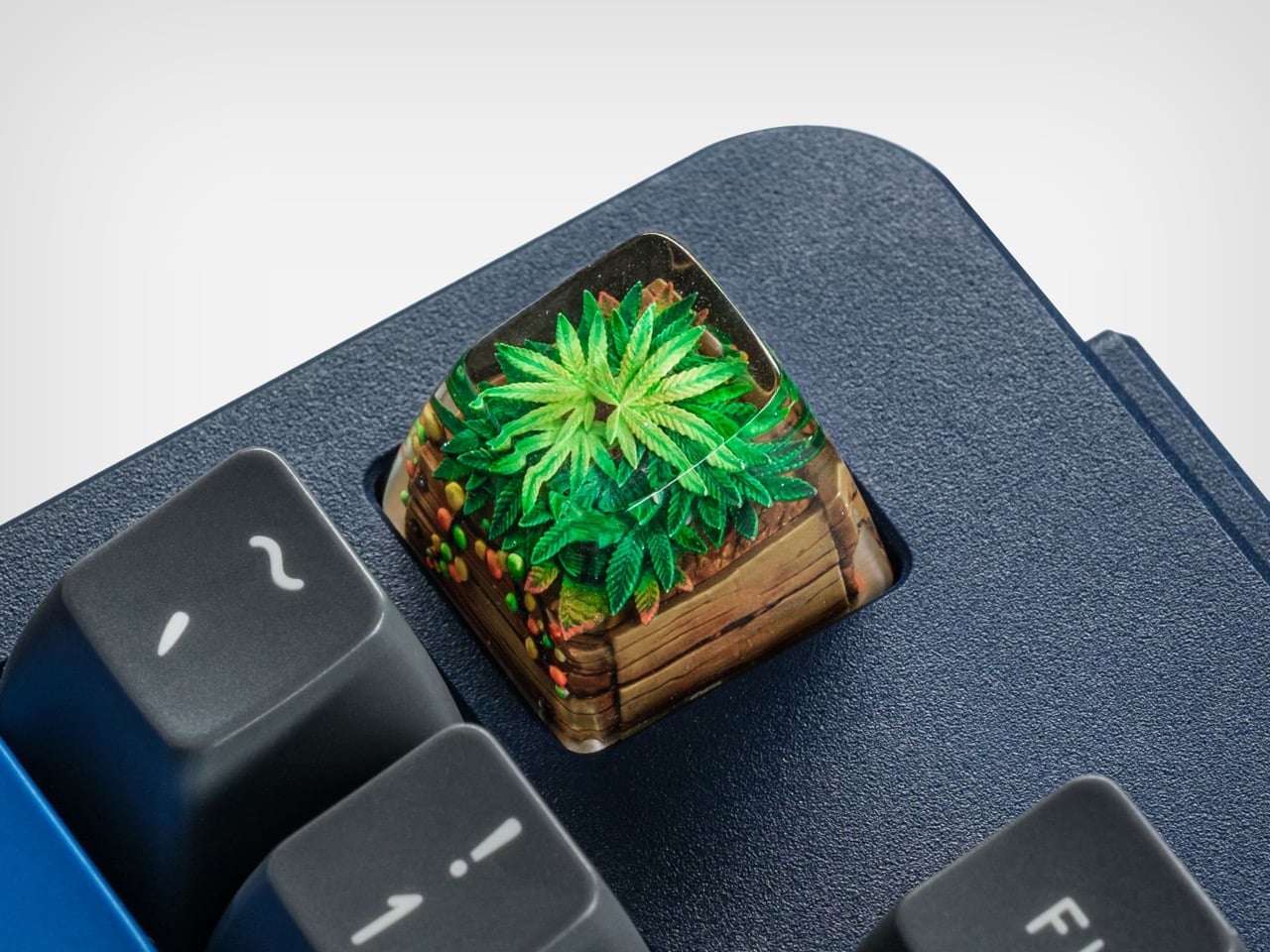
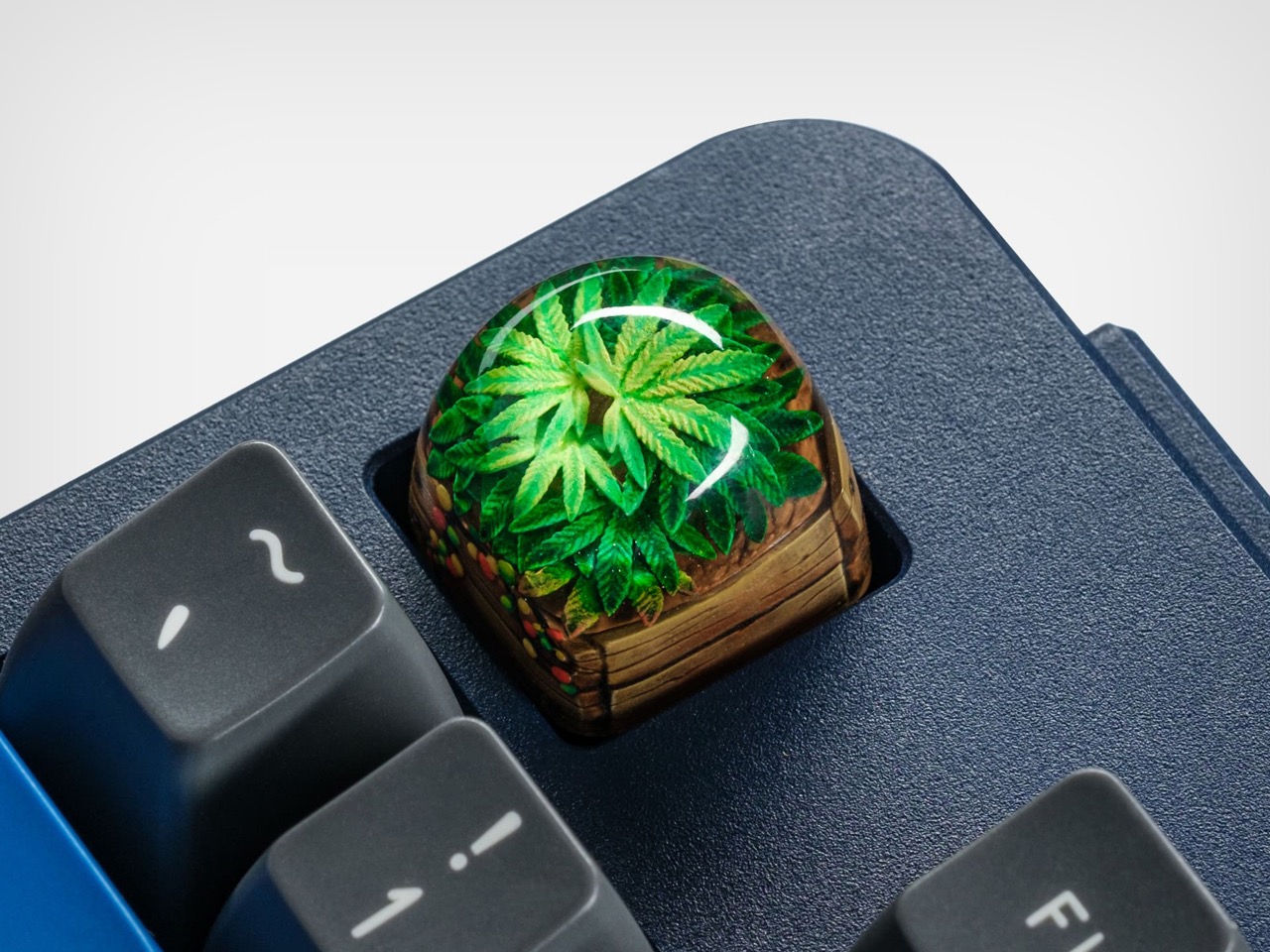
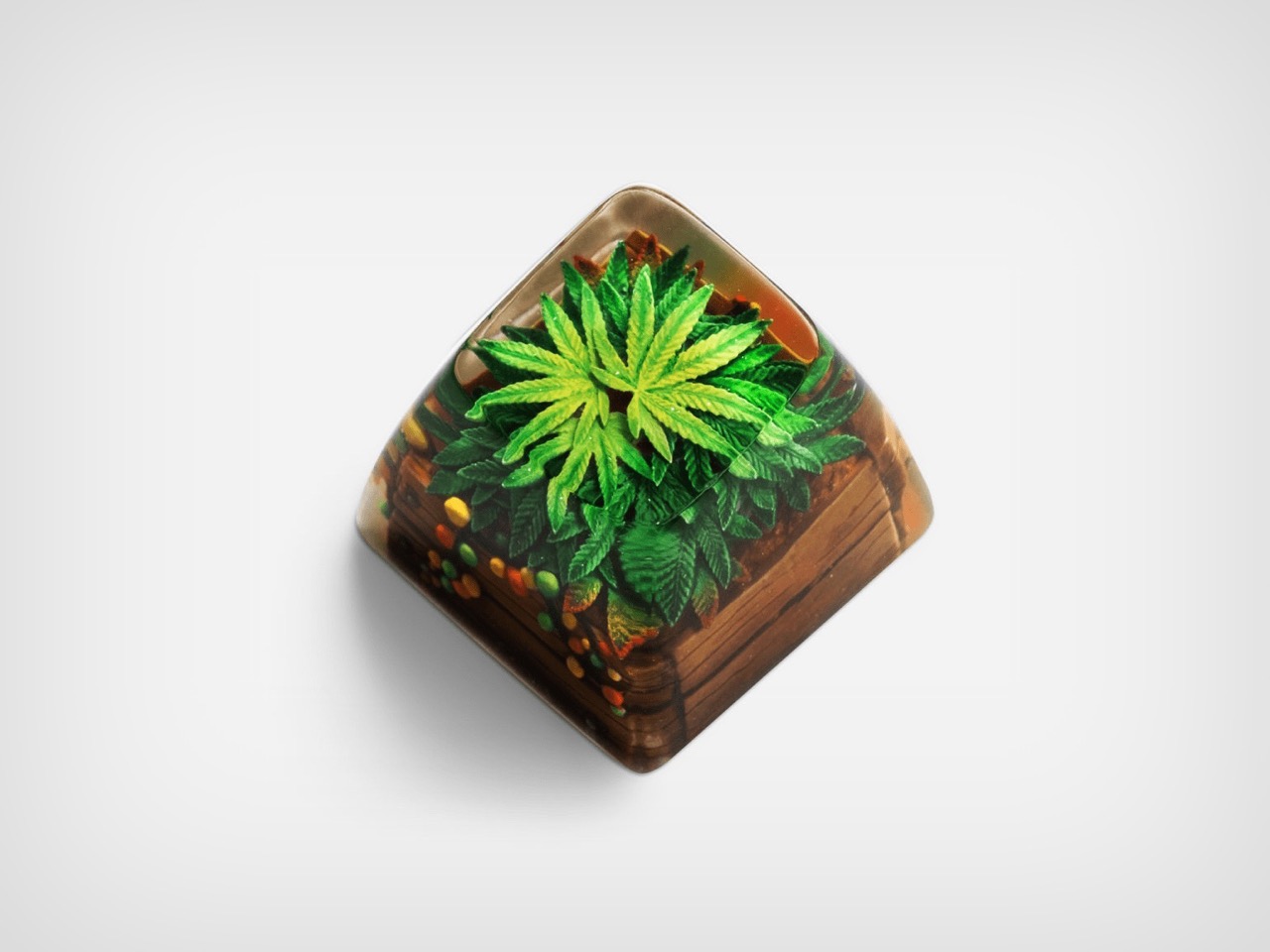
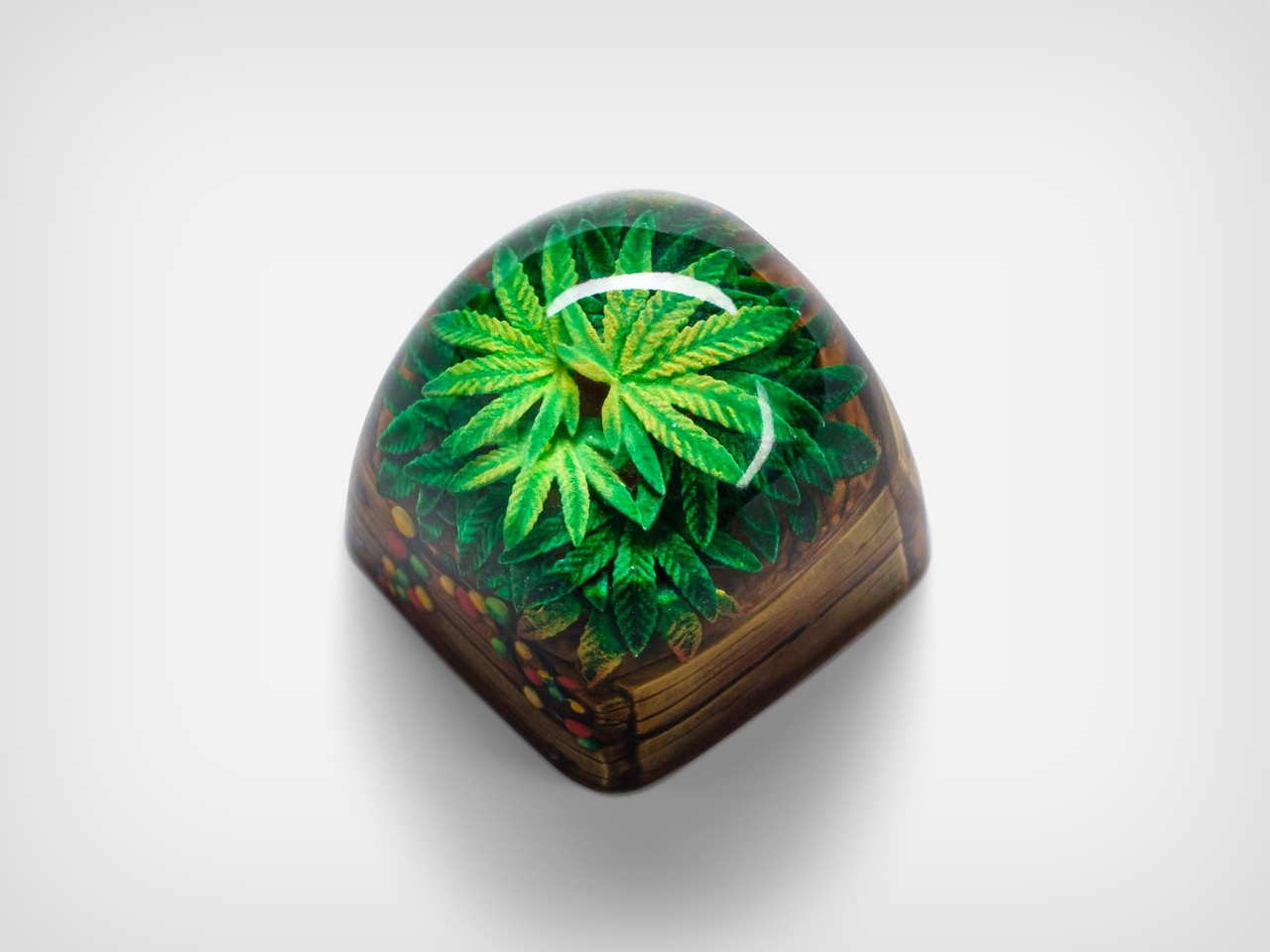
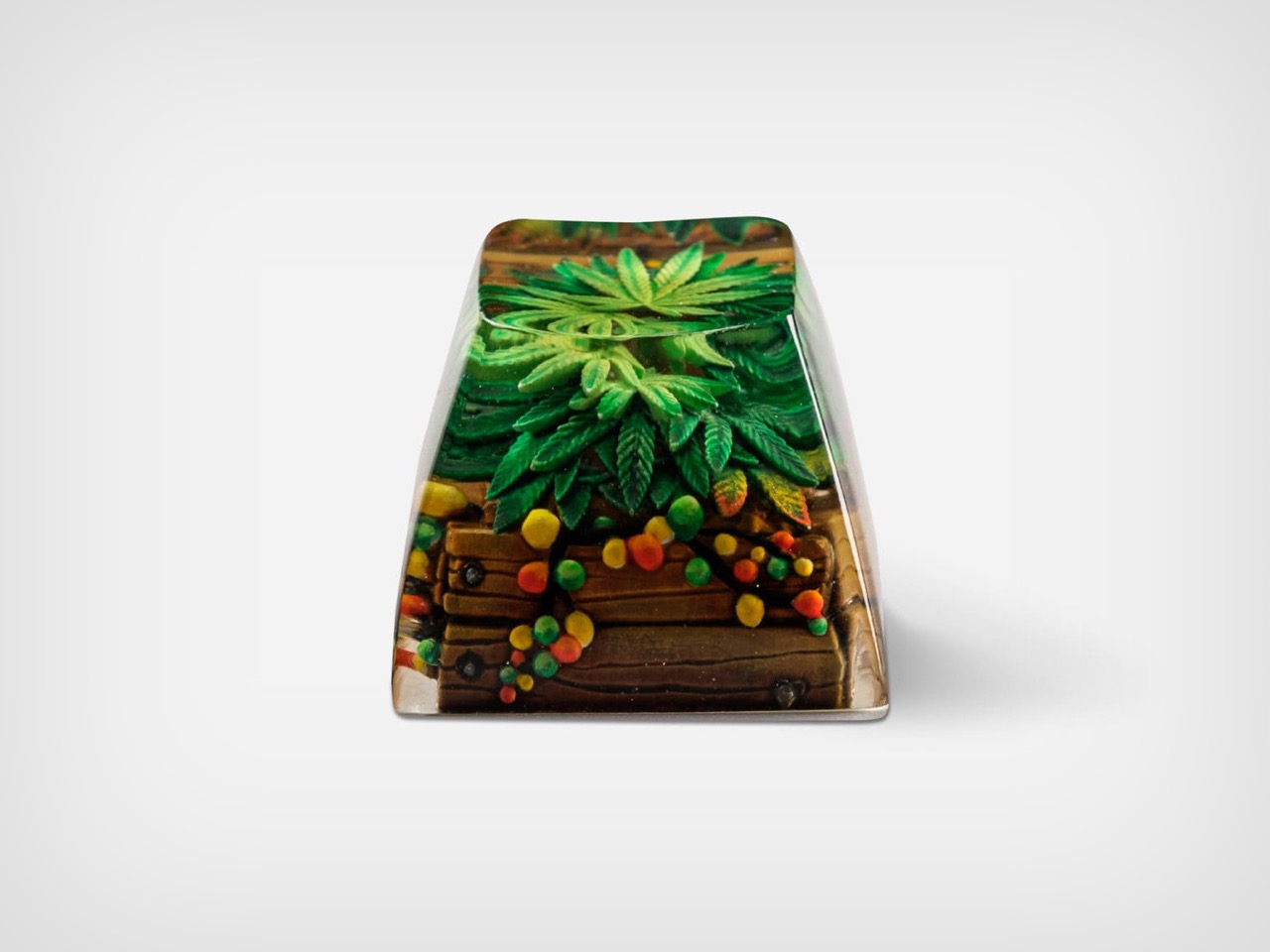
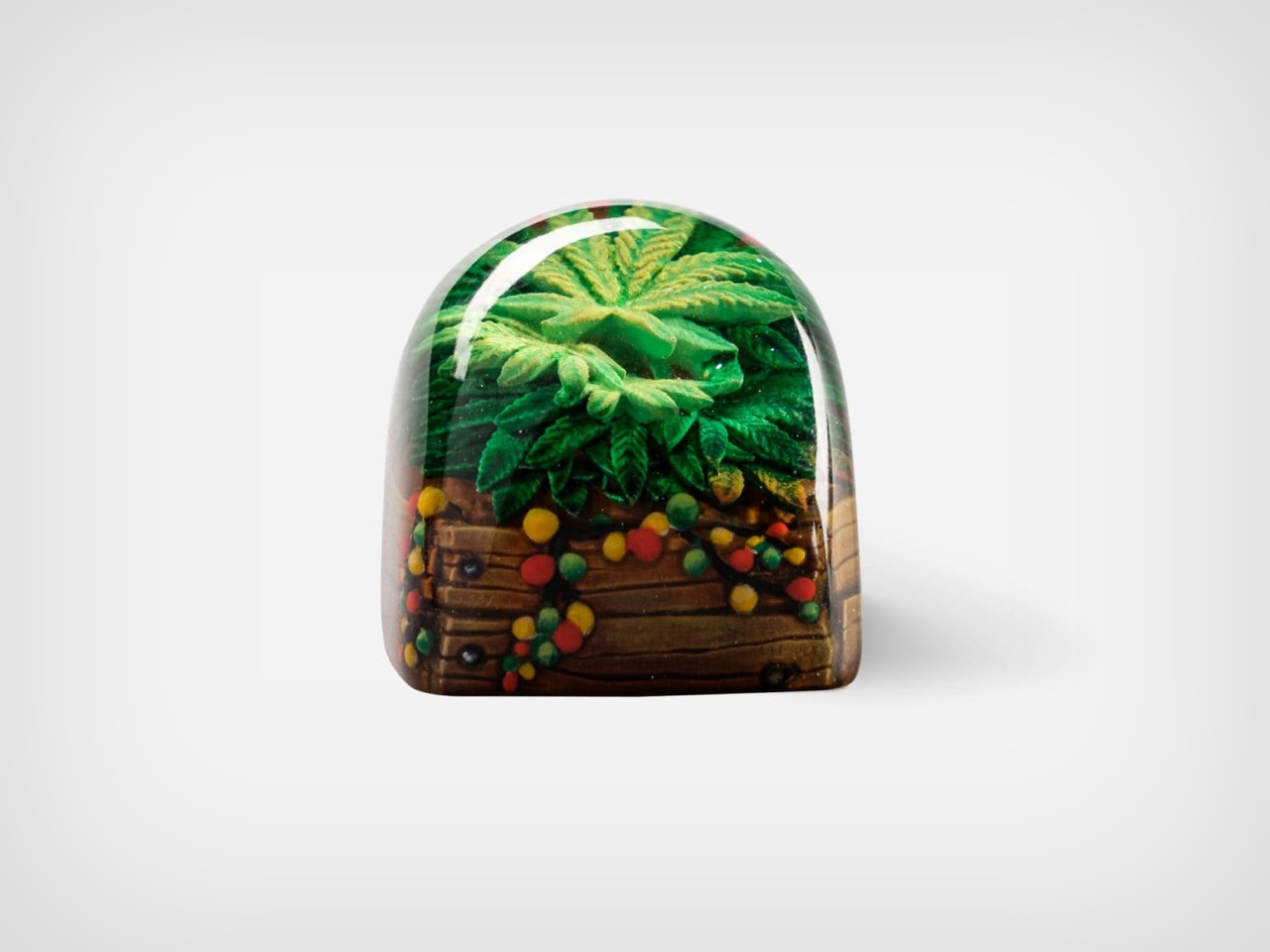
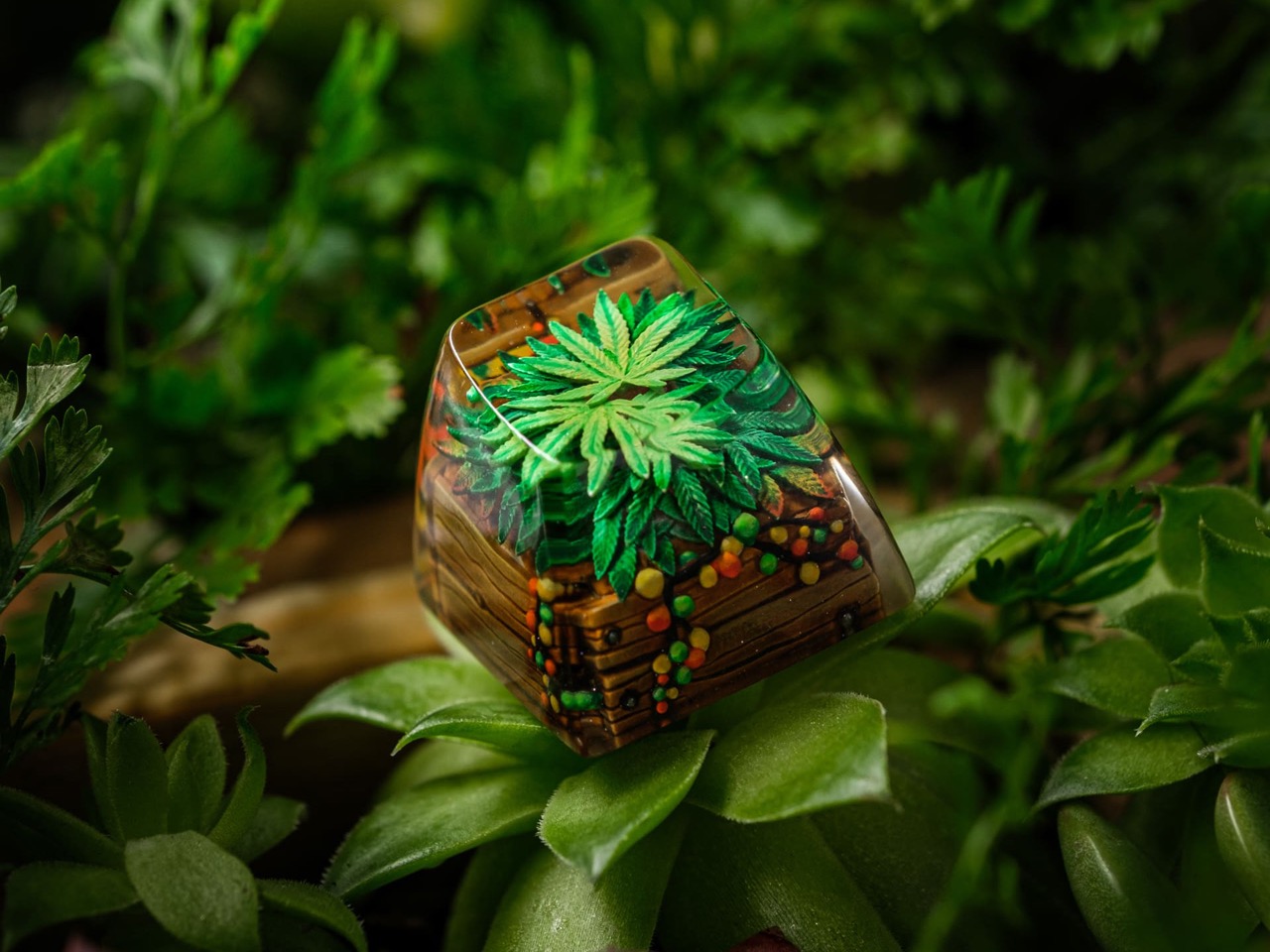
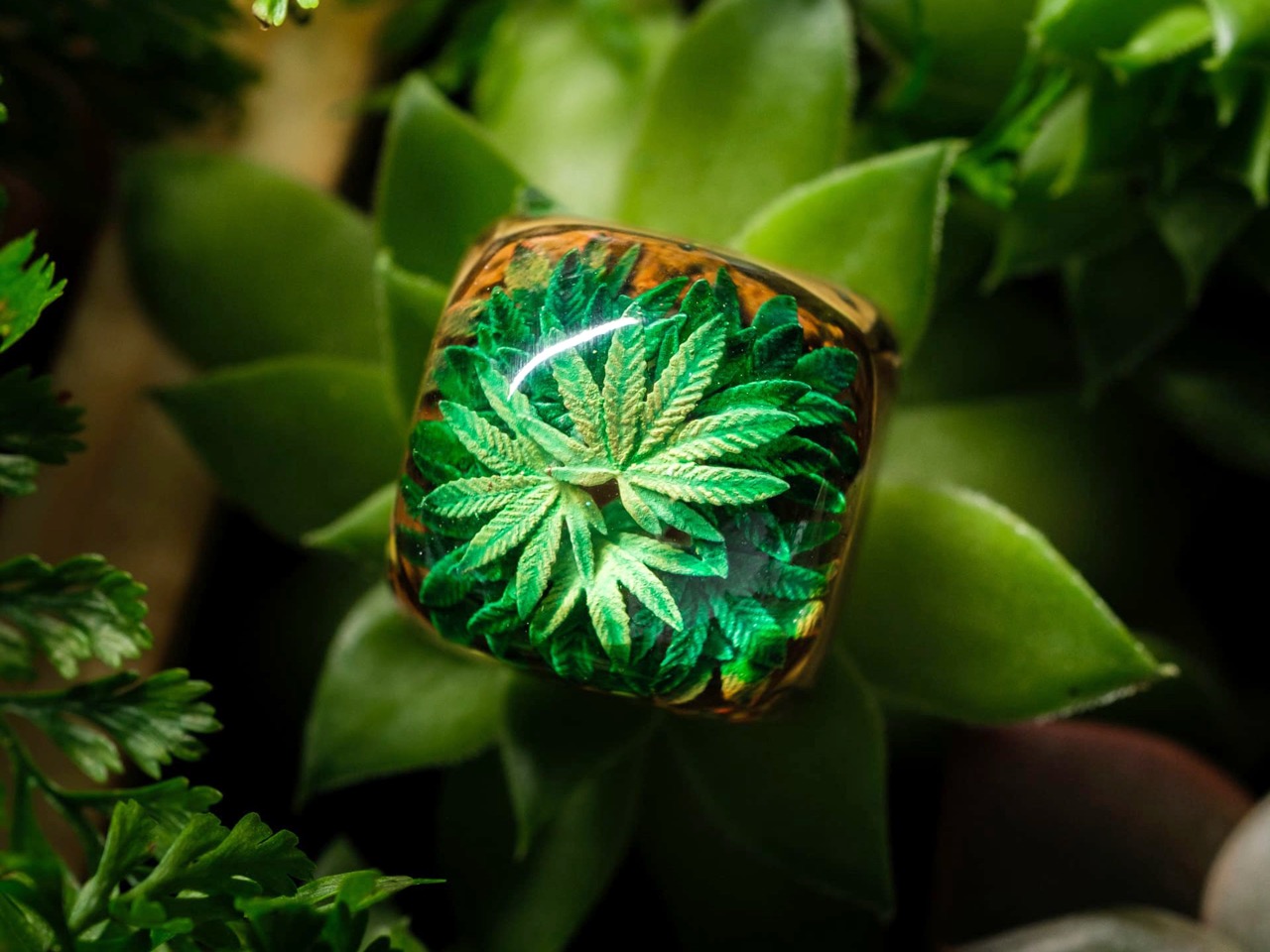
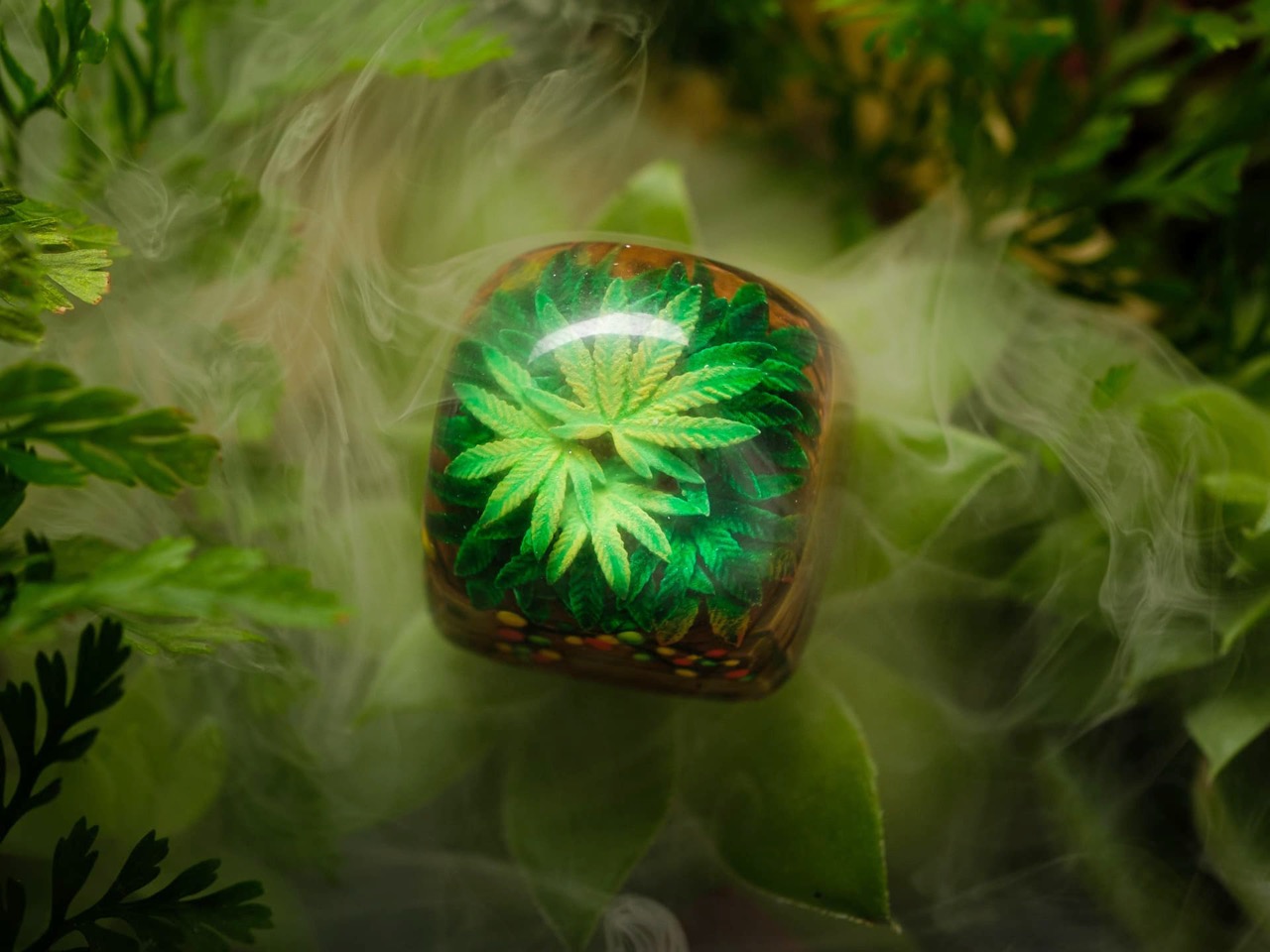
Rasta Jardin swaps the usual botanical lineup for miniature ‘ahem’ plants, complete with serrated leaves, decorative baskets, and what looks like actual soil composition at microscopic scale. Each keycap gets hand-painted, which means every Rasta Jardin has slight variations in how the leaves angle, how the rocks settle, how the light catches the resin dome. Standing 16mm tall in SA profile and compatible with Cherry MX switches, these caps are designed for your top row function keys or Escape, where they can sit pretty without making your fingers work harder to reach them.
Designer: Dwarf Factory

Designer: Dwarf Factory

The Rasta Jardin construction starts with hand-assembled miniature plant elements, built at a scale where individual leaf serrations actually matter. The plants get positioned inside tiny woven baskets, the kind of detail that requires steady hands and magnification. Substrate gets added at the base, rocks get arranged for visual balance, and then the entire assembly gets encased in layers of transparent resin, cast in a way that avoids bubbles and maintains optical clarity.

Dwarf Factory’s command over resin is truly impressive (go check out their other work too). The dome shape creates a lens effect, magnifying the scene inside while also playing with light refraction depending on your viewing angle. Sit directly above your keyboard and you see one composition. Lean back slightly and the light shifts, catching different facets of the leaves and basket weave. The transparency means RGB backlighting (if your board has it) will glow through the keycap, turning the whole thing into a tiny illuminated terrarium when you’re typing in the dark.

The hand-painting step happens after the resin casting, adding color gradients to the leaves that give them depth and realism. The plants have a specific visual language, those jagged leaf edges and the way the foliage clusters around the stem, and Dwarf Factory nails it at a scale where most makers would just paint a green blob and call it done. The baskets get individual weave lines. The soil gets color variation. Even the rocks have shadows and highlights that suggest three-dimensional form rather than flat decoration.

Dwarf Factory ships each Rasta Jardin in a sliding kraft paper box with rubber finger gloves, because resin surfaces and fingerprint oils are enemies. You also get a user guide, which feels almost comically formal for a single keycap but reinforces the idea that you’re buying a miniature art piece that happens to be functional. At roughly $73, pricing sits in line with other premium artisan caps from established makers. You’re paying for the labor-intensive handwork and the design execution that makes these feel like gallery-quality miniatures rather than novelty garbage.

What makes the Rasta Jardin compelling is how it treats the 420 aesthetic with the same design rigor Dwarf Factory applies to cherry blossoms or desert flora. There’s no cartoonish stoner imagery here, no neon green gimmicks or Rastafarian color blocking that screams cheap novelty. Just meticulous botanical miniaturization that happens to feature a plant with significant cultural weight. Your productivity won’t improve, but your keyboard will have a story worth telling when Monday rolls around and someone asks what the hell is on your Escape key.

The post Dwarf Factory’s Hyper-real 4/20 Resin Keycaps Are Handcrafted Miniature Gardens You Can Type On first appeared on Yanko Design.
Someone Finally Made Metal Keycaps for Low-Profile Keyboards

Low-profile mechanical keyboards have always had a bit of an identity problem. They look the part: slim, clean, desk-friendly. Set one beside a MacBook and it fits right in, at least until you start typing and the plastic keycaps remind you that the aesthetic only goes so far. It is not that PBT is bad. It is just that plastic has a ceiling, and once you have typed on a well-built board, you start to feel where that ceiling is. The sound is a little hollow. The surface wears down. For a form factor that sells itself on refinement, the keycaps have always been the weakest part of the pitch.

That gap is exactly what Awekeys Air is designed to fill. These are low-profile metal keycaps built from recycled cupronickel, a copper-nickel alloy most people know from coins rather than keyboards. Beyond the material upgrade, there is an immediate visual payoff. A set of Satin Copper or Satin Gold caps on a slim board transforms what was previously just a functional object into something that actually improves the desk around it, the kind of detail that catches the eye mid-conversation and holds it.

Designer: Awekeys

Click Here to Buy Now: $99 $169 (41% off). Hurry, only a few left! Raised over $97,000.

At 5 mm tall, the Awekeys Air is half the height of a standard keycap, which typically sits at around 11 mm. That gap matters more than it sounds. A slim keyboard paired with standard-height keycaps loses its whole visual argument, and any ergonomic board designed for low-profile switches defeats its own purpose if you pile taller caps on top. The Air keeps that geometry honest while upgrading what that geometry is made of.

As someone who writes for a living and codes on the side, I see the keyboard as less a tool and more a constant physical companion, and the I find that the Awekeys Air shifts that relationship in a way that is difficult to ignore. The cupronickel surface stays cool under extended sessions, the low profile keeps wrist angle natural, and the grip from the hand-brushed Special Edition means fingers land where they are meant to, without any of the slight drift that smooth plastic encourages over a long afternoon.

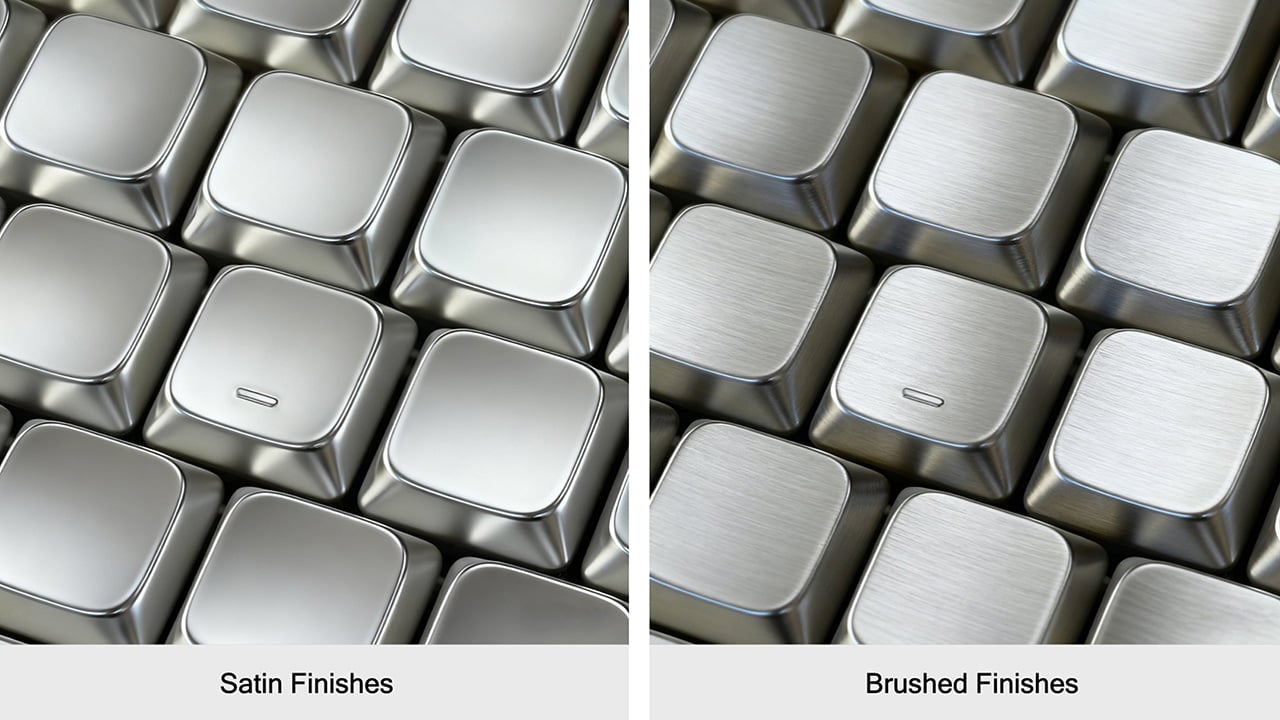
Finish is where the Awekeys Air earns a lot of its character. Seven keycap colorways cover the satin-style options: Satin Gold, Satin Silver, Satin Copper, Titanium Black, Obsidian Black in matte, Ivory White in matte, and Sakura Pink. Each of them reads differently on metal than on plastic. Satin Copper picks up warm ambient light in a way no dye-sublimated PBT can replicate. Titanium Black has that flat, composed surface that makes a keyboard look more like a precision instrument than a peripheral. Small distinctions, but they add up when the whole point is a desk setup that looks as considered as it feels.

The Special Edition hand-brushed finish takes things a step further, available in Gold, Silver, Copper, and Ti Black. Each keycap is brushed individually, which creates a directional texture that shifts under light and adds a grip that the satin versions do not have. It is the kind of finishing detail that is easy to overlook in a product photo and immediately obvious the moment you sit down to type.

Holding it all together is a second-generation nano-coating that Awekeys claims delivers twice the scratch resistance of its first version. For keycaps that will see thousands of actuations daily, surface protection matters more on metal than on plastic, where wear is expected and mostly forgiven. The coating is what keeps the finish consistent across the whole set over time, and on a metal that is this unforgiving of surface variation, that consistency is doing real work.

The recycled angle is worth taking seriously, too. Awekeys notes that processing recycled cupronickel requires roughly 15% of the energy needed for raw metal extraction. giving the material story a logic beyond a simple badge. The acoustic character completes the picture: denser, more planted, with a sound that leans satisfying rather than sharp. The slim keyboard has been waiting a long time for a keycap set built to match it, and the Awekeys Air makes a strong case that the wait is over.

Click Here to Buy Now: $99 $169 (41% off). Hurry, only a few left! Raised over $97,000.

The post Someone Finally Made Metal Keycaps for Low-Profile Keyboards first appeared on Yanko Design.
These Fallout Nuka-Cola artisan keycaps are ridiculous, beautiful, and exactly what your keyboard deserves

Fallout never lets go of Nuka-Cola. You can be ankle deep in irradiated sludge, low on ammo, and still your brain pings when you see that red script on a rusted machine. The games trained everyone to read those machines as little probability engines. Maybe caps, maybe chems, maybe a ghoul behind the door. That association sticks. You see Nuka-Cola now and your fingers almost reach for the VATS key out of habit.

So when Drop and Dwarf Factory freeze that whole relationship inside a 1U keycap, it feels weirdly logical. Four tiny scenes, all Nuka flavored. Vending machine, bottle crate, Power Armor helmet, Thirst Zapper. Each one parked on an SA R1 profile shell, roughly 18 millimeters across, tall enough to tower over your number row. They are desk jewelry that behaves like keyboard hardware, and that crossover is where this stuff gets interesting.

Designer: Dwarf Factory for Drop

The sheer density of the diorama in each cap is something you have to respect. We are talking about a standard 1U footprint, roughly 18 millimeters square, that contains a fully realized scene with foliage, weathering, and legible micro-branding. The clear resin shell acts as a magnifier, giving the internal sculpture a sense of depth that tricks the eye. You can see the undercuts on the vending machine and the individual ropes on the bottle crate. Achieving that kind of fidelity in a multi-stage casting process, for a part that needs to meet the mechanical tolerances of a keyboard stem, is no small feat.

They were smart about the four designs they chose, too. It feels like a curated set that covers the core pillars of the Nuka-Cola experience: the vending machine for environmental storytelling, the bottle crate for loot, the Thirst Zapper for that weird corporate goofiness, and the Power Armor helmet for combat. It tells a more complete story than just slapping a Vault Boy face on a key. Together, they create a tiny narrative across your function row, a silent testament to the wasteland’s most persistent brand.

These things are tall, sitting at a full SA R1 profile height of around 16 millimeters. On a low-profile board they would look like monoliths, but that verticality feels right for Fallout’s chunky, retro-futuristic hardware. Dwarf Factory is using its standard multi-part resin casting and hand-painting process, all sealed in a polished acrylic shell. They fit standard Cherry MX stems, so compatibility is wide, but anyone running Kailh Box switches is out of luck due to the wider housing. It’s a niche product for a niche within a niche, and the specs reflect that.

Of course, that kind of hand-painted, multi-stage resin work is why these things have a seventy-dollar question mark attached to each key. That price point immediately pushes them out of the realm of simple accessories and into the category of functional jewelry for your desk. You are not just buying a keycap, you are commissioning a tiny sculpture that happens to be keyboard-compatible. It is an absurd purchase by any rational metric, but the entire custom keyboard hobby abandoned rationality several years ago. This is for the person who sees their keyboard as a gallery, not just a tool.

The way they interact with backlighting is another clever touch. The glow-in-the-dark pigment and internal geometry create this irradiated halo effect at night, with light bouncing around inside the resin instead of just shining through a legend. It looks like your keyboard has been sitting a little too close to a glowing sea. Drop one of these on a retro-themed beige board and it looks like canonical hardware from the Fallout universe. Put it on a modern RGB rig and it becomes a preserved relic, a piece of the old world trapped in a futuristic frame.

Given their handmade nature, these keycaps don’t come cheap. Each individual cap starts at $69 from Drop’s website (unless they get sold out and sell on the aftermarket for even higher). I assume the handcrafting cost is high, but the licensing fees with Fallout are even higher. Drop’s even debuted Fallout-themed mechanical keyboards/keycaps/mats that are more mass-produced which sell for a lot cheaper (you can see them in the images above and below)… although if you’re a bit of a collector, you’d want to spring for the artisan stuff, whether it’s to mount on a keyboard or showcase on a platform behind a glass cover.

The post These Fallout Nuka-Cola artisan keycaps are ridiculous, beautiful, and exactly what your keyboard deserves first appeared on Yanko Design.
These Keycap-Inspired Rectangular Headphones Make Nothing’s Design Look Boring

We knew Nothing was launching headphones this year, most of us imagined glyphs on them, but Nothing pulled a fast one by choosing a different design direction to stand out amongst a sea of headphones. Instead of the conventional circular or capsule-shaped cups, they unveiled rectangular headphones that took the world by surprise. A lot of us (me included) had reservations on the design, but if anything, the rectangular format was unique enough to really make an impact. The problem? I didn’t associate that design language with Nothing as a brand.

Now, if we’re designing headphones that are just meant to be different, these keycap-inspired headphones really take the cake. Designer Tougou Daciqeng calls it “Cross-border integration of tactile design and auditory technology”, which is just fancy designspeak for ‘we drew a parallel between two senses – touch, and sound’. The result is a pair of headphones that welcome your ears, but also your eyes and hands. That keycap-inspired can on the outside just begs your fingers to touch touch it, sometimes even attempt pressing it.

Designer: Tougou Daciqeng

The result is a fun design language that I don’t attribute to Nothing, but I definitely do to a brand like Teenage Engineering. Fun, funky designs, vibrant and subdued color options, and a silhouette that feels unmistakable. Teenage Engineering doesn’t lean into hyper-ergonomics, everything they make has this industrial, engineering-driven touch, resulting in very soft curves that often punctuate otherwise straight lines and geometric forms.

The beauty of such a pair of headphones lies in not its sound, but its appearance. Sure, sound is arguably the most important feature of a headphone, but what we’re looking at here is purely conceptual, so we’ve only got visuals to go by. To that end, the Keycap Headphones are a visual masterclass. They come with rectangular earcups, but the cutout is still elliptical, allowing them to fit around your ear snugly.

Everything else revolves around that key-shaped surface on the sides. Styled like a Cherry key (although a little different and a lot larger), this surface lets you control the playback through taps, swipes, etc. I’d have preferred a nice clicky key, but we work with what we’ve got. There’s one button on the top of the right earcup for powering on and off the earphones. Everything else can be done through the faux keys on the sides.

The designer definitely gets that a clicky key would be better than a touch surface, which is why they’ve built haptics into the earphones. Press the surface and a click plays through your ear, giving you a satisfactory sensory experience that affirms a key press. The rest of the headphones are fairly uncomplicated. A telescopic headband, a fairly repairable design thanks to exposed countersunk screws on the cans (for that industrial aesthetic), and USB-C charging on the bottom. The headphones come in 5 color variants too, including two metallic finishes, a retro off-white and a classic grey, and finally a fairly CMF-ish orange that’s definitely going to grab a few eyeballs.

The post These Keycap-Inspired Rectangular Headphones Make Nothing’s Design Look Boring first appeared on Yanko Design.
Dwarf Factory’s Tiny Christmas Keycaps Are Absolutely Perfect Gifts For Gamers

Sweetmas keycaps are what happens when a holiday cookie box collides with boutique keyboard culture. Designed by Dwarf Factory, the collection transforms the familiar 1U key into a micro stage, where a gingerbread character, a jolly Santa, or a toy soldier style nutcracker performs among piles of sweets and winter snacks.

The sculpted scenes sit under a polished resin dome, anchored to a base that looks like a miniature metal tin printed with festive graphics. It is a small gesture in physical terms, but it reshapes the way a keyboard feels on the desk, turning a technical tool into something closer to a seasonal keepsake that can live in a design conscious home.

Designer: Dwarf Factory

What makes these tiny worlds so compelling is the human touch behind them. Dwarf Factory does not mass produce these pieces; each keycap is the result of a meticulous artisanal process. The internal figures and their festive surroundings are first sculpted and then cast in resin. From there, artists take over, hand painting every minute detail, from the icing on a gingerbread man’s scarf to the rosy cheeks of Santa Claus. This level of dedication ensures that no two keycaps are perfectly identical, giving each one a unique character that automated manufacturing simply cannot replicate.

The Gingerbread variant, affectionately named Gingy, is a pure confectionery explosion. The cheerful gingerbread figure sits front and center, armed with a candy cane and surrounded by a landscape of sweets. There are chocolate bars, striped peppermints, and frosted Christmas tree cookies all packed into the scene. The entire diorama is housed on a base painted a festive green, with white snowflake details and the “Sweetmas” logo, perfectly capturing the feeling of a holiday candy shop that has been shrunk down to the size of a fingertip.

Next in the collection is Claus, a tribute to the man himself. This version features Santa Claus nestled in a treasure trove of baked goods. He is surrounded by an assortment of cookies, pretzels, and other holiday treats, as if caught mid-snack on his big night. The base of this keycap is a warm, inviting red, again styled like a classic cookie tin. The scene feels cozy and generous, a tiny, edible looking snapshot of Christmas Eve that brings a sense of warmth and nostalgia to the keyboard.

Rounding out the trio is Cracky, the Nutcracker. This design takes a more traditional, almost rustic approach to the holiday theme. The Nutcracker figure stands guard among a collection of almonds, walnuts, pine cones, and subtle green foliage. The base is a deep, royal blue, which gives it a more sophisticated and classic feel compared to the playful energy of the other two. It evokes the feeling of a classic Christmas ballet or a walk through a winter forest, offering a more elegant take on the Sweetmas theme.

As artisan pieces, the Sweetmas keycaps are designed to be both beautiful and functional. They are sized as standard 1U keys and feature a Cherry MX compatible stem, making them a drop in replacement for the vast majority of mechanical keyboards on the market. Their tall, sculpted profile, similar to an SA R1 key, gives them a satisfying presence on the board, perfect for an escape key or a macro pad. Released as a limited seasonal collection, these keycaps are collectible by nature, and the fact that each keycap is hand-crafted means that they command a fairly premium price at $49 bucks a pop. You’d have to absolutely make Santa’s list if you want these in your stockings for Christmas.

The post Dwarf Factory’s Tiny Christmas Keycaps Are Absolutely Perfect Gifts For Gamers first appeared on Yanko Design.
These Pokémon Keycaps turn your Mechanical Keyboard into a real-life PokéDex

With 10 Pokémon that you can theoretically catch, Dwarf Factory’s Pokémon keycaps let you turn your keyboard into a functional monster-collection. Each keycap comes with a 3D Pokémon encased in clear resin, designed to face you when installed onto your mechanical keyboard. And if you’re a bit of a Pokémon sucker like me, these are like literal bait.

I remember the Pokémon GO days, Niantic had staggered the rollout across the globe, and India got the game months after it debuted. The only way to play was to use a VPN that let you geo-spoof your phone’s location. I used mine for a solid 2-3 months before Niantic actually caught on and banned me from the game. Some would say that would be enough to fix my fixation on Pokémon but it hasn’t. I still love the franchise, and might just end up buying a mechanical keyboard JUST so I could install these custom keycaps!

Designer: Dwarf Factory

There are an entire bunch to choose from, ranging from the original Kanto region starters to a few of the original Pokémon from the series and game. Dwarf Factory designed these keycaps to look like the blister packaging you’d get the toys in. Each Pokémon is in a clear glass enclosure, around a colored block with the Pokémon branding on the bottom and a hang-tag on the top that you’d use to hang/display these toys.

Everyone who’s played the game on their GameBoy knows that there’s no starting without a ‘starter’ Pokémon. The series includes the classic Bulbasaur, Charmander, and Squirtle, as well as Pikachu, the iconic Pokémon that anyone who’s seen the series or movies will recognize.

If you haven’t seen Dwarf Factory‘s work before, I suggest you genuinely check them out. The company is the single authority on artisanal keycaps, so if there’s any company I trust with pulling this off, it’s probably them. Each keycap is meticulously made in resin, hand-painted, and then encased in clear acrylic. This gives the keycaps their sheer depth, and sometimes Dwarf Factory even manages to account for keyboard backlight, so that the light shines through the keycaps.

Other usual suspects from this series include Eevee and Meowth, shown above, along with Cubone below, followed by Koffing, Gengar, and the odd but powerful Psyduck. I wish Dwarf Factory made a few more, although that just sounds like greed on my part at this point.

Each keycap is designed with an SR1-style profile, and is designed to fit all Cherry MX switches and clones. Ideally, I’d own all 10 keycaps, but I’d first have to own a mechanical keyboard (I’m rocking a Logitech Ergo K860 which doesn’t have swappable keys), and I’d probably have to be fairly rich, given that each keycap is priced at a slightly high $44. That means setting aside almost 500 bucks (including shipping) for a set of 10 keys. Would’ve been nice to have hopped onto the crypto train back in 2012 so I could afford this stuff.

The post These Pokémon Keycaps turn your Mechanical Keyboard into a real-life PokéDex first appeared on Yanko Design.

Keycaps Shaped Like Tiny Retro TVs Take 47 Hours to Handcraft

For anyone who spends hours at a keyboard, the desk becomes more than just a workspace. It’s a personal canvas for self-expression and creativity. Keyboards are no longer just tools for typing, but a way to express personality, nostalgia, and a love for design in the smallest details. Every keycap, color, and texture tells a story about who you are and what you value in your daily environment.

Jelly Key’s Retro TV Series – First Frame artisan keycaps are a tribute to that spirit of personal expression and craft. Inspired by the golden age of home computing and the original Macintosh 128K from 1984, these miniature TVs bring a playful, handcrafted touch to any keyboard setup. They’re tiny works of art that celebrate the intersection of technology and nostalgia.

Designer: Jelly Key

Each keycap is shaped like a retro television, with a 65-degree angled front screen for perfect viewing when mounted on a keyboard. Details like floppy disk drives, power switches, and transparent or frosted back panels reveal intricate miniature “circuitry” inside, echoing the design language of vintage computers that defined an era. The angular, squared-off profile feels both classic and contemporary.

Every keycap is meticulously handmade using resin casting and multilayer coloring, not 3D printing or mass production. The process involves up to 47 hours of work from start to finish, with every component polished, assembled, and quality-checked by hand. Circuit traces measure just 0.3mm wide, requiring razor-sharp precision. Any flaw means starting over from scratch.
The TV screens feature pixel art, pop culture nods, greetings like “hello,” and sci-fi themes, all layered in resin for dimensional depth and vibrancy. With over 200 quirky variations and 12 case designs ranging from crystal clear to vintage frosted, no two keycaps are exactly alike. Themes include “HAL Eye,” “Comic Burst,” “Space Odyssey,” and “Galactic Intro,” among many others.

Transparent and frosted panels allow keyboard backlighting to shine through, illuminating the miniature “circuit boards” and components inside the keycap. This adds a new dimension to your typing experience, especially at night when the glow highlights every intricate detail. The effect is both functional and mesmerizing, turning your keyboard into a light-up showcase.

Each keycap is individually numbered and comes in a wooden box with a medal dog tag and a collectible sticker for authenticity. Orders of 12 or more unlock limited-edition designs and the full sticker set, making these keycaps as much about collecting as about customization. The MX stem ensures compatibility with most mechanical keyboards, while the hand-finished resin offers a unique tactile feel that’s satisfying to touch.

Swapping in a Retro TV keycap turns a routine typing session into a moment of nostalgia and delight, sparking conversation and adding personality to your desk instantly. For designers, writers, and anyone who loves a bit of retro flair mixed with modern craftsmanship, these keycaps are a daily reminder that art and technology can coexist beautifully in the smallest spaces we interact with every day.

The post Keycaps Shaped Like Tiny Retro TVs Take 47 Hours to Handcraft first appeared on Yanko Design.