The MacBook Neo is Apple’s most repairable laptop

Apple's cheapest laptop is also its most repairable. iFixit gave the new MacBook Neo a 6/10 repairability score. Although that number would only be mediocre for, say, a game review or final exam grade, it's the MacBook line's highest iFixit score in about 14 years.

As always, iFixit goes into great detail about the product's repairability, but a few points stand out. First, the MacBook Neo's battery is screwed down rather than glued — moving it from "this might burn the house down" to "routine repair" territory. The laptop also has a flat disassembly tree. That means its battery, speakers, ports and trackpad are all immediately accessible after opening the back case.

In other areas, a simplified antenna assembly helps the screen come away cleanly. Keyboard repair is still a bit tedious (41 screws and tape), but at least it isn't riveted to the top case like on other models. (The screwed-not-glued battery helps here, too.) Apple's decision to forego a Force Touch trackpad and return to a mechanical style improves repairability as well. And in a nice touch, all the machine's Torx Plus screw sizes are clearly labeled inside the case.

A person's hand holding the MacBook Neo
Apple

Several other encouraging signs carry over from recent MacBooks. iFixit found that Apple's Repair Assistant accepted all replacement parts it tried without a fuss. And its USB-C ports and headphone jack are modular, so replacing either doesn't "turn into logic board work."

Not everything is peachy. As expected, the Neo still has soldered RAM and storage, so there's no upgrade path there. iFixit describes Apple's pentalobe screws on the bottom case as an "annoying" choice. And while the device's speakers are easy to remove, they, well, just aren't very good. (Had to cut that cost somewhere.)

While iFixit describes the Neo's repairability as "a real comeback," it's premature to assume higher-end MacBooks will follow suit. After all, with this $599 device ($499 for schools), Apple is targeting the educational sector, where repairability could mean more bulk orders. Until Apple is convinced that the MacBook Air or Pro would sell better with similar serviceability, this kind of score may be limited to the budget model.

This article originally appeared on Engadget at https://www.engadget.com/computing/laptops/the-macbook-neo-is-apples-most-repairable-laptop-200923202.html?src=rss
NASA will try its Artemis II launch again in early April

NASA will soon give it another go on April Fools' Day. On Thursday, NASA said it's targeting April 1 at 6:24 PM ET for the Artemis II mission's next launch attempt.

In case that date doesn't pan out, NASA added April 2 at 7:22 PM as a secondary launch opportunity. If necessary, the agency foresees several more openings between April 1 and 6 to get the Orion rocket into space. "Within those six days between the first and the sixth, we can't always turn around every day for an attempt," NASA acting associate administrator Lori Glaze said at a press conference. "We would anticipate […] about four opportunities within that six-day period."

In preparation, NASA is targeting March 19 (a week from today) to roll Artemis II back out to the launch pad. However, it warned that further setbacks could occur. "While I am comfortable and the agency is comfortable with targeting April 1 as our first opportunity, just keep in mind we still have work to go," Glaze said. "There are still things that need to be done within the [Vehicle Assembly Building] and out at the pad. As always, we'll be guided by what the hardware is telling us, and we will launch when we're ready."

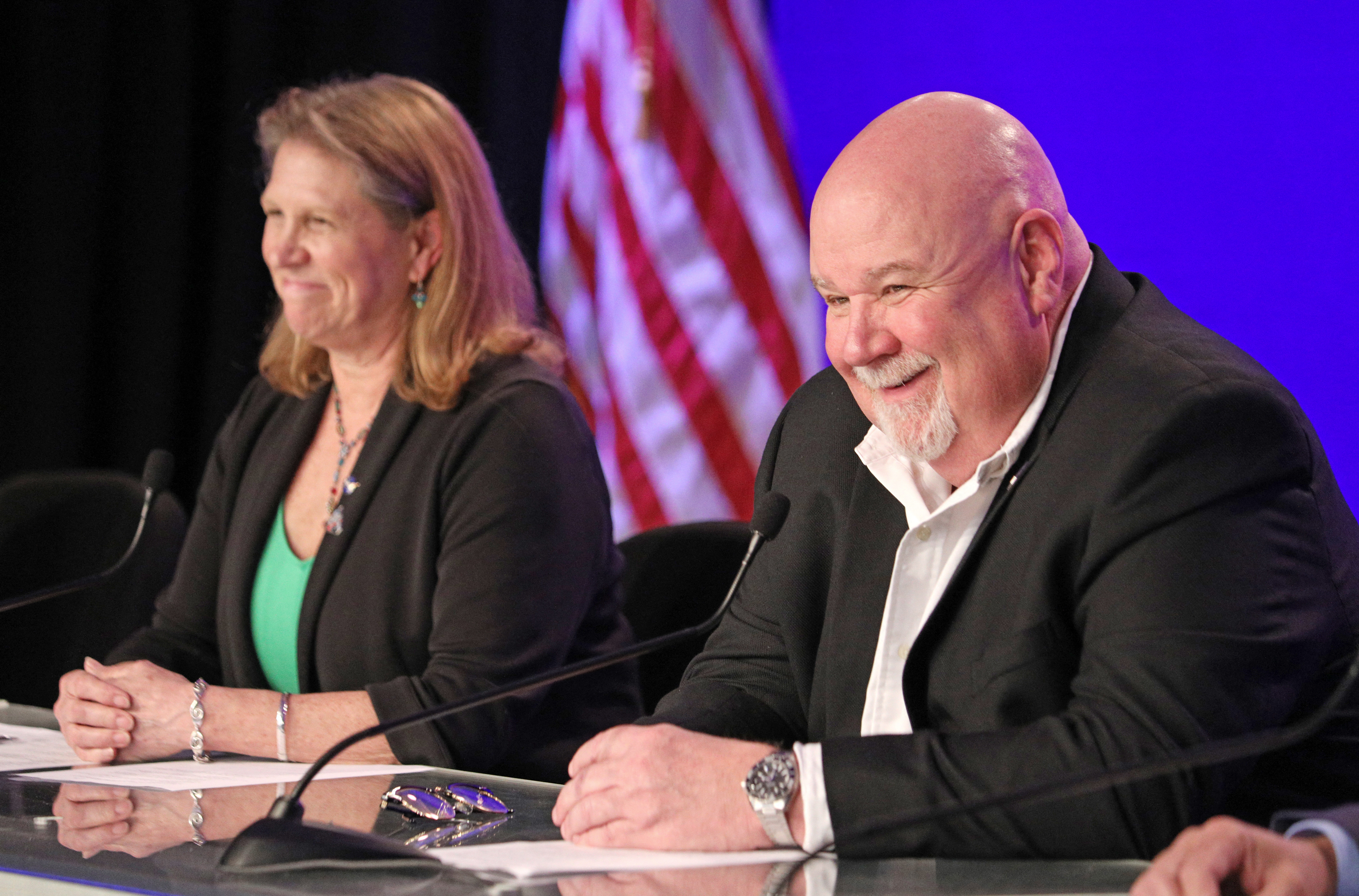
Lori Glaze, acting associate administrator, Exploration Systems Development Mission Directorate looks on as John Honeycutt, the Artemis II Mission Management Team chair smiles before answering a question about the flight readiness review of the Artemis II rocket components at the Kennedy Space Center in Cape Canaveral, Florida, on March 12, 2026. NASA rolled the massive Space Launch System rocket and Orion spacecraft back to the Vehicle Assembly Building from Launch Pad 39B on February 25 to troublshoot problems encountered during a wet dress rehearsal. NASA engineers and technicians will effect repairs and replace numerous flight batteries prior to sending four astronauts to the moon for the first time in more than 50 years. Artemis II is scheduled to launch in April. (Photo by Gregg Newton / AFP via Getty Images)
Lori Glaze, acting associate administrator, and John Honeycutt, Artemis II Mission Management Team chair (Photo by Gregg Newton / AFP via Getty Images)
GREGG NEWTON via Getty Images

Artemis II is set to be NASA's first crewed lunar mission since the early 1970s. The 10-day mission will carry four astronauts around the Moon and back to the Earth. It's set to be the first crewed mission of the Orion spacecraft, and an important step toward the ultimate goal of a Moon landing.

Initially targeted for early February, the launch was pushed back to March after several issues arose during a wet dress rehearsal. Then, 18 days later, it was delayed again (and moved off the launch pad) when NASA discovered a helium flow blockage in the rocket's upper stage. And it’s all happening against the backdrop of Administrator Jared Isaacman’s overhaul of the Artemis program, which includes postponing a scheduled Moon landing until 2028.

This article originally appeared on Engadget at https://www.engadget.com/science/space/nasa-will-try-its-artemis-ii-launch-again-in-early-april-205714288.html?src=rss

Ukraine allows allies to train AI models on its battlefield data

Ukraine's four-year war with Russia has made it the world leader in battlefield drone technology. One byproduct of that is that the data it collects has become one of the country's most valuable assets. On Thursday, Ukraine played that card, saying it will begin sharing its battlefield data with allies to train drone AI software.

"In modern warfare, we must defeat Russia in every technological cycle," Ukraine Defense Minister Mykhailo Fedorov wrote on Telegram (translated from Ukrainian). "Artificial intelligence is one of the key areas of this competition."

Fedorov previewed the move when he took his post in January. At the time, the tech-savvy cabinet member pledged to "more actively" bring allies into projects. Foreign allies and companies have sought access to the country's data as, for better or worse, AI increasingly becomes an integral element of warfare.

Fedorov says Ukraine has a platform that will safely train partners' AI models without providing sensitive data. The system is said to provide continually updating datasets, including large volumes of photos and videos.

"For us, this is the next step in the development of win-win cooperation," Fedorov wrote. "Partners get the opportunity to train their AI models on real data from modern warfare. And [for] Ukraine: faster development of autonomous systems and new technological solutions for the front."

Last year, Ukrainian President Volodymyr Zelenskyy warned global leaders of a dangerous escalation tied to drone tech and AI. “We are now living through the most destructive arms race in human history,” he said at a meeting of the UN General Assembly in September. However, given the ugly realities in his country, Zelenskyy reiterated his need for armaments. “The only guarantee of security is friends and weapons,” he said.

This article originally appeared on Engadget at https://www.engadget.com/ai/ukraine-allows-allies-to-train-ai-models-on-its-battlefield-data-165104853.html?src=rss

Valve defends loot boxes in response to New York’s lawsuit

It must be 2017 because loot boxes are back in the news again. Two weeks after New York's attorney general sued Valve over its use of the gimmick, the company has responded. In short, the Steam maker essentially said, "See you in court."

New York's lawsuit accuses Valve of promoting illegal gambling through its games. AG Letitia James called the loot boxes found in titles like Counter-Strike 2, Team Fortress 2 and Dota 2 "addictive, harmful and illegal." The state seeks to "permanently stop Valve from continuing to promote illegal gambling in its games" and pay relevant fines.

In its defense posted on Thursday, Valve likened its mystery boxes to kids buying packs of physical trading cards. "Players don't have to open mystery boxes to play Valve games," the company wrote. "In fact, most of you don't open any boxes at all and just play the games — because the items in the boxes are purely cosmetic, there is no disadvantage to a player not spending money."

That last point, while applicable within the game itself, isn't quite that cut and dry once you zoom out beyond that. As James pointed out, players can trade the cosmetic items they win from loot boxes on Steam's marketplace or sell them on third-party marketplaces. Rarer ones can sometimes fetch lucrative sums.

CS2 gun skin listed for $20,000 on a marketplace
A CS2 gun skin listed for $20,000 on DMarket
DMarket

Here, too, Valve defended the profitable practice by rolling out the trading card comparison. "We think the transferability of a digital game item is good for consumers — it gives a user the ability to sell or trade an old or unwanted item for something else, in the same way an owner can sell or trade a tangible item like a Pokémon or baseball card," the company wrote. "NYAG proposes to take away users' ability to transfer their digital items from Valve games. Transferability is a right we believe should not be taken away, and we refuse to do that."

Valve is also facing a new class-action lawsuit over its loot boxes.

Some of Valve's points land a bit more than its righteous defense of a gaming gimmick that, well, isn’t exactly beloved. The company accused the NYAG of proposing that Valve collect additional user information to prevent VPN use. In addition, the state allegedly "demanded that Valve collect more personal data about our users to do additional age verification." Privacy experts have been sounding the alarm about the recent push for online age verification.

Valve also addressed James's erroneous and outdated statement that video games encourage real-world violence. "Those extraneous comments are a distraction and a mischaracterization we've all heard before," the company wrote. "Numerous studies throughout the years have concluded there is no link between media (movies, TV, books, comics, music and games) and real world violence. Indeed, many studies highlight the beneficial impact of games to users."

The company says that, while it may have been cheaper to settle the suit, it deemed the NYAG's demands user-hostile. "Ultimately, a court will decide whose position — ours or NYAG's — is correct. In the meantime, we wanted to make sure you were aware of the potential impact to users in New York and elsewhere."

This article originally appeared on Engadget at https://www.engadget.com/gaming/valve-defends-loot-boxes-in-response-to-new-yorks-lawsuit-190655554.html?src=rss

Roku is launching a trivia game called… Roklue?

Who needs Half-Life 3 or Beyond Good & Evil 2? Roku, in an attempt to gamify content discovery on its platform, has cooked up a gaming announcement for the ages. Behold: Roklue. Yes, that's a real name that someone with a job title and (likely high) salary came up with.

Roklue (shudder) will quiz players on "the movies and TV shows that everyone is talking about," along with classic "beloved favorites." When it references a movie or show, it will provide a link for you to tune in on your device. The initial version is an Oscar season tie-in ("Roklue: Awards Season") that debuts on Saturday. This inaugural version is produced by B17 Entertainment, a Sony-owned company.

Roku says it will rotate thematic content throughout the year. Variety reports that those will center around music festivals, the Emmys and holidays.

Apart from that name, which should come with a gag-reflex warning, Roklue sounds harmless enough. You play a trivia game to find new stuff to stream; Roku grows its engagement. Win-win. But with corporate schemes like this, it's always worth wondering where further monetization might eventually come into play. Think something like linking to series on platforms you don't yet subscribe to. (Hello, kickback.)

On March 7, you'll find the free Roklue (ick) game on your Roku home screen, no download required.

This article originally appeared on Engadget at https://www.engadget.com/entertainment/streaming/roku-is-launching-a-trivia-game-called-roklue-190000386.html?src=rss

Google begins calling out battery-killing Android apps

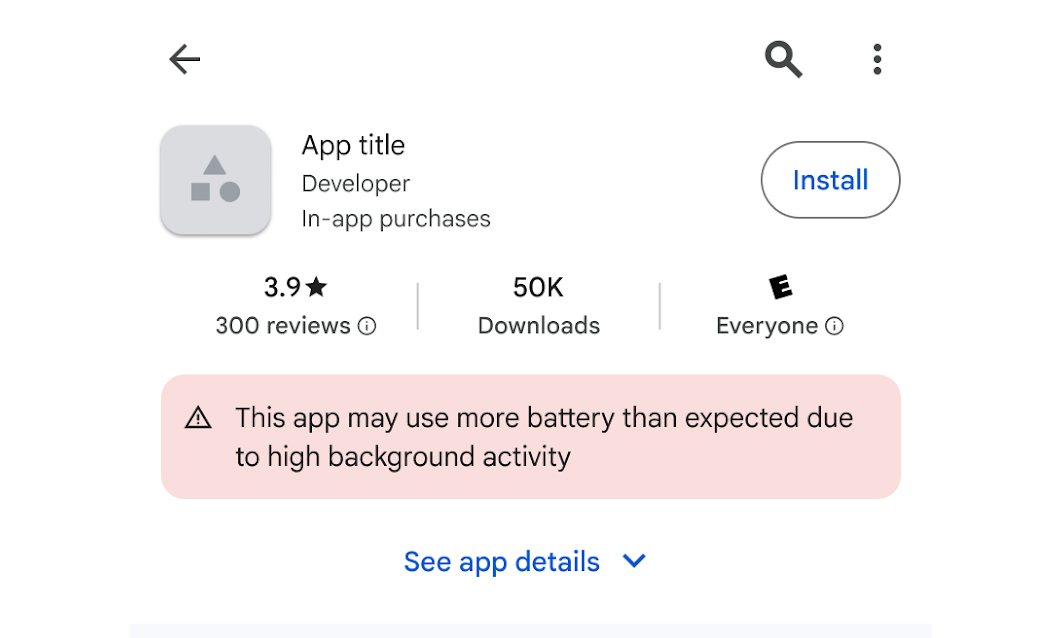
Google is living up to its word and posting warning labels for battery-killing apps. 9to5Google spotted Google's rollout announcement, which the company previously said would arrive on March 1.

The label says, “This app may use more battery than expected due to high background activity.” If you don't yet see the warnings, they may not have reached you yet. Google says the banners will "roll out gradually to impacted apps" in the coming weeks.

Play Store battery warning
Google

Warning labels aren’t the only stick in Google’s fight against infringing apps. They may also be excluded from discovery services like Play Store recommendations.

Google's definition of battery-draining apps centers around Android's "partial wake lock" mechanism. This service allows an app to keep the phone's processor running even while the screen is off. There are logical exceptions where apps do need this: audio playback, location access, etc. But the company apparently sees too many abusing that API for other reasons. And Google wouldn't want people to assume the problem is with the hardware and switch to an iPhone — because then we’re talking about money.

If you're a developer, Google's technical documentation offers much more detail. For everyone else, keep an eye out for those Play Store labels and consider steering clear of those apps until their devs clean things up.

This article originally appeared on Engadget at https://www.engadget.com/mobile/smartphones/google-begins-calling-out-battery-killing-android-apps-170650936.html?src=rss

LG reveals pricing for its 2026 OLED TVs

Now for the news you've been waiting with bated breath for: LG's 2026 TVs from CES finally have prices. (Well, some of them do, anyway.) Surprisingly, the evo G6 and C6 series OLED TVs aren't increasing in cost from last year's models. But the bad news is, they’re still expensive as all get-out.

The flagship LG evo G6 series ranges in price from $2,499 to $24,999. (Cue spit take.) Fortunately, that five-figure price only applies to the 97-inch model, which nobody this side of Elon Musk needs. The entry-level price is for a 55-inch OLED. Moving up the ladder, the 65-inch one costs $3,399, the 77-inch model is $4,499 and an 83-incher will set you back $6,499.

The evo G6 line includes all the OLED upgrades from the head-turning LG Wallpaper TV, for which LG hasn't yet announced pricing. You'll find the company's new "Hyper Radiant OLED" panel and optimizations to black and color levels in both lineups.

Meanwhile, the evo C6 line, which sits a notch below, ranges from $1,399 (42-inch) to $5,299 (83-inch). Rounding out the list is a 55-inch model for $1,999, a 65-inch one for $2,699 and a 77-inch model for $3,699. The C6 and G6 lines are powered by LG's Alpha 11 AI Processor Gen3. Both series support gamer-friendly features such as 4K at 165Hz with VRR, NVIDIA G-SYNC and AMD FreeSync Premium.

The evo G6 and C6 lines are available to order today from LG's website. Retail availability will follow later this month. Just keep in mind that, if you can hold off a little while, the entire history of TV pricing suggests you'll soon be able to find them for less than MSRP.

This article originally appeared on Engadget at https://www.engadget.com/entertainment/lg-reveals-pricing-for-its-2026-oled-tvs-203923873.html?src=rss

Humble Games’ former bosses buy the studio’s back catalog

Humble Games' library has returned home, so to speak. Indie publisher Good Games Group (GGG), led by former Humble leaders, has acquired the full back catalog of over 50 Humble Games titles from Ziff Davis. Alongside the purchase, GGG has rebranded to Balor Games, positioning itself as a force in "triple-I" gaming.

"For the developers we have worked with over the years, this moment is a reunion," Balor Games CEO Alan Patmore wrote in a statement. "[It has] the same leadership and the same commitment to thoughtful publishing remain in place. What changes is our scale and our focus. Balor Games is built for inventors and backed by believers. To that end, it exists to be a seal of quality for independent games."

The Humble Games lineup includes (among others) Slay the Spire, A Hat in Time, SIGNALIS, Forager, Coral Island, Monaco and Wizard of Legend. Separate from the Humble transaction, Balor also bought the complete catalog of Firestoke Games (which shut down last August) and publishing rights to Fights in Tight Spaces. In total, the young studio now owns the publishing rights to over 60 indie titles.

Humble Games is separate from the Humble Bundle storefront. The latter is still owned by Ziff Davis.

Alan Patmore (l) and Mark Nash
Balor Games

The seemingly happy ending comes after quite the rocky road. In July 2024, Ziff Davis laid off all 36 employees of Humble Games. But later that year, Humble Games' former leaders (Patmore and Mark Nash) formed GGG and cut a deal to help manage their old studio's back catalog. Now, with Ziff Davis in a selling mood, that library is back in Patmore and Nash's hands. Balor Games, it is.

The pair view the newly anointed Balor as a developer-friendly publishing house. As for its name, Balor is a supernatural being in Irish mythology. It's sometimes depicted as having three eyes. Triple-eye, triple-I… Clever devils!

The triple-I moniker is a more recent addition to the gaming lexicon. It typically means something defined by indie creativity and passion — with a budget far less than AAA but more than a tiny two-person passion project. (Balor says it's about "high-quality, impactful games.") You wouldn't be blamed for wondering how that's different from AA. But the slant here is to define the genre less by budget and more by "indie" intangibles.

Nash detailed the company's vision in an interview with GamesIndustry.biz (which, curiously, is a Ziff Davis property). "We felt that what's becoming more and more critical is that as game development becomes more diverse, more complicated, and expectations continue to rise, we feel it's important that a publisher can match the needs of each individual project," Nash said. "We are spending a considerable amount of time with anyone we are partnering with, figuring out what they need specifically."

This article originally appeared on Engadget at https://www.engadget.com/gaming/humble-games-former-bosses-buy-the-studios-back-catalog-183831194.html?src=rss

Downdetector and Speedtest have been sold for over $1 billion

The next time you check your internet speed or whether your favorite site is down, another company may be profiting. On Tuesday, Ziff Davis announced that it sold its Connectivity division, which includes Ookla's Speedtest and Downdetector, to Accenture. The deal is worth $1.2 billion in cash.

According to Reuters, the deal will allow Ziff Davis to focus on its core brands, including IGN, Mashable and Everyday Health. Brand consolidation appears to be the name of the game, as the company recently laid off some of Eurogamer's most experienced editors and its entire video team. That followed a rotation of editorial staff among Ziff Davis's other gaming publications, which reduced VG247 to a small, two-person gaming guides site.

Ziff Davis bought Ookla for $15 million in 2014. Reuters notes that the division seized on the 5G rollout and a surge in pandemic-driven bandwidth demand to boost its impressive return on the investment. (Connectivity generated a whopping $231 million in 2025.)

Accenture is a global technology consulting company headquartered in Dublin. The company views the acquisition as a key step in building "end-to-end network intelligence services essential for AI-based transformation." (Can someone who speaks corporate translate, please?) The deal may take a few months to be finalized, and Ziff Davis will continue to operate Speedtest and Downdetector in the meantime.

This article originally appeared on Engadget at https://www.engadget.com/cybersecurity/downdetector-and-speedtest-have-been-sold-for-over-1-billion-201741894.html?src=rss

AI data centers could reduce power draw on demand, study says

Apparently, AI data centers are capable of sucking less (power, that is). A recent UK trial demonstrated that they can adjust their energy demands dynamically without disrupting critical workloads. This contrasts with data centers' current approach of always-on power draw, which can strain grids and drive up prices for everyone.

Over five days in December 2025, more than 200 simulated "grid events" tested a London data center’s ability to adjust its energy use on the fly. The trial used software from Emerald AI, which was involved in the study. Other partners included NVIDIA, National Grid, Nebius and the nonprofit Electric Power Research Institute.

In each simulated grid event, the data center successfully adjusted its energy use to the requested level. It reduced power draw by up to 40 percent, while critical workloads continued to run as normal throughout the trial.

The data center successfully reacted to spikes in demand during soccer match halftimes. In one case, it reduced its power draw by 10 percent for up to 10 hours. It also managed to cut its demand quickly: One event saw the data center reduce its load by 30 percent in only 30 seconds.

The study will serve as a blueprint for a 100MW “power-flexible AI factory” that NVIDIA plans to operate in Virginia. "This trial proves that NVIDIA-powered infrastructure can act as a grid-aware asset, modulating demand in real-time to support stability," Josh Paker, NVIDIA's sustainability lead, wrote in a statement. "By making AI workloads responsive, we accelerate deployment while reducing the need for costly grid upgrades."

The organizations involved in the study say they'll share their data with the AI industry, regulators and policymakers to try to influence their approach. Fortunately, we don’t need to hope that data center operators’ altruism (ha) will lead to their cooperation. Agreeing to curb usage during peak demand could be good for their balance sheets and lead to faster approvals for new data center grid connections. "We would love to get to a point where we can get customers on the network in two years, and this is part of that," Steve Smith, president of National Grid Partners, told Bloomberg.

This article originally appeared on Engadget at https://www.engadget.com/ai/ai-data-centers-could-reduce-power-draw-on-demand-study-says-180628982.html?src=rss