CMF Clip Pro Review: More Than Just a Pretty Case

PROS:


  • Excellent physical controls

  • Distinctive case design

  • Comfortable open-ear fit

  • Balanced, clean sound

  • Polished Nothing X app

CONS:


  • Limited base weight

  • Price feels a little high by CMF standards

RATINGS:

AESTHETICS
ERGONOMICS
PERFORMANCE
SUSTAINABILITY / REPAIRABILITY
VALUE FOR MONEY

EDITOR'S QUOTE:

With smart physical controls, a comfortable fit, and more personality than most rivals, the CMF Clip Pro proves open-ear earbuds do not have to feel purely functional.

Open-ear earbuds used to feel like a niche product made for a very specific kind of listener. They were mostly aimed at runners, cyclists, and anyone who wanted to stay aware of their surroundings, and the category was long dominated by a small group of specialist brands. For years, that made open-ear audio feel practical rather than desirable, more about function than style.

That is no longer the case. Open-ear earbuds have quickly become one of the busiest segments in personal audio, with mainstream brands now entering the space and giving the format broader appeal. CMF, Nothing’s budget-focused sub-brand, is the latest to join them with the CMF Clip Pro. As you might expect, it leans heavily on design and distinctive hardware touches to stand out, including physical controls that give it more character than most rivals. On paper, it already feels more interesting than the average pair of open-ear earbuds. The real question is whether that personality translates into a product worth buying.

Designer: CMF (Nothing)

Aesthetics

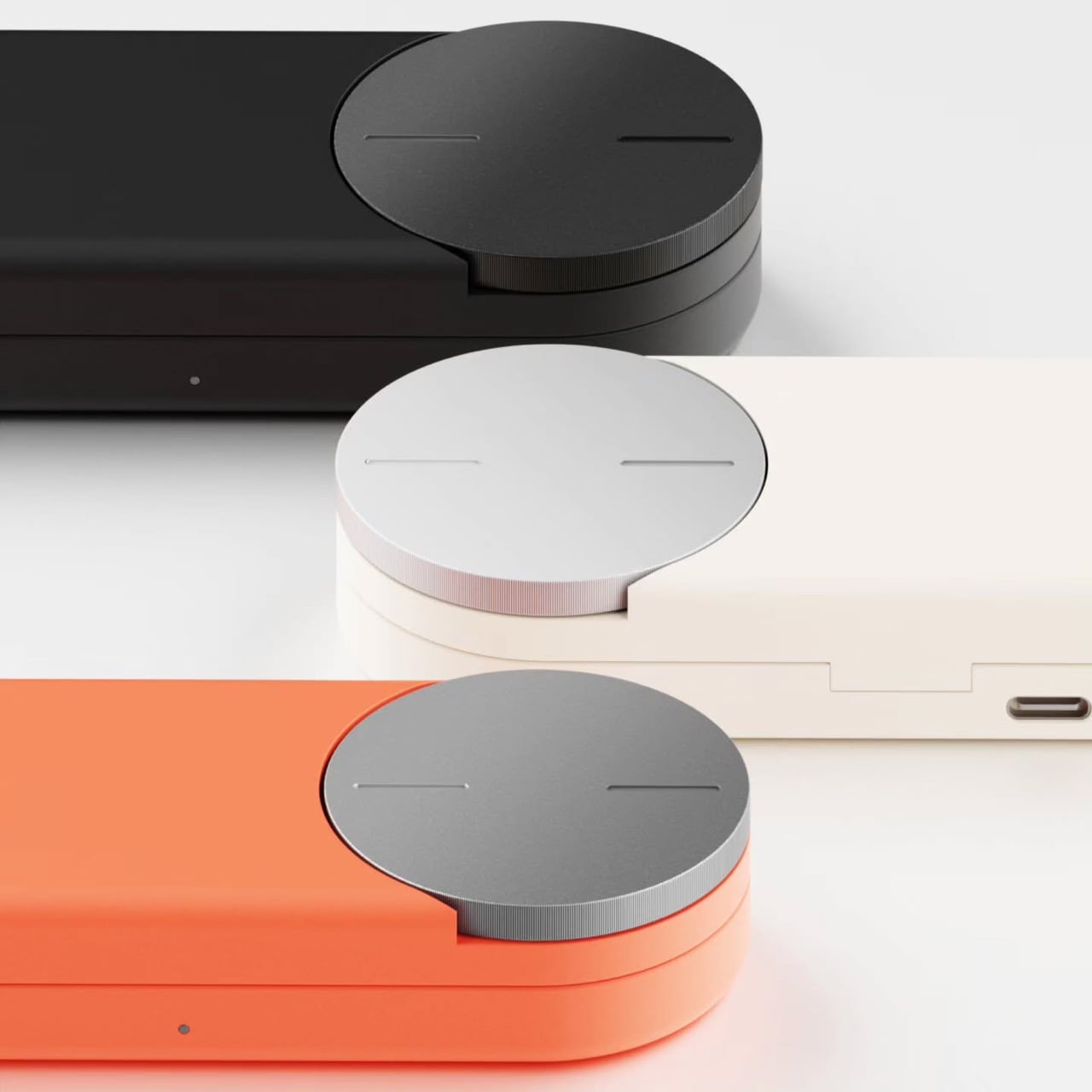
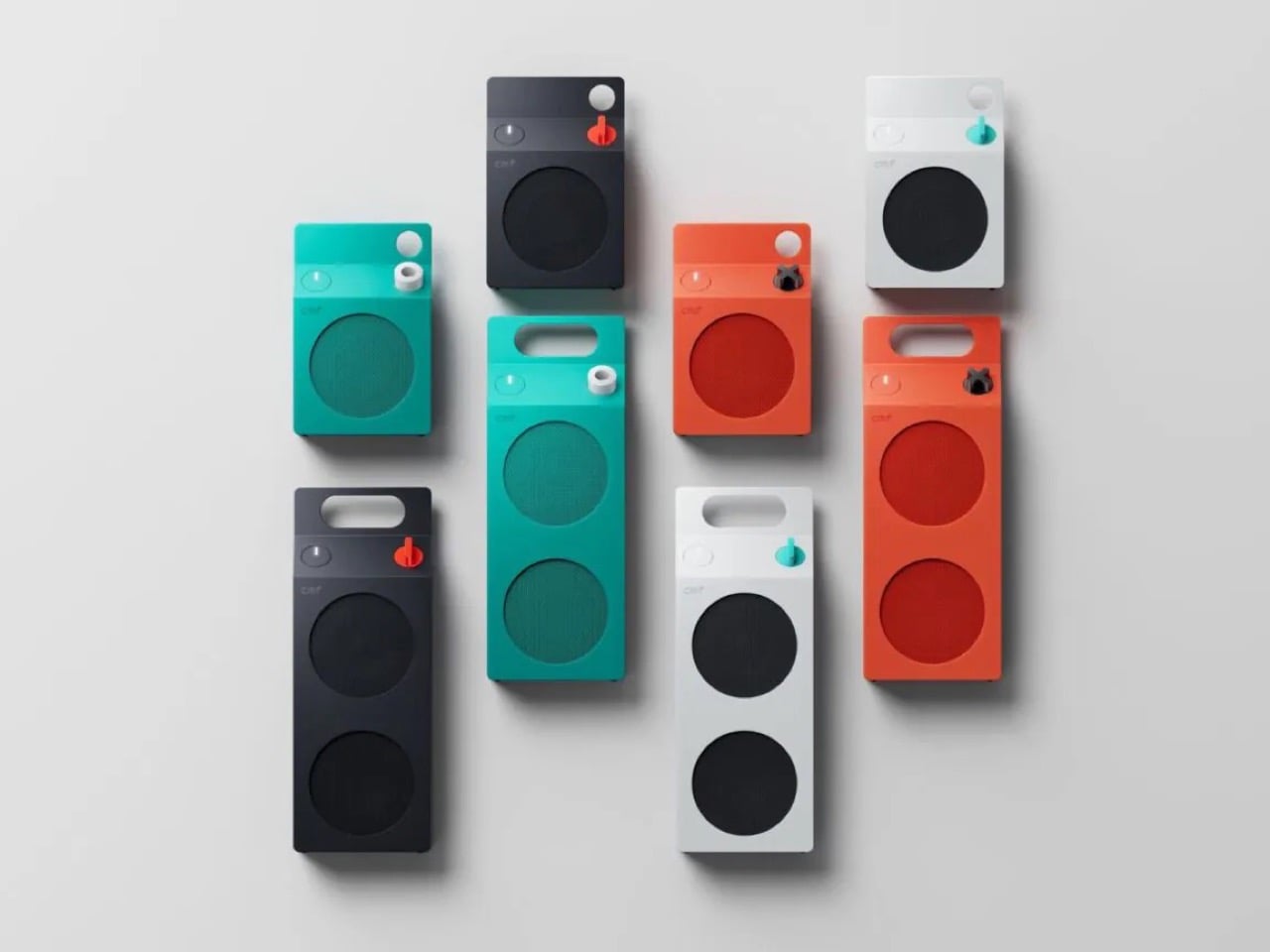
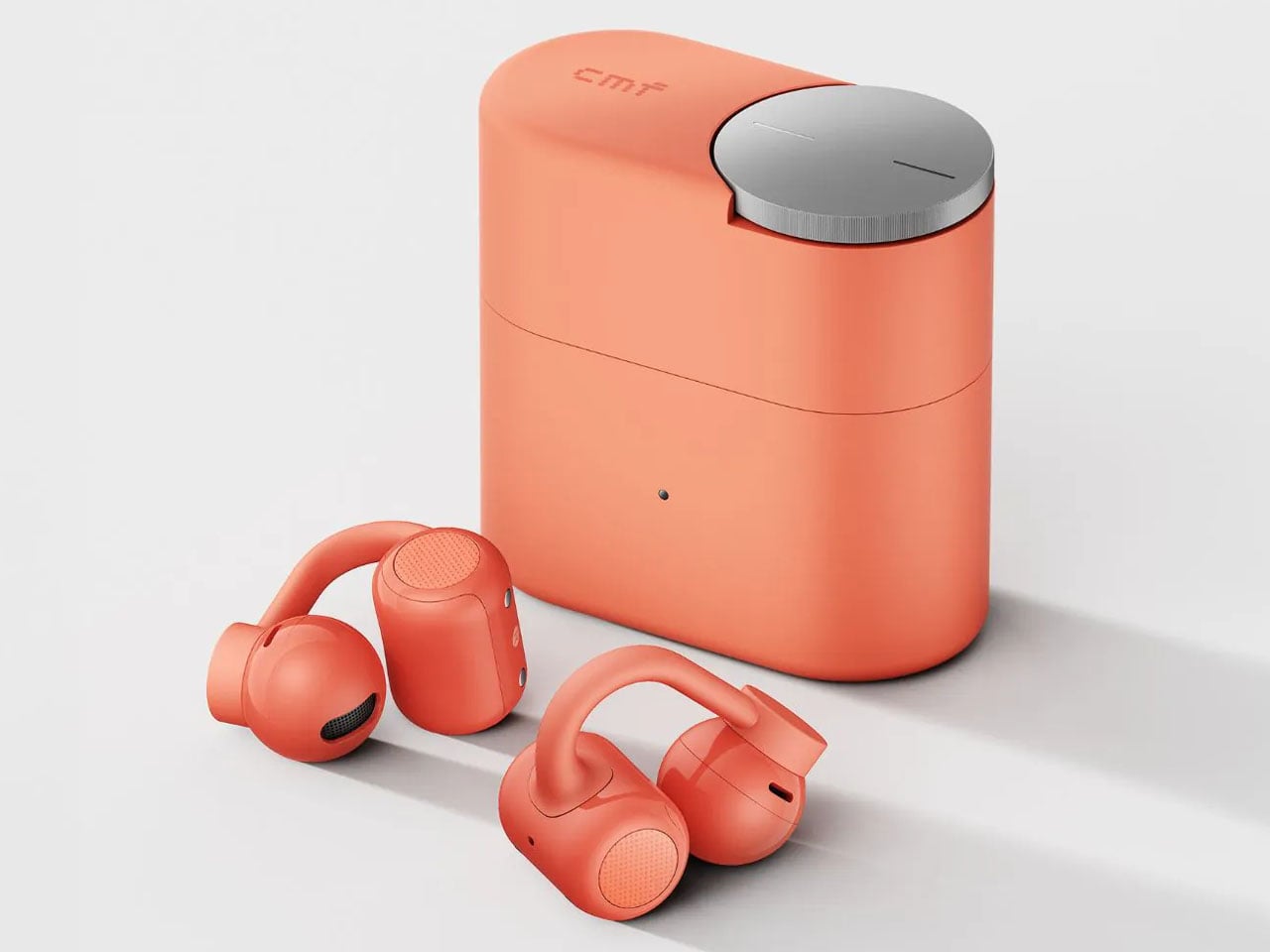
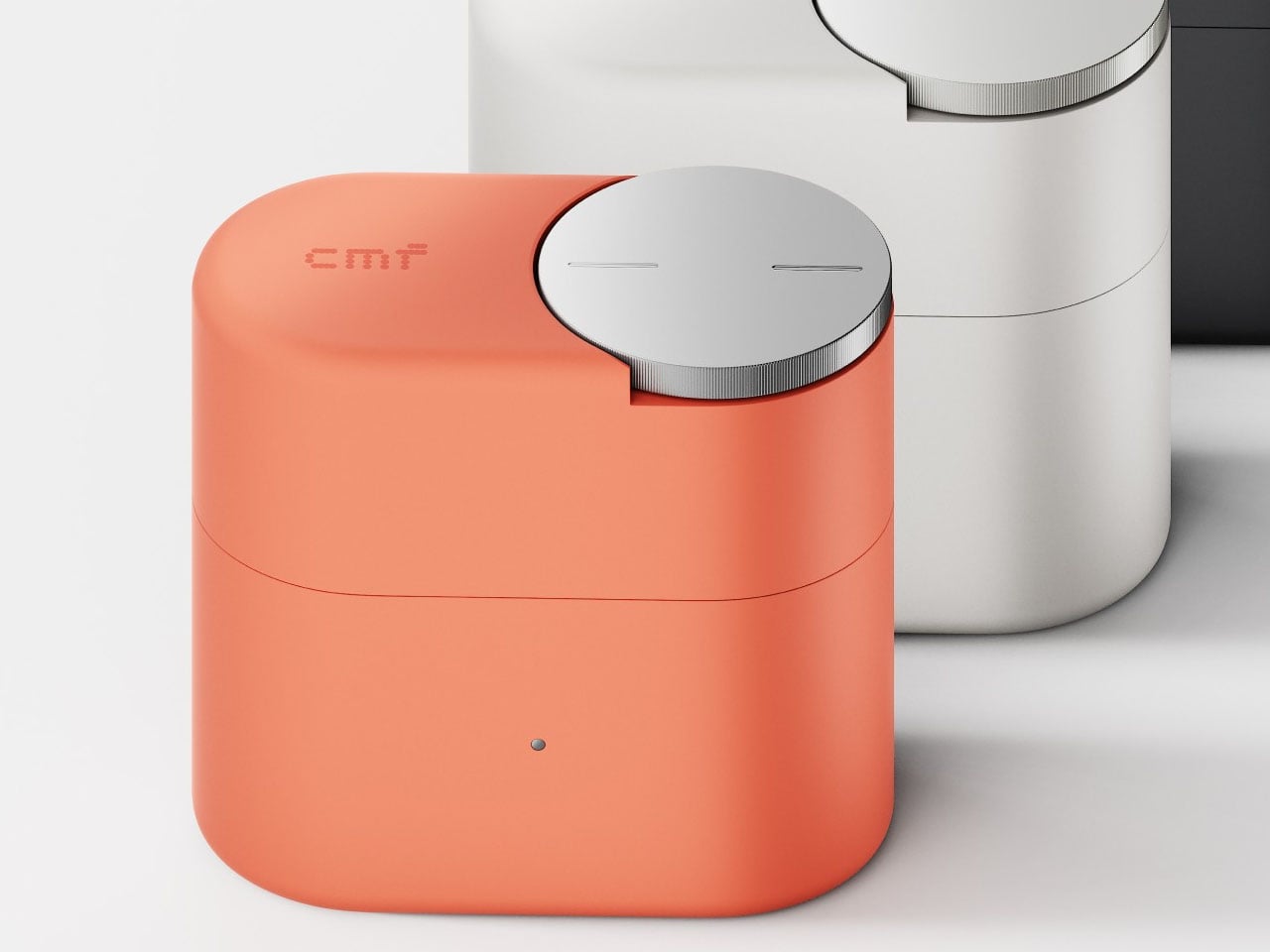
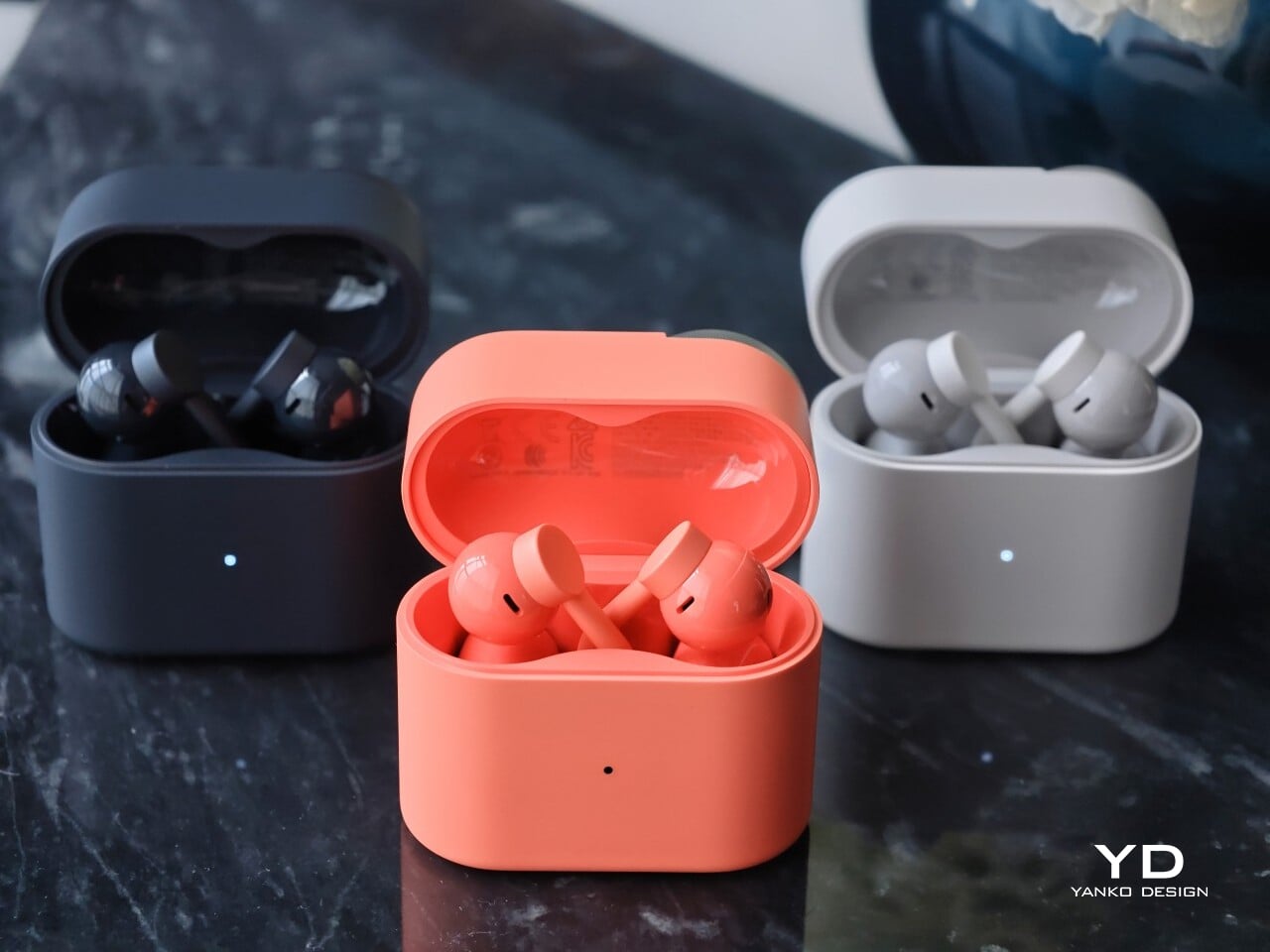
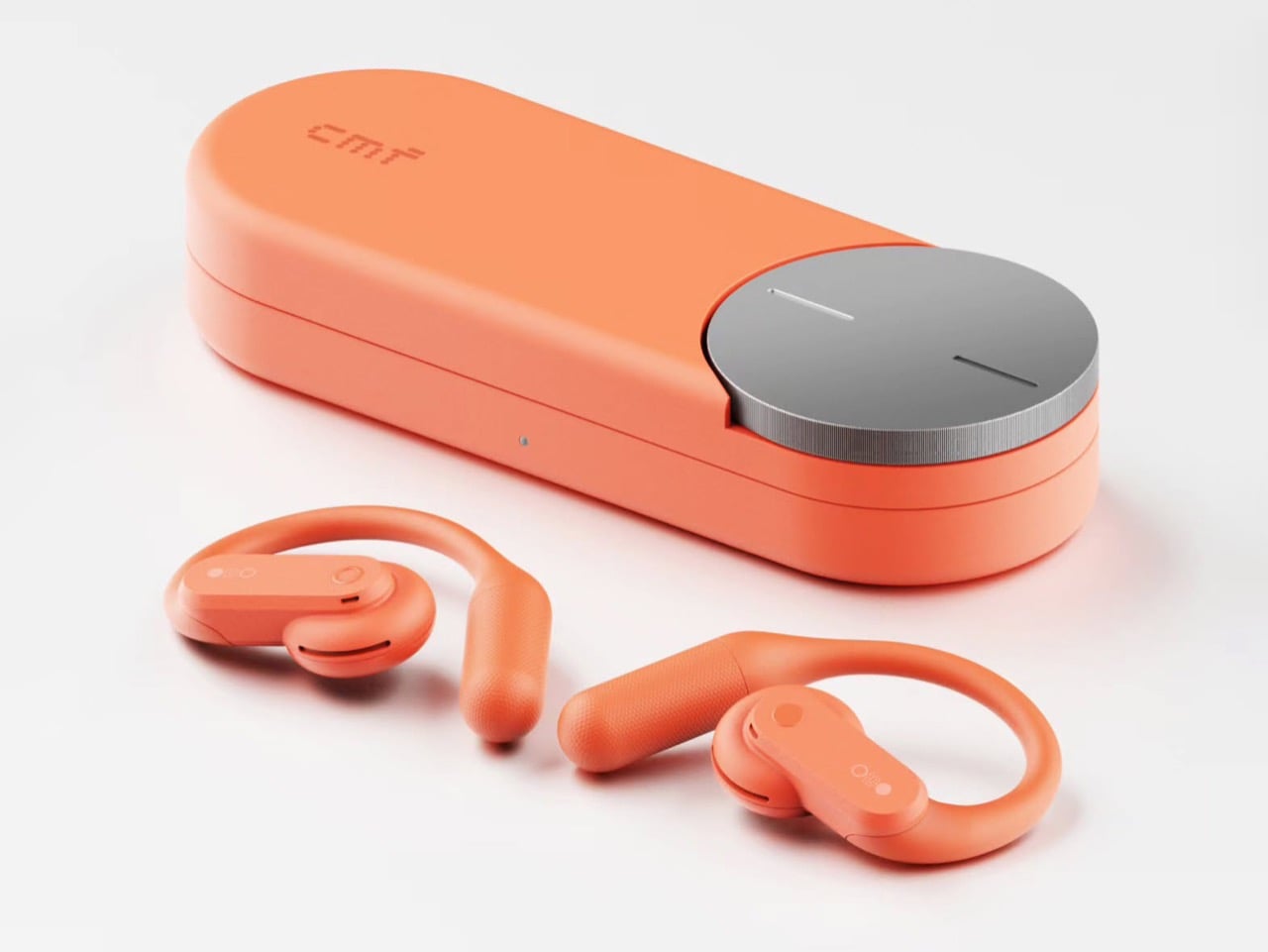
CMF Clip Pro is a good reminder that an earbud case can matter just as much as the earbuds themselves. Here, the case is not just packaging. It is a big part of the product’s identity, and one of the first things that makes the Clip Pro stand out.
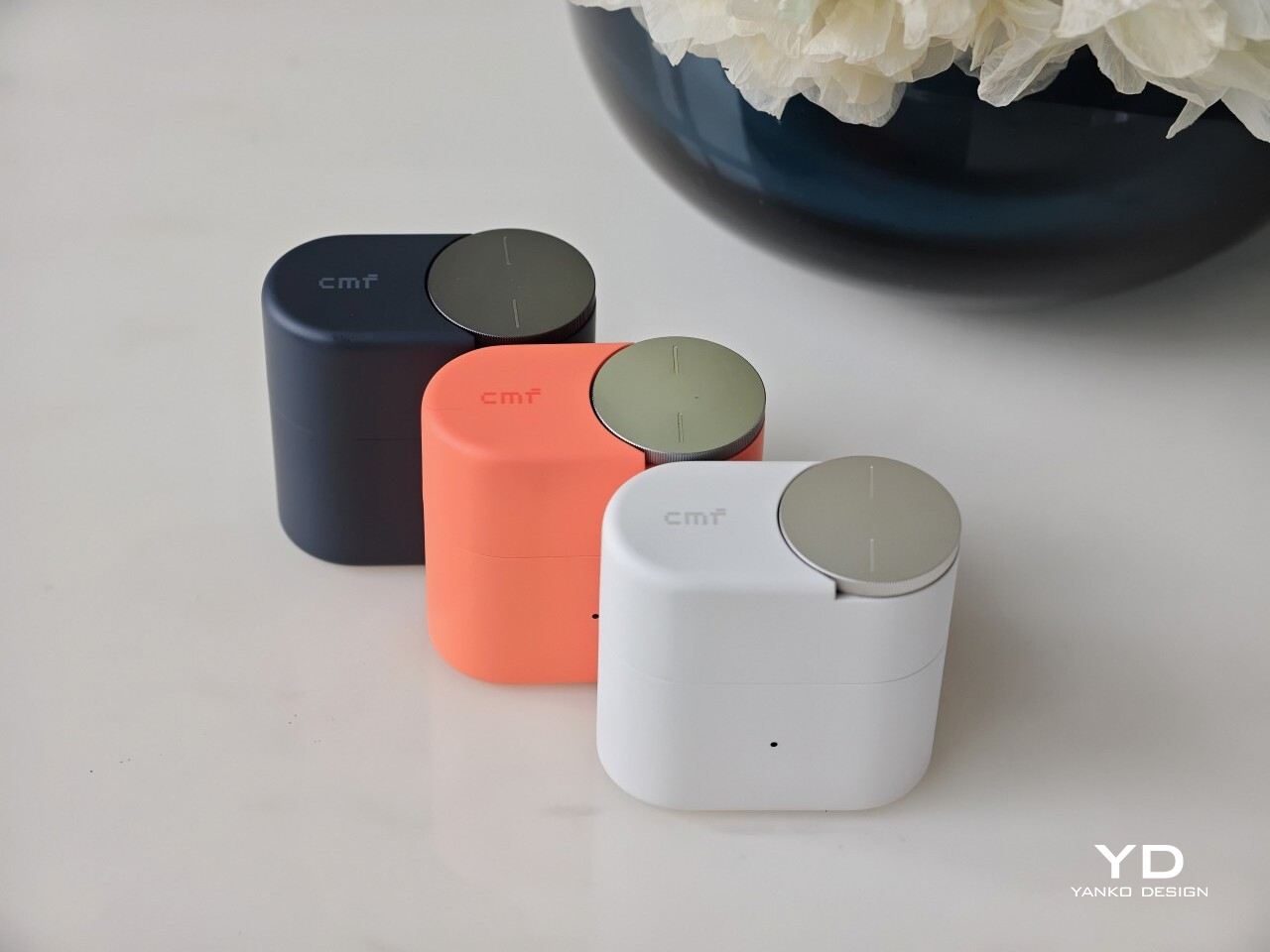
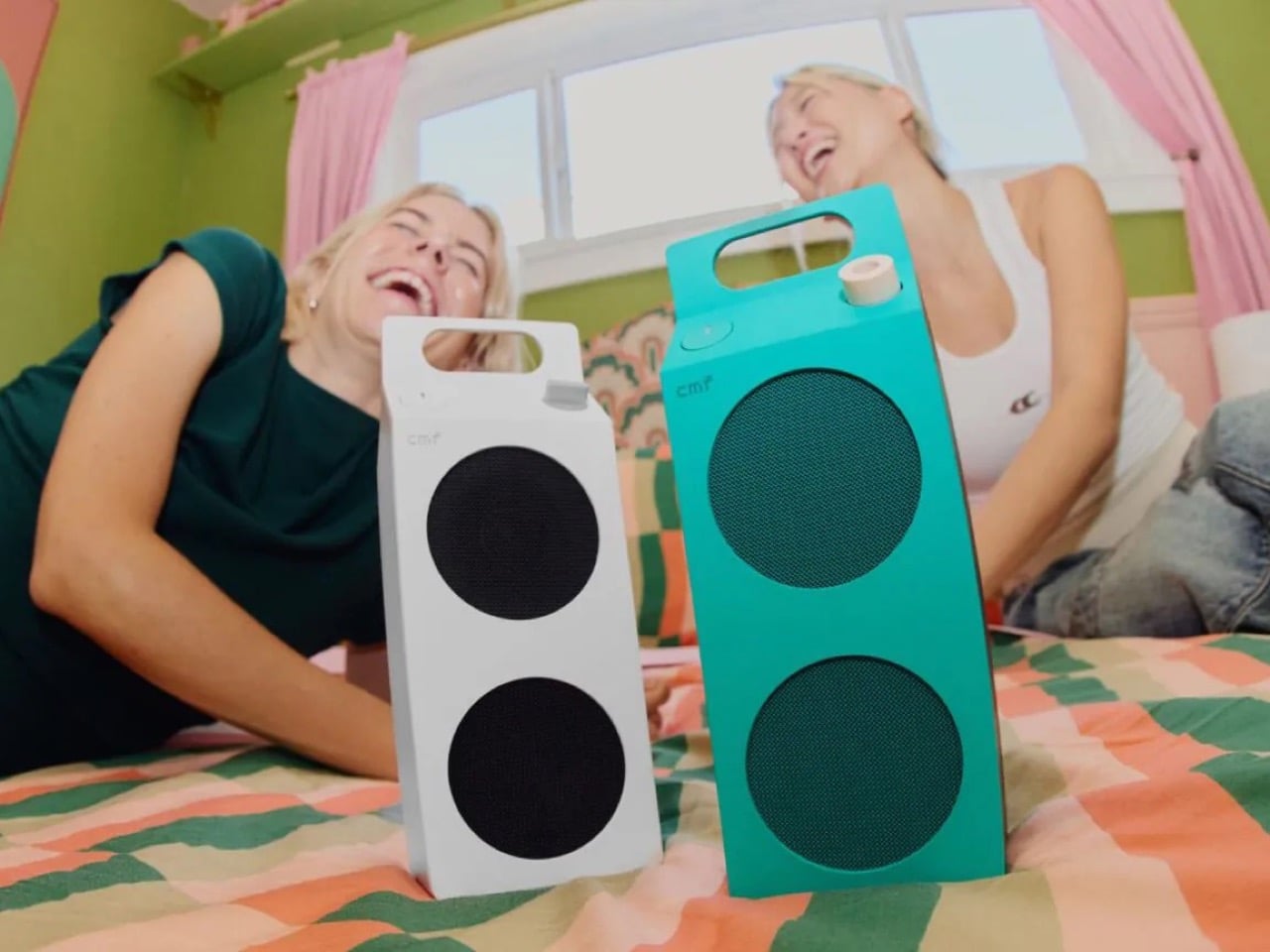
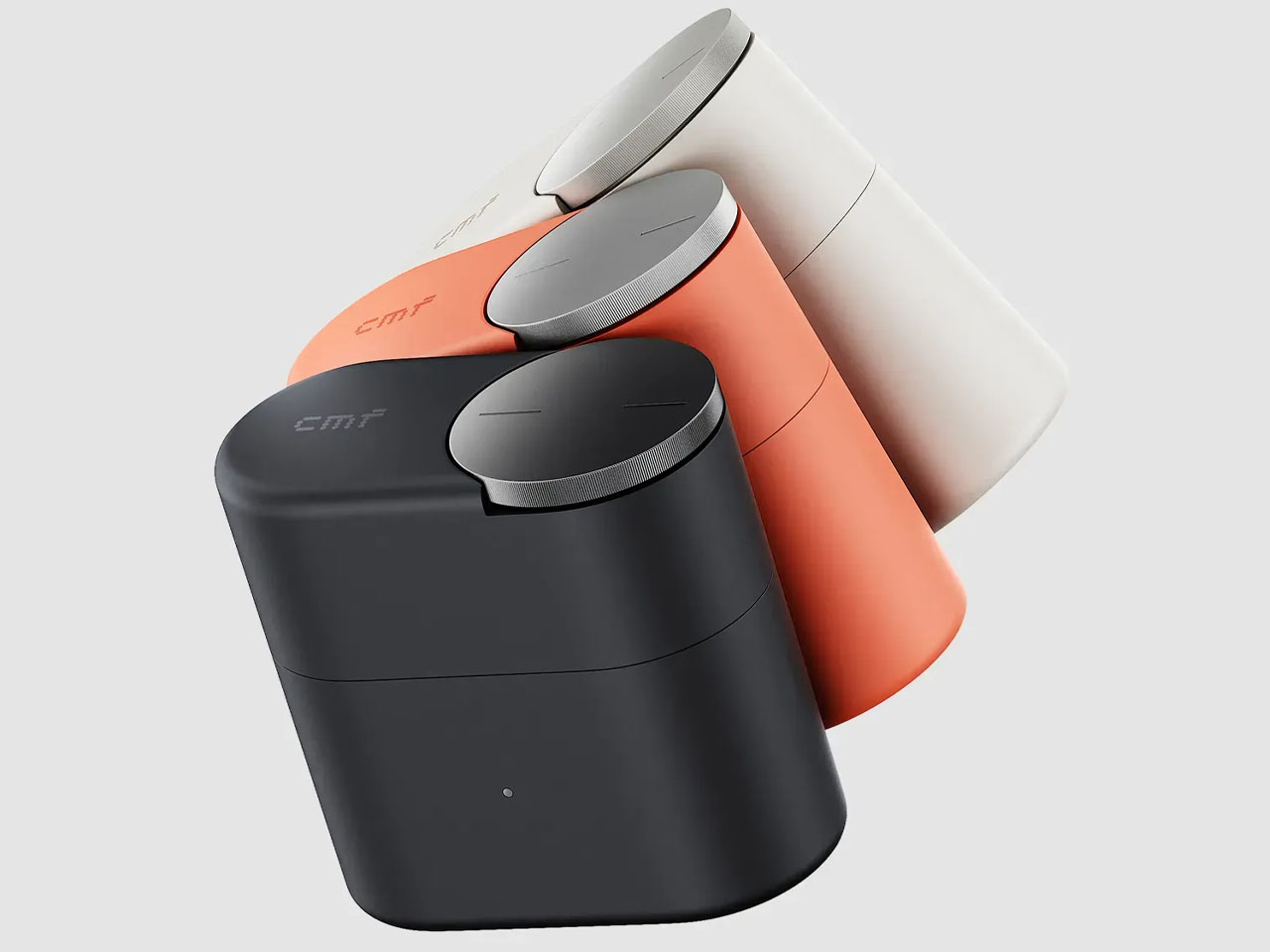
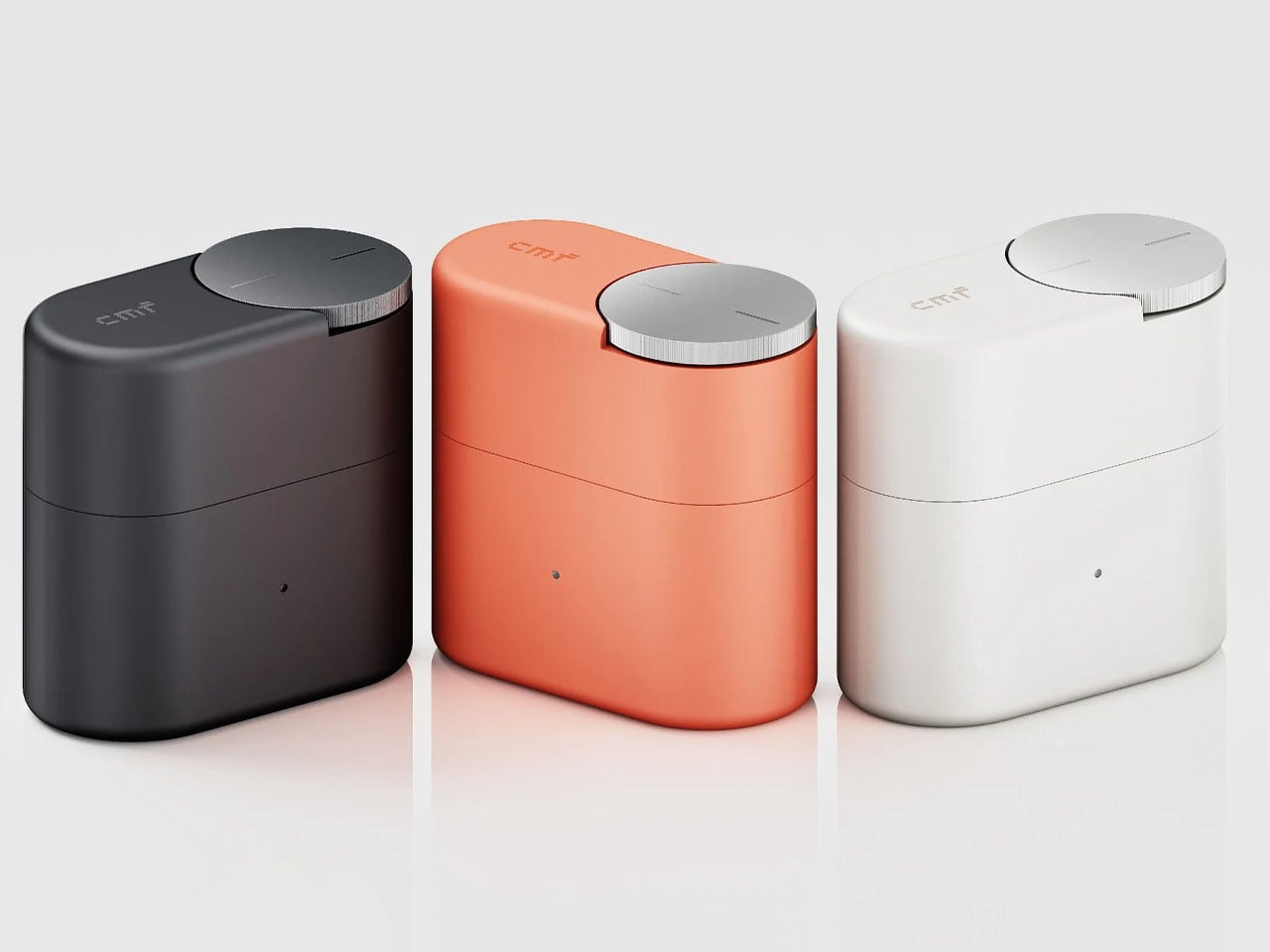
The shape is essentially a rounded rectangular pod. It is slightly chunky, but softly contoured, with curved corners, a matte finish, and a subtle rubber-like texture that feels warmer than the glossy plastic shells most earbuds still use. It also stands apart from the usual pebble-like cases, which gives it a more distinctive silhouette in the hand.

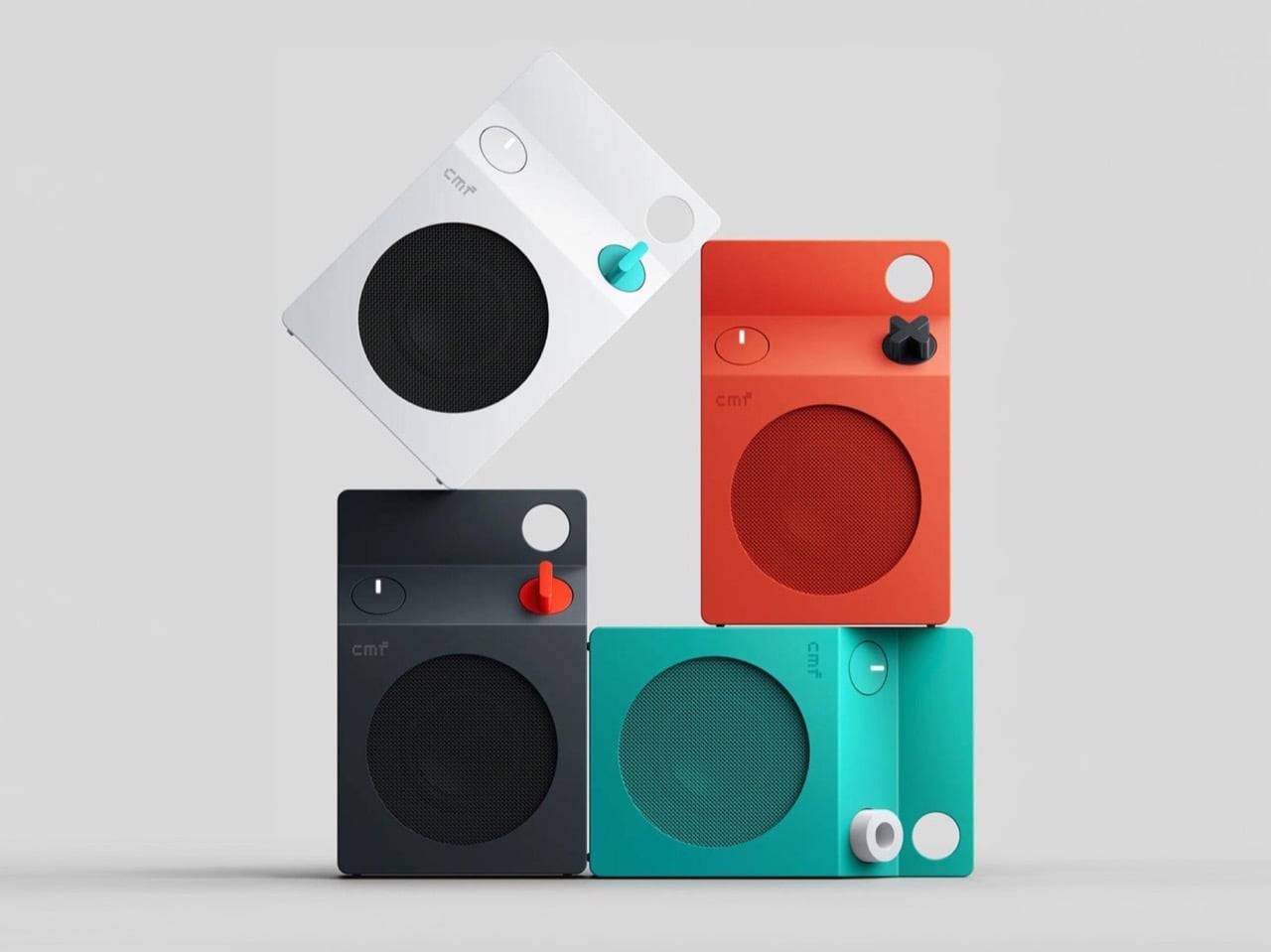
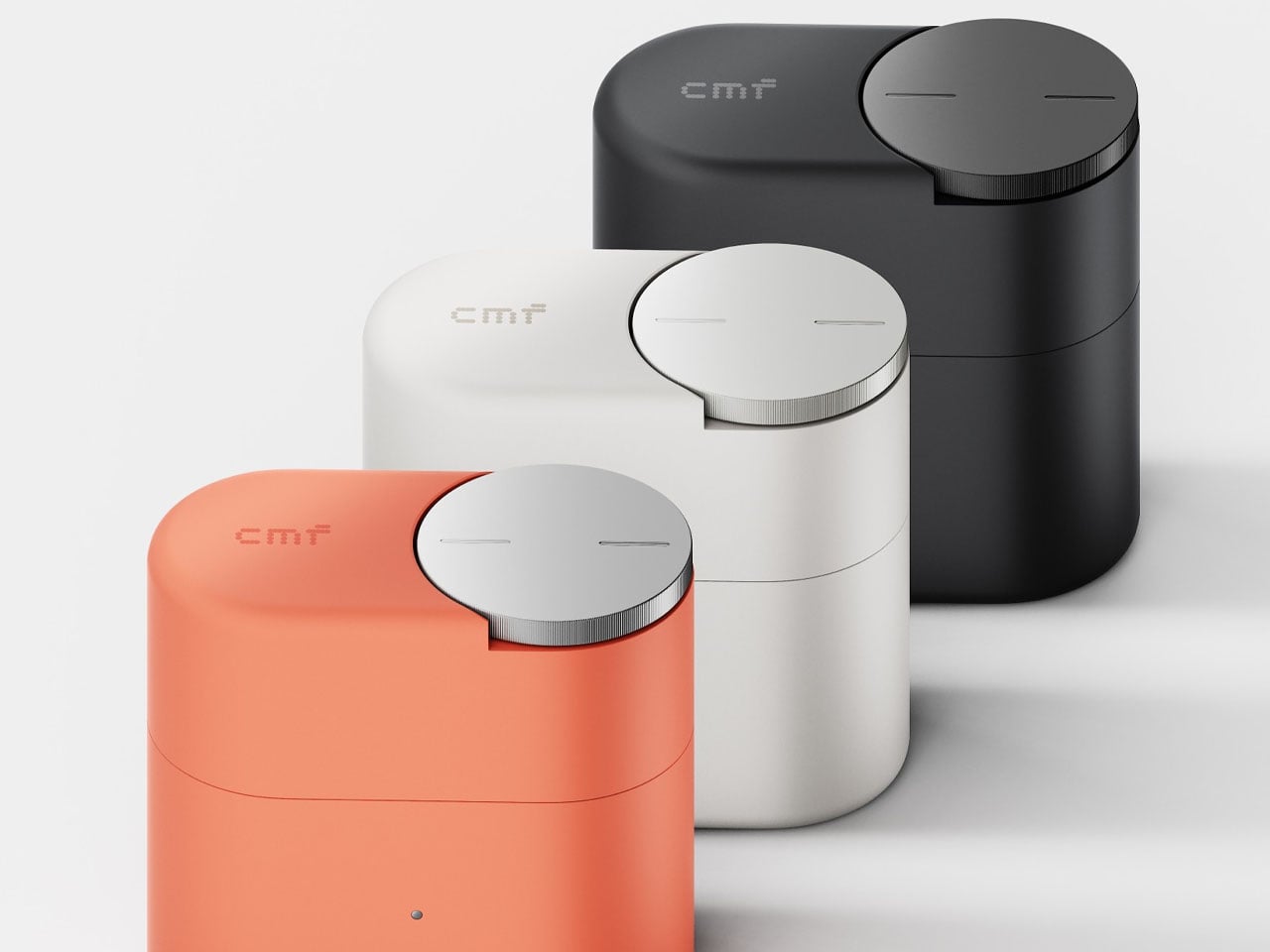
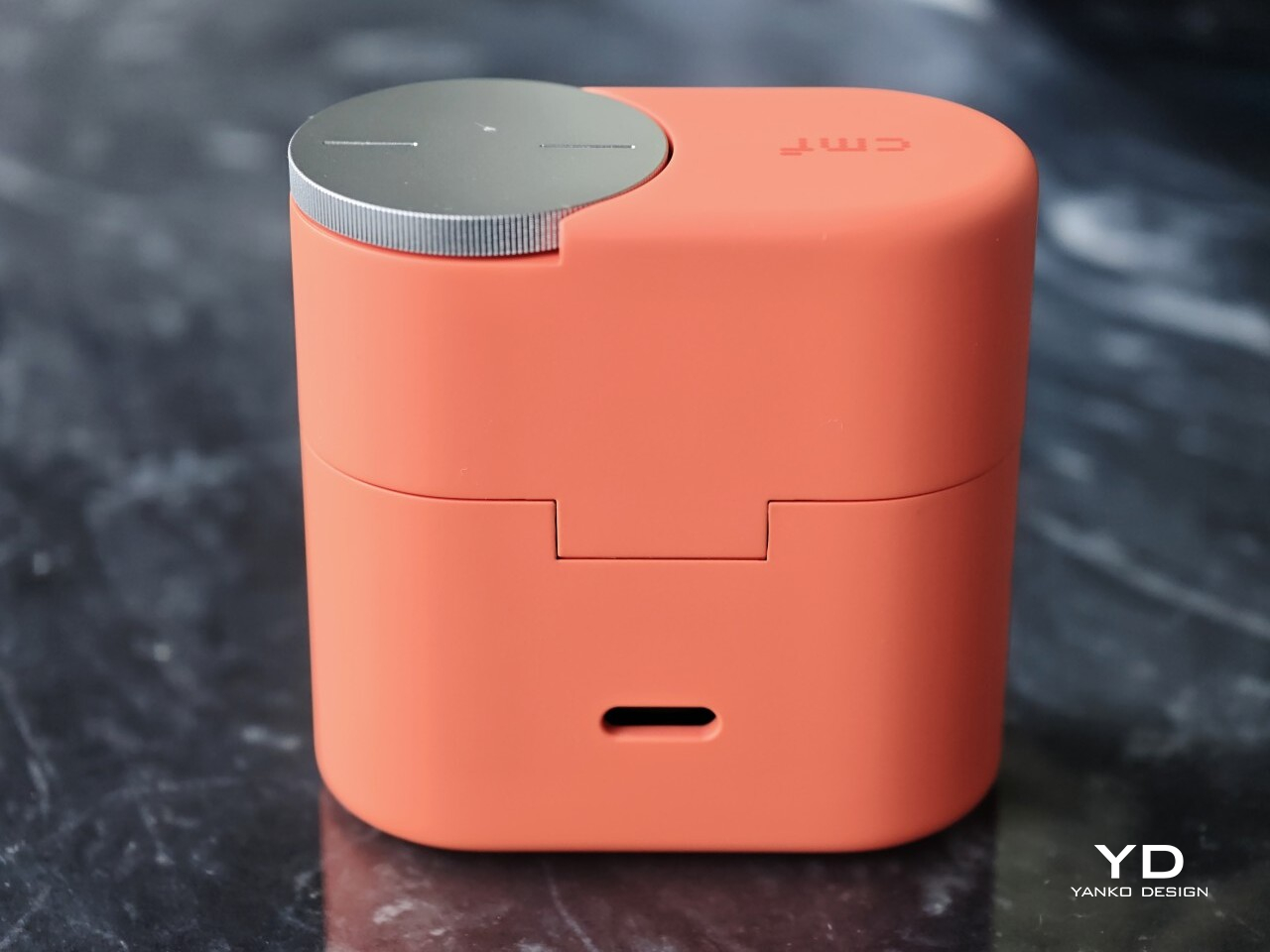
The detail that defines the whole design is the oversized circular dial at the top right corner, called Smart Dial. It immediately gives the case a focal point, but it also earns that space by being functional. The metallic finish, ridged edge, and two line markings give it a sharper, more engineered feel, which contrasts nicely with the softer body of the case.

The rest of the design is restrained. There is only a small CMF logo on top, with the status LED and USB-C port kept discreetly out of the way. That minimalism works in the case’s favor, because it lets the shape and the dial do most of the talking.
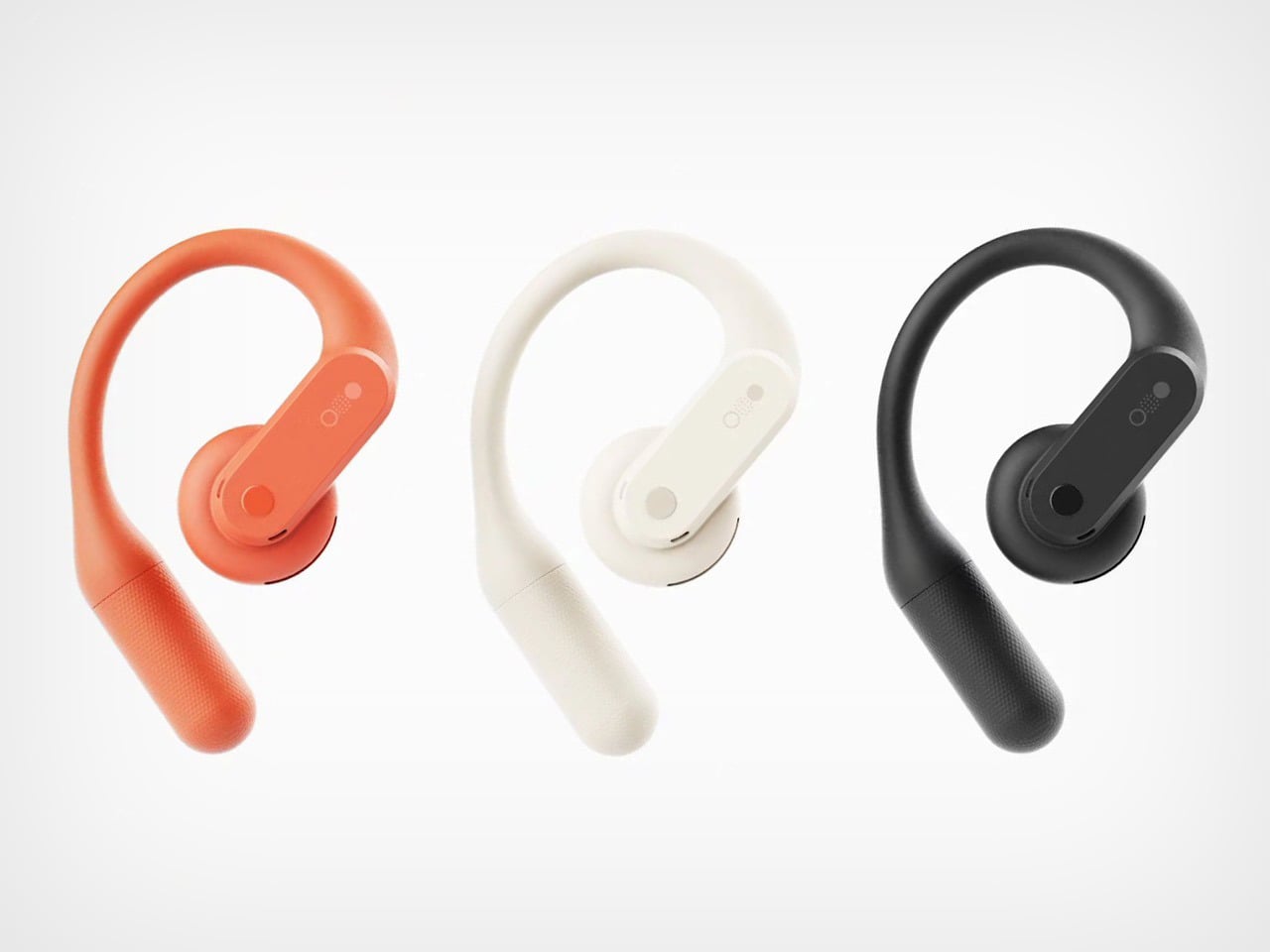
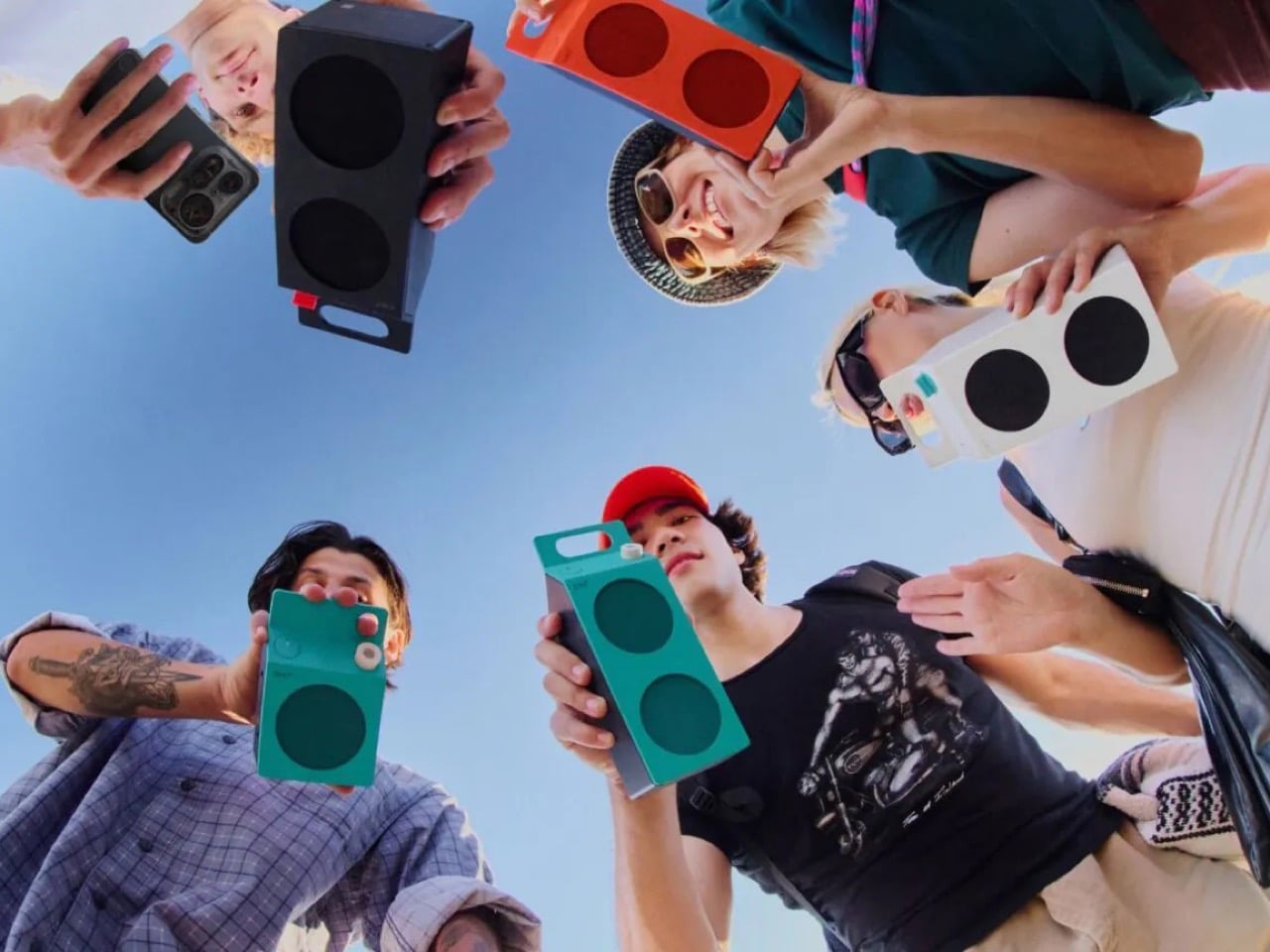
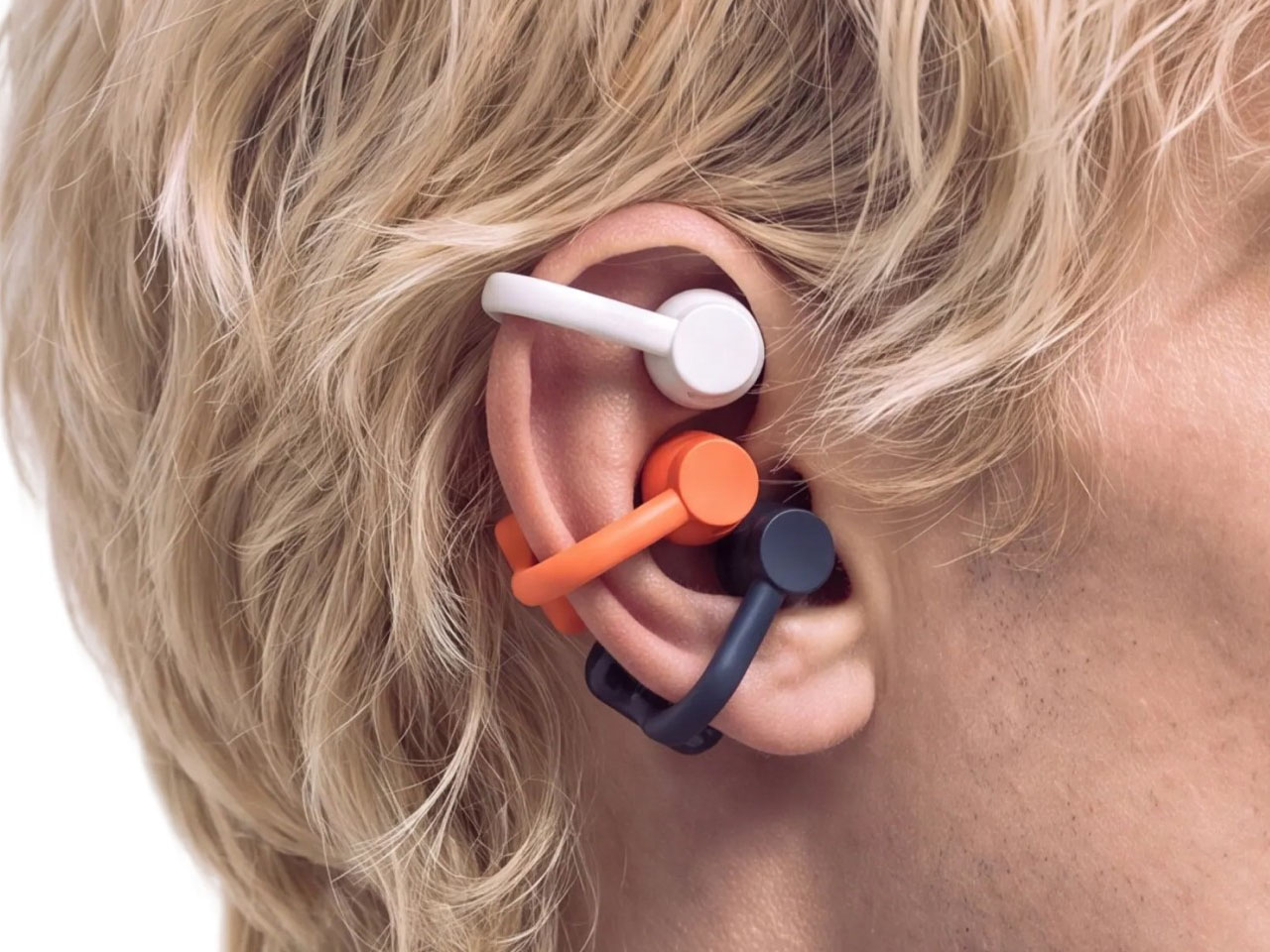
The color options reinforce that identity. Light Gray and Dark Gray are the safer choices, but Coral is the one that feels most like CMF. It is brighter, more playful, and better suited to a product that clearly wants to stand apart. Most importantly, the case feels designed with intent rather than treated as an afterthought, and that alone gives the Clip Pro an edge.

Ergonomics

The Smart Dial on the case is one of those details that immediately makes the product feel more thoughtful in hand. Each turn delivers crisp, clicky feedback, and pressing the dial has a satisfying weight to it. It feels tactile and deliberate rather than decorative, which makes everyday use that bit more enjoyable.
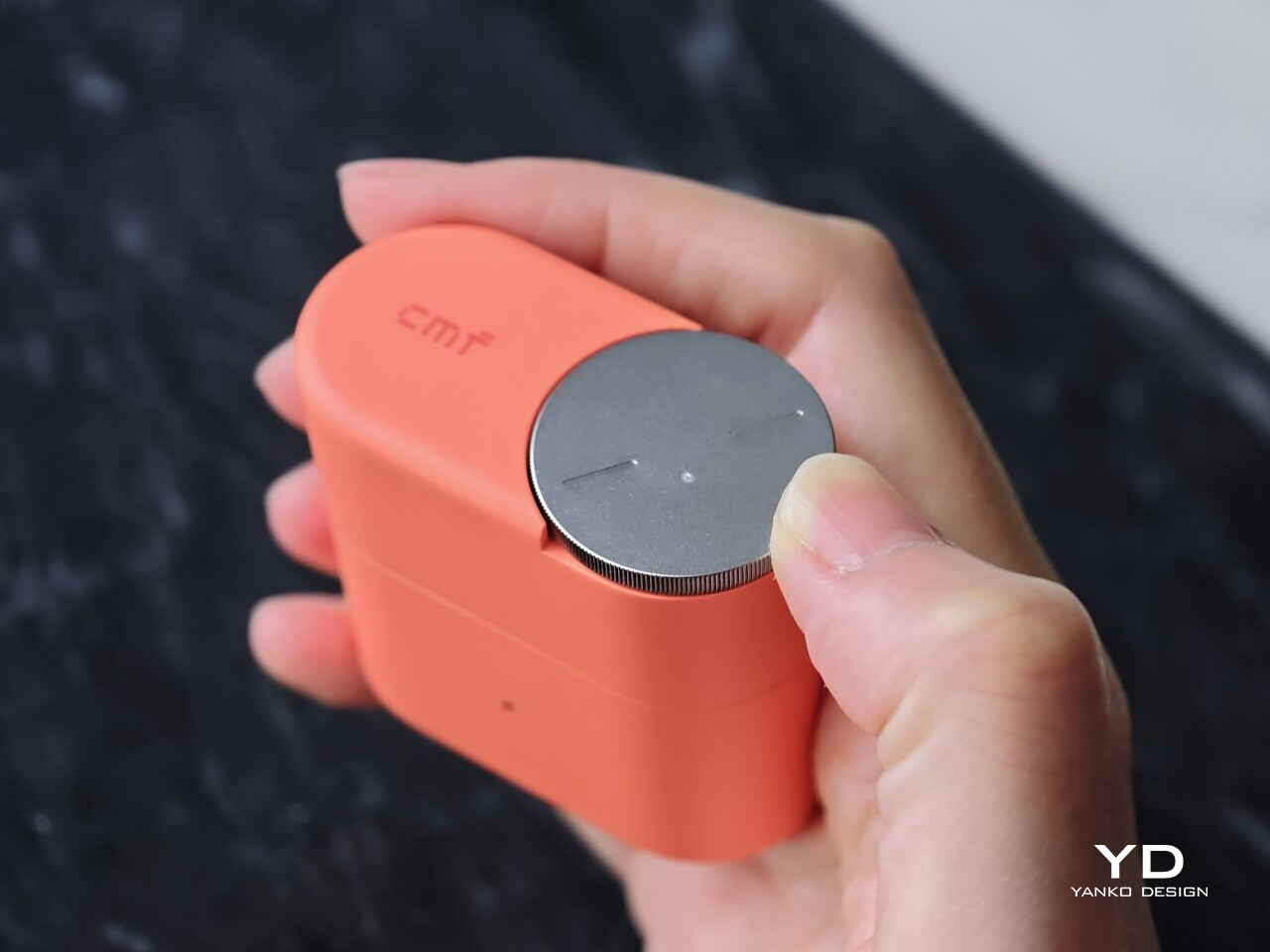
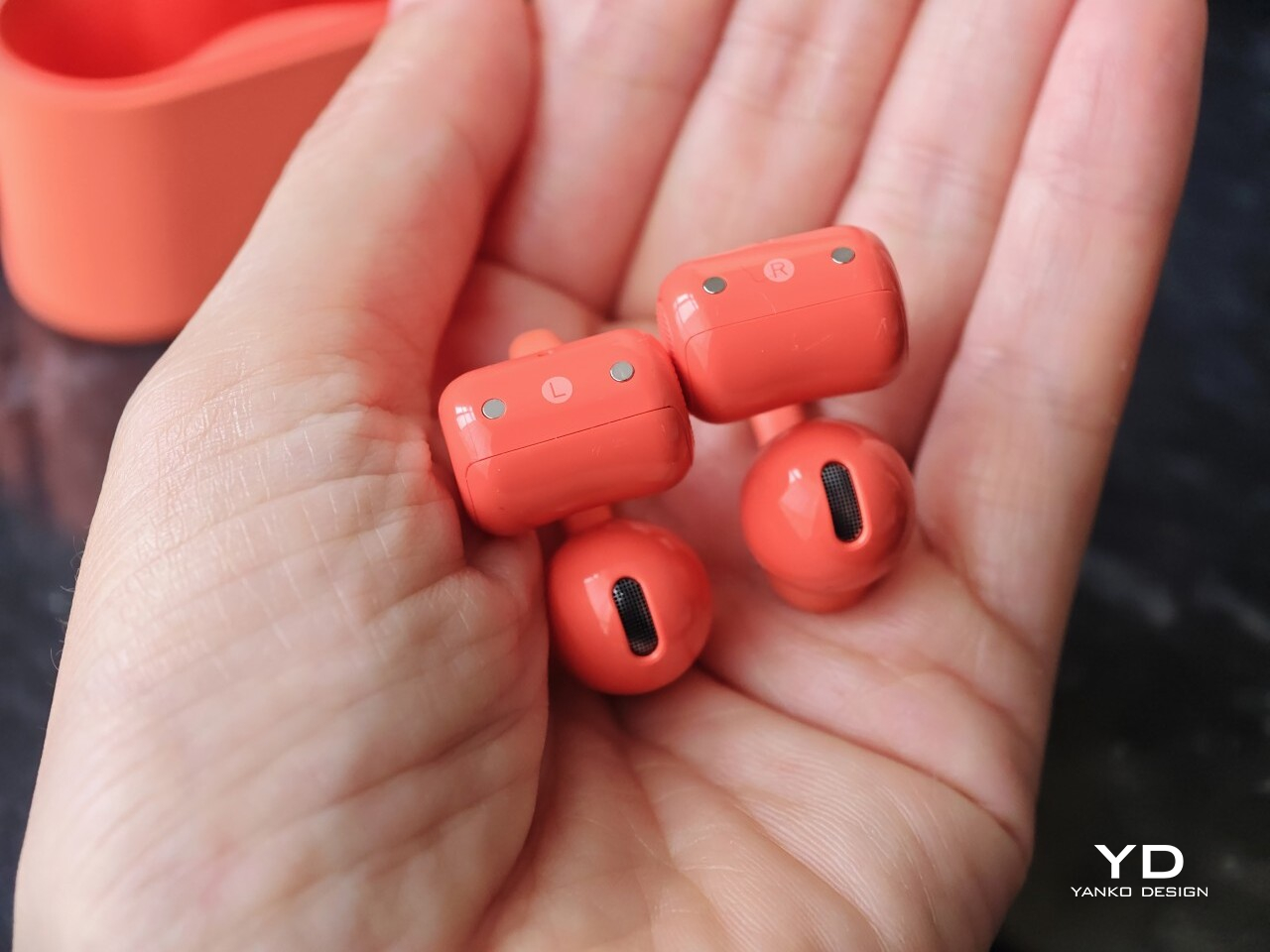
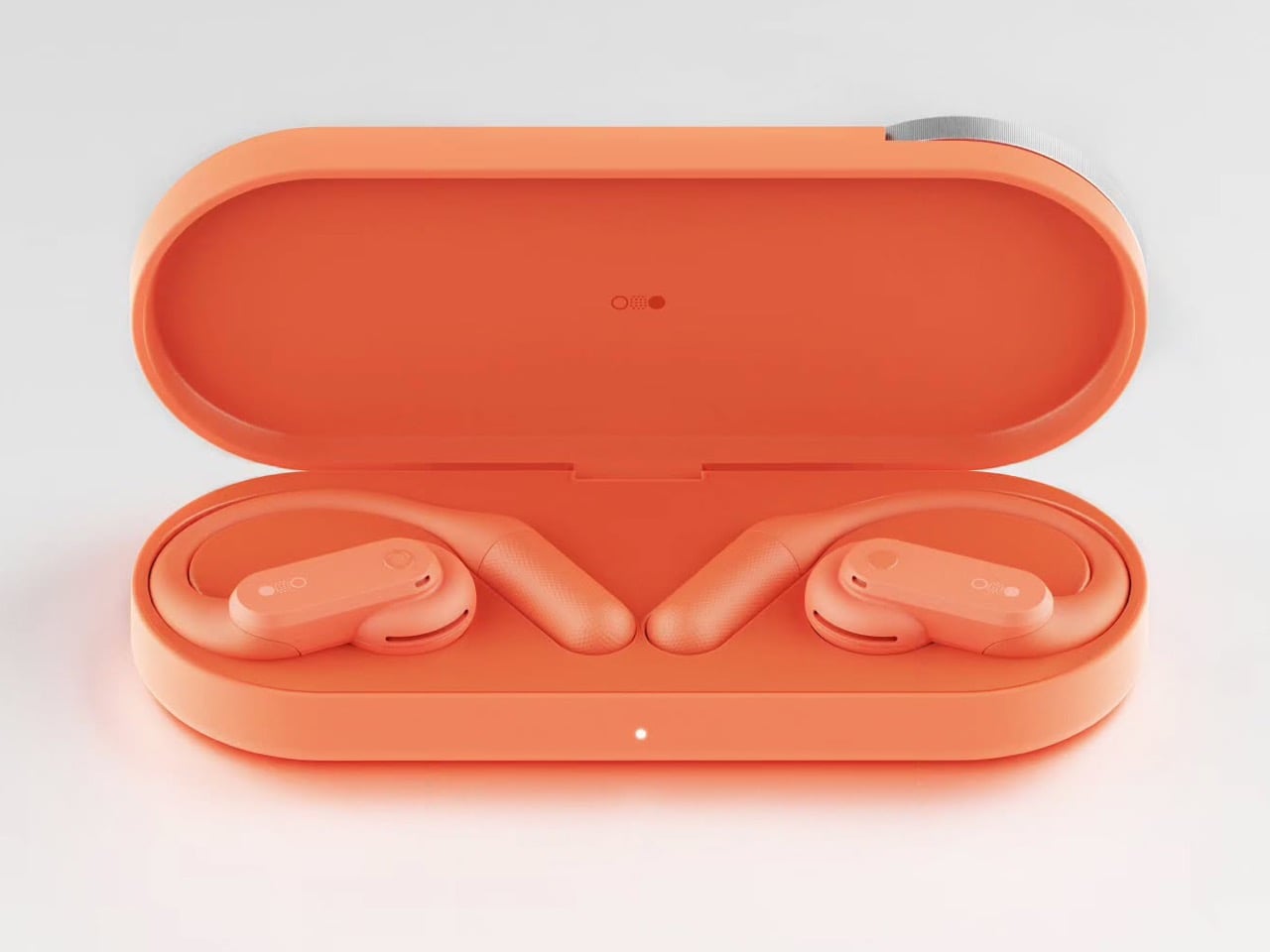
The case has a matte texture that feels soft in the hand, while the earbuds are mostly glossy. At around 52.1 x 26.7 x 51.0mm and roughly 38.8g, the case stays compact and easy to carry. I also like that it can stand upright on a surface, which is a small but practical advantage over the usual round, pebble-like earbud cases. Each earbud weighs just under 6g, and that lightness helps with long-term comfort.

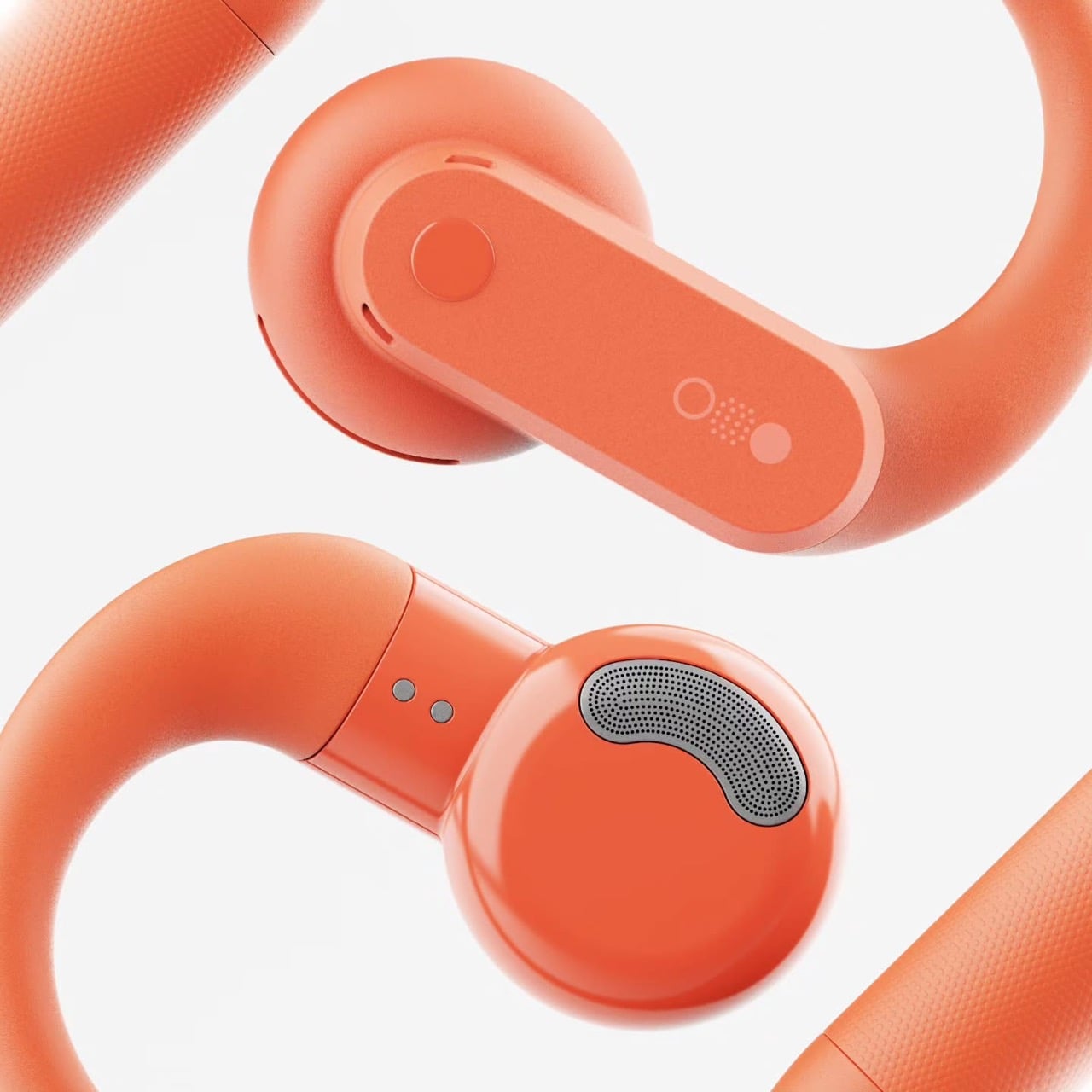
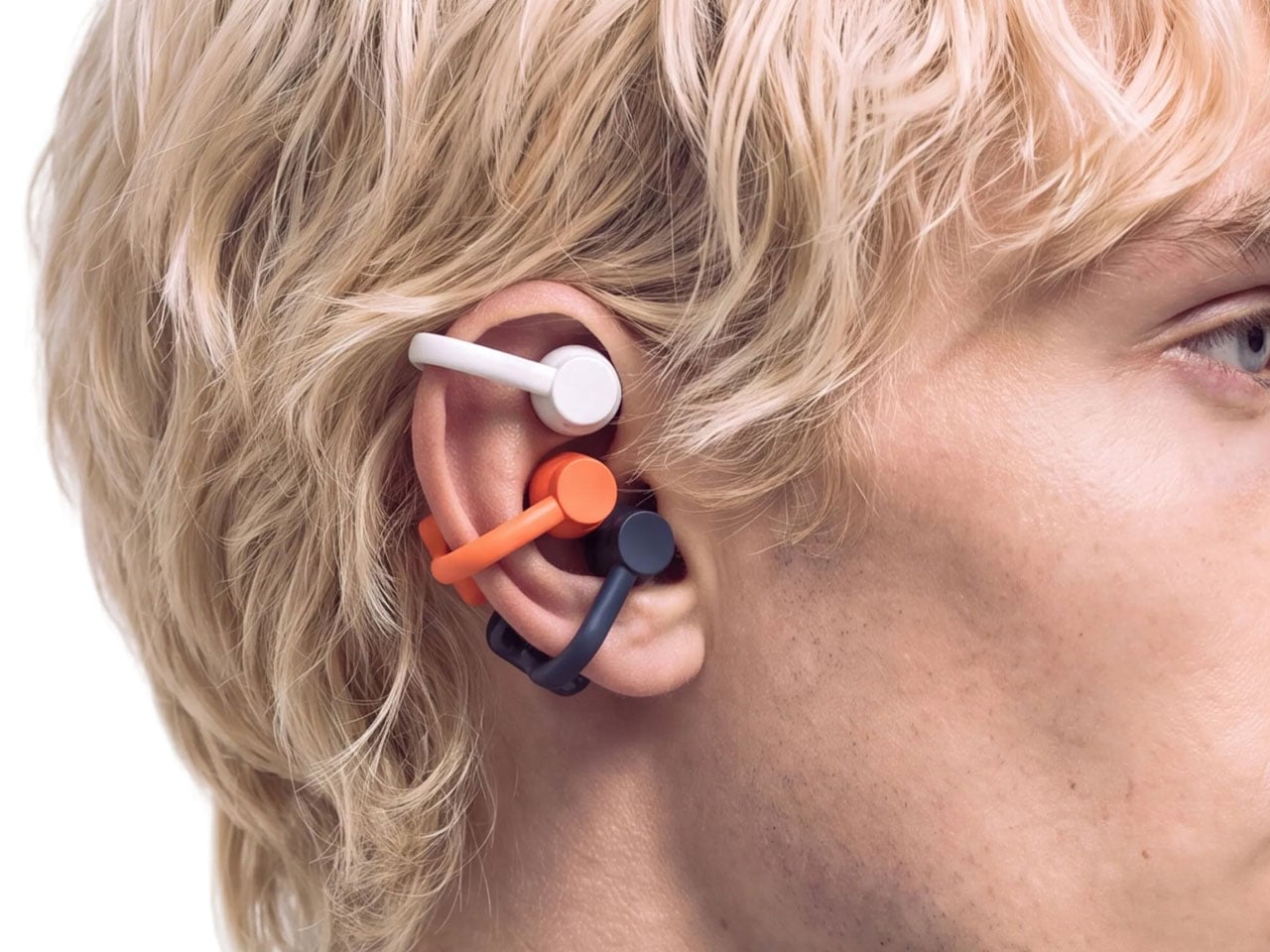
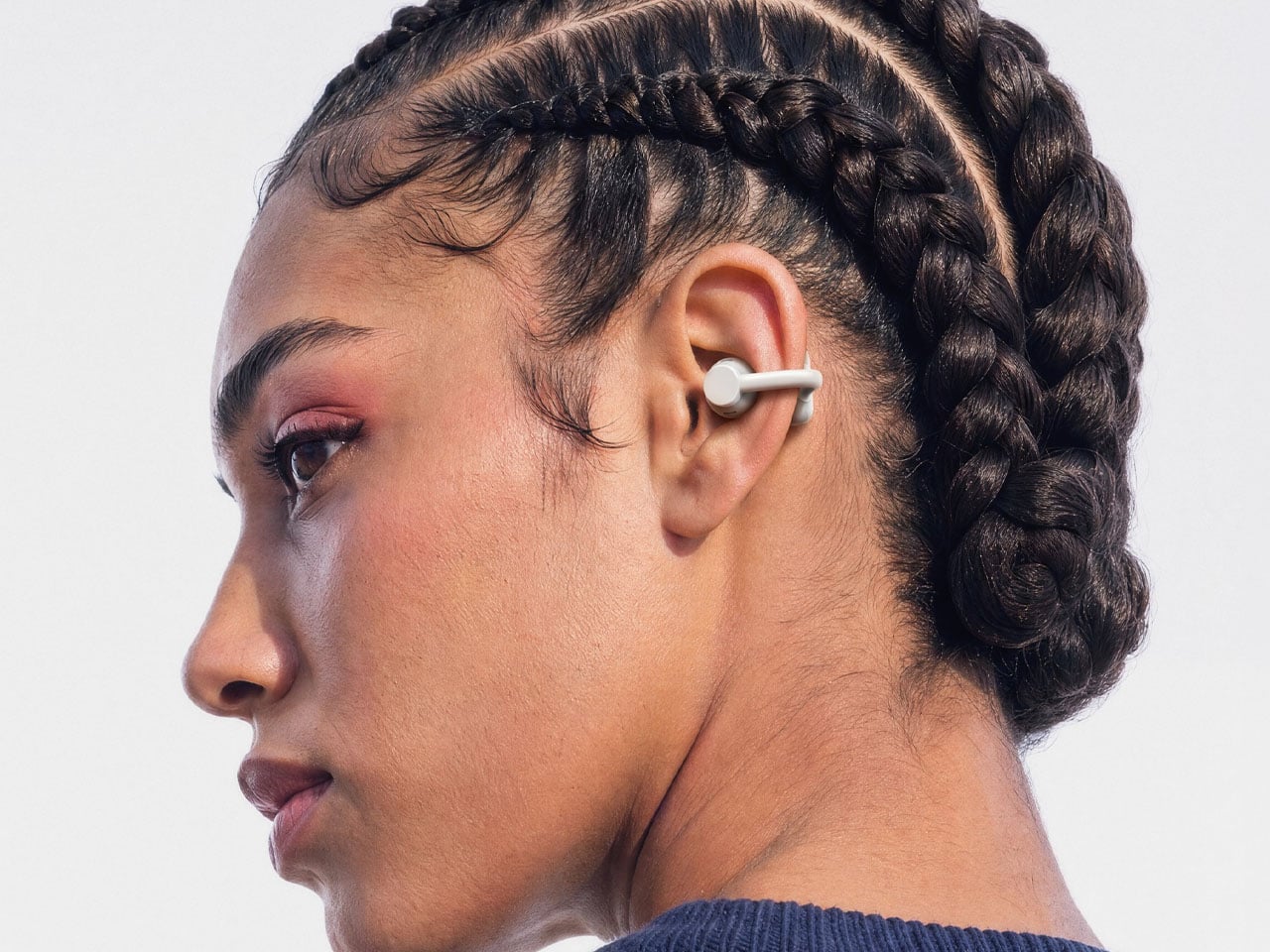
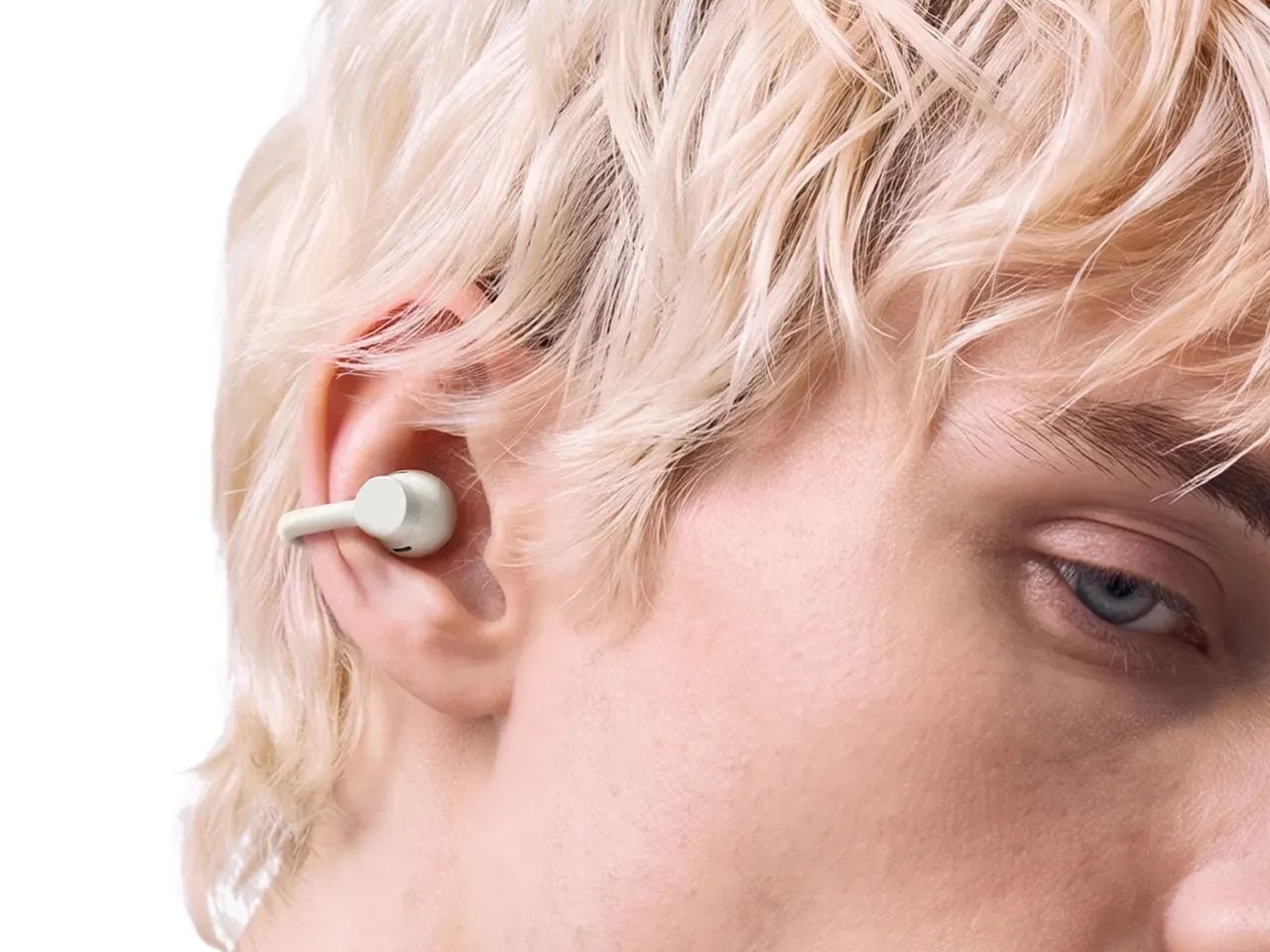
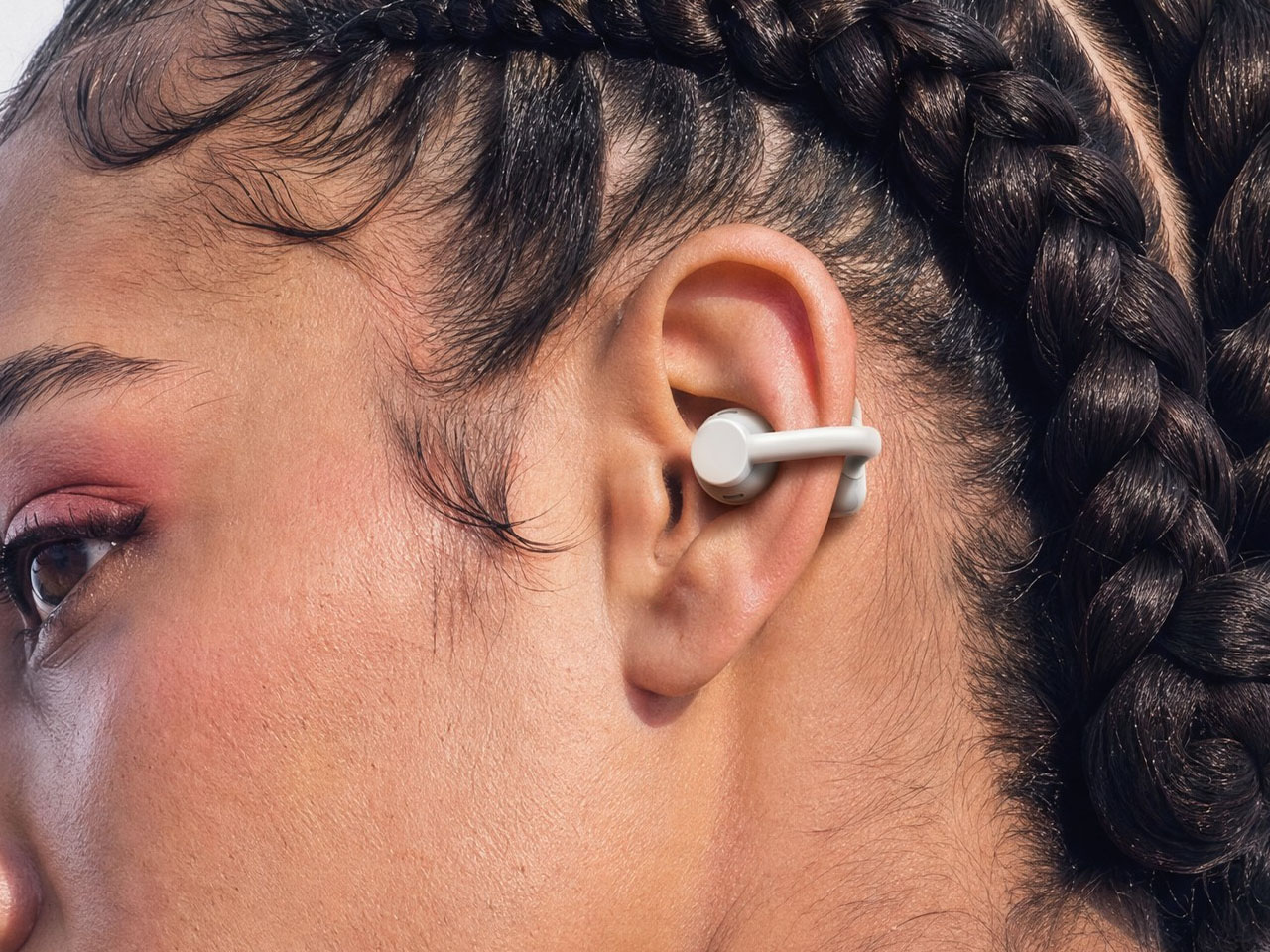
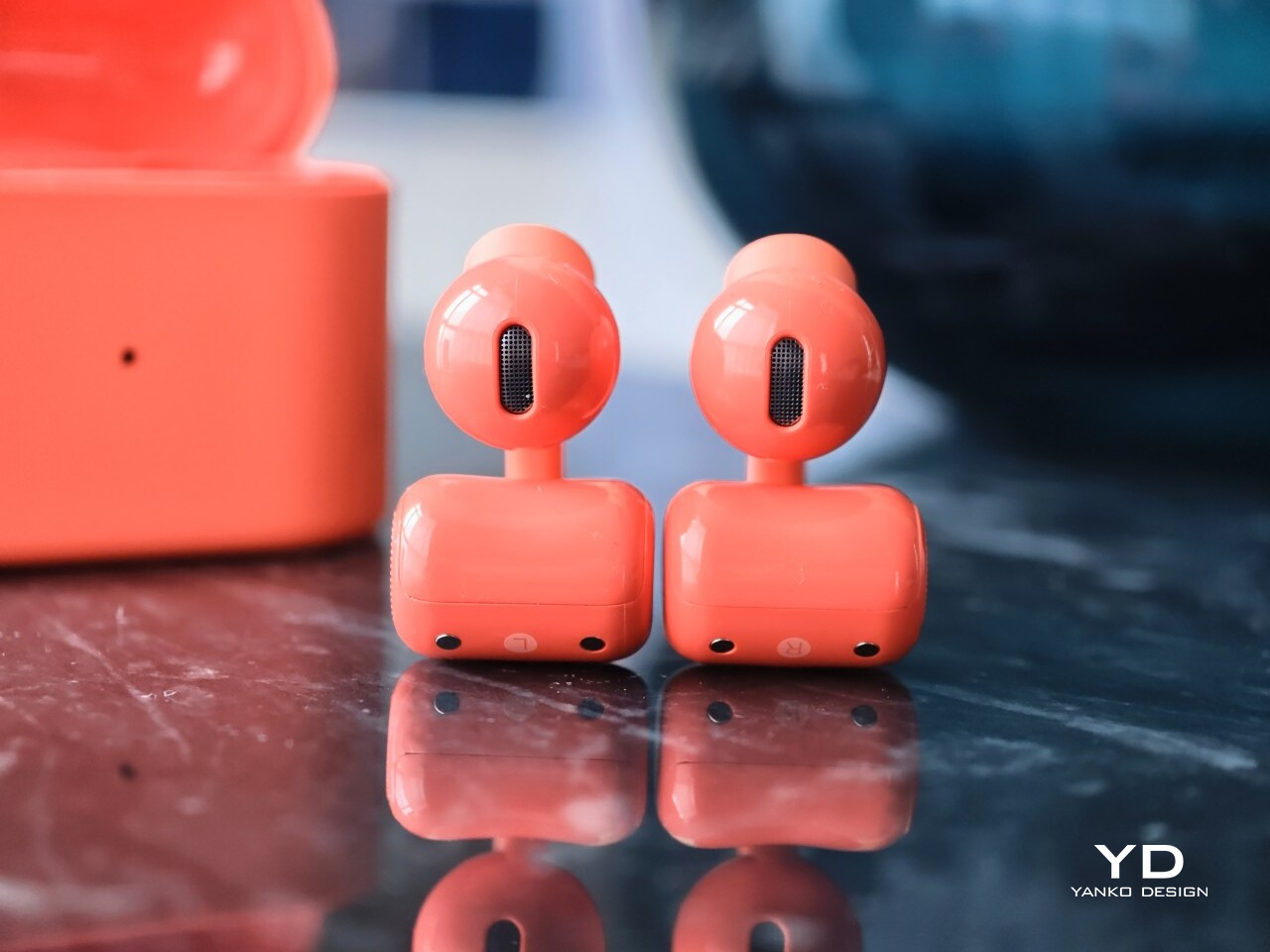
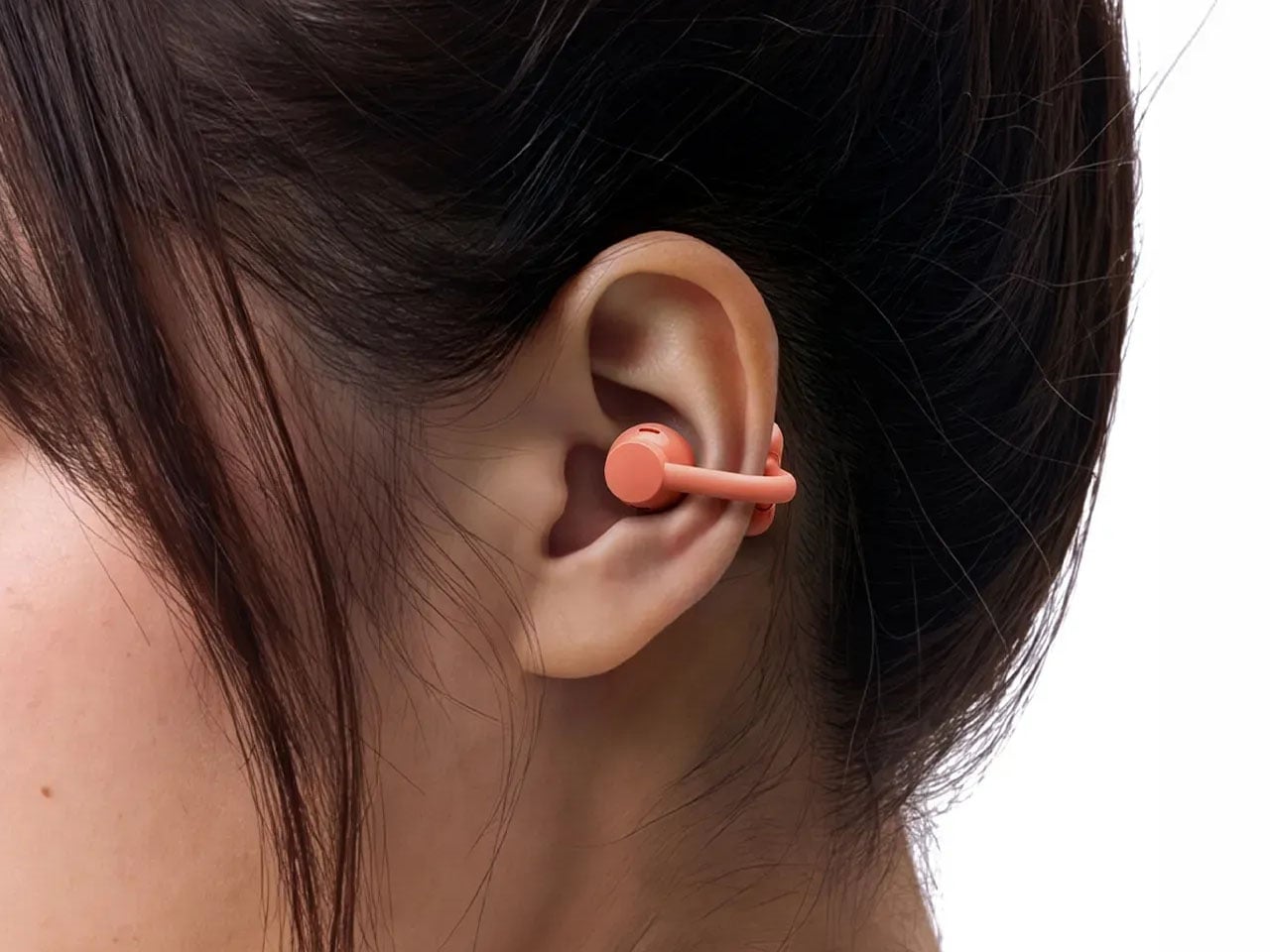
The Clip Pro is easy to wear for hours without feeling pinchy or awkward. CMF has also built physical buttons into the rear section of each earbud, where they are easy to reach without much adjustment. The earbuds do not interfere with glasses either, which is a nice touch. They can clash slightly with earcuffs depending on their position, but in my experience that is only a minor issue.

There is still a small ergonomic quirk with the charging case. Putting the earbuds back can be a little confusing at first because the left and right sides are not interchangeable. The rear section needs to sit at the bottom with the C-bridge facing inward, and until that becomes second nature, the process feels slightly less intuitive than it should.

Performance

Sound quality is always the challenge with open-ear earbuds because the format comes with clear limits. Without a seal inside the ear canal, you do not get the same bass weight, isolation, or intimacy as you would from a good pair of in-ear buds. The goal here is not to beat traditional earbuds at their own game. It is to sound full and clear enough that the open-ear tradeoff feels worthwhile.

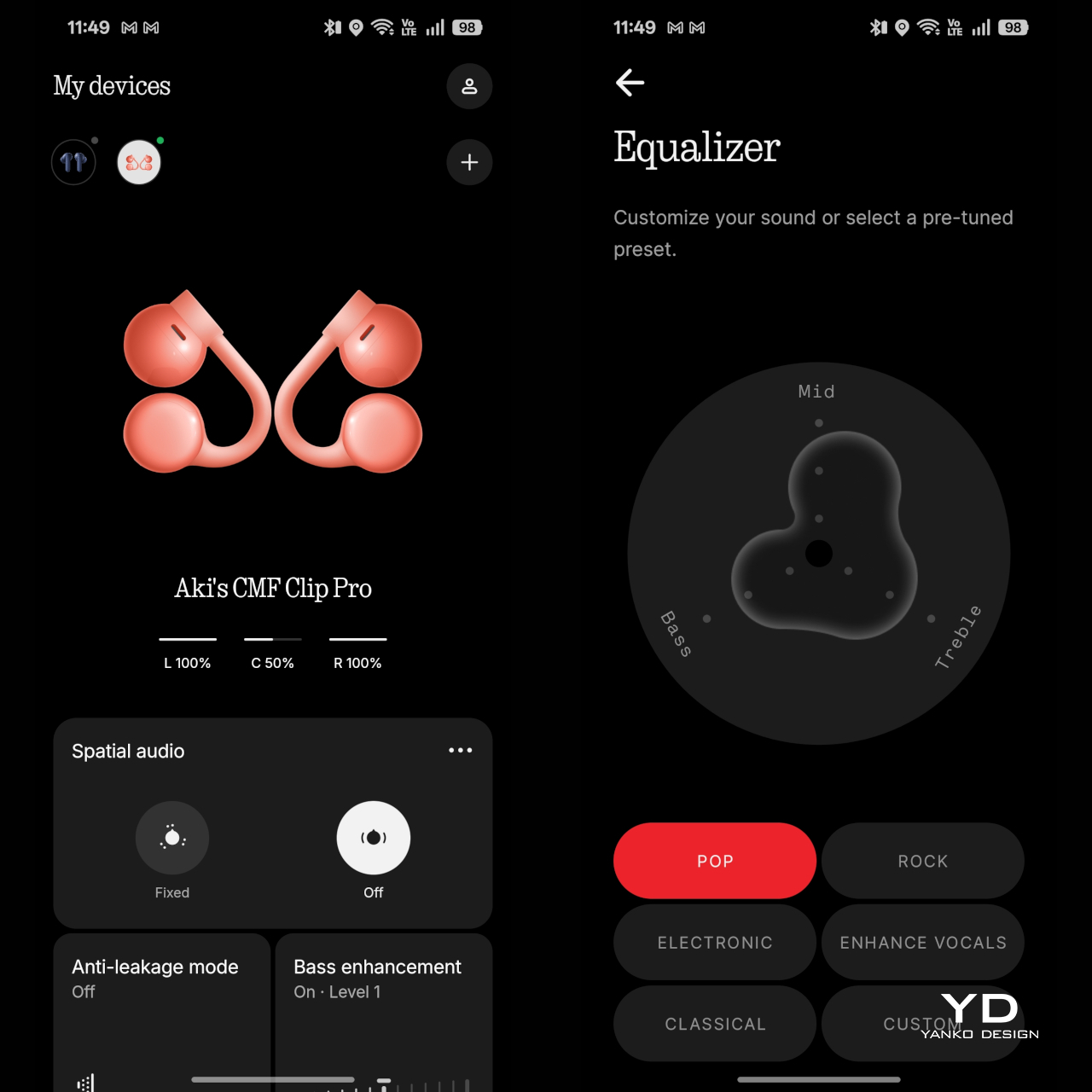
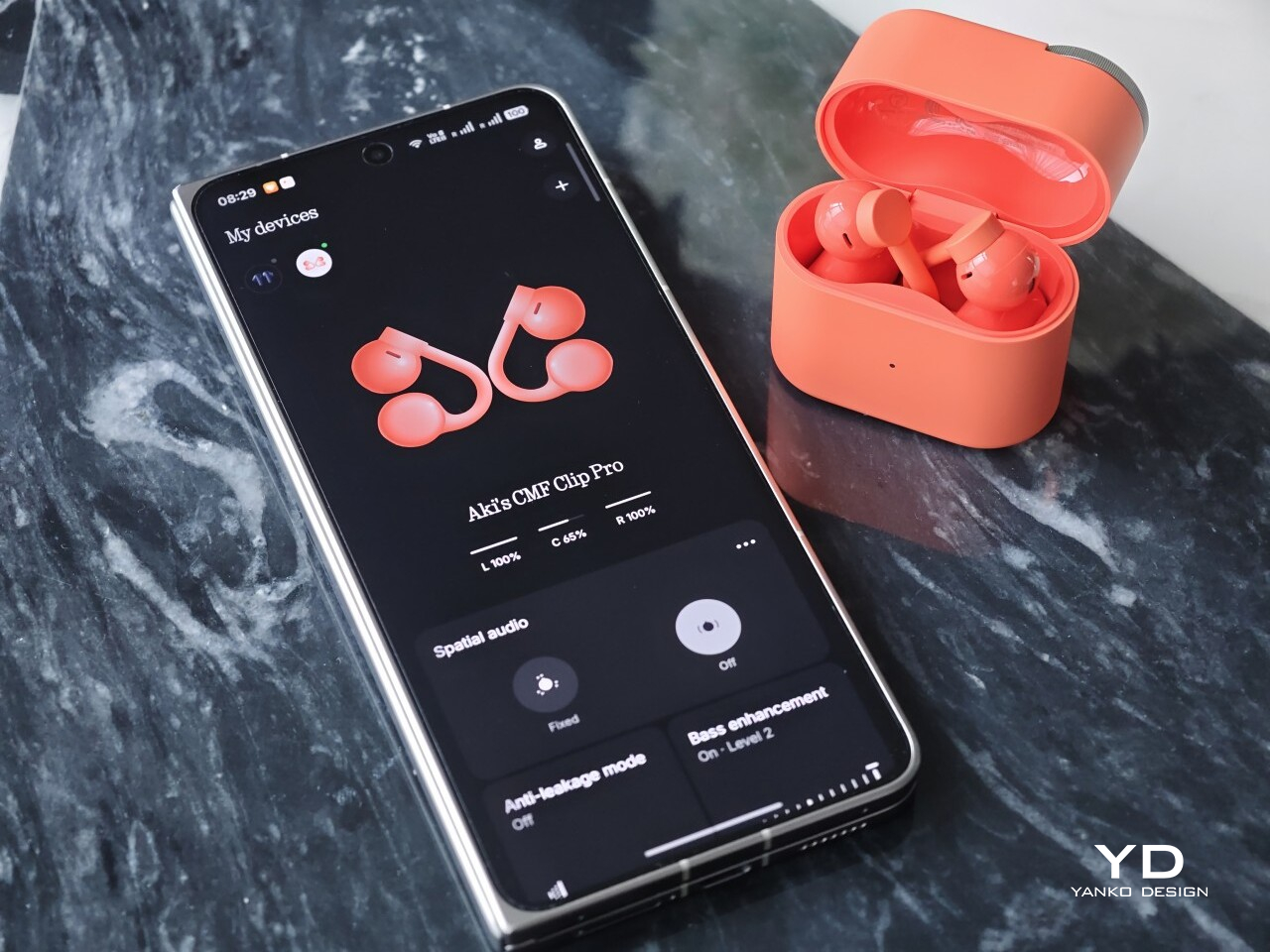
The CMF Clip Pro uses a 10.8mm dynamic driver and supports LDAC, AAC, and SBC codecs. In practice, the tuning is more restrained than on some of CMF’s other earbuds. I found the CMF Buds 2 and Buds 2 Pro I reviewed last year noticeably bass-heavy, but the Clip Pro does not lean in that direction, even with Bass Enhancement set to Level 2. Instead, it sounds more balanced, which suits this category better.
Bass still lacks the weight and punch you would get from sealed earbuds, but that is to be expected. The upside is that the sound never feels bloated or as if it is trying too hard to compensate. Clarity is decent, and the overall presentation is clean and easy to listen to. It is not especially rich or immersive, but for casual listening, podcasts, and everyday music, it works well enough.

There is no noise cancelling, and no real isolation either. Some leakage is still present, as you would expect from open-ear earbuds, but it is mild in everyday use. People nearby are unlikely to notice unless they are very close or you’re listening at high volume. CMF also includes an anti-leakage mode, but while it helps, it also makes the sound noticeably more muffled.

As for call quality, the CMF Clip Pro uses a four-mic setup, with two mics on each earbud, alongside noise reduction. It does a decent job of keeping voices clear enough for everyday calls, even in busier environments. It is reliable enough that taking calls on the go does not feel like a compromise.
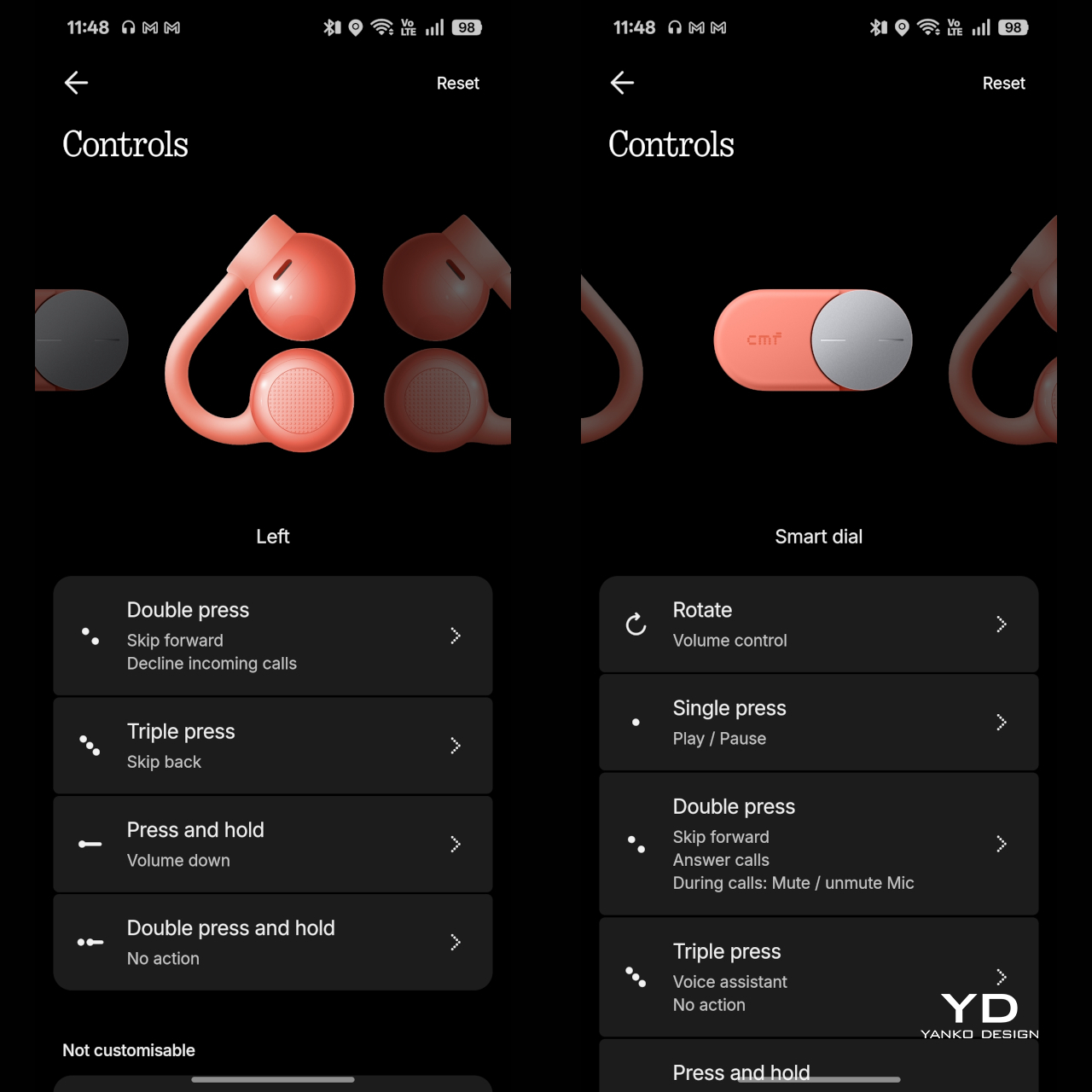
The physical controls on both the earbuds and the case are easily one of my favorite things about the Clip Pro. In a category where touch controls often feel inconsistent, CMF takes a more tactile approach that immediately helps these stand out. The buttons on the earbuds are easy to use and support a surprisingly broad range of inputs, including double press, triple press, press and hold, and double press and hold. That gives the Clip Pro a level of flexibility that feels more thoughtfully implemented than many rivals.

What really elevates the experience is the Smart Dial on the case. It handles volume through rotation, and it can also be customized for playback, track skipping, voice assistant access, low lag mode, and call controls. That makes the case feel like more than a simple charging shell, giving the product a bit of personality in everyday use. More importantly, the physical controls work very well in practice. They feel responsive and dependable, which matters far more than simply offering a long list of possible shortcuts. My only complaint is that the sound cue for volume changes can lag slightly behind the actual adjustment.

The earbuds’ controls work right out of the box, while Smart Dial has to be enabled manually in the Nothing X app. Beyond that, the app lets you adjust features like spatial audio, anti-leakage mode, bass boost, low lag mode, and dual-device pairing. There are also five preset EQ modes, plus a custom three-band equalizer that gives you a good amount of control over the sound. Nothing X is not doing anything radically new, but it remains one of the best earbud apps around. It looks great, feels intuitive, and makes it easy to tweak settings without any fuss.
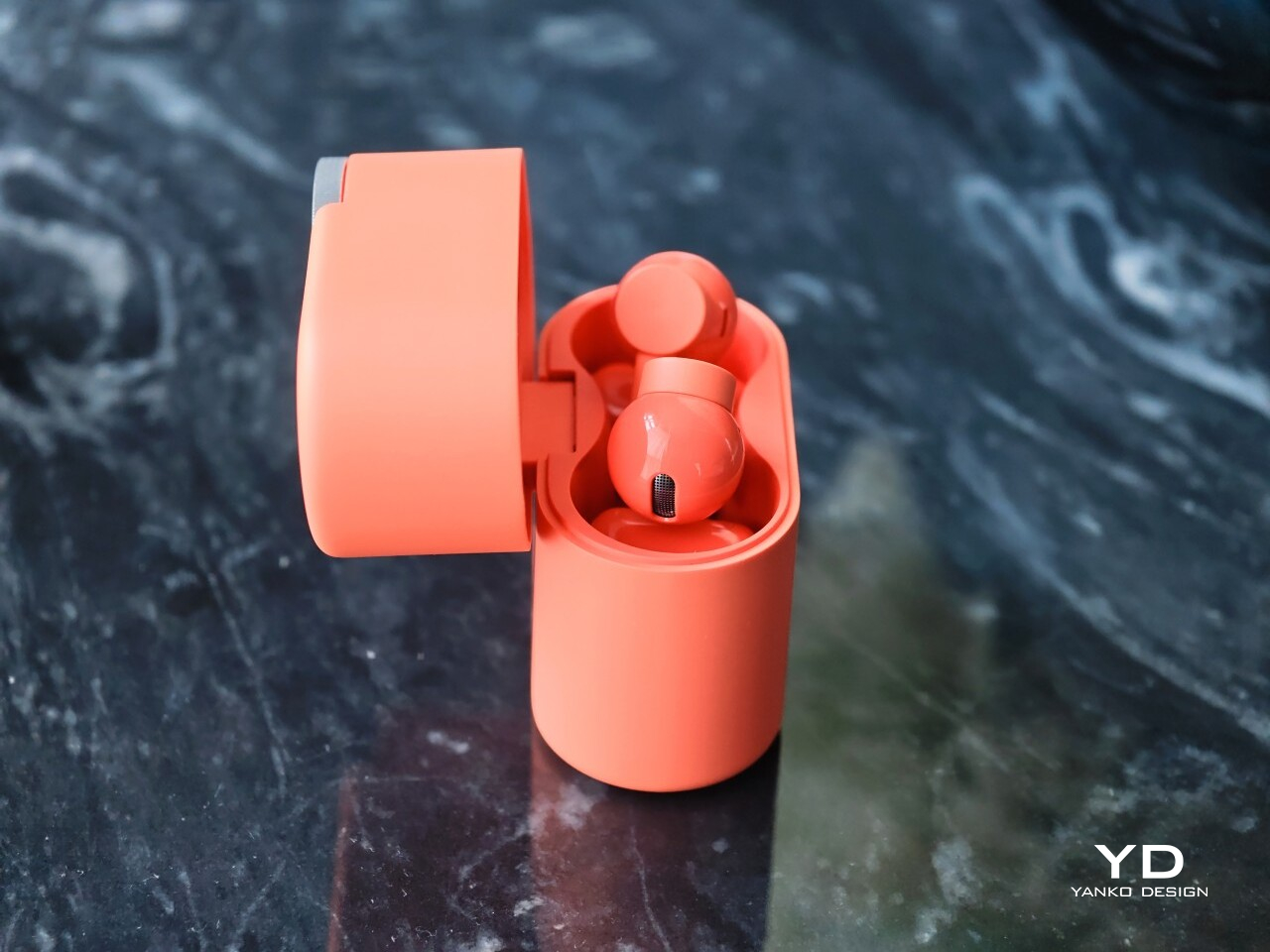
Battery life is rated at up to 10 hours on the earbuds themselves and up to 32.5 hours with the case, while a Long Battery Mode pushes that to 36 hours. In my testing, which included a mix of music, video, and a 20-minute video call, the earbuds still had more than 50 percent battery left after about five continuous hours of use, so CMF’s claim appears to hold up well. CMF also says a quick 10-minute charge can deliver up to four hours of playback, which adds to the overall convenience.

Sustainability

CMF leaves a few unanswered questions here. The Clip Pro earbuds themselves are rated IP54, which adds useful protection against dust and light splashes in daily use. The case, however, is only rated IPX2, so it is best kept away from water.
There is also less clarity around environmental impact than I would have liked. Unlike Nothing’s mainline products, CMF does not seem to clearly publish details on recycled materials, carbon footprint, packaging, or manufacturing for this line. That does not necessarily mean sustainability was ignored, but it does make the product harder to assess on those terms. For a brand that puts so much emphasis on design and presentation, a little more transparency here would have made the Clip Pro feel more complete.

Value

At $99, the CMF Clip Pro sits firmly in the mid-range. That price feels a little high by CMF standards, especially for a brand that has built its reputation on strong value. Even so, the Clip Pro still manages to punch above its price in a few key ways, particularly through its design, physical controls, comfort, and overall user experience.
That said, value here depends heavily on what you want from your earbuds. If you are drawn to the look, appreciate the physical controls, like the fit, and want an affordable open-ear option from a recognizable brand, $99 can still make sense. If you are comparing purely on specifications, protection, or feature depth, this one may feel a little less convincing.

Verdict

The CMF Clip Pro does not completely redefine what open-ear earbuds can be, but it gets more right than wrong. The sound still carries the usual limitations of the format, yet it is tuned with enough balance and clarity to work well for casual listening, podcasts, and everyday music. The price also feels a touch high for a CMF product. Even so, there is a lot to like here. The design is distinctive, the fit is comfortable, the controls are genuinely excellent, and the overall user experience feels more considered than most rivals in this space.

What makes the Clip Pro stand out is that it does not rely on one gimmick alone. The Smart Dial is clever, but it is also useful. The physical buttons are unusual, but they are there because they work. Add in a polished app and solid battery life, and you end up with a pair of open-ear earbuds that feels thoughtfully put together from top to bottom. It may not be the obvious value champion in CMF’s lineup, but it is one of the brand’s most interesting products yet, and one that gets the basics right in ways that matter.
The post CMF Clip Pro Review: More Than Just a Pretty Case first appeared on Yanko Design.
CMF Clip Pro open-ear buds come with a charging case dial to take calls

Clip-on-style earbuds are the new trend, and the fever is catching on fast across mainstream brands. While Nothing has already impressed with the Ear (open) buds released a couple of years ago, the budget sub-brand CMF has not had one in its line-up till now. That changes now as they’ve launched the first-ever clip-on earbuds, and they look impressive.

Like most open-ear earbuds, the CMF Clip Pro targets budget-conscious users who want to experience open-ear listening without spending too much. With offerings like Bose Ultra Open, Sony LinkBuds Clip, Anker Soundcore AeroFit 2, and Shokz OpenDots One, Huawei Freebuds 6 gives plenty of options for music lovers who don’t mind the steep price tag; the CMF’s offering fills in the gap for users constrained by the price tag. Priced at $99, they directly pit against the likes of Moondrop Pill.

Designer: CMF

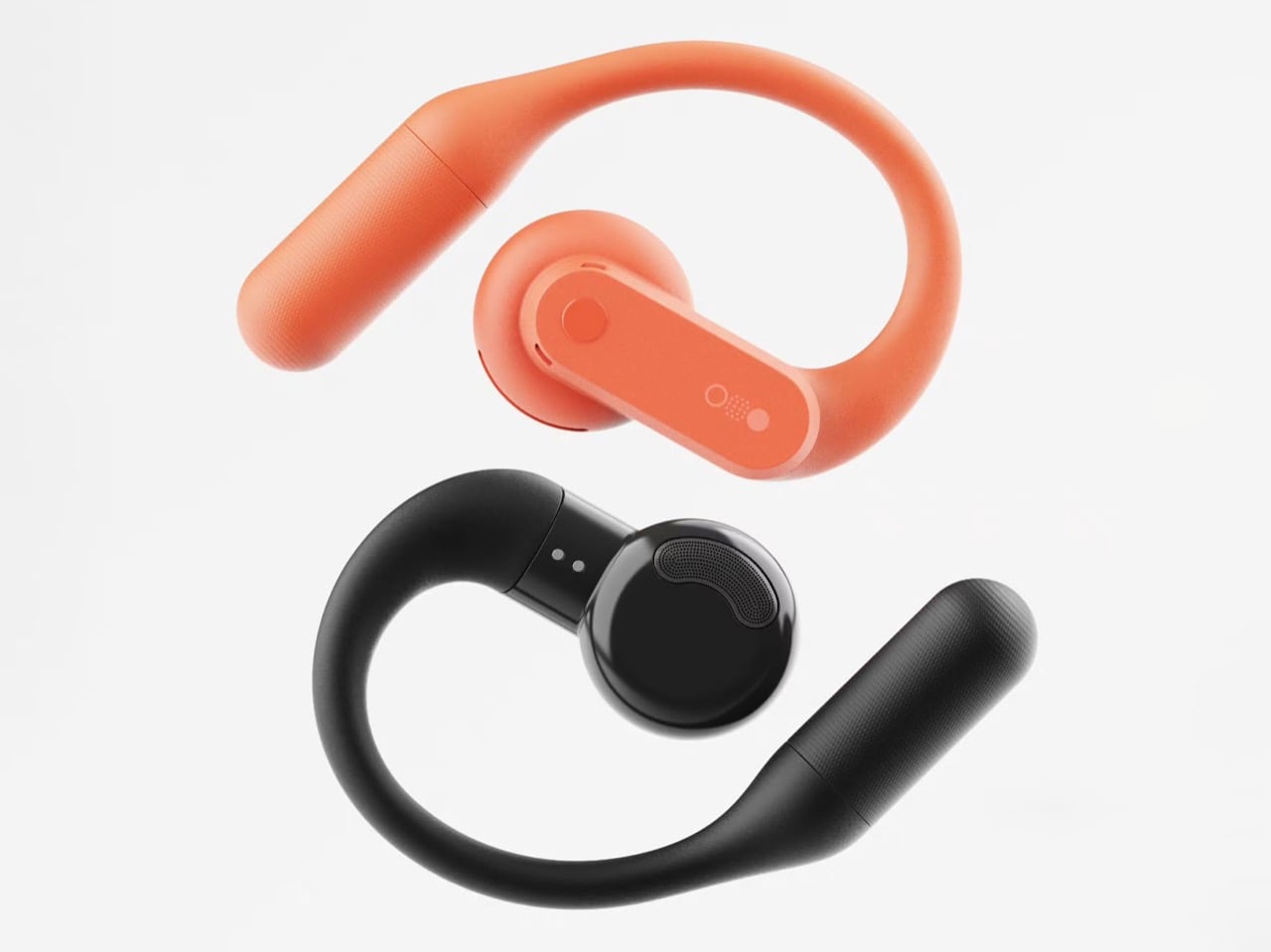
Comfort and long-term wearability are the USP of these IP54-rated earbuds as they cling to the ears with the 3-point Clip Design, which distributes the pressure during extended listening sessions. This reduces the pinching sensation attributed to some of the existing options on the market. On the inside, the elastic titanium wire structure keeps the structural bridge made out of skin-friendly material connected, resulting in a flexible fit that adapts to the individual’s unique ear shape. Weighing just 5.9 grams, each of the buds is designed to disappear in the ear.

CMF wants to polish out one quirk common with this style of earbuds: a very lean and dull low-end. The 10.8 mm dual-magnet dynamic driver tuned with Ultra Bass Technology (low-end enhancing) feature tweaks the sound signature to iron out the treble distortion and also refine the low end to a level that clip-on style earbuds hardly manage to achieve. I just hope the bass is not synthetic and masks all the other frequencies for a very bland audio output that audiophiles hate. The Hi-Res Audio certified LDAC codec should mean otherwise, but you never know with software-level tweaks of the audio signal. Other supported codecs include AAC and SBC.

What intrigued me about these open-ear buds is the inclusion of a Smart Dial on the charging case, which adjusts the volume, controls the playback, or can even answer calls. The dual device Bluetooth 5.4 support means you can connect to two devices simultaneously. Battery life on the earbuds is going to be around 10 hours, with a total of 32.5 hours with the case, weighing 38.81 grams. A fast charge of 10 minutes should juice up the buds for 4 hours of playback if you are on the go more often than not.

CMF will offer the Clip Pro open-ear buds in colors including gray, dark gray, and coral. The audio accessory is set to be available in the US, UK, and Japan from 15 August for $99 via the official website and retail partners. In Europe and other parts of the world, the buds will be available from 15 September.

The post CMF Clip Pro open-ear buds come with a charging case dial to take calls first appeared on Yanko Design.

Meet the CMF Flip: The Budget Foldable Phone We’re Desperately Waiting For

Foldables have had a pricing problem for a while now. Look for the cheapest folding phone you can find and you’re faced with either the $599 Moto RAZR 60 (which you can overwhelmingly trust, given Motorola’s reputation as a global company), or take a risk with the $320 Ai+ Nova Flip, which does technically classify as the cheapest folding phone there is, but at the cost of having fairly negligible global brand recall. That valley, between $599 and $320 represents what I call the foldable affordability gap. You either spend 600 bucks for a decent foldable phone from a reputed brand, or half the amount for a foldable phone from a brand nobody’s heard of. Somewhere in between that valley lies a phone that would fit perfectly into CMF‘s roster.

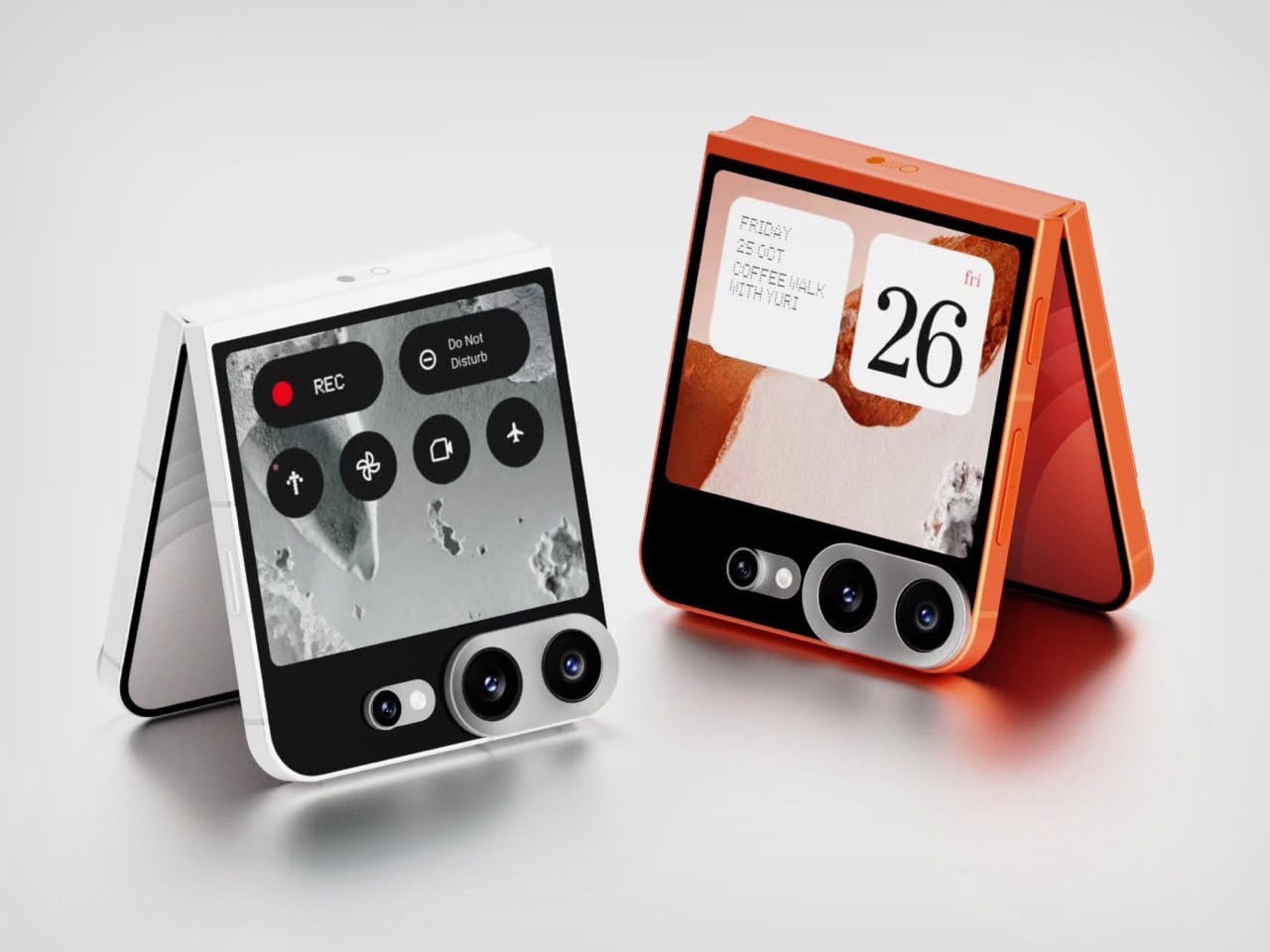
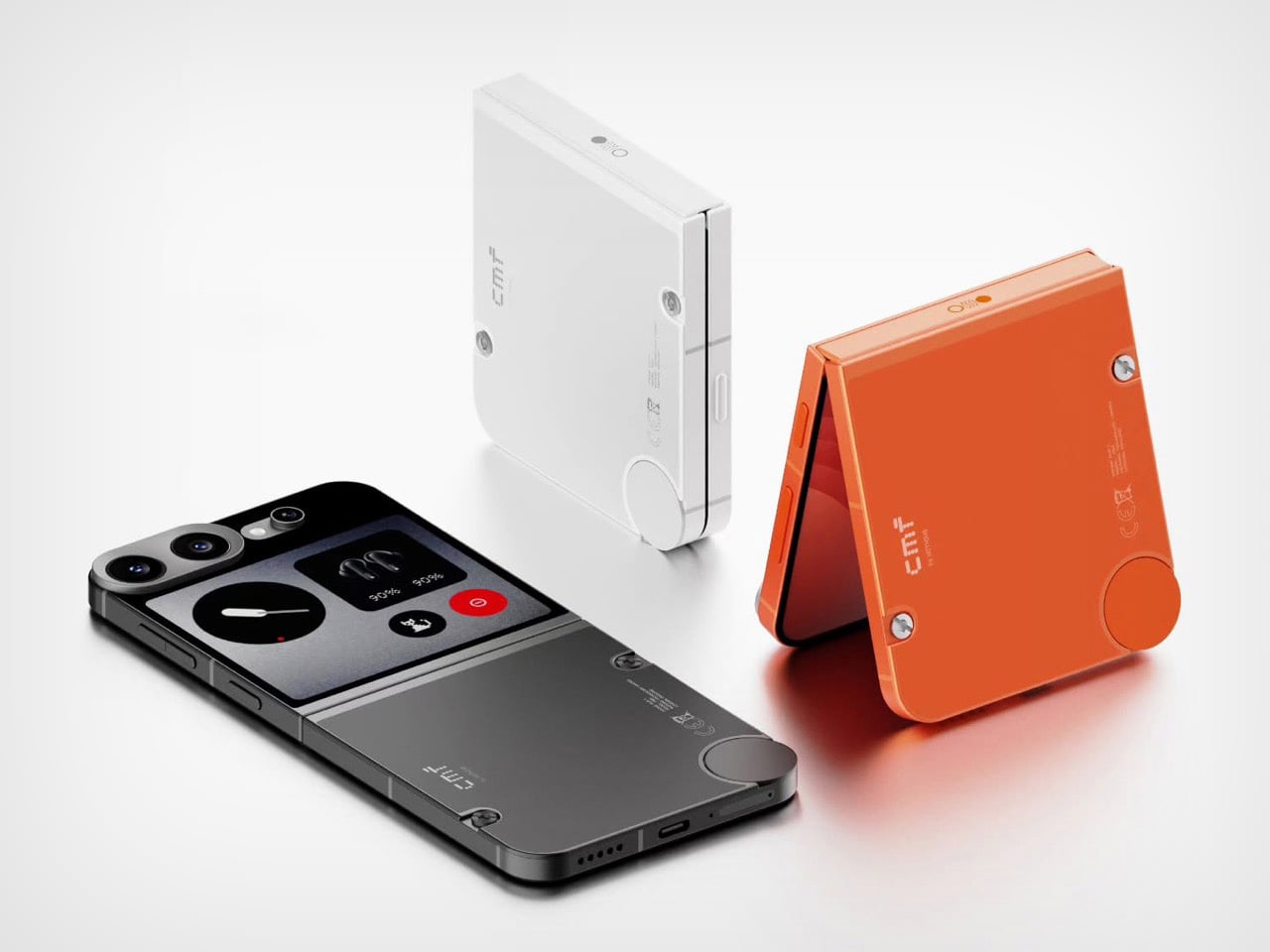
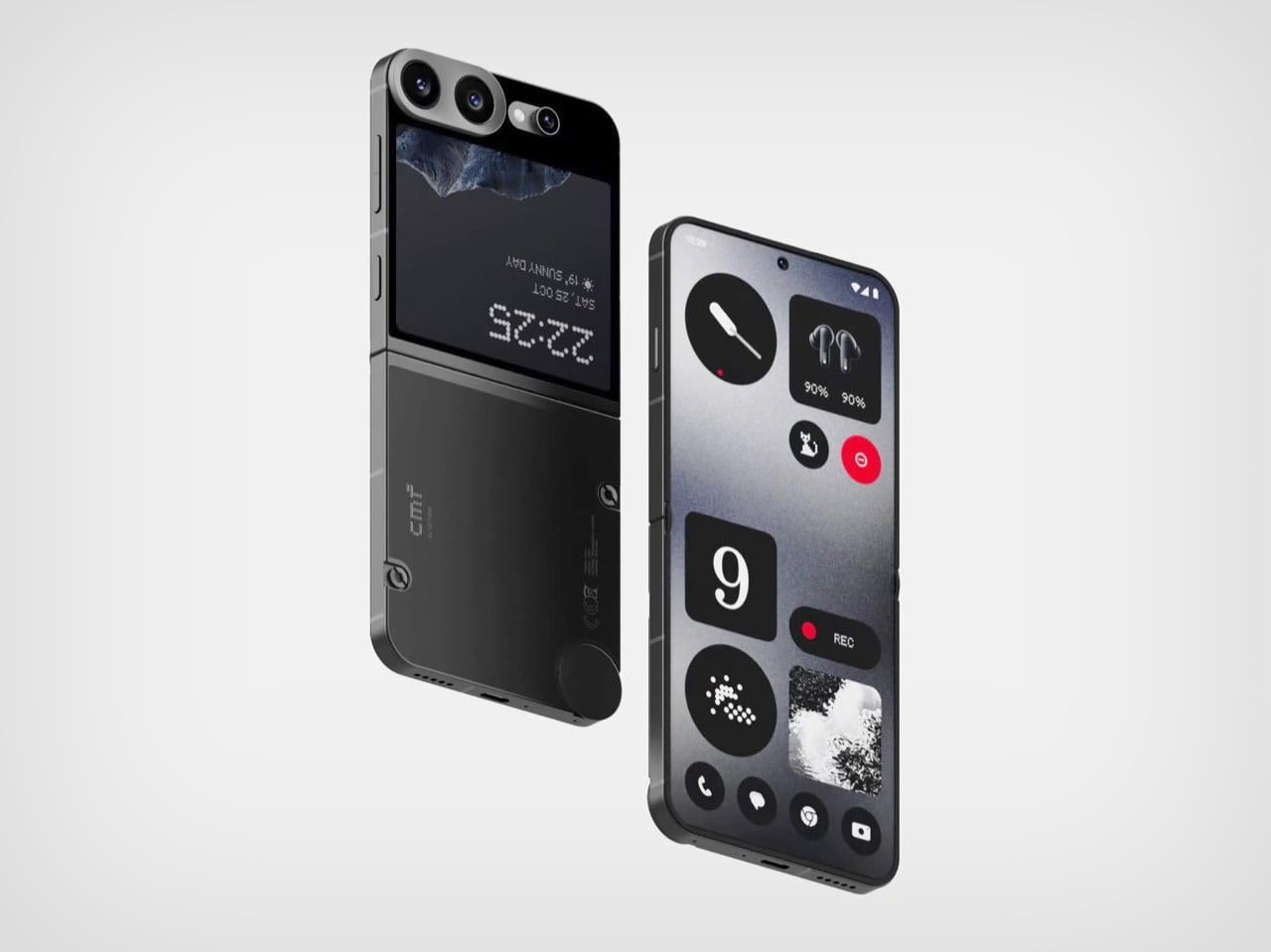
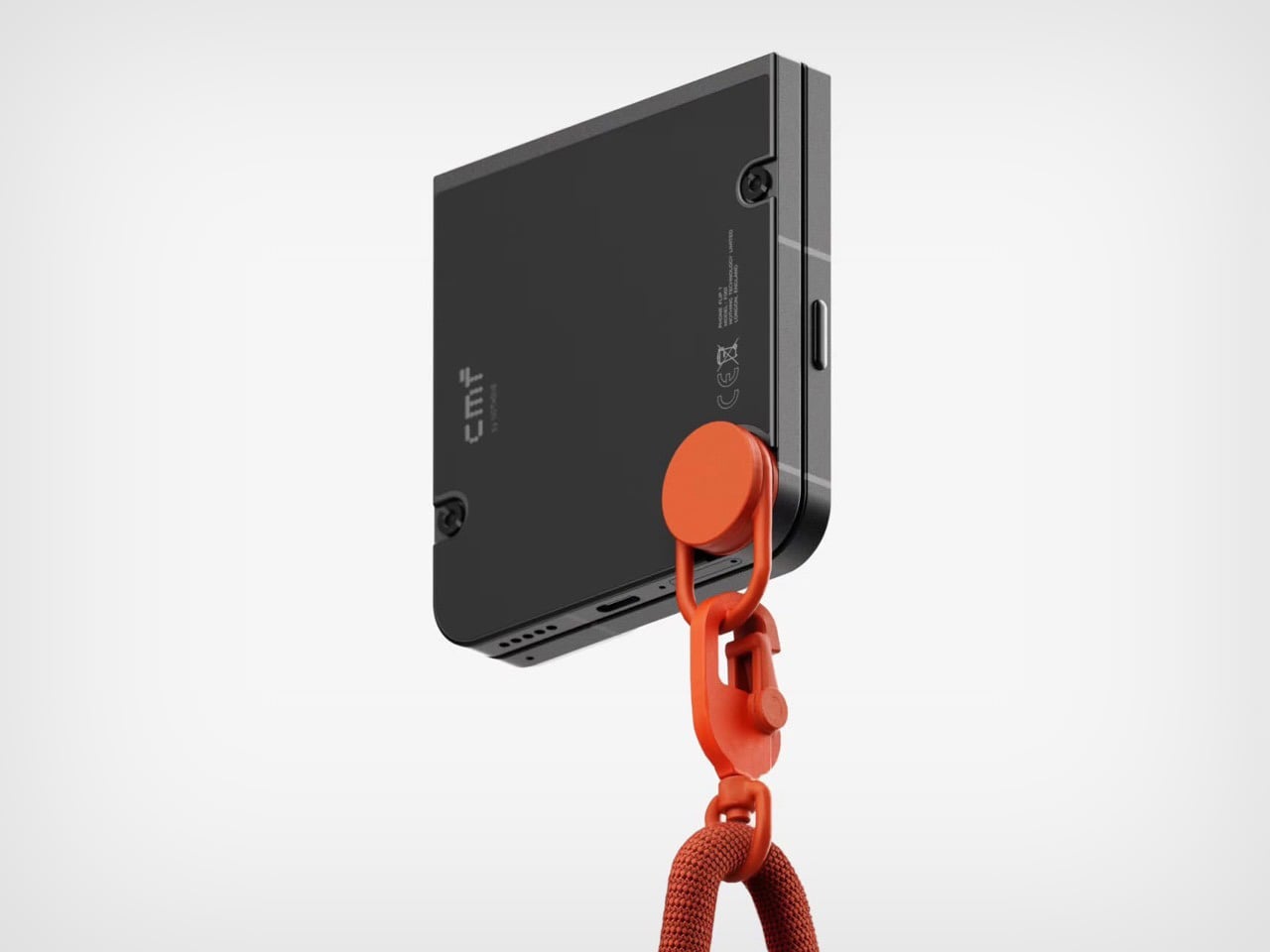
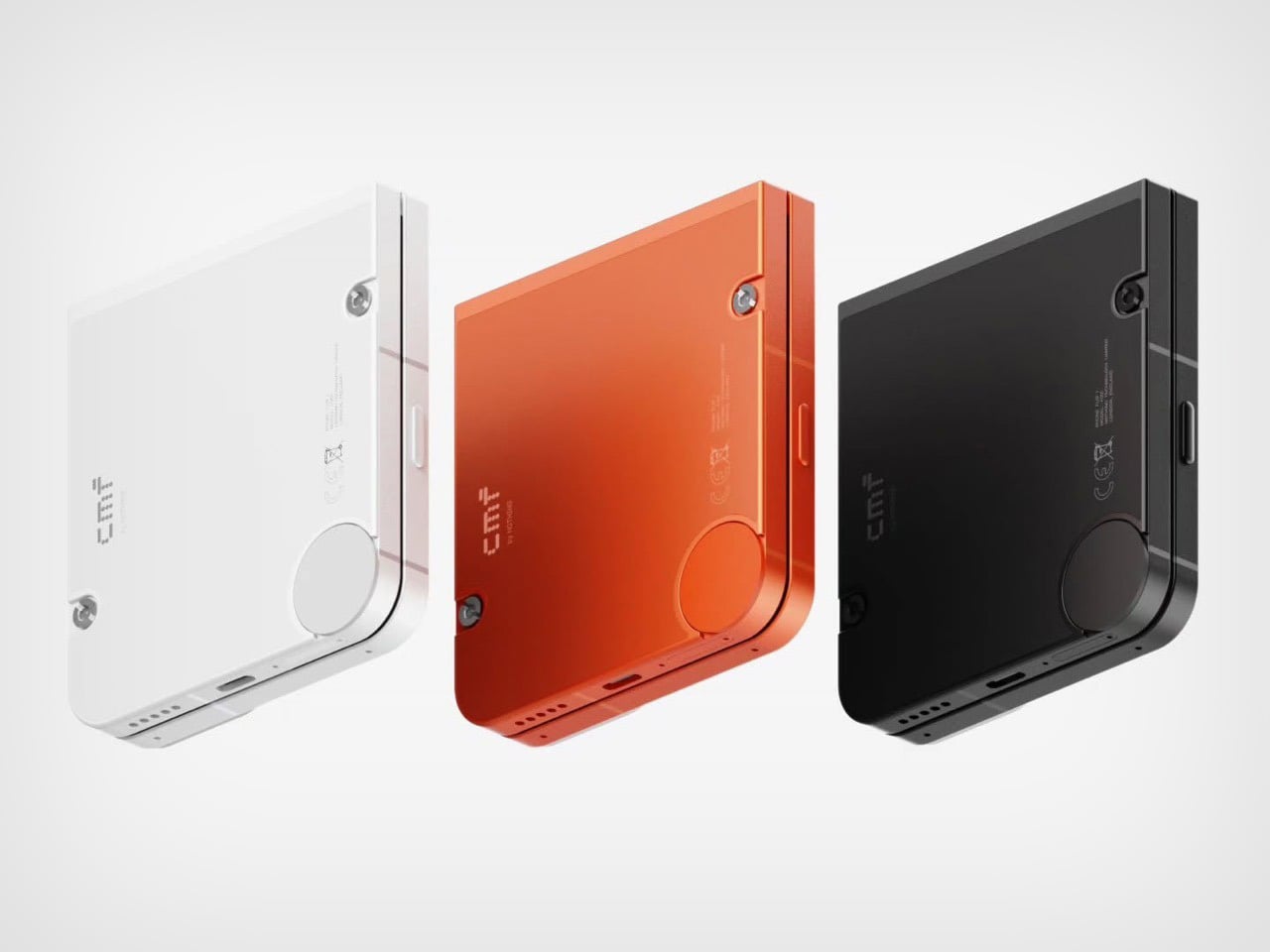
Meet the CMF Flip, a foldable concept that I so desperately wish existed. Designed by Shreyansh Onial, the CMF Flip was created to fit within the foldable affordability gap. It’s just a concept, so we can project all our dreams and wishes onto it, but Carl Pei has always treated as Nothing’s sub-brand as a playground for the lower-mid consumer. That being said, a CMF Flip Phone within the $450-$499 category sounds like exactly what the foldable market needs – a workhorse for the 90% who otherwise wouldn’t spend thousands on a phone with a hinge.

Designer: Shreyansh Onial

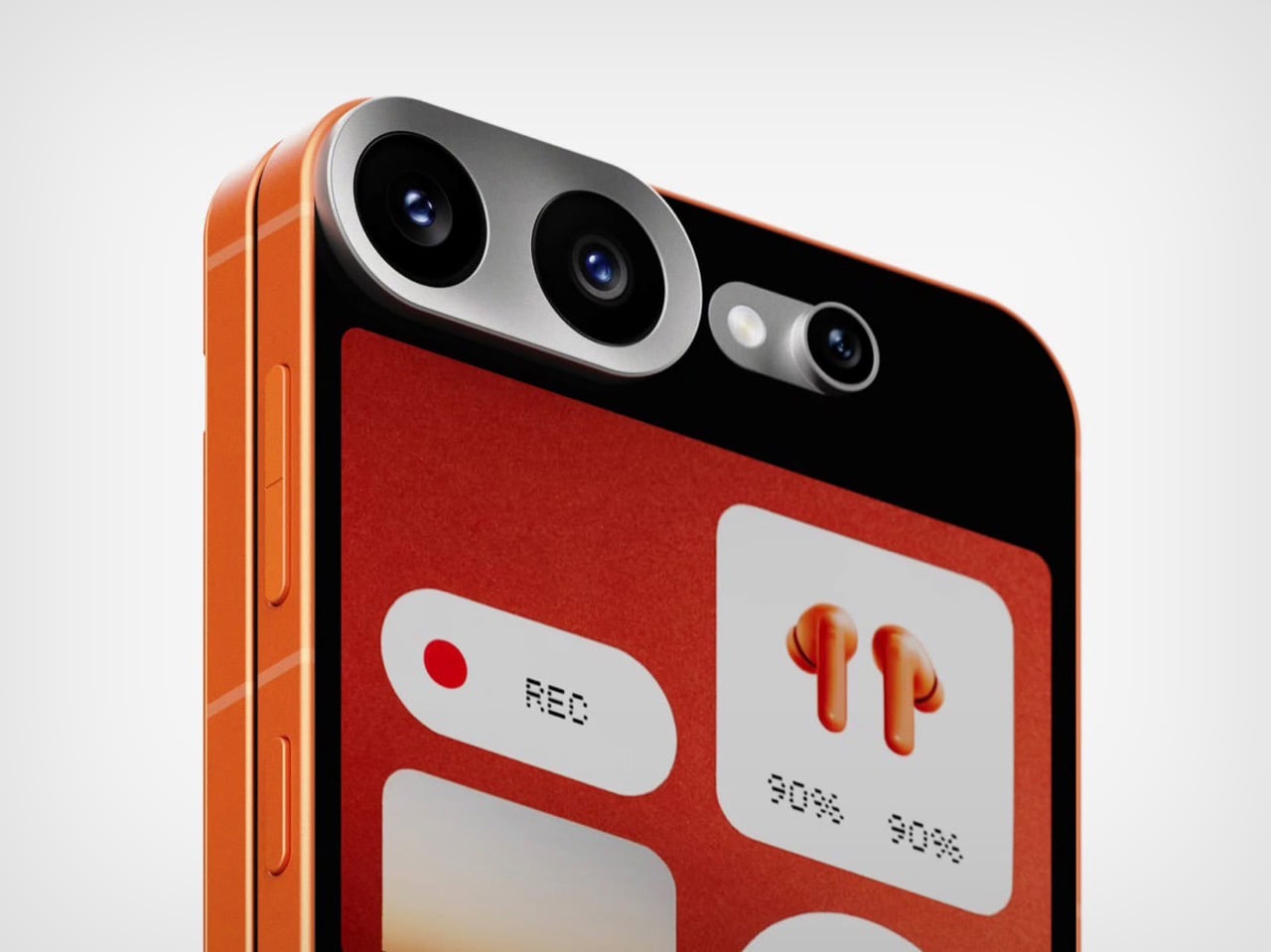
Onial’s CMF Flip channels the CMF’s design fairly effectively with zero compromise. The camera bump merges older and newer phone styles (with 3 lenses like the Phone 2 Pro), laid out horizontally now to make space for a 4:3 secondary screen. It isn’t inconceivable to imagine that CMF would pack this phone with the same sensors as the Phone 2 Pro underneath too, two 50MP main shooters along with an 8MP Ultra-wide third camera. After all it would make way more sense to just use the same hardware to help keep the cost of goods in check.

I can’t help but feel that this new camera array, along with the front facing screen and the orange colorway, gives the CMF Flip the ability to be the perfect Rabbit R1 replacement. Look at it, multiple eyes to see everything around you, a screen to interact with, and Nothing’s Essential Space that the company is building to be their next big innovation? Sounds perfect if you ask me. Look, you’ll even see the Essential Space button on the side of the phone!

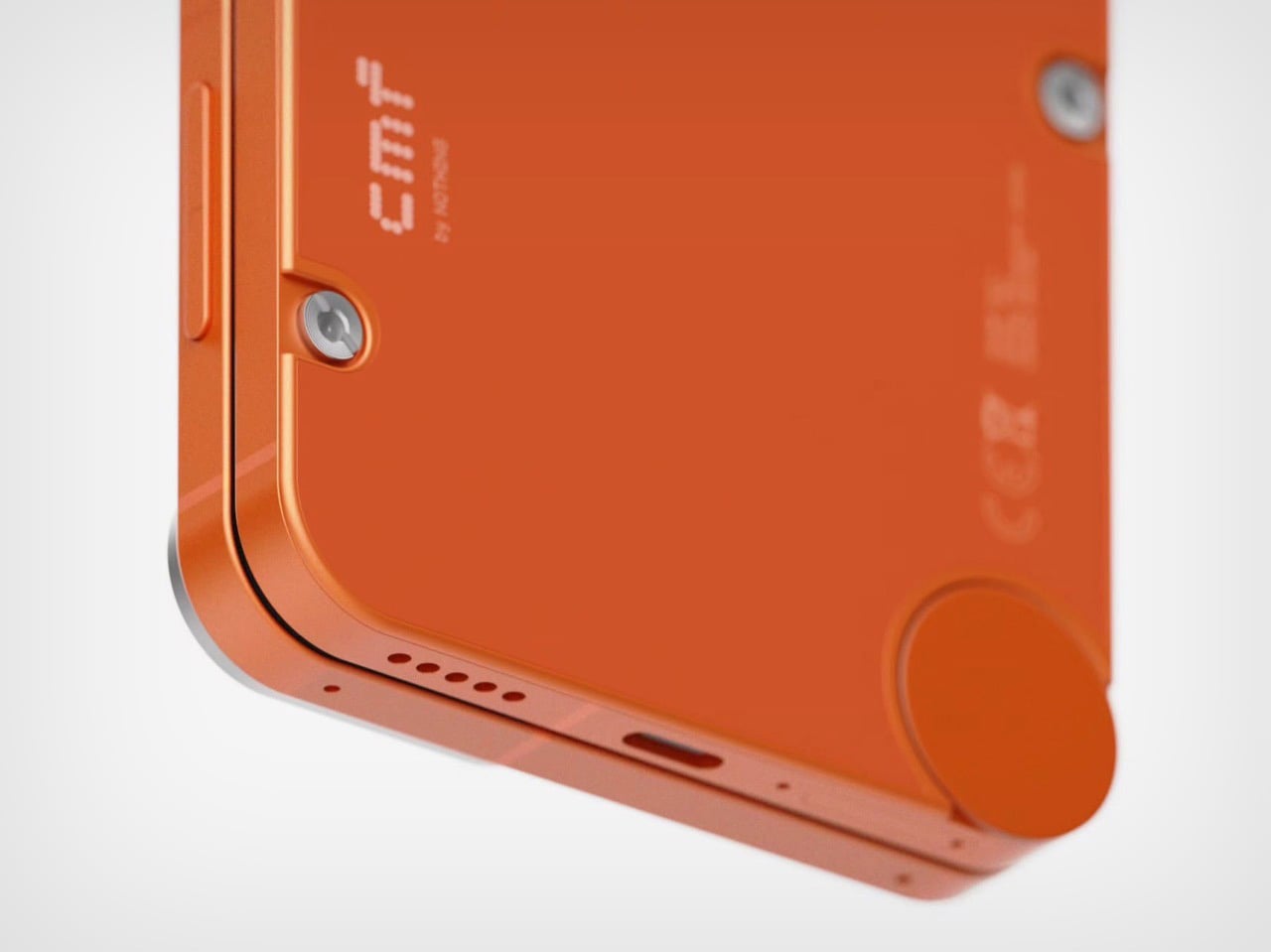
The remaining half of the phone is undeniably CMF too. The modular back exists on the lower half, allowing you to unscrew the backplate and change colors with ease, as well as add accessories using the iconic knob on the bottom right. The colors remain aligned with CMF’s orange, black, and white palette for now, although we’ve seen the company occasionally experiment with a new color every season.

Nothing has no plans of launching a CMF foldable for now. Just given the fact that it makes better business sense to launch a Nothing foldable before a CMF one, this CMF Flip exists only in our minds and hearts for now. But given its simple design, and fairly budget-friendly hardware, one can simply predict that a phone of this caliber shouldn’t cost more than $499, especially given that the Phone 2 Pro has a $279 price tag.

The post Meet the CMF Flip: The Budget Foldable Phone We’re Desperately Waiting For first appeared on Yanko Design.

CMF Phone 3 Concept Keeps the Screws and Colors, Adds iPhone-Style Triple Camera

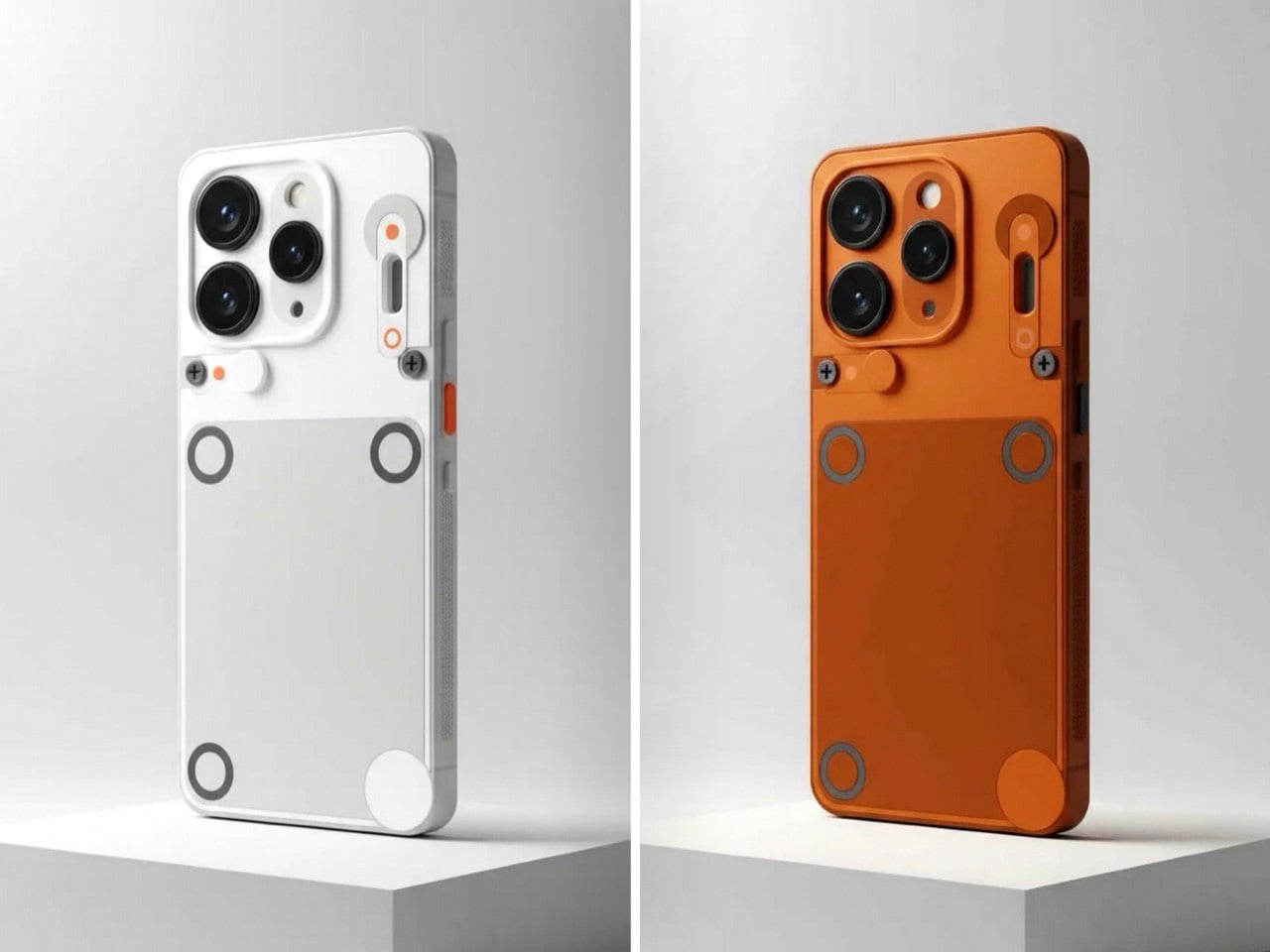
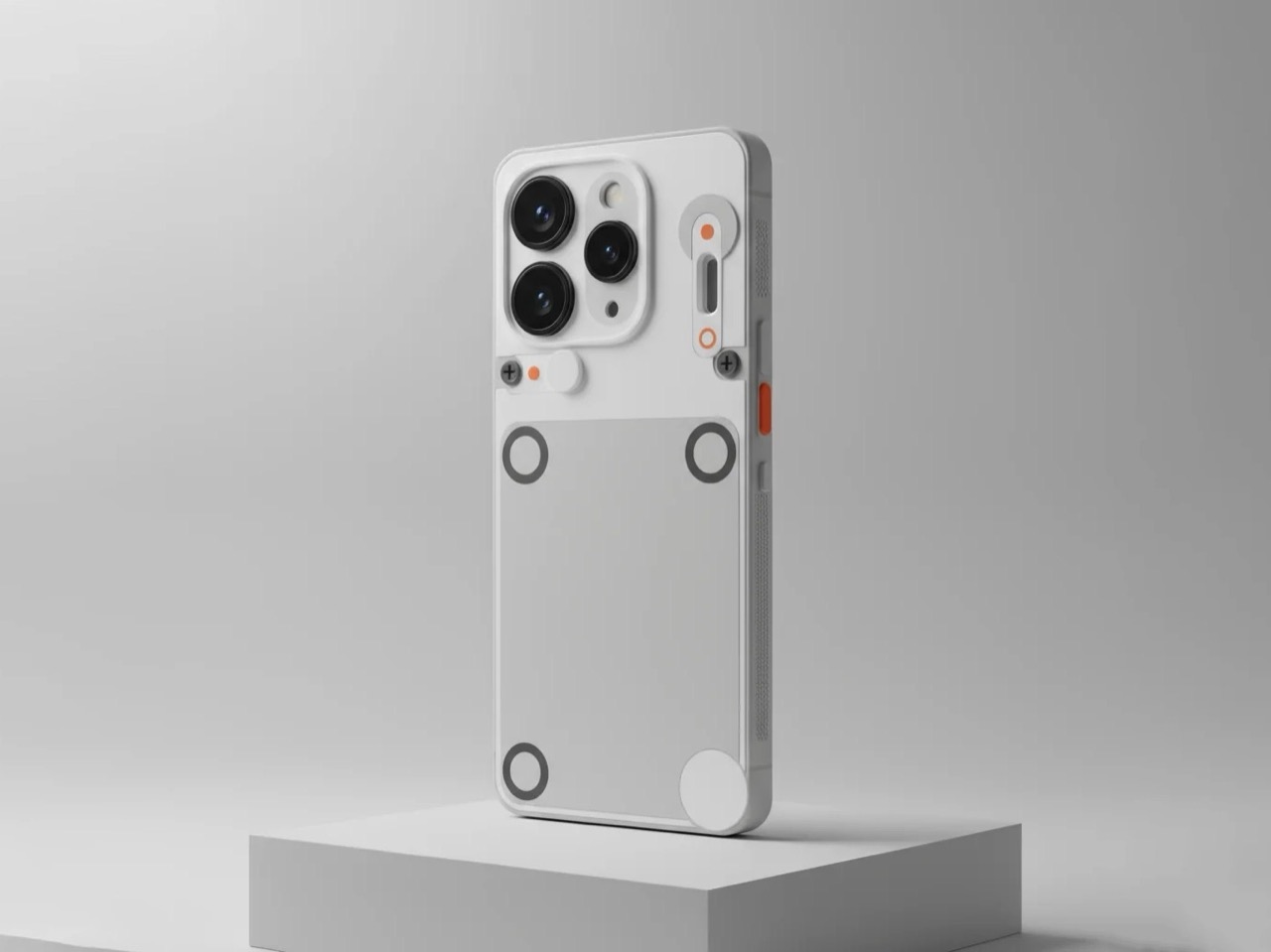
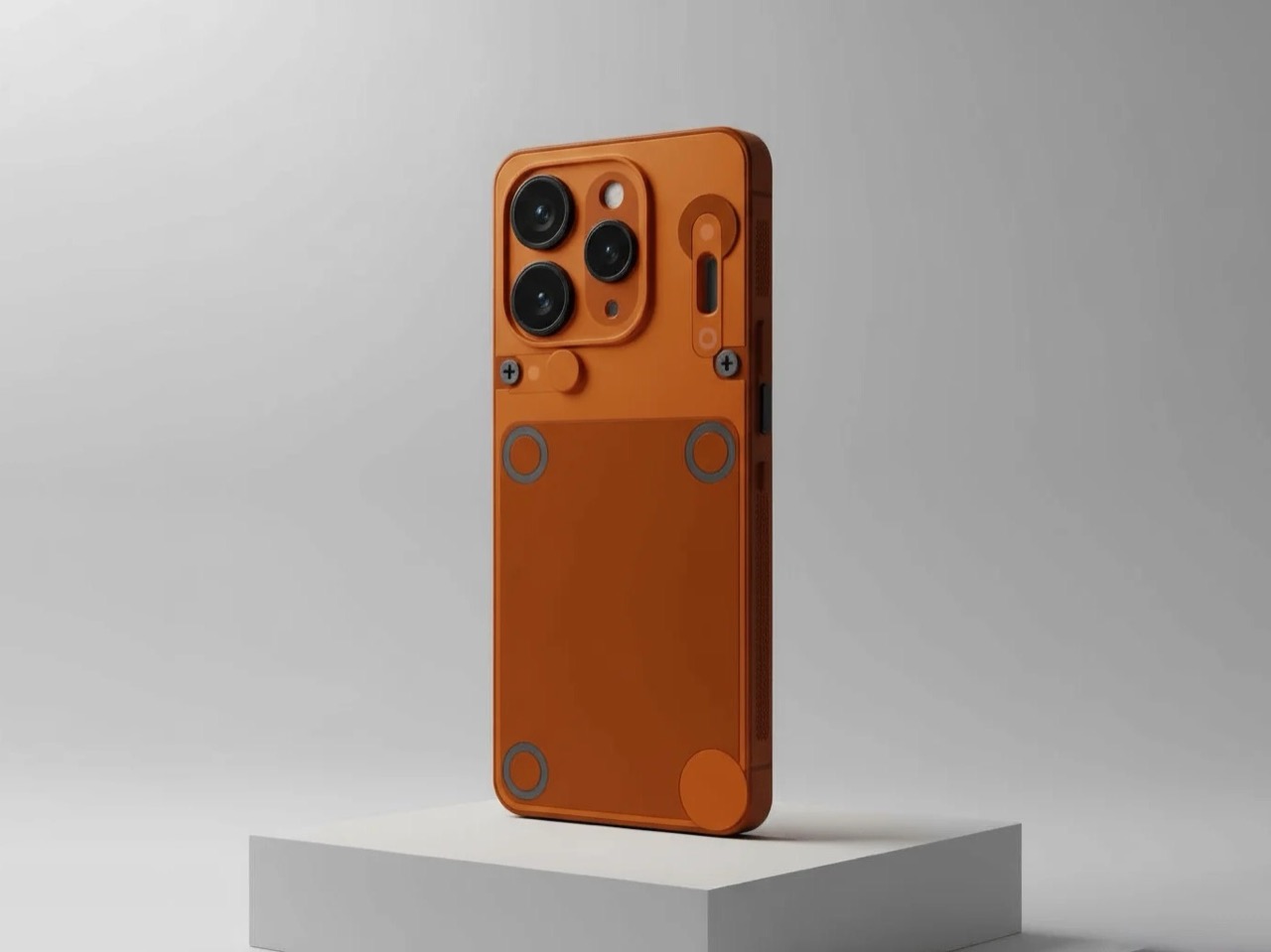
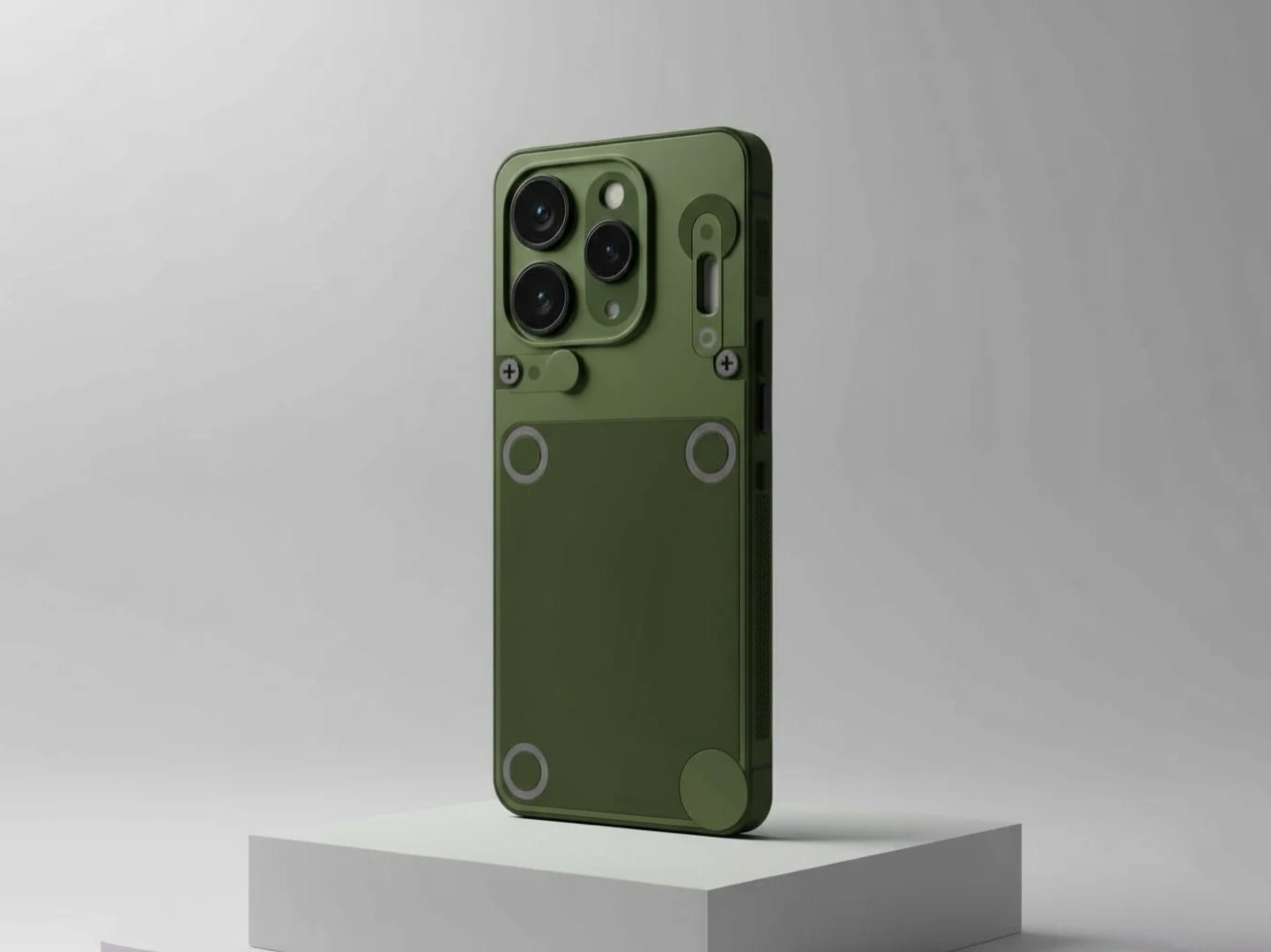
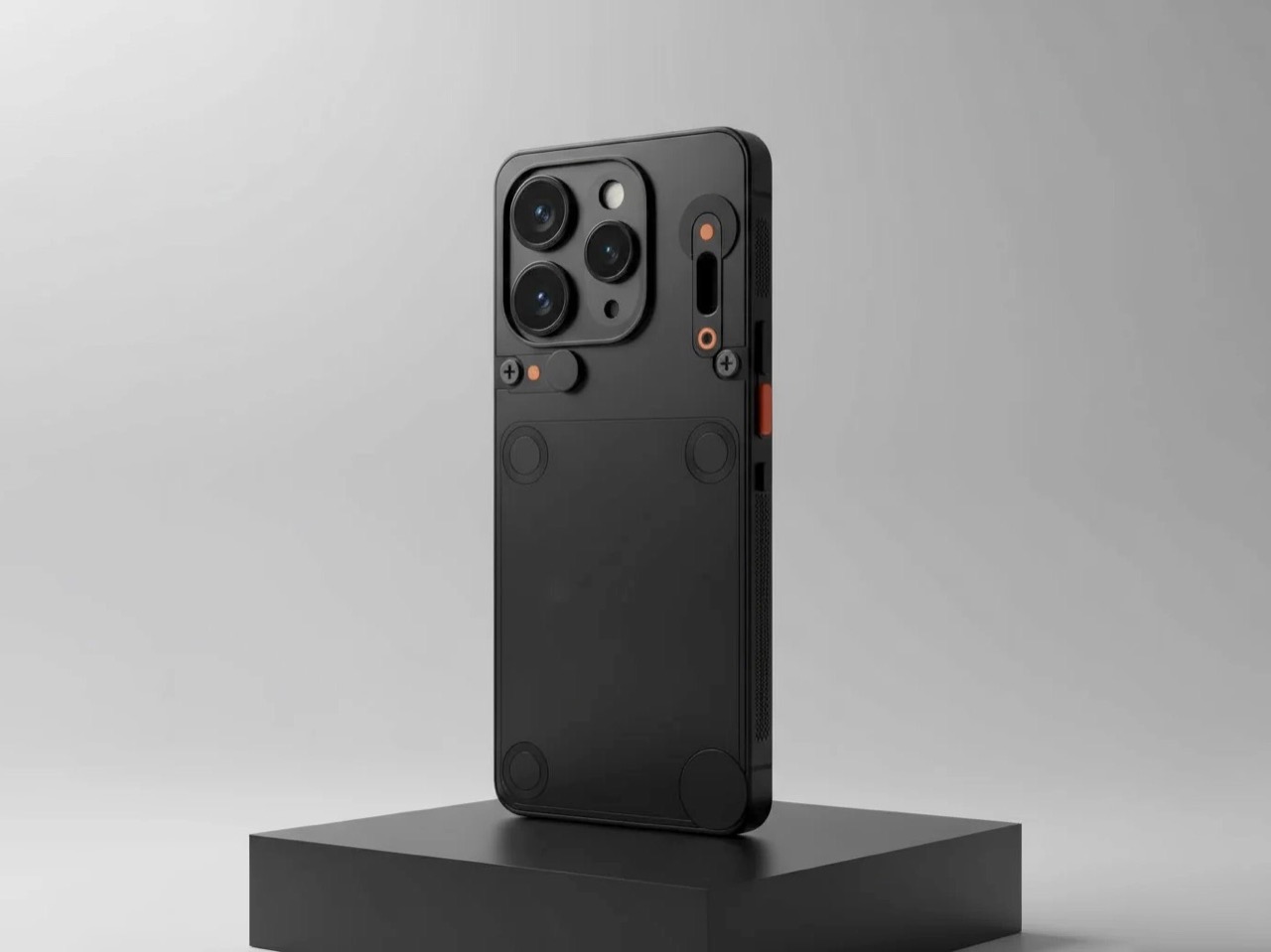
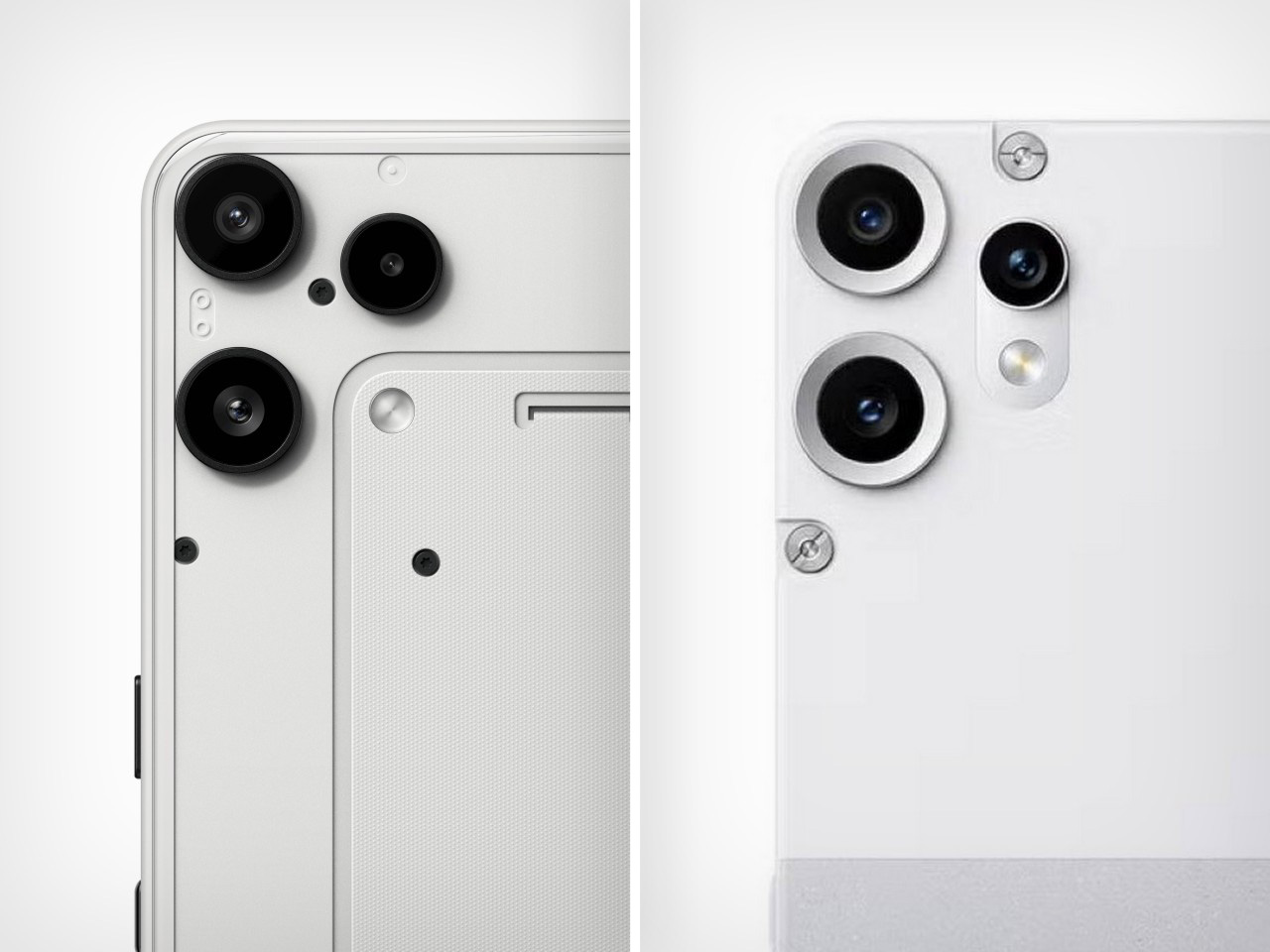
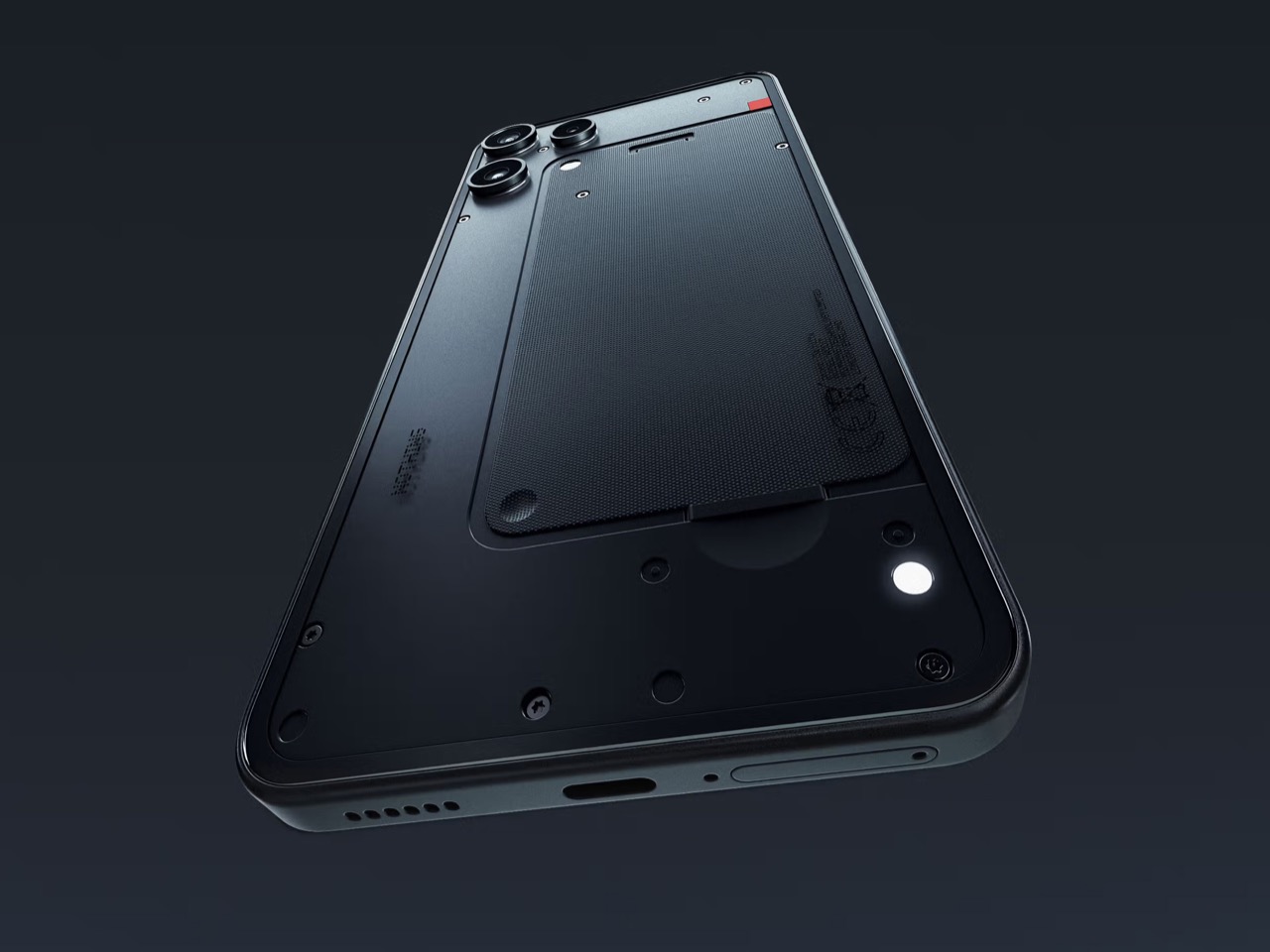
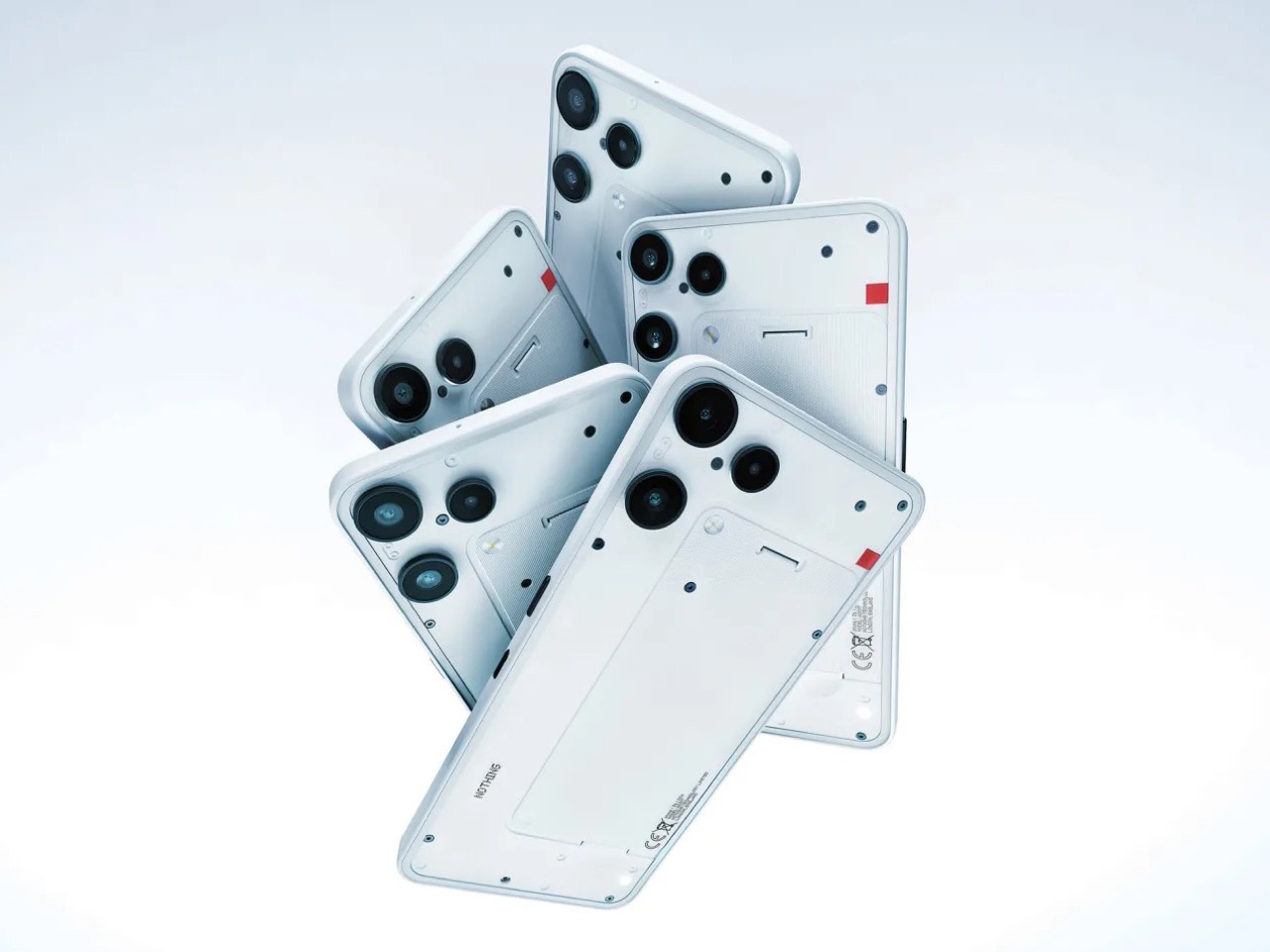
Nothing’s CMF sub-brand exists because someone at the company realized that modularity and affordability could coexist, and that a phone doesn’t need to cost 800 dollars to feel thoughtfully designed. A Reddit user just took that philosophy and ran with it, crafting a CMF Phone 3 concept that feels like a natural progression from the Phone 1 and Phone 2 Pro. The renders keep the modular accessory system intact, preserve the visible screws that signal user serviceability, and lean into CMF’s signature color palette with options in orange, olive green, white, and black. The triple camera layout might look familiar (it echoes the iPhone Pro design), but Nothing’s never been shy about using proven form factors when they make sense.

The concept introduces a few new ideas, most notably a side-mounted accessory point that looks like a strap or handle attachment. Whether that’s useful or gimmicky depends entirely on execution, but it signals an interesting direction: expanding CMF’s modularity beyond the back plate and into the frame itself. The textured side rails add grip and visual interest, and the overall form factor stays clean and contemporary without trying too hard to be different. The real test for any CMF Phone 3 will be whether it expands the accessory ecosystem in meaningful ways while keeping prices accessible.

Designer: Glum_Good_6414

Nothing has kept quiet about a CMF Phone 3, which means this concept exists in a vacuum of official information. The CMF Phone 2 Pro launched with a MediaTek Dimensity 7300 chip, 8GB of RAM, and a 50MP main camera, all for around 209 dollars. Any successor would need to justify its existence by either pushing specs higher or doubling down on modularity, and this concept seems to bet on both. The triple camera setup suggests CMF might be ready to play in mid-range camera territory, while the expanded accessory mounting points hint at a deeper commitment to customization.

The color choices feel quintessentially CMF. Orange has been a brand signature since the Phone 1, and the olive green adds an earthy, utilitarian vibe that fits the repairable, modular ethos. The white-and-orange combo keeps things clean and approachable, while the dark variant with coral accents offers something moodier for users who want subtlety with a pop of personality. These aren’t experimental colors, they’re practical ones that CMF has already proven people will buy.

Whether Nothing actually builds a Phone 3 that looks anything like this remains unknown, but the concept does something valuable: it shows what fans expect. They want the screws, the modularity, the playful colors, and the accessible price. They’re okay with familiar camera layouts if it means better photo quality. They want CMF to evolve without losing what made it compelling in the first place. This concept delivers on that brief, and that’s probably the best compliment you can give fan-made speculation.

The post CMF Phone 3 Concept Keeps the Screws and Colors, Adds iPhone-Style Triple Camera first appeared on Yanko Design.

CMF Phone 3 Concept Keeps the Screws and Colors, Adds iPhone-Style Triple Camera

Nothing’s CMF sub-brand exists because someone at the company realized that modularity and affordability could coexist, and that a phone doesn’t need to cost 800 dollars to feel thoughtfully designed. A Reddit user just took that philosophy and ran with it, crafting a CMF Phone 3 concept that feels like a natural progression from the Phone 1 and Phone 2 Pro. The renders keep the modular accessory system intact, preserve the visible screws that signal user serviceability, and lean into CMF’s signature color palette with options in orange, olive green, white, and black. The triple camera layout might look familiar (it echoes the iPhone Pro design), but Nothing’s never been shy about using proven form factors when they make sense.

The concept introduces a few new ideas, most notably a side-mounted accessory point that looks like a strap or handle attachment. Whether that’s useful or gimmicky depends entirely on execution, but it signals an interesting direction: expanding CMF’s modularity beyond the back plate and into the frame itself. The textured side rails add grip and visual interest, and the overall form factor stays clean and contemporary without trying too hard to be different. The real test for any CMF Phone 3 will be whether it expands the accessory ecosystem in meaningful ways while keeping prices accessible.

Designer: Glum_Good_6414

Nothing has kept quiet about a CMF Phone 3, which means this concept exists in a vacuum of official information. The CMF Phone 2 Pro launched with a MediaTek Dimensity 7300 chip, 8GB of RAM, and a 50MP main camera, all for around 209 dollars. Any successor would need to justify its existence by either pushing specs higher or doubling down on modularity, and this concept seems to bet on both. The triple camera setup suggests CMF might be ready to play in mid-range camera territory, while the expanded accessory mounting points hint at a deeper commitment to customization.

The color choices feel quintessentially CMF. Orange has been a brand signature since the Phone 1, and the olive green adds an earthy, utilitarian vibe that fits the repairable, modular ethos. The white-and-orange combo keeps things clean and approachable, while the dark variant with coral accents offers something moodier for users who want subtlety with a pop of personality. These aren’t experimental colors, they’re practical ones that CMF has already proven people will buy.

Whether Nothing actually builds a Phone 3 that looks anything like this remains unknown, but the concept does something valuable: it shows what fans expect. They want the screws, the modularity, the playful colors, and the accessible price. They’re okay with familiar camera layouts if it means better photo quality. They want CMF to evolve without losing what made it compelling in the first place. This concept delivers on that brief, and that’s probably the best compliment you can give fan-made speculation.

The post CMF Phone 3 Concept Keeps the Screws and Colors, Adds iPhone-Style Triple Camera first appeared on Yanko Design.

This CMF Phone Mini Concept Is The Compact Android Fans Have Been Begging For

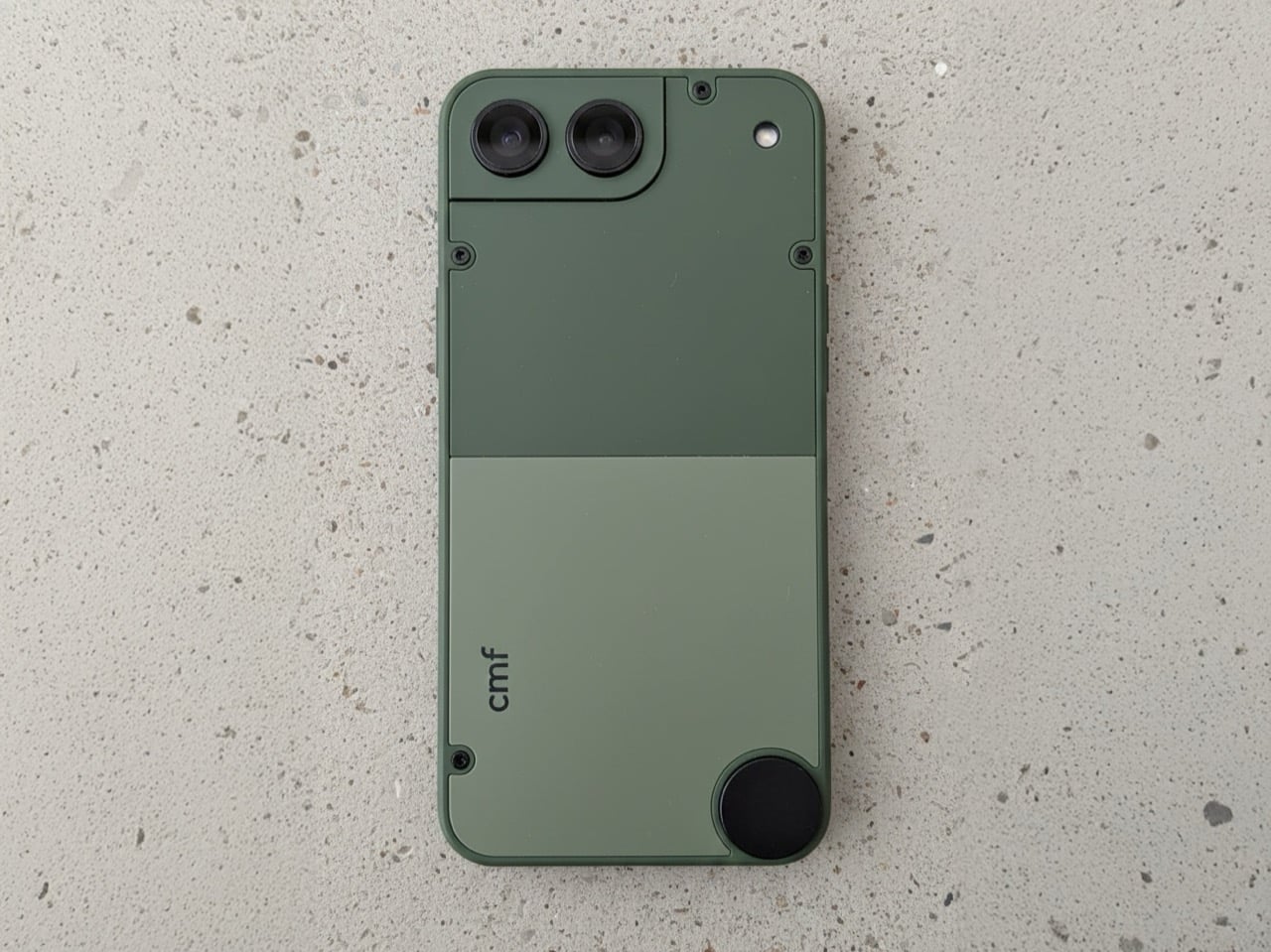
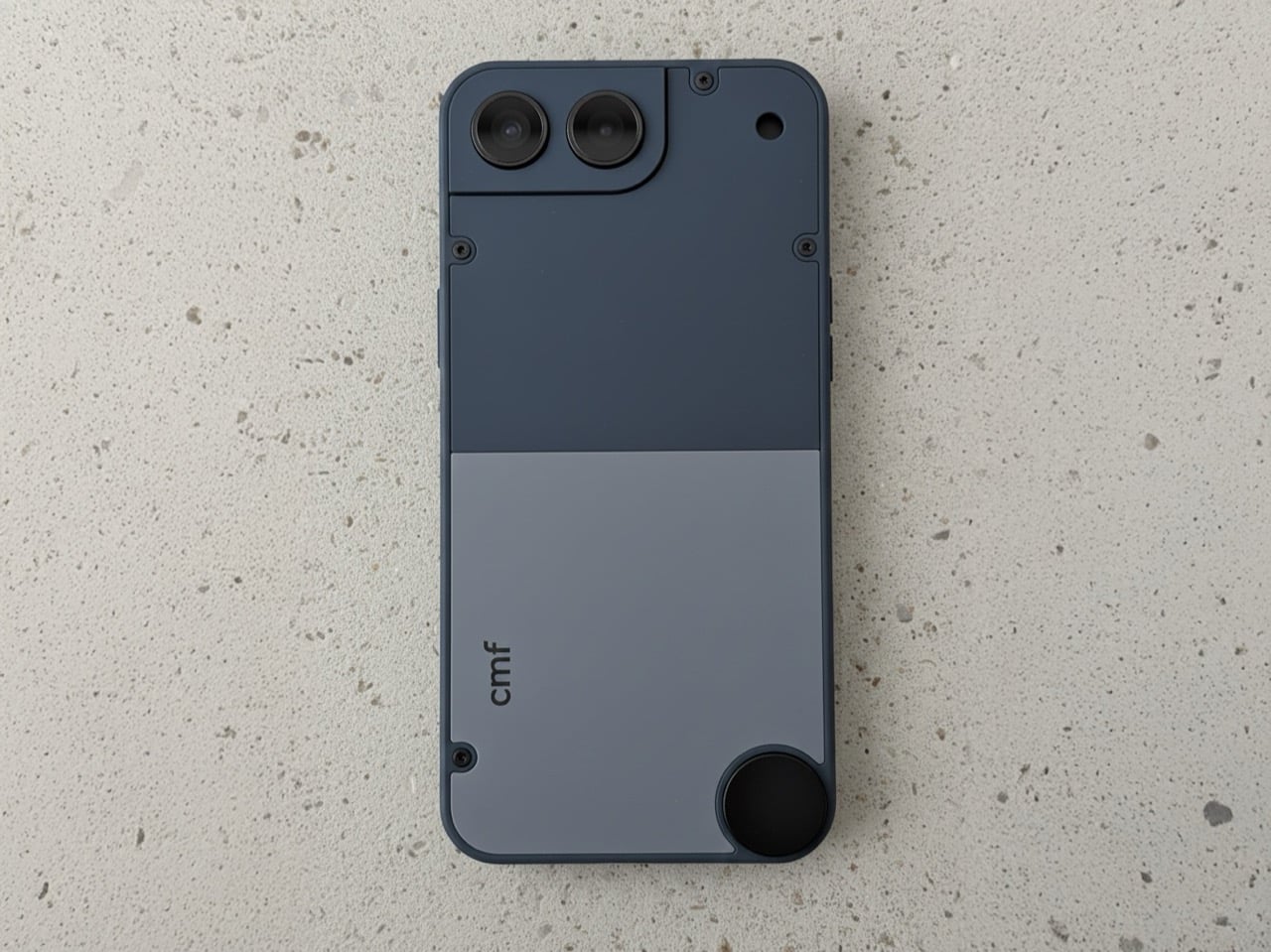
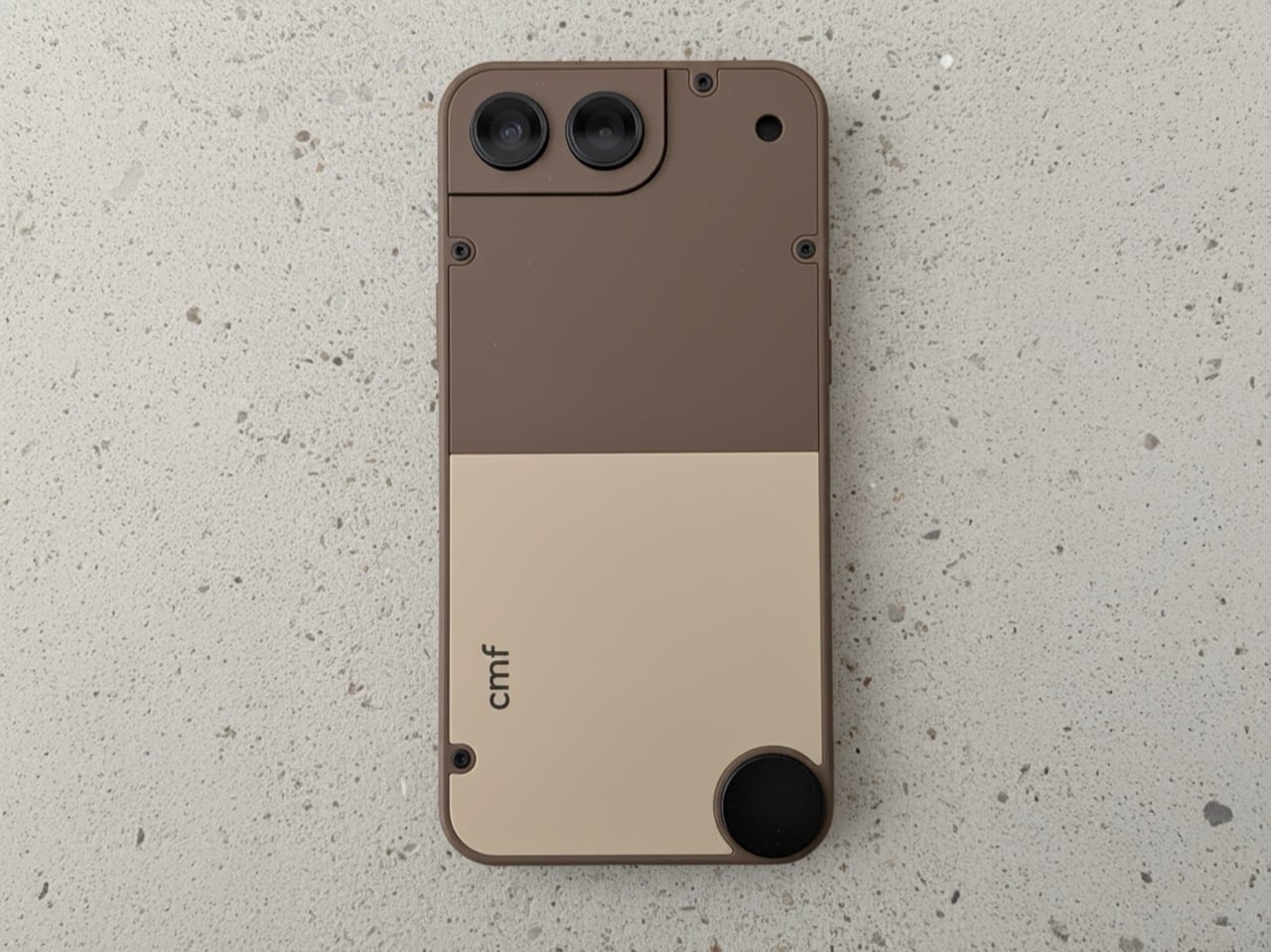
The market for compact smartphones didn’t disappear because people stopped wanting them; manufacturers simply decided the economics didn’t justify the engineering. The iPhone 13 mini was the last great holdout, and its discontinuation left a void that has been filled with nothing but silence. That makes this CMF Phone Mini concept, posted by designer Preet Ajmeri on the Nothing Community forum, feel less like a flight of fancy and more like a genuine market opportunity. It suggests a smarter middle path for small phones, one built around accessibility and modularity rather than specs-sheet maximalism. This isn’t just another shrunken flagship render; it’s a thoughtful take on what a small phone in 2025 ought to be.

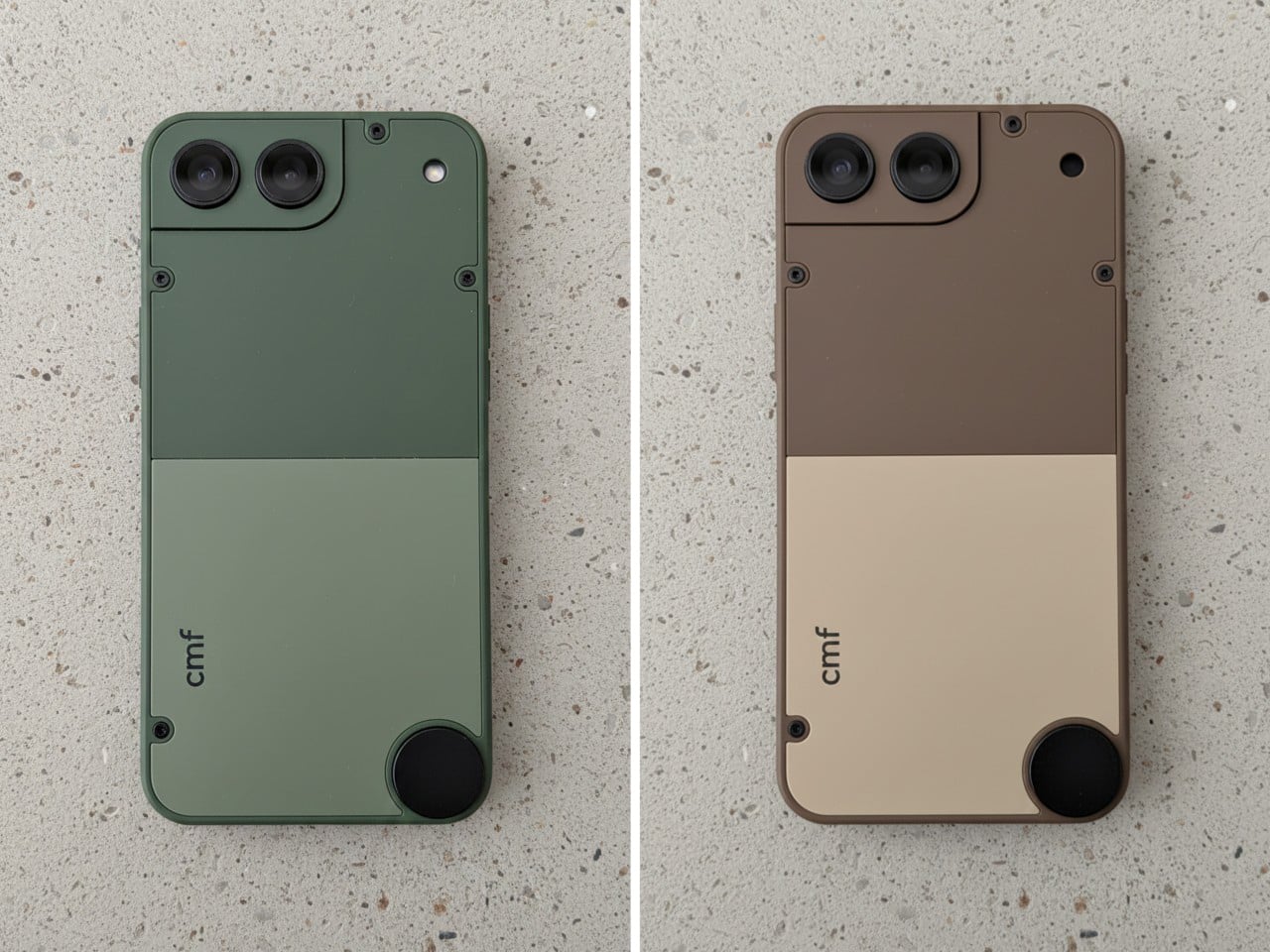
What makes Ajmeri’s concept work is its complete lack of flagship pretension. The design has a satisfying, tool-like quality, with an aesthetic that leans closer to a Braun appliance than a miniaturized glass sandwich. The two-tone back panels, secured by exposed screws, are a direct nod to the modularity of the CMF Phone 1 and 2 Pro. That little circular element in the lower corner is a brilliant touch, practically begging for a lanyard or a clever magnetic accessory. The camera housing is integrated into a stepped corner plate, making it feel like a distinct, functional component rather than a generic camera island. It’s an honest object, designed to be held and used without demanding reverence.

Designer: Preet Ajmeri

The colorways Ajmeri mocked up are subtle, and a deviation from the flagship phones’ vibrant color schemes. The sage green has a distinct, almost military-grade feel, while the slate blue is more of a classic tech color. But that brown and cream version is the real standout; it feels like something Braun would have designed in 1975, a perfect piece of retro-futurism. The hard split between the two tones gives it a clear visual hierarchy, and the presumed matte texture looks like it would feel fantastic in the hand. That aside, the modularity is still retained, with the screw-in design, and the knob on the bottom for fixing accessories.

This thing would live or die in the sub-$300 space, and that’s exactly where it belongs. You wouldn’t expect a top-tier Snapdragon processor here; a power-efficient MediaTek Dimensity 7000-series chip would be more than enough to drive a 5.4-inch OLED display without destroying the battery. And battery life would be the biggest engineering challenge, as it always is with small devices. But the appeal isn’t raw performance. The appeal is ergonomics, a one-handed user experience, and a design that has more personality than anything five times its price. CMF has already proven it can deliver a thoughtful software experience on a budget, and that’s all a device like this would need.

So, will Nothing ever actually build it? Almost certainly not, and that’s the real shame. The big players are too risk-averse to cater to a niche they’ve already declared dead. But this concept proves the desire for a well-designed, affordable, and genuinely compact phone is very much alive. It’s a perfect fit for a brand like CMF, which has built its identity on challenging the assumption that budget-friendly has to mean boring. The first company to take a chance on a design with this much character and common sense won’t just sell a phone; they’ll create a cult classic.

The post This CMF Phone Mini Concept Is The Compact Android Fans Have Been Begging For first appeared on Yanko Design.

Nothing Phone 3a Lite or CMF Phone 2 Pro? The Choice Is Just Glyph vs. Zoom

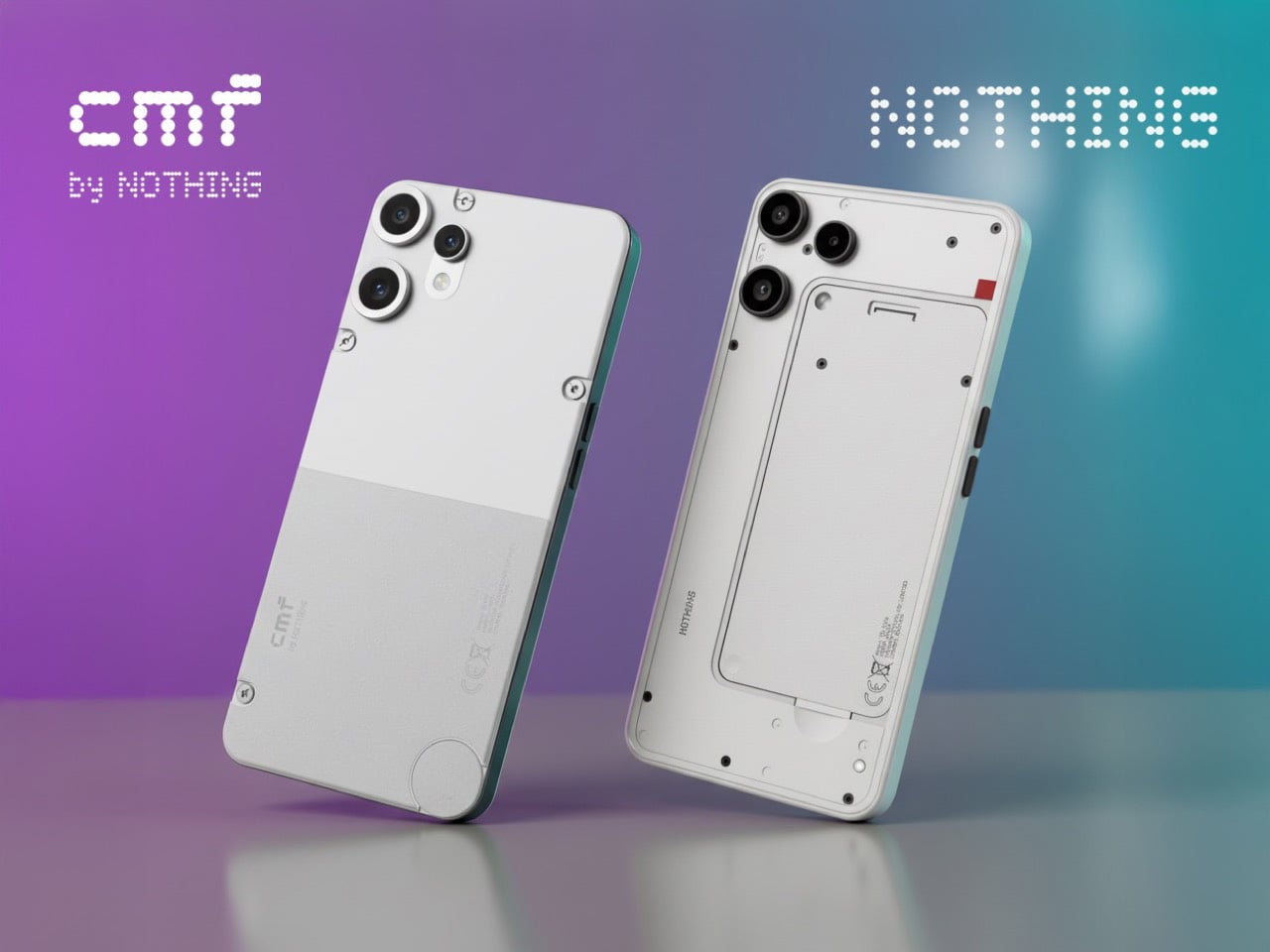
Glyph Light, more like Glyph Gaslight… Nothing just dropped its fifth phone this year, the 3a Lite, and the instant I looked at it, I was first shocked… then confused. Shocked because the phone looks exactly like Nothing’s CMF Phone 2 Pro. No seriously, the camera placement is EXACTLY the same, the chipset is the same, the battery, screen, most of its internals are the same. It took me a full minute for my shock to subside before it was replaced by confusion. Why? Why would Nothing introduce a ‘new’ phone into its lineup when it’s selling the exact same phone (for the exact same price) under its sub-brand?

I have no definite answers (we’re waiting for Carl Pei to reveal his underlying strategy), which is why it honestly feels so confusing. Two phones, practically twins (with probably just 2 small differences), and arguably running the same software on the same hardware for the same price. It goes against Nothing’s entire vision of disrupting the tech space by producing game-changing tech that injects fun into itself. Tech that builds a design-centric audience. Tech that prides itself on transparency. The fact that the Nothing Phone 3a Lite is just a ‘rebadged’ (and I use that term in the most calculated capacity) version of the CMF Phone 2 Pro feels like the opposite of transparent.

Designer: Nothing

Nothing Phone 3a Lite (Left) vs CMF Phone 2 Pro (Right)

Here’s where the phones are identical. They both have the same screen – a FHD+ 6.77″ AMOLED running 120Hz at 300 nits max brightness. They both have the same chip too, a MediaTek Dimensity 7300 Pro with 8 cores. Both phones run 8GB of RAM and max out at 256GB of storage. The OS is the same too, Nothing OS 3.5 (with a 6-year software update promise)… and even the battery is exactly the same, a 5,000mAh cell with 33W fast charging and 5W reverse wired charging. No wireless charging on either of the models. As far as the cameras go, the placement (if you look below) is the same too. Two of the three lenses in the camera array are the same, a 50MP main and 8MP ultrawide. The front has a 16MP shooter on both. And both phones pack that Essential button on the side that Nothing began rolling out this year. On paper, it’s as if you were looking at a Xiaomi vs Redmi phone, or a Huawei vs Honor phone. The same build, barring a few minor cosmetic changes.

Nothing Phone 3a Lite (Left) vs CMF Phone 2 Pro (Right)

The changes aren’t drastic, but they’re worth noting. For starters, the third camera on both the CMF Phone 2 Pro and the Nothing Phone 3a Lite are different. While the CMF gizmo packs a nifty 50MP telephoto lens, the 3a Lite swaps that out for a 2MP macro lens. That’s while keeping the price exactly the same, so make of that what you will. Meanwhile, look above and you’ll notice that the flashlight gets moved just a couple of notches downwards on the 3a Lite, so I’d assume most cases for the Phone 2 Pro will work seamlessly on the 3a Lite if they have a running cutout for the camera and the flashlight. Barring these two features, the design (obviously) is the most noticeable difference. The CMF phone sports a plastic back, with the customizable modular design, while the Nothing phone resorts to its thematic transparent rear, with a glass back. The 3a Lite also has the Glyph, although instead of an interface it’s just a tiny little dot on the bottom right corner. The final difference lies in the offerings – the CMF Phone 2 Pro comes in 4 colors and one single spec variant – a 256GB model. The Nothing 3a Lite comes in just Black or White options, although you can choose between a 256GB model, or a lower 128GB model that’s just €30 cheaper.

So why exactly did Nothing go down this road? All I can do is speculate, but the more I do, the more I’m inclined to believe that this is a diversity play rather than an innovation play. The company wants to corner the market with as many phones across a price range. Currently, the 3a and 3a Pro represent a budget range, but not the sub $300 category. People who are fans of the transparent phone design wouldn’t want to splurge on a CMF phone, even though it’s objectively better out of the two we’re comparing here today. If you told me I had to choose between a glass back and a small blinking LED, versus a plastic-back phone that packs a 50MP telephoto camera, the choice wouldn’t be a tough one at all.

The post Nothing Phone 3a Lite or CMF Phone 2 Pro? The Choice Is Just Glyph vs. Zoom first appeared on Yanko Design.

Smart ceiling fan concept takes its design cues from a customizable smartphone

Home electronics aren’t just getting smarter, their designs are also getting more sophisticated. It’s not just the usual culprits such as lamps and TVs either, as appliances with less presence like air purifiers and speakers become more conspicuous in the space they occupy. Designs vary widely from minimalist to elaborate, though most seem to use nature as a source of inspiration. In contrast, this design concept for a ceiling fan takes a page from a distance cousin in the consumer electronics market, mixing interactive functionality with minimalist aesthetics to provide a user experience that can be personalized to one’s preferences.

Designer: Eshant Kumbhakarn

Nothing’s new sub-brand appropriated the popular “CMF” acronym to indicate its heavy leaning towards a design-centric approach. By putting an emphasis not just on looks but on the color, material, and finish of the design, CMF by Nothing aims to elevate the prestige of products often simply seen as technological tools. So far, the brand’s designs have revolved around making exceptional design more accessible, which is what this ceiling fan concept tries to achieve as well.

FanPro brings that attention to detail to a smart home appliance, one that seems to be the least likely recipient of such a treatment: a ceiling fan. At the same time, however, it also offers the perfect opportunity to put into practice the design theories put forward by CMF. This design, for example, pays close attention to the engineering involved in the design process, making sure that the four blades are precisely angled at 15 degrees for optimal airflow and minimal noise.

A particularly interesting twist to this design is the full screen display on the base that can show not only information like operational modes or the time, it can even show emotions through simplified faces to give the appliance a more personal touch. All these can be controlled through a remote designed with intuitive use in mind. An easily accessed dial, for example, lets you instantly change the fan speed, while navigating menus is done through directional buttons.

The first CMF Phone garnered fame for its modular and customizable design, something that FanPro also adopts both for the fan itself as well as the remote control shell. Although it’s probably not as easy or probably safe to change the fan’s parts, it does leave the door open for more personalized experiences, even if it means just changing colors.

The post Smart ceiling fan concept takes its design cues from a customizable smartphone first appeared on Yanko Design.
CMF-inspired clock concept with appealing aesthetics could benefit from a dose of connected features

The see-through aesthetics of the Nothing earbuds and then the Phone (1) have inspired numerous concept designs. All these products spill the transparency of consumer electronics hardware into forms we never thought of, but love. CMF By Nothing is a more accessible brand that carries the same design philosophy and we’ve not seen many CMF-inspired designs until now.

Meet the CMF Clock concept that reimagines the reliable ticker on your wall in modern attire. The design leverages the harmonious integration of color palettes, material choices and surface finishes to mimic the CMF’s philosophy. According to the designer, this ensures the final product is a true reflection of the brand and timeless design sensibilities.

Designer: Kedar Bagaria

The aspiration for this project is to elevate the status quo of the good old wall clock, creating a balance between both form and function. Also, the vision of the concept is to pen down a design that functions as a timepiece and elevates the aesthetic appeal of any interior space – whether it’s your home or office. The depth of perception is portrayed via the shorter seconds hand while the hours and minute hands are signified by the semi-circular shaped disks running along the diameter of the clock dial.

The color palette chosen is a balanced Sierra of white, grey, black and the signature orange. The concept is imagined in three different color variants – one emphasizing the whites, the other the blacks, and the last one going for an overpowering orange look. While the design here looks gorgeous for a geeky den, we longed for an integrated functional approach that is aligned with modern needs. Things like connected features for showing important notifications, calendar updates, schedules, or preferred pings from social media apps.

The technology to superimpose a thin smart display on top and connected hardware modules like WiFi or Bluetooth will enhance the overall appeal of such a consumer product.

The post CMF-inspired clock concept with appealing aesthetics could benefit from a dose of connected features first appeared on Yanko Design.
CMF Watch Pro 2: A Customizable Smartwatch with Gesture Control and an AMOLED Display

It’s usually said that October is the busiest time for phone launches. It’s often when Apple announces its entire iPhone lineup, and Google its Pixel lineup too. The term Techtober is often floated about to describe this busy time, but that era’s changed. With Nothing’s sub-brand CMF announcing gadgets on 8th of July, a speculated Google event in August, and IFA Berlin in September, it does seem like the tech rollout is starting well before October. CMF by Nothing is slated to announce three products tomorrow, with their first smartphone dubbed the Phone 1 (not to be confused with the Nothing Phone (1)), and upgrades to their Buds and Watch lineup. The Watch Pro 2, which has already surfaced online, sees a radical design change this year. Instead of the rectangular display on last year’s Watch Pro, the sophomore smartwatch from the brand pivots to a circular screen. It’s an interesting choice, given that CMF will have had to redo the entire UI and OS to match this new display shape.
The redesign isn’t without reason, given that the watch is now expected to come with detachable bezels (which may also play a part in the watch’s OS). A button on the side gets replaced with a rotating crown, and the Watch Pro 2 finally looks like it’s taking on a distinct aesthetic that makes it stand out from the rest of the smartwatches out there… and that can only be a good thing.

Designer: CMF by Nothing

As per the images, the CMF Watch Pro 2 features a classic round dial design with a 1.32-inch AMOLED display. This display technology promises rich colors, deep blacks, and excellent visibility even under bright sunlight. An exciting addition is the inclusion of interchangeable bezels, allowing users to personalize the watch’s look to match their outfit or occasion. The watch is confirmed to also come with gesture controls, although the specific gestures and their functionalities remain to be revealed. This feature has the potential to streamline user interaction with the watch, making it more intuitive and convenient.

Indian Actress Rashmika Mandanna models for the Watch Pro 2

Technical specifications like battery life and processor details are yet to be officially confirmed. However, its predecessor, the Watch Pro, offered a commendable 2-week battery life on a single charge. With the CMF Watch Pro 2, we can expect similar or potentially improved battery performance. The CMF Watch Pro 2 is expected to launch alongside the CMF Phone 1 on July 8th. While the pricing details are yet to be revealed, considering the upgrades, we can expect a slight increase compared to the previous model’s launch price of Rs 4,499 (approx $54 USD).

The post CMF Watch Pro 2: A Customizable Smartwatch with Gesture Control and an AMOLED Display first appeared on Yanko Design.