Yanko Design’s new podcast, Design Mindset, continues to bring fresh perspectives from design leaders around the world. Every week, this series (Powered by KeyShot) explores critical questions shaping the future of design, from recognition and validation to the evolving role of awards in our digital age. Episode 15 tackles a particularly timely subject: whether design awards still hold relevance when every designer has Instagram, Behance, and LinkedIn at their fingertips.
Jova Zec, Vice President of Red Dot Awards, joins host Radhika Seth for a candid discussion about the changing landscape of design recognition. As the second generation leading one of the world’s most prestigious design competitions (founded by his father, Professor Dr. Peter Zec), Jova brings a unique vantage point on how awards have transformed over three decades, from insider validation to global influence. He’s actively reshaping what recognition means in 2025 and beyond, viewing it as a responsibility rather than simply a reward.
From Visibility to Validation: What Awards Mean Now
Jova recalls a time when getting recognized meant appearing on TV or in newspapers. For designers especially, having their own platform was nearly impossible. But now, with Instagram profiles and countless social media options, the landscape has completely changed. This shift has fundamentally altered what design awards need to offer the creative community.
The focus has pivoted from providing visibility to providing qualification. Awards have evolved from megaphones to validators, from amplifiers to authenticators. Jova explains that nowadays, the emphasis lies on being qualified by Red Dot as somebody who produces something that carries genuine value, helping designers prove that their work matters beyond popularity metrics. In a world drowning in content, expert validation proves that a designer’s work holds timeless value beyond digital noise.
The Four Qualities That Separate Impact from Noise
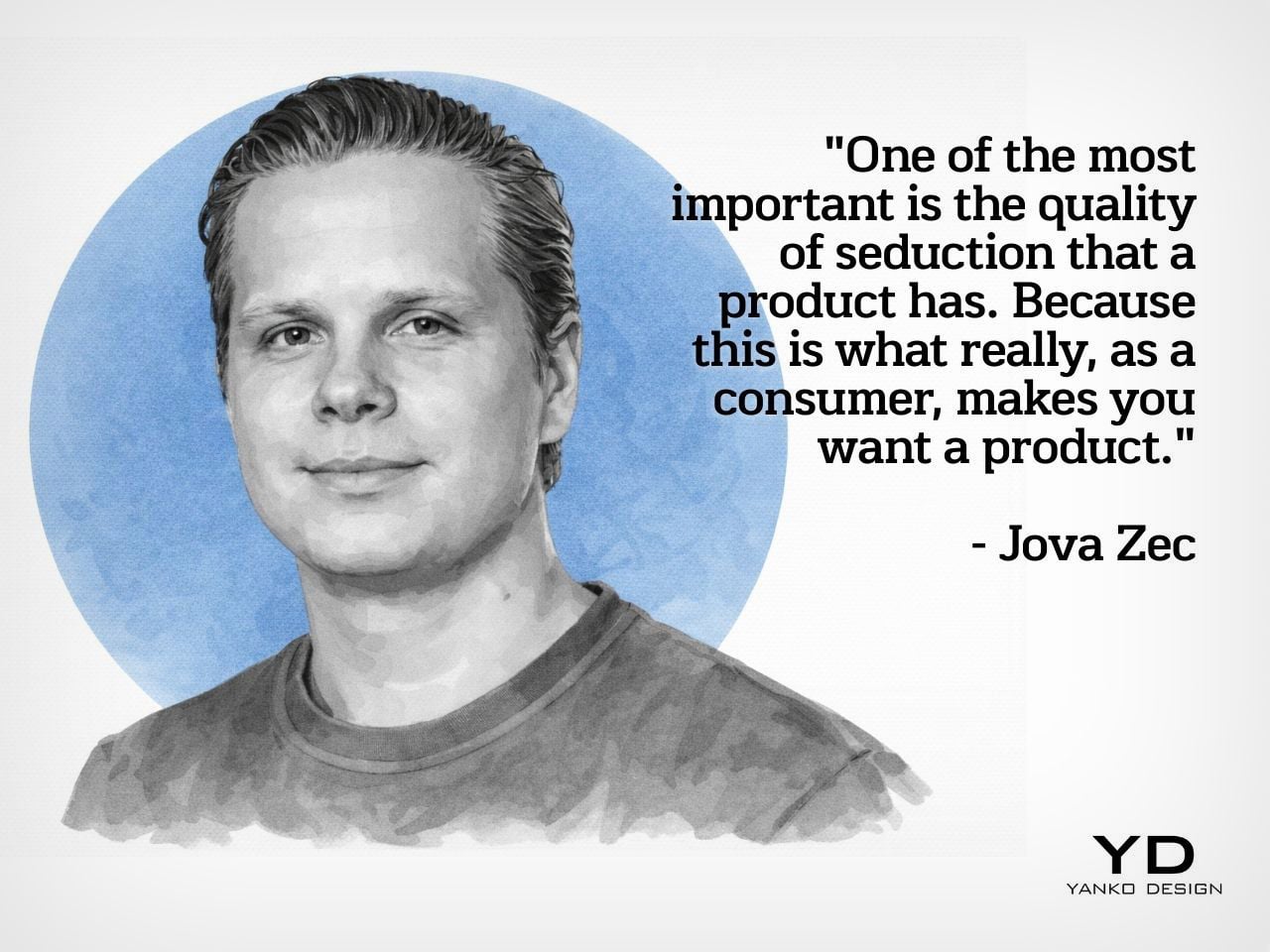
Red Dot evaluates submissions based on four core qualities: functionality, use, responsibility, and seduction. Interestingly, Jova highlights seduction as perhaps the most important. This quality creates the emotional connection that makes consumers genuinely want a product. While functionality and responsibility might seem self-explanatory, seduction is what really drives desire and adoption in the marketplace.
This evaluation approach allows Red Dot to look past short-term viral gimmicks that might rack up likes online. The judges evaluate products on timeless criteria that have remained consistent across the award’s history. Washing machines, for instance, might all look similar to casual observers, but there’s often extraordinary design work happening in the details. Quality never changes; it’s about the experience. If you experience a quality moment with a product, that experience stays the same whether it happened 50 years ago or will happen 100 years from now.
Meta-Categories: Recognizing Invisible Excellence
One of Red Dot’s most significant evolutions has been the introduction of meta-categories. While core principles remain constant, these categories allow Red Dot to highlight specific aspects of design that deserve elevation. The innovative category, for example, recognizes technologically advanced ideas that may lack polish but carry revolutionary potential. Red Dot has also introduced a sustainability meta-category to encourage environmental responsibility.
When Radhika presents Jova with a hypothetical scenario (a sustainable packaging startup with genuinely innovative biodegradable materials that’s technically brilliant but doesn’t photograph beautifully), his response perfectly illustrates this approach. Such a product would win both the innovative award for finding a solution that could revolutionize the industry and the sustainability award for its environmental impact. Winners of these meta-category awards then gain access to a network that includes experts in visual and seductive design, fostering collaboration that can yield products blending sustainable innovation with high aesthetic quality. Leaving such innovation unrecognized is never an option.
Validation Matters at Every Career Stage
The conversation turns personal when discussing how recognition affects designers differently throughout their careers. Jova’s observation is insightful: the importance to the person themselves always stays the same. Whether you’re a design legend or an emerging talent, validation matters deeply.
For established professionals and design legends, winning a Red Dot confirms they’re still performing at the level they believe they are, that they remain in the mindset of the current generation. For young designers trying to establish themselves, awards serve as career kickstarters. Jova shares stories of students who took part in Red Dot, won something, and immediately got employed by major companies wanting their design talent. Beyond career advancement, recognition provides crucial feedback from professionals who aren’t involved in your project and may have never met you before. This validation boosts self-esteem and helps designers affirm they’re on the right path, especially when they’ve just created something great and need confirmation to continue in that direction.
Recognition as Responsibility: Creating a Better World
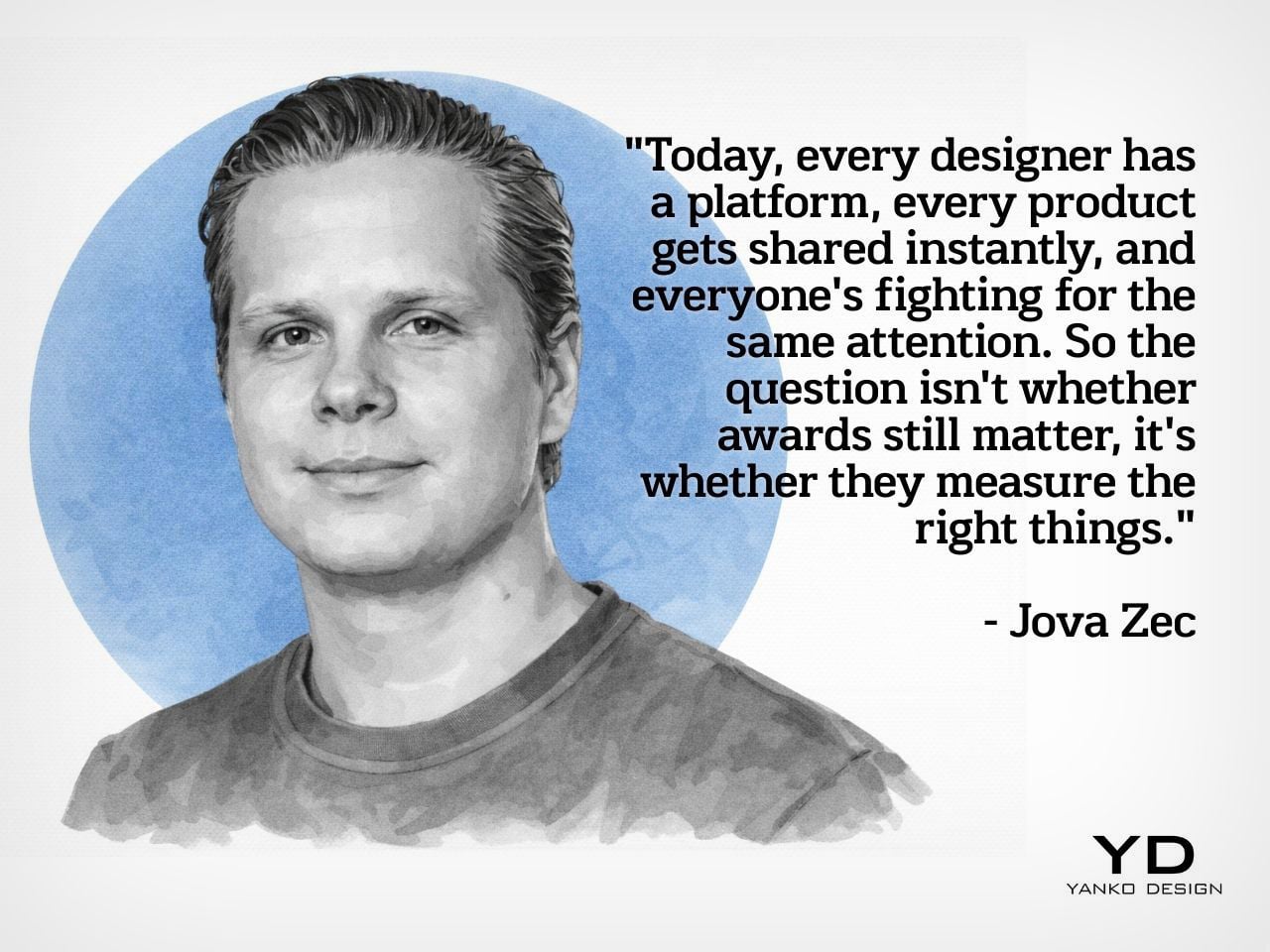
The overarching theme throughout the conversation is that recognition has evolved significantly in its purpose and meaning. As Jova reflects, he’s watched recognition transform from something designers hoped for to something they expect, from validation to influence, from celebration to obligation. Today, every designer has a platform, every product gets shared instantly, and everyone’s fighting for the same attention. The question isn’t whether awards still matter; it’s whether they’re measuring the right things.
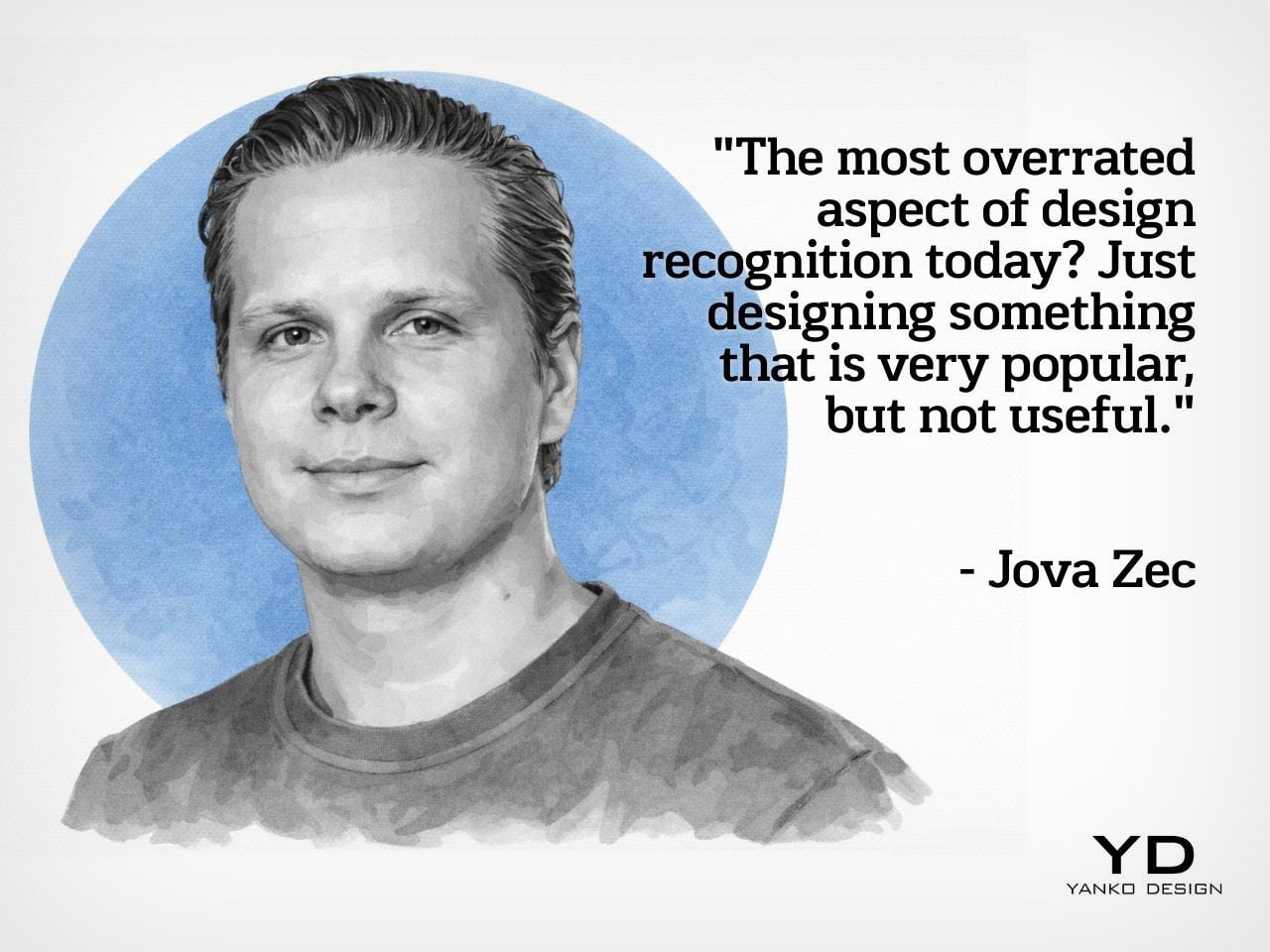
When asked during the rapid fire round what recognition should ultimately create, Jova offers two words: a better world. The biggest misconception designers have about awards? That it’s all a scam. The most overrated aspect of design recognition today? Just designing something that is very popular but lacks usefulness. This episode of Design Mindset crystallizes something important: in an age when anyone can go viral and content floods every feed, expert validation becomes more critical than ever. Awards that maintain rigorous standards and evaluate based on timeless principles fulfill a vital function, steering the design community toward values that matter: quality, responsibility, innovation, and seduction. The future belongs to awards that actively create conditions for great design to flourish.
Design Mindset, Powered by KeyShot, premieres every week with new conversations exploring the minds shaping the future of design. Listen to the full episode with Jova Zec to hear more insights on recognition, Red Dot’s evolution, and what makes design truly timeless.
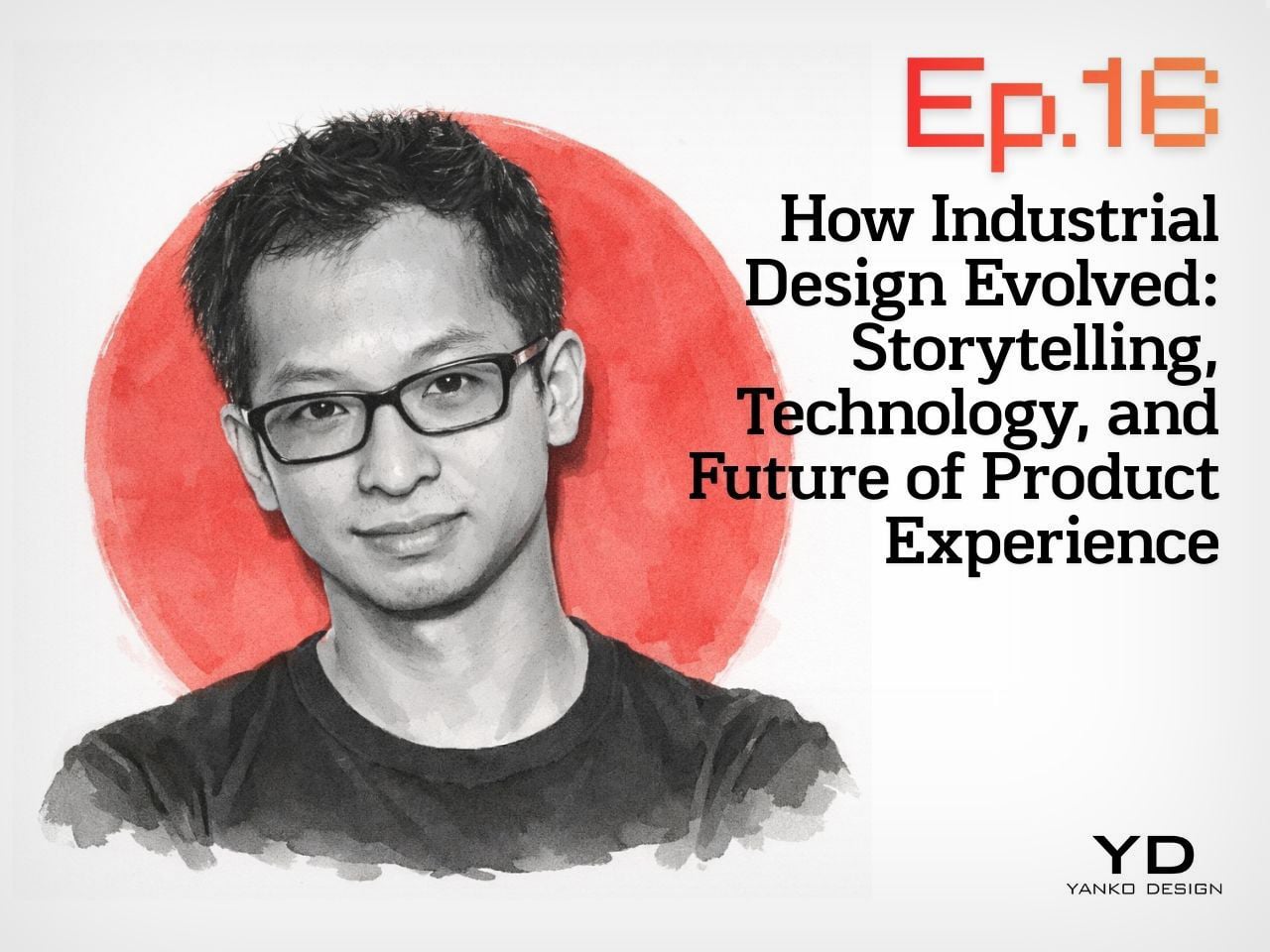
Design Mindset steps into episode 16 with a clear purpose: to understand how industrial designers are navigating a world where tools, platforms, and expectations keep shifting under their feet. Yanko Design’s weekly podcast, Design Mindset, powered by KeyShot, is less about design celebrity and more about design thinking, unpacking how decisions get made, how stories are built around products, and how technology is reshaping the craft from the inside out. Each week, a new episode premieres with designers who are actively pushing workflows, visuals, and experiences into new territory.
This episode features Benny Lee, Senior Design Manager of Technology and Strategic Partnerships at The Coca-Cola Company, and a practitioner who moves comfortably between mass production, digital ecosystems, and even film props. Trained as an industrial designer, Benny started at Coke in a traditional ID role while also leading visualization, bringing advanced 3D rendering into a company that was still heavily reliant on Photoshop and 2D assets. He now sits at the intersection of heritage and innovation, helping a 140 year old brand adopt real time visualization, AI, and new storytelling platforms without losing what makes Coca-Cola recognizable everywhere.
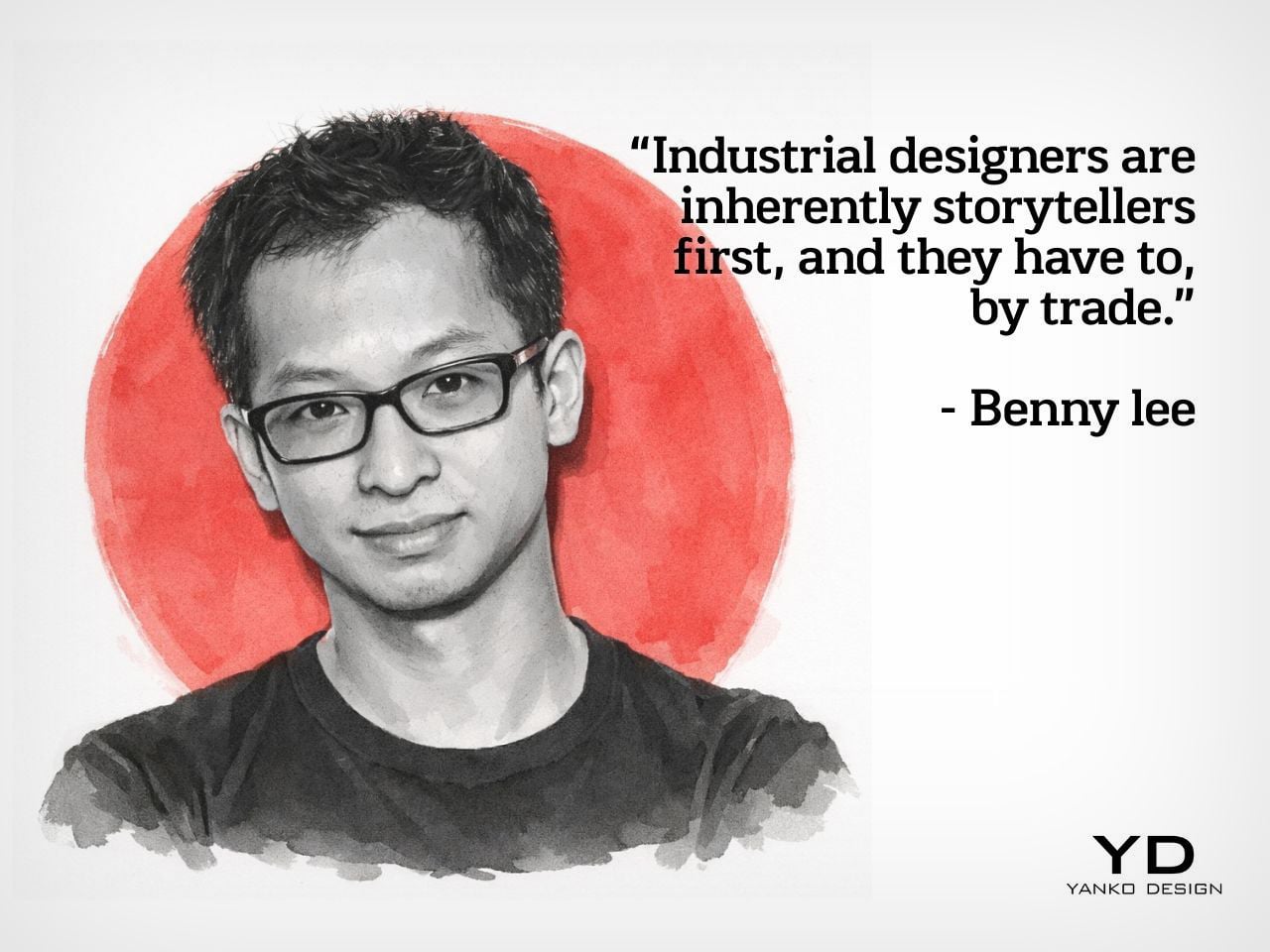
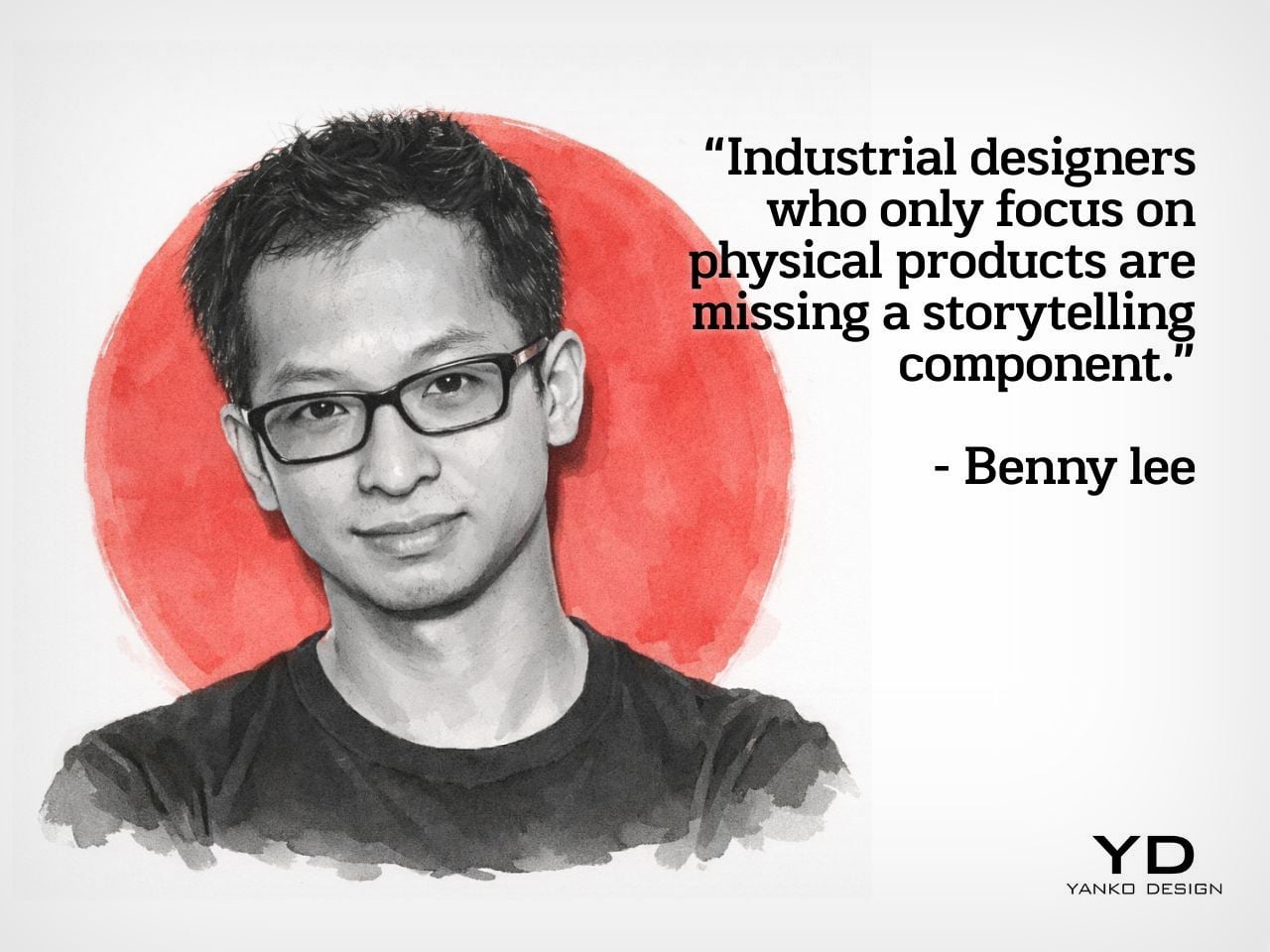
Benny treats industrial design as a storytelling discipline first and a styling discipline second. His training spans sketching, 3D modeling, rendering, and prototyping, but he frames each of these as a narrative tool rather than a technical checkpoint. Sketches, CAD, and renders exist to show what a product does, how it behaves, and how it should feel to use, not just how it looks on a white background.
Inside a large organization, that narrative focus becomes practical very quickly. He puts it plainly in the conversation: “Storytelling as an ID, you know, is important because it’s all about bringing this visual alignment of the actual product when you’re trying to get a buy in to sell in.” The job is to reach a point where the design communicates its intent on its own, without the designer in the room. Call to action areas, material breaks, and even lighting choices in a render become part of that silent story, aligning stakeholders around what the product is supposed to be.
When rendering becomes a thinking tool, not just a final output
When Benny joined Coca-Cola, much of the visualization work sat in a 2D world. Concepts were often built through Photoshop and static compositions, heavily intertwined with graphic design. He talks about the shift he helped drive quite directly: “I find it really quite an honor and a pleasure that I was able to bring 3D renderings into the practice here.” That move to 3D was not just about realism, it was about adding depth to how ideas are explored and communicated.
The key change is that rendering is no longer treated as the last step before a presentation. Tools like KeyShot become part of the exploration loop. Benny uses quick CAD setups and fast render passes to test light, material, and even simple motion, and to storyboard how a product opens, glows, or reacts in context. He describes this as a way to “fail fast, iterate faster,” and he underlines that “we don’t always just use renderings to create pretty visuals and a lot of times we’re using it to build new experience.” Visualization turns into a thinking environment, especially valuable when physical labs and prototypes are slow or limited.
Respecting a 140 year old brand while pushing it into new arenas
Designing at Coca-Cola means working around a product that barely changes. The formula in the bottle remains constant, so innovation happens in the ecosystem that surrounds it. Packaging systems, retail touchpoints, digital layers, and immersive experiences become the canvas where design can move, while the core product stays familiar.
Benny describes his role with a custodian mindset. He imagines the brand as a skyscraper built over generations, and his work as adding “layers of bricks” rather than ripping out foundations. That perspective shows up in how Coca-Cola experiments with new platforms. The company explores metaverse activations, NFTs, experiential installations, and AI driven storytelling, not as disconnected stunts but as new ways to retell the same product story for new audiences. The strategy, as he frames it, is to adapt the ecosystem and technology “to retell the product’s story” while staying true to the brand’s core character.
Mass production versus one off film props
Benny’s portfolio stretches across lifestyle accessories, consumer electronics, and concept work for films like the Avengers. On the surface, the process for these domains begins similarly, with sketching, modeling, and rendering. The divergence appears when the work hits reality. In consumer products, industrial design is tied to mass production, with all the constraints of tooling, factory collaboration, golden samples, logistics, and long term durability.
Film work operates under a different set of pressures. Concept art might start in tools like ZBrush with exaggerated, dramatic forms that look incredible on screen but are not remotely manufacturable in a traditional sense. Benny’s responsibility in those situations is to respect the creative vision while making it buildable. Props do not have to scale to millions of units. They have to survive a shoot and read correctly on camera. If one breaks, it can be rebuilt. That freedom shifts what is possible in form and material, but the throughline is still storytelling, captured in a few seconds of screen time instead of years of daily use.
Adapting to an ever expanding toolset without losing your core
Throughout the episode, Benny returns to the pace of change in design tools. Skills that were once specialized are now table stakes. Students are graduating with exposure to UI and UX, electronics integration, and AI enhanced workflows. He notes that “you have to wear so many hats,” and points out that traditional industrial design is becoming a “rare breed” precisely because the field has branched into web, mobile, service, and emerging tech work.
His response is not to chase mastery of every new tool, but to understand what each category can do and to build teams around that understanding. He emphasizes hiring people who are better than you at specific domains and managing the mix of skills rather than guarding personal expertise. In parallel, he argues that adaptation is now the most important traditional trait. The designers who thrive will be the ones who stay resilient, keep a story first mindset, and move fluidly between CAD, KeyShot, AI, and whatever comes next, while still grounding their decisions in how things work in the real world.
Design Mindset, powered by KeyShot, returns every week with conversations like this, tracing the connection between how designers think, the tools they use, and the work they put into the world. Episode 6 with Reid Schlegel leaves you with a simple, practical challenge: see your ideas sooner, in more ways, and with less fear of being imperfect.
Design Mindset, Yanko Design’s weekly podcast, treats the creative process as something you can actively shape rather than something that just happens to you. Each episode digs into the habits, mental models, and practical tools that move designers from tentative to decisive, from endlessly tweaking to actually shipping work. Now in its fourteenth episode, the show is starting to feel like a standing studio critique in audio form, where process and mindset get equal billing with aesthetics. Powered by KeyShot, the series keeps returning to a simple idea: when designers can see their ideas faster and more clearly, they make better choices and take bolder risks.
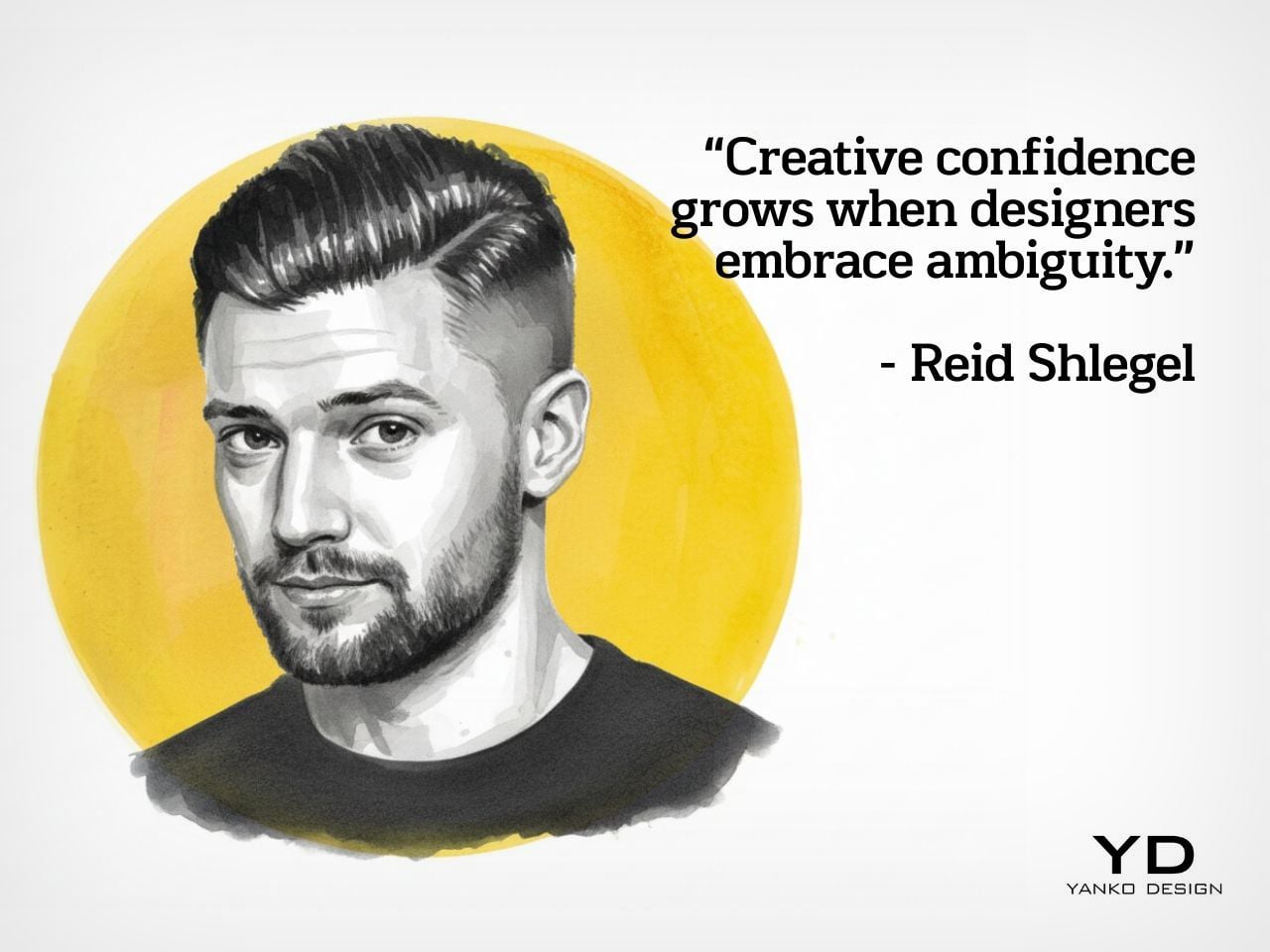
This week, host Radhika Seth speaks with Reid Schlegel, Design Director at RS.D and educator at Parsons School of Design, whose career spans consultancy work at Smart Design and collaborations with brands like OXO. Reid is fluent in everything from loose Sharpie sketches to VR, CAD, and photorealistic rendering, but what really defines his work is how he teaches others to use visualization as a confidence engine. Not the confidence to defend a final deck, but the quieter confidence to show rough, uncertain ideas early. In episode 6 of Design Mindset, he unpacks how rapid visualization, from napkin sketch to KeyShot render, can quietly become the most important skill in a modern design career.
Seeing ideas sooner, not better, builds real creative confidence
Reid starts with a pattern he sees constantly in classrooms and studios. Designers are not short on ideas, they are short on the courage to externalize them before they feel polished. He describes watching students stall out inside their own heads: “They’ll have a brilliant idea in their head but they’ll spend weeks perfecting it mentally before they ever put pen to paper or pixels to screen. By the time they finally externalize it, they’ve already talked themselves out of half the good ideas. The magic happens when you see your ideas sooner, messier, more honestly. Because creativity isn’t about having perfect ideas, it’s about having the confidence to iterate on imperfect ones.” That shift in mindset turns sketching and rendering into tools for thinking instead of tools for showing off.
Once ideas are visible, the conversation changes. A wall of fast, imperfect sketches or rough models invites questions like which direction has the most potential, which combination might unlock something new, and what should be pushed further. In professional settings, especially in consulting where Reid has spent most of his career, the ability to generate many legible options makes you a better collaborator and a more resilient designer. A high volume of rough concepts creates more material for the team to build on together, spreads risk across multiple directions, and keeps everyone less attached to any single idea. Creative confidence grows from that rhythm of trying, testing, and adjusting, not from waiting for one supposedly flawless concept.
A Batman tool belt beats a single perfect process
A lot of younger designers still believe in a clean, linear pipeline: research, sketch, model, render. Reid is quick to call that a myth. Real projects are messy, and the designers who thrive are the ones who treat their skills like a Batman tool belt. “It’s not about being good at just sketching and rendering. It’s about having a wider toolkit. I kind of use the analogy of like Batman’s tool belt, where there’s a lot of different things that need to be used at different times.” On some days, the right move is a page of thumbnails. On others, it might be a crude clay massing model, a hacked cardboard mockup from Amazon boxes, or a loose “sketch CAD” blockout. The metric is not beauty. The metric is how quickly you can get something tangible enough to react to.
Reid encourages designers to be comfortable sacrificing early quality for speed, because that is how you work through the weak ideas while the stakes are still low. He also treats switching mediums as a deliberate tactic. When a problem feels stuck in CAD, picking up a pen or building a quick physical mockup can unlock a “quick win” that restores momentum. That change of medium nudges your brain into a different mode of thinking and often reveals new angles on the same brief. Instead of obsessing over one polished workflow, Reid wants designers to ask, in each moment, which tool will get them to a useful insight fastest, then move on once that insight has been captured.
Paper sketching still feels like wizardry in a digital room
Despite his comfort with digital tools, Reid is unapologetically bullish on paper. Quick, low fidelity sketching on paper remains his go to for early ideation and for live sessions with clients. The reason is not nostalgia. It is transparency. When you sketch in front of someone, they can see the thinking appear in real time. That has a powerful effect on trust. As he puts it, “If you can do a sketch on the table in front of a client, they will look at you like you’re a wizard and you’ll instantly get their respect and they’ll trust you. If you’re the first person to show it to them, you’re like the gatekeeper that all of a sudden allowed them to level up. So quick sketching is super invaluable.”
In workshops or stakeholder reviews, a spread of loose paper sketches invites people to point, circle, and combine. The work feels approachable. No one worries about “ruining” a finished render with a suggestion. That is why Reid talks about early outputs as “sacrificial lambs.” Their job is to be tested, challenged, and discarded if needed, not to survive untouched. A handful of super polished digital images, by contrast, can freeze the room. Critique starts to feel like an attack on something that already looks finished. By keeping the fidelity low in the early stages, designers protect their own willingness to explore and their clients’ willingness to engage honestly.
From overnight renders to minutes fast feedback
The episode spends time on how rendering technology has changed the tempo of design work. Reid remembers starting out at Smart Design when rendering was slow and often an overnight task. That lag created friction. Teams hesitated to render too early because each pass cost so much time. Today, tools like KeyShot produce photorealistic versions of rough models in minutes, which means designers can use rendering as part of the exploratory phase rather than saving it for the end. When you can see a form in believable lighting and materials almost immediately, you can catch proportion issues, surface problems, or brand mismatches long before they become expensive.
Reid is careful to point out that this speed comes with a risk. When designers jump into CAD and high fidelity rendering too early, they tend to lock in too soon. Once a model has hours invested in it, it becomes harder to throw away, even if the core idea is weak. His answer is to treat early CAD and early KeyShot passes like any other sketching medium. They are temporary, disposable, and meant to be killed if they are not moving the project forward. Used in that spirit, fast rendering becomes a way to shorten feedback loops and ground decisions in visual truth, rather than a trap that turns every file into something too precious to question.
Career momentum from transparency and fast, flexible output
When Radhika asks how all of this translates into career success, Reid focuses on two themes: efficiency and openness. In consulting environments, timelines are tight and briefs evolve quickly. Designers who can flex across sketching, models, CAD, and rendering, and who can choose the right tool for each moment, simply handle more work without burning out. “It just means you’re an efficient team member. My entire career has been consulting and consulting is a rapid environment where you have to execute quickly or else you just won’t be able to keep up with the demand and the workload.” That kind of efficiency is not about cutting corners. It is about not over investing in fidelity before an idea has earned it.
On the human side, Reid urges junior designers to practice radical transparency instead of hiding their struggles. He points out that managers can usually see when someone is floundering, and that teams and clients are incentivized to help you succeed because your success is tied to the project’s outcome. Asking for help early allows leaders to design a development plan with you, rather than quietly losing confidence in your abilities. When things click, creative confidence feels, in his words, “empowering” and “warm inside.” It is the sense that your work was understood, that it resonated with the room, and that you are moving in the right direction. For a field built around solving problems and creating delight for others, that feeling is one of the most reliable rewards of the job.
Design Mindset, powered by KeyShot, returns every week with conversations like this, tracing the connection between how designers think, the tools they use, and the work they put into the world. Episode 6 with Reid Schlegel leaves you with a simple, practical challenge: see your ideas sooner, in more ways, and with less fear of being imperfect.
Design Mindset, Yanko Design’s weekly podcast powered by KeyShot, is quickly becoming a space where designers unpack how ideas actually move from gut feeling to shipped product. Episode 13 zeroes in on something every creative feels but rarely names clearly: that inner voice that pulls you toward a risky idea long before the data looks friendly. Host Radhika Singh calls it “that mysterious inner voice that guides our best work,” the sensation when “data says one thing but something deeper says let’s try something else instead.” A new episode drops every week, and this one sits right at the intersection of intuition, taboo, and cultural change.
This time, Radhika speaks with industrial designer and entrepreneur Ti Chang, Co Founder and Chief Design Officer at CRAVE, the San Francisco company behind design led vibrators and “pleasure jewelry” for women. Ti has spent her career trusting her creative compass in one of the most stigmatized consumer categories. From Duet, an early crowdfunded USB rechargeable vibrator, to necklaces that double as vibrators, she keeps making moves that look commercially reckless on paper and then quietly create new product categories. The episode becomes a compact playbook for using intuition without abandoning rigor.
Trusting your inner compass when no one else sees it
Ti does not treat intuition as a vague vibe. It is the core of how she decides what to make. “Intuition is something that have guided me throughout my process,” she says. Her first filter is simple: if a concept does not resonate deeply with her, it is unlikely to resonate with others. “If you follow your intuition to create something that resonates with you, there’s a much higher chance that you’ll resonate with somebody else.” She borrows that framing from Rick Rubin’s The Creative Act, but applies it in a very concrete way to industrial design.
Her career choices follow a three part test. “I’ve been able to find something that serves people and that I’m interested in and I have the skill set to do, and the marriage of these three is what has allowed me to I think have a quite a fulfilling life so far.” Intuition, for her, is not anti research. It is what tells you which questions to ask, which users to serve, and which ideas deserve the grind of engineering and validation. When Radhika asks what trusting that compass feels like, Ti is blunt: “It feels scary. It feels scary and it feels isolating because you’re the only person who sees it and nobody else quite understands it. And so for a long time, you’re going to just be in a scary kind of alone, a lonely spot.” Being early, she suggests, comes with that loneliness baked in.
Nudging culture from the middle, not the extremes
Designing for intimate wellness means walking a tightrope between too safe and too provocative. Ti describes her job as knowing her “playground.” On one edge are clinical, anonymous forms that keep taboos intact. On the other are objects so polarizing that they scare off the very people she wants to reach. Her goal is to live in the middle, where aesthetics are aspirational enough to move culture, but digestible enough that people actually buy and use them.
“You want to be able to nudge people along, bring them along with an aesthetic that they find acceptable and that they can digest, while all the while pushing, you know, aspirational and also creating room for a little more edginess, you know, without completely polarizing them.” She is clear about the commercial reality too. “If I created something that was just so polarizing, I’m sorry, like I would probably sell three a year, you know?” That is not just bad business, it is misaligned with her mission. “I know my playground. I know what will work for the agenda that I am trying to help people have a more open conversation about pleasure.” That agenda shapes choices around materials, silhouettes, and how proudly a product can sit on a bedside table without broadcasting its function.
Duet and pleasure jewelry, when “crazy” ideas become categories
CRAVE’s Duet is a neat case study in how Ti blends intuition with hard engineering. Long before USB everything became standard, she and her team asked why intimate products still relied on disposable batteries and clumsy chargers. The answer became a slim metal vibrator that plugged directly into a USB port, with the motor and electronics separated for safety and durability. This was 2008, pre Kickstarter playbook. Ti self funded prototypes, sourced metal work in China, and took early units to an adult products trade show. Instead of over indexing on focus groups, she watched buyer behavior. Immediate purchase orders were her market validation that the gut call was reading the culture correctly.
If Duet was bold, pleasure jewelry was the move that really made people think she had lost it. In the rapid fire round, when Radhika asks for “one decision you made on pure intuition that everyone thought was crazy,” Ti answers instantly: “Pleasure jewelry.” Turning necklaces and bracelets into fully functional vibrators that can be worn in public contradicted every convention in the category. Investors struggled to imagine why anyone would want their vibrator around their neck. Only once the pieces existed, and early adopters responded emotionally, did the idea begin to make sense to the market. Ti is careful not to claim that empowerment lives in the object. She rejects the notion that women must wear pleasure jewelry to feel powerful, framing empowerment as internal, with products as optional tools that some people find resonant and others simply do not.
Selling intuition to data driven stakeholders
A big chunk of value in this episode lies in how Ti translates a private hunch into something investors, engineers, and retailers can actually work with. Stakeholders do not fund “I have a feeling.” They fund roadmaps and artifacts. Visualization tools sit at the center of that bridge. KeyShot, the episode’s sponsor, is part of her daily workflow, letting her explore materials, textures, and finishes in real time. Those renders are not just for pitch decks. They help her test her own instinctive reaction to an object’s presence. In intimate categories, she often finds those visceral responses more useful than sanitized focus group quotes.
At the same time, she respects data enough to let it overrule her when the stakes are commercial rather than artistic. She laughs about being wrong on colors. “I’ve seen myself thinking like this color is going to be amazing. I’ve been wrong many times. And when you’re wrong with something as, like, in product, when it comes to color, you’re stuck with a lot of inventory and you do not want that. That is not good for business.” In a hypothetical startup challenge, where user testing clearly favors a more clinical aesthetic over a playful one the designer loves, she is clear. If this is not an art project, you ship what users are ready for. Yet she refuses to let numbers become the only voice. Asked what designers who only trust data are missing, her answer is sharp and short: “Missing their heart and soul.”
Prototyping life, not just products
Later in the conversation, Ti talks about being diagnosed with ADHD and autism as an adult. Hyperfocus on topics like gender equality, pleasure activism, and emotional design has been a quiet engine behind her work, letting her stay with difficult ideas long after others would have moved on. The flip side is that when she is not deeply interested, progress stalls. Instead of fighting this, she now uses it as part of her compass, choosing projects she knows she can stay obsessed with for years.
Underneath all the specifics of sex tech and crowdfunding, the operating system stays the same. When you cannot see the full path, you prototype. Ti treats “try, learn, iterate” as both a design tactic and a way to navigate an unconventional career. When Radhika asks if she would still design something her intuition loves even if she knows it will not sell, Ti says yes, “if I think it’s going to be a fun journey.” Some ideas exist to move markets. Some exist to keep the creative self alive. Episode 12 of Design Mindset captures that balance cleanly, showing intuition not as the opposite of research, but as the spark that tells you which risks are worth taking in the first place.
Listen to the full conversation on Design Mindset (powered by KeyShot), available every week on YouTube, to hear more insights from one of the industry’s most decorated design leaders.
Every week, Yanko Design’s podcast Design Mindset powered by KeyShot brings you conversations with design leaders who are shaping how products, brands, and experiences connect with people around the world. Hosted by Radhika, the show explores the intersection of design thinking, strategic communication, and the human stories behind successful brands. Whether you’re a designer, entrepreneur, or simply curious about how intentional design shapes our world, this weekly series offers insights you won’t find anywhere else.
In episode 12, Radhika sits down with Chris Pereira, founder and CEO of iMpact, a China-Western communications and go-to-market firm based in Shenzhen. With nearly two decades in China, fluency in Mandarin, and a notable stint as a Huawei PR leader, Chris brings a rare perspective to the table. Named one of Forbes India’s Top 30 Globalization Innovators, he’s spent his career helping brands navigate the treacherous waters between cultural intention and reception. What emerges from this conversation is a masterclass in how design decisions carry meaning, whether you intend them to or not.
Chris opens with a stark reality check: “Design isn’t neutral, especially across cultures. A font, a color, a slogan that wins in New York can really backfire in Nanshan in Shenzhen, China.” The challenge isn’t just about translation in the linguistic sense, it’s about making intention travel across borders intact. Every design choice tells a story about your values, and Chris emphasizes this with a striking insight: “The question isn’t if your design will tell a story, but what story you’re telling. So it’s whether you’ll own that narrative or let it own you.”
When brands think they’re “on brand” with a global strategy, that’s often exactly when things break down in local markets. Chris shares a personal anecdote that illustrates the stakes: “I had a friend a few years ago in China and he always liked to wear a green hat… But in China, there’s a specific phrase. If you’re wearing a green hat, it means your partner is cheating on you in the relationship.” What’s an innocuous fashion choice elsewhere becomes a cultural faux pas in China. For brands, this translates directly to sales, green hats simply don’t sell in Chinese markets, regardless of how well they perform globally.
Why Respect Can Look Like Disrespect (and Vice Versa)
Cultural landmines extend far beyond color choices. Chris recounts a dinner meeting where cultural respect signals completely misfired: “The Chinese host used chopsticks and before he ate he put food onto my client’s plate… But my business partner, my client, he got very angry all of a sudden. He said, I know how to use chopsticks. I’m not a kid.” The Chinese host was showing respect; the Western guest felt insulted. Both sides wanted to build trust, but the trust was actually eroded by the interaction.
These seemingly small details matter enormously for visual communication too. Sticking chopsticks upright in rice is a cultural taboo in China associated with funeral rites, an advertising image showing this would be deeply inappropriate, yet a Western creative team might not know to avoid it. Chris’s firm uses a systematic 10-item pre-mortem checklist that expands into roughly 100 specific considerations, covering everything from brand names and color schemes to who appears in imagery and what scenarios are shown. The goal should be consistent across markets, Chris explains, but the methods must adapt: “The result or what we want to convey in every country is the same. We care about the local community… How we get there is very different.”
Stop Saying You’re Great (Get Someone Else to Say It)
Perhaps the most critical insight Chris offers is about trust-building through third-party endorsement. “If I sit here and tell you, Radhika, I’m really great. I’m amazing… Honestly, that’s not a good way to convince the other person. The better way is to say, this professor has given me a letter of introduction. I was on TV last week on that media.” From a brand perspective, advertising says “I’m great,” while third-party endorsement says “he’s great” or “she’s really trustworthy.” Chris’s advice is direct: “If you don’t have the third-party endorsement, you shouldn’t do advertising.”
He encourages brands to “stand on the shoulders of giants,” pointing to the “Intel Inside” label on laptops as a perfect example. Industry awards, professional association endorsements (like dental associations for toothpaste), and partnerships with established entities all build the trust foundation necessary before spending on advertising. For product launches, Chris advocates showcasing customer success stories: “Maybe we can donate some of our products while we’re doing our announcement. And they can come and say how much that means to them for their community.” This provides powerful, authentic validation that no amount of paid advertising can replicate.
What Huawei’s Crisis Taught About Winning Together
Chris’s time at Huawei during one of the most challenging periods in the company’s history taught him invaluable lessons about resilience and messaging. When he joined in 2016, the message was all about dominance: “We’re number one in this industry. We’re number two in this industry. We have a huge end to end supply chain.” That message made employees proud but scared competitors. “If you’re in the United States at your Apple or Google, you’re like, oh, crap, this is kind of scary. Right. And they’re going to take our business,” Chris recalls.
The lesson? “The importance of win win or finding ways to work together in a way that’s good for everyone in the community is important.” Huawei eventually shifted its messaging toward building an open ecosystem, helping everyone in the supply chain succeed together. Chris also learned about the long-term mindset necessary for trust-building. When the Meng Wanzhou crisis hit in 2018-2019, many questioned whether Huawei would survive. Yet the company had a record year recently, expanding into new sectors like automotive. This taught Chris the importance of resilience and “thick skin” for both brands and individuals, and that trust requires time and consistency to build properly.
Redefining Speed: Why “Shenzhen Speed” Isn’t What You Think
The concept of “Shenzhen Speed” came up multiple times, but Chris is careful to define it properly. It’s not about rushing business relationships or pushing for quick deals. Rather, “when we say Shenzhen speed, we’re not talking about the speed of your business development… the speed is response. So if you send me a message and I respond quickly, we close the loop quickly.” Trust, conversely, needs time.
As Chris puts it, quoting a German friend: “Going in the wrong direction very quickly is not efficient. So in other words, if you’re going in the right direction slowly, that’s actually maybe better than going super fast and going in circles.” This is especially true for Chinese companies going overseas. Chris identifies cross-cultural communication as the primary challenge: “They all have great products, but they still lack a ability to communicate in a cross-cultural setting.” And crucially, human connection matters more than technology: “Get on an airplane and be on site at a trade event, visit your clients in person, have coffee with them. So none of that can be done by AI, interestingly.”
The Three Non-Negotiables Every Brand Needs
When asked about his non-negotiables, Chris identifies three foundational principles. First, compliance, “You need to follow the law anywhere you go,” he states simply. Second, authenticity: “If you’re not authentic, you will lose the trust of the local market.” Chris shares what he calls the 20-60-20 rule: 20% of people will always love you, 60% don’t really care either way, and 20% will actively dislike you. “When we’re doing our design work and business work, it’s important to bring your true self to the table because then you’ll attract the consumers, your customers, your partners, your friends who are like minded.”
Third, purpose beyond profit. “We’re not just doing business and doing design work and doing PR for money. I think we want to make the world a better place,” Chris reflects. For him, this is personal: “I have a nine year old son who’s half Chinese. So what we’re doing is helping Chinese companies and helping China tell their story in a more effective way overseas and building more trust and friendship.” In the rapid-fire segment, Chris crystallizes several key insights. His quickest litmus test for international success? “The team, the team behind the product.” The most underused asset in cross-border launches? “The actual relationships… in the local market.” And what beats beautiful design every time? “A brand mission. So a mission, a worthwhile cause to do something.”
Making Intention Travel
What emerges from this conversation is a fundamental truth: design is never neutral. Every choice, from fonts to colors to the people you feature in your imagery, communicates values. The challenge is ensuring those values translate as intended across cultural boundaries. Chris’s approach is both systematic and deeply human: use checklists and structured processes, but never forget that trust is built person to person, through authentic relationships and genuine commitment to local communities.
For designers and brand strategists working in an increasingly global marketplace, the message is clear: you can’t afford to be culturally naive. What “works” in your home market may actively harm you elsewhere. But with the right approach, thoughtful localization, authentic partnership, and patience, brands can successfully make their intention travel across borders. Chris Pereira can be found on LinkedIn, and Design Mindset releases new episodes every week, bringing you more conversations with leaders who understand that great design isn’t just beautiful, it’s meaningful.
Listen to the full conversation on Design Mindset (powered by KeyShot), available every week, to hear more insights from one of the industry’s most decorated design leaders.
The tension between perfection and progress is something every designer grapples with, yet it’s rarely discussed with the kind of candor it deserves. In episode 11 of Yanko Design’s Design Mindset podcast (powered by KeyShot), premiering every Friday, we sit down with someone who has spent four decades mastering this delicate balance. Denys Lapointe, Chief Design Officer at BRP, leads a team of 135 multidisciplinary design experts from 21 countries, and under his stewardship, the company has accumulated an astounding 61 Red Dot Awards, culminating in the ultimate recognition: Red Dot Design Team of the Year 2025.
For those unfamiliar with BRP, this Quebec-based powerhouse is the global leader in powersports and the number one OEM in North America. They’re the creative force behind iconic brands that define adventure, including Ski-Doo, Lynx, Sea-Doo, Can-Am, and Rotax. With nearly $7.8 billion in annual sales spanning over 130 countries, BRP’s products traverse land, water, and snow. What makes Denys’s perspective particularly fascinating is his 40-year journey with the same company, witnessing his designs evolve from sketches to prototypes to products that millions use to explore the world. He’s learned when to push for perfection and when to embrace strategic compromise in service of getting breakthrough innovations into consumers’ hands.
When asked about embracing “good enough” as a design philosophy, Denys immediately pushes back. “Basically, I would say, Radhika, the word good enough is not a word that we use. It’s I see it a little bit like the passing mark,” he explains. Instead, BRP formalized a design philosophy built on three key pillars: innovative product architectures, high functionality (integrating ergonomics and human-machine interface), and the “wow factor,” which creates enough emotional content that consumers are drawn to products and want to possess them. The goal isn’t merely to meet customer expectations but to exceed them, benchmarking relentlessly against competitors to win consumers’ hearts.
The breakthrough isn’t in excelling at any single pillar, though. “We know that what’s important is not so much to overdeliver on one of those pillars, but it’s the equilibrium between the three,” Denys reveals. This balanced approach is enforced through BRP’s rigorous stage-gate process and Design Governance Committee, which reviews projects at each critical juncture, challenging teams on all three pillars and ensuring alignment with brand DNA. Younger designers might chase the “wow factor” at the expense of daily usability, but BRP’s structured governance forces timely decisions that maintain equilibrium. “As design leaders, we must teach and coach our young designers to strive for perfection, knowing that perfection is difficult to reach. Obviously, but they need to learn to make the right compromise so to deliver a compelling offer to our consumers, which will exceed their expectation,” Denys explains.
The Accessory Ecosystem: Where Great Ideas Go to Thrive
One of BRP’s most innovative approaches to balancing ambition with pragmatism is their accessory strategy. “I remember several projects where we had too many ideas. We just had too many ideas,” Denys recalls. When milestones force prioritization, rather than abandoning valuable features that drive costs too high for the base model, BRP shifts them to their accessory ecosystem. This allows consumers to opt into features they personally value while keeping base models at target MSRP. Ideas aren’t killed, they’re given to the accessory group to develop separately, ensuring that compelling offers reach consumers without compromising the product’s commercial viability.
Even better, accessories are designed to be compatible across product lines using a patented quick connect/disconnect system. “An accessory that is designed for a seat can go on a side-by-side, an ATV, and even a snowmobile. So it simplifies people’s garage,” Denys explains. Once consumers invest in this ecosystem, it creates powerful brand loyalty because switching to another brand means leaving behind a garage full of incompatible accessories. This strategy demonstrates how strategic compromise doesn’t mean lowering standards, it means finding smarter ways to deliver value. Some ideas work better as optional features than standard equipment, and recognizing that distinction separates good design leadership from perfection paralysis.
Empathy Over Aesthetics: The MoMA Scissors That Cut Nothing
Perhaps Denys’s most powerful advice centers on empathy as the designer’s primary tool. When asked what he’d tell his younger self joining BRP in 1985, he immediately responds: “I think I would tell them to learn to dissociate their taste.” Designers must become ethnographers, deeply understanding users before, during, and after their journeys. “You need to learn to be able to project yourself as that consumer. The right trade-offs for that consumer ultimately. So learning to observe or observing, yes, with your head, but with your heart is the key to discovering the right insights. And I always say to the young designers that if you can identify the right problem to solve, you’re 50% there with the solution.” This empathy uncovers non-obvious insights that competitors miss, like noticing when users bend awkwardly, squint at interfaces, or stumble while dismounting.
His most memorable example of design divorced from empathy comes from an unexpected source. “One day I was in New York City buying, and I bought a lovely pair of scissors, and it was exposed in the MoMA as an object of art.” The perfectly symmetrical scissors intrigued him, but when he tried to use them at home, “the only thing it cut is the palm of my hand.” It was beautiful but functionally useless, highlighting the danger of prioritizing aesthetics over usability. When asked what matters more than perfection, Denys offers: “Equilibrium, holistic. We need to create holistic experiences that hit all aspects in the consumer’s rational way of criticizing a product and also on the emotional side.” A consumer might initially be drawn to something beautiful, but disappointment with the overall experience means they may never return to that brand again, making holistic balance essential for long-term success.
Safety First, Launch Dates Second
In the world of recreational vehicles, safety isn’t optional. “For us, safety is not an option. Safety is a prime focus for everything that we do,” Denys states emphatically. “We always strive for safe products. So I think basically we don’t compromise on safety. You should never mess with, you should never compromise on safety.” When presented with a hypothetical scenario where competitive pressure and board expectations push for an on-time launch, but a safety feature would delay production by six months, Denys doesn’t hesitate: “I think we would rally every member of the product steering committee to postpone our start of production.” The long lifecycle of BRP products (four to ten years) outweighs short-term market pressure every time.
This philosophy extends to BRP’s approach as market disruptors and first movers. The Spyder three-wheeler family exemplifies accepting that you can’t anticipate every need upfront. “We created something to attract the 95% of the population that drives a car instead” of motorcycles, Denys explains. After launch, new needs emerged that weren’t fulfilled by the first execution, but that’s the advantage of being first: capturing insights that inform the next variant or platform. “Consumers could not have told us because the product did not exist,” he notes, demonstrating how iterative learning trumps waiting for an impossible perfection. In the rapid-fire segment, when asked to complete “Perfect is the enemy of…,” Denys responds without hesitation: “time.”
Listen to the full conversation on Design Mindset (powered by KeyShot), available every Friday, to hear more insights from one of the industry’s most decorated design leaders.
Design Mindset, Yanko Design’s original podcast series powered by KeyShot, has been steadily carving a niche for itself in the design world by giving listeners an inside view on how creativity becomes impact. Every Friday, the show brings together design’s top minds to share stories that go beyond the project and into the strategies, pitfalls, and breakthroughs shaping the industry today. Episode 10 is no exception, it explores the real-world effects of design publicity on careers, and the conversation is especially relevant to anyone hoping to turn a portfolio into a profession.
This week’s guest is Sarang Sheth, Editor-in-Chief at Yanko Design and a designer whose own path was transformed by media exposure. Few are better positioned to dissect the mechanics of design publicity, both as a former featured designer and now as a gatekeeper for one of the world’s most influential design platforms. The episode not only spotlights Sarang’s journey but also delivers a tactical playbook for designers seeking to amplify their work and maximize recognition.
When Five Views Become 450: The Career-Altering Power of Global Exposure
There’s a stark difference between being a talented designer and being a recognized one. This isn’t a lesson taught in most design schools, but it’s one Sarang Sheth learned firsthand in 2014. Fresh out of university and nine months into an unsuccessful job hunt abroad, he was sending portfolio links to companies and tracking their engagement. “I would see like, you know, I’m sending portfolios out to these companies and I’m getting like five views a day, three views a day. So I knew that people were checking their mails and at least looking through my work,” Sarang recalls. Then something shifted. He submitted work to Yanko Design, and editor Troy Turner decided to feature it. “Suddenly I saw like 300 views on my website and like 450 views. And I was like, okay, that’s a significant jump.”
But the numbers told only part of the story. The granular data revealed something more profound: views were coming in from Turkey, Croatia, and the UK. “This is incredible because A, I didn’t pay for it. And B, there was no extra work for me. All I had to do was share it with someone who was willing to talk about it,” Sarang says. This moment crystallized two truths for him. First, that international media exposure offered opportunities that local recognition simply couldn’t. As he bluntly puts it, “local recognition is like winning best dancer within your society, it does nothing.” And second, that storytelling itself could be a viable career path. The article about his work resonated with him as much as the traffic spike did. “I read the article and I realized that this is something I can actually do,” he remembers. That realization, combined with the viral reach of design media, didn’t just land him a job, it set the stage for his entire career trajectory. Today, Yanko Design reaches millions per month across multiple platforms, Instagram, Pinterest, Twitter, LinkedIn, Facebook, YouTube, and its newsletter. “Regardless of what your concept is, what your project is, there are multiple ways that Yanko Design can sort of get you to reach the audience that you’re looking to reach,” Sarang notes. Those eyeballs, he adds, increasingly include potential investors, jury members, and employers, all of whom can change the course of a designer’s career with a single connection.
Ideas Don’t Need to Be Real to Be Powerful
One of the most counterintuitive insights from the conversation is that conceptual work can resonate as powerfully as finished products, sometimes even more so. Sarang points to several examples that illustrate this phenomenon. Earlier this year, he featured a project by Indian designer Siddhant Patnaik, a Google-branded version of the AirPods Max. “People resonated with it so much that it ended up getting its own segment on Marques Brownlee’s Waveform podcast,” he shares. The design garnered hundreds of thousands of views not just on Yanko Design but across multiple media outlets, despite never being a real product. This isn’t an isolated case. Sarang has created his own conceptual designs for Yanko, foldable phones, patent-related concepts, and an Apple Pencil that docks inside a MacBook, which is still featured on Forbes. “I’ve seen reels on it and reels showing Yanko Design’s page. So, it’s great to see that people realize that they’re not necessarily fond of great products, they’re also fond of great ideas.”
This creates a fascinating dynamic: media visibility alone can stimulate demand and validate interest even before a product enters production. “A lot of times they’re concepts,” Sarang says about inquiries from potential buyers. “Which validates the fact that sometimes concepts are so much more exciting than reality.” The takeaway for designers is clear: don’t wait until you have a manufactured product to share your work. High-quality 3D renders and compelling narratives can generate demand, attract licensing interest, and open doors to partnerships. “Ideas are cheap, execution is tough, but something that I have also learned is that holding your cards close to the chest and not sharing those ideas with anybody doesn’t benefit anybody,” he advises. The key, however, is presentation. In the age of AI-generated imagery, granular control offered by professional 3D rendering can push a concept over the credibility threshold. “A pencil sketch has to be incredibly good as an idea to sort of translate to massive success. Whereas a really, really well-made render has a much easier path ahead,” Sarang explains.
Turn Ripples Into Waves: The Designer’s 48-Hour Action Plan
Getting featured is just the beginning. Too many designers treat media coverage as a finish line when it should be treated as a starting gun. Sarang is emphatic about this: designers need to move from passive observation to active amplification. “Don’t just repost initial coverage; turn ripples into waves,” he urges. The first step is preparation. Before pitching any publication, designers should have a press kit ready, complete with high-resolution images, project descriptions, and relevant context. “Please, it’s not that difficult. ChatGPT will literally write the press release for you and your images are already in there, you need to just compress them,” Sarang says. AI tools have made this process easier than ever, but the fundamentals remain: professional assets signal that you’re serious about your work.
Once a feature goes live, the real work begins. Designers should immediately reach out to other outlets, Designboom, Hypebeast, and niche blogs relevant to their work. “You should have at least five or six media contacts in your outreach,” Sarang recommends. Each additional feature compounds the impact of the first, creating what he calls a “cascading effect.” Media coverage also serves as social proof that can be leveraged in other contexts. “Use features to bolster award entries, multiplying reach and credibility,” he advises. But there’s a crucial caveat: not every design fits every outlet. Understanding platform fit is essential. “Each design blog or each design platform has its own visual ethos, has its own direction, has its own strengths,” Sarang explains. Yanko Design, for instance, may not be the right fit for highly technical architecture projects, but it excels with consumer-facing product design, EDC items, and tiny homes. Sarang is candid about this curation process: “If designers come to us with 2D sketches, we’re like, hey, you know what, render it out and then bring it back to us. We’d love to feature it then.” This isn’t gatekeeping; it’s guidance. The goal is to reach the right audience, and sometimes that means directing designers to other platforms where their work will resonate more strongly. As Sarang puts it, “You won’t go trying to plant a mango in winter.”
Crowdfunding First, Media Second, Awards Third
When presented with a hypothetical scenario during the podcast’s “Design Mindset Challenge”, a talented designer with budget and time to pursue one of three paths (major design award, crowdfunding campaign, or media features), Sarang’s answer was surprising and strategic. “Start with crowdfunding,” he says without hesitation. His reasoning is multifaceted. First, crowdfunding offers the strongest form of validation: real demand, backed by real money. “When you’re going down the crowdfunding route, it’s the highest form of design skill validation because you’re not getting clicks, you’re not getting a job, you’re setting up a company that is solely focused around your product,” he explains. Unlike media coverage, which generates interest, or awards, which confer prestige, crowdfunding forces execution. It demands prototyping, production planning, and supply chain management. “The people who look at the product and are like I believe in that vision, those are the people who are jumping on board, and that is the best way to put that stamp of approval on your product being a good idea,” Sarang notes.
Crowdfunding also offers pragmatic intellectual property protection. By being first to market, even in a crowdfunding context, designers stake their claim publicly. “When you share an idea on a design platform like us, we do share a lot of concepts, but it’s obvious,” Sarang says, acknowledging the risk of plagiarism. “First crowdfund, secure your IP in however, whatever way possible. Spend money on patents or copyrighting or whatever.” Once the crowdfunding campaign is live or funded, designers can leverage that momentum for media coverage. Publications are far more likely to feature a project with market validation than a standalone concept. “That will help you secure your idea and make sure that you’re not being plagiarized by other people who beat you to it,” Sarang adds. Finally, awards should come third. “Awards are a much more expensive bet, I would say. And the awards do have timelines,” he explains. Media can react quickly, publishing within days, while award results take months. The strategic sequence, crowdfunding, media, then awards, allows designers to build credibility at each stage, using prior success to unlock the next opportunity. This ecosystem approach doesn’t just maximize recognition; it creates sustainable business outcomes.
Why 2 Million Views Trump a Design Award
In the rapid-fire segment of the podcast, host Radhika Seth posed a provocative question: what’s more career-changing, winning a design award or getting 2 million views on Yanko Design? Sarang’s answer was immediate and unequivocal: “2 million views on Yanko Design. Wow. Because that has a cascading effect.” His response cuts to the heart of a broader truth about recognition in the digital age. Awards carry prestige and credibility, especially when backed by respected juries, but their reach is often limited to industry insiders. Media exposure, by contrast, casts a far wider net. A feature on Yanko Design doesn’t just reach designers; it reaches design consumers, potential investors, manufacturers exploring licensing opportunities, and employers scouting for talent. “Global features expose work to buyers, investors, co-founders, and employers,” Sarang notes, emphasizing that media responsiveness can even aid with time-sensitive opportunities like visa documentation.
Yanko Design’s audience, which Sarang describes as “design consumers” rather than just designers, is particularly valuable. “I like to believe that our audience are not only designers, but they also design consumers because I have seen so many campaigns, Kickstarter campaigns or the Indiegogo campaigns that we feature bring in so much of revenue for the campaigners,” he explains. Certain niches perform exceptionally well: EDC (everyday carry) items and tiny homes consistently generate strong engagement and conversions. “EDC content often drives campaign revenue,” Sarang says, noting that the writers at Yanko are genuine enthusiasts whose passion translates into the coverage. “A lot of our write-ups also come from a place of excitement and that just translates to the readers.” This isn’t to diminish the value of awards. Jury validation carries weight, and media partners often amplify award wins, creating a multiplier effect. But for sheer, immediate impact on a designer’s trajectory, media reach is unmatched. As Sarang puts it, “A 2 million-view YD feature can be more career-changing than a single award due to cascading recognition, opportunities, and serendipitous discovery by influential readers.”
From Designer to Storyteller: Why Context Matters
Sarang’s own career shift from designer to editor was inspired by filmmaker Gary Hustwit, an industrial designer turned documentarian whose films on Dieter Rams, Apple, and the Helvetica font have become cultural touchstones. “He was basically an industrial designer who also graduated and realized that his calling wasn’t industrial design, it was storytelling,” Sarang says. This resonated deeply. “Whenever I introduce myself, I say, you know how they say a picture is worth a thousand words? I’m the guy who writes those thousand words.” For Sarang, storytelling is a design-adjacent calling, one that expands the impact of products by giving them context and accessibility. “A lot of designers are so involved with creating products that they forget sometimes that the products need context and explanations,” he observes. This is where design media plays a crucial role: translating innovation into narratives that resonate with broader audiences.
Sarang’s approach to writing reflects this philosophy. Yanko Design doesn’t just catalog products; it explores their potential, their cultural relevance, and the problems they solve. “Translating products into accessible narratives expands impact,” he says, framing editorial work as an essential bridge between creators and consumers. This storytelling function is especially vital in an era dominated by algorithmic feeds and unpredictable social media platforms. “Algorithms are unpredictable,” Sarang notes. “Editorial curation connects designers with targeted stakeholders, buyers, investors, co-founders, through trusted storytelling and focused audiences.” Unlike a viral TikTok or Instagram post, which might reach millions but lack context or credibility, a curated editorial feature provides depth and legitimacy. It signals that the work has been vetted, that it’s worth paying attention to. For designers, this means that presentation and narrative matter as much as the design itself. A well-crafted story can turn a good product into a great one, and in some cases, it can even turn a concept into a business opportunity before the product exists at all.
Design Mindset premieres every Friday on Yanko Design, bringing fresh perspectives from design’s leading voices. This episode underscores a critical truth: design recognition isn’t just about talent, it’s about understanding the ecosystem of media, awards, and crowdfunding, and knowing how to navigate it strategically. For designers ready to share their work, Sarang’s advice is simple: “Send your work to Yanko Design, publication@yankodesign.com. Send it to us on Instagram, send us links, Behance links, whatever, however you want to send it to us. Please keep sending your work. It can’t get easier.”
Welcome to a new creative space at Yanko Design, where we explore the minds behind the products that shape our world. We are thrilled to introduce our new podcast, Design Mindset, your weekly dive into the philosophies and frameworks that drive modern innovation. Every Friday, host Radhika Seth sits down with leaders, creators, and thinkers who are redefining their industries. In our ninth episode, we explore a fascinating concept: the invisible grid. These are the seamless systems and technologies that, when designed perfectly, fade into the background, allowing pure creativity to flourish without constraint.
Our guest for this exploration is Edward Mao, a product design lead and the head of the integrated design department at Insta360. Edward brings a global perspective to his work, having studied and lived across the US, Sweden, and Schengen. He leads teams that build the very systems millions of creators depend on daily. Insta360 is known for its groundbreaking 360-degree cameras and action cameras, particularly its “invisible selfie stick” technology, which serves as a perfect metaphor for our conversation. The best systems, like the best tools, should empower the user to the point where they are no longer thinking about the tool itself, but only about what they want to create.
The Innovator’s Mindset: Redefining the Rules of the Game
What truly separates an innovator from a follower? According to Edward, it transcends simple risk-taking and digs deep into one’s fundamental mindset. An innovator is driven by a desire to establish entirely new rules, to create categories that never existed before, and to set the benchmarks that will define the market for years to come. Their focus is on impact and purpose, a relentless pursuit of a unique vision that pushes the entire industry forward. Edward explains that this path is inherently harder, but the reward is a profound sense of satisfaction that cannot be replicated. As he puts it, “innovating makes you unique… the payoff, you can get the sense of purpose, the sense of satisfaction, right? It’s way bigger than the comfort of staying safe.” It’s a conscious choice to author the next chapter rather than simply editing a page in someone else’s book.
Conversely, the follower’s path is often a strategic one, focused on efficiency and execution. They excel at optimizing proven formulas and competing on established metrics like price and features, a strategy that allows them to catch up quickly and capture market share. However, this approach has a natural limit. Edward notes that many successful creators and companies eventually hit a “growth ceiling,” a point where the old formulas no longer yield the same results. This is the critical juncture where the question shifts from “How can we do this better?” to “What’s next?” This moment of stagnation often becomes the catalyst for a radical shift in thinking, forcing even the most dedicated follower to consider the daunting but necessary leap into the unknown territory of innovation, where the potential for true differentiation lies.
The Disappearing Act: When Great Technology Becomes Invisible
The ultimate goal of great design is to render itself invisible. This is the central philosophy Edward champions, where technology becomes so intuitive and seamless that it dissolves into the background, leaving only the user and their creative vision. The tool ceases to be an object of focus and instead becomes a natural extension of the user’s intent. Insta360’s “invisible selfie stick” is the perfect embodiment of this principle. When a creator uses it, they are not thinking about the pole in their hand or the mechanics of the software erasing it. They are thinking about capturing an impossible, drone-like shot, fully immersed in the act of creation. This is the magic moment Edward strives for, when “the tech basically disappears and the creativity takes over… that’s when you know you have built something truly invisible.” The technology becomes a silent partner, empowering the user without ever demanding their attention.
Achieving this level of invisibility is not a matter of adding more features, but of ruthless simplification and a return to first principles. Instead of asking how to build a better version of an existing product, the innovator asks what the user’s ultimate goal is and what the absolute, unchangeable constraints are. This approach fundamentally reframes the problem, steering the design process away from incremental improvements and toward breakthrough solutions that address the core need. By focusing on the “why” behind the user’s actions, designers can build tools that anticipate needs and remove friction points before they are even noticed. This frees the creator’s mind from the burden of technical problem-solving, allowing them to dedicate all their cognitive energy to what truly matters: storytelling, expression, and bringing their unique vision to life.
Paying the ‘Tuition’: The Unseen Investment of a Pioneer
Embarking on a path of true innovation is an expensive education, and as Edward suggests, the early struggles are the “tuition” paid for a future advantage that cannot be bought. Pioneering is a slow, arduous process, much like pushing a heavy flywheel. The initial effort is immense, with little visible momentum to show for it. These early phases are filled with setbacks, costly mistakes, and the constant feeling of pushing against inertia. However, this upfront investment in learning, testing, and overcoming unforeseen obstacles builds a deep well of experience-based knowledge. This hard-won wisdom becomes a strategic moat, a defensible asset that late-coming competitors cannot easily replicate. They may be able to copy the final product, but they cannot copy the years of struggle and learning that made it possible.
This pioneering journey is fueled by more than just resilience; it is powered by profound empathy. Edward emphasizes that the most insightful innovators are often their own most demanding users. They relentlessly stress-test their own creations in the messy, unpredictable real world, uncovering failure points and latent needs that would never surface in a controlled lab or a market research report. This hands-on process builds an intuitive understanding of the user experience. Furthermore, this journey requires a pragmatic acceptance of imperfection. The goal is not to launch a flawless product from day one. Instead, the strategy is to release a solid, valuable minimum viable product and then iterate relentlessly with the market. As Edward advises, “perfection comes later iteration by iteration i think it’s less scary that way.” In this model, the community of users becomes a collaborative partner in the design process, their feedback shaping the product’s evolution.
Beyond the Product: Why Sustainable Innovation Lives in Ecosystems
In today’s hyper-competitive market, a single breakthrough product is no longer enough to guarantee long-term success. A brilliant feature can be copied, a clever design can be replicated. True, durable advantage, as Edward argues, comes from building a comprehensive ecosystem around the product. This system of interconnected value is far more difficult for competitors to duplicate. For a company like Insta360, this means the camera itself is just the beginning. The real strength lies in the surrounding ecosystem: the intuitive editing software that simplifies complex workflows, the active user communities that provide support and inspiration, the extensive library of tutorials that flatten the learning curve, and the wide array of accessories that expand the product’s capabilities. This holistic approach creates a sticky, high-friction-to-exit experience that compounds the product’s value over time, turning customers into loyal advocates.
This powerful principle of ecosystem thinking is not just for large corporations; it is equally critical for individual creators striving to build a sustainable career. A viral video or a popular design is fleeting, easily lost in the endless stream of digital content. A career built on an ecosystem, however, is enduring. Edward advises creators to think beyond the next piece of content and instead focus on building systems around their work. This could manifest as developing mentorship programs to nurture emerging talent, creating collaborative workflows with other artists to cross-pollinate audiences, or productizing their expertise through workshops and digital assets. By building a network of value around their core creative output, they transform their work from a series of replaceable artifacts into a resilient, interconnected enterprise that can withstand the unpredictable shifts of trends and algorithms.
From Follower to Leader: A Practical Guide to Making the Leap
The transition from a follower to an innovator can feel like a terrifying leap into the abyss, especially when a proven formula is already paying the bills. The fear of abandoning what works is a powerful deterrent. However, Edward’s advice demystifies this process, transforming the reckless gamble into a series of calculated, manageable steps. The core principle is to de-risk innovation by starting small. Instead of betting the entire farm on an unproven idea, he advocates for experimenting on the periphery with “low-stakes side projects.” This approach allows a creator or a company to explore new technologies, test radical ideas, and build new skills without jeopardizing their main source of income or alienating their core audience. As he simply states, “start small always start small.” It’s a strategy of quiet evolution, building the future in the background while continuing to deliver consistency in the foreground.
To guide this process, Edward offers a practical three-part test to determine if an innovative idea is worth pursuing. First, can the concept be explained in a single, simple sentence? This is a test of clarity and focus, ensuring the idea isn’t convoluted. Second, does it create a unique experience that nothing else currently offers? This validates its potential for true market differentiation. And third, does it address common user complaints? This is the most crucial test, as it confirms that the innovation is solving a real, pre-existing problem, signaling a clear and unmet demand. By using this framework, innovation shifts from being a blind bet to a strategic, evidence-based pursuit. It encourages prototyping, running small user tests, and co-creating with the community, allowing the audience to help guide the direction of progress and ensuring that when you do finally push the boundaries, you bring them along with you.
To hear more about Edward’s work and his systematic approach to creativity, you can follow him at “designer mr mao” on red note and tiktok, or go check out how Insta360 is revolutionizing how we capture our world. Be sure to tune in to Design Mindset next Friday for another look into the minds shaping our creative world.