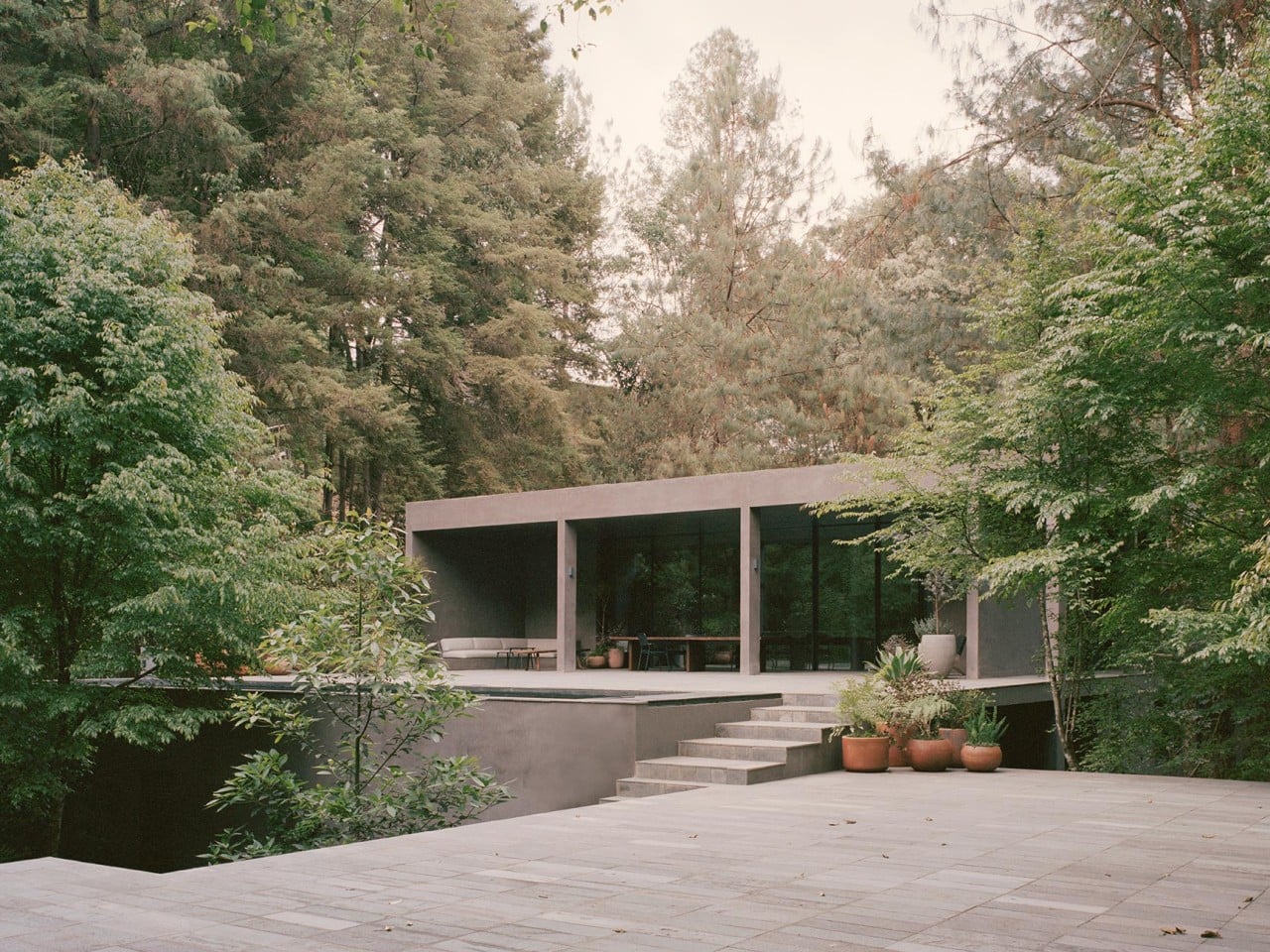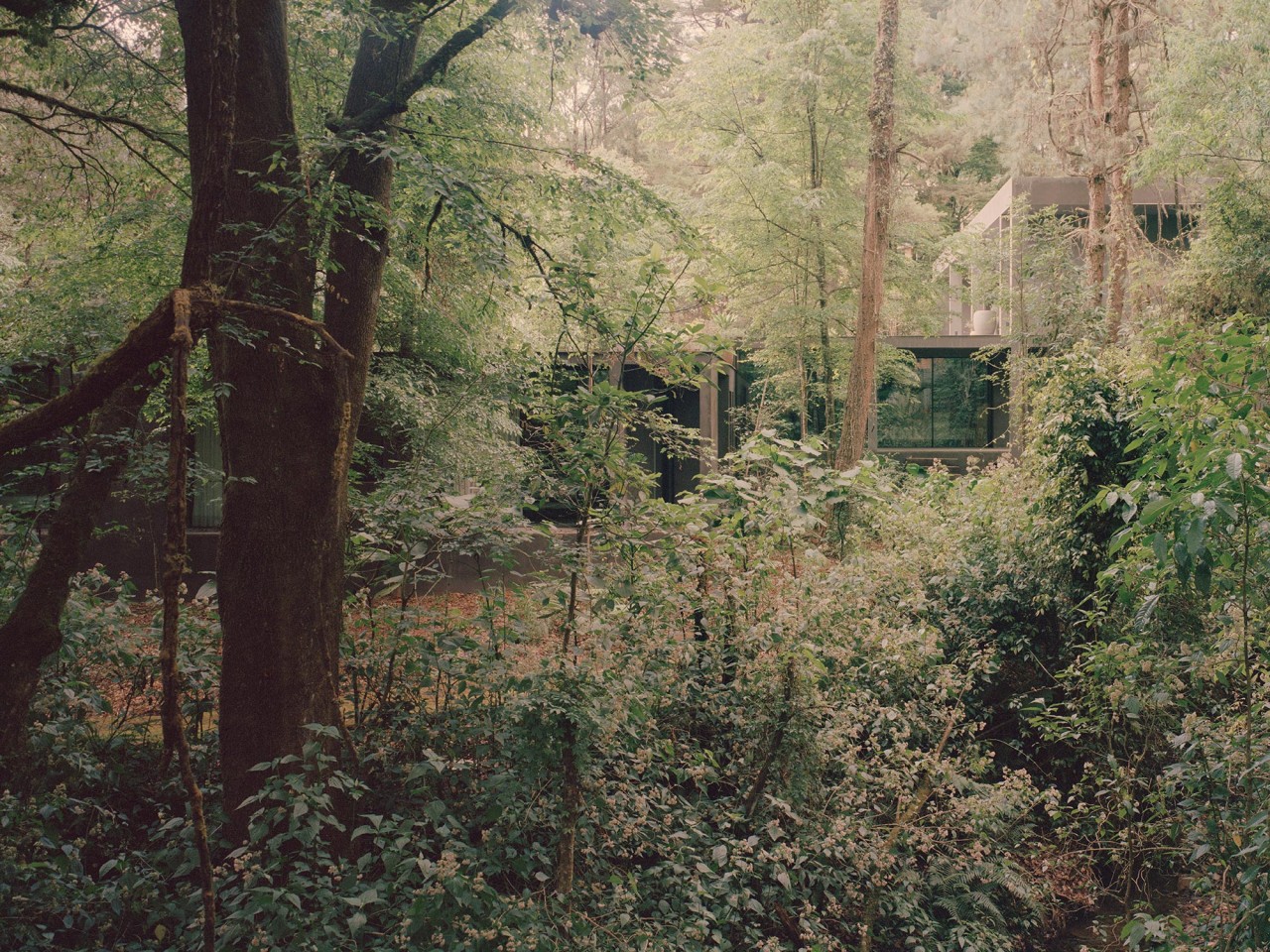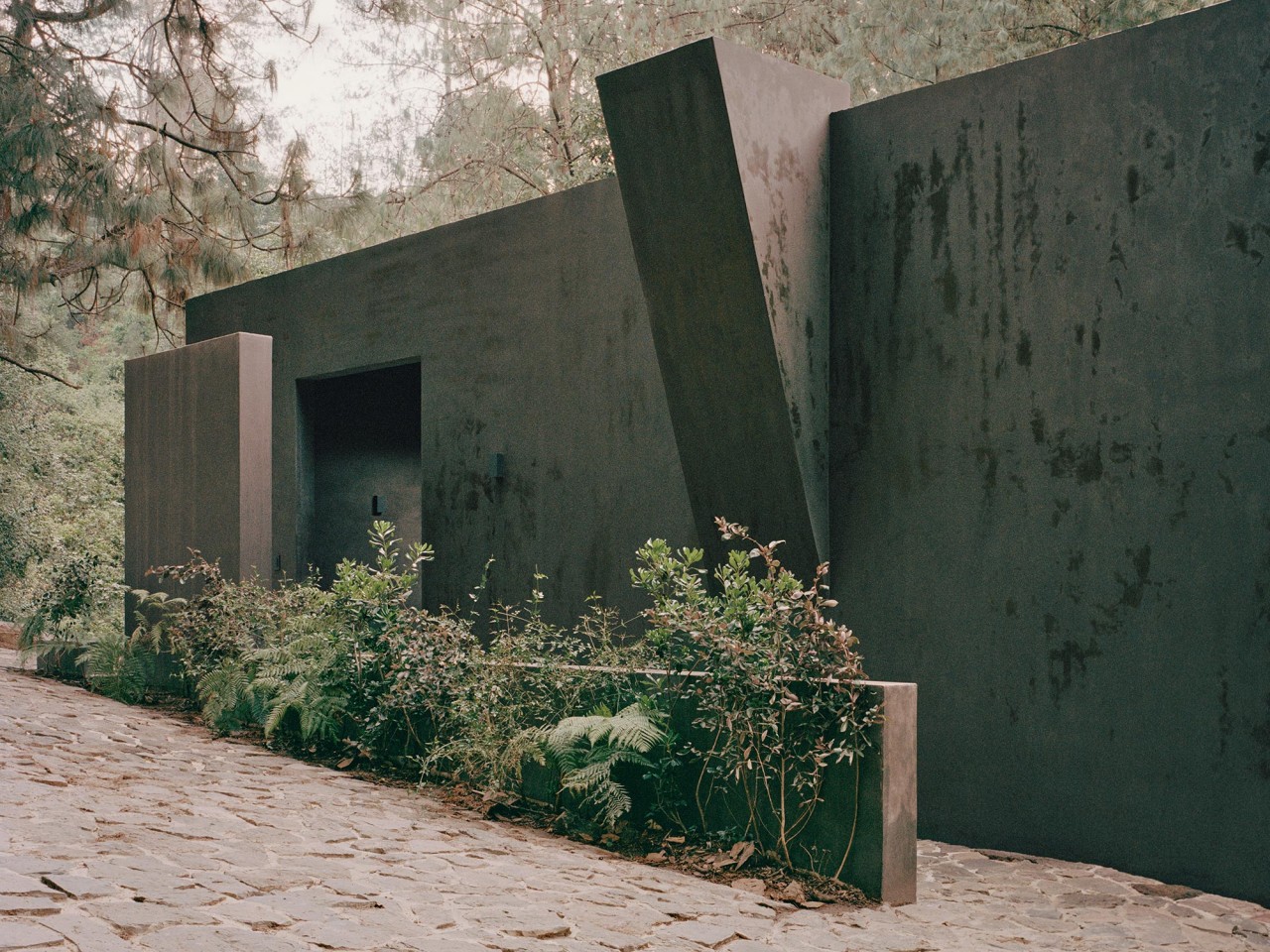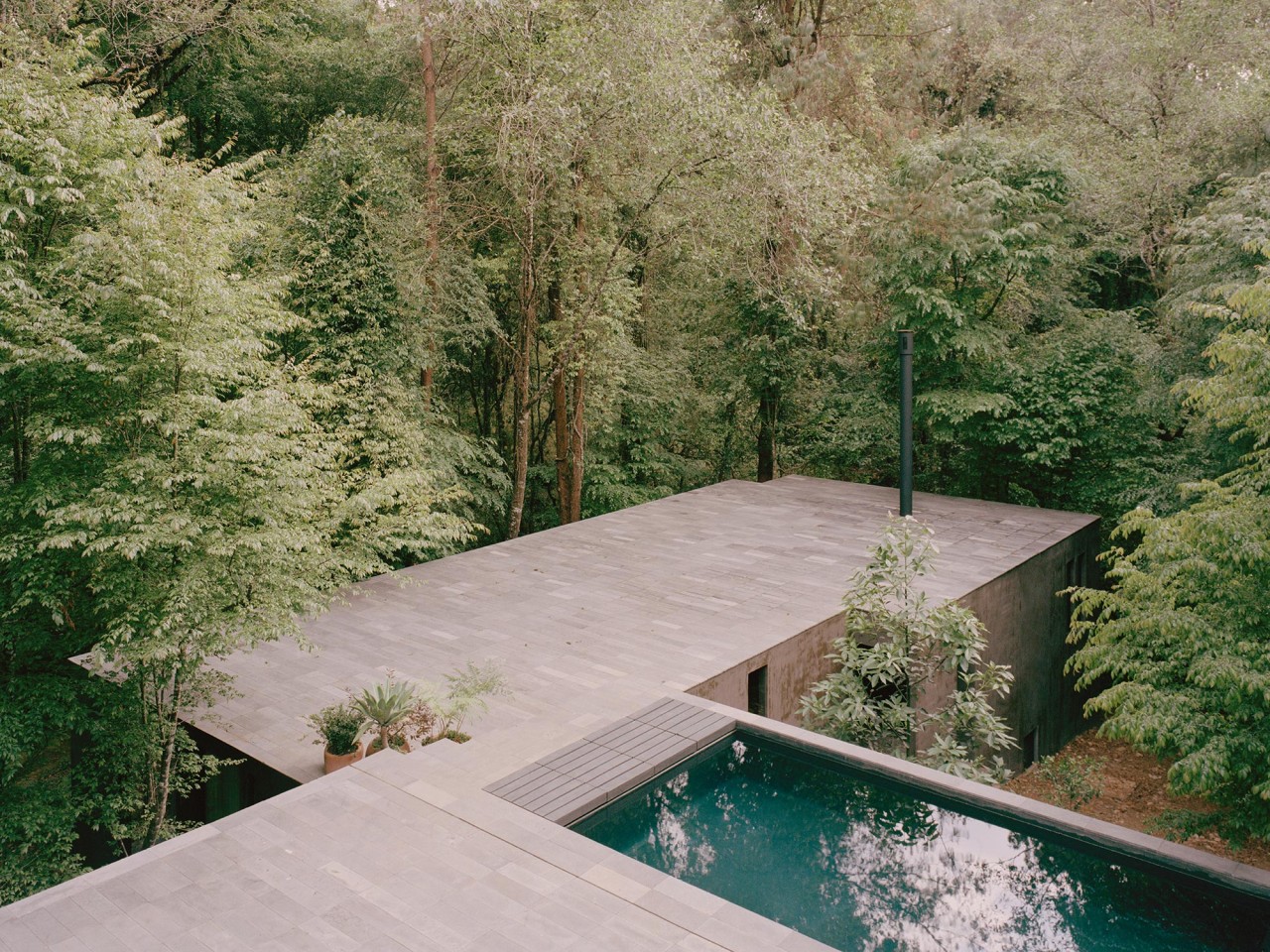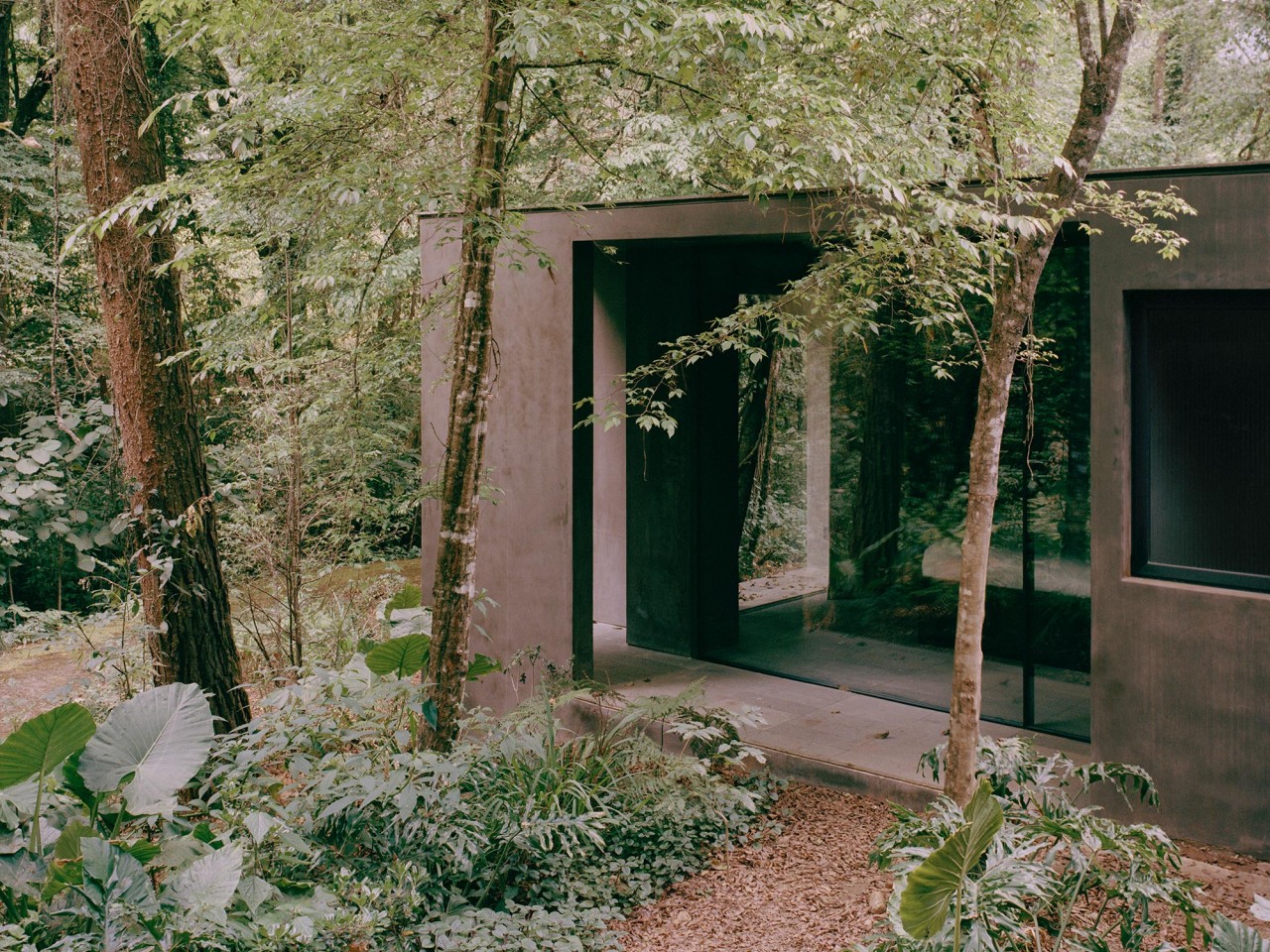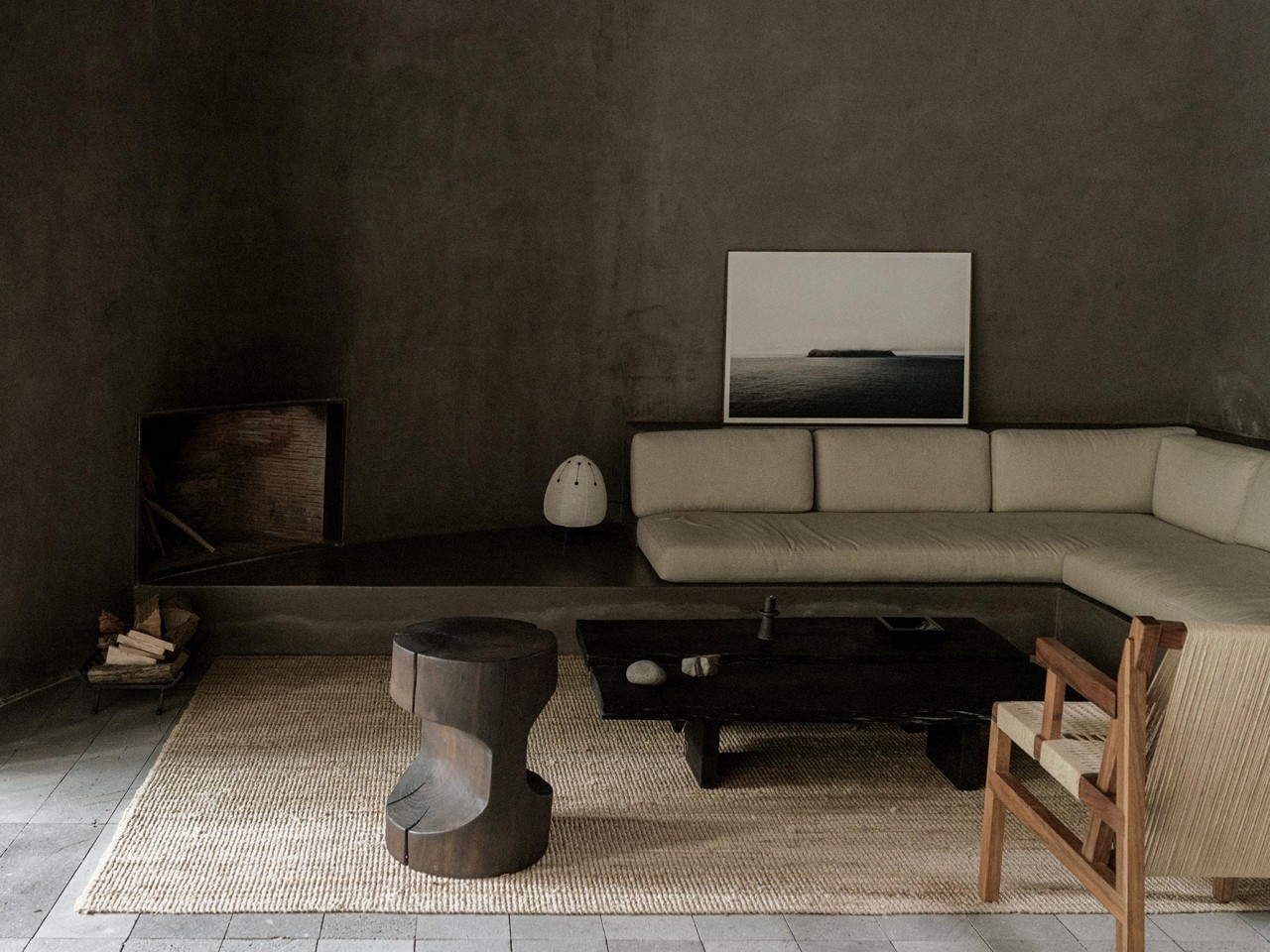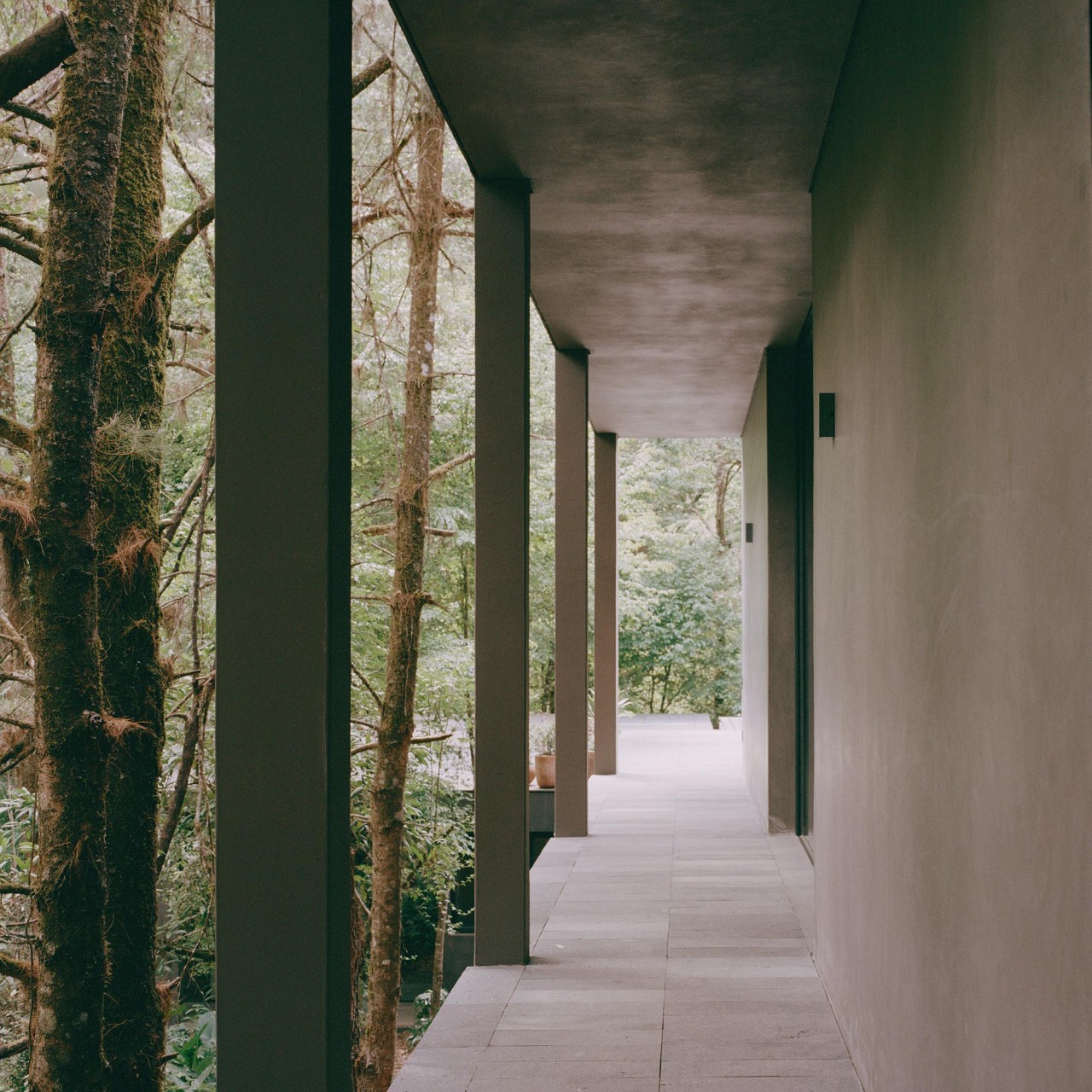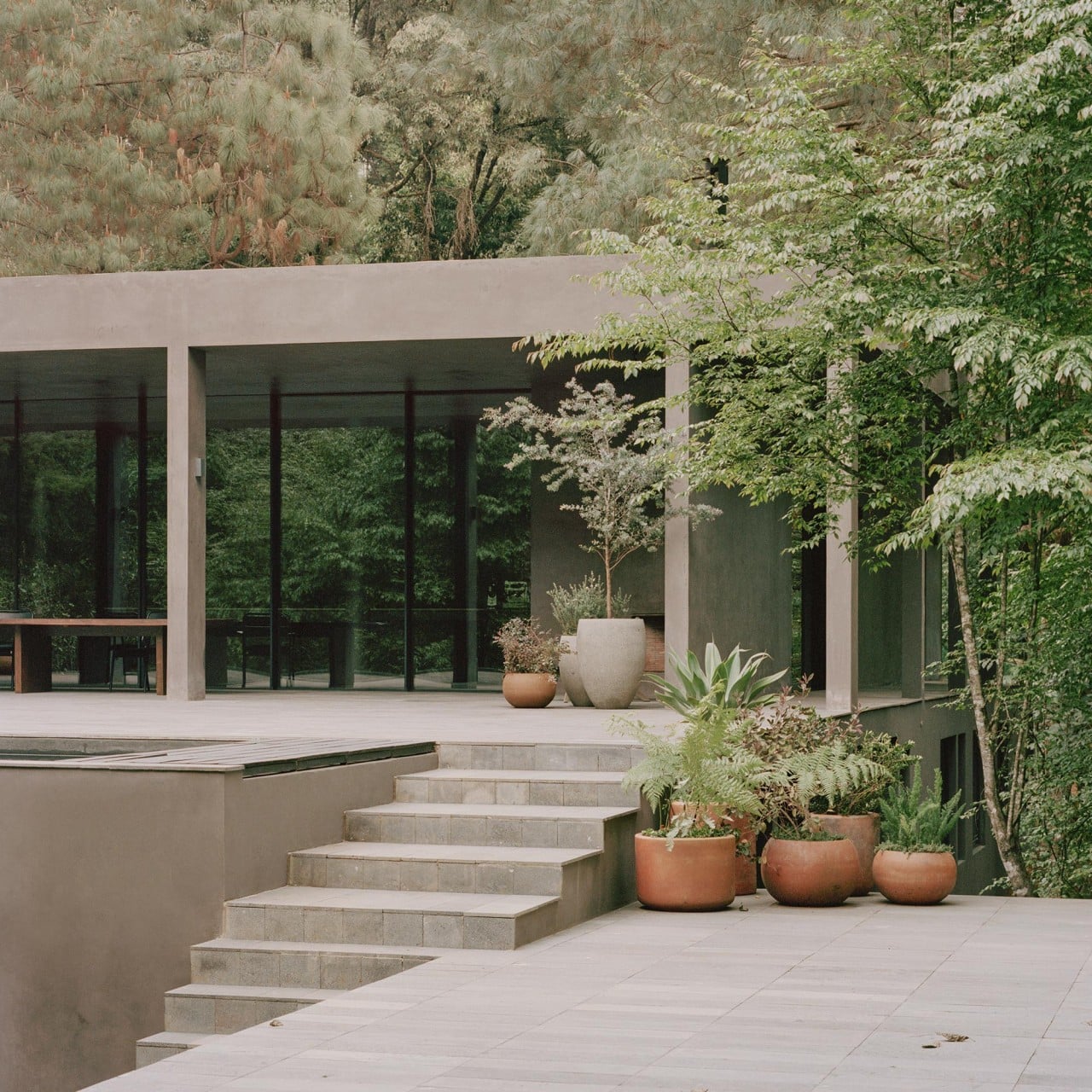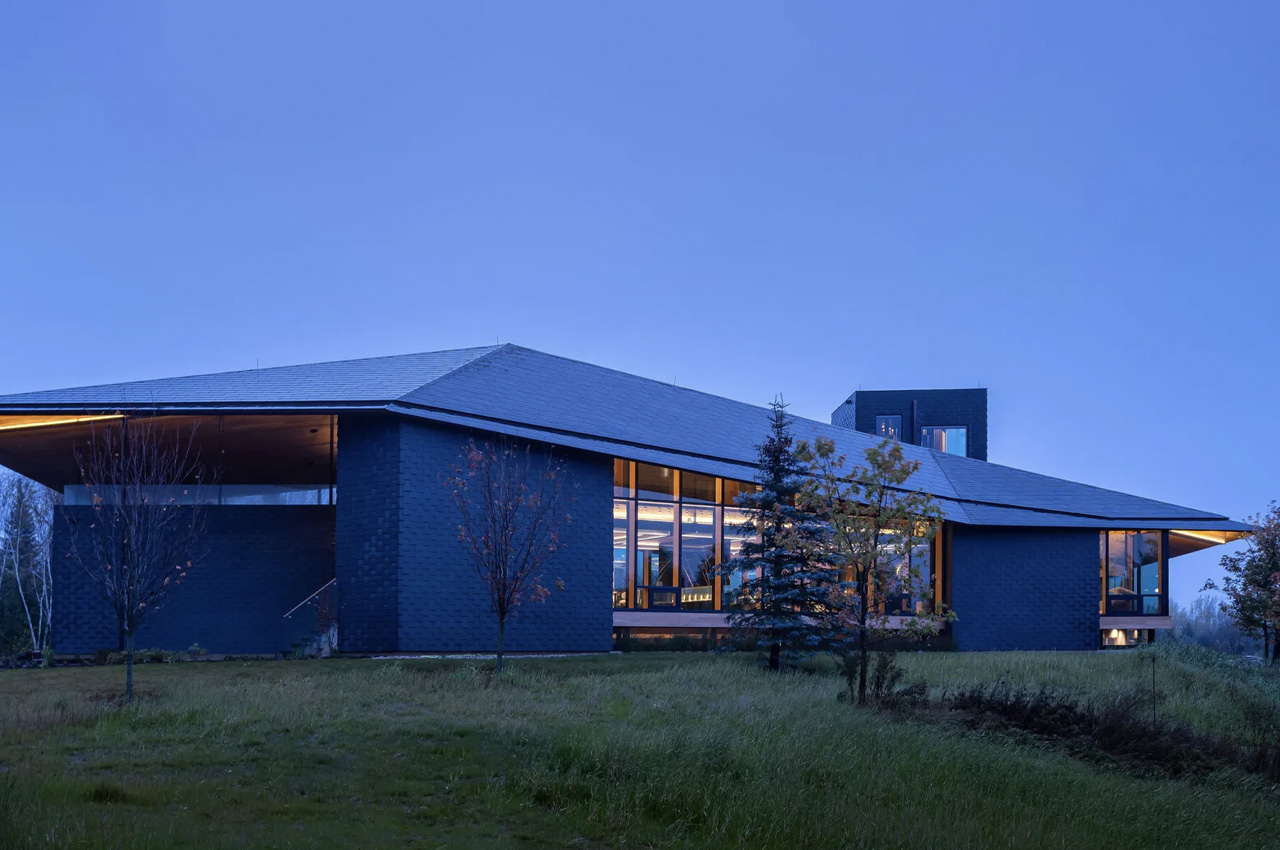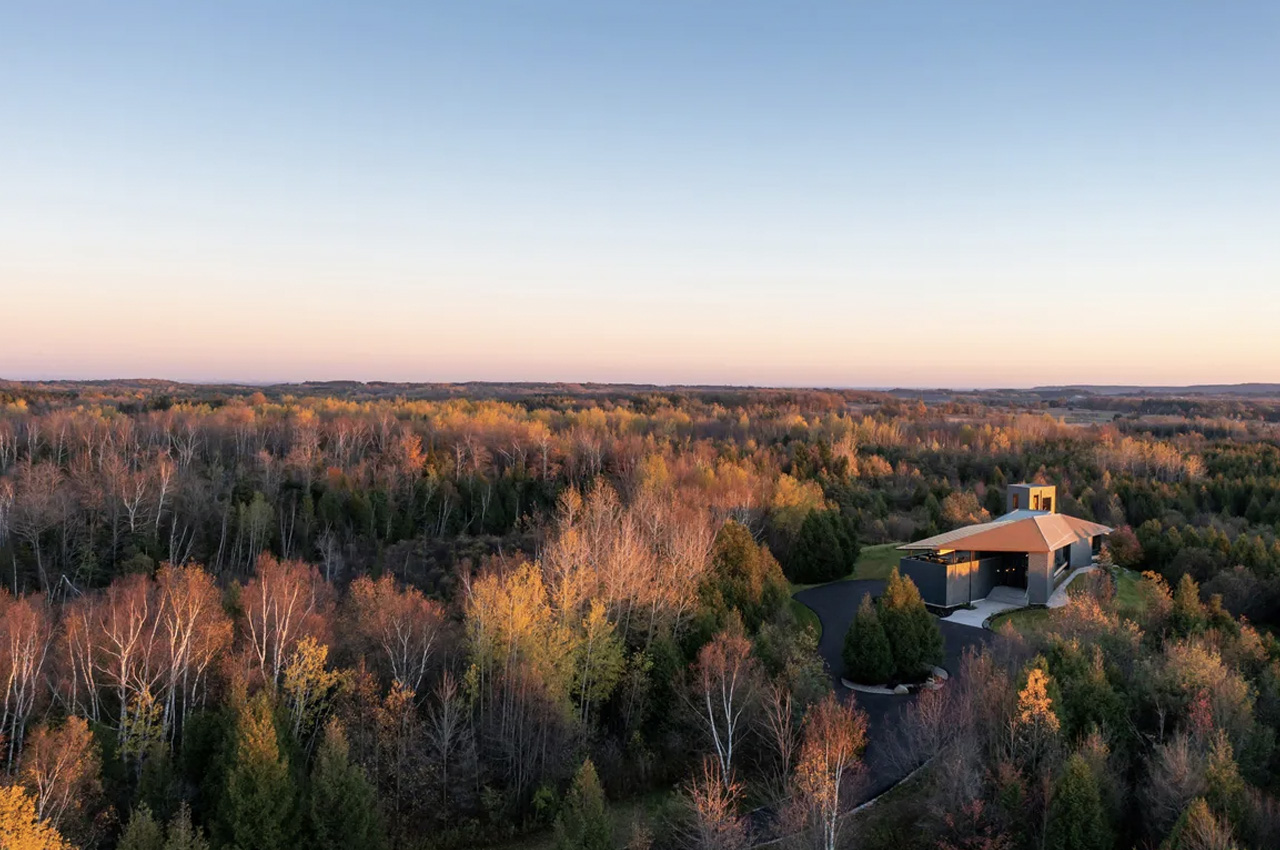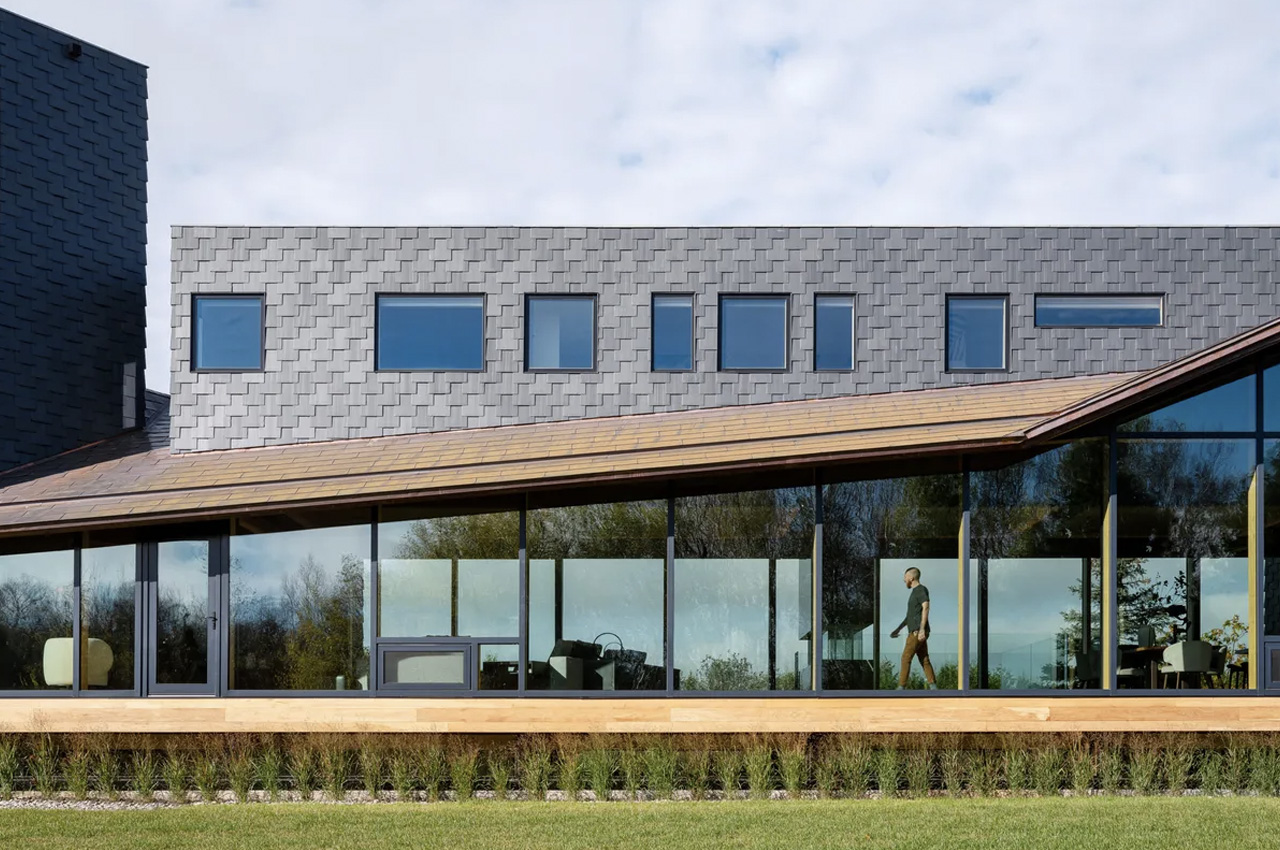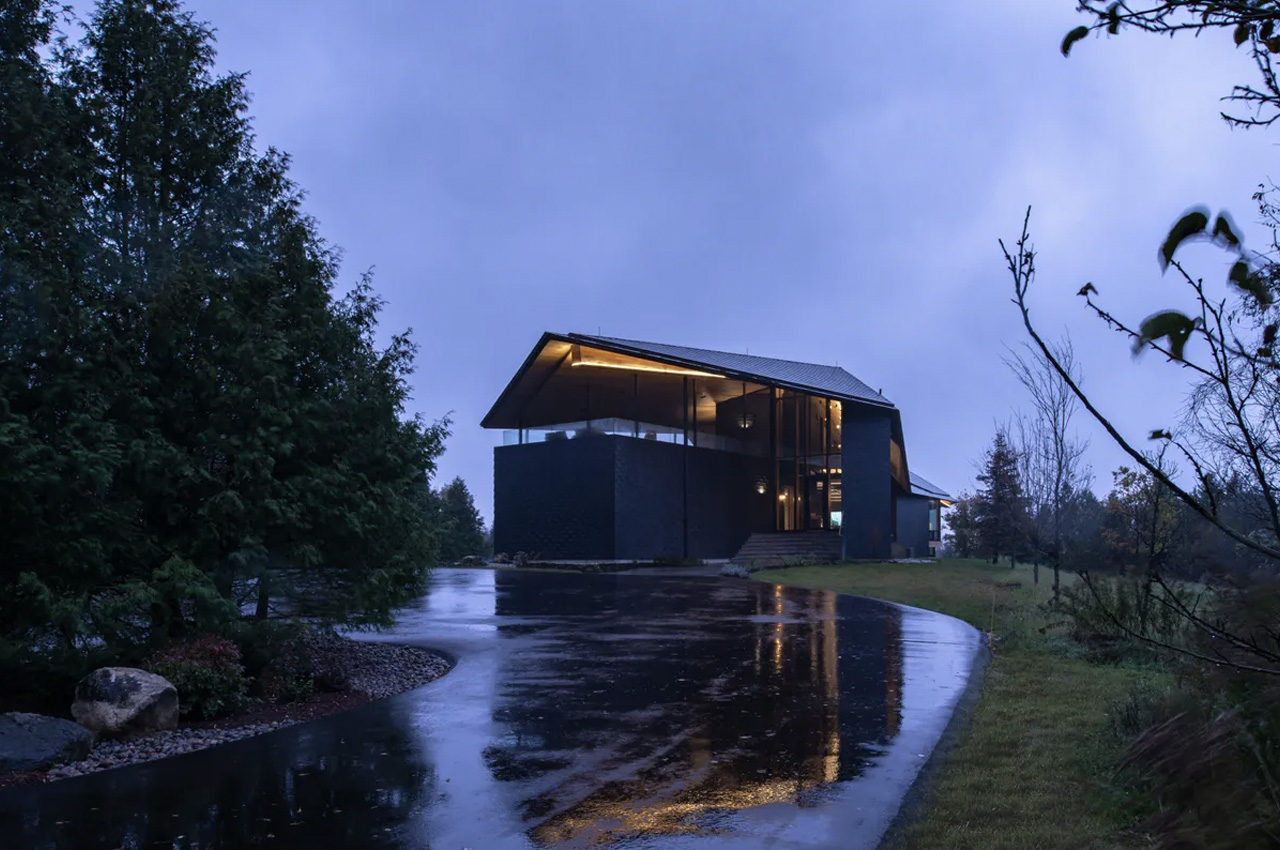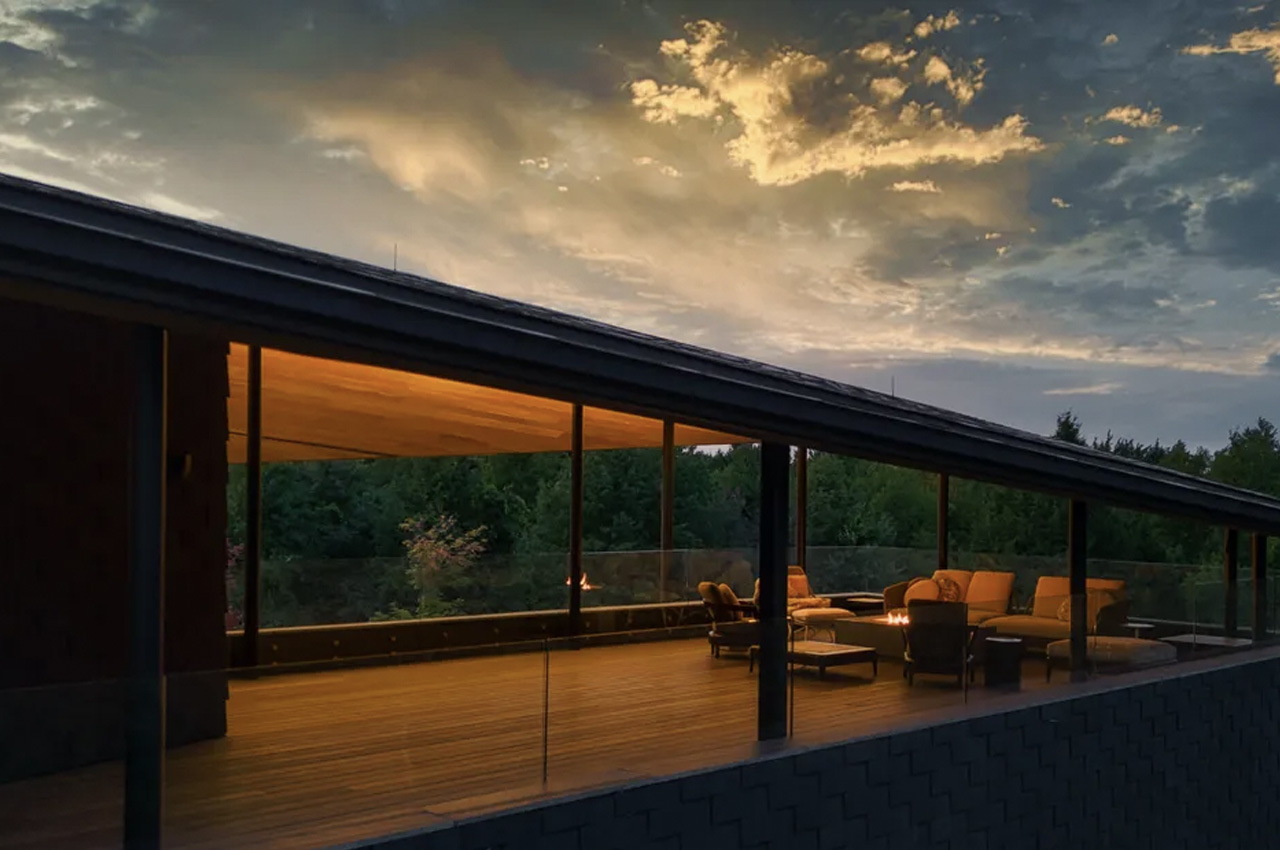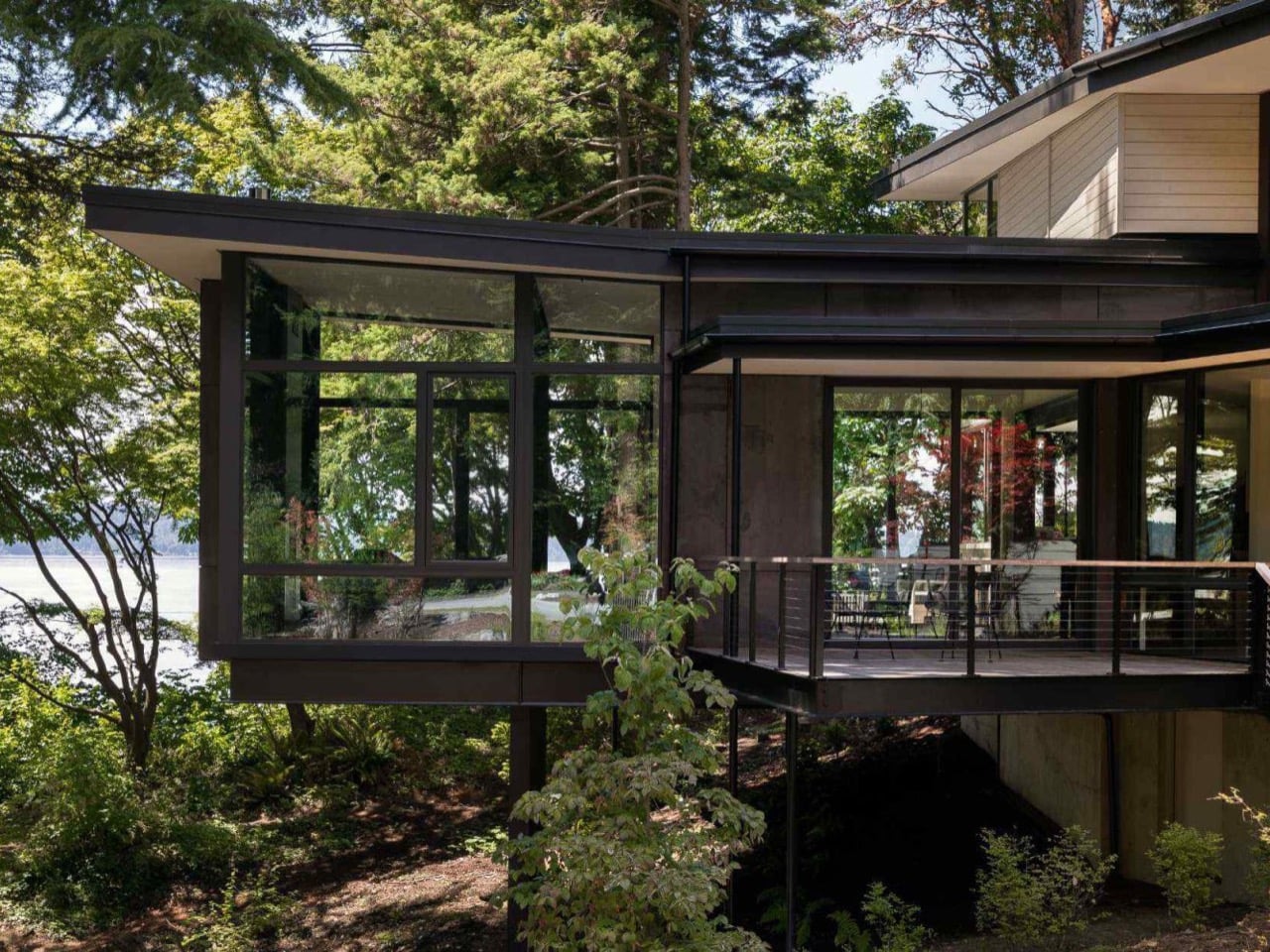
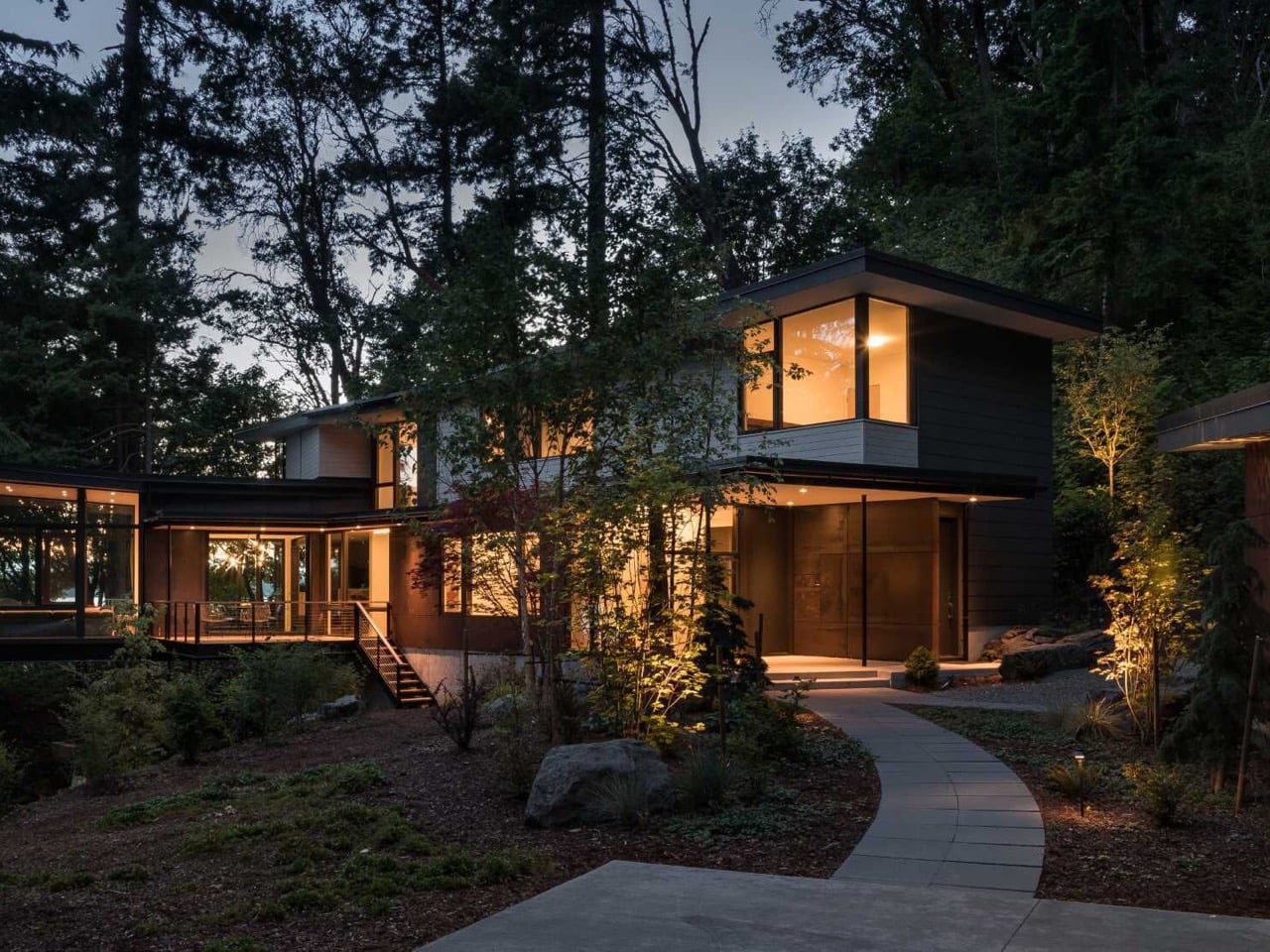
Frank Lloyd Wright hung a house over a waterfall back in the 1930s, and architects have been trying to one up that flex for nearly a century now. Most of them cop out with one dramatic overhang, snap the hero shot for the brochure, and call it a day. DeForest Architects wasn’t interested in that shortcut when they took on a one acre bluff above Puget Sound in Burien, Washington. Instead of picking a single showpiece moment, they let the whole house negotiate its steep, forested site room by room. Some volumes tuck into the hillside, others push out past the tree line, and the living room goes furthest of all, floating above the forest floor like a treehouse that happens to have a structural engineer on payroll. It’s a bold move, and somehow it never tips into spectacle.
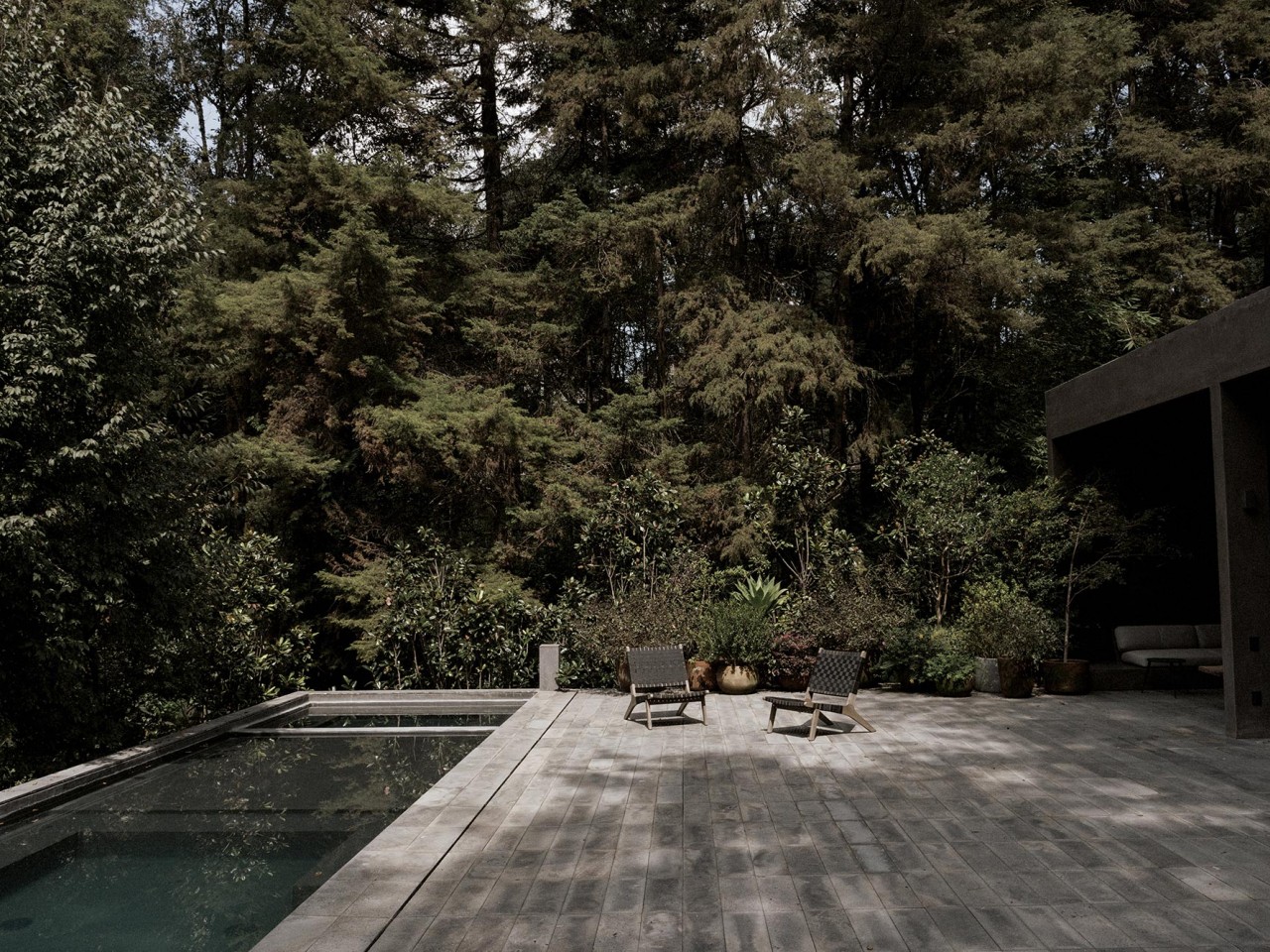
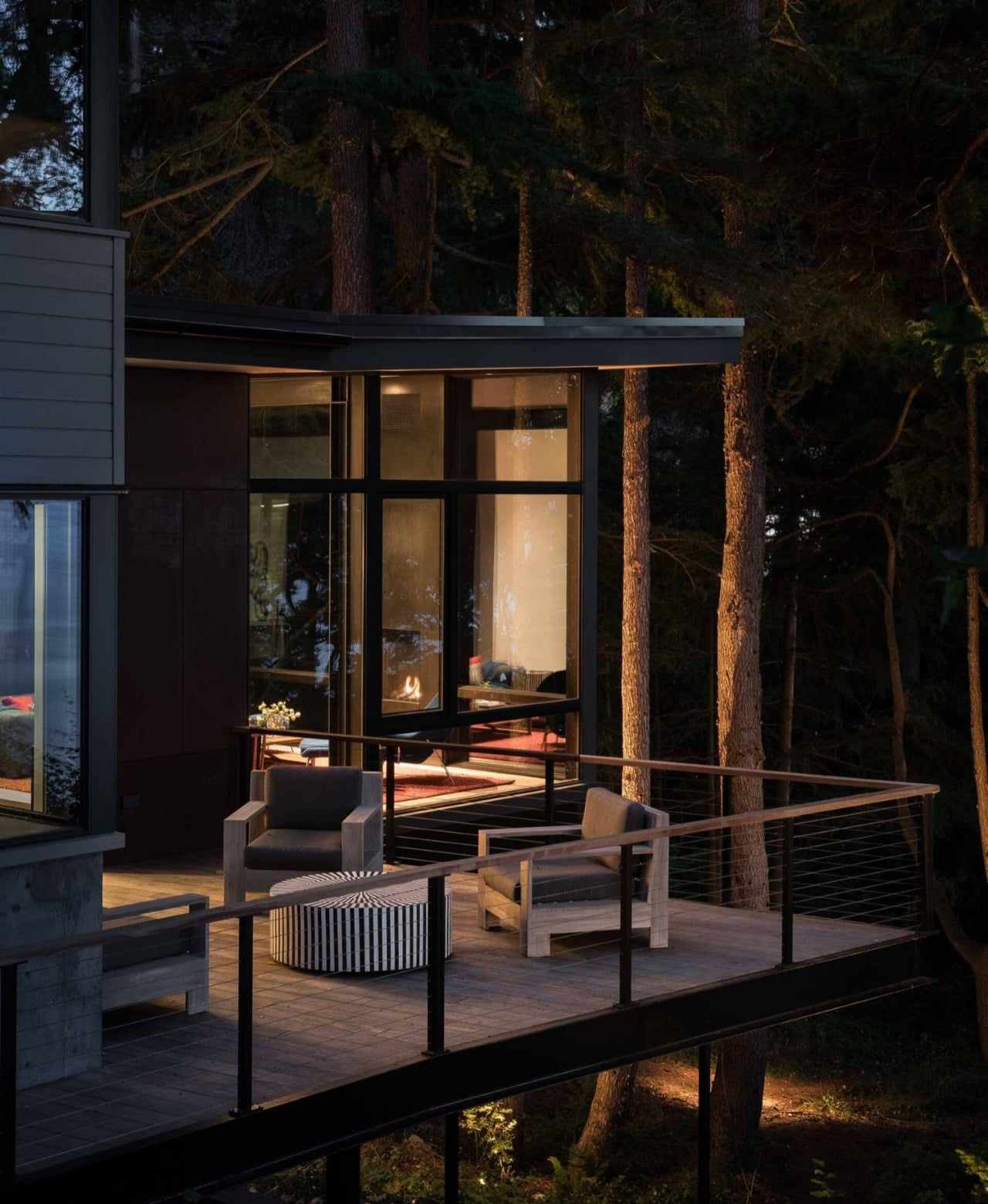
Ore Studios handled interiors alongside DeForest’s architecture, and you can tell the two teams never stopped talking to each other, because the shell and the furniture never feel like separate decisions. Floor to ceiling windows framed in thick black steel wrap the living room, turning the surrounding pines into part of the interior instead of scenery you glimpse through glass. Decks stretch off both sides of that suspended room, one facing a woodland meadow, the other facing open water, so the house pulls off two completely different outdoor relationships without moving a single wall. A fireplace anchors the room dead center, and against an otherwise calm, dark palette, a red rug and a blue lounge chair do basically all the emotional heavy lifting. Toth Construction built it, and photographer Haris Kenjar’s shots make it obvious just how restrained the material story stays everywhere else the color doesn’t show up.
Designers: DeForest Architects (John DeForest, Michael Knowles), interiors by Ore Studios
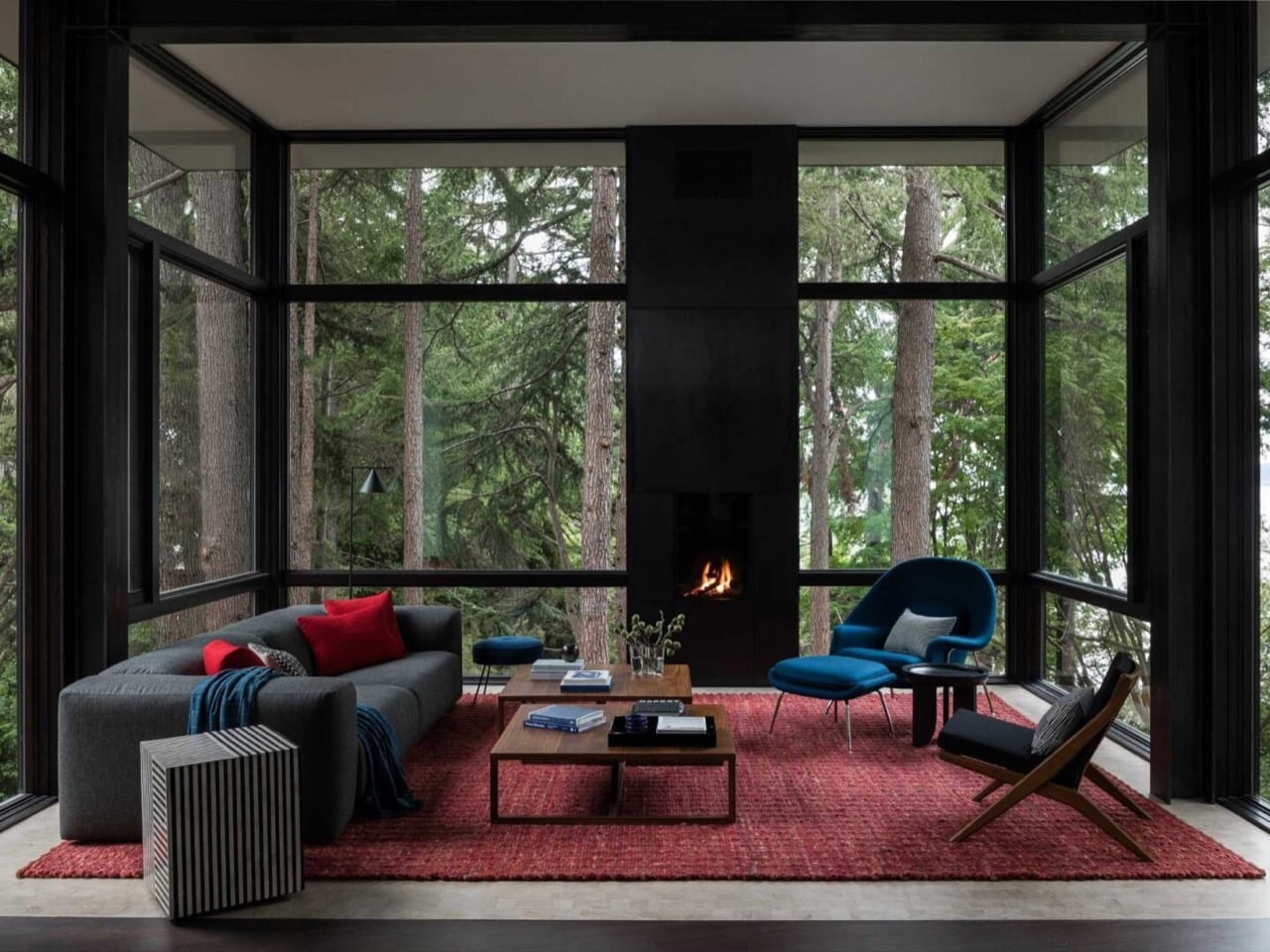
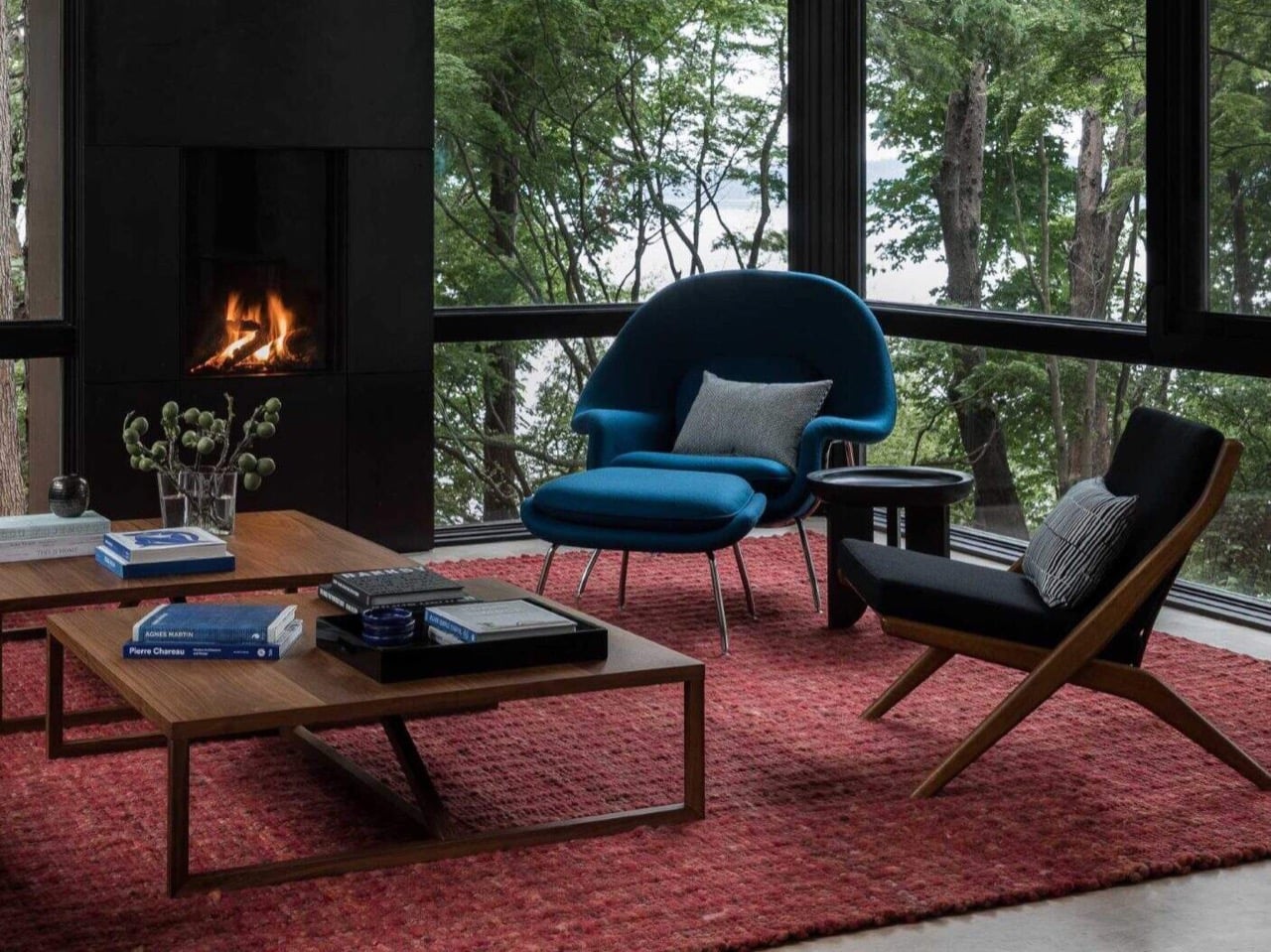
Surrounded by trees on three sides, that living room earns the treehouse comparison honestly rather than just leaning on it as marketing language. The owners wanted something peaceful with room left over for surprise, which sounds like a contradiction until you see how DeForest solved it. Instead of piling on decorative flourishes, they varied elevation and let the forest do most of the visual work through all that glass. A red sofa cushion here, a cobalt lounge chair there, and the room reads as calm and lived in rather than staged for a shoot. It helps that the steel framing is thick enough to feel structural rather than decorative, which keeps the whole glass box from feeling fragile despite hanging in midair above the slope.
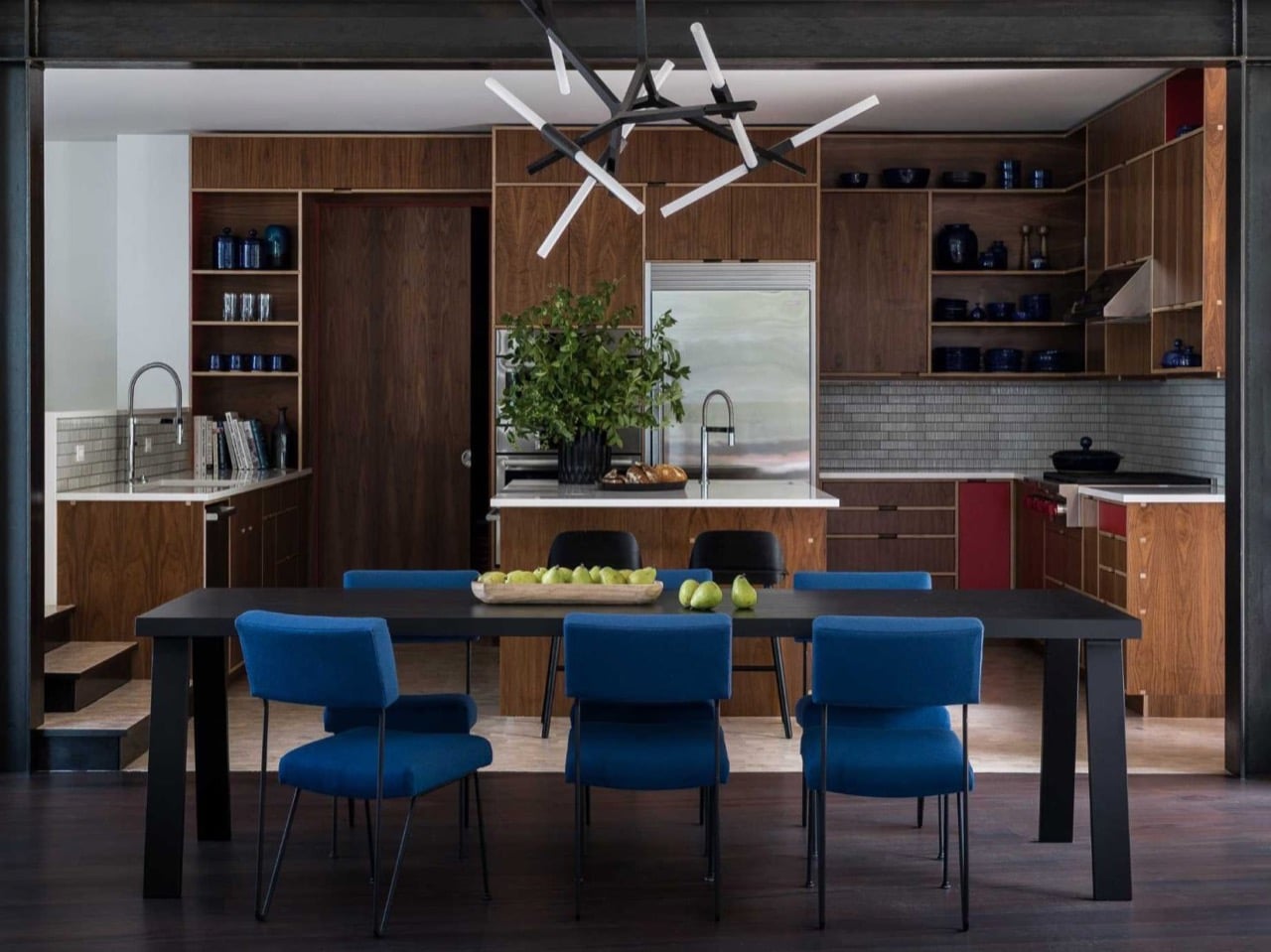
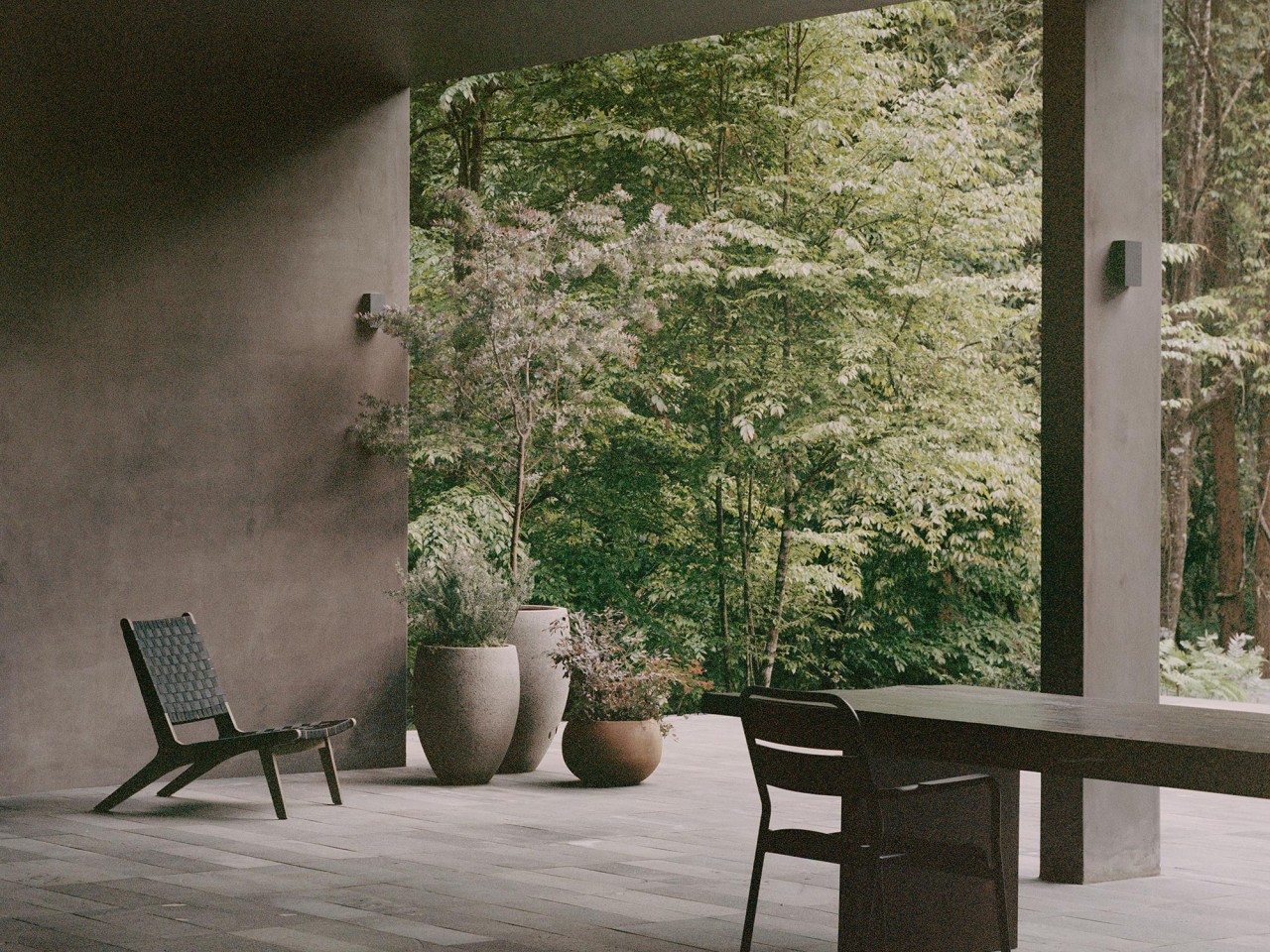
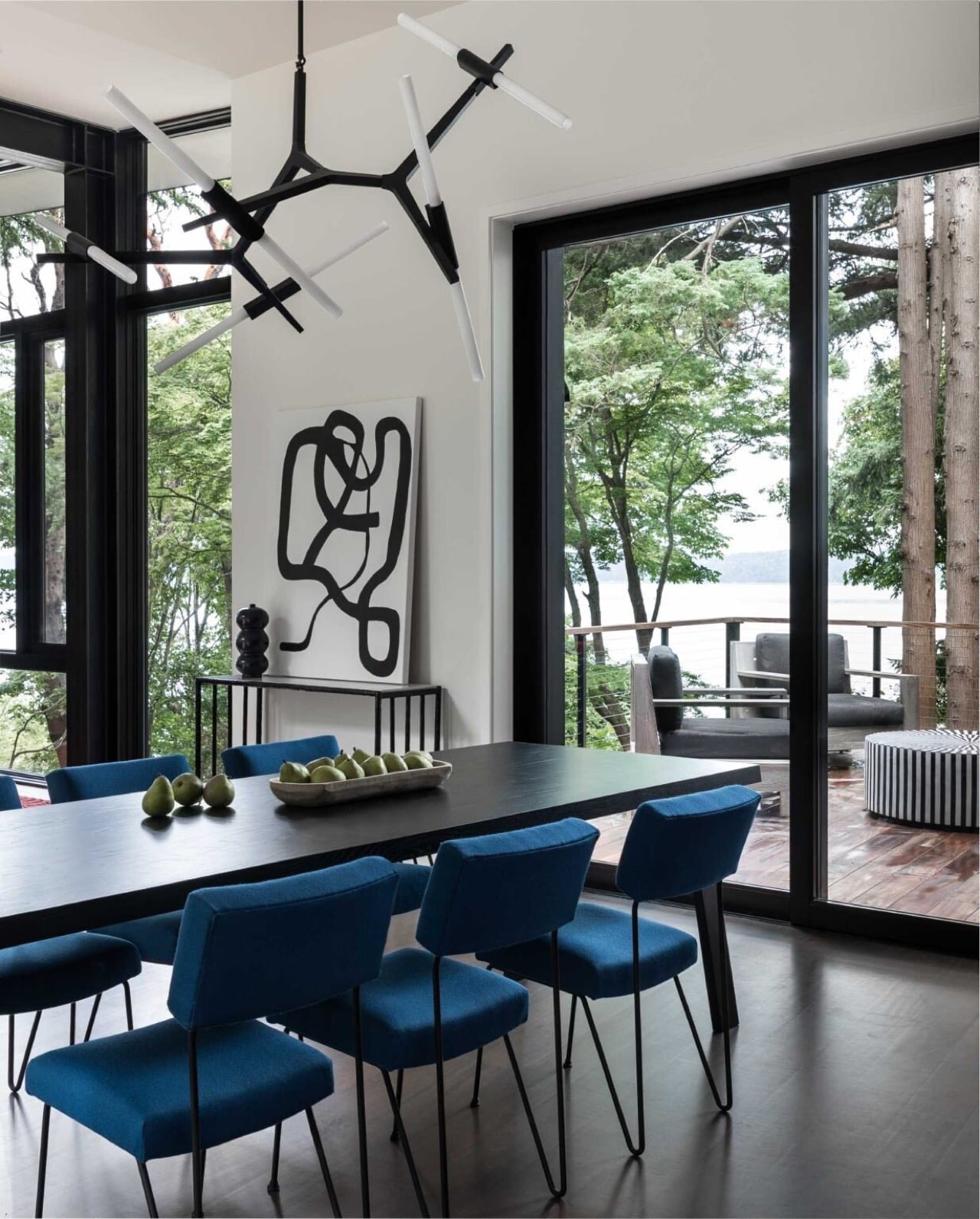
That same color language keeps traveling once you leave the living room, which is where a lot of ambitious houses start to lose their nerve. Blue dining chairs with slim metal frames pick up where the lounge chair left off, adding personality without competing with the water views outside. The kitchen sits just beyond, wrapped in walnut cabinetry that swaps the cool palette for something warmer and more tactile. Red accent panels show up again here, a quiet callback to the rug two rooms over, proof that DeForest and Ore Studios were working from the same script rather than improvising room by room. Nothing about the furniture distracts from the forest outside, which seems to be the entire design brief in a nutshell.
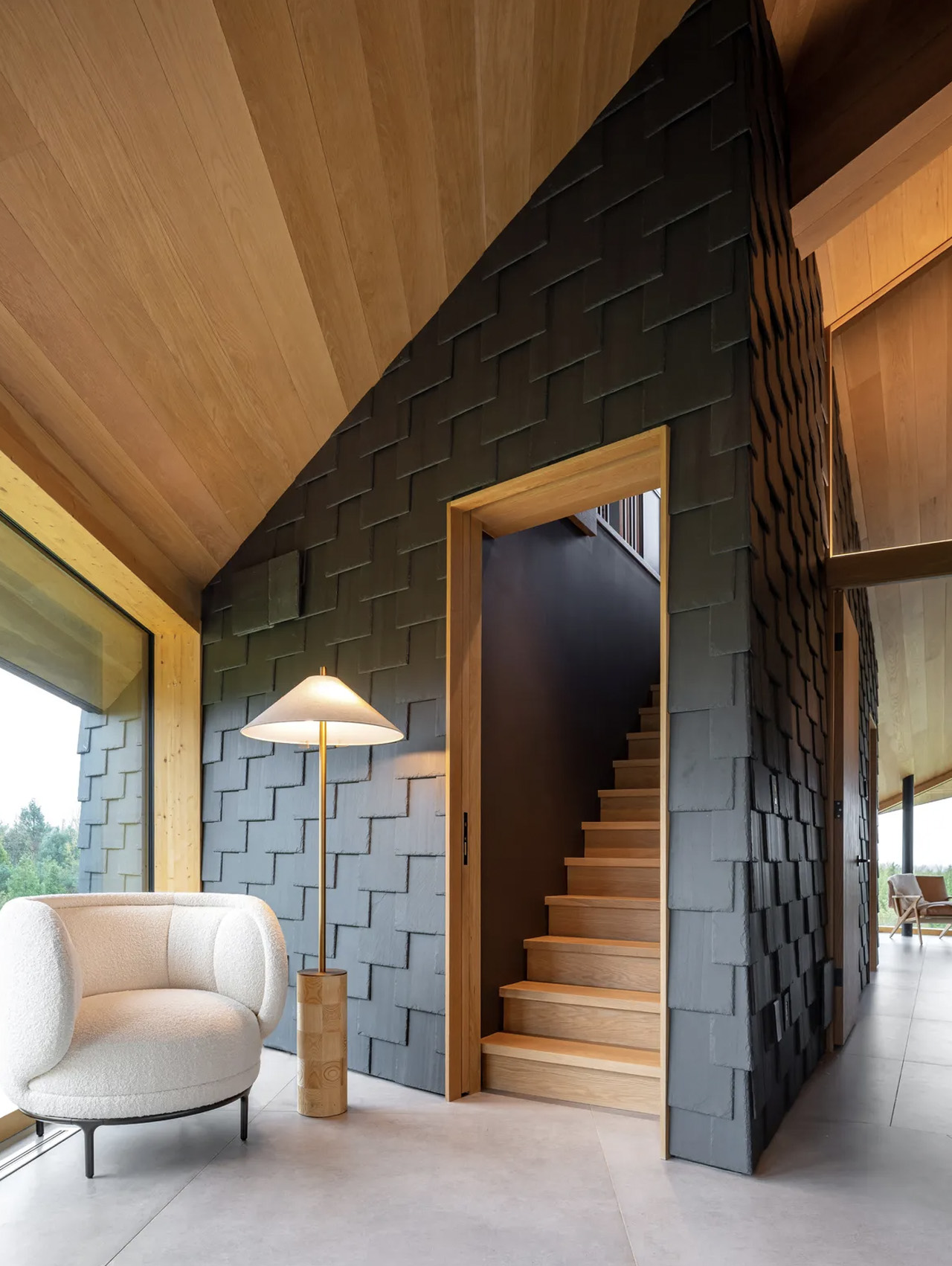
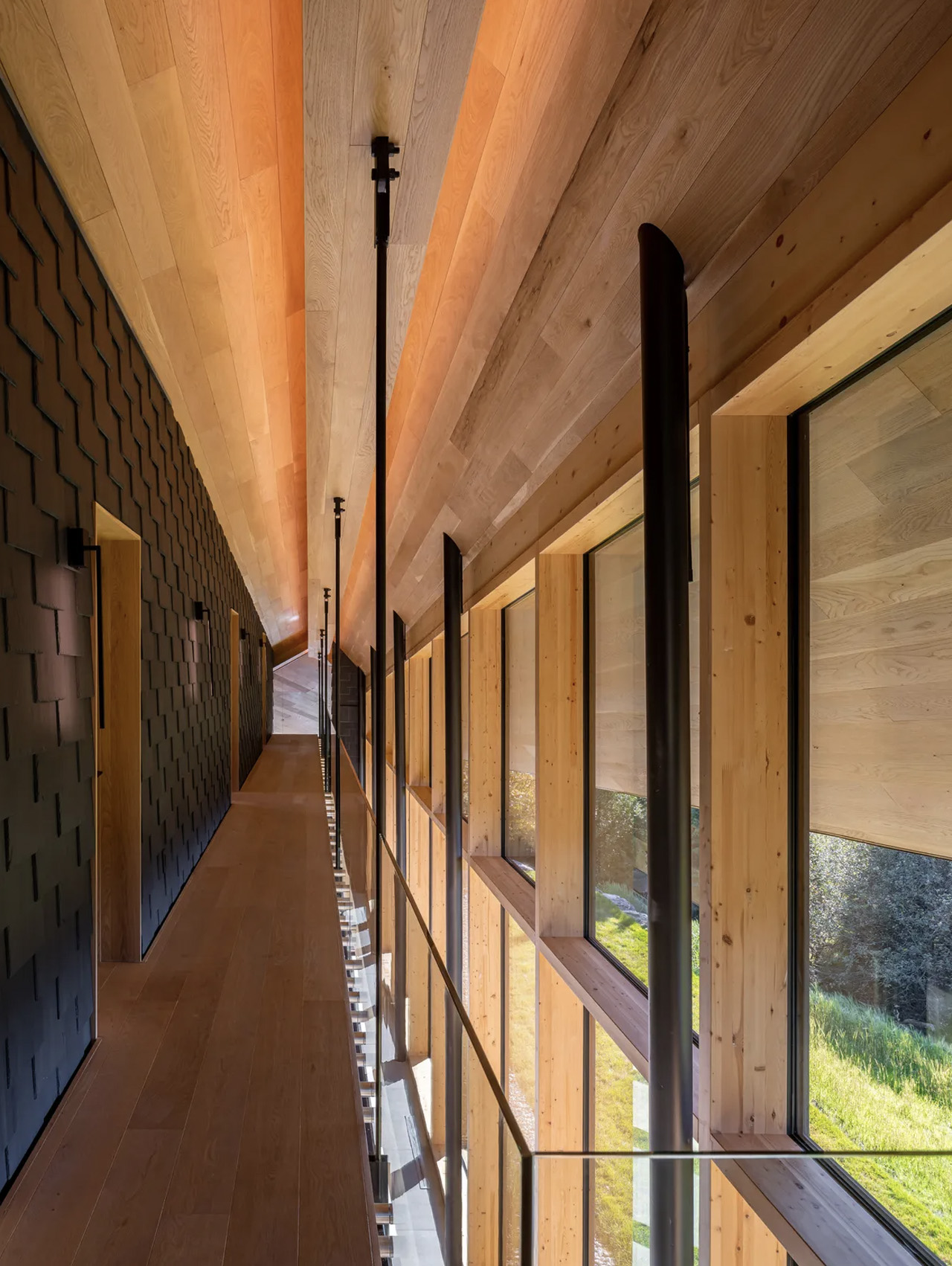
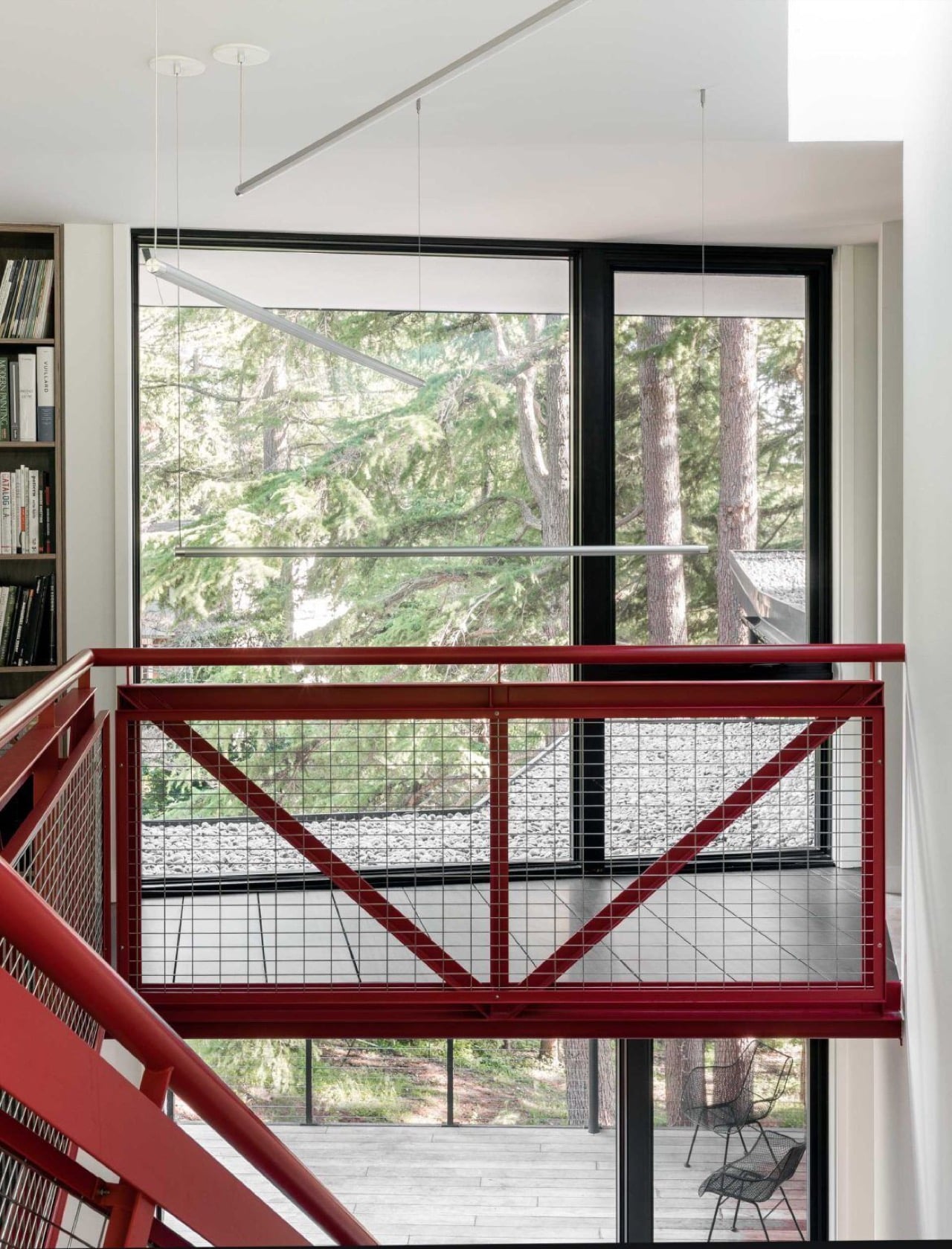
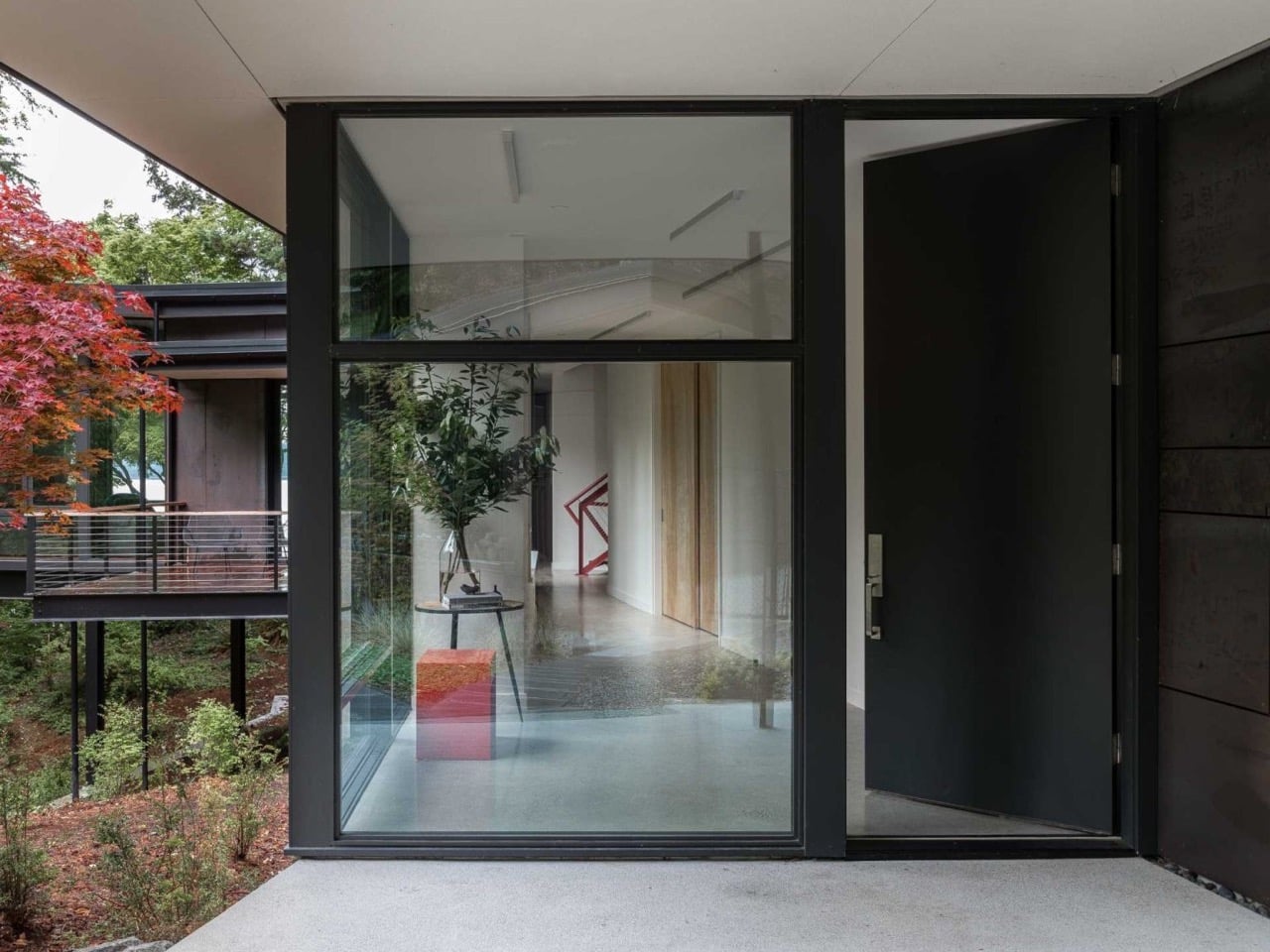
The most theatrical detail in the whole house doesn’t come from the glass at all, it comes from a staircase. DeForest based its red steel structure on the fire lookout towers that used to dot ridgelines across the Pacific Northwest, spare utilitarian buildings meant for spotting smoke before anyone else could. As it climbs through the house, the staircase echoes the actual climb up the hillside outside, turning a purely functional element into the closest thing the home has to a sculpture. It’s a small footprint, structurally speaking, but it carries an outsized share of the house’s personality. Painted a saturated red against white walls, it reads less like circulation and more like a piece the owners could have commissioned separately.
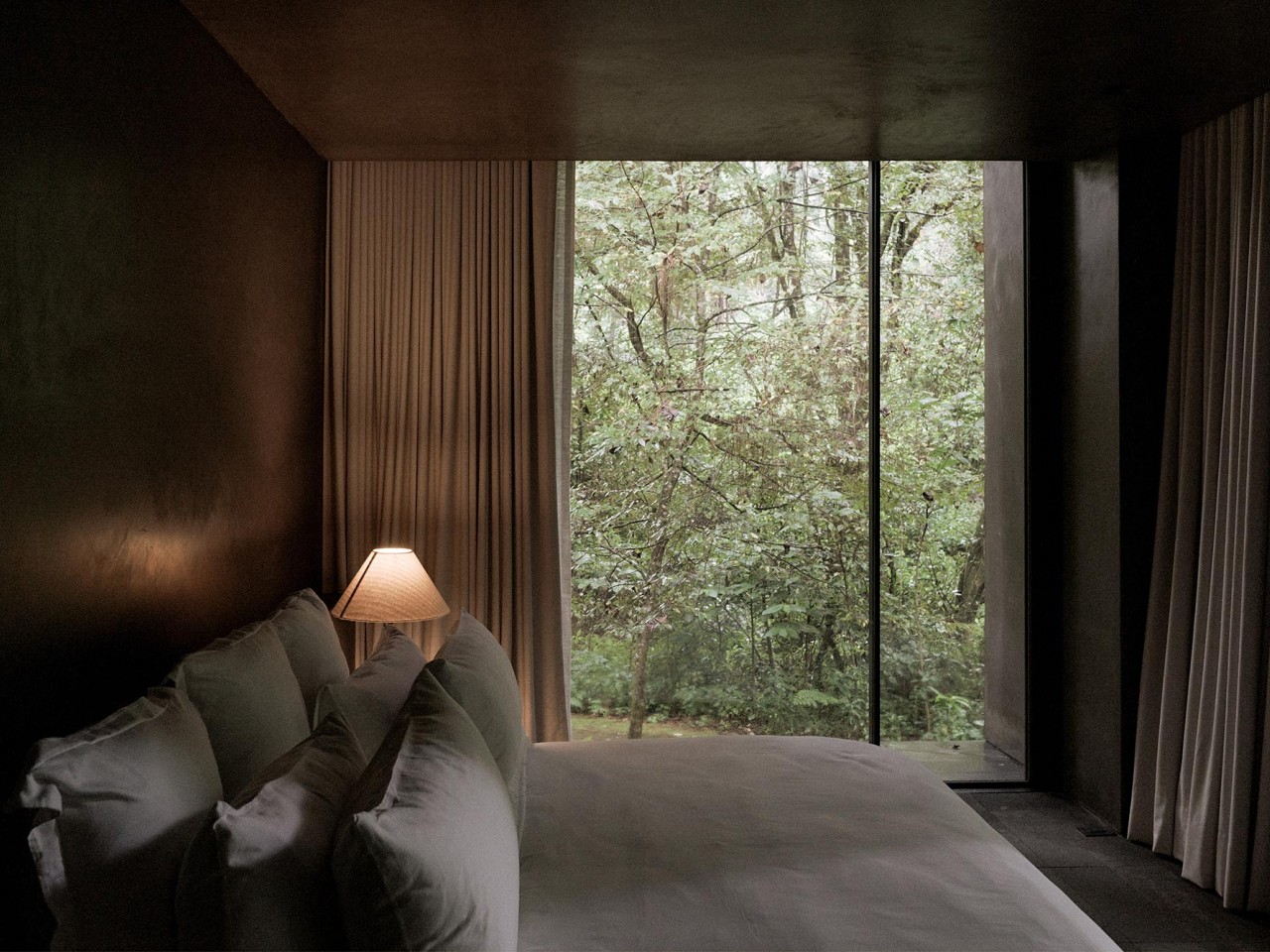
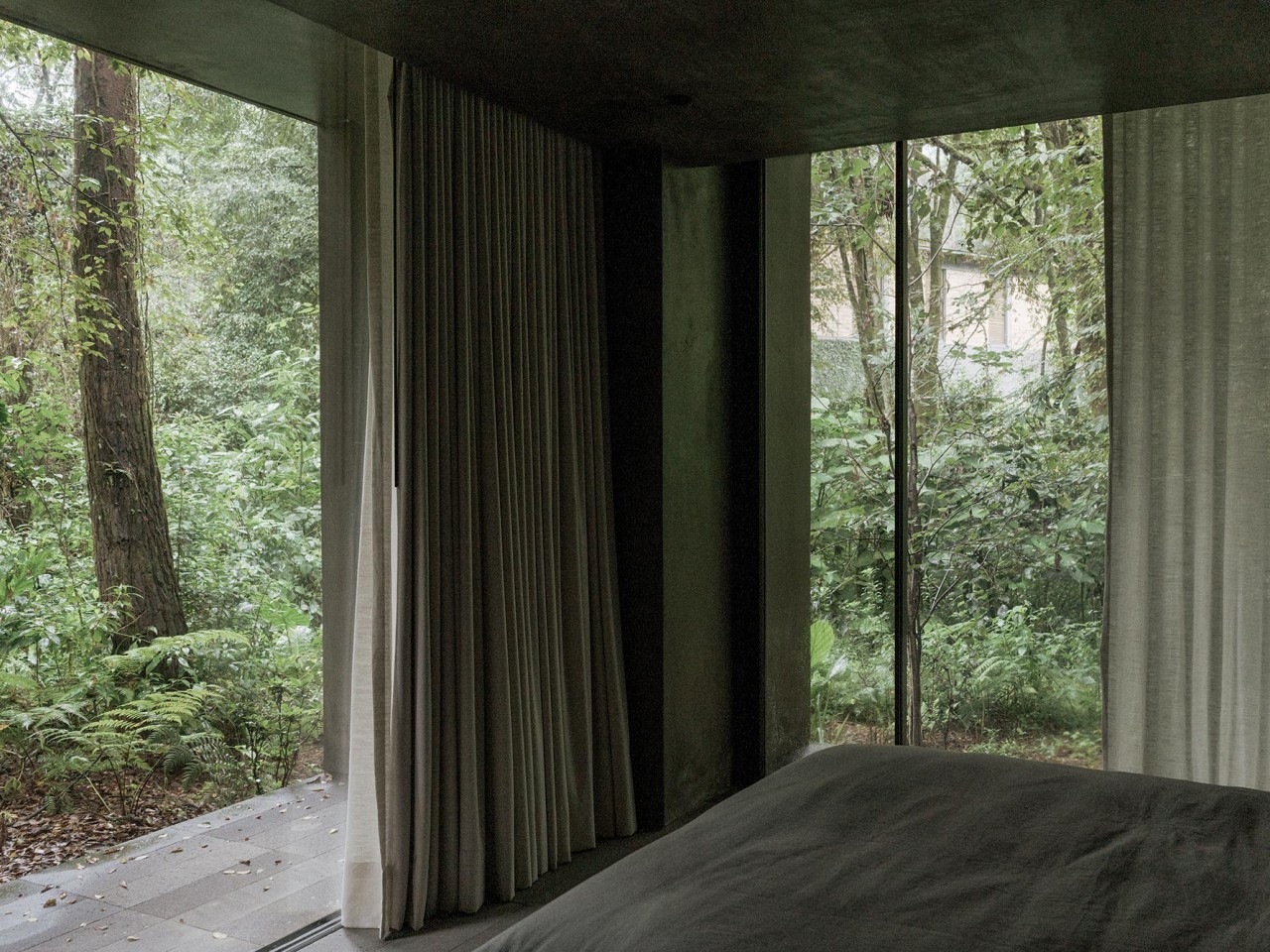
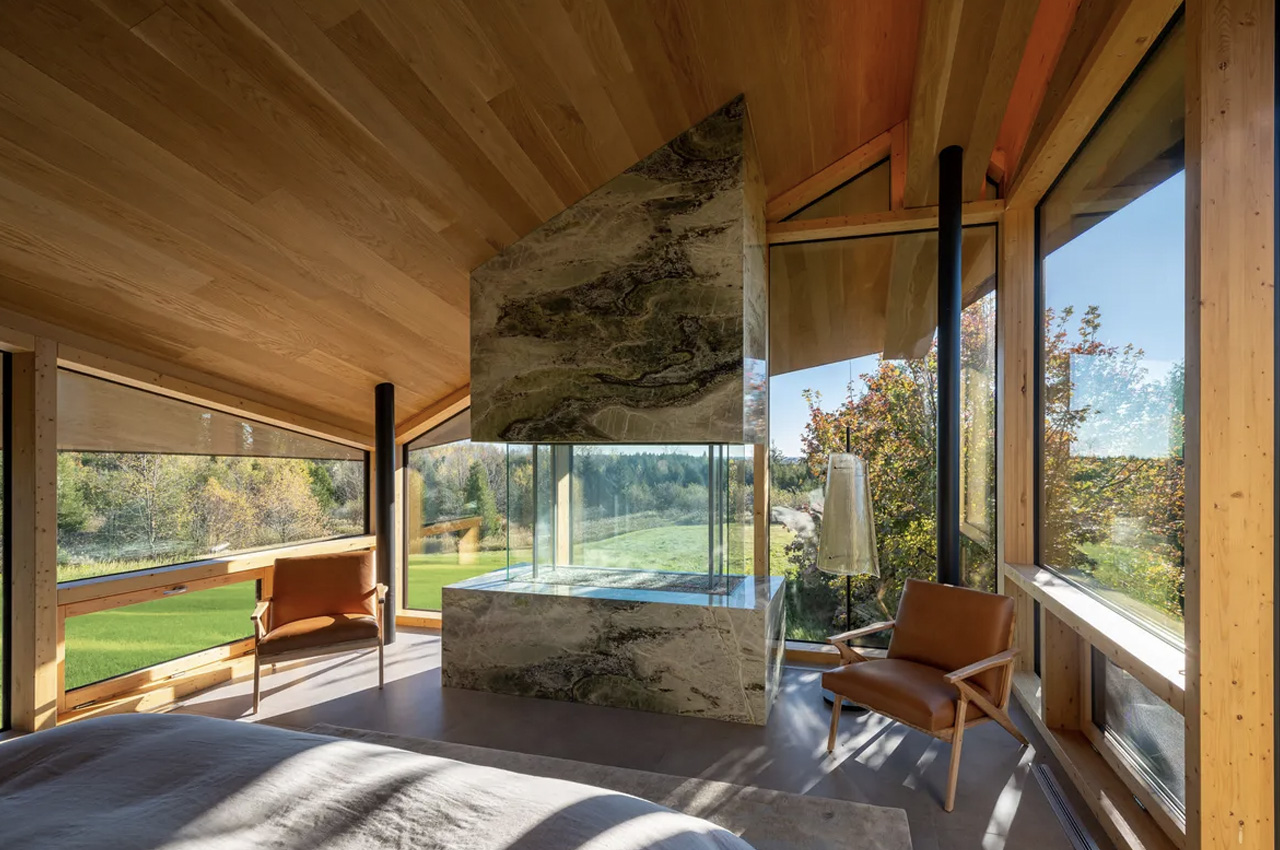
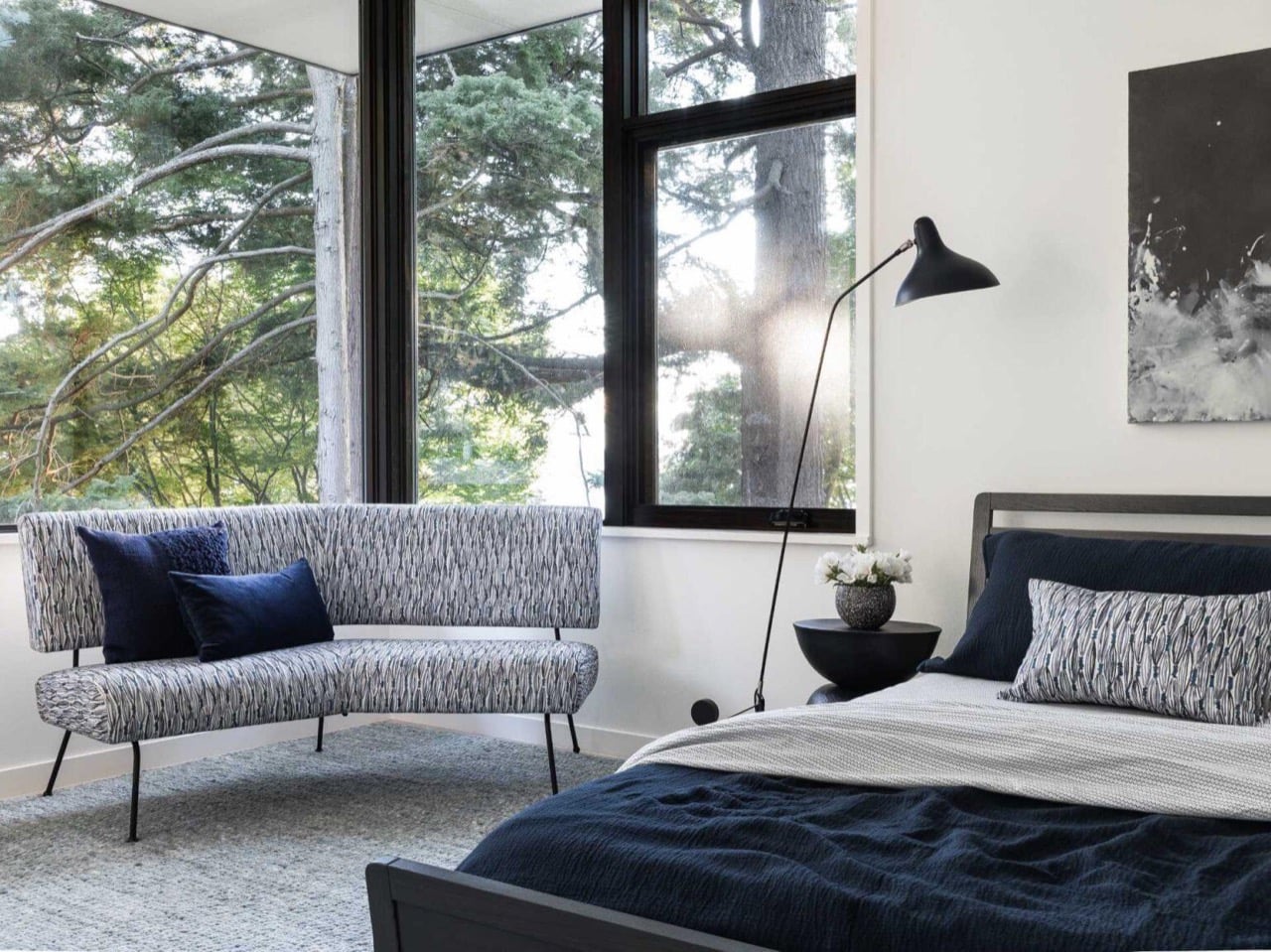
Upstairs, the bedroom dials the energy back down without abandoning the color story that runs through the rest of the house. Deep blues show up in the cushions and bedding, playing against grey and black finishes for something that feels genuinely restful rather than sparse. It’s the same restrained material palette found everywhere else in the home, just recalibrated for a room where the goal is sleep rather than entertaining. Large windows keep the forest close even here, so the connection to the site never fully disappears even in the most private room of the house. It’s a quieter moment, but it fits the same internal logic as everything that came before it.
Cantilevered houses tend to live or die by whether the drama feels earned or bolted on as an afterthought, and this one earns it. DeForest Architects and Ore Studios didn’t settle for one showpiece room and call the rest of the house filler, they built an entire structure that keeps renegotiating its relationship to a genuinely difficult site. The fire lookout staircase and the suspended living room could have each carried a project on their own, and here they exist in the same house without stepping on each other. Toth Construction gets credit too, since none of this works if the execution doesn’t match the ambition on paper. Burien, Washington isn’t exactly known as an architecture destination, but this house makes a decent case that it should be.
The post This Cantilevered Forest Home in Washington Hovers Above The Trees first appeared on Yanko Design.