Large-format displays have always posed a spatial question that brightness alone cannot answer: how much permanence does a room owe to its screen? The Hisense 100U8QG, reviewed earlier this year, represented one answer. At 100 diagonal inches of Mini-LED panel, it demanded architectural consideration. Wall reinforcement, viewing distance calculations, furniture subordination. The display became a fixture in the truest sense, its physical presence reshaping the room around it.
Designer: Hisense
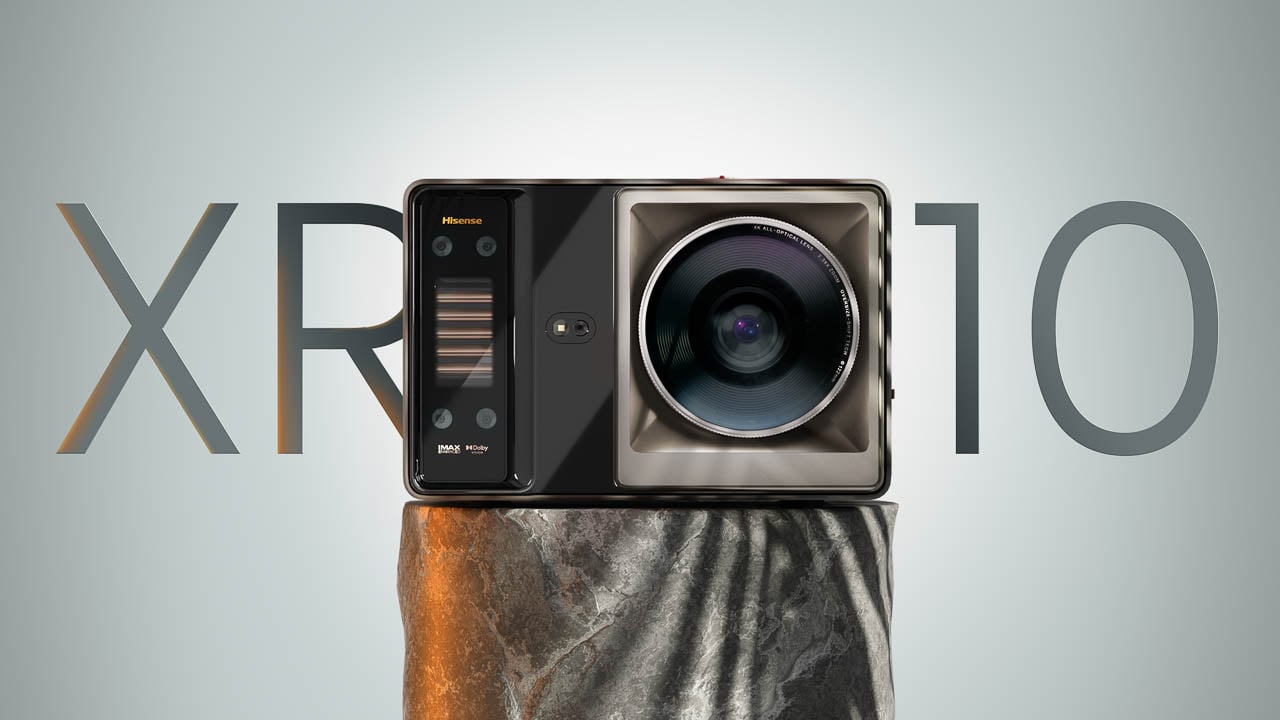
The XR10 Laser TV, unveiled ahead of CES 2026, proposes a different relationship between image and architecture. Where the 100U8QG commits, the XR10 suggests. Where fixed panels dictate, projection negotiates.
Scale Without Permanence
The fundamental distinction lies not in image quality but in spatial philosophy. A 100-inch television is a decision. Once mounted, its presence organizes the room. Seating angles become fixed. Wall treatments become irrelevant behind the panel. The display asserts dominance over its environment, requiring the space to accommodate its permanence.
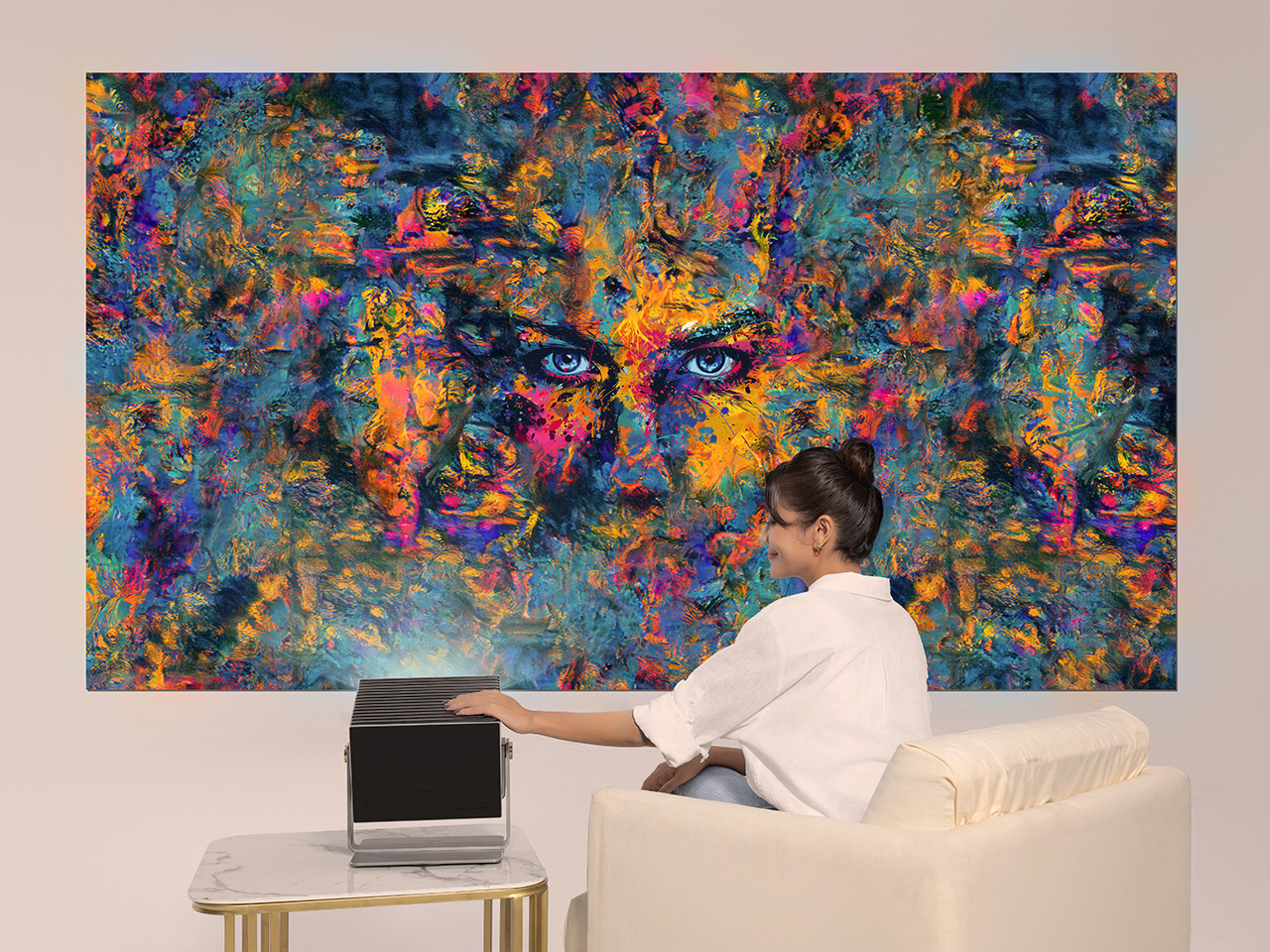
Projection operates under different constraints. The XR10 can scale from 65 to 300 inches depending on throw distance and surface availability. This variability represents more than convenience. It represents a fundamentally reversible intervention. The wall remains a wall. The room retains its capacity to be something other than a viewing space. When the projector powers down, the architecture reasserts itself in ways that a mounted 100-inch panel never permits.
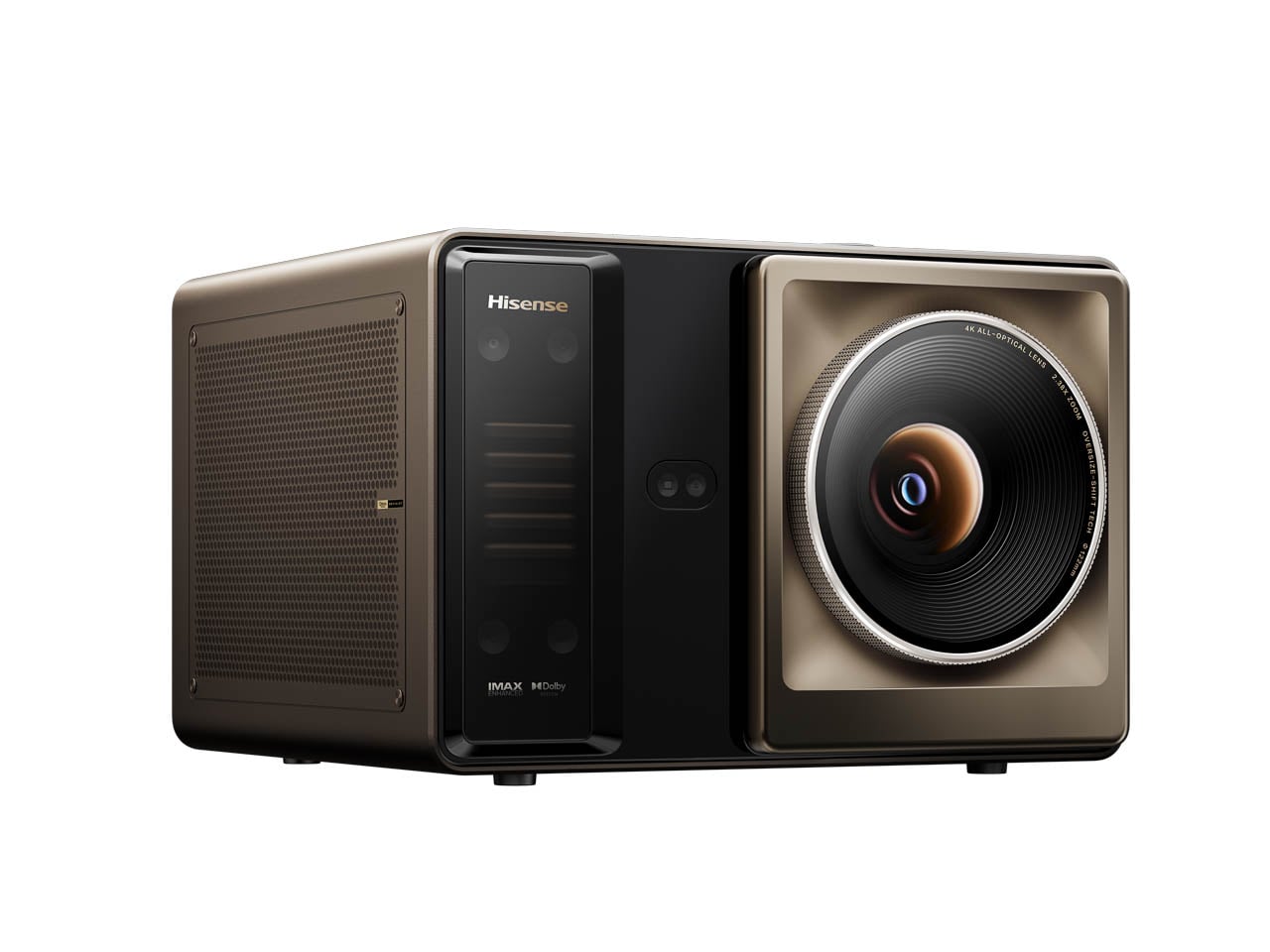
This reversibility carries design implications that extend beyond flexibility for its own sake. Spaces increasingly serve multiple functions. A wall that hosts a 200-inch projection in the evening might face windows in the morning, hang artwork during gatherings, or simply recede into architectural neutrality when entertainment is not the room’s purpose. Fixed ultra-large displays foreclose these possibilities. Projection preserves them.
Brightness as Spatial Liberation
The XR10’s triple-laser light engine achieves output levels that shift the traditional projector calculus. Where previous generations required environmental control, darkened rooms, managed window treatments, controlled artificial lighting, the XR10 can hold its image against ambient conditions that would have dissolved earlier projectors into washed abstraction.
This capability reframes brightness not as a specification but as a design constraint relaxed. The 100U8QG demanded nothing from its environment beyond structural support. It generated its own light, controlled its own contrast, existed independently of the room’s luminous conditions. Projection historically asked more: cooperation from windows, deference from overhead fixtures, submission from the broader lighting design.
The XR10 narrows this gap without eliminating it entirely. Ambient light remains a factor. Surface reflectivity still matters. But the threshold of environmental accommodation drops substantially. A room need not transform itself into a theater to achieve cinematic scale. The projection can coexist with the space rather than demanding its temporary transformation.
Material Presence and Absence
The physical footprint of these technologies tells its own story. The 100U8QG, despite remarkably thin bezels and careful industrial design, remains an object of substantial material presence. Its glass surface catches light. Its chassis occupies wall space whether active or dormant. The panel exists as an architectural element even when displaying nothing.
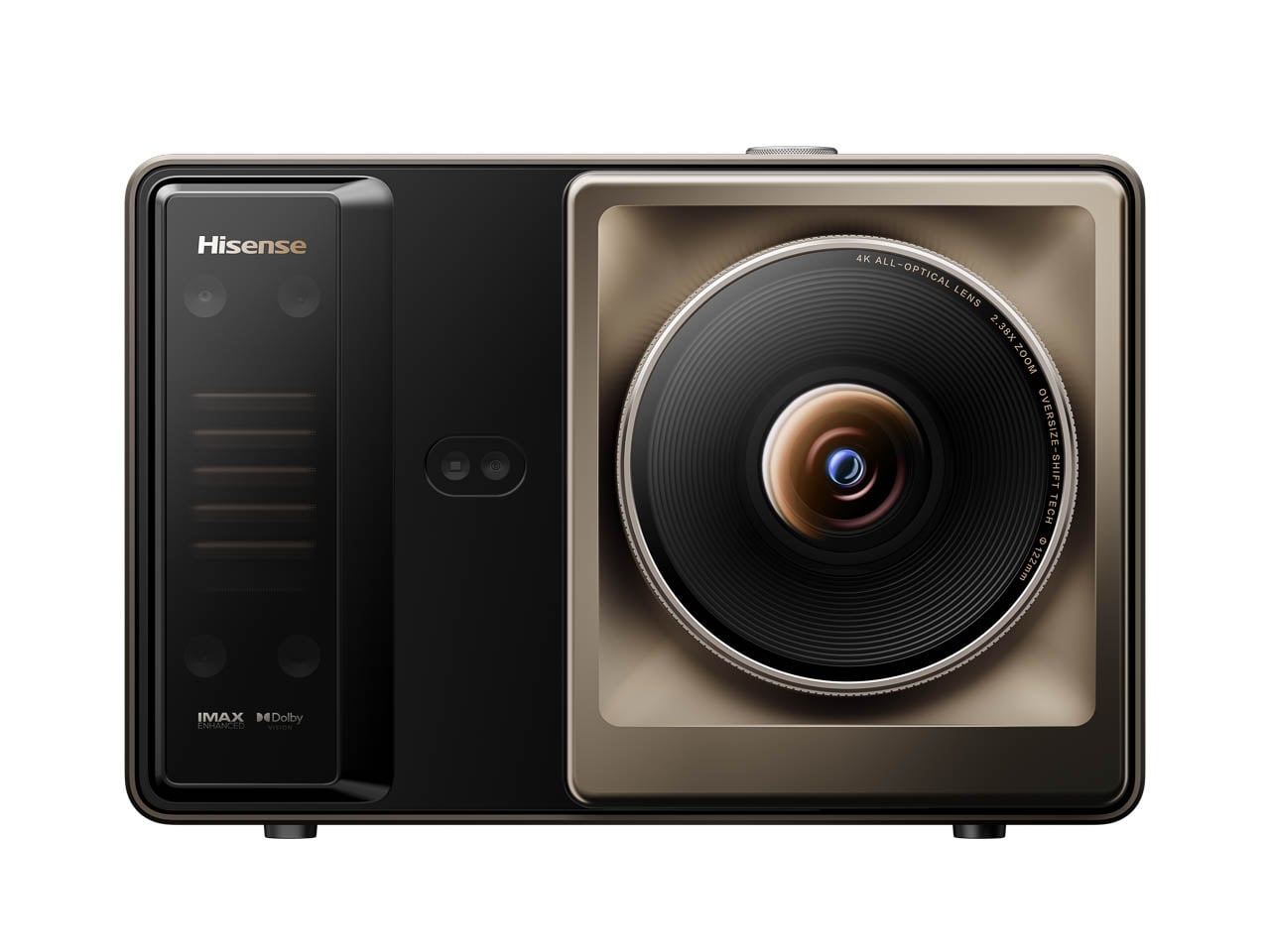
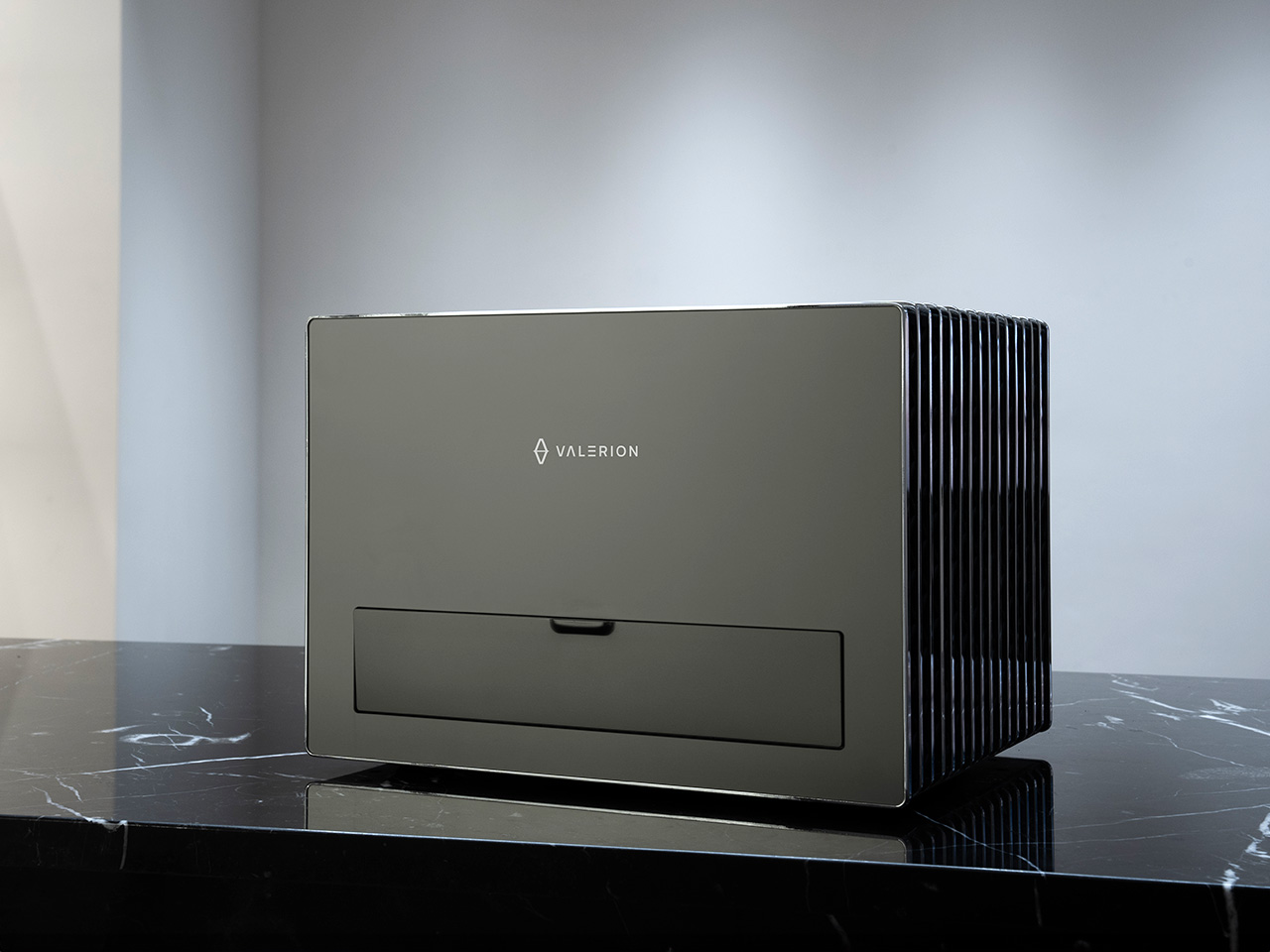
The XR10 operates on different terms. As an ultra-short-throw system, it sits near the projection surface rather than across the room, typically on furniture or a low console beneath the image. The projector itself occupies space, but that space bears no fixed relationship to the image’s scale. A 300-inch projection does not require a 300-inch object. The image and its source decouple in ways that fixed displays cannot replicate.
This decoupling creates interesting possibilities for spatial hierarchy. The 100U8QG is always the most visually dominant element in any room it inhabits. The XR10 can be subordinate, tucked below sightlines, present but not assertive. The image appears and disappears. The hardware remains modest.
The Engineering of Environmental Tolerance
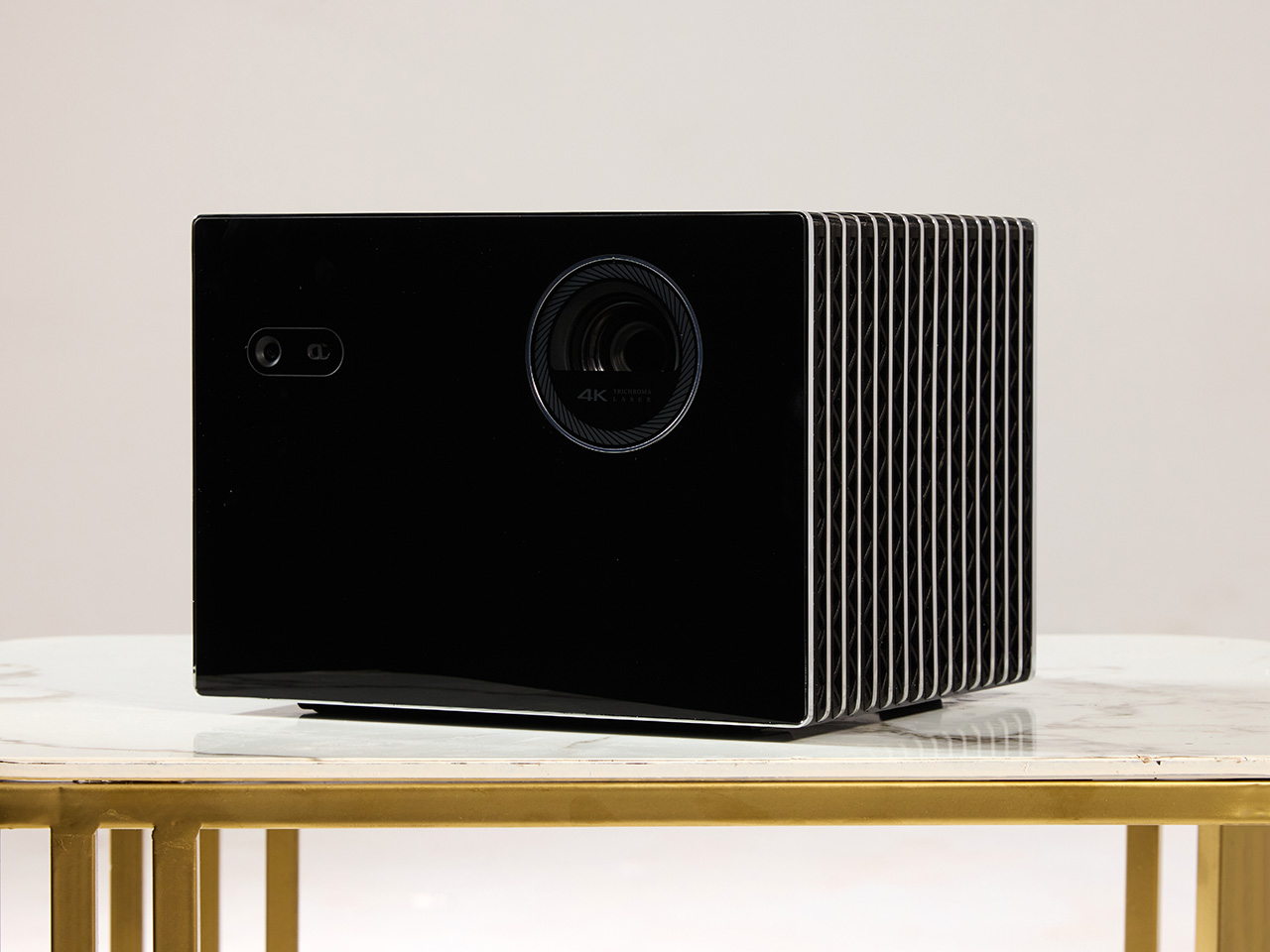
Achieving brightness sufficient for ambient operation requires addressing thermal and optical challenges that compound at high output levels. The XR10 employs a sealed microchannel liquid cooling system, an approach that maintains laser stability without exposing internal optics to environmental contamination. Traditional air-cooled projectors draw dust through their optical paths over time, degrading image quality incrementally. Sealed liquid cooling preserves performance across years of operation rather than months.
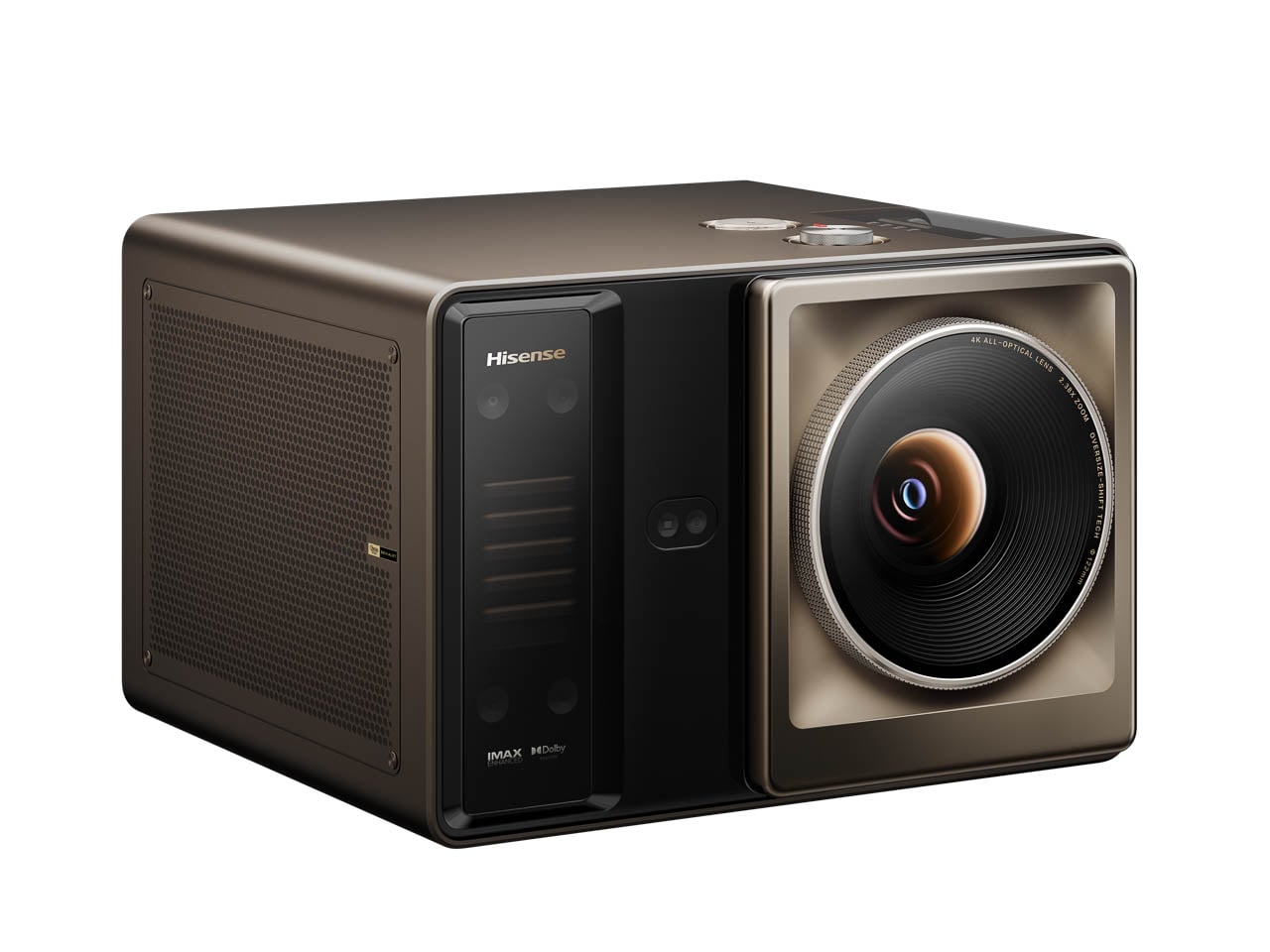
The optical system centers on a 16-element all-glass lens array with dynamic aperture control. Glass elements maintain dimensional stability under thermal stress better than polymer alternatives, reducing the subtle warping that can soften images at extreme scales. The IRIS system adjusts light transmission in real time to preserve contrast across varying scene brightness, a capability that becomes more critical as ambient light levels rise.
Speckle suppression addresses the last major optical distinction between projection and panel display. The grainy texture that coherent laser light can produce against reflective surfaces has historically marked projection as visually different from emissive displays. The XR10’s suppression system reduces this artifact to the threshold of perception, bringing projected images closer to the smooth, grain-free character of LED and OLED panels.
Commitment and Its Alternatives
The choice between fixed ultra-large display and high-brightness projection ultimately reflects a stance on commitment. The 100U8QG rewards commitment. Once installed, calibrated, and integrated, it delivers consistent, environmentally independent performance. The room becomes better at being a viewing room. The display improves through permanence.
The XR10 rewards flexibility. It achieves similar or greater scale while preserving the room’s capacity for other identities. The wall can be a screen, then not a screen. The space can host cinema, then release it. The architectural intervention remains reversible in ways that panel installation does not.
Neither approach is superior in absolute terms. The design question centers on what a space is asked to become and for how long. Dedicated viewing environments favor the commitment model. Multi-use spaces, rooms with competing functions, and architectures that resist permanent visual dominance may find the projection model more sympathetic to their broader purposes.
Positioning in the Display Landscape
Hisense will demonstrate the XR10 at CES 2026, booth 17704 in Central Hall. The company has spent a decade developing laser projection technology, introducing its first laser TV in 2014 and pioneering triple-laser color architecture in 2019. The XR10 represents the current limit of that trajectory: maximum brightness, maximum scale, minimum environmental demand.
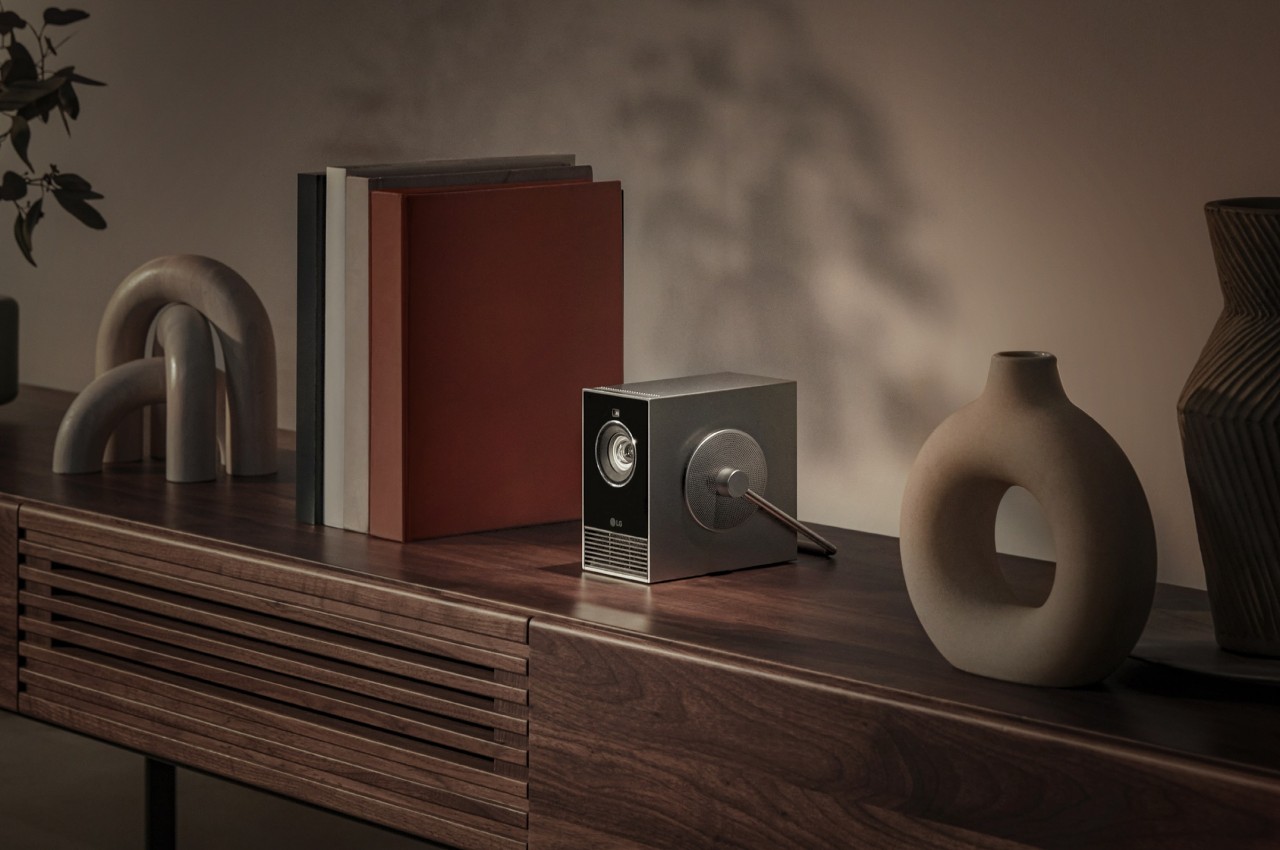
Pricing and availability remain unannounced. The competitive landscape has expanded considerably since Hisense established the ultra-short-throw category, with Samsung, LG, and numerous manufacturers offering alternatives. How the XR10 positions against both competing projectors and the fixed ultra-large panels it philosophically challenges will determine its market reception.
The more interesting question may be conceptual rather than commercial. As display technology continues pushing scale boundaries, the tension between permanence and adaptability becomes more acute. The XR10 and the 100U8QG occupy different points on that spectrum, offering different answers to the same fundamental question: what does a room owe to its screen, and what does a screen owe to its room?
The post Hisense XR10 Laser Projector and the Case for Flexible Scale at CES 2026 first appeared on Yanko Design.