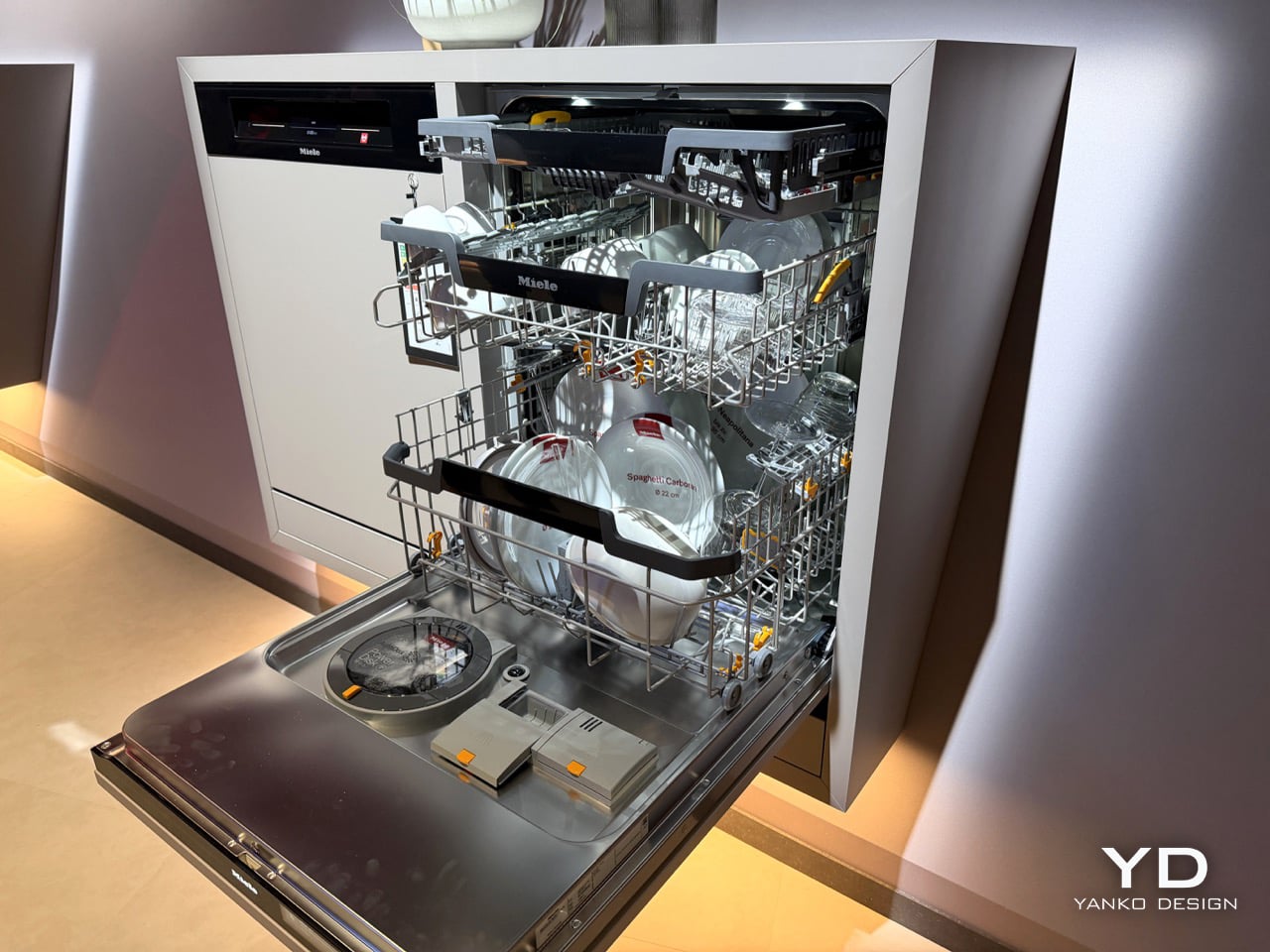
Miele’s G8 Dishwasher Photographs Your Dirty Dishes Before Auto-Selecting The Cycle: Hands-on at IFA 2026

Miele’s new G8 Diamond snaps a photo of your dirty dishes before it washes them. The moment the door swings toward shut, a light inside blinks on, a camera grabs one frame, the light dies, and the AutoVision system studies what it caught. If it sees a bottle, it calls up BottleClean and drives the spray harder. If it sees a pot, the cleaning intensity climbs. If it sees plastics, it runs the new hot air drying harder, because plastic containers are famously terrible at drying themselves. Miele showed it for the first time at IFA 2026 in Berlin, and it lands in Germany, Austria and Switzerland in April 2027.

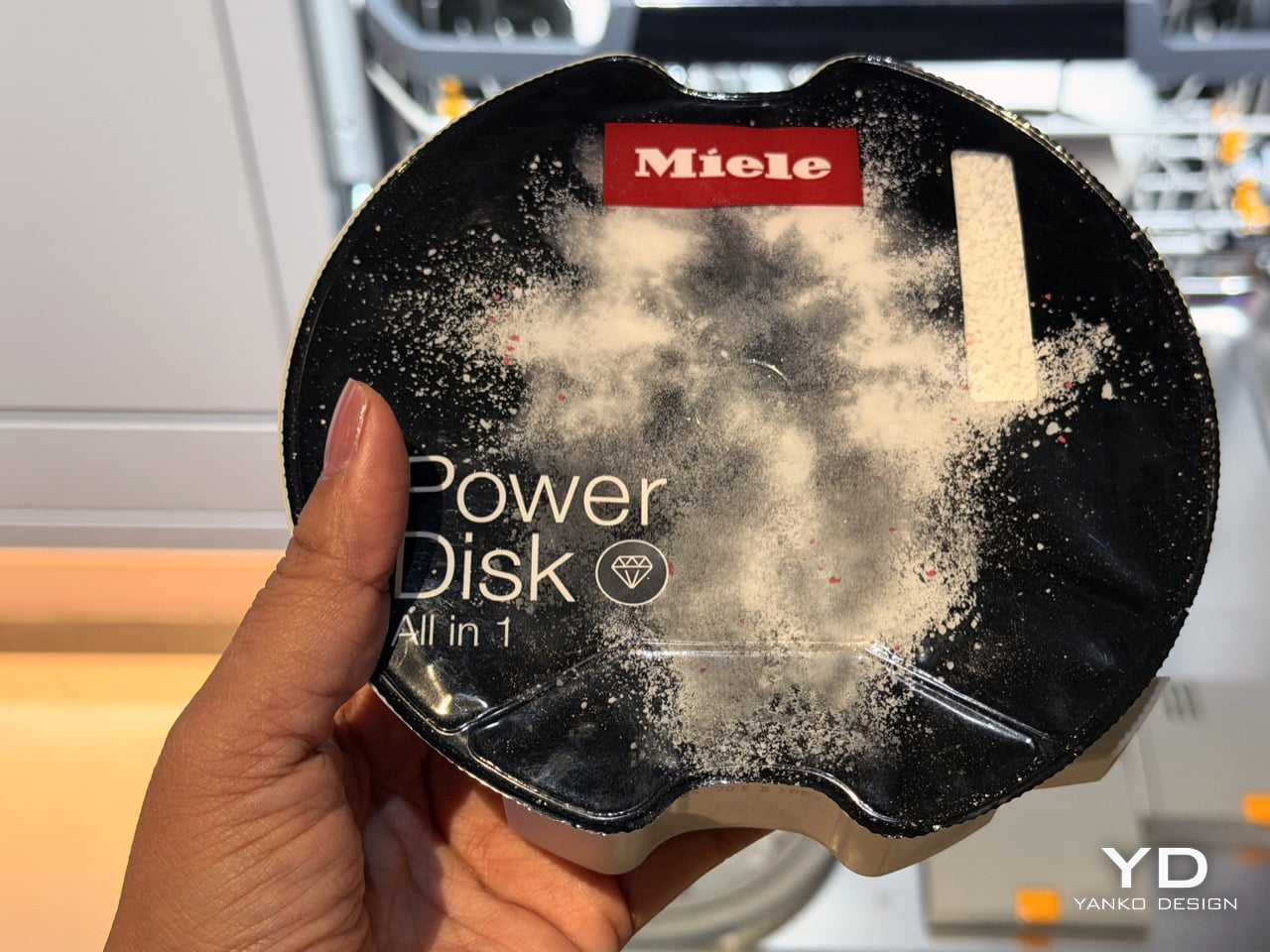
A camera in a dishwasher makes the headline, but the memory is what makes the design. The G8 holds onto that bottle it clocked at breakfast, so stacking dinner plates on top of it by eight in the evening changes nothing. Layer in AutoDos and its PowerDisk granulate, measuring out its own detergent since 2018, then set an app rule that says wait until 80 percent full and never before 10pm, and the machine stops consulting you altogether. Miele has spent decades selling dishwashers on the promise that they scrub so you do not have to. This one wants to think so you do not have to.

Designer: Miele
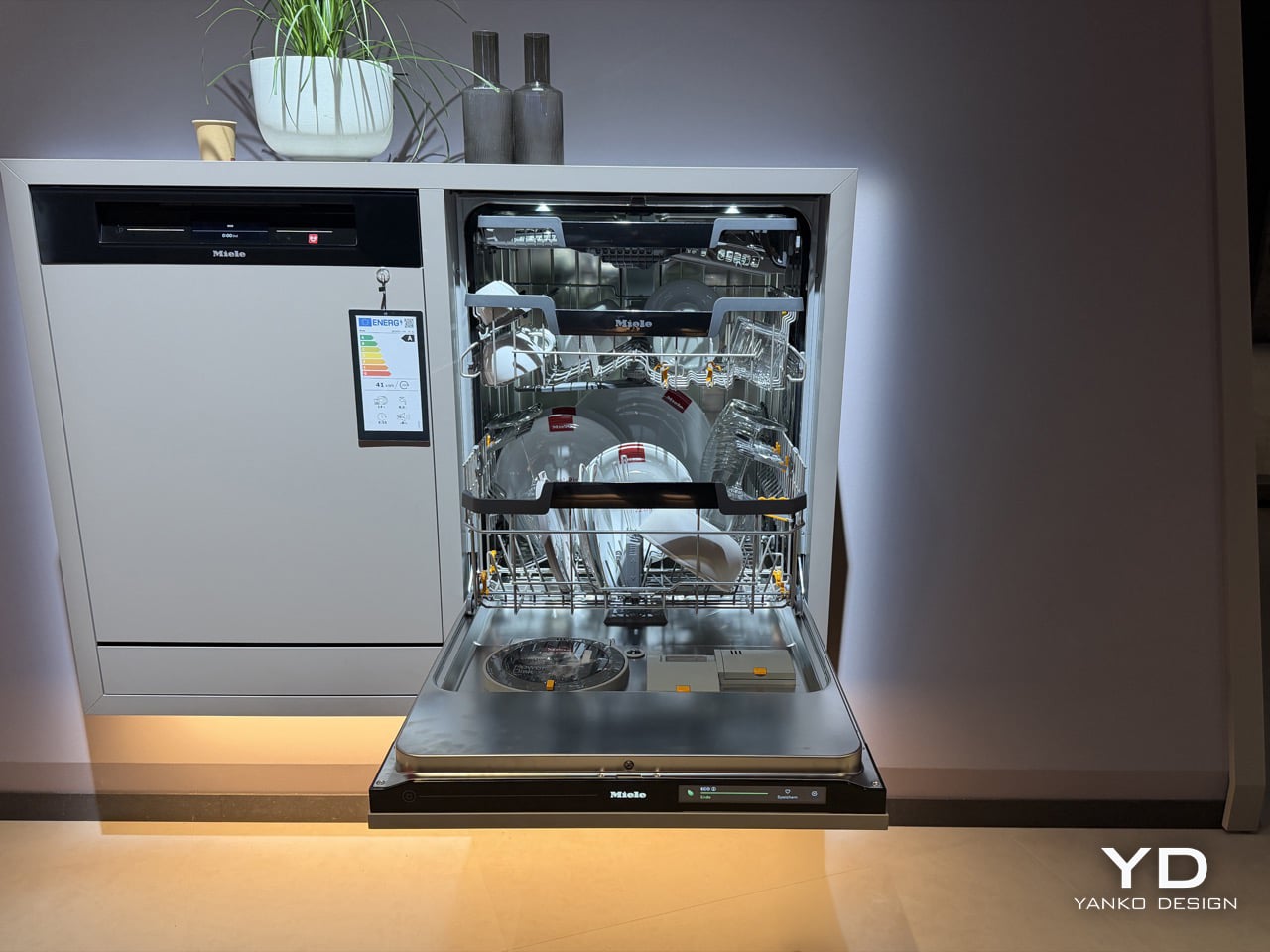
Here’s the part that actually impressed me. AutoVision doesn’t run a video feed you can scrub through in the app. It fires once, right as the door clicks shut, and the machine works from that single image for the entire cycle. Load a wine bottle at breakfast, stack it under a mountain of lunch plates by evening, and the G8 still treats it as a bottle, because it saw it once and that was enough. The only real caveat came from Miele’s own team at IFA: keep bottles roughly central and pots in the lower basket, since the spray arm still struggles to reach the far corners. Vision only helps if the water can follow it there.

What makes this genuinely new isn’t the word AI, which every appliance brand at IFA 2026 was throwing around like confetti. Most of those claims are turbidity sensors, the kind that read how murky the wash water has become and adjust accordingly. LG’s SenseClean works that way, and Samsung has filed similarly around soil detection. A turbidity sensor knows the water is dirty. It has no idea why. Miele’s camera identifies the actual object sitting in the rack, a considerably harder computer vision problem, and one that both LG and Bosch have patented around for years without shipping a consumer dishwasher built on it. Miele is putting an object-recognition camera inside a box you can buy next spring, not just inside a patent filing.
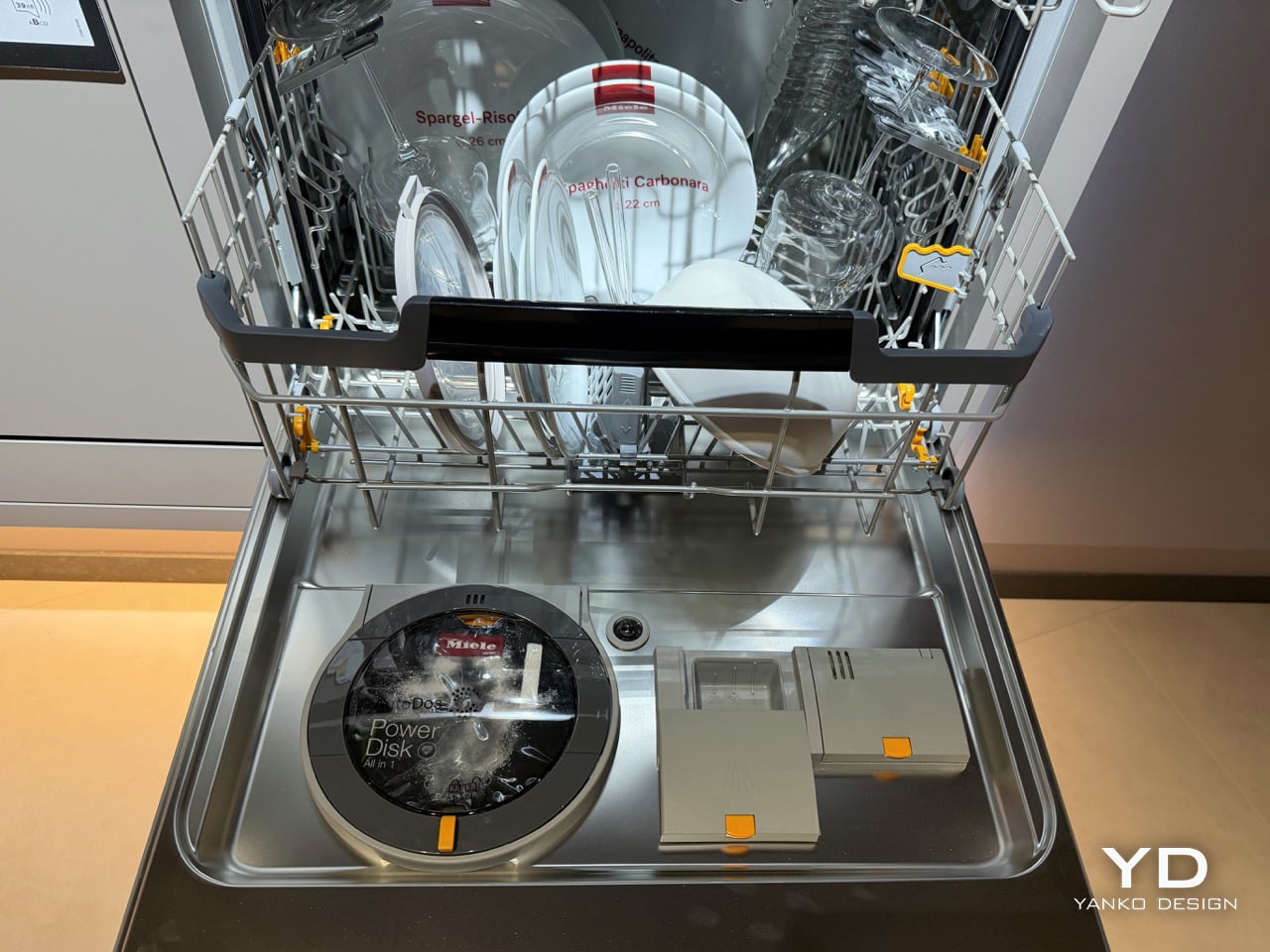
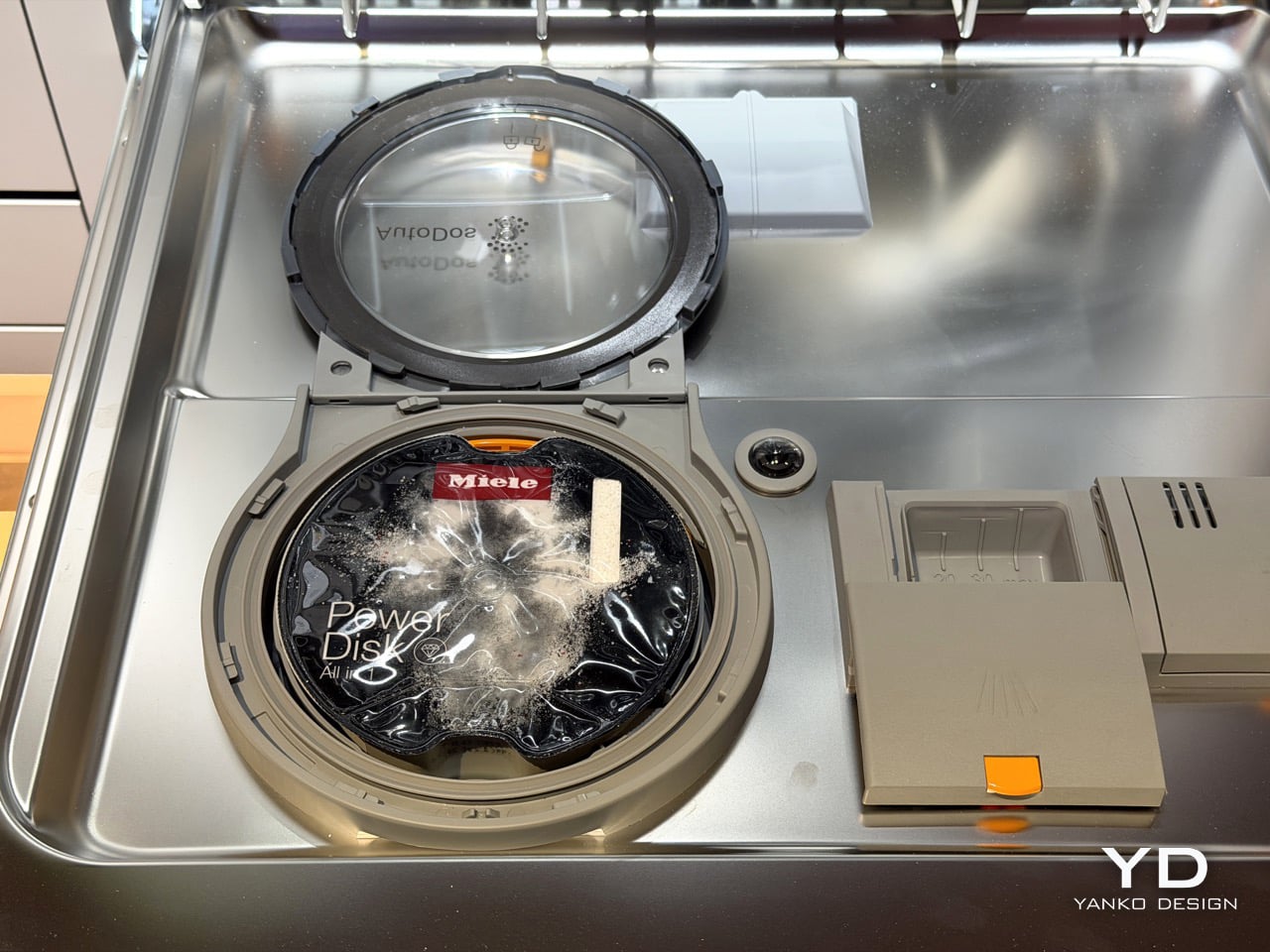
Around that camera sits a decade of quieter automation finally clicking into place. AutoDos, with its PowerDisk granulate, has been dosing detergent on its own since 2018, and Miele still claims nobody else in the category offers true automatic dispensing. ExcellentDry adds a hot air system with three fixed levels, chosen once and then applied forever, aimed squarely at the plastic containers that usually come out of a cycle still damp at the base. The cutlery drawer becomes a genuine third tier, one side droppable for coffee cups, and a new touch display replaces the old dial logic. Set the app to run only past 10pm and only above 80 percent full, or tie it to your solar output, and the dishwasher stops asking permission for anything.
None of this works if you don’t trust the camera’s judgment, and Miele knows it. “Intelligence can be programmed. Trust has to be earned,” said Dr. Axel Kniehl, the company’s Executive Director of Marketing and Sales, at the IFA press conference, and it’s the one line from the whole reveal that actually admits the stakes. AutoVision only functions if enabled by the user, according to Miele’s own release, which suggests it ships switched off by default. Fair enough. Handing a machine the authority to decide how hard to scrub your grandmother’s pans is a bigger ask than letting it dose its own detergent, and Miele seems to know it needs to earn that permission slowly rather than assume it.
The G8 Diamond won’t reach a single kitchen before April 2027, and even then only in Germany, Austria and Switzerland, so everything here is still a promise rather than a lived-in product. But the promise is the interesting part. For a century, appliance makers competed on how much physical labor they could remove. Miele is the first one at this scale betting the next fight is over who you trust to make the fifty tiny decisions labor never touched in the first place.

The post Miele’s G8 Dishwasher Photographs Your Dirty Dishes Before Auto-Selecting The Cycle: Hands-on at IFA 2026 first appeared on Yanko Design.
Miele’s Smart Utensils Can Detect When Food Is Burning And Power Your Induction Hob Down

A watched pot may never boil, but an unwatched one seems to do so with a special kind of enthusiasm. That familiar kitchen truth highlights a basic challenge; the cook must serve as the constant monitor for every vessel on the stove, standing guard against the sudden surge of a boil-over or the sharp, bitter smell of a sauce beginning to catch and burn. With its new M-Sense system, Miele proposes a more cooperative arrangement, one where the cookware itself takes over the job of watching for trouble.

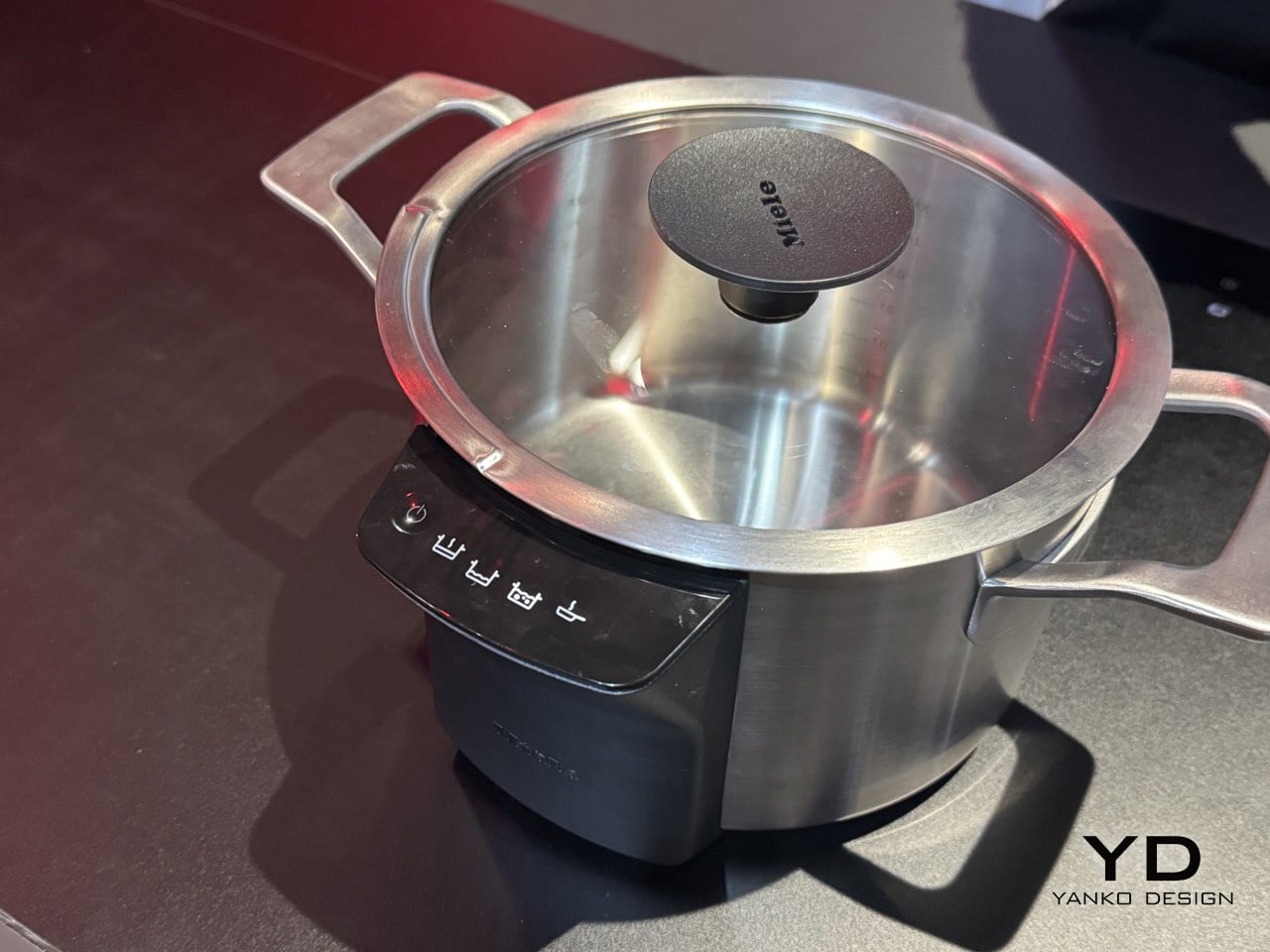
By integrating sensors and communication hardware directly into its cookware, Miele creates a live feedback loop between the pot and the induction hob. This connection allows the vessel to detect the telltale temperature spikes that precede a messy boil-over or the localized hot spots that lead to scorching. It then signals the hob to regulate its power automatically, transforming the simple pot from a passive container into an active, intelligent partner in the cooking process. It is a sensible and deeply practical innovation aimed at creating a calmer, more forgiving kitchen.

Designer: Miele

The appeal of that idea becomes obvious the moment real food enters the picture. Caramel demands close attention because it can move from amber to acrid in seconds. Milk rises fast, stocks foam unpredictably, and sauces have a habit of catching at the base just when your focus shifts elsewhere. M-Sense is built around those ordinary kitchen disasters, which makes it feel refreshingly grounded. There is a lot of smart kitchen technology that promises convenience in abstract terms, but this system is easy to understand because it targets problems almost every home cook has experienced firsthand.

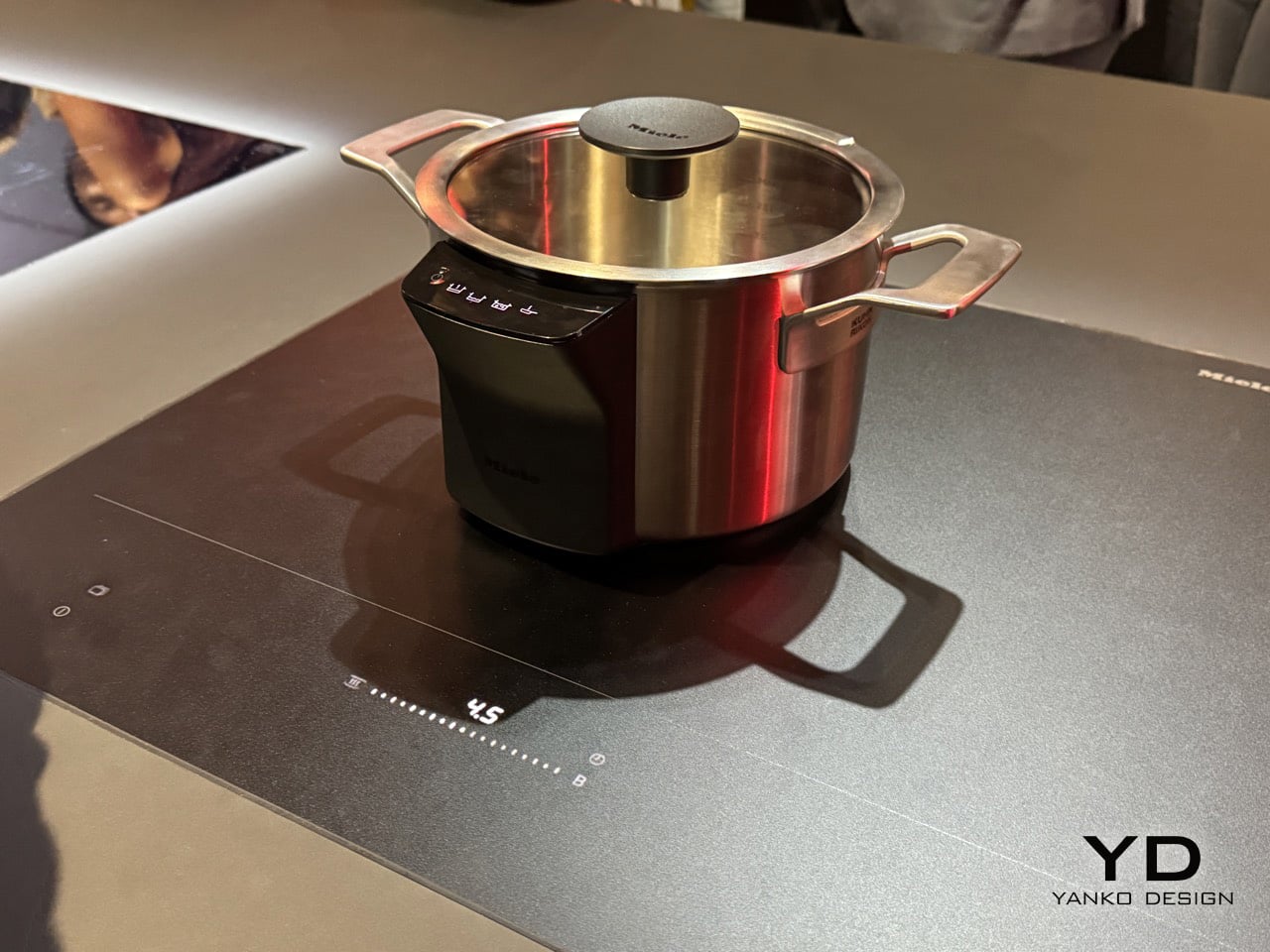
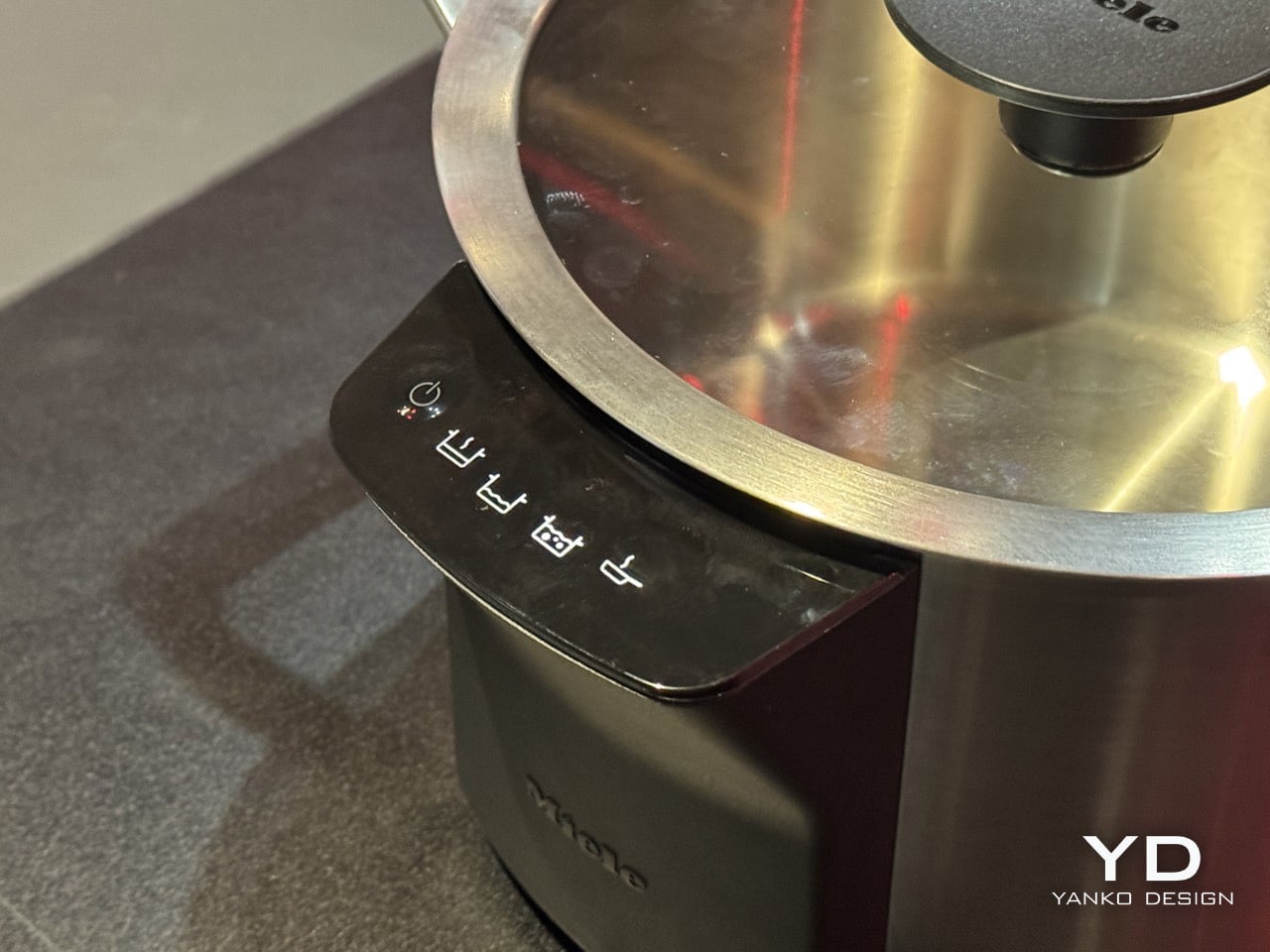
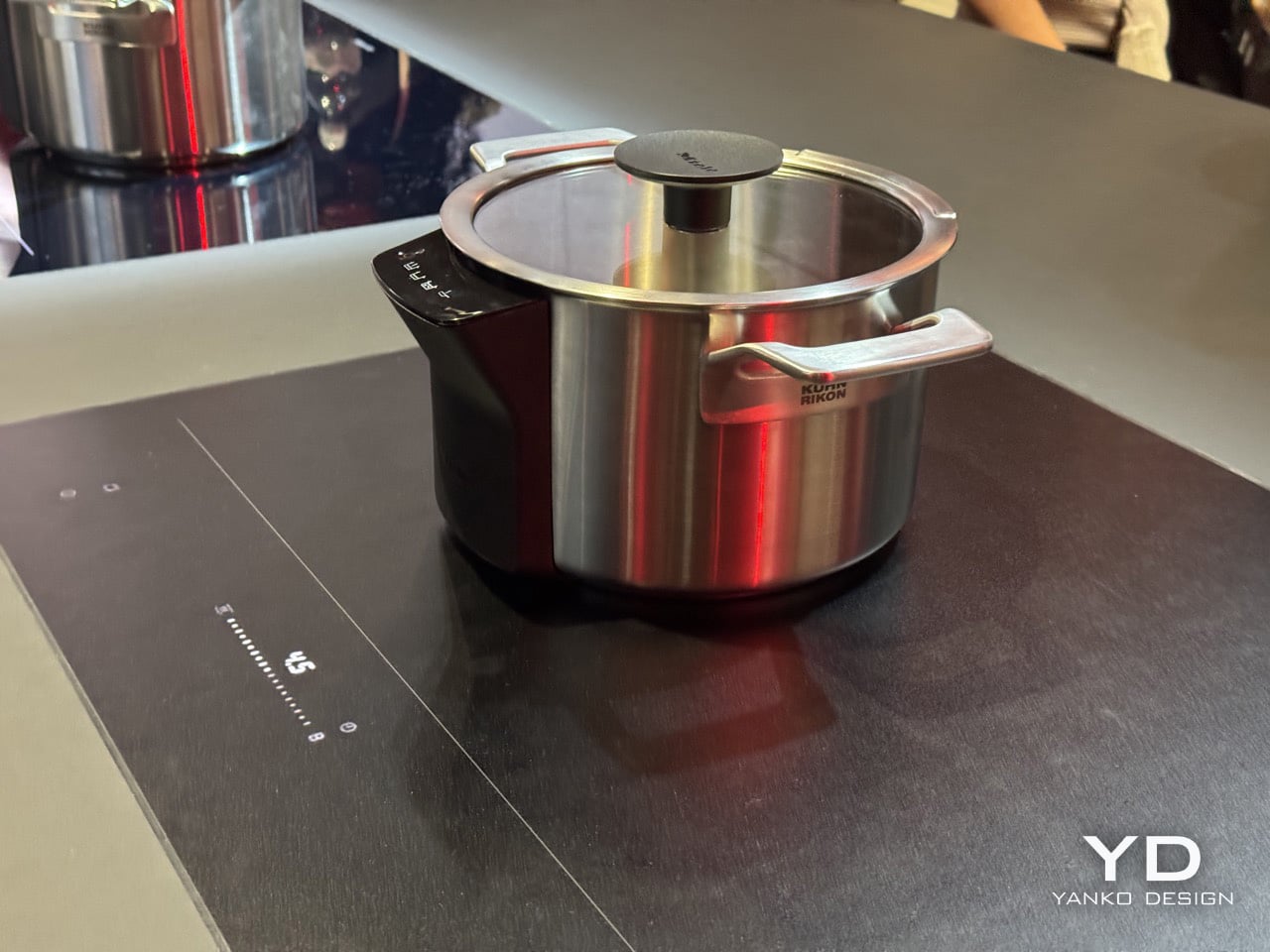
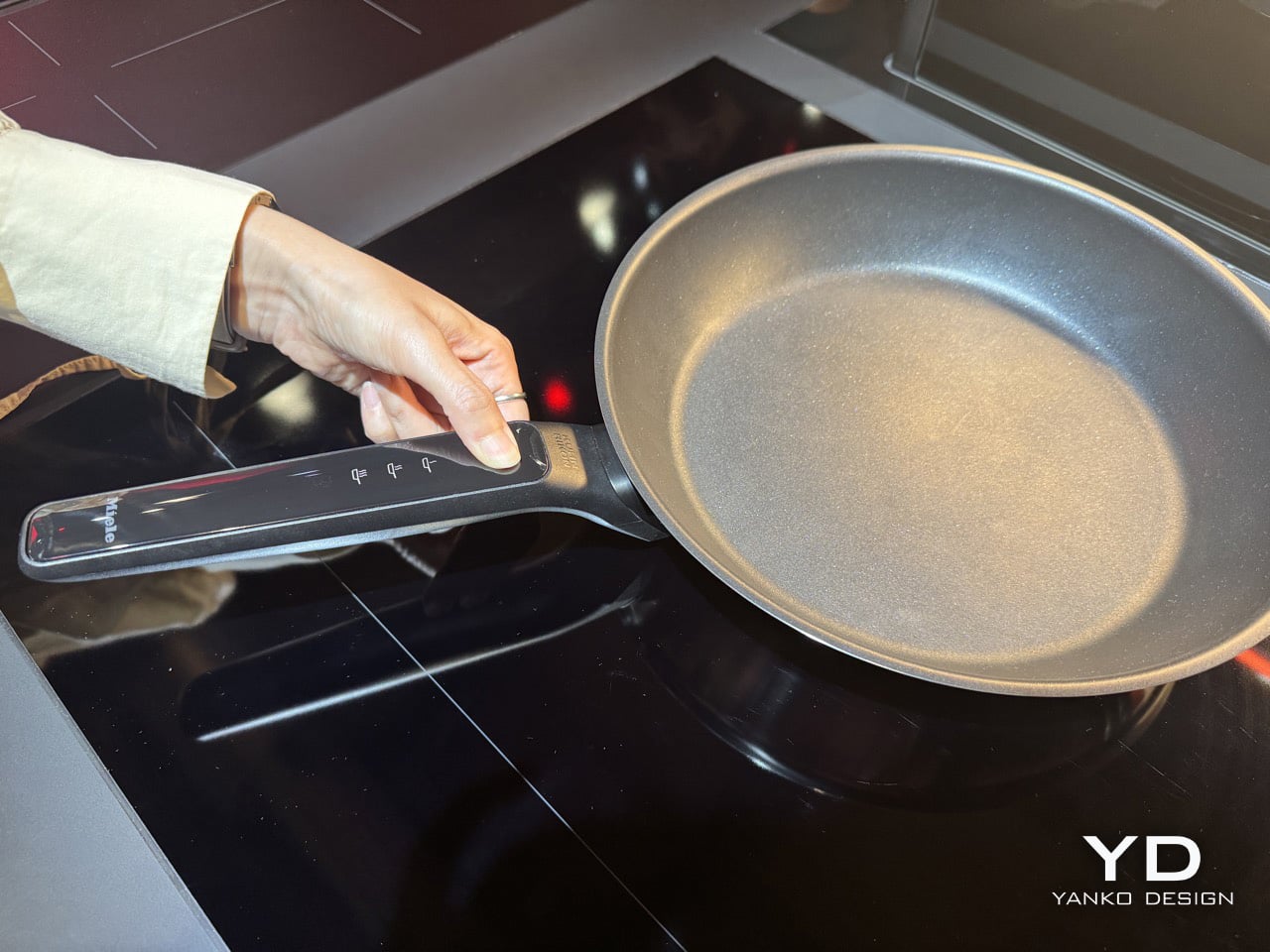
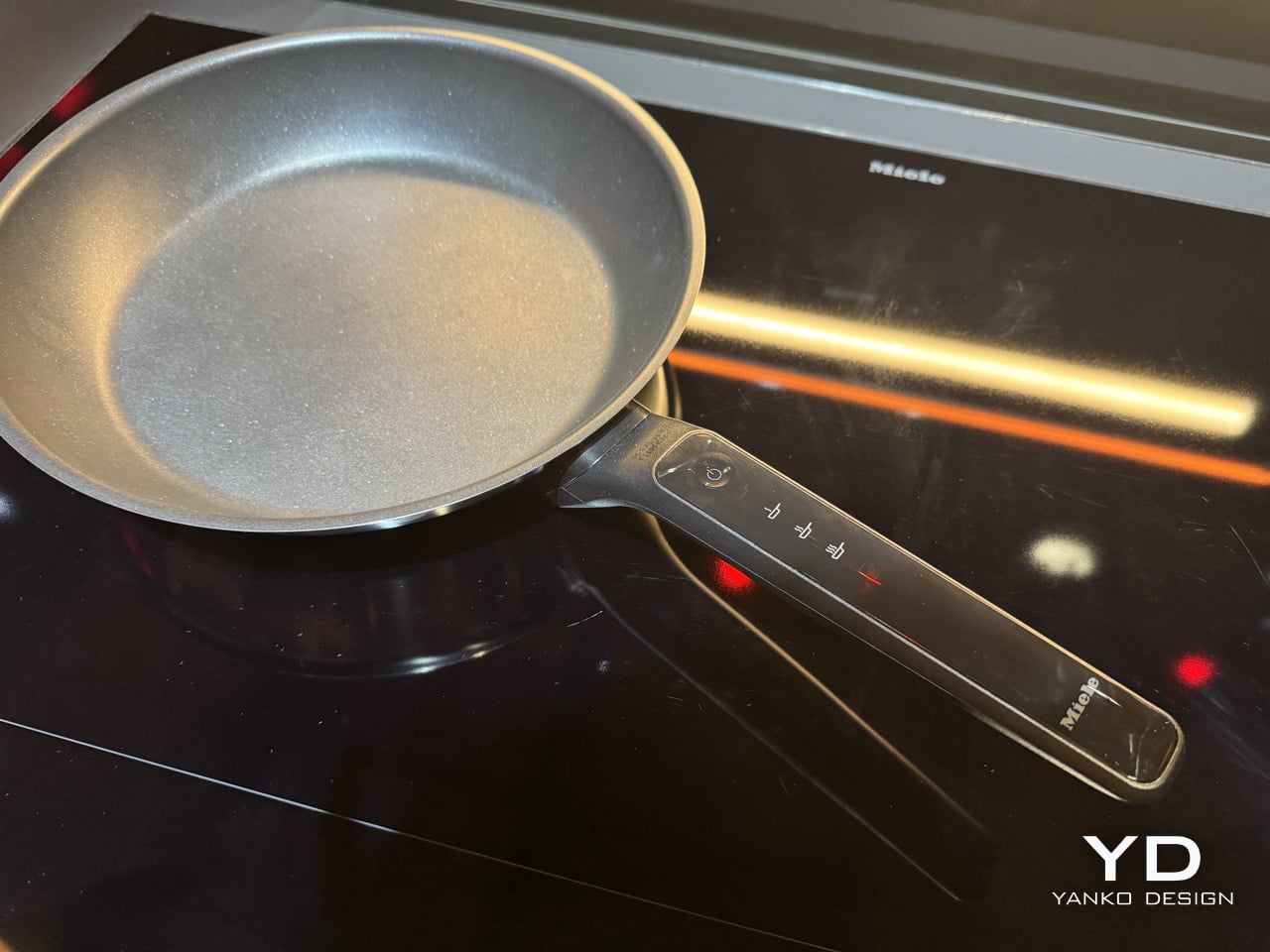
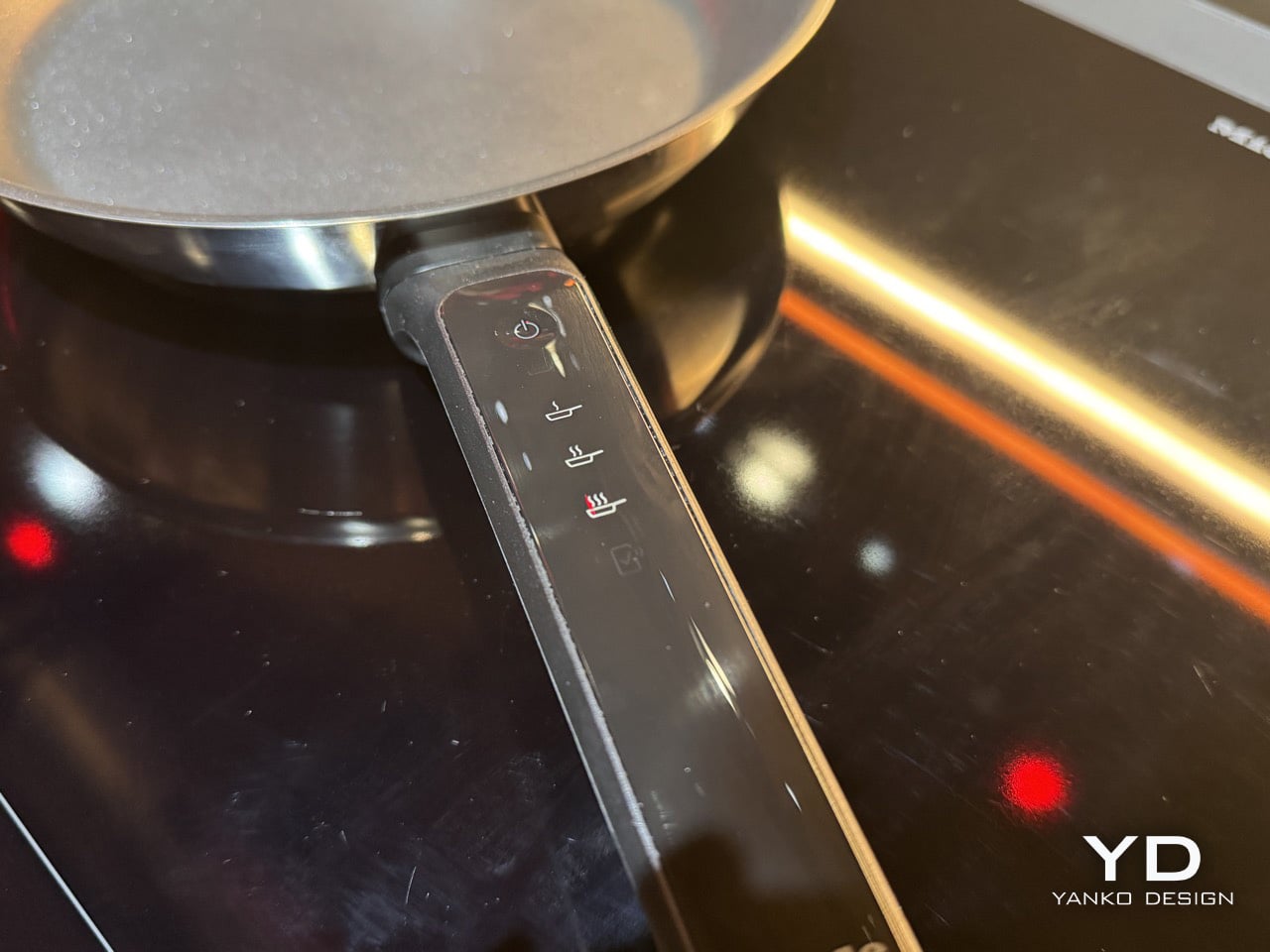
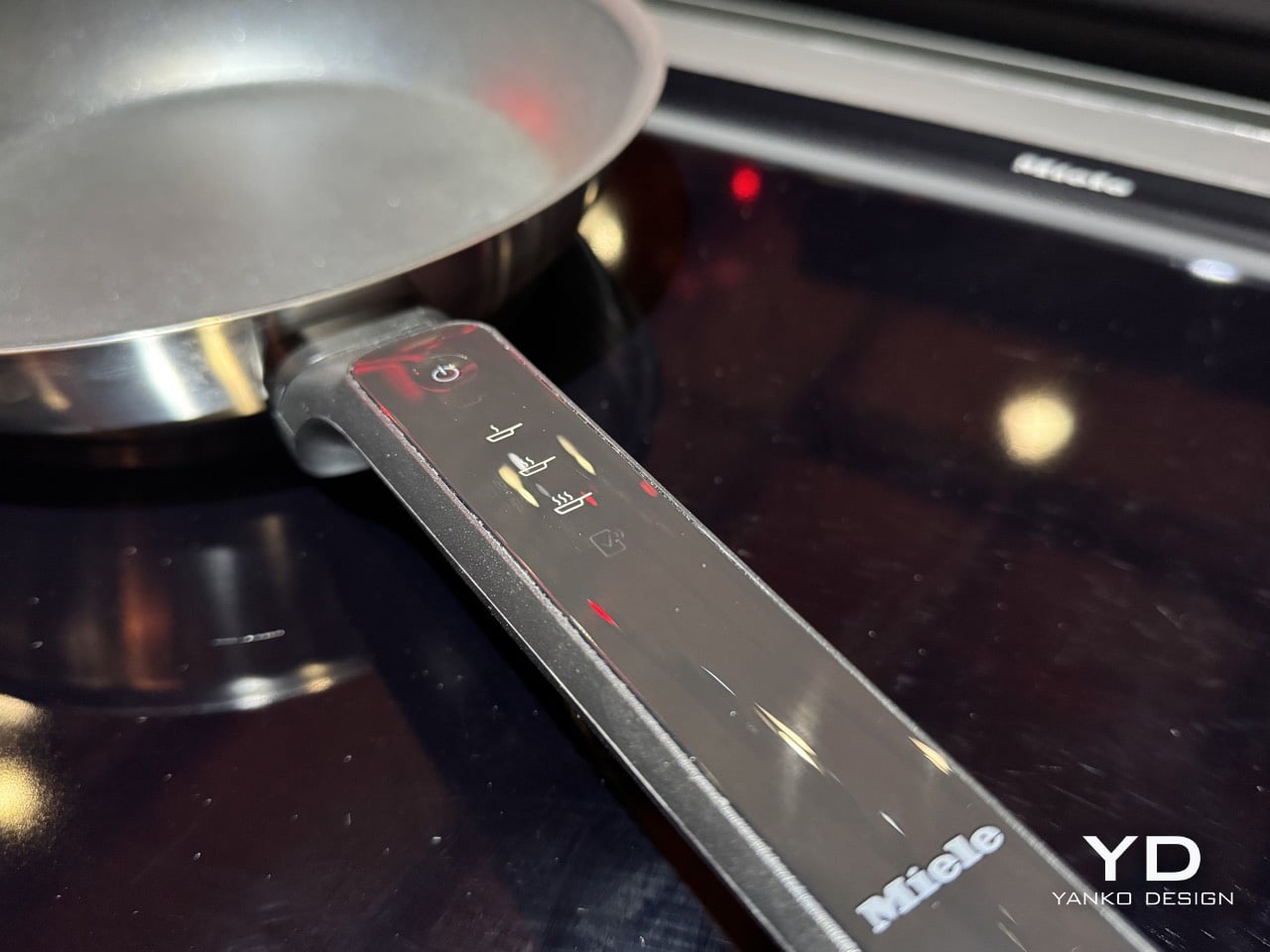
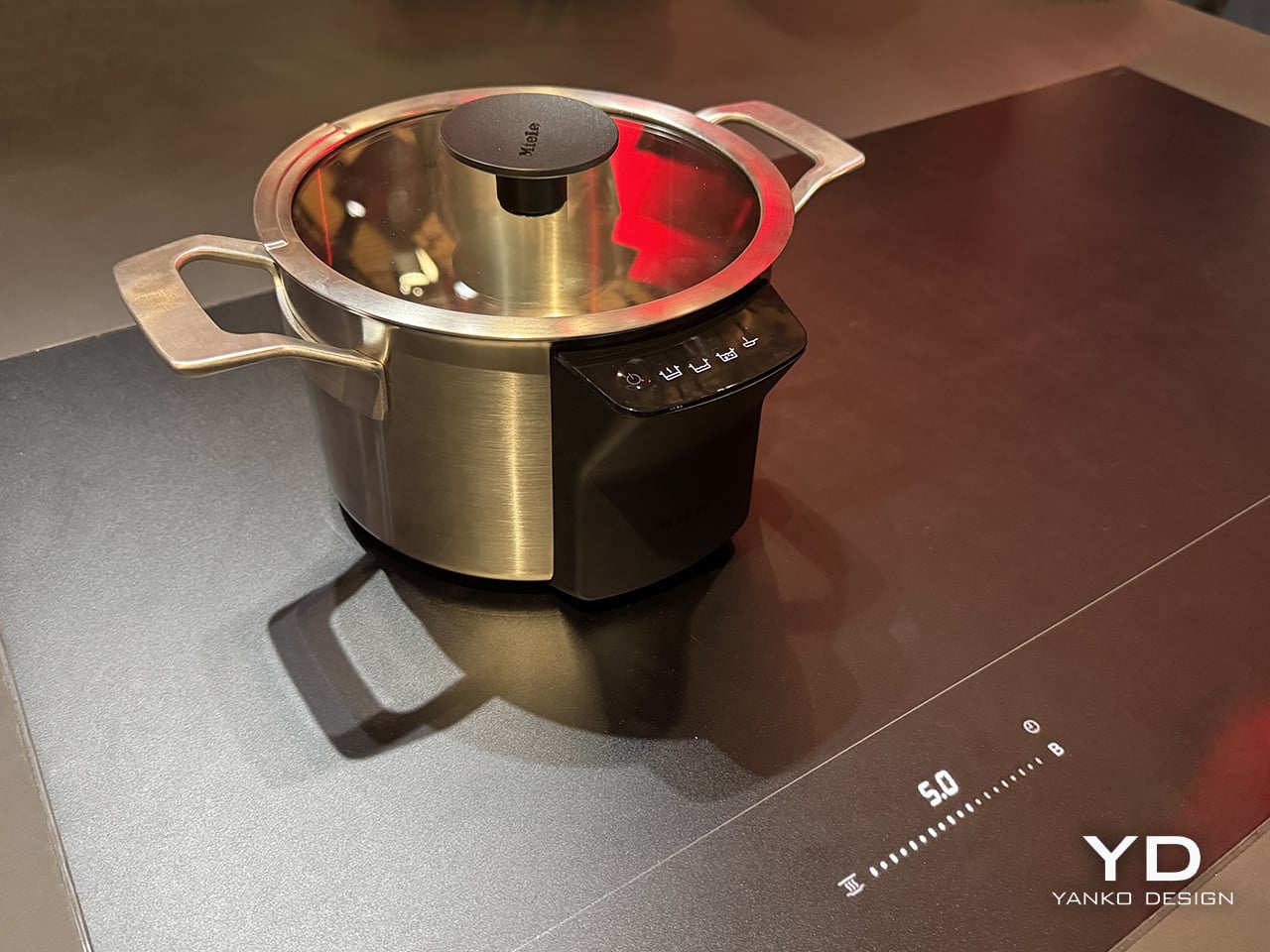
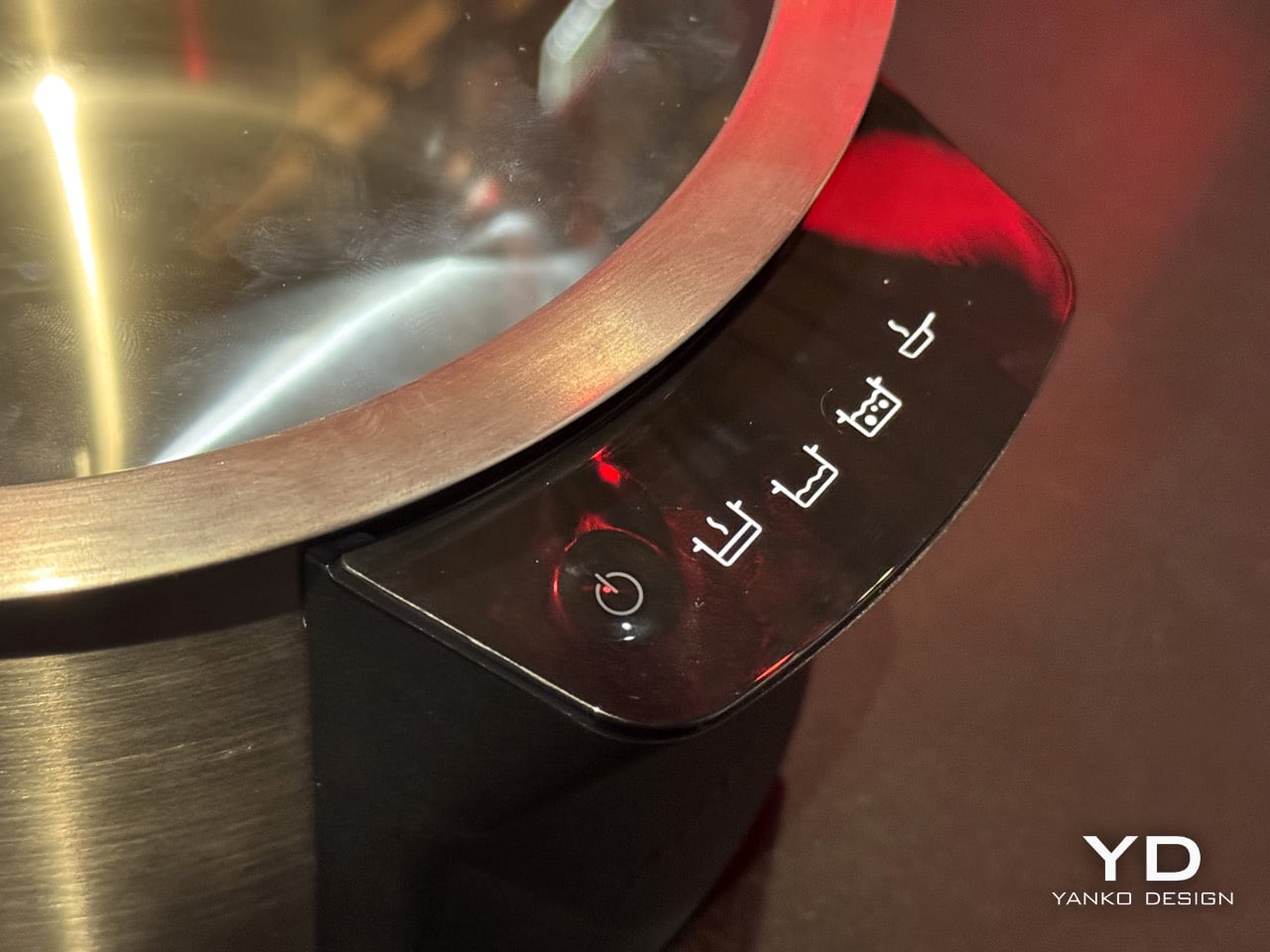
Miele is showcasing at least two pieces, a brushed stainless steel saucepot and a frying pan with a dark non-stick interior, and both reveal how carefully the interaction has been considered. The saucepot carries a compact touch interface integrated into the side of the vessel, while the frying pan places its controls directly into the handle where the thumb naturally lands. In both cases, the controls feel embedded into the object rather than added on as an afterthought, which helps the cookware read as premium kitchenware first and connected hardware second.

The induction hob at the center of the system is the KM 8695 FL MattFinish, a full-surface model finished in scratch-resistant MattFinish ceramic glass. Full-surface induction means the cookware can sit anywhere on the hob while maintaining the communication link, which matters considerably for a system built on continuous sensor feedback. Miele states the promise with welcome directness: No Burn. No Overboil. No Problem. Both outcomes trace back to a single cause, a vessel with no way to communicate with the heat source beneath it. M-Sense addresses that by making the cookware itself the sensing layer, so power adjustments happen before smoke or overflow enters the picture.

The Miele app extends the system beyond the counter, enabling remote monitoring, direct program transfer to the hob, and a recipe library that maps dish choices to actual hob settings. The cookware can connect to the app before it even reaches the hob, arriving on the induction surface already configured for the task at hand. That pre-loading capability closes a gap most connected kitchen products have only gestured toward. Working across hob, cookware, and app simultaneously, M-Sense operates as a coordinated platform rather than a loose set of individual smart features. It is a more coherent model than the kitchen tech category has typically managed to deliver.

For all the talk around smart homes, this is the kind of intelligence that feels worth having because it addresses a genuine friction point in daily life. Cooking often demands divided attention, especially in real homes where dinner happens alongside conversations, children, emails, and the dozens of small interruptions that shape an evening. A system that can sense trouble early and quietly intervene before a sauce burns or a pot boils over feels less like novelty and more like relief. Miele is showing the M-Sense collection in the EuroCucina section at Salone del Mobile, where visitors can see the cookware paired with its compatible induction setup as part of the brand’s broader vision for a more responsive kitchen.

The post Miele’s Smart Utensils Can Detect When Food Is Burning And Power Your Induction Hob Down first appeared on Yanko Design.