Anker’s Sleep Earbuds 4 Pro Silence Snoring in Real Time With Adaptive Masking: Hands-on at IFA 2026

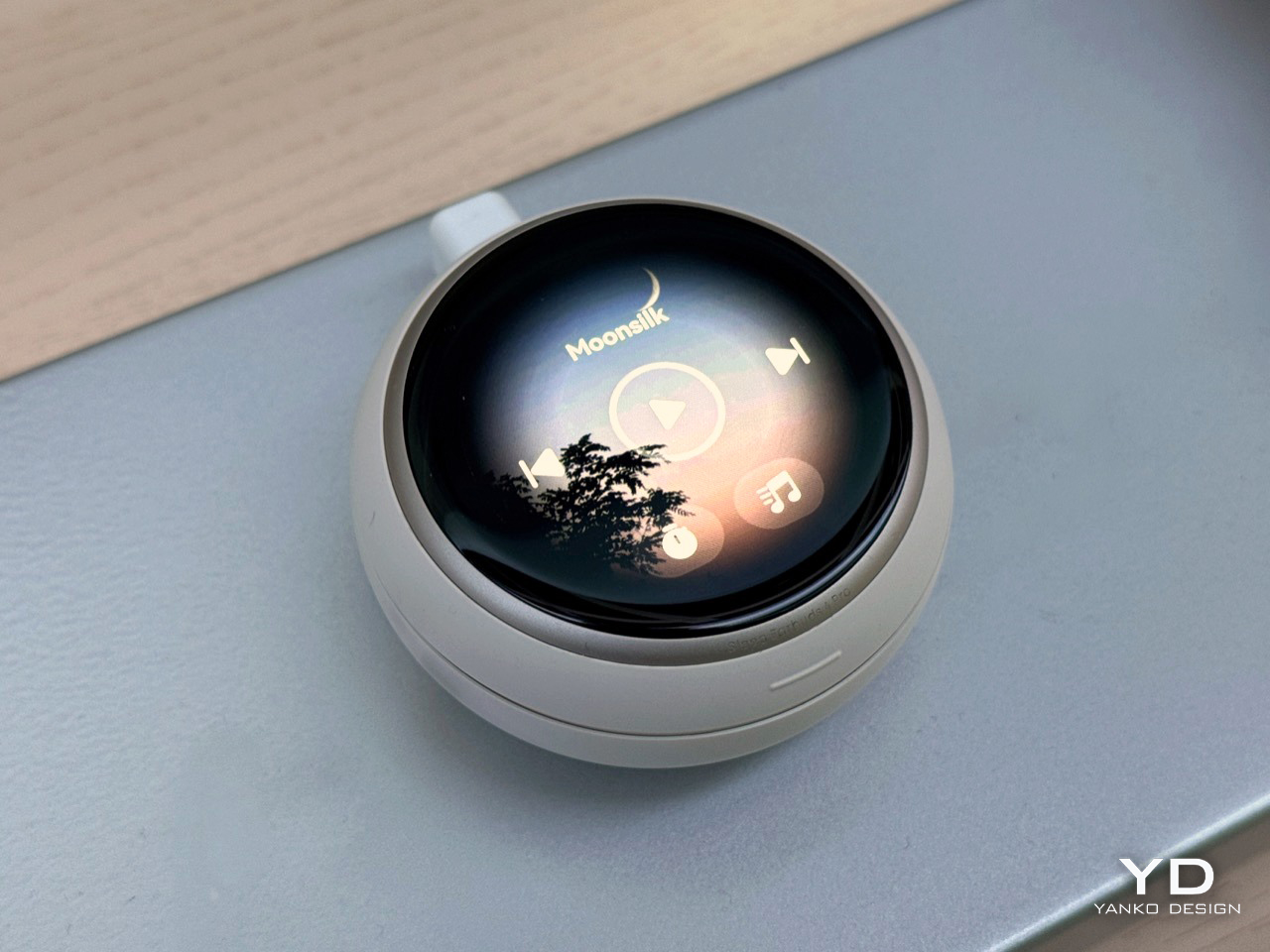
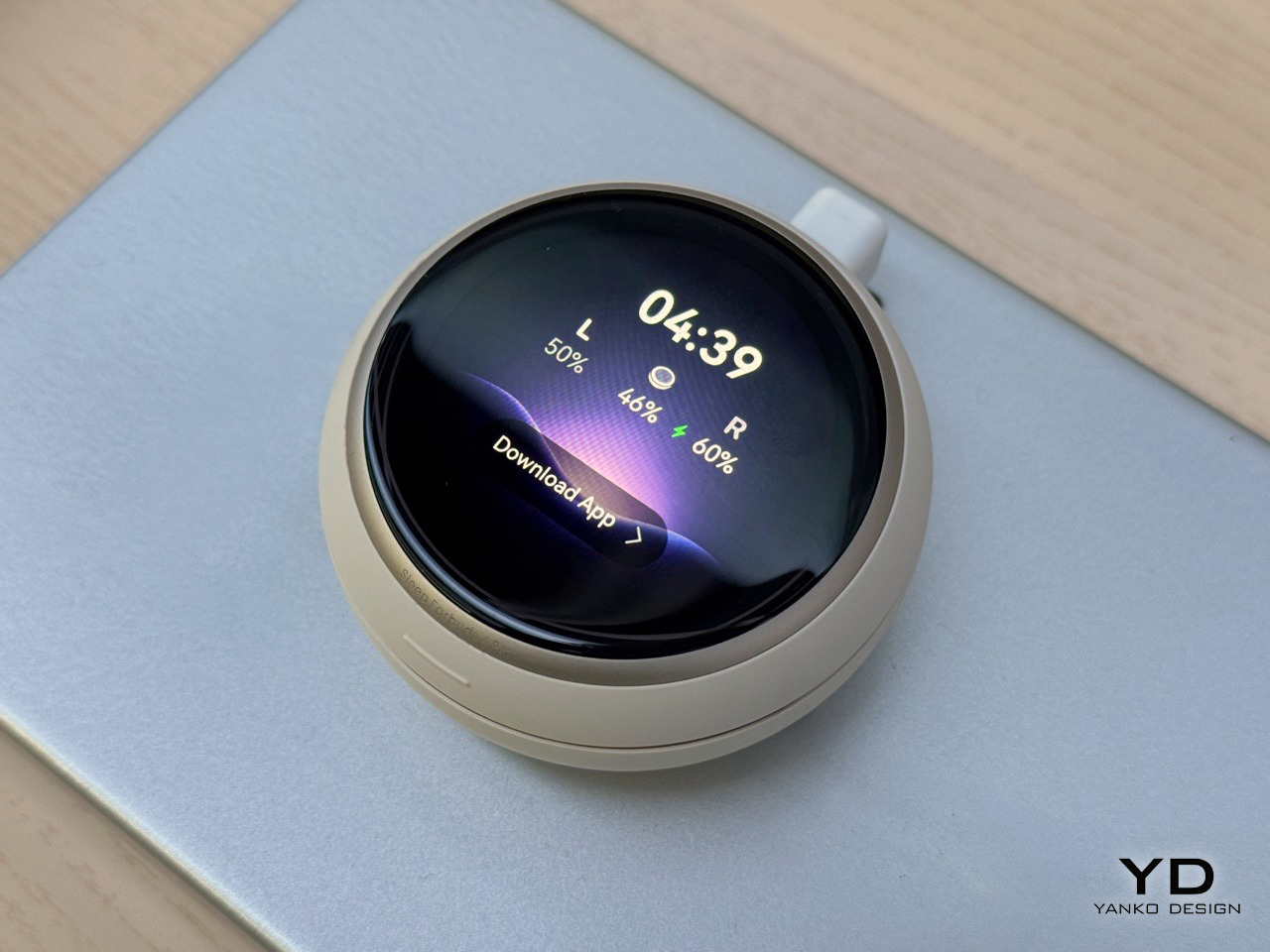
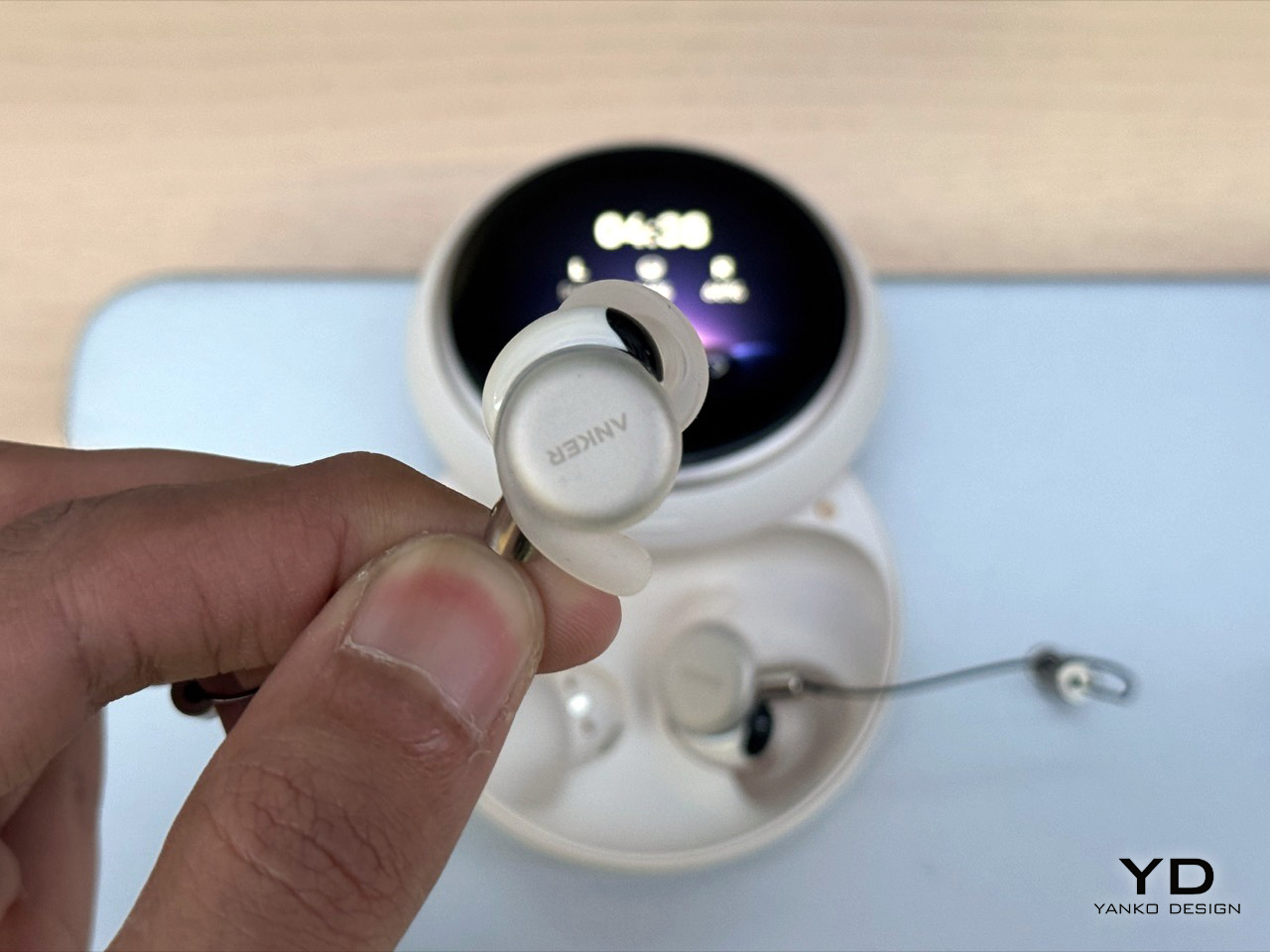
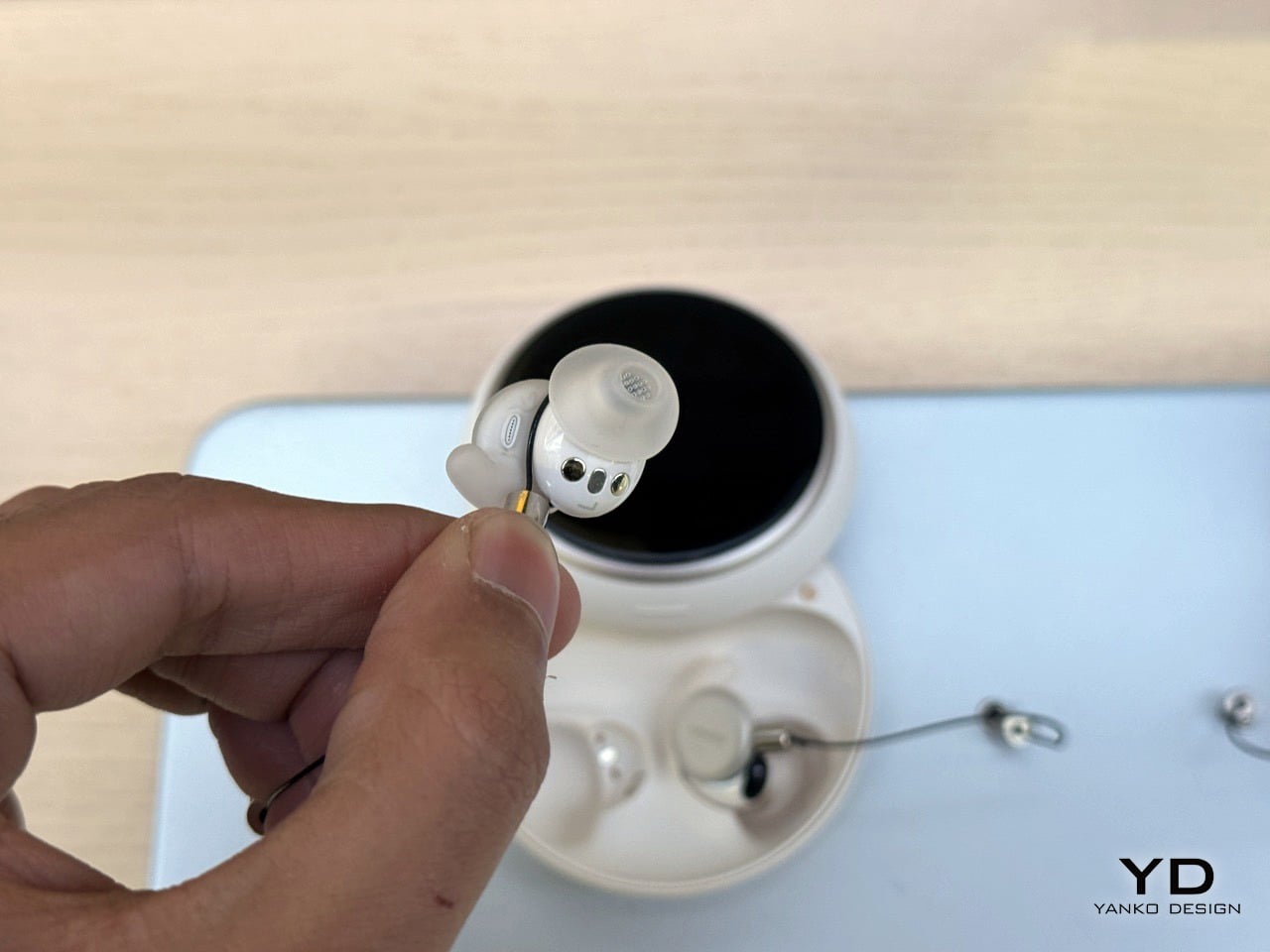
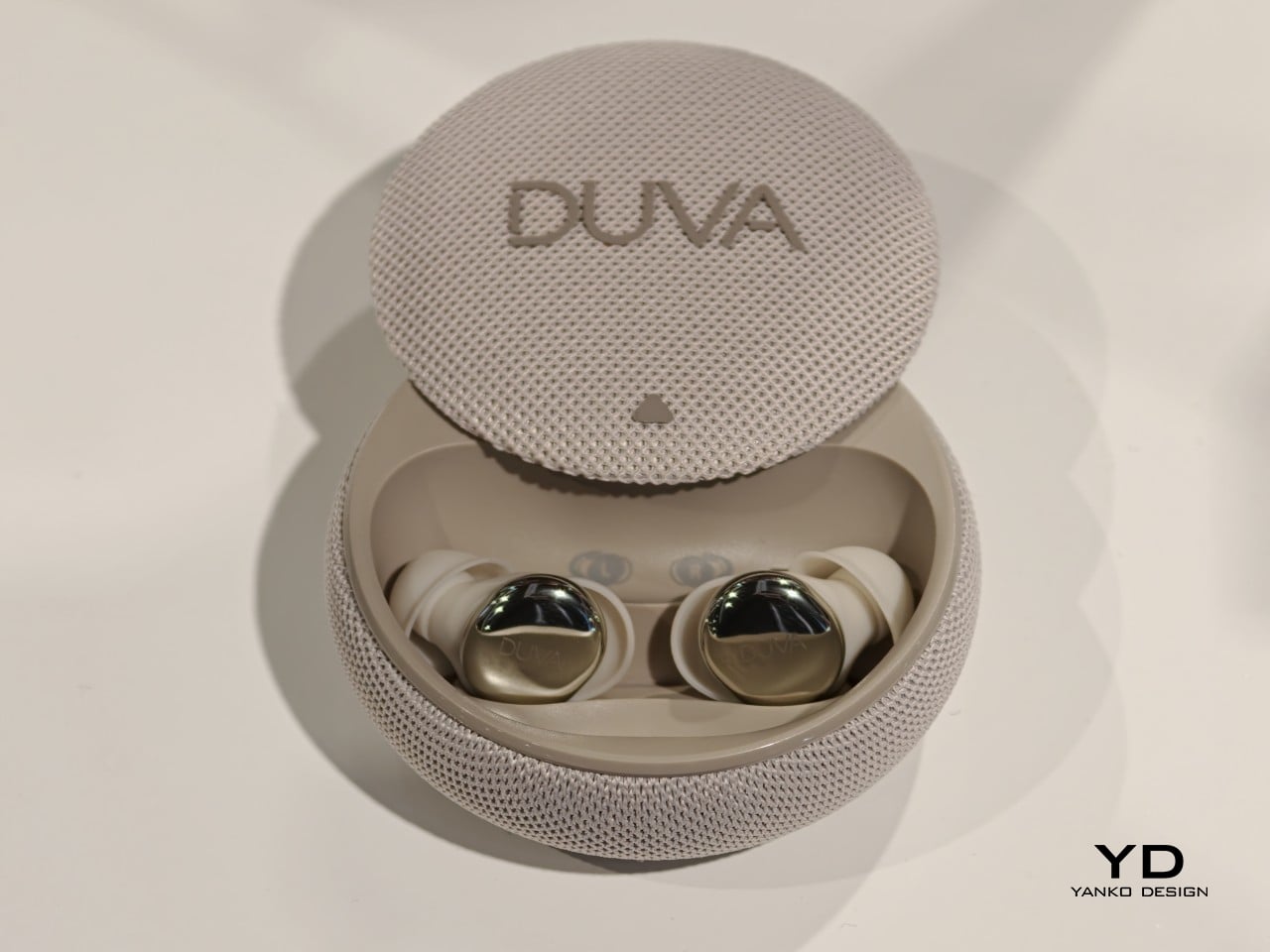
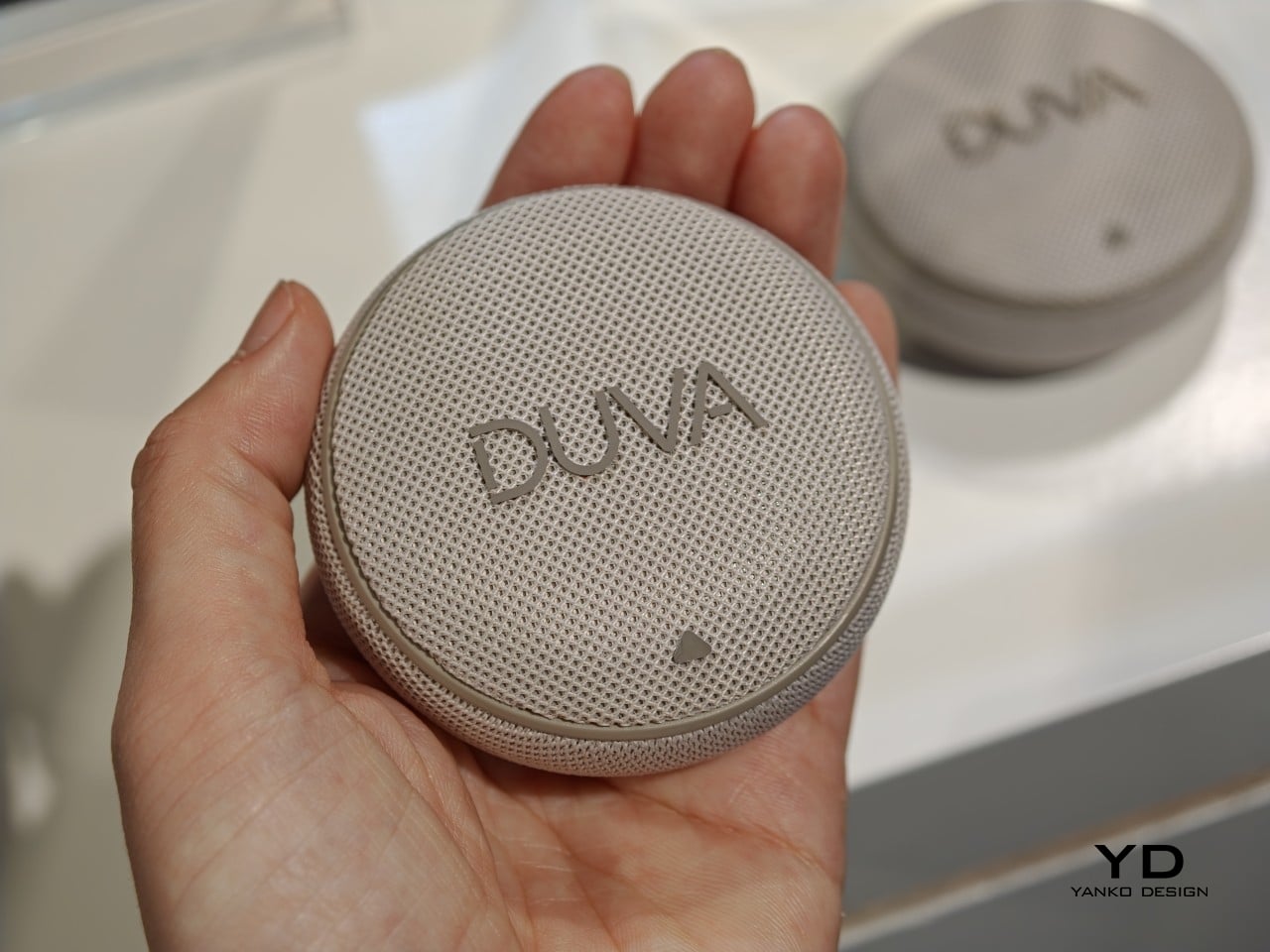
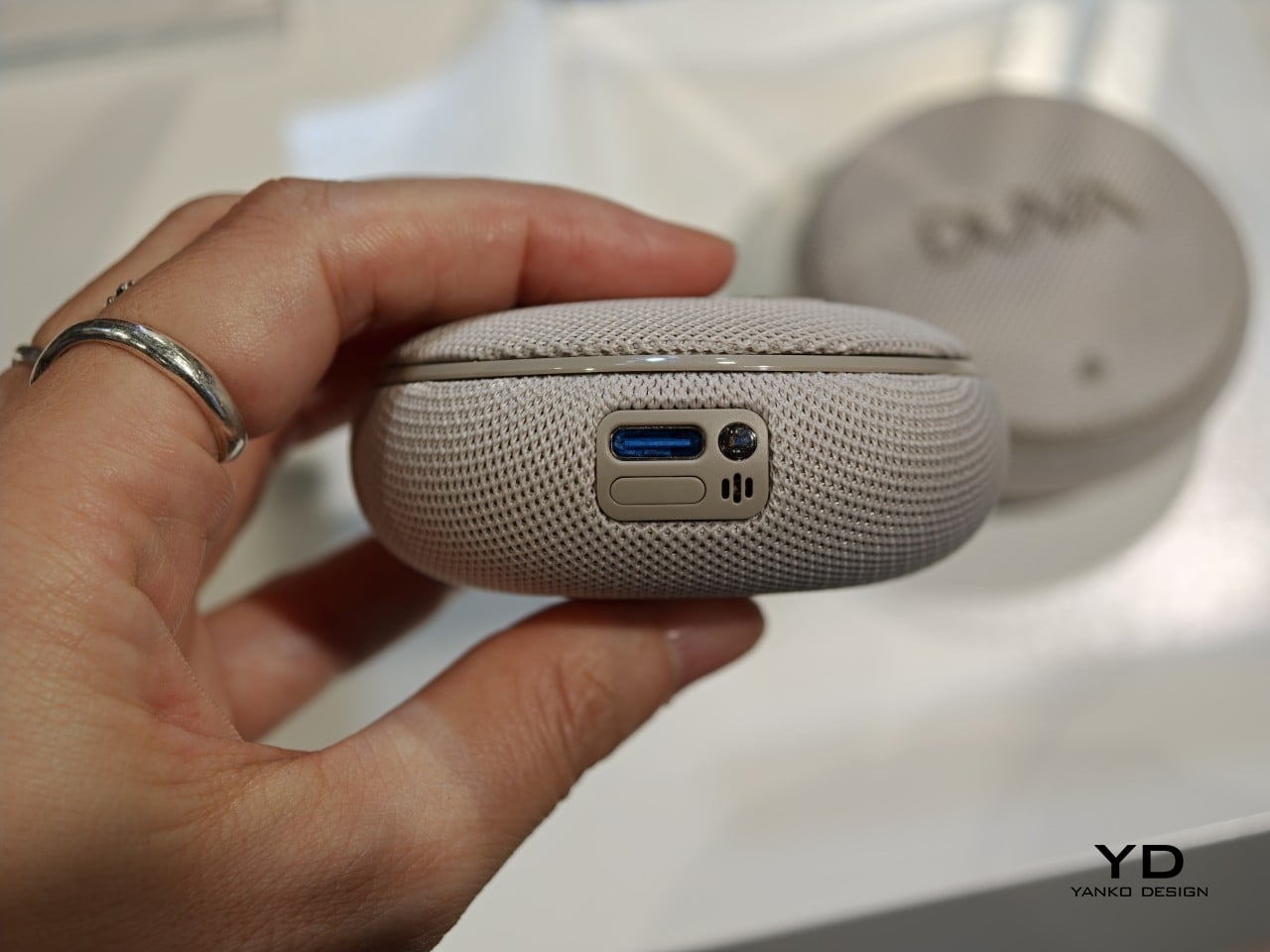
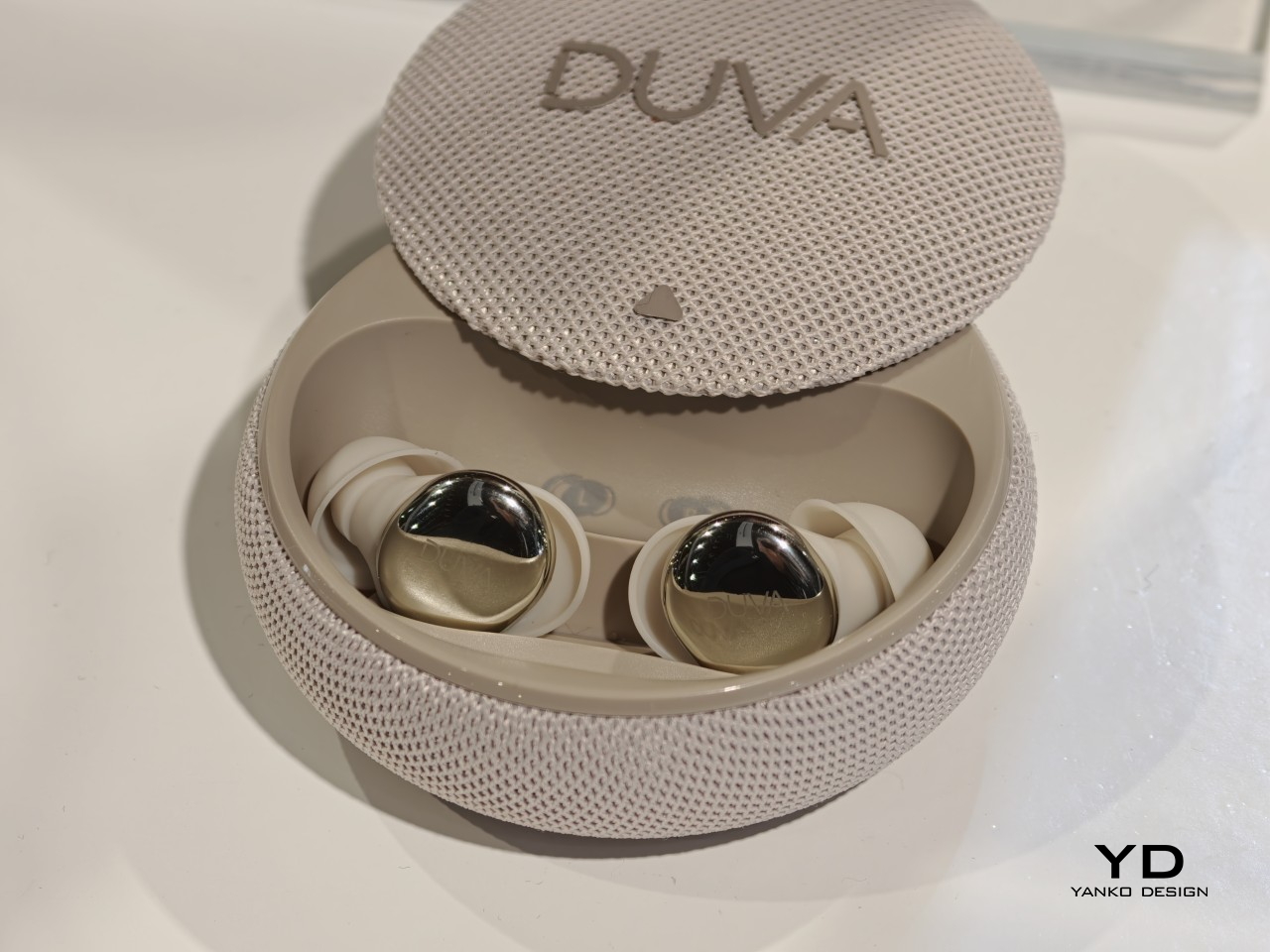
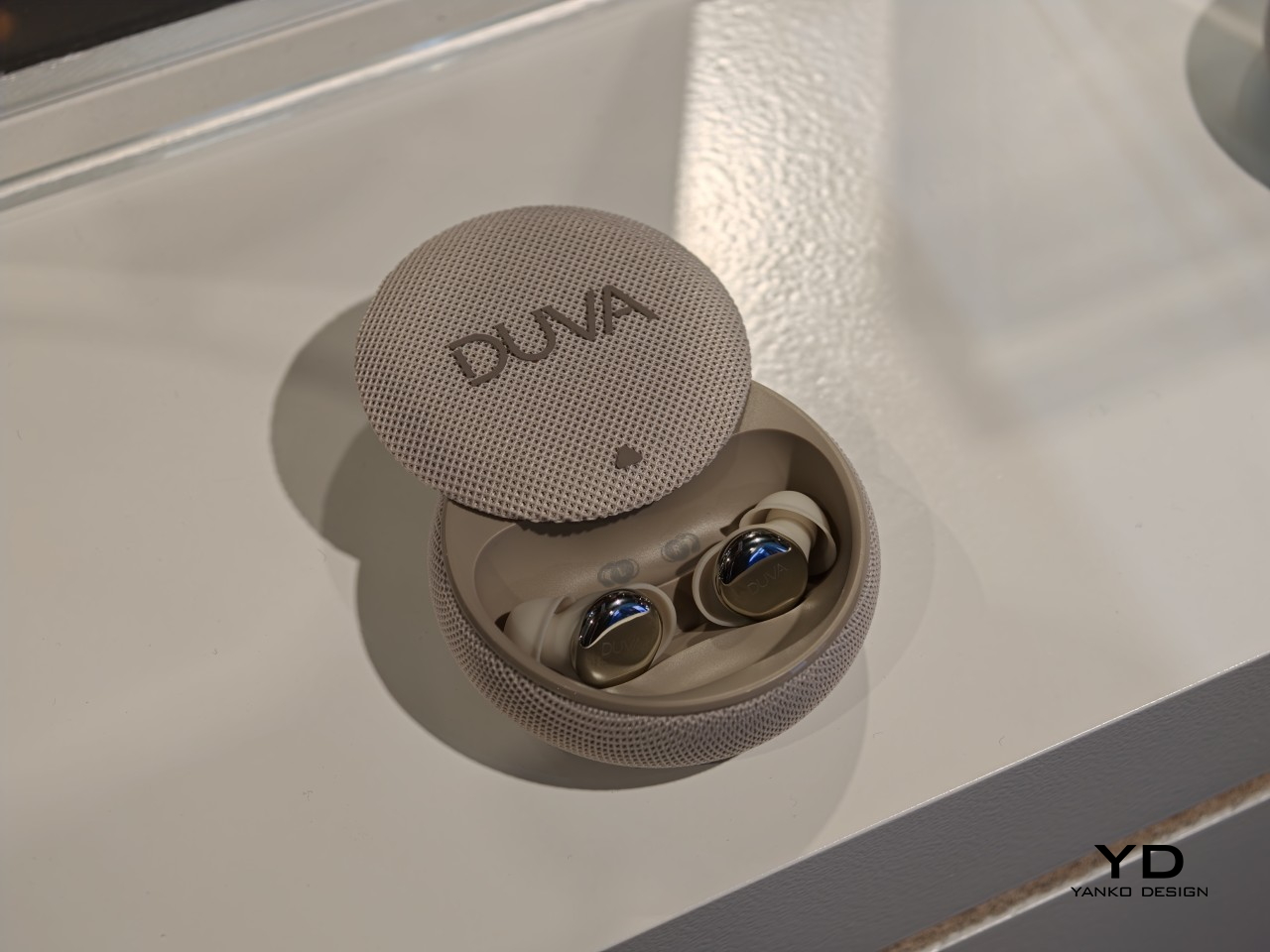
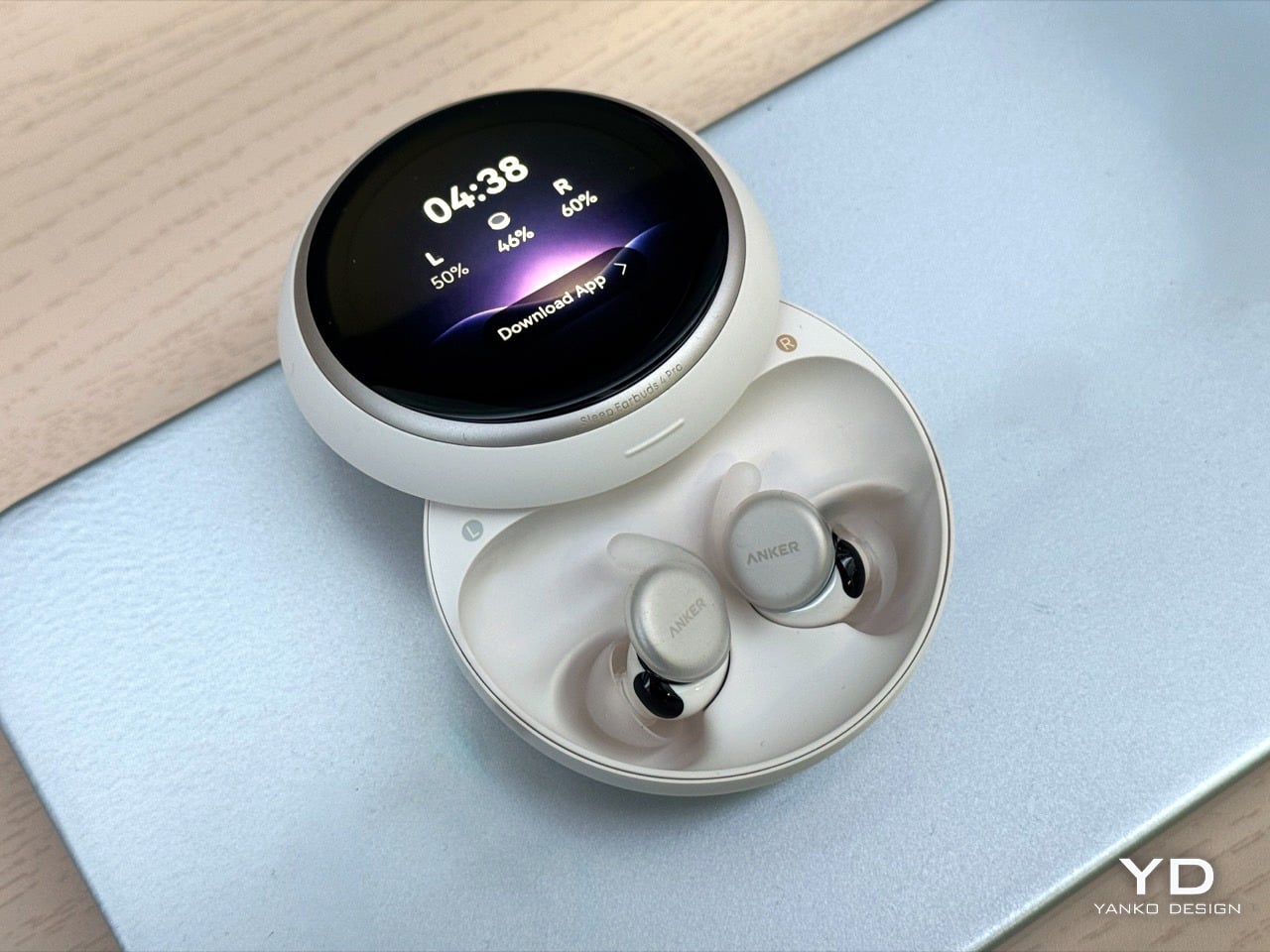
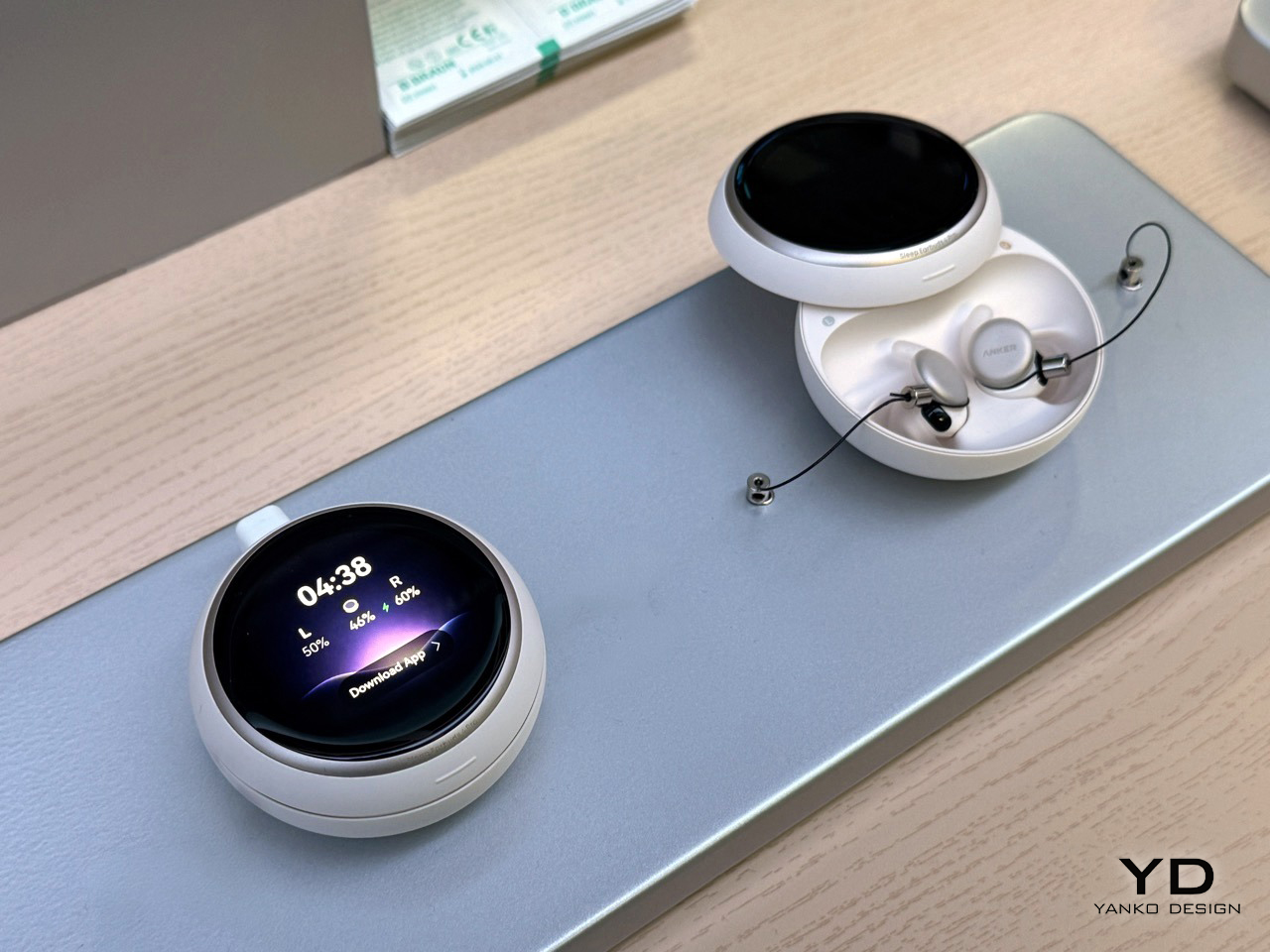
Anker’s new Soundcore Sleep Earbuds 4 Pro stuff a heart rate sensor into your ear canal and bolt a round AMOLED touchscreen onto the charging case, so bedtime happens without your phone anywhere near the pillow. Each bud is a flat three gram disc with a soft silicone fin that wedges into the ridge of your ear, sitting 20 percent flatter against your head than the old Sleep A30 so side sleepers can actually lie on them. A microphone in the case listens for your partner’s snoring and reshapes the masking audio as the snore shifts pitch. It arrives in November for $349.99.

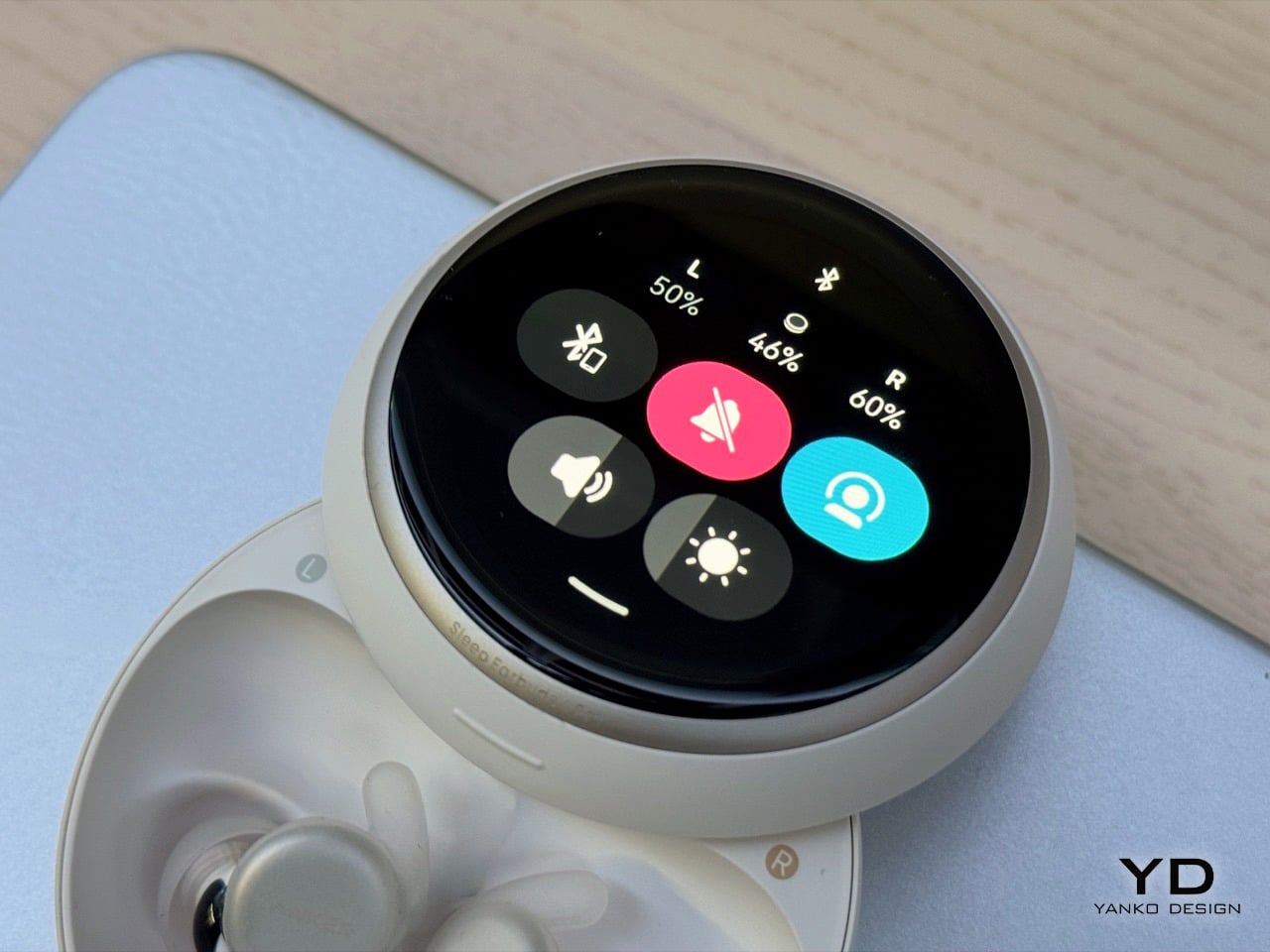
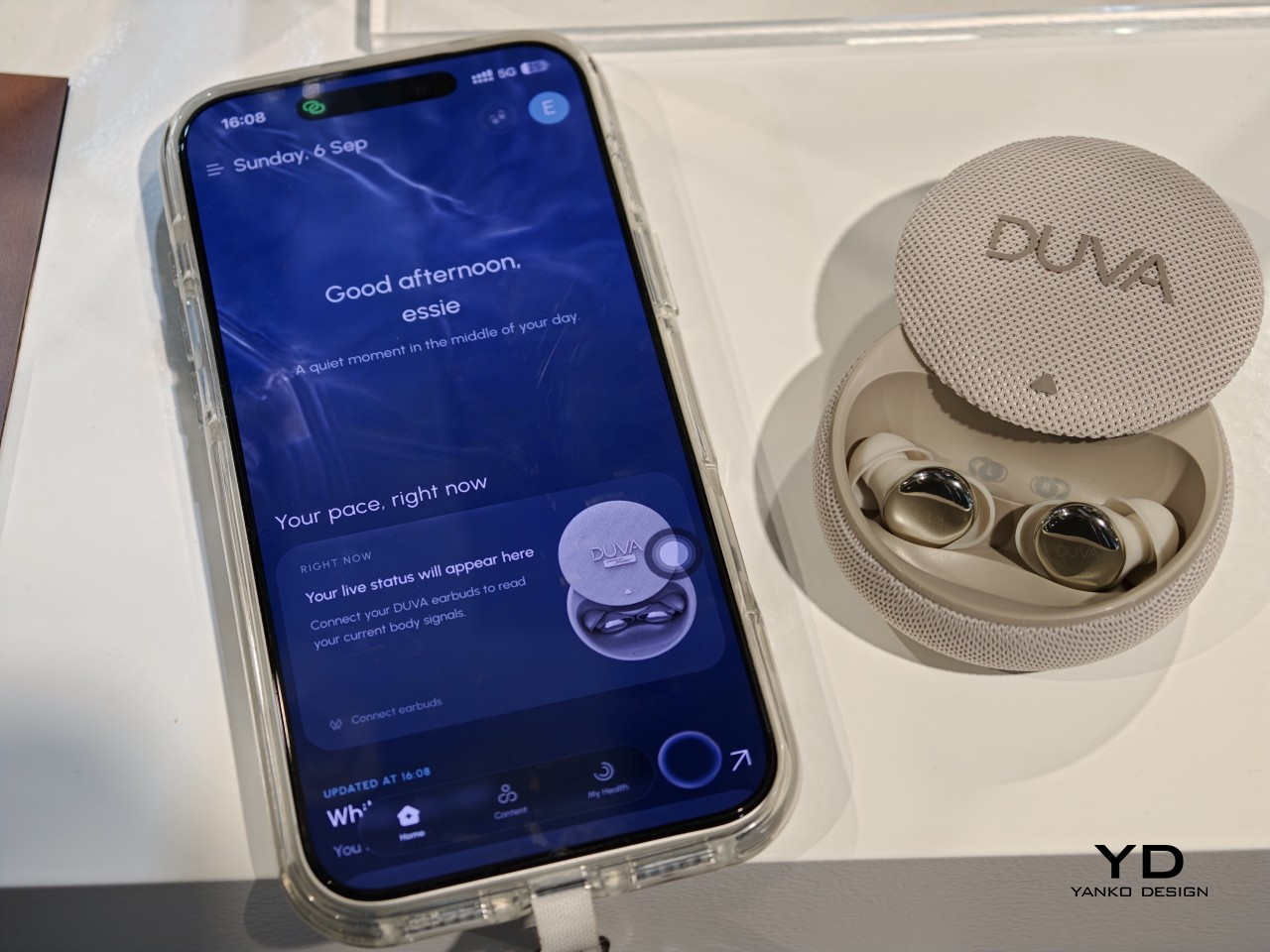
Handling them at IFA, the thing that struck me was the hierarchy. The case is the brain here, with its own screen, chip and local storage, while the buds have quietly demoted themselves to sensors you happen to wear. Pop the lid and a circular display shows the time and battery for each side. Tap through for playback controls, a brightness slider, an alarm toggle. Your phone, the single worst object to hold at midnight, has been designed out of the room entirely.

Designer: Anker

Sleep earbuds run on a brief that works backward from every other earbud, since the real question is what happens when a skull presses the thing into a pillow for eight hours. Anker’s bud is a flat disc with no stem and no nozzle, and the silicone fin locks into the ear ridge instead of pushing inward. I picked one up at the booth and it felt closer to a hearing aid component than a music earbud, the correct lineage for something meant to disappear under the weight of your head. The case carries the real design budget: a round AMOLED display, its own chip, and local audio storage, so soundscapes play offline.

Inside the ear, a 100 Hz optical PPG sensor tracks heart rate and HRV through the night, feeding BioSync, a system that checks relaxation roughly every five minutes and nudges the tempo, soundscape and binaural beats accordingly. Anker calls this an experimental lab feature, not a medical grade one, honest framing for a claim this ambitious. Snore masking runs on a separate loop: the case mic picks up snoring nearby and reshapes the masking sound as pitch and rhythm change, rather than looping one fixed track all night. Anker recommends keeping the case within two meters of the sleeping culprit with the mic aimed their way, the most savage guidance to come out of IFA this year.

The cheaper $229.99 Sleep Earbuds 4 skips the PPG sensor and the touchscreen entirely, yet it can recognize a baby crying or a fire alarm through its case mic and duck the masking audio into transparency. The Pro, despite carrying all the sensor hardware, does not do this. It reads as two products, two timelines, with no merge forced before launch. Paying $120 more buys a heart rate graph and a screen, not the feature that wakes you when something is actually wrong. That tradeoff is worth Anker addressing before the Pro ships in November.

Anker took the accessory and made it the computer, while the wearable itself got smaller and closer to invisible, the reverse of how most earbud lines evolve. Cases usually shrink as buds gain features. Here the buds vanish and the case gets a face. Whether BioSync improves anyone’s sleep needs real nights and real data, not a show floor. But a screen you check instead of a phone you scroll is the right instinct for something built to sit beside your head while you’re unconscious.

The post Anker’s Sleep Earbuds 4 Pro Silence Snoring in Real Time With Adaptive Masking: Hands-on at IFA 2026 first appeared on Yanko Design.

This Self-Moving Harry Potter Chessboard Stole The Show At IFA 2026 From Every AI Gadget


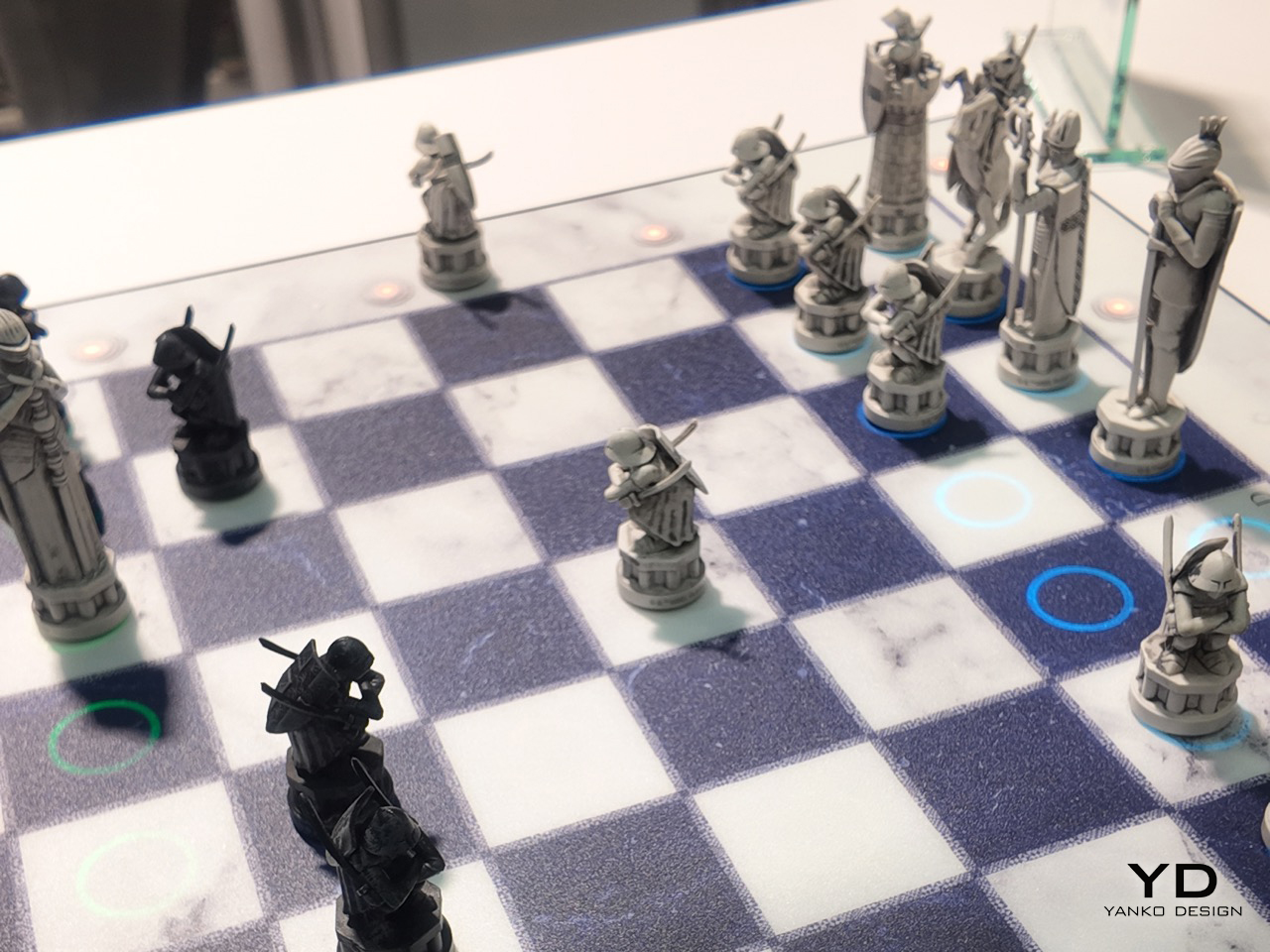
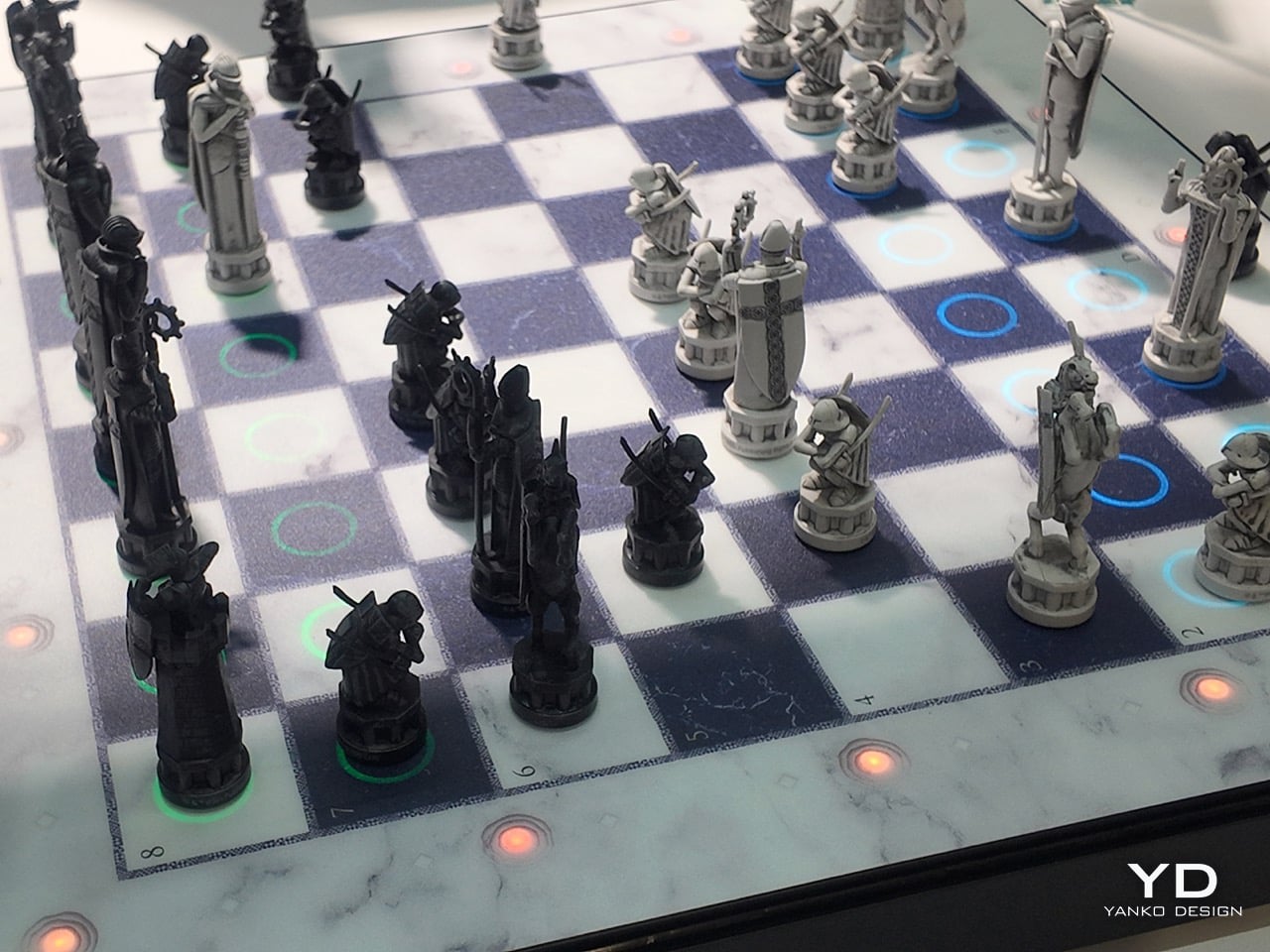
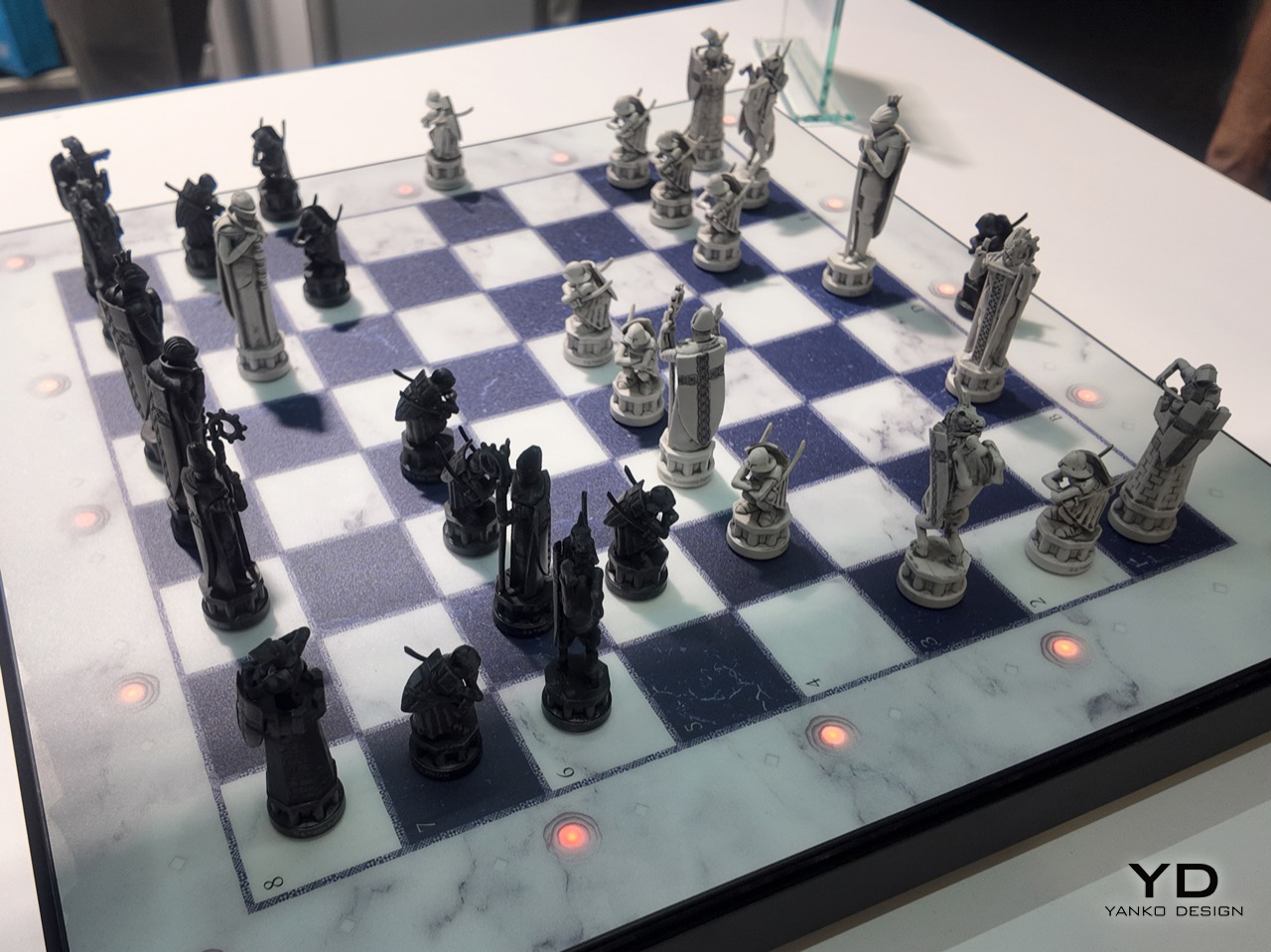
IFA in 2026 was wall to wall AI. Every fridge had an assistant, every vacuum had a personality, every booth rep used the word “intelligent” until it stopped meaning anything. I walked past maybe forty products that promised to think for me before I found the one thing on the entire floor that made me feel something, and it did not involve a single chatbot. It was a chess board, sculpted like a ruin, moving its own pieces across a glowing marble surface with nobody touching them. That board is GoChess Wizard Alive, Particula’s officially licensed Harry Potter set built with Warner Bros. for the film’s 25th anniversary, and it out-charmed every piece of “smart” hardware in the building.

Here is my petty little theory about consumer tech right now. We have gotten so good at building things that are useful that we forgot how to build things that are delightful, and those are not the same skill. GoChess solves that by hiding four robots under the surface, letting 32 stone pieces glide into position with zero visible mechanism, all while looking like something dug out of the Chamber itself. It ships as a limited run of 1,000 numbered boards at $999, the first batch sold out in 48 hours, and the second presale opens September 28. I did not review this like a gadget. I reviewed it the way you judge a magic trick, and it passed clean.

Designers: Particula x Warner Bros.

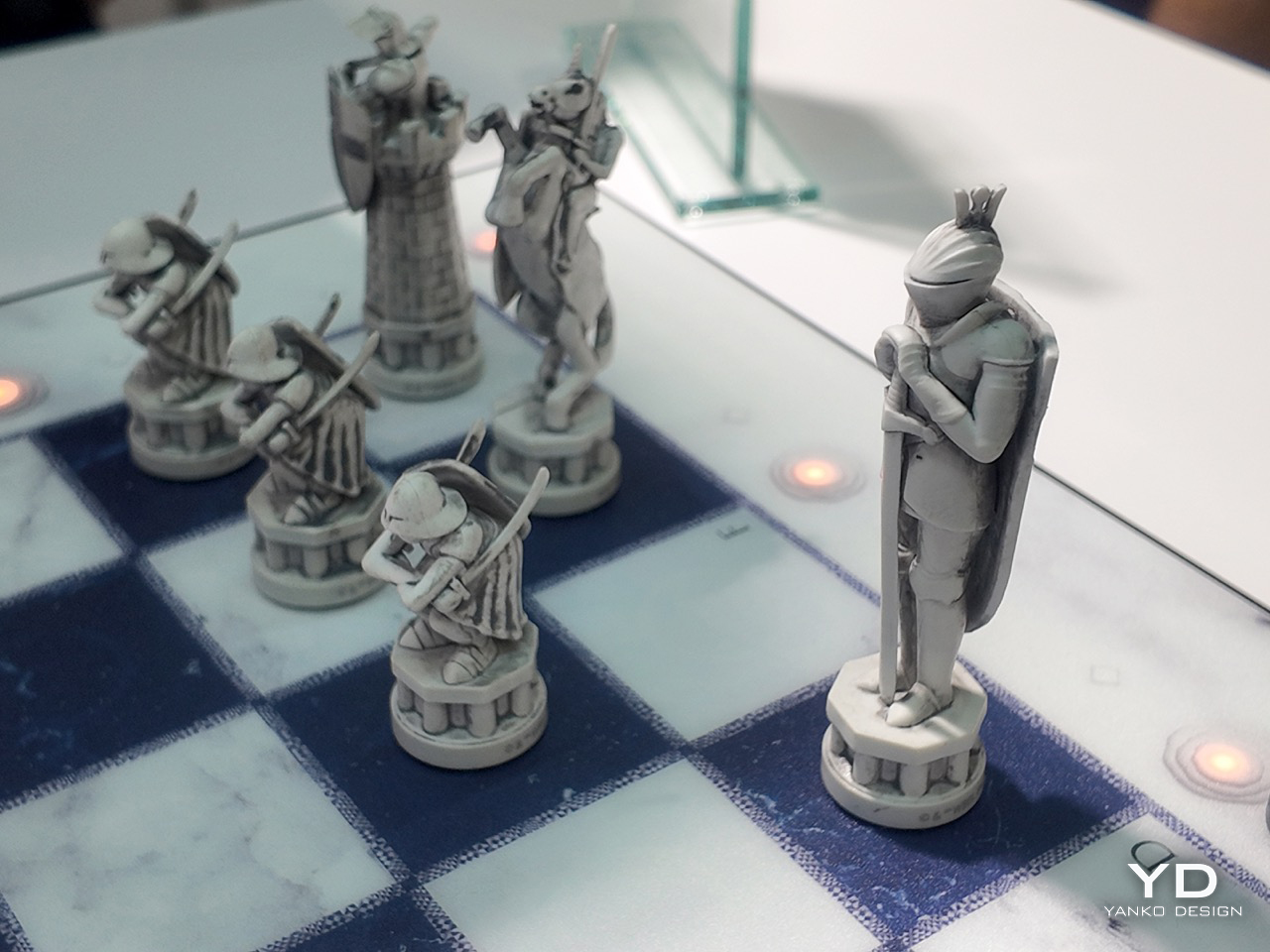
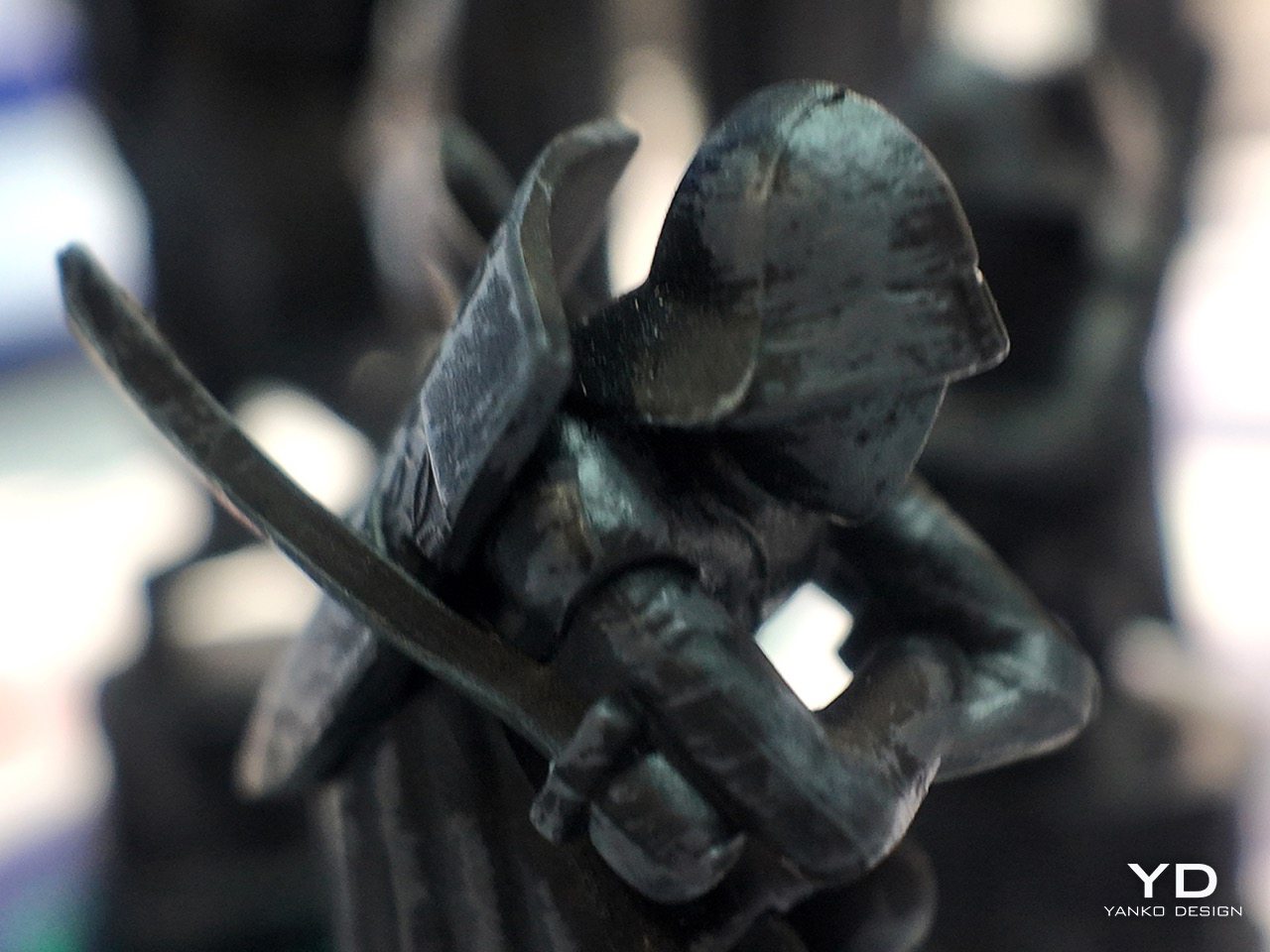
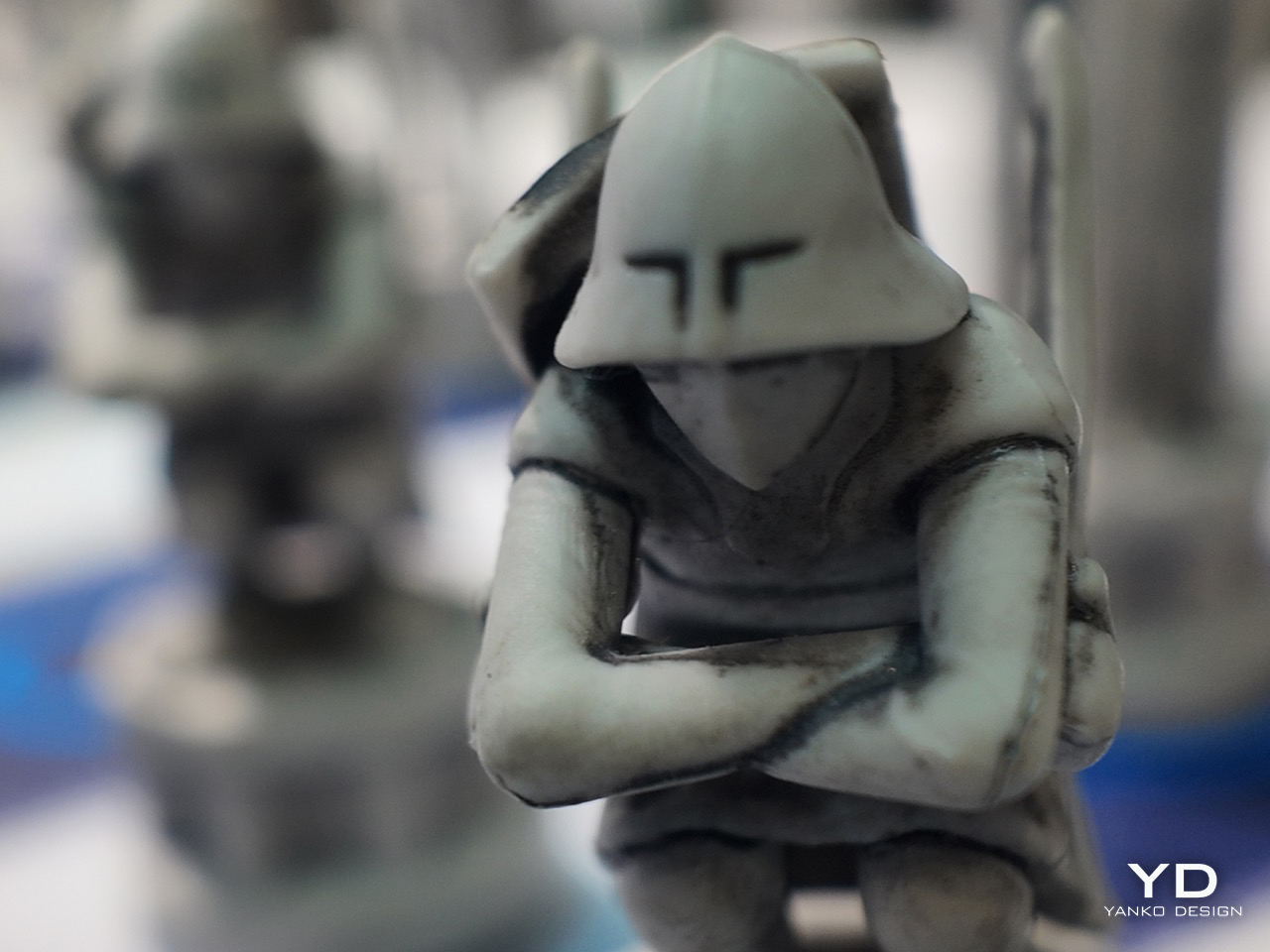
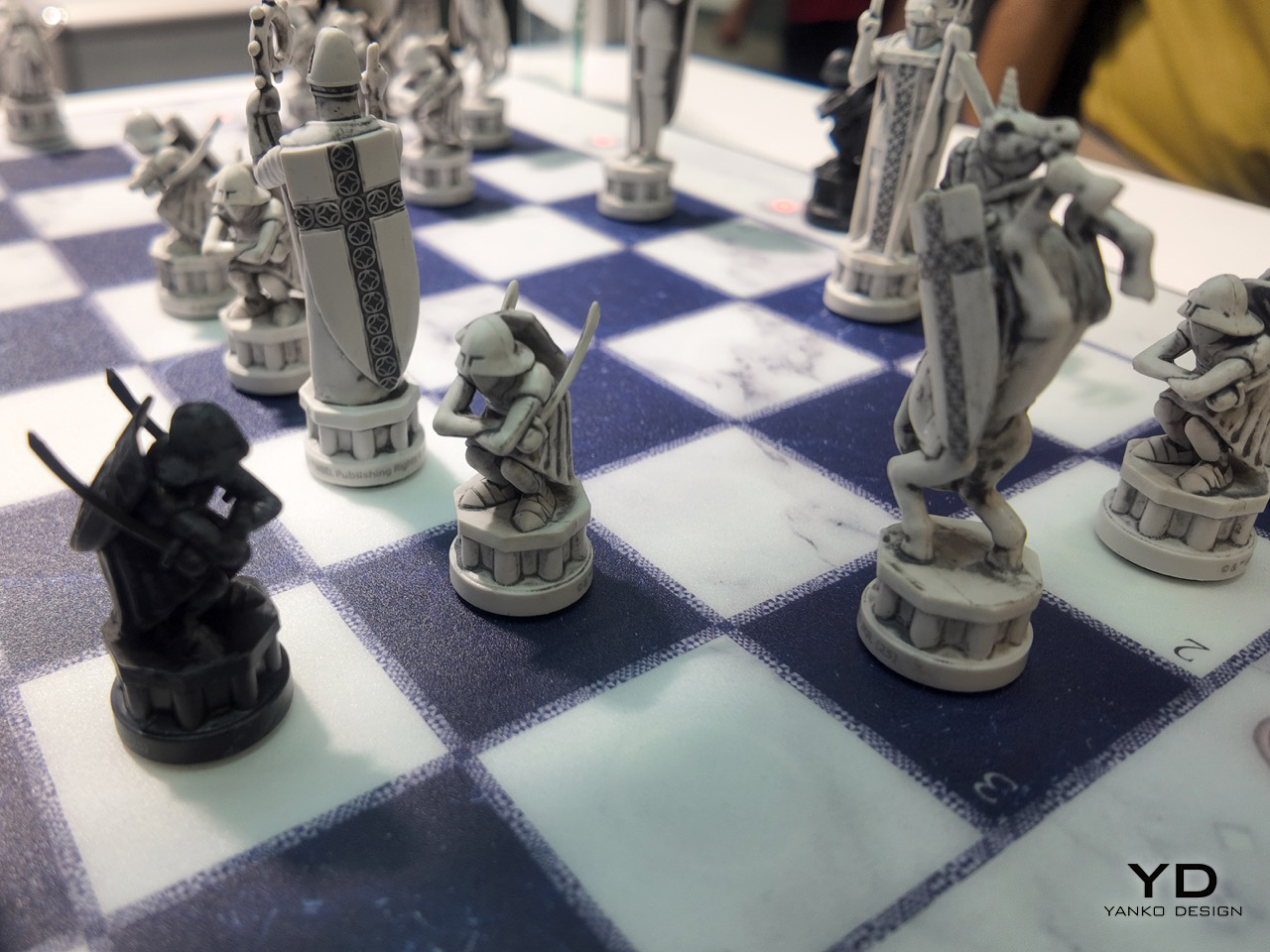
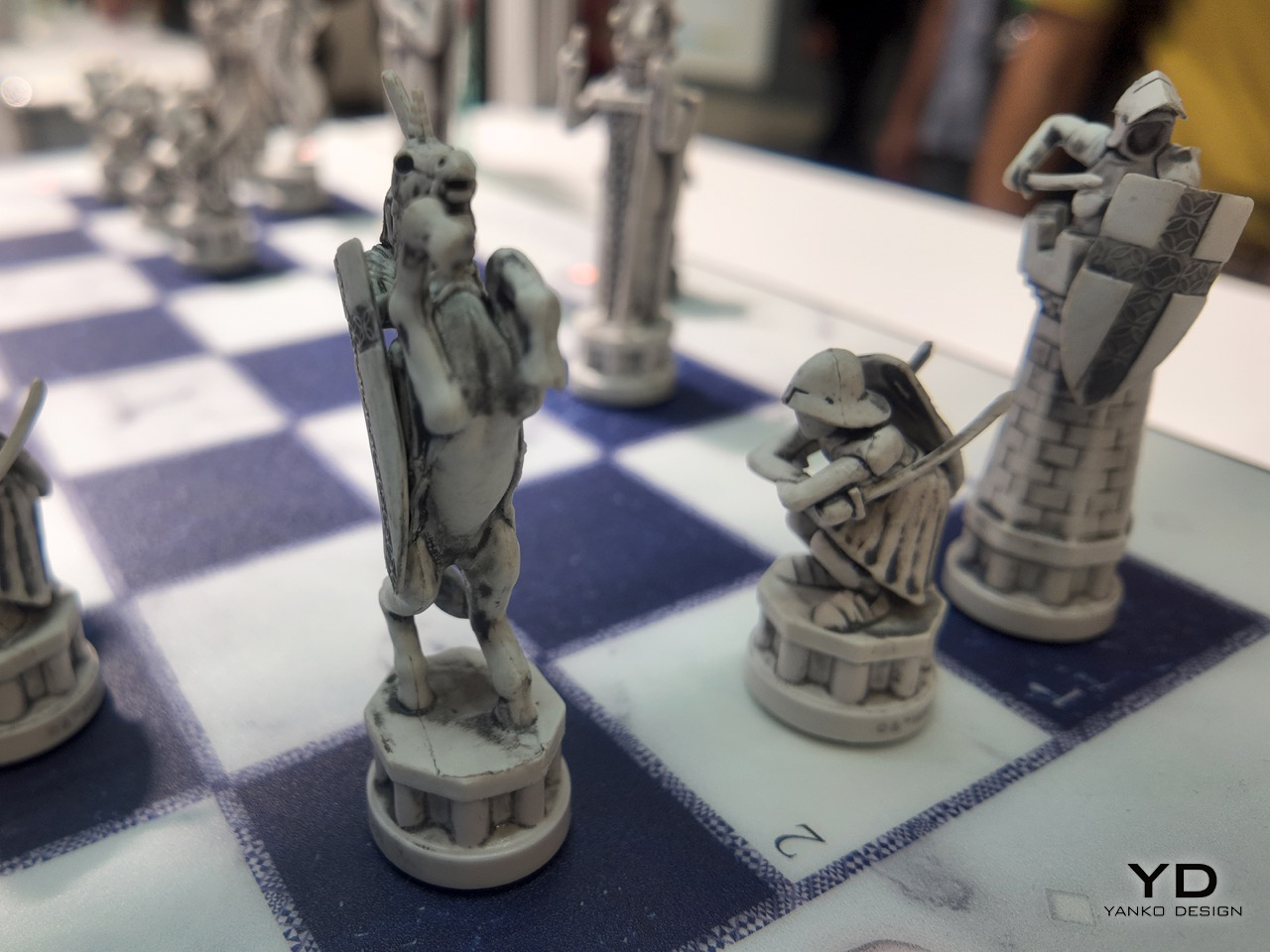
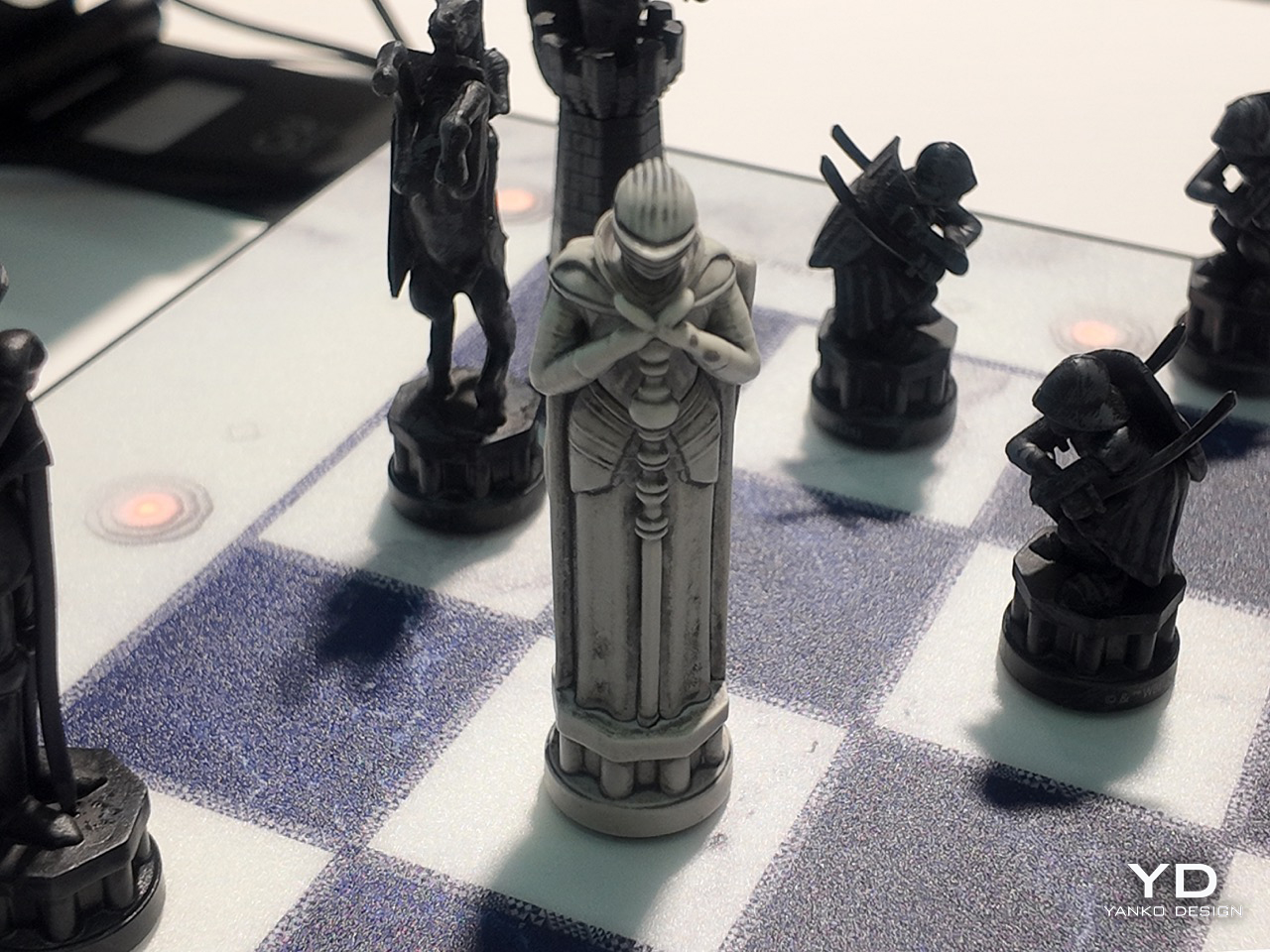
I zoomed in using a macro mode on my camera and the details were staggering. The pawns kneel with crossbows braced against a shoulder, heads bowed like they are waiting on orders. Knights rear up on horseback behind kite shields carved with a rosette pattern lifted straight from the film’s chamber sequence. The king stands wrapped in a crowned great helm, both hands folded over a sword pommel like a tomb effigy that got bored of lying down. This is medieval funerary sculpture cosplaying as a chess set, and it works because Particula resisted the easy move of just slapping Harry Potter branding on a generic Staunton set.

The playing surface is printed to look like veined marble rather than the flat two-tone grid every smart board defaults to, and the LED coaching rings glow up through that stone texture instead of sitting on top of it like a UI overlay. Blue rings show your legal moves, green flags the strongest option, and the whole system stays invisible until you actually need it. That restraint in the interface design is what sells the illusion. A cheaper execution would have turned this into a light-up toy. Particula built something that looks like a prop first and a gadget second.

The robotics trace back to Particula’s original 2023 GoChess, which used a patent-pending system of wheeled micro-robots under a translucent surface to shuttle magnetic pieces around. Wizard Alive runs the four-robot configuration from that lineup, the faster of the two setups, which is why a full board reset happens in seconds instead of a slow crawl. You can also just talk to it. Call out “knight to h3” the way Ron does in the film and the piece answers you, gliding into position with no hand involved. Standing at that booth, watching strangers do this to each other and burst out laughing, was the most fun I had at the entire show.

I walked into that convention center braced for smart fridges and AI-branded nonsense, and I walked out having relived being nine years old for about twenty minutes straight. That is the real achievement here, not the robotics or the licensing deal, but the fact that a chess set out-delighted an entire hall of companies trying much harder to impress me. If you want in, the second presale batch opens September 28 for 48 hours before it vanishes again, same as the first one did. Move fast. The pieces certainly will.

The post This Self-Moving Harry Potter Chessboard Stole The Show At IFA 2026 From Every AI Gadget first appeared on Yanko Design.

Xiaomi 18 Fold Hands-On: Got Here Before Apple, Can It Beat Samsung?

Xiaomi has chosen an interesting moment to return to foldables. The company has not released a book-style foldable since the Mix Fold 4, which launched in 2024, and now it is back with the Xiaomi 18 Fold just as compact foldables are starting to get more attention. Samsung has also added a foldable in this compact format to its lineup, and Apple is widely expected to unveil its first foldable iPhone at its September 9 event with a similar form factor in mind.

That puts the Xiaomi 18 Fold in an interesting spot. It is not just Xiaomi coming back to foldables after a break. It is also arriving just as this smaller book-style format looks like it could become the next big thing.

Designer: Xiaomi

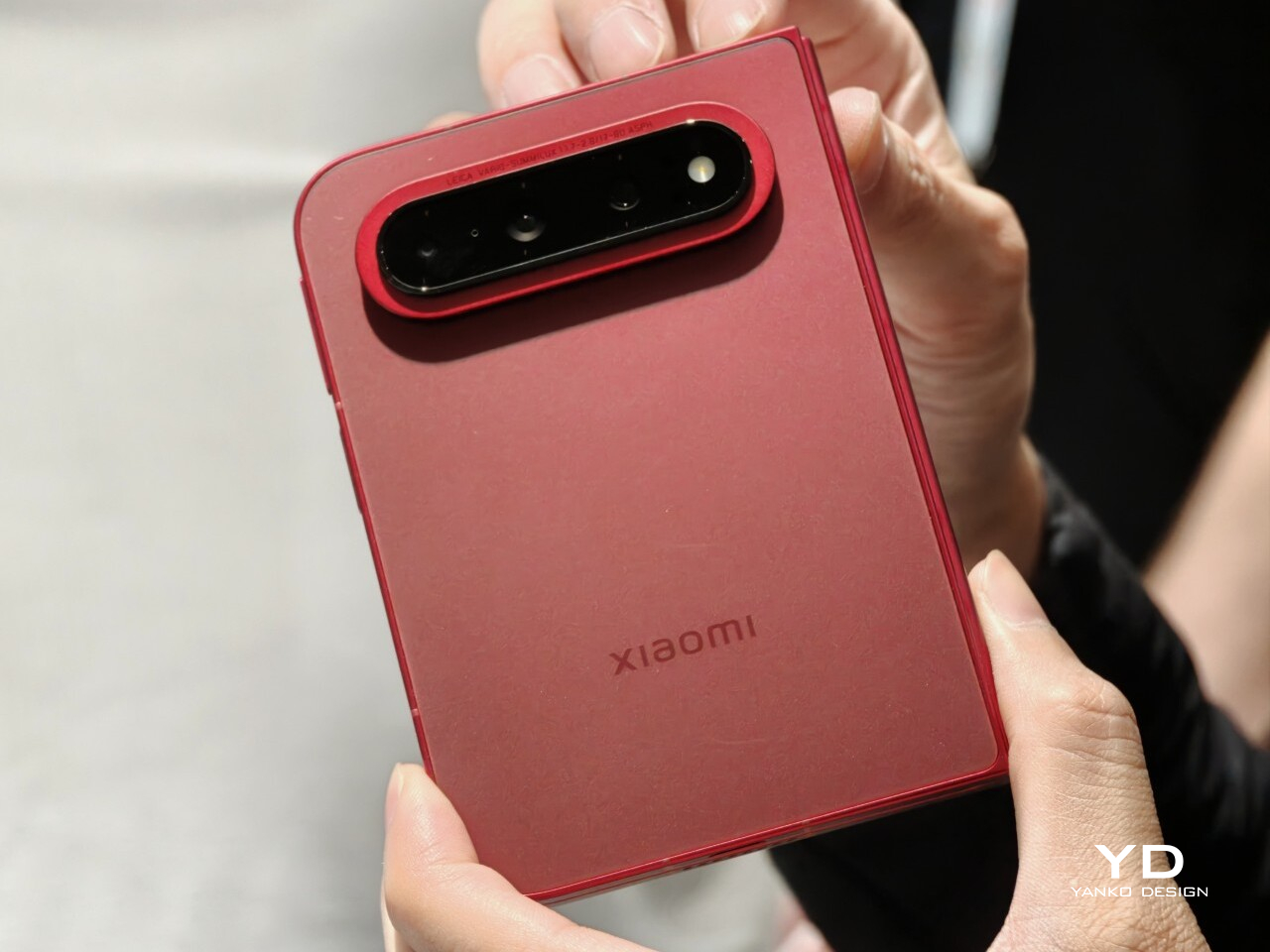
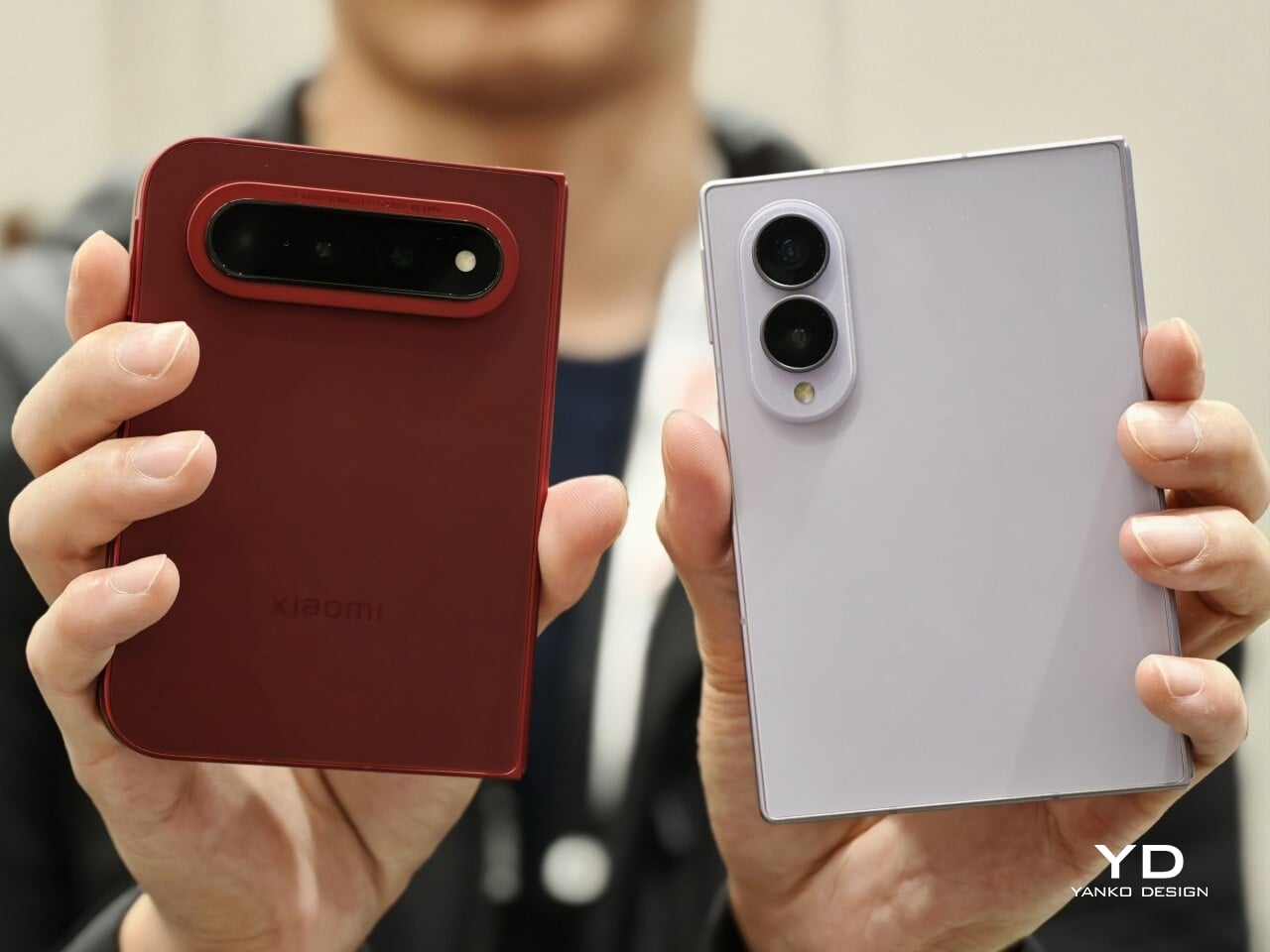
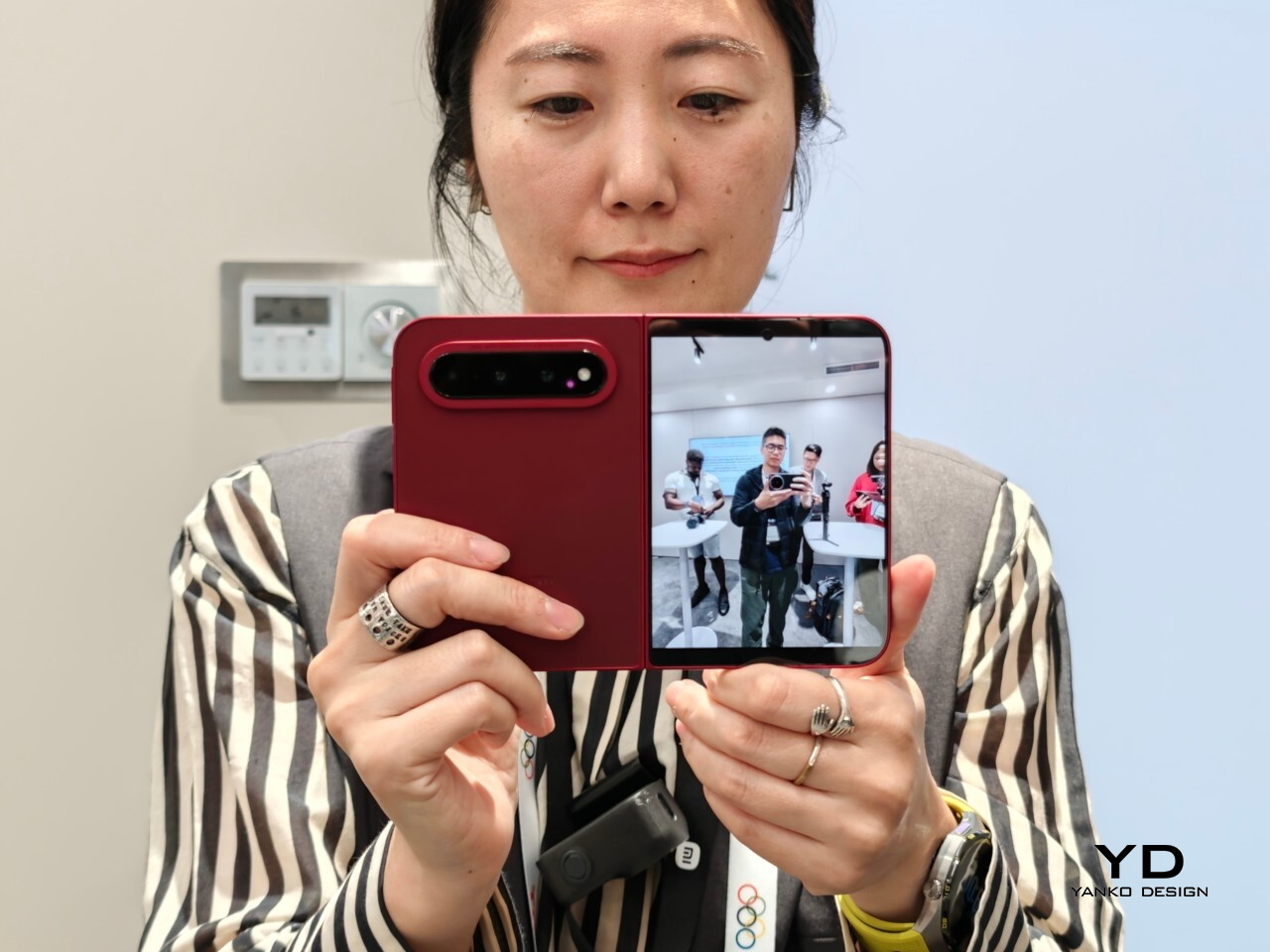
Xiaomi is positioning the 18 Fold as its first mid-size flagship foldable. It weighs 7.73 ounces (219g), measures 0.42 inches thick when folded (10.68mm), and opens out to just 0.20 inches thick (5.02mm), with a folded footprint of 4.64 x 3.29 inches (117.8 x 83.6mm). In person, it feels thin, though not unusually thin by the standards of today’s premium foldables. More importantly, it feels expensive in a good way. The matte texture on the back and frame gives it a softer, understated finish, while the rounded corners and flat frame help the phone look clean and modern.

The unit I handled was the deep red version, and it is a bold color in person. It stands out more than the usual black or silver foldable palette without feeling too loud. It also happens to echo the deep red finish rumored for Apple’s first foldable, which makes the comparison hard to miss. The 18 Fold comes in Black, White, Red, and a Ceramic Version.

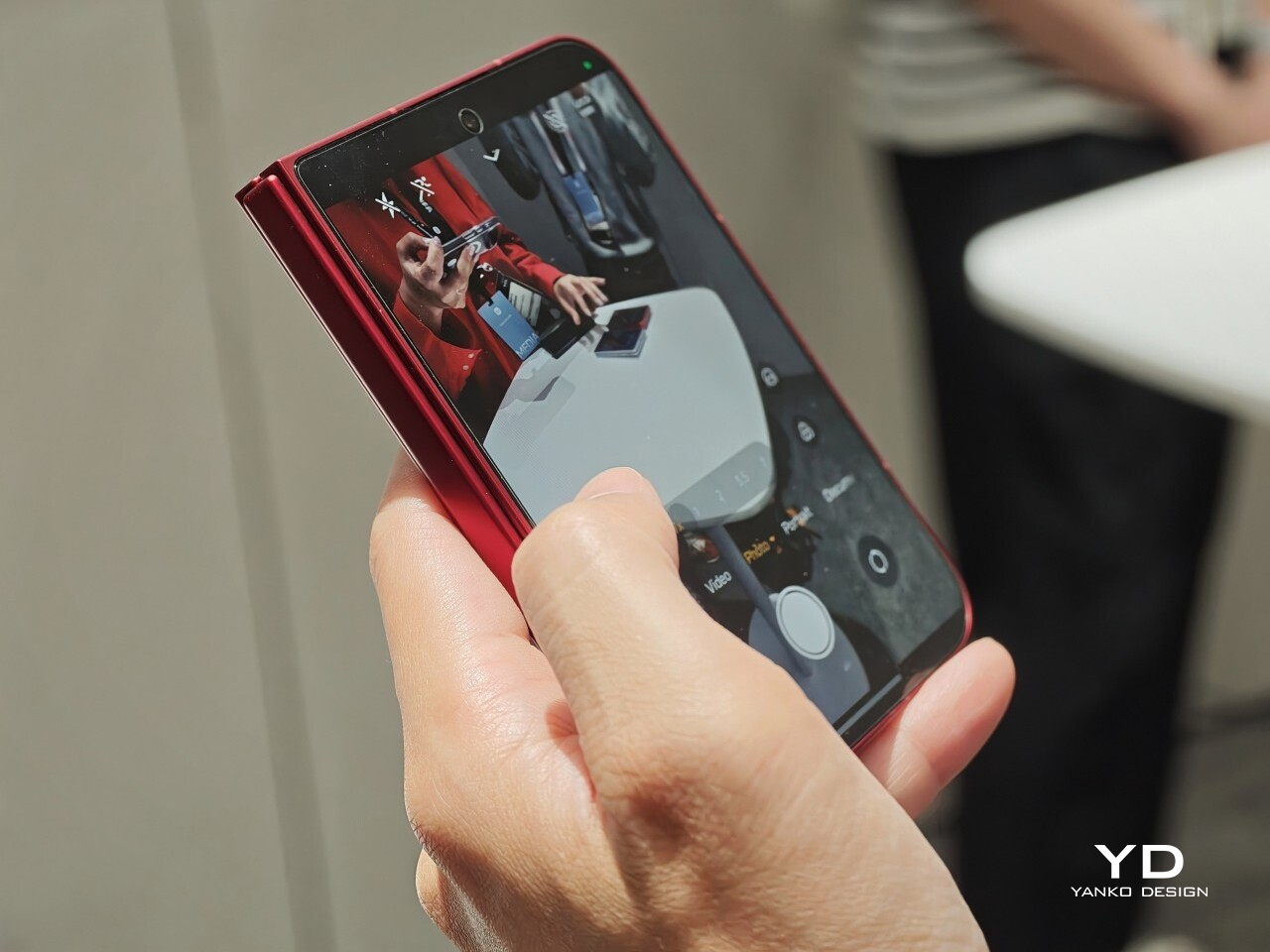
In practice, though, this is still a two-handed phone whether it is folded or unfolded. Even closed, the body is compact in one sense but still broad enough that I did not think of it as something built for easy one-handed use. That is not really a criticism. It just comes with the territory.

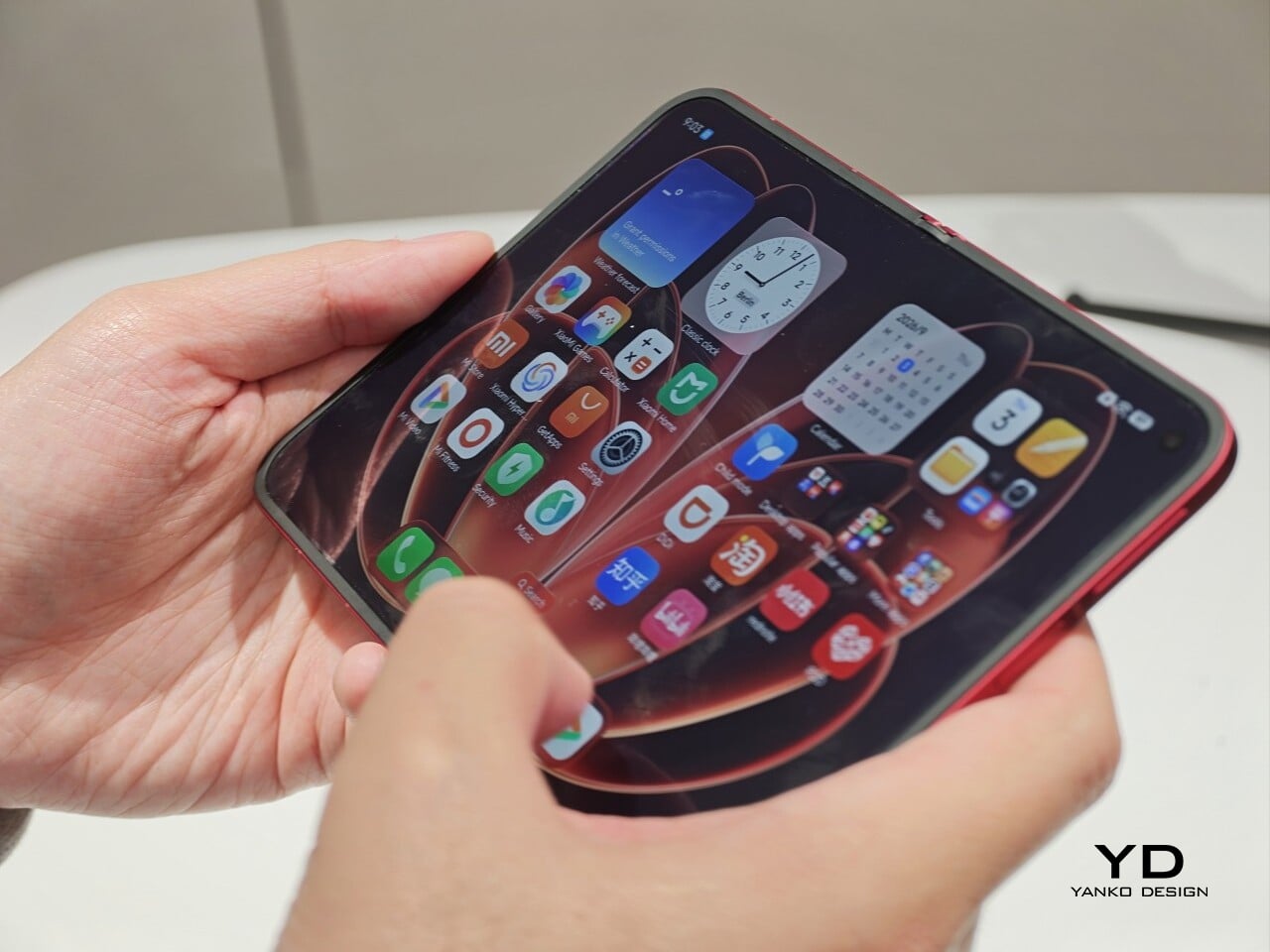
The outer display is a 5.38-inch panel, while the inside opens up to a 7.58-inch main screen. Xiaomi says both displays share the same aspect ratio, which is meant to make the transition from one to the other feel more natural. I could not fully judge how well that works in daily use from a short demo, but one benefit stood out right away. Video felt more immersive than on squarer foldables because there was less black bar space above and below the image.

The software also looked well suited to the shape. Animations felt smooth in my brief demo, and I did see split-screen and floating window support in action. The unfolded UI felt more like a small tablet than a stretched phone, which is what you want on a device like this. Xiaomi has also placed one speaker on the top edge and another on the bottom edge on the opposite side, which should help give the phone a more balanced stereo effect when it is open.

The hinge left a good first impression too. I cannot really say whether it felt especially firm or especially smooth, because my time with the device was limited, but it did feel sturdy. The crease was handled well too. Looking straight at the display, I only really noticed it from certain angles rather than all the time. More importantly, I could barely feel it when running a finger across the center, which was better than I expected.

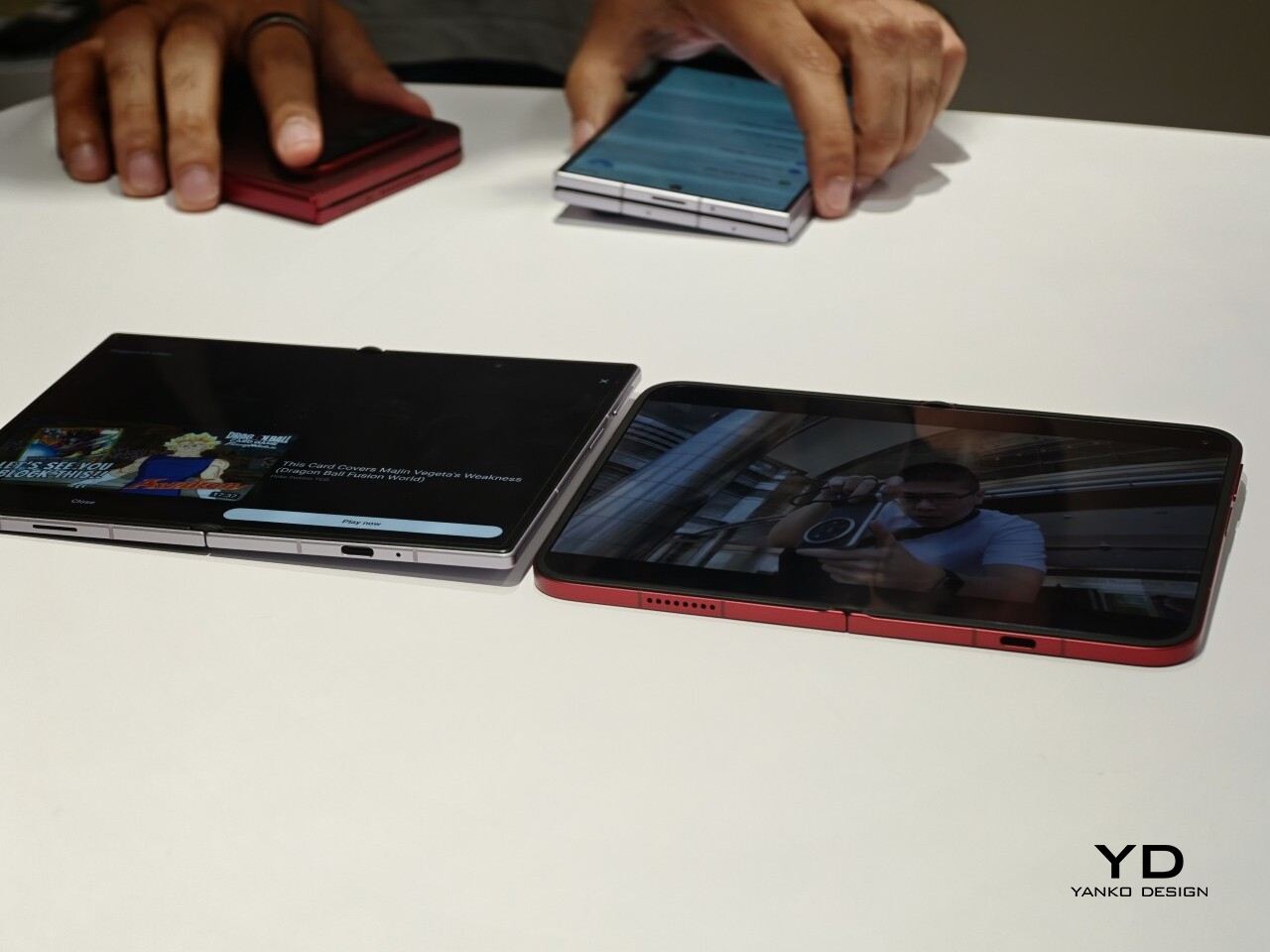
Left: Xiaomi 18 Fold, Right: Galaxy Z Fold 8

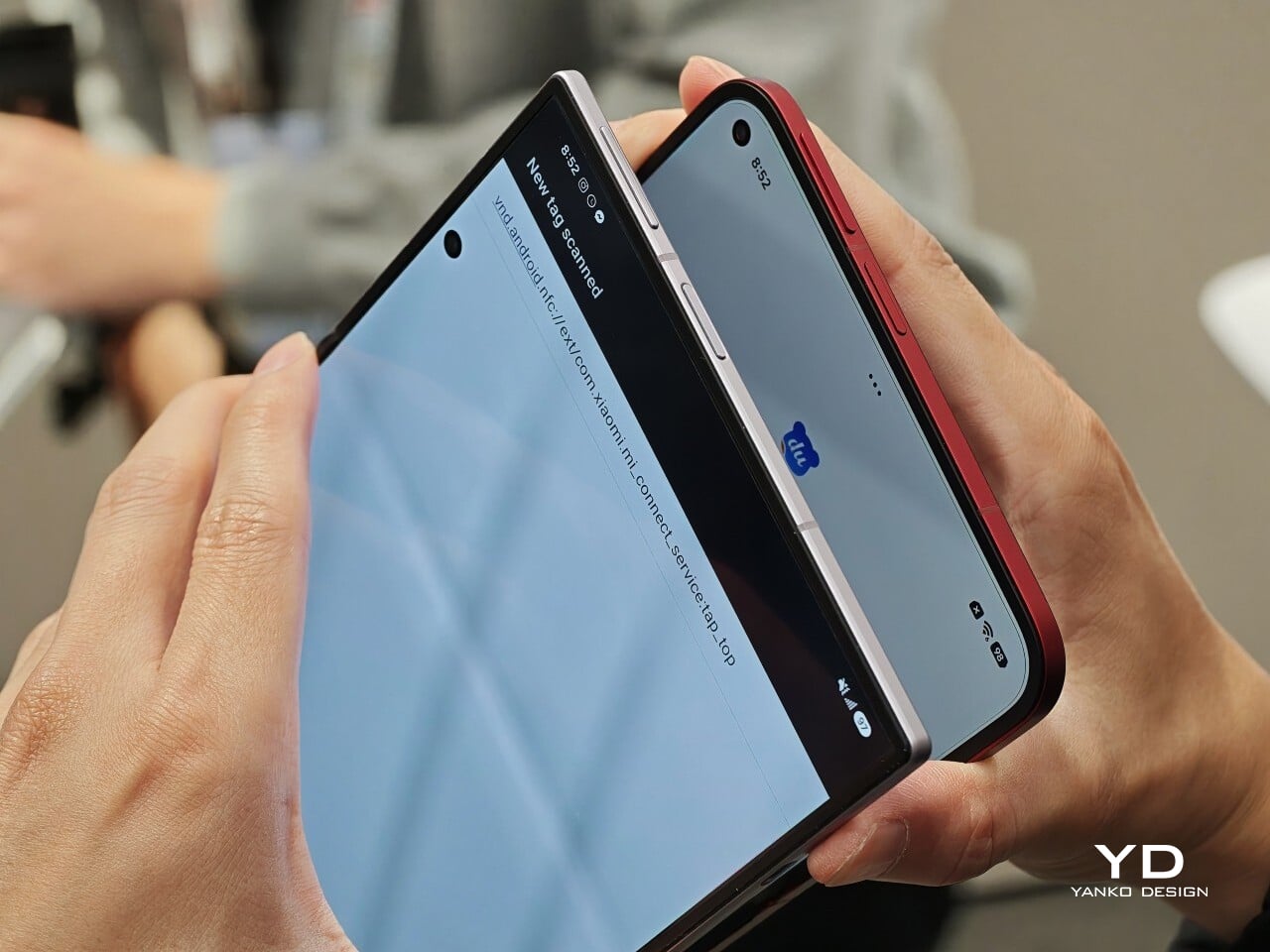
Left: Galaxy Z Fold 8, Right: Xiaomi 18 Fold

Left: Galaxy Z Fold 8, Right: Xiaomi 18 Fold

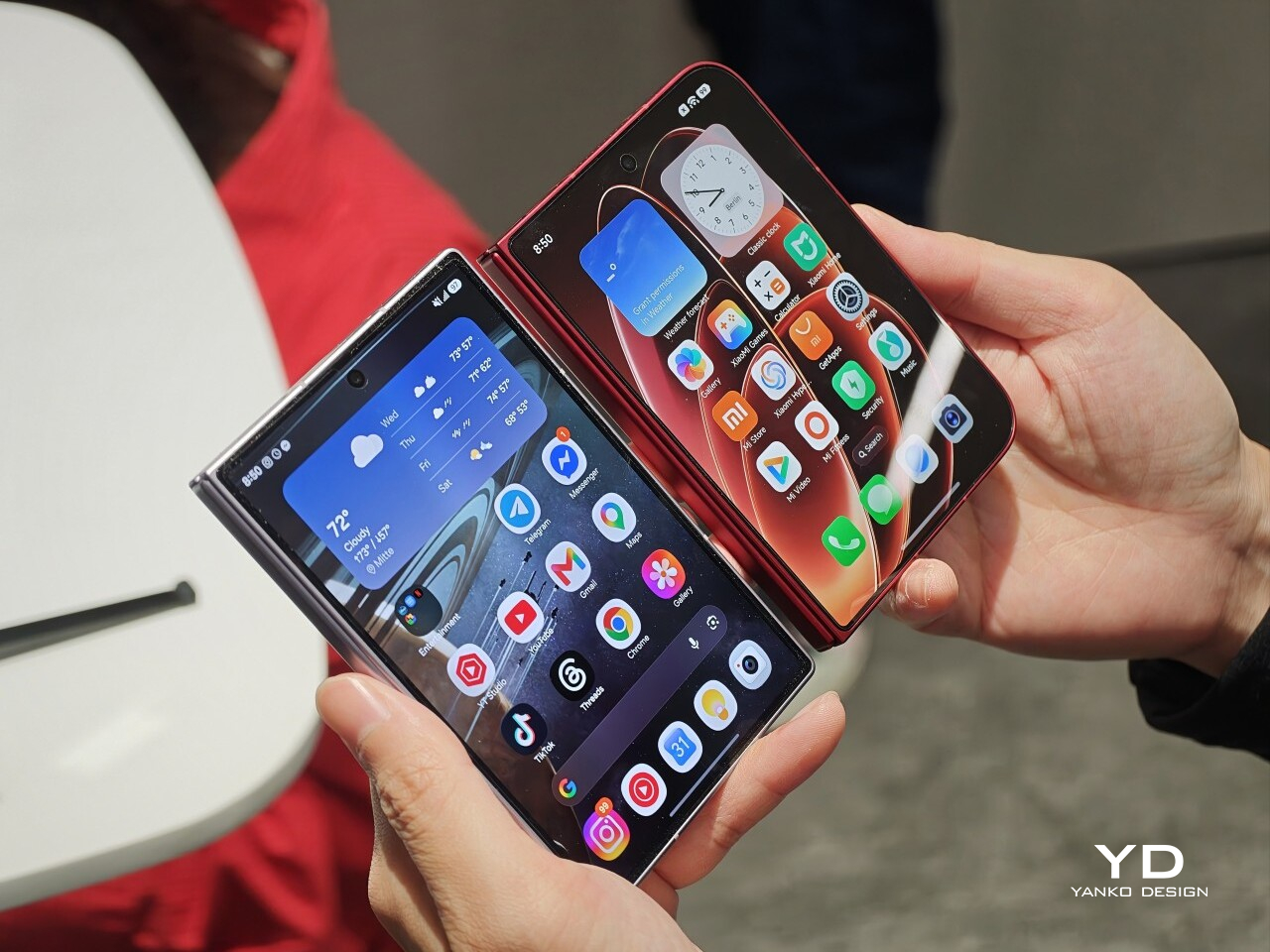
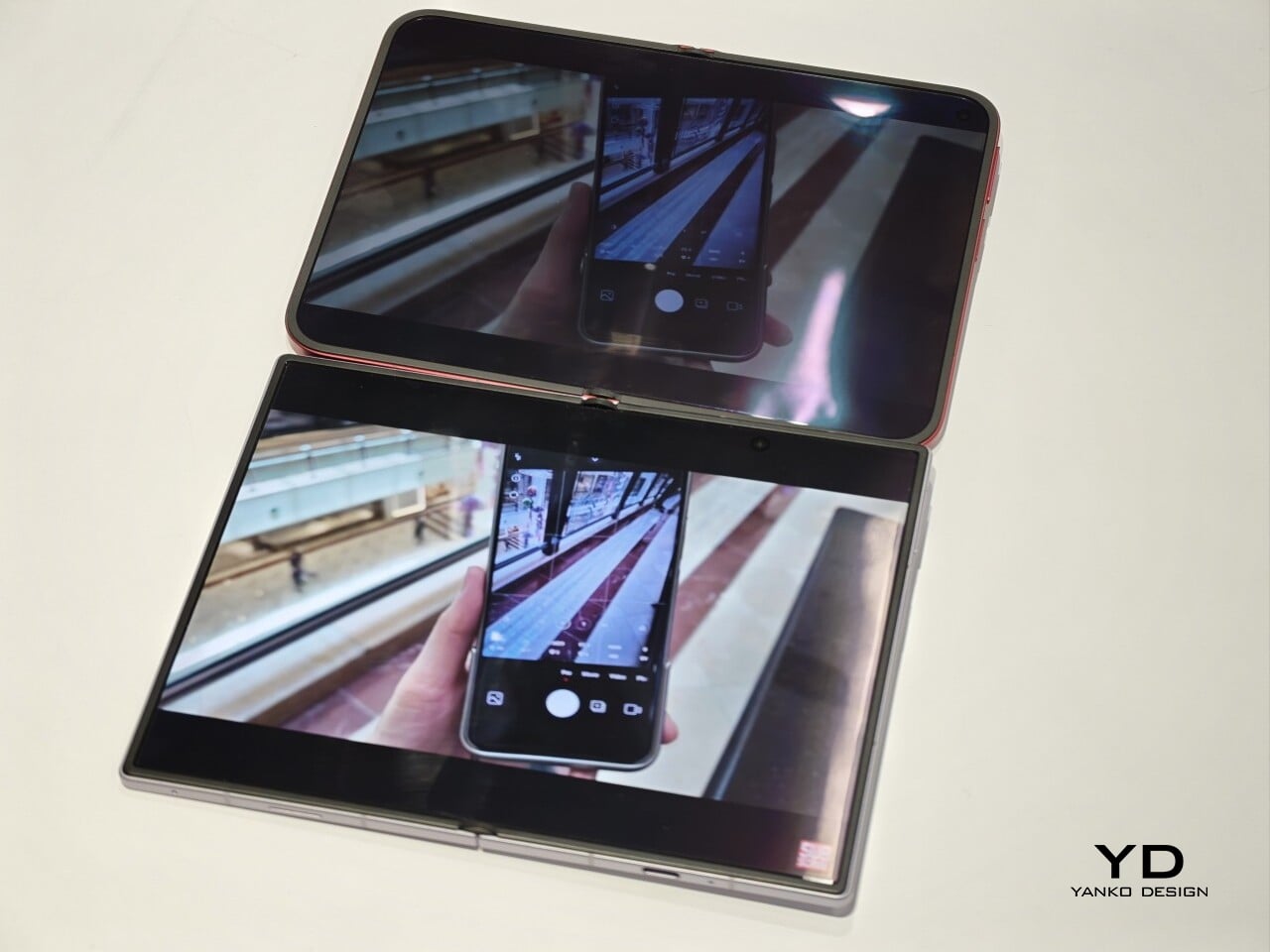
I also compared the Xiaomi 18 Fold side by side with Samsung’s Galaxy Z Fold 8. Samsung’s device measures 4.88 x 3.22 x 0.38 inches when folded (123.9 x 81.9 x 9.7mm), 6.35 x 4.88 x 0.18 inches when unfolded (161.4 x 123.9 x 4.5cm), and weighs 7.09 ounces (201g), so it is a little lighter and a bit thinner than Xiaomi’s foldable in some areas. But the difference was not just about dimensions. Samsung’s inner screen was noticeably brighter to my eyes. At the same time, the Xiaomi 18 Fold had one practical advantage that stood out immediately. When placed on a desk, it did not wobble, while the Samsung did.

Left: Galaxy Z Fold 8, Right: Xiaomi 18 Fold

Left: Galaxy Z Fold 8, Right: Xiaomi 18 Fold

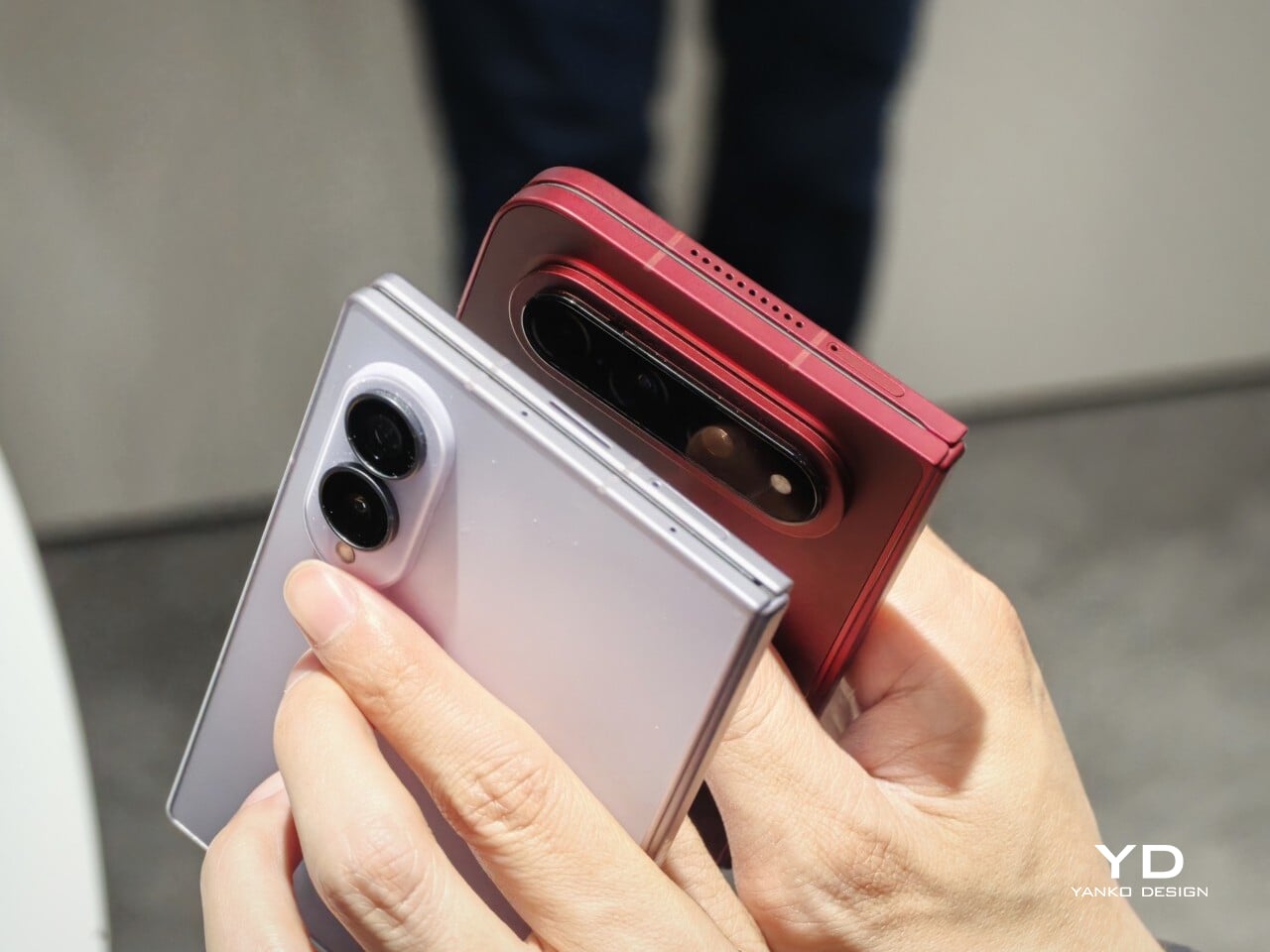
Top: Xiaomi 18 Fold, Bottom: Galaxy Z Fold 8

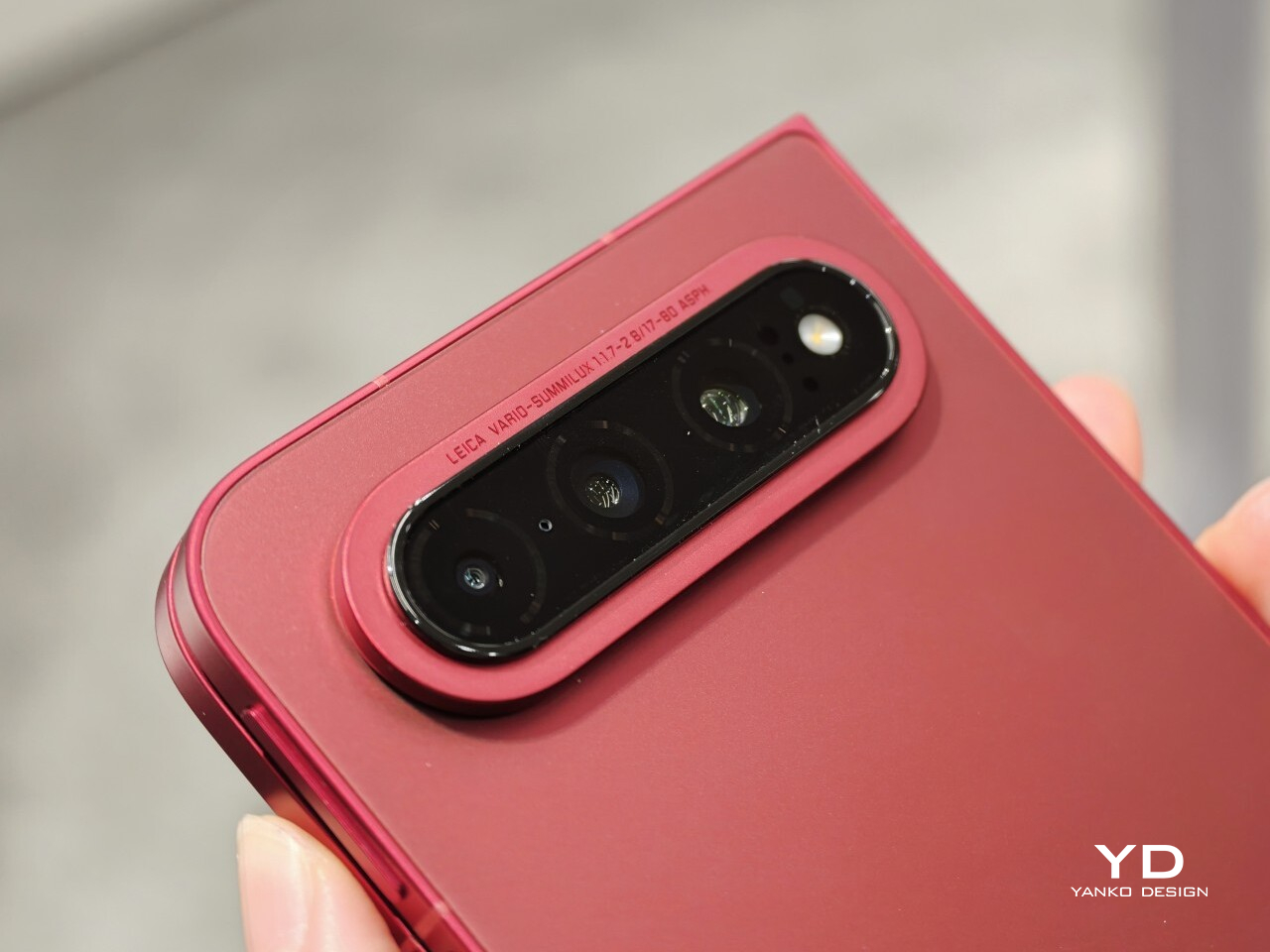
The biggest surprise for me was the camera. Xiaomi is using a 200MP Leica triple-camera system, led by a 200MP main camera and backed by a 50MP Leica periscope telephoto with an 80mm equivalent focal length. In my short time with the phone, the telephoto camera was the part that stuck with me most. I tried zoom, and the 3.5x telephoto setup immediately felt like one of the most interesting parts of the device. Stability also felt good even at higher magnification, which made the zoom feel more usable, not just more dramatic. The camera bump also did not seem overly large, and its oval-shaped, two-step raised design gives it some presence without taking over the whole back.

My time with the Xiaomi 18 Fold was brief, and this hands-on really only scratched the surface. Even so, the phone already feels like a polished return to book-style foldables. Pricing starts at RMB 10,999, or roughly $1,640, for the 12GB/256GB model, and Xiaomi said it will be available in China only for now.

The post Xiaomi 18 Fold Hands-On: Got Here Before Apple, Can It Beat Samsung? first appeared on Yanko Design.

InfiMaker K1 at IFA 2026: The 5-Axis Desktop CNC Turning Any Creator Space Into A Fabrication Lab

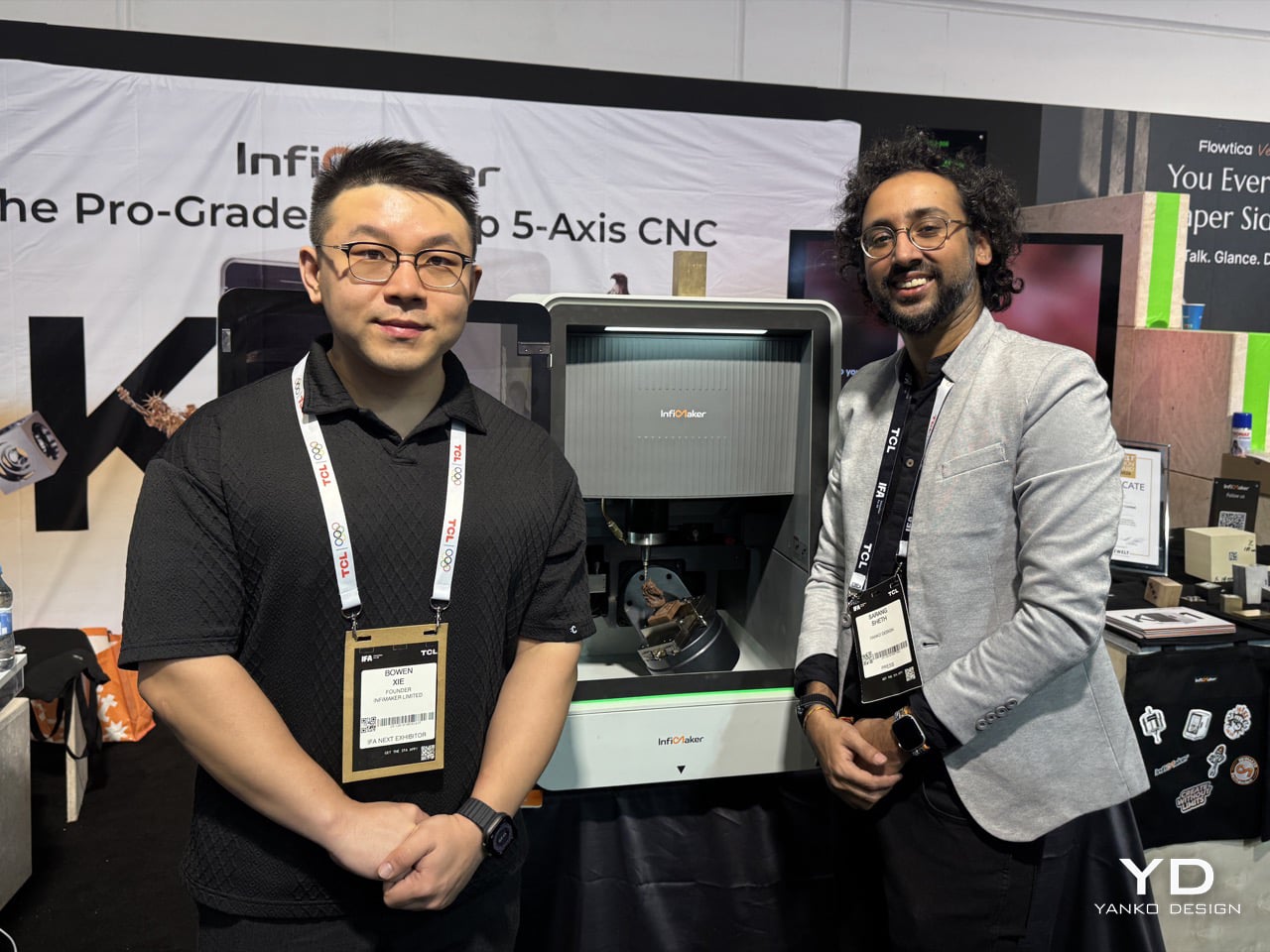
Every serious maker has hit the same wall at some point. You finish a design, you’re ready to hold the actual object in your hands, and then reality intervenes: the part needs machining, the machining needs a shop, the shop needs weeks, and your idea sits in a queue somewhere while the momentum drains out of it. InfiMaker was built by a team who got sick of that wall. Founded in Shenzhen in 2024 by Bowen Xie and Linjian Xiang, both veterans of DJI’s drone and robotics divisions, the company set out to shrink industrial-grade fabrication down to the size of a desk. Their first product, the K1, launched on Kickstarter on August 11, 2026, with Super Early Bird pledges starting at $5,199. It is a desktop CNC machine that does something very few machines at this price or size have managed: true simultaneous five-axis machining, the kind that lets a tool approach a part from nearly any angle without flipping, re-fixturing, or losing precision along the way.

What makes K1 worth a longer conversation isn’t the spec sheet alone, impressive as it is with its 1.5 kW spindle, 20,000 RPM top speed, and 0.01 mm repeatability. It’s the thinking behind it. Bowen Xie spent more than two decades in robotics before this, starting with competitive robotics as a kid and eventually landing at DJI, where drone motion control and robot-vacuum perception quietly became the foundation for how K1 handles trajectory, calibration, and setup. We sat down with Bowen, whose company is bringing K1 to IFA this year, to talk about what it actually takes to make five-axis machining approachable, why AI CAM has to know when to say no, and what he hopes a fifteen-year-old somewhere builds with one of these machines first.
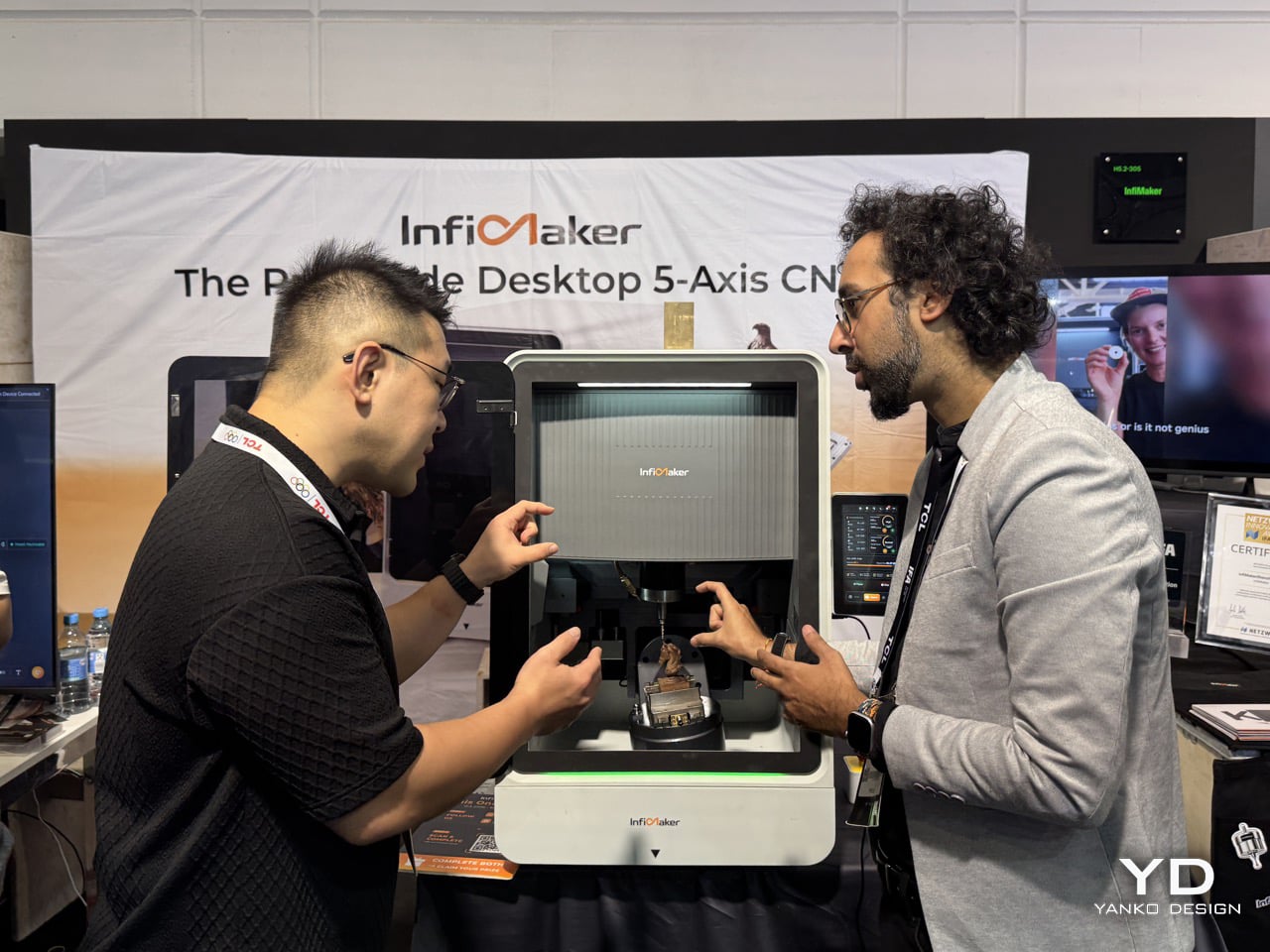
Yanko Design: You spent more than twenty years building robots before this, and you and Linjian came out of DJI. What did drones teach you about motion control that turned out to apply directly to cutting metal?

Bowen Xie: I started teaching myself programming at seven and entered FLL at nine, so robotics has been a continuous part of my life for more than twenty years. At DJI, between Linjian and me, that experience covered both drones and ground robots, including robot vacuums.

Drones taught us that precision motion is not simply about commanding motors. The system has to know where it is, plan a trajectory, coordinate multiple axes, sense disturbances, and correct continuously. In flight, the disturbances may be wind or a changing payload. In CNC, they become cutting forces, vibration, tool wear, and thermal drift.

That thinking transferred very directly into K1. We brought robot-control experience into five-axis, six-motor coordination, trajectory control, FOC, vibration suppression, self-calibration, and error compensation.

The robot-vacuum experience added another important layer: perception. Instead of asking the operator to perform every centering, origin-setting, and calibration step manually, the machine should be able to see the workpiece, fit it to the digital model, calculate its position, and use probing to help establish the setup.

Then AI CAM can turn that known geometry into a machining plan that the user can inspect and approve. The practical change is less time spent setting up the machine and making trial cuts, and more time getting to the first good part.
YD: The origin story is that you kept hitting a wall whenever an idea needed a physical part. What was the specific project that made you stop and think, we should just build the machine?

Bowen: The specific setting was our university robotics competition team, rather than one dramatic component.

We built more than twenty robots, and every iteration created a new need for custom metal parts: brackets, joints, mounts, transmission parts, and structural pieces. We could change a design in a day, but a custom part could take weeks, sometimes close to two months. In some cases, having it made in China and shipped to Canada was still cheaper than sourcing it locally.

That mismatch stayed with me. The intelligence of the project could move quickly, but its physical development was controlled by an external manufacturing queue.

Later, while building autonomous construction equipment at Robolution, we ran into the same problem at a larger scale. Eventually, it stopped looking like a procurement problem. It looked like a missing product: a manufacturing system that could sit beside the engineer and move at the same speed as the design process.

That was the origin of K1.

YD: You’ve said making CAM easy was harder than making it powerful, and that the hard part was deciding what to take away. What was the thing you most wanted to keep but cut?

Bowen: The thing I most wanted to keep was the full parameter surface.

Engineers often feel safer when every feed, step-over, tool option, entry strategy, and machining parameter is visible. It feels transparent and professional. But if you expose all of those decisions at the beginning, the user has to become a CAM specialist before making the first part.

What we cut was not professional control. We cut the requirement to make every professional decision manually in the default workflow.

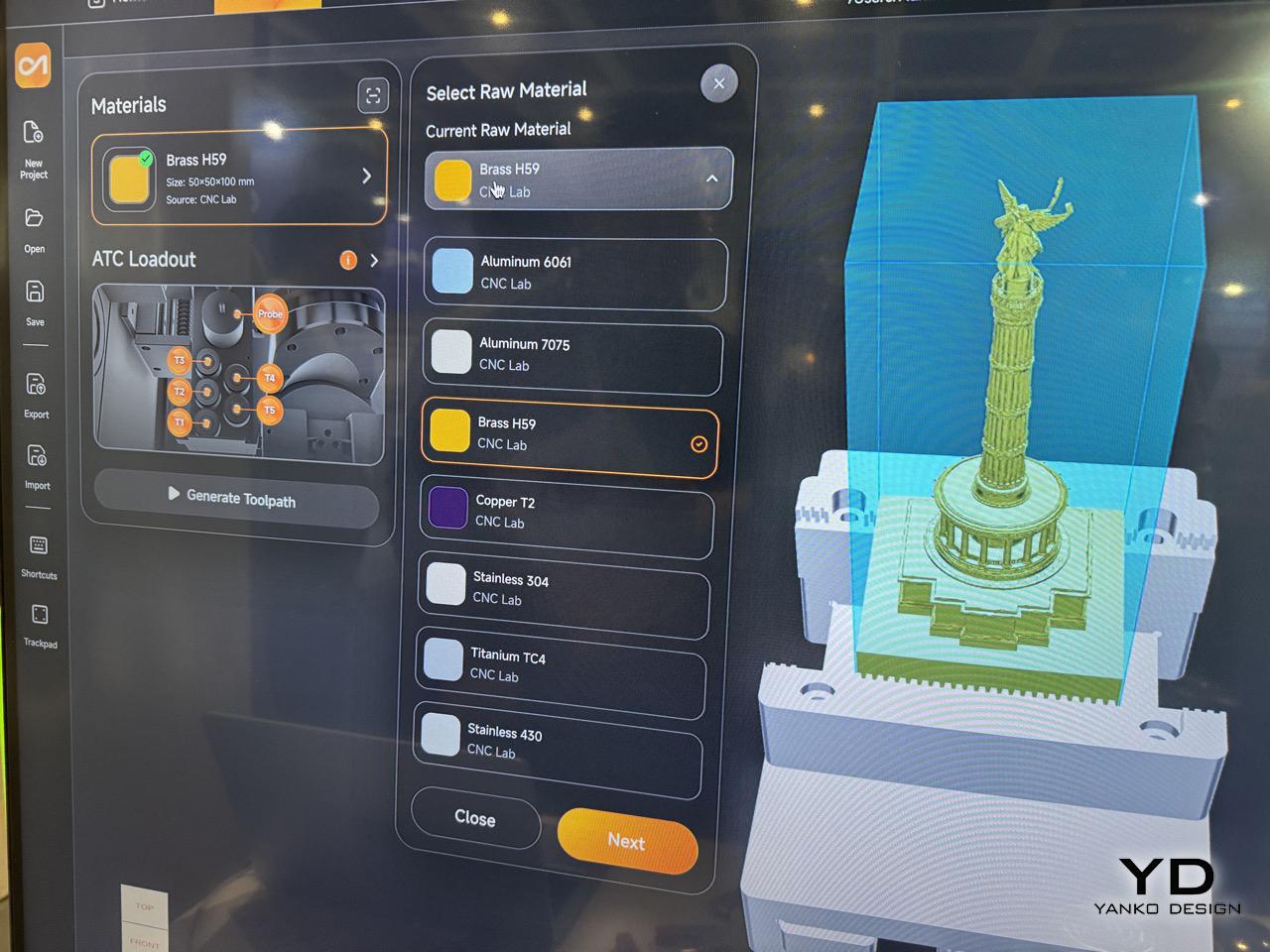
InfiStudio should understand the geometry, material, tools, and machine, then propose a machining strategy with reasons behind it. The user should be able to inspect the tool list, simulate the result, change the parameters, or take over completely. But they should not have to confront the entire parameter tree before they know which decisions actually matter. The goal is not to hide complexity inside a black box. It is to move complexity to the moment when it becomes relevant.

YD: There’s a version of this machine that stays firmly a tool for experienced machinists, and a version that tries to bring in people who’ve never touched CNC. Those two users want opposite things. How did you decide who K1 is really for?

Bowen: We decided that K1 is for people with a serious task, not necessarily people with previous CNC experience.

That could be an independent engineer making a robot joint, a product designer developing a camera body, a jewellery studio producing a wax model, or a small business making a custom product. They may be new to CNC, but they are not new to designing, engineering, or making things.

A traditional machinist needs transparency, manual control, standard G-code, and the ability to understand exactly what the machine is doing. A new user needs guidance, safe defaults, visual feedback, and a much shorter path to the first successful part. We designed the workflow so that those are layers of the same product rather than two separate products.

K1 is not meant to replace a large industrial machining centre in high-volume production. It is meant to give an ambitious creator a level of capability that previously required a much larger machine, several specialist tools, and years of accumulated workflow knowledge.

You can be a beginner in CNC without being a beginner in making.

YD: AI can turn a sentence into a 3D model in seconds, but a model isn’t a machinable part. Where does that gap actually show up, and what does InfiStudio do about geometry that looks fine on screen and can’t be cut?

Bowen: A generated model only has to look convincing on a screen. A machinable part has to obey geometry, tooling, material, fixturing, and physics.

The gap appears in very specific places: broken or non-manifold surfaces, walls thinner than the available tool, internal corners smaller than the cutter radius, deep cavities the tool holder cannot reach, undercuts with no valid approach angle, or geometry that collides with the stock or fixture. A model can look perfect and still have no safe machining strategy.

InfiStudio treats model generation as the beginning of the process, not the end. It can post-process and repair broken geometry where possible, recognize machining features, propose tools and operations, generate the toolpath, and simulate the process. On the machine side, perception and probing help connect that digital plan to the position and orientation of the real workpiece.

The important part is how the system behaves when the answer is no. If a region cannot be reached, the software should identify it and help the user change the geometry, tool, orientation, fixture, or setup. It should not invent a toolpath simply because the user asked for one.

AI should reduce the amount of specialist work required to find a valid process. It should never hallucinate machinability.
YD: What’s the question backers ask most, and what’s the one you wish they asked more?

Bowen: The question we hear most, in many different forms, is: “Can it really make the part I care about?”

Sometimes people ask about stainless steel, titanium, or aluminium. Sometimes they ask about a particular tolerance, surface finish, size, or geometry. But underneath all of those questions, they are asking whether K1 is a real manufacturing tool or only an impressive demonstration.

That question deserves evidence: the material, tool, cooling, setup, toolpath, machining time, and measured result. A headline specification alone is not enough.

The question I wish people asked more is: “What does the complete path to the first good part look like?”

That includes importing or generating the model, checking manufacturability, setting up the stock, establishing the work coordinate, selecting tools, generating and simulating the toolpath, machining, and inspecting the result. The real value of K1 is not one impressive number. It is how much of that complete process one person can now own.

YD: IFA is a consumer electronics show. Why bring an industrial-grade five-axis mill to a hall full of consumer appliances and robots?

Bowen: IFA is exactly where we want to make this argument, because we believe advanced manufacturing is becoming personal technology.

A five-axis CNC is industrial in what it can do, but it does not have to be industrial in how difficult it is to install, understand, and operate. Robotics, perception, AI, software, and consumer-hardware product design are changing what can fit into an individual workspace.

We are not trying to make a CNC machine behave like a kitchen appliance. Cutting metal still involves real forces, tools, fixtures, coolant, chips, and safety. What we are doing is applying consumer-product discipline to that complexity: a coherent product, guided setup, integrated software, clear feedback, and a workflow designed around the person using it.

IFA brings together AI, robotics, consumer hardware, design, and new ways of living with technology. We want visitors to see that the next important device in a personal workspace may not only display information or automate the home. It may manufacture an idea.

YD: Is there a craft tradition in Europe, jewellery, watchmaking, prototyping, that you’re specifically hoping finds this machine?

Bowen: Jewellery is probably the first European craft community I hope connects with K1.

Independent jewellery studios work with wax models, moulds, complex curved surfaces, fine details, and short production runs. Five-axis access can be valuable because it reduces repeated flipping and makes it easier to reach surfaces and undercuts that are difficult in a conventional three-axis workflow.

I am also interested in watch-case and bezel prototyping, instrument making, model building, and small metalworking studios. Europe has a strong tradition of combining precision with personal authorship. That is very different from anonymous mass production, and it aligns closely with what we want K1 to enable.

The machine should not replace the craftsperson. Decisions about proportion, material, finish, and meaning still belong to the person. CNC should extend the craftsperson’s capabilities by handling precision, repeatability, and difficult geometry while leaving the creative judgment intact.

YD: What’s the object someone has made with a K1 that you didn’t expect?

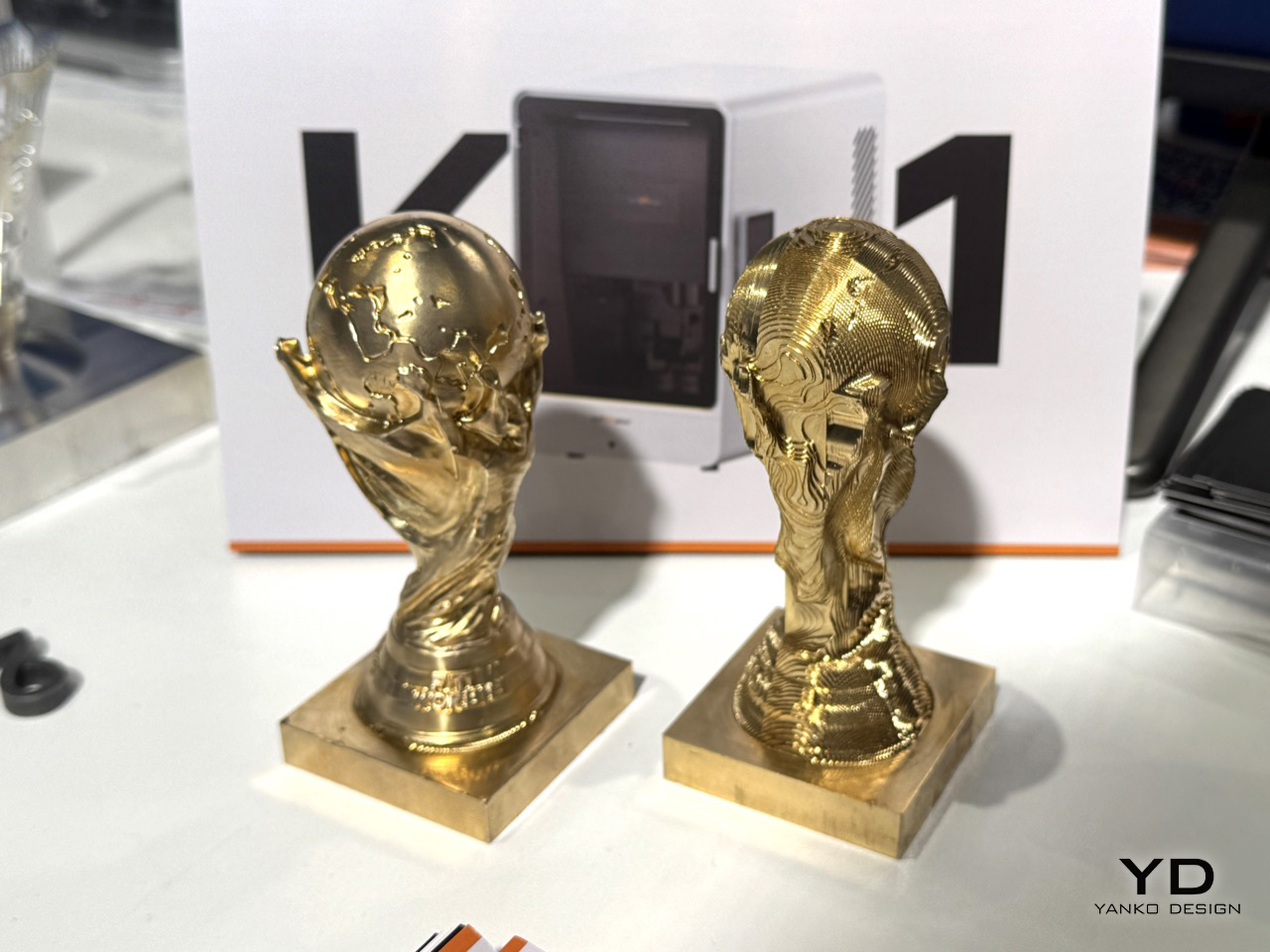
Bowen: One object that surprised me in terms of the response it generated was the brass bull our team machined.

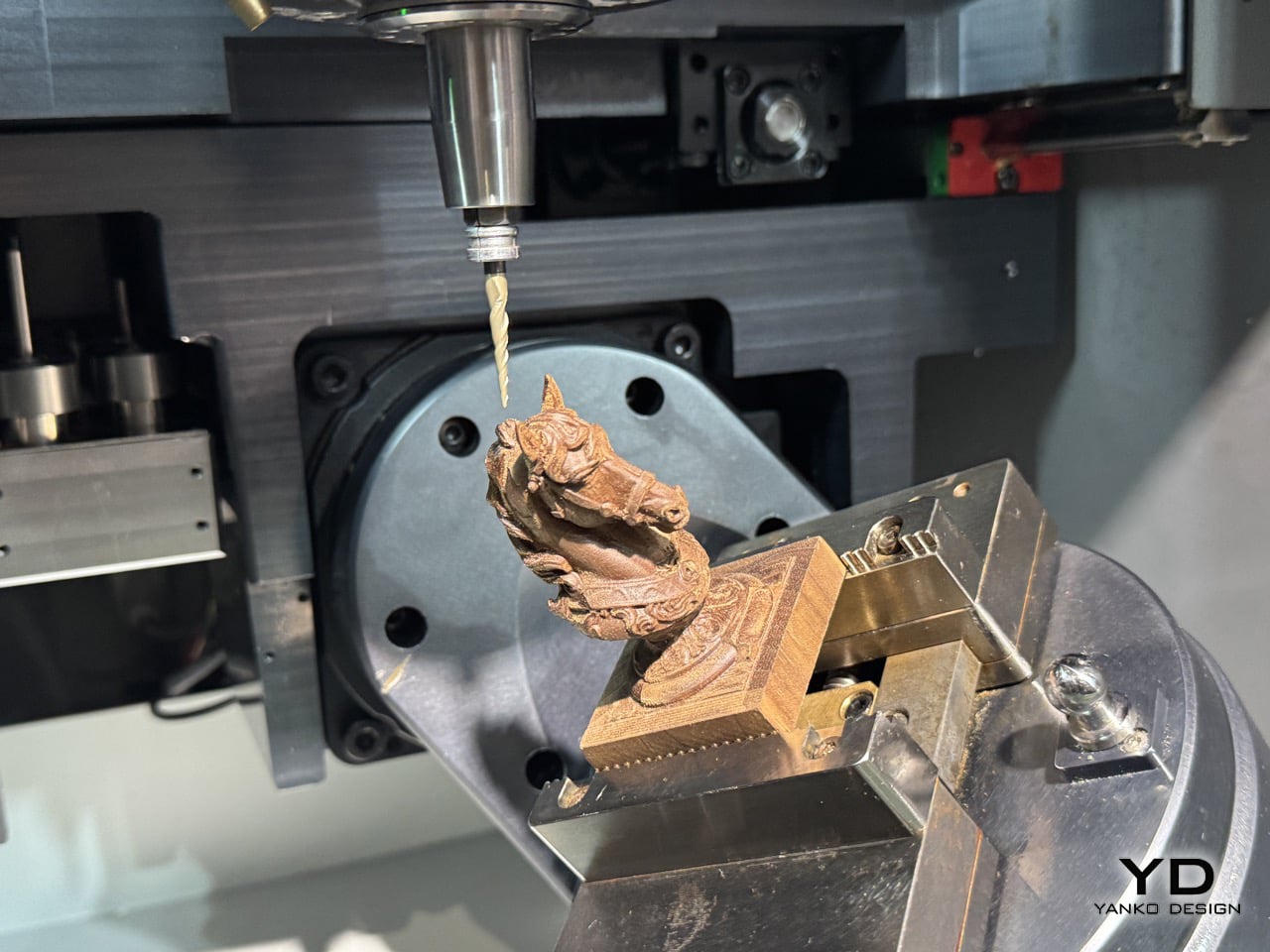
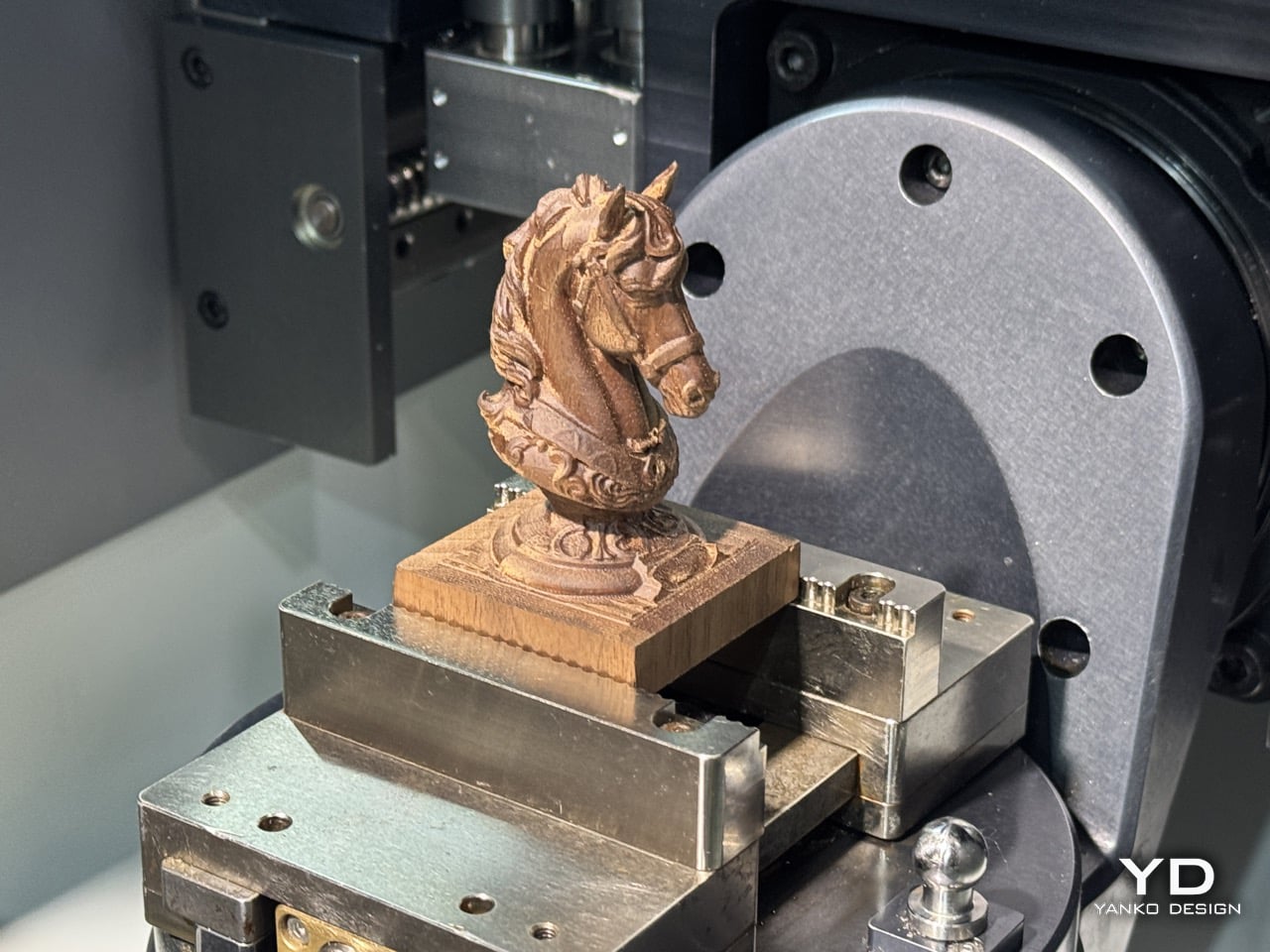
We initially treated it as a visually interesting demonstration. But people did not only react to the finished sculpture. They started asking very technical questions: How did the tool reach the underside? How was the stock held? Which surfaces needed simultaneous five-axis motion? How many operations and tool changes were involved?

That was the unexpected part. A playful object opened a serious conversation about tool access, workholding, surface continuity, and five-axis toolpaths more effectively than a conventional engineering test piece might have.

It reminded me that a good demonstration should not only prove that a machine can cut something. It should make people curious about how the manufacturing process works.
YD: If this works the way you want it to, what does someone’s workshop look like in five years that doesn’t exist today?

Bowen: In five years, I think a small workshop will look less like a miniature factory and more like one highly capable person working with an intelligent manufacturing system.

The process may begin with a prompt, a sketch, or an existing model. AI helps create or refine the geometry, but then the manufacturing layer begins. The software checks whether the design can actually be cut. The machine uses perception to understand the real stock and workpiece, helps establish the origin and setup, and uses probing and calibration to connect the physical object to the digital model.

AI CAM proposes tools, parameters, and a machining strategy. Simulation shows what can be reached and where the risks are. The human reviews the important decisions, changes anything necessary, and approves the job. During machining, the system monitors the process and responds to abnormal conditions.

The workshop is not fully autonomous, and it is not a black box. The person still owns the intent, material choice, trade-offs, and quality. But they no longer need to coordinate a long chain of separate specialists and suppliers before testing an idea.

That is what “one person, one table, one factory” means to me: not removing the human, but giving one human much greater manufacturing agency.
YD: Somewhere out there a fifteen-year-old is going to use one of these and it’ll change what they think is possible. What do you hope they make?

Bowen: I hope they make the first necessary part for something much bigger.

It might be a joint for their first robot, a device that solves a problem in their family, an instrument nobody has built before, or the first prototype of a company they have not yet imagined starting.

I began programming at seven and entered FLL at nine, so I know how important it is to discover early that you can change the physical world, not just understand it. At that age, the first part does not need to be commercially valuable or technically perfect. It needs to prove that an idea in your head can become something real through your own decisions and effort.

I do not want the machine to do the imagining for them. I want it to make the distance between imagination and reality short enough that they are willing to try.

The post InfiMaker K1 at IFA 2026: The 5-Axis Desktop CNC Turning Any Creator Space Into A Fabrication Lab first appeared on Yanko Design.
Most Rugged Phones Hide From Heat, This One Has Two Fans to Fight It

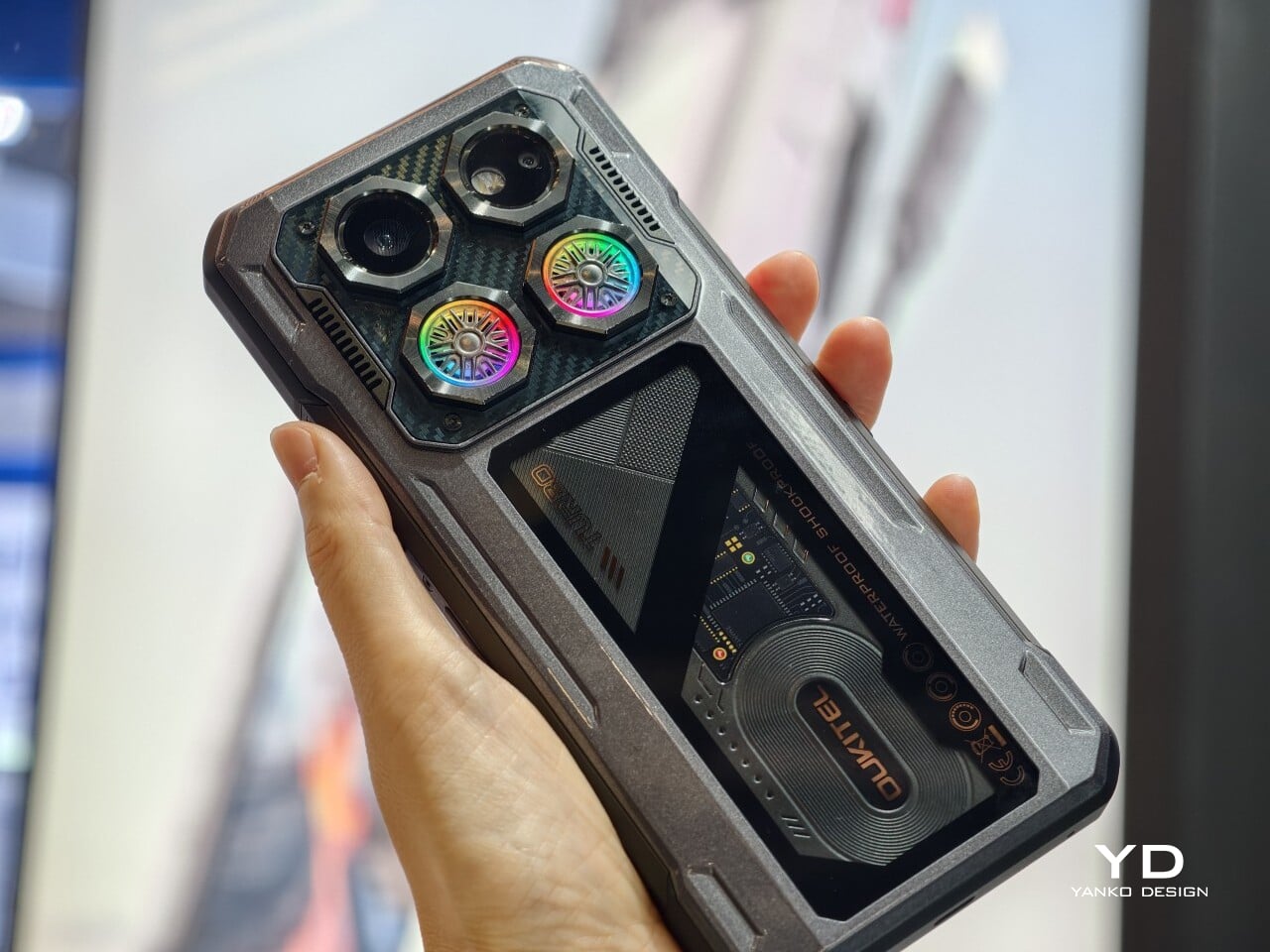
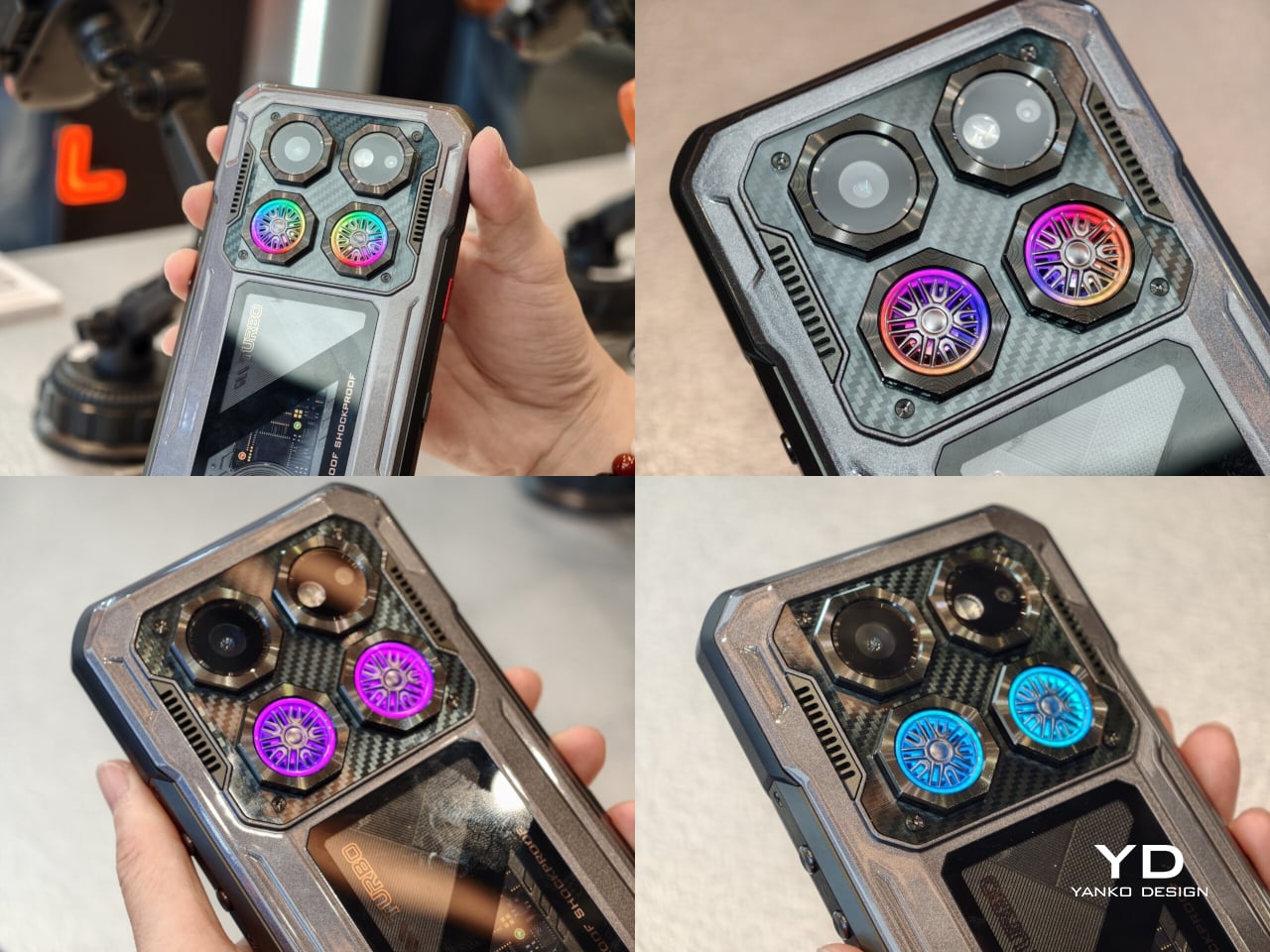
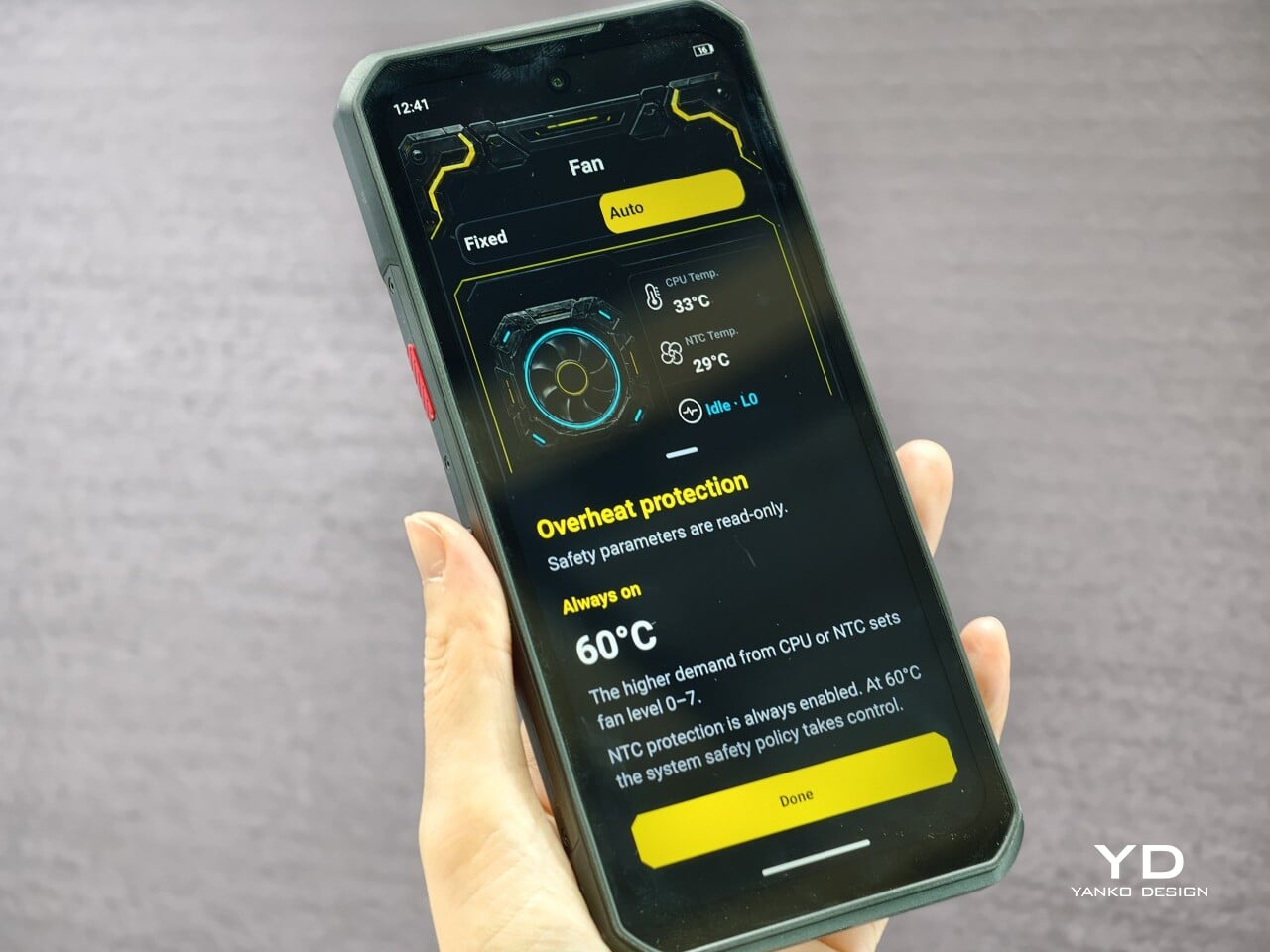
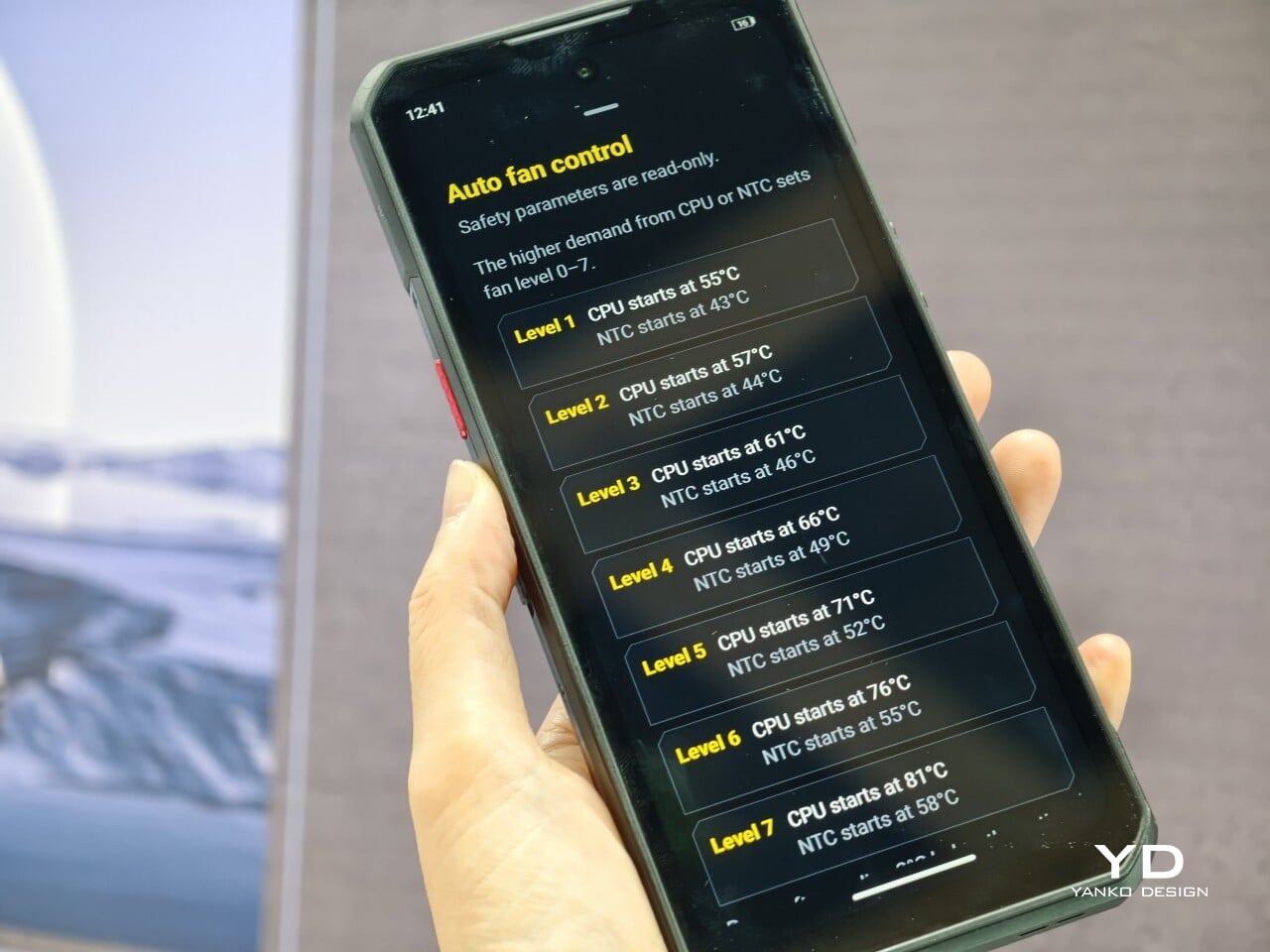
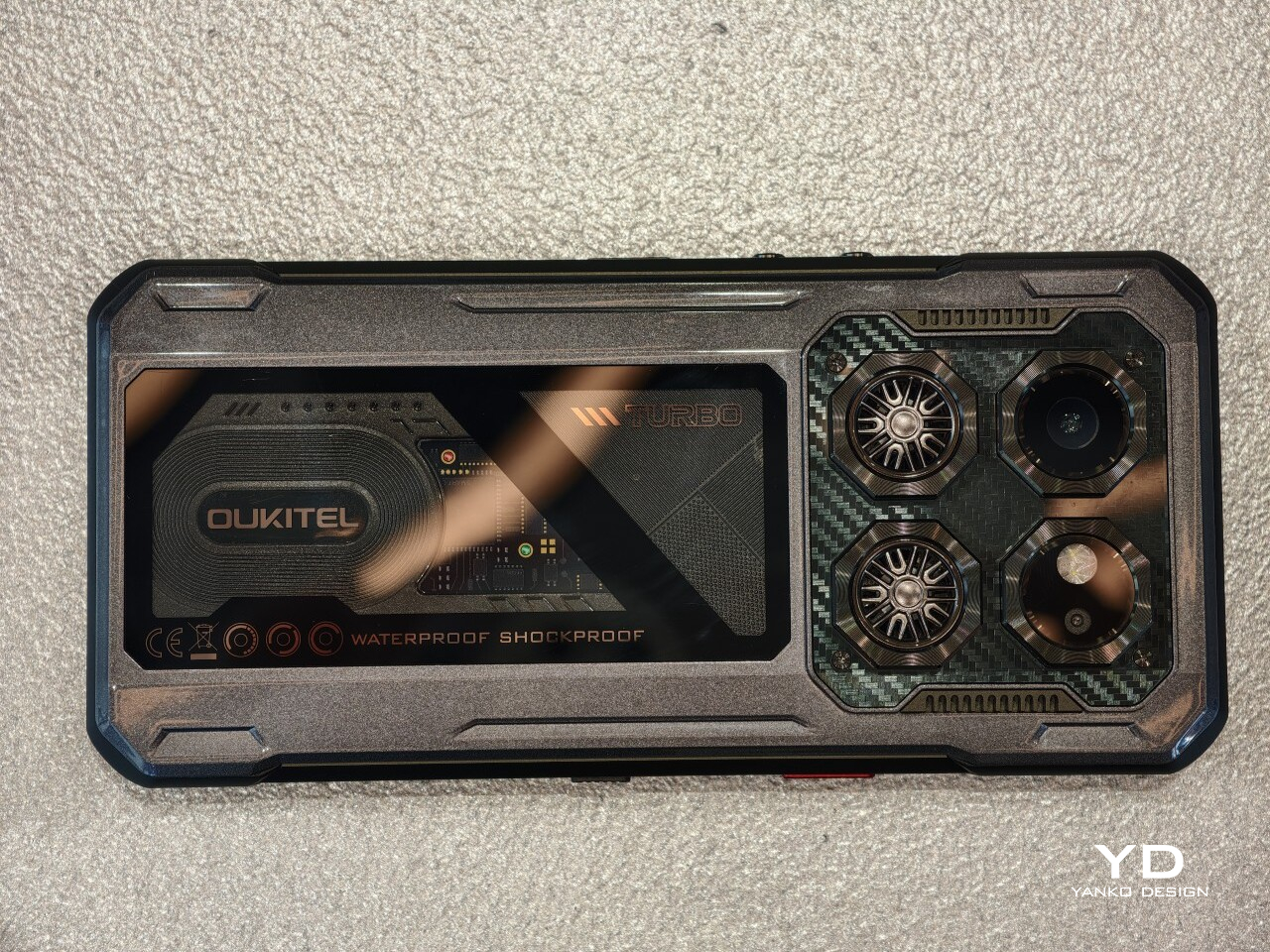
Rugged phones have always made a quiet trade-off. Sealing a device against water and dust means sealing in heat too, and that trapped warmth forces powerful chips to slow themselves down right when gaming or heavy use needs them most. OUKITEL’s WP600, unveiled at IFA 2026, treats that compromise as something worth engineering around, building visible cooling straight into its armor rather than hiding the problem under a tougher shell.

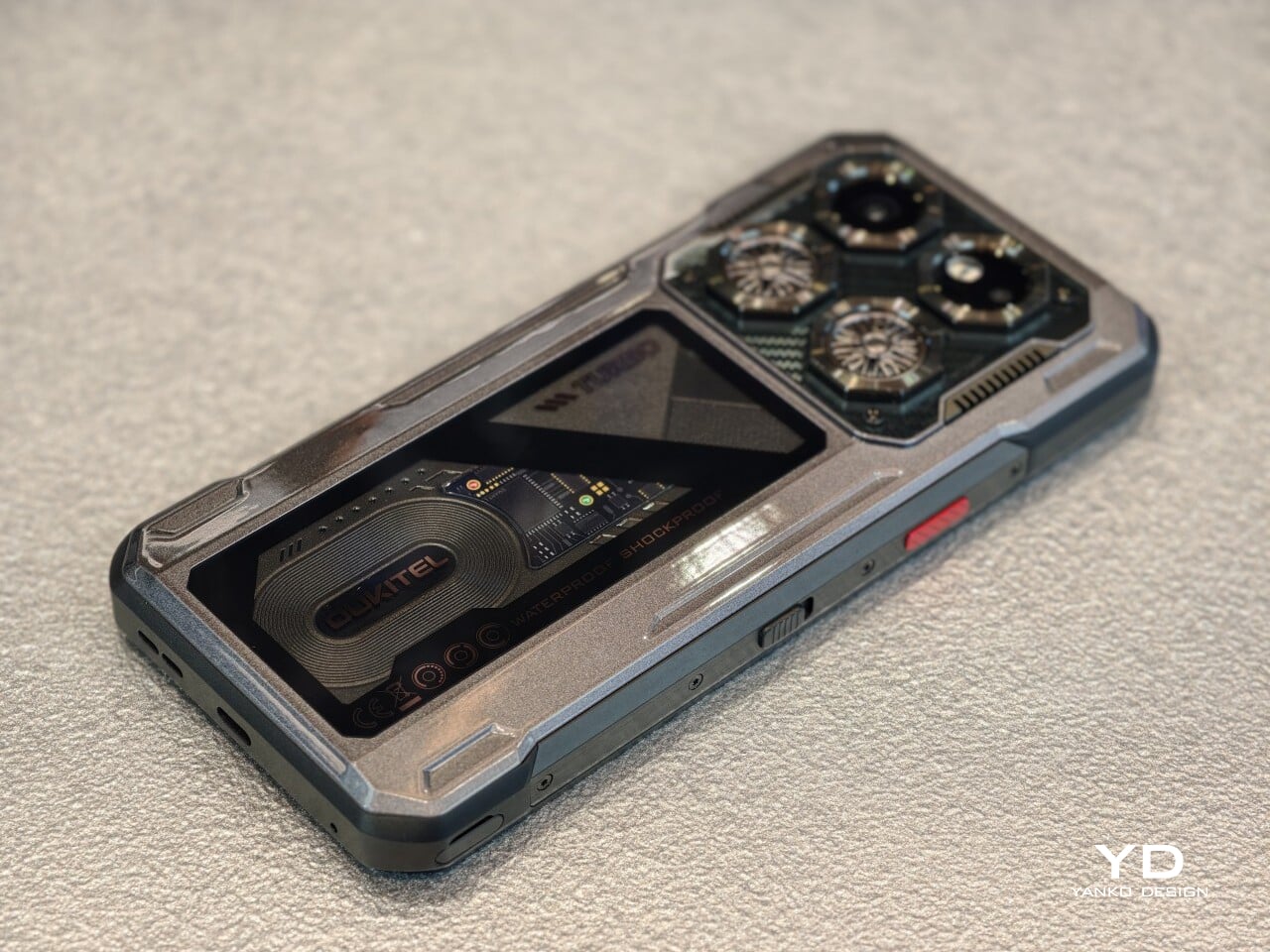
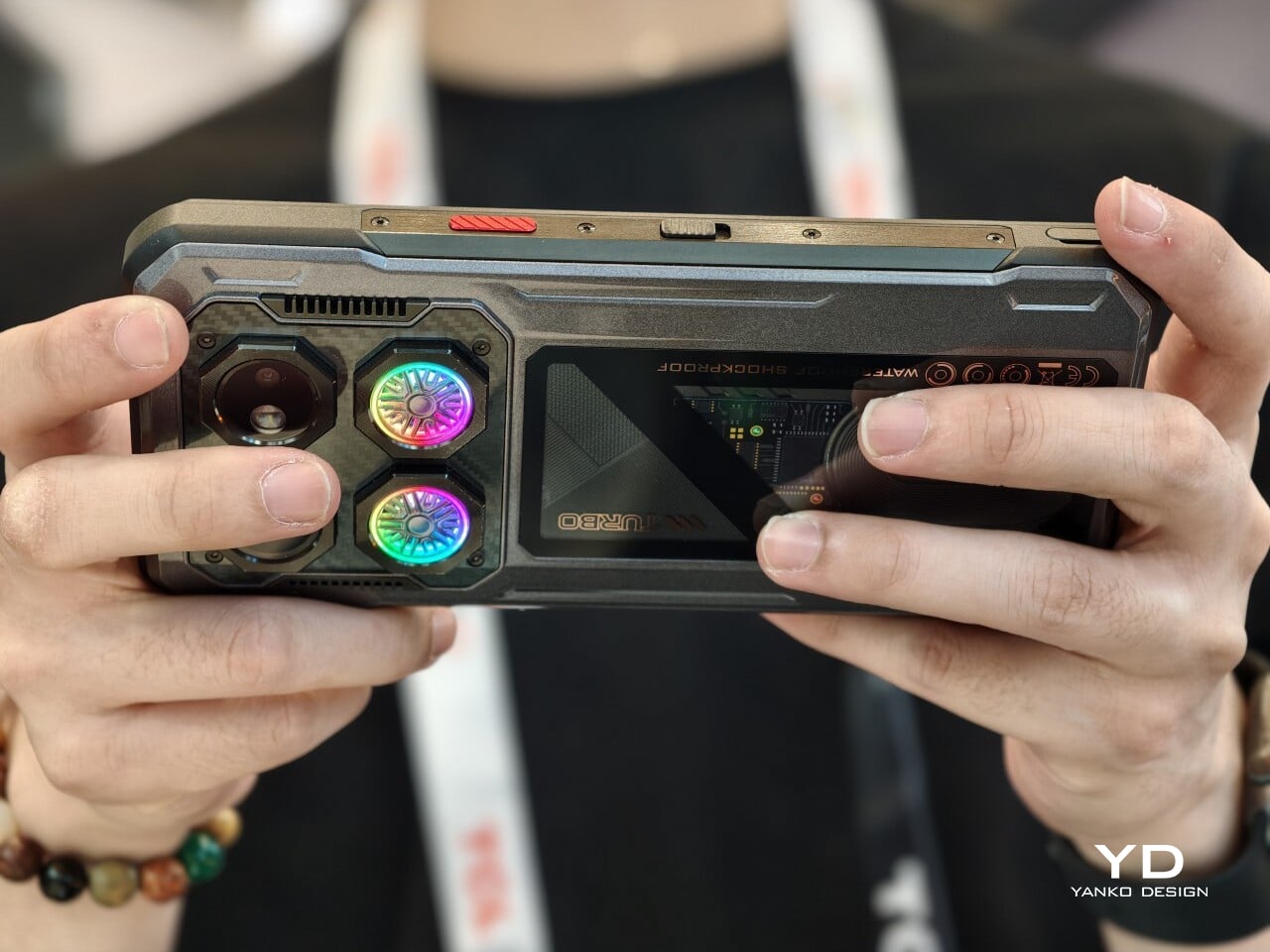
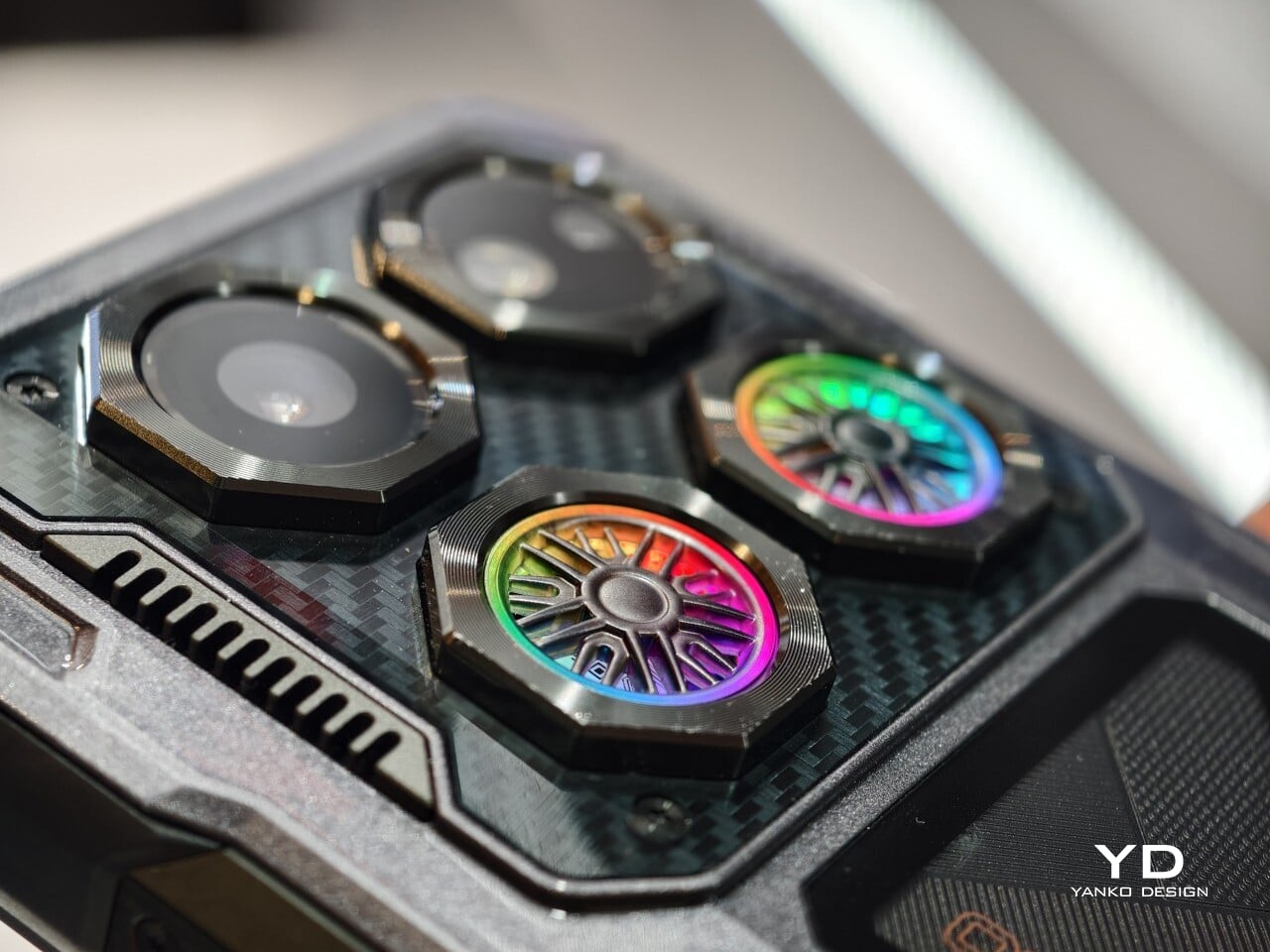
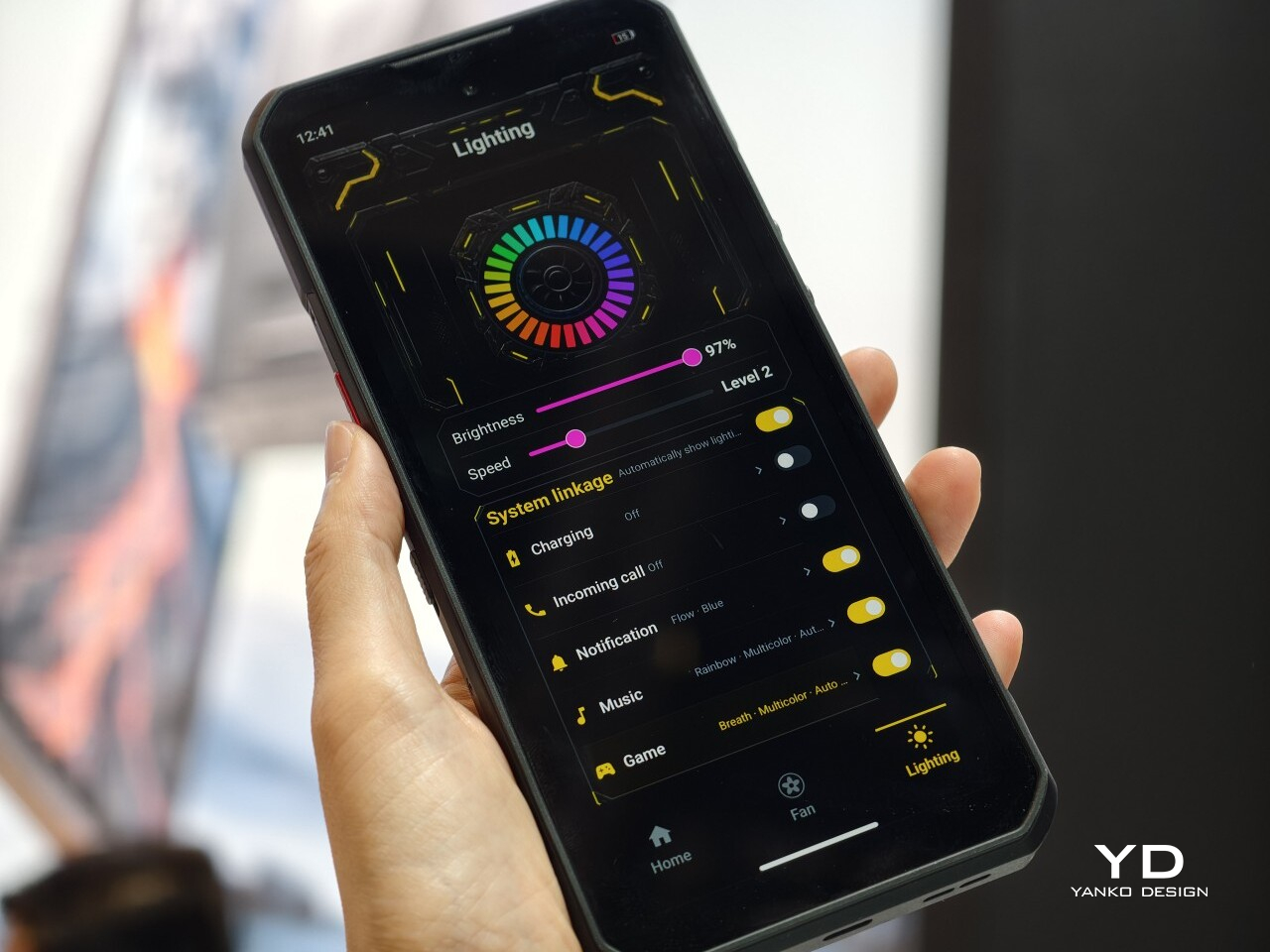
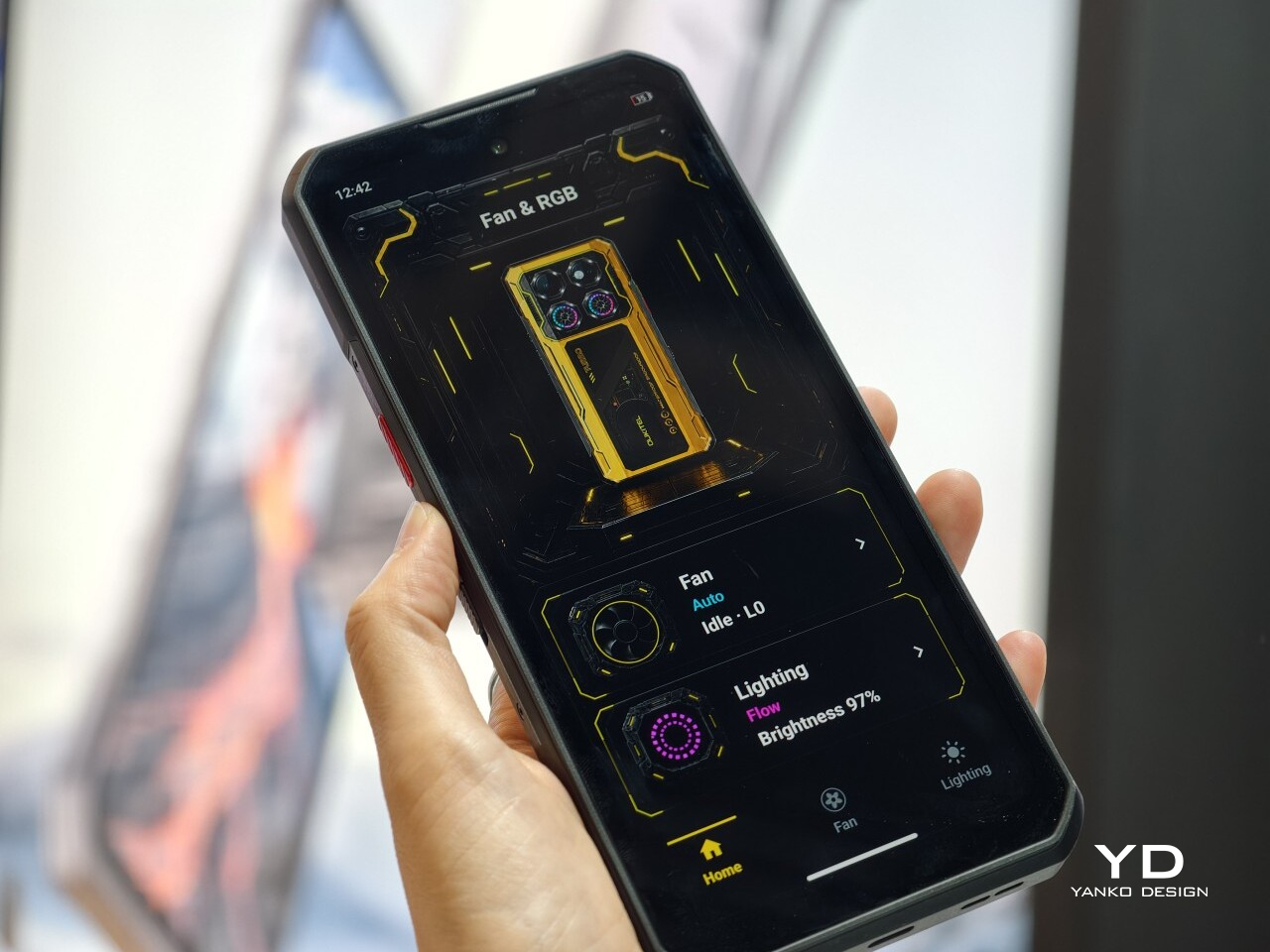
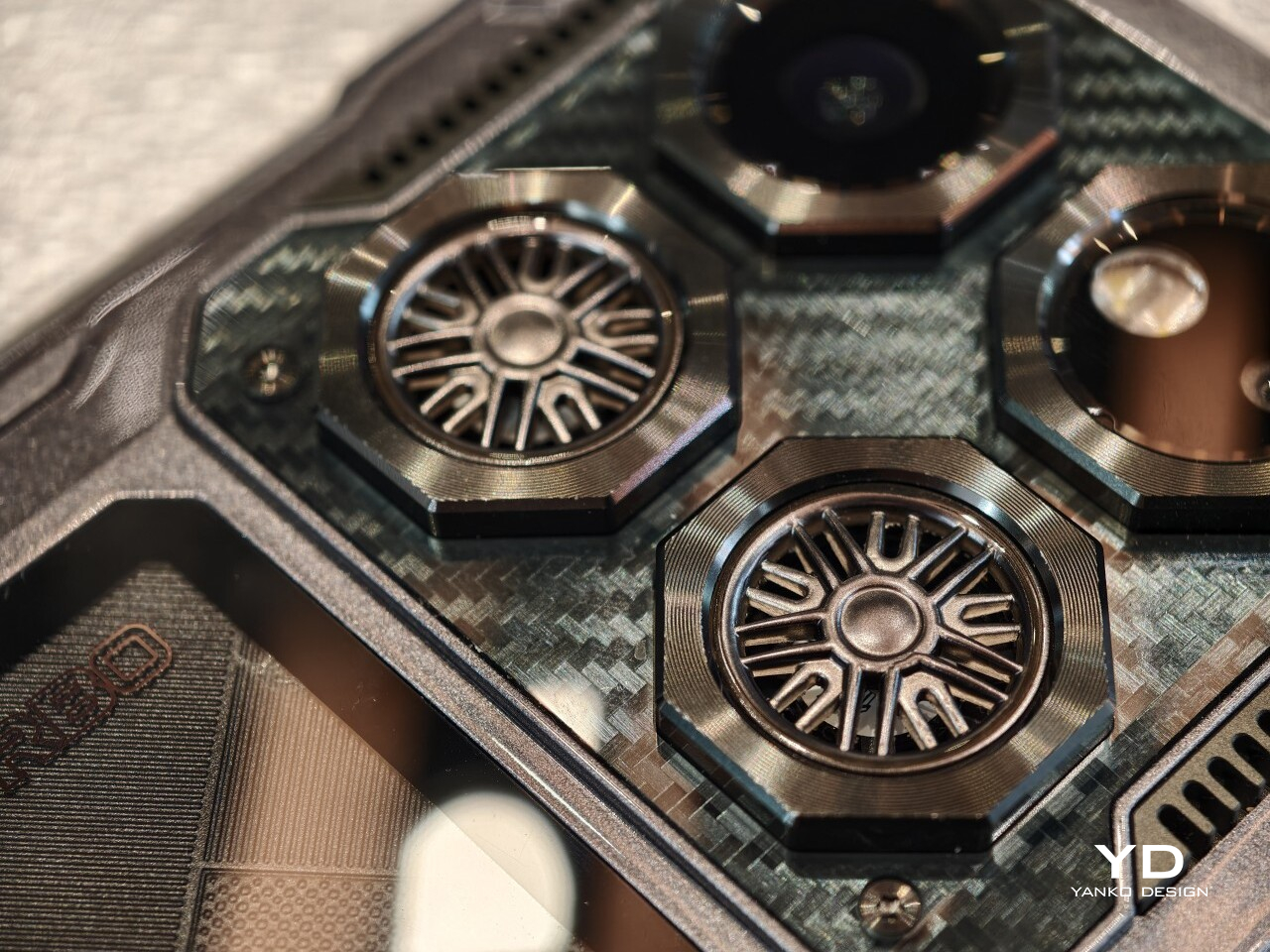
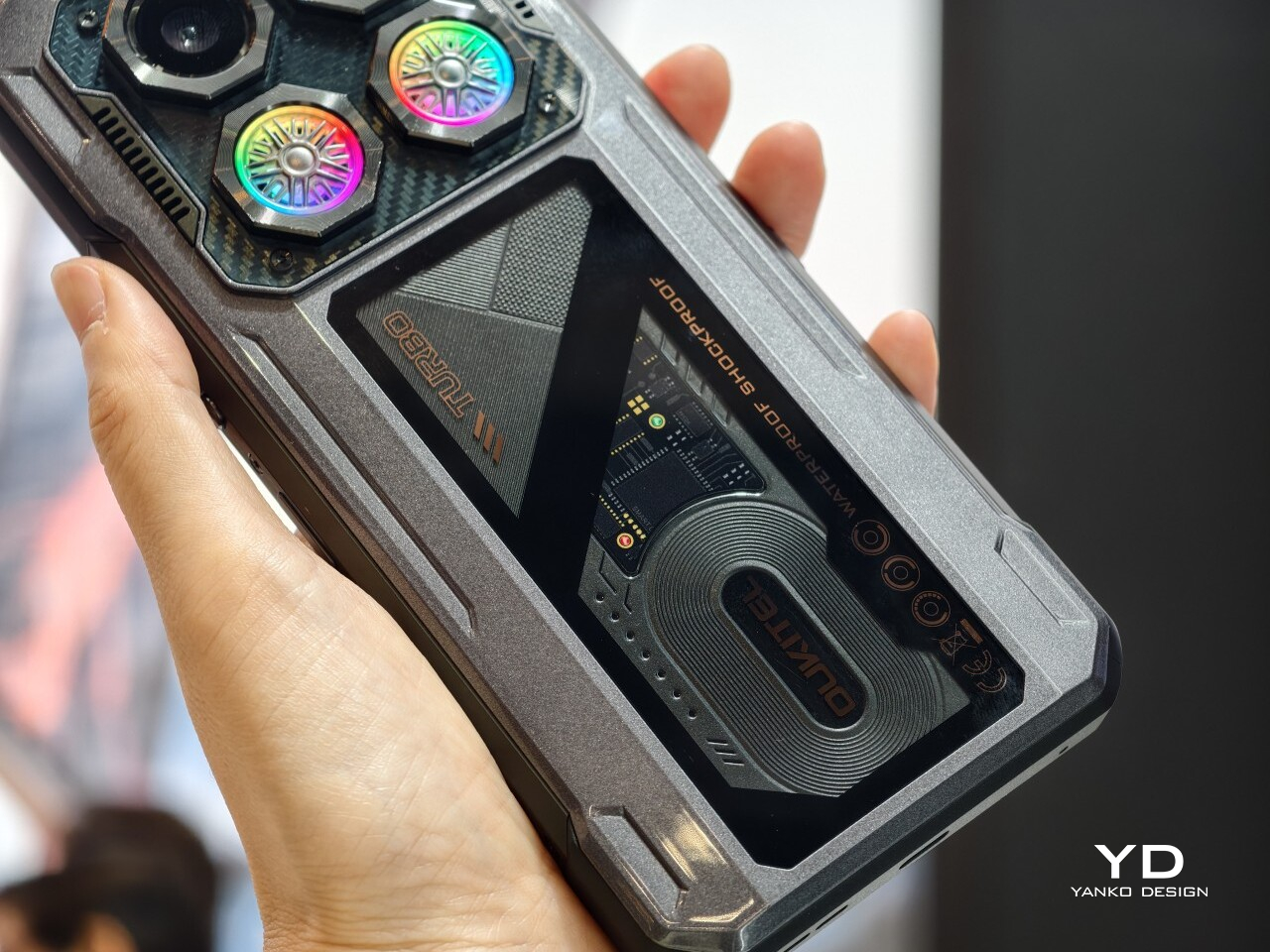
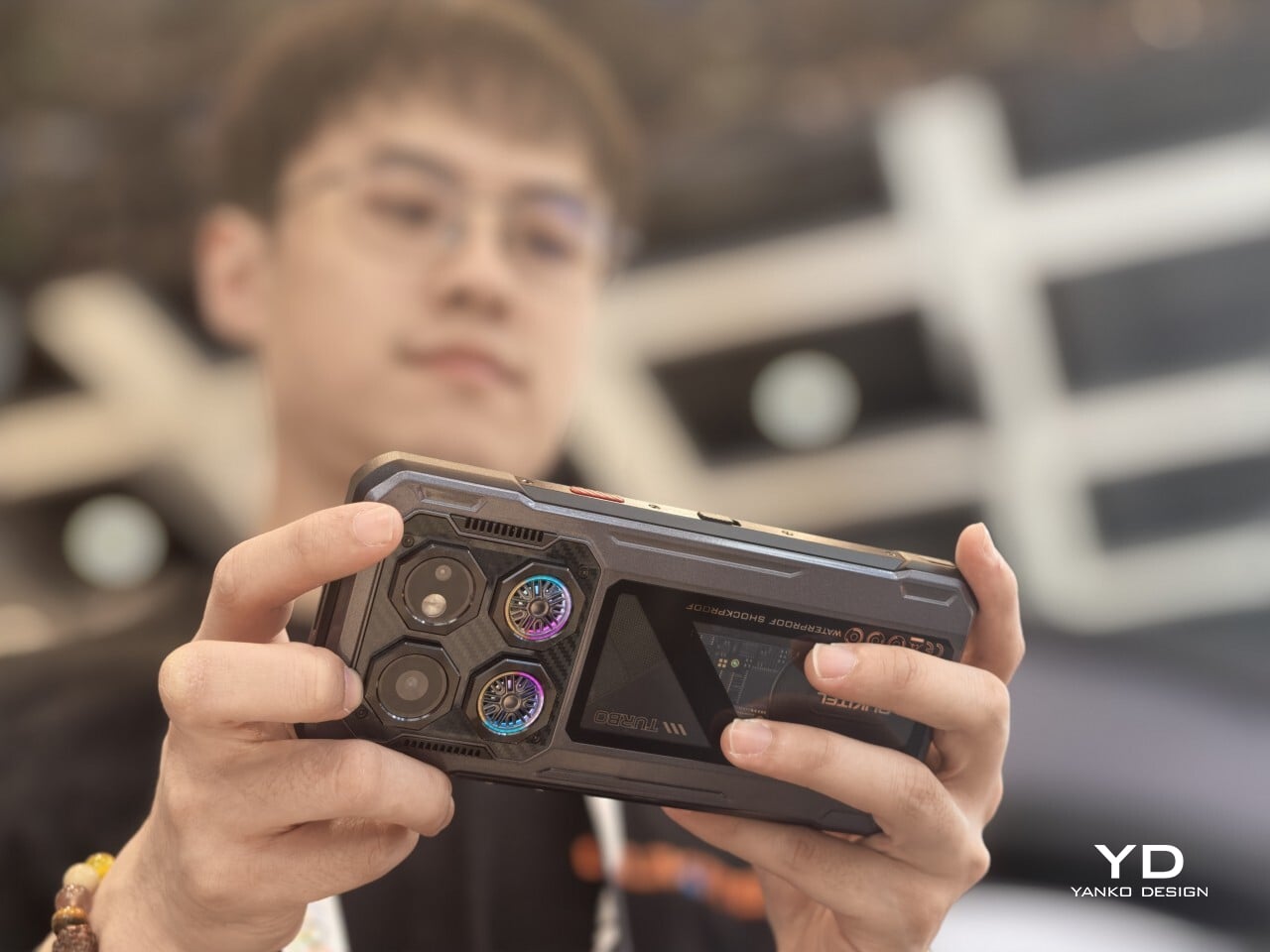
That solution shows up immediately on the back of the phone, where two turbine-style fans sit inside an octagonal housing next to the camera lenses. Rather than tucking cooling components away, OUKITEL frames them as part of the visual identity, finished in a gunmetal tone with RGB lighting that shifts through purples, oranges, and blues while the fans spin during demanding sessions.

Designer: Oukitel

Underneath that display sits a MediaTek Dimensity 8300 chip running at 3.35GHz, paired with up to 24GB of RAM and a full terabyte of storage in its top configuration. Active airflow means that hardware can stay at full speed through a long gaming session in direct sun, instead of throttling the moment internal temperatures climb, the usual fate of sealed devices pushed hard outdoors.

A 10,000mAh battery backs up that sustained performance, large enough to outlast a full day of mixed use, camera work, and gaming without needing a midday top-up. When charging is needed, 45W wired input gets things moving again quickly, keeping downtime short for anyone relying on the phone through fieldwork, travel, or a weekend away from outlets.

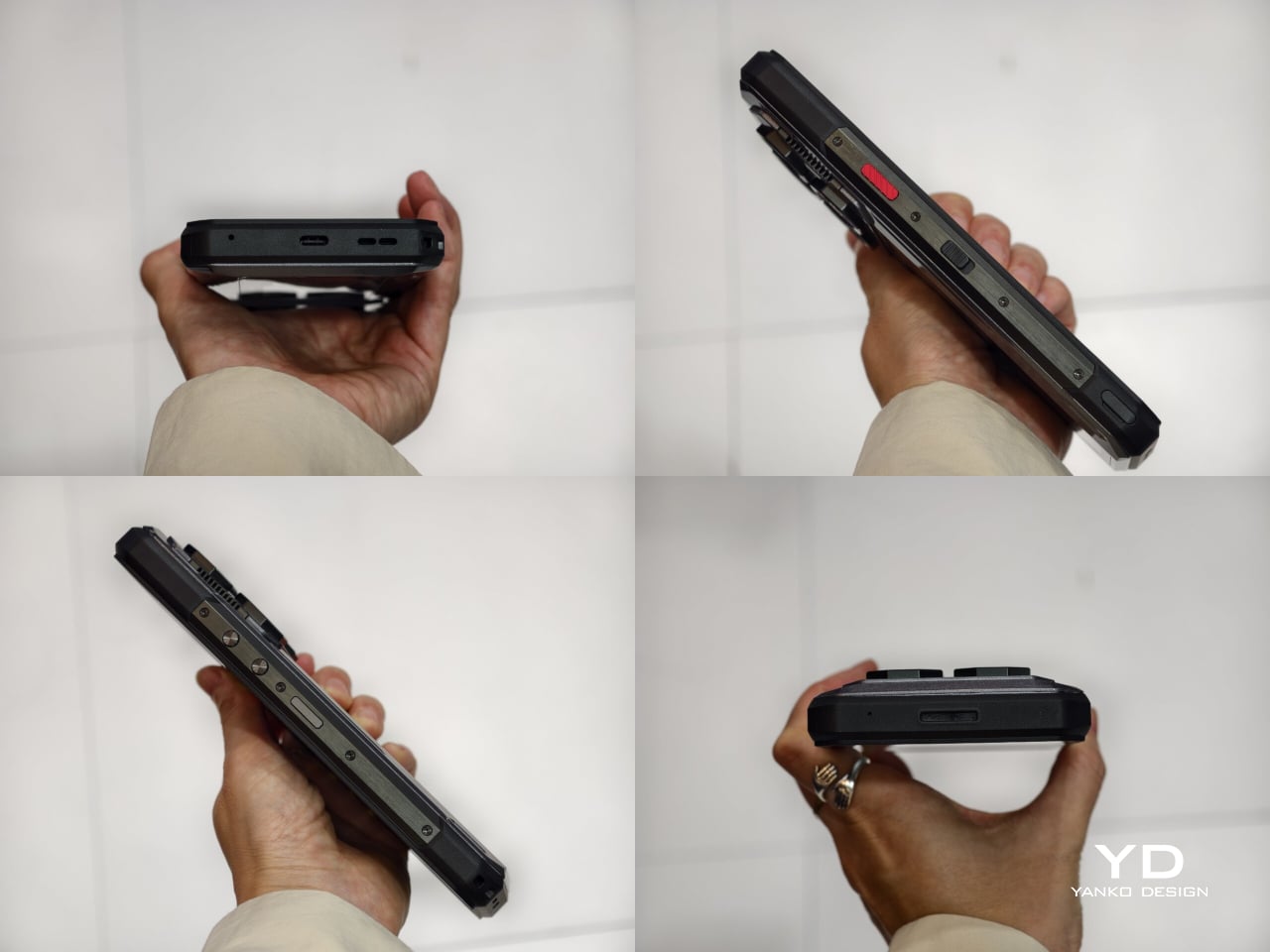
Privacy gets a physical answer instead of a software toggle buried in settings. A dedicated switch, styled as a bright red accent against the phone’s black and metallic paneling, physically disconnects the camera, microphone, and GPS at once. It is the kind of control that matters to fieldworkers or anyone stepping into a sensitive meeting who wants certainty that nothing is listening or tracking, not just a setting that claims to be off.

The rest of the chassis carries that same rugged-but-considered language throughout. Exposed hex screws, ridged texture strips along the frame, and a carbon-fiber-patterned panel insert surrounding the camera module all read as intentional detailing rather than leftover industrial parts. A 6.8-inch, 120Hz display handles the front, while the whole package comes finished in either black or yellow, playing into the tool-like character rugged phones usually lean into.

None of this asks buyers to choose between toughness and capability anymore. A phone built to survive drops and submersion can still run demanding software at full tilt, provided the cooling behind it gets treated as a design feature rather than an afterthought bolted on for a spec sheet.

The post Most Rugged Phones Hide From Heat, This One Has Two Fans to Fight It first appeared on Yanko Design.
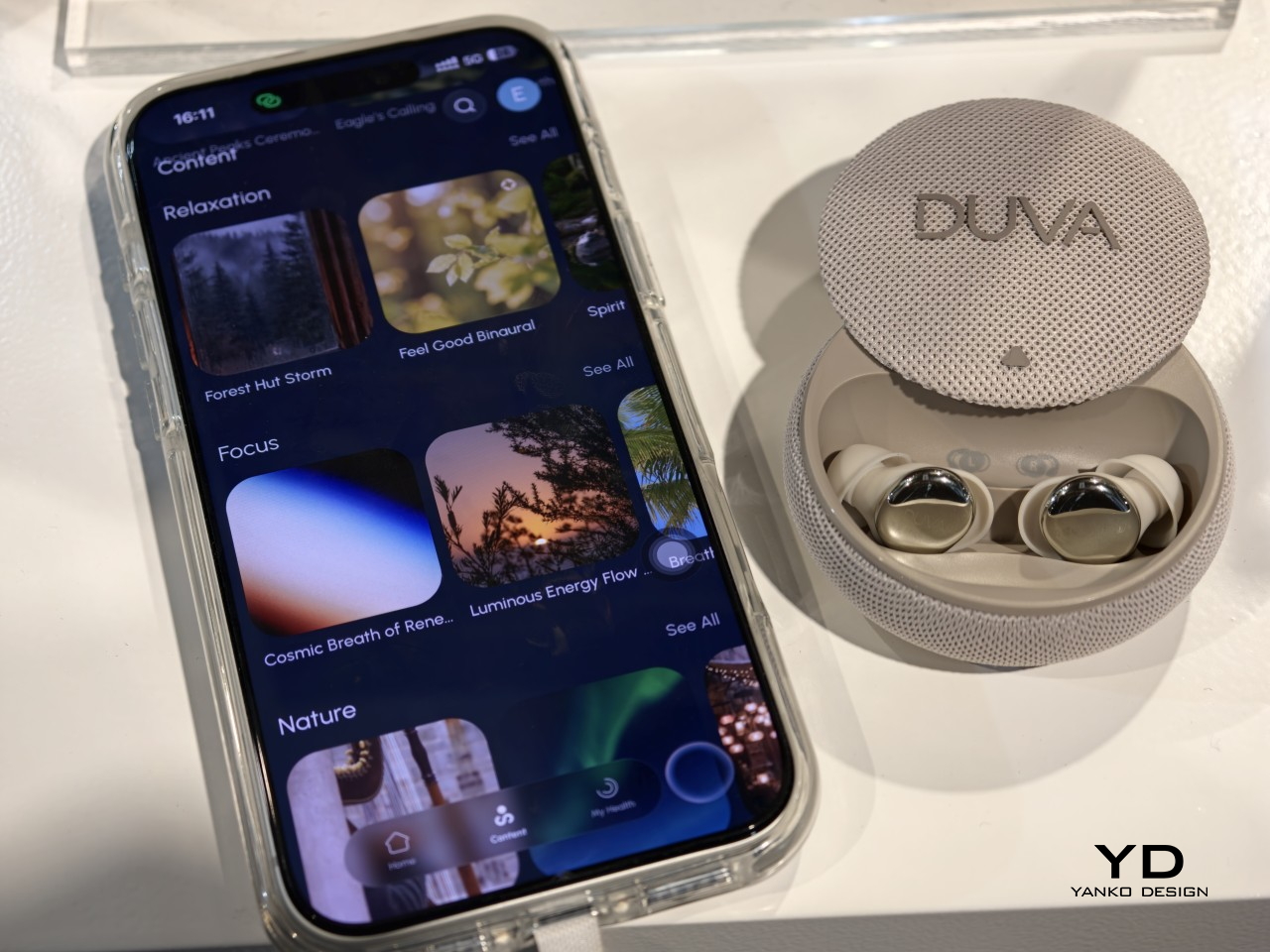
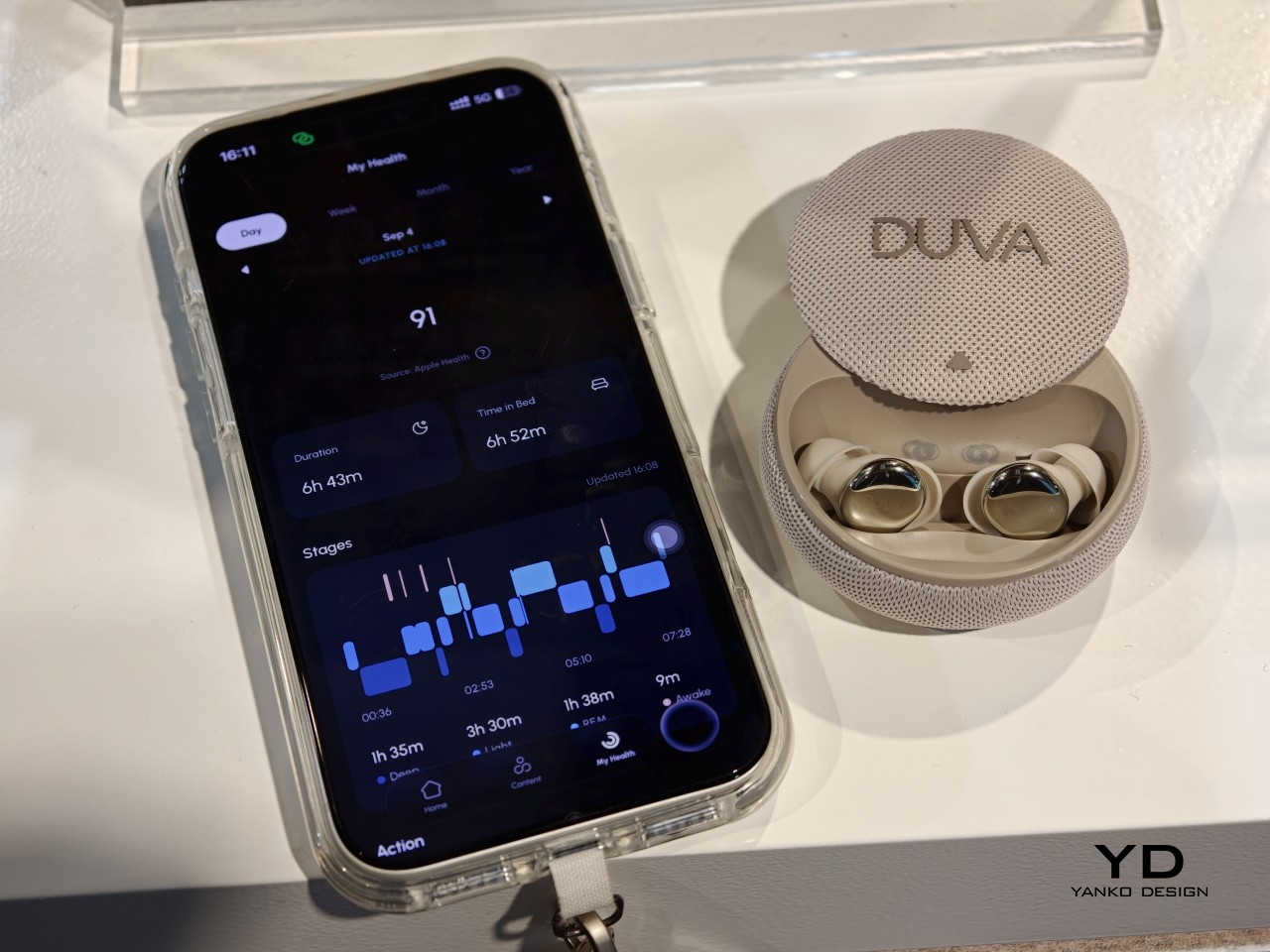
Most Sleep Trackers Grade Last Night, but DUVA One Adjusts Tonight

Most sleep trackers wait until morning to tell a story that’s already over. A person tosses through a noisy night, wakes up groggy, and gets handed a score explaining what went wrong hours after it happened, with no chance to fix anything while it mattered. DUVA One, introduced at IFA Berlin 2026, moves that entire conversation into the middle of the night itself, treating disruptions as something to respond to in real time rather than data to review at breakfast.

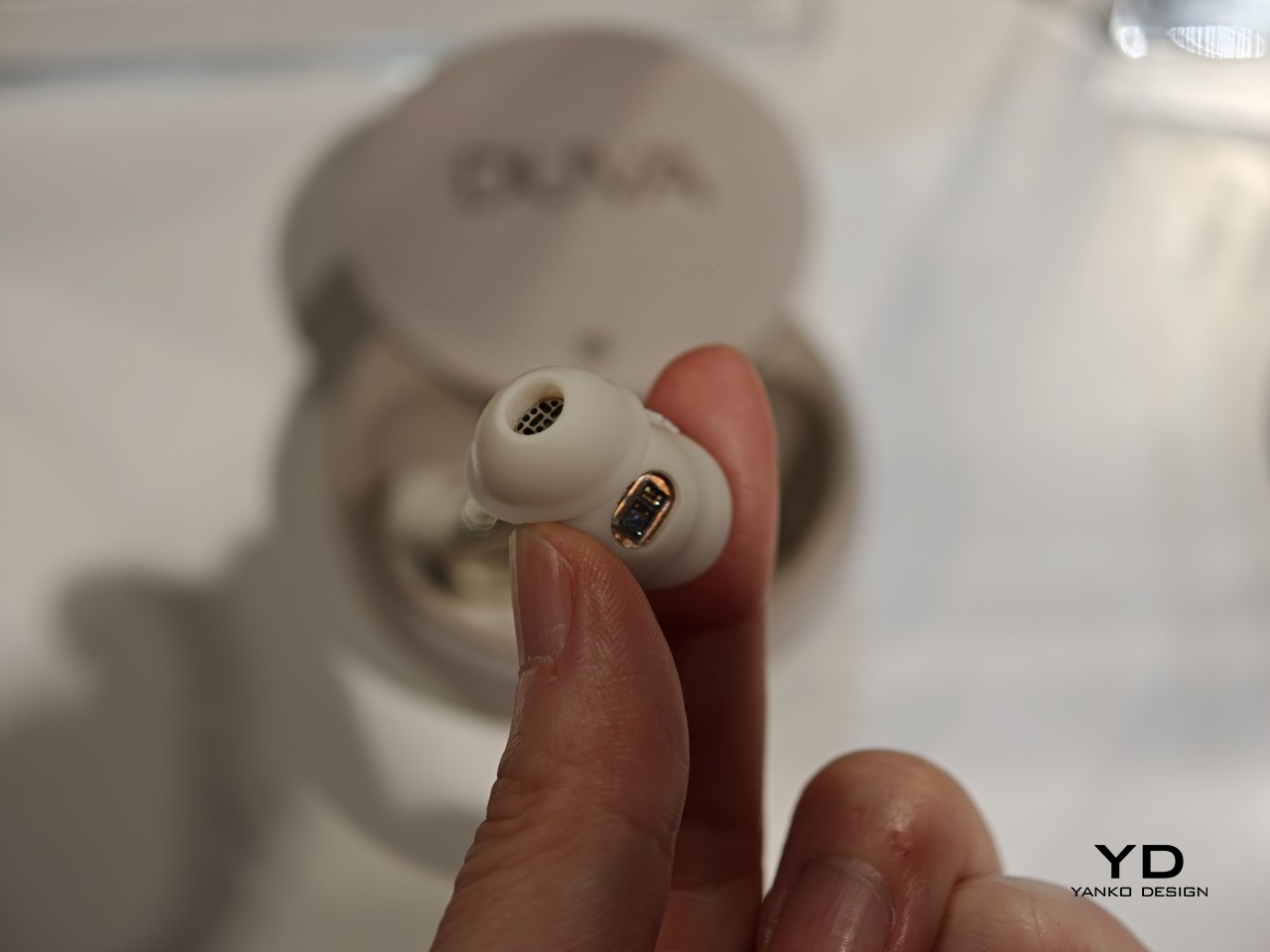
The system builds its response around two simultaneous points of view. Inside the ear, PPG and motion sensors track heart rate, HRV, movement, and sleep position throughout the night. Sitting beside the bed, the charging case reads the room itself, picking up noise, light, temperature, and humidity, then lining that environmental data up against what’s happening in the body at the exact same moment.

Designer: DUVA (Fitnexa)

That pairing turns a random 3 AM wakeup into something with an actual cause. A spike in movement paired with a sudden noise spike tells a different story than one paired with a temperature swing, and DUVA One uses that context to decide what to do next. It can dial in active noise cancelation, layer in sound masking, or switch on sleep audio, then keep watching to see whether the response actually helped or needs adjusting.

Audio handling reflects the same instinct toward reading the moment instead of locking into one setting at bedtime. Someone might drift off with a podcast streaming over Bluetooth, and once DUVA One detects sleep, it can quietly hand off to locally stored sleep audio, cutting the connection while trimming power use for the rest of the night. It’s a small transition, but it removes the usual choice between falling asleep to something and burning battery doing it.

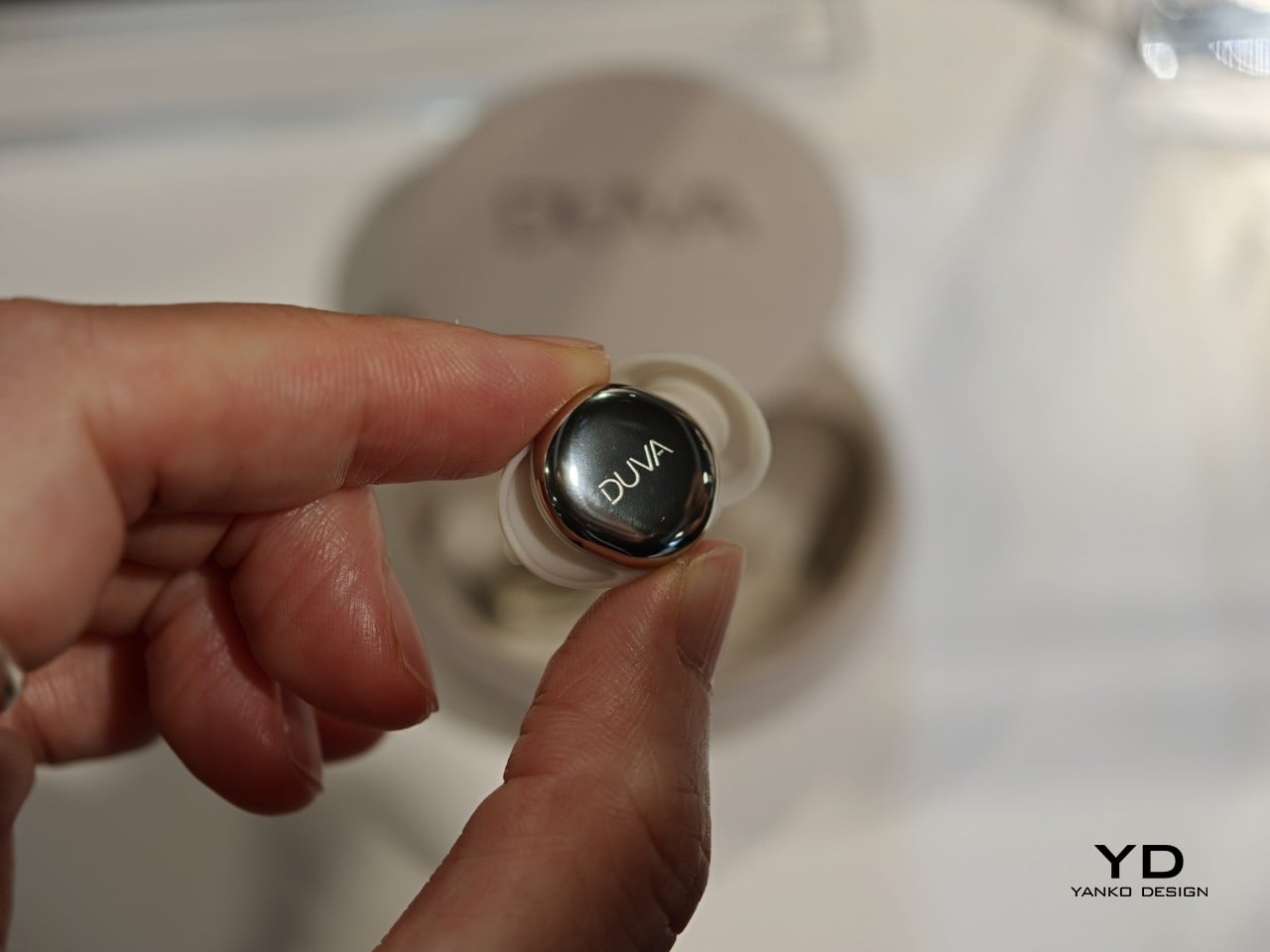
All of that would be pointless if the earbuds themselves got in the way of actual sleeping, making you prefer not to have them on at all. DUVA built each one down to a 9.9mm profile at roughly 3.3g, sized specifically for people who sleep on their sides and need something that won’t dig into an ear against a pillow for eight hours straight. Multiple tip and stabilizer wing sizes come along to fit that shape to different ears rather than forcing a single mold.

Morning wakeups get the same considered touch through a private, offline alarm that builds in volume gradually, with snooze options set directly through the earbuds instead of reaching for a phone. On the data side, DUVA draws a clear line around privacy, skipping conversation recording or raw audio storage entirely, while letting users switch off individual sensors or erase their history outright. DUVA One arrives in October 2026 at $349.99, targeting the US, Canada, UK, EU, and Australia.

The post Most Sleep Trackers Grade Last Night, but DUVA One Adjusts Tonight first appeared on Yanko Design.
Most E-Readers Don’t Survive the Commute, This Tiny One Does

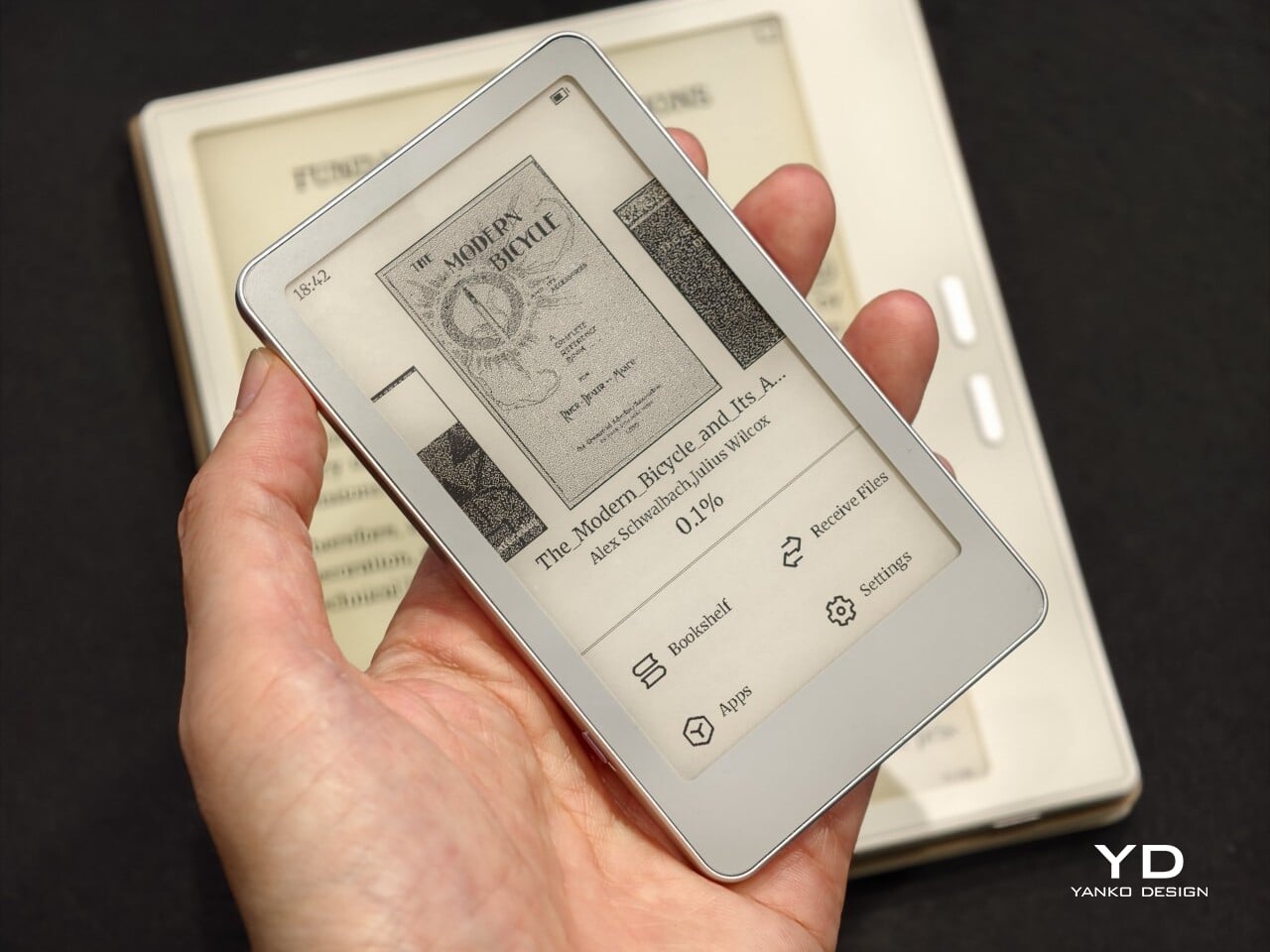
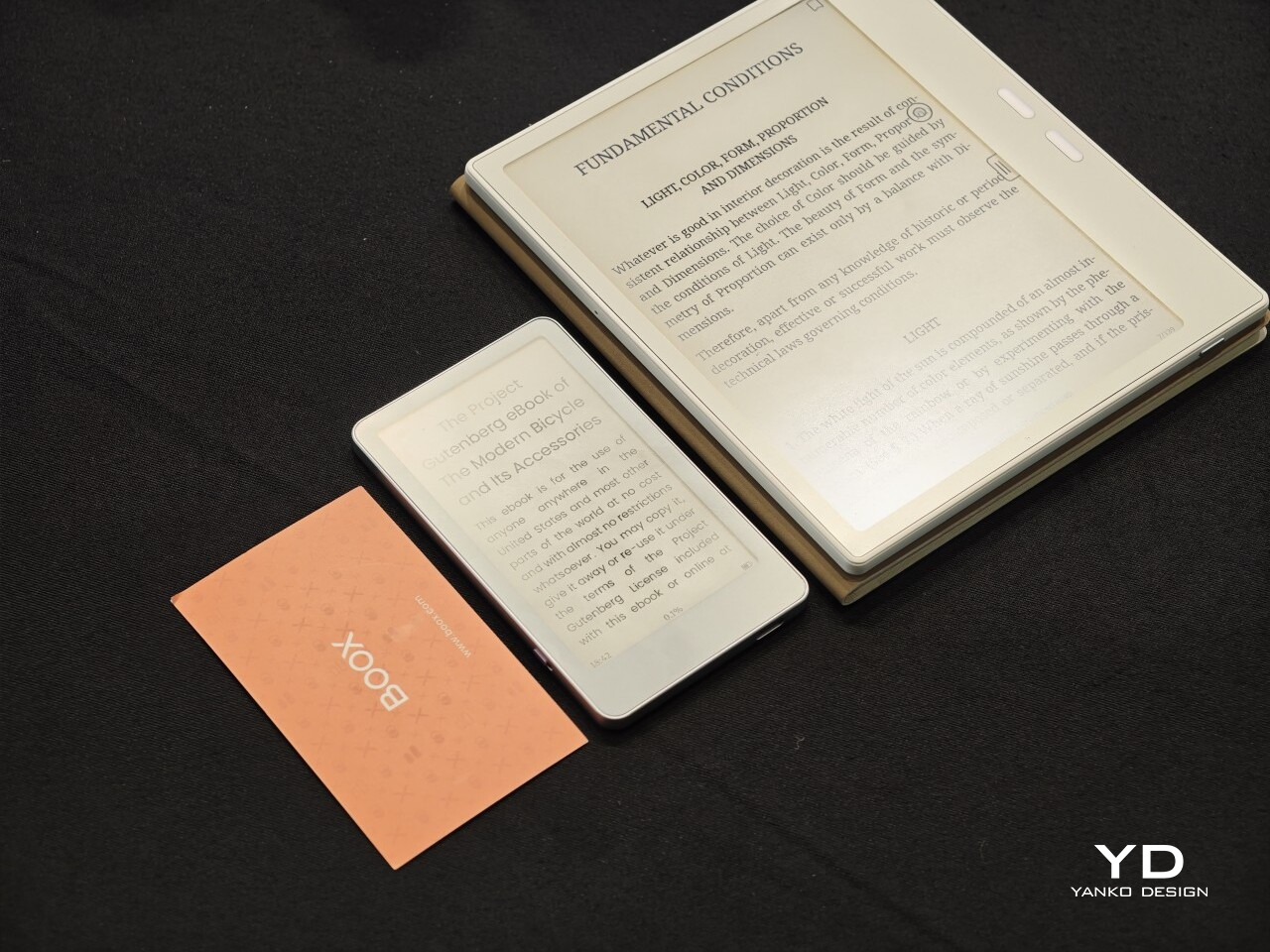
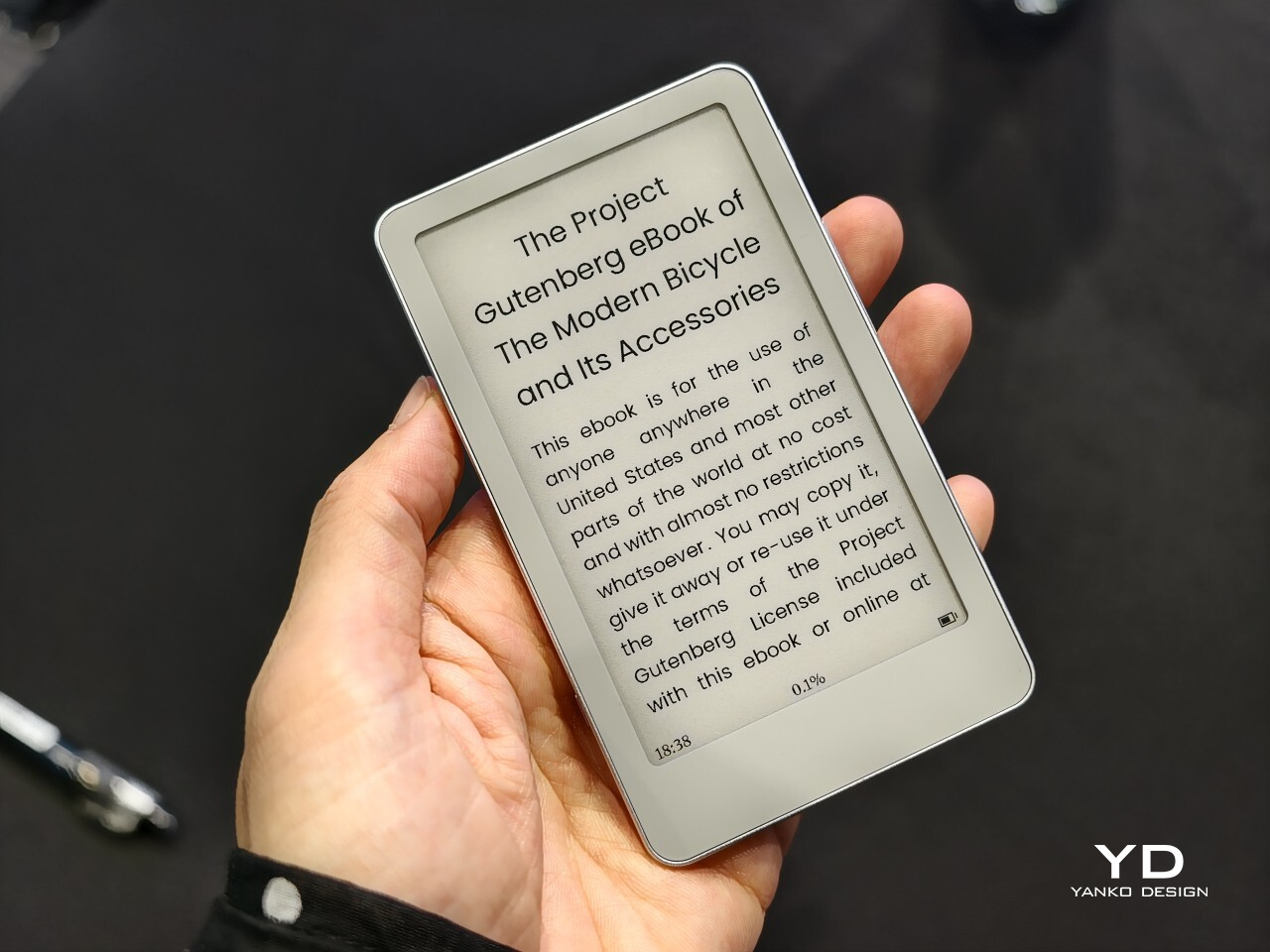
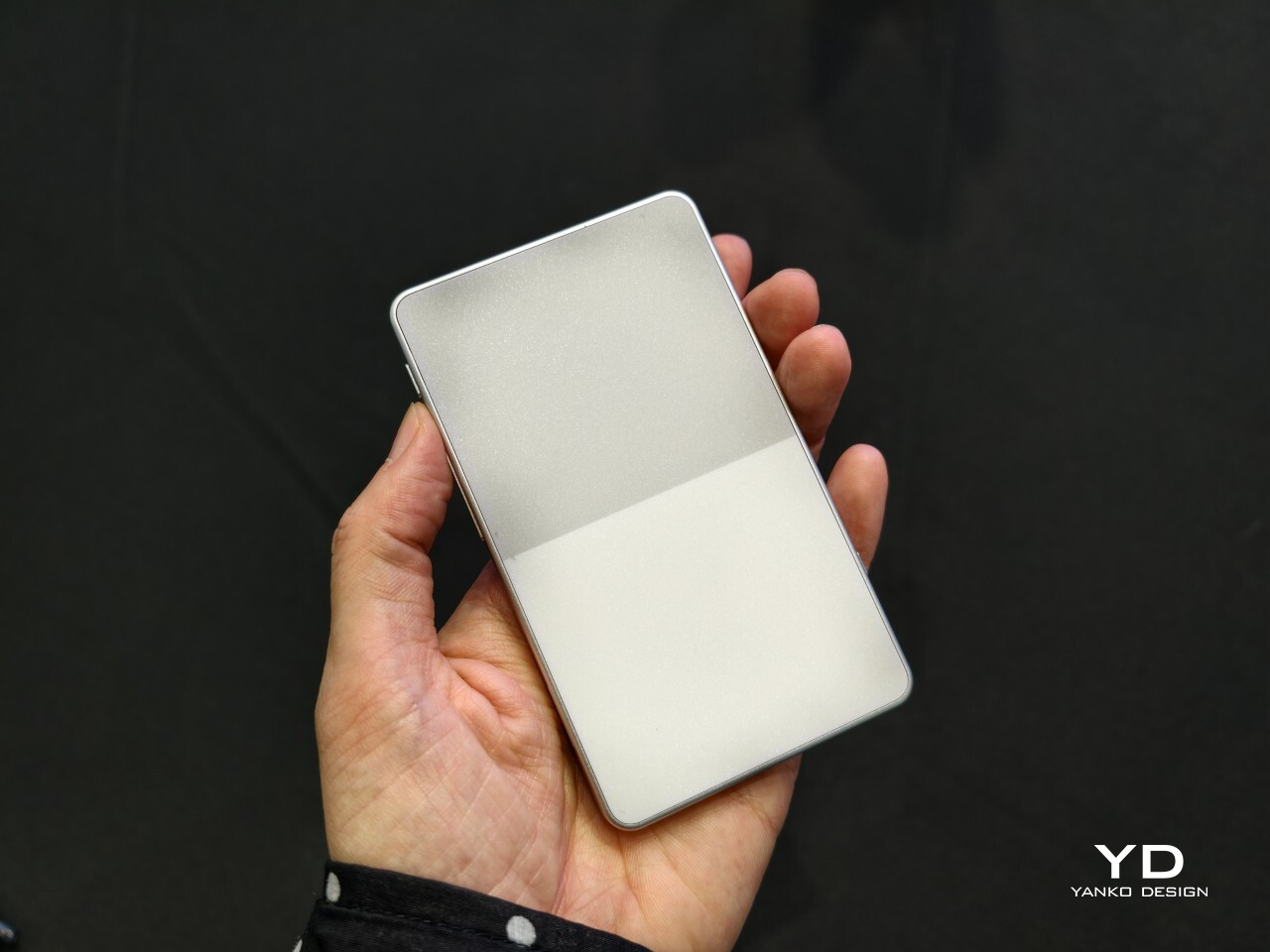
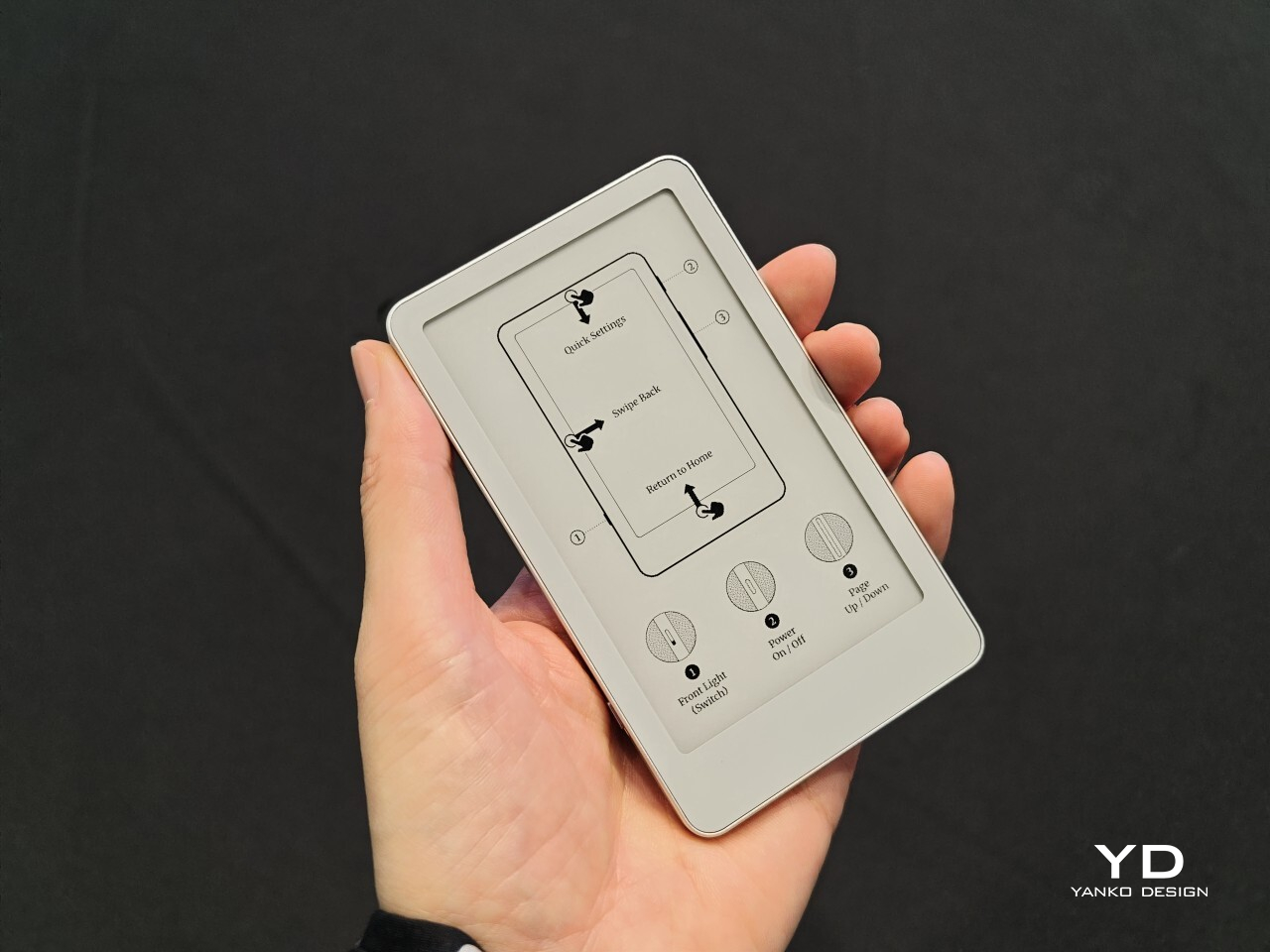
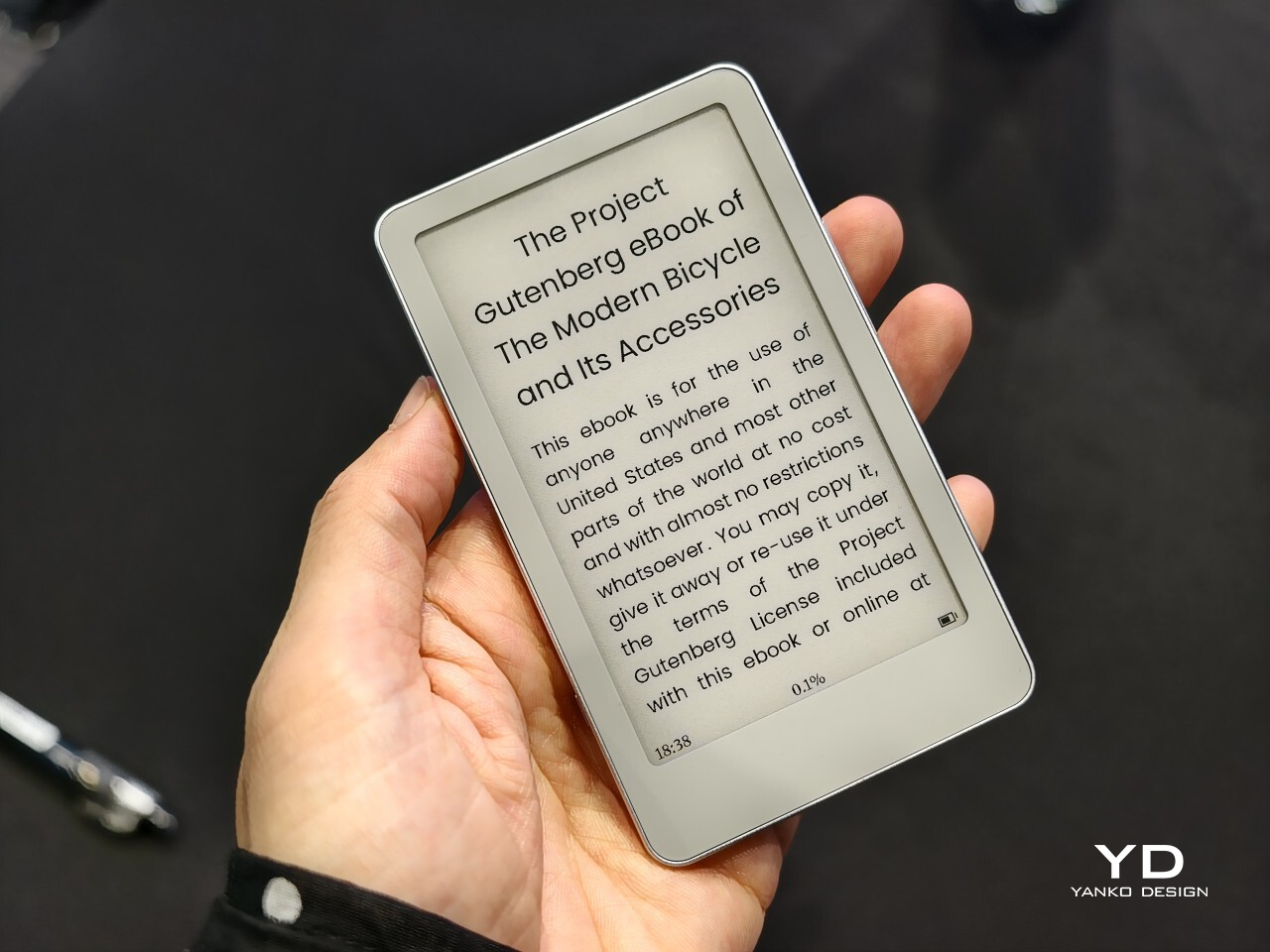
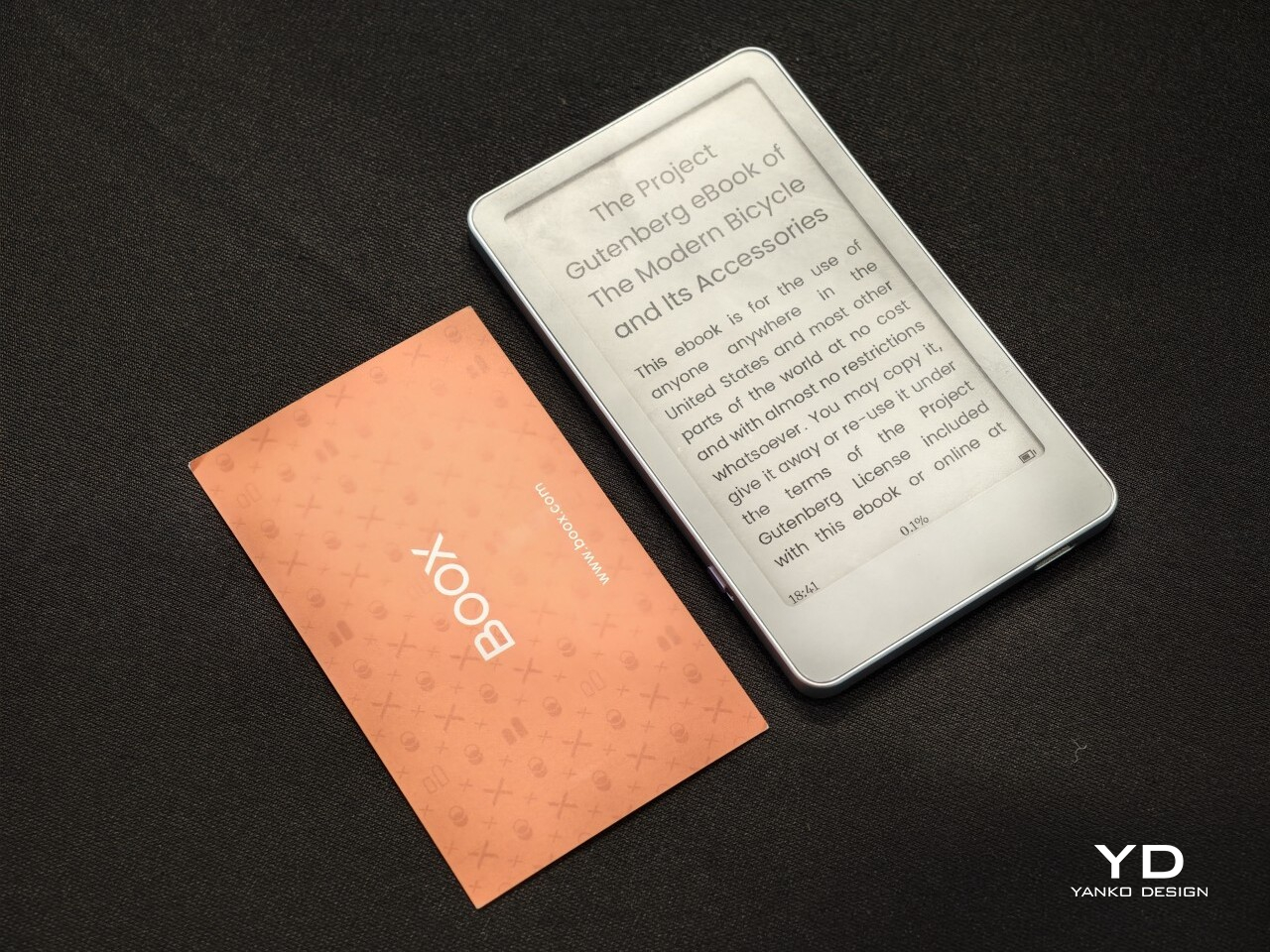
Word is spreading out of IFA 2026 about a tiny e-reader that fits in a pocket the way a stick of gum does, and it’s already reframing what a dedicated reading device should look like. The BOOX Picco pairs a 3.97-inch E Ink touchscreen with a footprint closer to a smartphone than a book. It’s a shape decision, not a spec sheet decision, and it changes how the device fits into a day.

Pick it up next to one of BOOX’s larger notebook-style readers and the size difference stops being subtle. The Picco disappears into a coat pocket or sits flat against a wallet, while its sibling devices demand a bag. That physical gap is the whole pitch. A book you have to remember to bring competes with a phone you never put down. A book that already lives in your pocket doesn’t need to compete with anything.

Designer: BOOX

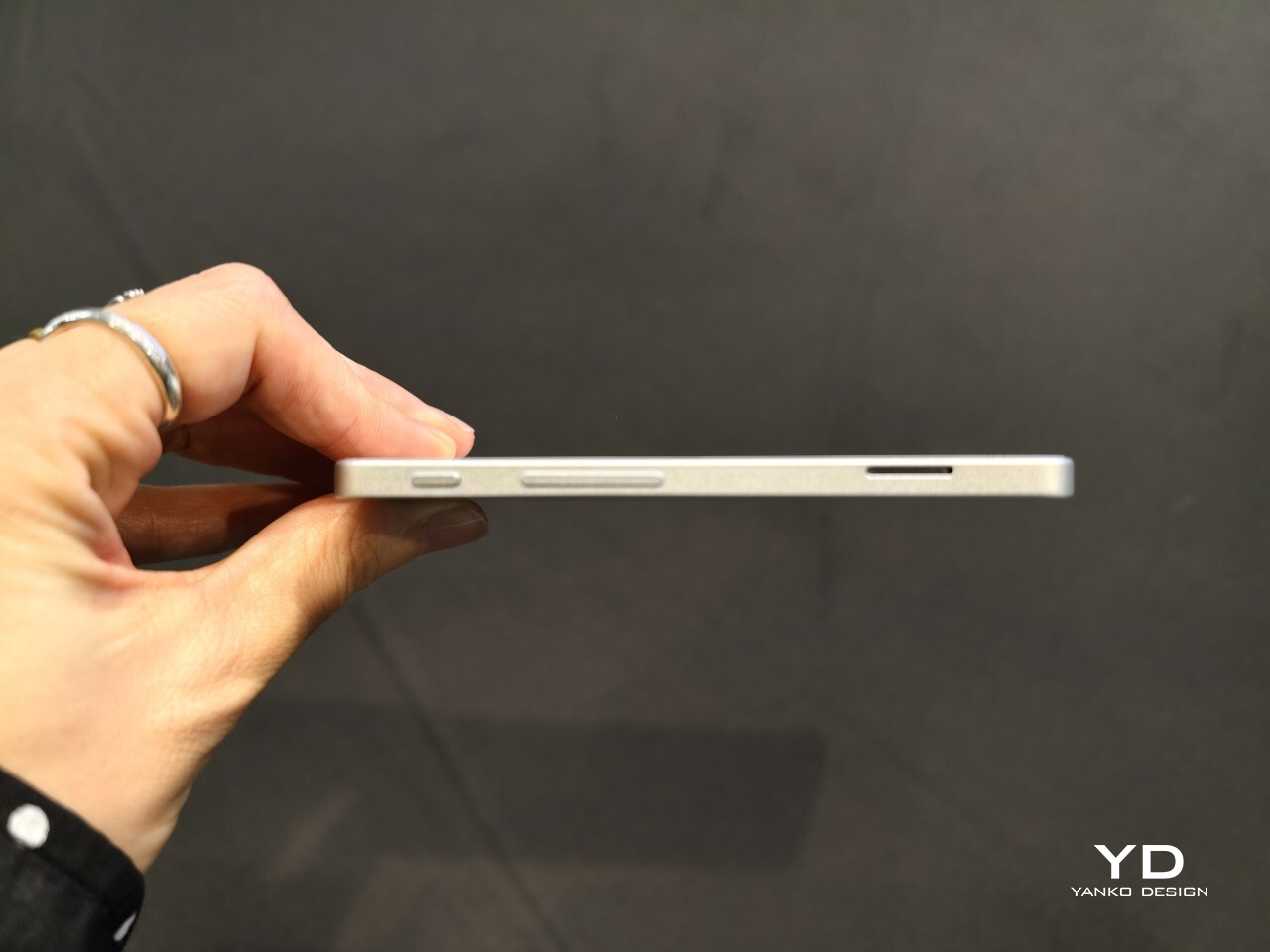
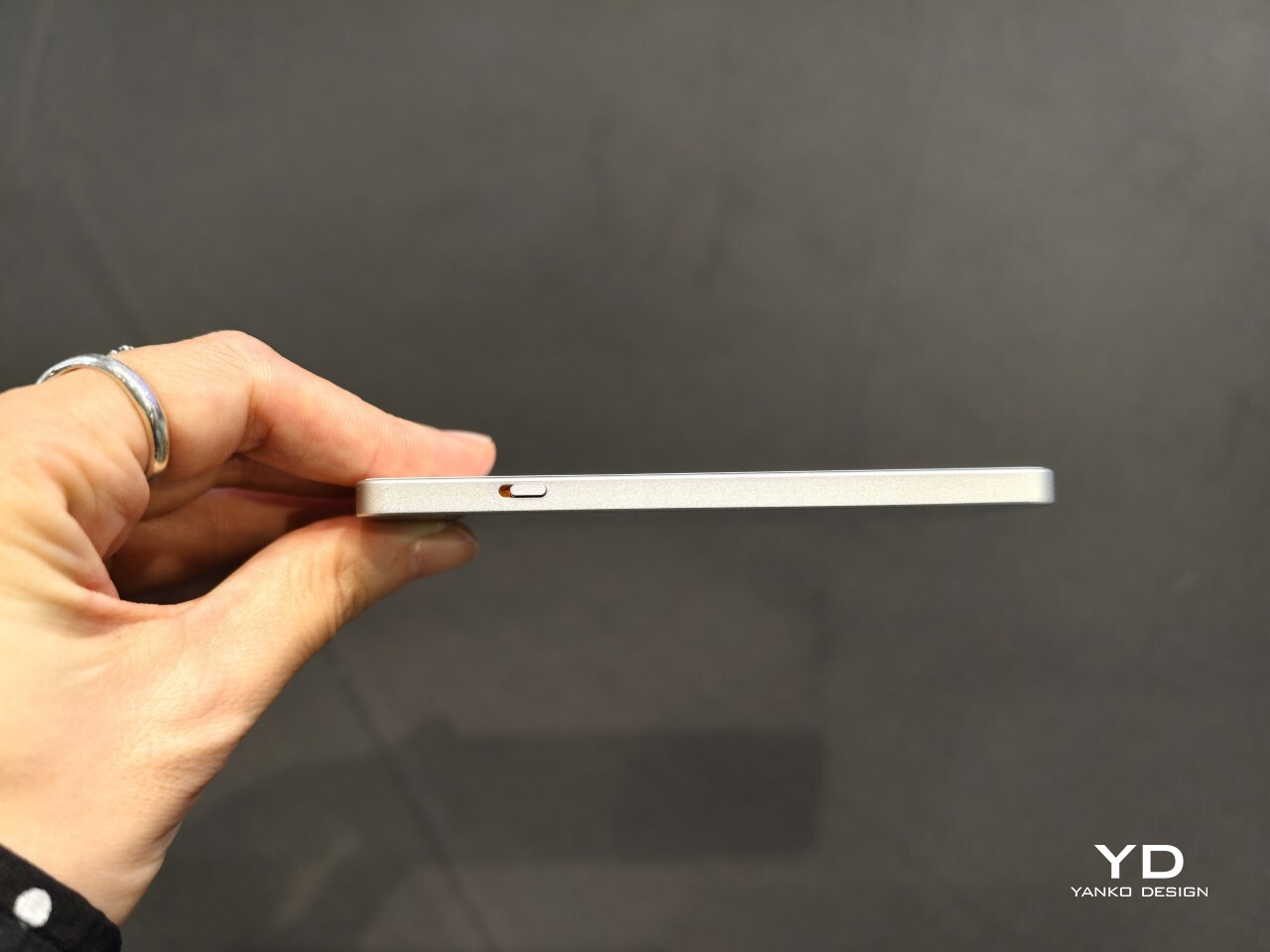
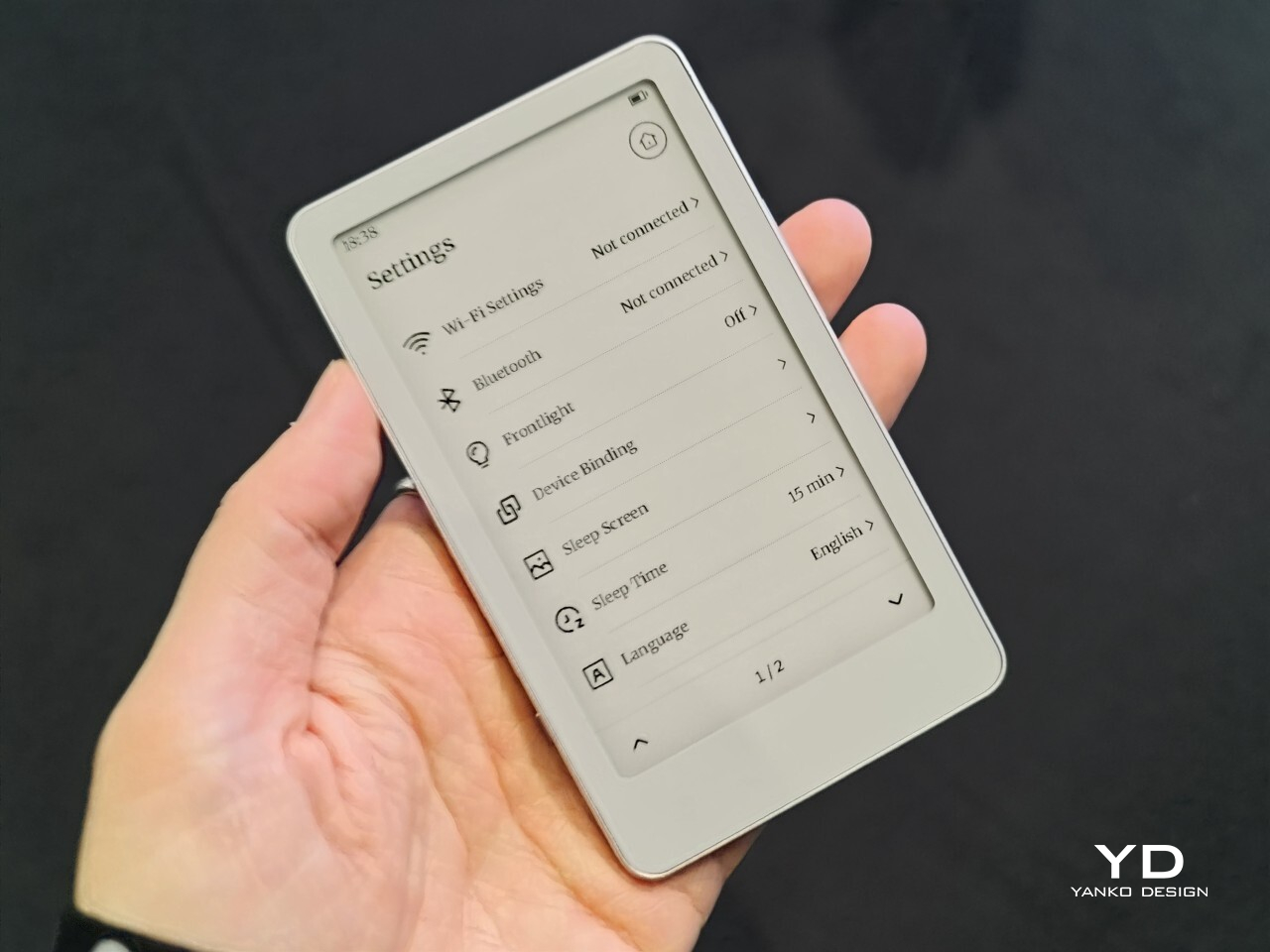
Physical buttons run along one edge, tuned for page turns with separate short-press and long-press actions, so a thumb can move through the buttons on a train platform without needing to squint at a menu. A front light switch and power button sit alongside them, laid out as simple raised circles rather than crowded icons. The touchscreen handles gestures like swiping back or returning home, giving the Picco two ways to get around depending on the situation.

Storage stays refreshingly analog. Instead of packing in onboard memory, the Picco leans on a microSD card, treating your library as something swappable rather than sealed in. Files move over via USB-C or WiFi through a companion app, both quicker options than earlier tiny readers offered. It’s a small engineering choice that says something about who this device is built for: people who already have a shelf of digital books and just want a lighter way to carry them.

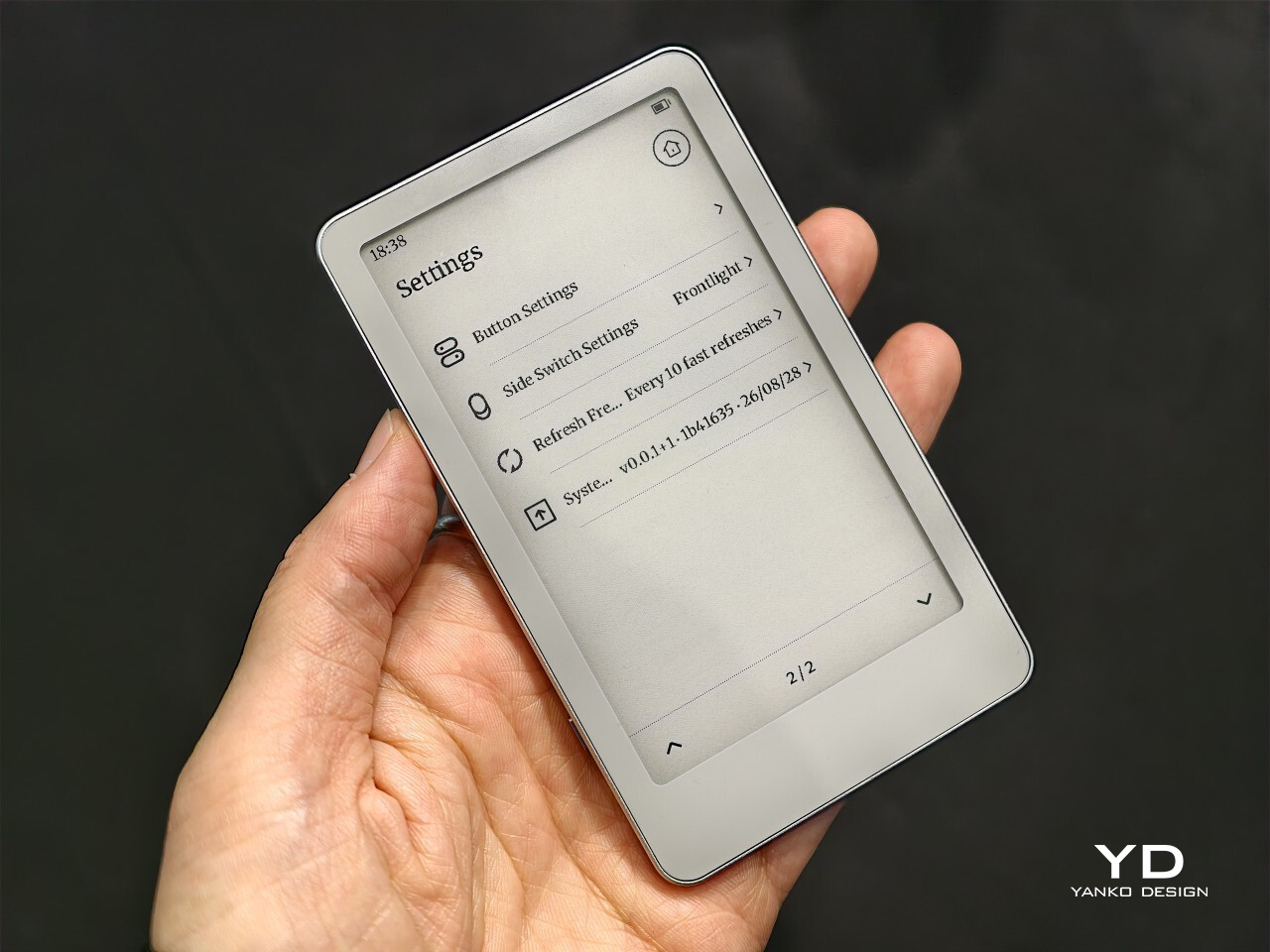
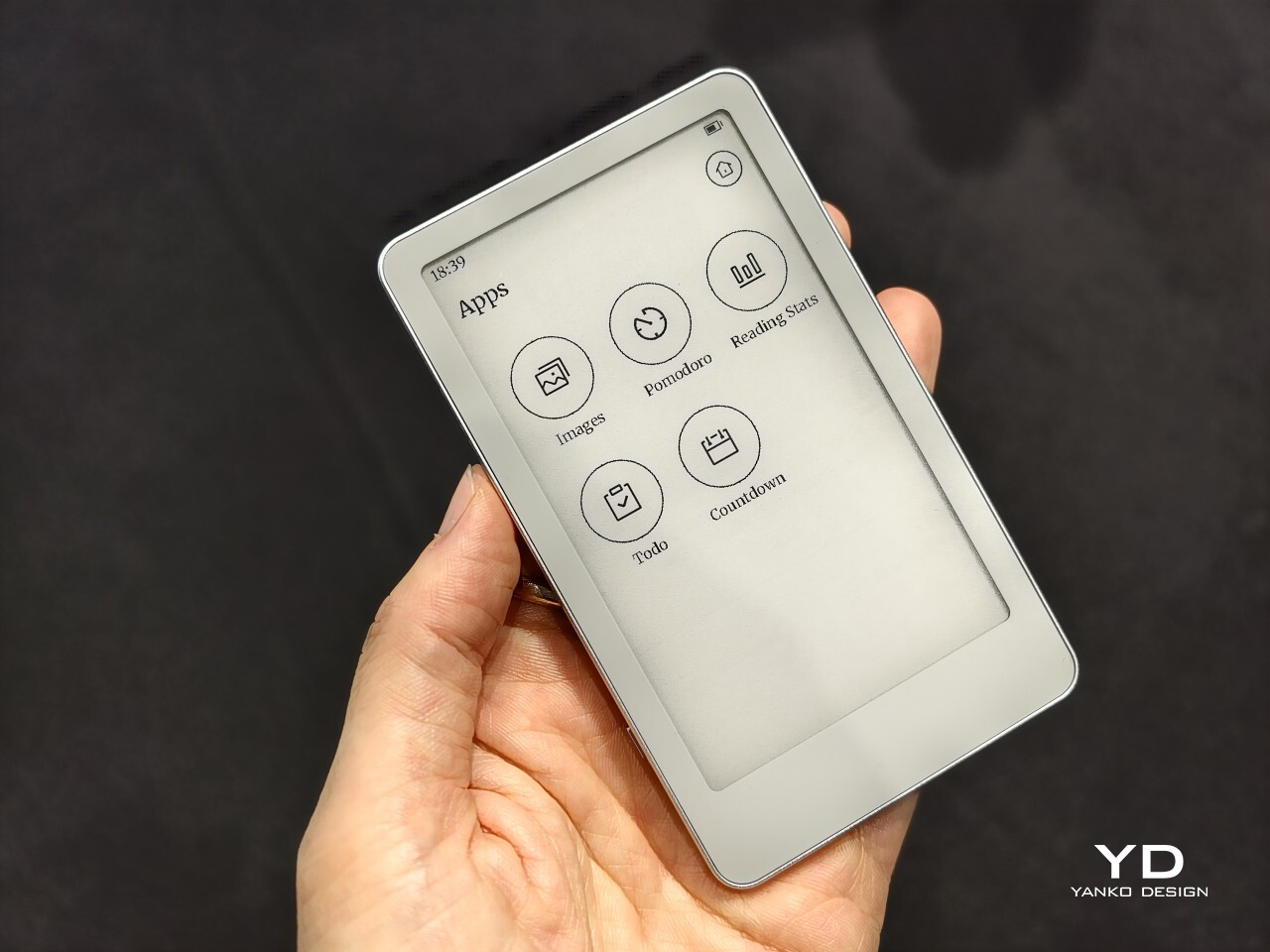
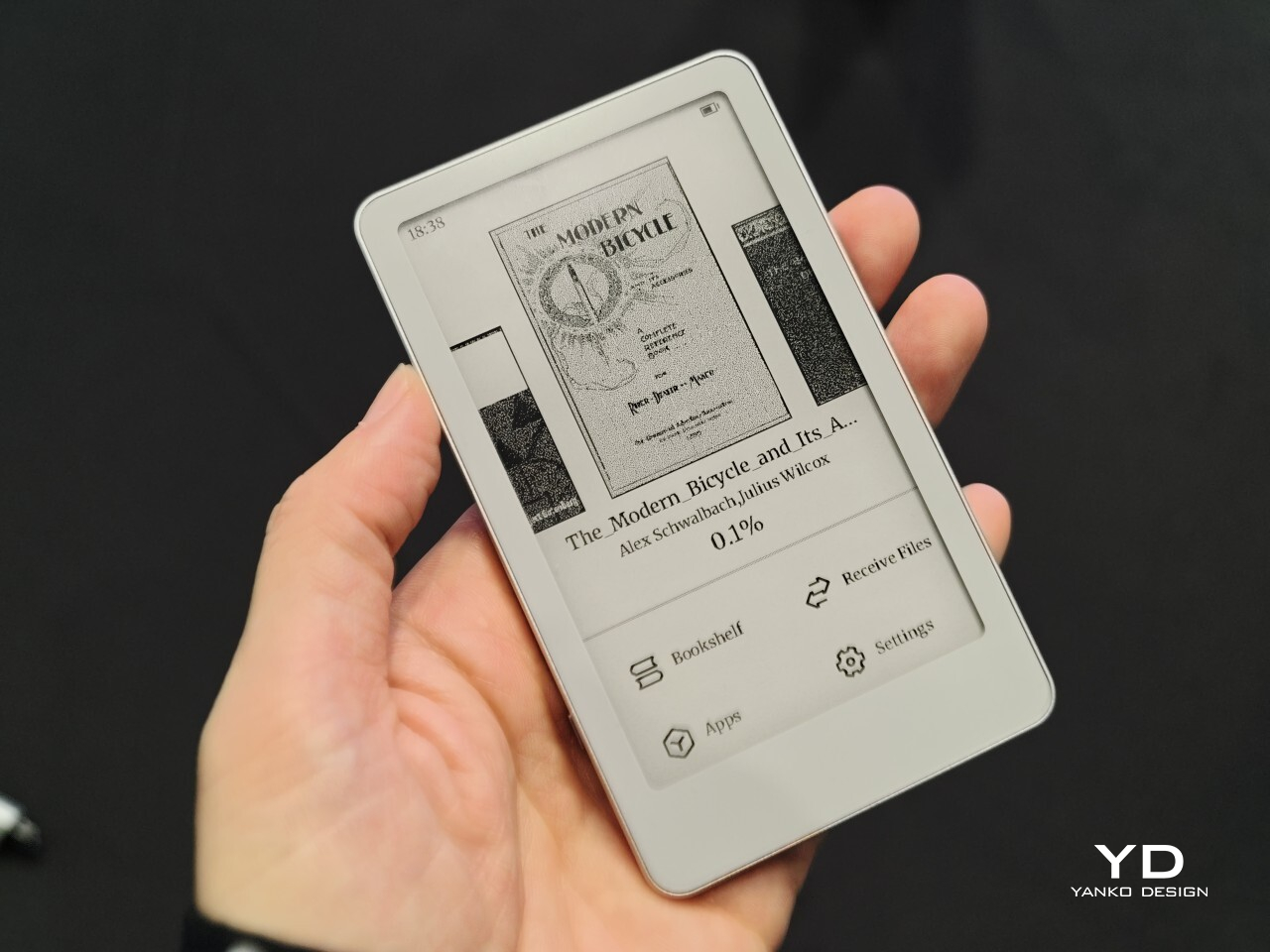
The software strips things down further. Instead of a full Android build, the Picco runs on a leaner Linux-based system, and the interface reflects that restraint. Icons for a handful of apps, Images, Pomodoro, Reading Stats, Todo, and Countdown, sit as plain circles on a clean home screen. There’s no algorithmic feed hiding behind a swipe, just a bookshelf, a settings menu, and a way to receive files.

None of this reads as a shrunken flagship. It reads like a device built around a single decision: reading should require less friction than checking a phone, not more. A commute, a waiting room, a lunch break; the Picco is sized for exactly those in-between stretches where a full-size reader feels like overkill and a phone feels like a trap.

Pricing chatter points to around $100 (roughly matching entry-level tablets), with a possible release by the end of 2026, though BOOX has yet to confirm the finer details. What’s already clear from the hands-on looks is that the design logic holds up. Small screens force fewer words per page, but they also force fewer excuses not to read at all.

The post Most E-Readers Don’t Survive the Commute, This Tiny One Does first appeared on Yanko Design.
How Xiaomi made connected living feel more believable at IFA Berlin 2026

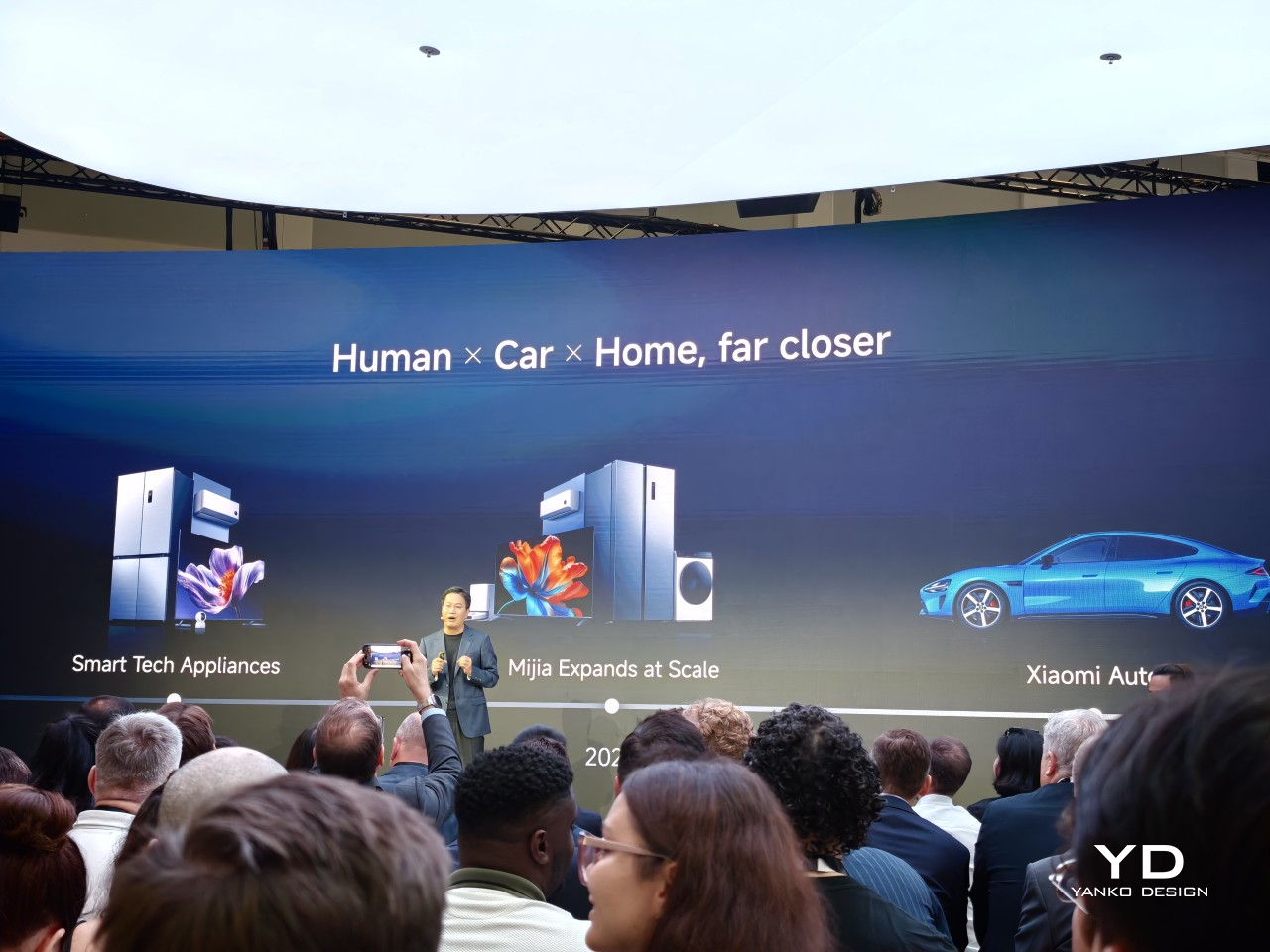
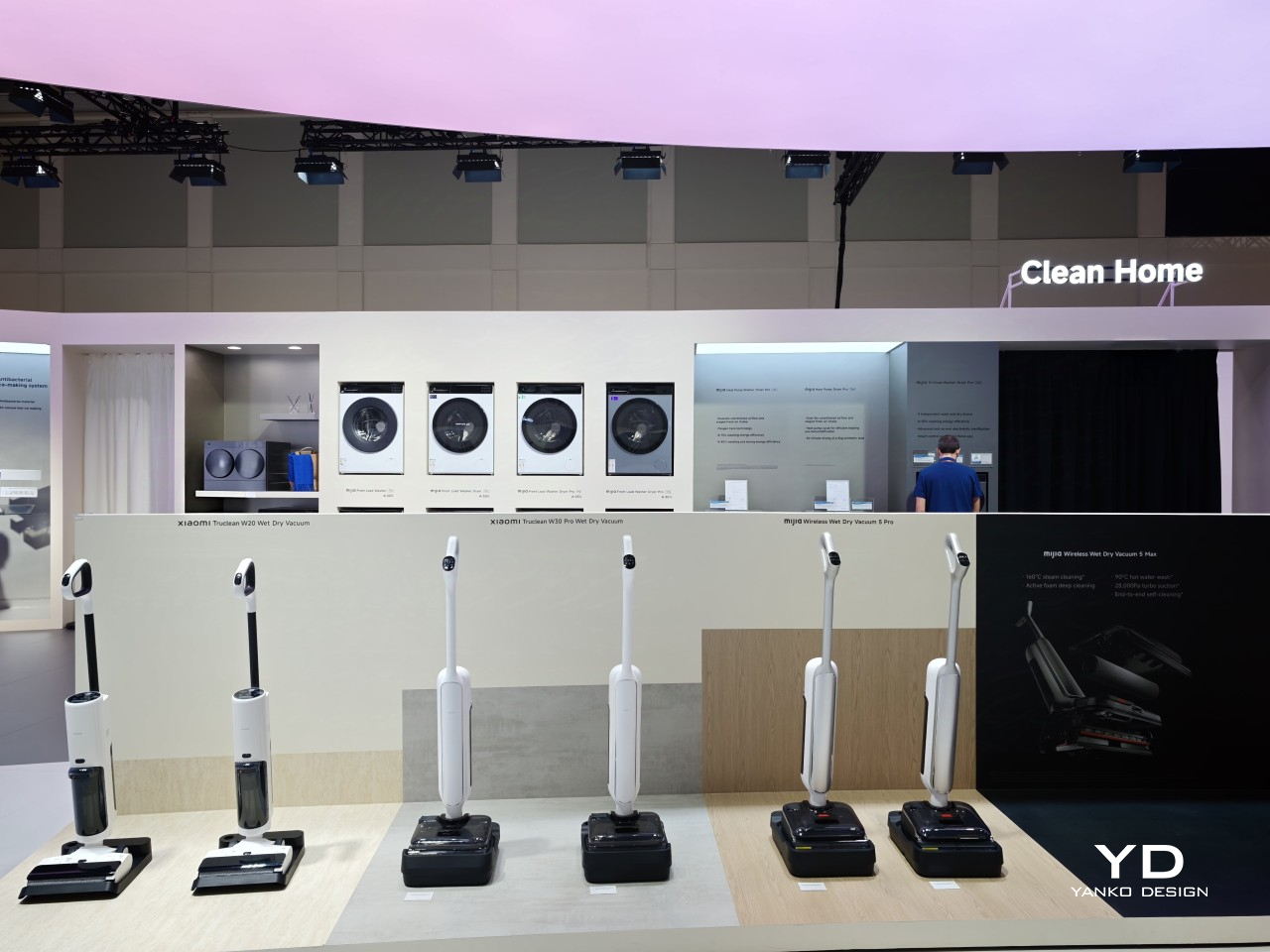
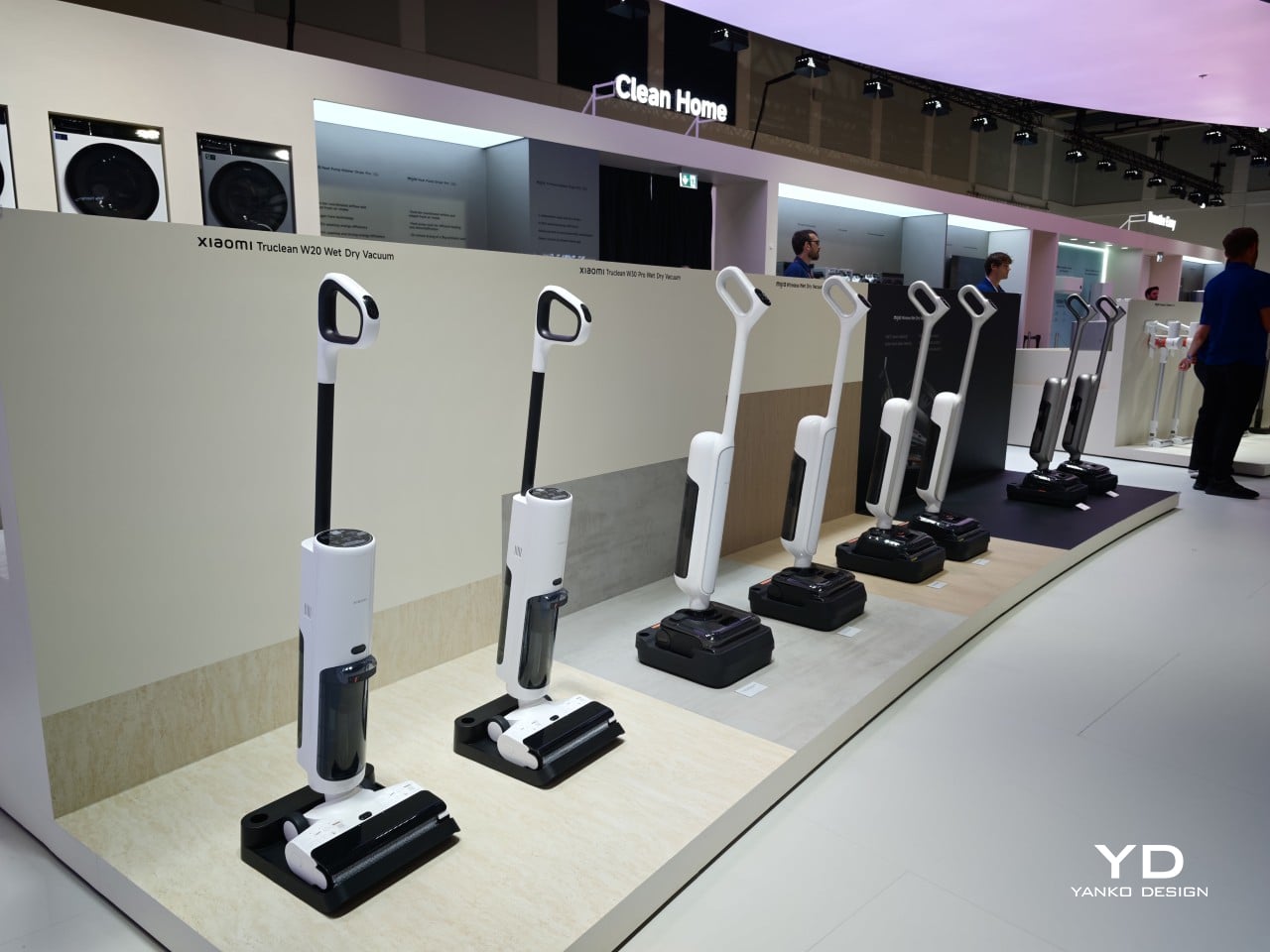
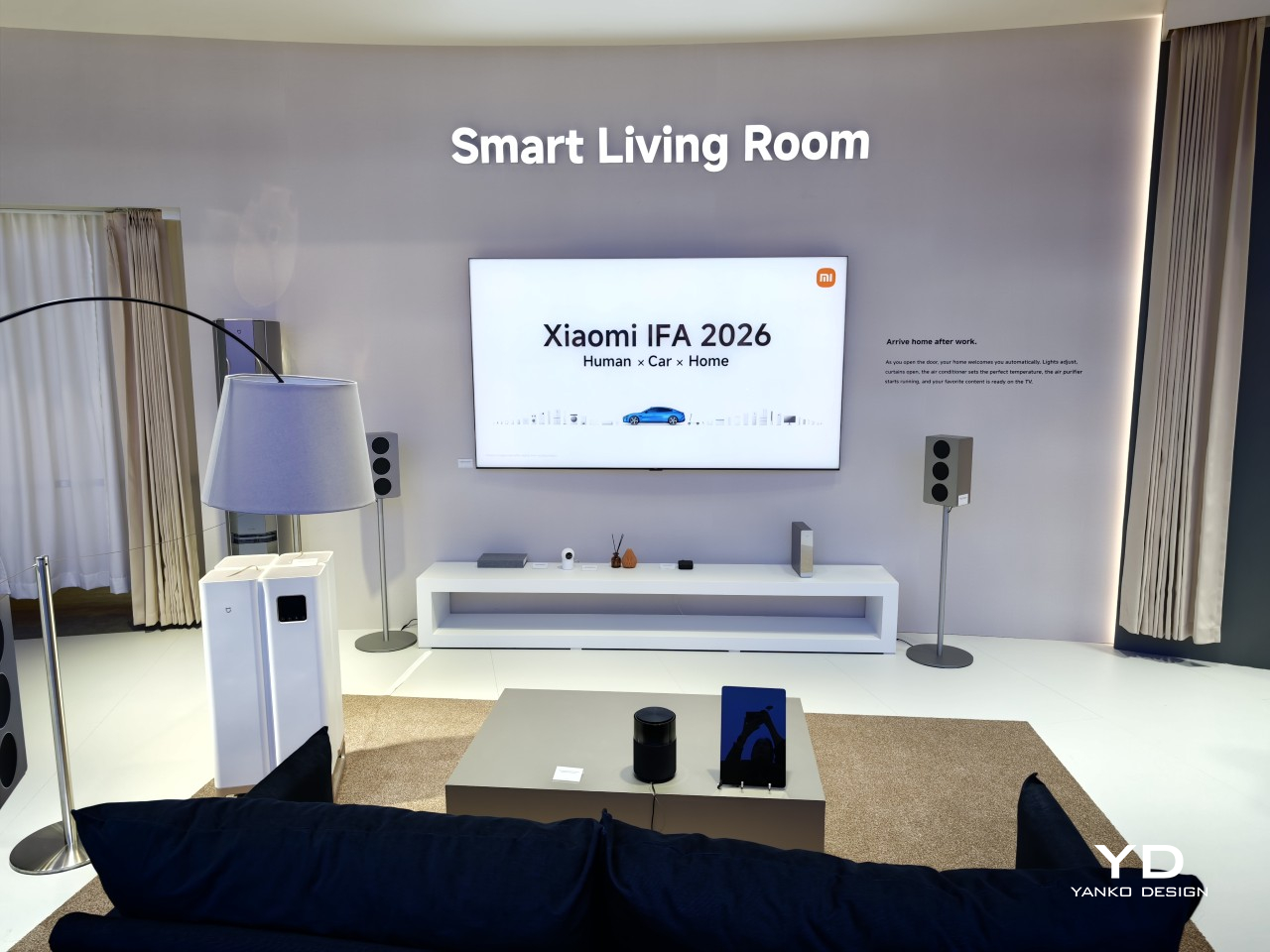
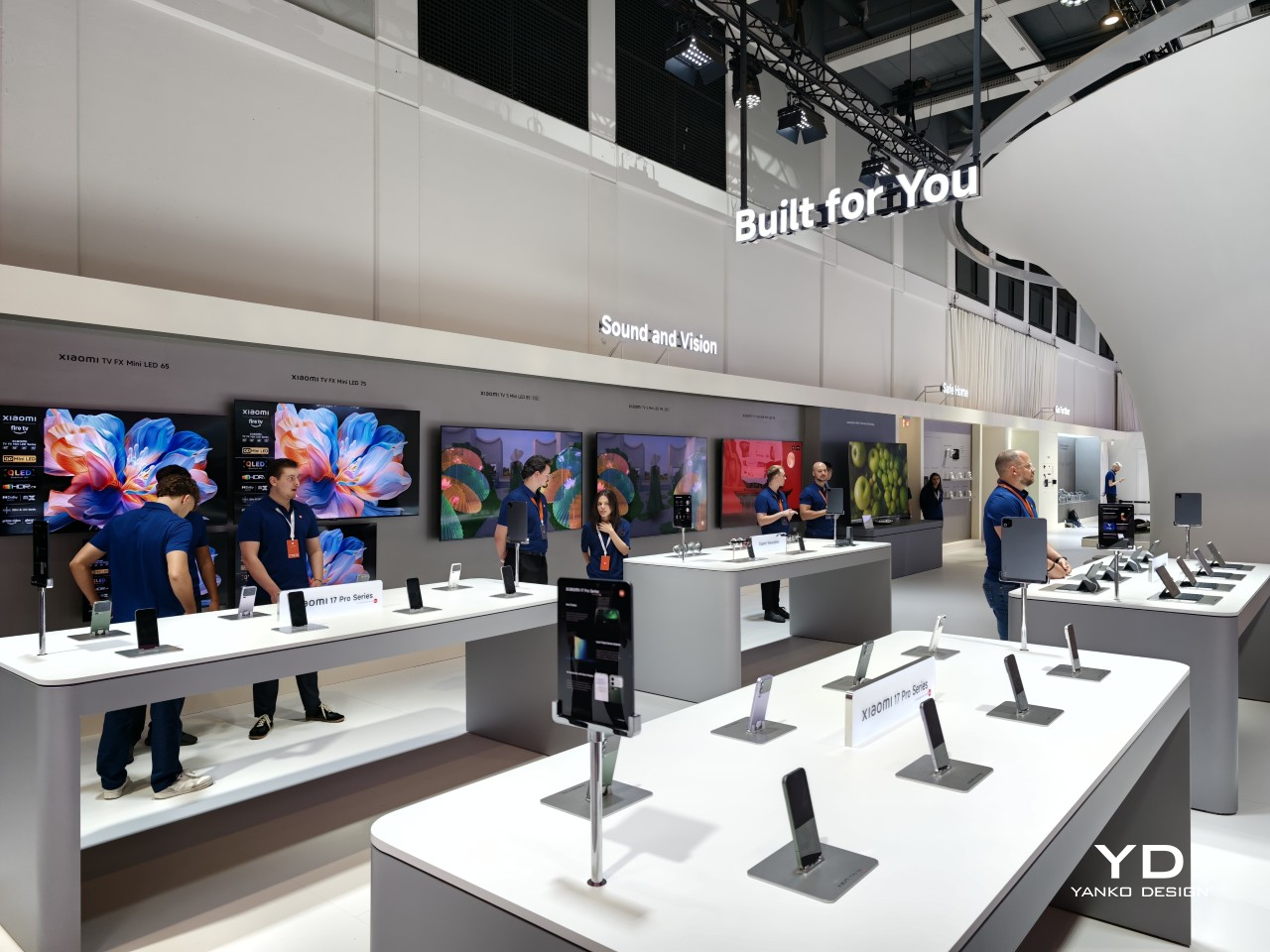
At IFA Berlin 2026, Xiaomi’s booth made a strong case for how far the company has moved beyond smartphones. Phones and personal tech were still part of the picture, but the larger presence came from Xiaomi Auto and Mijia, the company’s home appliance brand, with TVs, air conditioners, and kitchen and cleaning products giving the space a distinctly domestic weight. For a company still often associated first with phones outside China, it was a useful reminder that Xiaomi now wants to be understood through a much wider lens.

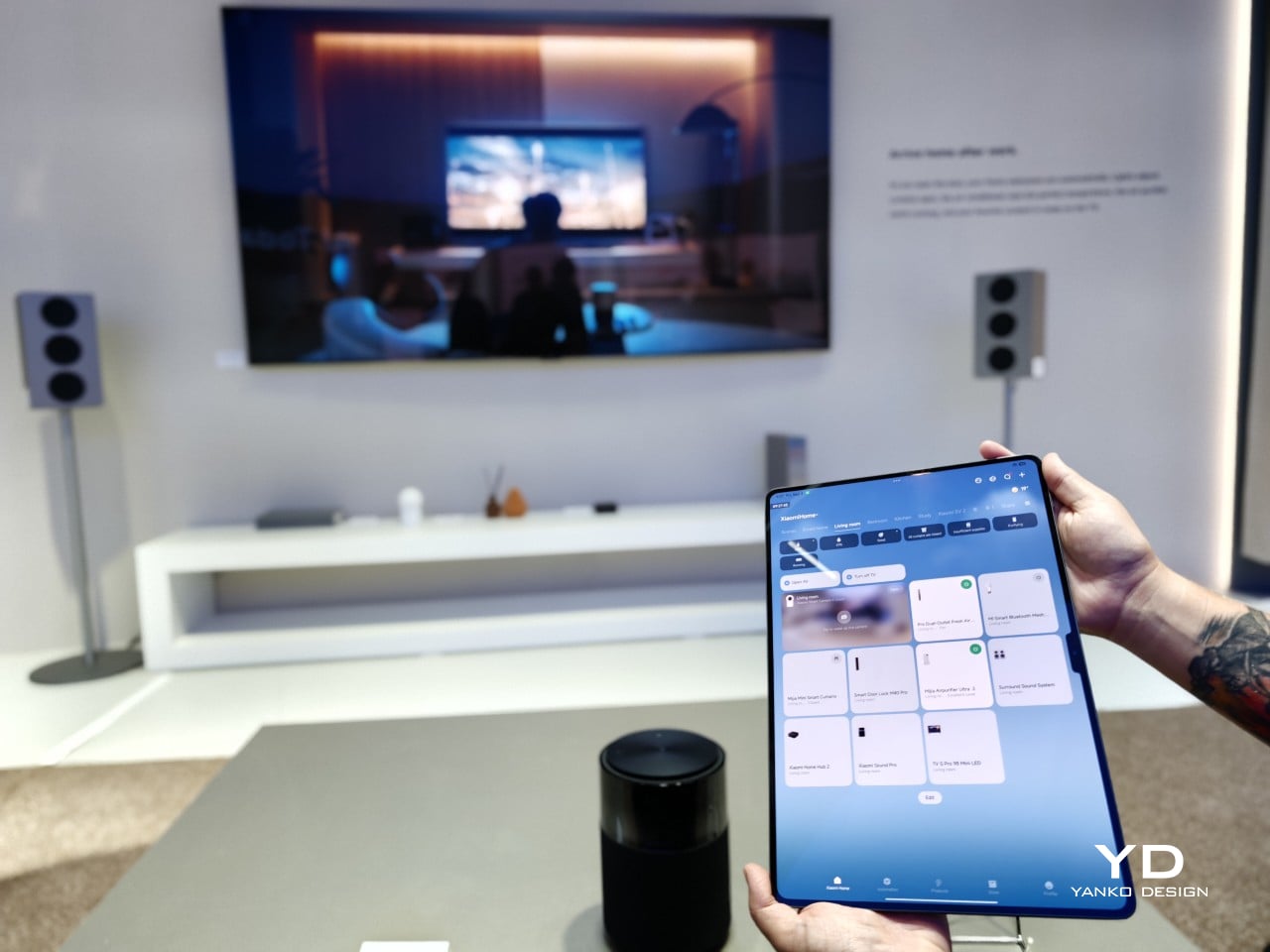
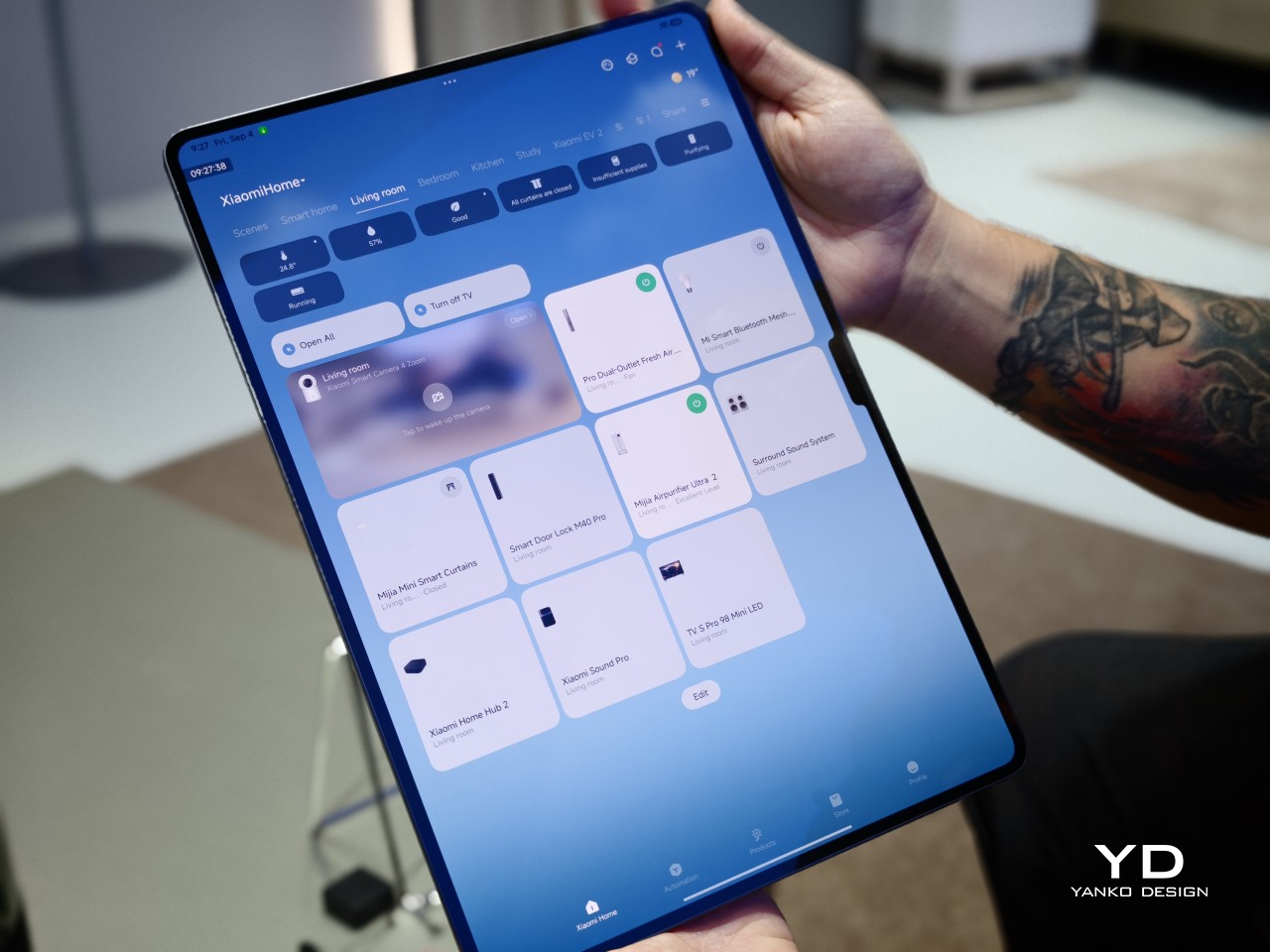
Xiaomi framed the booth around its “Human x Car x Home” smart ecosystem, the company’s term for connecting personal devices, vehicles, and home products into one system. On a trade show floor, that kind of idea can easily remain abstract. What made it more legible here was not the branding itself, but a series of smaller demonstrations built around ordinary routines. They gave the concept a practical shape.

Designer: Xiaomi

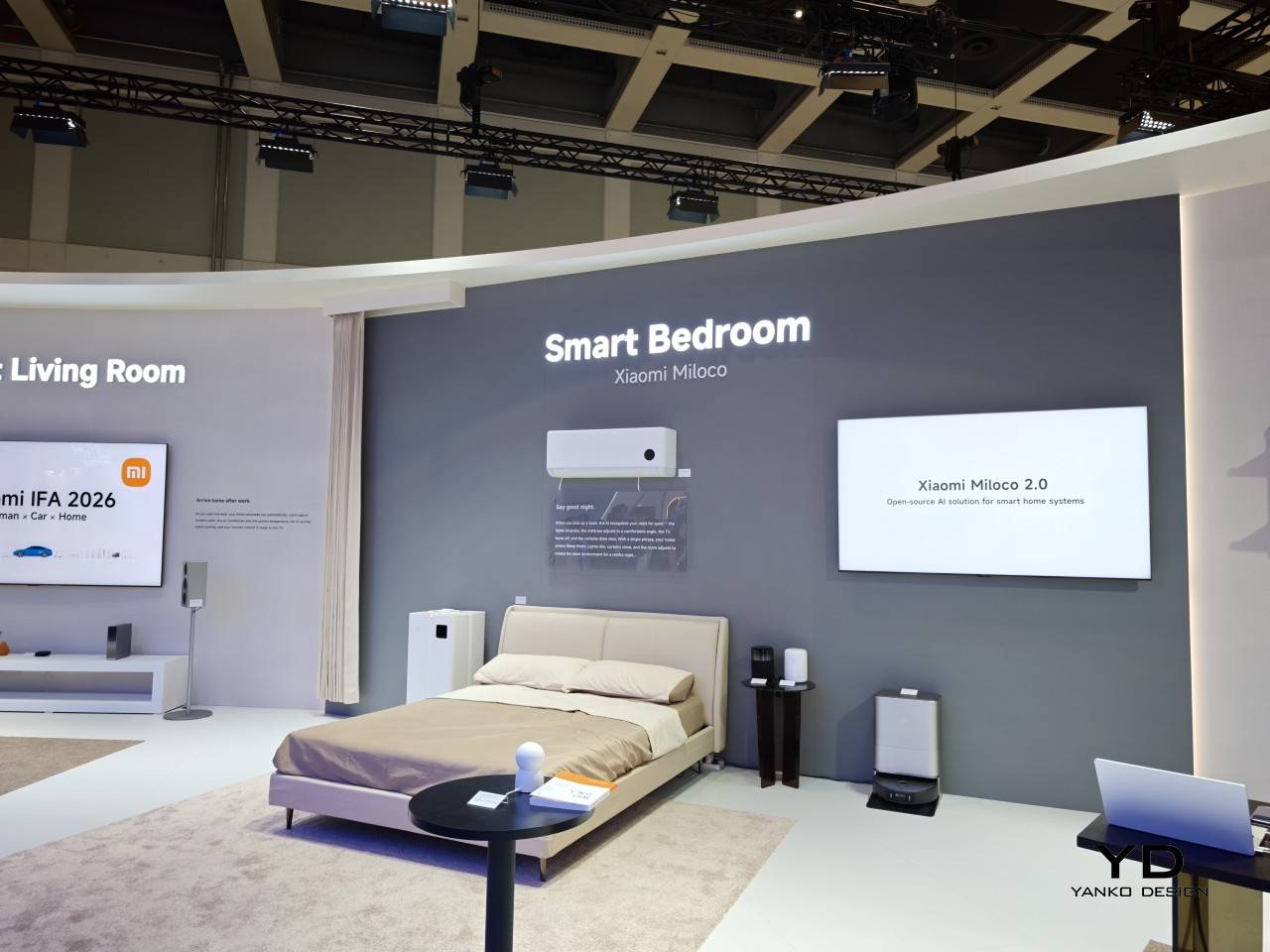
One of the most memorable examples was a car-to-home demo where opening the car door turned the TV off automatically at home. It is the sort of interaction that sounds minor until you picture yourself leaving the house and wondering whether you forgot to switch something off. Another demo connected the dishwasher to the robot vacuum, so once the dishwasher door was closed, the vacuum would start cleaning the kitchen floor. In the bedroom area, Xiaomi showed a bedside lamp turning on when someone started reading in bed. None of these moments were staged as spectacle, and that was part of why they worked. They felt close to real life.

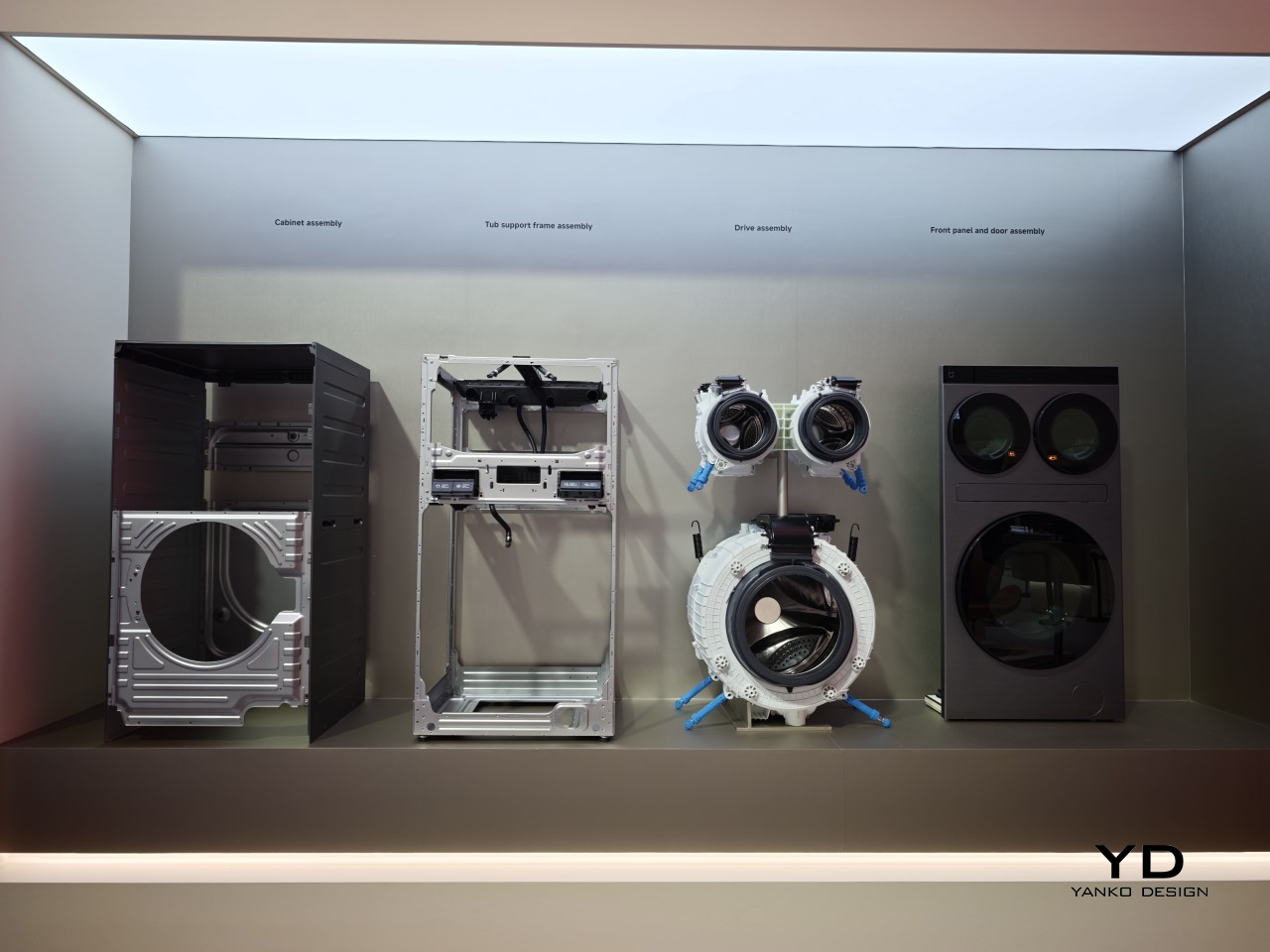
That sense of everyday usefulness carried through to some of the appliances themselves. A tower air conditioner could either follow your movement with its airflow or avoid blowing directly at you, a small adjustment that made the product feel more attentive to comfort rather than simply powerful. Xiaomi also showed a washer with three separate loading sections that could run at the same time, an idea that immediately suggested a different rhythm for sorting and doing laundry. Then there was a refrigerator with a zero-degree fresh-keeping compartment for meat, designed to keep food right at the edge of freezing so it stays fresh without actually freezing. These were not necessarily the loudest products on the floor, but they were among the easiest to imagine living with.

For a company showing such a wide range of products, Xiaomi’s design language felt notably controlled. The appliances and devices were clean and contemporary, but they avoided the kind of hard-edged minimalism that can make smart products feel distant or clinical. Nothing seemed desperate to stand out on its own. Instead, the products felt designed to live quietly in a room, which may actually be the more difficult thing to get right.

That restraint suited the broader ecosystem message. Xiaomi’s Human x Car x Home smart ecosystem, at least in the form shown in Berlin, was less about dramatic futurism and more about small reductions in friction. The booth as a whole showed Xiaomi’s range, but the more telling moments were the ones that suggested how the company wants its products to behave around daily habits. The TV switches off when you leave. The vacuum starts after kitchen cleanup. The bedside lamp responds to reading. The ambition is not hard to see. Xiaomi wants connected technology to feel less like a system you manage and more like a background layer that adapts around you.

The car is a big part of that shift. Seeing Xiaomi Auto presented alongside phones and home appliances made it clear that the company does not want its automotive business to sit apart as a separate identity. It wants the car to become another part of the same connected experience, linking what happens on the road with what happens at home. At IFA Berlin 2026, Xiaomi Auto also announced that it will enter Germany and other European markets in 2027.

Part of what Xiaomi seemed to be doing in Berlin was introducing European audiences to a version of the company that is already more familiar in China, one that extends well beyond smartphones into home living and mobility. That broader identity came through clearly on the floor. The scale of the booth showed how much ground Xiaomi now covers, while the smaller demos did the more important work of showing how those categories might start to connect in practice.

Trade shows often reward size, novelty, and noise. Xiaomi had scale, certainly, but the parts that lingered were quieter. They were the products that looked easy to live with, and the scenarios that translated a large ecosystem idea into something domestic, ordinary, and believable. If Xiaomi’s Human x Car x Home smart ecosystem is meant to describe where the company wants to go next, IFA Berlin 2026 offered a useful glimpse of what that future might look like when it is at its most convincing.

The post How Xiaomi made connected living feel more believable at IFA Berlin 2026 first appeared on Yanko Design.
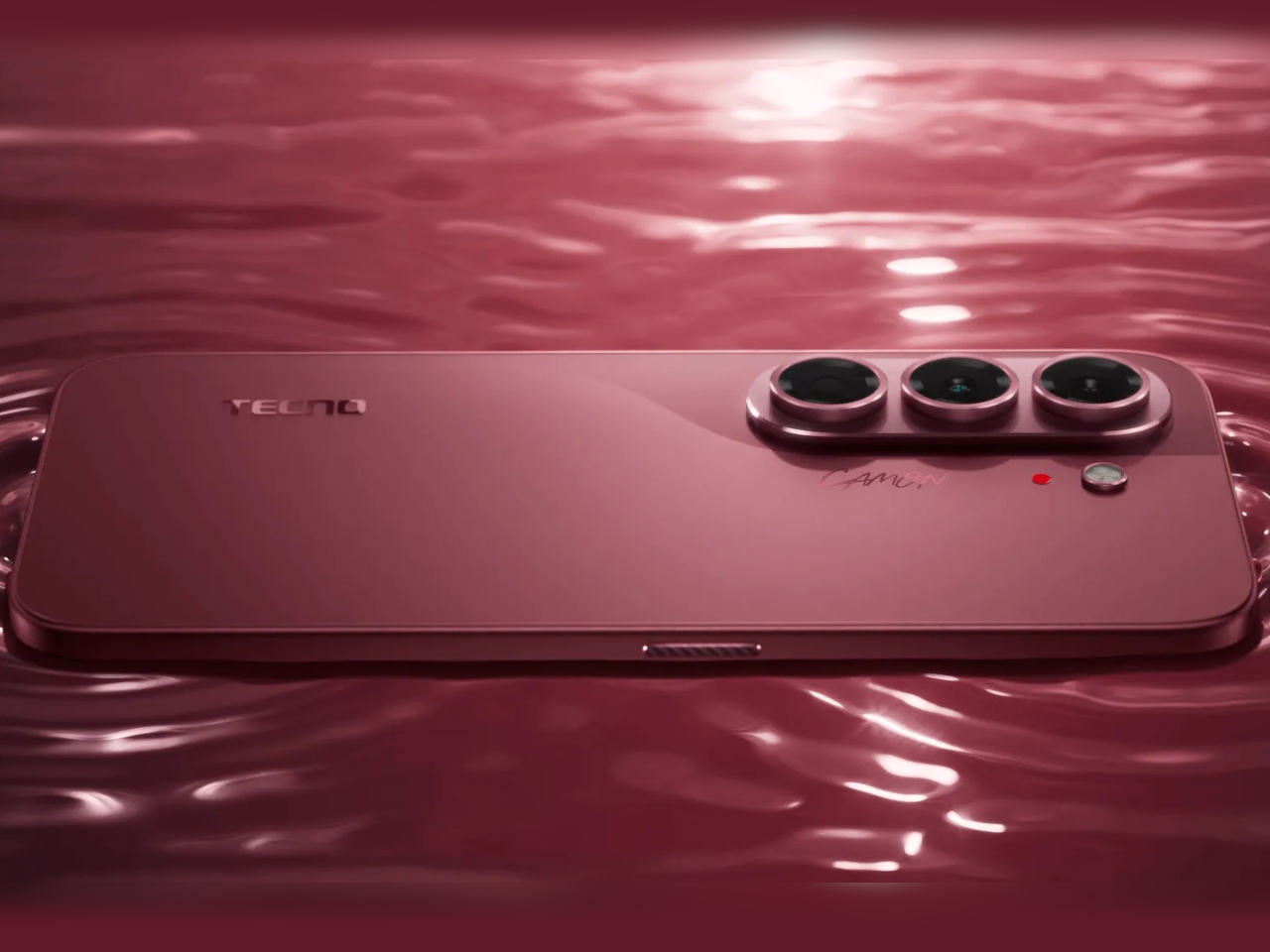
TECNO’s 6mm Phone Has 6,000mAh Inside and a Van Gogh Finish Outside

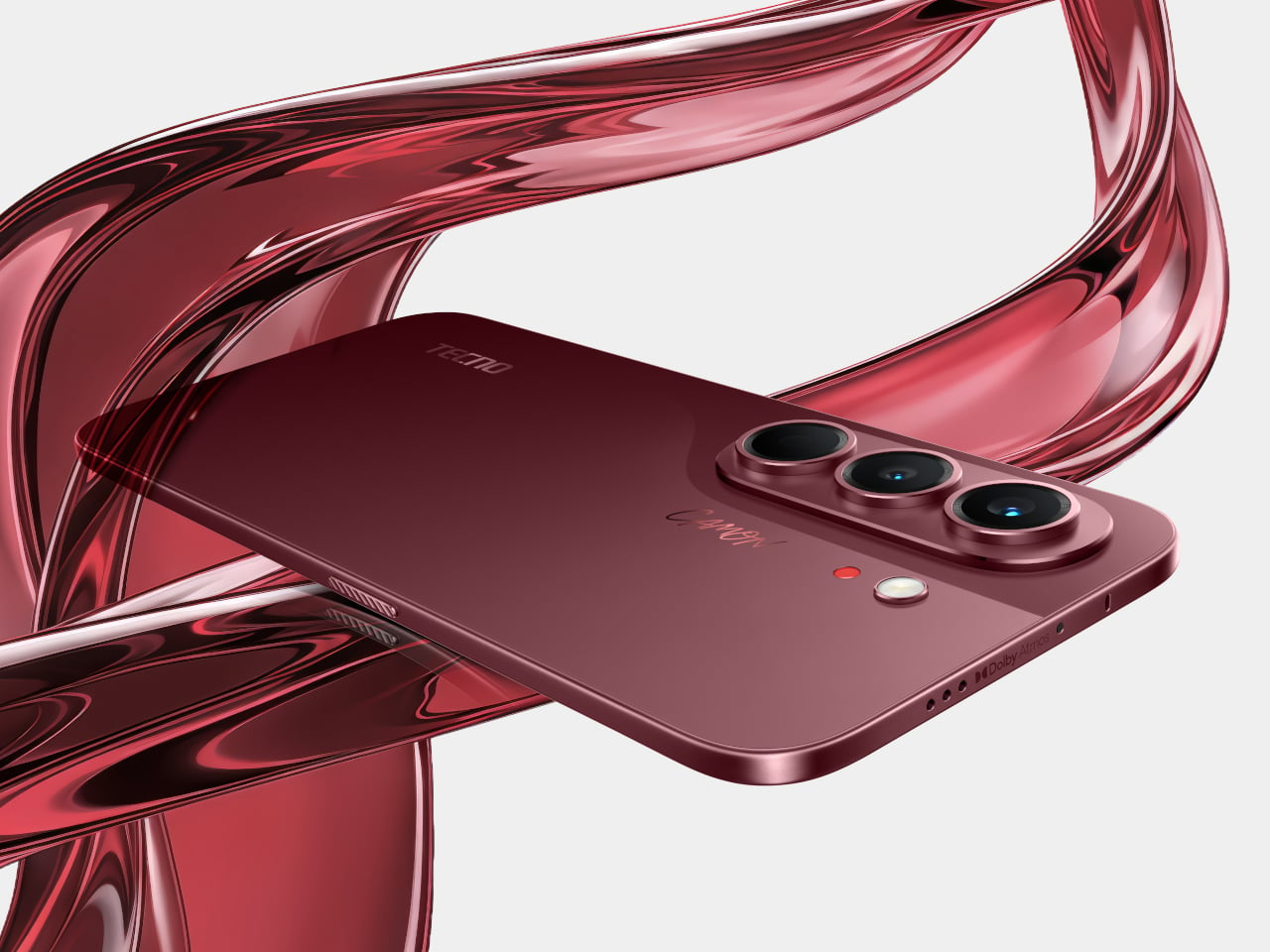
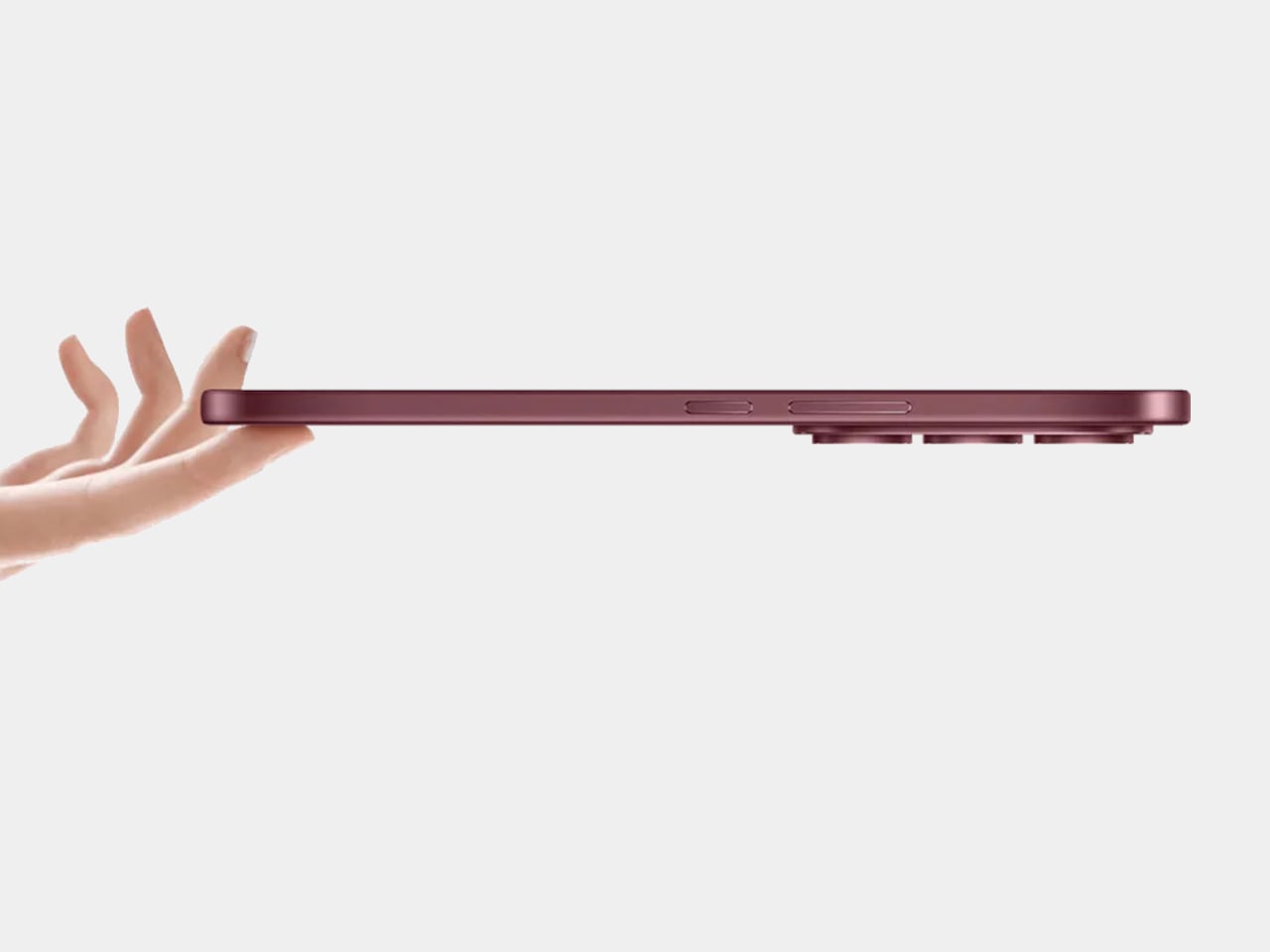
Most slim phones treat thinness as the entire pitch, shaving millimeters off a slab until battery life and durability quietly take the hit. TECNO’s CAMON Slim 5G, unveiled at IFA 2026, refuses that trade-off outright. At 6.39mm thin, it still packs a 6,000mAh battery and passes military-grade drop testing, treating slimness as one part of a larger design statement rather than the whole point.

That statement starts with a body borrowed from unlikely references. TECNO built the CAMON Slim 5G around a swan-neck curve, pulling its lines from ballet dancers and automotive silhouettes rather than the usual flat rectangle. The result reads less like a spec sheet decision and more like an object shaped by motion, something that happens to also fit comfortably into one hand during a commute.

Designer: TECNO

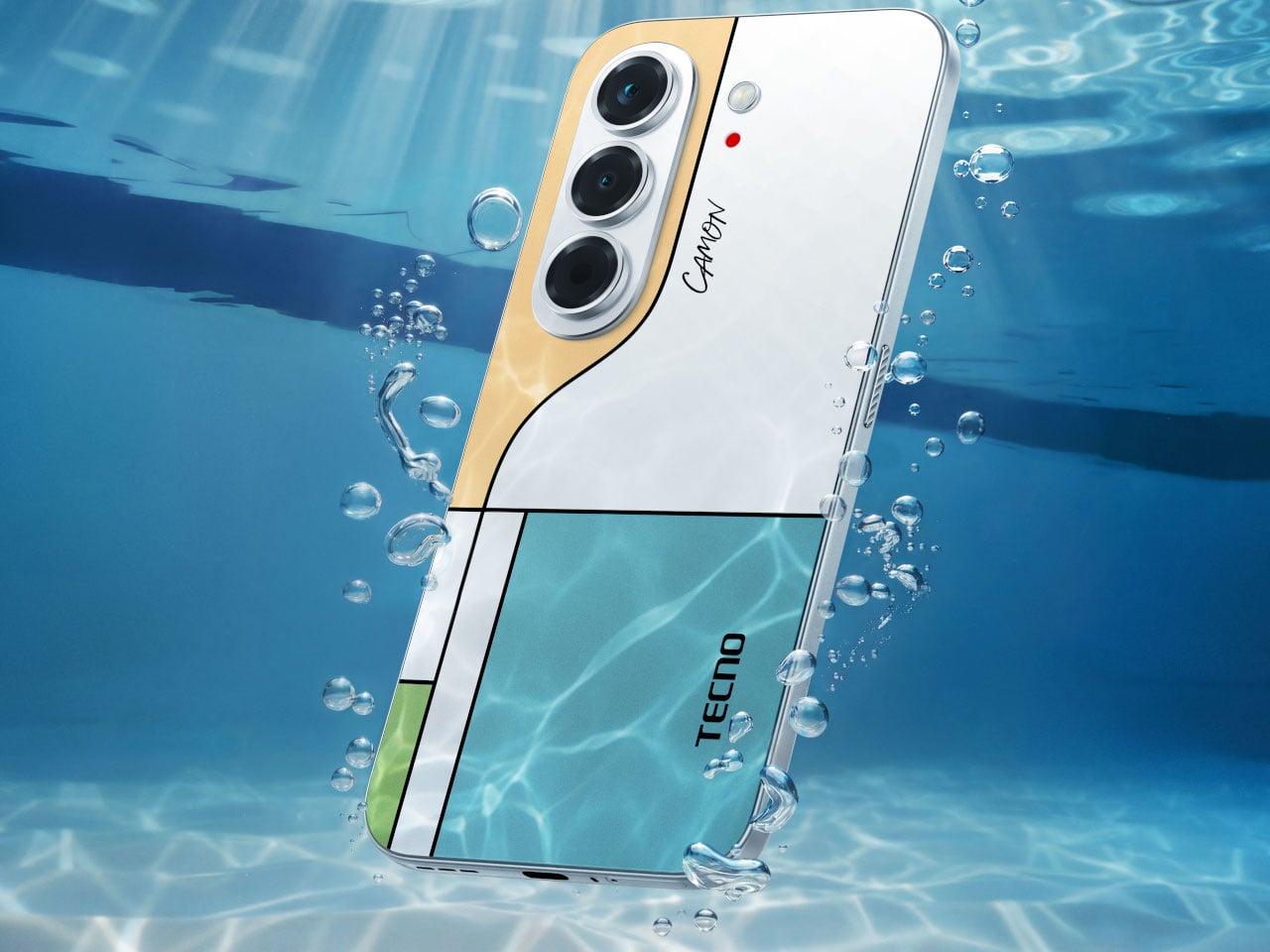
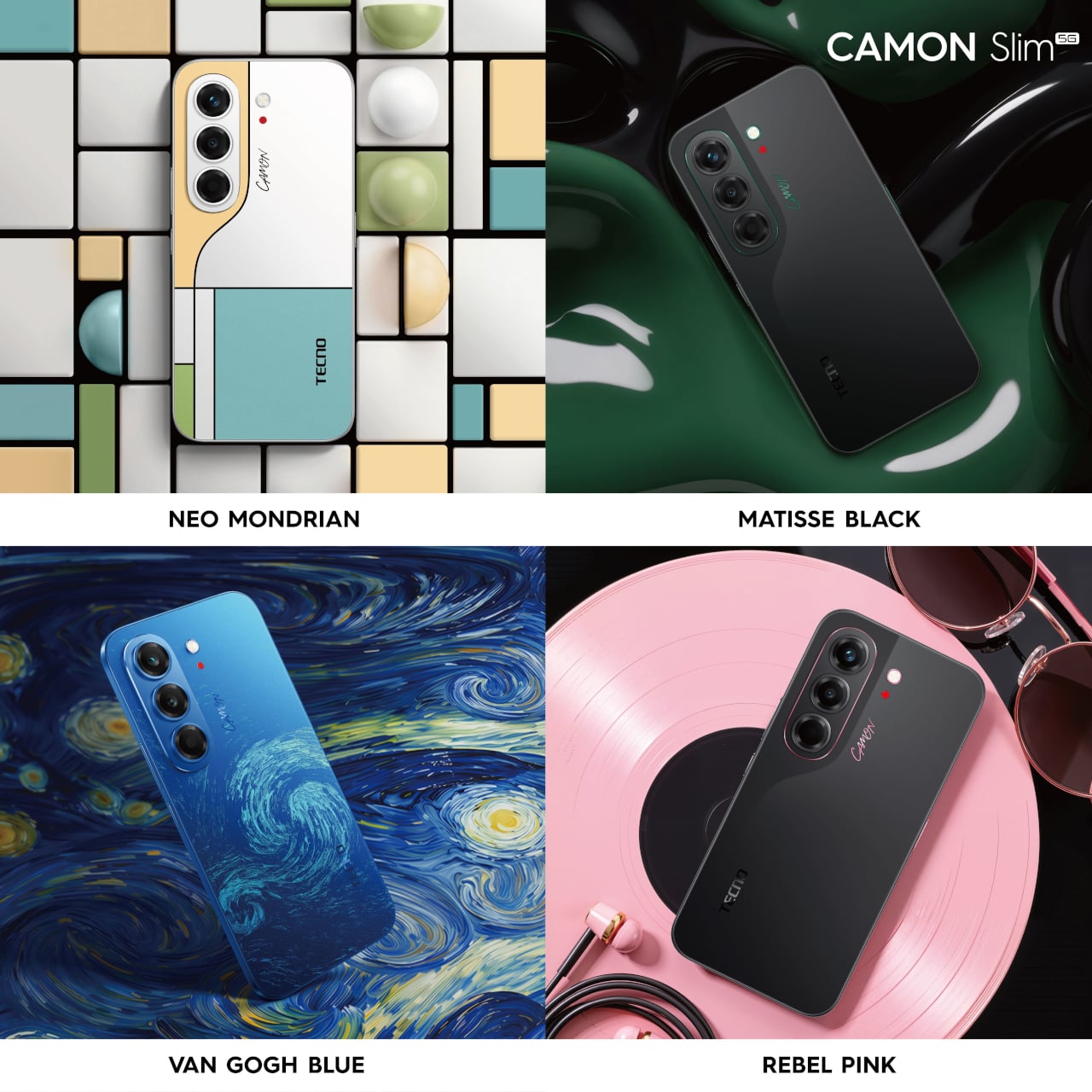
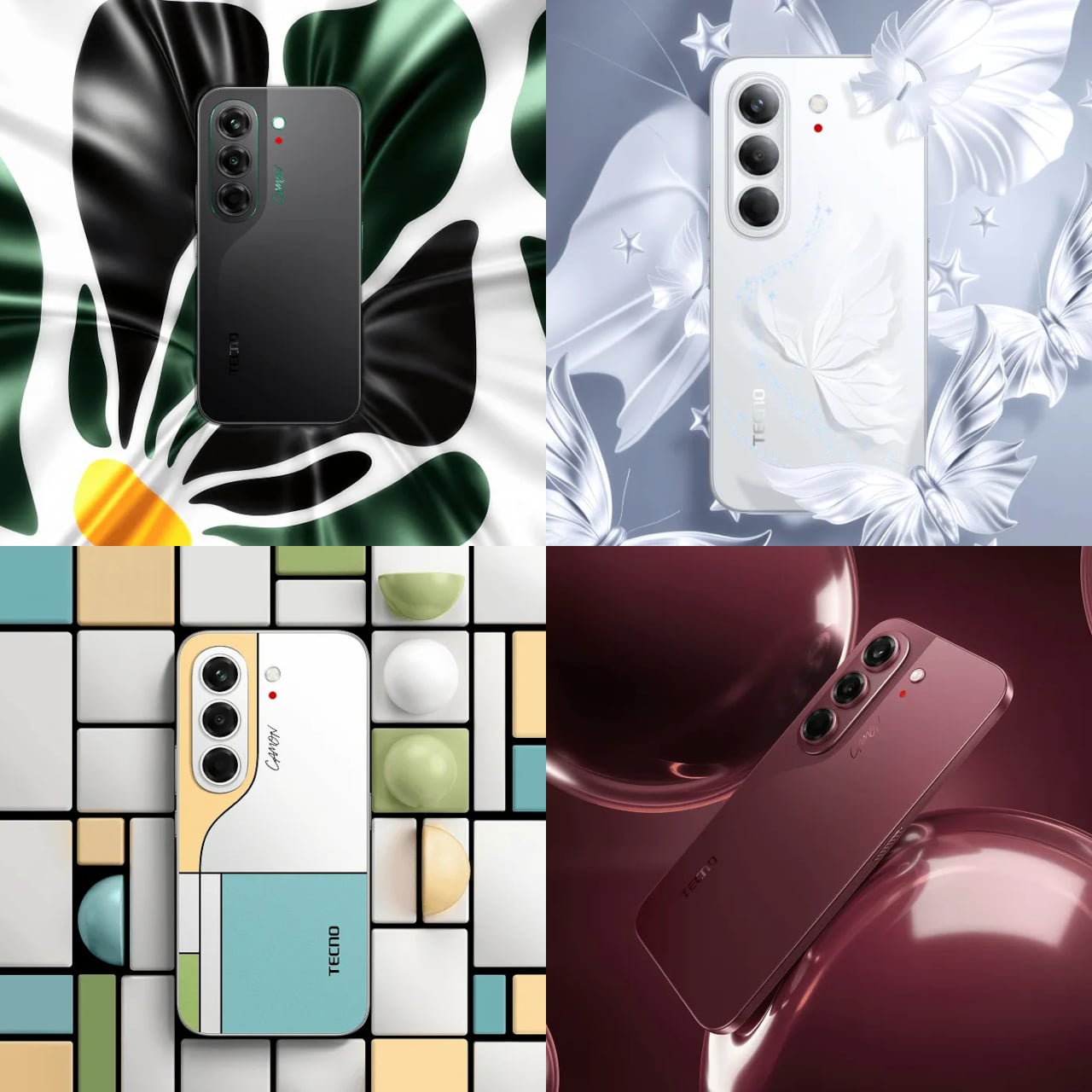
Color does the rest of the storytelling. Burgundy Red pairs fiberglass with a velvet matte finish for a warm, wine-toned grip, while Neo Mondrian hides its personality entirely, appearing plain white until ultraviolet light coaxes out a Piet Mondrian grid across the back. Matisse Black punches a fluorescent green accent through a black fiberglass shell, and Van Gogh Blue uses a gradient coating that makes Starry Night’s swirl look like it is actually rotating.

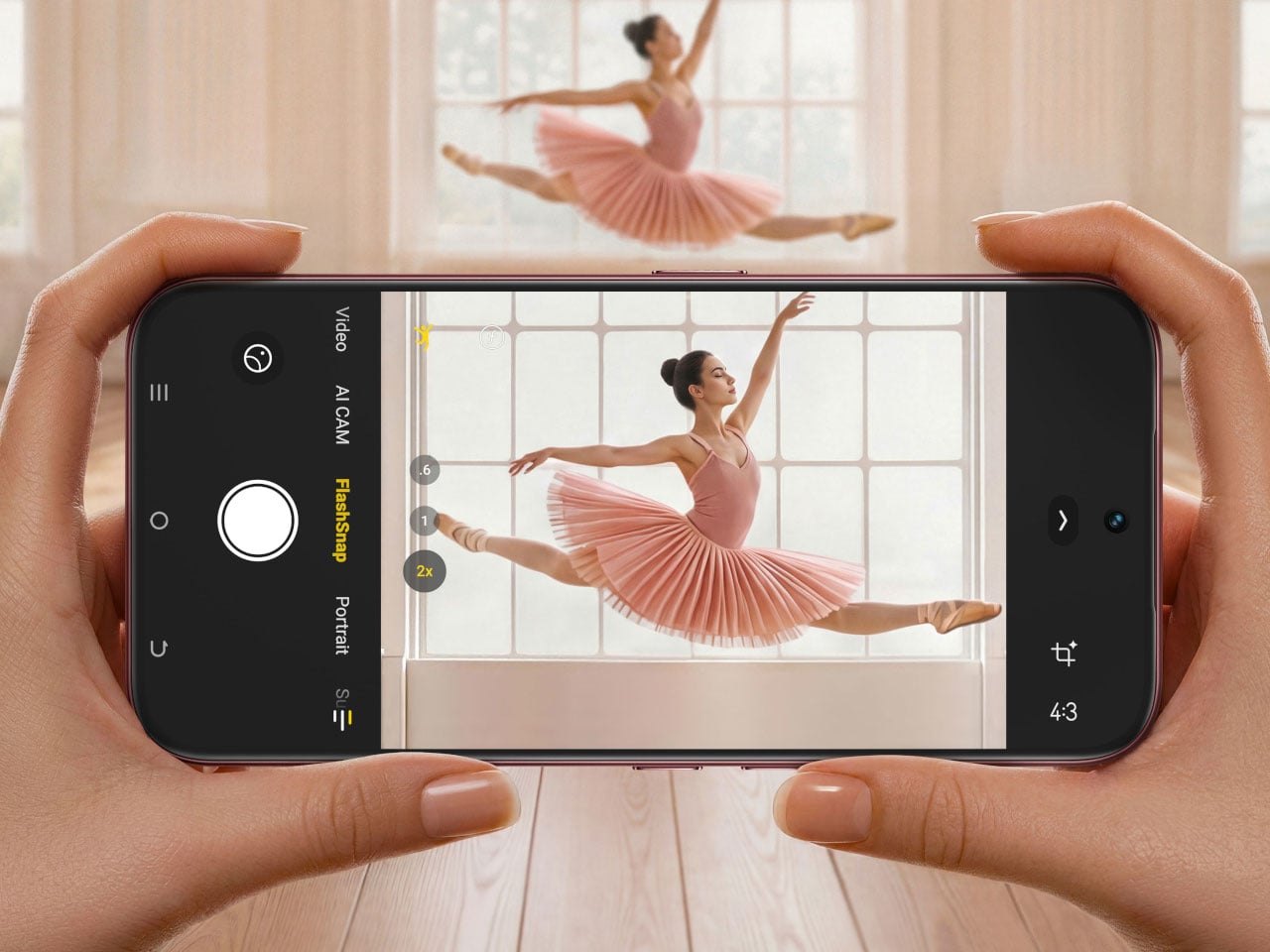
Photography gets the same attention to intent rather than raw numbers. A 50MP Sony LYTIA 700C sensor anchors the main camera, but the standout is Super-Zoom FlashSnap, which watches for a moment rather than waiting for someone to press the shutter. A dance leap, a soccer strike, or a dog mid-jump gets frozen automatically, with shutter speeds fast enough to catch motion that would blur on slower hardware.

TECNO also ships a small magnetic companion called the Mag Badge, snapping onto the back with its own battery and a 1.73-inch AMOLED display. It works as a photo badge, a remote shutter from up to 10 meters away, and a selfie preview screen, turning group photos or tripod shots into something that does not require sprinting back to check the frame.

Software leans practical rather than flashy. AI Snap Poster lets small merchants turn a quick product photo into a styled listing image, dropping items into a home or beach setting without a photo studio. AI LightMaster 2.0 cleans up shadows and glare after the fact, while AI Recording Notes turns lecture audio into structured notes synced to whiteboard photos, useful well beyond a classroom.

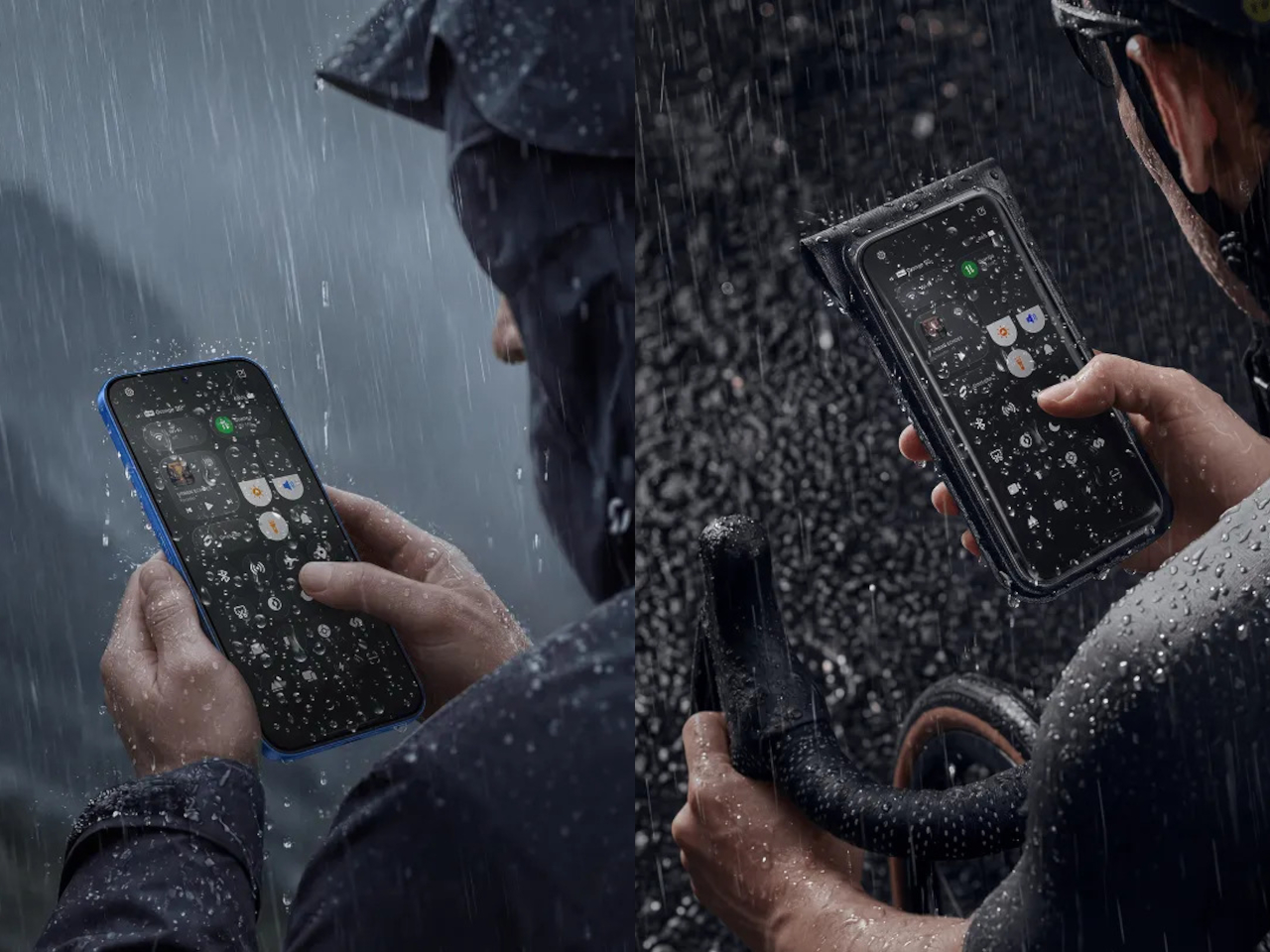
Underneath the art direction sits an IP69K-rated shell built to survive kitchen splashes, gym sweat, and actual rain, backed by touch recognition tuned for wet or oily fingers. A MediaTek Dimensity 7300e chip handles daily performance, paired with 5 years of security updates, a commitment that outlasts what most phones in this segment promise. Pricing and availability will roll out market by market in the coming months.

The post TECNO’s 6mm Phone Has 6,000mAh Inside and a Van Gogh Finish Outside first appeared on Yanko Design.
We Held The World’s Thinnest Portable SSD at IFA 2026: Hands-on With The Lexar Muse

Here is a fun little irony nobody asked for. The same AI boom that is making your laptop smarter is also making storage more expensive and harder to get, because every gigabyte of NAND that could go into your next SSD is currently being fought over by datacenters training the next big model. Micron basically said the quiet part out loud this year, killing off its own consumer brand Crucial to chase those fatter AI margins. Less choice for regular people, more racks for hyperscalers. Meanwhile the actual demands on your personal storage have only gone up, phones shooting in formats that used to require a cinema camera, and pockets that were never designed to also carry a second device.
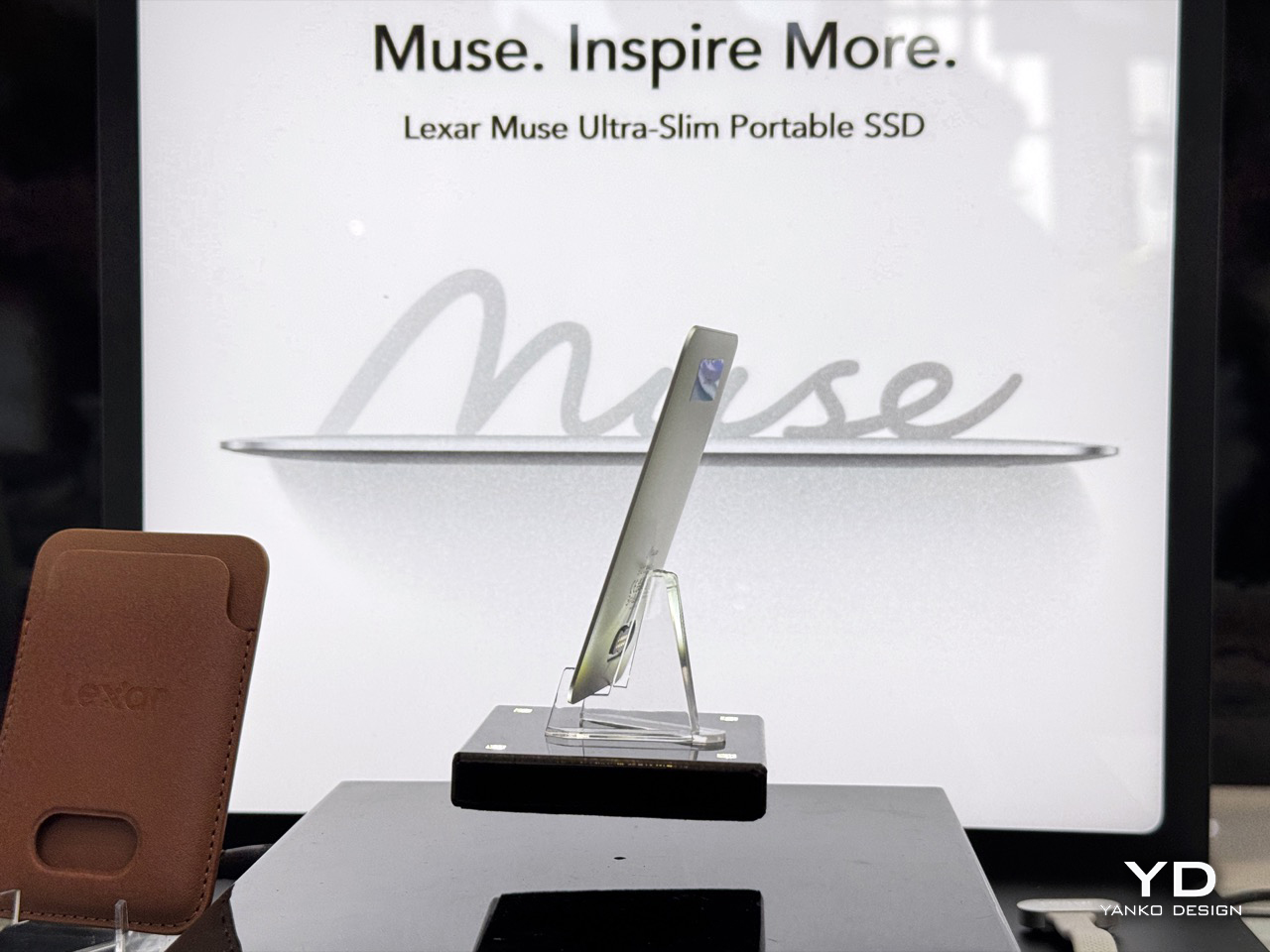
Which makes it almost funny that Lexar, the brand Micron itself walked away from years ago, just used its 30th birthday to launch the kind of drive that actually solves that pocket problem. You have probably had a Lexar SD card in a camera bag at some point, or bought one of its USB drives without thinking twice about who made it. At IFA 2026 in Berlin, the company unveiled the Muse Ultra-Slim Portable SSD, a magnetic, credit-card-thin drive built for phone shooters drowning in 4K footage or even people within the Apple ecosystem who don’t want to splurge on cloud storage. Turns out the company nobody expected much from just built the phone accessory a lot of us did not know we needed.

Designer: Lexar

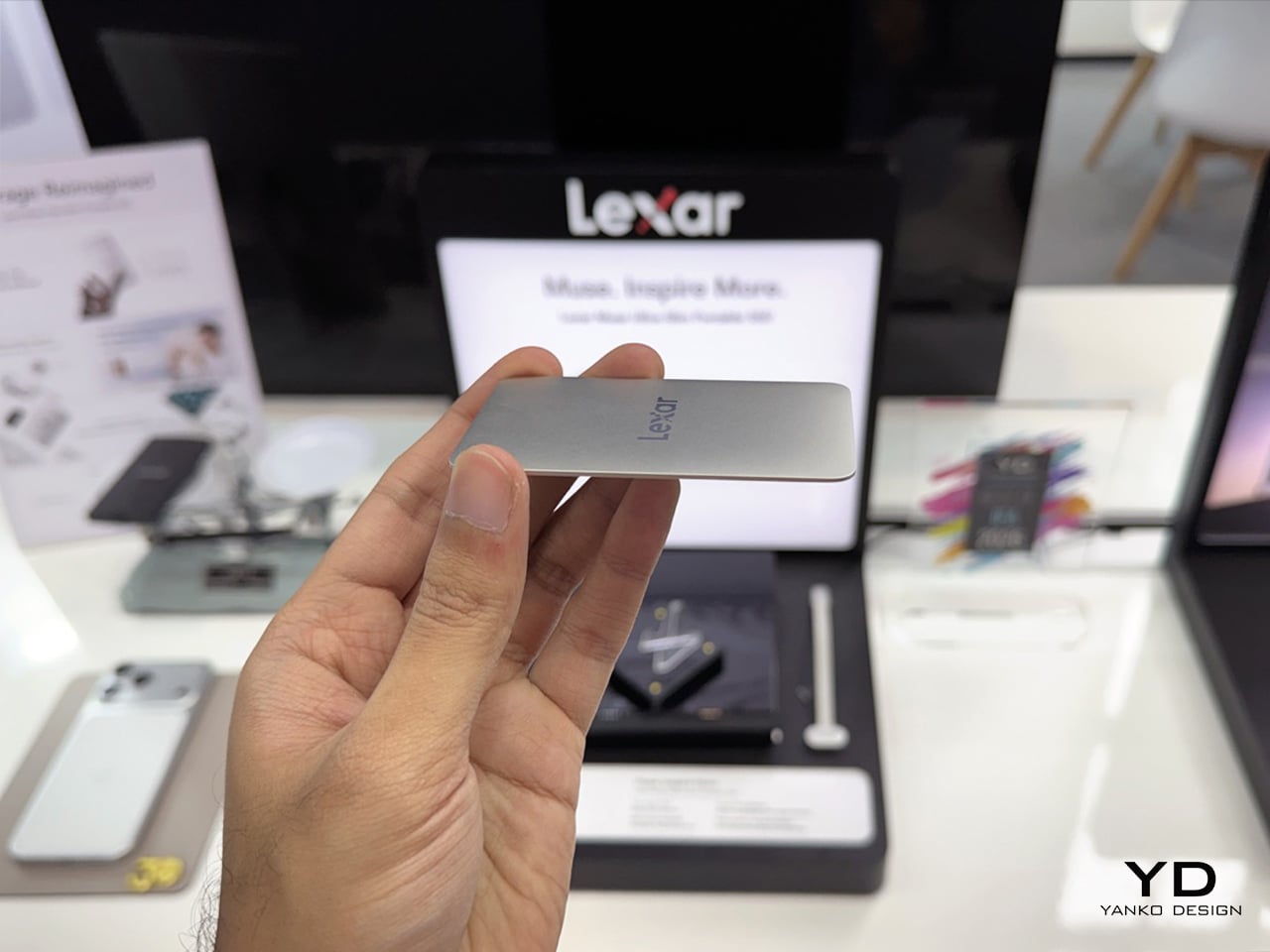
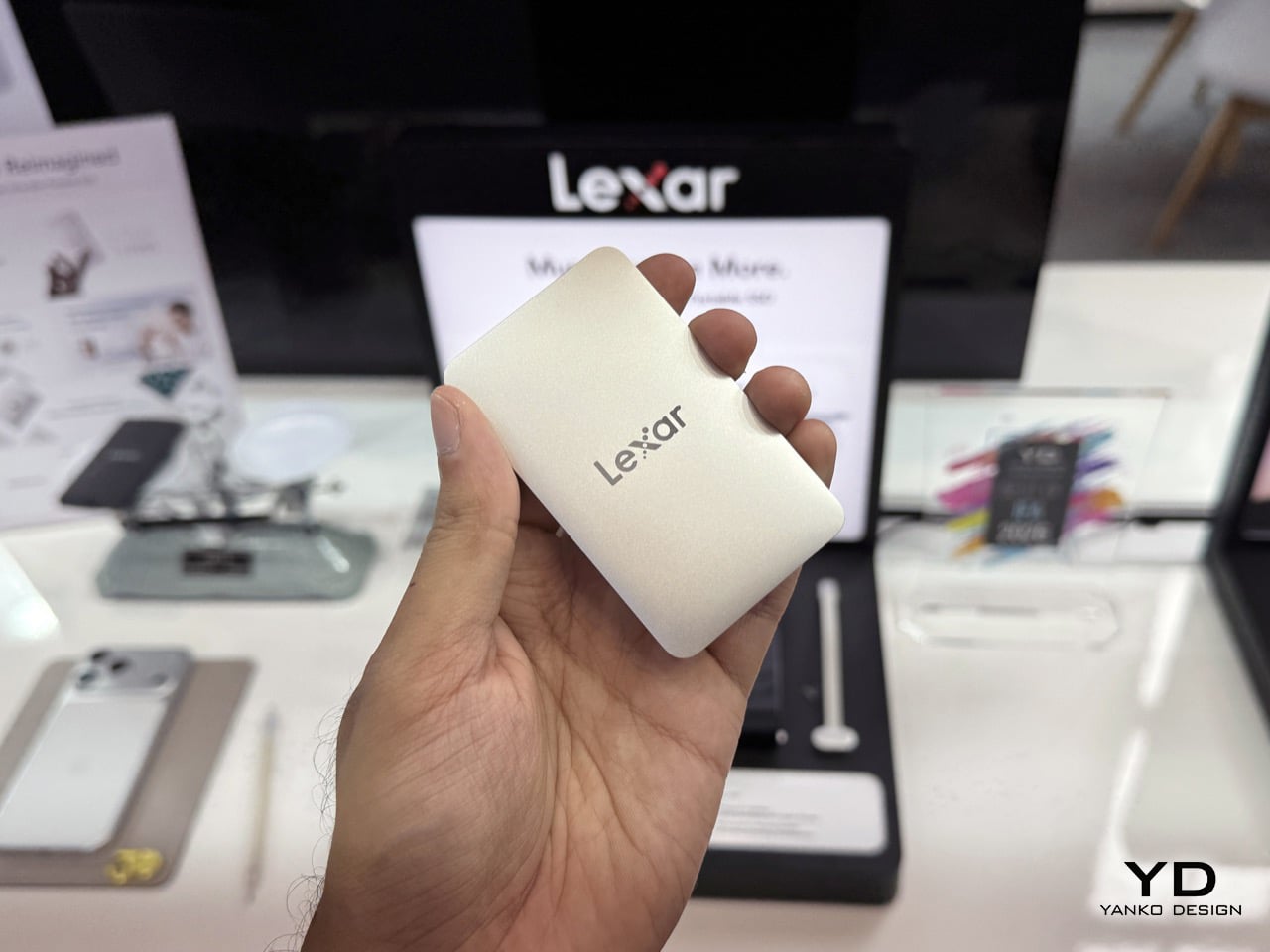
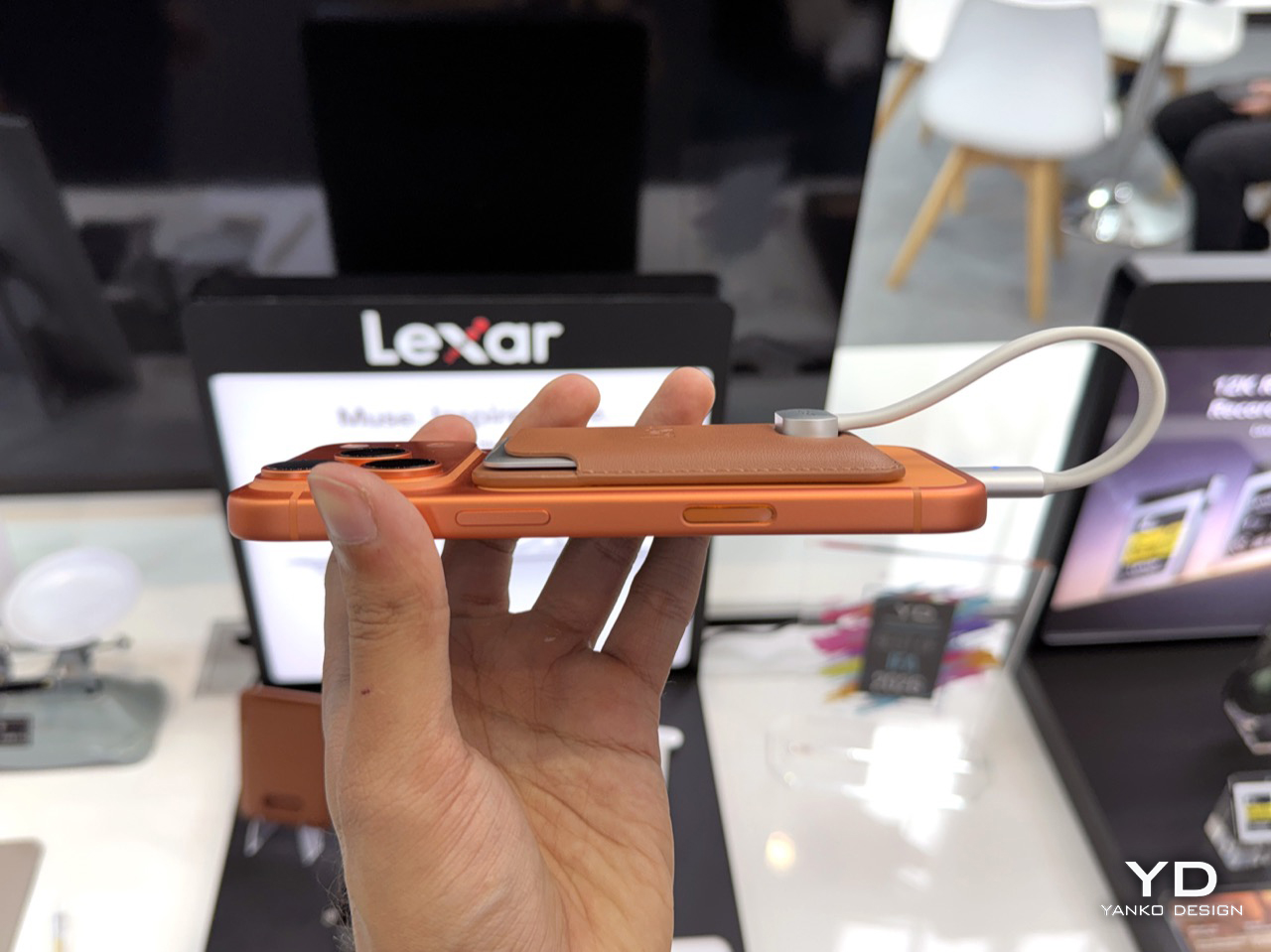
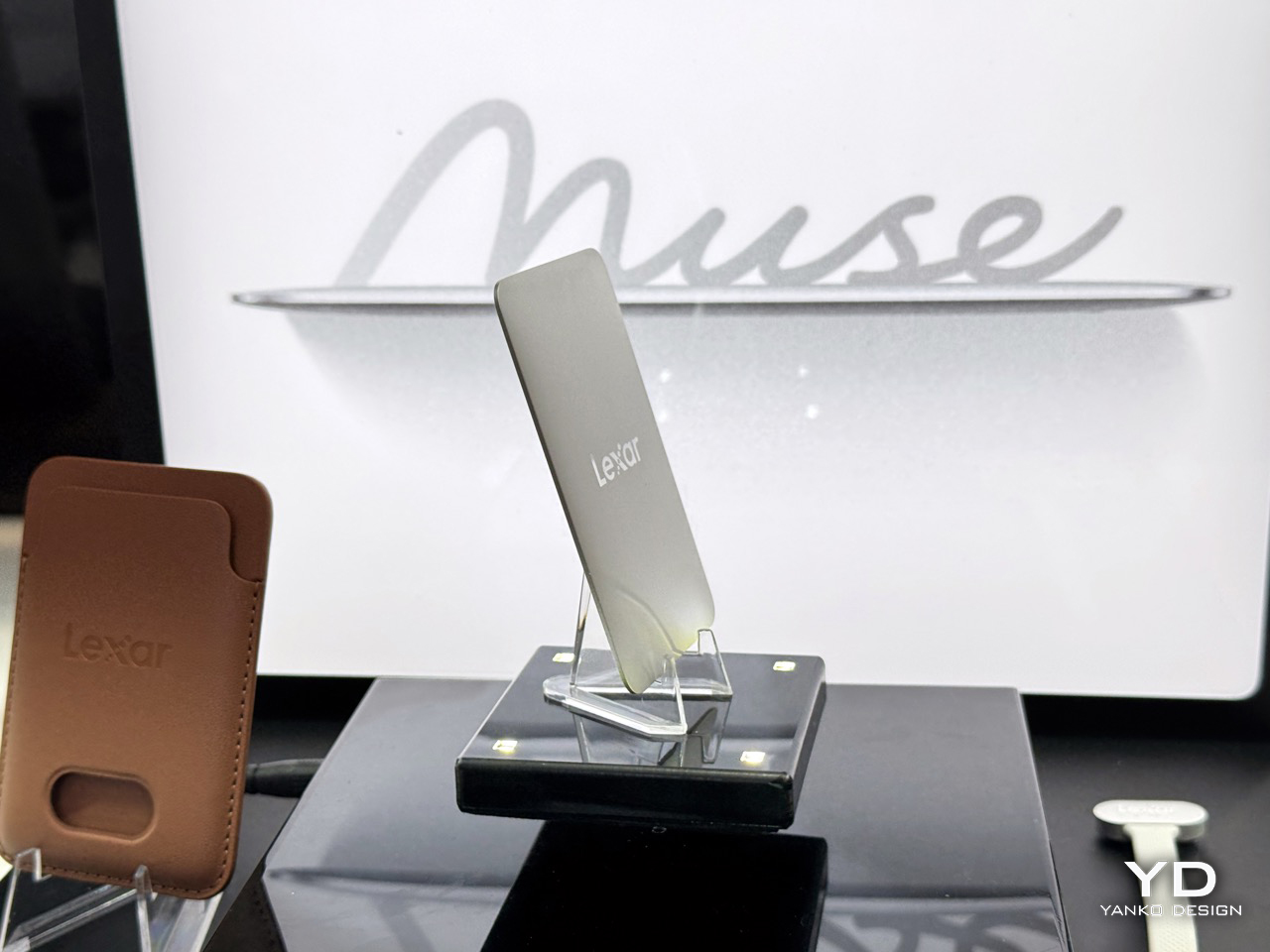
The first thing you notice about the Muse is how little of it there actually is. Lexar carved the enclosure from a single block of metal, no seams, no visible joints, tapering from roughly 3.8mm at its thickest edge down to a single millimeter at the rim, numbers the company is calling the thinnest and lightest portable SSD on the market right now. Hold it flat and it genuinely reads more like a guitar pick than a storage device. Getting there required shrinking everything else too, a custom ultra-thin circuit board and tightly stacked NAND dies packed into a shell with almost no wasted volume. This is not a drive that got thin by cutting corners on capacity or speed either, which is usually where these design exercises fall apart.

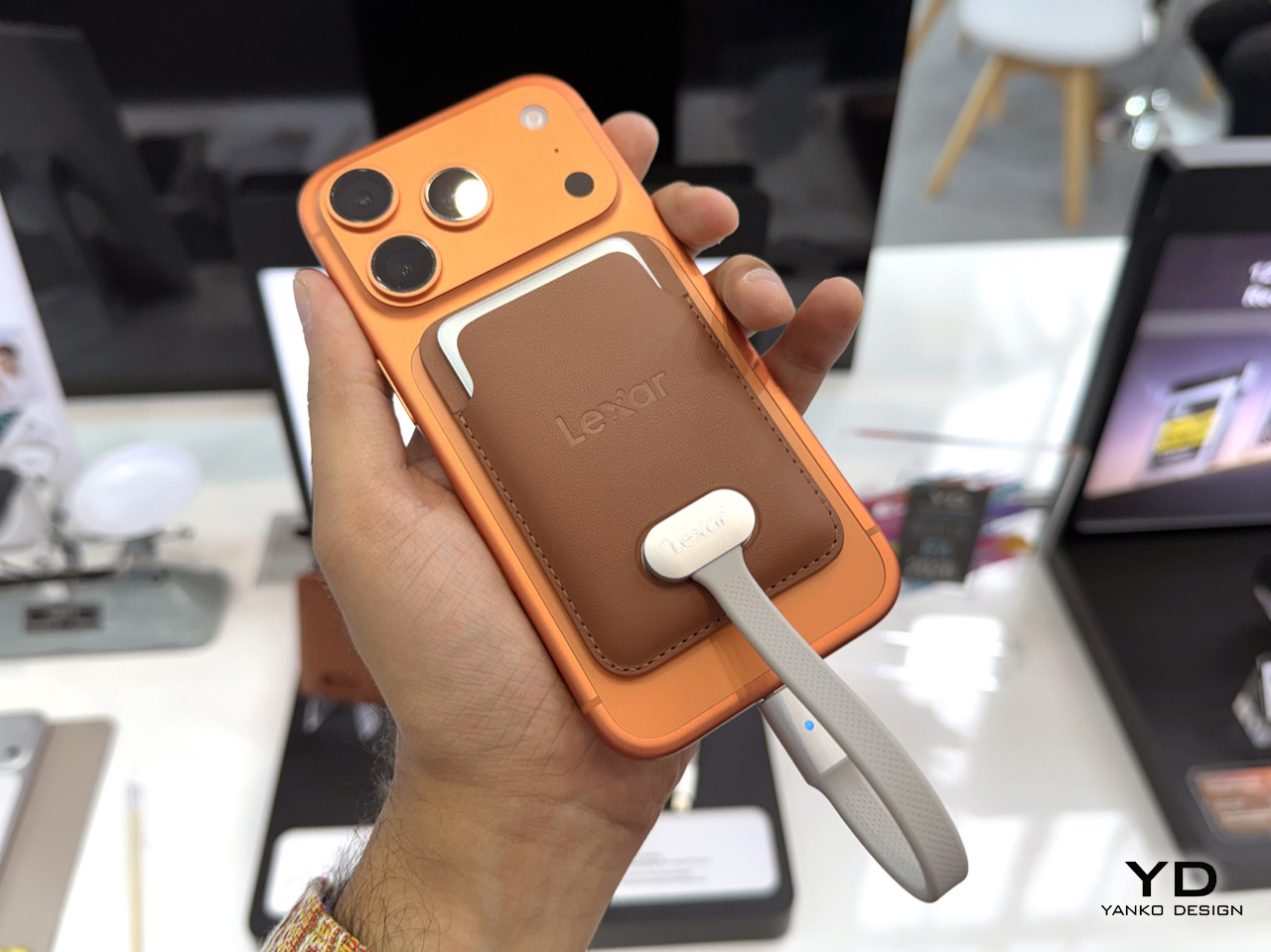
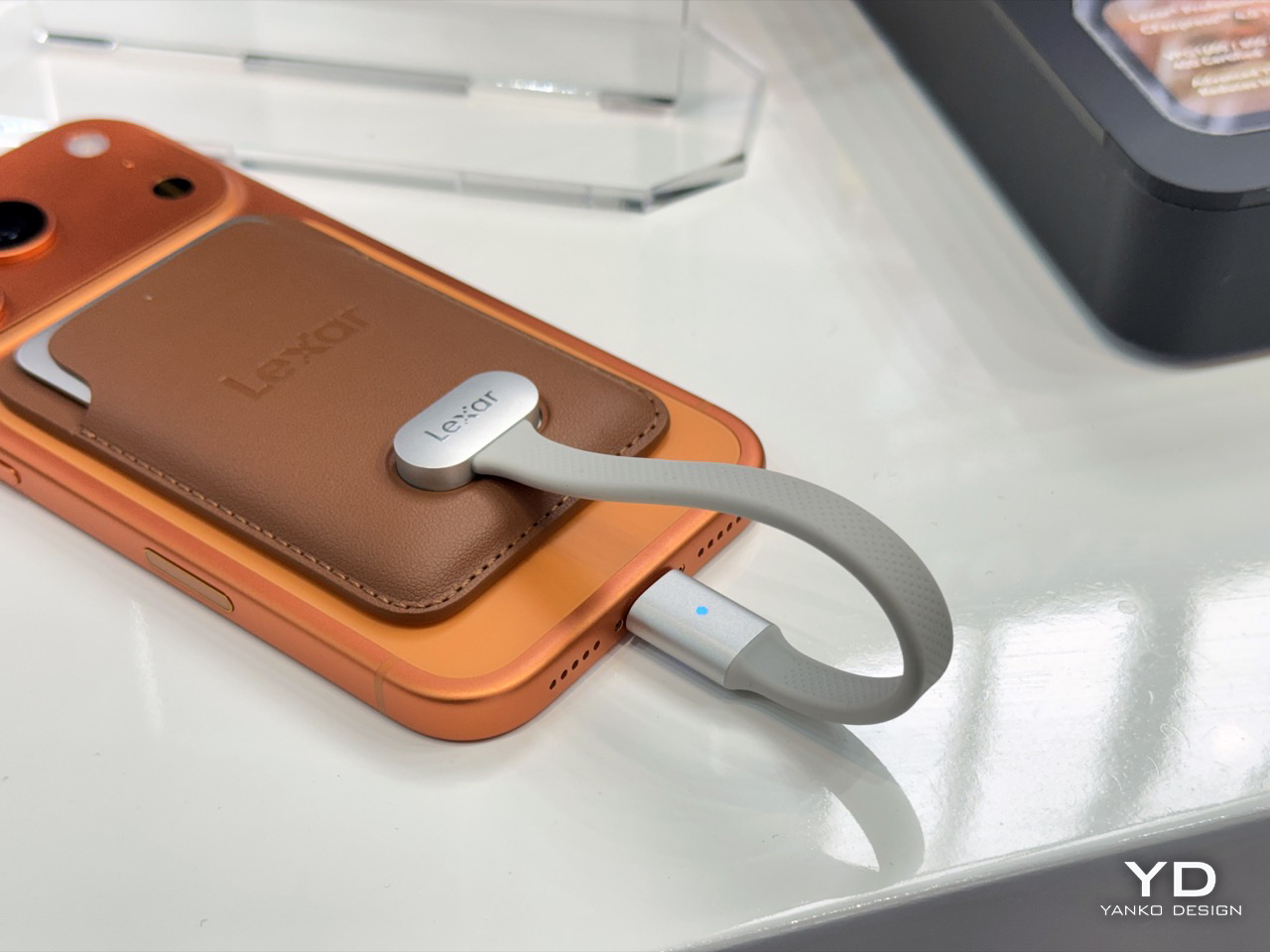
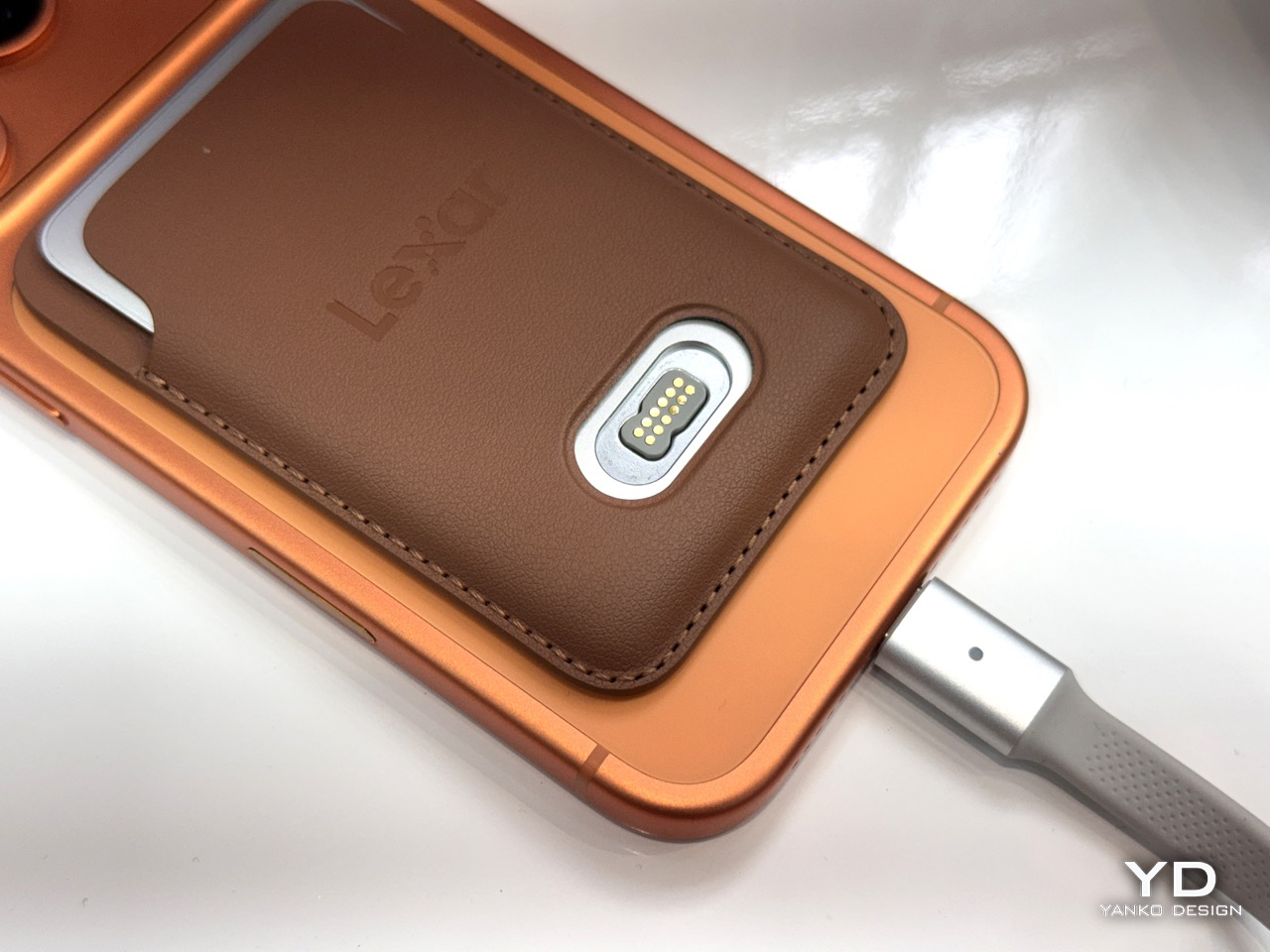
The magnetic attachment system is pretty impressive, because adding a USB-C port on the Muse would mean complicating the build and making things thicker. Lexar built a proprietary PogoPin connector for the data link, paired with a bundled SnapLink Magnetic Cable, and backed both the connector and the carry sleeve with N52-grade neodymium magnets, serious holding power for something this small. Slot the drive into its sleeve, snap the whole assembly onto a MagSafe iPhone, and your rig sits flush against the back of the phone rather than tugging at a port from underneath. Anyone who has fumbled a cable connection mid-handheld shot will understand immediately why that matters more than the spec sheet suggests.

Lexar quotes 1,050MB/s read and 1,000MB/s write, comfortably clearing Apple’s 440MB/s threshold for unlocking 4K120 ProRes recording on external storage, with plenty of room left over for whatever comes next. That puts the Muse in direct conversation with the SanDisk Creator Phone SSD, the drive that has largely owned this category since it launched at CES 2025 with a rugged silicone shell and an IP65 rating. Lexar decided to bet instead on thinness and weight as the whole pitch, creating something close to a MacBook Air moment for portable SSDs, where the headline spec is simply how little of the product you notice. It arrives in 512GB and 1TB capacities starting Q4 2026, with pricing yet to be announced.

The Muse was not the only thing on Lexar’s IFA floor. The company also showed off its AI Storage Core concepts, next-gen Gen5 SSD and Storage Stick hardware built around a custom Longsys controller and a caching layer called Luma Bridge, aimed at feeding local AI models faster while easing pressure on scarce DRAM. Alongside that sat a new Dashcam USB Flash Drive Series, automotive-grade sticks rated for extreme cabin temperatures and built to survive the kind of nonstop loop recording that kills cheaper drives inside a year. Neither is available to buy yet, but both point at where Lexar’s next thirty years are headed, well past the camera bag.

The post We Held The World’s Thinnest Portable SSD at IFA 2026: Hands-on With The Lexar Muse first appeared on Yanko Design.