Morphy Richards Expands Home Lineup at IFA 2026
Morphy Richards expands beyond kitchen appliances with the D1 Ultra dehumidifier, ductless S1 air conditioners, and new beverage products.
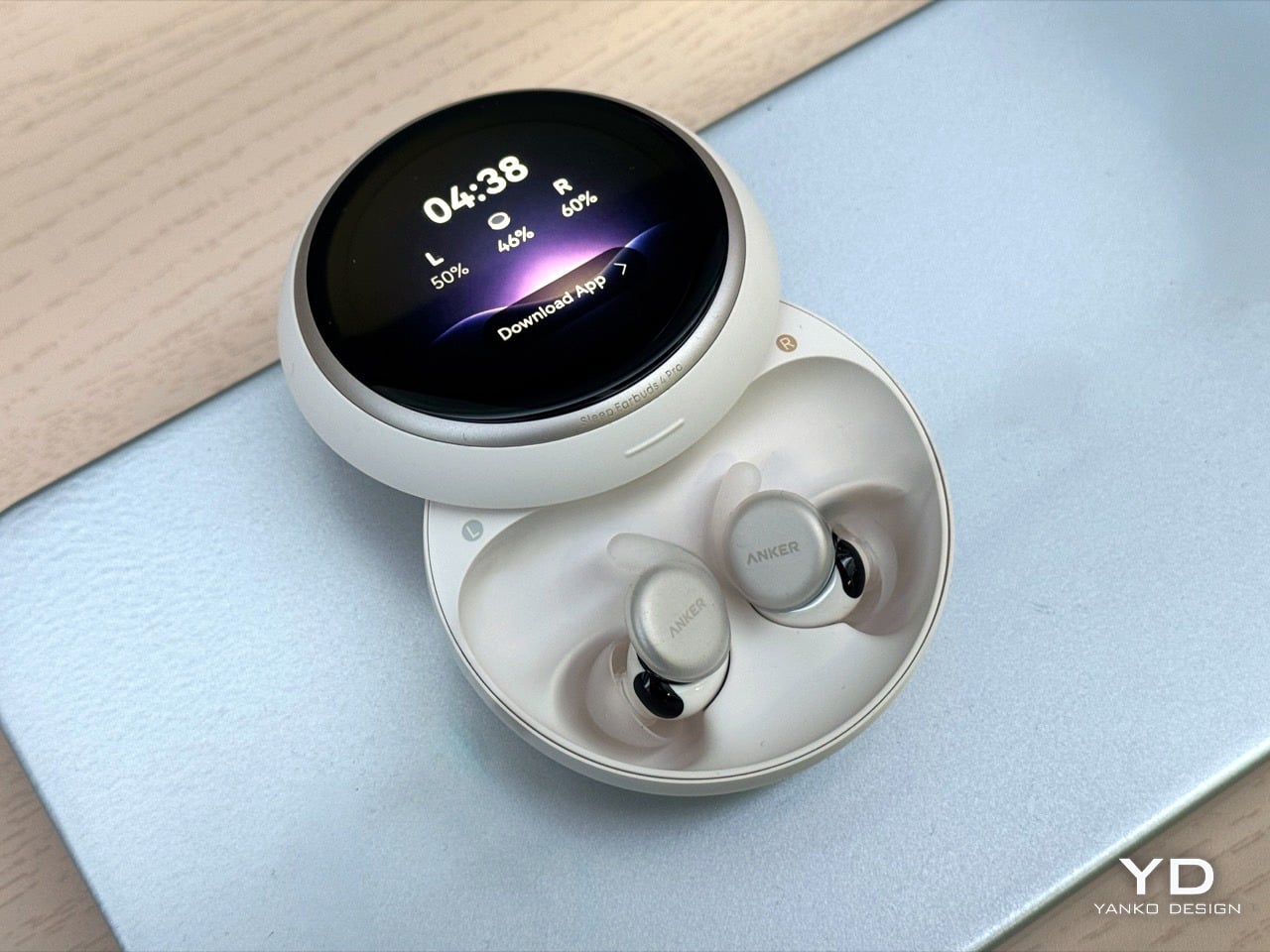
Anker’s new Soundcore Sleep Earbuds 4 Pro stuff a heart rate sensor into your ear canal and bolt a round AMOLED touchscreen onto the charging case, so bedtime happens without your phone anywhere near the pillow. Each bud is a flat three gram disc with a soft silicone fin that wedges into the ridge of your ear, sitting 20 percent flatter against your head than the old Sleep A30 so side sleepers can actually lie on them. A microphone in the case listens for your partner’s snoring and reshapes the masking audio as the snore shifts pitch. It arrives in November for $349.99.
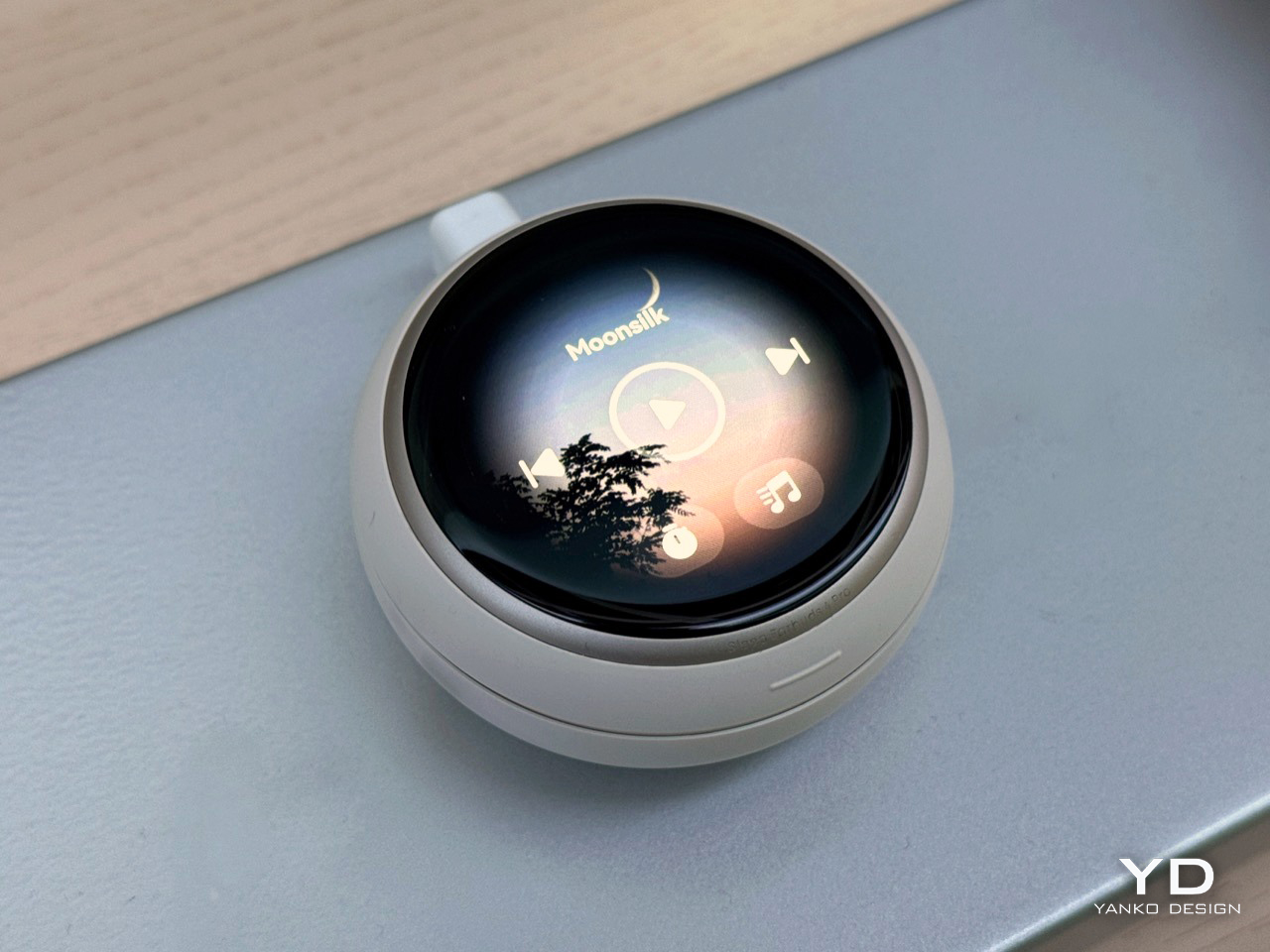
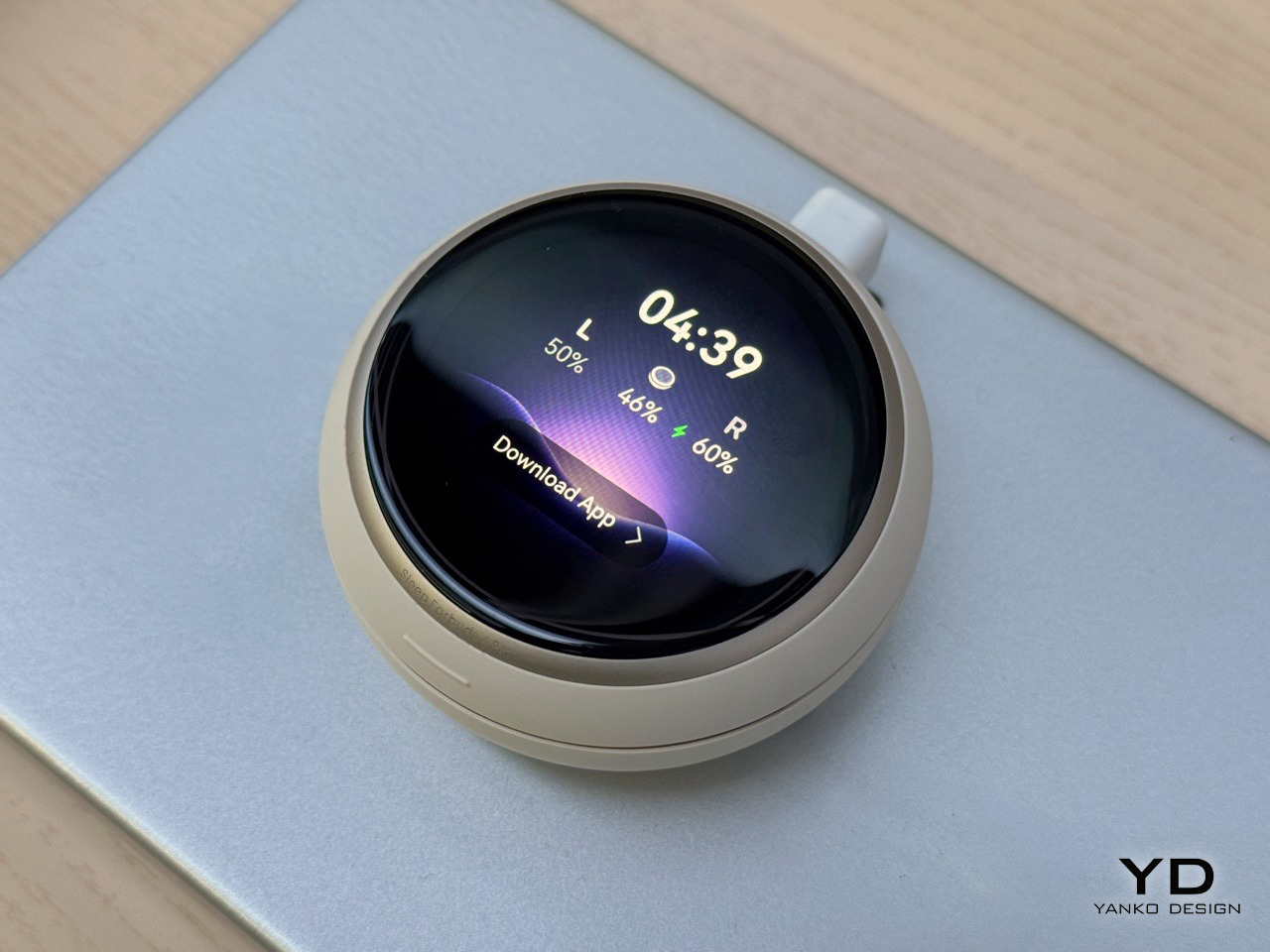
Handling them at IFA, the thing that struck me was the hierarchy. The case is the brain here, with its own screen, chip and local storage, while the buds have quietly demoted themselves to sensors you happen to wear. Pop the lid and a circular display shows the time and battery for each side. Tap through for playback controls, a brightness slider, an alarm toggle. Your phone, the single worst object to hold at midnight, has been designed out of the room entirely.
Designer: Anker
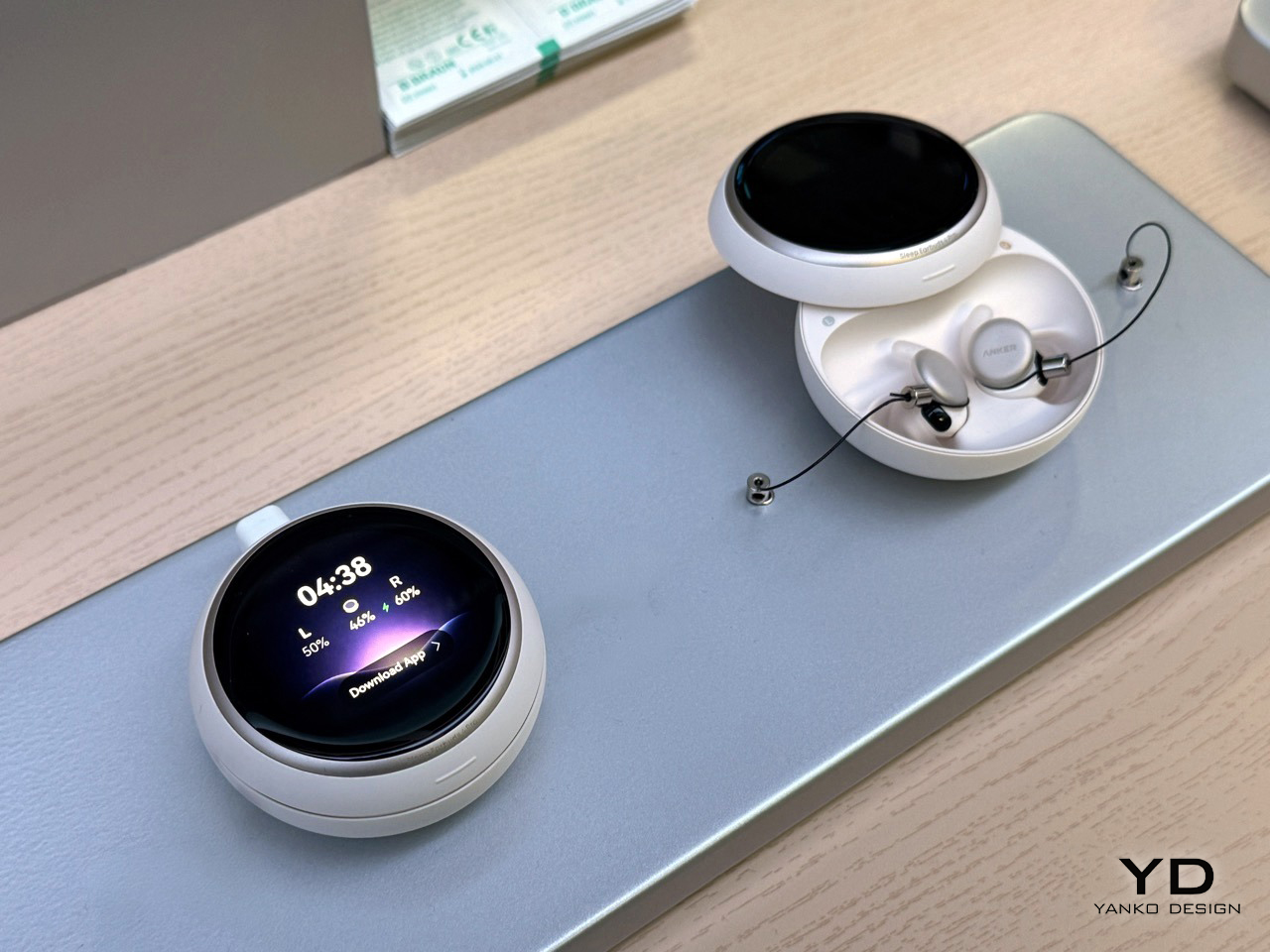
Sleep earbuds run on a brief that works backward from every other earbud, since the real question is what happens when a skull presses the thing into a pillow for eight hours. Anker’s bud is a flat disc with no stem and no nozzle, and the silicone fin locks into the ear ridge instead of pushing inward. I picked one up at the booth and it felt closer to a hearing aid component than a music earbud, the correct lineage for something meant to disappear under the weight of your head. The case carries the real design budget: a round AMOLED display, its own chip, and local audio storage, so soundscapes play offline.
Inside the ear, a 100 Hz optical PPG sensor tracks heart rate and HRV through the night, feeding BioSync, a system that checks relaxation roughly every five minutes and nudges the tempo, soundscape and binaural beats accordingly. Anker calls this an experimental lab feature, not a medical grade one, honest framing for a claim this ambitious. Snore masking runs on a separate loop: the case mic picks up snoring nearby and reshapes the masking sound as pitch and rhythm change, rather than looping one fixed track all night. Anker recommends keeping the case within two meters of the sleeping culprit with the mic aimed their way, the most savage guidance to come out of IFA this year.
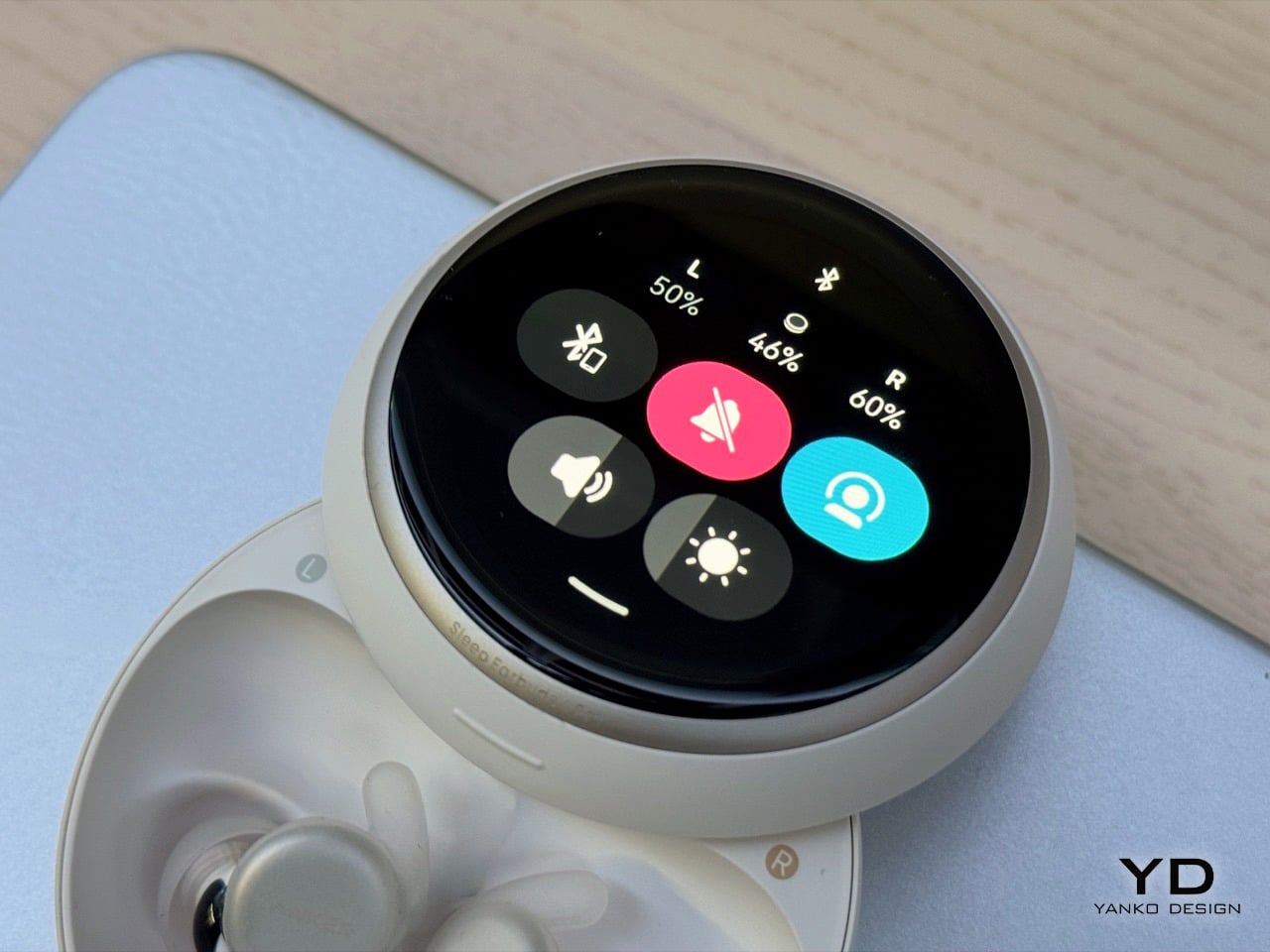
The cheaper $229.99 Sleep Earbuds 4 skips the PPG sensor and the touchscreen entirely, yet it can recognize a baby crying or a fire alarm through its case mic and duck the masking audio into transparency. The Pro, despite carrying all the sensor hardware, does not do this. It reads as two products, two timelines, with no merge forced before launch. Paying $120 more buys a heart rate graph and a screen, not the feature that wakes you when something is actually wrong. That tradeoff is worth Anker addressing before the Pro ships in November.
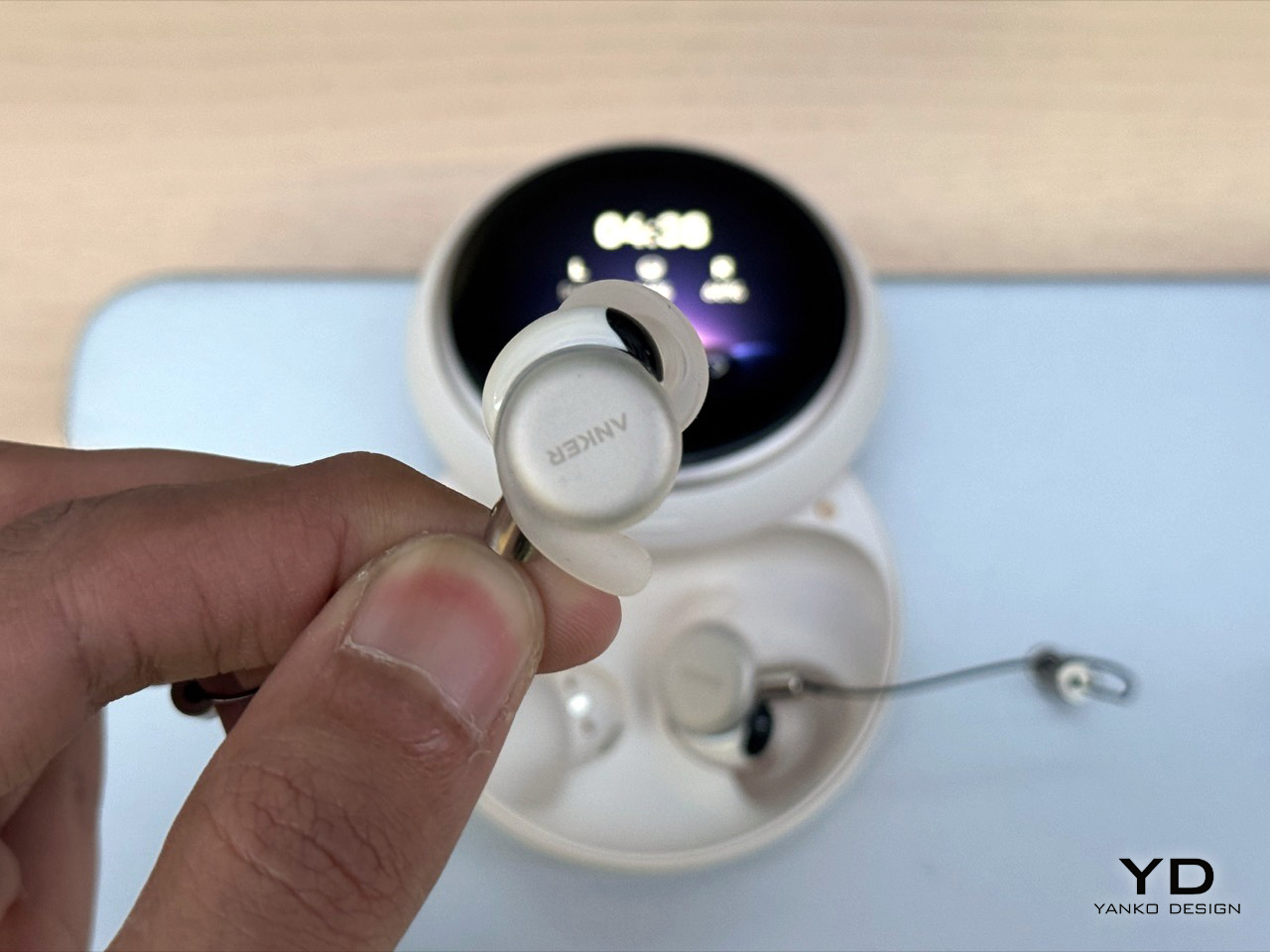
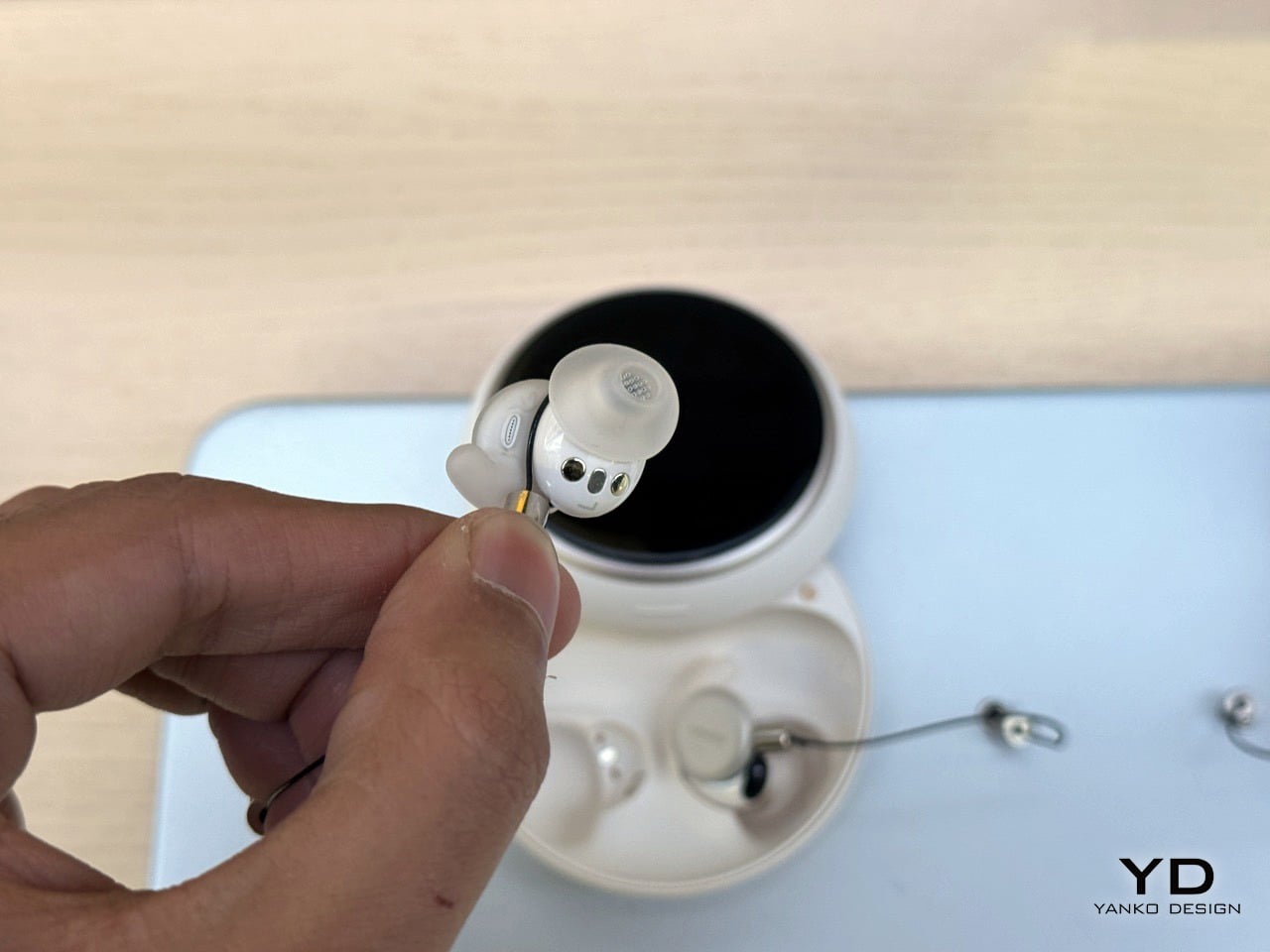
Anker took the accessory and made it the computer, while the wearable itself got smaller and closer to invisible, the reverse of how most earbud lines evolve. Cases usually shrink as buds gain features. Here the buds vanish and the case gets a face. Whether BioSync improves anyone’s sleep needs real nights and real data, not a show floor. But a screen you check instead of a phone you scroll is the right instinct for something built to sit beside your head while you’re unconscious.
The post Anker’s Sleep Earbuds 4 Pro Silence Snoring in Real Time With Adaptive Masking: Hands-on at IFA 2026 first appeared on Yanko Design.
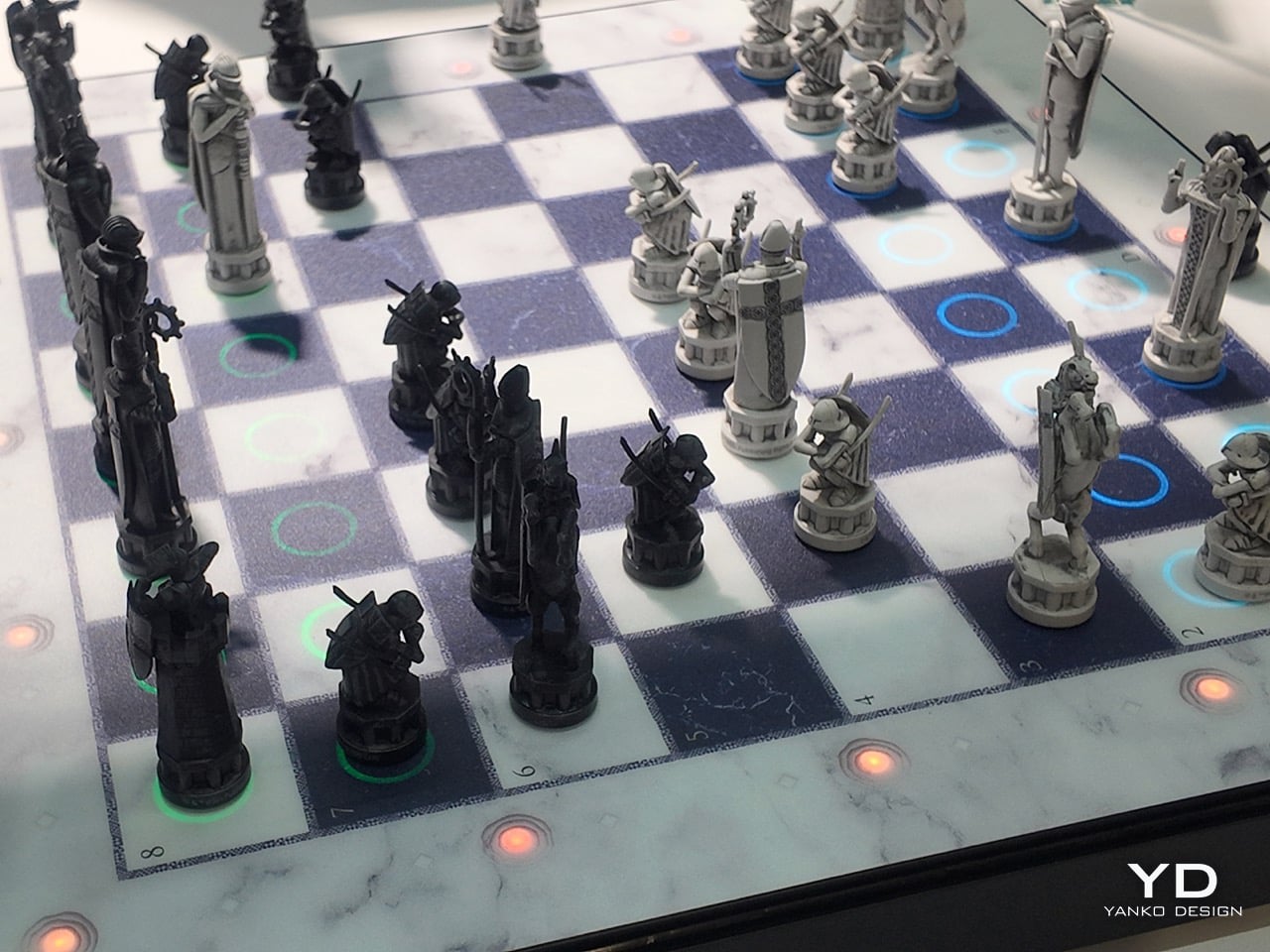
IFA in 2026 was wall to wall AI. Every fridge had an assistant, every vacuum had a personality, every booth rep used the word “intelligent” until it stopped meaning anything. I walked past maybe forty products that promised to think for me before I found the one thing on the entire floor that made me feel something, and it did not involve a single chatbot. It was a chess board, sculpted like a ruin, moving its own pieces across a glowing marble surface with nobody touching them. That board is GoChess Wizard Alive, Particula’s officially licensed Harry Potter set built with Warner Bros. for the film’s 25th anniversary, and it out-charmed every piece of “smart” hardware in the building.
Here is my petty little theory about consumer tech right now. We have gotten so good at building things that are useful that we forgot how to build things that are delightful, and those are not the same skill. GoChess solves that by hiding four robots under the surface, letting 32 stone pieces glide into position with zero visible mechanism, all while looking like something dug out of the Chamber itself. It ships as a limited run of 1,000 numbered boards at $999, the first batch sold out in 48 hours, and the second presale opens September 28. I did not review this like a gadget. I reviewed it the way you judge a magic trick, and it passed clean.
Designers: Particula x Warner Bros.
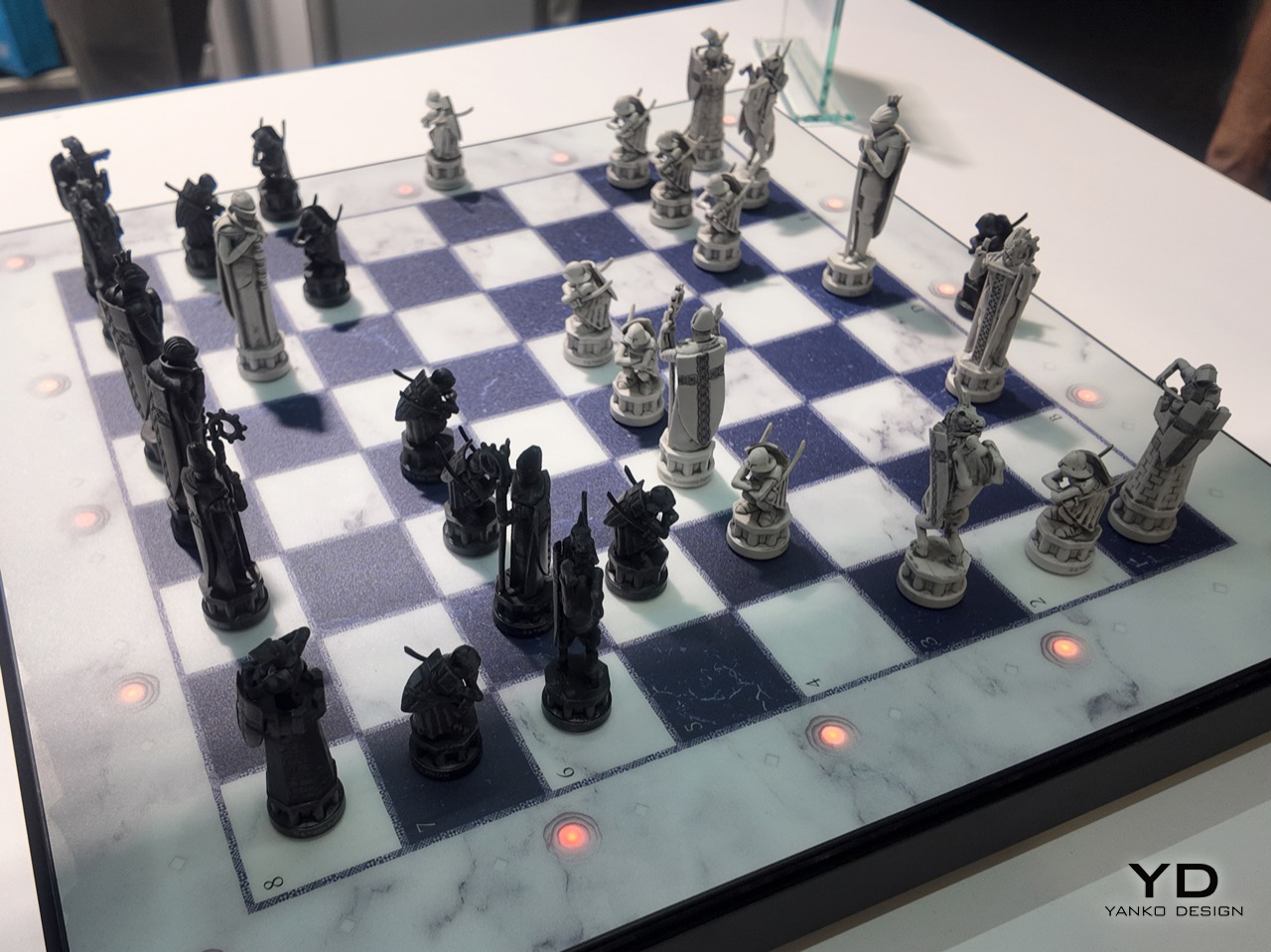
I zoomed in using a macro mode on my camera and the details were staggering. The pawns kneel with crossbows braced against a shoulder, heads bowed like they are waiting on orders. Knights rear up on horseback behind kite shields carved with a rosette pattern lifted straight from the film’s chamber sequence. The king stands wrapped in a crowned great helm, both hands folded over a sword pommel like a tomb effigy that got bored of lying down. This is medieval funerary sculpture cosplaying as a chess set, and it works because Particula resisted the easy move of just slapping Harry Potter branding on a generic Staunton set.
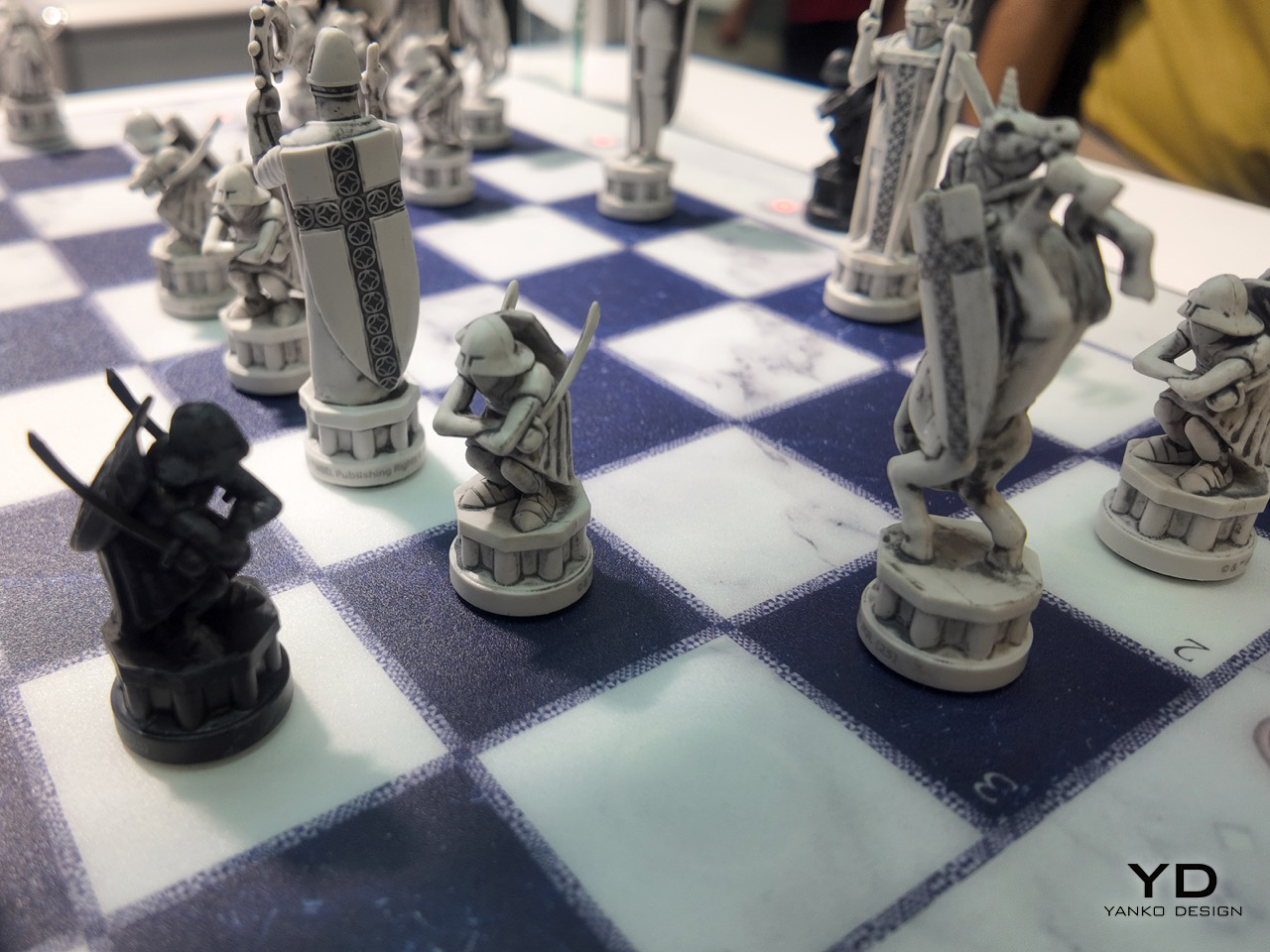

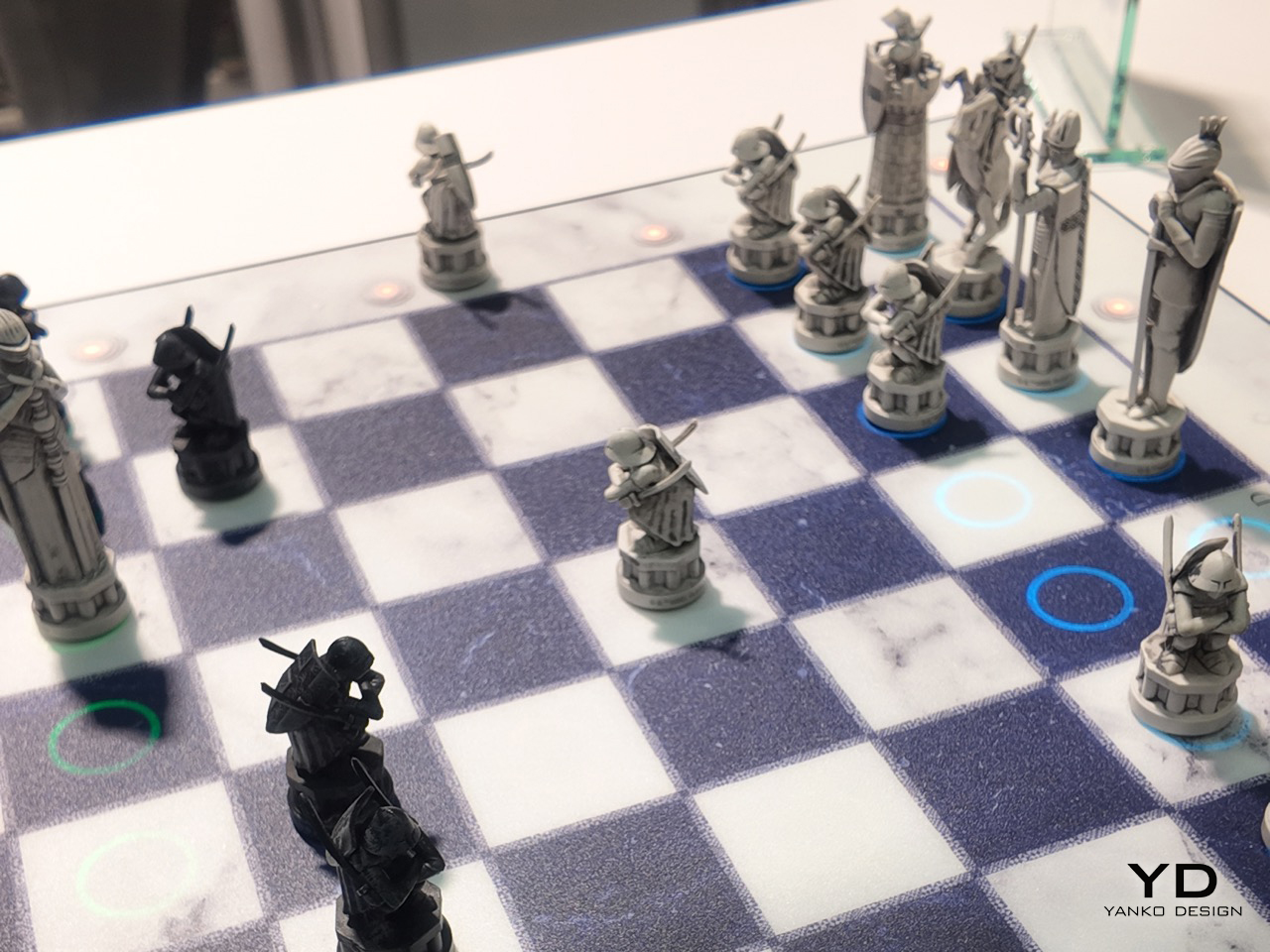
The playing surface is printed to look like veined marble rather than the flat two-tone grid every smart board defaults to, and the LED coaching rings glow up through that stone texture instead of sitting on top of it like a UI overlay. Blue rings show your legal moves, green flags the strongest option, and the whole system stays invisible until you actually need it. That restraint in the interface design is what sells the illusion. A cheaper execution would have turned this into a light-up toy. Particula built something that looks like a prop first and a gadget second.
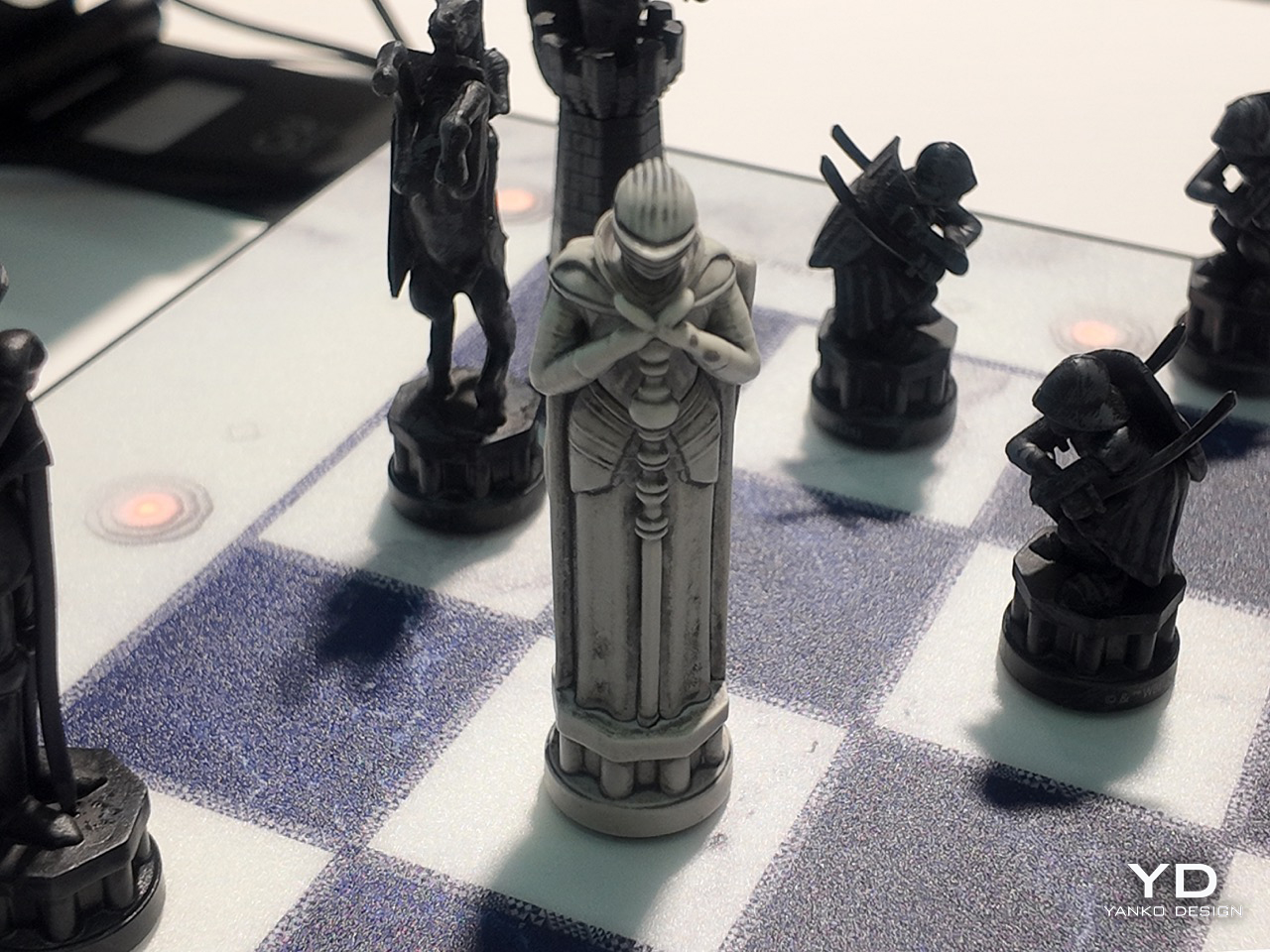

The robotics trace back to Particula’s original 2023 GoChess, which used a patent-pending system of wheeled micro-robots under a translucent surface to shuttle magnetic pieces around. Wizard Alive runs the four-robot configuration from that lineup, the faster of the two setups, which is why a full board reset happens in seconds instead of a slow crawl. You can also just talk to it. Call out “knight to h3” the way Ron does in the film and the piece answers you, gliding into position with no hand involved. Standing at that booth, watching strangers do this to each other and burst out laughing, was the most fun I had at the entire show.


I walked into that convention center braced for smart fridges and AI-branded nonsense, and I walked out having relived being nine years old for about twenty minutes straight. That is the real achievement here, not the robotics or the licensing deal, but the fact that a chess set out-delighted an entire hall of companies trying much harder to impress me. If you want in, the second presale batch opens September 28 for 48 hours before it vanishes again, same as the first one did. Move fast. The pieces certainly will.
The post This Self-Moving Harry Potter Chessboard Stole The Show At IFA 2026 From Every AI Gadget first appeared on Yanko Design.

Xiaomi has chosen an interesting moment to return to foldables. The company has not released a book-style foldable since the Mix Fold 4, which launched in 2024, and now it is back with the Xiaomi 18 Fold just as compact foldables are starting to get more attention. Samsung has also added a foldable in this compact format to its lineup, and Apple is widely expected to unveil its first foldable iPhone at its September 9 event with a similar form factor in mind.
That puts the Xiaomi 18 Fold in an interesting spot. It is not just Xiaomi coming back to foldables after a break. It is also arriving just as this smaller book-style format looks like it could become the next big thing.
Designer: Xiaomi

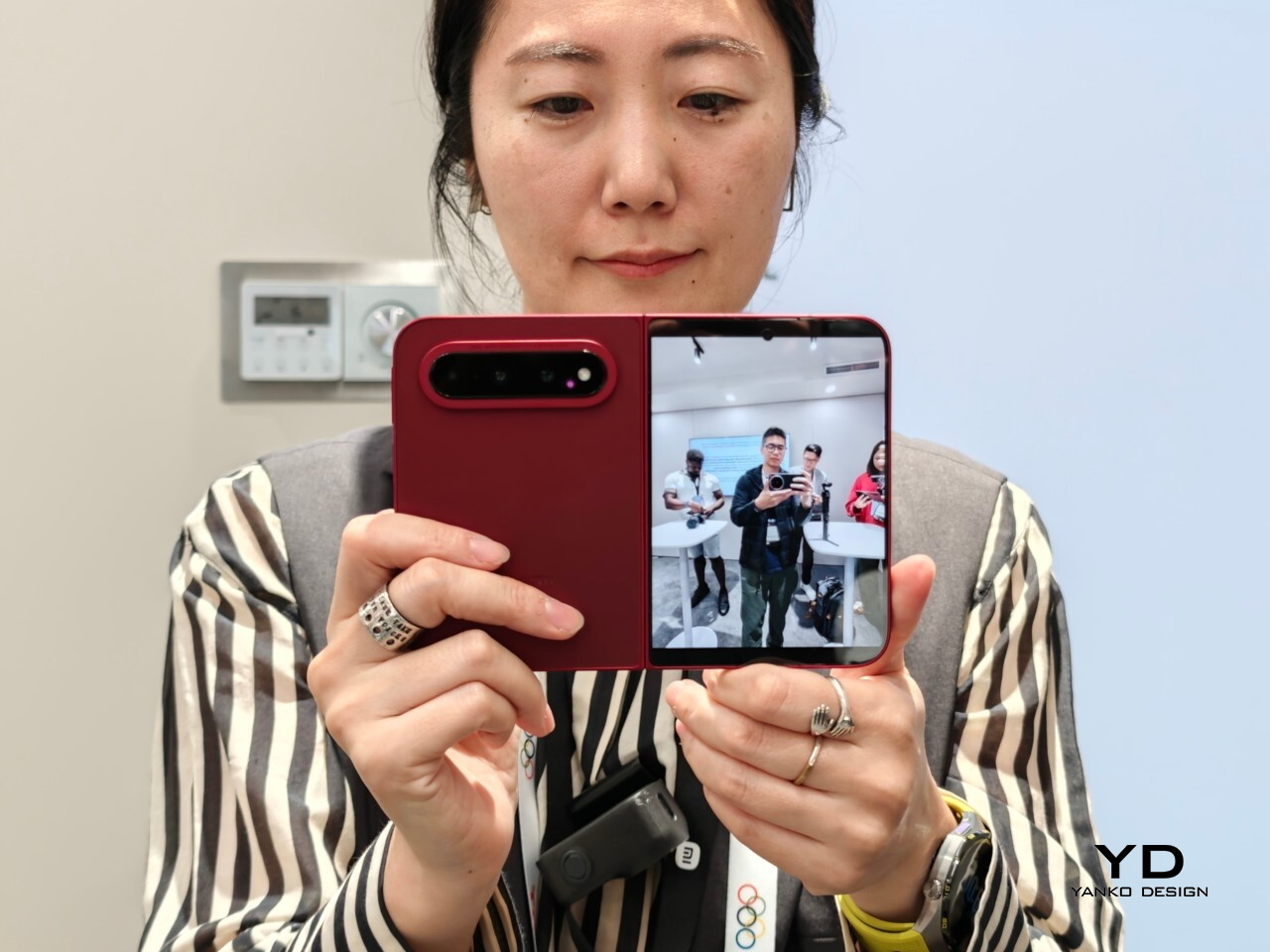
Xiaomi is positioning the 18 Fold as its first mid-size flagship foldable. It weighs 7.73 ounces (219g), measures 0.42 inches thick when folded (10.68mm), and opens out to just 0.20 inches thick (5.02mm), with a folded footprint of 4.64 x 3.29 inches (117.8 x 83.6mm). In person, it feels thin, though not unusually thin by the standards of today’s premium foldables. More importantly, it feels expensive in a good way. The matte texture on the back and frame gives it a softer, understated finish, while the rounded corners and flat frame help the phone look clean and modern.
The unit I handled was the deep red version, and it is a bold color in person. It stands out more than the usual black or silver foldable palette without feeling too loud. It also happens to echo the deep red finish rumored for Apple’s first foldable, which makes the comparison hard to miss. The 18 Fold comes in Black, White, Red, and a Ceramic Version.
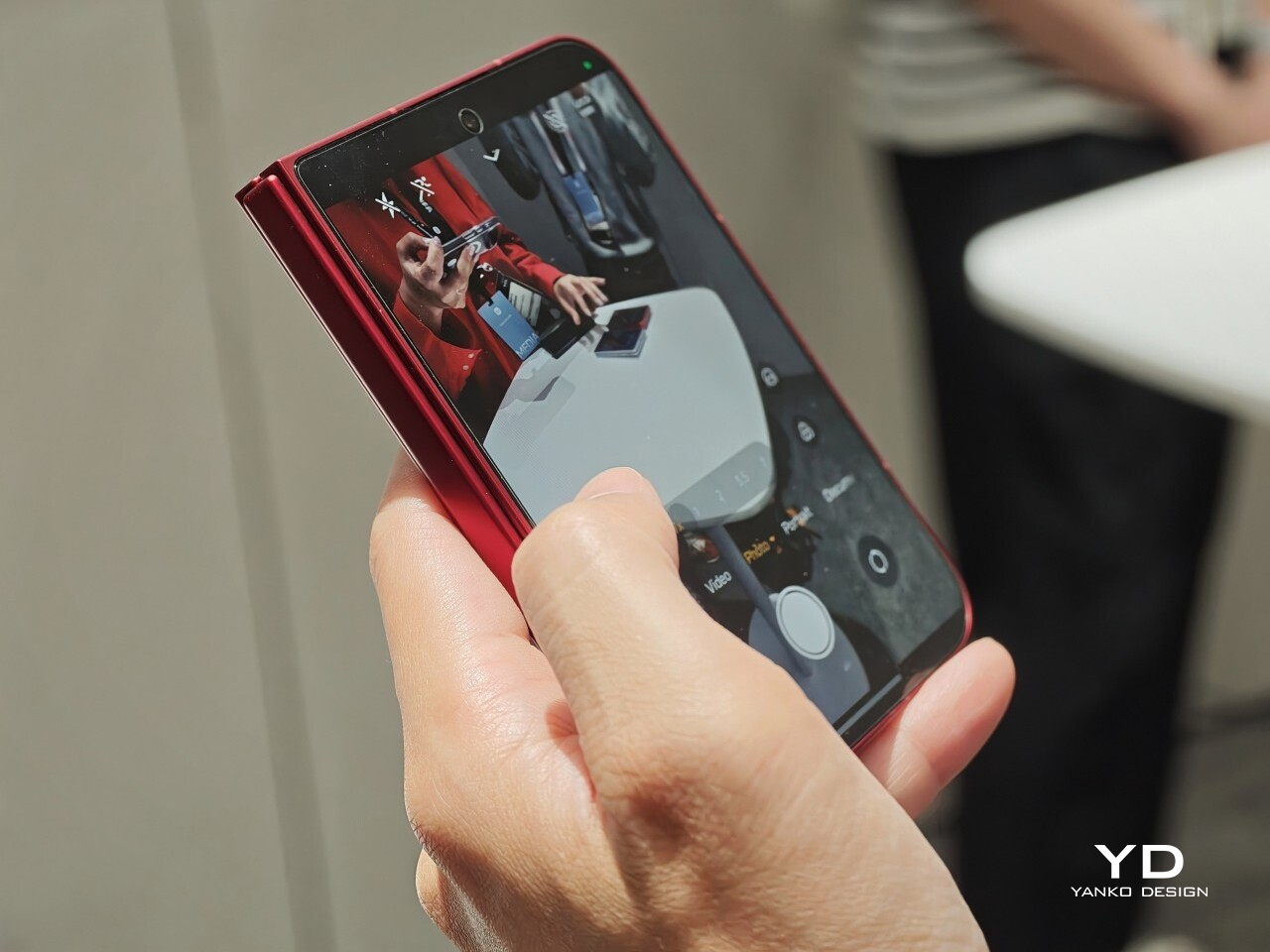
In practice, though, this is still a two-handed phone whether it is folded or unfolded. Even closed, the body is compact in one sense but still broad enough that I did not think of it as something built for easy one-handed use. That is not really a criticism. It just comes with the territory.
The outer display is a 5.38-inch panel, while the inside opens up to a 7.58-inch main screen. Xiaomi says both displays share the same aspect ratio, which is meant to make the transition from one to the other feel more natural. I could not fully judge how well that works in daily use from a short demo, but one benefit stood out right away. Video felt more immersive than on squarer foldables because there was less black bar space above and below the image.
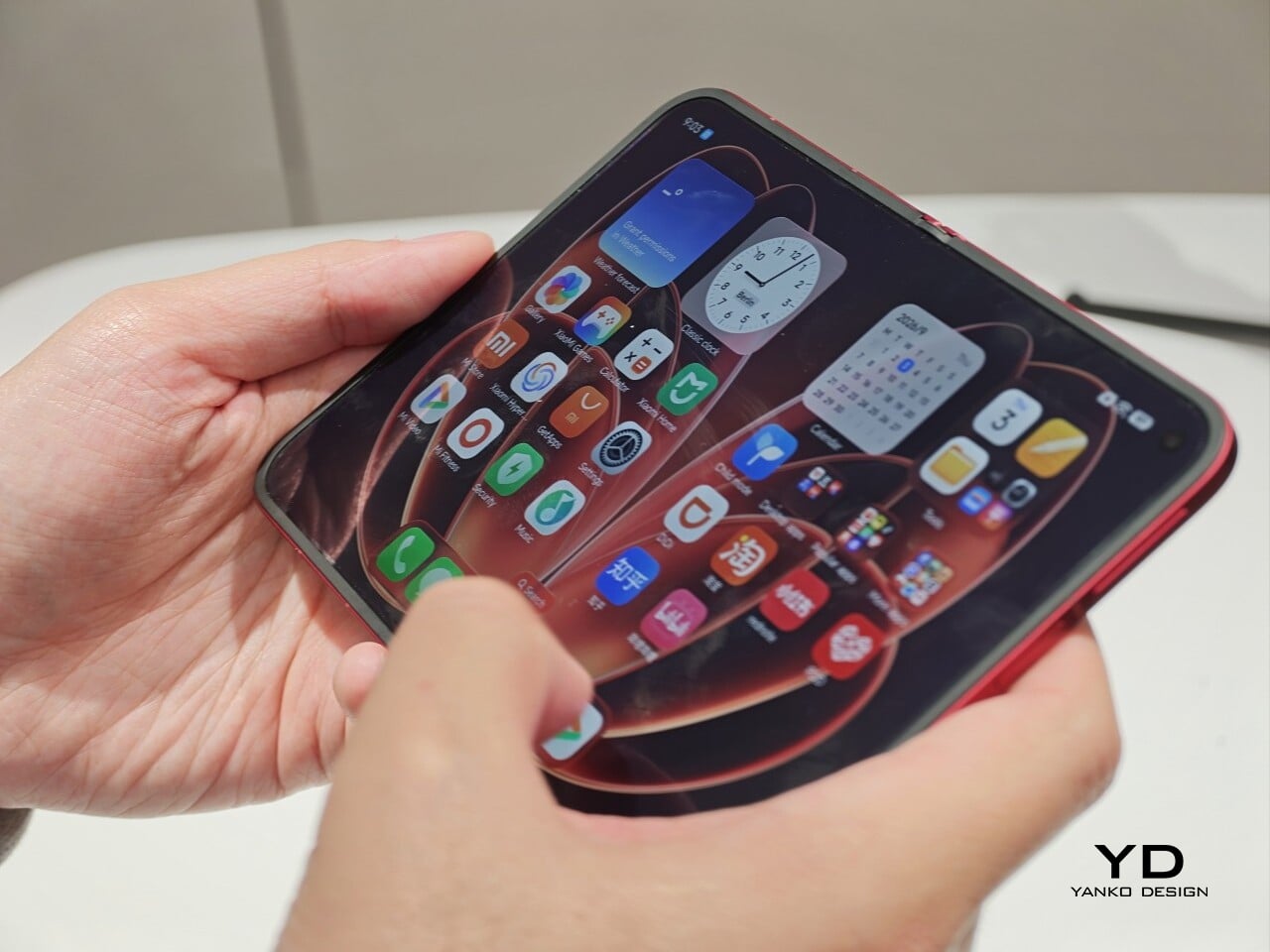
The software also looked well suited to the shape. Animations felt smooth in my brief demo, and I did see split-screen and floating window support in action. The unfolded UI felt more like a small tablet than a stretched phone, which is what you want on a device like this. Xiaomi has also placed one speaker on the top edge and another on the bottom edge on the opposite side, which should help give the phone a more balanced stereo effect when it is open.
The hinge left a good first impression too. I cannot really say whether it felt especially firm or especially smooth, because my time with the device was limited, but it did feel sturdy. The crease was handled well too. Looking straight at the display, I only really noticed it from certain angles rather than all the time. More importantly, I could barely feel it when running a finger across the center, which was better than I expected.

Left: Xiaomi 18 Fold, Right: Galaxy Z Fold 8
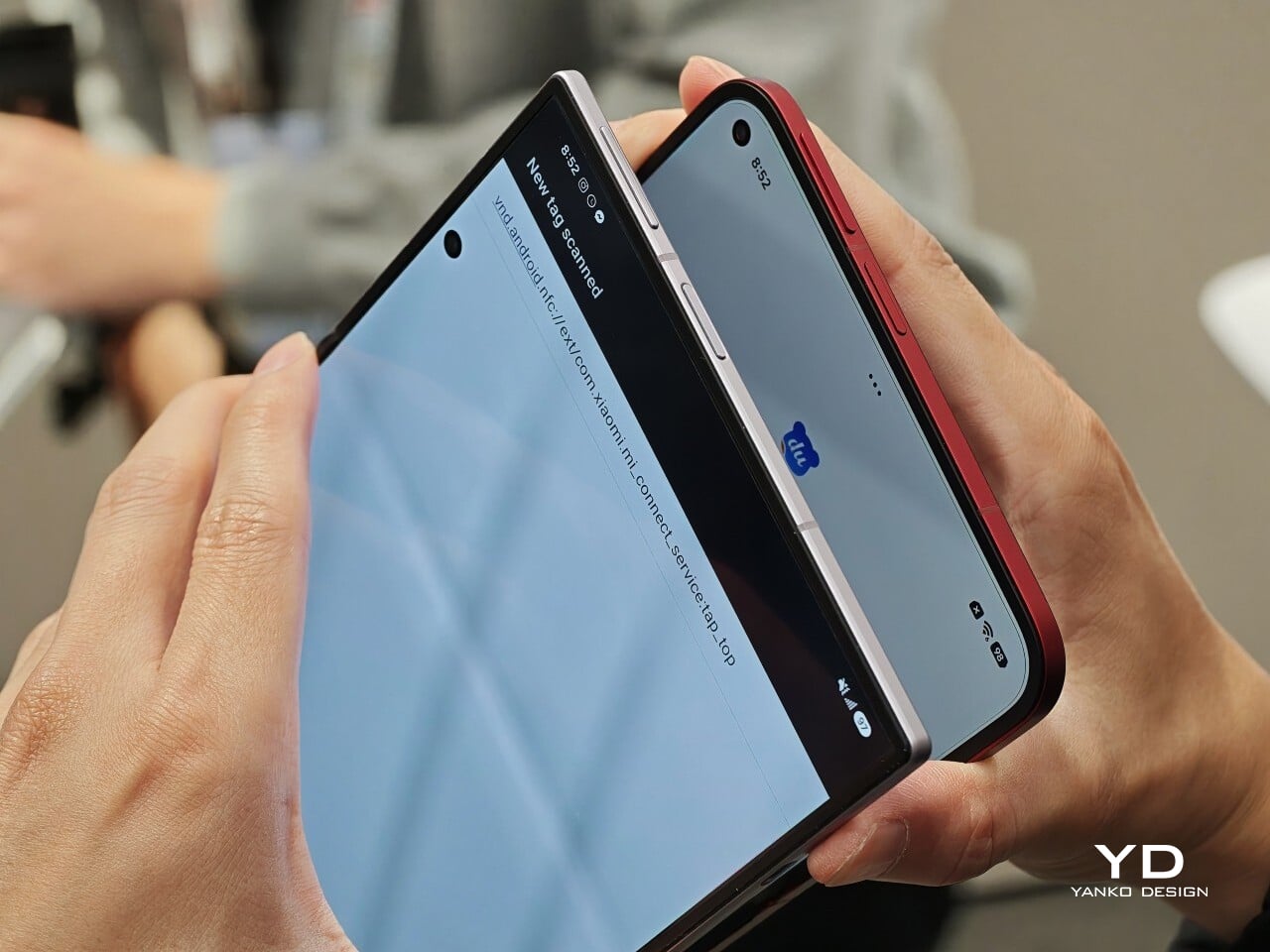
Left: Galaxy Z Fold 8, Right: Xiaomi 18 Fold
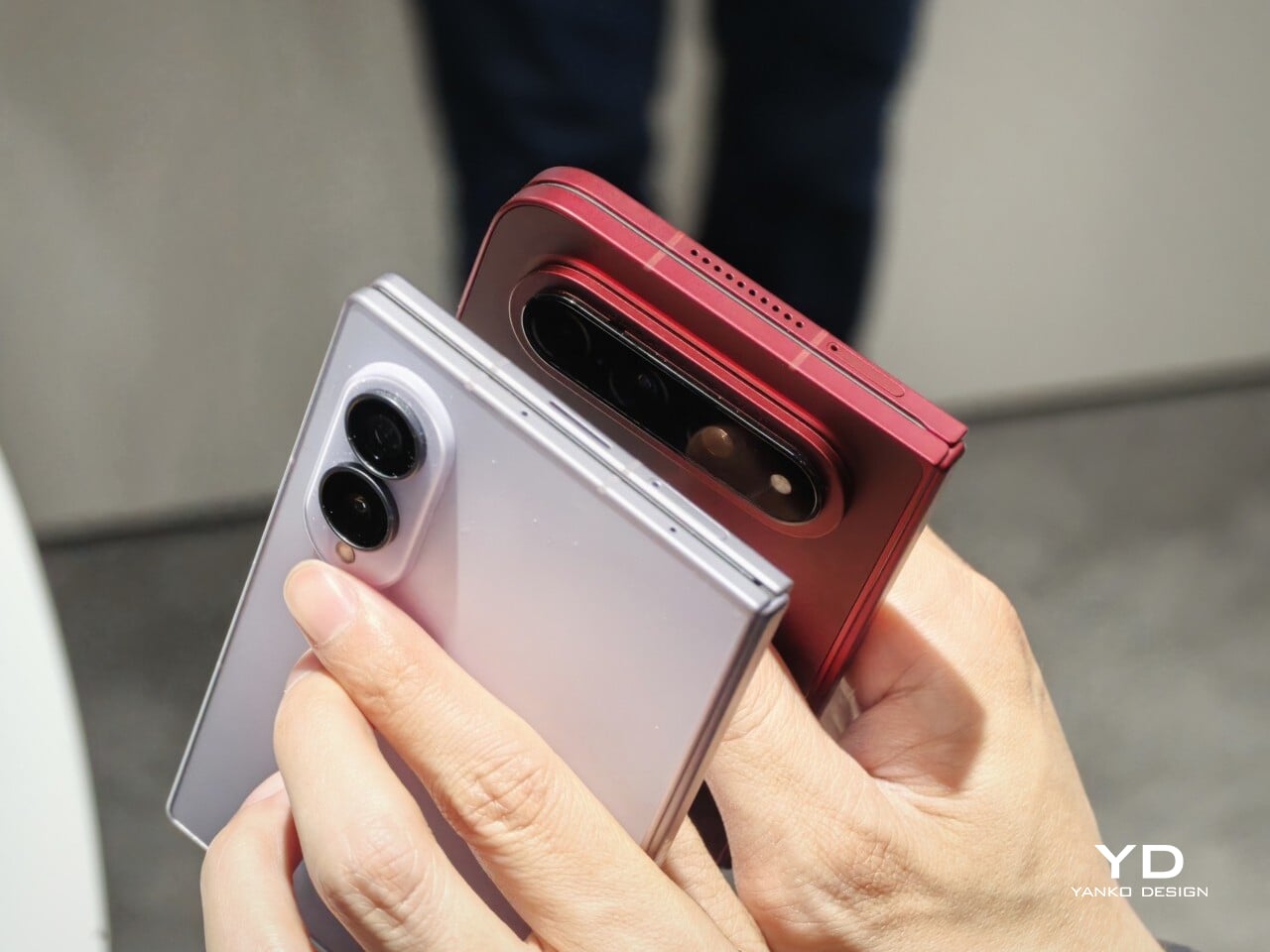
Left: Galaxy Z Fold 8, Right: Xiaomi 18 Fold
I also compared the Xiaomi 18 Fold side by side with Samsung’s Galaxy Z Fold 8. Samsung’s device measures 4.88 x 3.22 x 0.38 inches when folded (123.9 x 81.9 x 9.7mm), 6.35 x 4.88 x 0.18 inches when unfolded (161.4 x 123.9 x 4.5cm), and weighs 7.09 ounces (201g), so it is a little lighter and a bit thinner than Xiaomi’s foldable in some areas. But the difference was not just about dimensions. Samsung’s inner screen was noticeably brighter to my eyes. At the same time, the Xiaomi 18 Fold had one practical advantage that stood out immediately. When placed on a desk, it did not wobble, while the Samsung did.

Left: Galaxy Z Fold 8, Right: Xiaomi 18 Fold
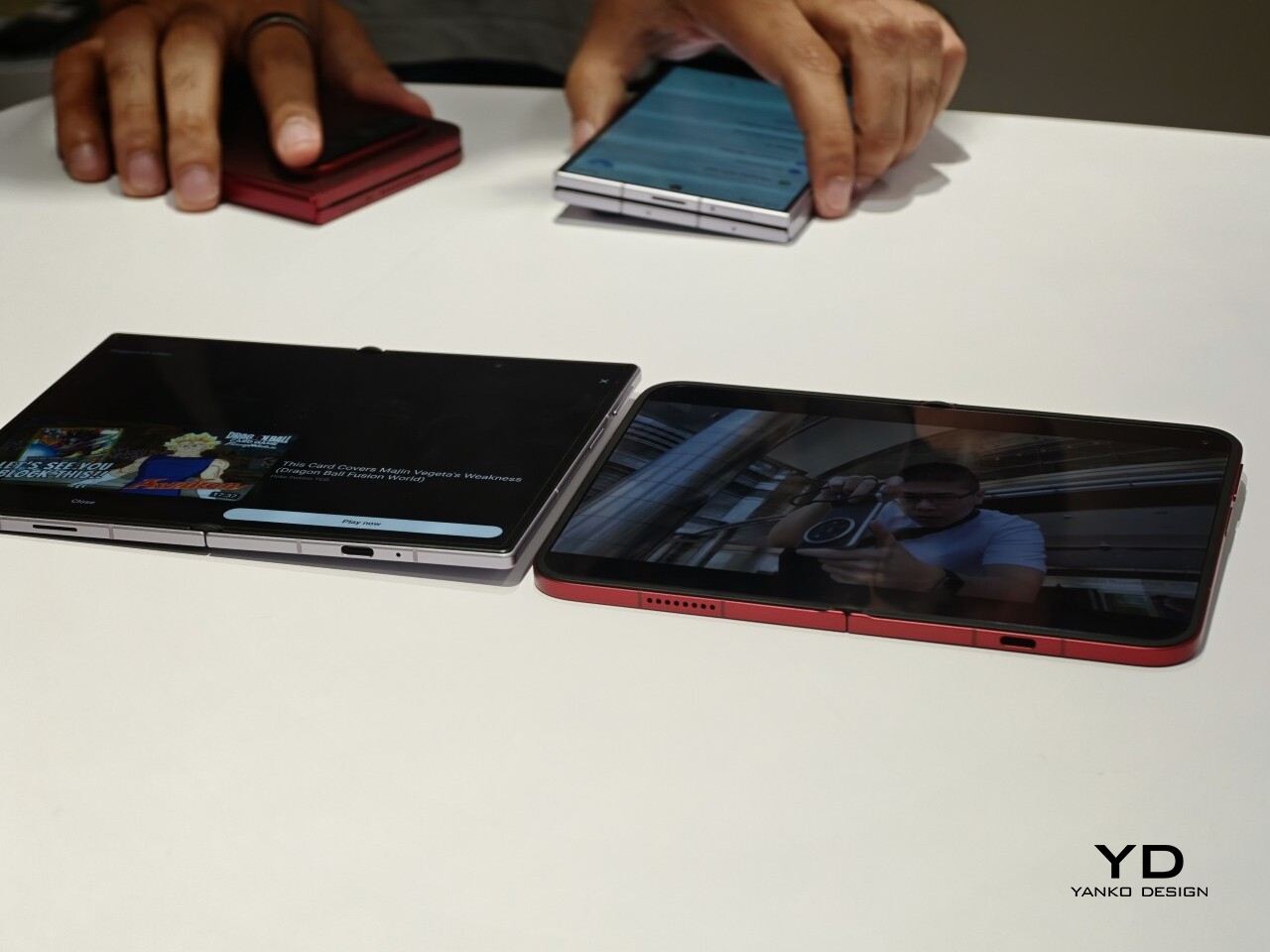
Left: Galaxy Z Fold 8, Right: Xiaomi 18 Fold
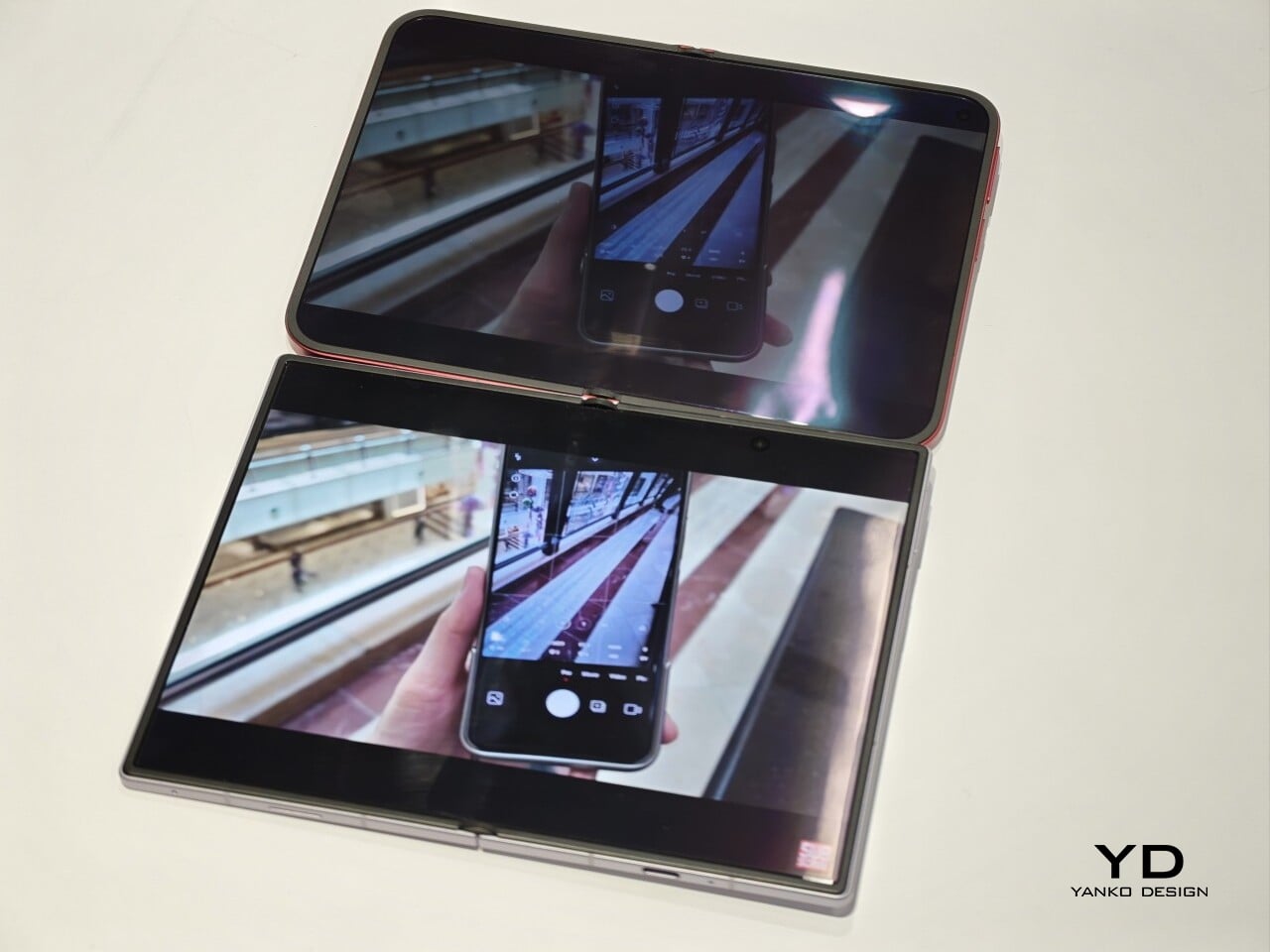
Top: Xiaomi 18 Fold, Bottom: Galaxy Z Fold 8
The biggest surprise for me was the camera. Xiaomi is using a 200MP Leica triple-camera system, led by a 200MP main camera and backed by a 50MP Leica periscope telephoto with an 80mm equivalent focal length. In my short time with the phone, the telephoto camera was the part that stuck with me most. I tried zoom, and the 3.5x telephoto setup immediately felt like one of the most interesting parts of the device. Stability also felt good even at higher magnification, which made the zoom feel more usable, not just more dramatic. The camera bump also did not seem overly large, and its oval-shaped, two-step raised design gives it some presence without taking over the whole back.
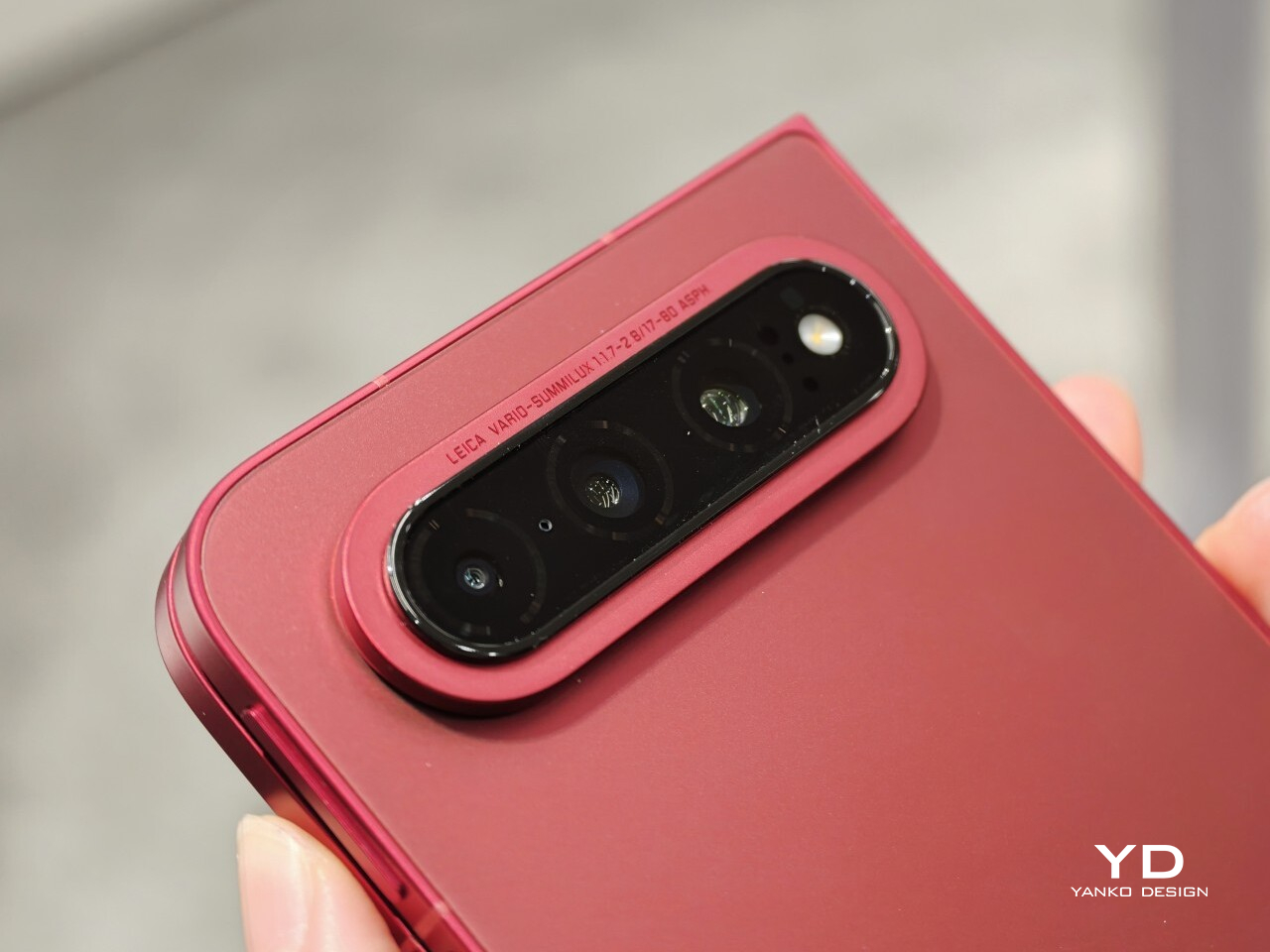
My time with the Xiaomi 18 Fold was brief, and this hands-on really only scratched the surface. Even so, the phone already feels like a polished return to book-style foldables. Pricing starts at RMB 10,999, or roughly $1,640, for the 12GB/256GB model, and Xiaomi said it will be available in China only for now.
The post Xiaomi 18 Fold Hands-On: Got Here Before Apple, Can It Beat Samsung? first appeared on Yanko Design.
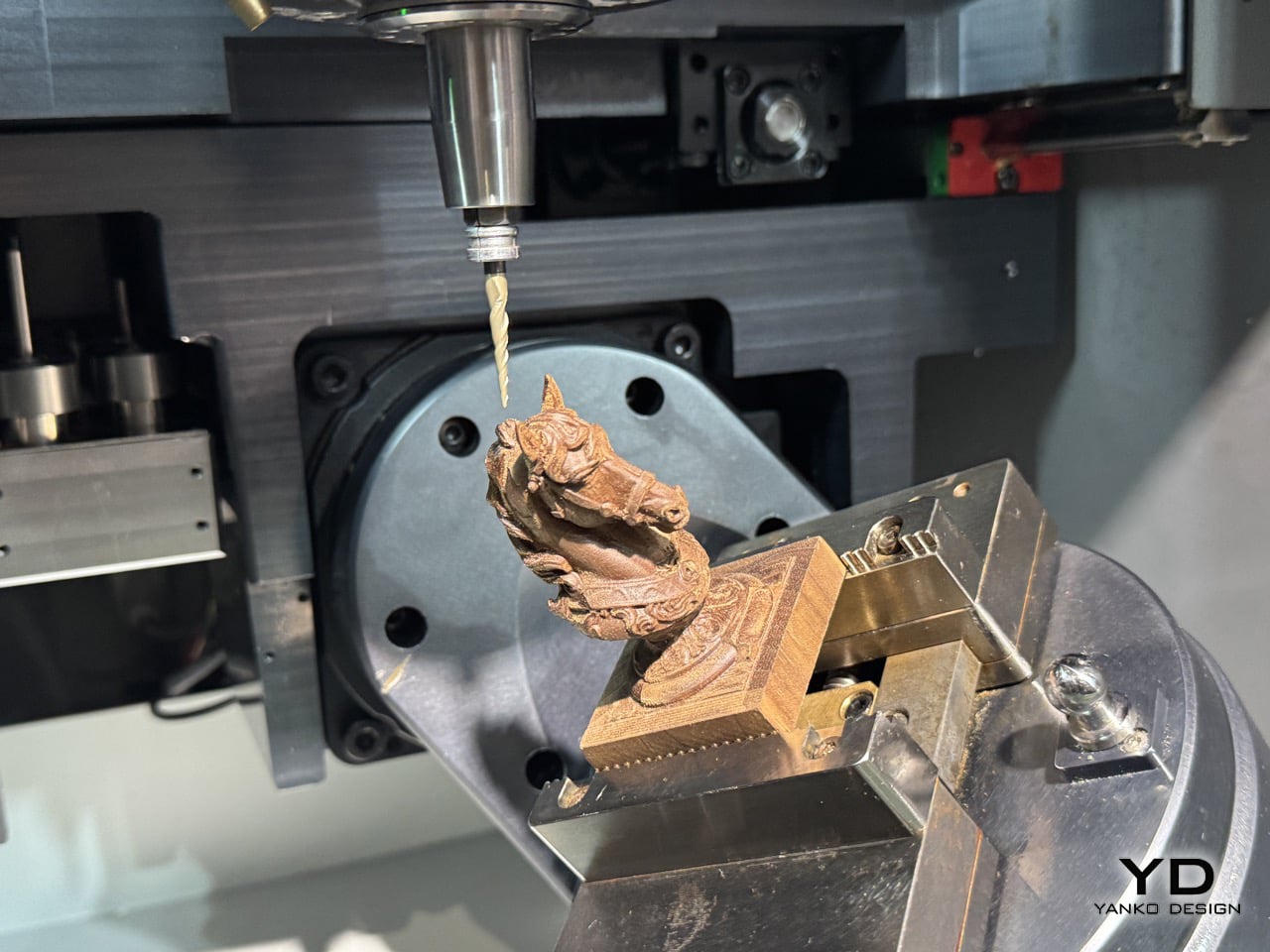
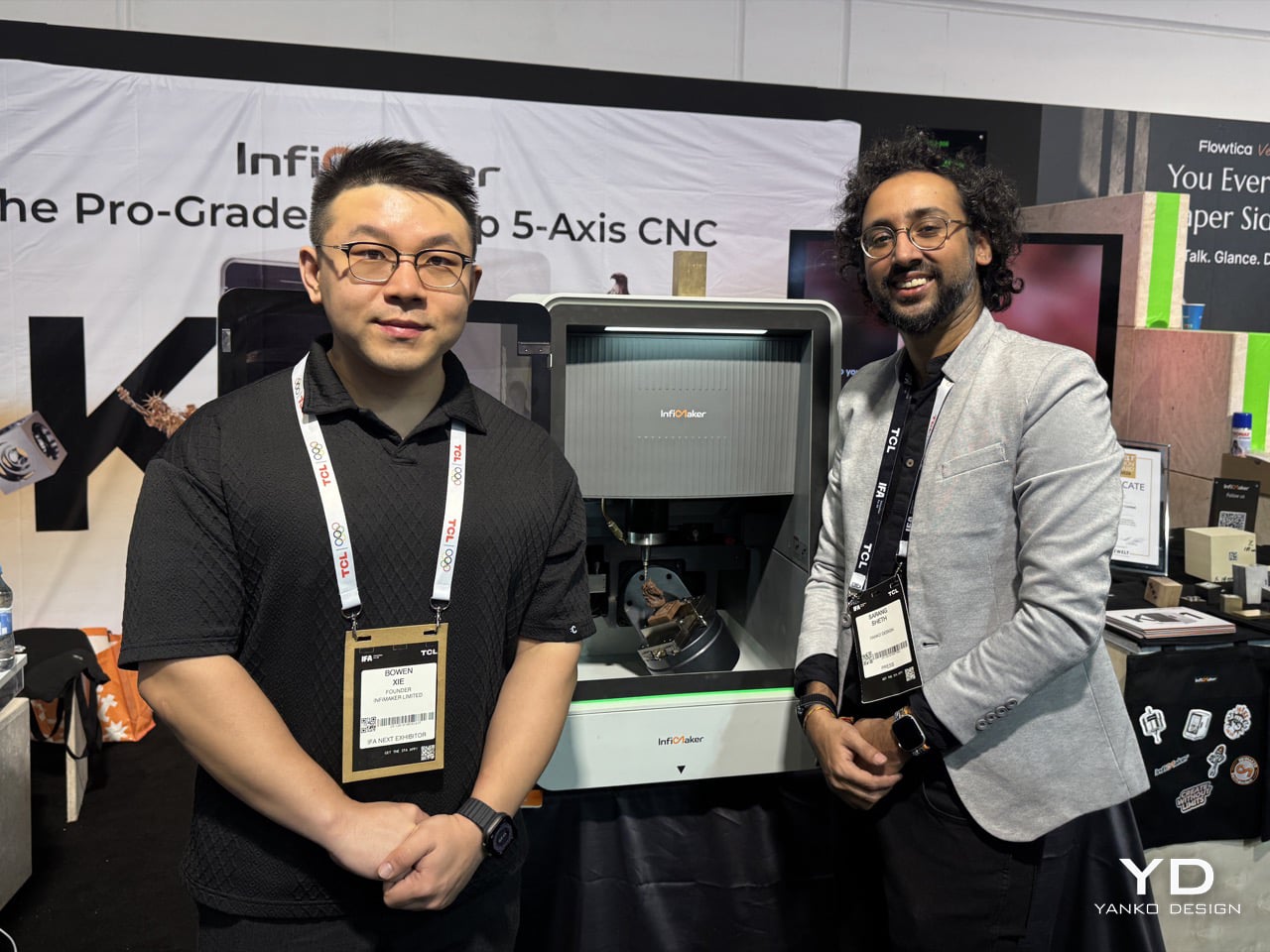
Every serious maker has hit the same wall at some point. You finish a design, you’re ready to hold the actual object in your hands, and then reality intervenes: the part needs machining, the machining needs a shop, the shop needs weeks, and your idea sits in a queue somewhere while the momentum drains out of it. InfiMaker was built by a team who got sick of that wall. Founded in Shenzhen in 2024 by Bowen Xie and Linjian Xiang, both veterans of DJI’s drone and robotics divisions, the company set out to shrink industrial-grade fabrication down to the size of a desk. Their first product, the K1, launched on Kickstarter on August 11, 2026, with Super Early Bird pledges starting at $5,199. It is a desktop CNC machine that does something very few machines at this price or size have managed: true simultaneous five-axis machining, the kind that lets a tool approach a part from nearly any angle without flipping, re-fixturing, or losing precision along the way.
What makes K1 worth a longer conversation isn’t the spec sheet alone, impressive as it is with its 1.5 kW spindle, 20,000 RPM top speed, and 0.01 mm repeatability. It’s the thinking behind it. Bowen Xie spent more than two decades in robotics before this, starting with competitive robotics as a kid and eventually landing at DJI, where drone motion control and robot-vacuum perception quietly became the foundation for how K1 handles trajectory, calibration, and setup. We sat down with Bowen, whose company is bringing K1 to IFA this year, to talk about what it actually takes to make five-axis machining approachable, why AI CAM has to know when to say no, and what he hopes a fifteen-year-old somewhere builds with one of these machines first.

Yanko Design: You spent more than twenty years building robots before this, and you and Linjian came out of DJI. What did drones teach you about motion control that turned out to apply directly to cutting metal?
Bowen Xie: I started teaching myself programming at seven and entered FLL at nine, so robotics has been a continuous part of my life for more than twenty years. At DJI, between Linjian and me, that experience covered both drones and ground robots, including robot vacuums.
Drones taught us that precision motion is not simply about commanding motors. The system has to know where it is, plan a trajectory, coordinate multiple axes, sense disturbances, and correct continuously. In flight, the disturbances may be wind or a changing payload. In CNC, they become cutting forces, vibration, tool wear, and thermal drift.
That thinking transferred very directly into K1. We brought robot-control experience into five-axis, six-motor coordination, trajectory control, FOC, vibration suppression, self-calibration, and error compensation.
The robot-vacuum experience added another important layer: perception. Instead of asking the operator to perform every centering, origin-setting, and calibration step manually, the machine should be able to see the workpiece, fit it to the digital model, calculate its position, and use probing to help establish the setup.
Then AI CAM can turn that known geometry into a machining plan that the user can inspect and approve. The practical change is less time spent setting up the machine and making trial cuts, and more time getting to the first good part.
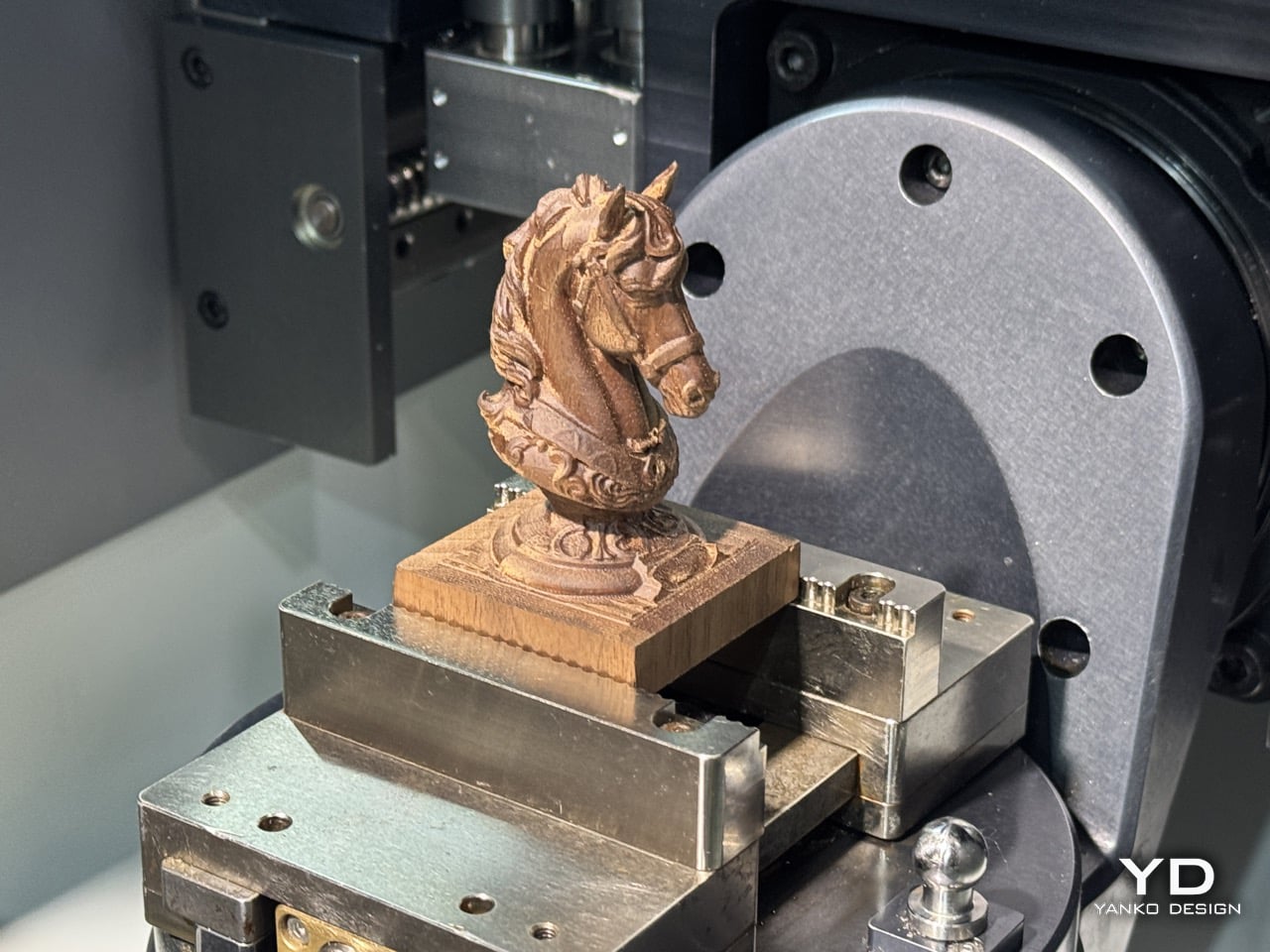
YD: The origin story is that you kept hitting a wall whenever an idea needed a physical part. What was the specific project that made you stop and think, we should just build the machine?
Bowen: The specific setting was our university robotics competition team, rather than one dramatic component.
We built more than twenty robots, and every iteration created a new need for custom metal parts: brackets, joints, mounts, transmission parts, and structural pieces. We could change a design in a day, but a custom part could take weeks, sometimes close to two months. In some cases, having it made in China and shipped to Canada was still cheaper than sourcing it locally.
That mismatch stayed with me. The intelligence of the project could move quickly, but its physical development was controlled by an external manufacturing queue.
Later, while building autonomous construction equipment at Robolution, we ran into the same problem at a larger scale. Eventually, it stopped looking like a procurement problem. It looked like a missing product: a manufacturing system that could sit beside the engineer and move at the same speed as the design process.
That was the origin of K1.
YD: You’ve said making CAM easy was harder than making it powerful, and that the hard part was deciding what to take away. What was the thing you most wanted to keep but cut?
Bowen: The thing I most wanted to keep was the full parameter surface.
Engineers often feel safer when every feed, step-over, tool option, entry strategy, and machining parameter is visible. It feels transparent and professional. But if you expose all of those decisions at the beginning, the user has to become a CAM specialist before making the first part.
What we cut was not professional control. We cut the requirement to make every professional decision manually in the default workflow.
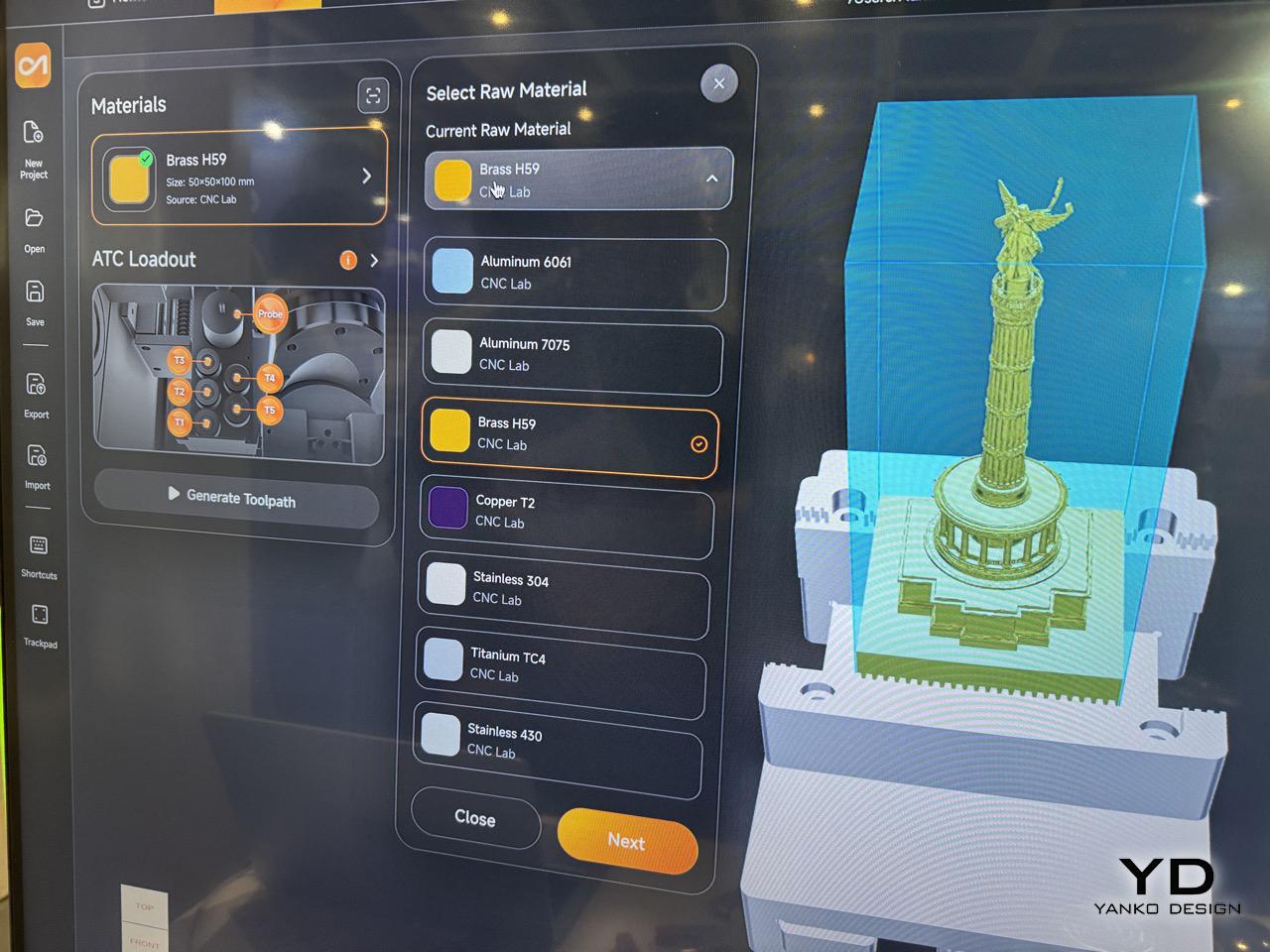
InfiStudio should understand the geometry, material, tools, and machine, then propose a machining strategy with reasons behind it. The user should be able to inspect the tool list, simulate the result, change the parameters, or take over completely. But they should not have to confront the entire parameter tree before they know which decisions actually matter. The goal is not to hide complexity inside a black box. It is to move complexity to the moment when it becomes relevant.

YD: There’s a version of this machine that stays firmly a tool for experienced machinists, and a version that tries to bring in people who’ve never touched CNC. Those two users want opposite things. How did you decide who K1 is really for?
Bowen: We decided that K1 is for people with a serious task, not necessarily people with previous CNC experience.
That could be an independent engineer making a robot joint, a product designer developing a camera body, a jewellery studio producing a wax model, or a small business making a custom product. They may be new to CNC, but they are not new to designing, engineering, or making things.
A traditional machinist needs transparency, manual control, standard G-code, and the ability to understand exactly what the machine is doing. A new user needs guidance, safe defaults, visual feedback, and a much shorter path to the first successful part. We designed the workflow so that those are layers of the same product rather than two separate products.
K1 is not meant to replace a large industrial machining centre in high-volume production. It is meant to give an ambitious creator a level of capability that previously required a much larger machine, several specialist tools, and years of accumulated workflow knowledge.
You can be a beginner in CNC without being a beginner in making.
YD: AI can turn a sentence into a 3D model in seconds, but a model isn’t a machinable part. Where does that gap actually show up, and what does InfiStudio do about geometry that looks fine on screen and can’t be cut?
Bowen: A generated model only has to look convincing on a screen. A machinable part has to obey geometry, tooling, material, fixturing, and physics.
The gap appears in very specific places: broken or non-manifold surfaces, walls thinner than the available tool, internal corners smaller than the cutter radius, deep cavities the tool holder cannot reach, undercuts with no valid approach angle, or geometry that collides with the stock or fixture. A model can look perfect and still have no safe machining strategy.
InfiStudio treats model generation as the beginning of the process, not the end. It can post-process and repair broken geometry where possible, recognize machining features, propose tools and operations, generate the toolpath, and simulate the process. On the machine side, perception and probing help connect that digital plan to the position and orientation of the real workpiece.
The important part is how the system behaves when the answer is no. If a region cannot be reached, the software should identify it and help the user change the geometry, tool, orientation, fixture, or setup. It should not invent a toolpath simply because the user asked for one.
AI should reduce the amount of specialist work required to find a valid process. It should never hallucinate machinability.
YD: What’s the question backers ask most, and what’s the one you wish they asked more?
Bowen: The question we hear most, in many different forms, is: “Can it really make the part I care about?”
Sometimes people ask about stainless steel, titanium, or aluminium. Sometimes they ask about a particular tolerance, surface finish, size, or geometry. But underneath all of those questions, they are asking whether K1 is a real manufacturing tool or only an impressive demonstration.
That question deserves evidence: the material, tool, cooling, setup, toolpath, machining time, and measured result. A headline specification alone is not enough.
The question I wish people asked more is: “What does the complete path to the first good part look like?”
That includes importing or generating the model, checking manufacturability, setting up the stock, establishing the work coordinate, selecting tools, generating and simulating the toolpath, machining, and inspecting the result. The real value of K1 is not one impressive number. It is how much of that complete process one person can now own.
YD: IFA is a consumer electronics show. Why bring an industrial-grade five-axis mill to a hall full of consumer appliances and robots?
Bowen: IFA is exactly where we want to make this argument, because we believe advanced manufacturing is becoming personal technology.
A five-axis CNC is industrial in what it can do, but it does not have to be industrial in how difficult it is to install, understand, and operate. Robotics, perception, AI, software, and consumer-hardware product design are changing what can fit into an individual workspace.
We are not trying to make a CNC machine behave like a kitchen appliance. Cutting metal still involves real forces, tools, fixtures, coolant, chips, and safety. What we are doing is applying consumer-product discipline to that complexity: a coherent product, guided setup, integrated software, clear feedback, and a workflow designed around the person using it.
IFA brings together AI, robotics, consumer hardware, design, and new ways of living with technology. We want visitors to see that the next important device in a personal workspace may not only display information or automate the home. It may manufacture an idea.

YD: Is there a craft tradition in Europe, jewellery, watchmaking, prototyping, that you’re specifically hoping finds this machine?
Bowen: Jewellery is probably the first European craft community I hope connects with K1.
Independent jewellery studios work with wax models, moulds, complex curved surfaces, fine details, and short production runs. Five-axis access can be valuable because it reduces repeated flipping and makes it easier to reach surfaces and undercuts that are difficult in a conventional three-axis workflow.
I am also interested in watch-case and bezel prototyping, instrument making, model building, and small metalworking studios. Europe has a strong tradition of combining precision with personal authorship. That is very different from anonymous mass production, and it aligns closely with what we want K1 to enable.
The machine should not replace the craftsperson. Decisions about proportion, material, finish, and meaning still belong to the person. CNC should extend the craftsperson’s capabilities by handling precision, repeatability, and difficult geometry while leaving the creative judgment intact.
YD: What’s the object someone has made with a K1 that you didn’t expect?
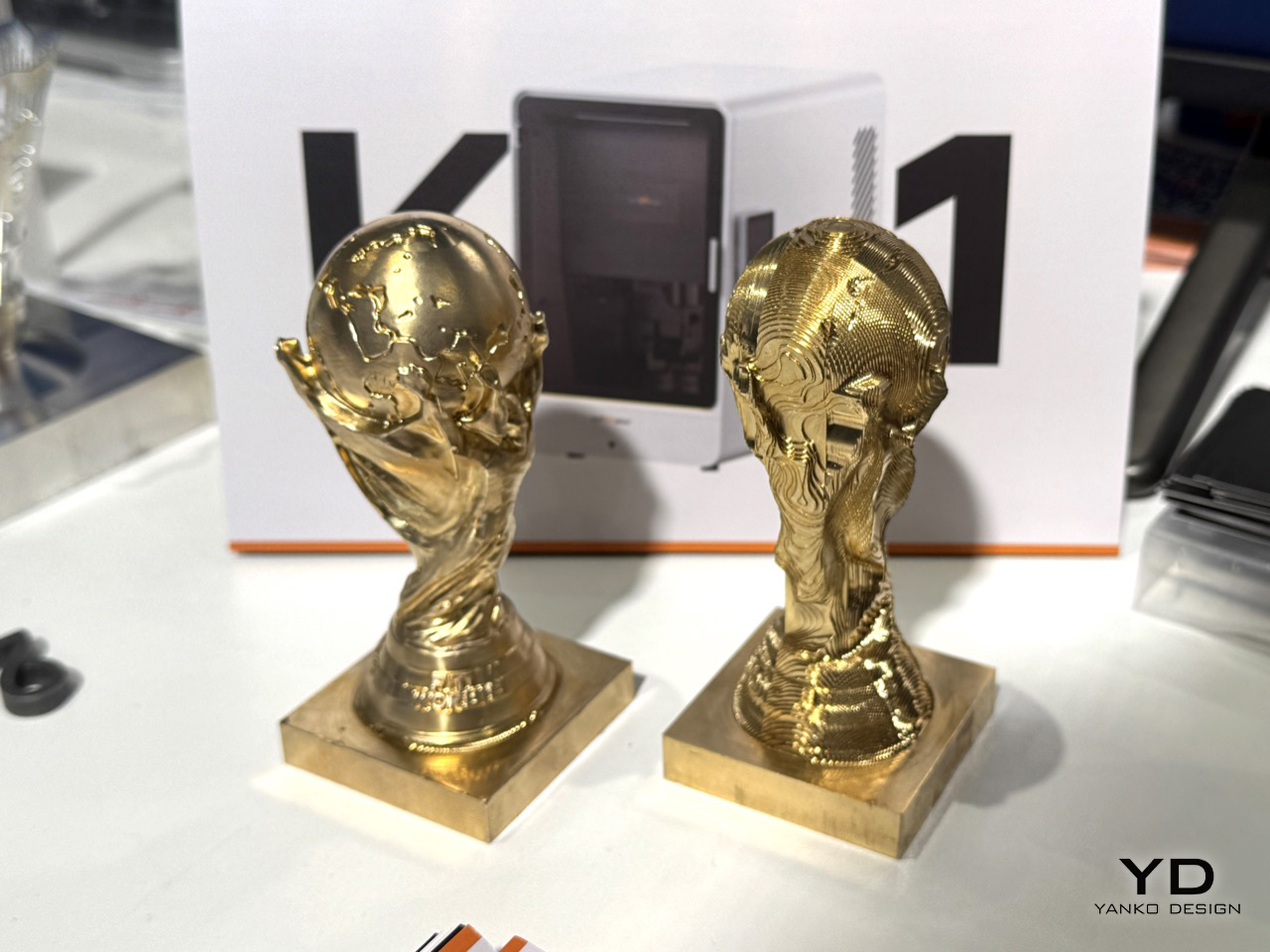
Bowen: One object that surprised me in terms of the response it generated was the brass bull our team machined.
We initially treated it as a visually interesting demonstration. But people did not only react to the finished sculpture. They started asking very technical questions: How did the tool reach the underside? How was the stock held? Which surfaces needed simultaneous five-axis motion? How many operations and tool changes were involved?
That was the unexpected part. A playful object opened a serious conversation about tool access, workholding, surface continuity, and five-axis toolpaths more effectively than a conventional engineering test piece might have.
It reminded me that a good demonstration should not only prove that a machine can cut something. It should make people curious about how the manufacturing process works.
YD: If this works the way you want it to, what does someone’s workshop look like in five years that doesn’t exist today?
Bowen: In five years, I think a small workshop will look less like a miniature factory and more like one highly capable person working with an intelligent manufacturing system.
The process may begin with a prompt, a sketch, or an existing model. AI helps create or refine the geometry, but then the manufacturing layer begins. The software checks whether the design can actually be cut. The machine uses perception to understand the real stock and workpiece, helps establish the origin and setup, and uses probing and calibration to connect the physical object to the digital model.
AI CAM proposes tools, parameters, and a machining strategy. Simulation shows what can be reached and where the risks are. The human reviews the important decisions, changes anything necessary, and approves the job. During machining, the system monitors the process and responds to abnormal conditions.
The workshop is not fully autonomous, and it is not a black box. The person still owns the intent, material choice, trade-offs, and quality. But they no longer need to coordinate a long chain of separate specialists and suppliers before testing an idea.
That is what “one person, one table, one factory” means to me: not removing the human, but giving one human much greater manufacturing agency.
YD: Somewhere out there a fifteen-year-old is going to use one of these and it’ll change what they think is possible. What do you hope they make?
Bowen: I hope they make the first necessary part for something much bigger.
It might be a joint for their first robot, a device that solves a problem in their family, an instrument nobody has built before, or the first prototype of a company they have not yet imagined starting.
I began programming at seven and entered FLL at nine, so I know how important it is to discover early that you can change the physical world, not just understand it. At that age, the first part does not need to be commercially valuable or technically perfect. It needs to prove that an idea in your head can become something real through your own decisions and effort.
I do not want the machine to do the imagining for them. I want it to make the distance between imagination and reality short enough that they are willing to try.
The post InfiMaker K1 at IFA 2026: The 5-Axis Desktop CNC Turning Any Creator Space Into A Fabrication Lab first appeared on Yanko Design.
The most significant home upgrade happening right now doesn’t involve a contractor, a permit, or a gut renovation. It involves a product that was simply designed better. The brands showing up at IFA 2026 understand something the renovation industry hasn’t fully caught up to: that domestic life, from the garden to the kitchen counter, can be meaningfully improved without touching a single wall or calling a single plumber.
What connects these brands isn’t a shared aesthetic or a price bracket. It’s a shared starting point. Each one identified a specific friction point inside or around the home and built backward from there. The results span gardens, kitchens, bathrooms, and living rooms, with a single consistent argument: that the home you already have can function significantly better than it does right now, without moving anything structural to get there. Here’s look at the brands we loved at the Global Connect Show at IFA 2026.
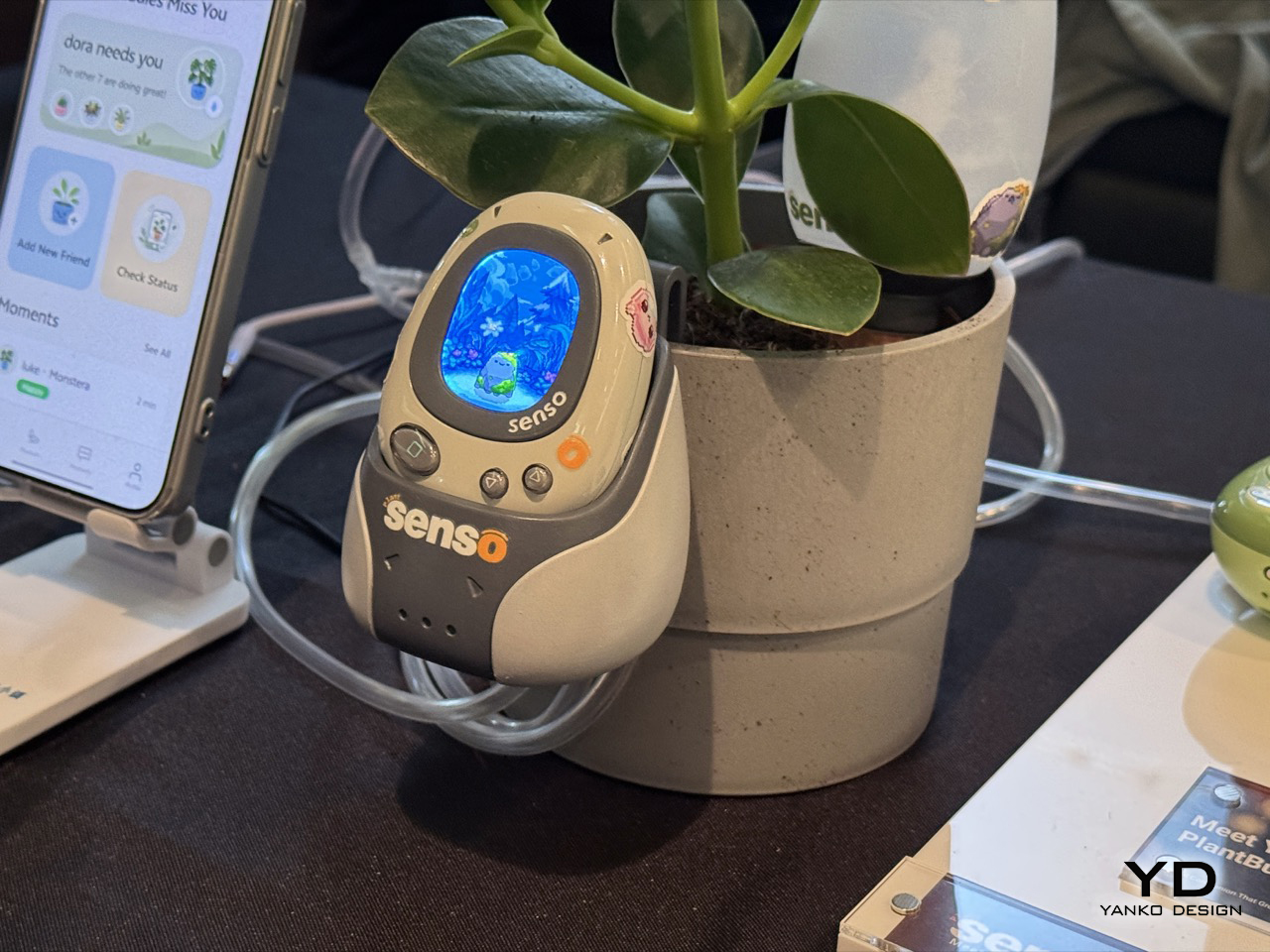
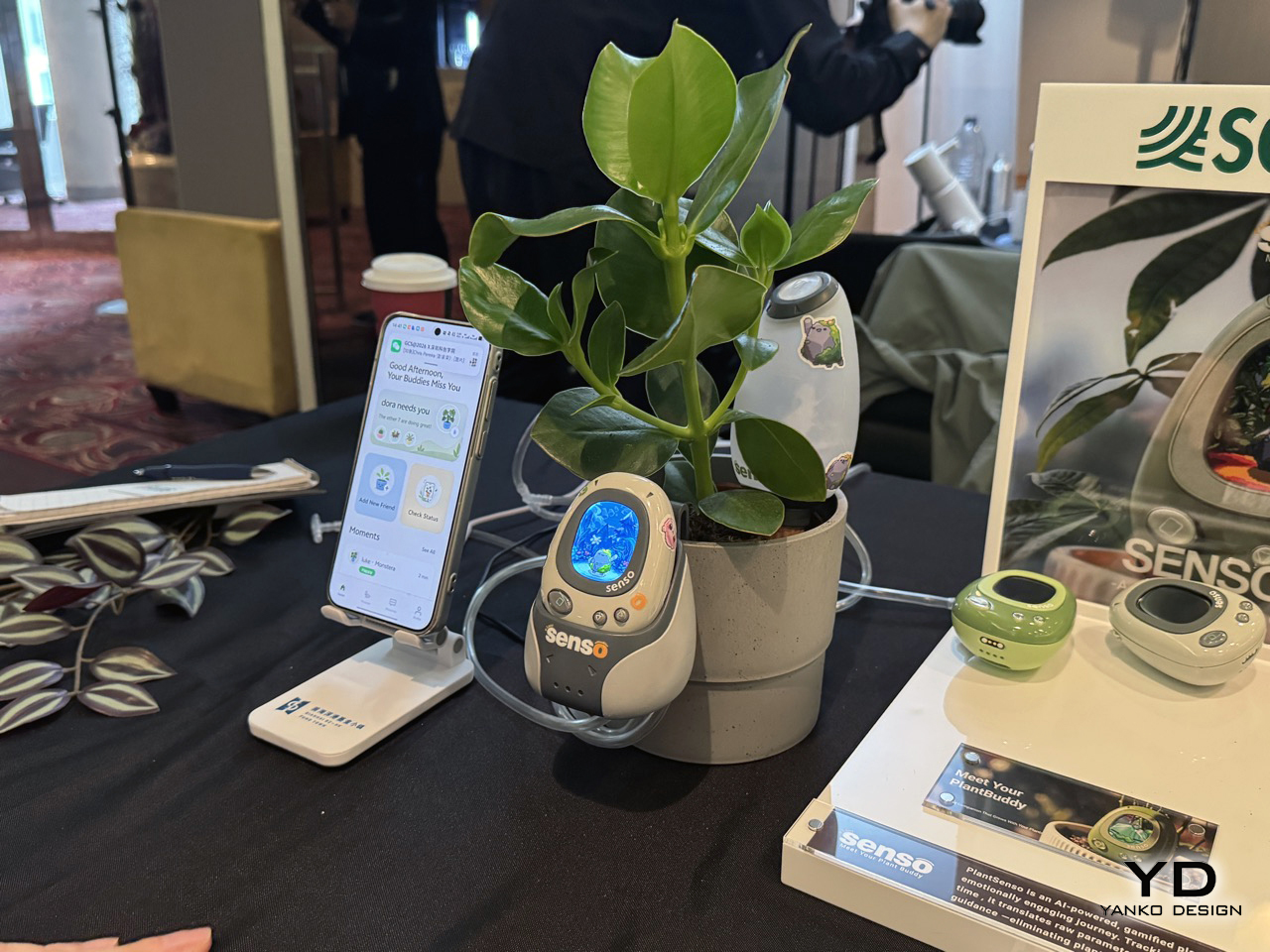
Your plant is dying, and you have no idea why. It sits there on the shelf going yellow at the edges, and the only feedback it gives you is slow, silent failure. You bought a moisture meter. You Googled the species. You set a watering reminder that you ignored for three weeks. That broken loop is why most people quit on plants entirely, and honestly, it’s hard to blame them. The feedback between what you do and what the plant needs is too slow and too quiet to build any real habit around. PlantSenso is the first product I’ve come across that treats that specific failure as the actual design problem worth solving, rather than just adding another sensor to an already crowded category.
The hardware is a slim probe that sits inside your pot and continuously reads soil moisture, temperature, ambient light, and nutrient levels. None of that data shows up as a percentage or a chart. Instead, it drives a small pixel art display built into the device itself, giving your plant its own face and mood that shifts in real time based on what it actually needs right now. When your plant is thriving, the character reflects it. When you’ve forgotten to water it for ten days, you’ll know. The companion app takes it further. You can have actual voice conversations with your plant through a generative AI layer and get species-specific guidance back in plain language, not botanical jargon. One 1000 mAh charge lasts up to 21 days, with magnetic and USB-C charging keeping it topped up without fuss
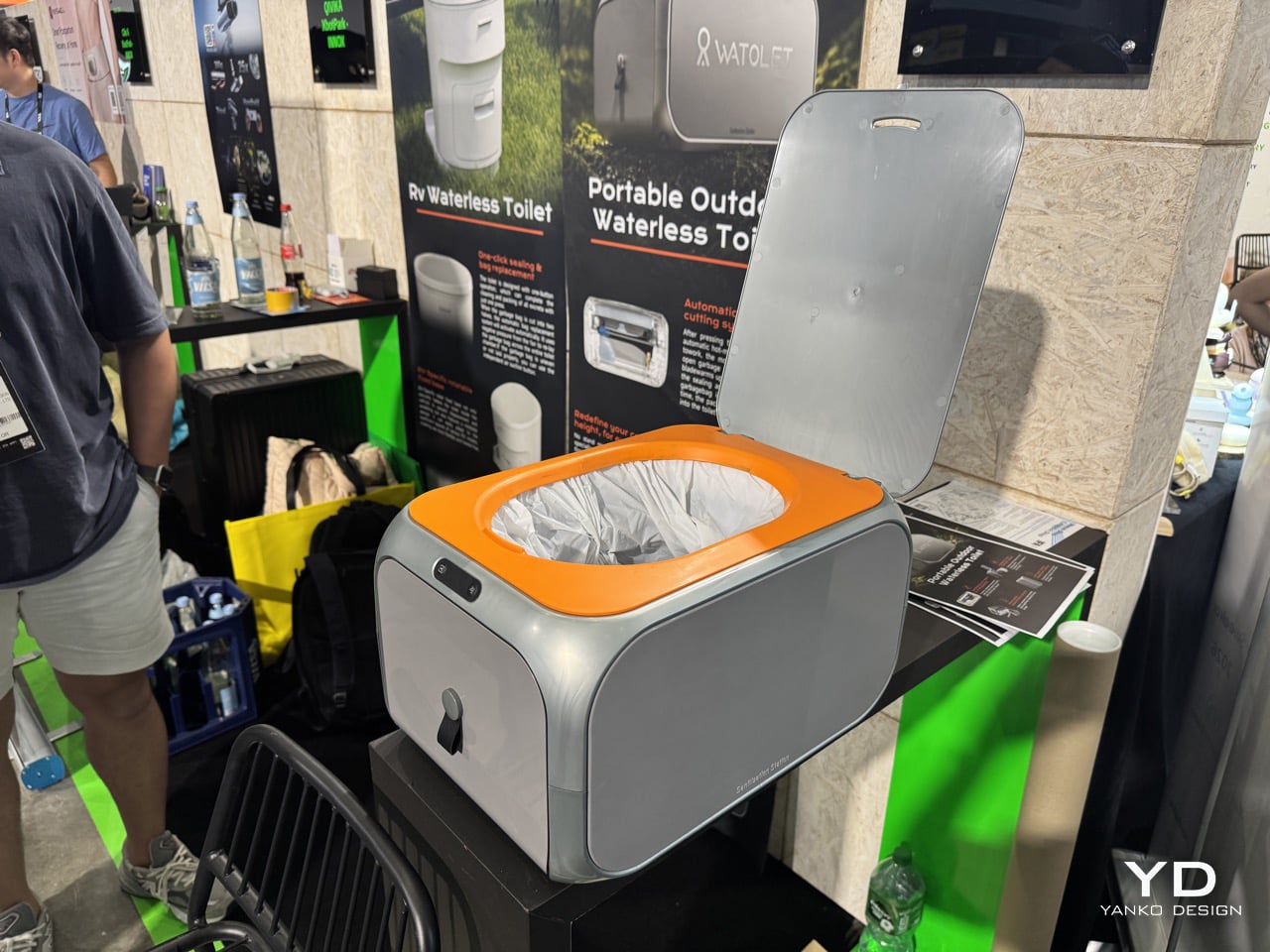
A powerful kind of dread hits when you are three days into a camping trip, or parked at a trailhead at 6 am, or sitting in an RV at a campsite with a full black water tank and nowhere to dump it. The toilet problem is the one part of off-grid living that nobody has a good answer for, and most of the existing solutions either require water, require plumbing, require a hose situation you do not want to deal with, or smell like what they are. WATOLET is the brand that decided the whole category needed a clean start. Their waterless self-sealing toilet uses an automatic packaging system that seals solid and liquid waste at the press of a button. No water. No plumbing. No smell. Push a button, and it is handled.
The RV Waterless Toilet is the direct black water tank replacement. It runs on 12V RV electricity with a 5200mAh battery backup, sits at 445 x 355 x 455mm, and mounts on a quick-release swivel base that rotates up to 180 degrees so you can position it properly regardless of how your RV layout is configured. The Portable Toilet is the go-anywhere version: 450 x 310 x 263mm, lithium battery-powered at 12V with a 5200mAh capacity, built from PP, PA, and ABS with a PU seat cushion and a non-slip, wear-resistant handle for carrying across rough terrain. Both units use water-absorbing particles to manage waste before sealing. The core argument WATOLET makes is a good one: the toilet should not be the reason you cut the trip short.
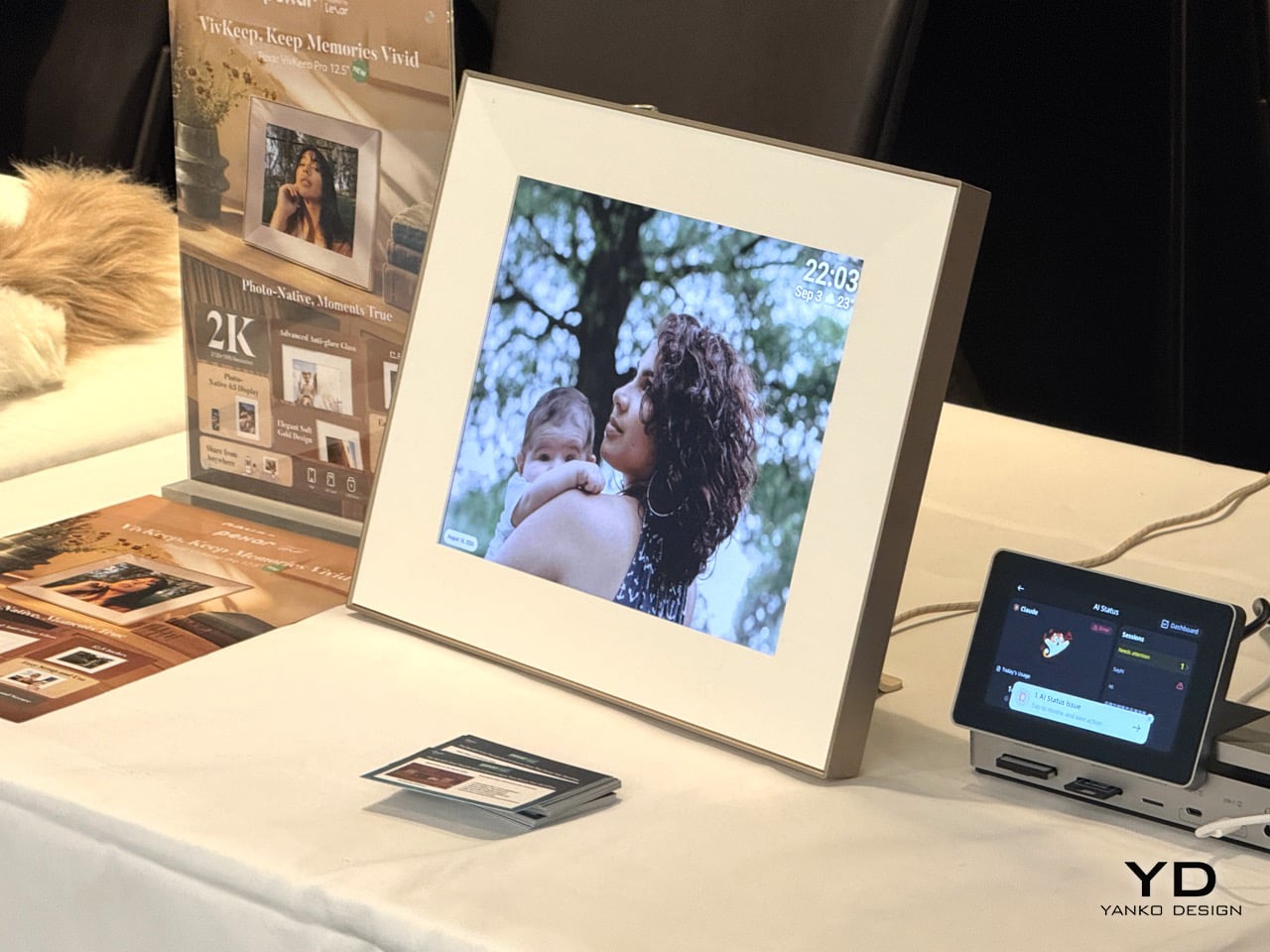
Pexar comes out of Lexar, the global memory industry leader, inheriting decades of storage and imaging tech expertise with “Design Bold, Build Lasting” as its core philosophy, integrating cutting-edge imaging and storage technologies and pushing product boundaries through bold design. The digital frame category has long been a graveyard of half-hearted hardware propped up by monthly subscription fees nobody agreed to, and Pexar’s zero-subscription commitment was the first signal that this brand was thinking differently. What started with an 11-inch frame in 2024 quickly escalated to the world’s first wall-light digital frame — the 15.6-inch Starlight — and the brand is now making its clearest statement yet that it’s building a full creative ecosystem, not just a display lineup.
The two products here pull in opposite directions, which is exactly what makes them interesting together. The PexarBolt Ultra is the more surprising of the two: the world’s first Thunderbolt 5 control dock that actually shows your workflow, built around a 5-inch touch control dashboard that delivers real-time visibility into ports, power, temperature, and bandwidth across 22 connections, with up to 120Gbps throughput, 140W laptop charging, 10GbE networking, and support for two 8K or three 4K 144Hz displays simultaneously. The VivKeep Pro 12.5″ is the frame side of the equation — Pexar’s most refined display frame yet, with a 2K anti-glare touchscreen, instant phone-to-frame photo sharing, and zero subscription fees, at $149.99. The dock and the frame don’t share a use case, but they share a design sensibility: hardware that shows you what it’s doing rather than hiding it behind a closed system.
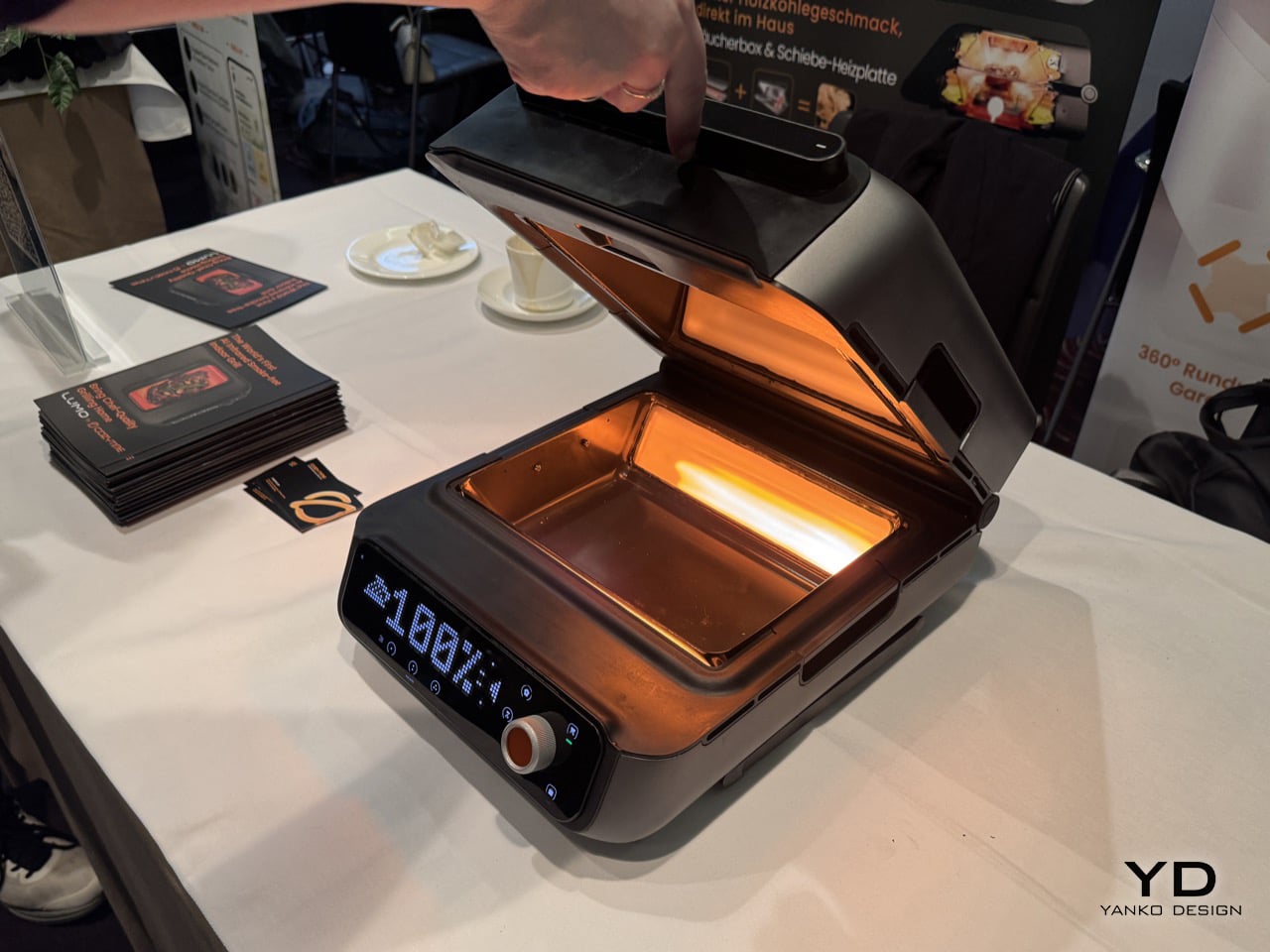
You want to grill a steak on a Tuesday night in your apartment and every option available to you is a compromise. A cast iron pan gets you the sear but not the flavor. An electric grill gets you the shape of the experience but not the result. And an actual charcoal grill means standing outside in whatever weather your city has decided to throw at you. CozyTime looked at that specific Tuesday night problem and built LUMO around it. The world’s first AI infrared smokeless indoor grill uses light-based heating instead of an open flame, cooking up to 4x faster than traditional grilling with no preheating required and no smoke pouring into your living room.
The hardware is more considered than it first appears. LUMO runs on a TriForma StateShift System that shifts between three configurations: Indoor Smoker Mode for slow cooking, braising, and pizza; Fast Grill Mode for steaks and quick weeknight meals; and Flat Grill Mode for larger dinners with dual zone control across a 77.42 square inch cooking surface. The AI CookPilot system recognizes over 40 food types automatically and adjusts the cooking parameters in real time so you don’t have to hover over it. The Flavor Module adds actual wood pellets to the heat loop, which means you get genuine smoky flavor without the smoke itself. All detachable parts are dishwasher safe.
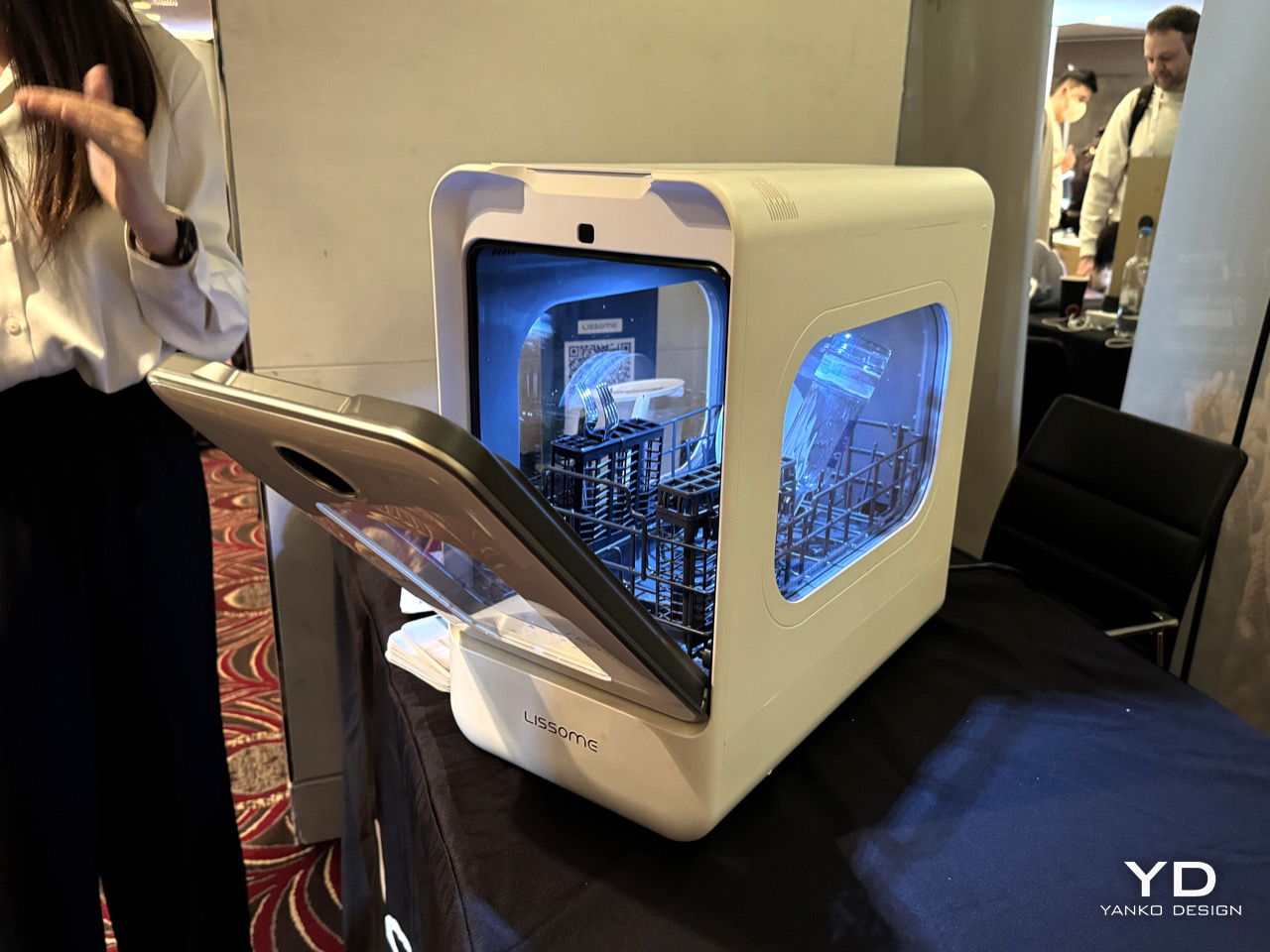
The sink pile is the most reliable source of low-grade misery in a small apartment. You cook a decent meal, you sit down for exactly twelve minutes before the guilt kicks in, and then you spend the next half hour hand washing things that never quite feel clean. A full-size dishwasher is not an option because your kitchen is the size of a generous closet. That is the exact problem Lissome built the R1 around, and they are one of the few brands in this space that actually understood the constraint before designing the solution. Small kitchen appliances tend to shrink the capability along with the footprint. The R1 does not do that.
At just 280mm wide, the R1 is narrow enough to sit on most countertops, with no plumbing hookup required thanks to a built-in water tank. The fast wash cycle clears your dishes in 15 minutes, which means you load it while the food is still on the table and it is done before you have finished the conversation. The world’s first sweeping jet technology uses 2 vertical and 2 rotating spray arms for all-round coverage with no blind spots. Six wash programmes cover everything from a quick rinse to ECO, Power Wash, Fruit and Veg, Smart Wash, and a dedicated dry cycle. It uses just 4.1 litres of water per cycle, runs at 52 dB, and tops out at 70°C with PTC hot air drying and automatic door opening built in. The R1 holds up to 34 items per load. For anyone living in a flat, working from a studio, or outfitting an RV, this is the dishwasher that actually fits your life rather than the kitchen you wish you had.
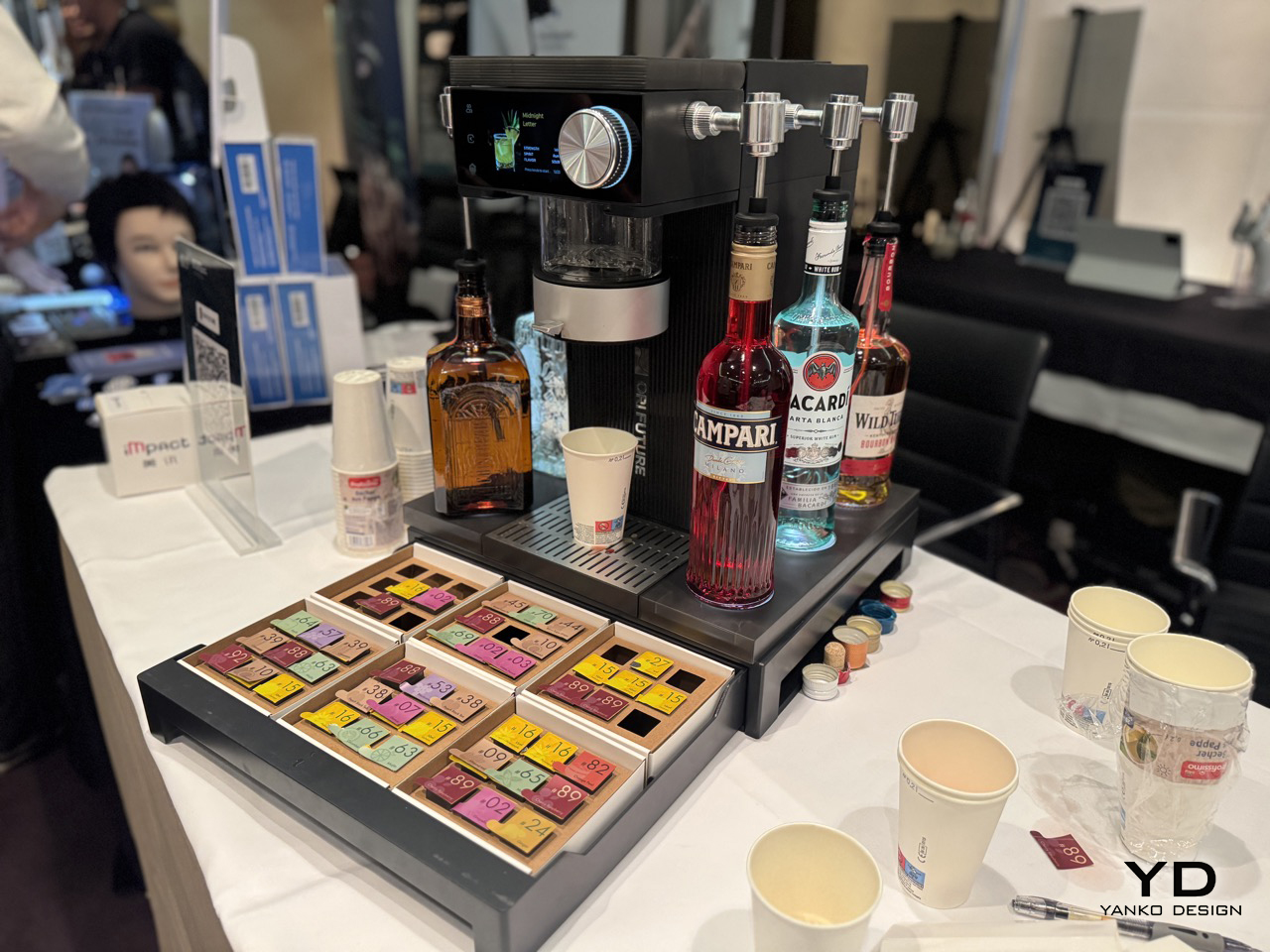
ORI Future designs premium home mixology tools built on one conviction: the gap between a drink that feels considered and one that feels assembled is almost entirely about the details most people overlook. Ice is the obvious one. It sits in every glass, it touches every sip, and most people are still dropping in cloudy, fast melting crescents that start watering down the whiskey before they even sit down. ORI Future is the brand that decided that was unacceptable, and built its entire product line around fixing it. This is gear for people who care how the drink lands, not just how it tastes.
The GLAZER Ice Press is the centerpiece. Made from premium aluminum alloy, it uses electric heating to press ordinary ice into crystal-clear shapes: spheres, skulls, diamonds, or custom molds depending on which insert you swap in. One body supports the full range of designs, so you don’t buy a separate device for every shape. The result is bar-grade, slow-melting, visually sharp ice that genuinely changes how a drink sits in the glass. The Halo Smoker Kit covers the flavor and atmosphere side of the equation. It delivers clean, consistent smoke through a flameless heating system with a rechargeable battery, no butane, and a magnetic connection that makes setup fast and safe. The signature halo light gives every pour a stage-lit quality that is hard to ignore at a dinner table.

JIMMY is the consumer brand of KingClean Electric, a company with 31 years in the cleaning and home appliance industry, over 800 R&D engineers, and more than 2,200 patents globally. That is not a brand that stumbles into a product category. When JIMMY moves into countertop water purification, it does so with the same manufacturing depth that built a company selling over 200 million units worldwide. The Matrix Series is their answer to a question most people have quietly accepted as unanswerable: why does getting good water at home still require a plumber, a dedicated ice maker, a separate sparkling water machine, and a kettle all competing for the same three feet of counter space?
The M9 Pro is the host unit, and the architecture around it is the actual story. A seven-stage filtration system uses a 0.0001-micron membrane and UV sterilization to remove over 99% of contaminants, including heavy metals, bacteria, and PFAS, followed by remineralization to bring the taste back up. From there, the Matrix Series snaps together with two detachable modules: the S9 cold sparkling water maker and the I9 ice maker and crusher. That means one system on your counter gives you instant hot purified water for tea or baby formula, chilled sparkling water, cubed ice, and crushed ice, with no plumbing connection required. JIMMY also notes the system saves more than 3,500 single-use plastic bottles per household per year.
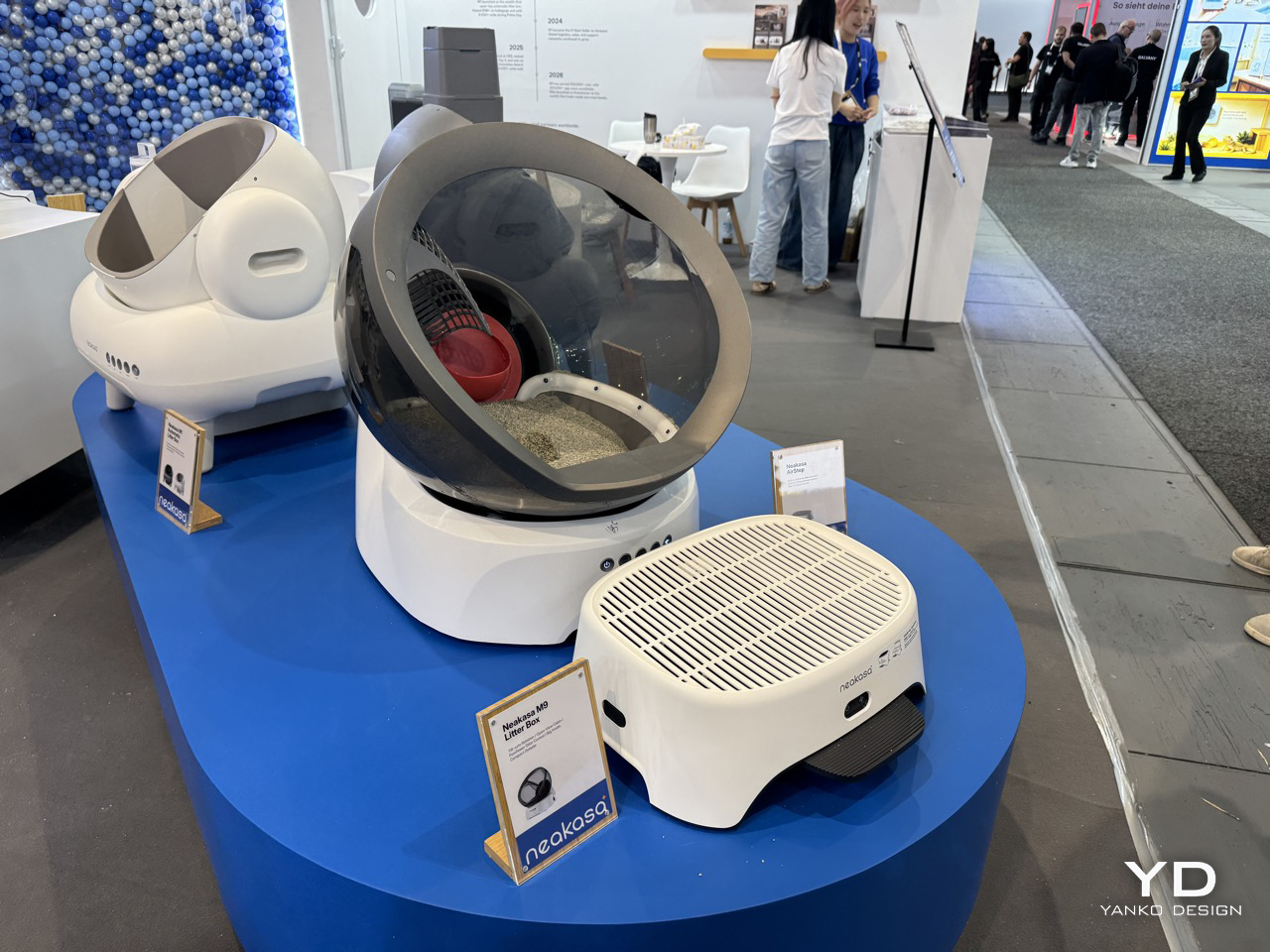
Neakasa built its name on a genuinely strange insight: cats hate closed boxes but self-cleaning litter boxes are usually closed boxes. The M1 solved that by going open-top, letting the drum rotate backward to separate waste while a cat can still see its surroundings the whole time, a small design choice that turned into the brand’s signature move and helped push units past a million sold across 40-plus countries. At IFA, Neakasa is showing that lineage next to the M9, the newer step in their self-cleaning line, continuing the same open-access philosophy while pushing further on sensor coverage and app-based monitoring that tracks individual cats by weight and logs bathroom habits over time. It is the kind of iteration that makes sense once you’ve watched the category mature: less about chasing a gimmick, more about refining the parts that actually matter to a cat mid-business.
What’s genuinely funny is that despite being a fixture in Europe and North America for years, this is Neakasa’s first time at IFA itself, which feels backwards until you remember how much of their growth happened through Amazon reviews and Reddit threads rather than trade show floors. When asked who actually drives the design decisions, the pet or the pet owner, Neakasa’s Chuchu He didn’t hesitate: it’s always the pet. The company has four cats living at HQ specifically to test hardware before it ships, which sounds like a marketing line until you realize it explains a lot about why the M1’s entrance width and drum depth feel deliberately cat-brained rather than engineer-brained. Getting a booth at IFA after years of build-up isn’t really a debut so much as the company finally showing up in person to a crowd that already knows their name from a spouse’s Instagram story or a late-night impulse Amazon order.
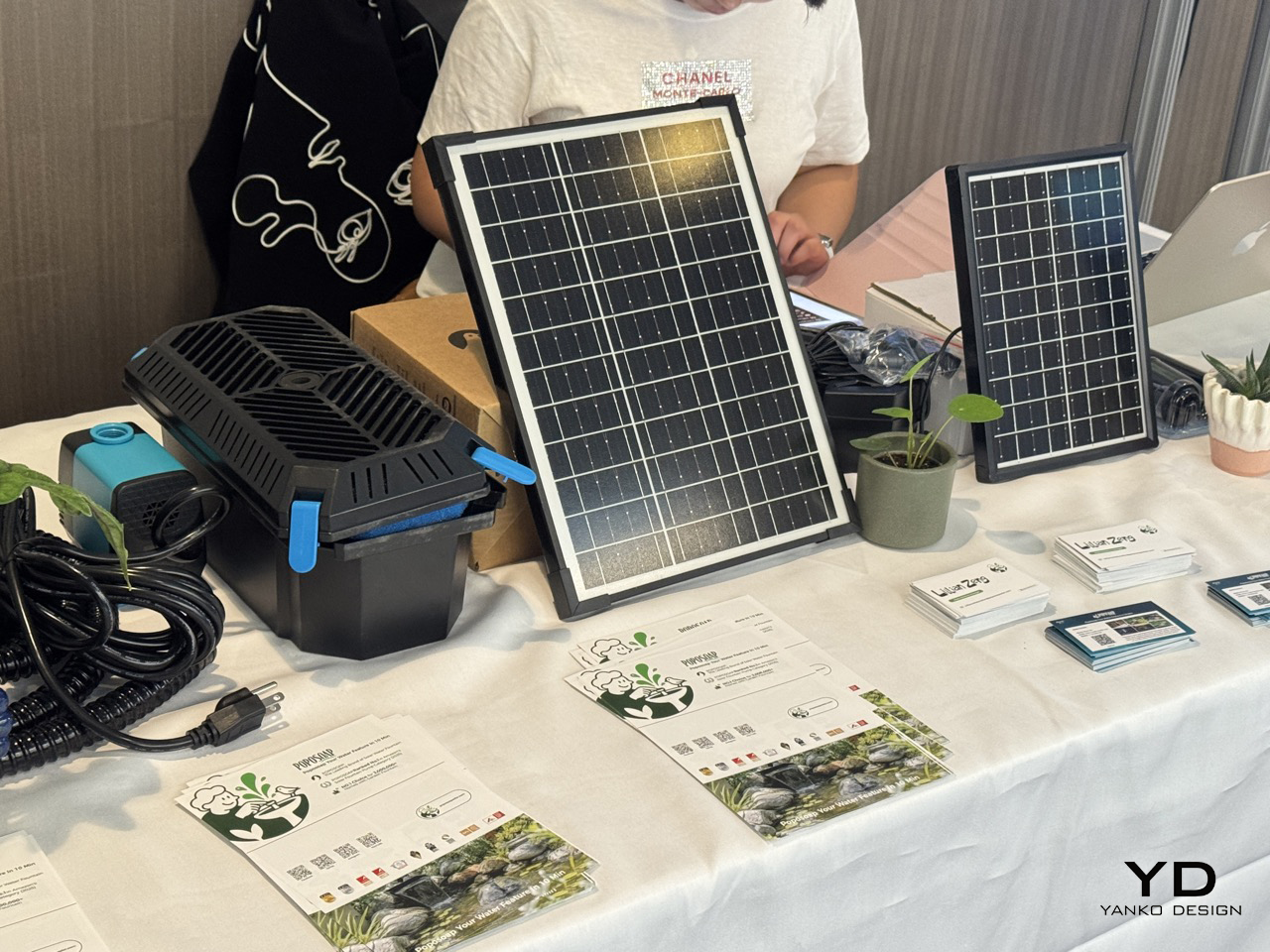
Poposoap is a water-gardening brand built on a straightforward premise: that anyone should be able to create and maintain a thriving pond or fountain feature without a landscaper, an electrician, or a weekend lost to confusion. Water gardening is one of those categories that genuinely rewards patience, and yet most of the products designed around it seem built to test yours before you’ve even started. Poposoap’s lineup covers everything a water garden actually needs, from solar-powered pumps and filtration systems to waterfall kits and pre-formed pond structures, all designed for installation that doesn’t require specialist knowledge or buried cable runs. The solar-first approach strips out the wiring problem that has historically kept backyard water features in the category of dedicated landscape projects rather than something a homeowner picks up on a Saturday.
The 55W 580GPH Solar Waterfall Pump Kit is the performance piece of the lineup, moving 580 gallons per hour with enough output to drive a real waterfall feature rather than a decorative trickle. The 12W Solar Small Fountain Pump with Battery adds a battery buffer to the solar equation, which means fountain operation continues through cloud cover and into the evening instead of stopping the moment the sun shifts. The 33-Gallon Rigid Plastic Pond handles the structure side of the equation, providing a pre-formed shell that defines the shape and footprint of a water garden without requiring the homeowner to dig a custom hole and line it. That last part is where most backyard pond projects stall and give up, and Poposoap’s answer to it is a product rather than a process.
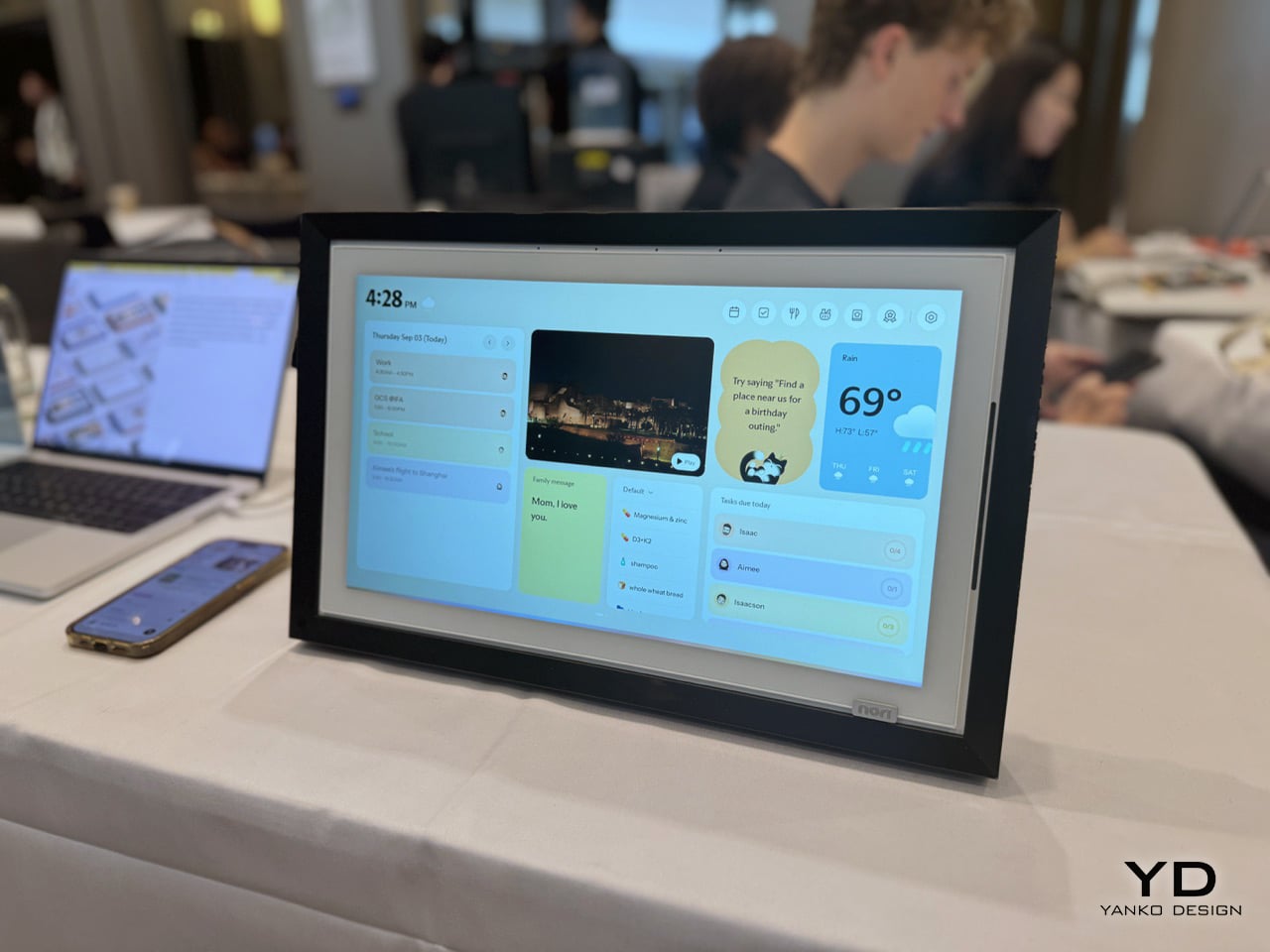
Your household runs on a system that nobody designed. It is a pile of group chats, shared notes apps, calendar invites nobody accepted, sticky notes on the fridge, and one person who holds all of it in their head while everyone else asks where things are. That person is exhausted, and the problem is not a lack of effort. It is a lack of infrastructure. Nori is built by Domus Next, a San Francisco company founded by veterans from ByteDance and Samsung, and its entire pitch is that families deserve the same kind of AI coordination layer that enterprises have had for years, sitting on your kitchen counter instead of a server rack.
The Nori Family Hub combines AI intelligence with a touchscreen frame that turns hours of planning into minutes. It breaks down big plans like dinner parties or birthday celebrations into manageable steps through natural voice commands, assigns tasks to the right family members, and connects with Microsoft Outlook, Apple, and Google Calendar to pull scattered schedules into one view. The Family Memory feature goes further, remembering dietary restrictions and allergies for every member of the household and recommending recipes that actually work for everyone. All of it is visible on a large, readability-optimized touchscreen, and when nothing is active, it doubles as a digital photo frame with interchangeable surround options. Built-in tools cover shared task lists, a digital message board for guests and caregivers, and a gamified chore system, all manageable through the touchscreen or the Nori mobile app.
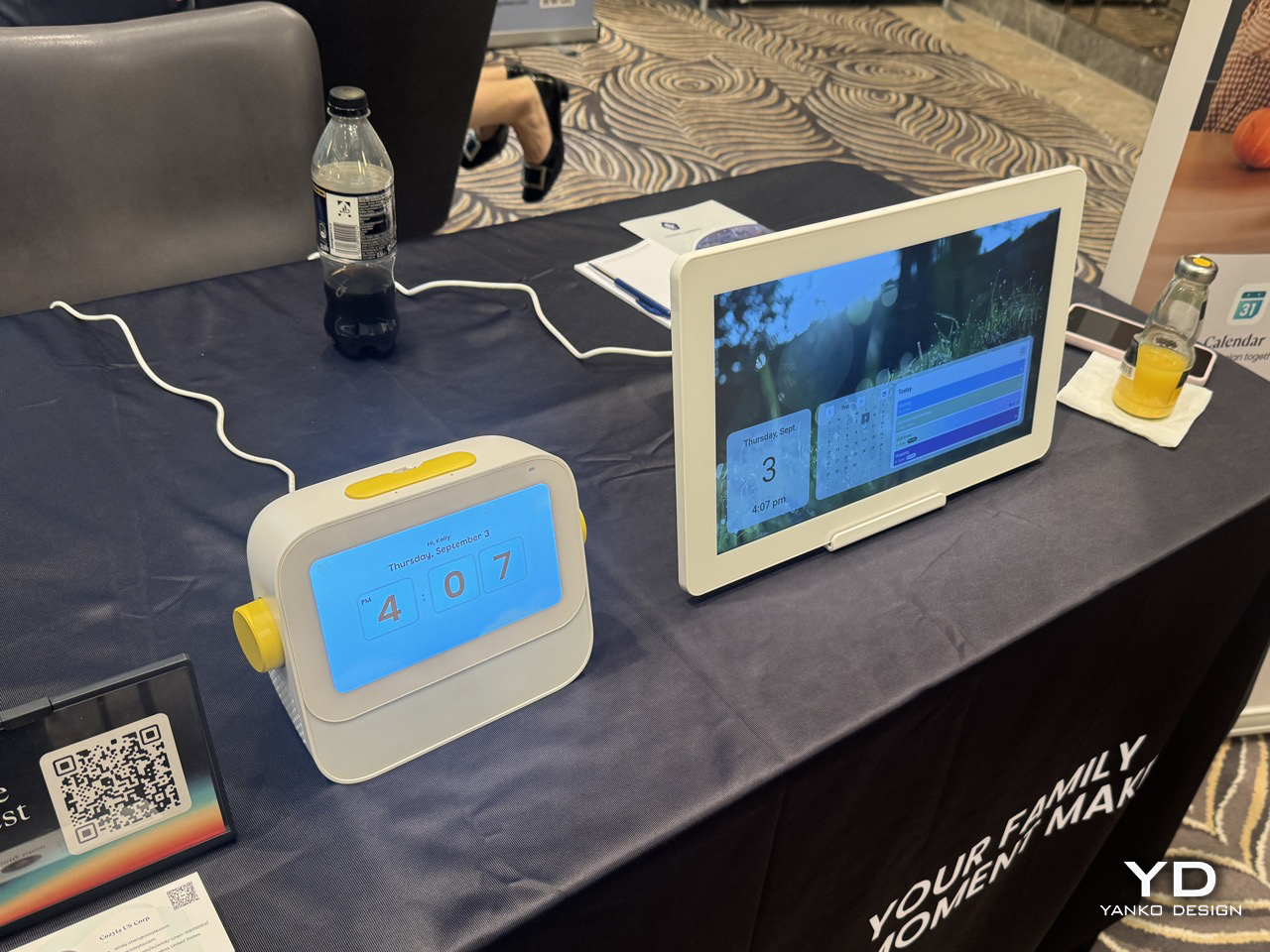
Your family’s schedule lives in four different apps, two group chats, a physical calendar on the fridge that nobody updates, and the head of whoever drew the short straw of keeping track of everything. That is not a system. It is a stress position that one person holds indefinitely while everyone else asks what’s for dinner. Cozyla was built around that exact friction point by founder Yao Li, who watched it play out in his own home during remote work and decided a central hub powered by real technology was a smarter answer than another shared notes app. The brand makes interactive displays designed to sit on your wall and actually run the household, and what separates them from the Amazon Echo Show approach is a genuine commitment to making the interface feel warm rather than corporate.
The Calendar Plus 2 is the flagship, and it earns that title. Available in 15.6 inches at $349.99, 24 inches at $699.99, and 32 inches at $899.99 with a 4K option, it syncs two ways with Google, Apple, and other calendars in real time, supports up to 20 customizable widgets per screen, gives you voice and AI assisted event entry, access to over 5,000 recipes with dynamic shopping lists and pantry tracking, a gamified chore and task system with points and rewards, and a screensaver mode that displays family photos when idle. The Calendar Neo is the leaner entry point: a 15.6-inch FHD IPS display running a custom, stripped-down OS with no Android clutter, no ads, no app drawer to navigate, booting directly into the Cozyla dashboard with WiFi 6, 3GB RAM, and 32GB storage.
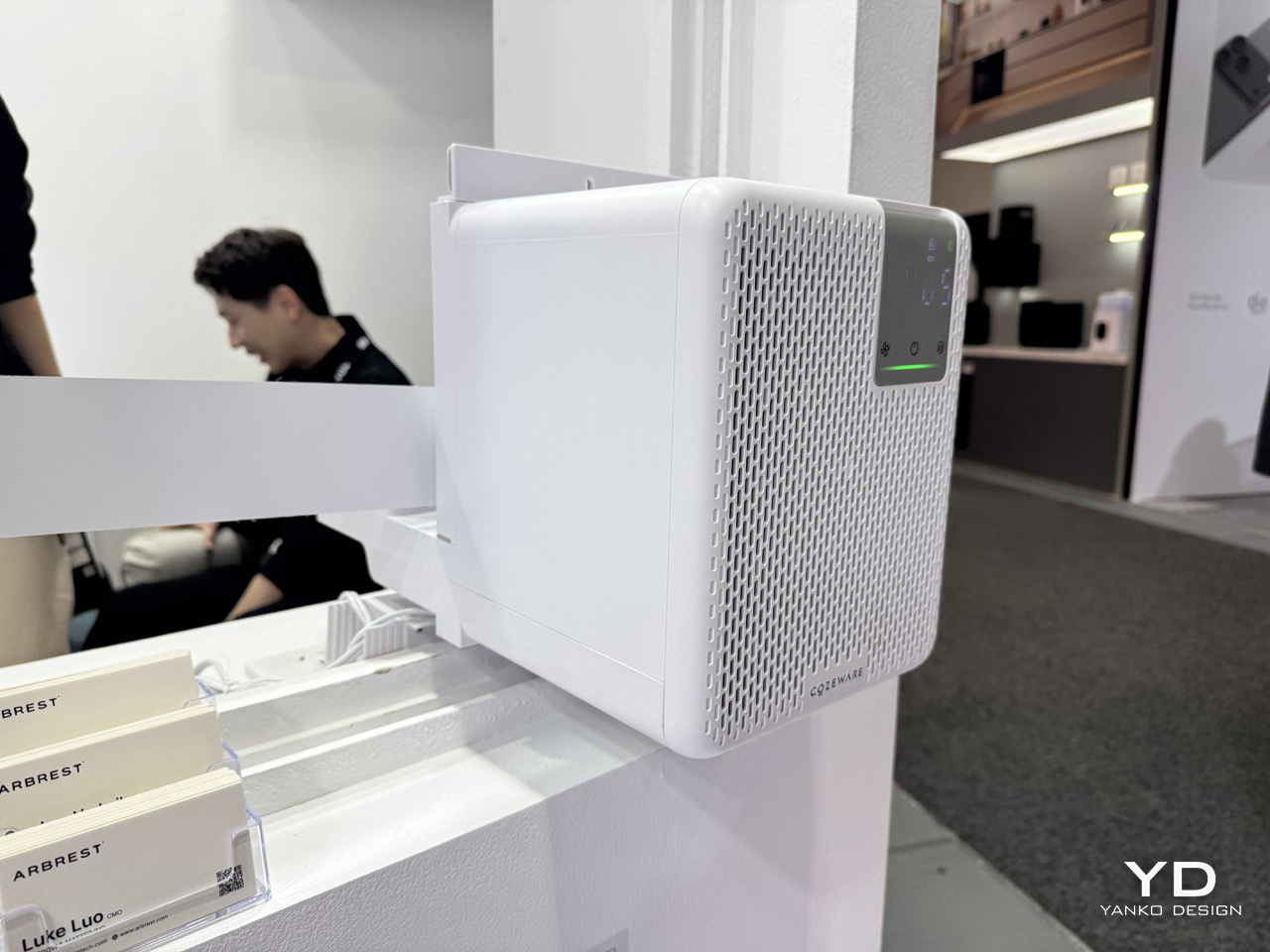
Cozeware is a brand from Shanghai YINTA Technology that built its reputation by making ductless mini-split ACs and heat pumps, delivering 9,000 to 24,000 BTU at 18 to 20 SEER2 efficiency with inverter compressors and app control at prices that undercut the premium HVAC market without cutting the specs. The E-Save line added an AI chip that trims runtime and reduces waste. The FreshFlow is what happens when that same engineering instinct turns its attention not to cooling air, but to the more fundamental question of where the air in your room is actually coming from.
The FreshFlow Pro reimagines the window as a controllable breathing interface, bringing filtered outdoor air in when conditions are suitable and switching to indoor purification when they are not. The WindowFit mounting system installs with no drilling and no permanent ducts, and the Fresh-In path delivers up to 47.1CFM of active outdoor air intake. An integrated sensor monitors real-time PM2.5, TVOC, CO₂, and temperature; AirMatch filters swap from the front while the unit stays mounted; and noise sits at just 26dB on the lowest fan speed. It works with Alexa, Google Home, and Apple Home.
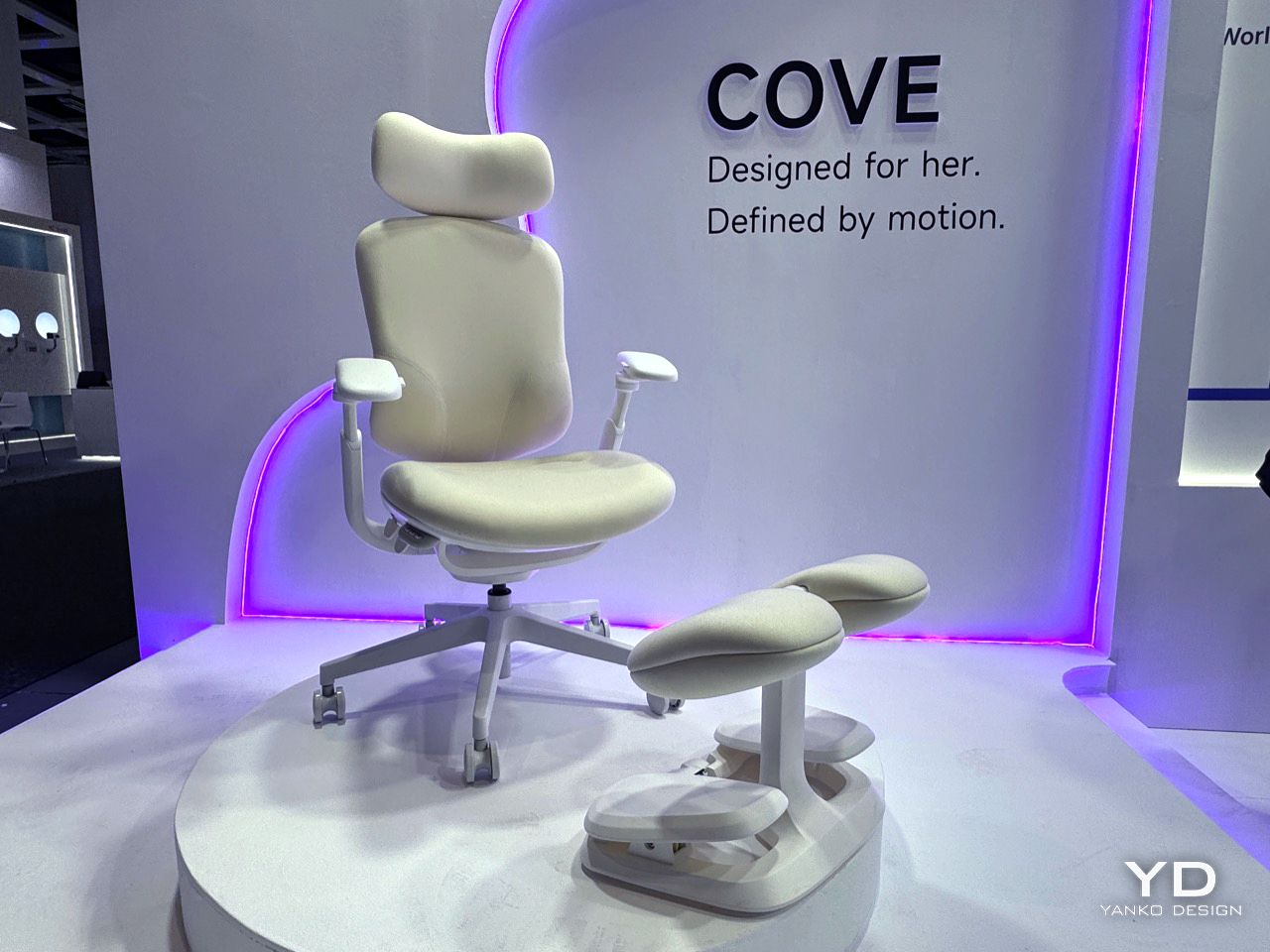
Arbrest is the smart living brand of YINTA Technology, the Shanghai AI hardware group behind Cozeware and several other direct-to-consumer home brands. Where most connected home products add another app to manage, Arbrest starts from the furniture itself, pairing natural materials and organic modern design with intelligence that stays out of the way. The brand launched direct-to-consumer in late 2025 around solid wood dining, storage, and living room pieces, and the COVE chair is the most pointed statement the brand has made yet about what it actually means to design for the person sitting in the room, not a universal reference body that was never yours to begin with.
The problem with your office chair is not that it has too few adjustment knobs. It is that the geometry it was built around was never yours. The lumbar sits too high. Your feet don’t reach the floor properly. The front edge presses into your thighs. You spend the day perching forward or shifting constantly because the chair is asking your body to compensate for its own bad math. COVE starts from a different place entirely: female anthropometrics, real-world postures, and observed daily habits. Seven critical dimensions and pivot points are recalibrated specifically for the female frame; a 12-zone micro-motion backrest responds locally to even the slightest shift in the shoulders, back, and lumbar, and a motorized lumbar system with one touch stretch initiates an active decompression sequence that gradually opens the lower back and hips without you leaving the seat. A 16-degree active forward tilt chassis covers four distinct posture angles, and a 5-point synchronized support system moves the headrest, armrests, backrest, seat cushion, and footrest in seamless harmony as your weight shifts.
The post From Self-Caring Plants to Smokeless Steaks: These IFA 2026 Innovations Redesign Everyday Living first appeared on Yanko Design.
How we think about home appliances is shifting, and AEG leaned into it at IFA 2026 in Berlin spectacularly. We witnessed four new products, two clear categories, and one throughline: the best appliance is the one you don’t have to manage. From the kitchen counter to the living room floor, AEG is betting that people want outcomes, not processes. After seeing what these four do, that bet looks pretty solid.
The lineup breaks into two groups. Grab-and-go cleaning pairs the ErgoMini handheld vacuum with the Trilobite 8000 GEN2 robot. Set-and-forget cooking covers the 7000 Series OnePot Pasta hob and the 3-in-1 Pizza Oven with Air Fry, two appliances that take truly hands-on kitchen tasks and effortlessly and efficiently handle them for you. These are four distinct products, with one consistent point of view. Here’s what each one actually does, and whether it’s worth caring about.
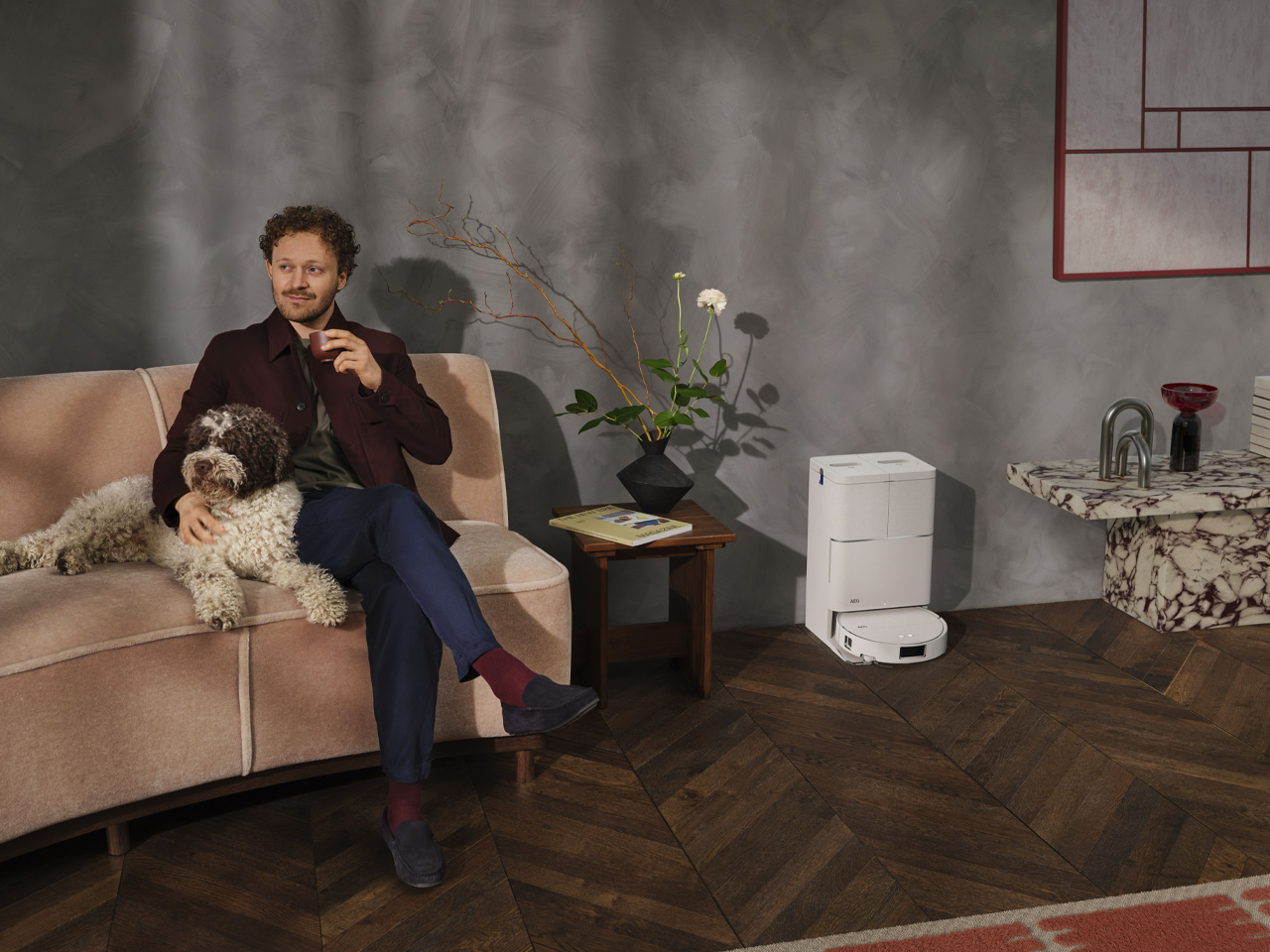
The kind of clean that happens around your life, not instead of it. The ErgoMini and Trilobite GEN2 don’t have much in common physically, but the thinking behind them is identical. Both exist so you spend less time thinking about cleaning, and more time not thinking about it at all.
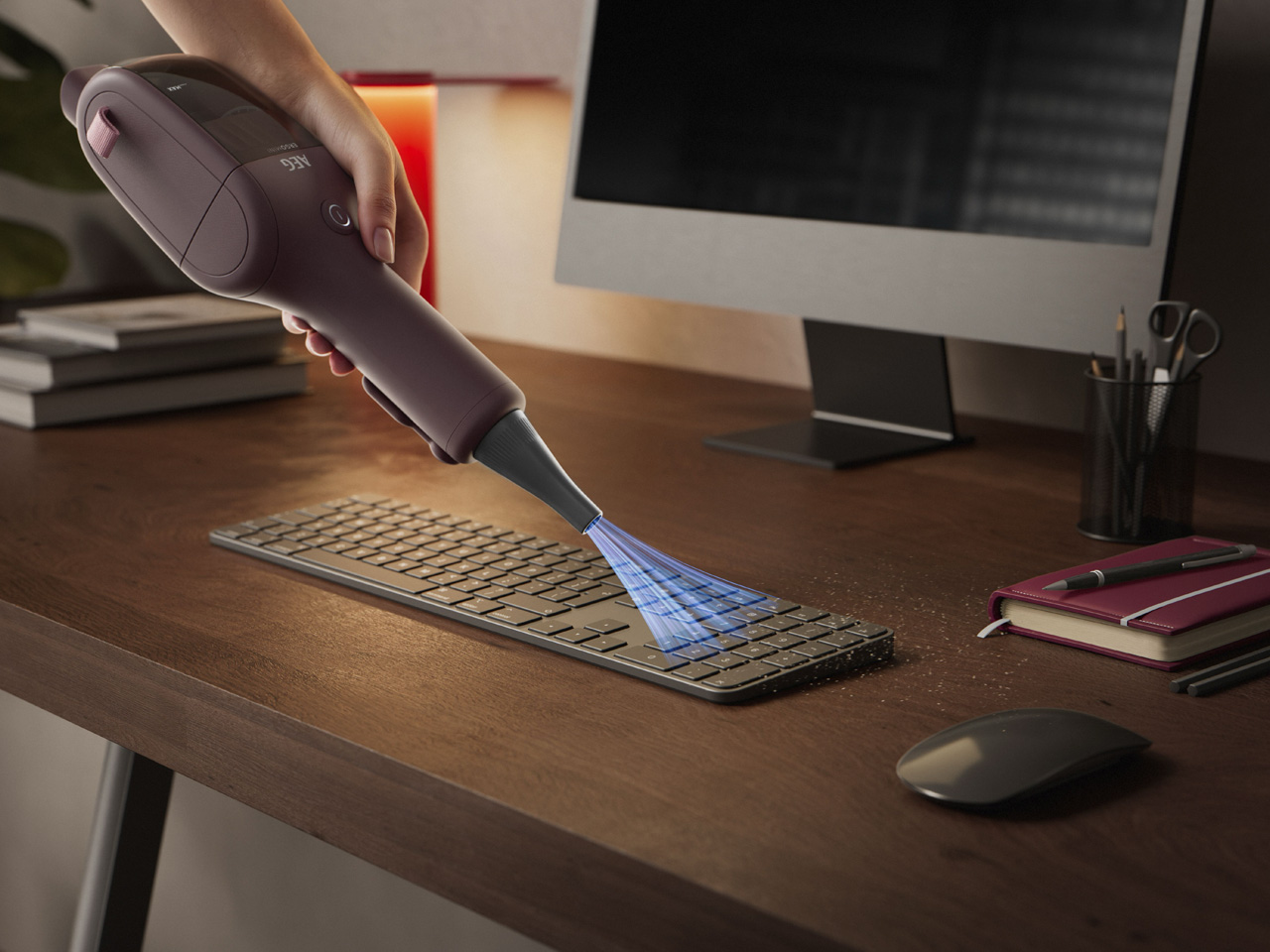
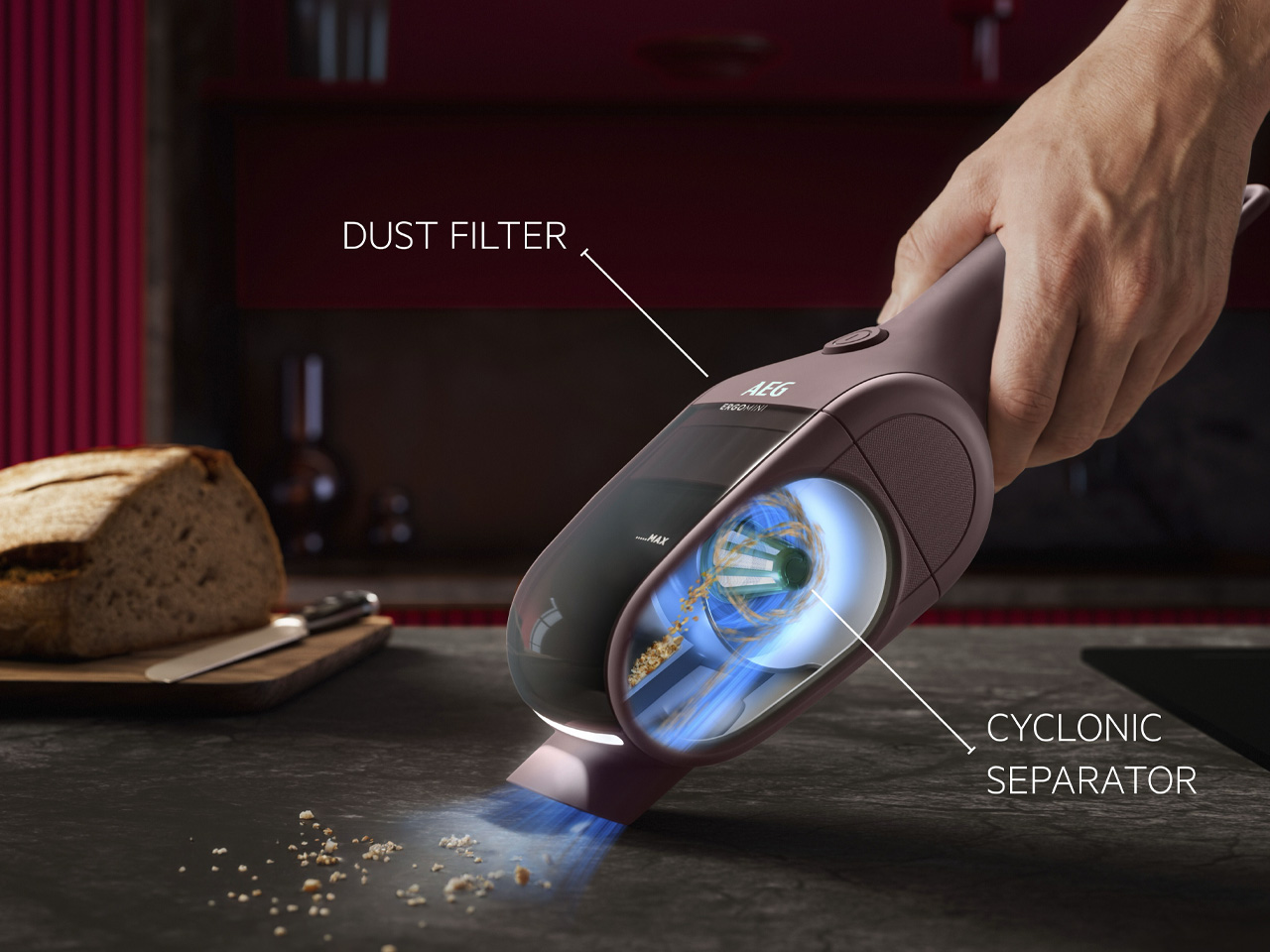
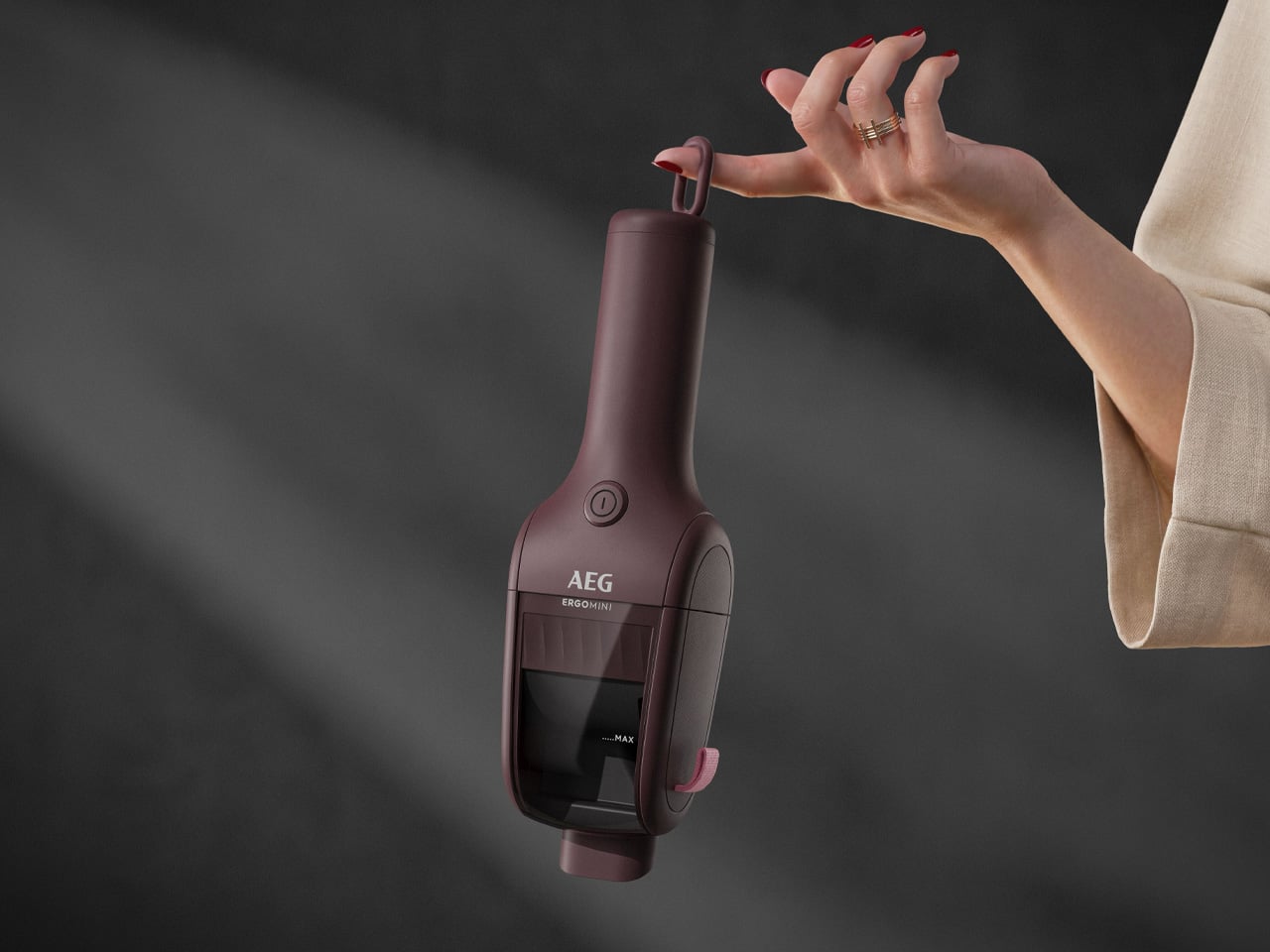
The ErgoMini weighs 0.55kg. For context, that’s lighter than most water bottles you’d carry to the gym. Making its world premiere at IFA 2026, it’s a handheld vacuum built around cyclonic technology, which separates dust and debris from the airstream before they reach the filter. That keeps suction strong for up to three times longer between filter cleans than other leading lightweight handhelds in the same class. It also delivers up to 100% dust pick-up, which for something this small and light, is genuinely impressive.
What separates it from the crowd is how much thought went into everyday use. An integrated LED light makes hidden dirt visible on any surface. A blowing mode lets you inflate camping mattresses or force debris out of tight corners before the suction clears it up. USB-C charging means you’re not hunting for proprietary cables, a built-in wall hook keeps it within arm’s reach, and one-step controlled emptying means you’re not wrestling with the bin after every session.
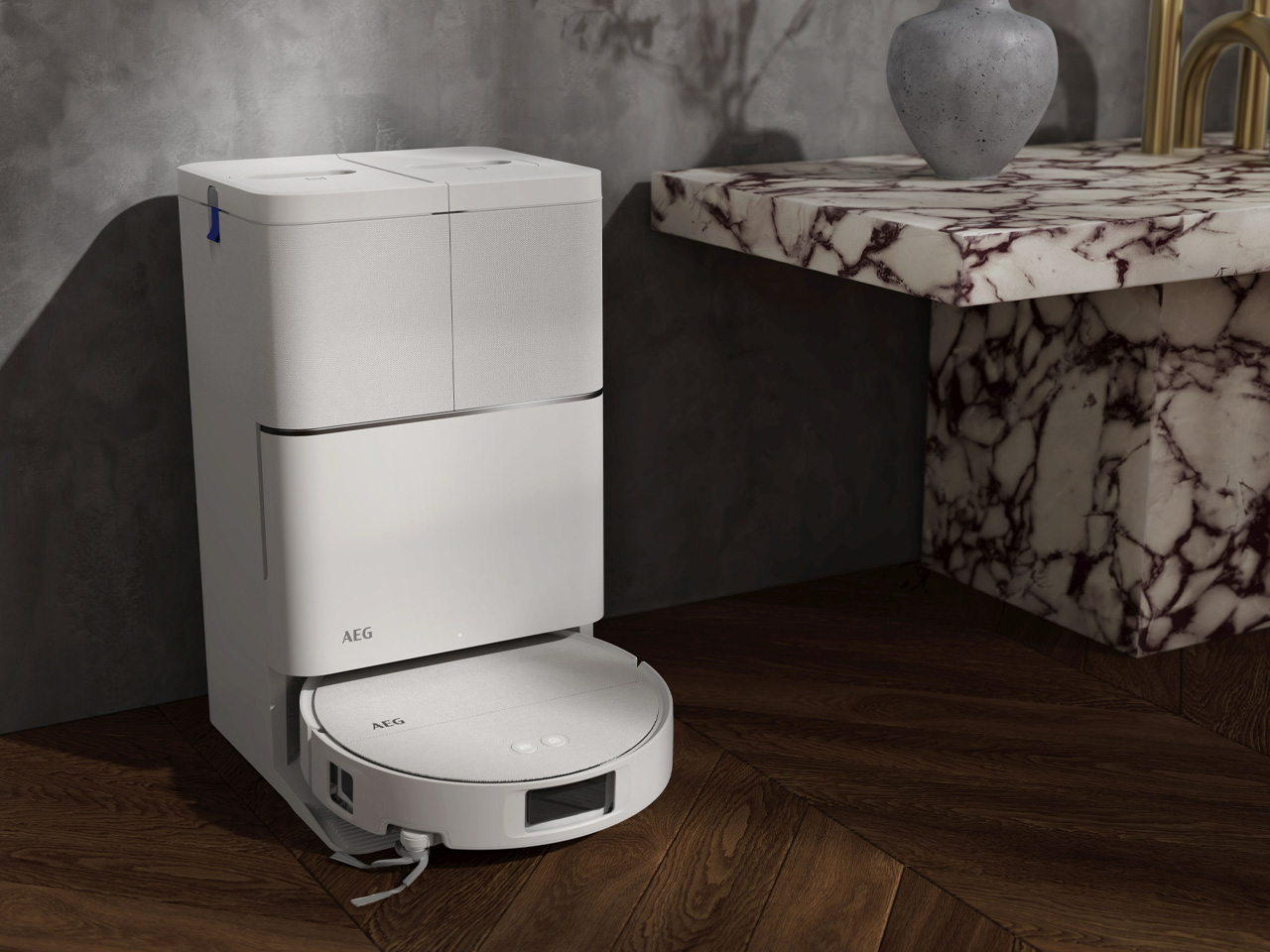
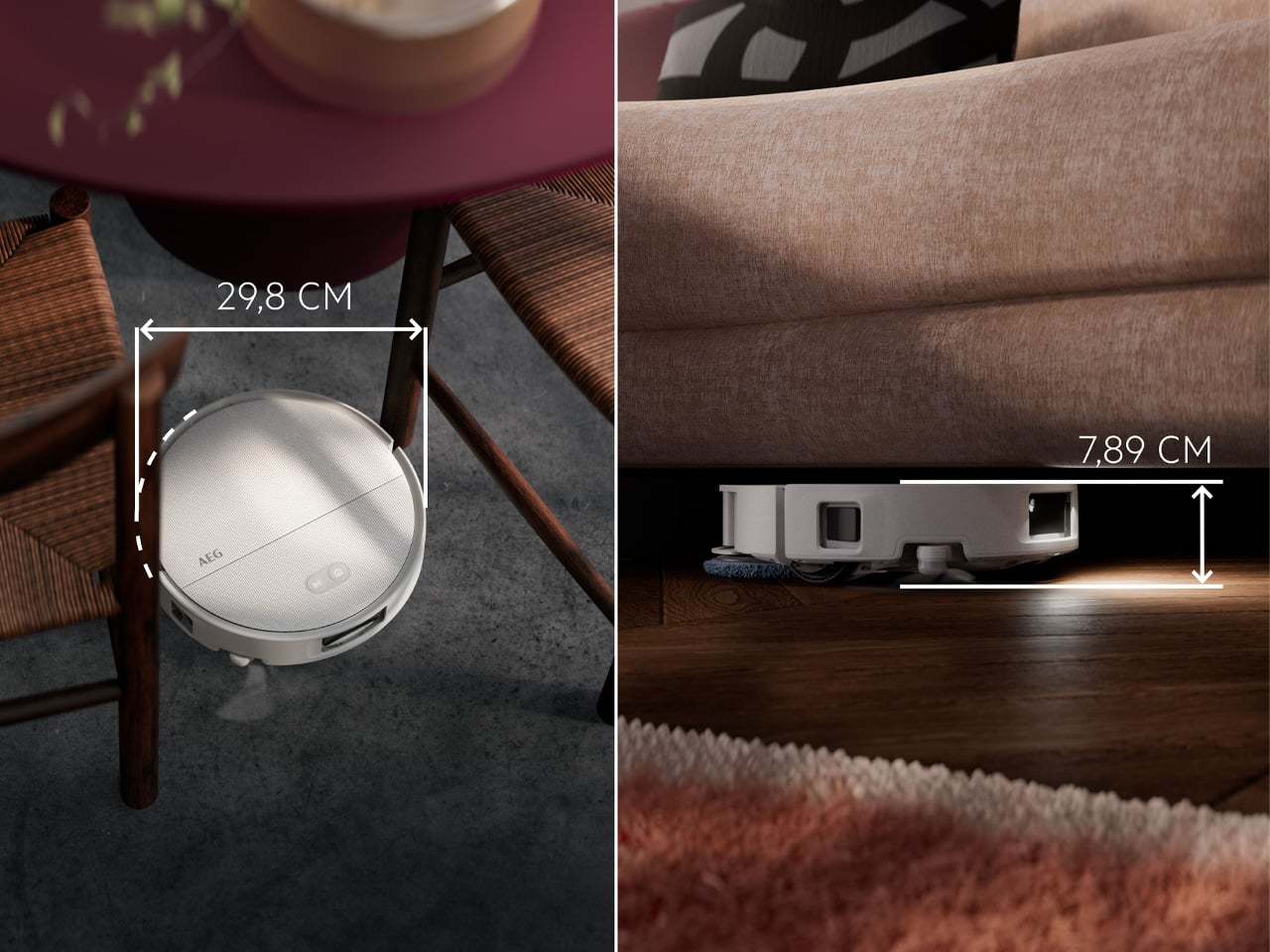
At 7.89cm tall, less than the height of a standard drink can, the Trilobite 8000 GEN2 is built to get into spaces most robot vacuums simply cannot reach. Under low sofas, beneath beds, along baseboards that other robots skip. It vacuums, mops, and self-dries. Compared to its predecessor, it packs up to 40% more suction power and delivers 100% large-debris pick-up. Advanced LiDAR navigation combined with the ability to identify more than 200 different obstacles means it moves through your home with real confidence, not just randomness.
The All-in-One station is what makes the hands-free promise real. It automatically washes and dries the mop pads, empties the debris bin, and keeps things running for up to 30 days without you needing to touch anything. The AEG App, which has earned both a 2025 Red Dot Design Award and a 2026 iF Design Award, handles room mapping, zone control, and scheduling in a few taps. Privacy is also built into the hardware: no microphone, on-device image processing only, and nothing uploaded to the cloud. That last part is a genuinely reassuring detail in a product category where it’s rarely addressed.

Great food, with a lot less time standing over the stove. Cooking well has always required attention. AEG is making the case that it doesn’t have to anymore. These two appliances handle the hard parts – the heat control, the timing, the watching – so the only thing left for you to do is eat.
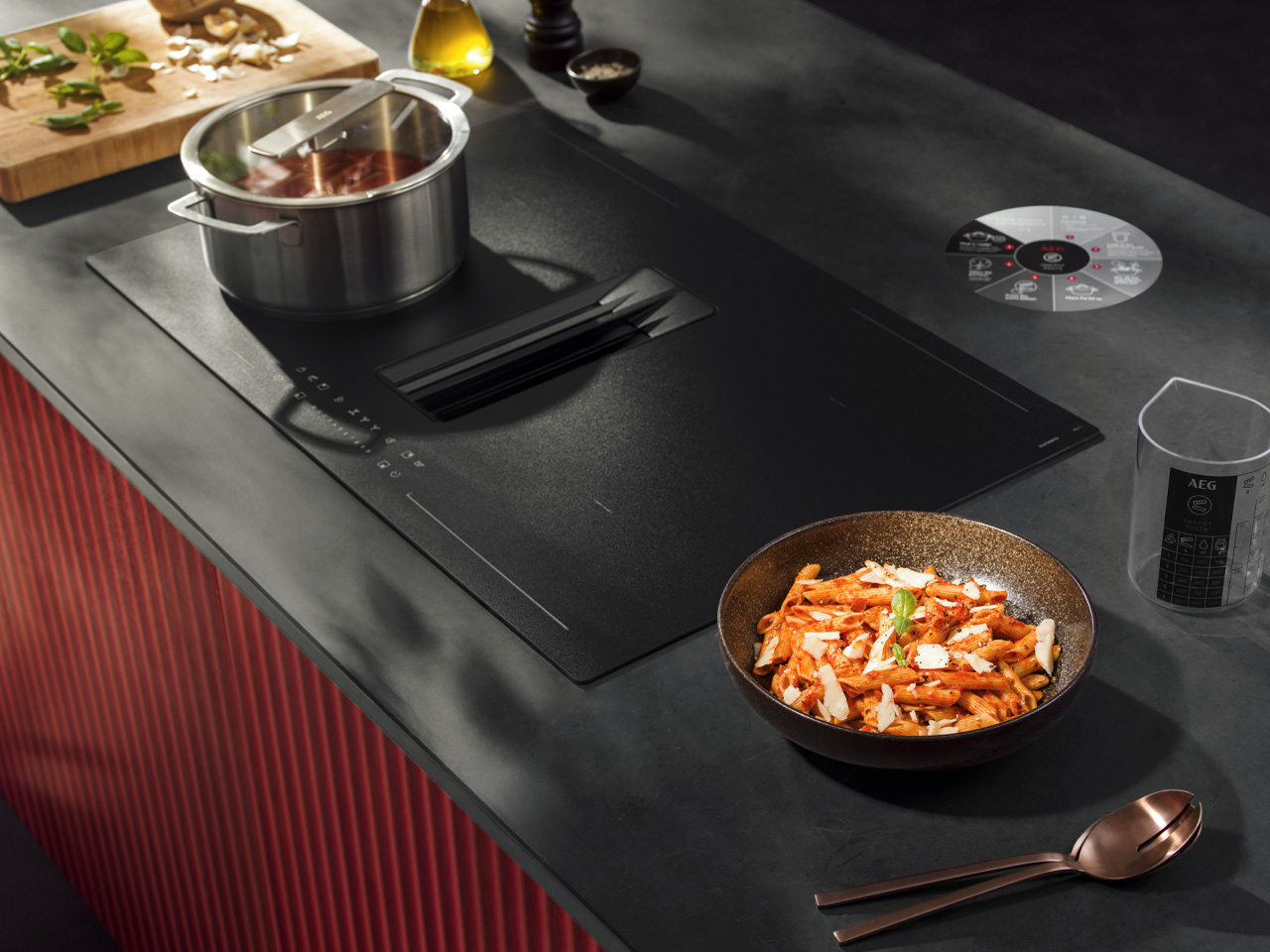
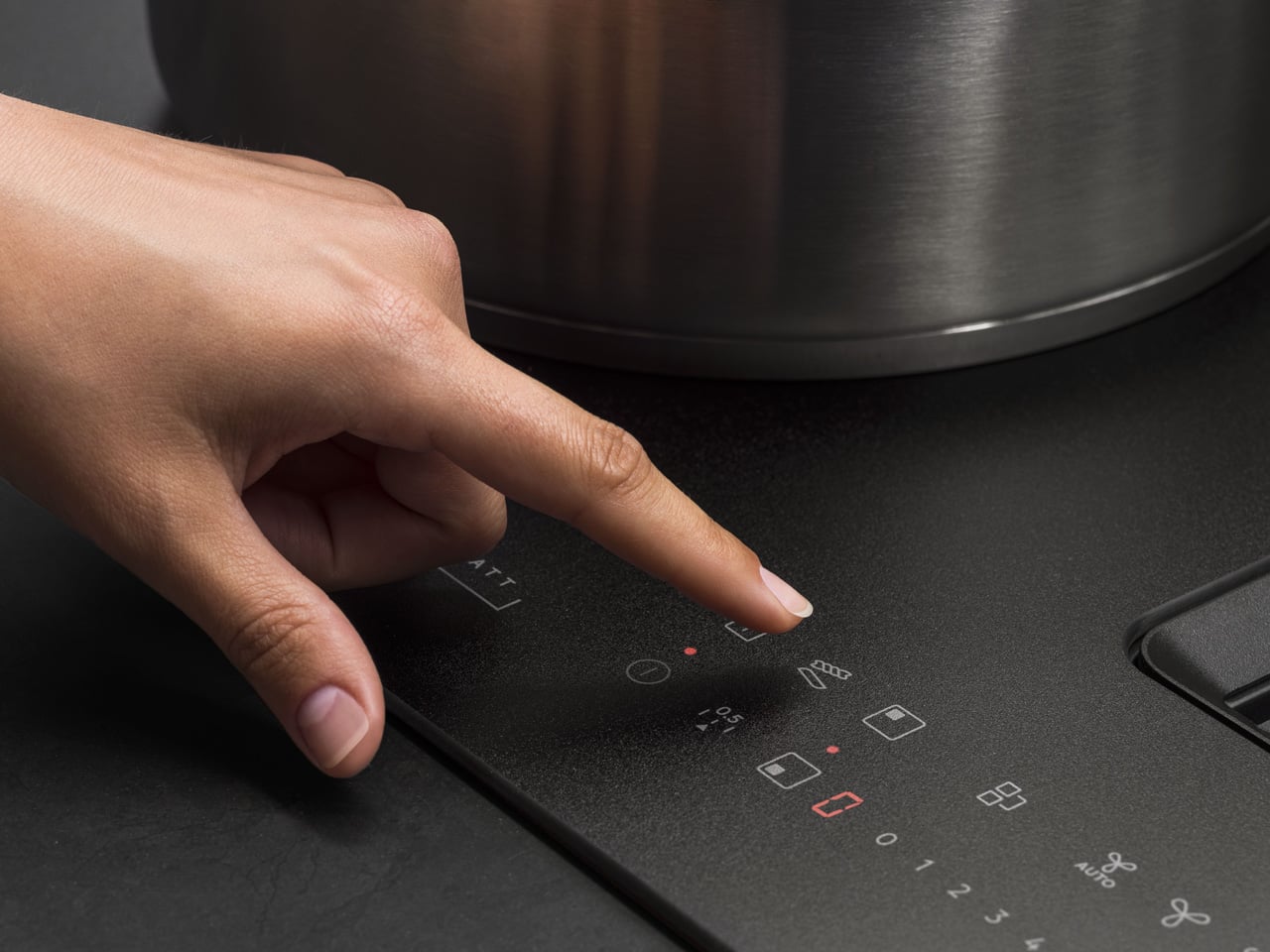
Pasta is one of those things everyone assumes is easy, right up until they’re standing at the stove, adjusting heat, watching the clock, and stirring every couple of minutes while still trying to finish the rest of the meal. AEG’s 7000 Series OnePot Pasta hob removes all of that. You pick your portions, load the ingredients into the accompanying pot, close the lid, and step away. Fifteen minutes later, you have pasta al dente with a naturally creamy sauce. No hovering, no guesswork required.
This isn’t just convenience at the cost of quality. AEG partnered with the University of Gastronomic Sciences of Pollenzo in Italy for a blind sensory test, putting OnePot results in front of more than 100 participants alongside traditionally cooked pasta. OnePot held its own. The hob itself runs on induction with temperature sensors handling the process automatically, and it’s built on AEG’s XTM series platform with the SaphirMatt® surface, which shows up to ten times fewer visible scratches than a standard hob.
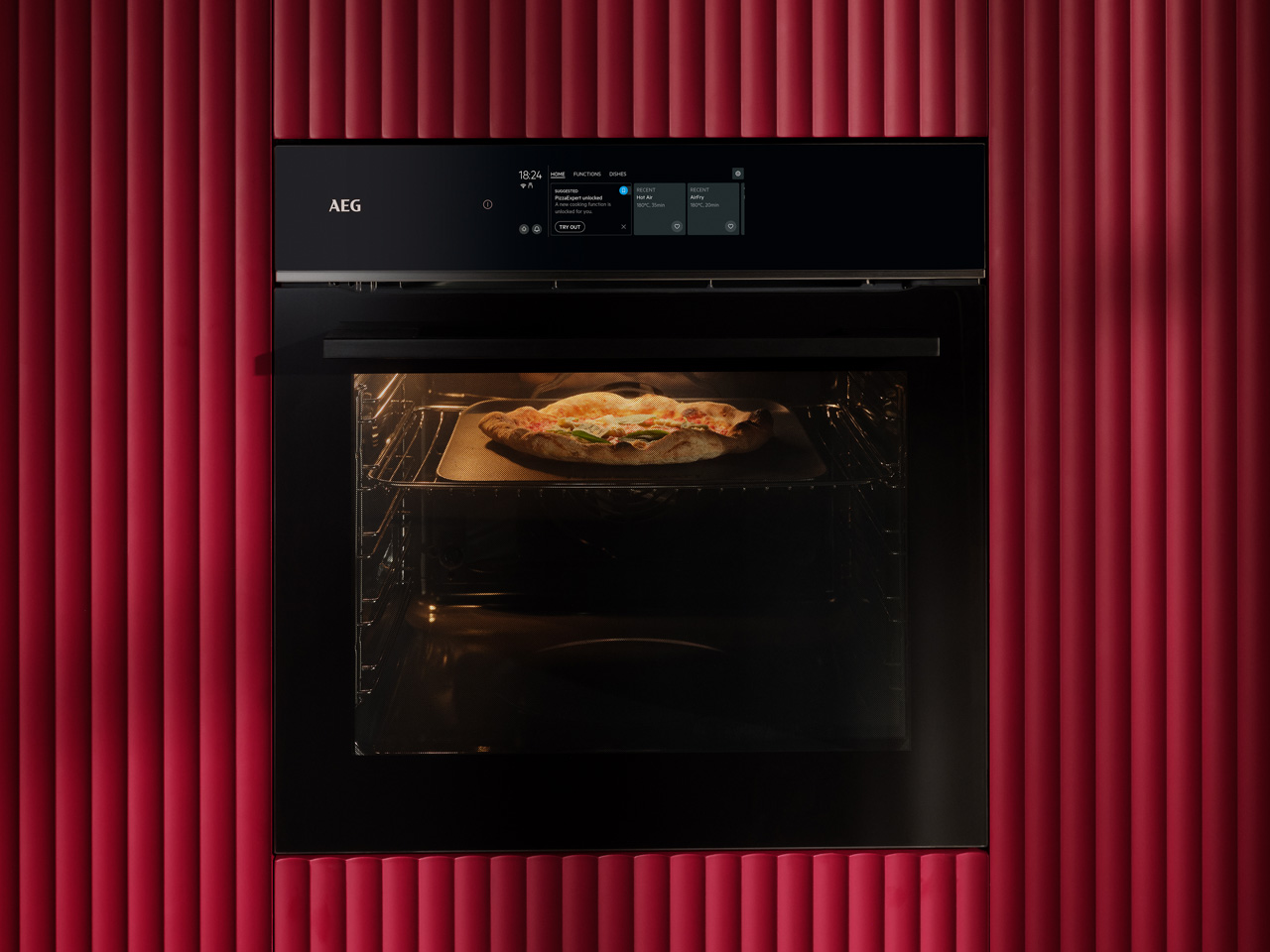

Most home ovens top out around 250°C, which is exactly why your pizza at home never quite matches what comes out of a pizzeria. AEG’s 3-in-1 Pizza Oven with Air Fry hits 380°C and cooks a pizza in two and a half minutes. A 13-litre cavity fits a 30cm pie, dual viewing windows let you watch the crust without opening the door, and the whole thing has already earned a Red Dot Design Award, so it looks as good sitting on the counter as it performs.
Five preset pizza functions cover the most popular styles: Romana, Sicilian, Bianca, Calzone, and frozen. Each dials in a specific cooking profile, which means you’re not experimenting your way to a good result. AEG’s own research found that nearly three in five European pizza lovers would cook from scratch more often if they could consistently hit restaurant quality at home. This is a direct answer to that. The air fryer and full oven modes aren’t just filler either; they make this genuinely versatile kit rather than a single-use novelty.
What AEG brought to IFA 2026 isn’t four product launches dressed in a shared theme. It’s one argument, made four different ways. Appliances should do the work they promise, then stay out of your way. The OnePot Pasta hob and 3-in-1 Pizza Oven close the gap between wanting good food and having time to make it. The ErgoMini and Trilobite GEN2 do the same on the other side of the door.
If I had to pick one, it’s the Trilobite 8000 GEN2. I have a low sectional sofa that standard robot vacuums physically cannot fit under, which has quietly become the dustiest corner of my apartment. A 7.89cm profile changes that completely. Add 30 days of hands-free operation, and I’m barely involved at all. That’s not just a feature list. That’s the kind of quiet upgrade that actually changes how you live.
The post 4 New AEG Launches That Are Betting You Never Want to Babysit an Appliance Again first appeared on Yanko Design.
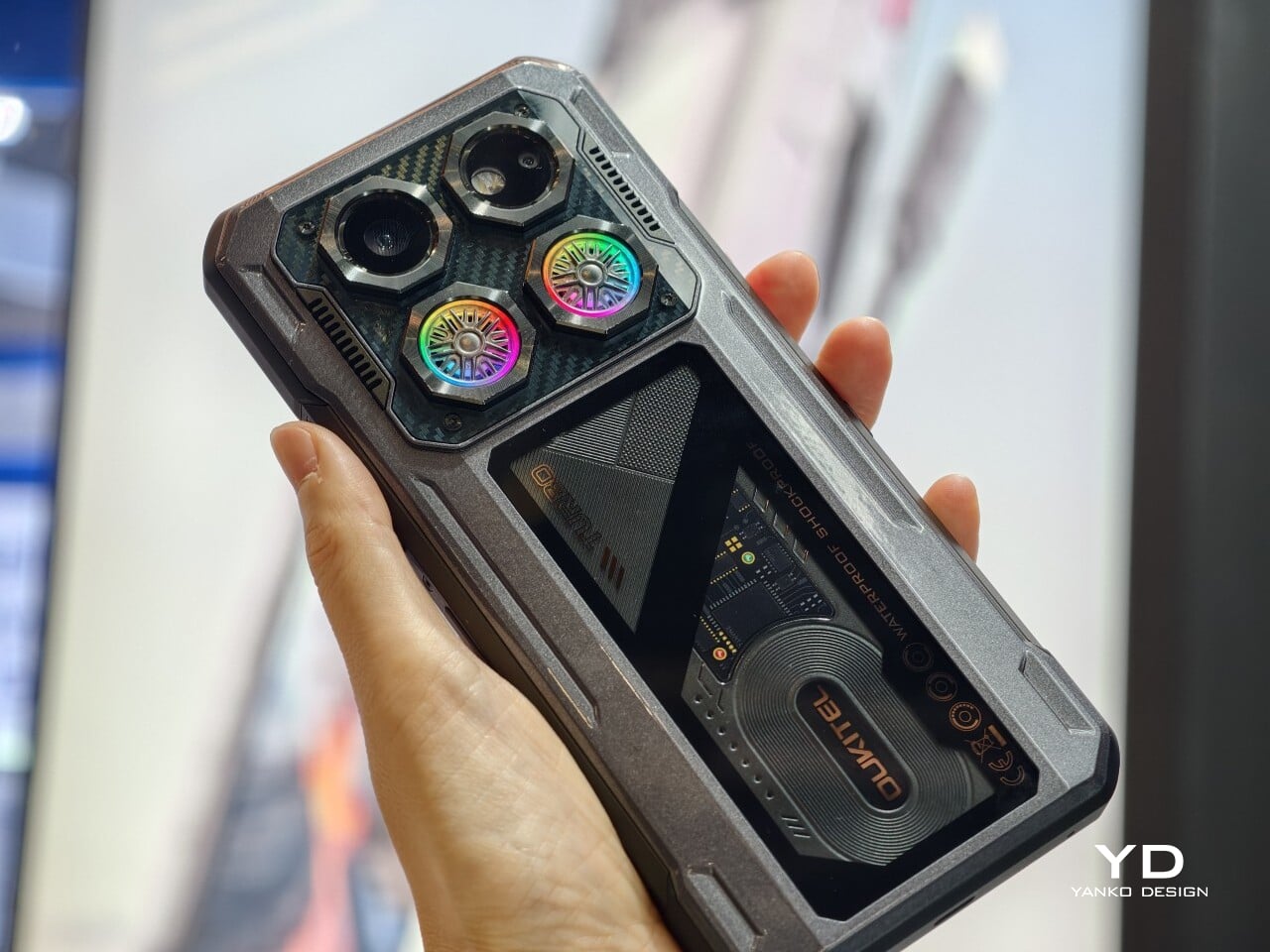
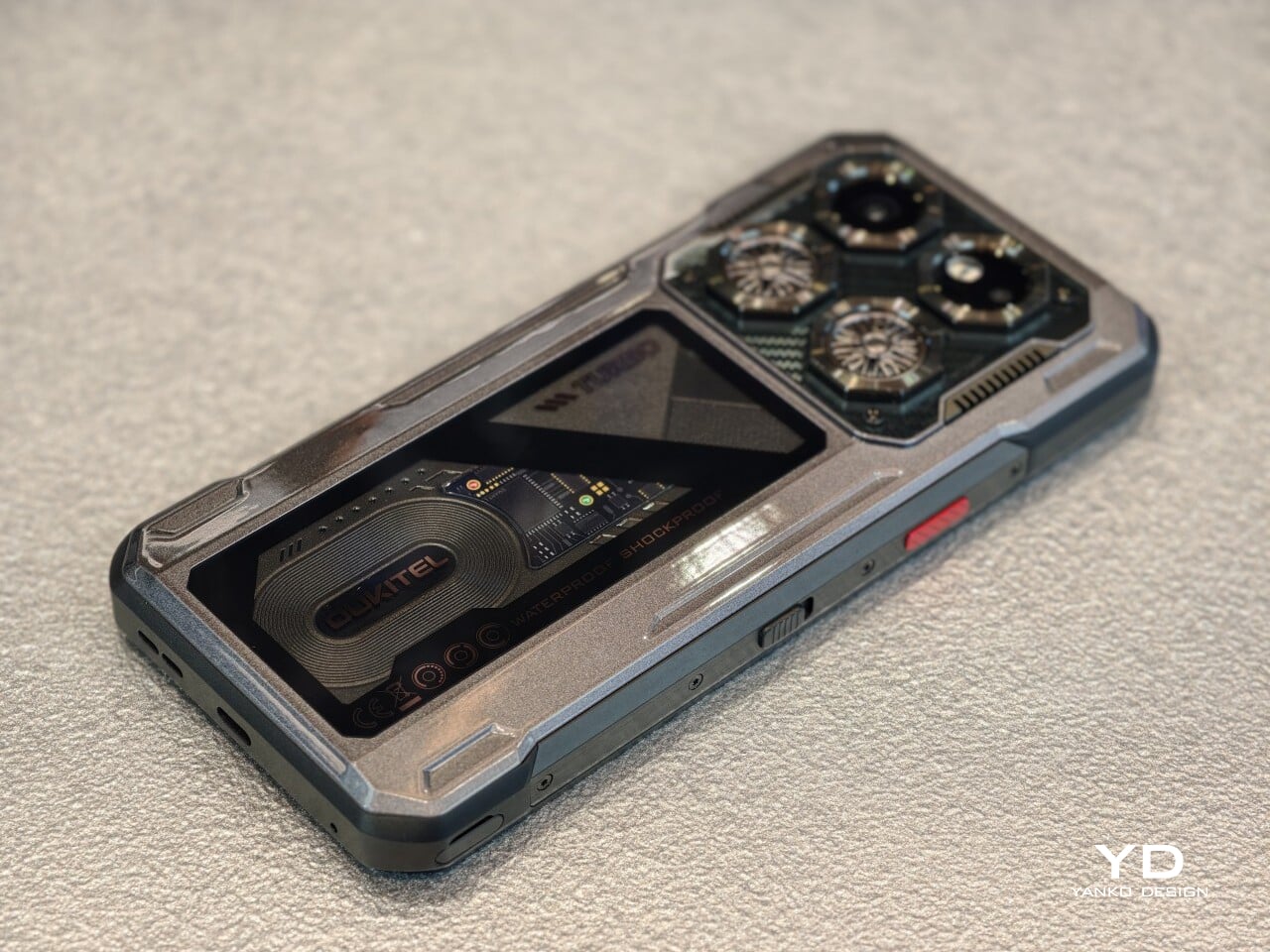
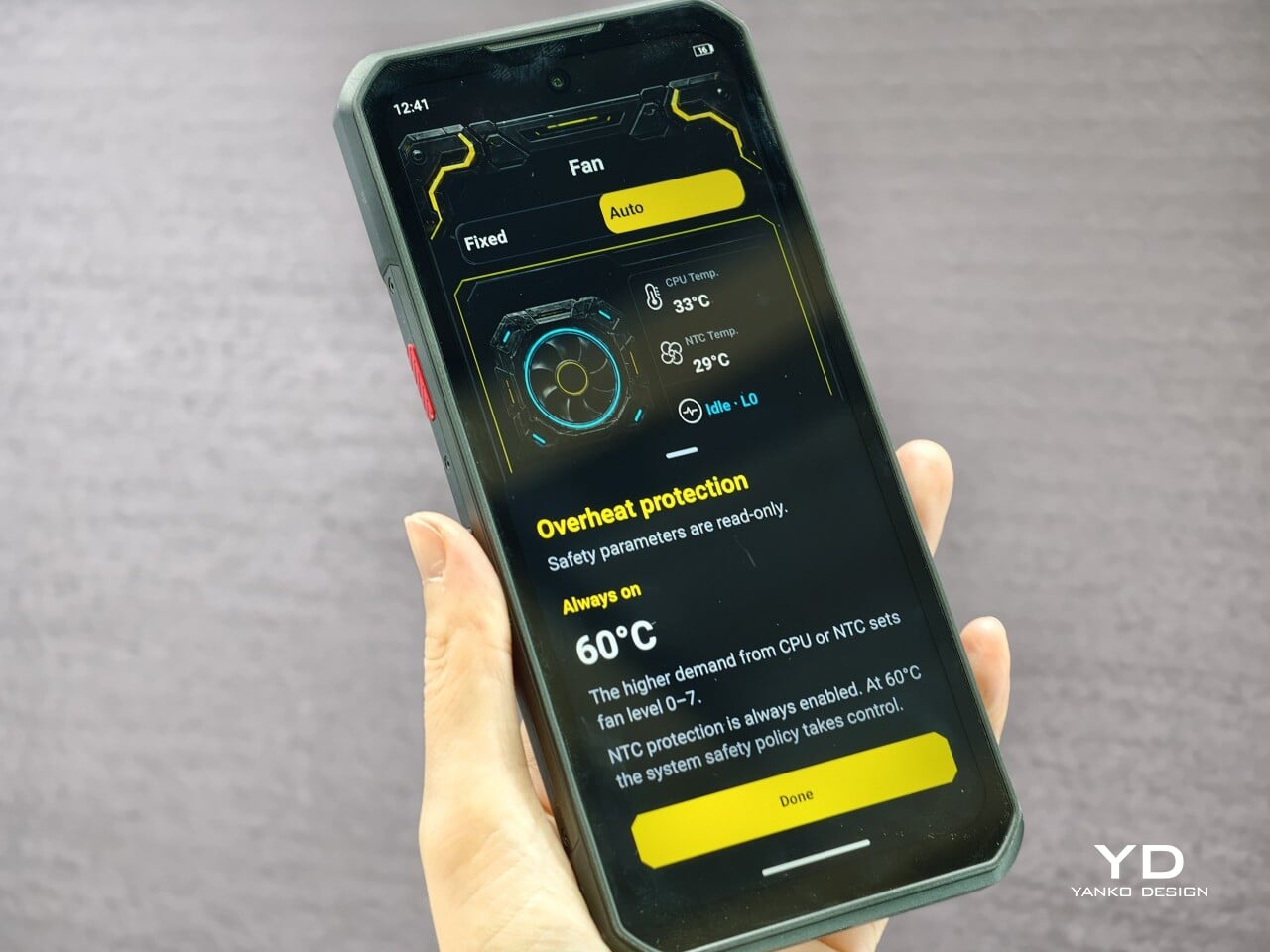
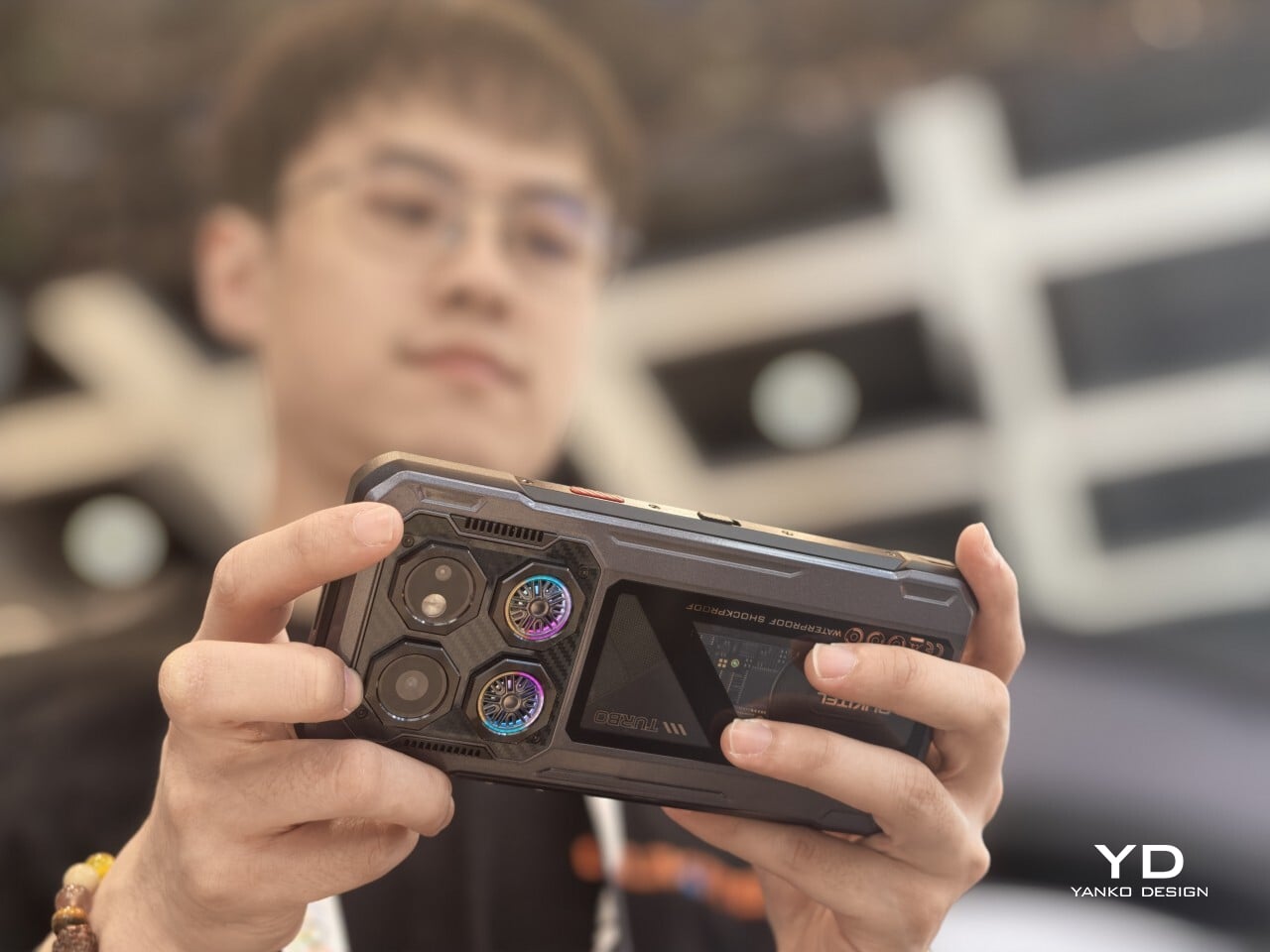
Rugged phones have always made a quiet trade-off. Sealing a device against water and dust means sealing in heat too, and that trapped warmth forces powerful chips to slow themselves down right when gaming or heavy use needs them most. OUKITEL’s WP600, unveiled at IFA 2026, treats that compromise as something worth engineering around, building visible cooling straight into its armor rather than hiding the problem under a tougher shell.
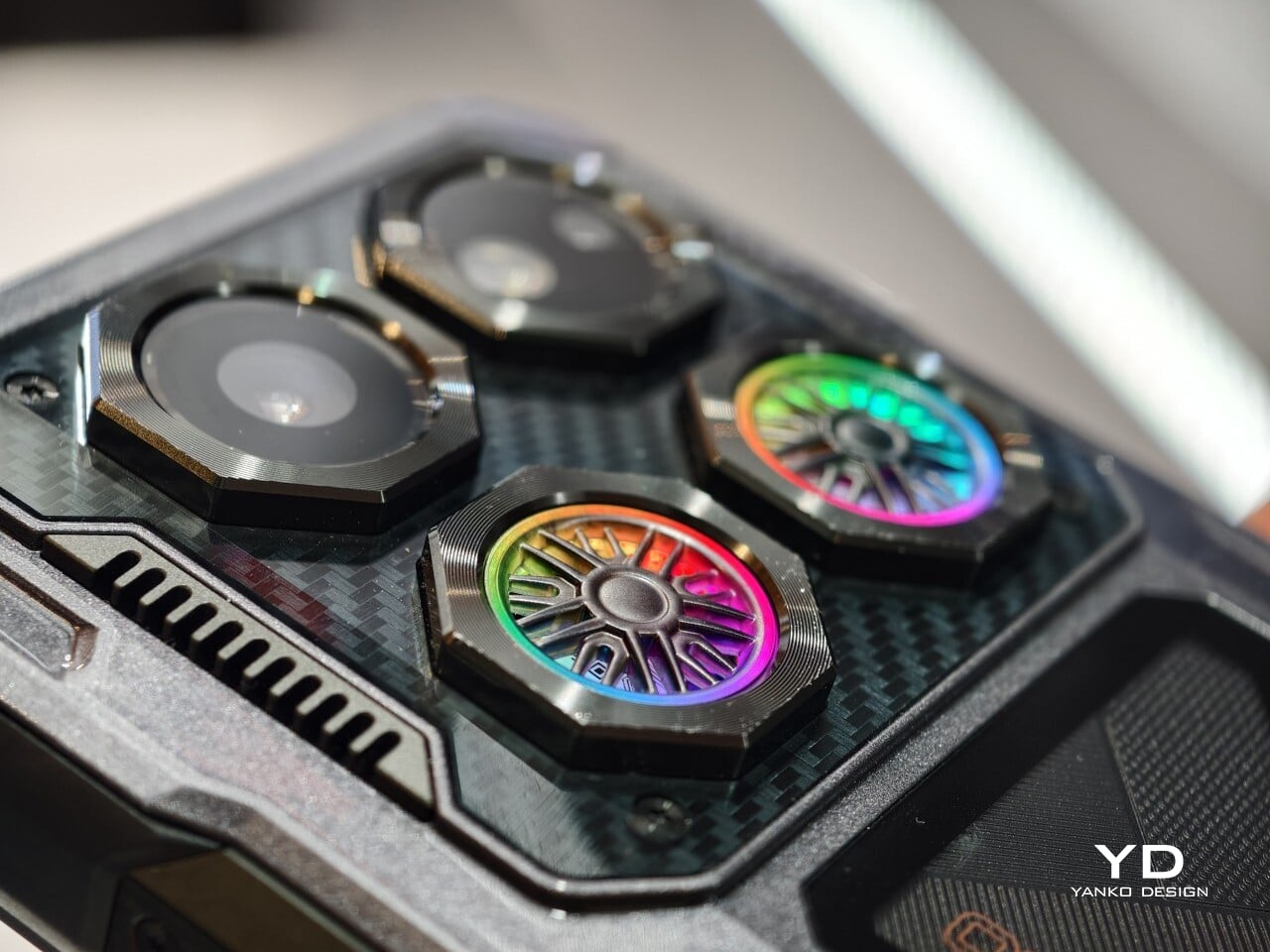
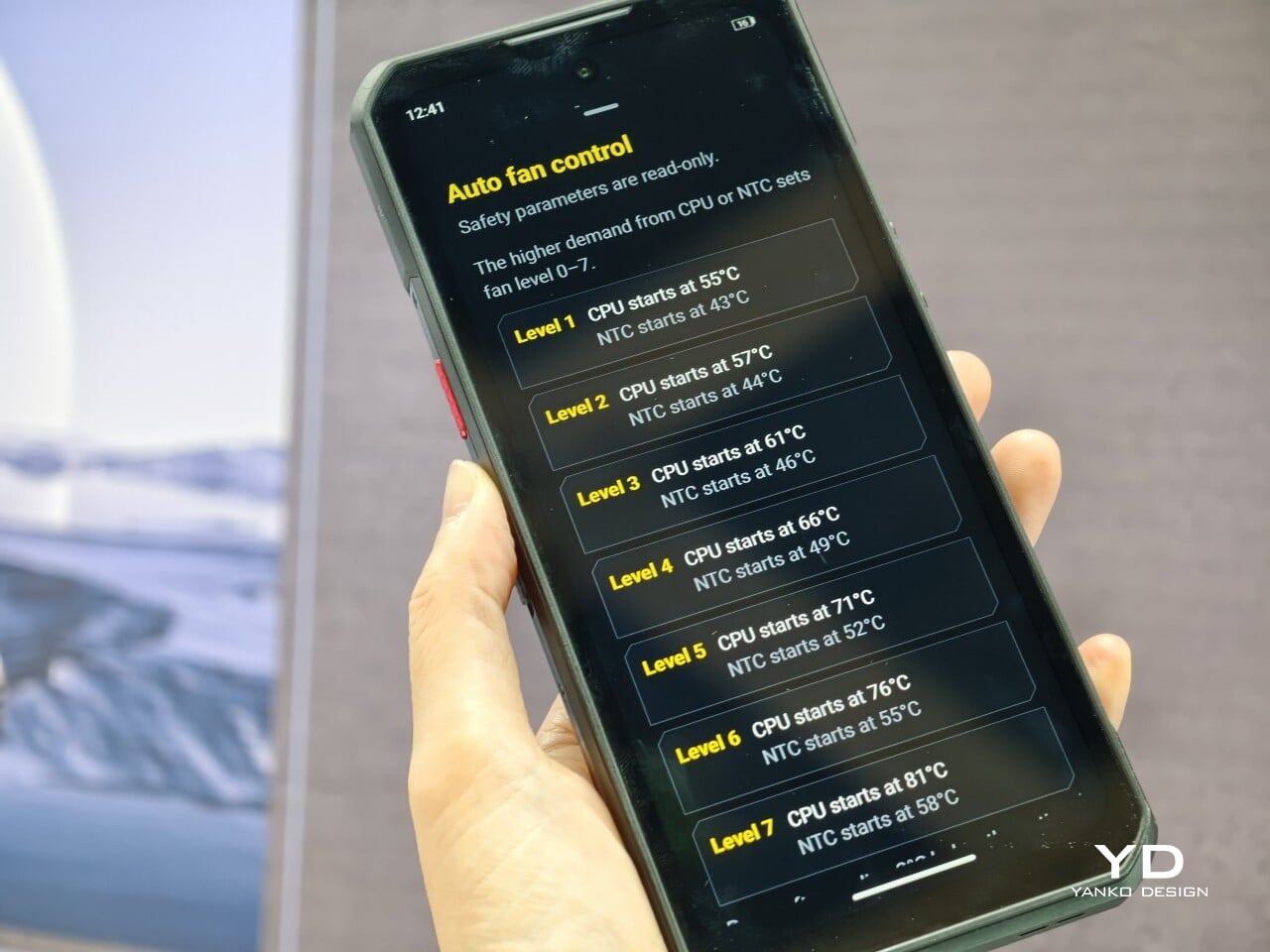
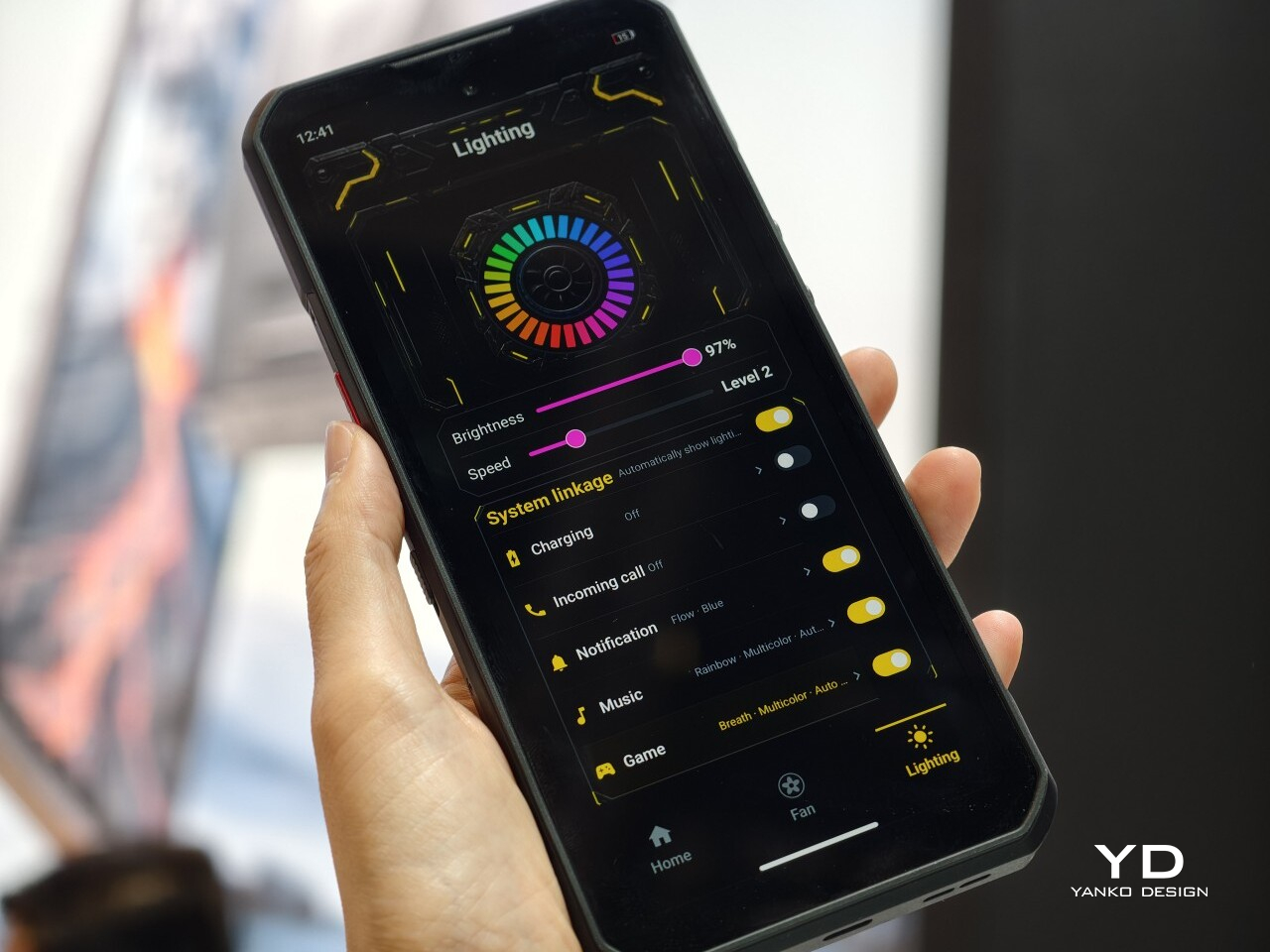
That solution shows up immediately on the back of the phone, where two turbine-style fans sit inside an octagonal housing next to the camera lenses. Rather than tucking cooling components away, OUKITEL frames them as part of the visual identity, finished in a gunmetal tone with RGB lighting that shifts through purples, oranges, and blues while the fans spin during demanding sessions.
Designer: Oukitel
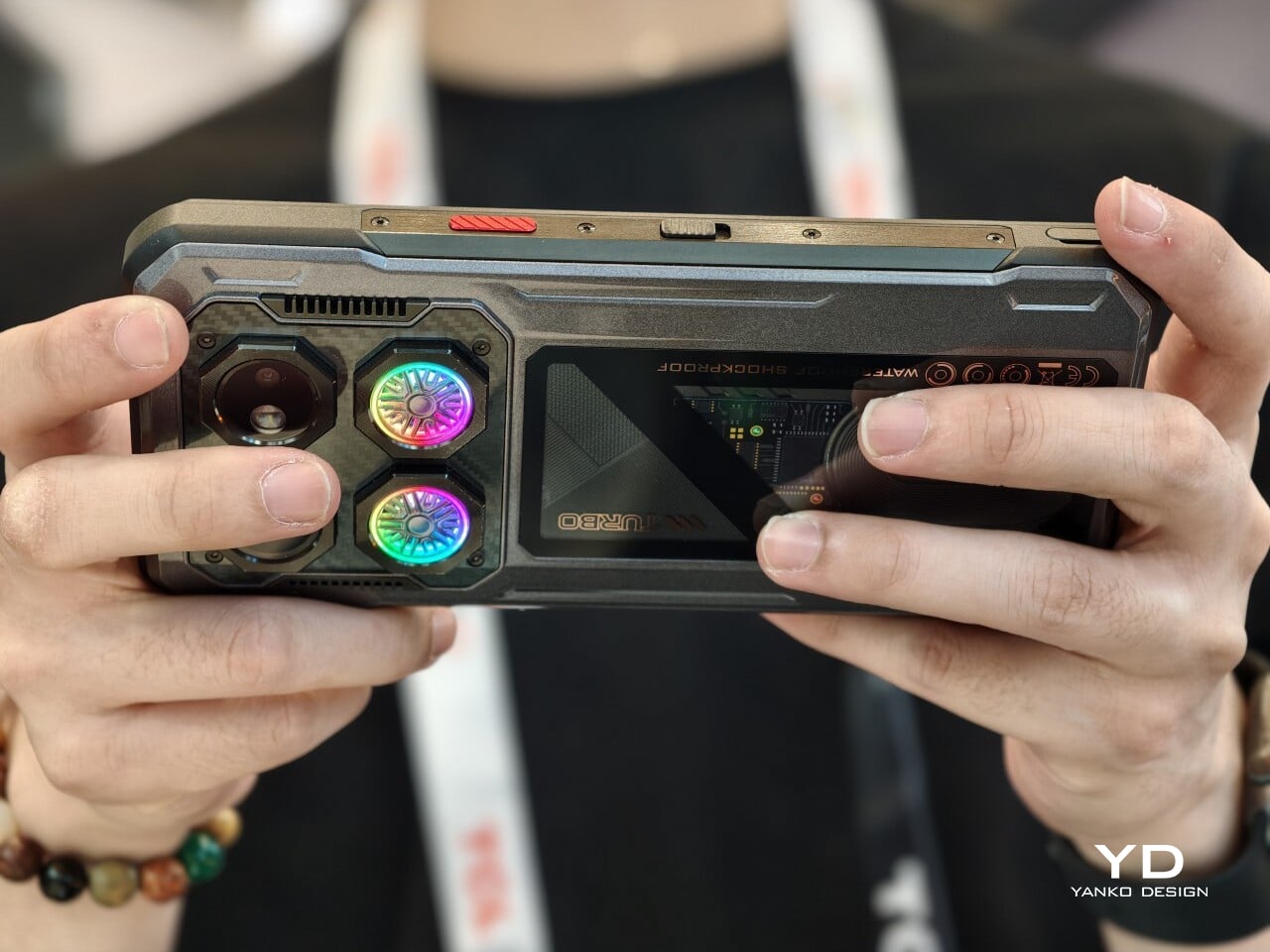
Underneath that display sits a MediaTek Dimensity 8300 chip running at 3.35GHz, paired with up to 24GB of RAM and a full terabyte of storage in its top configuration. Active airflow means that hardware can stay at full speed through a long gaming session in direct sun, instead of throttling the moment internal temperatures climb, the usual fate of sealed devices pushed hard outdoors.
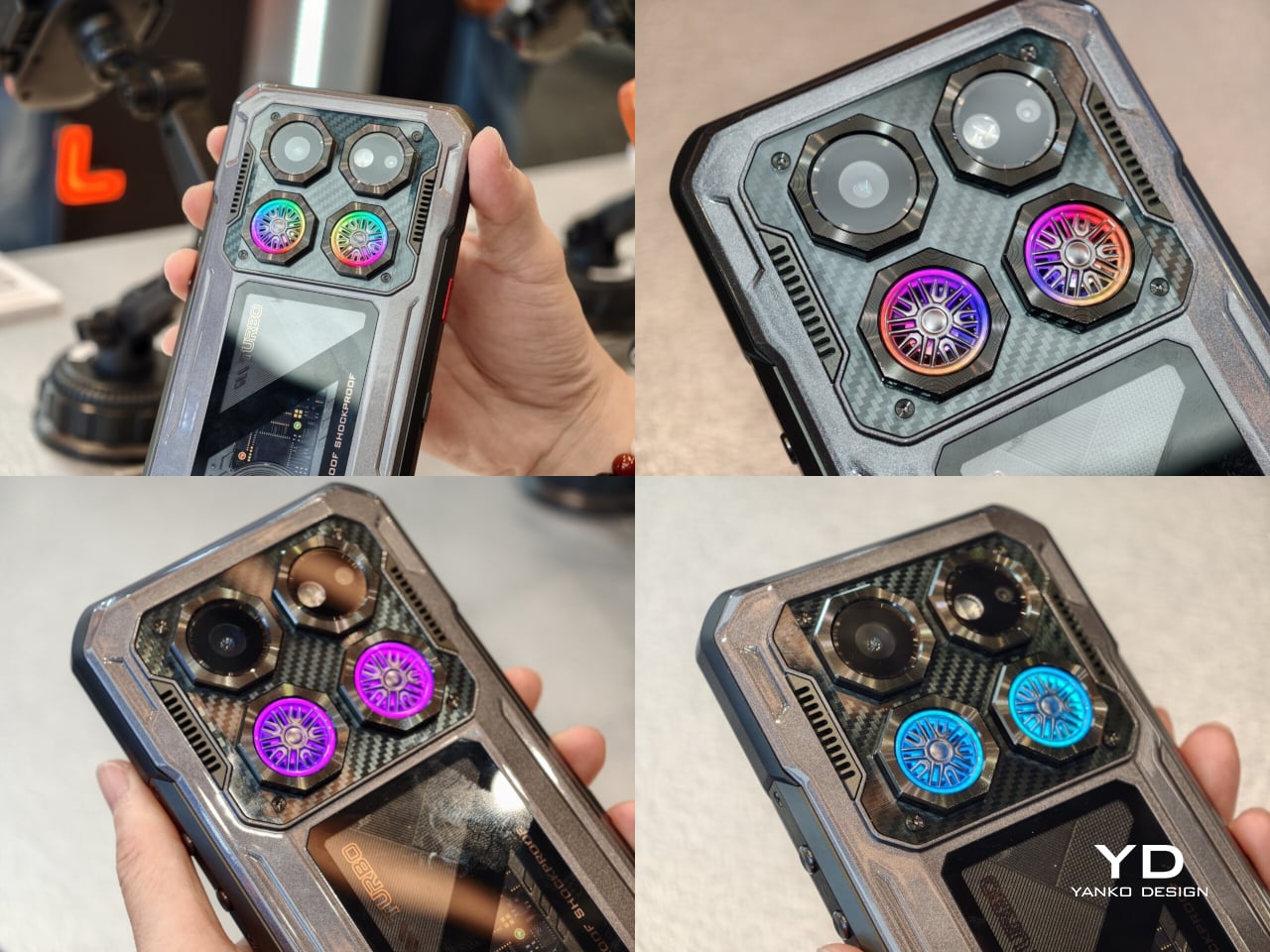
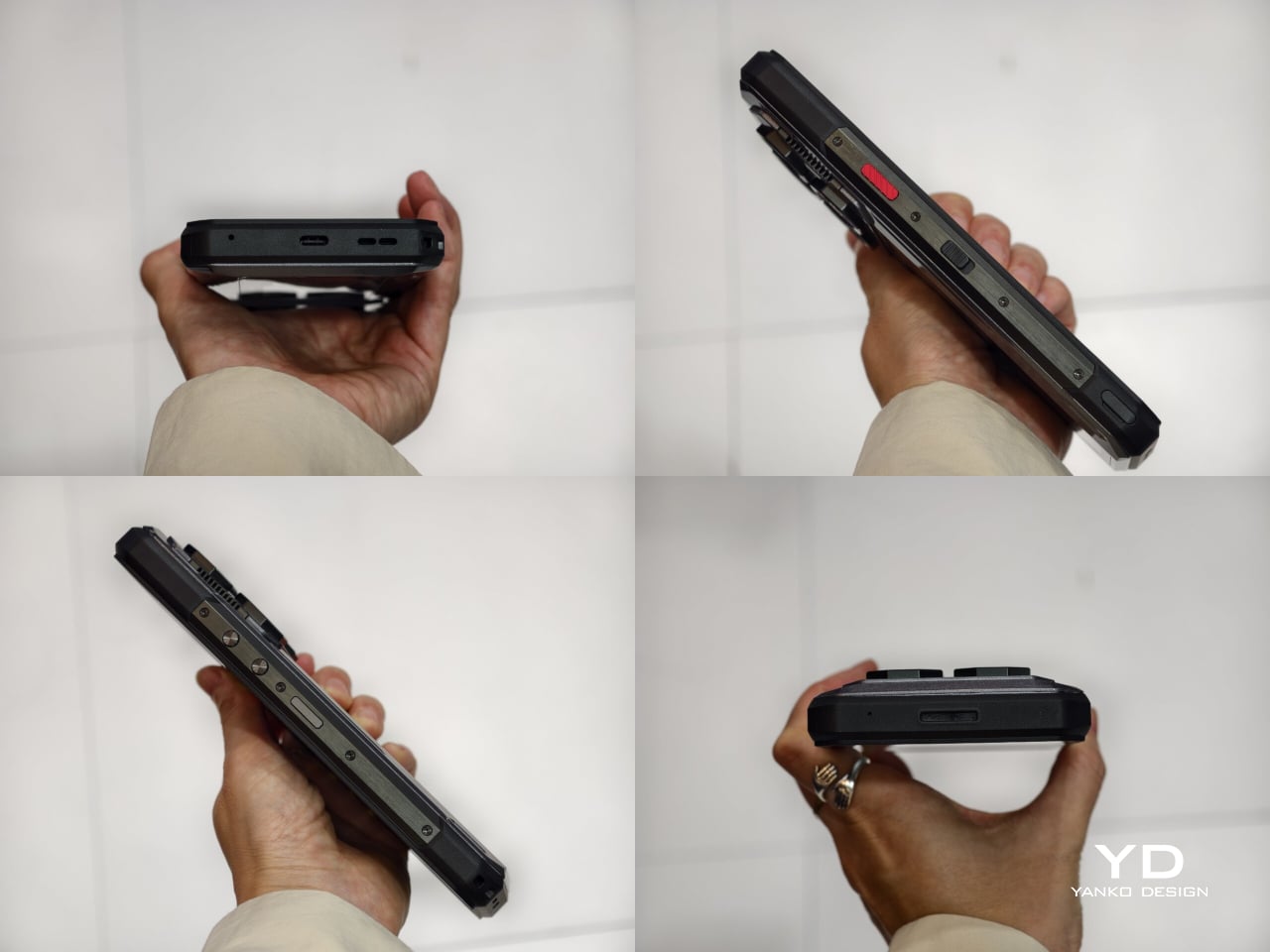
A 10,000mAh battery backs up that sustained performance, large enough to outlast a full day of mixed use, camera work, and gaming without needing a midday top-up. When charging is needed, 45W wired input gets things moving again quickly, keeping downtime short for anyone relying on the phone through fieldwork, travel, or a weekend away from outlets.
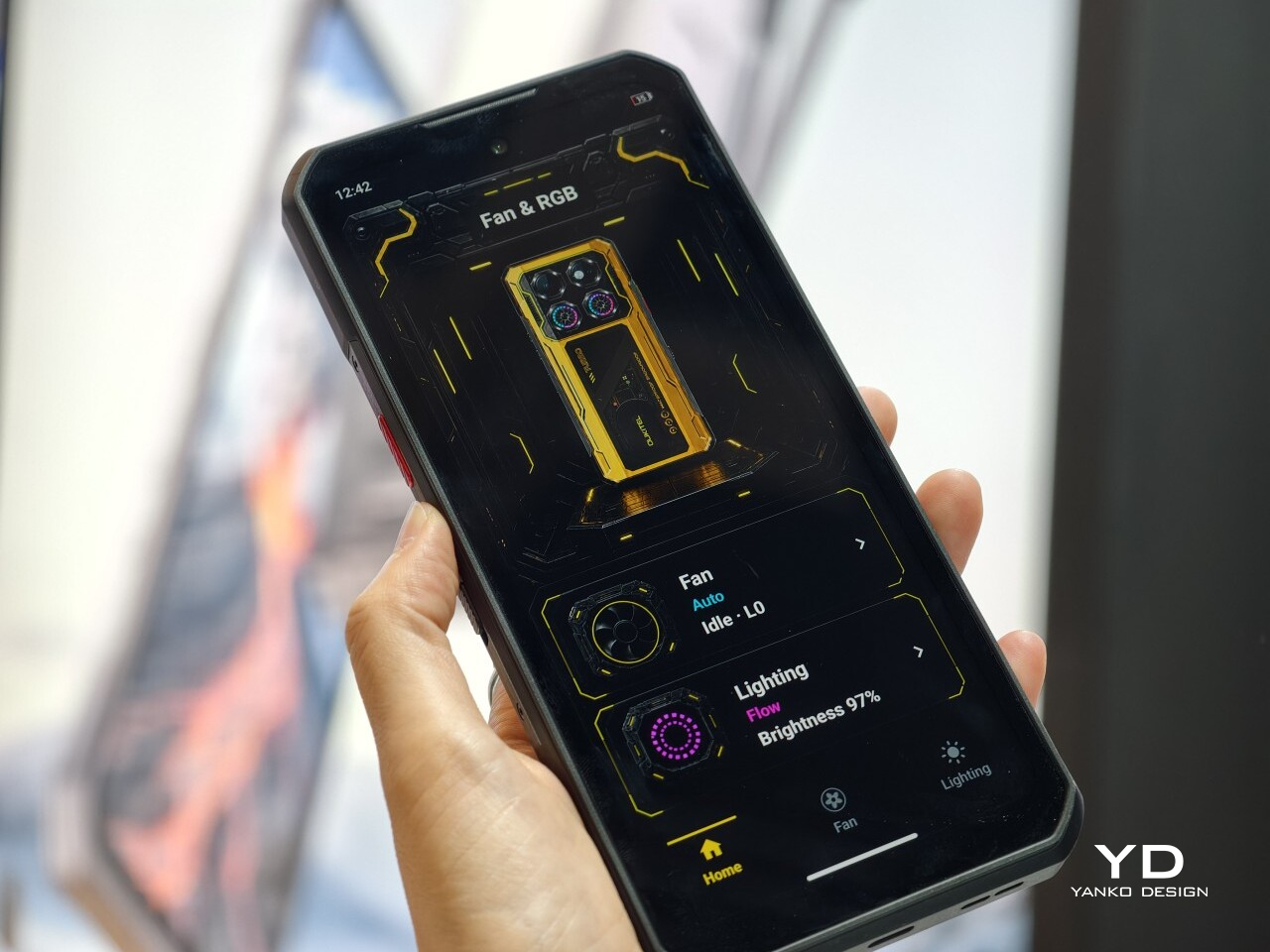
Privacy gets a physical answer instead of a software toggle buried in settings. A dedicated switch, styled as a bright red accent against the phone’s black and metallic paneling, physically disconnects the camera, microphone, and GPS at once. It is the kind of control that matters to fieldworkers or anyone stepping into a sensitive meeting who wants certainty that nothing is listening or tracking, not just a setting that claims to be off.
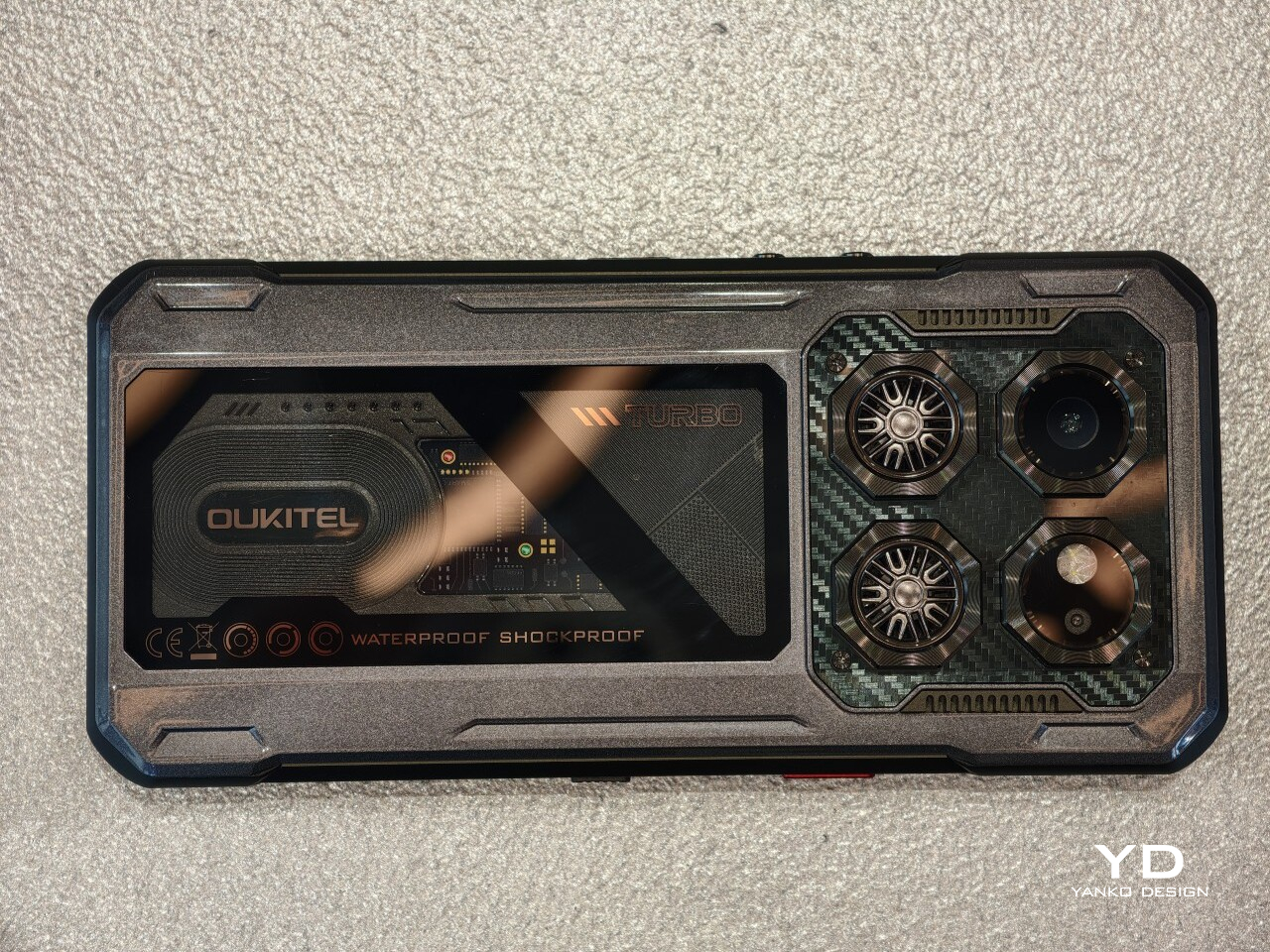
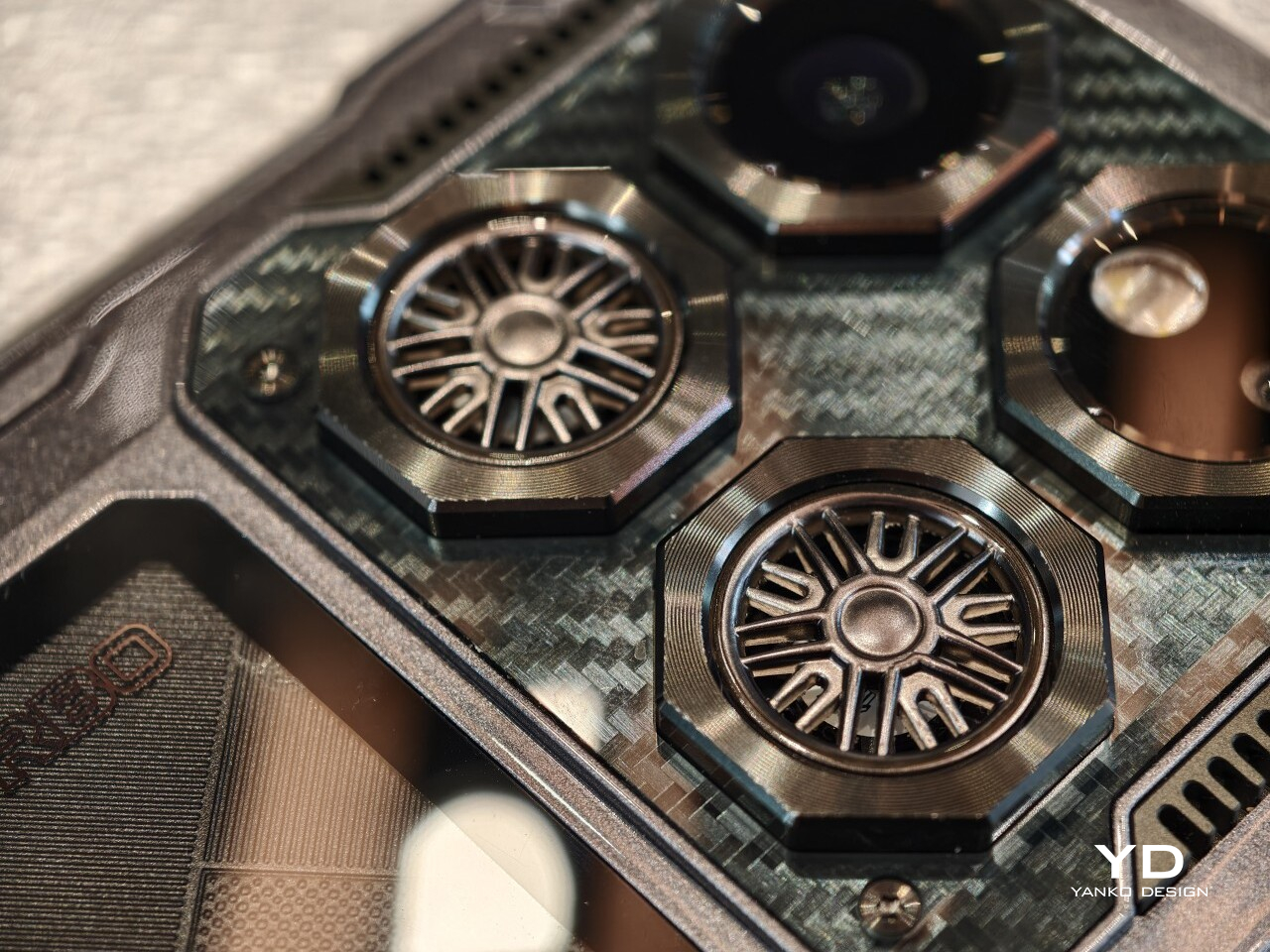
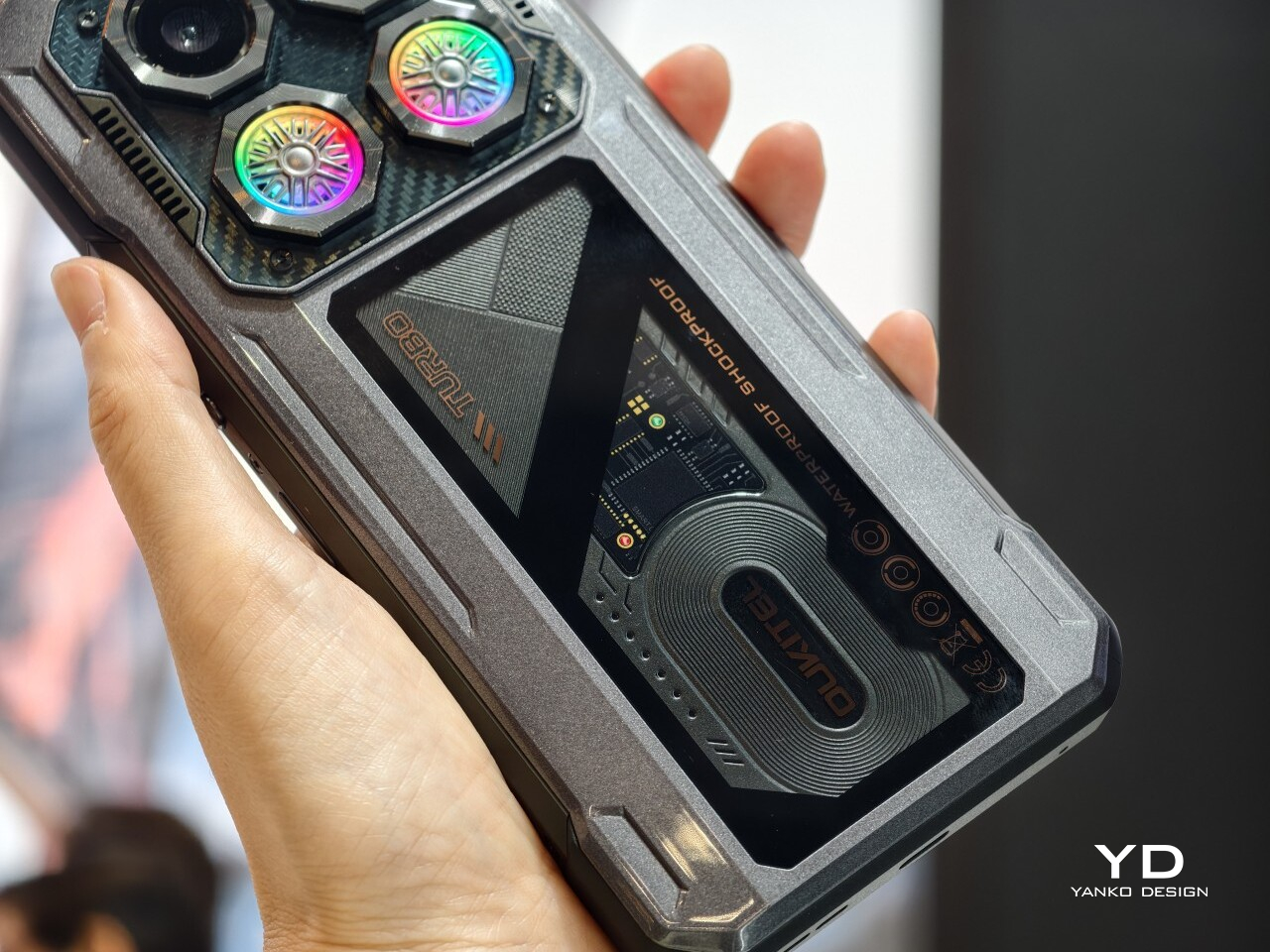
The rest of the chassis carries that same rugged-but-considered language throughout. Exposed hex screws, ridged texture strips along the frame, and a carbon-fiber-patterned panel insert surrounding the camera module all read as intentional detailing rather than leftover industrial parts. A 6.8-inch, 120Hz display handles the front, while the whole package comes finished in either black or yellow, playing into the tool-like character rugged phones usually lean into.
None of this asks buyers to choose between toughness and capability anymore. A phone built to survive drops and submersion can still run demanding software at full tilt, provided the cooling behind it gets treated as a design feature rather than an afterthought bolted on for a spec sheet.
The post Most Rugged Phones Hide From Heat, This One Has Two Fans to Fight It first appeared on Yanko Design.
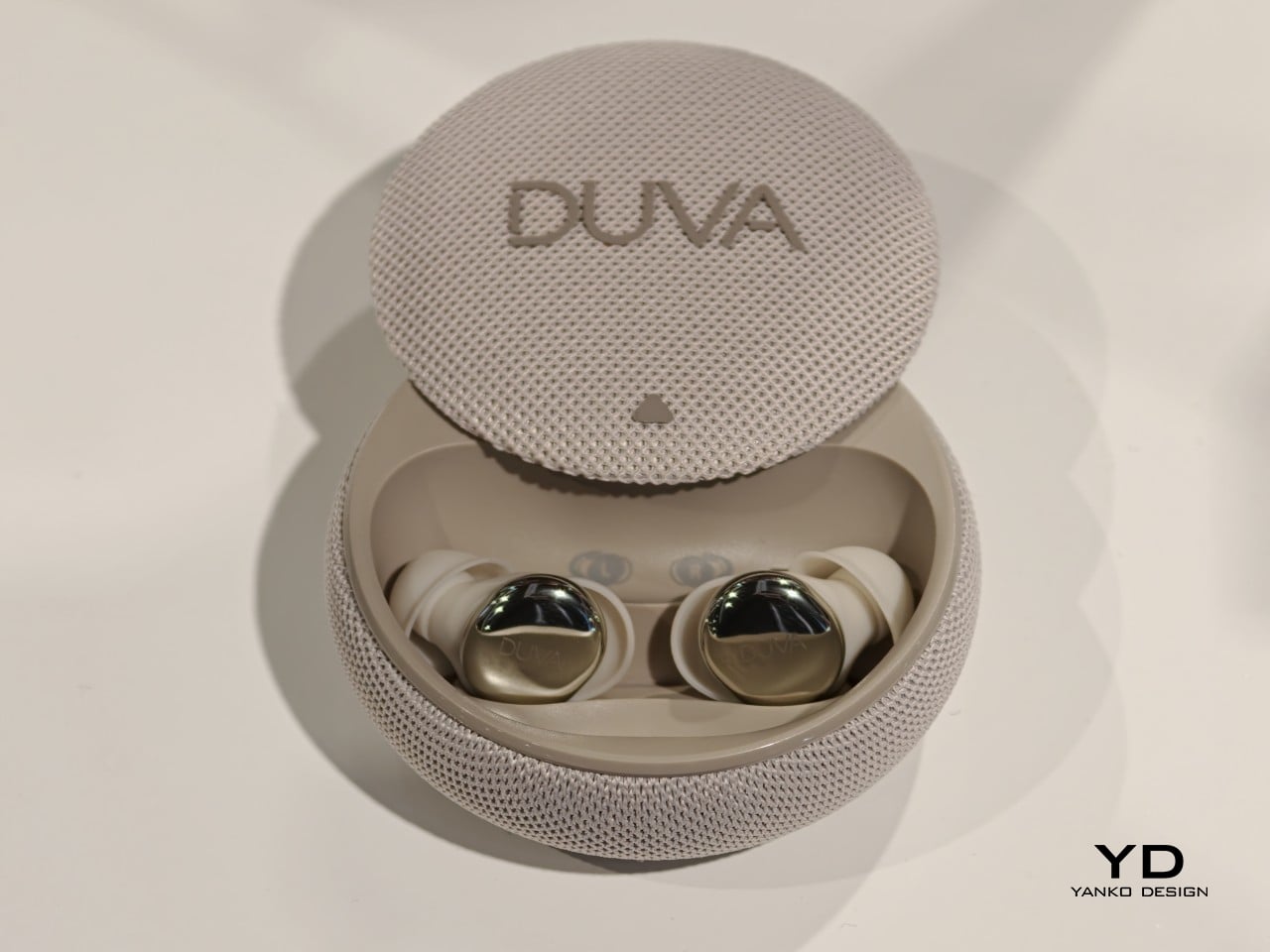
Most sleep trackers wait until morning to tell a story that’s already over. A person tosses through a noisy night, wakes up groggy, and gets handed a score explaining what went wrong hours after it happened, with no chance to fix anything while it mattered. DUVA One, introduced at IFA Berlin 2026, moves that entire conversation into the middle of the night itself, treating disruptions as something to respond to in real time rather than data to review at breakfast.
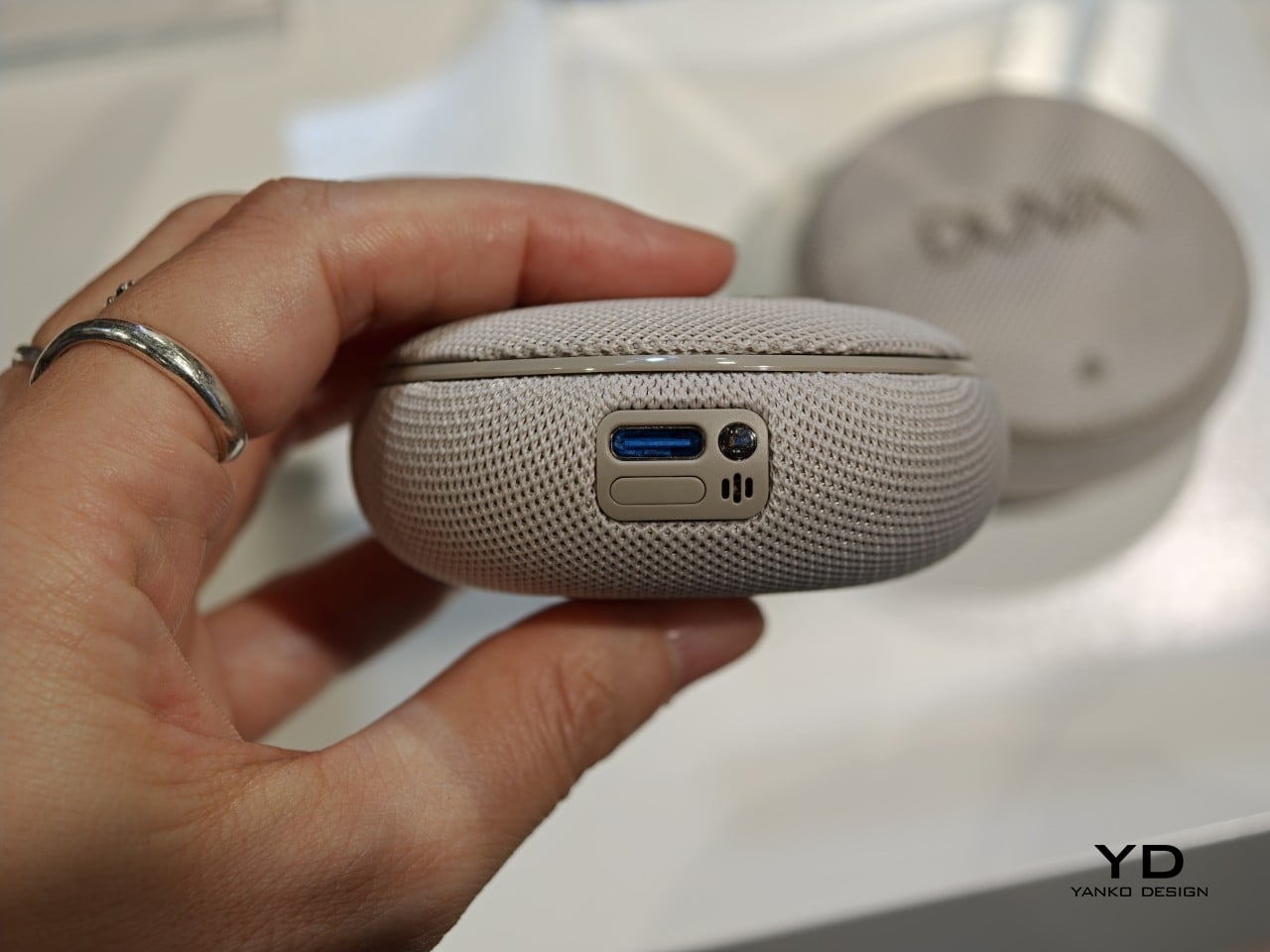
The system builds its response around two simultaneous points of view. Inside the ear, PPG and motion sensors track heart rate, HRV, movement, and sleep position throughout the night. Sitting beside the bed, the charging case reads the room itself, picking up noise, light, temperature, and humidity, then lining that environmental data up against what’s happening in the body at the exact same moment.
Designer: DUVA (Fitnexa)
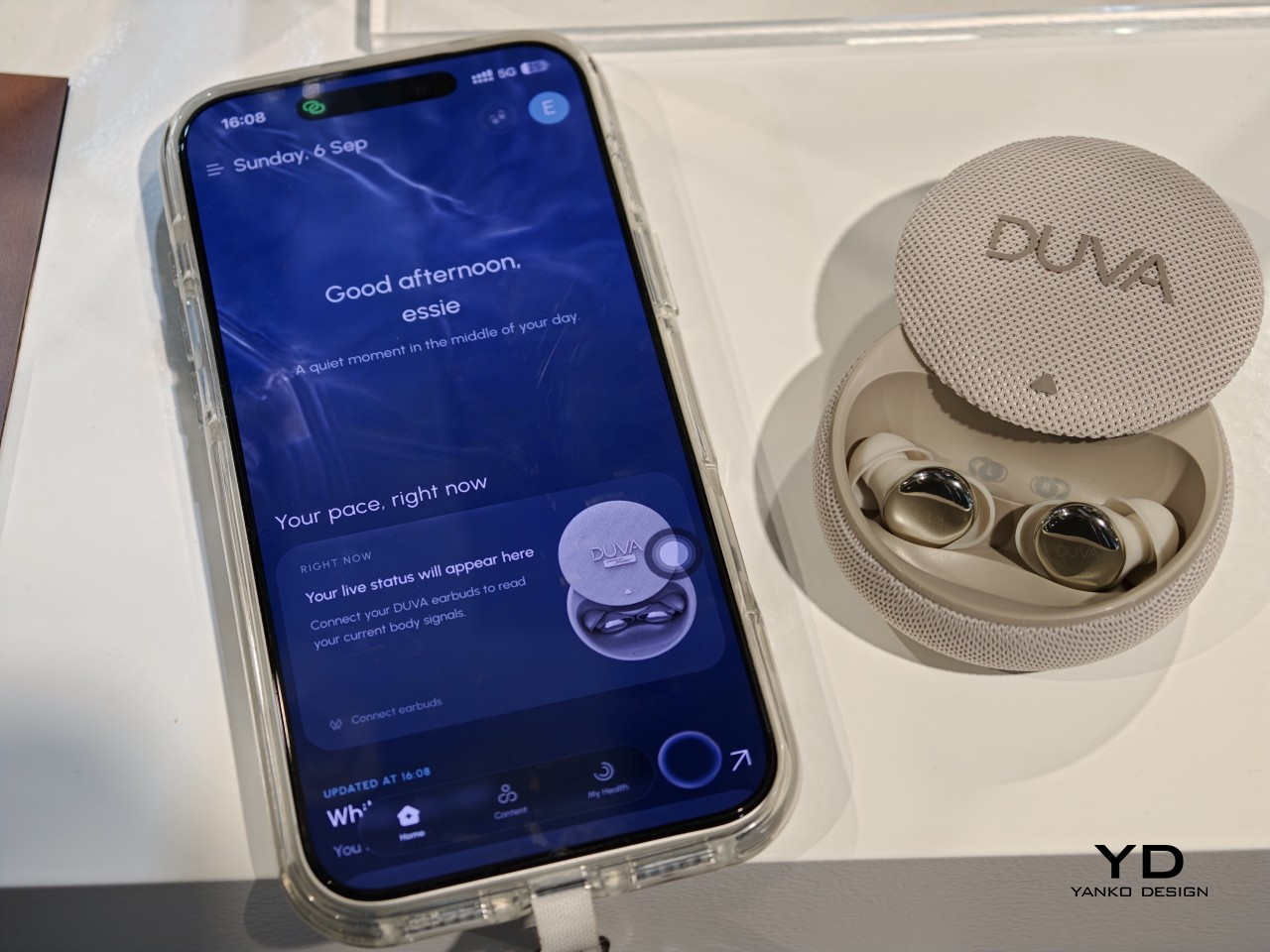
That pairing turns a random 3 AM wakeup into something with an actual cause. A spike in movement paired with a sudden noise spike tells a different story than one paired with a temperature swing, and DUVA One uses that context to decide what to do next. It can dial in active noise cancelation, layer in sound masking, or switch on sleep audio, then keep watching to see whether the response actually helped or needs adjusting.
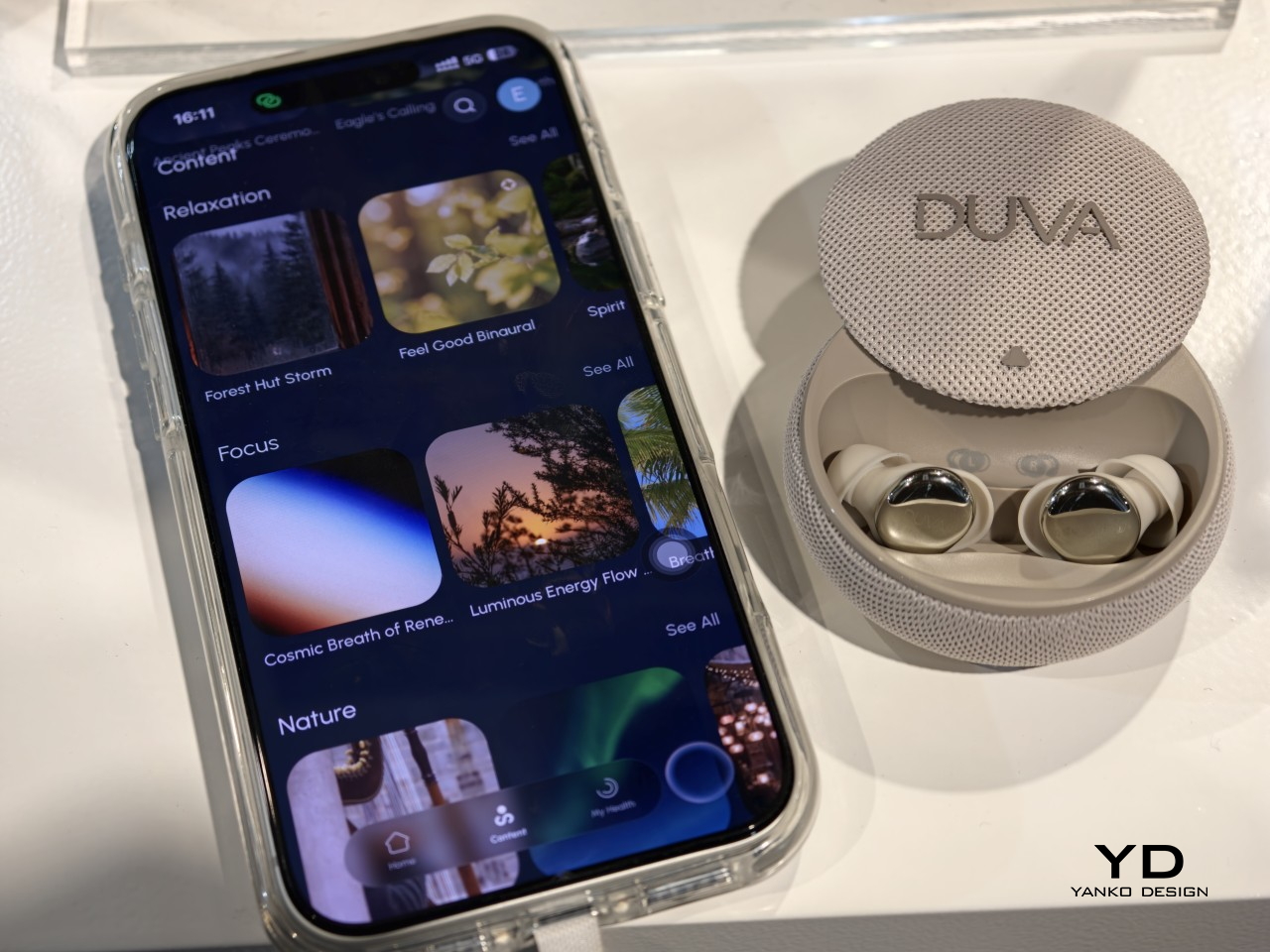
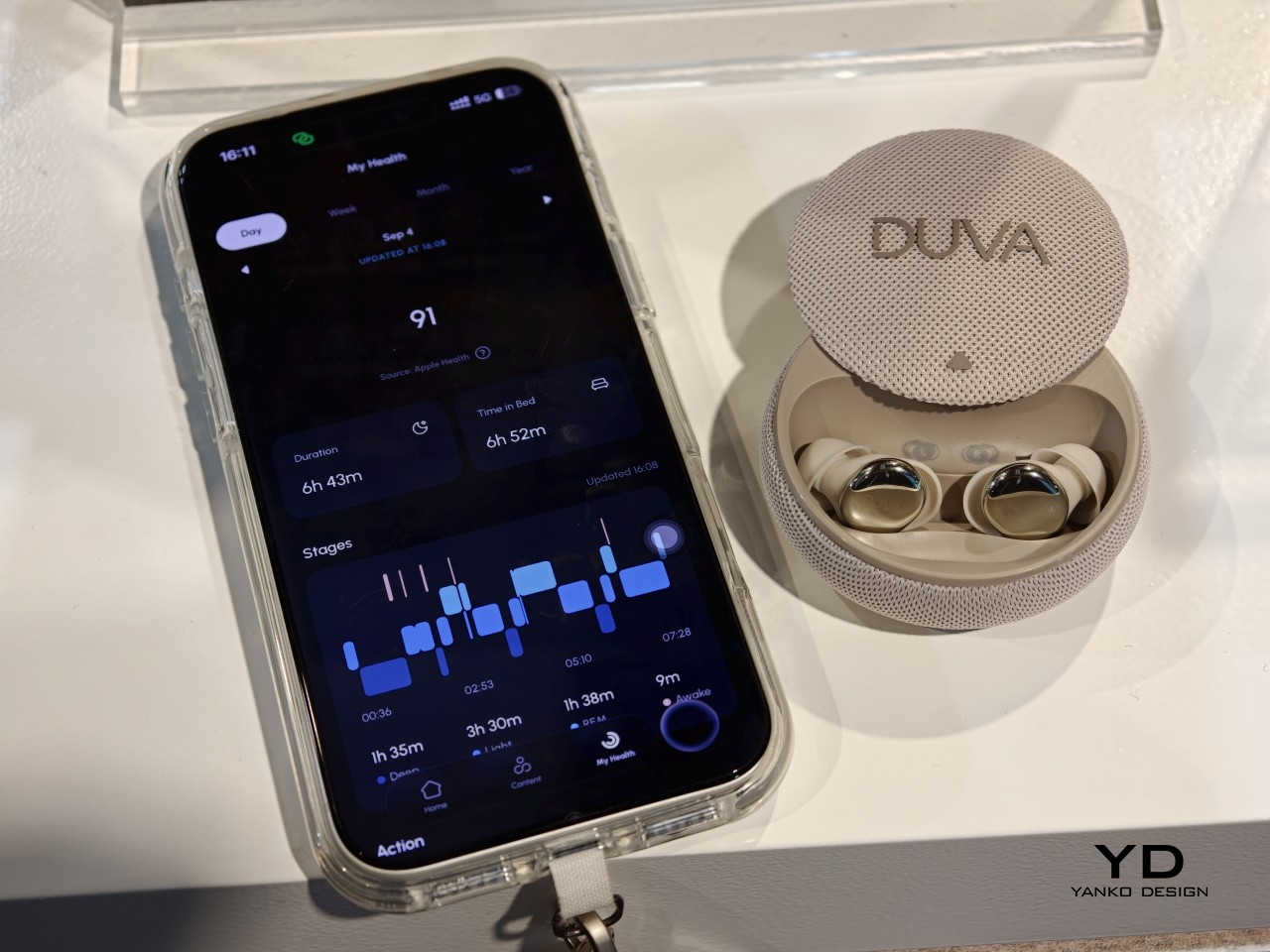
Audio handling reflects the same instinct toward reading the moment instead of locking into one setting at bedtime. Someone might drift off with a podcast streaming over Bluetooth, and once DUVA One detects sleep, it can quietly hand off to locally stored sleep audio, cutting the connection while trimming power use for the rest of the night. It’s a small transition, but it removes the usual choice between falling asleep to something and burning battery doing it.
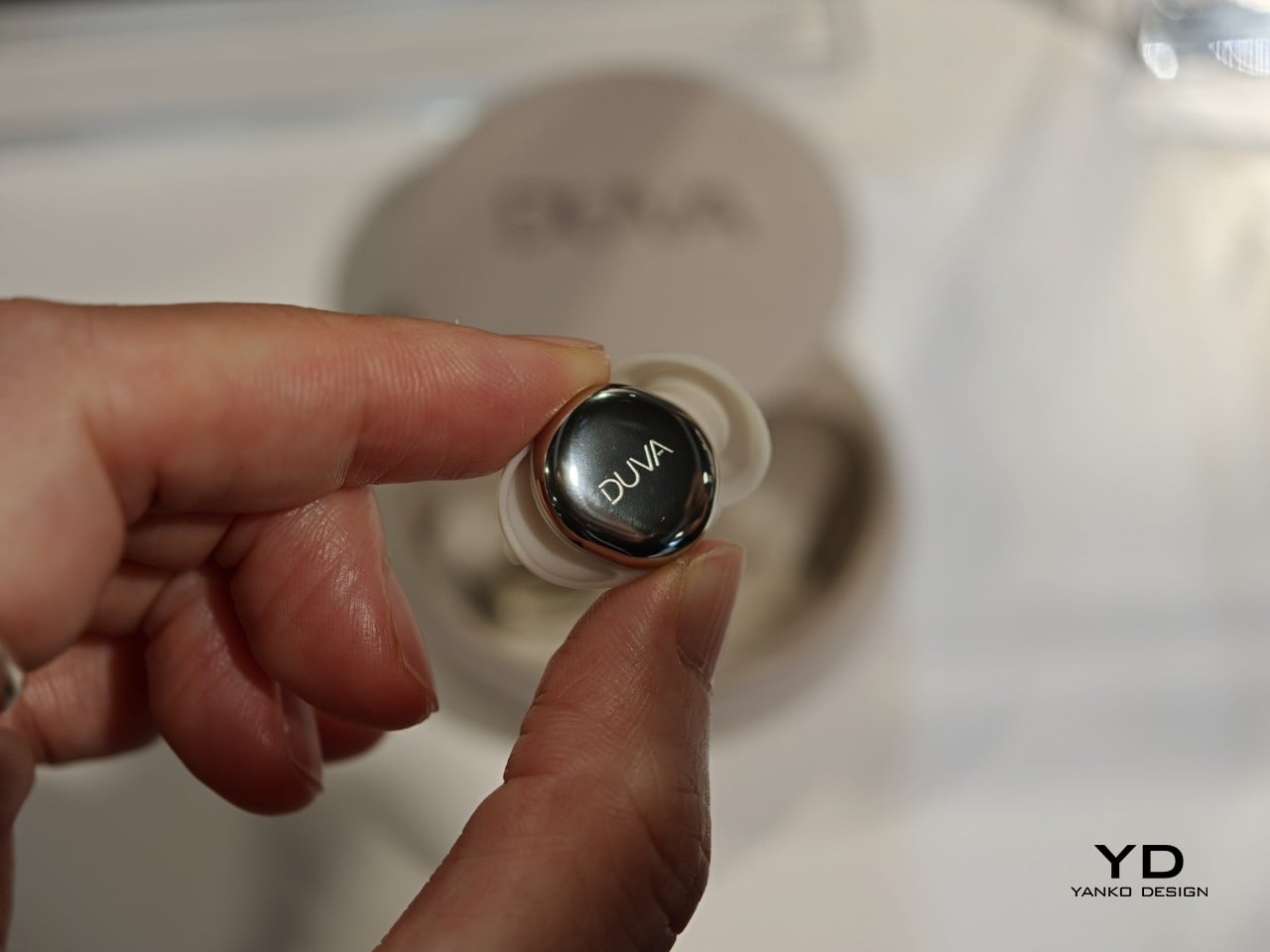
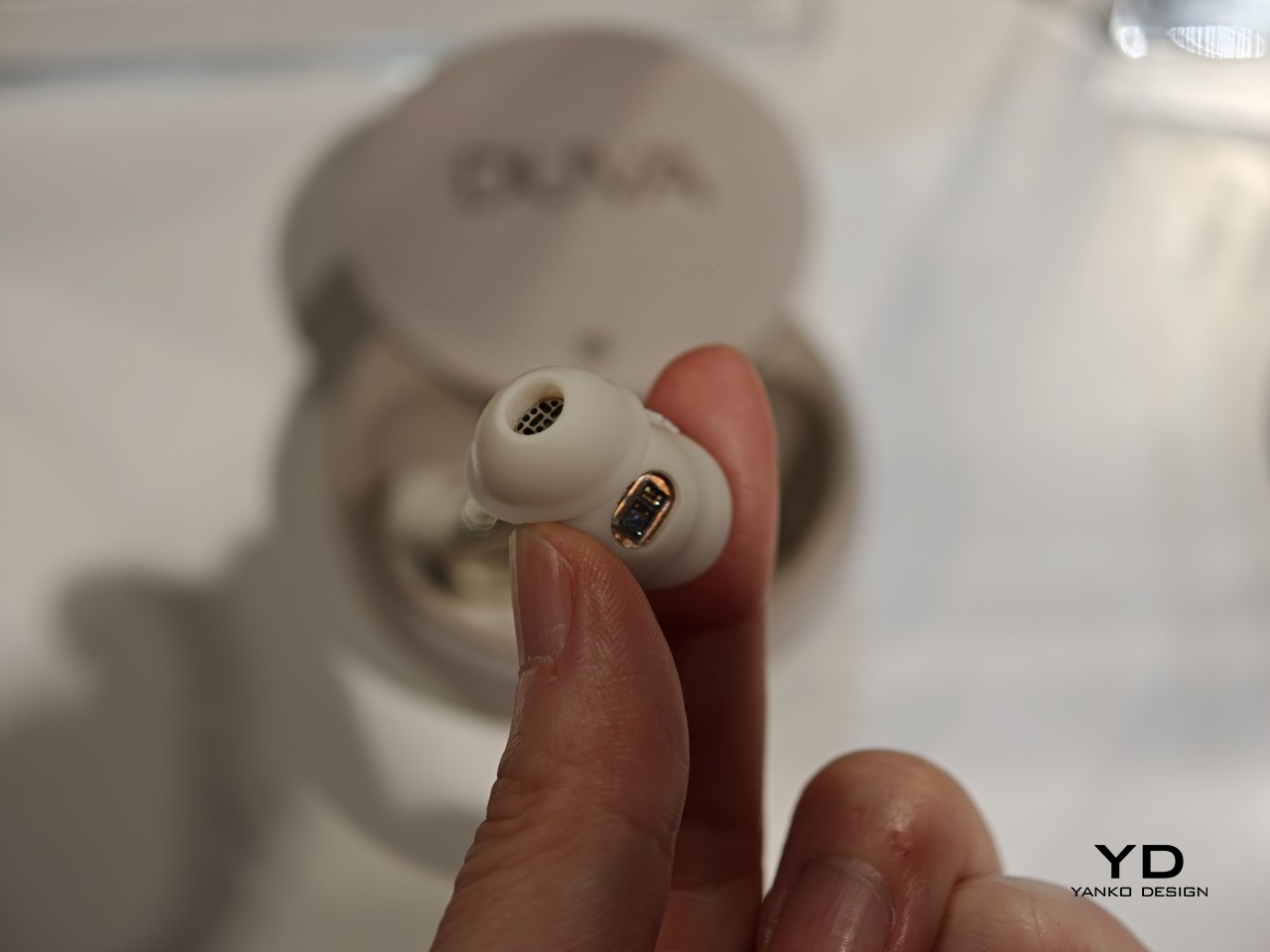
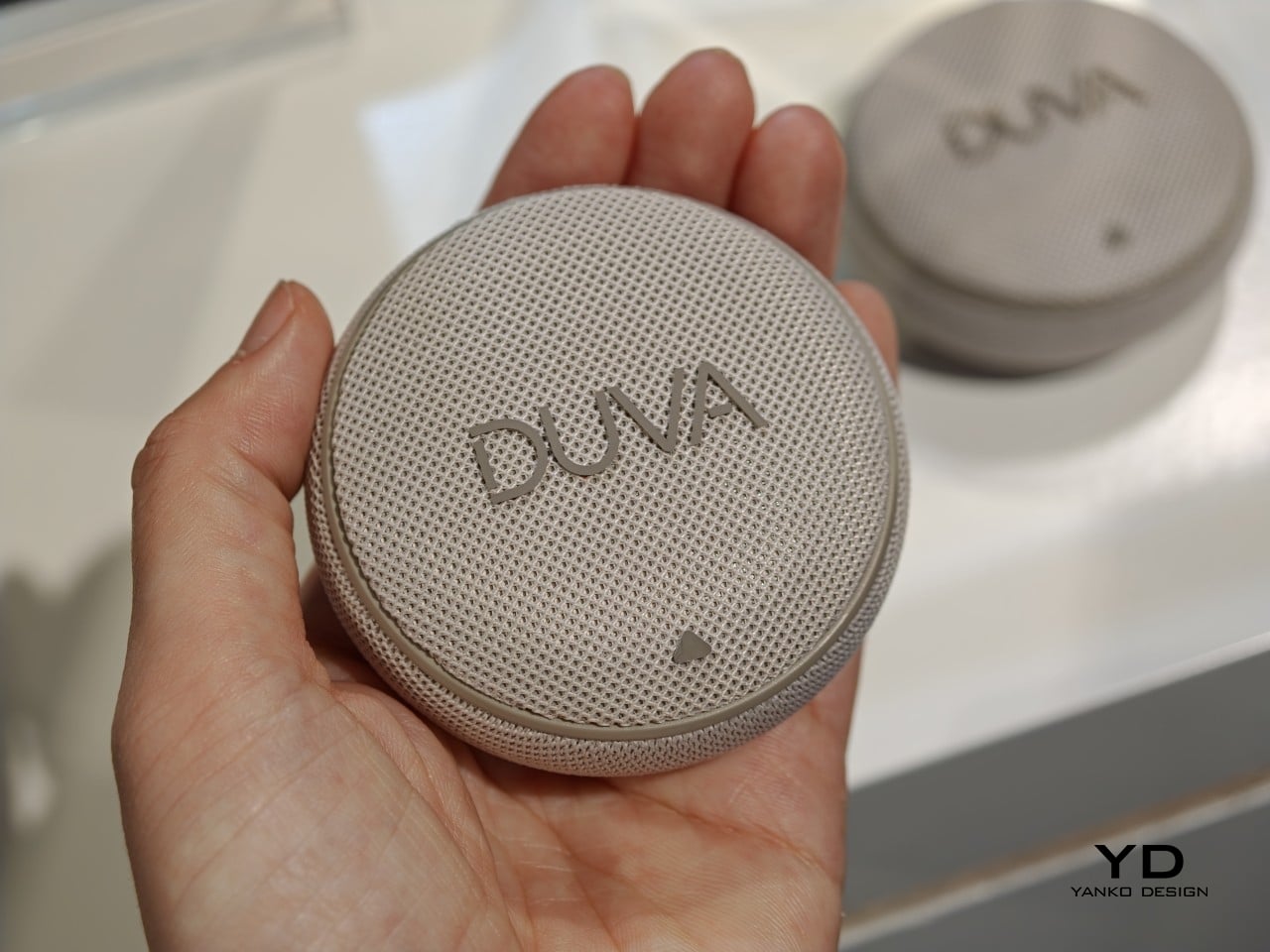
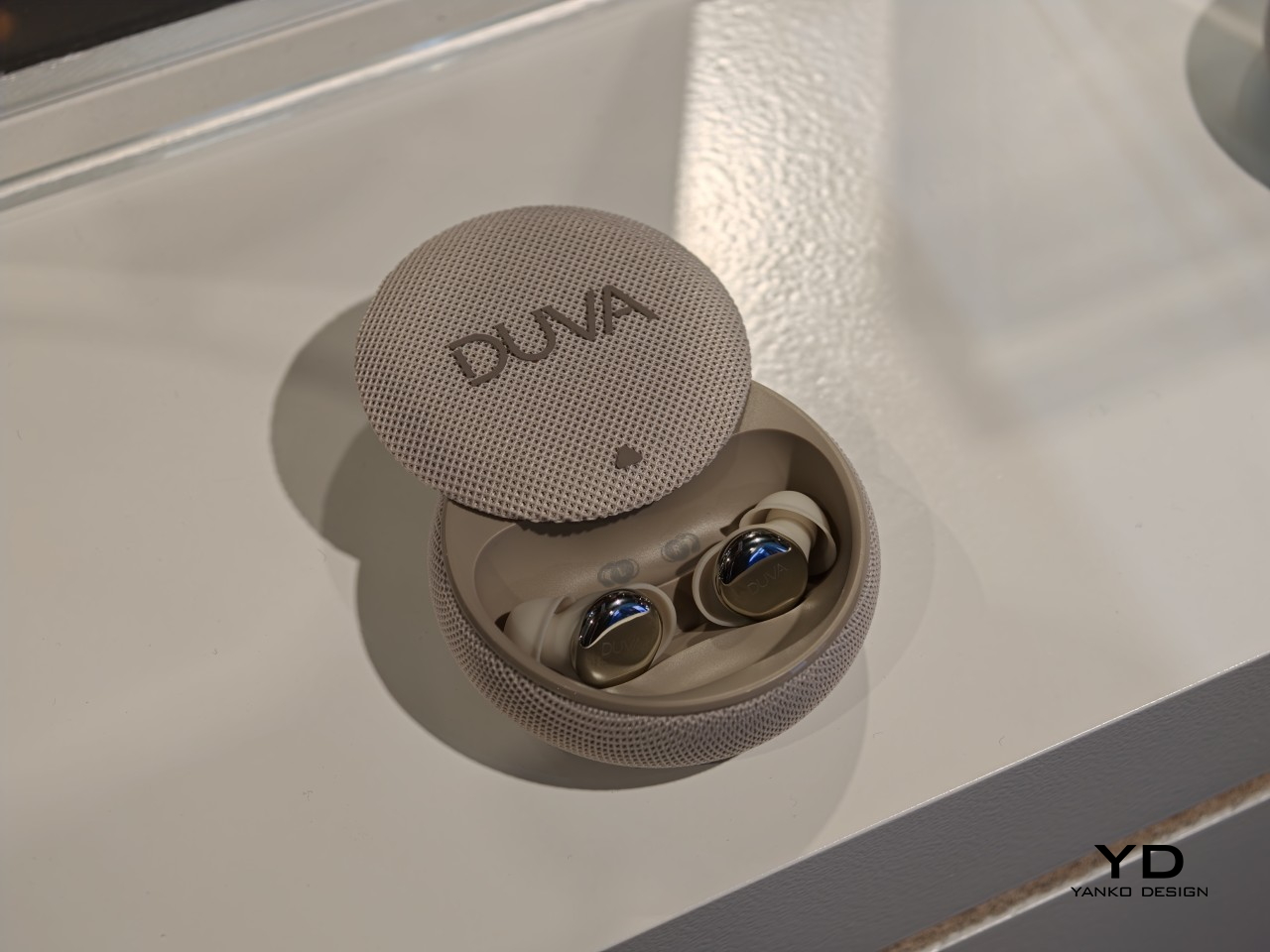
All of that would be pointless if the earbuds themselves got in the way of actual sleeping, making you prefer not to have them on at all. DUVA built each one down to a 9.9mm profile at roughly 3.3g, sized specifically for people who sleep on their sides and need something that won’t dig into an ear against a pillow for eight hours straight. Multiple tip and stabilizer wing sizes come along to fit that shape to different ears rather than forcing a single mold.
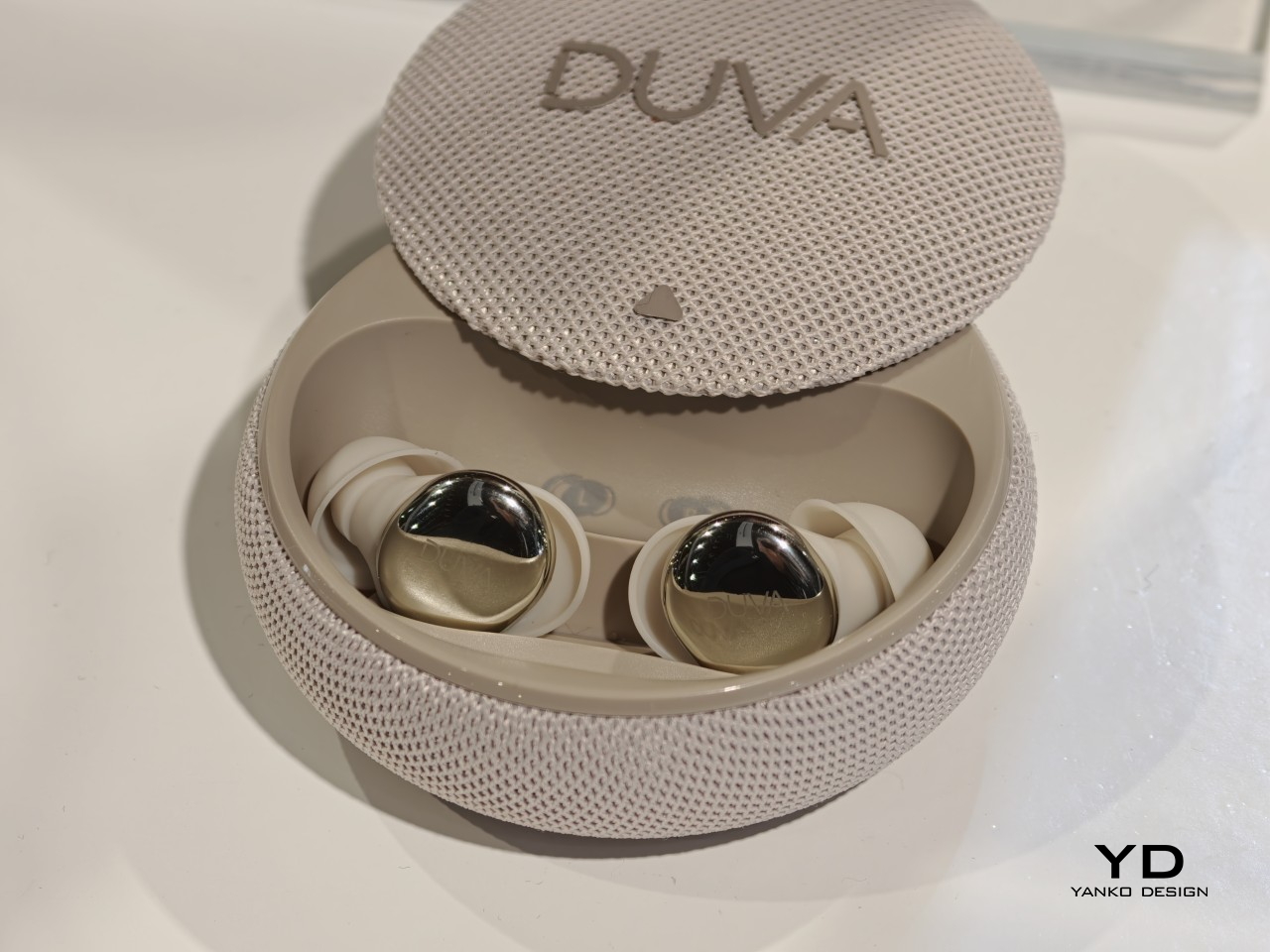
Morning wakeups get the same considered touch through a private, offline alarm that builds in volume gradually, with snooze options set directly through the earbuds instead of reaching for a phone. On the data side, DUVA draws a clear line around privacy, skipping conversation recording or raw audio storage entirely, while letting users switch off individual sensors or erase their history outright. DUVA One arrives in October 2026 at $349.99, targeting the US, Canada, UK, EU, and Australia.
The post Most Sleep Trackers Grade Last Night, but DUVA One Adjusts Tonight first appeared on Yanko Design.