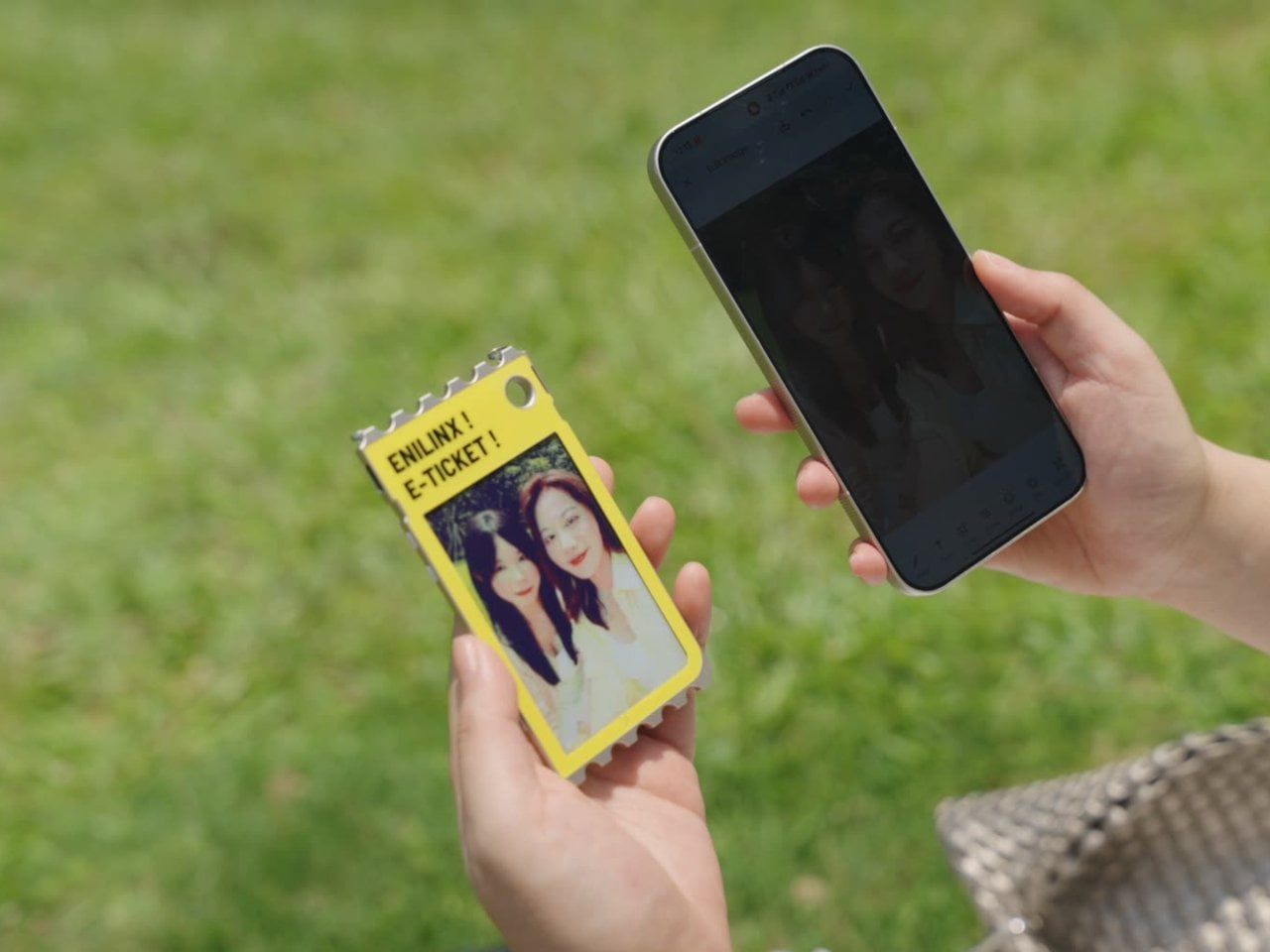
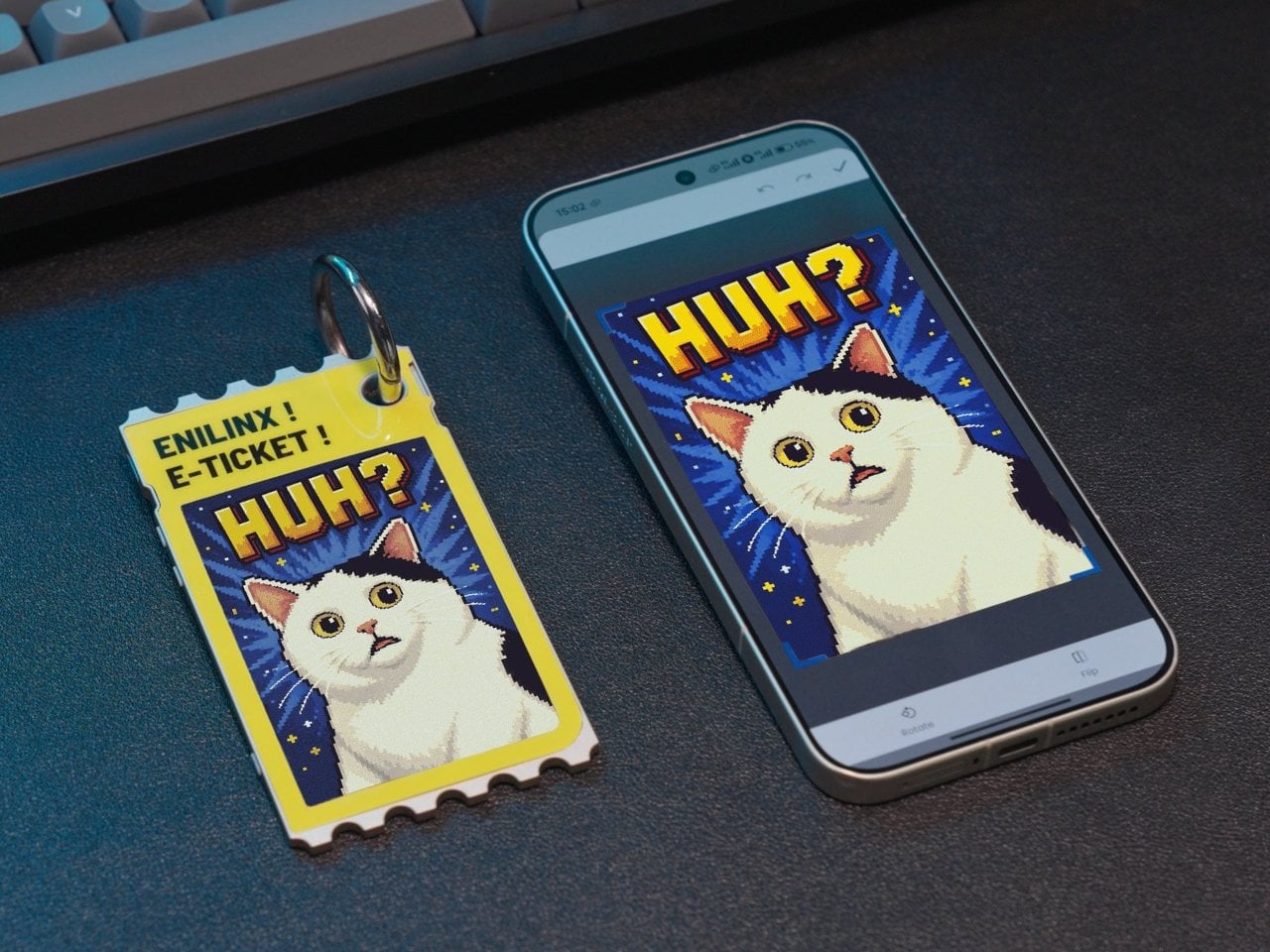
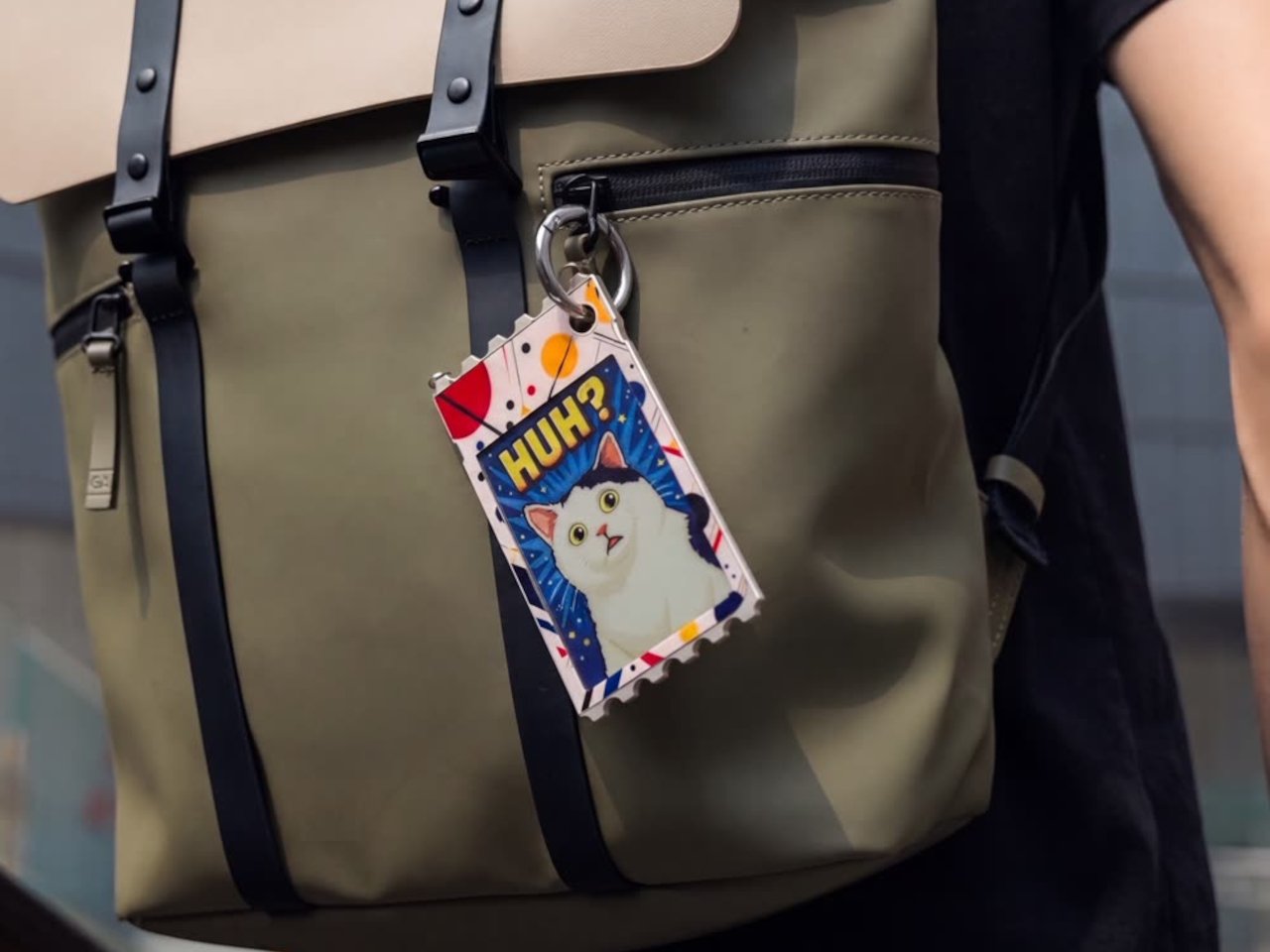
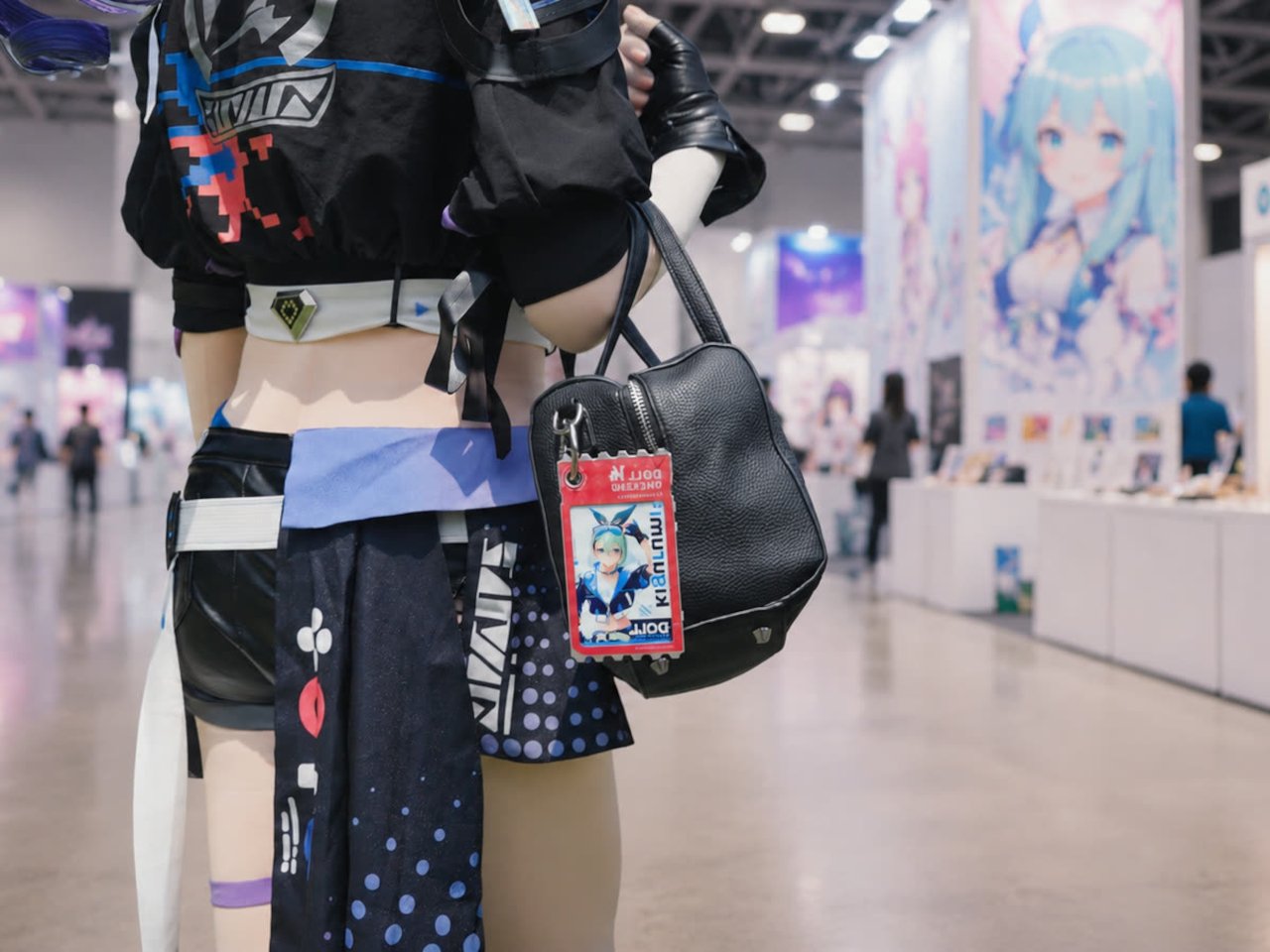
Your camera roll holds 14 near identical photos of the same pasta dish, and you will never open a single one. We call it documenting our lives, but it looks a lot more like feeding a landfill. Every tap of the shutter adds another bag, and nobody has ever gone digging through the pile for a good memory. We take more pictures than any generation in history and look at almost none of them, which is a funny way to treat the things we claim to care about. Await, from Swiss company Rolling Square, is the intervention.
Await is a pocket digital camera that treats a roll of film as a rule instead of a nostalgia trip. It gives you 24 shots per roll, no preview screen, and a tiny OLED that counts down your remaining frames like a nervous accountant. Sync it with the free app and the whole roll gets “developed” through a vintage film filter, then you decide whether to order 6×4 prints. It first showed up at CES 2026, and we covered that debut back in January when details were still thin. Now the full picture is here, from the translucent shell to the xenon flash, and it’s more thought out than the disposable-camera look suggests.
Designer: Rolling Square
Click Here to Buy Now: $100 $145 (31% off). Hurry, only 37/625 left! Raised over $85,000.
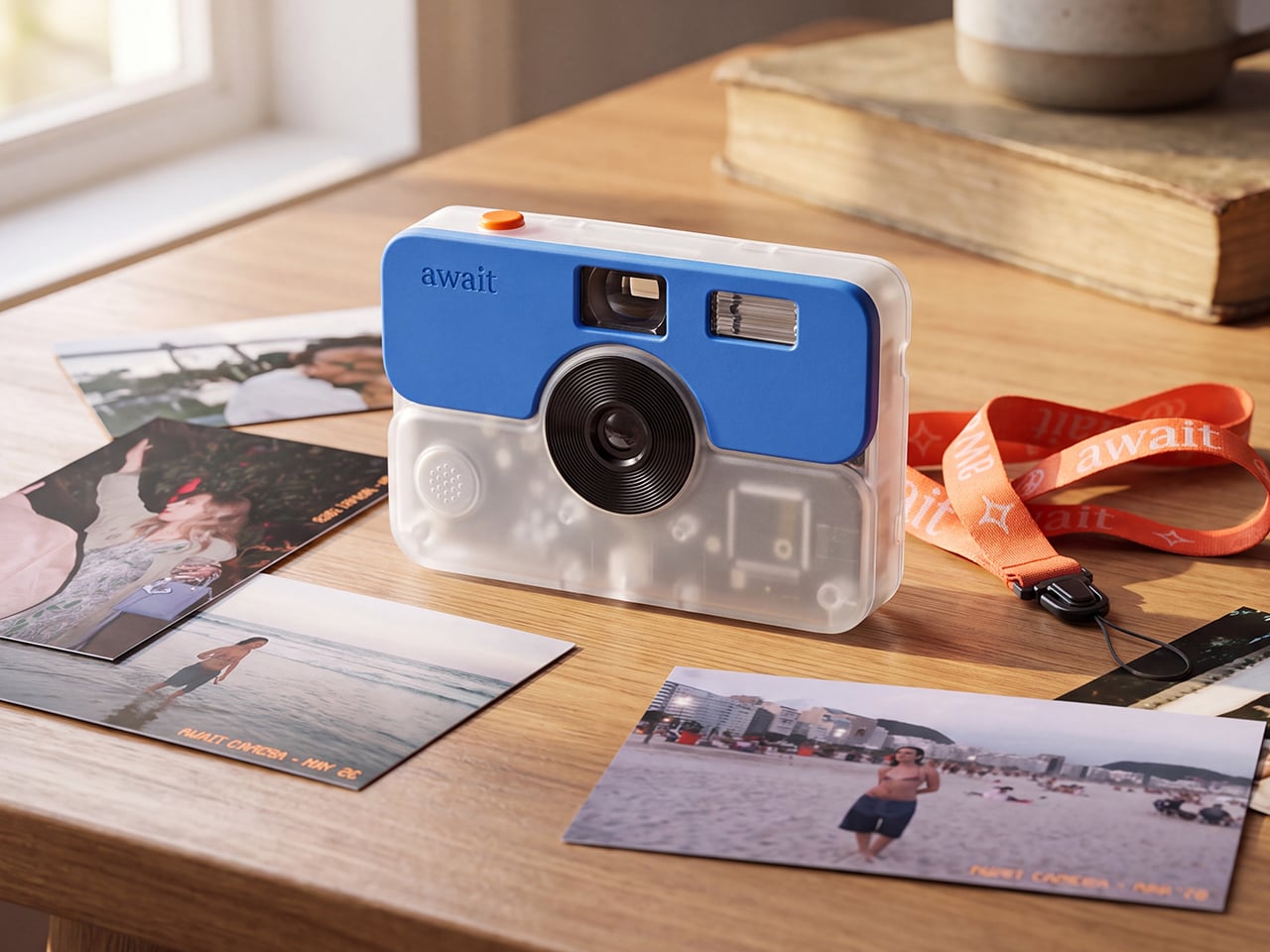
A frosted shell, visible circuitry, and a magnetic face you can swap
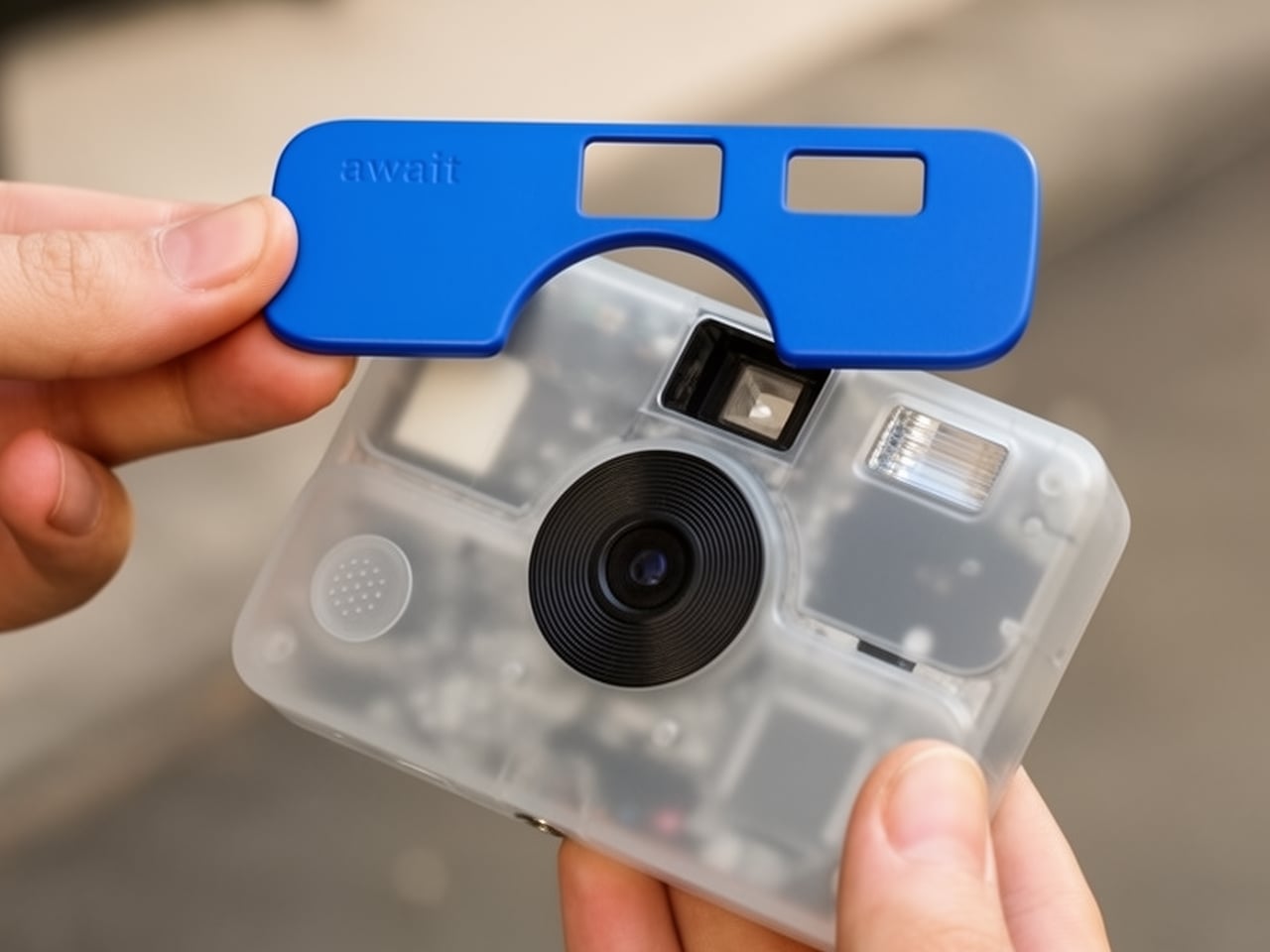
The body is frosted translucent plastic with the circuit board visible through it, a look that goes straight back to the clear Game Boy Color and the original iMac. It measures 3.86 x 2.68 x 0.59 inches (98 x 68 x 15 mm) and weighs 3.27 ounces (92.7 g), which puts the footprint about 44% larger than a credit card. That is small enough for a jeans pocket and light enough that you will forget it’s there until you want it. The front plate is magnetic, so the color is a snap-on decision, with blue, pink, teal, green, and yellow on offer. Orange buttons pop against the frosted plastic, and I’m a sucker for that contrast.
A wrist strap ships in the box, and a longer neck or crossbody strap comes as an add-on. Both are orange and Await-branded, and each clips on through a small cord buckle threaded into the side loops. A threaded tripod mount sits on the base, which pairs nicely with the 10-second self-timer for group shots. Torx screws on the back mean the shell can be opened, and Rolling Square describes the design as expandable for future add-ons. I love seeing screws on a device like this, since it signals a camera meant to be kept rather than tossed.
Eight megapixels, a real xenon flash, and two buttons
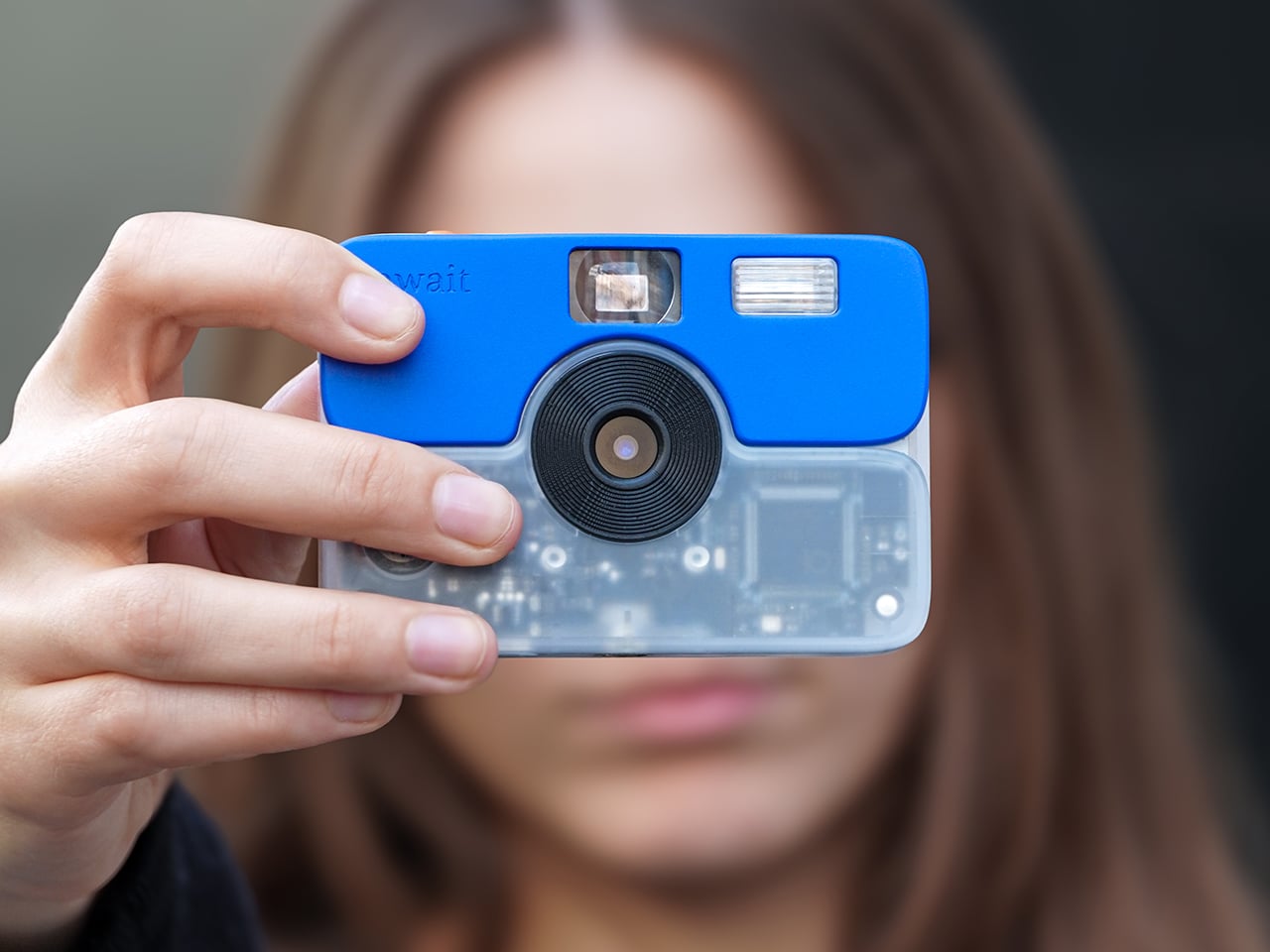
An 8MP Sony IMX179 sensor sits behind a fixed f/2.0 lens at 2.8 mm, roughly a 26 mm equivalent in full frame terms, with a field of view around 65 to 72 degrees. That is a classic point-and-shoot wide angle, wide enough to fit a dinner table into the frame. Eight megapixels sounds modest, but it is plenty for a 6×4 print. Framing happens through an optical viewfinder, a plain window that draws no power. The xenon flash is a real gas-discharge tube, the same technology found in classic film cameras and studio strobes, and it gives the hard, frozen look an LED cannot fake.
Only two buttons run the whole camera. The shutter button fires the shot, and holding it for three seconds powers the camera on or off. The function button on the back toggles the flash with a tap and the 10-second self-timer with a 1.5-second hold. Everything else lives on the OLED, which shows battery level in four bars, flash and timer status, rolls remaining (3/3 means three fresh rolls), and shots left on the current roll. A small buzzer gives shutter, timer, and system sounds. Power comes from a 1000 mAh battery charged over USB-C, with Bluetooth 5.2 and Wi-Fi handling the sync.
From sync to print, and what it all costs

Fill a roll and the camera hands everything to the Await app, which is free on iOS and Android with no subscription. Rolling Square says the filter comes from a study of vintage photographs and was tested across thousands of pictures and dozens of lighting conditions. The sample shots carry an orange date stamp, which tells you exactly which decade it’s cosplaying. The camera holds up to three rolls, or 72 pictures, and a sync empties it for the next outing. To skip the filter, connect the camera to a PC or phone over USB-C and grab the original files, uncompressed and untouched. Files pulled through the app are converted, and the originals no longer exist there.
Automatic mode queues each finished roll for 24 hours, giving you a window to skip it, then prints at $8.99 per roll plus shipping from $4.99. Manual mode prints on demand at $9.99 per roll plus shipping, and either way you only pay when a roll goes out. Each roll delivers 24 prints at 6×4 inches. The camera costs €129 (about $146), with early pricing from €89 (about $101), and a full kit with both straps and two extra faceplates lists at €157. Orders are open now on Kickstarter, shipping is expected from December 2026, and the page lists a 2-year warranty with 30-day returns. Fewer photos, better odds that one ends up on your fridge.
Click Here to Buy Now: $100 $145 (31% off). Hurry, only 37/625 left! Raised over $85,000.
The post The $146 Await camera brings back the disposable with 24 photos per roll, so every shot counts first appeared on Yanko Design.