Beekeeb Toucan: The Split Ergonomic Keyboard Built for Travelers

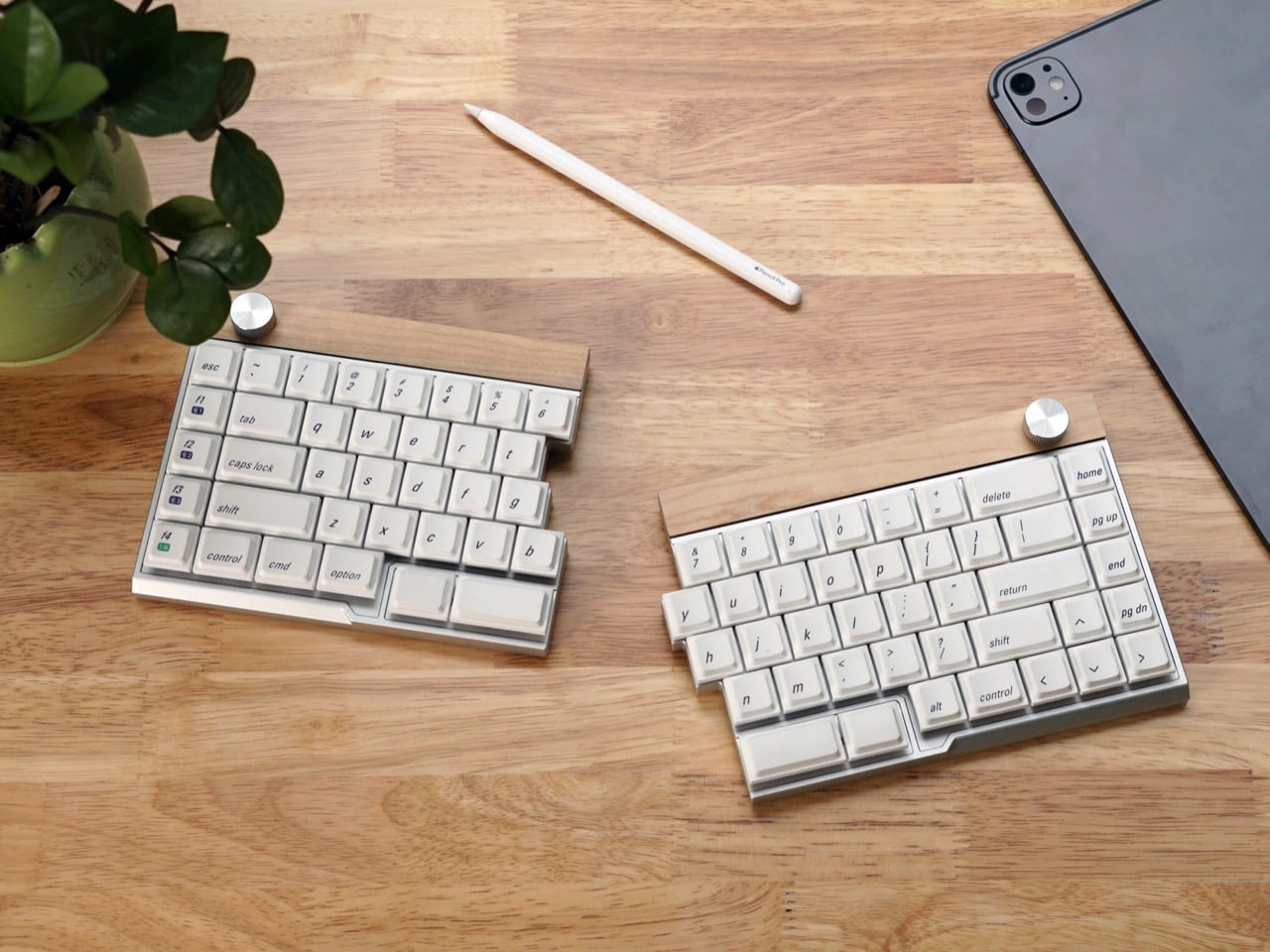
The Beekeeb Toucan asks a question that ergonomic keyboard enthusiasts have been wrestling with for years: why should comfort stay home? Split keyboards and columnar layouts have long belonged to desk-bound workers, their benefits tethered to permanent workstations and cable management systems. This 42-key wireless design challenges that assumption.

Designer: Beekeeb

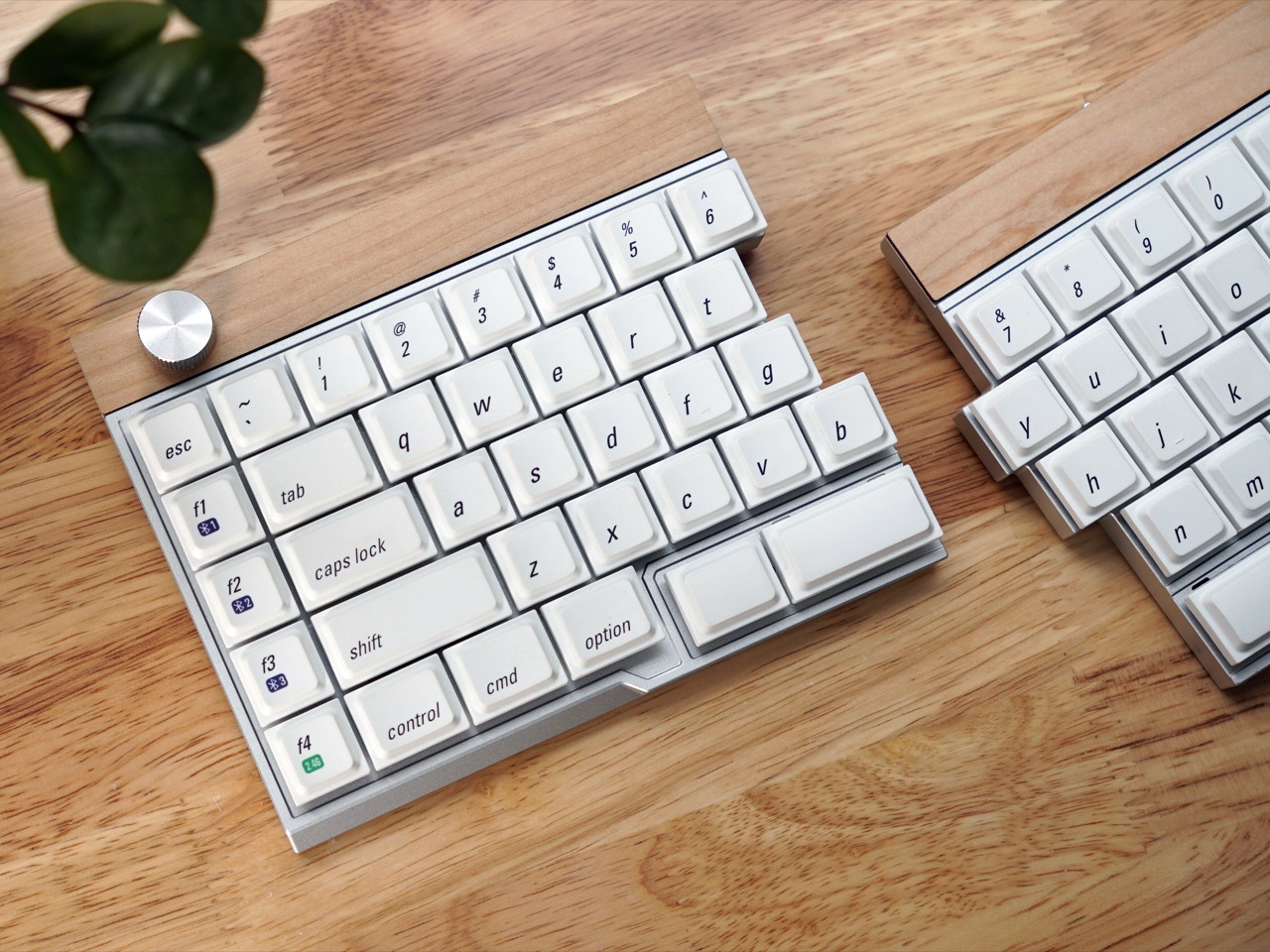
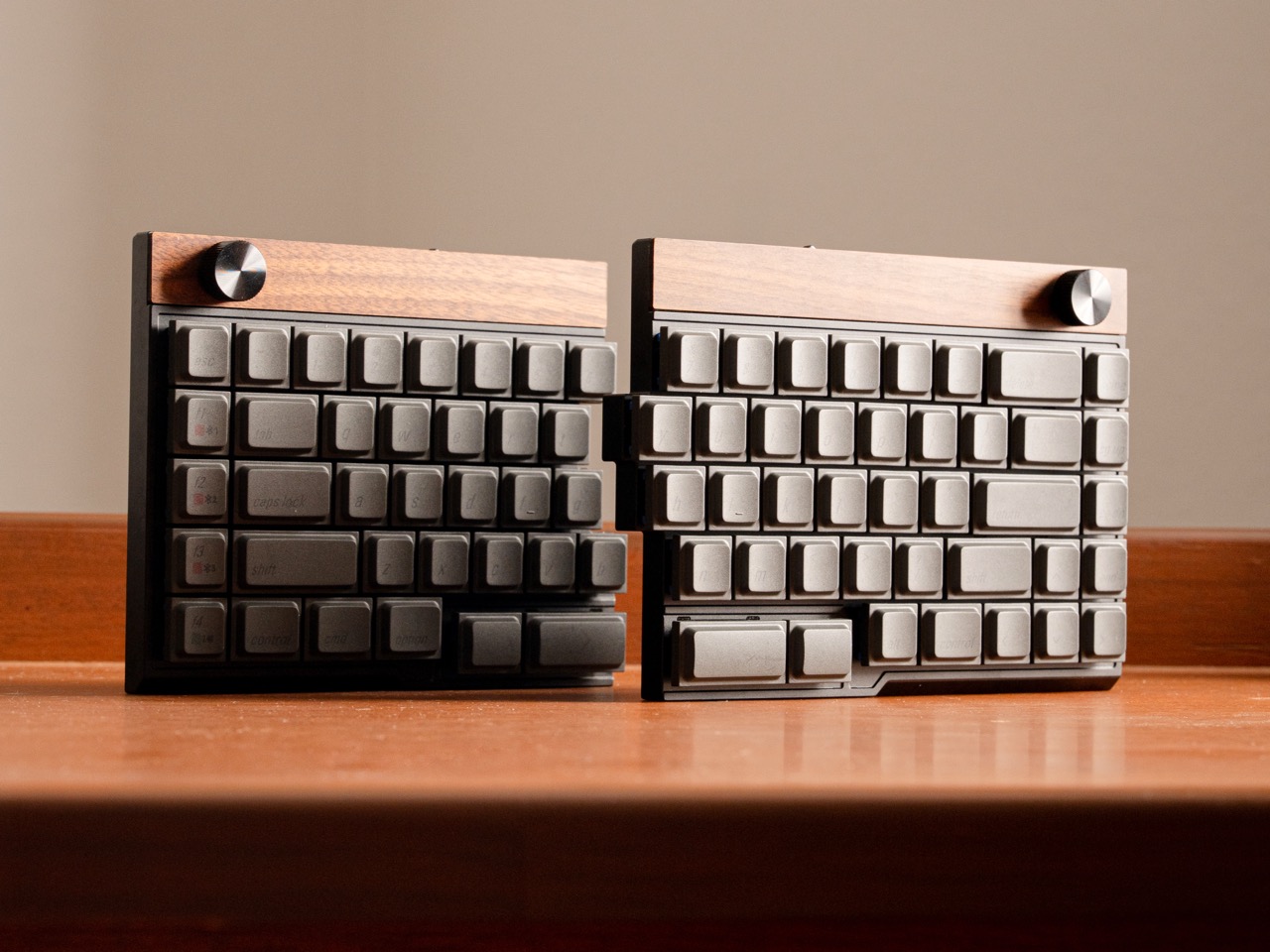
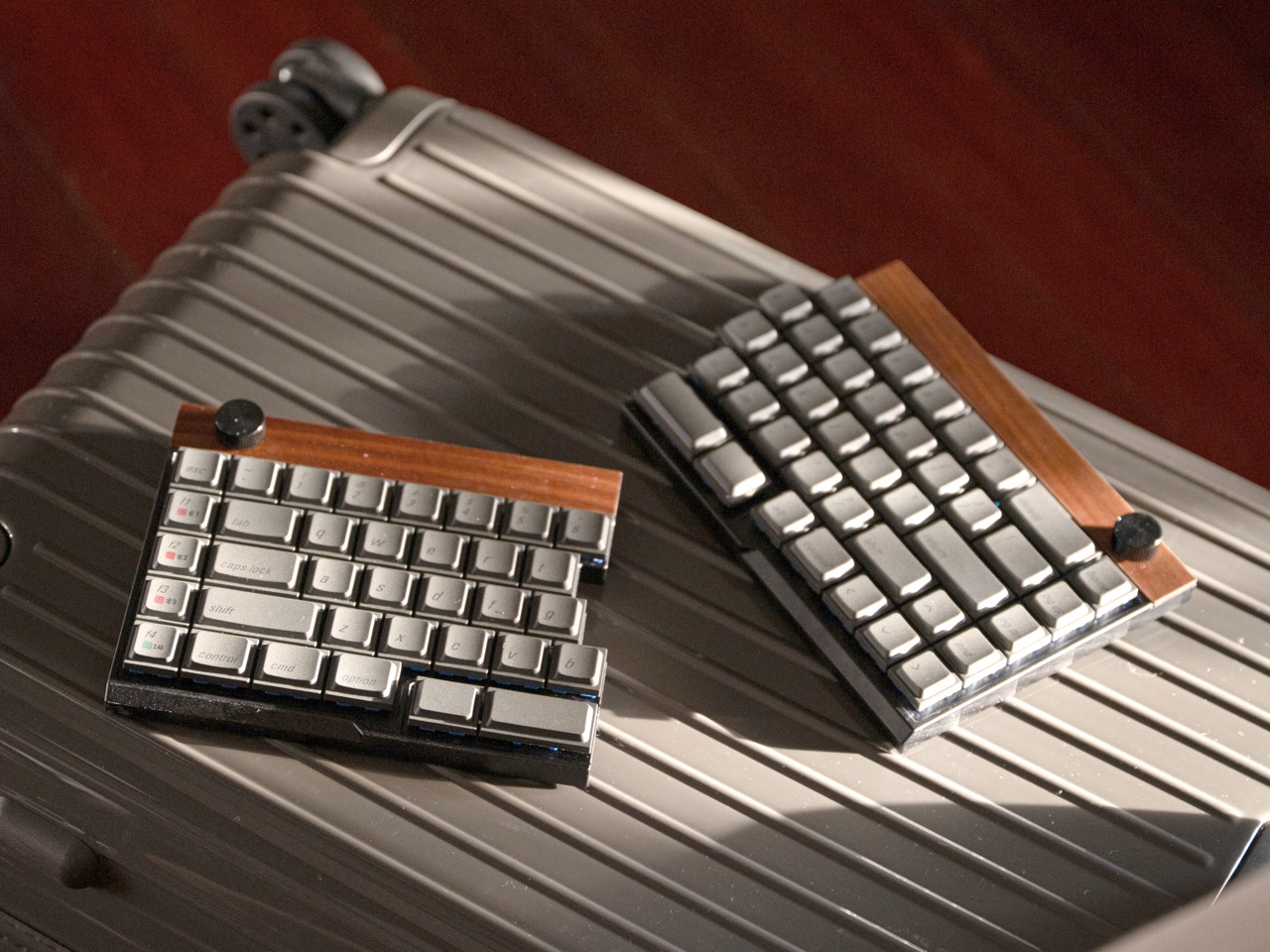
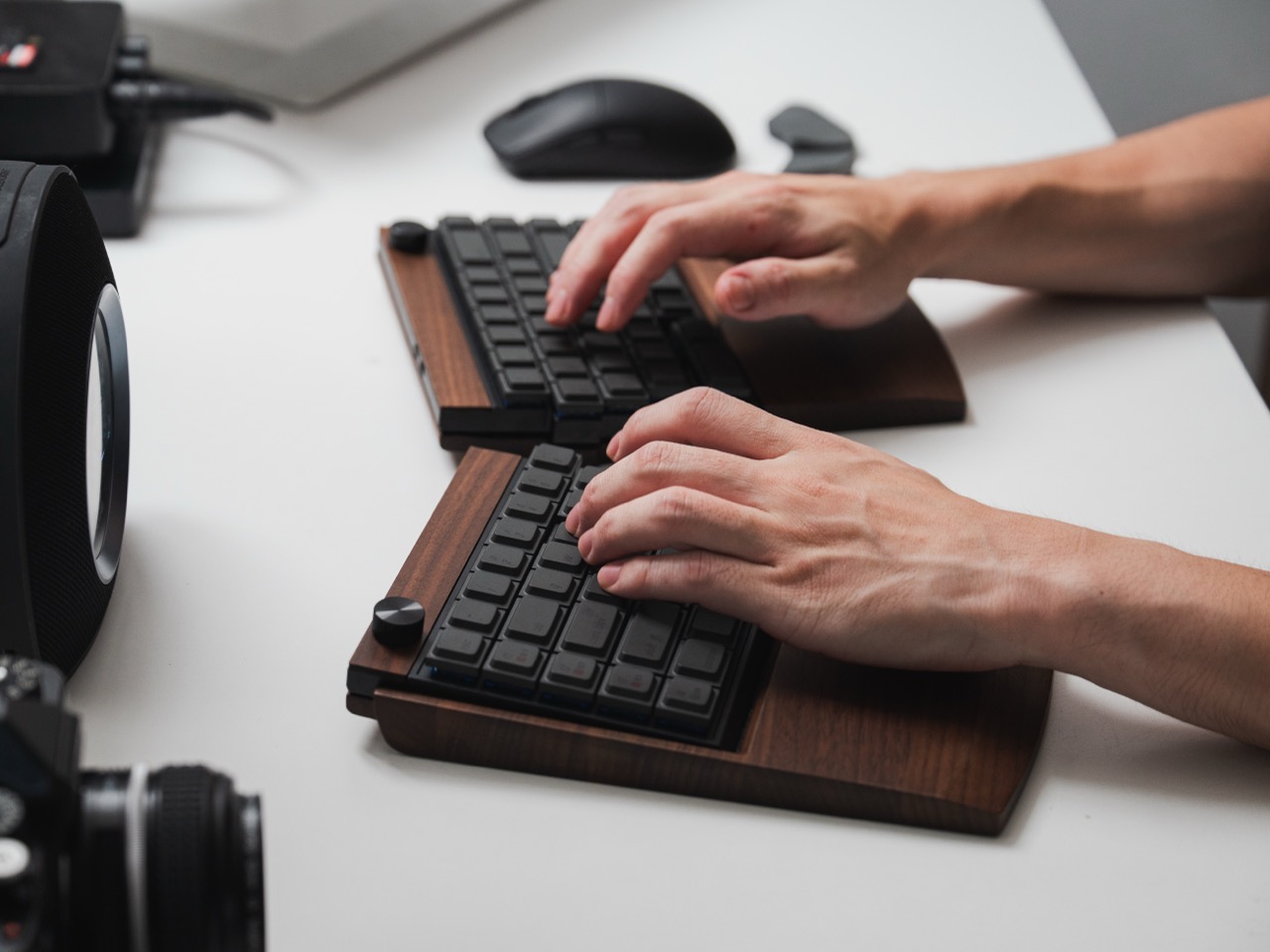
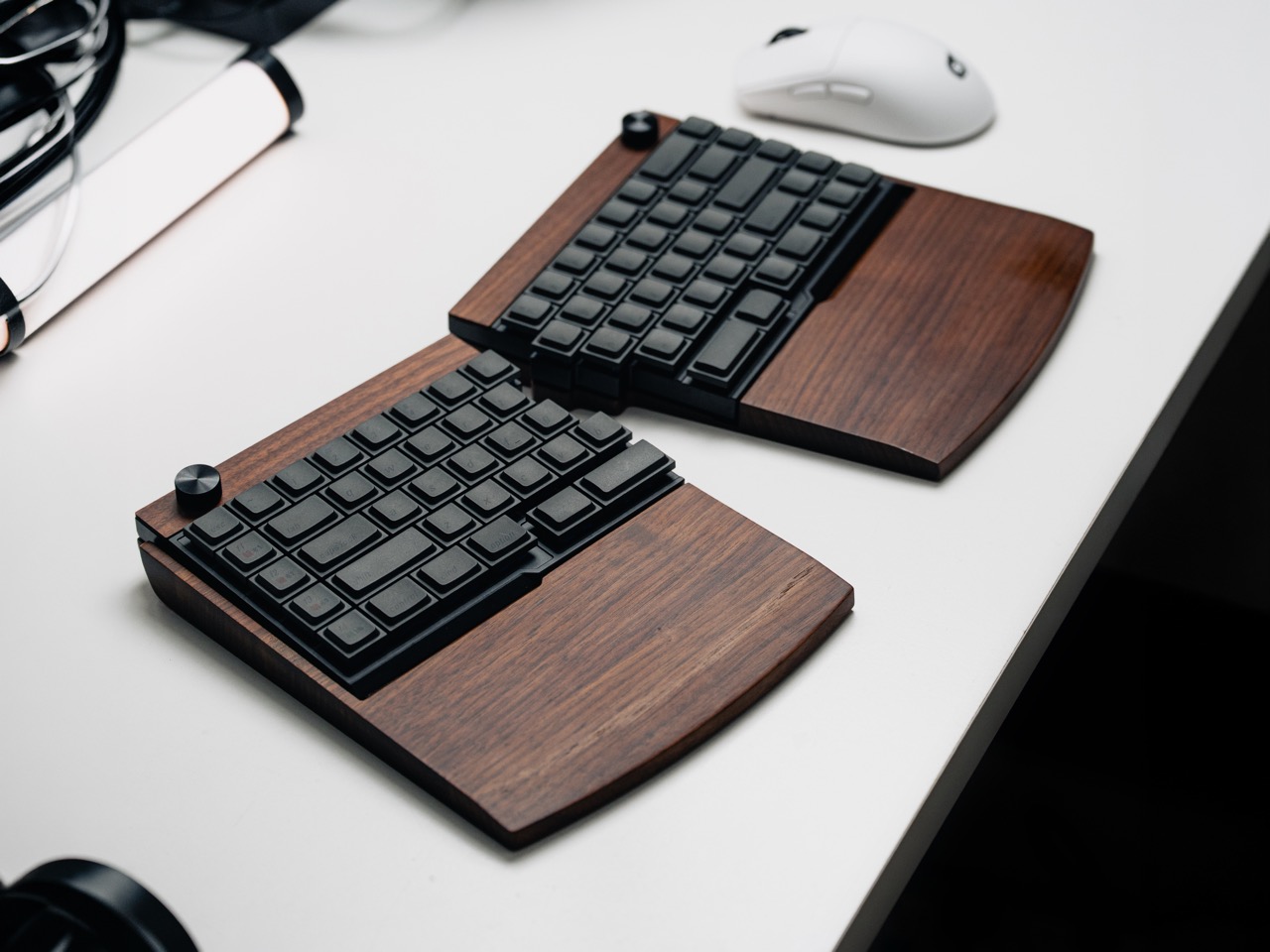
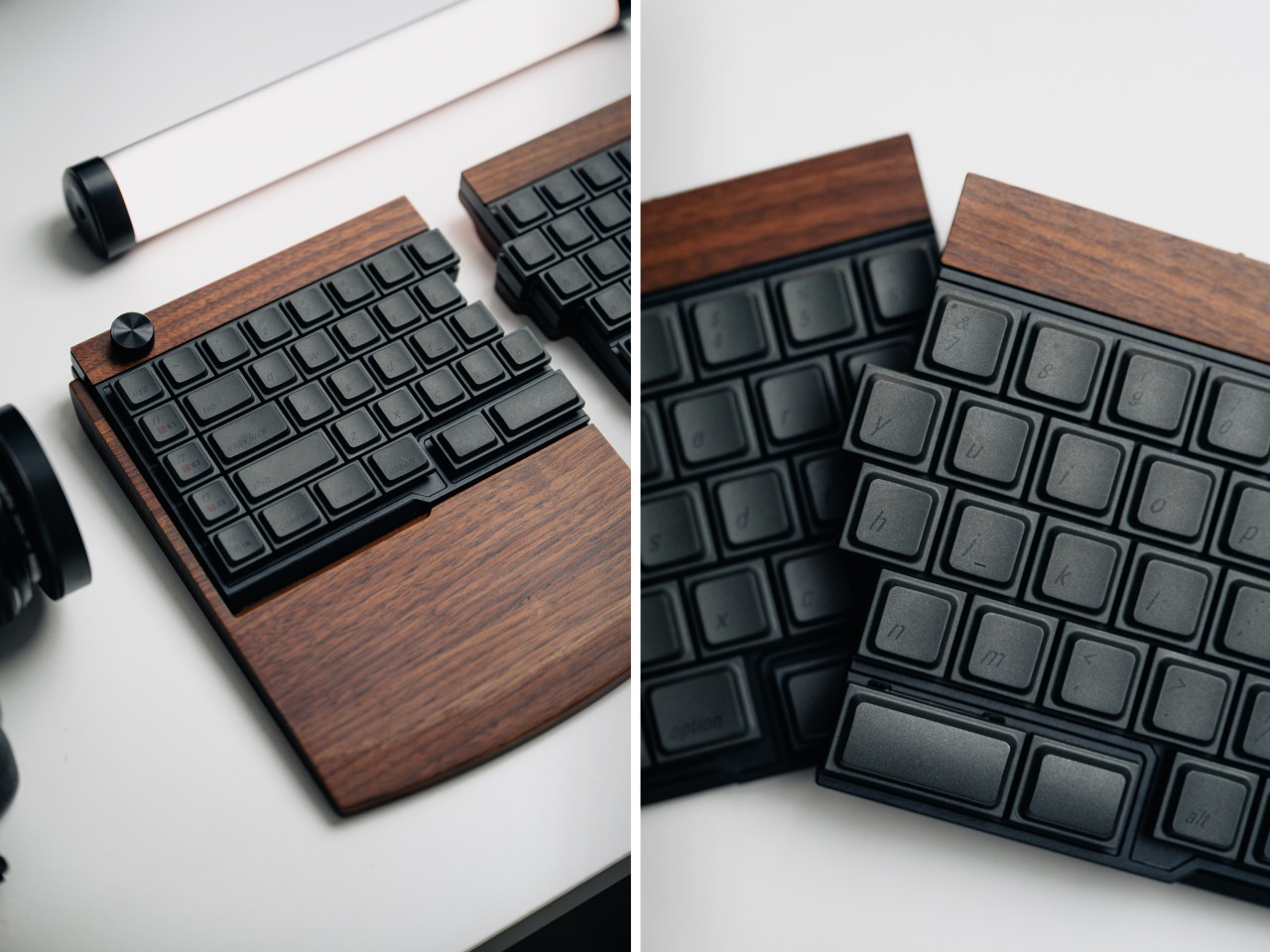
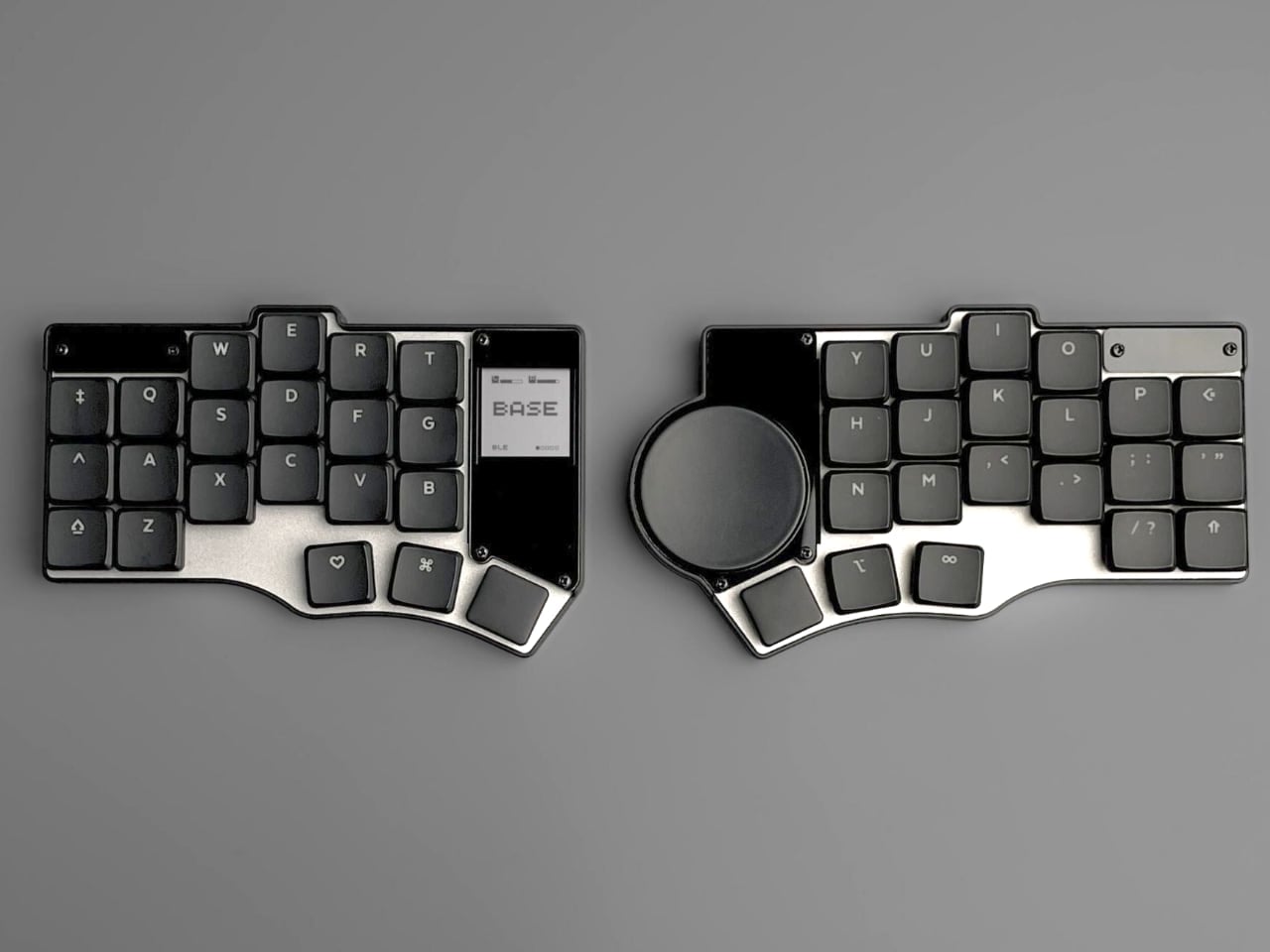
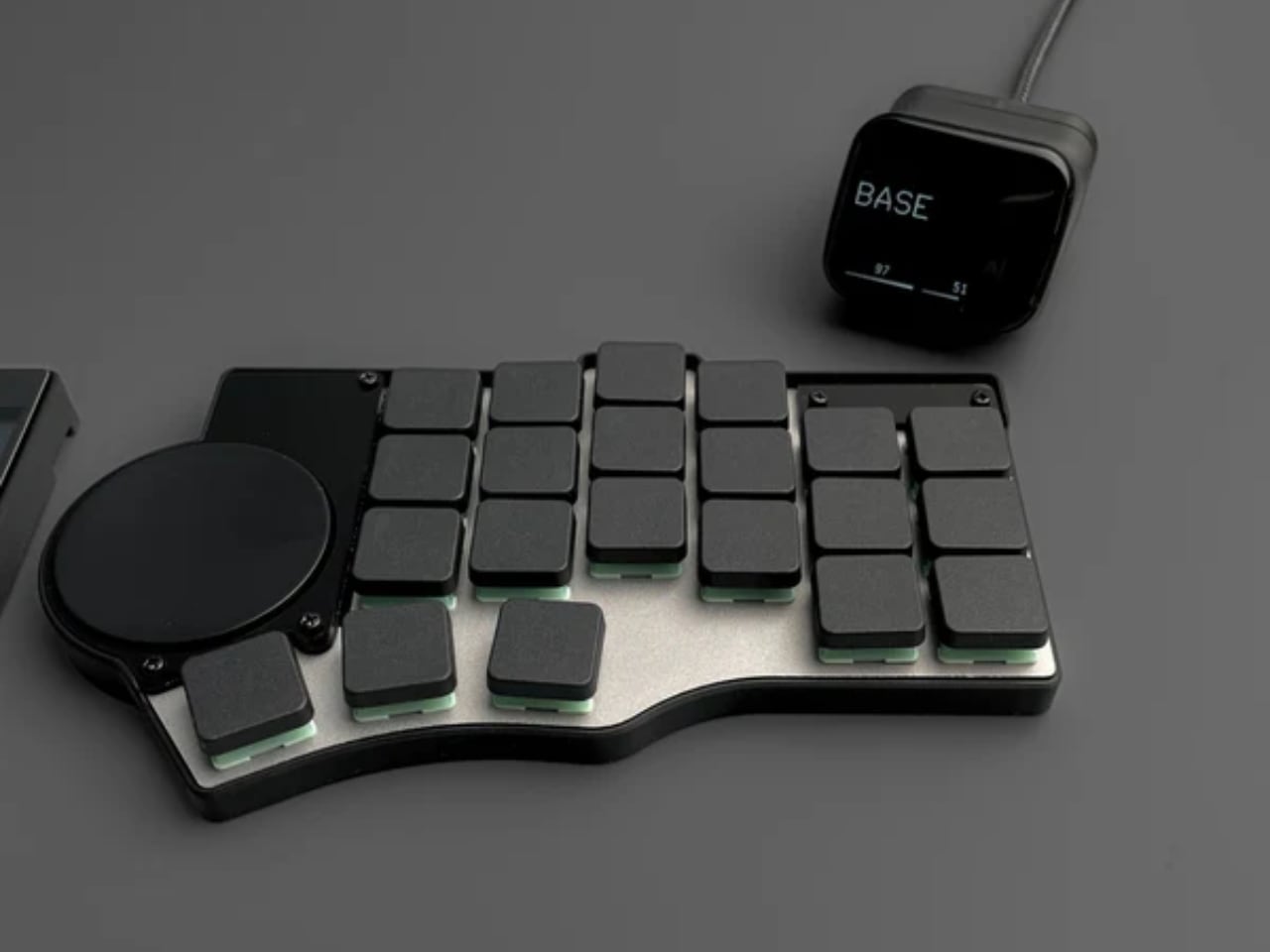
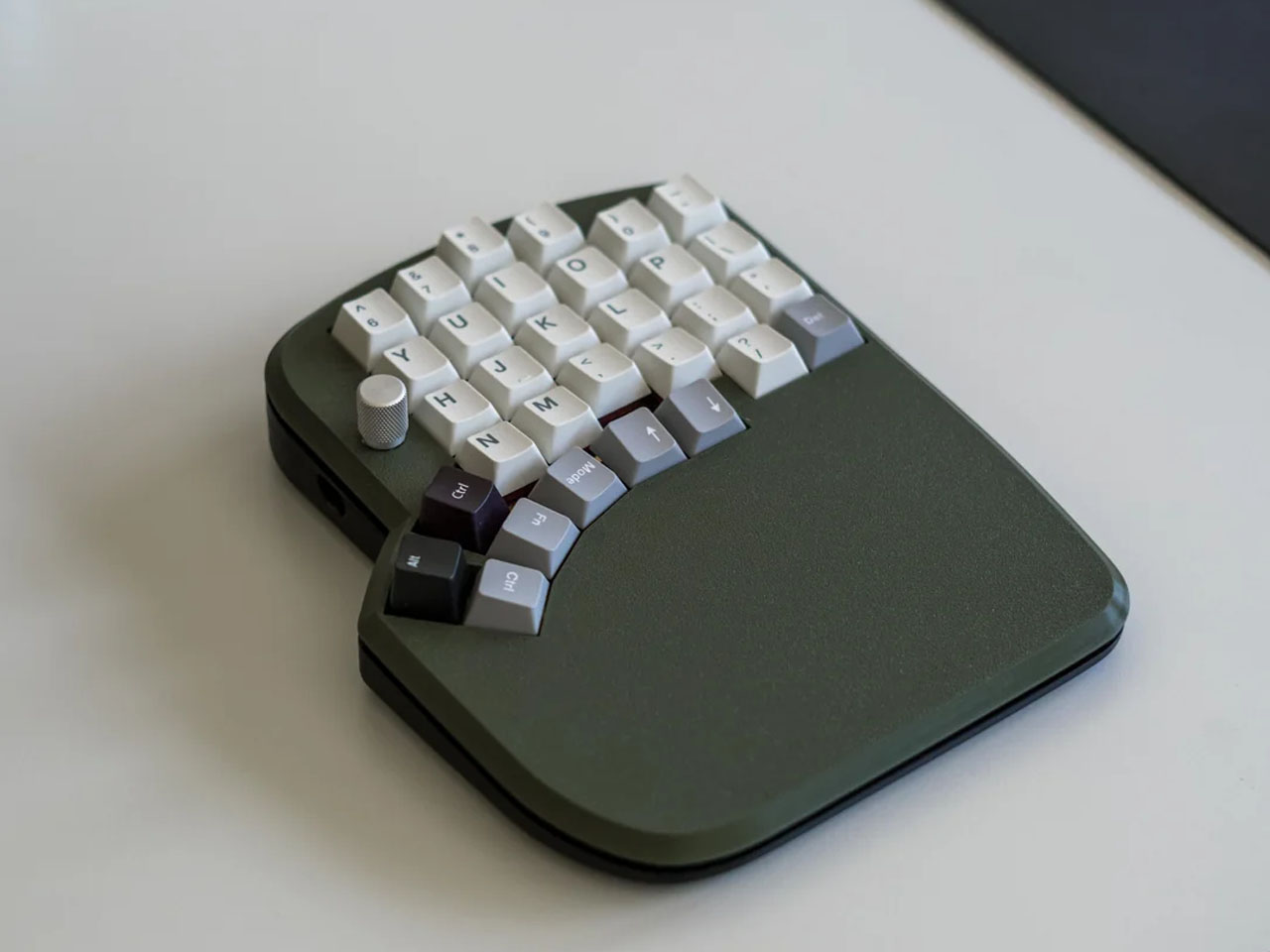
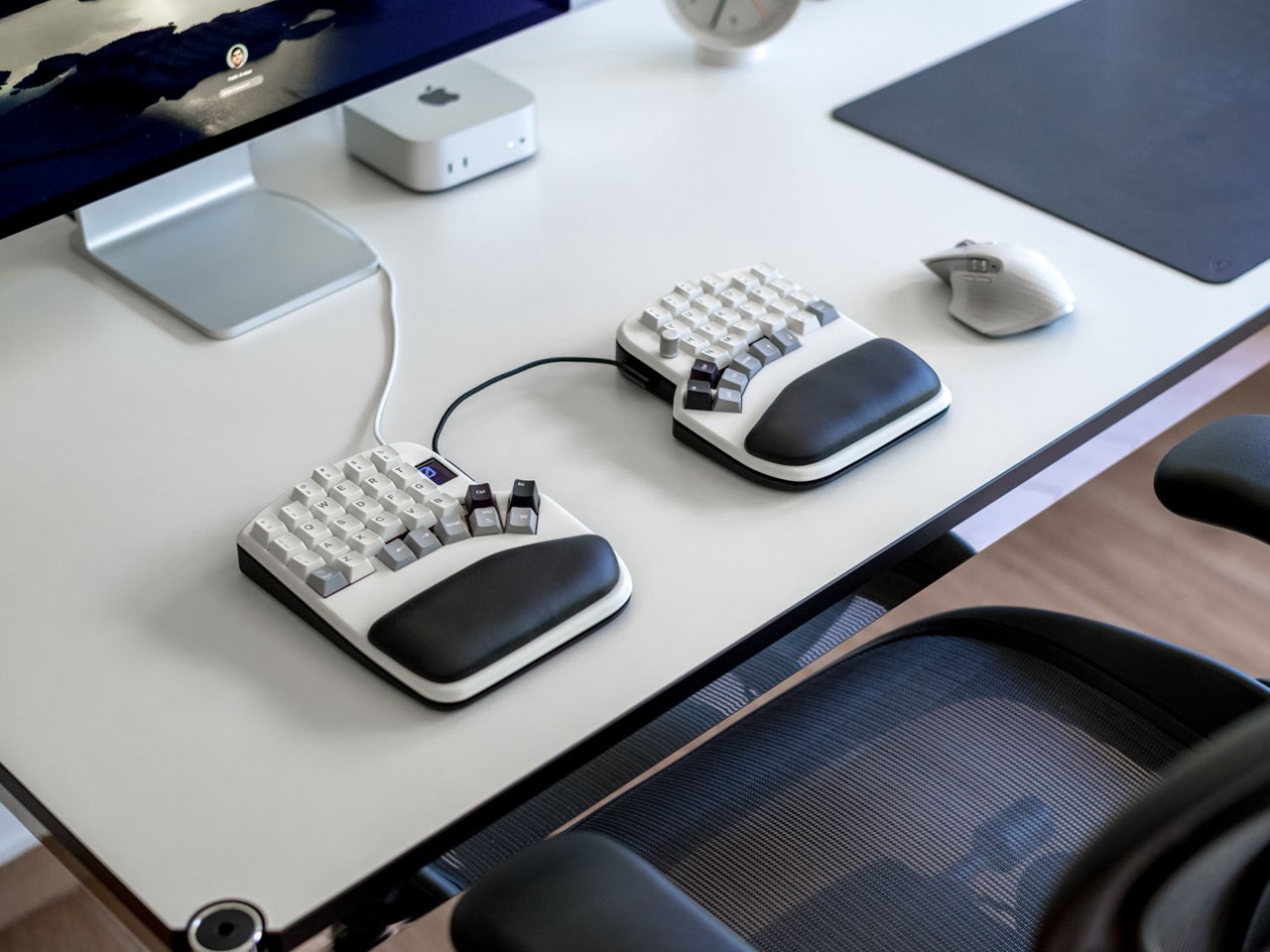
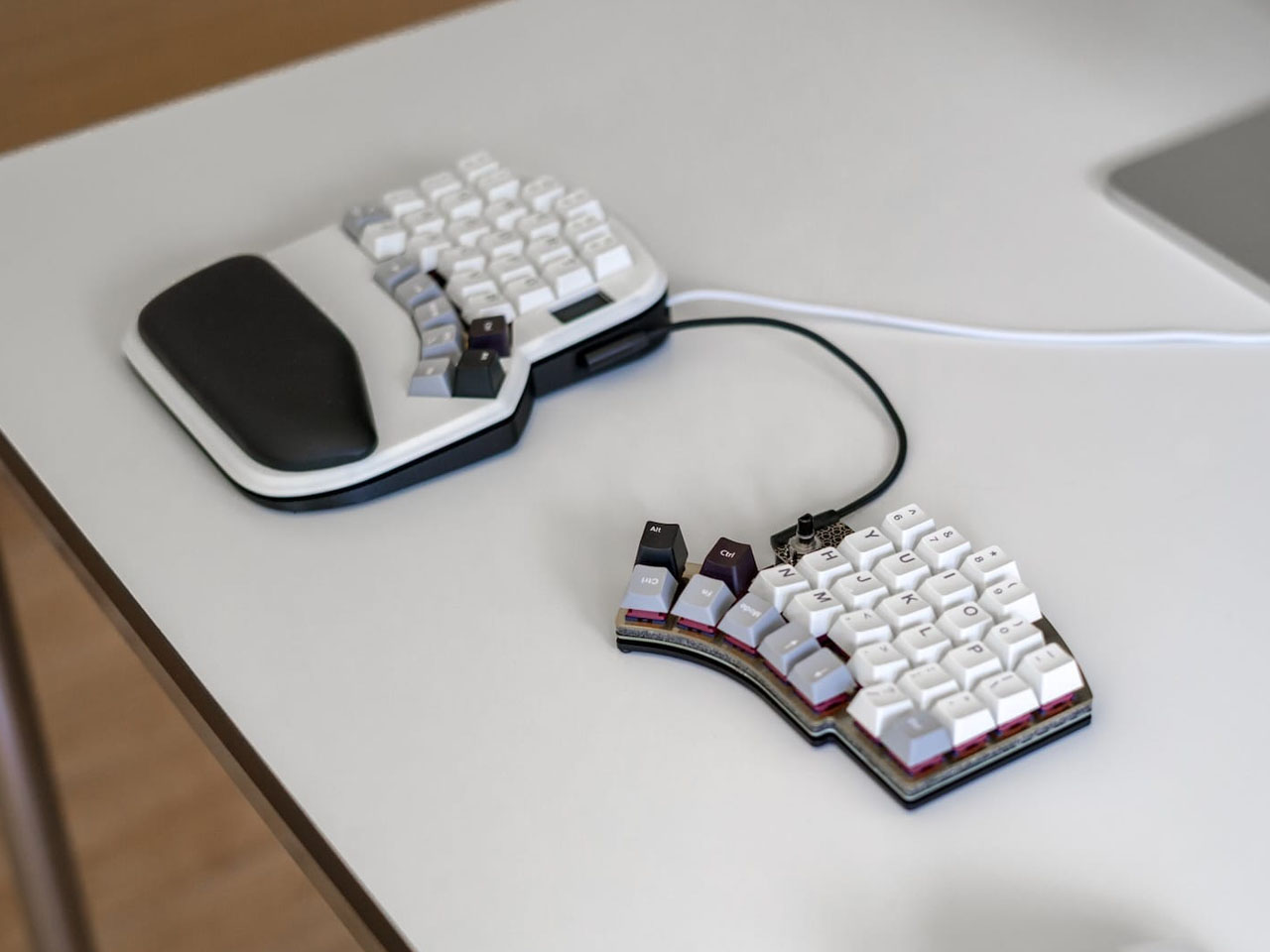
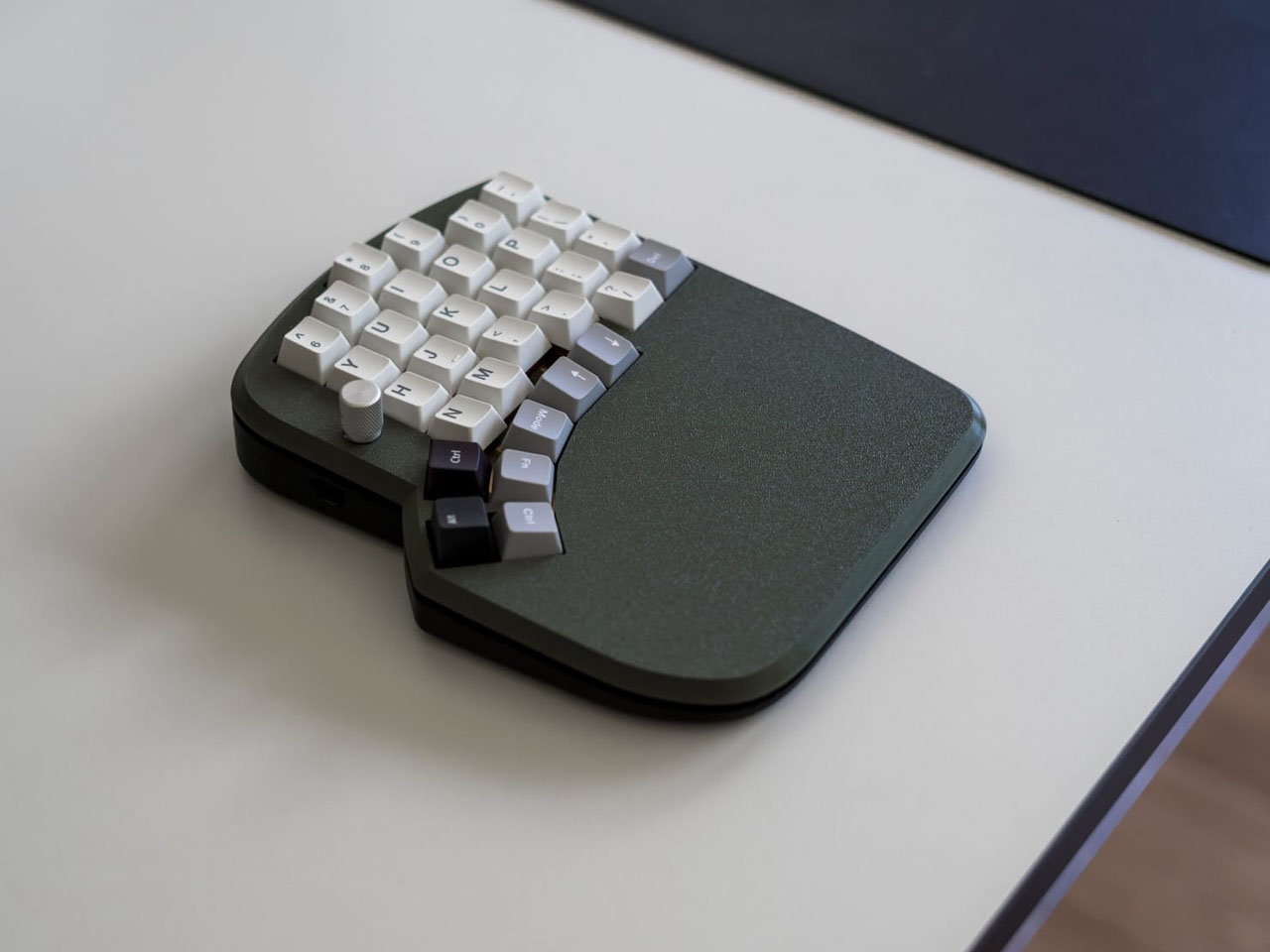
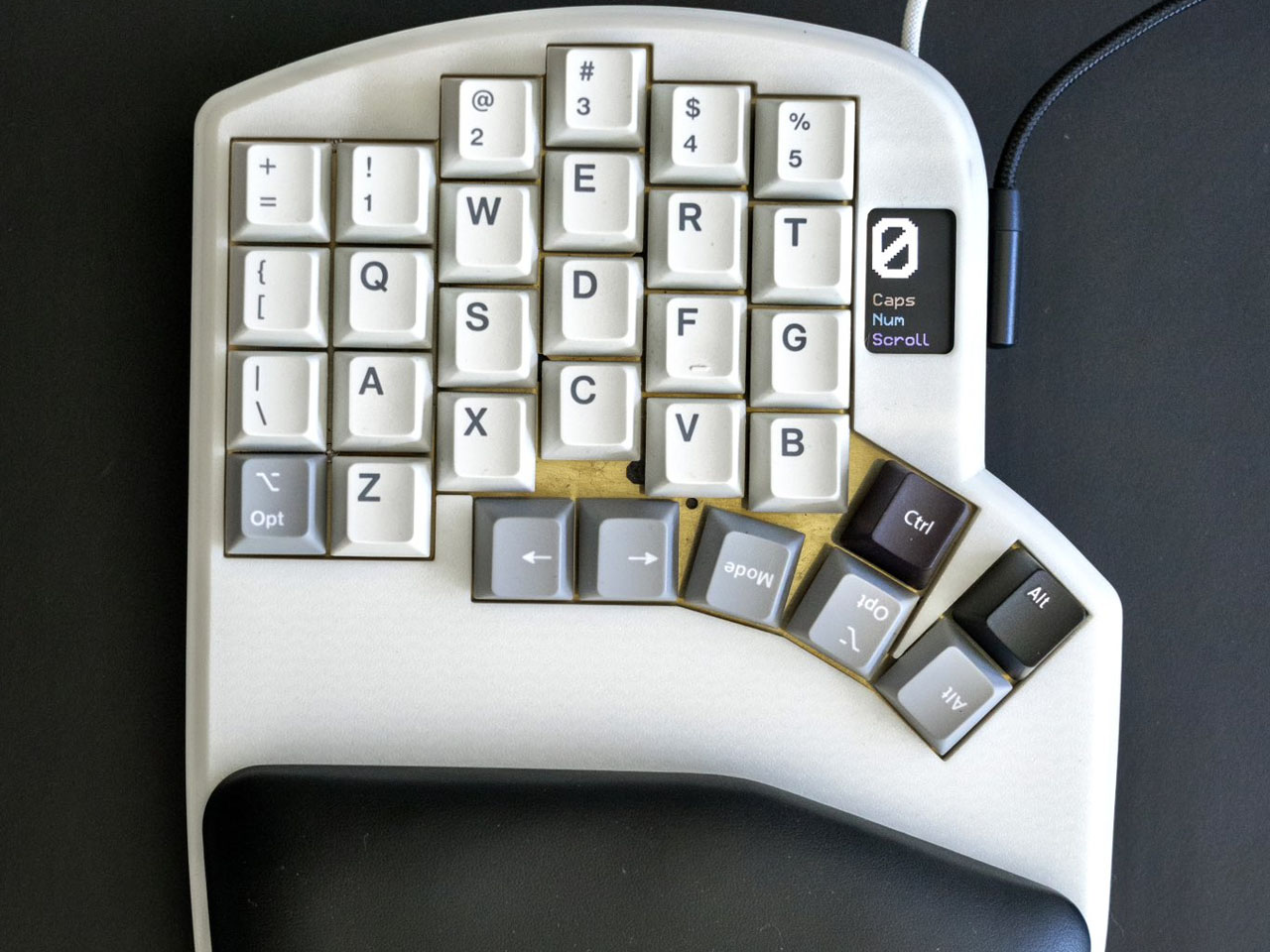
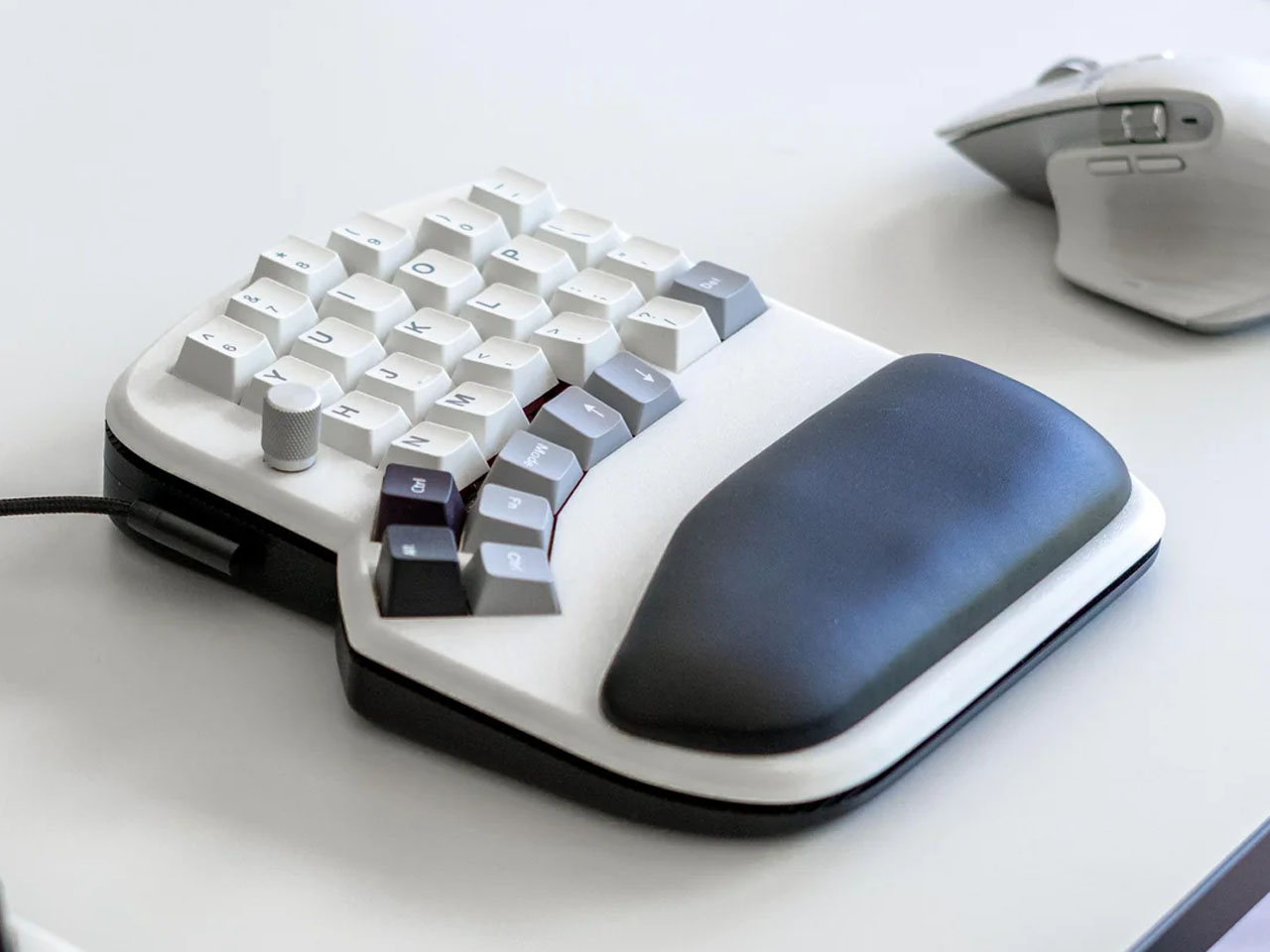
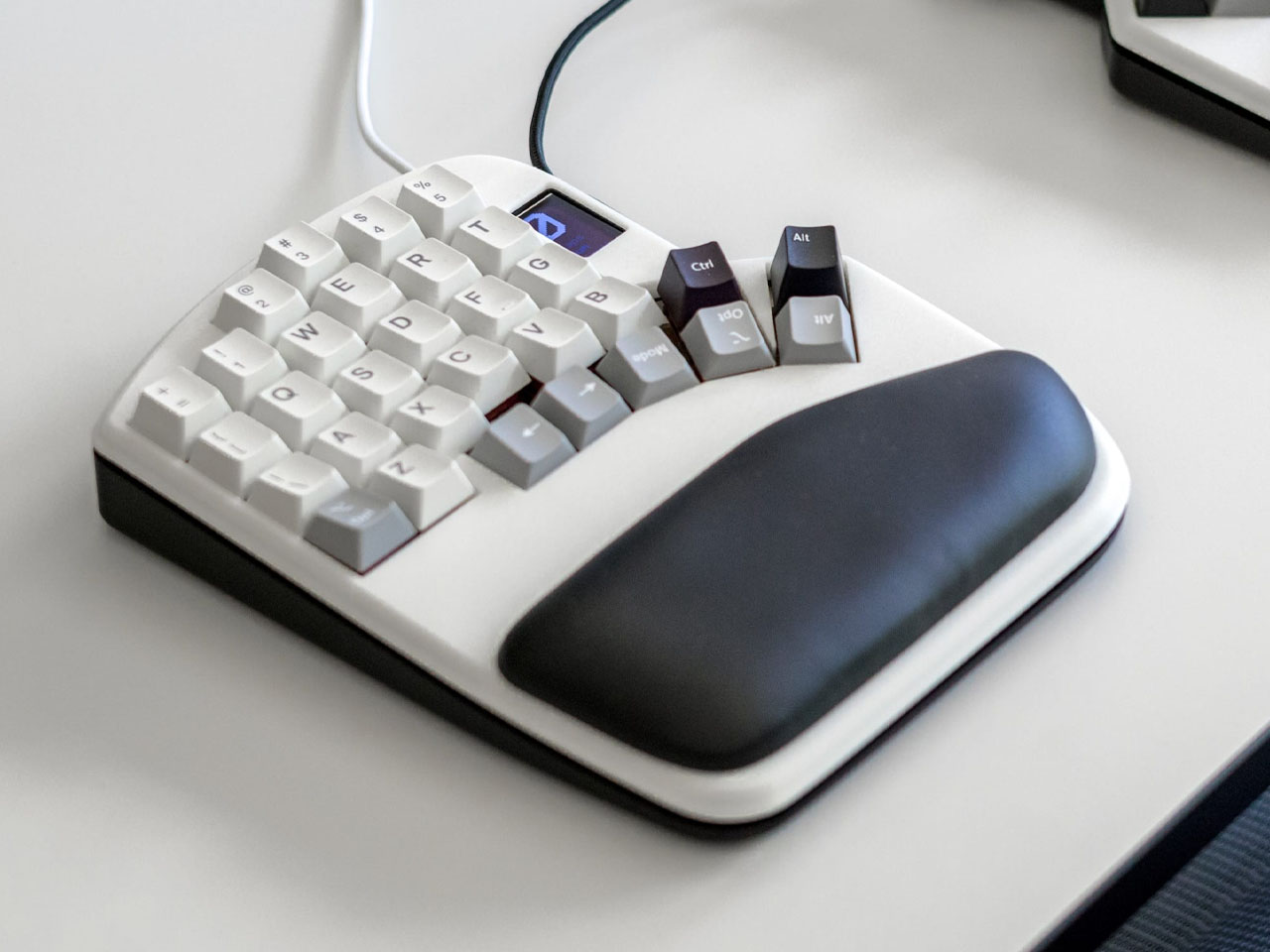
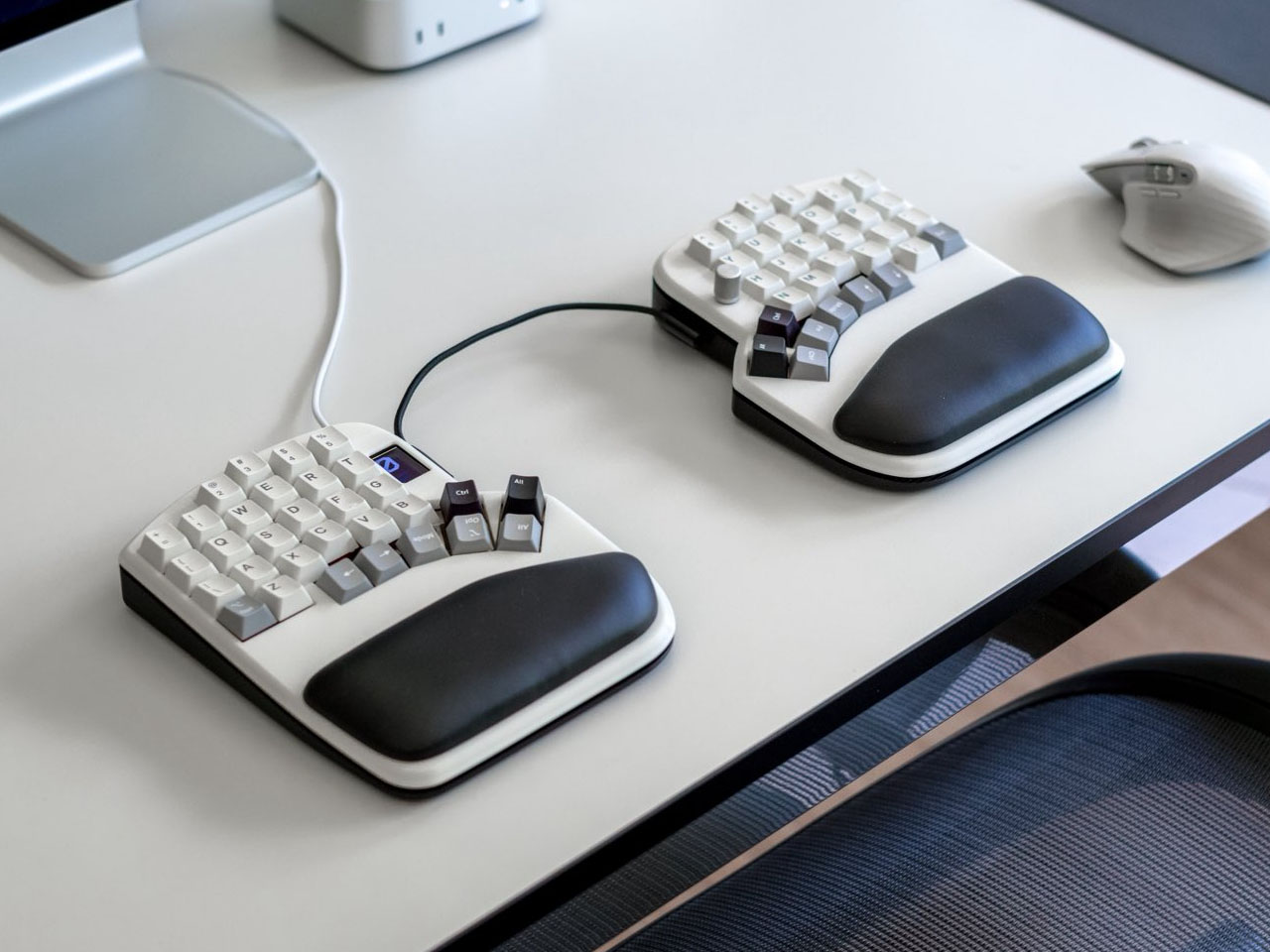
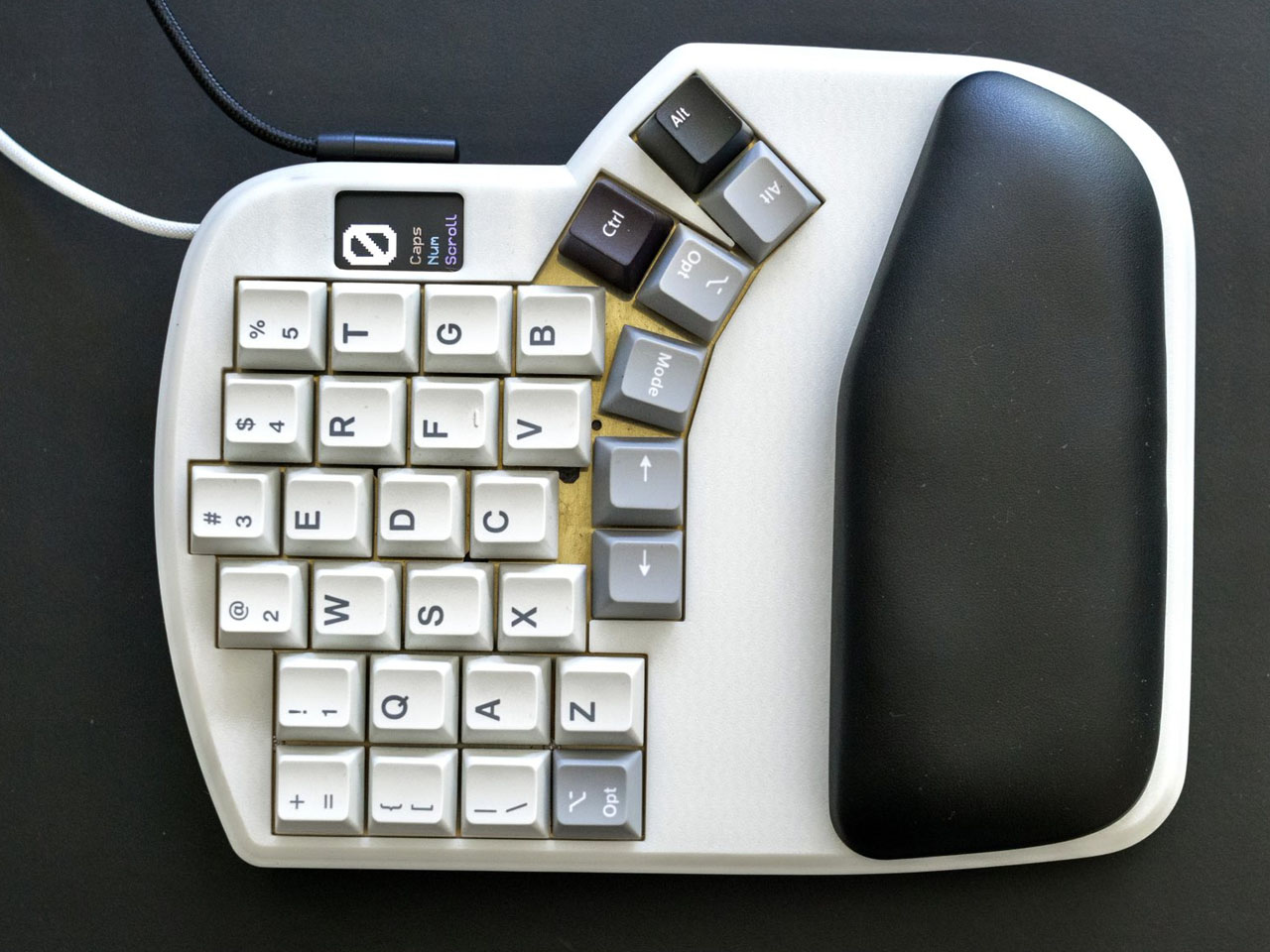
Two halves sit independently, angled outward to match natural shoulder width. Keys follow a columnar stagger rather than traditional row offset. Each key positions directly beneath a finger’s natural arc of movement. These principles are well-established in ergonomic design, but the Toucan’s interpretation focuses on what most split keyboards treat as secondary: portability without compromise.

Engineering Movement Into Ergonomics

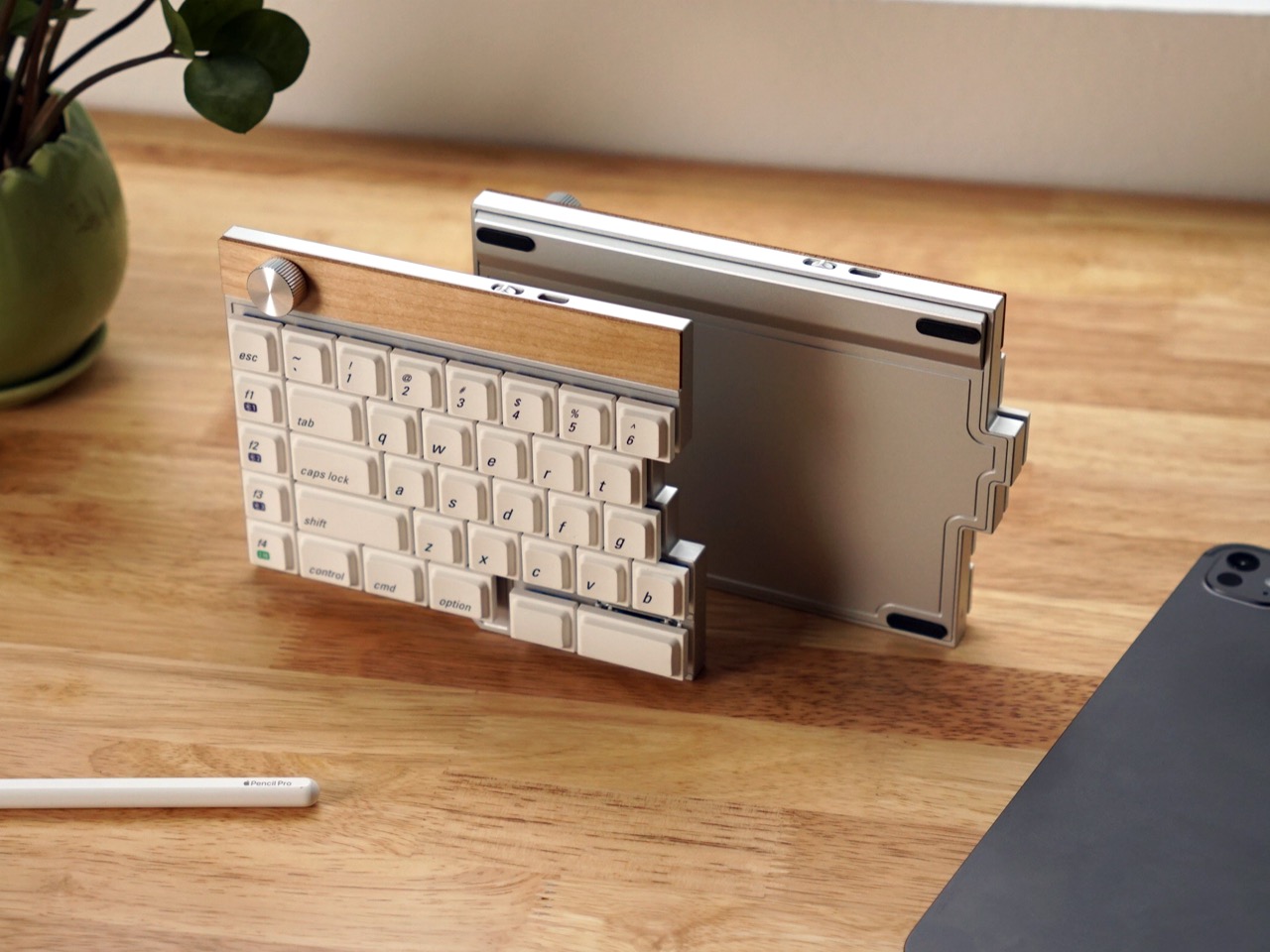
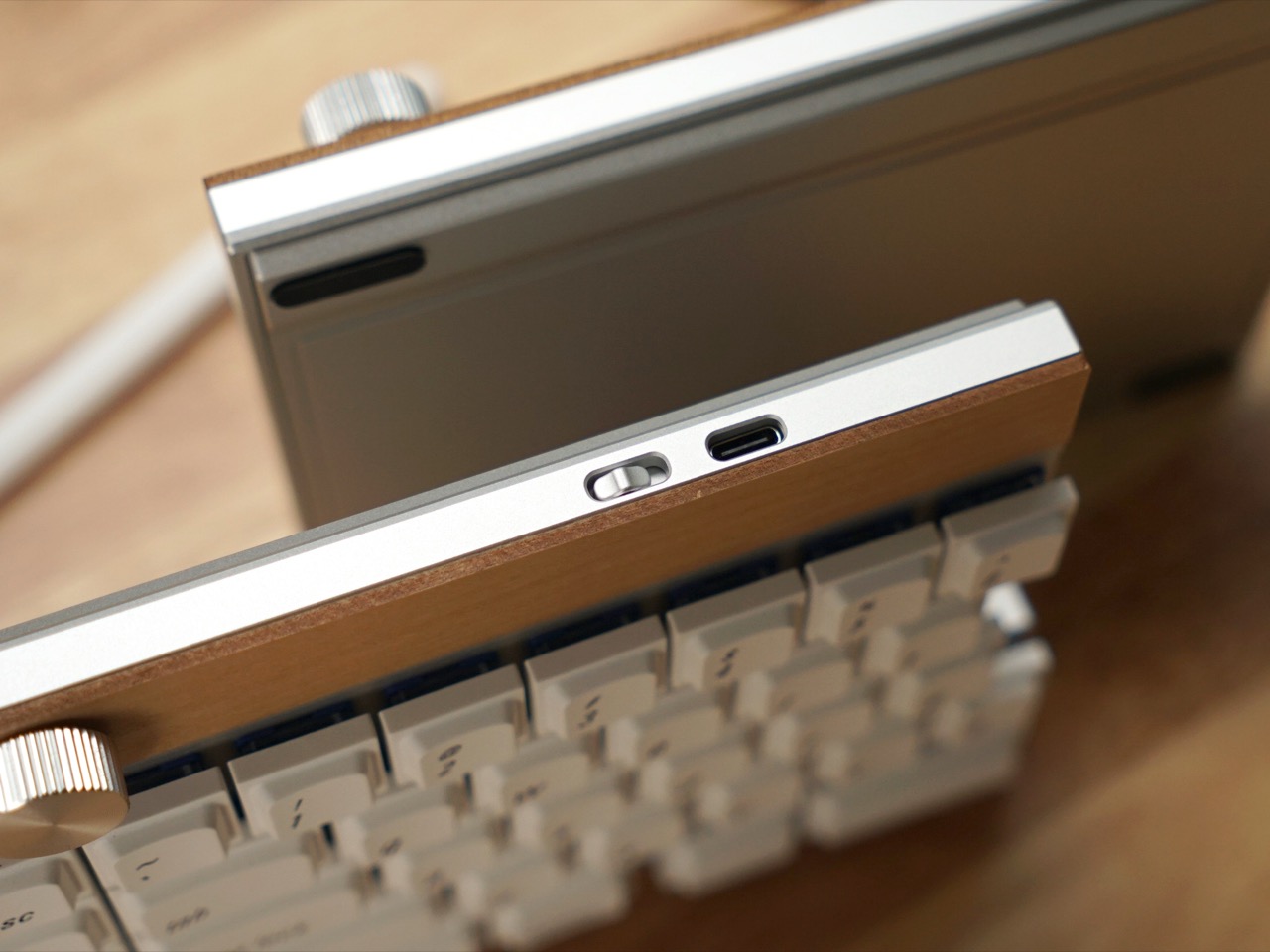
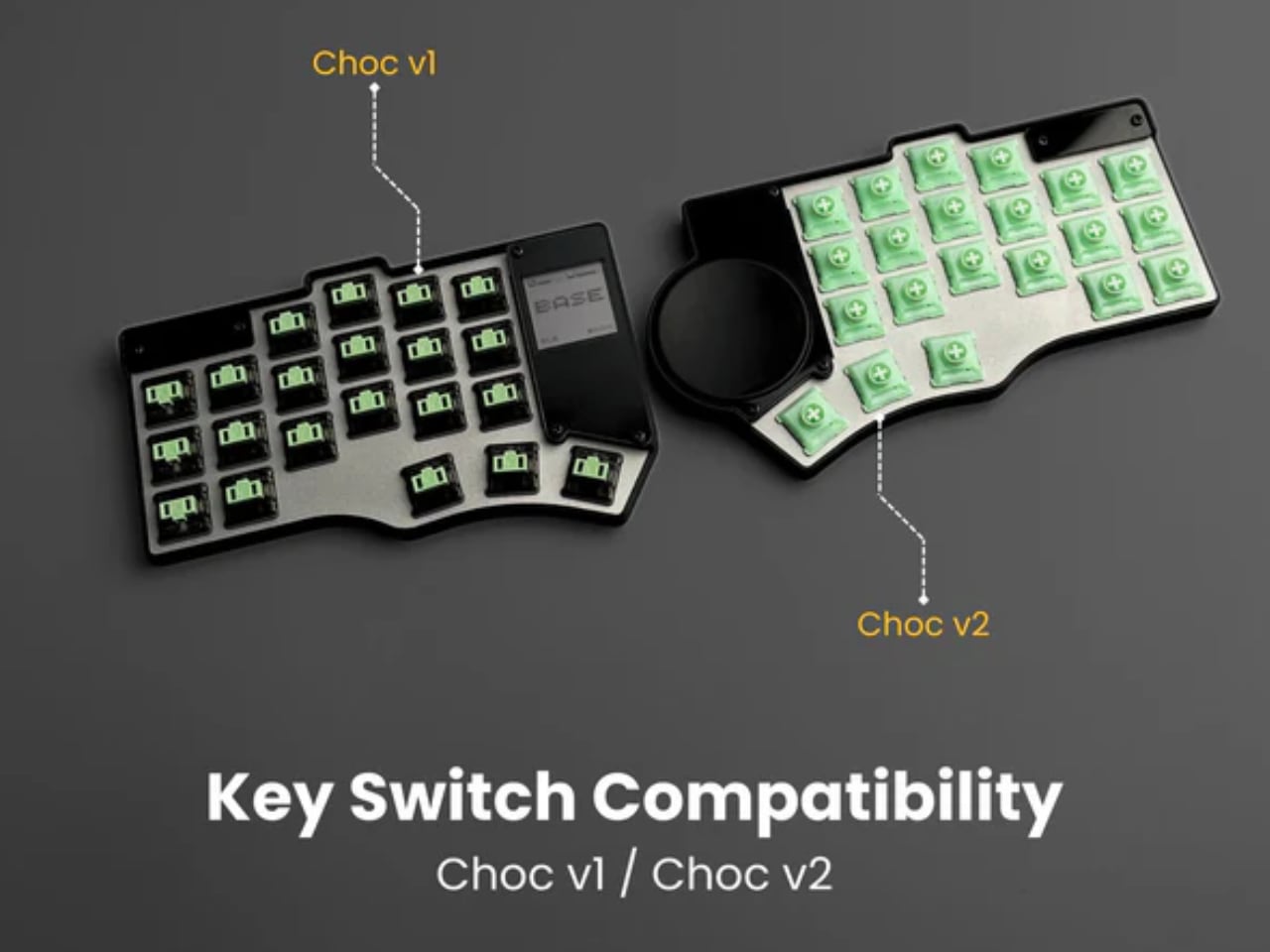
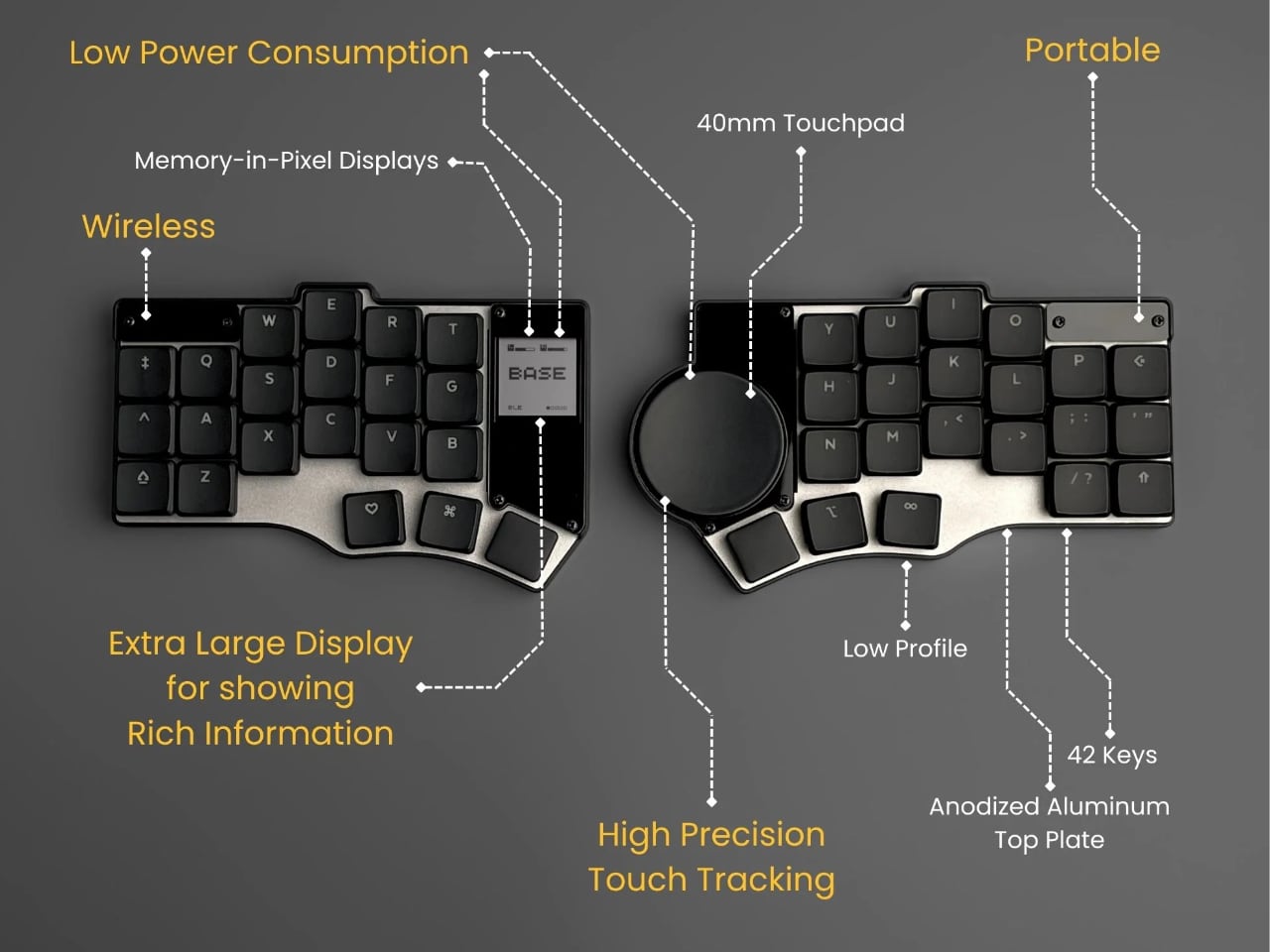
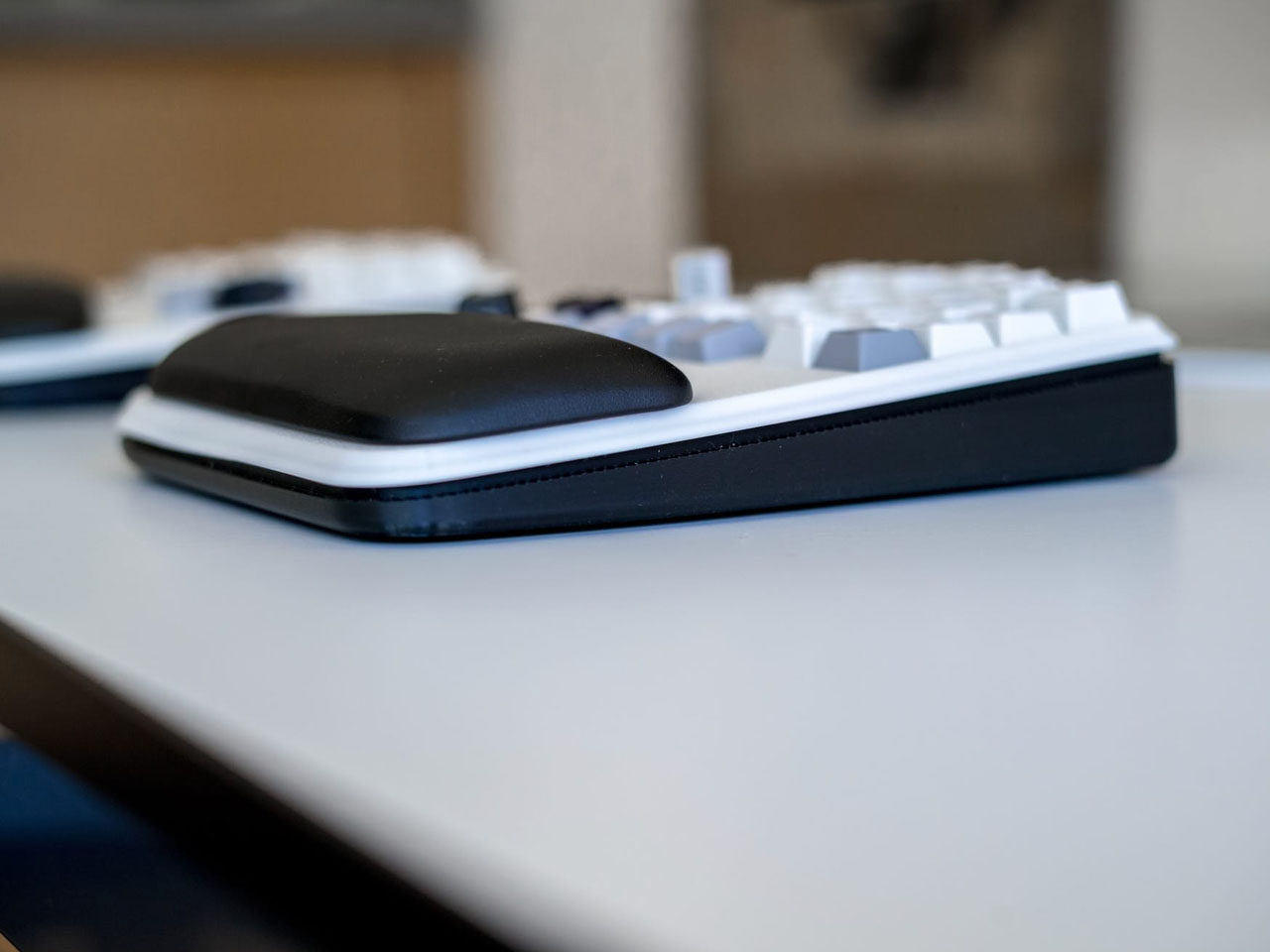
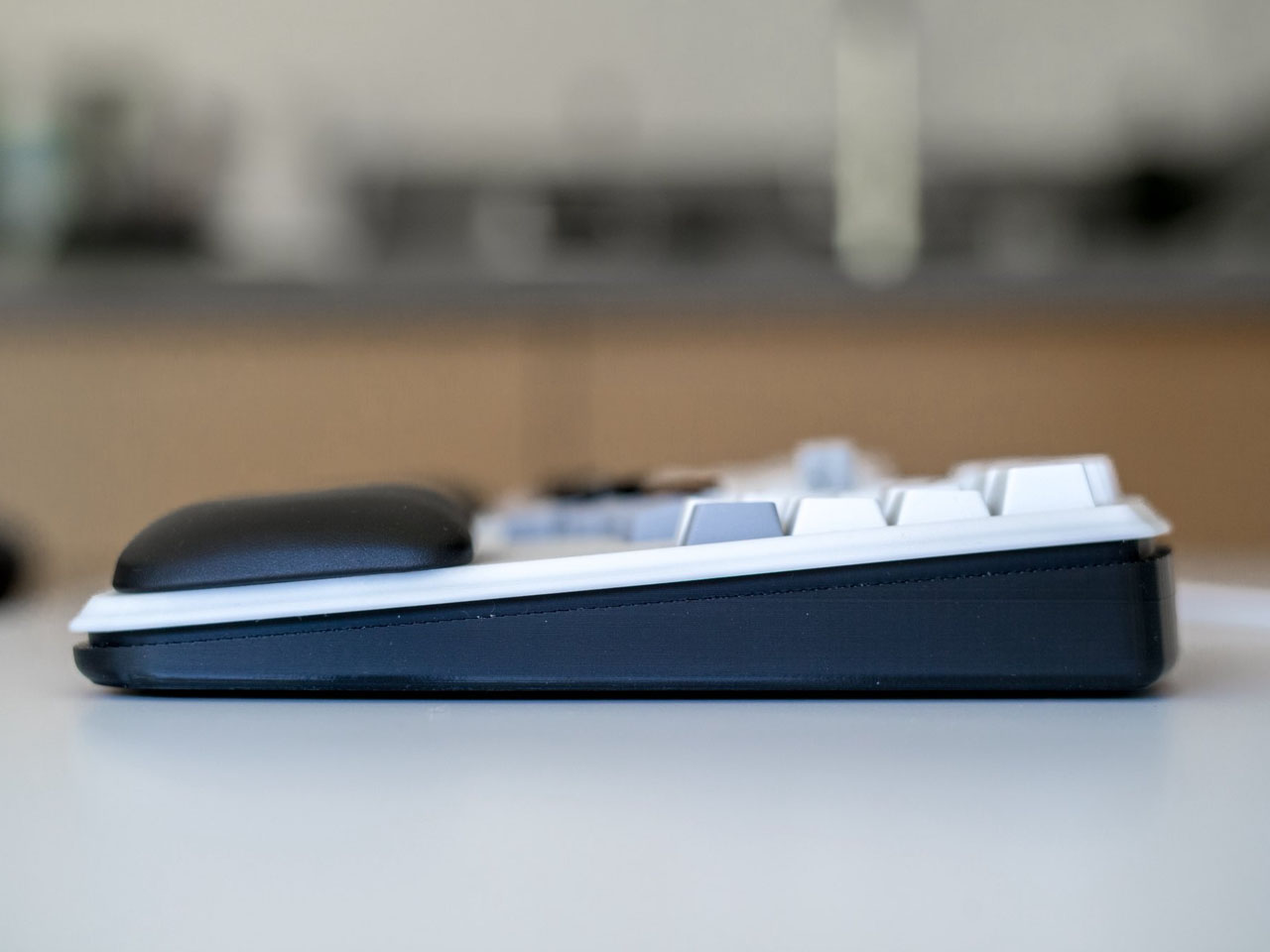
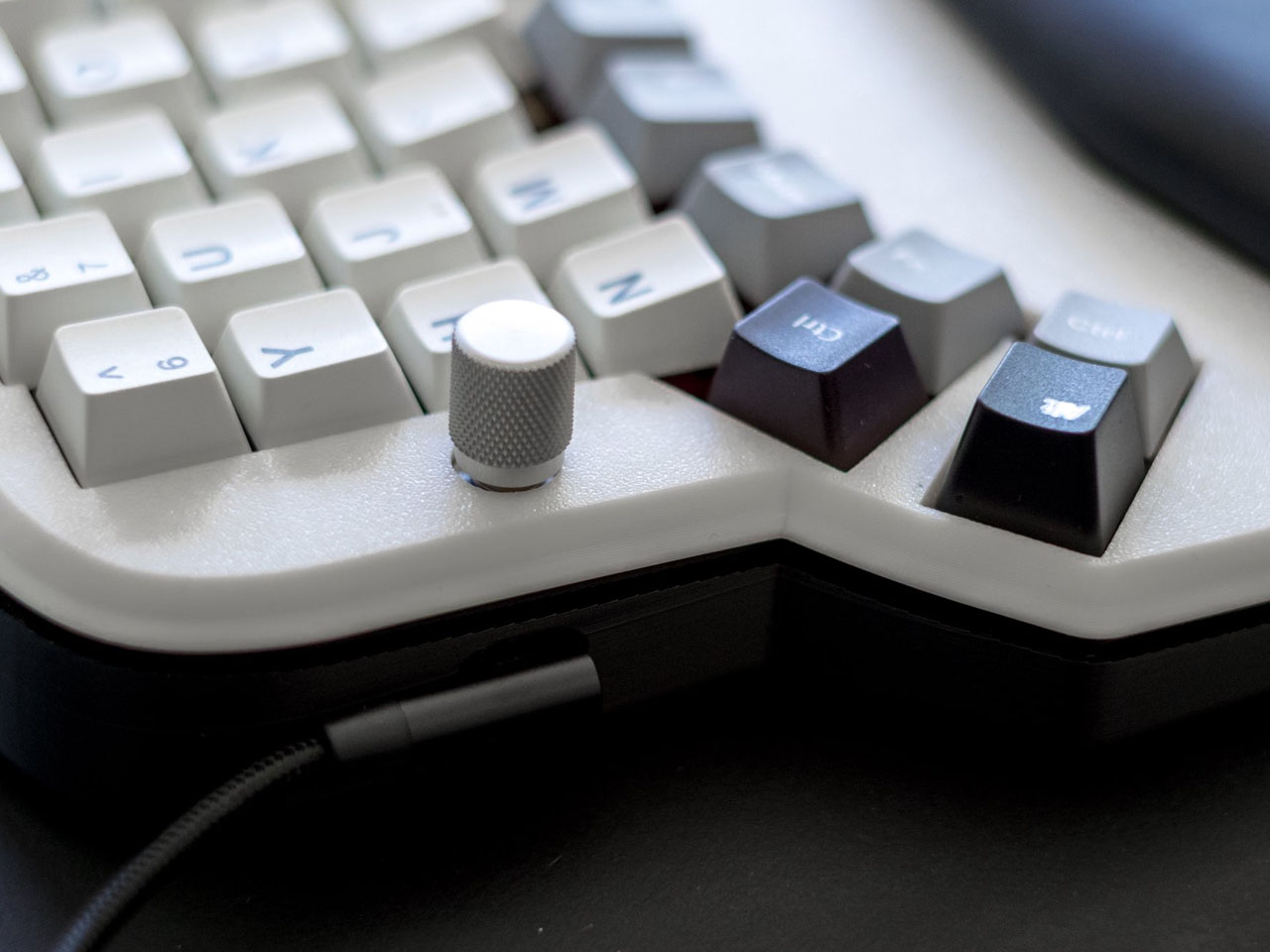
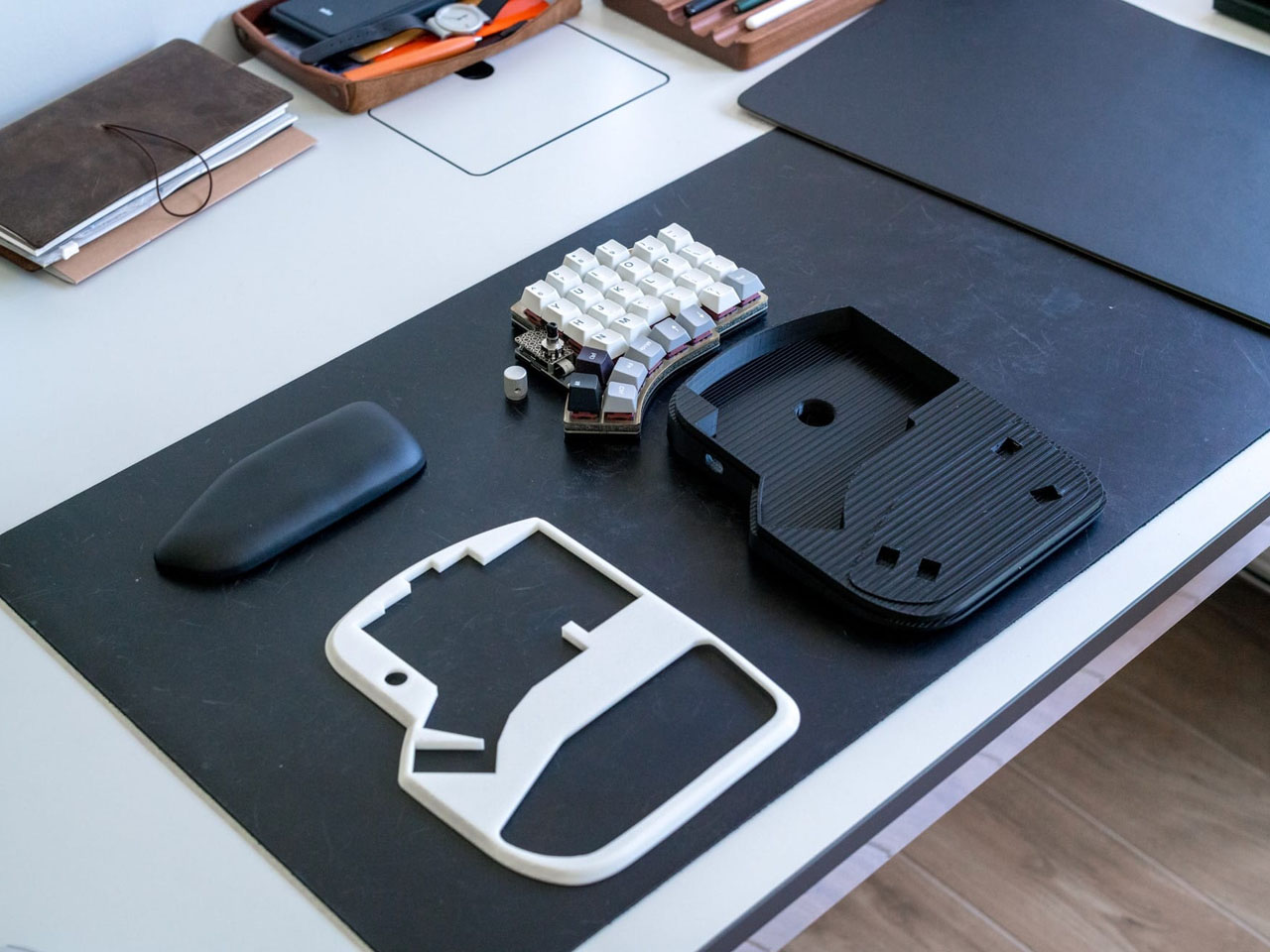
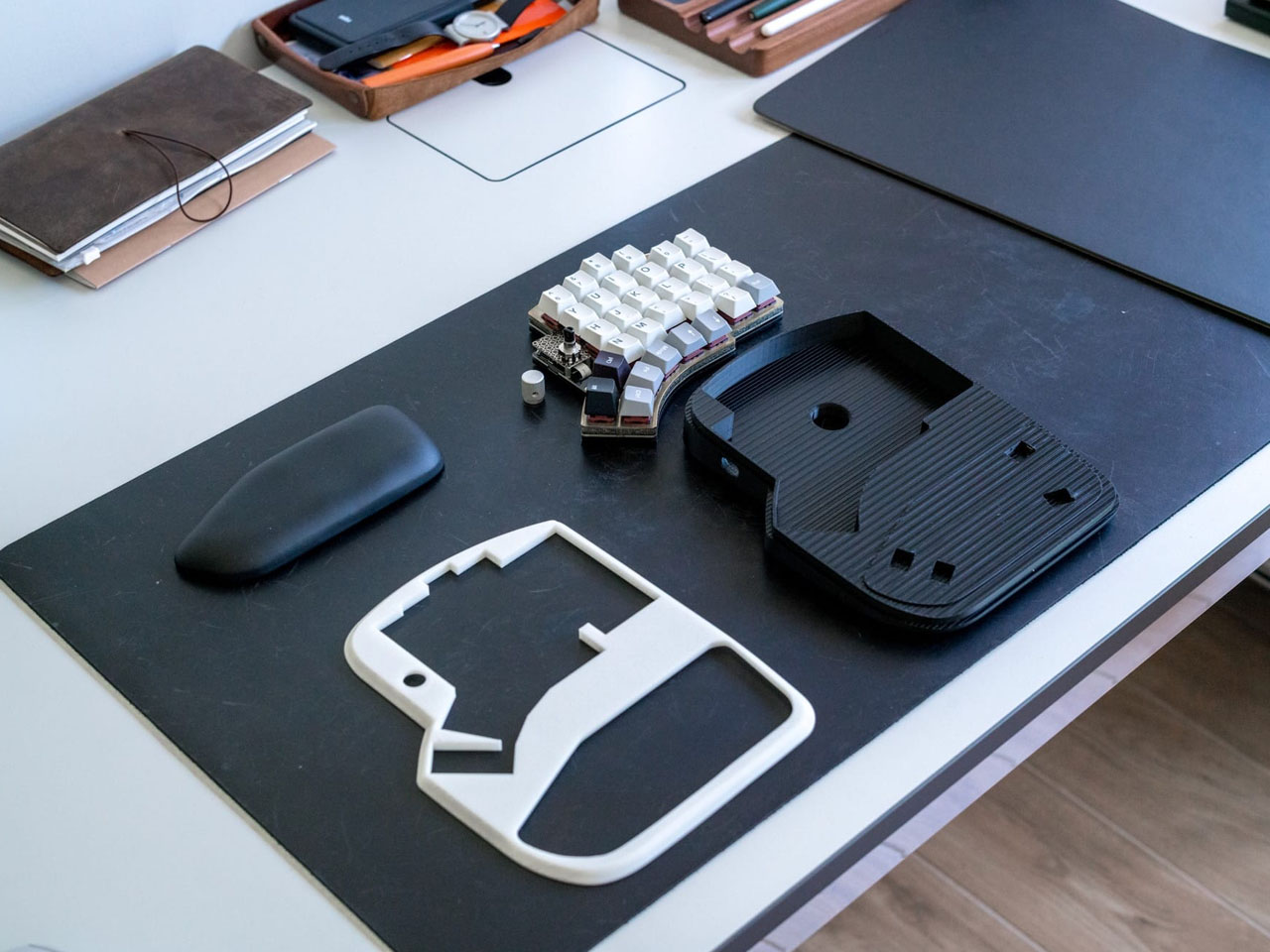
Material choices reveal priorities. An anodized aluminum top plate provides structural rigidity and premium typing surface, while 3D-printed construction sheds weight from the bottom case. This hybrid approach answers the specific demands of travel: constant packing, unpacking, shifting between surfaces that may or may not be level. The result weighs significantly less than comparable mechanical keyboards yet maintains the solid feel necessary for confident typing. Low-profile Kailh Choc V1 switches keep everything close to the desk surface, reducing wrist extension while preserving tactile feedback.

The columnar stagger deserves particular attention. Traditional keyboards offset keys horizontally because that layout accommodated typewriter mechanisms, not human anatomy. But fingers move more naturally up and down than side to side. Aligning keys in vertical columns adjusted for each finger’s length reduces lateral reaching and finger curling. Small reductions compound significantly over hours of use.

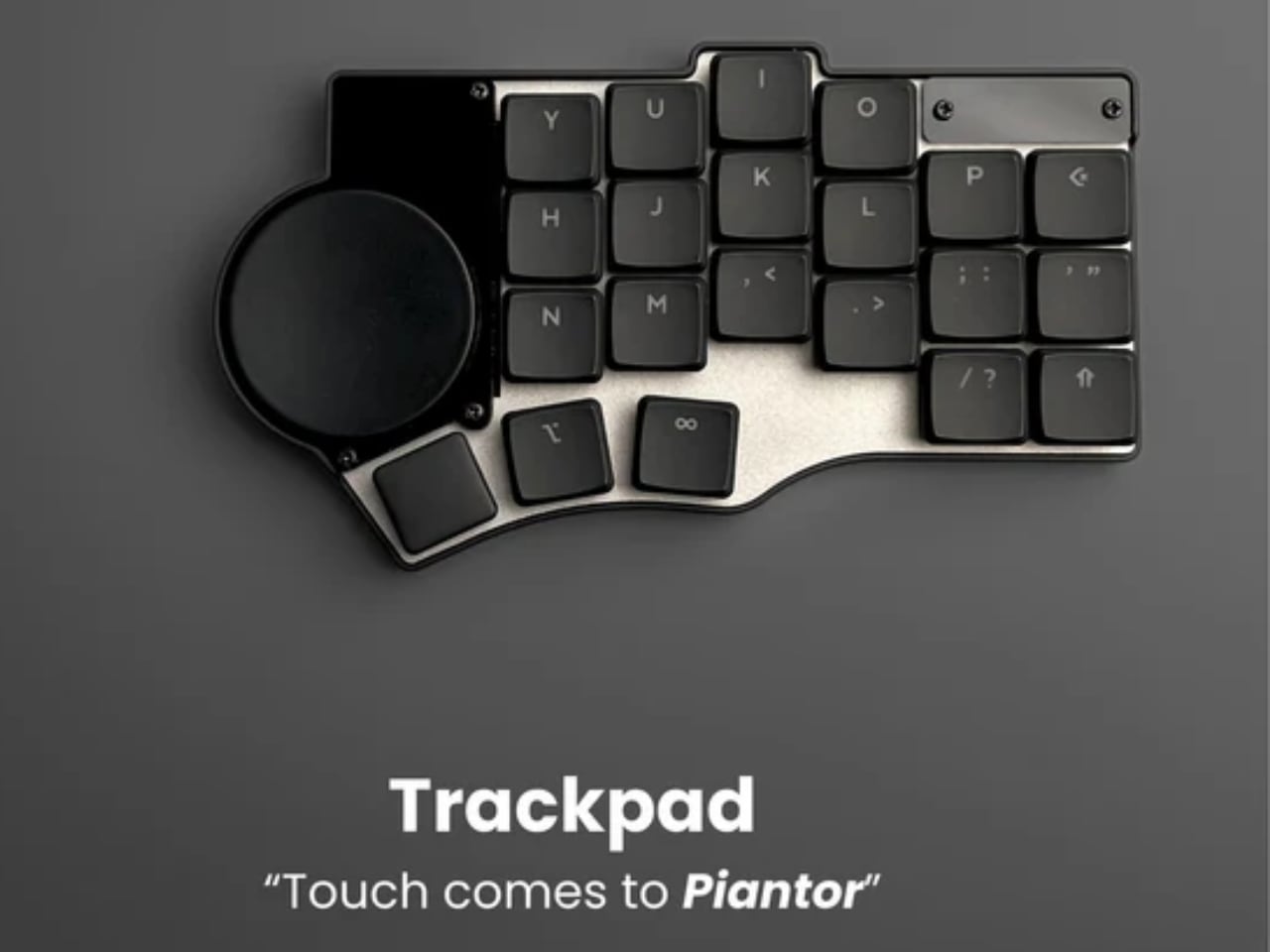
Placing a 40mm circular touchpad on the right keyboard half solves a familiar problem for anyone who has tried maintaining ergonomics while traveling. Laptop trackpads force users to center their body with the screen, pushing the keyboard into asymmetric position. External mice require desk space and introduce reaching movements that negate split layout benefits. The Toucan’s integrated trackpad keeps both hands on home position. Cursor control becomes thumb movement rather than arm extension, maintaining portability while eliminating separate pointing devices through the Cirque GlidePoint sensor’s precision tracking in a compact footprint.

This integration matters particularly for mobile work environments where desk space is limited or nonexistent. Coffee shop tables. Airplane tray tables. Hotel desks. These spaces punish conventional ergonomic setups that sprawl across multiple square feet, but the Toucan consolidates typing and pointing into two connected halves that adapt ergonomic principles to constrained real estate.

Efficiency Through Component Selection

The memory-in-pixel display on the left half exemplifies the keyboard’s efficiency-focused design. This technology, borrowed from smartwatch engineering, updates only changed pixels rather than refreshing the entire screen, dramatically reducing power consumption compared to conventional displays. Battery life can extend to 4,000 hours on a modest 1,500 mAh cell when paired with ZMK firmware. That figure is not theoretical. ZMK optimizes wireless efficiency through aggressive power management, putting the keyboard into deep sleep between keystrokes and waking instantly when needed.

The open-source nature allows users to customize power profiles, though even default settings deliver weeks or months between charges depending on usage patterns. Beyond efficiency metrics, the display serves practical ergonomic purposes: current layer information, battery status, and connectivity indicators appear without requiring users to memorize LED blink patterns or consult software. This immediate feedback reduces cognitive load and maintains workflow continuity, particularly valuable when switching between devices or adjusting layouts on the fly.

ZMK firmware provides more than power efficiency. Open-source programmability allows users to adapt the keyboard to their specific ergonomic needs rather than conforming to preset layouts. Key positions can be remapped to reduce finger stretching. Frequently used combinations consolidate to single keys. Custom layers accommodate different tasks without abandoning muscle memory. This flexibility becomes particularly valuable for users with specific ergonomic requirements. Someone with limited finger mobility can consolidate modifier keys to thumb clusters, while a user prone to repetitive strain can spread common key combinations across multiple fingers. The ability to experiment with different configurations without hardware limitations transforms the keyboard from static tool into adaptive interface.

The open-source heritage traces back through the Piantor to the Cantor design, demonstrating how community-driven development can accelerate ergonomic innovation. Each iteration addresses real-world feedback from actual users, refining dimensions, switch positions, and feature integration based on practical experience rather than marketing assumptions.

Compromises and Considerations

Split keyboards traditionally require users to choose between portability and features. Compact designs sacrifice programmability or build quality, while feature-rich options become too bulky for travel. The Toucan attempts to resolve this through modular availability options: DIY kits at $189 appeal to enthusiasts comfortable with soldering and assembly, offering the lowest entry price while maintaining complete control over switch selection and build quality. Pre-soldered options at $298 eliminate assembly complexity but still require sourcing keycaps and switches separately. Fully assembled units with switches and keycaps push toward $352, competing directly with established options like the ZSA Voyager at $365.

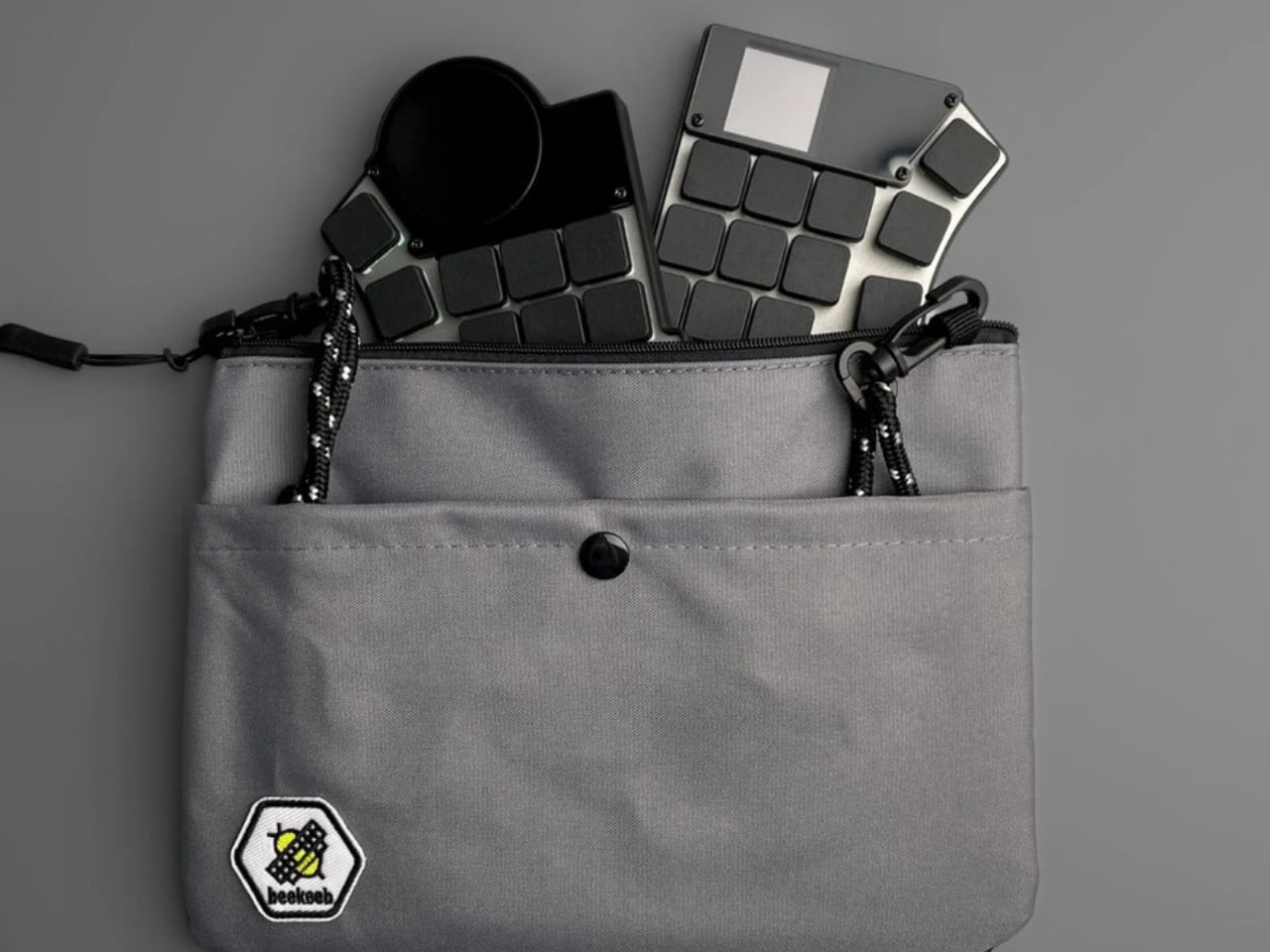
That pricing positions the Toucan as a considered purchase rather than impulse buy. However, the Voyager lacks wireless connectivity and integrated pointing, requiring additional purchases for equivalent functionality. The Keychron Q13 Max, while more affordable at $250, weighs substantially more and uses wired connection that limits portability. The optional carrying bag reflects practical travel considerations. Split keyboards create packing challenges with two separate pieces, exposed switches, and electronics. A purpose-designed case protects components while keeping both halves together during transit.

The Toucan does not eliminate all compromises inherent to portable ergonomics. The 42-key layout requires layers for numbers, function keys, and special characters, creating a learning curve for users accustomed to dedicated keys for every function. This cognitive overhead can temporarily reduce productivity during the transition period. The Choc V1 switch ecosystem offers fewer options than standard MX switches. While tactile, linear, and clicky variants exist, enthusiasts seeking specific force curves or exotic switch types will find selection limited. Keycap availability similarly constrains customization, with Choc spacing requiring dedicated sets that cost more and offer fewer aesthetic options than MX keycaps.

Battery procurement adds friction to the purchase process, as shipping regulations prevent Beekeeb from including batteries. Users must source compatible cells separately. While standard hobby batteries work, this extra step complicates what should be straightforward unboxing. These limitations reflect genuine constraints rather than oversights. Compact layouts inherently sacrifice dedicated keys for portability, niche switch formats will always offer less variety than dominant standards, and battery shipping restrictions affect all manufacturers equally. Understanding these trade-offs helps potential users evaluate whether the Toucan’s strengths align with their specific needs.

Portable Ergonomics as Design Goal

The fundamental proposition the Toucan advances: ergonomic benefits should not require permanent workstation installations. Coffee shop workers, digital nomads, frequent travelers, and anyone who splits time between multiple locations have historically chosen between comfort and mobility. Heavy split keyboards stay home. Laptop keyboards cause strain but pack easily.

By packaging columnar layout, split design, integrated pointing, and extended battery life into travel-friendly form factor, the Toucan suggests a third option. Ergonomics become portable. The setup that reduces wrist strain at a home desk can accompany users to temporary workspaces without requiring compromises in either direction.

Whether this approach succeeds depends on individual priorities. Users who value maximum key count, premium switch feel, or comprehensive keycap selection will find the Toucan’s compromises too limiting. Those who prioritize portability above all else might find even this compact design too complex compared to minimalist 40% layouts. But for workers who move between locations while maintaining significant typing demands, the Toucan addresses a genuine gap. It proposes that ergonomic design can serve movement rather than constraining it, that comfort can travel alongside laptops and cables rather than waiting at dedicated desks.

The question is not whether everyone needs this approach. It is whether enough people recognize they have been making unnecessary compromises.

The Beekeeb Toucan is available for pre-order starting at $189 for DIY kits, with shipments beginning in December. Pre-assembled options with switches and keycaps reach approximately $352.

The post Beekeeb Toucan: The Split Ergonomic Keyboard Built for Travelers first appeared on Yanko Design.
3D Printed case for Halcyon Elora split mechanical keyboard has magnetic wrist pad attachments

KeyChron brought the world’s first split keyboard that retained the vibe of a regular keyboard to spice up the rather boring accessory, which has seen ergonomic design changes, addition of custom keys, and not much of a design DNA evolution. The idea of a PC split keyboard stems from the notion that it alleviates long-term strain and gives the user more freedom to set up a productive desk layout. The Halycon Elora split keyboard (based on the popular Kria keyboard) has an added row of keys for easier access to numbers and symbols, which all goes well for fast typing. But does this split keyboard take the title for being ergonomically comfortable? Surely not.

That’s the reason why a DIYer decided to create an open-source 3D printable split mechanical keyboard case for the Halycon Elora. With this tweak, the everyday accessory feels more comfortable to work with, especially for long sessions. To take things a step further, the custom design makes sure you have a case to put the keyboard in, literally fitting like a glove.

Designer: Fatih Arslan

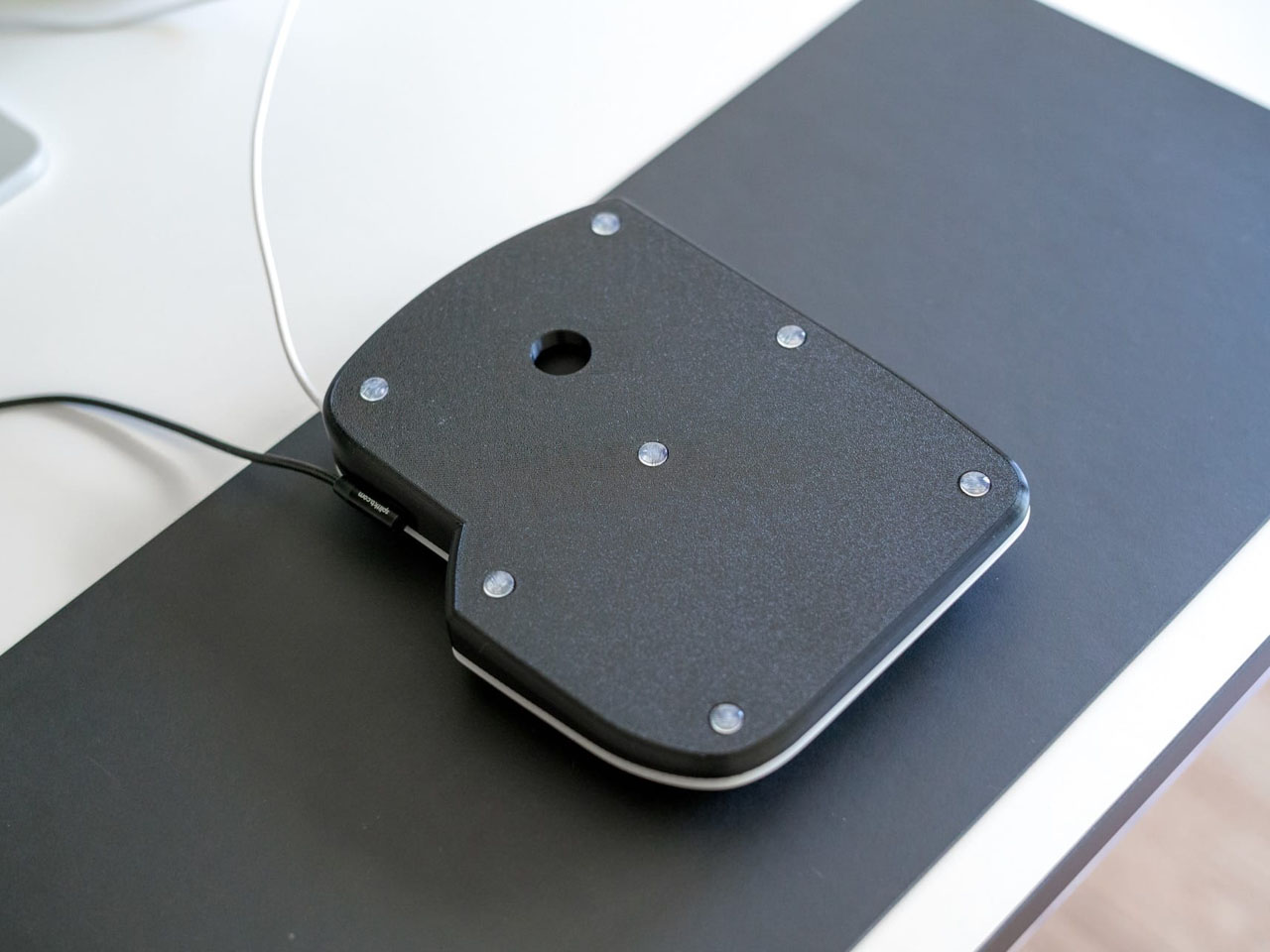
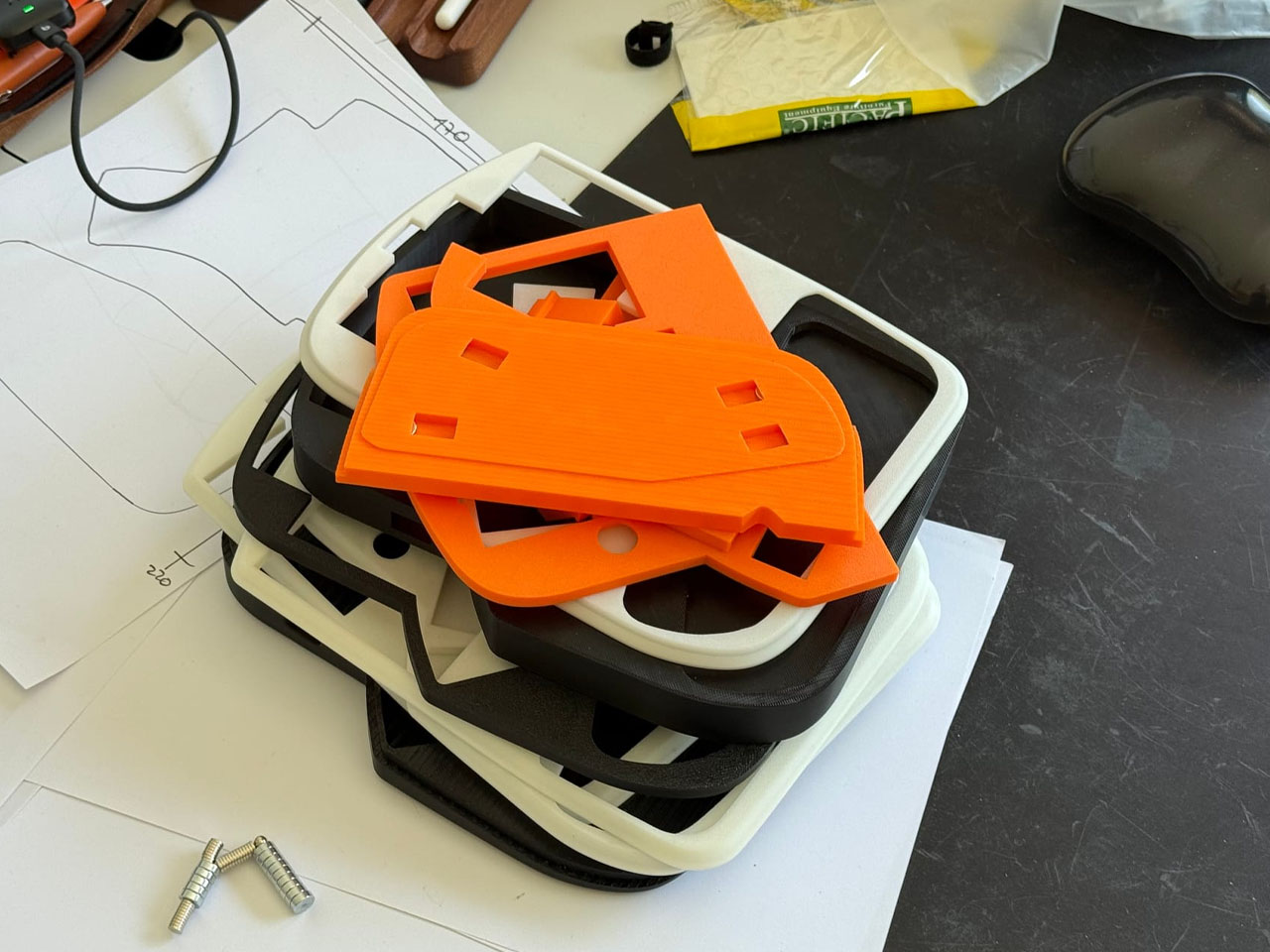
The barebone Elora keyboard does look a bit incomplete and could hamper the look of your desk setup. Nor does it provide any support for your wrist, which prompted Fatih to draw inspiration from the Kinesis Wrist Pads to create the perfect split keyboard case for the accessory. After careful planning, he made a prototype that added a 5-degree tilt to the keyboard for better reach, especially for people with small hands. There are customizable top and bottom plates, integrated magnetic wrist pads, and rubber stops for stability and control.

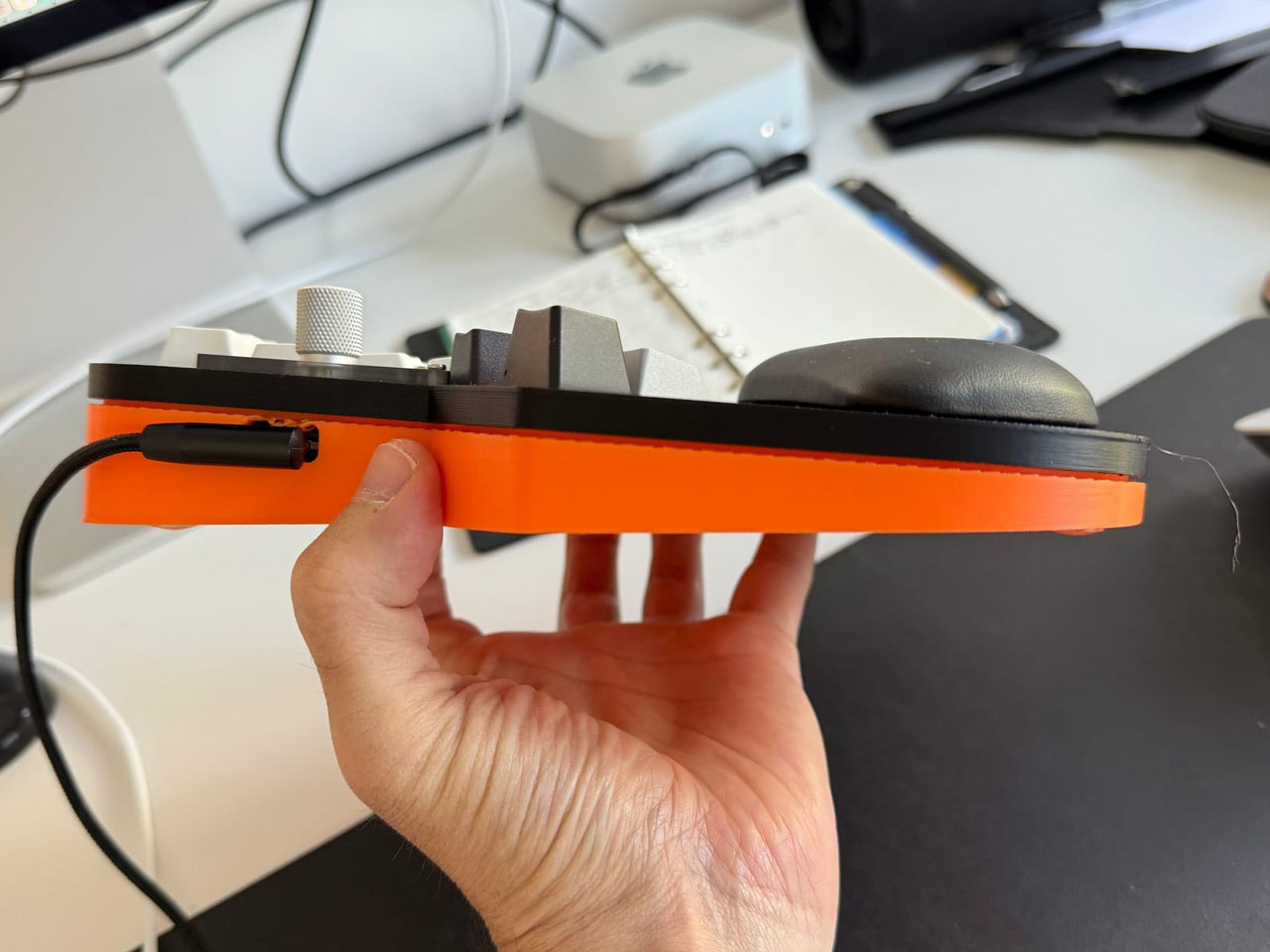
Depending on the user, the case can be attached with a wrist pad or the faceplates, thanks to the optional support for attaching an encoder, touchpad, or display to the Elora keyboard. The new accessory for the split keyboard comes with dual USB-C ports for the left part, and one for the right. Magnetic holes at the bottom base fit the compatible Kinesis leather wrist pads, and the DIYer also created versions that have magnetically snapping top plates for people who prefer a different typing position. There are holes at just the right place to route the cables, which the eager users will appreciate.

Most of all, the custom-designed case makes the mechanical split keyboard sturdier and gives it a more finished look that it lacked earlier.  The accessory comes with 12 top plate designs in total that the maker has put up for download, so that users can 3D print and use right away. Of course, there is the freedom to modify the designs to fit individual needs as well.

The post 3D Printed case for Halcyon Elora split mechanical keyboard has magnetic wrist pad attachments first appeared on Yanko Design.
NUIO Flow Keyboard Will Blow Your Mind: Forget Everything You Knew About Typing!

NUIO has launched a new vision for keyboards and peripherals, putting human comfort at the core of every design. Founded by Tom Wilson, a former Product Design Executive at Apple, and Greg Wilson, a former digital marketing leader at Digitas, NUIO is transforming ergonomic peripherals. Forget what you know about keyboards—the old designs are outdated. The Flow Keyboard reshapes the typing experience. It’s a reinvention designed to change how we interact with technology, focusing on comfort and usability. NUIO didn’t just update an old design; they started from scratch to create a tool that works with the natural movements of our hands and minds. This makes you wonder why all keyboards aren’t designed this way. Built around the human form, it breaks free from the conventions that have limited productivity for decades.

Designer: NUIO

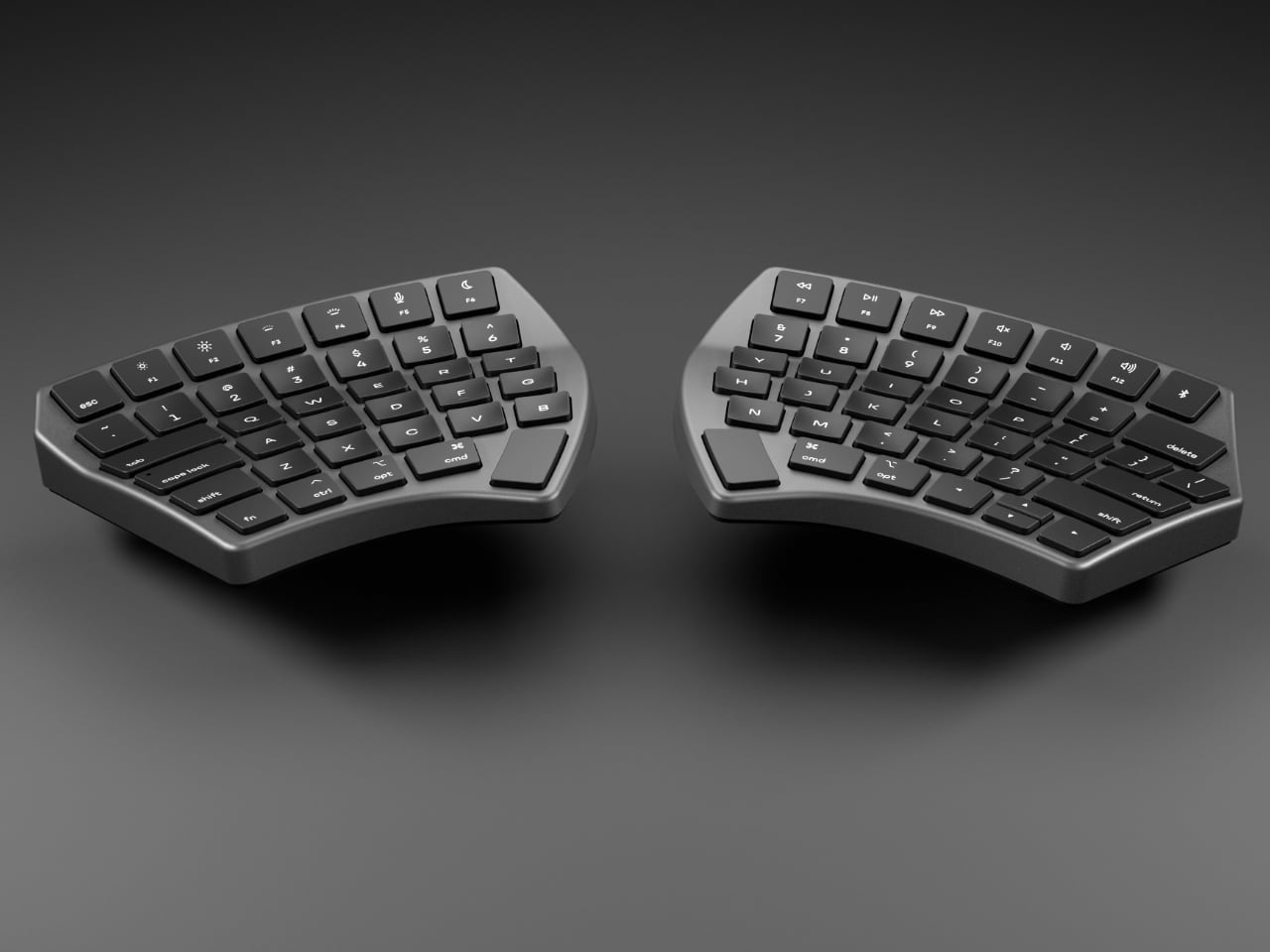
The split design is the first indication that NUIO plays by different rules, literally tearing apart old conventions. Traditional keyboards force our hands into unnatural positions, often resulting in discomfort or even injury over time. By splitting the keyboard into two halves, NUIO allows users to set the layout as wide or narrow as they want, tailoring it to their individual body type. Each half arcs gently in a 3-D radial wave that contours perfectly to the natural positioning of the hands. This focuses on creating a natural design that integrates seamlessly into your workflow.

Immersive Flow Through Design

The 3-D wave shape changes the dynamics of typing entirely. Unlike flat keyboards, which demand that your fingers reach out and adjust constantly, this design brings every key to your fingertips, almost like the keyboard knows where your fingers will land next. The entire process becomes smoother—you don’t think about typing, you think, and the keyboard flows with you. It’s an experience similar to an artist using the perfect brush, where the tool becomes an extension of their creativity. This is what NUIO means by “finding your flow.” NUIO’s design aims to potentially transform the typing experience, making it feel seamless and natural.

The concave keycaps are another masterstroke. NUIO has given each key a gentle dip, which fits the natural curve of your fingertips and provides a feeling of certainty with every press. When you strike a key, it feels definitive, eliminating the ambiguity that often comes with traditional, flatter keycaps. These aren’t keys—they’re extensions of your thoughts, finely tuned to transmit intention into action without hesitation.

Bold Design Statements and Apple Ecosystem Integration

NUIO understands that form is just as important as function. It is designed to complement the Apple ecosystem perfectly. The backlit keys and the seven premium color combinations offer aesthetic appeal; they speak to a personalized experience, a kind of ownership over the tool that users engage with daily.

Whether choosing a sleek black design or a more colorful option, the keyboard is designed to fit into any space and enhance its visual appeal. It doesn’t just sit on the desk; it complements and elevates the entire workspace, adding an essential touch of personal style.

Accessories That Click—Literally and Figuratively

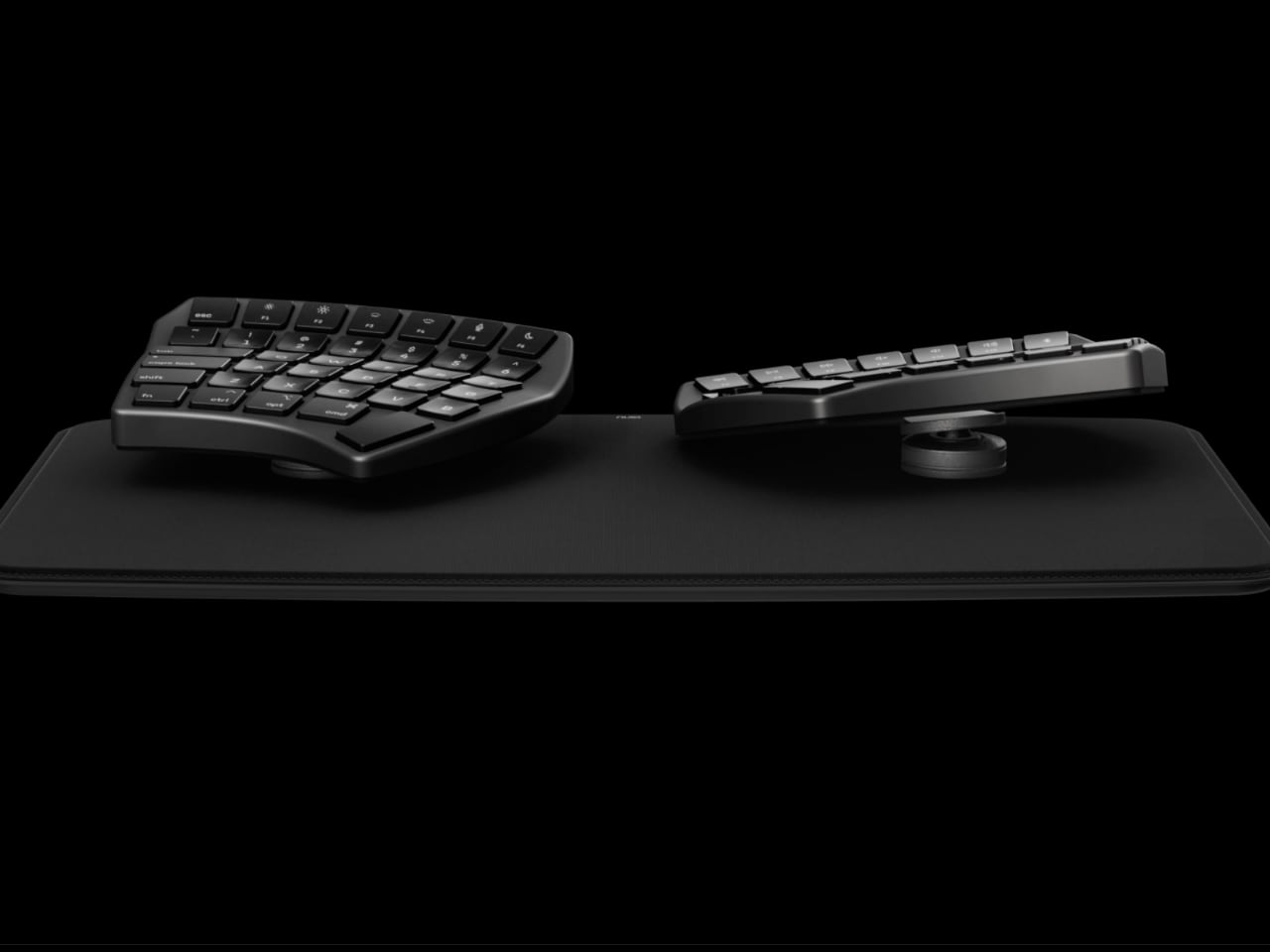
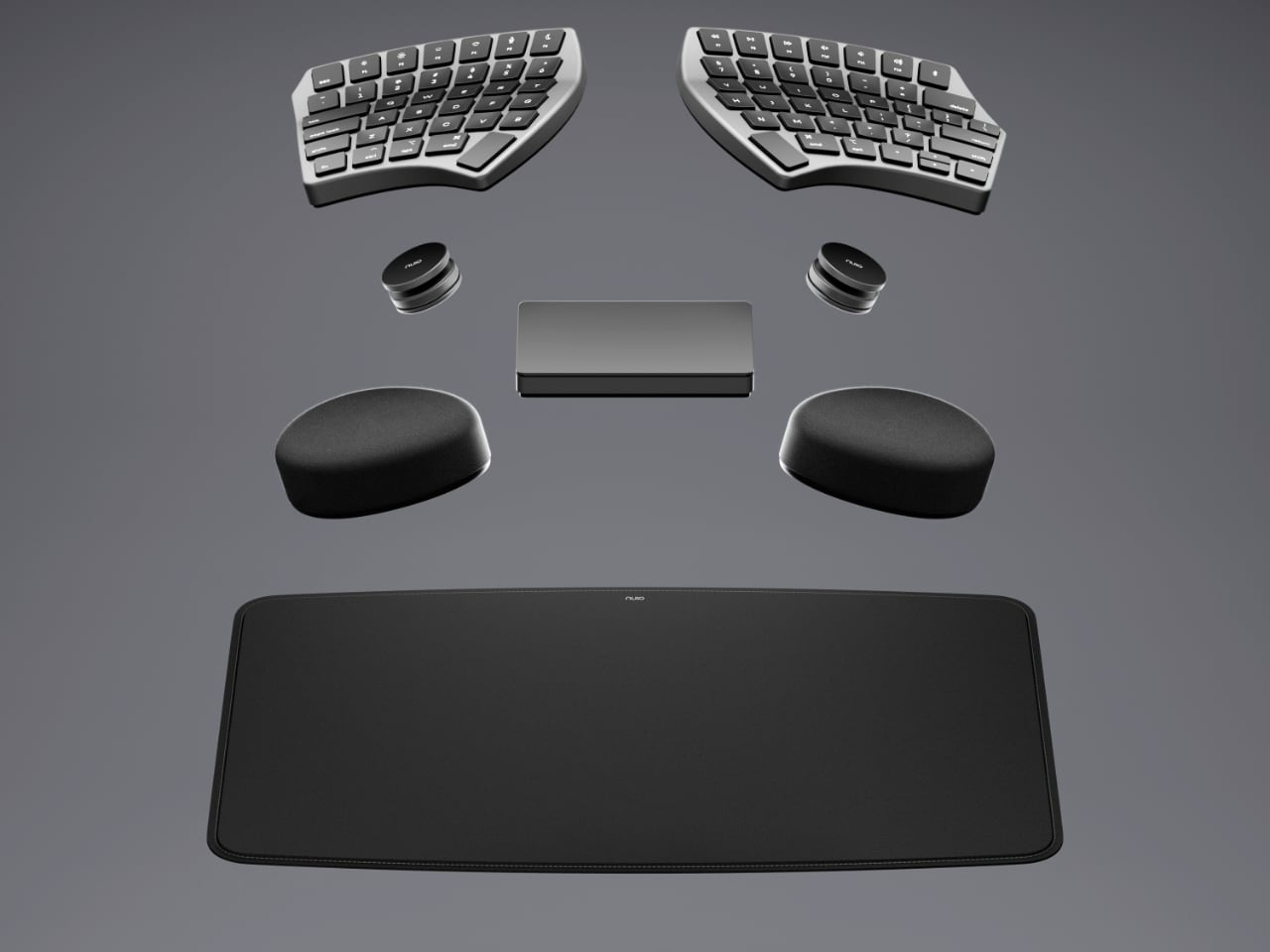
The NUIO Flow System, including the magnetic Deskpad, trackpad, and wristpads, is built to ensure seamless integration. The magnetic Deskpad serves as an extension of the Flow Keyboard, creating an ecosystem where each component—whether the keyboard halves, wristpads, or edge-to-edge glass trackpad—snaps into the ideal position.

This snapping mechanism eliminates fuss, prevents shifting, and saves time—resulting in an elegantly organized workspace that adapts to users rather than forcing adaptation. Each element has a designated place, and every movement is deliberate and precise.

Wristpads That Disappear Into the Experience

Comfort is a key aspect of the NUIO experience, most notably seen in the Wristpads. Made from an innovative cushioning material, these wristpads provide support while remaining unobtrusive.

They’re designed to be so comfortable that they “disappear” during use, allowing focus and productivity to flourish. This level of consideration elevates NUIO’s approach beyond mere ergonomics—ensuring that tools are as invisible as possible, with only the work left in focus.

Built For Today, Ready for Tomorrow

NUIO’s Flow Keyboard and its accompanying peripherals are designed for creative professionals, focusing on high-quality materials and flexible configurations. The product suite, which begins shipping on December 1st at a starting price of $399, is available for pre-order today at HelloNUIO.com. Every detail, down to the USB-C charging and Bluetooth multi-device pairing, is about maximizing flexibility. Whether switching between devices or shifting from a desk to a coffee shop, the Flow Keyboard is a tool that transforms with users. It’s an entirely new kind of typing experience; it’s the centerpiece of a modular productivity system that bends to their will. The adjustable stands make sure the keyboard can be tented or tilted for optimal comfort, while the mechanical click trackpad adds familiar tactile feedback that feels right.

The post NUIO Flow Keyboard Will Blow Your Mind: Forget Everything You Knew About Typing! first appeared on Yanko Design.
RIP Ergonomic Keyboards, the Tetra boasts a Split Wireless Design, with an Elgato-style Display in the center

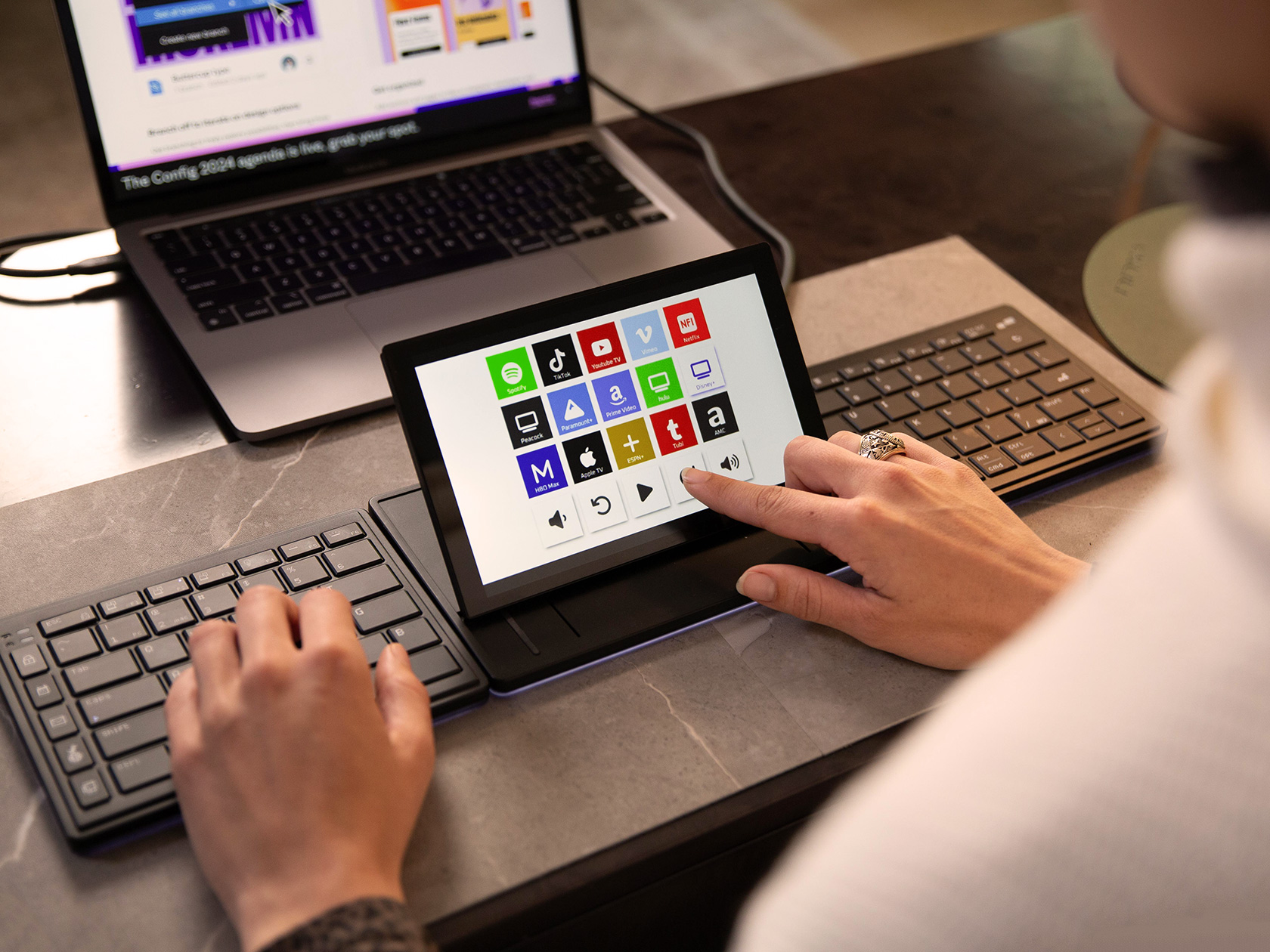
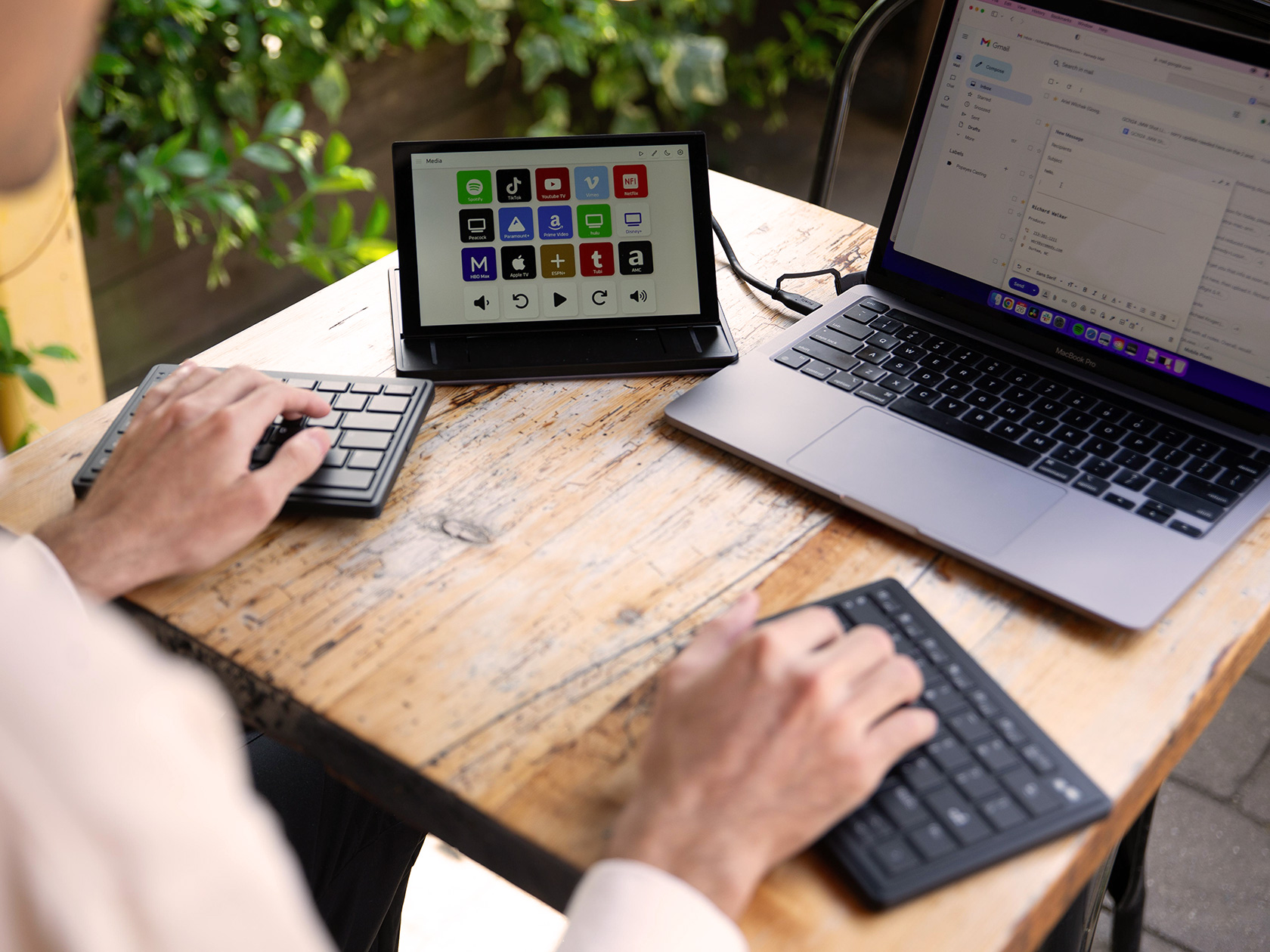
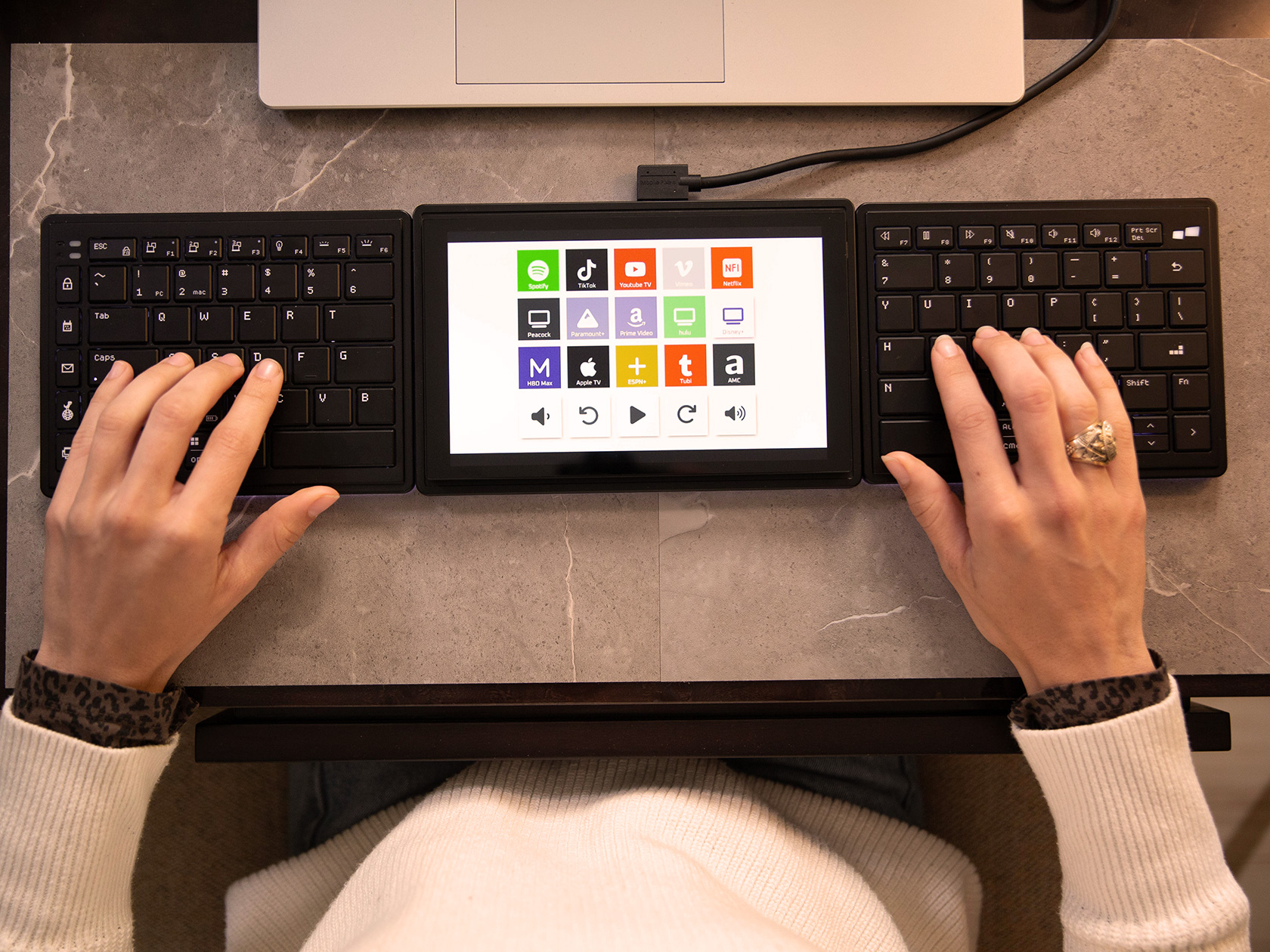
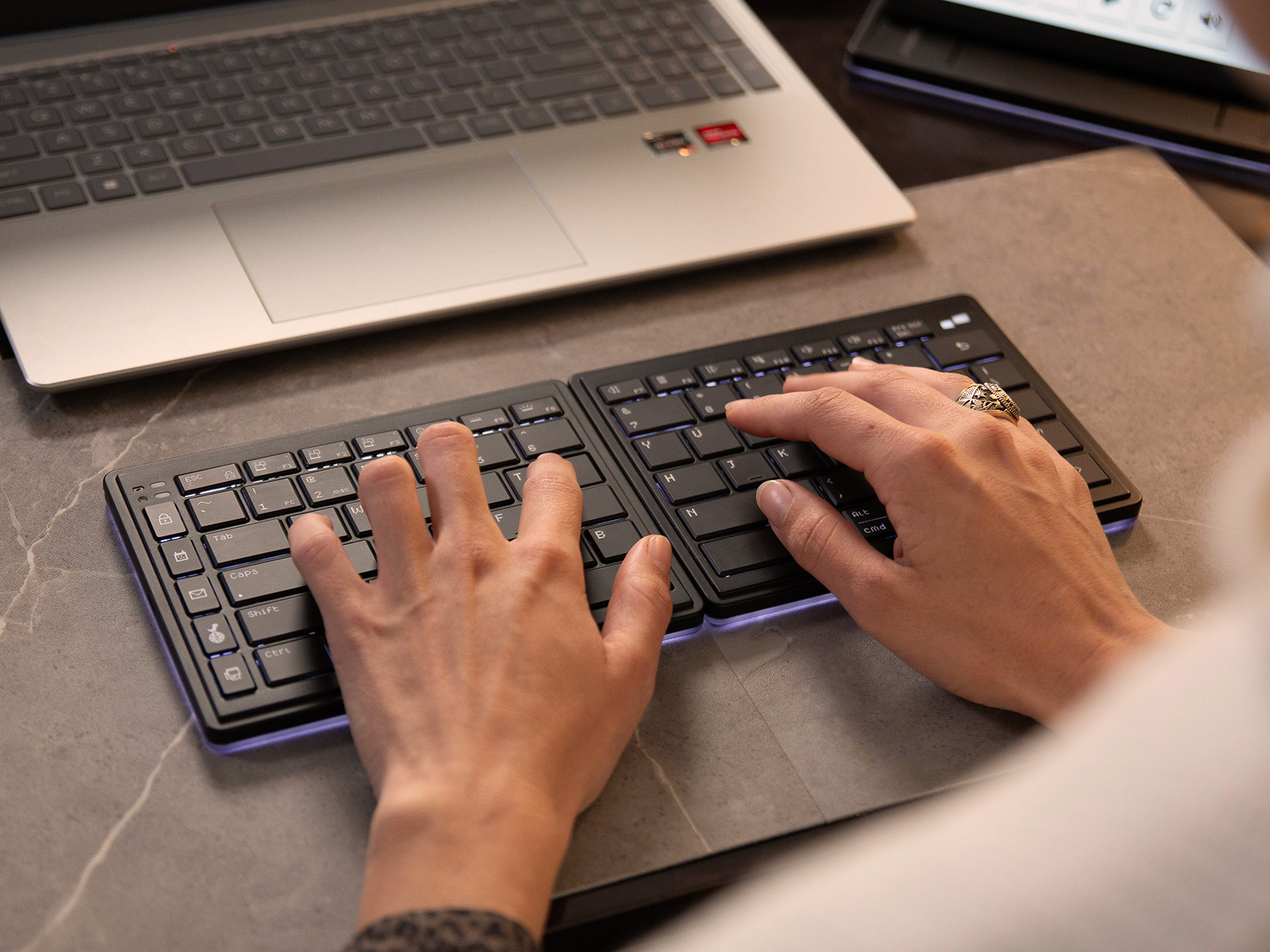
Remember the watershed moment when Steve Jobs unveiled the MacBook Air for the first time? He walked up on stage with a manila envelope, and opened it to reveal the thinnest laptop ever made. It changed how laptops looked from then on, and when people first saw the stunningly thin MacBook Air, everyone had the same question on their minds – why doesn’t my laptop look like this? The Tetra keyboard does the same thing for other keyboards. When you look at the Tetra for the first time, chances are you’ll have never seen anything quite like it before. It challenges the notion of keyboard design… and for the better. It’s more compact, easier to use, ruthlessly ergonomic, and comes with a world-first touchscreen display built right in. The keyboard splits in half, allowing you to place the parts wherever you want for a more comfortable typing experience… and the display tilts upwards or sits flat, transforming into a dock for widgets, shortcuts, playback controls, or a media center of sorts. Think Keyboard-Meets-Elgato-Stream-Deck.

Designers: Zikang Feng, Jarvie Liu, and Stephen Ng

Click Here to Buy Now: $249 $399 ($150 off). Hurry, only 5/405 left! Raised over $140,000.

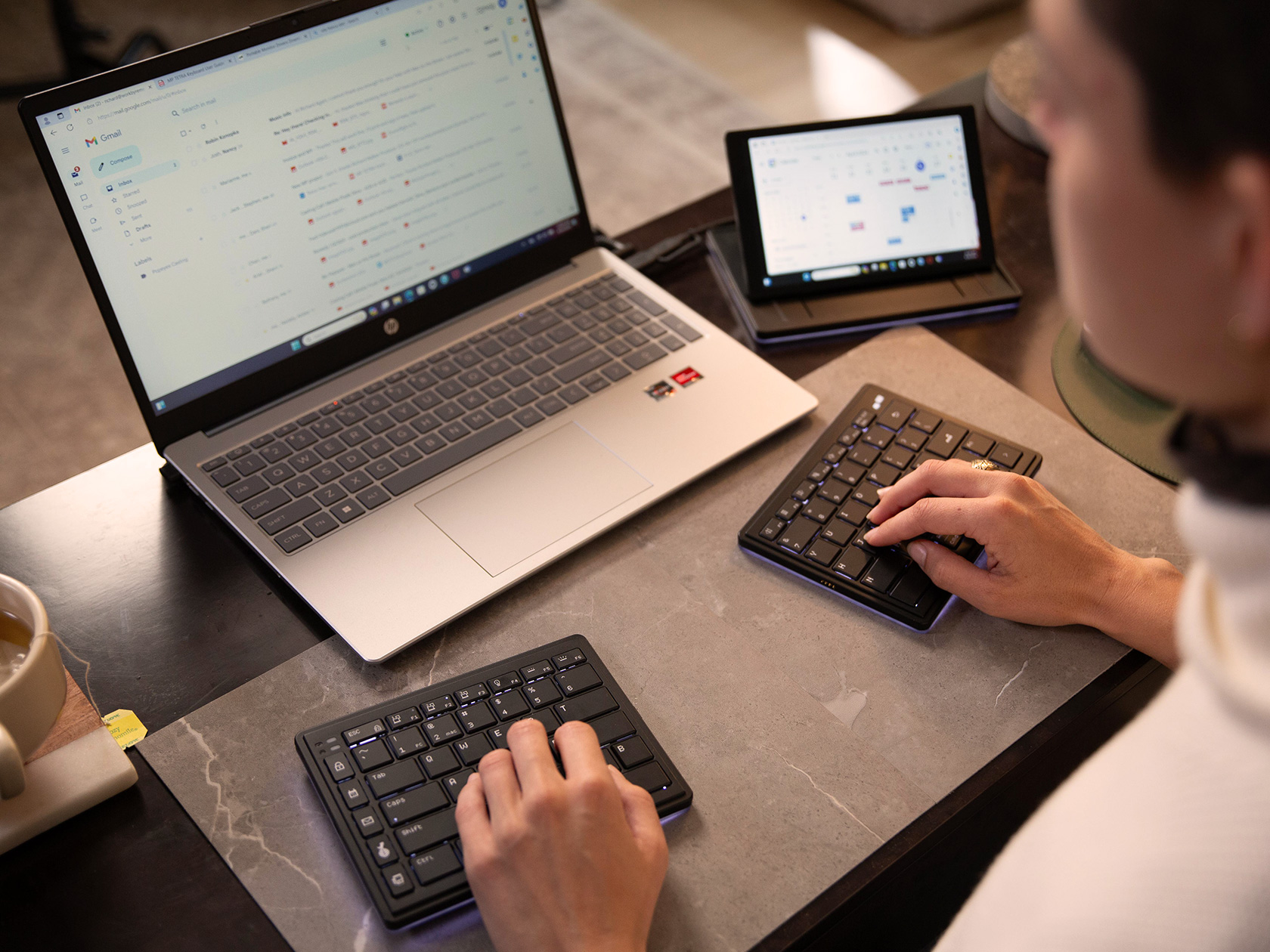
Trust the folks at Mobile Pixels to come up with such a unique idea. The company first jumped to prominence with its plug-and-play laptop extending displays (lauded for their compact designs). These displays were targeted at one thing – boosting productivity through multi-display setups. The Tetra keyboard does the same too, in a matter of speaking. The split keyboard comes with its own dedicated screen that can be used as a secondary display or as a control center for apps and shortcuts. While keyboards are a first for Mobile Pixels, the Tetra highlights their bigger goal of enhanced productivity, thanks to a split wireless keyboard design that can be used in a variety of ways for a more comfortable and efficient typing experience.

SPLIT MODE

SPLICE MODE

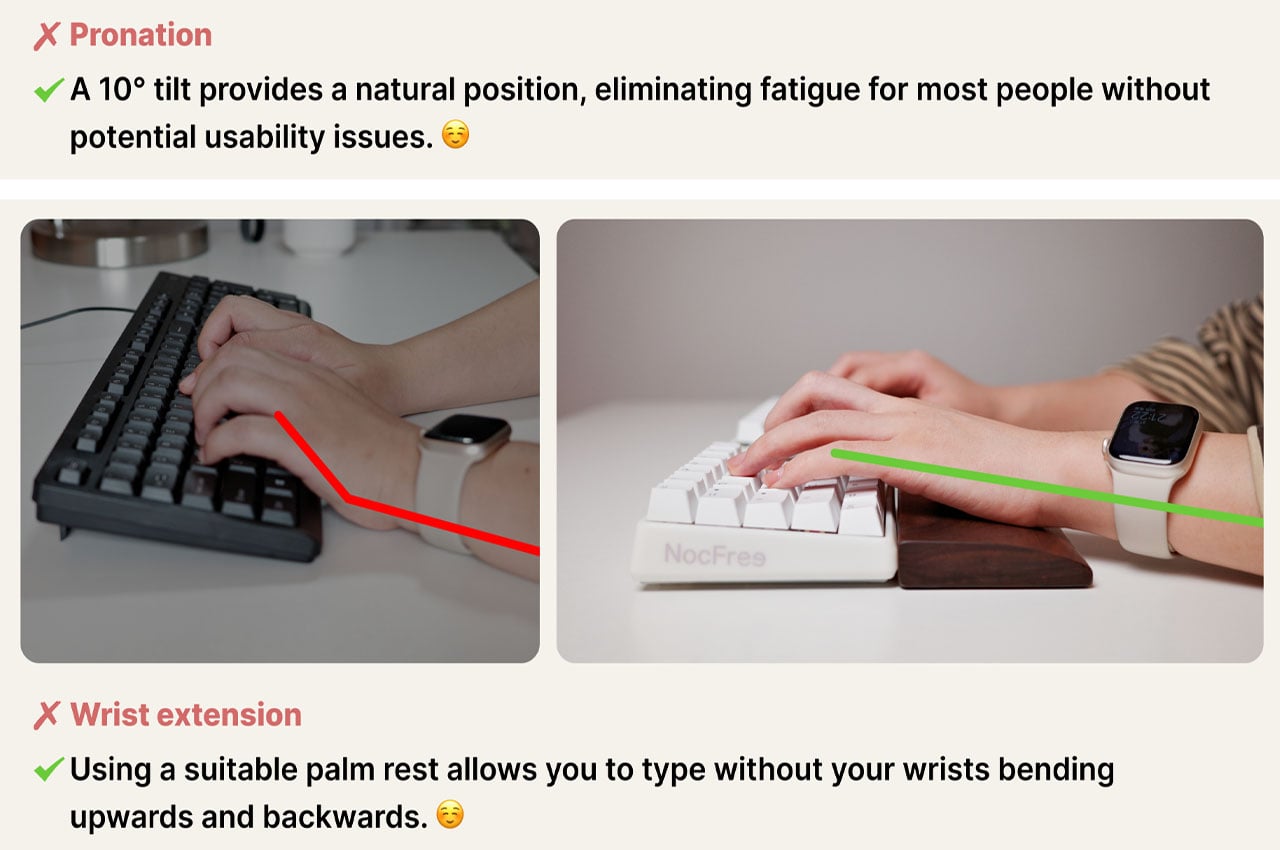
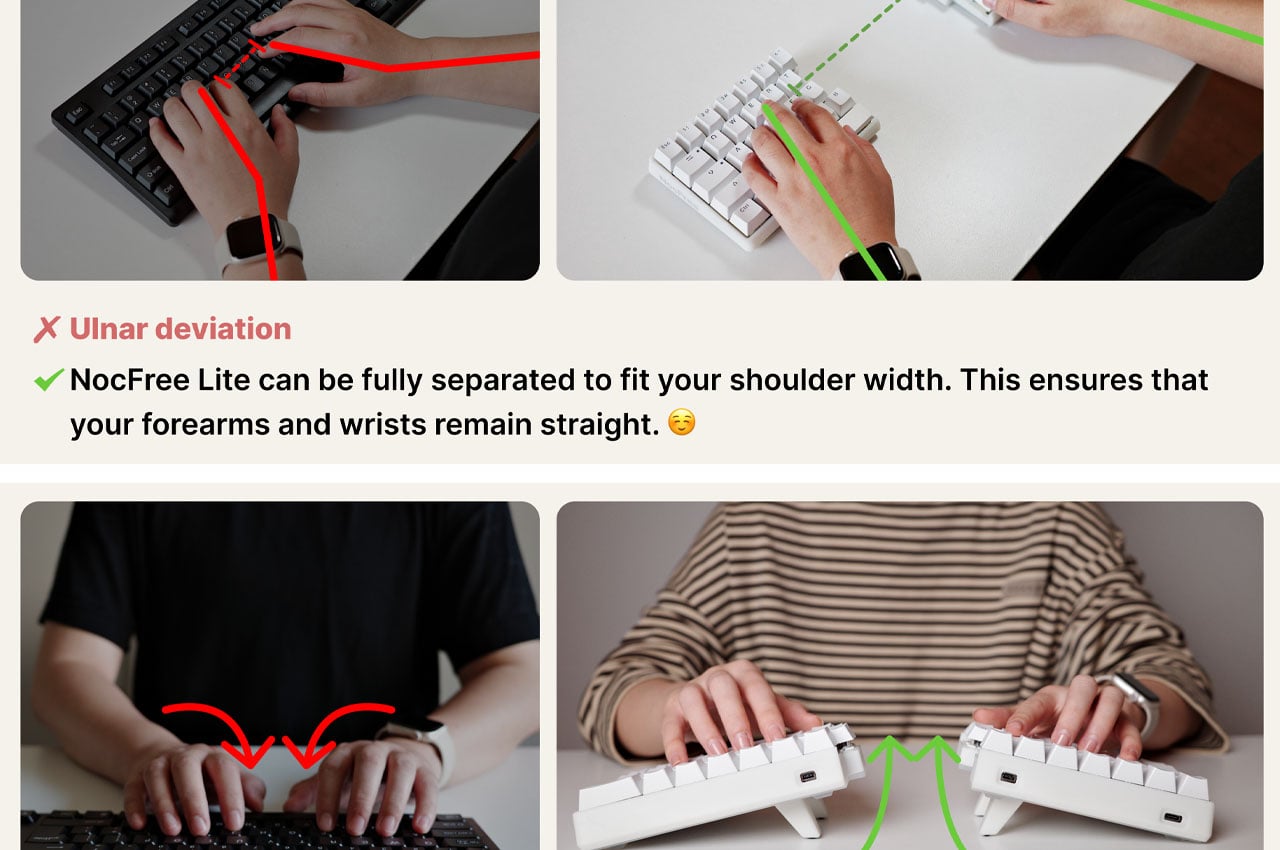
Split keyboards aren’t new, conceptually. Most researchers noticed that a cramped keyboard, although compact in size, wasn’t great for your wrists and fingers. Over prolonged periods of time, people developed carpal tunnel and ulnar deviation (where your fingers end up deviating sideways) because of the way these keyboards were designed. The split keyboard was created as an ergonomic alternative, increasing the space between your left and right hands while typing, so that they’re in a much more relaxed position. The Tetra takes that concept and builds further on it, turning it wireless, while also introducing a display into the mix.

Use Bluetooth to Connect to Your Device (up to 3 devices with 3 channels).

Position keyboards at shoulder width for ergonomic comfort.

Customize Your Experience

Type Away!

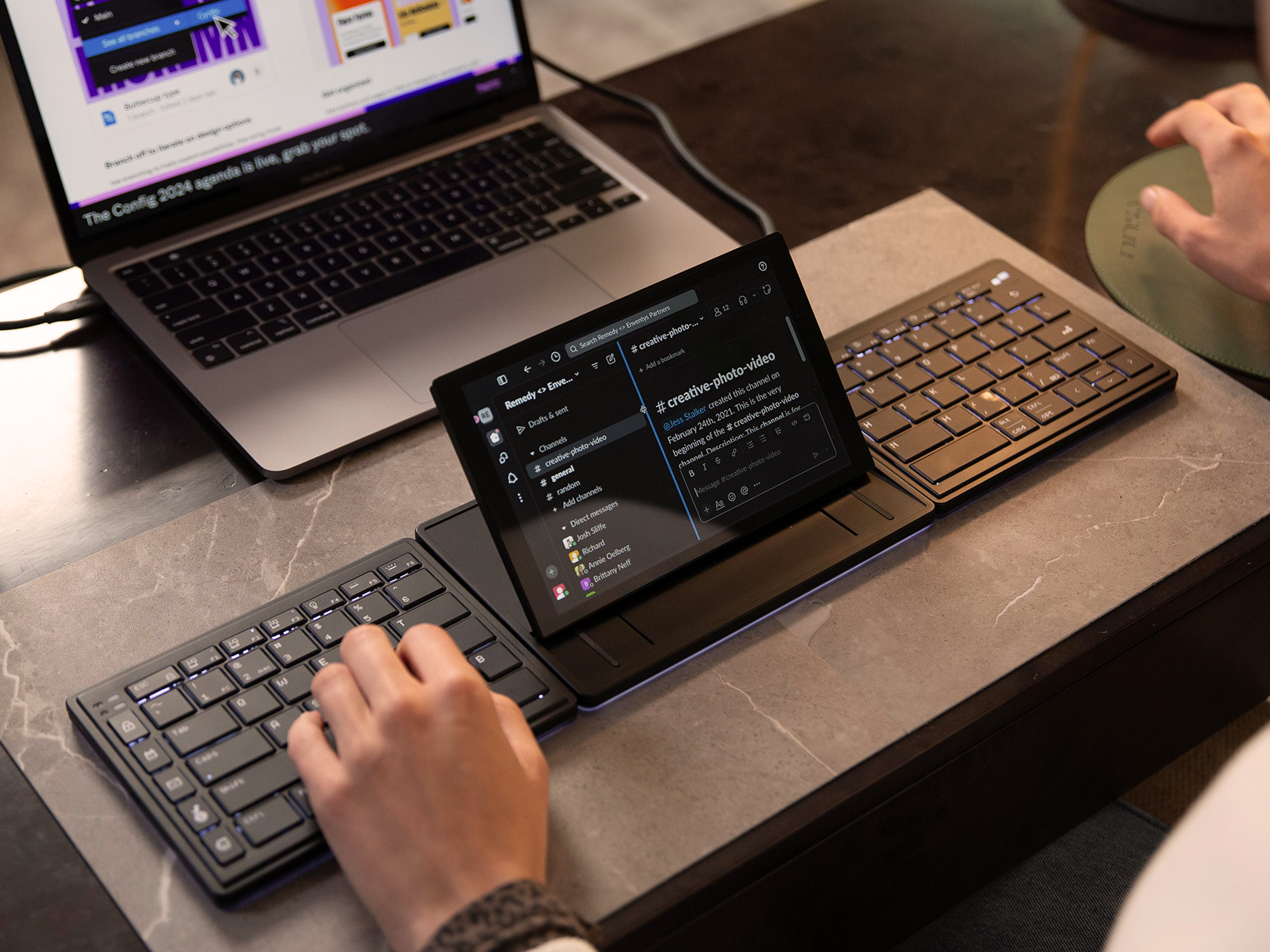
Broadly, the Tetra exists in three pieces – a central display unit, and the two keyboard halves that attach onto either side. Snap them together or use them independently, the Tetra gives you freedom to set your workspace up exactly the way you want. When attached together in a linear format, you’ve got a comfortable split keyboard with a screen in the middle. The screen functions as an extra display, a shortcut center, or perhaps even a trackpad if you want. The keyboards get spaced out on the left and right, allowing you to type comfortably without having your fingers and wrists bend awkwardly. Alternatively, you can snap the keyboard’s halves away from the display, accessing what Mobile Pixels calls the ‘Split Mode’. The keyboards then can sit anywhere on your desk, as can the screen, giving you full ergonomic freedom. If you want a more traditional keyboard experience, just the two keyboard halves can be attached to each other, creating a compact typing device, while the screen exists independently. Dubbed the ‘Stacked Mode’, this lets you opt for something that feels familiar, with the added benefit of a dock-style screen on the side.

Secondary Display

The keyboard comes with a 65% layout, split across its two halves. Scissor switches enable a fair amount of key travel, up to 1.3mm, and a backlight lets you type with ease. The keyboard halves and screen also have an underglow that feels reminiscent of gaming gear. 1200mAh batteries in each half of the keyboard allow it to operate wirelessly for hours if not days, and the central screen remains connected to your machine via a USB-C cable at all times. To charge your keyboard, simply snap them to the screen and pogo pins allow the Tetra to charge all the way through.

The screen is truly where Mobile Pixels’ innovation shines. It’s a little smaller than the ones that Mobile Pixels offers, measuring just 8 inches diagonally – but it’s an IPS LCD display with a 60Hz refresh rate and 300 nits of brightness. The screen stays connected to your machine at all times via cable, and sits on a unique tilting mechanism that lets you either lay it flat or tilt it upwards to face you. Touch sensitivity means you can control the display the way you would a tablet PC of sorts… and the Tetra offers a fair amount of flexibility in terms of how you use said display. You can use it as an extension of your PC or Mac’s shortcut bar, adding your favorite apps to it. Conversely, it also doubles as a media control center for playback, and even transforms into a tiny secondary display for extending or mirroring your screen. Use it to store notes while presenting on a video call. Turn it into a calculator. Allow it to be your dedicated Spotify device. Mobile Pixels created a special interface known as the Tetra Board App that you can use to customize your display. Yes, you can even load functions, tools, macros, and shortcuts, unlocking power-user potential while running apps like Photoshop, Premier, Final Cut, Logic Pro, After Effects, etc.

All this functionality and the Tetra still remains ruthlessly portable. The three components come apart and stack together, allowing them to be carried around with ease. There’s even a soft-fabric case to store your Tetra during travel, allowing you to slide it right into your laptop bag along with your charger and other accessories. I bet your existing ergonomic or split keyboard can’t boast this level of portability. The Tetra starts at $249 and ships globally starting September 2024.

Click Here to Buy Now: $249 $399 ($150 off). Hurry, only 5/405 left! Raised over $140,000.

The post RIP Ergonomic Keyboards, the Tetra boasts a Split Wireless Design, with an Elgato-style Display in the center first appeared on Yanko Design.
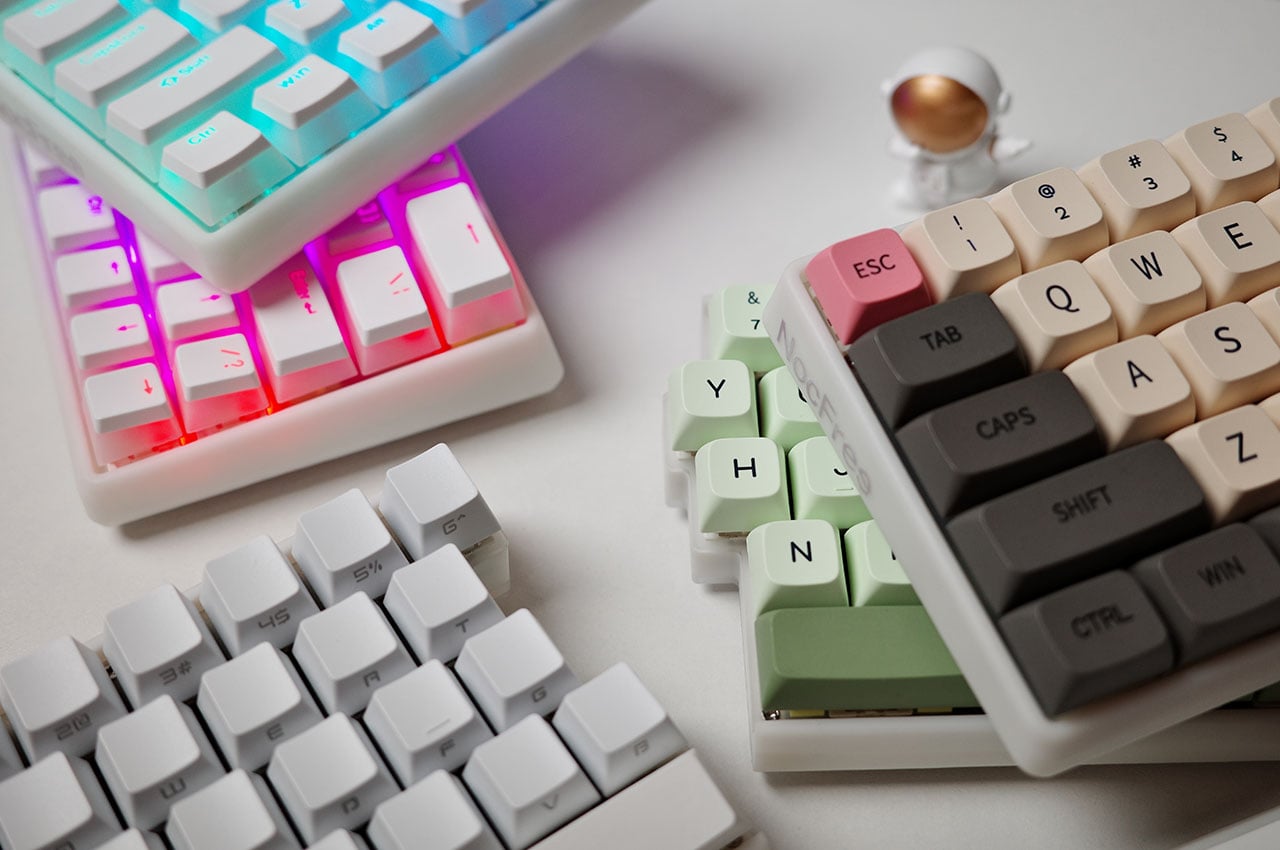
The NocFree Lite split wireless mechanical keyboard is an audaciously customizable piece of tech gear

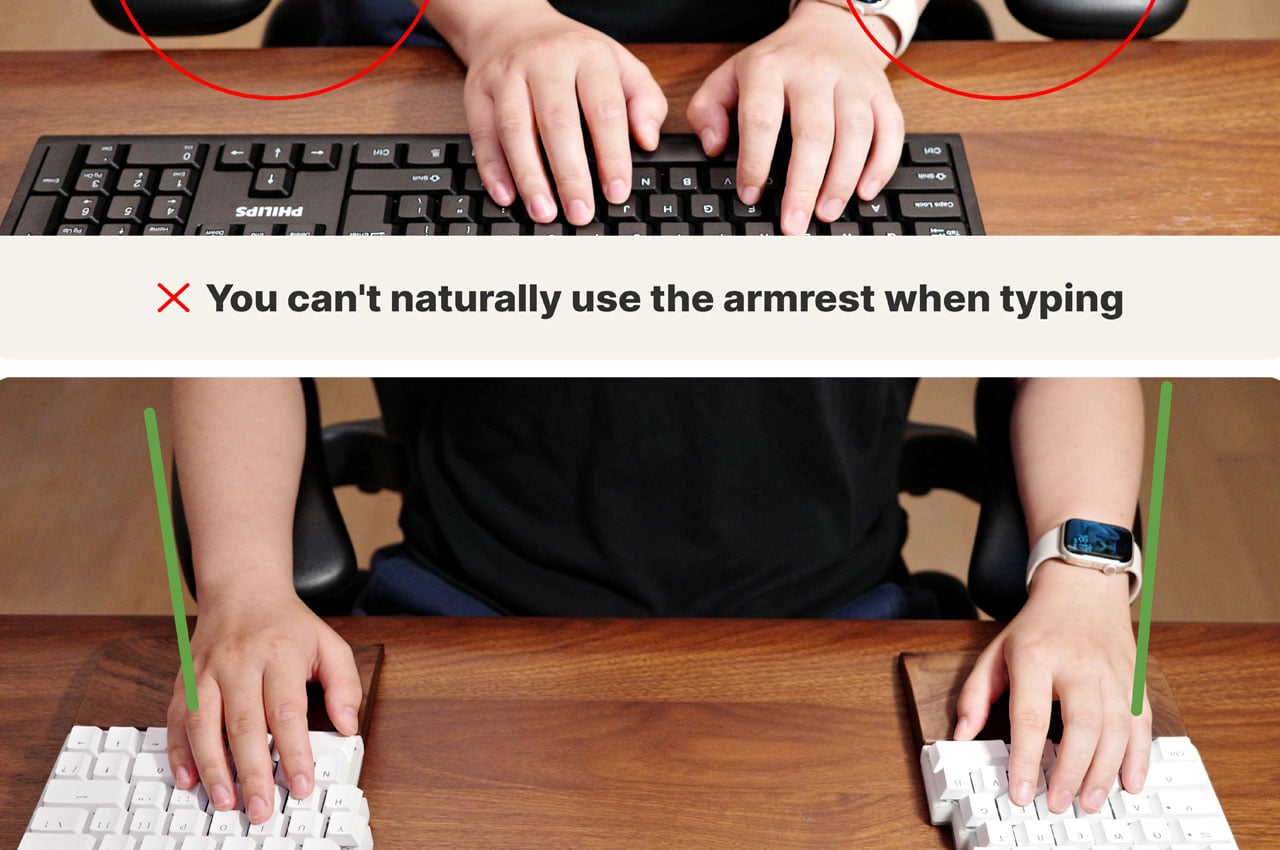
I’m sure of one thing; you need to have great typing skills if you are to use a split keyboard. For example, if you are like me, who has to extend their right hand over the left to find an odd key: we are not designed for this gadget! That said, split keyboards are hailed for their typing comfort, and there are many ergonomists to back it up. The split keyboard: wired and wireless, are functional and comfortable alternative to traditional keyboards because these provide more flexibility.

As opposed to a traditional keyboard that forces you into a fixed, rather unnatural, typing position for an extended period of time, the split keyboard rips that apart in the middle so every user can find their most comfortable position. We have seen a handful, or rather more, iterations of a split keyboard in our time. If I recollect correctly, Naya Create keyboard that added a trackpad to the split design won a lot of accolades back in the day. Now NocFree wants to rival the Create and other similar options with unmatched adjustability offered by its accommodating form factor.

Designer: Solar (NocFree Team)

Click Here to Buy Now: $166 $210 (20% off). Hurry, deal ends in 48 hours!

Before we get into the details of the NocFree Lite, the first prototype of the spilt keyboard, be reminded that the changes in desk setup to address your posture issues and pains, may not be limited to the position of the desk. If you have swapped between sitting and standing desks and been through a range of lumber support chairs, without a respite; consider giving your keyboard a swap. Whether you prefer linear, tactile or clicky switches, the NocFree Lite has the options to be truly effective.

The idea of NocFree keyboard is not accidental. It was conceived after the designer Solar from Kowloon, Hong Kong, battling wrist pain and lower back discomfort, headed out to search for a solution. With the absence of a split keyboard of his choosing, the idea of NocFree was born. It is a keyboard that we would want to use daily, hours at the computer desk or a gaming rig, without feeling the strain on the wrist or the shoulders.

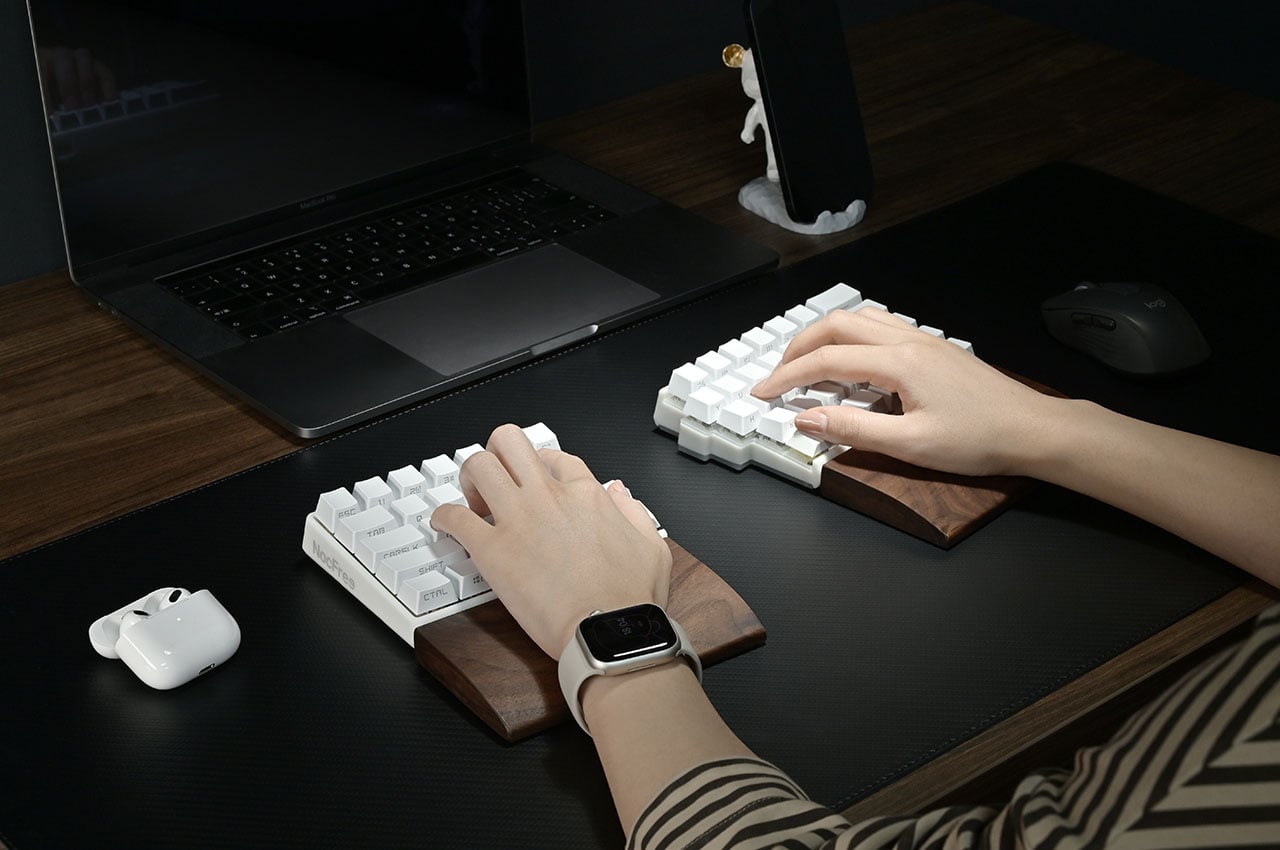
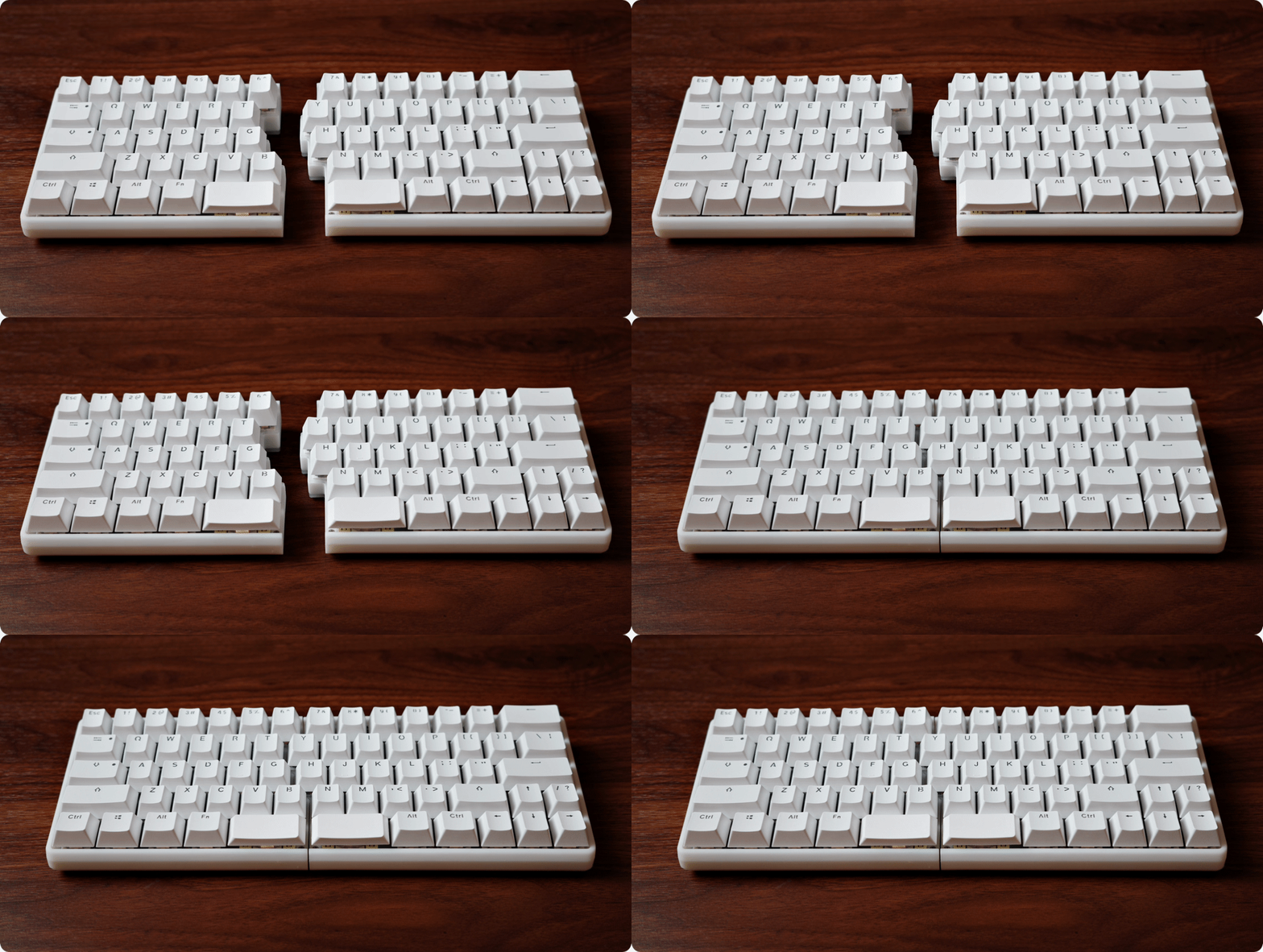
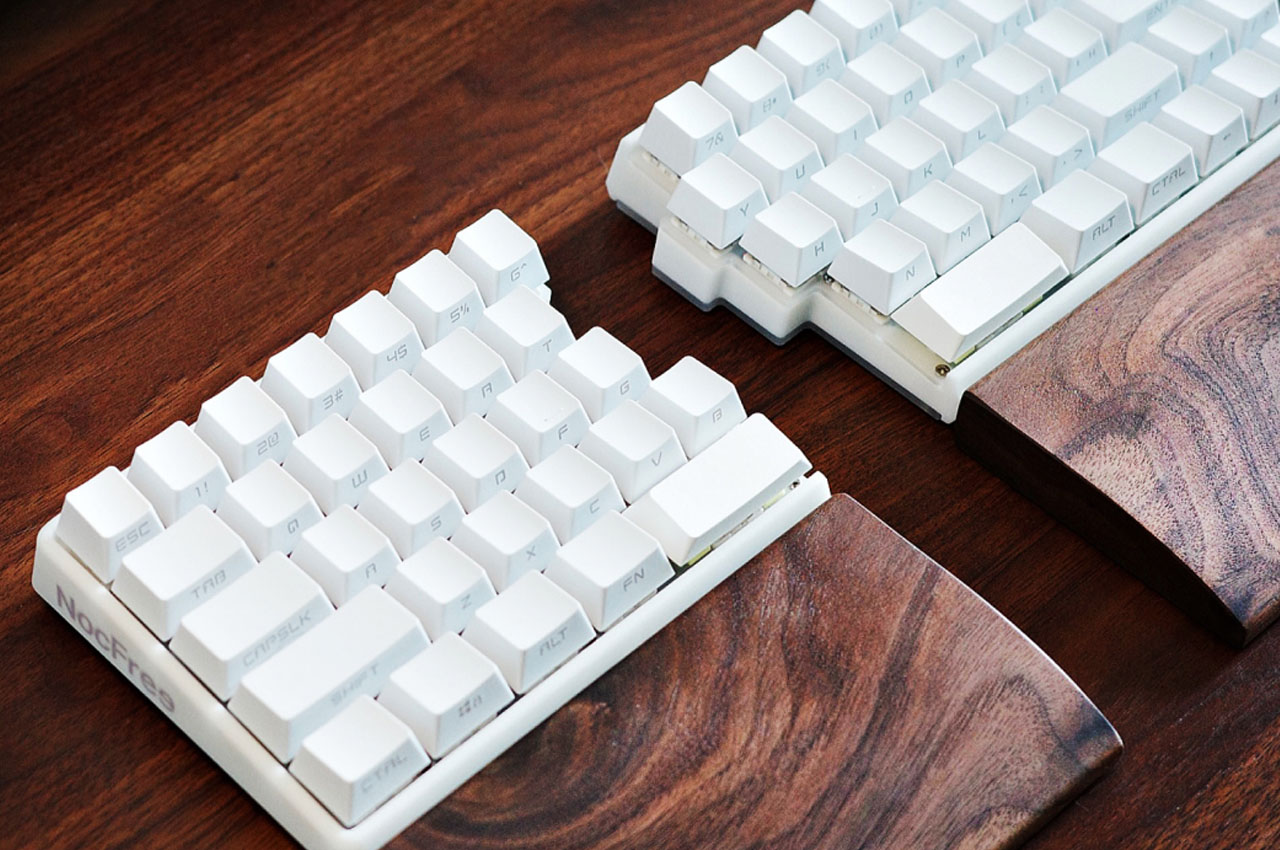
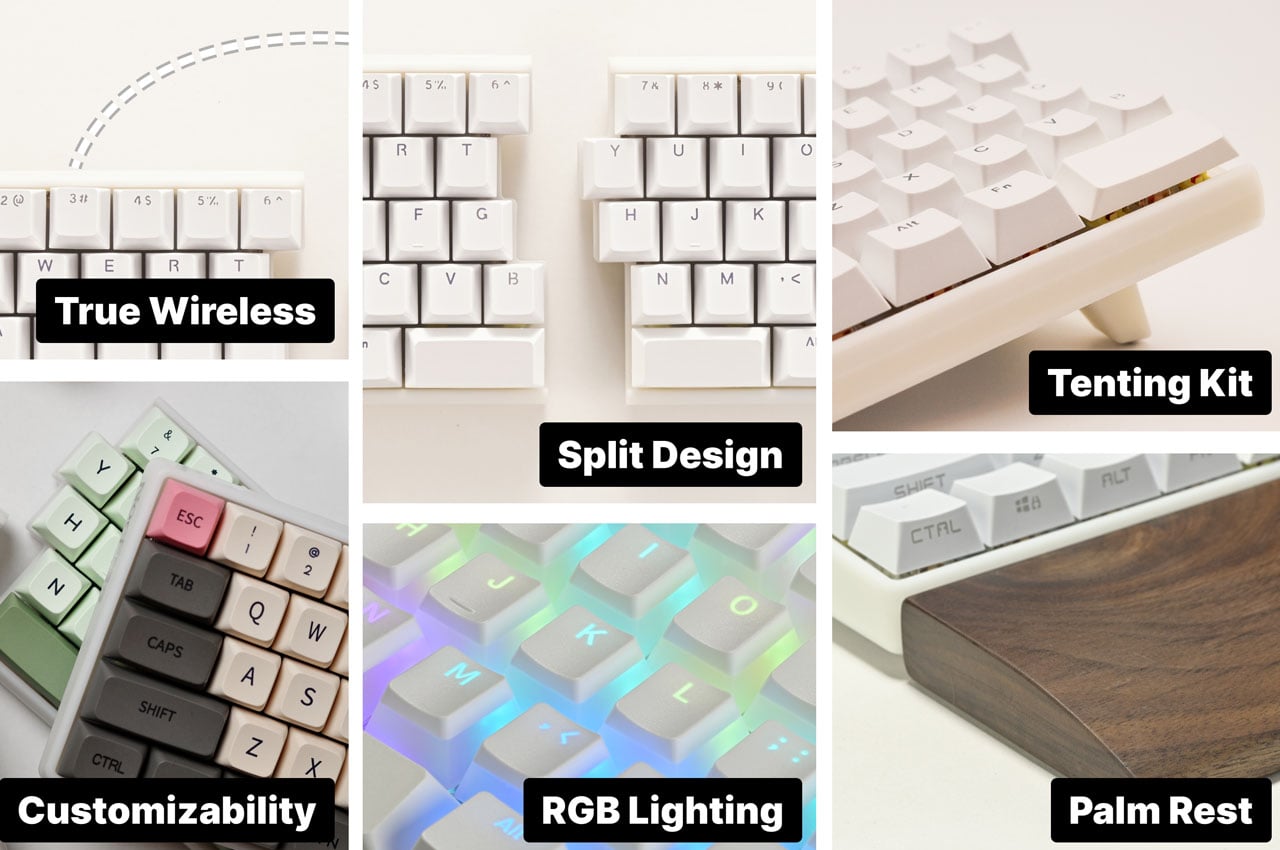
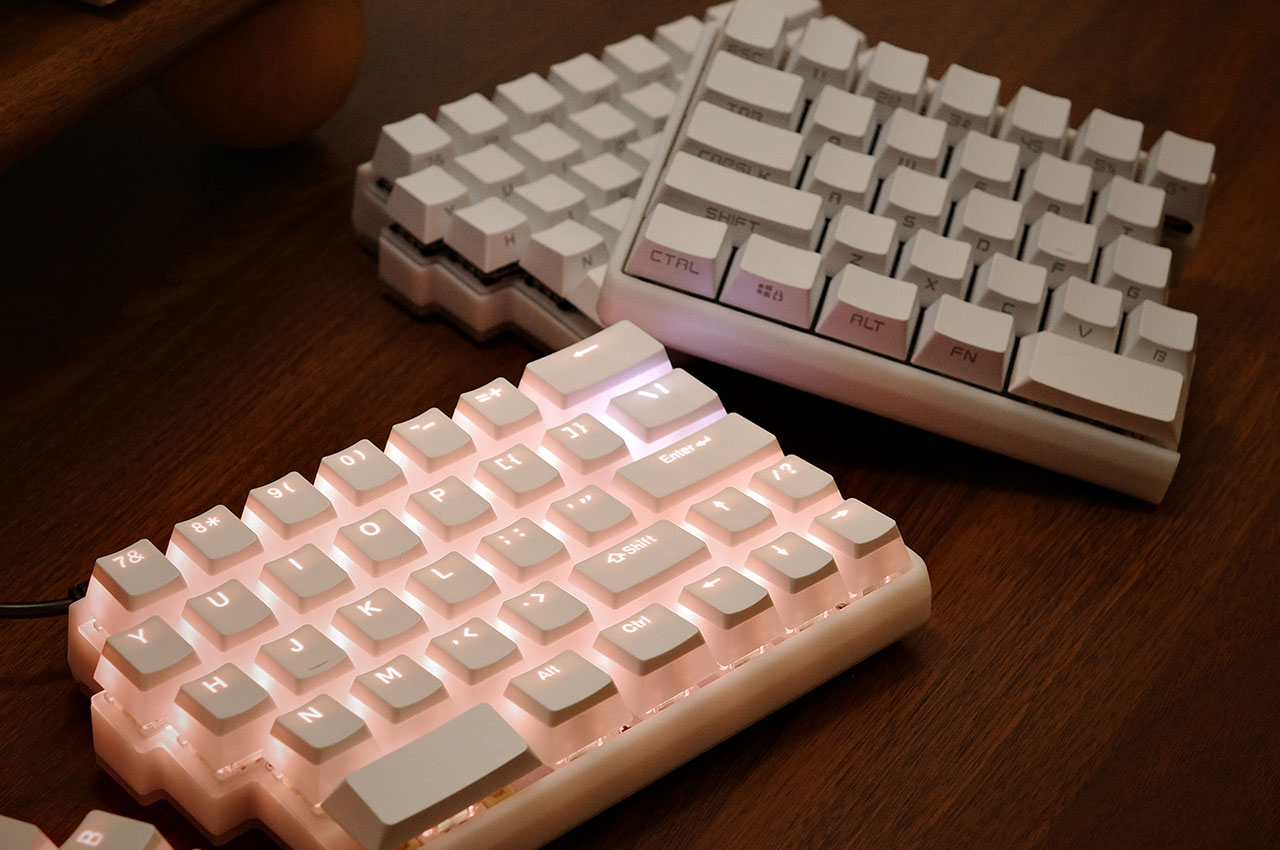
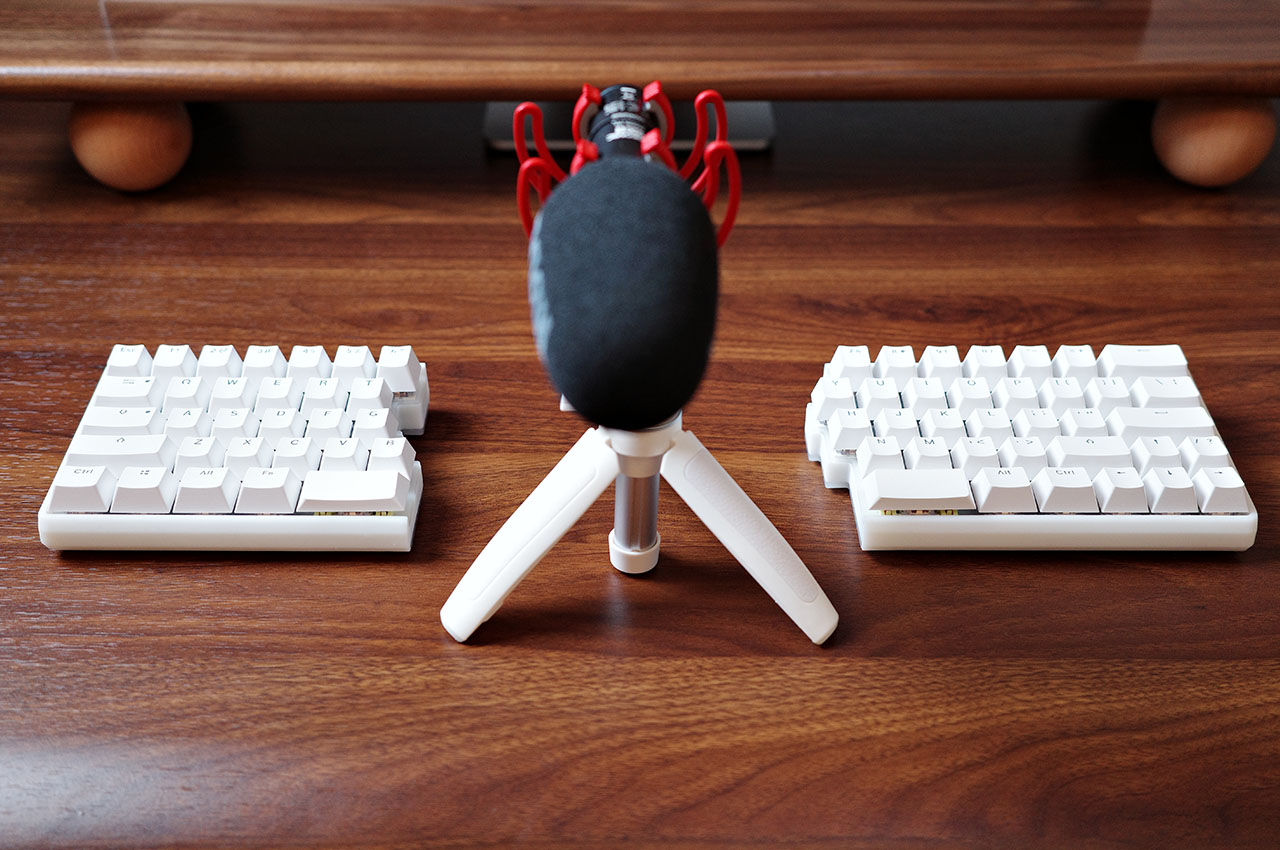
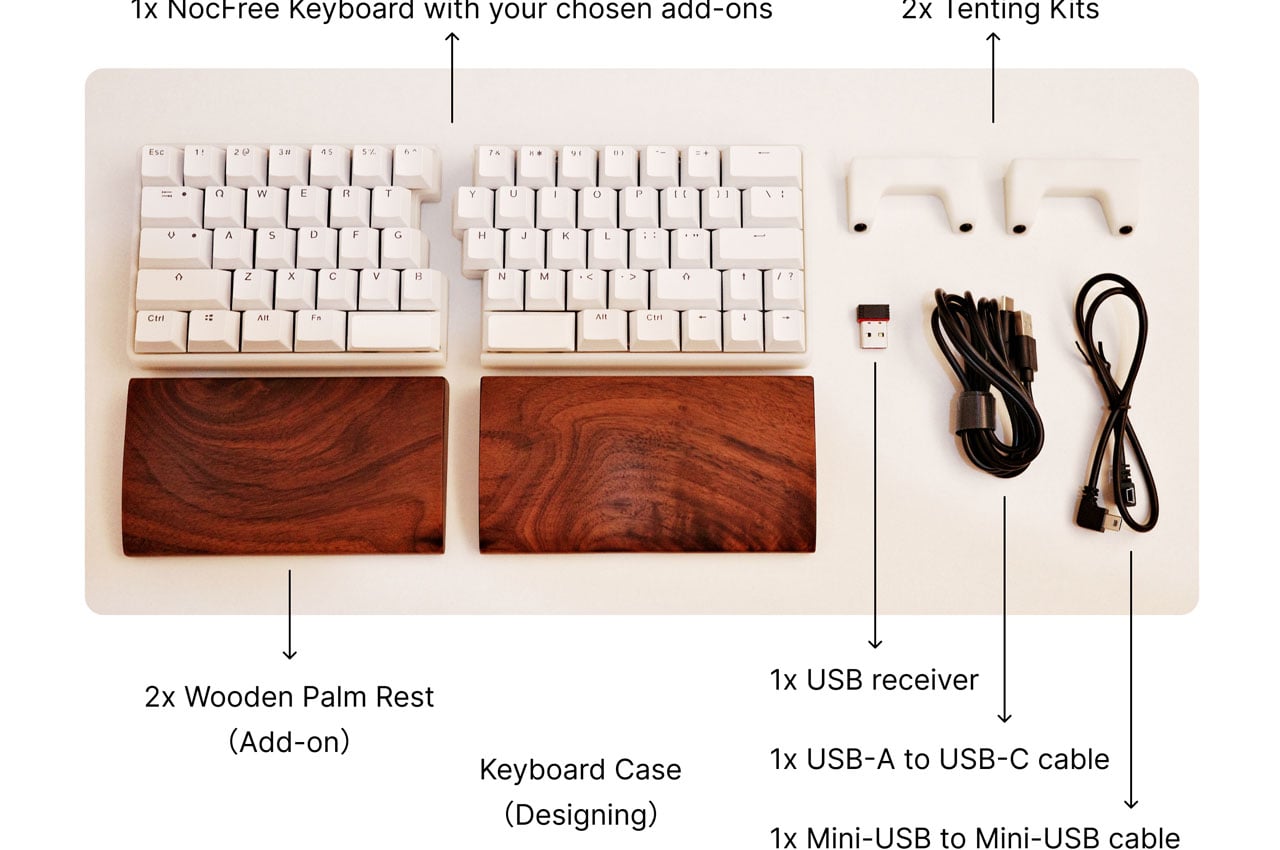
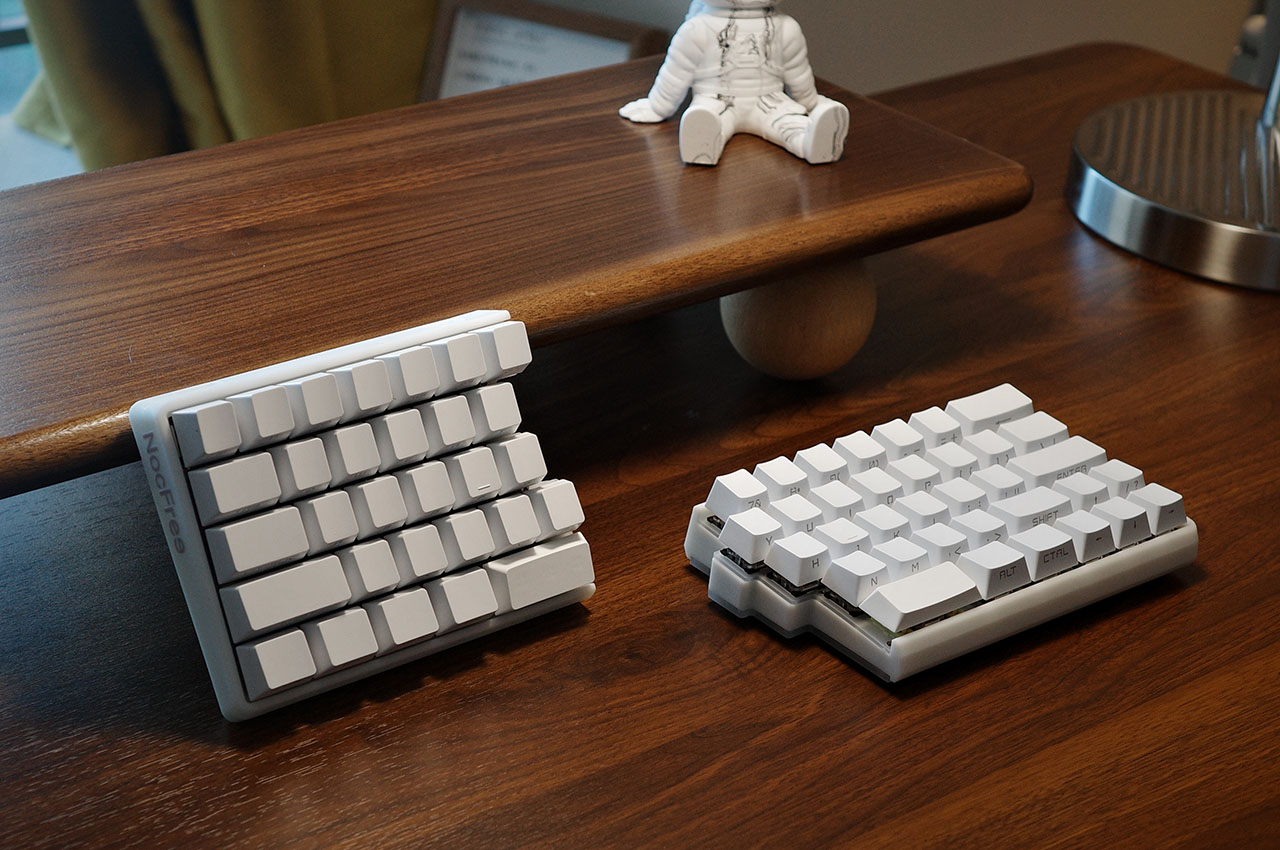
To ensure this, the NocFree Lite Split Wireless Mechanical Keyboard functions in two independent parts for user comfort. And when you want otherwise, the left and right sides of the keyboard can be effortlessly merged. So, with the NocFree, you can start with the fully merged keyboard and gradually separate it as the shoulder begin to feel the strain. The benefit in the latter position is beyond the comfort. The void between the two halves of the keyboard can offer prime desk real estate to place your documents, mouse or maybe a tablet to take notes.

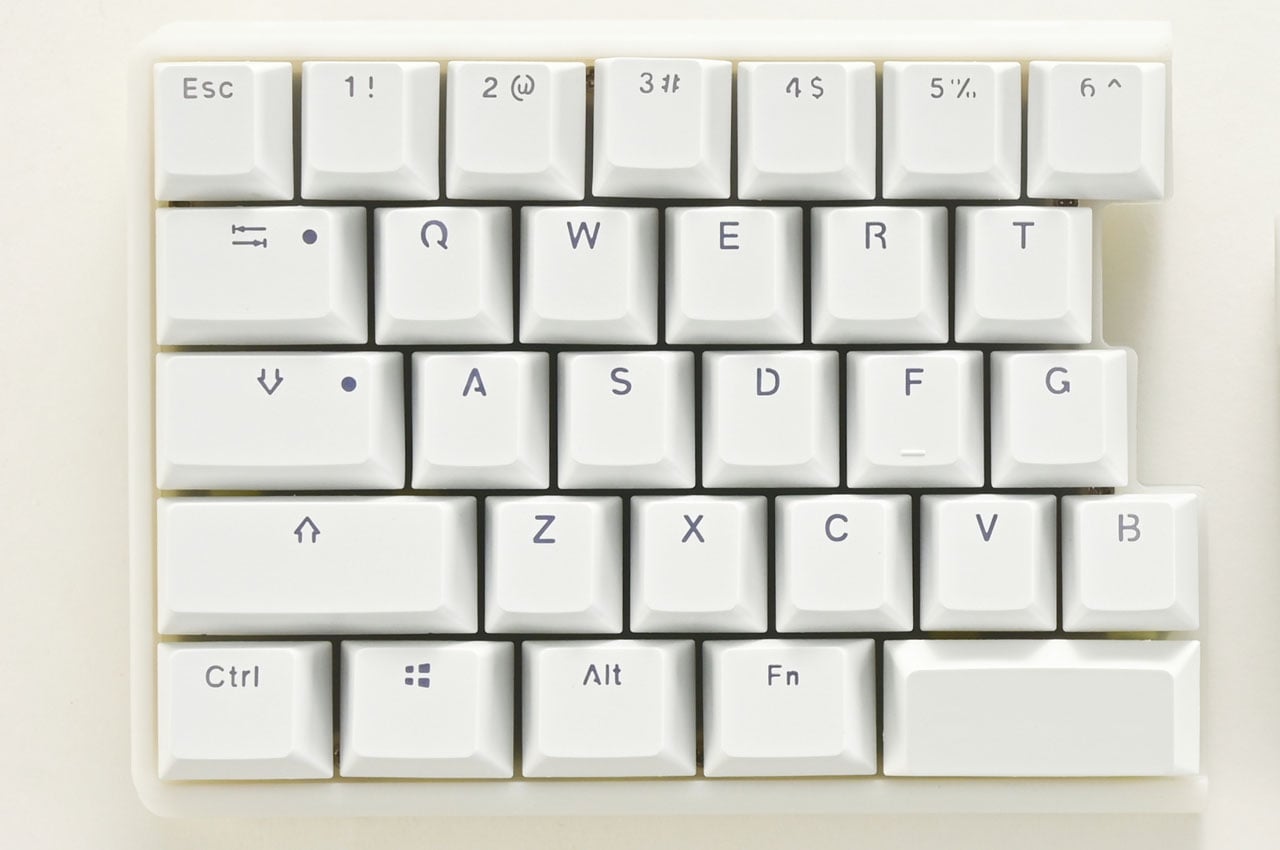
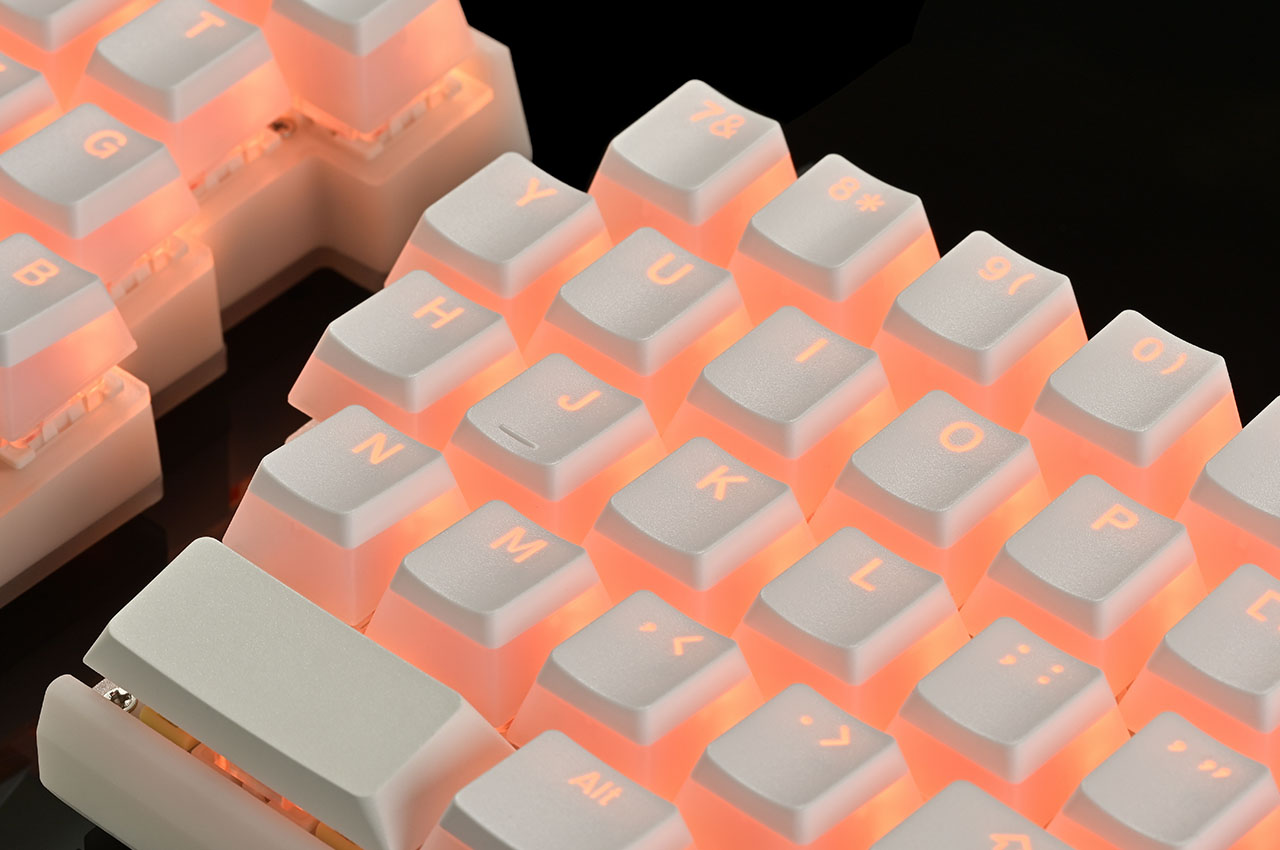
The sleek, adjustable layout of the NocFree Lite comprises 65 keys for utmost productivity. With the necessary keys for all the functionality you need, the keyboard is not a sitting duck. It offers a dazzling array of 31 lighting effects that you can customize for your choice of color, brightness, and transition speed. For further customization, NocFree Lite comes with a few keycap options that may cater to your unique style and preference.

The NocFree Lite comes with a palm rest made from a single piece of walnut. This is also made to split with the keyboard and alleviates palm pressure in either use setting. According to the our information, 20 prototypes of the NocFree Lite have been made and tested, and the keyboard is ready for manufacturing. The idea behind the design is to move split keyboards from a niche to a mainstream choice, for which the makers are currently running an Indiegogo crowdfunding campaign, where prospective buyers can preorder a unit for $166.

Click Here to Buy Now: $166 $210 (20% off). Hurry, deal ends in 48 hours!

The post The NocFree Lite split wireless mechanical keyboard is an audaciously customizable piece of tech gear first appeared on Yanko Design.