With the death of microSD cards in smartphones, the storage that you buy is all that you’ll ever get. Sure, you can use cloud storage, but that puts you at the mercy of an Internet connection. It’s not always available, as some might want you to believe, and it’s not always fast, especially for large files.
Nothing beats local storage in terms of speed and security, but OTG (on-the-go) USB flash drives for phones only have so much capacity. SSDs are the king of fast and compact data storage, and this rather unusual design puts as much as 2TB at your disposal, sticking securely to the back of your phone so you won’t have to deal with dangling cables while recording video or taking photos.
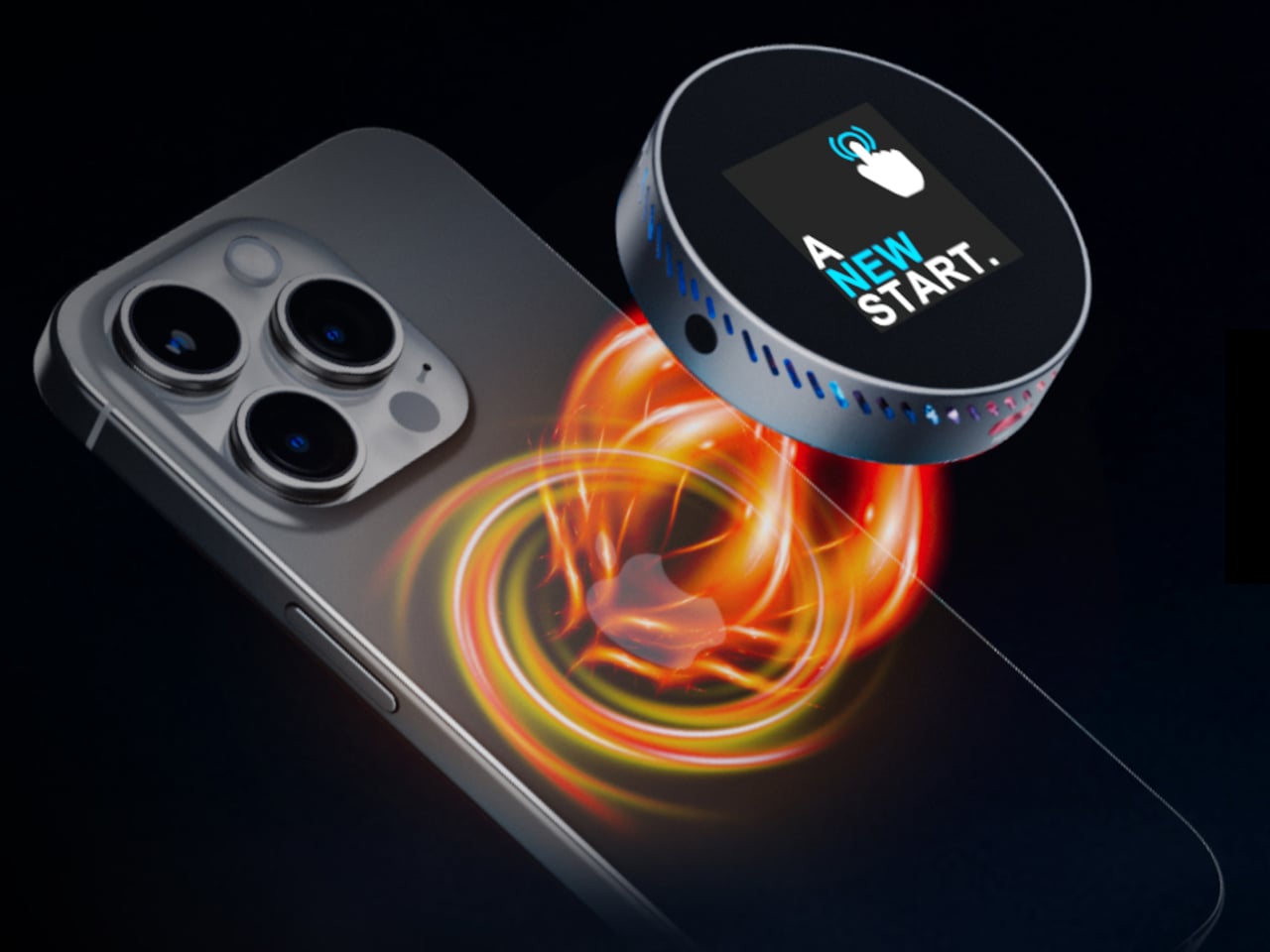
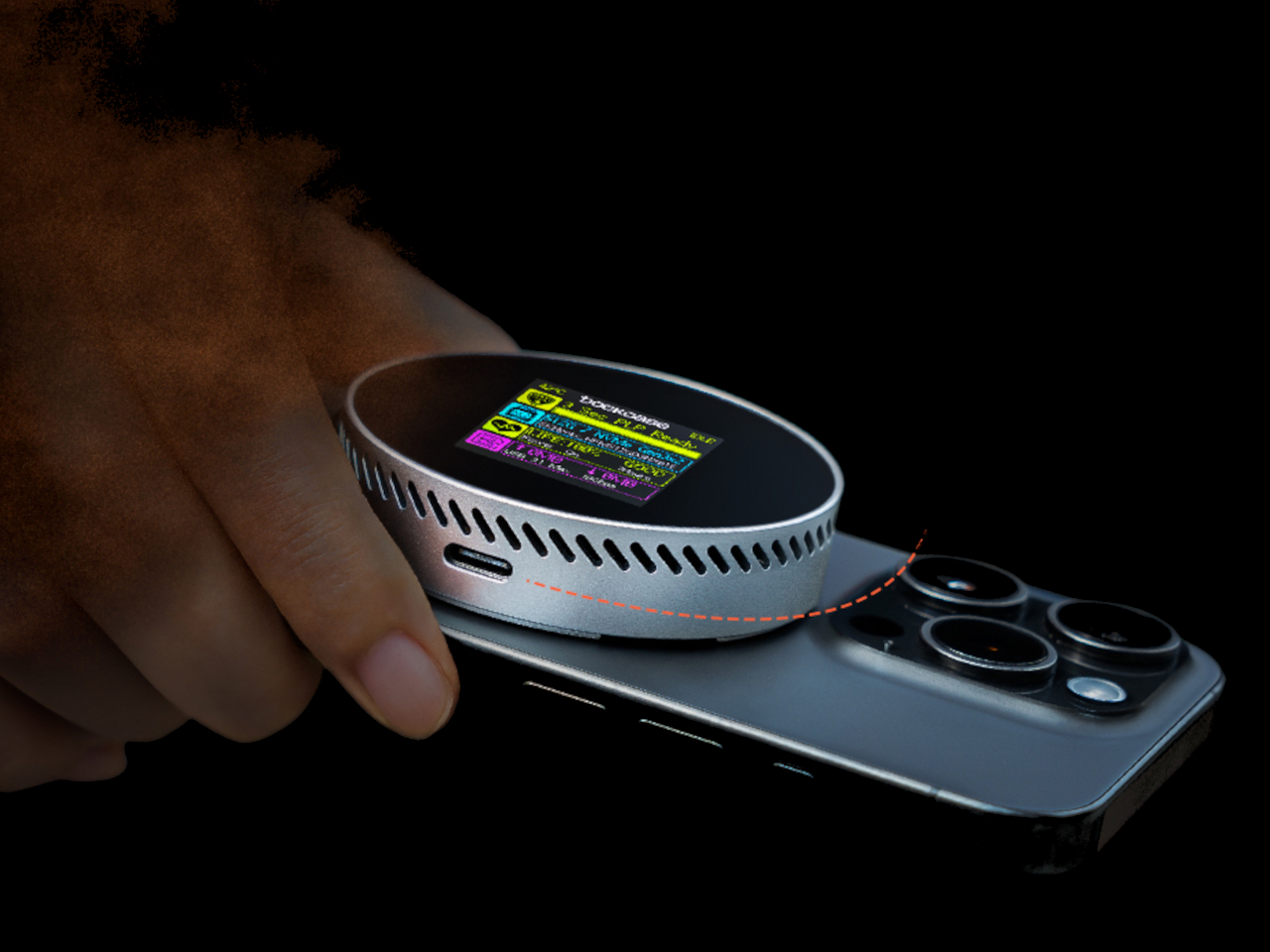
You can already connect external drives to smartphones these days, but even the smallest SSD would be left dangling when you pick up the phone. Yes, you can hold both in your hand like how some hold a power bank, but that makes things just awkward and sometimes dangerous. Thankfully, MagSafe technology now lets us stick things to the back of the phone, so why not an SSD as well?
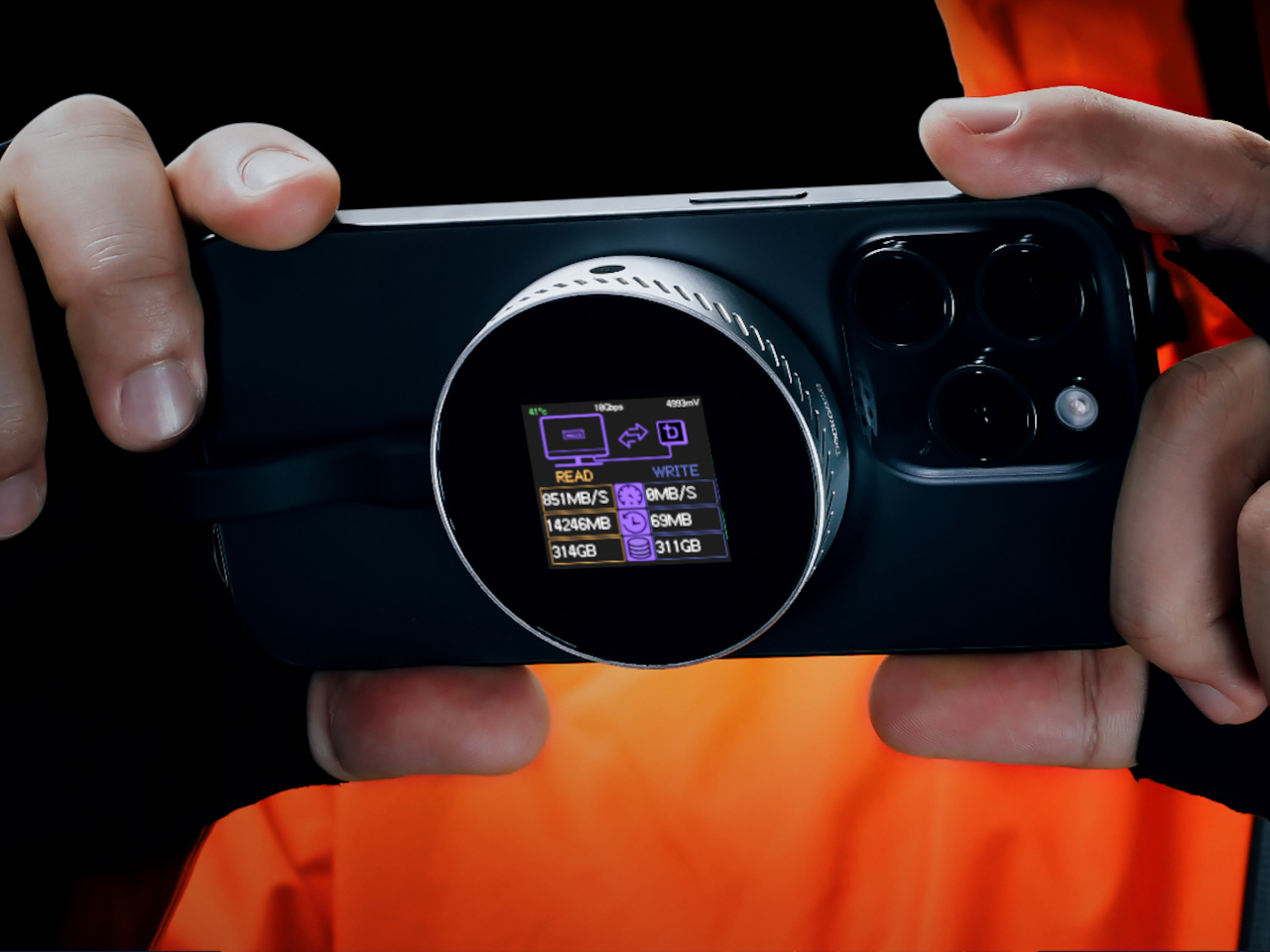
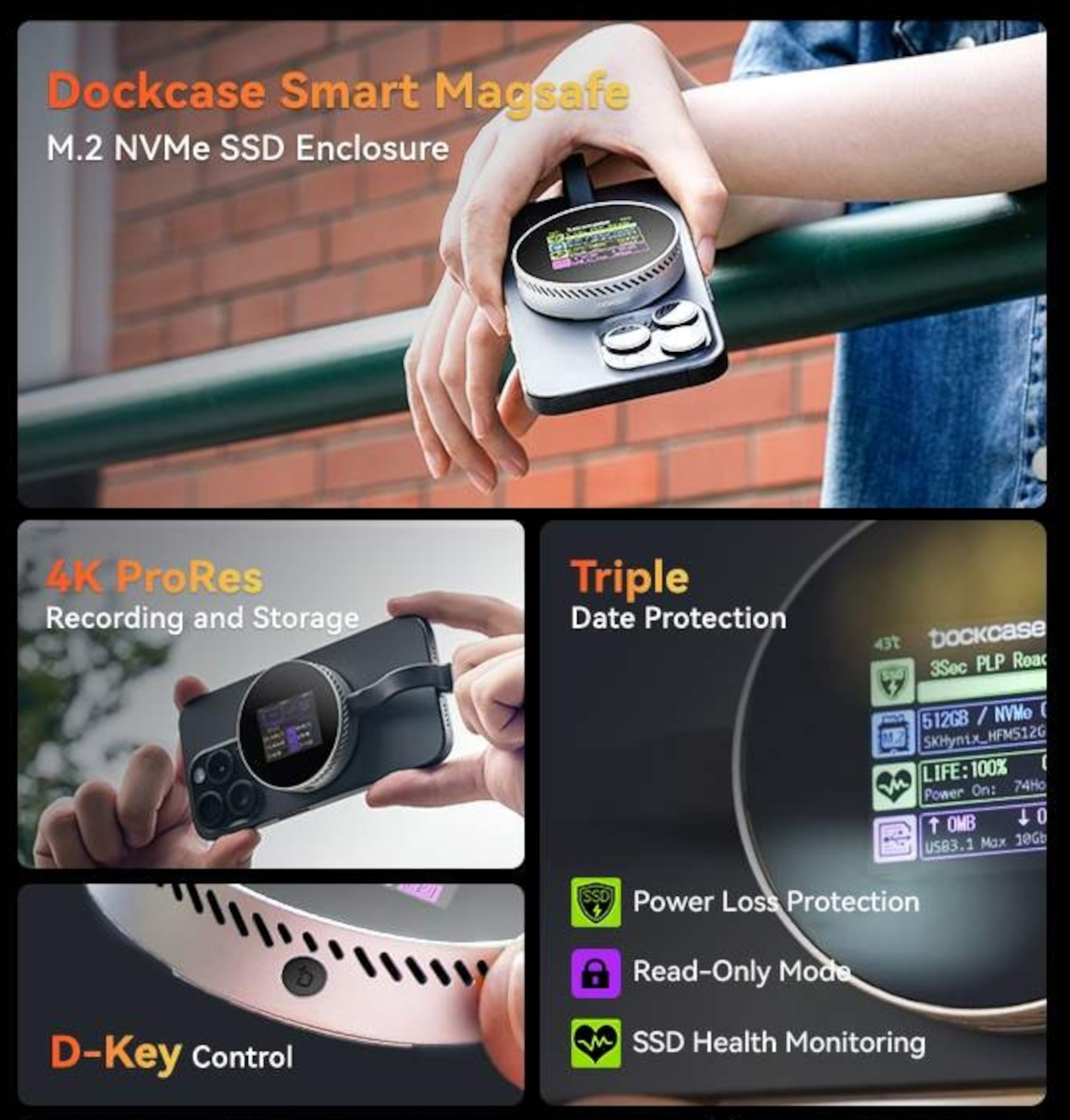
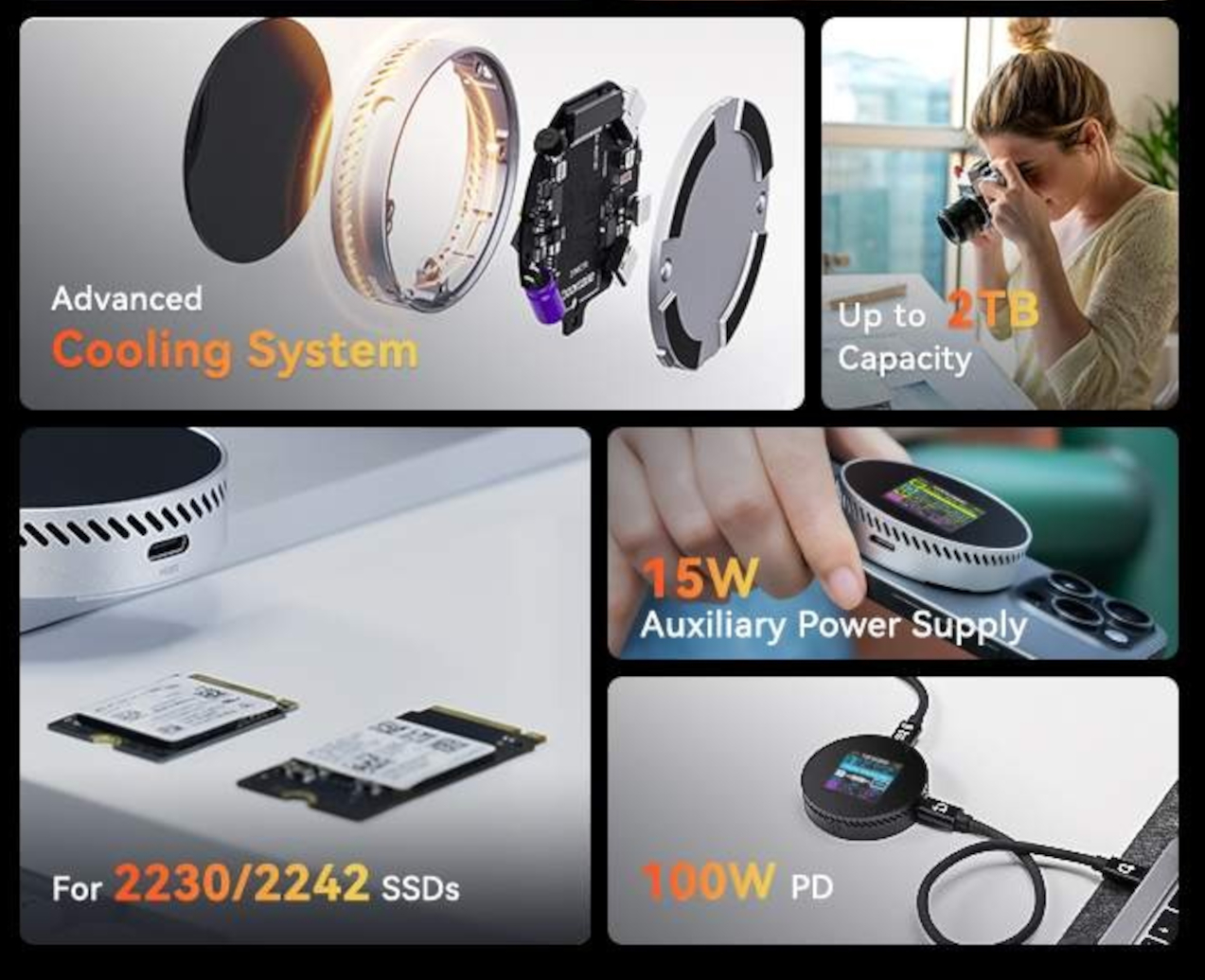
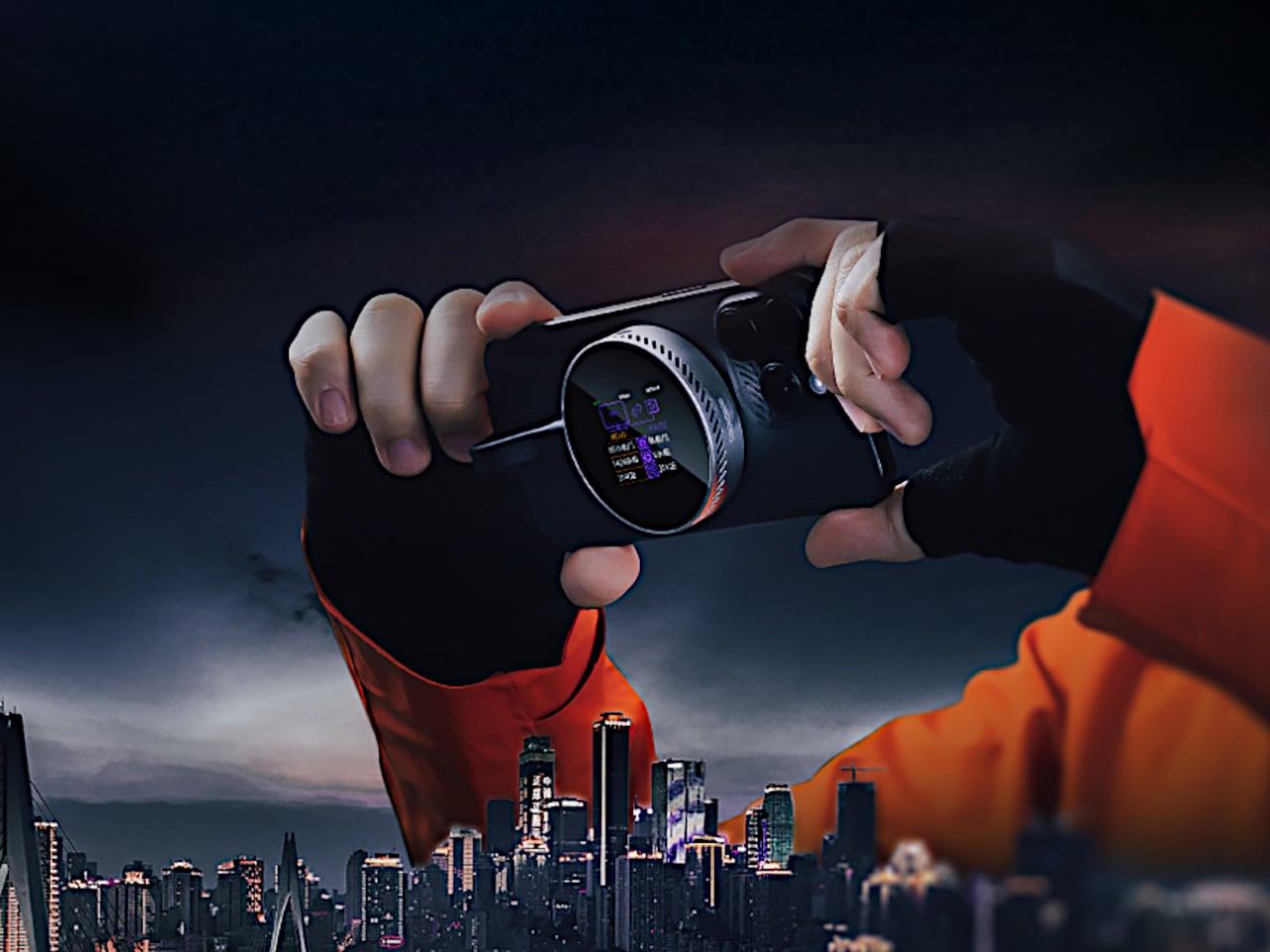
The Dockcase MagSafe M.2 NVMe SSD enclosure does exactly that, coming in the form of a small puck that attaches magnetically to the back of your phone. It still needs a USB-C connection for data and a bit of power, but it can be a very short one that won’t get tangled in your hand. This design is perfect for mobile photographers as it can let them easily record even 4K videos directly to the storage, depending on the camera app being used.
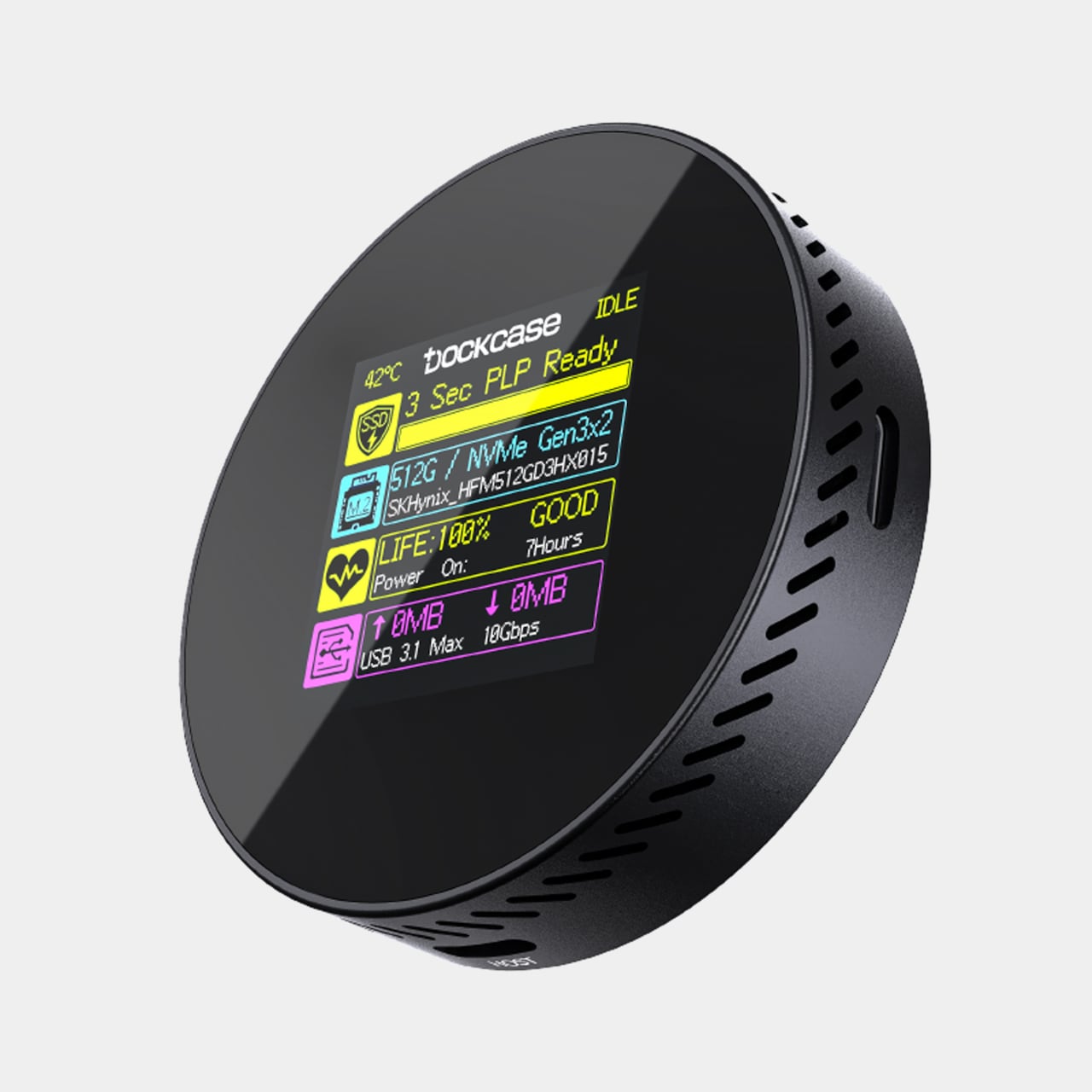
This device, however, is just an enclosure, so you’ll have to buy and put in a compatible SSD module. This, however, offers more flexibility, as you can have up to 2TB in storage and, if needed, swap out modules. It also has a square LCD display that, at the push of a button, can show important information about the SSD inside.
Although it can technically be used with any computer that can read SSD storage via USB-C, Dockcase was clearly intended for use with iPhones and MagSafe-compatible phones or cases. It even has passthrough charging so you can keep the enclosure connected and charge your phone at the same time. It’s a rather simple yet elegant design that solves the data storage problem of smartphones today.
Everyone knows the iPhone has a great camera – Lexar gives you a great SSD to match.
When I bought my iPhone 15 Pro Max, I knew for a fact that storage was going to be a problem in the long run. With the ability to record in 4K ProRes, and shoot high-quality images, the iPhone’s cameras are pretty state-of-the-art. The problem is that they’re so good they blast through your phone’s internal storage in a month or so if you’re not careful. It’s all by design, unfortunately. Apple also makes money off its iCloud subscription. iCloud might work for a solid 80% of regular consumers out there, but for mobile photographers/videographers, content creators, and camera enthusiasts, having to constantly interface with a cloud drive isn’t just a hassle, it’s counterintuitive.
That’s where Lexar comes in with its Go Portable SSD and Multiport Hub, designed specifically for people recording media in high-res formats. Barely the size of your thumb, the Go SSD boasts a capacity of up to 2TB and plugs right into your phone, giving you the benefit of recording directly on the device without clogging your phone’s storage or having to upload to the cloud. It plugs right into your phone, eliminating the need for extra wires. Alternatively, it can be paired with Lexar’s USB-C hub, which also lets you connect other devices like a power bank to keep your iPhone running over long shoots that can take multiple hours.
Designed specifically to complement the iPhone 15 Pro models, this innovative SSD + Hub tag-team offers up to 2TB of additional storage, a significant boost for those who demand ample space for their projects. In fact, Lexar designed the SSD specifically for people who like recording in ProRes 4K@60fps.
With up to 2TB storage and extra USB-C ports, it’s perfect for shooting bulky ProRes videos.
By offloading footage to the SSD, users can continue recording without interruptions, allowing for longer takes and more ambitious productions. However, the benefits extend beyond storage capacity. The integrated USB-C hub transforms the iPhone into a versatile production hub, enabling the connection of essential accessories such as microphones, lights, and external power sources.
Both the SSD and Hub boast the same machined aluminum design, with a slim form factor that complements the iPhone and MacBook’s anodized metal finish. The SSD and Hub click together perfectly too, becoming almost one product visually, with a mere thumb dimple to help you unplug them once you’re done. The Go Portable SSD and Hub are envisioned to be used together but can operate independently depending on the filmmaker’s specific needs. The SSD itself is particularly compact, measuring just 1.71 x 0.98 x 0.32 inches. It has a bent connector to neatly fit behind the iPhone when plugged in, maintaining a streamlined setup without protruding cables.
The Hub, which is slightly larger at 2.71 x 1.71 x 0.32 inches, sits flush with the SSD, offering four USB-C ports for connecting additional peripherals like microphones, power banks, gimbals, and other accessories. The thoughtful design also includes a 30W power delivery feature, making it easy to charge devices while simultaneously supporting data-transfer speeds of up to 10Gbps.
The Go Portable SSD stores all your media locally, letting you access/transfer/process media files on multiple devices without needing a stable internet connection. This SSD offers read speeds of up to 1050MB/s and write speeds of up to 1000MB/s, providing near-instantaneous access to files and allowing quick data transfers that boost workflow efficiency. This makes it a compelling option for photographers, videographers, and other digital professionals who need reliable, high-speed storage solutions.
With your data stored offline, it’s impermeable to hacks, leaks, and breaches. For users concerned about theft, the Go Portable SSD also has 256-bit AES encryption, allowing you to password-protect your media from being accessed by unauthorized people. Go ahead, sign that NDA before filming!
While the focus is largely on iPhone 15 Pro and Pro Max users, Lexar’s new products are also compatible with the iPad and Android devices that support USB-C and OTG functionality. This widens the scope for mobile filmmakers across platforms, although the primary market remains centered around Apple’s latest devices. The Go Portable SSD is available in 1TB and 2TB capacities, catering to different storage needs, and both models boast IP65 ratings, ensuring protection against dust and water splashes, enabling users to film in a variety of conditions.
You can either spring for just the SSD, or opt for the SSD + Hub combo. The latter also includes a silicone protective case, a male-female adapter, a male-male adapter, a cold shoe adapter cable for camera rigs, a storage box, a storage bag, and 20 label stickers you can apply onto the SSD to help you keep track of the media stored on it. The Lexar Professional Go SSD and Hub both ship globally, with a 5-year warranty on each product.
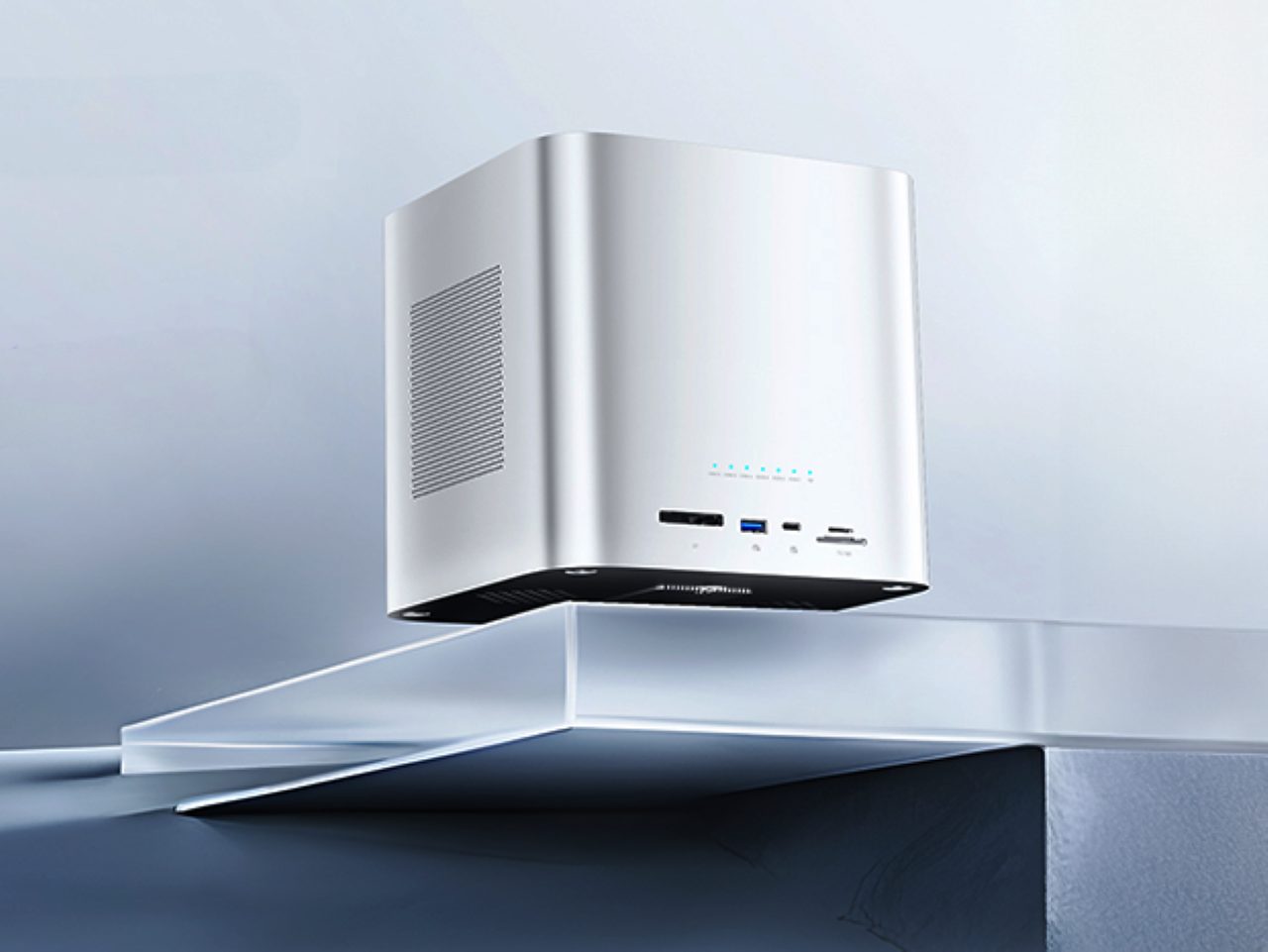
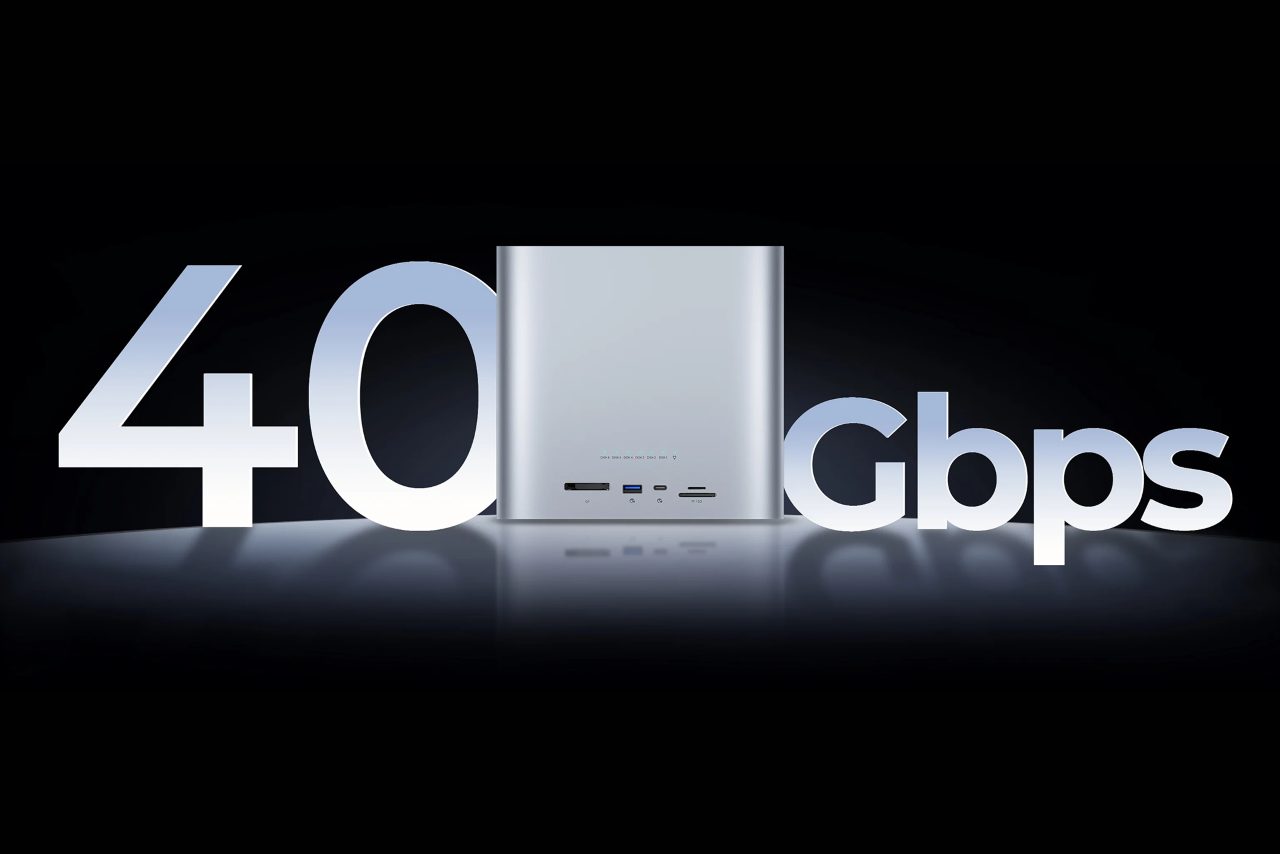
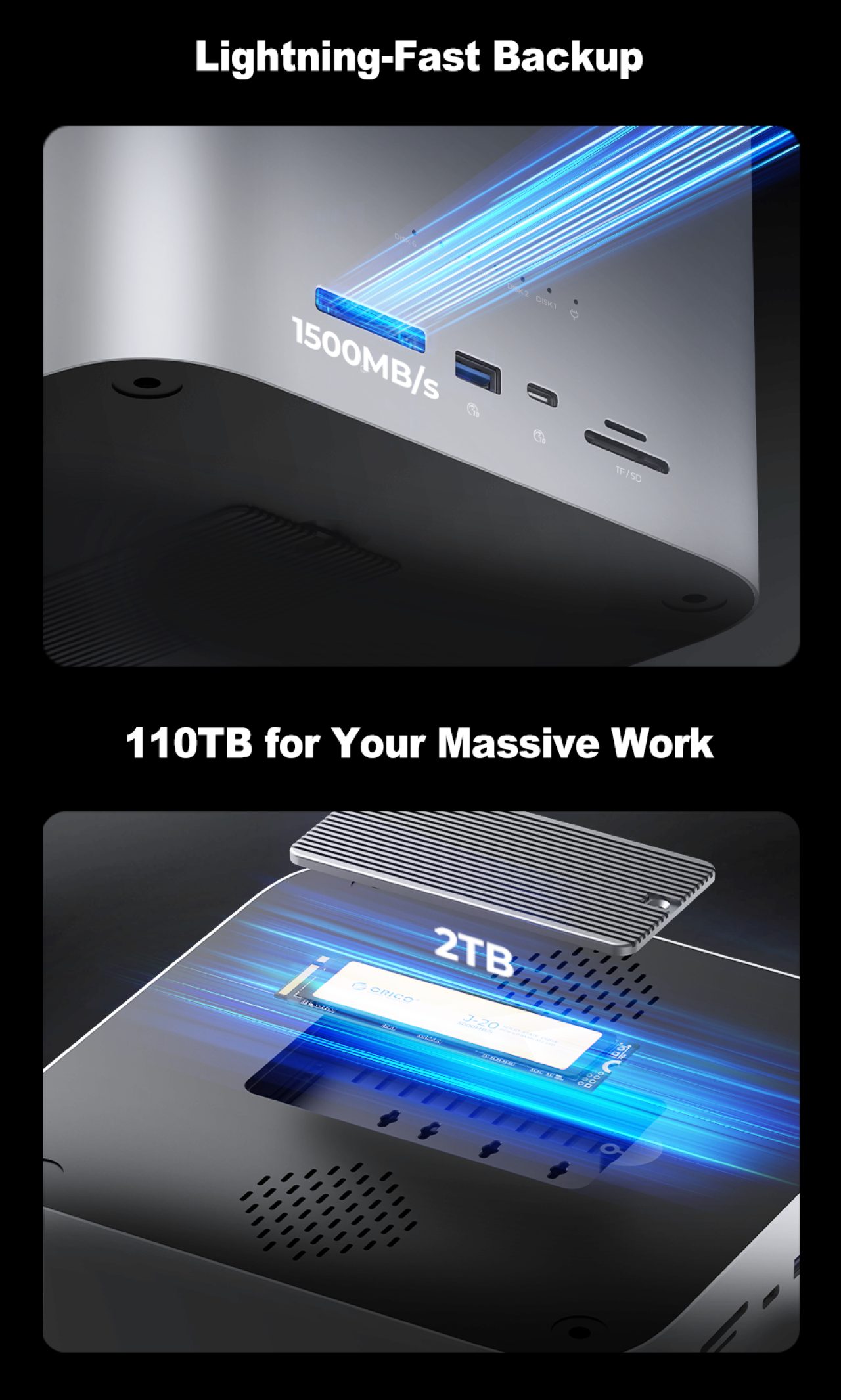
We’re living in a time where entertainment is at a point of evolution. Blu-Ray came and went, as did 3D content… but we’re fast approaching a future where spatial content may just become the norm. Videos today are shot in 4K and 8K, and videos in the future could be shot in spatial reality too, covering a 360° FoV. This means post-production teams will work with heavier file sizes and will need more than just an SSD attached to their iMac or Mac Pros. That’s where the Orico Data Matrix comes in. A hybrid storage solution that can provide anywhere between 5 and 112 terabytes of storage, the Orico Data Matrix lets you work with large files while offering write speeds of up to 1500Mb/s for CFexpress cards, or transfer speeds of a whopping 40Gb/s using Thunderbolt. The $699 device is absolutely perfect for video editing, post-production, and even animation, allowing you to speed up your workflow, no matter how heavy your files are!
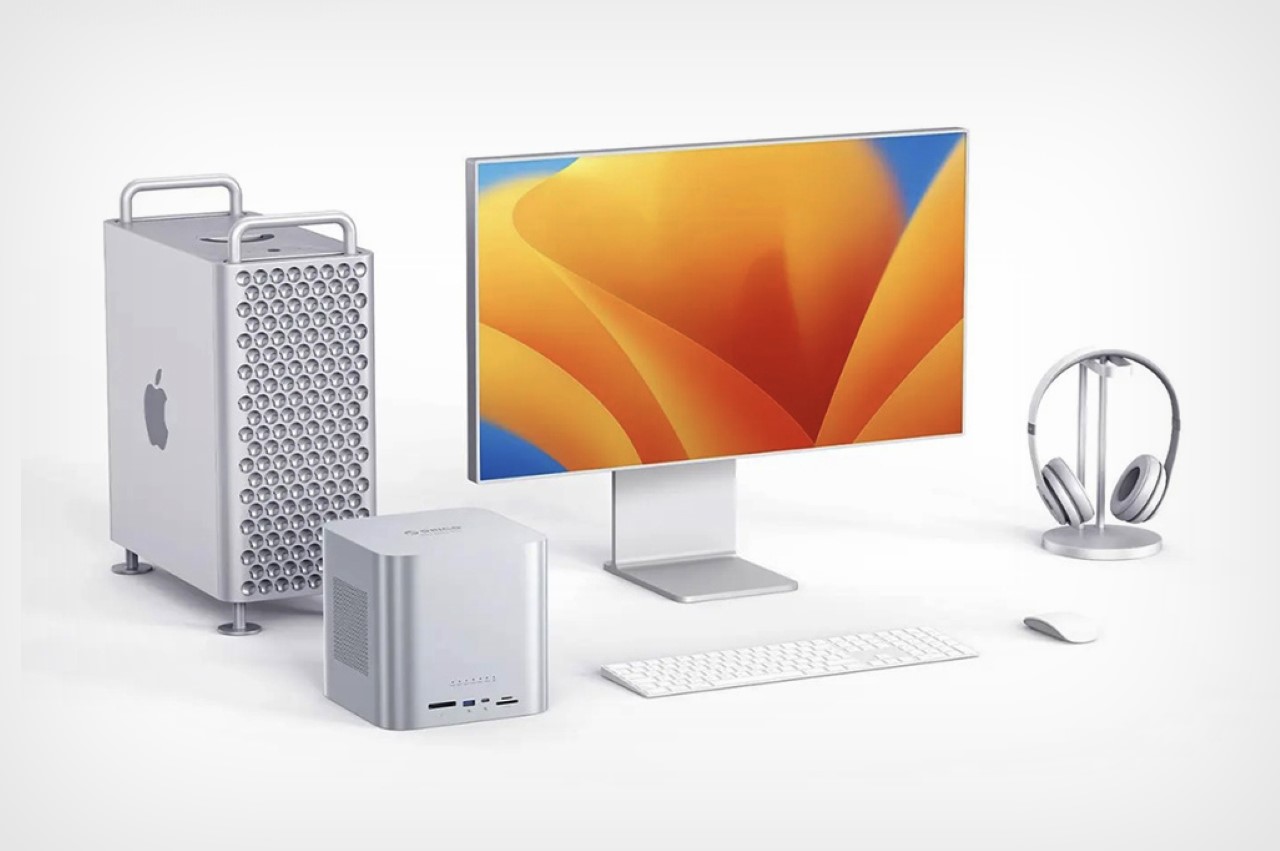
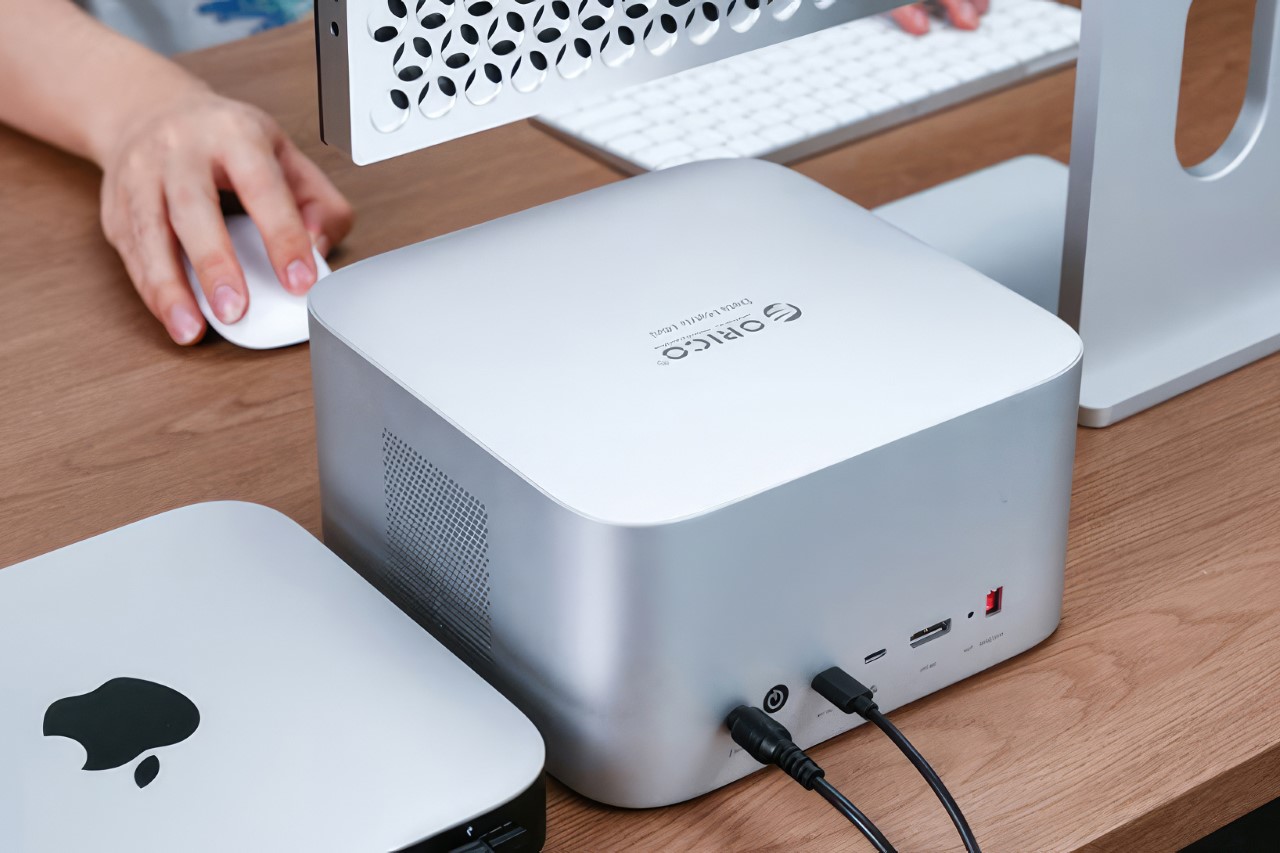
The Data Matrix’s design clearly evokes a sleek, Apple-inspired sense of minimalism. In fact, I wouldn’t be surprised if it’s exactly the same width and length as the Mac Mini or Mac Studio. The exterior is all anodized aluminum, while the interior sees the use of low-speed WD RED hard drives, combined with a large cache, anti-vibration mounting, and magnetic levitation fans, ensuring a quiet and efficient operation. This feature is particularly beneficial for creative professionals who often work during late hours and require a noise-free environment to maintain concentration and productivity. Its table-friendly design sits seamlessly on your desk alongside your other work peripherals, and if you’re relying on a Mac Mini/Studio or a Mac Pro, it helps to have all those ports accessible for cables.
The Data Matrix supports multiple I/O ports, including Thunderbolt 3, USB 3.1, and HDMI, ensuring compatibility with a wide range of devices and peripherals. This flexibility allows users to connect external hard drives, 4K displays, card readers, and other essential equipment seamlessly. The device also supports up to five daisy-chained devices, enabling users to expand their setup without compromising performance. This robust connectivity ensures that the Data Matrix can integrate smoothly into any professional workflow. Working with large file-sizes can often dramatically slow down your flow and pace too – but 1,500Mb/s writing and 3,000Mb/s reading speeds for the CFexpress cards, and overall 40Gb/s transfer speeds from the WD drives, allowing you to comfortably edit 8K videos in a jiffy.
The ORICO Data Matrix is available in various storage capacities, ranging from 5TB to 112TB, catering to different project sizes and requirements. This flexibility makes it a versatile solution for various professional needs, from small-scale projects to extensive, high-capacity demands. The system also supports up to five daisy-chained devices, allowing users to connect additional hard drives, 4K displays, card readers, and other peripherals, further enhancing its versatility and adaptability.
RAID stacking capabilities further enhance the reliability and security of the ORICO Data Matrix. With various RAID configurations, including RAID 0, 1, 5, 10, JBOD, and Normal, users can choose the setup that best suits their needs. These configurations provide a balance between performance and redundancy, safeguarding valuable data against potential loss. The hardware-level RAID stacking ensures that data integrity is maintained, offering peace of mind to creative professionals who rely on secure storage for their work.
The ORICO Data Matrix is available in various storage capacities, ranging from 5TB to 112TB, catering to different project sizes and requirements. This flexibility makes it a versatile solution for various professional needs, from small-scale projects to extensive, high-capacity demands. The system also supports up to five daisy-chained devices, allowing users to connect additional hard drives, 4K displays, card readers, and other peripherals, further enhancing its versatility and adaptability. The 1-bay 5Tb variant starts at $699 and is perfect for agile teams and smaller studios, while the highest configuration (5-bay 112Tb) goes up to a whopping $4999 – but that’s almost entirely for larger organizations and global production offices.



 hard drives, combined with a large cache, anti-vibration mounting, and magnetic levitation fans, ensuring a quiet and efficient operation. This feature is particularly beneficial for creative professionals who often work during late hours and require a noise-free environment to maintain concentration and productivity. Its table-friendly design sits seamlessly on your desk alongside your other work peripherals, and if you’re relying on a Mac Mini/Studio or a Mac Pro, it helps to have all those ports accessible for cables.